



Wavy hair has a funny habit of looking easy until the cut gets in the way. The best short haircuts for wavy hair do one of two things: they keep enough weight for the waves to bend cleanly, or they remove weight in the right places so the hair can move instead of puffing out at the sides.
That sounds simple. It isn’t.
Short hair shows everything. A flat crown, a cowlick at the temple, a dense back section, one side that flips harder than the other — all of it becomes obvious once the length comes off. That is why a good short cut on wavy hair usually starts with dry cutting, point cutting, or at least a stylist who knows where not to thin too aggressively. Too much thinning near the ends can leave the shape fuzzy and thirsty-looking by lunch.
The good news is that waves love a smart haircut. Give them a blunt line, a soft fringe, a stacked nape, or a choppy texture in the right spot, and the whole head starts doing half the work for you. Some cuts feel polished. Some feel deliberately messy. The trick is picking the one that fits your wave pattern, your face, and how much fuss you want to spend on a Tuesday morning.
1. Chin-Length Wavy Bob
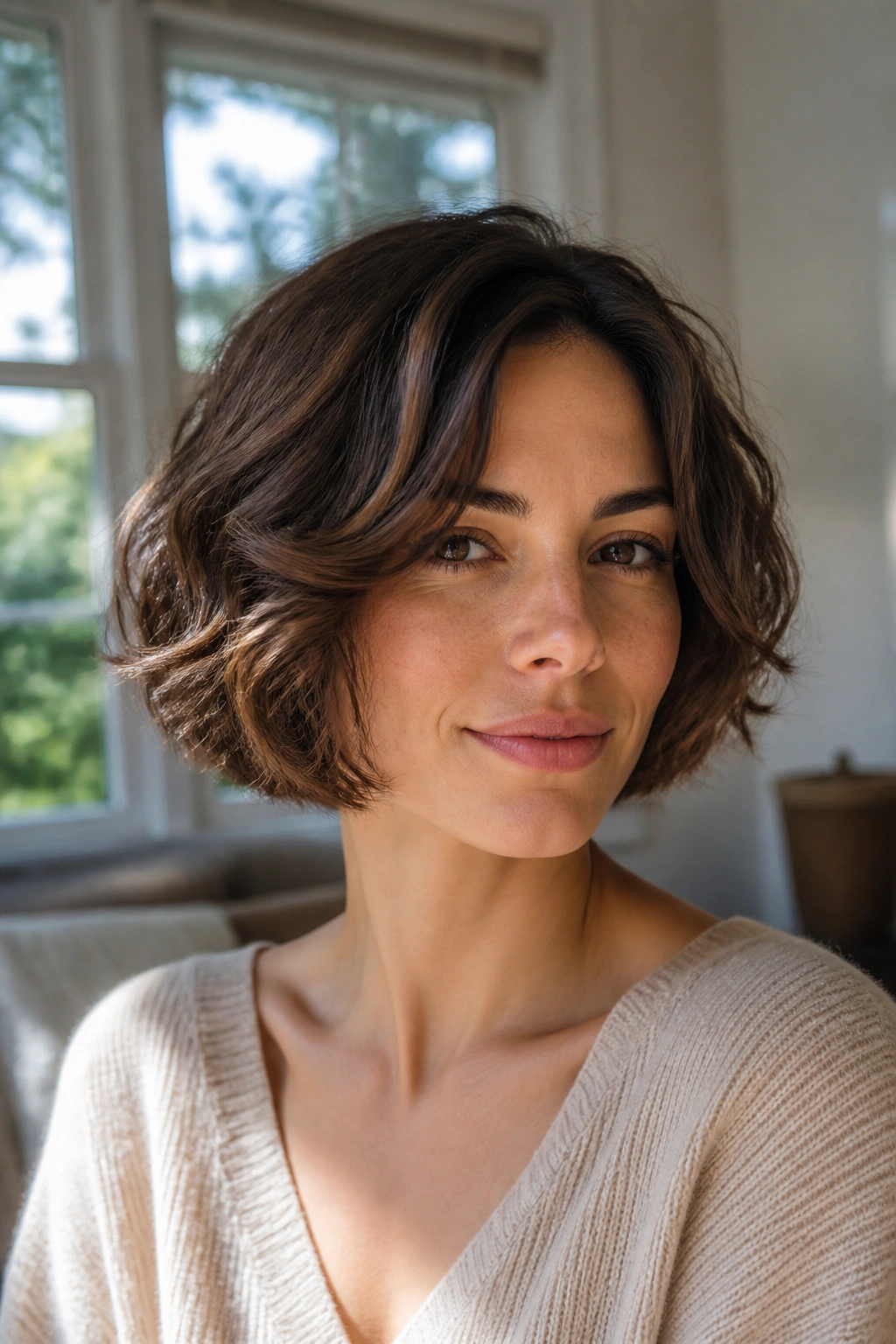
A chin-length bob is the safest first stop for wavy hair. It leaves enough weight to keep the bends from exploding outward, but not so much that the ends drag the whole shape down. When this cut is done well, the line sits close to the jaw and gives the face a sharper frame without looking severe.
The key is restraint. Ask for a blunt perimeter with only a touch of interior texture, not a heavy stack of layers. If your waves are loose, a light cream and a quick scrunch can be enough. If they’re stronger, let the hair dry about 80 percent on its own, then smooth the top with a soft brush so the crown doesn’t puff.
This cut is especially kind to medium-density hair. It also grows out neatly, which matters more than people admit. A bad short cut can haunt you for months; this one usually forgives a missed trim.
2. French Bob With Soft Fringe
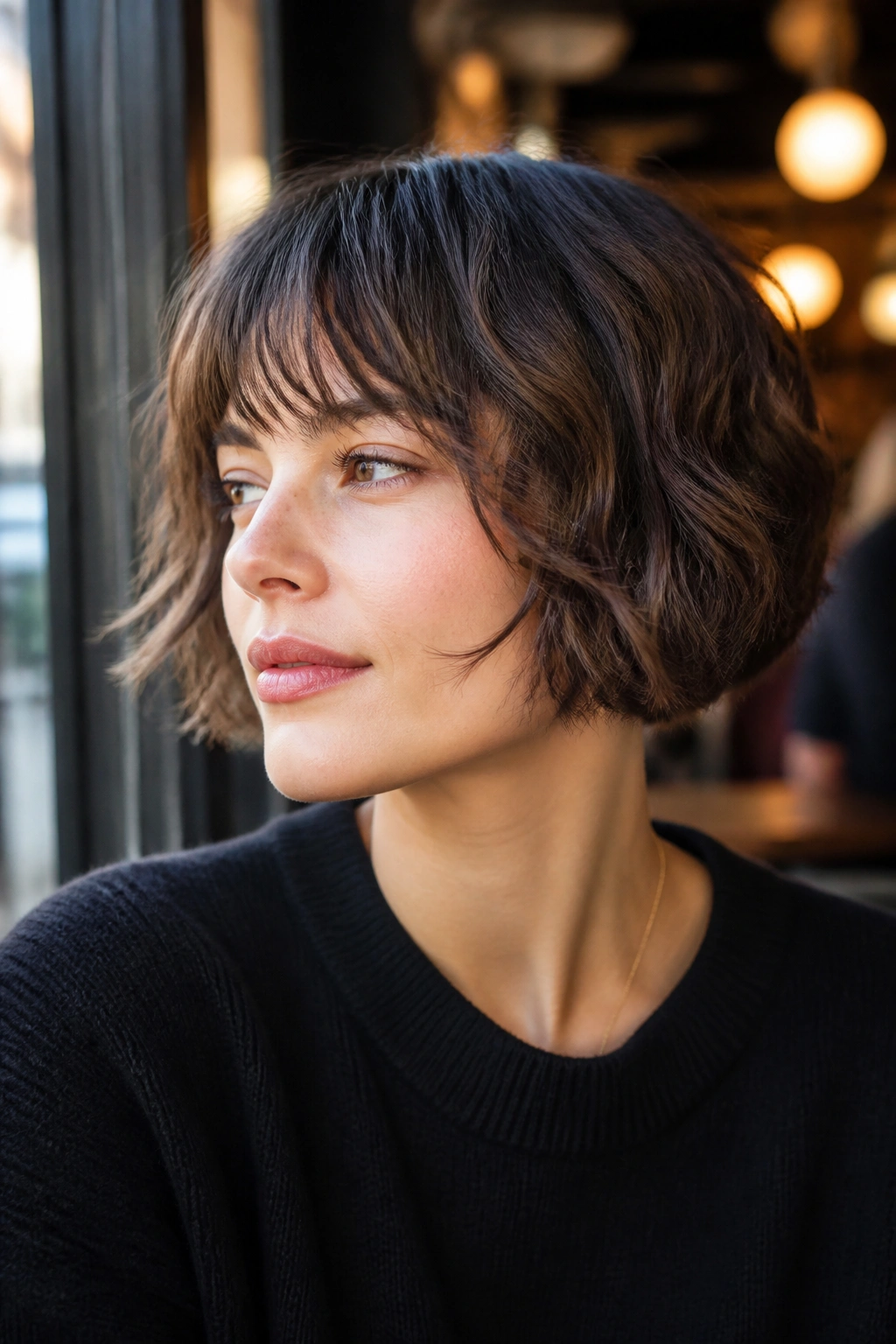
Can a bob be short, airy, and still soften the forehead? Yes — if the fringe stays light. The French bob with a soft fringe works because it keeps the length around the cheekbones or just above the jaw, where waves can bounce instead of collapse.
Why the Fringe Matters
A heavy fringe on wavy hair turns awkward fast. A soft fringe, though, breaks up the front without eating up all the movement. It also looks good when it separates a little, which is half the charm.
How to Style It
- Mist the fringe with water in the morning and twist it once or twice with your fingers.
- Use a pea-sized amount of styling cream, not a thick paste.
- Blow-dry the front only if it starts to curl into your eyes in a way you hate.
This cut suits people who like a little polish but do not want a hard-edged salon look every day. It has that relaxed, lived-in feel — and yes, it looks better when it isn’t overworked.
3. Textured Pixie
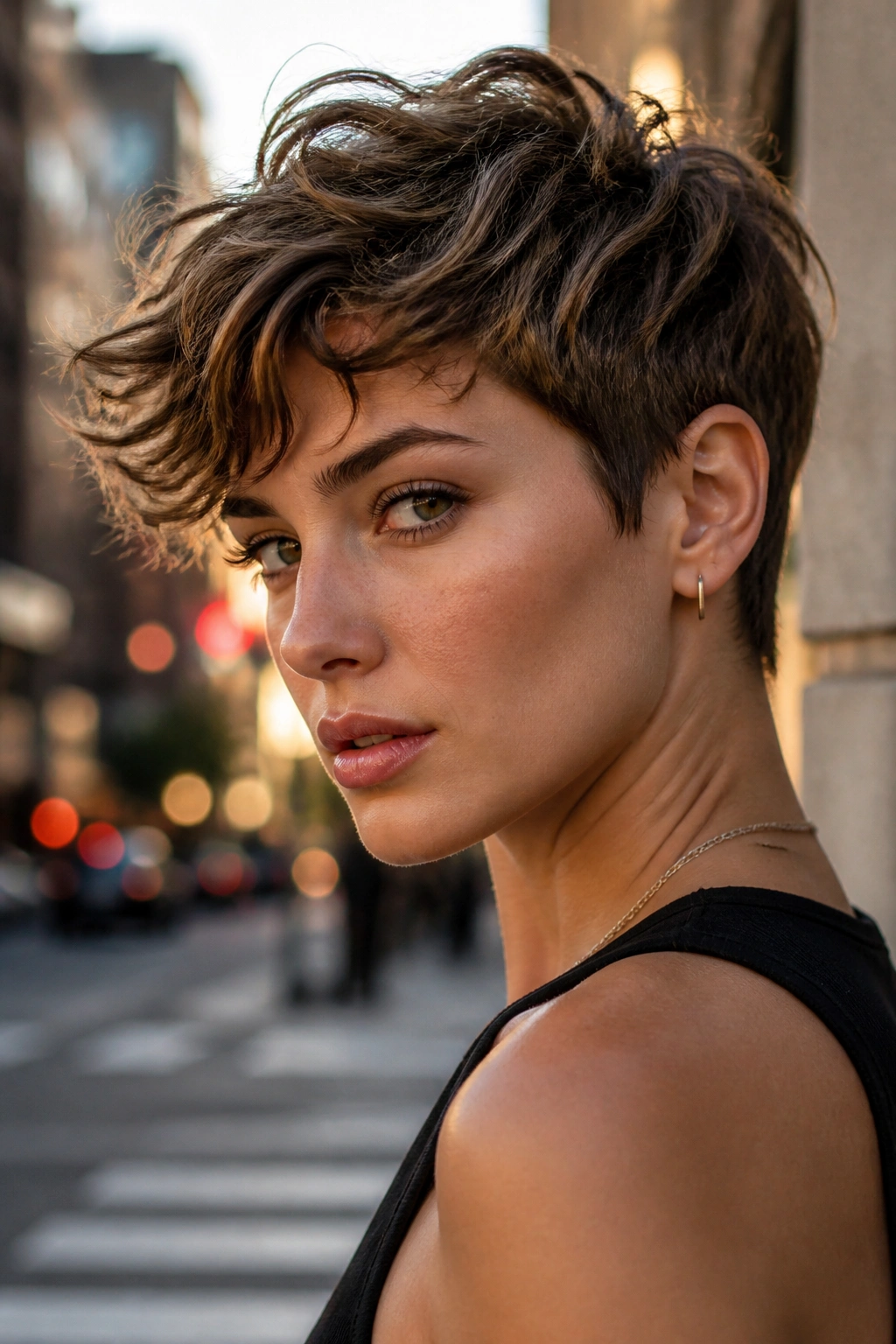
A textured pixie can be brilliant on wavy hair, but only if the top stays long enough to show the wave. Too short, and you lose the bend. Too long, and it can turn into a floppy cap. The sweet spot is usually longer on top with soft tapering around the ears and nape.
Picture a windy day that does not ruin the cut. That’s the goal.
What Makes It Work
The best pixies on wavy hair use movement where it matters: crown, fringe, and top layers. The sides stay neat so the shape does not spread out. A little pomade or styling cream can separate the ends and give the wave some definition without making it crunchy.
- Best for: fine to medium waves
- Ask for: longer top, tapered sides, soft piecey texture
- Avoid: heavy thinning shears near the front
This is a confident cut. It shows your face, your brow line, and your cheekbones all at once. If you like hair that feels light around the neck, this one makes a strong case.
4. Curly Shag
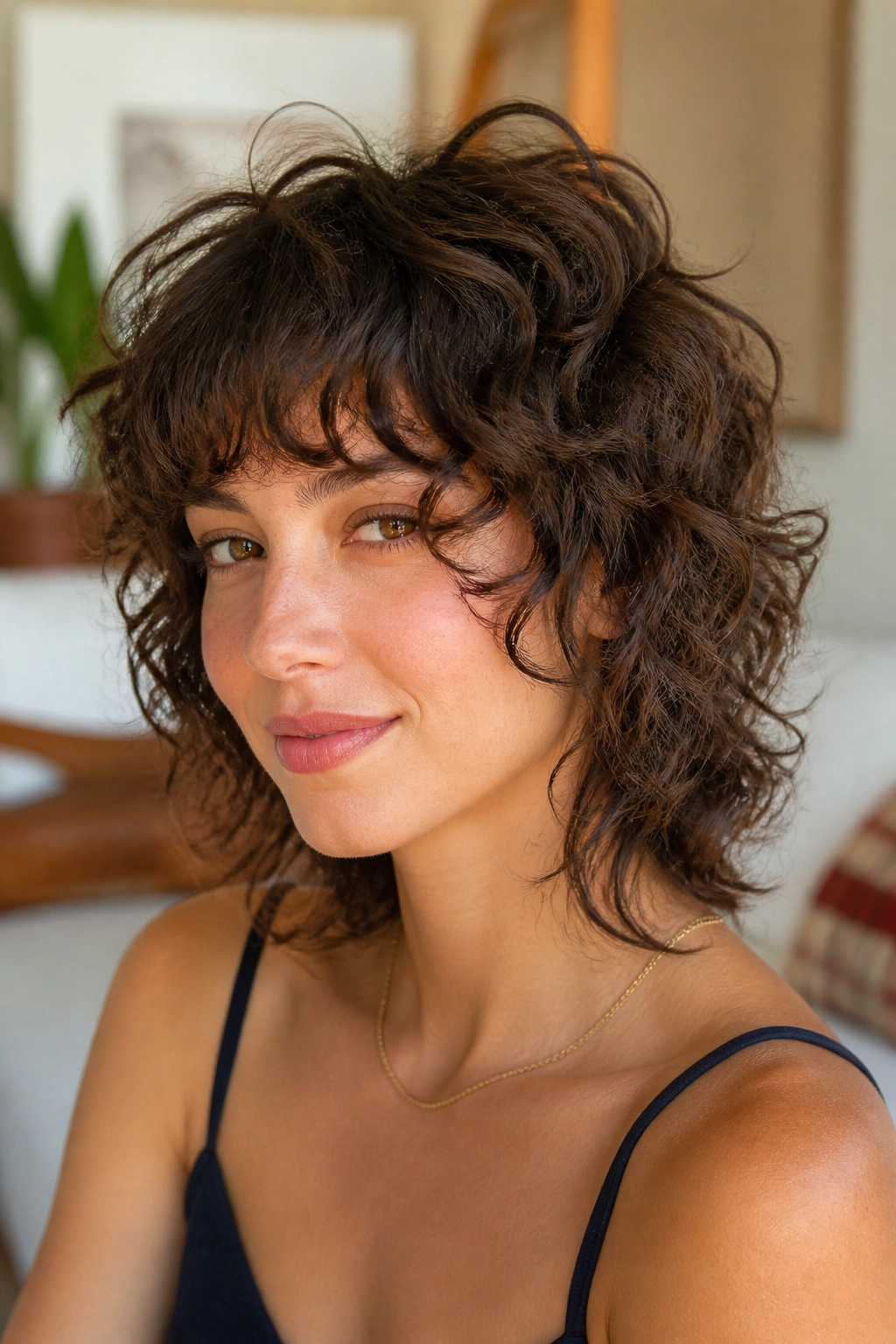
The curly shag is not subtle, and that’s exactly why it works so well on wavy hair. Layers cut through the crown and sides create lift, while the length keeps the ends from puffing out like a triangle. Done right, it looks undone in the best possible way.
I like this cut most on thick waves that resist being controlled. A blunt bob can feel too boxed in on that texture. The shag gives the hair room to breathe, which matters when you have density and movement fighting each other. It also softens a strong jawline and makes a wider forehead feel less dominant.
The one thing to watch: the shortest layers should not land too high unless you want real volume. A good stylist will keep the shape balanced so it looks airy, not choppy for the sake of being choppy. Let it air-dry with a curl cream or mousse, then separate the finished waves with dry hands. Do not rake through it with a brush unless you want the style to lose its shape.
5. Blunt Micro Bob
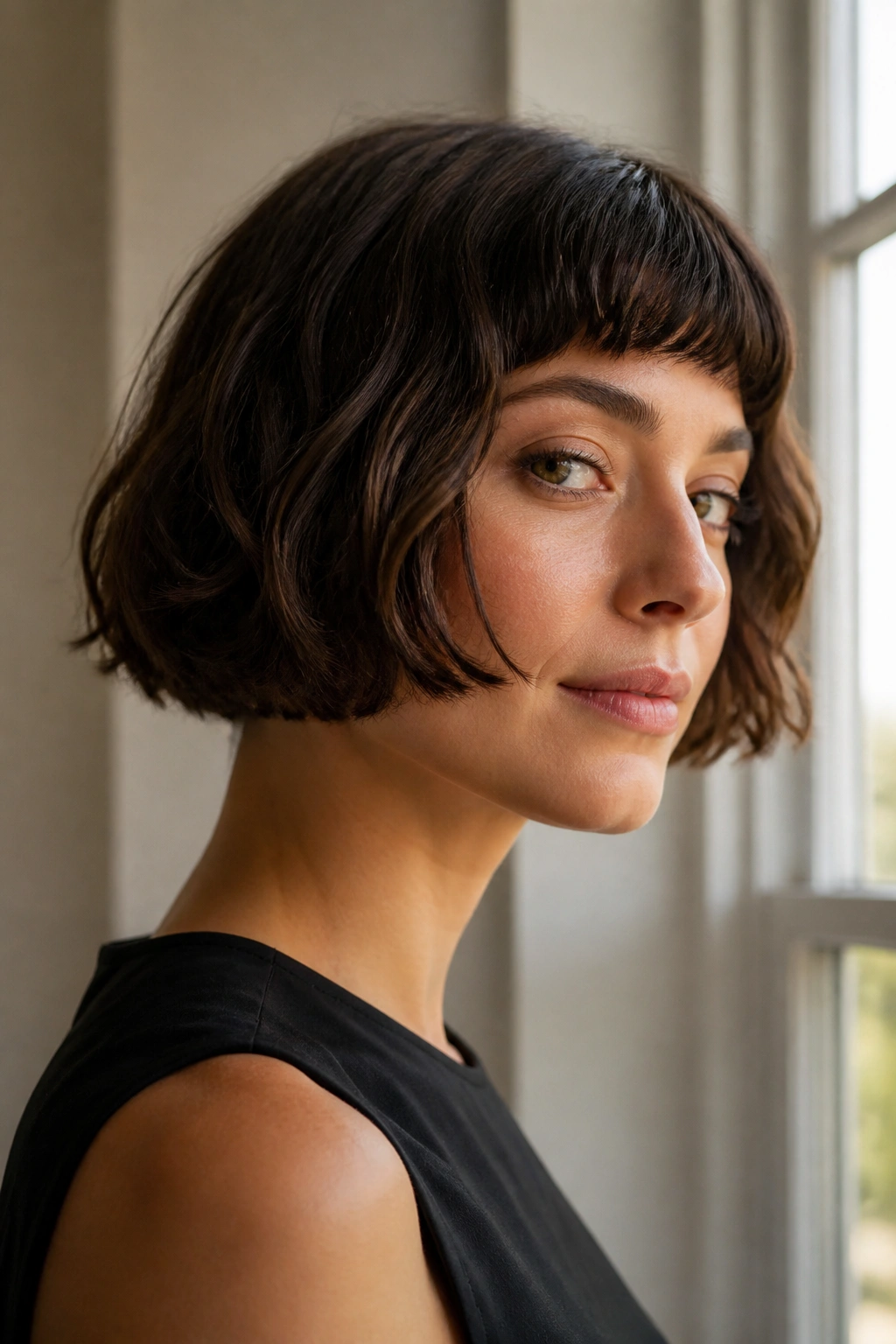
A blunt micro bob is a power cut. It sits somewhere between the ear and the jaw, and it looks clean, almost graphic, on the right wave pattern. If your hair is fine and your waves are loose, the blunt line can make the hair look fuller than it is.
This cut is not the friend of frizz-heavy, very thick hair unless the shape is carefully controlled. The edge needs to be crisp, or the whole thing can blur into a mushroom shape. That is why a micro bob benefits from a precise cut and a styling routine that keeps the finish smooth: a light leave-in, a small round brush at the ends, and a finishing cream that seals the surface.
Compared with a shag, this cut is far less forgiving. But it has a stronger fashion feel. If you want a short cut that looks intentional even when you barely touch it, the blunt micro bob earns its place.
6. Jaw-Length Crop With Side Part

A jaw-length crop with a side part is one of those cuts that makes wavy hair look smarter without trying too hard. The side part shifts the volume off-center, which is useful if one side of your hair always flips harder than the other. It also draws the eye diagonally, which can soften a square face.
Why It Works at the Jaw
Waves naturally want to sit around the jawline, so this length often falls right where the hair wants to go anyway. That reduces the fight. Less fighting usually means better hair.
Ask for This
- A clean perimeter at the jaw
- Soft interior texture, not heavy layering
- A parting that follows your natural growth pattern
Use a lightweight mousse at the roots, then dry the top in the opposite direction for a minute before flipping the part back. It gives you lift without a lot of heat. The result feels tidy, but still has movement. That balance matters.
7. Swing Bob With Soft Layers
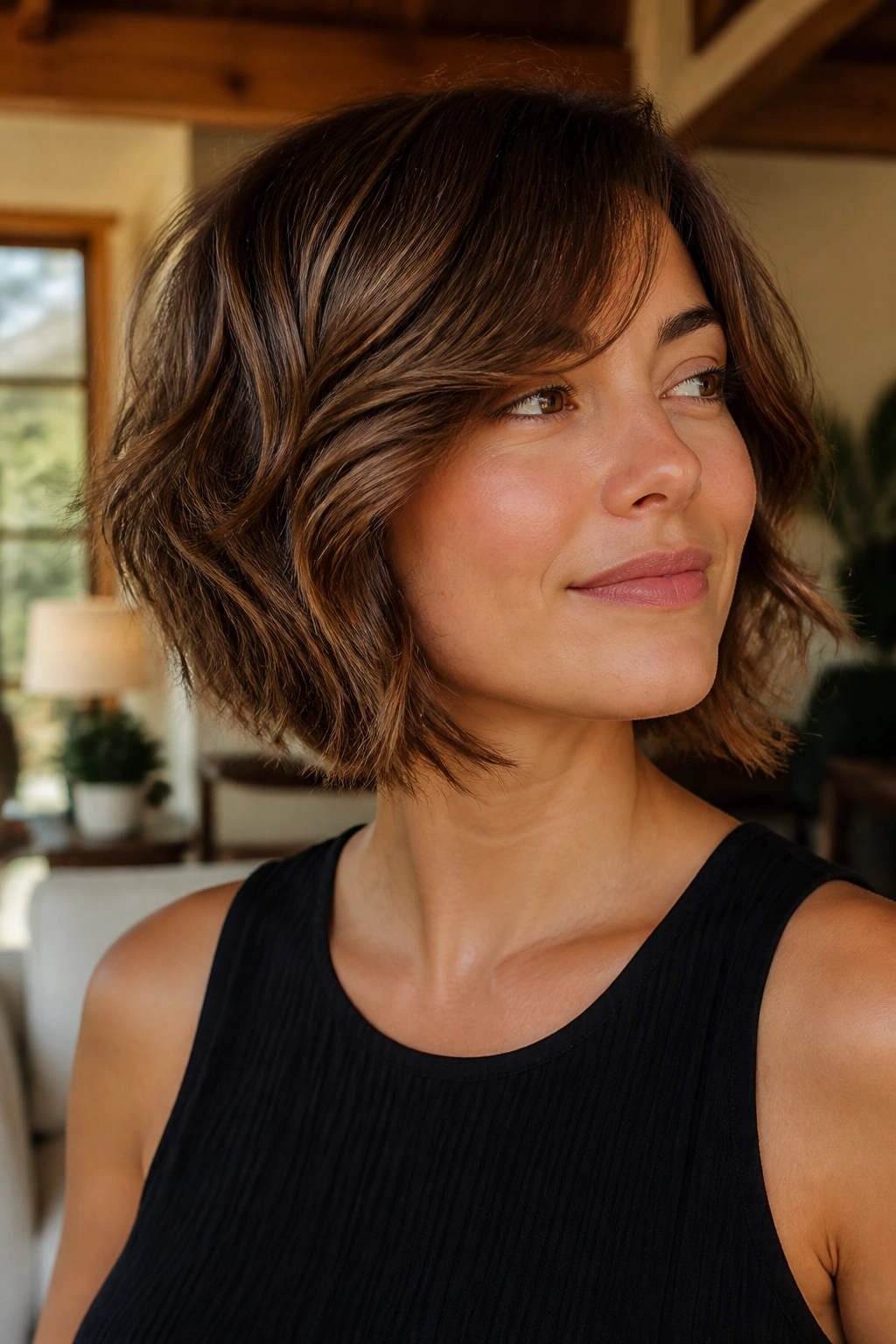
A swing bob gives wavy hair motion from back to front. The back sits a little shorter, the front hangs a touch longer, and the whole shape seems to glide instead of sit still. It is one of the few short cuts that can make thick waves look light without stripping them apart.
The soft layers matter here. Too much layer and the “swing” becomes a choppy mess. Too little and you lose the shape. A good version should move when you turn your head, which sounds dramatic, but that little shift is what makes the cut look alive.
This one is a good pick if you want a bob that feels less formal than a blunt cut. It also works nicely with a tucked-behind-the-ear habit. If you like to wear one side neat and the other a little looser, the uneven motion becomes part of the style rather than a problem.
8. Asymmetrical Bob

An asymmetrical bob gives wavy hair a built-in angle, which is useful when you want the cut to do some of the styling for you. One side is longer, usually by a small but visible amount, and that difference makes the entire shape feel more modern and less predictable.
The longer side helps wave patterns fall in a more interesting way. It also can make a round face look a little slimmer because the eye follows the diagonal line. That said, the asymmetry should be obvious enough to matter, but not so extreme that the haircut starts feeling theatrical unless that’s your thing.
Styling stays simple. Air-dry with a curl cream, then shape the longer side with your fingers so it doesn’t flick outward at the wrong point. A side part usually works better than a center part here, since the off-balance length already wants visual movement. Clean, sharp, and a little bit cheeky. That’s the appeal.
9. Shaggy Bixie
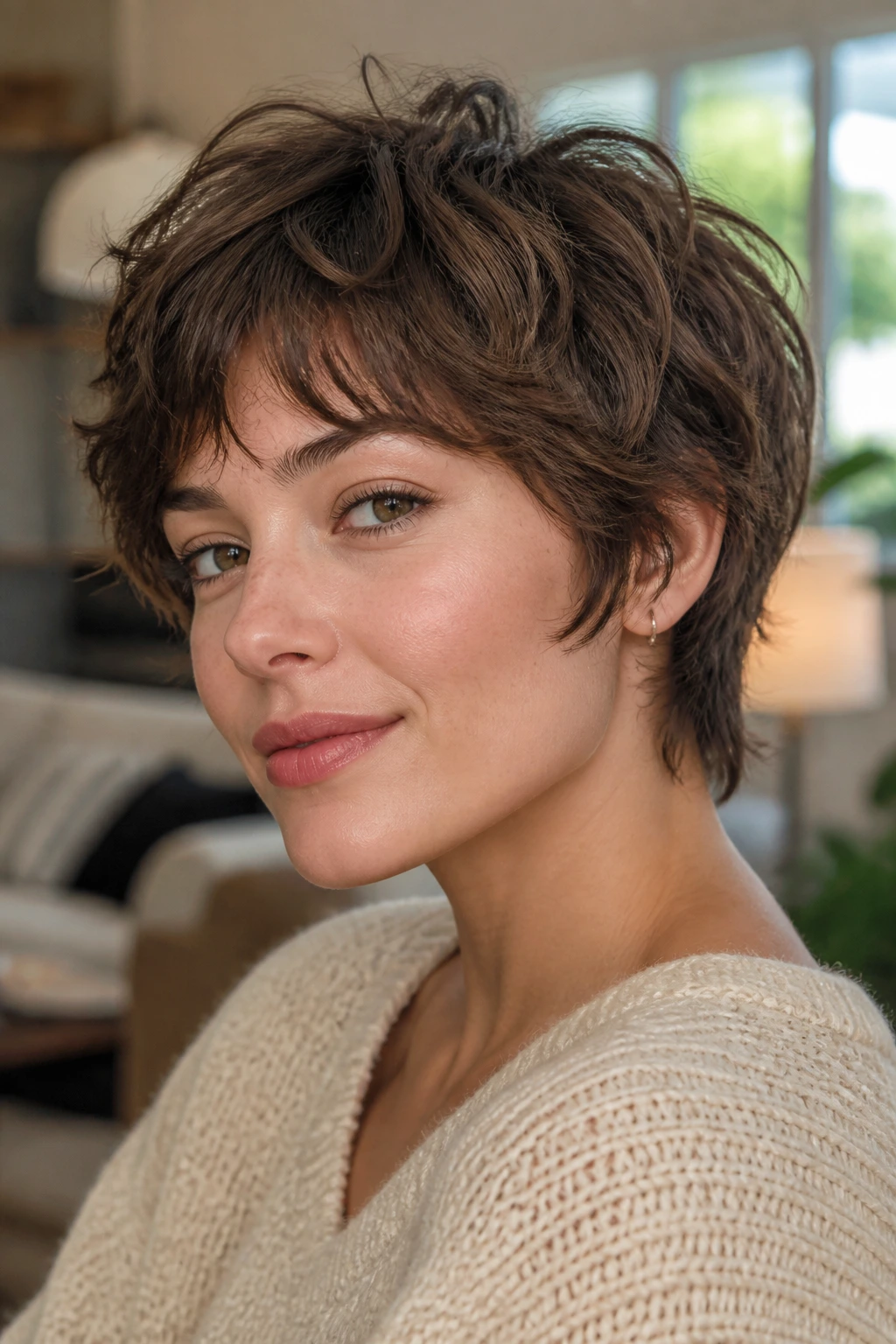
A bixie lives between a bob and a pixie, and the shaggy version is the one that tends to flatter waves best. It keeps enough length at the top and around the ears to show texture, while the lower sections stay close enough to the head to avoid bulk.
This cut shines when the hair has medium density. Thin hair can look a little wispy if the layers are too aggressive; thick hair can look too wide if the nape is left bulky. The shaggy version splits the difference with soft, uneven layers and a fringe that can fall forward or be swept aside.
There’s a nice advantage here: it grows out in stages that still look deliberate. First it reads as a bixie. Then it starts edging into a mini shag. That in-between phase can be better than the original cut, which is not something every haircut can claim.
10. Side-Parted Italian Bob
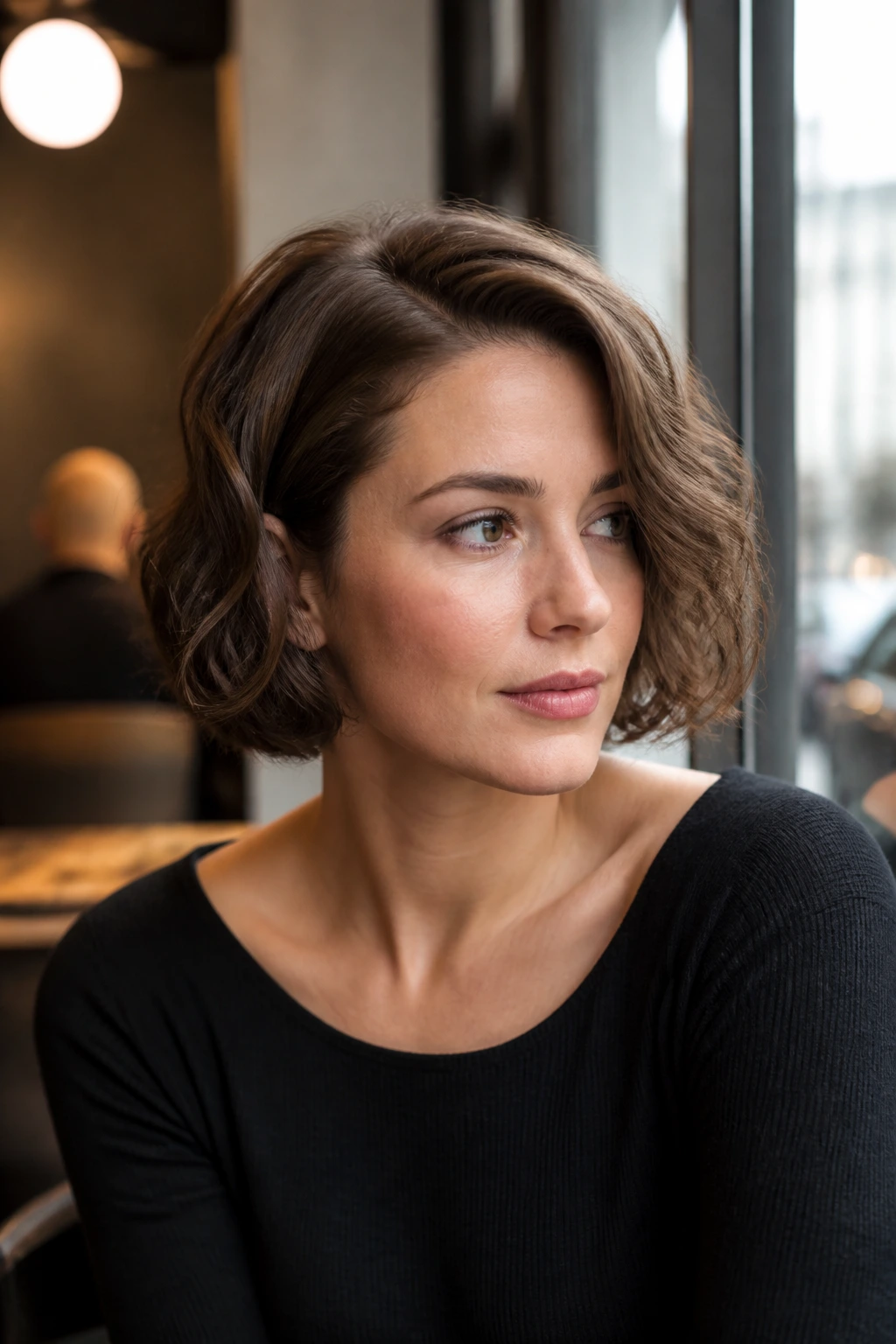
The side-parted Italian bob has a fuller, richer shape than a lot of short cuts. It usually hits around the chin or a touch below, with enough body through the middle to keep the waves looking plush instead of flat. If you want softness without layers everywhere, this is a strong choice.
What makes it feel different is the weight. The ends are not over-chipped away, so the wave sits in broad curves rather than tiny pieces. That gives the hair a more relaxed, expensive-looking finish without needing a lot of styling. A side part adds lift at the crown and stops the style from collapsing at the part line.
This is a good haircut for people who like a little old-school glamour. Not stiff glamour. More the kind that looks like you tucked it behind one ear after lunch and somehow the whole thing improved.
11. Ear-Grazing Crop With Tucked Ends
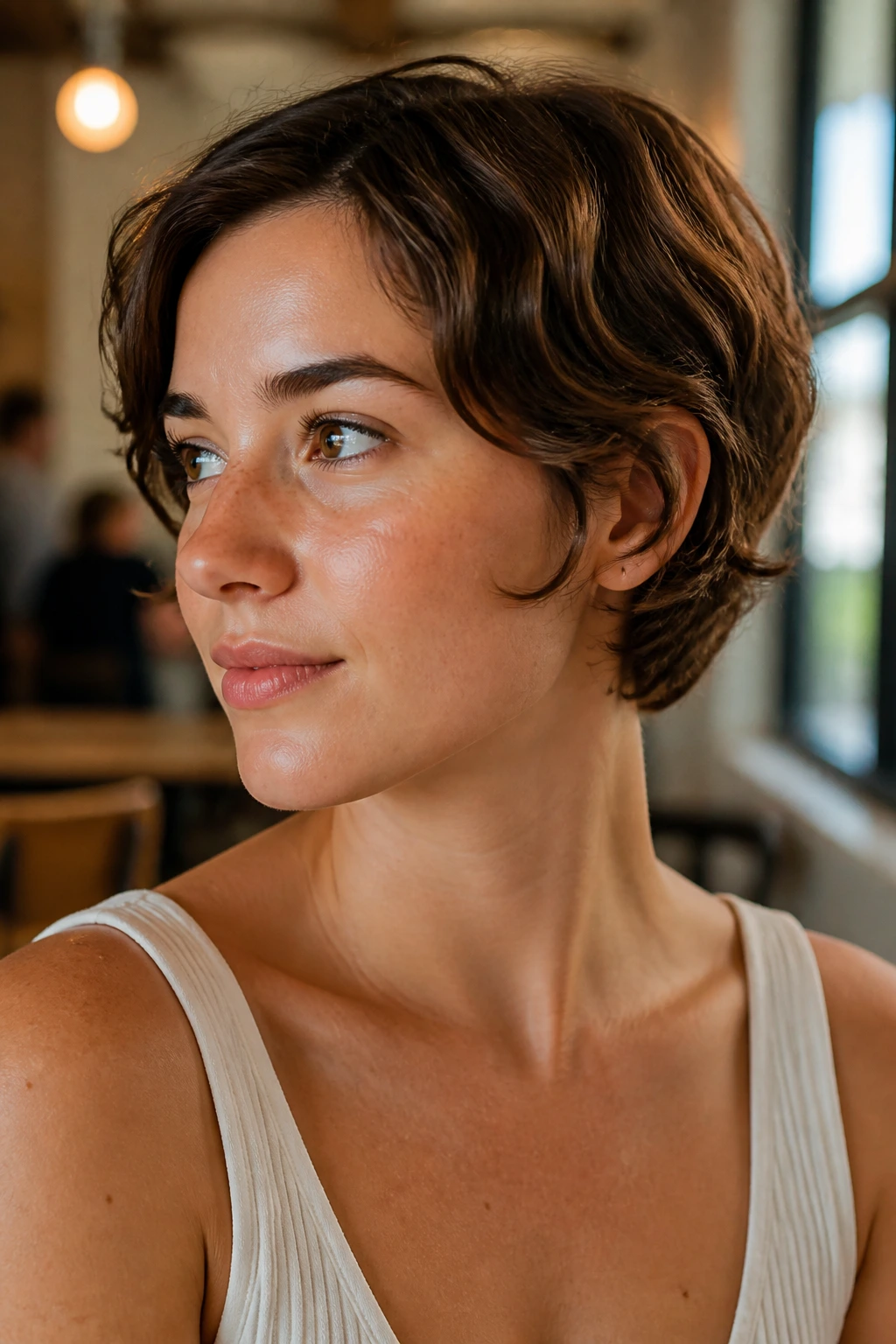
An ear-grazing crop is one of the shortest options here, and it works because the wave pattern gets to show right away. There is no extra length hanging around to drag the style down. The ends sit close to the ears, sometimes curling in, sometimes flicking out a little, which gives the cut its own personality.
What to Watch For
This cut needs careful balance around the temples. If the sides get too short, the face can look wider. If they stay too heavy, the crop loses the clean shape that makes it interesting.
A tiny amount of matte paste can keep the ends tucked where you want them. Or don’t touch them much at all. That’s part of the charm.
Who It Suits Best
- Fine or medium waves
- People who like short neck lines
- Anyone who wants easy mornings
It is not the most forgiving cut, and I would not recommend it to someone who hates seeing their natural wave pattern. It is honest. That honesty is the point.
12. Wavy Crop With Curtain Bangs
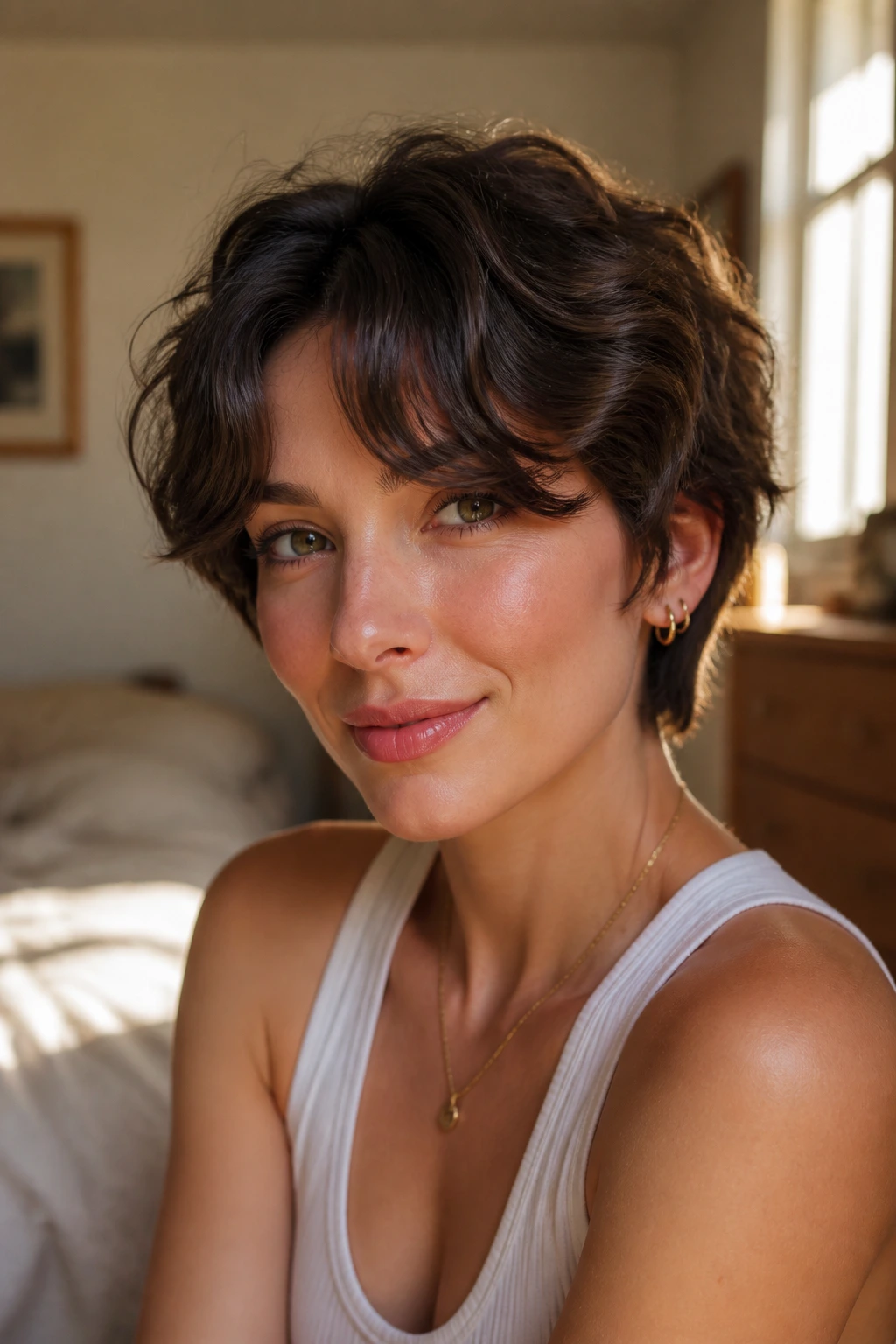
Can bangs and short wavy hair get along? They can, if the bangs are soft enough. Curtain bangs split the front in the middle or just off-center, so they blend into the rest of the haircut instead of sitting like a hard line across the forehead.
How the Shape Works
The crop keeps the sides tidy while the fringe brings softness around the eyes and cheekbones. That combo is useful if you want a short cut that still feels a little romantic. It also helps balance a longer face because the fringe breaks up vertical length.
Styling Notes
- Dry the bangs first so they don’t separate weirdly later.
- Use a light cream, not a heavy oil.
- Trim the fringe before it starts covering the eyes in a way that annoys you.
This cut is more flexible than people expect. You can wear the bangs brushed open, tucked to one side, or left loose after a quick scrunch. The crop underneath keeps the whole thing from turning heavy.
13. Rounded Bob
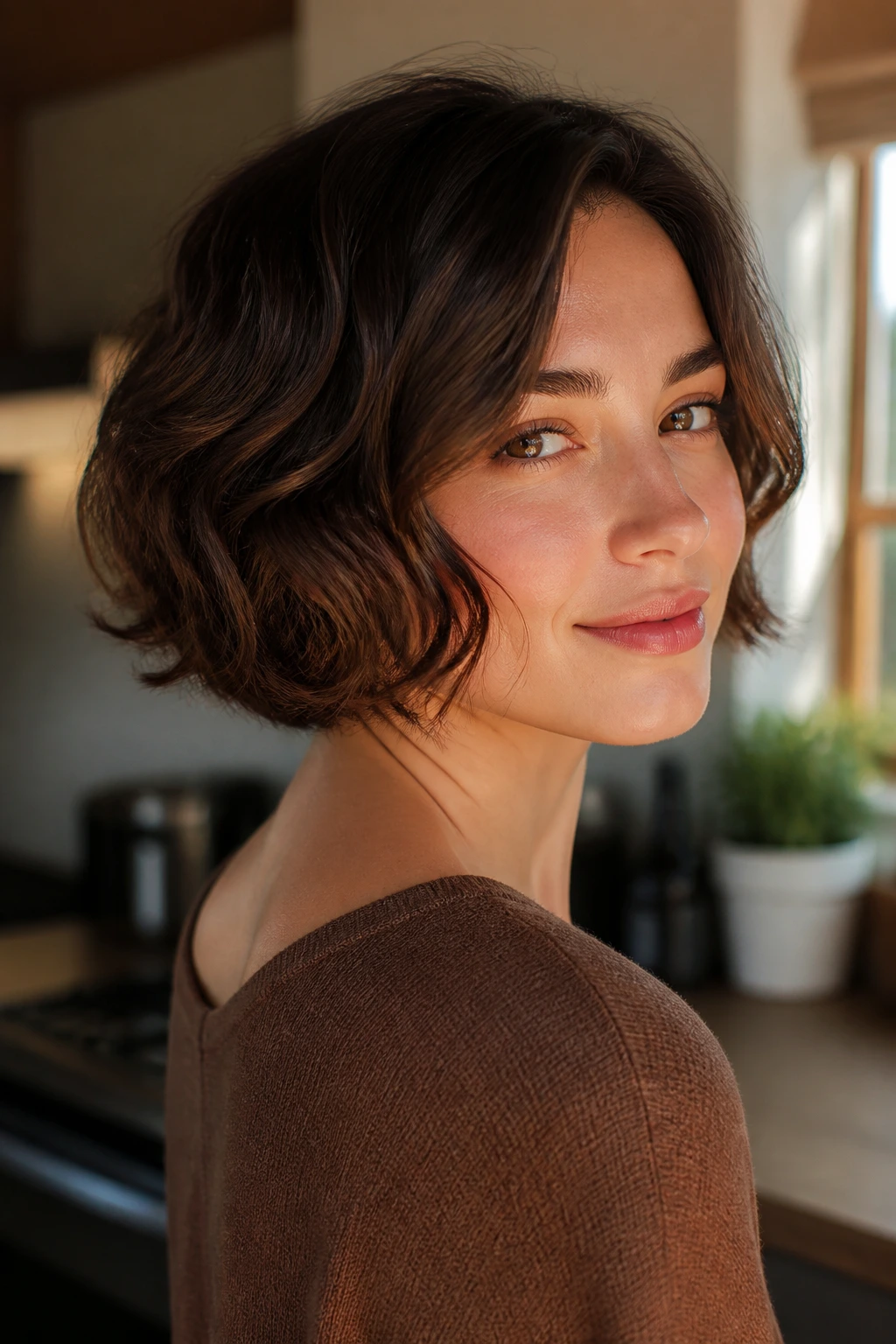
A rounded bob hugs the head in a softer curve than a blunt bob. On wavy hair, that curve can be gold. It lets the wave fill out the silhouette without making the ends look boxy, and it gives thick hair a more controlled shape.
This cut is especially good if your hair has a tendency to poof at the sides. The roundness contains that width and directs it inward. That sounds technical, but in practice it just means the haircut looks smoother when you turn your head. A small amount of internal layering can help, but the perimeter should stay clean enough to keep the curve visible.
I like this cut for anyone who wants polish without a stiff finish. It can lean elegant, but not formal. Air-dry it if you want the natural bend to show, or use a medium round brush for a more tucked-under look. Both work. The shape does most of the heavy lifting.
14. Wolf Cut Lite
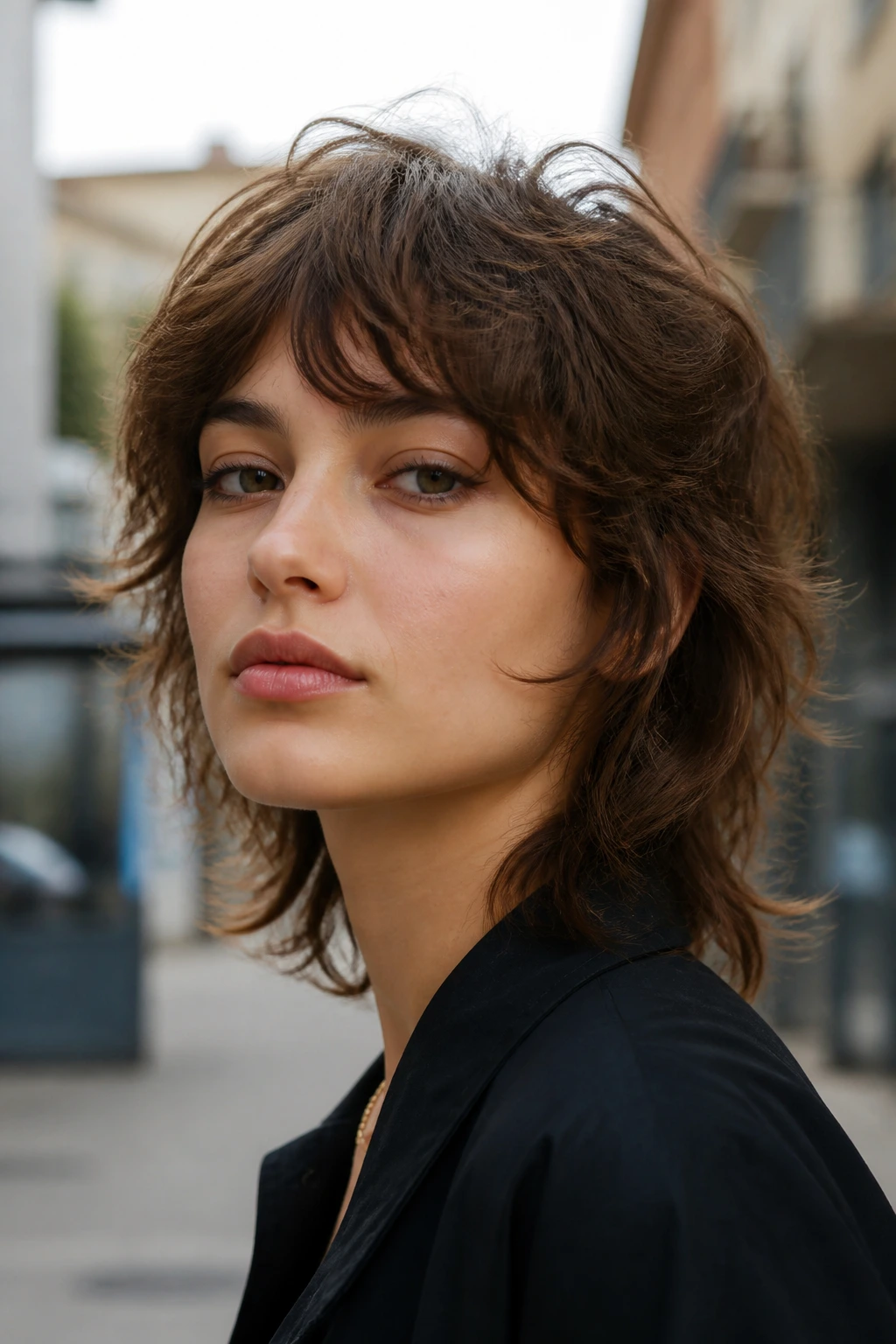
The wolf cut gets talked about a lot, and for good reason — but the full version can be a lot on short hair. A wolf cut lite keeps the spirit of it: movement at the crown, loose ends, and a little wildness around the face. What it leaves behind is the extreme mullet edge that makes some people back away.
This version suits wavy hair that likes volume but not total freedom. The crown layers lift the top, while the lower sections stay soft enough to keep the shape wearable. You get texture without looking like you lost a bet with a razor.
It also gives you options. Scrunch it with mousse for a more obvious shape, or blow-dry the top smooth and let the ends do their thing. Either way, it looks better when it has a bit of dirtiness to it. Too polished and the cut loses its point.
15. Piecey Pixie Bob
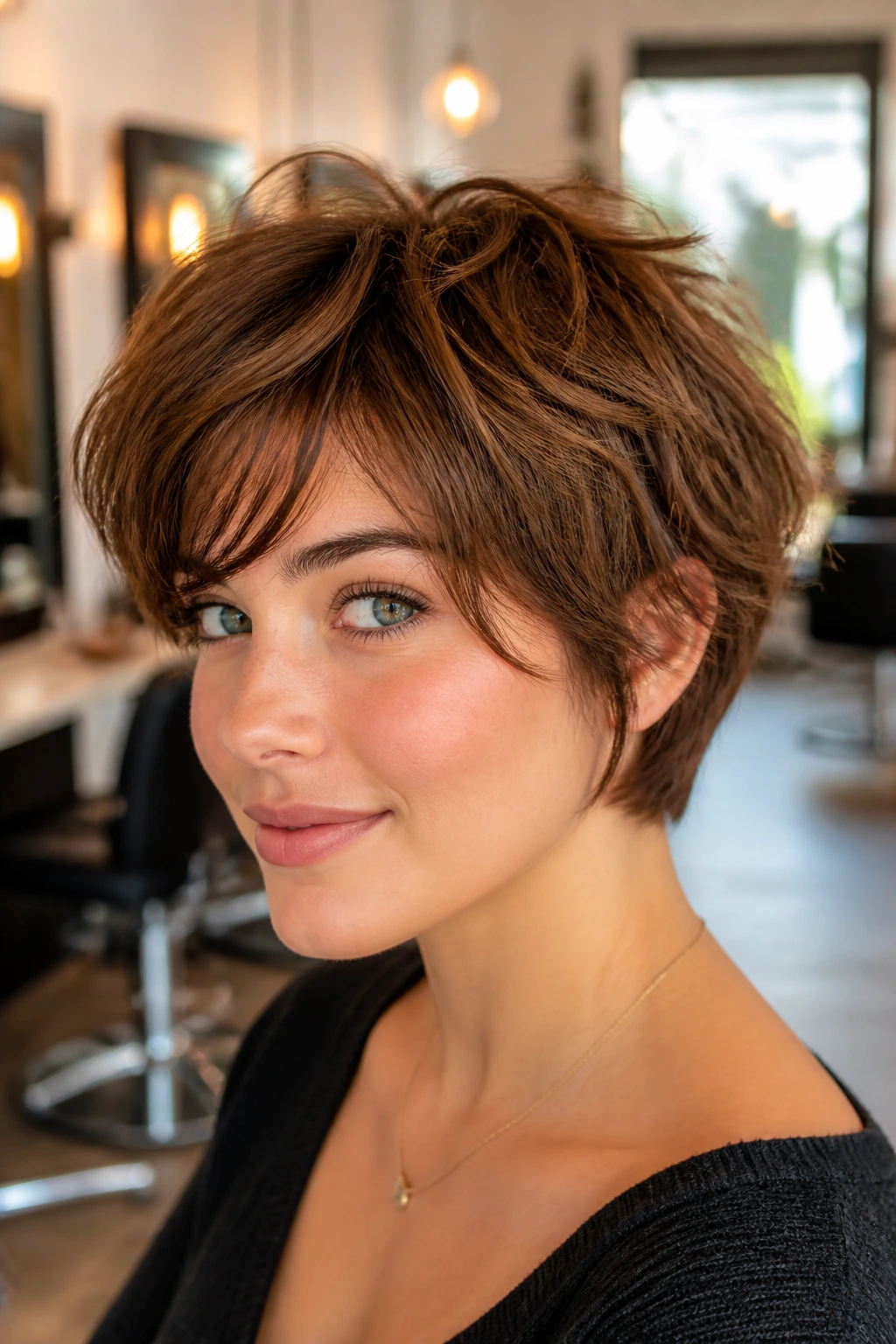
A piecey pixie bob sits in that sweet middle ground where the hair is short but still has enough length to move. The “piecey” part matters. It’s what keeps the cut from turning helmet-like. You want visible separation at the top and around the fringe, not one solid block.
This is a strong choice for medium-density waves because it keeps body without bulk. The back can be tapered, the sides trimmed close, and the top left long enough to flip, sweep, or tuck. That little bit of length changes everything. It gives you options on days when you want the style to look neat, and it gives you texture on days when you don’t.
A wax stick or a very small amount of paste is enough. More than that and the pieces start sticking together in a way that looks heavy. This cut likes light hands.
16. Neck-Length Chop
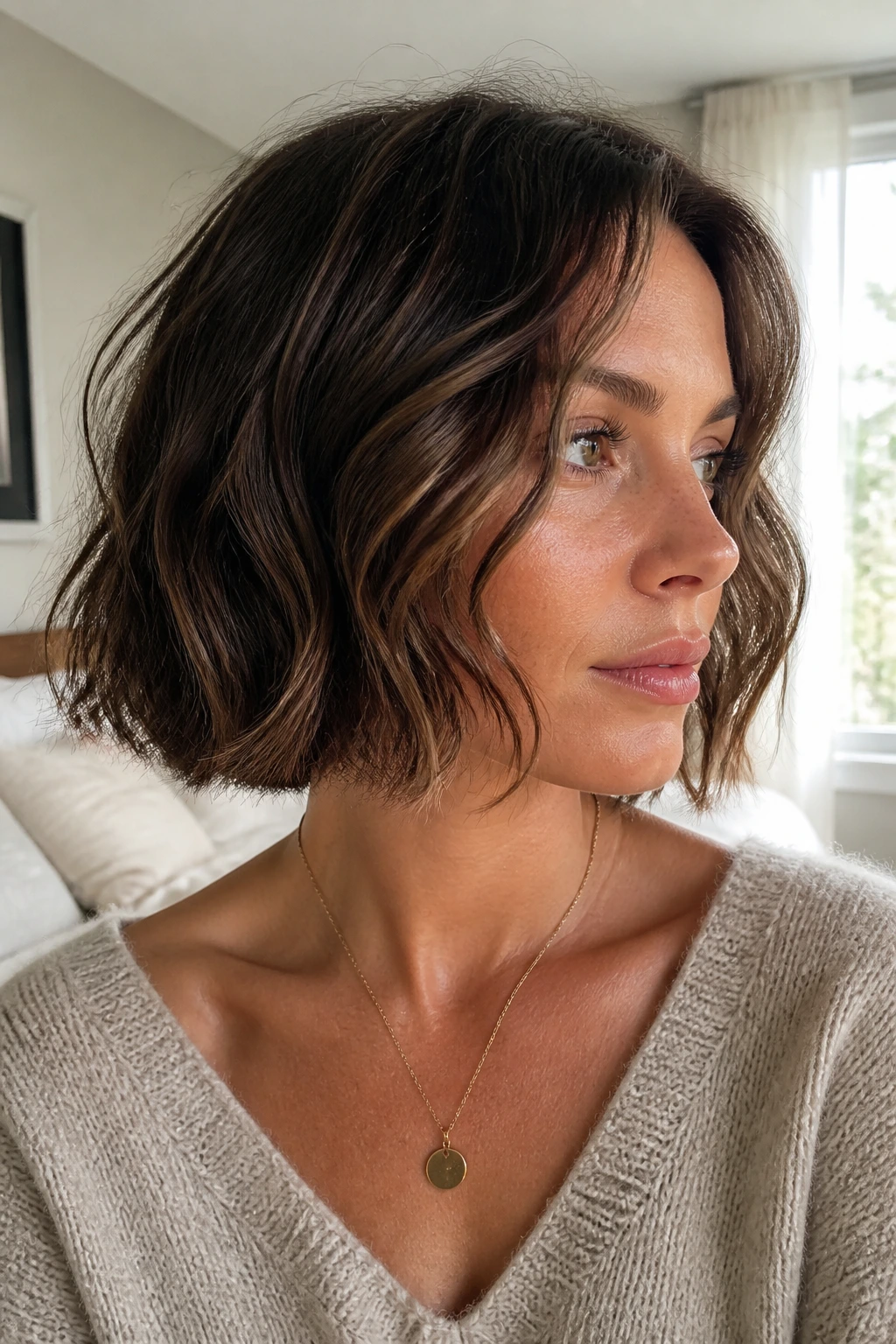
A neck-length chop is a blunt, low-drama haircut that gives wavy hair a clean stage. It sits right above or at the base of the neck, which means the hair has enough length to bend, but not enough to collapse into the shoulders. That makes it a useful cut for people who want short hair without the precision of a micro bob.
The beauty here is simplicity. There is no need to over-layer it. In fact, the haircut usually looks better when the edge stays solid and the wave pattern builds the movement inside the line. A little leave-in conditioner can keep the surface smooth, especially if your waves tend to frizz as they dry.
This cut also plays well with a slightly messy finish. You can bend the front away from the face with your fingers and let the rest fall where it wants. If you like your hair to look naturally arranged rather than styled within an inch of its life, this one makes sense.
17. Soft Undercut Bob
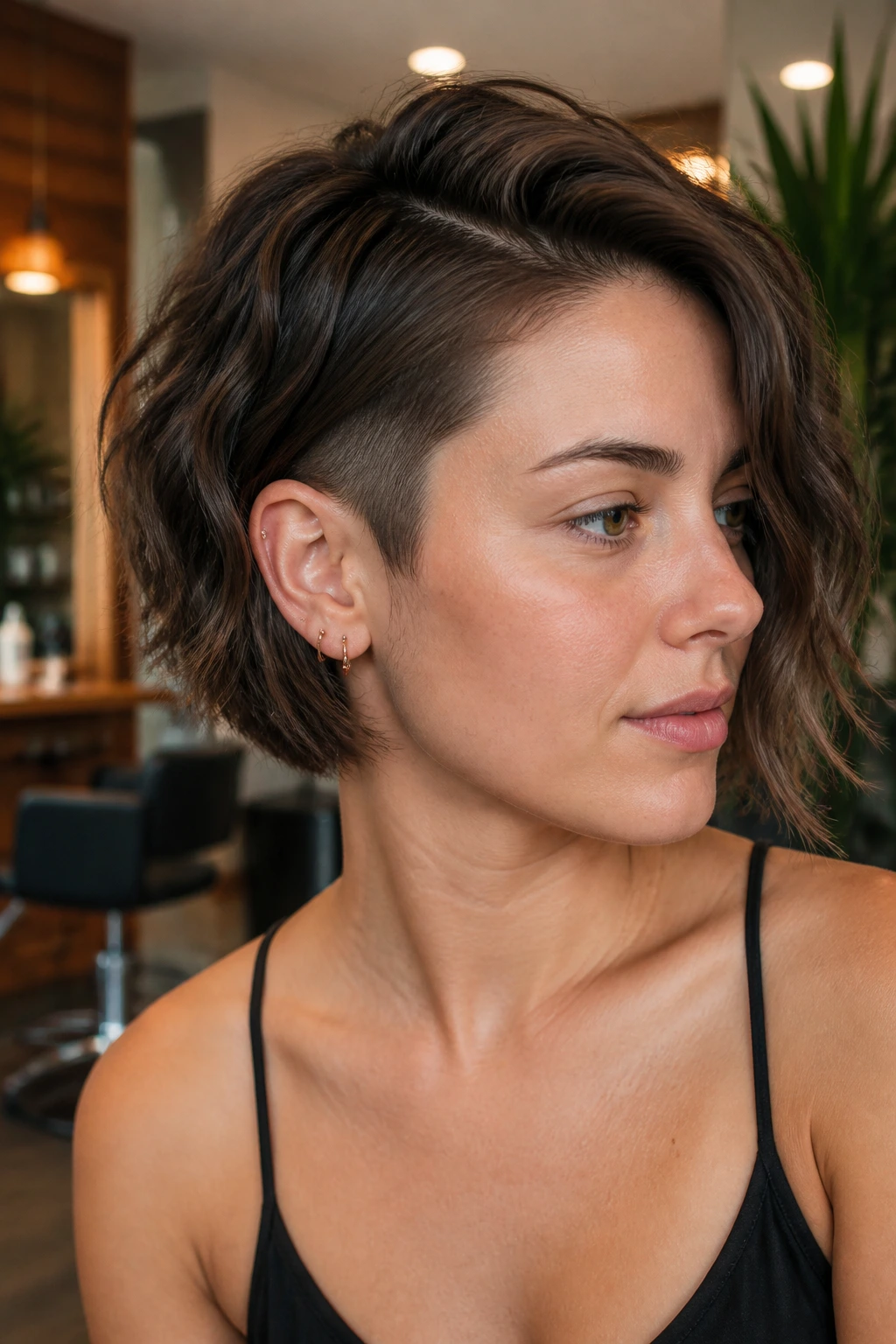
A soft undercut bob solves a problem many dense-waved people know well: too much bulk under the top layer. By removing some weight from underneath, the stylist lets the visible top layer sit flatter and move better. The shape still looks like a bob, but the inside feels lighter.
That hidden removal can be a relief in humid weather or for hair that poofs at the nape. It also keeps the cut from expanding out sideways, which is a common issue with thick waves. The trick is keeping the undercut soft enough that the haircut still looks like a bob from the outside, not a shaved style in disguise.
This one is a little more maintenance-heavy than a blunt chop, since the undercut grows fast enough to get annoying. Still, for someone who is tired of fighting bulk every morning, it can feel like a breath of fresh air. Less puff. More shape.
18. Feathery Crop

A feathery crop is all about light ends and a soft outline. On wavy hair, that feathering helps the bends separate naturally so the haircut looks airy instead of rigid. It is a good option when the hair is fine, flat, or easily weighed down by heavy lines.
What Makes It Different
The feathering should happen at the edges, not all over the head. That keeps the shape from getting too wispy. A clean root area with feathered ends is usually the smarter balance.
Styling That Helps
- Use foam or mousse at the roots for lift
- Blow-dry the crown with your fingers
- Finish with a dab of cream on the ends only
It works best when the goal is softness. Not volume for volume’s sake. Softness. The cut almost disappears into the wave pattern, which is exactly why it looks good. There is no hard edge fighting the hair.
19. Curved Inverted Bob
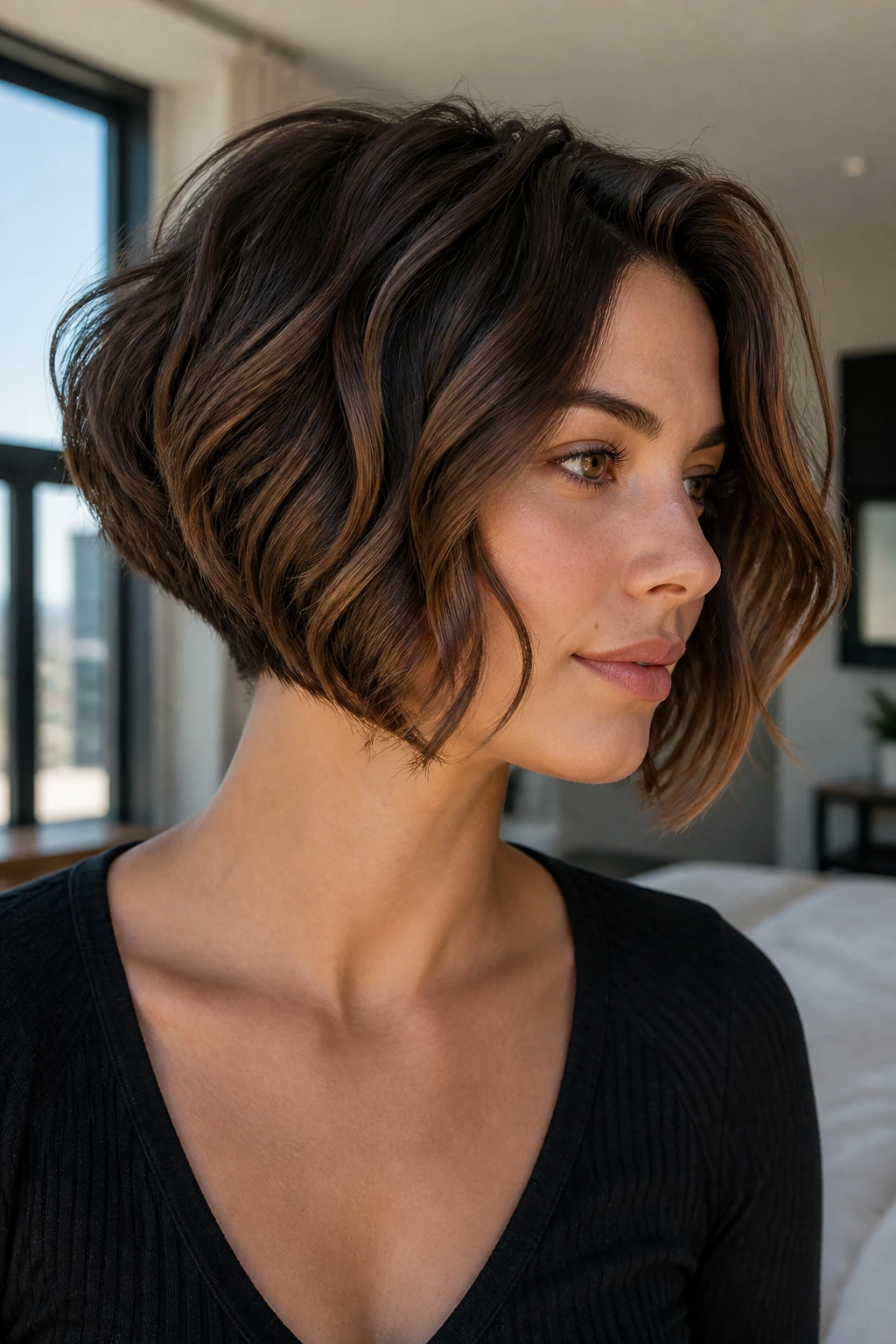
The curved inverted bob has a built-in shape that many wavy textures love. The back is shorter, the front is longer, and the whole line curves under the face instead of hanging straight down. That structure gives the haircut a bit of lift and keeps it from sitting flat.
This cut is especially useful if your hair tends to look heavy around the nape. The shorter back removes that weight, while the longer front gives you a bit of drama around the jaw. It can make the neck look longer, too, which is one of those small visual shifts people notice without always knowing why.
A curled-under finish looks beautiful here, but it is not required. Even air-dried waves can work if the front sections are coaxed slightly inward with your fingers. What matters most is the curve of the cut itself. The styling just confirms it.
20. Tousled Mushroom Cut

A modern mushroom cut can sound intimidating, and fair enough. The old-school version was rigid. The tousled version is different. It keeps the rounded silhouette but softens the line so the wave pattern can break through and keep the style from looking too controlled.
This cut works best on hair that wants to sit with a little width around the crown and sides. Instead of fighting that shape, the mushroom cut uses it. The edges are blurred with texture, and the fringe usually stays light enough to move. It has a fashion-forward feel without needing a lot of heat styling.
If you like haircuts that look a little editorial but still wearable, this is a fun one. It is not the easiest cut to explain to a nervous stylist, so bring clear photos and ask for softness around the edges. Hard lines defeat the point.
21. Slick Side-Part Bob
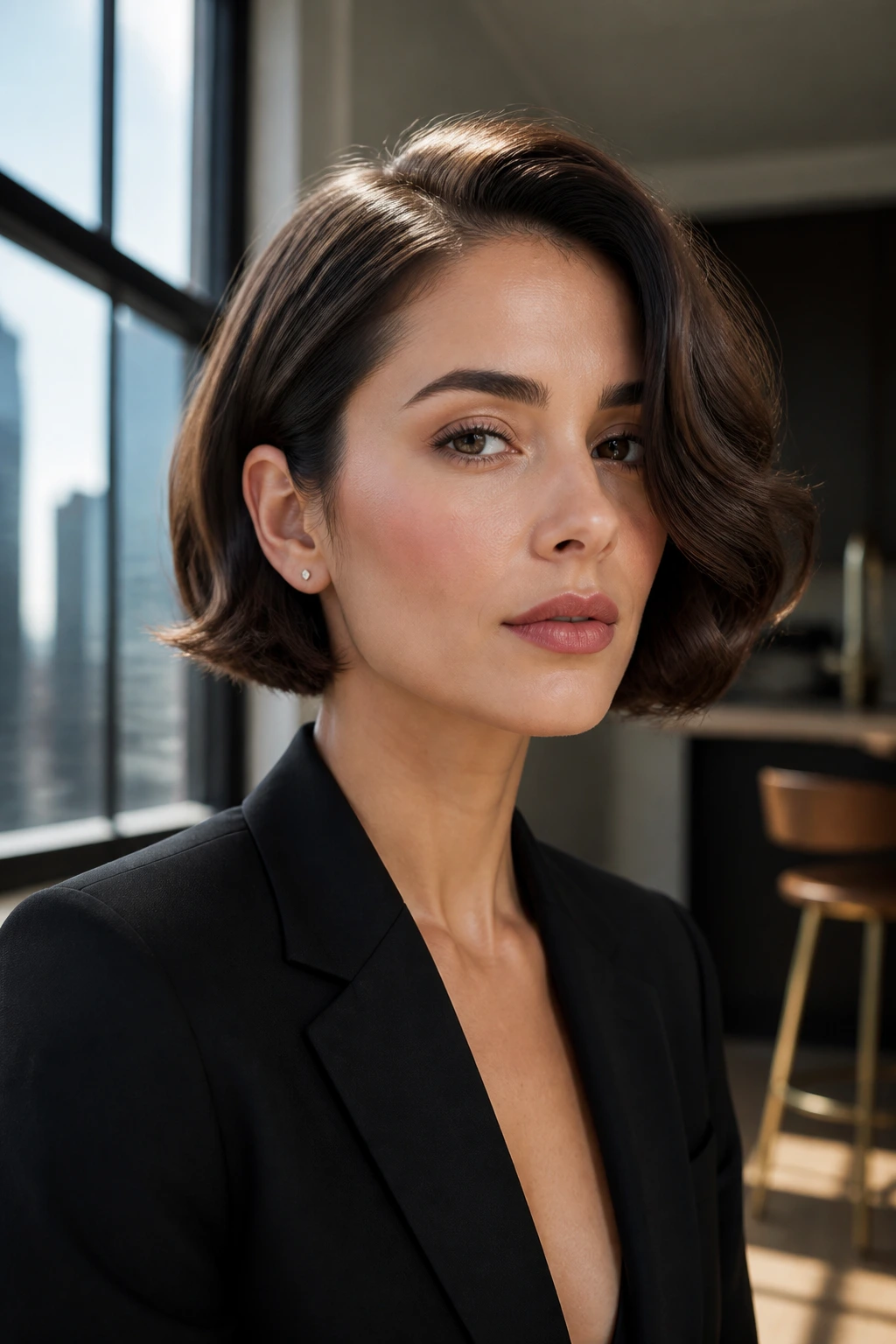
A slick side-part bob is what I reach for when someone wants wavy hair to look controlled without losing all of its personality. The side part adds height, the bob keeps the shape neat, and a smoothing product keeps the top from frizzing up the moment you leave the house.
The wave is still there. It just behaves better. That makes this cut useful for formal settings, work environments, or any day you want the hair to look finished rather than playful. A boar-bristle brush or a soft paddle brush can help direct the top section, while the ends keep a little bend so the cut doesn’t look flat.
This style reads differently from a loose bob. It is sharper. Less beachy, more deliberate. If your wave pattern is inconsistent and you need a haircut that can be polished in five minutes, this one earns its keep.
22. Choppy Bowl Cut

A choppy bowl cut is not for everybody, and that’s fine. The appeal is in the shape: rounded, close, and a little unexpected. On wavy hair, the choppiness breaks up what would otherwise be a strong, solid line, so the cut feels more relaxed and less costume-like.
The important part is keeping the edge soft. A true bowl line can be too severe if the hair is thick or the waves are coarse. Choppiness through the perimeter gives the cut life. It also stops the style from looking like a helmet, which is the risk everyone worries about first.
I’d suggest this to someone with a strong personal style and a willingness to lean into the shape. It is bold, but the wave pattern softens it in a way straight hair often can’t. That contrast is the point. A little strange, a little neat, and much better than a cut that tries too hard to be safe.
23. Razor-Textured Crop
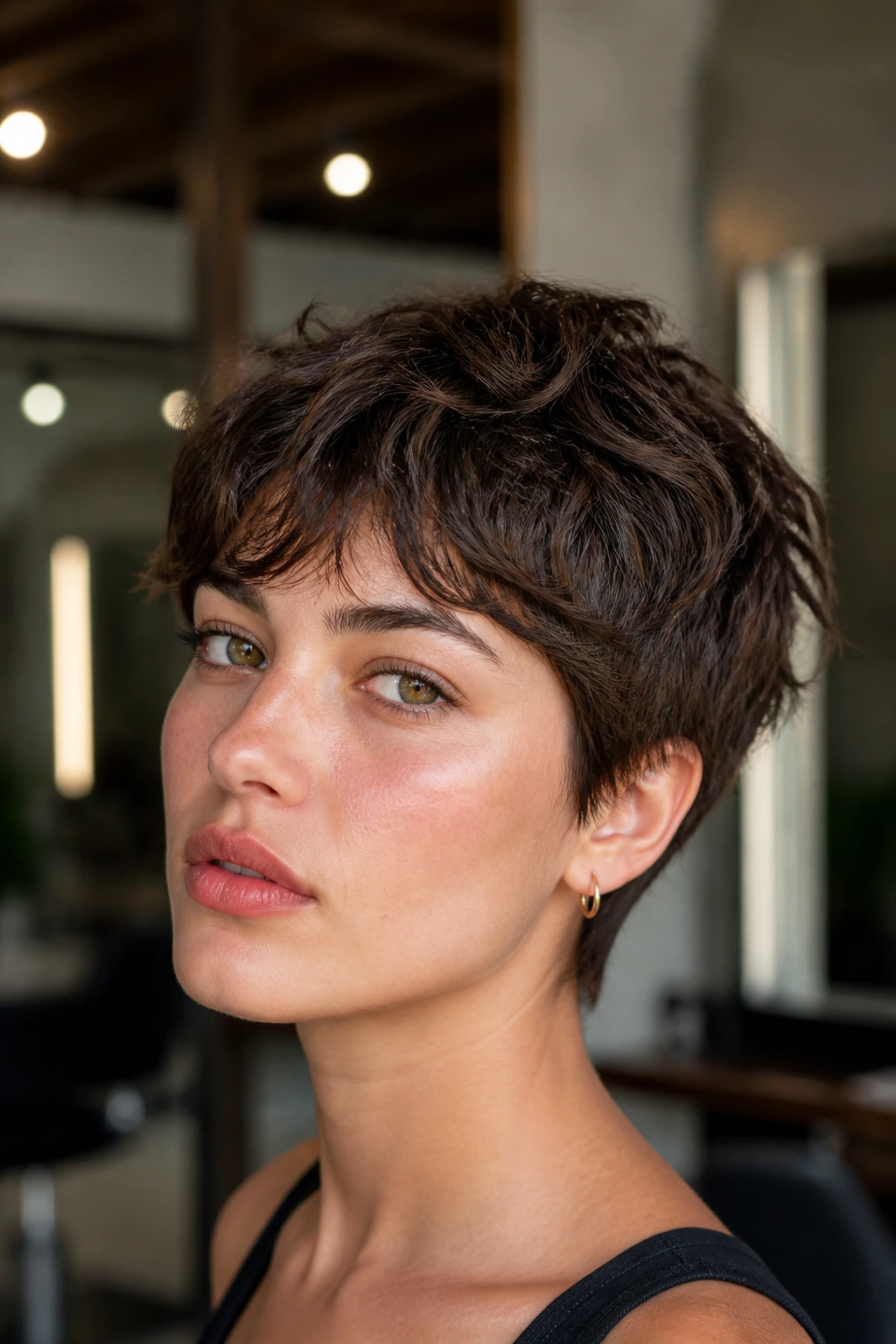
Razor texture can be beautiful on wavy hair when it is used with a light hand. The razor removes some bulk and leaves softer edges, which helps the hair bend more naturally around the face. But there is a catch: too much razor work can make the ends fray, especially on dry or porous hair.
That is why this crop works best with a stylist who knows where to stop. The goal is not to shred the hair. The goal is to take the roundness out of thick sections and let the wave pattern show through without a heavy outline. If the hair is coarse, a little razor softness can make the whole cut feel lighter within a day of washing.
This is a good pick for people who want texture built into the cut, not added with a ton of product. A pea-sized bit of cream, scrunched into damp hair, is usually enough. The crop should move first. The styling should just help.
24. Mini Mullet Bob
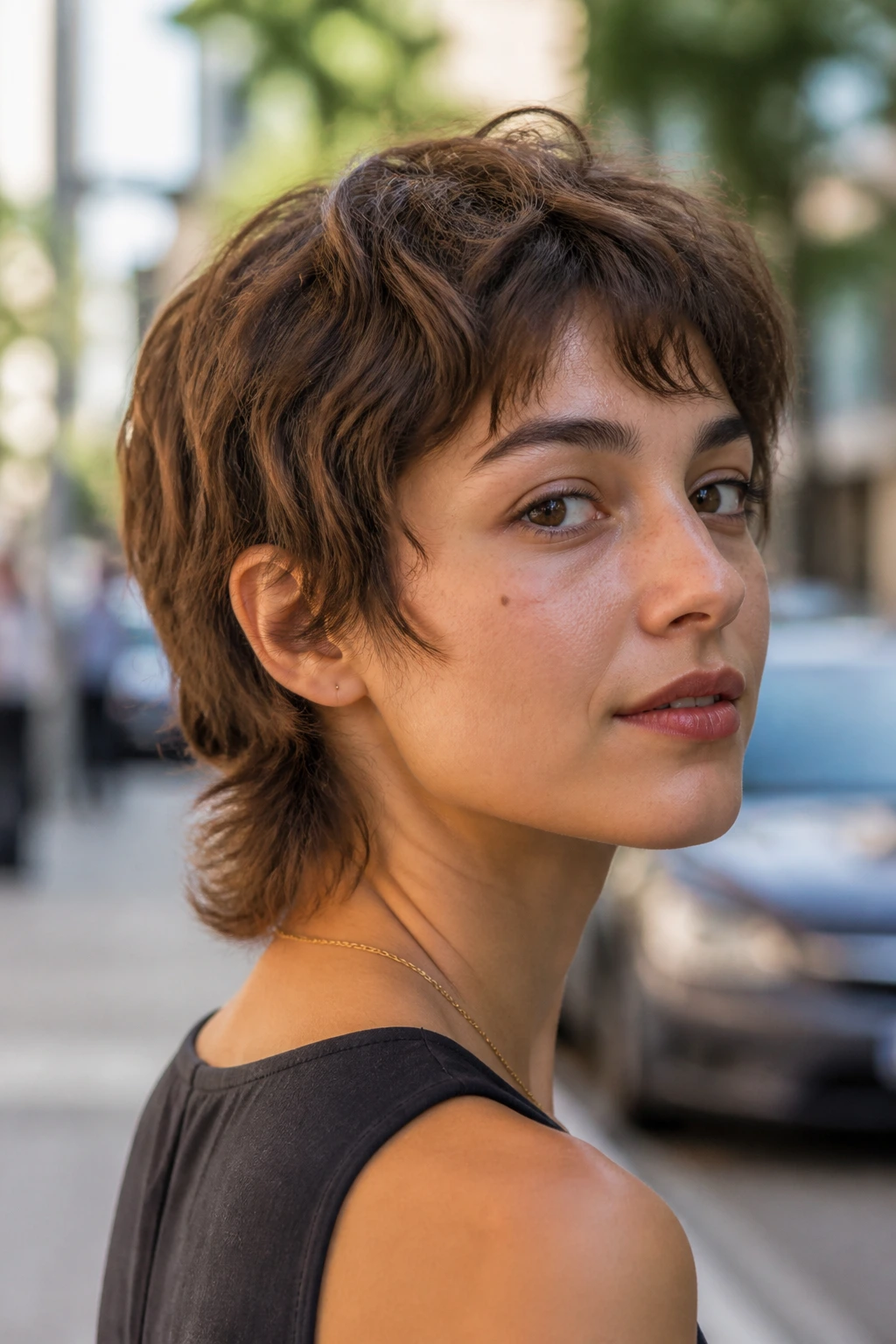
A mini mullet bob sounds playful because it is. The front and sides stay bob-like, while the back keeps a little extra length and movement. It is a useful compromise for wavy hair that needs more shape than a simple bob can give, but not the full drama of a mullet.
The reason it works is the back length. Waves often need a bit of room to curl or flip, and the longer nape gives them that room without letting the whole style get bulky. The front can stay light and face-framing, which keeps the cut wearable. The transition between sections should be soft, not abrupt.
This is one of those cuts that looks better when it’s slightly imperfect. A few loose pieces around the ears, a bend that falls forward, some lift at the crown — all of that belongs here. If your style leans edgy but not theatrical, this one hits a useful middle ground.
25. Graduated Bob
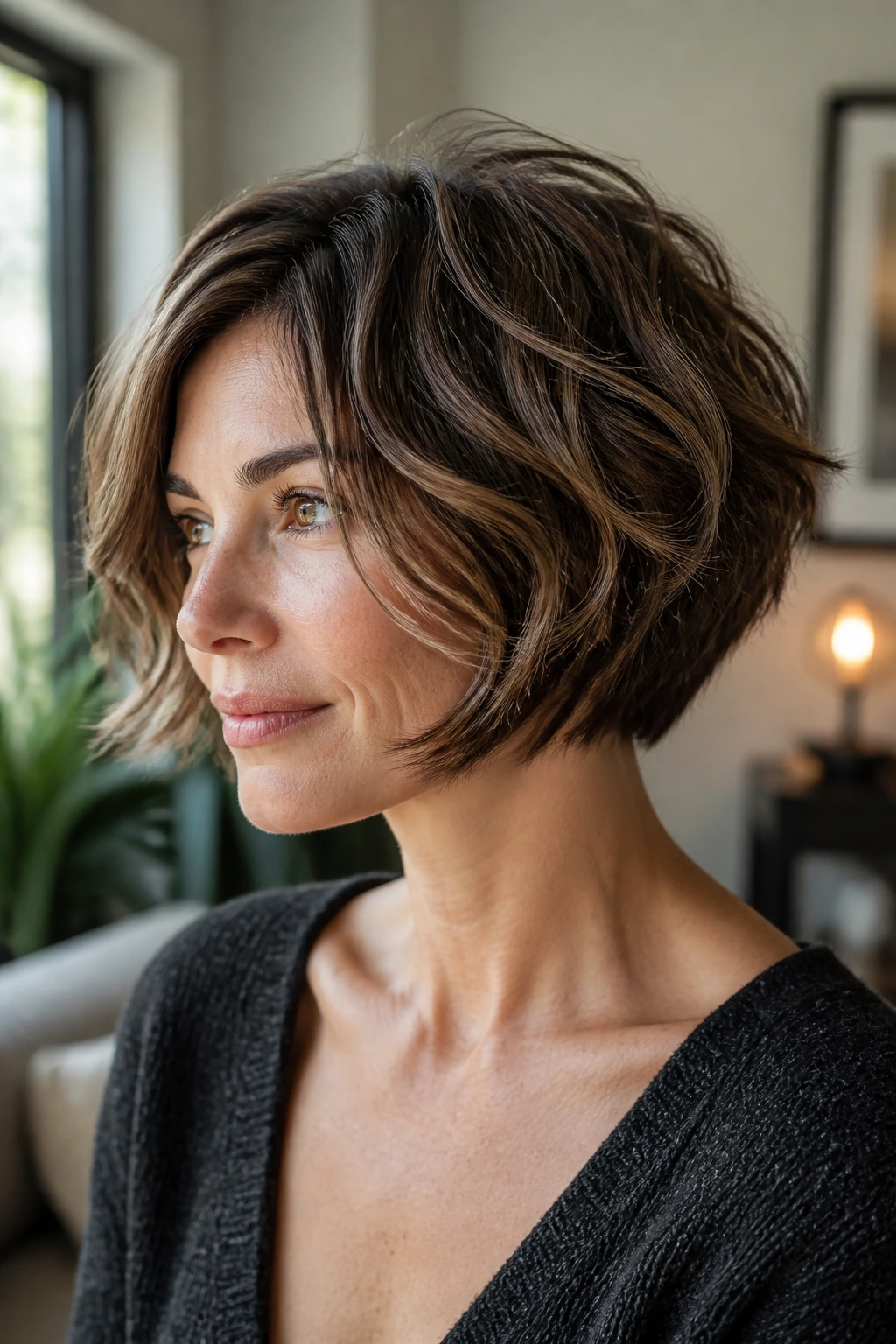
A graduated bob stacks more shape into the back, which can be a blessing for wavy hair that goes flat at the crown. The shorter layers underneath support the longer top section, so the haircut has built-in lift without needing a ton of blow-drying.
This cut is especially handy if you want the nape to sit close and tidy. It gives the neck a cleaner line and keeps the hair from puffing outward under jackets or collars. The front can still bend softly around the jaw, so the haircut does not feel too rigid.
Compared with a blunt bob, the graduated version has more structure. Compared with a shag, it has more control. That makes it a good middle path for someone who wants shape first and texture second. It’s a practical cut, honestly. Sometimes that is exactly what the hair asks for.
26. Long Pixie With Tapered Nape
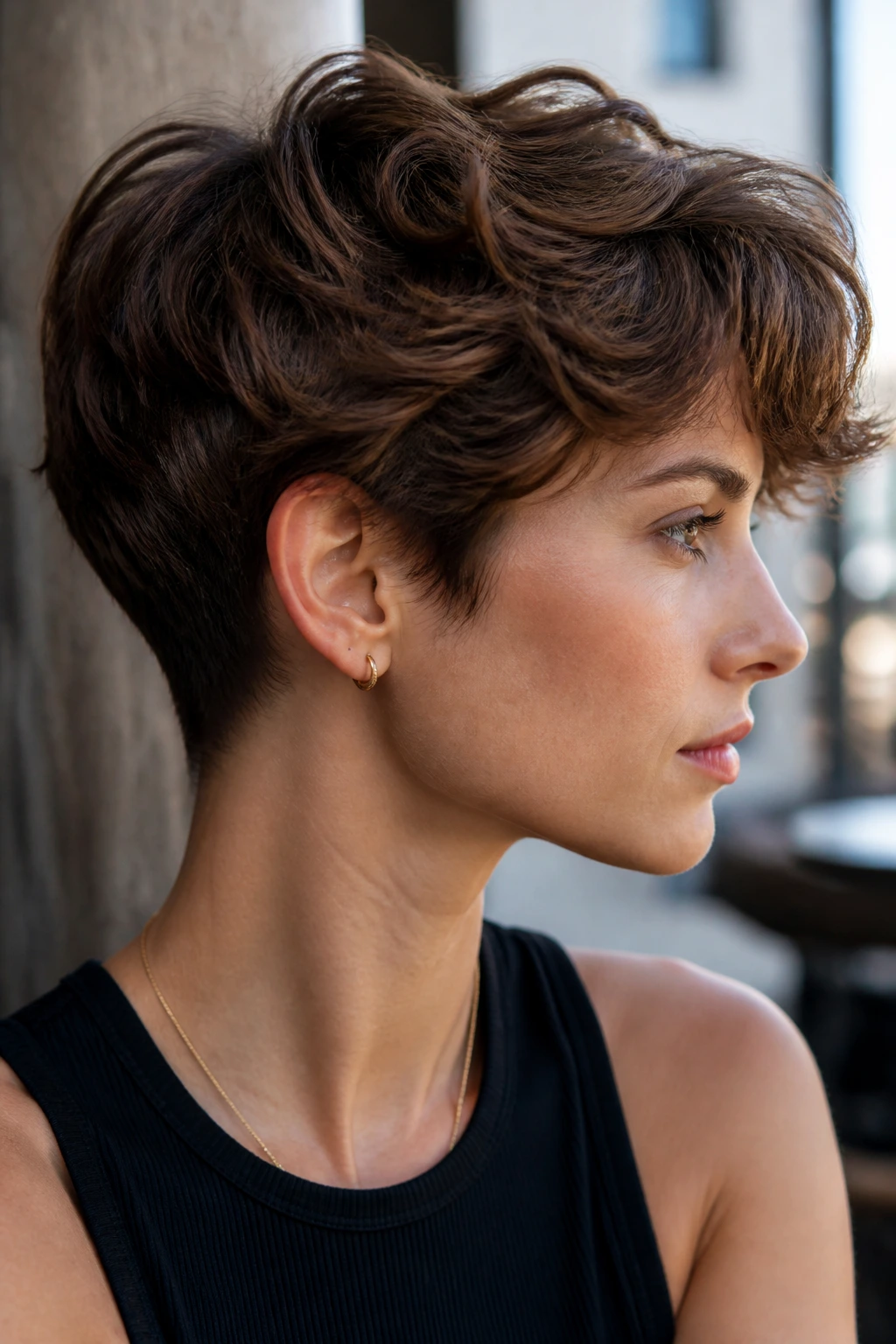
A long pixie with a tapered nape is one of the easiest short cuts to live with if your waves are loose and your mornings are busy. The top stays long enough to sweep, part, or scrunch, while the nape gets cleaned up so the shape feels neat around the neck.
The tapered back is the quiet hero here. It makes the cut feel lighter and helps it grow out more cleanly than a blunt pixie. On wavy hair, that taper also keeps the bulk from building at the back of the head, which can happen fast if the waves are dense.
This cut suits people who want short hair that still has some softness. It does not have the sharp edge of a micro bob or the big movement of a shag. Instead, it settles into a dependable shape that can be dressed up or left alone. There’s a reason it stays popular with people who hate complicated styling. It works.
27. Cropped Wolf Cut

A cropped wolf cut trims the wolf shape down to a shorter, more wearable size. You still get the lifted crown, the broken-up layers, and the loose fringe, but the overall length stays compact enough to feel like a real short cut.
That shorter length helps wavy hair avoid the heavy middle zone where many shags start to lose their shape. The silhouette stays a little wild, but not unruly. It is a smart choice for dense hair that needs movement without extra length hanging around.
Use mousse if you want the layers to separate a bit more. Use cream if you want a softer finish. Either way, the haircut should look better after you’ve lived in it for a few hours. That sounds odd, but some cuts are like that. They wake up as the day goes on.
28. Vintage Pageboy Remix
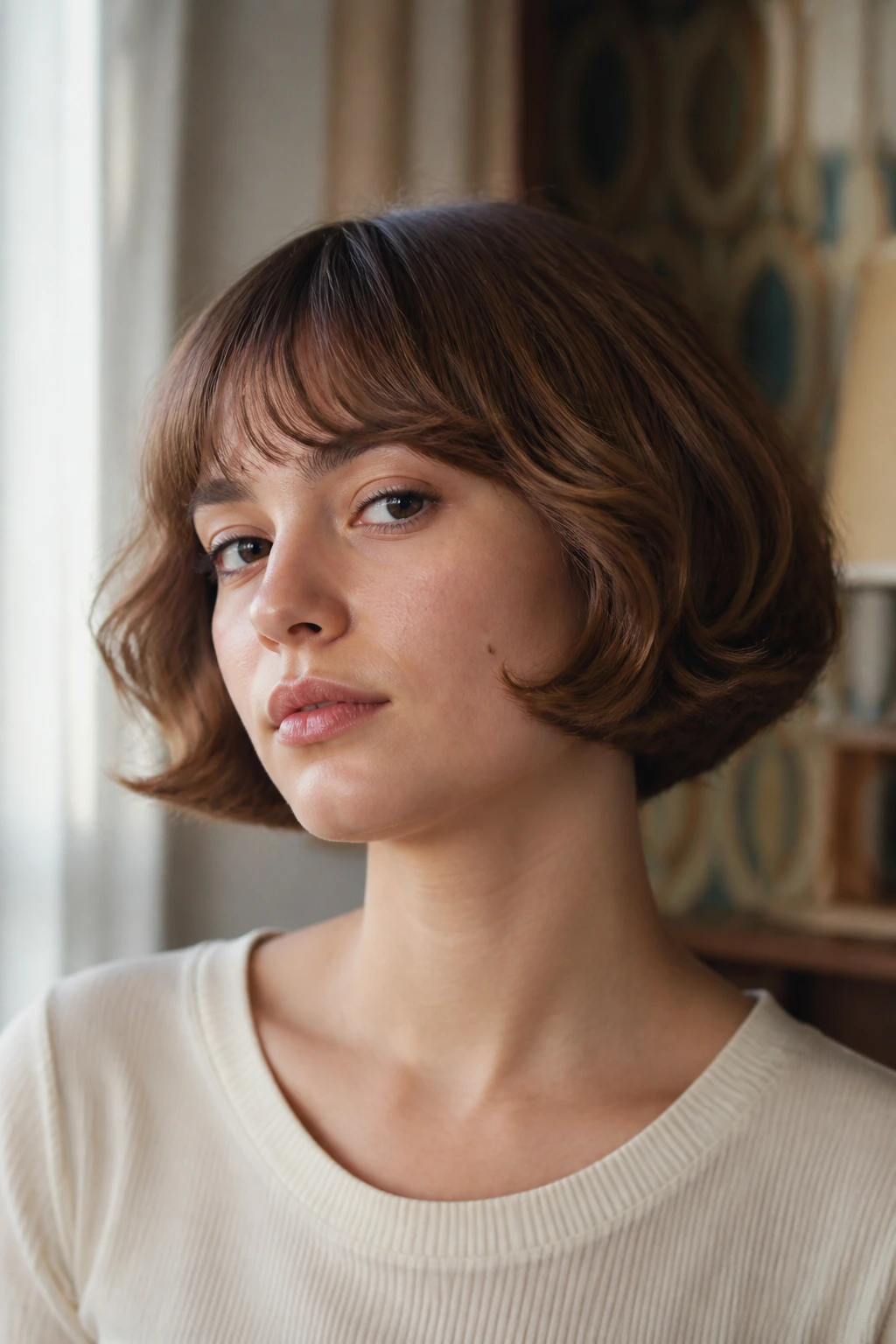
The pageboy is one of those older cuts that keeps coming back because the shape is useful. The modern version softens the hard roll-under and lets wavy hair break through the outline a little. That makes it feel fresh instead of stiff.
What matters most is the curve. The ends tuck under or follow the neck, while the top stays smooth enough to show off the silhouette. On wavy hair, a pageboy remix can look polished without being flat. It has that neat, slightly retro energy that works especially well with bold earrings or a strong brow.
This cut is not the most obvious choice, which is part of its appeal. It reads as deliberate. If you want something short that doesn’t look like everyone else’s bob, this is a quiet way to stand apart without making the hair do something absurd.
29. Clean Neck-Length Cut
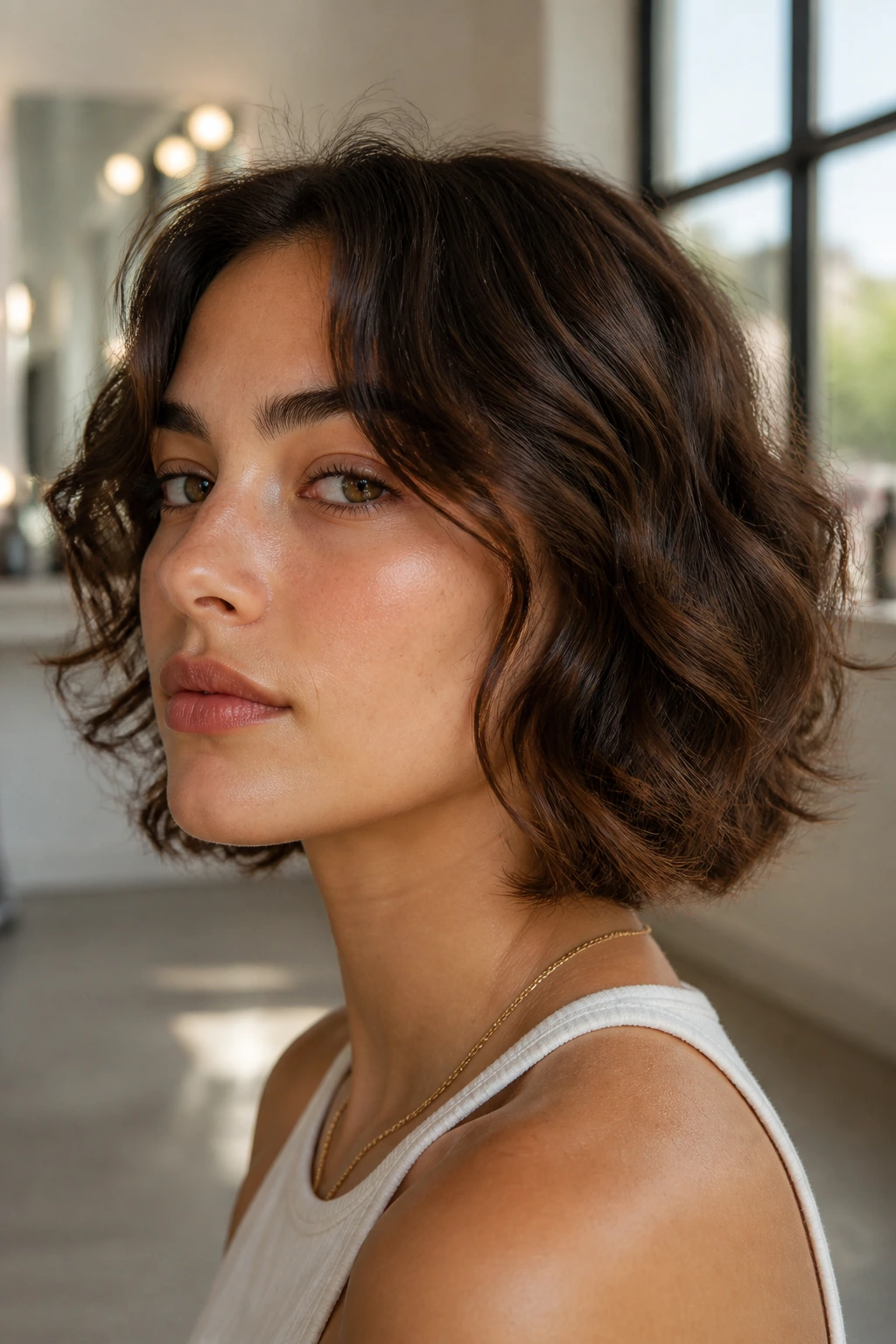
A clean neck-length cut is the haircut version of a good white shirt: simple, sharp, and hard to mess up when it’s well made. It sits at the neck, keeps the line solid, and lets the waves supply the movement. No overthinking required.
This one is especially good for people who want low maintenance. There is enough length to tuck, clip, or air-dry, but not so much that it needs constant restyling. A light leave-in or a bit of mousse usually does the job. The hair should still look like hair, not a product demo.
Compared with a choppy cut, this shape feels calmer. Compared with a pixie, it gives you a little more flexibility. It may not be the most dramatic option in the list, but it is one of the easiest to live with. And easy has its own kind of style.
30. Airy Tapered Bob
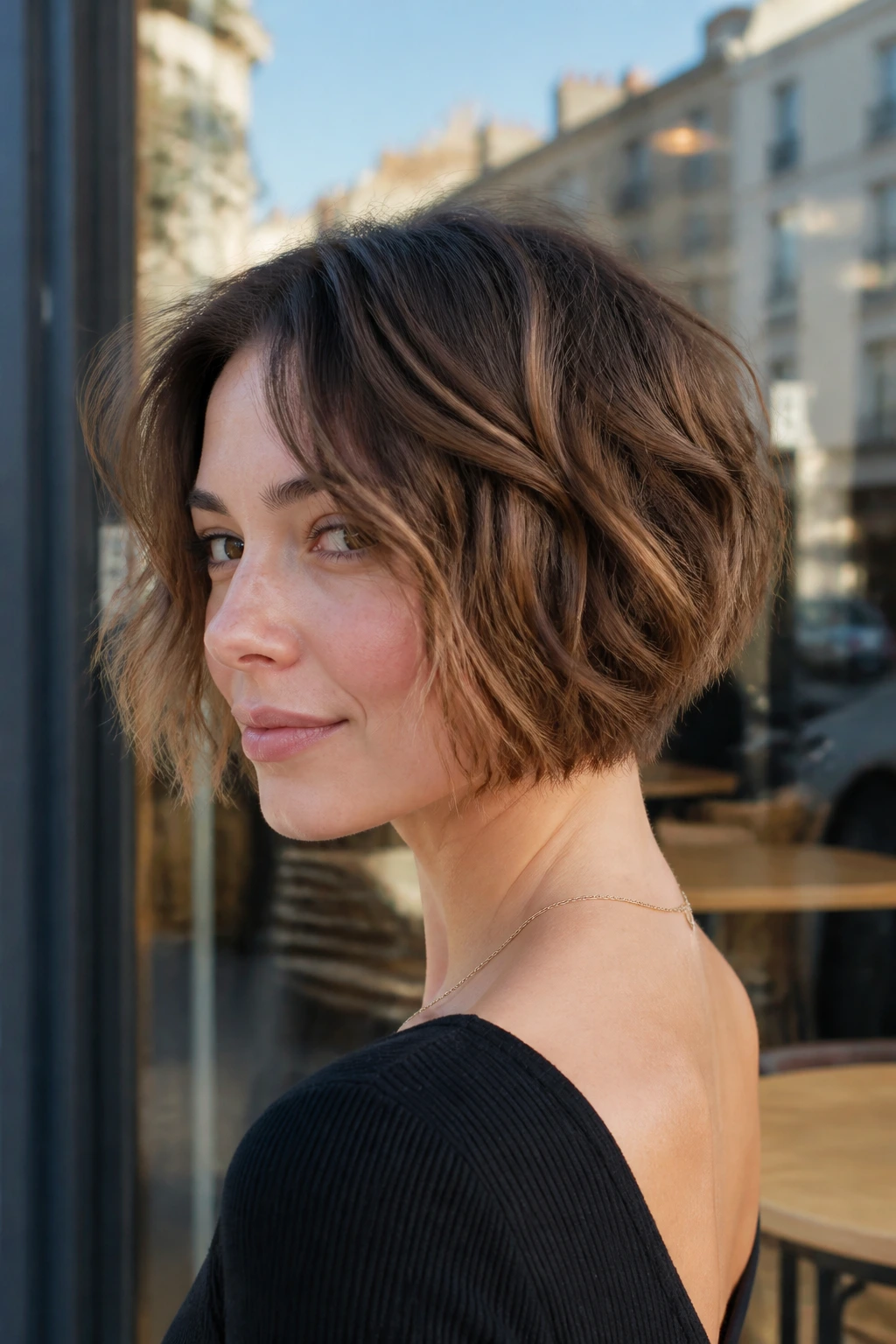
An airy tapered bob is the cut I would point to for someone who wants one short shape that can handle a lot of different wavy textures. The taper keeps the back from ballooning, the bob length keeps the look familiar, and the soft finish stops it from feeling too severe. It is tidy without being stiff.
The reason it works so well is that it respects the natural curve of wavy hair. The cut gives the waves a base to sit on, then pulls a little weight out where the hair tends to spread. That balance is what makes it easy to style on a regular morning, not just after a salon blowout. You can air-dry it, diffuse it, or smooth the top and leave the ends loose.
If you want the safest all-around short cut for wavy hair, this is probably the one I’d hand you first. Not because it is flashy. Because it behaves. And hair that behaves saves time, which is the real luxury.
