



Short hairstyles for wavy hair have a funny way of exposing bad cuts fast. Too blunt, and the ends flip out in odd places. Too layered, and the whole shape can puff up like it had a fight with a humid day.
The best short cut for waves doesn’t try to flatten them. It gives the bend room to move, trims away the heavy bits that drag the shape down, and leaves enough length in the right places so the hair still has a little swing. That balance matters more than people think. A good wavy haircut looks deliberate even when it’s air-dried in a hurry.
I’ve always liked cuts that keep the styling easy but still feel styled. You want a shape that does something on its own — a bob that lands cleanly at the jaw, a pixie that keeps its texture, a shag that doesn’t collapse by lunch. Waves tend to look best when the cut respects their natural pattern instead of fighting it with a ruler and a prayer.
Some of the styles below are polished and tidy. Some are messy in the best way. A few are the kind you can sleep on and still wear the next day, which, frankly, is the whole point for a lot of people.
1. French Bob
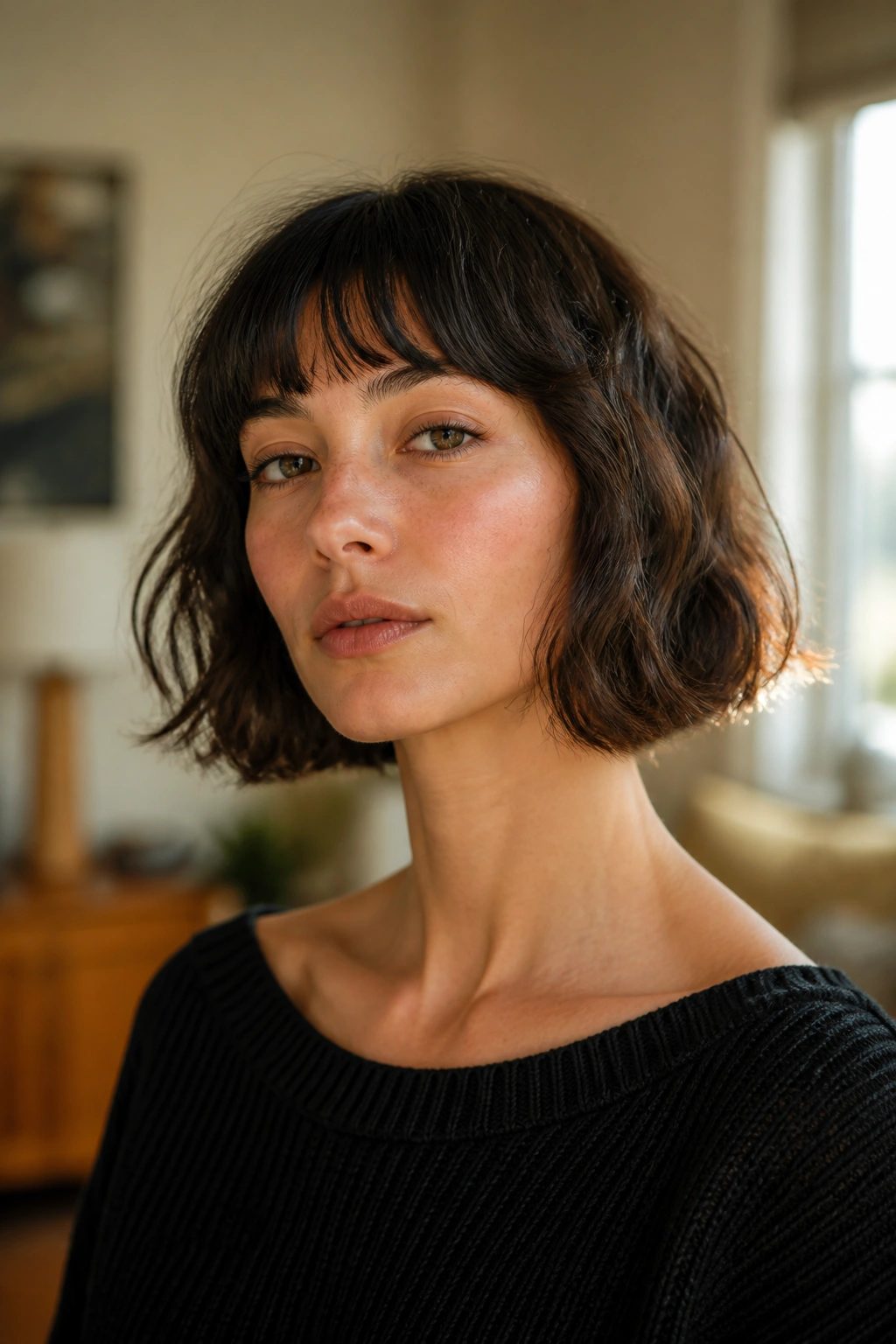
The French bob is one of those cuts that looks effortless only because the shape is doing a lot of quiet work. It usually lands somewhere between the lip and the chin, with a soft blunt edge and just enough movement at the ends to keep wavy hair from feeling boxed in.
Why It Works on Waves
The magic is in the length. When a bob stops right around the jaw, waves bounce instead of drooping, and the face gets a clean frame without needing a heavy styling routine. A little bend at the ends makes the cut feel softer than a strict blunt bob, which matters if your hair has a strong wave pattern.
Ask for a chin-grazing line, subtle point cutting, and a fringe that can sit just above the brows or sweep to one side. That keeps the cut from feeling too rigid. The whole thing should move when you turn your head.
- Best on medium-density waves that like shape
- Works well with air-drying and a light mousse
- Needs regular trims to keep the line crisp
Pro tip: If your waves puff at the sides, keep the bulk controlled near the cheekbones instead of over-thinning the ends.
2. Textured Pixie
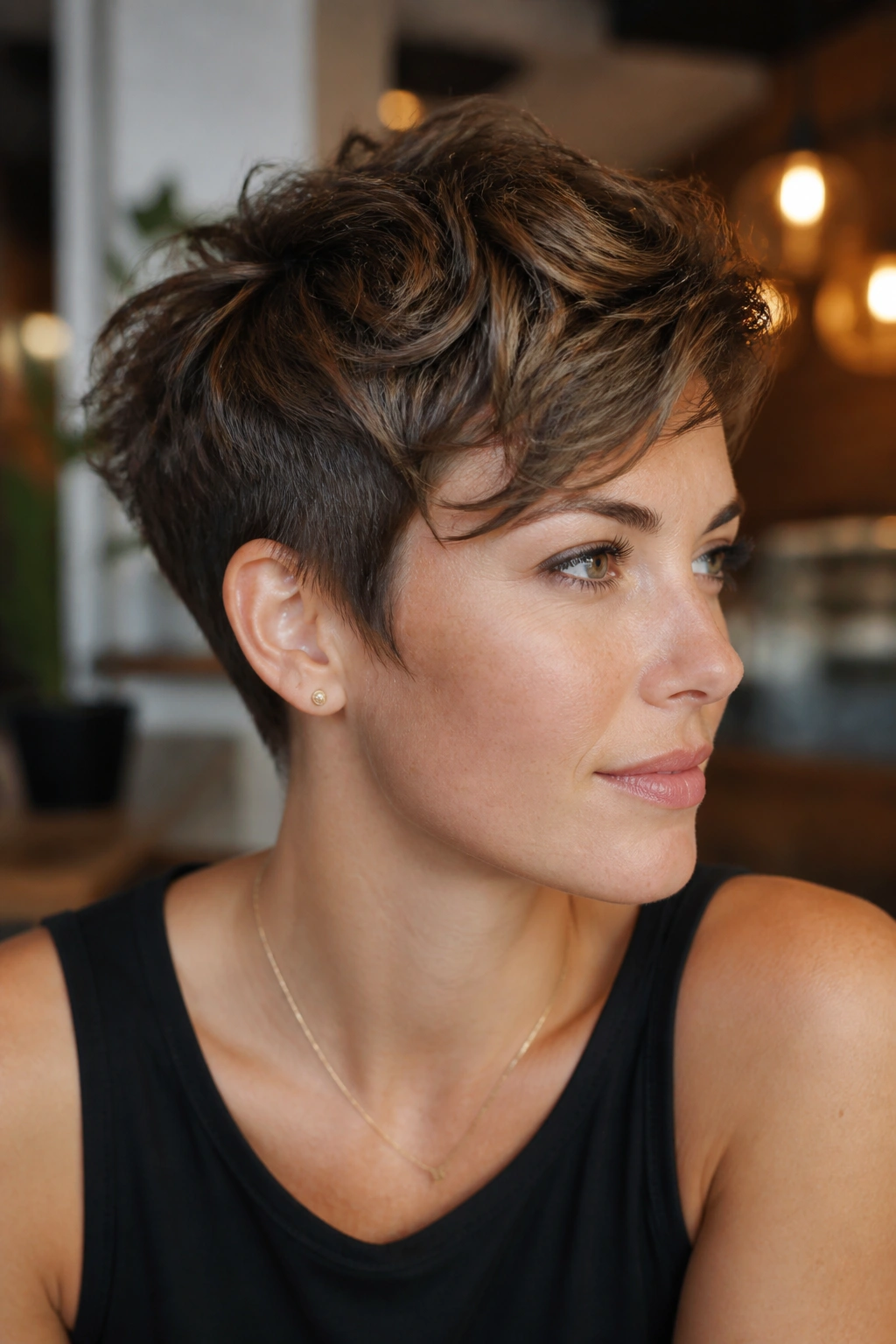
A textured pixie is one of the easiest short hairstyles for wavy hair when you want something low-fuss but not flat. The top stays longer, usually around 2 to 4 inches, while the sides and nape stay tighter so the wave pattern has somewhere to land.
This cut lives or dies on texture. Too polished, and it starts looking helmet-like. Too much product, and the waves separate into greasy little clumps. The sweet spot is a matte cream or a pea-sized dab of paste worked through damp hair, then finger-shaped while the hair dries. That’s it.
What makes it smart: waves give a pixie lift for free. Straight hair often needs a lot of coaxing to look piecey. Wavy hair already has that broken-up movement, so the cut can stay short without looking harsh.
Skip this if you hate frequent upkeep. Pixies grow out fast. Fast.
3. Chin-Length Shag
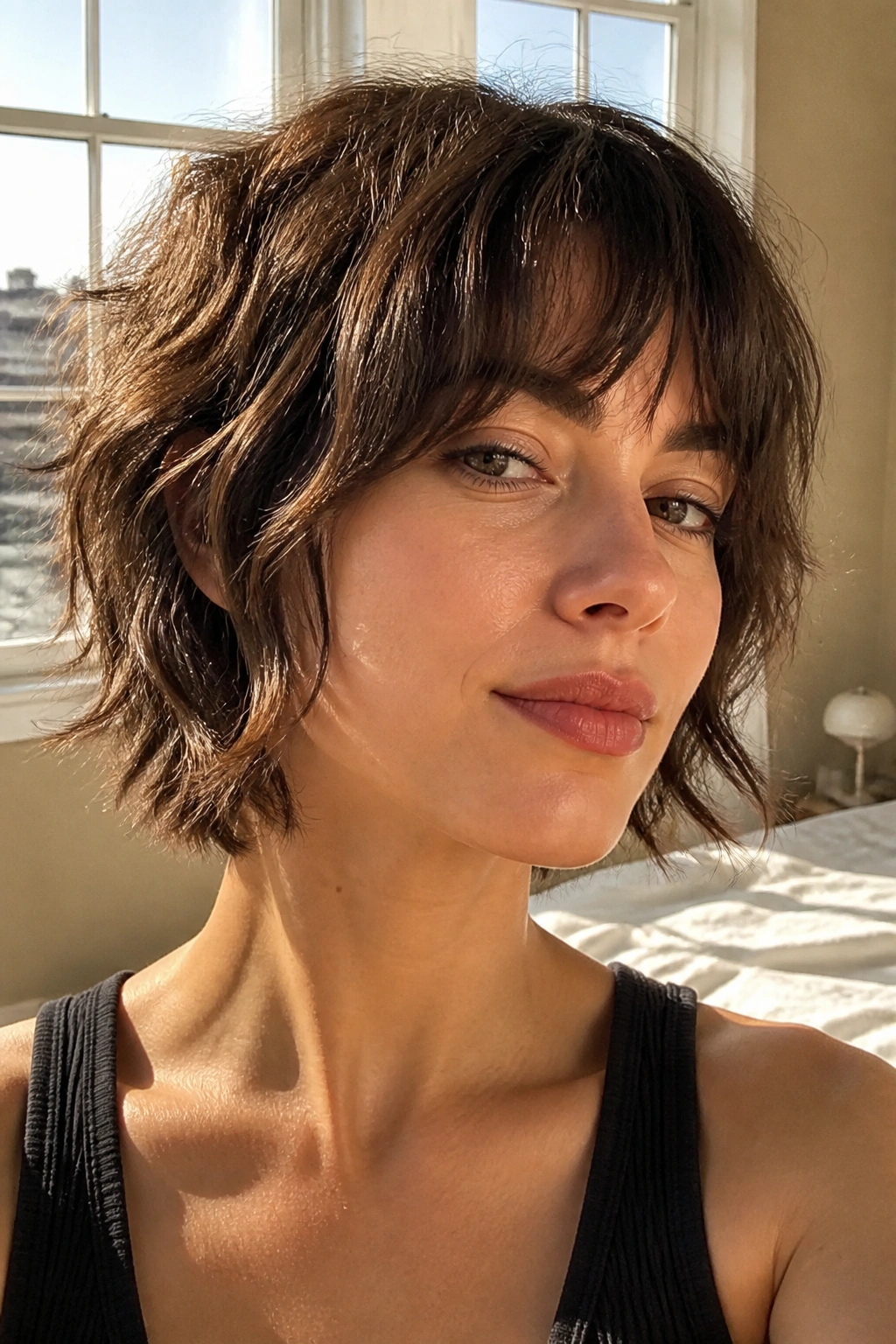
Why does a shag look so good on wavy hair? Because it doesn’t fight the bend. It uses it.
The Shape That Does the Heavy Lifting
A chin-length shag usually has soft layers through the crown, cheekbone-level pieces around the front, and a little extra movement through the mid-lengths. That lets the waves lift without turning into a pyramid. The haircut feels airy, but not wispy.
If you want this one to sit well, ask for layers that start high enough to create movement but not so high that the ends go thin. That’s the mistake people make with shag cuts. They ask for “more layers” and end up with a shape that needs half a can of mousse to behave.
How to Wear It
- Scrunch in a lightweight curl cream on damp hair
- Diffuse on low heat for 5 to 8 minutes if you want more lift
- Let a few pieces fall forward around the face instead of forcing symmetry
The cut works because it looks a little undone. That is the point.
4. Layered Bixie
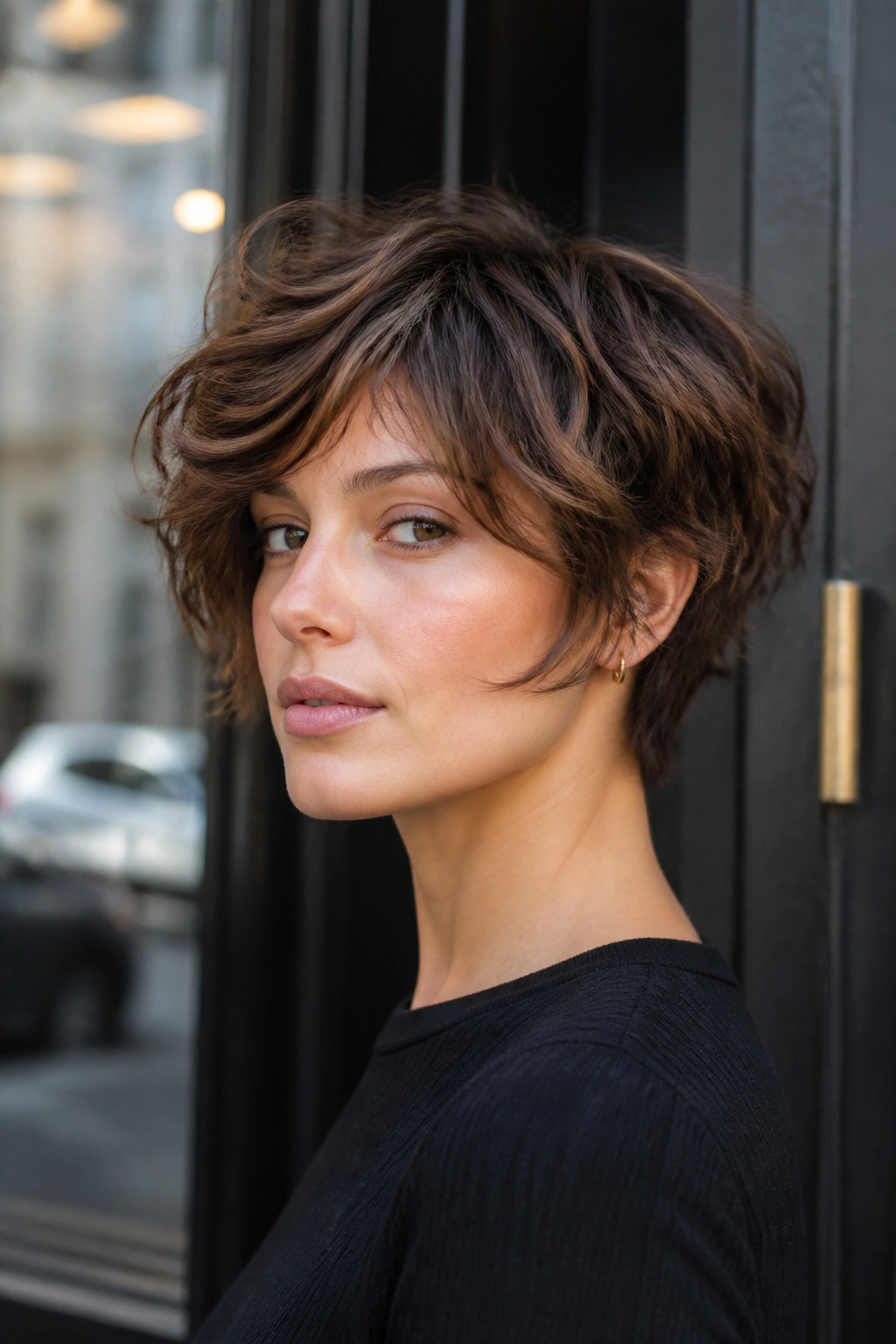
If a bob feels too grown-up and a pixie feels too exposed, the bixie sits in the middle and makes a strong case for itself. It keeps some length around the front and crown while staying short enough at the back to feel light.
Picture this: the nape is neat, the top has a bit of lift, and the front pieces skim the cheekbones. On wavy hair, that shape has real personality. It can look chic when tucked behind the ears, or more playful when the waves break up the outline.
A bixie is also a decent choice if you’re growing out a shorter cut and don’t want that awkward helmet phase. The shape softens the transition.
Ask for: a softly tapered nape, longer top layers, and a perimeter that isn’t cut too square. If the stylist starts talking about “over-directing” every section, make sure the final result still has movement. A bixie should look lived-in, not engineered.
5. Wavy Lob with Curtain Bangs

A lob with curtain bangs is one of those cuts that flatters waves without asking them to behave too neatly. The length usually lands between the collarbone and the top of the shoulders, so you still get swing, but the hair doesn’t drag the face down.
Curtain bangs help because they soften the front without boxing it in. On wavy hair, they tend to bend naturally and split in that easy center part that looks better a little imperfect. If your hair falls in loose S-shapes, this cut can look expensive with almost no effort. If the wave is stronger, the bangs may need a quick bend with a round brush or a diffuser handoff.
The key is not to over-layer the front. Too much slicing can make the bangs fly everywhere. Better to keep them a touch longer at first. You can always shorten them later. You cannot put the length back.
This is the cut for someone who wants shorter, not short. There’s a difference.
6. Side-Swept Crop
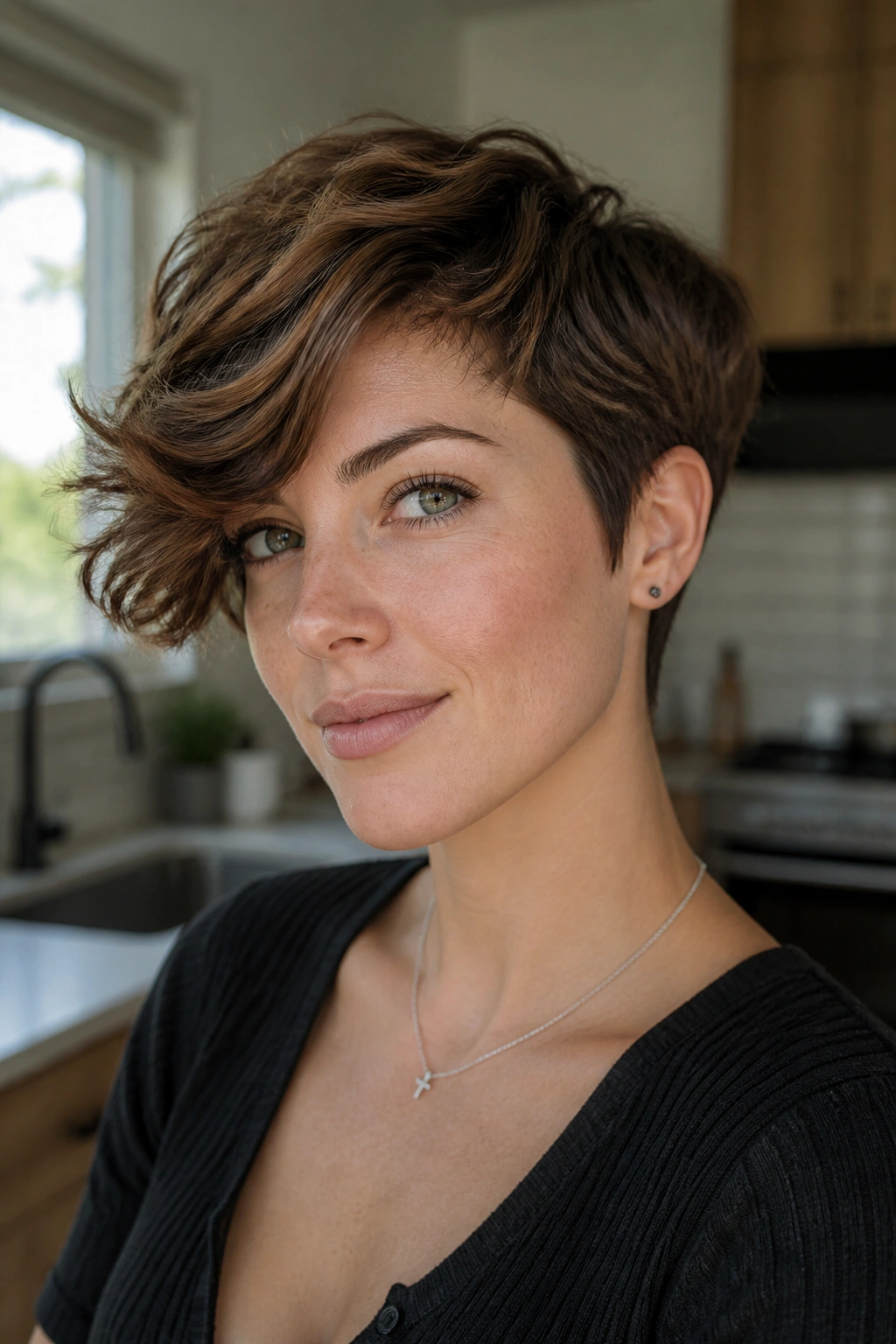
A side-swept crop is the cleaner, sharper cousin of the pixie. The front stays long enough to sweep across the forehead, while the sides hug the head a little closer. For wavy hair, that extra length in front keeps the style from looking too severe.
It’s a good match for anyone with a cowlick or a strong natural part. Instead of fighting the swirl, the cut leans into it. The wave gets pulled diagonally across the face, which makes the whole style feel softer and a bit more deliberate.
Best part: it’s quick. A touch of leave-in, a rough dry with your fingers, and maybe a small bit of texture paste near the ends. Done.
- Ask for 1 to 2 inches of extra length at the front
- Keep the top piecey, not fluffy
- Let the stylist leave enough weight near the fringe so it doesn’t split too much
Not fussy. Not stiff. That’s the appeal.
7. Inverted Bob
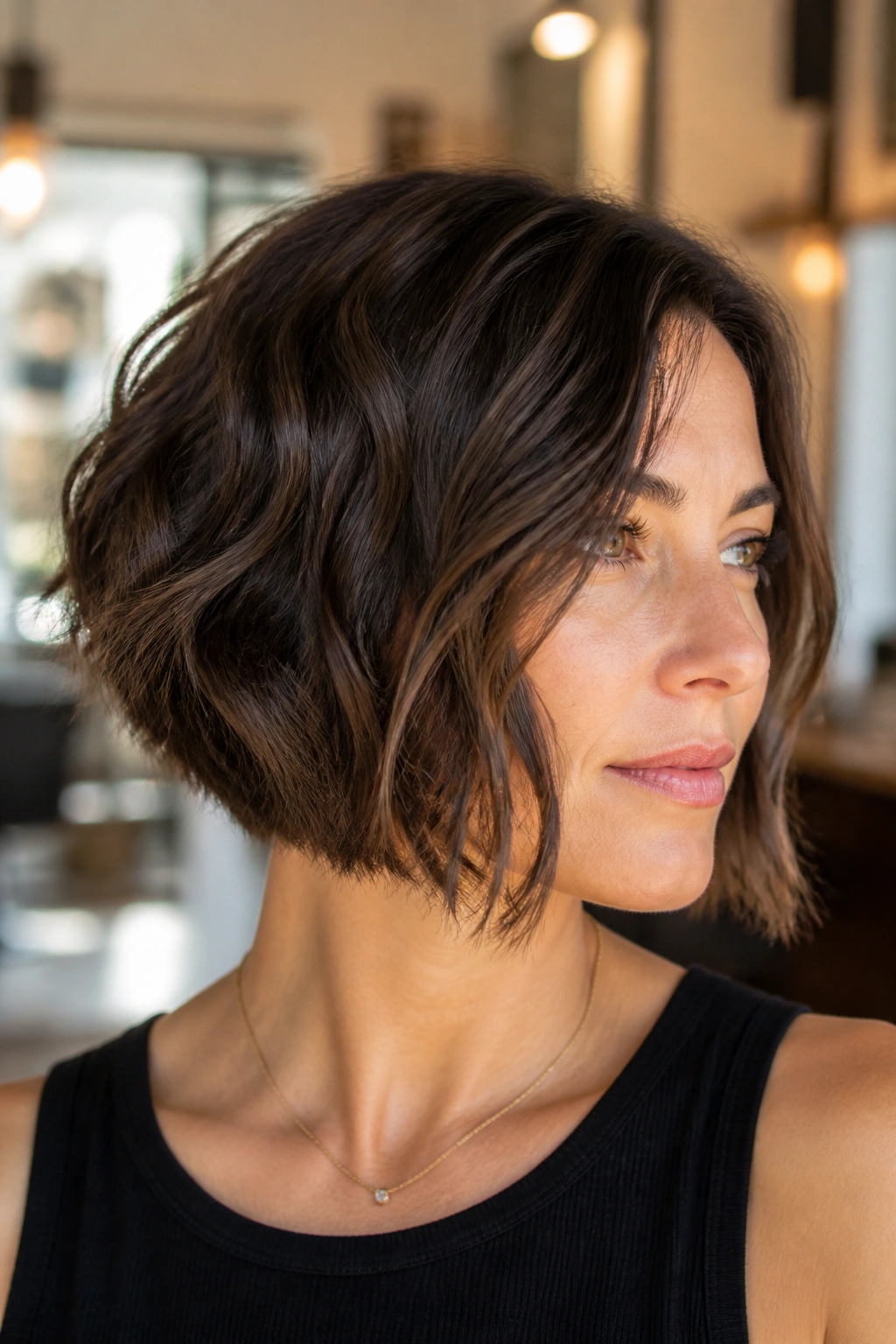
An inverted bob gives wavy hair a shape with a little attitude. The back sits shorter and slightly stacked, while the front angles down toward the jaw or collarbone. When the line is done well, the haircut creates a neat curve without looking old-fashioned.
Why It Works
The shorter back helps lift the hair off the neck, which is a gift if your waves collapse under their own weight. The longer front keeps things soft and gives you something to tuck behind the ears or flip away from the face. It’s tidy, but not plain.
What to Watch For
- Don’t let the stack get too steep or it can puff out
- Ask for soft graduation, not a hard shelf
- Keep the front long enough to show the wave pattern instead of cutting it off
A diffuser helps here, but you do not need to baby the style. A light mousse at the roots and a little smoothing cream on the ends usually does the trick. The cut should hold its own shape.
8. Asymmetrical Bob
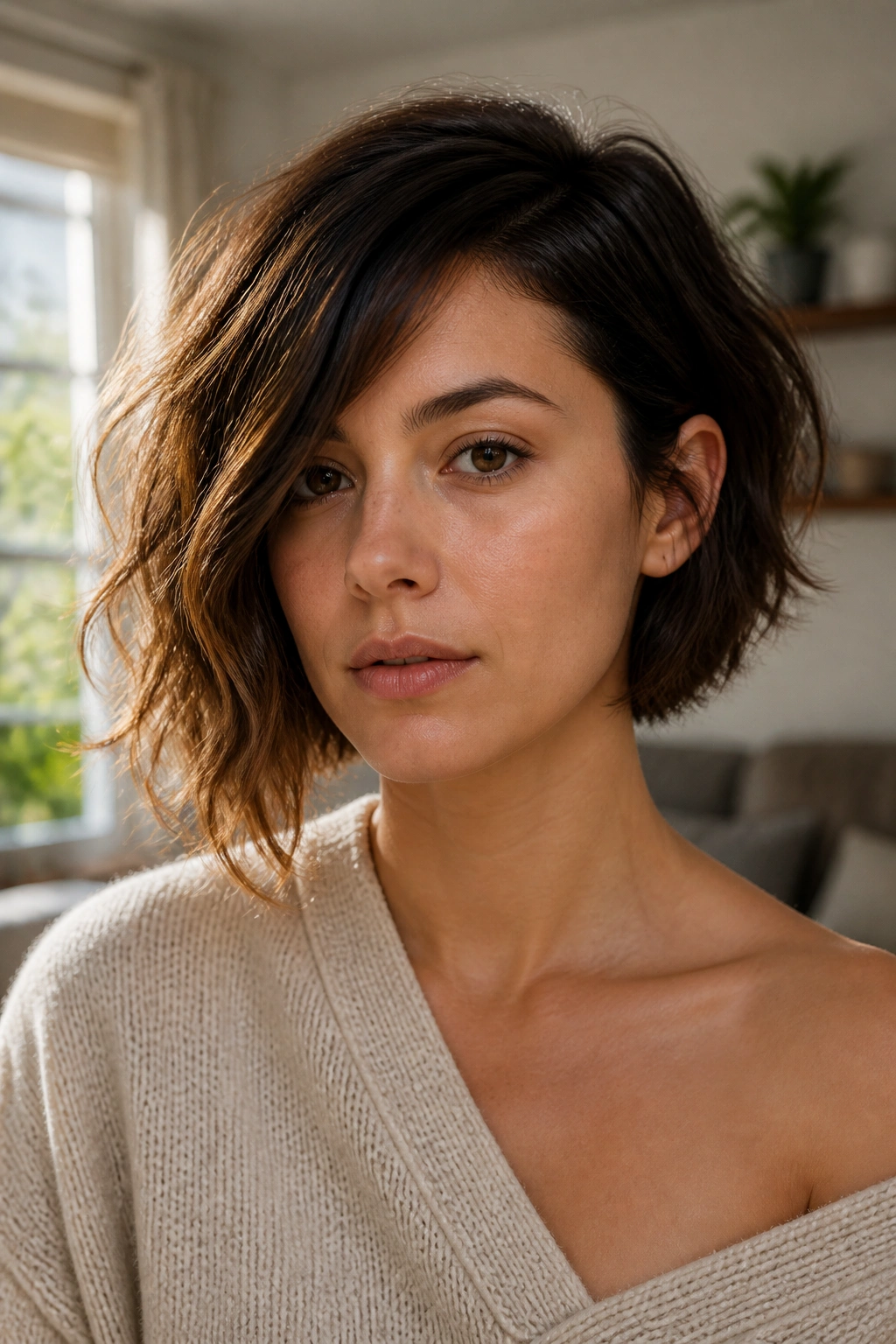
One side slightly longer than the other sounds like a small change. It isn’t. On wavy hair, that little difference can make the whole cut feel sharper and more modern, because the wave pattern breaks the symmetry in a way that looks intentional.
The beauty of an asymmetrical bob is that it gives you movement even when the hair is still. One side might brush the jaw, while the other grazes the cheek or neck. That uneven line can be flattering if your hair naturally falls differently from one side to the other — which, honestly, most wavy hair does.
A tiny asymmetry goes a long way. You do not need a dramatic slash across the face unless that’s the vibe you want.
If you try this, keep the styling simple. Tuck the shorter side behind the ear, let the longer side fall forward, and use a small amount of styling cream so the ends separate a little. The cut already has built-in interest.
9. Soft Wolf Cut
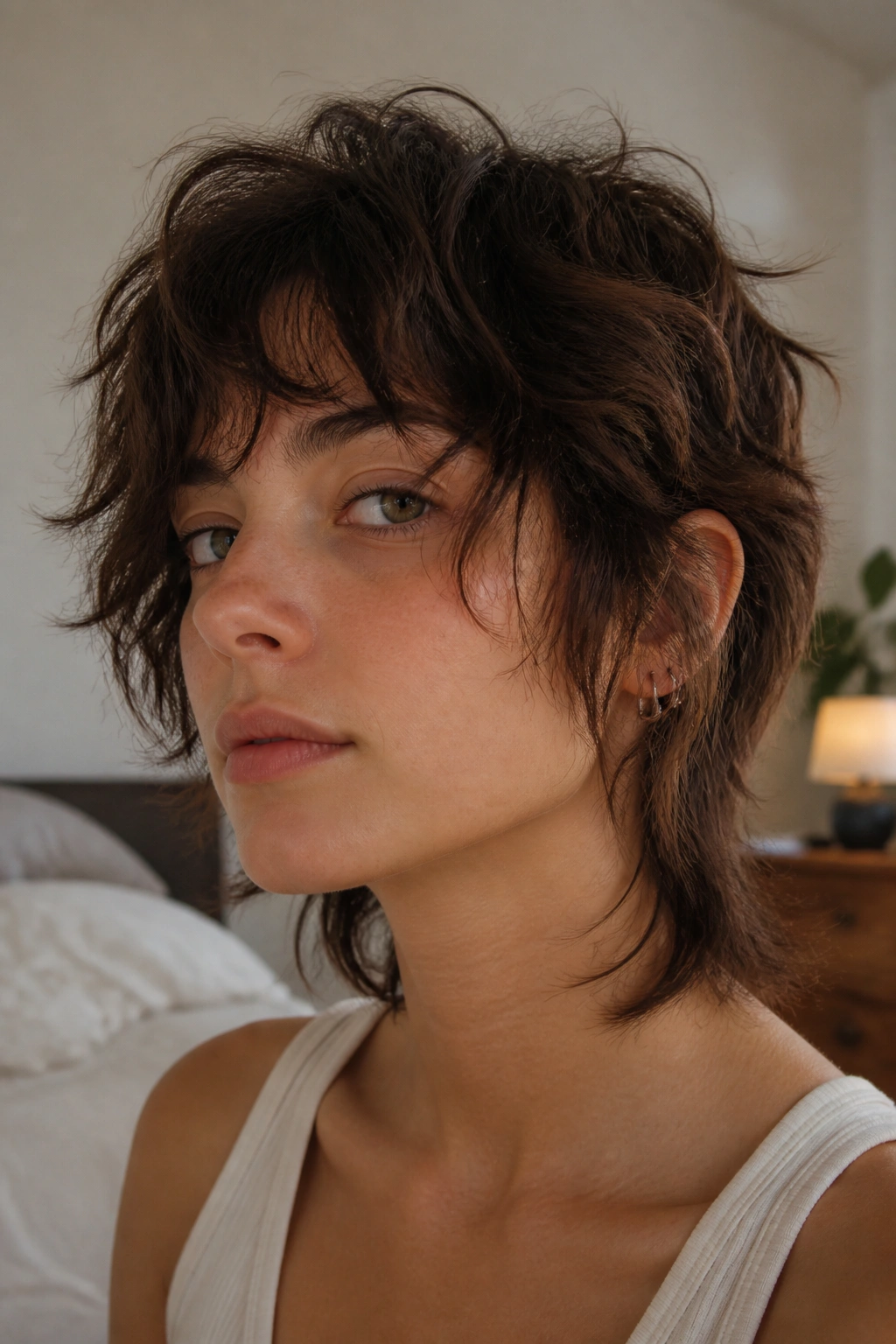
Why do people keep coming back to the wolf cut? Because wavy hair makes it look alive.
How It Sits on the Head
The short crown layers give lift. The longer nape keeps the shape from turning into a puffball. And the face-framing pieces soften the whole thing so it reads as shaggy rather than wild. That balance matters. A wolf cut done badly can look over-layered. Done well, it looks like the hair has a pulse.
For short hair, keep the length around the chin to just below the chin. Any shorter and the back can start to feel too mullet-like unless that’s what you want. The best version has movement near the ears and a little collapse at the ends, so it feels relaxed.
How to Use It
- Scrunch with mousse while the hair is still damp
- Diffuse upside down for root lift
- Break up the top with your fingers once it’s dry
If you like hair with edge but not drama, this one lands in a good place.
10. Blunt Bob with Soft Ends

A blunt bob can be a smart move on wavy hair, but only if the edges are handled with care. Fully hard lines tend to make waves kick out at odd angles. Softening the ends a little keeps the shape clean without making it rigid.
I like this cut on someone who wants structure. The perimeter sits around the jaw or a touch below it, and the ends are point cut just enough to stop the line from feeling heavy. That means you still get the neatness of a bob, but the waves can bend through it instead of fighting the outline.
A good version of this cut looks calm. Not boring. Calm.
- Keep the line even through the bottom
- Ask for very light texturizing at the tips only
- Use a light cream instead of a crunchy gel
If your waves are loose, this shape can look polished with barely any styling. If they’re denser, you’ll want to dry the roots flat and let the movement happen at the ends.
11. Tapered Nape Crop
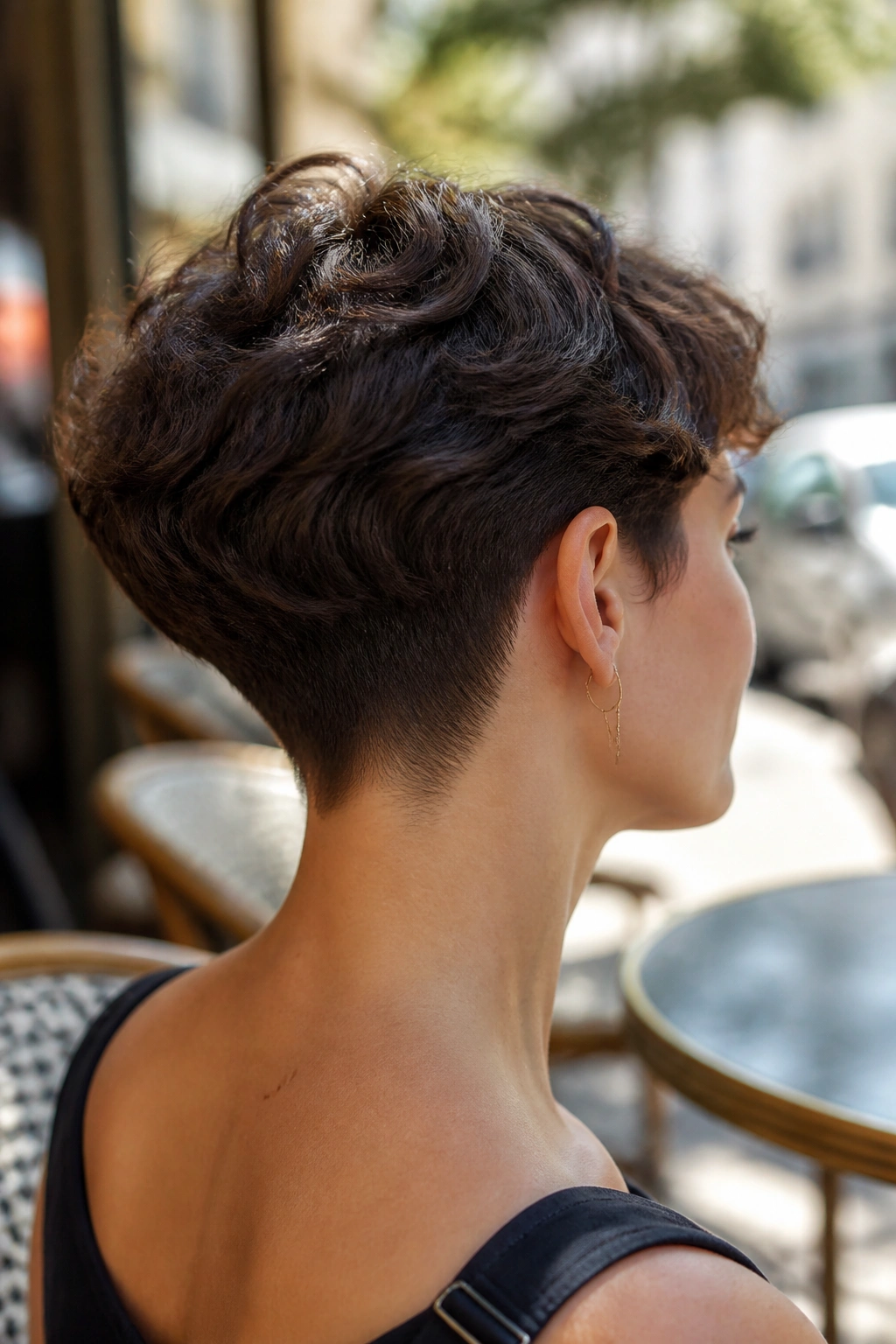
The tapered nape crop is a neat little haircut that does more than people expect. The back is cut close to the neck, then the hair gradually opens up toward the crown and sides. On wavy hair, that taper keeps the cut from ballooning where it sits lowest on the head.
It’s especially good if you dislike hair brushing your neck. The shape feels cool, clean, and easy to live with. There’s also something nice about how the waves gather at the top while the back stays tidy. It gives the whole style some lift without needing a big blowout.
You’ll want trims on the regular, though. The nape grows out fast and loses the shape first. No surprise there.
A touch of styling cream through the top and a little finger-tousling is often enough. If the wave is coarse, keep the top slightly longer so it doesn’t stick up. If it’s fine, a root spray can help the crown stay off the scalp.
12. Shaggy Mullet Lite

A full mullet can be a lot. A shaggy mullet lite is the version for people who want the texture and none of the commitment to drama. The front and sides stay short, the back keeps a little length, and the layers are soft enough that the cut reads as cool instead of costume-y.
This shape suits wavy hair because waves love uneven lengths. They create separation on their own, which helps the haircut look intentional rather than choppy. The trick is keeping the back just long enough to move, but not so long that it starts looking disconnected.
Best for: people who like messy texture, easy styling, and a bit of edge.
Less ideal for: hair that needs a very neat outline or a corporate-polished finish.
I’d ask for curtain-like fringe pieces, soft crown layers, and a back that sits a bit below the ear. It’s a specific look. Not subtle. But if you like hair with some personality, it delivers.
13. Ear-Length Curly-Wavy Crop
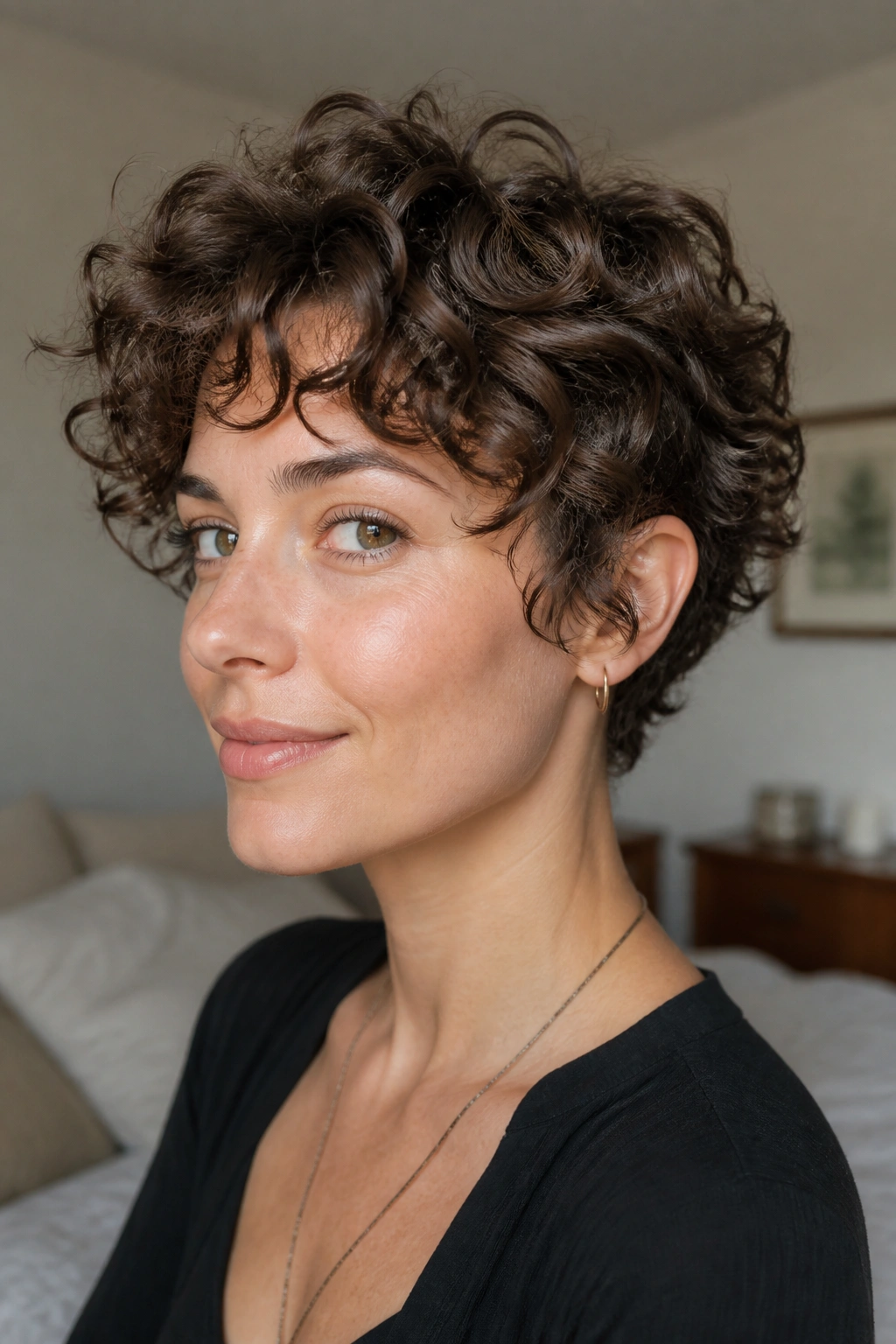
Ear-length hair can be tricky on waves, but when the cut is right, it feels fresh and light. The crop sits around the ears or just below them, with enough length on top to show off the wave pattern and enough softness at the sides to avoid that mushroom shape people dread.
The Shape
The top should keep a little extra length — about 3 to 4 inches is often enough — so the waves can bend instead of standing up. The sides can be tighter, but not shaved bare unless you want a stronger contrast. That balance keeps the cut from looking too severe.
Styling Move
- Work in a small amount of curl cream while the hair is damp
- Use a diffuser on low heat or let it air-dry
- Separate the waves once they dry so they don’t clump too much
This cut is a good one if your waves lean toward curls and you want something light around the face. It has that easy, lively feel that makes short hair fun again.
14. Collarbone Lob with Invisible Layers
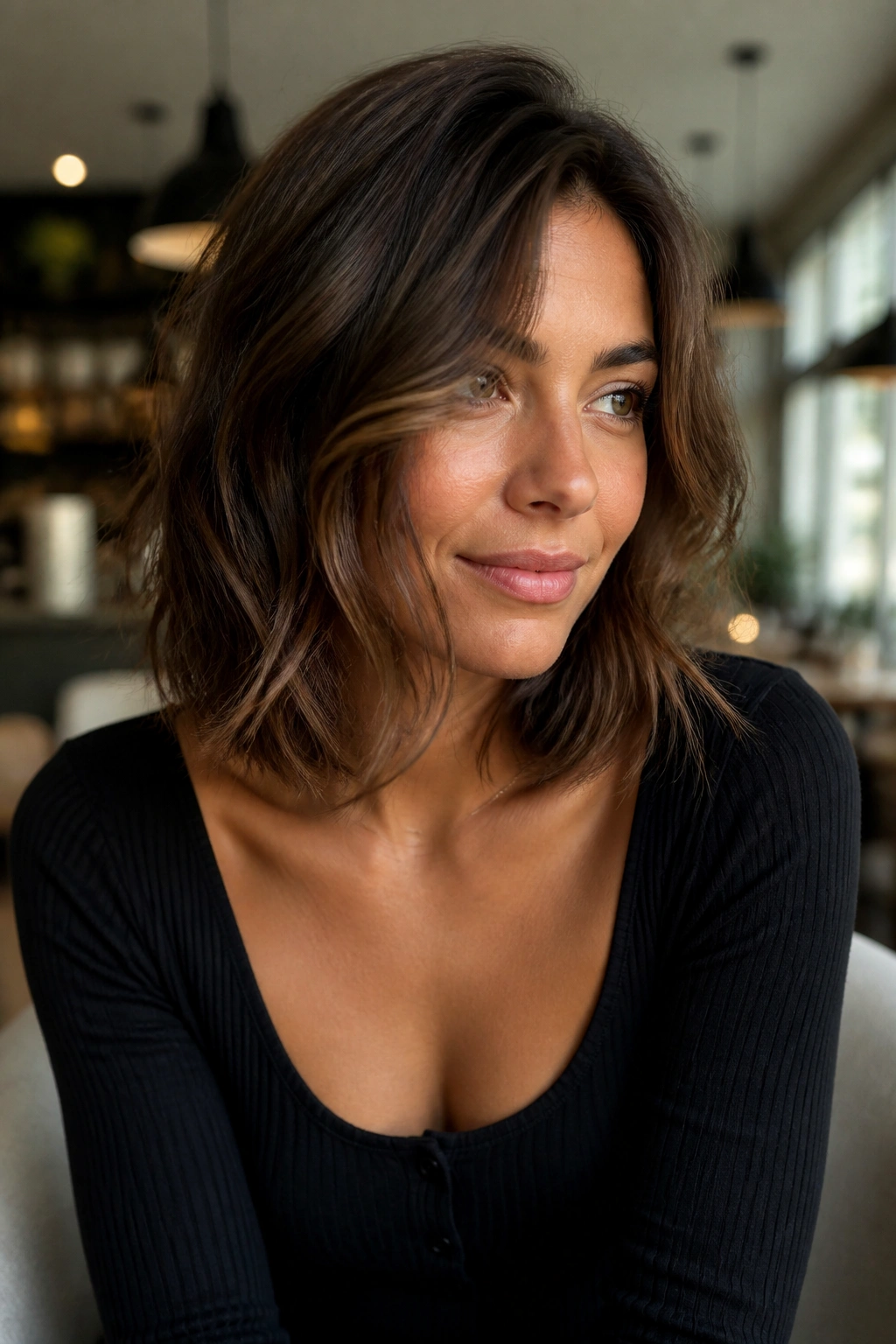
The collarbone lob is the safe choice that doesn’t feel safe once it’s cut well. It hits low enough to keep some versatility, but it still counts as short in the real world because it clears the shoulders and moves freely. The invisible layers are what make it work for waves.
Those layers remove weight from the inside of the shape without showing a lot of choppy steps on the outside. That’s useful if your hair is dense or if you hate seeing obvious layer lines. The cut looks smooth, but the waves still have room to breathe.
I like this one for people who want something easy to grow into or out of. It can be tucked, clipped, tied half-up, or left loose. That gives it staying power. And honestly, it’s a nice cut for anyone who wants movement without handing the stylist a giant bag of caveats.
Keep the ends blunt enough to hold shape. That part matters.
15. Rounded Bob with Face-Framing Layers

A rounded bob sounds old-school until you see it on wavy hair. Then it makes sense. The curve follows the shape of the head, which helps the hair sit softly instead of flaring at the sides.
Why the Rounded Shape Helps
Waves often need a little structure near the bottom. A rounded bob gives that structure without the hard edge of a strict geometric cut. Face-framing layers then soften the front, bringing the focus toward the cheekbones and eyes instead of dropping everything straight down.
Who Should Ask for It
- People with dense waves that need shape
- Anyone who wants volume without a shaggy finish
- Readers who like a tidy silhouette but still want movement
The one thing to watch is over-texturizing the perimeter. If the bottom gets too thin, the bob loses its rounded shape and turns wispy. That’s not the goal here. Keep the line strong enough to support the wave pattern, and the haircut will do the rest.
16. Piecey Crop with Micro Fringe
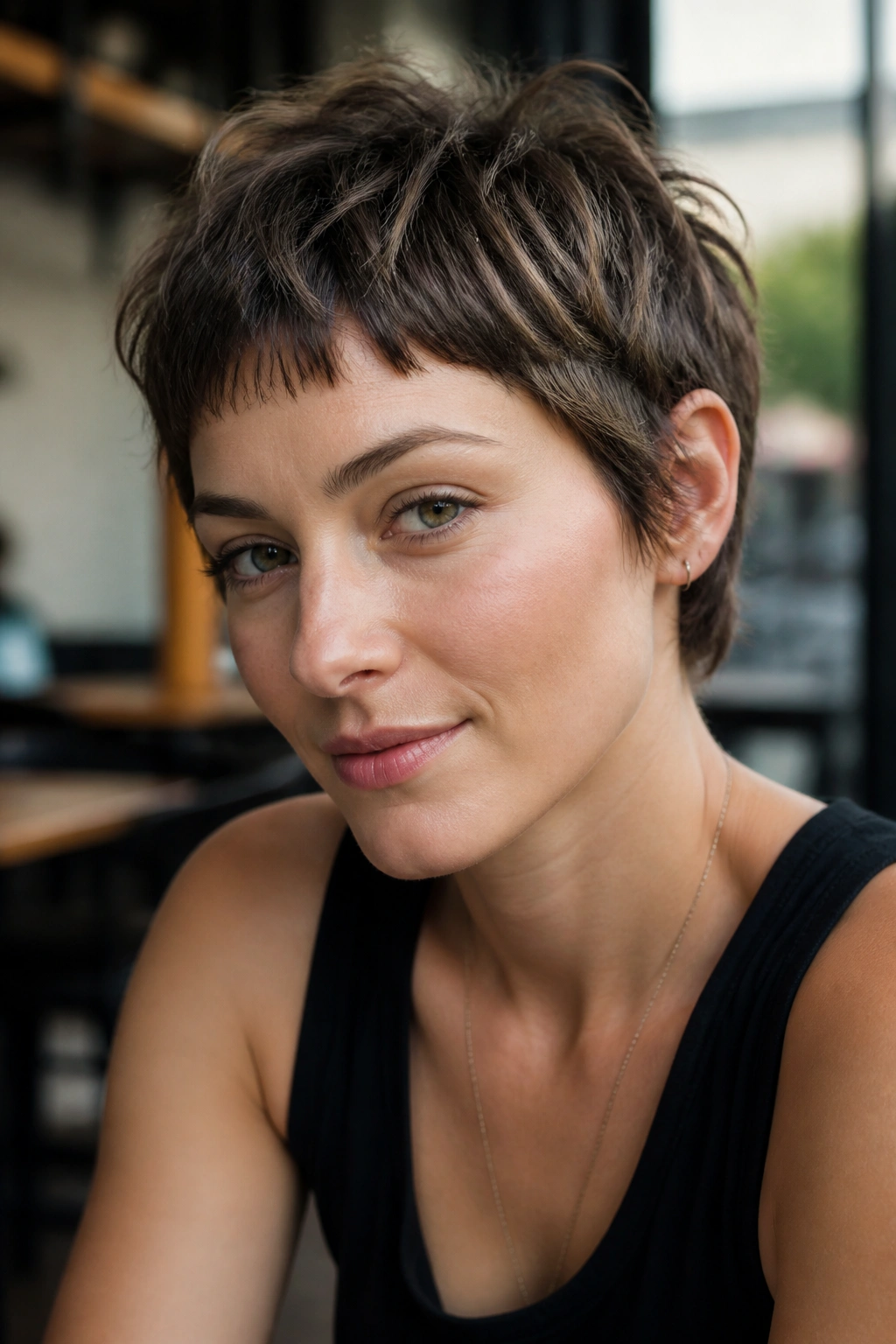
A micro fringe changes the whole mood of a short cut. On wavy hair, it softens the severity that a super-short bang can sometimes bring, because the fringe doesn’t lie flat and perfect. It bends a little, breaks up a little, and ends up looking less severe than the same cut on straight hair.
The crop itself should stay piecey, not packed with product. You want separated bits at the top, a bit of softness around the ears, and a fringe that sits above the brows without looking stiff. This cut is not for someone who wants a tidy, traditional look. It has edge.
A small amount of paste is enough. Seriously, a small amount. Too much and the fringe will stick together and lose that airy feel that makes the cut work.
- Keep the fringe short but not blunt
- Leave enough length on top for wave movement
- Avoid heavy creams that weigh down the front
It’s sharp, but still a little playful.
17. Jaw-Length Tousled Bob
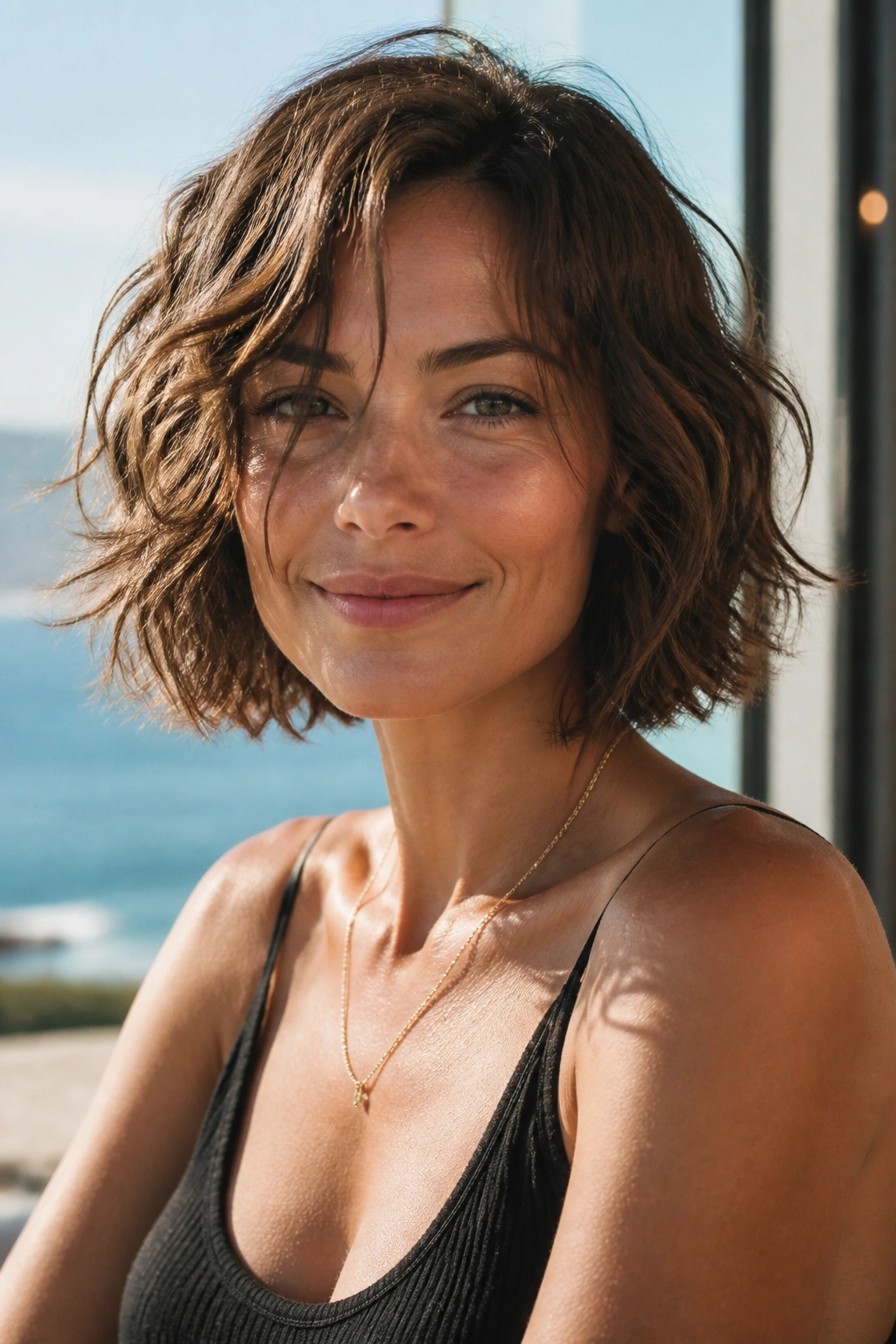
A jaw-length tousled bob is the haircut equivalent of opening the window and letting the room breathe. It sits right where the jaw turns into the neck, which gives wavy hair a natural place to curve and flick.
This cut works especially well if you like hair that looks better after you’ve run your fingers through it. The tousled finish hides a lot of minor wave irregularities and makes the shape feel relaxed rather than over-managed. That’s a blessing on mornings when you do not want to make a project out of your hair.
The easiest way to wear it is with a little root lift at the crown and soft separation through the ends. A tiny bit of dry texturizing spray can help, but don’t overdo it. You still want to see the line of the bob.
If your waves tend to collapse, ask for just enough layering near the back to stop the whole shape from hanging flat.
18. Undercut Pixie
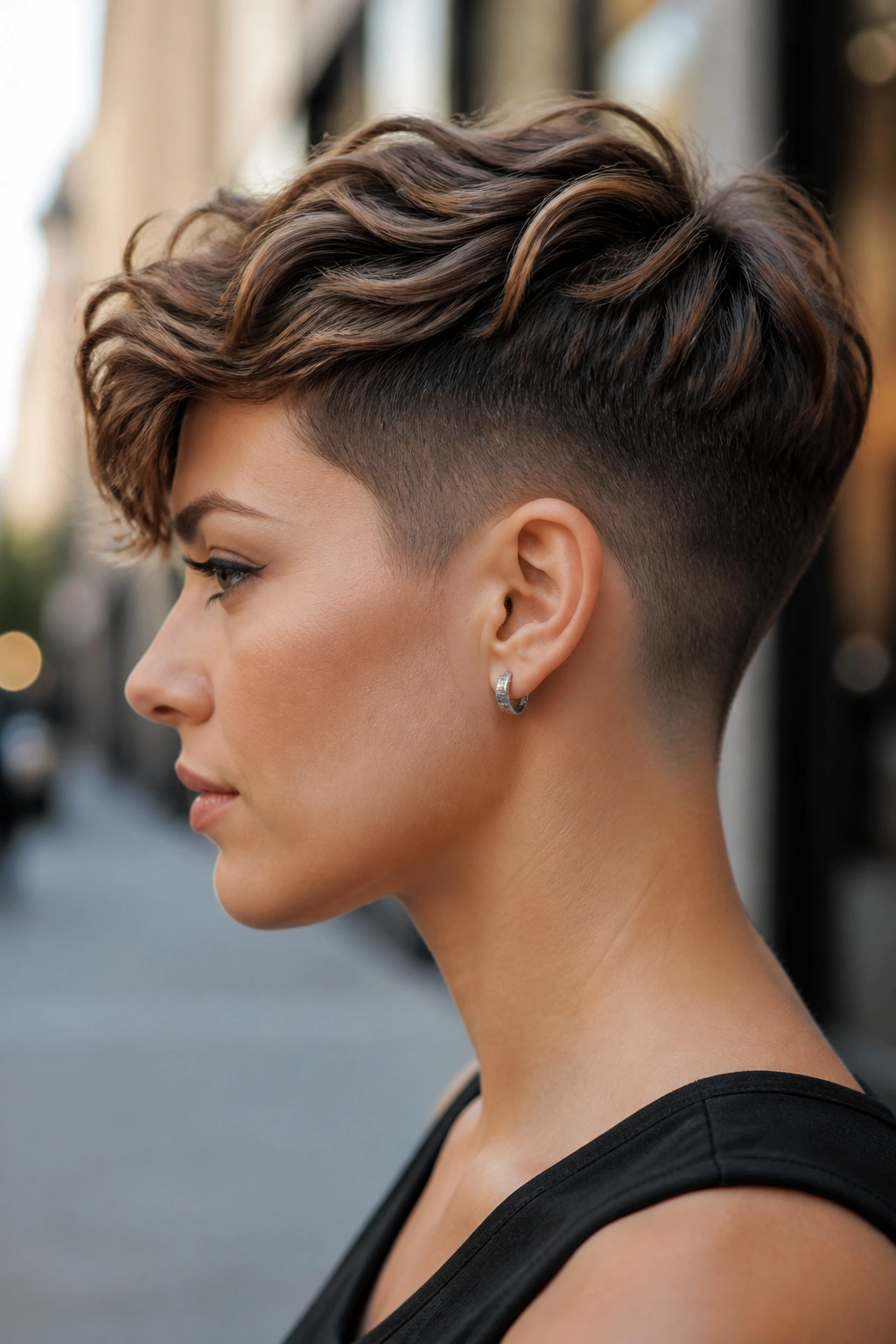
An undercut pixie is the move when you’re done dealing with bulk. The sides and back are clipped shorter underneath, while the top stays long enough to show the wave pattern and play with direction. For thick wavy hair, that can feel like a relief.
The undercut removes weight where hair usually gets puffy — behind the ears, around the nape, and low on the sides. That makes the top easier to style and faster to dry. It also helps the haircut last a little longer between washes, which is not a small thing.
Best for thick waves, hot weather, and people who like a bit of sharpness.
The catch is maintenance. Undercuts need regular cleanups because the shorter sections grow out fast and lose that crisp contrast. If you’re fine with trims every few weeks, it’s a strong option. If you want something you can forget about for months, skip it.
19. Center-Parted Mini Lob
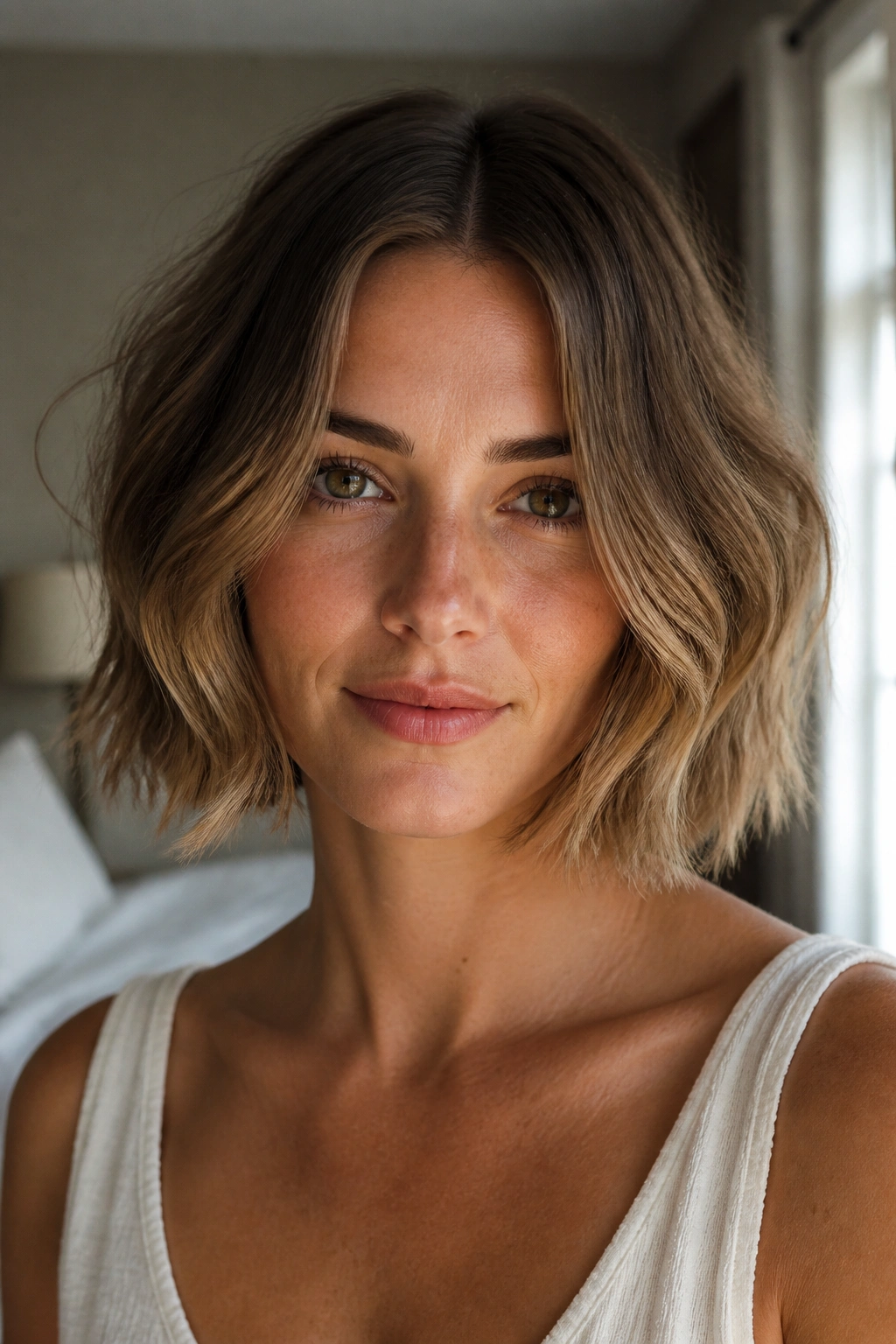
A center part can make a short cut feel calm and balanced, which is useful if your waves tend to go a little chaotic around the face. The mini lob usually lands around the chin to upper neck, giving enough length for movement without feeling long.
Why It Works
The center part lets the waves fall evenly on both sides, and that symmetry can be flattering on faces that benefit from a little framing. It also keeps the style from leaning too hard into side volume, which some people love and others absolutely do not.
Styling Move
- Part the hair while it’s still damp
- Add a light mousse at the roots
- Tuck both sides behind the ears once dry if you want a cleaner shape
A mini lob like this is especially nice if your wave pattern is loose and your hair density is moderate. It gives that easy, tucked-back look without forcing the hair into something too neat. That’s a win in my book.
20. Feathered Short Cut

Feathered ends can save a short wavy cut from looking heavy. Instead of a blunt outline or a chunky shag, the hair is softened at the tips so the waves break into lighter, airier pieces. It’s a good choice when you want movement without a messy finish.
This shape tends to suit finer waves especially well, because the feathers create the illusion of fullness without piling on bulk. The top can still have lift, but the edges stay soft enough to move when you turn your head. You get shape without a hard edge.
A round brush can help if you like a smoother finish, but the cut also works with air drying. That’s the nice part. It doesn’t insist on one styling path.
Keep the layers gentle. Too much thinning and you lose the body that makes the feathered look work in the first place. A good feathered cut should feel light, not flimsy.
21. Wedge Bob with Soft Layers
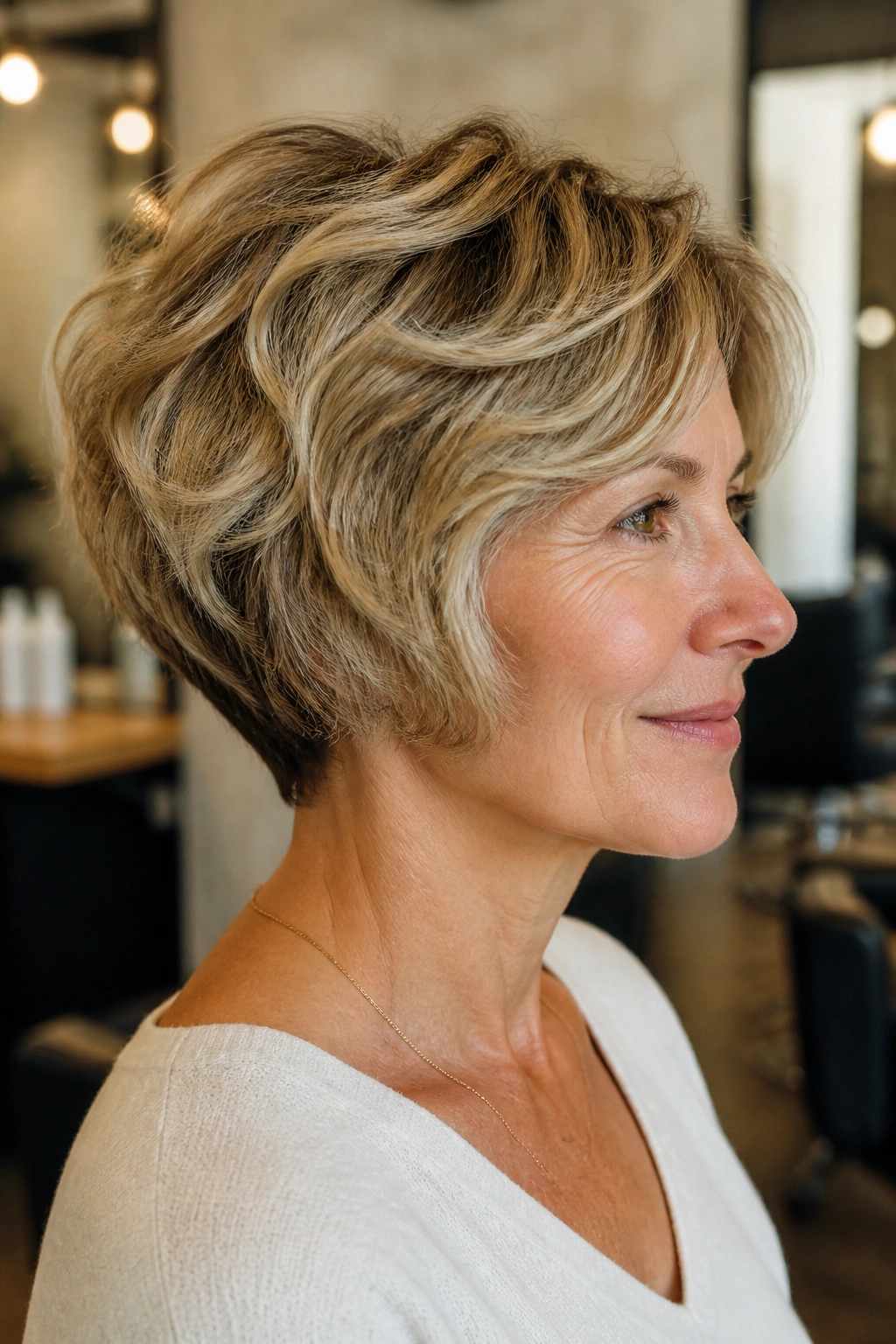
What makes a wedge bob different from a regular stacked bob? The back curves in a little more decisively, which gives the cut a shaped, almost sculpted feel. On wavy hair, that shape can look polished without feeling stiff if the layers stay soft.
Ask Your Stylist For
- A rounded back that lifts slightly at the crown
- Soft layers that don’t carve too hard into the sides
- A front length that reaches the jaw or just below it
How to Style It
A bit of root lift at the crown matters here. If the top falls flat, the wedge shape disappears and you’re left with a bob that looks unfinished. A mousse or root spray near the scalp can fix that. Then let the waves settle on their own. Don’t overbrush them. That ruins the curve.
This cut suits someone who likes shape more than mess. It’s tidy, but not stiff. That’s a nice line to walk.
22. Pixie Bob
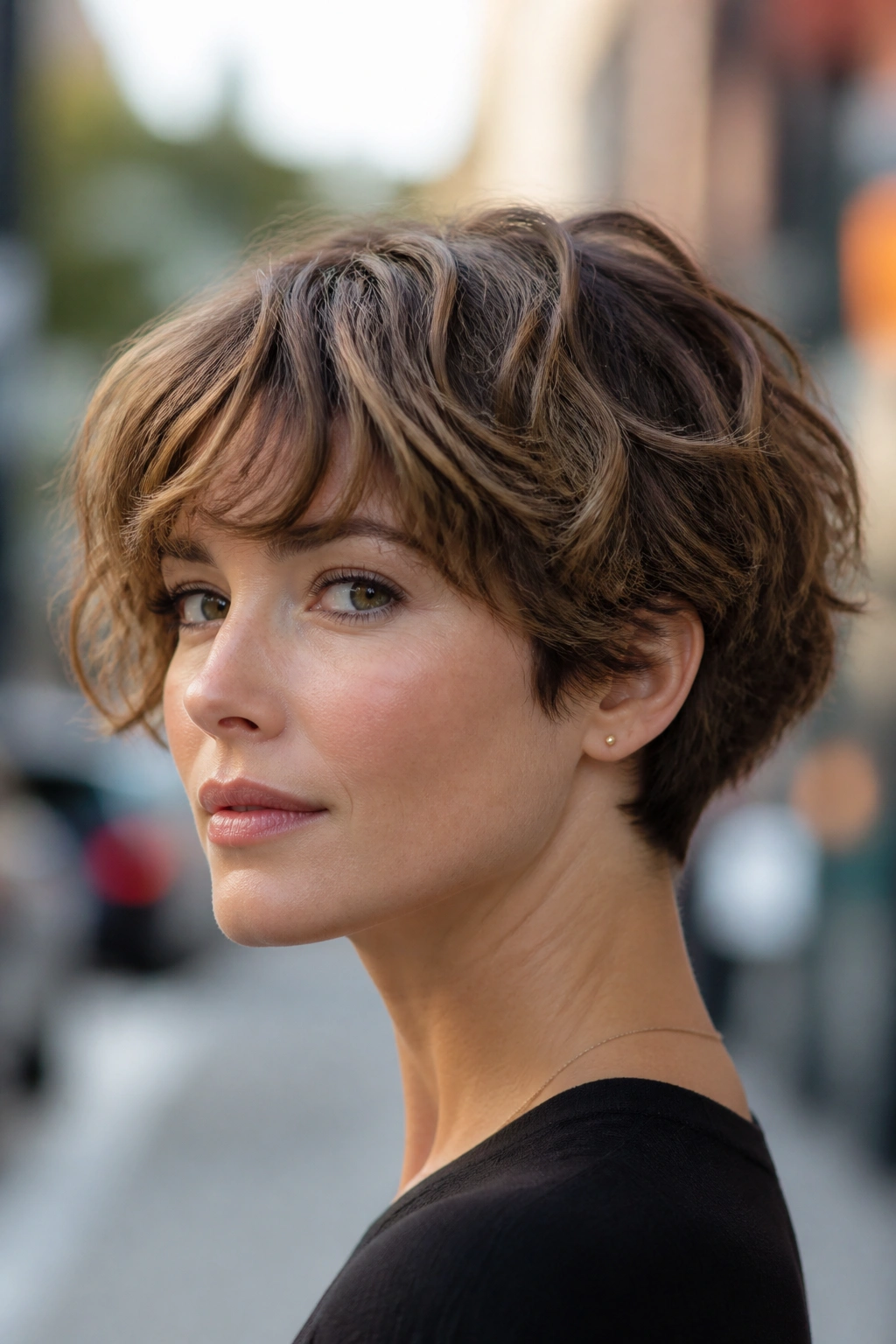
The pixie bob is a good answer for people who want to go shorter without jumping all the way into a cropped pixie. The back stays short, the sides stay close, and the top and front keep enough length to show off the wave pattern.
It’s one of those cuts that feels practical and a little stylish at the same time. You can tuck the longer pieces behind the ears, let them fall forward, or push them off to one side. Wavy hair gives the shape enough texture that it doesn’t need much help.
A pixie bob also grows out more gracefully than a sharp pixie. That matters if you like to stretch the time between appointments. The outline blurs in a nice way, not a shaggy one.
- Keep the nape shorter than the crown
- Leave the front long enough to sweep or tuck
- Use a light cream, not a heavy wax
It’s short, but not severe. That’s the charm.
23. Short Razor Cut with Long Top
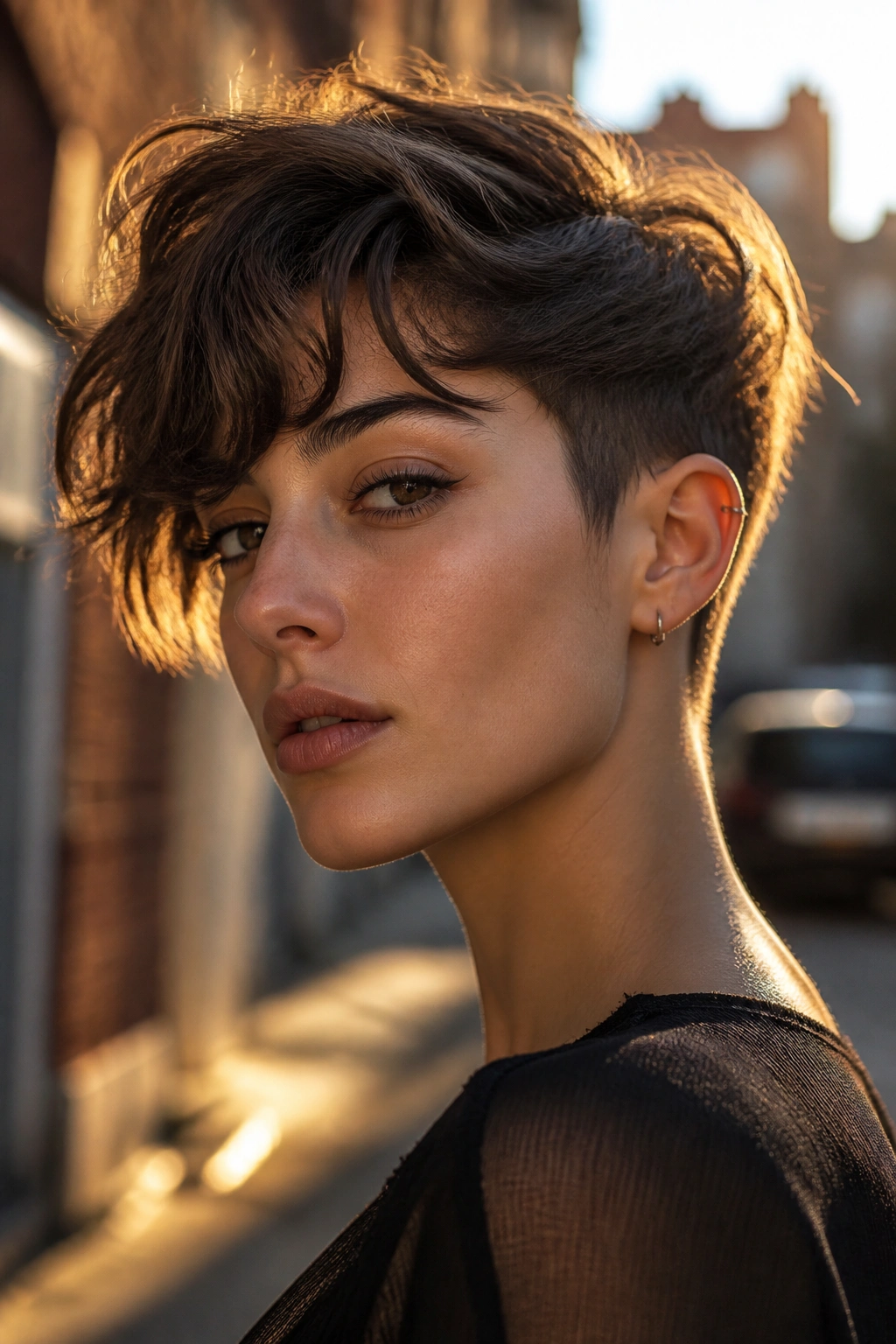
A razor cut can be gorgeous on healthy wavy hair. The ends get a softer, airier finish, and the long top keeps enough weight for the waves to form instead of frizzing out. The whole style can look light as long as the hair can handle the blade.
That last part matters. Razor cutting on dry, porous, or fragile hair can make the ends look frayed. If your hair already leans fluffy at the tips, a razor may not be your friend. I’d rather see this cut on strong, medium-to-thick waves that can carry the texture.
The payoff is movement. Lots of it.
Let the hair dry with a leave-in and a little curl cream, then separate a few pieces once it’s dry. The long top gives you room to play with parting and volume, which keeps the cut from feeling too wild. It has edge, but the kind that still works with jeans and a plain shirt.
24. Neck-Length Layered Cut
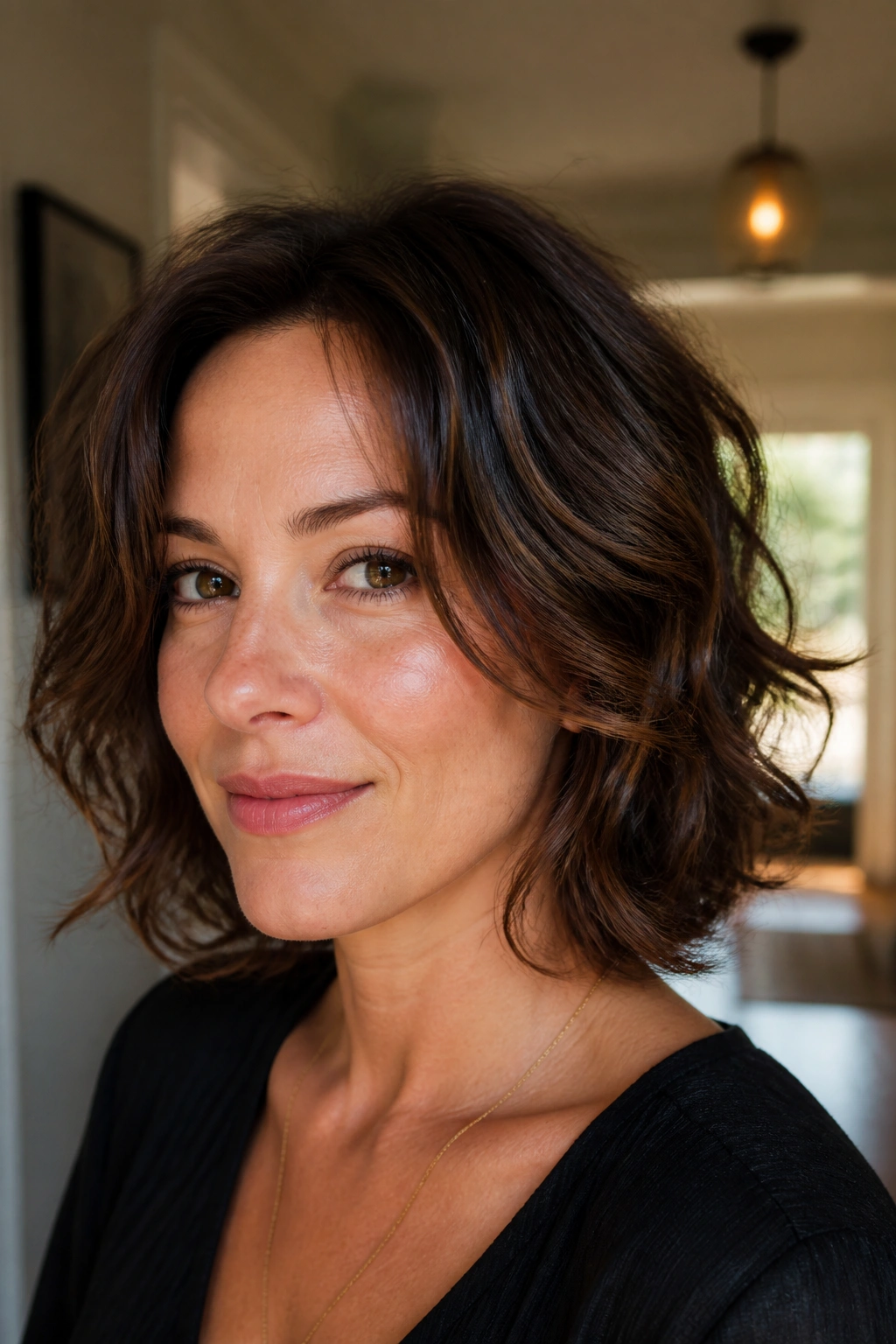
A neck-length cut sits in that useful middle ground where the hair is short enough to feel light, but long enough to tuck, pin, or twist back when you want it out of the way. On wavy hair, the added layers stop the shape from looking square.
This is a smart cut if you want movement around the face and a little swing at the nape. It also works nicely with natural waves because the length is short enough for the bend to show, but not so short that the waves spring out in every direction.
Ask for layers that start below the cheekbone so the front doesn’t get too thin. That keeps the hair from looking overly broken up. A bit of weight at the bottom helps the shape hold together.
It’s not a loud haircut. That’s the point. It just sits well.
25. Choppy Bob with Deep Side Part
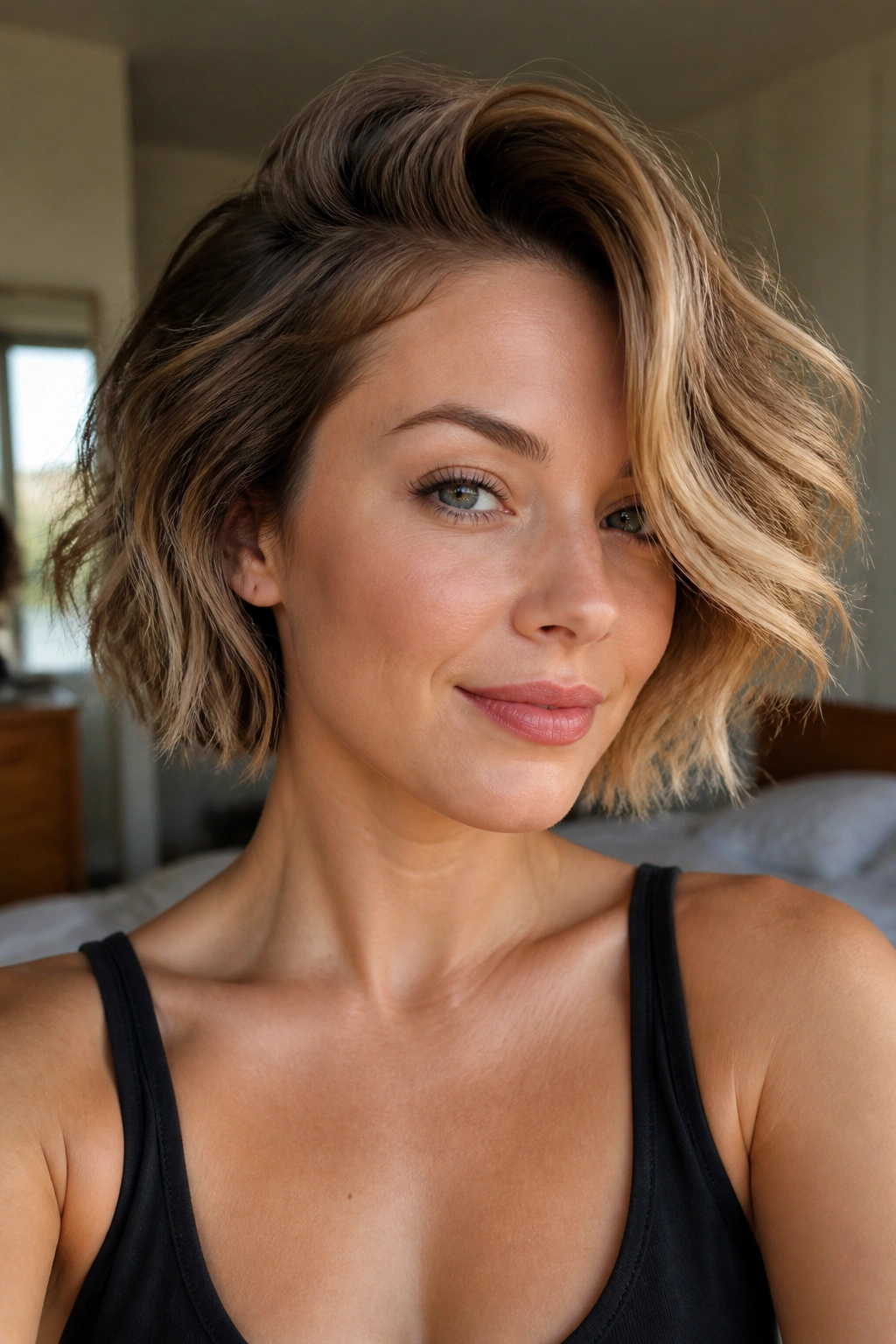
A deep side part can wake up a short wavy bob fast. It gives the hair a bigger lift at the roots, shifts some of the volume to one side, and makes the whole shape feel less predictable. Add choppy layers and you’ve got a cut with a bit of grit.
What Makes It Different
The choppiness breaks up the outline, so the waves don’t have to sit in one clean line. That’s useful if your hair falls unevenly or if one side is always a little flatter than the other. The side part covers that without making the style look forced.
How to Keep It Balanced
- Keep the part low enough to create lift, not a comb-over effect
- Use texture spray at the crown, not all over
- Leave the ends soft so the bob still reads as a bob
This one has more attitude than a classic bob. If you want a cut that looks a bit lived-in and a bit intentional at the same time, it’s a solid pick.
26. Wavy Crop with Bottleneck Bangs

Bottleneck bangs are a clever match for wavy hair because the shape is forgiving where a blunt fringe can get fussy. The center sits shorter, then the sides get a little longer and blend into the rest of the cut. That makes the bang line softer and easier to wear.
The crop beneath it can stay short and close, or slightly shaggy if you want more movement. What matters is that the fringe doesn’t look pasted on. It should flow into the haircut. Waves help with that because they soften the line on their own.
This cut needs regular trims on the fringe. Bangs grow fast, and bottleneck bangs lose their shape quickly once they drop into the eyes.
A little smoothing cream through the front and a rough dry with your fingers usually works fine. If your wave pattern is tighter, you may need to pull the bangs into place as they dry. Nothing dramatic. Just enough to keep the center from splitting too soon.
27. Stacked Bob
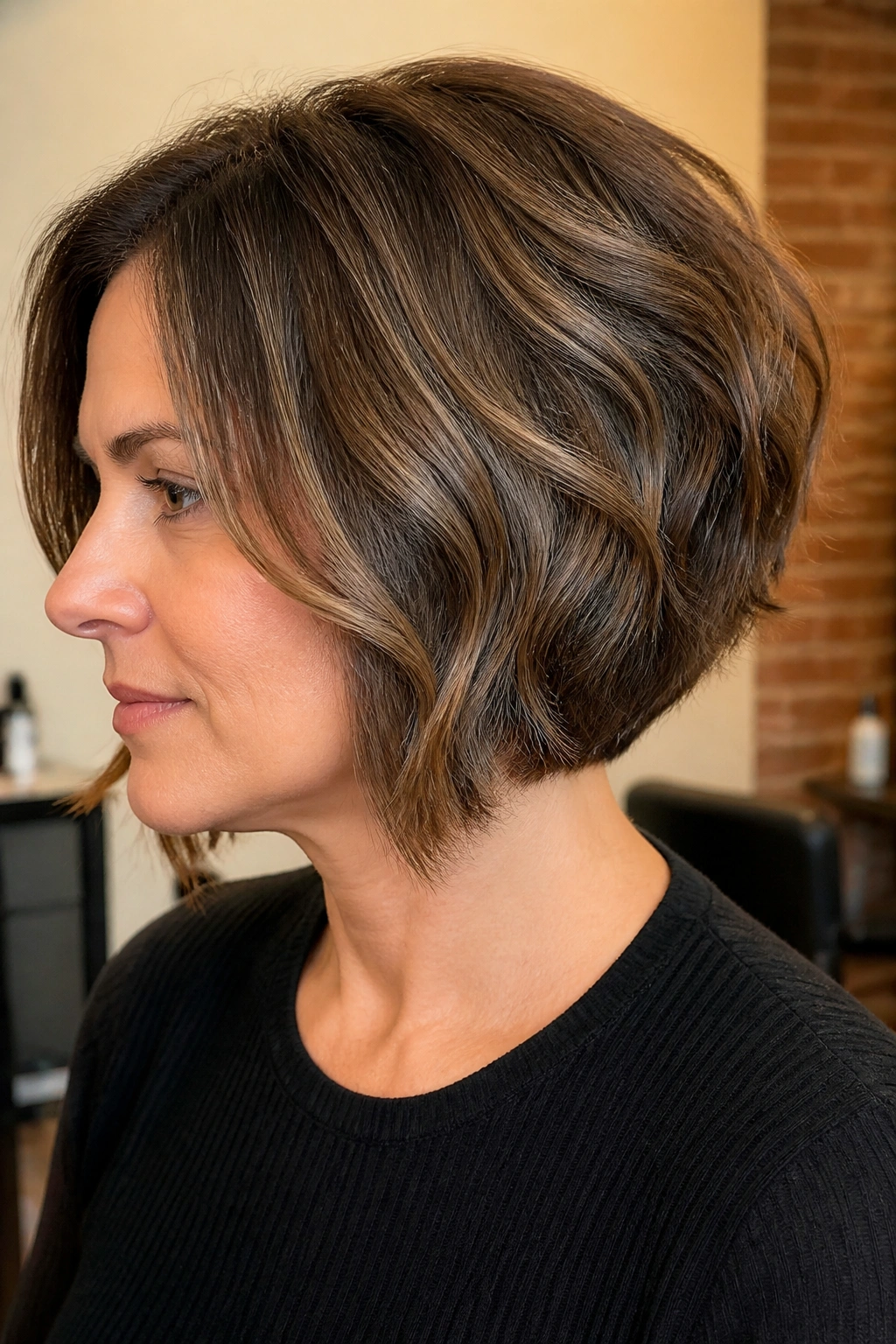
Why do stacked bobs keep showing up? Because they give short hair a built-in shape that doesn’t need much help. The shorter layers in the back create lift, and the slightly longer front keeps the cut from feeling boxy.
The Part That Matters Most
On wavy hair, the stacking has to stay soft. Too much graduation in the crown and the back can puff out into a little shelf. A good stacked bob should lift, not bulge. That’s a real difference when the hair is dense.
Styling It Well
- Dry the roots with a round brush or diffuser lift
- Smooth the outer layer lightly so the line stays neat
- Avoid heavy oils near the crown
The front can sit at the jaw or a little below, depending on how much face framing you want. I like this cut on people who want order without losing texture. It’s a strong shape, and waves give it life.
28. Soft Curly Shag
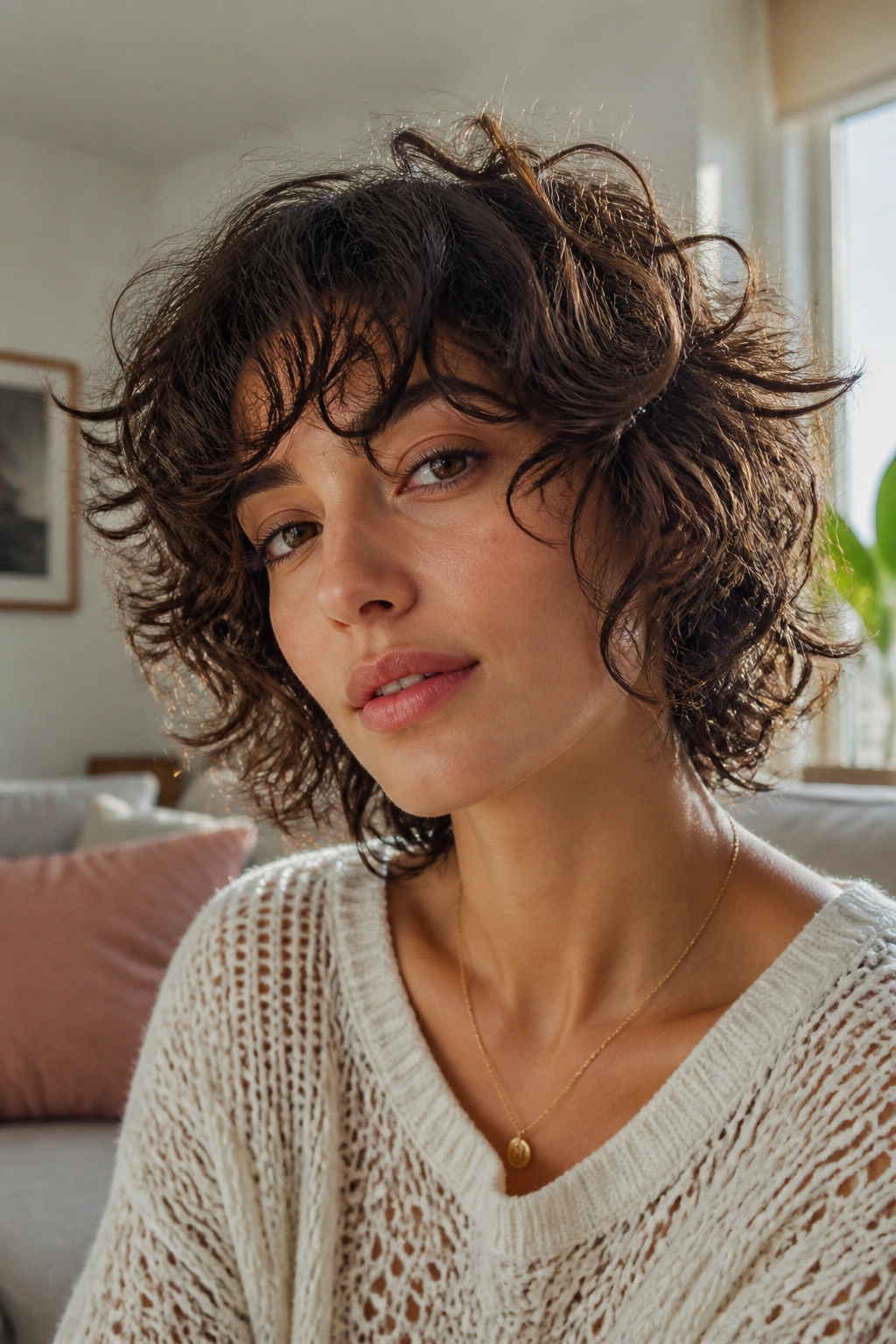
A soft curly shag and wavy hair get along because neither one needs to be perfect. The layers are there to let the hair spring and bend, not to force a clean outline. That makes the cut easy to live with when your waves lean a little curly on some days and a little flatter on others.
This is one of the more forgiving short styles on the list. If the waves are uneven, the shag hides that. If the fringe doesn’t sit exactly right, the rest of the cut keeps moving. That freedom is what makes the style feel relaxed.
- Keep the layers rounded, not razor-sharp
- Use curl cream or a light gel while the hair is damp
- Diffuse only until the roots are mostly dry, then stop
The main risk is over-layering the top. Leave some weight in the crown so the hair doesn’t balloon. A soft shag should look airy, not scattered.
29. Sleek Short Bob for Loose Waves
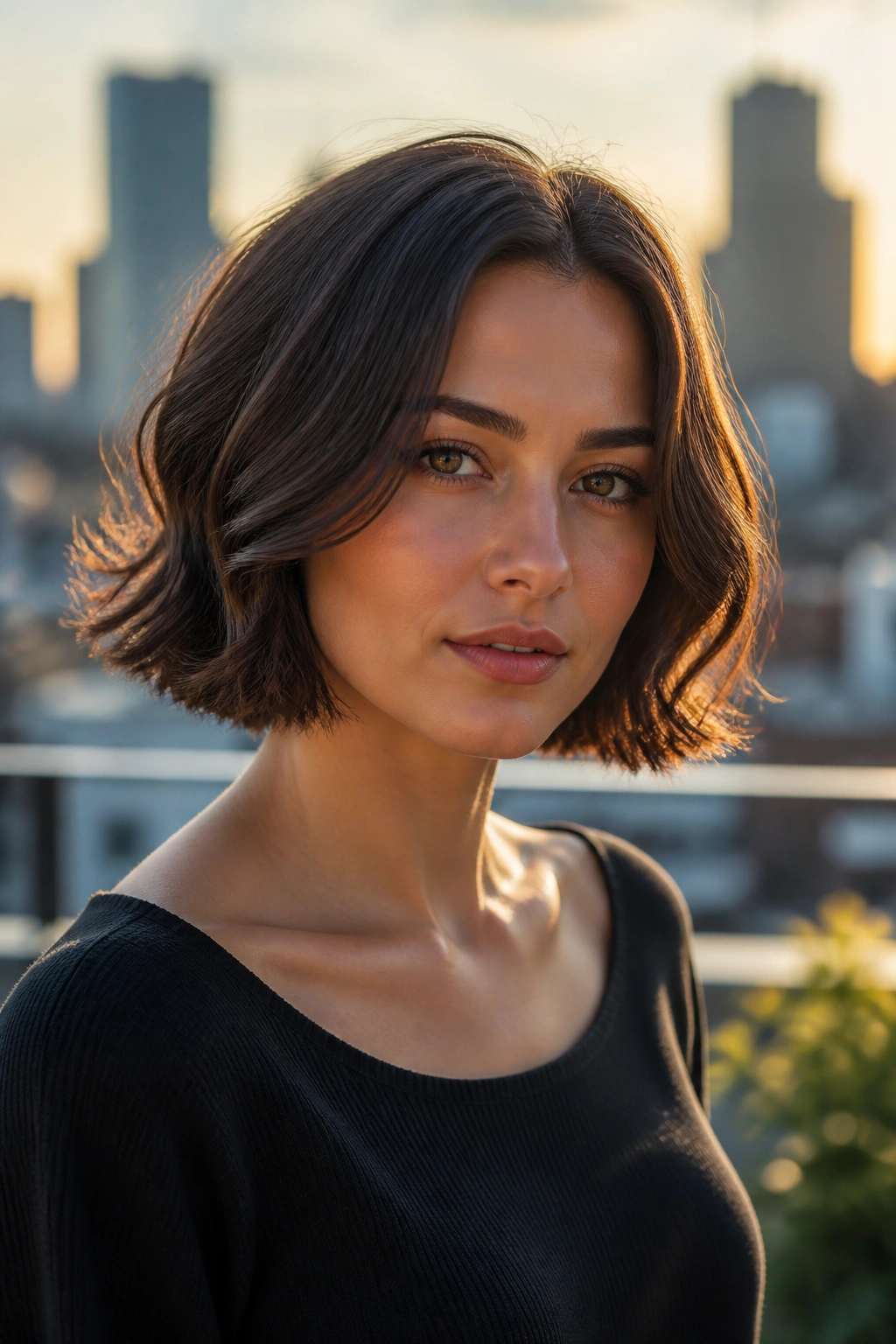
Loose waves can take a sleeker short bob better than people expect. The trick is not to flatten them completely. You want a smooth outline with enough bend left in the ends so the hair still feels like itself.
A bob that sits near the chin or just above the collarbone can look polished with a side part, a center part, or a tucked-behind-the-ear finish. If the wave pattern is gentle, a blow-dry with a paddle brush or a quick pass with a large round brush can calm the top without killing the shape.
I like this cut when someone wants clean lines but doesn’t want to fight their texture every morning. That usually means keeping the layers minimal and the perimeter strong. A shine cream on the ends helps too, especially if the hair frizzes at the first sign of moisture.
It’s neat. Not stiff. That balance is hard to beat.
30. Low-Maintenance Wash-and-Go Crop

A wash-and-go crop is the haircut for people who want short hair that doesn’t make a scene before breakfast. The shape is kept fairly close to the head, with just enough internal layering to let the waves move without needing a full styling routine.
The outline can be a little blunt or slightly rounded, depending on your density. If your hair is thick, a touch of internal weight removal helps the top lie better. If it’s finer, keep the layers light so the hair doesn’t go airy and vague. That tiny distinction matters a lot once the hair is short.
This is the cut I’d pick for someone who wants speed. A little leave-in, a small scoop of mousse, scrunch, done. If the front needs a nudge, tuck one side behind the ear and let the rest fall where it wants.
The best short haircut for wavy hair is the one that makes the waves look like they belong there. If the style still looks good after a long day, that’s the real test.
