



Finding hairstyles for wavy hair can feel weirdly personal. One cut gives you soft movement and a bit of romance; another turns the same head of hair into a halo of frizz and half-formed bends. The trick is not to fight the wave pattern. It’s to pick styles that let it do some of the work.
Wavy hair has its own logic. Some sections bend easily, some go straight at the roots, and a few pieces always seem to have a mind of their own. That’s normal. A good style for this texture usually does three things at once: gives the waves room, keeps the ends from puffing out, and uses a little structure so the whole look still feels intentional. That balance matters more than chasing some perfect, glassy finish.
The nice part? Wavy hair is generous. It can wear sharp lines, loose bends, braids, buns, and shoulder-length shapes without looking overworked, as long as the cut or styling choice respects the texture. A flat iron is not the answer to everything. Neither is piling on product until your hair feels like it’s wearing a raincoat.
1. Long Layers That Let Wavy Hair Move
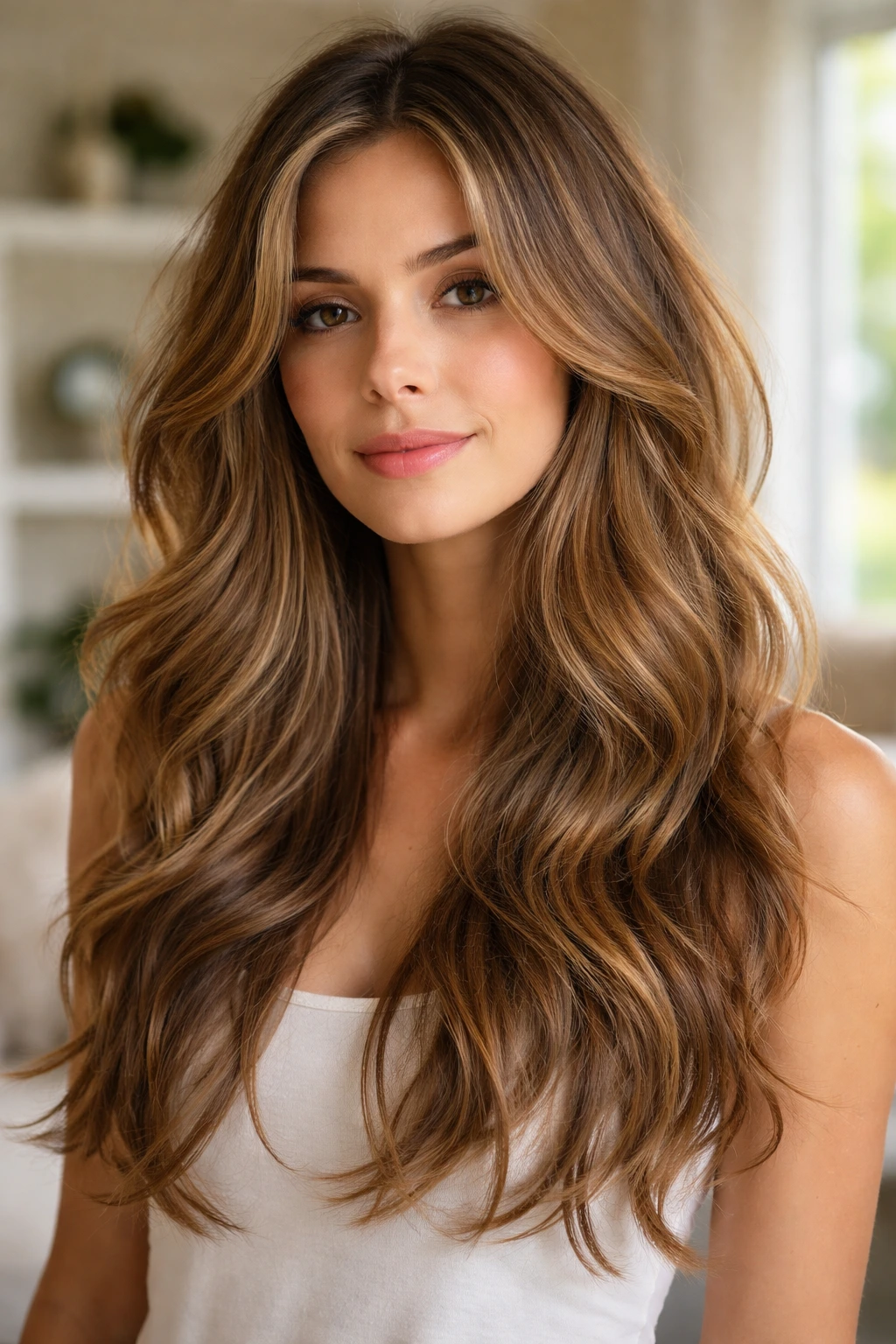
Long layers are one of those styles I keep coming back to because they rarely argue with the hair. They let the wave pattern show up instead of collapsing under its own weight. If your hair gets triangular at the bottom or looks heavy when it dries, layers usually help.
The key is keeping the layers soft enough to remove bulk without carving huge gaps through the length. Ask for long, blended layers starting below the chin if you want your waves to keep their shape. Shorter layers can work too, but they need a steadier hand, especially on finer wave patterns that can look stringy if too much is removed.
What to ask for
- Length kept below the shoulders if you want the waves to fall loosely.
- Layers concentrated around the mid-lengths and ends.
- Face-framing pieces that start around the cheekbone or jaw.
- A dry check at the end so the wave pattern sits where it should.
This cut works because it takes weight off the ends without stealing the wave pattern. That’s the whole game. If your hair is thick, the difference can be dramatic; if it’s fine, the change is more subtle but still worth it.
2. The Collarbone Lob for an Easy, Polished Shape
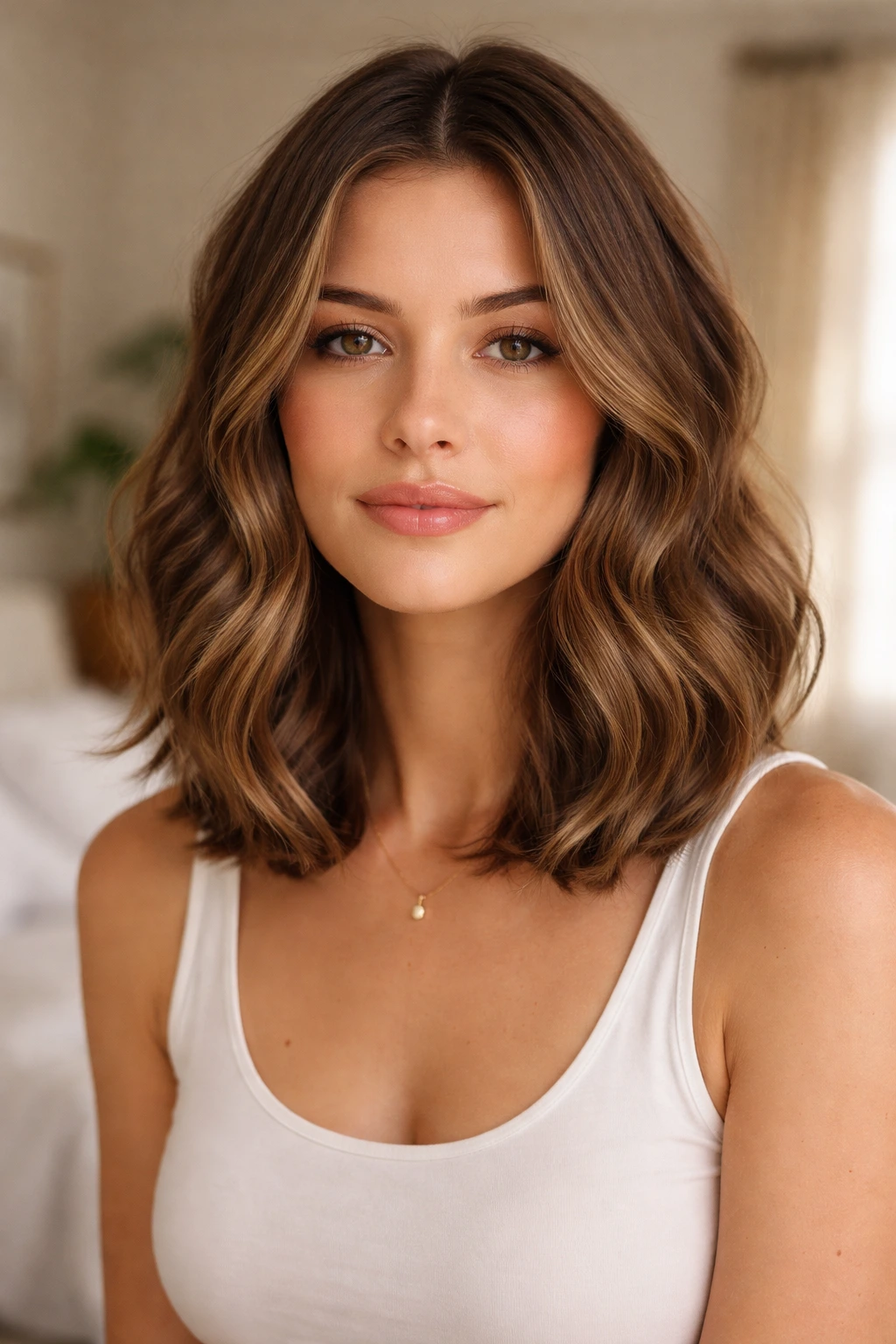
A collarbone lob is a clean answer when you want hair that feels shorter but not fussy. It sits in that sweet spot where wavy hair gets bounce without puffing up into a triangle. And honestly, that length flatters a lot of face shapes because it lands right where the neck and shoulders frame the face.
What makes this cut work is the length itself. A lob that stops around the collarbone gives your waves enough room to form, but it doesn’t drag them down. If you’ve ever noticed your hair looks best on day one and limp by day three, this length often holds shape better than longer cuts.
Use a center part for a calm, balanced look, or shift it slightly off-center if one side waves more strongly than the other. That little change can make the whole style feel more relaxed.
A collarbone lob also behaves well with air-drying. Scrunch in a light mousse, clip the roots for lift, and let it dry in the open air if you can. You’ll get movement without the rounded, overblown finish that sometimes happens when layered cuts are pushed too hard.
3. Curtain Bangs That Fall Into the Wave Pattern
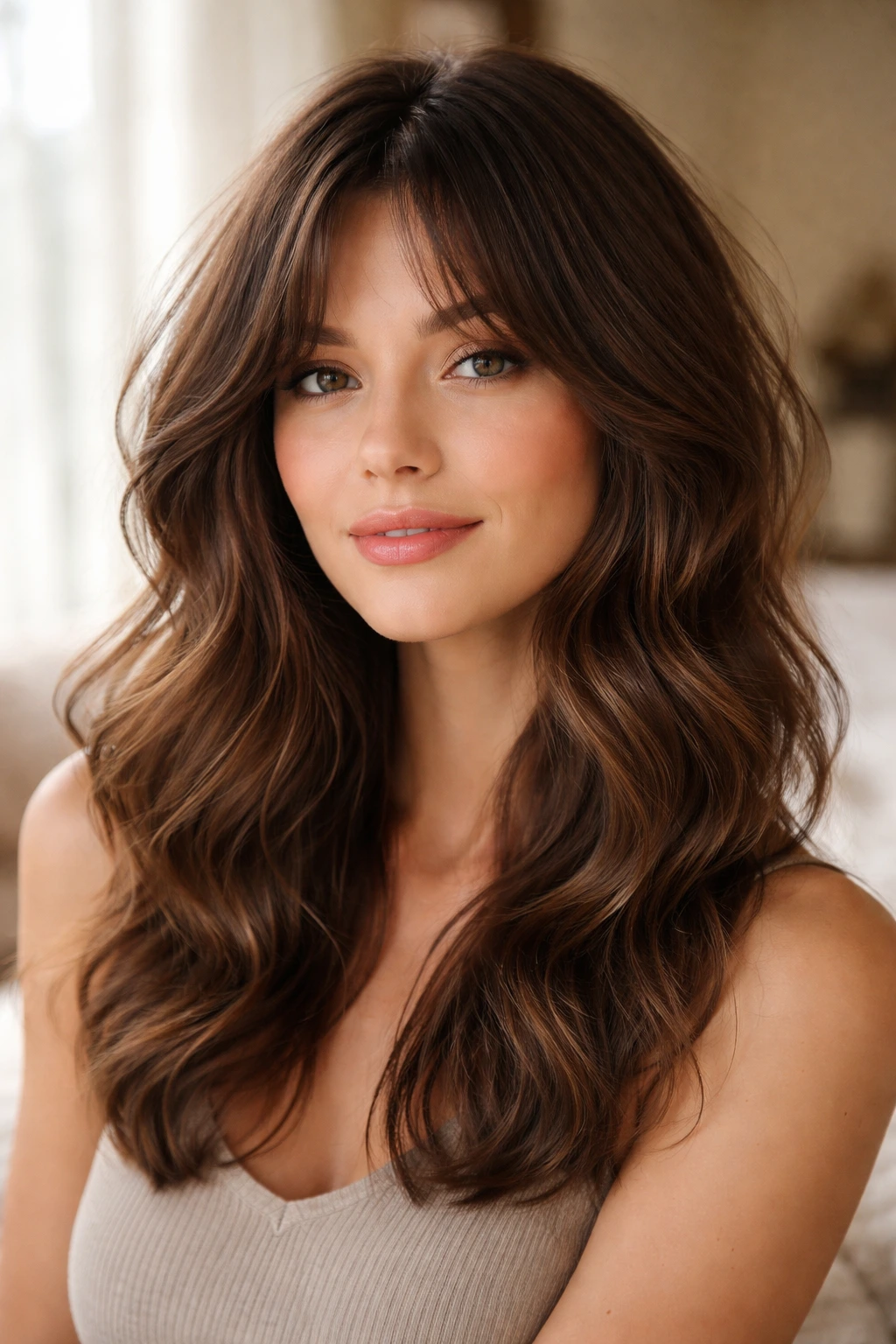
Curtain bangs and wavy hair get along better than people expect. The reason is simple: curtain bangs don’t need to lie flat. They’re meant to bend away from the face, and that shape works with the natural bend already happening in the hair.
The trick is to keep them long enough to split and sweep. Bangs that are cut too short can spring up and sit awkwardly above the brows, especially if your waves are springy. Aim for bangs that hit around the cheekbone or just below it when dry. That gives you enough length to style them two ways: parted in the middle or brushed to the side.
How to style them
- Mist the bangs with water or a light leave-in.
- Wrap each side around a medium round brush or your fingers.
- Blow-dry on low heat, pointing the airflow downward.
- Pin them back for a few minutes if they need to cool into shape.
Curtain bangs do ask for a little maintenance. Not a huge amount. Just enough. If you ignore them completely, they may split in odd places. But when they’re behaving, they soften the whole face and make a basic cut look far more finished.
4. A Shag Cut That Gives Wavy Hair Room to Breathe
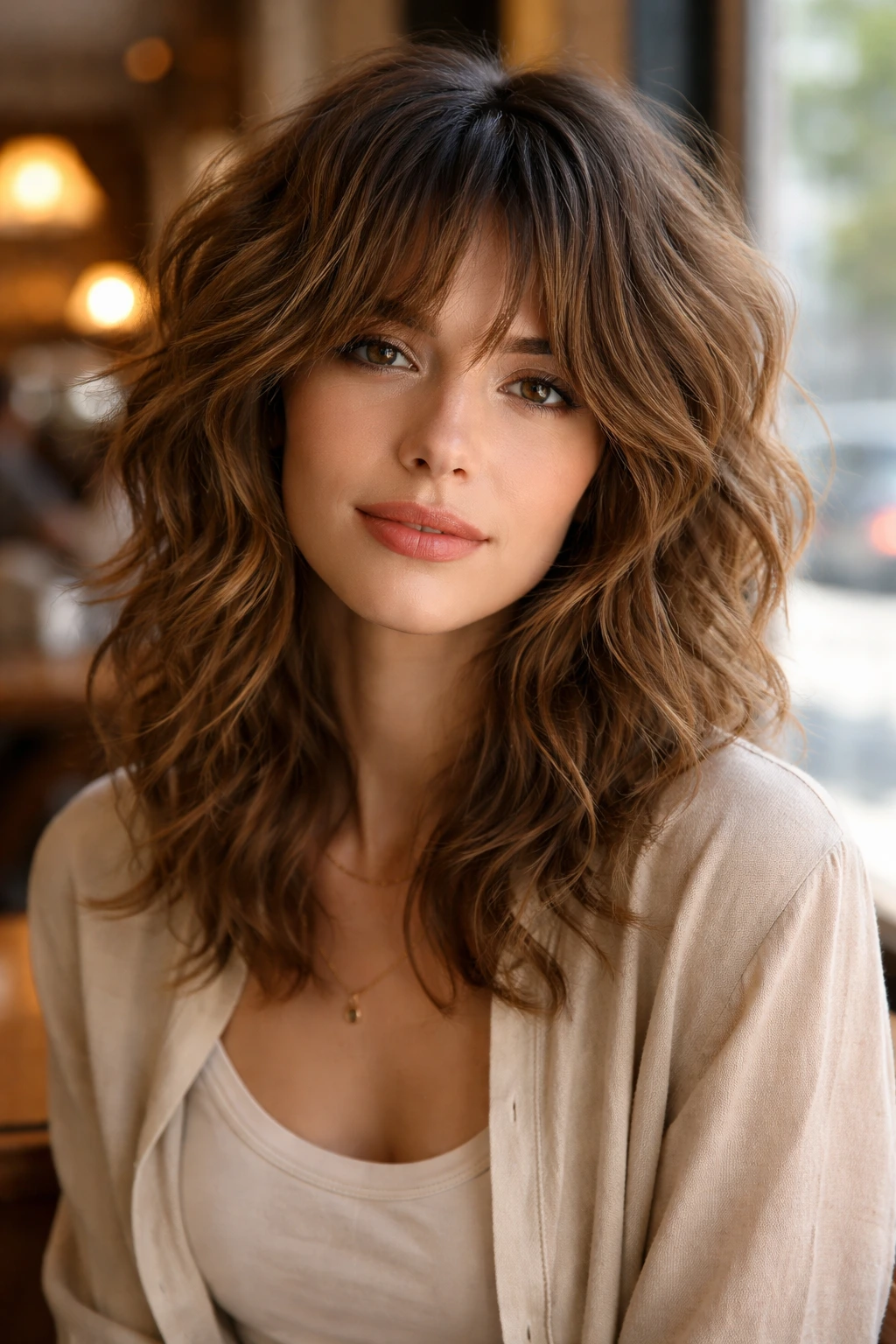
A shag is not shy. It gives wavy hair movement, grit, and some attitude, and it works especially well when the texture is naturally uneven. If your waves form in different directions — which happens all the time — a shag can turn that inconsistency into part of the look.
The best shags for wavy hair keep the crown lighter and the perimeter a little rougher. That doesn’t mean messy in a bad way. It means the cut has enough piece-y texture that the waves don’t need to be identical to look good. A little unevenness is the point.
Why it works
- Shorter layers around the crown create lift.
- Face-framing pieces keep the front from looking boxy.
- Textured ends stop the style from feeling blunt.
- Air-drying helps the layers fall where they want.
If you like styles that look better with a bit of texture spray and a quick finger comb, this one’s a keeper. It can be soft and pretty or slightly gritty and cool. Same haircut. Different mood.
5. A Deep Side Part for Instant Volume
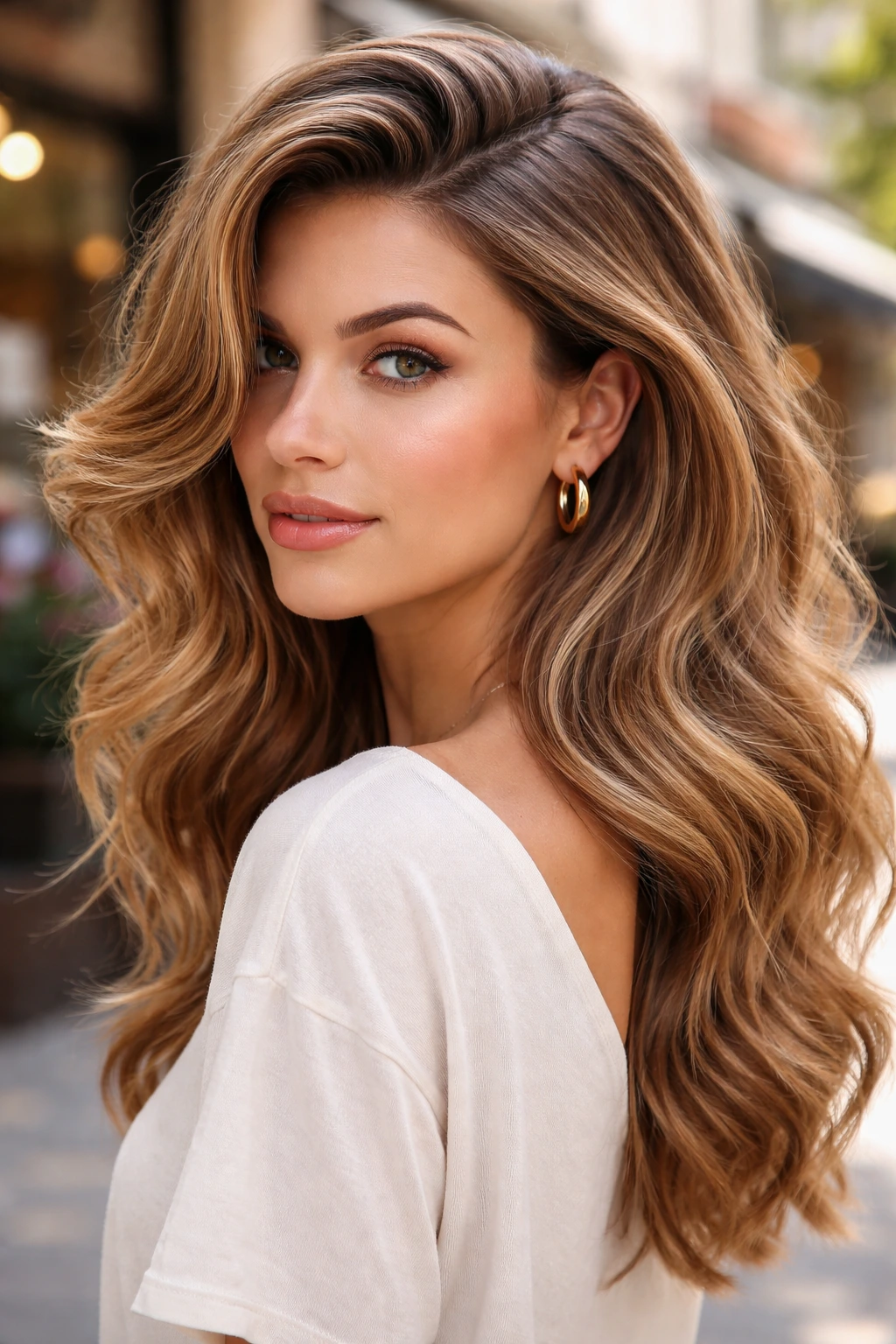
A deep side part is one of the fastest ways to make wavy hair look fuller without changing the cut at all. It shifts the weight to one side, gives the roots a lift at the crown, and creates a sweeping shape that feels a little more dramatic than a middle part.
This style is especially useful on days when your roots go flat but the ends still have decent movement. That happens a lot with wavy hair. The waves are there, but they’re sitting low. A side part fixes that in about ten seconds, and you do not need a dozen products to make it happen.
Try placing the part about 1 to 2 inches off-center rather than all the way to the temple. That keeps the look polished instead of theatrical. If one side of your hair naturally falls flatter, tuck the heavier side behind one ear and let the lifted side stay loose.
It’s a small change. Still, it changes everything.
6. A Half-Up Twist That Keeps the Length Soft
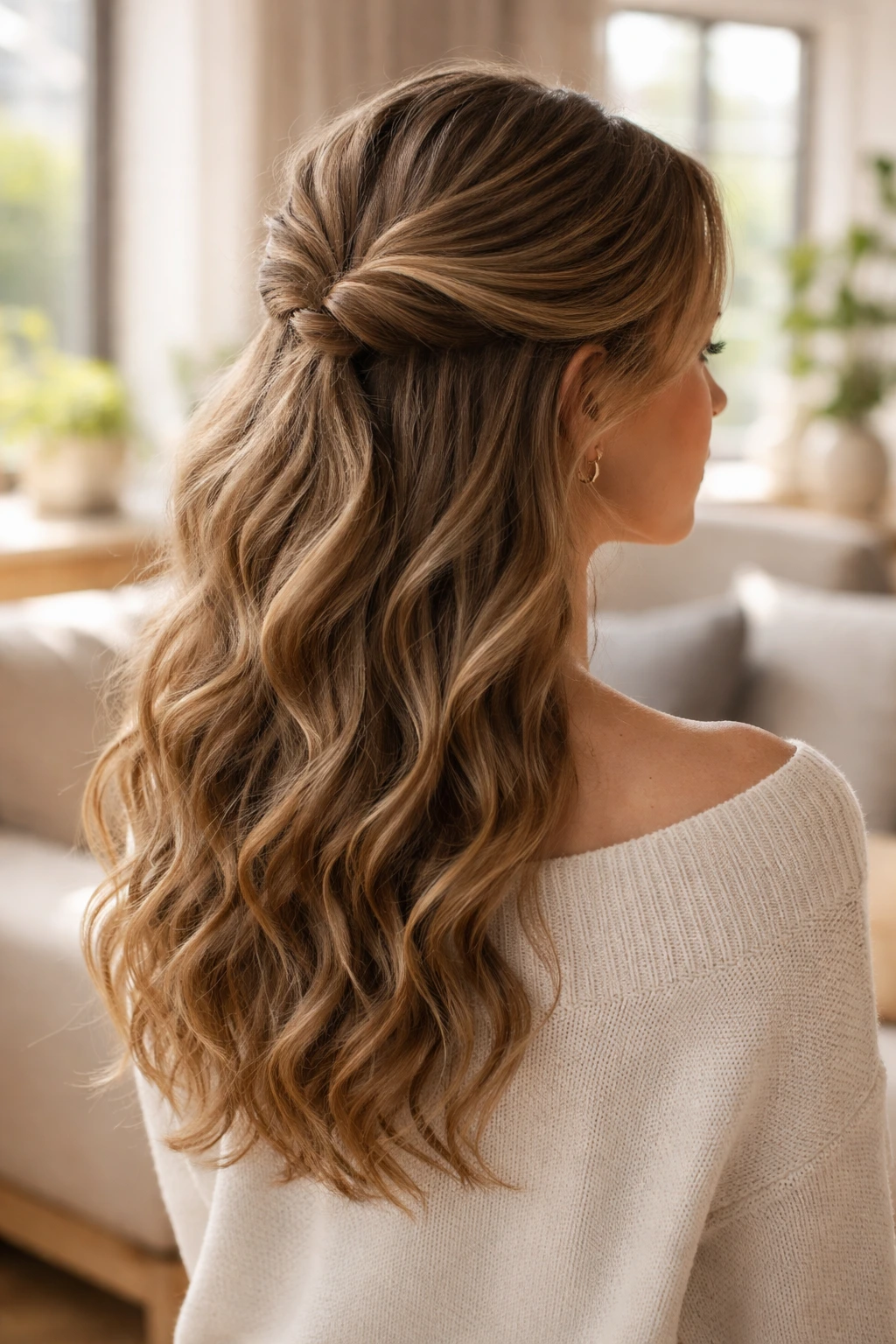
Half-up styles are a gift for wavy hair because they control the top while leaving the rest alone. A simple twisted half-up look is especially nice when your waves are soft and loose, since it keeps the shape visible without pulling the hair into a tight style.
Start by taking two sections from just above the temples and twisting them back toward the crown. Secure them with a small clip, two pins, or a clear elastic hidden under the twist. The rest of the hair stays down, so the waves still do their thing.
This is one of those styles that looks more finished if you leave a little tension out of the front. Pull a few strands loose around the hairline. Not too many. Just enough to keep the twist from looking stiff.
If your hair is shoulder length or longer, this is one of the easiest “looks deliberate without trying too hard” options. It also works on second-day waves, which is probably why so many people reach for it.
7. The Claw Clip Twist That Never Stops Working
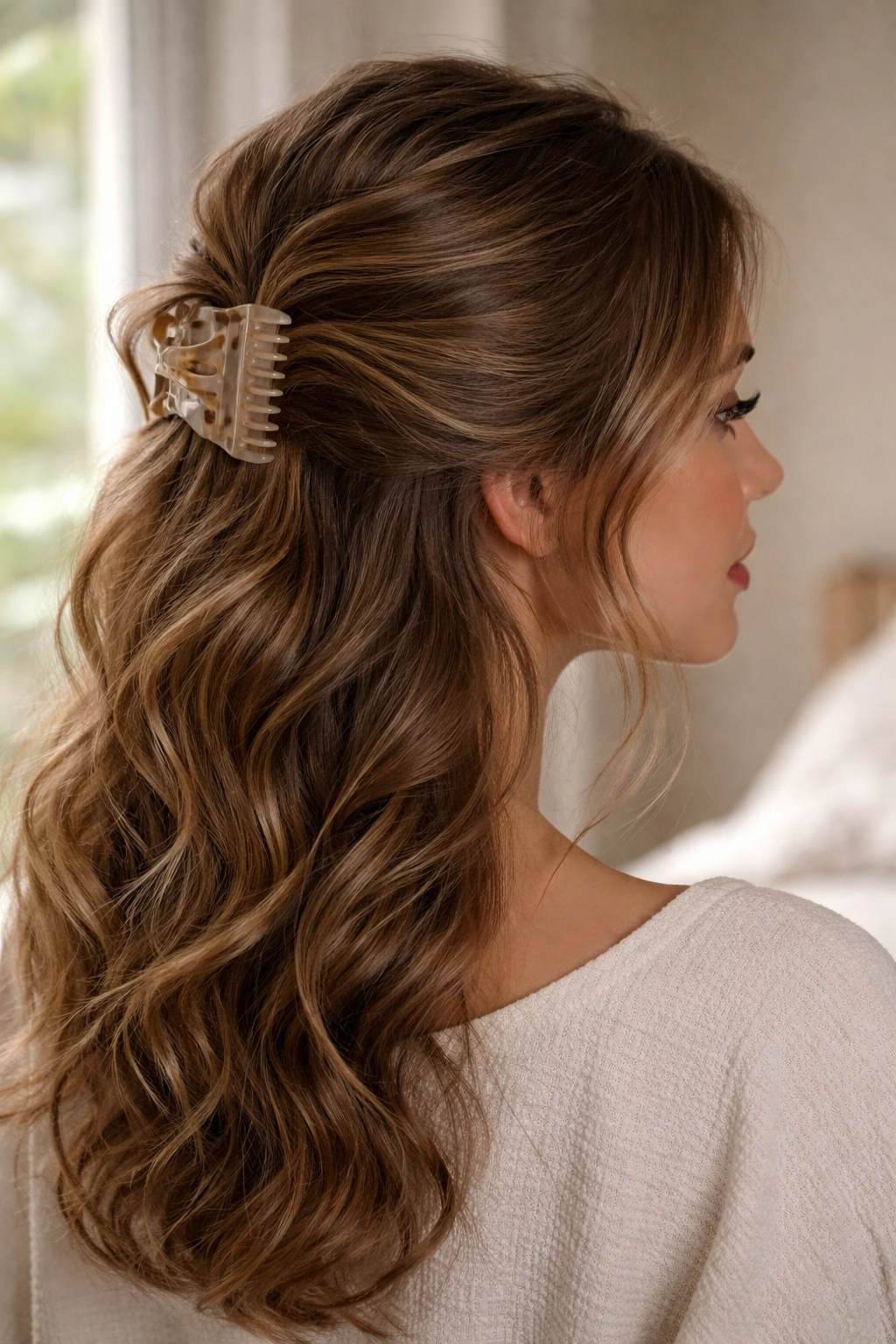
A claw clip twist is almost unfair in how easy it is. Gather the hair, twist it upward, clip it, and let the ends fall where they may. Wavy hair usually gives this style more texture than straight hair, which means the final shape looks fuller and less slippery.
The best version keeps the twist loose at the back of the head rather than wound tight against the scalp. If you twist too hard, the top can flatten and the ends can poke out in odd directions. A looser twist lets the waves fold over themselves in a way that feels soft and casual.
I like this style for days when the ends are fine but the roots need to be off the neck. It’s practical in a way that never feels boring.
Use a medium or large claw clip if your hair is thick or shoulder length and beyond. Tiny clips tend to crack under the weight. That’s not a hair problem. That’s a clip problem.
8. A Low Textured Ponytail With Face-Framing Pieces
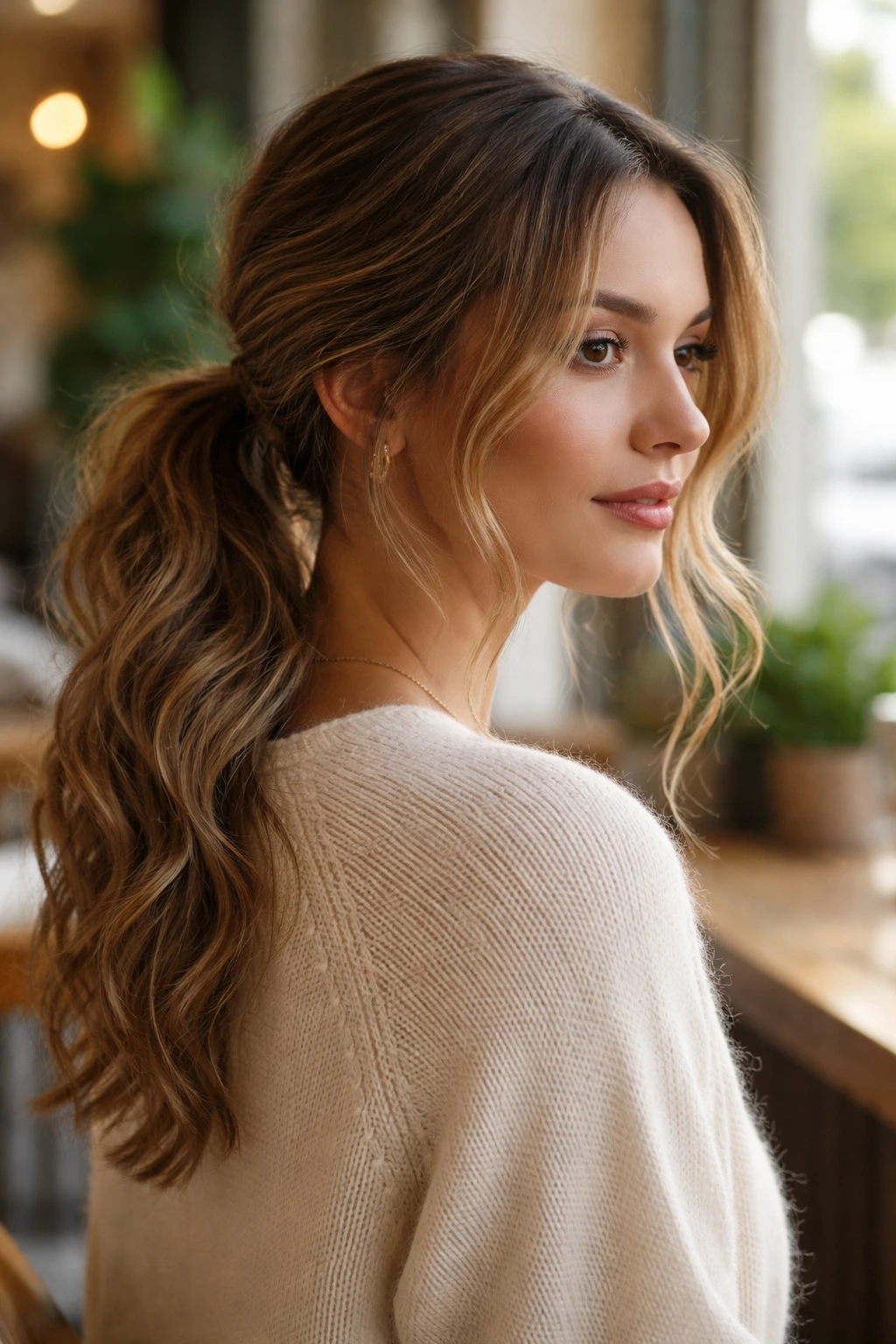
A low ponytail can look plain, or it can look quietly elegant. On wavy hair, the difference is usually in the texture and the front pieces. Keep the ponytail low, around the nape of the neck, and leave a few soft strands out near the temples.
The ponytail itself should not be brushed into a perfectly smooth rope unless that’s the point of the outfit. For everyday wear, let the waves stay visible. A light mist of texture spray through the lengths helps the ponytail look fuller, especially if the hair is medium or fine.
Small details that matter
- Secure the ponytail with a soft elastic, not a tight one.
- Wrap a small section of hair around the base if you want a cleaner finish.
- Gently tug the crown for a little lift.
- Keep the face-framing pieces around chin length or a bit longer.
This style is good when you need your hair out of the way but still want it to look like you made a choice, not a compromise.
9. A Messy Bun That Doesn’t Try Too Hard
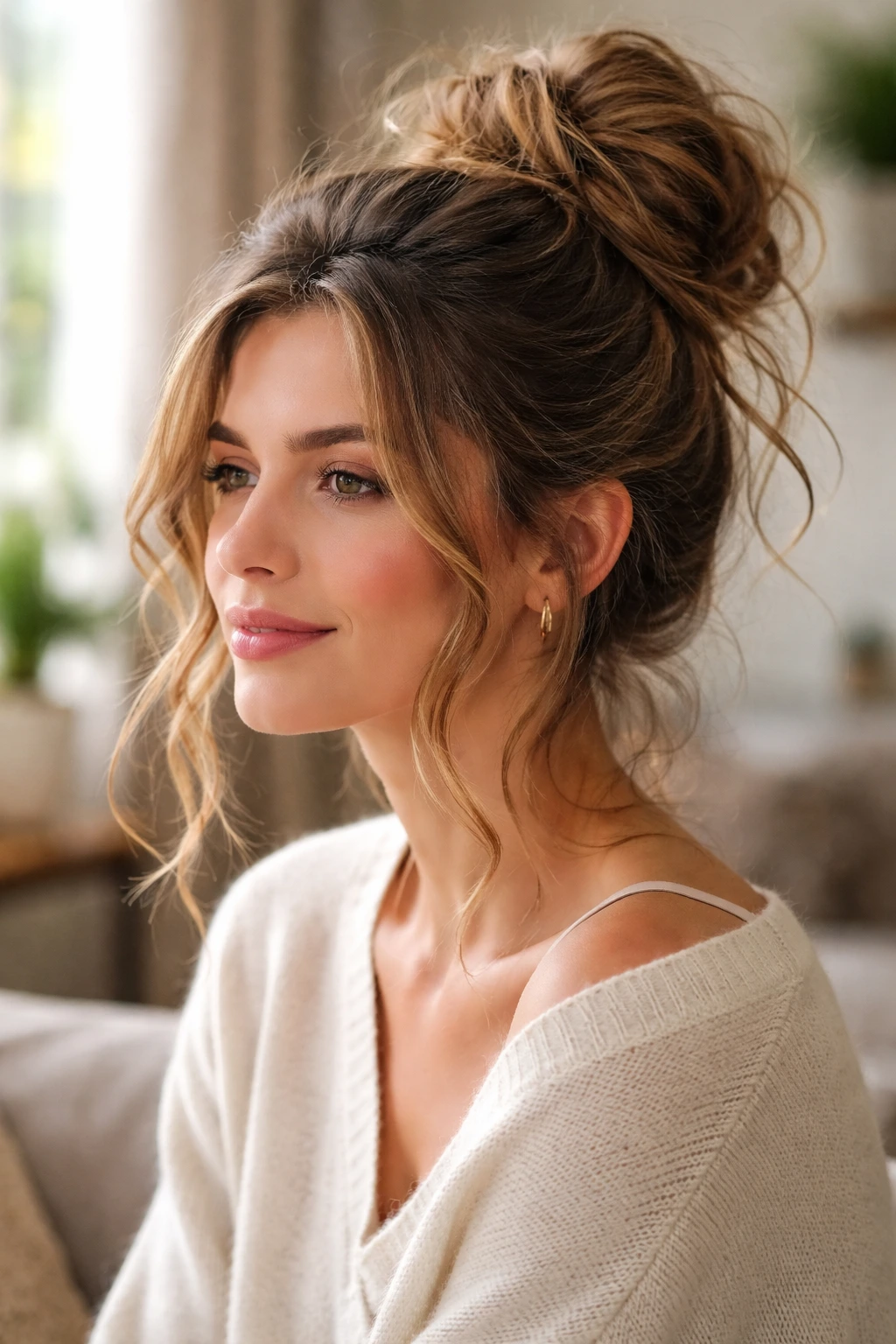
A messy bun on wavy hair can be excellent, but only if it stays relaxed. The biggest mistake is twisting the hair until it looks over-controlled. Wavy hair usually looks better when the bun has a little air in it.
Pull the hair into a high or mid-height ponytail, twist it once or twice, then wrap it loosely around the base. Leave the ends sticking out a bit. That detail keeps the bun from looking like a formal knot. Pin the shape in place, then gently loosen a few spots with your fingers.
A few tendrils around the face help a lot. So does keeping the crown slightly lifted instead of flattened to the scalp. If you want more grip, work in a pea-sized amount of styling cream before tying it up. Not a big blob. Too much cream turns the bun heavy and dull.
It’s a good “I need this off my neck” style that still looks like you meant it.
10. Beachy Waves With a Soft Middle Part
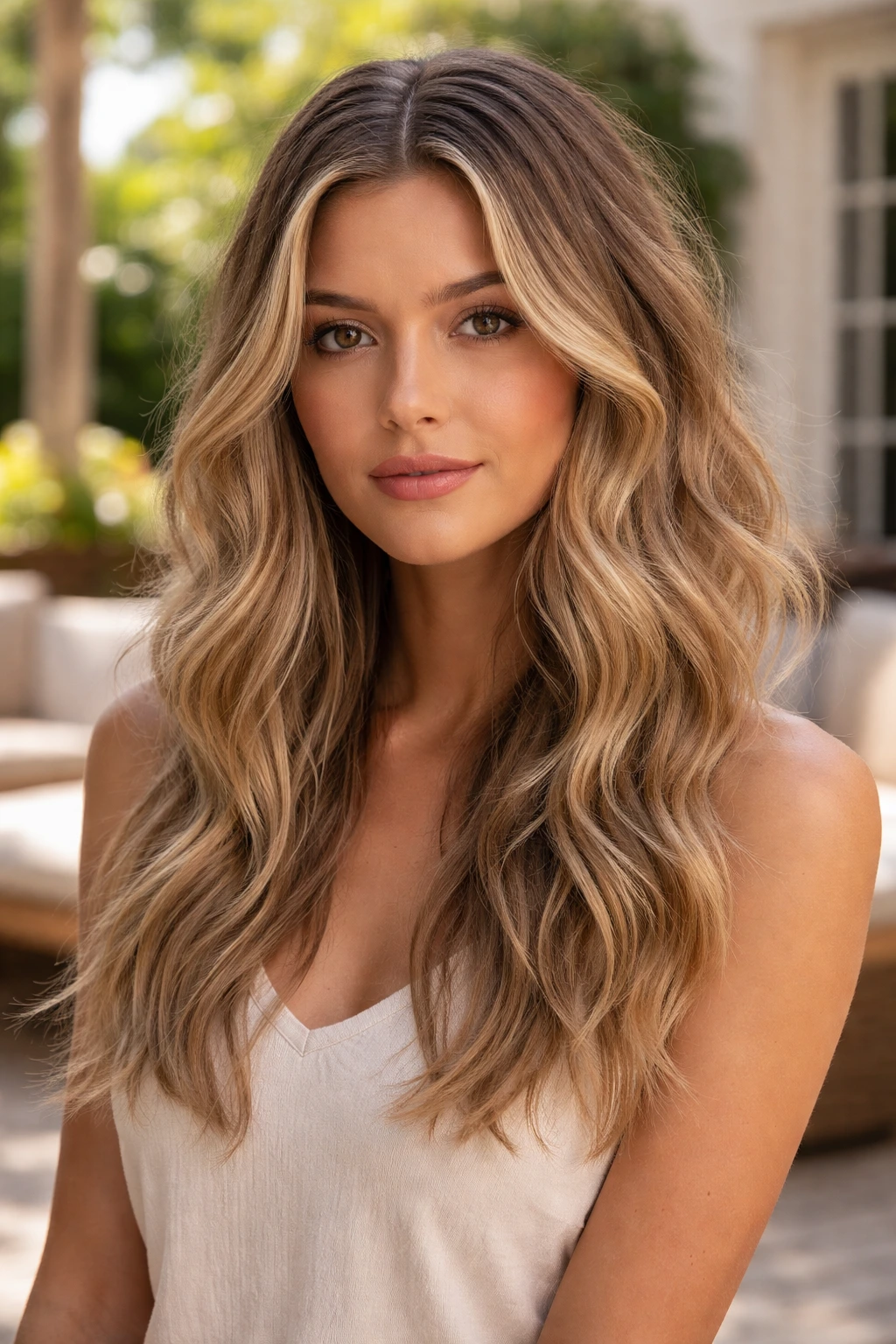
Beachy waves are not the same thing as “hair that got windblown and gave up.” The nice version has loose bends, defined ends, and enough separation to look touchable. On naturally wavy hair, this style often means refining what’s already there instead of creating an entirely new shape.
A middle part keeps the style balanced and works especially well when the waves are similar on both sides. If one side is flatter, a tiny shift off center can solve that without changing the whole mood. Use a light mousse or wave cream on damp hair, scrunch from the ends upward, and let the hair dry with as little touching as possible.
A diffuser on low heat helps if your waves tend to collapse while drying. Hold sections in the bowl of the diffuser for 20 to 30 seconds at a time. Move slowly. Fast drying makes wavy hair frizz faster.
This is a style that rewards patience. The less you poke at it, the better it tends to look.
11. A Braided Crown That Keeps Wavy Hair in Place
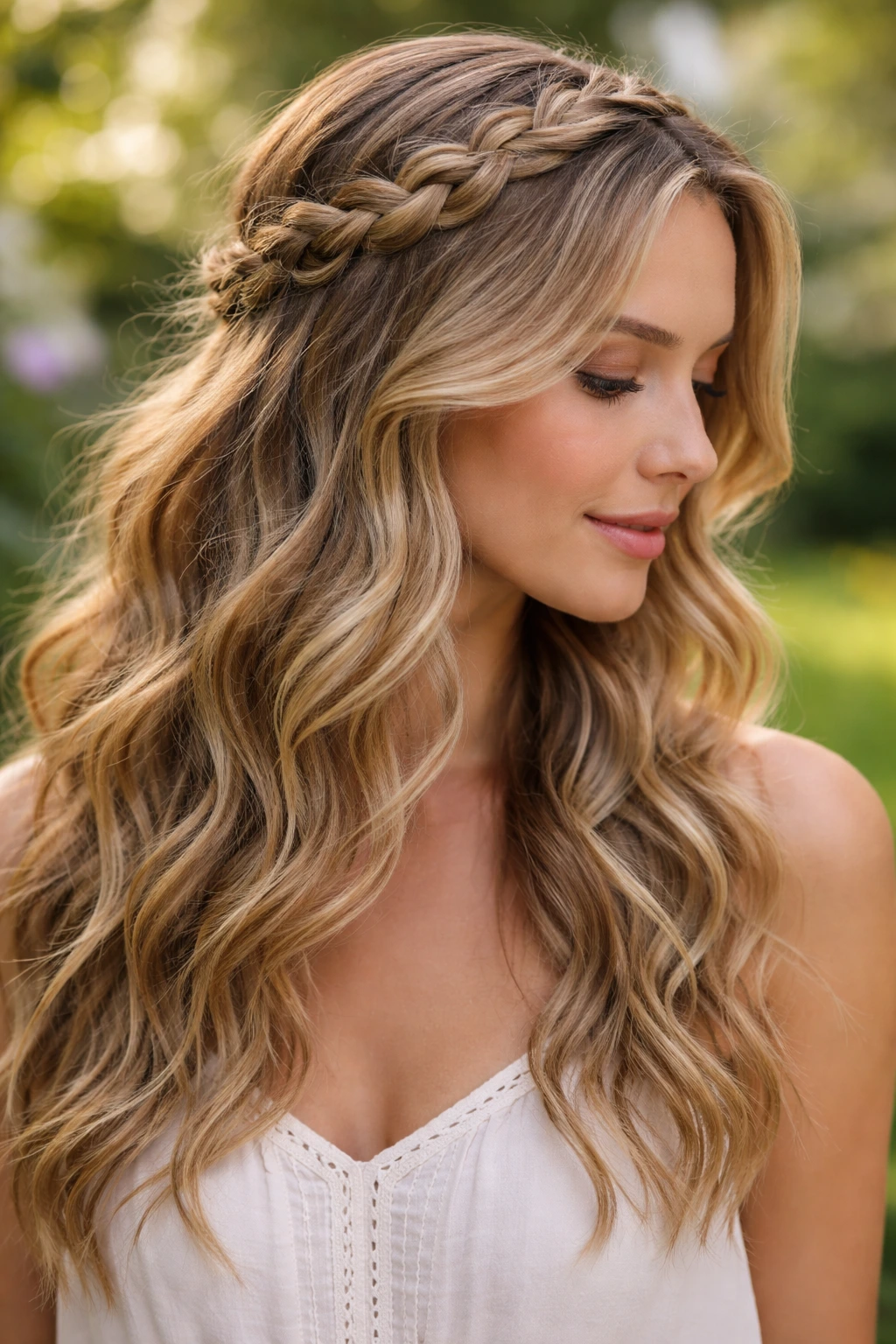
A braided crown is one of the prettiest ways to manage wavy hair when you want the texture to stay visible but controlled. The braid wraps around the head, so it keeps movement near the face and nape while giving the rest of the style a neat outline.
This works especially well if your waves are a little uneven or if your hair has a few pieces that refuse to cooperate. Braids are forgiving. They don’t care if every section is identical, which is good news for texture that behaves differently from one side to the other.
What makes it easier
- Start with hair that has a little grip, not freshly washed silk.
- Braid along the hairline and pin as you go.
- Leave the ends tucked under or hidden behind the ear.
- Pull the braid slightly to widen it once it’s secure.
A braided crown can read romantic, practical, or slightly bohemian depending on how tight you make it. I prefer it a little loose. Tight crowns can feel formal fast.
12. The Half-Up Bun That Shows Off the Waves
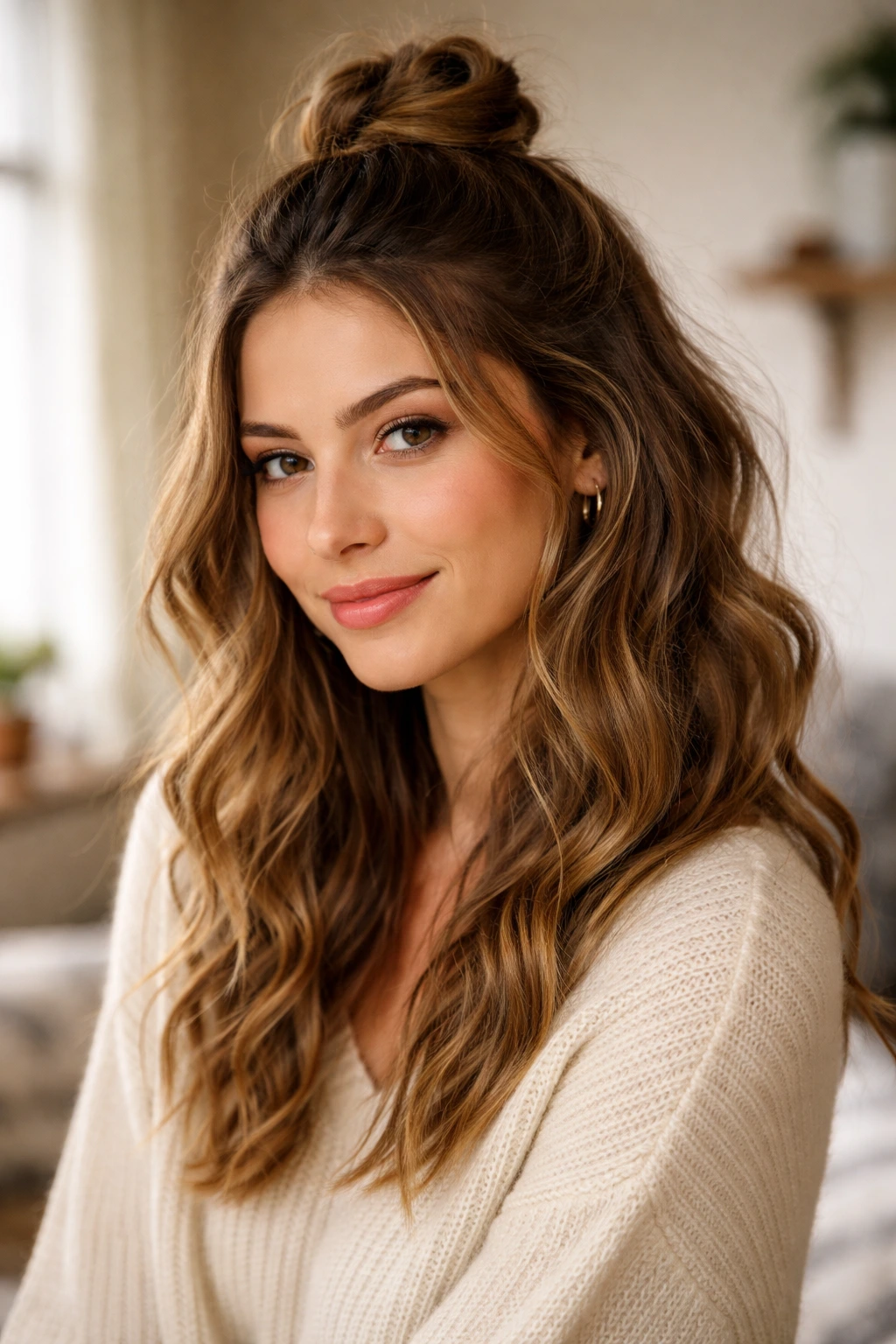
The half-up bun is one of the most useful hairstyles for wavy hair because it solves two problems at once: it keeps the top from falling into your face and lets the lower waves stay visible. That balance is the reason it’s everywhere, and also the reason it keeps working.
Gather the top third of the hair, twist it into a small bun, and secure it at the crown. Leave the lower section loose. If your waves are thick, the bun can be a bit bigger; if your hair is finer, keep it small so it doesn’t overpower the rest of the style. A bun that’s too large can make the ends look limp by comparison.
The look improves a lot when you loosen the crown and let a couple of pieces fall around the ears. That softens the line between the bun and the loose hair. You don’t want the two sections to feel cut off from each other.
It’s casual. It’s useful. And it works with almost any wave pattern.
13. A Voluminous Blowout That Leaves the Ends Soft
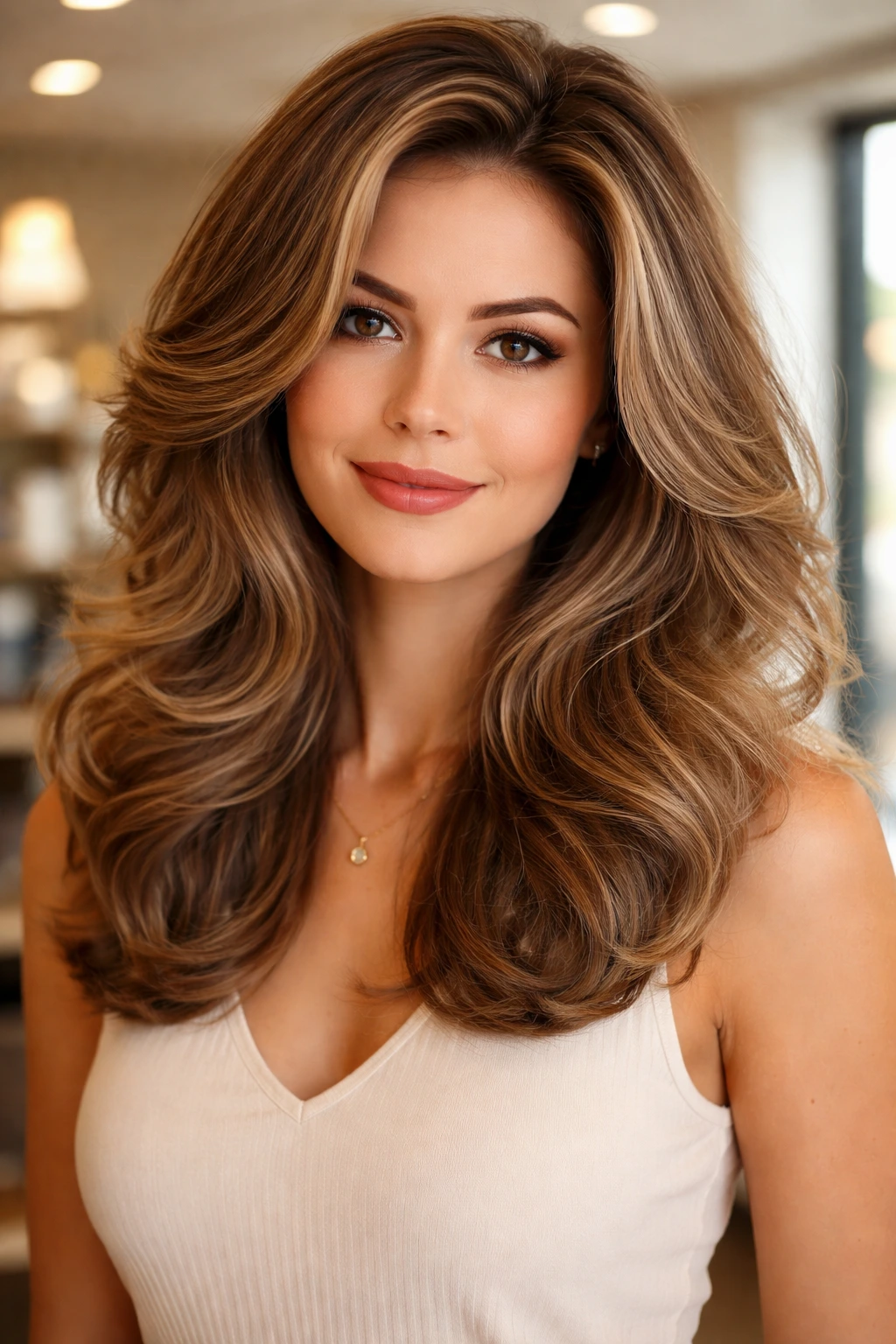
A blowout for wavy hair doesn’t have to mean pin-straight roots and curled-under ends from the early days of salon styling. The version that works now is softer. It builds lift at the roots, smooths the rough patches, and leaves enough bend through the mid-lengths to keep the hair from looking stiff.
Use a round brush or large blow-dry brush and focus on the crown first. Lift the roots while they dry, then spend a little extra time around the face-framing pieces. Those front sections shape the whole look. The ends can stay slightly curved, not tucked under in a neat little roll.
A few things that help
- Apply heat protectant on damp hair.
- Rough-dry about 70 percent before switching to the brush.
- Use medium heat, not the hottest setting.
- Cool each section before moving on.
This style is a little more effort than air-drying, sure. But on wavy hair, a good blowout can make the texture look expensive without making it look overdone. That’s rare.
14. Loose Side Braids for a Soft, Pulled-Together Look
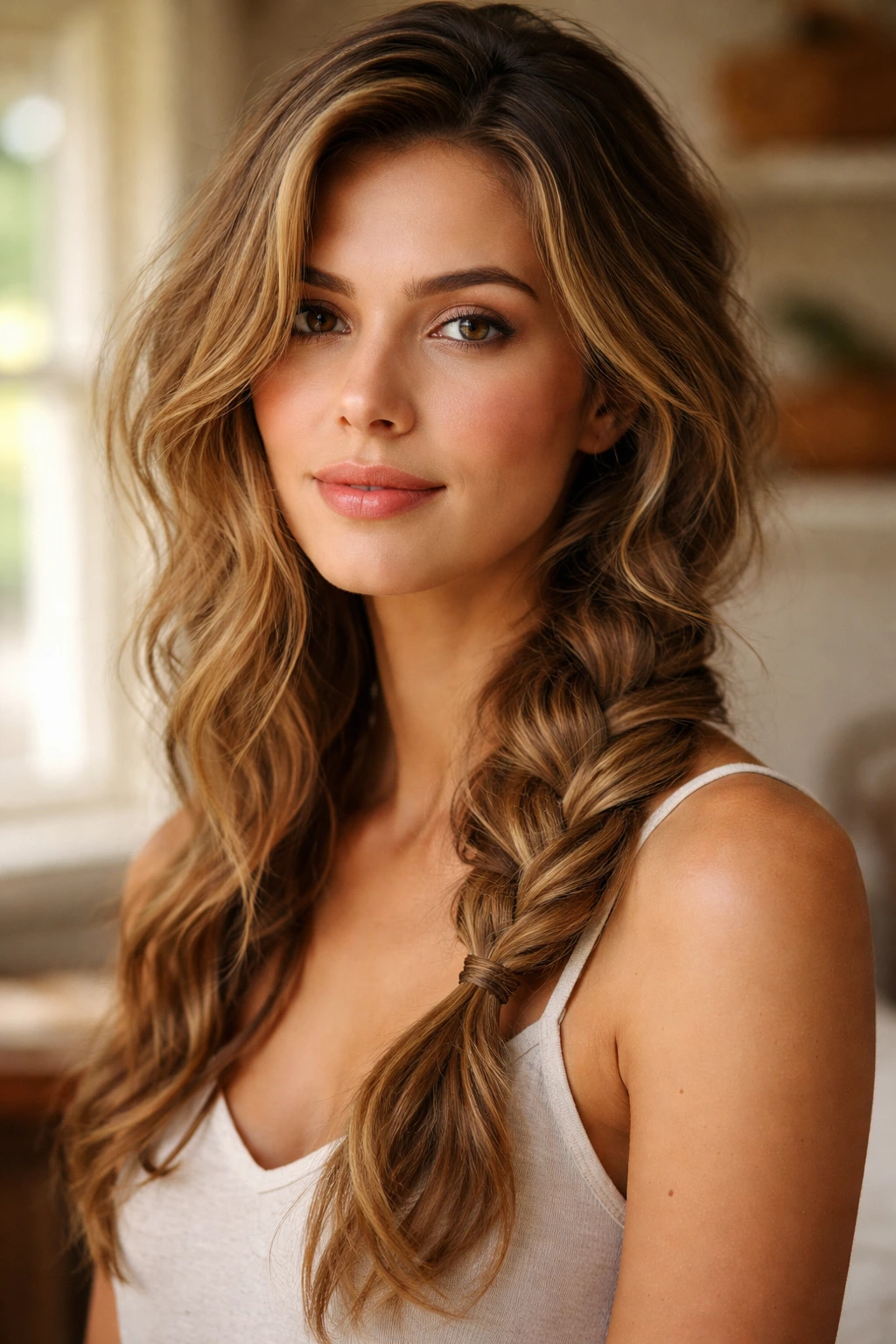
Loose side braids are one of those hairstyles that look much more complicated than they are. On wavy hair, the braid picks up texture fast, so you don’t need to fight for perfect smoothness. In fact, a bit of mess is the reason the style works.
Sweep the hair over one shoulder and braid it loosely from the neck down. If the braid feels too neat, tug the edges with your fingers once it’s tied off. That small pull makes the braid wider and lets the wave pattern show through the gaps. A few shorter layers can fall free, and that’s fine.
This style is good for days when you want hair contained but not pinned up. It also holds well in wind, which is a practical detail people learn the hard way.
If your hair slips out of braids easily, mist the length with a light texturizing spray first. Just a little. Too much and the braid feels crunchy.
15. Face-Framing Layers With a Soft Center Part
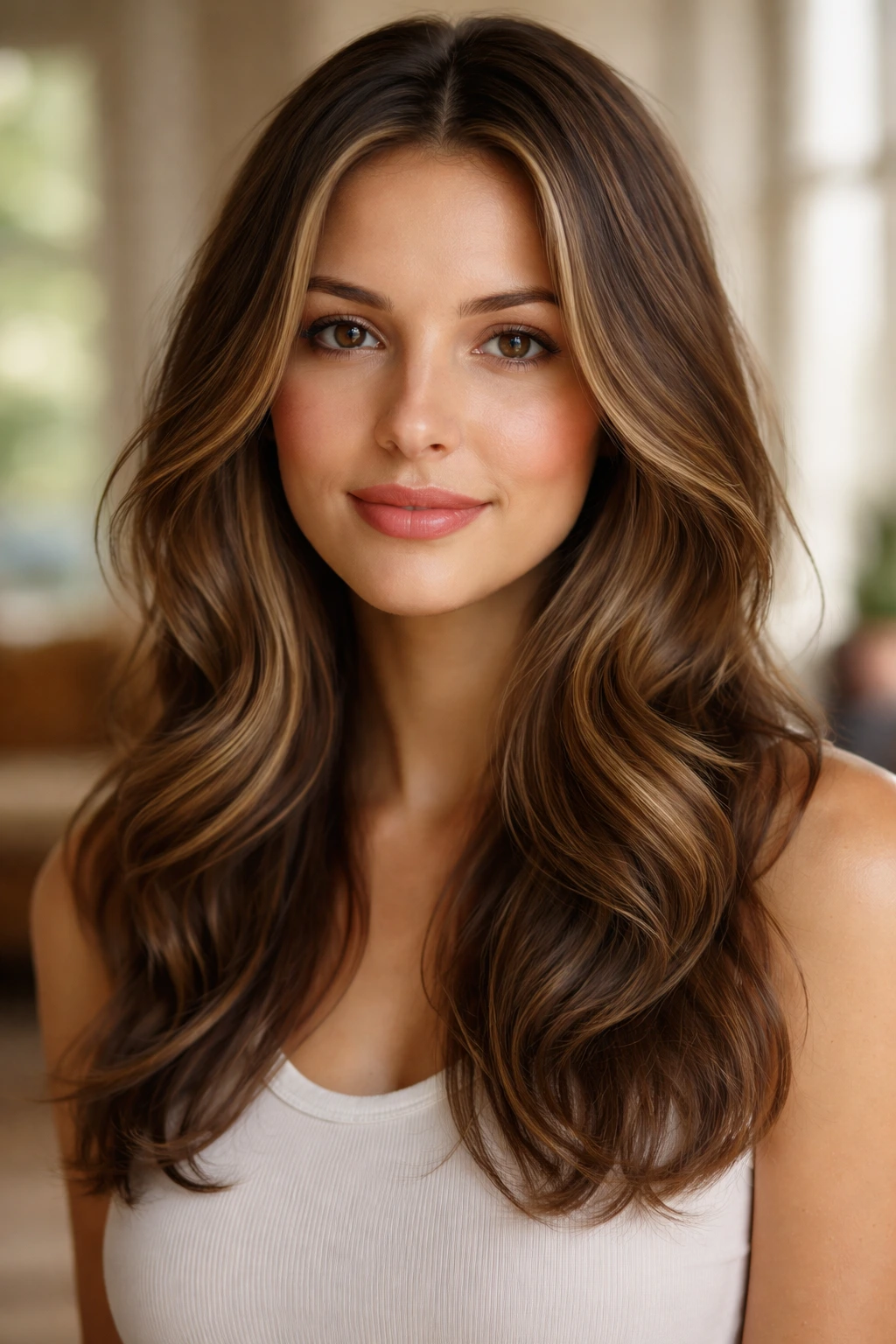
Face-framing layers are not a full haircut category on their own, but on wavy hair they can change everything. A few carefully placed shorter pieces around the front give the wave pattern a cleaner shape and keep the hair from hanging like one heavy curtain.
The center part works well here because it lets the front layers fall evenly on both sides. If your face is round, those layers can lengthen the outline a bit. If your face is longer, keep the front pieces softer and not too short. That keeps the look balanced rather than sharp.
This is one of the easiest ways to make a simple cut feel more finished. The hair does not need a dramatic shape to look good. Sometimes it just needs the front to be smarter.
I like this option for people who wear their hair down most of the time and want a little shape without a big commitment.
16. Low Space Buns for a Playful Wave Pattern
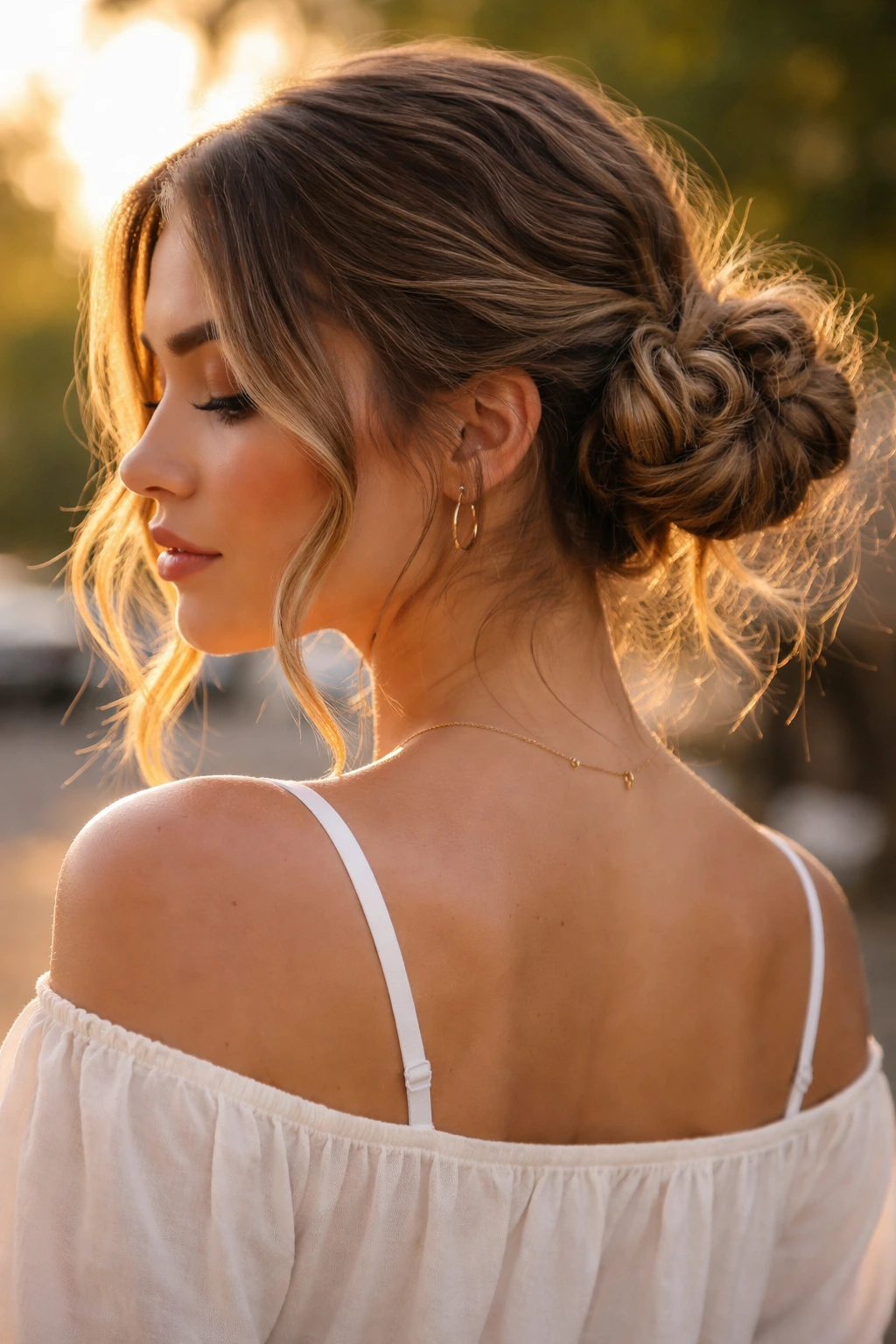
Low space buns can be surprisingly wearable on wavy hair. Keep them near the nape rather than high on the head if you want the style to feel softer and less costume-like. The waves give the buns texture, so they usually end up looking fuller than you expect.
Split the hair into two low sections, twist each one into a bun, and secure with pins or small elastics. Leave the ends loose if you want a less polished look. If your hair is very layered, a few pieces will escape. That’s not a failure. That’s part of the charm.
This style works well for concerts, weekends, and any day when you want your hair up but not slicked back. It also lets you keep some of the natural wave in the back sections, which is why it feels better than a stiff pair of buns.
A little edge can make this style feel better. A little edge goes a long way.
17. A Twisted Half-Up Style With Loose Ends
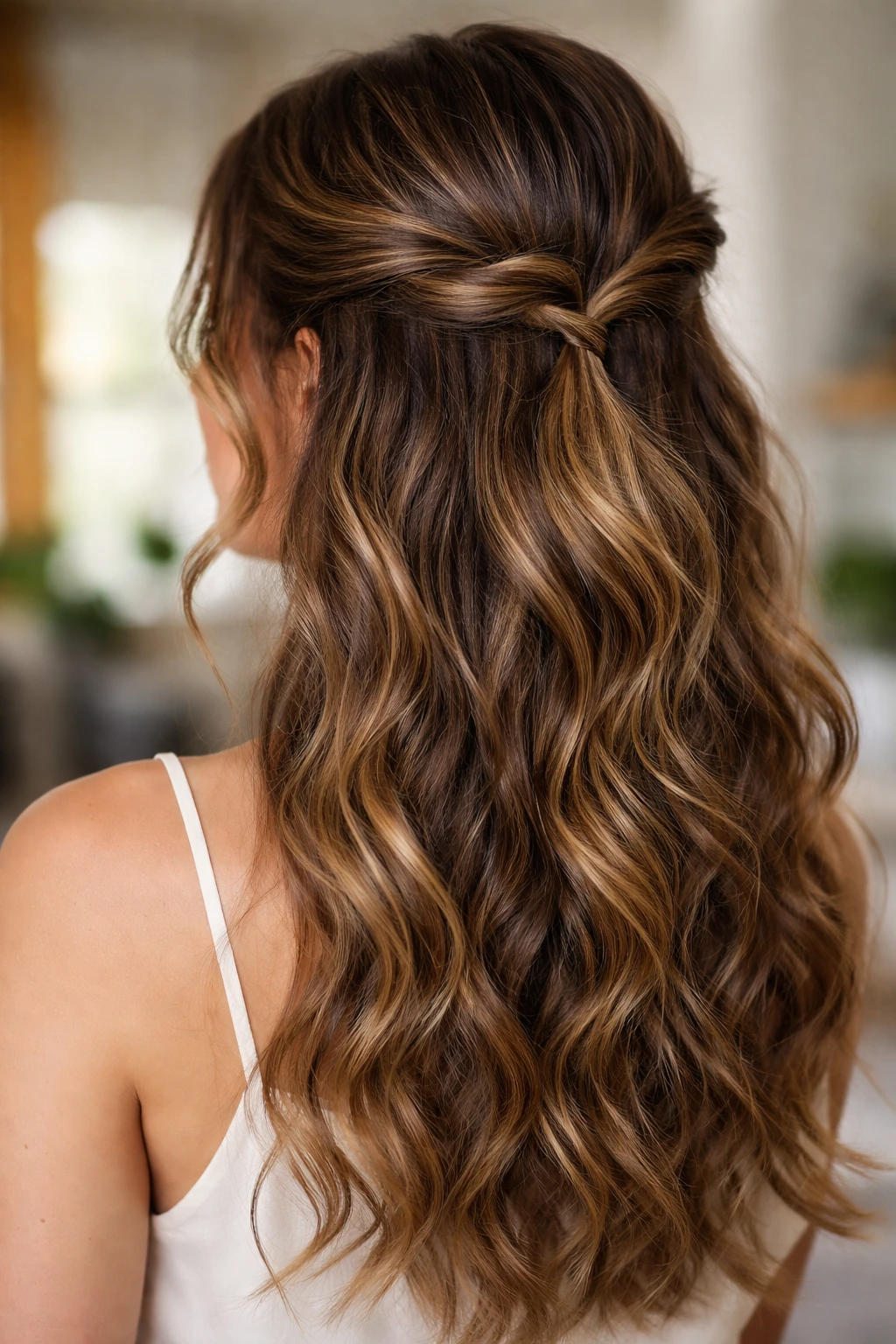
A twisted half-up style sits somewhere between romantic and practical, which is probably why it never gets old. Instead of braiding, you twist two front sections back and pin them together. That keeps the hair off the face while letting the rest of the waves stay loose.
This works especially well if your wave pattern is strongest from the mid-lengths down. The top section gets controlled, but the lower hair still shows off movement and texture. If your hair is thick, twist smaller sections so the style does not balloon at the back. If it’s fine, a slightly larger twist can help it look fuller.
Styling notes
- Start with dry or slightly damp hair.
- Use two bobby pins crossed in an X for extra hold.
- Pull the twists a little loose after pinning.
- Leave the bottom half untouched so the waves stay soft.
It’s an easy style to wear to dinner, work, or anything in between. Not flashy. Just useful in a flattering way.
18. Defined Air-Dried Waves With a Minimal Finish
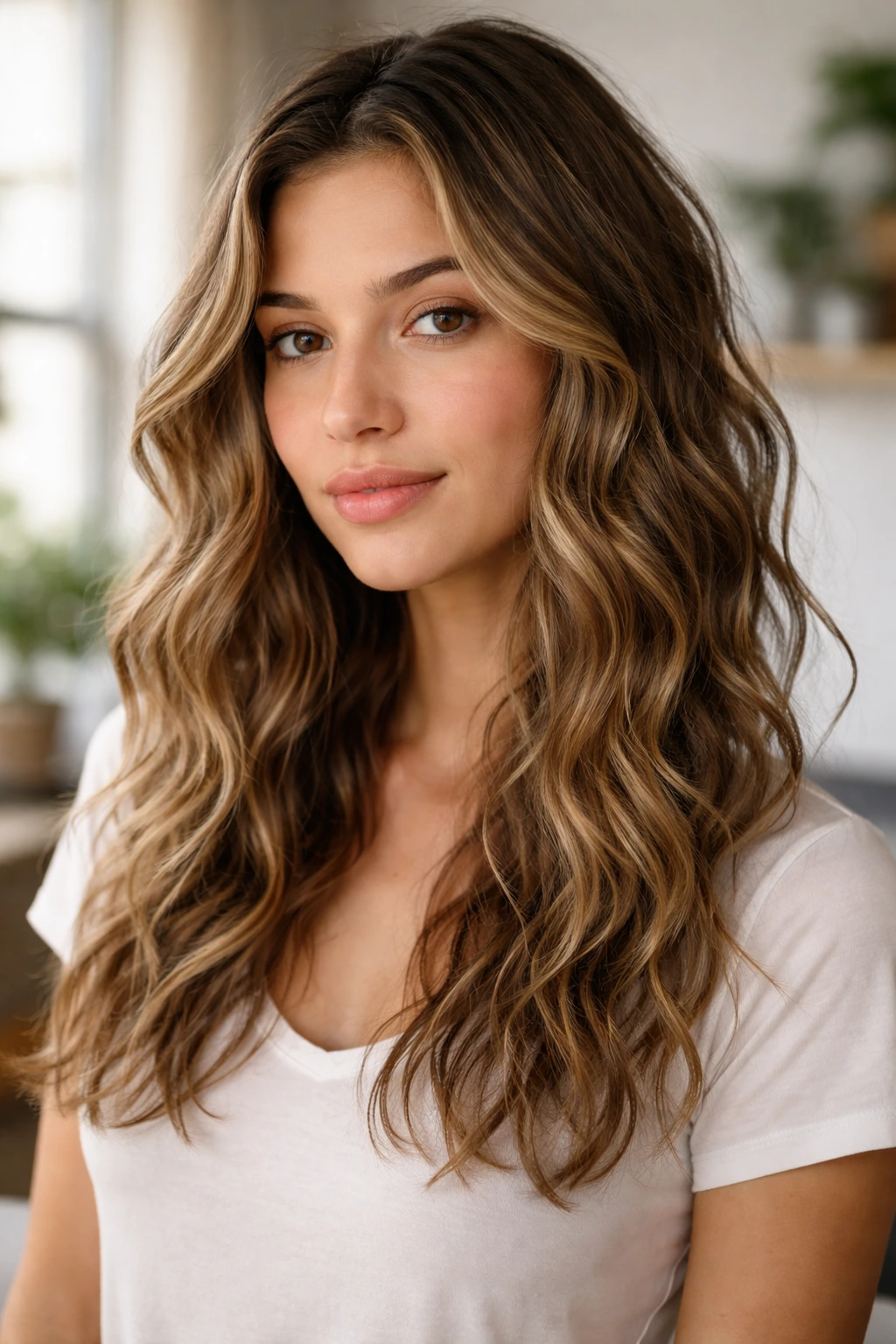
Sometimes the best hairstyle for wavy hair is the one that looks the least forced. Defined air-dried waves, shaped with a light product and a bit of patience, can look cleaner and fresher than any complicated updo. The trick is giving the waves enough support while they dry so they don’t puff out.
Start with damp hair, work in a small amount of mousse or wave cream, and scrunch upward from the ends. Do not rake through the hair too much after that. Let the wave pattern form on its own. If you need more lift at the roots, clip the top sections up while the hair dries.
A diffuser can help if your waves are stubborn, but I’d still keep the finish light. This style is about shape, not perfection. A few bits may dry differently. Fine. That’s part of what makes wavy hair look alive instead of stiff.
This is the one I reach for when I want the texture to speak for itself. No extras. Just good wave shape, a little separation, and clean ends.
Final Thoughts
The best hairstyles for wavy hair usually do one simple thing well: they respect the bend. They don’t bury it under too much heat, too much smoothing, or too much structure. That’s why the cuts and styles above work in such different settings — some are polished, some are casual, and some are almost embarrassingly easy.
If your waves change from day to day, that’s not a problem to solve. It’s part of the texture. Pick the styles that match the hair you actually have, not the hair you wish showed up every morning. That approach saves time and usually looks better too.
And if you find yourself reaching for the same one or two looks over and over, that’s usually a sign you’ve found the right lane. Stick with it.
