



Wavy hair behaves best when it has somewhere to land.
Too short, and it can puff out at the sides or flip in directions you never asked for. Too long, and the wave pattern often gets dragged down until it looks tired by midday. That middle ground — collarbone, shoulder, upper chest — is where a lot of the best medium hairstyles for wavy hair live, because the shape still moves but the weight doesn’t flatten everything out.
The tricky part is that wavy hair is not one texture. Some people have loose, almost bendy waves that fall apart if the cut is too shaggy. Others have coarse, springy waves that need weight removed underneath or they turn into a triangle. A good medium cut pays attention to where the wave starts, how dense the hair is, and whether you actually want to style it every morning or just mist it and go.
So the real job is not finding one magical haircut. It’s finding the right shape for the way your waves behave when they’re clean, a little damp, air-dried, and left alone for an hour. That’s the test that matters. The cuts below are the ones that hold up when real life gets involved.
1. Collarbone Cut with Soft Internal Layers

A collarbone cut is one of the easiest wins for wavy hair because it sits in that sweet spot where the hair has enough length to bend, but not so much length that it drags itself flat. The ends rest right around the collarbone, which gives the wave a place to curve without getting swallowed by extra weight.
Why It Works
Soft internal layers matter here. Not choppy, dramatic ones. Just enough removal inside the shape to stop the bottom from feeling heavy while the outer line still looks clean. That mix gives you movement without the “I got a haircut and lost half my hair” look.
Ask for a blunt-ish perimeter with internal layering starting below the chin. If your waves are dense, a stylist can point-cut the ends a little so they don’t feel boxy. If your waves are fine, keep the layers longer and lower. Too much cutting near the top can make the crown go fuzzy.
This is a good choice if you want your hair to look finished even when you do almost nothing to it.
2. Textured Lob with a Deep Side Part

A deep side part changes the whole mood of wavy hair. It gives one side lift at the root, softens the face, and makes even simple waves look intentional instead of accidental. The lob length — somewhere between the jaw and the collarbone — keeps it from tipping into short-hair poof territory.
What I like about this cut is how forgiving it is on flat-root days. Waves tend to collapse where they’re too heavy or too evenly parted, and a side part breaks that pattern fast. You get height near the front and a little swing through the ends.
Good if you want:
- More volume at the crown without teasing or heavy product
- A shape that works with second-day waves
- A cut that still looks decent tucked behind one ear
Keep the texture in the ends, not the whole head. That’s the mistake people make. If the entire cut is shredded, the line disappears and the hair can look thin. A strong perimeter with a few loose pieces around the face does the job better.
3. Long Shag with Curtain Bangs
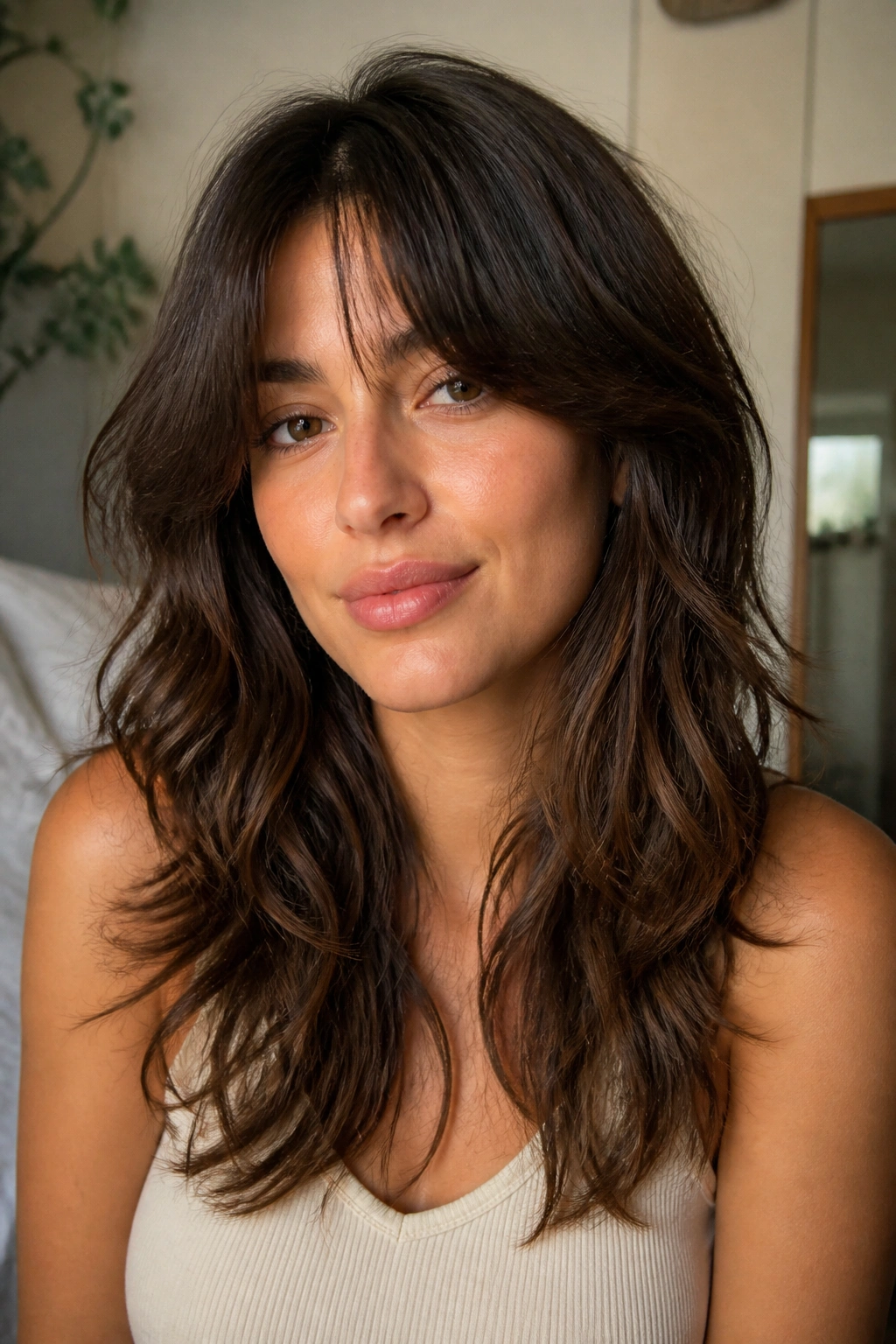
The long shag is for people who like movement and do not want their waves boxed in. It has layers that start higher than a classic lob, plus curtain bangs that split around the face and blend into the sides. The result is soft, airy, and a little undone in the best way.
What Makes It Work
Curtain bangs need room to breathe. Cut them too short, and they spring up in strange directions when the hair dries. Better to keep them a touch longer than you think — usually around eyebrow to cheekbone range when dry — so they can sweep out instead of sticking up.
The shag part helps heavier waves avoid that puffy pyramid shape. It removes bulk near the crown and around the cheekbones, which keeps the shape from looking wide. If your hair is thick, this cut can make it feel lighter without killing the texture. If your hair is fine, keep the layers softer and fewer, or you’ll lose too much body.
How to Wear It
- Scrunch in mousse on damp hair
- Diffuse on low heat if you want more lift
- Let a few pieces fall naturally; don’t over-polish it
This style likes a little mess. That’s the whole point.
4. Blunt Midi Cut with Softened Ends
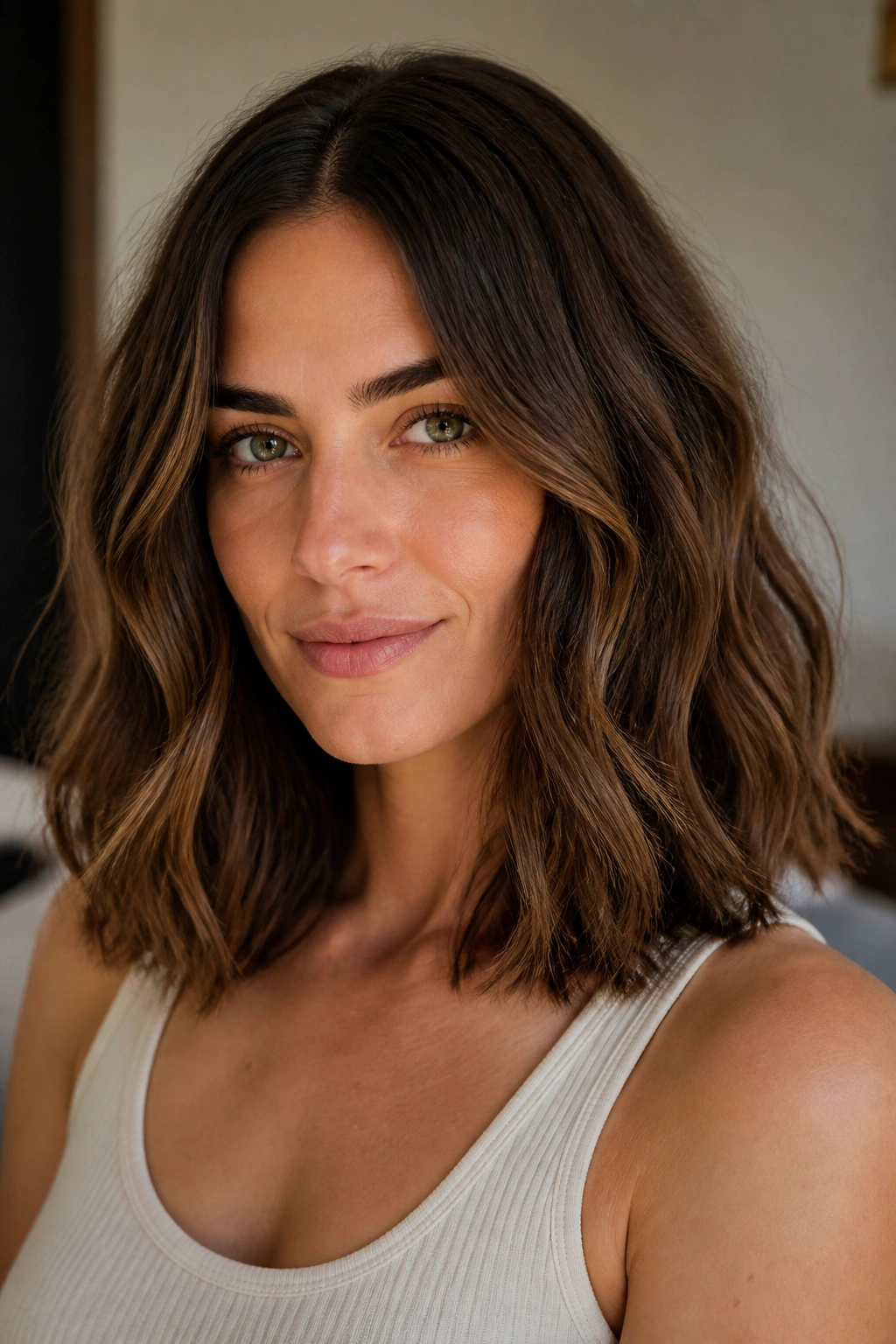
Blunt doesn’t mean stiff. A blunt midi cut can look expensive on wavy hair because the edge stays clean while the texture inside keeps it from feeling flat or severe. The line usually lands between the shoulders and the upper chest, which is enough length to show off the wave pattern without extra drag.
No, this isn’t the cut for someone who wants lots of airy pieces flying everywhere. It’s for someone who likes a neat outline and doesn’t want layers swallowing the shape. The trick is to soften the ends a little with point cutting so the perimeter doesn’t look like a ruler across the bottom.
This cut tends to work best on medium-to-thick waves. Fine waves can wear it too, but only if the hair has enough density to hold the line. Otherwise the ends can look wispy and a little sparse.
If your hair gets fuzzy in humidity, a blunt midi often behaves better than a heavily layered style. Less exposed end, less chance to fray. Simple. Effective.
5. Face-Framing Layers Starting at the Cheekbones
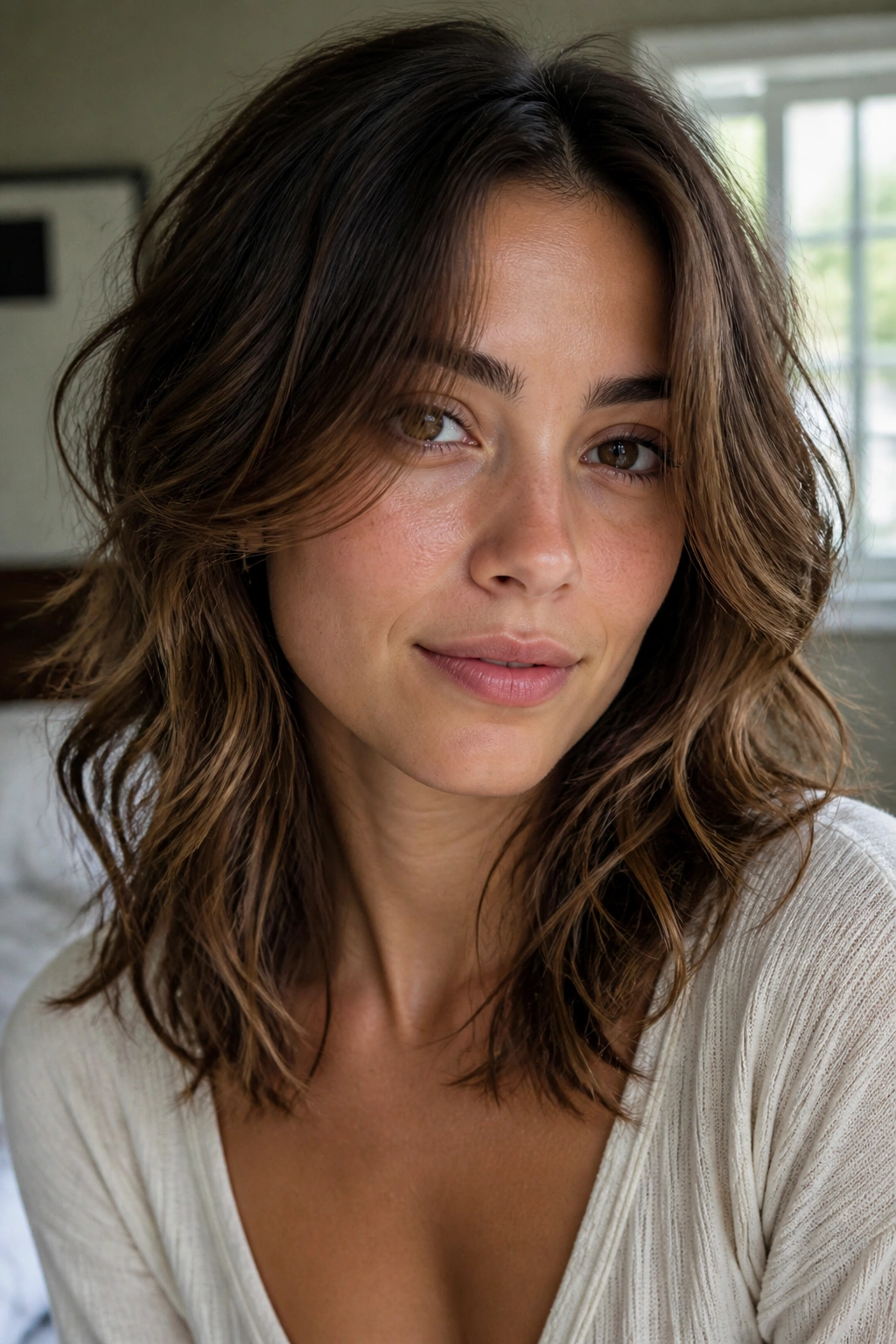
If your waves fall flat around the jaw but sit nicely at the crown, face-framing layers can pull the whole cut back into balance. The first pieces start around the cheekbones, then taper down toward the collarbone or shoulders. That shape brings attention upward and keeps the front from feeling heavy.
Where to Begin the First Layer
The starting point matters more than most people think. Cheekbone-level layers give the face some lift without chewing up the length. Start them too high and the hair around the face can look stringy. Start them too low and the effect disappears.
This is a smart choice if your face shape feels hidden by one long curtain of hair. The layers open things up a little and let the waves curve around the cheek and jaw instead of hanging straight down.
A tiny detail makes a big difference here: ask for the front pieces to be cut while your hair is in its natural wave pattern, not stretched flat. Otherwise the shortest pieces can spring up way more than expected once they dry. That’s the part people regret later.
6. Soft Wolf Cut for Wavy Hair

Edgy, but not theatrical. That’s the version of the wolf cut I’d send most wavy-haired people toward. The shape keeps some of the shag’s lift at the crown and some of the mullet’s length at the back, but the transition is softer, so it doesn’t look like a costume piece.
Keep the Disconnect Mild
The best soft wolf cuts still feel wearable on a grocery-store run. The crown gets texture, the top layers are shorter, and the ends stay long enough to keep the shape from looking too chopped up. You want contrast, yes. You do not want a hard line between the top and bottom unless you’re going for a much bolder look.
This cut is useful if your waves need help getting off the scalp. A little removal at the top can stop the roots from lying like a helmet. At the same time, the longer bottom pieces keep the style from puffing out into a mushroom shape.
If your waves are coarse or dense, this can be one of the easiest medium hairstyles for wavy hair to live with. If your hair is fine, keep the layers softer and the length closer to the shoulders. Too much removal can make the ends disappear.
7. Rounded Shoulder-Length Cut
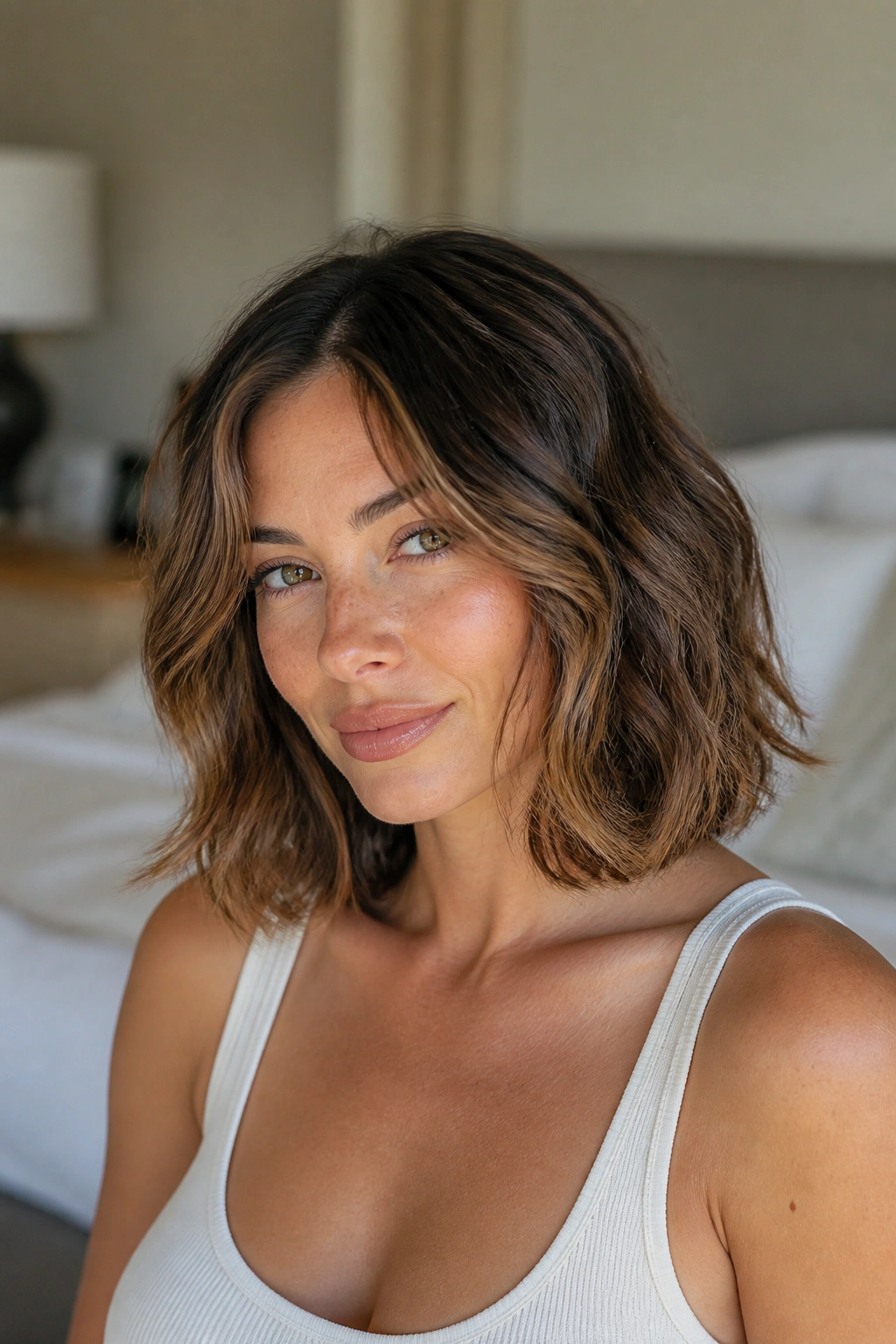
If your waves flare out at the sides, a rounded shoulder cut can calm that shape down fast. Instead of a straight line across the bottom, the cut gently curves inward so the sides don’t stick out like wings. The result feels softer and more balanced.
This is one of those cuts that looks plain on a hanger and better on a real head. The curve matters. It gives the eye a natural path from the cheeks down to the ends, which helps the hair sit closer to the neck and shoulders instead of floating away from them.
A rounded shoulder length works especially well for thick hair that likes to spread. The weight stays where it should, and the shape looks controlled without being pinched. If you have a lot of wave, ask the stylist not to remove too much bulk through the lower half. That’s where the cut earns its keep.
I’d call this a quiet haircut. Not boring. Quiet. It does its job without asking for much back.
8. C-Cut Layers Around the Face
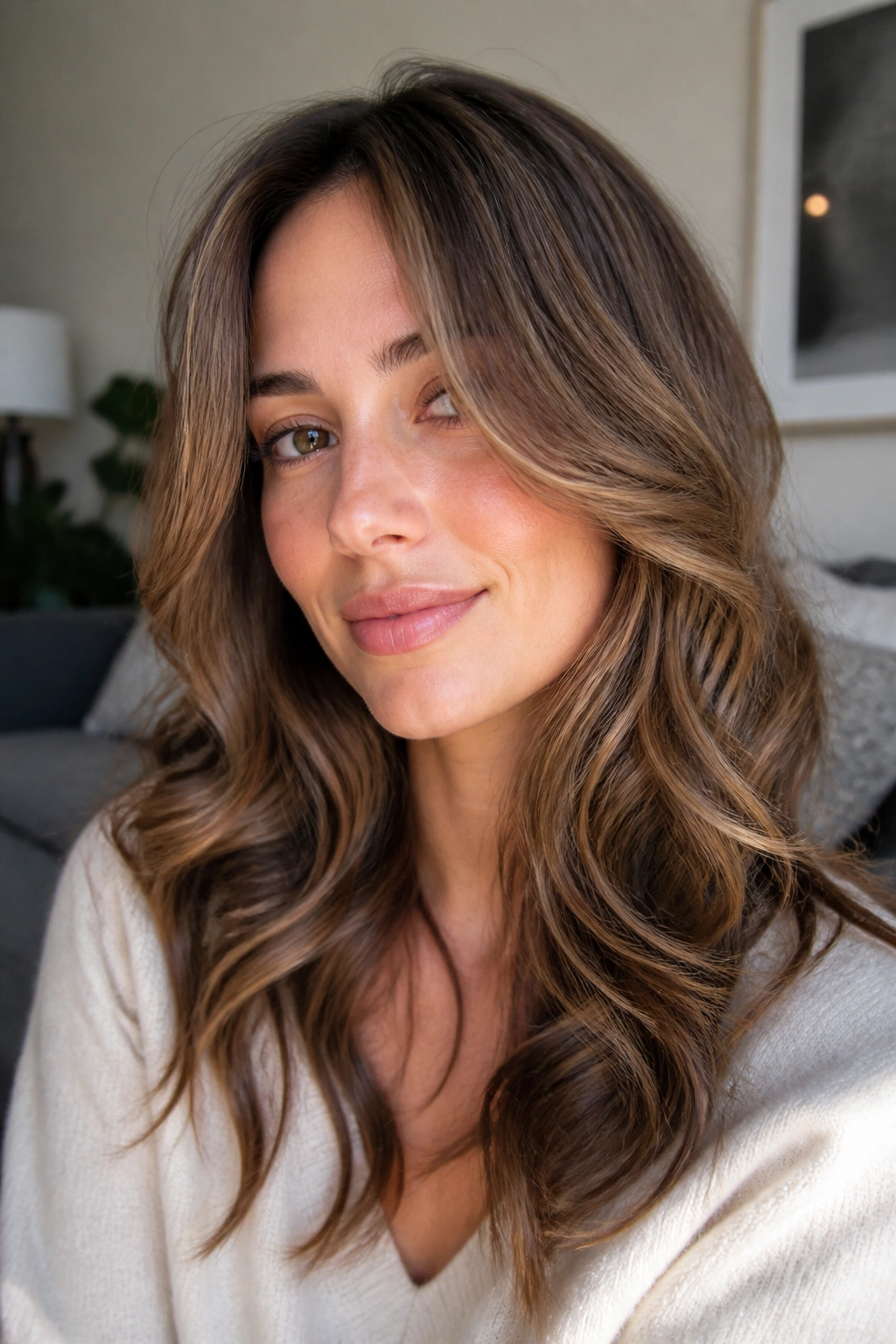
Why does a C-cut look so good on wavy hair? Because the front pieces curve in a soft arc — almost like a “C” shape when you look at the profile — and that curve works with the wave instead of against it. It keeps the front lighter while the back holds the length.
The Shape in the Mirror
A C-cut is one of those styles that looks subtle in photos but makes a big difference when you move. The front sits a little shorter, the mid-lengths blend smoothly, and the sides fall in a gentle sweep that flatters most face shapes. It’s not severe. It’s not shaggy. It just has shape.
This cut is especially handy if your waves look good from the back but a little heavy around the front. The C-shape opens up the face without forcing a full fringe or dramatic layers. It can also help round out long faces because the front curve adds width at the right spot.
If you want to ask for this at the salon, say you want long face-framing pieces that curve into the rest of the cut, not short bits that hang alone. That distinction saves a lot of regret.
9. Razor-Layered Midi with Piecey Ends

A razor cut can give wavy hair that airy, separated look people keep trying to fake with product. The razor slices into the ends and leaves a softer, more broken line, which makes the wave pattern show up in little pieces rather than one solid block.
That said, this is not a cut to hand to someone with fine hair and say, “Go wild.” Razor work can rough up the edges if the hair is fragile or if the stylist goes too far. On medium-to-coarse waves, though, it can add a nice bit of movement and keep the mid-lengths from feeling too heavy.
What to Watch For
- Ask for light razor texturizing, not all-over thinning
- Keep the main shape around the shoulders or collarbone
- Use a cream or light gel so the ends stay separated, not frizzy
The best razor-layered midi has enough structure that it still looks like a haircut on day three. That’s the real test. If the shape vanishes the second you sleep on it, the cut was too aggressive.
10. Side-Swept Fringe and Loose Waves

If your forehead feels a little too open with a center part, a side-swept fringe can soften the whole look without committing to full bangs. The fringe blends into the front layers and lets the waves fall diagonally across the face, which gives the cut a more relaxed line.
A side-swept fringe also plays nicely with changing wave patterns. On one day it can sit neatly off to the side. On another, it can break into a loose bend and still look fine. That flexibility matters more than people admit.
You’ll want the fringe long enough to tuck behind the ear or push back with a pin. Too short, and it loses that easy sweep. Ask for the shortest point to start around the eyebrow or just below, then gradually lengthen into the sides.
This cut is a solid pick if you like softness around the face but don’t want bangs constantly sitting in your eyes. It’s a small change. Sometimes that’s all you need.
11. Rounded Layers for Thick Wavy Hair
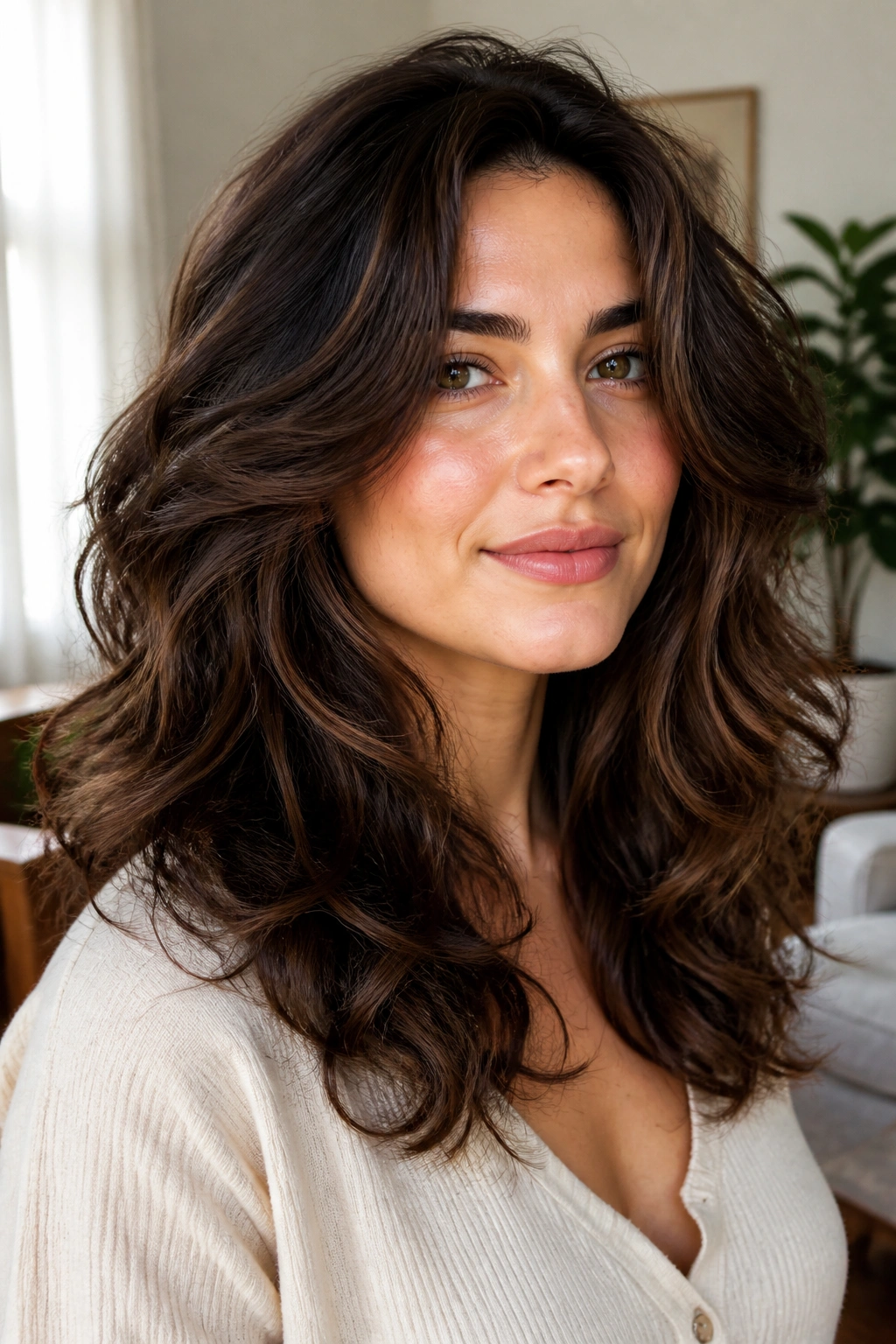
Thick wavy hair can be glorious and exhausting in the same week. Rounded layers help because they remove weight from the interior while keeping the outer shape full enough to feel lush. If the stylist only layers the top, the bottom can still balloon out. You want balance through the whole head.
Ask for This
- Long layers that follow the curve of the head
- Weight removal underneath, not just on top
- A perimeter that stays strong enough to keep the ends from fraying
This cut is especially good when your hair gets wider as it dries. The round shape tucks some of that width back in and keeps the silhouette cleaner. It also makes diffusing easier because the waves fall into a more even pattern.
Thick hair often needs a little discipline, and this is that haircut. Not severe discipline. Just enough structure that the wave can move without taking over the room.
12. Invisible Layers for Air-Dry Styling
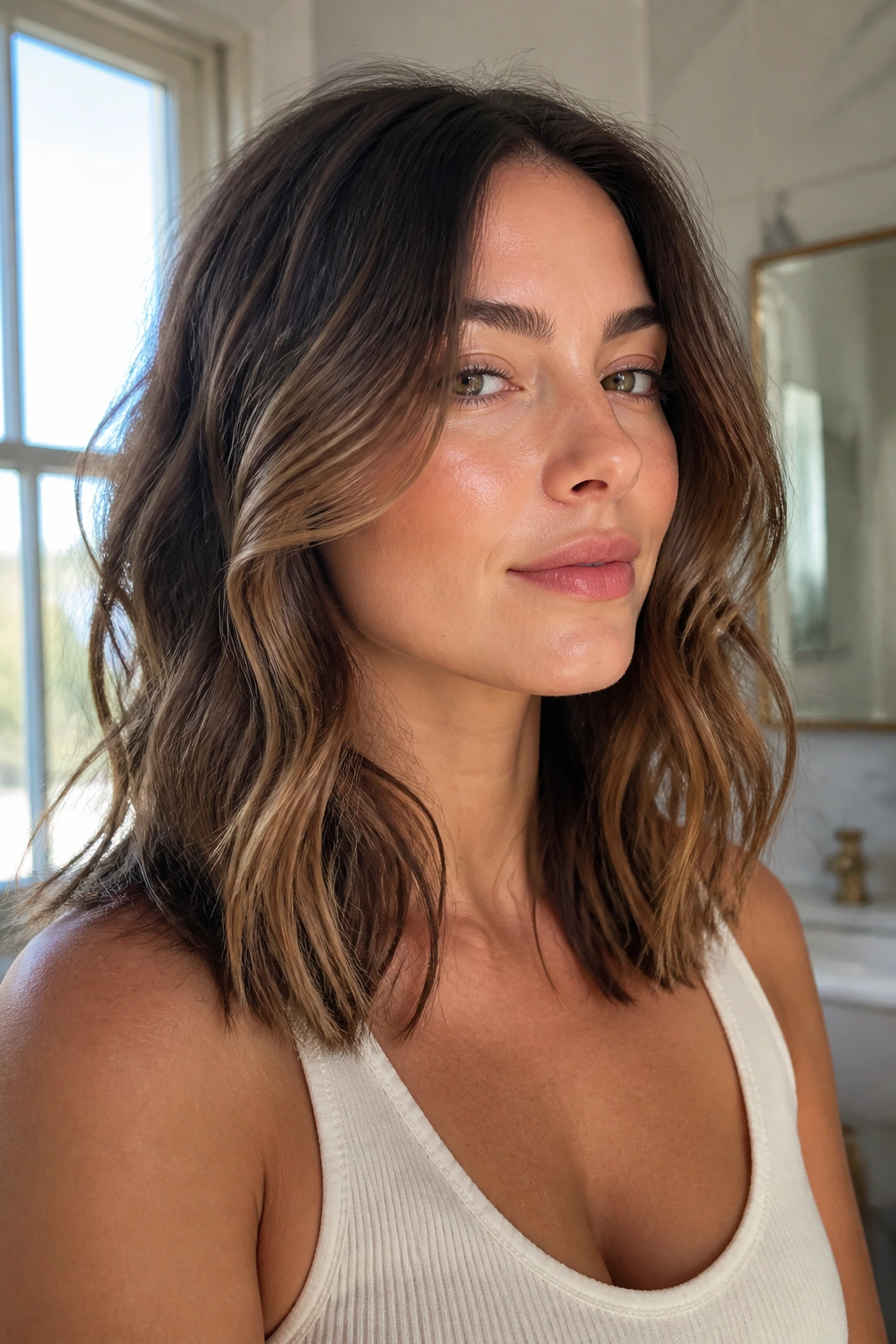
The best low-maintenance cut can look almost blunt when it’s wet. That’s the point of invisible layers. They’re long, tucked inside the haircut, and designed to shape the wave from within rather than announce themselves from the outside.
Why They Stay Quiet
These layers are a good answer for people who hate obvious choppy pieces. The hair still gets movement, but the outside line remains clean. When air-dried, the wave falls into place with less fuss because the inside has already been relieved of some weight.
This works well for people who like to wash, scrunch, and walk away. If you use a leave-in conditioner or a light mousse, the layers help those products spread through the shape without leaving the ends stringy. The cut does half the work before styling even starts.
Invisible layers are also kinder than a heavily razored cut if your waves are inconsistent from root to tip. You keep the structure where you need it and avoid the frayed look that can happen when too much texture is carved into the surface.
13. Asymmetrical Lob

An asymmetrical lob gives wavy hair a little edge without forcing the texture to do all the talking. One side is cut slightly longer than the other — usually by about an inch or an inch and a half — so the shape feels intentional but not theatrical.
That small difference changes how the wave falls. The longer side drapes, the shorter side lifts, and the whole cut gets a sense of motion even when you barely touch it. It also softens square jawlines and can make the face look a little less rigid.
This cut works best when the asymmetry is subtle. Huge differences tend to fight wavy texture, especially if the waves are uneven already. Keep the line close enough that the cut still feels medium-length from every angle.
If you like a style that looks a bit different without being high-maintenance, this is a smart one to keep in mind. It gives the eye something to notice, then gets out of the way.
14. Grown-Out Curtain Bangs

What if you want bangs, but not the full daily commitment? Grown-out curtain bangs are the answer most people end up loving anyway. They split down the middle, skim the cheeks, and blend into medium-length waves without needing constant trimming.
They’re also easier to live with than short fringe. On humid days, they can be pushed apart. On cleaner days, they frame the face and make the haircut feel more finished. That flexibility is the whole appeal.
Ask for the shortest pieces to hit around the bridge of the nose or just below, then let them taper outward into the rest of the cut. The idea is to create a soft opening around the face, not a hard shelf of bangs. If you already have wavy hair, this shape tends to grow out more gracefully than blunt fringe.
A tiny warning: if your hairline swirls in awkward directions, keep the center pieces a little longer so they can part naturally instead of fighting the grain.
15. Tucked-Behind-the-Ear Midi Cut
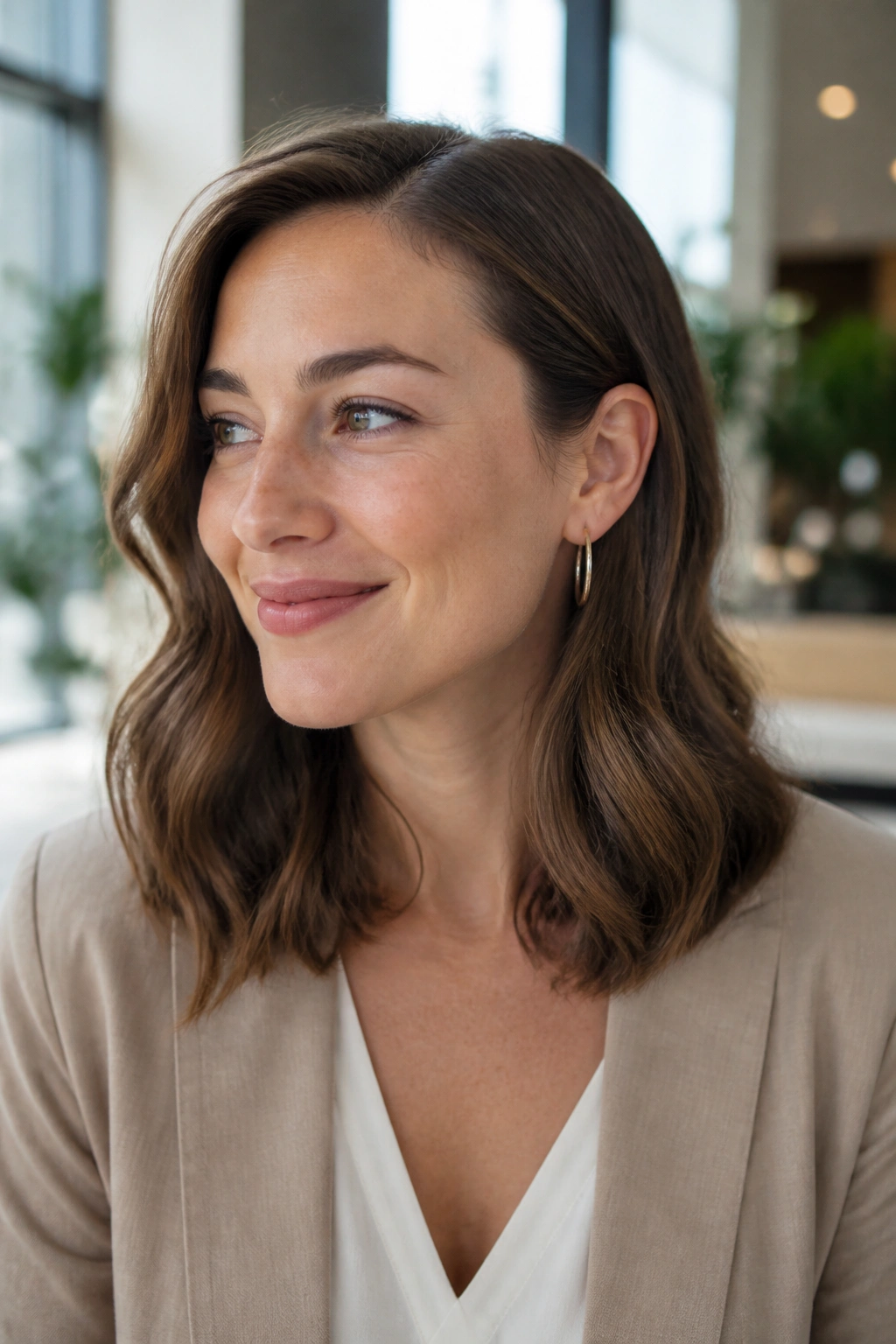
Some of the easiest medium styles are the ones that still look fine after you tuck one side behind your ear. This cut keeps enough length to do that, but the front is shaped so it doesn’t puff up the second you move it away from your face.
That matters more than people think. A lot of medium hairstyles for wavy hair look good only when they’re worn one exact way. This one survives real life. Glasses, earrings, wind, a scarf — all of it.
What to Ask For
- Soft, narrow front pieces
- Length that hits just below the jaw or collarbone
- A perimeter that stays tidy after tucking
The best version doesn’t need to be symmetrical every minute of the day. The hair can fall forward one moment and sit tucked the next. That flexibility makes it a practical office cut, a dinner cut, a school-run cut. Honestly, those matter more than people admit.
16. Fine-Hair Midi with a Clean Perimeter
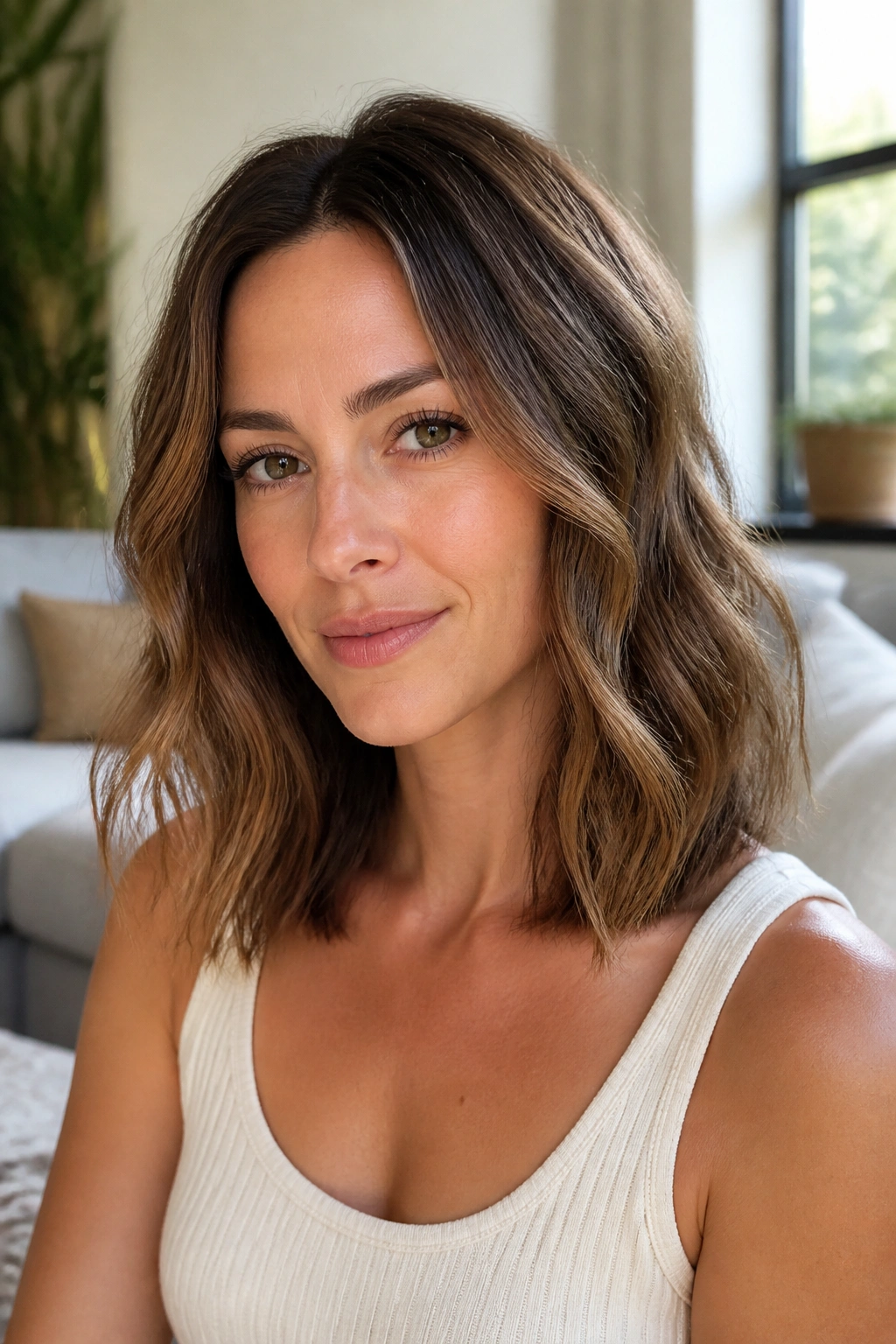
Fine wavy hair usually looks better a little shorter than people expect. If the length goes too far down the chest, the wave starts to stretch out and the ends look thin. A clean, medium-length perimeter keeps the body concentrated where it can actually show up.
This is one of the places where restraint pays off. You don’t need heavy layers. You need shape. A few subtle interior cuts can stop the ends from looking like strings, but too many layers will make the hair feel sparse and fussy.
For fine waves, the trick is to protect density. Keep the outline solid. Avoid aggressive thinning shears. And don’t let anyone talk you into a cut that removes half the weight just because the hair looks “soft.” Soft isn’t always the goal. Full is better.
A center or slightly off-center part can help, too. It keeps the top from collapsing and lets the wave pattern sit in a wider, more balanced shape.
17. Glossy Center-Part Waves
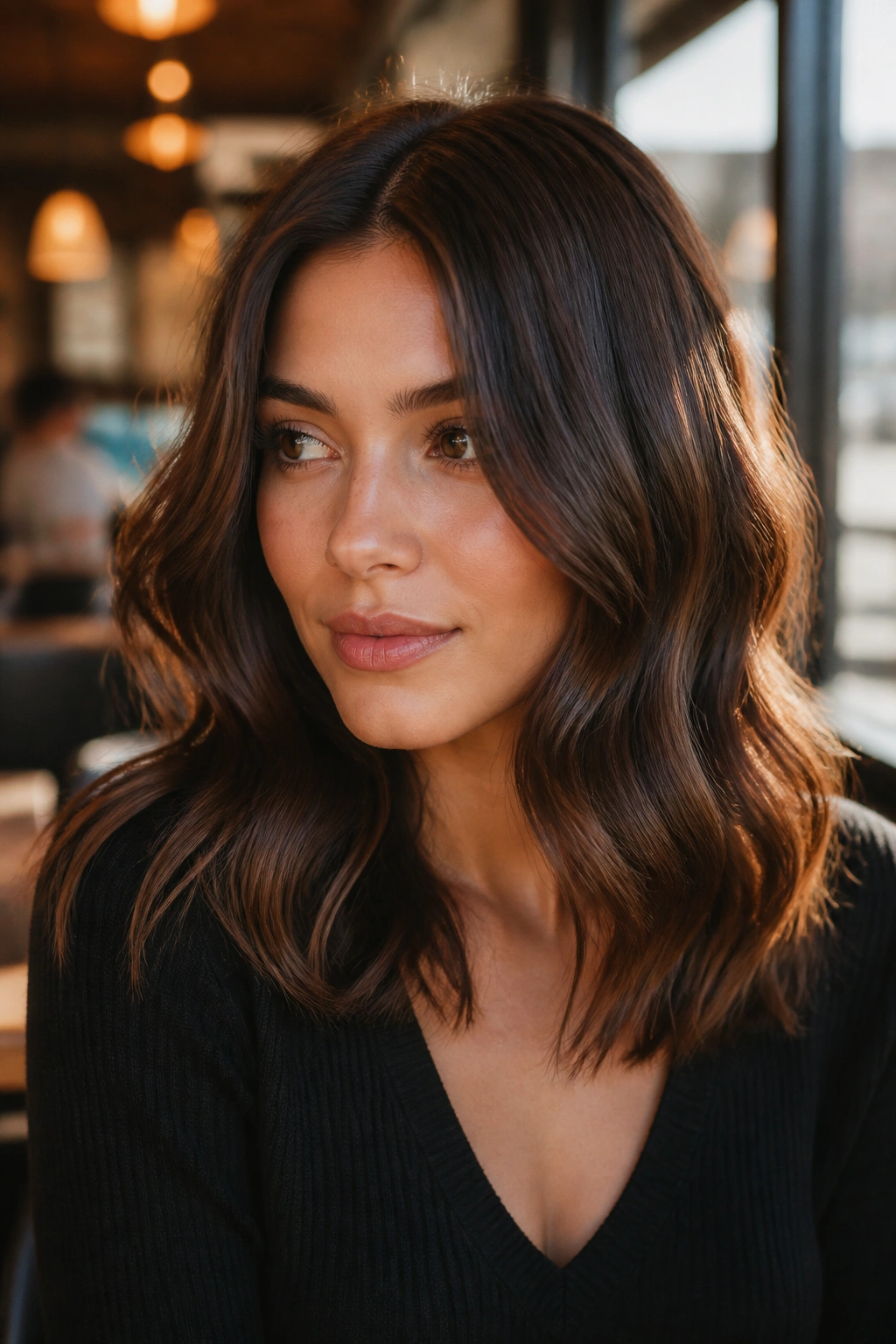
A center part and medium-length waves can look very clean when the cut is right. The shape falls evenly on both sides, the waves frame the cheekbones, and the whole style looks a bit more dressed up than a casual side part. It’s the kind of look that can move from daytime to evening without changing the cut at all.
What makes this work is symmetry. The lengths on both sides need to sit close enough that the waves don’t fight each other. Large, polished bends usually hold this shape better than tiny crinkles. If you’re styling with heat, a 1 to 1.25-inch iron tends to give that smooth S-wave without turning the ends into curls.
Keep It Looking Smooth
- Use a light heat protectant before styling
- Brush the waves out once they cool
- Finish with a pea-sized amount of shine cream on the mid-lengths only
This style can lean glossy or relaxed depending on the finish. The cut stays the same; the product choice changes the mood. Nice when you want options without another haircut.
18. Messy Fringe Midi with a Natural Finish

A messy fringe can look like a mistake on straight hair. On wavy hair, it often looks like the whole haircut finally woke up. The fringe should be soft, a little irregular, and long enough to split on its own when the hair dries. Nothing crisp. Nothing helmet-like.
The medium-length body keeps the fringe from feeling disconnected. The wave in the sides and back supports the front, so the whole look feels casual instead of accidental. This is one of the better options if you don’t want to spend time making your hair “perfect.” Perfect hair is a headache. Natural hair is easier to live with.
This cut likes a bit of texture cream or lightweight mousse, but not much. Too much product and the fringe turns sticky. Too little and it frizzes apart. You’re aiming for pieces that separate lightly and still move when you turn your head.
If your hair already has a soft bend at the front, this can be one of the most flattering medium haircuts around. It feels lived in from day one.
Final Thoughts
The best medium haircut for wavy hair is the one that respects your texture instead of flattening it or overworking it. A good cut should give your waves shape before you even touch a diffuser, a wand, or a jar of styling cream.
Bring a couple of photos to the salon, yes, but bring a practical note too: how much time you want to spend styling, whether your hair is fine or thick, and where your waves usually start to bend. That part matters more than the trendier-looking picture on your phone.
If you’re stuck between two options, choose the one that looks decent with air-drying and only gets better with a little product. That’s the haircut you’ll actually keep.
