



Thick wavy hair has opinions. Give it the wrong shape and it swells at the sides, drops flat at the roots, or turns into a triangle by the end of the day.
Choosing thick hairstyles for wavy hair gets easier once you stop treating density like a problem. The useful move is to shift weight in the right places: off the bottom line, away from the crown, and out of the cheeks if your waves tend to balloon there.
That does not mean every cut has to be layered to pieces. Some of the best looks for thick waves are blunt at the ends, softer inside, and styled with almost no fuss beyond a good mousse and a diffuser. Others are more undone, more face-framing, and a little messy on purpose. Good messy. The kind that looks deliberate.
Some of these are salon cuts. Some are five-minute styling moves. A few do both, which is usually where thick wavy hair looks happiest.
1. Long Layers for Thick Wavy Hair
Long layers are the safe answer for a reason: they keep the length you love while taking some of the heaviness out of the midsection and ends. On thick wavy hair, that matters. A single blunt line can make the whole shape feel boxy, especially when the hair dries and expands.
The best version is not a bunch of short, choppy layers everywhere. That usually creates a halo of volume you did not ask for. Instead, ask for long internal layers that start around the collarbone or below, plus a soft face frame that begins near the chin or cheekbone. That keeps the front from hanging like a curtain and gives the wave pattern room to move.
What to ask your stylist for
- Long layers that remove weight below the shoulders
- Face-framing pieces that begin at chin or cheek level
- A soft perimeter, not a razor-thin edge
- Minimal thinning at the ends if your hair already frizzes easily
This cut is one of my favorites for thick waves because it behaves well on air-dry days and still looks polished with a quick blow-dry. Easy. No drama.
2. Butterfly Cut
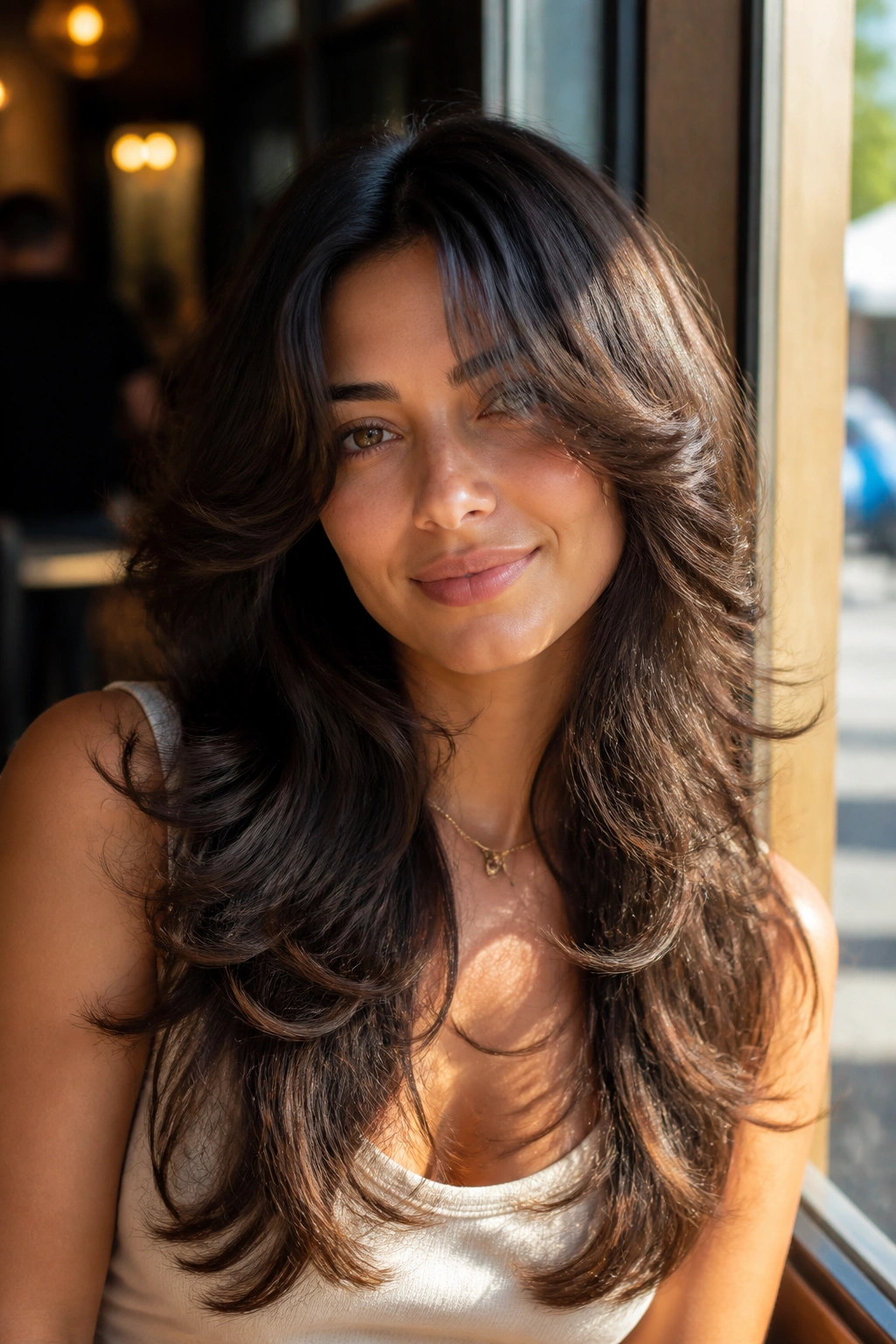
The butterfly cut works because it gives you the illusion of two haircuts in one: shorter, bouncy layers around the face and crown, then a longer base underneath. On thick wavy hair, that split is useful. You get lift where the hair usually lies heavy, but you keep enough length to pull it back or wear it loose.
What makes it different from a shag is the softness. The layers are usually broader and more blended, so the cut moves when you flip your head or scrunch in cream, but it does not look shredded. If your waves are loose to medium and your hair has a lot of density through the sides, this shape can look almost airy without losing that thick-haired fullness people spend money trying to fake.
The catch is maintenance around the front. Those shorter pieces need some attention, or they can sit in your eyes and start acting like a stray fringe. I like this cut on anyone who is willing to spend five extra minutes with a round brush or a large Velcro roller on the front sections.
3. The Curly Shag for Loose Waves

A shag on thick wavy hair is a little like giving the hair permission to have a personality. The layers are shorter and more obvious than they are in a butterfly cut, and the whole point is movement. If your waves are naturally loose, the shag gives them a sharper shape instead of letting them hang in one heavy sheet.
The reason it works so well is simple: thick hair can support a lot of layering without looking sparse. Fine hair often gets swallowed by shag layers. Thick hair usually does the opposite. It picks up texture and keeps it.
Where this cut shines
- Air-dried waves with a bit of frizz
- Medium-to-thick density through the crown
- People who like a piecey, lived-in finish
- Hair that gets too round when it is cut blunt
A shag is not the cut I’d choose if you want sleek and tidy every day. It thrives on a little disarray. If you like hair that looks better after being touched, twisted, and left alone for an hour, this one makes sense.
4. The Wolf Cut
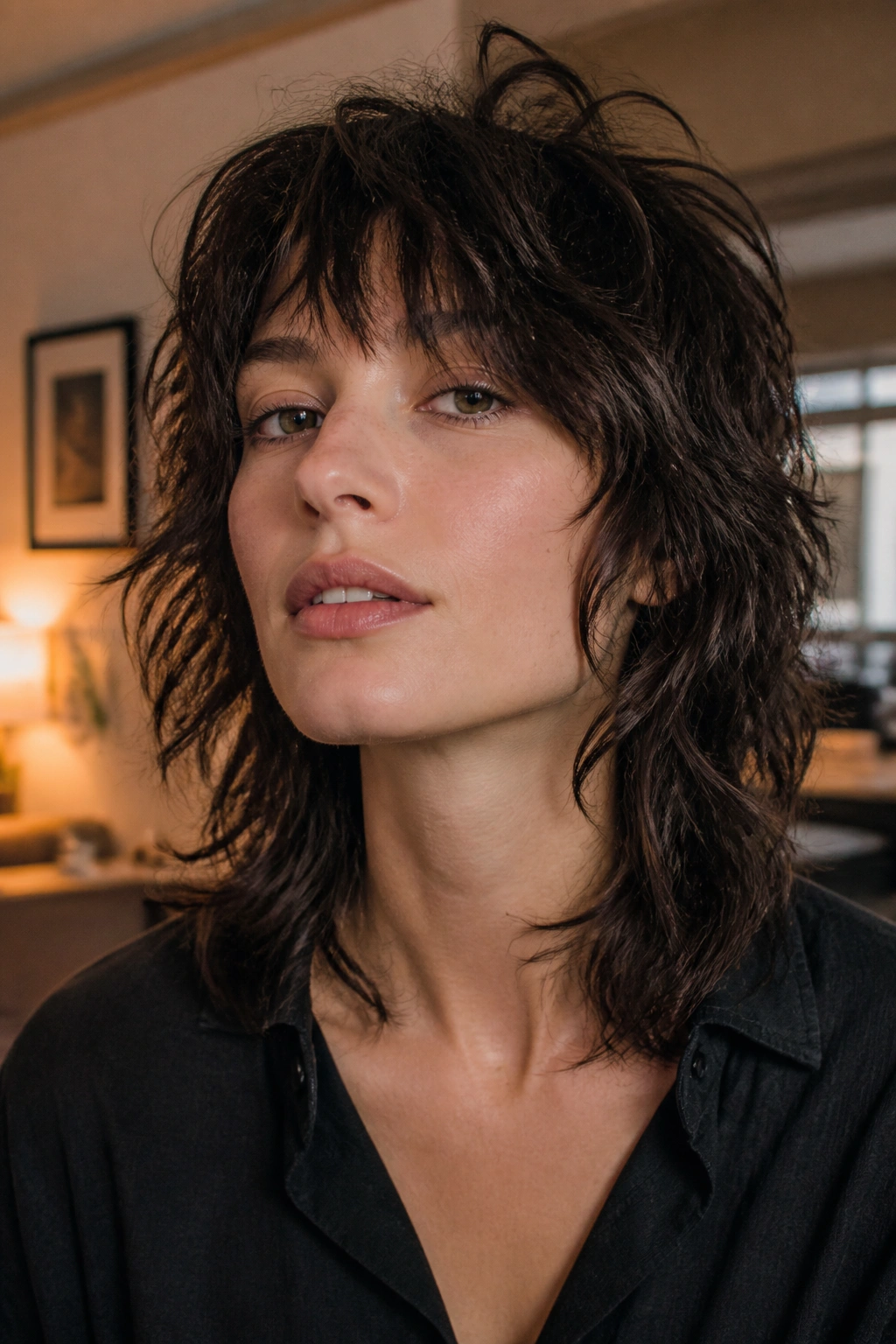
The wolf cut is louder than a shag, and it knows it. Think crown volume, choppy layering, and a shape that leans a little wild without tipping into costume. Thick wavy hair is one of the few textures that can carry it cleanly, because the density keeps the choppy layers from looking wispy.
What I like about this cut is the way it opens up the face. The top layers sit shorter, the ends stay longer, and the whole thing has movement even if you barely style it. On thick waves, that can be a relief. You are not fighting the bulk so much as redistributing it.
What to watch for
- Ask for soft blending at the crown so the top does not puff up too high.
- Keep the shortest layers around cheek or jaw level if you want to avoid a mullet-heavy finish.
- If your hair is coarse and frizzes easily, skip aggressive thinning.
- Use a diffuser on low heat, then break up the waves with a little oil on the ends.
This cut is not quiet. That is the point. It looks best when you let it be a little messy and stop trying to polish every strand into place.
5. Collarbone Lob for Thick Wavy Hair
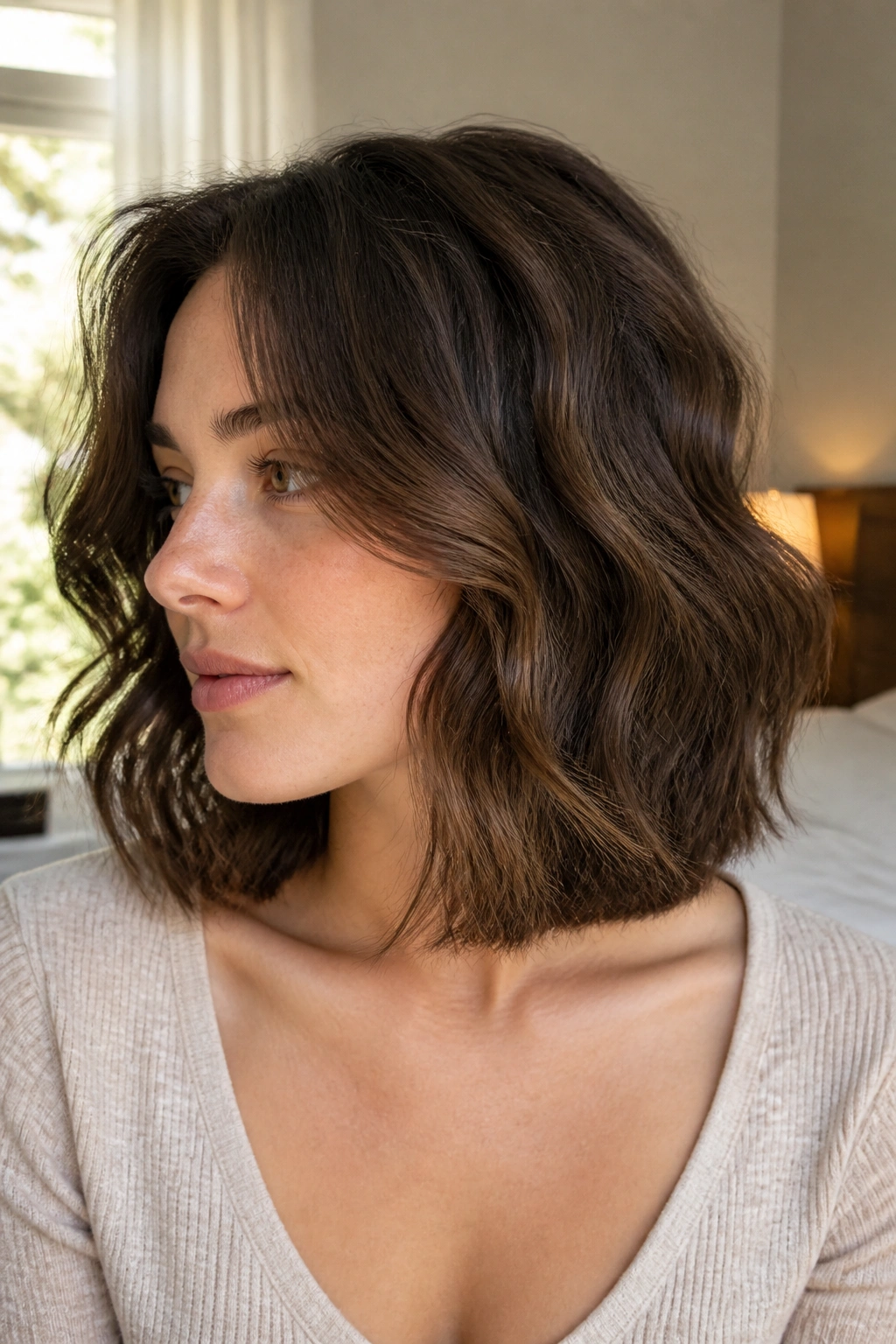
A collarbone lob is one of those cuts that looks plain on a hanger and smart on a real head. For thick wavy hair, the collarbone length sits in a useful spot: short enough to feel lighter, long enough to gather into a clip or low knot. The waves get to bend instead of collapse.
The real win is how the length lands. If the ends hit right around the collarbone, they bounce when you turn your head. If they fall too much longer, the cut can drag the waves down and make the shape feel heavy again. Too short and you start losing that easy swing.
I prefer this cut with subtle internal layers rather than obvious choppy ones. That keeps the outline clean. It also means you can wear it smooth one day and scrunched the next without the ends looking uneven or overworked.
It is a good choice if you want something that feels lighter but still substantial. That balance is hard to fake with styling alone.
6. Blunt Midi Cut with Hidden Texturizing
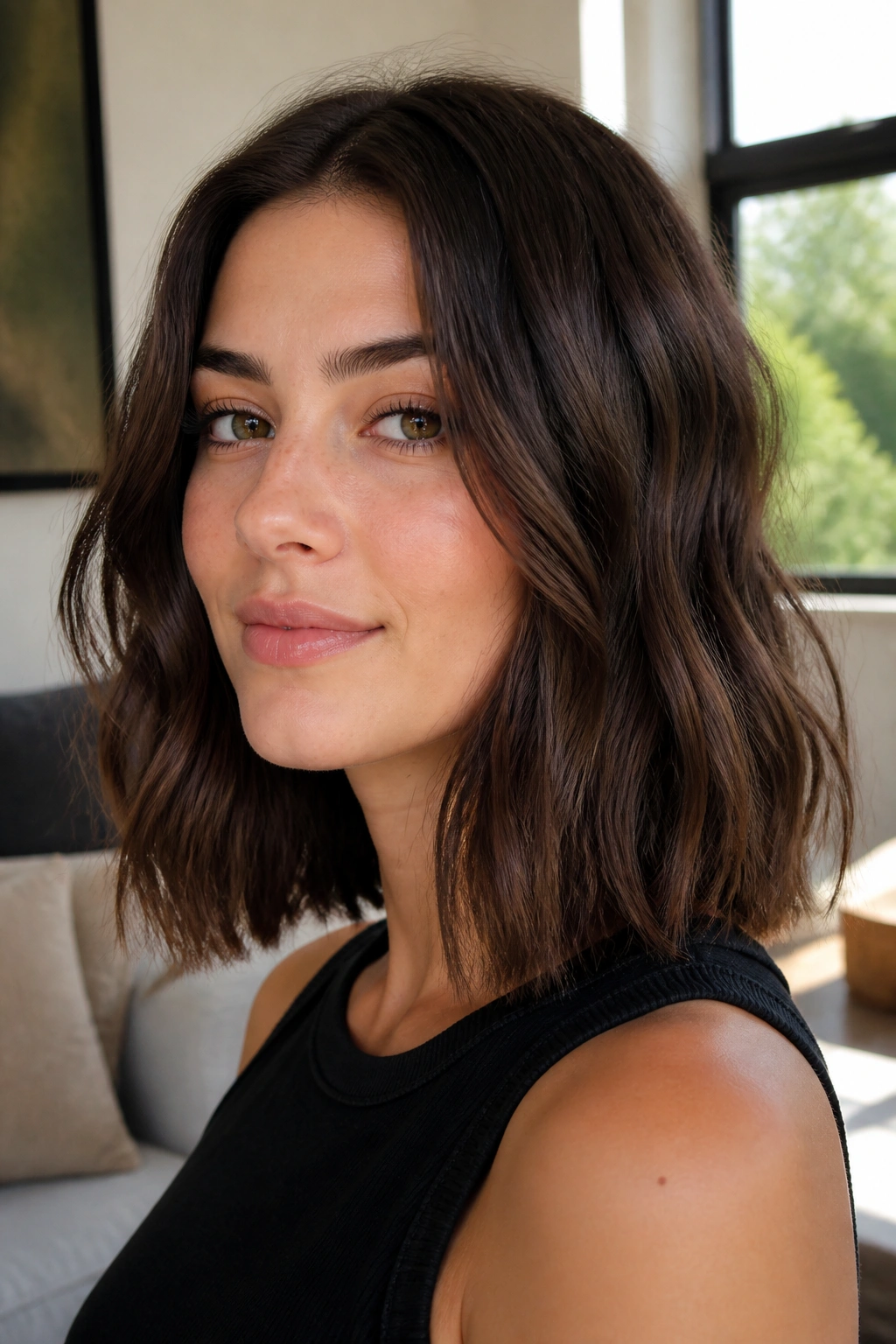
A blunt midi cut sounds counterintuitive for thick waves, but that is exactly why it works. A clean line at the bottom gives the hair structure, so the whole shape feels intentional instead of fluffy. The trick is hiding the weight removal inside the cut, not attacking the perimeter with thinning shears.
That hidden texturizing matters. Thick wavy hair can look bulky in the middle even when the ends look fine. By removing some internal mass, the hair settles more easily and does not push out from the sides like a triangle. The outside still reads as full. The inside just behaves better.
If you like a modern, straight-edged look but don’t want your wave pattern erased, this is one of the easiest cuts to live with. It looks polished after a rough blow-dry and still keeps enough texture for a natural finish.
Best when you want
- A cleaner outline
- Less bulk through the midlengths
- Styling that takes 10 to 15 minutes
- A shape that works tucked behind the ears
7. The U-Shape Cut
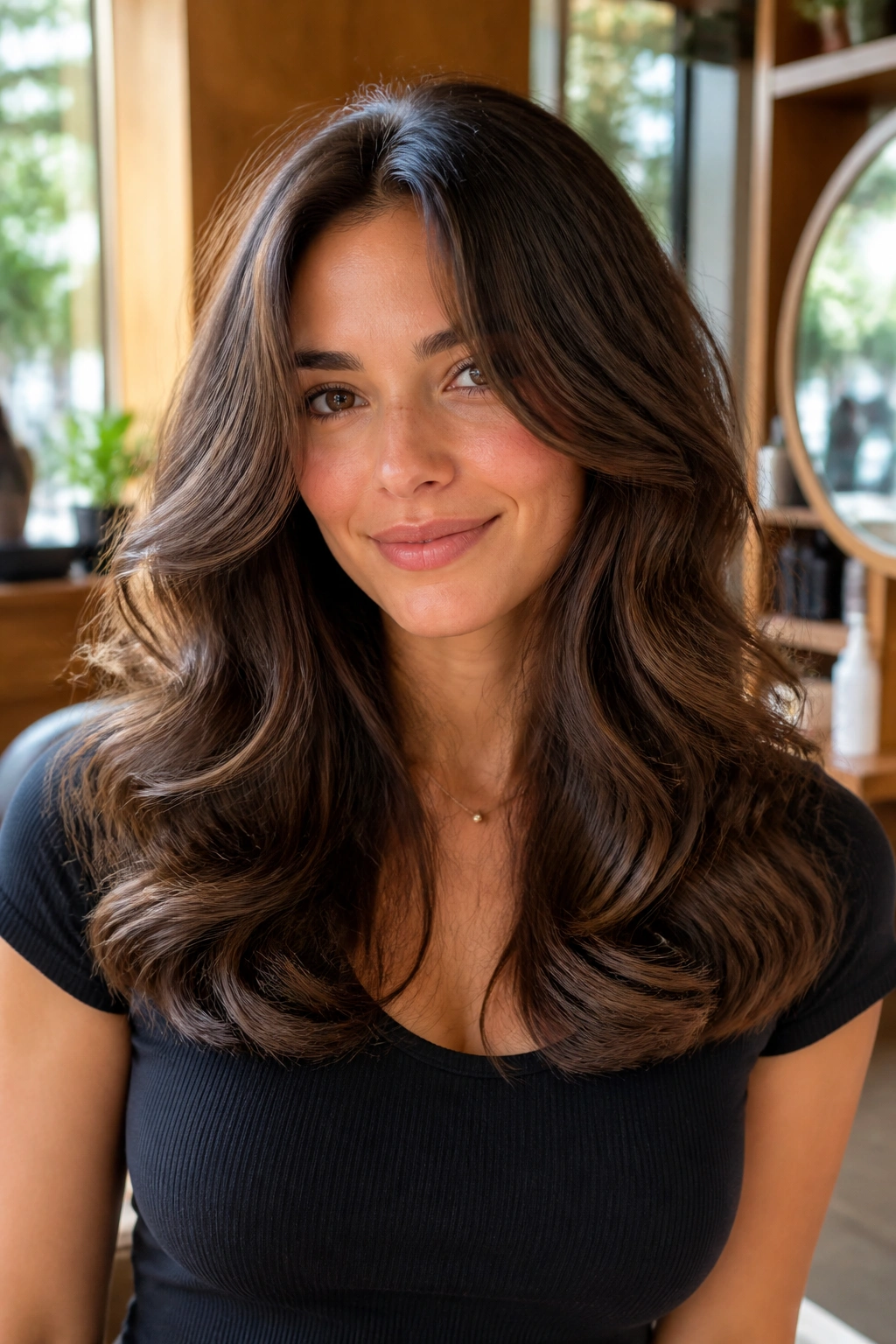
The U-shape is a quiet fix for thick wavy hair that feels too heavy at the back. Instead of a flat line across the hem, the cut curves gently upward at the sides and dips lower in the center. That little change makes the hair fall better over the shoulders and keeps the perimeter from looking like a shelf.
It also gives the front a softer line. On waves, that matters because the face frame can swing a little without chopping off length too abruptly. The result is smoother than a layered shag and less severe than a blunt cut.
A good U-shape is subtle. If the curve is too dramatic, it starts looking dated fast. Ask your stylist for a soft curve, not a deep one, and keep the longest pieces where the hair already feels heaviest. That is where the weight needs to live, honestly.
This cut is especially nice if you wear your hair down a lot and want it to sit neatly over sweaters, coats, and high collars.
8. A Deep Side Part with Swept Volume
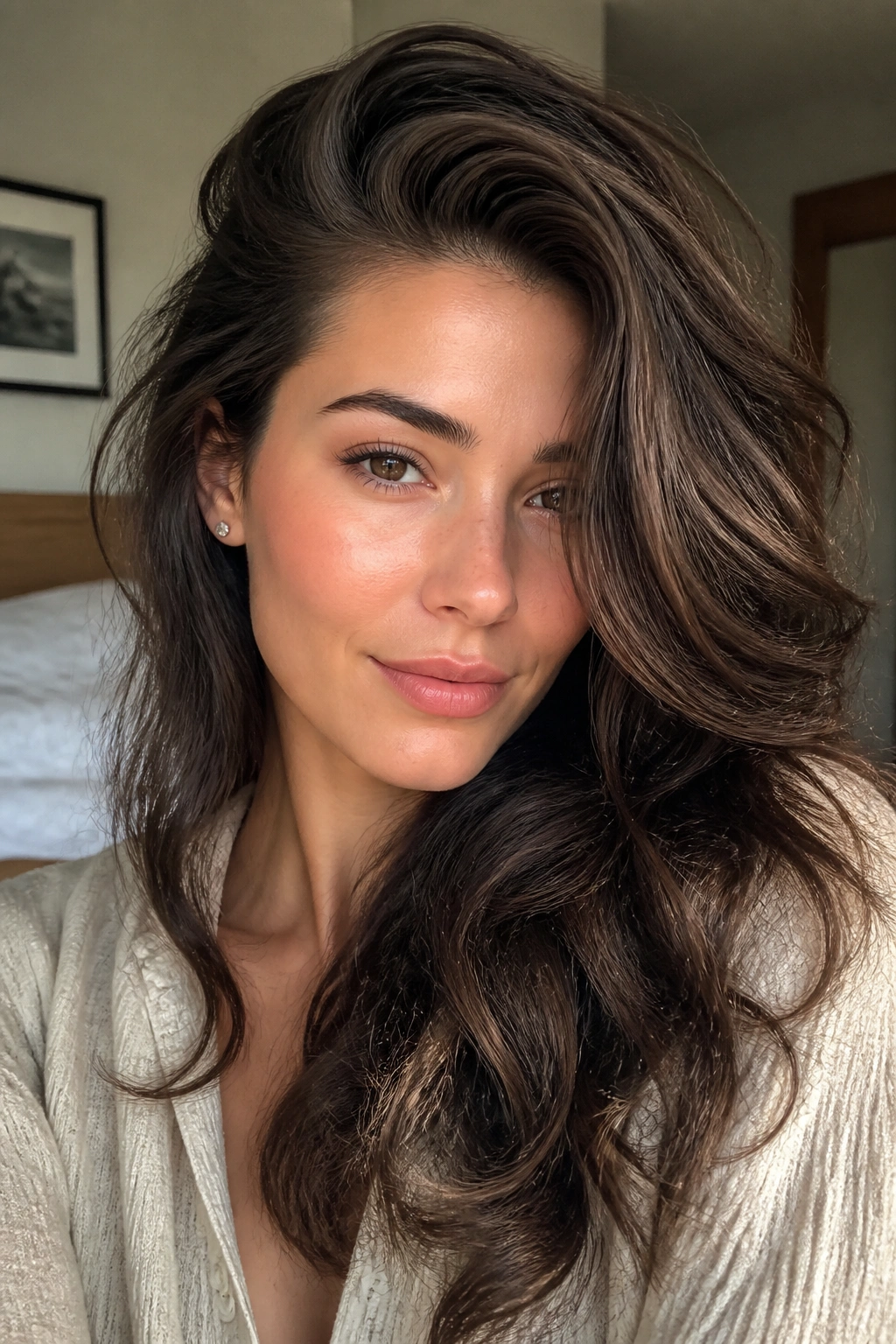
A deep side part can change thick wavy hair more than a haircut sometimes does. It shifts the weight of the hair off the center line, gives one side more lift, and lets the wave pattern fall in a more dramatic way. Small change. Big payoff.
It also solves a common problem: the middle part that makes thick waves spread too wide at the cheeks. If that shape makes your hair feel too boxy, moving the part 1 to 2 inches over can soften the whole silhouette. I like using a rat-tail comb to set it cleanly, then clipping the heavier side while the roots cool after blow-drying.
How to style it
- Set the part while the hair is damp.
- Blow-dry the roots in the opposite direction for extra lift.
- Tuck one side behind the ear and leave the other loose.
- Finish with a light mist of flexible hairspray, not a hard shell.
This is the kind of move that works on ordinary days and polished ones. It costs almost nothing. That’s rare.
9. Curtain Bangs with Shoulder-Length Layers
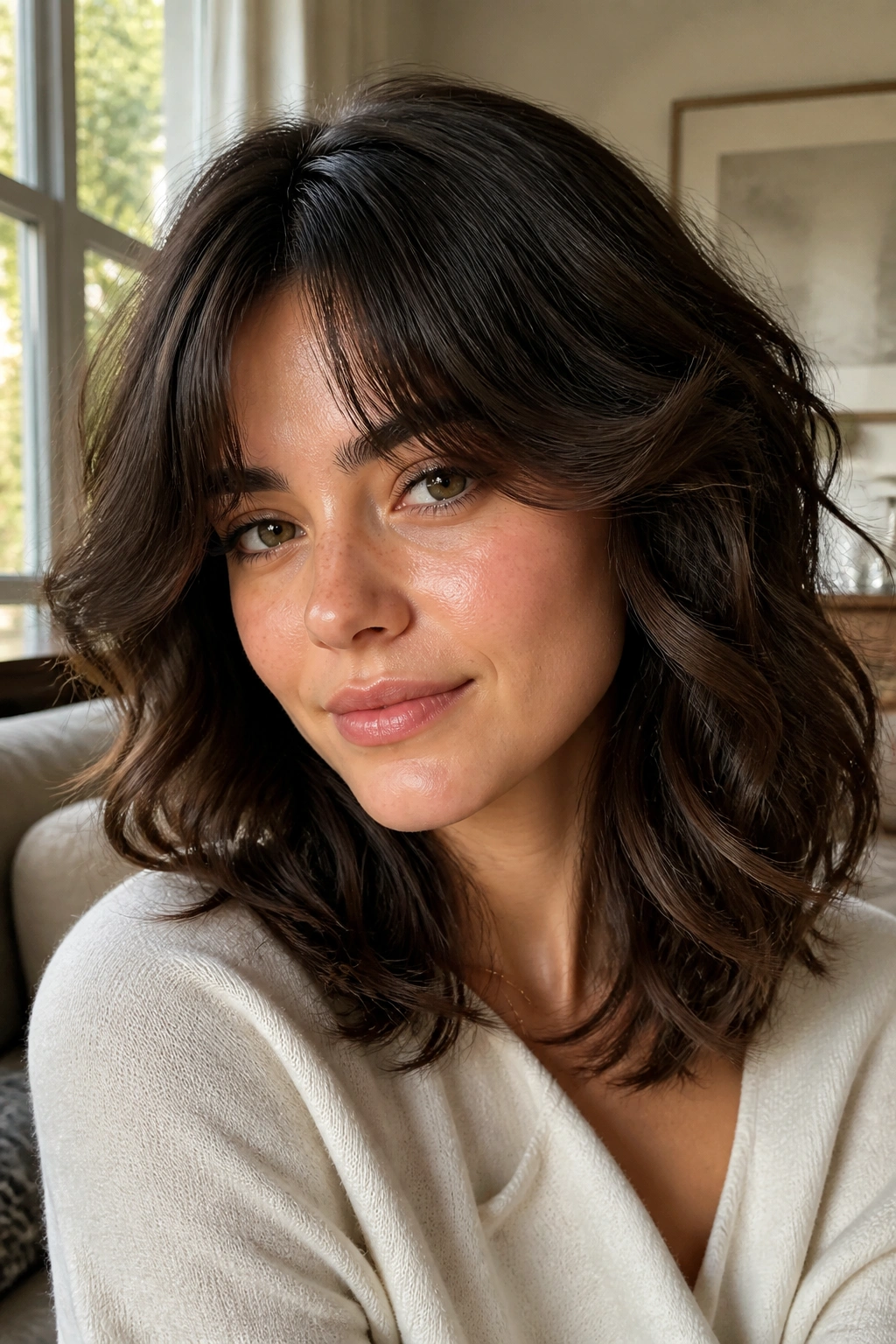
Curtain bangs can be brilliant on thick wavy hair, but only if they are cut with a bit of restraint. Heavy bangs that land too short will spring up and sit like a shelf. Better to keep them a touch longer, grazing the cheekbones or brushing the lip line when dry.
The shoulder-length cut matters too. At that length, the waves still have room to move, but the overall shape does not drag down your face. You get lift around the eyes and movement around the jaw. That combination is flattering in a way that feels almost unfair on dense hair.
I’d avoid cutting the fringe too bluntly. Thick waves need a little bend built in. Ask for the bangs to be trimmed dry or at least checked dry at the end, because wet hair lies. It always does. Especially with waves.
If you want a style that feels soft and a little romantic without becoming fussy, this one sits in a sweet spot.
10. The Half-Up Claw Clip Twist
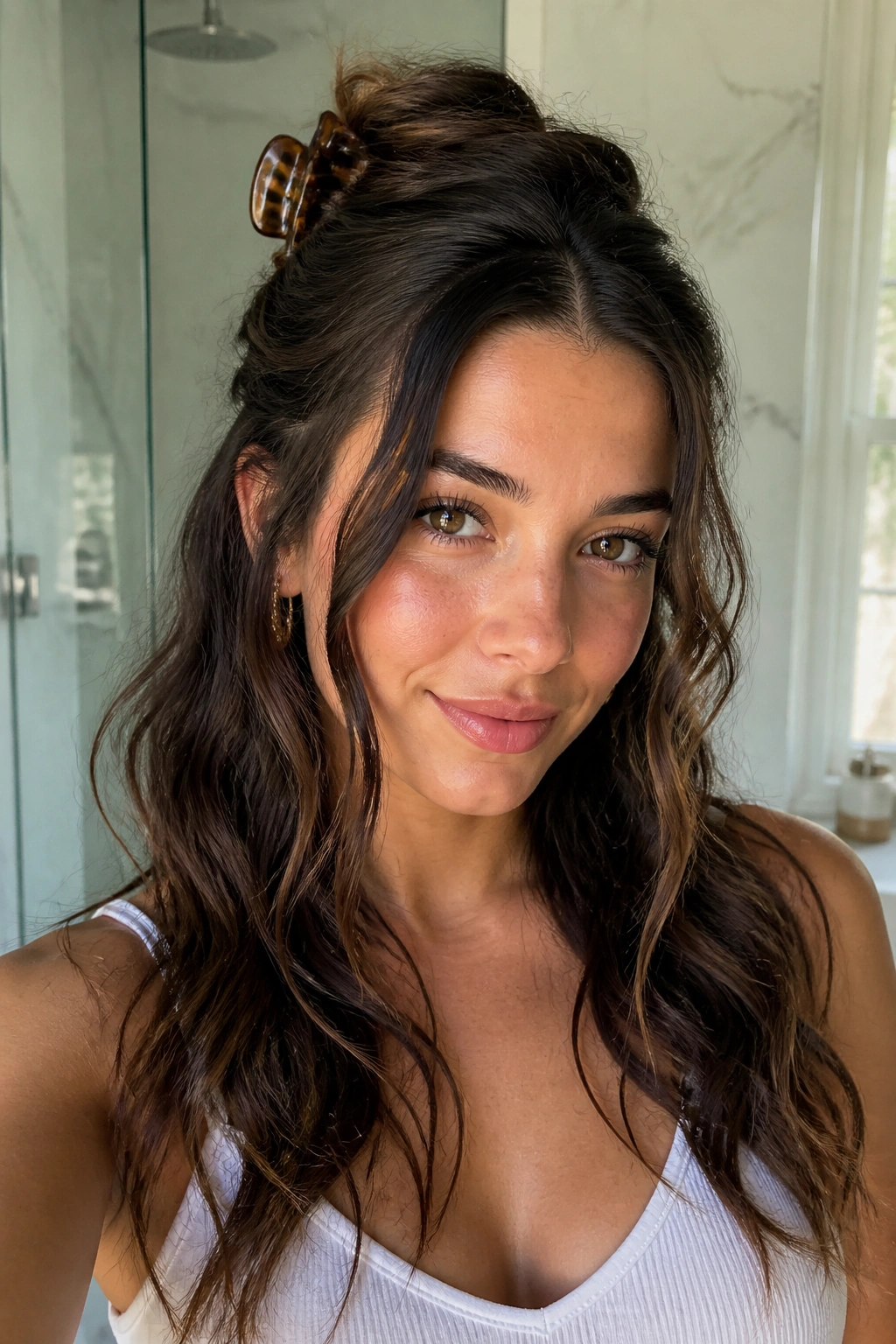
Some mornings you need the front off your face and the rest left alone. The half-up claw clip twist does that without flattening the wave pattern or making the hair feel overcontrolled. Thick wavy hair holds this shape well because there is enough bulk for the clip to grip.
The move is simple: gather the top half loosely at the crown, twist once or twice, and let the ends spill out instead of tucking everything tightly inside the clip. That loose finish keeps the style from turning into a hard shell. If your hair is very heavy, choose a large clip with strong teeth. A tiny clip on thick hair is a joke.
This style works especially well on second-day waves. The texture gives the clip something to hold onto, and the little bit of dryness at the roots helps the style stay put longer. You can leave a few face-framing pieces out if you want it softer, but don’t overdo it. A couple of strands is enough.
It is practical, fast, and weirdly flattering. Which is why people keep reaching for it.
11. High Ponytail with Loose Crown
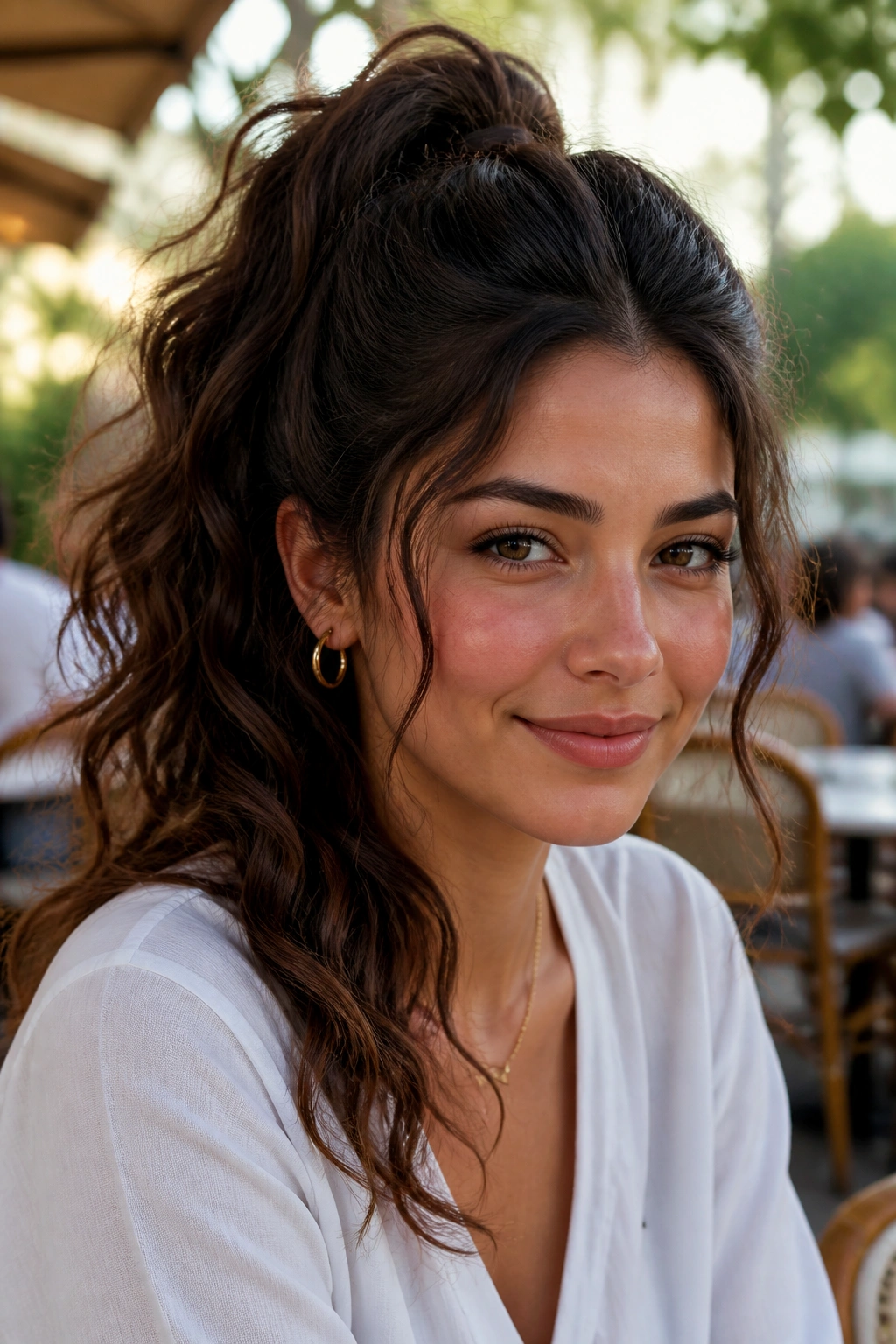
A high ponytail on thick wavy hair does not need to look severe. In fact, it looks better when the crown stays a little soft and the tail keeps some wave. The thickness gives the ponytail real body, so it reads full instead of thin and pulled tight.
The mistake most people make is brushing everything back too hard. That makes the top too flat and the face too sharp. Leave a bit of lift at the crown, smooth the sides with your hands, and use a soft bristle brush only where you need control. Wrap a small strand around the elastic if you want the base to look cleaner. Tiny detail. Big difference.
A few things that help
- Use a snag-free elastic that won’t fight the density.
- Set the ponytail at the crown for a sporty look or slightly lower for something calmer.
- Lightly mist the tail with water and scrunch if the waves need to come back.
- Pin the underside if the weight pulls the ponytail down through the day.
This is a style that looks better on thick hair than people expect. The fullness carries it.
12. Low Textured Bun
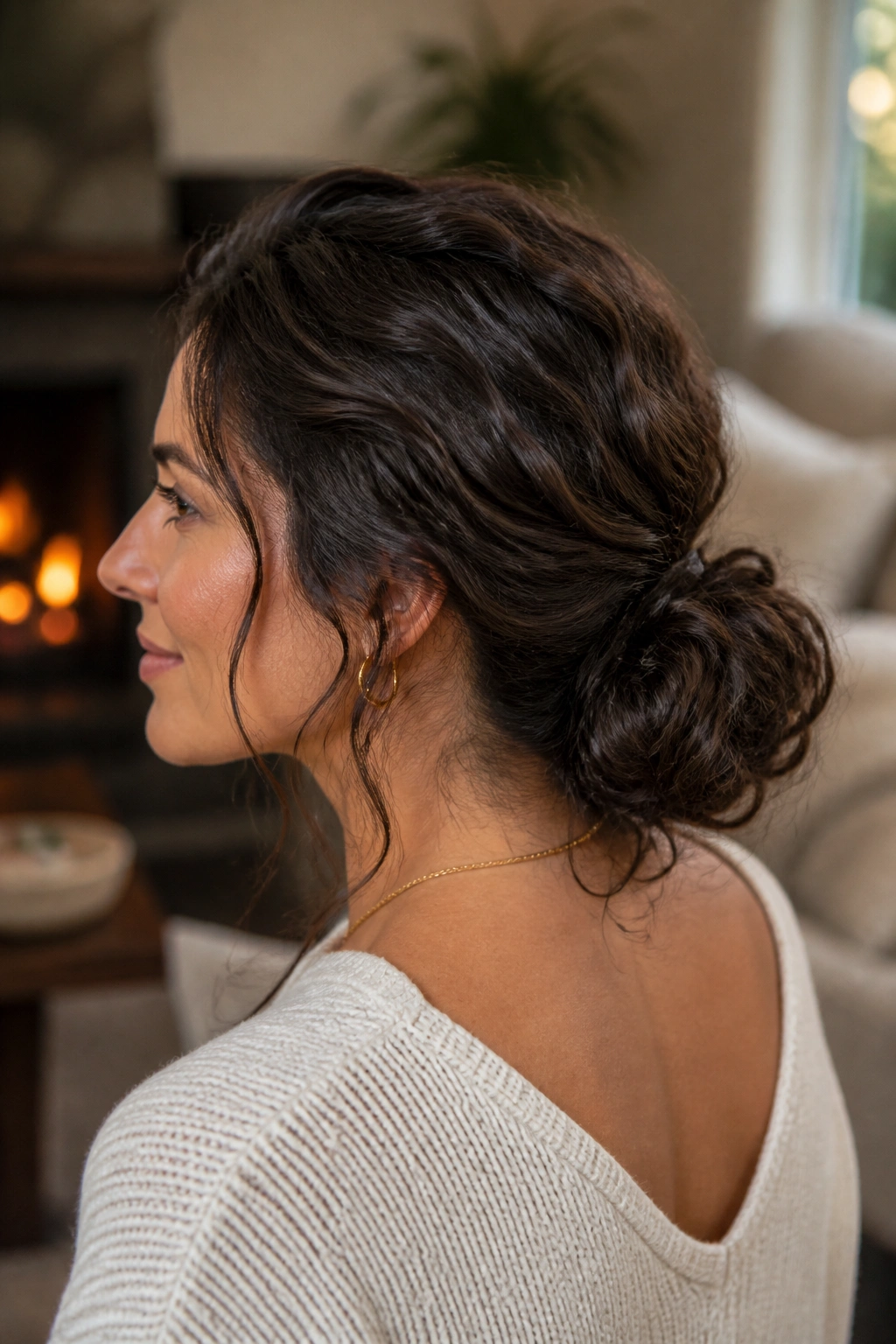
A low bun on thick wavy hair has a nice built-in shape. The texture keeps it from looking flat against the head, and the density gives the bun enough size to look intentional. You do not need to make it perfect. In fact, you probably should not.
The cleanest version starts with a low ponytail, but only loosely. Twist the lengths, wrap them into a bun at the nape, and secure with pins rather than one overworked elastic. That keeps the bun from bulging out in odd places. Leave a few short pieces around the ears or temples if you want softness. If you want more polish, tuck those pieces behind the ears and smooth the surface with a little cream.
This is one of those styles that can look casual or formal depending on how neat the front is. Slightly messy? Weekend dinner. Tighter and lower? Good for a dressier setting. Same base, different mood.
Heavy hair can pull a bun down, so use enough pins. Not two. Enough.
13. Braided Crown or Halo Braid
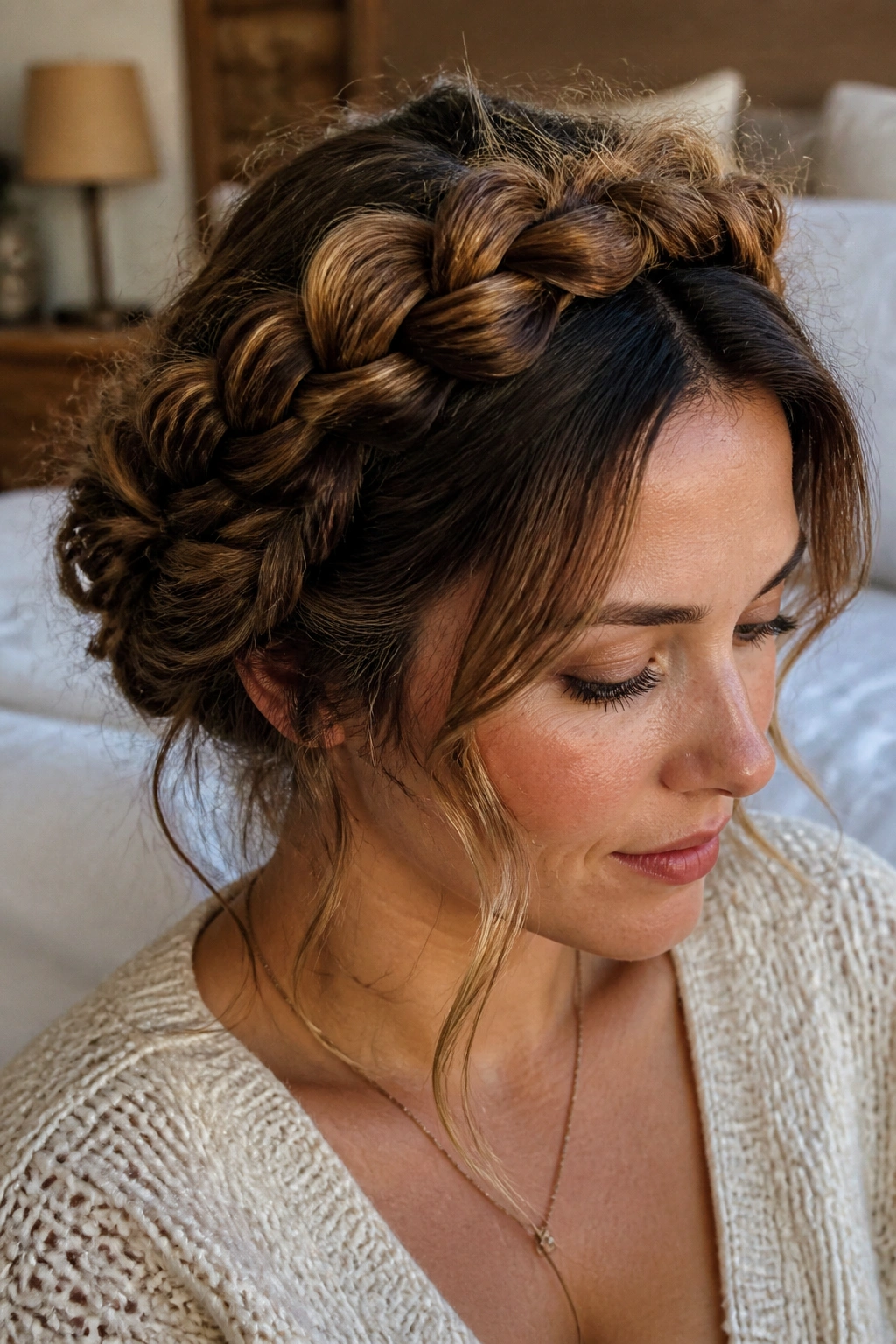
Braids and thick wavy hair get along well because waves give the braid grip. A halo braid, braided crown, or any wrapped-around style tends to stay put better on hair that has texture rather than glassy smoothness. That’s the practical part. The prettier part is the thickness itself, which makes the braid look substantial from every angle.
The hair does not need to be freshly washed for this. In fact, a little lived-in texture helps. If your waves are soft and slippery, a dry texture spray or a small amount of styling cream through the midlengths can make the braid easier to handle. Pull it too tight and you lose the body that makes the style worthwhile in the first place.
What makes it work
- Second-day texture gives better hold.
- Thicker sections create a fuller braid with less effort.
- Looser braiding keeps the wave pattern from disappearing completely.
- A few loose pieces around the face soften the line.
I like this style because it uses what thick wavy hair already has. You are not forcing anything. You are arranging it.
14. Clipped-Back Glam Waves
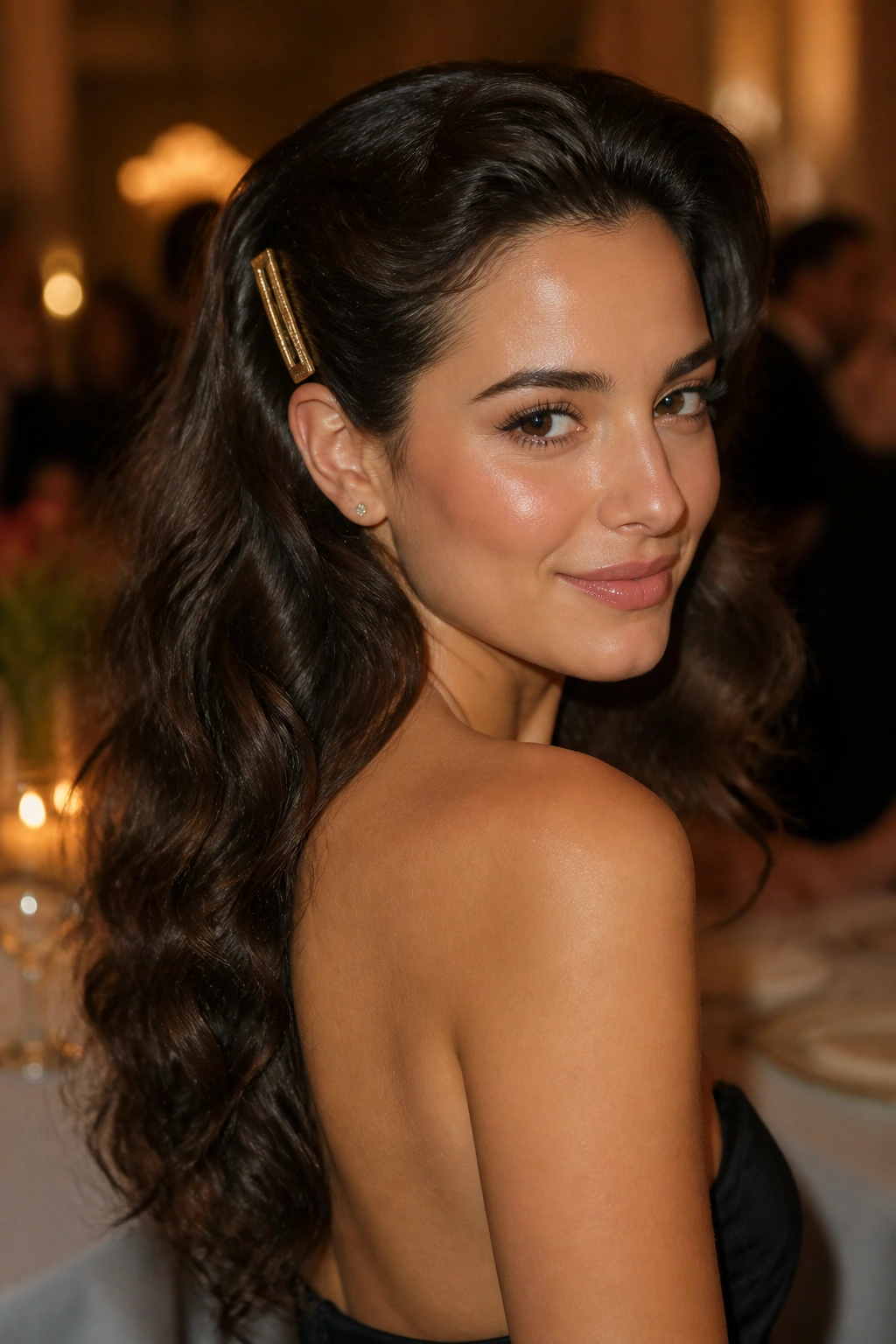
Clipped-back glam waves are what I reach for when the hair needs to look done without losing its movement. One side, or both sides, gets pinned back with a barrette, slide clip, or decorative clasp while the rest stays loose and wavy. Thick hair gives the style real presence, so it doesn’t feel flimsy.
The key is placement. Put the clip too low and it looks like the hair is being held together by accident. Too high and the top starts to feel flat. The sweet spot is usually at the temple or just above it, where the wave can still flow out of the clip. If your hair is layered, leave one front piece free so the shape does not get too rigid.
This style works for dinners, events, or any day when you want the waves visible but slightly controlled. It also hides a greasy root better than people admit. A little root oil, a side clip, and you’re halfway there.
Cheap clips can snag thick waves. Pick one with a smooth inside edge. That detail matters more than the finish.
15. The Soft Mullet
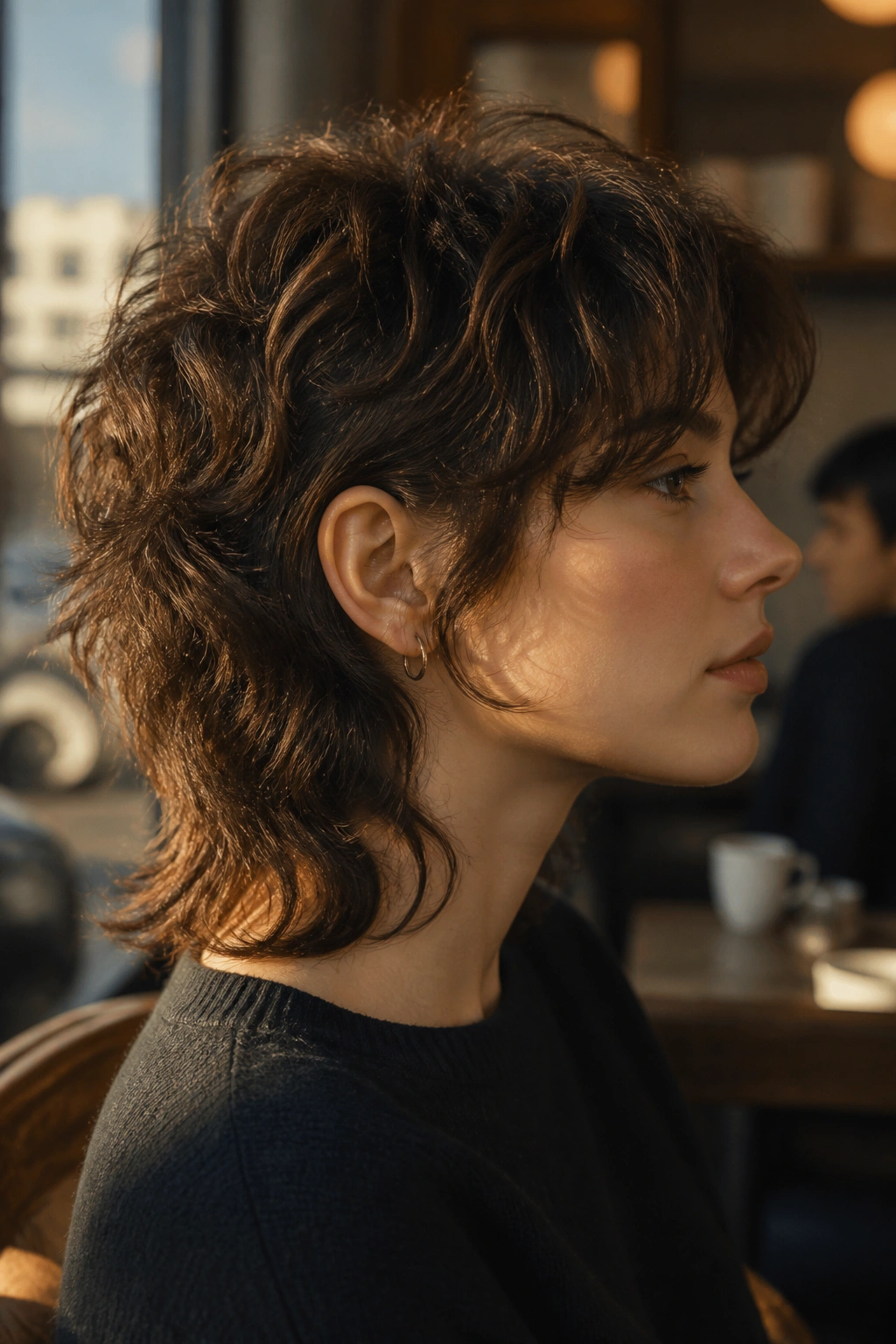
The soft mullet is for someone who wants movement and does not mind a little edge. On thick wavy hair, it works better than on many other textures because the density keeps the shape from collapsing into a thin strip at the back. The crown gets lift, the sides stay soft, and the nape has length.
What makes this version livable is the word soft. The transition from short to long should feel blended, not hacked apart. You want a controlled shape that still leaves room for the wave pattern to do its thing. If the cut is too severe, it can start looking costume-y fast. That is not what we want here.
This is a good choice if you like hair that looks textured even on lazy days. It also suits people who wear jackets, collars, and scarves a lot, because the shorter crown keeps the bulk off the back of the neck. Practical and a little rebellious. Nice combination.
Who it suits best
- Thick hair that grows outward instead of flat
- Loose to medium waves
- People who like styling with fingers instead of brushes
- Anyone who does not need a highly polished finish every day
16. Shoulder-Length Razor Cut
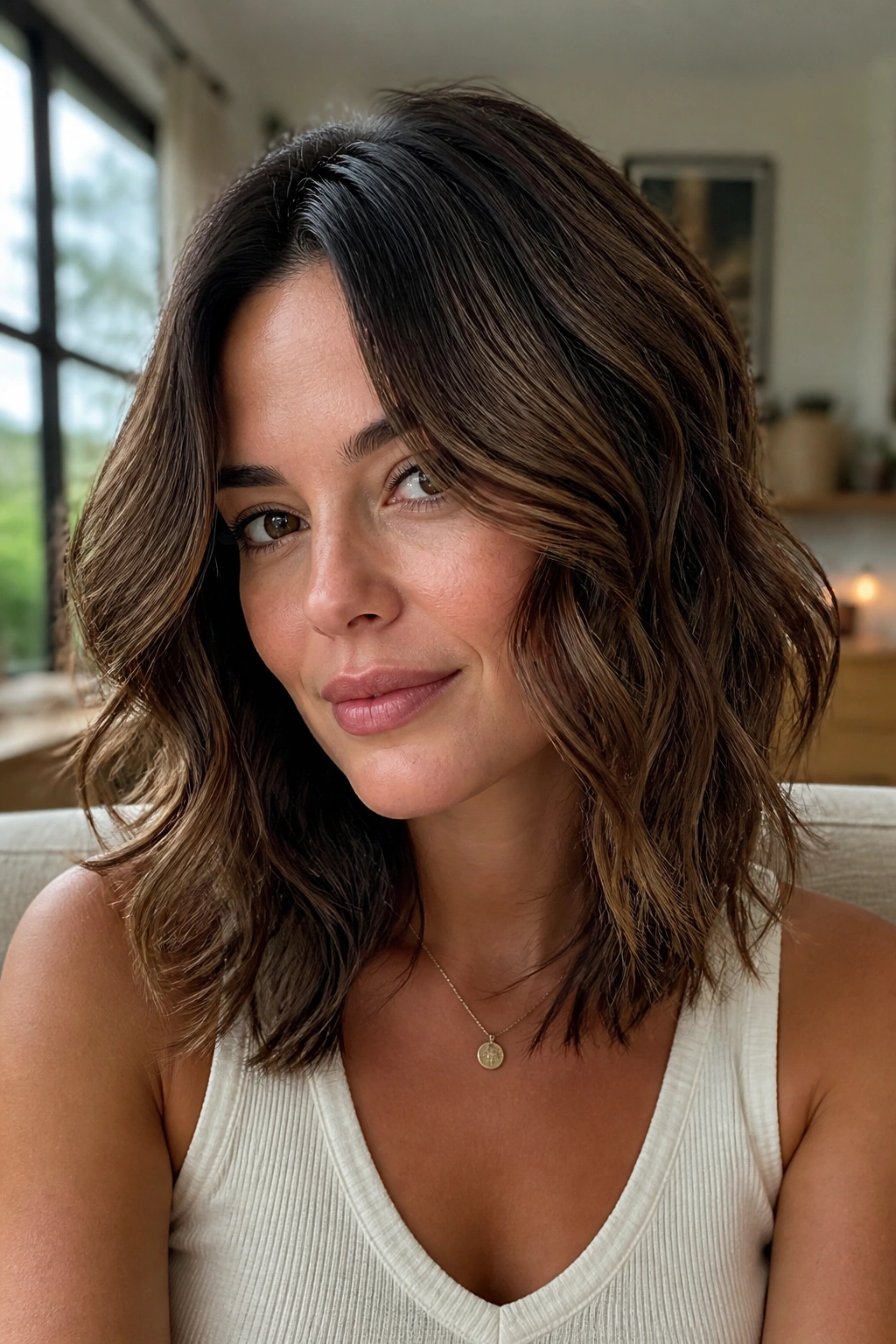
A razor cut can be beautiful on thick wavy hair, but only in the right hands. Used well, it removes weight and creates movement that scissors sometimes miss. Used badly, it roughs up the ends and leaves you with frizz that seems to multiply every time you step outside.
That’s why I’m picky about this one. The haircut has to match the texture. On coarse, dense waves, a light razor pass can soften the outline and stop the ends from sitting too bluntly. On dry, porous hair, the same move can make the hair feel shredded. Same tool. Very different result.
If you go this route, ask for controlled texture at the ends and avoid a heavily razored crown. A little airiness at the hem is useful. Too much cut into the interior is not. You want movement, not see-through ends.
This is one of those styles that can look effortless but takes a stylist who knows when to stop. That matters more than the tool itself.
17. Mermaid Waves with Long Length
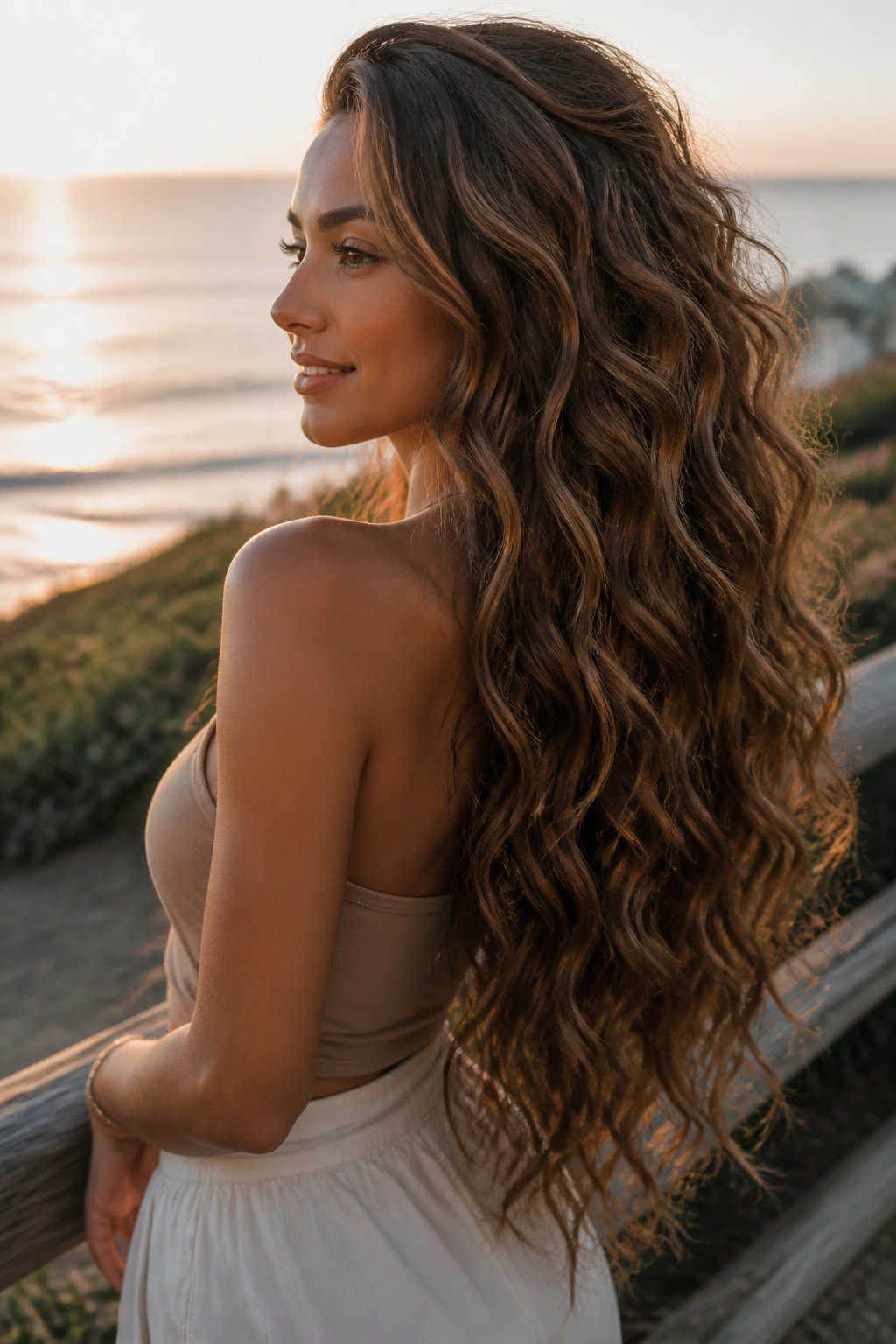
Mermaid waves on thick hair are all about length plus bend. The weight of the hair helps the wave pattern fall in longer, smoother curves, which is why this style often looks fuller on dense hair than on fine hair. Long layers help keep the lower half from turning into one giant curtain.
You can create the look with a large-barrel curling iron, a wave iron, or overnight braids, depending on how much heat you want to use. A 1¼-inch or 1½-inch barrel usually gives a wave that is soft enough to read as loose, not curly. Brush the waves out lightly once they cool, then press a drop of oil into the ends. That last step keeps the finish from looking dry.
Good habits for this style
- Keep the curl direction mixed for a more natural finish.
- Let each section cool fully before touching it.
- Leave the last 2 inches straighter if you want more movement.
- Use heat protectant. Always.
This style is not fast, but it can look expensive without being stiff. Thick hair helps carry it.
18. Voluminous Blowout Waves
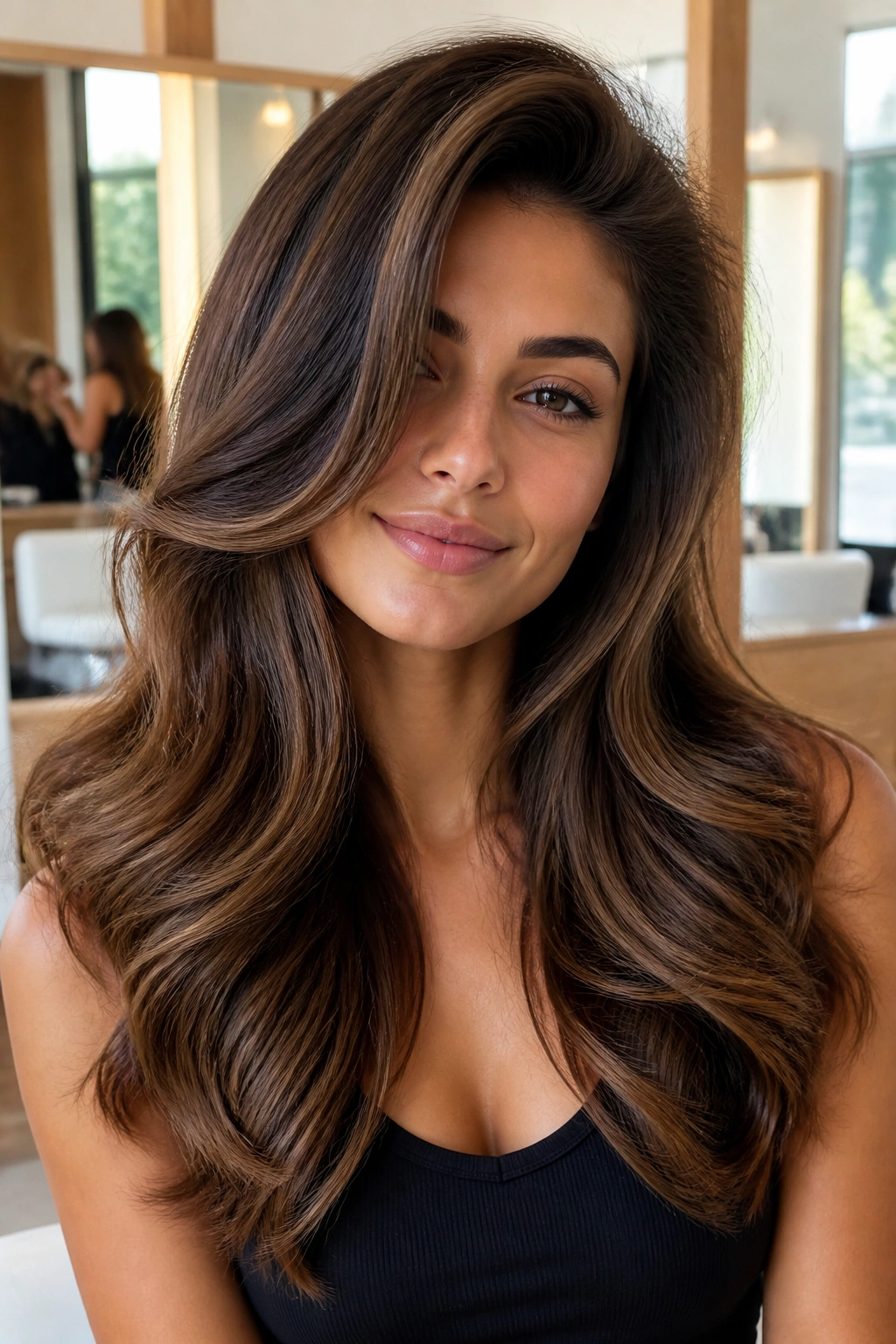
A blowout on thick wavy hair has a built-in advantage: the hair already wants to hold shape. When you smooth the roots and round the ends with a brush, the waves settle into a softer, fuller pattern that lasts longer than people expect. It feels a bit old-school, in a good way.
The trick is sectioning. Work with 4 to 6 sections, not one giant mass, and dry the roots first so the top does not go flat under the weight of the rest. A medium round brush usually works better than a huge one, because you still want some bend, not poker-straight ends. If your hair is long, velcro rollers at the crown for 10 minutes can help the lift set.
Why it holds so well
Thick hair has more structure, so once you shape it, the form stays. That means you can get a soft, bouncy finish without needing to rebuild the whole style every hour.
It is a little more work than air-drying. I won’t pretend otherwise. But if you like hair that moves and still looks deliberate, this one is hard to beat.
19. The Top Knot with Face-Framing Pieces
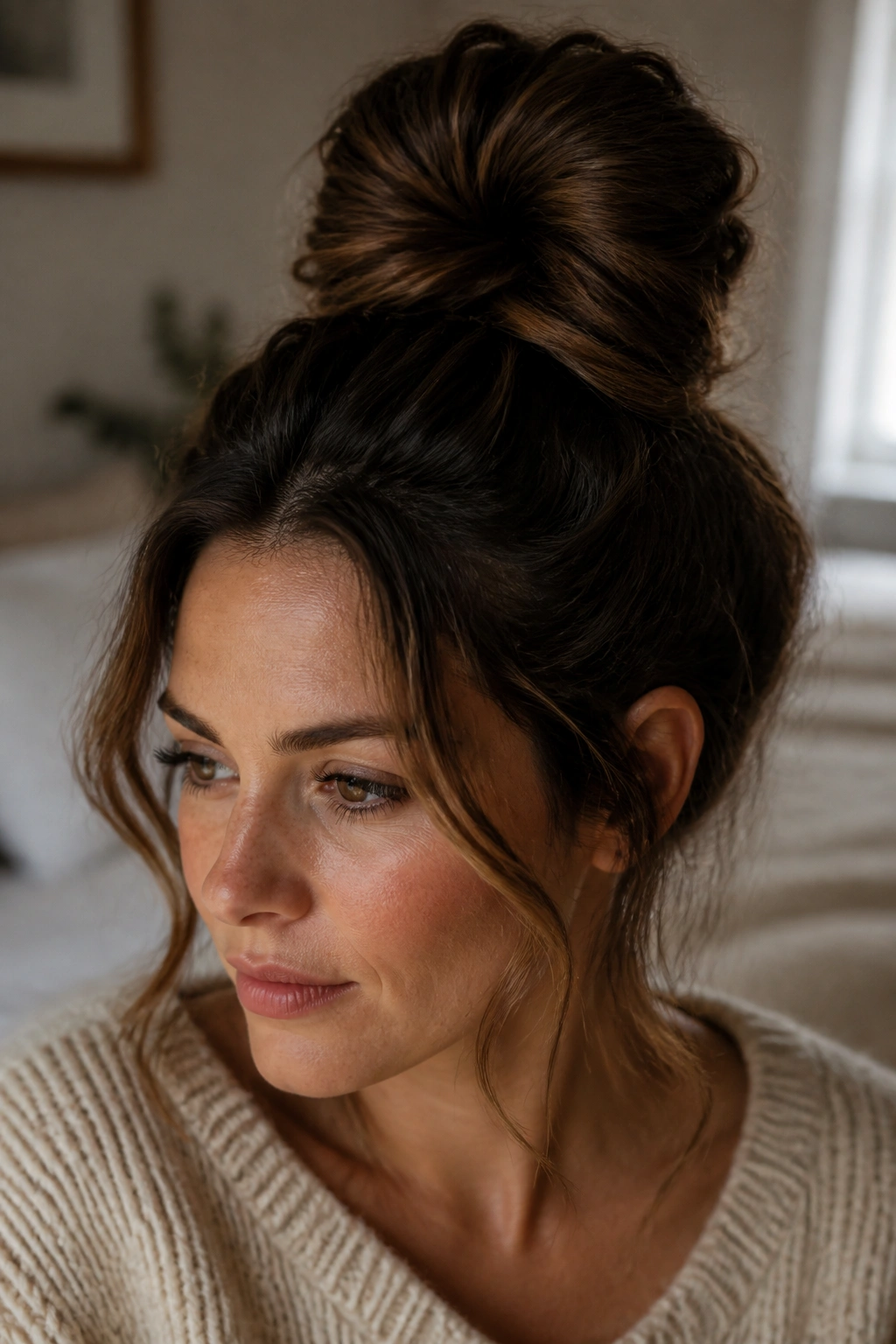
A top knot on thick wavy hair should never look like an afterthought. The fullness gives it real shape, and the loose front pieces keep it from looking severe. If you’ve ever tried this style on thin hair and ended up with a tiny knot that looked tired by noon, thick waves solve that problem fast.
The best version sits high, but not so high that it stretches the scalp. Gather the hair with your hands, twist it once or twice, and coil it loosely. You want texture in the knot, not a tight little ball. Leave a few wave pieces out around the temples or along the cheekbones if you want softness. If the ends stick out, great. That’s part of the charm.
This style also handles day-two hair well. A bit of root lift and some dry texture make the knot hold better. A soft scrunchie can be kinder than a hard elastic if your hair is extra dense.
It is quick, but it does not have to look quick. That’s the nice part.
20. Medium Layers with Invisible Movement
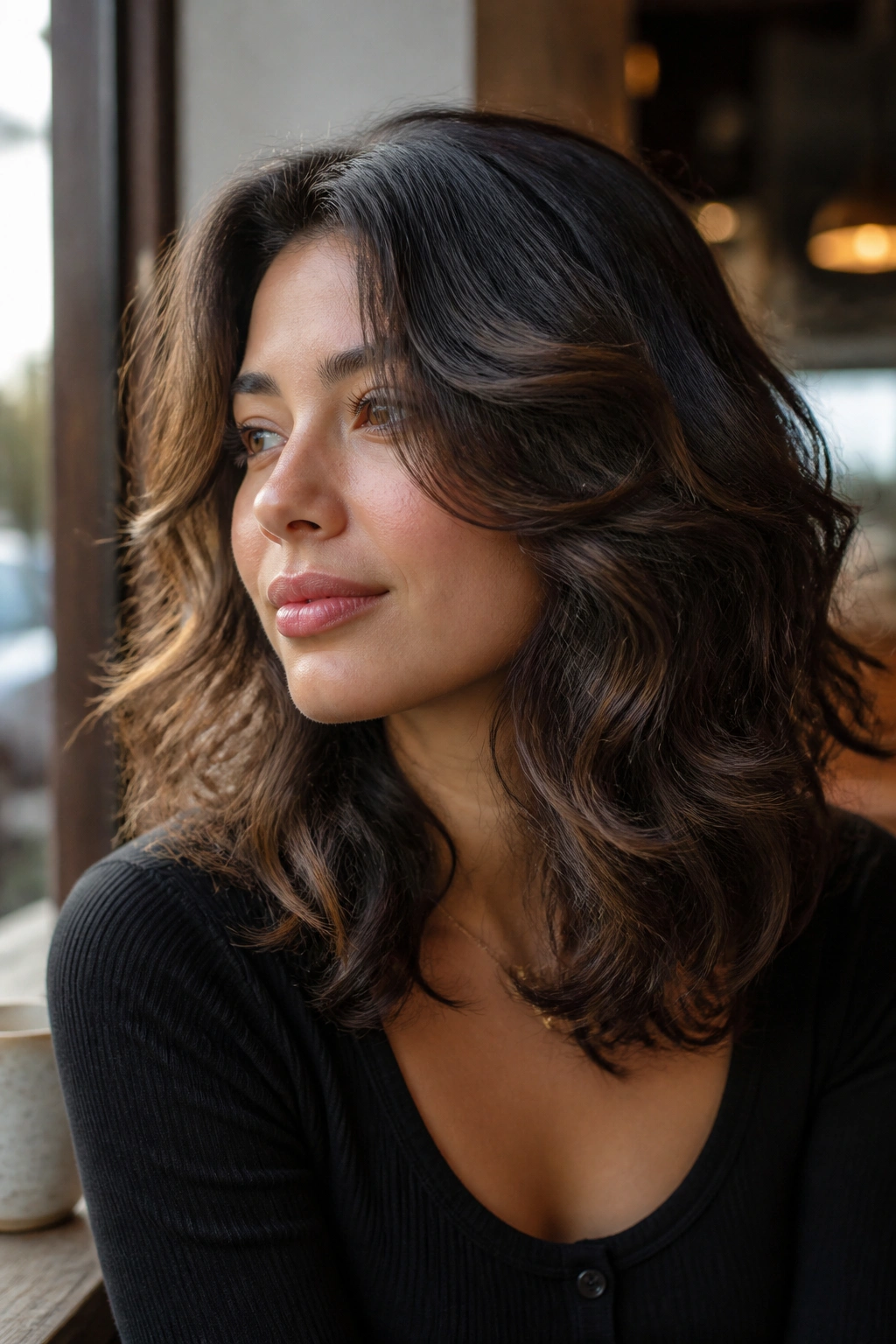
If you want one cut that doesn’t fight thick wavy hair, this is the one I’d keep close. Medium layers with invisible movement mean the weight is removed inside the shape, not chopped into obvious steps. From the outside, the haircut still looks clean. Inside, it has enough air to let the waves bend instead of puffing outward.
This is the quiet answer for people who want easy styling and dislike dramatic shapes. The length usually sits between the collarbone and the upper back, which gives enough room for a ponytail, a twist, or a loose braid. It also keeps the hair from feeling too short if you are attached to length but tired of the bulk.
A good way to think about this cut is that it solves the “too much hair” problem without advertising the fact that it solved anything. Nice, right? Some days you want the haircut to make a statement. Other days you want it to get out of the way. This does the second job very well.
If you are deciding between a shag, a lob, or long layers, start here. It is the least fussy option, and thick waves tend to appreciate that.
Final Thoughts
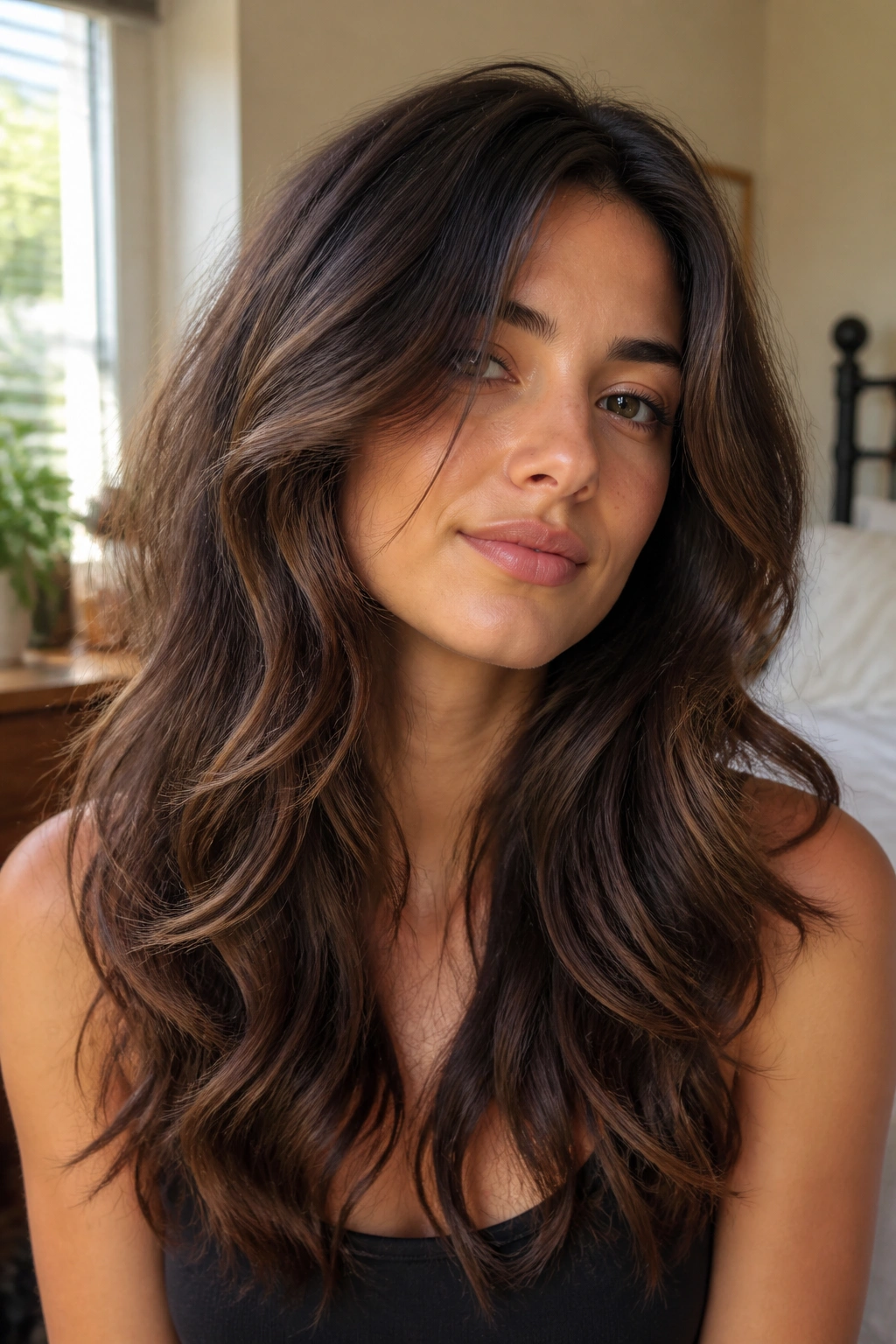
Thick wavy hair usually looks best when the shape respects its weight instead of trying to flatten it into something else. The strongest cuts on this list all do the same basic thing in different ways: they move bulk where it belongs and leave enough structure for the wave pattern to show up.
One more thing. Don’t let a stylist talk you into a look that needs daily heroics if you know you’ll wear it in a claw clip half the week. The best hairstyle is the one you’ll actually keep. If that means long layers, a collarbone lob, or a blunt midi cut with hidden texture, that’s the right answer.
