



Short hairstyles for wavy hair can be brilliant or frustrating, and the difference usually comes down to where the cut lands against your wave pattern. A bob that looks crisp in the chair can spring up at the sides, the ends can flip out, and suddenly the shape feels wider than you expected.
Waves have a mind of their own. Some bend in loose S-shapes, some kick out at the jaw, and some stay calm on top before swelling through the mid-lengths. A good short cut respects that movement instead of flattening it into something stiff.
That is why the right haircut matters more than the right product. A stylist can hand you the nicest cream in the world, but if the cut is wrong, you will still be fighting the shape every morning. Dry cutting, soft internal layers, and smart length placement make a bigger difference than most people expect.
The best part is that short hair and waves are a strong pairing when the cut is chosen well. You can go polished, messy, edgy, soft, or somewhere in between. The trick is picking the version that suits your density, your face shape, and how much time you want to spend with a diffuser.
1. Chin-Length Textured Bob for Wavy Hair
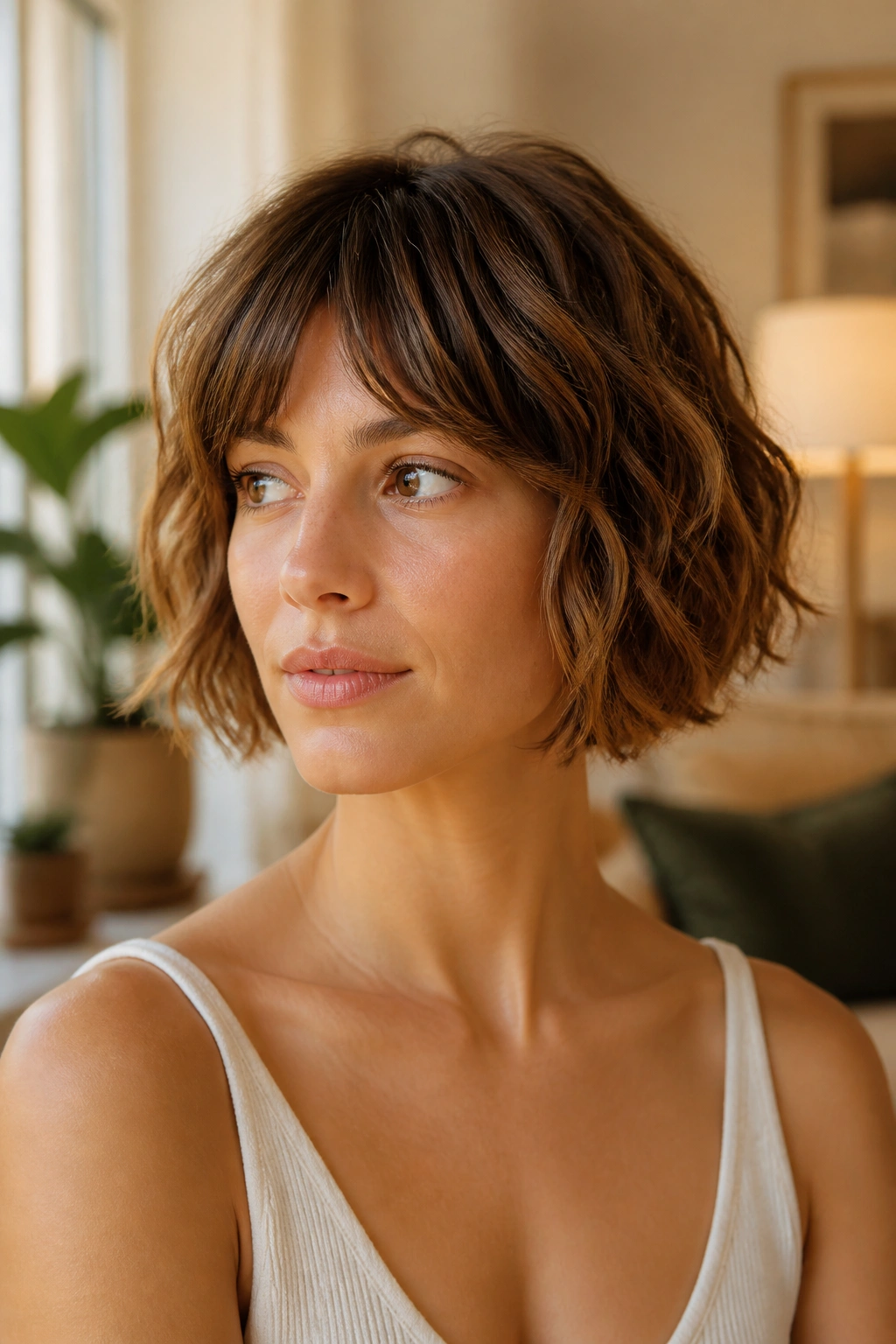
A chin-length textured bob is one of the easiest short hairstyles for wavy hair because it gives the wave enough room to move without turning into a puffball. The length sits right at the jaw, which keeps the shape clean while still letting the bend show.
Why It Works
- The chin length keeps the ends from getting too wide.
- Soft texturing at the perimeter stops the cut from looking boxy.
- A center part gives a calm, balanced look, while a side part adds lift.
- It works well when your waves are loose to medium and your hair is medium density.
Best move: ask for the final shape to be checked with the hair dry. Waves shrink in a way that wet hair never quite predicts.
The nice thing about this bob is that it does not ask for much. A small amount of mousse through damp hair, a rough dry with a diffuser, and a little finger-combing at the end usually gets you there. If your hair tends to flip out at the very bottom, a slightly beveled finish can calm that down without making the cut feel heavy.
It is a neat cut, but not a stiff one. That matters.
2. French Bob with a Soft Fringe

A French bob is small, cheeky, and a little stubborn. That is exactly why it works so well with waves. It keeps the shape compact, usually around cheekbone to lip length, so the hair does not drag itself downward and lose that airy movement.
The fringe is the part people usually worry about, and I get it. On wavy hair, a heavy straight fringe can feel like too much work. A soft fringe that skims the brows or splits a little at the center is much kinder. It gives the cut personality without turning the forehead into a maintenance project.
This cut looks best when it is not over-brushed. A little separation at the ends is the whole point. If you like your hair to look slightly undone, this is a strong pick. If you want a polished shape every single day, you may get tired of how alive it looks.
Still, there is a charm here that a lot of other short cuts miss. It feels edited, not fussy. And that is a good thing.
3. Bixie Cut With Longer Top Layers
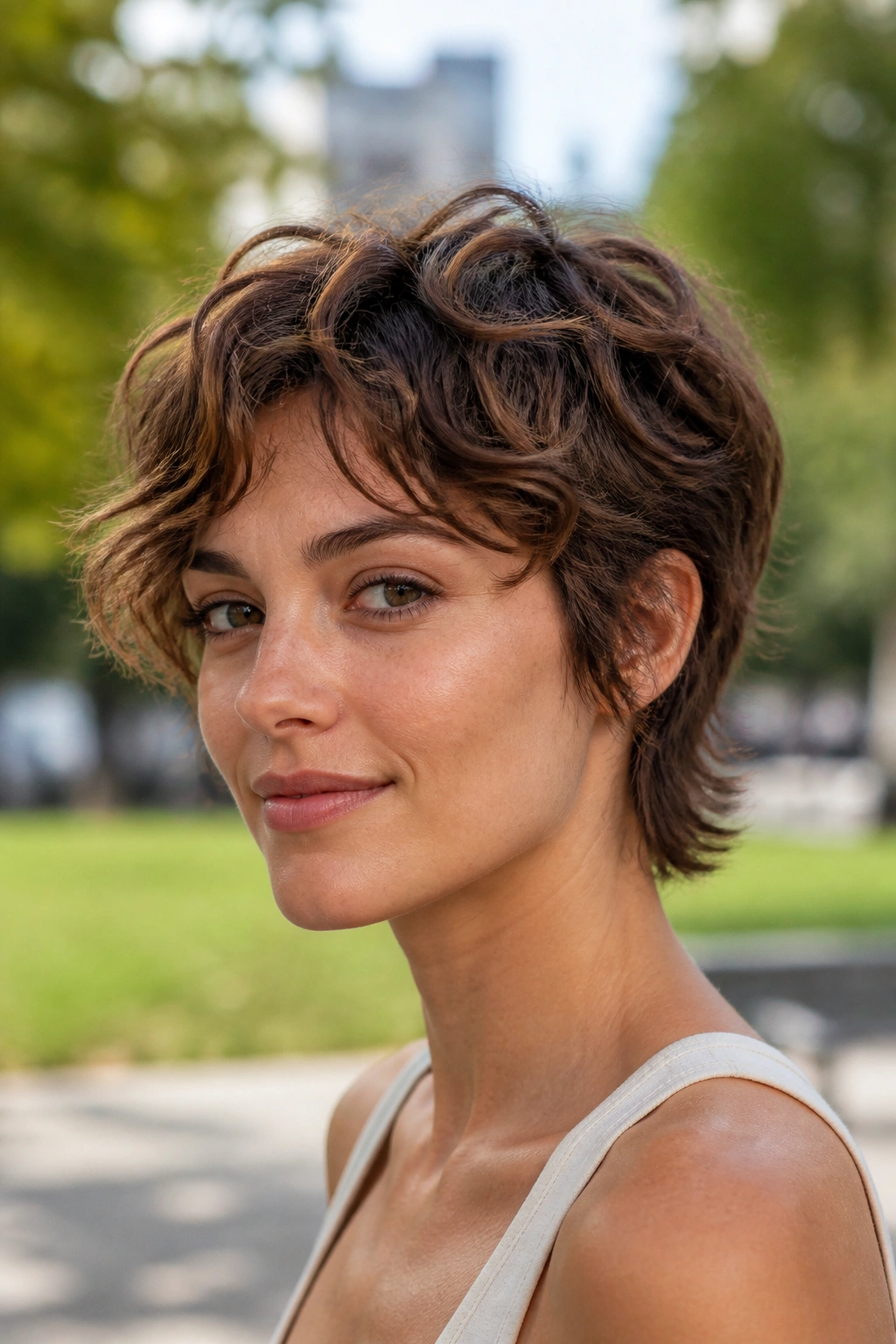
Want something shorter than a bob but less severe than a pixie? The bixie sits in that useful middle space. It keeps more length on top and through the front, then trims the back and sides enough to create lift.
How to Style It
A bixie likes lightweight mousse at the roots and a small amount of styling cream through the ends. Too much product will weigh the top down and kill the shape. Start with a palmful of mousse, rake it through damp hair, then pinch the front pieces into place as they dry.
What Makes It Useful
- The longer top layers catch the wave and keep movement.
- The cropped back removes bulk.
- It suits fine waves that need a little body.
- It also works for denser hair when you want less width at the sides.
The bixie has a slightly playful feel. It is not precious. If the fringe lands differently on Tuesday than it did on Monday, that is part of the look. Some haircuts punish you for that. This one tends to forgive it.
4. Layered Shag With Feathered Ends
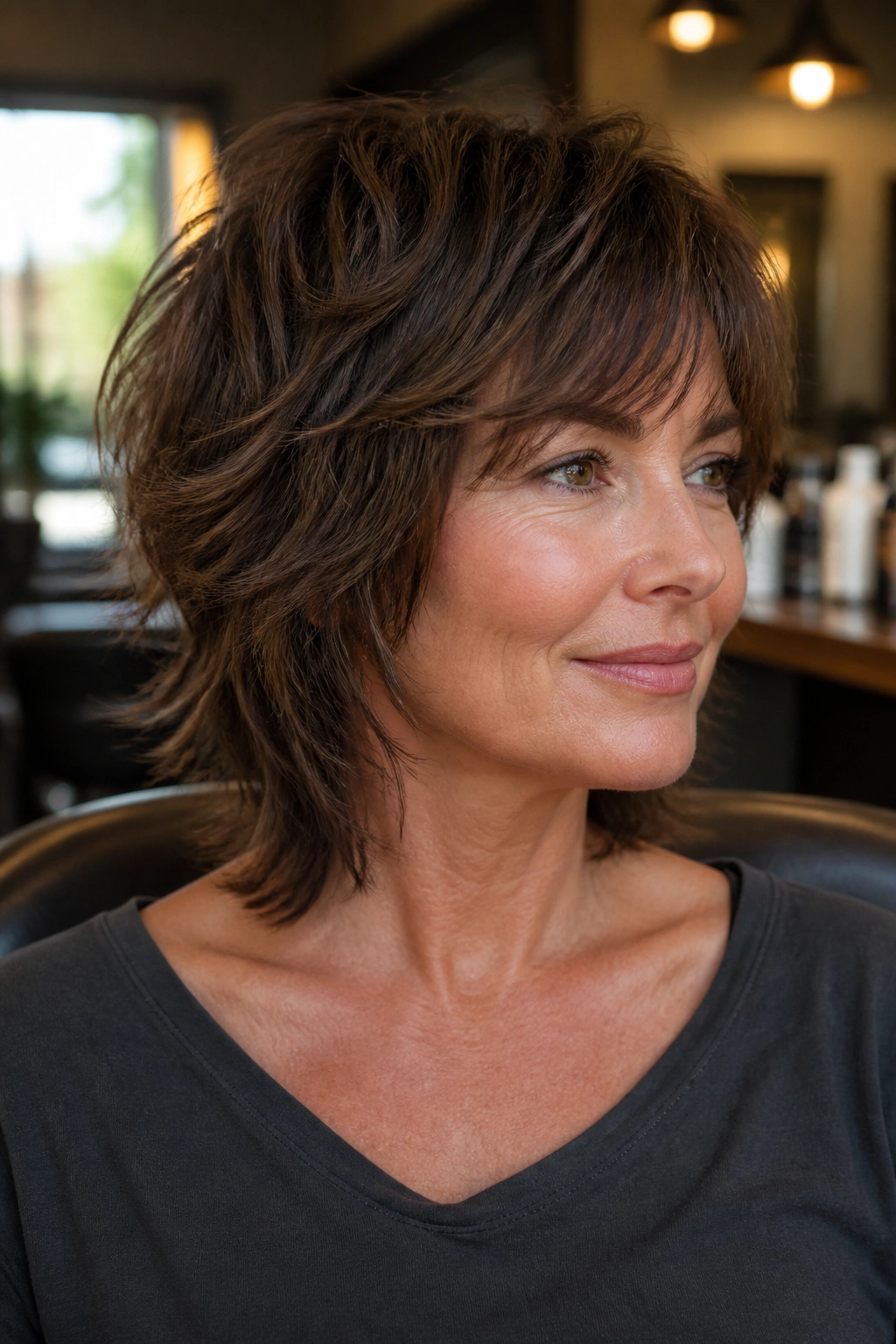
Picture a thick wave pattern that swells at the bottom and starts to feel heavy by noon. A layered shag is usually the fix. It removes weight in the right places and leaves enough length for the wave to keep its shape.
The important part is the layers. They should not all be the same length or they will collapse into one flat sheet. A good shag breaks up the bulk around the crown, around the cheeks, and through the outer edges so the hair can breathe a little.
- Ask for feathered ends, not razor-thin wisps.
- Keep the top layers soft if your waves are loose.
- Go choppier if your hair is dense and puffy.
- Use a diffuser only until the hair is about 80 percent dry, then let the rest air-dry.
This cut has attitude without needing a lot of styling. That is why people keep coming back to it. It does not try to make your waves behave. It gives them a shape they can actually live in.
5. Side-Part Bob With Asymmetrical Movement
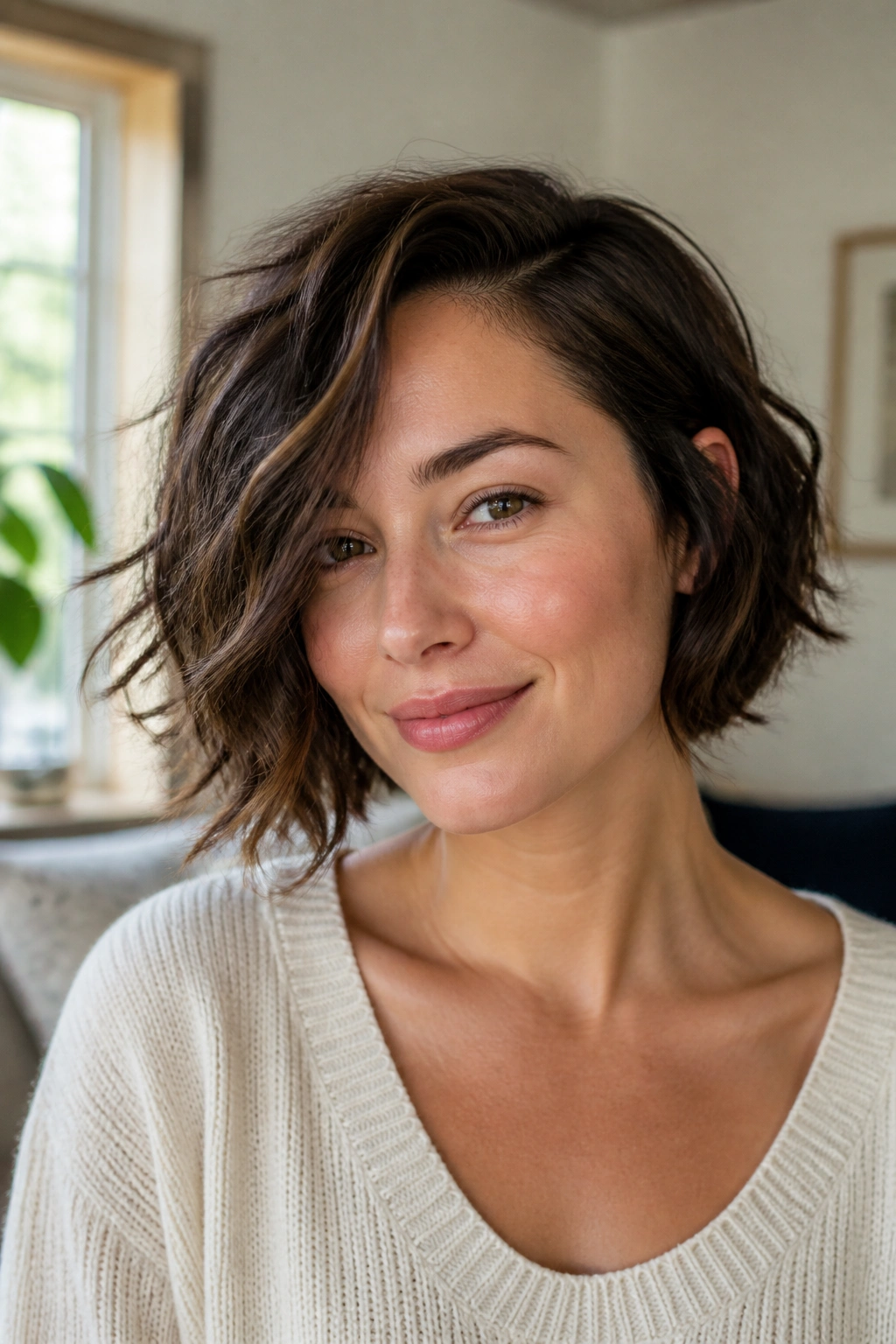
A deep side part changes everything. On wavy hair, it can turn an ordinary bob into something much more flattering because it adds height where the hair wants to lie flat and creates a soft sweep across the face.
The side-part bob works especially well if one side of your wave pattern is a little stronger than the other. Most people have that. One side flips, the other behaves, and the middle part starts to feel too honest. A side part lets you use that difference instead of pretending it is not there.
It also gives a cleaner neckline. When the front pieces fall forward at an angle, the cut feels a little longer and more elegant, even though the actual length stays short. That is useful if you want short hair but do not want to feel exposed around the jaw.
One small warning: do not make the part too extreme unless you like drama. A moderate side part usually looks richer and softer.
6. Blunt Bob With Soft, Airy Ends

A blunt bob can look too hard on some wavy hair, and I would not pretend otherwise. But when the line is kept clean and the ends are softened just enough, it can be one of the sharpest short hairstyles on the list.
Unlike a shag or a fully textured bob, this version keeps the silhouette tidy. The trick is in the interior. Tiny bits of point cutting at the ends stop the cut from feeling like a helmet, while the outline still reads as blunt.
This is the better choice if your hair is fine and you want it to look fuller. The solid line gives the illusion of density. A lot of waviness disappears inside heavily layered cuts, and that is not always a good thing if your hair is already on the thinner side.
It suits people who like a cleaner finish. Not perfect. Clean. There is a difference.
7. A-Line Bob With Longer Front Pieces
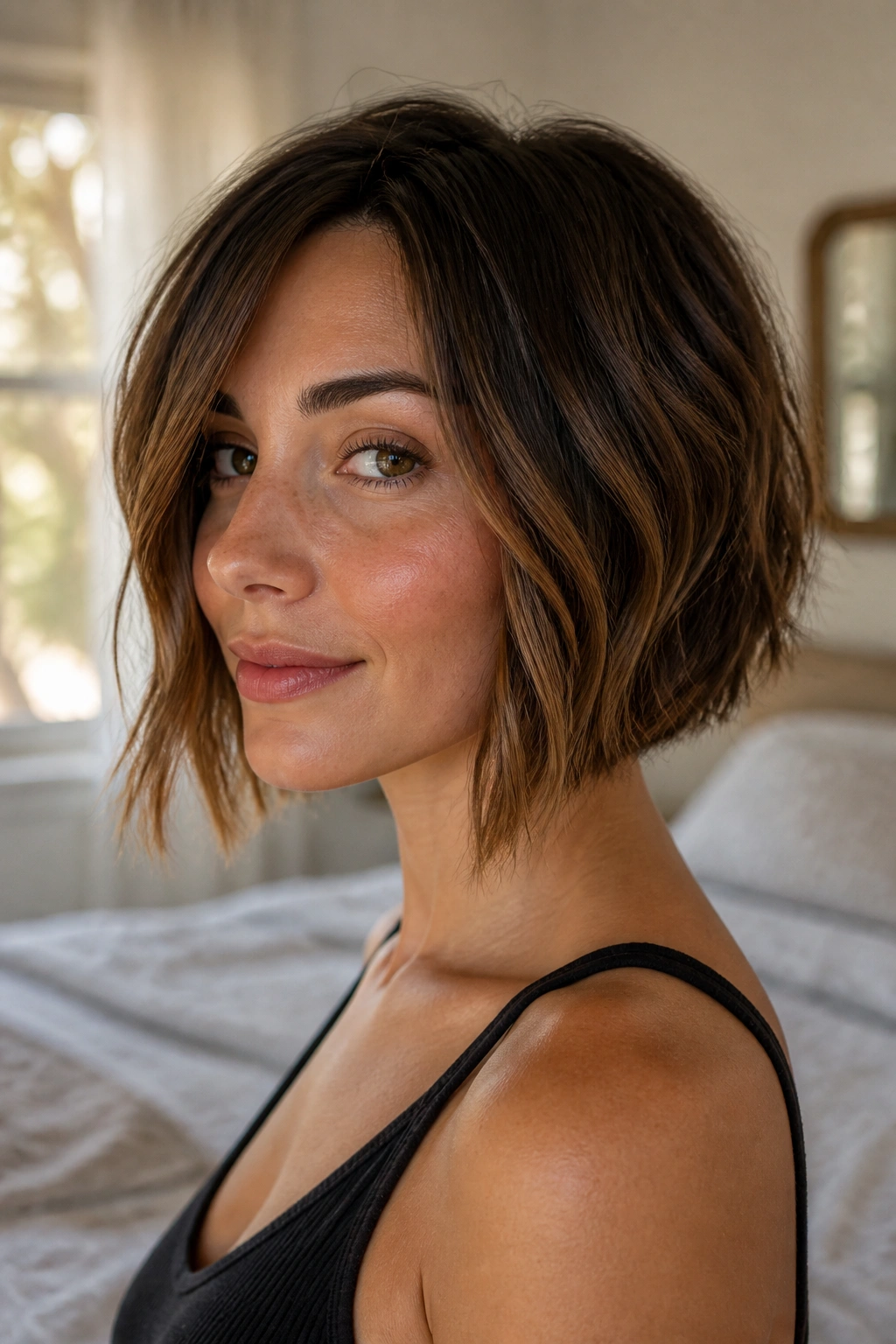
The front should be longer than the back. Not by a mile, just enough to give the cut a little forward motion. That subtle angle is what makes an A-line bob so useful for wavy hair.
What to Ask For
- A slightly shorter nape so the back sits neatly.
- Longer front pieces that skim the chin.
- Soft texturing through the lower half, not the crown.
- A dry check to make sure the angle stays visible once the waves settle.
The reason this cut works is simple: the shorter back removes bulk where wavy hair tends to stack up, while the longer front keeps the cut from feeling abrupt. If your hair grows wide at the sides, this shape reins that in without stripping out too much movement.
I like this cut on people who want something structured but not severe. It has lines. It has shape. And when the waves fall into place, it still looks relaxed.
8. Curtain-Bang Lob for Wavy Hair
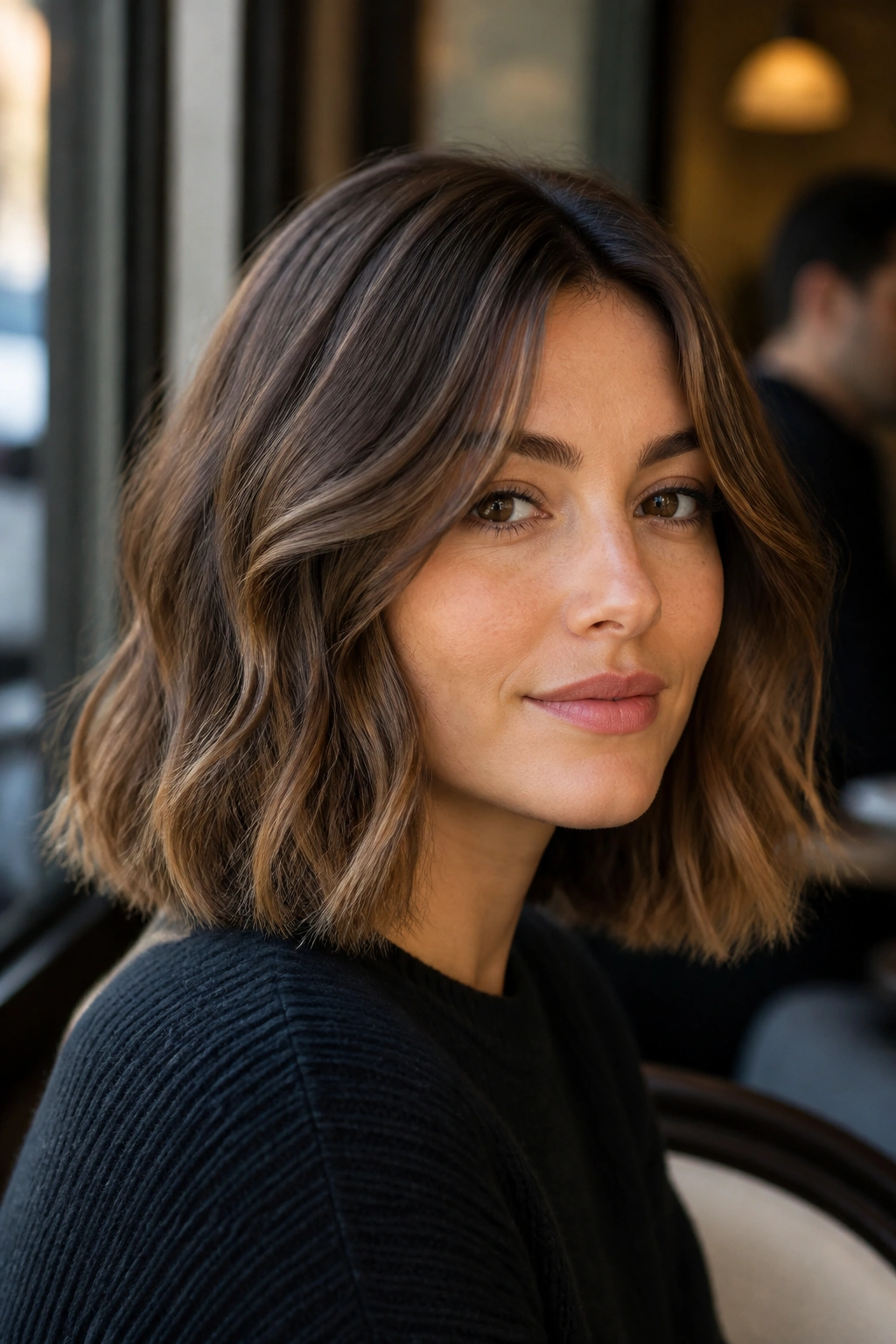
A lob is the safest cut on this list if you are nervous about going too short. It usually lands between the chin and collarbone, which gives your waves a little room to behave without the upkeep of longer hair.
Curtain bangs make that length feel softer. They split away from the center and blend into the rest of the cut, so the front does not get stuck in one heavy shape. On wavy hair, that matters. A solid fringe can sit too flat or too bulky. Curtain bangs move.
The best version of this cut is not over-layered. Keep the edges light and the bangs long enough to tuck behind the cheekbone. If the bangs are too short, they can bounce up in strange ways when the hair dries.
This is a good choice if you like easy styling. A quick blow-dry on the bangs, a diffuser on the lengths, and you are done. It feels polished without trying too hard, which is probably why so many people keep coming back to it.
9. Ear-Grazing Crop With a Side-Swept Fringe
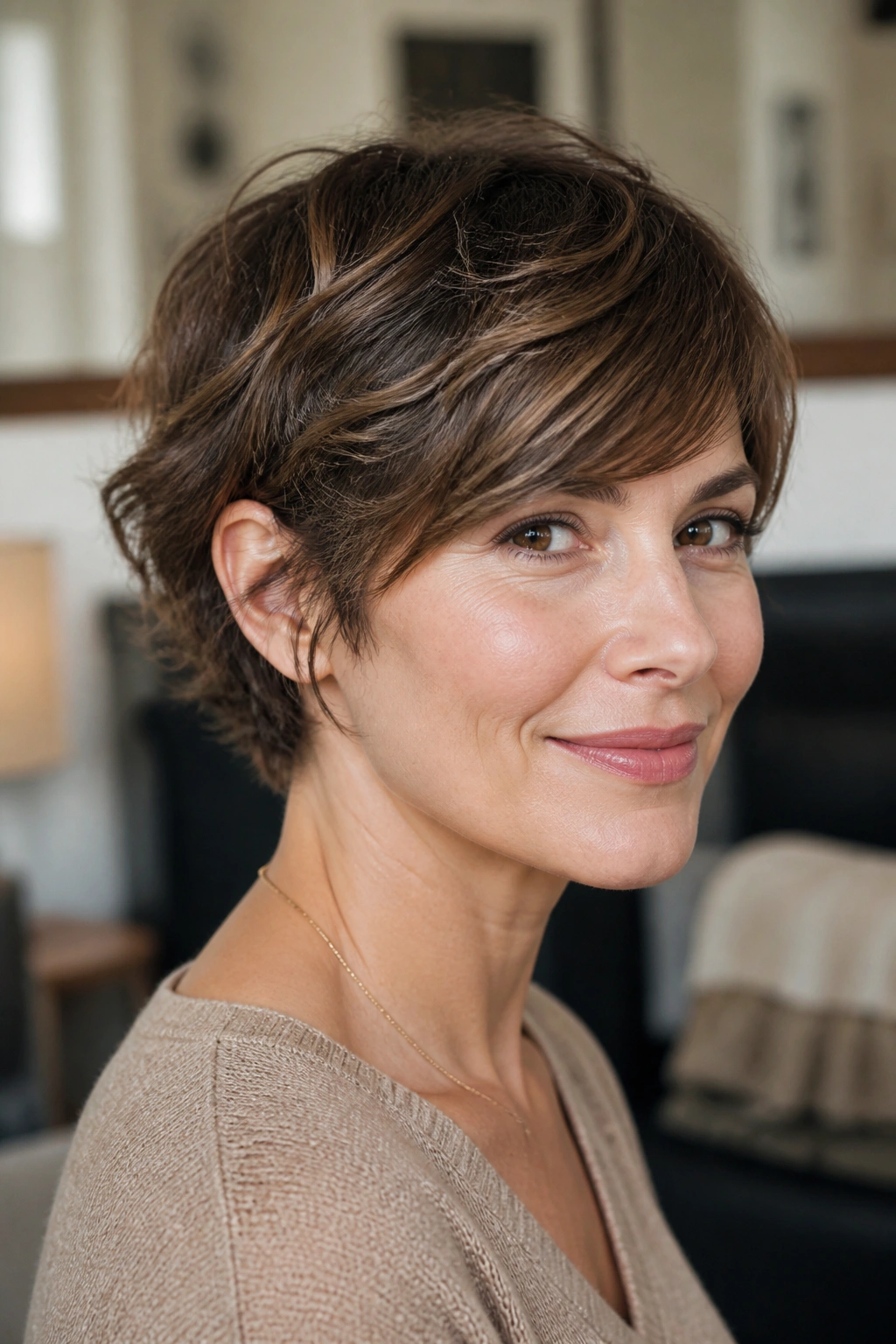
Can you go short without losing softness? Absolutely. The ear-grazing crop proves it. It sits high enough to feel fresh, but the side-swept fringe keeps the whole thing from looking severe.
Why It Helps
A side fringe gives wavy hair somewhere to land. Without it, very short cuts can spike up or round out in odd places, especially if the crown is strong and the sides are tighter. The fringe breaks that shape and adds a little movement across the forehead.
- Best for fine to medium waves that need lift.
- Good if you want less hair around the neck.
- Works well with a small round brush or fingers plus diffuser.
- Needs a trim schedule that stays on the shorter side.
This cut has a quiet edge to it. Not loud. Just neat, modern, and a little bit sharp when the ends are clean. If you like jewelry, strong brows, or a visible neckline, it plays nicely with those details.
10. Soft Mullet With Wavy Texture
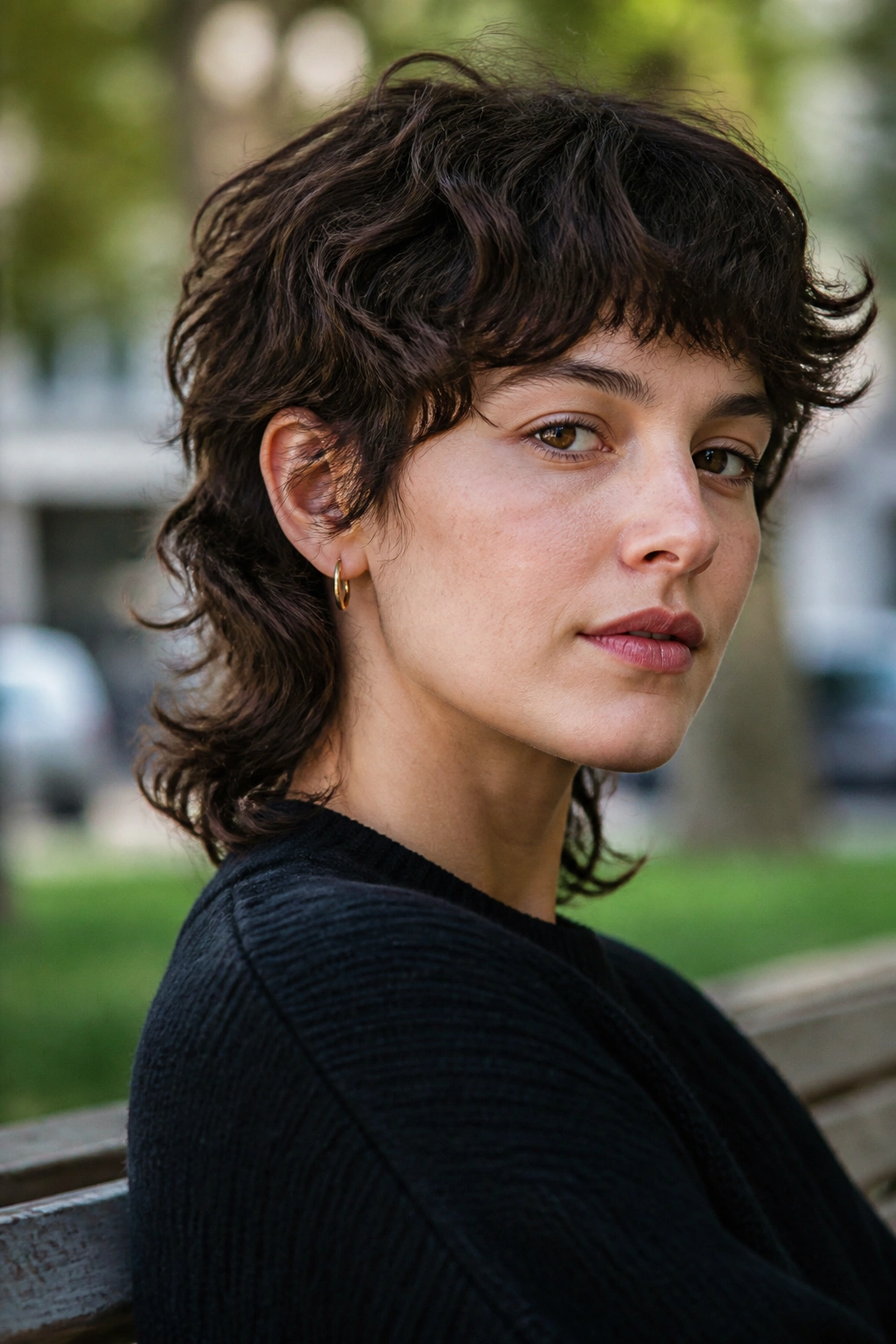
A soft mullet sounds bolder than it is. When the cut is handled well, it keeps the front short-ish, lets the crown breathe, and leaves the back a touch longer so the shape has swing.
That back length matters. On wavy hair, a tiny bit of extra length through the nape can stop the cut from ballooning out around the ears. You end up with a shape that feels airy instead of helmet-like.
The soft version is the one most people can wear. The hard-edged version can look brilliant on the right person, but it is less forgiving if your waves are inconsistent. A softer mullet gives you the same loose, rock-and-roll feel without forcing the texture into a strict pattern.
If you like hair that looks better the second day, this is a strong contender. A touch of dry shampoo at the roots and a scrunch of wave cream on the ends can make it look even better after a little wear.
11. Rounded Bob That Hugs the Head
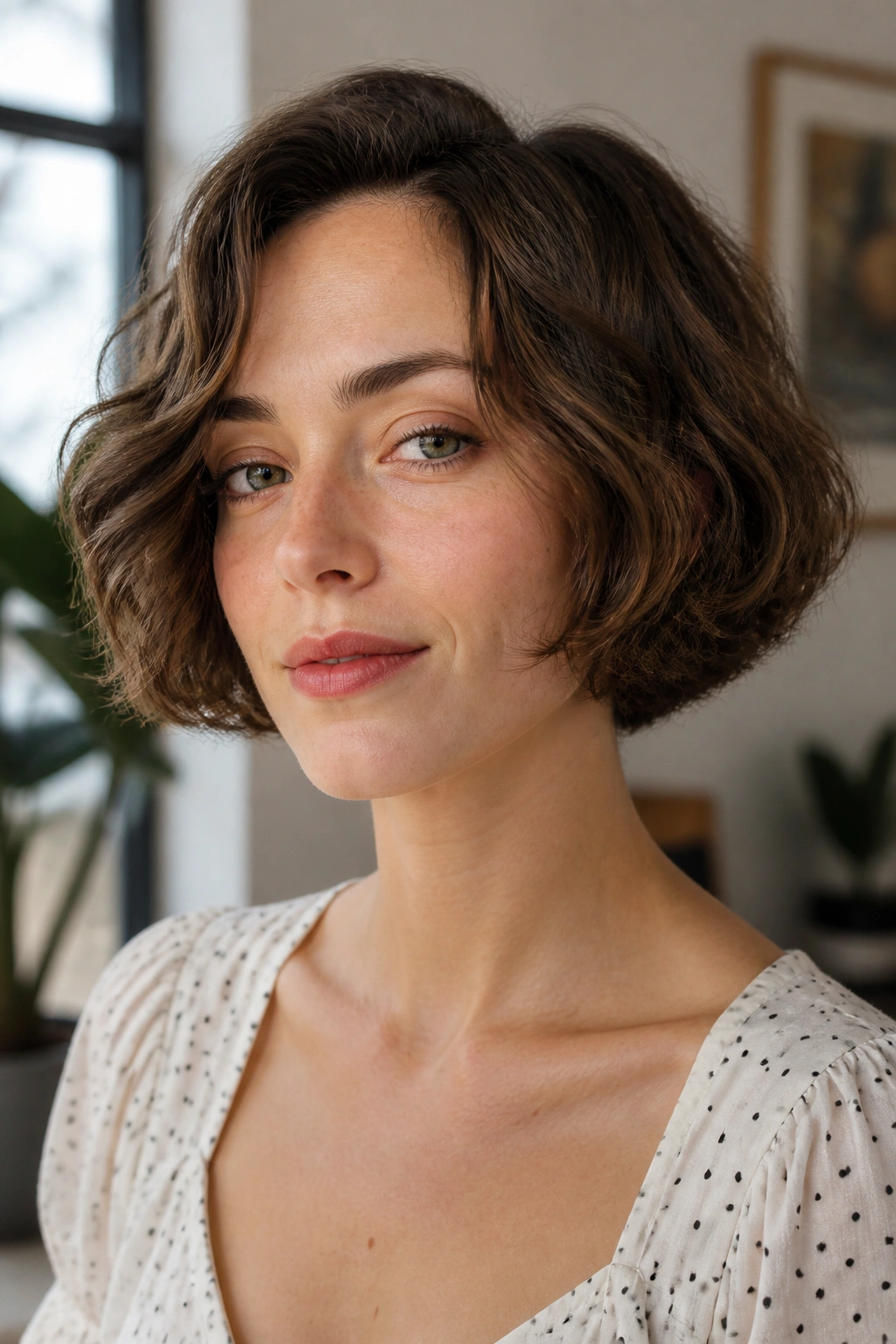
A rounded bob is underrated. It follows the shape of the head more closely than a boxy bob, which makes it especially useful when your waves are dense and want to spread outward.
The curve is the whole point. It keeps the sides from kicking out too far and gives the cut a softer finish around the jaw and neck. If you have thick hair, that can be a relief. No triangle shape. No heavy corners.
It also has a tidy feel that works in a lot of settings. You can wear it with a blazer, a T-shirt, or a dress, and it does not feel out of place. That flexibility is part of its appeal, though I think the real win is how easy it is to maintain once the shape is set.
One sentence says it best: it behaves.
12. Jaw-Length Piecey Cut With Separated Ends
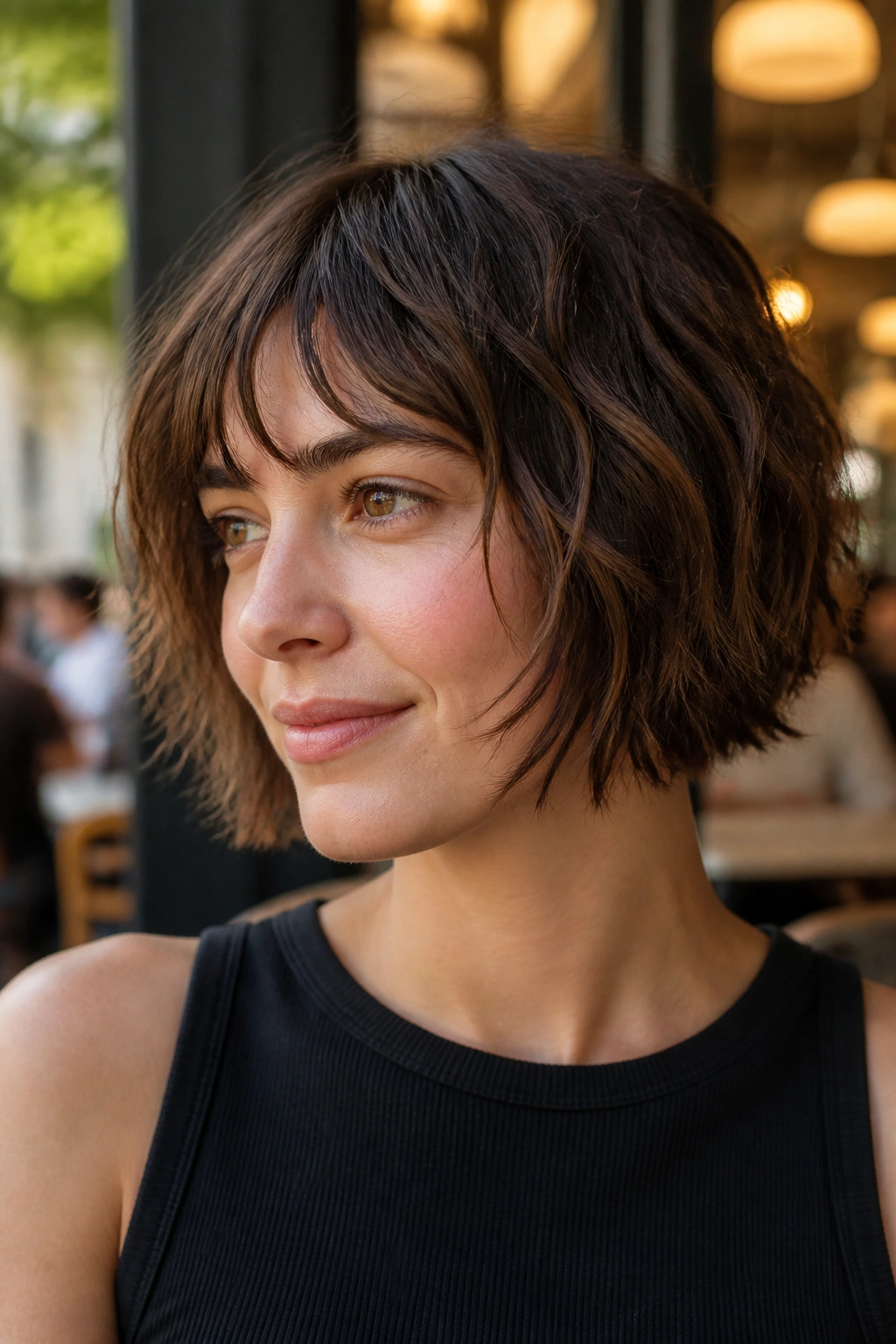
Unlike a rounded bob, this cut is broken up into visible pieces. The ends do not sit as one smooth line. They fall in little sections, which gives wavy hair a lighter, more casual look.
That separation is useful if your hair tends to clump into heavy sections after washing. Instead of fighting that, the cut works with it. A small amount of curl cream or light gel can help the pieces stay distinct without turning crunchy.
This style suits people who like movement more than polish. It feels a touch undone, and that is the point. It can be flattering on square or heart-shaped faces because the broken pieces around the jaw soften the outline.
If your hair is thick, ask for internal removal rather than a dramatic thinning. Heavy thinning shears can make the ends frizzy. A cleaner cut through the ends usually looks better and grows out more evenly.
13. Tousled Pixie With Long Top Layers
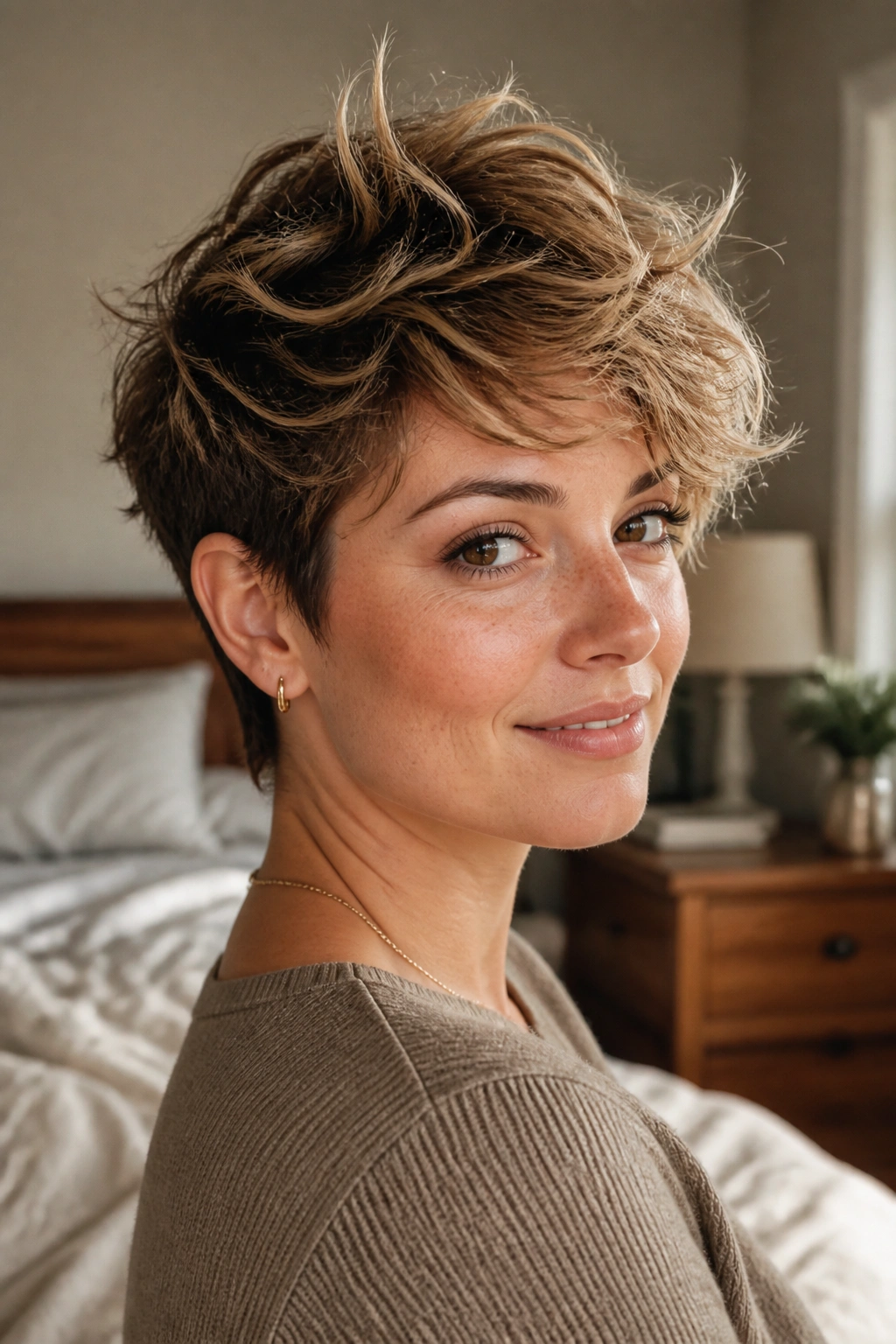
A pixie does not have to be severe. The tousled version keeps the top long enough for your wave pattern to show, while the sides and back stay neat and close to the head.
How to Style It
Work a pea-size amount of styling cream between your palms, then scrunch it into damp hair from the crown down. If your waves are looser, add a little mousse at the roots before the cream. If they are tighter, use less product and let the texture do more of the work.
What to Watch
- The top should stay longer than the sides.
- The fringe can be choppy or swept over.
- The cut needs texture, but not so much that it gets fuzzy.
- A quick finger-dry usually works better than a full round-brush blowout.
This cut has personality. It also has range. On some days it reads playful, on others a bit edgy, and if you tuck one side behind the ear, it shifts again. That kind of flexibility is hard to fake with longer hair.
14. Wolf Bob for Wavy Hair
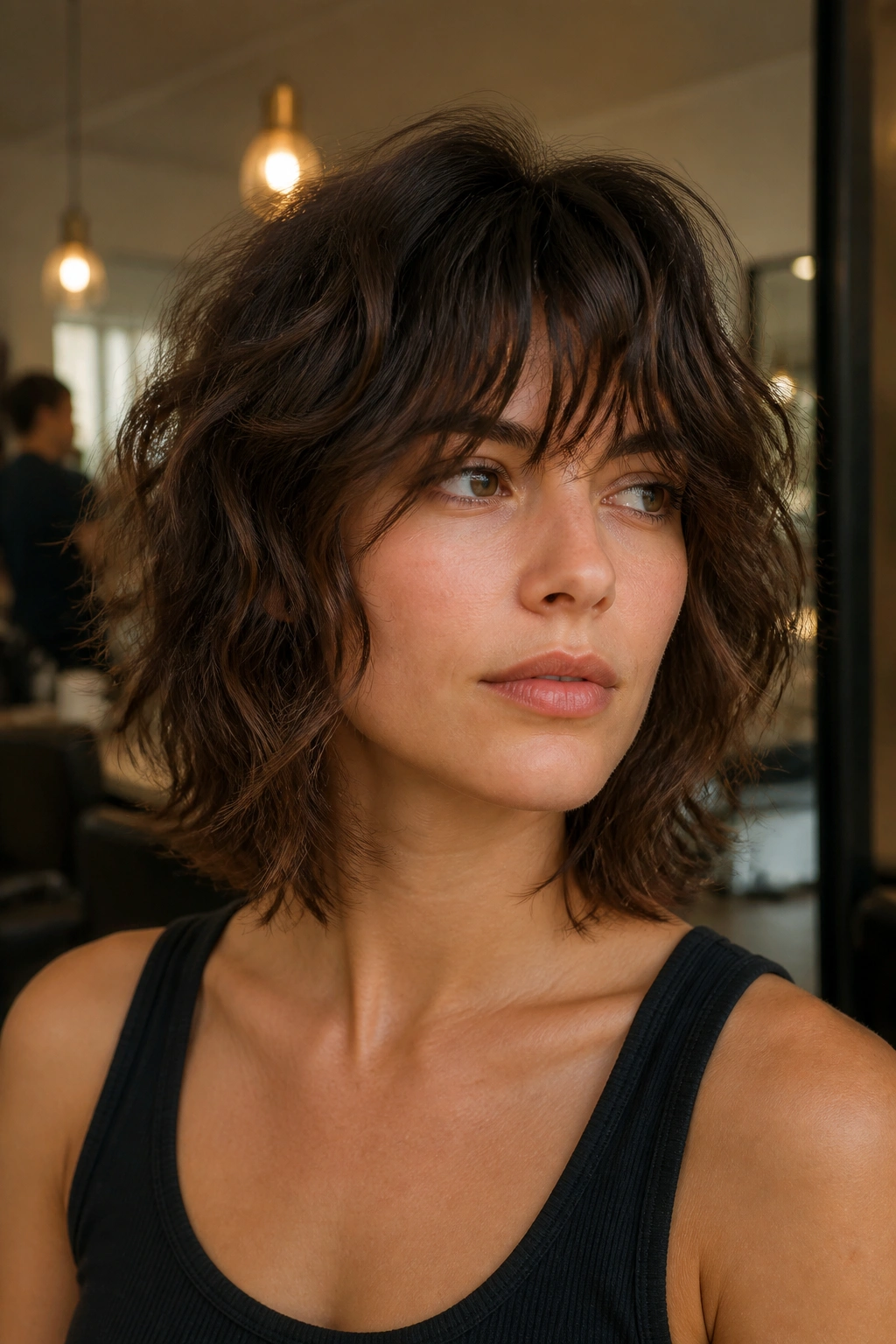
This is the cut for people who like movement more than polish. A wolf bob combines shaggy layers with a bob-like outline, so the hair has shape but never looks too stiff.
The crown gets lift, the mid-lengths get texture, and the ends stay loose. That mix makes it a strong match for waves that fall flat when they are cut too neatly. If your hair gets wider at the bottom, the choppy layers help trim that down without sacrificing personality.
I would not pair this cut with heavy styling products. A light mousse, a diffuser, and maybe a touch of texturizing spray are usually enough. Too much cream will collapse the layers. Too much oil will make the ends hang.
The wolf bob is not for someone who wants every strand in place. It is for someone who likes hair that moves when they turn their head.
15. Asymmetrical Bob With One Longer Side
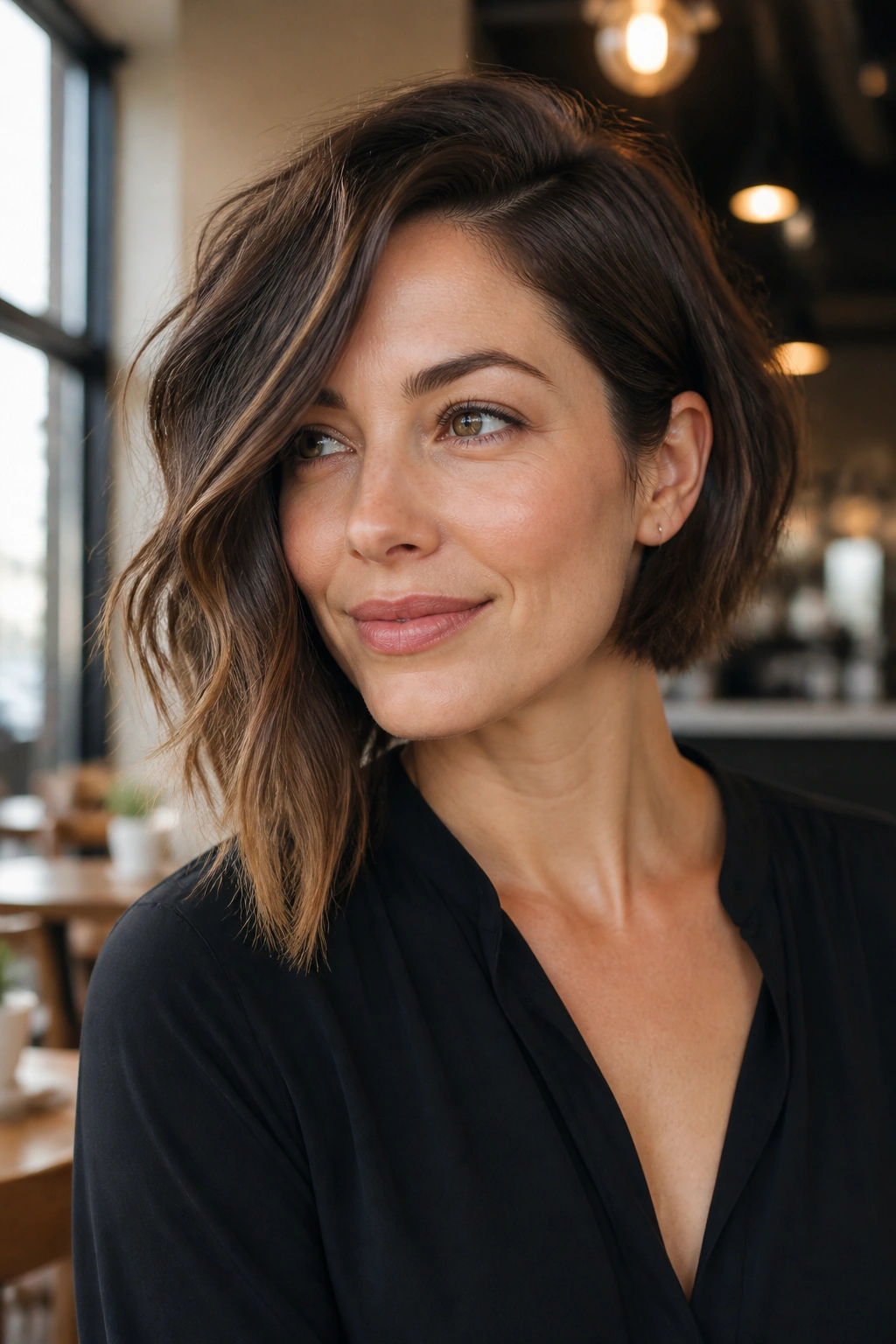
What if one side could carry a little more length than the other? That small imbalance is what gives an asymmetrical bob its edge. On wavy hair, it also solves a practical problem: one side often behaves differently from the other.
Who It Helps
This cut works well if your waves are uneven, if one side grows in with more volume, or if you want a short cut that does not read as standard. It can also soften a strong jawline because the longer side pulls the eye downward.
- Keep the difference subtle if you want the cut to feel wearable every day.
- Use a side part to show off the angle.
- Ask for the length to be checked dry so the wave pattern does not hide the shape.
- A smooth finish on the longer side makes the contrast sharper.
It is a confident cut, but not a costume. That matters. You want the asymmetry to feel intentional, not like someone lost track of the scissors halfway through.
16. Stacked Bob With Lift at the Crown
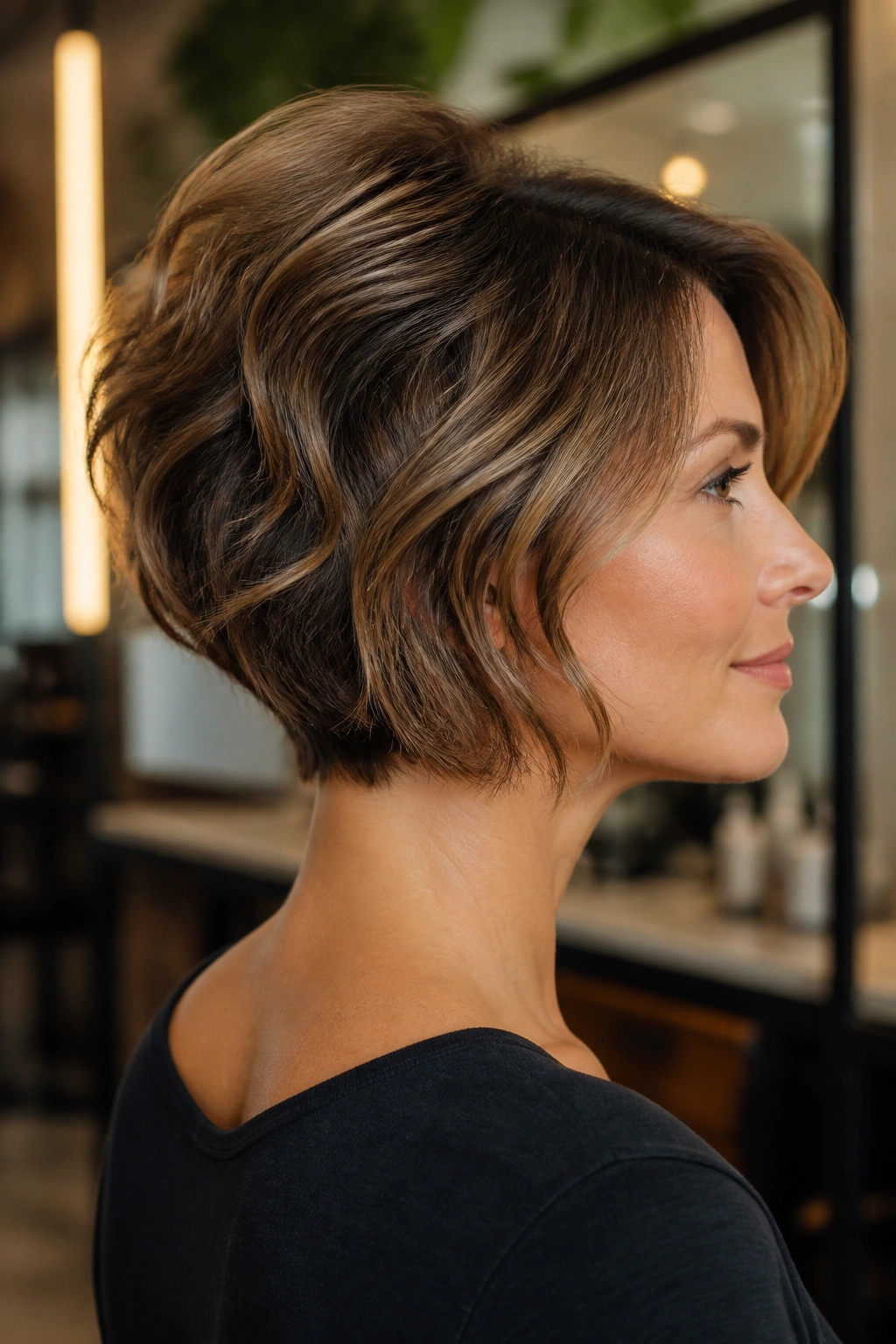
A stacked bob is all about the back. The layers build on each other near the nape, which gives the crown a little lift and removes a lot of bulk from thick wavy hair.
Picture the shape from the side. The back sits snug, the top rounds gently, and the front pieces usually stay a bit longer. That shape can be very flattering if your hair tends to lie flat at the roots and then puff at the ends. The stacking solves part of that by shifting the weight higher up.
Good for:
- Dense waves that need bulk removed at the nape.
- Hair that falls flat at the crown.
- People who want a sharper silhouette.
- Short cuts that still need some body in the top section.
The only catch is maintenance. A stacked bob grows out best when it is kept neat, because the shape can lose its lift if it gets too long. If you like tidy hair, this one is worth the trims.
17. Short Shag With Micro Bangs

Micro bangs change the whole mood of a short shag. They make the cut feel bolder, but the shag layers keep it from looking too fixed or too severe.
The fringe sits high on the forehead, so the rest of the cut has to carry the softness. That is where the layers matter. They break up the crown, loosen the sides, and let the wave pattern do some of the work. On wavy hair, that gives the style a lived-in feel that can look cool even when it is slightly messy.
I would not choose this cut if you dislike regular upkeep. Micro bangs need trimming more often than longer fringe, and they can spring up when the air is humid. Still, if you like a little attitude and you do not mind a comb in your bag, this cut has a lot going for it.
It is not subtle. That is the point.
18. Tapered Crop With a Clean Nape
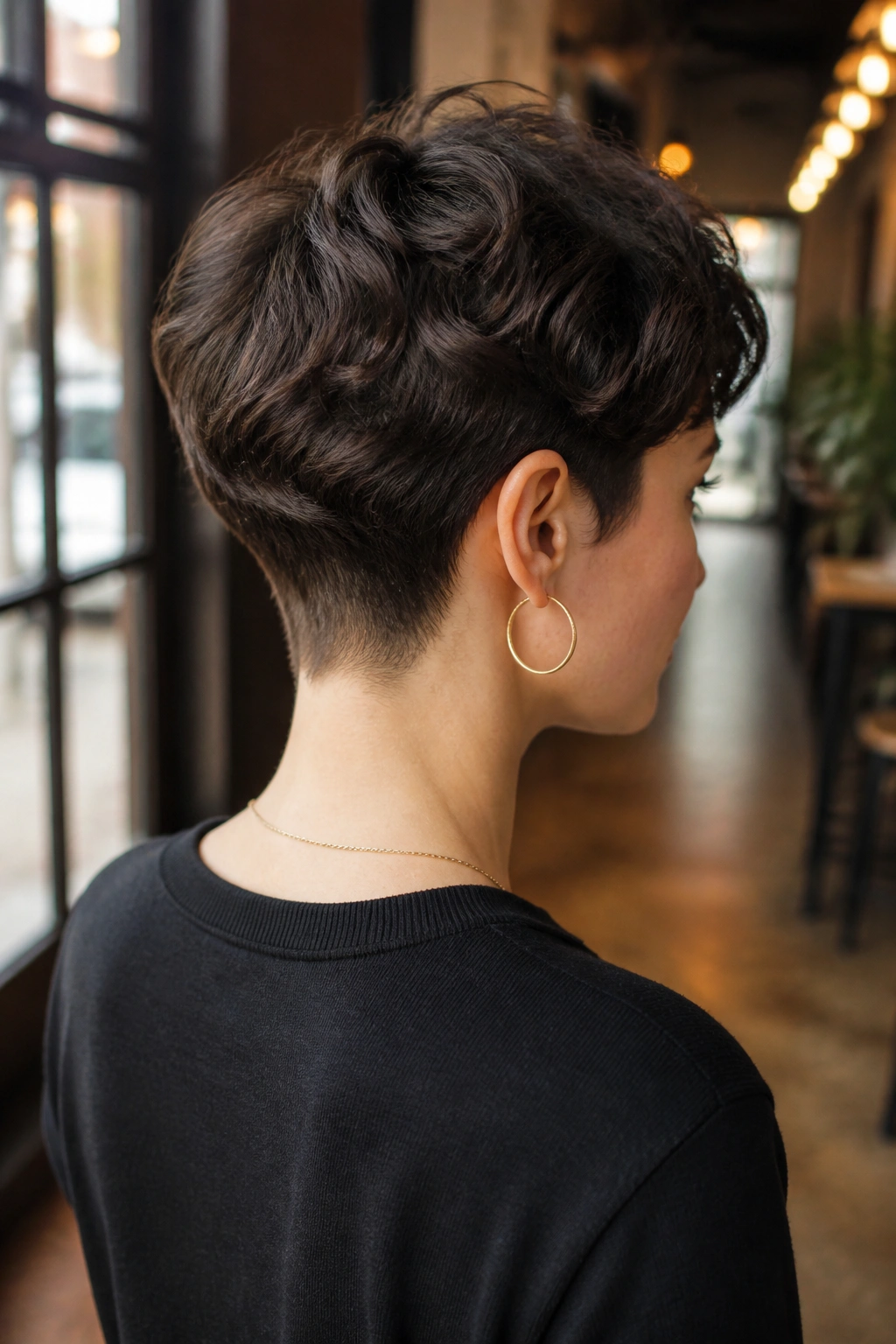
Unlike a pixie that stays fluffy all around, a tapered crop narrows at the nape and keeps more softness on top. That makes it a smart choice if you want the neck area neat but still want your waves to show through.
The taper helps reduce bulk where short wavy hair can get sticky and swollen, especially at the collar line. The top stays longer, so you still get movement and height. The shape feels crisp without becoming harsh.
This cut is especially useful if you want easy mornings. A little leave-in, a quick scrunch, and maybe a dab of matte paste at the ends can be enough. If the top starts to lean too flat, a tiny lift at the roots with your fingers usually fixes it fast.
It has a cleaner feel than a shag and less edge than a mullet. That middle ground is the reason people keep asking for it.
19. Pageboy Bob With Soft Wave
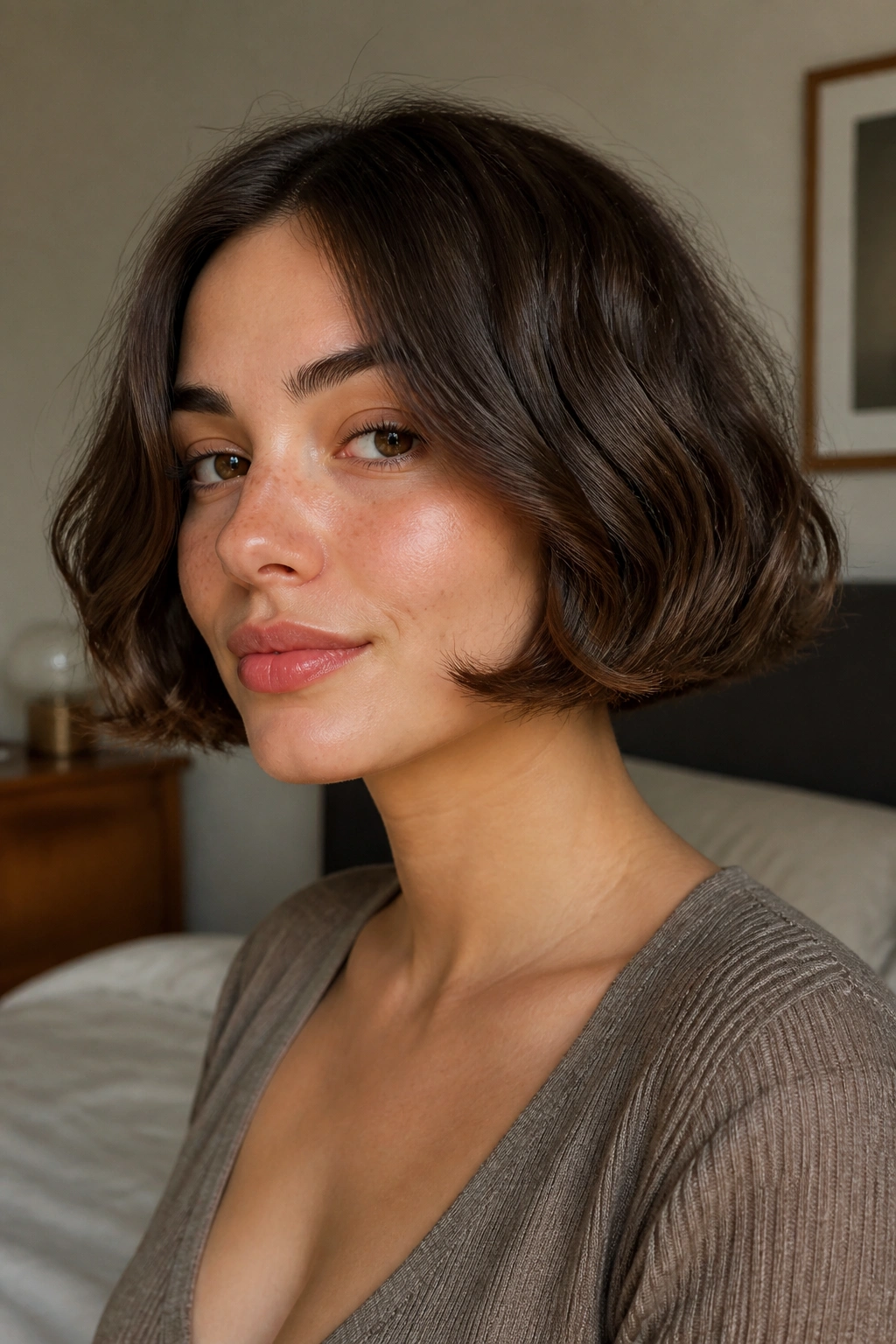
Can wavy hair wear a pageboy? Yes, if the curve is softened and the ends are not locked into one rigid shape. A modern pageboy bob keeps the rounded outline but lets the waves bend inside it.
The appeal is in the curve. The hair swings inward around the jaw, which can make the face look framed without a lot of styling. If your waves naturally bend under at the ends, this cut can look almost effortless. If they flip out, a round brush or a quick bend with a blow dryer can guide them back in.
Styling Notes
- Keep the ends soft, not razor-straight.
- Use a smoothing cream only on the outer layer.
- Dry the front pieces away from the face, then tuck them into shape.
- A deep side part can modernize the cut fast.
It is a little retro, but that does not make it stiff. Done well, it feels fresh and a bit elegant in a quiet way.
20. Soft Undercut Crop With Wavy Length on Top
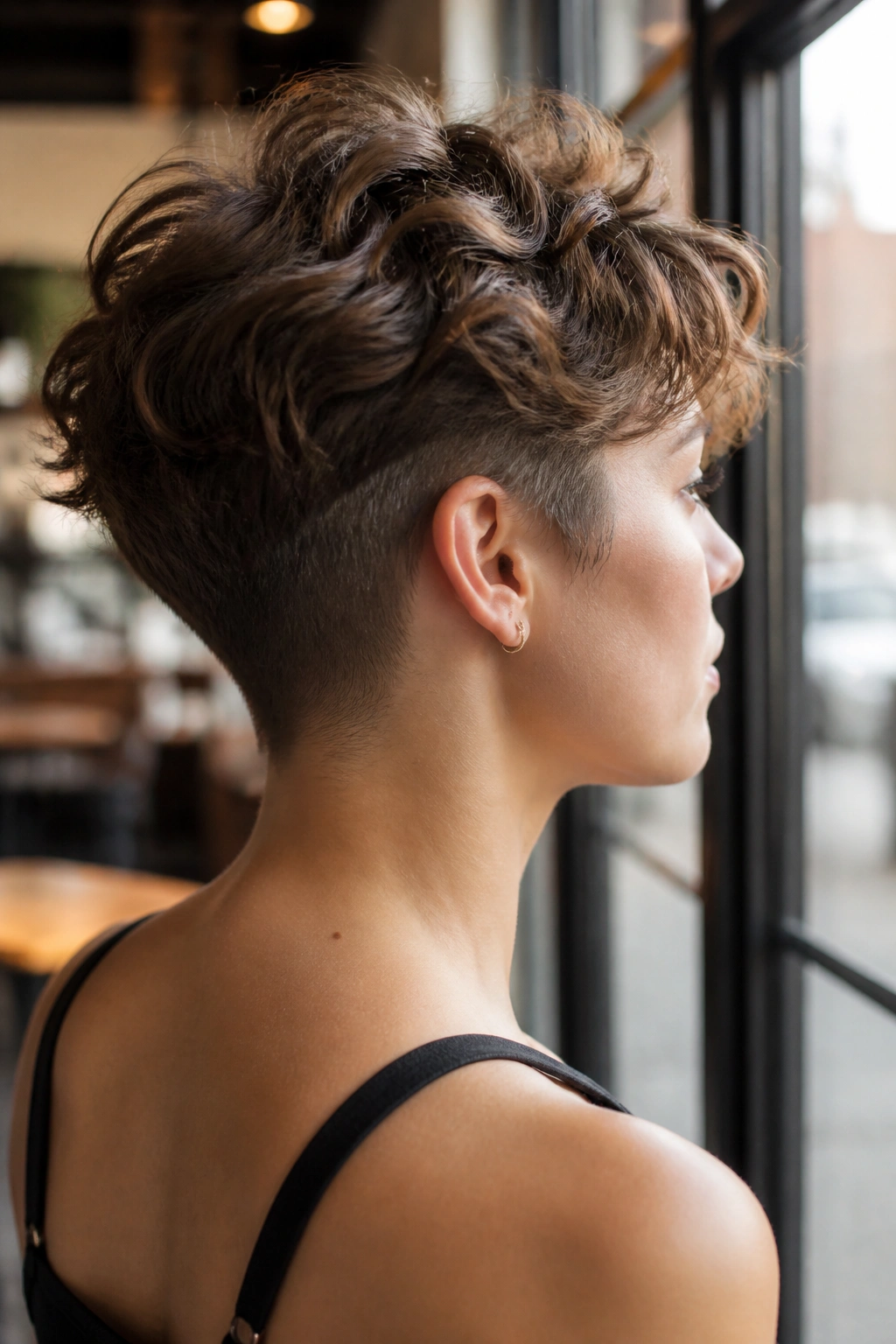
If you want the shortest option here without a bulky back, the soft undercut crop earns its keep. The undercut removes weight underneath, while the top stays long enough for waves to show movement and shape.
That hidden removal matters more than people think. Wavy hair can swell underneath and push the whole cut outward. Taking some of that mass out gives the top room to sit closer to the head and makes the silhouette lighter. You still get texture. You just do not get the mushroom effect.
This cut works well if you wear glasses, like a strong neckline, or want a style that dries fast. It is also a good fit when your hair is dense enough to need real weight removal, not just surface layering. The styling is straightforward: a little mousse, a quick diffuse, and a touch of paste through the top if you want extra separation.
A short cut should not feel like a fight every morning. This one usually does not.
