



Medium-length hair—often defined as anything hitting between the chin and the collarbone—is notorious for being the most difficult phase of the growing-out process. It is long enough to lose its natural shape if the weight distribution is off, yet too short to throw into a convenient topknot when you are in a rush. When you add a wavy texture to the mix, this length becomes even more temperamental. Humidity turns the ends into a frizz halo, while too much product can drag down the natural S-shape of your curls, leaving you with limp, stringy strands.
The secret to mastering this length lies in understanding that wavy hair is not straight hair with a bit of movement, nor is it curly hair that needs heavy oils to stay hydrated. It occupies a distinct space that requires a balance of structure and freedom. Most people fight their natural texture, spending hours with heat tools to force it into submission. Instead, the most successful approaches involve working with the natural bend of the hair, choosing cuts that encourage that wave pattern rather than struggling against it.
When you find the right combination of layering and length, the “awkward phase” disappears entirely. You are left with a style that is versatile, relatively low-maintenance, and incredibly flattering. Whether your hair is fine and wispy or thick and prone to tangling, the following cuts and styles provide a range of options to help you take control of your waves without needing a professional blowout every single morning.
The Realities of Styling Medium Wavy Hair
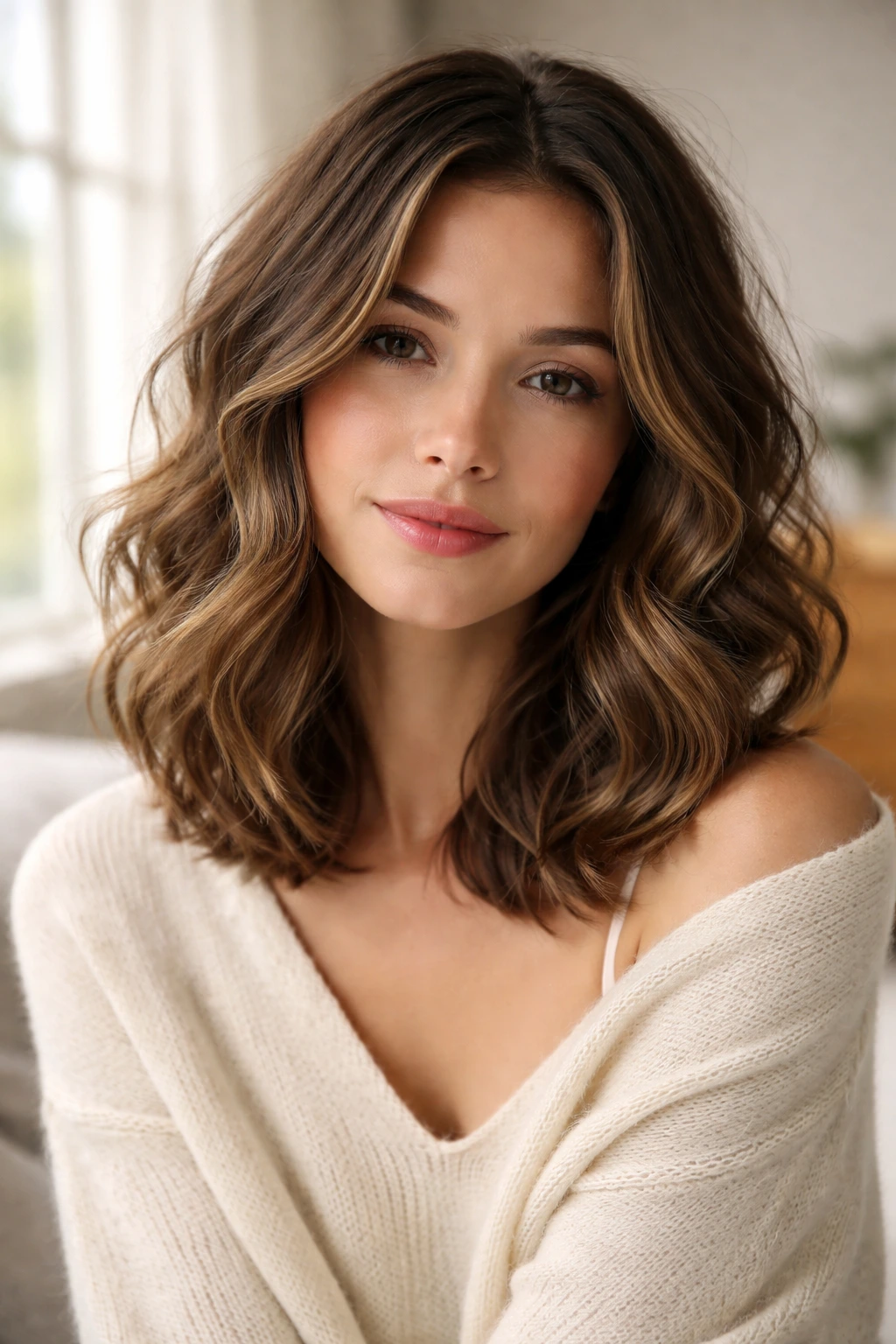
Before choosing a specific cut, you have to acknowledge how your hair behaves when it hits the collarbone. At this length, your hair rests on your shoulders, which acts as a pivot point. If your ends are blunt or too thick, the hair will kick out aggressively, creating a triangle shape that many people try to avoid. Managing this effectively means focusing on weight removal.
Thinning shears or point-cutting techniques are your best friends here. By removing bulk from the interior of the hair, you prevent the weight from pushing the waves flat at the roots while making the bottom heavy. You want movement. You want your hair to look like it has “air” in it, even if you are just heading to the grocery store.
Also, consider your product application. Wavy hair is incredibly sensitive to heavy waxes or thick pomades. If you are aiming for a natural look, stick to mousses or light salt sprays while the hair is damp. Once it is dry, avoid brushing it out, as this is the quickest way to turn waves into frizz. Scrunch, define, and then leave it alone. The less you touch your hair while it dries, the better the end result will be.
1. The Textured Lob (Long Bob)
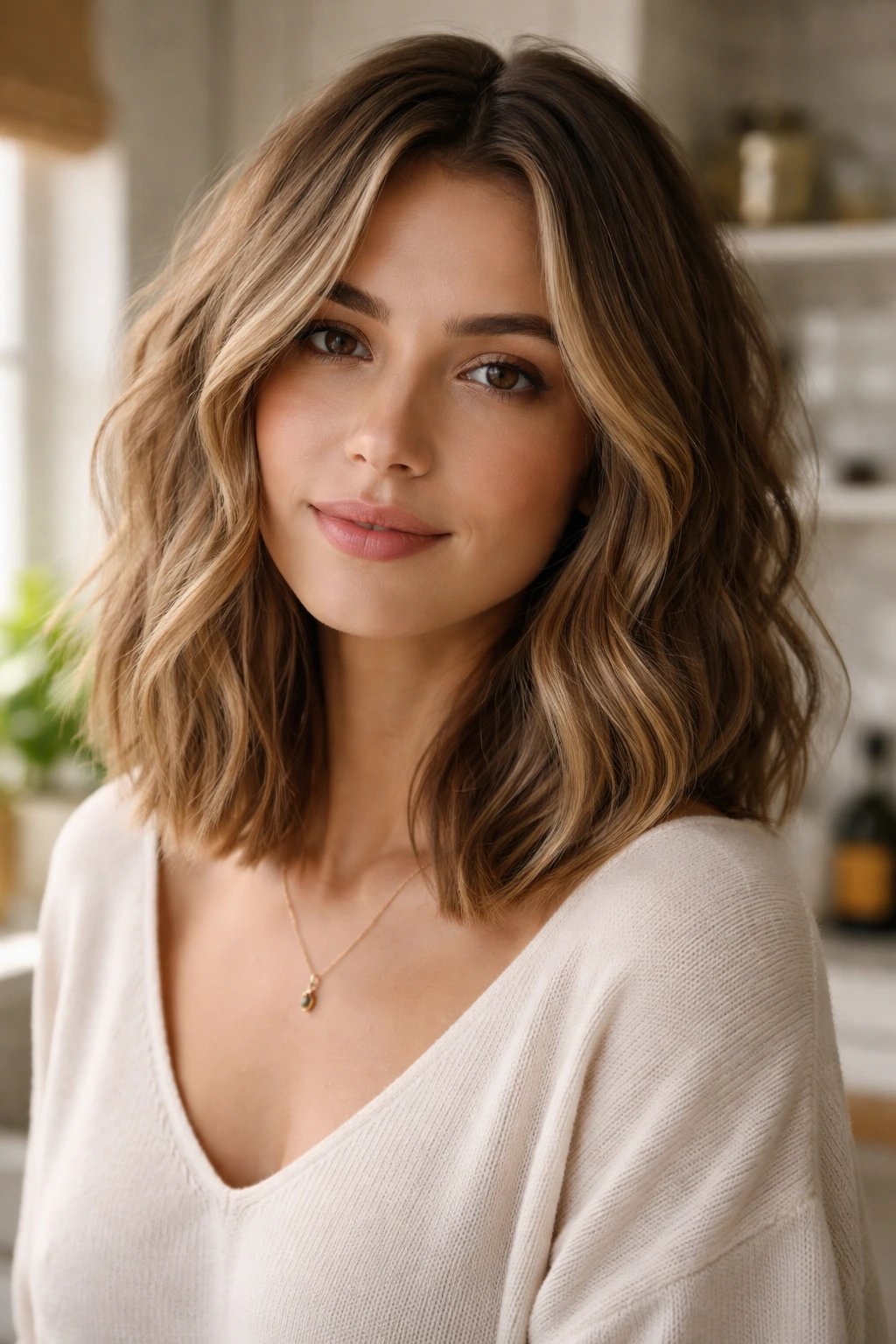
This is arguably the gold standard for medium-length hair. The long bob, or lob, sits right at the collarbone or just slightly above, providing enough length to tuck behind your ears while keeping the ends looking fresh and full. It removes the dead weight that often accumulates at the bottom of longer hair, which helps your natural wave pattern bounce back.
Why This Works for Wavy Textures
The lob is designed to be lived-in. Because it hits at a specific point, it doesn’t get weighed down by gravity as much as waist-length hair. You can easily transition this look from day to night with a quick spritz of texture spray. If your hair is on the finer side, the blunt-but-textured ends create an illusion of density that is hard to achieve with longer styles.
Maintenance Tips
To keep this look sharp, you will need a trim every eight weeks. Since the length is deliberate, letting it grow out too much loses the “lob” aesthetic and turns it into a generic medium length. Use a sea salt spray on damp hair and scrunch it upward to encourage the wave to tighten up.
2. Curtain Bangs with Long Layers
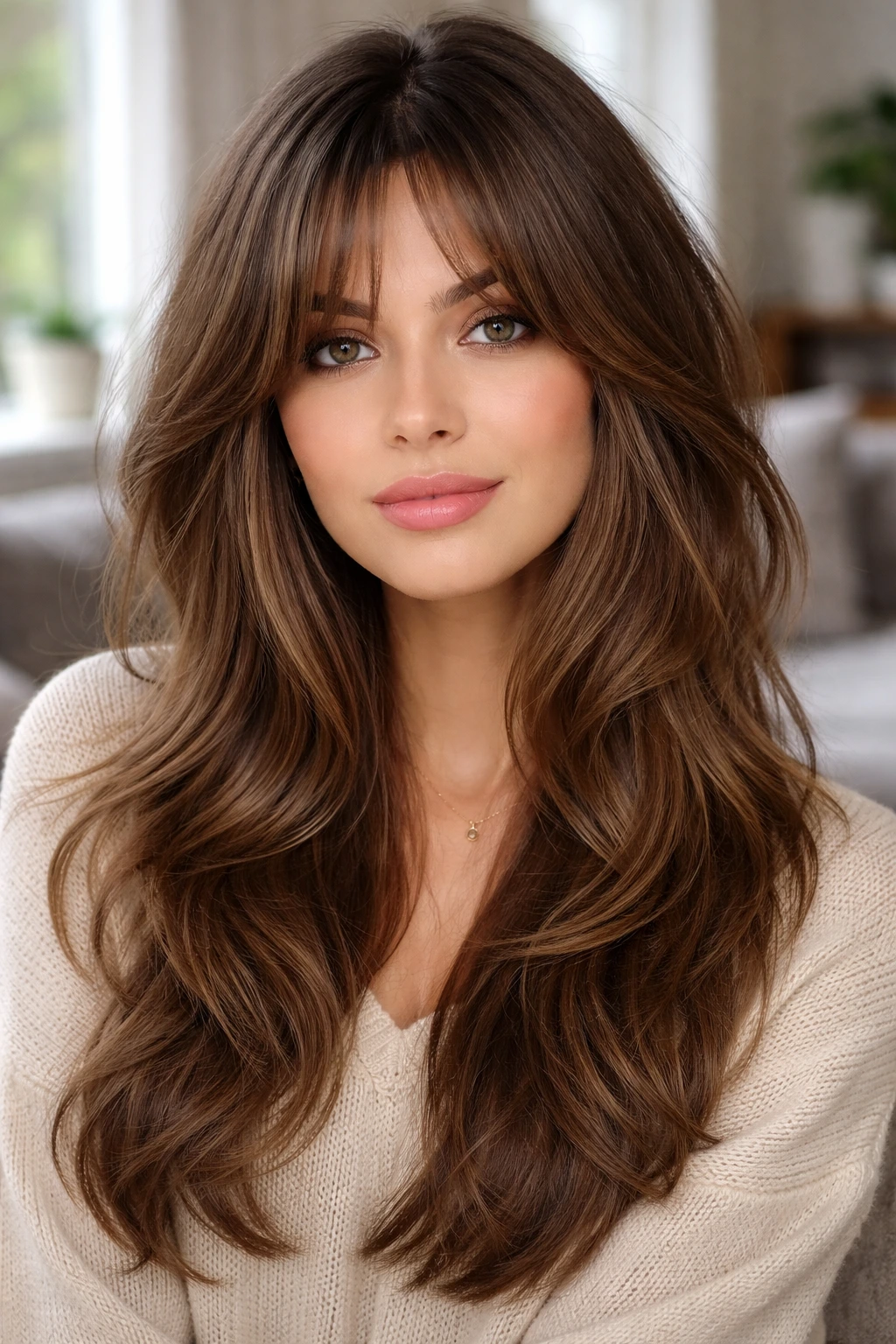
If you feel like your current medium style is dragging your face down, curtain bangs are the immediate fix. They create a soft, face-framing effect that draws attention to your eyes and cheekbones, effectively splitting up the mass of hair that usually hangs around your face.
The Power of Face-Framing
Curtain bangs are inherently low-maintenance compared to blunt, straight-across fringe. You do not need to trim them every three weeks. As they grow, they simply blend into the rest of your layers. When combined with long, cascading layers, they make the hair look voluminous and intentional, even if you just rolled out of bed.
How to Style Them
Use a round brush while blow-drying, pulling the bangs away from your face to create a soft arc. If you prefer the air-dry method, pin them back with flat clips while damp to set that “swoop” shape. Once dry, mist them with a light-hold hairspray to ensure they do not lose their shape by lunchtime.
3. The Classic Medium Shag
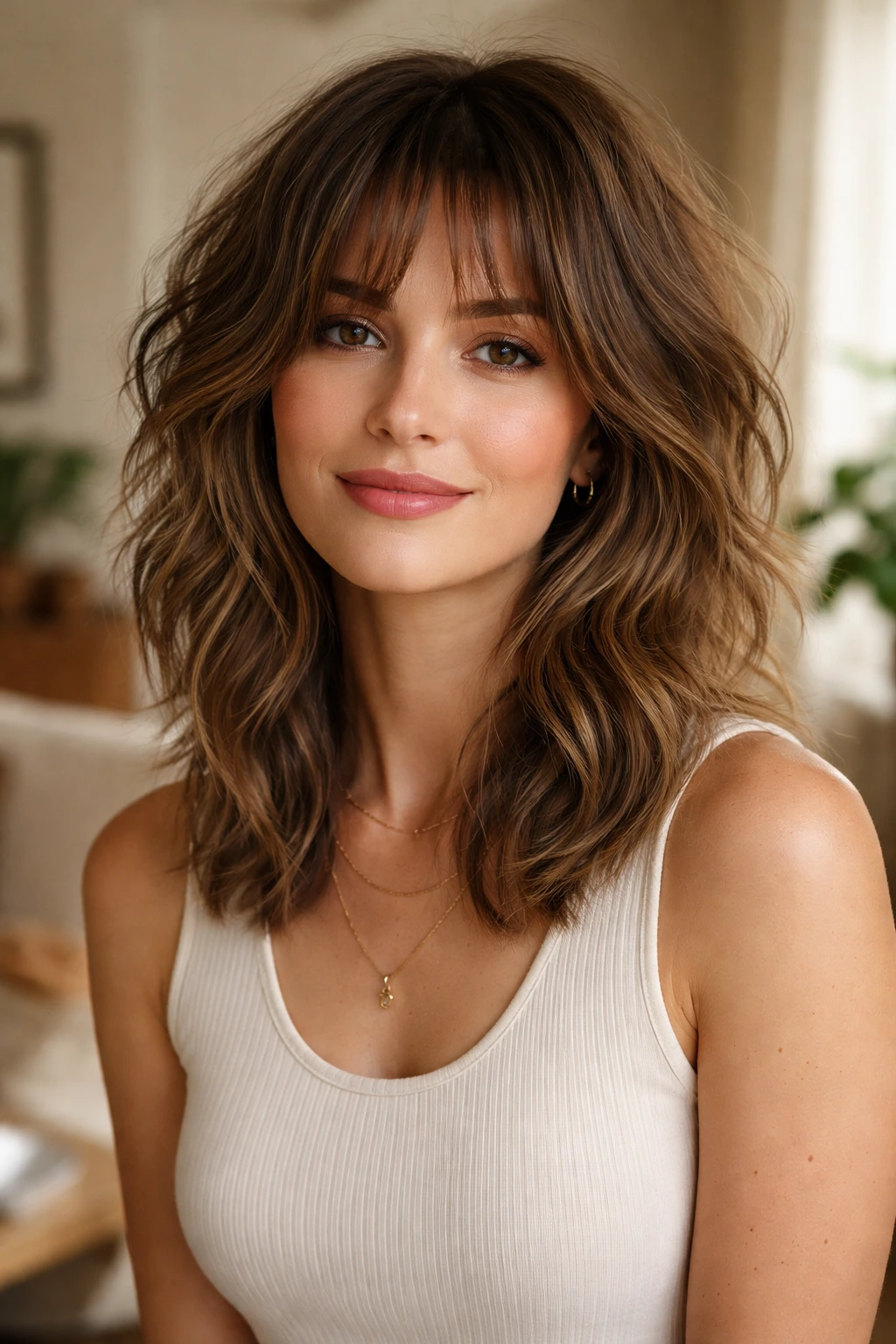
The shag has made a major comeback because it is essentially a cheat code for wavy hair. It relies on short, choppy layers throughout the crown and longer, thinning layers toward the bottom. It celebrates the frizz and the messiness rather than trying to suppress it.
Why the Shag Wins
Traditional cuts aim for uniformity, but the shag embraces the chaotic nature of waves. It removes weight from the top, which allows your roots to stand up and create natural volume. If you have ever felt like your hair goes flat at the scalp, this is the cut for you. It requires almost no styling because it is meant to look slightly undone.
Product Selection
Since the shag is about texture, you need products that build grit. A dry texturizing spray is essential here. Apply it to the roots and mid-lengths, then use your fingers to rake through the hair rather than a comb. This maintains the “lived-in” aesthetic that defines the look.
4. Soft Face-Framing Layers
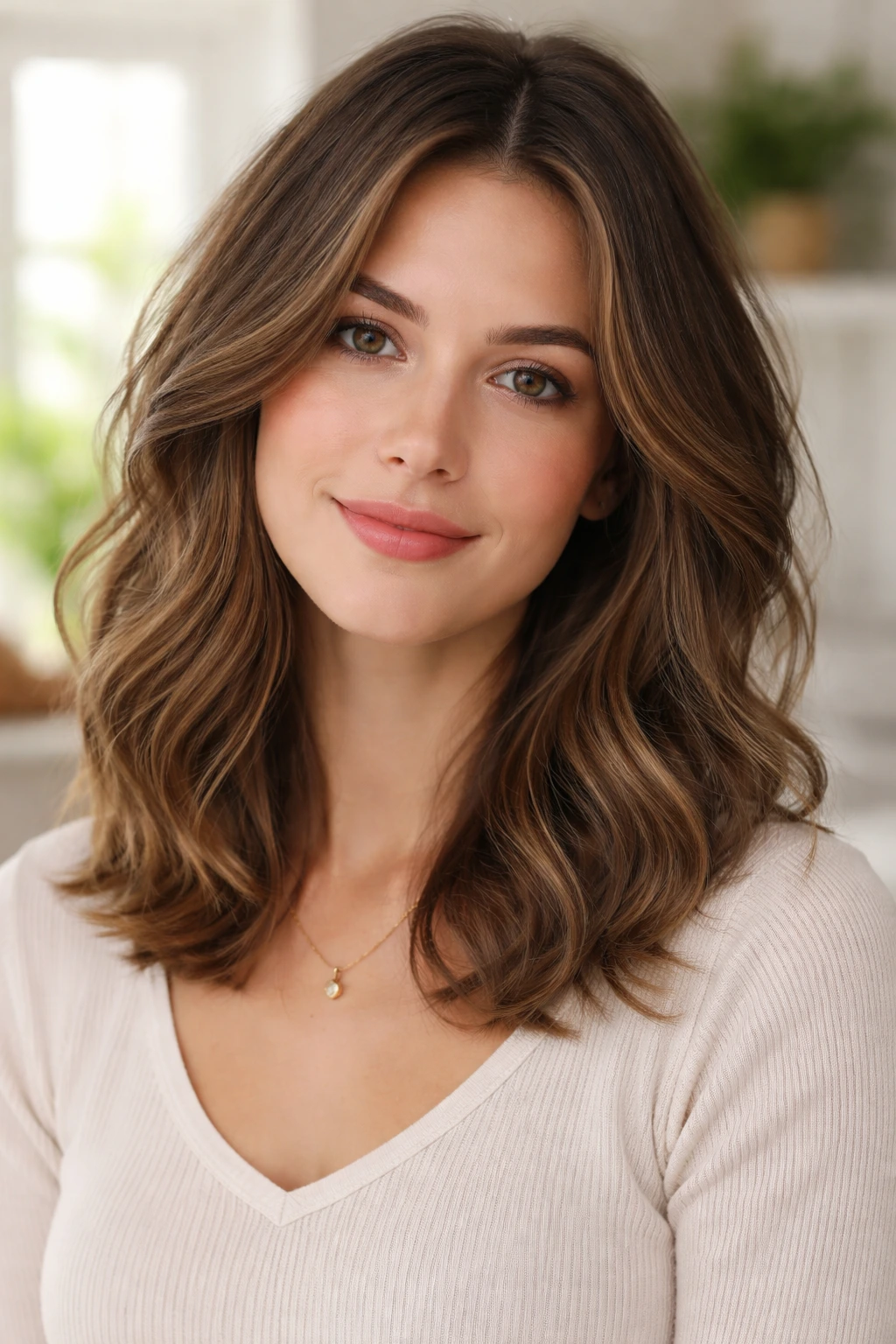
Not everyone wants a dramatic shag, and that is where soft, face-framing layers come in. These layers start around the chin and gradually transition down to the ends. They break up the silhouette and prevent your hair from looking like a solid block of color and texture.
Subtle Sophistication
This style is perfect if you want to keep your hair looking polished. It is less “rock and roll” than a shag but more dynamic than a single-length cut. It allows the waves around your face to be shorter and punchier, while the back stays slightly longer, giving you a beautiful, flattering shape that highlights your jawline.
Keeping It Healthy
Because these layers are often heat-styled with a round brush or curling iron to define them, ensure you are using a heat protectant. Even a light spray can make the difference between silky waves and fried, brittle ends. Since the layers are soft, you want them to feel touchable, not crunchy.
5. Deep Side Part with Defined Waves
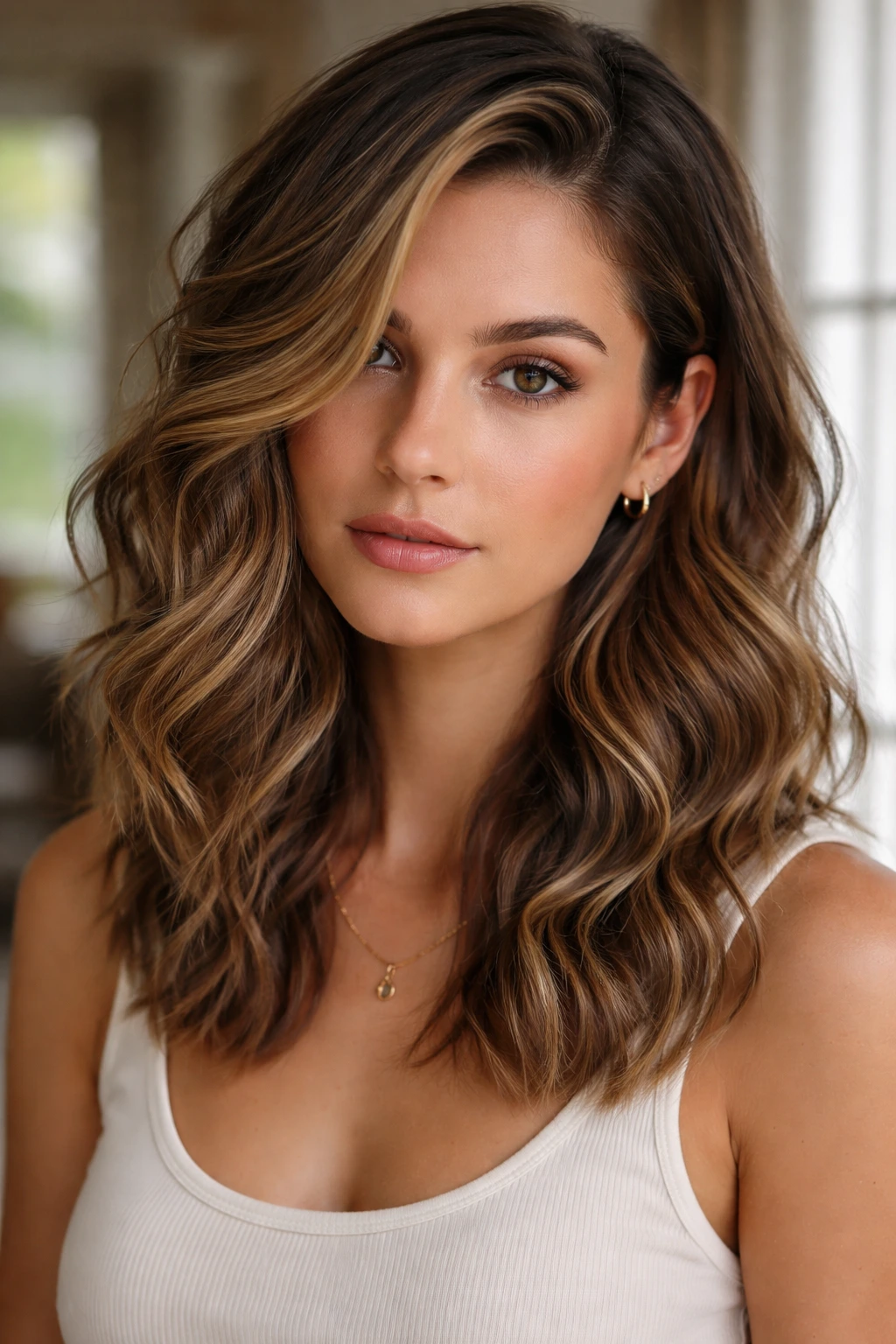
Sometimes the haircut is not the only factor; the styling change of a deep side part can completely shift the energy of your look. By moving your part to the far left or right, you force the hair to create volume on one side of your head, which creates an instant lift.
Why Side Parts Work for Waves
Wavy hair often sits heavy on the scalp. A deep part disrupts that heavy fall. By sweeping a large section of hair over, you create a “fringe-like” effect with your own hair. It is an effortless way to create a side-swept look without actually cutting bangs.
Achieving the Look
When your hair is wet, use the arch of your eyebrow as a guide for where to place the part. Comb the hair over and clip it in place at the root while it dries. This forces the hair to set in that elevated position. Once you remove the clip, you will have a natural, lifted wave that stays put all day.
6. Blunt Ends for Weight and Control
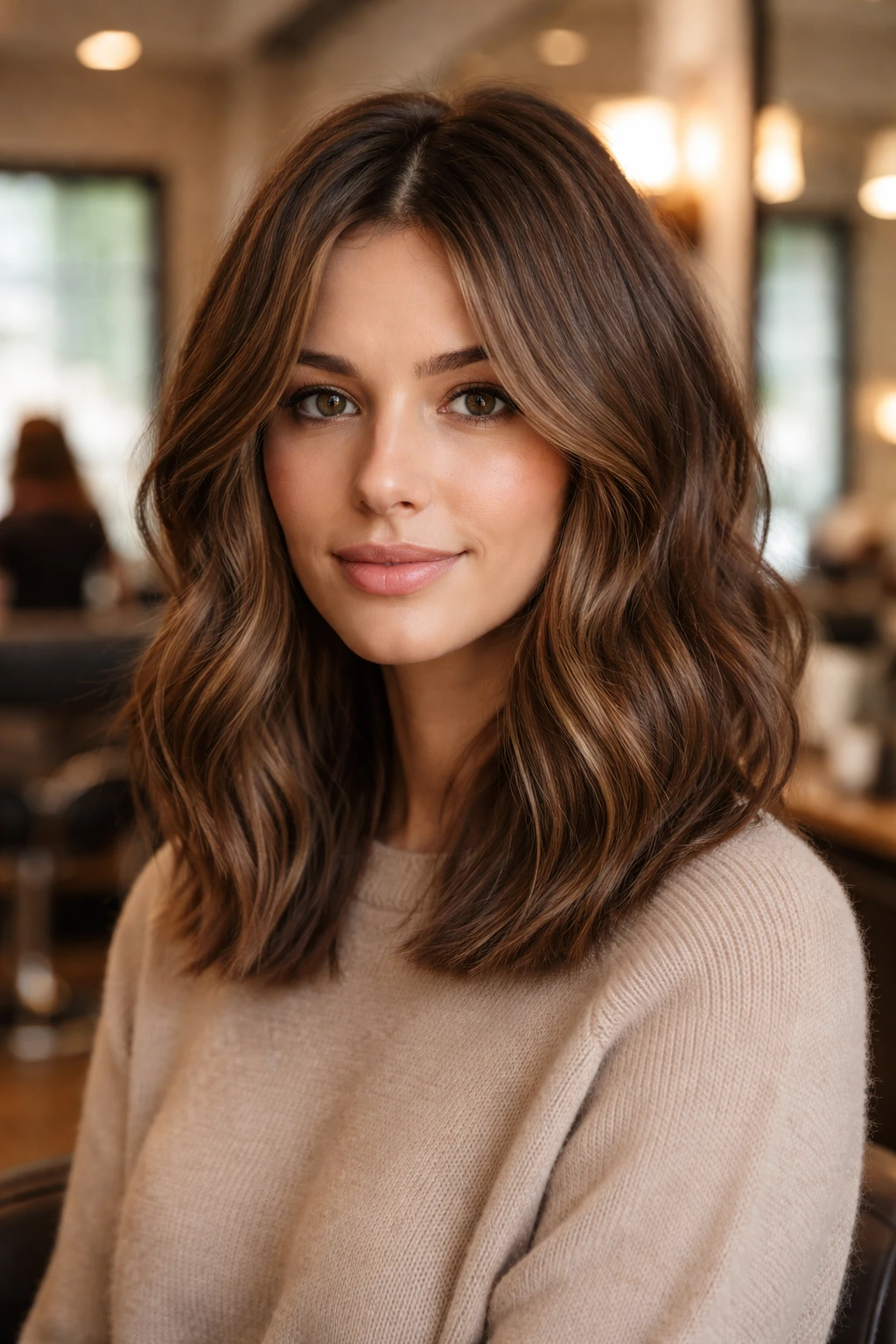
If your hair is very fine or prone to extreme frizz, thin, wispy ends will only look stringy. A blunt cut, where the bottom is cut straight across, adds weight to the ends. This weight stretches the waves slightly, preventing them from pooping up into a triangle, and gives you a sleeker, more controlled appearance.
Balancing the Weight
While blunt ends are great for density, you do not want the cut to be a “helmet.” Keep the interior layers lighter, but ensure the perimeter is dense. This offers the best of both worlds: you get the weight to keep the hair down, but the layers keep the hair from looking flat or lifeless.
Perfect for Sleeker Days
If you ever decide to straighten your waves, this cut looks impeccable. It is clean, sharp, and intentional. Even when worn wavy, the blunt line provides a structured base that makes your overall style look more expensive and well-groomed.
7. The Modern Butterfly Cut
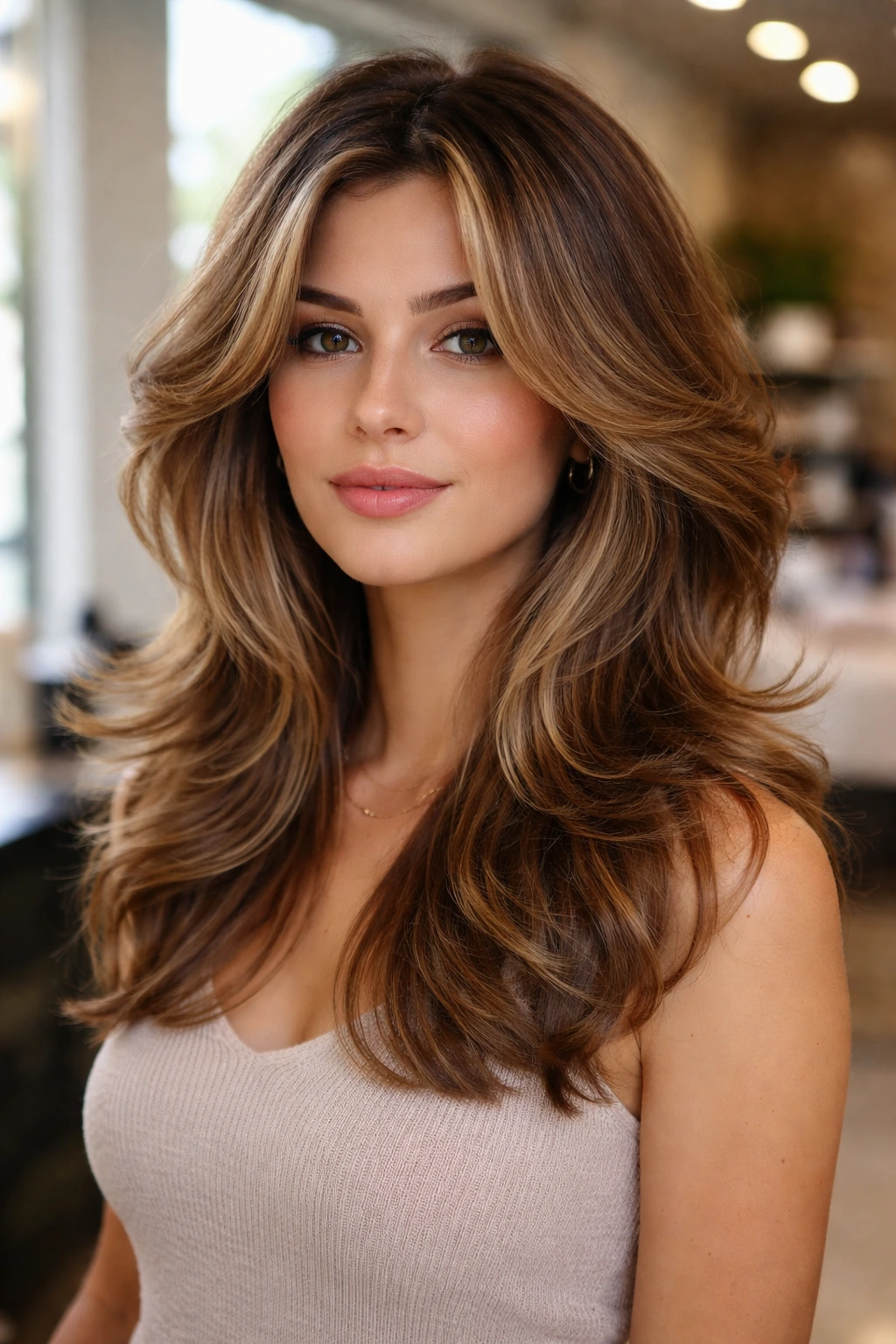
The butterfly cut is a take on 90s-style layers. It features short, face-framing layers that swoop backward, reminiscent of butterfly wings, and longer layers in the back. It is a high-volume style that looks incredible on medium-length wavy hair.
How It Creates Movement
The layers are shorter around the face and longer in the back, creating a flow that feels like your hair is constantly in motion. It is a fantastic option if you like to blow-dry your hair, as those layers are built to be styled with a round brush.
Styling Tip
To get that signature butterfly look, use a large-barrel round brush. Roll the face-framing layers backward, away from your face. This creates a soft, bouncy wave that frames your features without getting in your eyes.
8. Messy Beach Waves
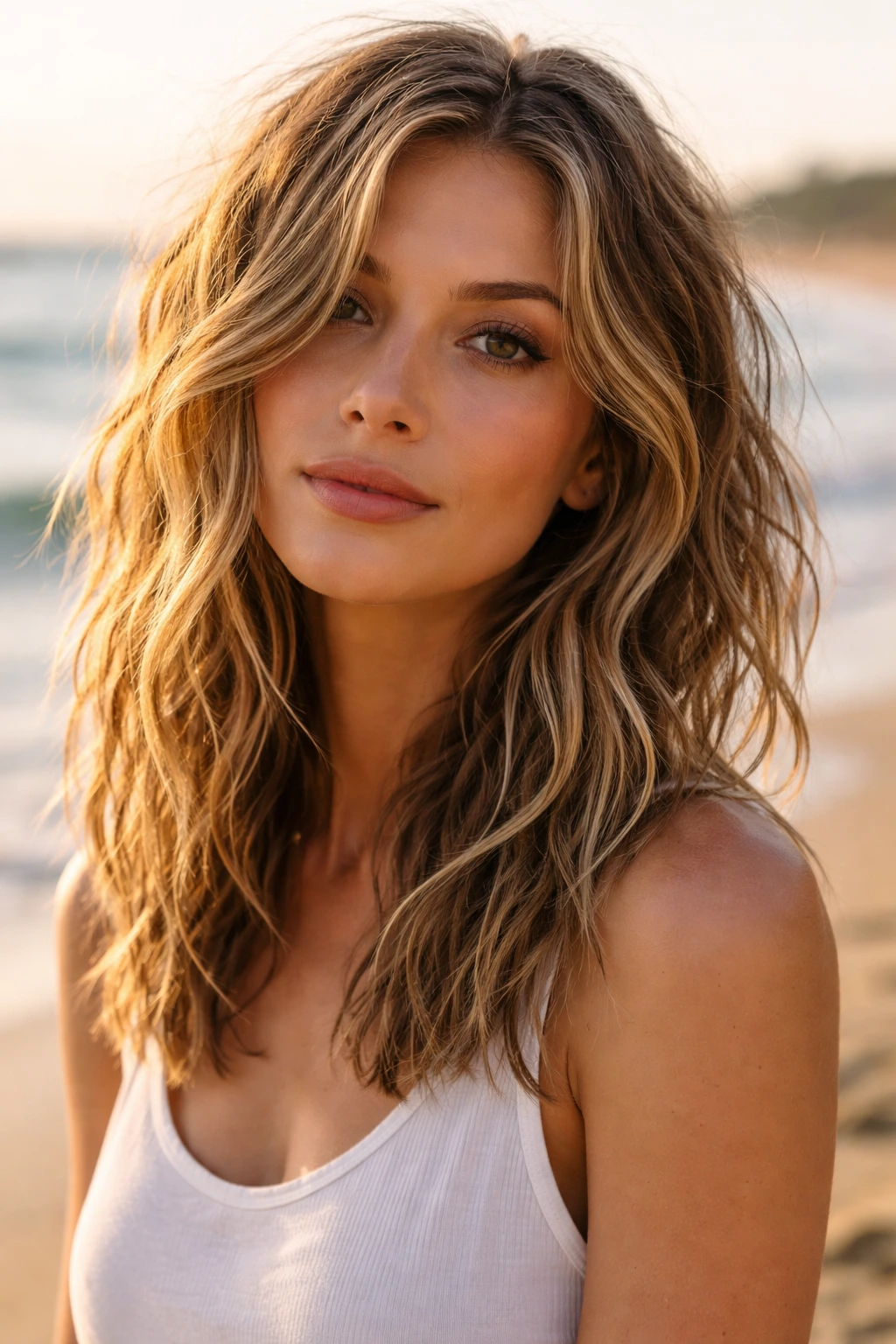
We all know the beachy wave look, but at medium length, it requires a slightly different approach. You are not trying for tight, ringlet-like curls; you are aiming for that “I just spent the day in the ocean” vibe.
The Key is Salt and Air
The biggest mistake people make with beach waves is over-styling. If you try to make every wave perfect, you lose the essence of the look. You want some pieces to be straight, some to be wavy, and some to be a bit frizzy.
The Technique
On damp hair, apply a sea salt spray or a styling mousse. Instead of blow-drying, gently scrunch your hair and let it air-dry. If you have areas that are stubbornly straight, twist them into small sections and clip them while they dry. This creates a natural, inconsistent texture that looks authentic.
9. The Half-Up Top Knot
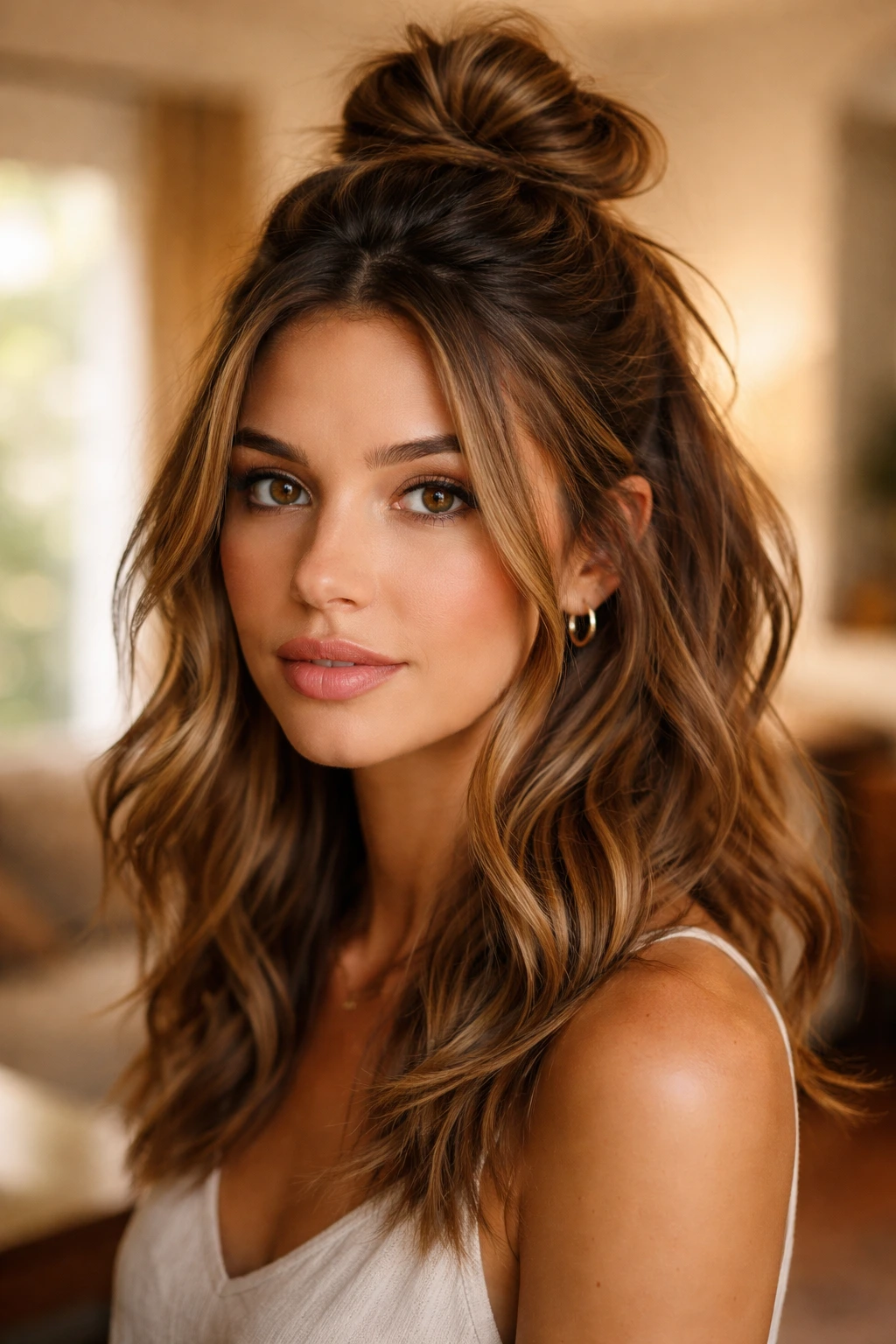
When you are in a rush or just having a day where your hair refuses to cooperate, the half-up top knot is your savior. It gets the hair out of your face, keeps the volume, and looks purposeful rather than messy.
Styling the Top Knot
Don’t just gather all the top hair; leave a few strands around your temples. This keeps the look soft and prevents it from pulling your hairline too tight. Twist the top section into a messy bun and secure it with a scrunchie or a spiral pin.
Why It Works for Waves
The contrast between the loose, wavy hair left down and the tight, gathered bun creates a nice balance. It highlights the texture of your hair while keeping your features clear. This is one of the few updos that actually looks better with a little bit of second-day grit.
10. Wispy Curtain Fringe
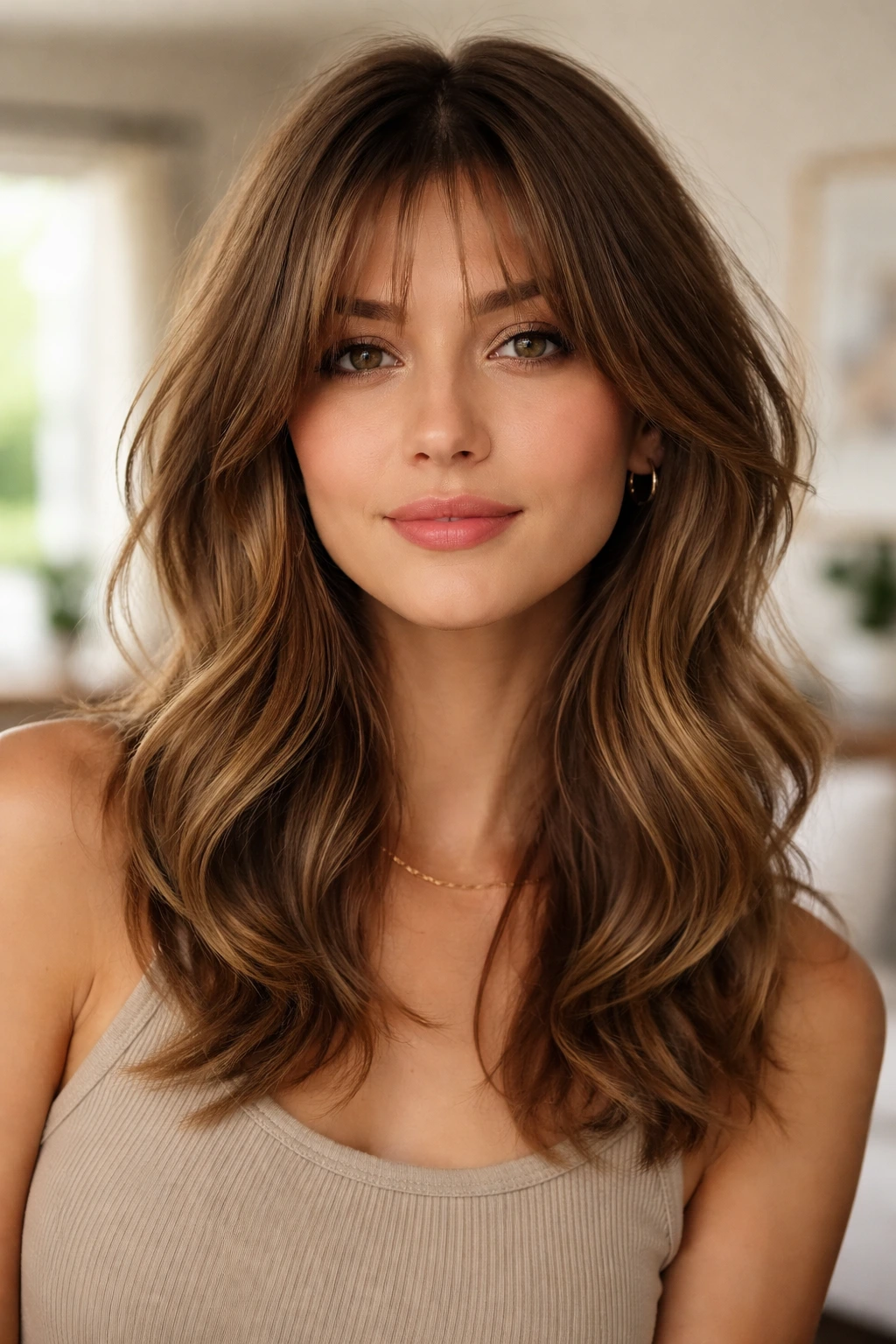
If you want a change but are not ready to commit to a full set of blunt bangs, wispy curtain fringe is the perfect gateway. These bangs are sparse, letting your forehead show through, which keeps the look light and approachable.
Who Should Get This Cut
This works exceptionally well if you have a prominent forehead or if you want to draw attention to your eyes. Because the fringe is wispy, it won’t feel heavy or hot on your skin during warmer weather. It blends seamlessly into medium-length layers, making the transition between your bangs and the rest of your hair invisible.
Maintenance
Since they are wispy, you can get away with longer times between trims. If they get too long, just tuck them behind your ears until you can get to a stylist. They are forgiving, versatile, and incredibly easy to style with just your fingers.
11. Invisible Internal Layers
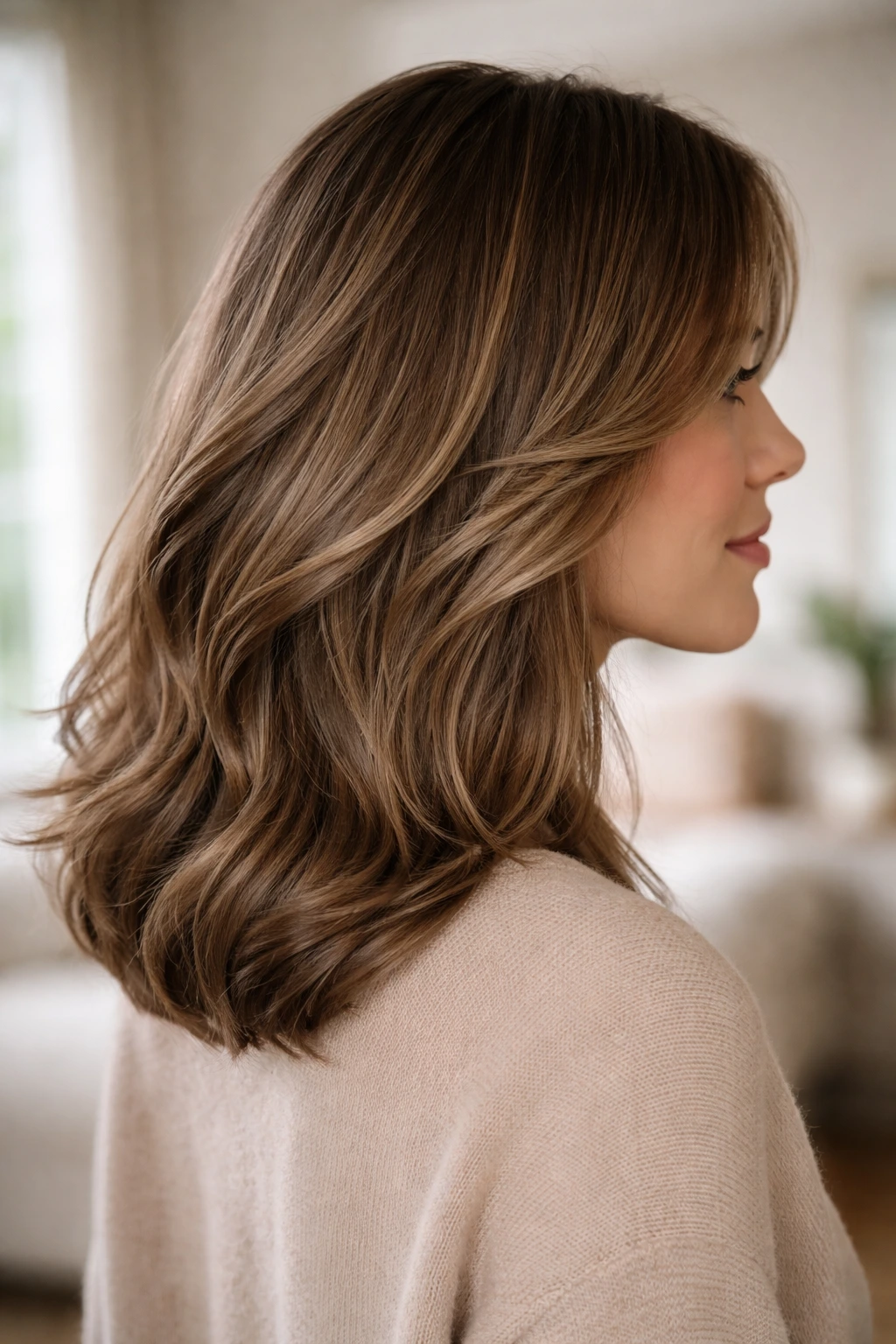
If you love the look of a blunt, one-length cut but hate the way it makes your hair look “poofy” or heavy, ask for internal layers. These are layers cut on the underside of your hair that are not visible from the surface.
The Benefit of Hidden Volume
They remove weight and bulk, giving your hair “swing” and movement without changing the outer appearance. It is a subtle technique that can completely change how your hair sits on your shoulders. You get the benefits of layering—less frizz, more movement, better wave definition—without the look of choppy layers.
Who Should Use This
This is perfect for people with thick, coarse hair. It is also an excellent option if you have a sleek, minimalist style but need help managing the volume. It essentially “thins” the hair without making the ends look thin or stringy.
12. Braided Headband Style
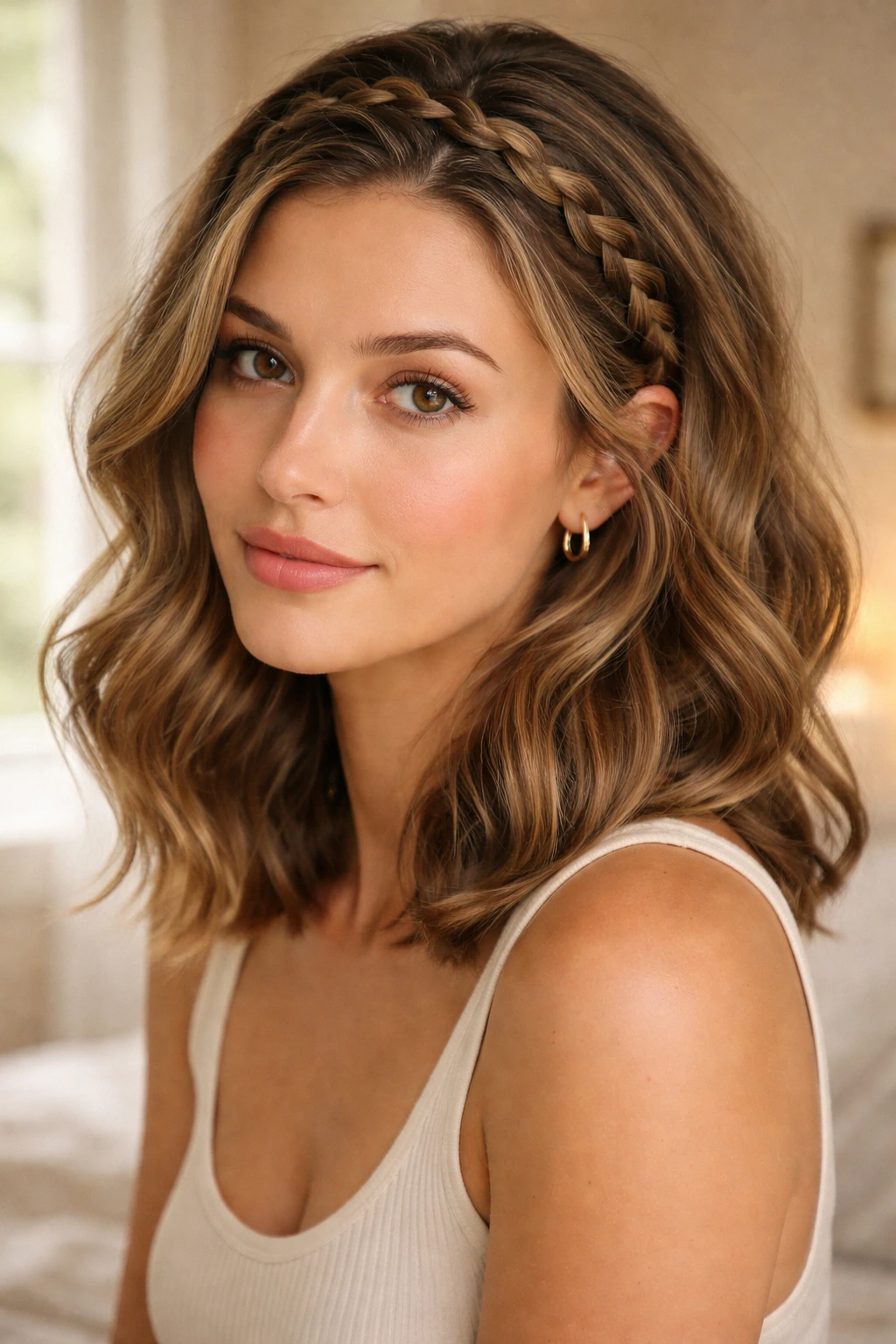
Sometimes you need to get your hair off your face entirely. A braided headband, which uses a section of your own hair at the hairline to create a braid that spans from ear to ear, is a beautiful way to manage medium-length waves.
Achieving the Look
Start by taking a two-inch section of hair near your part. Begin a Dutch braid, working your way toward one ear. As you braid, keep adding small sections of hair to maintain the tension. Secure it behind your ear with a clear elastic and bobby pin it underneath the rest of your hair to hide the end.
Why This Style Works
It acts as a functional accessory. The braid holds back the pieces that usually fall into your eyes, while the rest of your hair retains its natural, wavy volume. It is a fantastic option for weddings, brunch, or any occasion where you want to look put-together.
13. Controlled Internal Texture
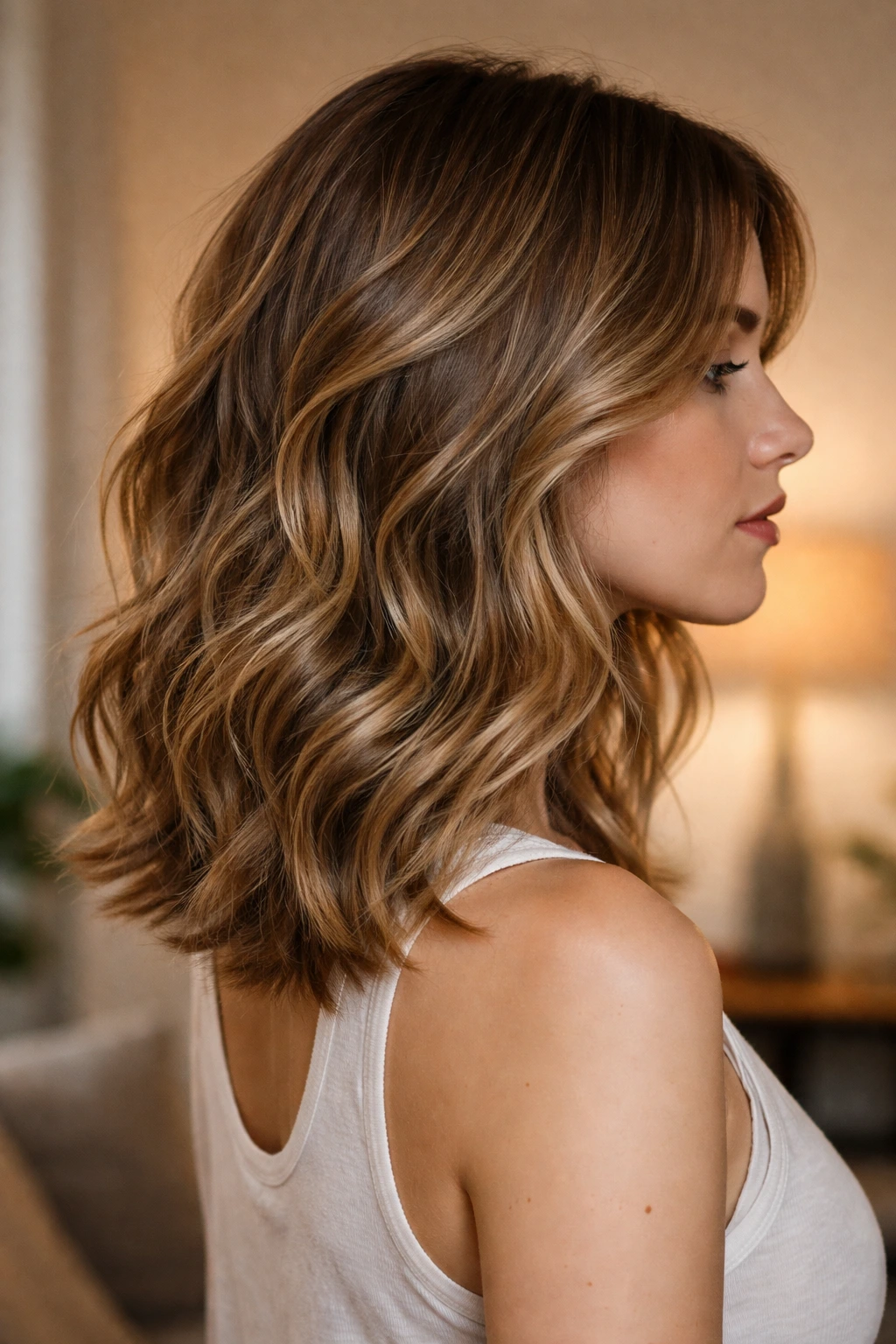
This is similar to invisible layers but focuses on the specific ends of the hair. If your ends always seem to stick out or look dry, internal texture texturizing helps them taper naturally rather than ending in a blunt line.
Preventing the “Shelf”
When hair is all one length, it often creates a shelf at the shoulder. By texturizing the internal ends, your hair sits more fluidly against your neck and shoulders. It prevents that boxy silhouette that medium-length hair sometimes adopts.
Stylist Communication
When talking to your stylist, mention that you want to avoid “choppy” looks but need the ends to be “softened.” Use the word “point-cutting.” This tells them to cut into the ends vertically, which creates a soft, feathered look rather than a sharp, horizontal line.
14. The Medium French Bob
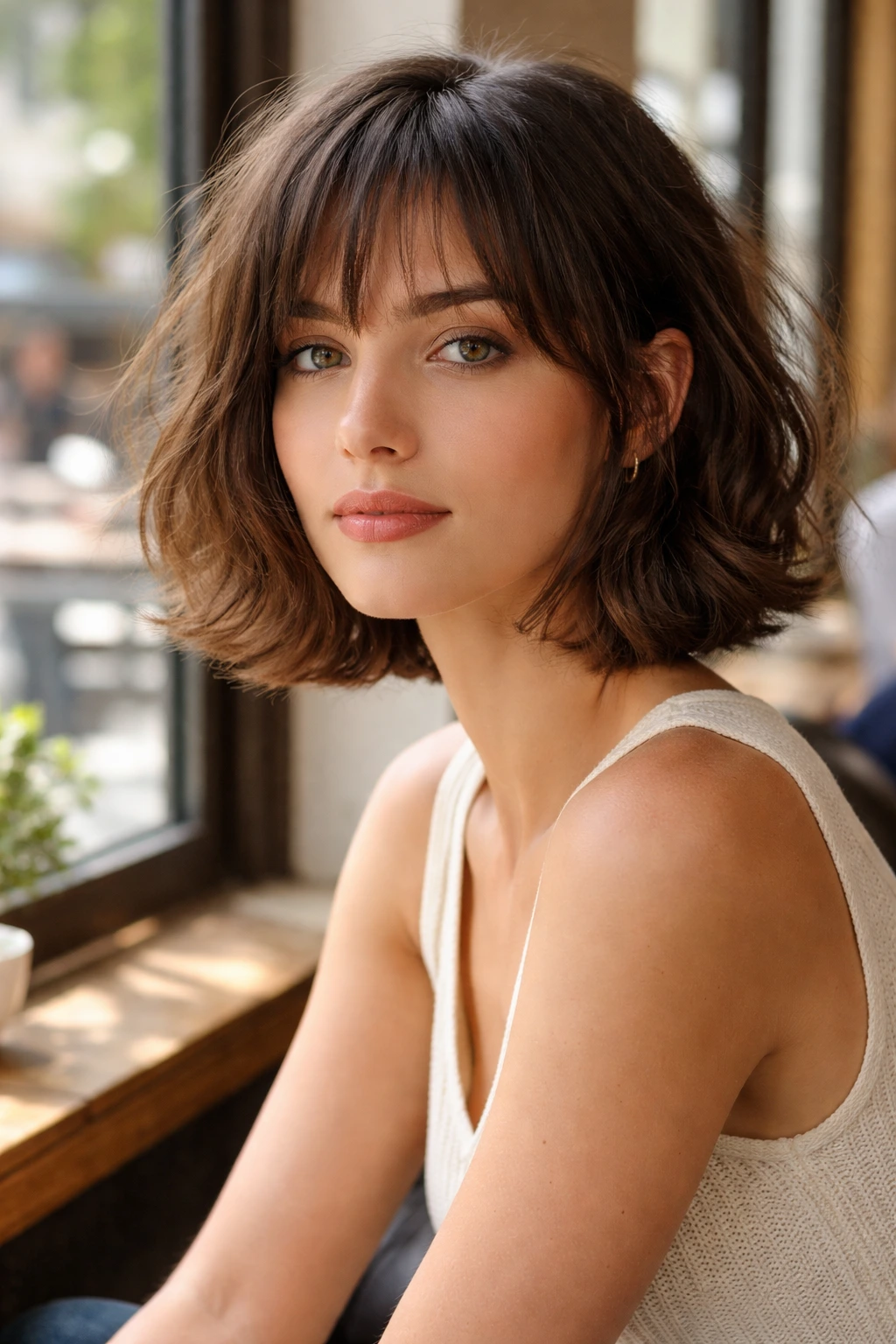
The French bob is usually associated with chin-length hair, but a medium-length version—grazing the jawline or top of the neck—is chic and romantic. It features soft, often blunt ends with optional wispy bangs.
Why It’s Timeless
There is something inherently elegant about a French-inspired cut. It feels slightly undone, as if you just spent a week in Paris. It works beautifully with natural waves because it doesn’t try to be too perfect.
How to Style
The key to this look is “messy-chic.” Use a matte styling cream rather than a glossy oil. You want the waves to look soft and touchable, not shiny or slick. Let the air-dry do most of the work, and use your fingers to pull apart any waves that clump together too tightly.
15. Voluminous Low Ponytail
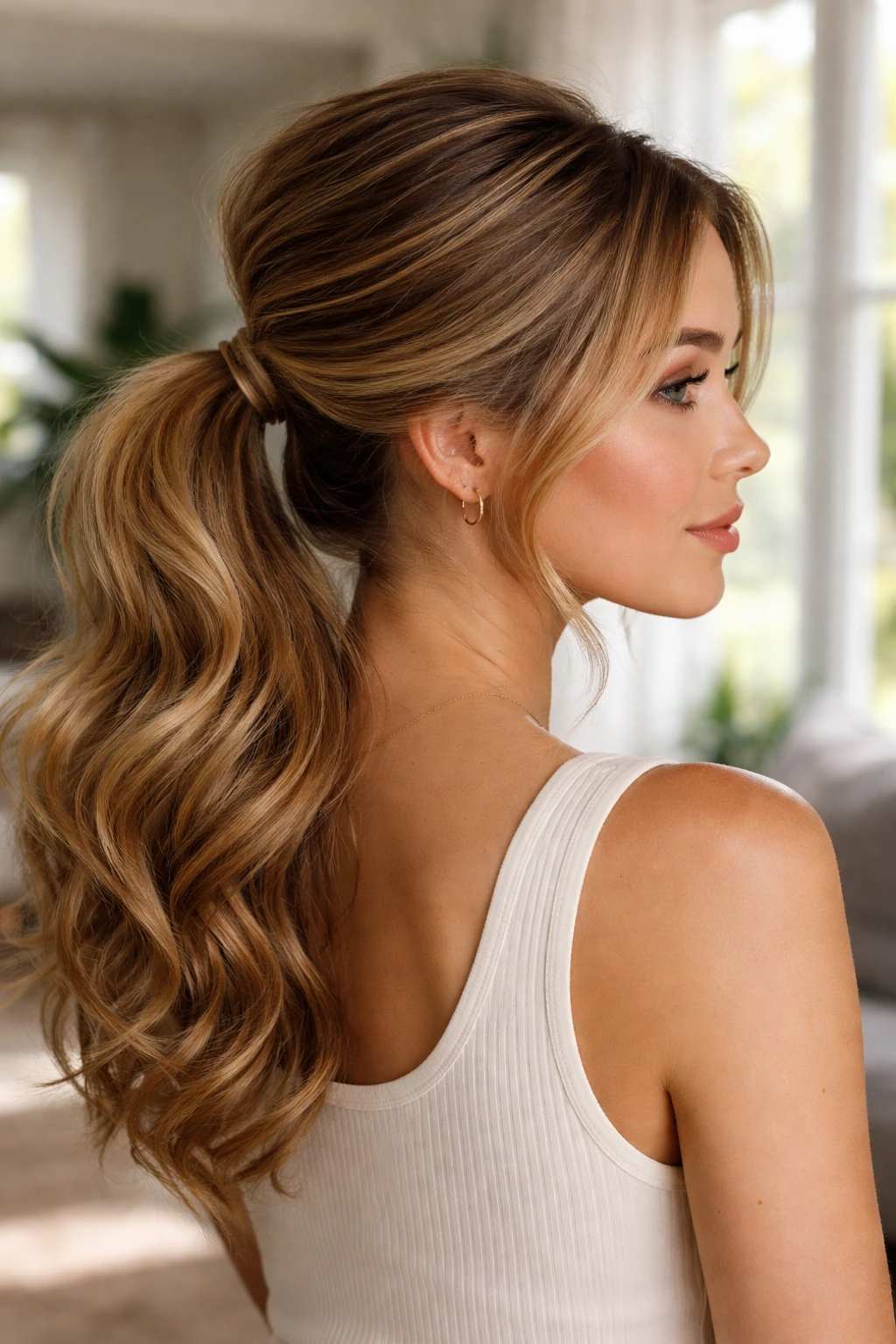
A ponytail is often seen as a lazy style, but a voluminous low ponytail can look incredibly sophisticated. By utilizing your natural wave, you can create a base that looks much thicker than a straight-haired ponytail.
Building the Volume
Before pulling your hair back, use a dry shampoo or volume powder at the roots. This gives the hair “grip.” When you gather your hair at the nape of your neck, do not pull it tight. Let it sit loosely.
The Finishing Touch
Take a small section of hair from the ponytail and wrap it around the elastic band to hide it. This one small step turns a gym-ready ponytail into an intentional hairstyle. If you have any face-framing pieces, pull them out to soften the look around your jaw.
16. Wispy Bangs
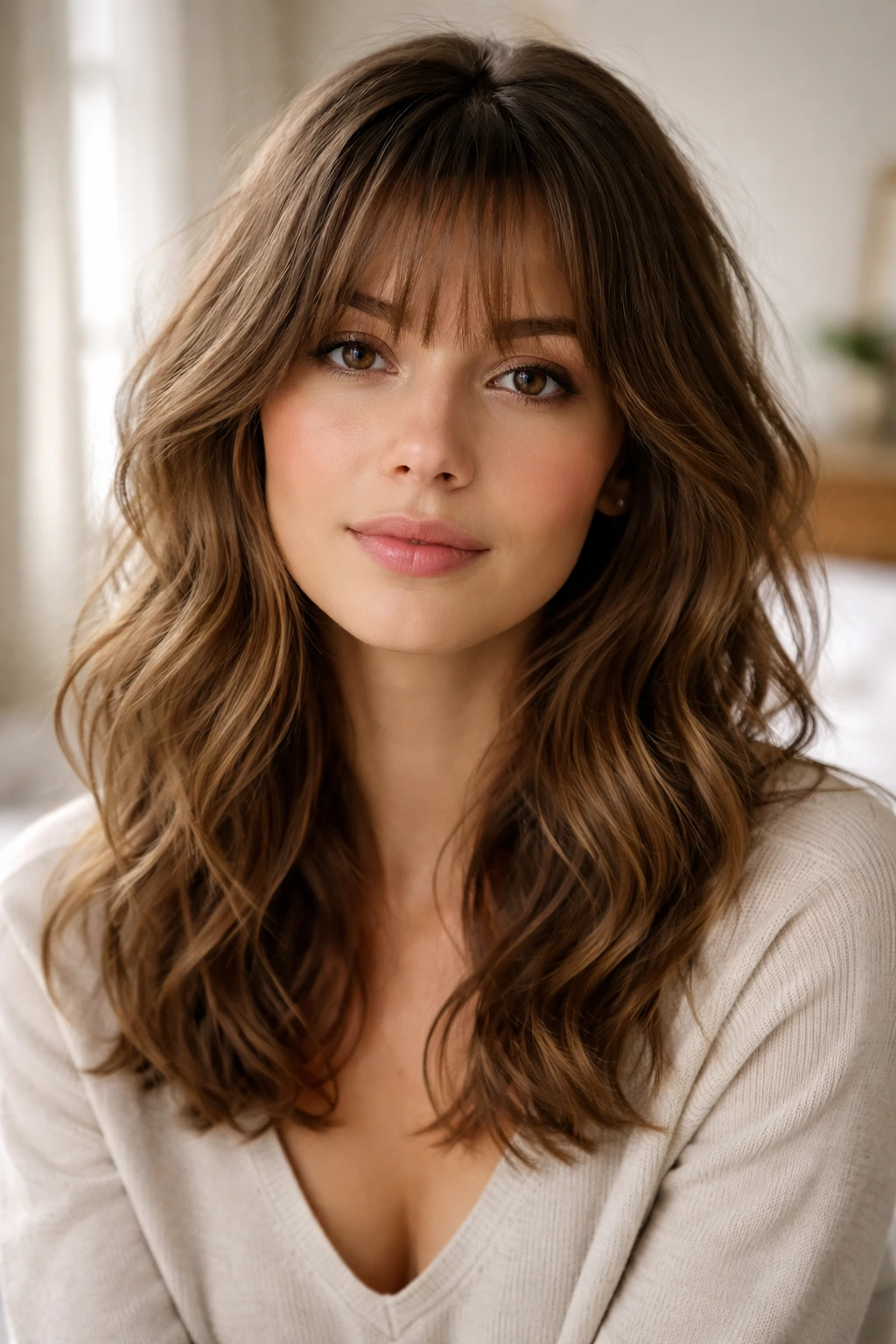
Wispy bangs are essentially the “non-committal” version of fringe. They are sparse, barely touching the forehead, and can be swept to the side or left to fall straight. They offer a youthful, soft look that pairs perfectly with medium-length layers.
Why They Work for Medium Hair
Medium-length hair can sometimes feel “boring” if it is all one length. Wispy bangs provide a focal point. They add a layer of detail without requiring the upkeep of a blunt bang, which requires constant trimming to stay out of your eyes.
Styling for Waves
If you have waves, the bangs will naturally have a slight bend. Embrace this. Don’t fight it with a flat iron. Let them sit naturally. If they are too unruly, a quick pass with a round brush while they are damp will smooth them out just enough to look deliberate.
17. Defined Center Part
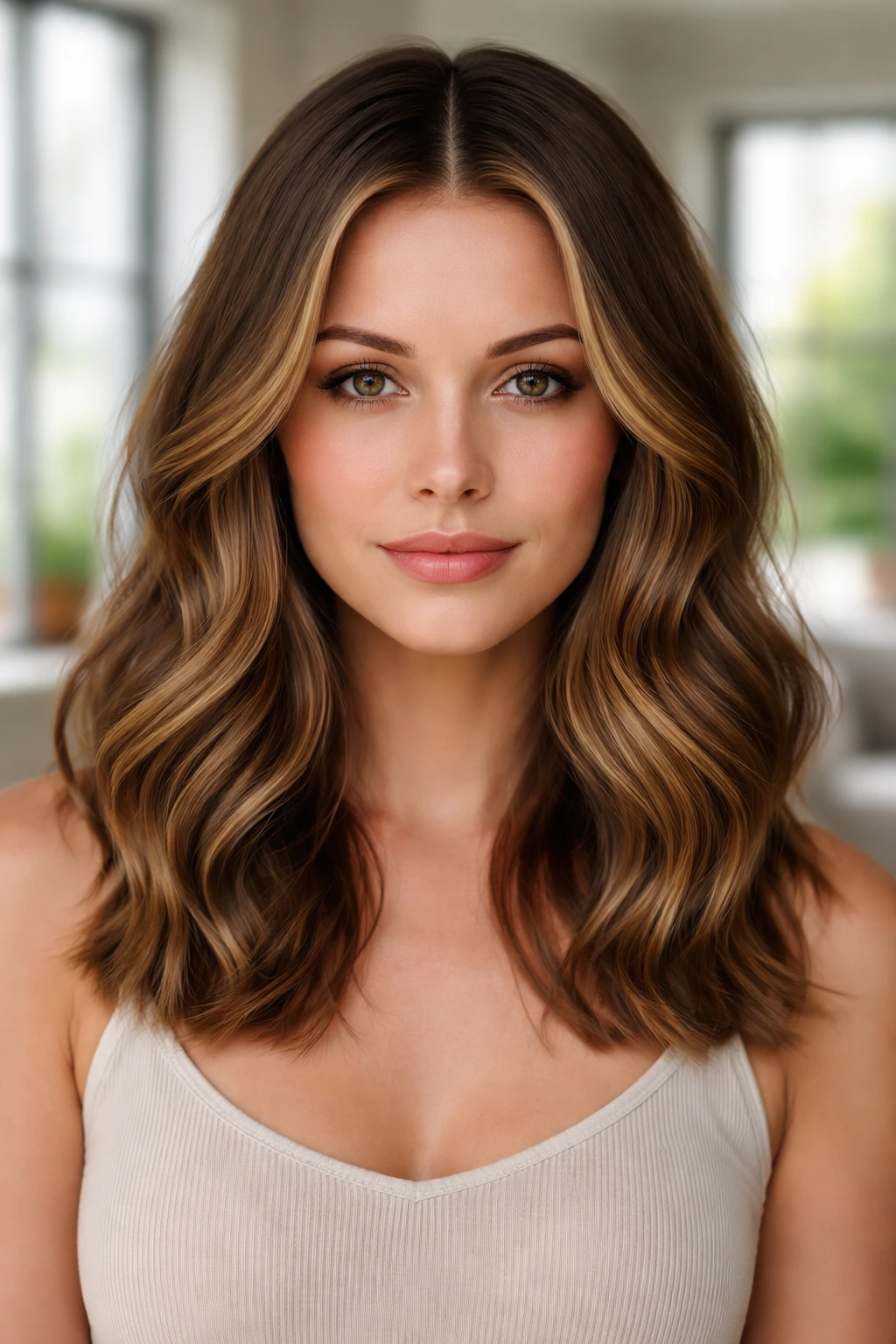
The center part is a classic for a reason—it creates perfect symmetry. For wavy hair, a center part allows your waves to frame your face evenly, which can be very flattering if you have a round or oval face shape.
Dealing with the “Flat” Factor
Center parts can sometimes lead to flat roots. To combat this, use a volumizing mousse at the crown while your hair is damp. As you blow-dry or air-dry, make sure to lift the roots away from the scalp.
Styling Tip
Because this look is symmetrical, any stray frizz will be obvious. Use a lightweight serum or oil on your ends only to keep them looking healthy. Keep the roots clean and matte with a volume powder to ensure they don’t look greasy after a few hours.
18. Braided Side Accent
If you want to keep your hair down but feel like it needs a little “extra,” a simple braided side accent is the solution. It adds detail without requiring you to do a full-head style.
The Technique
Take a small section of hair near your temple. Create a simple three-strand braid, moving toward the back of your head. Secure it with a small, clear elastic and pin it under a layer of hair.
The Visual Benefit
This pulls the hair off one side of your face, creating an asymmetrical look that is very flattering. It highlights the waves on the other side while keeping the hair out of your eyes. It is quick, functional, and looks much more complicated than it actually is.
19. Graduated Collarbone Cut
A graduated cut means the hair is slightly shorter in the back and gets longer as it approaches the front. This is a subtle version of an A-line bob, specifically tailored for medium-length hair.
Why It’s Flattering
The graduation creates a slope that draws the eye downward, making the face look slightly elongated. It also solves the “triangle” problem—the back is shorter, so it doesn’t get pushed out by your shoulders, and the front has the length to frame your face.
Styling Advice
This cut looks best when the waves are defined. Use a diffuser on your hair dryer to encourage your natural wave pattern. The graduation provides the structure, and the diffused waves provide the softness.
20. Medium Wolf Cut
The wolf cut is essentially a shaggy, mullet-inspired look that is surprisingly wearable. It features heavy layers at the crown and longer, thinner layers at the bottom.
The “Cool Girl” Vibe
This cut is all about attitude. It is messy, voluminous, and dramatic. Because it is shorter on top, you get immense height, which is excellent for wavy hair that tends to fall flat.
Who Is This For?
If you have a bold personal style, this is your cut. It requires very little styling—usually just some sea salt spray and air-drying—but it does require a confident attitude. It is not for the person who wants perfectly neat, polished waves.
21. Tuck-Behind-Ear Silhouette
Sometimes the best hairstyle is simply how you wear your hair every day. If you have a good medium-length cut, tucking both sides behind your ears can transform the silhouette of your face.
Why It Works
It mimics a short haircut without the commitment. By tucking the hair, you expose your jawline and cheekbones, which can make you look more awake and alert. It also prevents the hair from hanging like a curtain over your face.
Product Tip
Use a light-hold cream on the pieces near your ears to help them stay tucked. This prevents them from falling forward constantly. It is a simple, everyday styling habit that makes a massive difference in how you present yourself.
22. Accessorized Waves
Medium-length wavy hair is the perfect canvas for accessories. Headbands, silk scarves, and barrettes all look fantastic against the texture of wavy hair.
Choosing the Right Accessory
Avoid heavy, metal accessories that will weigh down your waves. Opt for fabric headbands, which can add color and interest without ruining your wave pattern. Silk scarves are also great; you can weave them into a low ponytail or tie them around a top knot.
The Look
Accessories are not just functional; they are decorative. A statement barrette on one side of your part can turn a “bad hair day” into an intentional, styled look. They are the easiest way to elevate your style without changing your cut.
23. Sleek-at-the-Root Hybrid
If you find that your roots get oily while your ends are dry, a hybrid style is your best bet. Keep the hair at the scalp sleek and smooth, while letting the ends retain their natural, wavy texture.
Achieving the Sleek Root
Use a boar bristle brush to gently smooth the hair from the roots to the mid-lengths while it is dry. This distributes your natural oils, which helps keep the scalp healthy and the roots looking sleek.
Defining the Ends
Focus your styling product—like a curl cream or a light gel—only on the ends. This keeps the waves bouncy and hydrated, while the roots remain controlled. It is a polished version of the natural wavy look.
24. Textured Ends Focus
If you are struggling with split ends or dry hair, a cut that focuses on texture at the ends can help. By removing the dead weight and texturizing the tips, you make your hair look healthier immediately.
The Visual Trick
When the ends are soft and tapered rather than blunt and split, the eye focuses on the texture of the waves rather than the dryness of the tips. It creates an illusion of health.
Maintenance
You still need regular trims. No cut can “fix” dead ends permanently. However, a texturized cut allows you to go a little longer between visits because the growth is less noticeable—the layers blend in rather than growing out into a harsh line.
25. Side-Swept Bangs with Layers
Side-swept bangs are the ultimate low-maintenance fringe. They blend into the rest of your hair and require almost no effort to style.
Why They Work for Waves
They follow the natural direction of your hair. If you have a natural side-part, these bangs will fall into place almost automatically. They frame the face and add softness to any medium-length cut.
Styling Tip
When styling, use your fingers to direct the hair across your forehead while it dries. Avoid heavy heat tools. The goal is to make it look like your hair naturally sweeps to the side, not like it was forced there with a brush.
26. The Messy Bun with Tendrils
A messy bun is a classic, but for wavy hair, the secret is the “tendrils.” Leave two thin sections of hair out at the front to frame your face.
The Contrast
The bun provides the structure, and the wavy tendrils provide the softness. This is an excellent style for medium-length hair because it is easy to achieve and looks effortlessly cool.
The Technique
Do not try to make the bun perfect. The messier it is, the better it looks with wavy hair. Use a few pins to secure the pieces that fall out, but keep the tendrils loose. They will naturally wave, which adds to the romantic vibe of the look.
27. Blunt Ends with Long Layers
This is a versatile middle ground. You get the weight and structure of blunt ends, but the movement and volume of long layers. It is the best of both worlds for someone who wants a bit of everything.
Balancing the Cut
Ask for “long, interior layers.” You want the perimeter to stay blunt for density, but you need layers hidden inside to prevent the hair from becoming a triangle.
Who Should Choose This
This is a great cut for someone transitioning from long hair to medium hair. It feels familiar but refreshed. It is also very easy to style—you can wear it natural, wavy, or even straight.
28. The Natural Air-Dry
Finally, embrace the natural air-dry. It is the most authentic way to wear your wavy hair. If you have a good cut, your hair should look good without any heat styling at all.
The Method
Wash your hair, apply a leave-in conditioner, and use a light mousse. Let it dry completely without touching it. This is the ultimate test of your haircut. If it looks good air-dried, you have found the perfect cut.
Embracing Imperfection
Wavy hair is naturally imperfect. Some days it will be voluminous, some days it will be flatter, and some days it will be frizzy. That is part of the charm. If you stop trying to control every wave, you will find that your hair actually looks better.
Finding Your Best Style
Selecting the right hairstyle for medium wavy hair is less about chasing trends and more about identifying what your specific wave pattern needs. Do you need more volume at the roots? A shag or internal layering might be your best approach. Are you struggling with poofiness and weight? A blunt lob with long layers could provide the control you have been searching for.
Remember that hair is a dynamic, living thing—it reacts to the weather, your health, and the products you use. What works for a friend with a similar length may not yield the same results for you, and that is perfectly fine. The key is to pay attention to how your hair responds to these different cuts and to communicate clearly with your stylist about your specific pain points—like that annoying triangle shape or the dreaded “flat root” syndrome.
Ultimately, the best haircut is the one that makes you feel confident and requires the least amount of daily struggle. Your wavy hair has a personality of its own, and when you stop fighting it and start working in harmony with its texture, you will likely find that you spend far less time in front of the mirror and far more time enjoying your look. Take these suggestions as starting points, trust your stylist, and don’t be afraid to try something new; sometimes the most liberating change is just a few inches of hair and a bit of added texture.
