



Wavy hair has a funny habit of changing its mind. One day it sits in soft, neat bends; the next, it puffs at the sides, collapses at the crown, and suddenly looks shorter than it did in the mirror yesterday. That’s why haircuts for wavy hair matter so much more than most people realize. The wrong shape can fight the wave pattern and make styling feel like a chore. The right one makes the hair do half the work on its own.
The trick is not to force waves into a curly cut or a straight cut. They need something in between, something that respects bend, shrinkage, and where the hair naturally wants to live. A blunt line can look sharp and expensive on one head of hair and boxy on another. Too many short layers can turn the ends fuzzy. Too few layers can leave the whole thing heavy and flat. It’s a balancing act, and a good stylist knows the balance changes with density, face shape, and how much wave you actually have.
A lot of the best-looking wavy cuts share one quiet trait: they look better after a little air-drying, not worse. That’s the whole point. You want shape, not a battle plan. And if you’ve ever walked out of a salon with a cut that looked polished for exactly two hours, then turned into a triangle by dinner, you already know why this matters.
So let’s get into the cuts that actually play nicely with waves. Some are short and sharp. Some keep length and just remove the bulky bits. A few are edgy, a few are classic, and a few are the sort of cuts people swear they “could never pull off” right before they do.
1. Long Layers for Wavy Hair
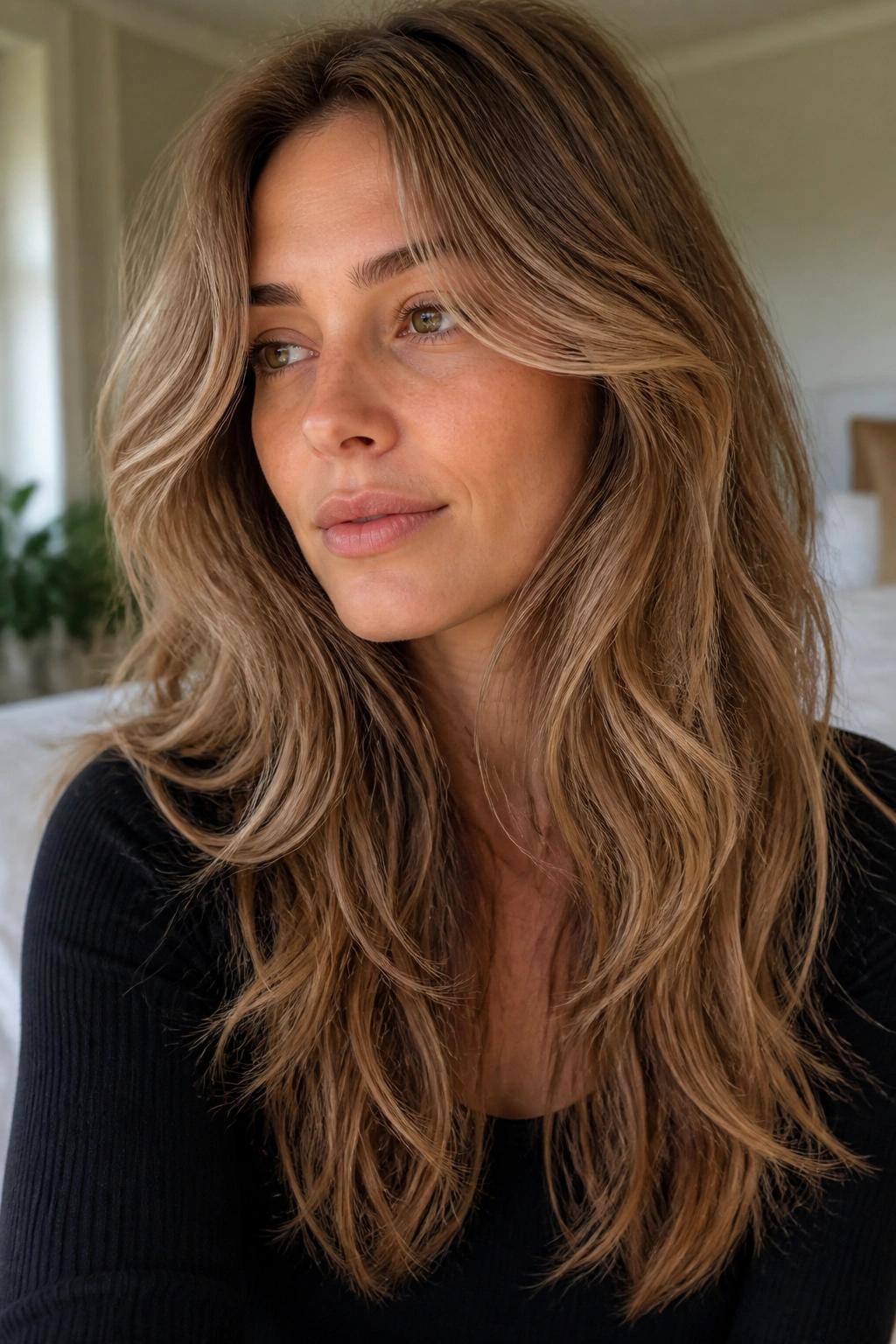
Long layers are the safest place to start if you want movement without a dramatic change. They take weight out of the lower half of the hair, which matters a lot when waves get pulled flat by length. If your hair has a soft S-shape and you like wearing it down, this is the cut that keeps the ends from looking like one long curtain.
The key is placement. Layers that start below the chin tend to keep the outline full while letting the wave pattern breathe. If the layers start too high, the hair can frizz up at the crown and lose that easy, draped look. If they start too low, the cut barely changes anything.
Ask for long, blended layers and a light face frame. That’s enough. No need to carve the whole head into pieces. For styling, a small amount of wave cream scrunched into damp hair usually does the job, and a diffuser can help if your waves go limp while air-drying.
2. Collarbone Lob for Wavy Hair

A collarbone lob sits in that sweet spot where the hair is short enough to look fresh but long enough to tuck behind the ears or tie up in a hurry. It’s one of the most forgiving haircuts for wavy hair because it gives the wave somewhere to bounce without letting the ends drag down the whole shape.
This cut looks especially good when the front pieces graze the collarbones and the back is just a touch shorter. That tiny difference stops the hair from kicking out like a triangle at the bottom. It also makes the wave pattern look deliberate, not accidental.
- Best for medium-density waves that need movement
- Good if you want to keep some length around the face
- Easier to air-dry than a blunt bob that sits too heavy
- Works well with a side part or middle part
My favorite part: it grows out cleanly. You do not have to rush back to the salon every month just to keep it looking decent.
3. French Bob With Soft Ends

Why does the French bob keep showing up in wavy hair conversations? Because it knows when to stop. A good French bob usually sits around the jawline or slightly below it, and the ends are soft, not chopped into a hard shelf. That softness matters. Wavy hair looks best when the outline has a little give.
What Makes It Work
The bob gives the wave a shorter runway, which means the bend appears fuller and more obvious. On fine hair, that can be a gift. On thicker hair, it can keep the shape from going puffy and wide. The cut feels chic without trying too hard, which is probably why it keeps surviving every trend cycle.
What to Ask For
Tell your stylist you want the bob to sit at the jaw or just under it, with soft texturizing at the ends and no bulky corners. If you like bangs, a light fringe can work, but the cut doesn’t need them. Keep the perimeter clean. That’s the whole game.
4. Curtain Bangs With Shoulder-Length Waves
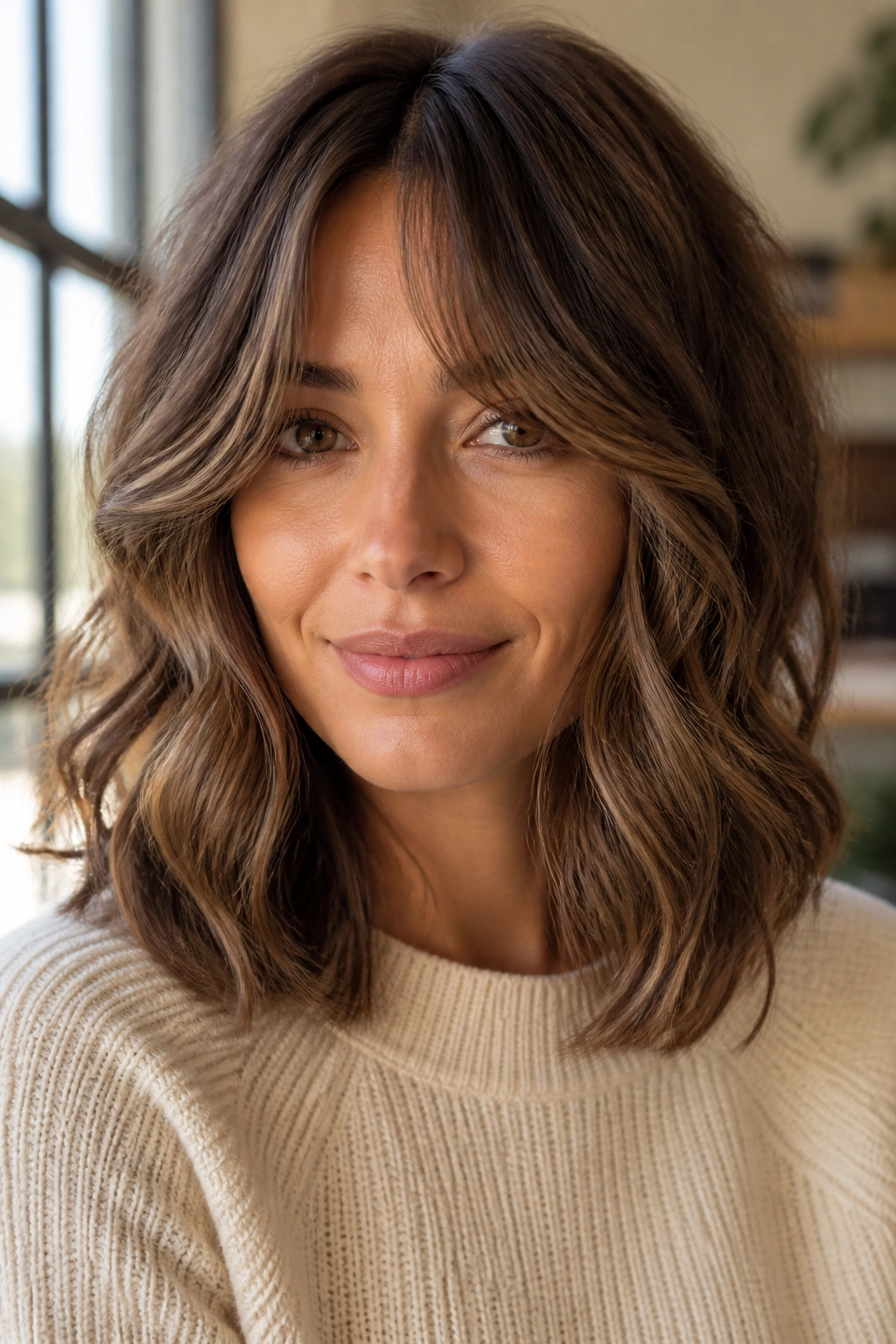
Curtain bangs are one of the easiest ways to change the mood of wavy hair without losing much length. They split at the center, sweep to the sides, and blend into the rest of the cut instead of sitting there like a separate project. When they’re done well, they soften the face and make shoulder-length waves look fuller.
Think of them as a frame, not a statement piece. The best version starts around the cheekbones or lip line and feathers out into the sides. That gives you the motion you want without chopping a hole into the front of the haircut. If your waves are loose, this cut adds shape. If they’re tighter, it gives them direction.
- Ask for bangs that can be blown back or worn parted
- Keep the longest face-framing pieces around cheek level
- Use a round brush only on the fringe if needed
- Let the rest air-dry so the wave pattern stays soft
The real charm is the low effort. A quick blow-dry on the bangs, and you’re done.
5. Soft Shag
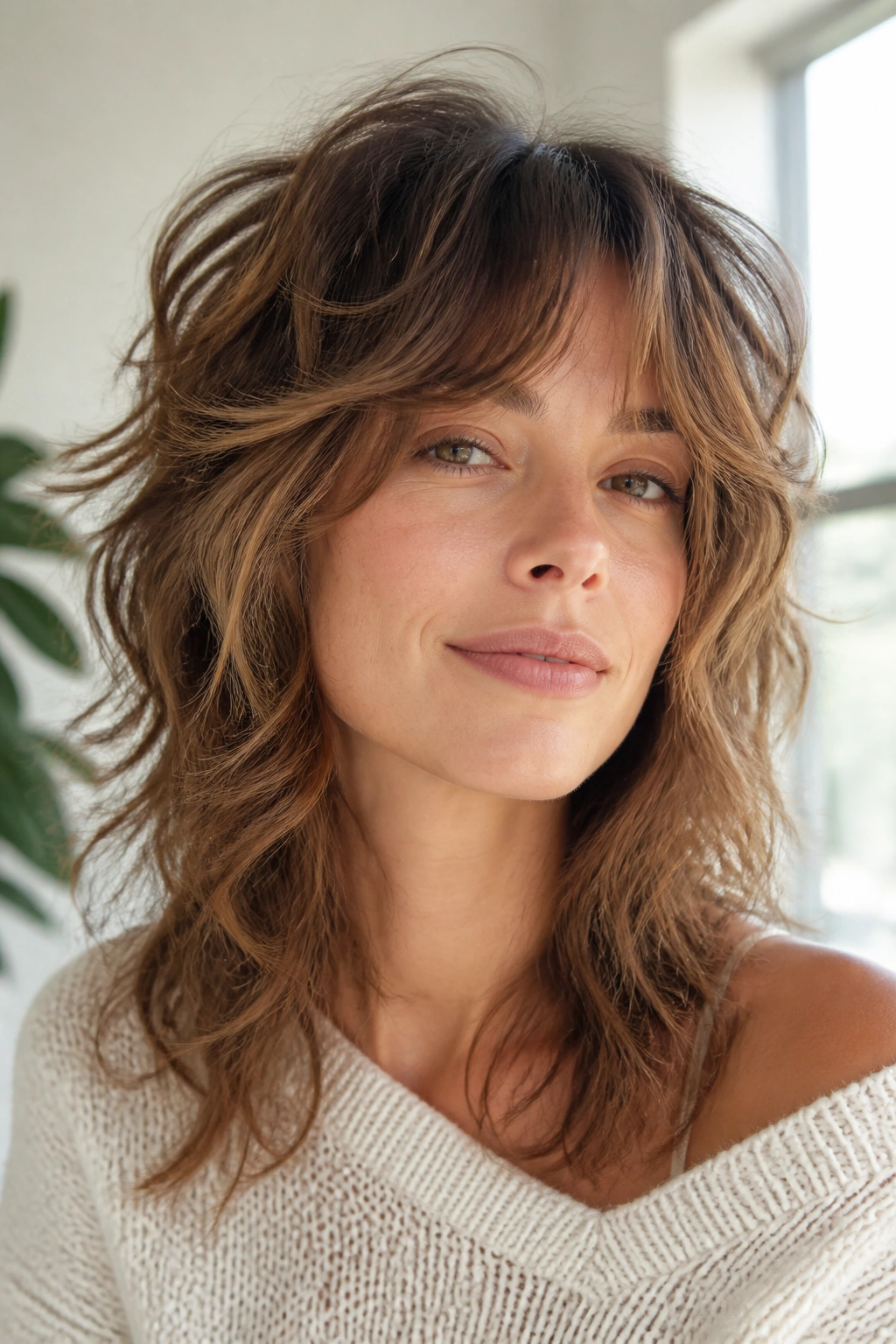
The soft shag is one of those cuts that makes wavy hair look like it knows what it’s doing. It uses layers through the crown and sides to create lift, but the layers are gentler than the wild, choppy version people often picture. This matters if you want texture without a full-on rocker haircut.
I like this cut on dense waves because it removes bulk in the right places. Heavy hair tends to puff at the bottom and flatten at the roots. A shag fixes that by making the top lighter and the lower lengths more lively. You get movement without having to fight the shape every morning.
It also handles second-day hair well. A little dry shampoo at the roots and a mist of water on the ends can wake it up fast. If your hair frizzes easily, ask for scissor-cut layers instead of a razor-heavy finish. Razor cuts can be too rough on some wave patterns.
6. Wolf Cut

The wolf cut is the louder cousin of the shag. It has more contrast between the short top layers and the longer bottom pieces, which gives wavy hair a messier, more directional shape. Some people love that edge. Some people look at it and walk away. Fair enough.
What makes it different is the separation. A shag tends to blend. A wolf cut leans into the difference between the crown and the length. That can be fantastic if your waves need lift at the top and your ends can handle a little pieceiness. It can also look a bit too wild on very fine hair if the layers are pushed too far.
This cut shines when the hair has medium to thick density and a wave pattern with some natural spring. If you want a hair shape that looks good with mousse, air-drying, and a little bit of attitude, this is the one. If you want polished and tidy, skip it.
7. Butterfly Cut
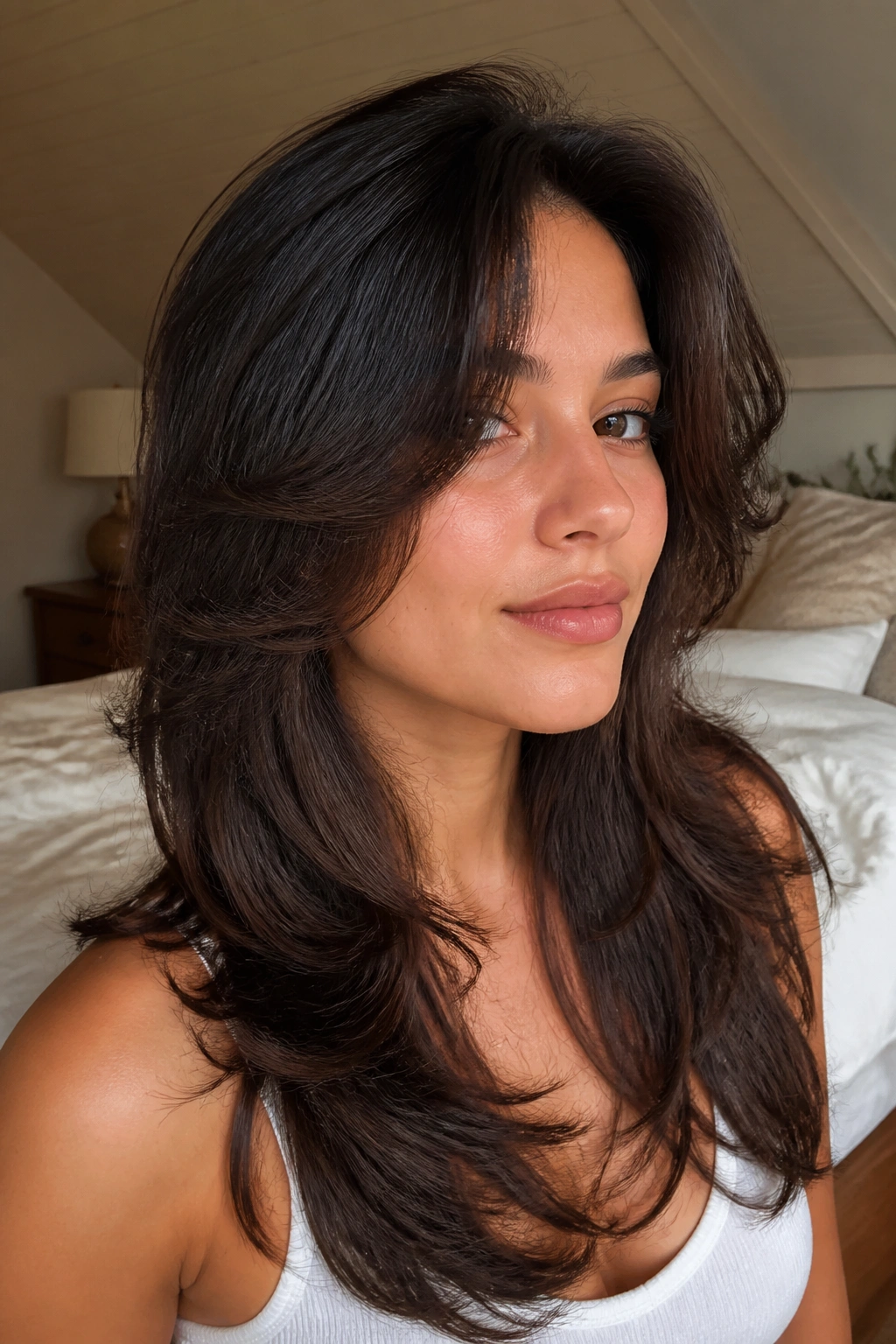
The butterfly cut is built for people who want long hair but hate the weight of long hair. It uses shorter face-framing layers on top and longer lengths underneath, which gives the illusion of more movement without sacrificing the overall length. On wavy hair, that can be a very smart trade.
The shorter top pieces can lift away from the face and crown, while the longer sections keep the haircut from feeling thin at the bottom. That combination works especially well if your waves tend to collapse under their own weight. It’s also flattering if you like styling the front pieces with a brush or hot tool, then leaving the rest alone.
A good butterfly cut should not look like two separate haircuts glued together. The transition needs to be soft. If the layers are too abrupt, the hair can look hacked apart instead of airy. Ask for a blended version and keep the shortest pieces around the cheekbone or chin.
8. Bixie Cut
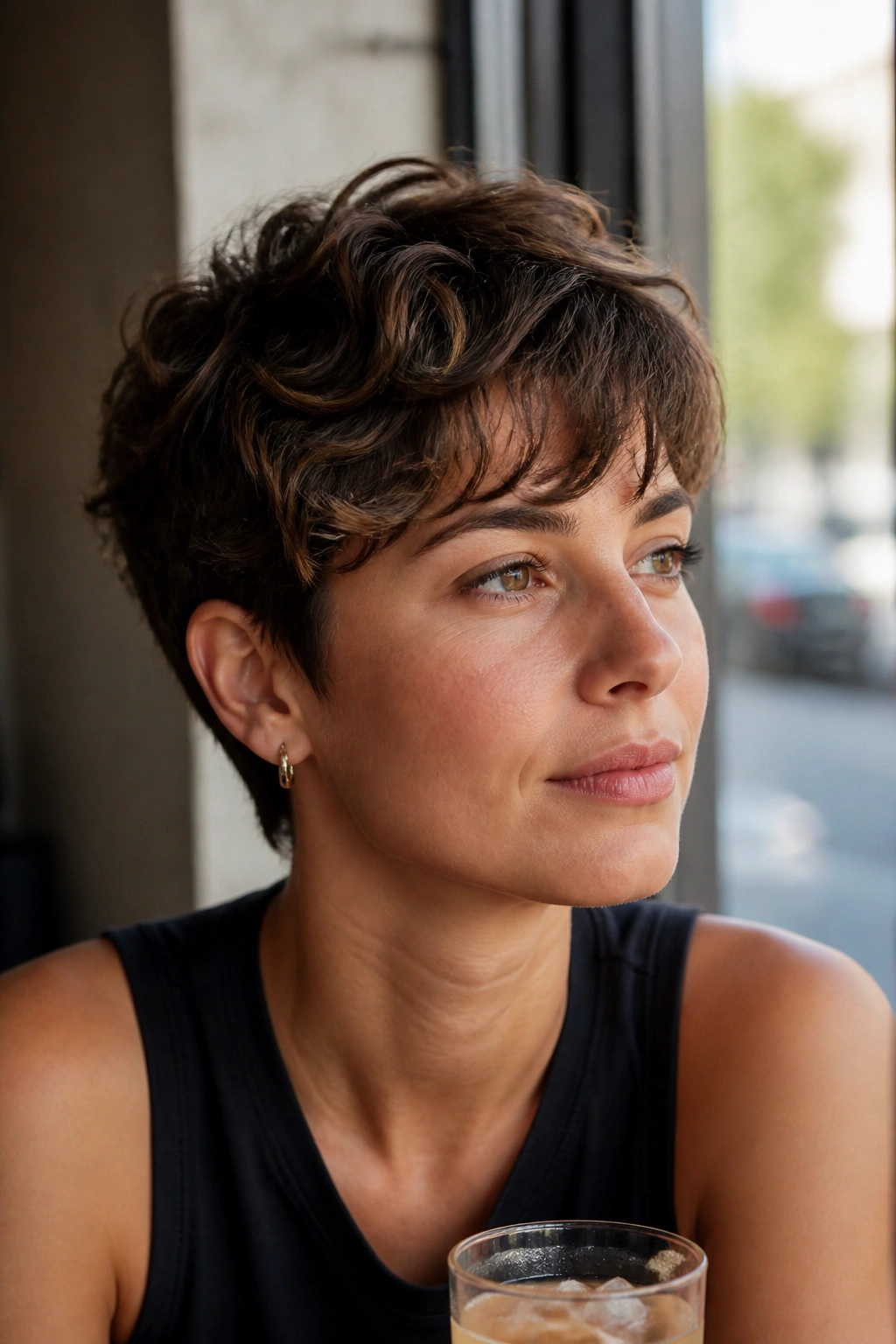
A bixie is the middle ground between a bob and a pixie, and that in-between space is exactly why it works so well on waves. The length is short enough to feel easy, but there’s still enough hair on top for the wave pattern to show. It looks sharp without feeling severe.
Why It Works
Wavy hair needs a little room to move, and the bixie gives it that room without drowning it in length. The sides stay neat, the crown keeps some height, and the top layers can fall in soft bends instead of lying flat. It’s especially good if your hair has enough texture to hold shape on its own.
Styling Notes
Use a pea-sized amount of styling cream or mousse, then scrunch and leave it alone for a while. Too much product weighs this cut down fast. If the top wants extra lift, rough-dry the roots with your fingers and stop once the shape is set. Over-styling is the enemy here.
9. Rounded Bob
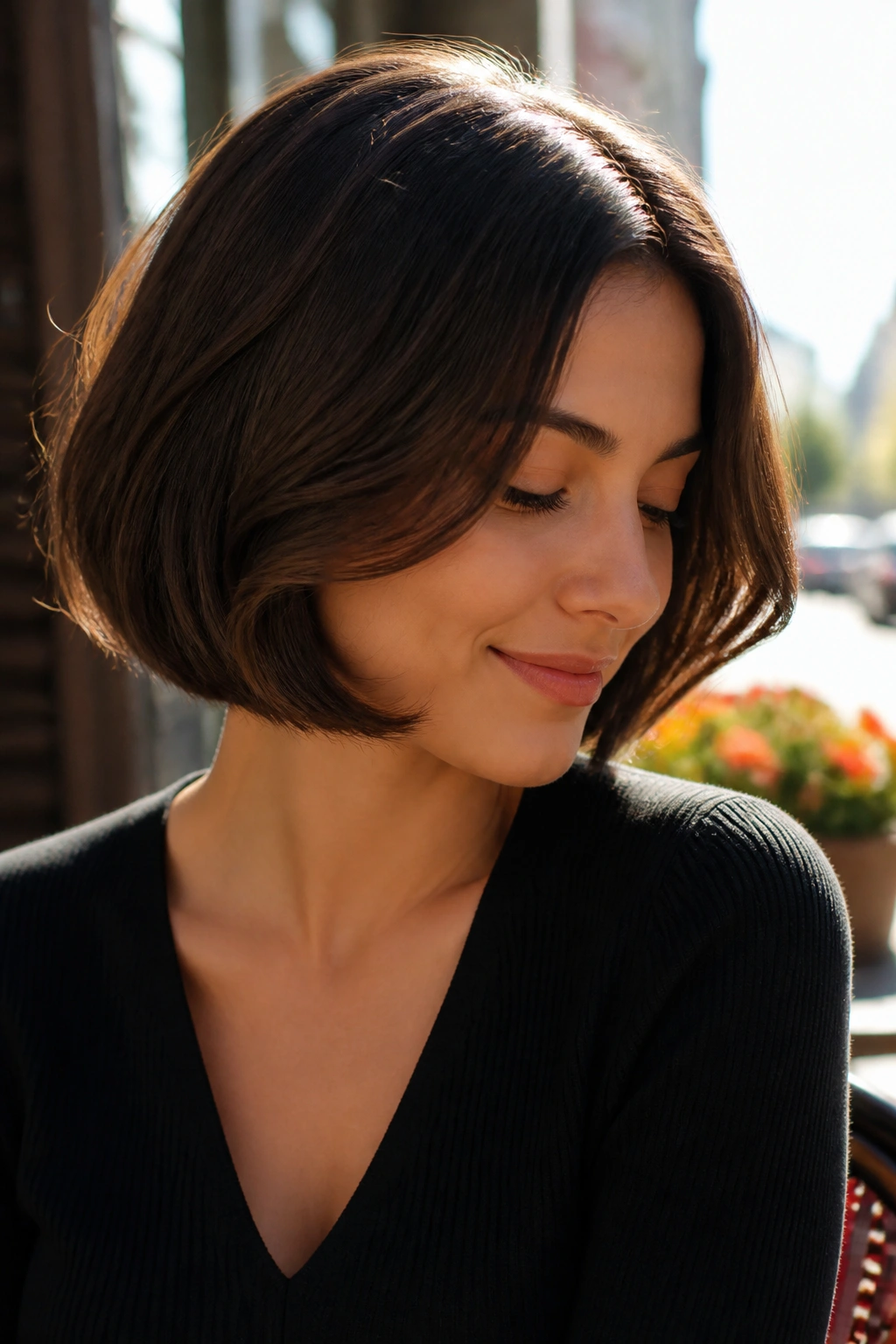
A rounded bob is a lovely option when you want your waves to look polished instead of shaggy. The cut follows the curve of the head and usually keeps a softer line around the jaw and neck. That round shape keeps the silhouette from feeling boxy, which is a problem some wavy bobs run into.
There’s something especially nice about how this cut moves when it’s fully dry. The hair sits close to the face, then flips softly at the ends or curves inward, depending on the wave pattern. It feels tidy without being stiff. That’s a rare thing.
This one works well on hair that has enough density to support shape, but not so much that the cut balloons out. If your wave pattern is loose and you like a neat finish, the rounded bob is a very solid choice. Keep the layers subtle. Too many chopped pieces will fight the shape.
10. Blunt Lob With Invisible Layers
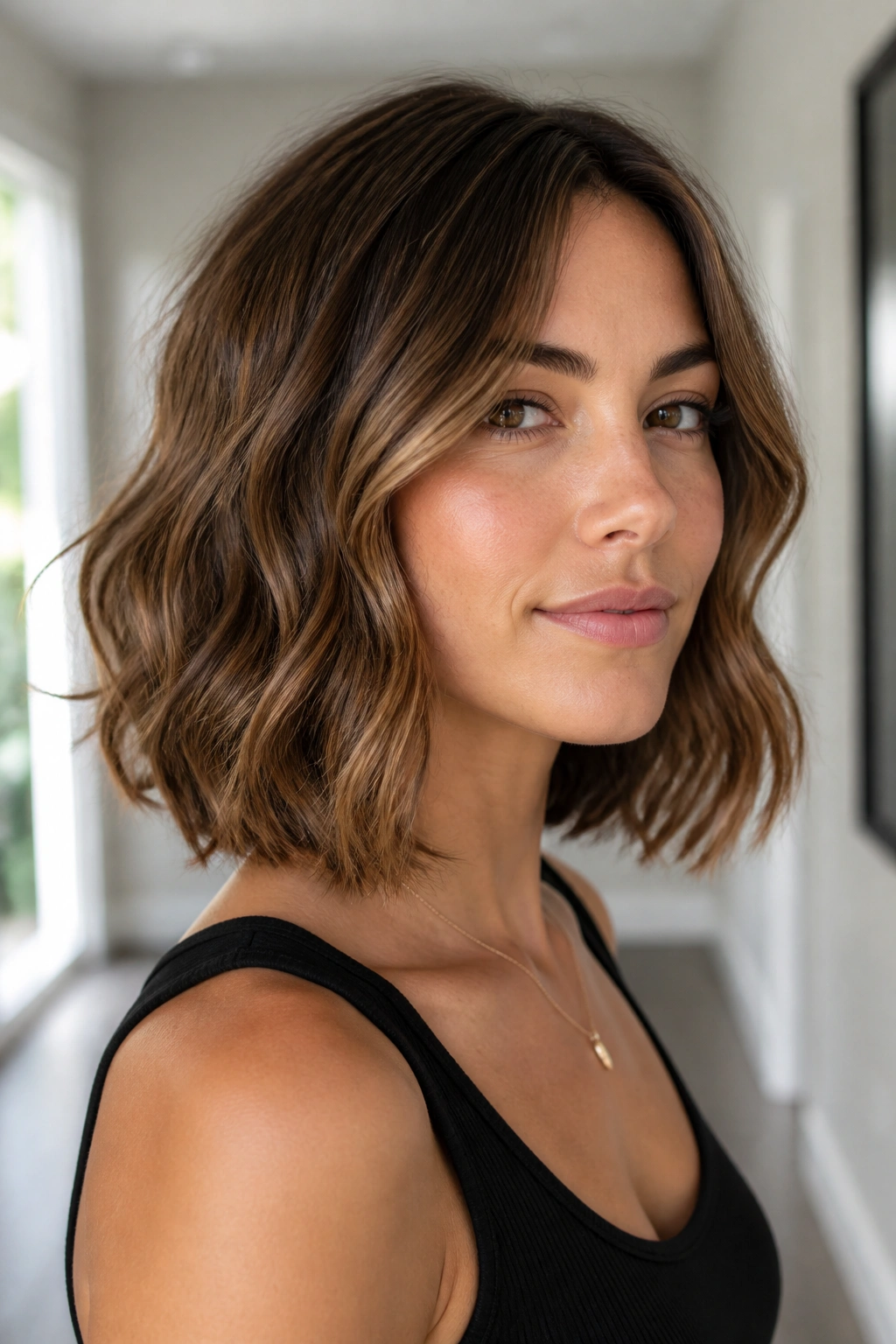
A blunt lob sounds simple, and that’s the point. The perimeter stays solid, usually around the collarbone or just above it, which gives wavy hair a clean edge and makes it look thicker. The magic is in the hidden part: invisible layers underneath that remove bulk without breaking the line.
- Ask for a blunt outline through the bottom
- Keep the layers hidden under the top surface
- Avoid aggressive razor ends if your hair frizzes
- Use a light cream or gel to keep waves clumped together
This cut is a smart pick if your hair is fine to medium and you want density at the ends. Too many visible layers can make that type of hair look wispy. A blunt lob keeps the shape strong, while the hidden layers stop it from feeling heavy or triangular. It’s tidy. It’s practical. And it usually air-dries well.
11. U-Shaped Cut
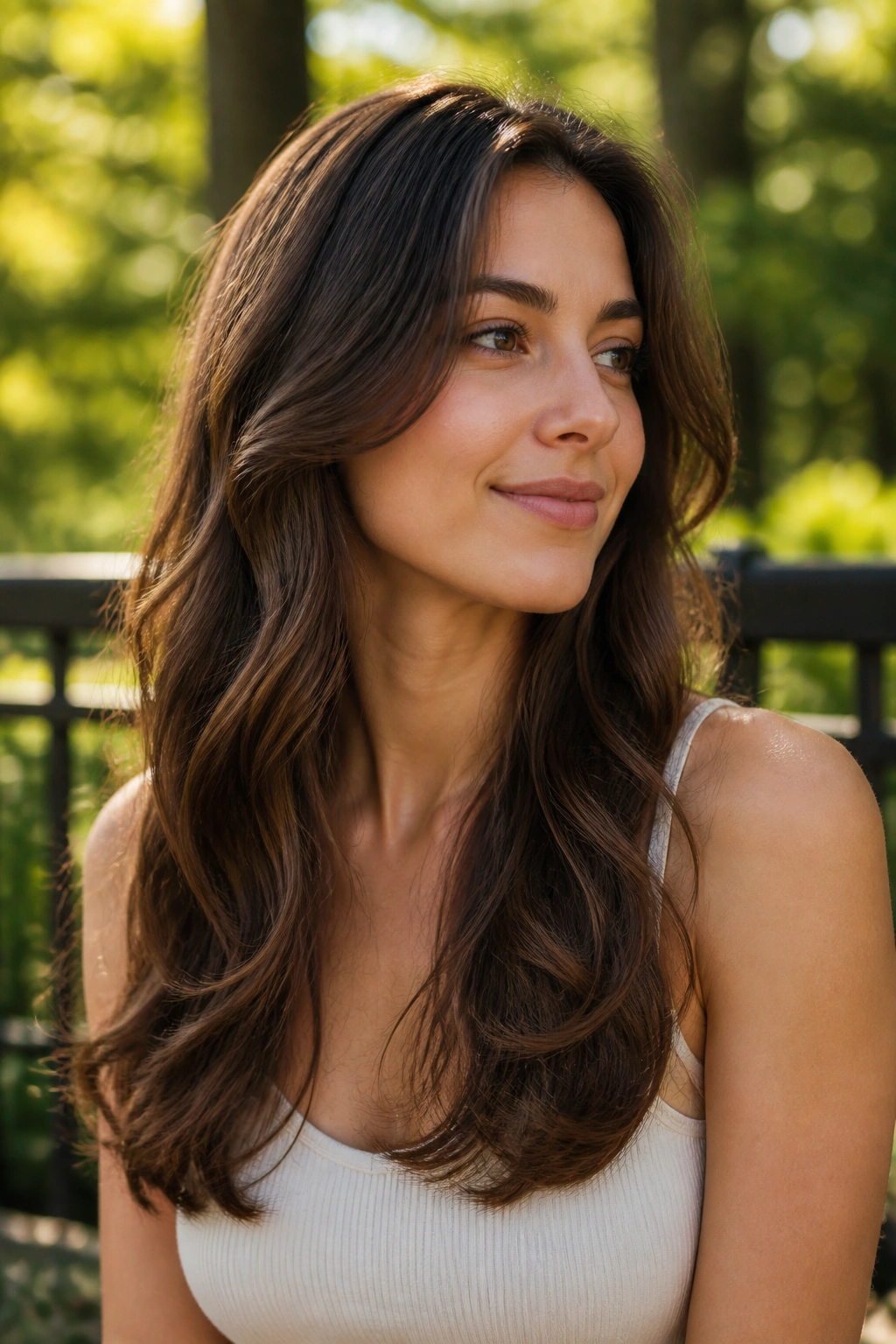
The U-shaped cut is one of the easiest ways to keep length while adding soft movement. Instead of a straight line across the back, the hair curves down in a gentle U, with the sides a little shorter than the center. That shape gives long wavy hair a more natural fall.
It’s a good choice if you like wearing your hair down a lot and don’t want it to look flat against the back. The curve helps the ends catch the eye instead of disappearing into one long slab of hair. On thick waves, it can also keep the cut from looking overly wide.
What I like about this shape is how low-drama it is. Nothing screams for attention. The haircut just makes the wave pattern look more finished. If you want movement without a lot of visible layers, ask for a soft U and a light face frame near the front.
12. V-Shaped Cut
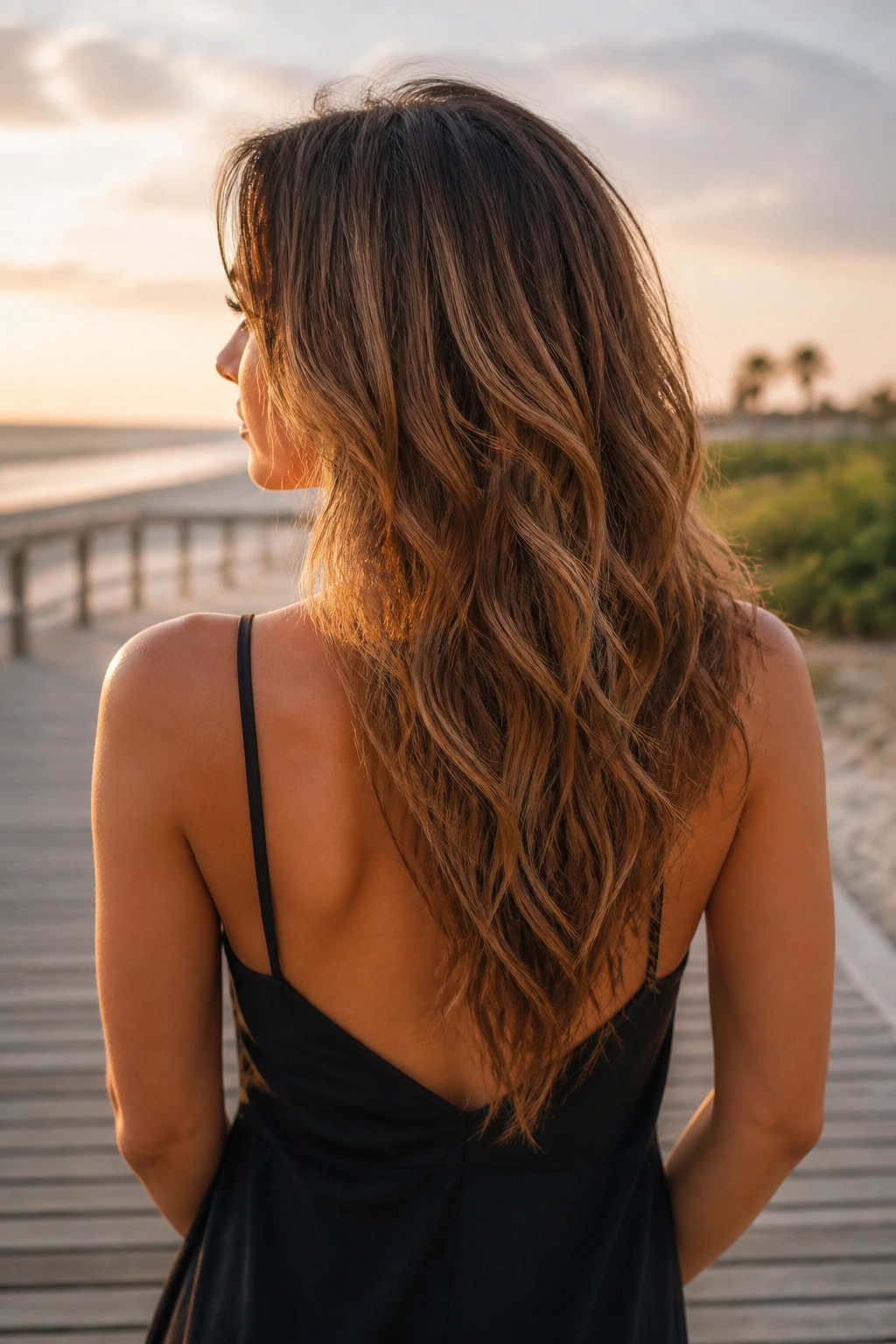
A V-shaped cut is more dramatic than a U-shape, and that extra point in the back can be a good thing on wavy hair. It keeps long lengths from feeling blunt and heavy, especially if your hair has a dense bottom half that tends to hang there like a blanket.
The V creates a strong taper through the back, so the hair moves more when you walk and swishes instead of just sitting. That can look beautiful on thick waves. It can also go wrong if the hair is too fine, because the point can look stringy once the length stretches out.
Compared with the U-shape, the V is sharper and a little more styled-looking. Choose it if you want your long waves to have a clear outline. Skip it if you prefer a softer finish or if your hair already feels thin at the ends.
13. Face-Framing Layers Only
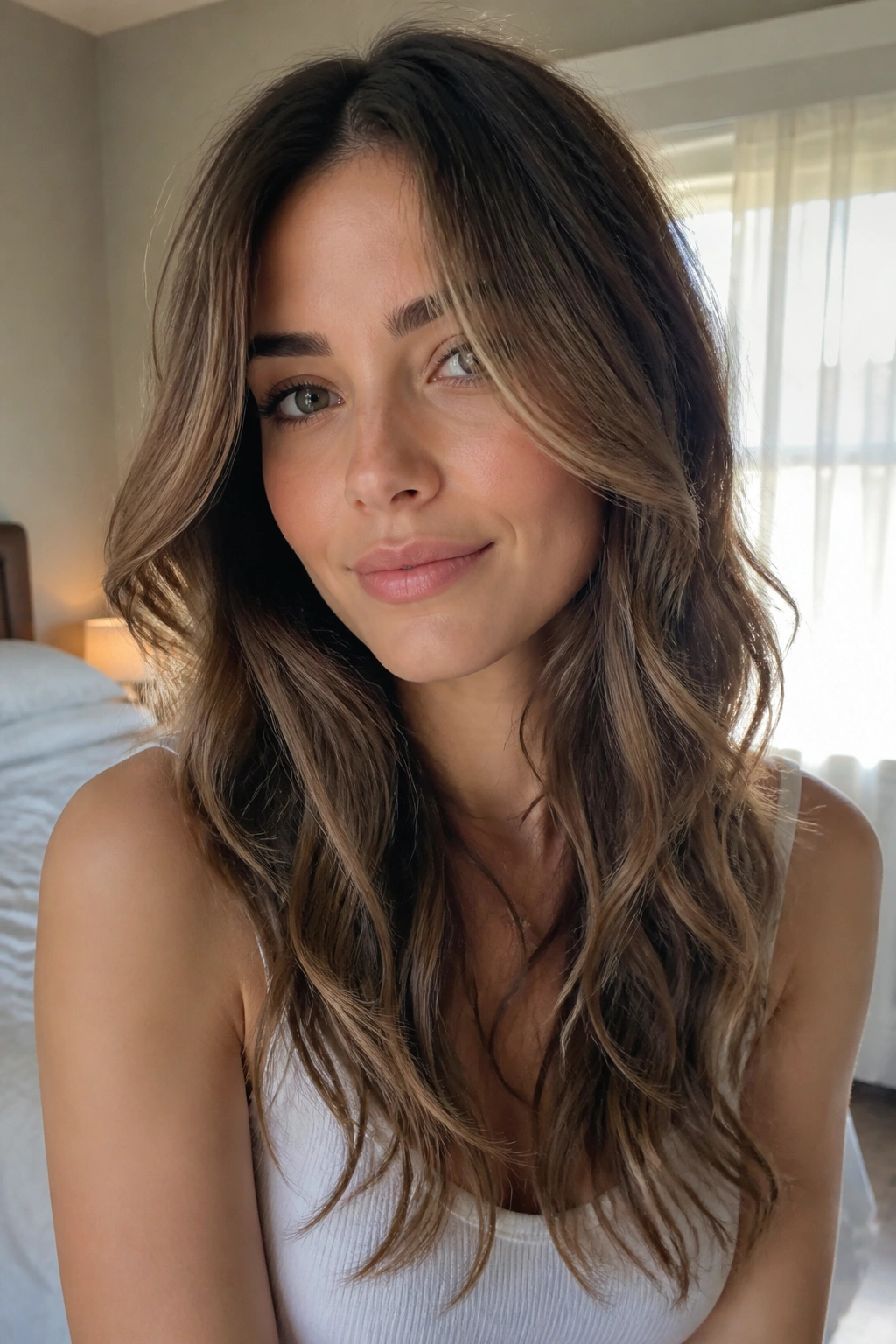
Why cut the whole head if the front is the part that bothers you? Face-framing layers can change the feel of a wavy haircut without taking away much length. They start around the cheekbones, lips, or chin, then melt into the rest of the hair. Small move. Big payoff.
This is a smart option if you’re growing out a cut or you like long hair but want it to stop hanging so heavily around the face. The layers open things up, which is especially nice if your waves sit flatter near the crown and fuller at the sides. The front gets motion. The rest stays long.
How to Ask for It
Tell your stylist you want the shortest pieces to start at your cheekbone or chin, depending on how much you want to show. Ask them to keep the layers soft and blend them into the length. If they take the front too short, the cut can jump up and look disconnected. A little restraint helps here.
14. Side-Parted Midi Cut

A deep side part can change a wavy haircut faster than almost anything else. It gives the roots a lift on one side, lets the waves fall in a looser pattern, and adds a bit of asymmetry without needing a dramatic cut. Pair that with a midi length — somewhere between the shoulders and the collarbone — and the result is easy to wear.
This works especially well if your hair tends to lie flat at the top. The side part creates instant volume at the crown, and the longer front side gives the waves somewhere to curve. It’s a very good choice for people who like their hair to look styled even when they haven’t done much to it.
Use a root spray at the part and flip the hair while drying for extra lift. You do not need a ton of product. The cut does the heavy lifting, and the part gives it attitude.
15. Asymmetrical Bob
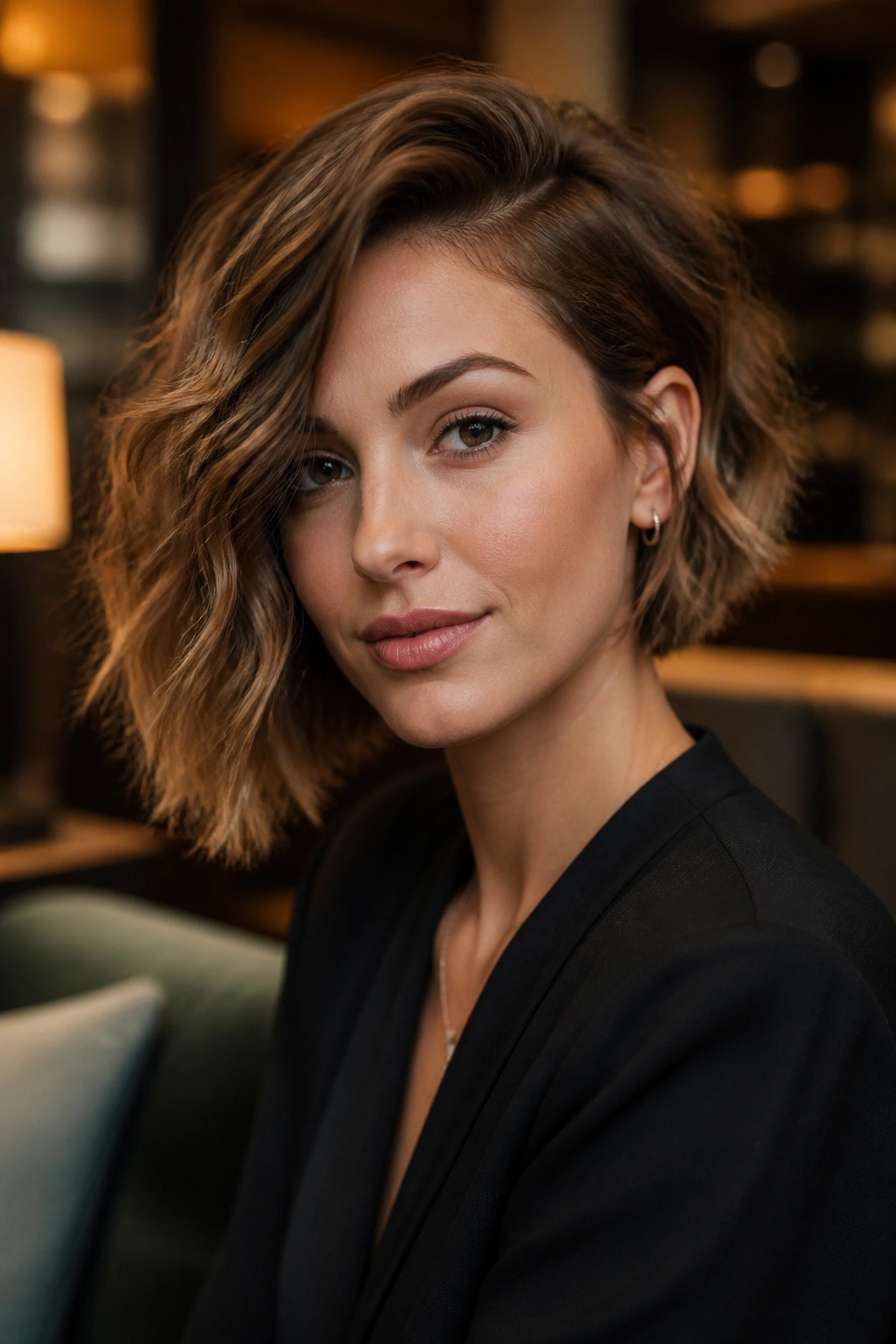
An asymmetrical bob has one side a little longer than the other, and that small difference can make wavy hair look sharper without being fussy. It gives the eye something to follow. It also takes the pressure off trying to make both sides mirror each other perfectly, which waves rarely do anyway.
The cut works best when the shorter side lands near the jaw and the longer side grazes the neck or collarbone. That keeps the imbalance intentional. If the difference is too subtle, it can look like a mistake. If it’s too dramatic, the cut can stop looking wearable for everyday life.
I like this shape when the hair has enough movement to show off the angle. It’s not a safe cut, and that’s the fun of it. On wavy hair, the bend softens the geometry, which keeps the look from feeling too sharp.
16. Mixie Cut
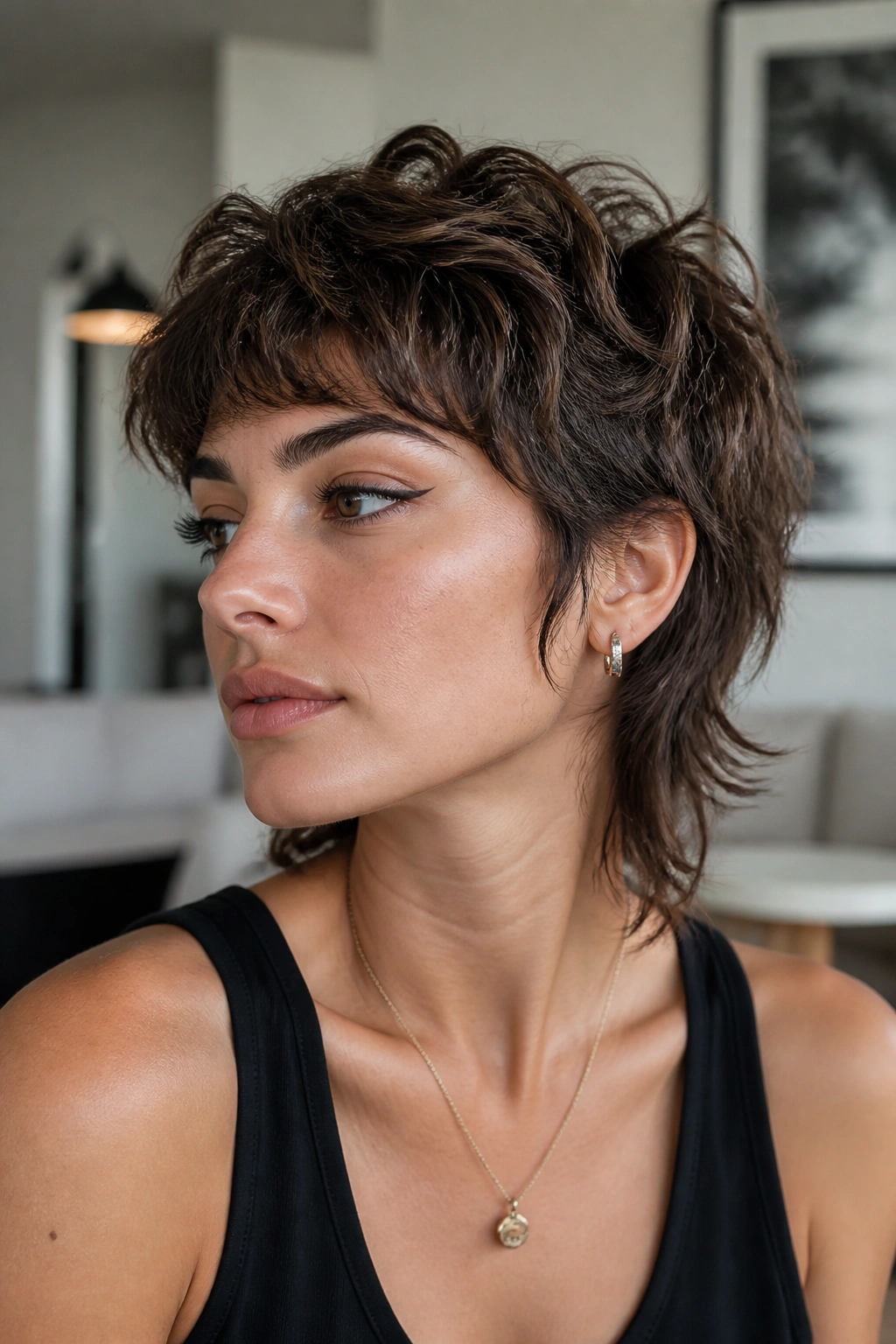
The mixie is what happens when a pixie and a mullet have a softer, less aggressive child. The top is short and piecey, the nape is a little longer, and the sides usually taper in a way that lets the wave pattern stay visible. It sounds odd on paper. On the right hair, it looks fantastic.
Who It Suits
This cut suits people who want short hair but do not want a tidy little helmet. Wavy texture gives it movement, and thicker hair keeps it from looking sparse. If your hair has good density and you like a bit of edge, the mixie can be a lot of fun.
What to Ask For
Ask for softness through the crown, a shorter perimeter around the ears, and a little length left in the back. Keep the texture choppy but not shredded. A styling paste can define the ends, though a tiny amount goes a long way. Too much product and the whole thing turns sticky.
17. Tapered Pixie
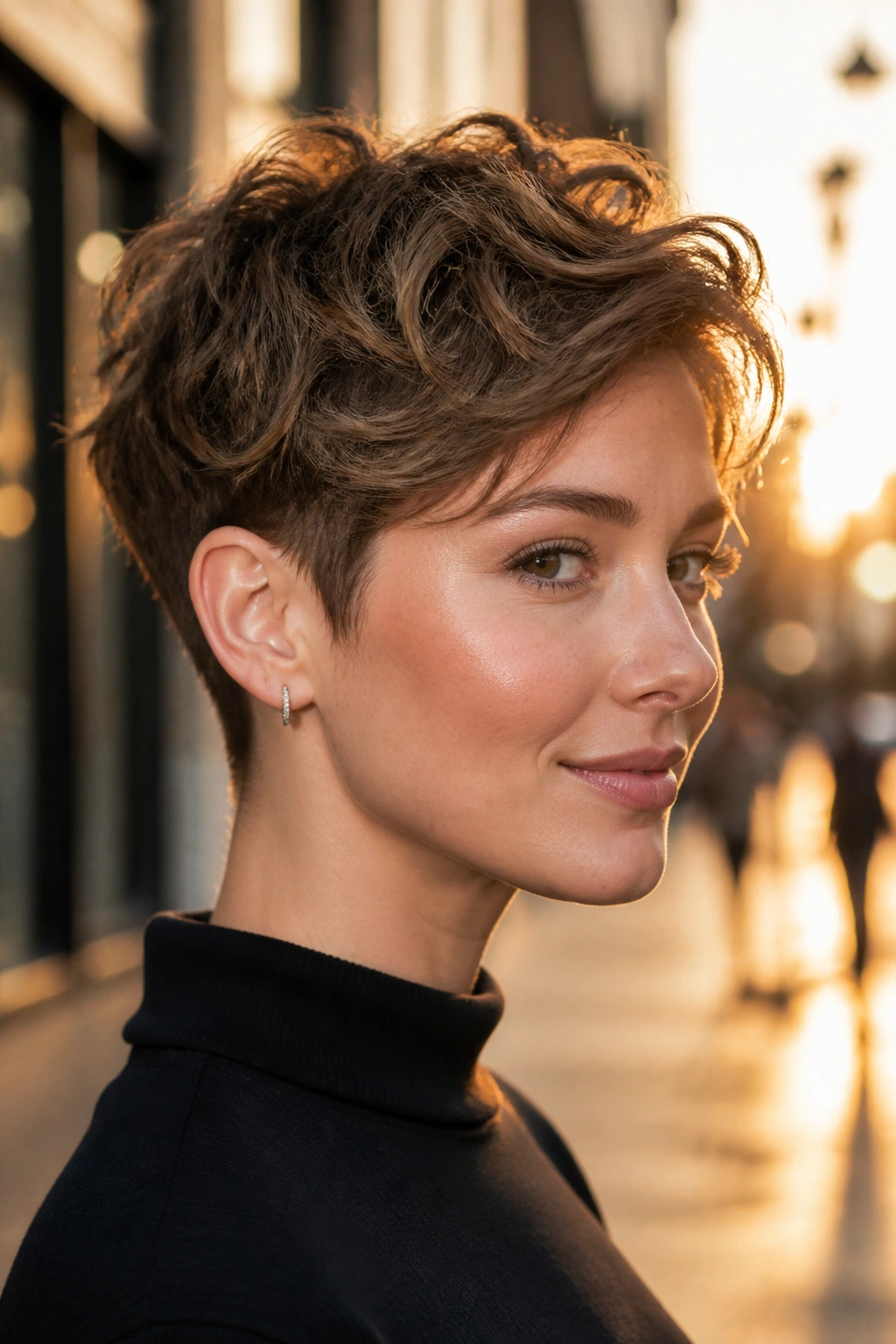
Can wavy hair pull off a pixie? Absolutely — if the top has enough length to show the bend. A tapered pixie keeps the sides and nape close to the head while leaving the top longer and soft enough to move. That balance matters more on waves than on straight hair.
The style can look delicate or sharp depending on how it’s cut. On loose waves, the top falls in small bends that give the whole cut a gentle shape. On stronger waves, the top gets more texture and a little lift. Either way, the haircut looks better when it’s not over-sculpted.
This is a low-commitment short cut in one sense and a high-commitment cut in another. The maintenance is real. Sideburns and neckline clean-ups matter. But if you like easy mornings and don’t mind a frequent trim, it’s a smart, clean choice.
18. Shoulder-Grazing Chop

A shoulder-grazing chop is one of those cuts that sounds plain and ends up being very useful. The length sits right around the shoulders, which is a sweet spot for waves because the hair is short enough to bounce and long enough to still tuck behind the ears or tie back.
The cut works well when the ends are slightly softened, not razor-thin. That keeps the shape from flipping out in a weird way at the shoulders. It also helps the hair dry with a nice bend instead of a puffy edge. If your waves tend to swell when they hit humidity, this cut can still behave.
What makes it stand out is how little drama it asks for. You can air-dry it, blow-dry it, clip it up, or leave it alone. It’s one of the most forgiving shapes on this list, and sometimes that is the nicest thing a haircut can be.
19. Choppy Midi Cut
A choppy midi cut gives wavy hair a pieceier, more lived-in finish. The length usually lands between the collarbone and the chest, and the ends are cut with enough texture to keep the waves from hanging as one block. It’s a good middle path if you want movement but still need enough length to do a ponytail.
- Works well on medium to thick wave patterns
- Gives flat waves more separation
- Can reduce bulk without going full shag
- Looks good with a middle part or loose side part
The cut does best when the stylist point-cuts the ends rather than slicing them blunt. That makes the finish feel lighter without making the hair look frayed. If you like hair that looks a little undone on purpose, this one is worth a close look.
20. Long Cut With Internal Layers
A long cut with internal layers is for people who love their length and do not want that length chopped into visible pieces. The outer shape stays mostly long and smooth, while the hidden layers take out the bulk underneath. On wavy hair, that can be the difference between elegant movement and a heavy curtain.
This approach is especially useful for thick or coarse waves. Those hair types can grow wide fast. Internal layers help the hair sit closer to the head and move more freely without sacrificing the overall outline. The result looks calm from the outside, but it behaves much better in motion.
If you’re nervous about layers, this is a good compromise. You keep the long look, but the hair becomes easier to dry, easier to brush, and less likely to puff out at the bottom. Quietly effective. That’s the whole appeal.
21. Soft Mullet
A soft mullet sounds like a bold choice because the name is a little cursed. The cut itself is easier to wear than people expect. It keeps length in the back, shortens the top and crown, and softens the sides so the transition feels modern rather than costume-like. Wavy hair gives it movement that straight hair often has to work for.
The best versions are not harsh. They’re feathered, airy, and a little messy in a controlled way. That makes them good for people whose waves naturally create texture around the ears and crown. Instead of flattening everything down, the cut lets the wave pattern build shape into the hair.
If you like hair that looks interesting even on a plain T-shirt day, the soft mullet can be a smart pick. If you want polished and traditional, it will probably annoy you. Honest answer.
22. Textured Crop
A textured crop is the short, straightforward option for wavy hair that likes to stand up a little. It keeps the sides neat and the top short enough to show the pattern without turning into a full pixie. On dense waves, it can look crisp and low-maintenance. On finer waves, it can look airy and clean.
The biggest advantage is how fast it is to style. A tiny bit of cream or matte paste, a few finger scrunches, and the haircut is done. That sounds simple because it is. The cut needs regular cleanup around the neck and ears, though, so the low styling time comes with a small maintenance trade.
This is a good choice if you want to stop spending 20 minutes trying to force waves into a shape they never wanted in the first place. Sometimes the easiest fix is the shortest one.
23. Shoulder-Length Shag With Bangs
A shoulder-length shag with bangs gives you a lot of movement without going fully wild. The layers create bounce through the body of the hair, while the bangs bring the attention up toward the eyes. On wavy hair, that combination can look relaxed, stylish, and easy to live with.
Bangs Done Right
The bangs matter more than people expect. If they’re cut too heavy, they can fight the rest of the cut and sit like a curtain that never opens. If they’re too thin, they disappear. A soft fringe that blends into the side layers usually works best. It should feel like part of the haircut, not a separate haircut on its own.
How to Wear It
Let the lengths air-dry and give the bangs a quick round-brush pass if needed. That one small step keeps the front from drying in odd bends. A little mousse at the roots can also help the crown stay lifted. The rest can stay loose and imperfect. That’s the point.
24. Chin-Length Bob
A chin-length bob is a gutsy cut for waves because there’s nowhere to hide. The shape sits right around the jaw, which means the wave pattern has to look intentional. When it works, it looks clean, fresh, and a little bit French without trying too hard. When it doesn’t, it can puff out. So this one asks for a good stylist.
The trick is softness through the ends and just enough internal shaping to stop the bob from becoming a cube. Some waves need a tiny bit of graduation in the back; others need the front left a touch longer. The cut should follow your hair’s behavior, not fight it.
If your waves are strong and your hair has enough density to support the shape, this bob can be excellent. It is not the most forgiving option, but it is one of the most striking.
25. Dry-Cut Layers That Follow Your Wave Pattern
Cutting wavy hair dry sounds simple, but it can make a huge difference when the waves grow in unevenly. A dry cut lets the stylist see where the hair actually bends, where it falls flat, and where it shrinks up more than expected. That matters because a wet wave and a dry wave are not always the same thing.
Why It Helps
Dry cutting is especially useful if your hair has mixed textures, stubborn crown pieces, or ends that flip in different directions. The stylist can adjust the length after seeing the real shape, not the stretched-out version that shows up when the hair is soaked. That often leads to a cut that feels more balanced the moment you leave the chair.
What to Watch For
- Ask whether the stylist will refine the shape dry after an initial guide cut
- Bring your hair in how you usually wear it, not brushed flat
- Speak up if one side always waves tighter than the other
- Expect small corrections, not one dramatic chop
This is one of those things that seems boring until you’ve had a cut that finally works on the first try.
Final Thoughts
The best haircuts for wavy hair are the ones that work with your wave pattern instead of pretending it behaves like straight hair. That sounds obvious, but it is where a lot of bad cuts go sideways. A good shape gives you movement, keeps the ends from getting heavy, and makes the hair look better with less effort.
If you’re sitting on the fence, start with something forgiving: a collarbone lob, long layers, or a soft shag. Those cuts give you room to learn what your waves want. Shorter styles can be wonderful too, but they ask more of the cut and more of the grow-out.
Bring photos, yes. Bring a little honesty too. Tell the stylist where your hair gets flat, where it frizzes, and whether you actually style it or mostly let it do its thing. That tiny conversation saves a lot of regret later.
