



A short asymmetrical cut can do something plain hair rarely does: it makes waves look deliberate.
Wavy hair has a sneaky habit of changing shape from one day to the next. One side flips out, the other side collapses, and suddenly the whole haircut feels wider than it should. An asymmetrical shape takes that chaos and gives it a line to follow. One side can graze the cheekbone, the other can stop at the jaw, and the difference between those two lengths is what keeps the style from looking boxy.
That tiny shift changes everything.
The best short asymmetrical hairstyles for wavy hair don’t fight the bend in the hair. They use it. A good stylist will watch how your waves sit when they’re dry, then decide where the longer side should land and where the shorter side can be carved in tighter. That matters more than people think, because wavy hair shrinks, springs, and puffs in ways a wet cut won’t always predict.
1. Chin-Length Asymmetrical Bob With a Deep Side Part
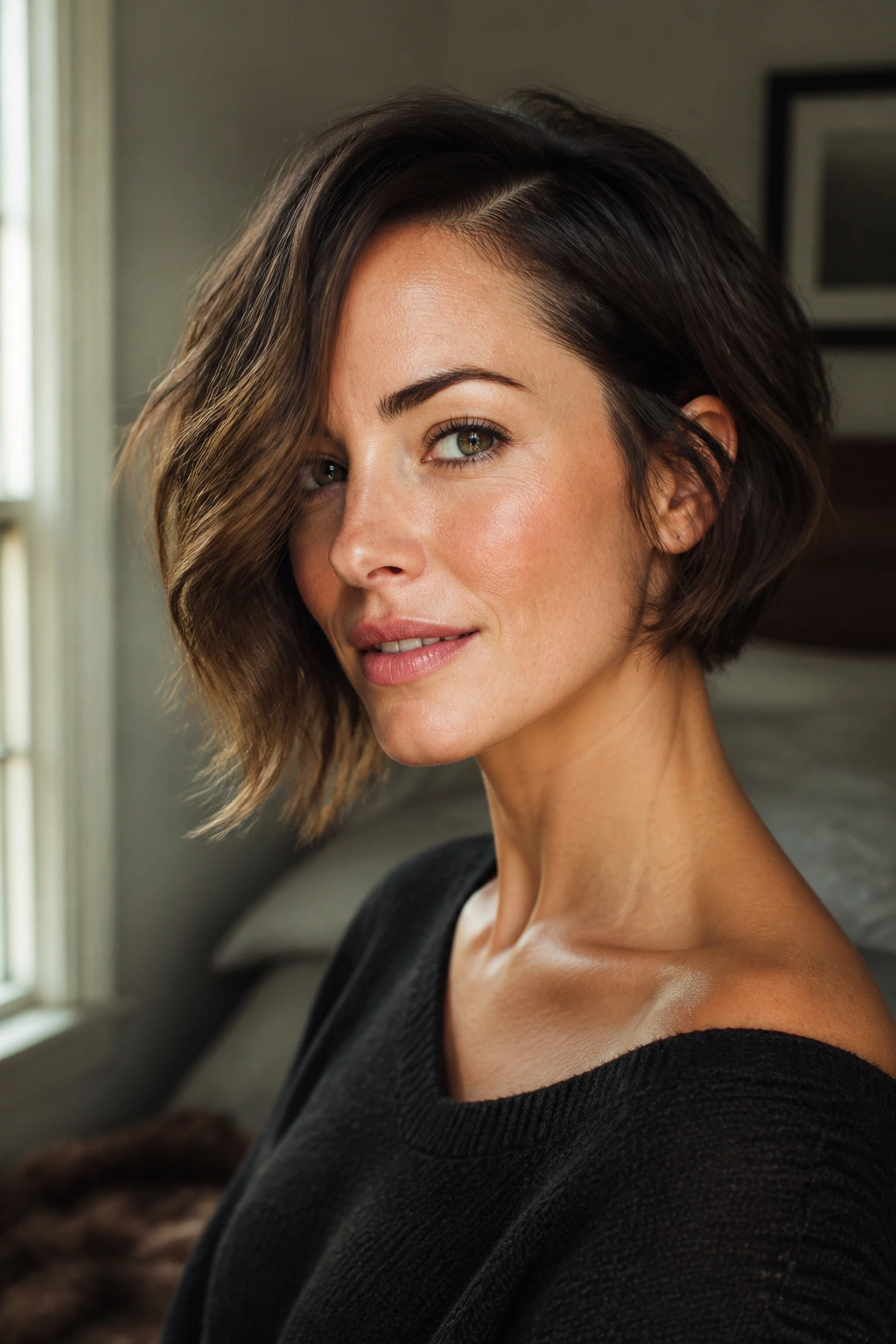
This is the haircut that gets people to ask, “Who did your hair?” even when you’ve barely done anything to it.
The shape is simple: one side sits a little longer, usually by about an inch or two, and the part is pushed deep enough to create a real diagonal line across the face. On wavy hair, that line gives the movement somewhere to go. The shorter side opens the cheekbone. The longer side drapes and softens the jaw. It’s neat without feeling stiff.
Best for: medium-density waves, square or round faces, and anyone who likes a clean shape that still moves.
Ask for:
- A chin-length bob with one side slightly longer
- Soft point-cut ends instead of a blunt, heavy edge
- A deep side part that follows your natural fall
- Light graduation at the back if your hair grows wide at the nape
Styling tip: Put mousse at the roots, scrunch in a little cream through the mids, and let the front pieces dry with the part already set. If you keep switching the part while it’s damp, the asymmetry loses its shape fast.
2. Textured Pixie With a Long Swept Fringe
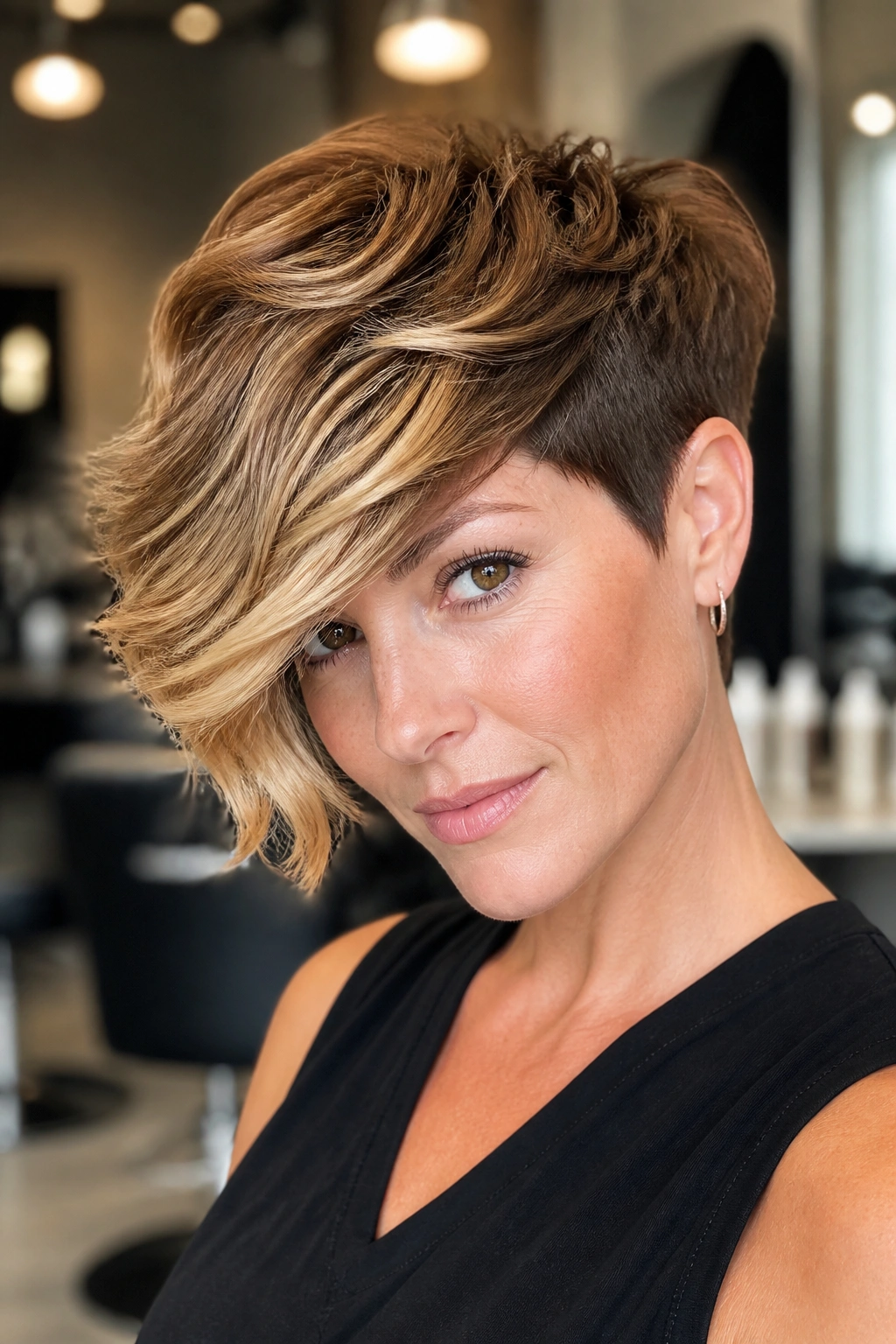
Why does this cut work so well on waves? Because the fringe does most of the talking.
A pixie can look too crisp on wavy hair if the top is cut short everywhere. Give it one longer, side-swept fringe, though, and the cut suddenly has motion. The front falls across the forehead in a loose arc, while the back and sides stay close enough to keep the whole shape sharp. It’s a nice mix of softness and control.
What makes it different
The longer fringe lets your wave pattern show up where people actually notice it. That matters. A wave that bends just above the brow looks intentional; a wave that sticks up at the crown can look like you fought your hair and lost. This cut avoids that.
How to wear it
- Blow-dry the fringe in the direction you want it to sit, not straight down.
- Use a pea-sized amount of paste on the ends only.
- Skip heavy oils near the roots; they flatten the lift that gives this cut its edge.
A little mess is good here. A lot of mess is not.
3. Jaw-Skimming French Bob With Uneven Sides
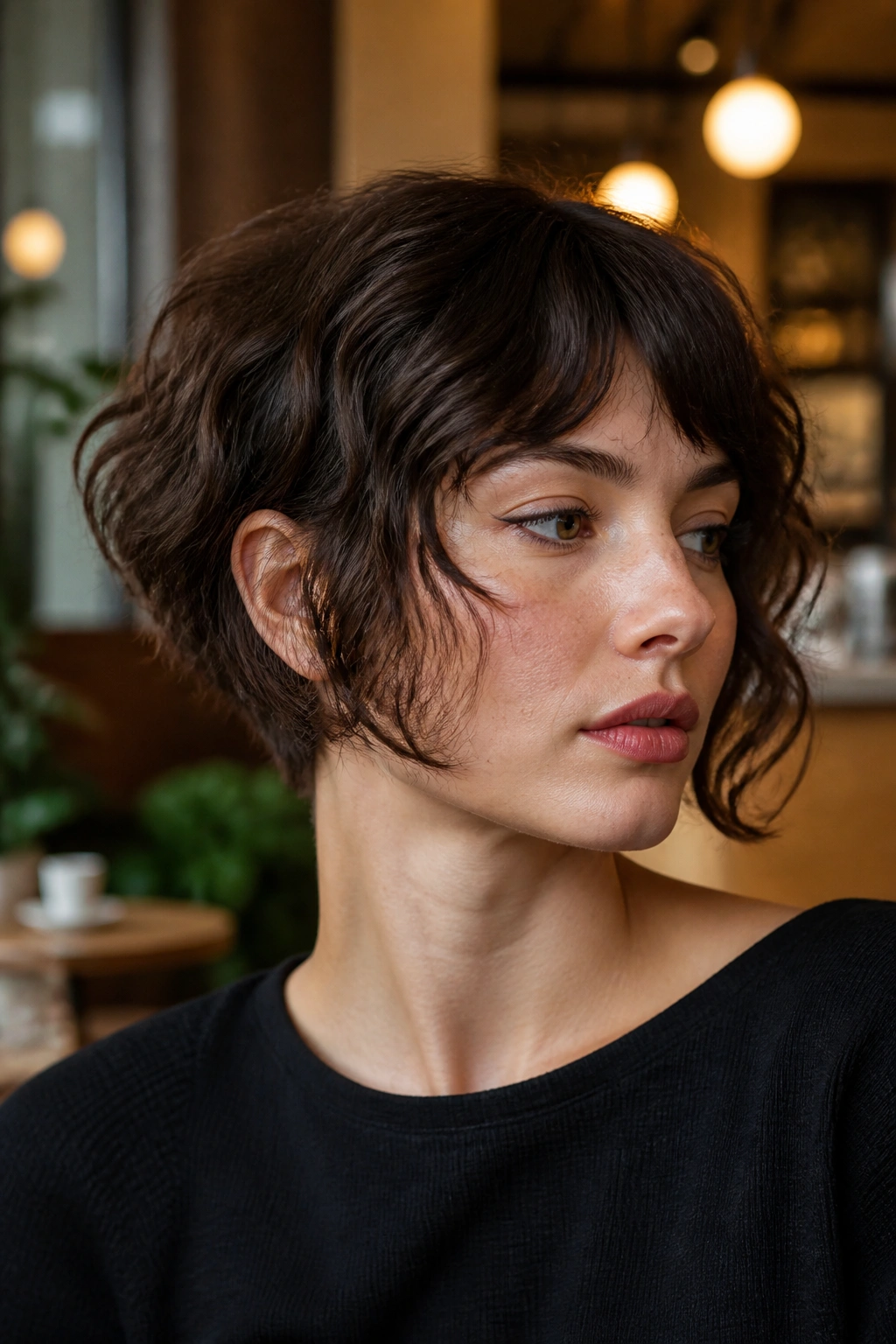
A French bob has a certain attitude already, and the asymmetry keeps it from feeling too sweet.
The shorter side can stop right at the jaw while the longer side curves toward the corner of the mouth. On wavy hair, that tiny difference makes the cut feel lived-in, not polished to death. The line is short enough to feel fresh, but the ends stay soft enough that your waves still do their thing.
I like this cut on hair that bends rather than coils. It has room to breathe. If your waves are loose and your density is medium, the shape tends to sit right without much fuss. If your hair is very thick, ask your stylist not to overload it with layers. Too much thinning turns a chic bob into a frizzy halo.
A few things that help:
- Keep the hemline blunt enough to hold the shape.
- Let the waves dry in loose clumps.
- Tuck the shorter side behind the ear when you want more face framing.
The result is a haircut that feels quiet from a distance and a little sly up close. That’s the sweet spot.
4. Undercut Pixie for Thick Waves
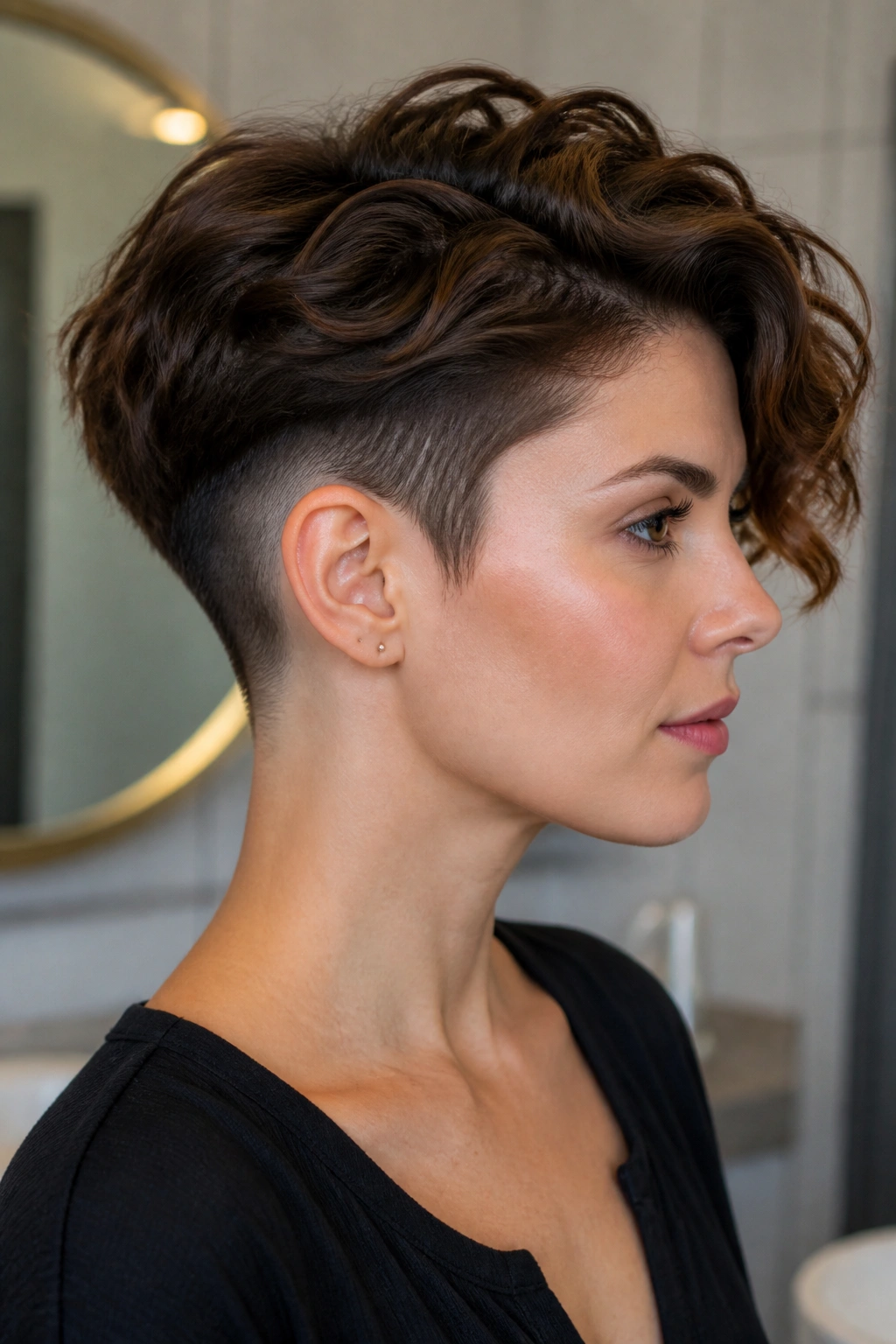
Thick waves can be glorious, but they can also sit like a helmet if the cut keeps too much bulk in the wrong places.
An undercut pixie fixes that fast. One side, or the nape, gets clipped shorter underneath, while the top stays longer and wavier. The contrast gives your hair a lighter feel and makes the asymmetry obvious without needing a dramatic length gap. It’s not subtle. That’s the point.
Why it helps thick hair
Dense waves tend to expand outward, especially around the ear and neckline. Removing a little weight underneath stops the puffing before it starts. The top can then flip, curl, or bend without fighting a heavy base.
What to ask your stylist for
- A short undercut at the nape or on one side only
- A longer top section that can be swept forward or across
- Soft connection points so the cut doesn’t look choppy in the grow-out stage
This one does need maintenance. Not every four days, no. But the undercut will grow in faster than the top, and you’ll notice the shape fading once the shaved section starts to blur. If you like a crisp edge, plan for regular trims.
5. Collarbone Lob With One Front Corner Longer
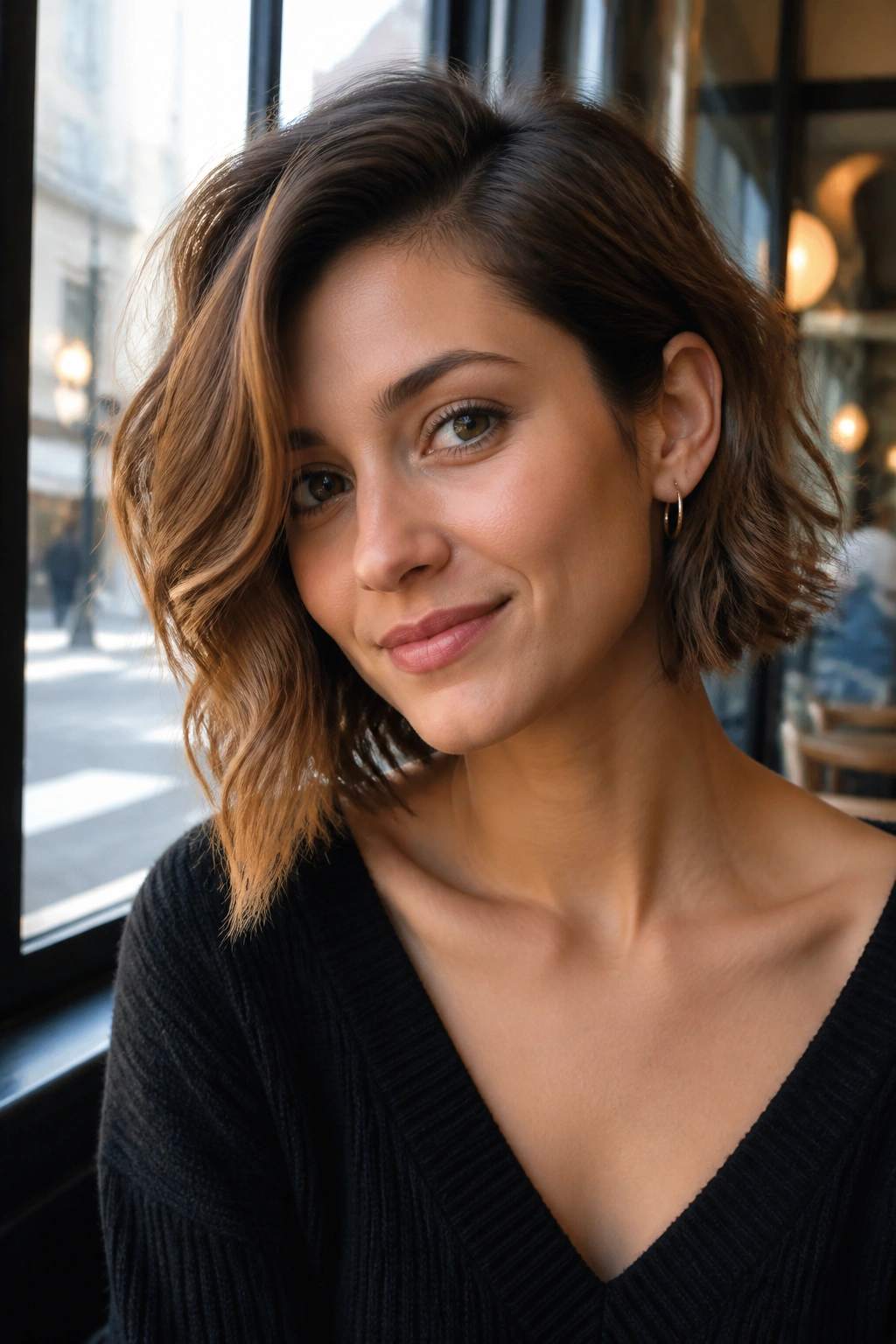
Not every short asymmetrical style has to sit above the chin.
A collarbone lob can still count as short when the back is trimmed up and one front corner hangs lower than the other. On wavy hair, that longer front piece adds a little swing every time you turn your head. It’s a good choice if you want asymmetry but aren’t ready to go all the way to a crop.
The best version keeps the back tidy and the front soft. You want a shape that looks clean when your hair is tucked behind one ear and relaxed when you let it fall forward. That’s what makes the cut feel flexible instead of fussy.
Styling note: Use a diffuser only until the hair is about 80 percent dry, then let the rest air-dry. If you fully blast the front pieces, they can puff and lose that clean diagonal line.
This cut is especially kind to people growing out a bob. It gives the eye something to follow, so the in-between stage looks deliberate.
6. Stacked Bob With Soft Graduation
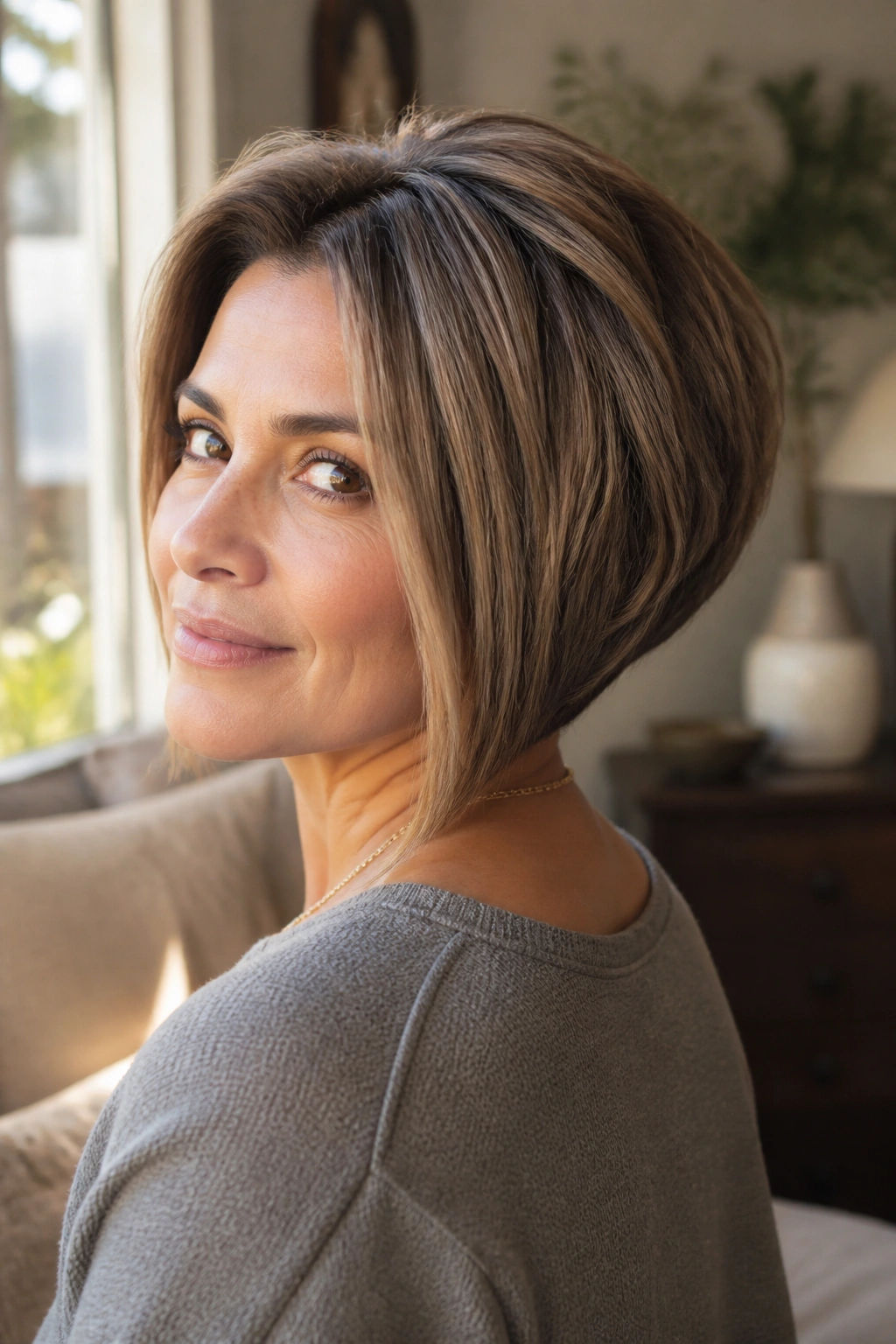
A stacked bob can be a little too neat if it’s cut with a hard edge. Soft graduation fixes that.
The back is trimmed shorter and built up in small layers, which gives the crown a lift. One side is left a touch longer so the silhouette doesn’t read as symmetrical from every angle. On wavy hair, that means you get volume at the back and movement around the face without the whole cut turning puffy.
The shape in a mirror
You should see lift at the crown, curve through the sides, and a slightly longer fall on one front panel. If the back feels heavy or the sides balloon out, the stacking was probably too blunt. A good stacked bob should move when you turn your head. It should not stand there like a helmet.
Ask for this if you want:
- More height at the crown
- A clean neckline
- A bob that looks styled even when you air-dry it
I’m partial to this cut on wavy hair that tends to lie flat at the roots. The stacked back gives it some backbone.
7. Razor Shag With an Asymmetric Perimeter
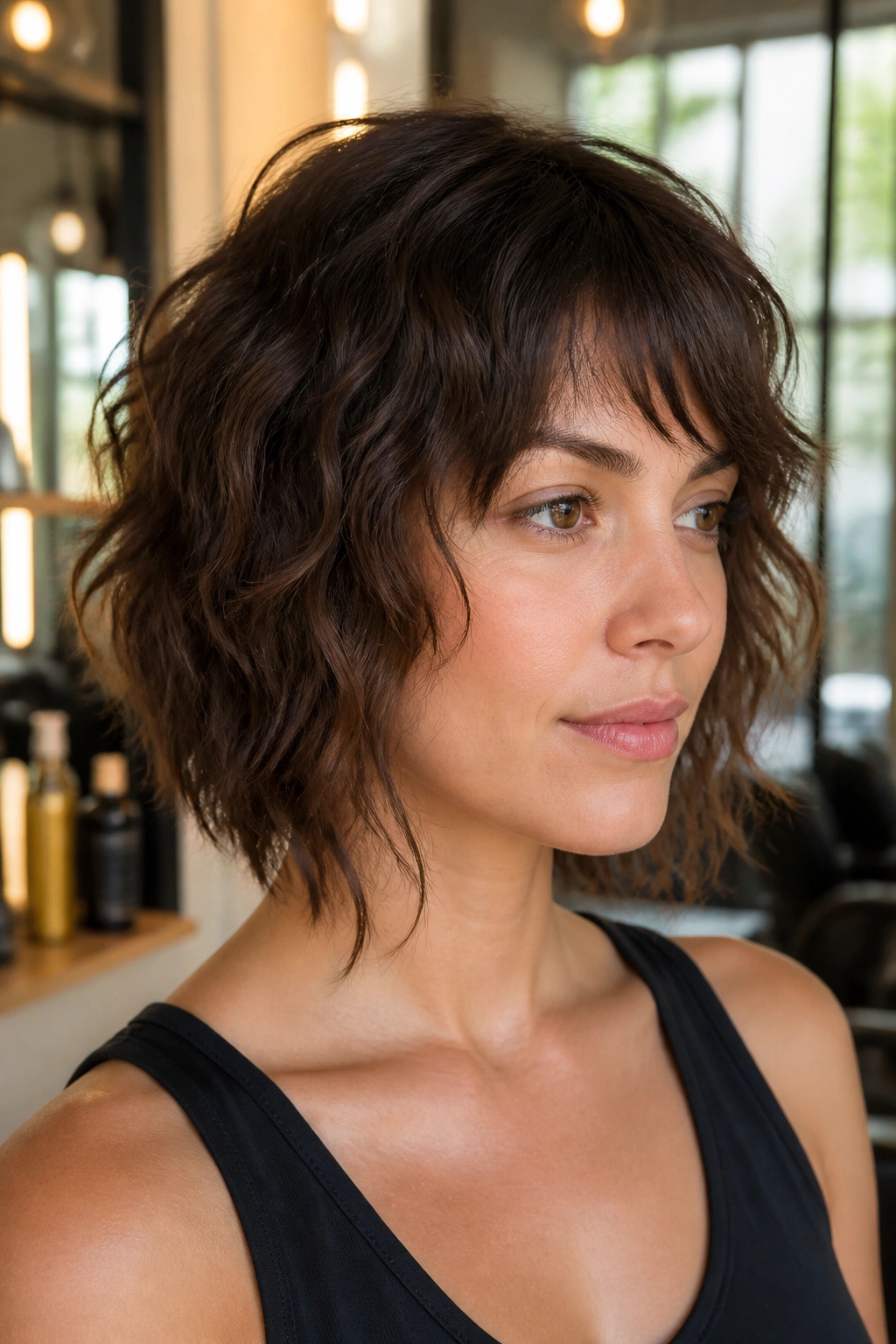
This one has a little grit, and I mean that in the best way.
A razor shag uses softer, sliced ends and uneven layers to build movement. Add an asymmetric perimeter—one side a little longer, the fringe slightly off-center—and the whole cut starts to feel like it’s in motion even when you’re standing still. It’s a very good haircut for people who hate the feeling of hair sitting too tidy on the head.
The trick is not to over-layer it. Wavy hair already has texture. If you carve in too many short layers, you can end up with frizz that looks like static instead of shape. A better shag keeps the ends soft and the top pieces long enough to bend.
How to style it:
- Work in a lightweight curl cream.
- Scrunch, then stop touching it.
- Let a few pieces fall where they want.
The asymmetry here isn’t loud. It’s more like a tilt. That’s what gives the cut its charm.
8. Side-Swept Crop With a Tapered Nape
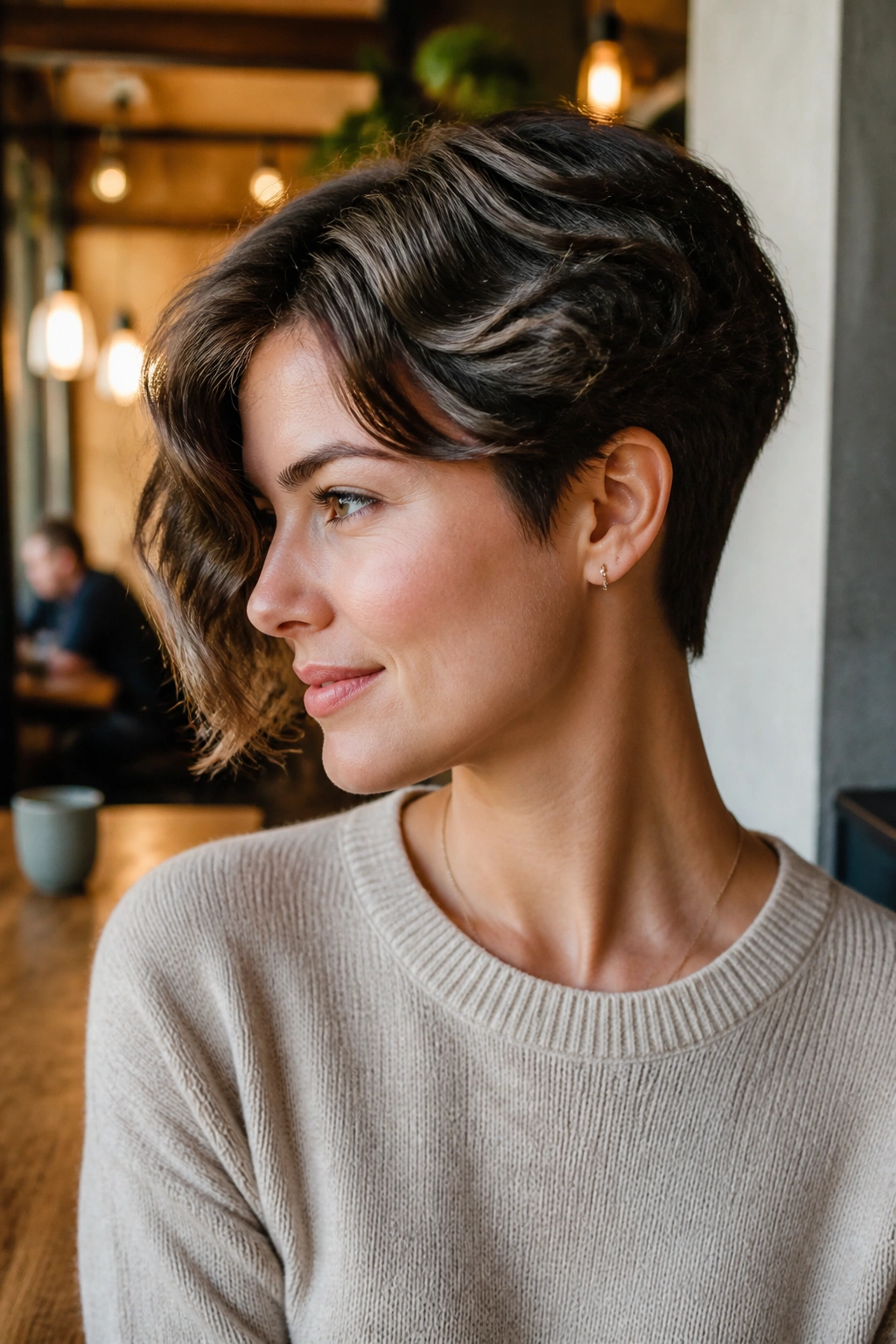
A side-swept crop is short, practical, and a little bit cheeky.
The nape stays tapered close to the neck, while the top stays longer and gets pushed to one side. Because the wave pattern is allowed to fall forward rather than out, the cut doesn’t look boxy. It’s a smart choice if you want something short enough to feel light but not so cropped that you lose softness.
This is one of those styles that looks even better after a day or two. Freshly washed, it can sit almost too neatly. Once the waves break up a bit, the shape loosens and the asymmetry shows through more naturally.
Good fit for:
- Fine to medium waves
- Busy mornings
- People who want less hair at the neck without going full pixie
There’s a reason this cut keeps coming back in one form or another. It’s easy to live with. Not boring. Just easy.
9. Bixie With a Longer Temple Piece
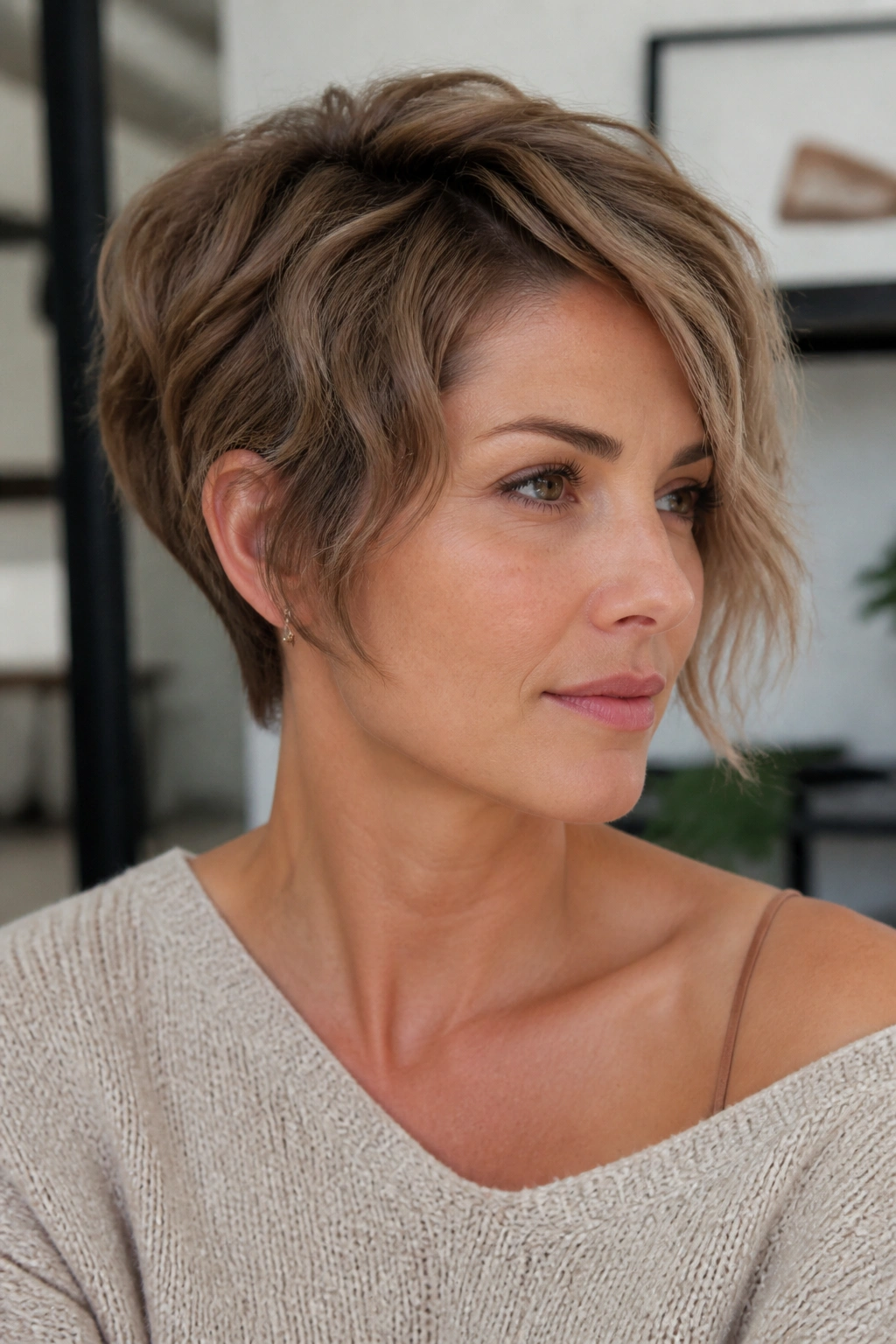
The bixie sits in that useful middle zone between a bob and a pixie, which is why I keep recommending it to people who can’t decide.
One temple piece stays longer than the rest, usually just enough to skim the cheek or brush the jaw. That single longer section gives the cut its asymmetrical feel. The rest stays cropped and feathered, so the overall shape still feels short and airy. Wavy hair adds a lot here, because the bend gives the bixie a bit of swing that straight hair has to fake.
Why it’s different from a plain pixie
A plain pixie can look all one note. The bixie has more range. You can tuck the longer side behind your ear, push it forward, or let it fall across the face. It changes the mood of the cut without needing a trim.
What to ask for
- Shorter back and sides
- A longer temple or cheek piece on one side
- Feathered ends, not blunt chunks
If you like the idea of short hair but hate hard edges, this is a very sensible place to start.
10. Soft Mullet With Wavy Ends

A mullet sounds dramatic, but on wavy hair it can be softer than people expect.
The front and sides stay short, the back stays longer, and the transition between them is kept loose enough that the shape reads modern rather than costume-y. The asymmetry comes from the uneven length play between the front panels and the back. Wavy ends make it feel less severe. That’s the whole trick.
The best versions of this cut don’t try to look “perfect.” They lean into texture. A wave that flicks out near the cheek and another that bends in at the neck gives the shape its personality. If you’re someone who likes hair with a little bite, this one delivers.
A blunt mullet can be harsh. A soft one feels easier to wear.
Use a salt spray or light mousse for grip, then twist a few sections with your fingers while drying. You want separation, not fluff. That difference matters more than people realize.
11. Asymmetrical Bowl Cut With Soft Edges
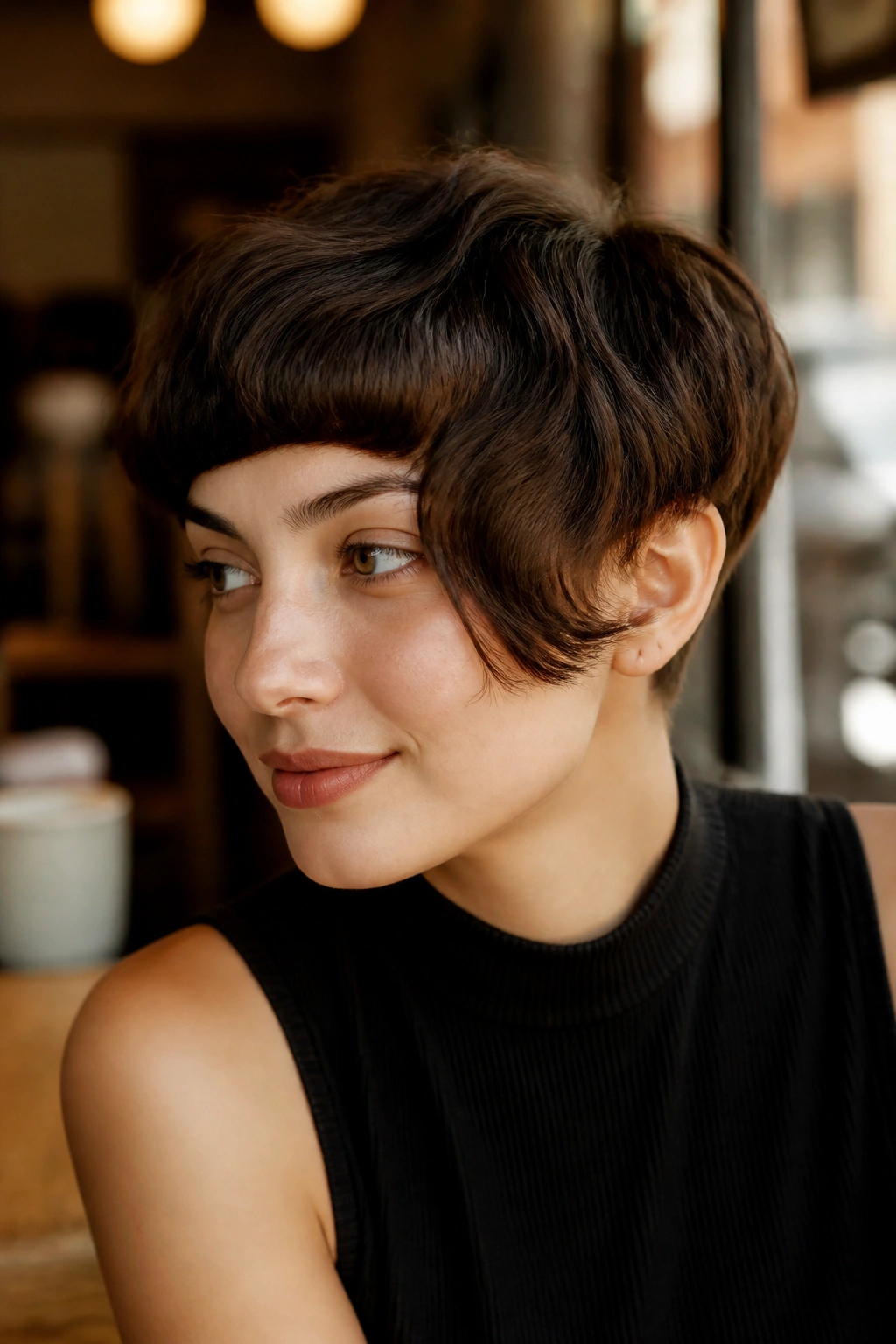
This is the boldest cut on the list, and I mean that without apology.
A modern bowl cut on wavy hair can look surprisingly good when the edges are softened and one side is left slightly longer. The rounded shape gives the face a frame, while the asymmetry keeps it from looking too literal. It’s clean, sculptural, and a little rebellious. If you like haircuts with shape, this one is worth a close look.
What keeps it wearable
The bowl shape needs softness at the perimeter. Hard lines can make wavy hair spring in odd places, especially around the temples. Soft edges let the cut move instead of puffing outward. A longer side panel also breaks up the circle so the haircut feels intentional.
How to wear it without overthinking it
- Let it dry with a side part already set.
- Use a small amount of cream, not a heavy balm.
- Tuck the longer side behind the ear when you want a cleaner profile.
This cut will not suit everyone. Good. It shouldn’t. When it does suit someone, though, it looks sharp in a way that’s hard to fake.
12. Cropped Cut With One Ear Visible
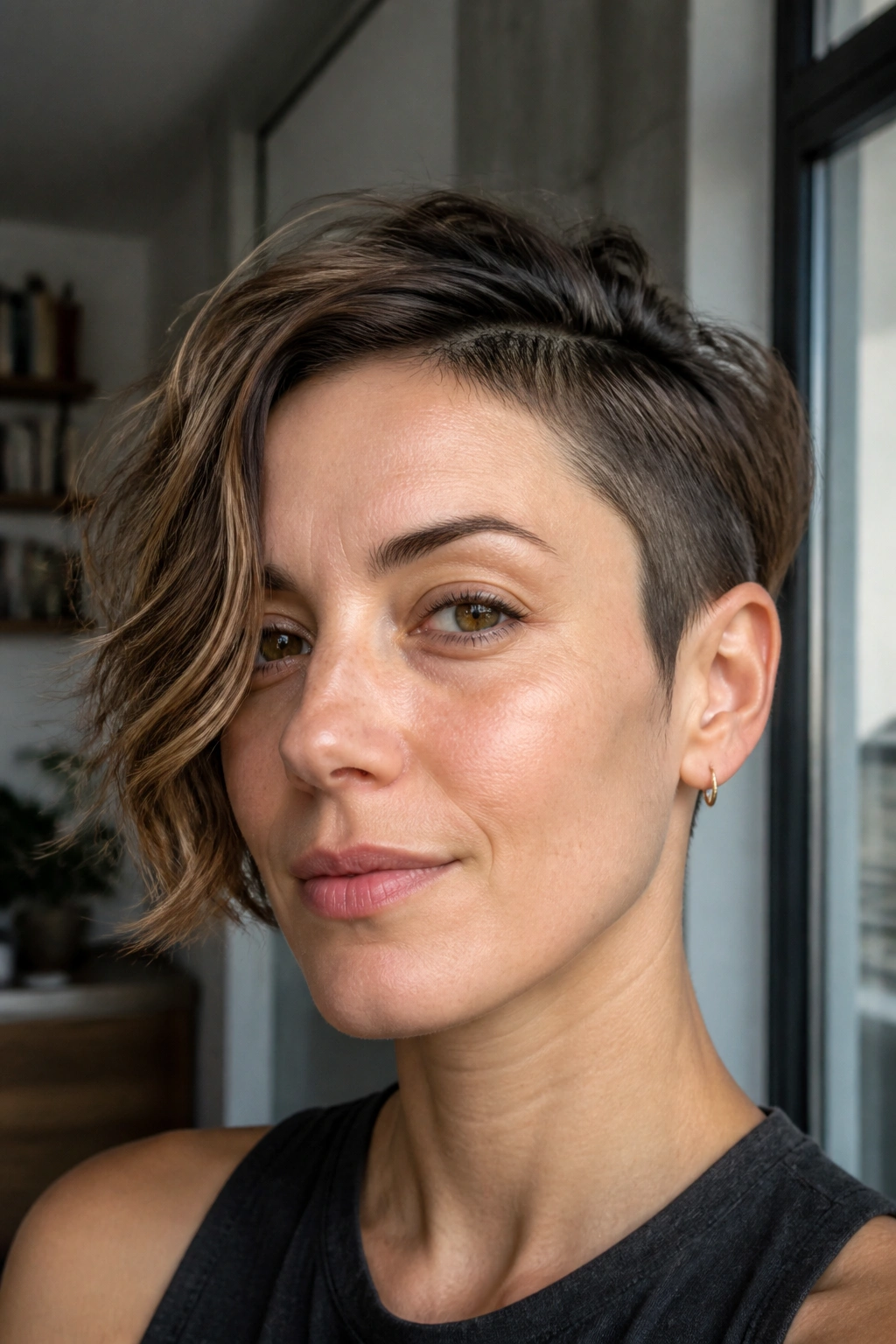
Some cuts make an entrance. This one does it with one ear out.
The idea is simple: one side stays clipped close enough to expose the ear, while the opposite side holds more length and wave. That contrast gives the haircut its asymmetrical line. On wavy hair, the exposed side can show off a clean temple or a small earring, while the longer side softens the whole thing.
Why it works
The eye naturally goes toward the exposed side. That means the longer side gets to do the balancing work instead of competing with the rest of the cut. The shape feels modern, but not cold.
How to style it fast
- Dry the short side flat with your fingers or a small brush.
- Push the longer side forward and let the wave bend over the cheek.
- Finish with a light spray, not a heavy gel.
If you wear glasses, this cut can be excellent. It gives the frames room to breathe. If you want your hair to feel sharp without needing much daily shaping, it’s a solid choice.
13. Angled Lob With Shattered Ends
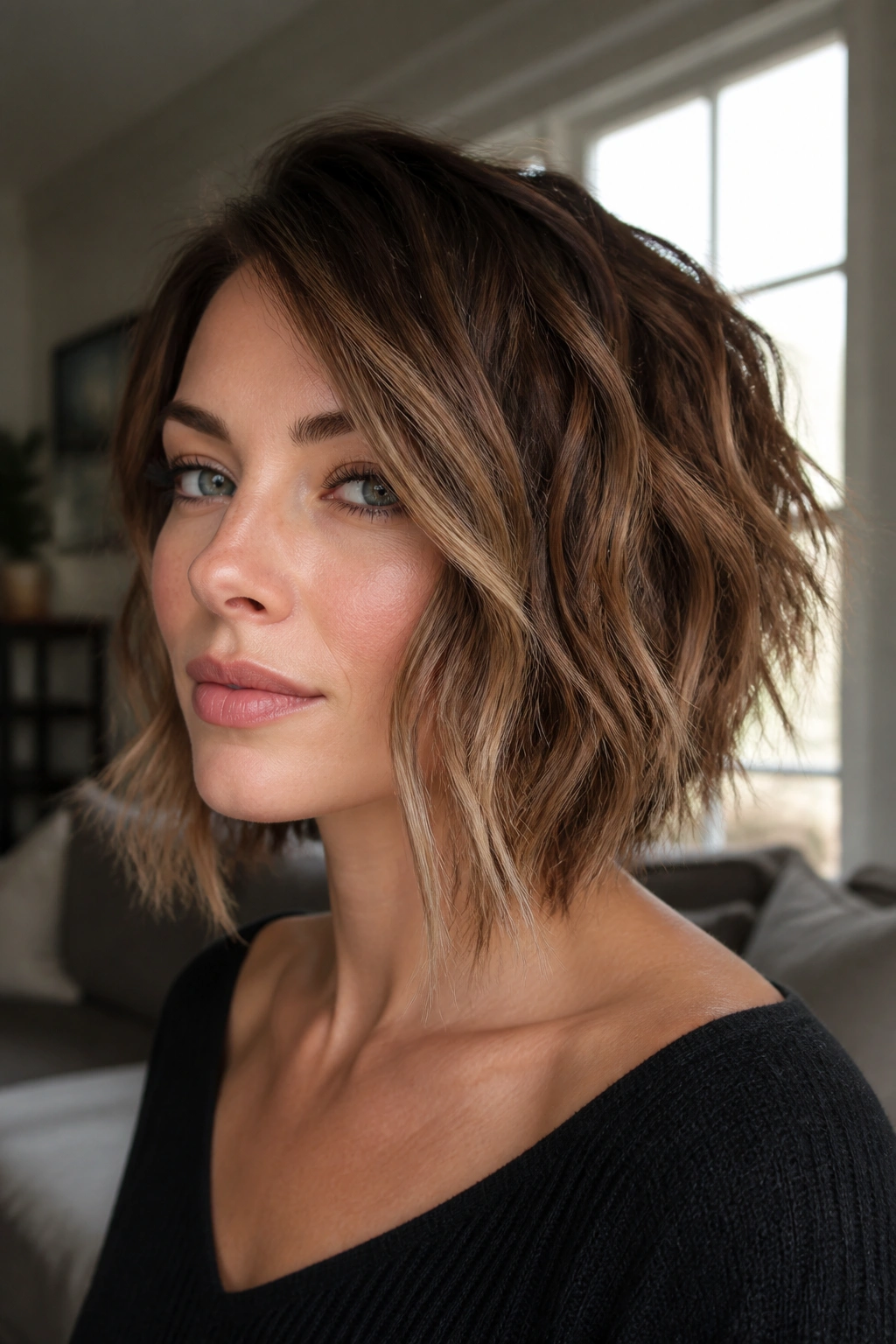
An angled lob is a little more polished than some of the rougher cuts here, and that’s useful.
The back sits shorter, the front drifts longer, and the line between the two is clean enough to be seen from across the room. What keeps it from feeling too formal is the shattered end work. Those softened ends make the waves break into little bends instead of hanging in one solid sheet. That’s what gives the cut life.
I like this style when someone wants structure but doesn’t want to spend every morning making their hair obey. It looks put together, yet the texture stays visible. The longer front pieces can skim the collarbone or stop just above it, depending on how short you want to go.
A tiny bit of bend cream in the mids helps the layers separate. Too much and the whole thing goes limp. Too little and the ends can feel fluffy. Hair is annoyingly honest like that.
14. Long Pixie Bob With Sideburn Length
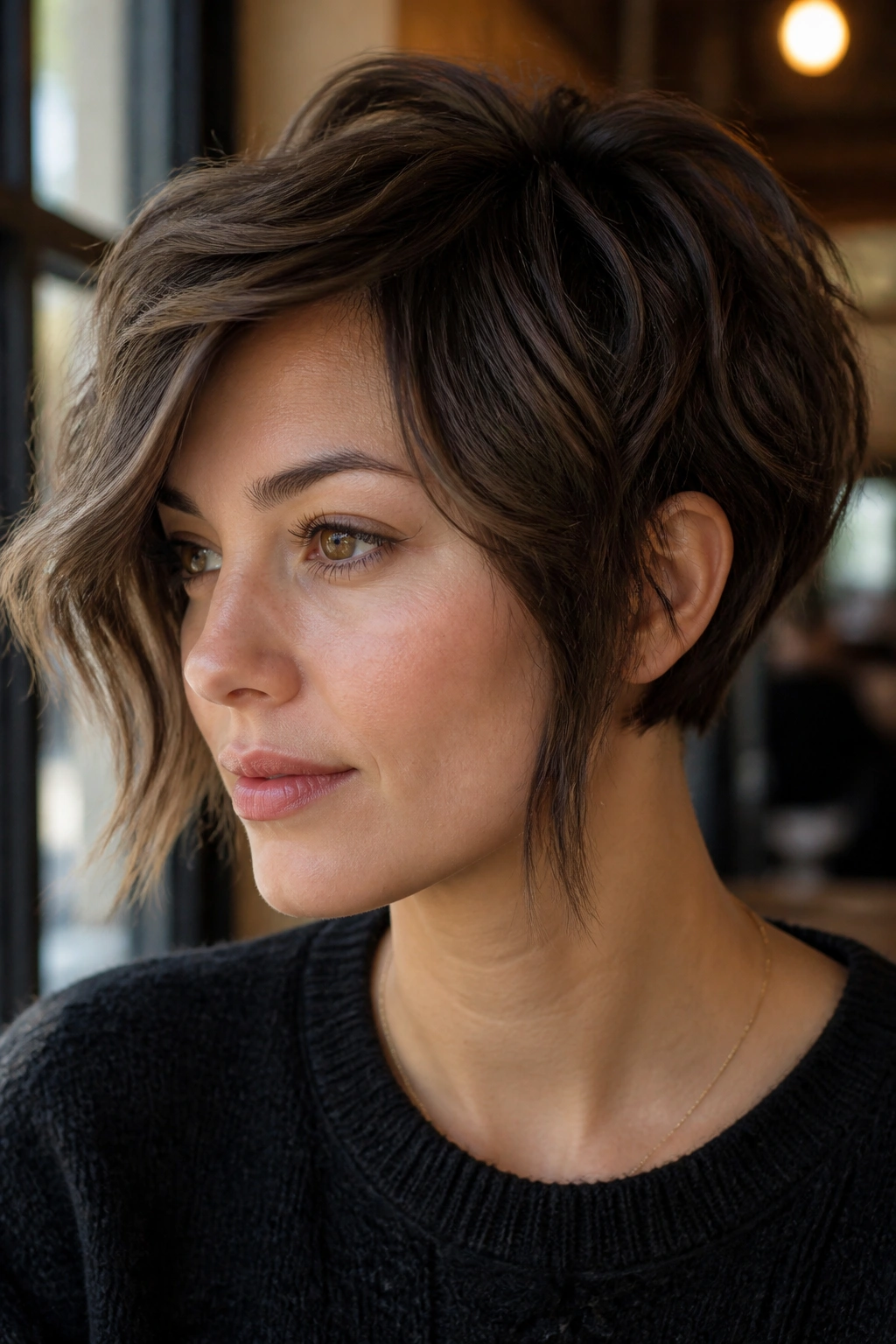
Sideburn length sounds small, but it changes the whole face framing game.
A long pixie bob keeps the back cropped and the top loose, then leaves the sideburn area and front corners long enough to brush the jaw. That little extra length around the temples softens the cut, which matters on wavy hair because waves around the face can sometimes look too wide if they’re cut too short. Here, they get room to fall.
What makes it flattering
The longer sideburn pieces create a clean line near the cheek, while the shorter back keeps the neck open. You get the ease of a pixie and some of the softness of a bob. It’s a practical cut for people who want shape without a lot of hair in the way.
Worth asking for if you:
- Wear earrings often
- Want your haircut to frame the eyes
- Like pieces that move when you turn your head
This is one of those cuts that gets better with a slightly imperfect finish. If a few waves separate, good. If every strand lies flat, the haircut loses some of its charm.
15. Tucked-Behind-Ear Bob With Counterbalance Length
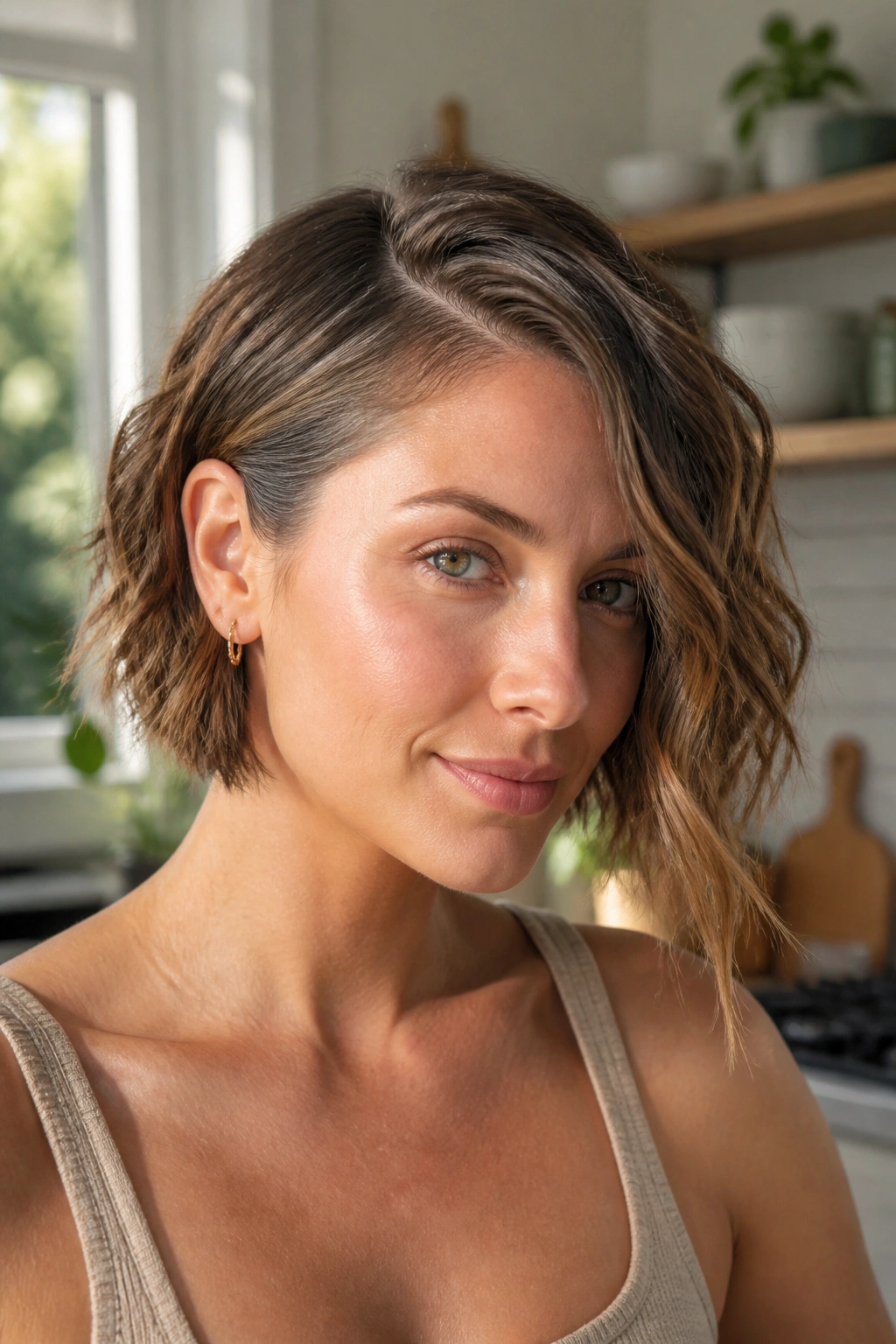
The best asymmetry sometimes comes from styling, not just cutting.
This bob is built so one side tucks neatly behind the ear while the other side hangs longer and fuller. The result is a shape that changes the moment you move your head. On wavy hair, the tucked side opens the face, while the loose side adds weight and motion. It’s simple, but I think that simplicity is the point.
The practical part
Ask for enough length on the longer side that it doesn’t collapse into the ear once your waves dry. You want the tucked side to stay clean and the opposite side to hold a visible drop. If the difference is too small, the effect disappears.
This cut suits people who like a low-drama routine. Wash, scrunch, tuck one side, done. No complicated round-brush ritual. No endless adjusting in the mirror. Just shape.
And yes, it works especially well with a side part, though a soft off-center part can be even nicer if your waves like to drift.
16. Short Wolf Cut With Uneven Layers
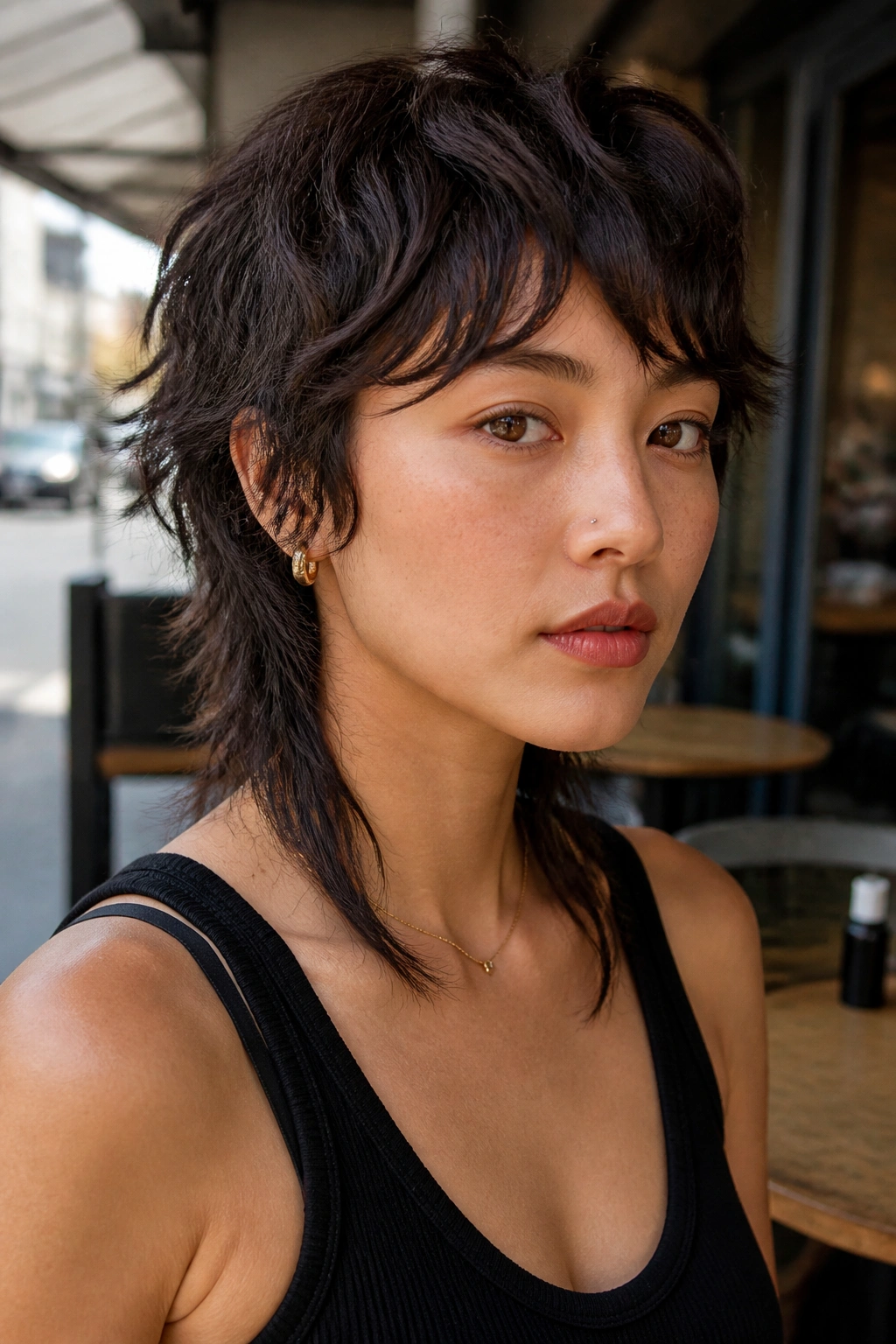
The wolf cut gets a lot of attention, and some of it is deserved.
On wavy hair, a short wolf cut can look fantastic because the shorter layers at the crown create lift while the longer bottom pieces keep the outline interesting. Add a touch of asymmetry—one side a little fuller, the fringe a little longer on one side—and the whole cut feels less copied from a photo and more tailored to the head it lives on.
What to watch for
Too many short layers can make the crown explode outward. That’s the trap. The better version keeps enough weight in the sides so the waves still lie in clumps instead of turning fluffy. If your hair is dense, ask for controlled layering, not a thinned-out mess.
I’d use this if you want:
- Movement without a hard bob line
- A style that looks a bit undone on purpose
- Hair that can air-dry and still look like a haircut
There’s a reason this shape keeps showing up in salons. It’s one of the few short cuts that can look casual and styled at the same time.
17. Curly-Wave Crop With Micro Fringe
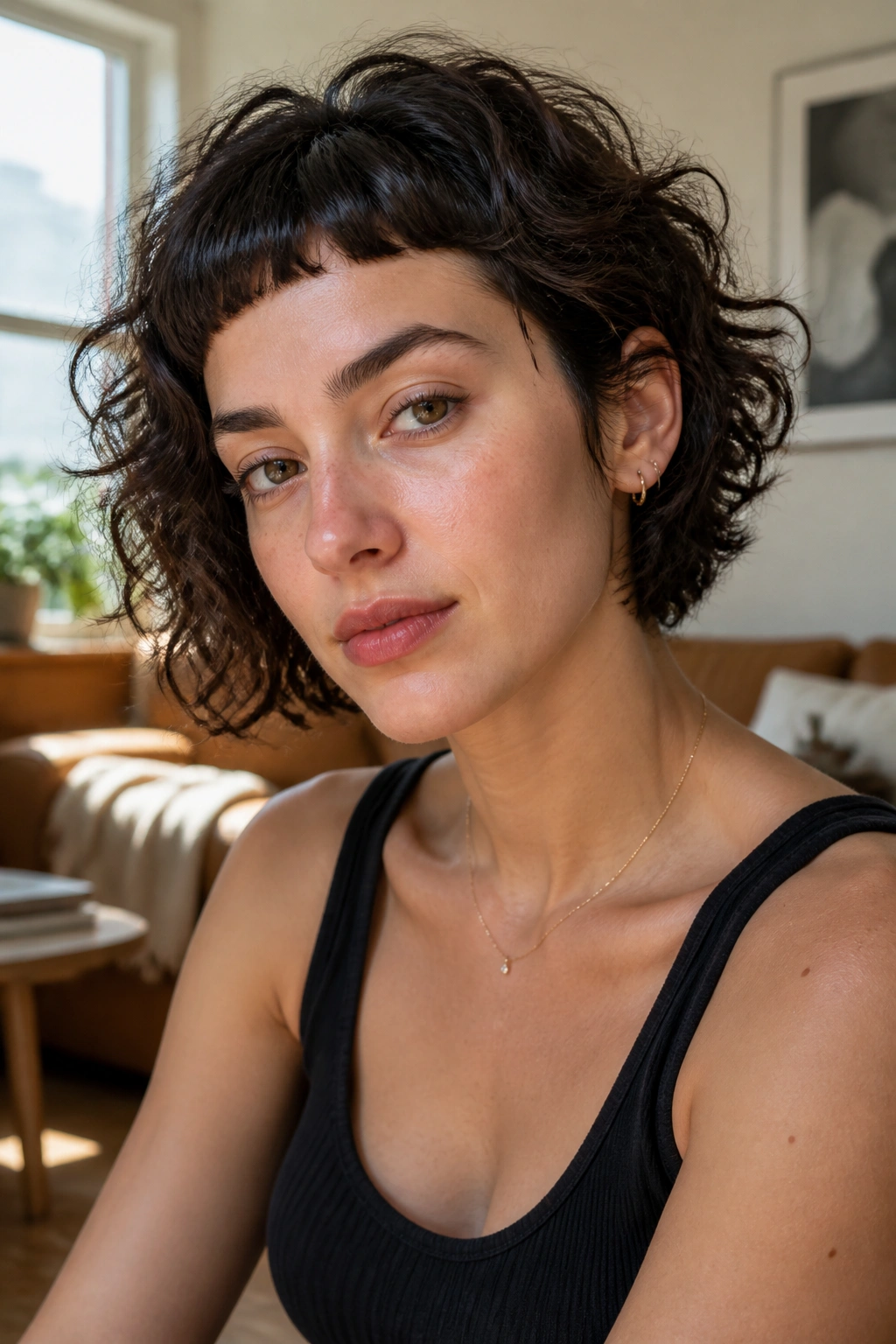
A micro fringe on wavy hair is not subtle. That’s why it works.
The fringe sits short across the forehead, while the sides and back stay cropped and uneven enough to let the wave pattern lead. The asymmetry can come from one longer side panel or from a slightly heavier sweep on one temple. Either way, the tiny fringe throws all the attention upward and makes the face look open.
The sensory part
This cut feels light. You notice it when you wash it, because it dries fast. You notice it again when the front fringe springs up a little after being blown forward. There’s a dry, airy quality to it that longer cuts don’t have.
A small warning
Micro fringe and wavy hair are a real commitment. If your hair has a strong front cowlick, this can be a fight on wash day. If you’re okay with a bit of unpredictability, it’s a sharp little cut with a lot of personality.
Best on people who like bold lines and don’t mind being seen from the forehead up.
18. Ear-Length Bob With Heavy Side Bang

This is the haircut for someone who wants face framing with a little drama.
The bob stays ear-length or just below it, while one side bang sweeps across the forehead and lands heavier on one side. The opposite side can sit tighter or be tucked, which gives the silhouette a deliberate slant. On wavy hair, that bang does a lot of the work. It softens the forehead, pulls attention toward the eyes, and gives the style movement even when the rest of the hair is compact.
If your waves tend to bunch at the front, this cut can be very flattering. The heavy side bang breaks up that bunching and turns it into shape. It’s also good if you don’t want to spend long on styling. A quick round-brush blow-dry or a few passes with a diffuser is usually enough.
The main thing is balance. The bang should feel full, not heavy in a droopy way. There’s a difference, and it matters.
19. Nape-Short Cut With Longer Top Sweep
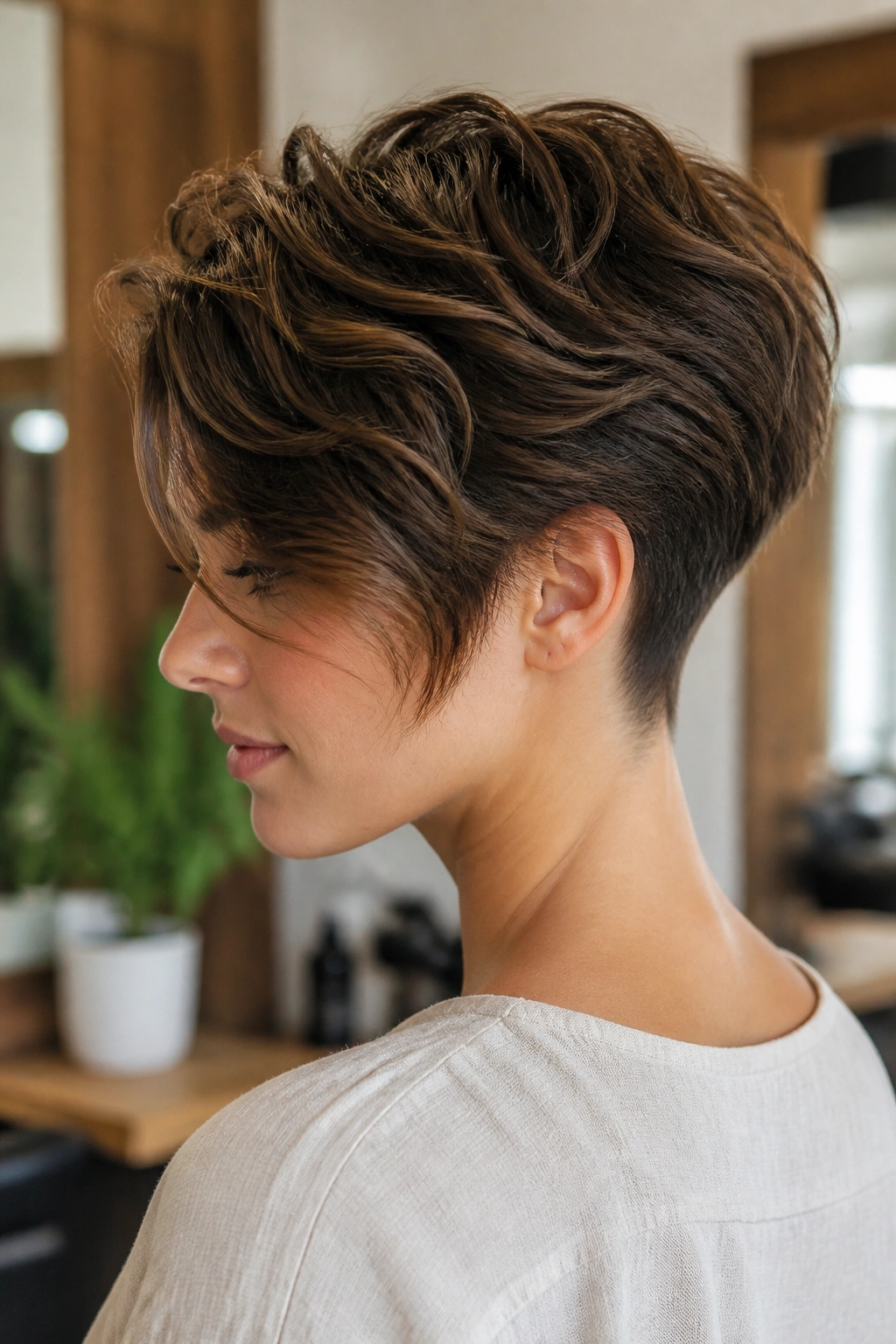
Short around the neck, longer on top. Clean on the sides, swept across the crown. That’s the whole architecture.
A nape-short cut with a longer top sweep gives wavy hair a neat silhouette without flattening the movement on top. The asymmetry comes from the way the top is directed. One side can sweep forward over the temple while the back stays clipped close, which creates a clear contrast between length and skin.
Why I like it
It leaves the neckline open, which feels especially good if you hate hair touching the back of your neck. It also works well under collars and scarves because the short nape doesn’t bunch up.
Styling this one takes minutes:
- Dry the top in the direction of the sweep.
- Use a small brush or your fingers to guide the front.
- Finish with a light wax just at the ends so the wave bends stay visible.
This cut is neat, but not fussy. That’s a nice place to be.
20. One-Side-Longer Shaggy Crop
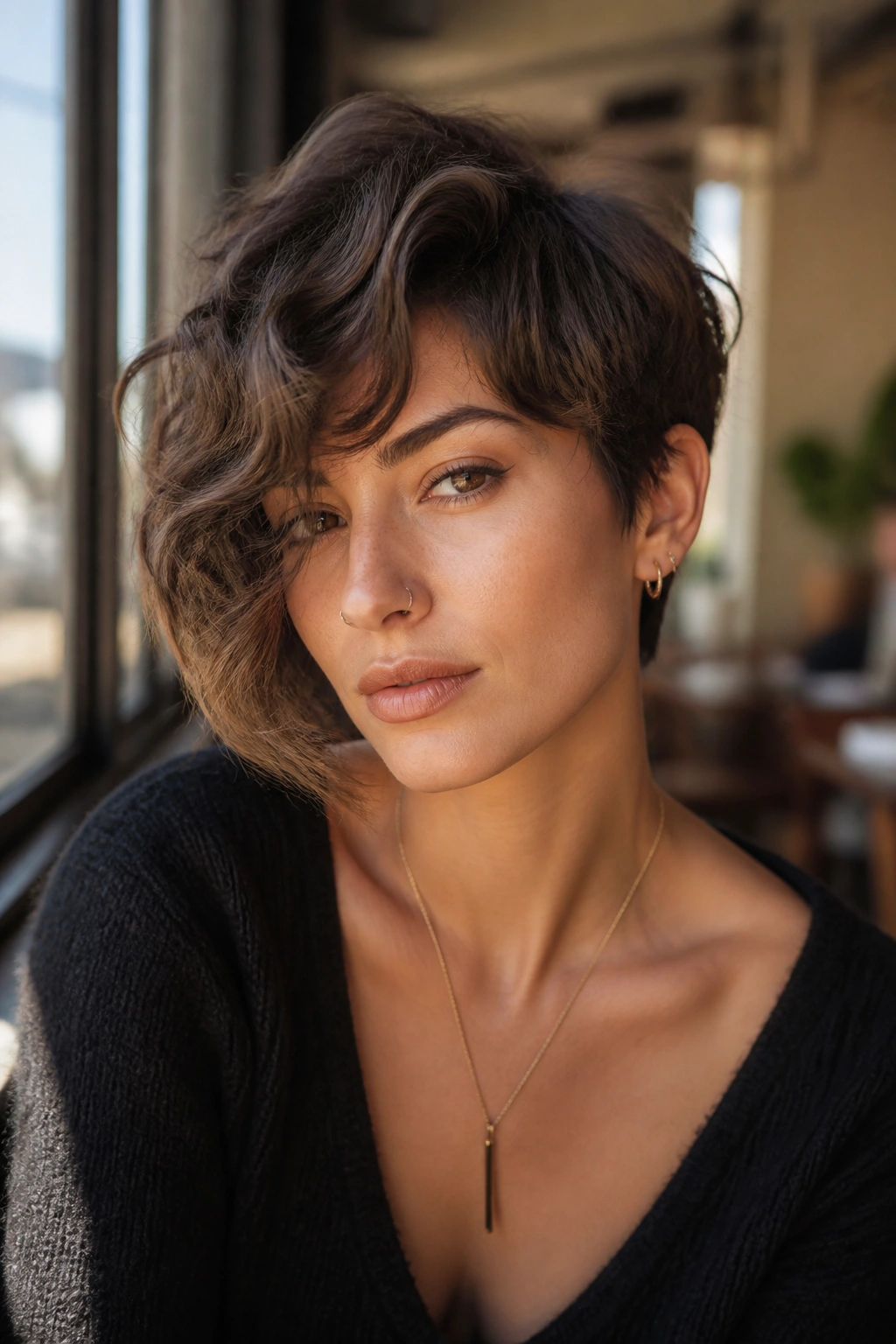
A shaggy crop can go flat fast if the balance is wrong. One longer side keeps it interesting.
The crop itself is short and piecey, but one side is left a little fuller and longer so the silhouette tilts instead of sitting evenly. Wavy hair gives the style its texture; the asymmetry gives it direction. You end up with something casual that still has a clear shape, which is harder to get than it sounds.
This is a good cut for people who wear hair in motion. If you’re always running your fingers through it, pushing it back, or letting it dry in the car, the messy energy works with you rather than against you. The key is not to over-style it. The crop should look light, not scraped into place.
A little sea-salt spray can help on fine waves. On coarser waves, a cream with light hold is usually better. You want separation, not crunch.
21. Asymmetrical Pixie With a Soft Quiff
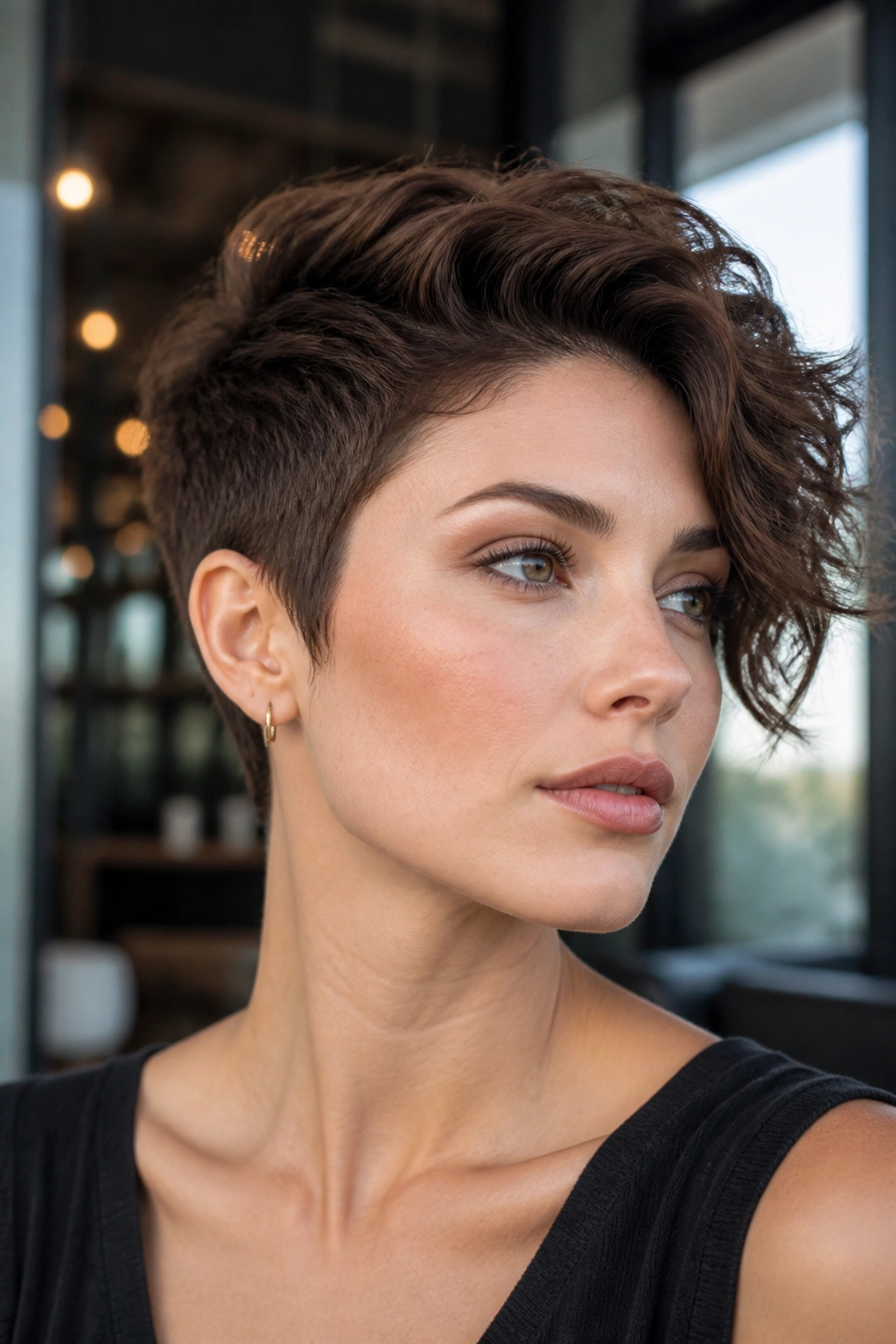
A soft quiff gives a pixie height, which is handy when the rest of the cut is short and close.
The front is lifted and swept to one side, while the other side stays tighter and shorter. That creates an immediate asymmetrical shape in profile. Wavy hair helps because the natural bend gives the quiff a little body without needing much heat. You’re not building a giant pompadour here. You’re just giving the front some direction.
What it does well
It lifts the eyes upward and opens the forehead, which can be useful if you like wearing strong brows, glasses, or bold earrings. It also keeps the cut from feeling flat on top, which is a common problem with short wavy hair when it’s cut too close all around.
Fast styling method
Use a blow-dryer for the front only. A round brush helps, but fingers work if you’re in a hurry. Push the hair up and across, then let it cool before you touch it again. That cooling step matters more than people realize.
The rest can stay a little messy. In fact, it should.
22. Side-Parted Crop With a Floating Fringe
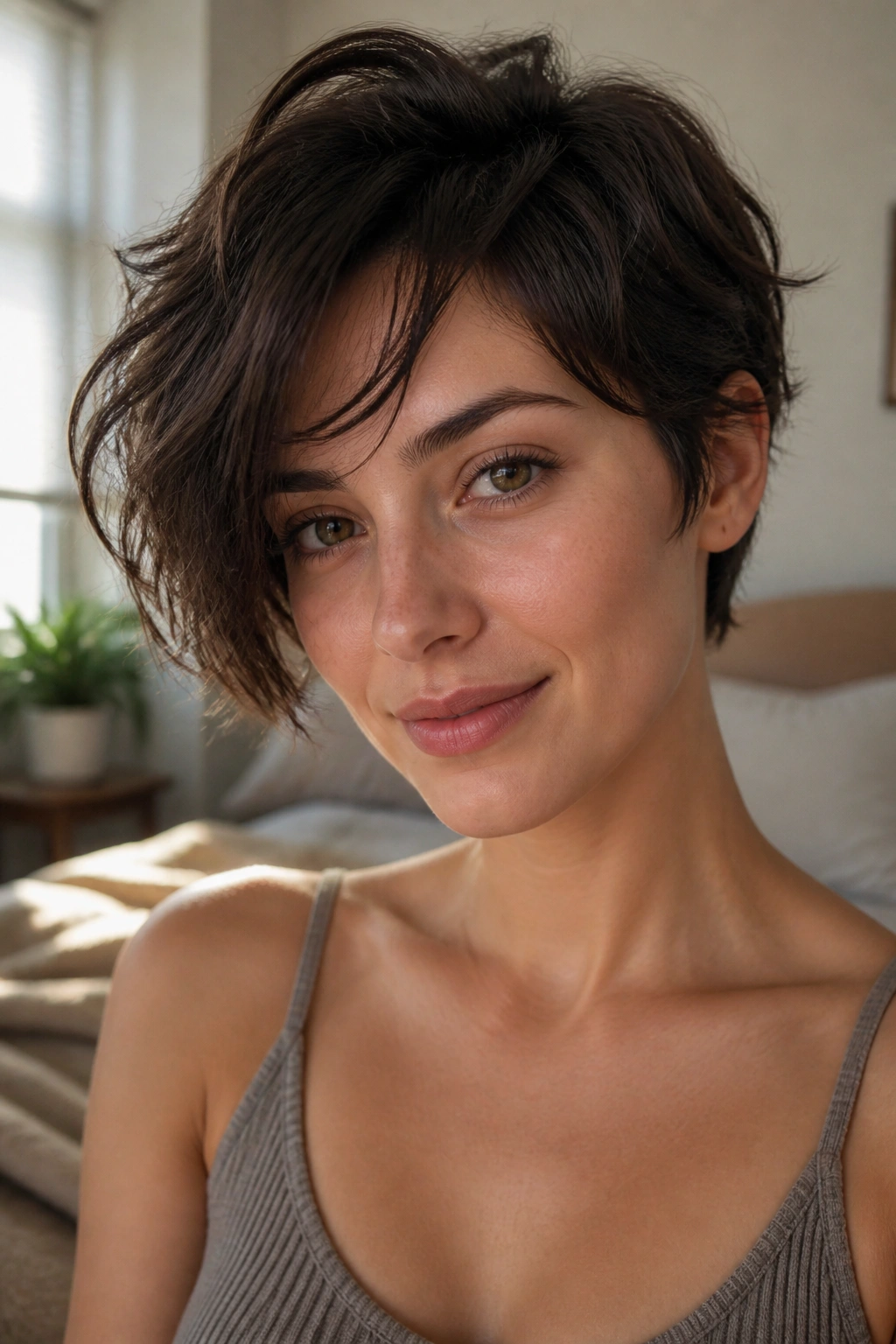
A side-parted crop can look almost simple enough to miss, and then the fringe moves.
The cut is short, close, and airy, but the part is pushed off-center so the front falls in a floating line rather than a straight one. One side usually sits higher and lighter, while the other falls a little lower across the brow. On wavy hair, that gives the haircut a soft asymmetry that feels easy but still deliberate.
This is a strong choice if you want a short style that doesn’t shout. It has shape, but not a lot of weight. It works especially well when your waves are loose and your hairline naturally wants to fall to one side anyway. If your hair has a stubborn cowlick, you may need to train it for a bit with clips while it dries. Worth the trouble.
The floating fringe keeps the crop from looking severe. That’s the whole appeal. It moves.
Final Thoughts
Short asymmetrical hairstyles for wavy hair work because they give the wave pattern a job to do. Instead of making hair sit in a neat little box, they let one side fall a little longer, or one fringe sweep a little farther, so the shape feels alive.
The smartest cuts here are the ones that match your density and your styling habits. Thick waves usually need weight removed in the right places. Finer waves often look better with a cleaner line and less layering. And if you hate spending time on your hair, pick a shape that still looks good when the waves dry a little unevenly. That part matters more than a lot of salon talk makes it sound.
Bring a photo, yes. But also bring the honest version of your routine. A good haircut should fit the way you actually live, not the version of yourself that has 40 extra minutes every morning.
