



Wavy hair has a stubborn little habit: it looks best when you stop trying to make it behave. The texture wants shape, not control. Push it too hard with heavy creams, tight elastics, or a flat iron you do not actually need, and the whole thing can collapse into limp ends or fuzzy roots by lunch.
Natural hairstyles for wavy hair work because they respect the bend that is already there. That might mean a braid that stays loose, a bun that lets a few pieces fall out on purpose, or a clipped style that lifts the crown without flattening the wave pattern. The small choices matter more than people think. Where the part sits. How much tension you use. Whether you pin from underneath or from the side.
A quick prep note before you start: waves usually hold better when they are fully dry or almost dry. Damp hair can be sneaky. It looks manageable for ten minutes, then dries into a strange kink that will not relax. A little mousse, dry shampoo, or texture spray gives pins and braids something to grip, and second-day hair often behaves better than freshly washed hair anyway.
1. Loose Side Braid
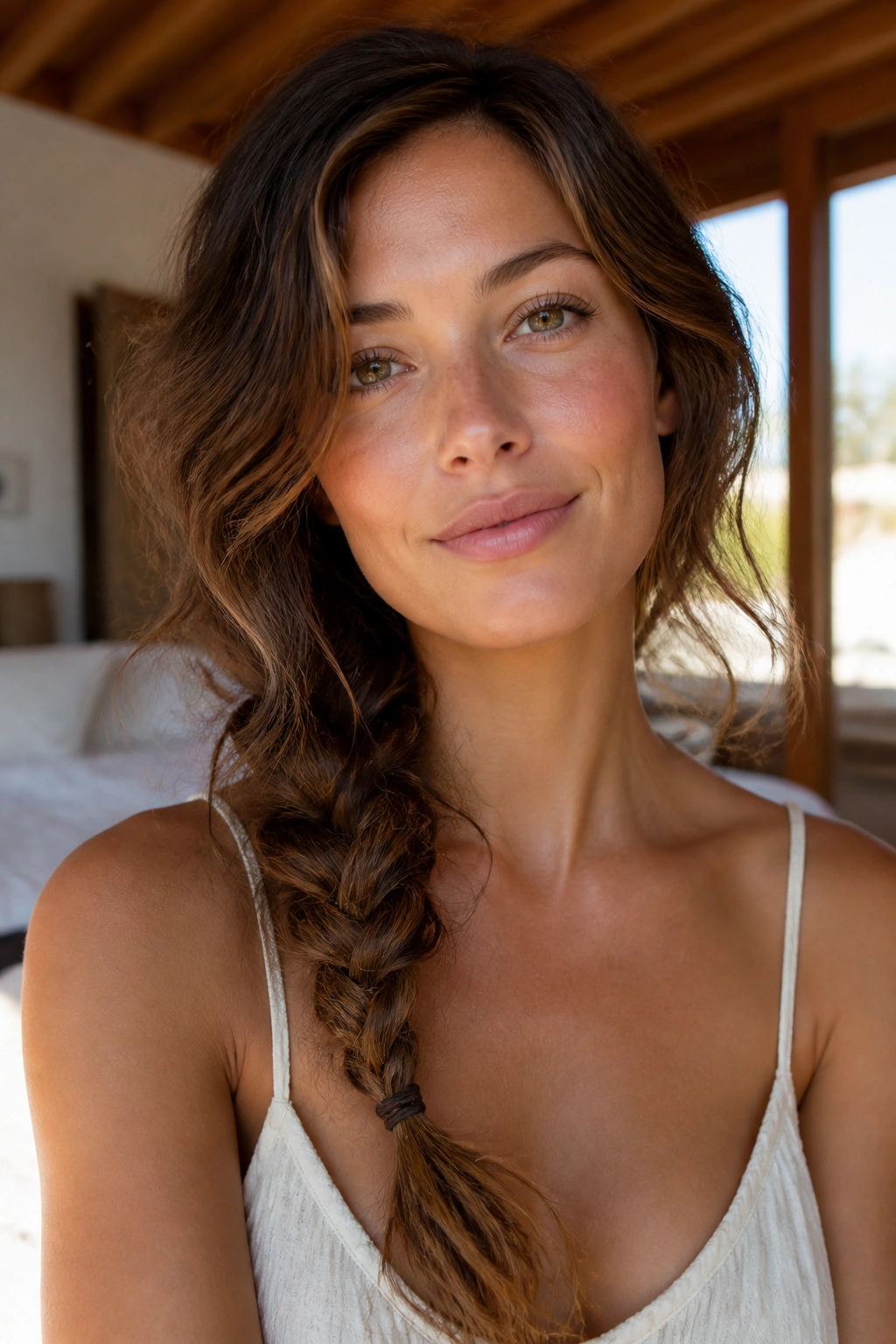
A loose side braid is one of those styles that looks like you spent longer on it than you did. That is half the appeal. On wavy hair, the braid does not need to be neat; the bends in the hair already give it texture, so the finished look has movement even when the braid itself is simple.
Why It Works So Well
The side placement keeps the style soft around the face and lets the wave pattern show at the top. If your hair is shoulder length or longer, this is an easy fallback when the ends are frizzy but the rest still looks decent.
- Part your hair deep or soft to one side.
- Bring all the hair over one shoulder.
- Start the braid just below the ear for a relaxed shape.
- Leave the last 2 to 3 inches unbraided if you want a softer finish.
Best move: tug the braid gently at the outer edges after tying it off. Not much. Just enough to make it look lived-in instead of tight.
2. Half-Up Twist with Face-Framing Pieces
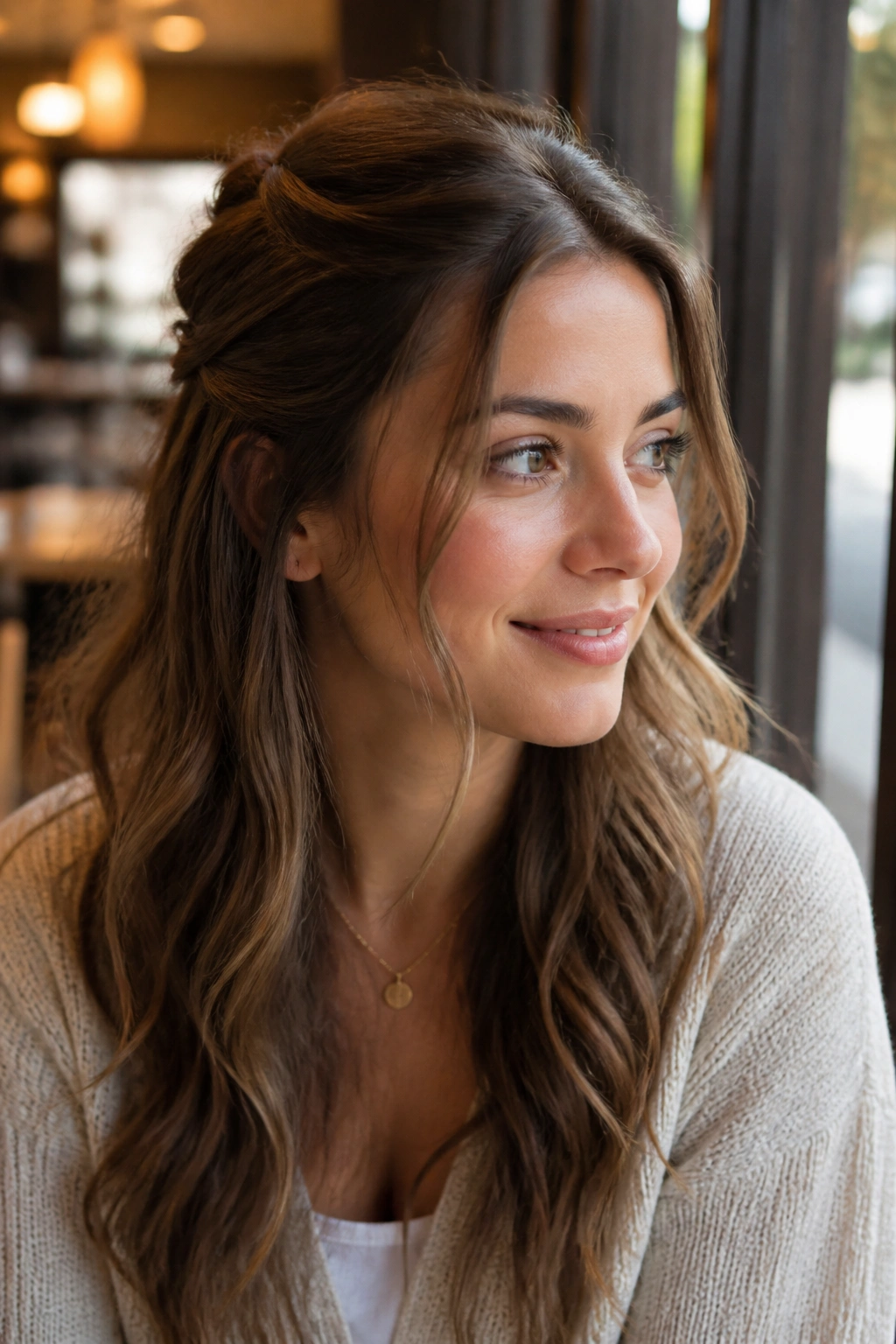
This is the style I reach for when the top layer needs help but the rest of the hair still looks good. The half-up twist lifts the crown, keeps hair off your cheeks, and leaves the waves down where they can still do their thing. It is clean without feeling stiff.
The twist is small, but that is the point. You gather only the top third of the hair, twist it back on both sides, and pin or clip it at the back of the head. The loose pieces in front make the style look softer and stop it from feeling too formal. It works especially well if your waves are fine and tend to go flat at the roots.
If you want more lift, tease the crown lightly before twisting. Just a few strokes with a fine comb. No drama. Then smooth the surface with your fingers so the finish still looks natural.
3. Low Messy Bun
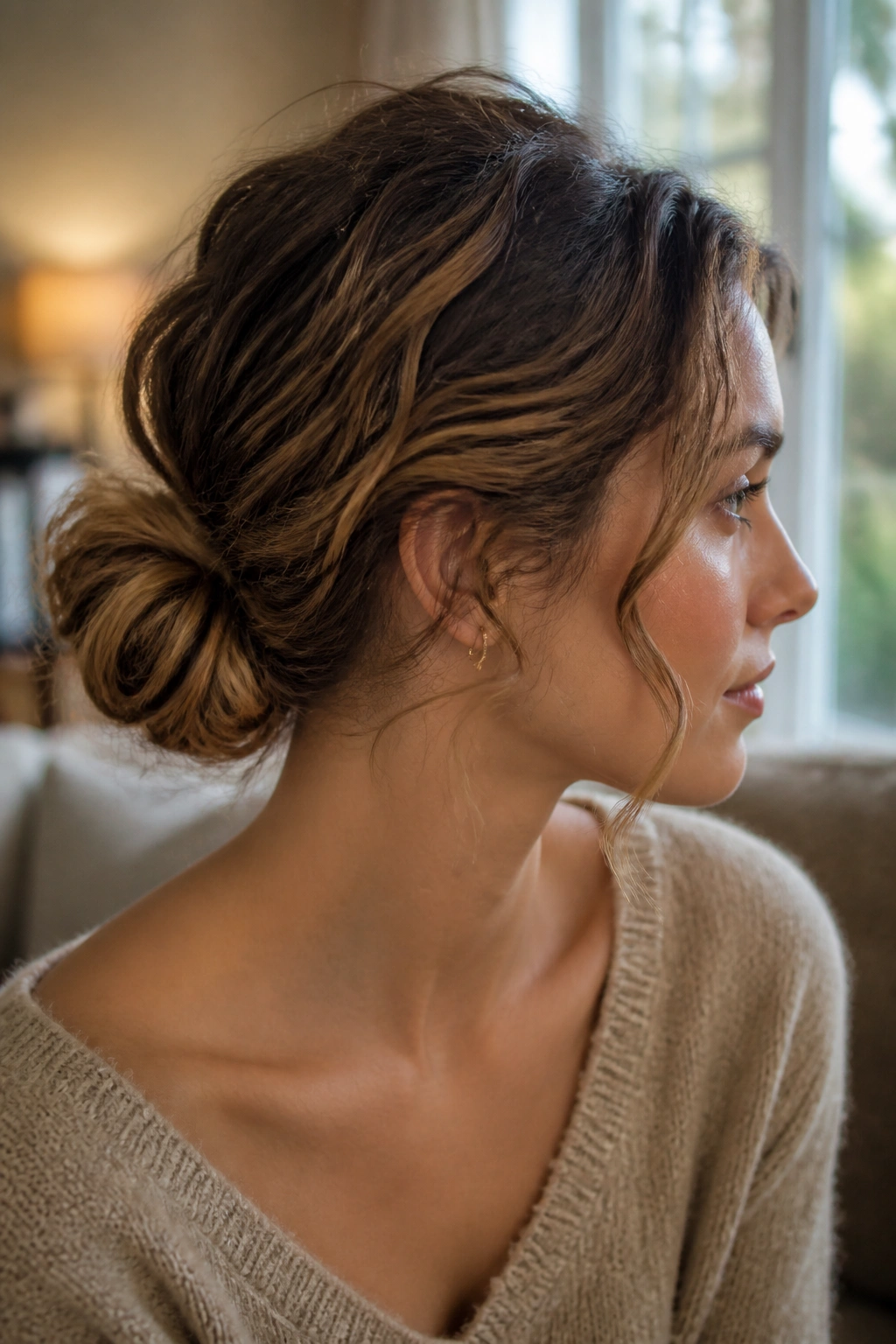
Why does a low messy bun work so well on wavy hair? Because waves already give you the right amount of texture for free. You do not need a sleek finish here. In fact, a little roughness helps the bun look fuller and keeps it from sinking too low on the head.
How to Style It
Gather the hair at the nape of the neck, twist it once or twice, and wrap it into a bun. Secure with an elastic first, then add pins where the bun feels loose. If the ends poke out a bit, leave them. That uneven finish is what gives the style its charm.
A low messy bun is one of the few updos that can look polished on day-two waves and still handle a few flyaways. Good for errands. Good for dinner. Good for those mornings when you do not want to think too hard.
4. Claw Clip French Twist
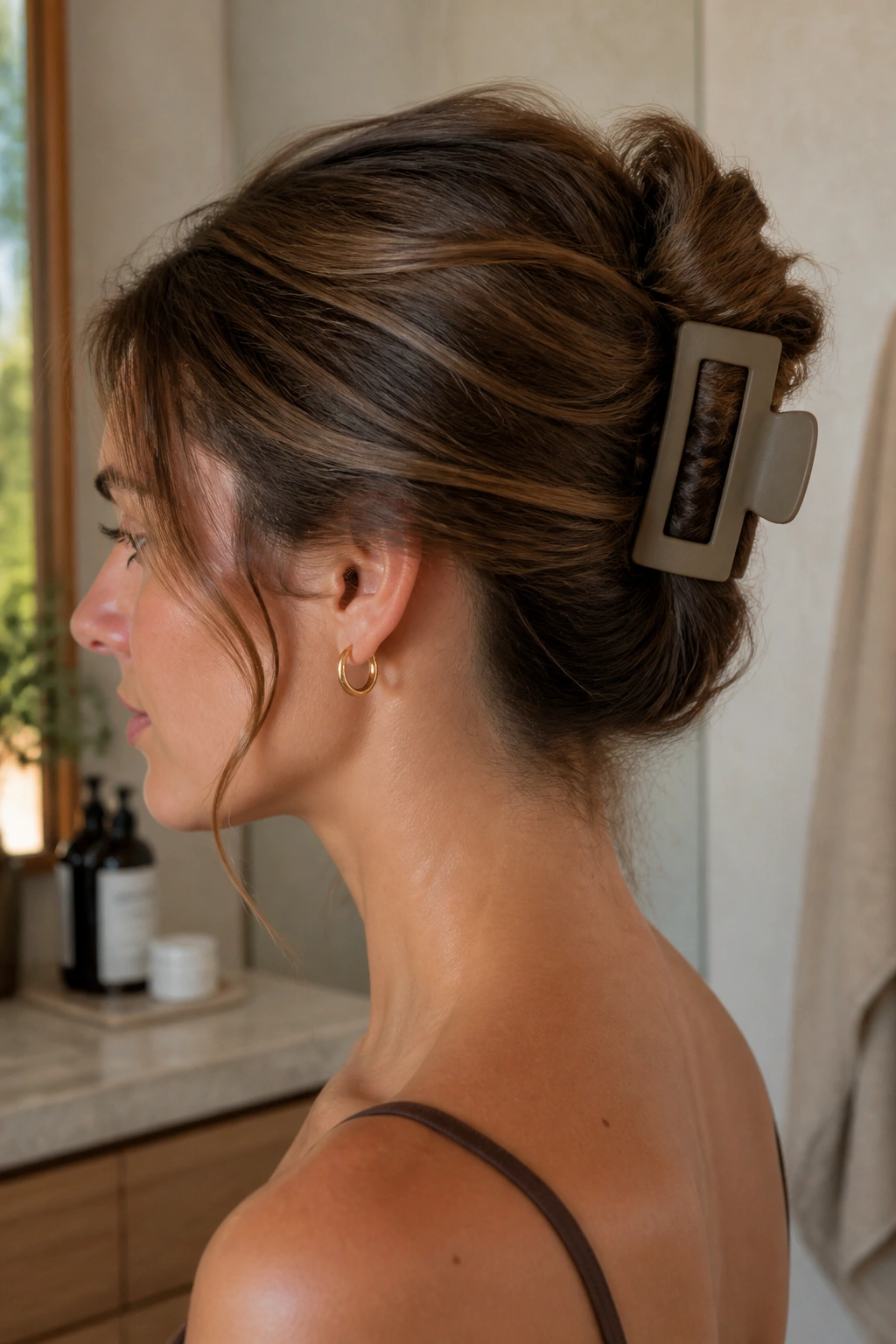
If you need your hair up in thirty seconds, the claw clip French twist is hard to beat. It gives wavy hair height at the back and keeps the ends tucked away, but it does not force the texture into something it is not.
The trick is in the fold. Gather the hair at the back, twist it upward, then fold the length in on itself so the ends disappear into the clip. A medium or large clip works best for shoulder-length or longer waves. Tiny clips slip. Every time.
- Works best on medium to thick waves.
- Hold better on hair that has a little grit from dry shampoo.
- Let a few front pieces fall loose if you want a softer look.
- A matte clip grips better than a shiny one on slippery hair.
Watch this: if the clip sits too high, the style loses its shape and starts to wobble. Keep it centered at the back of the head.
5. Braided Crown
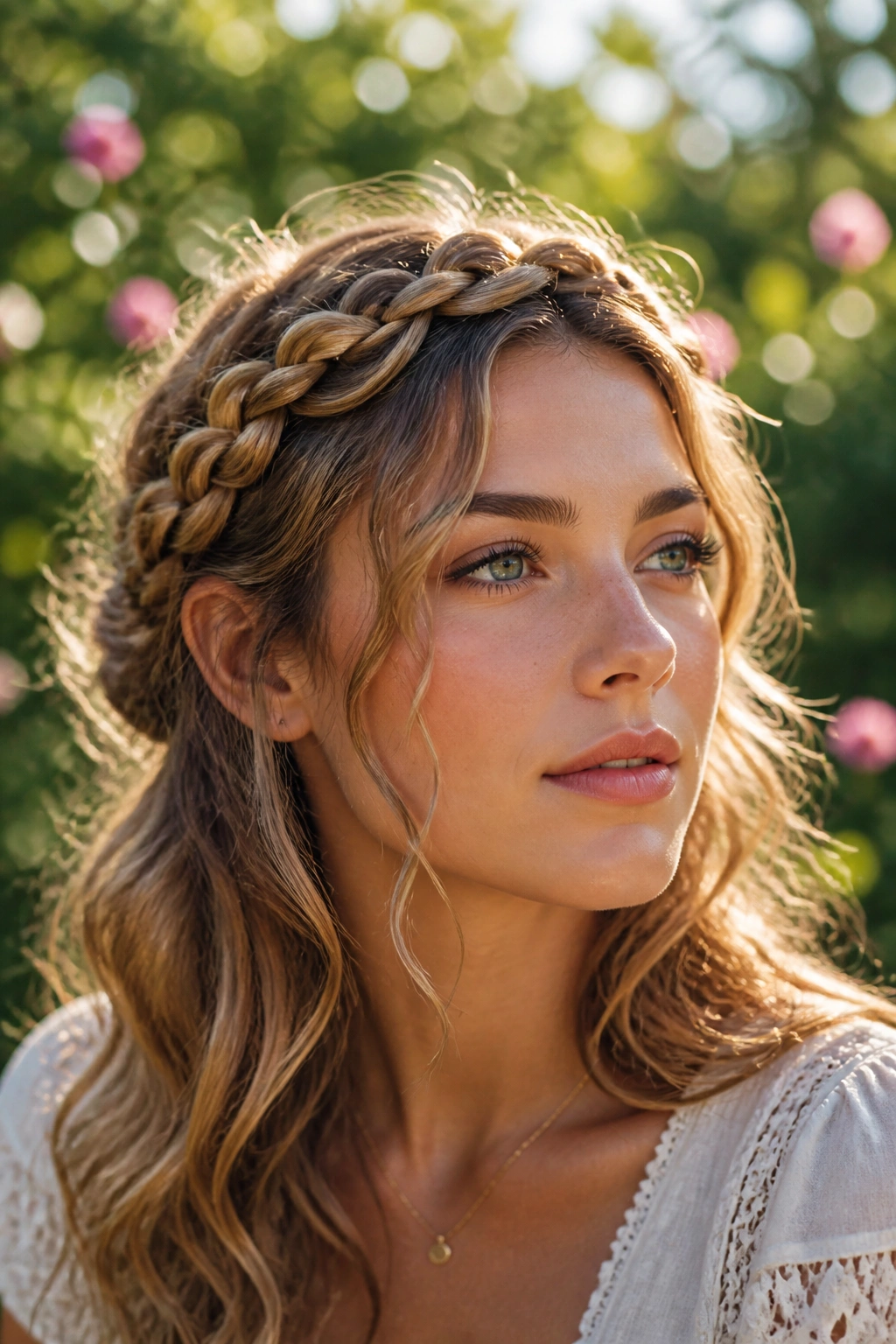
A braided crown has a little more presence than a normal braid, and wavy hair suits that extra shape. The braid traces the head like a frame, so the waves around it look deliberate instead of accidental. That matters if your hair gets puffy at the sides.
The nicest version is not tight. It starts behind one ear, follows the hairline, and wraps around to the other side with a few soft pieces left out near the temples. If your hair is layered, the shorter face-framing pieces may slip, and that is fine. They break up the line in a good way.
This style works for weddings, school events, long dinners, and days when you want the hair off your neck without giving up texture. It takes a little more time than a bun, but not nearly as much as it looks.
6. Bubble Ponytail
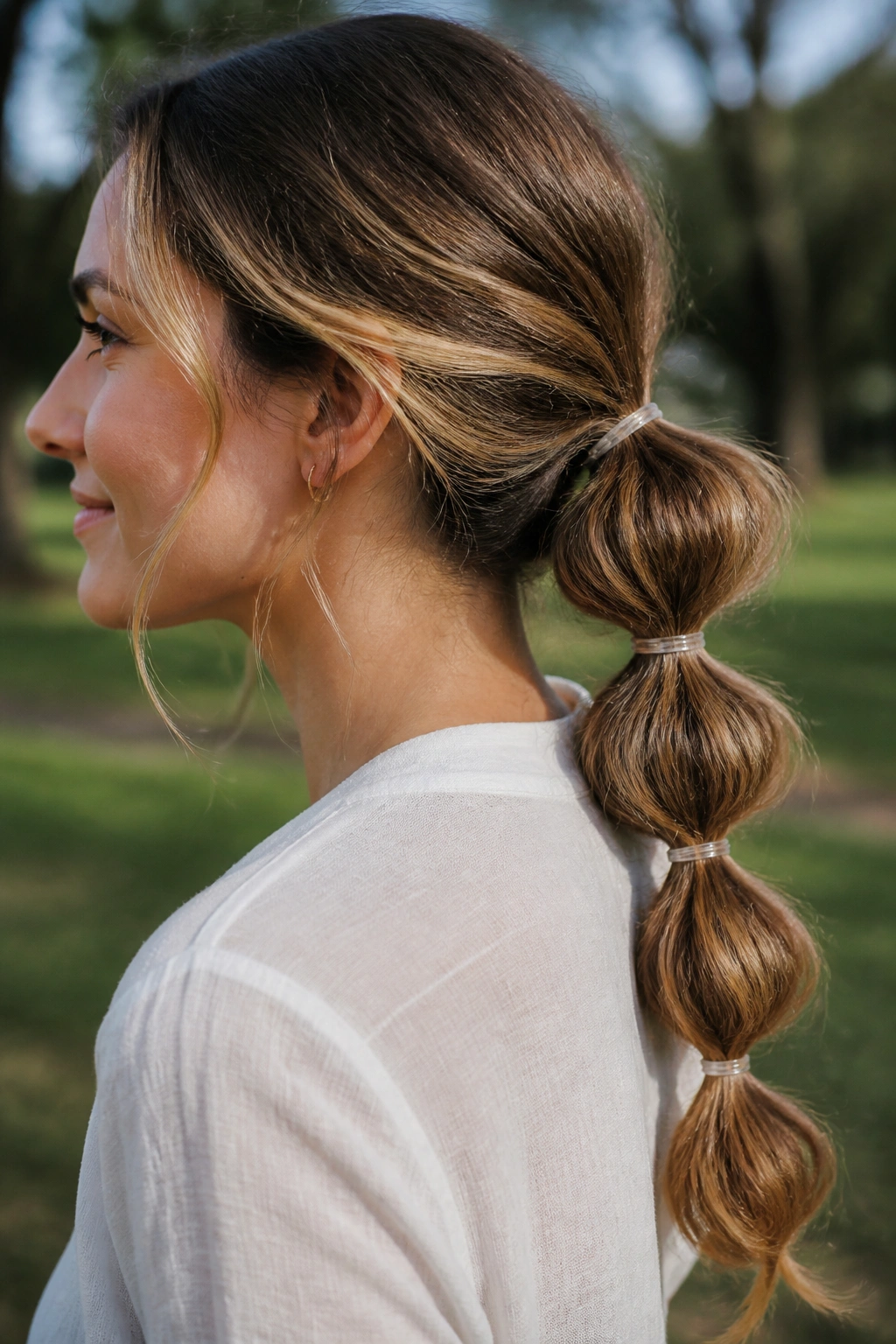
Unlike a plain ponytail, a bubble ponytail gives wavy hair a chance to keep its shape all the way down the length. The elastics break the ponytail into rounded sections, so even if the ends are a little thin or frizzy, the style still reads as intentional.
Pull the hair into a low or mid-height ponytail, then add small clear elastics every 2 to 3 inches. Gently puff each section between the elastics with your fingers. That puffing step matters. It creates the little rounded “bubbles” and keeps the style from looking flat.
This one is especially good for long hair that tends to collapse in a regular ponytail. It looks playful, but not childish, if you keep the sections loose and the top smooth.
7. Rope Braid Ponytail
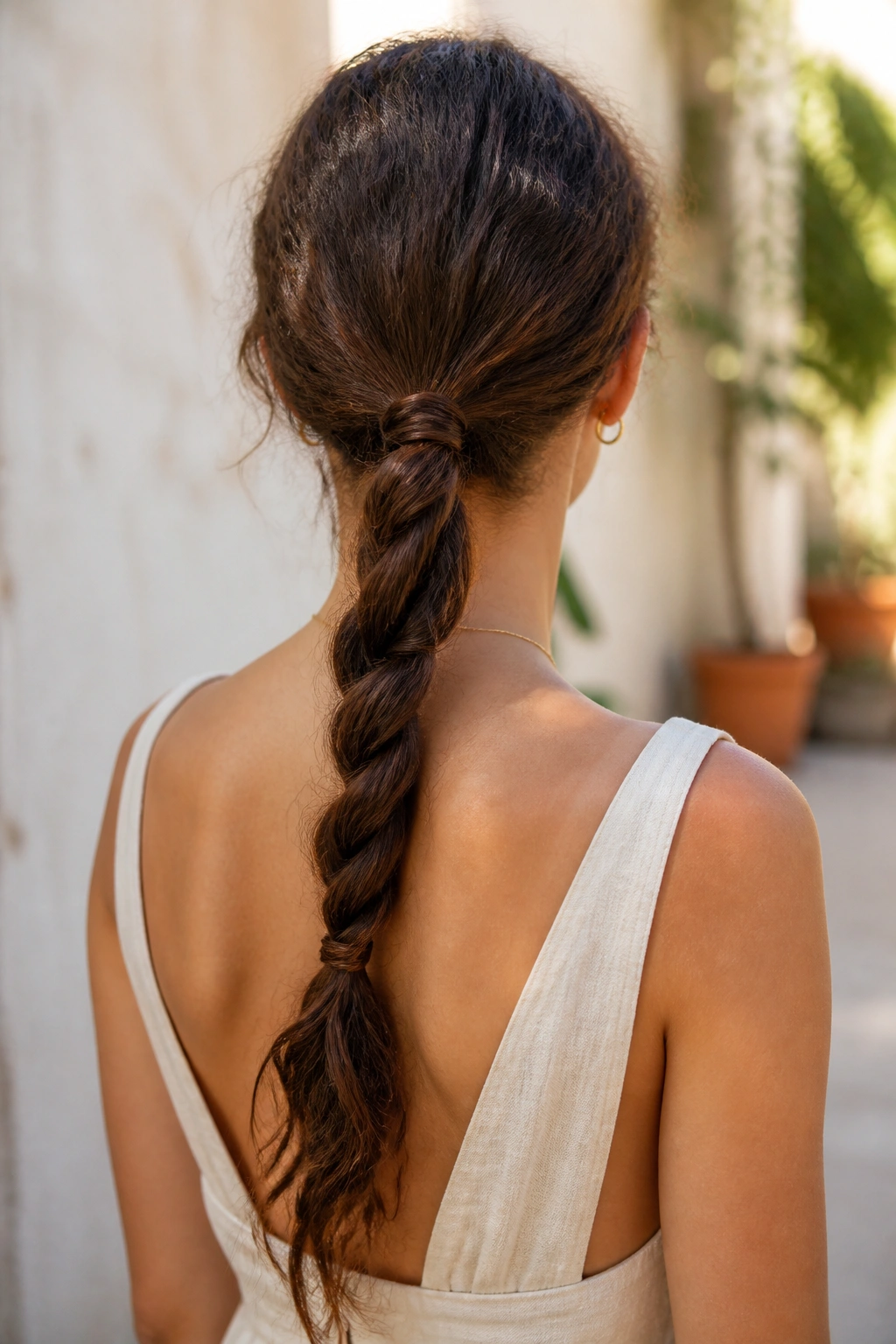
A rope braid ponytail has a cleaner finish than a regular three-strand braid, which makes it a nice match for wavy hair that already looks textured. The twist pattern gives the ponytail a neat spiral, and the natural bends in the hair make the whole thing look richer.
What Makes It Different
You split the ponytail into two sections, twist each one in the same direction, then wrap them around each other in the opposite direction. That counter-twist is what keeps the braid from unraveling. If the hair is slightly gritty or day-old, even better.
- Tie the ponytail first, then twist.
- Keep tension even so one side does not go limp.
- Use a small elastic at the end and hide it with a strand if you want a cleaner finish.
- A side ponytail can make the rope braid feel more relaxed.
Small detail: this style looks best when the braid is not pulled too tight. A little looseness lets the waves blend into the twist.
8. Half-Up Half-Down Knot
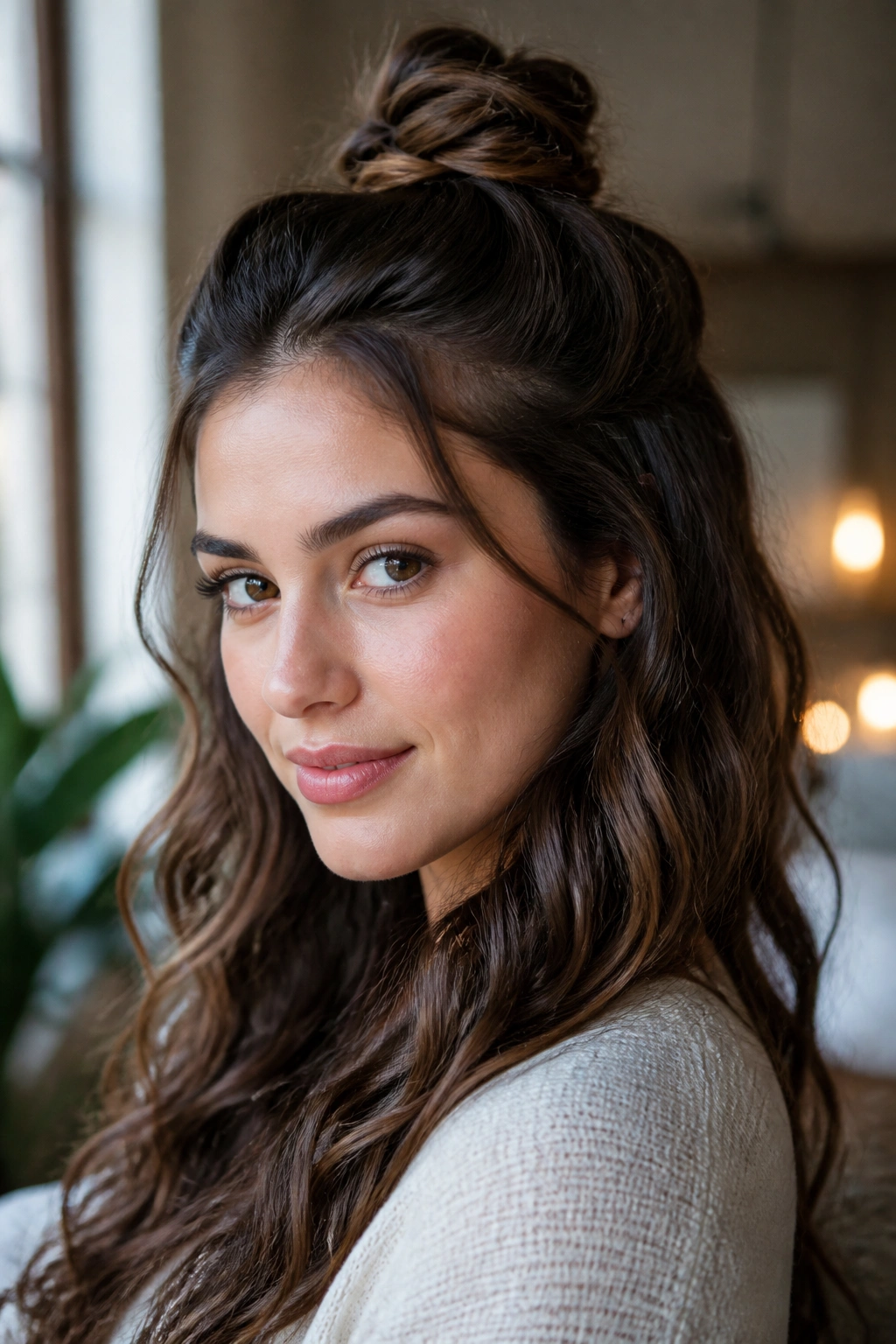
This is the easy answer when you want your face clear but do not want a full updo. The half-up knot takes the top section out of the way and leaves the wave pattern visible underneath, which is exactly why it works so well on textured hair.
You can make the knot neat or messy. I prefer messy, because wavy hair tends to look stiff when it is over-controlled. Gather the top section, twist it into a small knot, and pin it with two bobby pins crossed underneath. If the knot feels too tiny, pull the top section a little wider before you tie it.
The lower half stays loose, so the style still moves when you walk. That motion is the part people notice. Not the knot itself.
9. Textured High Ponytail
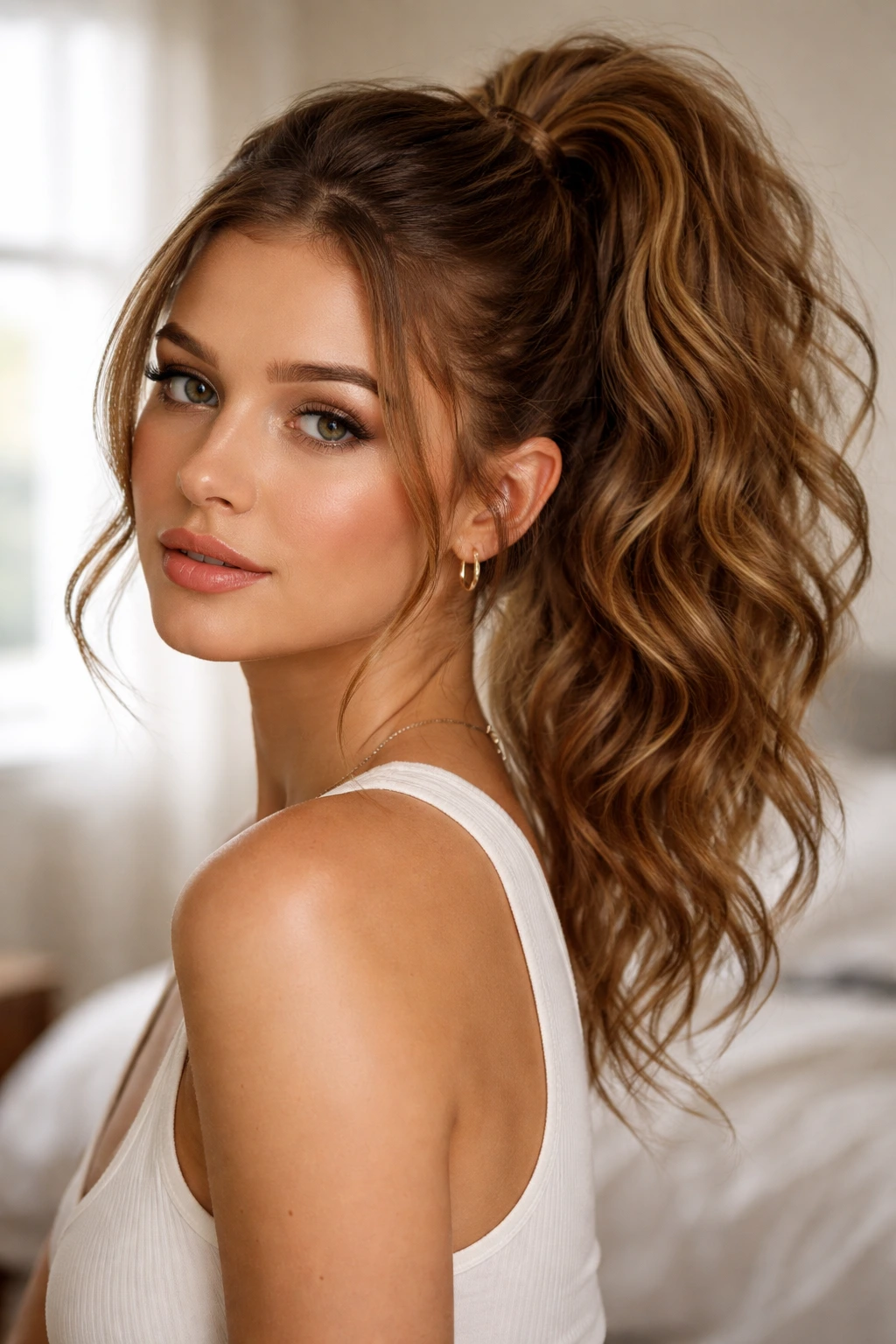
Need lift at the crown? Go high. A textured high ponytail pulls wavy hair up and away from the face, which makes the wave pattern in the tail stand out more than it would in a low style. The higher placement also gives fine hair more visual volume.
The key is not smoothing every last bump away. Leave a little texture near the roots, then secure the ponytail high on the head. Wrap a small strand around the elastic if you want the finish to look cleaner, but do not flatten the tail itself. That airy shape is the whole point.
If your hair is thick, this ponytail can feel heavy by the end of the day. A strong elastic helps. So does placing a bobby pin under the elastic for extra hold. Small fix. Big difference.
10. Double Dutch Braids
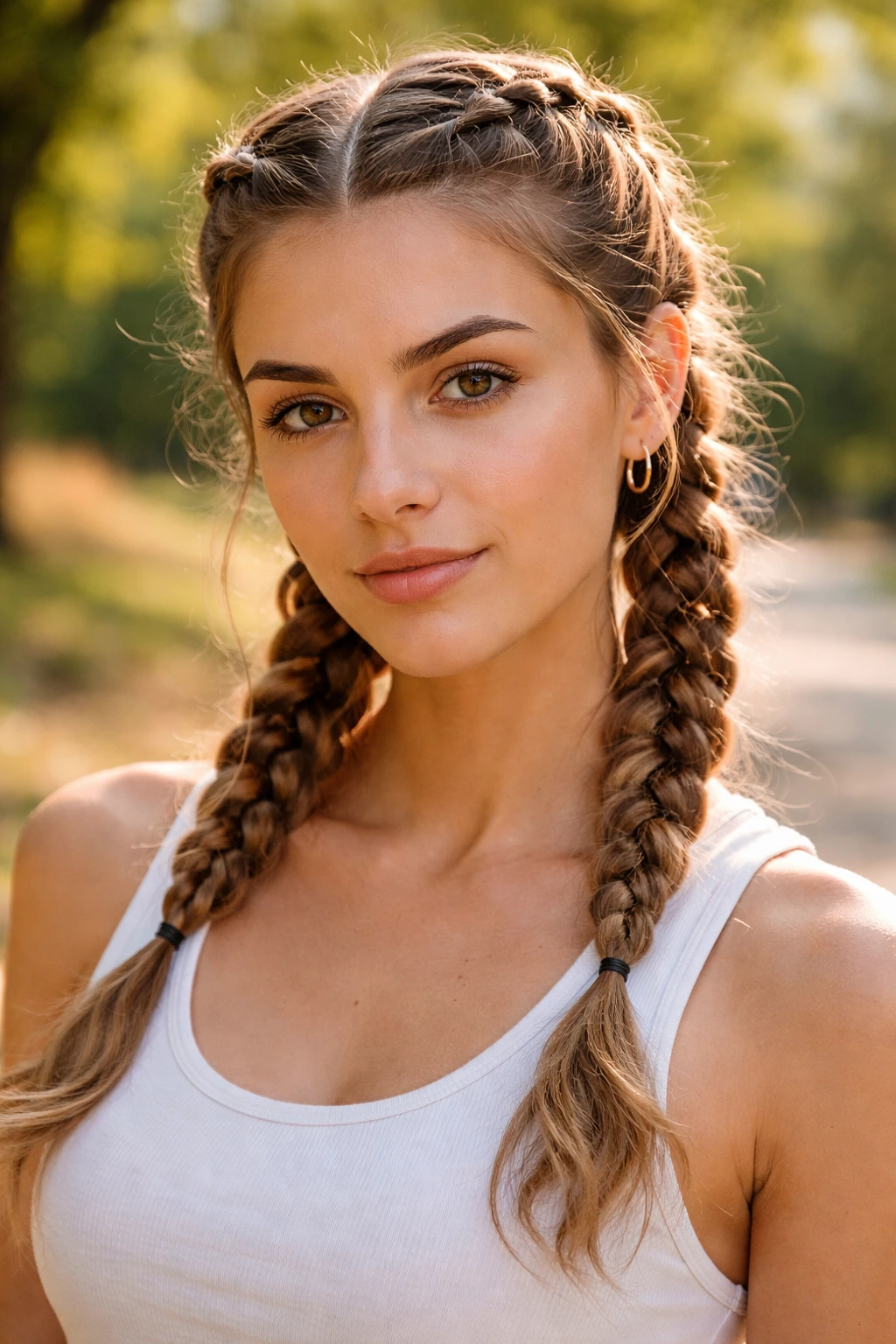
Double Dutch braids are the practical answer for waves that need to stay put. They keep every section controlled, which is useful for workouts, long drives, or days when the weather is determined to make your hair puff out.
Best for Active Days
Unlike loose braids, Dutch braids sit on top of the hair and create more definition. On wavy hair, that gives the style enough texture that it does not look too severe. Start with a center part, braid down each side, and keep the sections even so the braids hang with the same weight.
They are also a smart overnight style if you want heat-free texture the next morning. Braid the hair while it is dry, sleep on it, then undo the plaits and shake the waves out. The result is usually a little fuller than your natural pattern.
11. Fishtail Side Braid
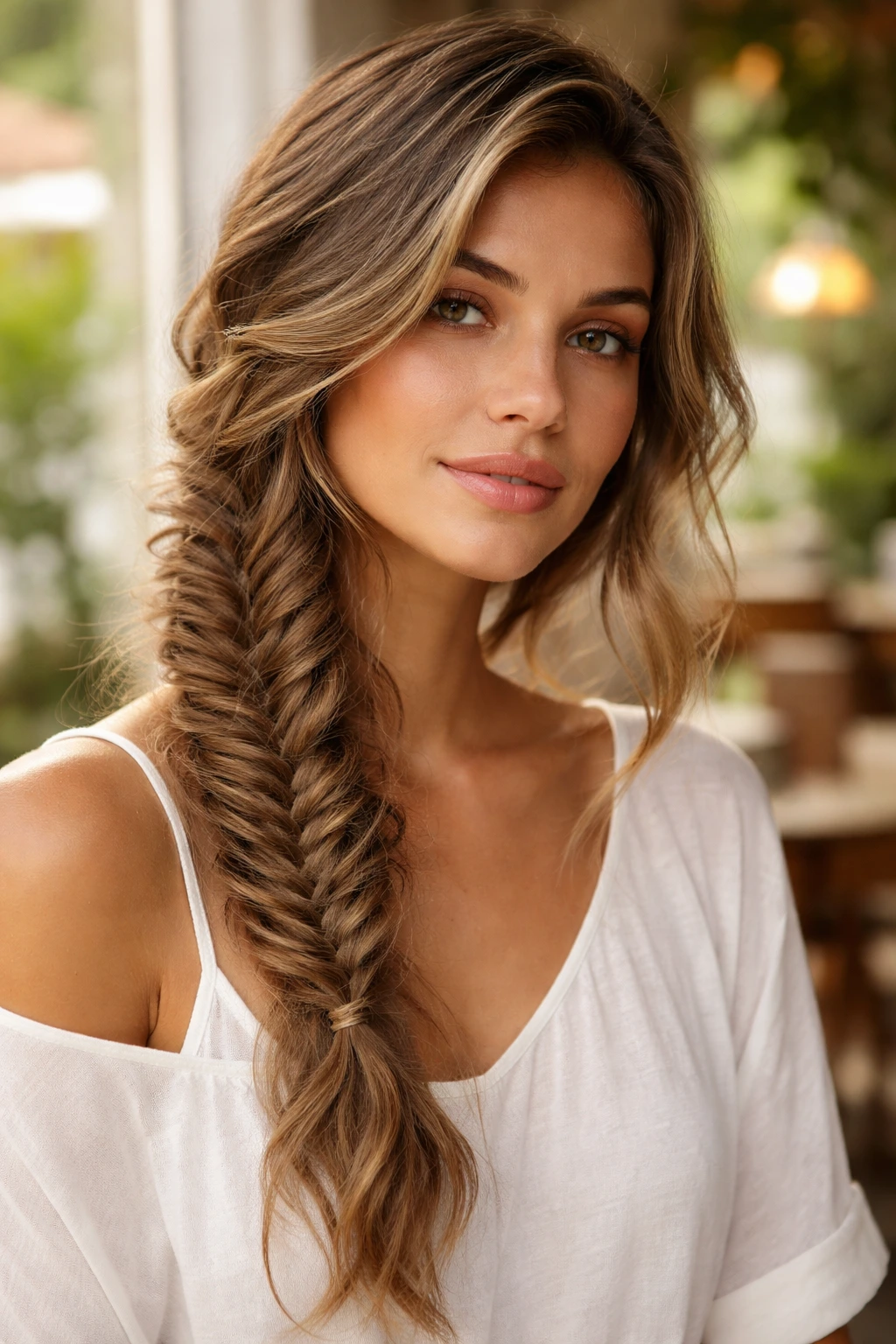
A fishtail side braid has a finer, more detailed look than a standard braid, and wavy hair gives it a nice soft edge. The texture keeps the braid from looking too formal. It ends up somewhere between polished and undone, which is a sweet spot for a lot of people.
The braid itself takes tiny sections from the outside and crosses them over to the other side. Slow is better than fast. If you rush it, the braid gets messy in the wrong way. If you take your time, the weave looks almost stitched.
This is a good choice for long layers because the length gives the braid room to show the pattern. If the bottom slips loose, that is fine. A fishtail looks better when the last few inches taper naturally.
12. Twisted Low Chignon
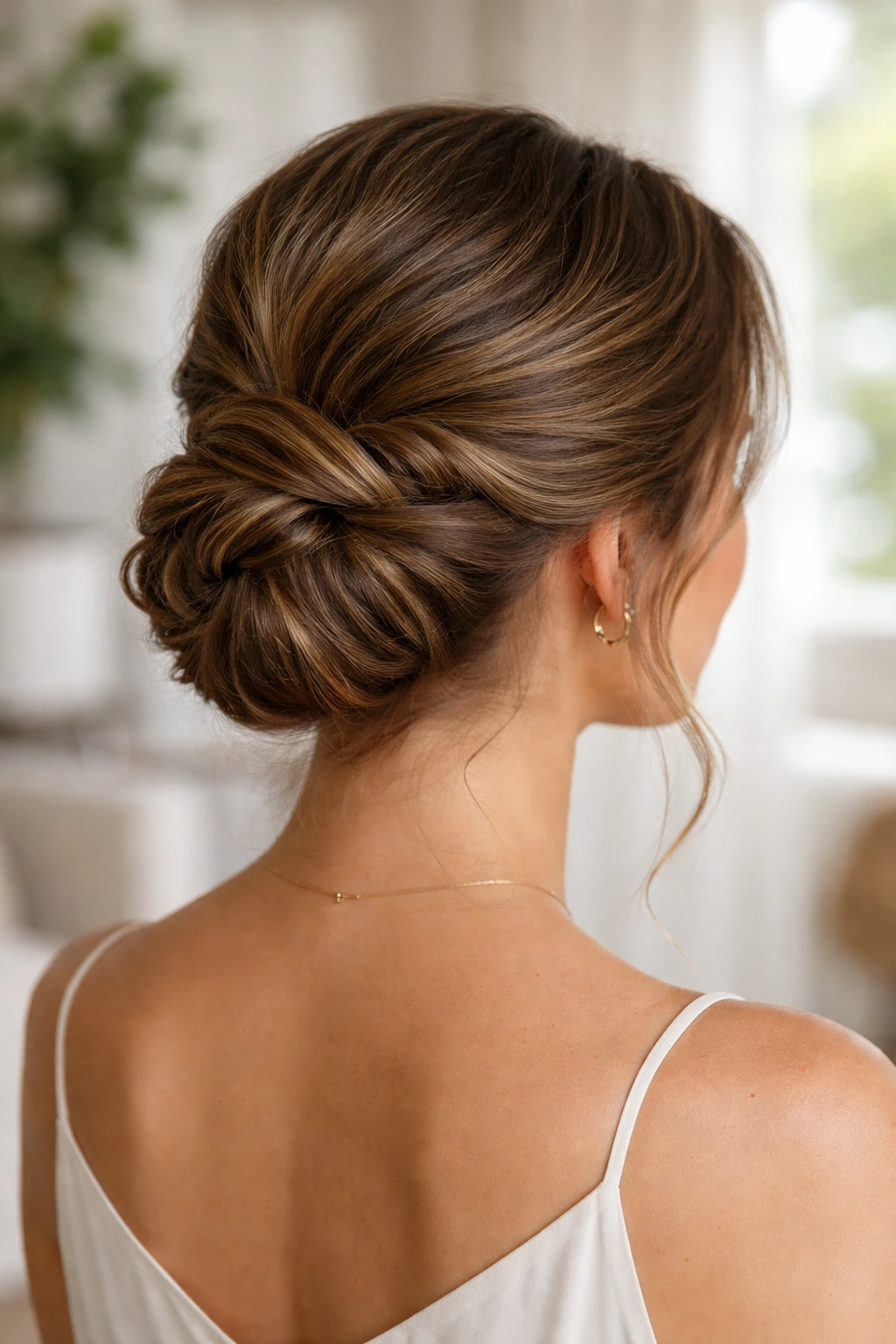
A twisted low chignon is the dressier cousin of the messy bun. It still sits at the nape, but the folds are tucked in with a little more care, so the result looks neat without turning pin-straight. Wavy hair gives it enough softness that it never feels severe.
The best version starts with two side sections twisted back toward the center. Then the remaining length is wrapped into a low coil and pinned flat against the head. You want the folds to sit close together, almost like fabric pleats. That shape gives the style depth.
If your hair is heavy, use pins in an X pattern. It keeps the bun from sliding down by the second hour. Annoying problem. Easy fix.
13. Headband Tuck
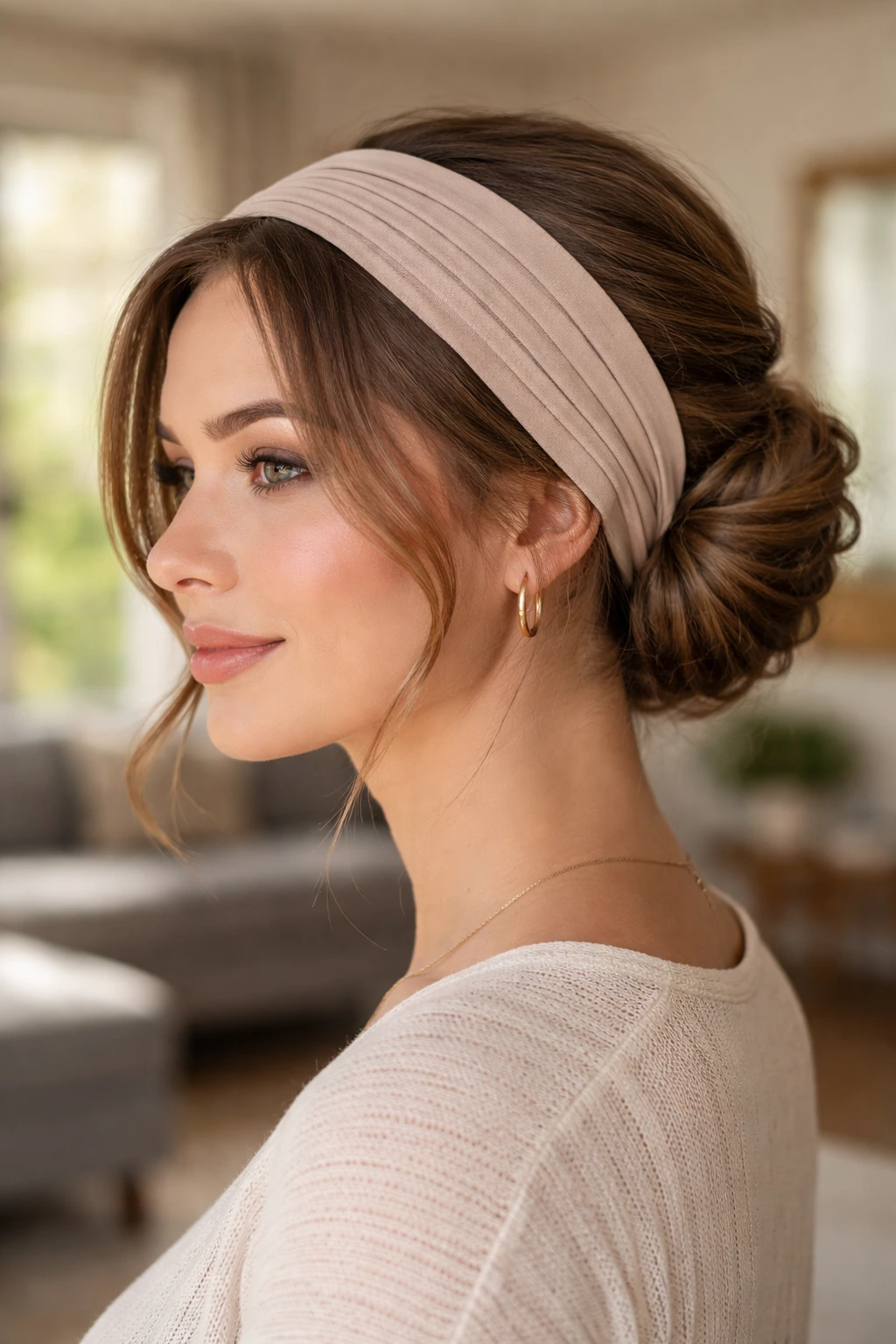
A headband tuck is one of the easiest natural hairstyles for wavy hair because the accessory does most of the work. You slide on a stretchy headband, tuck the ends under in sections, and let the wave pattern create the soft roll at the back.
Why It’s Worth Keeping Around
This style works especially well on medium-length waves that are neither too short nor too long. If the hair is too short, it slips out. If it is too long, the tuck can feel bulky. In the middle, though, it looks effortless in the best way.
It is also one of the few styles that can hide frizz at the ends without using heat. If the roots are a little flat, fluff them with your fingertips after tucking. A velvet or ribbed headband grips better than a slippery satin one when the goal is hold.
14. Space Buns with Loose Waves
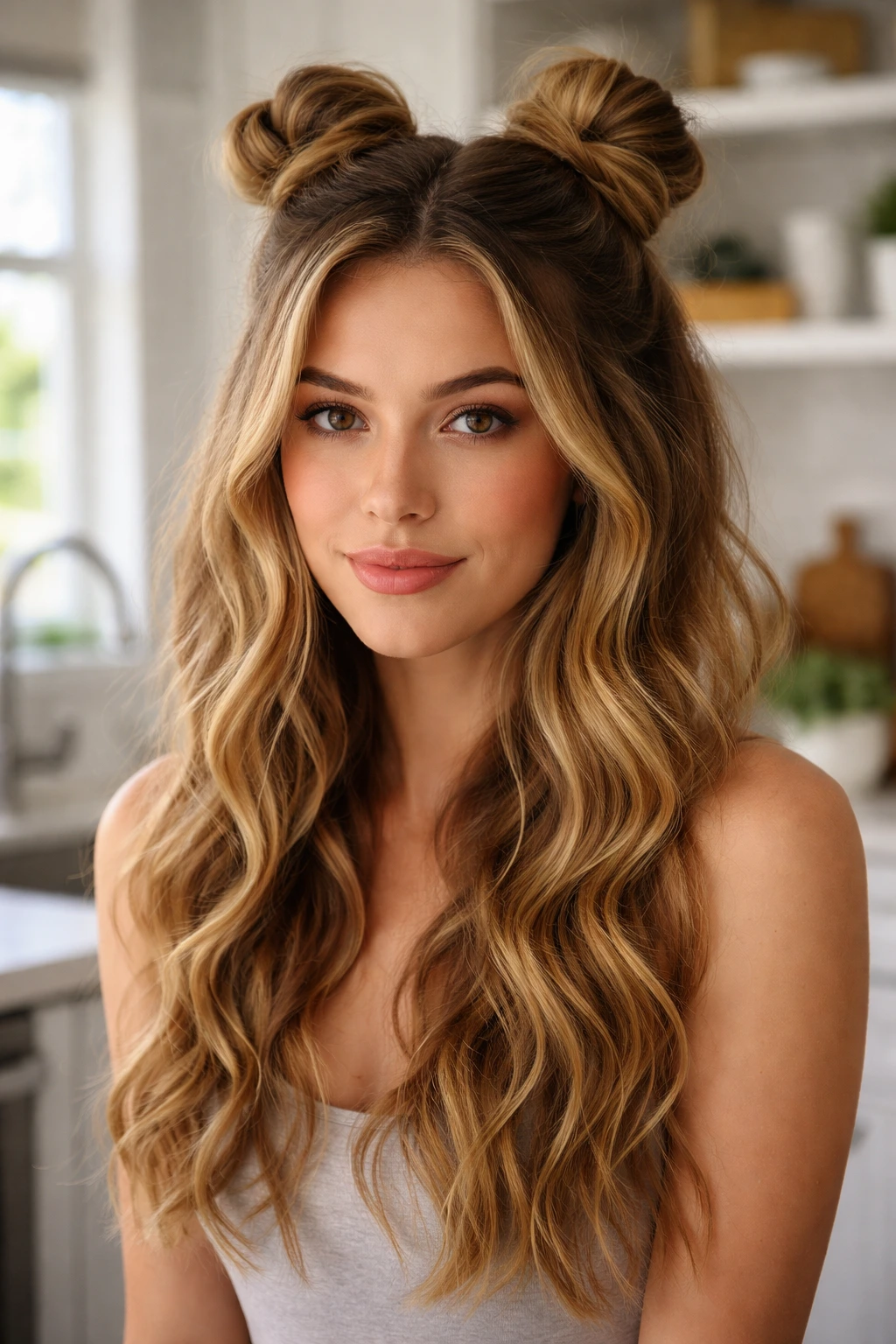
Space buns are playful, but they do not have to look childish. On wavy hair, they can come across as sharp and modern if you keep the buns small and leave the lower lengths loose. The contrast between the compact top knots and the soft waves underneath is what makes the style work.
Part the hair down the middle, make two small buns high or mid-high, and secure the rest of the hair as loose as you like. I like leaving the front pieces out. A few face-framing waves keep the look from feeling too tight around the temples.
This style is good when you want the hair off your neck but still want the ends visible. It is also a nice way to hide uneven wave patterns, because the eye goes straight to the buns.
15. Waterfall Braid
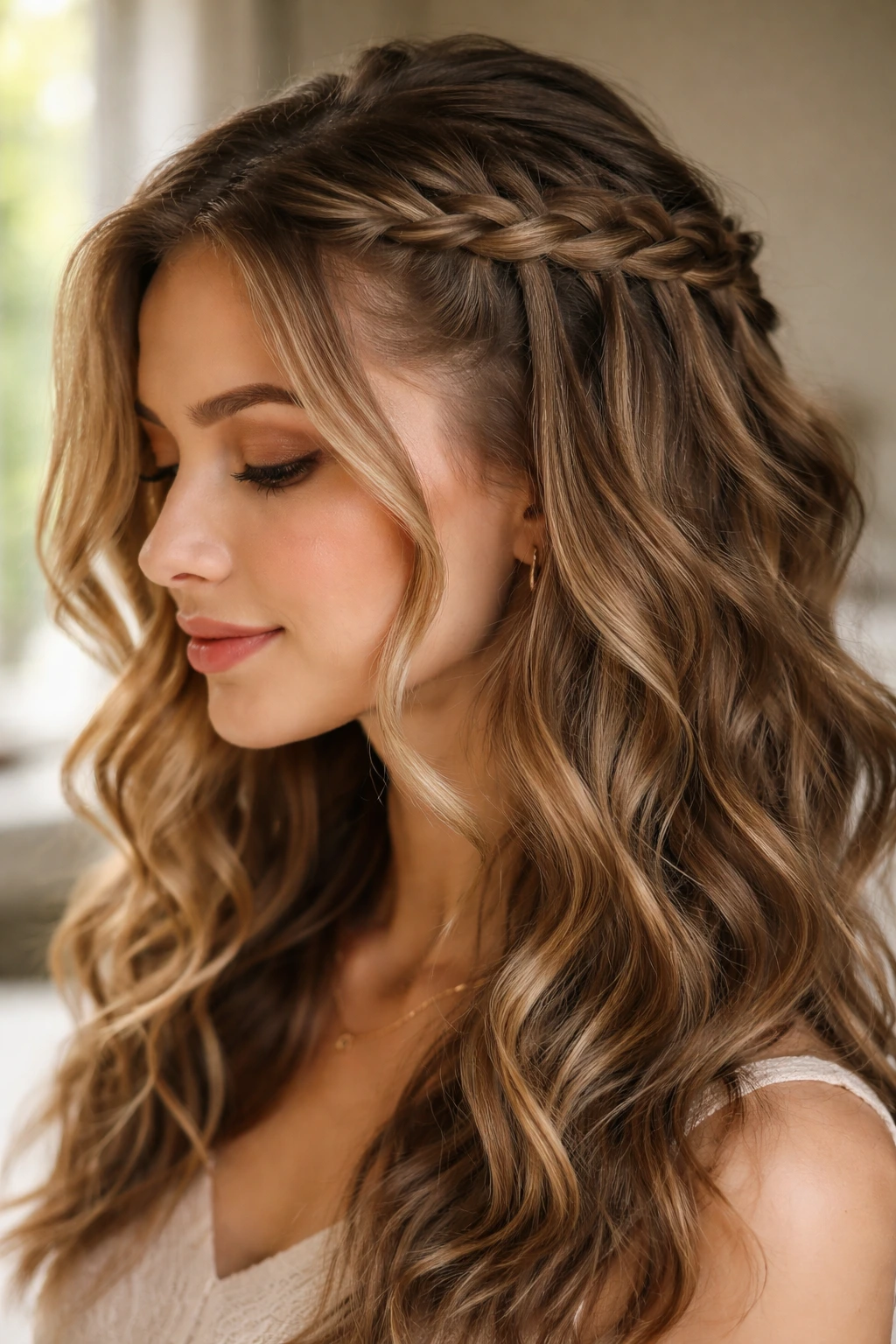
Why do waterfall braids look so good on wavy hair? Because the style is built to show off motion. The strands that drop through the braid keep the length loose, so the wave pattern can still move and separate instead of getting trapped in a tight plait.
How to Keep It Soft
Start the braid a few inches back from the hairline and let the dropped sections fall naturally into the rest of the hair. If you pull the braid tight, it starts to look stiff. If you keep the tension light, it sits like a frame around the face and blends into the hair below.
This is a lovely choice for medium to long waves, especially if you want something that looks more detailed than a simple half-up style. It does take a steadier hand than a regular braid. Worth it, though, because the finish is genuinely pretty in motion.
16. Pinned-Back Side Sweep
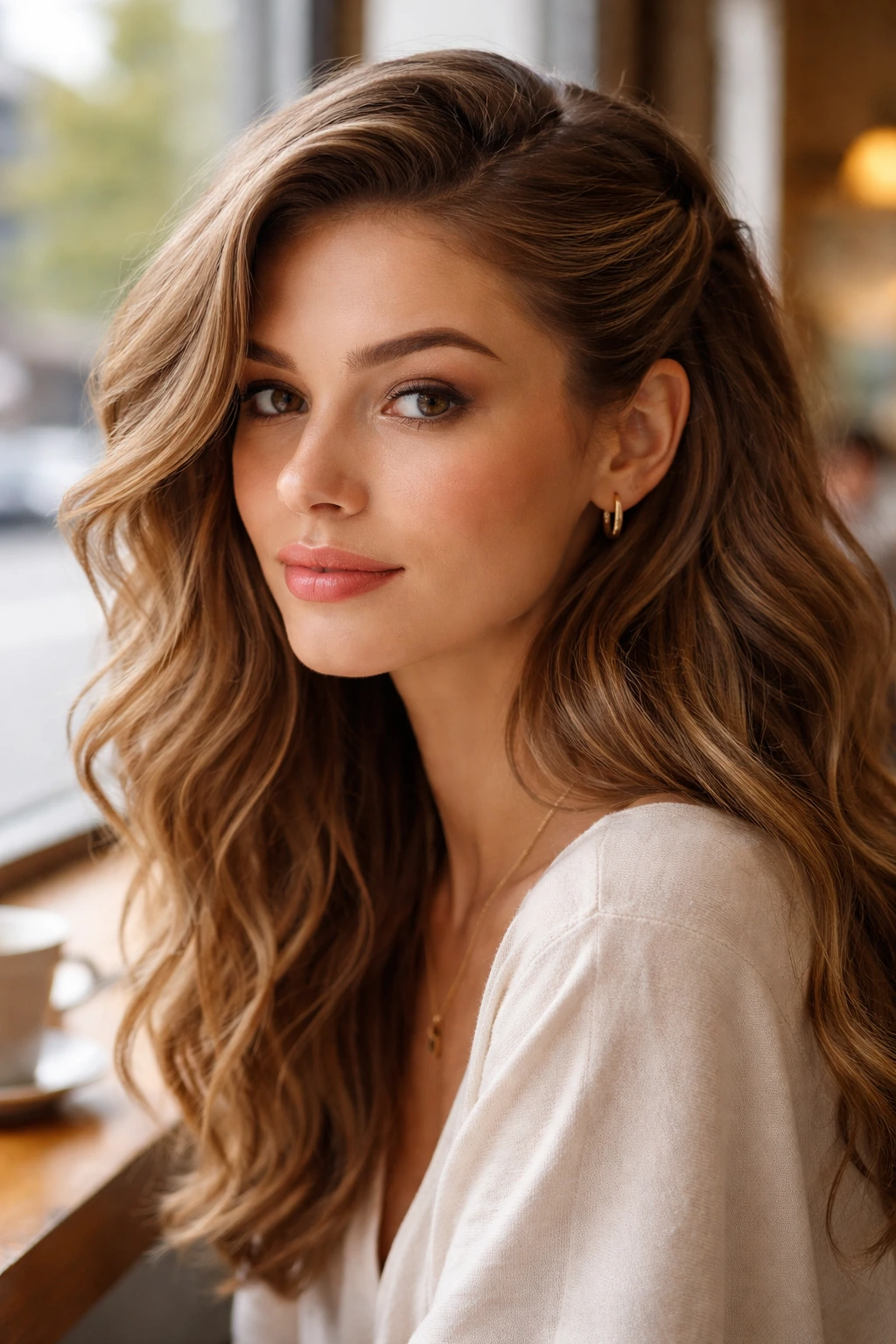
Sometimes you do not want an updo at all. You just want your hair out of your eyes. A pinned-back side sweep is the cleanest answer, and on wavy hair it keeps the texture visible instead of forcing everything into one flat line.
Take the front section from one side, sweep it back across the crown, and secure it with two or three bobby pins tucked under the top layer. The rest stays loose. That is the point. You get structure at the front without losing the movement in the length.
This style is useful for dinner, work, or any day when you want to look put together fast. It also works well with barrettes if you want the pins to feel more finished. Small clip. Big payoff.
17. Loose Pigtail Braids
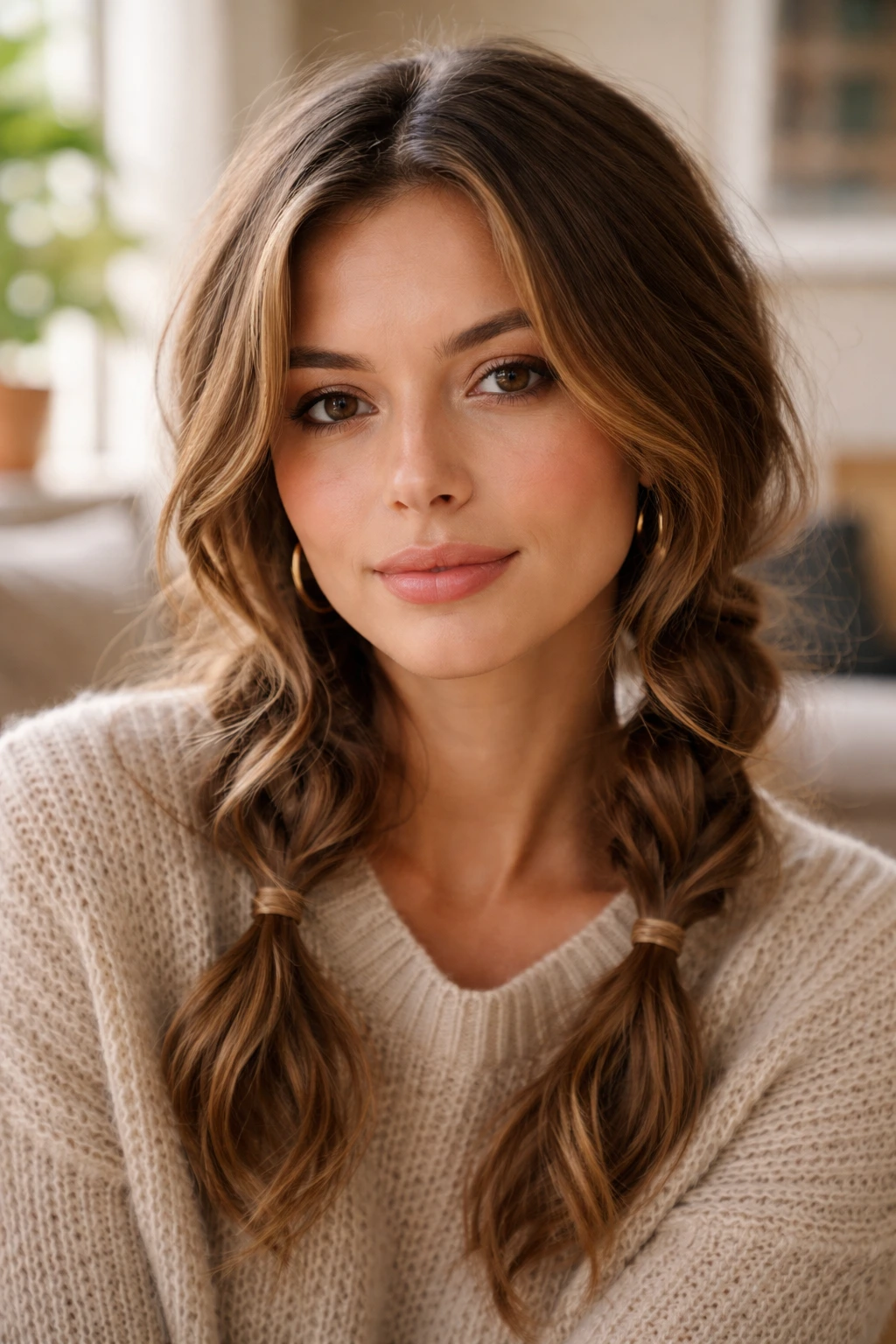
Loose pigtail braids are much better on wavy hair than people give them credit for. Keep them low, keep them soft, and they stop looking school-uniform basic. The wave pattern adds body, so the braids do not hang flat the way straight hair sometimes does.
A center part gives the cleanest shape, but a slightly off-center part feels softer. Braid each side without pulling the sections tight, then tug the edges a little once you tie them off. That softening step helps the braids look fuller and keeps the ends from bunching.
They are good for second-day hair, travel, and sleeping if you want heat-free bends by morning. Not glamorous. Just useful. And that counts.
18. Silk Scarf Wrap with Loose Ends
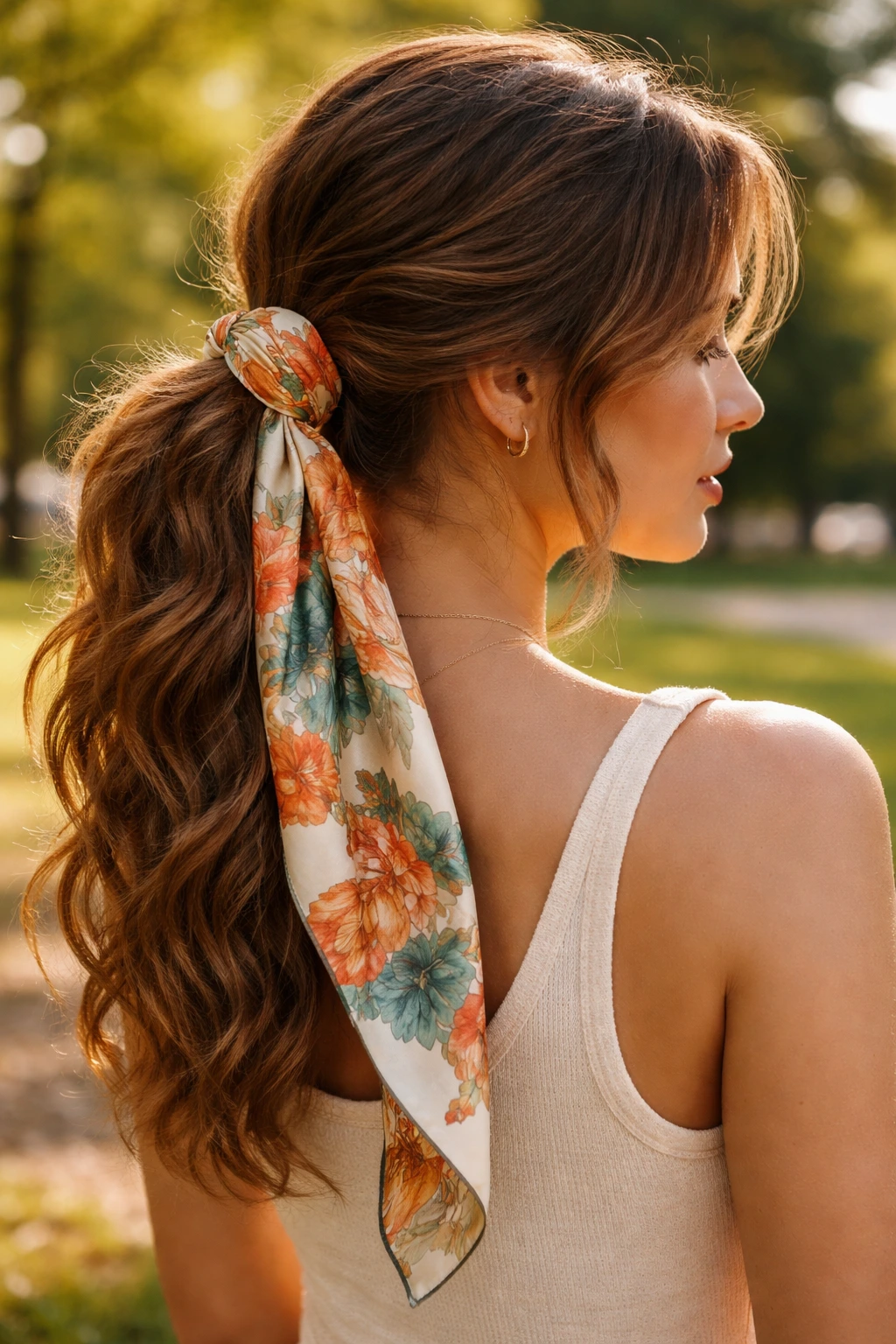
A silk scarf changes the whole mood of wavy hair. It gives the style a focal point, controls frizz near the crown, and lets the loose ends stay visible. If your hair gets puffy around the top but still looks good at the bottom, this is an easy fix.
Wrap the scarf around a low ponytail, tie it over a bun, or knot it under a half-up section. The fabric should sit snugly enough to stay in place but not squeeze the hairline. If you pull too hard, the scarf starts to crease the waves in weird places.
Compared with a plain headband, a scarf gives you more shape and more color. It also hides a slightly messy root area without asking the rest of the hair to behave. Handy. Very handy.
19. Mini Braids Mixed into Loose Waves
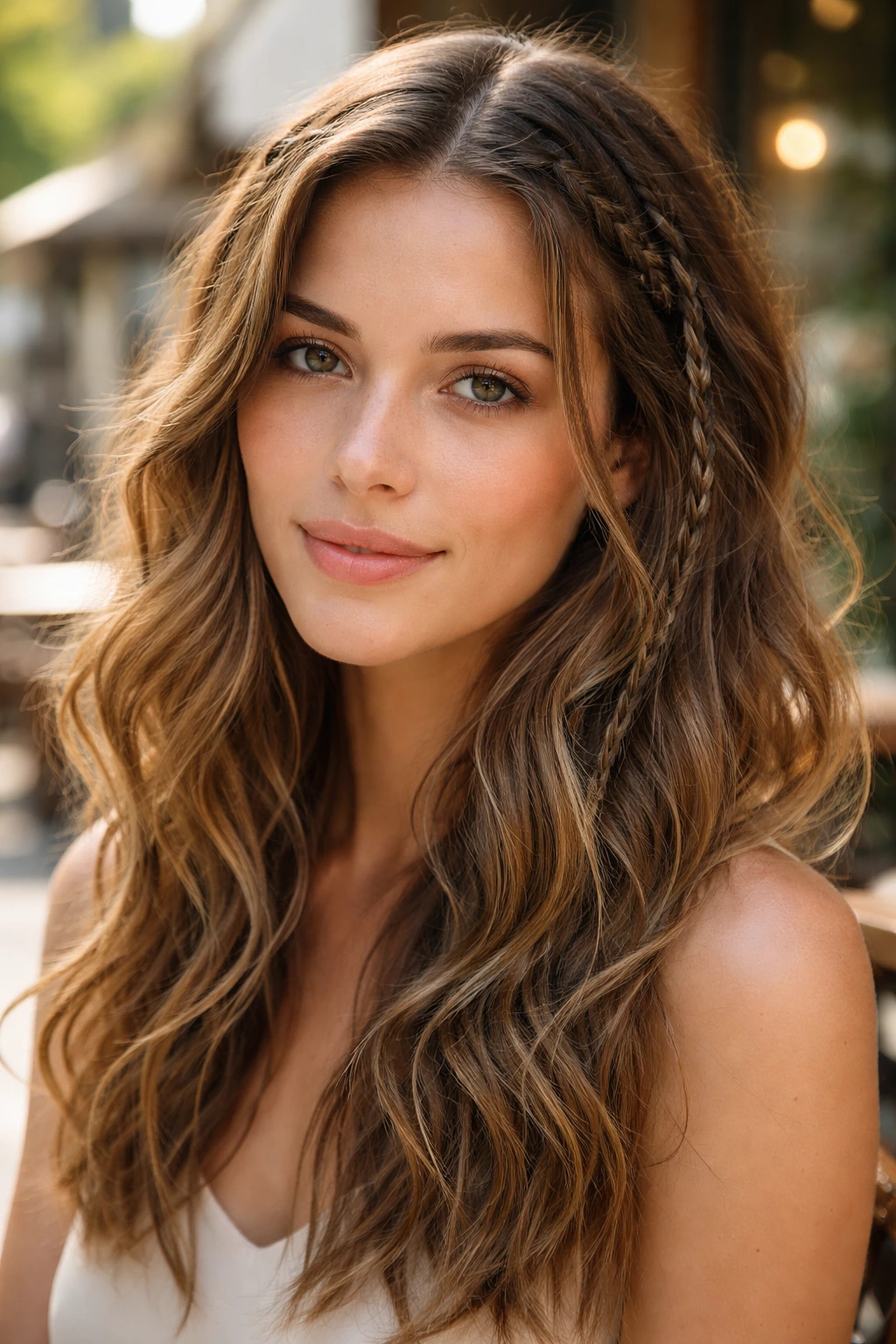
Mini braids are one of my favorite low-commitment styles for wavy hair because they add detail without taking over the whole head. A few tiny braids near the temples or scattered through the top layer can make loose waves feel intentional in a second.
Where to Place Them
The best spots are usually the front sections and the outer edges of the hair. That is where the braids show the most. Keep them skinny, no wider than a finger, so they do not compete with the wave pattern.
- Use 2 to 4 tiny braids, not a dozen.
- Secure each one with a small clear elastic.
- Leave the rest of the hair loose and brushed only with fingers.
- Add a little texturizing spray if the braids need grip.
Good to know: this style works best when the waves are already defined. If the hair is flat, the braids can look tacked on instead of blended in.
20. Top Knot with Soft Ends
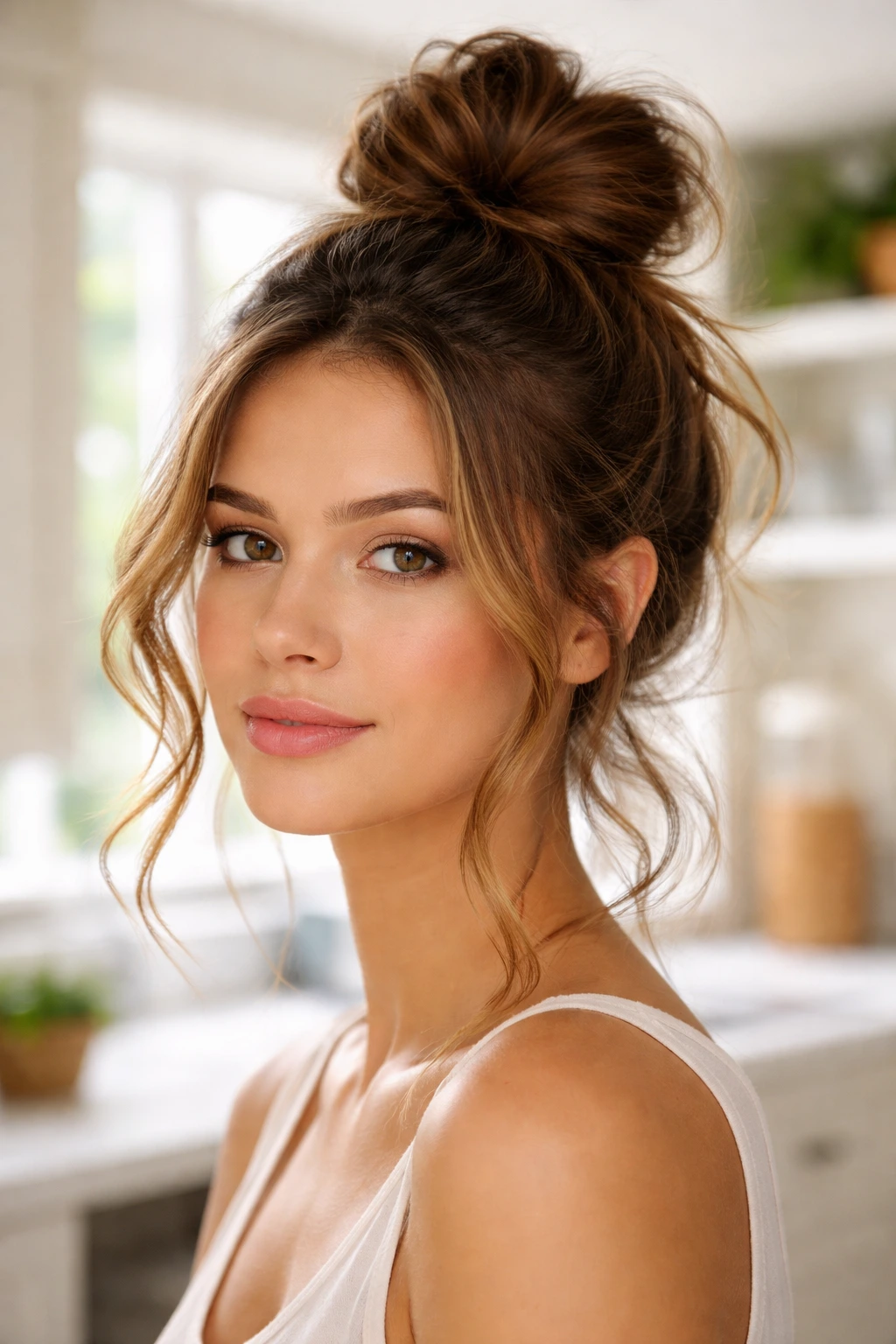
A top knot can look harsh on straight hair. On wavy hair, it usually reads softer because some of the texture survives the wrap. If you leave the ends a little loose instead of stuffing every strand in, the knot gets a more relaxed shape.
Pull the hair high, twist it once, then coil it into a bun without flattening it against the head. Let the ends peek out if they want to. That is not a mistake. It is the part that keeps the style from looking too severe. A couple of face-framing pieces helps too.
This is the one to reach for when you need hair off your neck fast and you do not want the polished look of a ballerina bun. It is quick. It is useful. It forgives imperfect waves.
21. Crown Twist with Clip
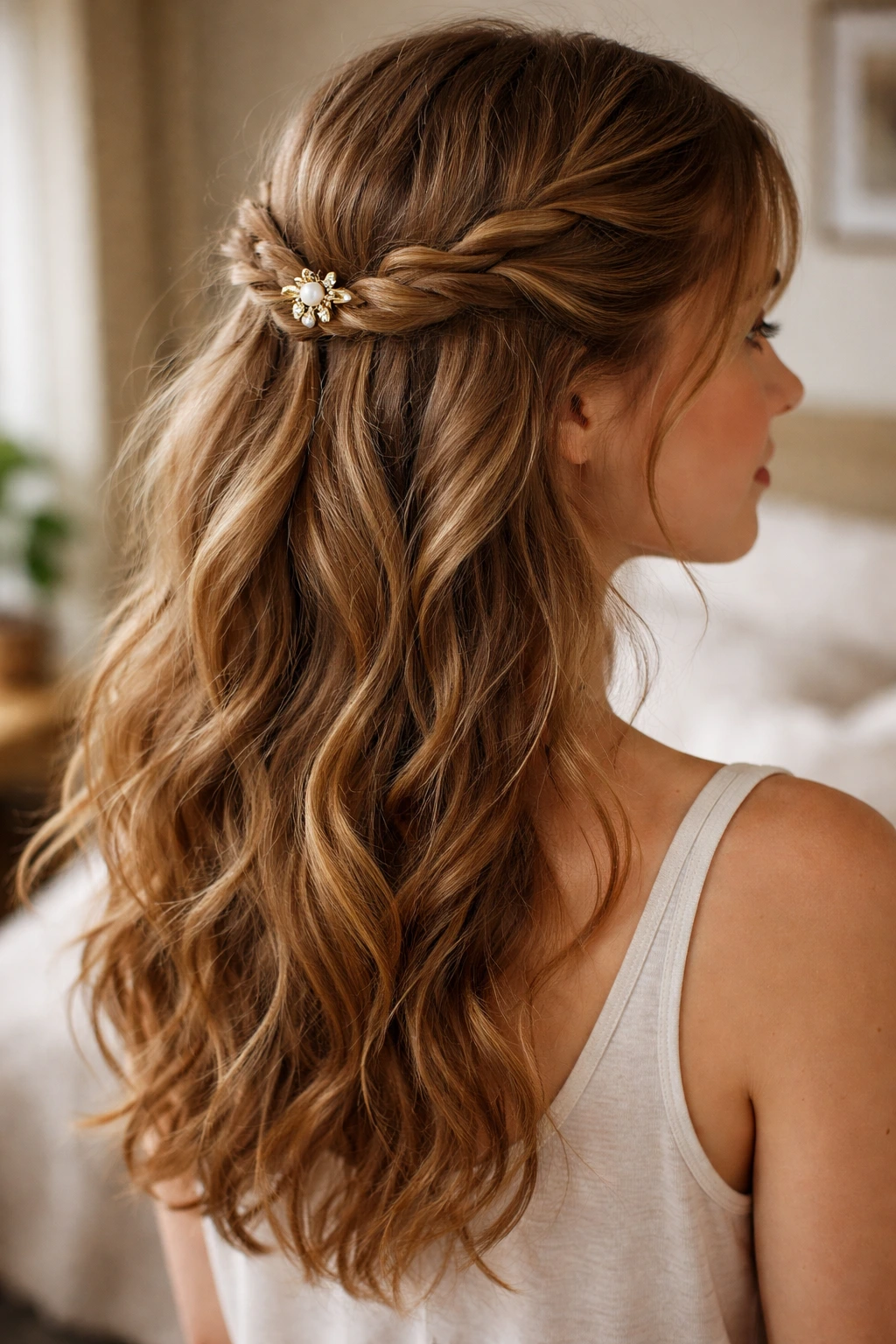
A crown twist with a clip gives you the look of an updo without the time of a full braid. You twist two sections from each side of the head back toward the crown, then join them with a clip at the center. The rest of the hair stays loose underneath.
The style works well for wavy hair because the twists have enough texture to stay put without looking overdone. If your hair is layered, leave the shortest pieces out around the temples. They soften the line and keep the twist from feeling too rigid.
This is a good middle-ground style for days when a ponytail feels too plain and a braid feels like effort. The clip does the heavy lifting. You just set the shape.
22. Low Ponytail with Wrapped Base
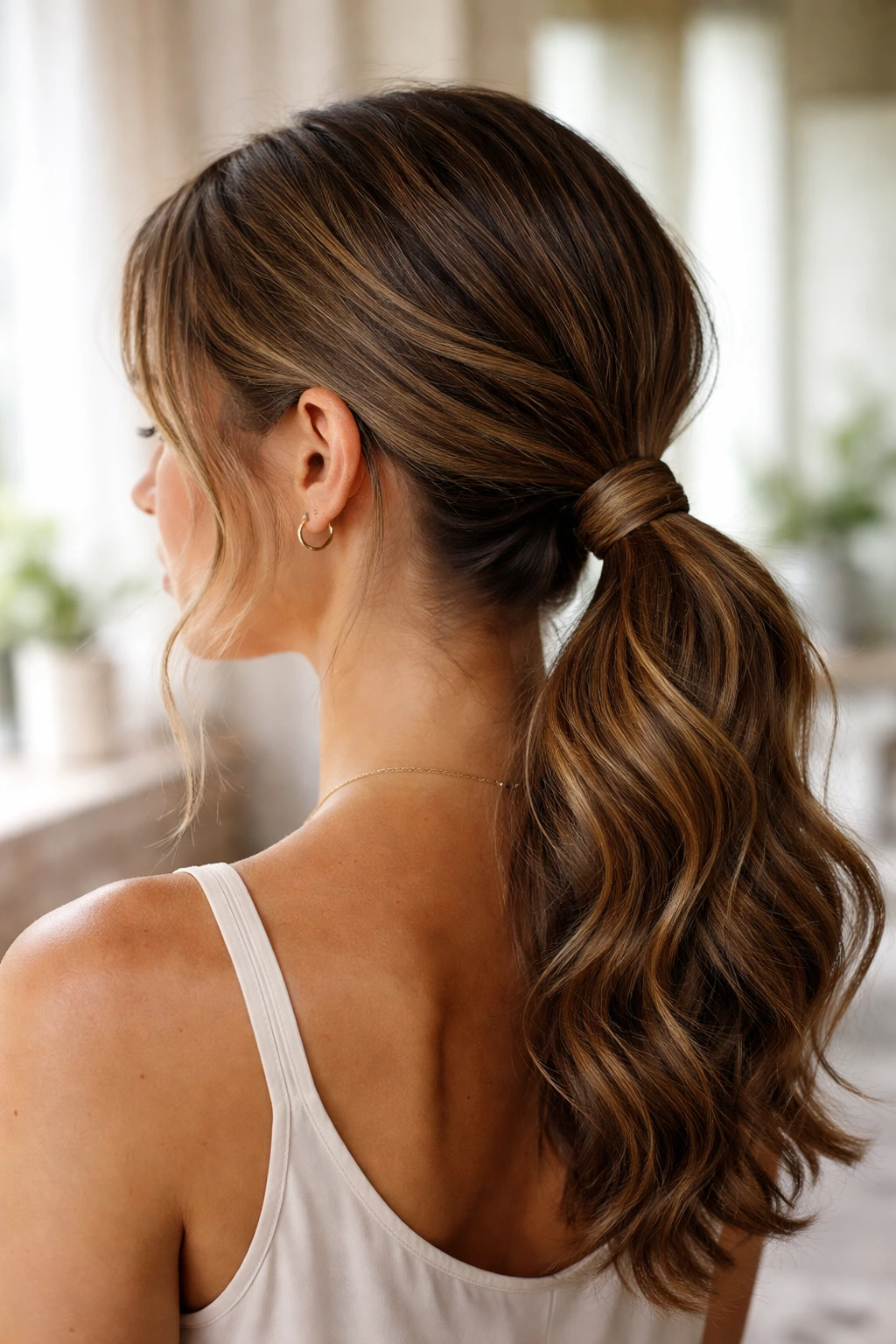
A low ponytail can look plain, but not when you give it a wrapped base. The wrap hides the elastic and makes the style look finished, while the wavy tail keeps the movement. It is one of the easiest ways to make a simple ponytail feel like a deliberate hairstyle.
Smooth the top lightly with your hands, gather the hair at the nape, and secure it with an elastic. Take a small strand from underneath, wrap it around the band, and pin it hidden at the back. That tiny detail changes the whole read of the style.
It is especially good on hair that is a day or two old. Freshly washed waves can slip. A little texture gives the ponytail better hold and keeps the wrapped section from sliding loose.
23. Milkmaid Braids
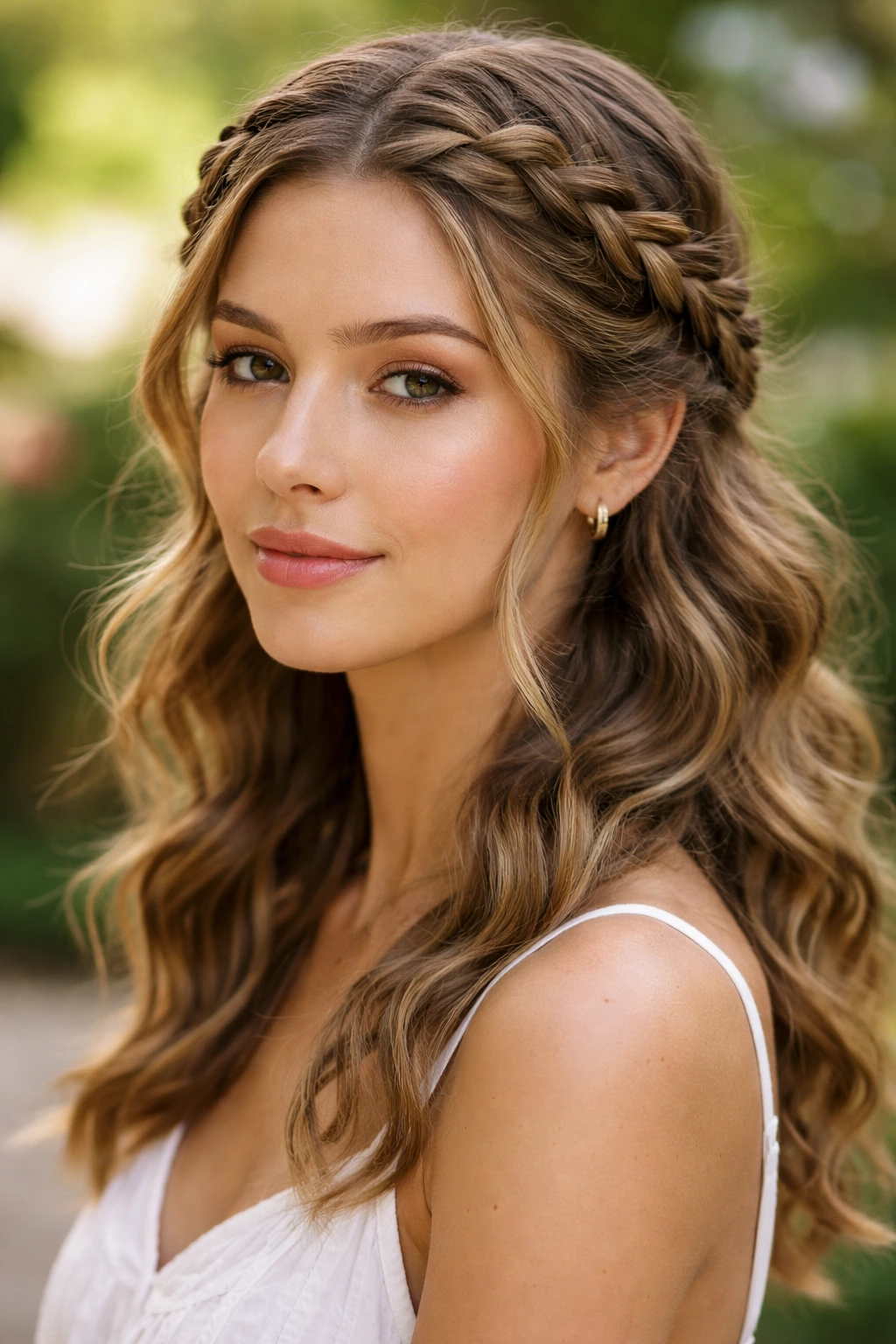
Milkmaid braids sit across the top of the head like a built-in frame, which makes them a strong choice for long, thick waves. They hold hair securely, keep the neck clear, and create a shape that feels more dressed up than a basic braid.
You usually make two braids first, then bring them up and across the crown, pinning them in place. The placement matters. If the braids sit too far back, the style loses its shape. If they sit too far forward, it can feel cramped. Right at the hairline is usually best.
This style takes a little patience, especially if your hair slips while braiding. Use small clear elastics at the ends first, then hide them under the crossed braids. Once it is pinned, it stays put for hours.
24. Braided Bun
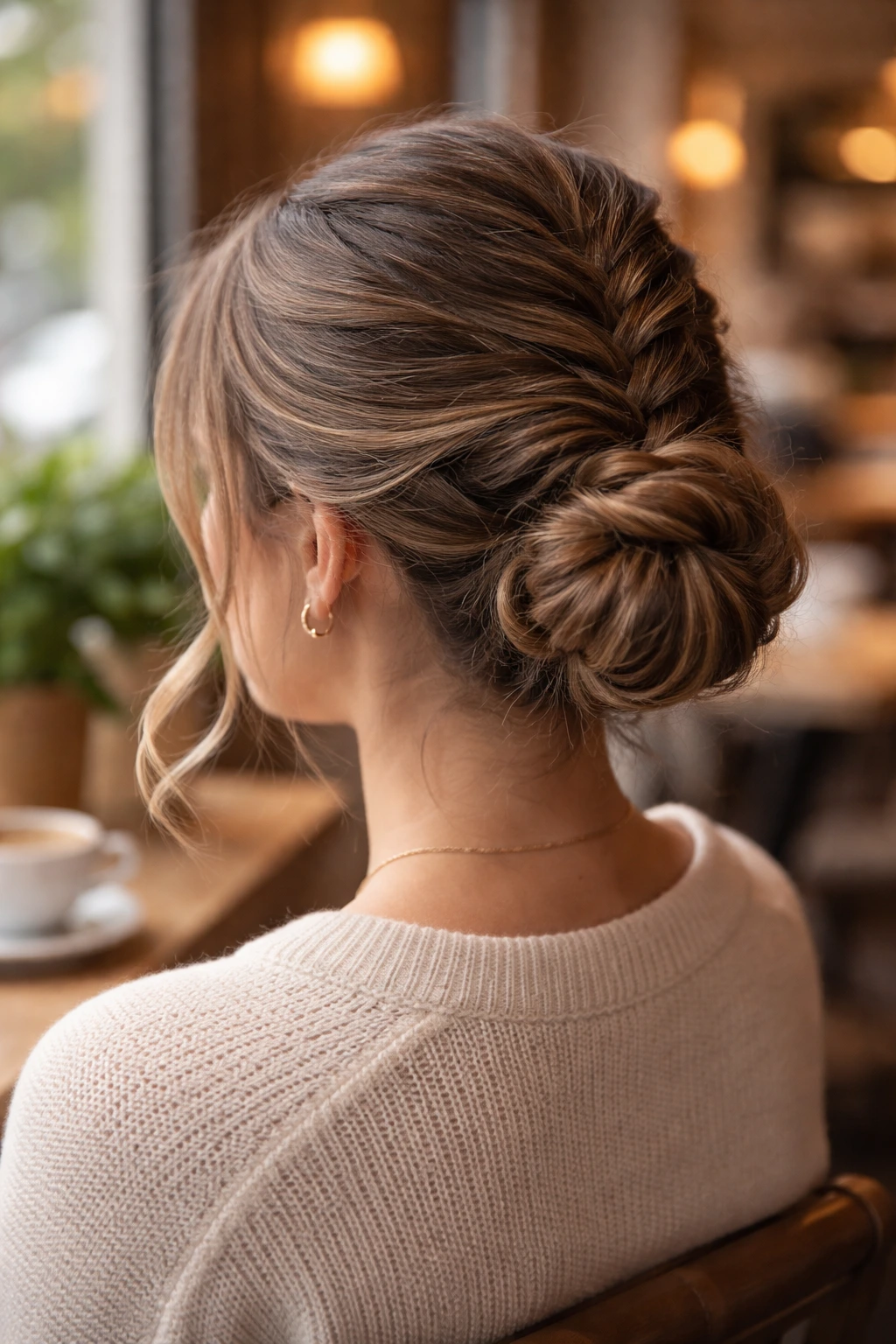
A braided bun combines two useful things: the hold of a braid and the neat shape of a bun. On wavy hair, that means you get texture in the braid and a little softness in the coil at the back. It is tidy without being flat.
You can braid the full ponytail first, then wrap it into a bun, or braid two side sections and pin them into a low coil. Both work. The first gives a cleaner shape. The second feels a little more relaxed. Pick based on how neat you want the finish to look.
This is a strong option for busy days because it stays secure better than a plain bun. The braid gives the pins something to hold onto. That matters more than people think.
25. Side-Parted Waves with a Barrette Accent
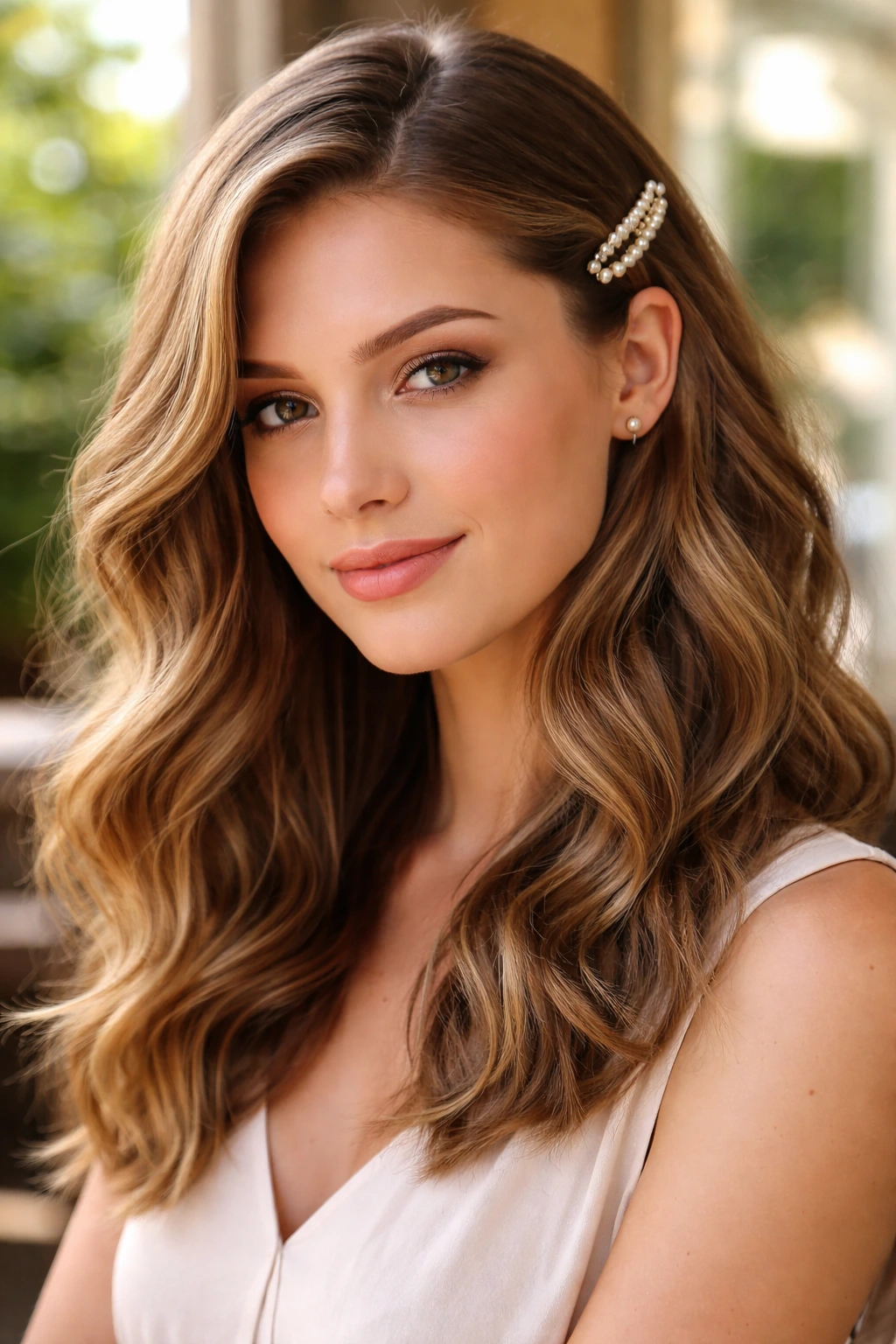
Sometimes the best hairstyle is not a full updo at all. A deep side part with a single barrette on one side can be enough to make wavy hair look finished, especially if the wave pattern itself is the main attraction.
The barrette gives you a visual anchor, while the rest of the hair stays loose and soft. If the front pieces keep falling into your eyes, tuck just one side behind the ear and clip it in place. The asymmetry looks natural, not forced.
This style is quick, but it does depend on the condition of the waves. If the ends are dry, a little serum or leave-in on the bottom third helps. If the roots are flat, a side part will usually fix that faster than adding more product.
26. French Braid into Low Bun
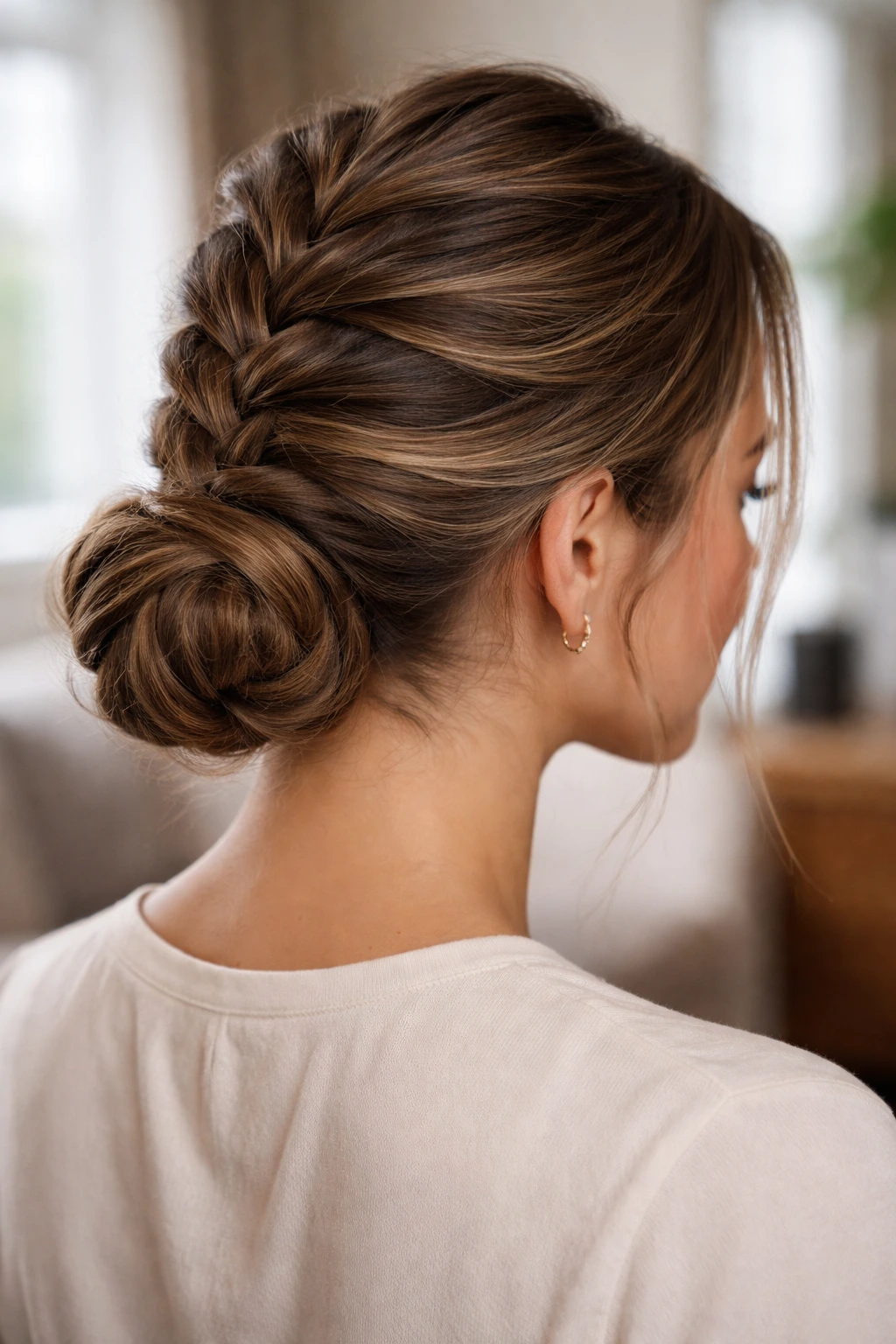
This is one of the smartest hybrid styles for wavy hair. The French braid controls the top section, and the low bun keeps the ends tucked away. Together, they create a style that stays secure without wiping out the wave pattern completely.
Start the braid at the crown or just behind the hairline, braid down to the nape, then twist the rest into a bun. It is a little more structured than a messy bun, which makes it useful for work or formal events. The braid at the top also helps if the crown tends to puff up.
If your hair is thick, braid a little looser than you think you should. Tight braids can feel heavy by the end of the day. Loose braids sit better and look softer against the waves.
27. Half-Up Braided Ponytail
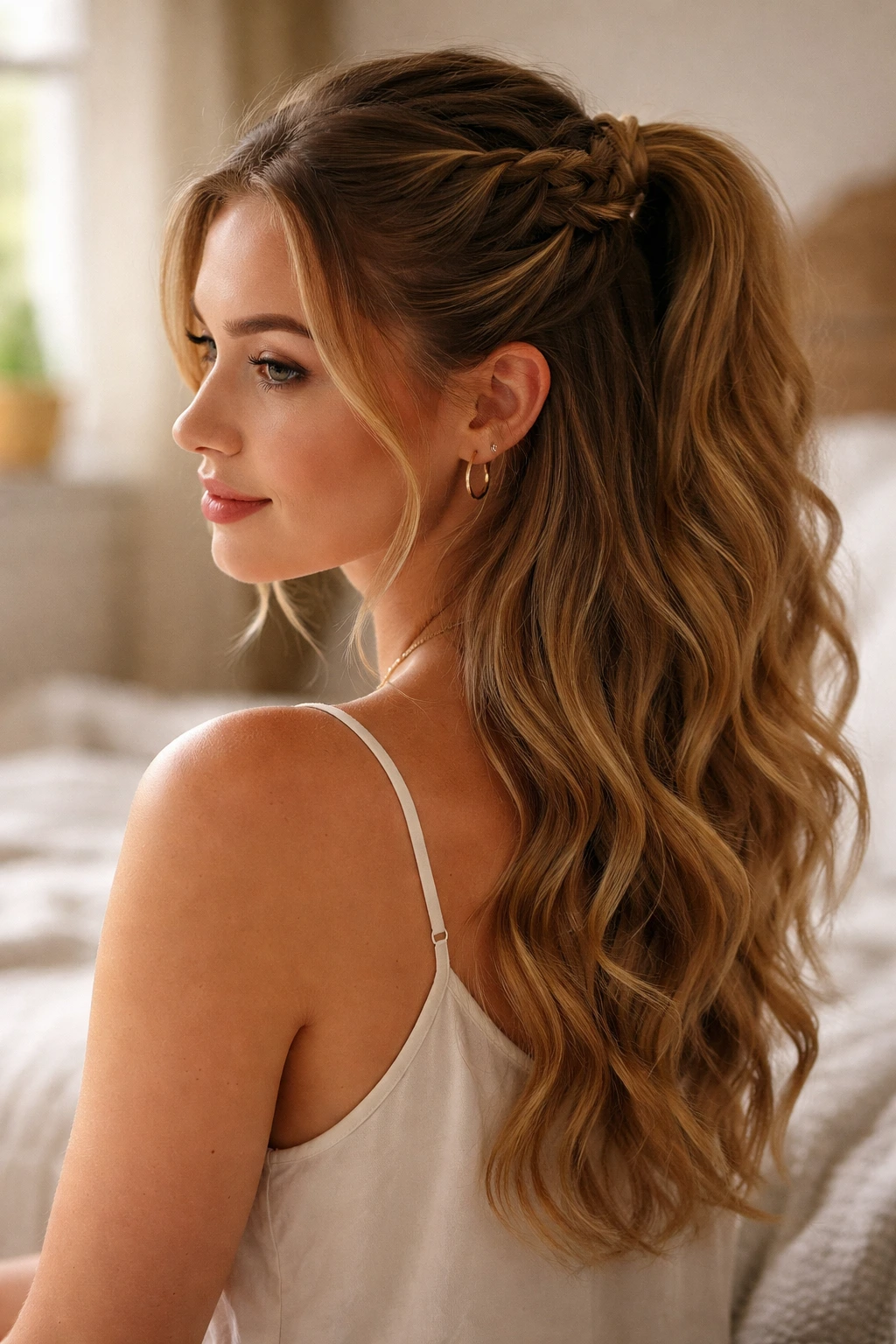
A half-up braided ponytail gives you the lift of a ponytail and the texture of a braid at the same time. It is a good choice if you like wearing your hair down but still want the front section off your face. The braid keeps the top tidy, and the loose length below shows off the wave pattern.
You can braid just the top section before tying it back, or braid the section after it is gathered. The first method looks more woven. The second is faster. Both work fine on wavy hair, which is lucky because this style gets worn a lot for a reason.
It also solves a common problem: the top layer of wavy hair can fall flat while the lower half still looks nice. This style gives the crown more shape without asking the whole head to do too much.
28. Twisted Halo Bun
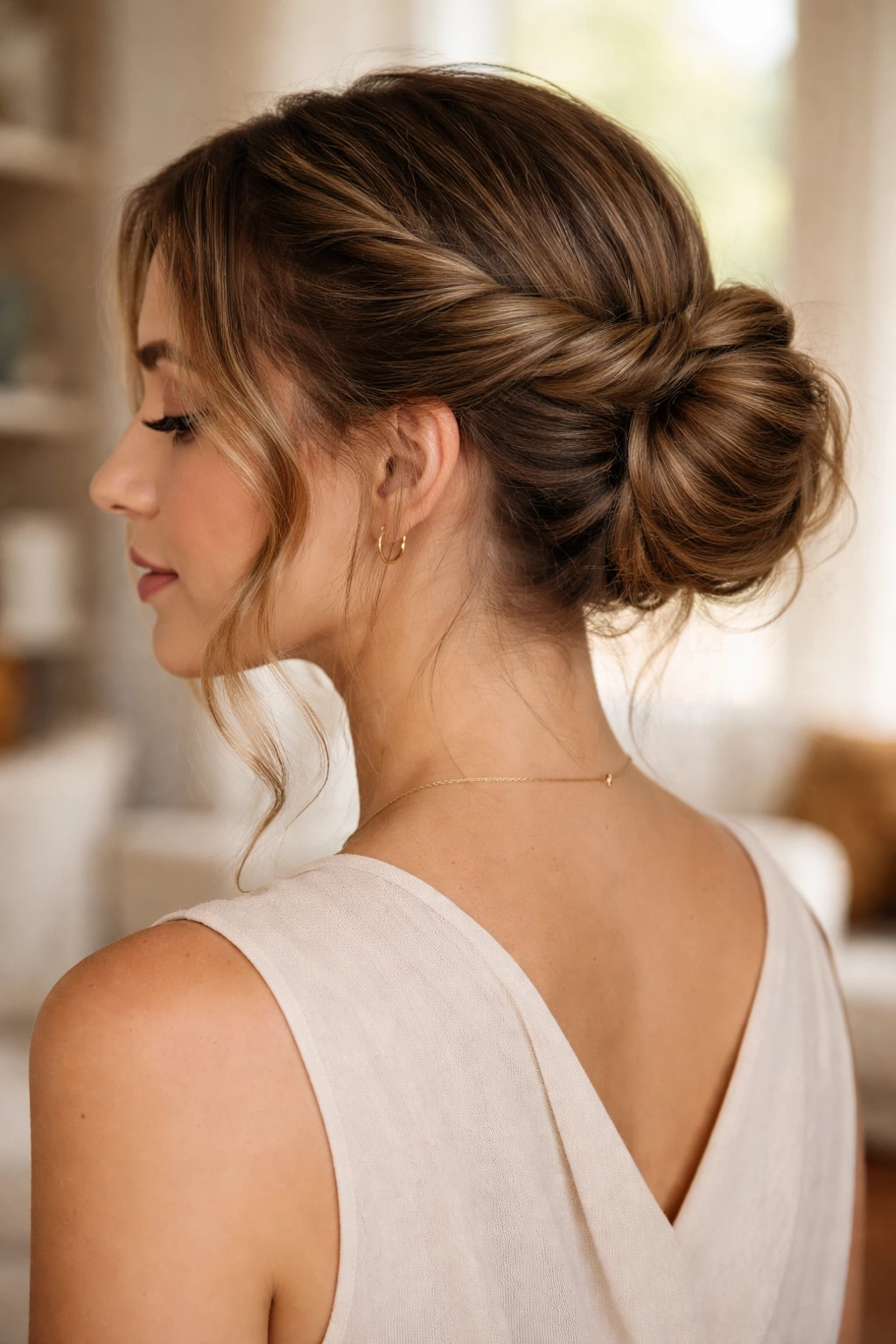
A twisted halo bun is a good final option because it sits somewhere between a crown style and a low bun. The twists around the head give it a finished outline, while the bun at the back keeps it practical. It is one of those styles that looks like you had a plan, even if you did not.
Section the hair into two side pieces, twist each one back along the head, then bring both toward the nape and pin them into a bun. Leave a few softer pieces near the ears if your waves like to loosen up around the face. That small bit of softness keeps the style from feeling severe.
If you want one style to keep in your back pocket for weddings, dinners, or any day when your hair feels a little unruly, this is a strong pick. It is secure. It is flattering. And it works with the texture instead of sanding it down.
Wavy hair does not need to be tamed into something it is not. The best natural hairstyles for wavy hair keep the movement, use the texture you already have, and only add structure where it helps. That is why a loose braid can look better than a sleek one, and why a clipped twist often beats a complicated updo.
Pick the style that matches your hair’s mood, not the one that asks it to behave like straight hair. Some days that means a braid. Some days it means a clip and five seconds of effort. Both count.
