



A rose gold hair color can look soft, chic, and expensive on cool skin tones—or it can tilt too peachy and make the whole face feel a little off. The difference usually isn’t the rose. It’s the gold. Keep the gold muted, push the pink toward mauve or silver, and the color starts reading like blush instead of copper.
If your undertones lean pink, blue, or neutral-cool, the best versions usually live in that dusty zone: rose quartz, champagne pink, smoky blush, pearl rose. A colorist will often keep the base lifted to about level 8, 9, or 10, then glaze it with something that cuts orange and softens yellow. That small adjustment matters more than people think. A rose gold formula can look lovely in the bowl and still go loud on the head if the warmth isn’t checked.
Hair also behaves differently depending on placement. A full head of pastel rose on long straight hair reads one way; a few ribbons around the face on a shag or bob read another. So the smartest choices here aren’t only about shade. They’re about where the rose lands, how bright it is, and how much natural depth stays underneath.
Some of these ideas are soft enough to wear every day. Others are a little bolder—good if you like hair that does part of the talking for you. Either way, the cool-toned versions below keep the color flattering, not sugary, and that’s the line that makes rose gold hair feel grown-up instead of costume-y.
1. Dusty Rose Gold Bob for Cool Skin Tones
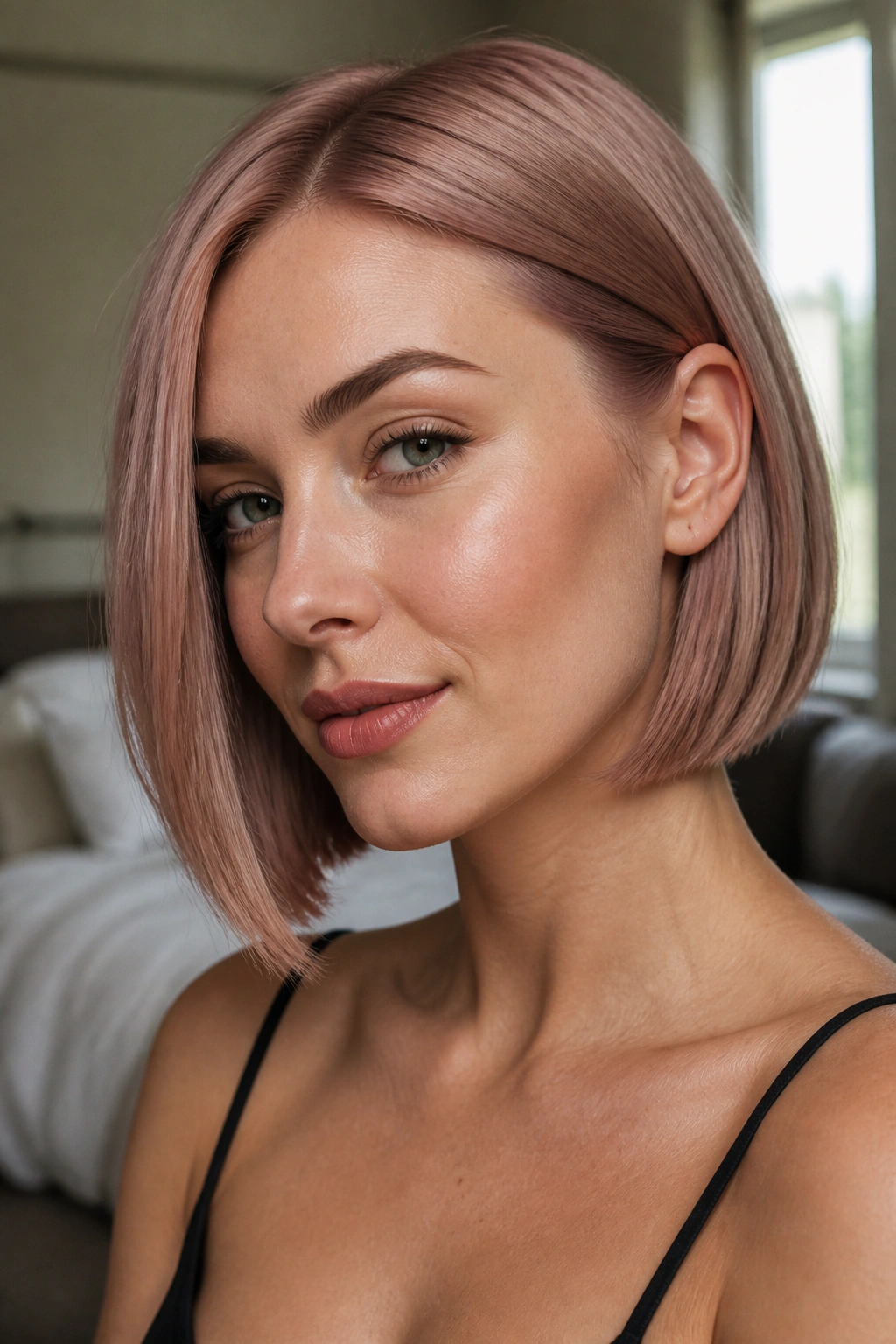
A dusty rose gold bob is the cleanest place to start if you want rose without the sugar rush. The cut does half the work here. A chin-length or jaw-skimming bob gives the color a crisp edge, and the muted pink-beige finish keeps cool skin looking fresh instead of flushed.
Why It Works on Cool Skin
The trick is the dust. You want more mauve and less apricot, with enough beige to keep the color soft. On a sleek bob, that shade looks neat, polished, and a little expensive.
- Ask for a level 9 blonde base if you want the rose to stay light.
- A beige-violet gloss helps keep brass out of the final tone.
- Tuck one side behind the ear for a sharper read on the color.
- A flat iron bend at the ends makes the shade look more dimensional.
Best move: keep the root one shade deeper than the mids so the bob grows out without a hard line.
2. Icy Rose Gold Balayage
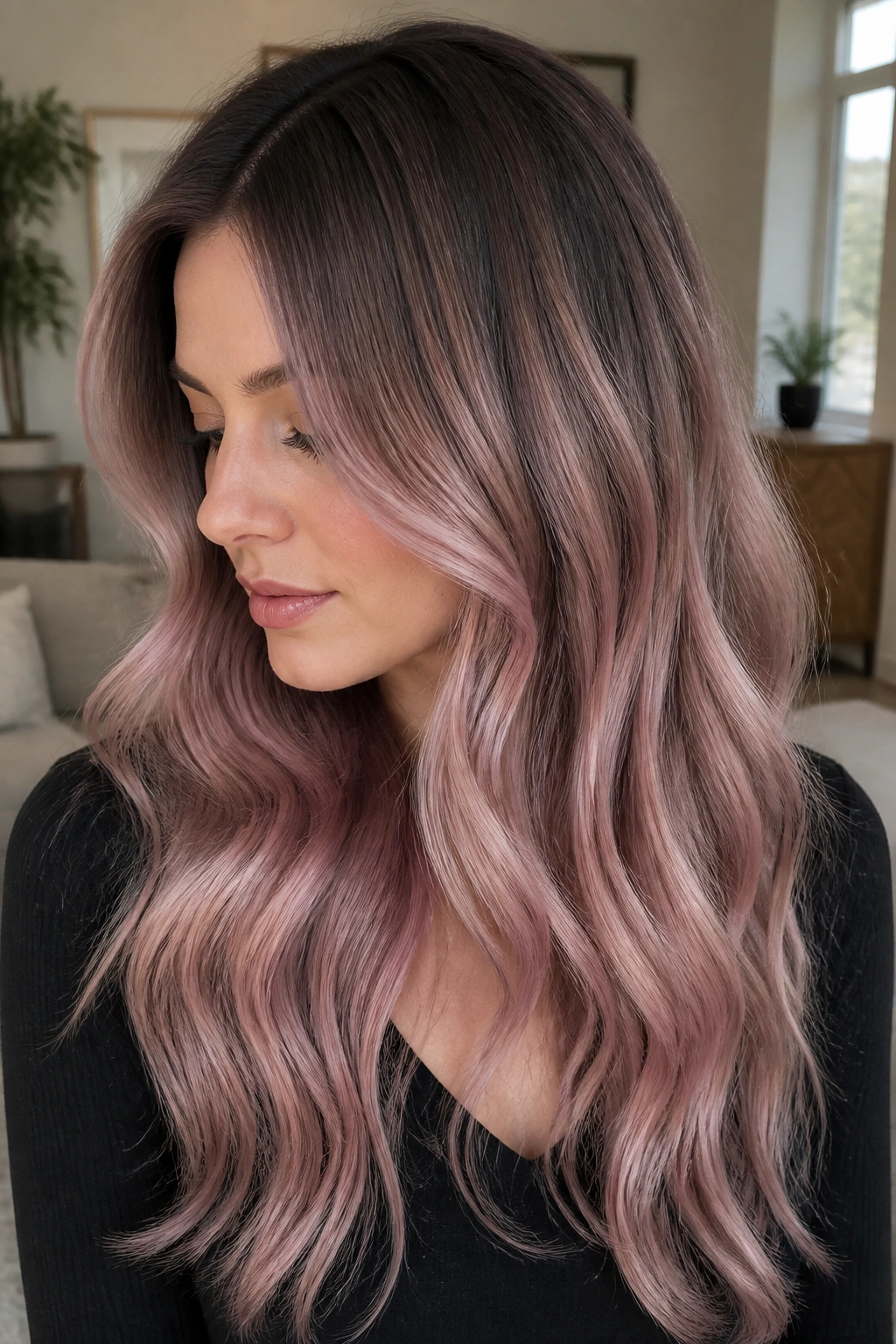
Icy rose gold balayage is the easiest way to keep rose gold from drifting warm. The icy base does the heavy lifting, and the pink sits on top like a sheer wash. On cool skin, that combination looks crisp rather than sweet.
The reason it works is simple. Platinum, pearl, and pale beige reflect light in a cooler way, so the rose doesn’t have to fight for space. It just glows. That makes this a smart choice if you like long hair, soft movement, and color that doesn’t shout the second you walk into daylight.
A good balayage version keeps the roots close to your natural color, then places lighter ribbons through the mid-lengths and ends. The grow-out stays soft, which matters because icy rose tones fade fast. If you wash often or use hot tools every day, plan on a gloss refresh sooner than you think.
3. Rose Gold Money Piece
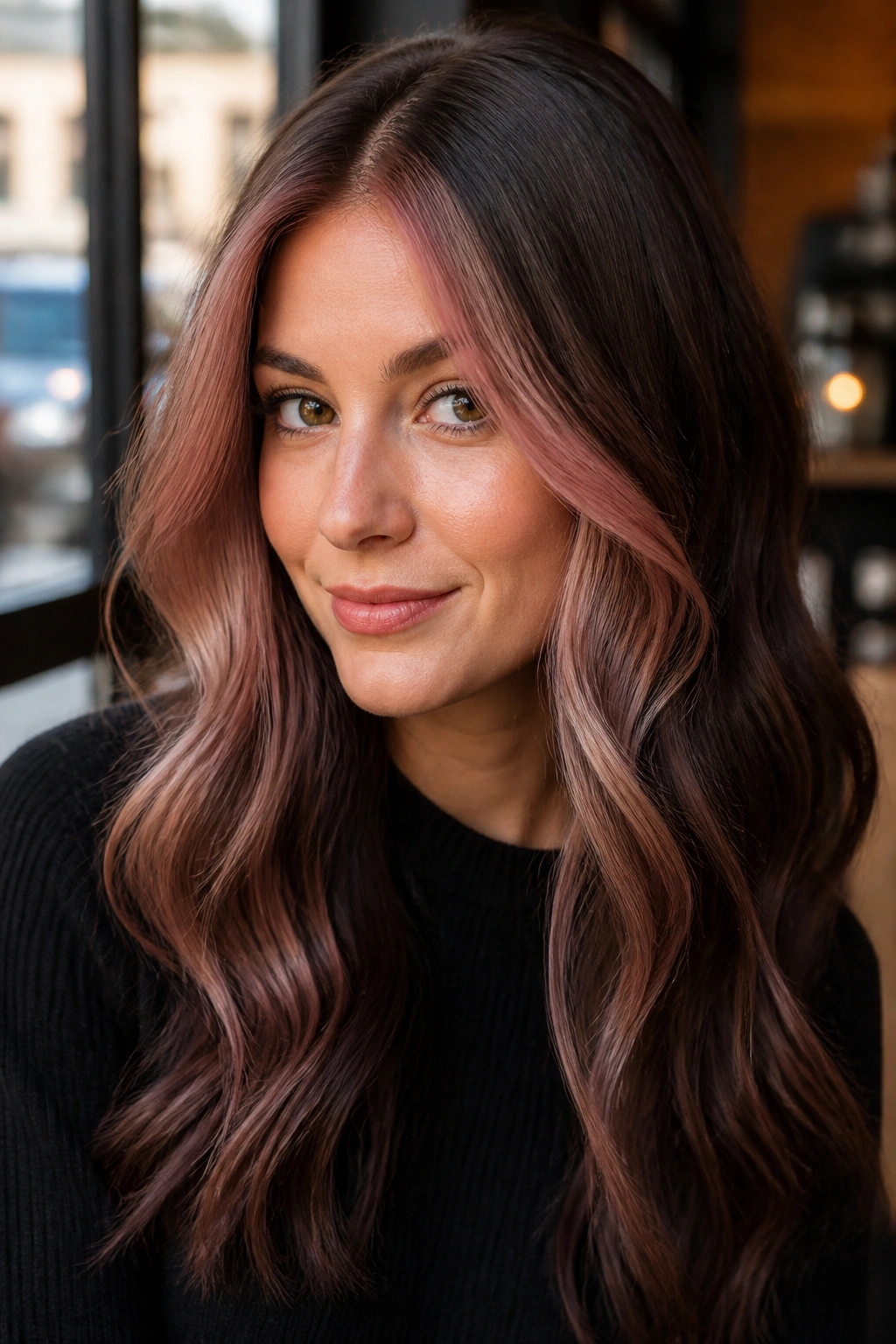
Why does a money piece work so well with rose gold? Because the color sits right where people notice first: around the face. Even a narrow band of rose-gold blonde can change how your whole haircut reads, especially if your skin has cool undertones and you want brightness without a full-head commitment.
The best version keeps the front sections light enough to feel airy, not chunky. Two slices near the part, plus a soft frame around the temples, usually does the job. If the tone gets too peachy, it can pull attention toward redness in the skin. Keep it a little smoky and the effect stays flattering.
How to Wear It
- Ask for 1/2-inch to 1-inch face-framing sections on each side.
- Keep the rest of the hair deeper, so the front pieces stand out.
- Style with a soft wave or curtain bang for a blended finish.
- Refresh the toner around the face more often than the back.
A money piece is small, but it punches above its weight. That’s the whole point.
4. Smoky Rose Gold Lob
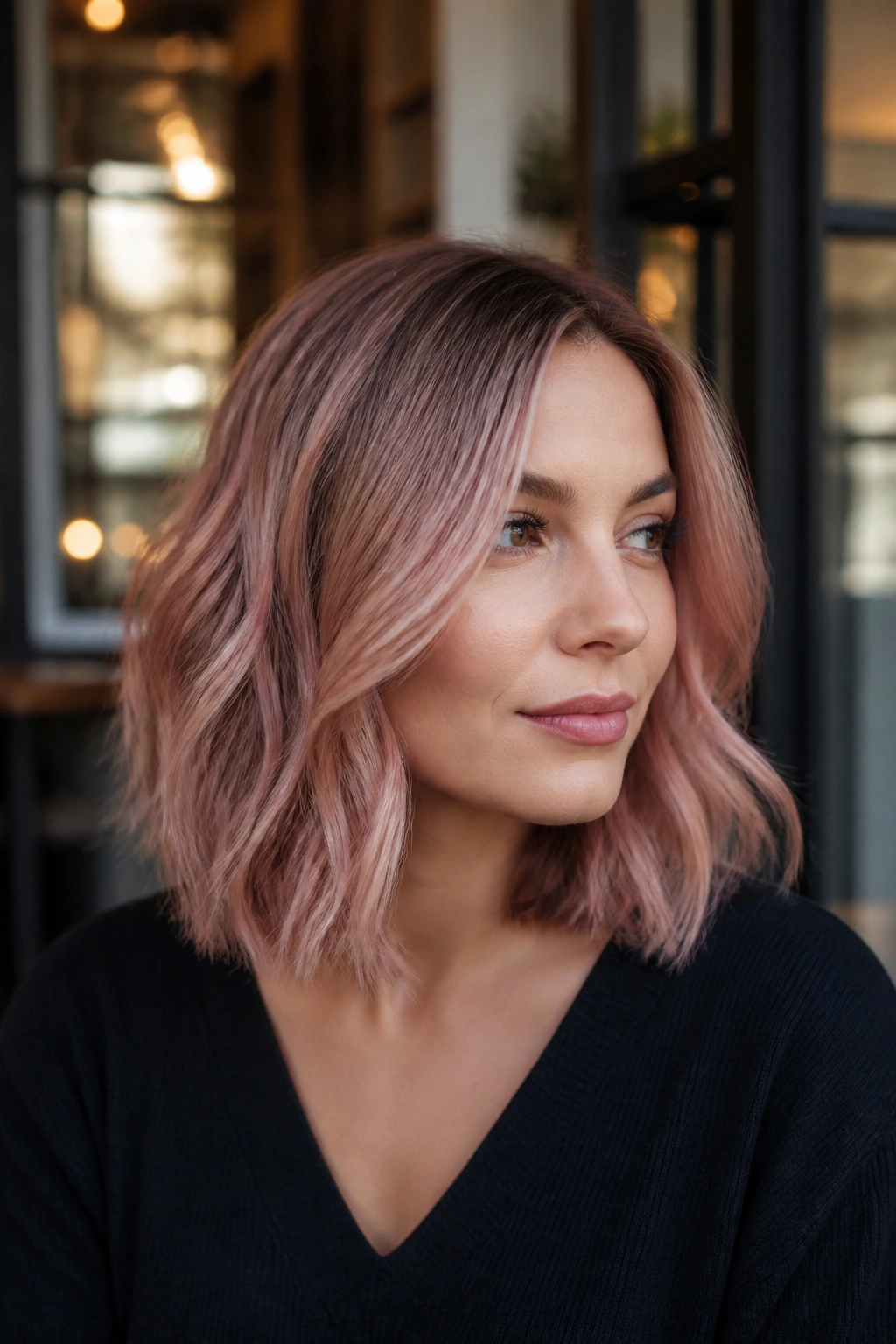
Picture a collarbone lob with smoky roots, muted pink mids, and ends that catch the light only when you move. That’s the appeal of a smoky rose gold lob. It feels calmer than a pastel blonde and more modern than a flat rose tint.
The smoke comes from keeping a bit of ash or neutral brown at the root and through the underneath layers. That depth matters. Without it, the rose can go flat or too bright, especially on cooler complexions. With it, the color has space to breathe.
- A root shadow at level 6 or 7 keeps the grow-out soft.
- The mids should sit in the level 8 to 9 range.
- Ask for fine, not chunky, lightening if your hair is fine.
- Loose bends in the lob show the tonal shift better than pin-straight styling.
It’s one of those shades that looks more deliberate the second day after a wash.
5. Metallic Rose Gold Pixie
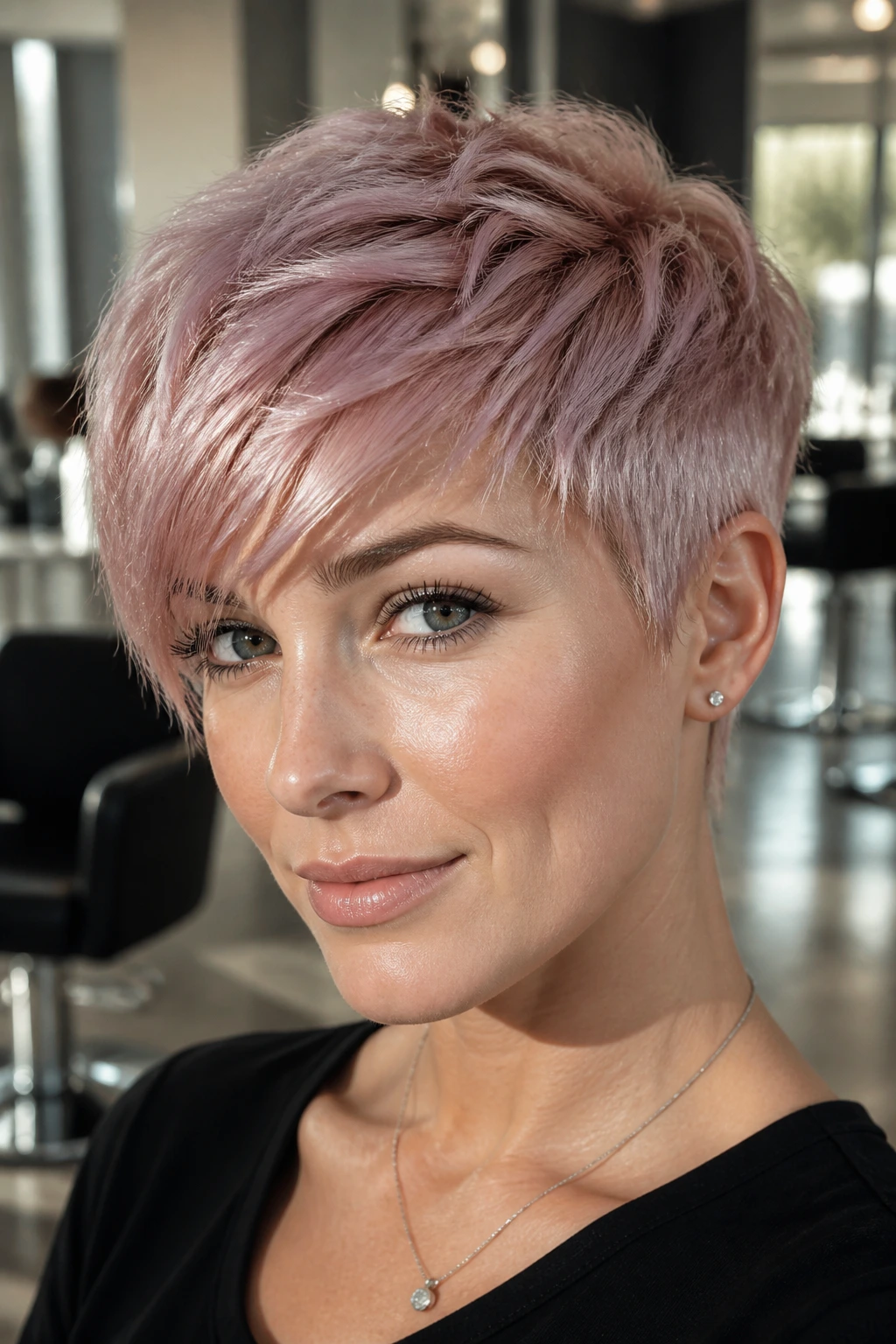
A pixie cut can take rose gold in a sharper direction, and I like that. Short hair shows color fast. There’s no curtain of length to hide behind, so the tone has to be clean, and metallic rose gold gives you that crisp shine without pushing into bubblegum territory.
The metal part is what keeps it cool. Think polished pink with a slight silver edge, not glitter and not copper. On cool skin, the result reads modern and tidy, especially when the cut has a little texture on top or a longer fringe sweeping across the forehead.
I’d keep the finish glossy, but not oily. Too much serum flattens the light reflection and makes the shade look heavier than it is. A tiny amount through the ends is enough. If your pixie is piecey, the color shifts with every turn of the head.
Tiny cut. Big attitude.
6. Strawberry Rose Gold Waves
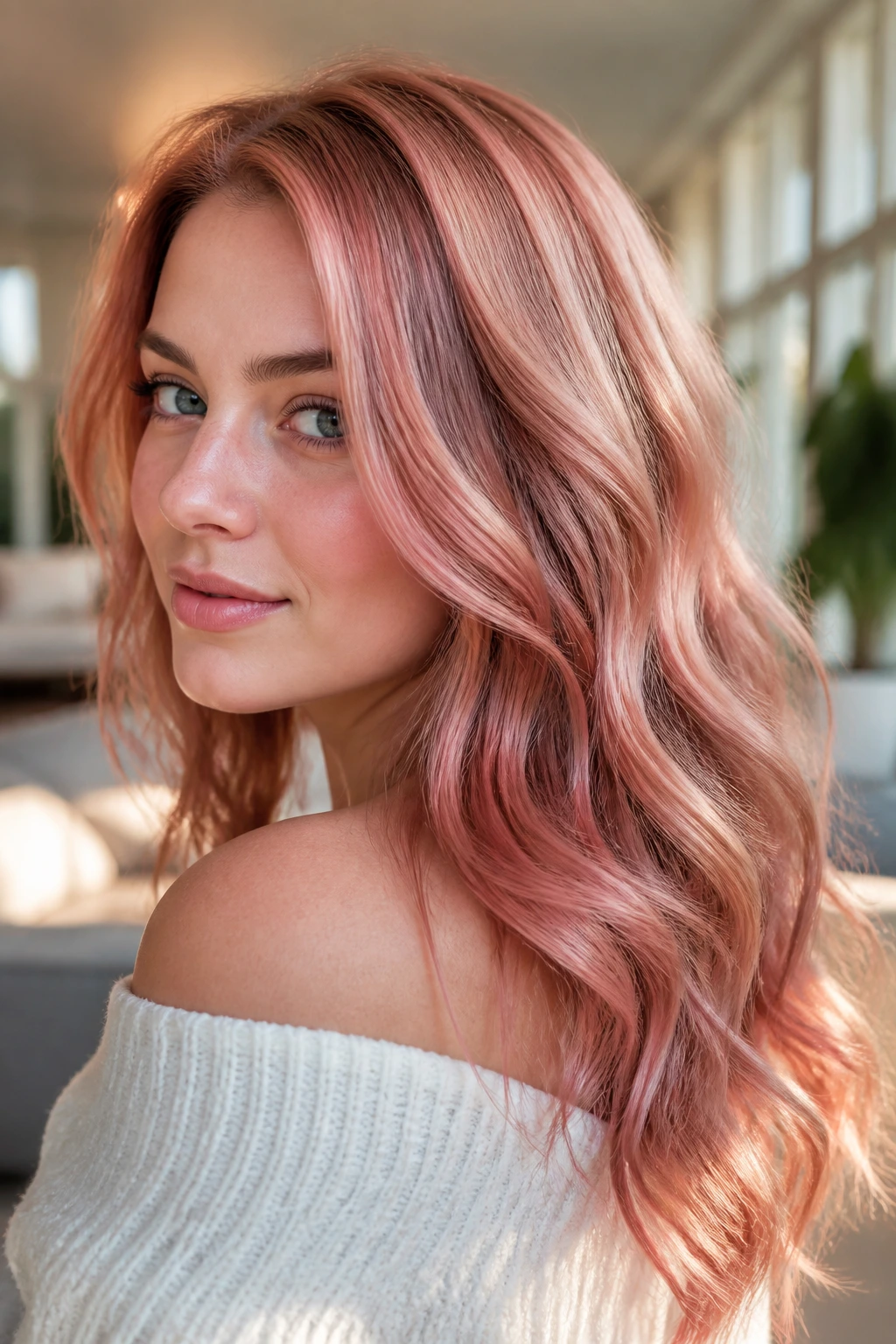
Unlike a warm strawberry blonde, strawberry rose gold drops the orange and keeps the pink side cooler. That’s the difference that matters on cool skin. You still get brightness, but the finish stays soft enough to sit next to a rosy cheek without competing with it.
This shade works best on loose waves because the bends in the hair break up the color. The eye picks up little flashes of pink, beige, and pale gold instead of one flat tone. Straight hair can wear it too, but waves make the whole thing feel more alive.
If your natural base is medium blonde or light brown, ask for a translucent rose glaze over light ribbons. If the base is darker, the color will need more lift to show properly. I’d also keep the roots a shade deeper so the pink doesn’t start at the scalp like a neon cap. That’s the mistake that gives rose gold a bad name.
7. Silver Rose Gold Melt
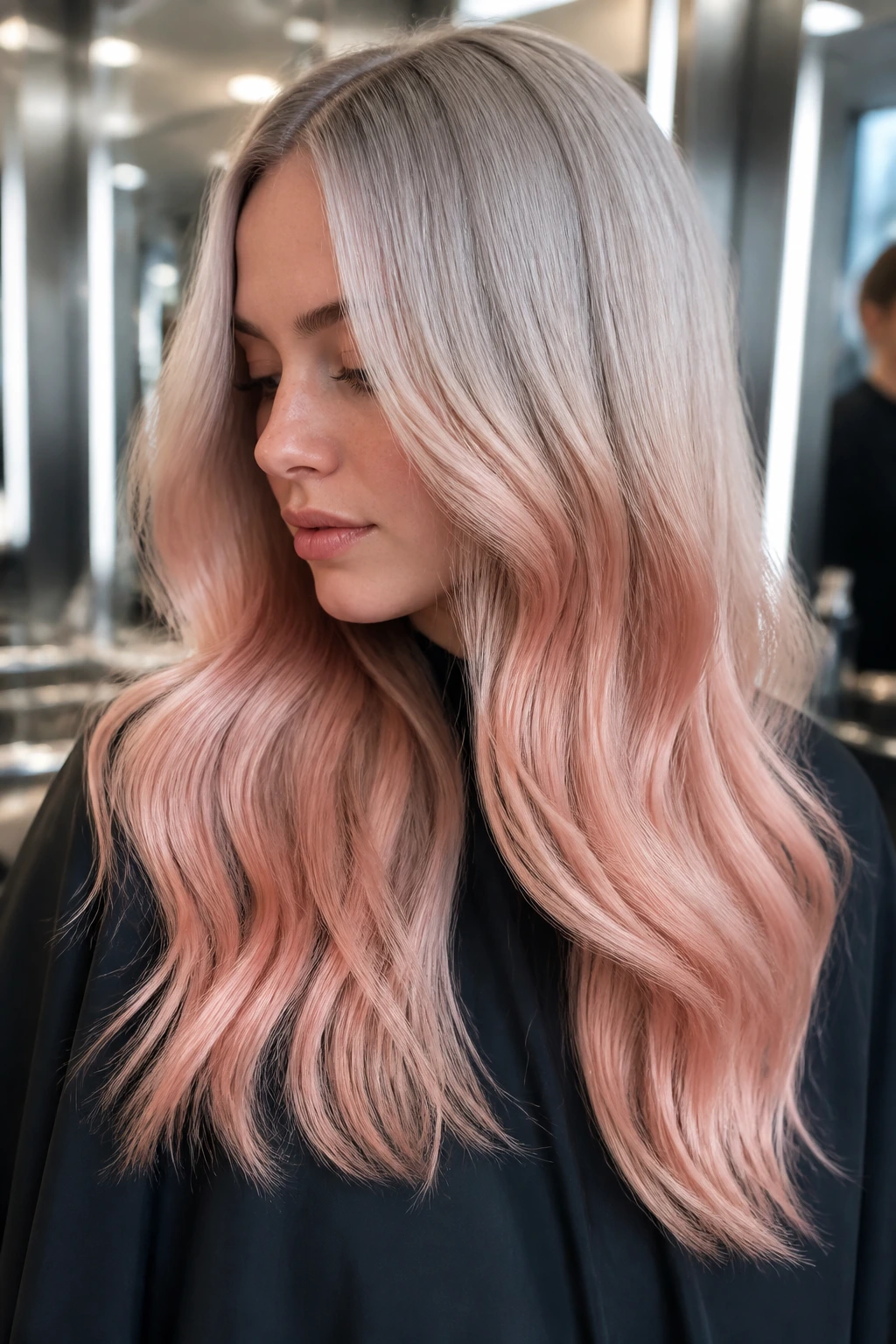
A silver rose gold melt is made for anyone who likes a cool finish with a little shimmer. The silver sits near the crown or root area, then slides into rose through the mids and ends. On cool skin, that gradient reads clean and deliberate.
What Makes It Different
The silver keeps the rose from turning too sweet. It also gives the color a brighter edge, which helps if your natural hair is pale blonde or already lifted to a very light base. The melt effect matters too. Hard lines between silver and pink can look costume-like; a soft fade looks far richer.
- Best on level 9 or 10 hair before toning.
- Works nicely with wavy or blown-out styles.
- Needs a gloss refresh every 4 to 6 weeks.
- Use cool-toned shampoo sparingly so the rose doesn’t lose its warmth completely.
A little movement makes this one sing. Still hair can look flat. Waves give it life.
8. Mauve Rose Gold Mid-Length Layers
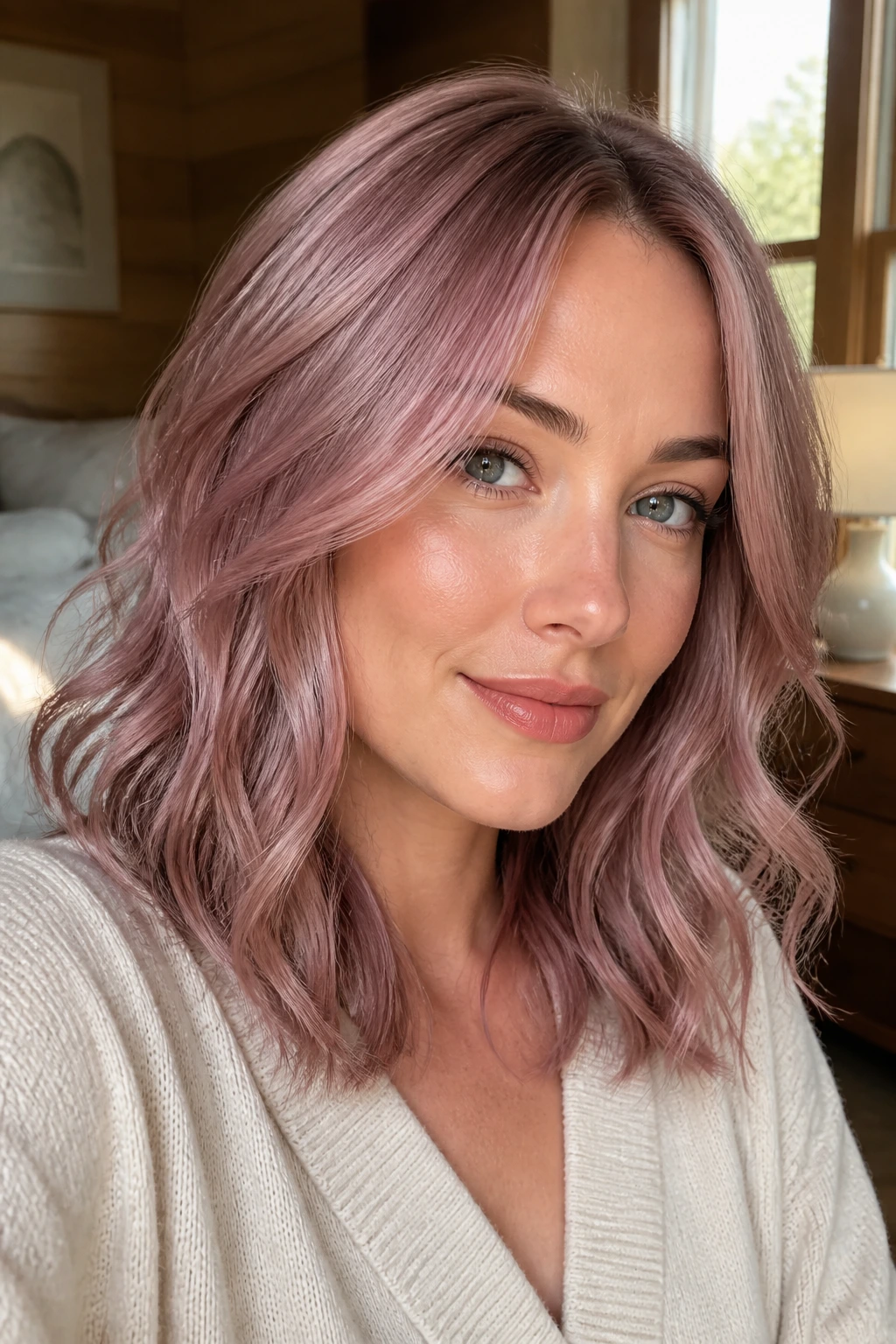
Mauve rose gold is one of the most flattering directions for cool skin, and I’ll say that without hesitation. Mauve acts like blush with a gray filter, which means it calms down any yellow in the hair and keeps the whole look elegant without trying too hard.
Mid-length layers are a smart match because they create soft breaks in the color. The layers let the rose catch at different points, so the shade doesn’t look painted on. You get movement, and movement is what keeps mauve from feeling heavy.
The styling should stay soft. A round brush blowout, loose S-waves, or even a simple bend with a large iron works well. Tight curls can make the shade feel busier than it needs to be. Let the color do the talking. It doesn’t need a lot of help.
9. Rose Gold Ombré on Dark Brunette
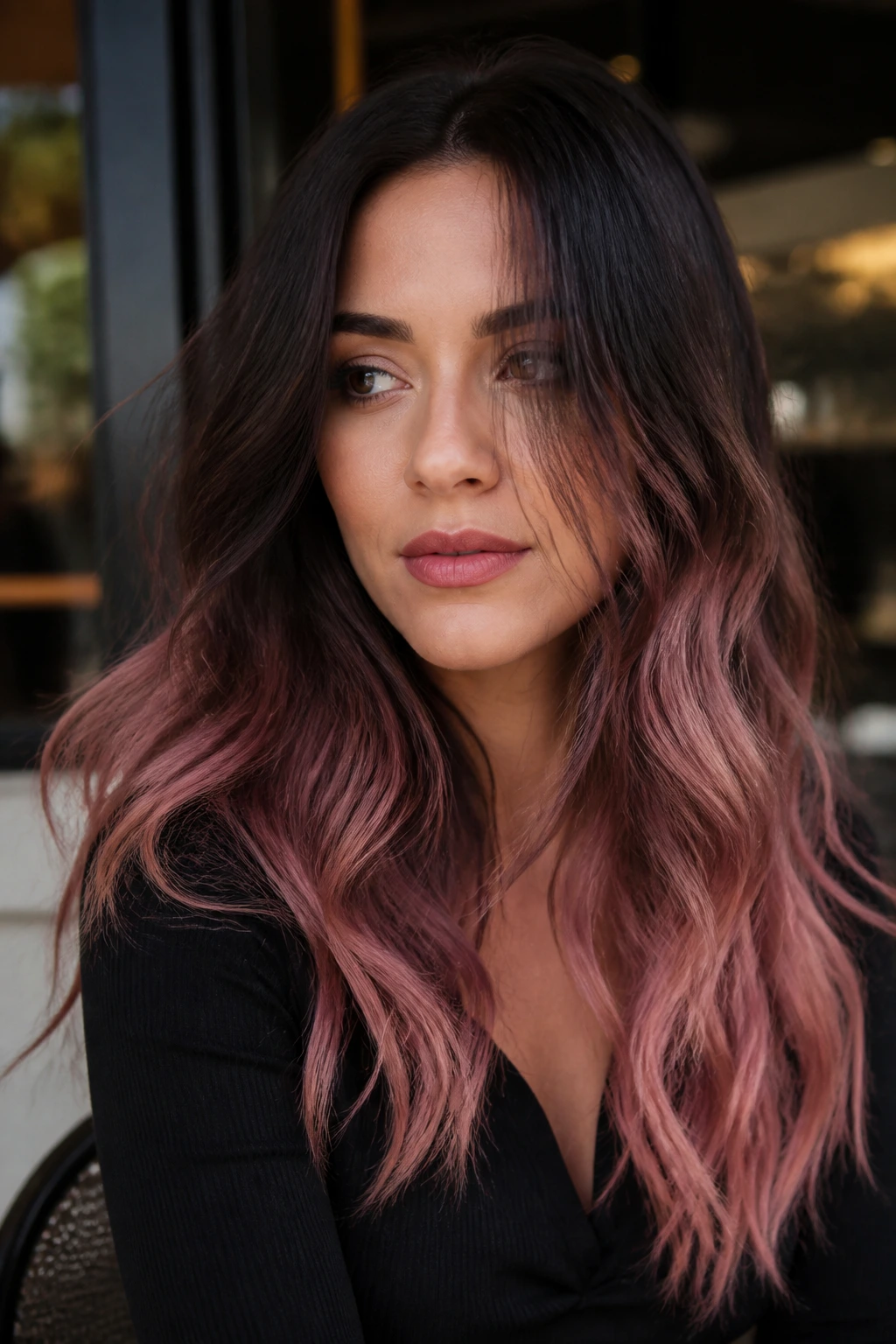
Can dark brunette hair wear rose gold without looking patchy? Yes, if the ombré is handled with patience. The key is a gradual shift from dark roots to lifted, rose-tinted ends—not a sudden jump from brown to pink.
When the fade is slow, the whole look feels expensive instead of rushed. The brunette root keeps the style grounded, and the rose at the ends brings in the lighter note that cool skin usually handles best. On long hair, this shape can be gorgeous because the color travels with the movement of the lengths.
How to Keep It Wearable
Ask for the rose to stay strongest from the mid-lengths down. That keeps the top section soft and makes the color easier to live with between appointments. If the ends are pre-lightened to a pale blonde, the rose will read brighter. If they’re only lifted a few levels, the result will be deeper and more muted.
Either way, this is the shade for someone who wants a little drama without bleaching the whole head.
10. Champagne Rose Gold Curls
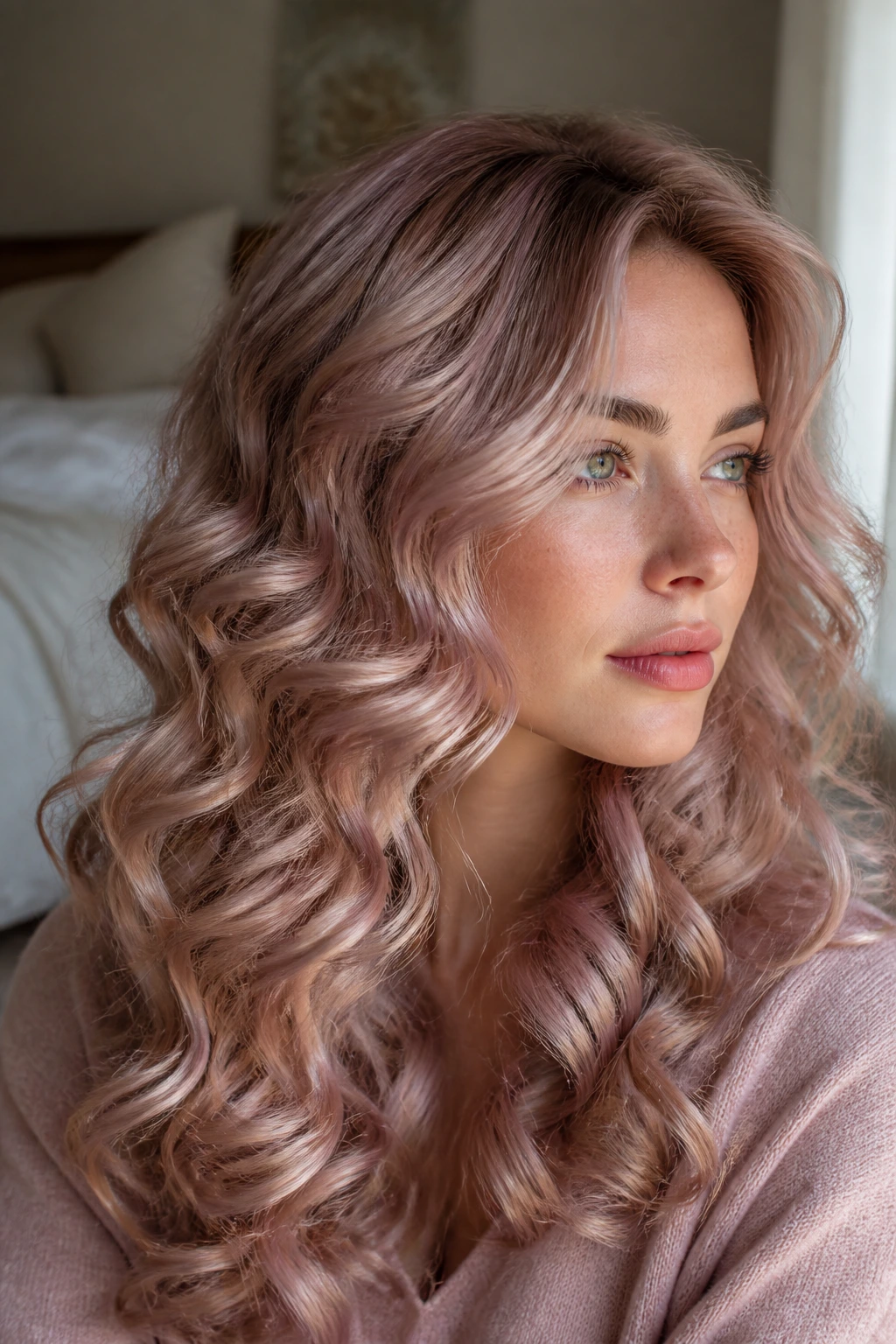
Champagne rose gold curls have a softness that flatters cool complexions in a way warm blonde curls often don’t. The champagne side keeps the tone airy, while the rose gives it a blush finish. Together, they catch light in little flashes instead of one loud block of color.
A curled style is the point here. Ringlets, brush-out waves, or a soft blowout all give the shade places to shift. On textured hair, that movement can make the color look richer because the highs and lows show up at once.
- Ask for fine highlights rather than a few thick strips.
- Keep the base around beige-blonde, not yellow.
- Use a light shine spray instead of a heavy oil.
- Curl sections in alternating directions for more depth.
It’s a color that likes dimension. Flat styling dulls it fast.
11. Rosy Beige Face-Framing Highlights
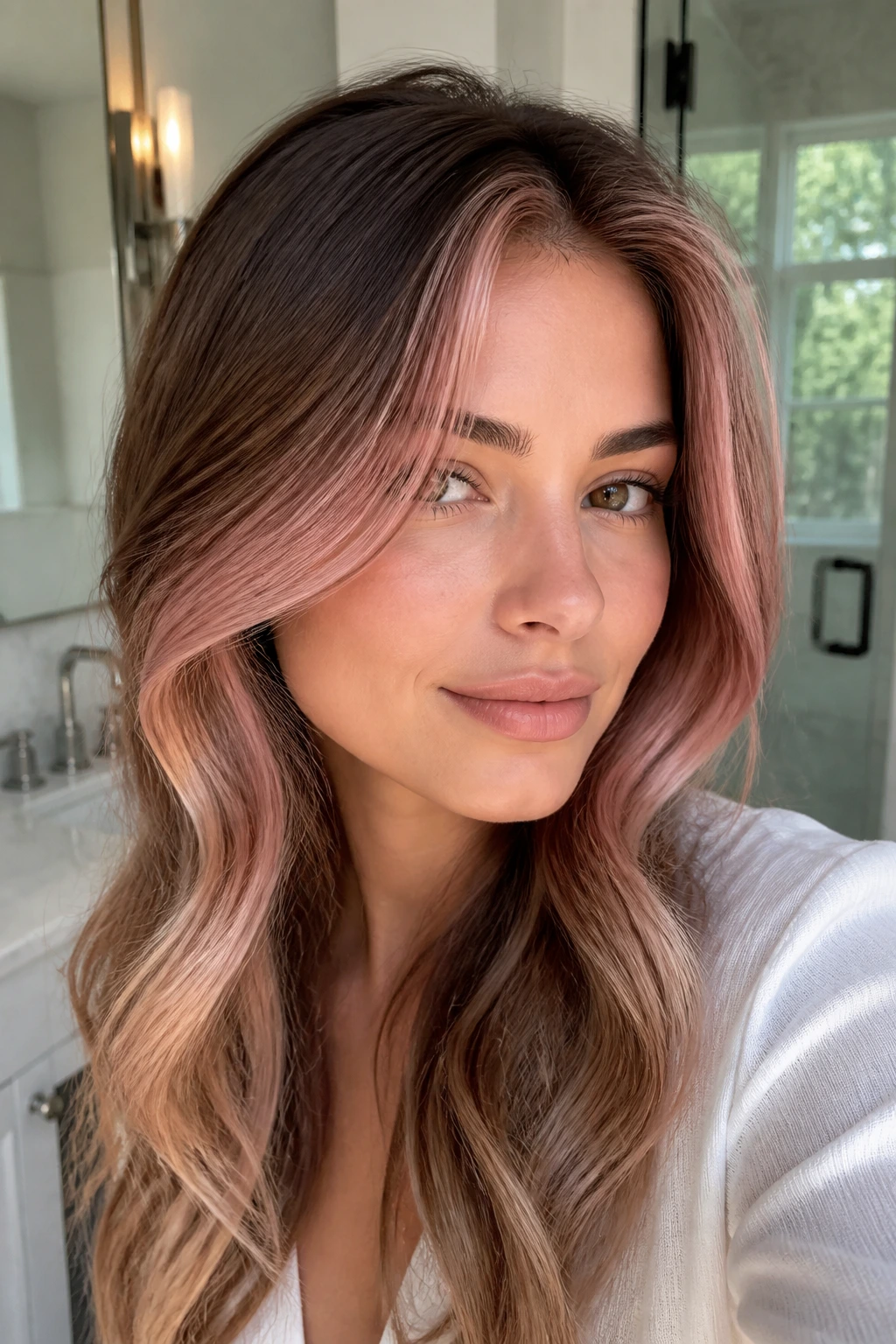
Rosy beige face-framing highlights are for people who want the rose gold mood without the commitment of a full color job. The tone sits somewhere between blush and beige, which is exactly why it flatters cool skin so well. It doesn’t scream pink. It whispers it.
Placed around the hairline, these highlights brighten the face in a subtle way. Fine pieces near the temples, a few threads around the part, and soft lightness at the top of the cheekbone area can shift the whole cut. It’s quiet work, but it works.
Tiny sections matter here. If the highlights are too thick, the effect turns stripey. If they’re too warm, the face can look flushed. Keep the rose soft, and ask for a neutral beige lift under the pink tone. That’s the combination that stays polished in daylight and under indoor lighting.
12. Frosted Rose Gold Shag
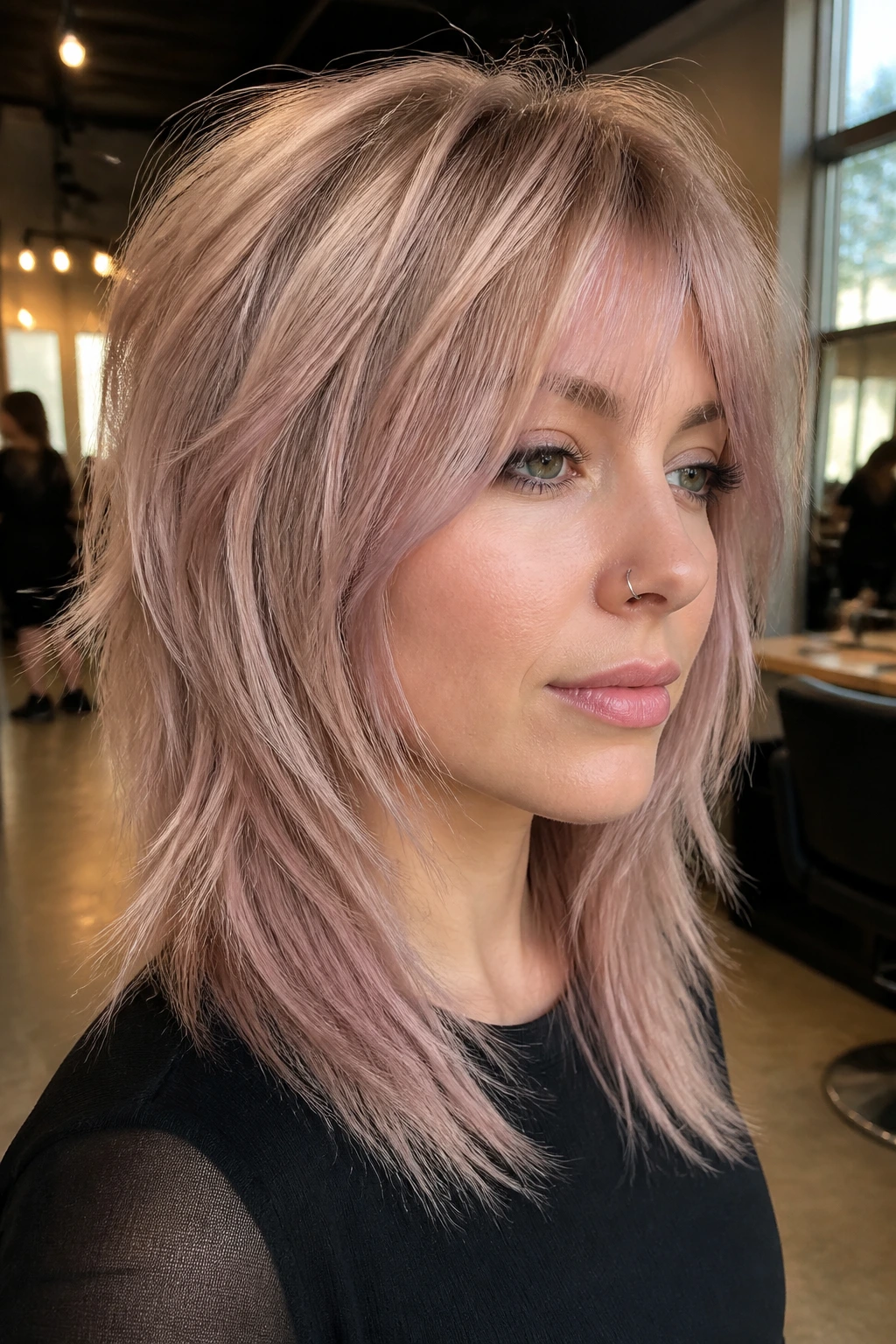
Unlike a sleek bob, a shag likes mess. That’s why frosted rose gold fits it so well. The color can break apart through all those layers and shaggier ends, which keeps the finish from feeling precious or overdone.
The frosted part is what keeps the rose cool. It usually means a pale blonde base with a whisper of pink and just enough ash to soften the edges. On cool skin, that pale, broken-up finish looks fresh. It also works with air-dried texture, which is half the reason people wear shags in the first place.
What to Watch For
- Keep the pink sheer, not opaque.
- Use piecey highlights rather than broad ribbons.
- A dry texture spray helps the layers show.
- Avoid heavy creams that clump the ends.
A shag with rose gold should feel a little undone. If it looks too neat, the haircut loses its edge.
13. Pastel Rose Gold Blunt Cut
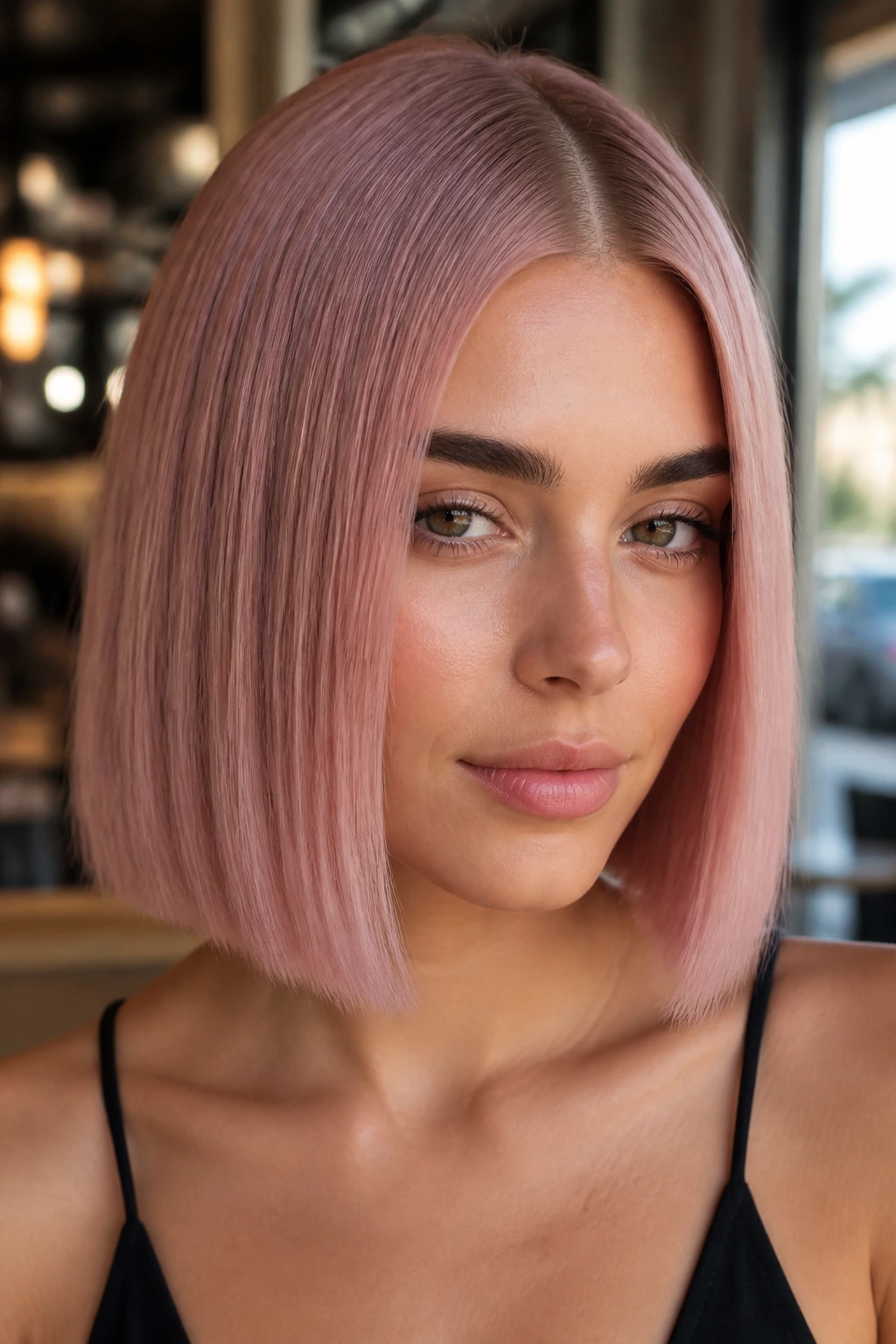
A blunt cut gives pastel rose gold something strong to sit on. The straight edge makes the color look cleaner, and the soft pink-beige tone stops the style from turning too hard or severe. On cool skin, that balance is useful. You get sweetness, but not fluff.
Pastel shades need a pale, even base. If the hair lifts unevenly, the rose can go patchy fast, and blunt cuts show patchiness more than layered ones do. That’s the downside. The upside is the finish can look incredibly smooth when it’s done well.
- Best on level 10 blonde or near it.
- Needs even saturation from root to ends.
- Pair with a center part for a sleek look.
- Use sulfate-free shampoo to slow fading.
If you like a sharp line and soft color, this one lands in a good place.
14. Deep Rose Gold Gloss for Cool Skin Tones
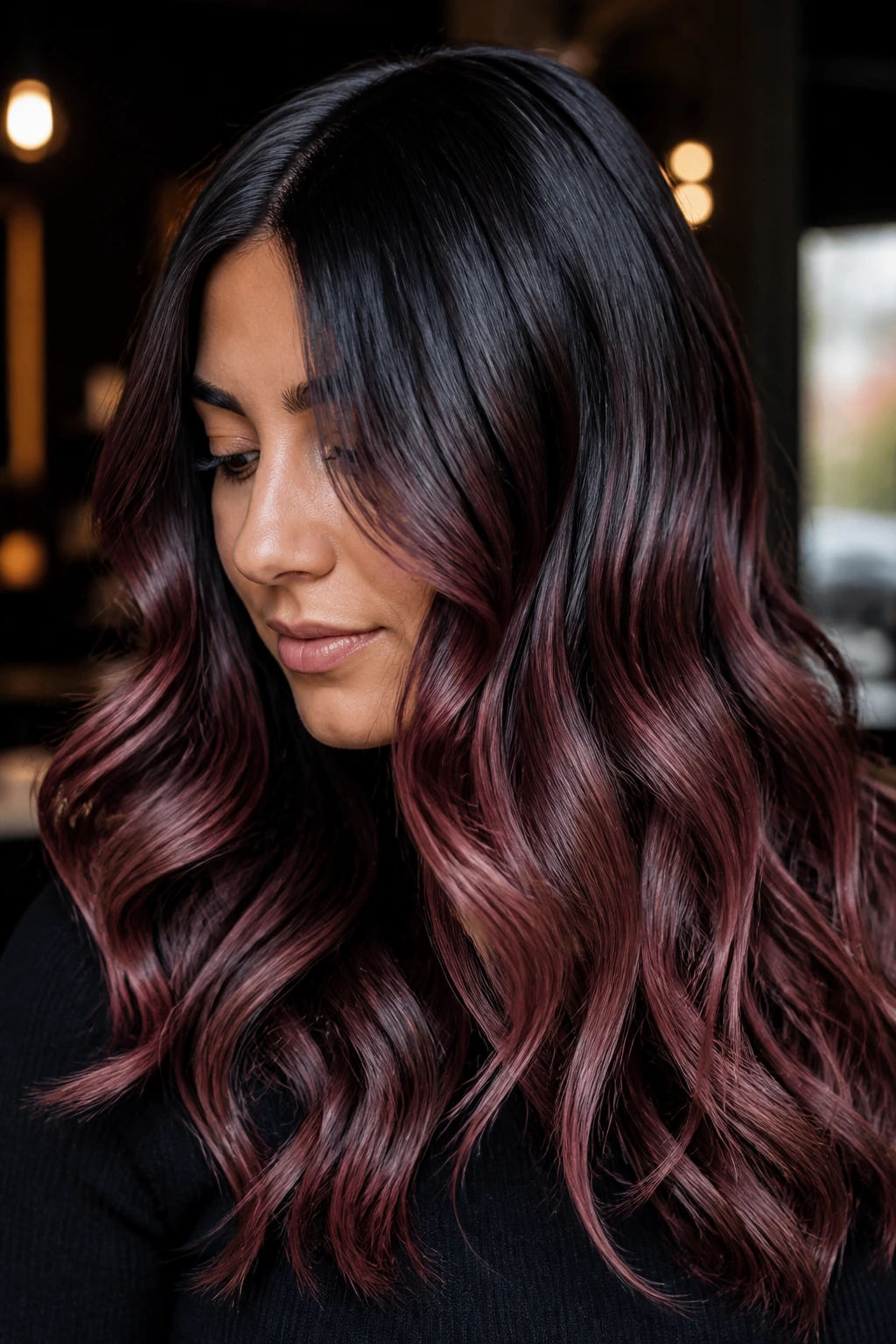
A deep rose gold gloss is the version I’d point to if you like darker hair but still want the rose gold feel. It won’t look pastel. It will look like a rich, wine-tinted sheen that shows up most when the light hits it at an angle.
That’s the charm. On black or near-black hair, the rose usually lives in the gloss layer rather than the core color, so the finish reads more subtle and moody. Cool skin tones often wear that moody version better than a bright peachy one anyway. It feels intentional, not flashy.
If your hair is very dark, the color may need a little lift to show anything at all. A demi-permanent gloss over a pre-lightened veil at the ends gives you more visible rose without sacrificing depth. It’s a good option if you want hints of color, not a full transformation. And honestly, that restraint is part of what makes it look strong.
15. Soft Rose Gold on Ash Brown
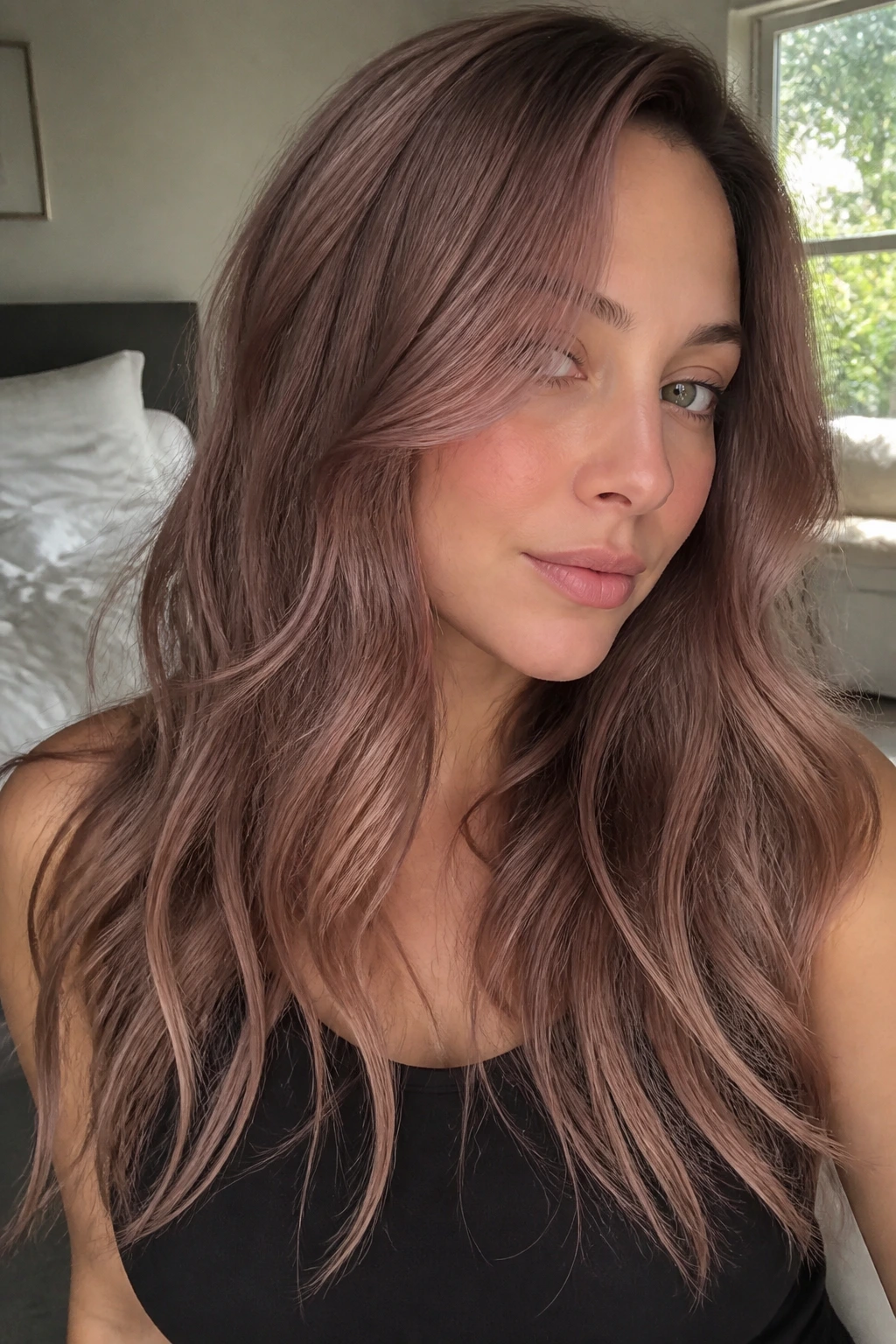
Can ash brown wear rose gold without turning muddy? Absolutely, as long as the rose stays translucent. Ash brown already has a cool cast, so it gives the pink-beige tone a clean base to sit on. That’s half the battle.
The best approach is low-contrast. Think soft balayage ribbons, a gentle glaze, or barely-there pieces around the face and ends. Too much gold makes ash brown lose its shape. Too much pink can make it look disconnected from the base. The sweet spot is somewhere in the middle.
How to Wear It
Ask your colorist to keep the rose sheer and the brown slightly smoky. Loose waves show the blend better than pin-straight hair, though a smooth blowout works too if you want a more polished finish. This is a good choice when you want change that doesn’t announce itself from across the room.
It’s subtle. That’s the point.
16. Rose Quartz Ends on Long Layers
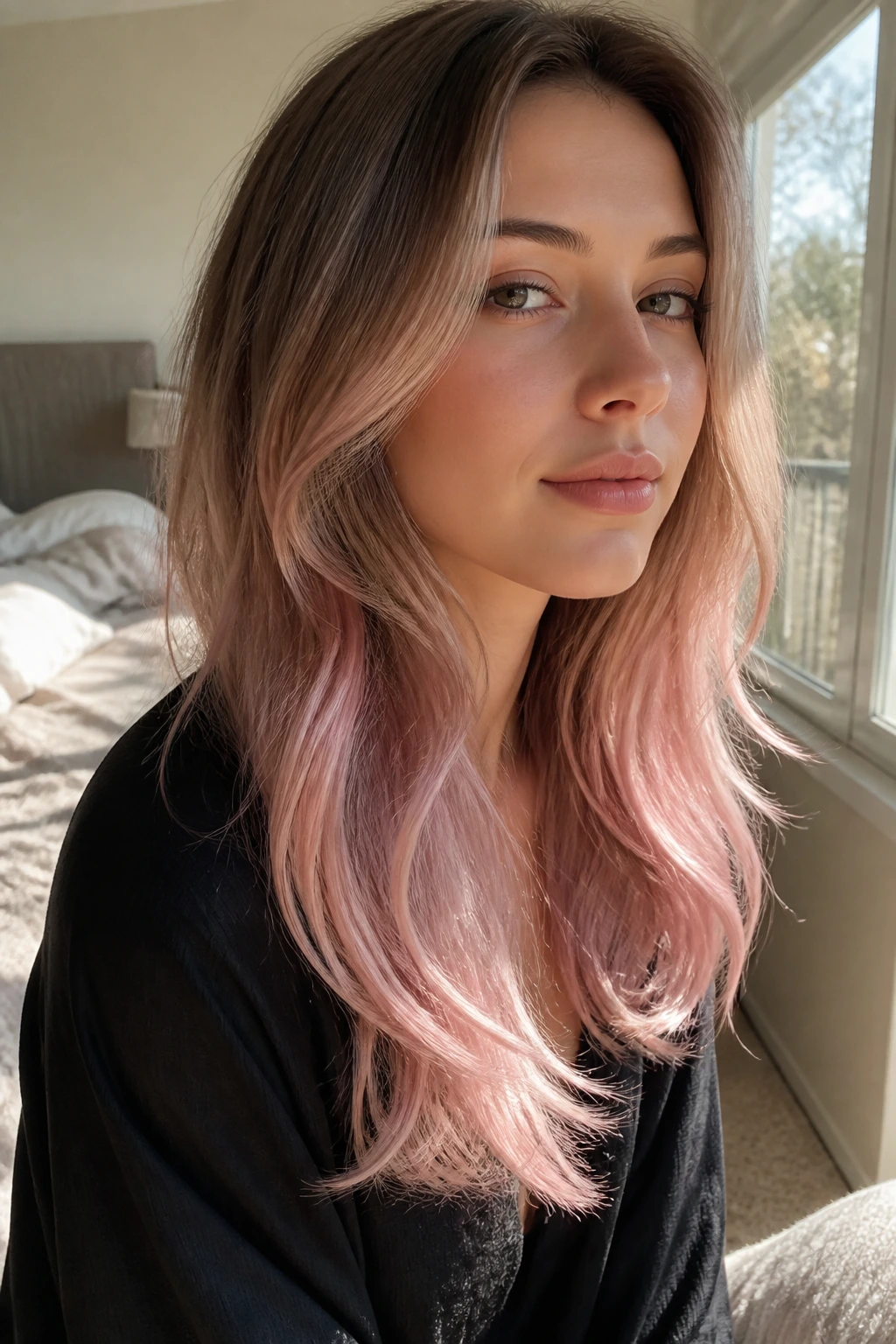
Rose quartz ends are one of my favorite ways to use rose gold on longer hair. The roots stay quiet, the mid-lengths stay soft, and the ends carry the color like the finishing note in a song. Long layers make that shift even prettier because the movement exposes different lengths at once.
The color itself should stay pale and watery, not thick or opaque. Think blush crystal rather than candy pink. On cool skin, that kind of rose tends to brighten the face without fighting your undertone. It also works well if you like tying your hair up half the time and letting the ends fall free the rest of it.
- Best when the ends are lifted to a light blonde base.
- Works well with waves, braids, or soft curls.
- Ask for a soft root blur so the top doesn’t look abrupt.
- Trim the ends regularly, because faded rose can make split ends more obvious.
This is a long-hair shade that feels feminine without getting fussy.
17. Pink Champagne Balayage
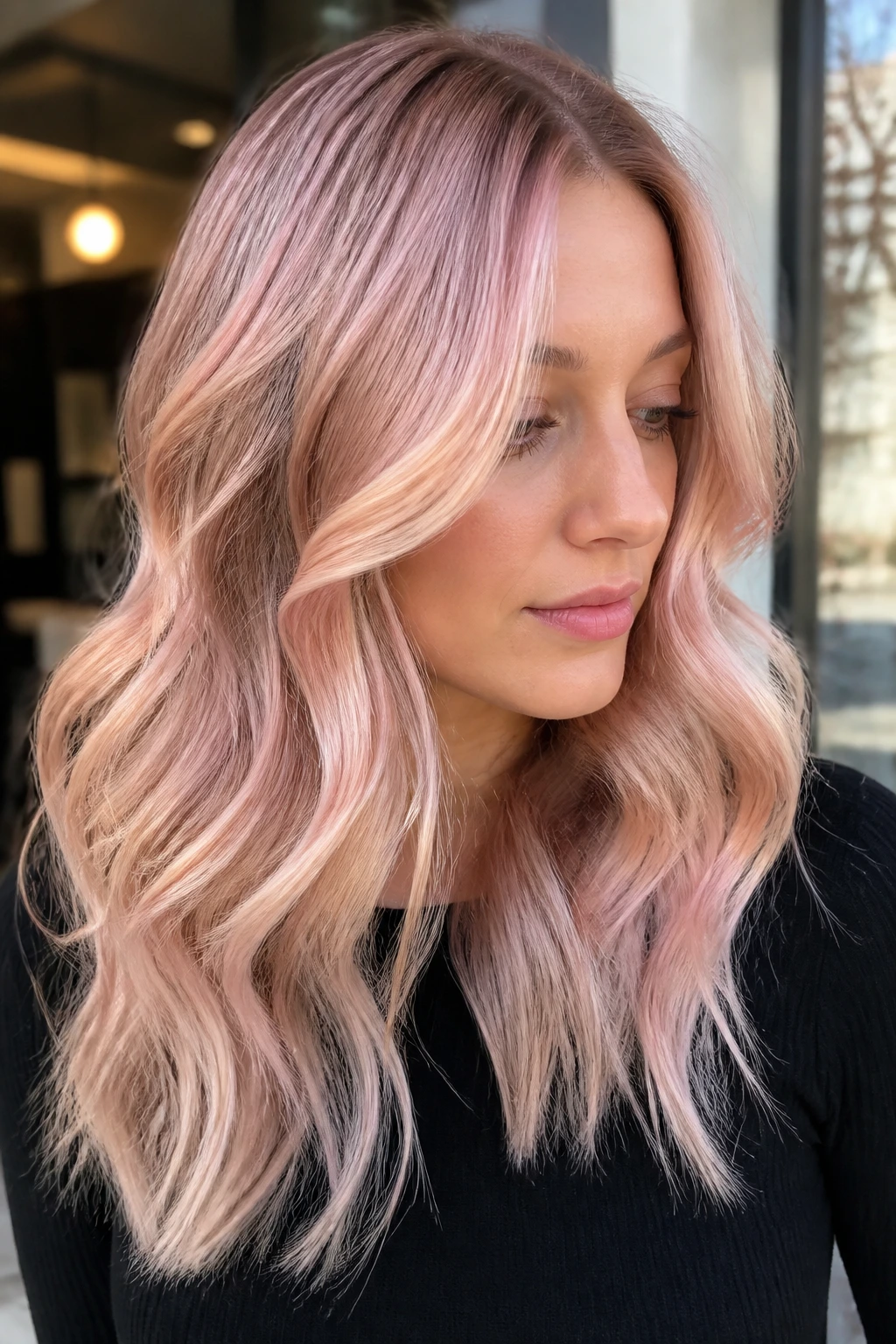
Pink champagne balayage has a lighter, airier mood than deeper rose gold shades. The champagne keeps the color from going too pink, and the pink keeps it from going flat or beige. That balance is what makes it flattering on cool skin, especially if your complexion likes softer tones.
The balayage placement is the real draw. Hand-painted pieces through the mids and ends create a broken-up effect that looks expensive when the hair moves. You don’t need a heavy amount of pink to get the point across. A veil of tone is often enough.
What I like about this shade is how easy it is to style. A loose bend, a natural wave, even a half-up clip can show off the blend. If your hair is fine, keep the highlights feathered so the color doesn’t sit in one obvious stripe. If your hair is thick, a few brighter sections near the crown can stop the style from reading too heavy.
18. Cool Rosé Undercut
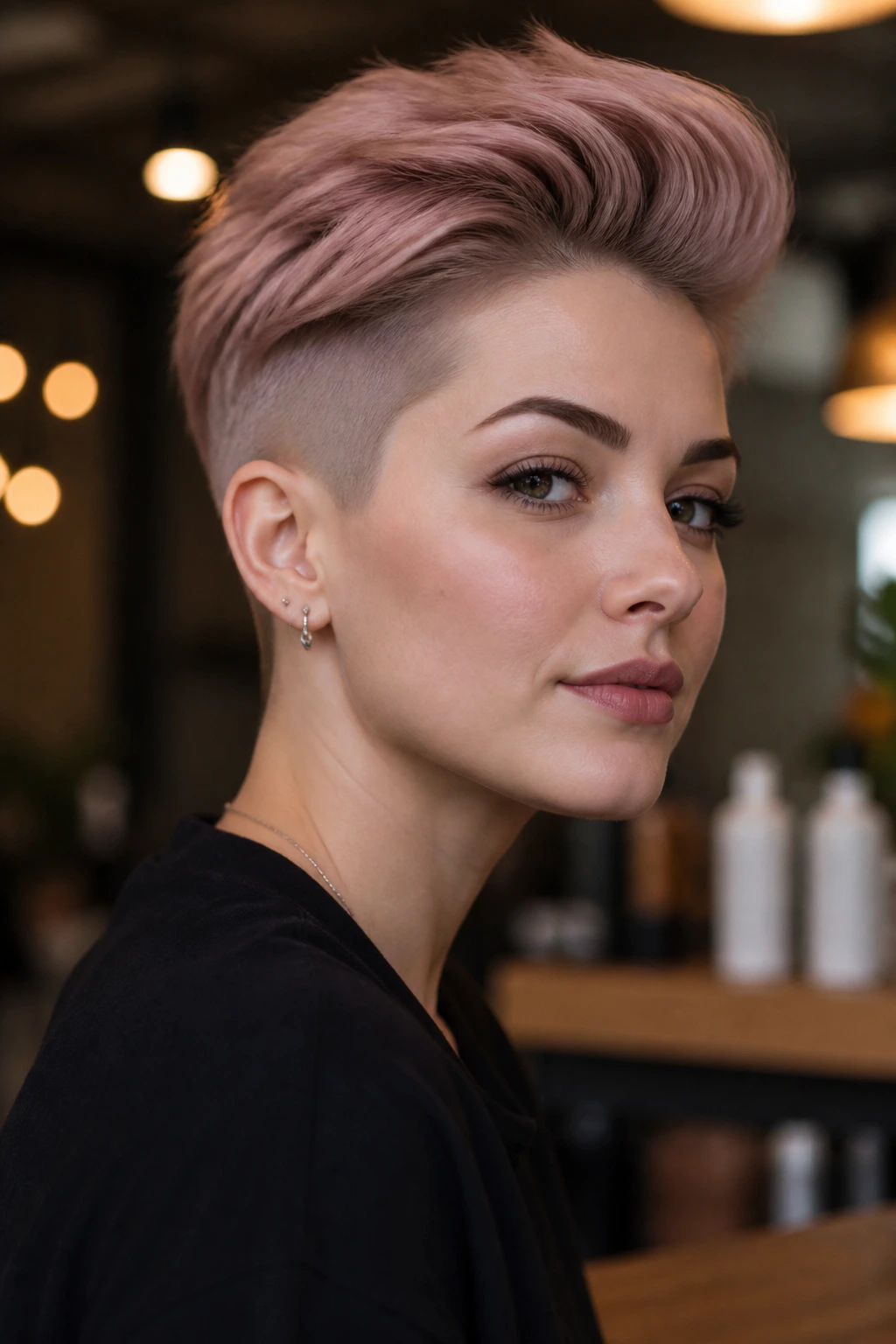
Unlike soft, all-over rose styles, a cool rosé undercut puts the drama where you want it and keeps the rest disciplined. The sides can stay short or shaved while the top carries the pink-beige tone, which gives you a sharp contrast that still works with cool undertones.
This is a strong choice if you like your color to feel modern and a little unexpected. The rose tone on top doesn’t have to be loud. In fact, it looks better when it stays a little smoky. The undercut itself adds structure, so the color doesn’t need to do every bit of the heavy lifting.
Who suits it? Anyone who wants a cut with edge, prefers fast styling, and doesn’t mind regular clipper upkeep. The color grows out fine because the short sides keep the silhouette neat. Pair it with texture cream or a light pomade, and the rose gleams in the top layers without looking precious.
19. Satin Rose Gold Curtain Bangs
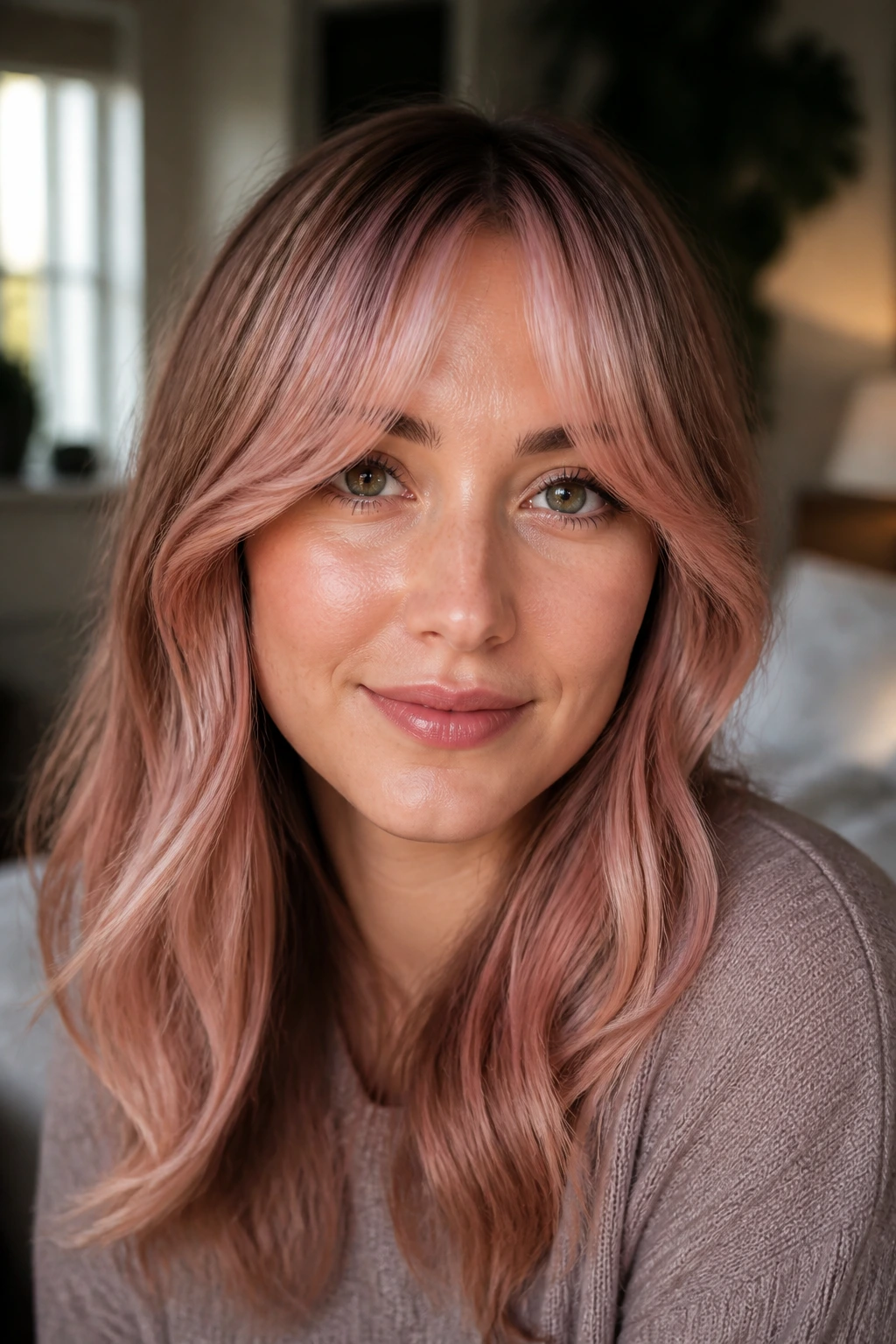
Satin rose gold and curtain bangs are a good pairing because the bangs frame the face right where the color matters most. A satin finish means the tone is smooth and soft, not chalky. On cool skin, that sheen keeps the front pieces from reading too flat.
Why the Bangs Matter
Curtain bangs catch light every time they separate at the center or sweep to the side. That makes the rose gold more visible around the eyes and cheekbones, which is usually where cooler complexions benefit from a bit of warmth without orange.
- Keep the bangs slightly lighter than the rest of the hair.
- A round brush blowout shows off the satin finish.
- Trim bangs often, since shorter pieces fade and dry out faster.
- Use a light mist of heat protectant before styling.
This look works especially well with shoulder-length cuts and soft layers. The bangs add movement, and the color gives the shape a little glow.
20. Platinum-to-Rose Gradient for Cool Skin Tones
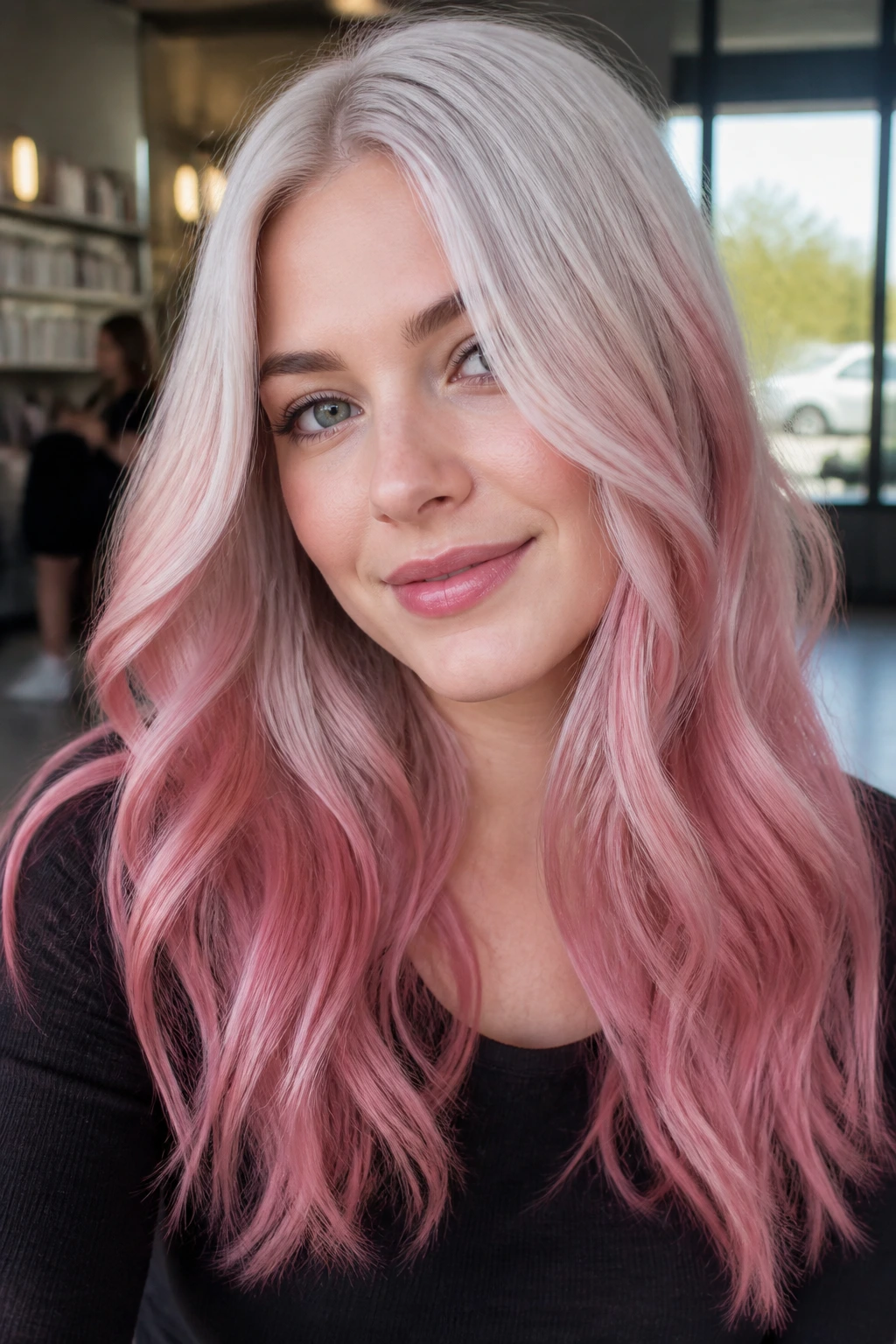
The sharpest rose gold look on cool skin is sometimes not full rose gold at all. It starts with platinum and slides into pink. That platinum-to-rose gradient feels clean, modern, and bright without tipping into warmth that can fight the complexion.
The reason it looks so good is contrast. Platinum near the top gives the scalp area a cool, icy frame, while the rose through the mids and ends adds the blush note. If the transition is smooth, the eye reads one long ribbon of color instead of separate blocks. That matters more than people admit.
A good gradient needs careful toning between stages. The platinum has to stay pale enough to support the pink, and the pink has to stay sheer enough to keep the ends light. If the color gets too dense, the gradient loses its airiness. This is one of those shades that looks best when the hair is healthy, glossy, and not overworked.
21. Berry Rose Gold Pixie
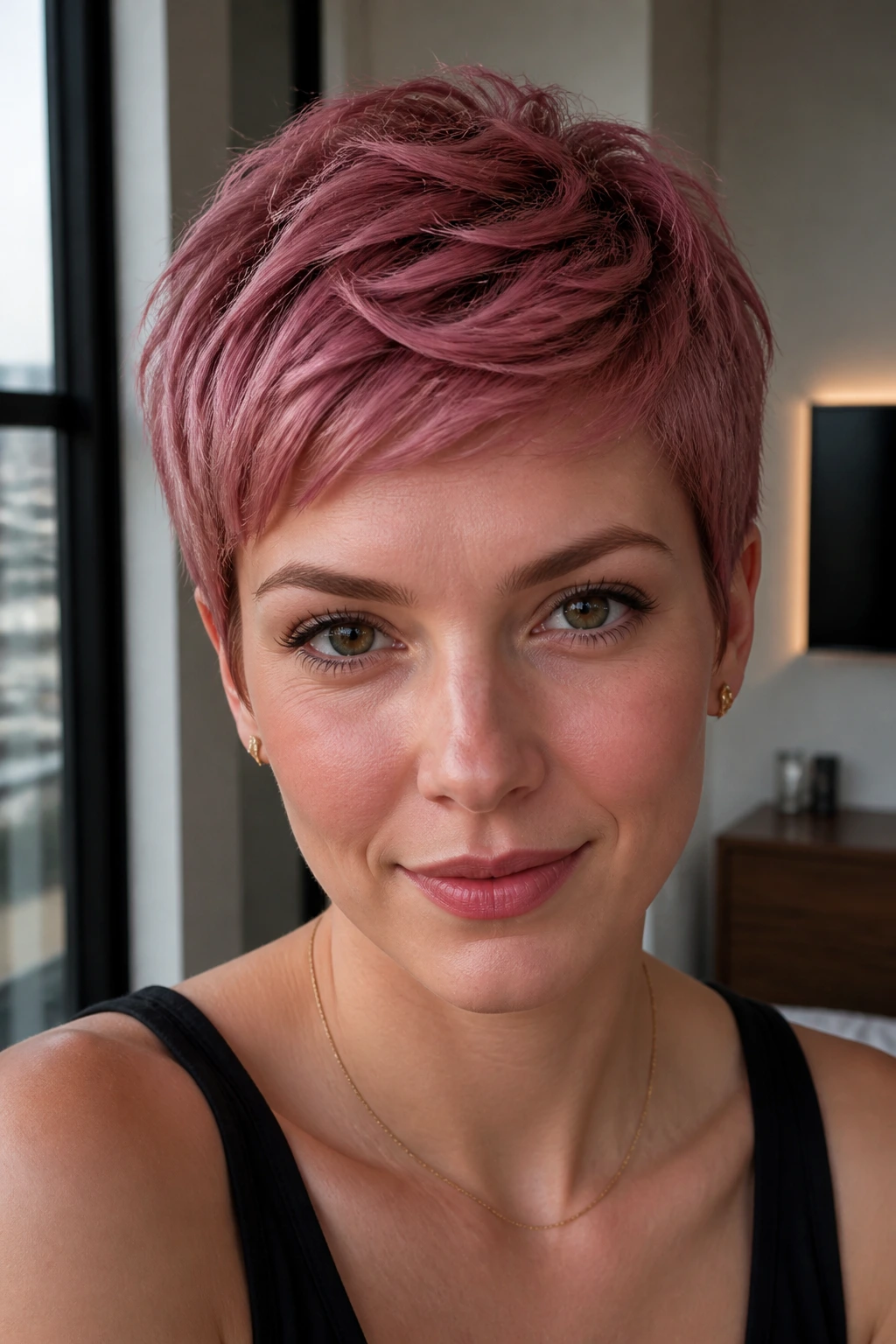
Want something sharper than blush rose? Berry rose gold is the answer. It leans a little deeper and richer, so the pink feels more like crushed berry than dessert frosting. On cool skin, that depth often looks stronger because it echoes the natural coolness in the undertone.
A pixie cut makes the shade even more interesting. The short length keeps the color concentrated, so every bit of movement matters. That means the styling can stay easy: a pea-sized amount of cream, a quick finger style, and done.
How to Get the Most From It
Ask for a berry-rose glaze over a light base if you want the tone to show clearly. If you want something subtler, keep the pixie darker at the roots and brighter at the tips. That little shift creates texture without needing a lot of product. It also lets the color read differently in daylight and under indoor lighting, which is half the fun with short hair.
22. Barely-There Rose Gold Tint
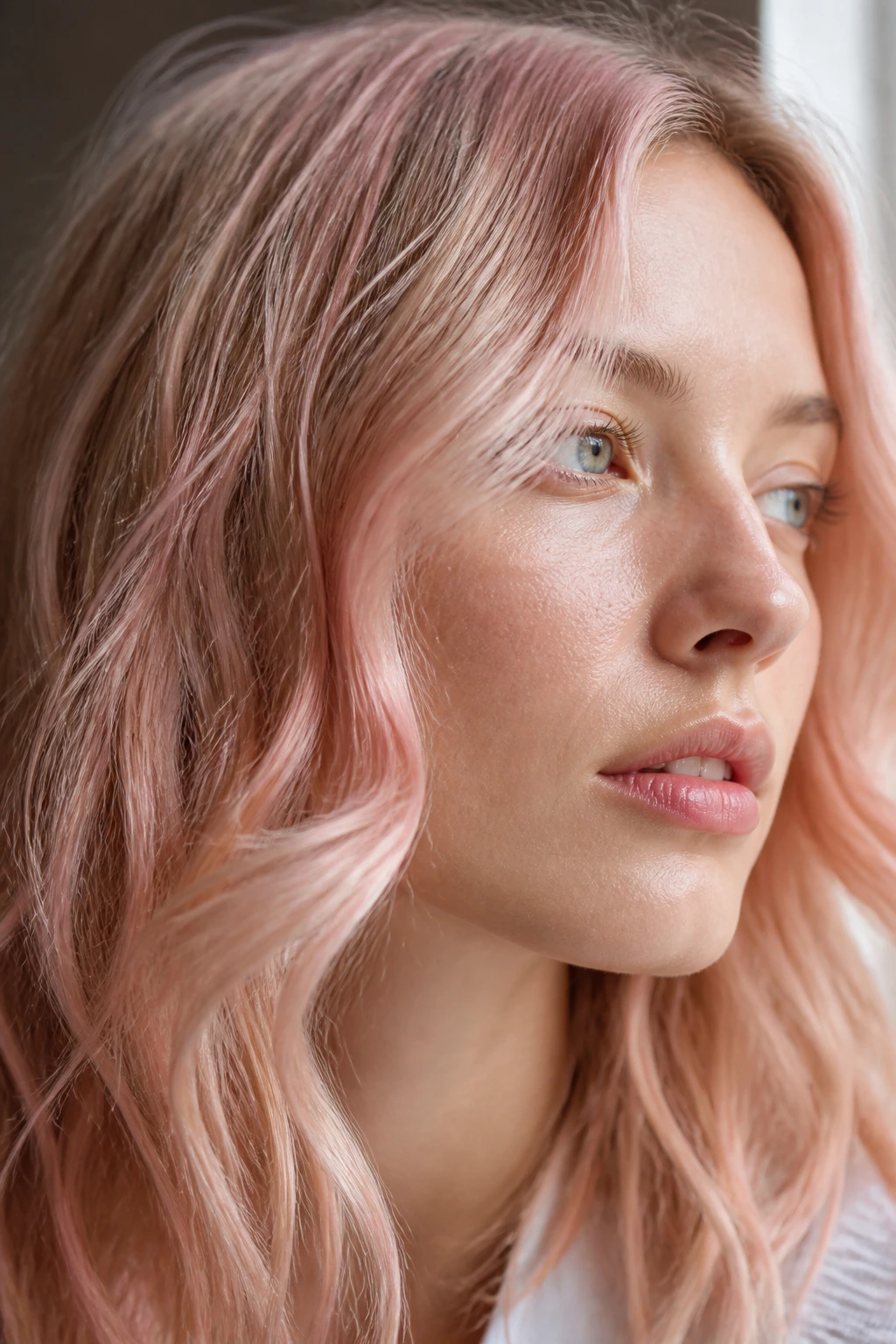
A barely-there rose gold tint is the quietest option in the group, and that’s not a weakness. Some people want color that announces itself. Others want a soft sheen that only shows when the light hits at the right angle. This is that second kind.
The best version sits on a pale blonde base and uses a sheer glaze, not a heavy deposit of pink. On cool skin, the faint rose makes the complexion look more awake without turning the hair into the main event. It’s a nice choice for work settings, conservative dress codes, or anyone who wants a small shift rather than a full color story.
- Keep the base at level 9 or 10.
- Ask for a clear or diluted rose glaze.
- Re-toning every 4 to 5 weeks keeps it soft.
- Air-drying helps preserve the delicate finish.
It’s subtle enough to miss in a mirror and notice in sunlight. That’s its charm.
23. Rose Gold Ribbon Highlights
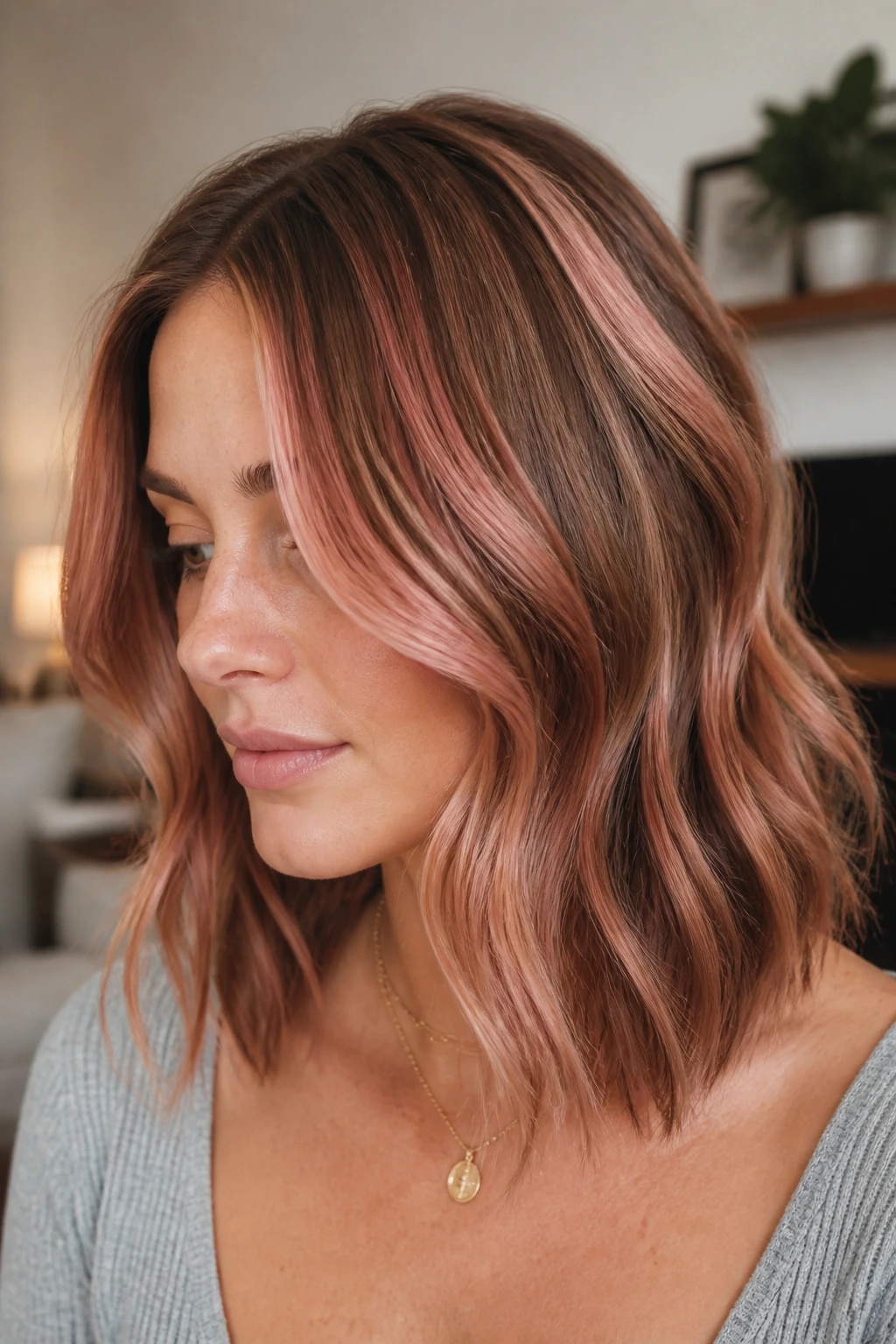
Rose gold ribbon highlights are thicker and more painterly than baby lights, which gives the color a clearer shape. I like them on hair with some natural movement because the ribbons show up as strands, not specks. On cool skin, that reads as dimensional instead of warm.
The ribbon approach also keeps the rose gold from looking too uniform. A few wider pieces through the top and sides can create enough contrast to make the color interesting while still leaving the base visible. That visible base is important. It stops the look from turning into one solid sheet of pink-blonde.
This works especially well on shoulder-length cuts, soft waves, and layered brunettes who want a lighter feel without bleaching everything. If the ribbons are placed well, they can frame the face and brighten the cut without making the whole style fragile. It’s a good middle ground for someone who wants more than a tint and less than a full transformation.
24. Smudged Root Rose Gold for Cool Skin Tones
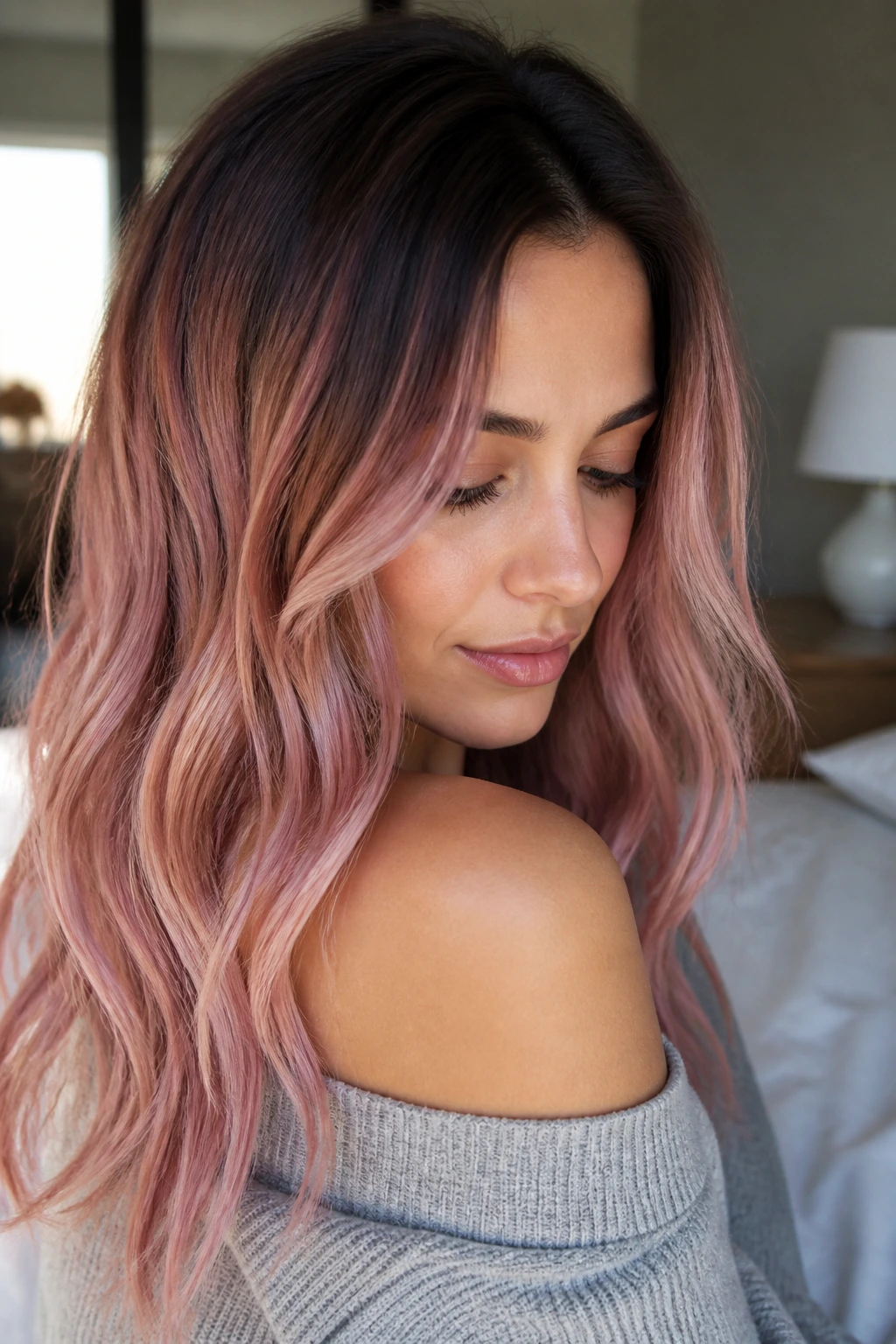
A smudged root rose gold is the version I’d choose if you hate obvious grow-out lines. The root stays deeper and slightly cool, then the rose starts softly below it. On cool skin, that shadow at the top keeps the hair from looking too bright near the forehead.
Unlike a high-maintenance all-over pastel, this approach buys you time. The root blur helps the color last longer between salon visits, and the lower half of the hair still gives you that pink-beige glow. If the roots are too dark, though, the contrast can get heavy. The trick is to keep the shadow soft, not chunky.
What to Ask For
- A shadow root about one shade deeper than the mids.
- Rose tone concentrated from ear level downward.
- A neutral beige or smoky pink formula, not coral.
- Loose styling so the transition stays blended.
It’s a smart choice for people who want softness near the scalp and a little more freedom between appointments.
25. Arctic Rose Gold Waves
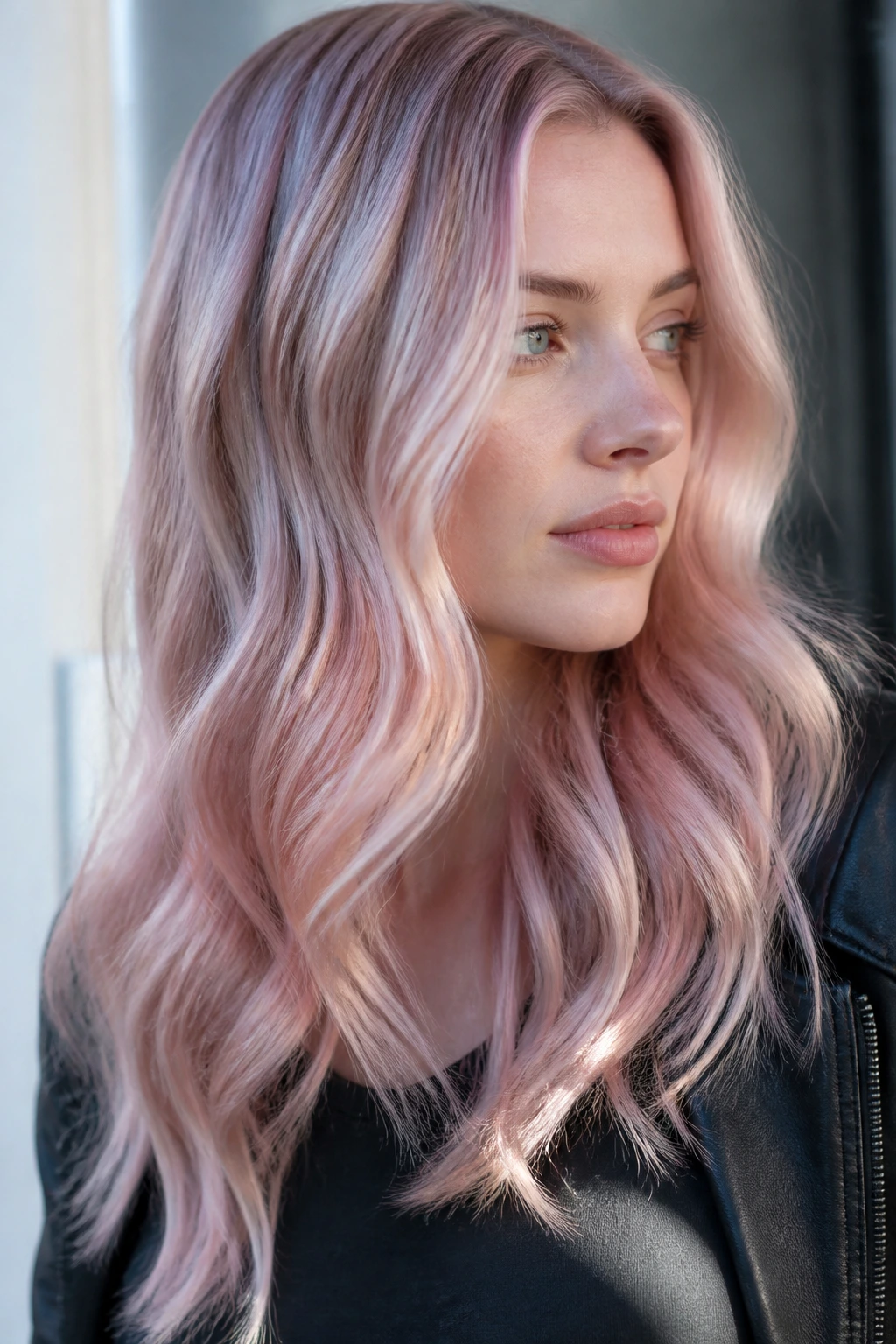
Arctic rose gold waves are for anyone who wants the pink to stay crisp. The arctic side matters because it pulls the color away from peach and closer to frost. On cool skin, that usually feels cleaner and more flattering than a warmer rose.
Waves help because they create shadows inside the color. That shadow lets the pale pink sit against a cooler blonde base, which gives the whole look more shape. Straight hair can wear it too, but the shade shines brightest when there’s movement. Even a loose, brushed-out wave adds enough texture to keep the color from looking flat.
- A blue-violet shampoo can help if the blonde starts yellowing.
- Keep heat styling moderate, since pale rose fades fast.
- A gloss every 4 weeks keeps the finish bright.
- Pair with glossy makeup rather than heavy bronzer if you want the hair to stay the focus.
It’s cool, light, and a little icy in the best way.
26. Violet-Rose Color Block
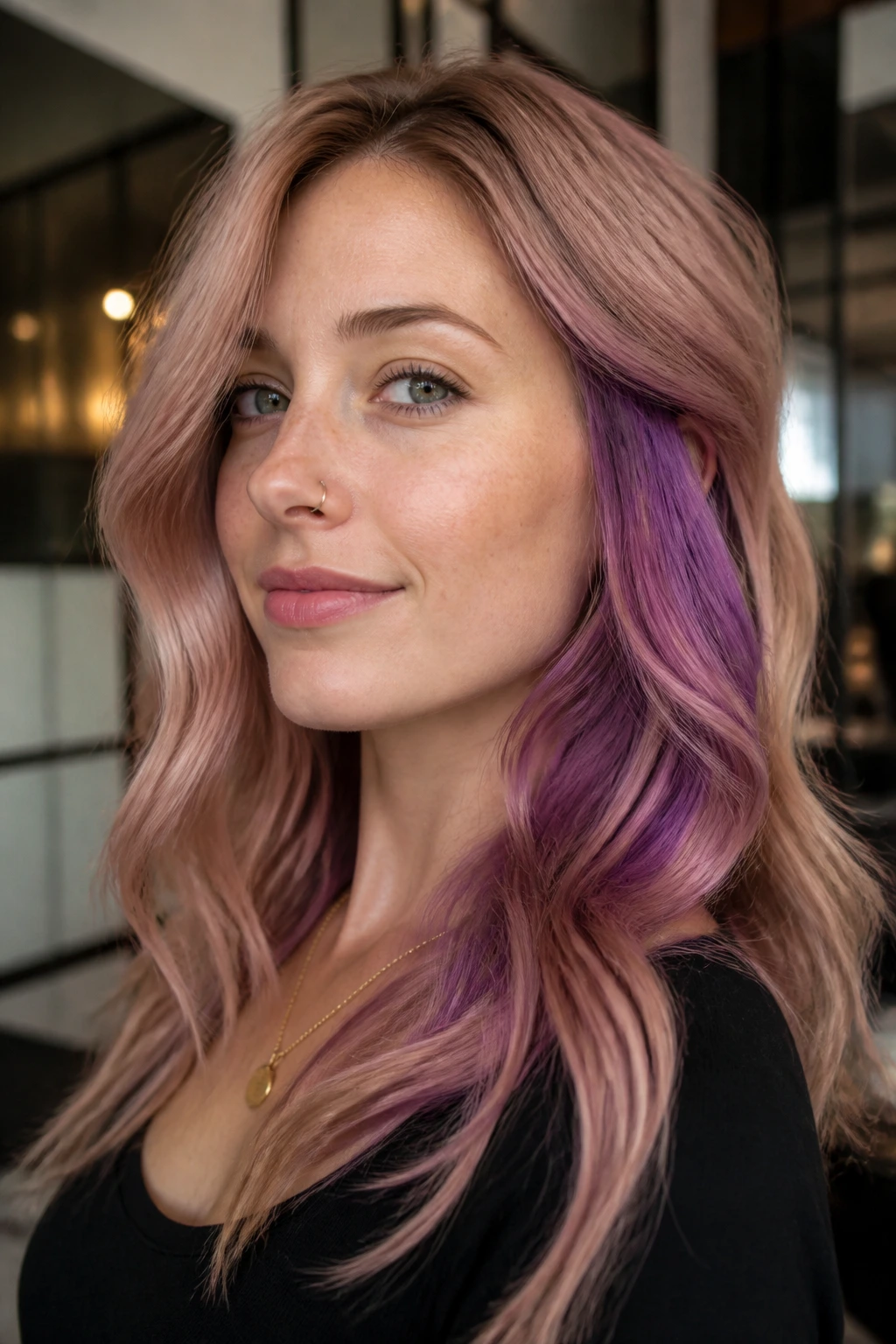
A violet-rose color block is the boldest idea in the bunch, and I mean that in a good way. Instead of blending the rose everywhere, you place it in clear panels or hidden sections, usually under the top layer or through a side panel. The violet keeps the rose cool, which matters a lot on cool skin tones.
The style works because the contrast is deliberate. You can leave the top a smoky blonde or deeper brunette and let the violet-rose peek out when the hair moves. That gives you impact without making the whole head feel loud. It also plays nicely with blunt bobs, lobs, and short shags where the shape is clean.
This is a smart option if you like vivid color but still want the tone to stay on the refined side. A little shine spray helps the block sections look crisp. Too much texture can blur the lines too much, and the whole point here is that the color should feel intentional when it shows.
27. Sheer Rose Gold Braids
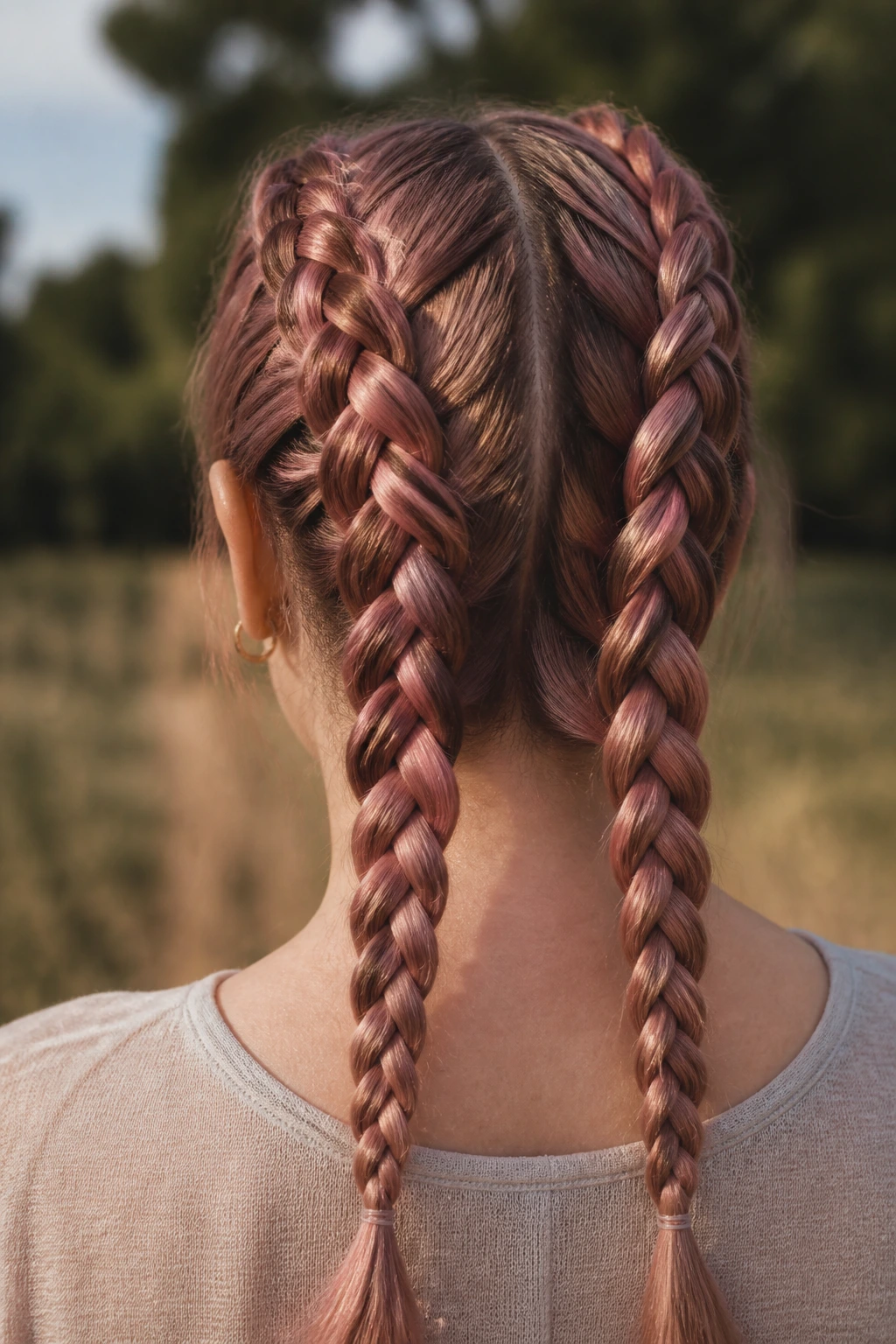
Can braids make rose gold look softer? Yes, and sometimes that’s exactly what the color needs. Braiding pulls different tones together, which means a sheer rose gold finish can look richer and more layered than it does loose. It’s a good trick for bright rose pieces that might feel a little strong on their own.
The best braided look starts with a translucent rose glaze over a blonde or light brown base. French braids, Dutch braids, fishtails, and even simple two-strand twists all show the color in strips and flashes. That motion is useful. It stops the pink from sitting in one place too long.
How to Wear It
If you wear your hair braided often, keep the color slightly deeper than a pastel so it doesn’t vanish in the plait pattern. A soft rose champagne tone usually holds up better than a fragile blush. It also looks good with a half-up braid or face-framing crown braid, especially when you want the color to show around the hairline.
Braids make the shade feel lived-in. That’s a good thing.
28. Soft Rose Gold Melt
Some shades ask for attention. This one doesn’t. A soft rose gold melt moves from a quiet root into pale pink-beige mids and ends, and the whole thing feels easy to wear because nothing is fighting for the spotlight. On cool skin, that softness is the selling point.
The melt works best when the transition is slow. No harsh edges. No sudden pink panels. Just a smooth fade that keeps the rose light enough to read fresh and muted enough to stay flattering. If your hair is long or medium-long, the movement of the ends makes the color even better. The pieces shift, the shine moves, and the shade looks different every time you turn your head.
If you want one rose gold idea that sits comfortably in daily life, this is the one I’d keep near the top of the list. It’s easy to dress up, easy to let air-dry, and easy to grow out without regret. That matters more than a dramatic first impression, at least for most people.
