



If your skin runs pink, blue, or porcelain, ash purple hair color can look cleaner on you than warmer violet shades that lean red or magenta. That’s the first thing people miss. They see purple and assume any purple will do.
It won’t. Cool skin tones usually look best when the hair has a smoky, silvery, blue-violet edge, because that keeps the face bright instead of bringing out extra redness in the cheeks or jawline. The same logic is why some plum shades look rich and expensive while others look a little sour on the wrong undertone.
Ash purple hair color ideas for cool skin tones also give you range, which is the fun part. You can go pale lilac, steel-plum, dusty orchid, or deep graphite violet and still stay in the same family. The trick is choosing the right depth for your base color and the amount of contrast you want against your skin.
Some of these shades need a very light canvas. Some don’t. That’s where the real decisions live, so let’s get into the ones that actually make sense on cool-toned complexions.
1. Icy Ash Lilac Layers
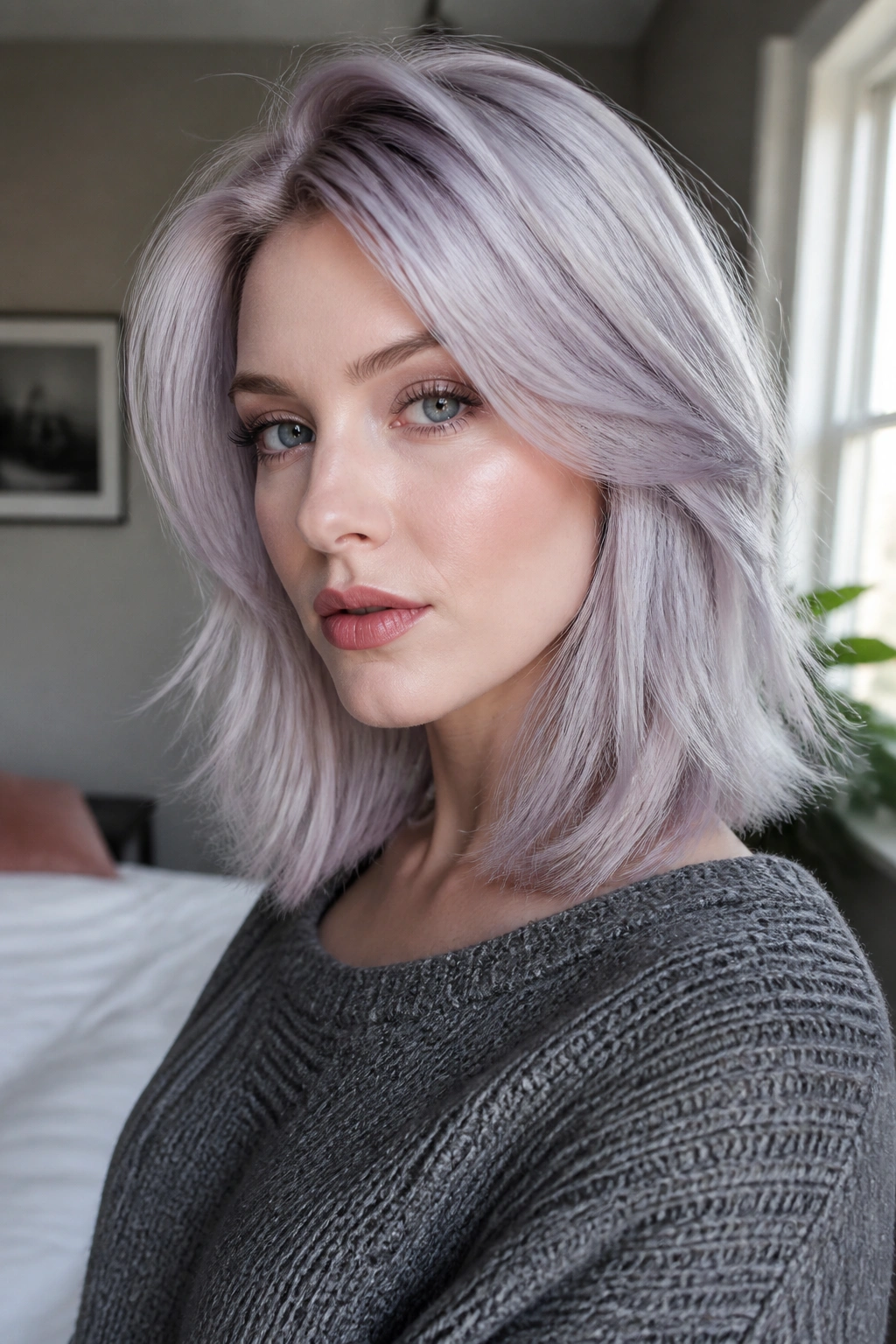
Icy ash lilac is one of the easiest ash purple choices for fair cool skin because it stays light, cool, and a little frosted. It doesn’t sit on the hair like candy purple. It sits like a veil.
Why It Looks Clean on Cool Skin
The silver in this shade softens pink undertones in the face instead of fighting them. On skin that already has a blue or rosy cast, that makes the complexion look crisp and awake.
It works best on hair lifted to a pale yellow, usually around level 9 or 10. If the base is too dark, the lilac will look gray and flat instead of airy.
- Best on fine to medium hair with soft layers
- Needs a pale blonde base for the cleanest finish
- Usually fades into a cooler pastel rather than a brassy mess
- Purple shampoo once a week keeps the tone from drifting warm
My take: if you want purple hair that still feels quiet and polished, this is the safest first stop.
2. Smoky Lavender Bob
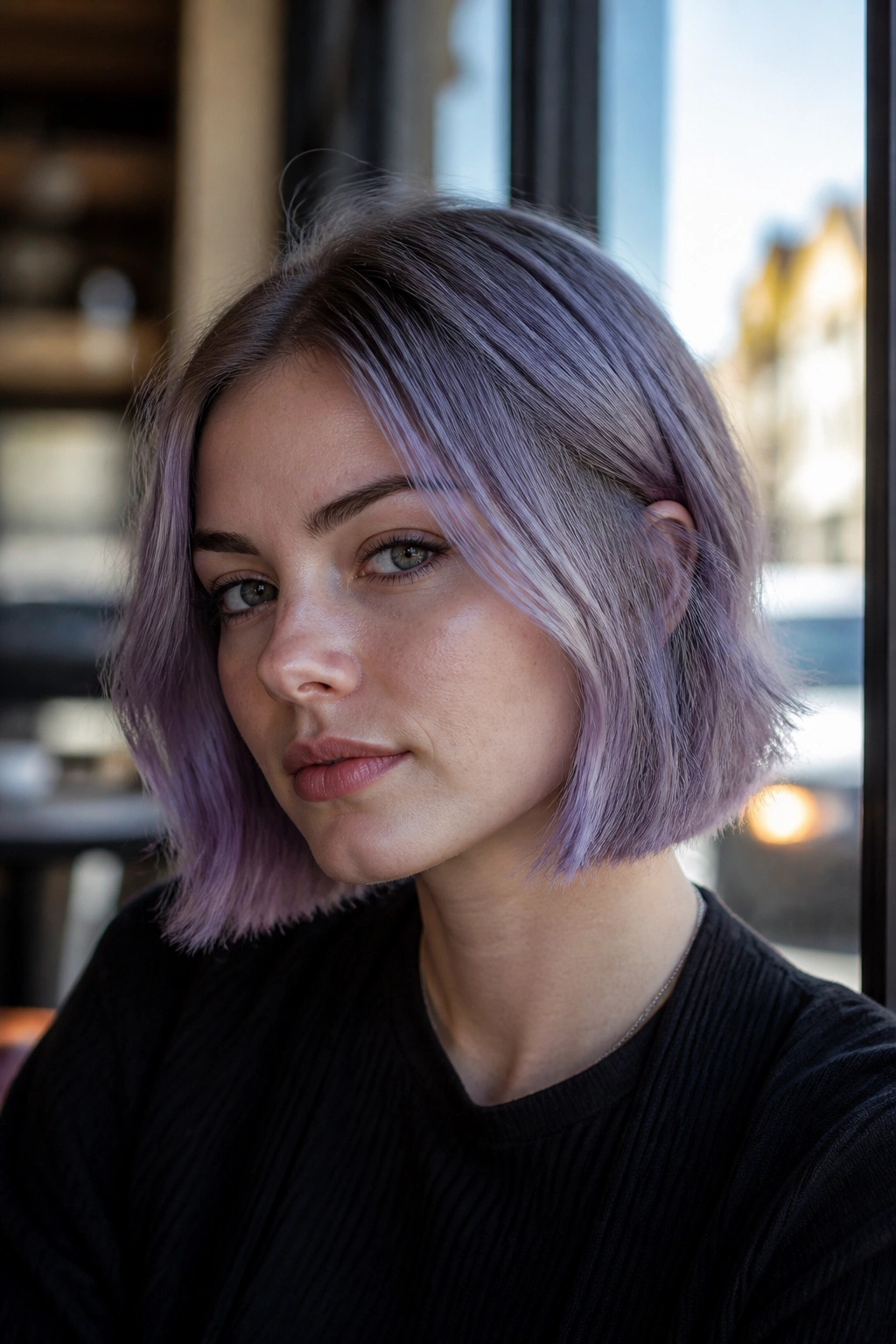
A smoky lavender bob has a little more weight than icy lilac, and that’s what makes it work on cool skin with stronger features. The shade reads soft, but it doesn’t disappear.
The smoky base keeps the lavender from turning too sweet. On a blunt bob, that contrast looks sharp around the jawline, especially if your skin leans porcelain or cool beige.
You can keep the roots slightly deeper, around a soft beige ash, and let the lavender sit through the mids and ends. That gives the cut dimension without making the regrowth line scream for attention. I like this one on straight hair and loose waves alike. It has a nice edge.
3. Silver Plum Melt
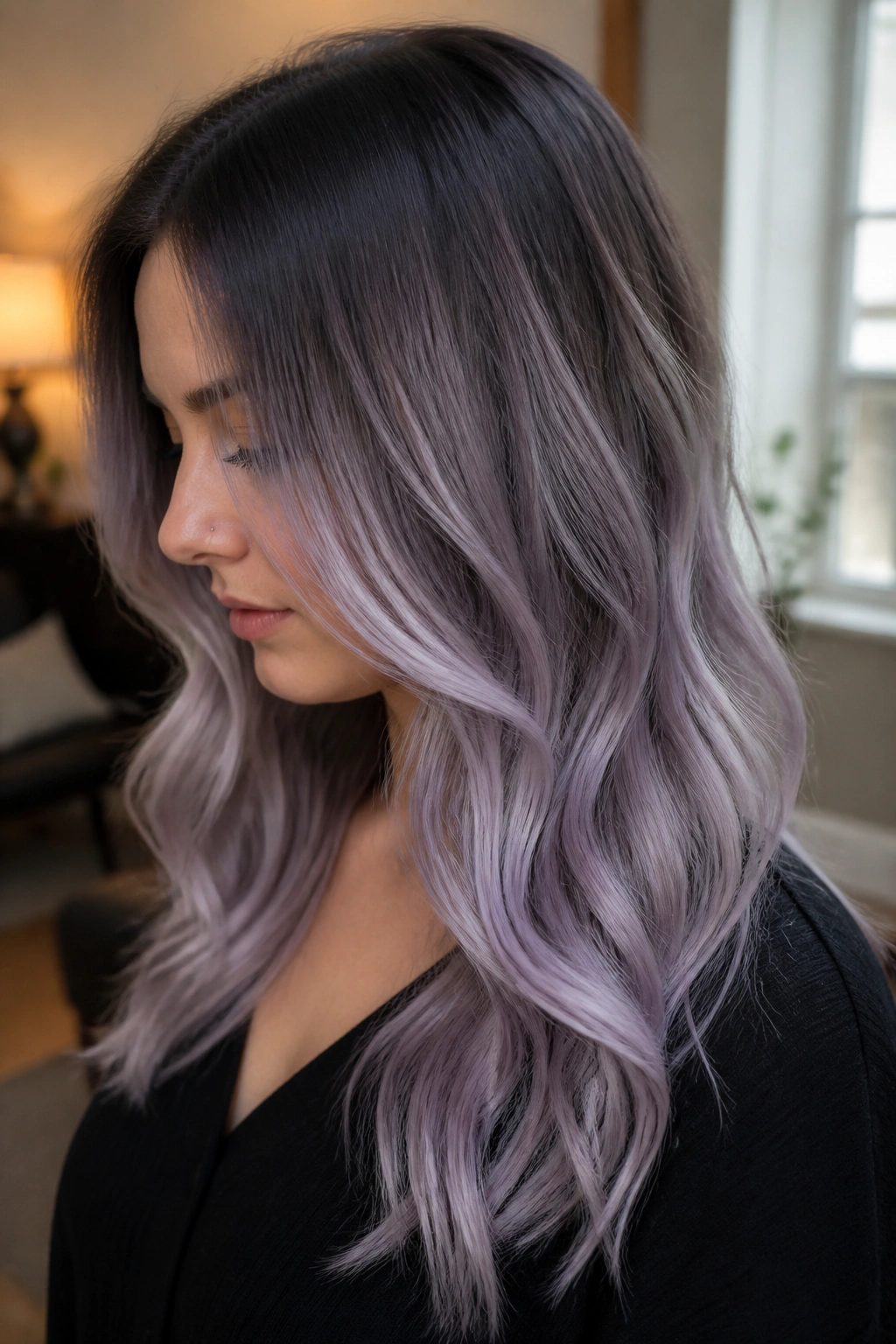
Why does this one work so well? Because silver and plum play off each other instead of competing. The silver cools down the purple, and the plum gives the hair enough depth to keep it from looking washed out.
A melt like this usually starts darker at the root and fades into a pale silver-plum through the ends. It suits cool skin that needs a little more contrast than pastel lavender can give.
How to Wear It
Ask for a root shadow one or two levels deeper than the rest of the color. That makes the fade look softer and buys you time between appointments.
- Best on wavy hair where the color bands can move
- Looks strongest on level 8 or lighter hair
- Works well with cool makeup: rose blush, taupe shadow, berry lip
- Can be glossed every 4 to 6 weeks to keep the silver side from turning dull
4. Ash Violet Balayage
A balayage is the move when you want purple without flooding every strand. Ash violet balayage keeps the darker pieces in play, which is useful if you like dimension and hate one-note color.
Picture cool brunette or dark blonde hair with hand-painted violet ribbons that look smoky, not neon. On cool skin tones, the ash component stops the purple from looking sugary. It feels more grown-up.
Placement Notes
The face-framing pieces matter most. Put the lightest violet near the front and leave some darker smoke underneath so the whole thing doesn’t flatten out in photos or daylight.
That little contrast keeps the style expensive-looking in real life, where hair is moving, not sitting under ring lights. It’s also a smart pick if you want to stretch your salon visits.
5. Frosted Mulberry Ends
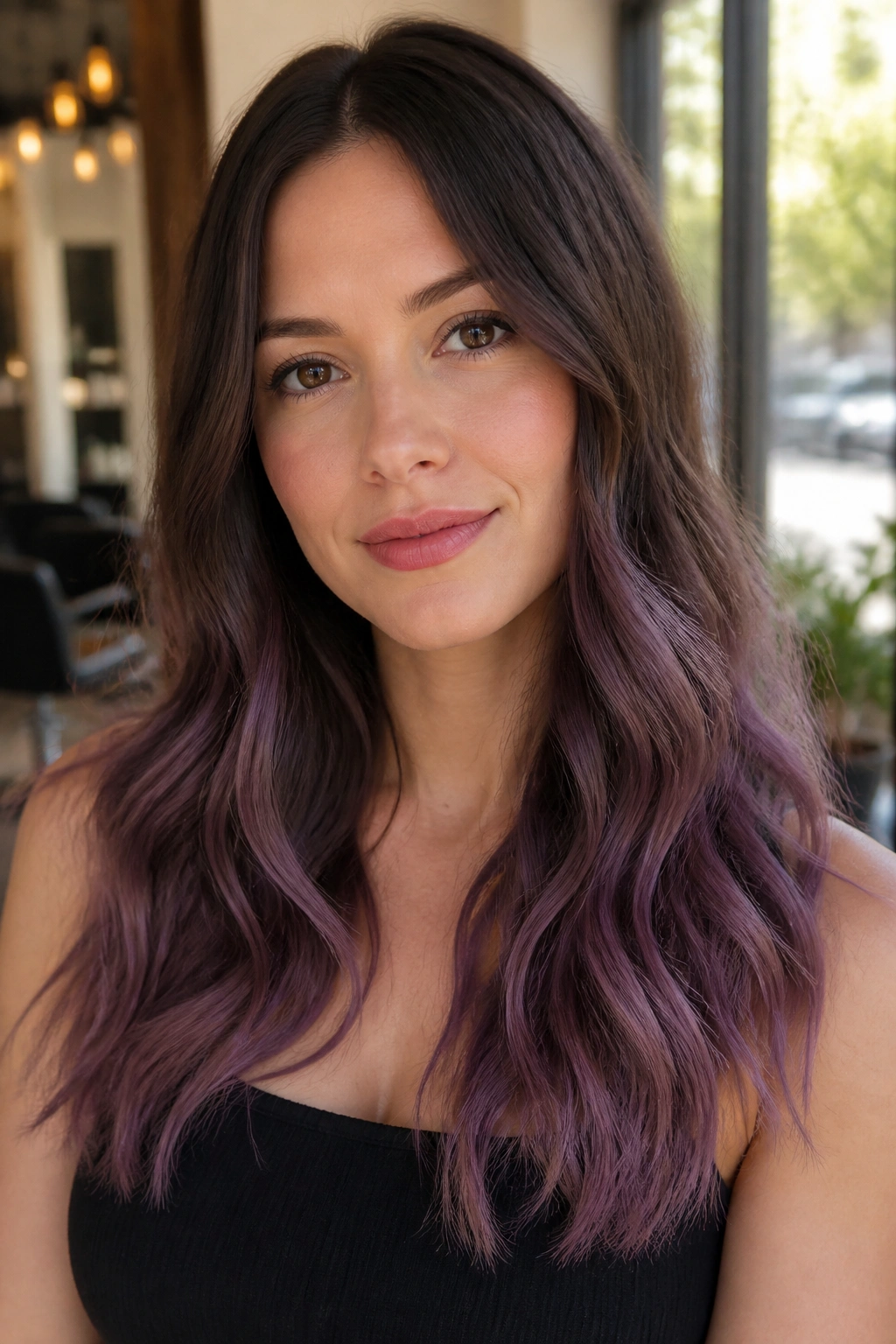
Frosted mulberry ends are for the person who wants a hint of drama but not a full head of fantasy color. The roots stay darker, the mids stay natural, and the ends pick up a muted purple that sits between berry and ash.
On cool skin, this works because the mulberry is muted enough to avoid clashing with pink undertones. The frost keeps it from leaning too warm or too red.
This look is easiest on long hair, where the gradient has room to breathe. A collarbone-length cut can still wear it, though, if the fade starts around the cheekbone. It’s a good compromise shade. Not timid. Not loud.
6. Dusty Orchid Gloss
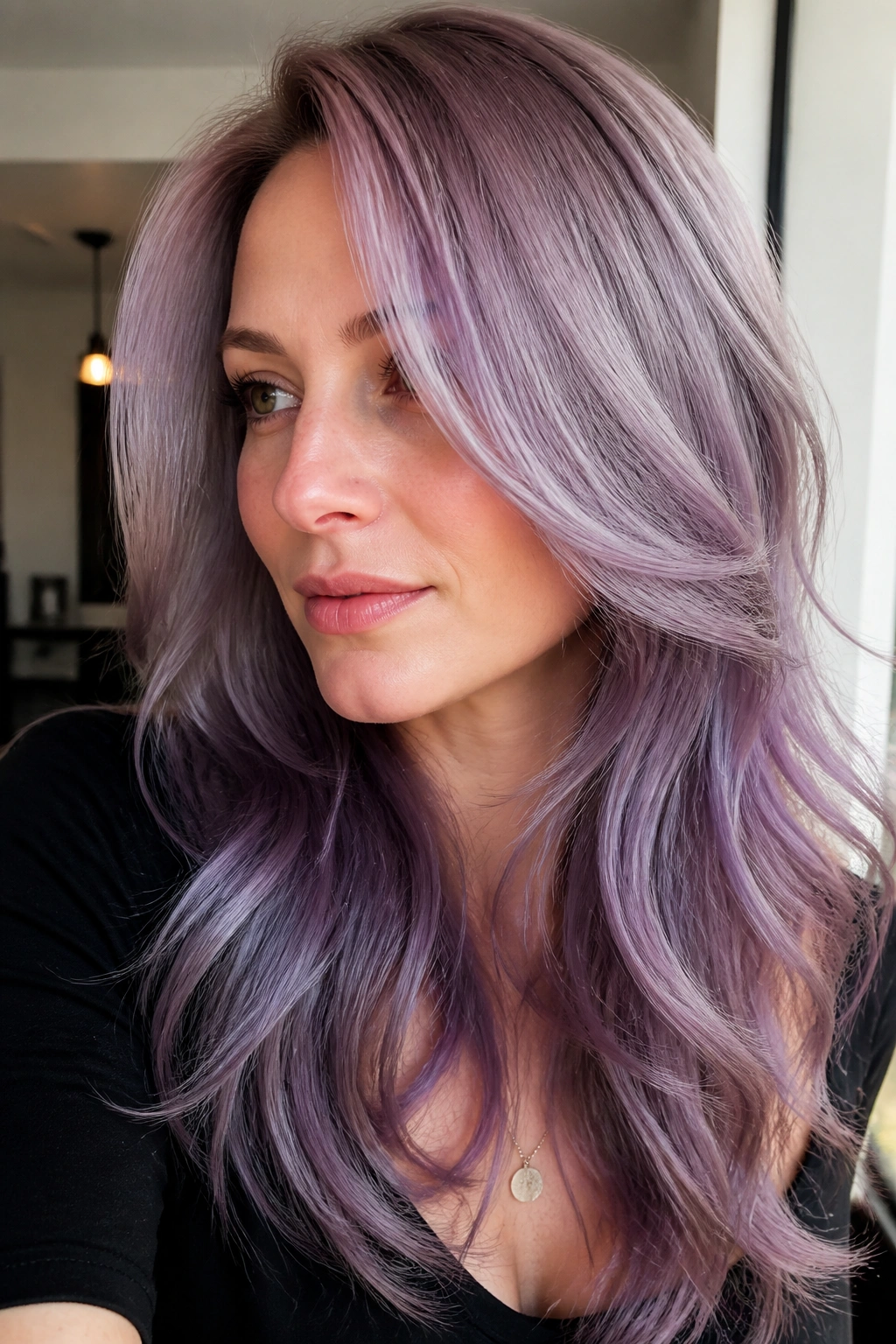
Dusty orchid is one of those shades that sounds soft and is still interesting in person. It has a gray-lilac base with just enough purple to keep it from reading as plain silver.
The gloss part matters. On cool skin, a shiny finish keeps the color looking fresh instead of dusty in the bad way. That shine also helps the shade move between indoor light and daylight without losing its shape.
If your hair is already light blonde, a tinted gloss can deliver this look without a heavy commitment. On darker hair, though, you’ll need pre-lightening. There’s no way around that. Orchid only looks airy when the canvas is clean.
7. Steel Lilac Money Pieces
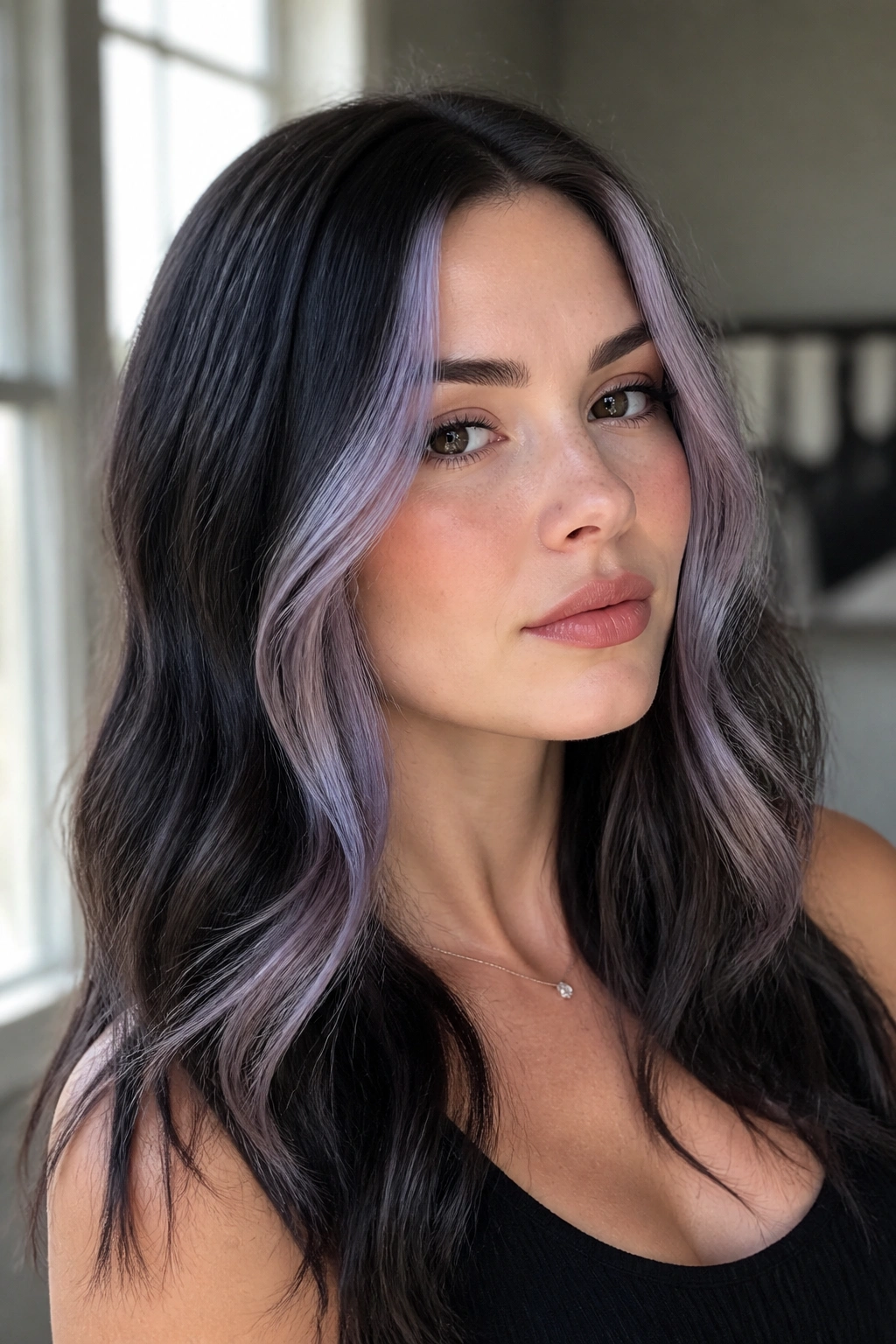
Steel lilac money pieces give you the brightness of purple right where it counts: around the face. That’s a smart move for cool skin tones that need a lift near the cheeks and eyes.
What Makes It Different
Unlike a full-color job, this one keeps most of the hair dark or neutral. The front pieces do the work. The steel tone cools the purple so it doesn’t fight your undertone, and the placement makes the color visible even when your hair is tied back.
- Best on shoulder-length cuts and longer bobs
- Works with center parts and soft off-center parts
- Needs toner refreshes more than full dye sessions
- Grows out cleanly if you keep the money pieces narrow
Tip: keep the front pieces slightly lighter than the rest of the purple, or they disappear.
8. Smoky Grape Brunette
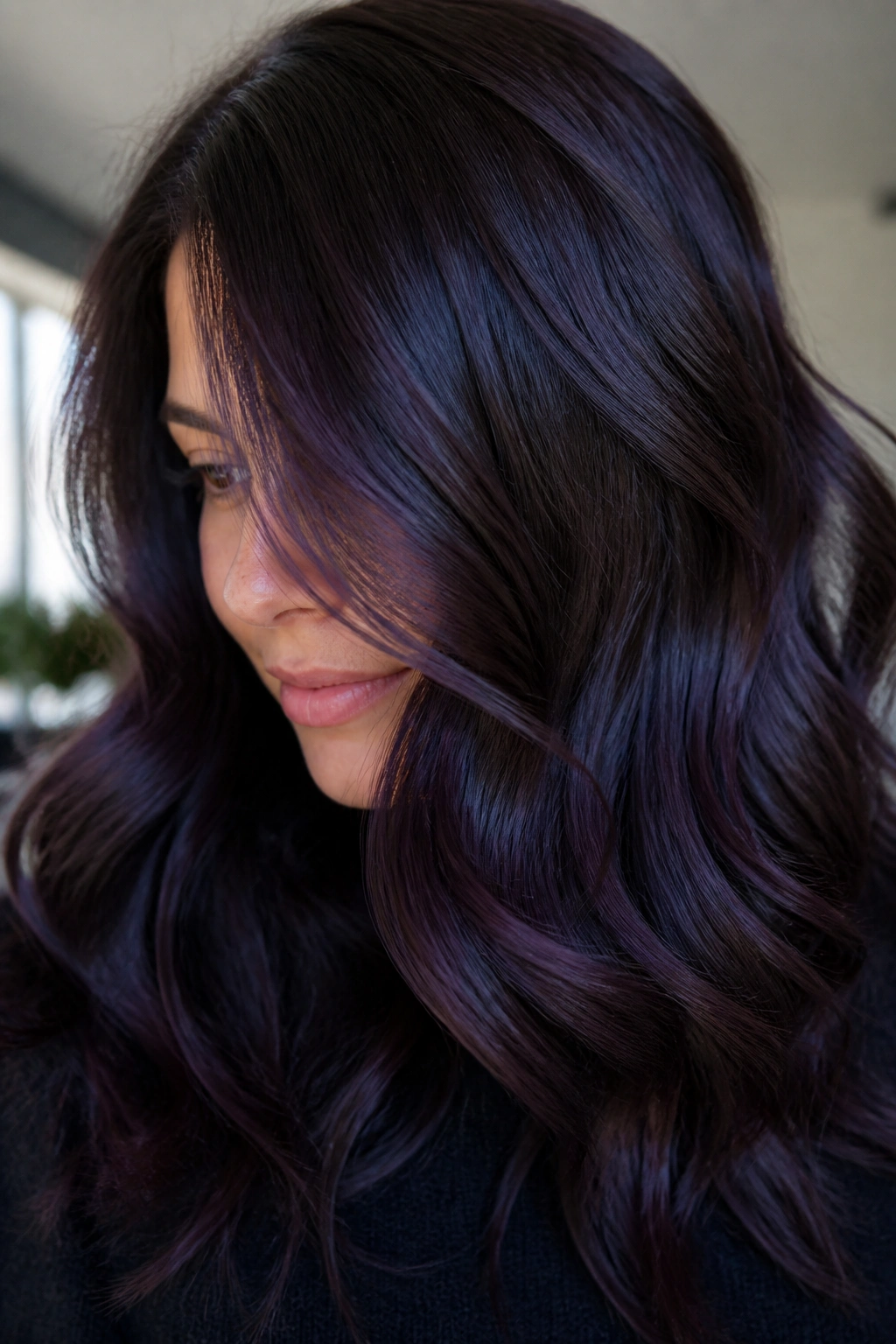
This is the one I recommend to people who love dark hair but still want color. Smoky grape brunette keeps the base deep and rich, then folds in purple only where the light can catch it.
The cool skin benefit is simple: the shade stays in the blue-violet lane, so it won’t make the face look ruddy. On deep cool skin, it can look almost black until daylight hits it. That’s half the appeal.
It’s also less fussy than pastels. You can wear it with minimal styling, and it still reads as intentional. If you like a low-maintenance purple, this is the one I’d place near the top.
9. Lavender Gray Ombré
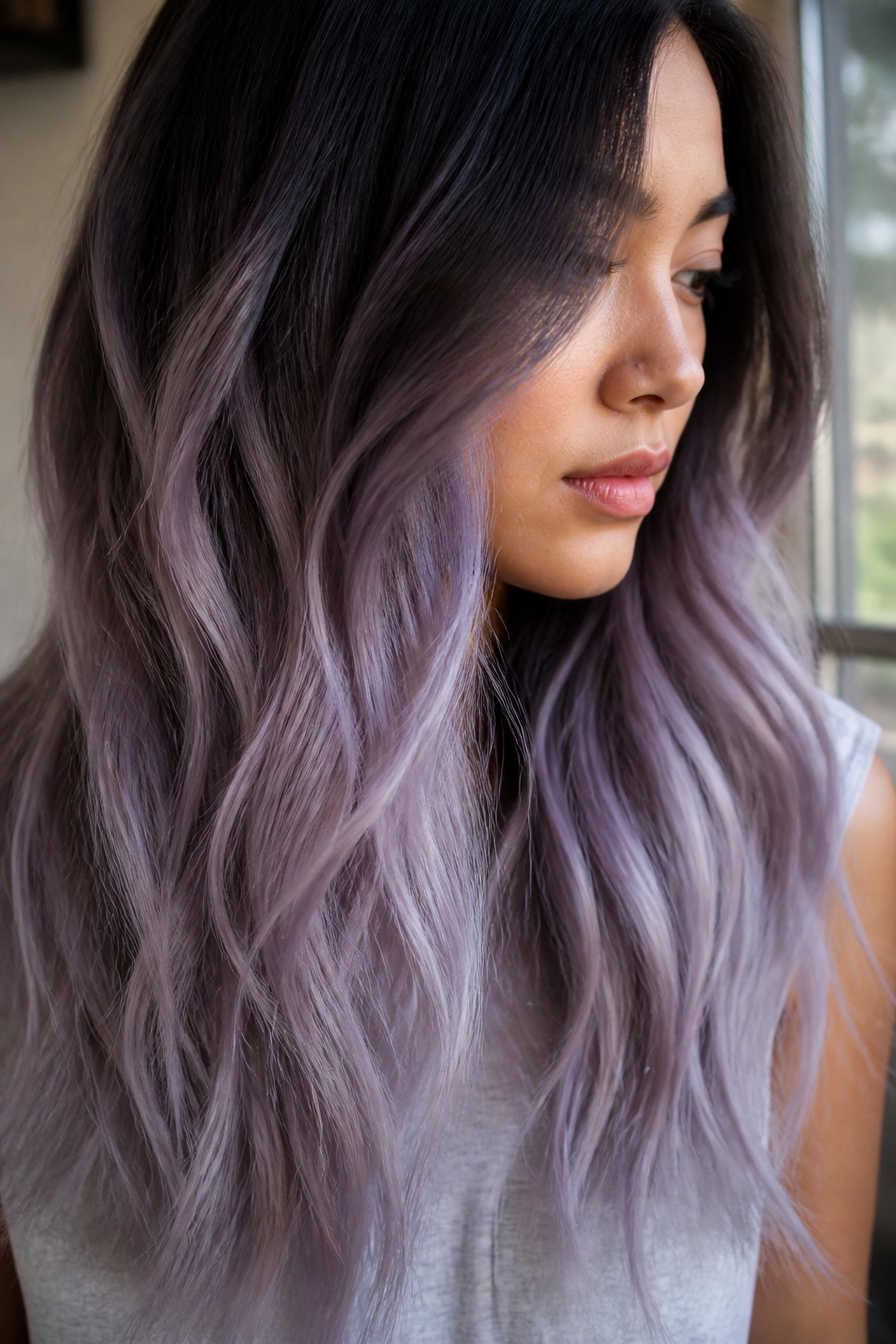
Why does lavender gray ombré hold up so well on cool skin? Because the transition is soft enough to feel natural, even when the color itself is obviously dyed. The gray pulls it down. The lavender gives it life.
Start with a deeper ash root and let the color fade into a pale gray-lilac through the bottom half of the hair. The gradient keeps the look from feeling blocky, which is a common problem with purple ombré done badly.
How to Use It
Wear it on medium to long lengths where the fade has room to stretch. Short hair can take it, but the effect gets compressed fast.
It’s especially good on cool-toned brunettes who don’t want to chase a full platinum lift. You still need lightness in the ends, though. That part matters.
10. Cool Plum Pixie
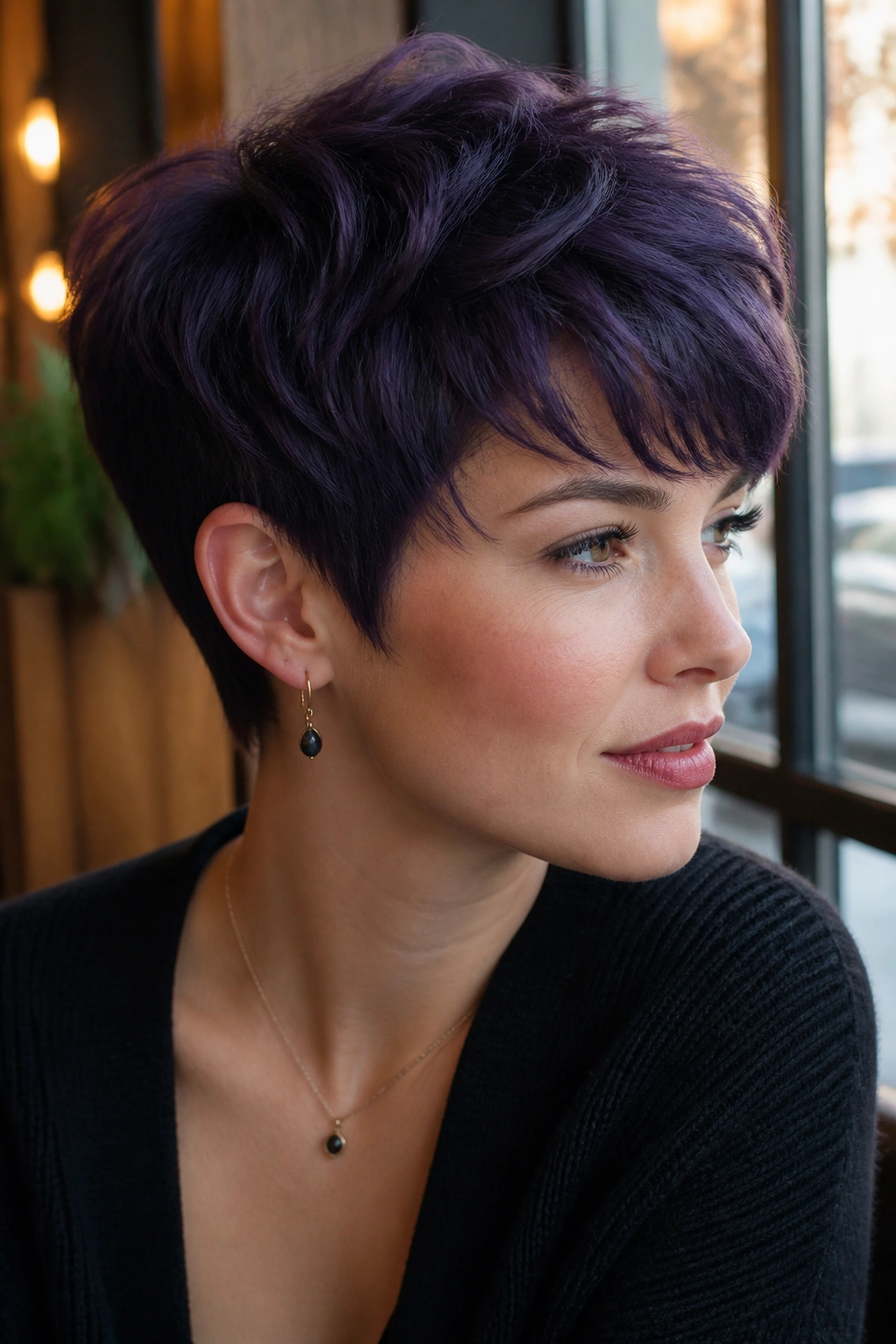
A pixie cut with cool plum color has bite. There’s no hiding behind length here, so the shade has to carry the whole look.
The plum should lean smoky and blue-based, not red-based. That keeps it in step with cool skin, especially if your complexion is fair and your features are sharp. On a short cut, the color shows every edge, every texture line, every bit of movement.
I like this shade with matte styling paste and a slightly piecey finish. It looks too flat if the hair is slicked down all the way. Give it a little separation and the color wakes up.
11. Ash Purple Peekaboo Layers
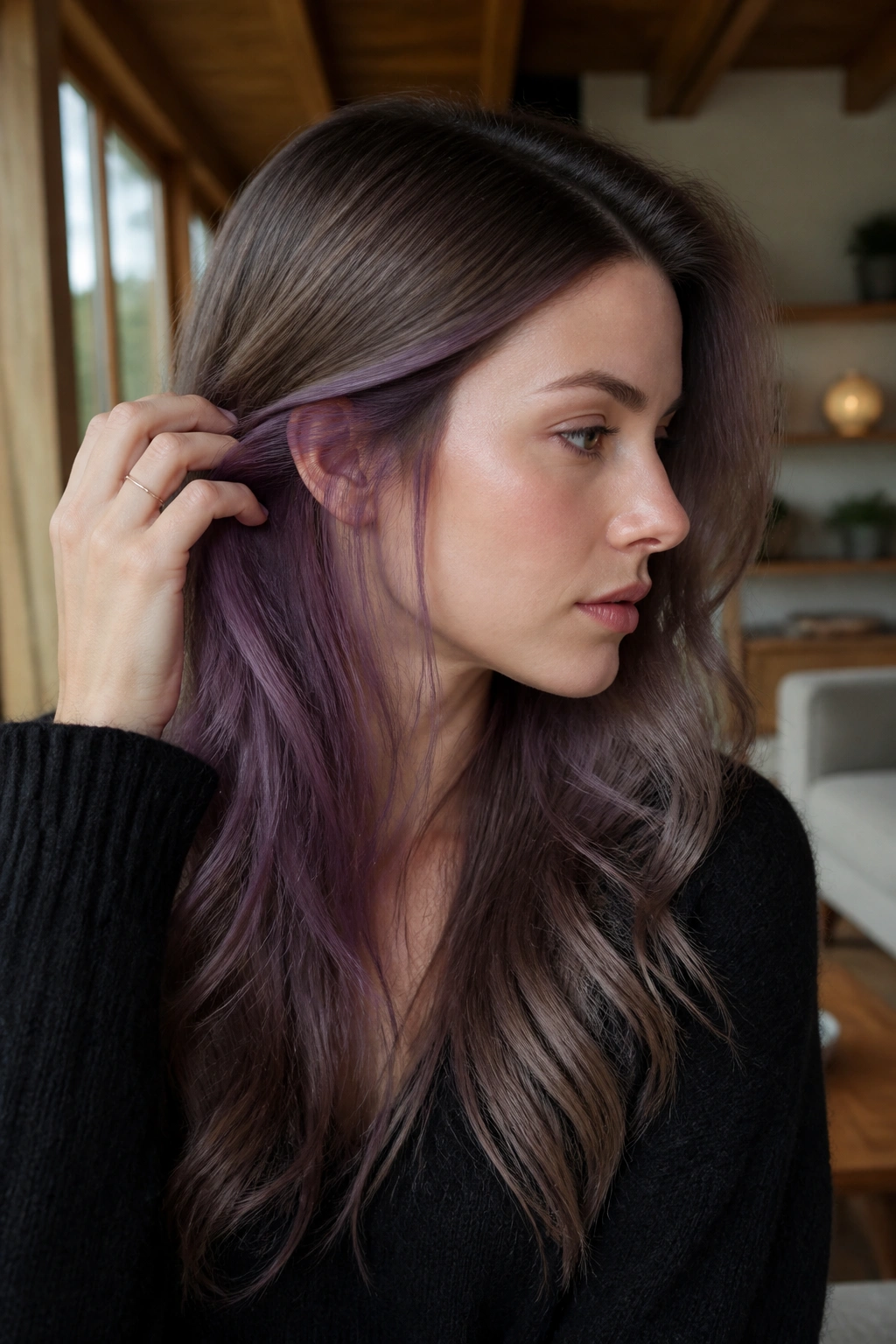
Peekaboo color is still one of the best ways to wear ash purple if you need flexibility. The top layer can stay natural, while the underlayer does the fun work.
This is useful on cool skin because you can control how much purple sits near the face. If the top layer is a cool brown, dark ash blonde, or even silver, the hidden purple feels playful instead of overwhelming.
A good peekaboo placement should show when you move, bend, or tuck your hair behind your ears. That little reveal is the whole point. Too much and it loses the surprise. Too little and you might as well not bother.
12. Heather Violet Ribbon Highlights
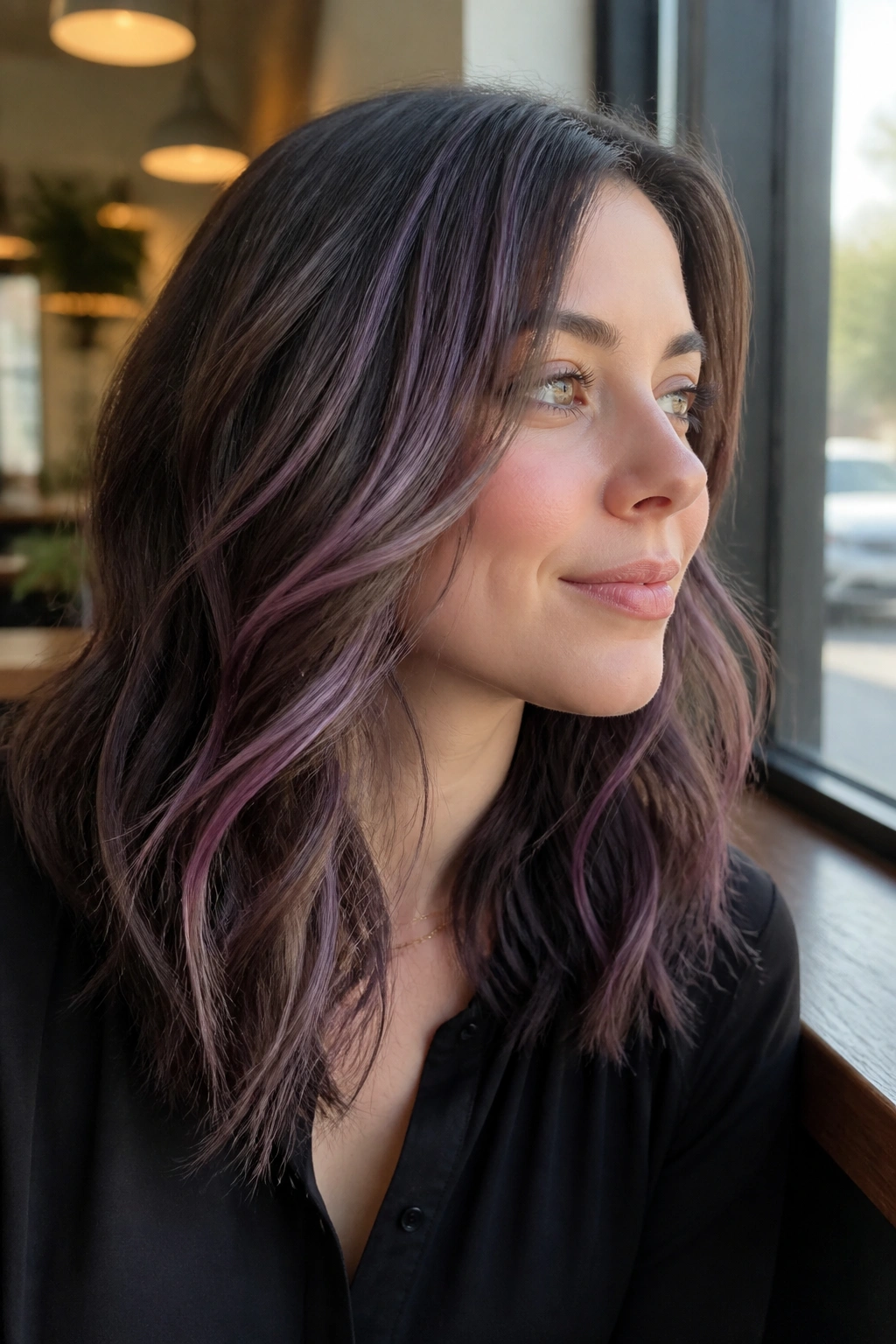
Heather violet ribbon highlights are softer than chunky purple streaks, and I prefer them for cool skin because they move like thread through the hair instead of sitting on top of it.
The shade sits somewhere between pale violet and ash beige. It’s especially good on layered cuts where the movement can break up the color. Straight hair can wear it too, but the ribbons need to be fine and well-placed.
What Makes It Different
It’s the kind of highlight work that looks better from six feet away than it does in a strict close-up, because the strands blend into a cool shimmer.
- Best on mid-length cuts with movement
- Needs thin sections, not chunky panels
- Looks best when the violet is muted, not bright
- Works well with cool brown lowlights underneath
13. Charcoal Orchid Lob
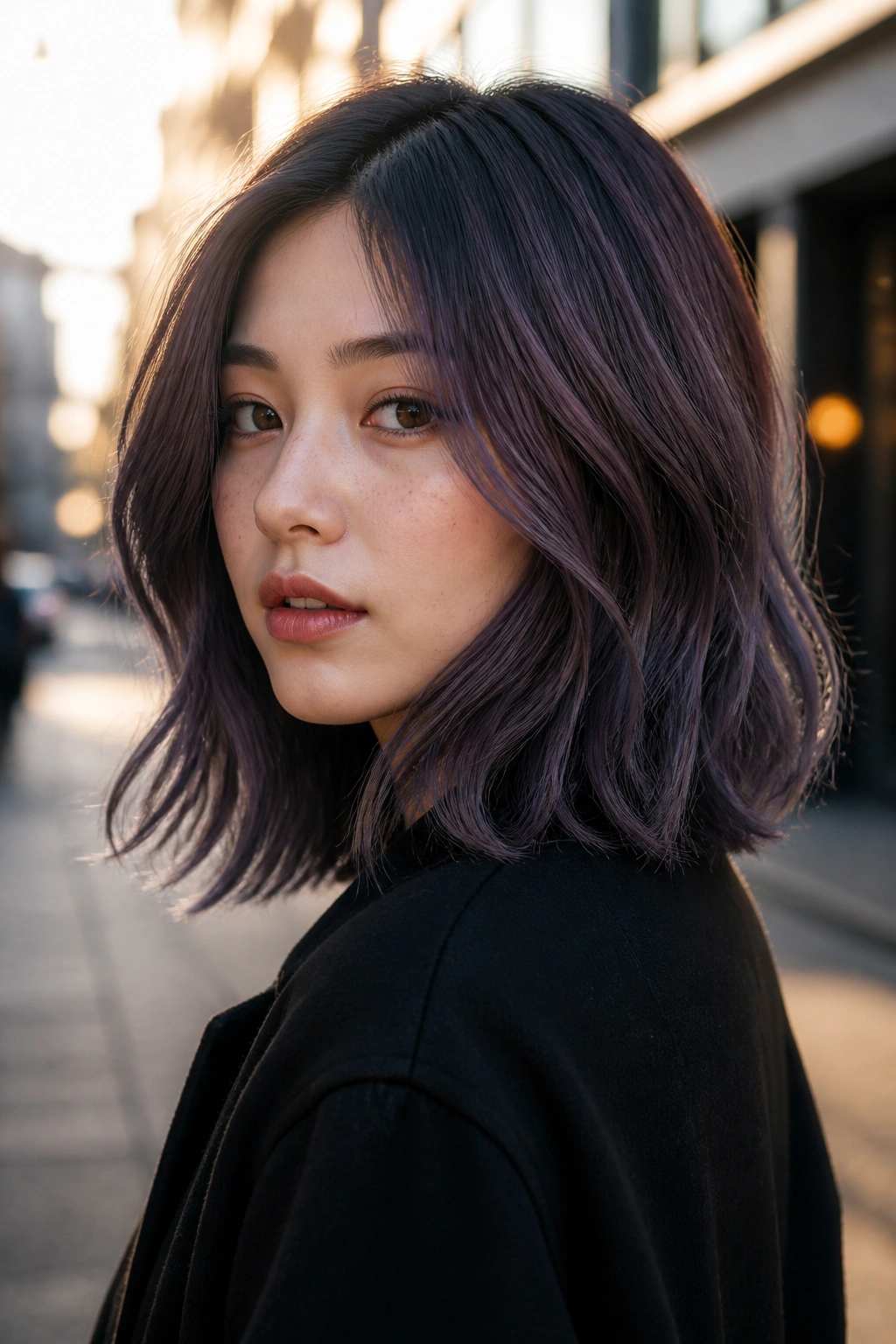
A lob with charcoal orchid color gives you weight and softness at the same time. That’s a rare combo, and it’s one reason this shade looks so good on cooler complexions.
The charcoal base keeps the orchid from turning sugary. The orchid keeps the charcoal from looking flat. On cool skin, that mix gives the face a clean frame, especially if you wear the cut with a slight bend at the ends.
This is a strong choice for someone who wants purple hair that still feels office-friendly or easy to dress down. It’s not shy, but it isn’t screaming either. That middle ground is harder to find than people think.
14. Pale Amethyst with Root Shadow
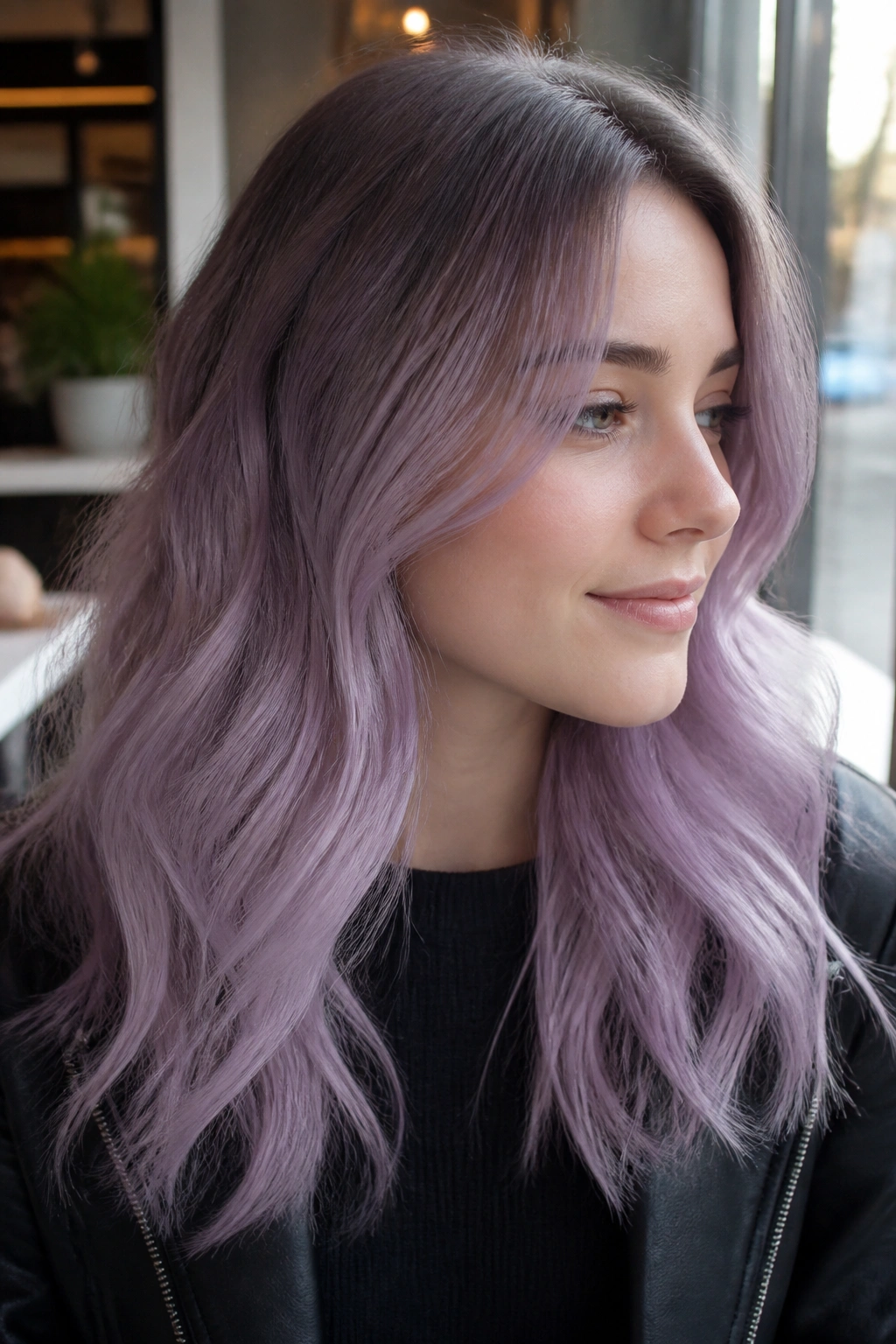
Pale amethyst looks delicate, but the root shadow is what makes it wearable. Without that darker root, the shade can wash out cool skin and look a little airy in the wrong way.
The shadow root also gives the amethyst room to look intentional as it grows. Ask for a cool beige or mushroom root, not a warm brown. Warm roots can make the whole color feel off.
This works best when the amethyst ends are translucent and glossy. A dry pastel will always look flatter than a glossy one. That’s true on almost every head of hair, but it matters even more here.
15. Smoky Mauve Rose Purple
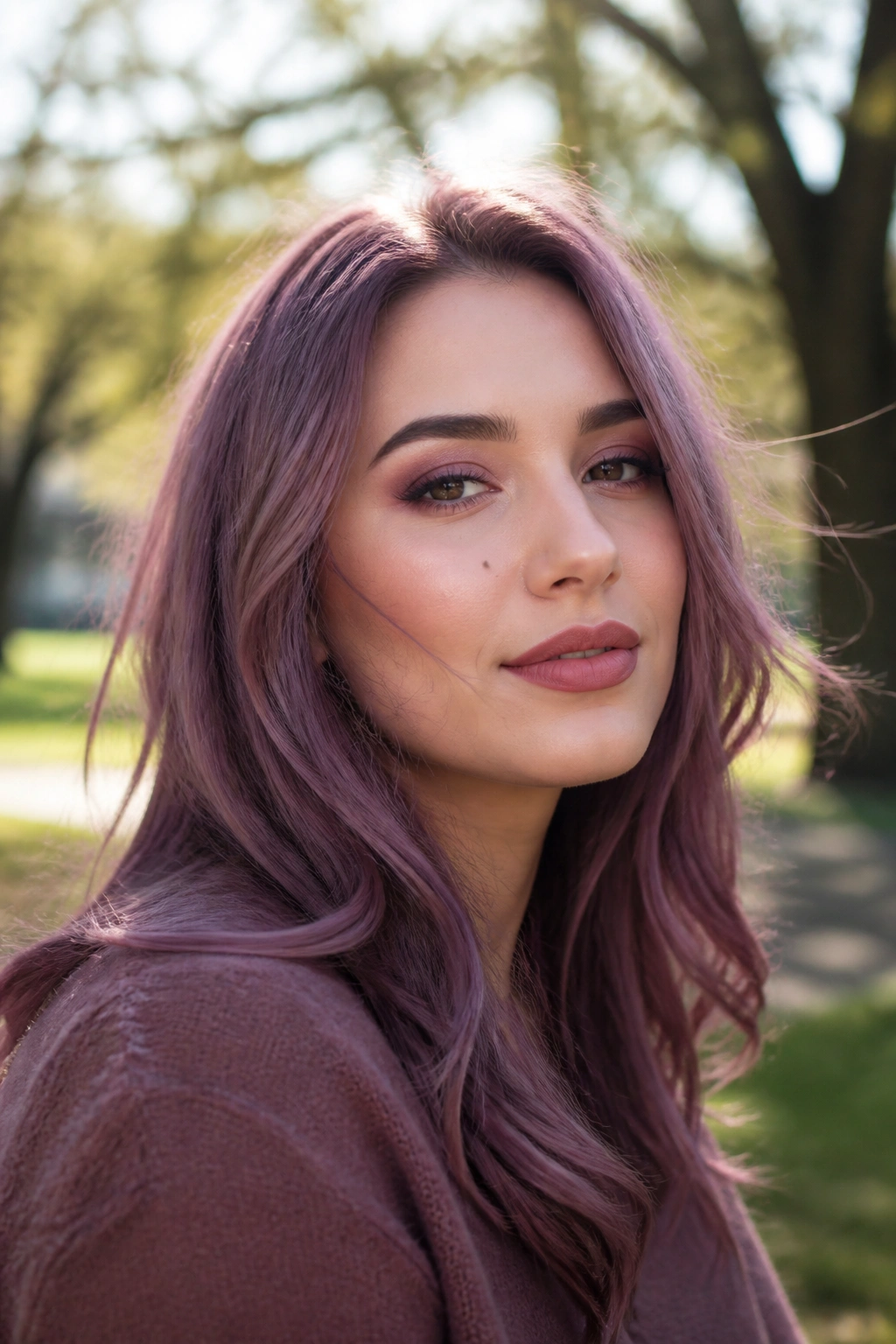
Smoky mauve rose purple is the bridge shade for people who want purple with a little softness. It has enough rose in it to feel romantic, but the smoke keeps it from drifting warm.
On cool skin, that balance is useful. Too much pink can fight the undertone. Too much blue can turn severe. Mauve sits right between them and tends to flatter a lot of cool complexions, especially if they’re not ultra-fair.
It’s a good pick if you like makeup with berry blush, gray liner, or cool nude lips. The hair won’t argue with any of that. It will sit in the same family and make the whole face look pulled together.
16. Blue-Violet Midnight Gloss
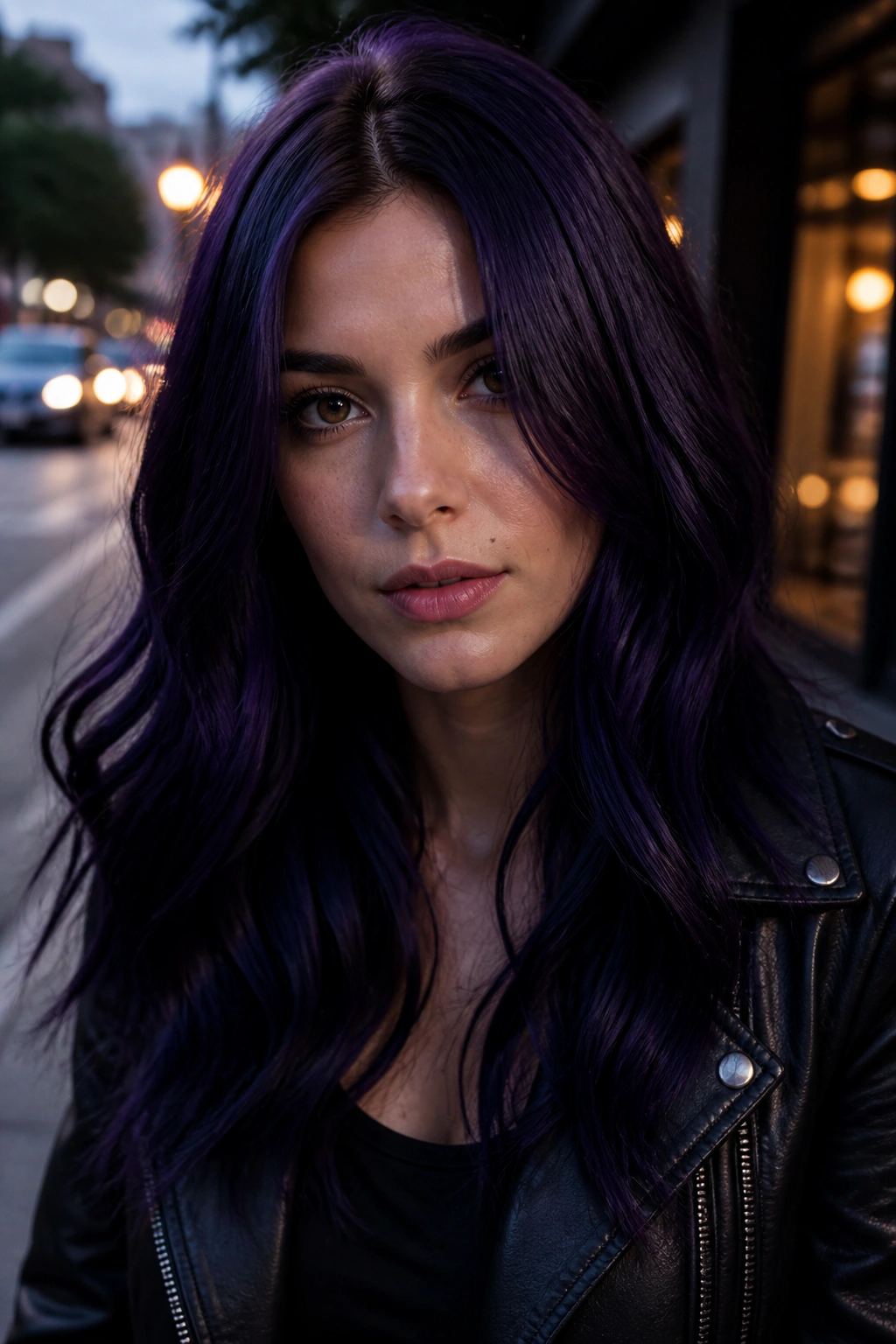
Blue-violet midnight gloss is for people who want dark hair with a polished finish and a little midnight shine. It reads almost black in low light, then throws violet when the light moves across it.
That blue base is the reason it flatters cool skin so well. It keeps the color crisp instead of wine-like. I’d call this one especially good for deep cool skin tones, because the contrast can be striking without looking loud.
The Science Behind the Look
Blue-violet pigments tend to cancel out warmth in the hair, which helps the shade stay cool over time. That doesn’t mean it never fades, but it fades toward blue-smoke rather than copper.
If you want drama without committing to full lightening, this is a strong choice. It’s dark, glossy, and practical. Those three words rarely show up together in hair color, so I notice when they do.
17. Silver Orchid Bob
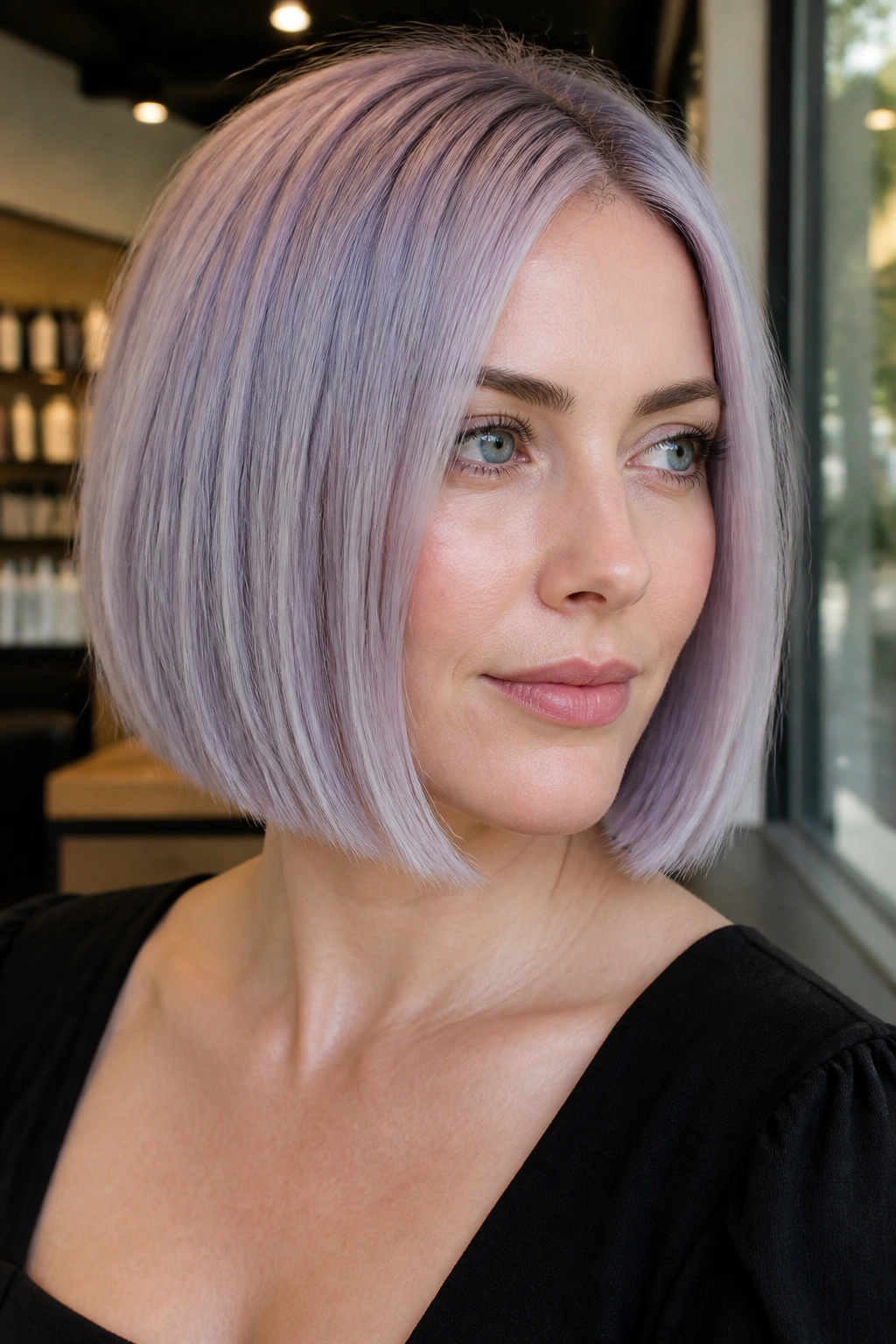
Silver orchid on a bob has a crispness that feels almost architectural. The cut does half the work, and the color does the rest.
The orchid should be pale and cool, with a silver sheen that catches the edges of the bob. This shade is especially flattering on cool skin because it echoes the same blue-pink undertone without becoming too rosy.
Keep the ends blunt or just slightly textured. Too much layering can break up the clean line and make the silver orchid look patchy. A smooth blowout brings out the color best, though a loose wave is fine if you prefer softness.
18. Dusty Periwinkle Purple
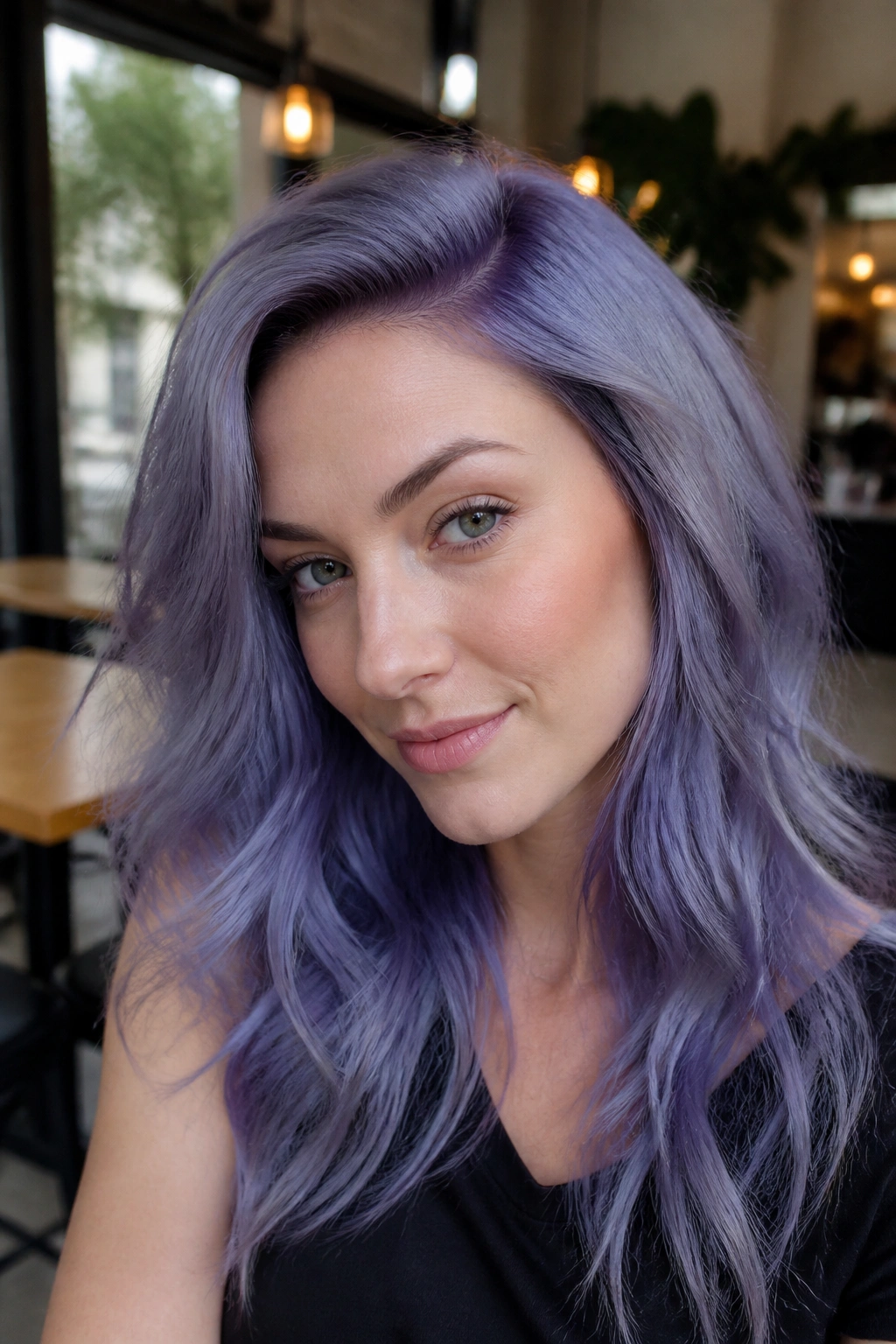
Periwinkle is one of the more playful ash purple options, but when it gets dusty, it becomes wearable for more people. The blue in the shade keeps it cool; the gray keeps it from tipping into cartoon territory.
This is a nice fit for cool skin with light eyes. It brings out blue, gray, and green eyes in a way that feels fresh rather than sugary. That said, it needs a pale base. A yellowy blonde will make the periwinkle look muddy fast.
If you like color that reads a little unusual but still gentle, this is a smart middle path. It’s not a loud color. It just isn’t boring either.
19. Purple Ash Face-Framing Curls
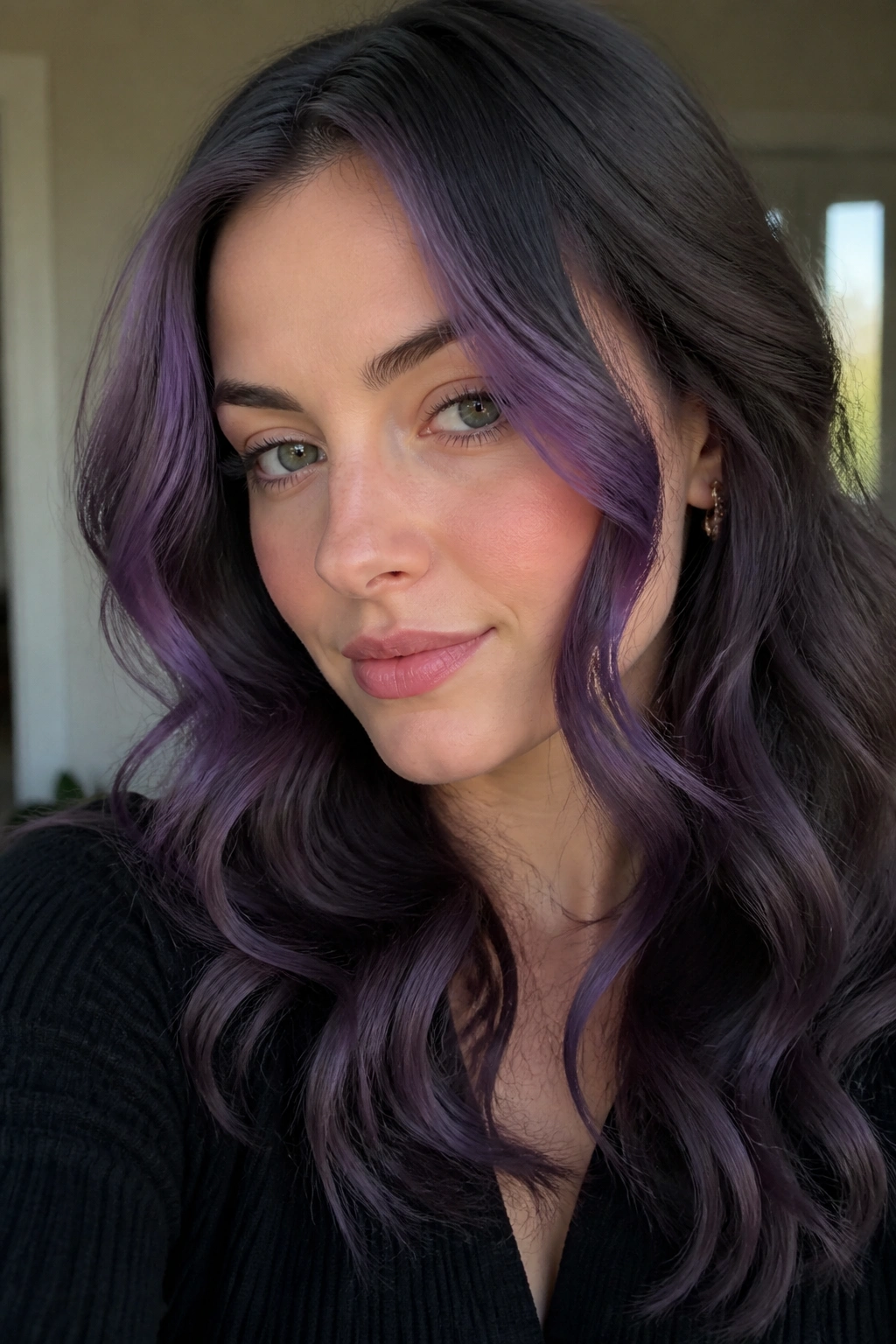
Face-framing curls are where ash purple can look almost tailored. The curl pattern gives the shade dimension, and the front pieces draw attention to the eyes and cheekbones.
Why It Works on Cool Skin
The cool pigment sits near the face without flooding the whole head, so the skin stays the star. If your undertone is pink or blue, that framing can sharpen your features instead of softening them too much.
- Ask for lighter purple around the cheekbone
- Keep the crown a touch deeper for contrast
- Works especially well on textured hair and layered curls
- Needs curl cream or light gel to keep the color from hiding in frizz
My opinion: this is one of the easiest ways to wear purple without feeling like the color is wearing you.
20. Deep Ash Burgundy Violet
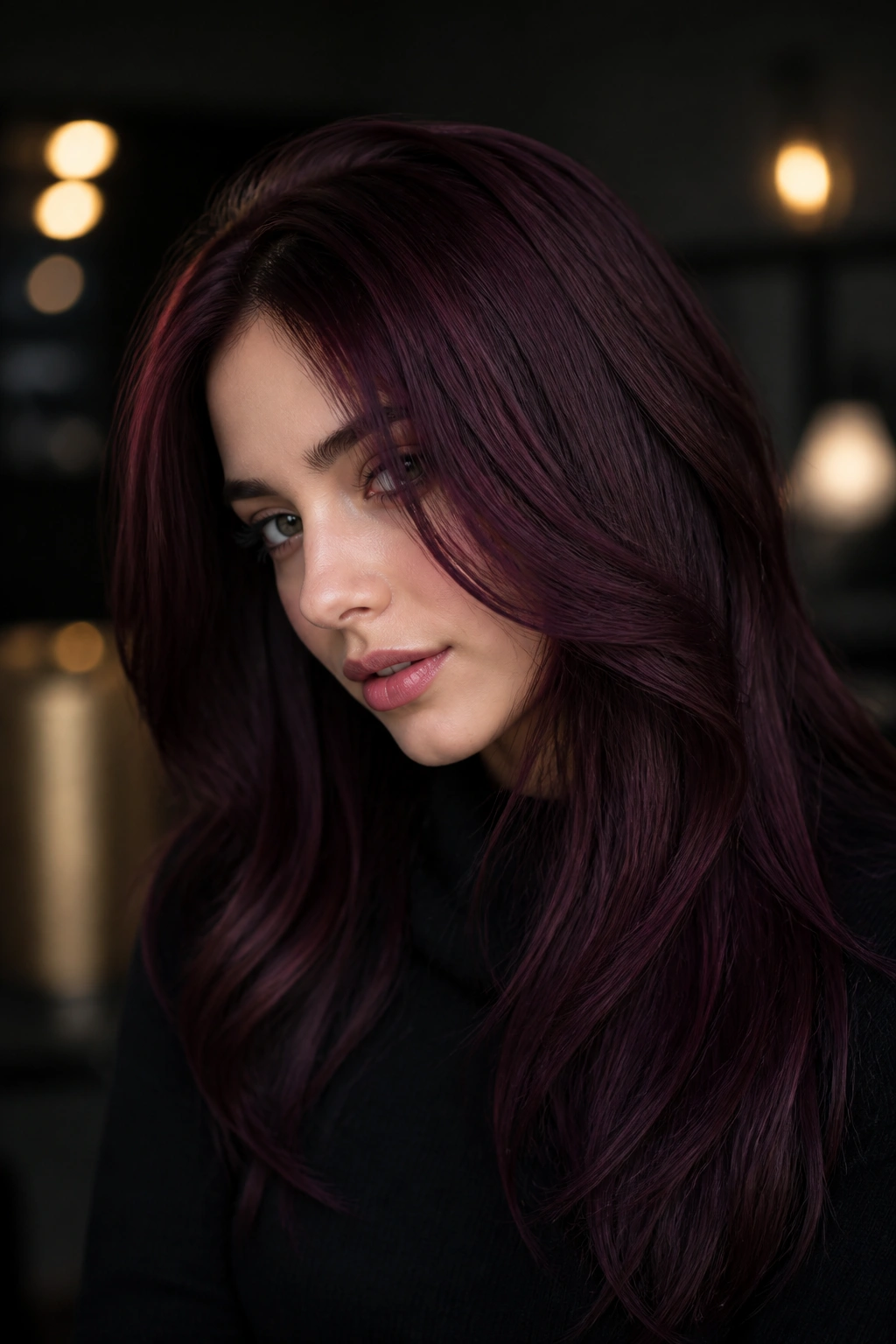
Deep ash burgundy violet is darker than most people expect when they hear “purple,” but that’s exactly why it can look so good on cool skin. The burgundy adds depth. The ash keeps it from going warm.
This shade is best on cooler olive skin, deep cool skin, and fair skin that likes contrast. It can look expensive under low light and dramatic outside. The key is keeping the red component muted. If it turns cherry, the whole effect changes.
I’d wear this on longer hair or a blunt cut. It needs enough surface area to show the tonal shift. On very short hair, it can lose some of its complexity.
21. Graphite Lilac Underlayer
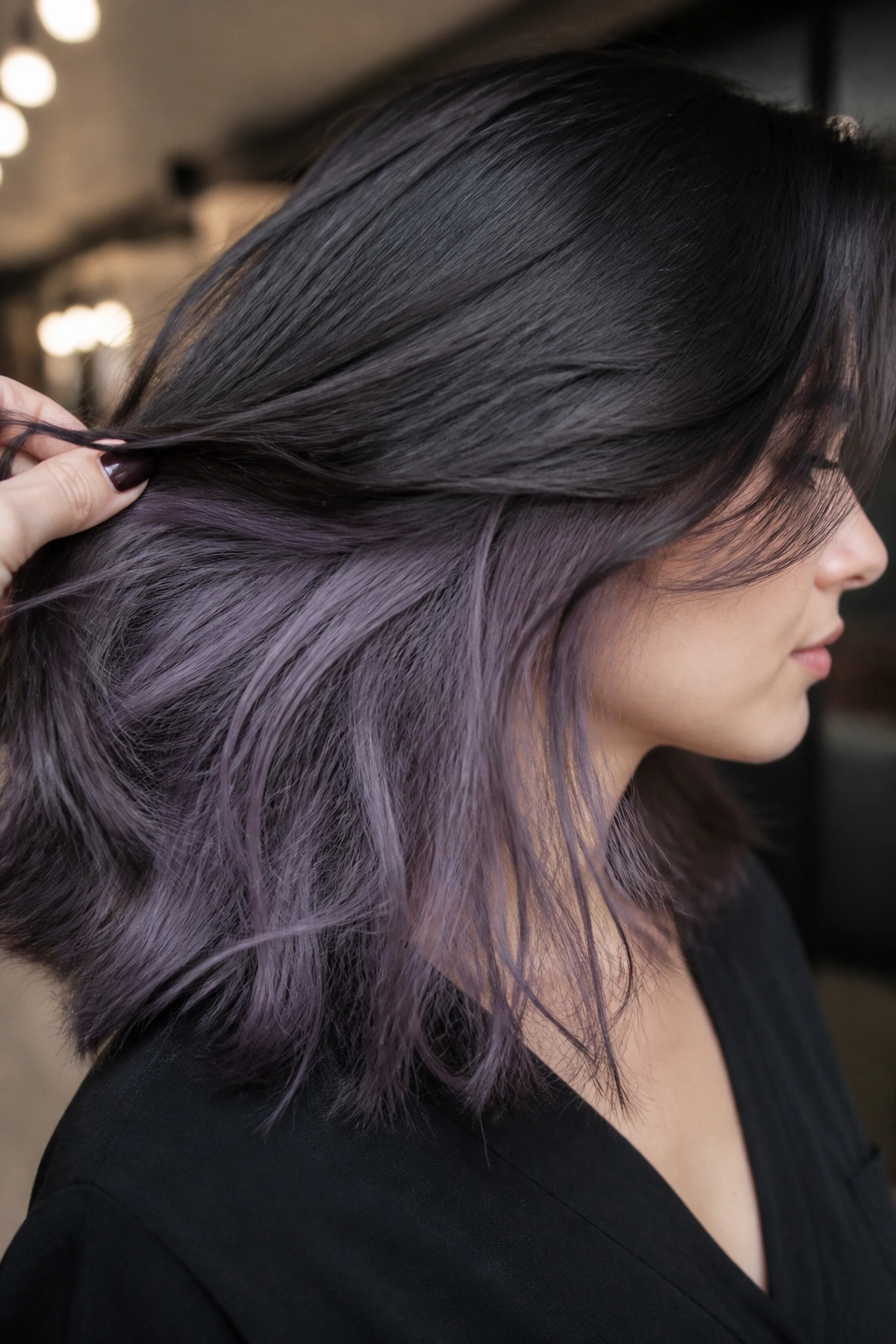
Graphite lilac underlayer color is one of the cleverer choices here. The top layer stays dark and cool, while the hidden lilac flashes through when the hair moves.
That setup makes a lot of sense for cool skin tones because it gives you the lilac payoff without forcing the whole head into pastel territory. It also works well if you need a more conservative look during the week and a little drama when your hair is down.
How to Get the Most From It
Wear it with layered cuts or a shoulder-length shape. The movement is what shows the underlayer.
If you pin your hair up a lot, keep the lilac closer to the nape and the lower sides. If you wear it down more often, let it peek through the front layers too. The placement changes the whole mood.
22. Frosted Violet Fringe
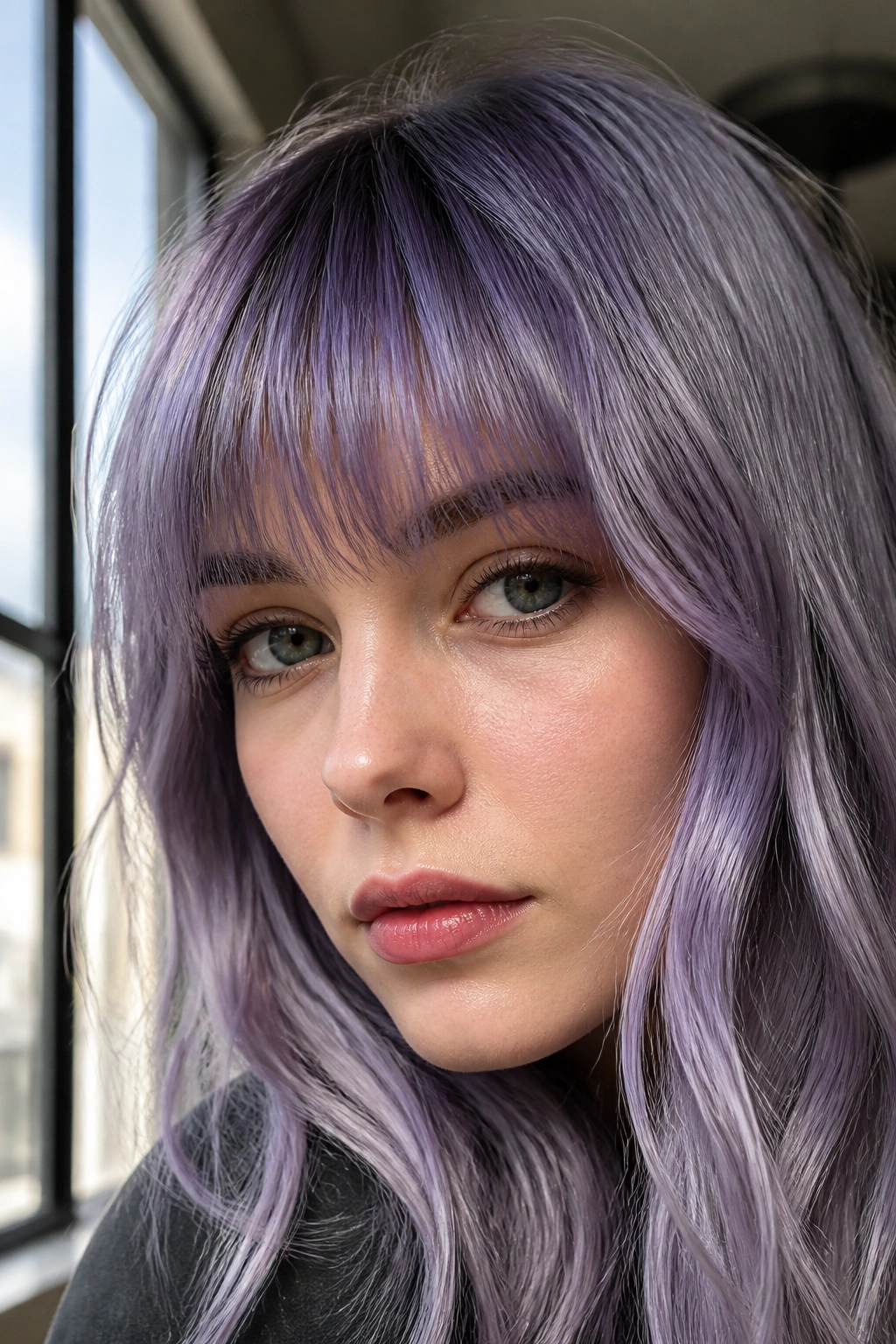
A frosted violet fringe is the sort of detail that changes the face fast. Bangs sit right at eye level, so the shade has to be clean and cool.
The frosted finish keeps the violet from looking dense or heavy. On cool skin, that matters. Bangs already draw a lot of attention; if the color is too dark or too warm, the face can feel crowded.
This works best on straight or softly wavy fringes. If the bangs are very curly, the tone can scatter and lose definition. A light smoothing cream helps the color stay visible, and a quick glaze every few weeks keeps the frost from going dull.
23. Mushroom Brown with Purple Ash Ends
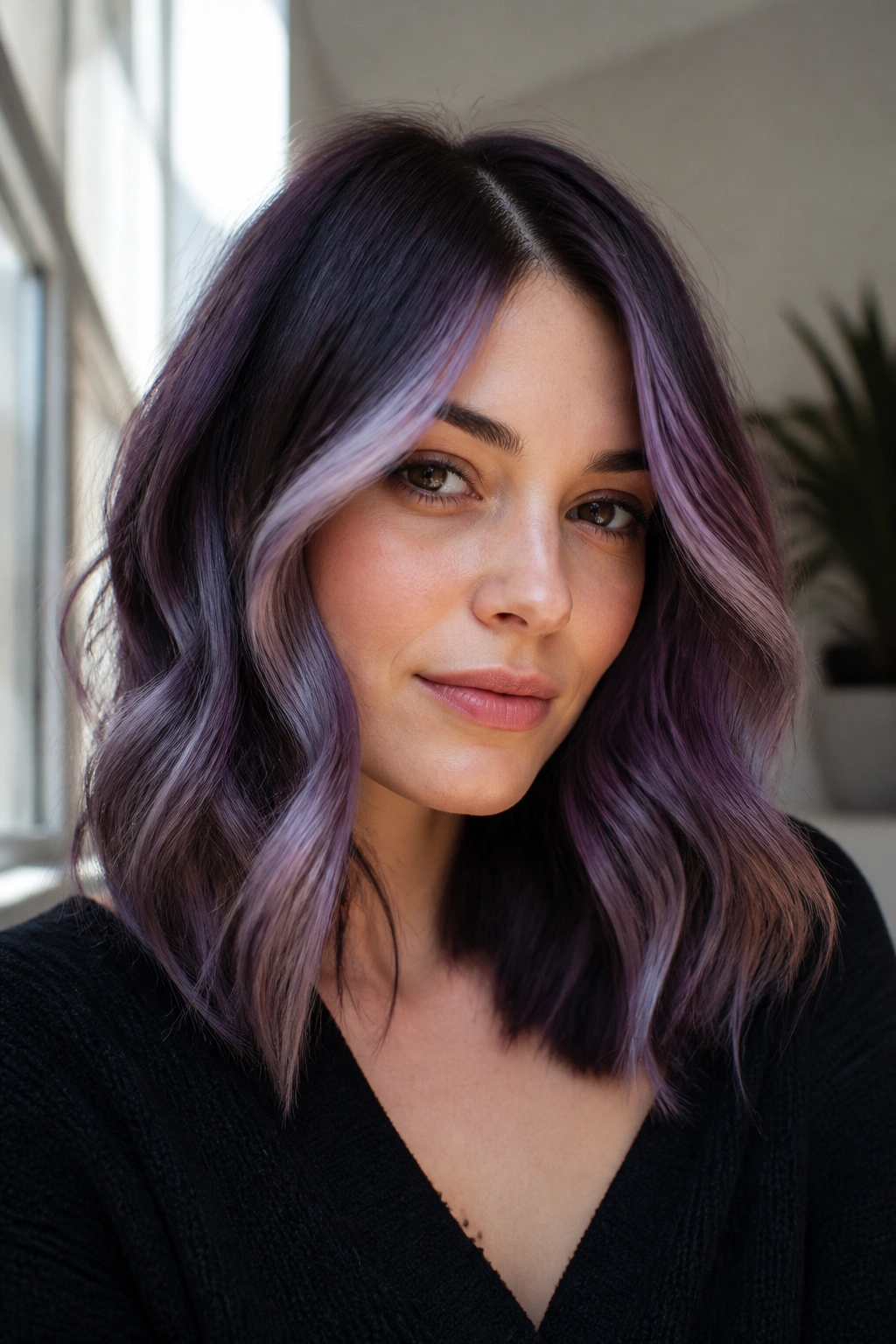
Mushroom brown with purple ash ends is for people who want the easiest possible step into color. The root stays earthy and muted, while the ends pick up a smoky violet cast.
That mushroom base is especially friendly to cool skin because it already sits in the neutral-cool lane. Add the purple ash ends, and the whole look starts to feel deliberate instead of accidental.
I like this on long layers or a heavy mid-length cut. The ends have to show enough movement for the color to read. Straight, one-length hair can handle it, but it’s a little more subtle there. Fine if subtle is the goal.
24. Opal Lavender Toner Blend
Opal lavender is one of the prettiest toner-based looks if you like sheer color. It has a translucent quality, like a pale shell with a hint of violet underneath.
What Makes It Different
This isn’t a heavy dye job. It’s closer to a glaze with a soft iridescent cast. That means it fades faster than darker ash purple shades, but it also feels airy and delicate from day one.
- Best on very light blonde hair
- Needs regular toner refreshes to keep the opal look intact
- Works well with glossy, healthy ends
- Great if you want color that looks soft under indoor light and cool under daylight
Tip: skip this if your hair is dry and porous, because porous blonde grabs toner unevenly.
25. Smoky Eggplant with Cool Sheen
Smoky eggplant is the deeper, moodier side of ash purple, and it can look excellent on cool skin that needs contrast. The purple is dark enough to feel saturated, but the smoke keeps it from going warm and jammy.
This shade works especially well on thick hair because the density of the strands helps the color look rich instead of patchy. On fine hair, it can still work, but I’d keep the finish glossy and the cut textured.
It’s a strong evening color, but it doesn’t need an occasion. That’s the nice part. You can wear it with a plain T-shirt and still look put together.
26. Iris Ash Curls
Iris ash curls give textured hair a cool, dimensional finish that moves beautifully. The curls break the color into little shifts of lavender, smoke, and silver, so the shade never looks flat.
Cool skin tones benefit from that movement because the hair picks up light without throwing warmth back at the face. It’s especially nice if your eyes are gray, blue, or hazel with a cool cast. The color seems to sharpen those features instead of hiding them.
How to Get It
Ask for a medium ash-purple tone rather than a pastel wash. On curls, too-light color can disappear into the pattern. A slightly deeper iris shade holds better.
A curl cream with a soft hold will help the shape stay defined, and definition matters here. If the curl pattern gets frizzy, the color loses some of its edge.
27. Steel Plum Gradient
Steel plum sits right between silver and purple, which makes it one of the most adaptable ash purple ideas for cool skin. The gradient lets the shade darken near the roots and get lighter as it moves through the lengths.
That shift keeps the hair from feeling blocky. It also gives a lot of room for your natural root color to stay part of the look, which is nice if you don’t want a constant salon schedule.
This is a good pick for medium to long hair, especially if you like soft waves. The waves break up the steel and let the plum show in motion. Straight hair can wear it, but the gradient looks more obvious when the hair has a bend.
28. Soft Lilac Smoke Glaze
Soft lilac smoke glaze is the quietest choice in the whole set, and that’s not a bad thing. Sometimes you want a color that whispers instead of announces itself.
The smoke keeps the lilac from going sugary, and the glaze finish gives the hair that clean, reflective look cool skin tends to wear well. If your complexion is fair and you get red easily, this can be a very flattering way to test purple without a hard commitment.
I like it most on lighter hair that already has good shine. It’s not the place for dull ends or over-processed breakage; the whole point is softness with a little frost. And if you decide later that you want more depth, this shade is easy to push toward smoky lavender or silver plum without starting over.
