



Lavender hair color ideas for cool skin tones work best when the violet leans blue, silver, or smoky. Push the tone too pink or too beige, and the whole thing can go soft in the wrong way.
That’s the part people miss.
Cool undertones can carry a huge range of lavender, from pale frost to deep amethyst, but the shade has to respect the face. A clean blue-violet reads sharp and fresh on pink or rosy skin; a warm lilac can start to look muddy, especially if the base is too yellow. If you want the pastel end of the spectrum, your hair usually needs to be lifted to a pale yellow first. If you want something deeper and easier to wear, a gloss, shadow root, or dimensional melt can do a lot of the heavy lifting.
I’m also going to say the annoying truth: purple shampoo is not a magic trick. It helps blondes stay from drifting yellow, sure, but it won’t keep a lavender tone lavender for long on its own. Direct dye, toner, and the right placement matter more than the bottle sitting in your shower.
The shades below move from icy and airy to dark and moody. Some are high-maintenance, some are surprisingly forgiving, and a few work even when you do not want to bleach your hair into a white canvas.
1. Icy Lavender Bob
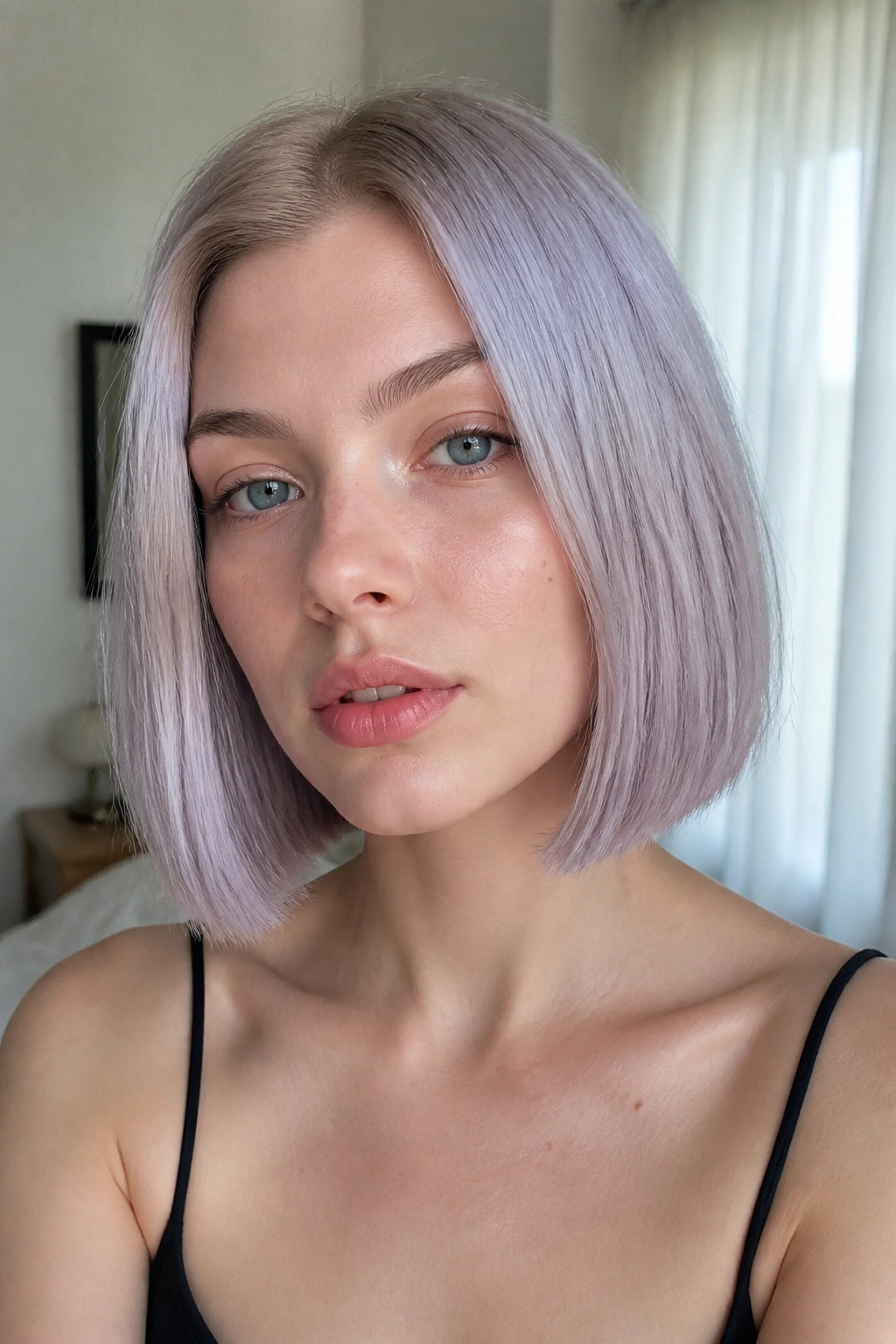
A blunt bob gives lavender a clean edge that longer, softer cuts sometimes lose. On cool skin, that sharp line at the jaw makes the shade look deliberate instead of sugary.
I like this version because it keeps the color close to the face. The icy violet sits right where the eye goes first, and that makes pink undertones in the skin look brighter instead of washed out. Ask for a pale lavender glaze over a level 10 blonde base, then keep the root only a shade deeper if you want a little depth.
- Best on hair lifted to pale yellow or platinum
- Looks crisp with a middle part or a tuck-behind-the-ear finish
- Needs a toner refresh every 4 to 6 shampoos
- Works well with blunt ends, not ragged layering
Tip: If your bob is cut one length, keep the lavender cool and even. Chunky lowlights can make the whole thing feel busy fast.
2. Smoky Lilac Balayage
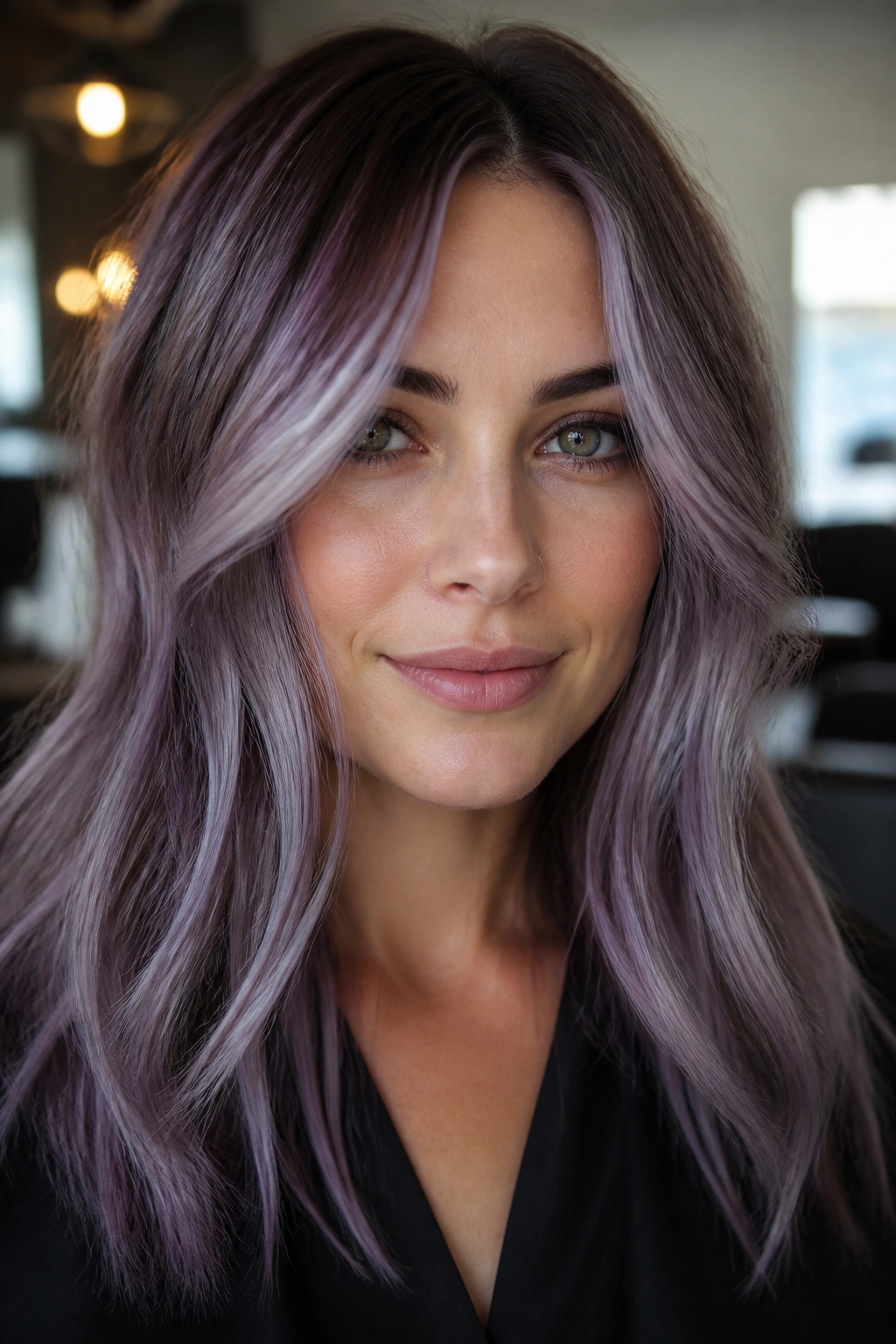
Why does smoky lilac look so good on cool skin? Because the gray in the formula keeps the violet from reading sweet.
Balayage is the safer way to wear lavender if you want movement without a solid block of pastel. Hand-painted pieces around the face and through the mid-lengths soften the grow-out line, which matters a lot once the lavender starts fading to silver. A cool skin tone gets a nice lift from that smoky finish, especially when the base color stays a level or two deeper than the ends.
Why It Flatters Cool Undertones
The soft shadow near the roots stops the color from floating. Without that anchor, pale lilac can look like it’s sitting on top of the hair instead of living in it.
Ask For This At The Salon
- A neutral-cool base with lilac ribbons
- Lighter pieces around the cheekbones and temples
- A finish that stays gray-leaning, not pink
- Softly blended ends rather than hard stripes
Small note: If your hair is very yellow underneath, the lilac can tilt beige. Toner first. Always.
3. Silver-Lavender Melt
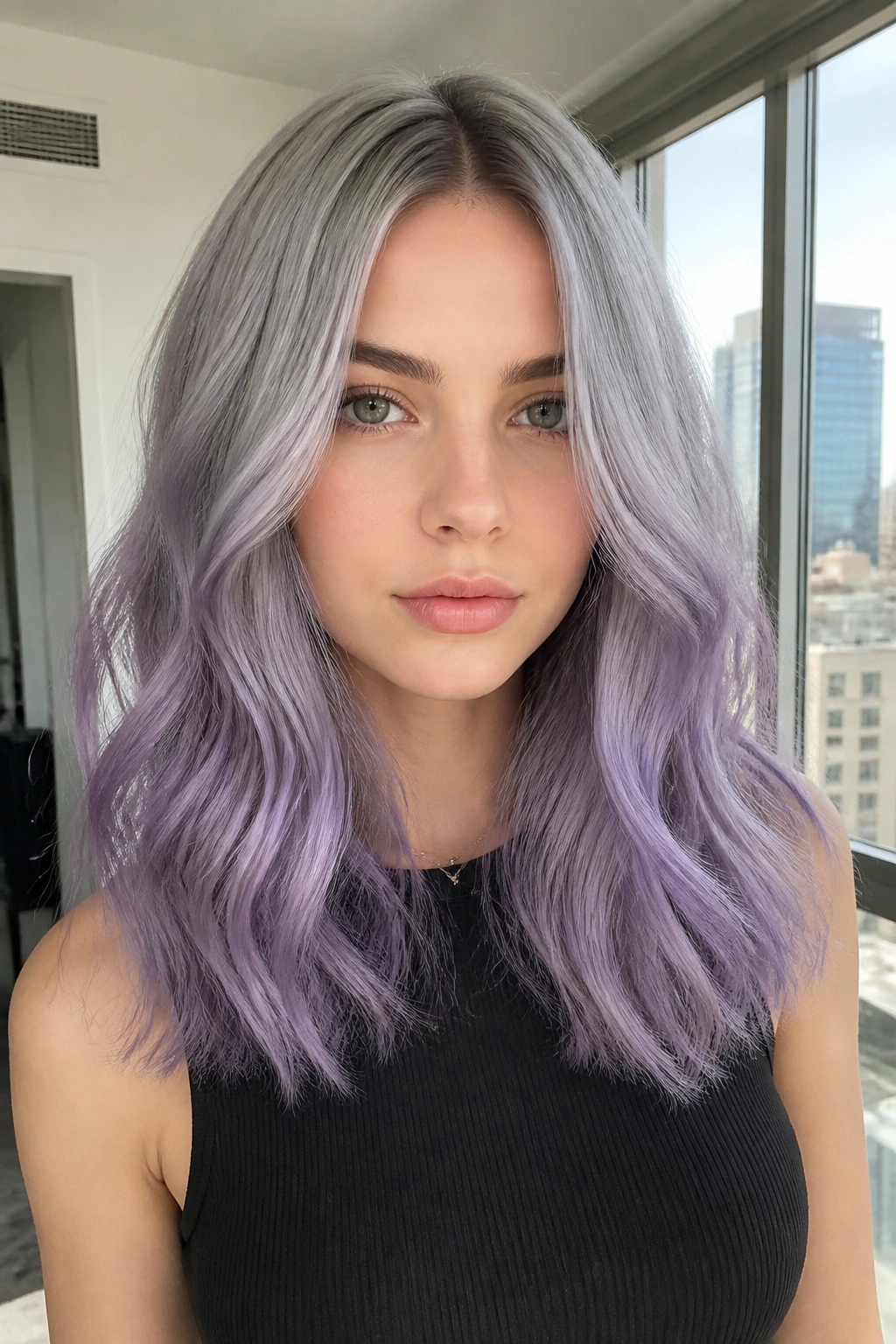
Silver-lavender is one of those shades that looks expensive because it moves. The top can read almost pewter in low light, then slide into lavender and pearl as soon as you step near a window.
On cool skin, that shift is gold. Well, silver, really. The metallic cast echoes the skin’s blue-pink undertones, which is why this works so well on fair and medium complexions that can handle a bright finish. It also photographs in a more interesting way than a flat pastel, since the root-to-tip transition gives the eye somewhere to travel.
A melt like this is best on hair that’s already lightened evenly. If the lift is patchy, the silver will show every uneven spot. That’s not flattering. It’s also not subtle.
A shoulder-length cut with layers makes the color breathe. Long, heavy one-length hair can swallow the effect unless the ends are textured a bit.
4. Pastel Orchid Pixie
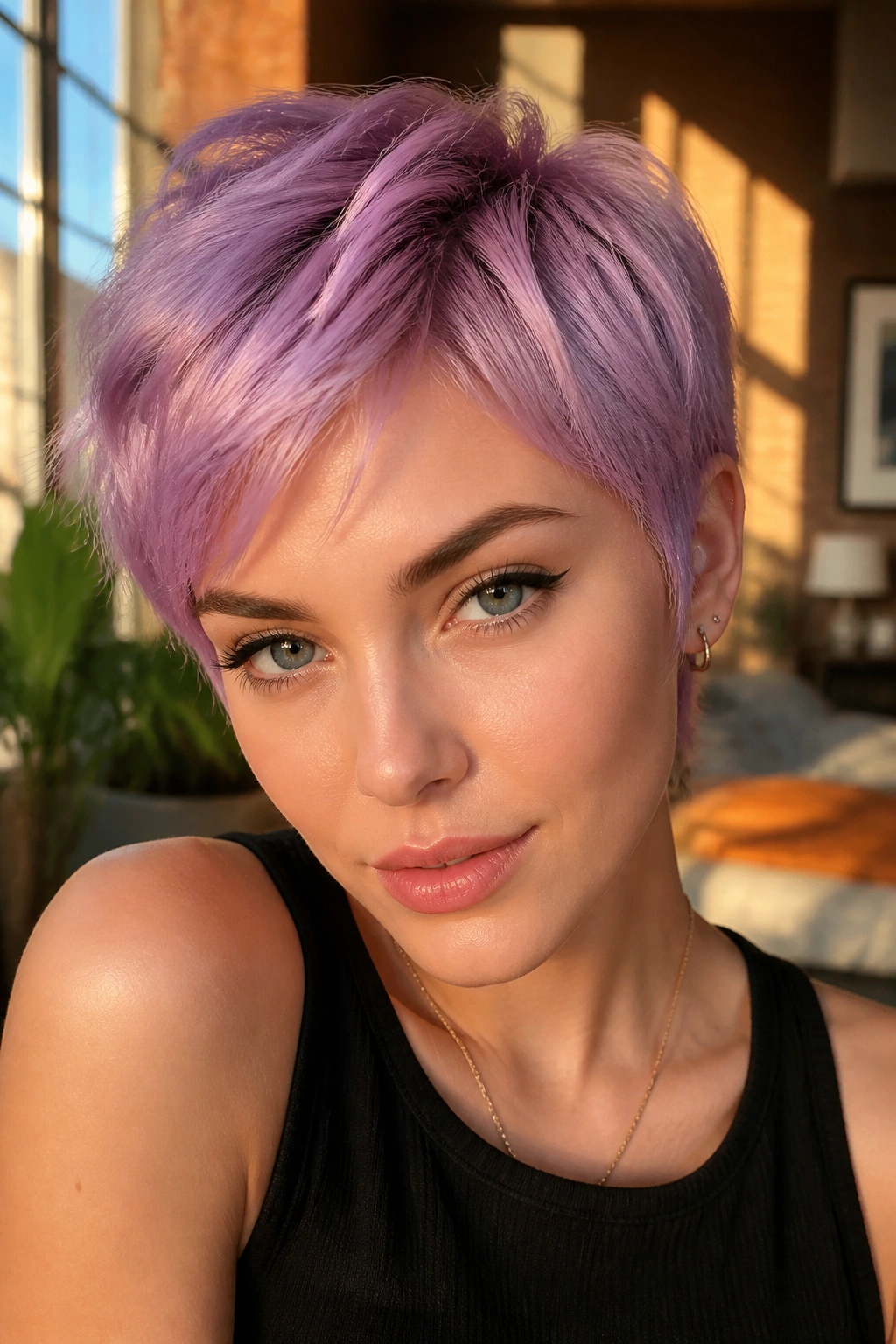
A pixie is ruthless. It either works or it doesn’t, and lavender gives it a little softness without hiding the cut.
Pastel orchid sits between violet and lilac, which makes it useful for cool skin that wants color but not drama. The short length exposes the ears, temples, and brows, so the shade needs to stay clean and cool or the whole look can start to feel childish. Keep the roots slightly deeper, then fade the color through the top layers and fringe.
The best thing about this style is how little hair you need to show it. A tiny bit of texture on top makes the pastel look modern instead of candy-like.
- Great for fine hair that needs visual lift
- Works well with side-swept bangs
- Needs a silvery toner more often than a darker lavender
- Looks sharp with matte makeup and clean brows
One sentence here matters: the cut does half the work.
5. Deep Amethyst Gloss
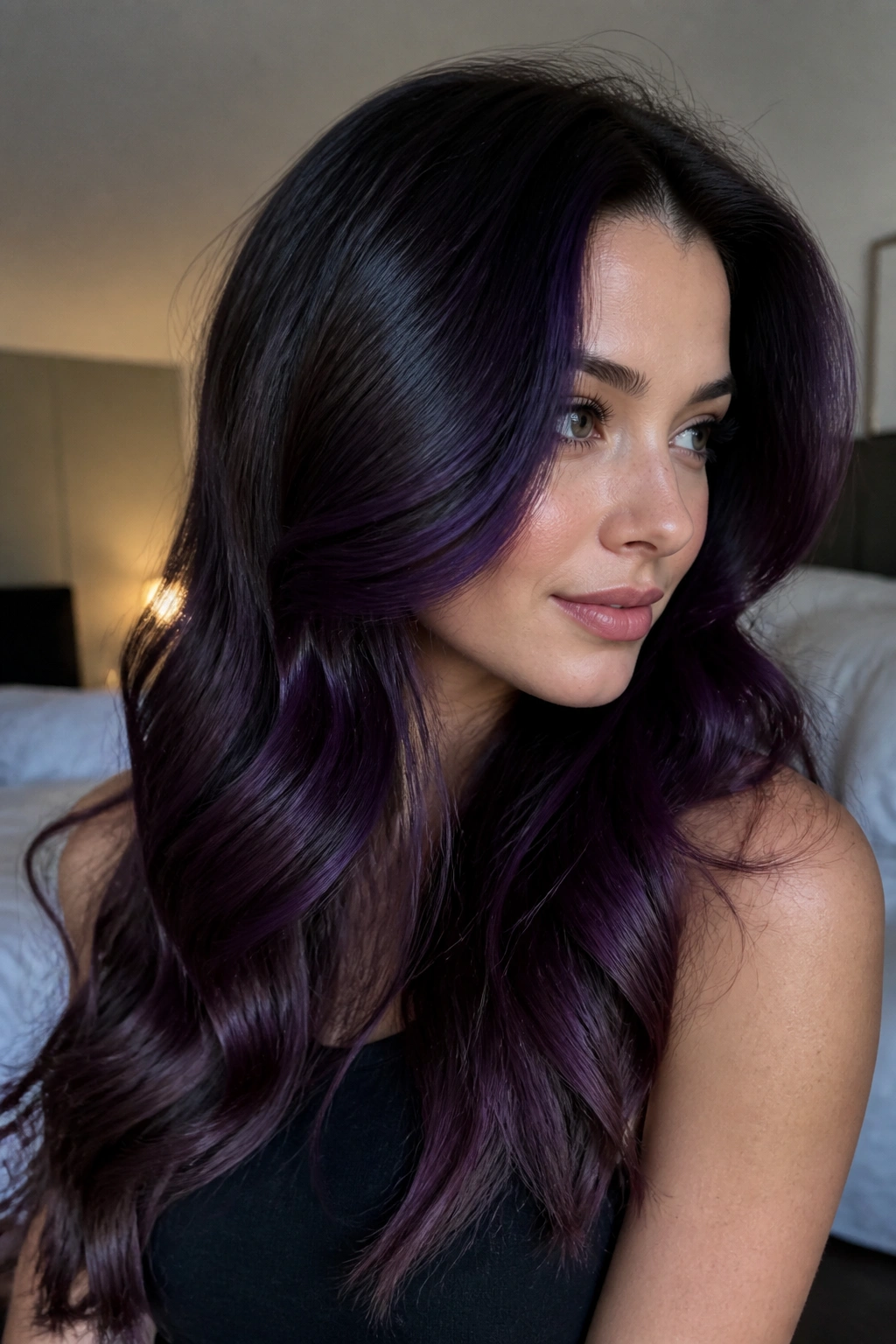
Not every lavender has to be pale. A deep amethyst gloss can look even better on cool skin than a candy shade, especially if your natural hair is dark brown or black.
This version is rich, not loud. The violet sits deeper in the hair shaft, so you get shine and color without turning the whole head into a pastel project. That makes it a smart choice if you want something wearable in everyday light. It also fades in a softer way, which is handy because dark lavender that goes dusty can be weirdly beautiful.
I’d call this the most forgiving option for cool skin tones with deeper complexions. It doesn’t need your hair to be stripped to the edge of failure. A demi-permanent gloss or a direct-dye overlay on pre-lightened panels can do the job.
- Best for level 5 to 8 bases
- Easier to maintain than pale lavender
- Looks strong in sleek styles and smooth blowouts
- Pairs well with berry lipstick or cool nude makeup
6. Lavender Money Piece for Cool Skin Tones
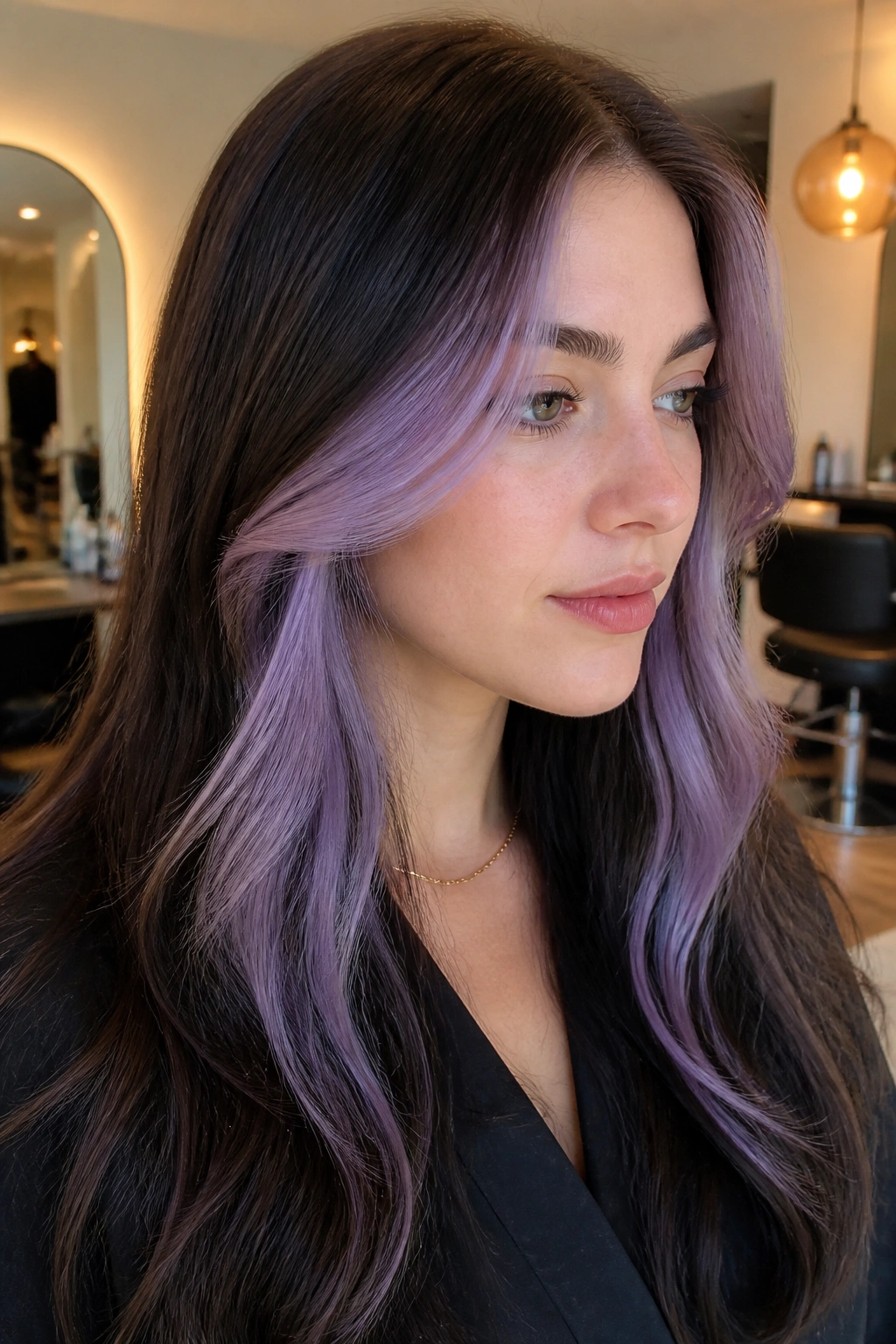
If you want lavender without committing to a full head, the money piece is the move. Two brighter face-framing sections can shift your whole look in ten seconds flat.
The trick is placement. Keep the lavender right beside the face, not buried too far back, and let the rest of the hair stay deeper or more neutral. On cool skin, that bright strip near the cheeks acts like a soft reflector. It wakes up the face without making the color feel costume-like.
This is the easiest way to test whether you actually like lavender on yourself. It also grows out better than a full pastel, which matters if your hair grows fast or you hate frequent salon visits.
Placement Notes
- Start the lightest panels at the temples or just behind the fringe
- Keep them one to two shades brighter than the rest of the hair
- Ask for a cool violet, not a rose-lilac
- Let the finish stay soft at the ends so the placement doesn’t look blocky
I’d pick this for anyone who wants color with a low-drama exit plan.
7. Dimensional Lavender Ribbon Highlights
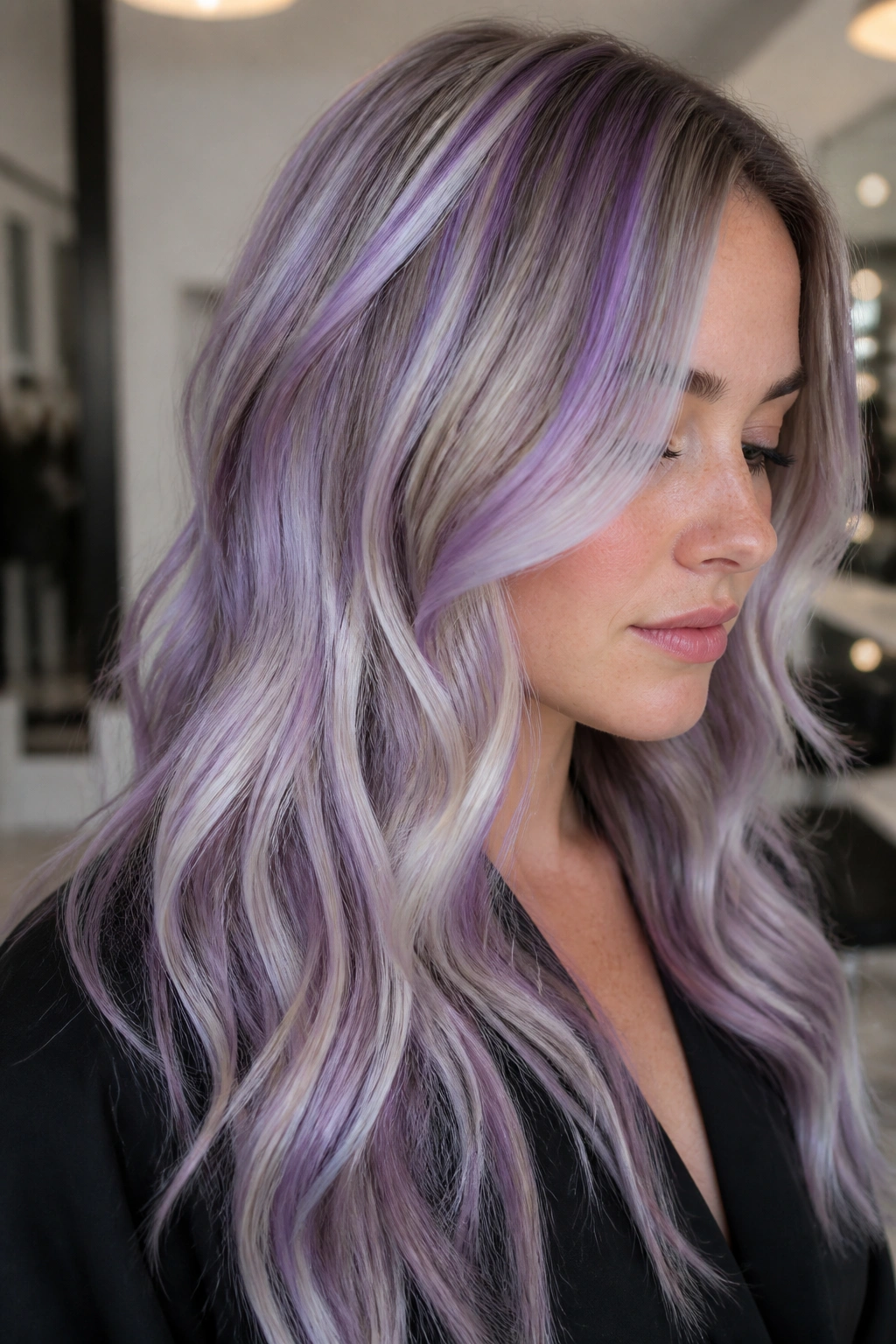
Ribbon highlights are for people who hate flat color. Good. Flat lavender can look like a cartoon helmet if it’s all one tone.
Here the lavender is woven in slim, curved ribbons through a cooler blonde or mushroom base. The ribbons should be narrow enough to move when the hair moves, not chunky enough to read as stripes. That’s what makes the style work on cool skin: the eye sees shimmer first, color second. The result feels airy, not heavy.
How To Keep The Ribbons Soft
Use a fine weave around the face and slightly thicker pieces through the crown. That keeps the color from disappearing when the hair is styled into waves.
A cool-toned gloss between appointments helps the lavender stay blue-leaning instead of pink. And if your natural color is medium brown, ask for a root shadow. It makes the ribbons look intentional instead of over-processed.
This one shines on layered cuts. The movement does half the job.
8. Mauve-Lilac Root Shadow
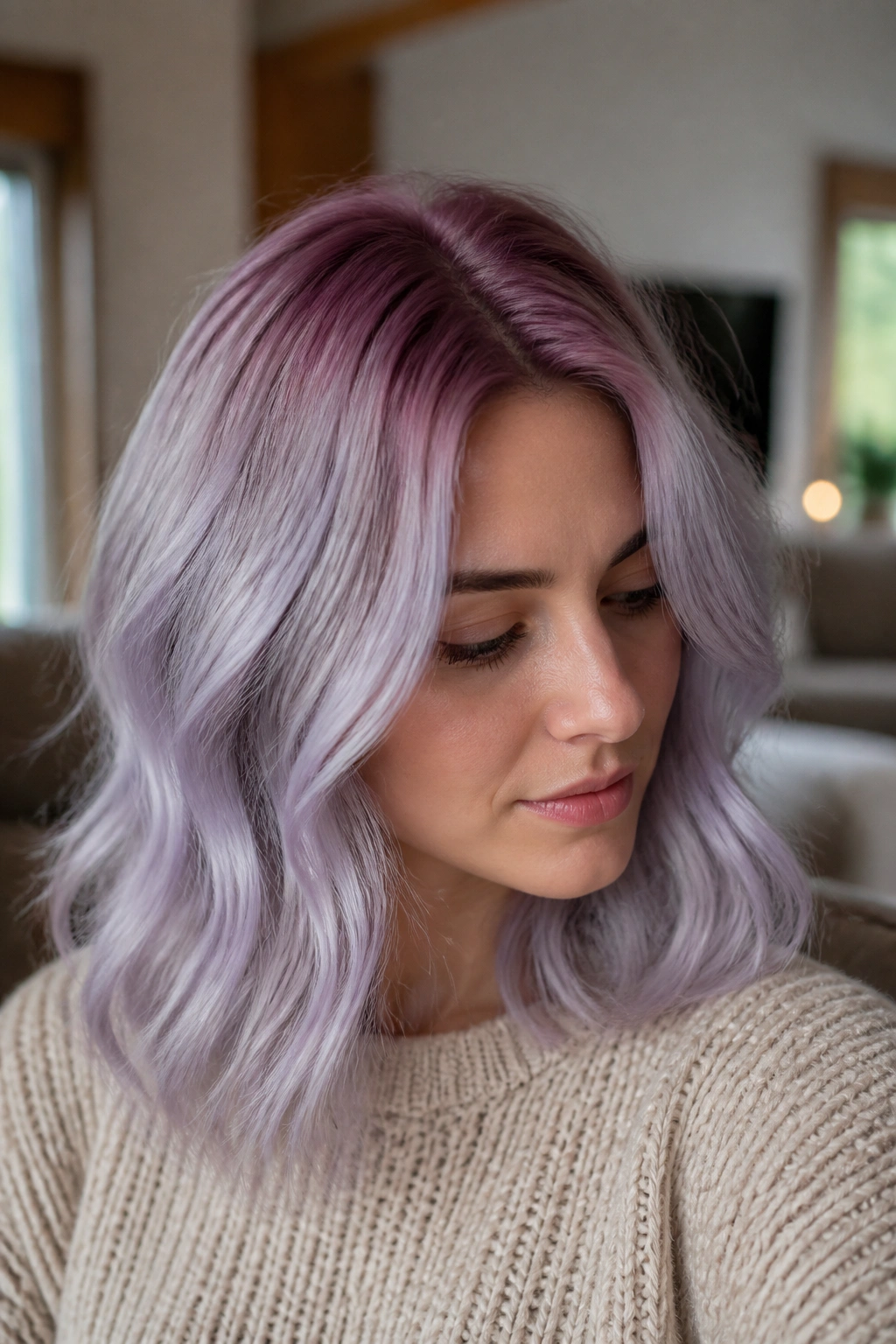
A root shadow sounds boring until you see what it does for lavender. Then it starts to make sense.
Mauve at the root gives the color a gentle base, and that matters for cool skin because it stops the lavender from floating too high and too pale. The transition from mauve to lilac feels smoother than a hard blonde-to-lavender shift, which also means the grow-out looks less obvious. I’m a fan of this on shoulder-length hair, especially if the ends are lighter than the crown.
The tone sits in a useful middle ground. It is still cool, but it has enough depth to keep the hair from turning chalky in bright light. If your skin has more pink than blue, this is one of the safer lavender choices.
The best part? You can stretch appointments farther. That alone makes the shade more wearable than a paper-light pastel.
9. Frosted Lavender Waves
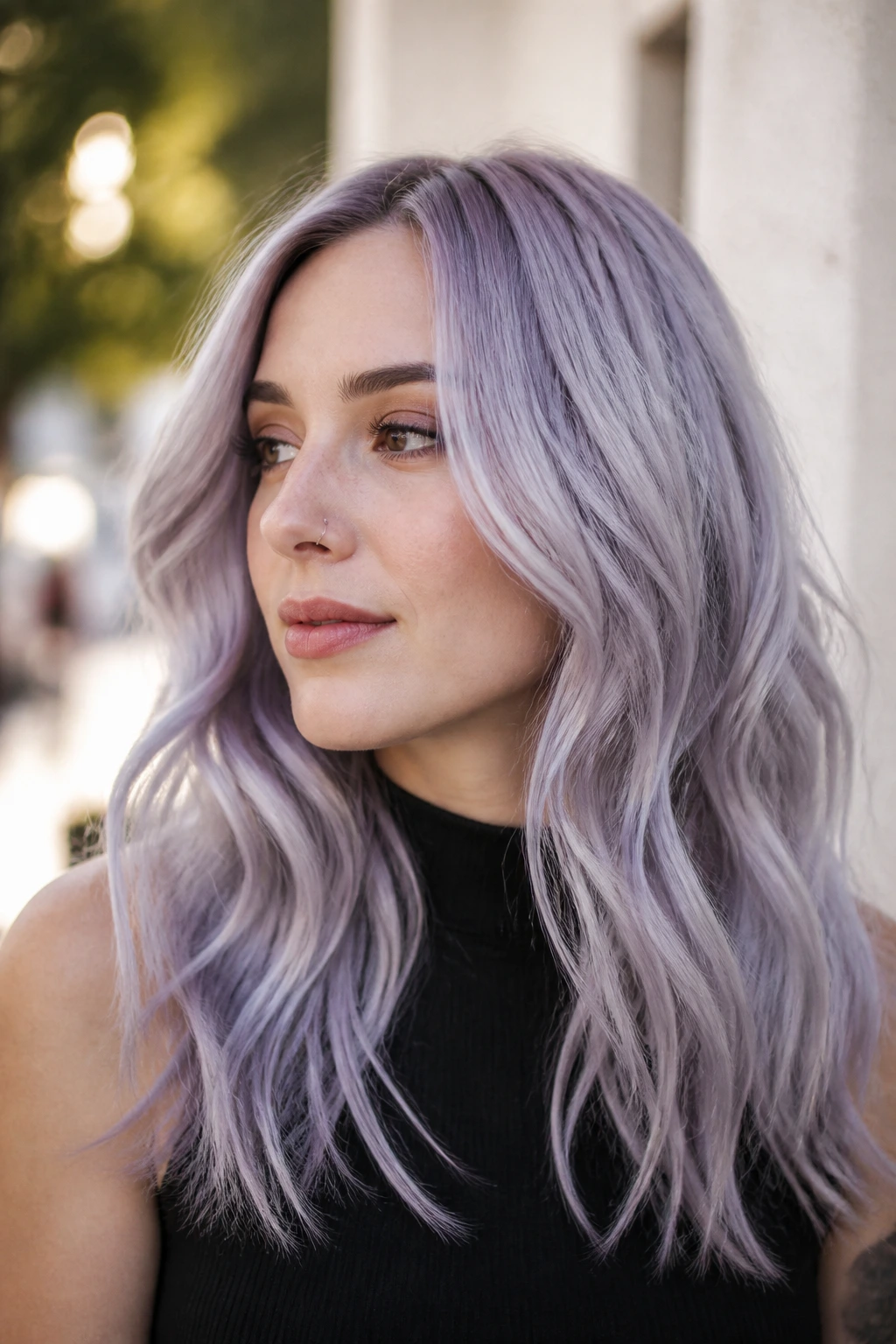
Frosted lavender waves are what I’d hand someone who wants softness, not sharp contrast. The wave pattern does a lot here, because it breaks up the color and gives the eye a place to rest.
The frost effect comes from a pale silver-violet base with just enough depth in the low points of the wave to keep the hair from disappearing. On cool skin, that reads clean and airy. It also works beautifully on medium-length cuts where the ends can curl around the shoulders and show off the tonal shift.
There’s a simple reason this looks good: the bends in the hair make the lavender look richer without making it darker.
Use this if you want:
- A pale color that still has movement
- A shade that looks good in loose curls
- Something soft enough for a wedding, job interview, or daily wear
- A cooler finish that avoids pink haze
Keep the finish glossy. Dry pastel hair loses the whole point.
10. Platinum-to-Lavender Ombré for Cool Skin Tones
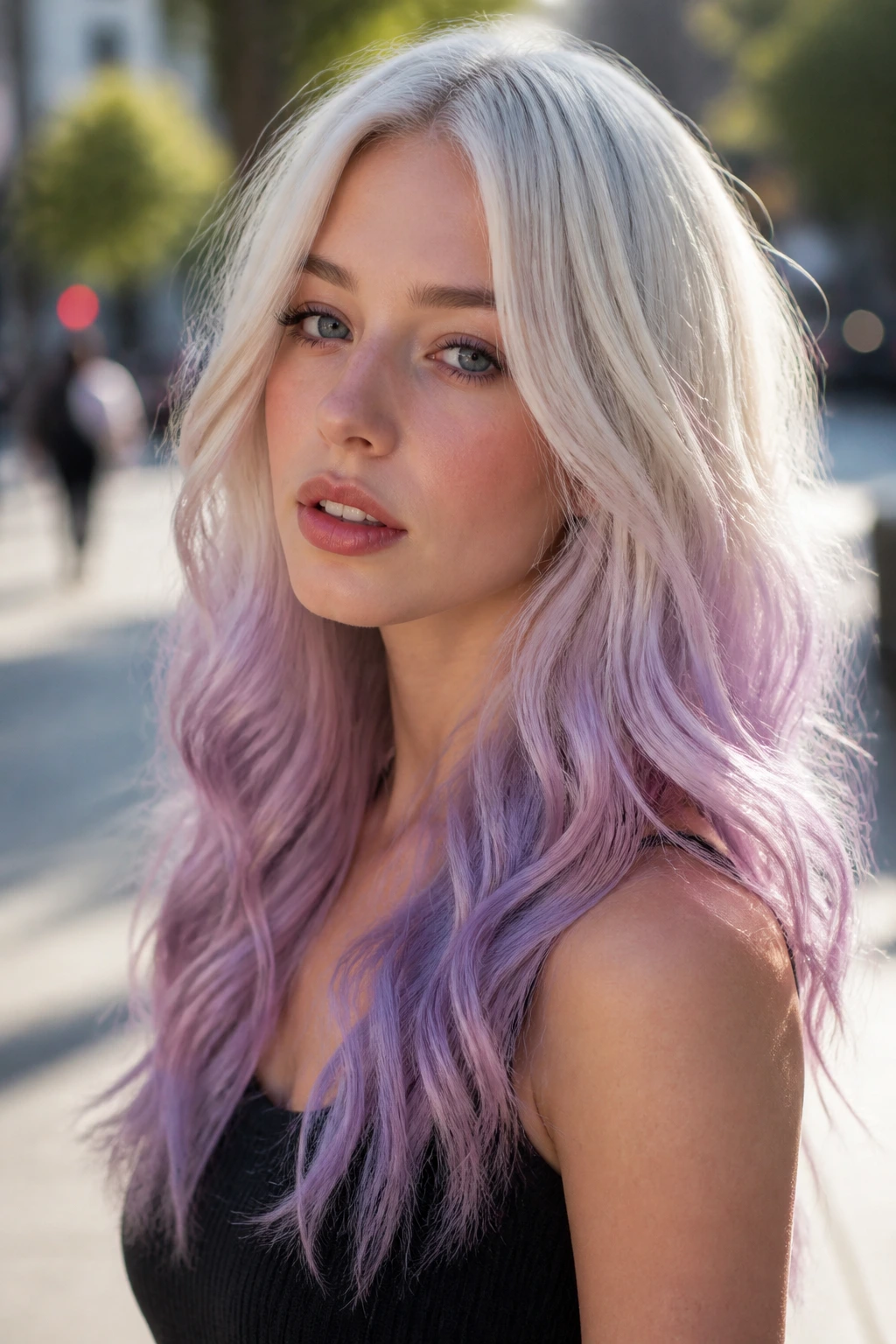
Platinum-to-lavender ombré is the dramatic one in the group, but it doesn’t have to feel loud. The fade from near-white blonde into lavender gives cool skin a bright frame at the top and a softer wash through the lengths.
This works especially well if you like lighter roots or a very pale front section. The platinum keeps the scalp area crisp, while the lavender at the ends gives the style some personality. On cool undertones, the contrast can look cleaner than a warm blonde fade, which often turns brassy fast.
Who This Fits
- People with longer hair
- Anyone who likes a high-contrast finish
- Clients who can handle regular toning
- Hair that is already lifted to level 9 or 10
The ombré shape also helps when the lavender starts to fade. The ends can drift silver without making the whole head look tired.
11. Berry-Lavender Dip Dye
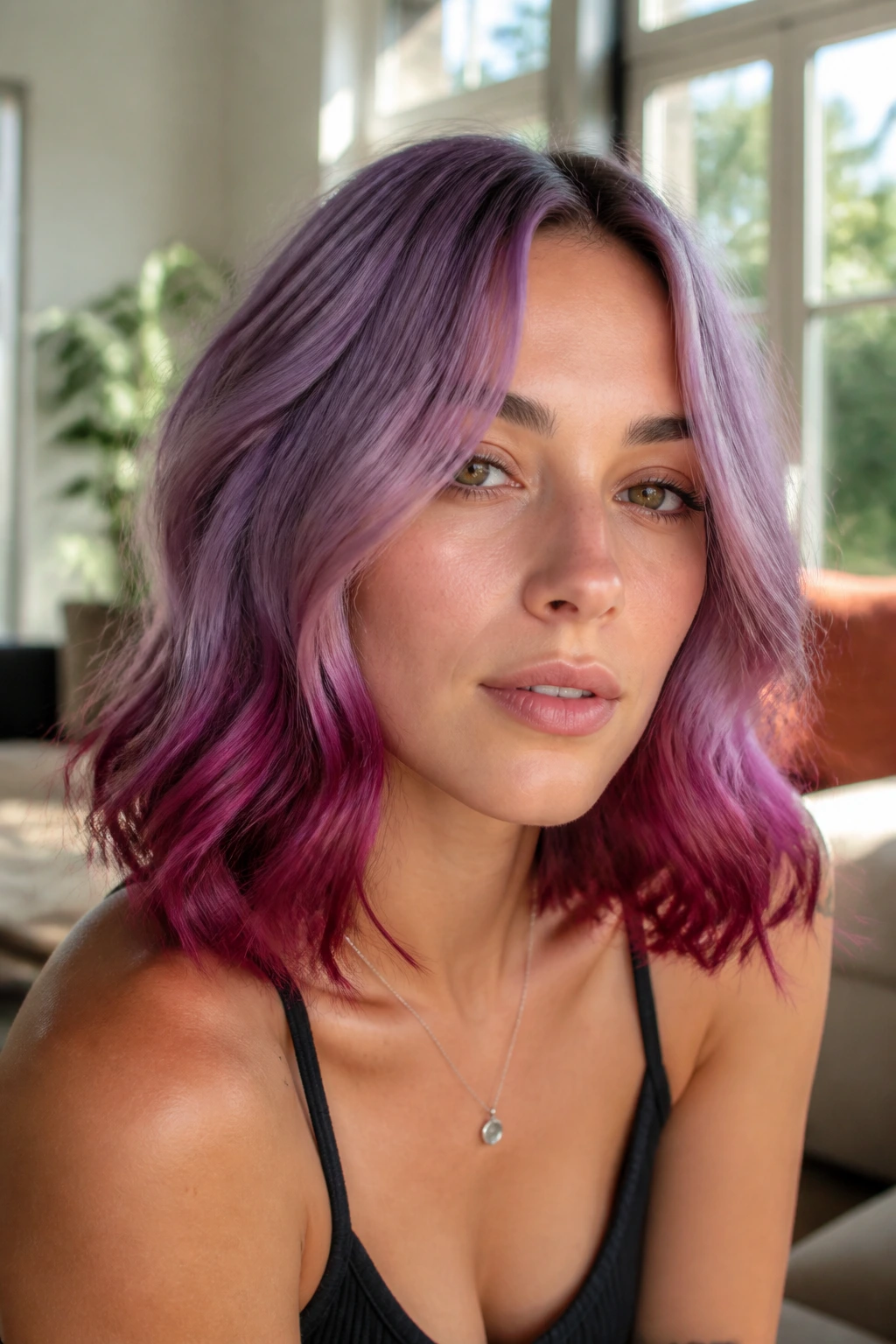
Berry-lavender dip dye is the bold cousin in the family. It is still cool, but it carries a little more punch than a whispery pastel.
The darker berry at the bottom makes the lavender in the mid-lengths look lighter by comparison. That contrast is useful on cool skin because it brings life to the face without needing a full head of brightness. It’s also one of the few lavender ideas that can look sharp on curly hair, since the ends collect the darker color in a way that feels deliberate.
I like this on blunt cuts, lob haircuts, and long layers. It gives the ends a little weight, which can be helpful if your hair is fine or gets wispy once lightened.
If you want the color to feel more modern than sweet, keep the berry side firmly blue-red, not orange-red. Warm berry goes off track fast.
12. Soft Violet Face-Framing Layers
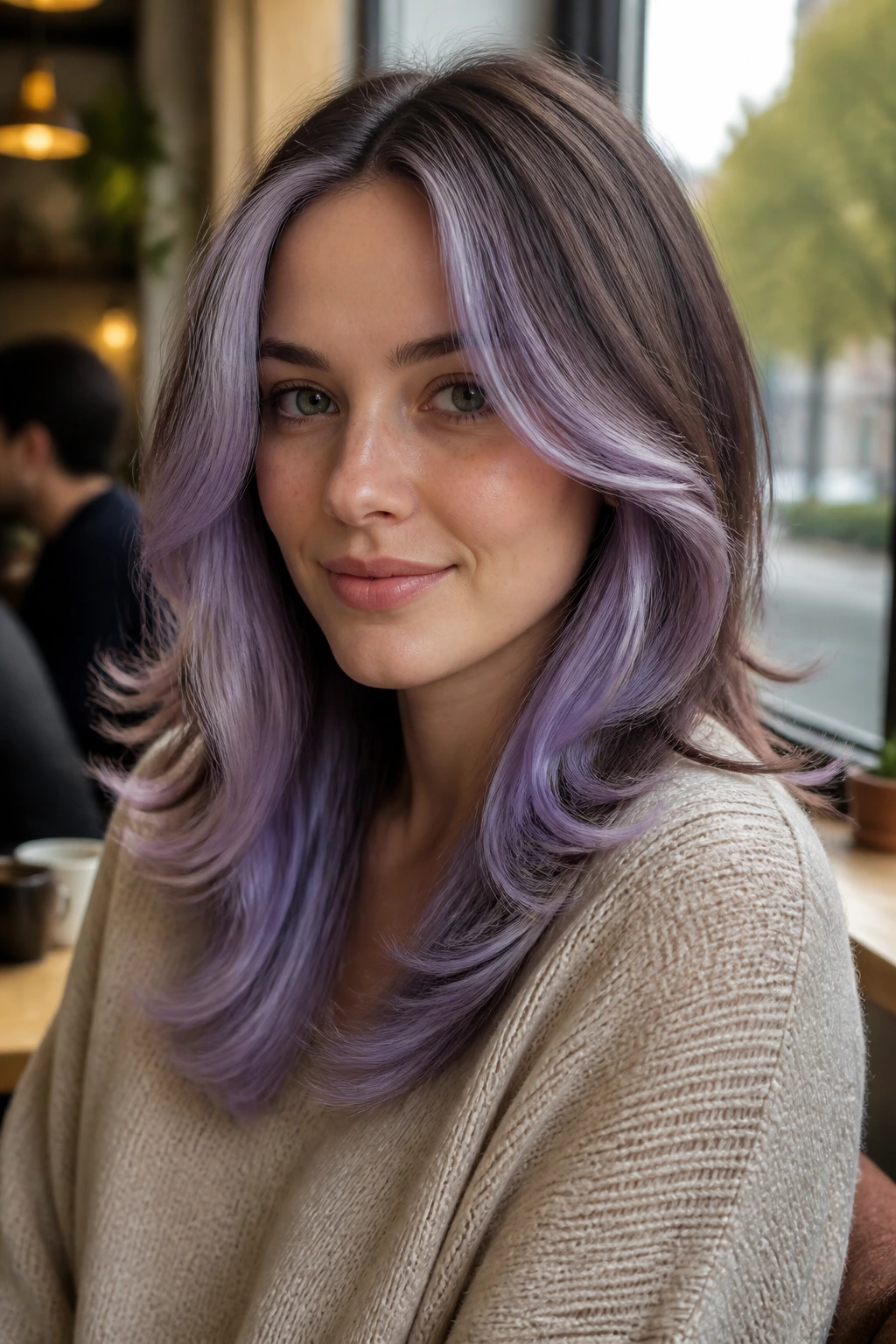
Face-framing layers are where lavender gets sneaky. You don’t need a full color change to make the face look brighter.
Soft violet panels around the cheeks and collarbone can shift the whole mood of a haircut. On cool skin, those front pieces act like a soft filter, pulling attention toward the eyes and away from any yellow cast in the hair. The cut matters here too. Layers that fall around the chin and cheekbone give the color a chance to show without swallowing the face.
Best Base Colors
- Cool blonde
- Light brown with a neutral ash finish
- Dark blonde lifted with a violet glaze
- Soft brunette with pre-lightened face pieces
Keep the tone in the front pieces slightly brighter than the rest of the hair. If everything is the same depth, the framing effect disappears. That’s a mistake I see a lot, and it’s an easy one to fix.
13. Steel-Lavender Short Cut
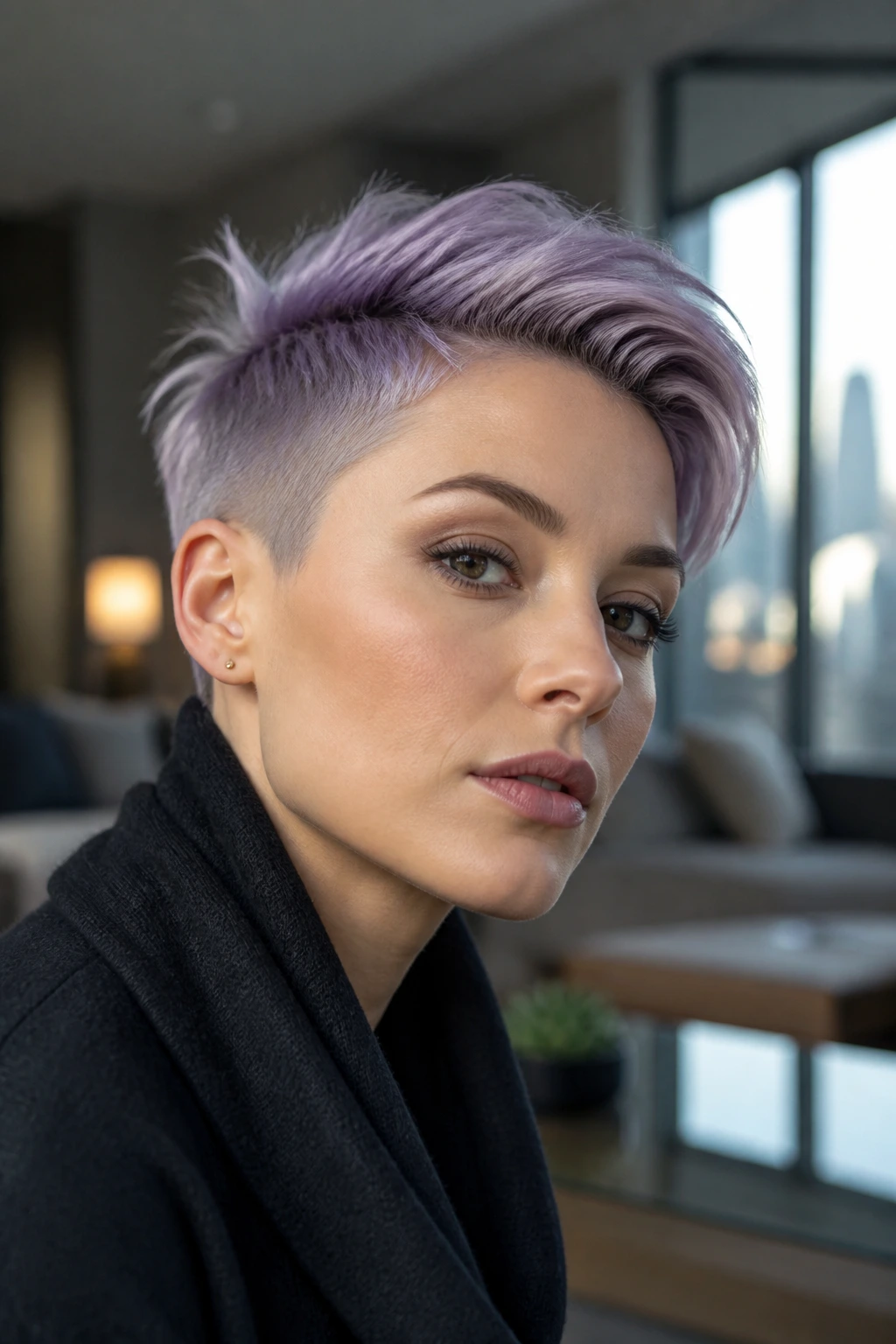
Not every lavender has to be soft. Steel-lavender is crisp, a little edgy, and strangely flattering on cool skin because it borrows from metallic silver instead of sugary purple.
A short cut makes that tone even sharper. Think cropped shags, undercuts, or a clean tapered shape with textured top layers. The steel cast keeps the color from veering pastel, while the lavender note gives it personality. On cool undertones, that combination can look almost editorial without becoming fussy.
The shade also hides a few things pastels don’t. Slight root shadow, uneven fade, and a bit of texture all belong here. That’s useful if you like a style with some grit in it.
I’d choose this over a pale lavender if your wardrobe leans black, charcoal, navy, or clean white. It fits those clothes without fighting them.
14. Satin Lavender Curls
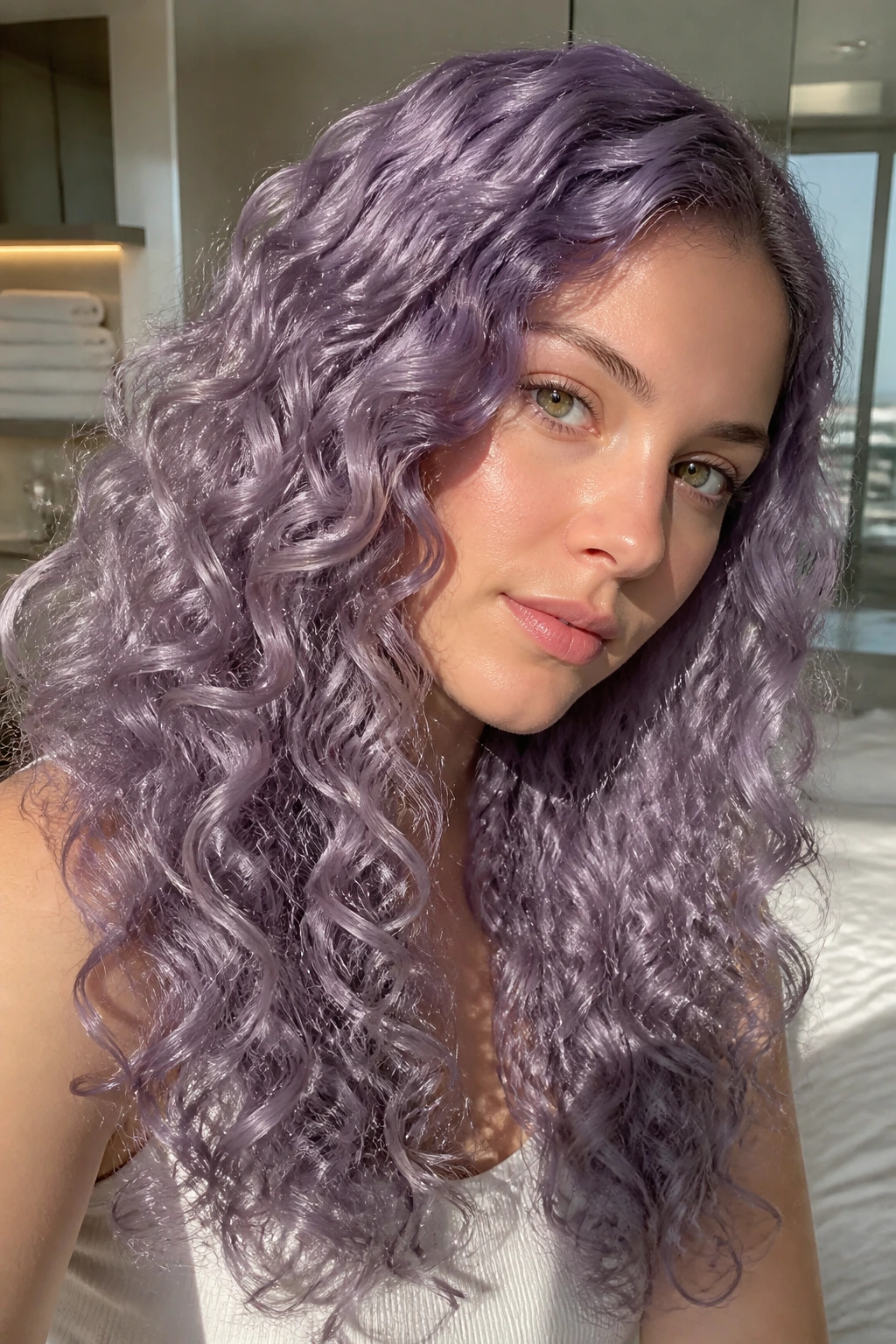
Satin lavender is all about shine. Put it on curls, and you get a color that looks soft from a distance but rich up close.
The satin finish comes from a smooth, cool violet base with enough depth that the curl pattern can catch it at different points. On cool skin, that’s a nice match because the tone doesn’t fight the face; it sits alongside it. Long curls or shoulder-length bends work best, since the movement keeps the color from looking like one flat block.
I’d style this with a lightweight mousse and a heat protectant if you’re diffusing. Heavy creams can dull the tone, which is a shame because the gloss is half the appeal.
A few curls around the front can make the lavender read warmer or cooler depending on how the light hits. That’s part of the charm.
- Best on defined waves and curls
- Looks polished with a center part
- Needs a glossing treatment to keep the shine alive
- Works well with smoke or pearl tones in makeup
15. Mushroom-Lilac Beige Blend
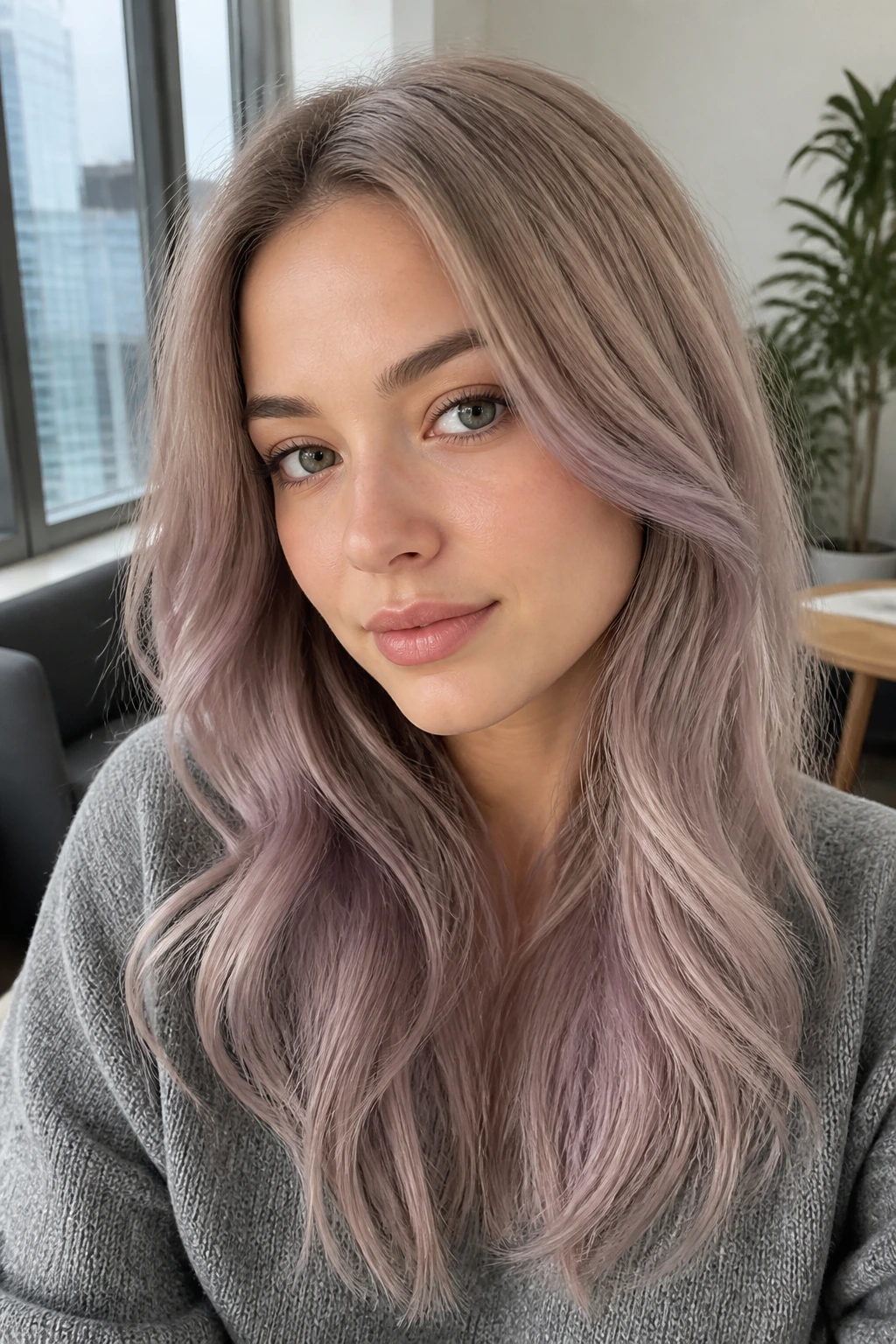
Mushroom-lilac is for people who want lavender without broadcasting it from across the room. It’s softer, dustier, and a lot more wearable than a pure pastel.
The beige base keeps the hair grounded, while the lilac veil stops it from looking flat or too warm. That balance matters on cool skin because beige can go yellow fast if the formula isn’t handled carefully. The lilac pulls it back into cooler territory, which is what saves the look.
How To Keep It From Going Warm
- Keep the base ash-beige, not golden-beige
- Add a blue-violet toner after lifting
- Avoid copper or peach glosses
- Refresh the lilac before it fades into dull taupe
This shade is a smart pick if you want something office-friendly but not plain. It reads as soft color, not loud color, and that makes it easy to live with.
16. Holographic Lavender Peekaboo
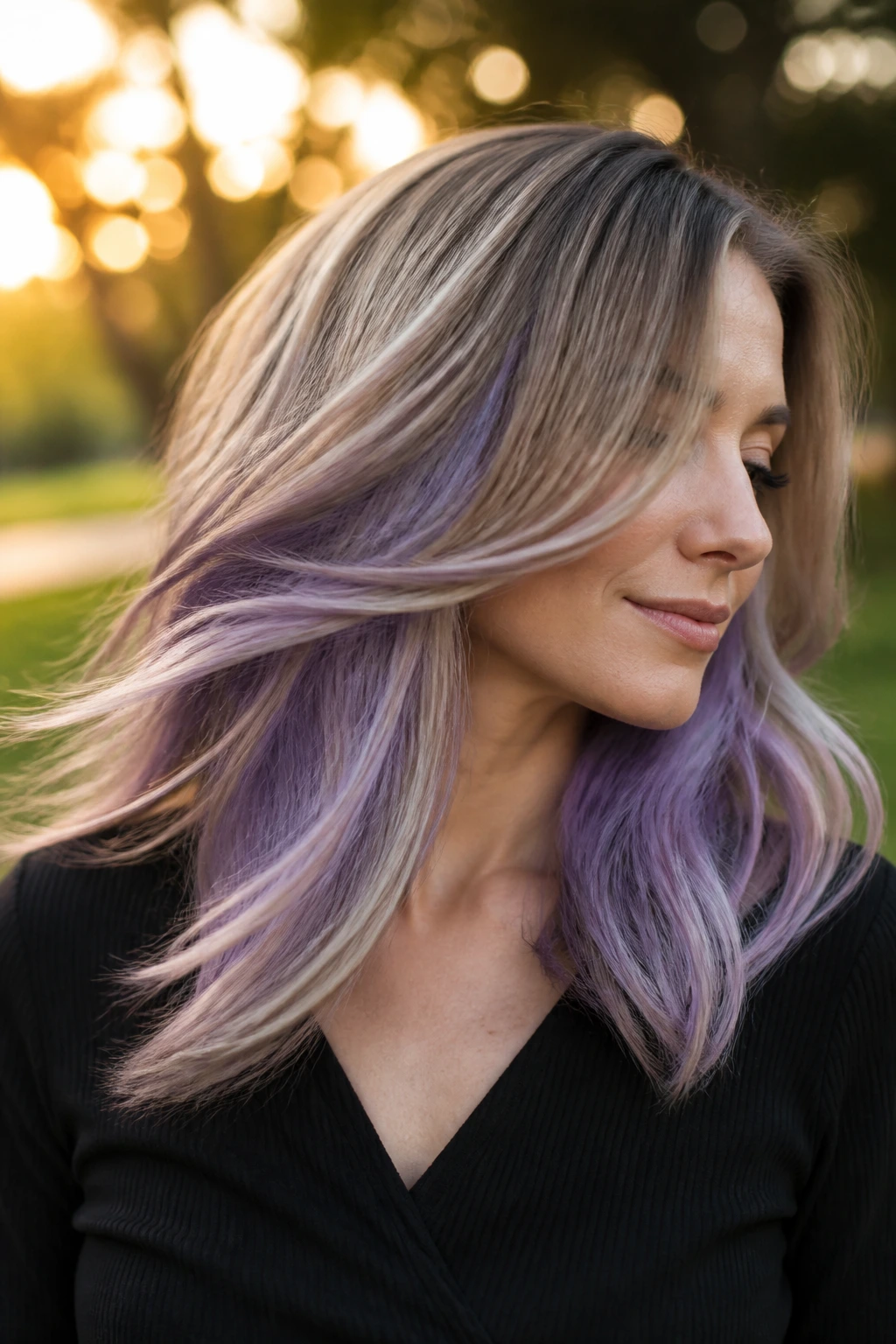
Peekaboo color is fun because it only shows itself when the hair moves. That makes it a little more personal, which I like.
Holographic lavender usually sits under the top layer or around the nape, so the visible hair stays darker while the hidden panels flash violet, silver, and lilac. On cool skin, those flashes can look almost icy. The trick is to keep the upper layer neutral enough that the lavender has room to surprise you.
This style is also practical. You can wear your hair up, tuck one side behind the ear, or twist it into a clip and suddenly the color appears. It’s a nice way to play with lavender without committing every inch of hair to pastel maintenance.
- Best placement: nape, undercut, or inner layers
- Works well with wavy or straight hair
- Good choice if you want color control
- Easy to hide in stricter settings
The hidden placement makes the grow-out less stressful, which is worth a lot.
17. Cool Rose-Lavender Bob
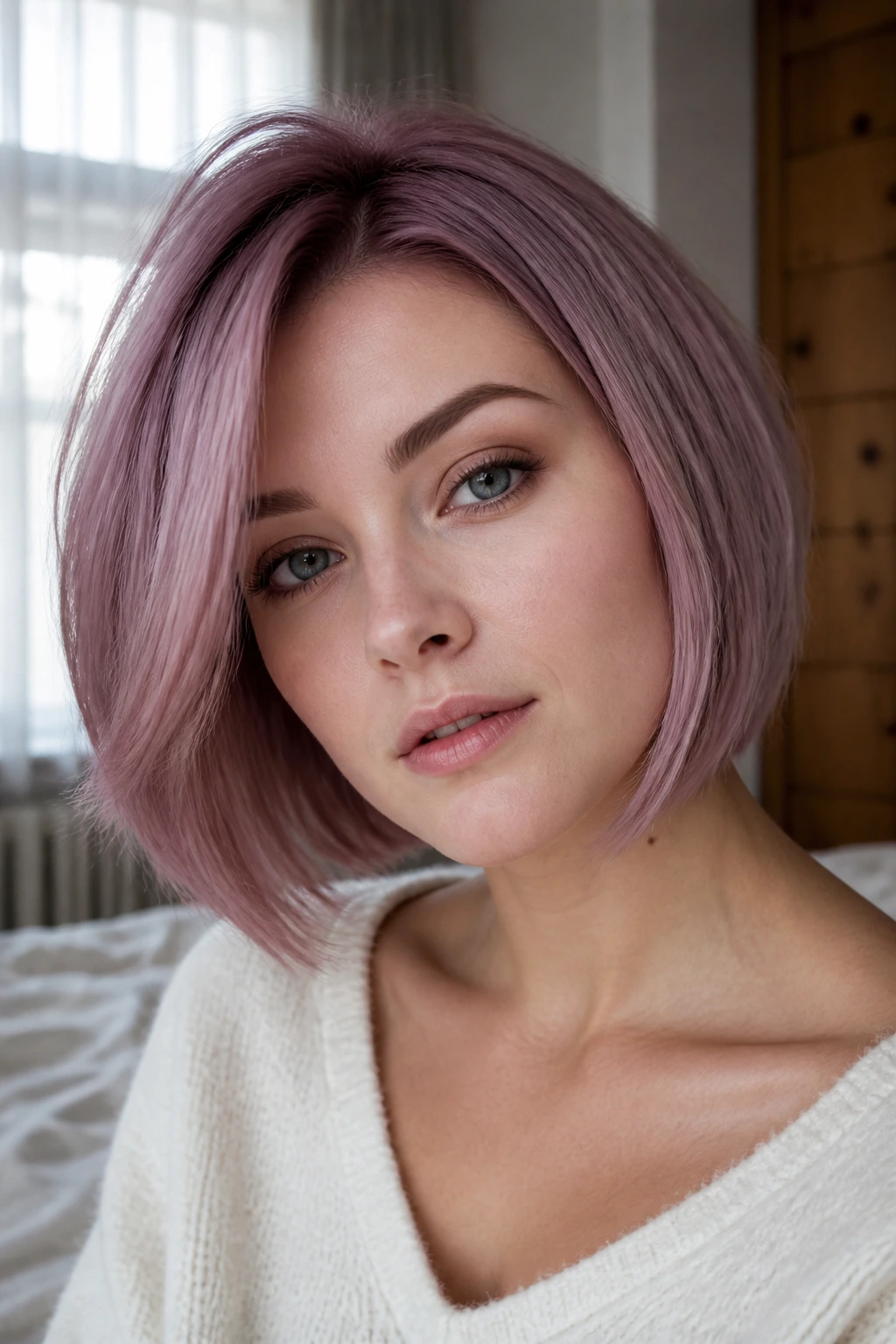
If you like pink but fear going too sweet, this is the safer lane. Cool rose-lavender keeps the rosy side muted enough that it still reads purple first.
A bob cut makes that easier to wear because the shape stays neat. The hair falls close to the face, so the color has to do less visual work. On cool skin, the rose note can warm the complexion in a nice way, but the lavender keeps it from tipping into coral or peach.
The best version stays closer to mauve than strawberry. That small shift makes a huge difference. A tiny bit too much warmth and the whole thing starts to clash with cooler undertones.
I’d choose this if you want a shade that feels softer than silver-lavender but gentler than vivid violet. It sits in the middle, and that middle ground can be very flattering.
18. Midnight Lavender Black Hair
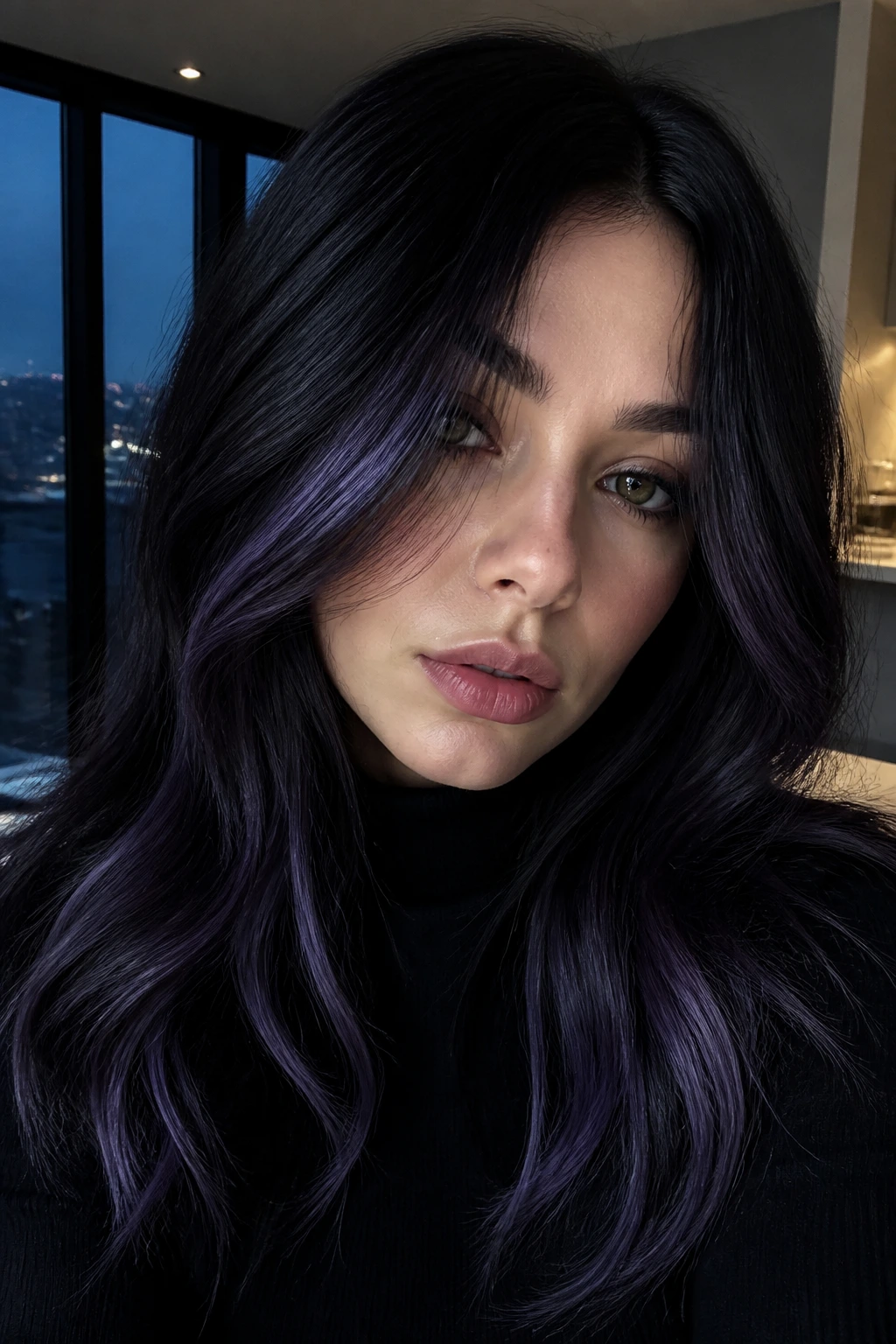
Midnight lavender on black hair is the moody option, and I mean that in a good way. It’s deep, glossy, and far easier to wear than a full pastel if you love dark clothes and cooler makeup.
On a black base, lavender can show up as a violet sheen in the light or as hidden panels near the ends and underneath. That means you do not need to strip the hair to white for the color to matter. Cool skin gets a nice benefit from the blue-violet cast, which feels cleaner than a warm plum.
This is one of my favorite ideas for people who want low-contrast color. It’s subtle until it isn’t.
- Best with glosses, panels, or lowlights
- Looks strongest on smooth, shiny hair
- Easier to maintain than full pastel lavender
- Great for cool deep skin tones
If you want something that feels dark but not plain, this is a sharp pick.
19. Pearly Lavender Allover Color
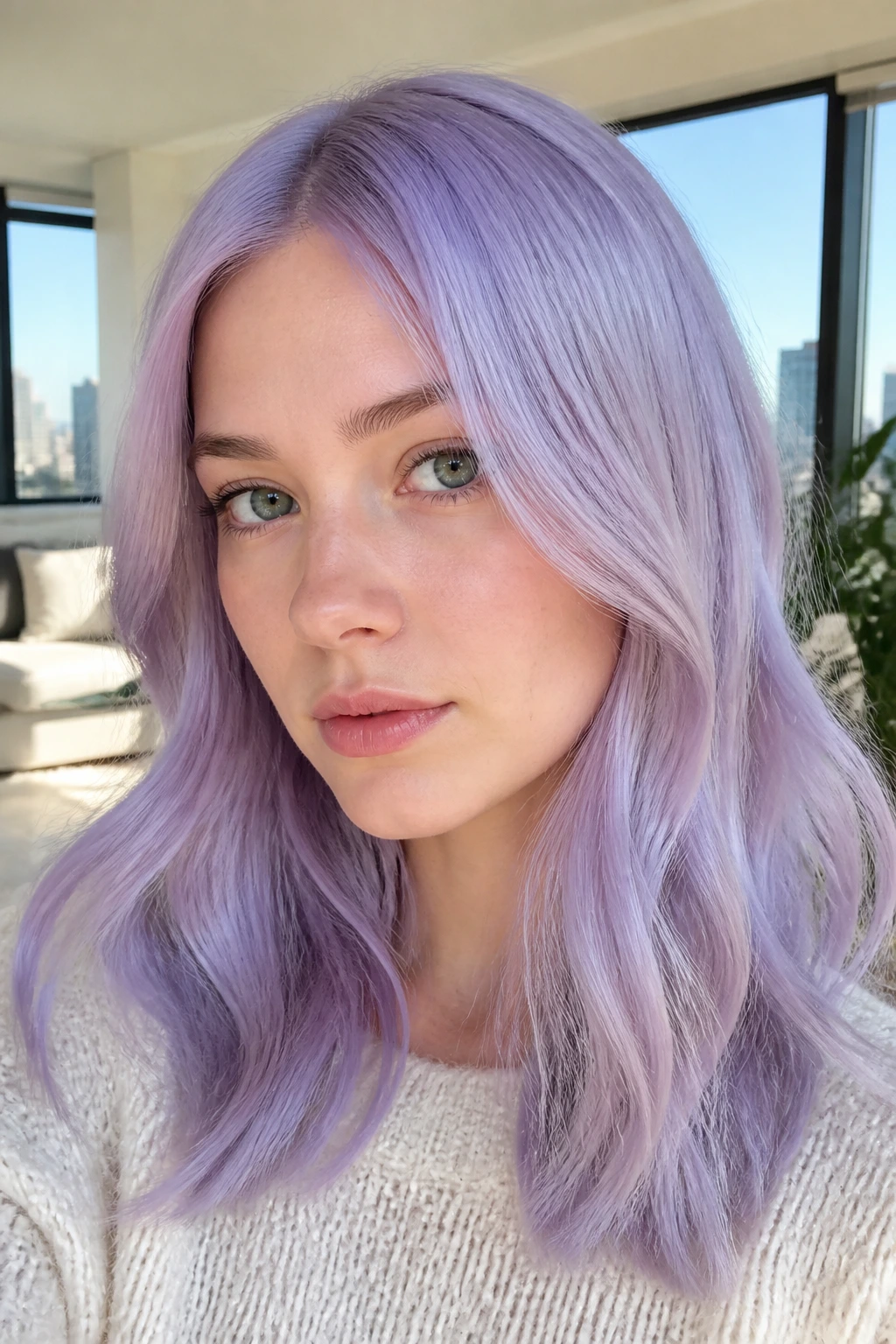
Pearly lavender is the softest version of the bunch, but it needs discipline. Every tone has to stay clean or the pearl effect disappears.
The color usually sits somewhere between silver, lilac, and pale violet, with enough lightness that the finish looks creamy rather than chalky. On cool skin, that pearl cast can be lovely because it mirrors the skin’s cooler undertones without flattening the face. It works best on even, well-lightened hair where the tone can stay consistent from root to tip.
This is the shade that looks best when the hair is healthy and smooth. Dry ends break the illusion fast. If the cuticle is rough, the pearl finish turns dull and the whole thing loses its shine.
I’d keep the styling simple here: soft bends, clean part, minimal product weight. Too much texture makes the color lose that soft, polished feel.
20. Smoky Lavender Shadow Root for Cool Skin Tones
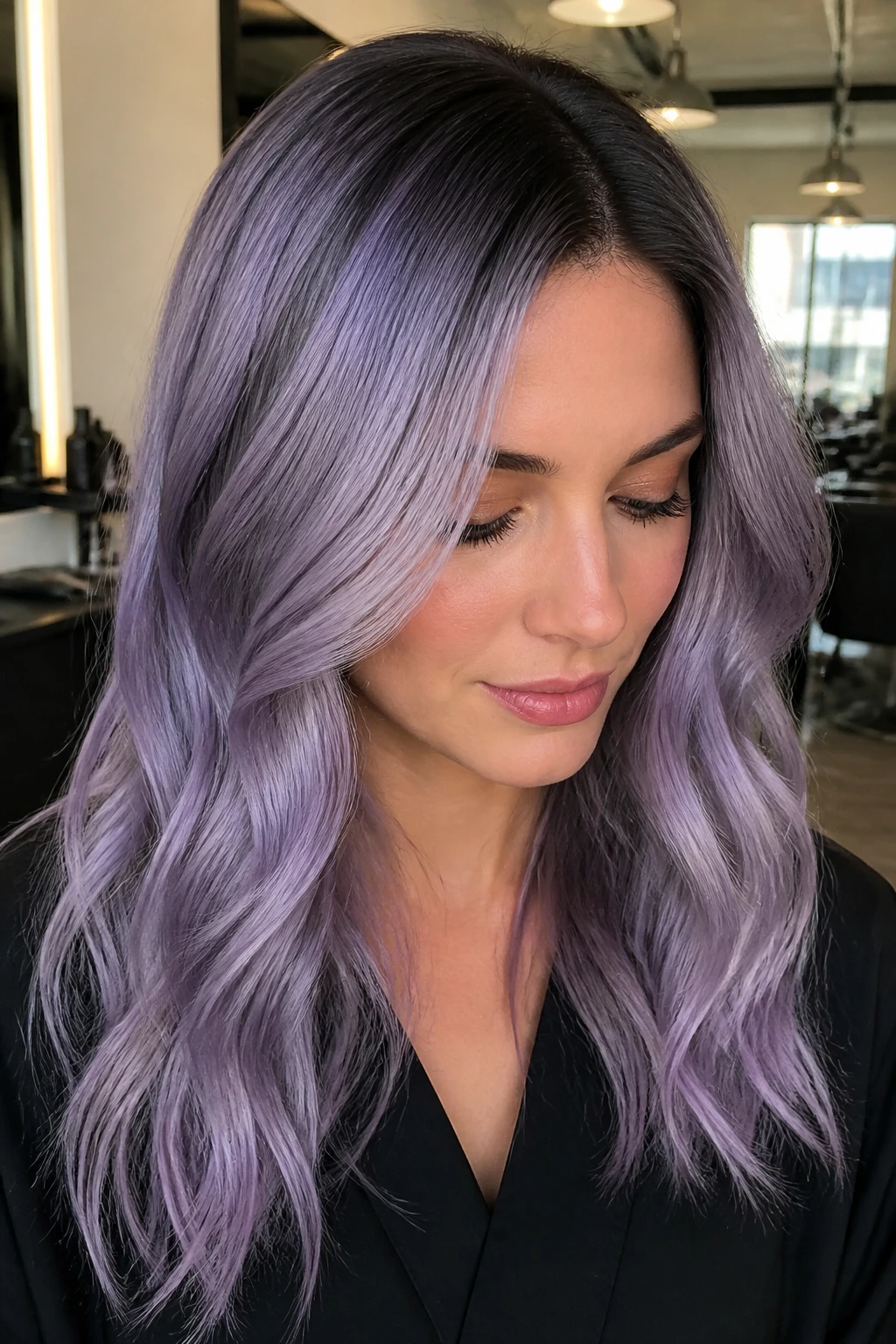
If you only want one lavender idea that feels wearable, I’d start here. A smoky shadow root keeps the top of the hair deeper, then lets the lavender open up through the mid-lengths and ends.
That depth at the root is doing a lot of work. It makes cool skin look brighter by contrast, and it also keeps the grow-out less obvious. The smoky base stops the lavender from turning sugary, which is the mistake a lot of pale shades make on cooler complexions. You end up with color that feels soft but not flimsy.
This is also the easiest lavender direction to live with if you like to stretch appointments. The fade tends to drift silver, lilac, or cool beige rather than brassy gold, and that gives you a little more breathing room between refreshes. If you want the least fussy version of lavender hair color for cool skin tones, this is the one I’d hand to you first.
A final practical thought: choose the deepest version you still find pretty in daylight. That’s the shade you’ll keep wearing after the novelty wears off.
