



Blue purple hair color ideas for cool skin tones work best when the shade leans blue, violet, or smoky gray instead of red. That sounds simple, but hair color has a way of proving people wrong in the mirror. A violet with too much magenta can wake up the wrong warmth in the face, while a blue-leaning shade can make the skin look clearer, the whites of the eyes cleaner, and the whole look a little sharper.
If your skin reads pink, rosy, porcelain, or neutral-cool, you already know the small stuff matters. Silver jewelry probably feels easy. Beige lipstick may look tired on you. That same logic shows up in hair color, only louder. Blue-purple shades can either flatter that cool undertone beautifully or fight it hard, and the difference usually comes down to how much blue is in the formula, how smoky the base is, and how light or dark the placement sits around your face.
The good news: there are a lot of ways to wear this family without looking costume-y. Some shades are soft and airy. Others are deep, moody, and almost black in indoor light. A few need pale pre-lightened hair. A few work on darker bases with almost no drama. The trick is matching the right blue-purple move to your skin, your haircut, and how much upkeep you can live with.
1. Smoky Blue-Purple Indigo Melt
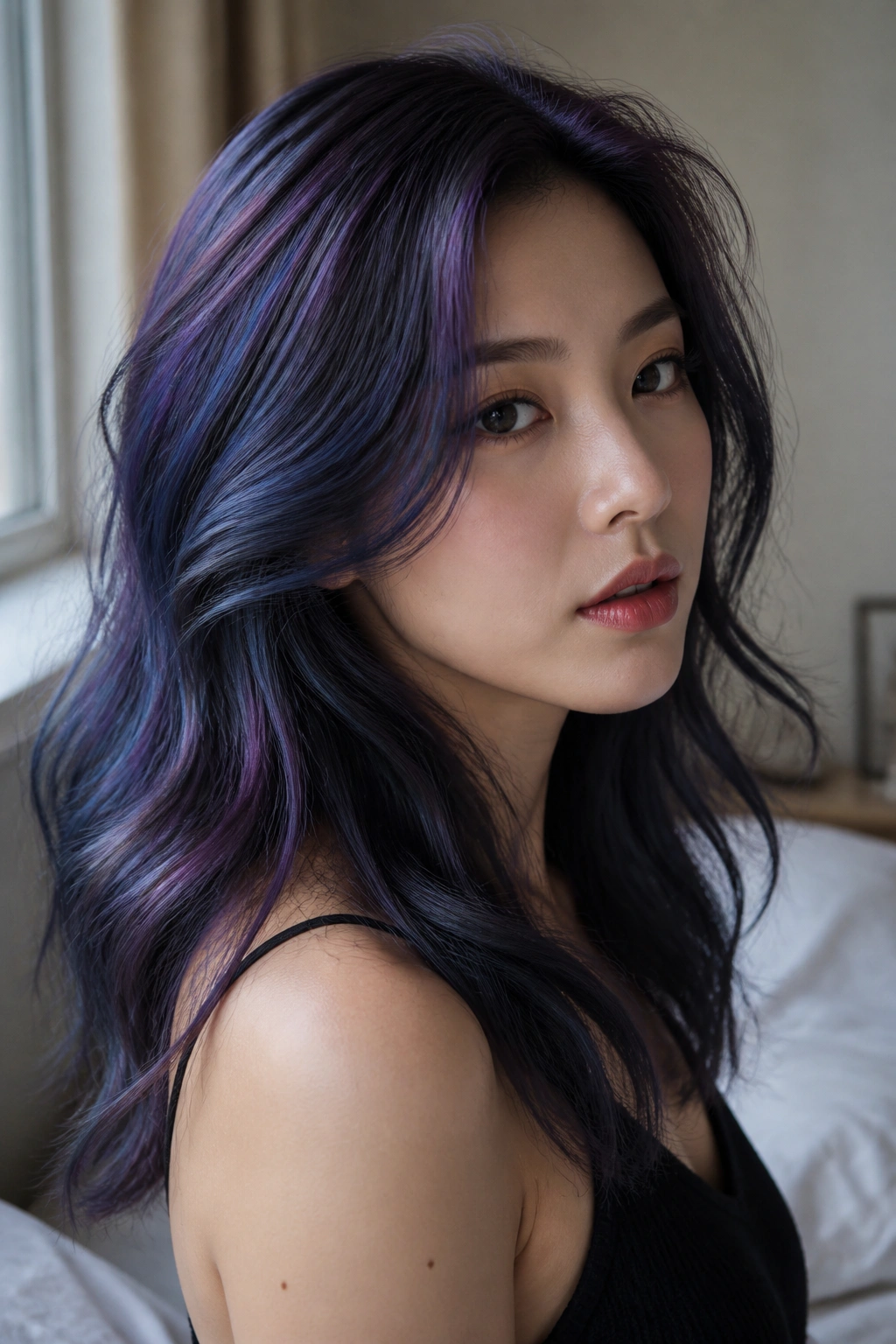
Smoky indigo is the shade I reach for when someone wants blue-purple hair without looking like they raided a paint sample wall. The smoky base keeps it polished. The blue-violet melt keeps it from feeling flat.
Why It Flatters Cool Skin
Cool skin loves depth with a little edge. Indigo does that job well because it sits between navy, violet, and slate, so the color never turns brassy or orange against the face. If your complexion is pale or rosier, this shade gives it contrast without shouting.
A level 7 or 8 base is usually enough for the color to show richness. On darker hair, it reads as blue-black with a violet flash. On lighter hair, you get more of that moody sapphire-to-plum shift that moves as you turn your head.
- Best on straight cuts, blunt lobs, and long waves
- Fades into smoky blue rather than ugly yellow
- Looks sharp with cool-toned makeup: berry blush, mauve lips, silver liner
- Needs glossing every few weeks if your hair is porous
Pro tip: ask for a root shadow that’s only one or two levels deeper than the mids. Too much darkness near the scalp can swallow the whole color.
2. Icy Periwinkle Balayage
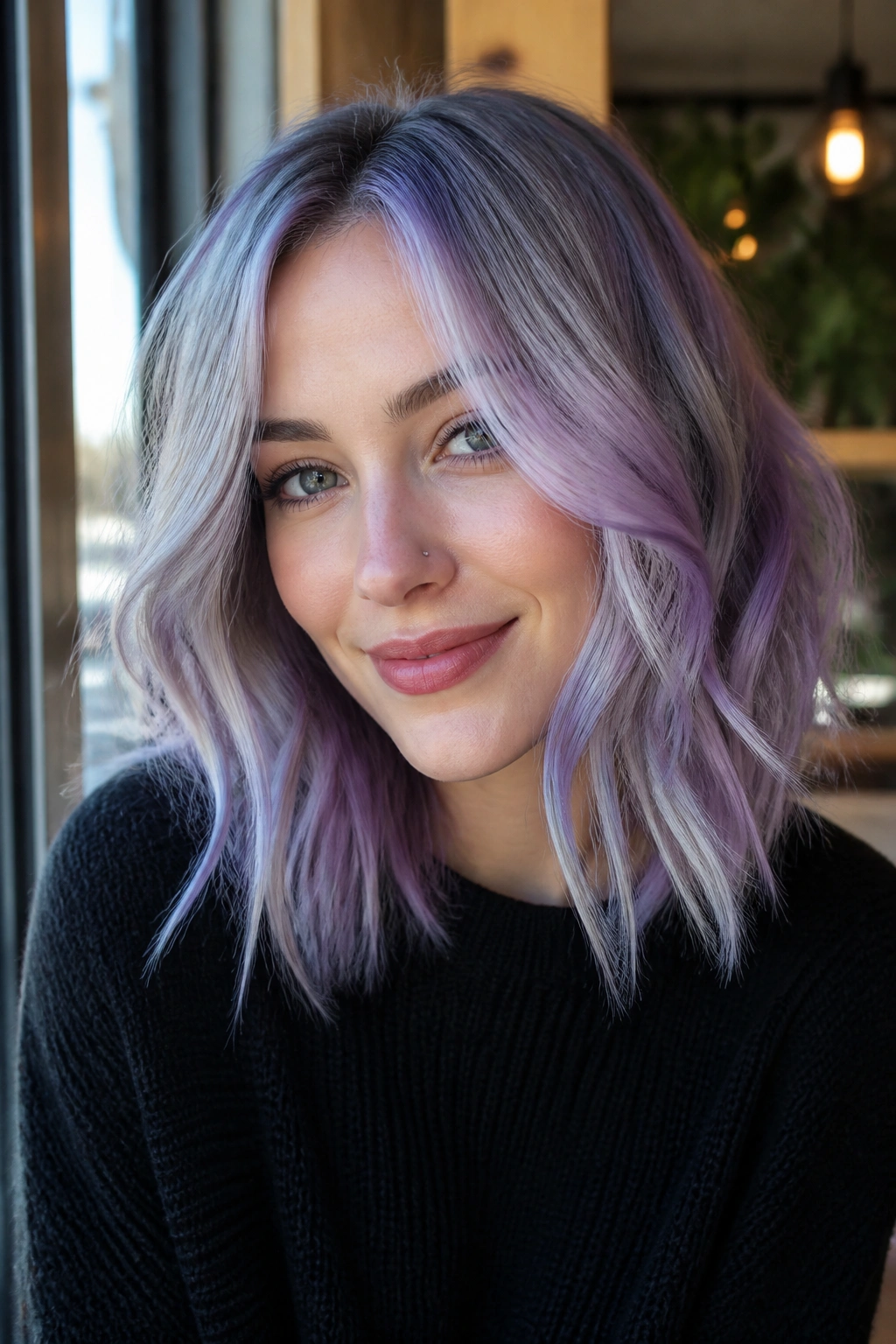
Want something softer and lighter? Periwinkle is the pretty answer. It has enough blue in it to stay cool, but the lilac side keeps it airy instead of icy in a harsh way.
This look works best when the lightest pieces sit around the face and through the top layer, not tucked only at the ends. That placement keeps the color from hiding under the hair when you wear it down. On cool skin, periwinkle gives a kind of clean contrast that makes the face look fresh rather than overdone.
What Makes It Work
The balayage part matters. Hand-painted ribbons give you depth, so the color doesn’t read like one flat pastel helmet. If your hair is at a level 9 or 10, the shade stays clear and delicate. On darker bases, it gets muted fast and starts looking dusty.
You’ll want a toner-friendly routine here. Periwinkle fades quickly if you wash daily or use hot water. A color-safe shampoo, lukewarm rinses, and a cool shot of water at the end help a lot.
- Best for medium to long layers
- Needs a pale blonde base
- Looks especially good on cool olive and pink skin
- Soft enough for people who want color, not chaos
3. Midnight Blue-Black Gloss
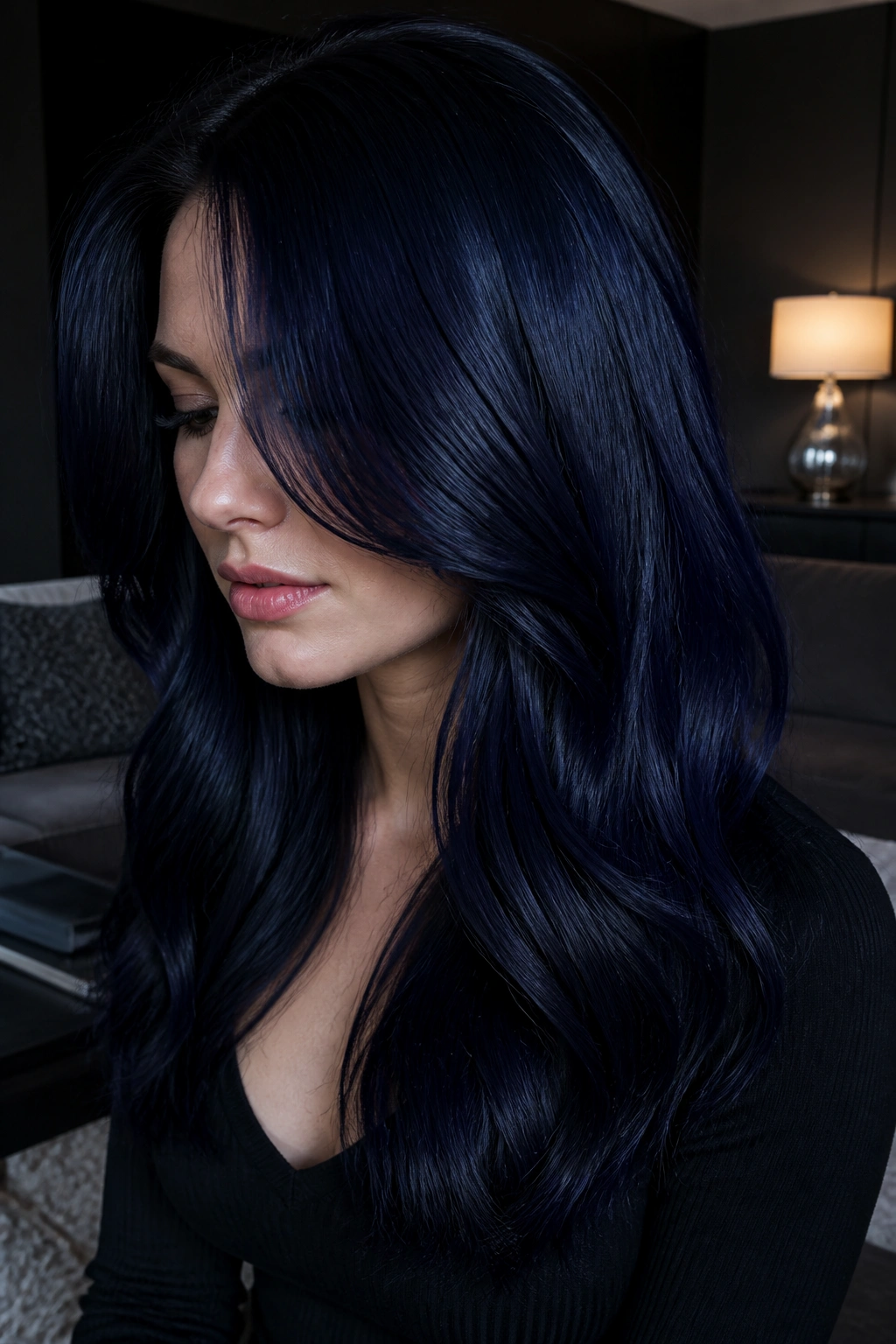
If you want the easiest blue-purple choice, start here. Midnight blue-black looks nearly neutral from far away, then throws a blue-violet sheen when light hits it. That little shift is what makes it so good on cool skin.
It’s also one of the few fantasy shades that works on hair that is not heavily lightened. A deep gloss can sit over dark brown or black hair and still give you that blue-purple mood. The result feels sleek, expensive-looking, and a little mysterious without trying too hard.
The key is shine. Dull blue-black just looks flat. Glossy blue-black looks intentional and expensive, even when the color itself is subtle. A clear gloss or a blue-violet glaze helps keep the tone reflective and keeps cool complexions from looking washed out.
This is the shade I’d suggest for someone who wants low drama during the workweek but still wants a little personality in the sunlight. It’s restrained. Not boring.
4. Sapphire Money Piece
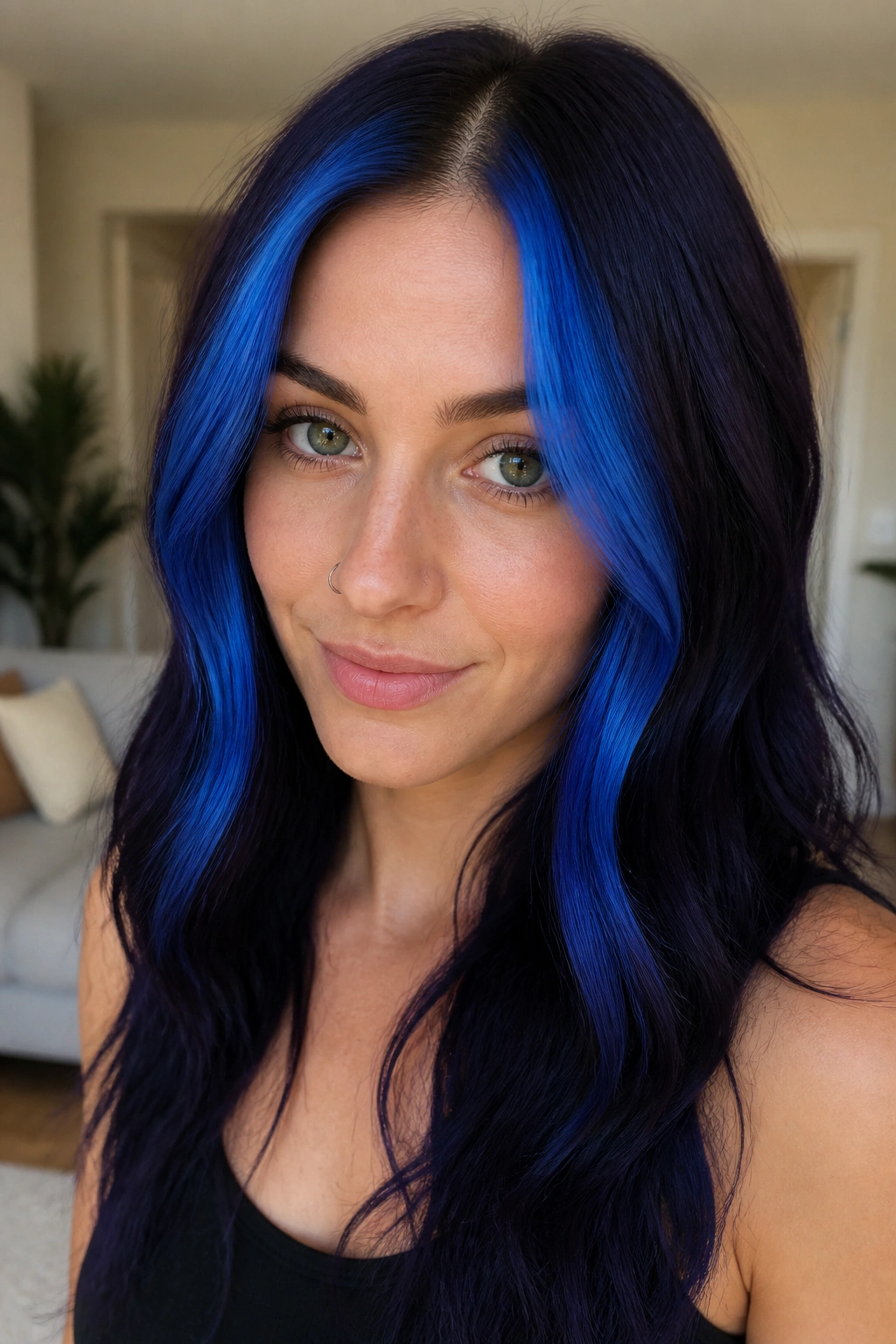
Sometimes the fastest way to wake up cool skin is two bright strips at the front. A sapphire money piece does exactly that. It pulls light toward the face, sharpens the eyes, and gives the whole cut a cleaner shape.
The trick is placement. Put the brightest sapphire at the part line and through the first inch or two around the face, then let the rest of the hair stay deeper and quieter. That contrast makes the color look modern instead of neon. On cool skin, sapphire tends to look crisp, not muddy.
Where It Works Best
A center part gives this look a clean frame. A deep side part makes it feel more dramatic. Either way, the front pieces should be bright enough to stand out against your base but not so light that they turn icy white.
If your hair is shoulder length or longer, this is one of the easiest ways to test blue-purple color without committing your whole head. You get the payoff near the face, where it counts most.
- Best for layered cuts and curtain bangs
- Works on dark, medium, or light bases
- Needs frequent touch-ups if the front pieces are very light
- Pairs well with silver jewelry and blue-toned makeup
5. Electric Cobalt Bob
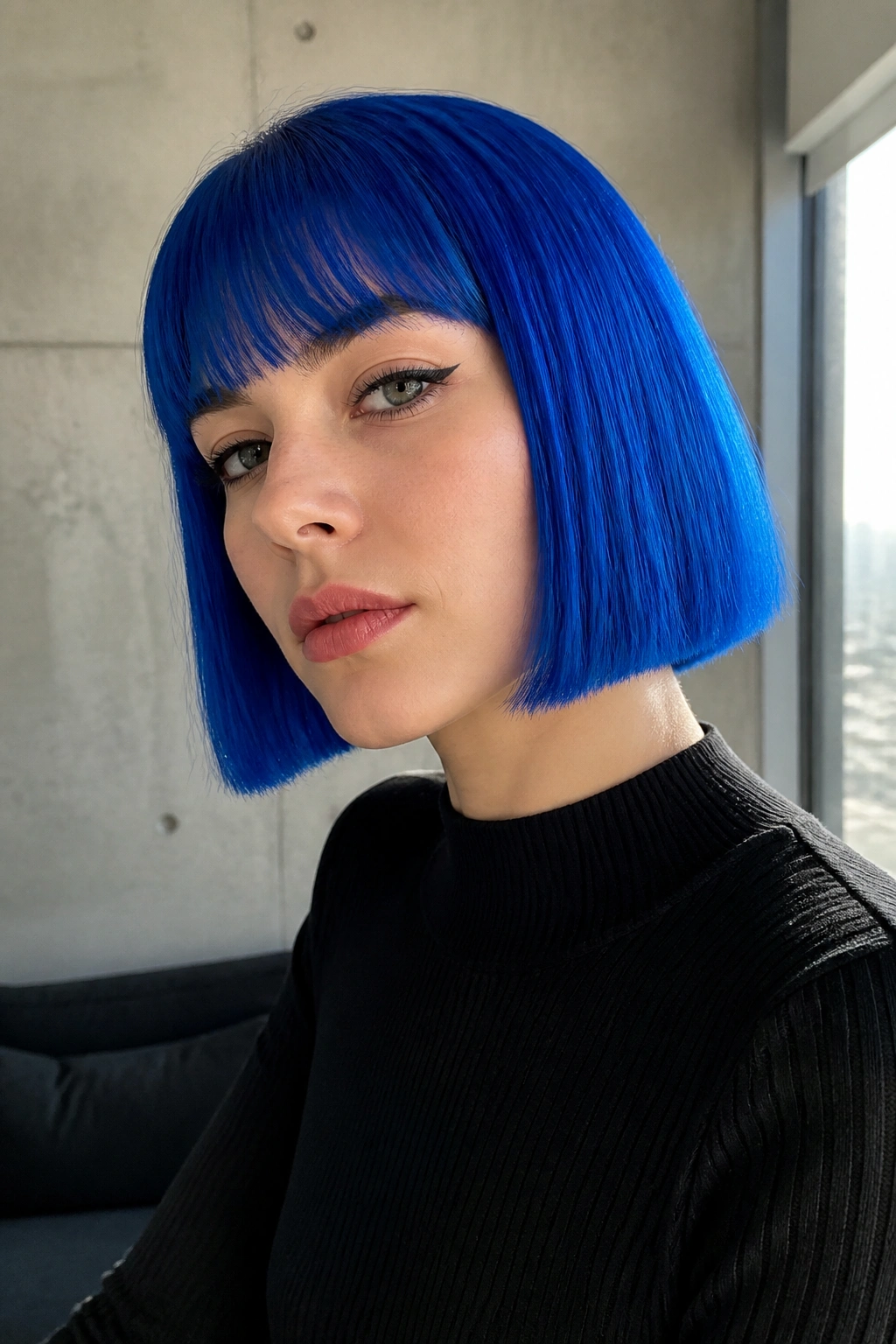
A cobalt bob is not shy, and that’s the point. On a short cut, the color does the heavy lifting. Cool skin gets a strong, clean contrast, and the haircut suddenly looks sharper from every angle.
This shade has less violet and more blue, which makes it one of the most face-brightening options in the whole blue-purple family. If your skin already leans cool, cobalt can make your complexion look more awake. If your eyes are blue, gray, or green, the effect gets even stronger.
I like cobalt on blunt bobs, chin-length cuts, and textured shags. The color sits on the ends and around the silhouette in a way that keeps movement visible. On a very straight bob, it looks graphic. On a wavy bob, it reads a little softer and more wearable.
The only catch is fading. Cobalt can slip toward teal if the base underneath is too yellow. A clean pre-lightening job matters here. So does avoiding super-hot water.
6. Lavender-Smoke Ombré
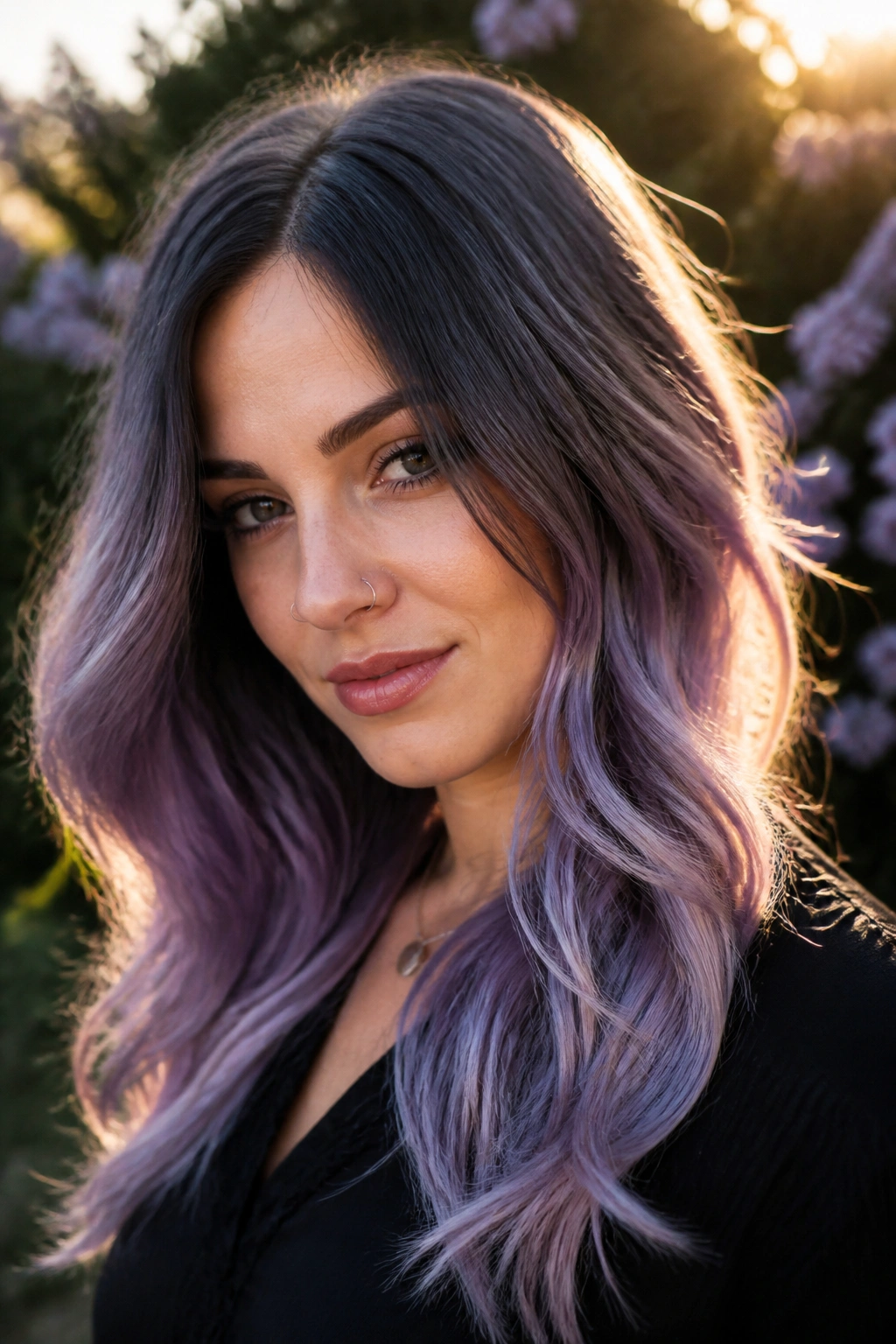
Lavender-smoke ombré is what happens when a pastel shade grows up a little. Instead of starting bright and ending washed out, the color moves from a deeper smoky root into a soft lavender finish that still has shape.
For cool skin, this works because the lavender stays violet-based rather than pink. That keeps the face from getting dragged warm. The smoky root also gives the whole style some depth, which is useful if your hair is naturally medium brown or dark blonde and you do not want constant root panic.
What Makes It Different
The ombré placement keeps maintenance easier than all-over pastel. You can wear the darker root a little longer, and the ends can fade gracefully without ruining the whole look. That matters, because pastel purple is lovely for about ten minutes if you hate upkeep.
Use this style on waves if you can. The bend in the hair shows the transition between smoky and soft much better than pin-straight strands do.
- Best on hair past the shoulders
- Needs pre-lightened ends, usually level 9 or higher
- Fades from lavender into silver-lilac
- Looks nice with cool mauve lipstick and soft smoky liner
7. Blueberry Violet Dip-Dye
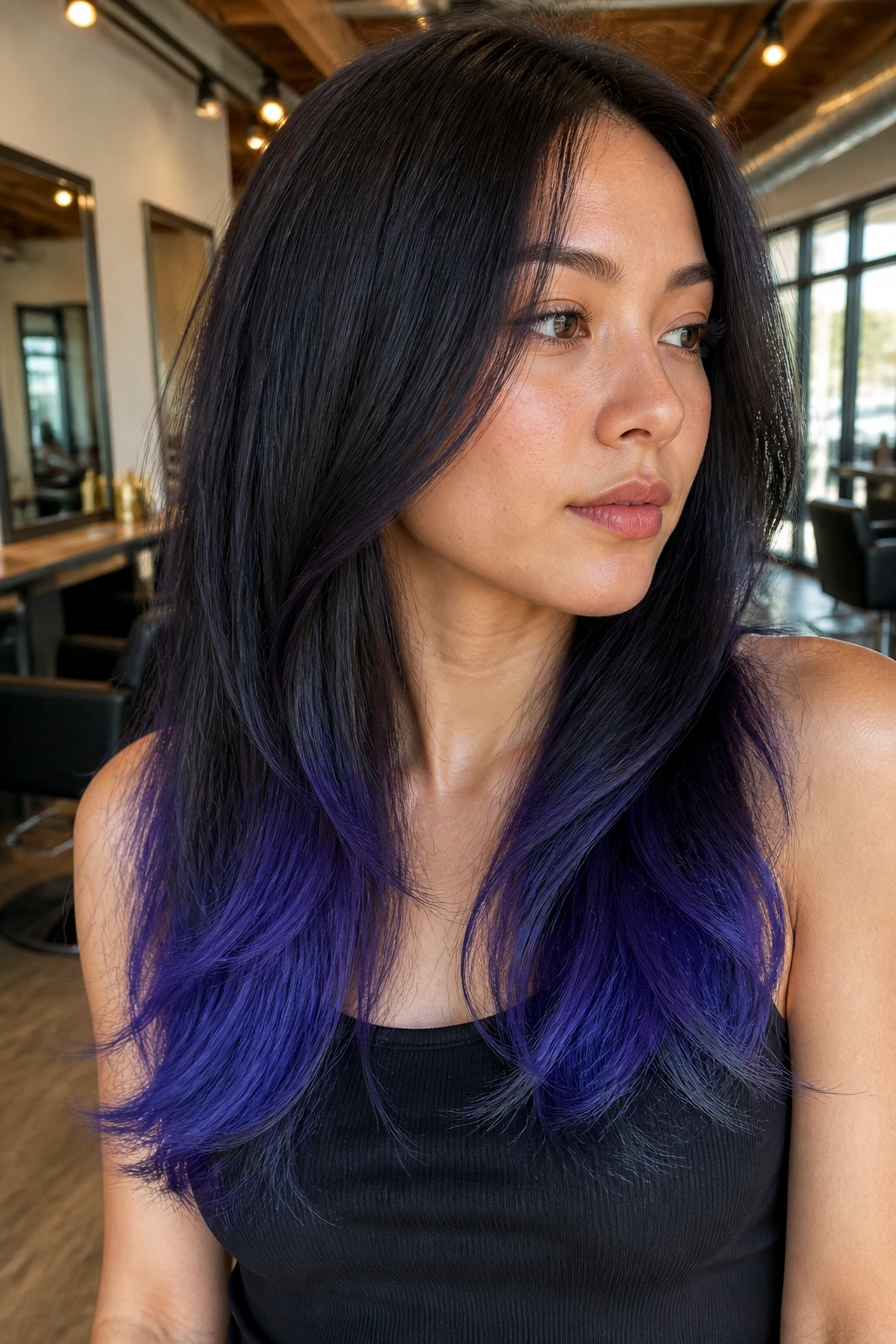
Dip-dye is for people who want commitment at the ends and freedom everywhere else. Blueberry violet gives you that rich, juicy color payoff without dyeing the whole head. It works especially well on long layers where the ends move.
This shade sits in a sweet spot: blue enough to flatter cool skin, violet enough to keep the color dimensional. On very pale skin, the contrast can look almost graphic. On deeper cool skin, it reads more jewel-like and less pastel.
A clean cut makes this look stronger. If the ends are dry or split, the color can get fuzzy fast. A blunt trim before coloring helps the dip line look deliberate instead of accidental.
You can also make the transition softer by feathering the dye up into the last 4 to 6 inches rather than stopping it dead. That little blur looks more natural and gives the hair room to grow out without a hard line.
8. Denim Blue Layering
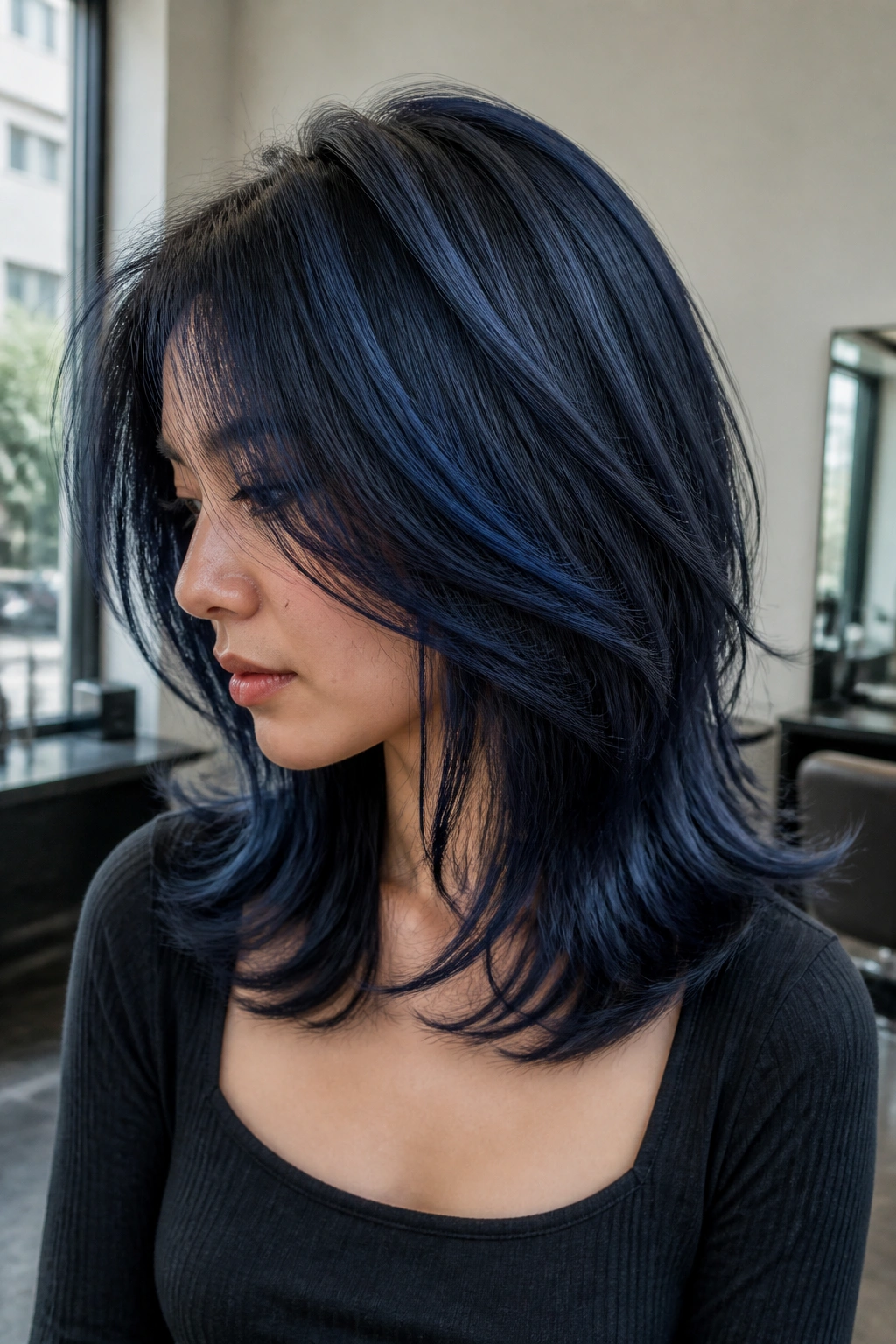
Denim blue is one of my favorite shades when someone wants color with a worn-in, lived-in feel. It’s cooler and quieter than cobalt, and it has enough gray in it to flatter cool skin without screaming for attention.
What makes denim special is the texture it gives the hair. On layered cuts, the darker and lighter panels shift as the hair moves, which is exactly where this shade shines. It’s not one flat blue. It’s a blue with depth, like faded jeans under good light.
This is a smart choice if you like color but hate having your hair look overly bright in every setting. Indoors, denim blue can sit almost muted. Outdoors, the violet undertone wakes up. That makes it easier to wear than a neon-inspired tone.
If your natural hair is medium brown or darker blonde, denim blue usually needs some lightening but not a full platinum base. That keeps the maintenance a little saner.
9. Plum-to-Blue Color Melt
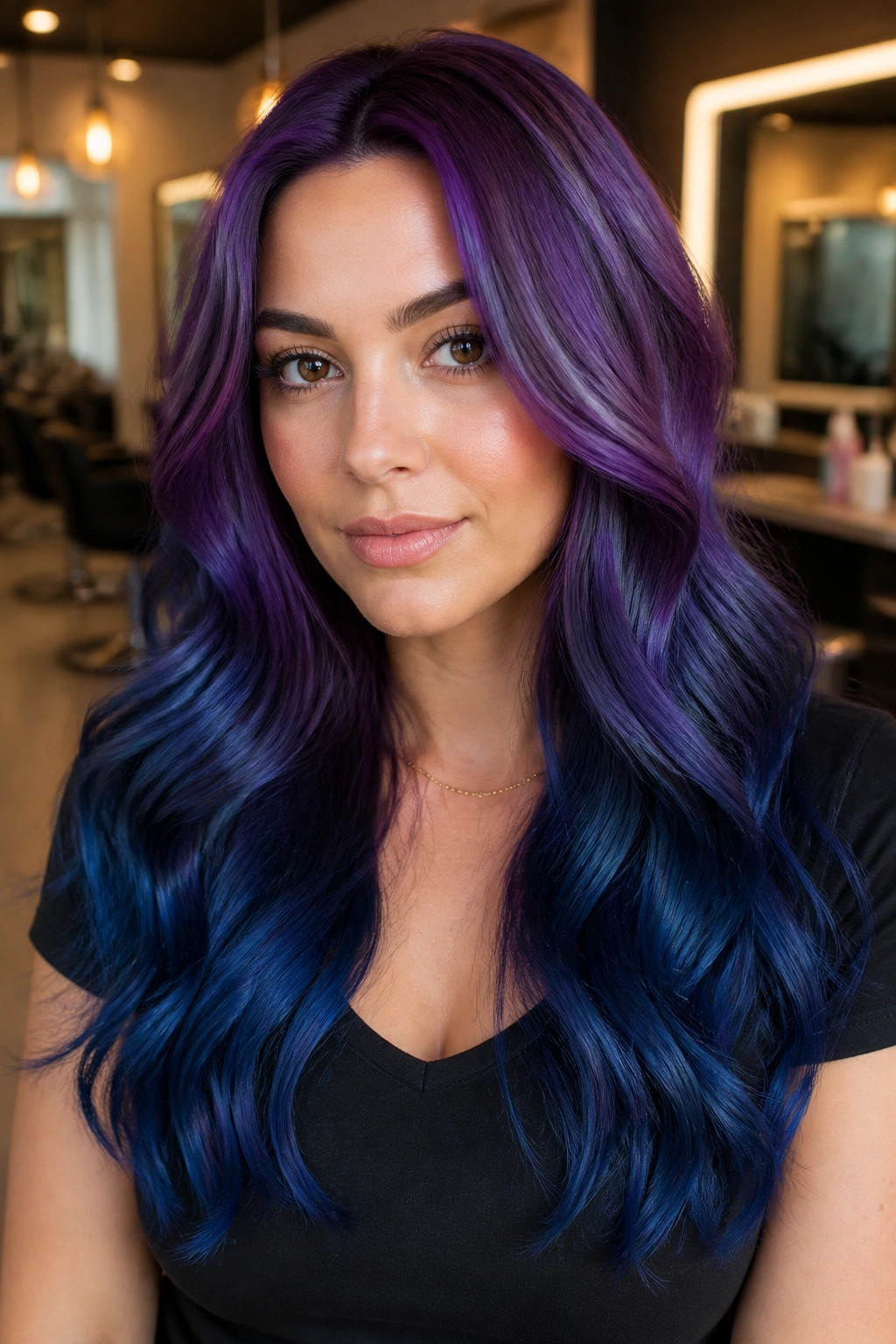
What happens when purple wants to stay cool and blue wants to take over? You get a plum-to-blue melt. Done well, it looks expensive and balanced. Done badly, it looks like two dye jobs fighting in the same mirror.
The plum should be blue-based plum, not red plum. That part matters. Red-heavy plum can pull warm against cool skin and make the face look a bit off. Blue-based plum, though, slides into navy or indigo in a way that feels seamless.
This color works well when the melt begins around the cheekbone or jawline rather than halfway down the ears. That gives the face some framing and lets the ends go more saturated. The shift from plum at the top to blue at the bottom also helps curly hair show off the change faster.
Best for: layered cuts, long bobs, and anyone who likes dimension more than a single flat shade.
Skip if: you want something subtle. This one has attitude.
10. Arctic Lilac Waves
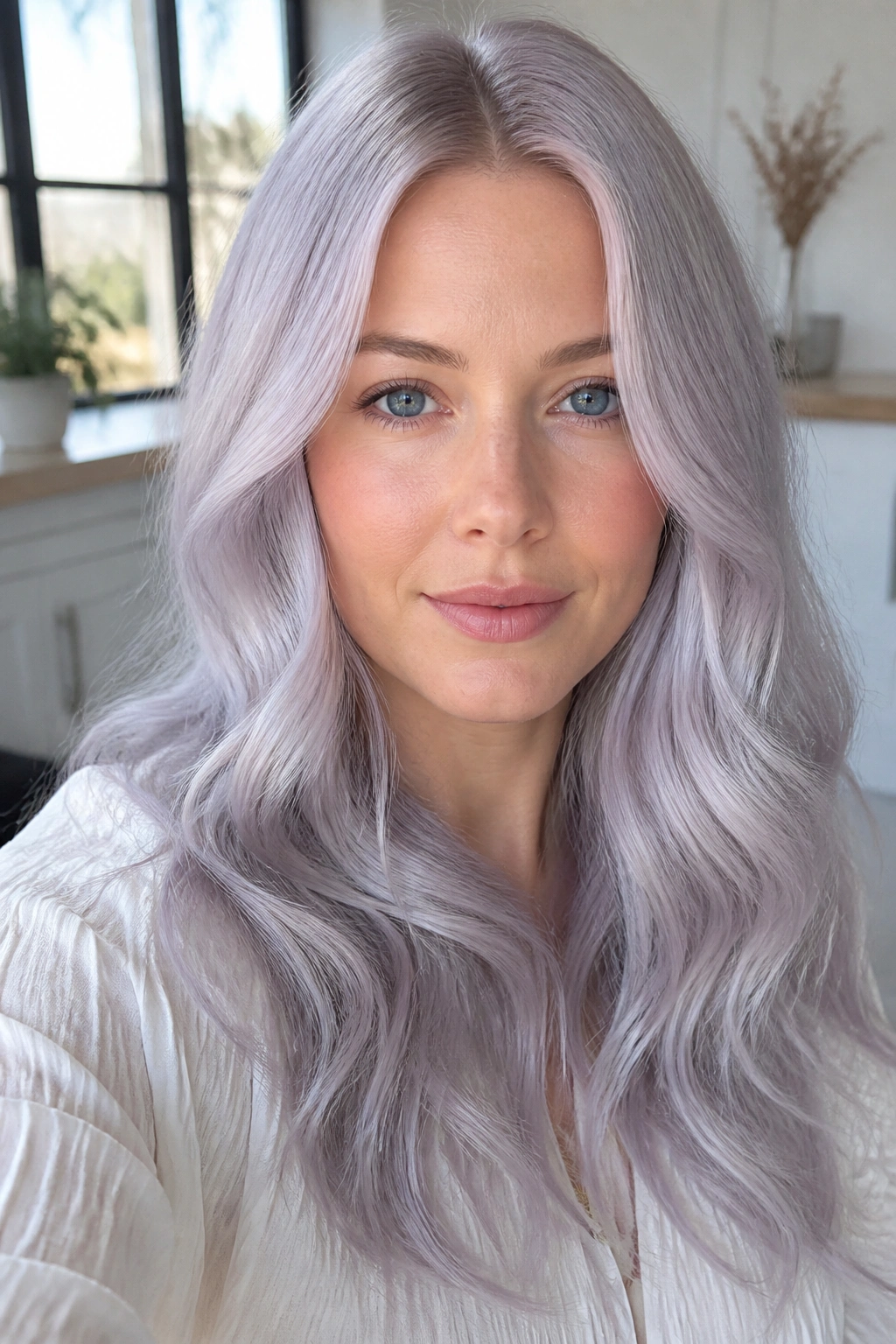
Arctic lilac is delicate, but not weak. It has that pale, frosty quality that makes cool skin look almost porcelain, especially when the hair falls in soft waves. The trick is keeping enough violet in the mix so the color does not turn chalky.
This shade asks for a pale base. Level 10 blonde gives it the cleanest result. Anything darker and the lilac starts to lose its airiness. On the right base, though, the color can look like frost with a whisper of purple under it.
Waves are the right shape for this shade because they keep it from looking flat and thin. Straight hair can make pale lilac look too light, almost invisible in some lighting. Waves catch the tone in bands, which adds depth without adding darkness.
I like this one on people with cool skin and soft features. It has a dreamy feel, but it still reads polished when the cut is clean and the gloss is fresh.
11. Deep Amethyst Pixie
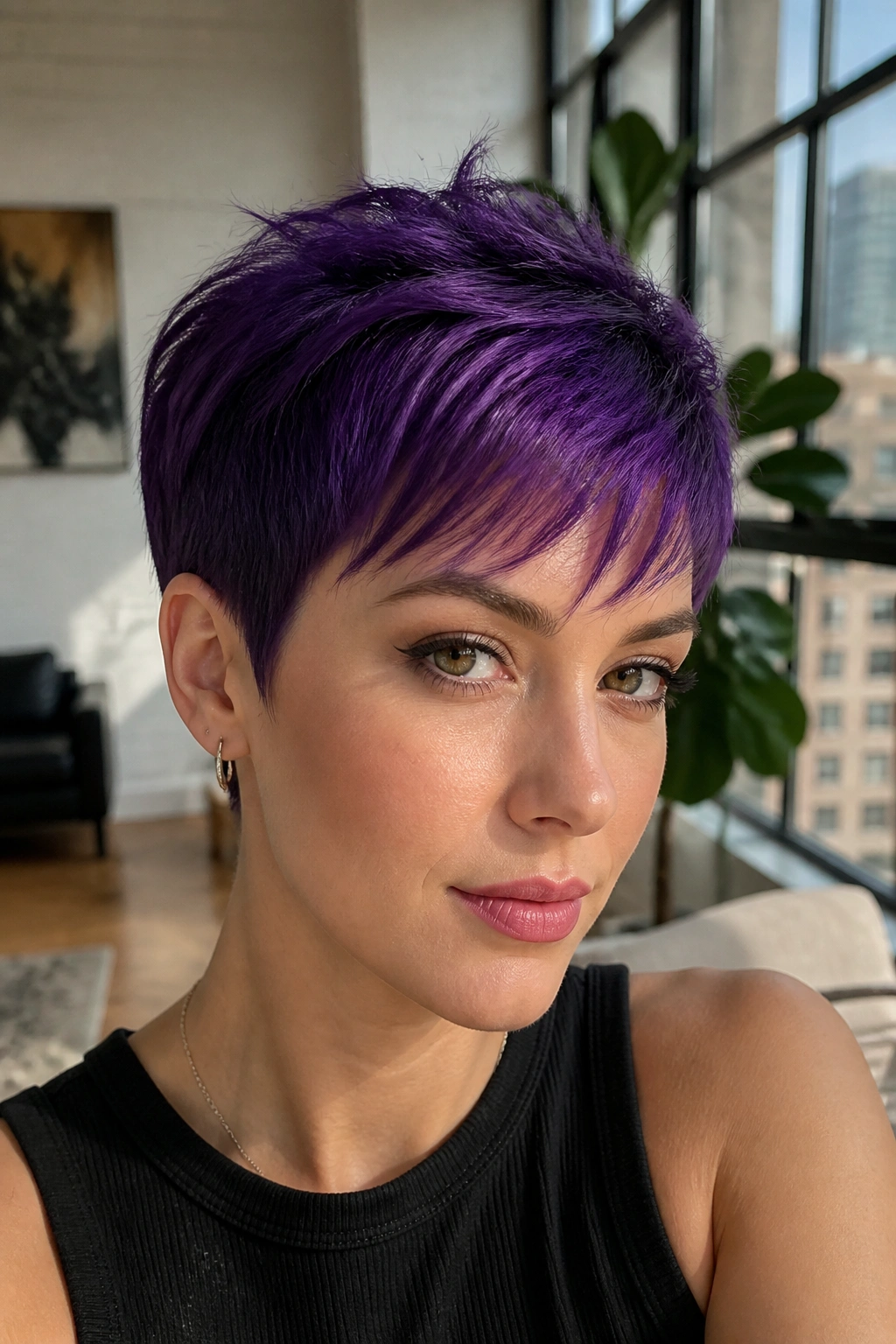
A pixie cut can carry more color than people expect. Deep amethyst is proof. On a short crop, the saturation lands fast, and cool skin gets a rich violet frame that feels strong without needing length to do the work.
This color is especially nice on sharp pixies with a little texture on top. The movement on the crown lets the violet shift between blue, plum, and black depending on the light. That shift is half the fun. It keeps the color from turning into one hard block.
Because the cut is short, the color can actually look easier to maintain than it would on long hair. You have less surface area to fade. But the tone itself still needs care, since dark violet can go flat if the hair is dry.
A little shine product helps a lot here. So does a trim schedule that keeps the shape crisp. Short hair and soft color are a nice pairing, but only when the lines stay clean.
12. Blue-Purple Split Dye
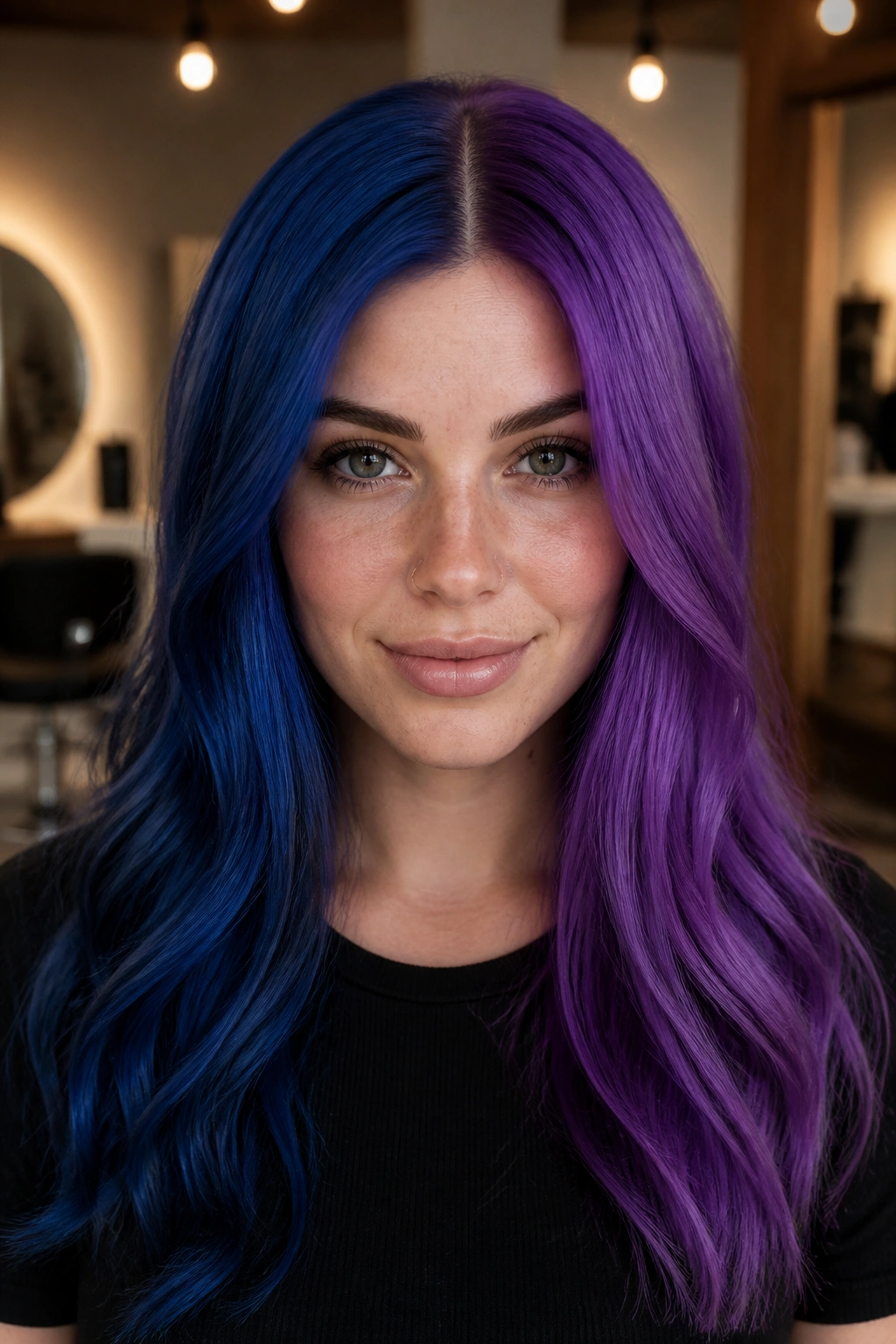
Split dye is for the person who likes a clear answer, not a whisper. One side blue, one side purple. No guessing. No fading around the point.
On cool skin, this style works because both colors stay inside the same family. You get contrast without fighting undertones. If the blue is cobalt and the purple is amethyst, the whole look can feel bold without getting messy. The face tends to sit nicely between the two shades, almost like a frame.
This is one of the few color ideas that looks best when the haircut has a defined part or an obvious shape. A blunt bob, a wolf cut, or even long straight hair can handle it well. Curly hair makes the split softer, which may be a plus if you want less edge.
The maintenance is not subtle. You’ll need to refresh one side before the other sometimes, which is a little annoying. Still, if you like color with a graphic feel, it’s hard to beat.
13. Prism Peekaboo Panels
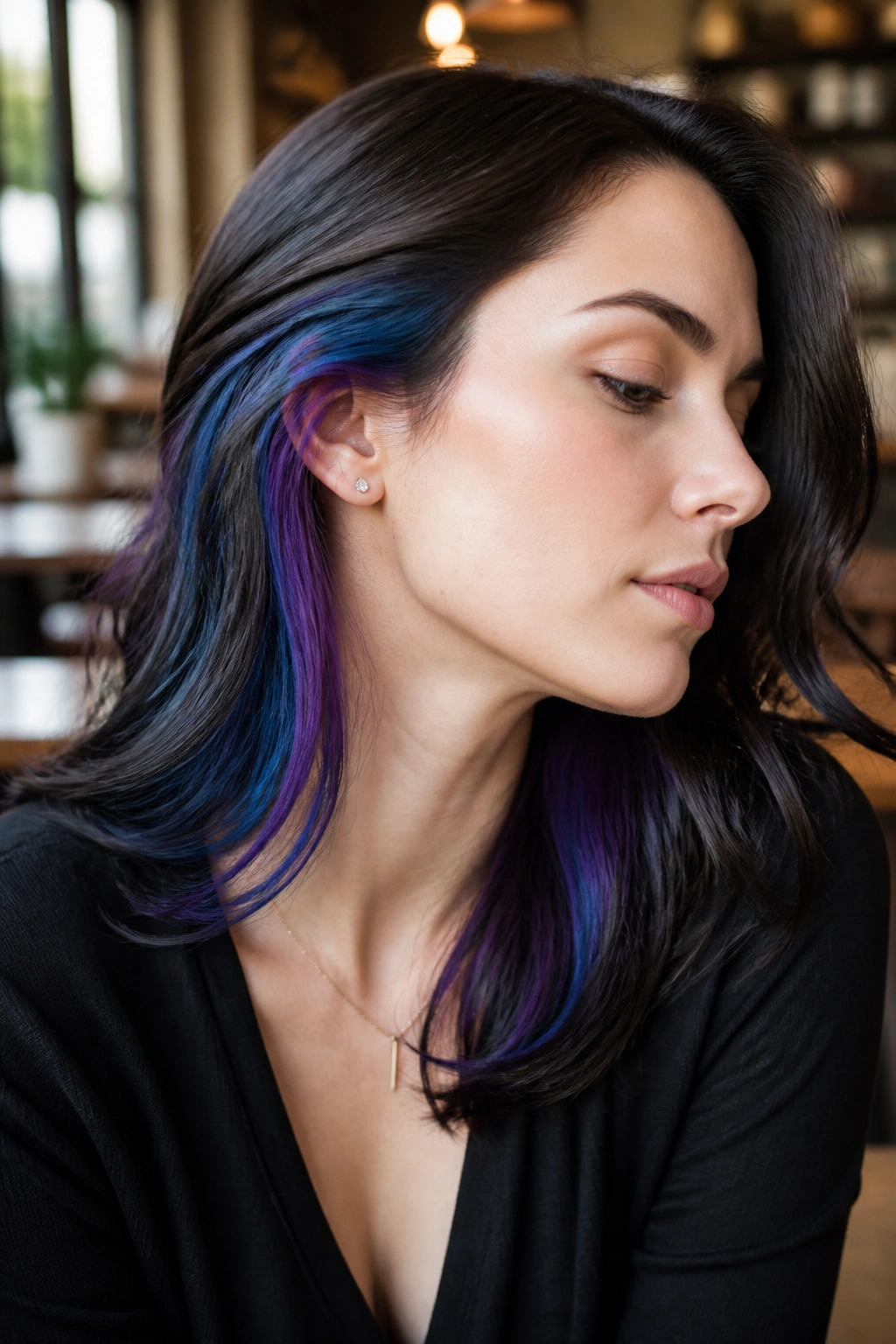
Peekaboo panels are the quiet cousin of full-on fantasy color. They hide under the top layer, then flash blue-purple when you move, tuck your hair behind your ear, or catch a gust of wind. On cool skin, that surprise works well because the color appears close to the face without taking over the whole head.
I like this approach for people who want color at work or school but need to keep the top layer more neutral. Dark brown, black, or cool blonde top layers all work. The hidden panels can be a vivid blue-purple or a softer indigo-lilac mix, depending on how loud you want to go.
The nice part is flexibility. You can make the panels chunky and bold or thin and almost secret. If you wear your hair in braids or half-up styles, the color shows off more. If you leave it down, it stays tucked away until it decides to show itself.
That little reveal is the whole charm. It feels personal.
14. Navy with Violet Ribbons
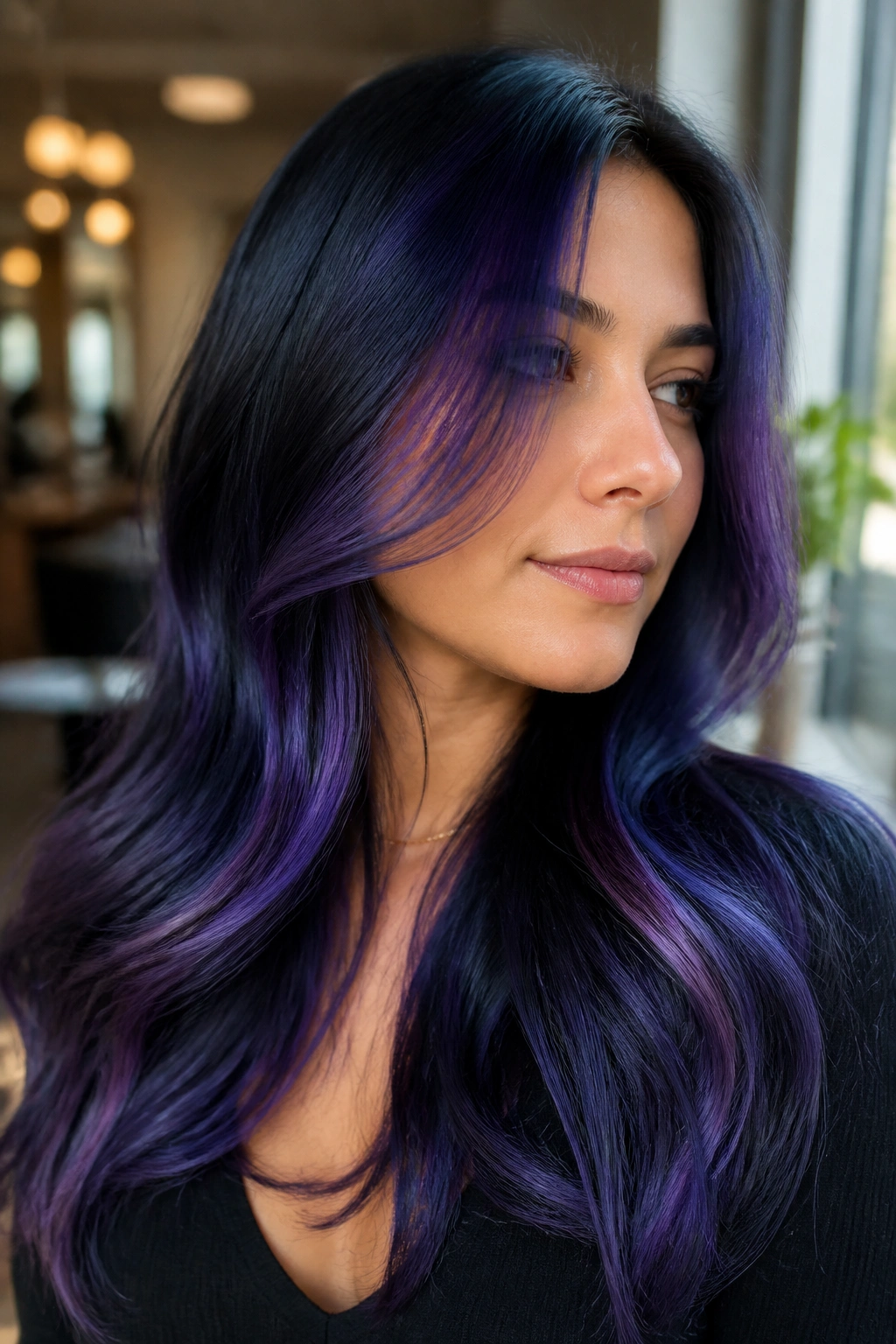
Navy with violet ribbons is one of those styles that looks richer than it sounds. The base stays dark and inky, while fine violet pieces weave through the mids and ends. On cool skin, the effect is sleek and flattering, especially if you want depth more than brightness.
Where the Ribbons Should Sit
Place the violet ribbons where the light naturally hits: around the face, through the outer layers, and near the bottom bends of the hair. If the ribbons are buried too deep, the color disappears. If they’re too wide, the style loses the woven look and starts to feel chunky.
This shade works beautifully on long hair and softer layers because the movement helps the two tones separate. Straight hair can wear it too, but the contrast will be sharper and less airy. That’s not a bad thing. It just changes the mood.
A navy base also gives you a bit more breathing room on upkeep. As the violet fades, the whole look still holds together. You are not left with a wreck. You are left with a darker, quieter version of the same idea.
- Great for cool brunettes
- Easy to keep wearable
- Needs shine to avoid looking muddy
- Pairs well with sharp eyeliner and cool nude lips
15. Soft Cornflower Ends
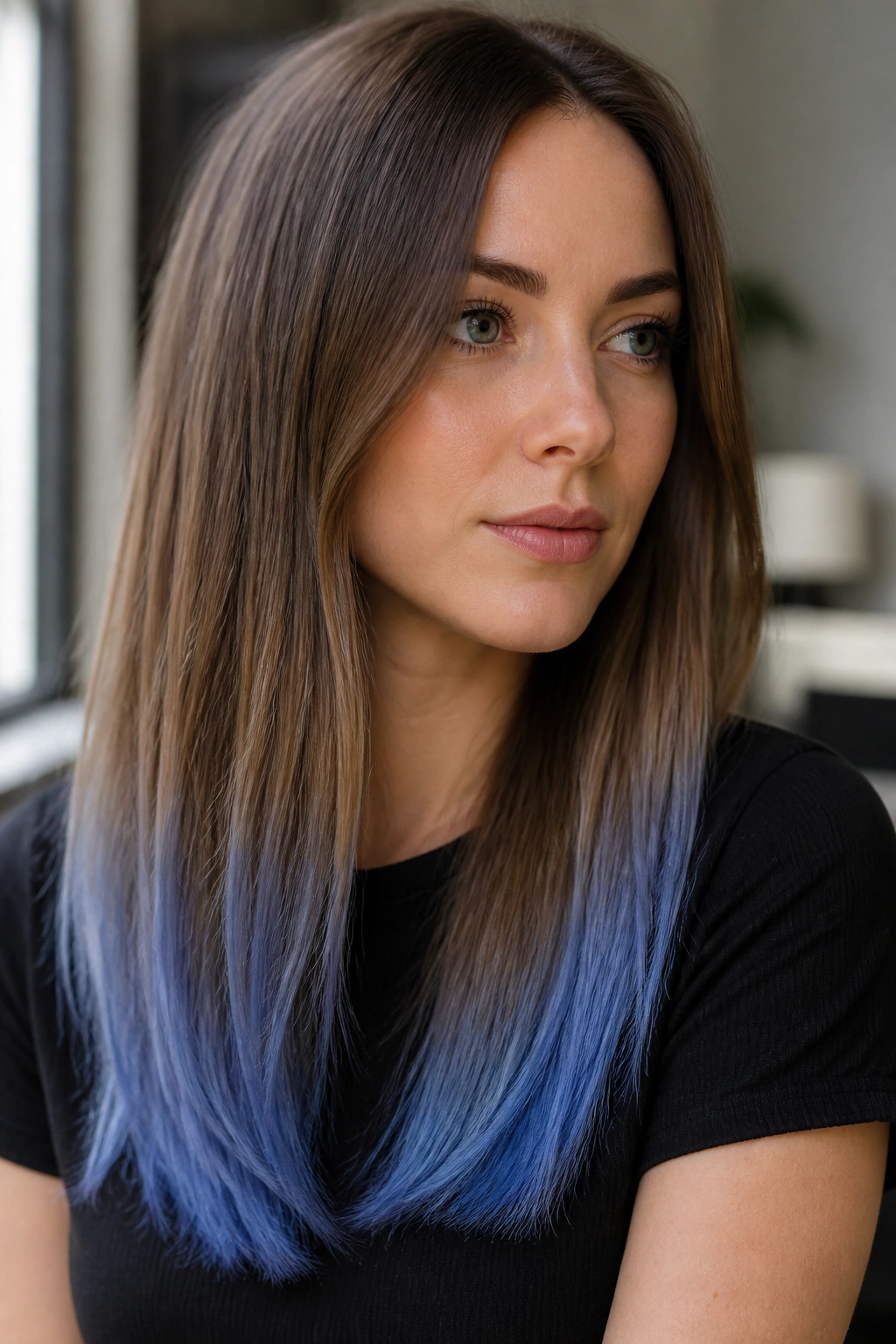
Soft cornflower ends are for people who want a blue-purple idea that feels almost gentle. The shade sits lighter than indigo, darker than pastel, and has enough blue in it to stay cool on the skin. It works best when the color is concentrated on the last few inches of hair.
This look is especially good on long straight hair, loose waves, or soft curls. The color shows clearly at the bottom, where the eye lands first, and it gives the hair a kind of floating edge. On cool skin, cornflower blue with a touch of violet can make the face look bright without harsh contrast.
If you want this to read clean, the cut has to be tidy. Dry ends will make the color seem frayed. A blunt trim helps the blue look smooth and intentional.
The nice part is that this shade can grow out without looking awkward for a while. Since the roots stay natural or close to natural, you are not racing the salon clock every few weeks.
16. Royal Blue Curly Crop
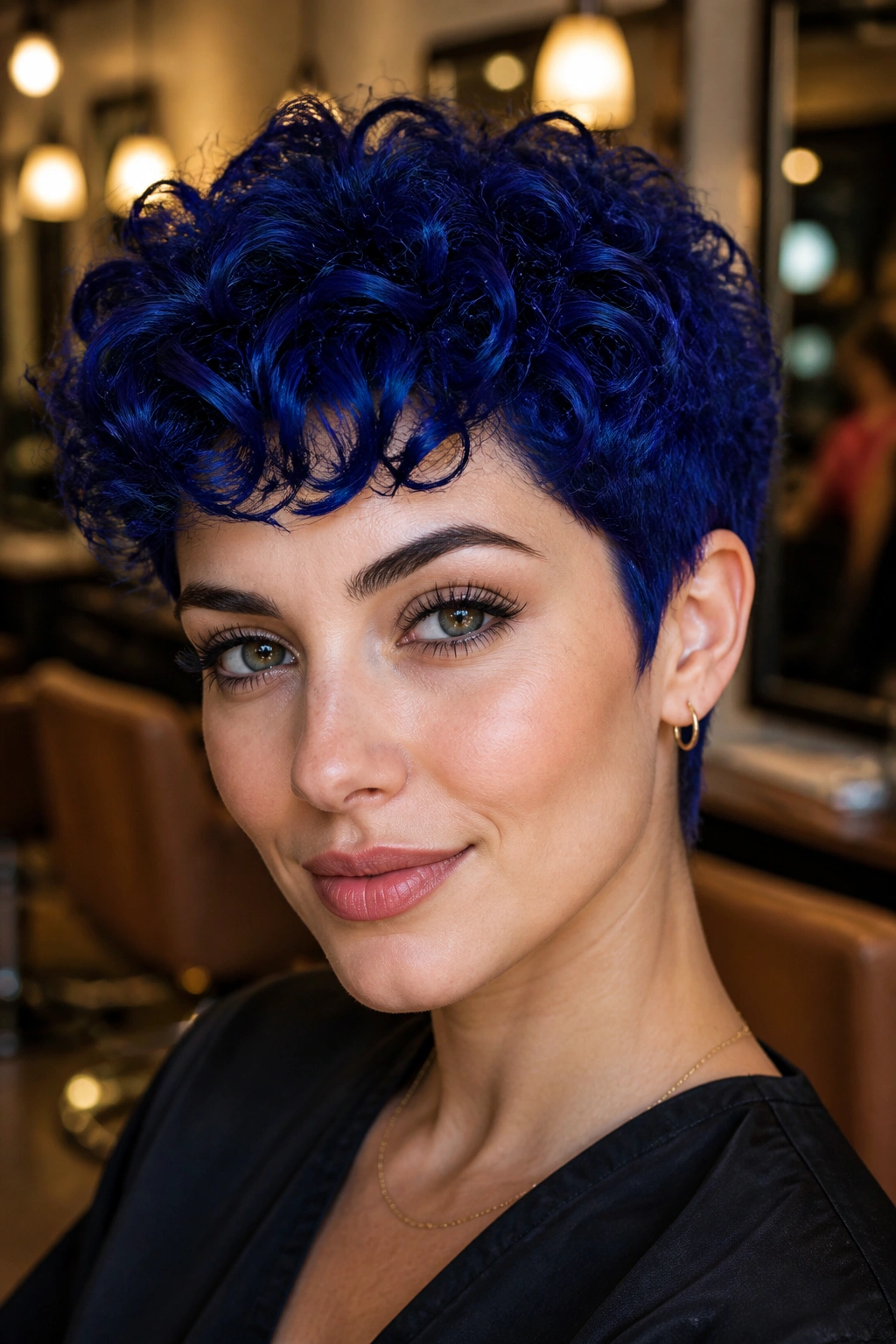
Curls make royal blue richer. That’s the short version. Each curl catches the color a little differently, so the shade never looks flat, and cool skin gets a clean, vivid frame that moves.
A curly crop is one of the most forgiving places for royal blue because the shape does half the styling work. The color sits on the bends, the ridges, and the little shadows between curls. That gives it depth. On cool skin, the effect can look bold and fresh instead of too loud.
This one is especially good if you want to show off texture. Blue on curls can make the curl pattern stand out more, which is useful if you’ve spent years trying to find a shade that doesn’t hide your hair’s shape.
Keep the color rich by moisturizing the curls properly. Dry curls swallow pigment fast. A leave-in with slip and a curl cream that does not leave a greasy film will help the color read glossy instead of matte.
17. Smoky Iris Balayage
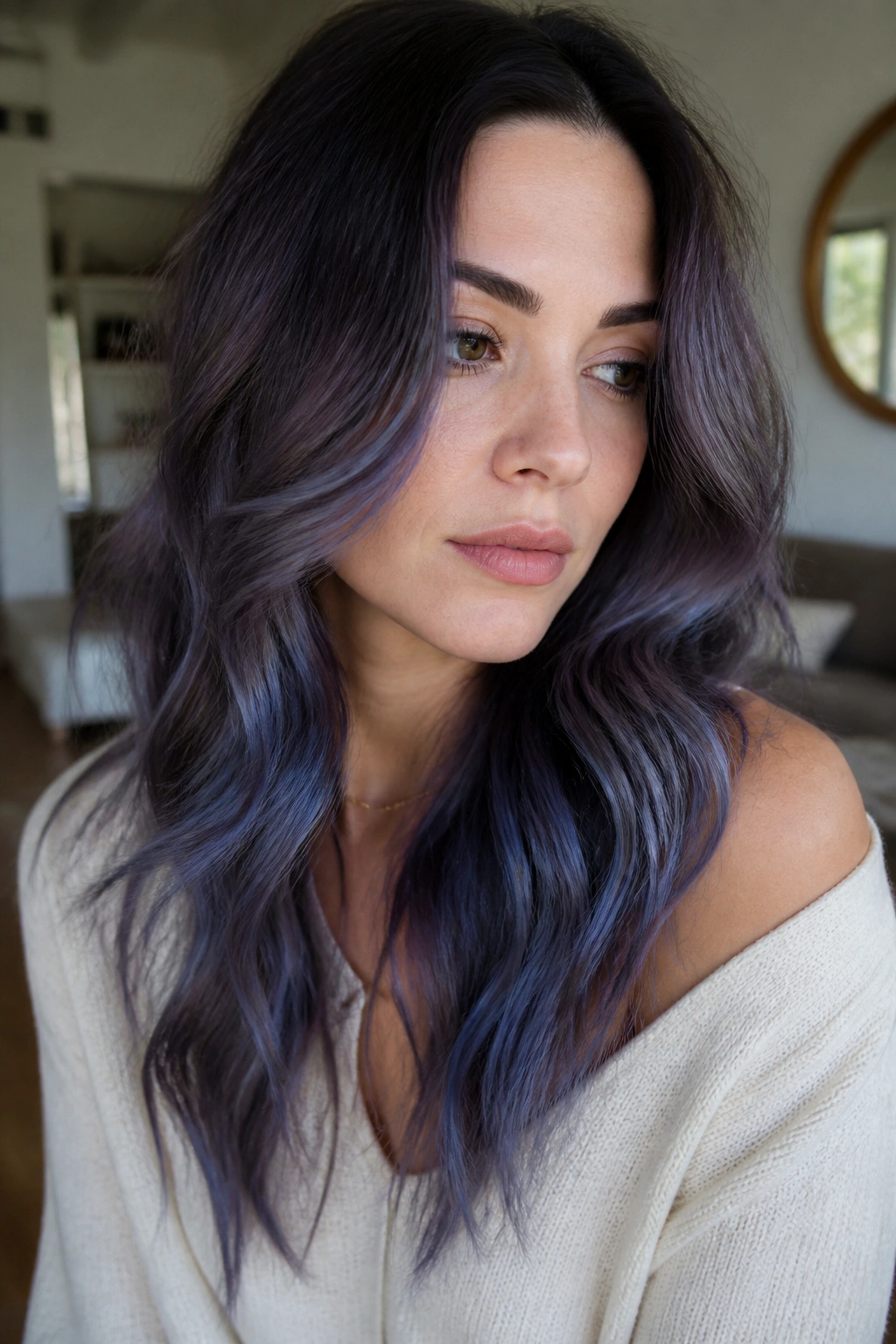
Smoky iris is the shade for people who want blue-purple hair that feels moody, not bright. It sits somewhere between blue-gray and violet, which makes it a very good match for cool skin that likes soft contrast instead of harsh pop.
Balayage keeps the shade from looking too heavy. You can paint the iris tone through the mid-lengths and ends, then leave the root area darker or more neutral. That gives the eye somewhere to rest and keeps the color moving. On wavy hair, it’s especially nice because the ripples break up the darker and lighter pieces.
This look works with silver pieces, ash blondes, and deeper brunette bases that have been lightened in a controlled way. You do not need pure pastel to get a pretty result. In fact, too much lightness can strip away the smoky part that makes this shade special.
It’s a grown-up color, but not a boring one. There’s a difference.
18. Cosmic Blueberry Melt
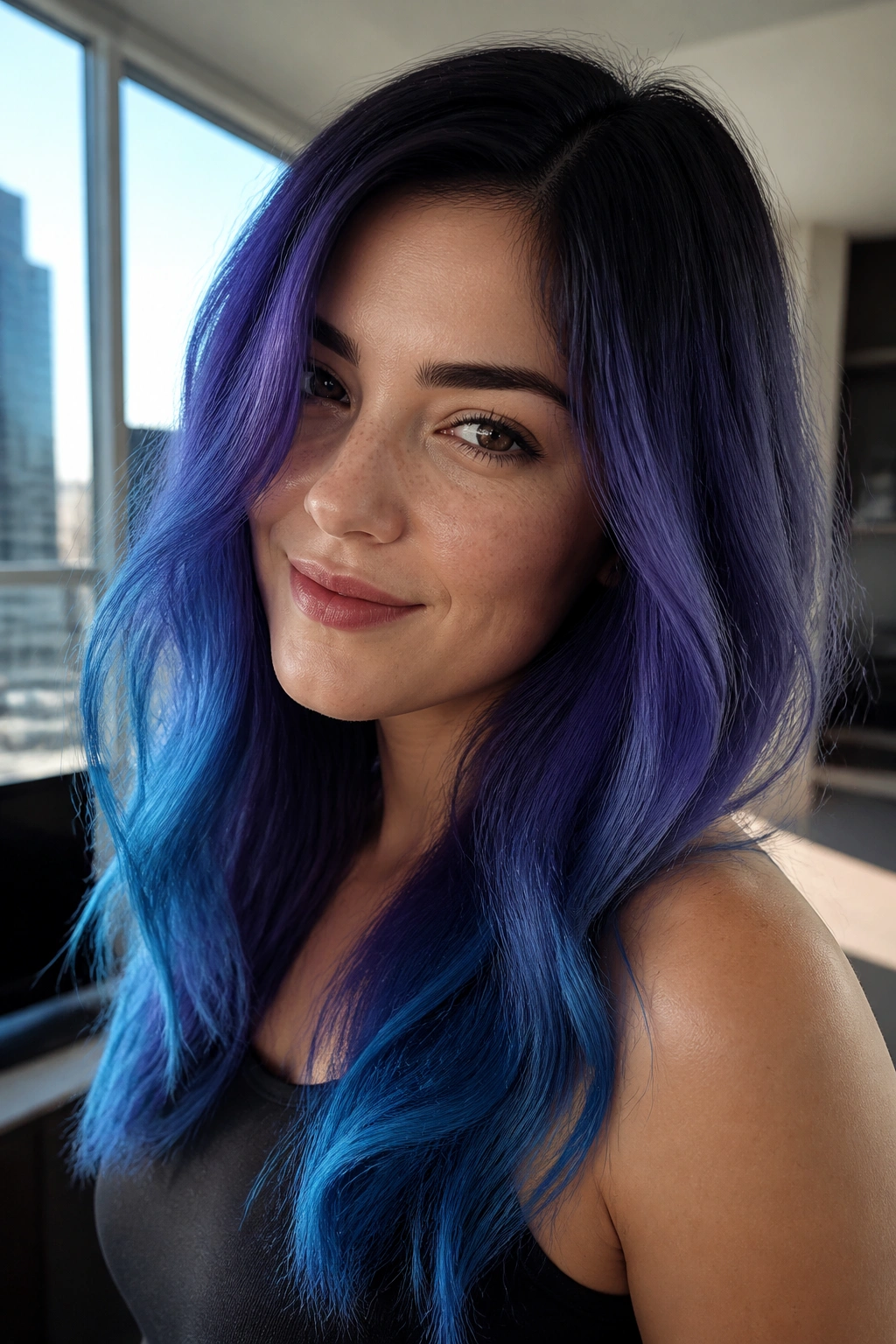
Cosmic blueberry is the richer, louder cousin in the family. It keeps the blue-purple base, but pushes the saturation up so the color looks plush and deep instead of airy. On cool skin, that depth can be flattering in a way that feels almost jewel-like.
The melt effect helps the shade stay dimensional. A darker root, a blue-violet midsection, and a slightly brighter blueberry end keep the hair from becoming one solid block. That matters a lot if your hair is thick or layered. The different tones give the cut shape.
This is a strong choice for people who want their color to read from across the room. It’s not shy. Still, because the palette stays cool, it usually feels cleaner than warmer fantasy shades that can skew red or pink.
If you like dark lip color, silver liner, or a dramatic wardrobe, this shade plays nicely with all of it. It has enough personality to keep up.
19. Blue-Violet Halo Color
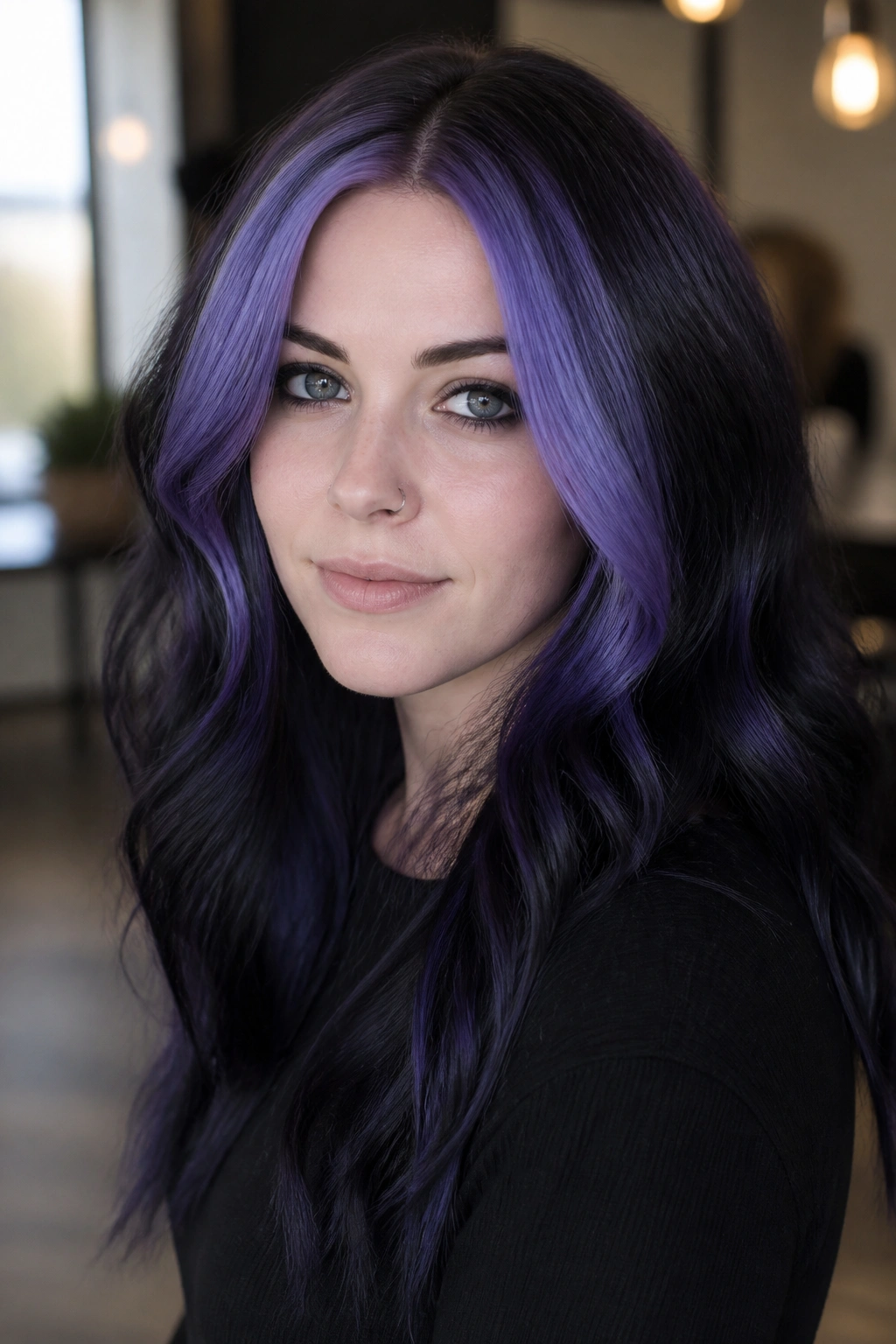
A halo color puts the bright shade where your eye wants to go first: around the face, the crown, and the top layer. Blue-violet makes a particularly good halo because it can brighten cool skin without needing a full-head commitment.
The appeal here is focus. Instead of dyeing everything, you color the visible perimeter. That means your face gets the strongest effect, while the lower layers can stay darker or more neutral. It’s a smart move if you want a color that works with updos, half-up styles, and loose waves.
How to Wear It
Keep the halo a little brighter than the rest of the hair. That contrast gives the style shape. If everything is the same value, the color loses its frame and starts to look mushy.
This one is especially good on layered cuts with movement near the crown. The blue-violet pieces lift and fall with the hair, which makes the halo shift instead of sitting there like a hard stripe.
- Best for medium to long hair
- Works well with top layers and face-framing sections
- Needs regular toning if the base is very pale
- Looks elegant with simple makeup and clean skin
20. Velvet Indigo Curtain Layers
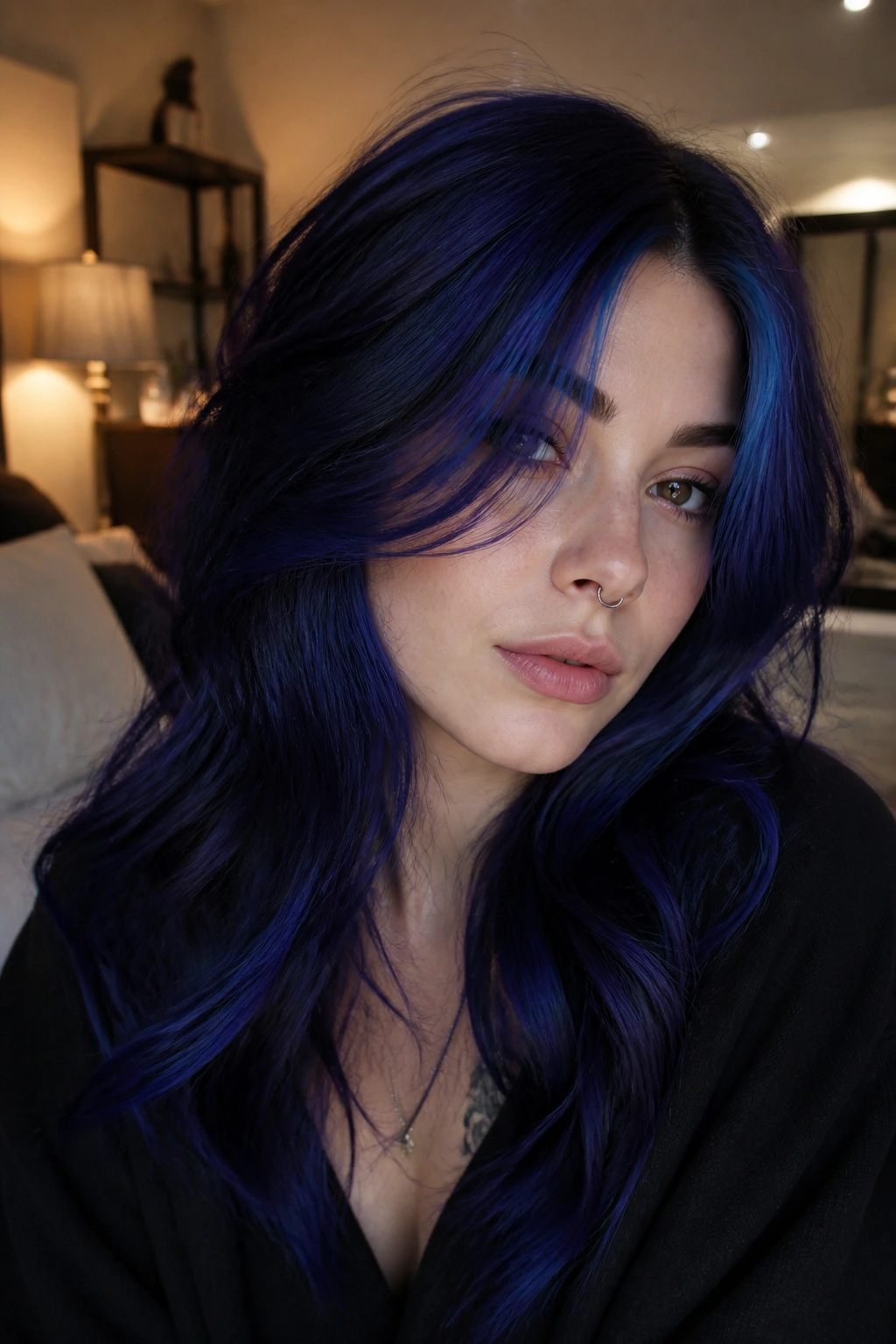
If you want one blue-purple look that balances drama and wearability, velvet indigo curtain layers are hard to beat. The indigo keeps the shade cool and deep. The curtain layers make sure the color frames the face instead of disappearing into the length.
This style works especially well when the front pieces are a touch brighter or bluer than the back. That slight shift pulls attention upward, which can flatter cool skin in a very natural way. The color feels intentional, not sprayed on. It also has enough darkness at the root and interior layers to stay wearable even if you do not live at the salon.
I like this one for people who want movement, shine, and a little mystery. It is not soft in the way periwinkle is soft. It is softer than electric cobalt, though, and that middle ground is exactly why it works.
If you were only going to save one reference from this whole list, I’d save this one. It does a lot without looking busy.
The Bottom Line
Cool skin and blue-purple color get along best when the shade stays blue-leaning, violet-leaning, or smoky instead of red-heavy. That one choice changes everything. It decides whether your hair sharpens your face or muddles it.
The easiest rule is simple: the lighter and more pastel the shade, the more carefully the base needs to be lifted. The darker and smokier the shade, the easier it is to wear on less-lightened hair. That’s why a periwinkle balayage and a midnight blue-black gloss can live in the same color family but serve totally different people.
Pick the version that fits your cut, your maintenance habits, and the kind of contrast you like seeing in the mirror. Blue-purple hair has range, and that’s the fun part.
