



Cool skin tones and rose hair color are a better match than most people expect—if the pink leans blue, violet, or smoky, the whole look feels intentional instead of sweet in a childish way. Warm, peach-heavy rose shades can fight with cool undertones fast. A cooler rose, though, brings out the pink in the skin, sharpens the eyes, and makes silver jewelry look right at home.
The trick is not finding “pink hair.” It’s finding the right kind of pink. Some roses sit almost in lilac territory. Others read like crushed berries, old velvet, or a pale blush washed over blonde hair.
That range matters. Cool skin tones can carry everything from pale rose quartz on level 10 blonde to deeper merlot-rose on brunette bases, but the wrong undertone can make the color look flat or muddy. I keep coming back to one rule: the cooler the skin, the more useful violet, blue-red, and mauve pigments become.
Muted is usually smarter than loud.
These 20 rose ideas cover soft glosses, smoky brunettes, money pieces, and high-contrast panels, so you can match the shade to your base instead of forcing your base to do all the work.
1. Icy Rose Quartz
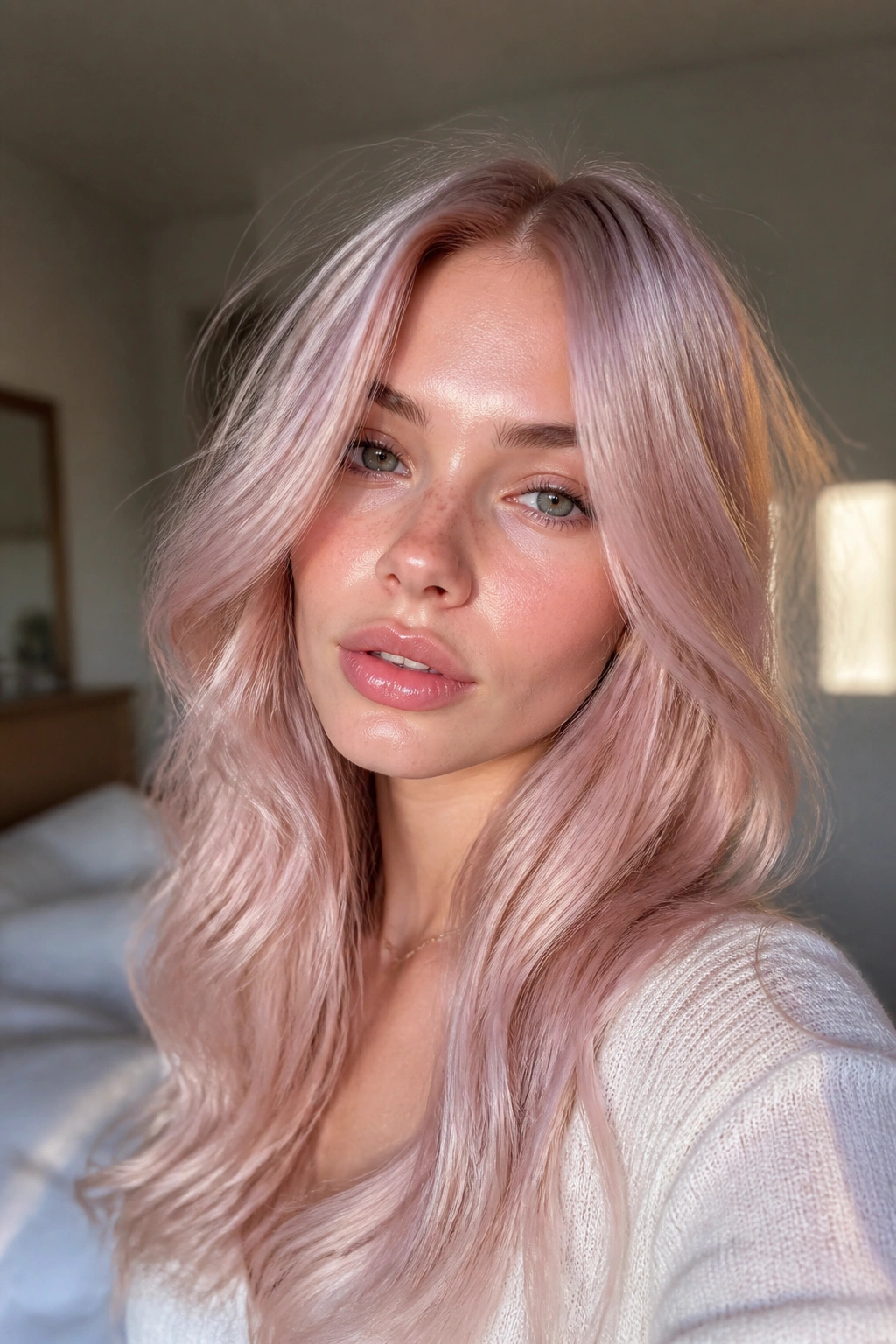
Icy rose quartz is the shade I recommend when someone wants rose hair color to look airy, expensive, and a little bit frosted. It sits on a very pale blonde base and uses a blue-violet pink, not a peach pink, so it flatters cool skin instead of warming it up.
Why It Flatters Cool Skin
The coolness of the shade echoes the coolness in the complexion. That’s the whole trick. On porcelain skin, it can make the face look brighter; on light-medium cool skin, it adds contrast without going harsh.
- Best starting point: level 10 blonde or very pale level 9
- Best toner family: pink-violet or rose-lilac
- Upkeep: every 4 to 6 weeks
- Finish: glossy, glassy, never chalky
Pro tip: Ask for a sheer, translucent formula. If the pink gets too dense, it starts looking flat instead of icy.
This one loves short cuts, especially blunt bobs and airy layers. The straight edge of a bob makes the shade look cleaner, while waves soften it into something more romantic. Either way, the color works best when the hair is in good condition, because pale rose shows dryness fast.
2. Dusty Rose Lob
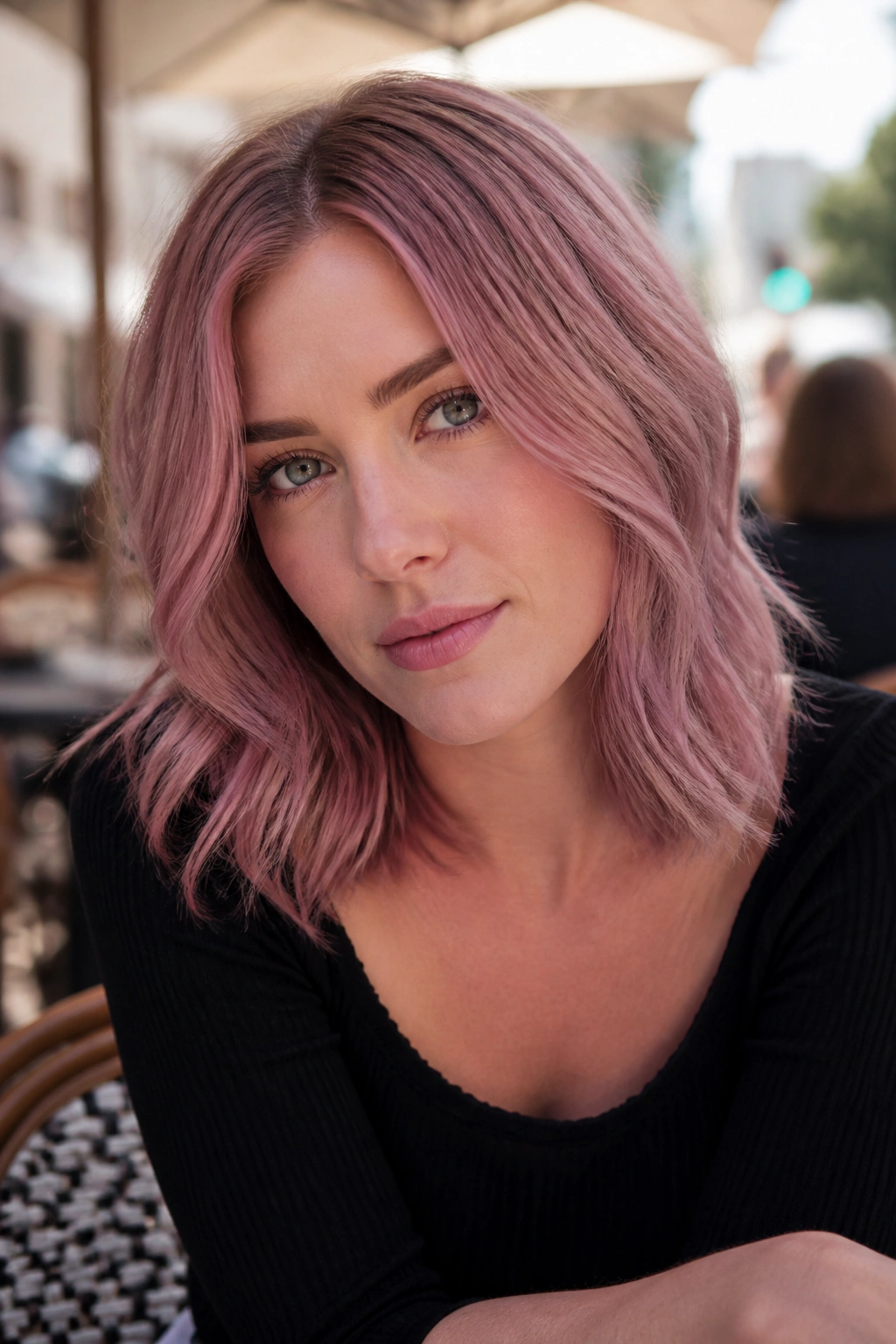
Dusty rose is the shade that makes people think you spent more time on your hair than you actually did. It’s muted, a little smoky, and easy to wear with cool skin because the softness keeps it from reading loud or candy-bright.
It’s also one of the more forgiving rose colors for daily life. A level 8 or 9 blonde base gives it enough brightness, but the muted finish hides a bit of fade better than a crisp pastel would. That matters. A lot.
What Makes It Wearable
Unlike shiny bubblegum pink, dusty rose has a gray-beige veil over it. That veil keeps the color from clashing with pink cheeks or cool olive undertones, which can happen when the shade is too warm.
How I’d Ask for It
- Rose toner with a smoky beige-pink base
- Soft root shadow for depth
- Should fade into a pale blush, not orange
- Works well on a lob, collarbone cut, or long layers
If you like color that looks polished but not precious, this is a strong pick. It has enough personality to feel deliberate and enough restraint to stay in rotation.
3. Smoky Mauve Rose
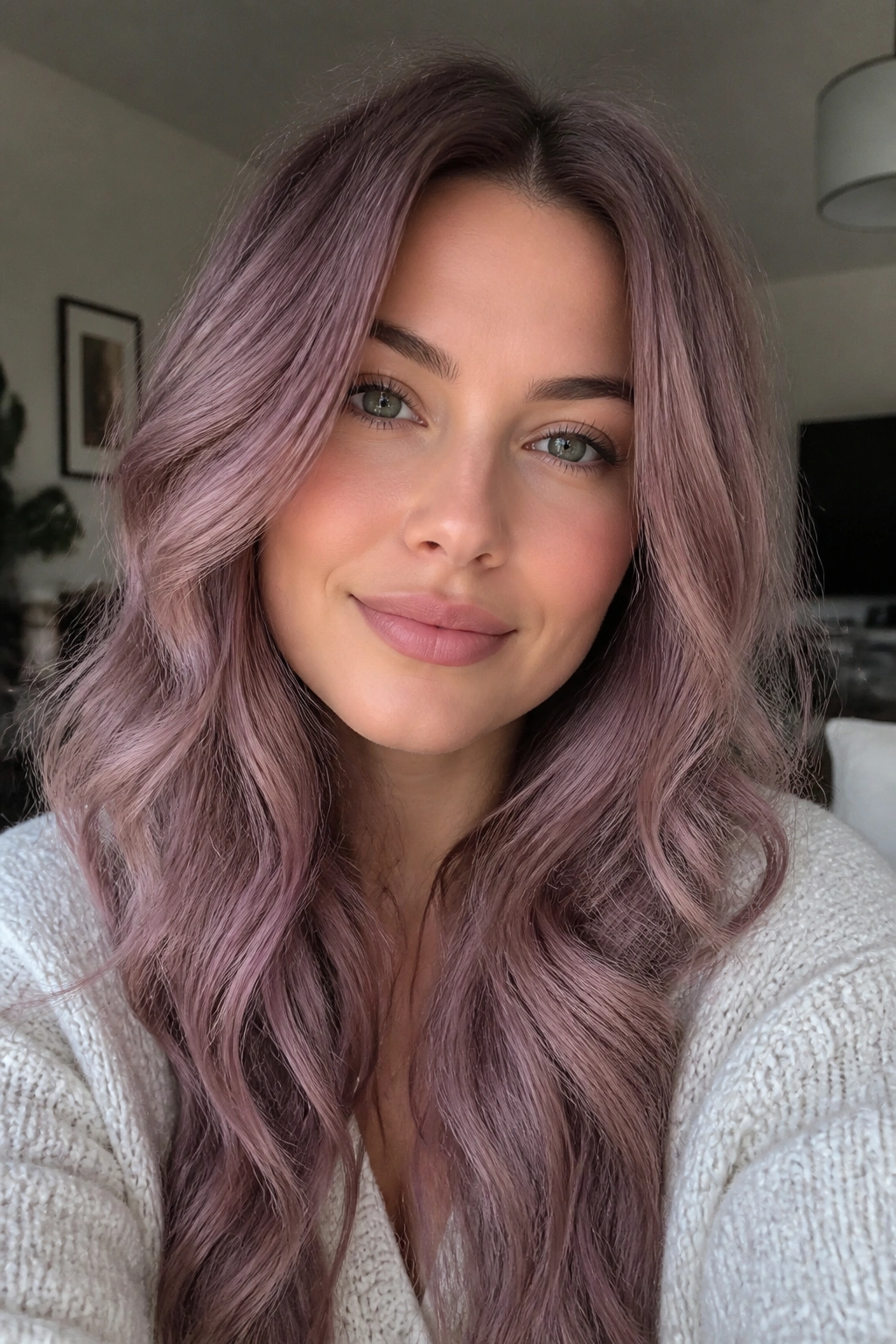
Why does mauve look so good on cool skin? Because it doesn’t fight the undertone at all. It joins it.
Smoky mauve rose lives in that lovely middle ground between pink and purple, and the smoky part keeps it grounded. I like it on people who want rose hair color ideas for cool skin tones but don’t want to end up with something sugary or too bright around the face.
How to Wear It
The best version starts with a level 8 to 9 base and gets toned with a violet-rose glaze. If the hair is very porous, the mauve can grab darker than expected, so a salon gloss after lightening helps keep the shade even from root to tip.
Why It’s a Smart Choice
This color has range. Under soft indoor light it looks muted and refined; in brighter light, the violet in it wakes up and the whole thing feels more dimensional. That kind of shift is why I keep recommending it to clients with blue eyes, gray eyes, or cool green eyes.
One more thing: it ages better than a pure pastel. It fades into a dusty lavender-pink instead of going brassy.
4. Berry Rose Melt
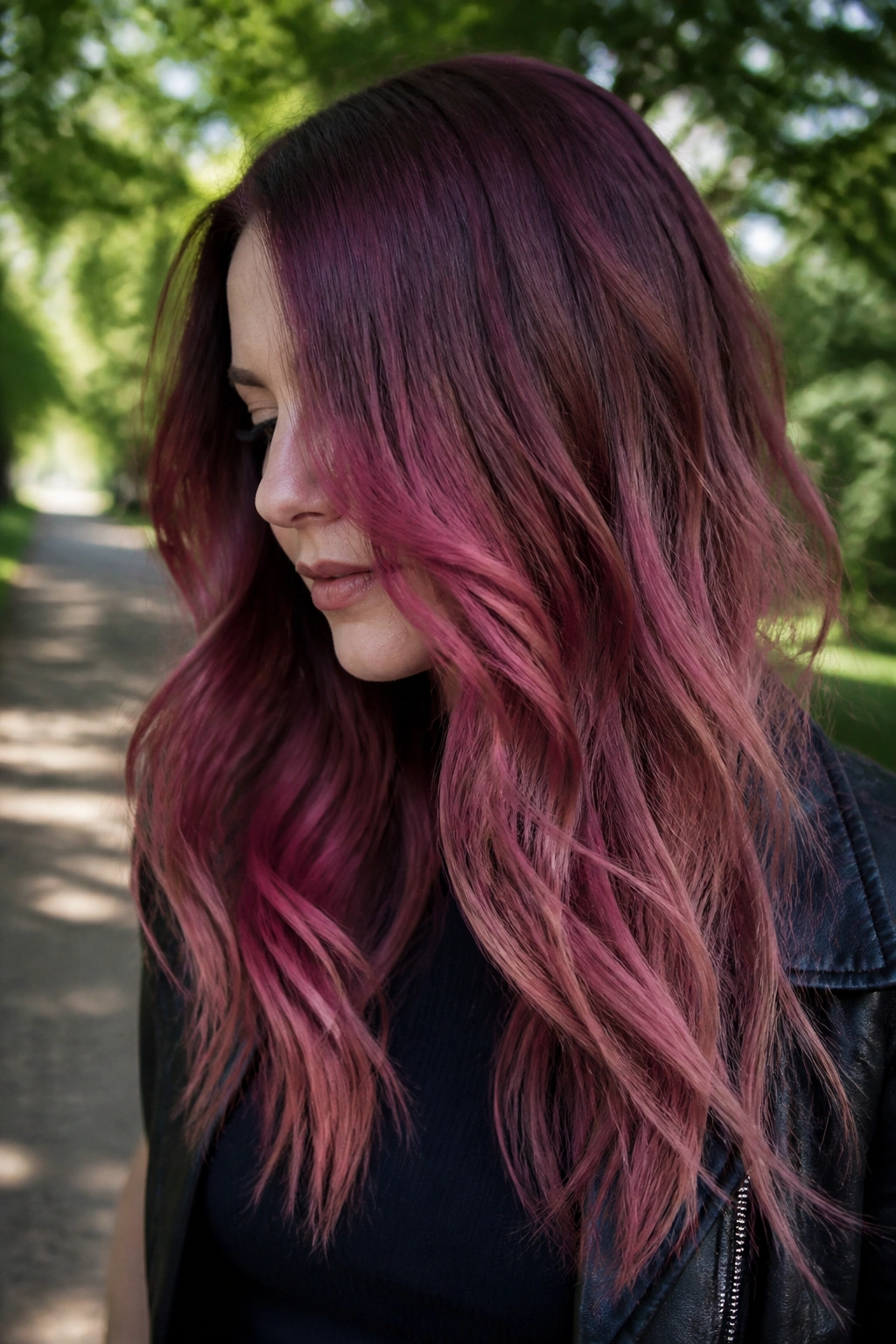
Berry rose melt is for someone who likes color with a little backbone. The roots stay deeper, usually in the brunette or dark blonde range, and the mids and ends fade into berry-pink rose. It feels richer than a pastel and less severe than full red.
A melt works especially well on cool skin because the darker base gives the face structure. The rose pieces around the lower half of the hair keep the look soft. That contrast matters when you want something vivid but not shouty.
Key Details I’d Ask a Colorist For
- Shadow root in cool brown or soft black
- Berry-rose midlengths
- Rosier ends, not orange-red ends
- Long waves or layered cuts to show the gradient
A shoulder-length cut does a lot for this shade. The color shift is easier to see, and the movement keeps the berry tones from feeling heavy. If your style leans dramatic but you still want something wearable, this is a clean answer.
It’s not low-maintenance, though. The berry edge will fade. That fade is part of the charm.
5. Blush Pink Gloss
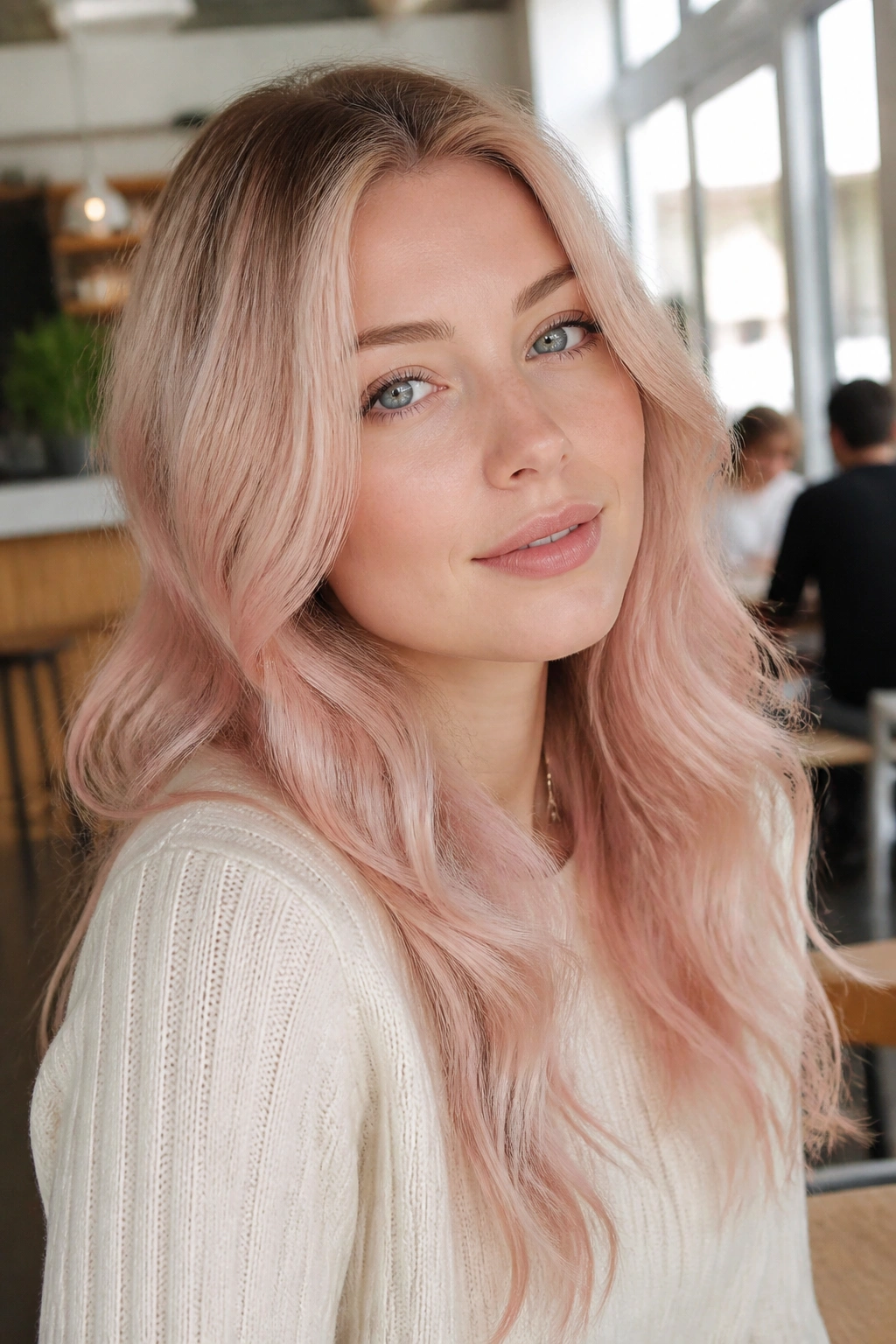
Blush pink gloss is the shade I suggest when someone wants a whisper of rose instead of an obvious dye job. It’s soft, light, and reflective, which makes cool skin look fresh rather than washed out. The best version is sheer enough that you can still see the base blonde through it.
This is a smart route if your hair is already light and you don’t want to commit to heavy pigment. A gloss can add tone, shine, and a touch of pink without the long-term drama of a permanent formula. That matters on fine hair, where too much color can look blocky.
The nicest part is how it fades. It usually slips toward pale beige or a barely-there strawberry blush, which is easier to live with than a pink that suddenly turns peach. If you like a neat, polished finish, keep the haircut simple: long layers, a blunt bob, or a soft fringe.
One-sentence truth: shiny beats saturated here.
6. Silver Rose Balayage
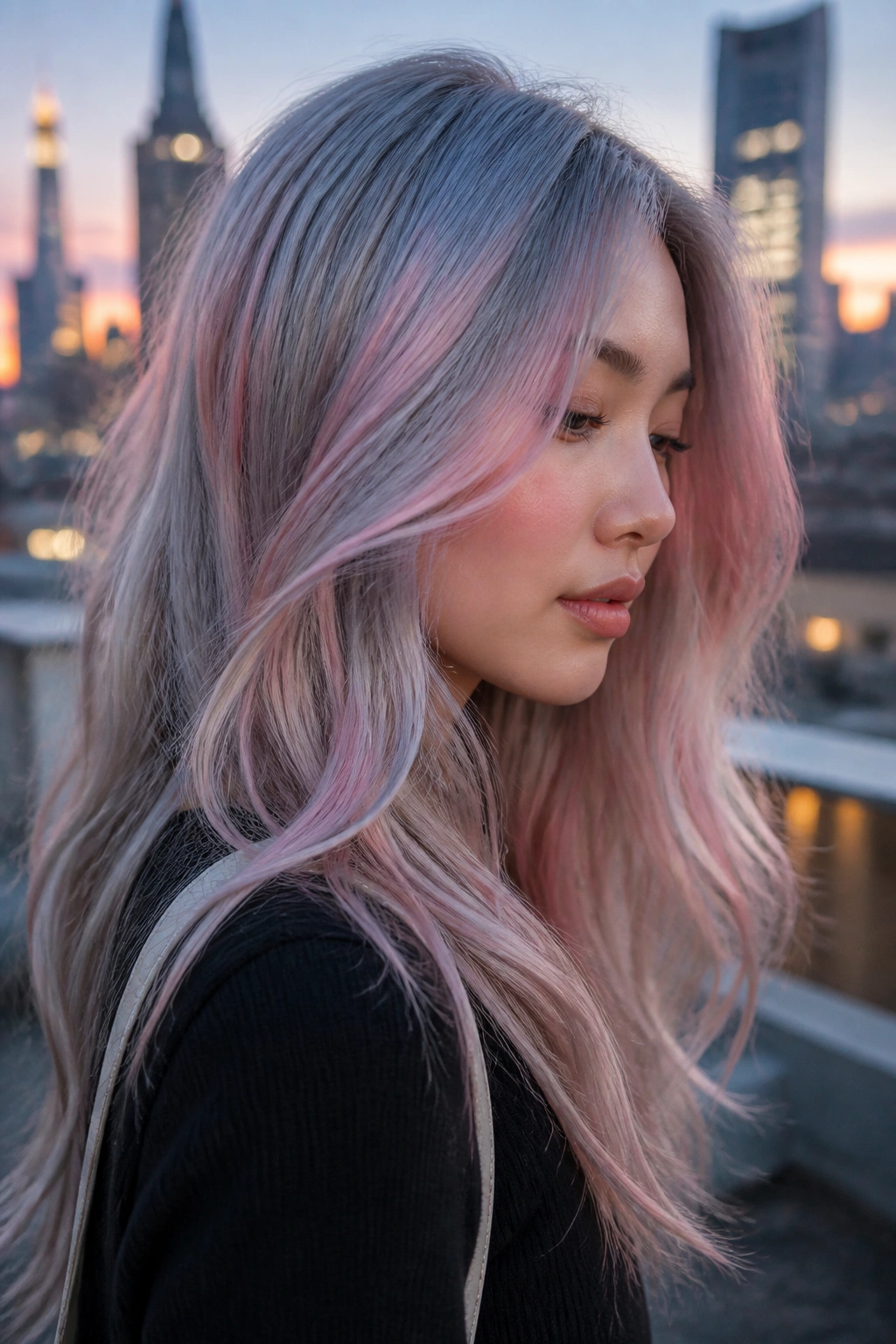
Silver rose balayage is where cool skin tones get to have some fun. The silver base keeps the overall effect crisp, while the rose ribbons add warmth only in the places that need it. That balance keeps the color from reading flat under natural light.
Unlike an all-over pink, balayage gives you dimension. The painted pieces catch the eye first, then the silver-gray between them does the quiet work. On cool skin, that contrast can be sharp in a good way, especially if your wardrobe leans black, charcoal, white, or denim.
What Makes It Different
Balayage lets the rose live in ribbons instead of a solid block. That means you can push the pink brighter near the front and keep the back softer. It also means grow-out looks less abrupt.
Best Fit
- Cooler blondes who want depth
- Medium-length hair with waves
- People who like high style but not constant root pressure
If you wear your hair straight, the effect is sleek. If you wave it with a 1-inch iron, the silver and rose pieces separate just enough to look expensive without trying too hard.
7. Rosewood Brunette
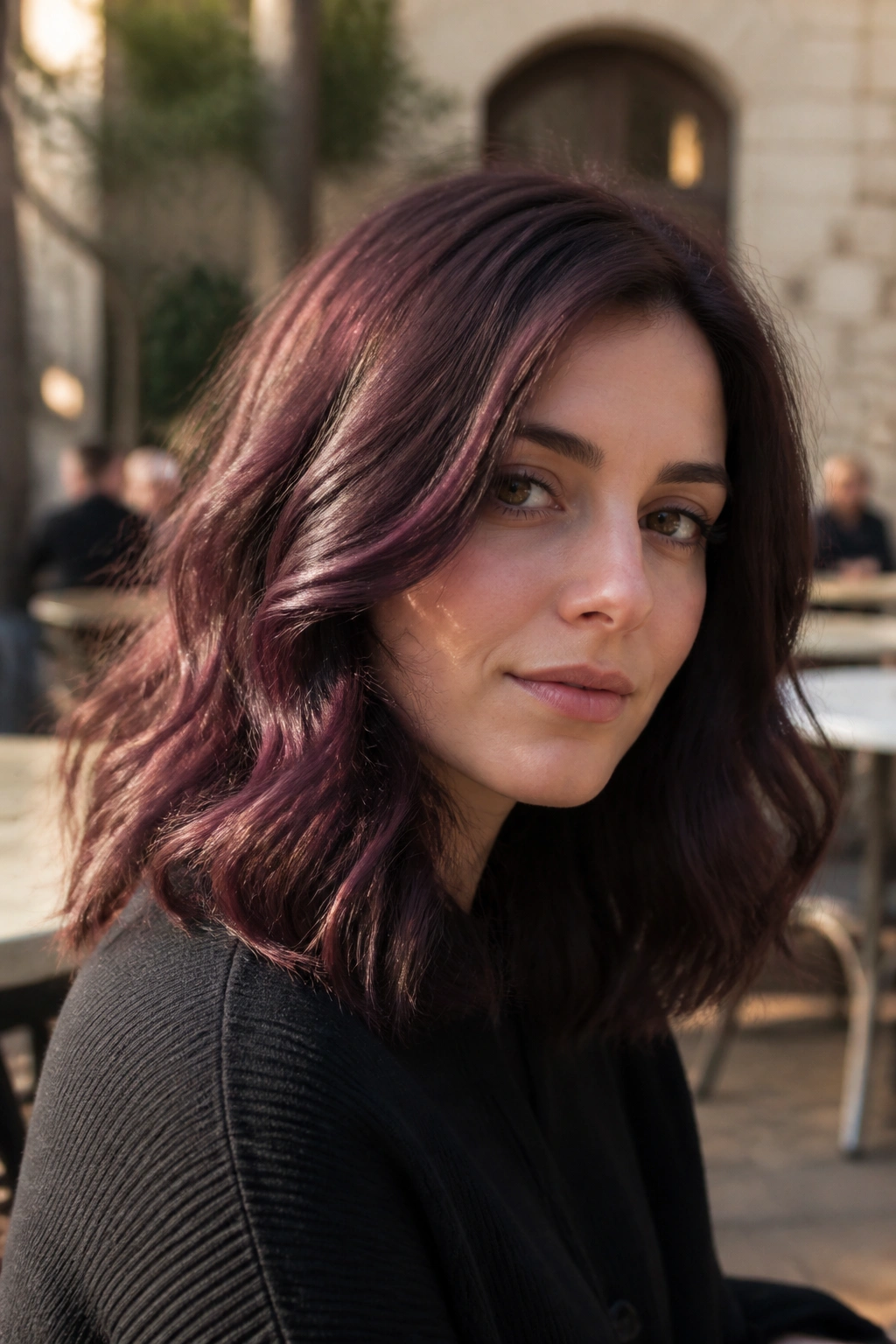
Rosewood brunette is one of my favorite options for cool skin because it proves rose hair does not have to be pale to work. The color sits on a brown base, then picks up a rose sheen that shows in light instead of screaming pink from across the room.
That sheen is the magic. It gives depth to brown hair that can sometimes look one-note after coloring. On cool undertones, rosewood reads polished and balanced because the red is cooled down, almost like dried petals pressed into wood.
Why It Works So Well
The brown base keeps the color grounded. The rose overlay gives movement. Together, they create a shade that feels richer than a plain brunette and easier to maintain than a pastel blonde.
If your hair is naturally dark, this is one of the gentler entries on the list. You may only need partial lightening on the front pieces or on the ends, depending on how much rose you want to show. That makes it a good bridge color if you’re nervous about going full vivid.
I especially like it on shoulder-length cuts with soft bends. It looks expensive. Not flashy. Just expensive.
8. Plum Rose
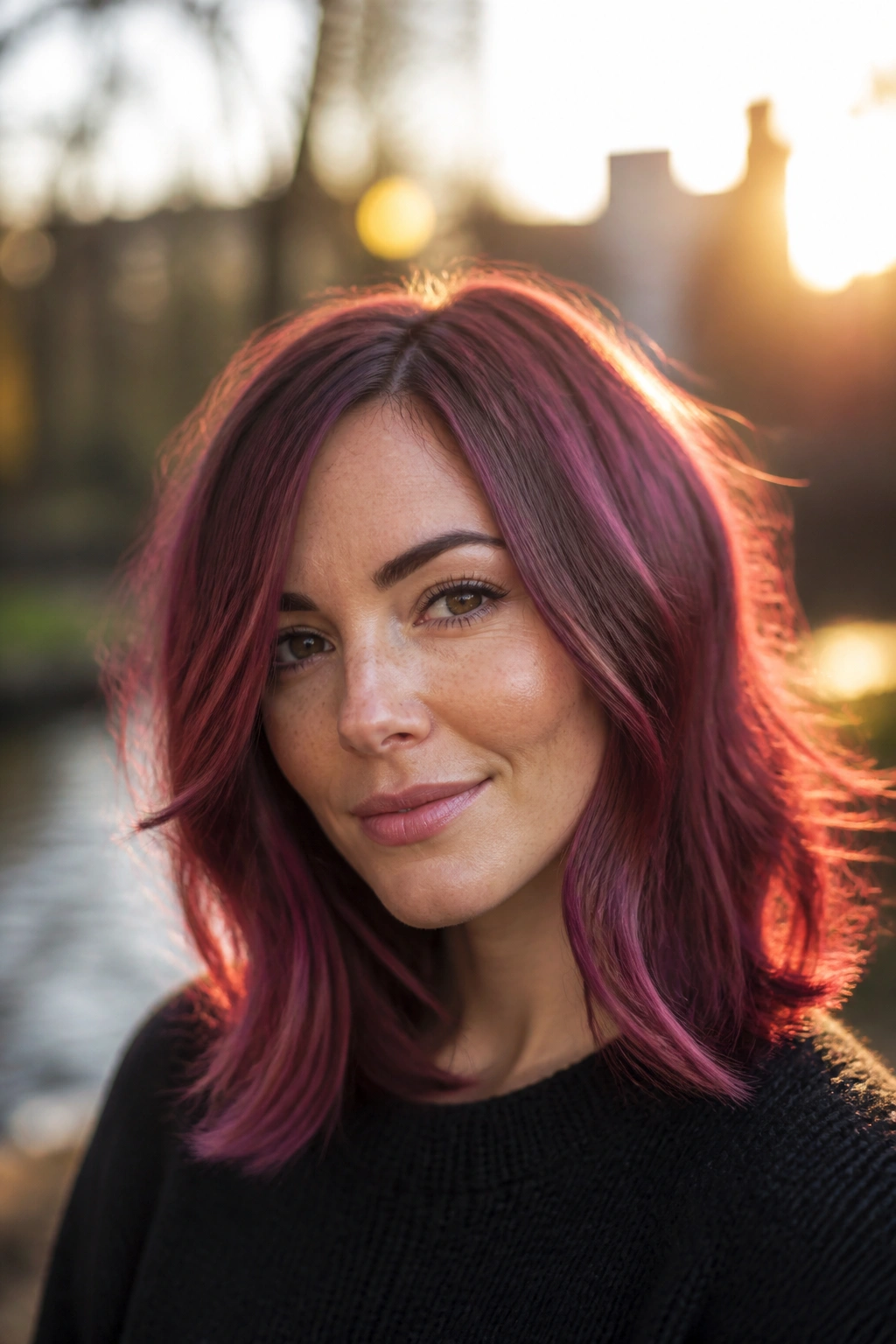
Plum rose leans darker, deeper, and a little moodier than dusty or blush shades. The plum base keeps it cool, while the rose note stops it from becoming a straight purple. That tiny bit of pink makes a big difference on cool skin tones, especially if your complexion has a rosy or blue cast.
This is a strong choice for people who want color that looks rich in low light and dimensional in daylight. It can be dramatic on fair cool skin and striking on deeper cool skin. Same shade, different effect. That’s useful.
Where It Shines
The color shows best on medium to long hair with movement. Think layered cuts, soft curls, or a sleek blowout with a bit of bend at the ends. The plum and rose shift more when the hair moves, and that keeps the color from looking like one solid flat block.
It also pairs well with a simple wardrobe. Black, slate, burgundy, soft gray, even crisp white all work. Let the hair do the talking.
If you want something vivid but not candy-bright, plum rose gives you that darker edge without leaving rose behind.
9. Cranberry Rose Money Piece
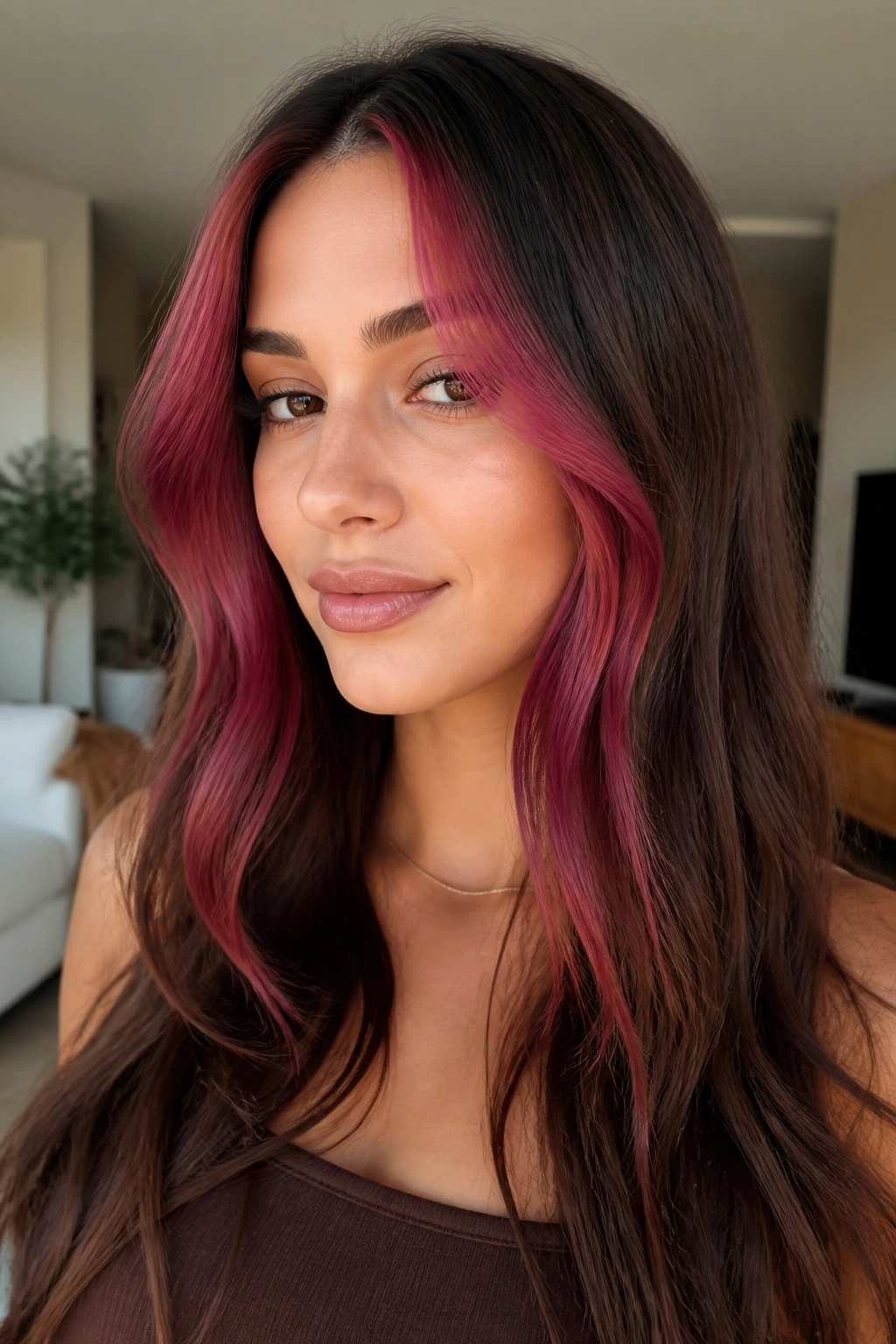
A cranberry rose money piece is the fast route to impact. You keep most of the hair darker, then place bold cranberry-rose panels around the face so the color lands where people actually look first. On cool skin, that front-facing brightness can sharpen the eyes and make the cheekbones seem more defined.
The nice part is control. You can keep the rest of the head in a natural brunette, dark blonde, or soft black and let the money piece carry the vivid energy. That makes the look easier to maintain and easier to grow out. It’s also a good option if you work in a conservative setting but still want a bit of color.
How I’d Shape It
- Face-framing sections only
- Cranberry base with a rose cast
- Slightly brighter ends than roots
- Best on curtain bangs, layers, or a center part
The color looks especially sharp against cool skin when the rest of the hair is glossy and dark. If your hair texture is curly or wavy, the face-framing color can hide and reveal itself as the hair moves, which is half the fun.
This is not subtle. That’s the point.
10. Antique Rose Brown
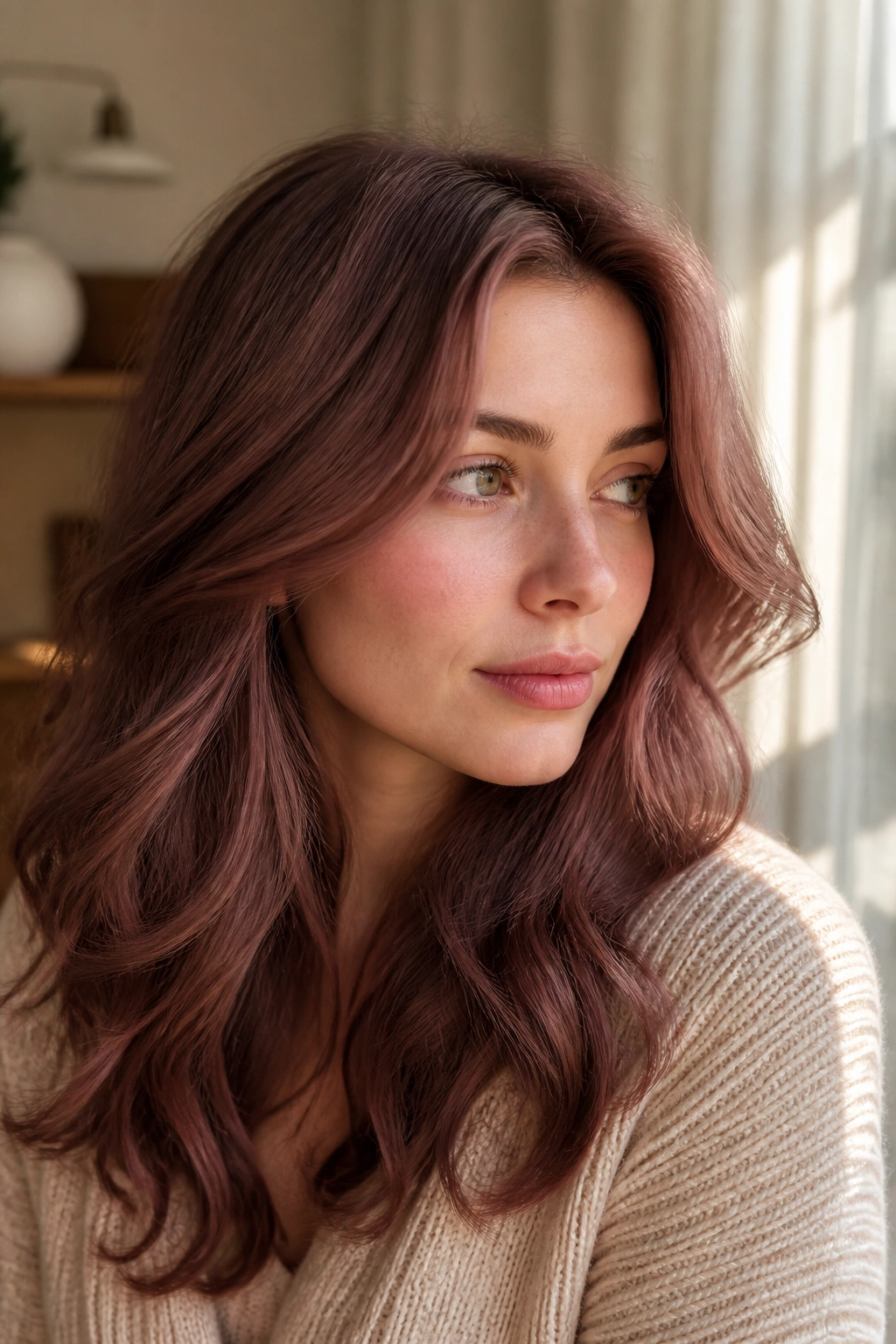
Antique rose brown is for people who like their color muted and a little dusty, almost as if the pigment has settled into the hair instead of sitting on top of it. It’s less pink than rose quartz and less red than auburn, which makes it a nice fit for cool skin that needs softness, not heat.
This shade tends to look best on medium brunettes and darker blondes. The rose is there, but it’s filtered through brown and beige notes. That gives the color a faded, vintage feel. Not in a costume way. In a polished, quiet way.
A Useful Way to Think About It
If dusty rose is a pastel with smoke in it, antique rose brown is a brown with a memory of pink. That difference matters. One reads lighter and airier; the other reads earthier and more grounded.
This one is good for layered cuts, shaggy lobs, and soft waves because the texture breaks up the color. Straight hair can make it look flatter, so a little bend helps. If you want rose color but prefer your hair to still look like hair, not a dye job, this is a strong lane.
11. Opal Rose
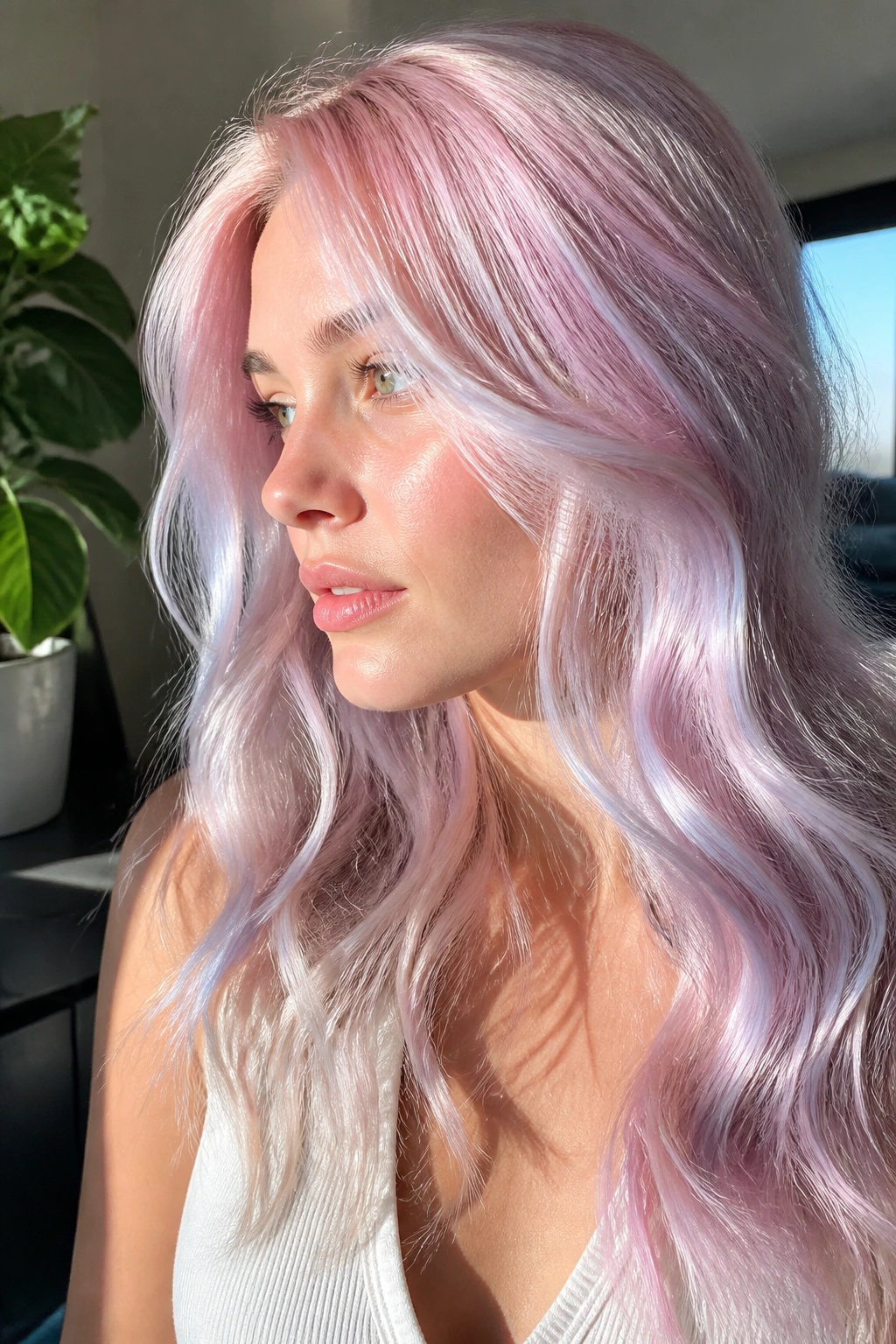
Opal rose is all about shimmer. It uses a pearly base with cool pink, lilac, and silver reflection, so the hair seems to change in different light instead of sitting in one fixed tone. That makes it especially flattering on cool skin, because the color never drifts warm or muddy.
This shade is demanding. The hair needs to be lightened well, and the tone needs careful upkeep so the pearly finish stays clean. But when it works, it really works. The result is soft, luminous, and a little surreal without going into costume territory.
What to Expect
Opal rose looks best on very light hair and hair that’s in good condition. Dryness can make the reflective finish disappear, and then it starts to look chalky. A bond-building treatment before and after lightening helps a lot.
Best Pairing
- Smooth bobs
- Long, glossy waves
- Center parts
- Minimal, polished makeup
I’d call this a high-commitment color with a big payoff. If you like hair that catches light in a subtle, prismatic way, opal rose is one of the prettiest choices on the list.
12. Cotton Candy Rose Underlayer
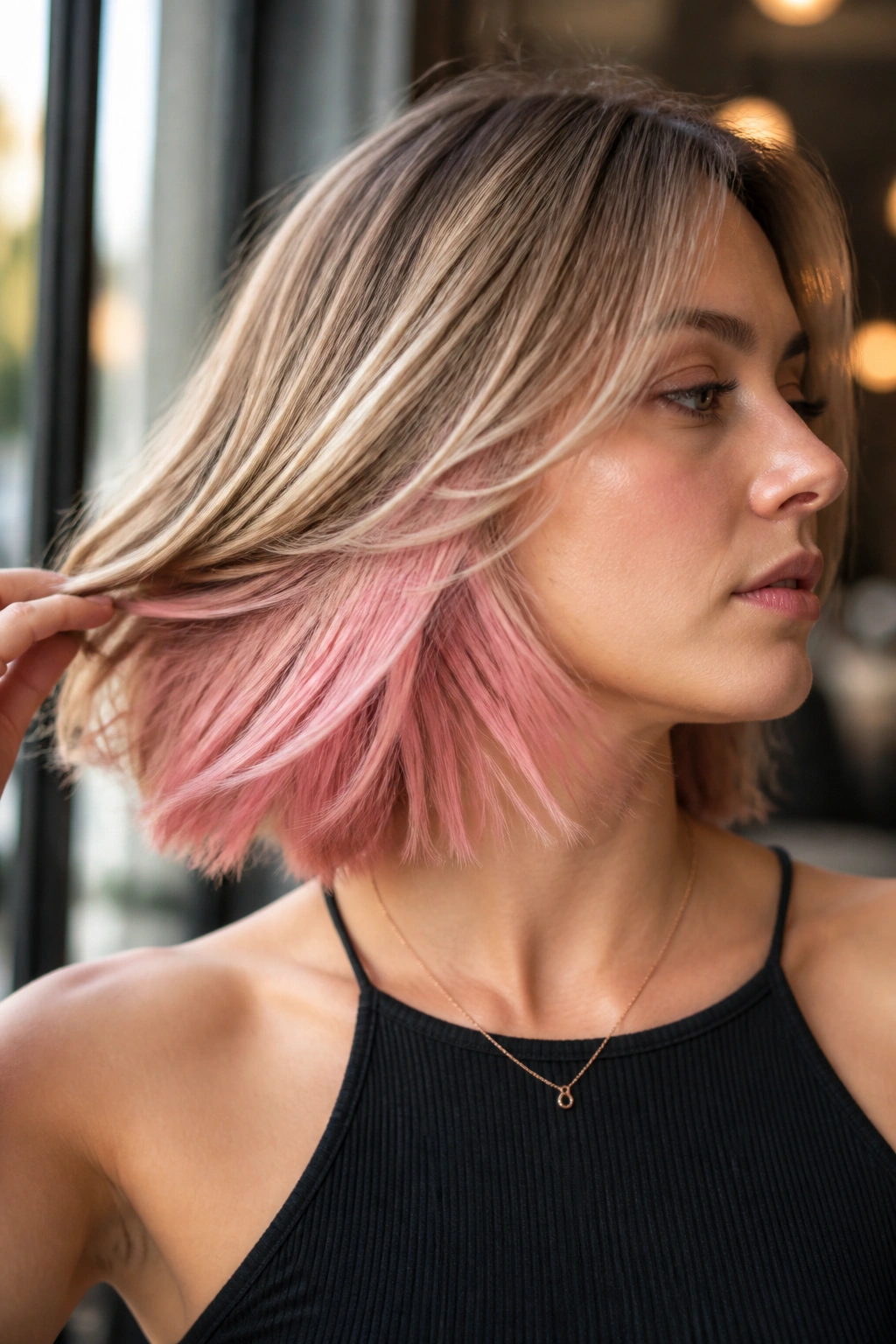
Cotton candy rose underlayer gives you color without putting it on display all the time. The top layer stays blonde, brunette, or ash brown, while the hidden panels underneath hold the rose tone. Cool skin still benefits because the pink peeks through when the hair moves or gets tucked behind the ear.
This is a smart move if you want to test vivid color before going all in. It’s also a good pick for straight cuts and bob lengths, where the hidden layer can flash in clean slices. On curls, the underlayer becomes more obvious, which can be fun if you want the shade to feel less secretive.
Why People Like It
Because it feels playful without taking over the whole head.
You can keep it soft and sweet with a pale rose, or push it cooler with a lavender-pink tone. Either way, the hidden placement makes maintenance easier. Regrowth is less obvious, and fading is less annoying because the color is partly concealed.
If you’re the kind of person who likes a surprise detail, this one has a nice payoff.
13. Violet Rose
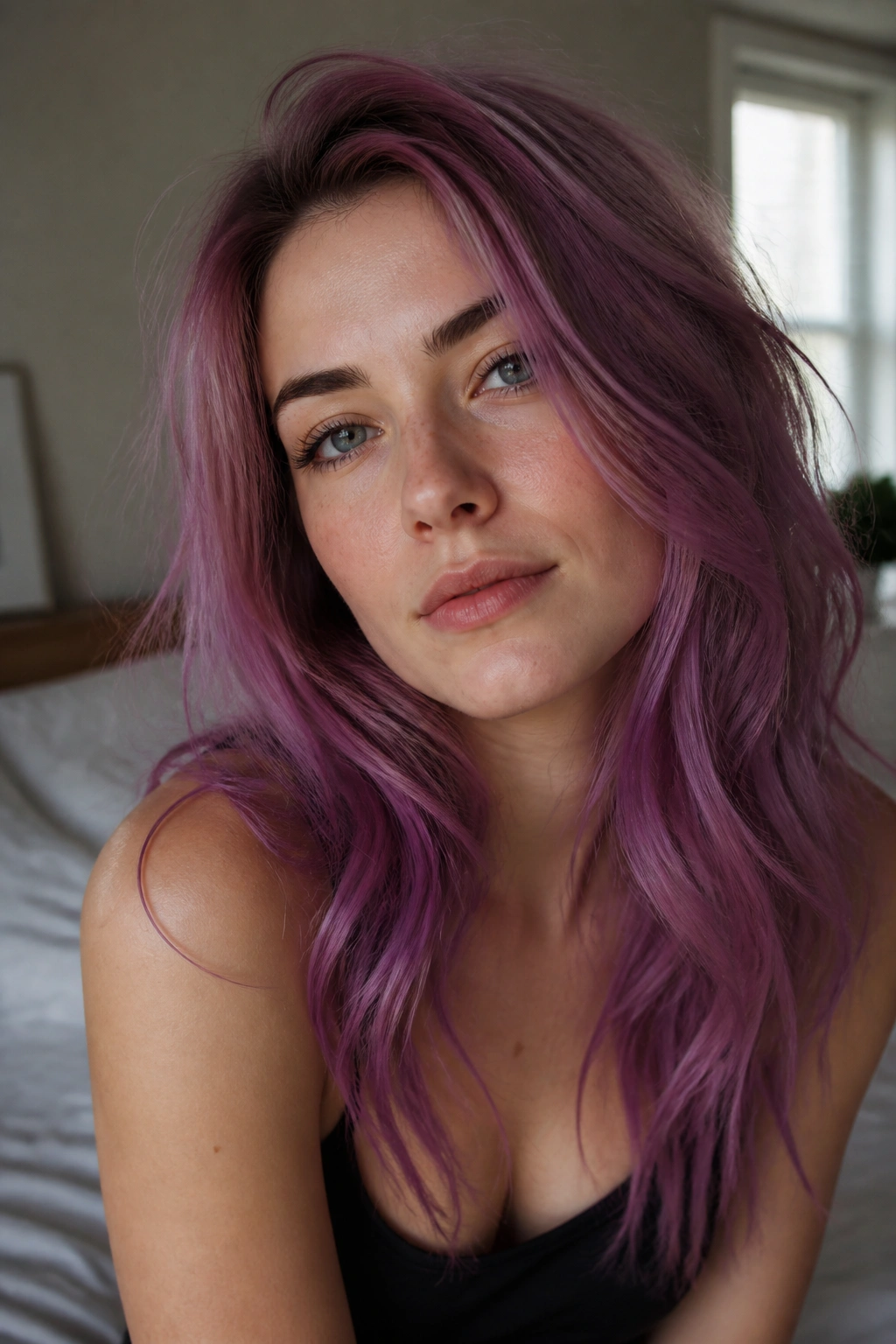
Violet rose is one of the most dependable rose family shades for cool skin because the violet base does half the flattering work before the rose pigment even enters the picture. The result is cooler, deeper, and a bit more refined than a standard pink.
I like this shade on people whose features can handle stronger color around the face. Blue eyes, gray eyes, cool hazel, and sharp brows all tend to hold up well against it. The shade can be bright, but it isn’t childish. That’s the difference.
How It Behaves on Hair
On light hair, violet rose reads luminous and clean. On medium hair, it settles into a richer berry-pink. On darker bases, it may show as a sheen unless you prelighten enough. That range is useful if you want a color that can be scaled up or down.
A Practical Note
If your hair has a lot of orange left in it after lightening, violet rose can turn muddy. Get the base clean first. Cold, pale blondes take this color better than brassy ones, and the finished tone stays clearer between salon visits.
This is one of those shades that looks expensive when the tone is right. No fuss. Just depth.
14. Cool Champagne Rose
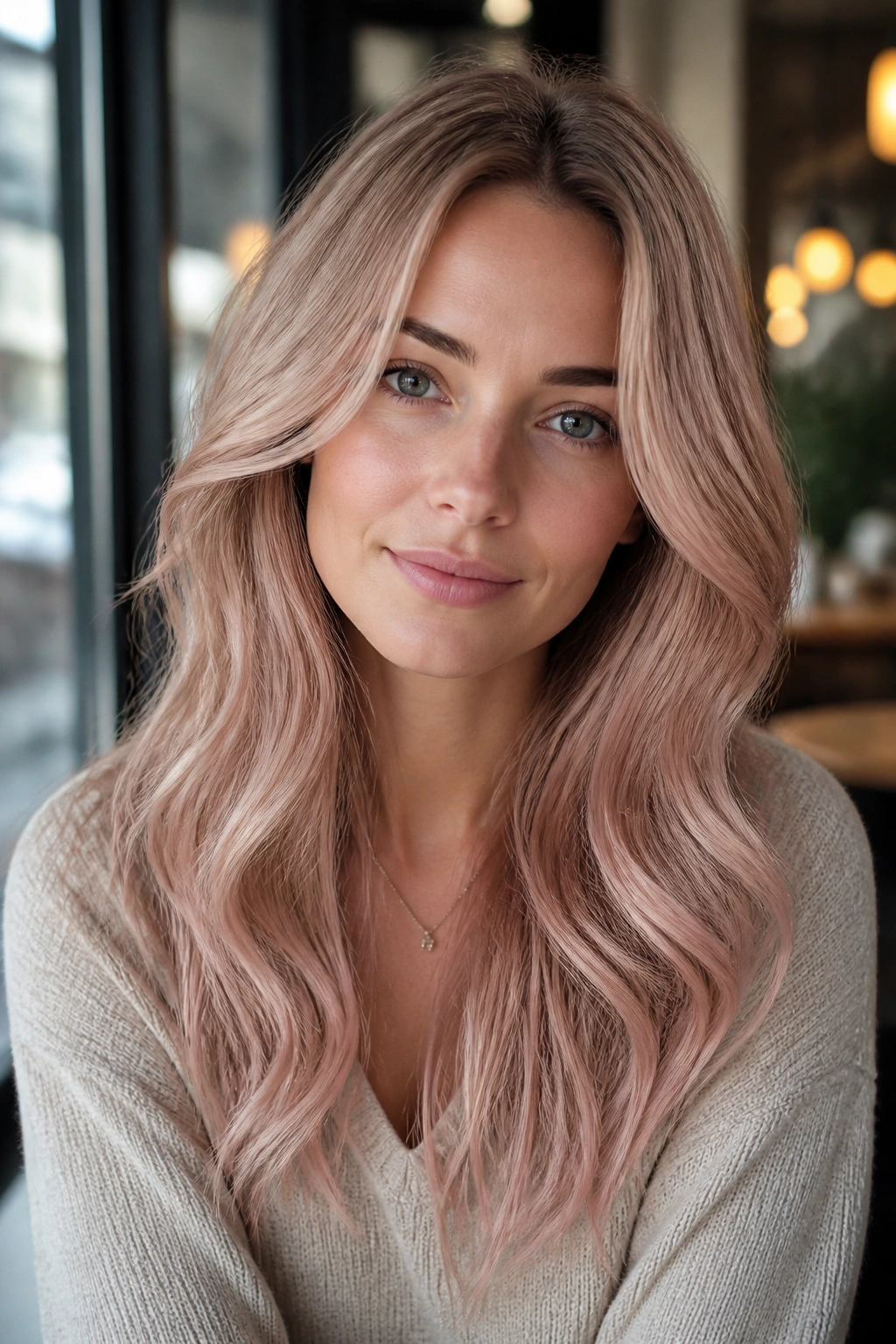
Cool champagne rose is the shade for someone who wants a little sparkle without drifting into warmth. The champagne base gives lift, but the rose glaze cools the whole thing down so it suits pink-leaning or blue-leaning skin. It’s softer than silver rose and lighter than dusty rose.
Think of it as a blonde with manners. It still reads bright, but the rose note keeps it from going gold. That makes it easier to wear with silver accessories and cooler makeup shades like mauve blush, taupe shadow, and berry lip color.
What It Looks Like
On straight hair, it can look sleek and softly reflective. On waves, it picks up little flashes of rose and beige. The key is restraint. Too much pink, and it stops being champagne. Too much gold, and the cool-skin advantage disappears.
This shade suits medium blondes who want a more wearable version of rose color. It’s not as loud as opal rose, and it doesn’t need the same extreme lightening. That makes it one of the more approachable choices if you want brightness with less drama.
I’d call it quietly pretty. Which sounds plain, but isn’t.
15. Raspberry Smoke
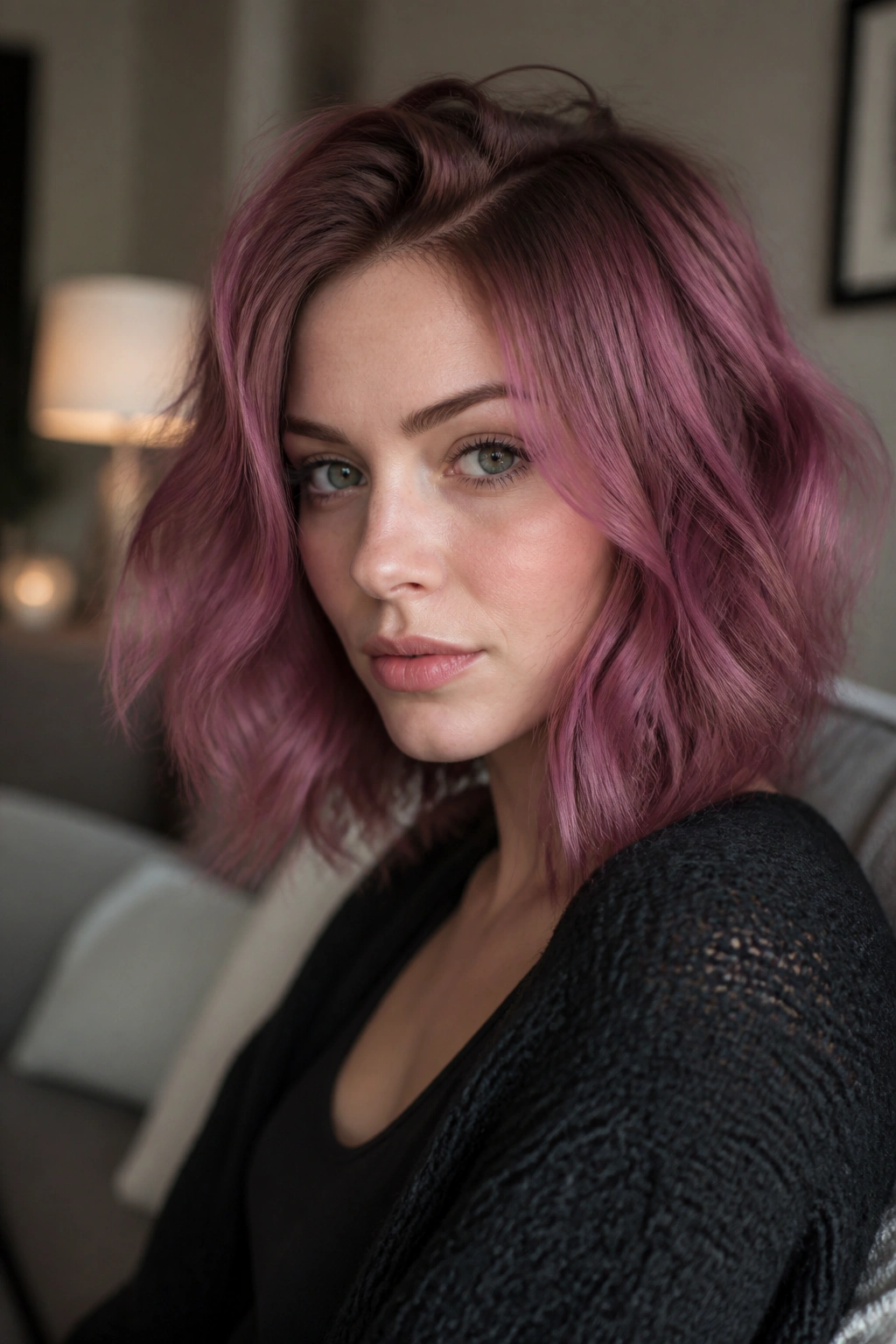
Raspberry smoke is darker, richer, and a little more serious than most pink-based shades. The raspberry gives you that deep berry hit, while the smoky finish keeps it cool enough for skin with blue or pink undertones. It’s a good answer if pastel rose feels too sweet.
This color works especially well on bobs, lobs, and long layers because the shadowy base needs movement. In heavy, one-length hair, it can look almost too dense. Add texture, and the rose starts to come alive.
How to Style It
- Air-dry for soft movement
- Use a 1.25-inch iron for loose bends
- Keep shine high with a light serum
- Skip yellow-toned glosses; they warm the shade too much
Raspberry smoke also wears well with strong makeup. I’m thinking winged liner, cool berry lipstick, or a soft mauve blush. The hair can handle it. In some cases, it even makes the face look cleaner because the color carries so much structure on its own.
If you like darker pinks with edge, this is a satisfying one.
16. Black Cherry Rose
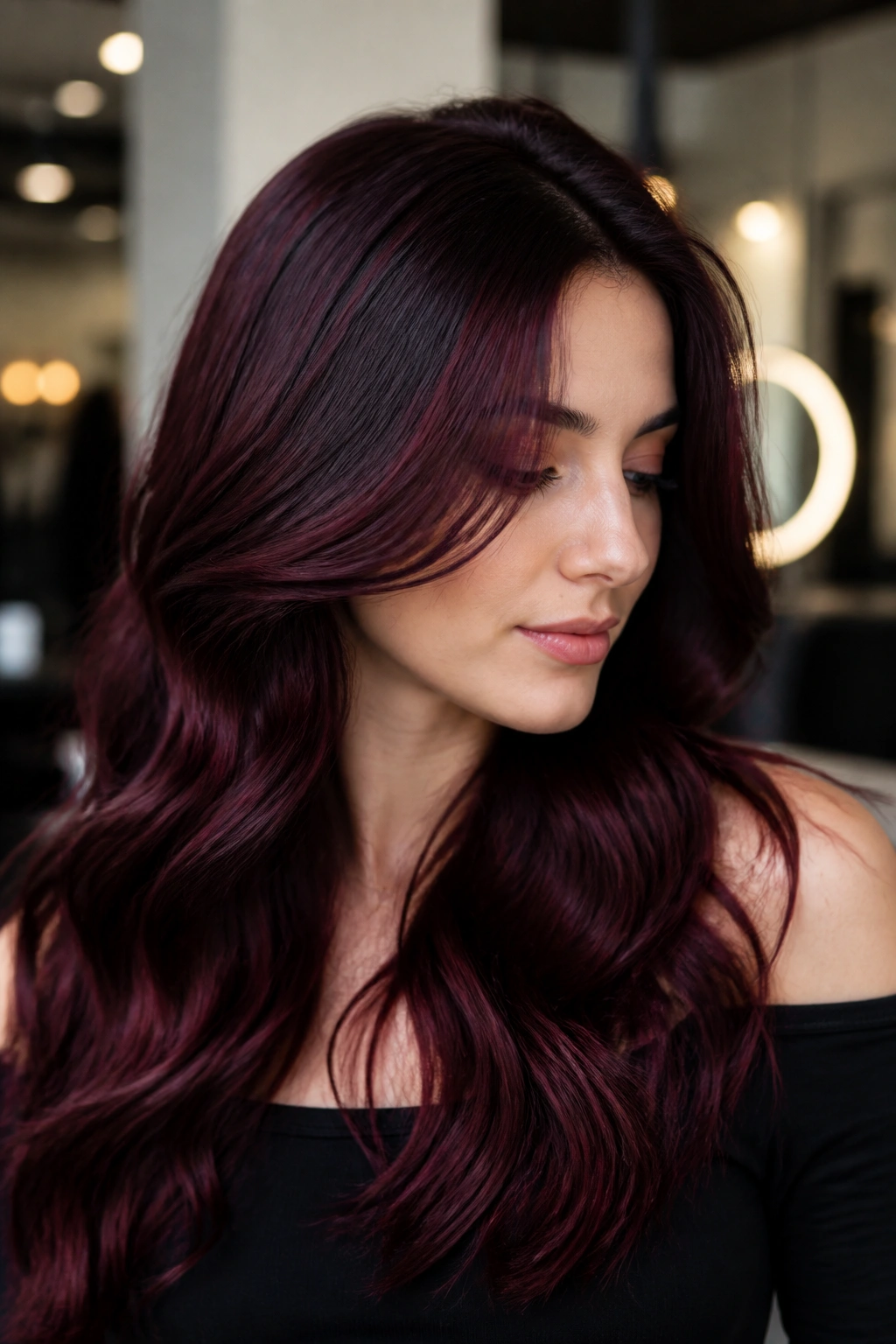
Black cherry rose gives cool skin a dramatic frame. The base is nearly black, but the rose-cherry reflection appears in motion and under bright light, so the color doesn’t sit dead or flat. It’s one of the best ways to wear rose without bleaching the hair into oblivion.
This shade is especially good on deeper cool skin, but it can look striking on fair skin too if you like contrast. The important thing is the undertone. Keep the cherry side blue-based rather than orange-based, and the result stays in the right lane.
What It Needs
A glossy finish matters here. Black cherry rose can lose its depth if the hair looks dry or rough. A glaze every few weeks keeps the red-violet note visible, especially on the ends.
It’s also one of the easiest rose colors to grow out. The darkness near the root hides regrowth, and the rose reflection changes gently instead of turning into an obvious line. That makes it more forgiving than a pastel, and honestly, that’s part of why I like it.
Bold, but not fragile.
17. Merlot Rose
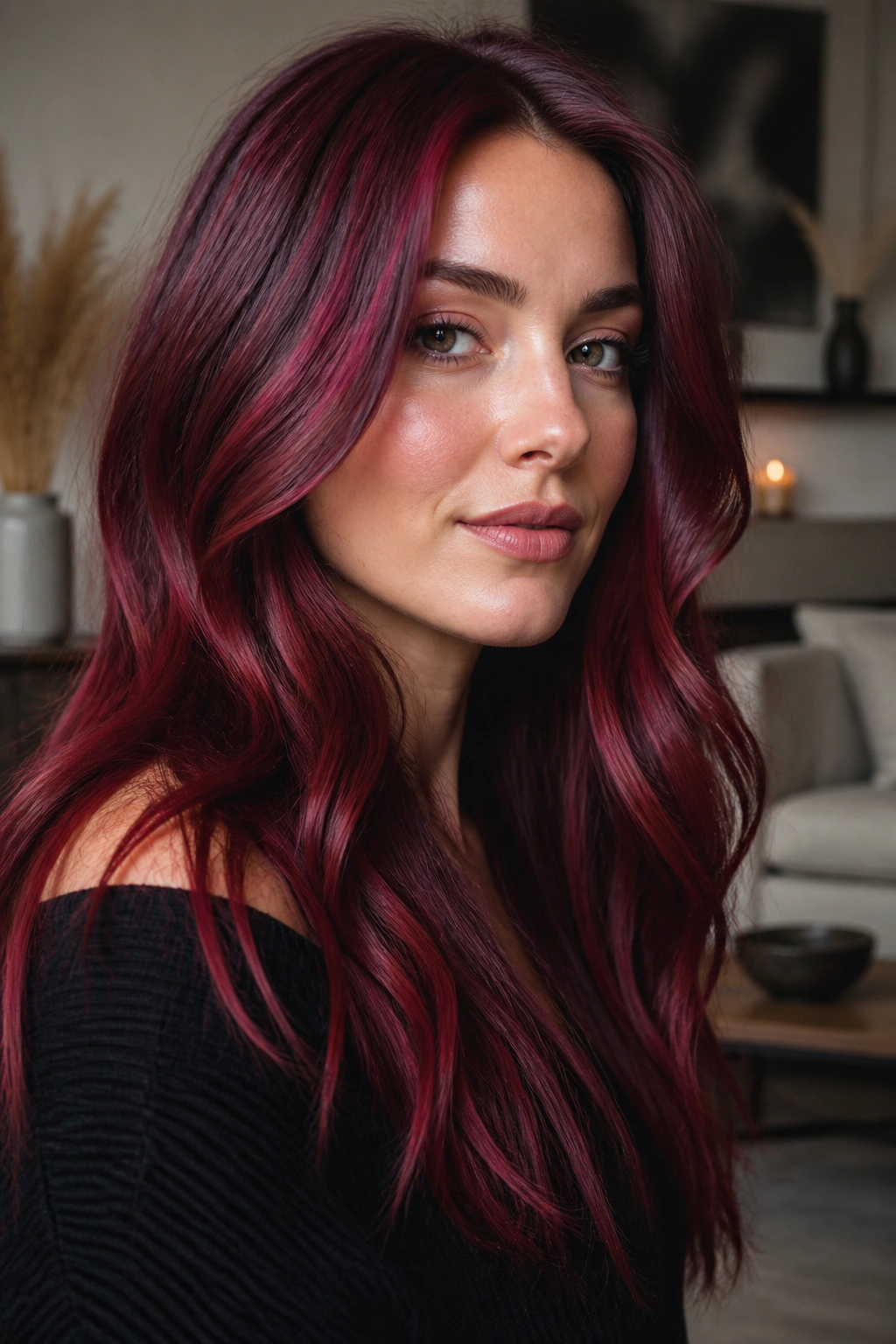
Merlot rose is the more plush cousin of berry rose. It has wine depth, a cool red base, and just enough pink to keep it in the rose family. On cool skin, that wine-red undertone can make the complexion look cleaner and the eyes look deeper.
This is a shade for people who want richness more than brightness. It feels lush on long waves and elegant on layered cuts with movement. In a blunt cut, it looks chic and severe in a good way. In curls, it gets softer and more romantic.
The Best Way to Wear It
Keep the finish glossy. Merlot rose depends on shine to show its depth, and matte hair can make it look too dark. A color-safe mask once a week helps, especially if the ends are lightened.
You can also play with placement. Full merlot rose makes a statement, but a partial application around the face and crown can give you the same color family with less upkeep. That’s useful if you want something richer than pink but less obvious than red.
This is one of my favorites for fall wardrobes, though honestly it works any time.
18. Steel Rose
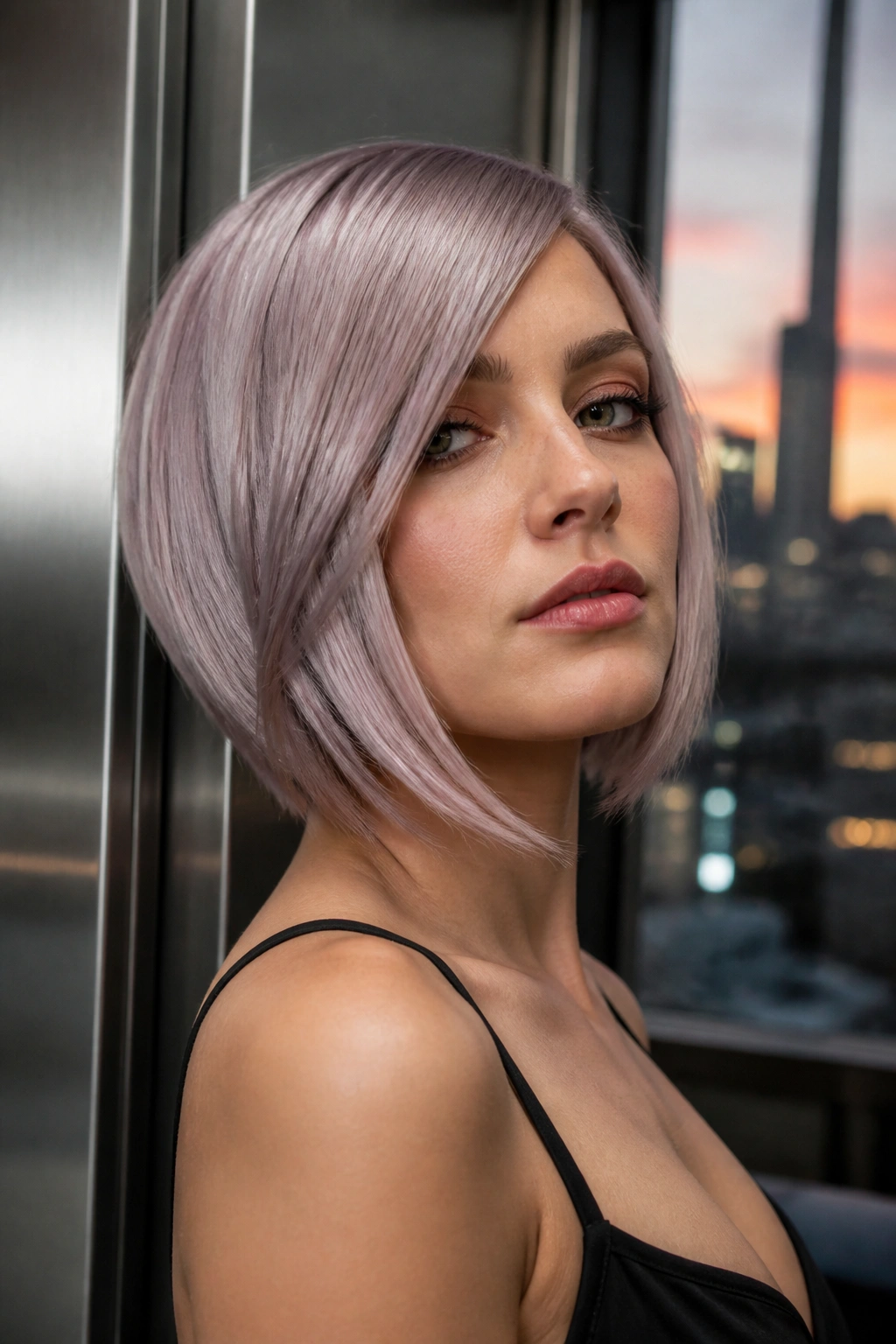
Steel rose is sharp, metallic, and a little futuristic without feeling costume-like. It blends silver-gray with a cool rose tint, so the hair looks almost reflective in bright light. On cool skin tones, that crispness is the point. The shade mirrors the undertone instead of competing with it.
Unlike soft blushes, steel rose has edges. It’s a better fit for angular cuts, sleek blowouts, and straight styles that show off the metal-like finish. If the hair is heavily layered and textured, the effect softens, which can be nice too. But the strongest version is smooth.
What Sets It Apart
Steel rose is not a pastel. It has more depth and more shine. That means it can read sophisticated rather than sweet, which matters if you want rose color but dislike anything that looks too playful.
A salon gloss is usually your best friend here. The metallic tone needs regular refreshes to stay clean, and any yellowing in the base will fight the whole idea. Keep the blonde pale and the tones cool.
This one is for people who like their color with a bit of bite.
19. Orchid Rose
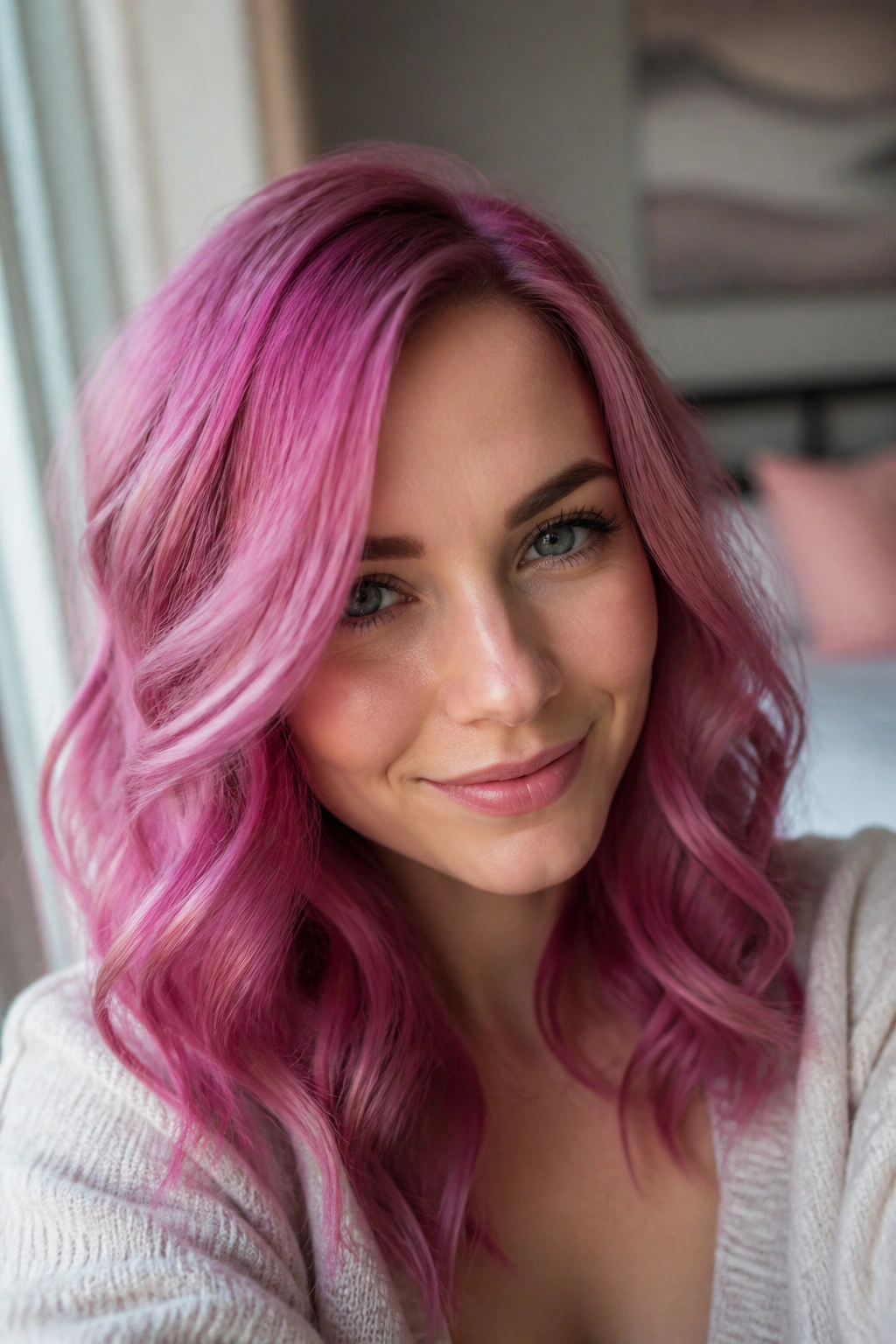
Orchid rose is brighter and more electric than dusty rose, but cooler and more floral than straight magenta. It leans purple-pink in a way that flatters cool skin without making the face look overly flushed. If you like vivid color, this sits in a very wearable spot.
I like orchid rose on medium-length hair with movement. The color needs space to shift. On a single-length cut, it can feel too solid. On waves or curls, it opens up and shows the violet notes underneath the pink, which is where it gets interesting.
Best Uses
- Statement bobs
- Shoulder-length layers
- Bold face-framing panels
- Full-head color for someone who wants a stronger pink presence
Orchid rose can also be a nice bridge between pastel pink and deeper berry shades. If you’ve worn rose gold or blush before and want something more vivid, this is a natural next step. It’s punchy, but not neon.
Cool skin usually handles it well because the purple side of the shade keeps everything anchored. That small shift makes the color feel deliberate instead of sugary.
20. Smoky Rose Melt
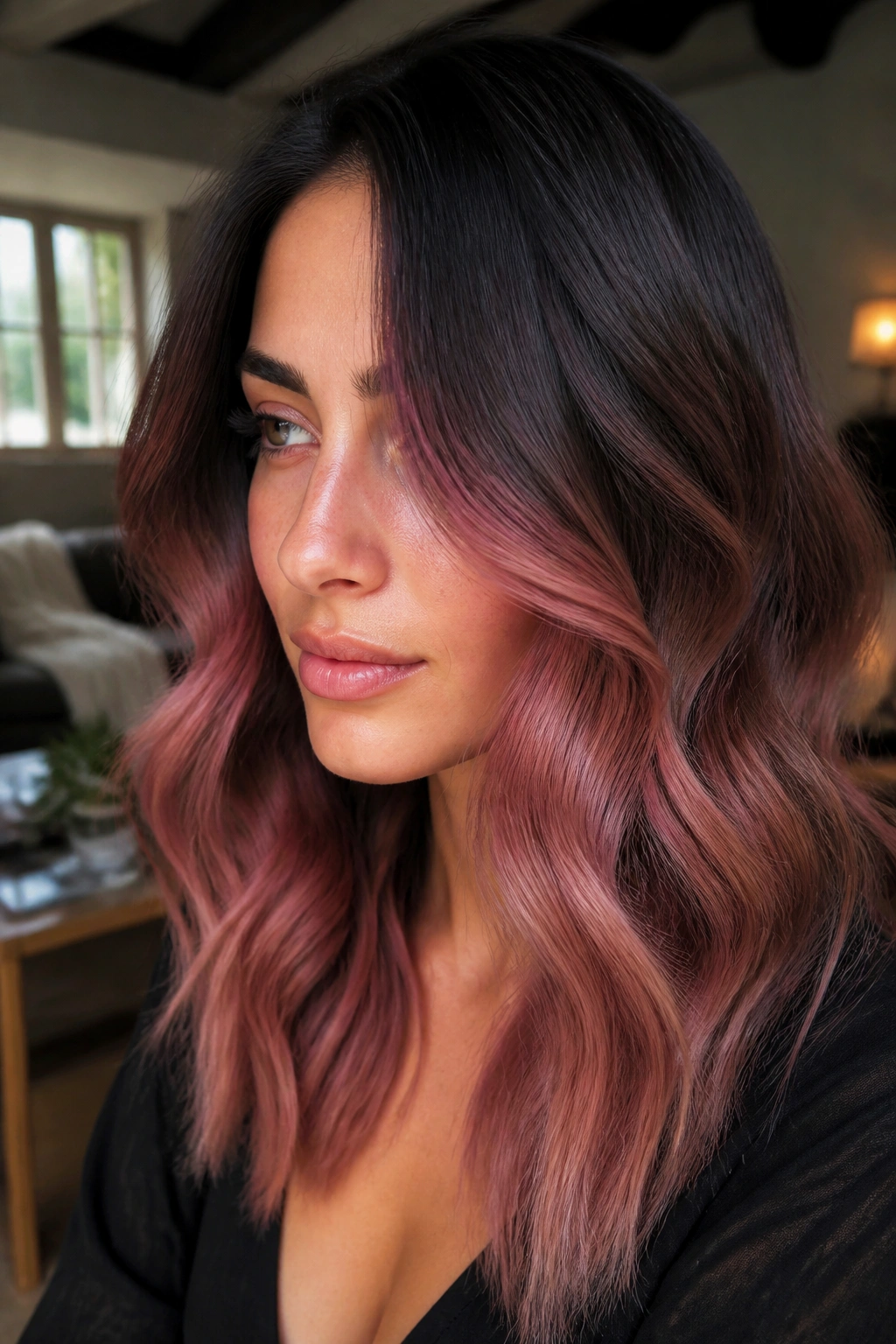
Smoky rose melt is the shade I’d choose for someone who wants the most flexibility. The root stays deeper—charcoal, espresso, or ash brown—then the mids and ends melt into a cool rose tone. It flatters cool skin because the smoky root keeps the face from getting washed out, while the rose ends bring in enough softness to avoid a hard edge.
It’s a good compromise if you want rose hair color but don’t want to bleach your whole head to the ceiling. The placement does most of the work. The deeper root also makes grow-out easier, which matters more than people admit.
A Strong Request to Make at the Salon
Ask for a cool root shadow with a rose glaze on the lightened sections. Keep the pink blue-based, not peachy. If you’re starting from brunette hair, the rose can be concentrated on the ends and front pieces for a softer effect.
This shade looks best when the hair moves. Loose waves, a soft blowout, even a brushed-out curl pattern—it all helps the melt show. And if you want something that can lean everyday or dramatic depending on how you style it, this one has range in a way the brighter pinks do not.
