



Purple hair color ideas for cool skin tones work best when the shade stays on the blue, silver, or smoky side of purple. That sounds picky, but it matters more than people think. The wrong violet can make cool skin look tired or gray; the right one can make the face look cleaner, brighter, and a little more awake without piling on makeup.
The trick is not chasing purple in general. It is choosing the kind of purple that sits near your undertones instead of fighting them — icy lavender for pale pink skin, plum noir for deeper cool complexions, blueberry violet for curls that need movement, or a muted orchid that looks expensive instead of sugary. Salon lights can be sneaky. Daylight tells the truth.
I’ve always thought purple is one of the easiest fantasy shades to get wrong and one of the easiest to get right once the tone is right. Blue-based purple, silver-lilac, and smoky plum tend to behave beautifully on cool skin because they echo the cool cast already in the face. Warm magenta and red-plum can still work, but they need a tighter hand. Otherwise, they drift.
1. Icy Lavender Bob
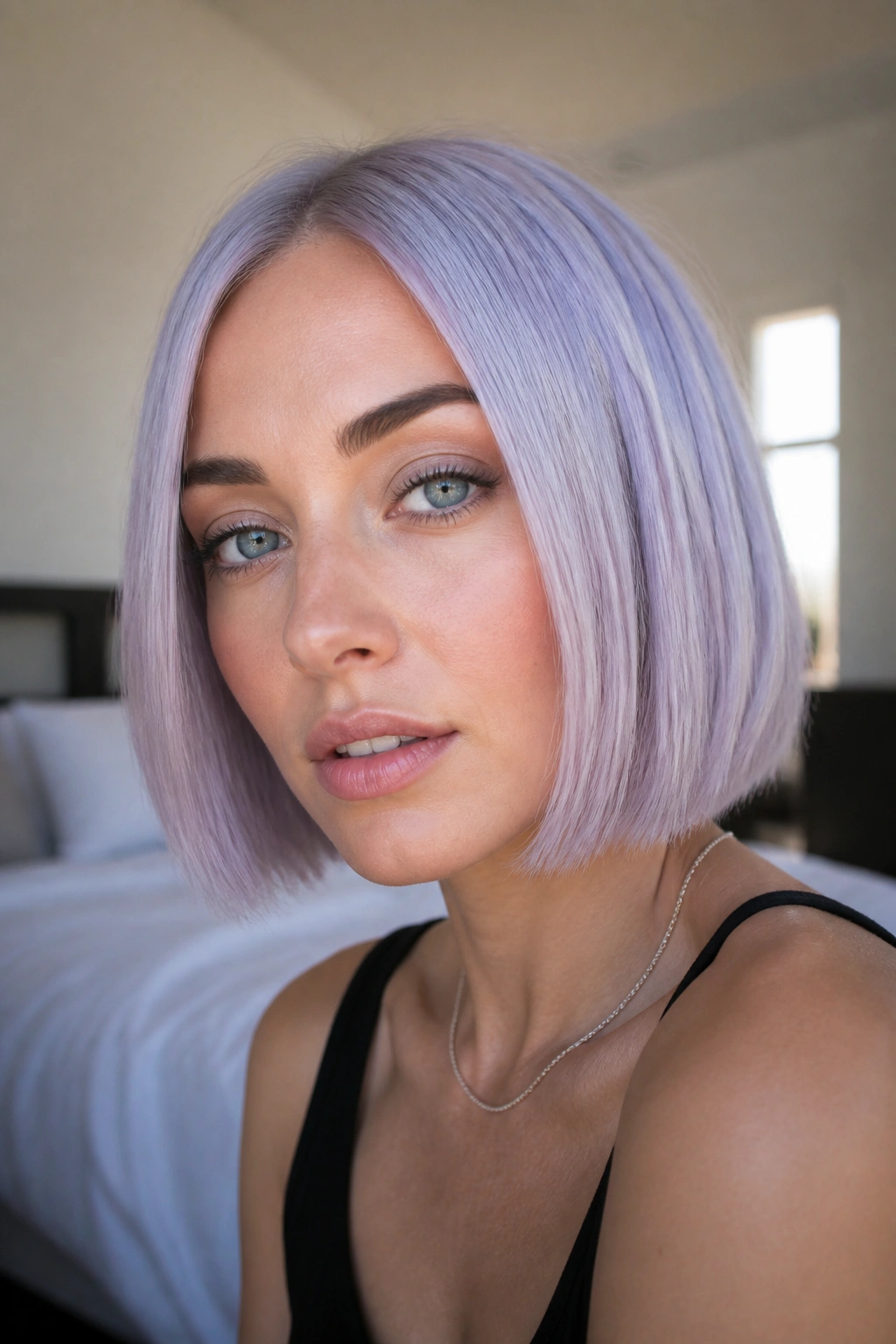
Icy lavender is the shade I reach for when someone wants purple hair color ideas for cool skin tones without going full neon. The blue-silver cast keeps the color crisp, so pale pink skin doesn’t look washed out and deeper cool skin gets a pale glow instead of a muddy haze.
Why It Flatters Cool Undertones
The trick is in the base. Ask for a level 9 or 10 blonde prelighten, then a violet-silver toner rather than a pink-lilac one that leans warm. The finish should look like crushed ice, not cotton candy.
- Works best on blunt bobs, soft waves, and clean one-length cuts.
- Needs a refresh gloss about every 4 to 6 weeks.
- Looks cleanest when the root shadow stays one shade deeper than the mids.
- Reads best in daylight, not just under salon lamps.
My tip: keep makeup cool too — taupe shadow, berry blush, and a neutral lip keep the whole thing from drifting sweet.
2. Silver Lilac Melt
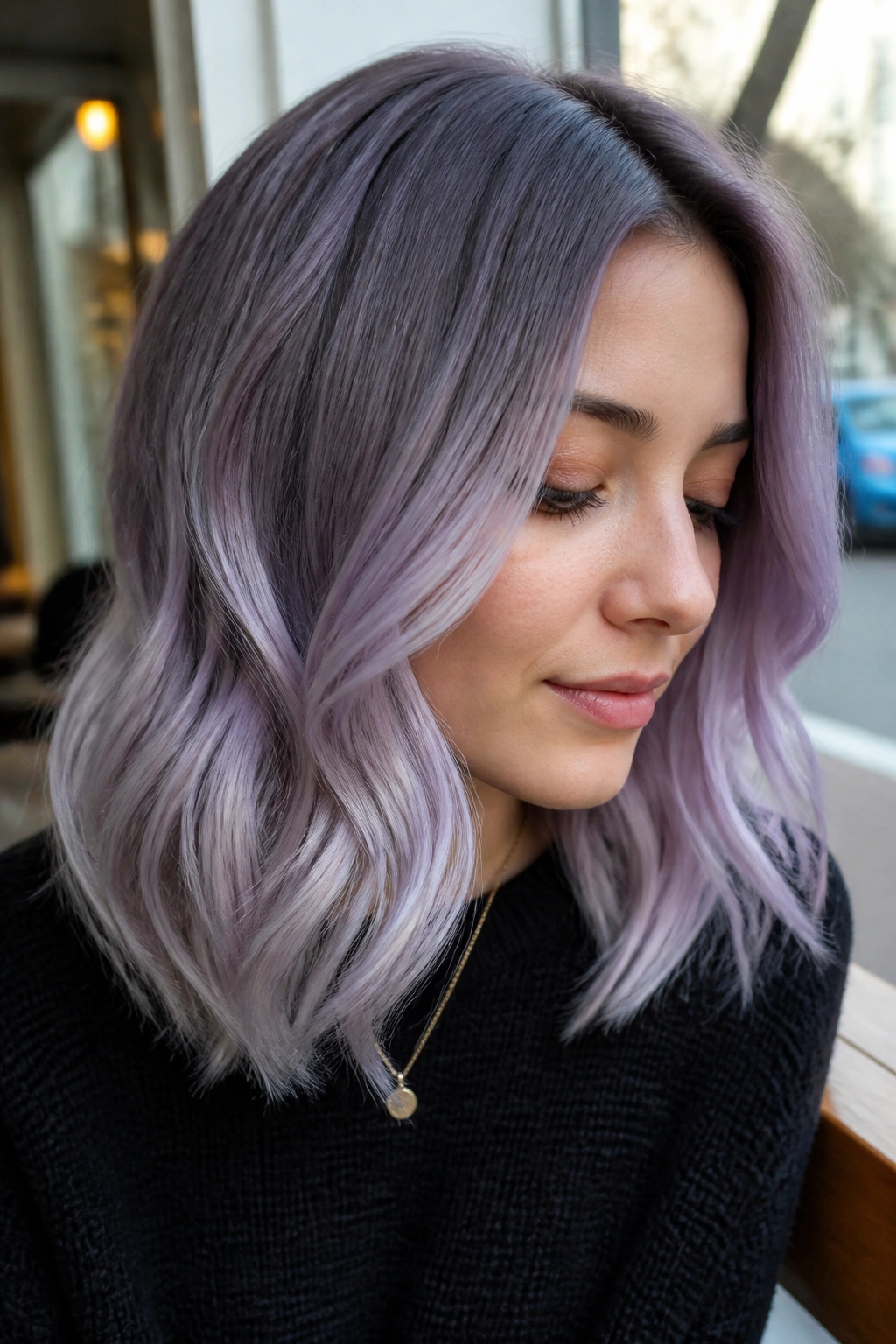
Does your hair grow fast? Then this is the shade I’d point you toward first. A silver lilac melt gives you that soft purple look without a hard line at the root, and that makes the grow-out feel deliberate instead of awkward.
What Makes the Melt Work
The root area stays smoky and cool, then the color slides into lilac mids and pale violet ends. On shoulder-length cuts, that gradient keeps hair from looking flat, especially when the first inch of regrowth starts to show.
It also buys you time. A good melt can look polished for 8 to 10 weeks, which is a nice change if you are tired of colors that look great for ten minutes and then start asking for attention. Loose bends help here. Tight curls can blur the fade a little too much.
A silver lilac melt is one of those shades that looks soft from a distance and detailed up close. I like that.
3. Amethyst Balayage
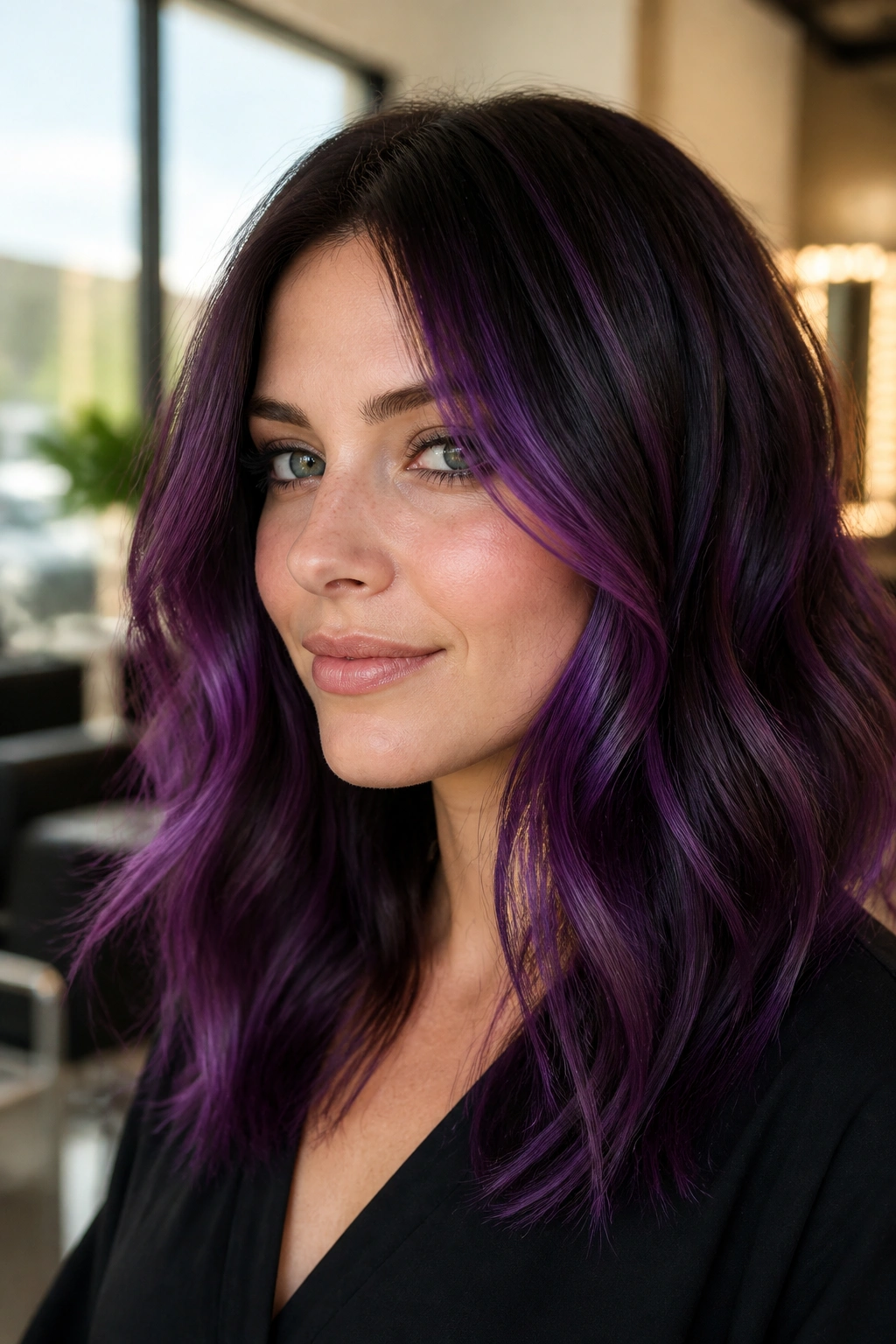
Picture a dark brunette with cool skin who wants purple but does not want to bleach every strand. Amethyst balayage solves that cleanly. The purple sits in hand-painted ribbons, so the hair still looks deep at the root and rich at the ends.
Where the Dimension Comes From
Ask for a brunette base at level 5 or 6, then amethyst pieces through the mid-lengths and face frame. The color should show as jewel-like flashes, not a solid lavender block. That difference matters more than people expect.
- Best for people who want purple without a full-head commitment.
- Usually needs lightening only on selected sections.
- Grows out better when the root area stays close to your natural color.
Wavy hair helps a lot because the bends break up the ribbons. Straight hair can still wear it, but the placement needs to be cleaner or it turns streaky fast. Small thing, but it matters: keep the amethyst cool, not red-plum.
4. Smoky Orchid
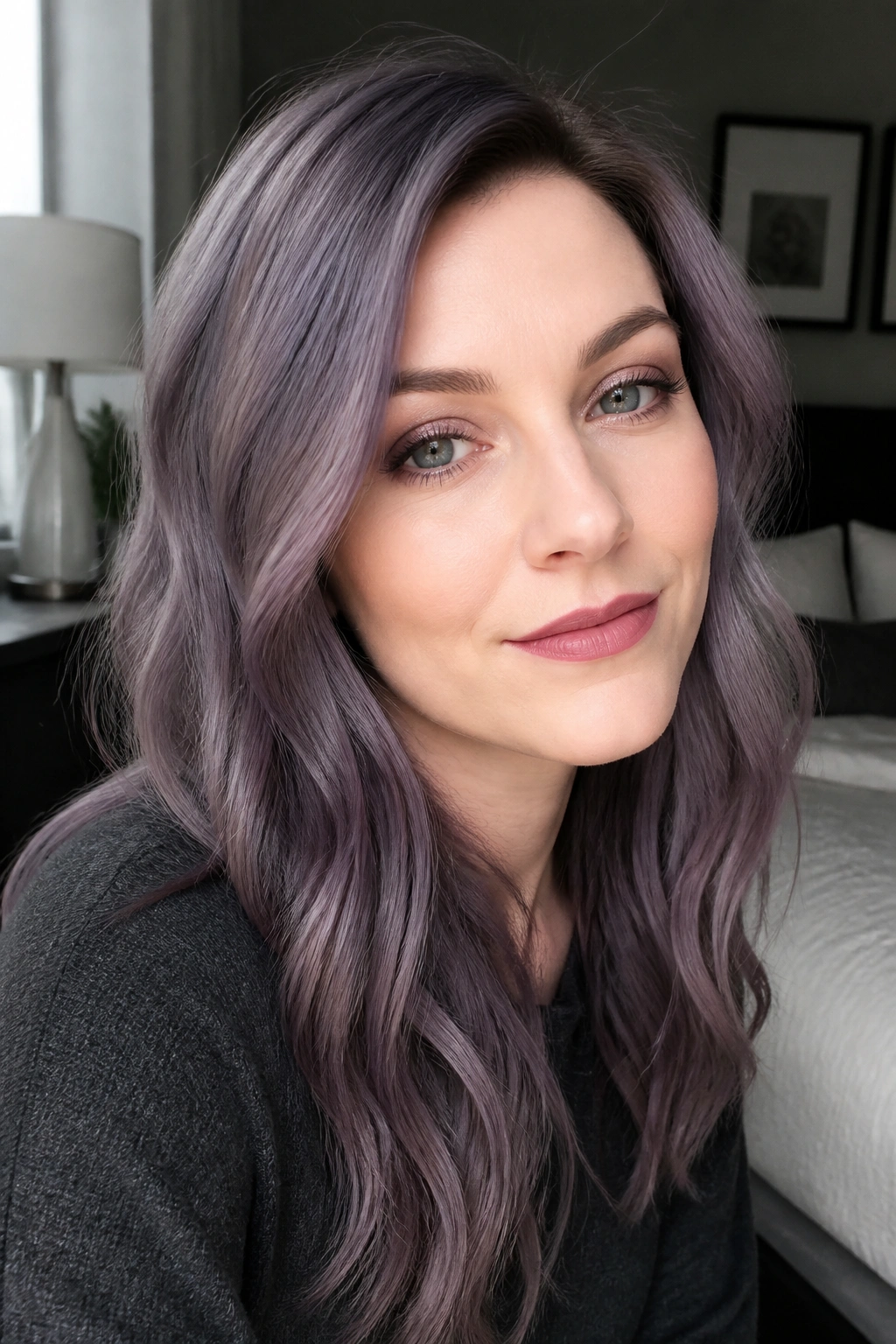
This is the shade I recommend when vivid violet feels too loud. Smoky orchid is purple with the edges sanded down a little — muted, soft, and a bit dusty. On cool skin, that gray-lilac cast keeps the face from looking pink or tired.
Why It Reads So Well
The best smoky orchid formulas lean violet first, then soften with a touch of silver or gray pigment. Too much red turns it into a berry tone, and that changes the whole mood. You can wear it sleek, but I actually like it more on hair with a little movement because the smoky part shows better when the light shifts.
It pairs nicely with silver jewelry, cool-toned sweaters, and makeup that stays in mauve, berry, or taupe territory. Not icy all the time. Just cool enough.
Smoky orchid has a quiet confidence to it, which sounds like a boring phrase until you see it on hair. Then it makes sense.
5. Plum Noir
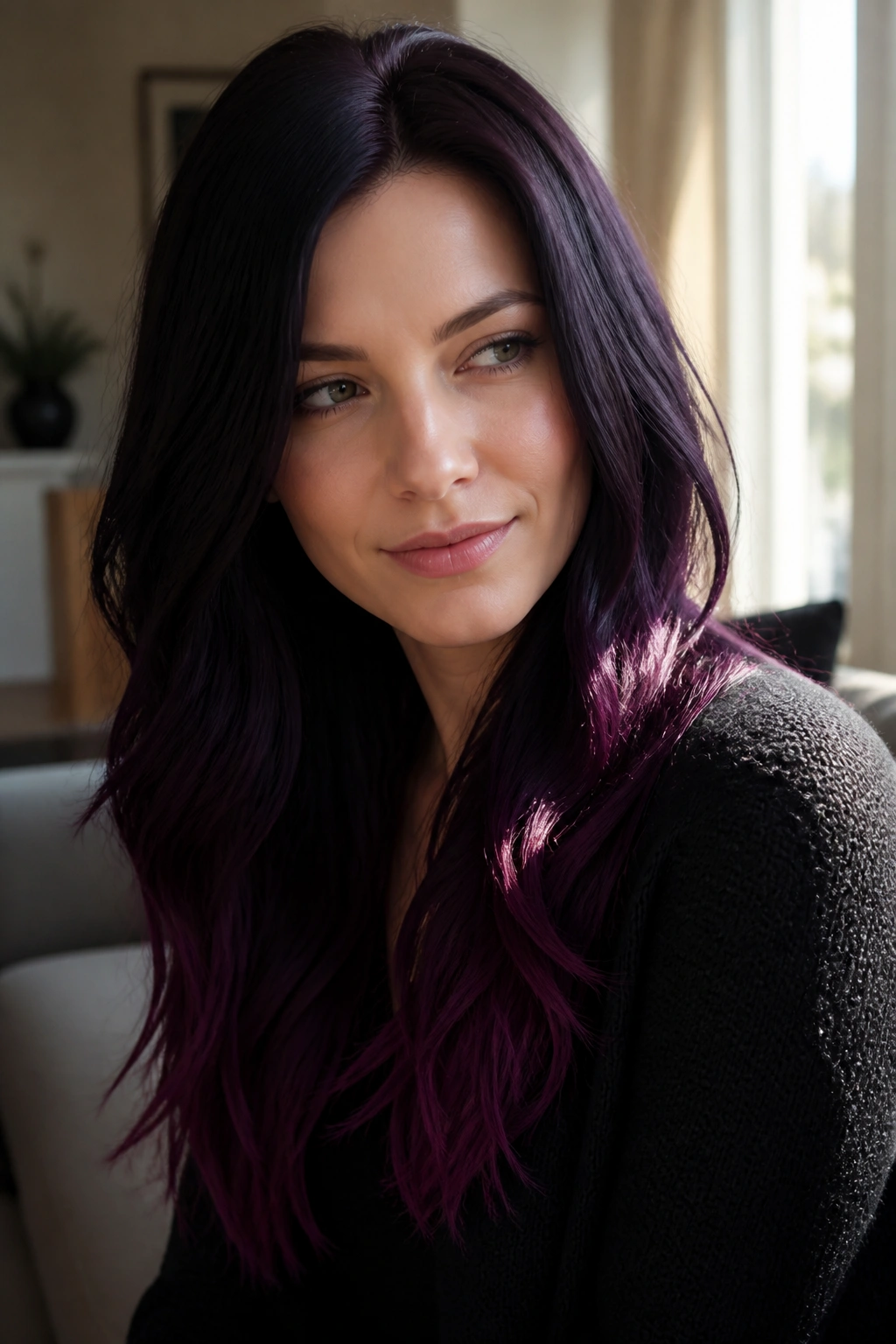
Plum noir looks almost black in a dim room, then flashes berry-purple when daylight hits the ends. That little shift is why it feels polished instead of costume-like. On cool skin, the dark base keeps everything grounded, and the plum reflect gives the face a cleaner edge.
It is especially good if you already have dark hair and do not want a big bleach job. A level 4 or 5 base can take this shade well with a demi-permanent gloss, and the result usually fades into a softer plum rather than an obvious orange-brown. That is the part I like.
Plum noir also suits deeper cool complexions in a way lighter purples sometimes do not. It has weight. It has depth. And it looks expensive without trying too hard.
6. Frosted Violet Pixie
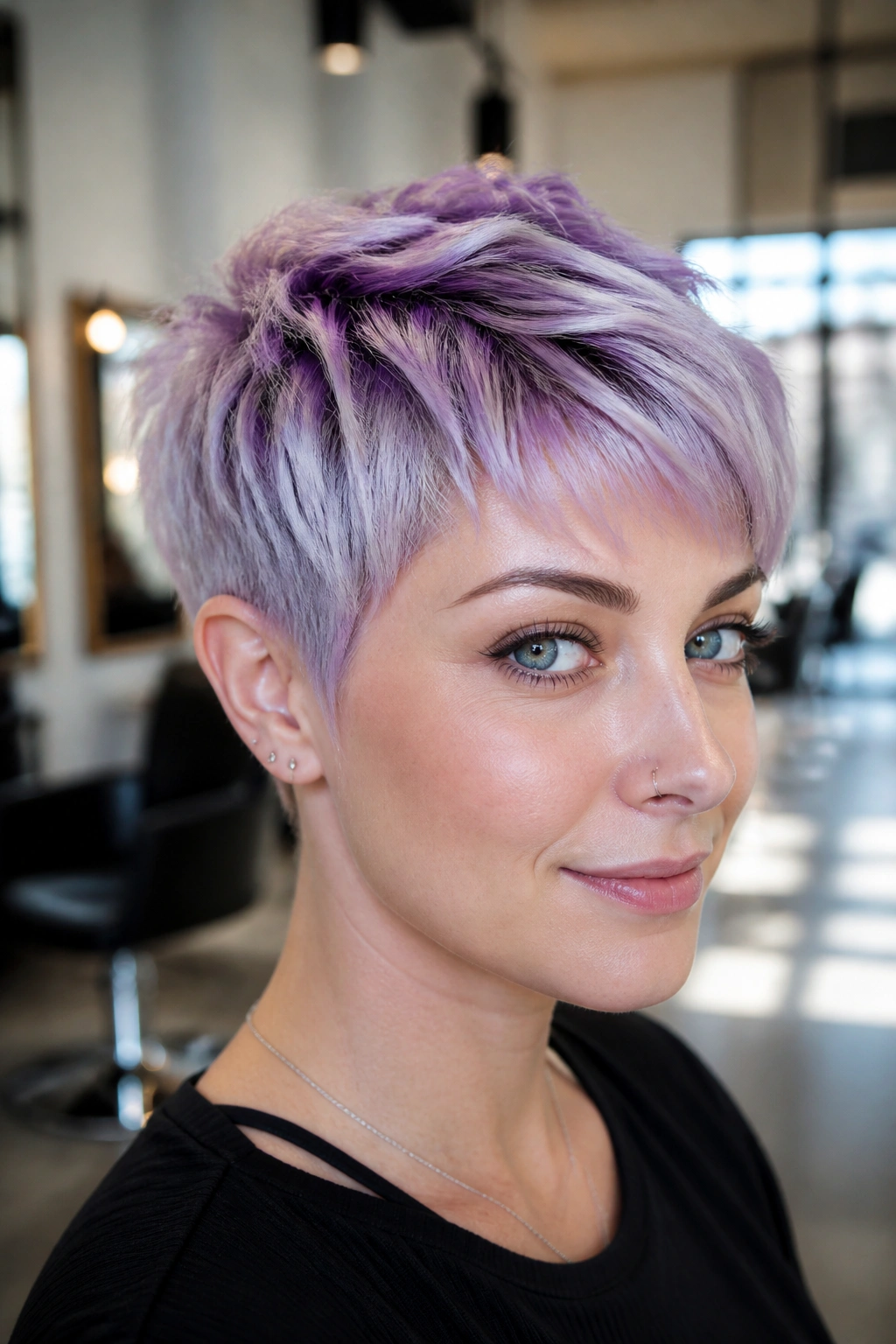
Unlike a pastel lob that needs constant toning, a frosted violet pixie can handle a little fade and still look sharp. The short length keeps the color concentrated, so the violet reads stronger than it would on waist-length hair.
Why Short Hair Makes It Easier
A pixie lets you keep the sides cooler and the top a touch brighter, which gives the cut shape. Ask for a silver-lilac glaze on top and a deeper violet through the crown or fringe. That contrast makes the haircut itself feel more defined.
It is a good choice if you like regular trims anyway. The cut usually needs shaping every 4 to 6 weeks, so the color maintenance does not feel like such a separate job. No long appointment. No endless detangling.
This one has bite. If you want purple that looks neat and a little sharp, it does the job.
7. Blueberry Purple Curls
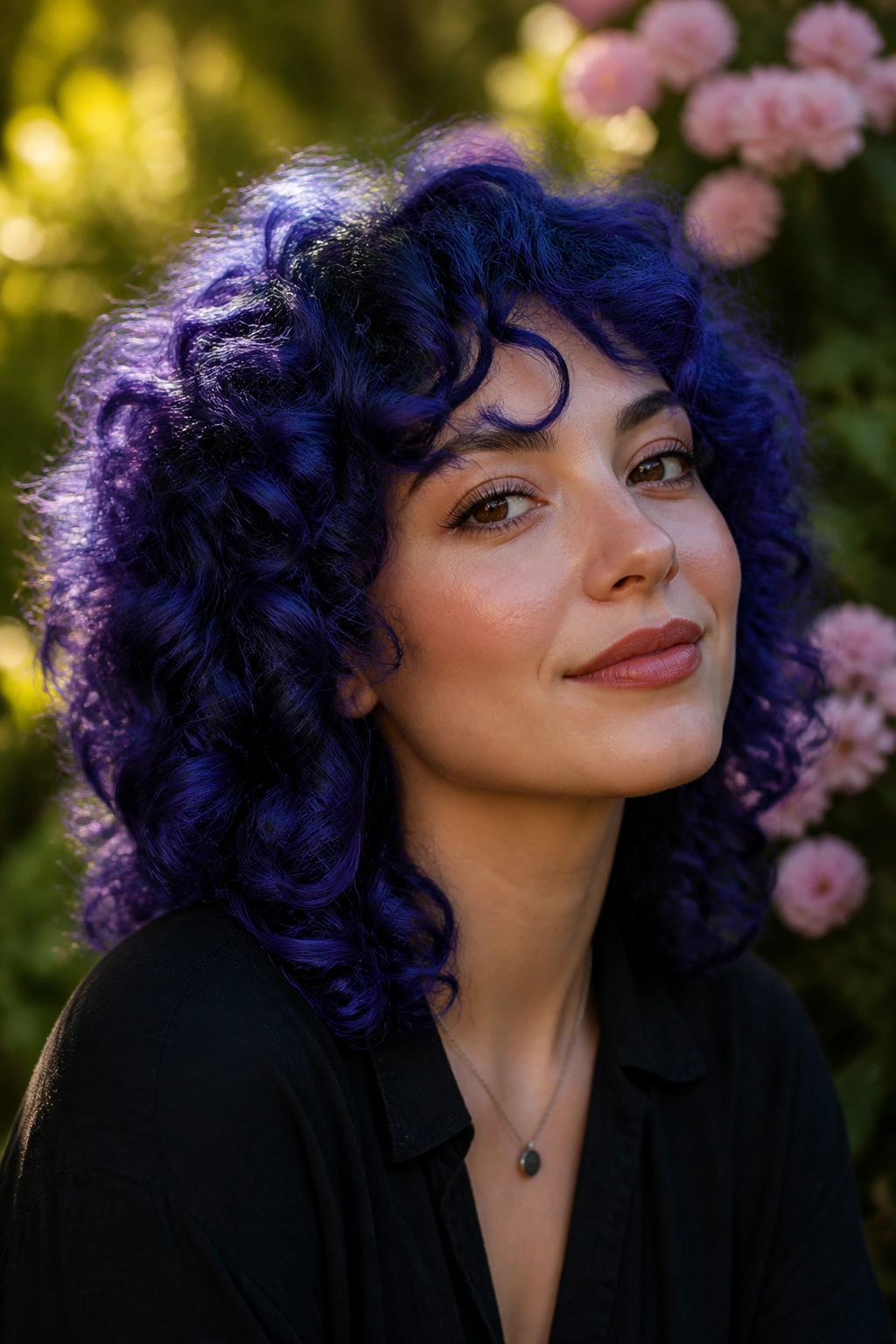
Three things make blueberry purple curls work: a blue-violet base, curl definition, and shine. Skip any one of those, and the whole look can fall flat.
Why Curls Love It
Curly hair already creates shadows and highlights, so a blueberry-purple tone gets more dimension than the same color on pin-straight hair. The blue in the formula cools the purple down, which keeps cool skin looking fresh rather than red.
- Use a curl cream or light gel so the shape stays defined.
- Diffuse on low heat if you want the purple to show in layers.
- Ask for placement around the crown and outer spirals, not just the ends.
- Keep the finish glossy; matte curls make the color look dull.
A blueberry purple curl pattern can look rich, playful, and a little wild in the best way. There is a lot going on, but the color still feels organized.
8. Mauve Mushroom Brown
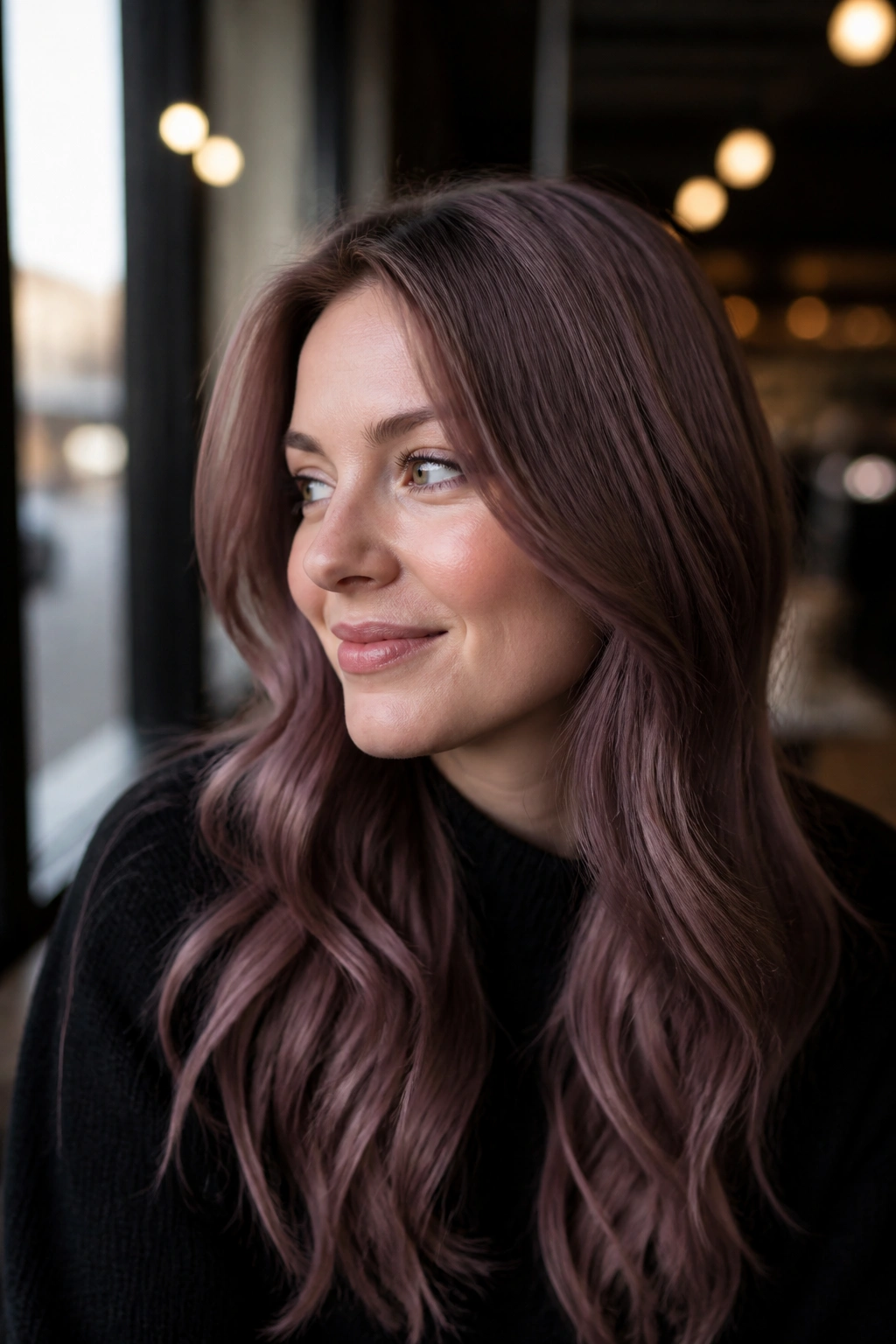
Want purple hair that still sits close to brown? Mauve mushroom brown does that job better than most shades. It is muted, earthy, and cool enough to flatter pink or blue undertones without making the hair look obviously dyed from across the room.
The brown base keeps the shade wearable, while the mauve overlay gives it that soft purple cast in daylight. I like this on people who need their hair to work in more than one setting — office, dinner, errands, repeat — because it does not shout for attention.
Ask your colorist for a mushroom brown base with a mauve or smoky violet glaze, not a warm rose tint. That one detail keeps the whole thing cool. It fades nicely too, which is a gift if you hate sharp regrowth lines.
9. Periwinkle Money Piece
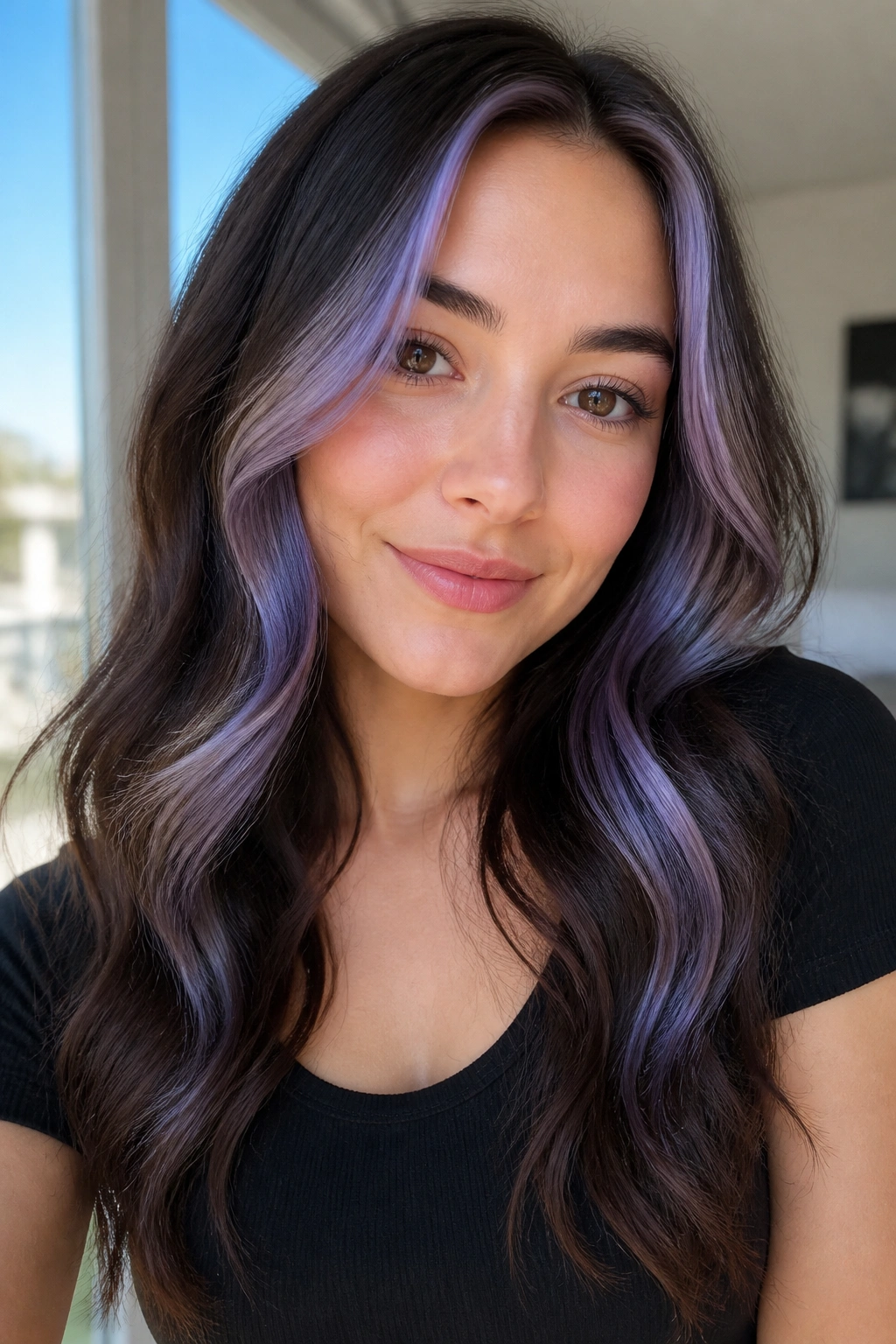
Picture dark hair with two cool periwinkle streaks framing the face. That is the money piece version of purple, and it can change a haircut fast.
Where to Place It
The best placement is usually around the part line and the front half-inch to inch on each side of the face. That pulls light right where you want it. On cool skin, periwinkle reads bright but not sugary, especially if the rest of the hair stays deeper.
- Works on long layers, lobs, and curtain bangs.
- Looks strongest when the streaks are pale enough to stay blue-violet.
- Needs regular toning if the base is very light.
- Gives you purple without full-head commitment.
This is one of my favorite ideas for people who want a bold moment without changing everything. It is small. It makes a difference.
10. Velvet Eggplant Waves
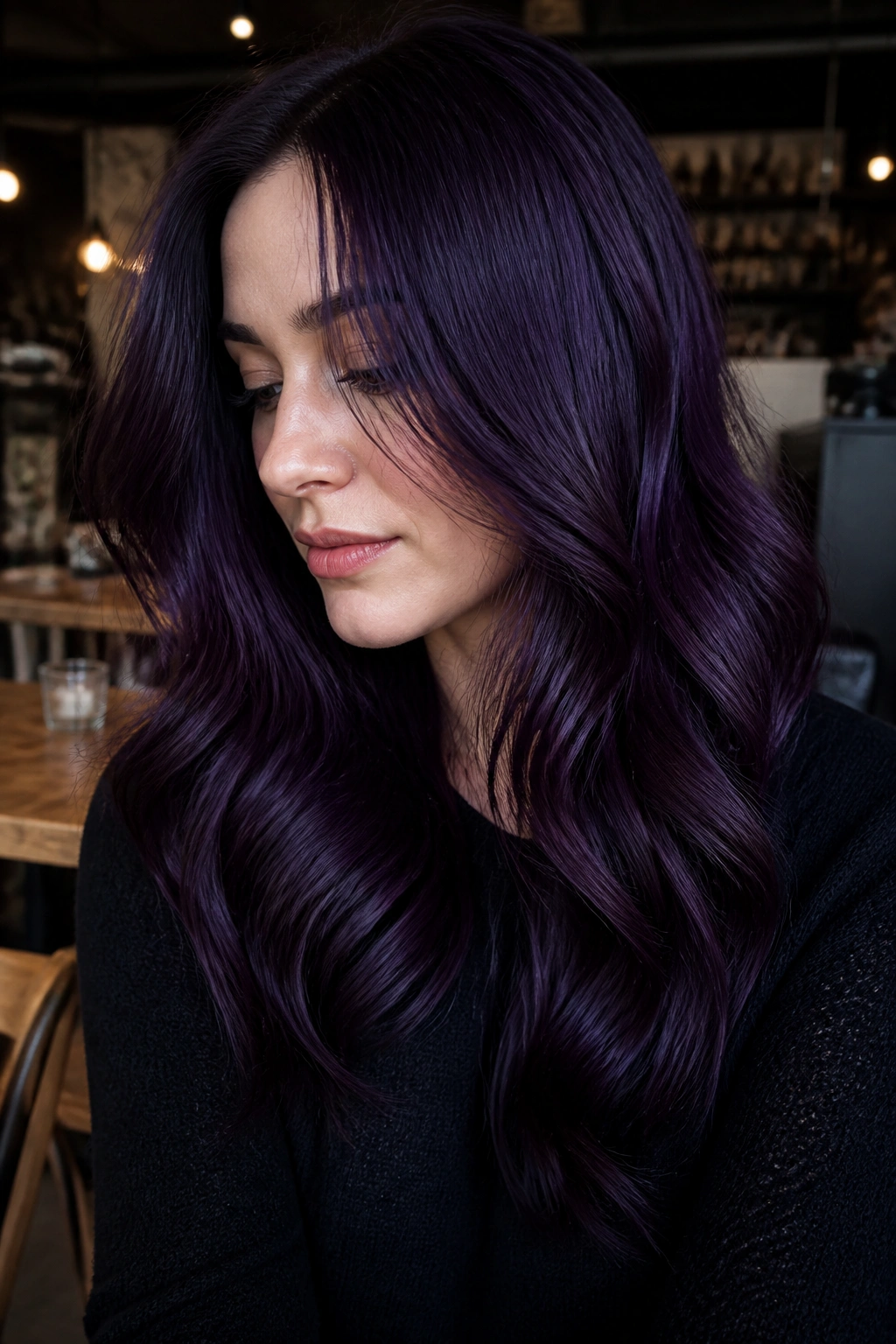
Velvet eggplant is the grown-up answer to purple hair. It is deep, glossy, and a little moody, which is exactly why it suits cool skin so well.
Why the Depth Matters
The shade sits between violet and almost-black plum, so it gives the hair richness instead of brightness. Wavy hair makes it even better because each bend catches the light and shows a different side of the color. On straight hair, it can look sleek and almost lacquered.
That glossy feel is the whole point. Use a shine serum sparingly, keep the ends trimmed, and avoid washing so often that the color strips off too quickly. A deep eggplant tone usually stays handsome longer than a pastel shade, which is a relief if you do not live near a colorist.
It is not flashy. That is the appeal.
11. Pastel Grape Lob
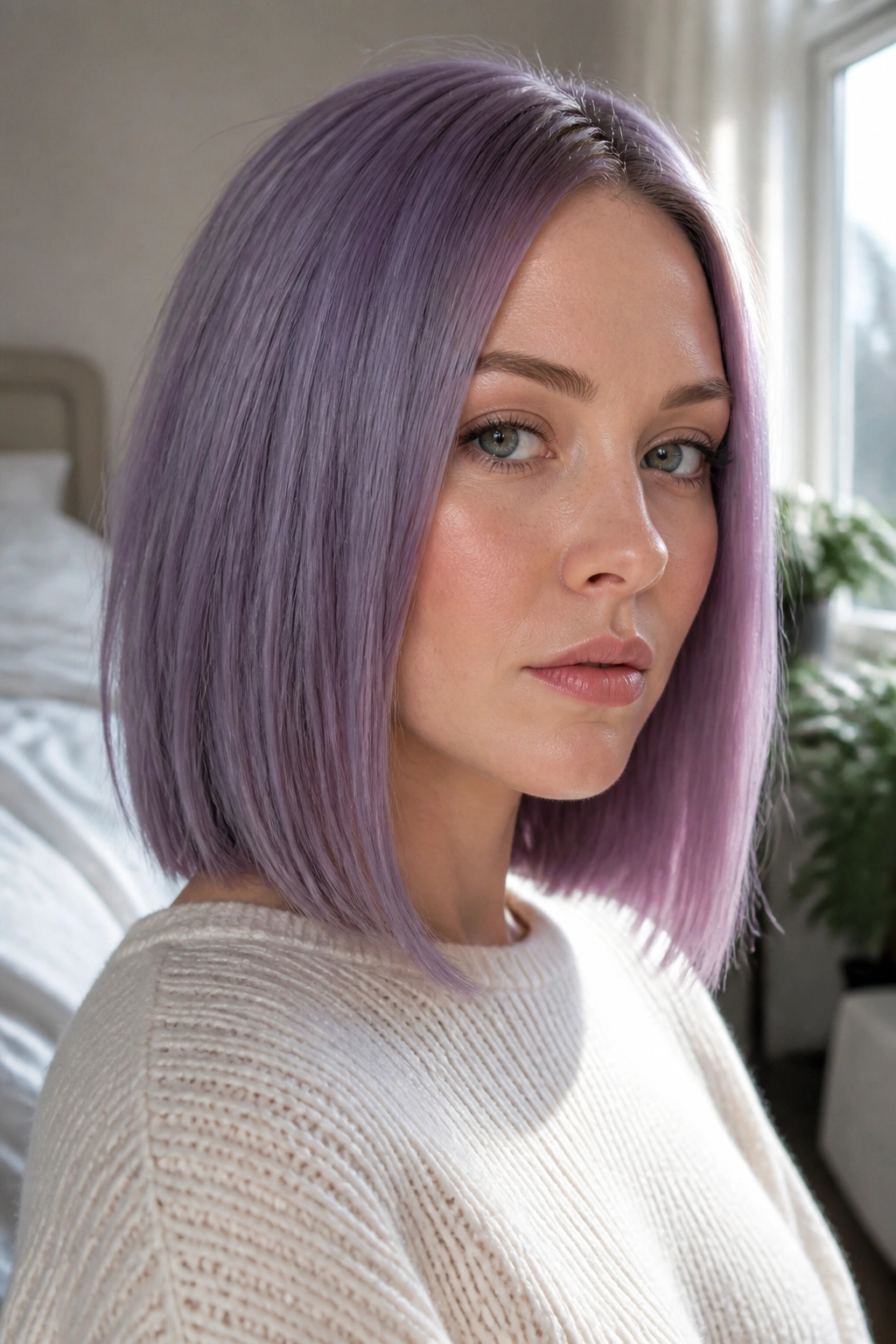
Can pastel purple look polished instead of sweet? Yes, if the cut stays clean. A pastel grape lob works because the blunt shape gives the soft color some structure.
The shade itself should lean cool and slightly gray, not pink. On cool skin, that matters. A warm grape tone can tip into bubblegum territory fast, and that is not the same thing at all.
This one needs a pale blonde base, usually level 10, and a gentle gloss to keep the ends from going dull. The color fades fast, which is part of the deal with pastels, but the lob length makes maintenance feel manageable. It is a good choice if you like lighter clothes, clean lines, and hair that looks airy rather than heavy.
12. Blackberry Root Smudge
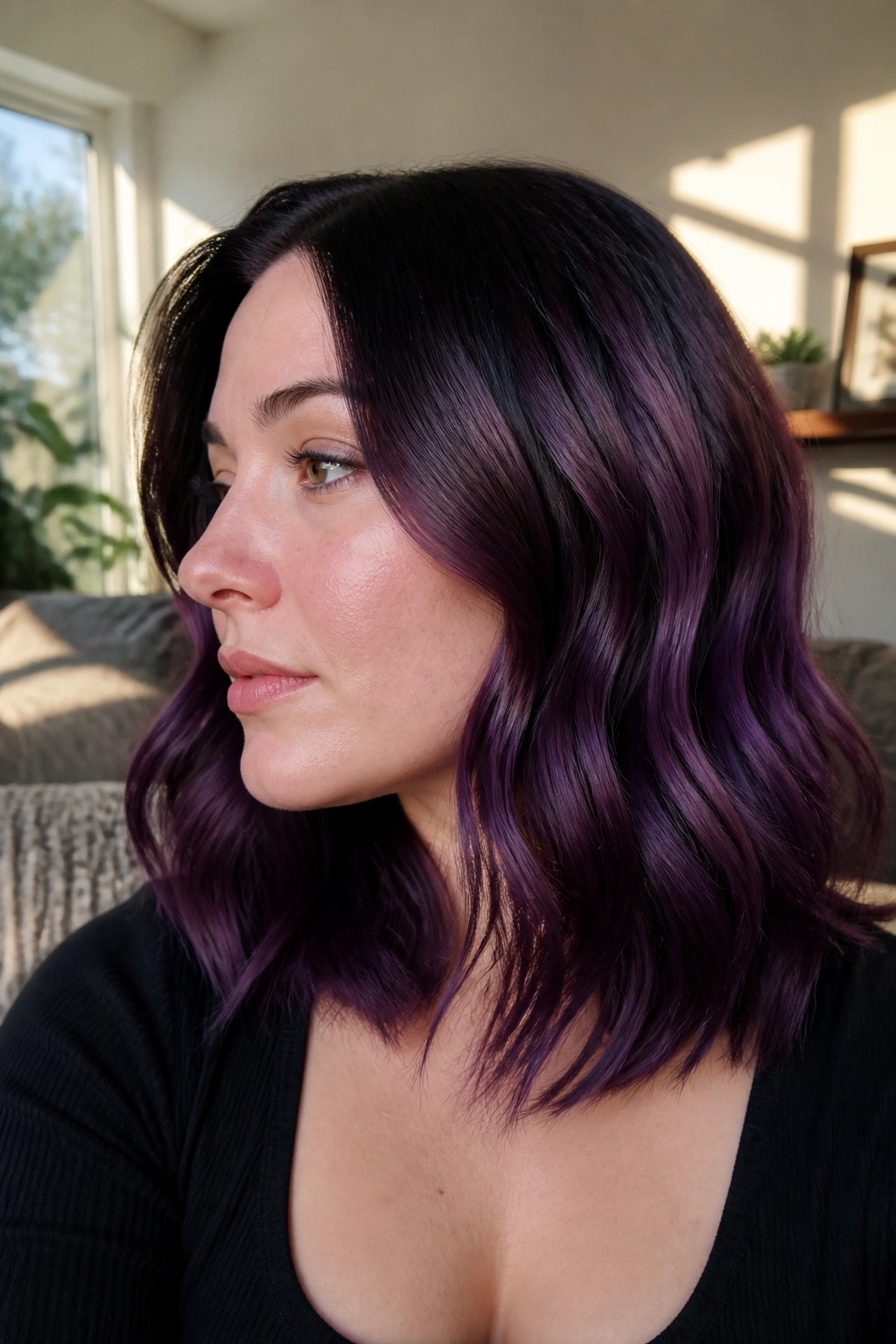
Unlike all-over pastel, blackberry root smudge gives you room to breathe. The darker root keeps the style grounded, while the blackberry mids and ends carry the purple note.
A smudge like this is especially nice if you are tired of obvious grow-out. Leave about 2 to 3 inches at the root in a soft cool brown or smoky black, then melt into blackberry and violet through the rest. The transition should be smooth enough that the regrowth just looks like part of the plan.
It is a strong option for anyone with a busy schedule. The shade stays interesting even when the salon visit is not happening right away. That is practical, and I respect that more than a color that looks good only on day one.
13. Dusty Lilac Shag
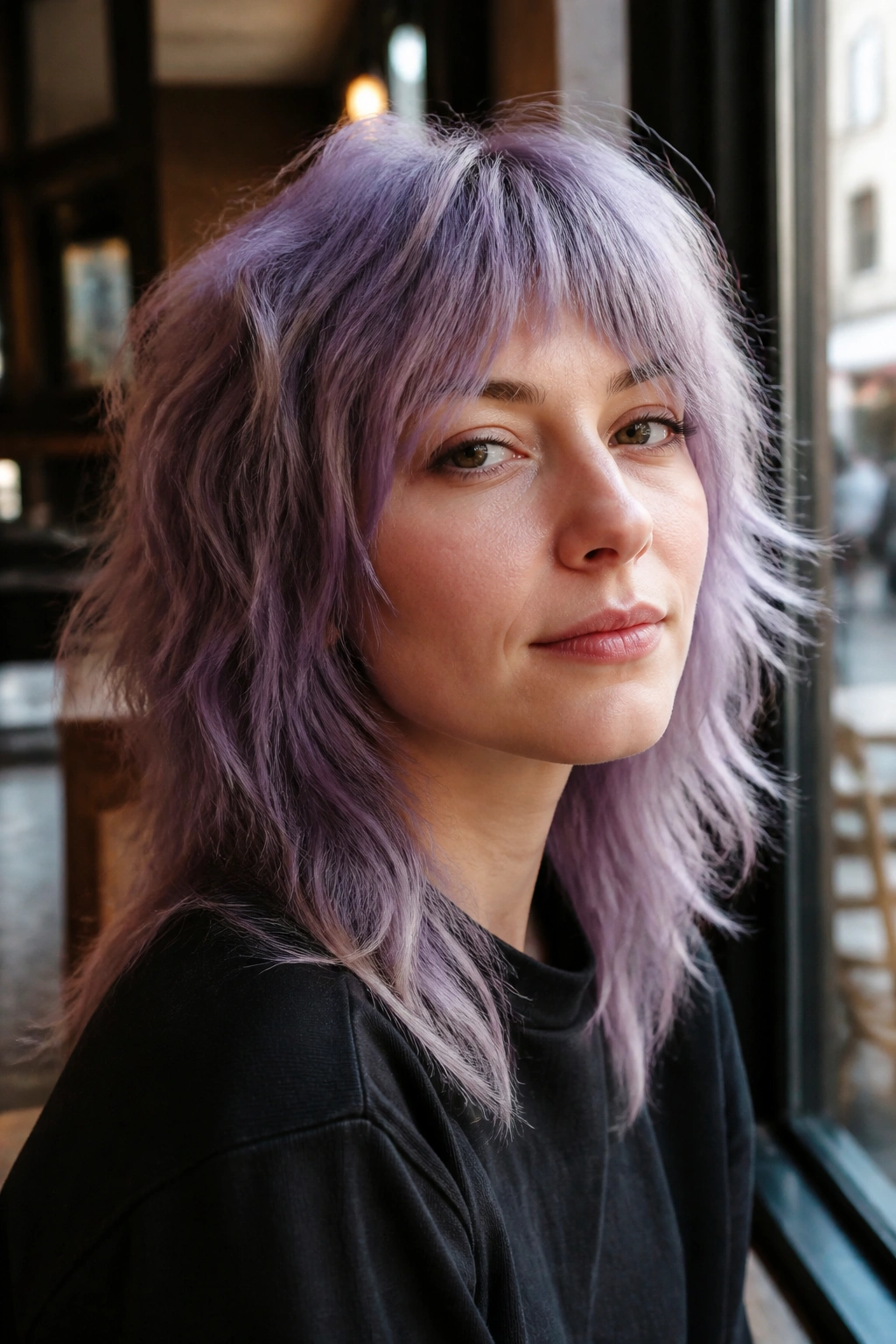
A shag haircut can make dusty lilac feel relaxed instead of precious. The layers, fringe, and texture break the color up, so the purple looks lived-in rather than overly styled.
The Texture Does the Heavy Lifting
Dusty lilac works best when the purple is muted enough to sit between lavender and gray. That cool softness keeps it friendly to fair cool skin, but it also works on medium skin with pink undertones because it does not come at you too hard.
Use a light mousse at the roots, then scrunch or diffuse to let the layers separate a little. The shag shape needs movement or the whole thing can look flat, and a flat shag is a waste. I mean that.
This is one of the easiest ways to make purple look modern without making it loud. It has a little attitude, which helps.
14. Metallic Plum Sleek Bob
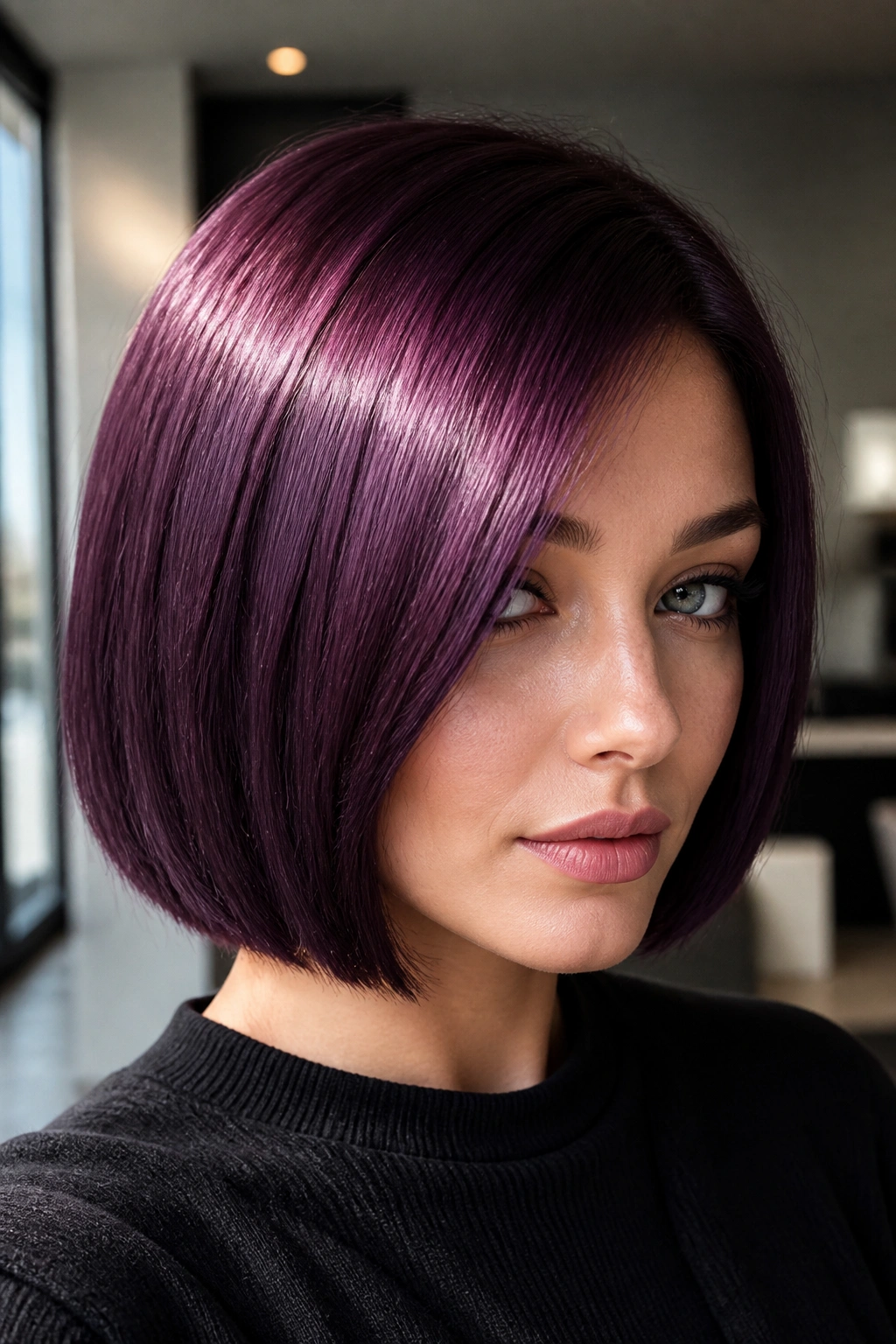
If you like shine more than softness, metallic plum is the sharpest option here. The sleek bob makes the color read almost like polished fabric.
A metallic finish needs smooth hair. That means heat protection, a blow-dry with tension, and a flat iron only if the hair can handle it. Work in 1-inch sections and keep the pass count low. Too much heat kills the shine fast.
The plum itself should lean cool, with a violet cast that shows in the light. On cool skin, that reflective finish can make the face look crisp and clean. It is a good shade when you want purple to feel deliberate, not playful.
15. Midnight Purple Melt
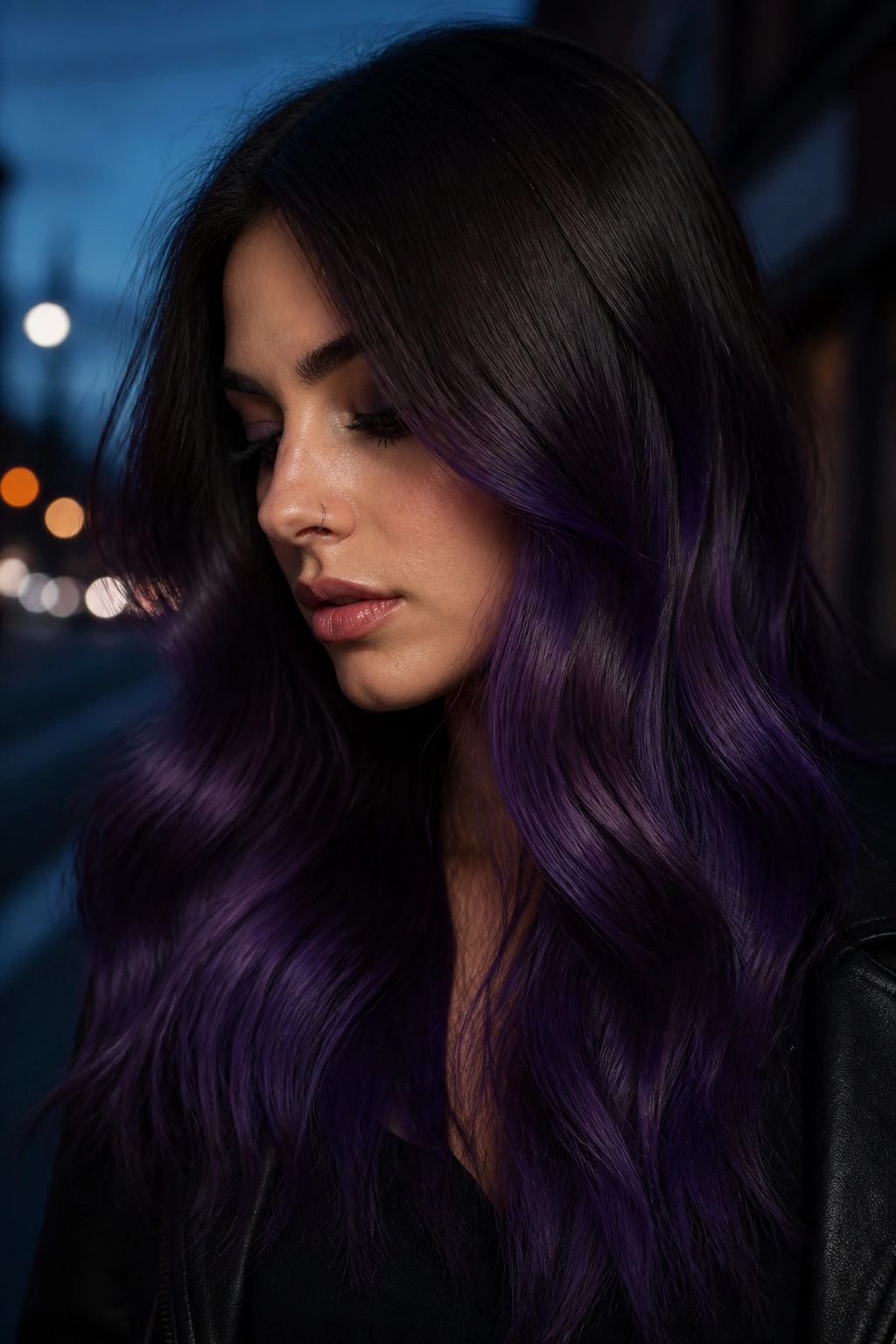
Midnight purple reads like black velvet until sunlight finds the blue in it. That is the magic here. It gives you a dark hair color with a secret, which I think is one of the more appealing ways to wear purple.
The melt usually starts with a near-black root or base, then slides into deep violet and indigo through the mids and ends. It is not loud. It does not need to be. On cool skin, the low contrast can look cleaner than a brighter purple because the shade never fights the face.
This is also a good pick if you want something that can live through a normal life — work, commuting, washing, repeat — without demanding constant toning. A semi-permanent or demi-permanent approach keeps the fade softer.
16. Heliotrope Highlights
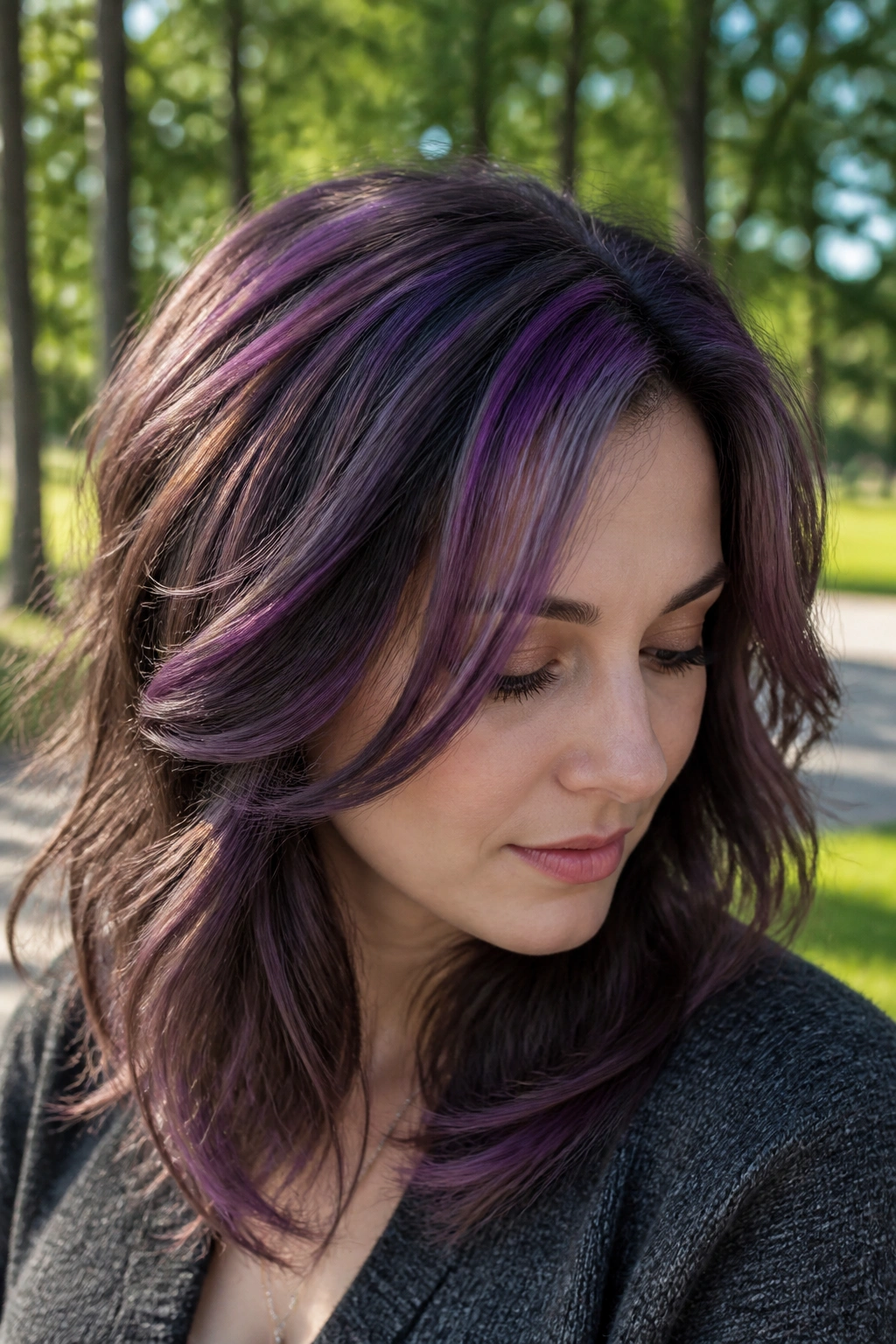
Unlike chunky streaks, heliotrope highlights look like light moving through the hair. They are finer, softer, and much easier to wear if you want purple without a hard statement.
How to Place the Color
Ask for fine-weave highlights around the crown, temples, and a few pieces near the nape. That gives the color lift without turning it into stripes. Heliotrope is a nice cool purple because it sits between violet and pink, but with the right blue base it stays friendly to cool undertones.
- Best on layered cuts where the highlight pattern can break up.
- Needs careful toning so the pink side does not go warm.
- Looks good when the roots stay a shade darker.
- Works well with half-up styles that show the top panels.
These highlights feel airy. They are less dramatic than full color, but they do not disappear either.
17. Cool Rose Violet Layers
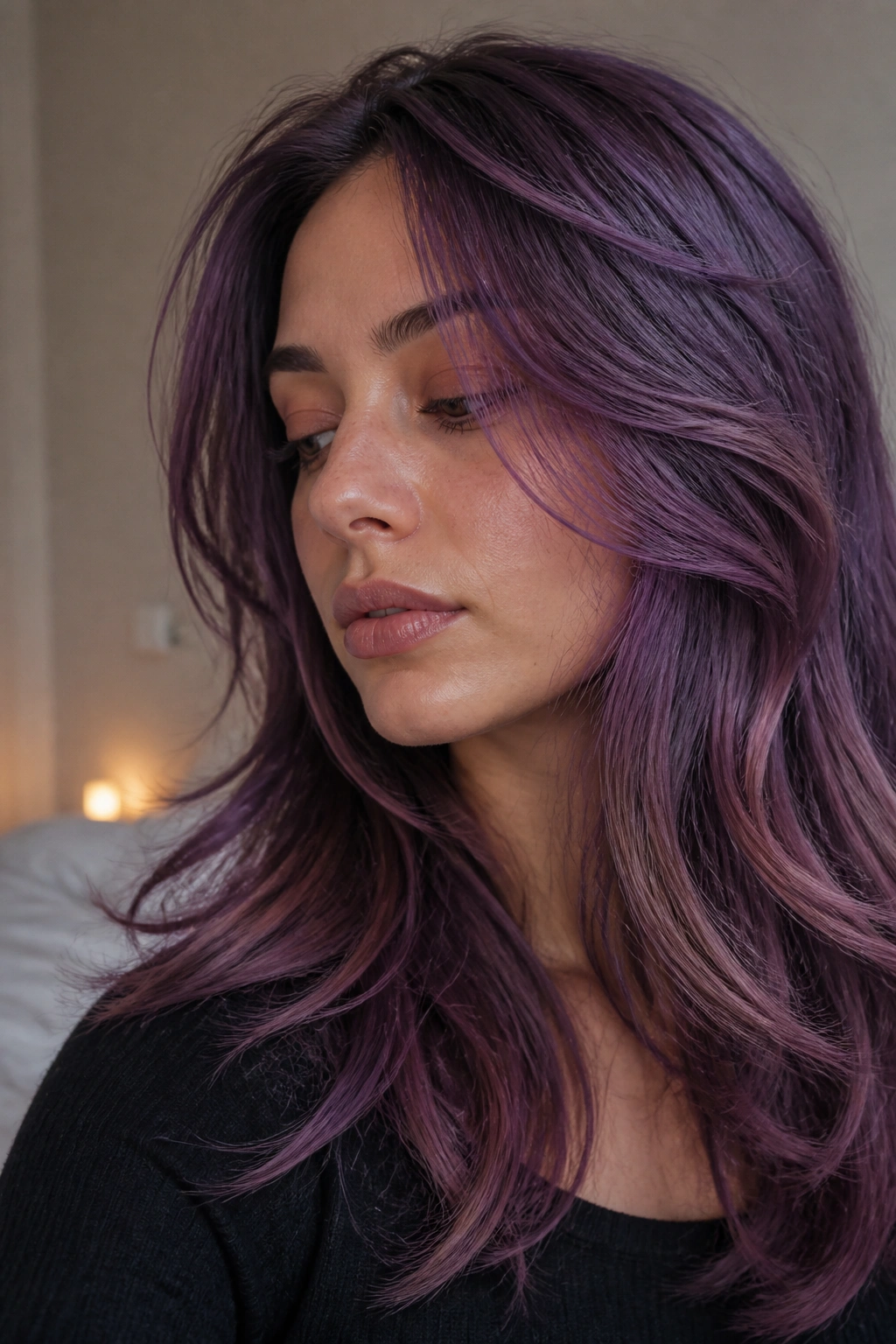
Cool rose violet works on cool skin, but only when the rose stays blue-based. That is the whole trick. If the formula leans peach or coral, the shade starts to fight the undertones in the face.
I like this one on layered cuts because the rose-violet pieces catch in the movement and keep the hair from looking like a flat sheet of color. The best version has a soft berry edge, not a warm pink edge. It feels richer that way.
Wear it with cooler makeup shades if you want the hair to do the talking — berry lipstick, mauve blush, soft brown liner. The color can carry a lot on its own, and it does not need much help.
18. Deep Indigo Plum
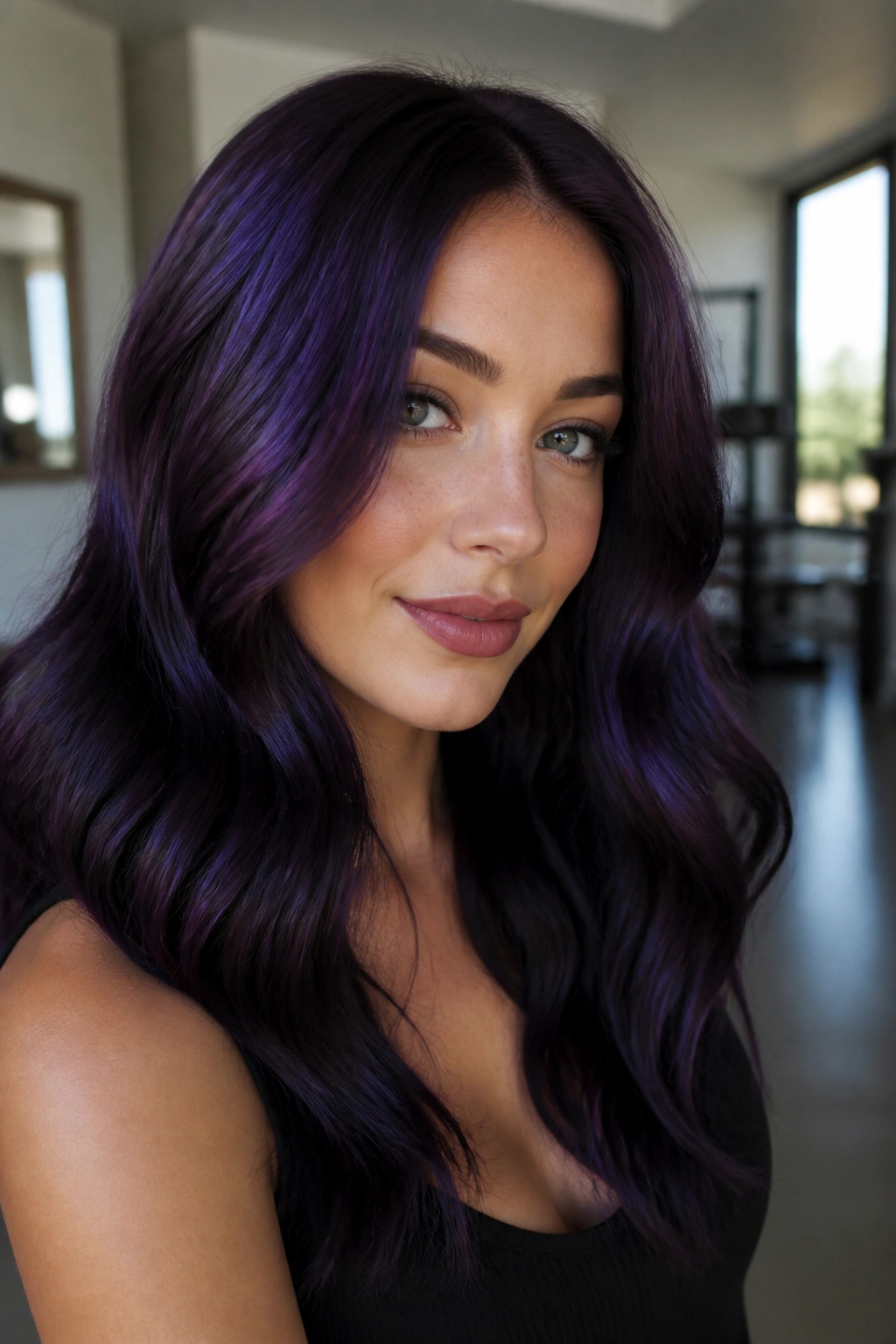
Why choose between blue and purple when you can have both? Deep indigo plum splits the difference in a way that flatters cool skin almost immediately.
The blue note keeps it from reading warm, while the plum keeps it from looking flat or too dark. On deep cool skin, it can be gorgeous because the shade echoes the undertones without disappearing into them. On fair cool skin, it feels striking and a little dramatic, which is not a bad thing if that is the point.
Glossy finishes work best here. A satin matte look can make the color feel heavy, and that is the opposite of what you want. Keep the cut soft, the ends neat, and let the color do the rest.
19. Smoky Lavender Undercut
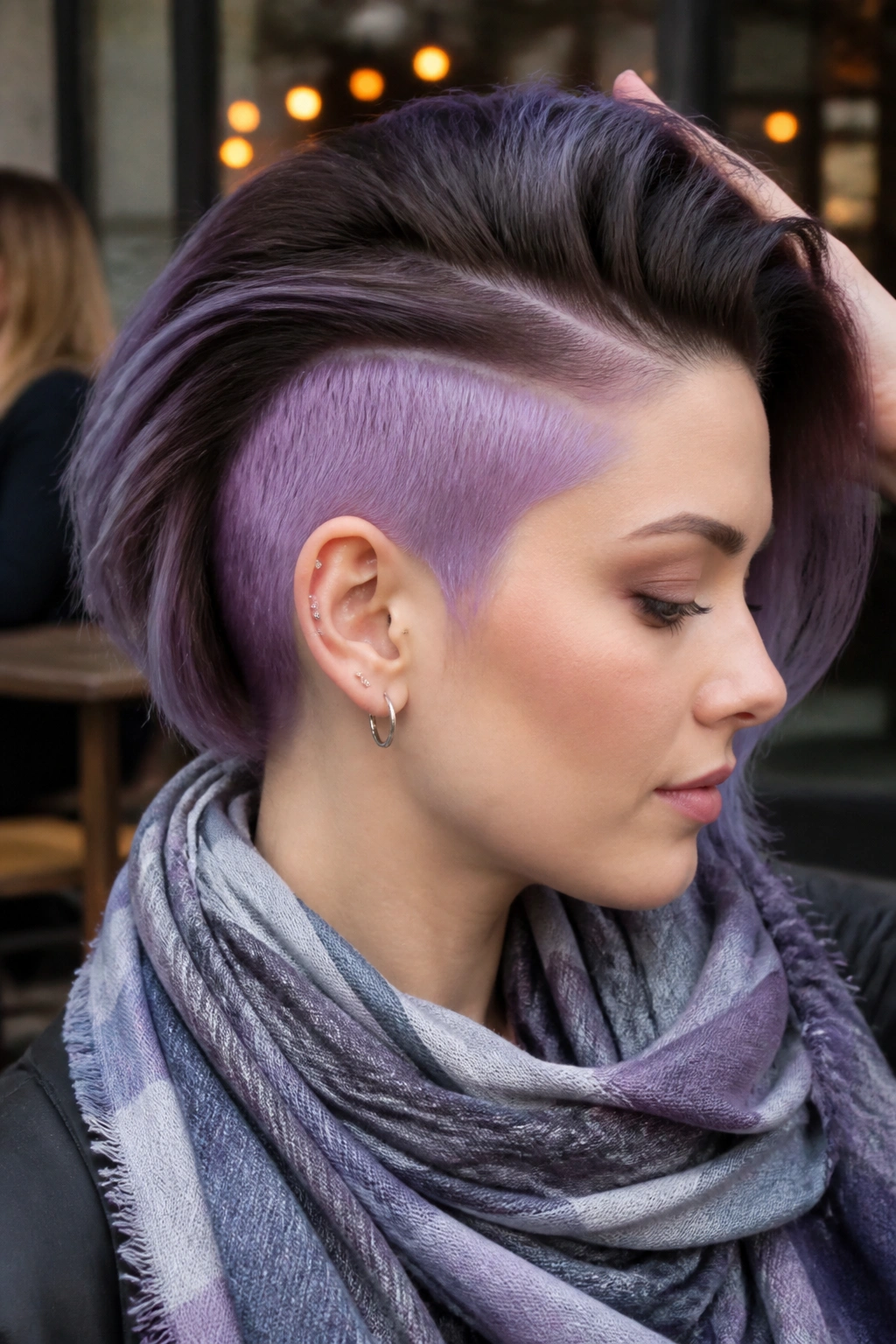
A hidden undercut turns smoky lavender into a private surprise. The top layer can stay dark or soft purple, while the shaved or cropped section underneath carries the lighter lavender tone.
Why Short Sides Matter
The undercut gives you a place to play without putting the color front and center all day. Tuck your hair up, and the shade shows. Wear it down, and it stays more subtle. That makes it a smart choice if you like a little edge but do not want the whole head bright.
- Good for thick hair that needs weight removed.
- Easy to hide for conservative settings.
- Fun with braids, buns, and clipped-up styles.
- Lets you keep the lavender brighter because the section is smaller.
This idea feels a little rebellious without being a mess. I like that.
20. Charcoal Violet Bob
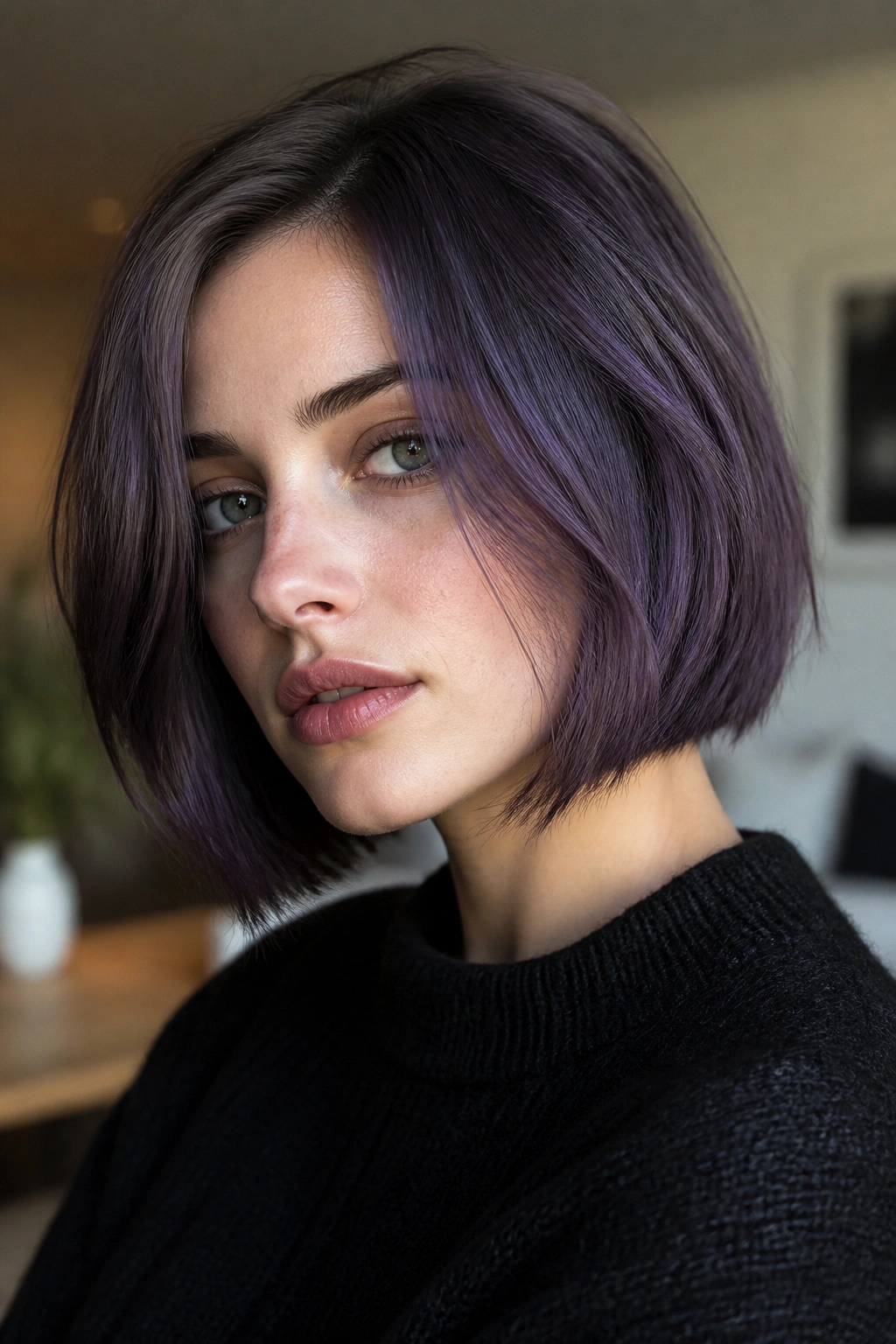
Charcoal violet is the most forgiving dark purple on this list. It is subdued enough for everyday wear, but the violet cast stops it from looking like plain black hair.
A bob gives the shade a clean edge, and the straight line helps the color look intentional. Ask for a charcoal base with a violet glaze over the top, not a flat black with purple dumped on later. The latter can look dull once it starts fading.
This shade works especially well on cool skin because the gray in the formula keeps the undertones calm. It is a good option if you want purple hair but do not want to announce it from across the street. Low drama. Good payoff.
21. Vivid Purple Peekaboo
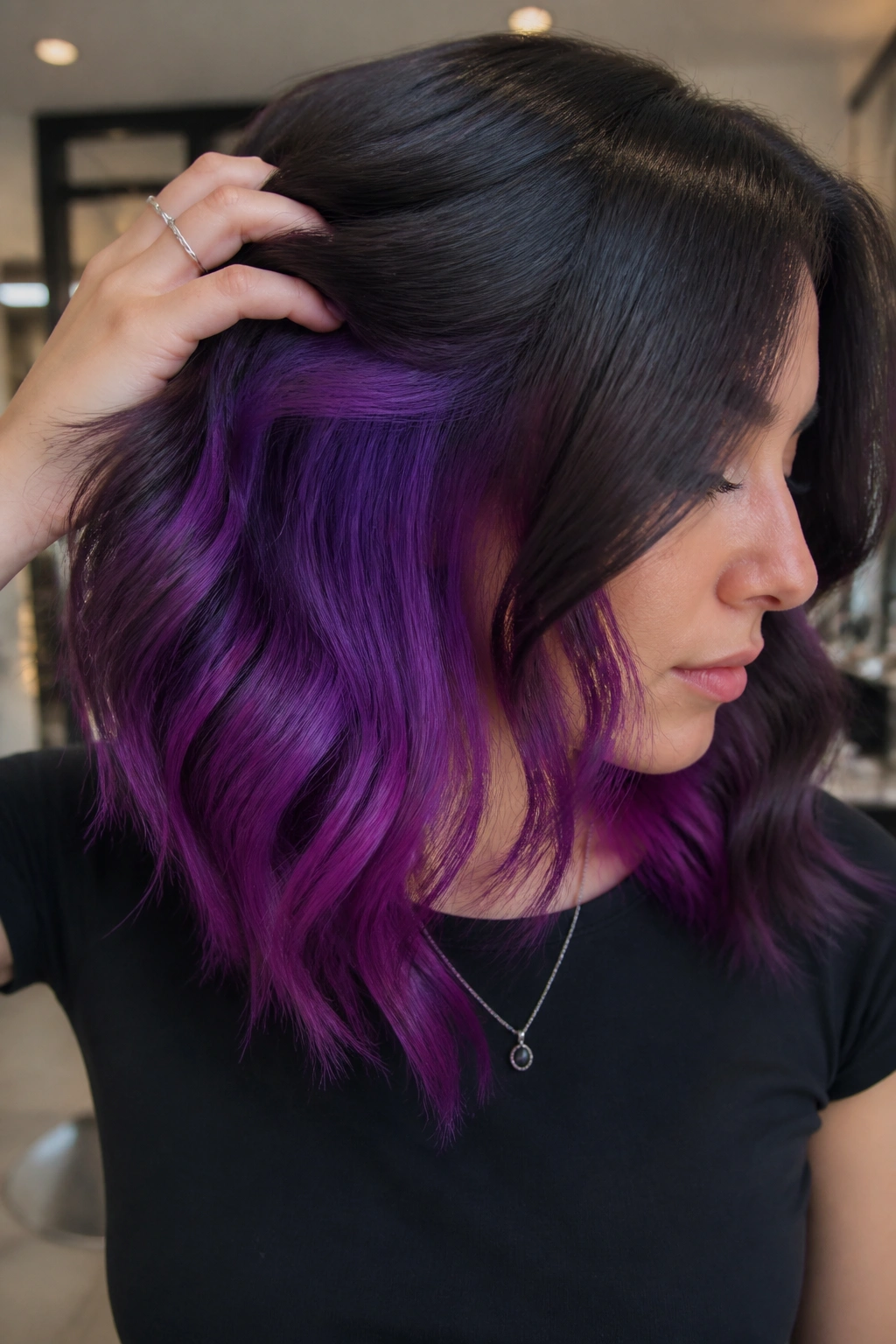
Do you want loud color without a loud head of hair? Vivid purple peekaboo panels solve that nicely.
The top layer stays your natural color or a deep neutral shade, while the hidden sections underneath carry bright violet, orchid, or electric plum. When the hair moves, the color flashes. When it does not, the look stays restrained. That contrast is the fun part.
This works well with half-up styles, braids, and high ponytails because the color shows in controlled little bursts. If your cool skin likes high contrast, vivid purple can look striking; if you prefer softer looks, keep the top darker and the hidden purple a little deeper. Either way, it feels less risky than a full-head bright dye.
22. Arctic Orchid Curls
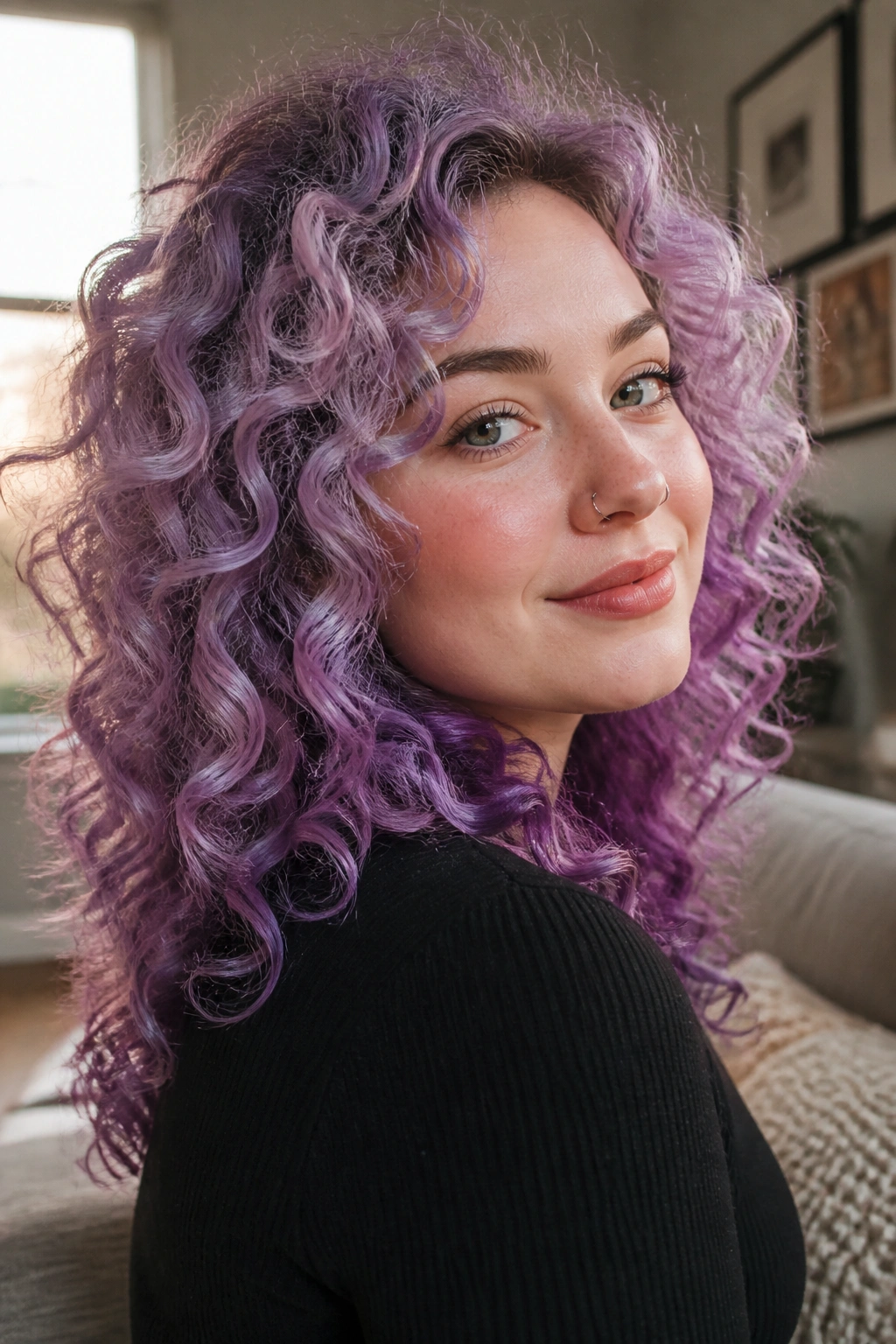
Unlike straight styles, curls can make pale orchid look fuller and softer. The shape itself spreads the color around, so the shade appears dimensional even when the palette is simple.
Where to Place It
For curls, I like orchid placed on the outer ringlets and a few face-framing pieces, with slightly deeper violet underneath. That keeps the color from looking chalky or washed out. Cool skin tends to handle the pale tone better when there is depth behind it.
- Moisture matters more here than on straight hair.
- Bleached curls need gentler cleansing and a rich conditioner.
- A satin pillowcase helps the color look fresher longer.
- Diffusing on low keeps the curl pattern intact.
This is a soft, airy take on purple. It feels light, but not flimsy.
23. Violet Silver Blunt Cut
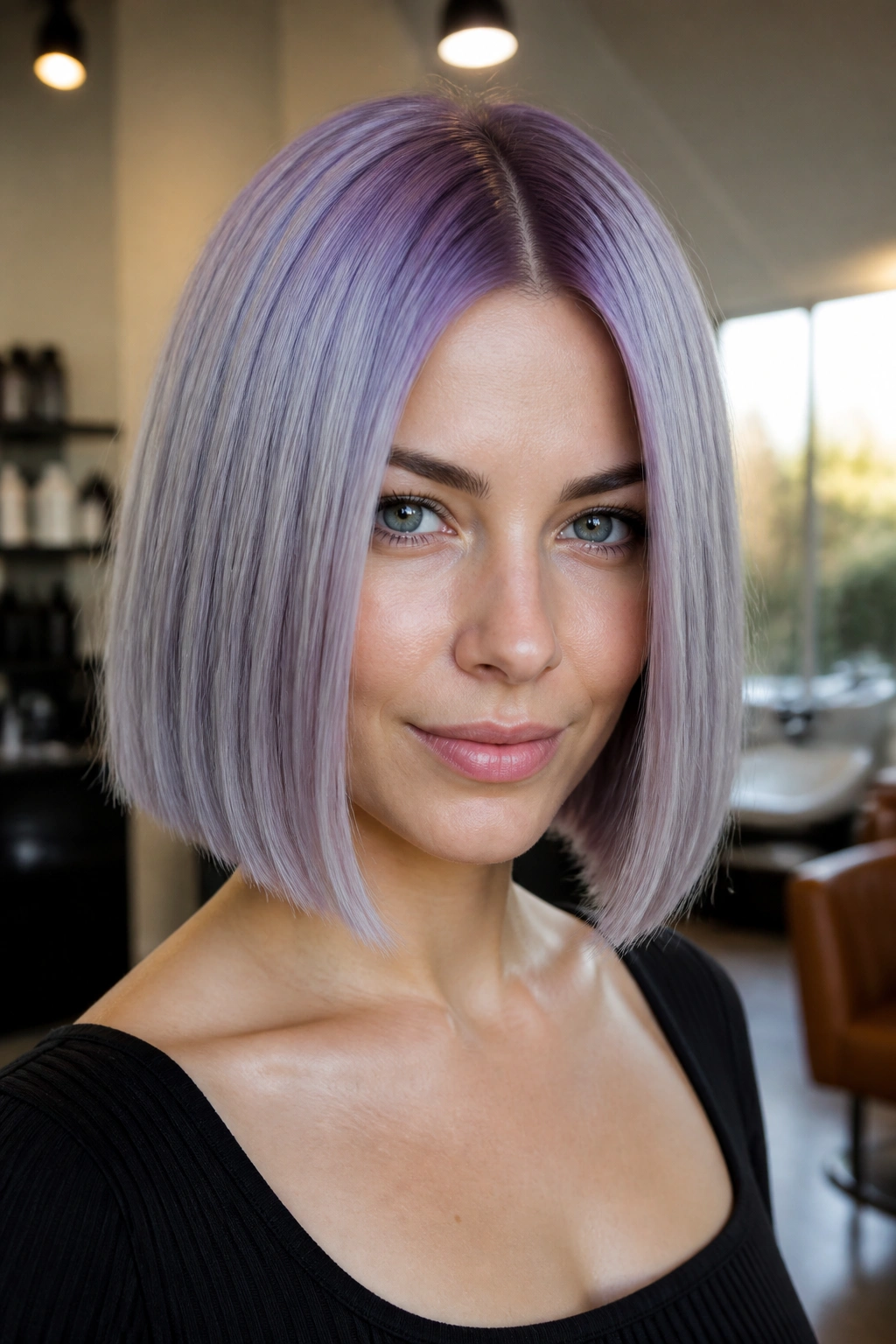
A blunt cut makes violet silver look cleaner than layers ever do. The line gives the color a frame, and that makes the cool tones look sharper.
The shade itself should sit between pale violet and metallic silver, with no yellow drift in the formula. On cool skin, that crispness is doing half the work. The other half comes from the cut. Straight edges, a center part, or a tucked-behind-the-ear finish all help the color look sleek.
This is one of those styles where less is more. The cleaner the cut, the more the color reads. Throw in too many wispy layers and you lose that strong graphic feel.
24. Orchid-to-Blue Gradient
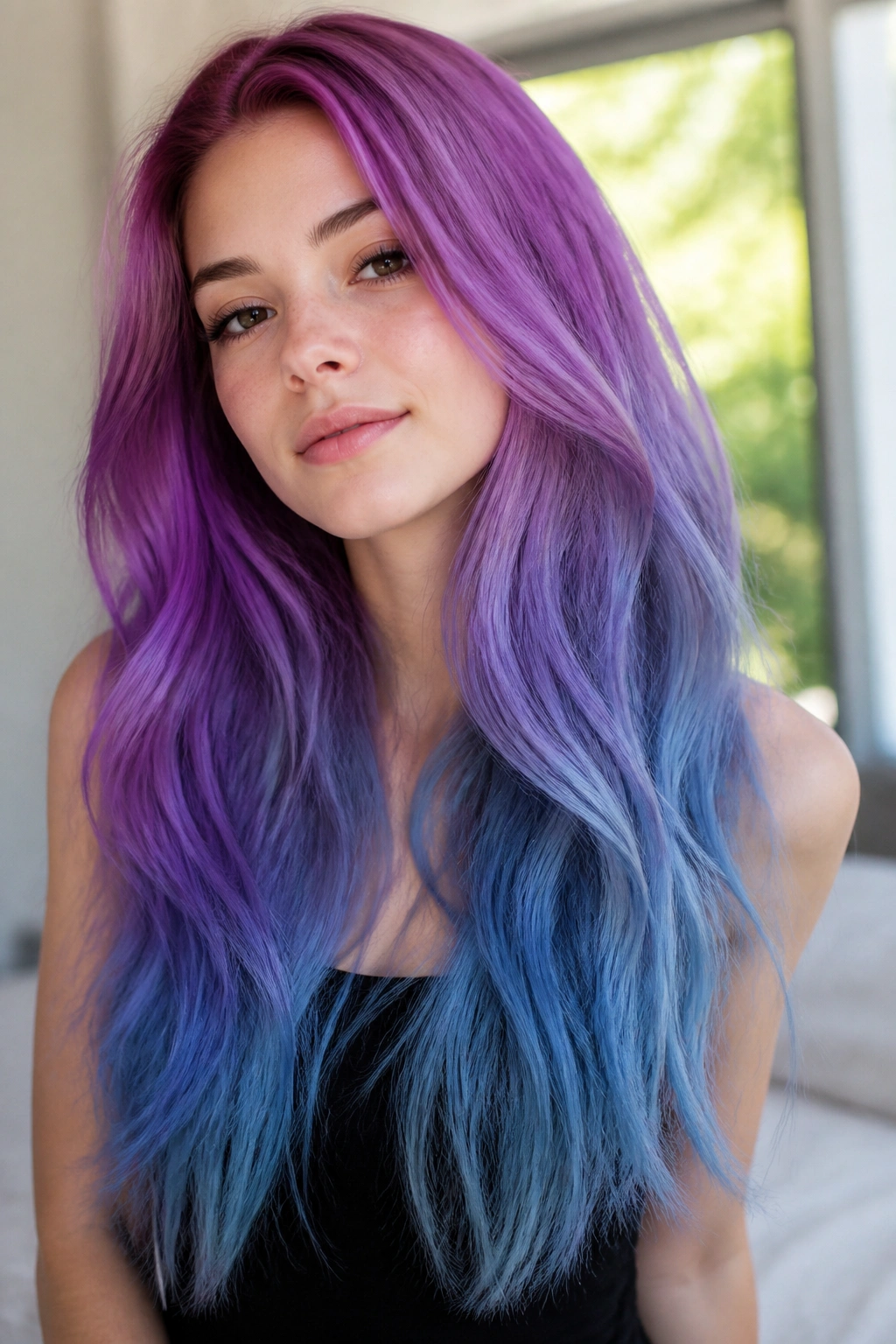
Can you wear two cool shades at once without it turning messy? Yes, if the transition is soft enough. An orchid-to-blue gradient is one of the prettiest ways to do it.
Ask for a Soft Melt, Not Bands
The orchid should start near the crown or mid-lengths, then slide into a blue-violet or denim-blue finish toward the ends. The line between the shades should blur, not cut. That is what keeps the look polished.
This style works best on longer hair because the gradient needs room to breathe. On shorter cuts, the shift can feel abrupt. Even prelightening helps a lot, since banding shows fast with cool colors. If the hair is uneven at all, the whole gradient gets choppy.
It is a little more involved than a single shade, but the result has depth that plain purple cannot always give you.
25. Soft Amethyst Ends
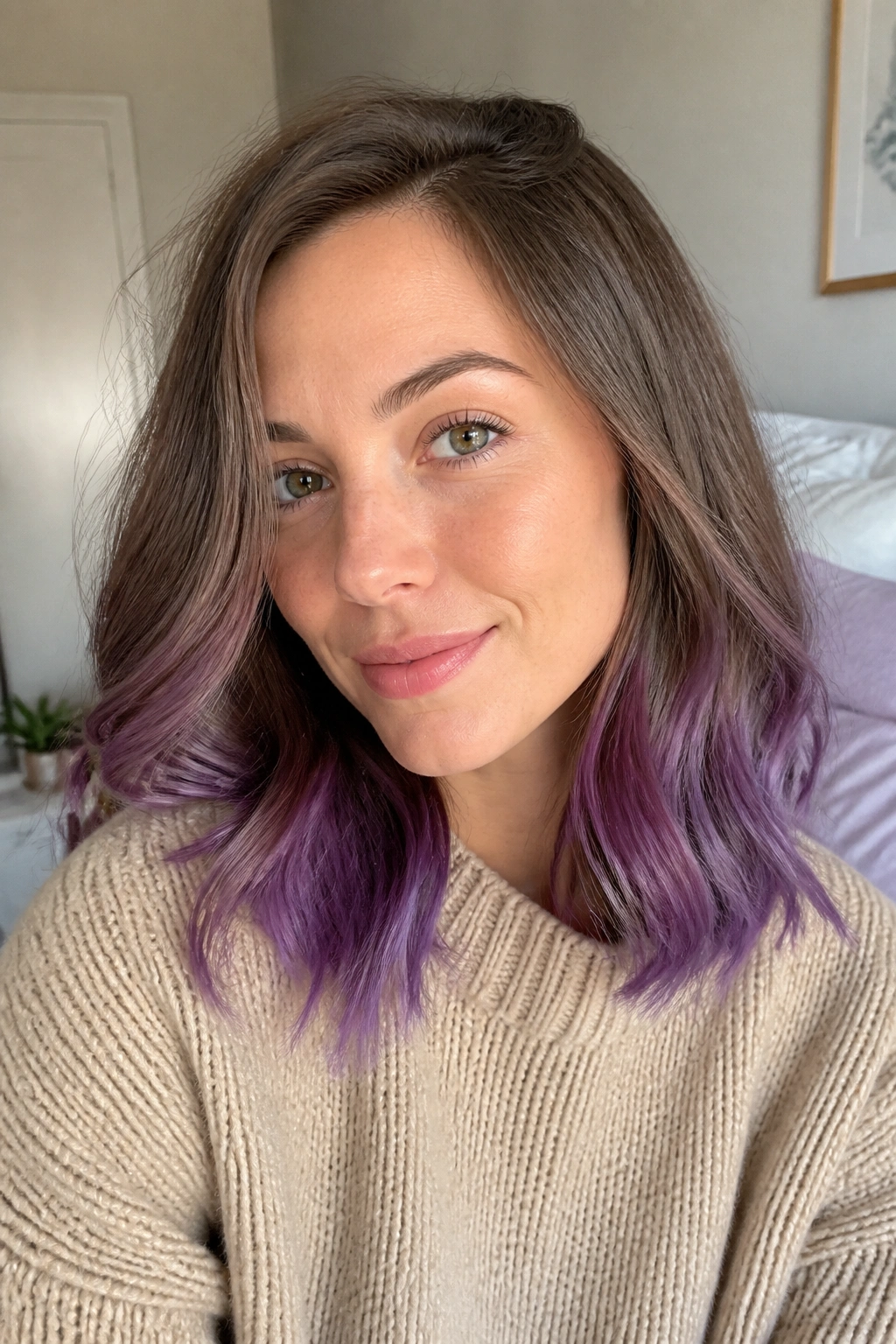
Soft amethyst ends are the easiest way to test purple on cool skin. You keep most of the hair natural or close to natural, then color only the last few inches in a cool amethyst tone.
Who Should Start Here
This is the route I’d pick for someone who wants purple but does not want to gamble with a full head of color. It works well on shoulder-length hair, long layers, and even blunt cuts if the ends are neat enough to show the shade.
- Great if you want a gentle first step into purple.
- Easy to cut off later if you change your mind.
- Looks good when hair is worn up half the week.
- Needs less maintenance than a full pastel or full balayage.
The best part is how forgiving it is. If the amethyst fades a little, the look still makes sense. If you love it, you can always push the color higher next time. That is a much smarter way to try purple than jumping straight into a shade that demands constant attention.
Purple hair and cool skin tones are a natural pair when the undertone stays blue, silver, or smoky. Push too much warmth into the formula and the whole thing starts arguing with your face. Keep it cool, keep it clean, and the color does half the work for you.
