



Purple hair and a round face can be a lovely match—if the color is placed with some intent. The best purple hair color ideas for round faces do not just chase saturation; they use depth, direction, and a little bit of cheekbone politics. Darker roots, longer front pieces, and color that falls below the widest part of the face tend to do more work than people expect.
Purple loves contrast.
Round faces are not a problem. They just ask for a different approach. Instead of laying bright color straight across the cheeks, I like to see violet, plum, or lilac travel vertically, diagonally, or in soft ribbons that start higher up and finish lower down. That small shift changes the whole effect.
If you have ever put on a color that made your face feel wider, you already know placement matters more than the shade name on the tube. These 25 ideas move from soft to bold, from low-commitment glosses to dramatic panels, and each one is chosen with face shape in mind, not just the color wheel.
1. Deep Plum Bob for Round Faces
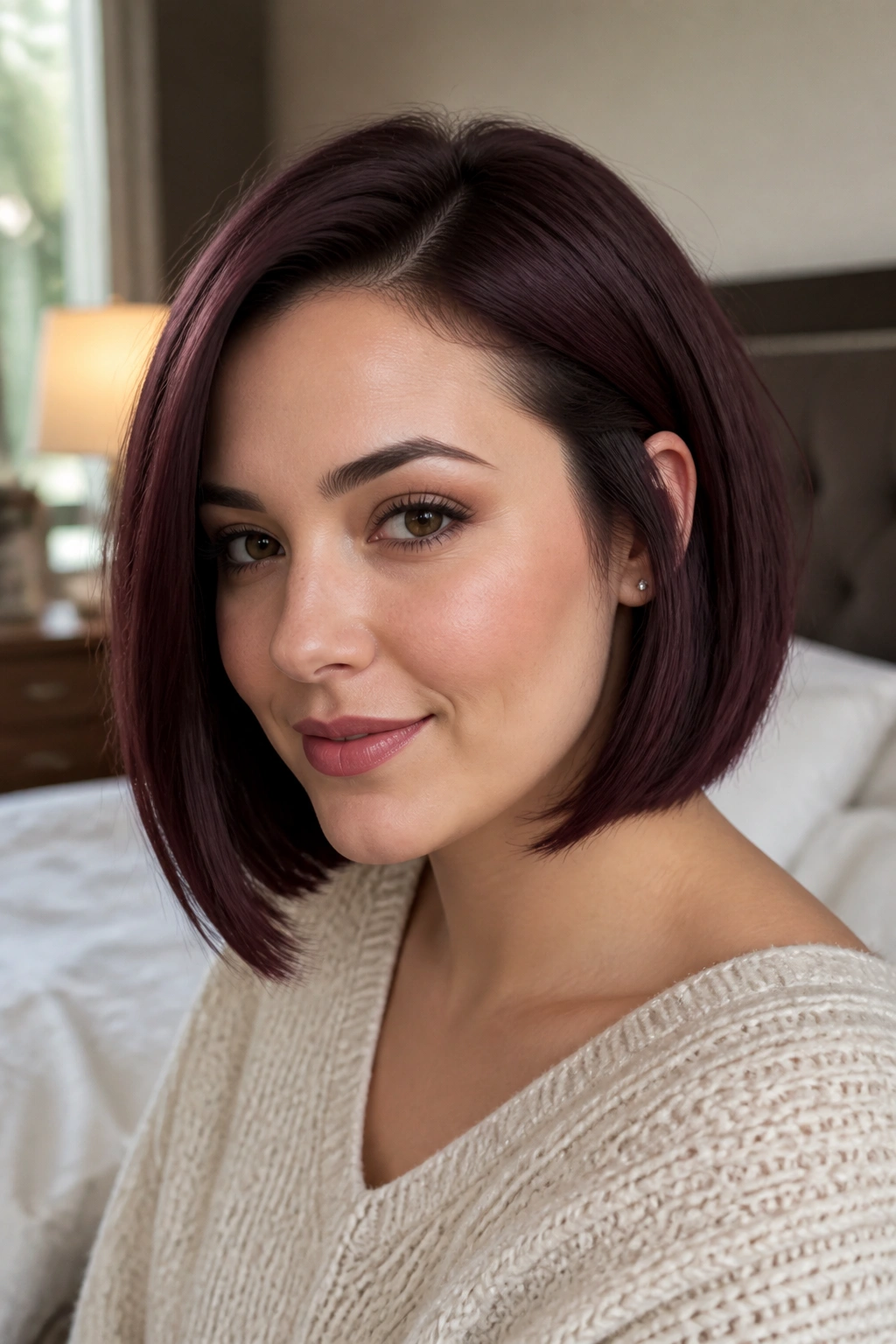
A chin-grazing bob can be flattering on a round face when the purple is deep, not candy-bright. Deep plum gives the cut a little weight, which helps the eye travel downward instead of side to side. Keep the front pieces a touch longer than the back, and let them fall just below the chin so the jawline looks cleaner.
Why It Works
The shape does half the job and the color does the rest. A slight off-center part opens the face without making it look wider, and a plum glaze with a brown base keeps the finish rich rather than flat. If you want the bob to feel sharper, ask for ends that are beveled, not blunt like a helmet.
- Keep the front 1 to 2 inches longer than the nape.
- Ask for a plum-brown mix at the roots.
- Tuck one side behind the ear for a slimmer line.
Pro tip: This looks best when the color is glossy, not chalky, so finish with a shine spray or serum on the mid-lengths and ends.
2. Smoky Amethyst Melt for Round Faces
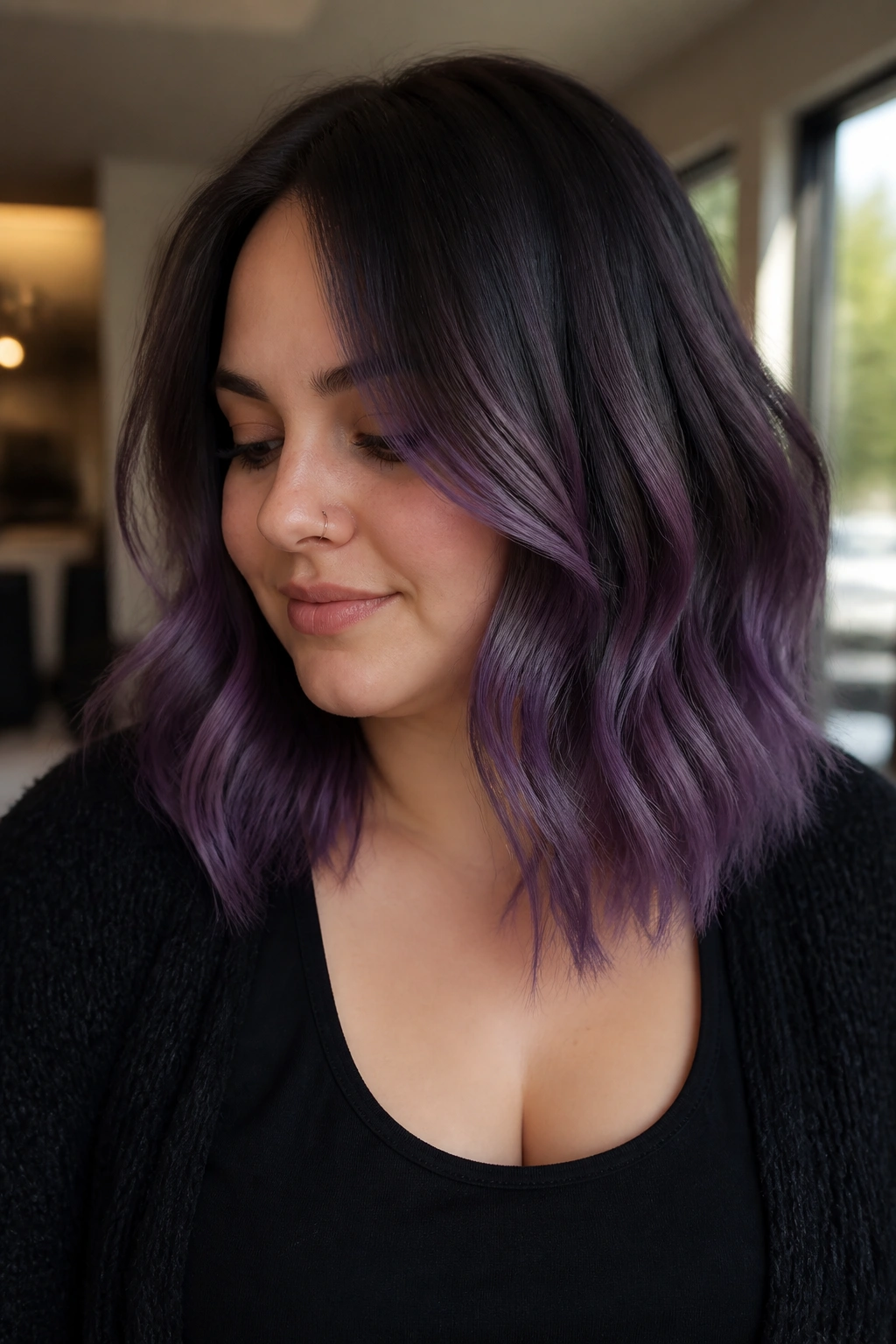
This is the quietest purple that still makes a point. Smoky amethyst works because it behaves like a shadow at the root and a glow at the ends. That vertical fade matters on a round face; it pulls the eye down and keeps the widest part of the cheeks from feeling crowded.
I like this most on shoulder-length or longer hair. The melt can start with a soft espresso or charcoal root, then shift into amethyst through the middle, with the lightest purple sitting below the cheekbone. It is a smooth look, not a stripey one.
Ask your colorist to keep the transition soft. Harsh color blocks tend to cut the face in half, and that is the opposite of what you want here.
3. Lavender Money Piece on Long Layers
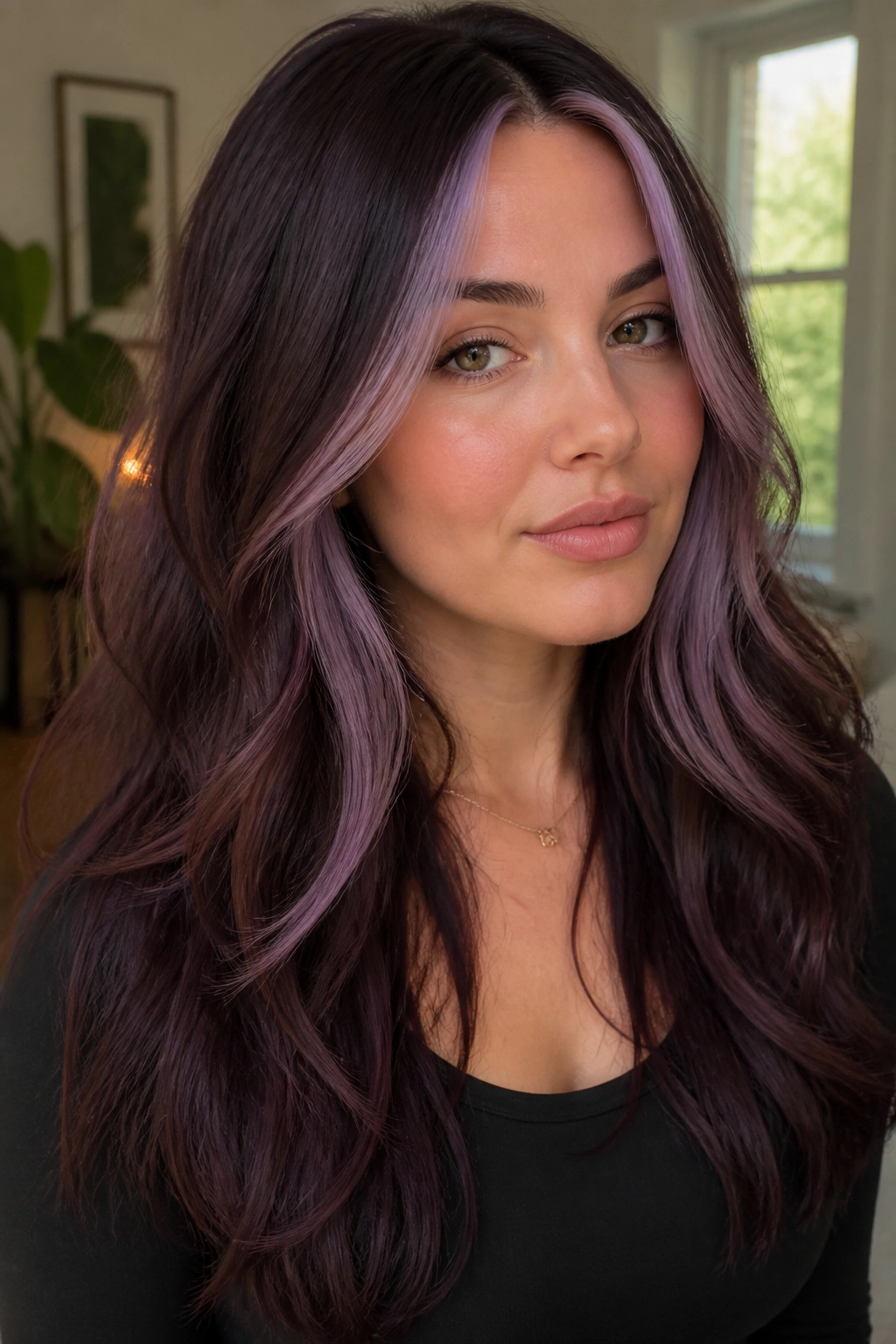
Want purple without coating the whole head? Start with a lavender money piece. The trick is to keep the bright panels narrow and place them where the eye already wants to go—around the brow, temple, and outer cheek, then let them fall long enough to skim the collarbone.
How to Wear It
Long layers help because they stop the color from turning into one wide shape around the face. Ask for the lightest lavender only in the front 1-inch to 2-inch sections, then keep the rest of the hair a deeper violet-brown or natural base. That contrast makes the face look longer.
A center part can work if the front pieces are soft and graduated. A slight off-center part is safer if your hair is thick, since it breaks up the roundness a little more.
Best for: people who want a soft pop of purple that still feels wearable at work or school.
4. Blackberry Peekaboo on a Lob
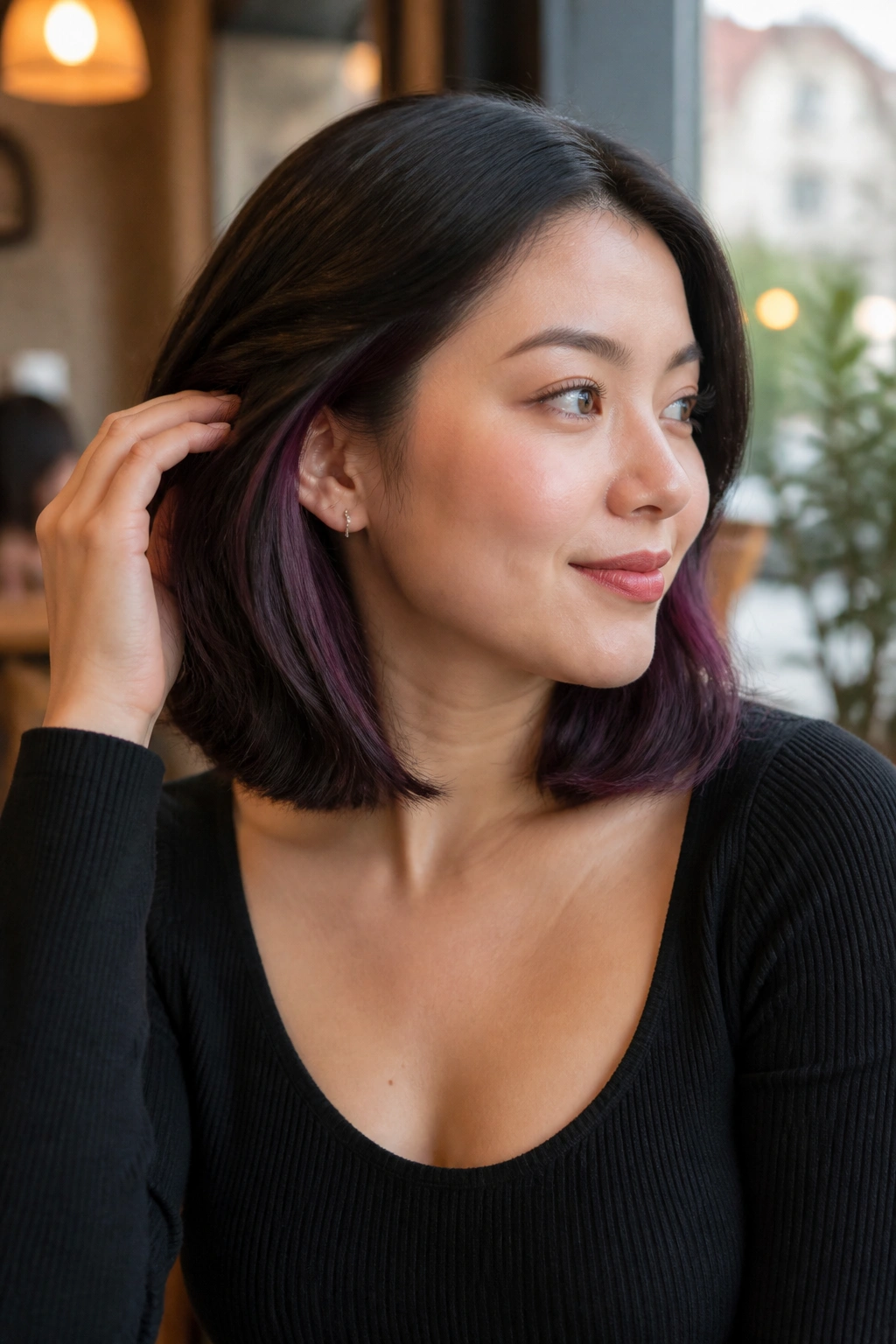
There is something clever about a color that hides until the hair moves. Blackberry peekaboo panels sit under the top layer, so the head keeps a dark, streamlined outline while the purple flashes out at the ends and underneath. On a round face, that hidden placement matters because it keeps the width from sitting at cheek level.
Picture a lob that lands at or just below the collarbone. The top layer stays espresso, black, or dark brown. Under that, blackberry and violet peek through when you tuck your hair behind one ear or flip it to one side. It feels modern without being loud.
- Keep the peekaboo layer below the crown.
- Let the top layer stay darker and smoother.
- Add a soft bend in the ends, not a big curl at the cheeks.
My take: This is one of the easiest purple looks to grow out, and it avoids the “too much color at once” problem that can make a round face feel broader.
5. Orchid Balayage on Soft Waves
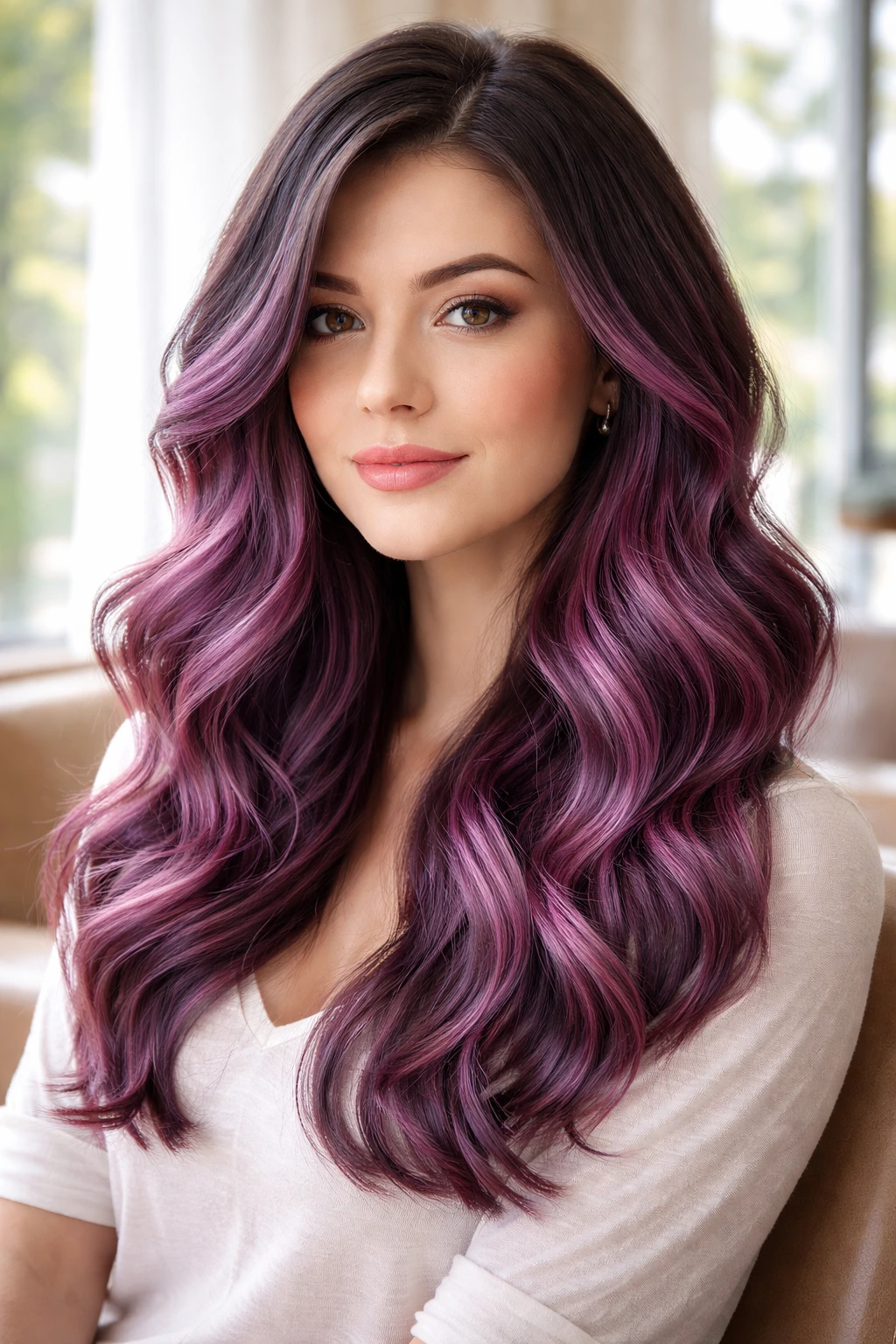
Orchid balayage is one of my favorites when someone wants movement more than drama. The color is painted in a sweeping way, so the purple starts in the mid-lengths and gets richer toward the ends. That keeps the top of the head lighter in shape, which helps a round face look a little longer.
Soft waves are the right texture here. Not curls that balloon out at the cheeks. I mean loose, brushed waves that start below the ear and bend mostly from the middle down. That way the color falls in long lines instead of spreading sideways.
The orchid shade can lean pastel or more saturated, depending on how light the base is. Either way, ask for the brightest pieces below the cheekbone. That one placement choice changes the whole balance.
6. Plum-to-Violet Ombre on Straight Hair
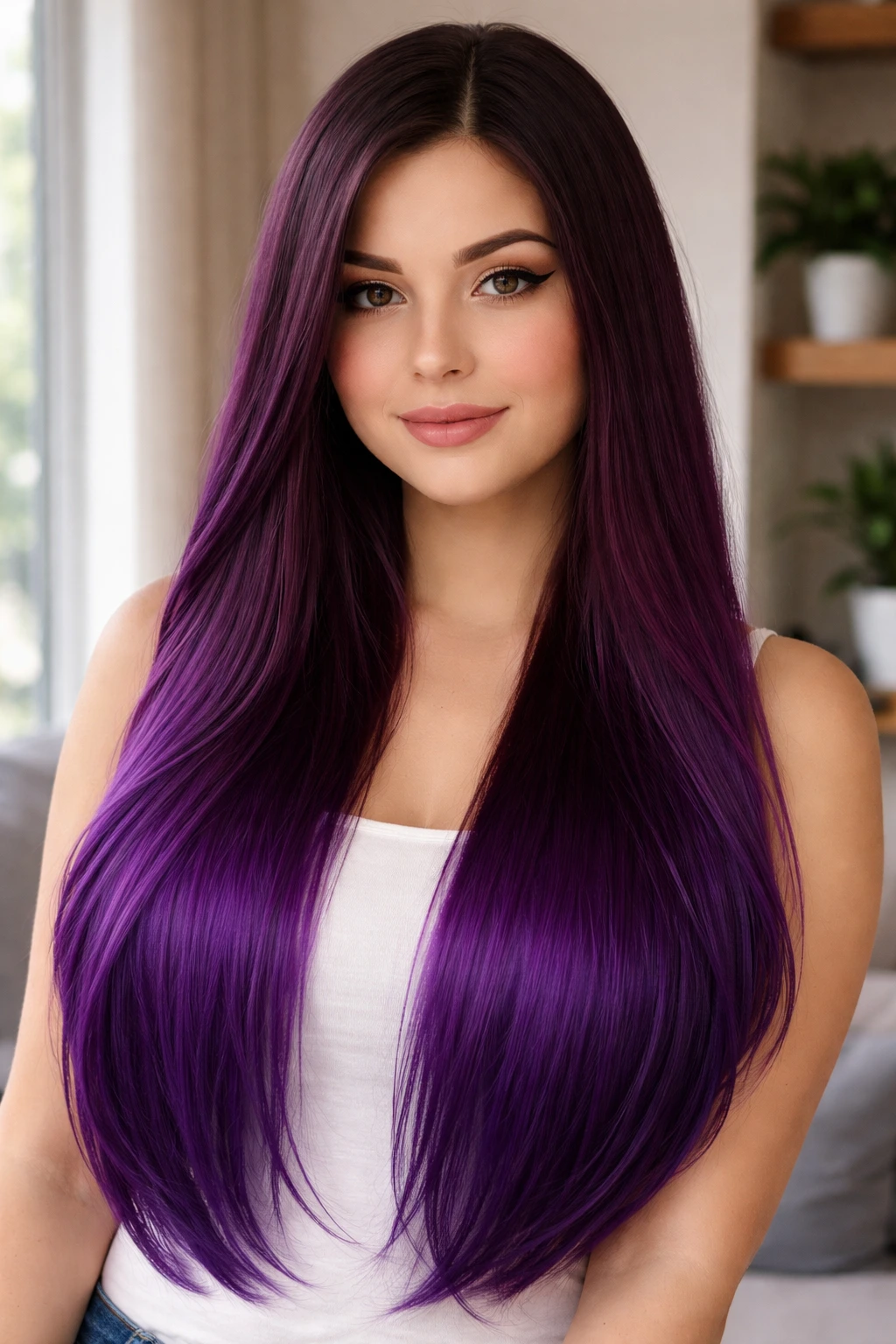
Straight hair makes ombre look sharper. That can be a gift on a round face. A plum-to-violet shift creates one clean vertical line from root to tip, and that line draws the eye down instead of out.
This works best when the root color is deeper than the ends by at least two levels. Think wine at the top, violet through the middle, then a brighter purple at the bottom 4 to 6 inches. The transition should feel long and brushed out, not stacked in bands.
Unlike horizontal highlights, this kind of ombre does not fight the face shape. It sits quietly in the length and lets the cut do the contouring. If your hair is thick, a flat iron or a round brush blowout will make the gradient read even cleaner.
7. Lilac Ribbon Highlights on a Shaggy Lob
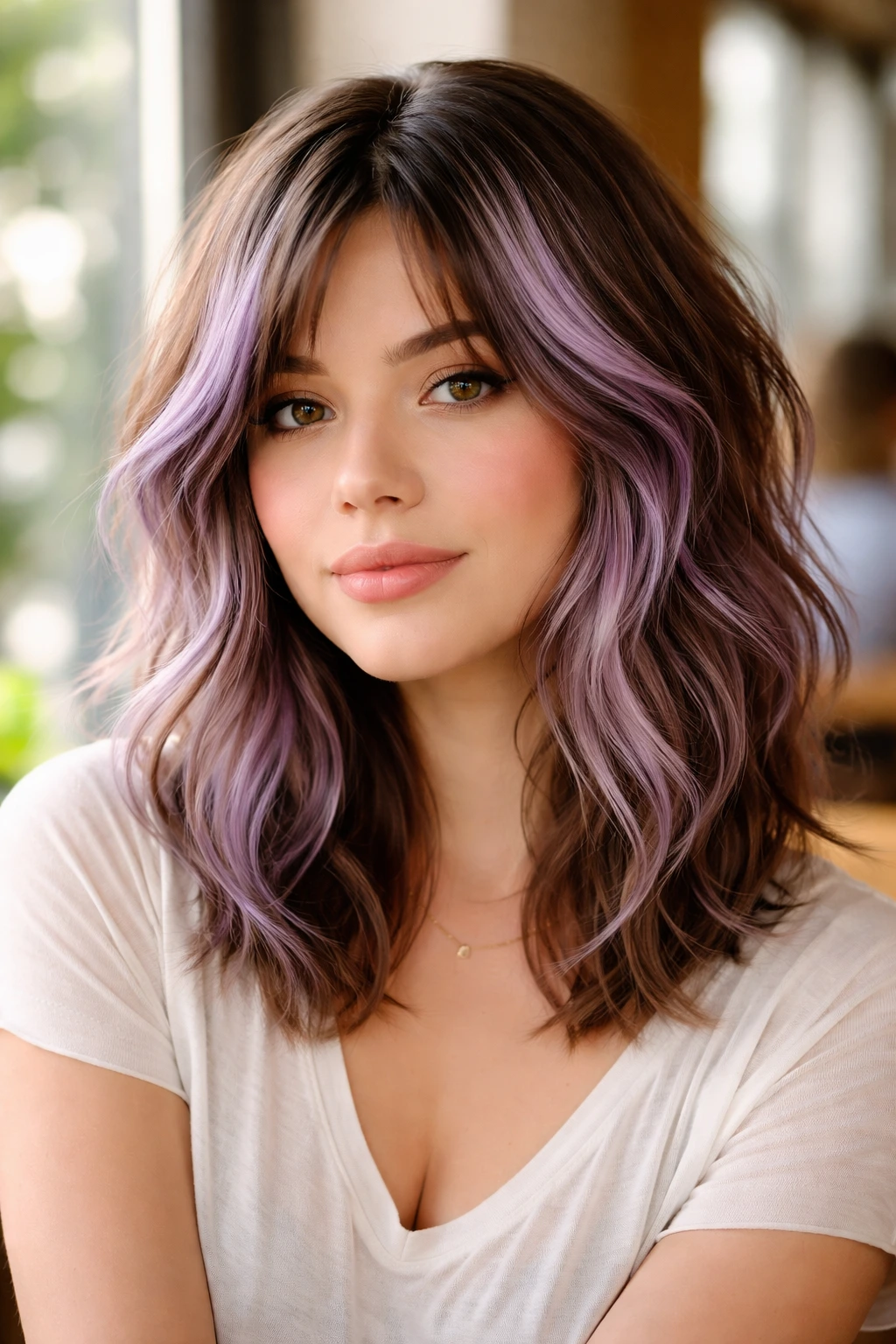
A shaggy lob already has movement, so it does not need a heavy block of color. Lilac ribbon highlights give you just enough purple to notice, and the thinness of the strands keeps the look airy around a round face.
The Narrow Pieces Matter
Thin ribbons are better than chunky streaks here. Put the lilac where the hair naturally separates: around the temple, through the top layers, and at the lower sides near the collarbone. That arrangement keeps the face open and avoids a wide stripe of brightness across the cheeks.
A shaggy lob also gives you texture at the ends, which breaks up softness in the face shape. Pair the color with a slightly off-center part, and you get a more angular read without making the haircut harsh.
- Use ribbon-thin sections, not thick panels.
- Keep the brightest bits above and below the cheeks.
- Ask for a lived-in finish, not a perfect stripe.
Quick opinion: This is one of the easiest ways to test purple if you do not want a full commitment.
8. Eggplant Gloss on a Sleek Pixie
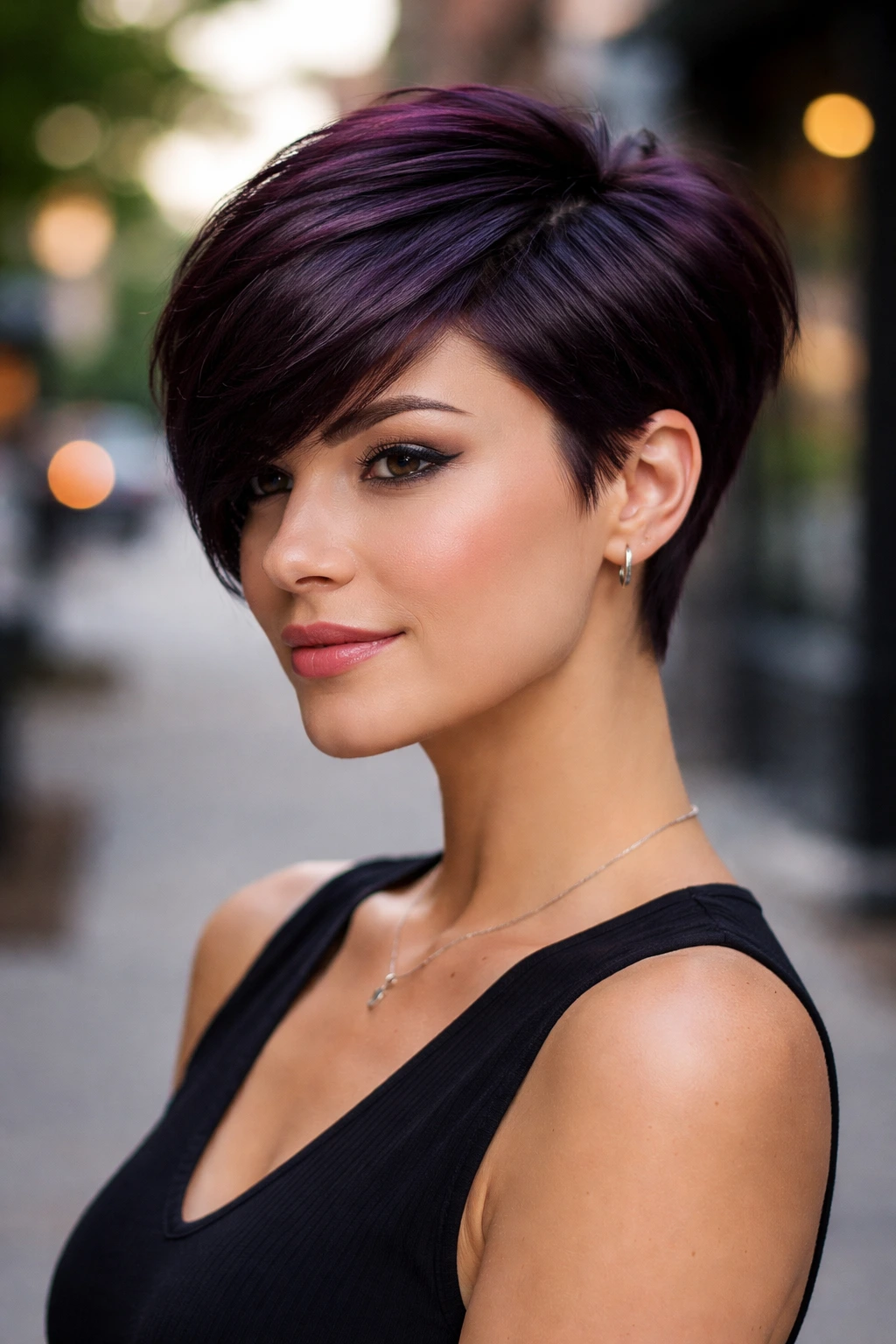
Short hair can work beautifully on a round face when the silhouette is controlled. A sleek pixie with an eggplant gloss takes advantage of that. The color is deep enough to slim the shape, and the cropped length lets the crown sit a little higher than the sides.
What you want here is lift on top and softness at the fringe. A side-swept bang, even a short one, gives the face an angle. A blunt bowl shape does the opposite, so I would skip that unless you are aiming for something very editorial and you already know it suits you.
Eggplant is richer than bright violet, which is part of why it works. It catches light without shouting, and it makes the haircut feel polished rather than harsh.
9. Grape Soda Curls for Round Faces
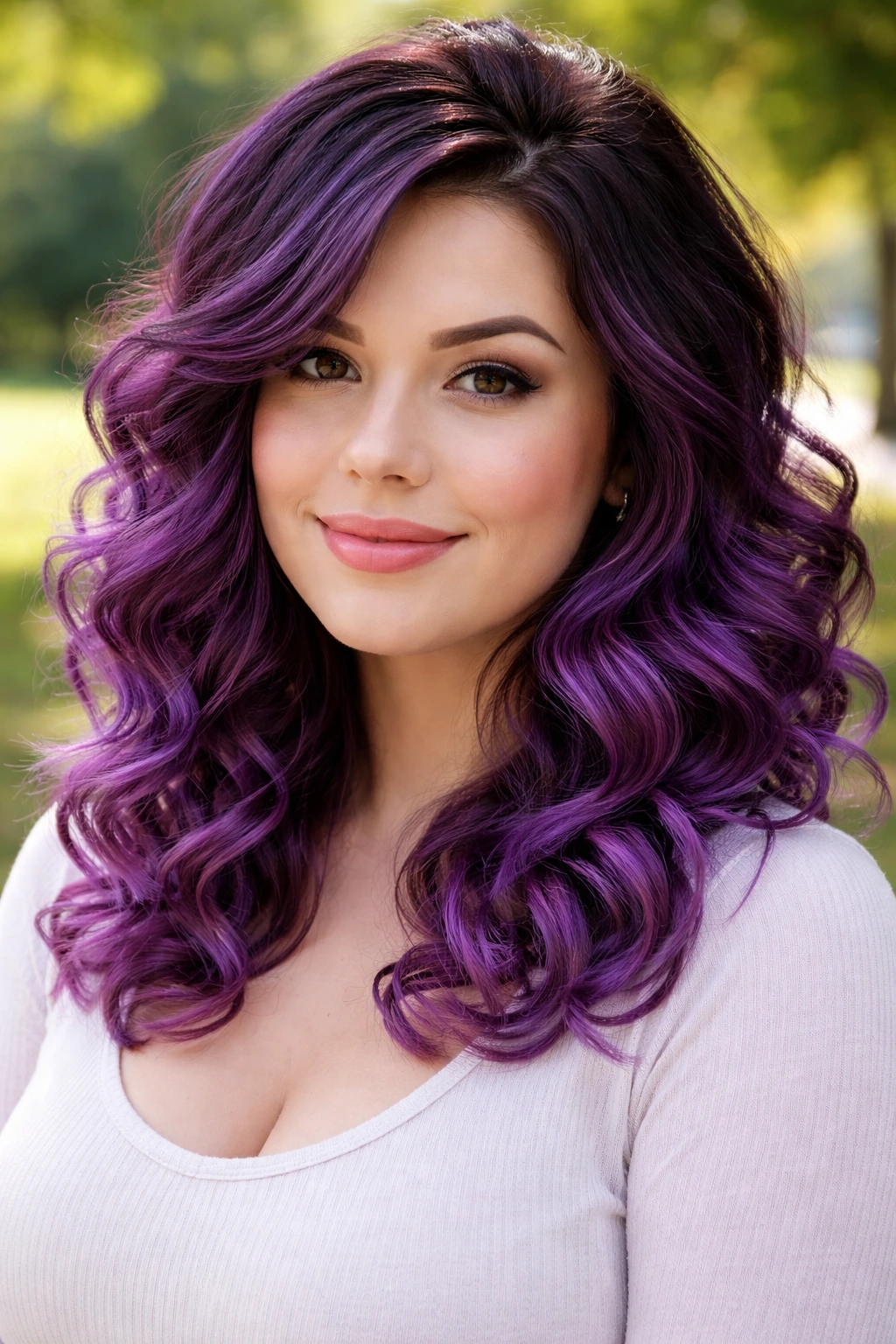
How do you make curls and a round face play nicely with purple? Keep the color on the outer curl pattern and protect the height at the crown. That gives the curls room to spring upward while the purple moves along the length, not across the cheeks.
Grape soda purple sits in that sweet spot between bold and playful. It is saturated enough to show the curl pattern, but not so neon that it swallows the face. On shoulder-length curls, I like to see a darker root area and richer color through the middle and ends, with the brightest pieces below the cheekbone.
How to Place It
- Paint the outer layer more heavily than the interior.
- Leave the crown slightly deeper for lift.
- Let the longest curls hang past the jawline.
A diffuser helps here. So does a cut with rounded layers that are longer on the outside than the inside. The color and the shape need to agree with each other, or the roundness can feel exaggerated.
10. Mauve Money Pieces With Curtain Bangs
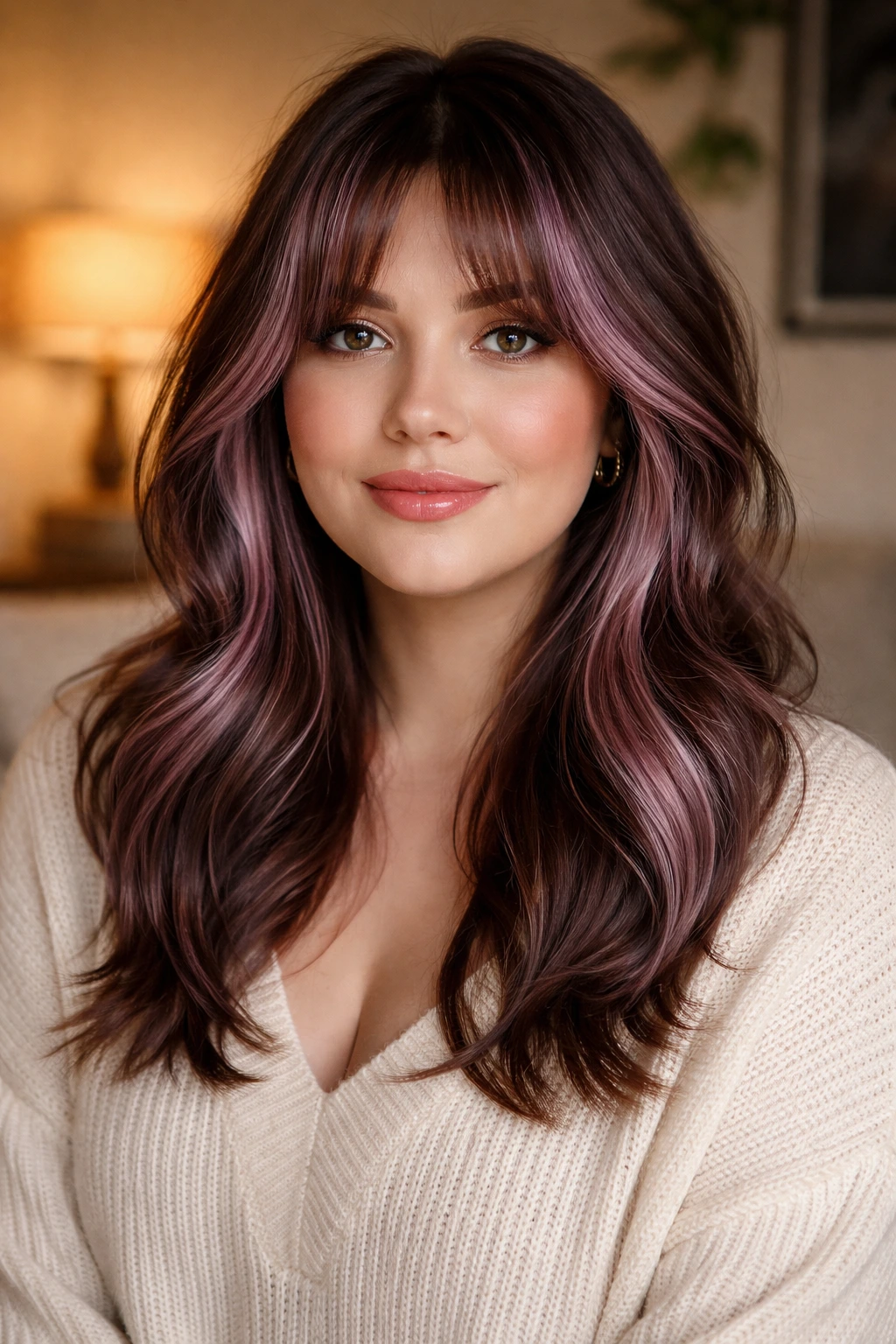
Curtain bangs are one of the easiest ways to soften a round face without hiding it. Add mauve money pieces at the front and the effect turns even better, because the color draws attention to the opening of the fringe instead of the widest part of the face.
The bangs should part and fall a little below the cheekbone, not sit right on top of it. That one detail matters. If the shortest point of the fringe lands too high on the cheeks, the face can look shorter. If it lands a bit lower, the eye gets a clean vertical path.
Mauve is also kinder than bright purple if you want a softer feel. It has enough color to read as purple hair, but the dusty finish keeps it from feeling heavy.
Ask for: a soft curtain bang, two face-framing mauve panels, and a darker root shadow so the whole look stretches instead of spreads.
11. Royal Purple Undercut With Long Top Layers
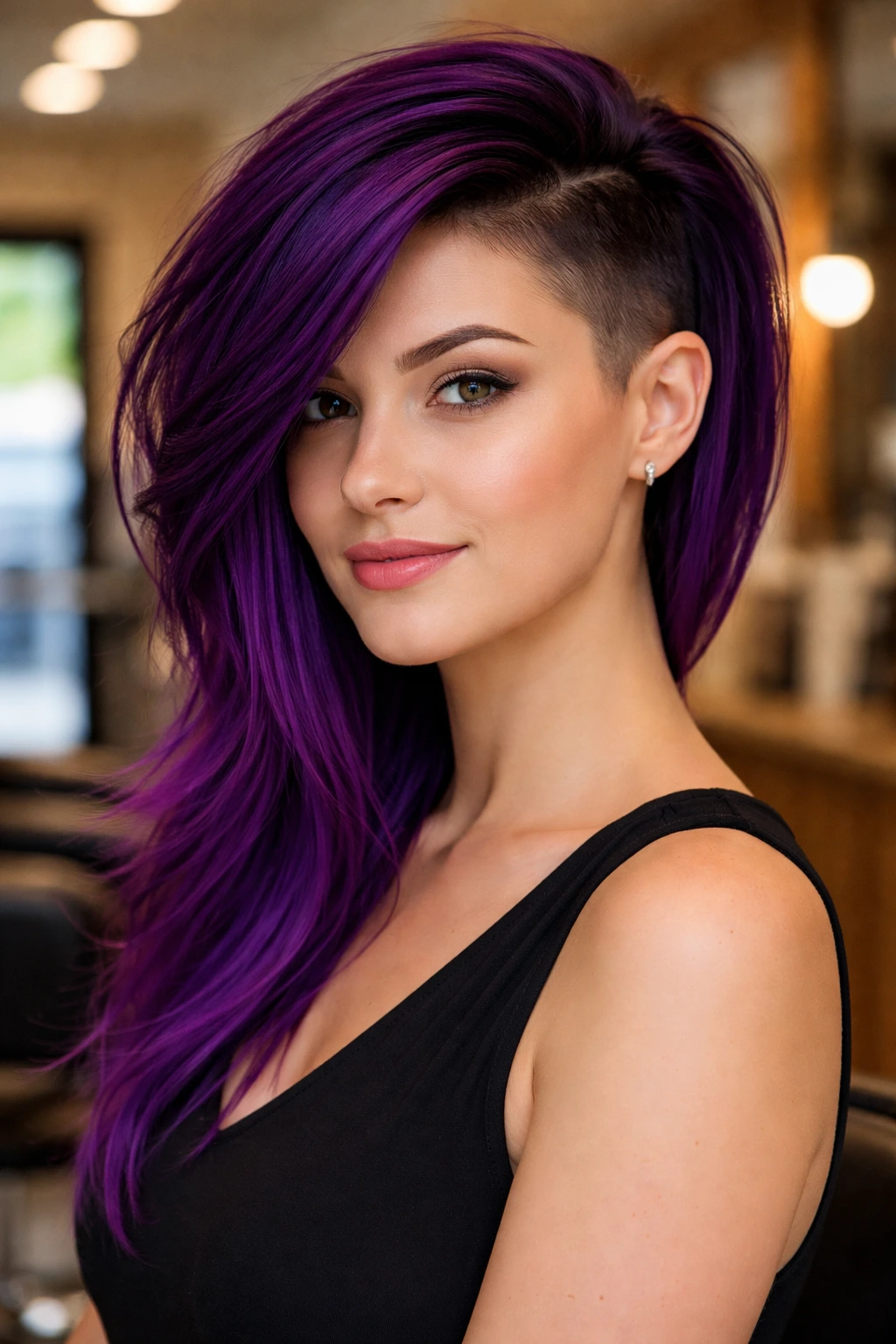
This is the bold one. A royal purple undercut works on a round face because the undercut removes width at the sides, while the long top layers create vertical length. You get shape, movement, and a very clear line around the face.
The best version is not one solid block from root to tip. Keep the top layers longer and side-swept, with the purple brighter at the ends and a little deeper near the scalp. That gives the style some depth and keeps it from looking like a flat helmet.
If you wear it smooth, the color reads sharp. If you wear it tousled, the top layer breaks up the roundness in a more casual way. Either way, the cut matters just as much as the shade.
12. Dusty Orchid Reverse Balayage
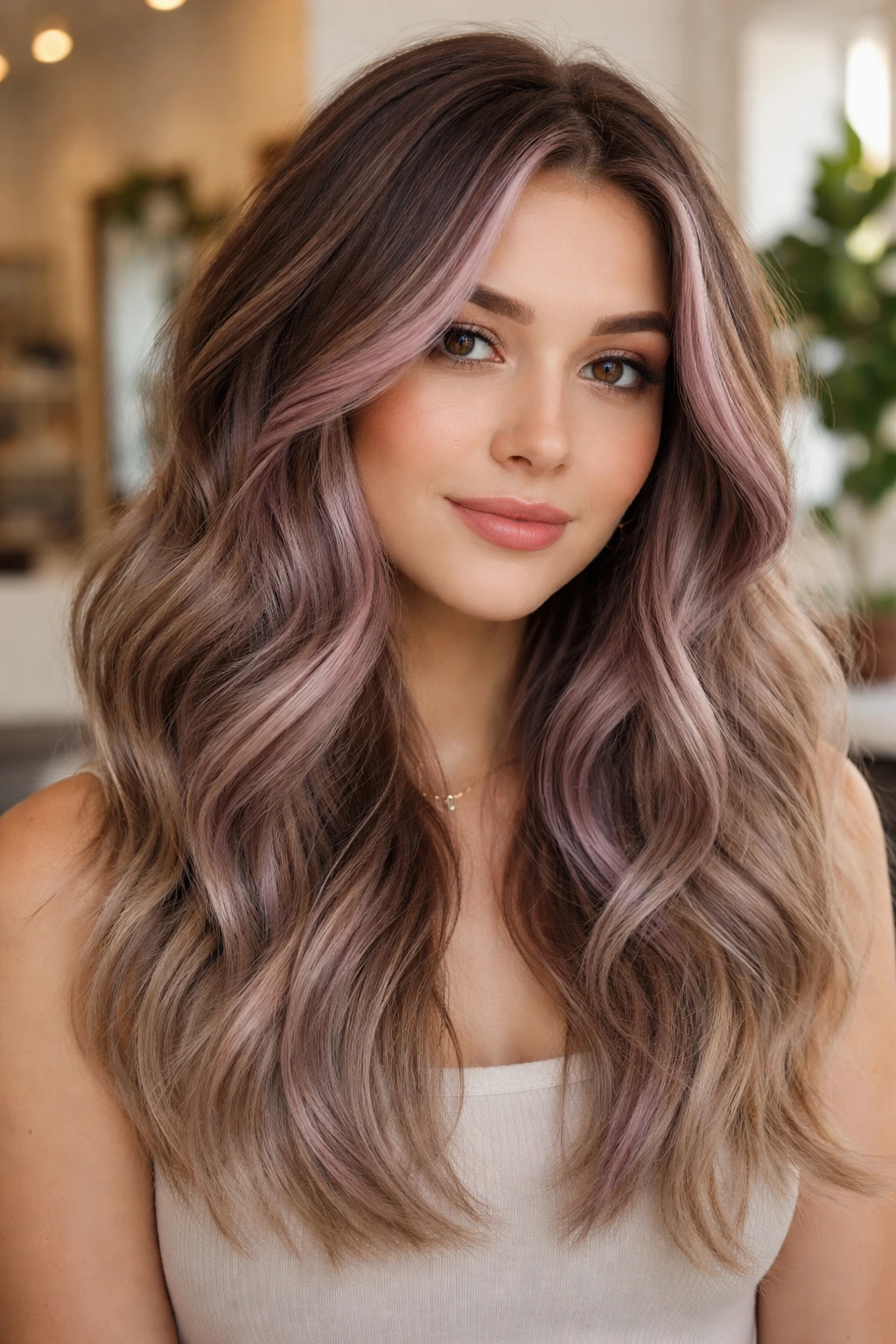
Reverse balayage is a smart move when the base is light and the goal is to add shape instead of brightness. Here, dusty orchid lowlights are painted into a blonde or pale base so the darker purple sections act like contour.
The effect is subtle but useful. Darker orchid near the temples and under the top layer keeps the face from looking too wide, while lighter pieces are left lower and farther from the cheeks. It is a more grown-up purple look, the kind that reads polished in soft daylight and still interesting indoors.
I prefer this on mid-length to long hair. There is room for the lows and highs to breathe, and the color does not crowd the face.
13. Blackberry and Silver Melt
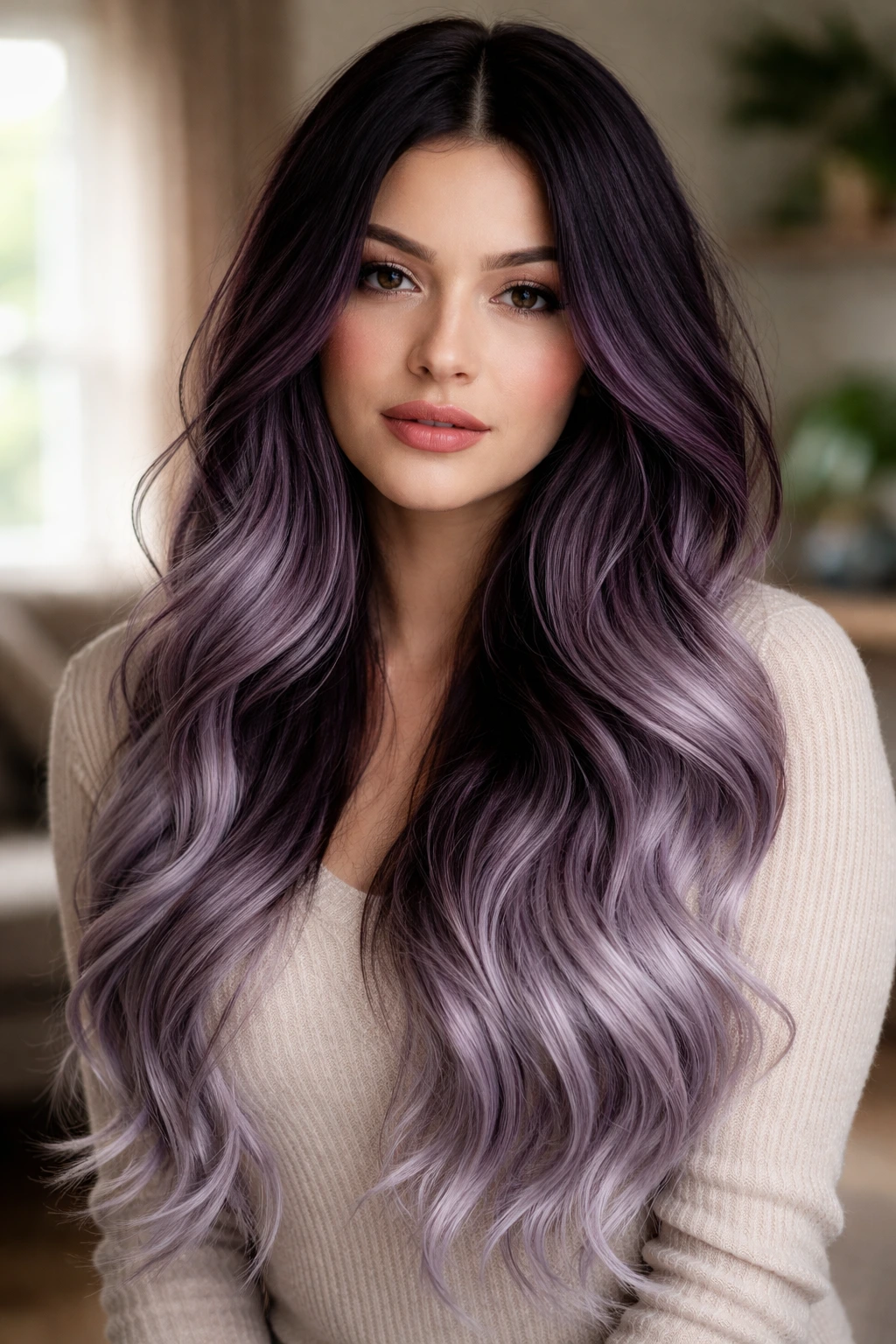
A blackberry-to-silver melt has a little edge, but the placement can stay very flattering. The dark blackberry root gives the top of the head weight, while the silver-purple ends keep the eye moving downward. That downward pull is useful on a round face.
Why It Feels Clean
The contrast stays strongest at the ends, where it belongs. If the silver starts too high, it can widen the face. Keep it lower, around the last third of the length, and the whole style feels more controlled.
- Best on long waves or straight hair.
- Keep the root area rich and dark.
- Use a purple toner sparingly so the silver does not go muddy.
A center part can work here if the hair falls past the shoulders. If it sits closer to the collarbone, a side part usually gives the face a little more shape.
14. Neon Violet Dip-Dye on a Wolf Cut
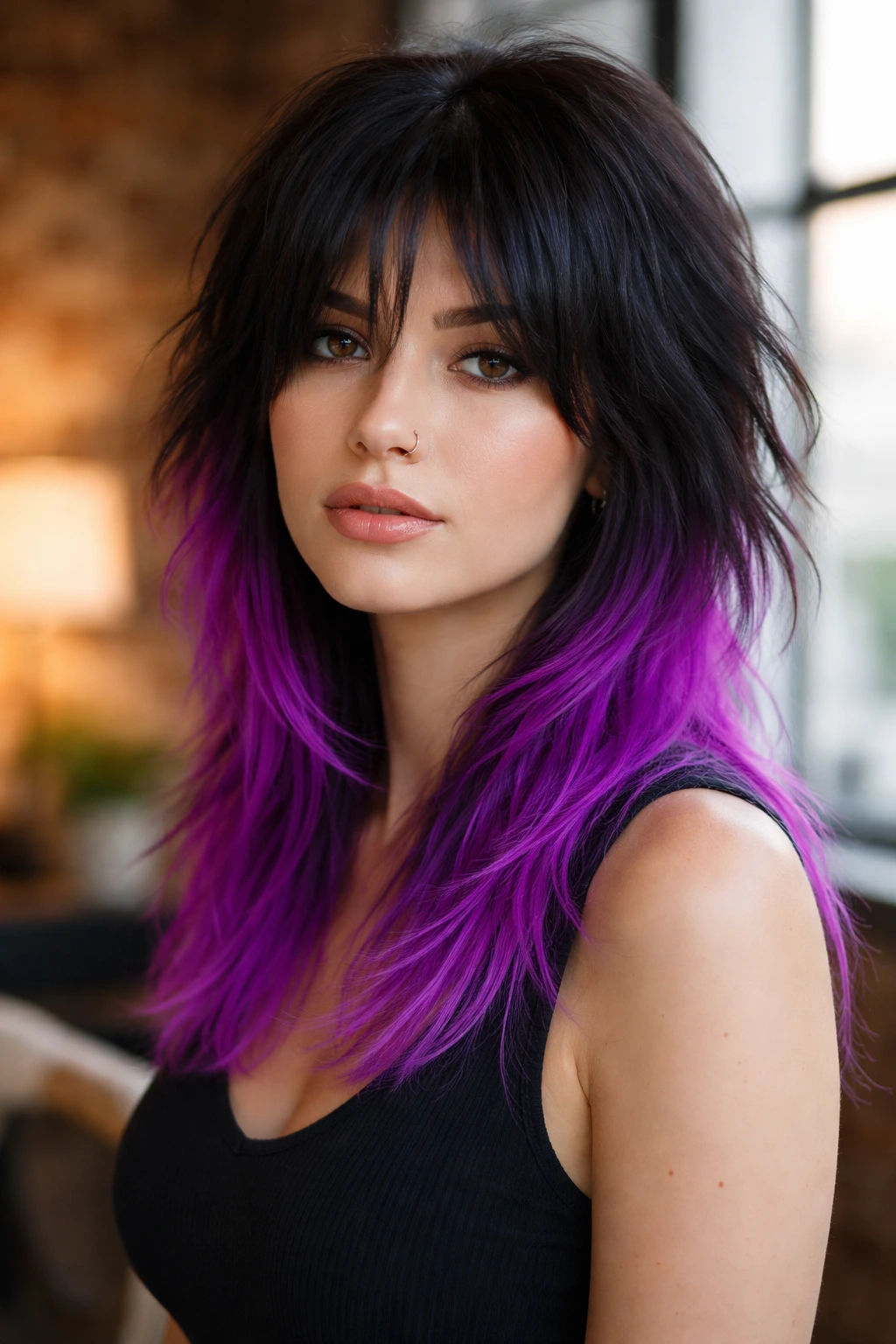
If you want sharp edges on a round face, place the drama at the ends. A wolf cut already has height at the crown and movement through the layers, so a neon violet dip-dye only needs to finish the job.
This is not a soft look. It is a punchy one. The roots stay dark or neutral, the middle keeps some dimension, and the violet hits the lower lengths in a distinct band. Done right, that bright zone sits below the jaw and pulls the eye straight down.
The cut matters because the choppy layers break up the roundness around the face. The color matters because it refuses to spread across the cheeks. If you like a little chaos, this one has it.
15. Heather Purple on a Collarbone Lob
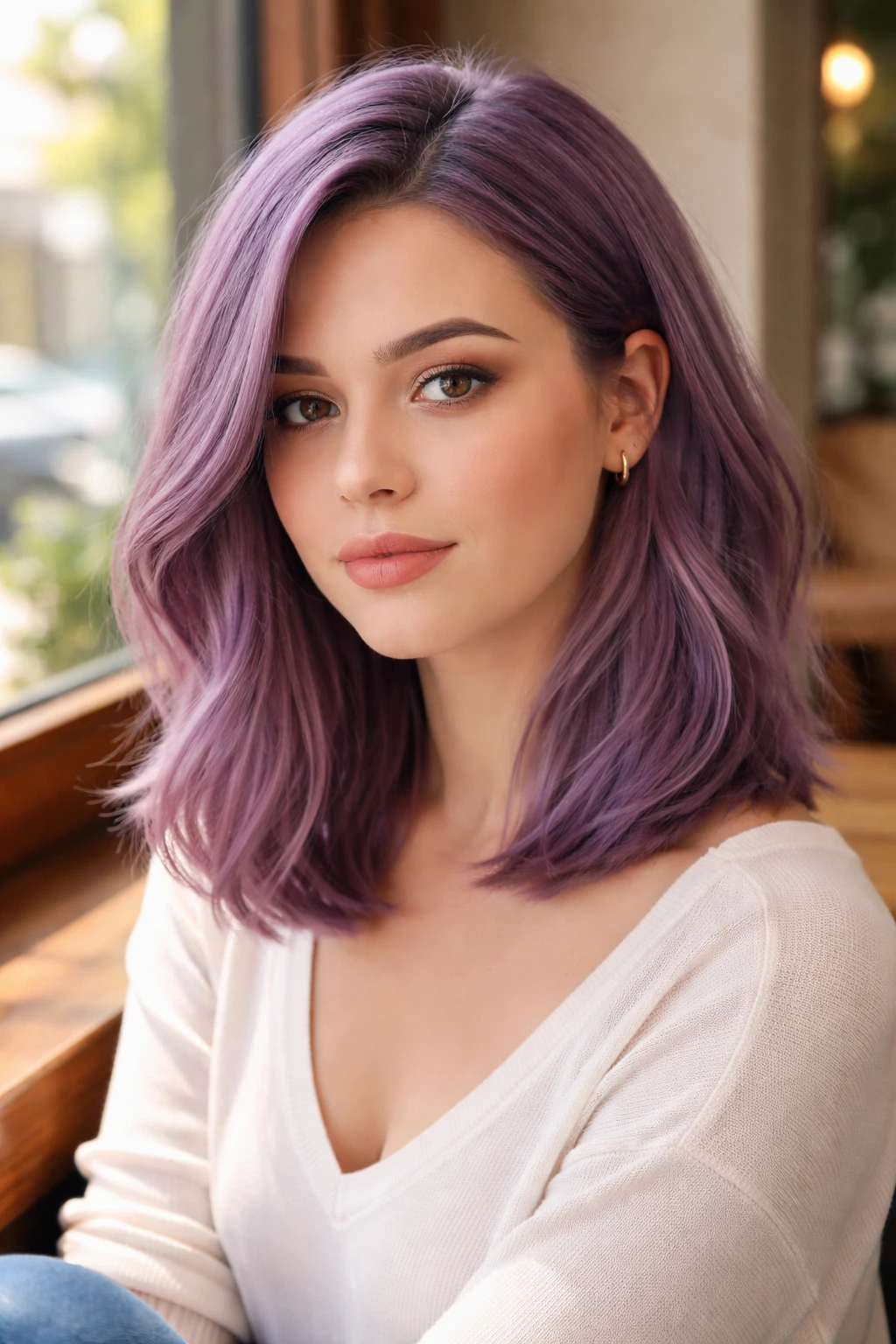
Can a muted purple feel flattering without looking too safe? Absolutely. Heather purple sits between lilac and taupe, which makes it easy to wear on a round face because it softens the surface without adding extra width.
What to Ask For
A collarbone lob gives the color room to fall in a long line. Ask for a soft off-center part, beveled ends, and a heather glaze that is deeper under the top layer. That keeps the shape narrow and the color interesting when the hair moves.
This shade is especially nice if your skin tone likes cooler purples but you do not want the brightness of lavender. It feels calm, not flat. And on a lob that barely grazes the collarbone, the line of the cut does some quiet face-slimming on its own.
Best move: tuck one side behind the ear and let the other side stay forward. It breaks the symmetry in a good way.
16. Midnight Plum Braids
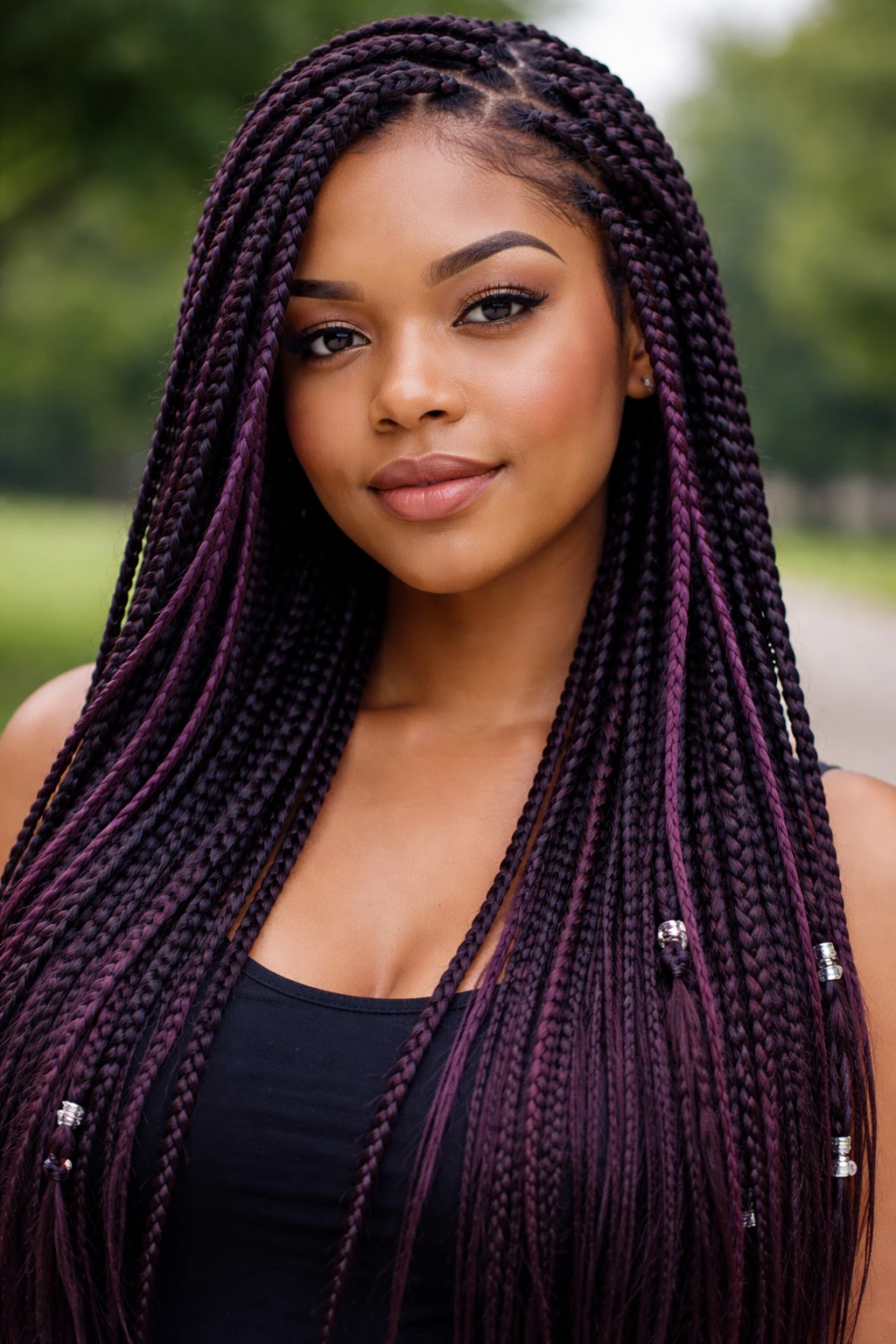
Braids can be gorgeous on round faces when the color has depth and the braid pattern adds length. Midnight plum braids do exactly that. The dark purple keeps the overall shape sleek, while a few brighter plum strands woven through the length stop the style from looking one-note.
The face-framing braids should be a touch thinner and a touch longer than the rest. That keeps the eye moving downward instead of resting at cheek level. If you add beads, keep them lower on the braid, not clustered right beside the face.
This style works with box braids, knotless braids, or twists. I like it most when the crown is neat and the purple lives more in the lengths. It feels balanced and easy to wear.
17. Amethyst Face Frame With Ash Brown Base
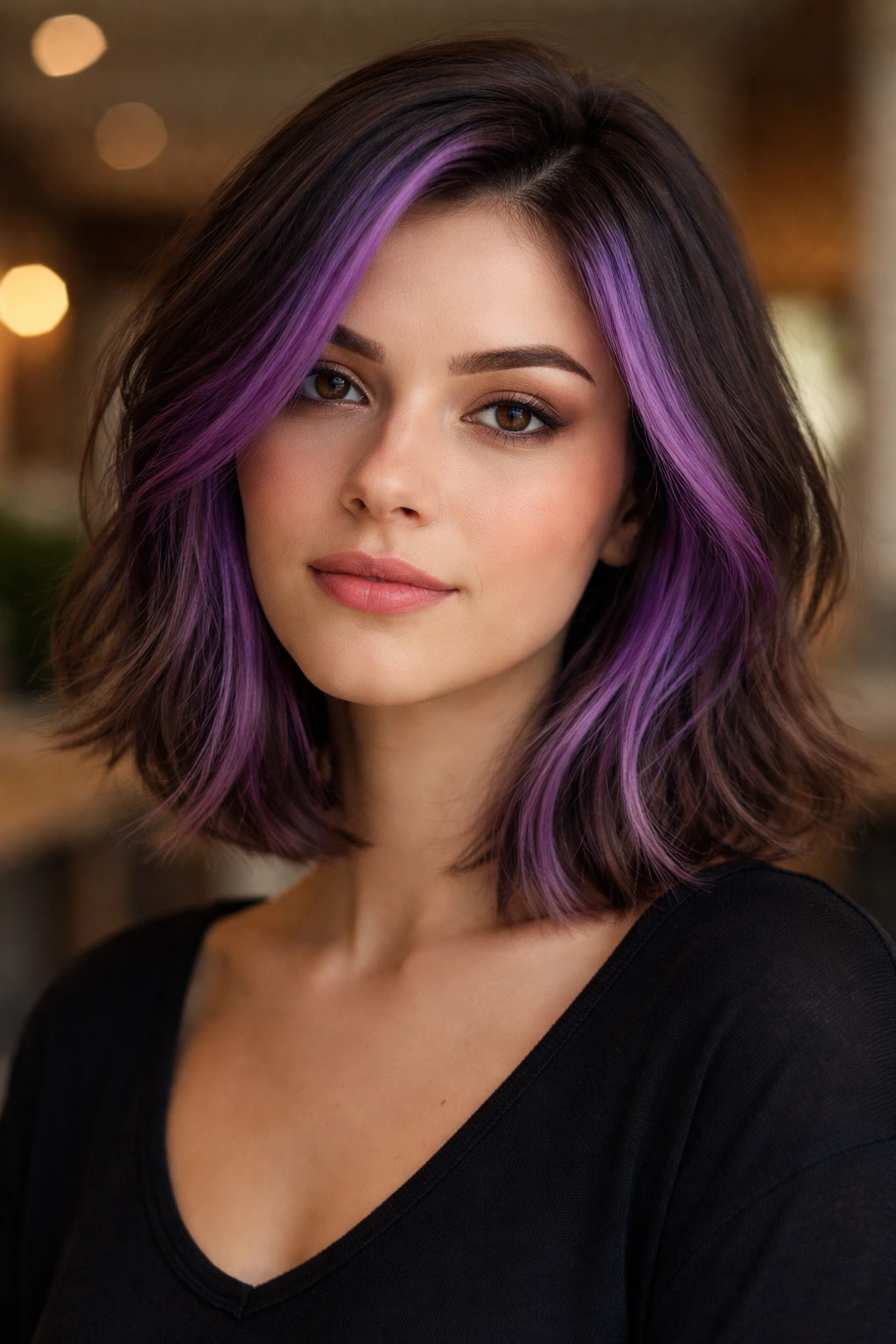
This is the subtle purple that still changes your face shape. An ash brown or espresso base keeps the outline dark, while amethyst face-framing pieces brighten the front without widening the cheeks.
The key is restraint. Keep the brightest purple around the temples and just below them, then let the rest of the hair stay grounded in brown. The result is a soft frame that opens the face in a narrow strip instead of lighting up the entire side panel. That matters more than people think.
I also like this on medium-length layers, because the amethyst pieces can fall past the jaw and give the face a longer line. It is one of the easiest ways to wear purple at work without feeling overdone.
18. Violet Shag With a Choppy Fringe
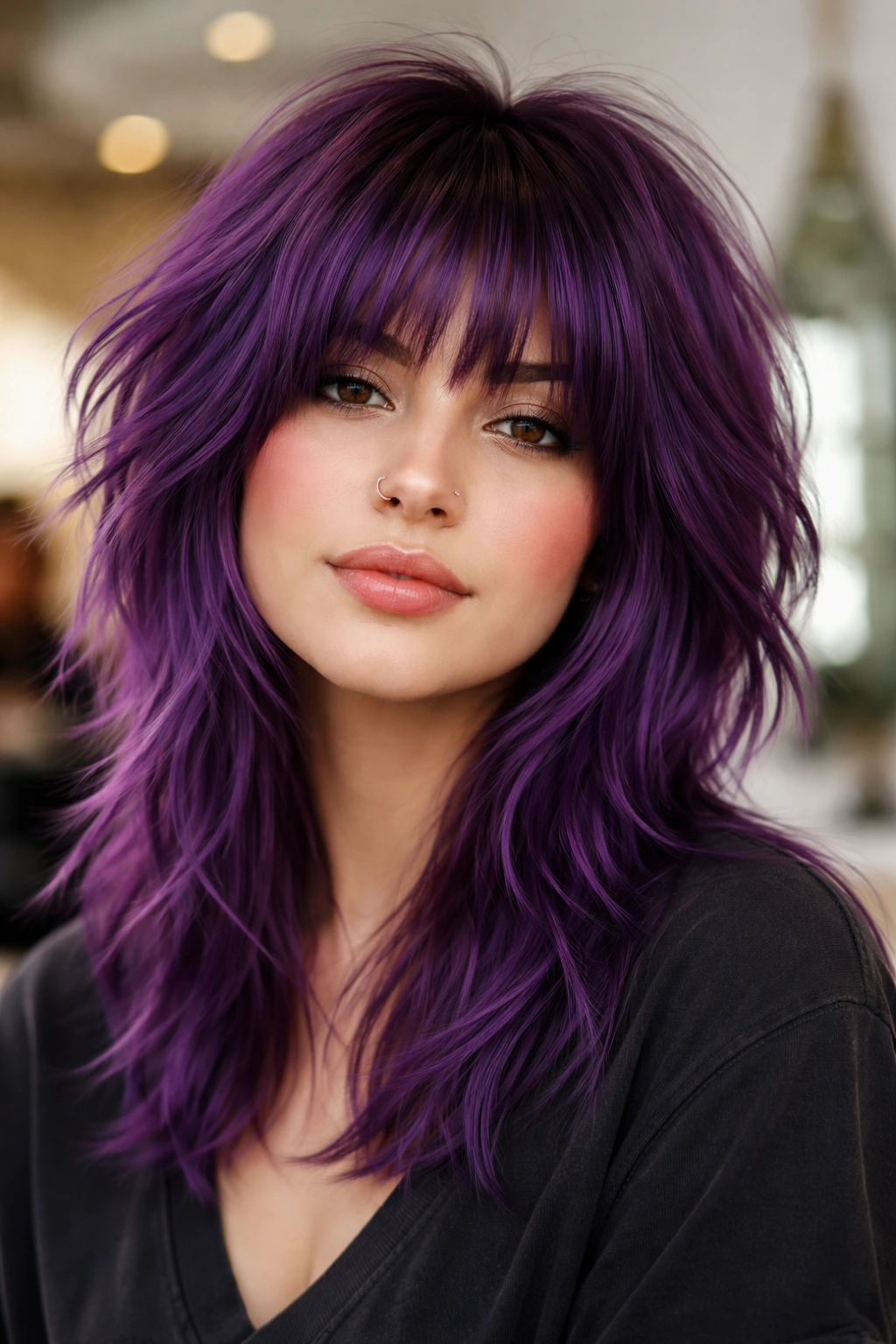
A shag works best when the fringe is broken up, not heavy. That is why a violet shag can be so good on a round face. The choppy fringe interrupts the width of the face, and the layers keep the color moving in different directions.
Unlike blunt bangs, a feathered fringe opens the forehead without boxing in the cheeks. The violet can be brighter on the crown and softer on the ends, which makes the whole cut feel lifted. I like this on medium-length hair that already has some natural texture, because the shag wants a little mess.
Use a dry texture spray at the roots and a light hand at the ends. Too much polish flattens the shape, and this cut needs a bit of air around it.
19. Mulberry Velvet Waves
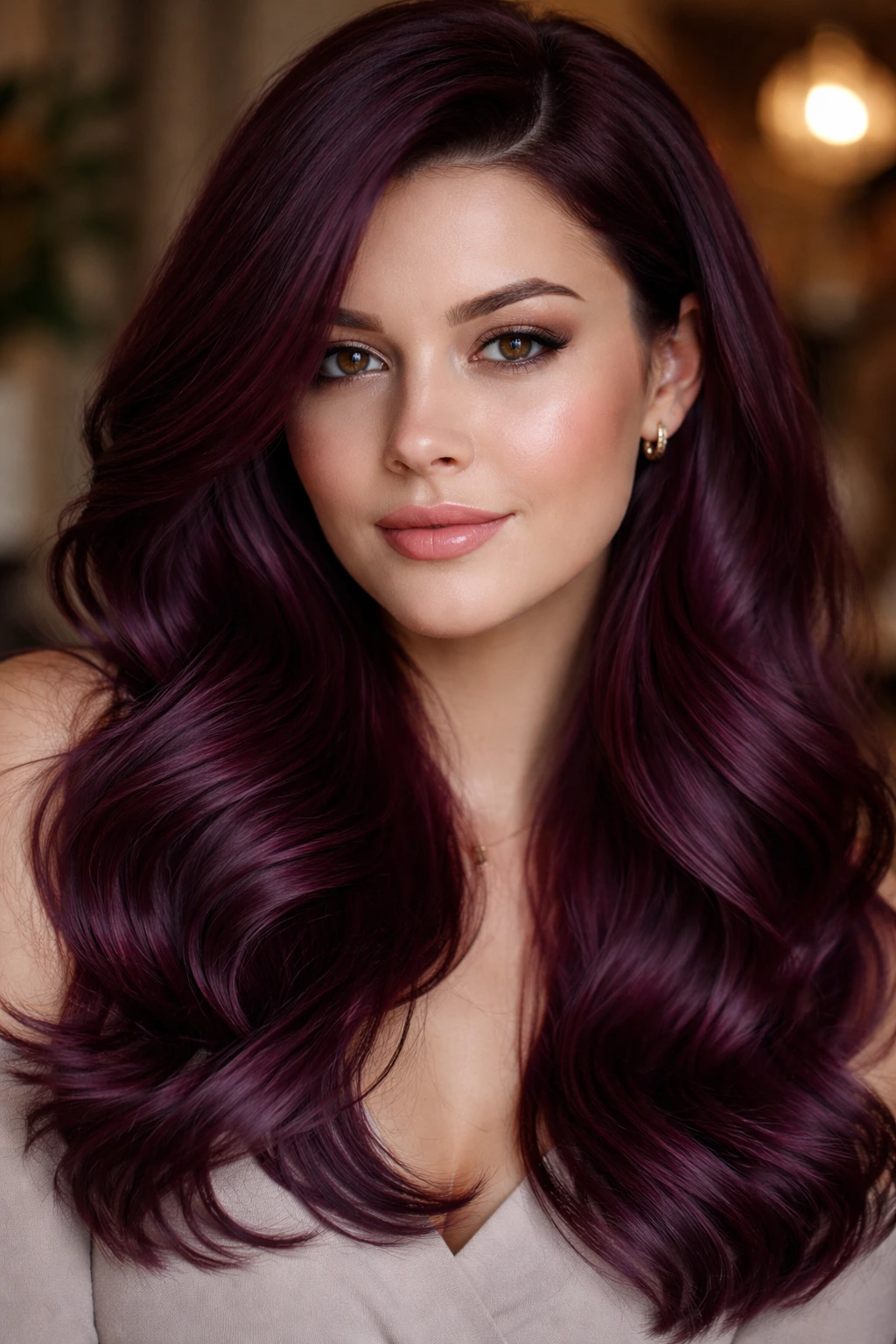
Mulberry sits in that rich zone between red-purple and plum, and it looks especially good on big, brushed waves. The waves add length, while the color gives the hair a velvet finish that feels deep and dimensional.
The Texture Matters
I would not wear this one too stiff. A large-barrel curling wand, around 1.25 inches, creates a wave that moves down the length instead of puffing out at the sides. That is the piece that matters for a round face. The color then follows the curve of the wave rather than fighting it.
- Use a side part or a soft off-center part.
- Curl away from the face on the front sections.
- Leave the ends loose for a longer line.
This shade is one of my favorites for evenings, but it does not have to stay formal. A little shine serum on the mid-lengths makes the color read rich rather than heavy.
20. Pastel Grape on a Tapered Afro
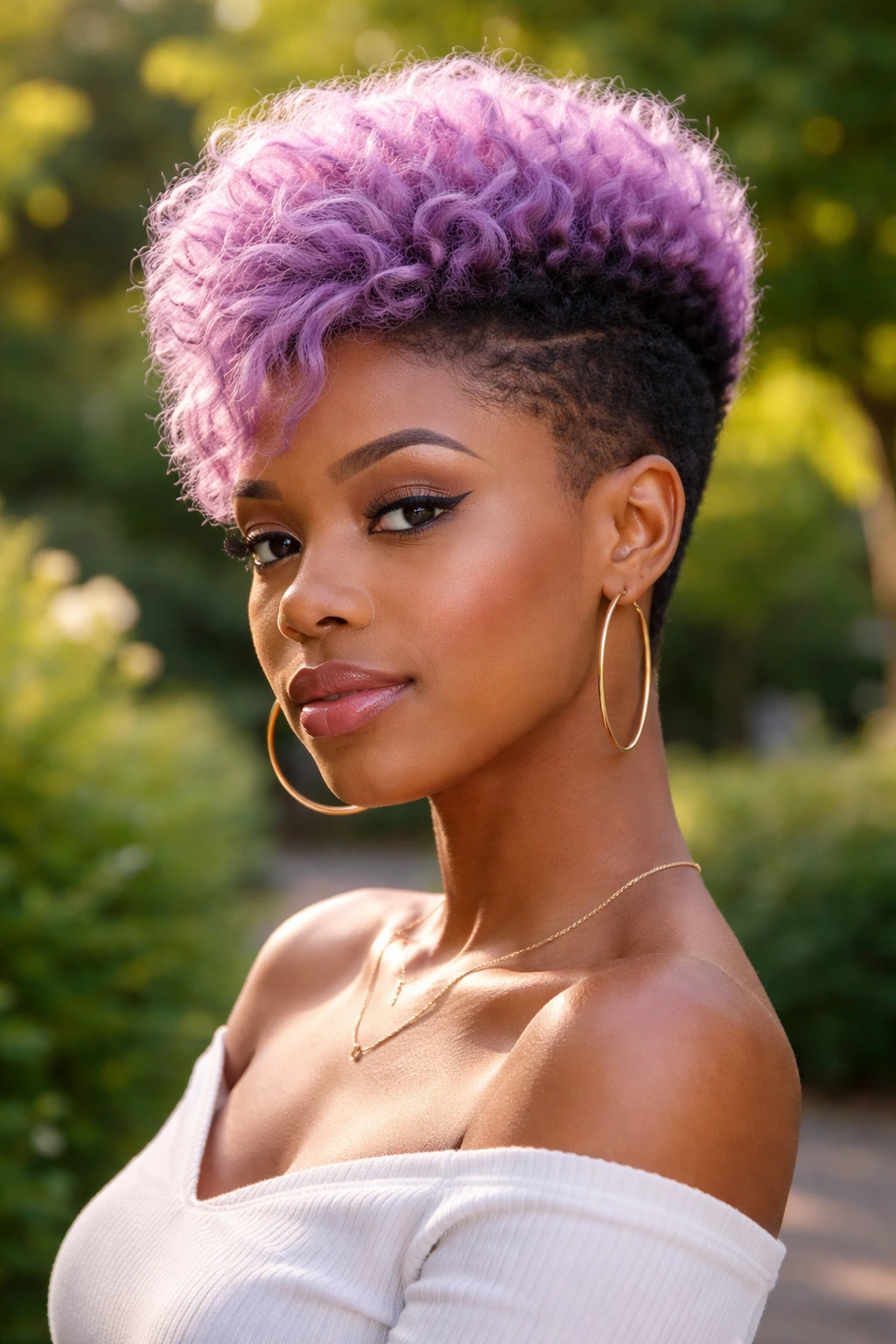
On coily hair, shape and color have to work together. Pastel grape can be beautiful on a tapered afro because the cut keeps the sides neat and the crown higher, which helps a round face look longer right away.
The pastel tone should live mostly on the top and outer layers, not all the way around the widest part of the head. That keeps the silhouette clean. If the sides are tapered and the top has height, the purple feels airy instead of bulky.
I would also keep the roots a little deeper. It gives the shape more definition and helps the pastel stand out without washing everything out. Moisture matters here, too. Coily hair looks best when the color sits on healthy curls with enough shine to catch the light.
21. Iris Balayage on Long Straight Hair
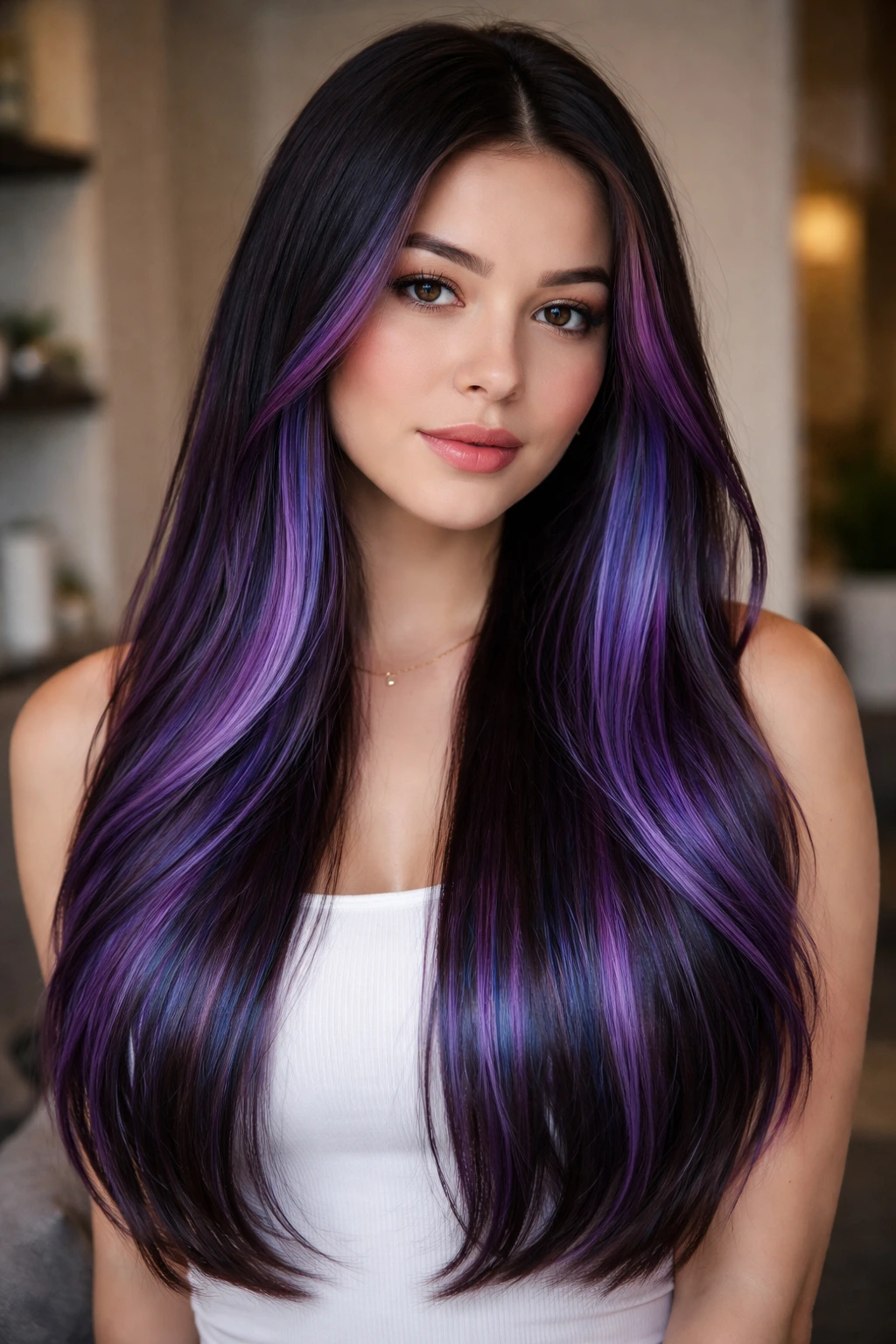
Long straight hair loves a cool purple-blue tone. Iris balayage does a nice job of creating one continuous vertical line, which is why it flatters a round face so well. The color glides from a deeper root into cooler violet-blue ribbons through the length.
The best placement starts near the temples and moves down in long strokes, not wide swaths. That keeps the face from feeling boxed in. If you want the finish to look clean, a side part or slight off-center part is usually better than a hard center part.
How to Style It
Keep the ends blunt or only slightly rounded, and use a light smoothing cream so the strands fall in a neat sheet. This is one of those styles that looks more expensive when the hair moves in one direction.
The point is not to hide the face. It is to give it a long frame that keeps the eye traveling.
22. Blackberry Tips on a Curly Lob
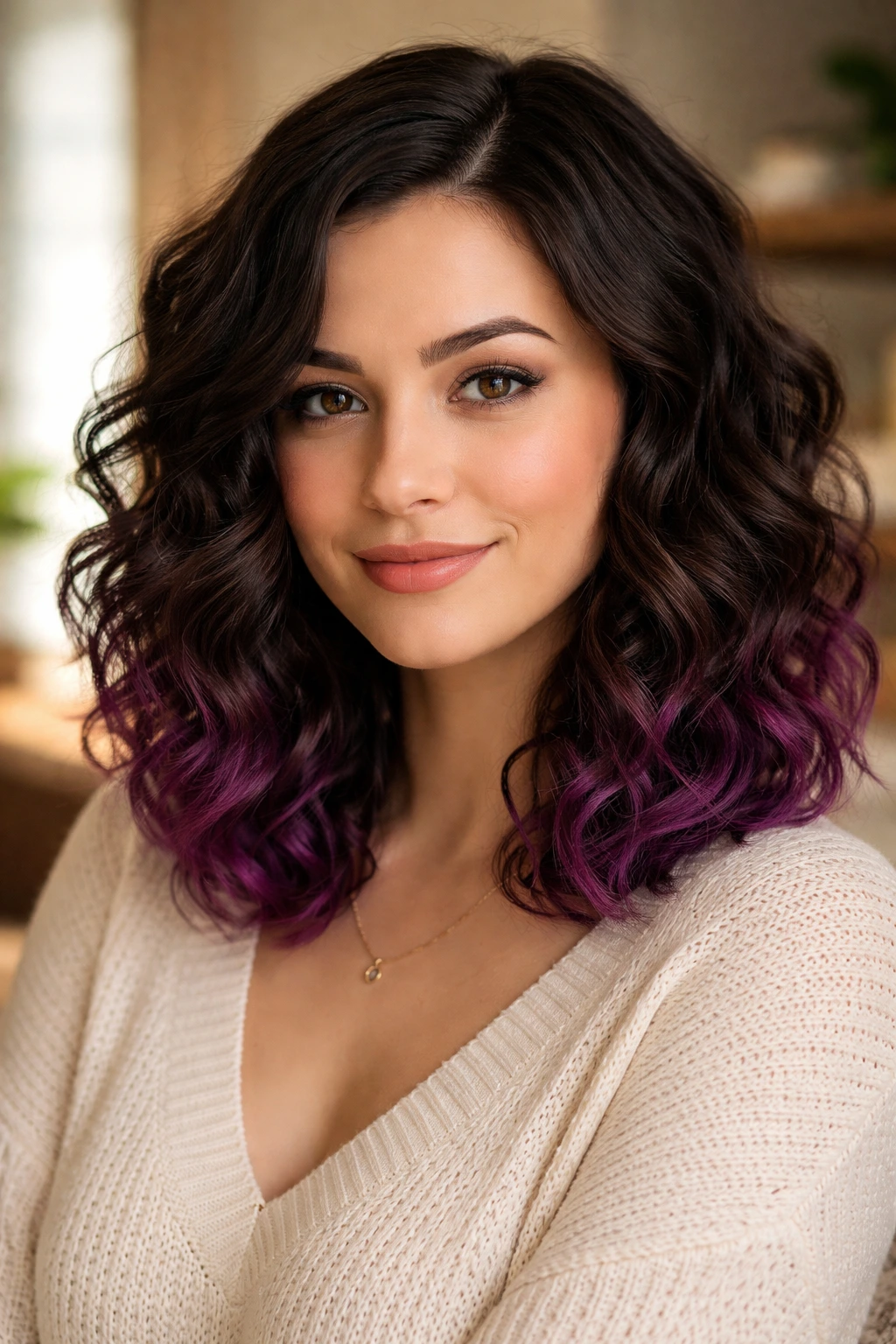
Curly hair does not need more width at the cheeks. It needs shape. Blackberry tips on a curly lob work because they keep the color lower on the head, where it adds interest without building a wider halo around the face.
The curls should stay soft near the roots and fuller at the bottom third of the length. That means the color can sit mostly on the last 3 to 4 inches, where it reads as a finish instead of a border. The darker root helps the crown stay lifted.
- Keep the color away from the fullest part of the cheek.
- Let the lob sit around collarbone length.
- Diffuse gently so the curl pattern stays loose.
I like this look when the curls are defined but not crunchy. A soft curl cream and a blackberry gloss can do more than a full bright purple ever could.
23. Smoky Mauve Underlights
Underlights are underrated. They give you purple movement without putting the color right on the outer edges of the face, which is exactly why smoky mauve works so well on a round face.
The top layer stays darker or more natural, while the mauve lives underneath and flashes out when the hair shifts. That keeps the overall shape narrow and lets the purple feel like a surprise instead of a border. It is especially nice on layered cuts, because the layers reveal the color in thin strips.
This is a smart choice if you wear your hair tucked behind your ears or half-up a lot. The color shows at the ends, under movement, and around the lower half of the head, where it helps elongate the silhouette instead of widening it.
24. Periwinkle-Violet Split Ends on a Blunt Cut
Split ends, when done on purpose, can look sharp in a good way. Periwinkle-violet tips on a blunt cut create a clean line at the bottom, and that line helps a round face feel longer because the eye follows the hair straight down.
The cut should land below the chin, preferably around the collarbone or longer. If it sits too high, the blunt shape can echo the roundness of the face. A longer length gives the color room to breathe and keeps the style from feeling boxy.
Compared with full-head color, this is a lighter lift and an easier grow-out. The purple lives only in the last 1 to 2 inches, so it stays modern without asking for constant correction. It is a tidy, graphic way to wear color.
25. Soft Lilac Halo on Layered Waves
A lilac halo sounds gentle, and that is exactly the point. Soft lilac placed around the crown and upper face frame can brighten the skin and still leave the jawline clean, which is a nice balance for round faces.
Why I Like This Placement
The halo should stay higher than the cheeks and softer than a money piece. Think of it as a loose ring of light around the top half of the head, with deeper purple tucked underneath the layers. That keeps the face from feeling boxed in while still giving you enough color to notice.
- Place the lightest lilac near the top 2 inches of the front layers.
- Keep the lower lengths one shade deeper.
- Use loose waves so the color breaks up in soft bends.
This is a friendly purple. Not boring. Just easy to wear, easy to style, and much more flattering than people expect when the face shape is round.
Final Thoughts
Purple works best when it is steered, not sprayed everywhere. On a round face, the smartest color placements tend to pull downward, angle away from the cheeks, or sit a little higher at the crown. That does more shaping than a lot of people expect from hair color alone.
If you are torn between two purple shades, I would usually pick the one with a deeper root and softer placement around the face. That small bit of shadow gives the color a cleaner line. And if you want to start cautiously, a gloss, a few face-frame pieces, or underlights can tell you a lot before you commit to a full head of violet.
The best purple is the one that knows where to stop.
