



Round faces can wear purple hair beautifully, but the shade alone is never the whole story. Placement does the heavy lifting. A violet that sits in the wrong place can make cheeks look wider; the same violet, moved a few inches lower, framed with a better part, or softened with a root shadow, can pull the eye down in the nicest way.
That’s why purple hair color ideas for round faces need a little more thought than a one-shade Pinterest search. You want movement. You want length, even when the cut is short. You want the color to create clean lines, not a halo of brightness right at the widest part of the face.
I’ve always liked purple for round faces because it gives you room to play. Lavender can feel airy and soft, plum can look rich and sharp, and eggplant can be nearly sculptural when the cut is right. The trick is knowing which version belongs on a bob, which one needs a side part, and which one works best when the roots stay dark. That part matters more than people think.
1. Smoky Amethyst Bob for Round Faces
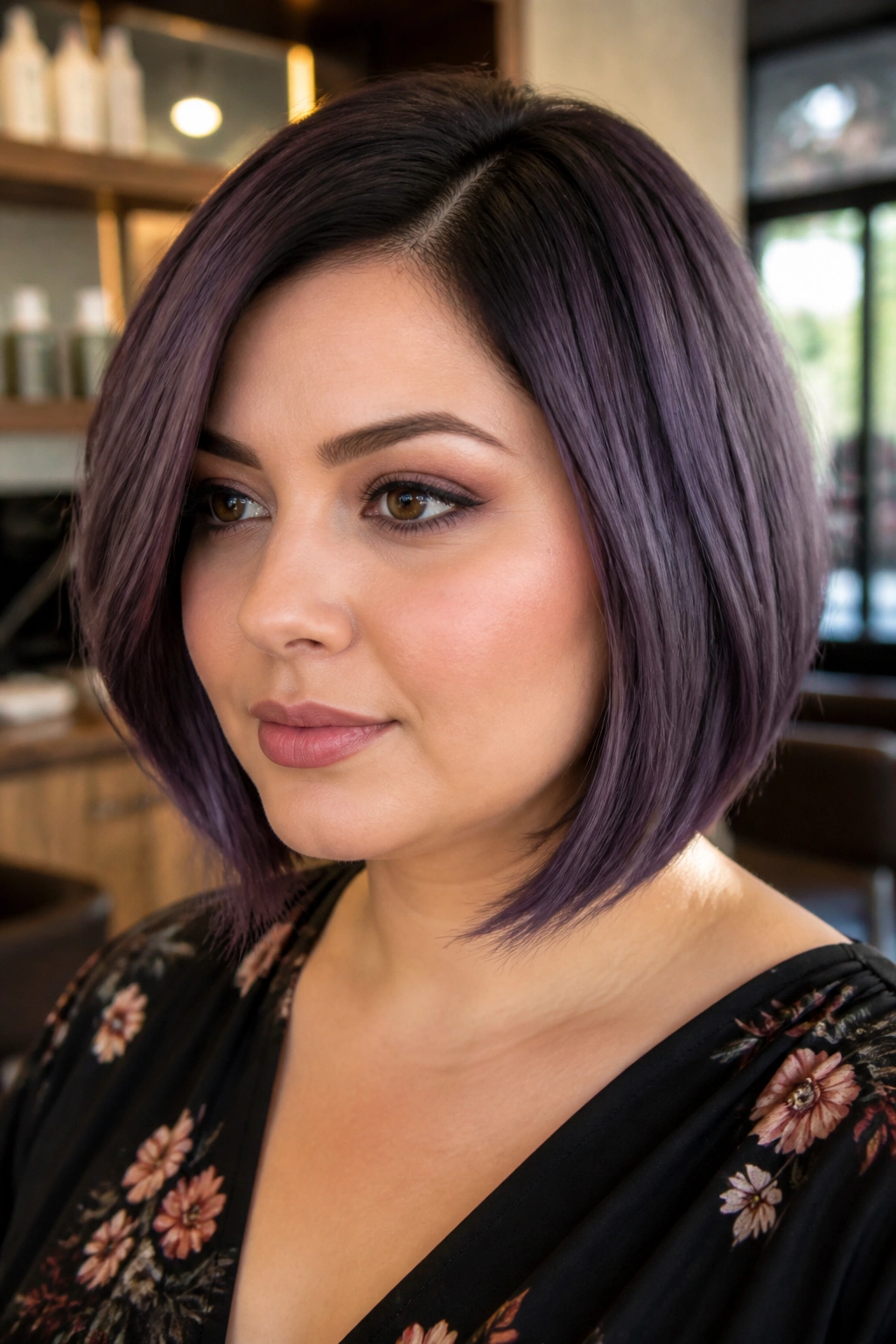
A smoky amethyst bob is one of those cuts that looks polished without trying too hard. The color sits between violet and gray, which means it doesn’t shout at the face; it frames it. On a round face, I like this best when the bob lands just below the jawline, not right on it. That extra inch changes everything.
Why It Works
The cool, smoky finish keeps the color from ballooning the face outward. It also gives the bob a flatter, sleeker feel around the sides, which is exactly what you want when the cheeks already have width. A side part helps even more. It breaks the circle.
Ask for soft beveling at the ends, not a blunt line. You want the edge to bend inward a touch, almost like the hair is tucking itself under the chin. That shape creates a quiet vertical line, and it makes the amethyst read more expensive than candy-bright.
A one-inch root shadow helps too. It gives the look depth right at the scalp and keeps the color from sitting like a single block.
2. Deep Eggplant Lob with a Center Part
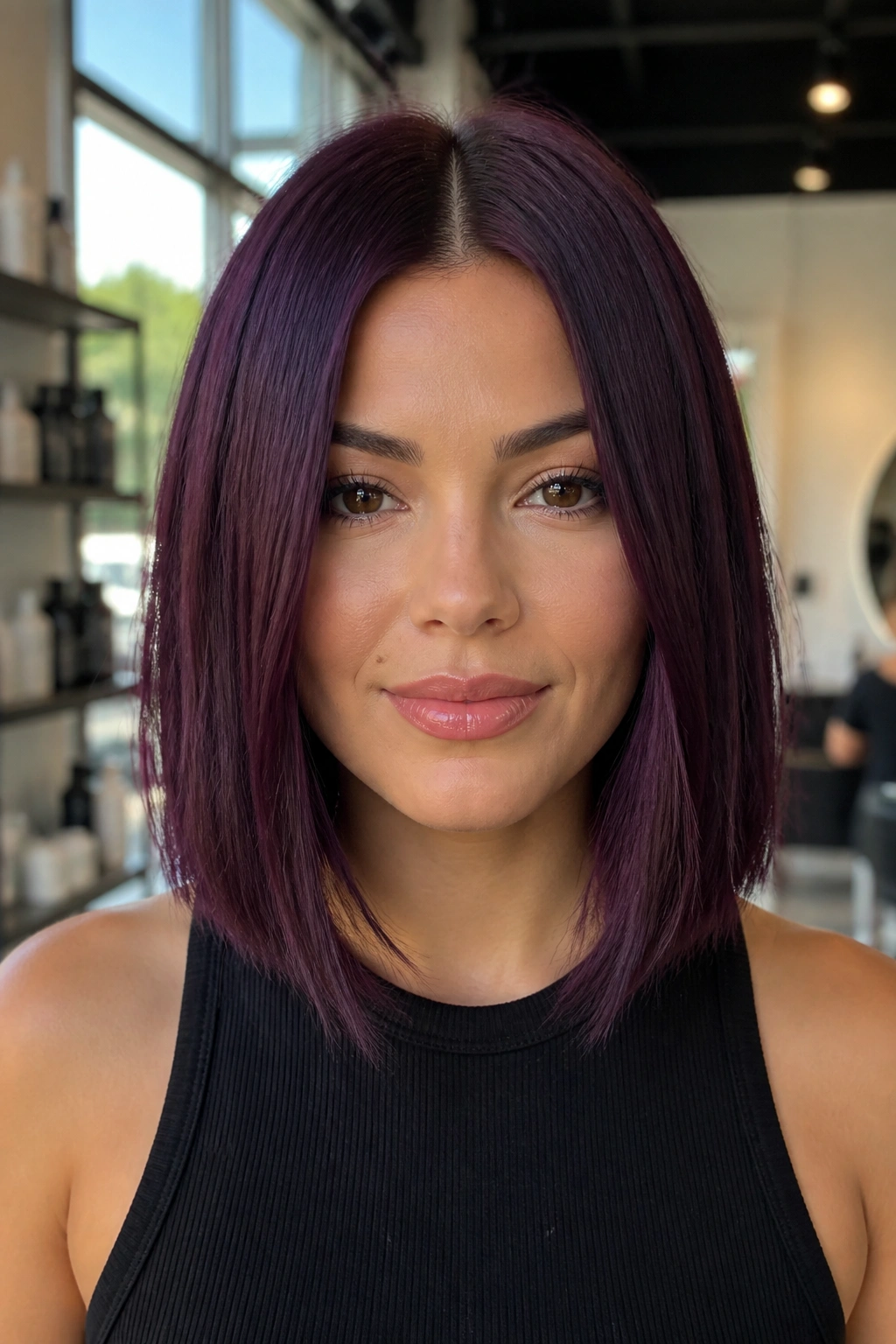
Why does a center part work here when it can fall flat on other cuts? Because deep eggplant has enough darkness to act like a frame, and a lob gives the face length. The combo is clean. No fuss.
A lob that hits the collarbone or slightly below it is a smart move for round faces because the length keeps the eye moving down. Eggplant, meanwhile, brings richness without the visual bulk you sometimes get from lighter violet tones. The result feels sharp, not crowded.
What to Ask Your Colorist
- Keep the root at level 3 to 4 brunette depth for a stronger outline.
- Blend the purple through the mid-lengths first, then soften it toward the ends.
- Leave a few narrow pieces around the face darker so the color does not spread too wide.
- Ask for a gloss with a cool finish if you want the shade to stay in the plum-eggplant lane.
This look is especially good if your hair is naturally straight or slightly wavy. The shape does not need a lot of help. It already does the face-slimming work for you.
3. Violet Money Piece and Dark Brunette Base
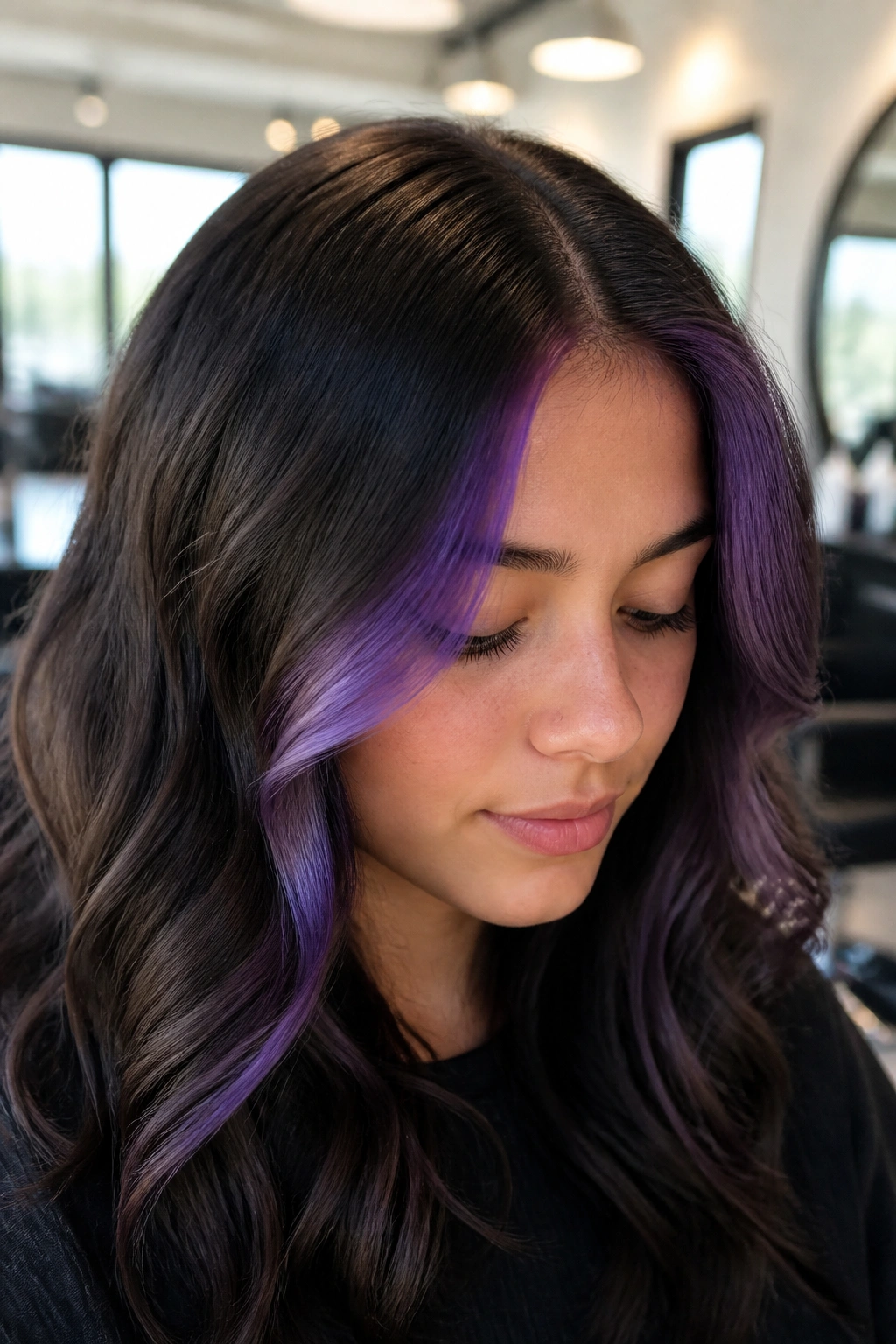
A bright violet money piece can be a lifesaver on a round face, but only if you keep it narrow and strategic. If those front pieces are too chunky, the face can look wider. If they start at the temples and fall below the cheekbone, they pull the eye in the right direction instead.
The dark brunette base does a lot of the quiet work here. It gives the violet something to pop against, which means you can keep the highlight lighter without flooding the whole head with brightness. I like this for people who want purple hair color ideas for round faces that still feel wearable at work or school.
A good money piece should look like it was placed with tweezers, not a paint roller. Thin at the top, slightly fuller through the mid-lengths, and soft at the ends. That shape is flattering because it opens the face without wrapping color around the widest part of the cheeks.
4. Orchid Balayage on Long Layers
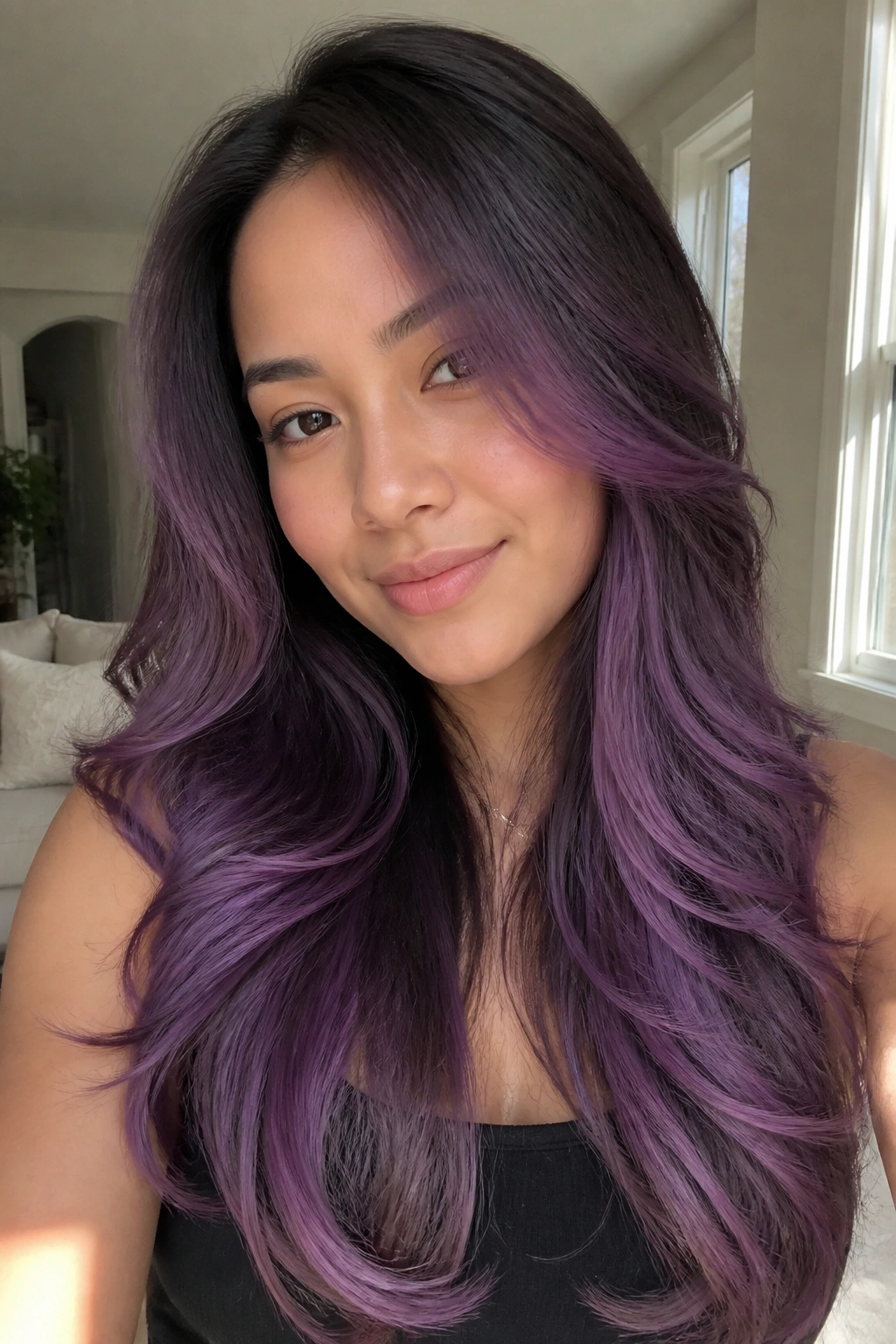
Orchid balayage has a soft, almost silky look that works especially well on longer hair. The shade reads brighter than plum and gentler than neon violet, so it gives dimension without turning the whole style into a billboard. On a round face, long layers are the real win. They keep the color moving downward.
The best version starts below the chin. That’s where the eye wants to follow the line of the hair instead of sitting on the cheeks. If the shortest layers hit right at cheek level, the whole shape can puff out. A few inches lower is much better.
I like orchid balayage when the ends are feathered and the face-framing pieces are light but not chunky. The effect is almost liquid. You get purple, but you also get length, and that length matters more than most people think.
5. Mulberry Curls with a Shadow Root
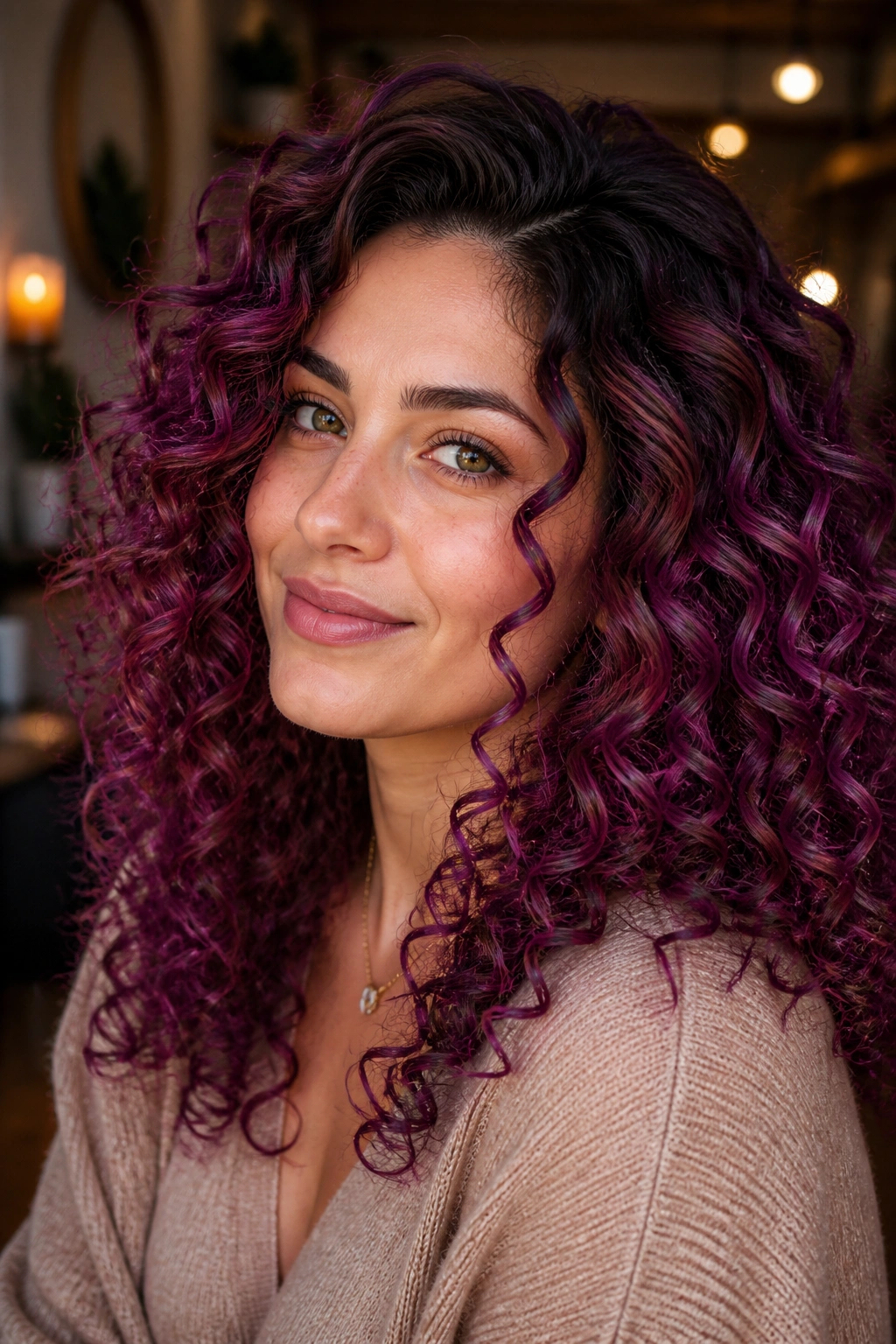
Curly hair and round faces can be a gorgeous pairing when the color is placed with a little discipline. Mulberry gives curls depth; the shadow root gives them lift. Together, they keep the style from turning into one big ball of color.
The Shape to Look For
The smartest version keeps the brightest mulberry pieces on the outer curve of the curls, not spread evenly everywhere. That way the eye moves through the shape instead of stopping at the widest point. A few face-framing spirals can be brighter, but they should start below the cheekbone.
The shadow root also matters because it creates a natural break at the scalp. That line helps elongate the style, especially if your curls are dense. A uniform purple can be pretty, sure, but it can also flatten the face shape. This version gives you lift, depth, and a little edge.
Use a curl cream with light hold, not a heavy butter. Heavy products can darken the mulberry and make the crown look weighed down.
6. Lavender Peekaboo Layers
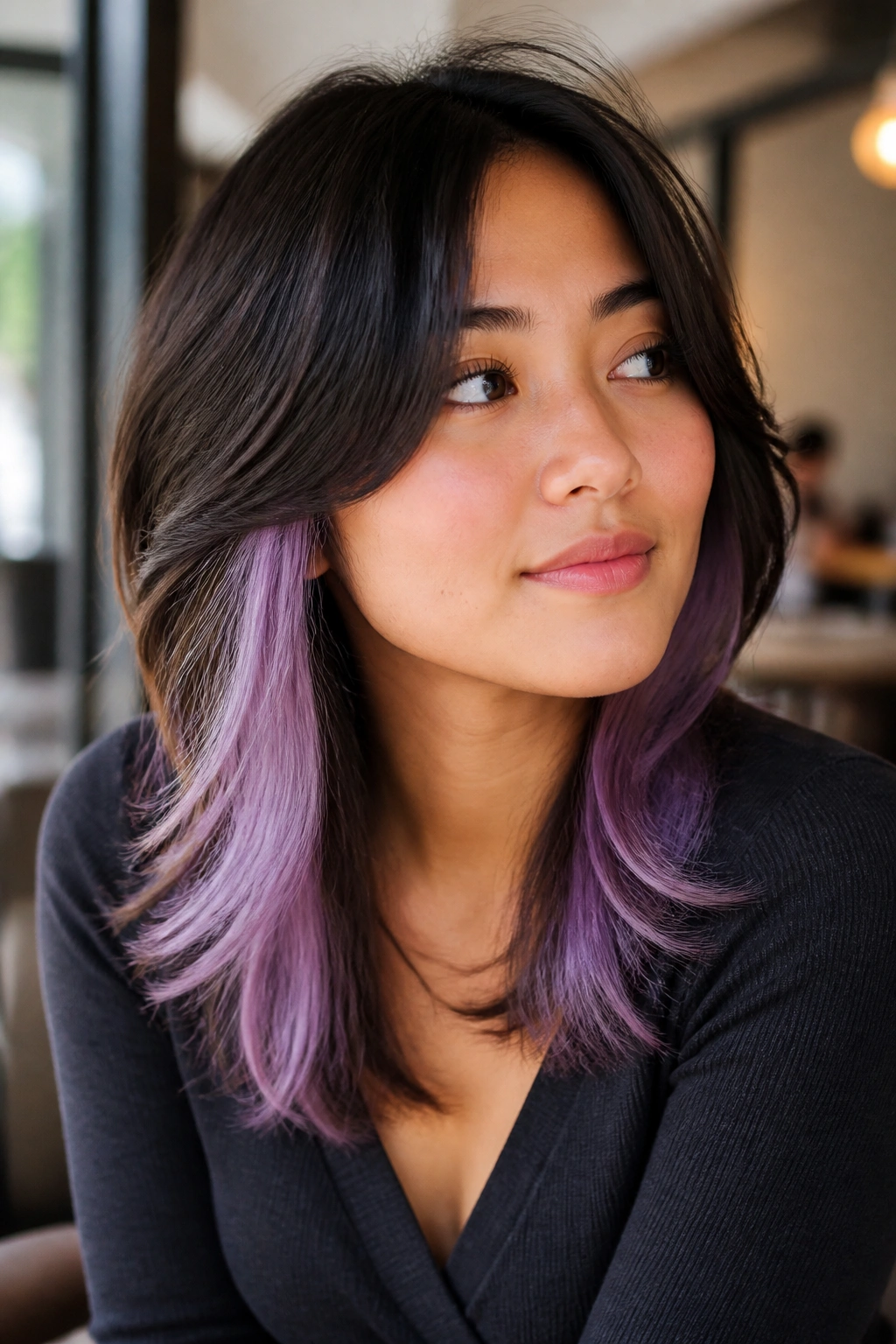
Not every bold purple needs to sit on top. Sometimes the smartest move is hiding it underneath. Lavender peekaboo layers are a good choice when you want color that flashes when you move, then disappears when the hair falls back into place.
That hidden placement is a gift for round faces. It keeps the sides visually clean, which means the face doesn’t get boxed in by too much color around the cheeks. The top layer stays darker or softer, while the lavender underneath adds surprise and depth. It feels playful without being heavy.
This look is especially nice on layered cuts that graze the shoulders. The movement lets the purple show in thin slices, not wide bands. And that matters. Wide bands can pull the eye sideways; thin layers pull it through the hair, which is much easier on a round face.
7. Black Cherry Purple Melt
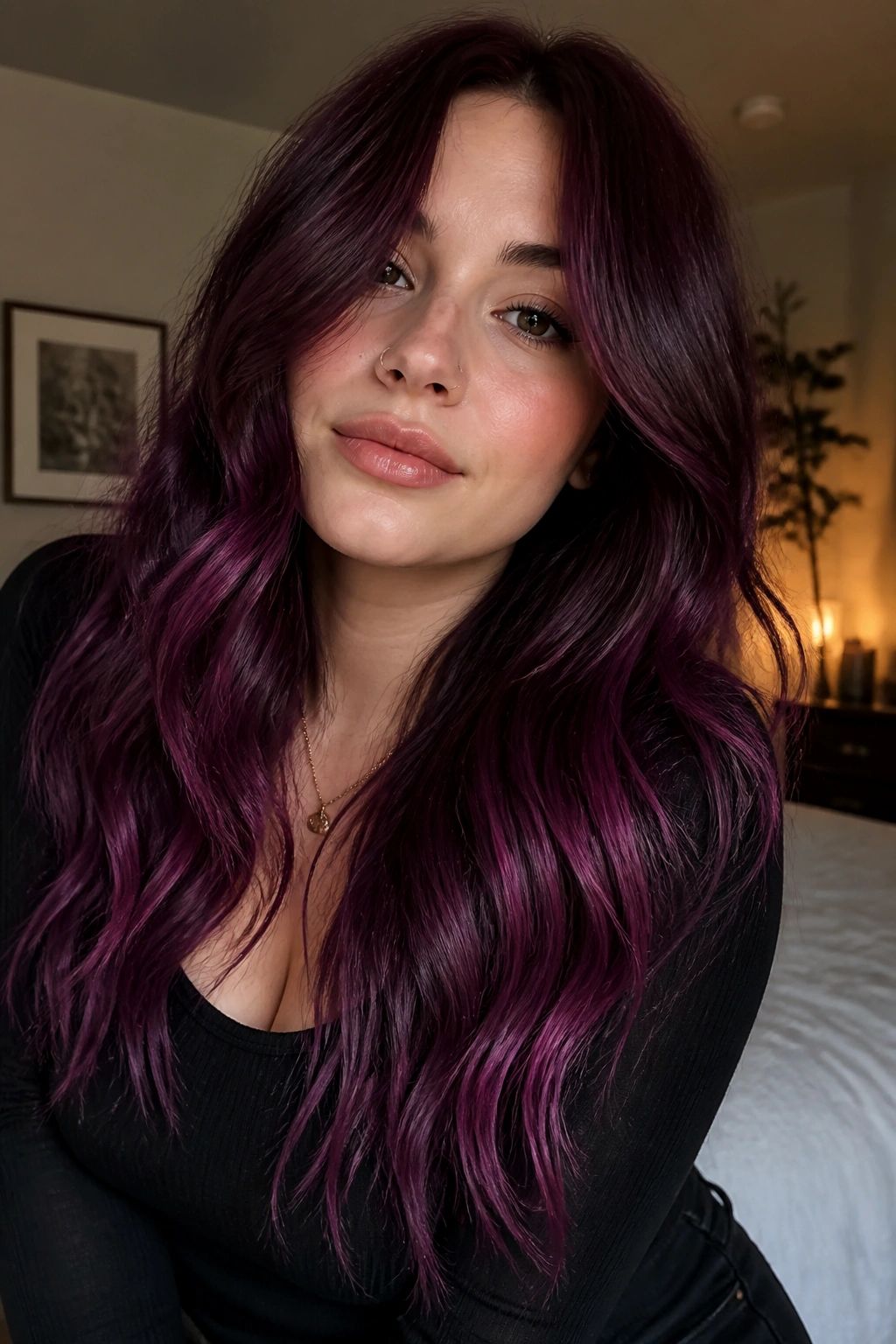
A black cherry purple melt has drama, but it’s controlled drama. The root stays deep, almost wine-dark, then the color softens into cherry violet through the mids and tips. That gradient is flattering because it never creates one hard line across the widest part of the head.
Why the Melt Matters
The melt effect gives you vertical movement. Your eye follows the fade from dark to light, and that naturally lengthens the face. It also makes the style look richer than a flat all-over purple, which can sometimes feel a little busy on a round face.
This is one of my favorite choices for thicker hair. Dense strands hold the blend better, and the deeper root keeps the cut from looking puffy. If the hair is layered, even better. The layers catch the lighter cherry tones in the ends and keep the whole shape from feeling boxy.
Ask for a soft transition, not stripes. The best melt should look like the shades are sliding into one another. Harsh lines ruin the effect fast.
8. Purple Prism Pixie
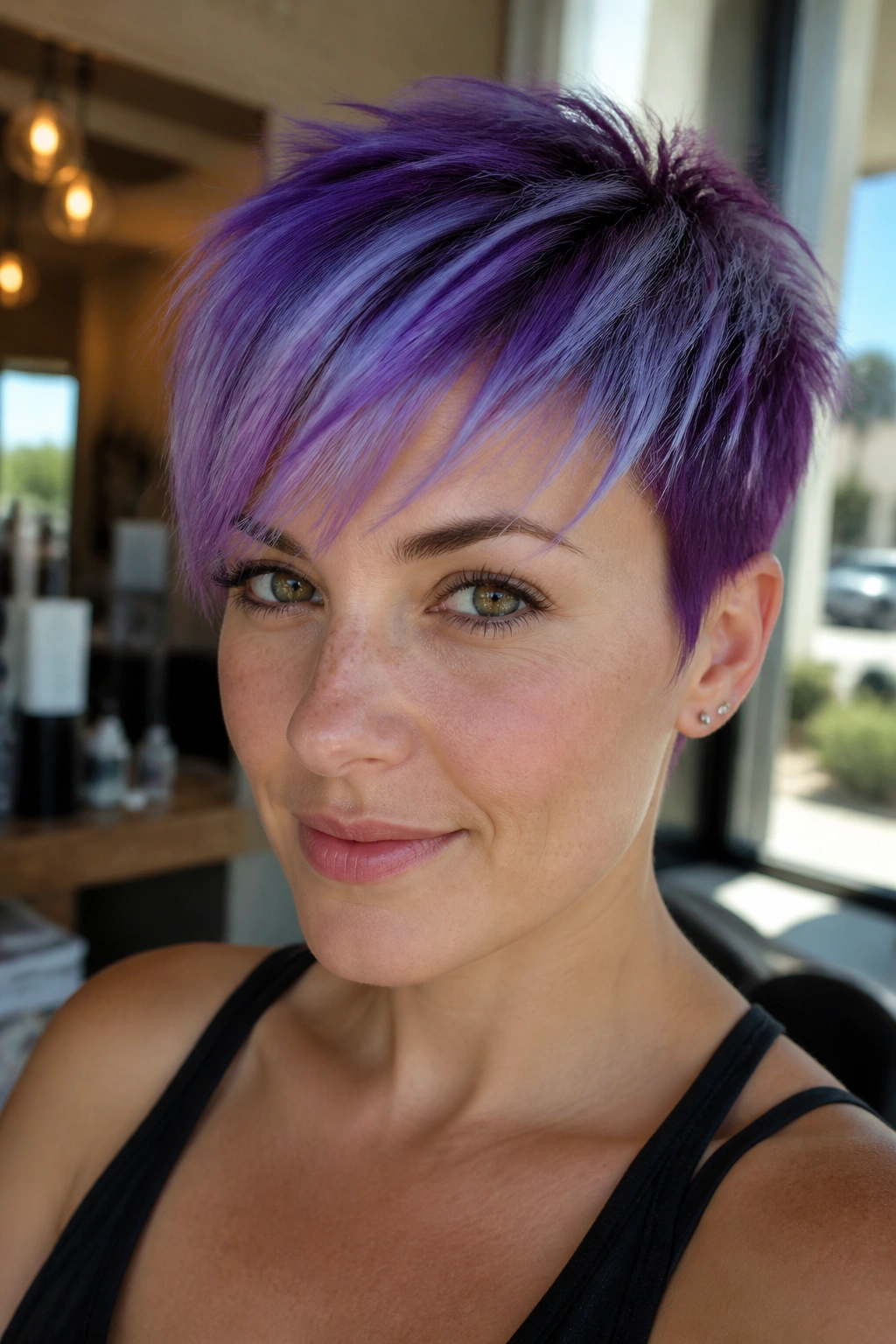
A pixie can work on a round face if it has height on top and enough texture to avoid a cap-like shape. Purple prism color helps because the multi-tone finish creates tiny shifts of light instead of one solid block. That movement matters more than length here.
Short hair can widen a face if the sides are too full. So the cleaner answer is a tighter side, a lifted crown, and pieces that move upward and forward. The purple prism look gives you that visual lift without making the cut feel flat. It’s edgy, yes, but it’s also precise.
What Makes It Different
Unlike a single-shade pixie, prism color lets the top hold a little shine while the sides stay darker. That contrast narrows the face a touch and keeps the focus above the cheekbones. A soft fringe helps too, especially if it’s swept diagonally rather than cut straight across.
This one is not for people who want low maintenance in the lazy sense. It still needs shape. But if you like hair that looks sharp with a little styling paste and five minutes in the mirror, it’s hard to beat.
9. Dusty Lilac Waves
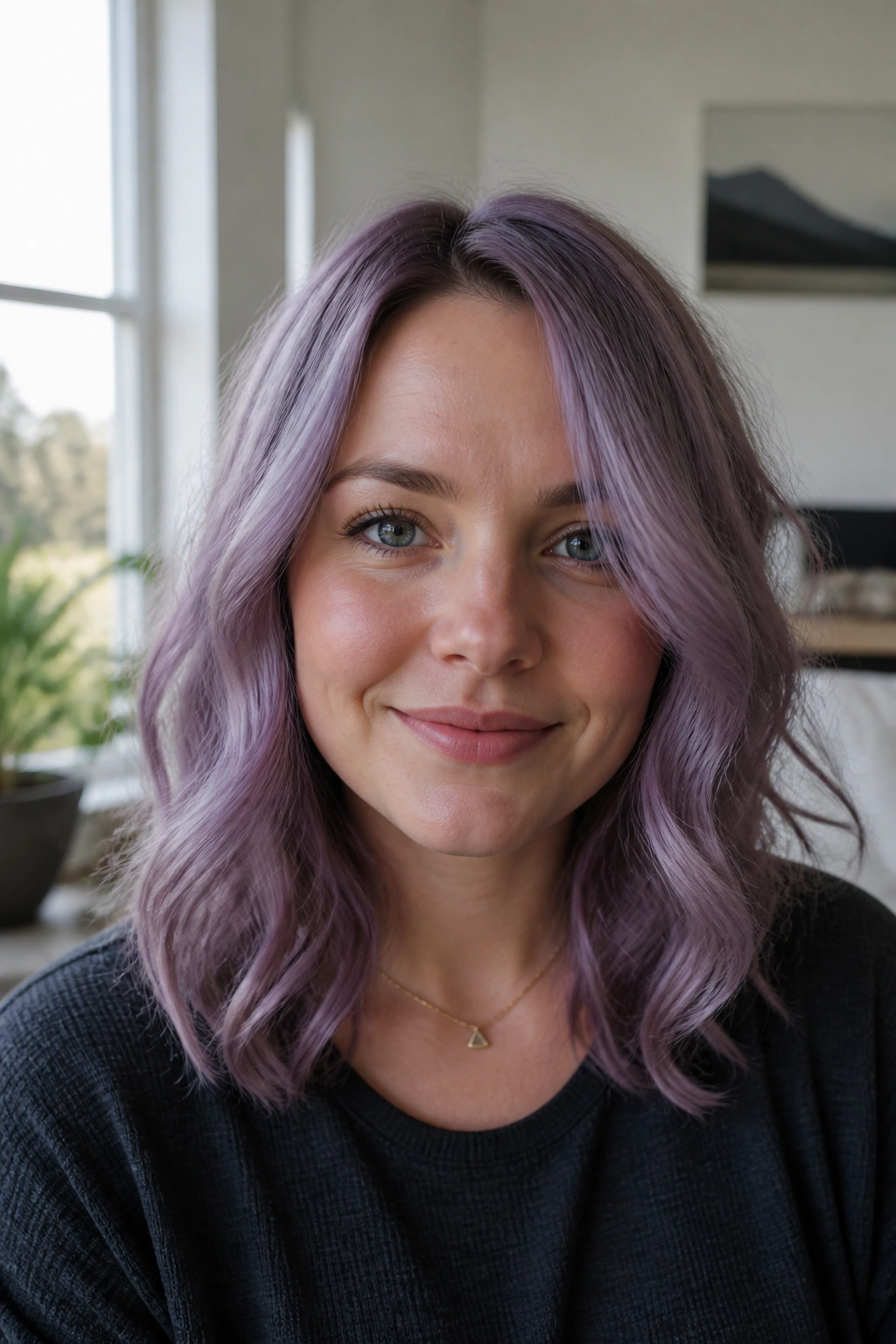
Dusty lilac is one of the easiest purples to wear because it feels soft instead of loud. On round faces, that softness is useful. It takes the edge off any extra width and gives the hair a light, airy finish that doesn’t crowd the cheeks.
Waves matter here. Loose bends break up the roundness of the face better than tight, uniform curls, especially when the color is pale. A middle-or-slightly-off-center part can work, but I usually like a tiny shift to one side. That one little change can make the whole look feel longer.
Dusty lilac also pairs well with medium lengths. If the hair sits at the collarbone, the color gets room to move. Too short, and the shade can start to look helmet-like. Too long, and the softness can disappear in the length.
10. Amethyst Curtain Bangs for Round Faces
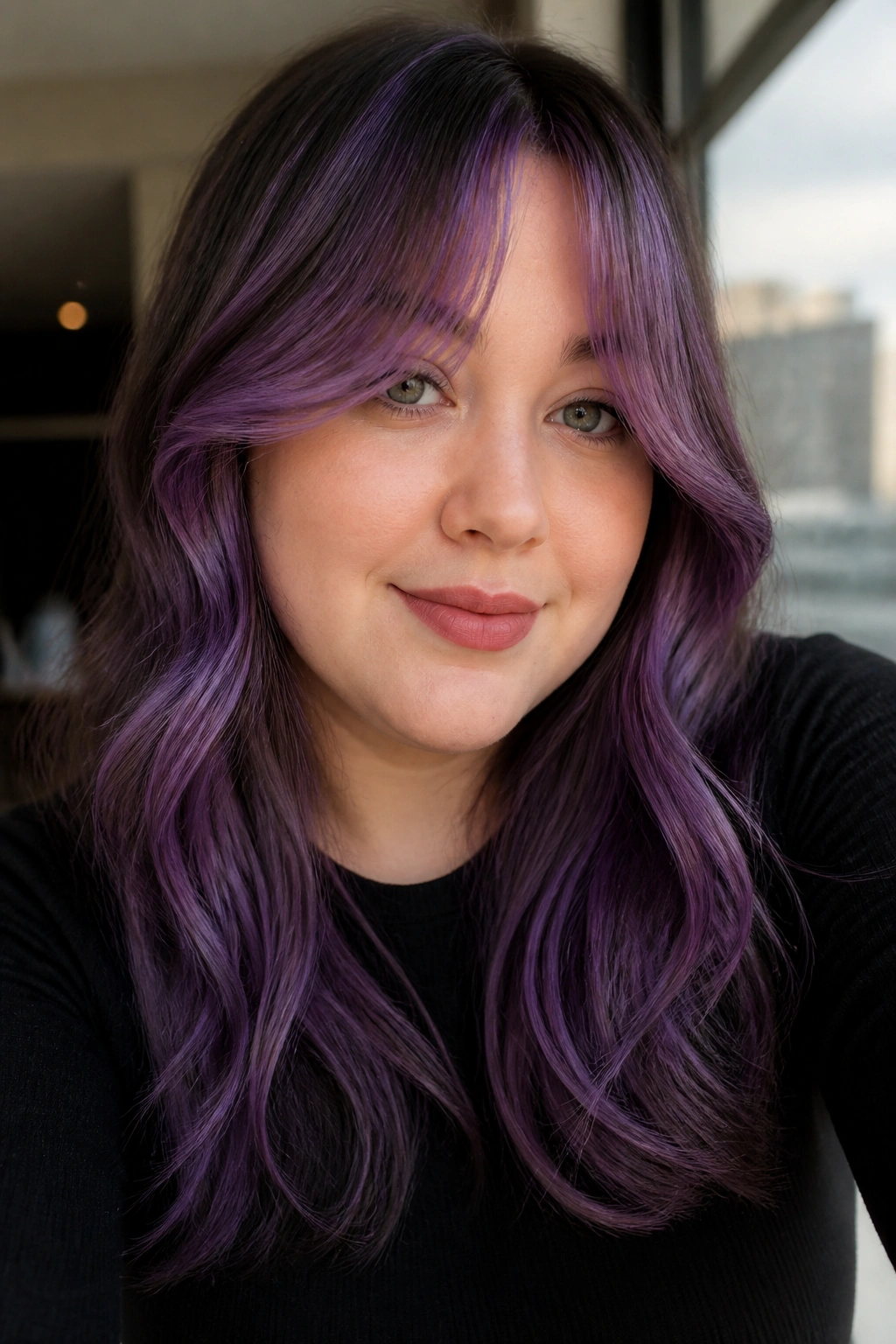
Curtain bangs can be a friend to round faces, but only when they start high enough to create a real diagonal. If they open at the cheekbone and fall into the jawline, they lengthen the face in a way blunt bangs never will. Amethyst makes the whole thing richer.
The key is keeping the purple concentrated in the bangs and top layers, not flooding the whole front section. That gives the face a frame without making the sides heavy. You want the front to feel airy, almost like a soft curtain pulled open just enough to show the face underneath.
How to Wear It
- Keep the shortest part of the fringe around eye to brow level, then let it sweep out.
- Leave the ends of the bangs a shade softer so they melt into the rest of the hair.
- Style with a round brush only at the very roots; too much bend can puff the face out.
- Use a lightweight serum on the front pieces so the amethyst stays glossy, not fuzzy.
This is one of the best purple hair color ideas for round faces if you want softness with structure. It gives both.
11. Grape Gloss on Straight Mid-Length Hair
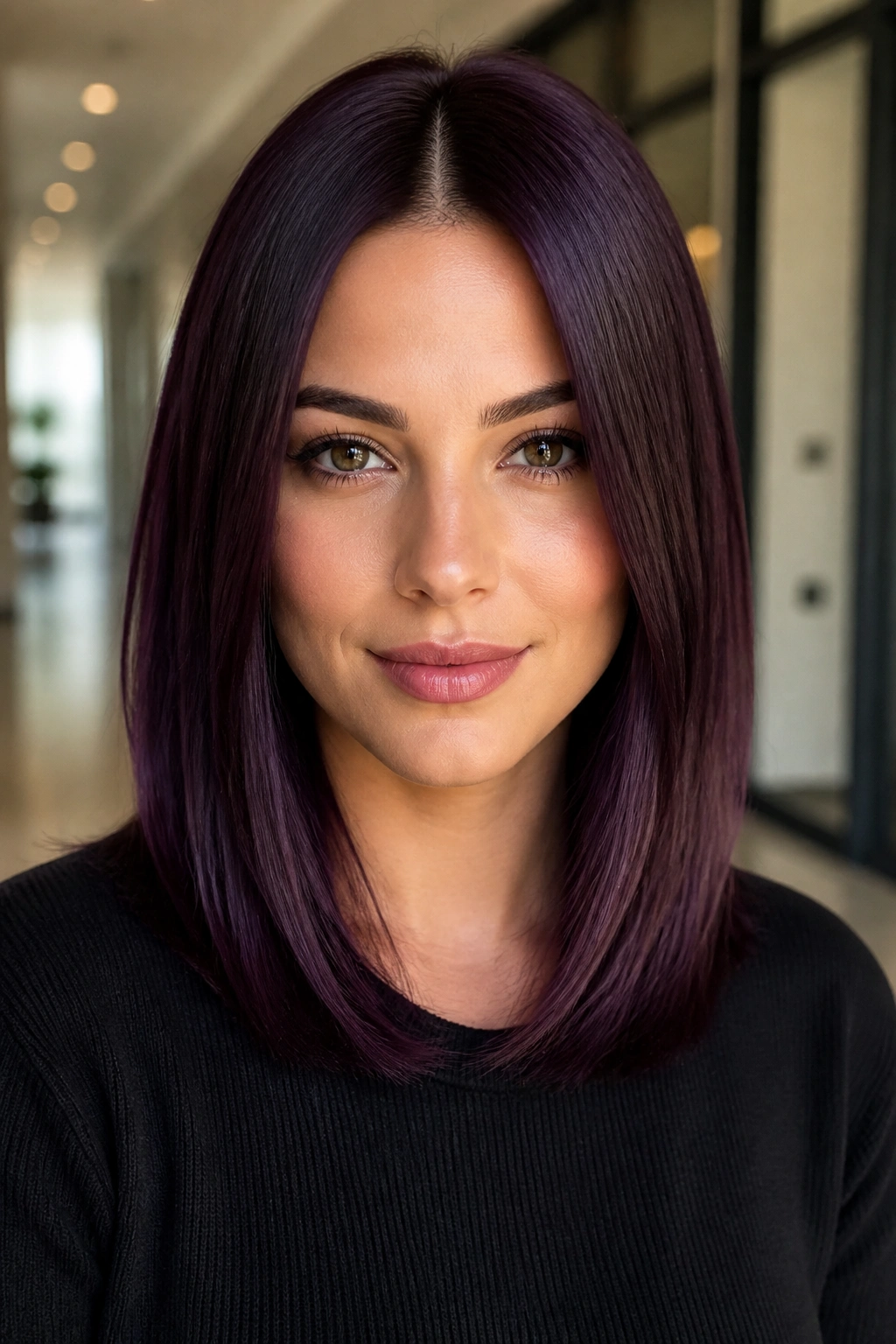
Straight hair can be tricky on a round face because it can sit too neatly around the head. Grape gloss fixes part of that problem by giving the color a reflective finish. The shine creates vertical lines, and those lines lengthen the face more than people expect.
Mid-length hair is the sweet spot here. It gives the gloss enough surface area to show depth, but it doesn’t drag the eye sideways like a blunt, shoulder-wide shape sometimes can. A center part can work if the hair is long enough. If not, a side part is safer.
I like grape gloss when the base is dark brown or black. The purple reads jewel-toned instead of flat. And that jewel quality is what keeps the look from feeling heavy. It’s sleek, clean, and a little bit moody.
12. Plum and Violet Ribbon Highlights
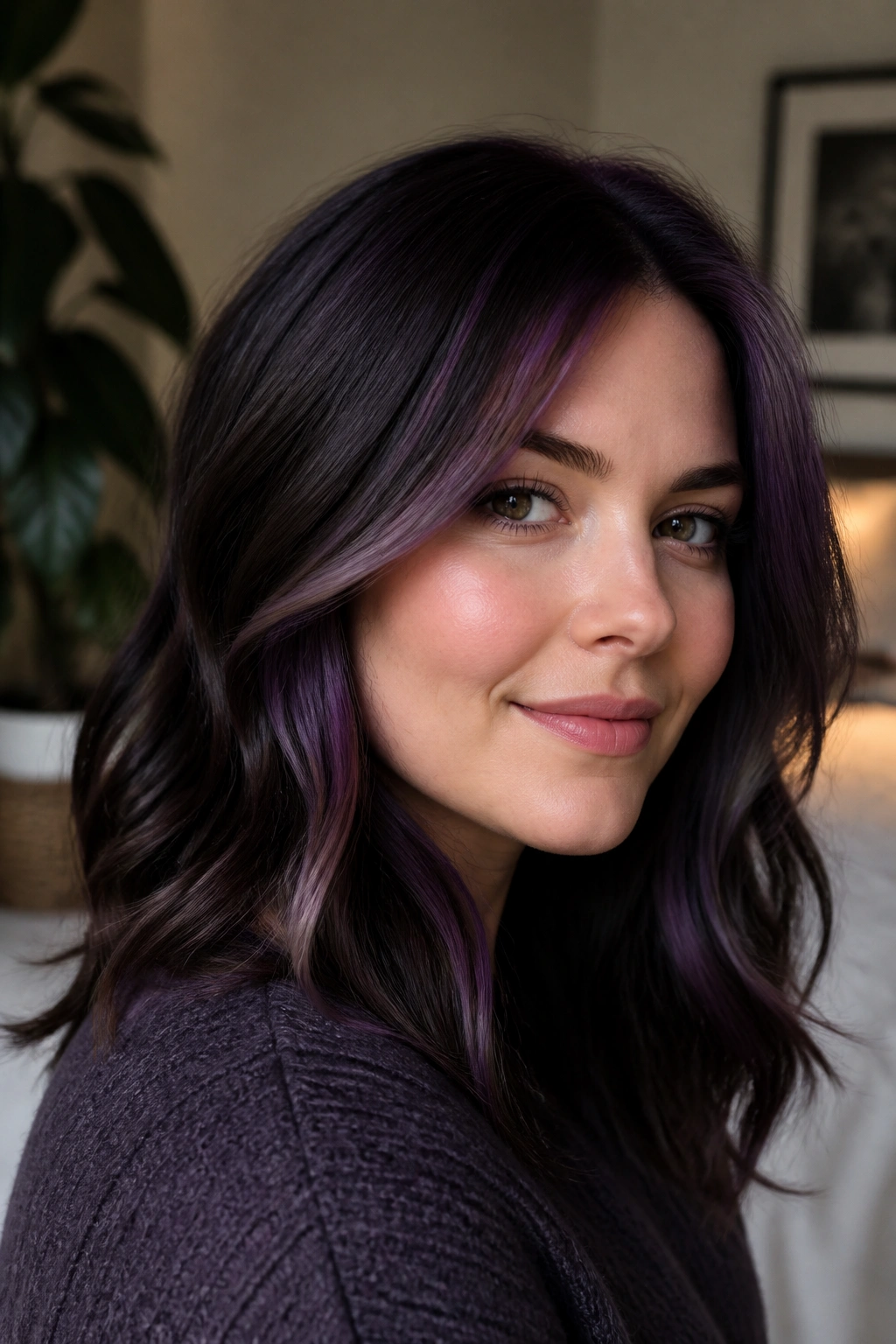
Ribbon highlights are a better choice than chunky streaks when you have a round face. Why? Because ribbons bend through the hair. They don’t stop the eye at one fat stripe. Plum and violet together give you depth, contrast, and movement without making the style feel busy.
The placement matters more than the colors themselves. Keep the ribbons narrow near the temples, then let them open up lower in the lengths. That way the face stays framed, not boxed. Dark hair peeking between the ribbons helps too. It creates space.
This look is especially strong on layered cuts. Each layer catches a different part of the purple, so the whole style moves when you turn your head. If you like seeing dimension in daylight, this one delivers. If you prefer a solid block of color, skip it.
13. Holographic Purple Shag
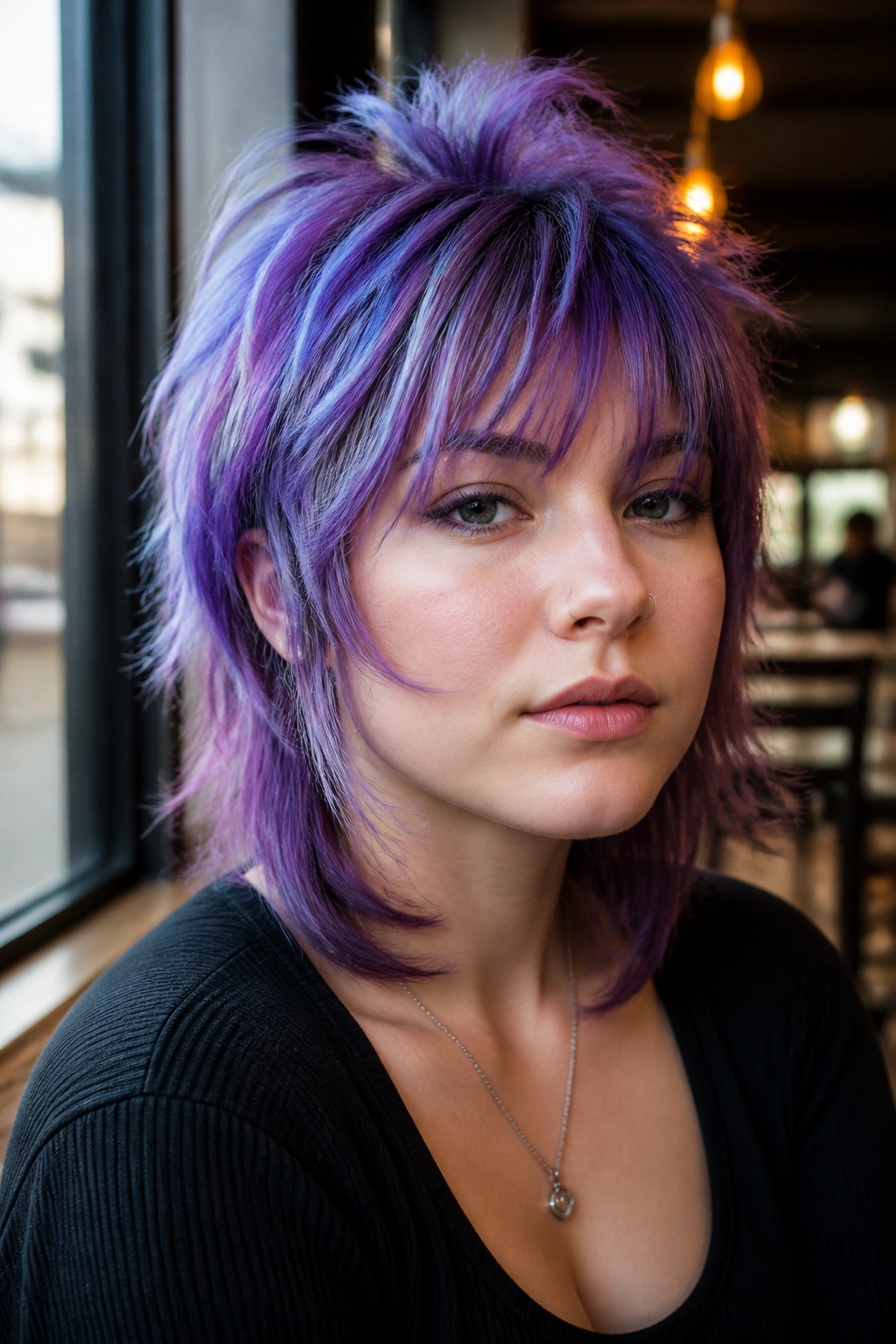
A shag can be brilliant on a round face when the cut is controlled and the crown has lift. The holographic part adds a little shimmer, which keeps the color from settling into one flat note. That shimmer is especially useful near the ends, where the hair needs movement.
The Science Behind the Shape
The shag works because the choppy layers pull the eye up and down. On a round face, that vertical motion is worth more than extra width at the sides. The top should have texture, not bulk. The sides should skim, not puff.
The purple itself should shift between violet, lilac, and smoky plum rather than staying one shade. That variation keeps the cut from looking too dense. If everything is the same tone, the shag can start to feel heavy. When the tones shift, the style looks lighter.
A wispy fringe helps, but keep it broken up. Full, thick bangs can shorten the face fast. I’d rather see a few soft pieces falling across the forehead than a solid curtain.
14. Soft Mauve Shoulder Cut
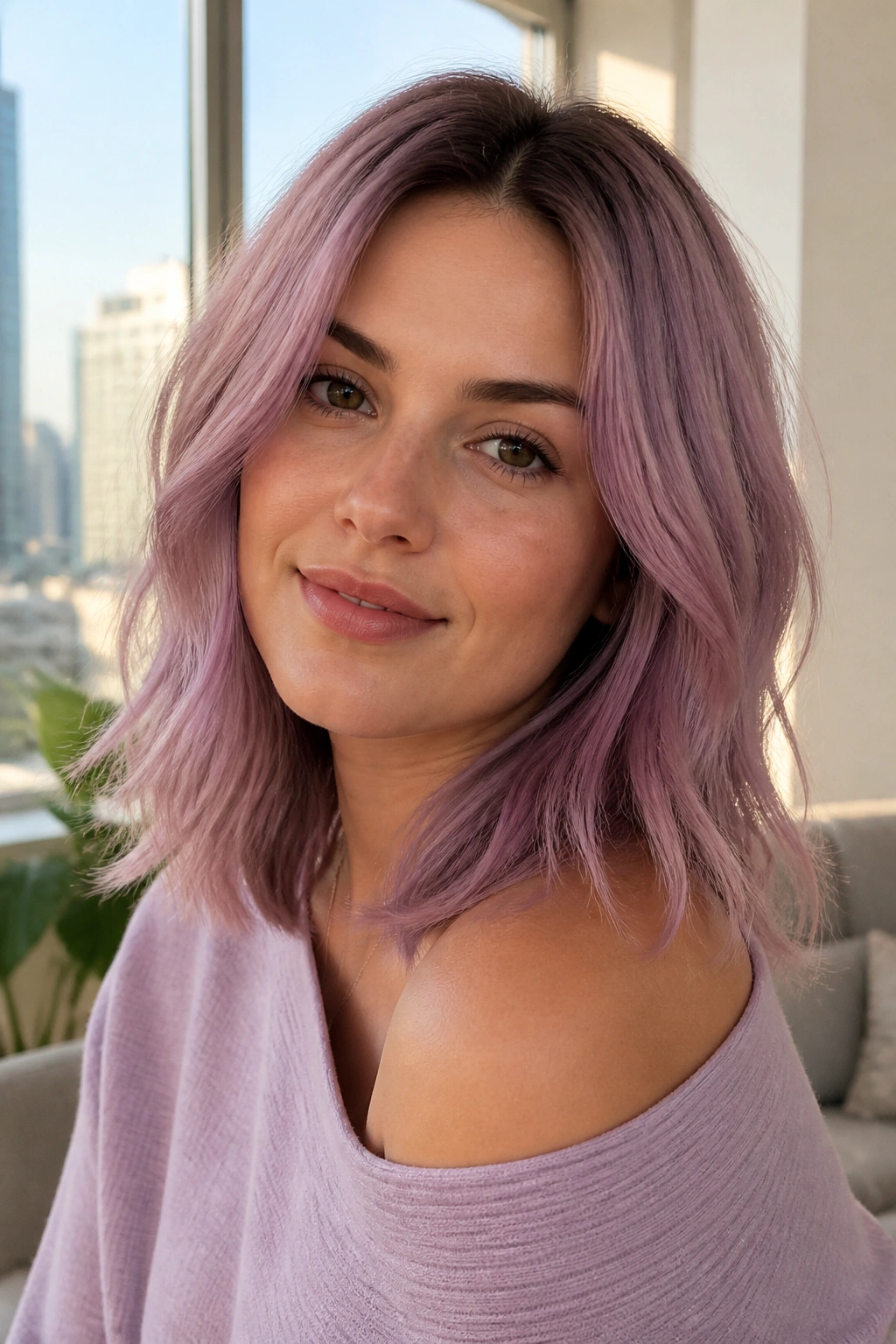
Soft mauve is the gentlest purple on this list, and that’s not a bad thing. On a round face, a softer color can be smarter than a loud one because it doesn’t compete with the shape of the face. It lets the cut do the work.
Shoulder length is the real advantage. It gives you enough length to pull the eye down, while the mauve keeps the style interesting. Add a slight bend at the ends and the hair stops feeling boxy. Flat, poker-straight hair at shoulder length can widen the face. A little movement fixes that fast.
I like mauve for people who want color that feels professional without being boring. It has a powdery finish, almost like a muted rose with violet in it. That muted quality is what makes it easier to wear day after day.
15. Royal Purple Undercut
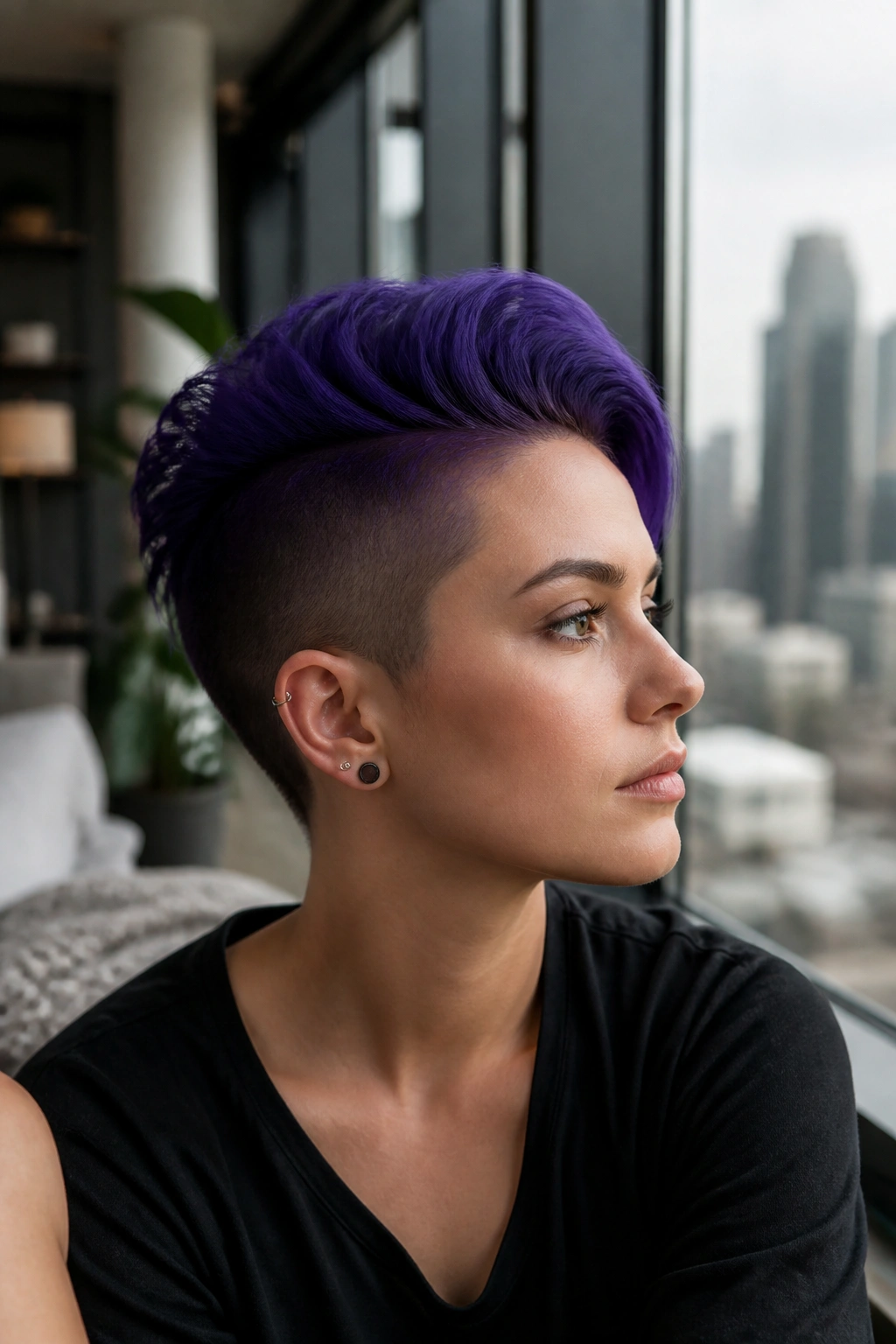
An undercut can flatter a round face more than people expect. The shaved or closely cropped sides remove bulk where the face is widest, and that alone can sharpen the shape. Add royal purple on the longer top section and you get contrast that feels deliberate.
This is a bolder look, obviously, but it is also practical. The top can be styled up for height, swept over to one side, or left textured and messy. Each version gives the face a little more length. The undercut keeps the sides from puffing out, which is the main thing.
If you want this cut to stay flattering, keep the longest top pieces at least a few inches past the crown. Too short on top and the whole head can read round again. The purple should live where there’s motion. That’s the point.
16. Berry Purple Afro Curls
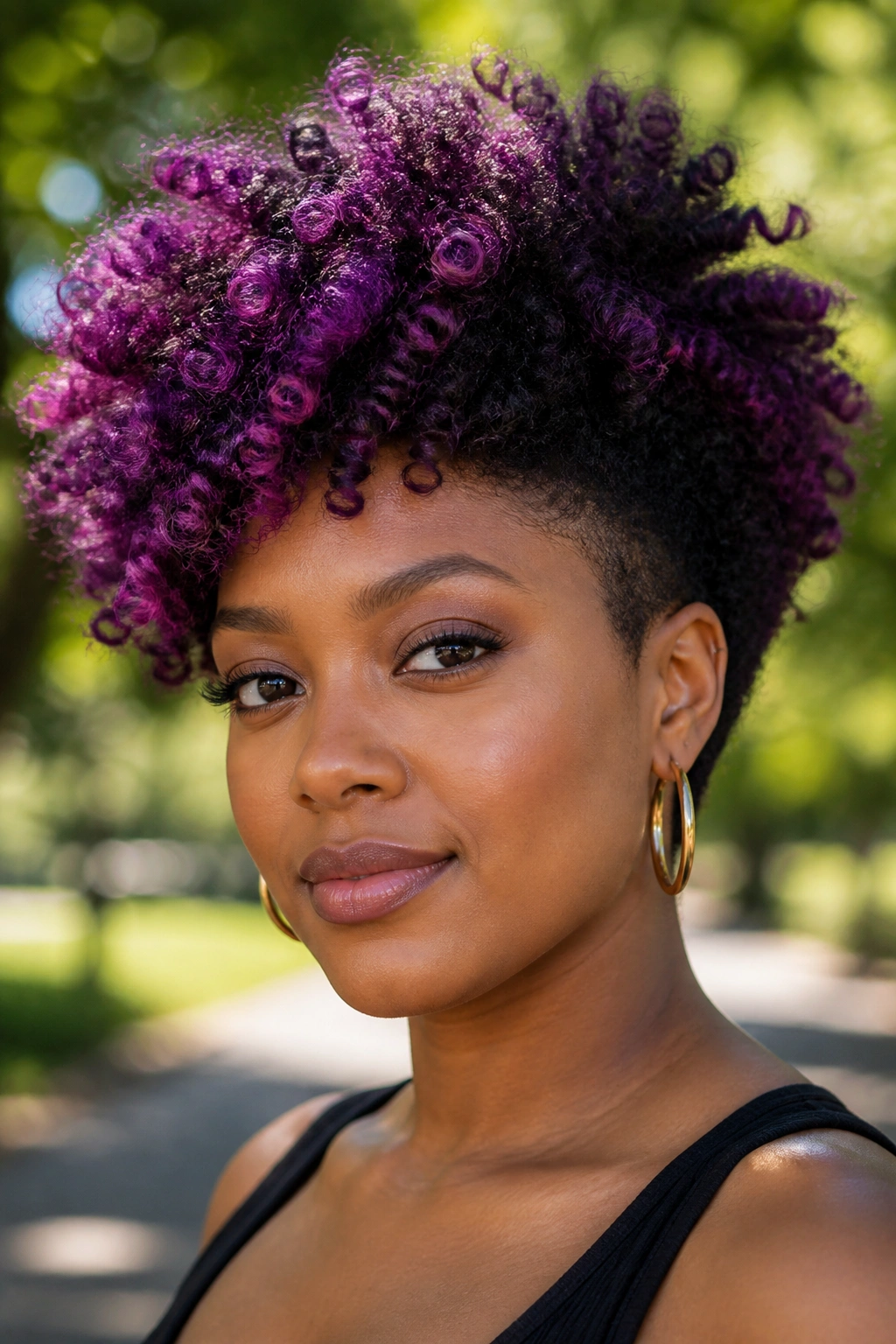
Berry purple on afro-textured curls is all about shape, not just color. Round faces can look lovely with this combination because the curls already bring softness, and the purple adds rich depth. The key is building height instead of width.
A tapered shape around the sides helps keep the silhouette lifted. Then the berry tone can sit a little brighter on the upper layers and outer coils, which creates a vertical path for the eye. If the color is too even, it can flatten the shape. A little variation keeps it alive.
Color Placement on Coils
- Focus the lighter berry tones on the crown and upper front.
- Keep the deepest purple near the roots and underneath.
- Leave some dark coil depth visible so the style doesn’t turn into one solid shape.
- Use a gloss or semi-permanent shade that fades evenly, since curly hair can grab pigment in unexpected ways.
This look does not ask you to hide the roundness. It just balances it. That’s a better goal.
17. Iridescent Purple Balayage on Coils
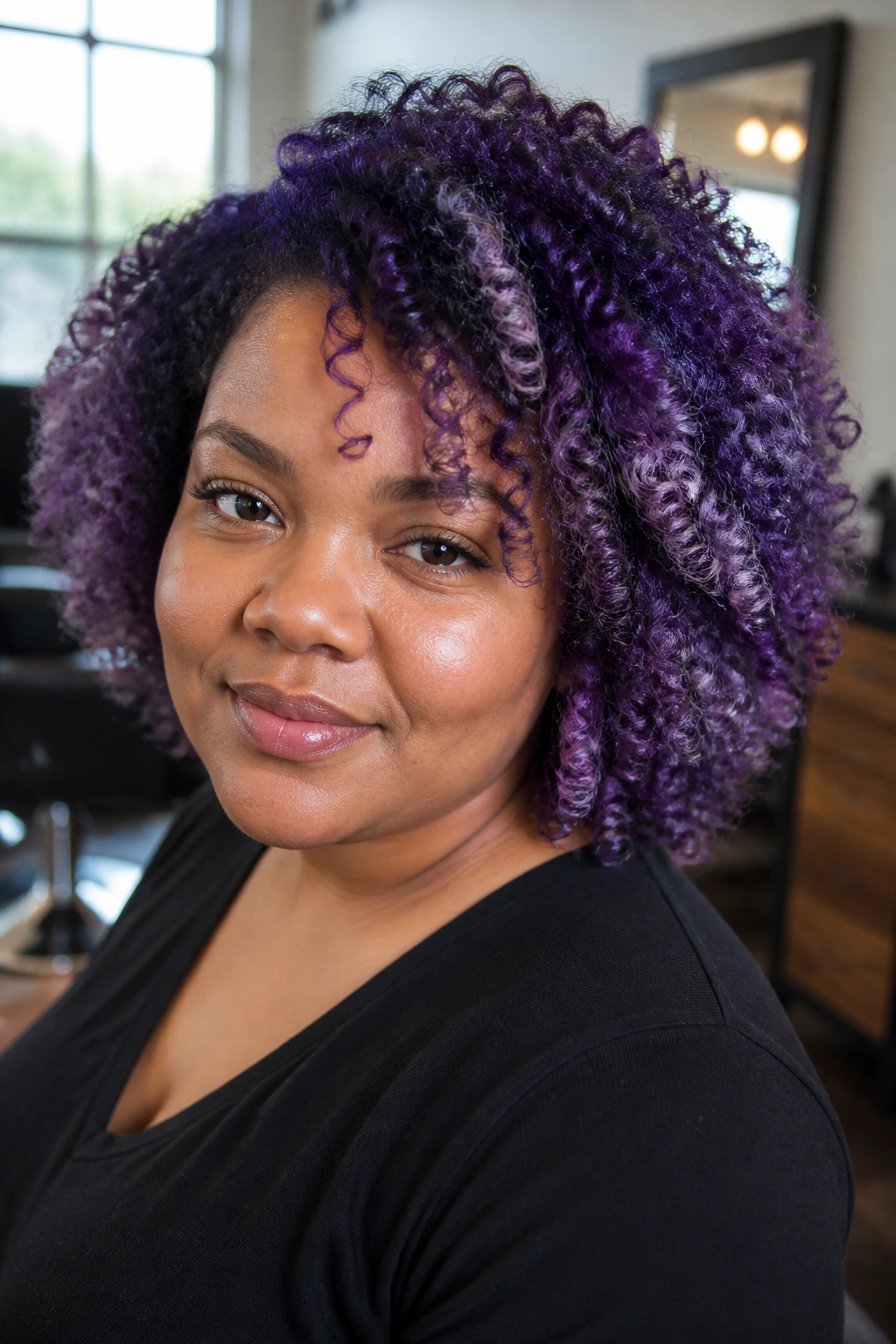
Iridescent balayage can look almost jewel-like on coils because the shape catches light from different angles. On a round face, that matters a lot. The color does not sit in one flat band; it moves. And movement is your friend here.
The balayage should be painted in a diffused way, not with harsh stripes. Coils shrink, so any bright piece will read shorter than it looks in the salon chair. That’s why I prefer placing lighter violet and lavender strokes a little lower than you think you need. Once the hair springs up, the balance is usually right.
This style works well when the ends are a touch brighter than the roots. It pulls the eye downward and adds length to the overall shape. Iridescent purple is not about shouting. It’s about giving texture more dimension, which is a much better fit for a round face than a loud block of color.
18. Pastel Purple Wolf Cut for Round Faces
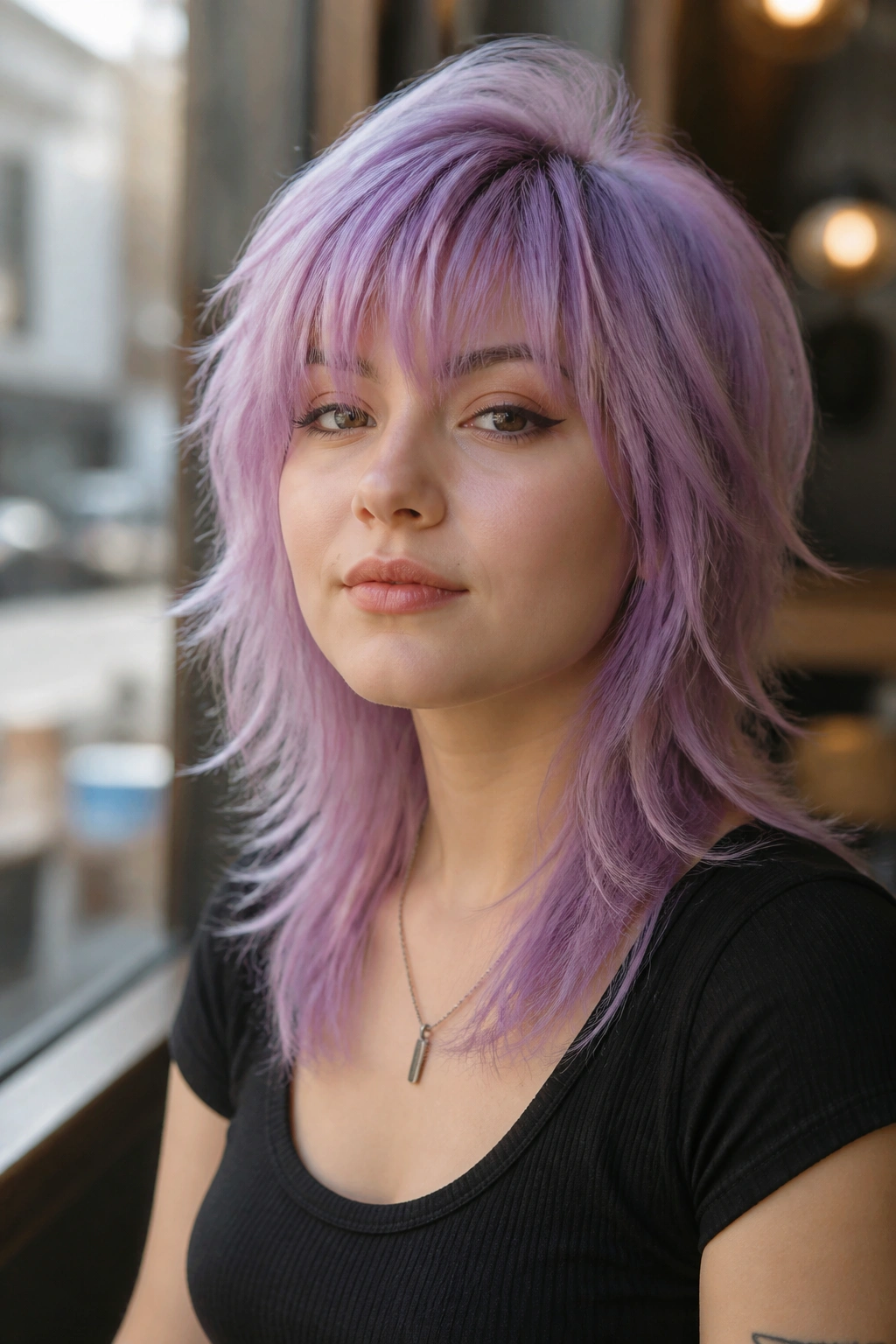
Can a wolf cut work on a round face? Yes, if the fringe is soft and the crown has height. The pastel purple makes it easier because the lighter shade keeps the cut from feeling too heavy around the edges.
The wolf cut gives you two useful things at once: lift at the top and taper at the ends. That combination stretches the face visually. What you do not want is a big, fluffy side shape. Keep the sides broken up, not wide. The pastel color should sit through the layers, not form a solid band.
How to Keep It Flattering
A wispy fringe is better than a thick one. Let it split a little in the middle so it doesn’t cut the face in half. And keep the longest layers long enough to skim the collarbone or below. That length helps the cut feel intentional instead of puffy.
If your hair is thick, this is one of the best purple hair color ideas for round faces because it removes weight and keeps the silhouette moving.
19. Deep Plum Sleek Ponytail
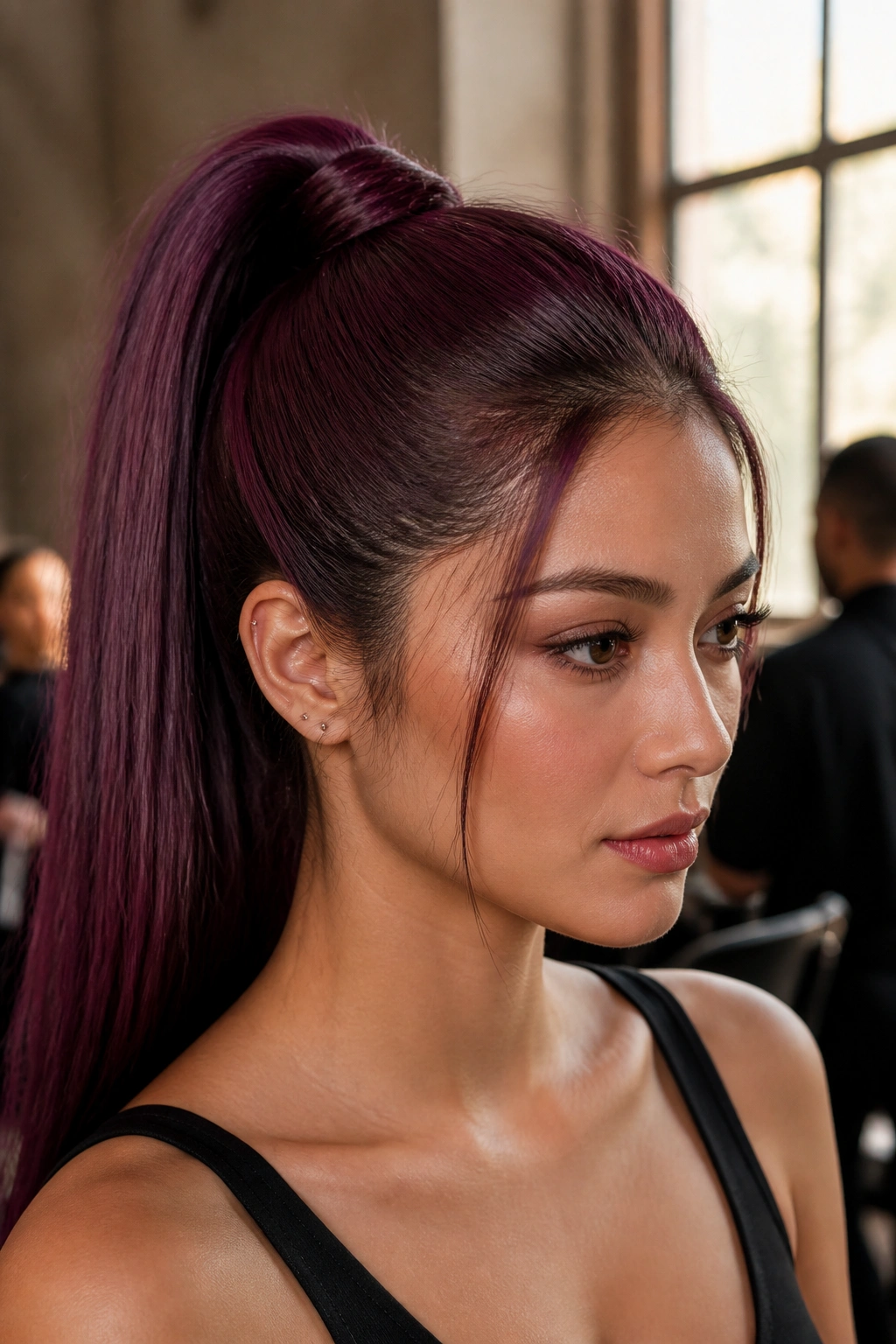
A sleek ponytail sounds simple, but the details matter. On a round face, deep plum can look striking if the crown is lifted first and the ponytail sits slightly higher than the middle of the head. That placement gives the face a little height before the length drops down.
The color works best when the ponytail is glossy and smooth. Any roughness on the surface can make the style look wider than it is. A wrapped base keeps the look polished, and a few thin face-framing pieces can soften the front without crowding it. Don’t overdo those pieces. A little goes a long way.
This is one of the easiest ways to wear purple without committing to a full cut change. It’s also one of the most useful for events. The sleek line at the scalp and the deep plum length below create a clean vertical path. That’s the whole game.
20. Violet Dip-Dye Ends
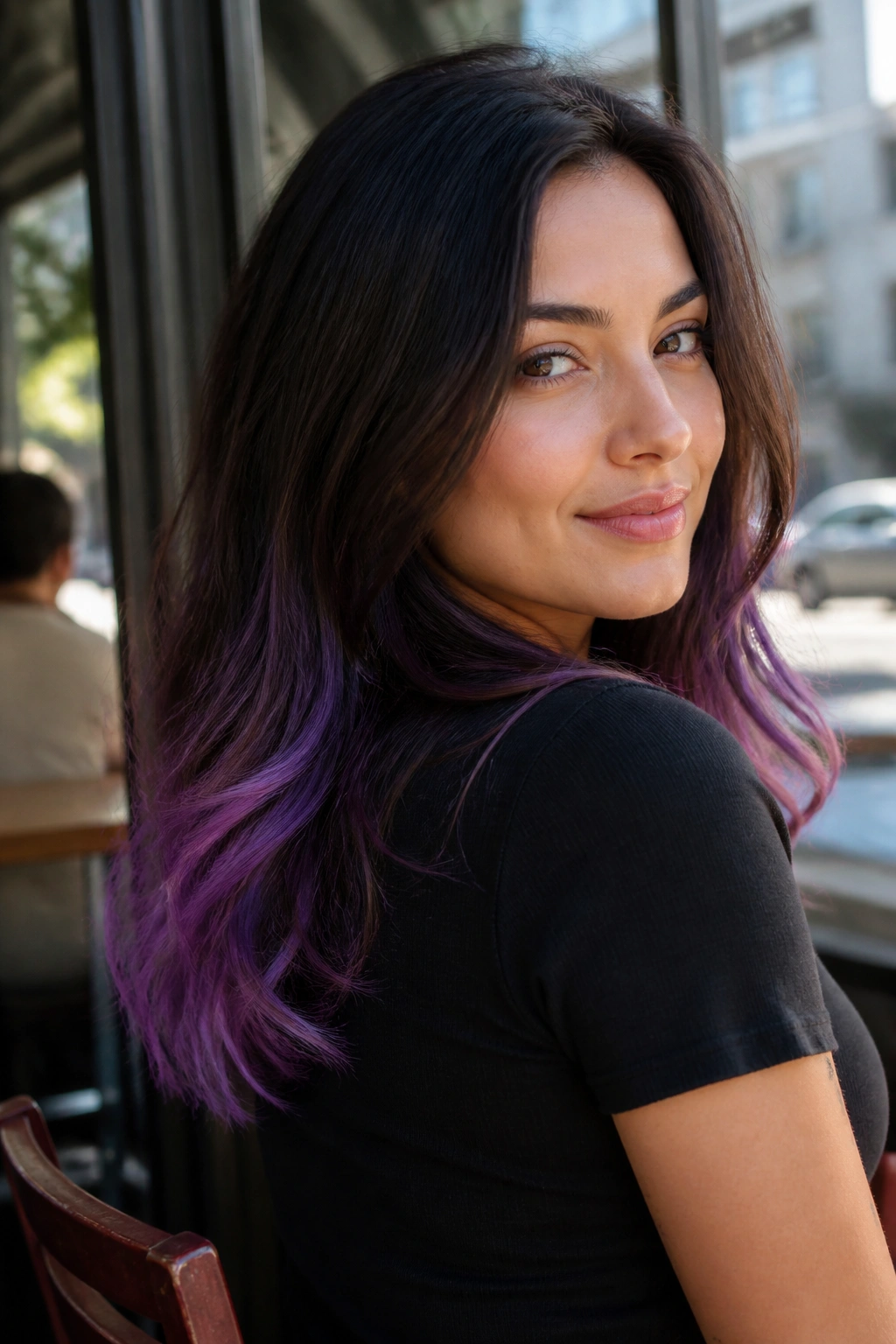
Dip-dyed ends are a smart choice when you want purple near the face shape but not on the face shape. That distinction matters. By keeping the violet lower, you let the top stay lighter or darker and keep the cheeks visually open.
This look works especially well on medium-to-long hair. The color starts where the face stops, which is a nice little trick. It lets the purple show when the hair moves, but the main frame of the face stays clean. That can be flattering on round faces that already carry fullness through the cheeks.
I like dip-dye best when the transition line is soft and a little uneven. A hard line can feel chunky. A blurred fade, especially in a grape or orchid tone, looks much better. It also grows out with less drama, which is always welcome.
21. Smoky Plum Pixie Crop
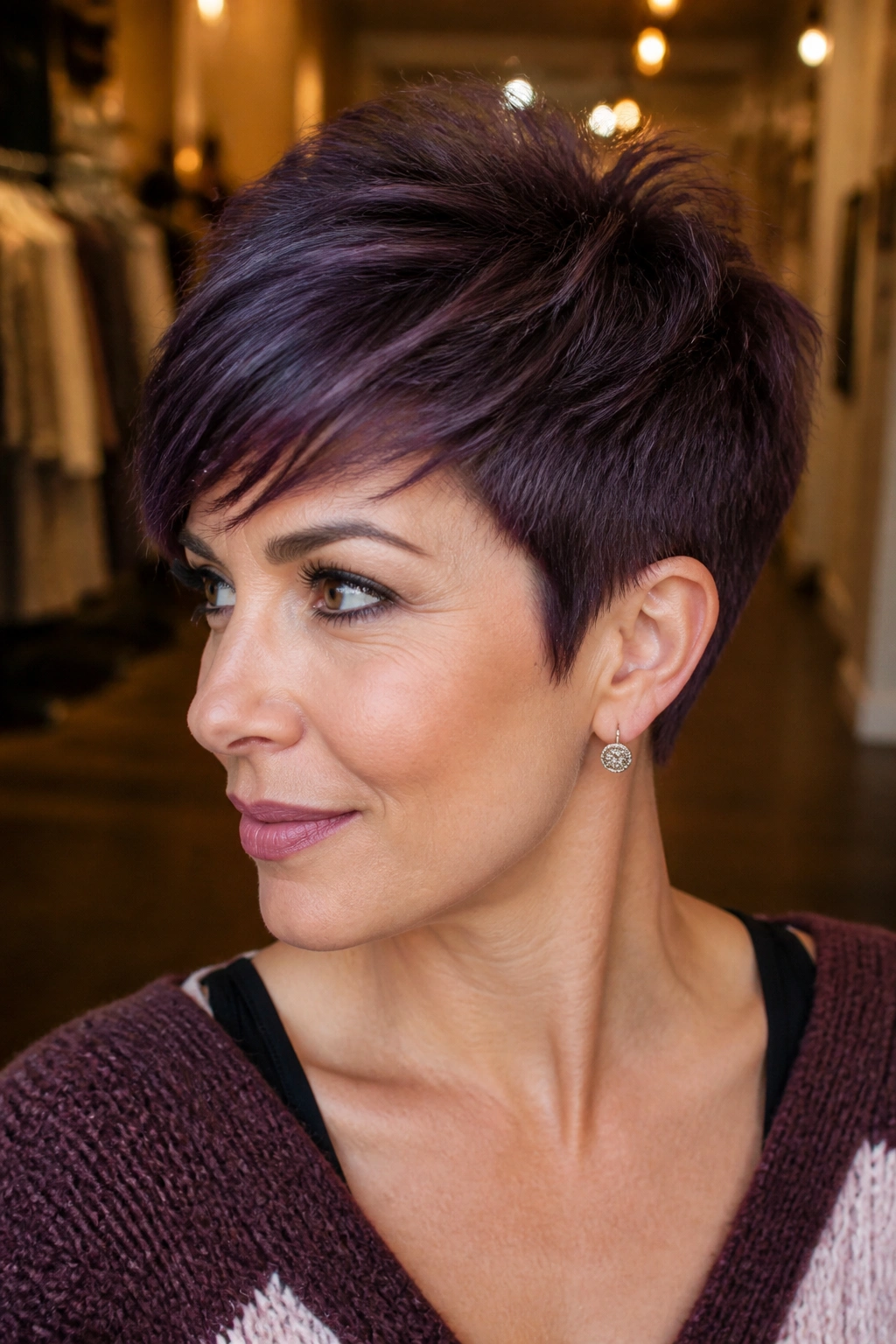
A smoky plum pixie crop is sharper than a soft violet pixie and better suited to someone who wants definition. The smoky tone reduces visual bulk, while the crop itself opens the face. On a round face, that openness is the whole point.
Why It Sharpens Round Features
The nape should stay close and clean. The top should be piecey, not helmet-shaped. That contrast gives the face edges, which is useful when the cheeks are naturally soft. A side-swept fringe helps too, because it creates an angle across the forehead.
A solid plum shade can work, but I prefer smoky plum because it looks less flat in short hair. The tone changes slightly under indoor light and daylight, so the crop stays interesting from every angle. That matters more in a short cut than people expect. Short hair shows everything.
If you want a purple pixie that feels grown-up, this is the one I’d point to first. It has shape, not fluff.
22. Cabernet Purple Layered Cut
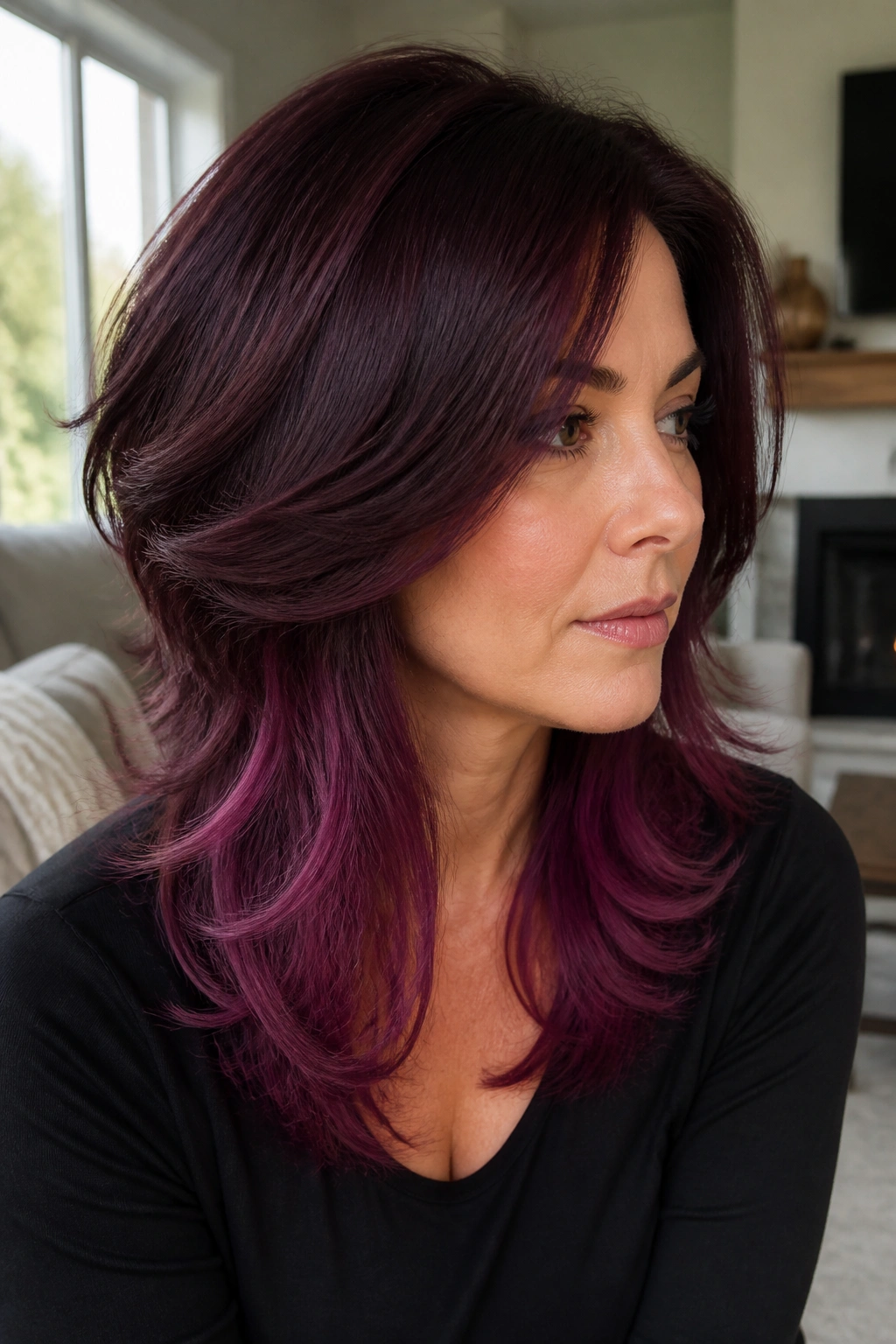
Cabernet purple has a depth that flatters round faces in a quiet, confident way. It sits between red wine and violet, so it gives warmth without losing that purple edge. On layered hair, it can look especially rich because the shade shifts as the layers move.
The best version keeps the top a touch deeper and lets the lower layers catch a little more light. That gives the hair a built-in gradient, which helps draw the eye downward. The layers should start below the cheekbone if possible. Too much volume near the sides can spoil the line.
This is a strong choice if you want something elegant rather than playful. It pairs well with blowouts, soft waves, and even a simple straight finish. The color does enough on its own. You don’t need to over-style it. And honestly, that’s one of the nicest things about cabernet purple: it looks expensive even when the hair is doing something very ordinary.
Final Thoughts
The best purple hair color ideas for round faces do one thing well: they guide the eye. Sometimes that means a darker root. Sometimes it means a side part, a longer layer, or a highlight that starts lower than you first planned.
Purple gives you room to be soft, bold, moody, or playful. The face shape just asks for a little strategy. Get the placement right and the color stops fighting your features and starts working with them. That’s the part worth paying attention to before you sit in the chair.
