



If your skin leans cool, rainbow hair can look crisp instead of chaotic. The trick is not more color; it’s the right color family. Blue, violet, icy pink, teal, and silver tend to sit more naturally beside cool undertones than orange-heavy brights, which can make the face look a little flushed or flat.
That does not mean you have to stay safe. Far from it. Cool skin gives you room to play with vivid color in a way that can look cleaner, sharper, and more expensive-looking than a random mix of loud shades ever will.
The catch is that rainbow hair is only flattering when the tones are chosen with some discipline. A lemony yellow streak can drift into costume territory fast, while a blue-based magenta, a periwinkle wash, or an aqua melt can feel intentional without trying too hard. That’s the lane I like best.
Hair texture, cut, and placement matter too. A long wave will show a soft melt differently than a blunt bob or a curly shag, and a tiny money piece around the face will do a different job than an all-over prism. Keep that in mind as you look through the ideas below. The right one is usually the one that echoes your undertone without copying it too literally.
1. Blueberry Sorbet Melt
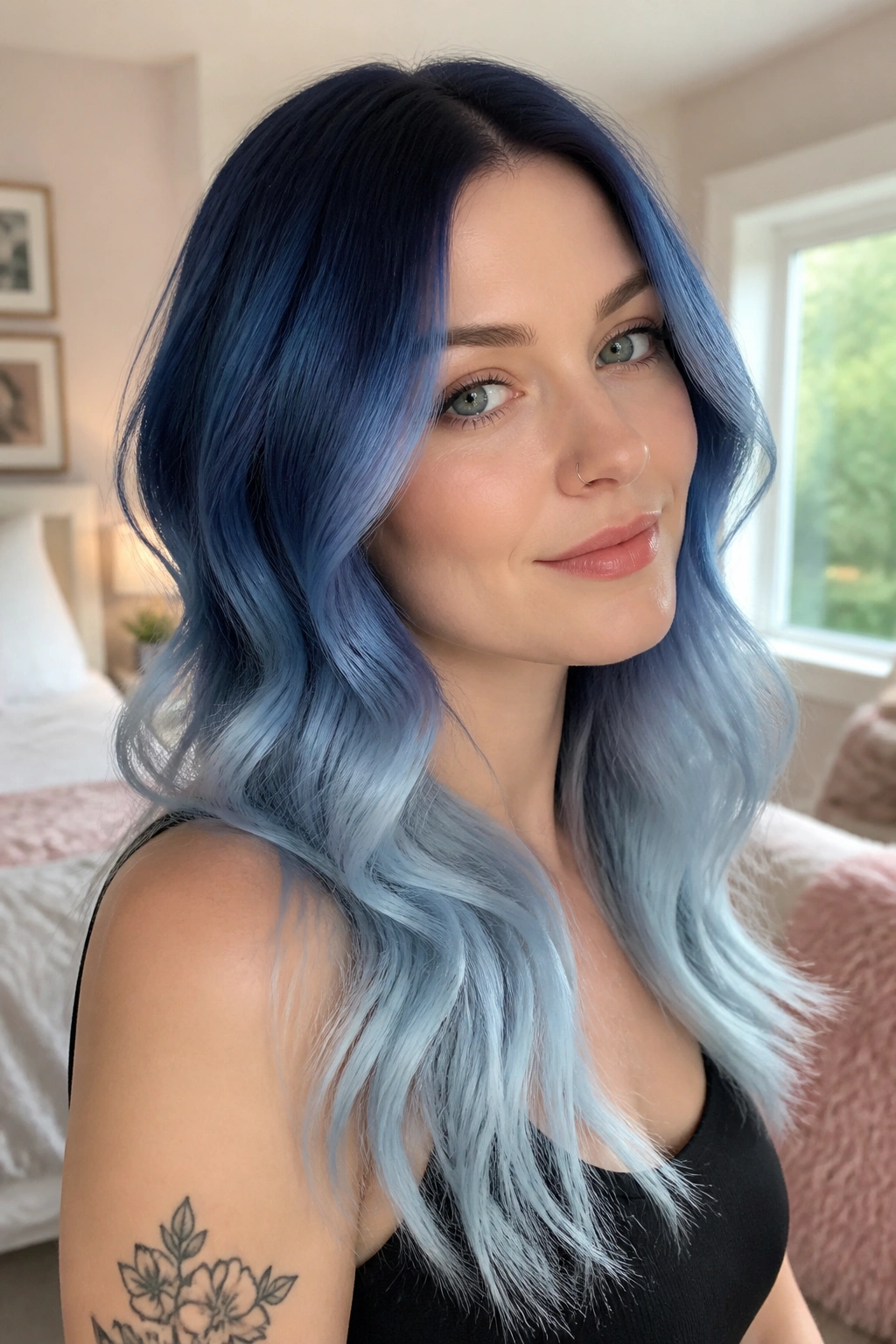
Blueberry Sorbet Melt is the look I reach for when someone wants rainbow hair that still feels tidy. Deep navy at the roots sliding into blueberry, then finally into pale icy blue, gives you that cool-to-cool fade that flatters fair, rosy, and porcelain skin without screaming for attention.
Why It Flatters Cool Skin
Blue and violet live in the same temperature family as cool undertones, so the hair and face don’t fight each other. The darker root shadow adds depth, and the lighter ends keep the whole thing from feeling heavy.
- Best on hair lifted to a pale blonde base, ideally level 9 or 10.
- Looks sharp on long layers, loose waves, and shoulder-length cuts.
- Fades soft, not muddy, if you keep the shampoo gentle and cool-toned.
- A blue-violet glaze every few weeks helps the melt stay clean.
My favorite detail: leave the last inch of the ends a touch darker than the rest. It keeps the fade from turning thin and washed out.
2. Frosted Orchid Fringe
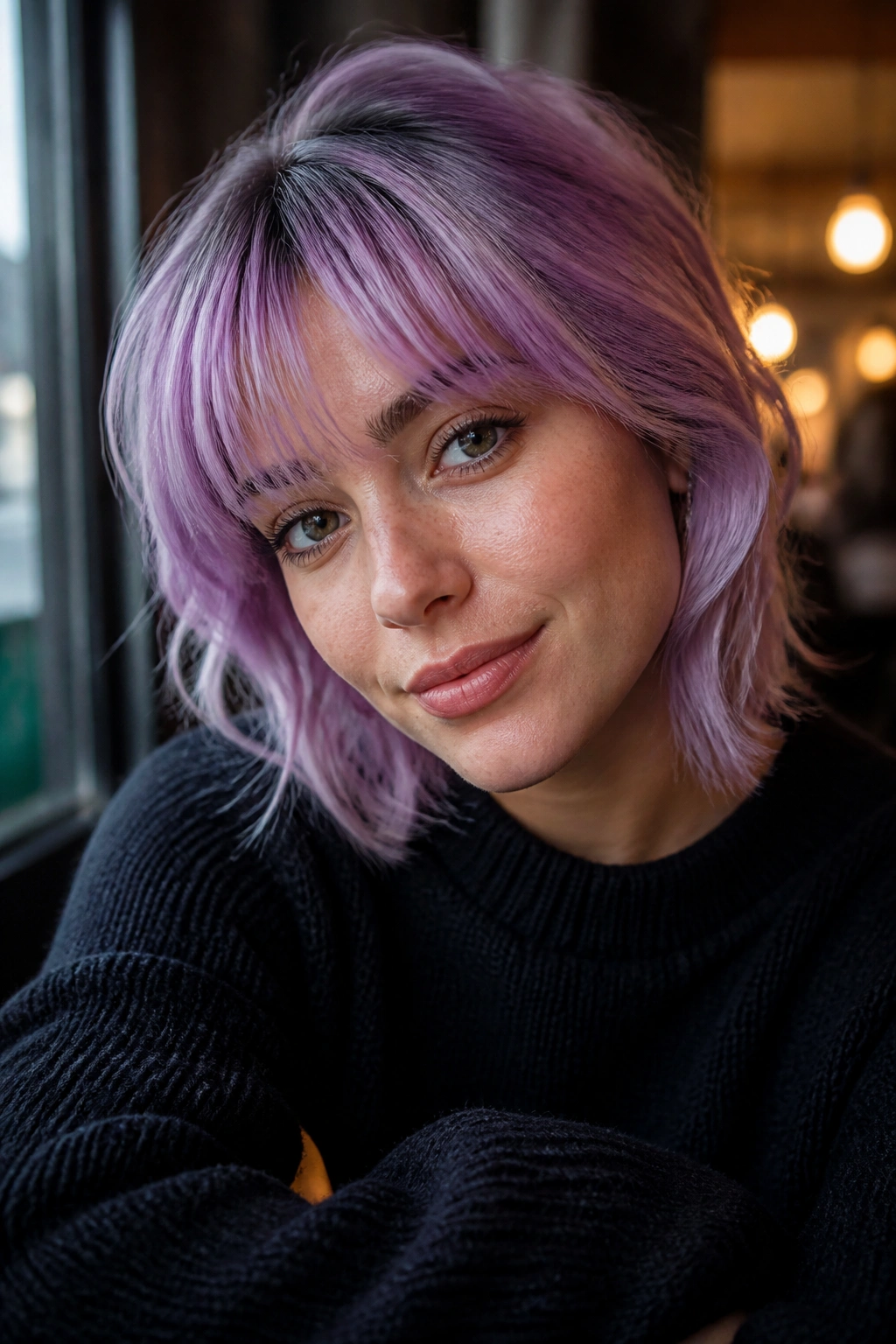
Why does orchid hair look so good on cool skin? Because it borrows from pink and violet at the same time. That tiny shift matters. A frosted orchid fringe frames the face with a pale lilac-pink veil, and that soft glow tends to brighten cheeks without making the whole head look neon.
The best version keeps the roots a shade deeper, almost like a whisper of mauve shadow, so the front panels don’t float away from the rest of the hair. I like this one on bangs, curtain pieces, or a narrow face-frame because the color sits close to the skin where it does its best work.
How to Wear It
Ask for the orchid to stay cool, not peachy. That means more lavender, less candy pink. On cooler skin, the result looks soft and fresh; on the wrong temperature, it can slide into bubblegum fast. Tiny difference. Huge payoff.
3. Electric Aqua Ends
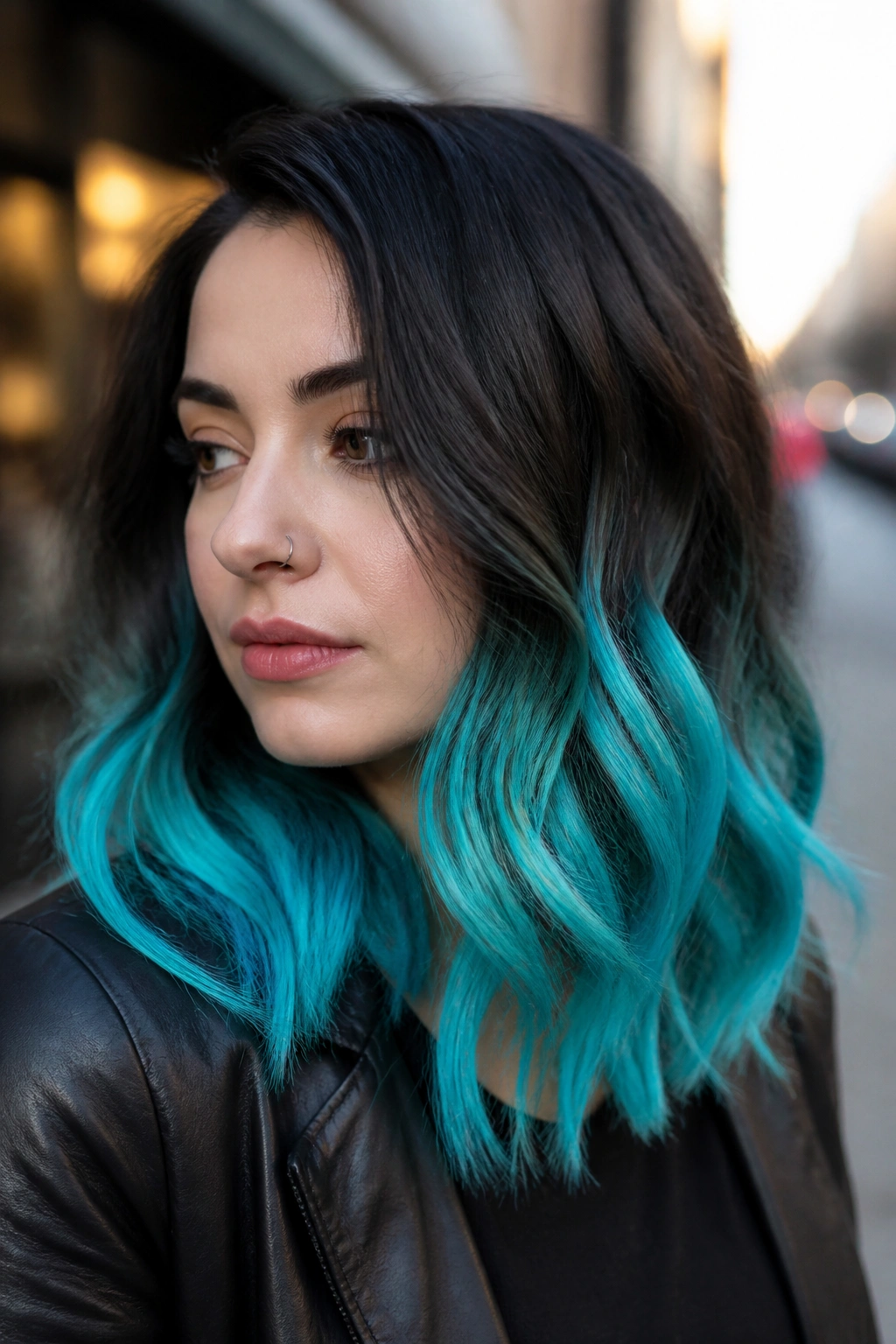
Picture a plain black jacket with electric aqua flashing out at the hem. That’s the energy here. Electric Aqua Ends are perfect if you want the rainbow effect to live mostly in motion, not all over the scalp, and cool skin usually likes that sharp blue-green hit more than a warm neon ever would.
This style works especially well on layered cuts, curled ends, and ponytails. The top can stay dark, which means less bleaching near the roots and a little less maintenance in the grow-out zone. The ends do the talking.
- Best placement: mid-length to ends, or just the bottom 3 to 5 inches.
- Best base: dark brunette, black, or level 7-8 blonde.
- Watch for fading into seafoam; that can happen fast on porous hair.
- A color-depositing conditioner with blue pigment keeps the aqua from going flat.
Tip: keep the curls loose. Tight ringlets can make the color read patchy instead of sleek.
4. Violet Smoke Bob
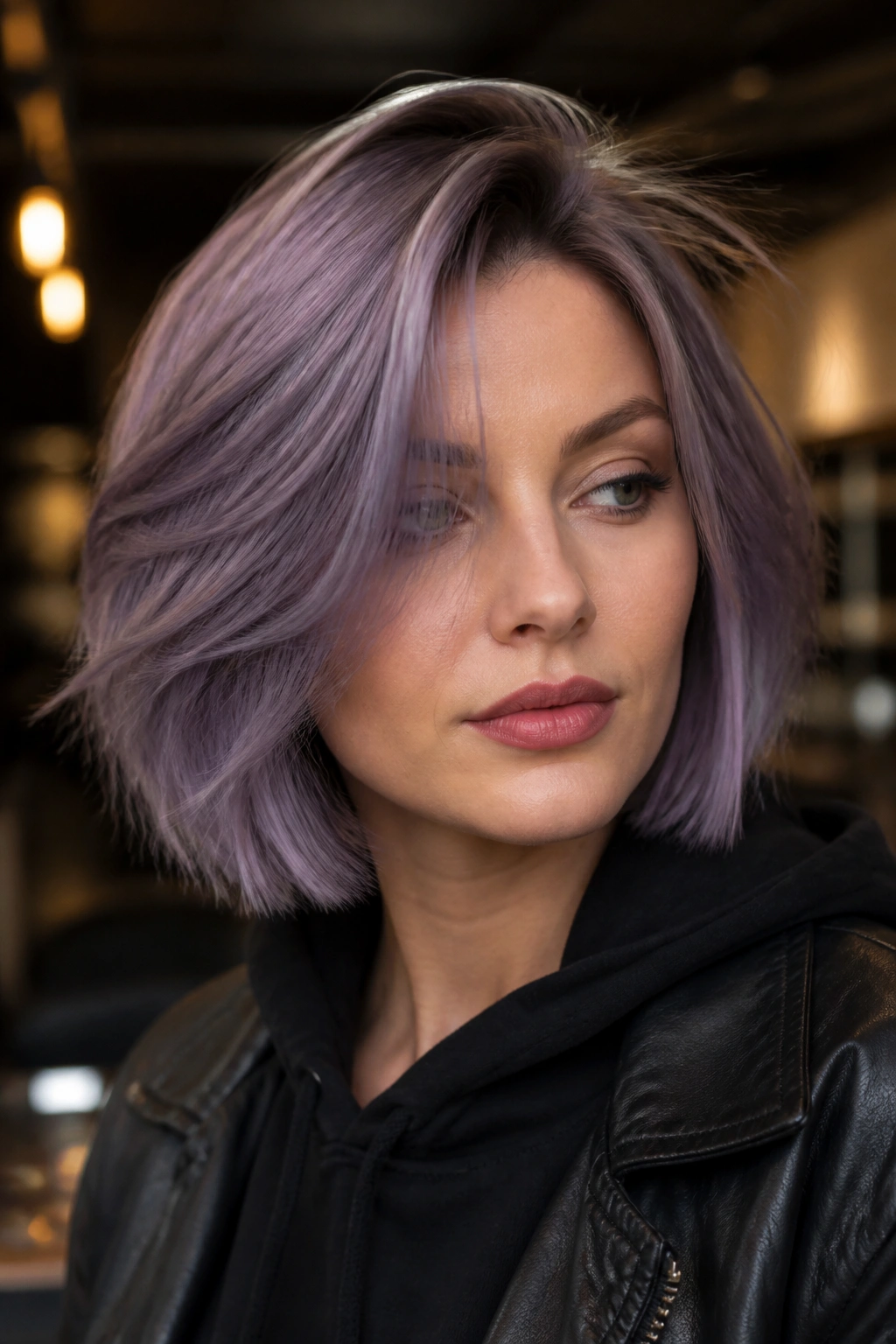
Violet Smoke Bob is for people who like their color with a little edge. Instead of a sugary pastel, you get smoky lilac, charcoal depth, and a hint of bruised plum that looks especially good next to cool skin because it echoes the cooler cast already in the face.
The bob cut helps. Short hair shows contrast fast, so the violet reads punchy without needing six different shades packed into every inch. If your hair is blunt or slightly textured, the smoke effect looks even better because the edges catch the light in small, uneven flashes.
I’d call this a smart rainbow choice, not a loud one. It gives you mood, shine, and movement, but it doesn’t demand that every strand shout at the same volume. That restraint is what keeps it chic.
5. Periwinkle Prism Layers
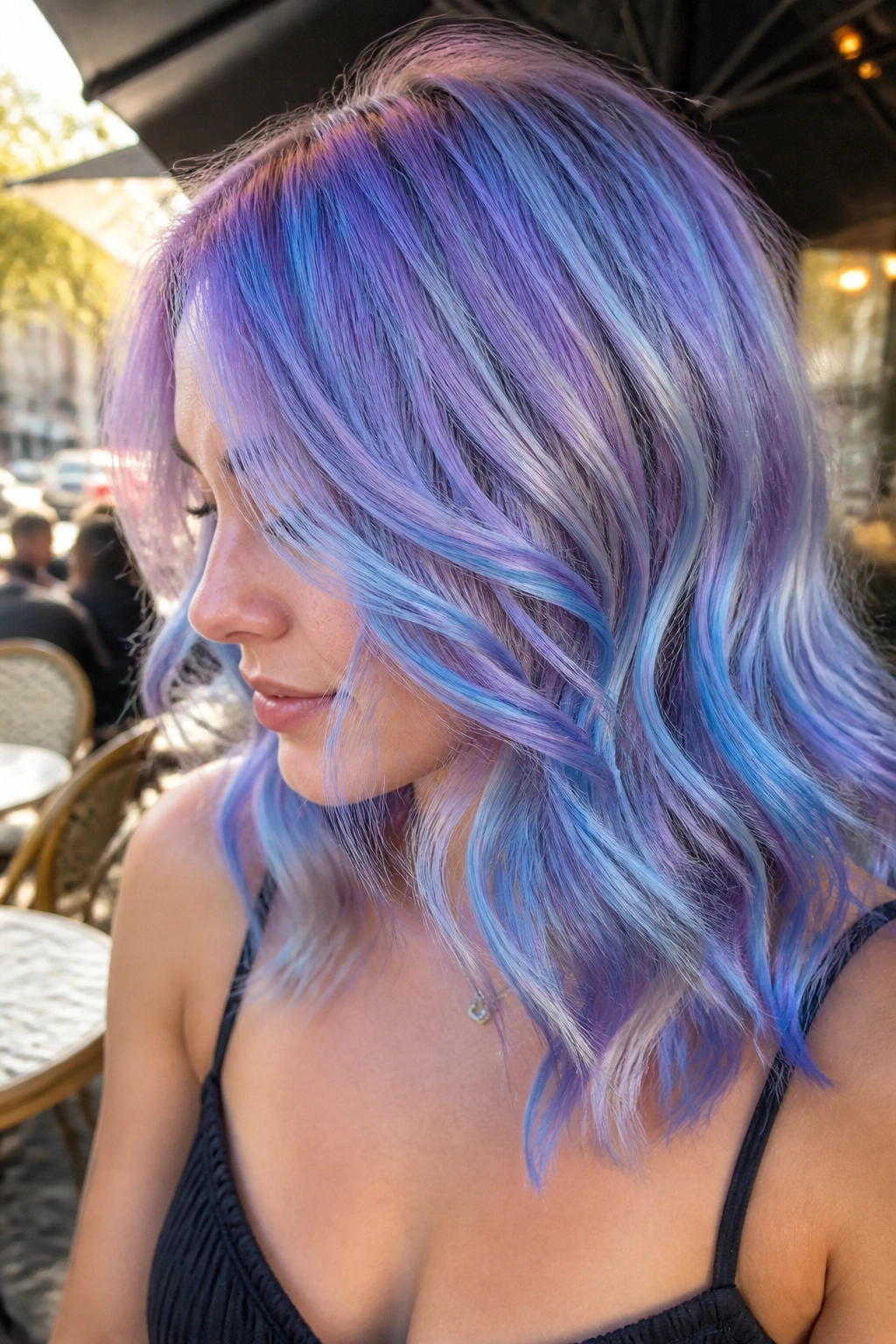
Periwinkle is one of those shades people overlook until they see it on hair that moves. Then they get it. A periwinkle prism uses pale blue, lilac, and silver-blue pieces layered through waves so the color shifts as you turn your head, which is exactly why it flatters cool skin so well.
The trick is to keep the blend soft, almost foggy at the edges. Harsh stripes can look busy on this palette. A better result comes from micro-sectioning and hand-painting, so the blue side of the spectrum stays dominant while the lavender only peeks through.
I like this look on medium-length cuts with bend rather than pin-straight hair. A little wave makes the periwinkle feel airy. Without movement, it can flatten out and lose that iridescent feel that makes the whole style special.
6. Teal-and-Plum Split Dye
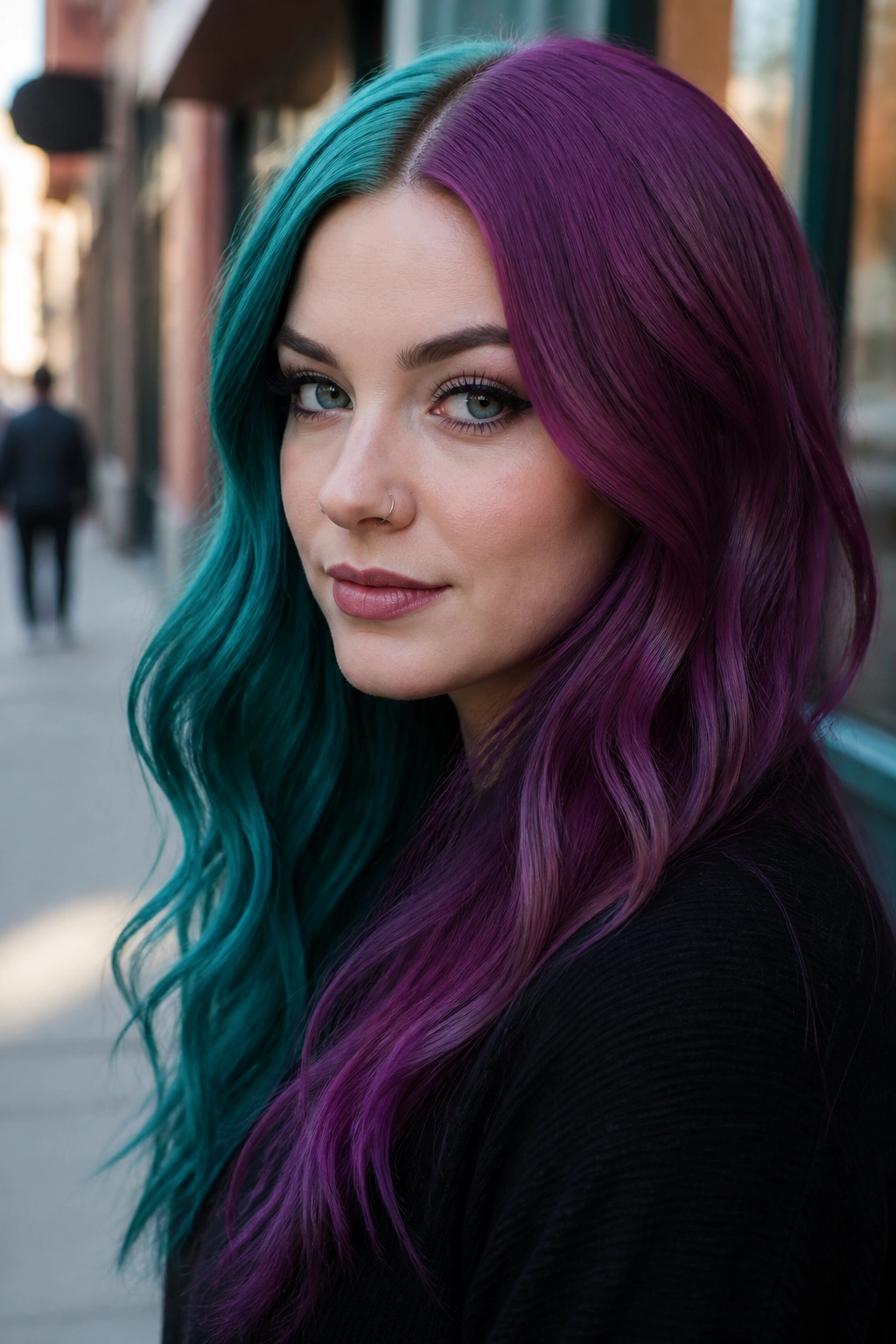
Teal-and-Plum Split Dye is loud on purpose, and that’s why it works. Both shades sit on the cool side of the wheel, so instead of clashing with cool skin, they frame it. The teal gives brightness near the face, while the plum adds weight and contrast.
This one is not shy. It suits someone who likes a crisp part line, a strong haircut, and color that keeps its shape even when the rest of the outfit is simple. I tend to like it best on medium to long hair where the split has enough room to read cleanly from top to bottom.
There’s a practical upside, too. If one side fades faster, the design still holds because the contrast is doing some of the heavy lifting. That makes it a little more forgiving than a perfectly blended pastel melt.
7. Pastel Rainbow Money Piece for Cool Skin Tones
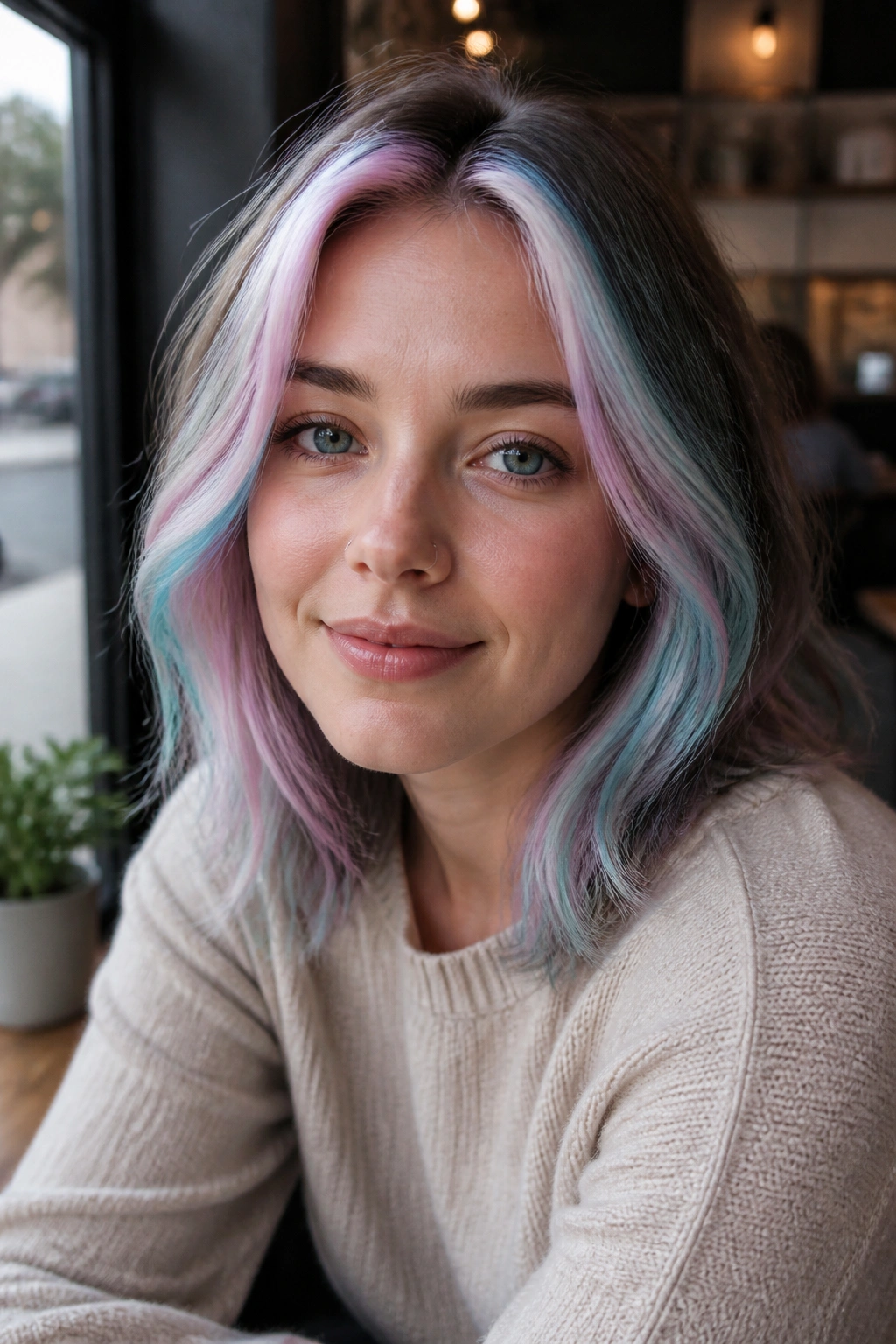
A pastel money piece is the easiest way to test rainbow hair without handing your whole head over to bleach and dye. Around the face, a ribbon of icy pink, soft lavender, pale aqua, and blue-white can light up cool skin in a way that feels playful but still wearable.
What Makes It Wearable
The money piece works because it keeps the brightest color where the eye goes first. That means you can use less of each shade and still get the full effect.
- Best on shoulder-length cuts, lobs, and long layers around the face.
- Ask for cool pastel tones, not warm peach or yellow.
- Keep the base soft and neutral so the front pieces stand out.
- Great choice if you want a lower-commitment rainbow look.
The nice part is that it grows out more gracefully than a full-head fantasy shade. Even when the root starts showing, the front pieces still frame the face and keep the style alive.
8. Holographic Silver Melt
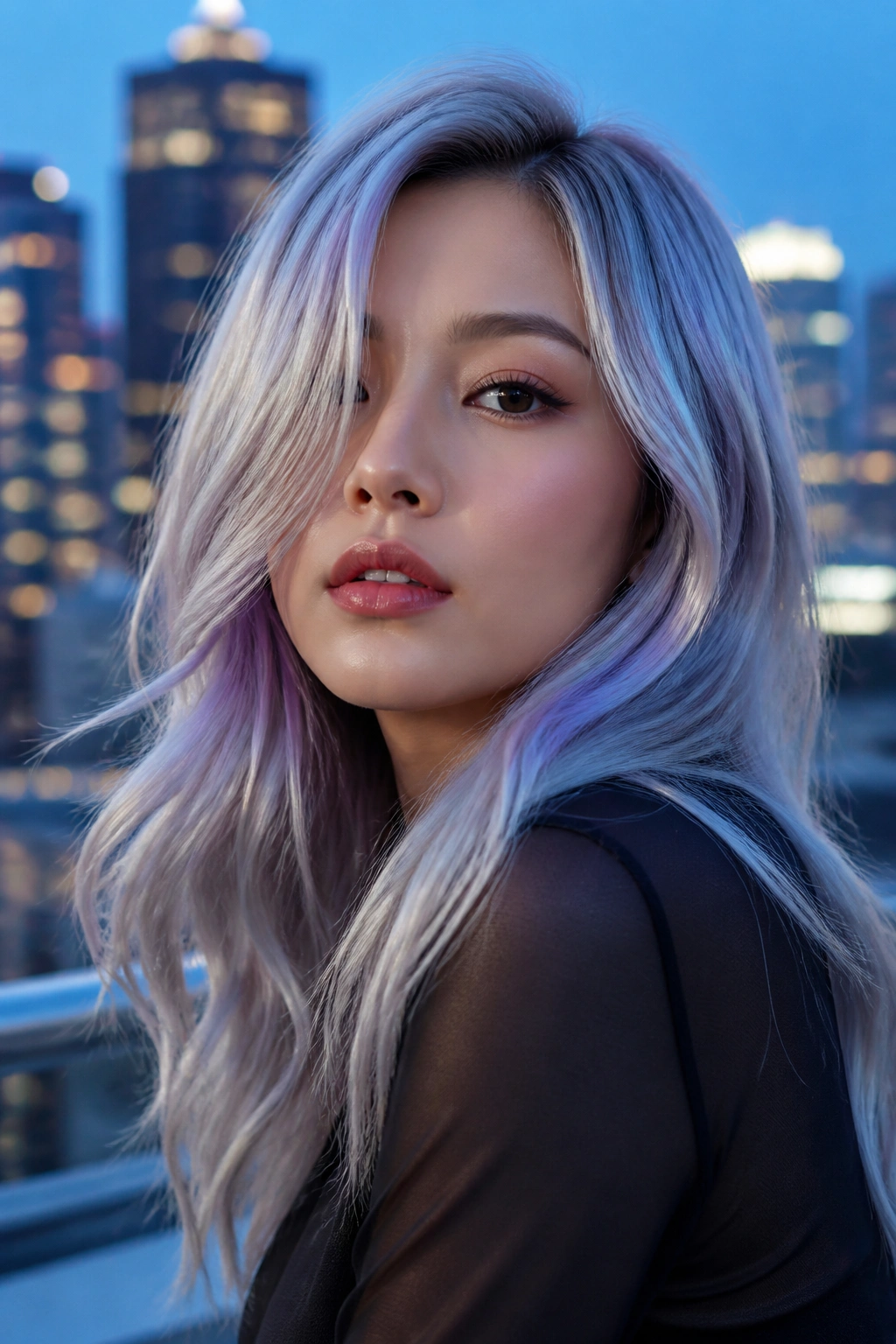
Can rainbow hair be almost white and still count? Absolutely. A holographic silver melt uses platinum, icy silver, blue-violet sheen, and tiny shifts of lilac so the hair catches different tones instead of sitting in one flat color. On cool skin, that pale metal finish can look cleaner than a saturated rainbow.
This is a higher-maintenance look, and I’d never pretend otherwise. The base has to be lifted far enough that the overlays stay visible, which usually means careful bleaching and a toner schedule that doesn’t get lazy. When it’s done well, though, it has this almost glassy effect that feels sharp and modern without needing neon.
How the Shine Layer Works
The shimmer comes from translucent color, not solid pigment. That’s why the result changes under indoor light, daylight, and flash. A little lilac near the crown, some blue at the ends, and a cool silver glaze over the whole thing can be enough. More than that can start to look muddy.
9. Indigo-to-Rose Quartz Streaks
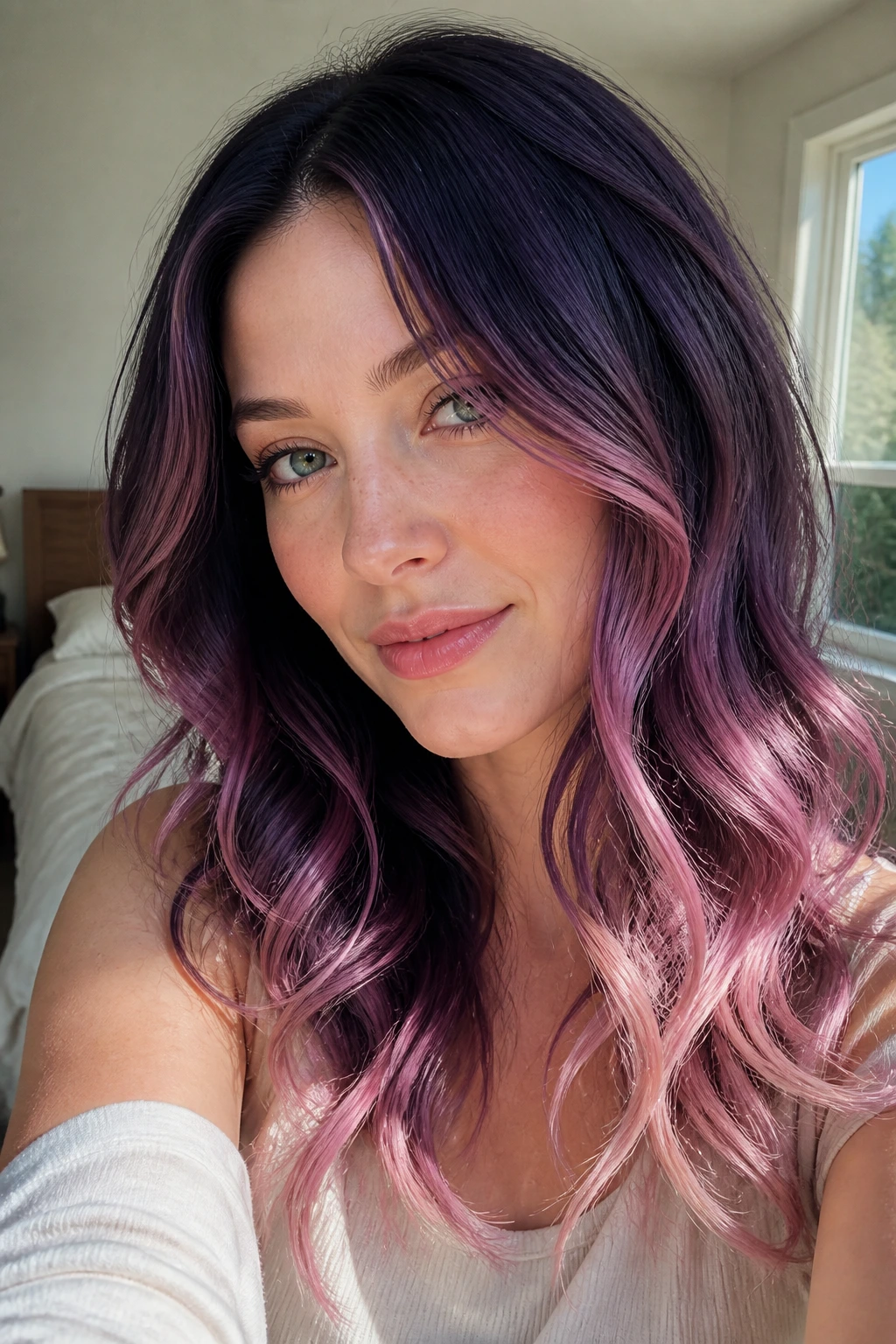
A friend once described this kind of color as “night turning into dawn,” and that’s not far off. Indigo-to-Rose Quartz Streaks use a deep blue-violet base, then thread in smoky rose through the mid-lengths before finishing with a soft blush end that still stays on the cool side of pink.
It sounds delicate, but it has teeth. The dark indigo keeps the style grounded, while the rose quartz gives it a little lift around the face and through the curls. Cool skin usually likes that mix because the pink is blue-leaning, not coral.
- Strongest on waves, curls, or layered blowouts.
- Best when the rose is muted, almost dusty.
- Needs a toner touch-up if the ends start drifting peach.
- Looks especially good with silver jewelry and cool-toned makeup.
The fade on this one can be lovely if you let it soften. When the rose blurs into mauve, it still feels intentional.
10. Arctic Aurora Curls
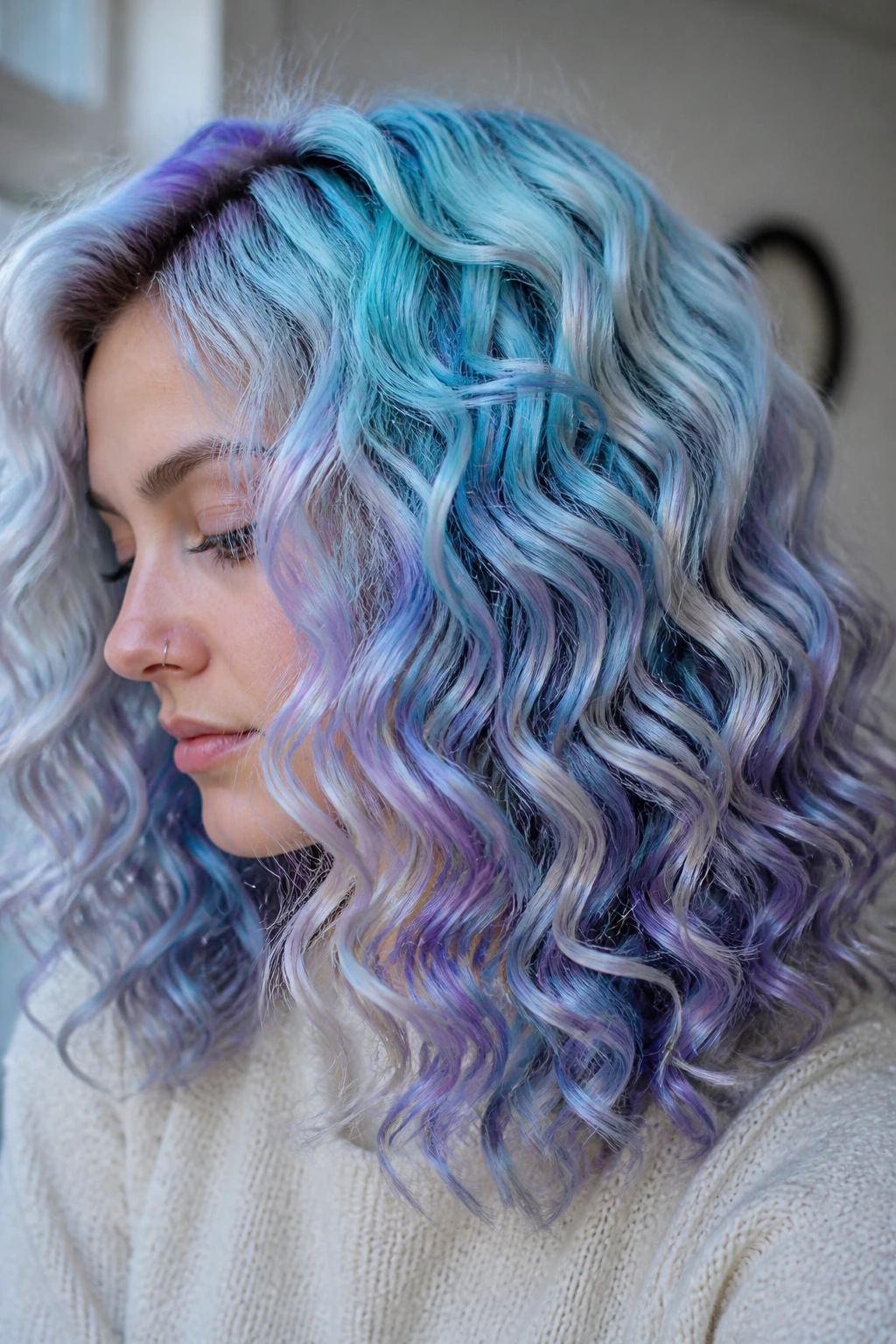
Arctic Aurora Curls are one of my favorites because curly hair does half the work for you. The bend in the curl catches blue, violet, aqua, and silver in separate little flashes, which means the whole look feels more alive than a flat panel of color ever could.
The palette should stay icy. Think northern light, not tropical water. That means blue-green instead of lime, violet instead of magenta-red, and a touch of silver to keep everything looking crisp. Cool skin tends to love that pale, frosty mix because it mirrors the cool cast in the complexion.
This one also gives you room to hide a few softer shades under the top layer. On dense curls, that’s smart. You get more color than you see at first glance, and the surprise of it is part of the fun.
11. Neon Lagoon Undercut
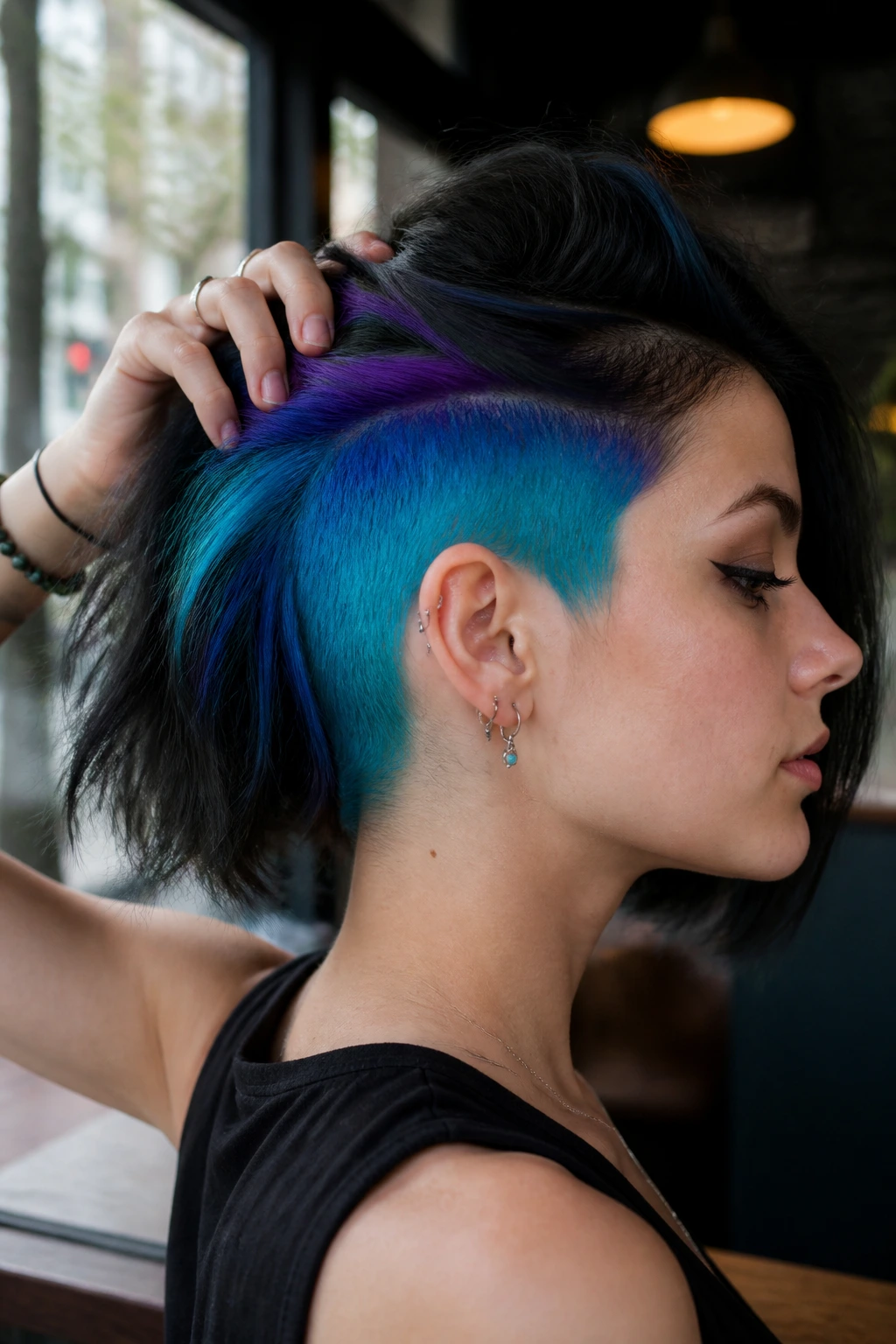
If you want color without full exposure, this is the practical one. A Neon Lagoon Undercut hides electric teal, blue, and violet beneath a longer top layer, so the color shows when hair lifts, sways, or gets pulled into a bun.
That makes it perfect for someone who needs a conservative surface but wants a real hit of rainbow underneath. Cool skin still gets the benefit because the visible shades are blue-based and clean, not muddy or warm.
I like this look because it behaves. It’s bold when you want it to be and invisible when you don’t. Also, the undercut area usually takes color well, since the hair is short and easy to saturate evenly. Less fuss. Better payoff.
12. Lavender Roots to Ice Blonde Ends
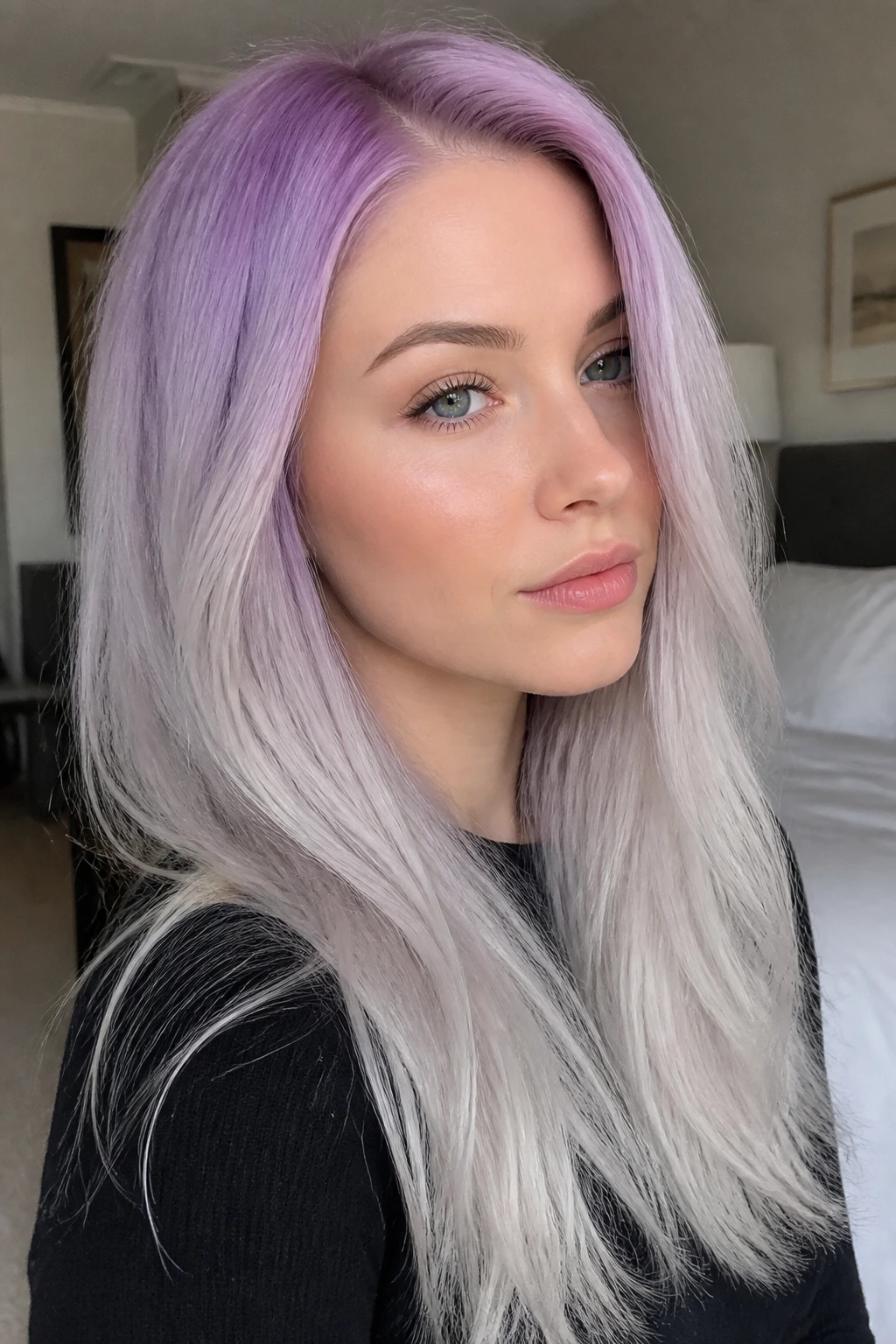
Lavender roots sound strange until you see them soften into ice blonde ends. Then the whole thing makes sense. The root shadow breaks up grow-out, and the cool lavender tone keeps the top from looking flat against pale skin.
This is one of the better choices if you hate obvious root lines. The darker lavender near the scalp gives a soft blur, while the icy ends bring the brightness. On cool skin, that top-to-bottom shift tends to look airy rather than harsh.
I’d steer this toward straight or softly waved hair, because the gradient reads most clearly when the light can travel down the strand. Curly hair can wear it too, but the color jump becomes more textured and less smooth. That isn’t bad, just different.
13. Jewel-Tone Rainbow Pixie
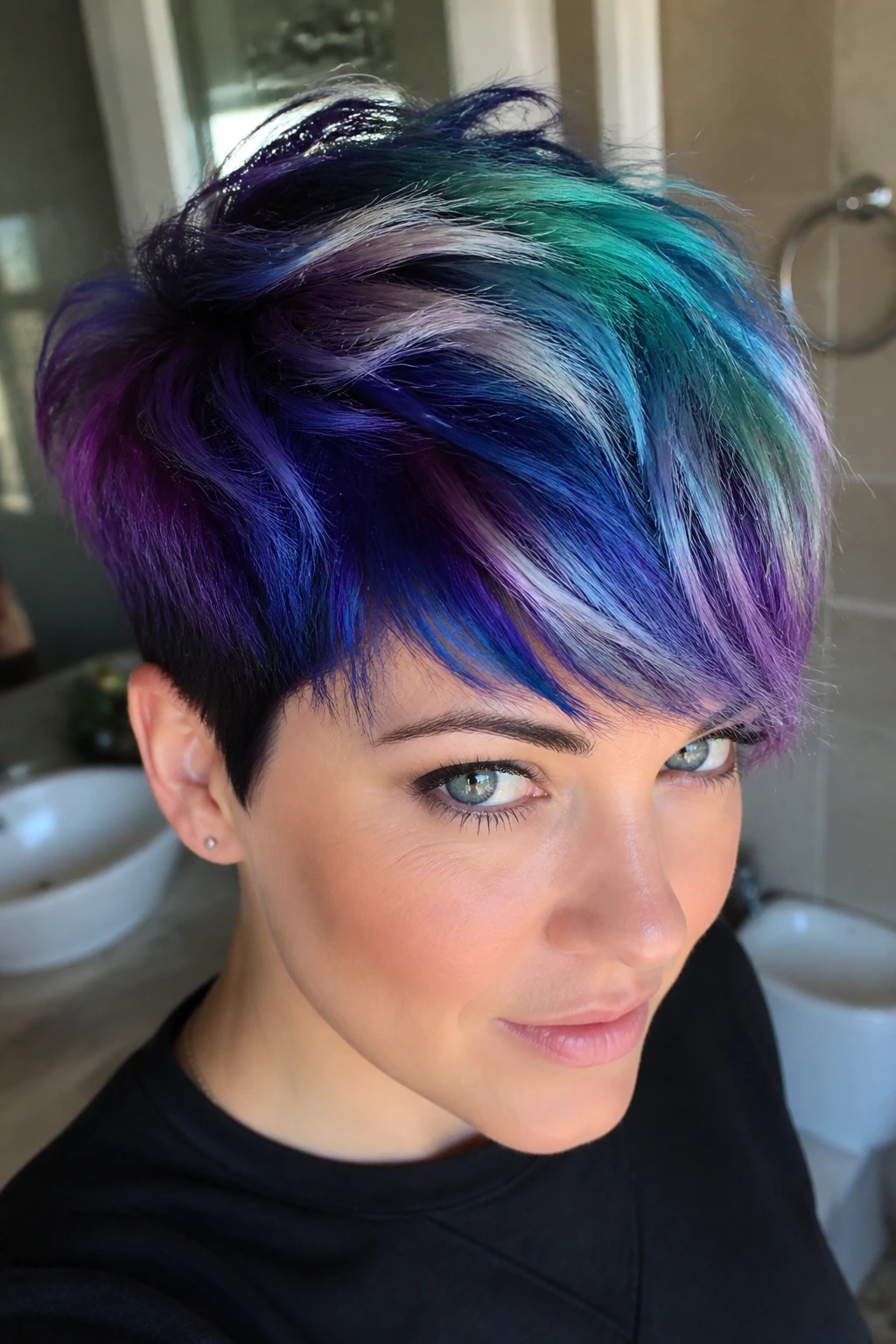
Short hair deserves more credit here. A Jewel-Tone Rainbow Pixie can hold sapphire, amethyst, emerald-teal, and a touch of silver in tiny cropped sections without turning messy, and the sharpness of a pixie suits cool skin better than people expect.
Why Short Hair Loves This Look
A pixie gives each color its own little square of attention. That makes the shades look deliberate instead of crowded.
- Best with piecey texture on top.
- Keep the sides darker if you want the crown to pop.
- Use blue-based green, not yellow-green.
- A gloss every few washes helps the jewel tones stay clear.
The thing I like most is the flexibility. You can lean more blue one week, more violet the next, and the cut still holds the shape. Short hair has a way of making bold color feel sharper and less precious.
14. Prism Ribbon Braids for Cool Skin Tones
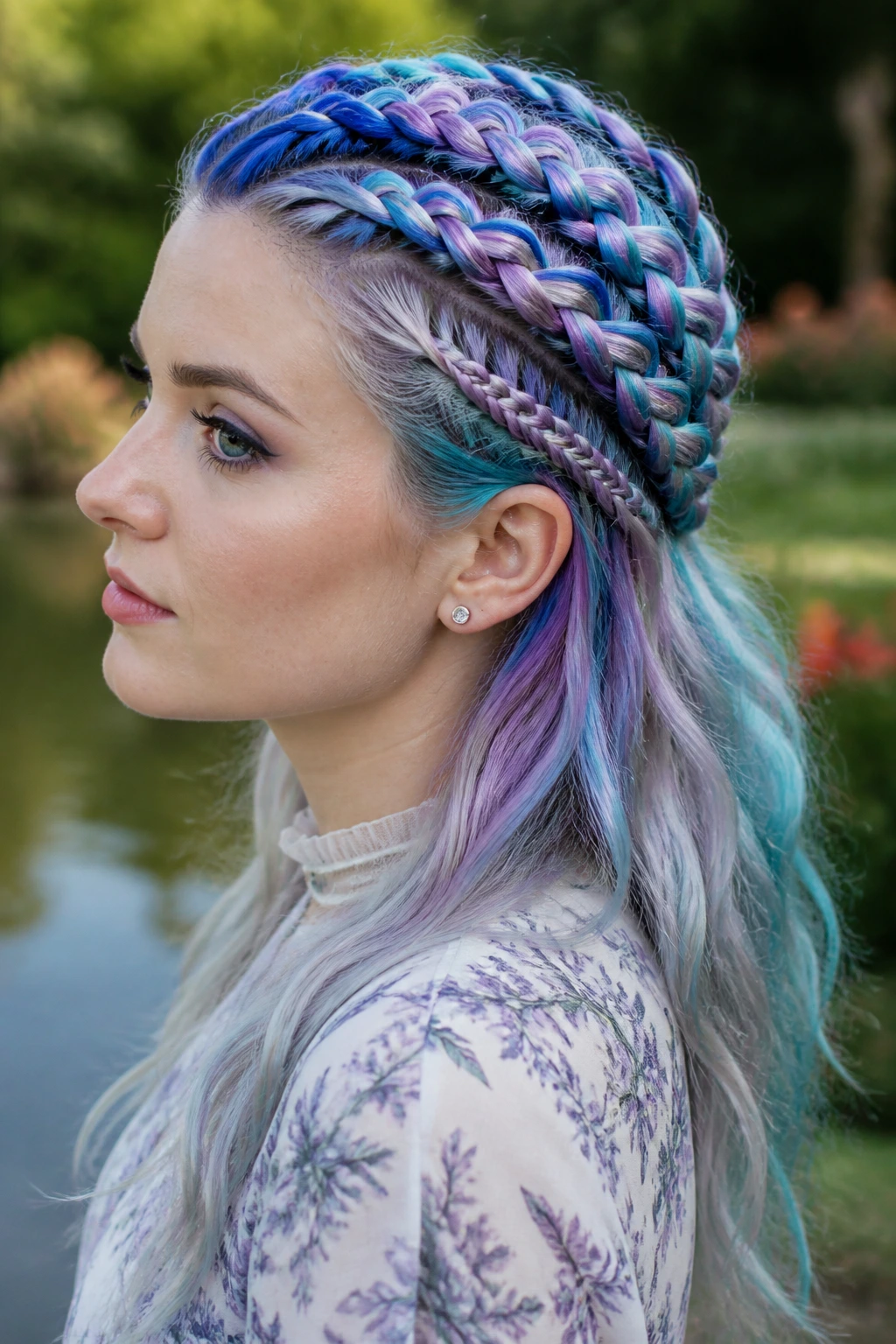
Braids change the game because they compress color into narrow, repeated lines. Prism Ribbon Braids weave cobalt, lilac, silver, and aqua through plaits so each section shows a different slice of the rainbow, and that can flatter cool skin beautifully when the tones stay crisp.
What I like here is the movement. Loose braids, boxer braids, or a single chunky plait all show the color in a different rhythm. The style feels especially good if you want your rainbow to show only in certain moments instead of sitting out in the open all the time.
Best Braid Patterns
Dutch braids make the colors stand out most because the braid sits on top of the head. A fishtail gives a finer, more woven effect. Rope twists can blur the shades together a bit more, which is useful if you want the palette to feel softer and less graphic.
15. Sea Glass Curtain Bangs
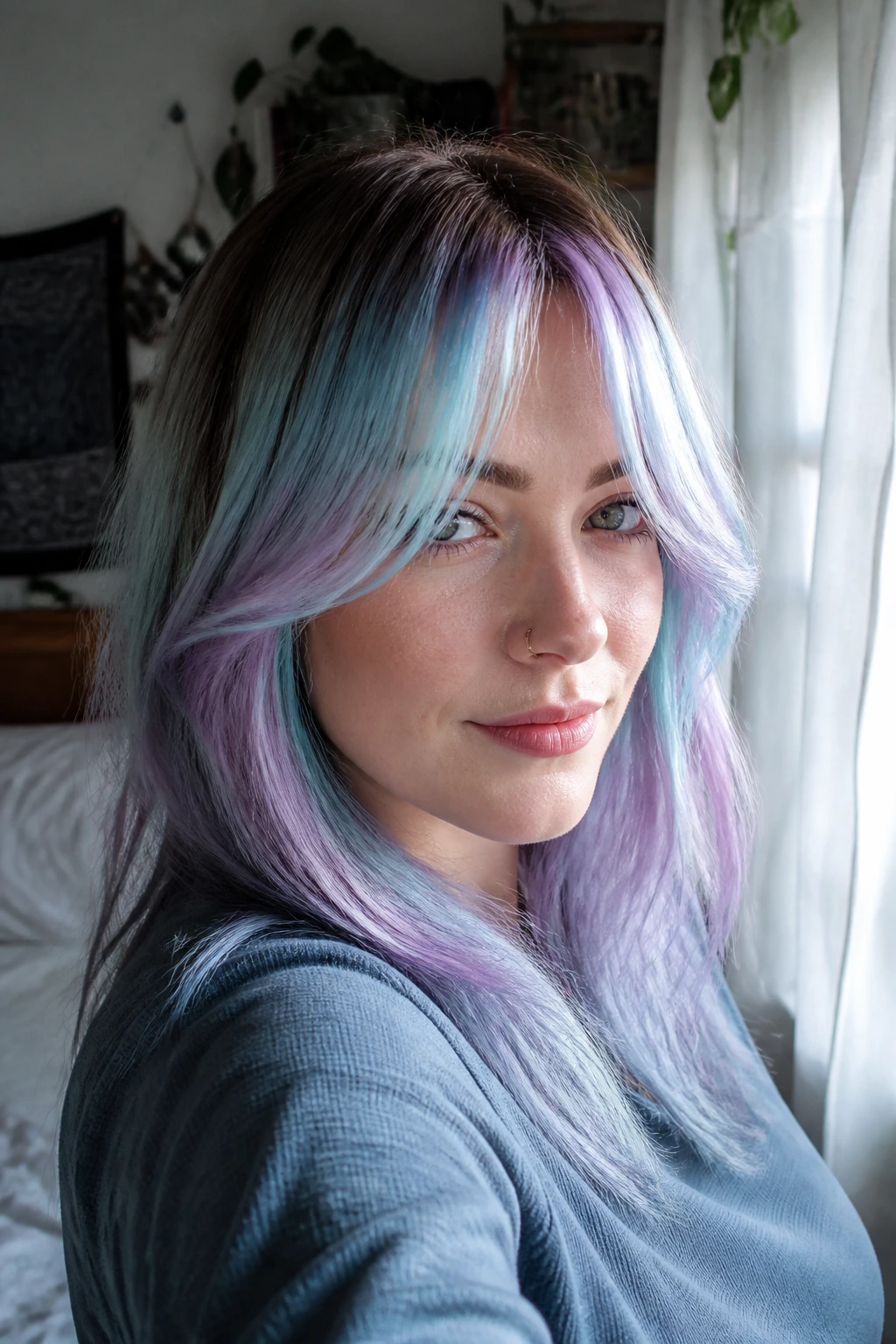
Sea Glass Curtain Bangs are the kind of detail that makes people lean in. A narrow sweep of pale aqua, frosted blue, and cool lavender around the front of the face can change the whole feel of a haircut without requiring a full rainbow commitment.
This one is excellent if you like your color to be visible in motion but not loud in every mirror. Curtain bangs already frame the face, so the shade placement does half the styling job for you. On cool skin, the sea-glass palette can make the complexion look fresher and the eyes a little brighter.
- Best on layered cuts with soft face framing.
- Keep the aqua pale so it doesn’t drift green.
- Works well with a neutral base or a soft icy blonde.
- Needs careful heat styling, because hot tools can dull the sheen fast.
The whole thing feels light, almost washed by ocean spray. That’s the point.
16. Midnight Unicorn Ombré
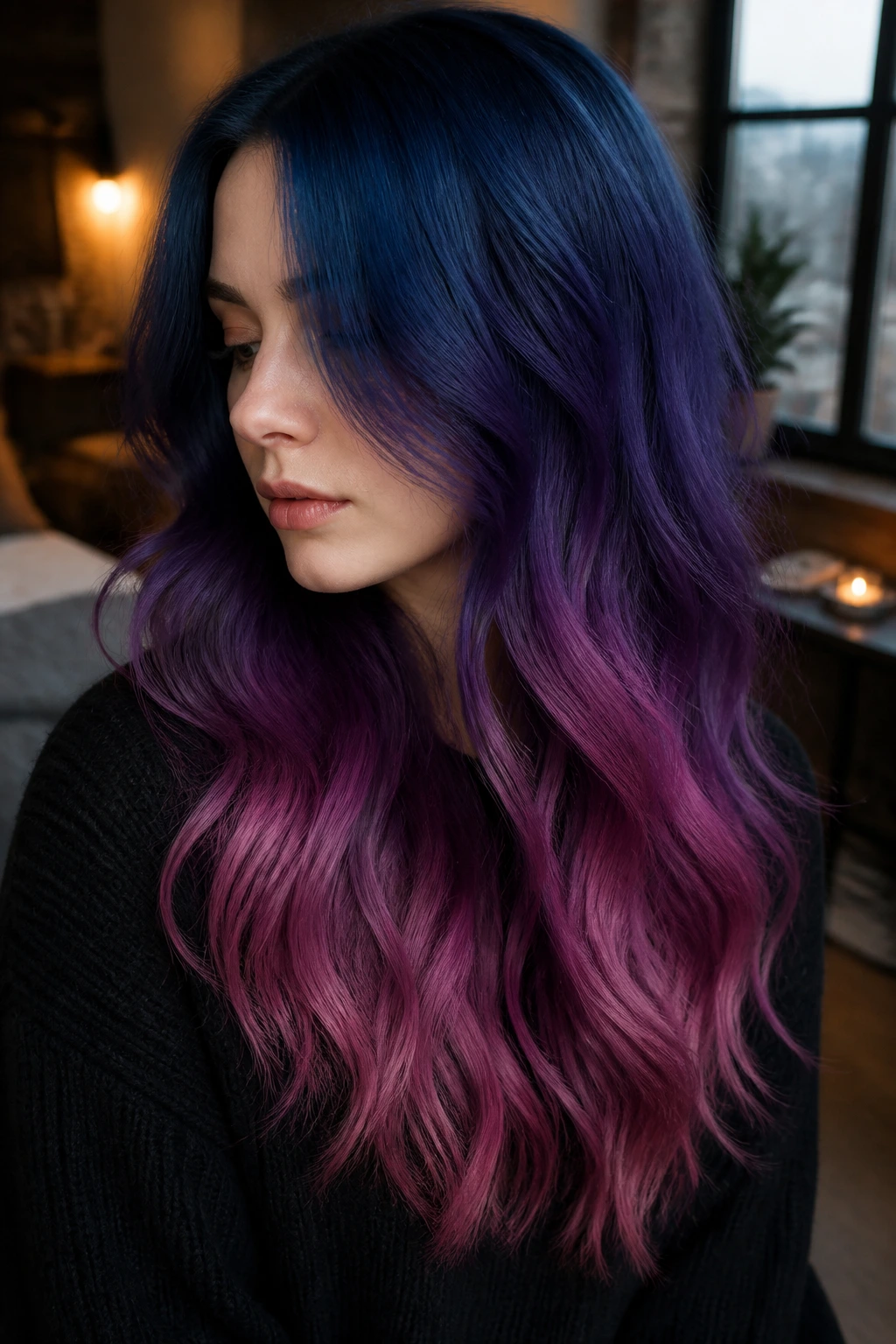
Midnight Unicorn Ombré starts dark and stays moody. Navy at the top, then violet, then a smoky rose or mauve through the ends gives you rainbow energy without the cotton-candy sweetness that can fight cool skin.
I’m fond of this one because it has range. Under indoor light, it reads deep and almost velvety. In daylight, the violet and rose shift enough to show the color story without turning the hair into a neon billboard. That kind of flexibility is worth a lot.
It’s also forgiving on longer hair. The ombré has room to stretch, which keeps the fade looking soft instead of chopped up. If you like a darker wardrobe, this is one of the easiest vivid looks to live with.
17. Frosted Cherry, Blueberry, and Plum Panels
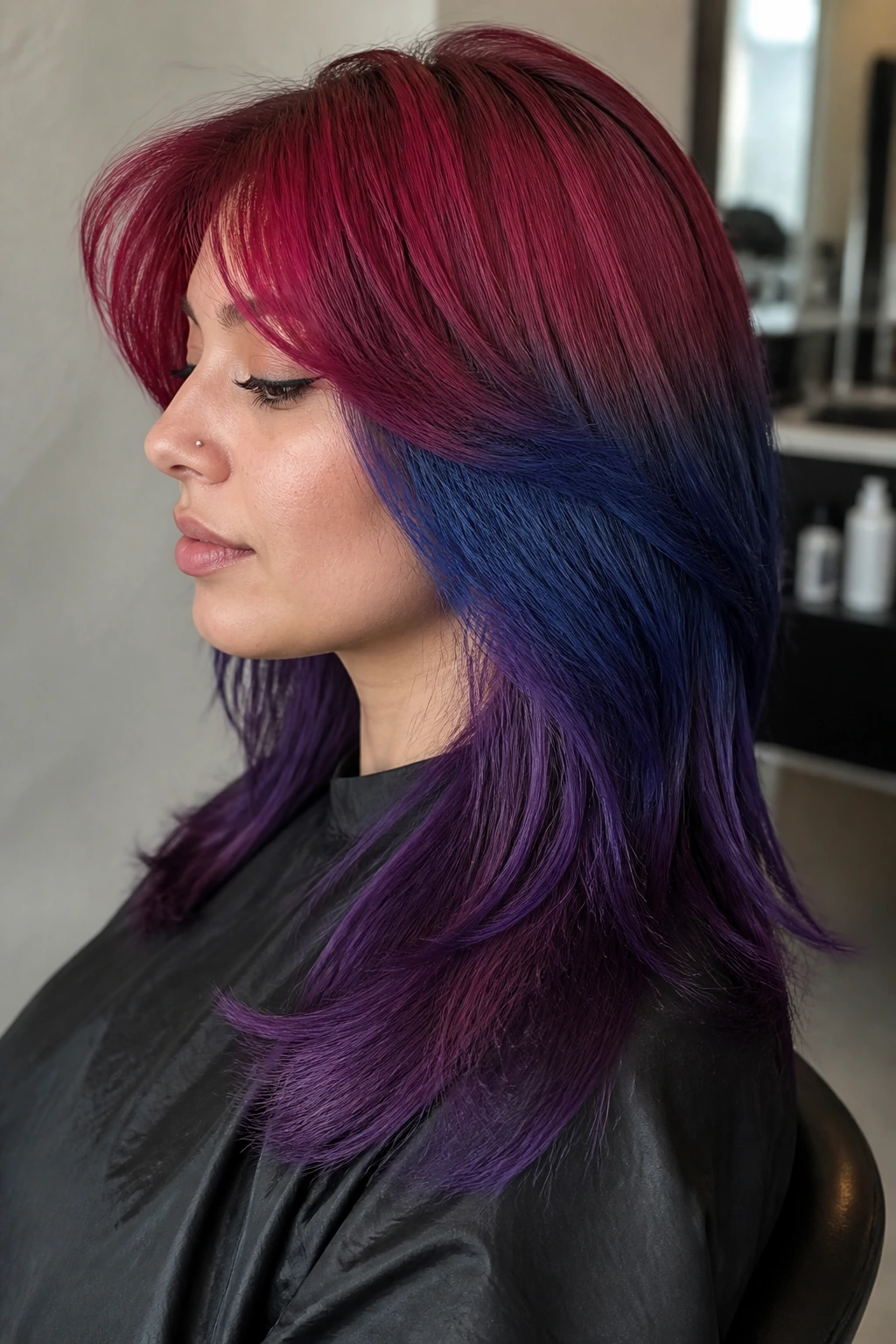
Frosted Cherry, Blueberry, and Plum Panels prove that red can work on cool skin if it stays blue-based. The cherry here is not orange-red. It’s a cool, winey red that sits comfortably beside blueberry blue and deep plum, which keeps the whole palette in one family.
This is a strong choice for layered cuts or heavy texture because the color blocks can sit one on top of another without looking flat. The panels create shape. You can see where one shade ends and another begins, which makes the style read artistic instead of random.
I’d skip this if you want a soft blend. The point is contrast. But if you like a little drama and you want rainbow color that still feels flattering rather than noisy, this is one of the better moves.
18. Opal Mermaid Waves
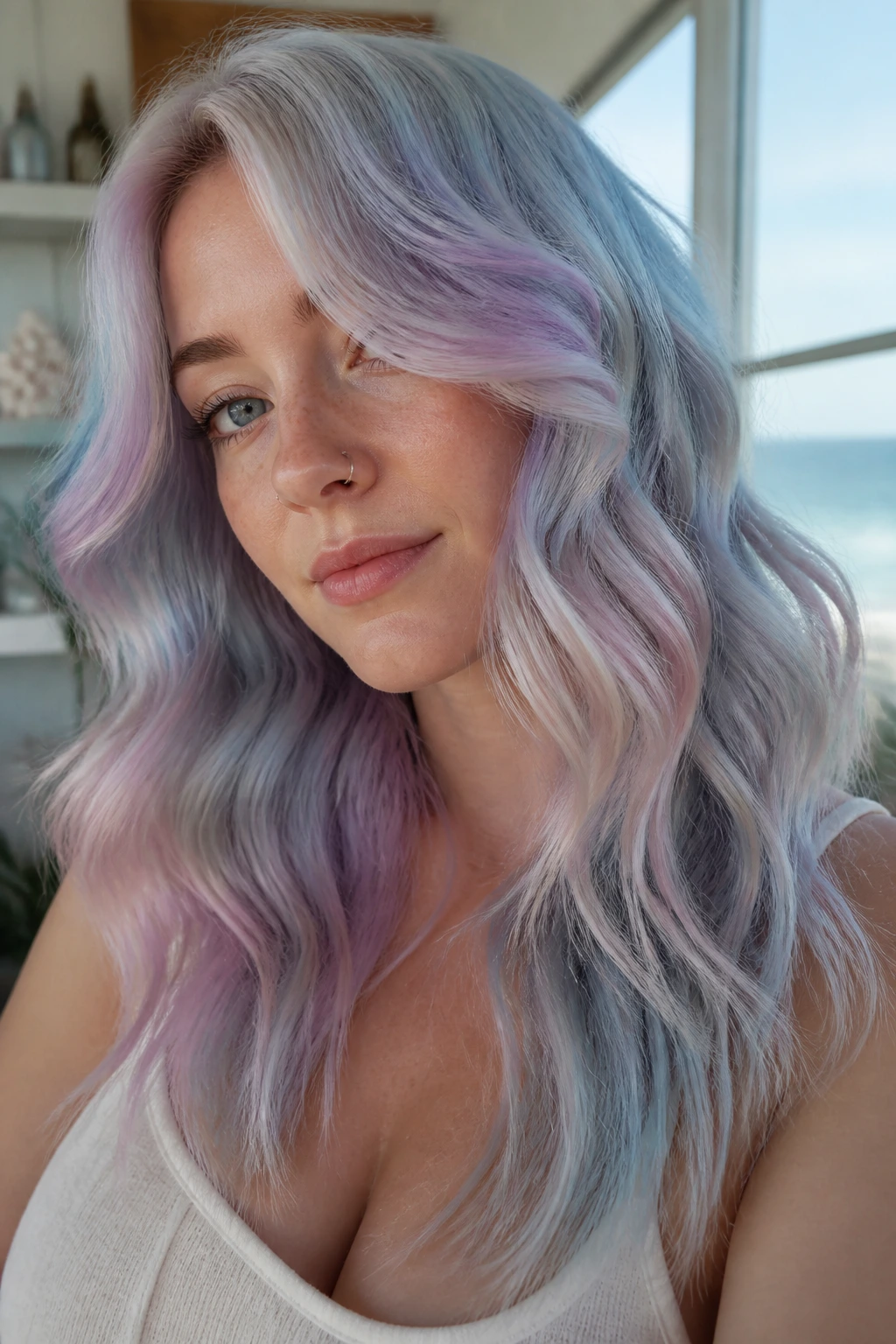
Opal Mermaid Waves are softer than the name sounds. A pearly base with sheer layers of blue, lilac, pale pink, and silver can look almost watercolor-like on cool skin, which is why this version keeps showing up in the salon chair for people who want color with some restraint.
The beauty of it is the translucence. You’re not painting solid blocks. You’re glazing color over a light base so the strands still look like hair, not plastic. That matters a lot. I think a lot of vivid looks fail because they forget the hair needs to move and breathe.
This style works best on long, loose waves where the light can slide over each shade. On pin-straight hair, the opal effect can flatten a bit. Still lovely, just less dimensional.
19. Chrome Rainbow Crop
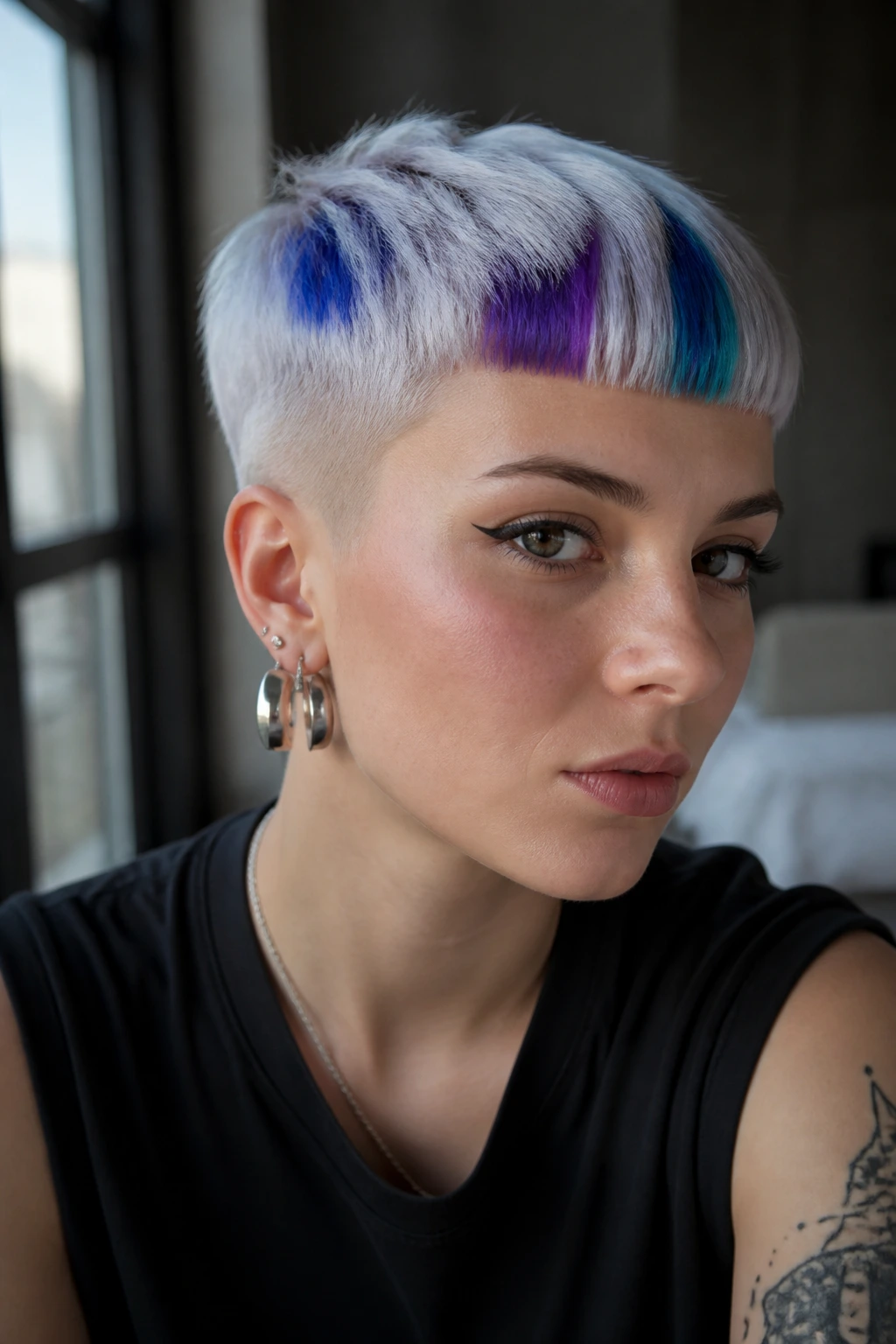
Can a short crop hold a full rainbow story? Yes, if the color is sliced with purpose. Chrome Rainbow Crop uses a silver or pale gray base with sharp hits of cobalt, violet, and aqua placed in small sections so the cut stays clean and the colors don’t blur into one heavy block.
Why It Works on Short Hair
Shorter cuts love contrast because there’s no wasted length. Every panel shows up fast.
- Best on blunt crops, bixies, and close shags.
- Keep the silver cool, not buttery.
- Blue and violet should do most of the visual work.
- A tiny amount of root shadow keeps the style from looking flat.
This is a little cooler and harder-edged than some of the softer rainbow looks here. That’s not a drawback. If your wardrobe leans black, gray, denim, or white, the chrome base can make the color feel intentional rather than decorative.
20. Moonlit Spectrum Peekaboo
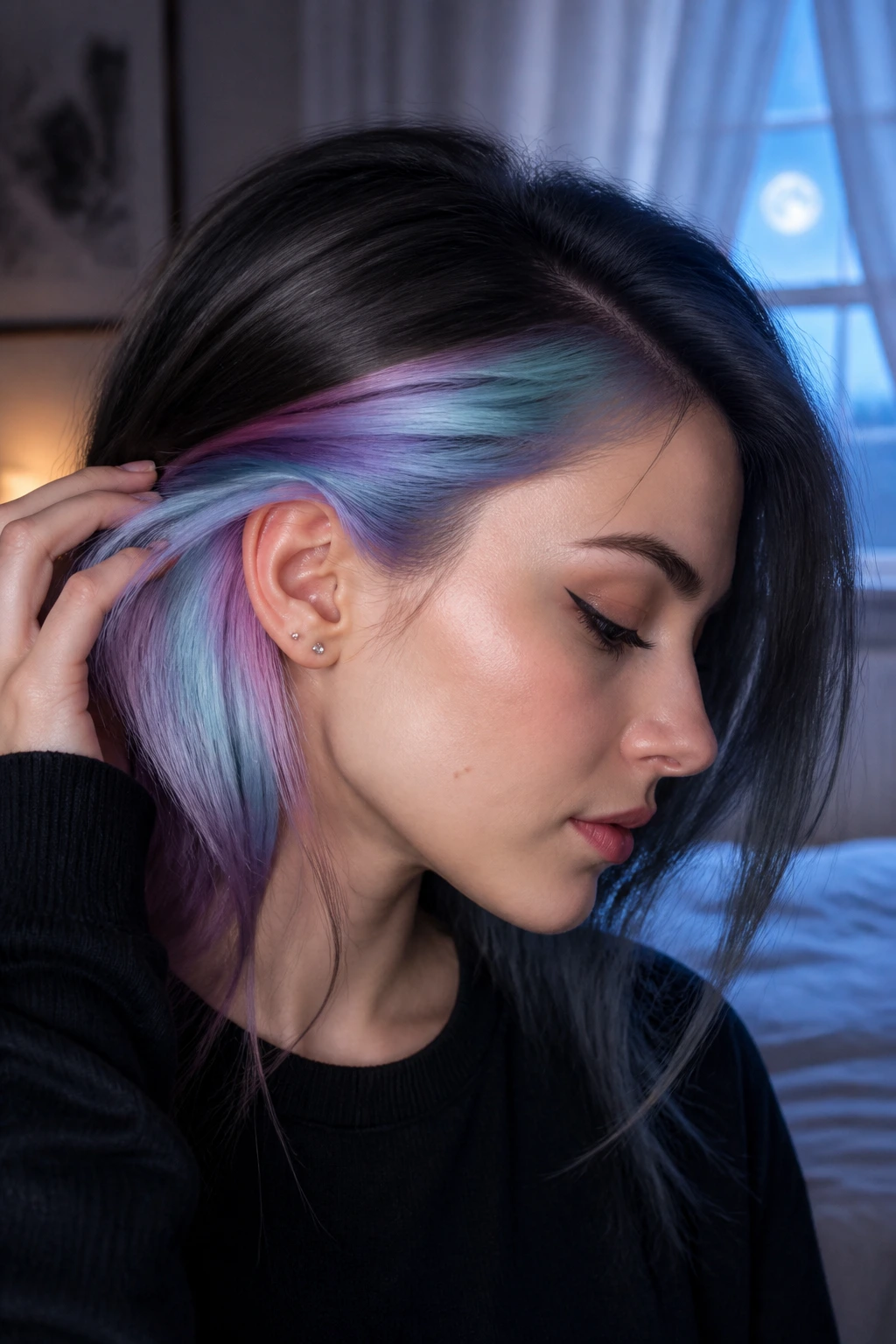
Moonlit Spectrum Peekaboo is the quiet one, which makes it a smart ending to the list. The rainbow sits underneath the top layer, hidden until you tuck hair behind the ear, throw it up, or catch a breeze. The palette stays moonlit: icy blue, pale violet, silver, and a touch of cool pink.
It’s one of the easiest ways to wear rainbow hair if you need a lower-profile approach. The surface hair can stay natural or softly toned, while the hidden layers carry the fun. Cool skin still gets the flattering shades when the color shows, but you control how much of it the world sees.
Where to Place It
Ask for the peekaboo section to start around the temple or just under the crown, depending on how much movement you want. More surface means more flash. Deeper placement gives you a surprise reveal that feels sharper and a little more private. Either way, it’s a good option if you want color that feels like a secret.
Final Thoughts
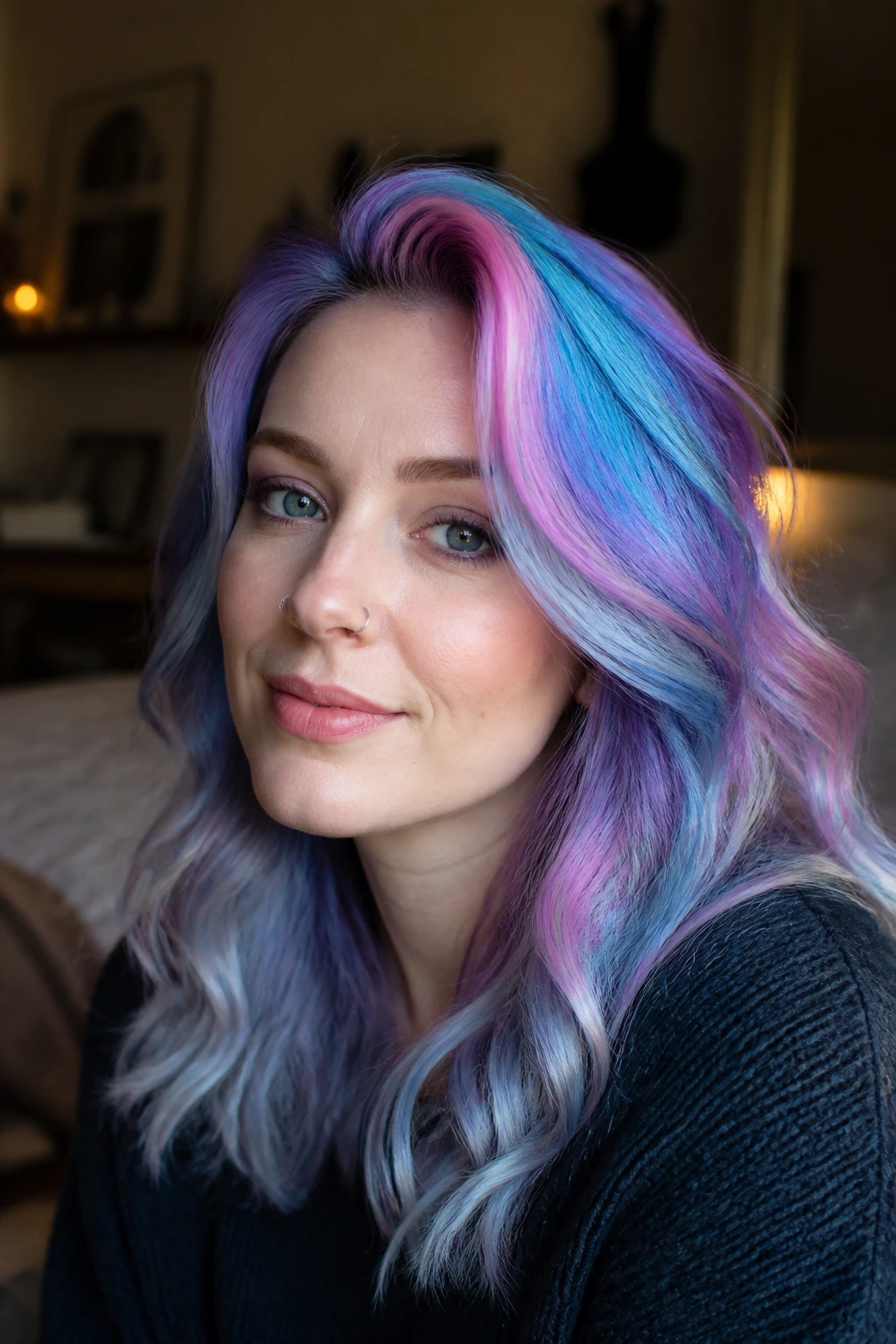
Rainbow hair on cool skin works best when the palette stays honest about temperature. Blue, violet, silver, and blue-based pinks usually do the heavy lifting. Warm shades can still appear, but they tend to behave better as tiny accents rather than the main event.
The smartest looks here also think about placement. A money piece, an undercut, or a peekaboo panel can flatter your face without demanding a full bleach-and-dye overhaul. That matters. Color is fun, but wearable color gets worn more often.
If you want a simple rule to carry with you, use this one: keep the rainbow cool, keep the finish clean, and keep one shade a little deeper than the rest so the whole look has shape. That tiny bit of contrast is what keeps vivid hair from drifting into mush.
