



Purple-blue hair has a strange little gift: on the right person, it can make cool skin tones look cleaner, sharper, and more awake without needing a single warm copper note to soften things. The shades that lean blue, violet, indigo, and slate tend to sit beside pink or neutral undertones in a way that feels deliberate instead of noisy.
The catch is that not every purple-blue shade behaves the same way. A red-violet can drift warm fast. A cobalt can look electric in sunlight but almost navy indoors. And if the base is lifted too far without enough tone control, the whole look can slip into gray mush, which nobody wants after spending hours in a chair.
I’ve always thought the best purple blue hair color ideas for cool skin tones are the ones that respect the face first and the fantasy second. You want color that flatters the complexion, works with your cut, and still has enough edge to feel fun when you catch yourself in a mirror.
1. Smoky Indigo Melt
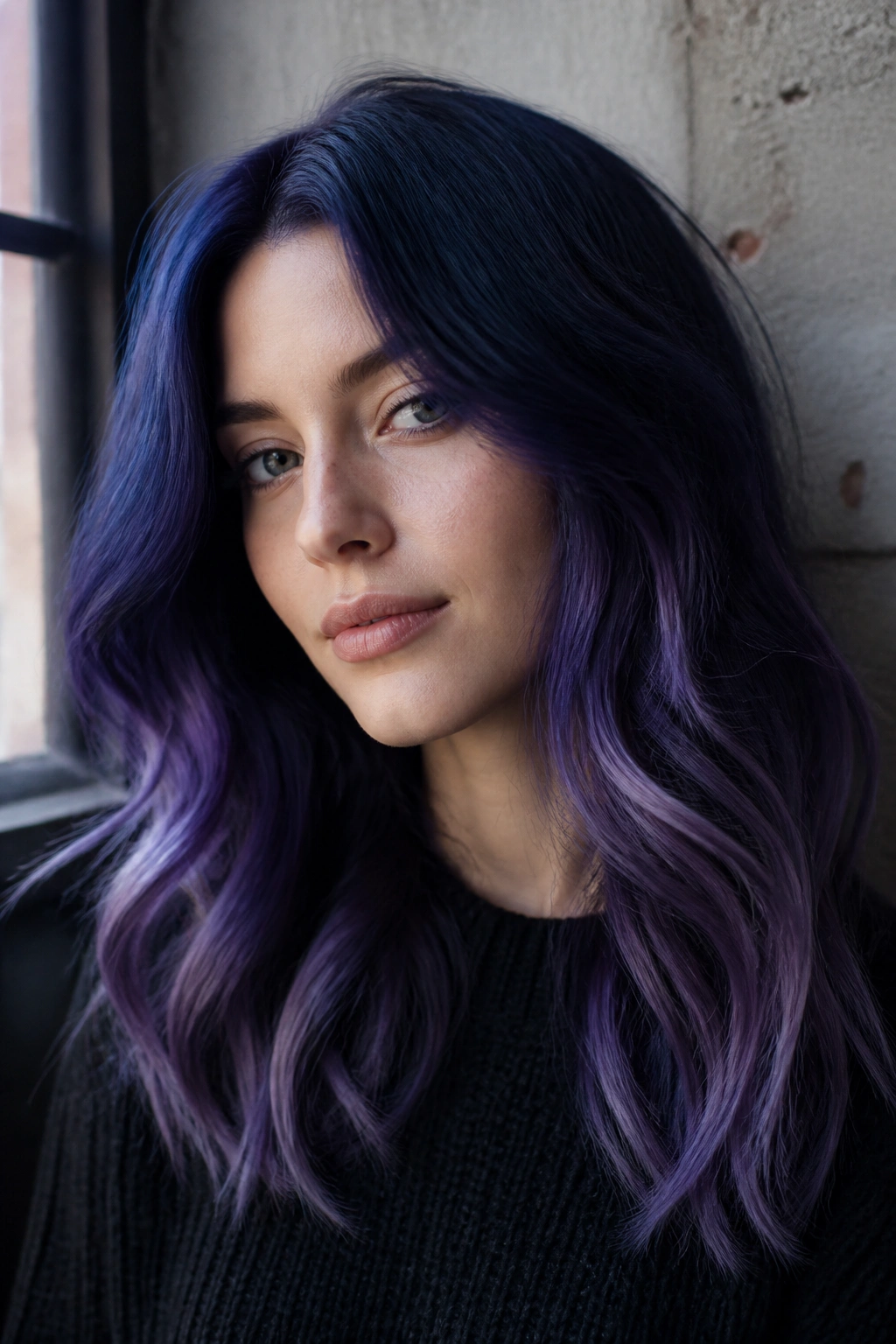
Smoky indigo is the shade I reach for when someone wants drama without that too-bright, marker-ink look. It starts with a deep blue base and lets the purple stay quiet in the background, which is exactly why it reads so well on cool skin.
Why It Flatters Cool Skin
The blue in indigo keeps the complexion looking crisp instead of ruddy. Add a soft shadow root at level 5 or 6, then melt into a level 7 to 8 indigo through the mids, and the whole color feels richer than a flat all-over dye job.
This shade is also kind to layered cuts. The movement in the hair lets the smoke effect show through, so the color changes when you turn your head. That matters more than people think.
- Best on pre-lightened hair at level 7 or lighter
- Works well with loose waves or a blunt lob
- Needs a blue-violet shampoo, not a heavy purple one
- Fades cleanly if the base is lifted evenly
My favorite part: the color stays moody even as it softens, which is rare and useful.
2. Midnight Amethyst Bob
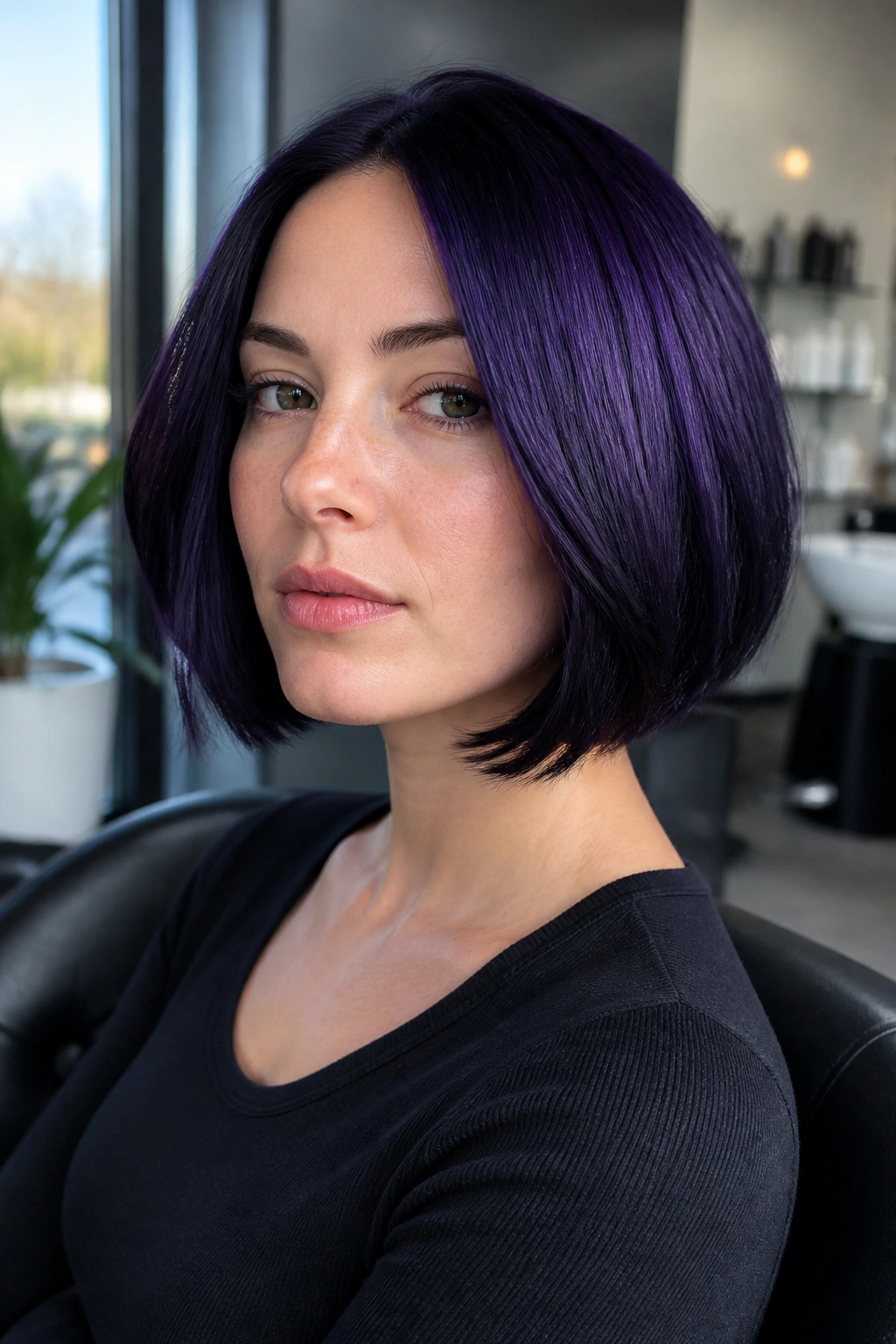
A chin-length bob can carry a much darker purple-blue than long hair can, and that’s part of the appeal. The shape does half the work for you. A sharp line plus a midnight amethyst tone gives cool skin a polished frame without needing any extra tricks.
What I like here is the density of the shade. It sits between navy and violet, so it never looks washed out, even if the hair is only lightly wavy. On straight hair, the cut looks almost graphic. On texture, the color breaks up just enough to show blue at the ends and purple near the crown.
If you have fair cool skin, this one can be gorgeous because it doesn’t compete with your face. It pulls attention upward in a tidy way, especially if you keep the brows natural and let the lips stay soft.
One thing: the bob needs a clean gloss every few weeks or the amethyst can dull into flat plum. That’s the price of depth. Worth it, in my opinion.
3. Electric Cobalt Peekaboo
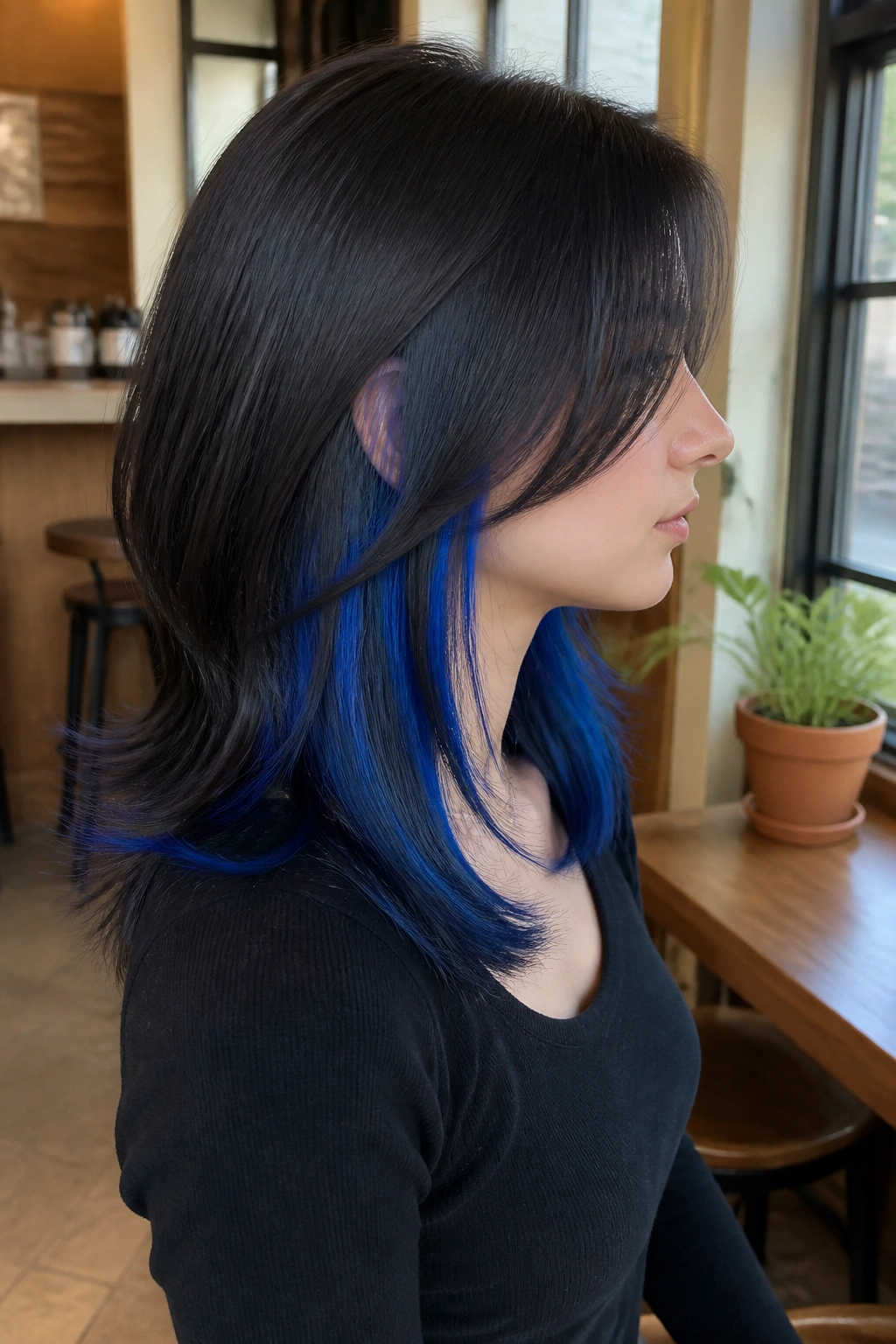
Ever tucked bright color under darker layers and watched it flash only when you moved? That’s the whole point of cobalt peekaboo panels.
The outer layer stays close to your natural shade or a deep blue-black, while the hidden pieces underneath go full cobalt with a violet edge. On cool skin, that split creates a nice little shock of color without making the whole head feel loud from every angle. It’s playful, but still wearable.
How to Wear It
- Ask for the peekaboo panels around the nape and back temples
- Keep the top layer at least one shade deeper than the bright pieces
- Curl the hair away from the face to reveal the color in ribbons
- Refresh the bright panels every 4 to 6 weeks if you wear your hair up often
This is the kind of color I like on someone who wants options. Leave it hidden for work. Show it off on weekends. Simple.
4. Periwinkle All-Over Pastel
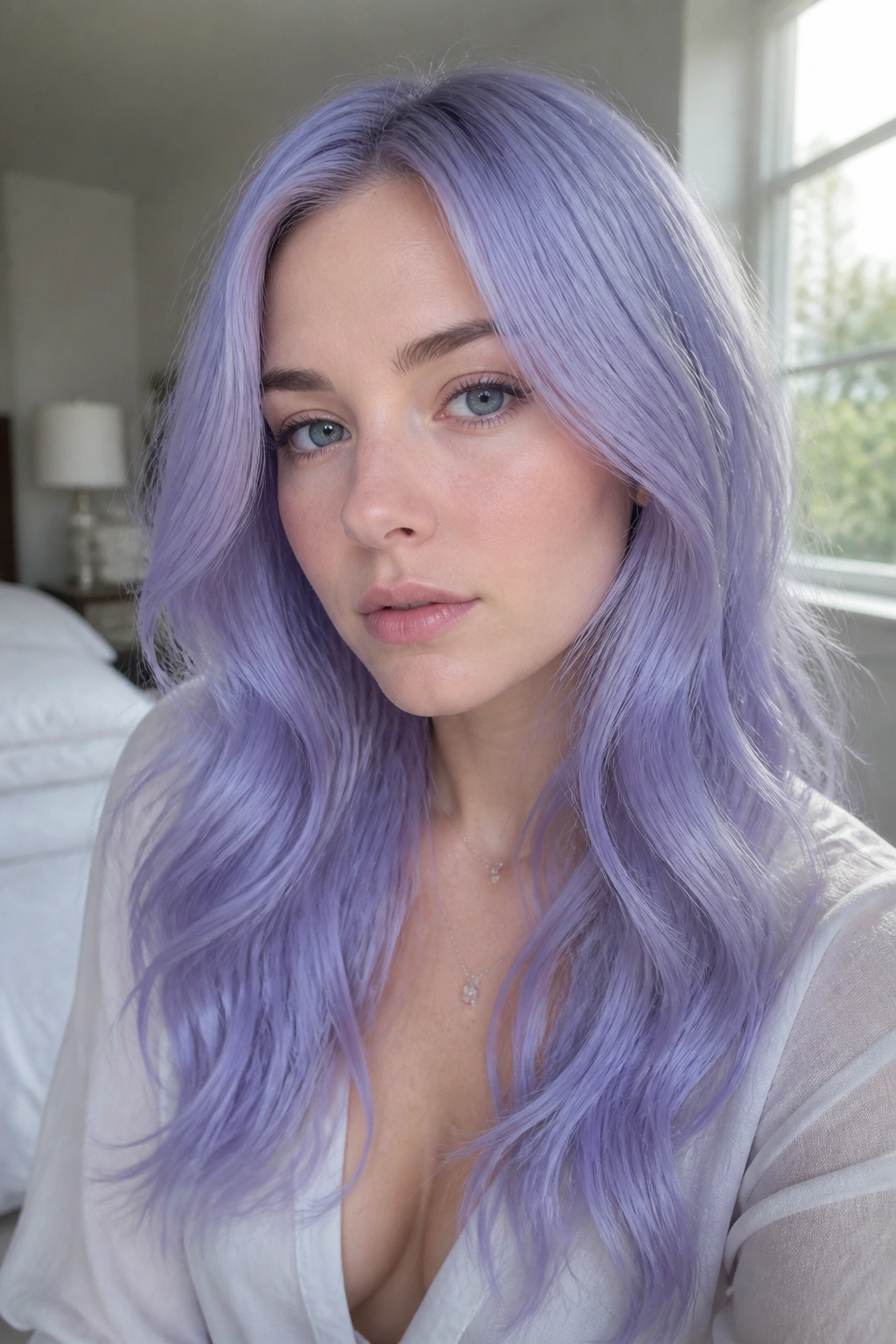
Periwinkle is softer than cobalt and more interesting than plain lavender. It has that pale blue-violet haze that can make cool skin look almost lit from within, especially if the hair is kept glossy and the cut is clean.
The shade does ask for a pale base, usually level 9 or 10, because periwinkle has no room to hide brass. If the blonde underneath is yellow, the color turns cloudy fast. That’s the part people underestimate. Pale fantasy shades are picky. They look effortless only after the base is done properly.
Does periwinkle work on everyone with cool skin? Not quite. It tends to shine most on people with light to medium cool undertones, or on anyone who wants the hair to feel airy and soft instead of heavy. If your style leans delicate or minimal, this is a strong pick.
What Keeps It Clean
- Use a sulfate-free cleanser
- Wash with cool water
- Add a pastel color conditioner once a week
- Avoid too much heat, because pale blues fade quickly
5. Blue-Black with Plum Shadow Roots
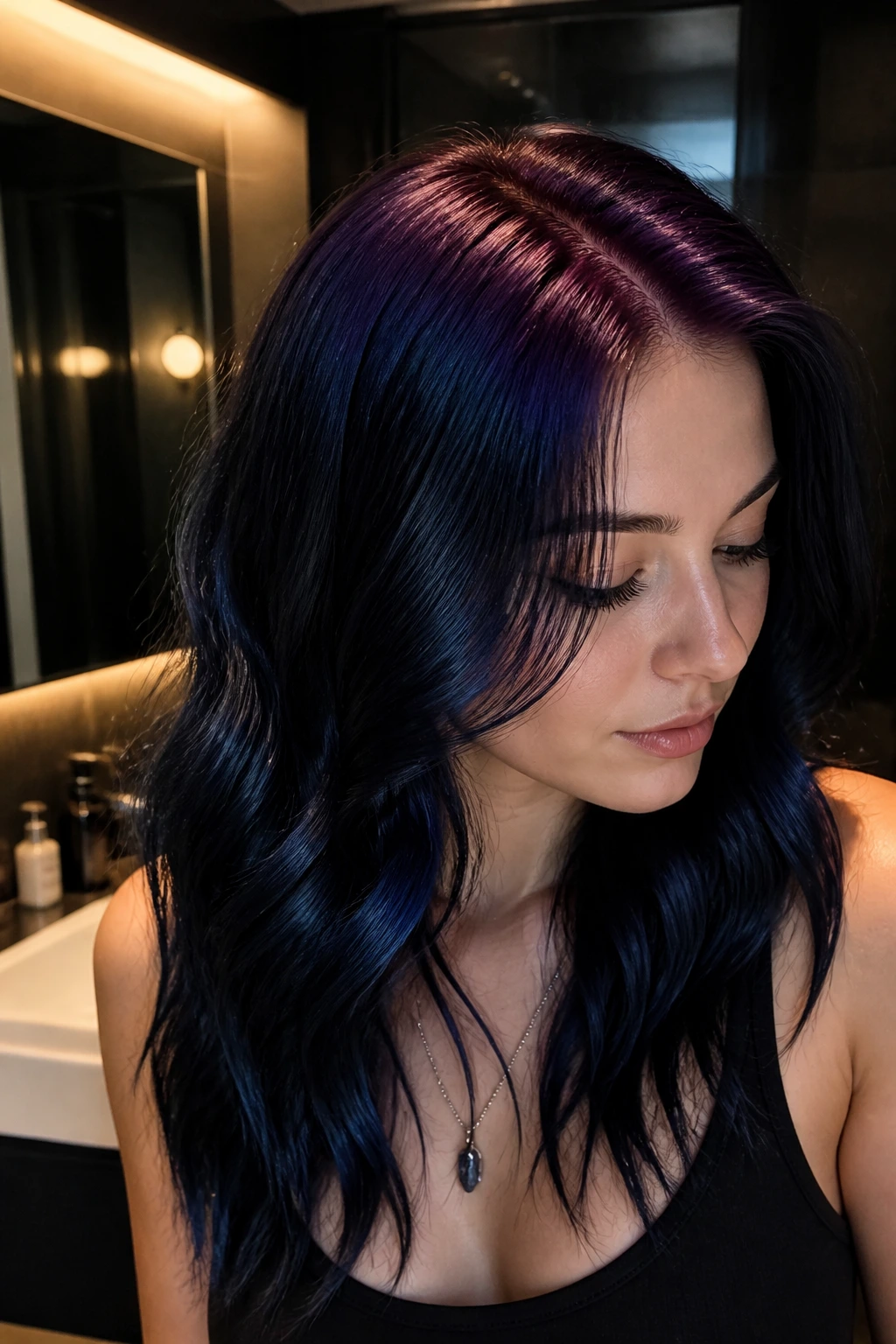
Depth can be the most flattering thing in the room. Blue-black hair with plum shadow roots is proof.
Unlike pastel shades, this look doesn’t depend on high lift or obvious brightness. The roots stay dark and cool, then the blue-black length catches purple in certain light, almost like ink with a velvet edge. That makes it a smart choice for people with naturally darker hair who still want a vivid result but do not want to fight their base for hours.
The plum root melt is the detail that keeps it from looking flat. It softens the transition and adds a cooler purple note near the scalp, which helps on skin with pink or rosy undertones. You get dimension without a harsh line.
This is one of those shades that grows out better than you expect. The regrowth blends into the darkness instead of screaming for attention. That alone sells a lot of people on it.
6. Galaxy Ribbons on Dark Brunette Hair
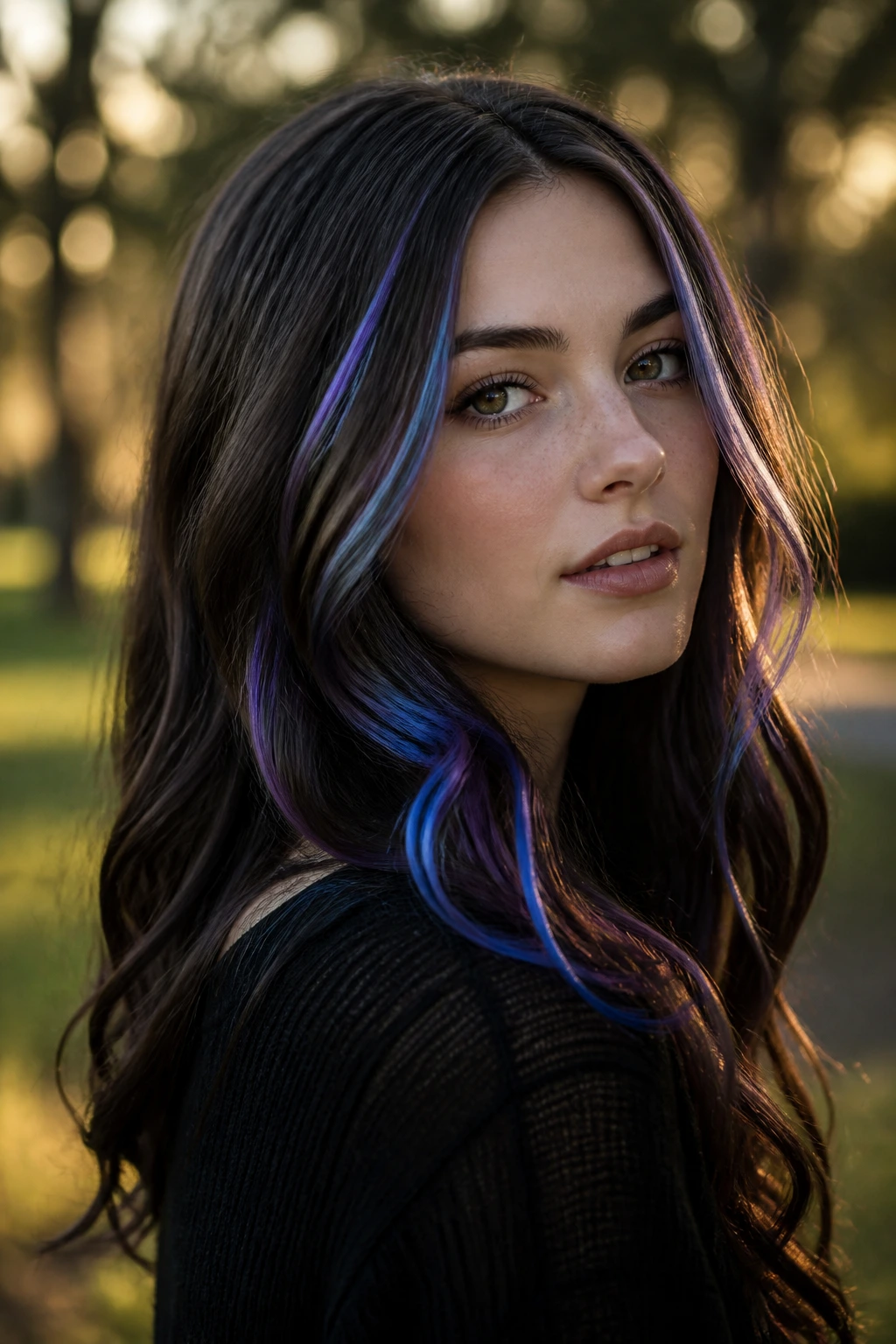
I usually think of this one as the “peek closer” color. From a distance, it reads dark and glossy. Up close, the violet-blue ribbons show through in thin hand-painted streaks.
That makes it a very useful choice if you have a dark brunette base and don’t want to commit to full bleaching. The ribbons can be placed around the face, through the crown, or only on the bottom third of the hair. Each choice changes the mood. Face-framing pieces look bold. Hidden ribbons feel quieter and more expensive, if I can use a blunt word.
Placement Details That Matter
- Keep the ribbons thin, not chunky
- Lift only the pieces that need color
- Ask for blue-violet and not red-violet
- Style with bends, not tight curls, so the ribbon effect stays visible
The whole look depends on contrast. If the pieces are too wide, the magic goes away and it starts looking like regular highlights with a dye job.
7. Steel Blue Gloss Over Lavender Blonde
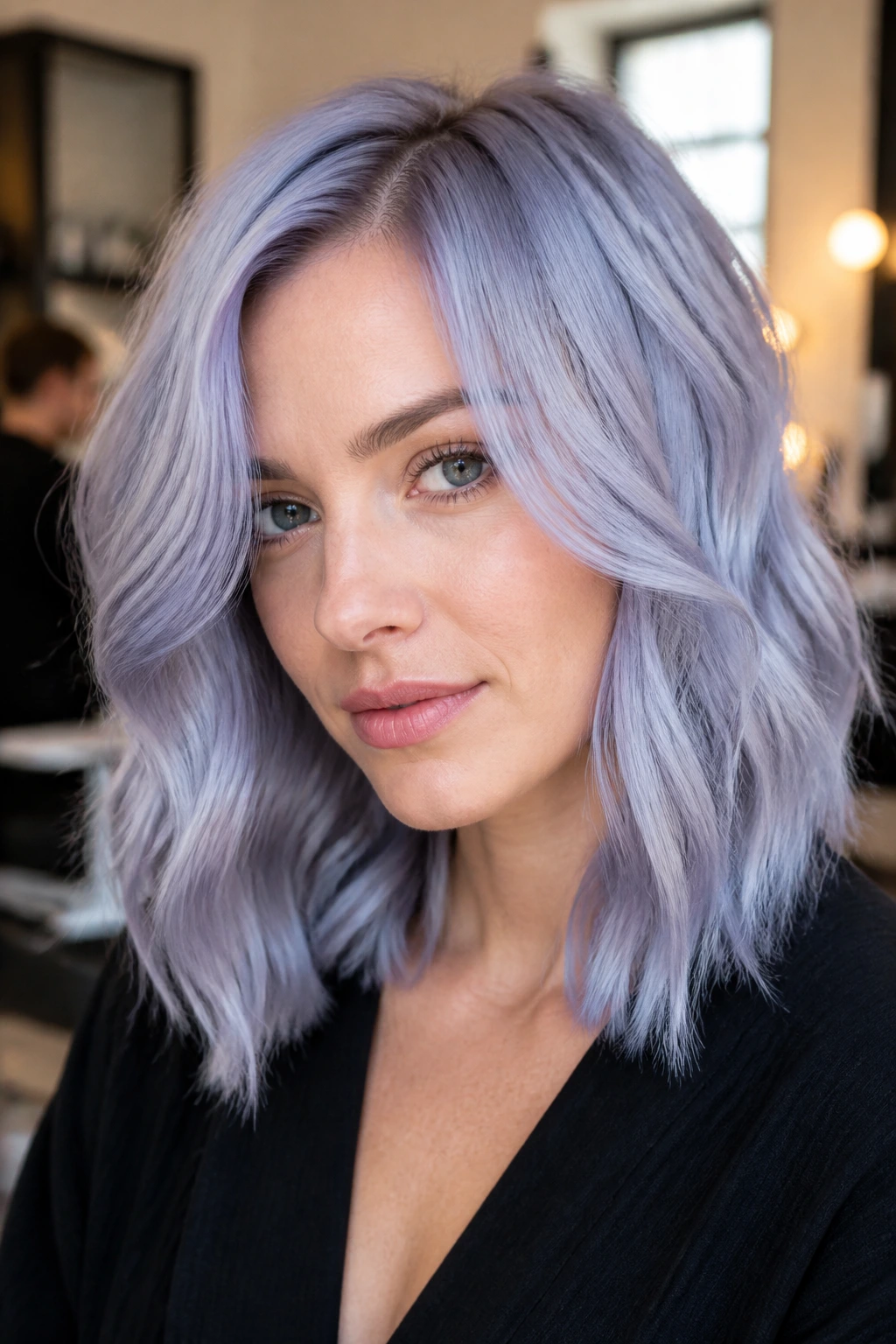
Steel blue sounds cold for a reason. It has that smoky, metallic feel that works well when you want purple-blue hair color ideas for cool skin tones but don’t want the finish to be sugary.
A lavender blonde base with a steel blue gloss gives the hair a frosted look that suits clean lines, light brows, and minimal makeup. It’s not a loud color. That’s the point. The blue tone sits on top of the blonde instead of swallowing it, so the hair still has movement and brightness.
I like this on layered lobs, soft shags, and shoulder-length cuts with texture. The gloss collects on the bends and ends, which makes the hair look more dimensional than a single flat pastel would.
One warning: if the blonde is too warm before glossing, steel blue can go muddy. A cool toner first saves you from that mess.
8. Sapphire Money Piece
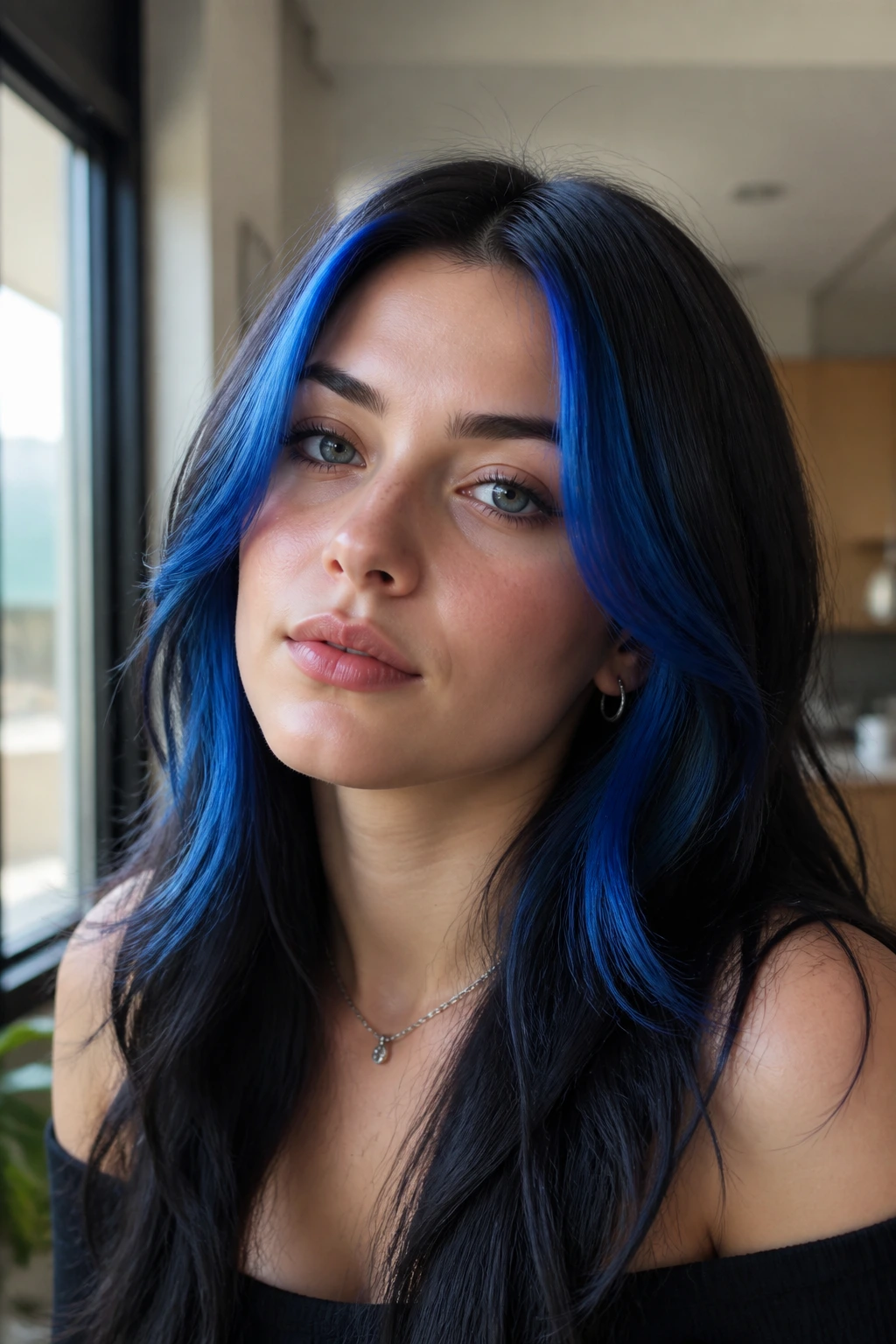
A money piece should earn its keep. Sapphire does.
The front panels are placed along the hairline, usually about 1 to 2 inches wide, then saturated in a vivid sapphire-blue tone that can edge into purple at the roots. On cool skin, that bright frame can make the eyes look stronger and the cheekbones look more defined, especially if the rest of the hair stays deeper or softer.
What Makes It Different
The color is concentrated where the eye lands first. You get impact without having to color the whole head. That also means less maintenance and less bleach damage, which matters if your hair already feels fragile.
How to Ask for It
- Keep the base near your natural level or one shade deeper
- Lift the money piece evenly so there are no hot spots
- Choose sapphire with a violet undertone if your skin is very pink
- Tone the front pieces separately if needed
This works especially well on curtain bangs. The color moves when the hair moves. That’s half the fun.
9. Orchid Ombré
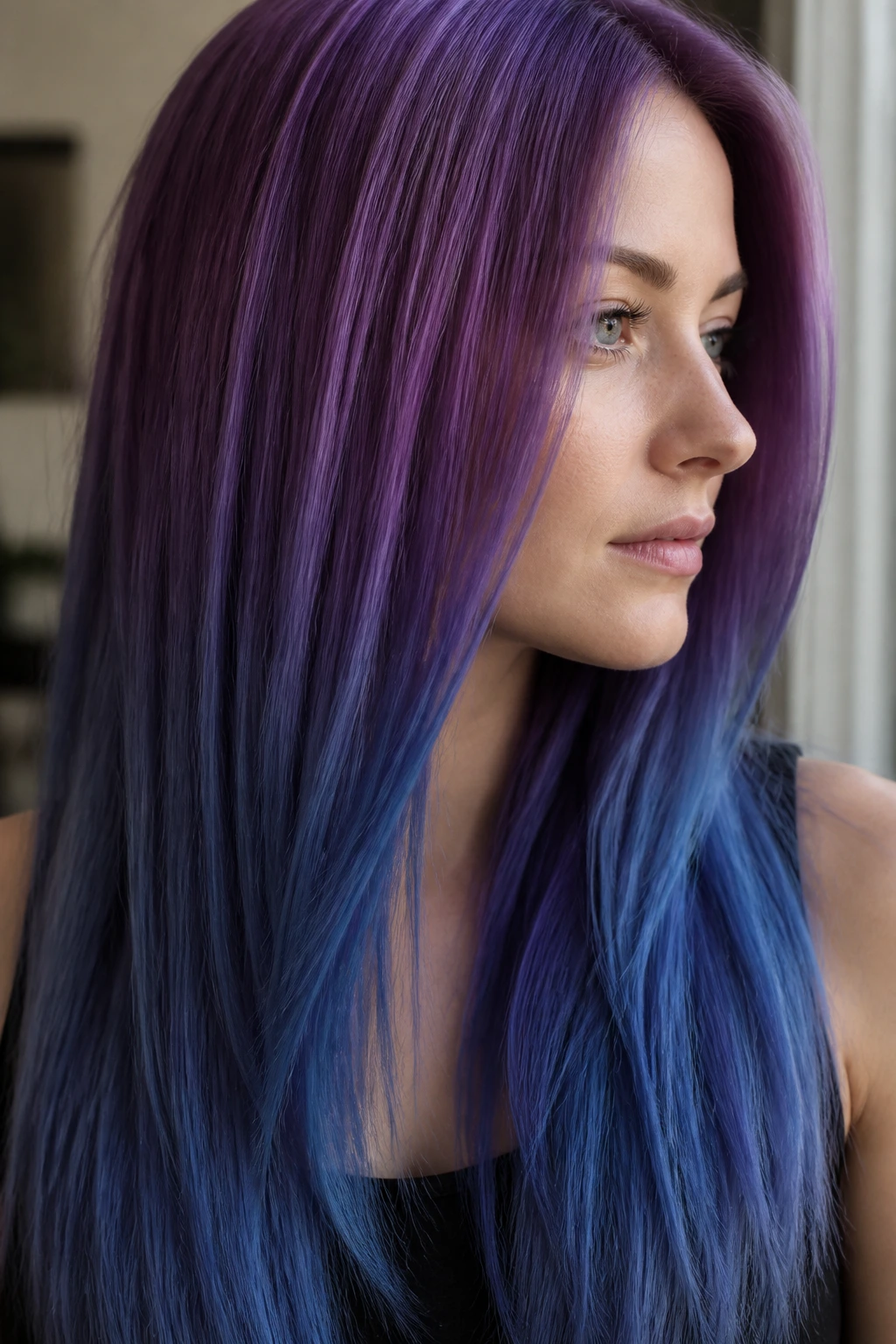
Orchid ombré is for the person who wants the color to start with violet and end with blue, not the other way around. The gradient gives a soft shift from richer purple near the roots to cooler blue through the mids and ends.
That direction matters. Purple near the top warms the face just enough without actually turning warm, and the blue at the ends keeps the finish crisp. On cool skin, the blend can look almost painted in layers, especially on long straight hair where every inch of fade is visible.
This style also gives you some flexibility with regrowth. Because the root area stays deeper, you do not get a harsh line every time your hair grows. The fade looks intentional, which is handy when you do not want to be in the salon constantly.
Best on hair past the shoulders, honestly. Short cuts can wear ombré too, but orchid needs room to move.
10. Denim Blue with Plum Root Melt
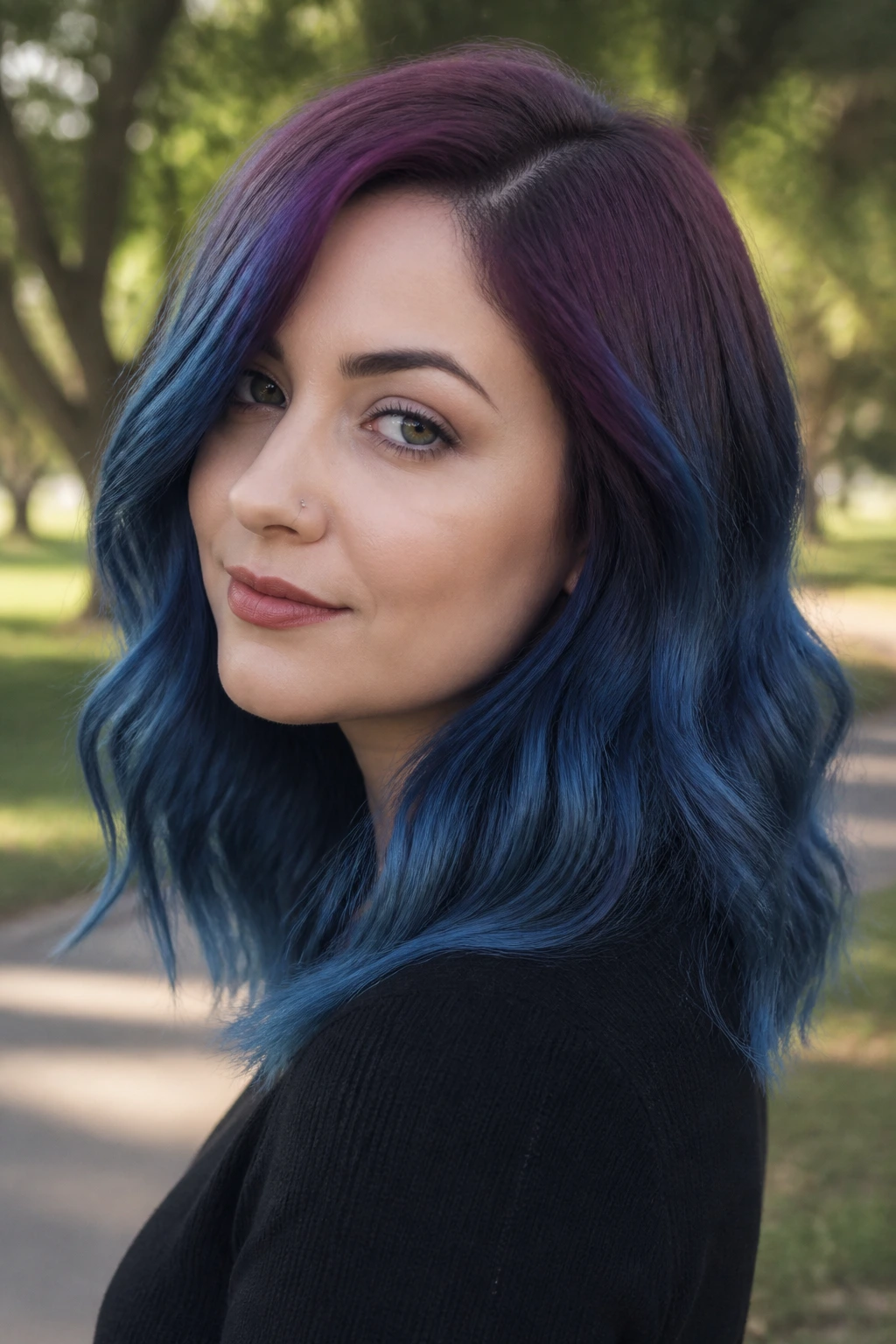
Denim blue is one of my favorite “quiet vivid” shades. It has enough blue to feel cool, enough gray to feel wearable, and enough depth to avoid looking childish.
Add a plum root melt and the whole thing turns softer. The roots stay slightly violet so the grow-out blends, then the denim blue slides out through the lengths. On cool skin, this combination avoids the harsh contrast that can happen with brighter cobalt. It feels lived-in in a good way.
Why does it work so well? Because denim blue is a shade people recognize from clothing and denim itself — it reads familiar, not costume-like. The plum root keeps the top from going flat and gives the color a more dimensional edge.
If you want low maintenance, this is one of the smarter choices on the list. The fade is forgiving, and the tone still looks deliberate after several washes.
11. Blue-Violet Split Dye
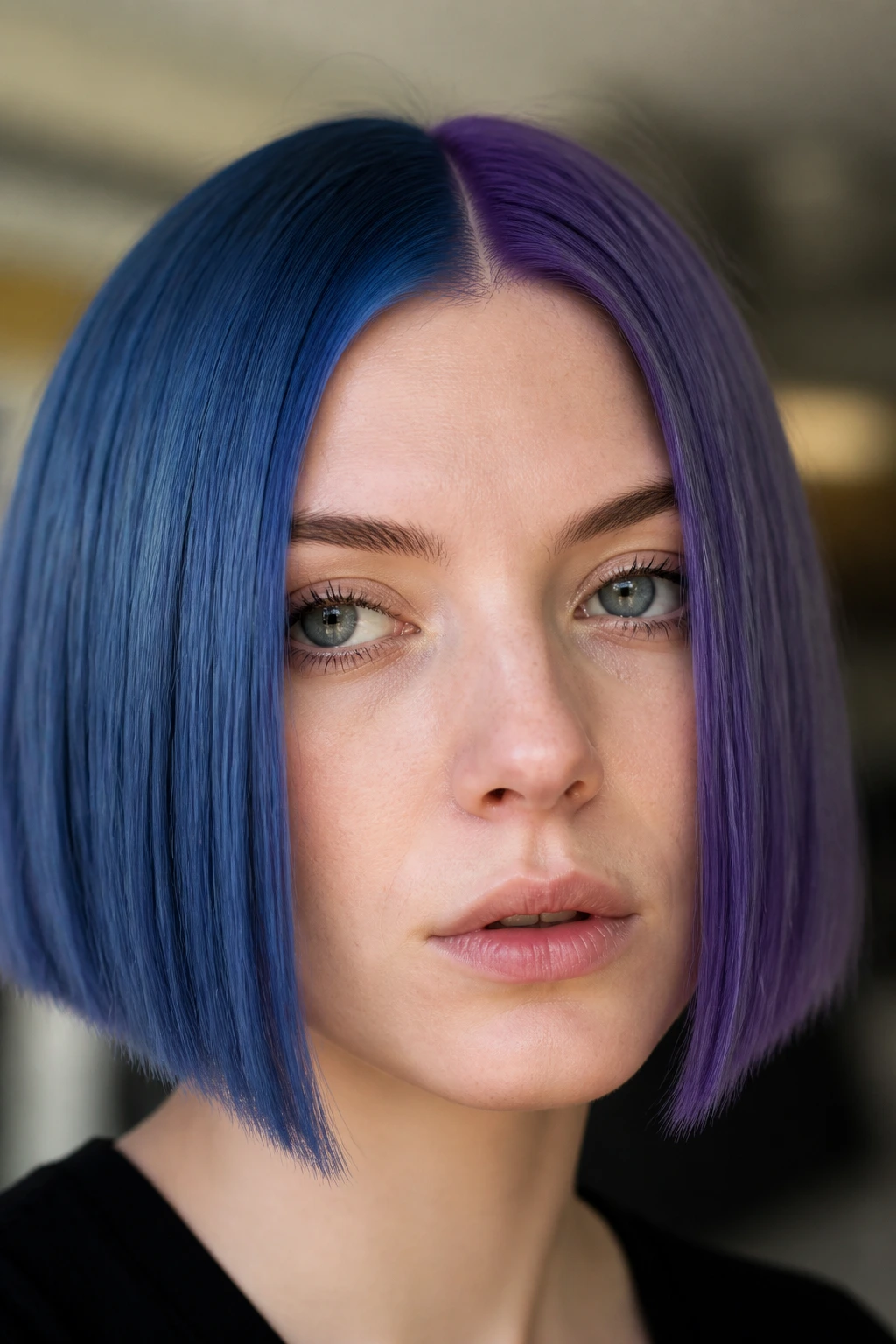
Split dye is never shy. One side goes blue, the other side violet, and the whole look says you came in with a point of view.
For cool skin, this works because neither half fights the undertone. The blue side keeps things crisp. The violet side brings a little softness back. Together, they create contrast that looks sharp rather than messy, especially if the cut is straight, blunt, or very geometric.
Unlike balayage, split dye does not try to blend itself into the background. It wants the divide to be visible. That is what makes it special. If you like high-contrast makeup, graphic eyeliner, or strong wardrobe colors, the hair will sit right beside that style instead of competing with it.
This is one of the few vivid looks that can feel cleaner on shorter cuts than on long hair. A bob, shag, or undercut gives the split line some shape. On very long hair, it can get heavy fast unless the placement is perfect.
12. Holographic Violet-Blue Balayage
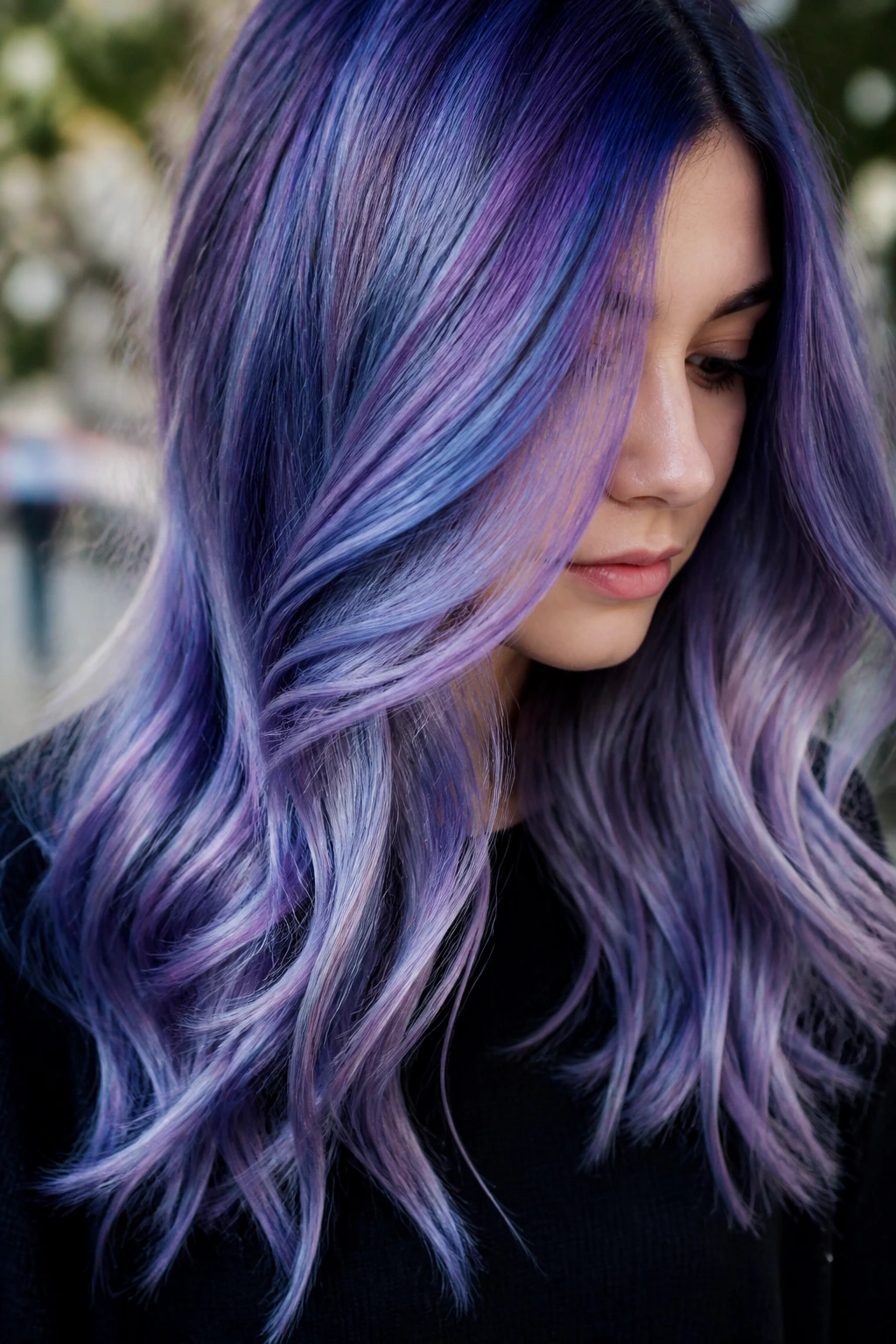
In good light, this color shifts in layers. First you see lilac. Then denim. Then a flash of sapphire at the bend of the wave.
That’s the whole appeal of holographic balayage. The colorist paints different cool tones through the hair so the eye keeps finding new pieces. On cool skin, the effect can be beautiful because the colors all sit inside the same temperature family. Nothing looks random. Nothing looks muddy.
The Science Behind the Look
You need multiple tones with different depths: a pale violet, a medium blue, and a deeper indigo. When those shades overlap on pre-lightened hair, they create the illusion of movement even when the hair is still.
Best When You Want
- A softer look than full-on fashion color
- A style that changes under indoor and outdoor light
- A low-contrast finish on layered hair
- A glossy topcoat every few weeks
It’s a little more work than one-color dye, yes. But the payoff is that the hair never looks flat.
13. Icy Cobalt Pixie
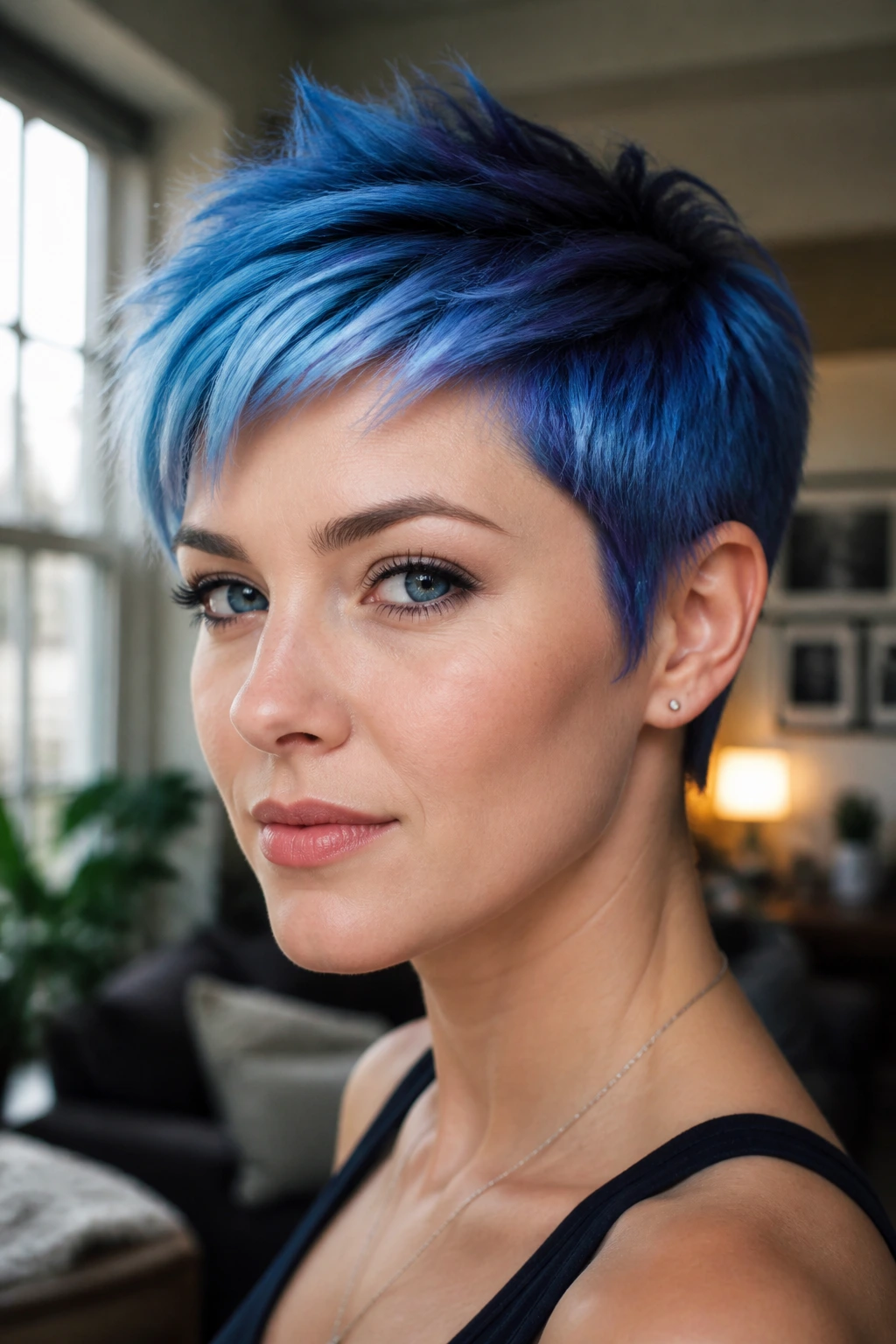
Short hair can carry a bigger color punch than long hair, and a cobalt pixie proves it fast.
The tight shape lets the color sit right on top of the cut, which means every bit of texture shows. Icy cobalt with a slightly darker root gives the style edge without turning it stiff. On cool skin, the brightness near the face can make the whole look feel fresh and clean instead of loud.
Why Short Cuts Love This Shade
A pixie has less hair to saturate, so the color looks more intense with less product. It also grows out faster, which can be a blessing if you like changing shades often. A cobalt pixie can be softened with a matte paste, made sleeker with a gloss serum, or roughed up with fingers for that slightly lived-in finish.
The key is keeping the crown a touch deeper than the front. That gives the color some shape instead of making it look like a single flat block.
This is not a shy cut. Good. It should not be.
14. Soft Mauve-Blue Cloud Color
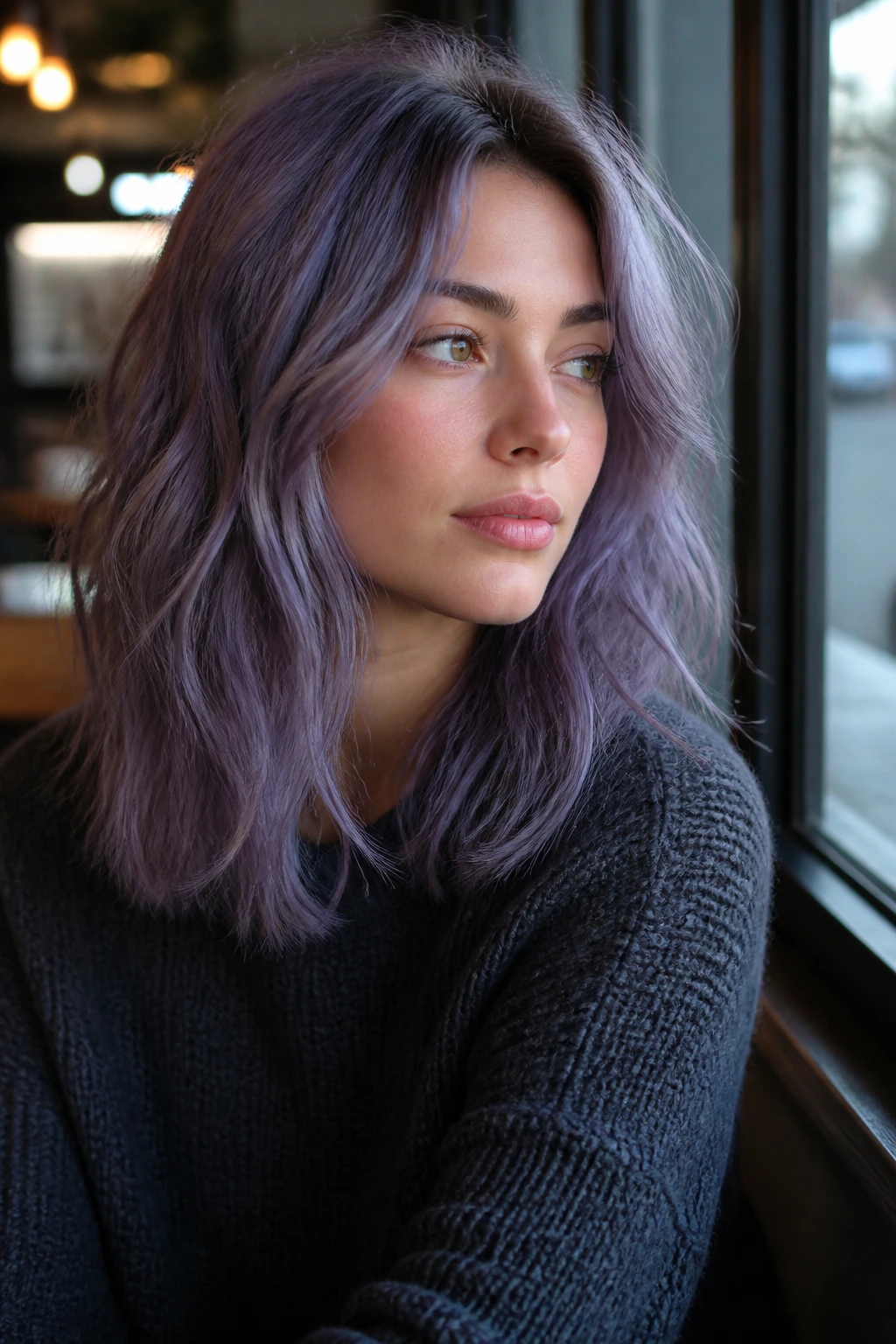
Some people want vivid hair. Others want color that feels like a filter in real life. Soft mauve-blue cloud color sits in that second camp.
The shade has a muted, hazy quality that blends pale blue with lilac and a hint of gray. On cool skin, that softness can be very flattering because it does not pull the face red or yellow. Instead, it sits around the features and makes them look calmer, which sounds boring until you see how good it looks.
I like this on medium-length hair with loose texture. Curls make the cloud effect break into little color patches. Straight hair makes the shade look smoother and more refined. Both work.
The one thing to watch is saturation. If the color is too weak, it can look washed out. If it is too heavy, the “cloud” part disappears. You want a wash of pigment, not a paint bucket.
15. Royal Purple with Blue Ends
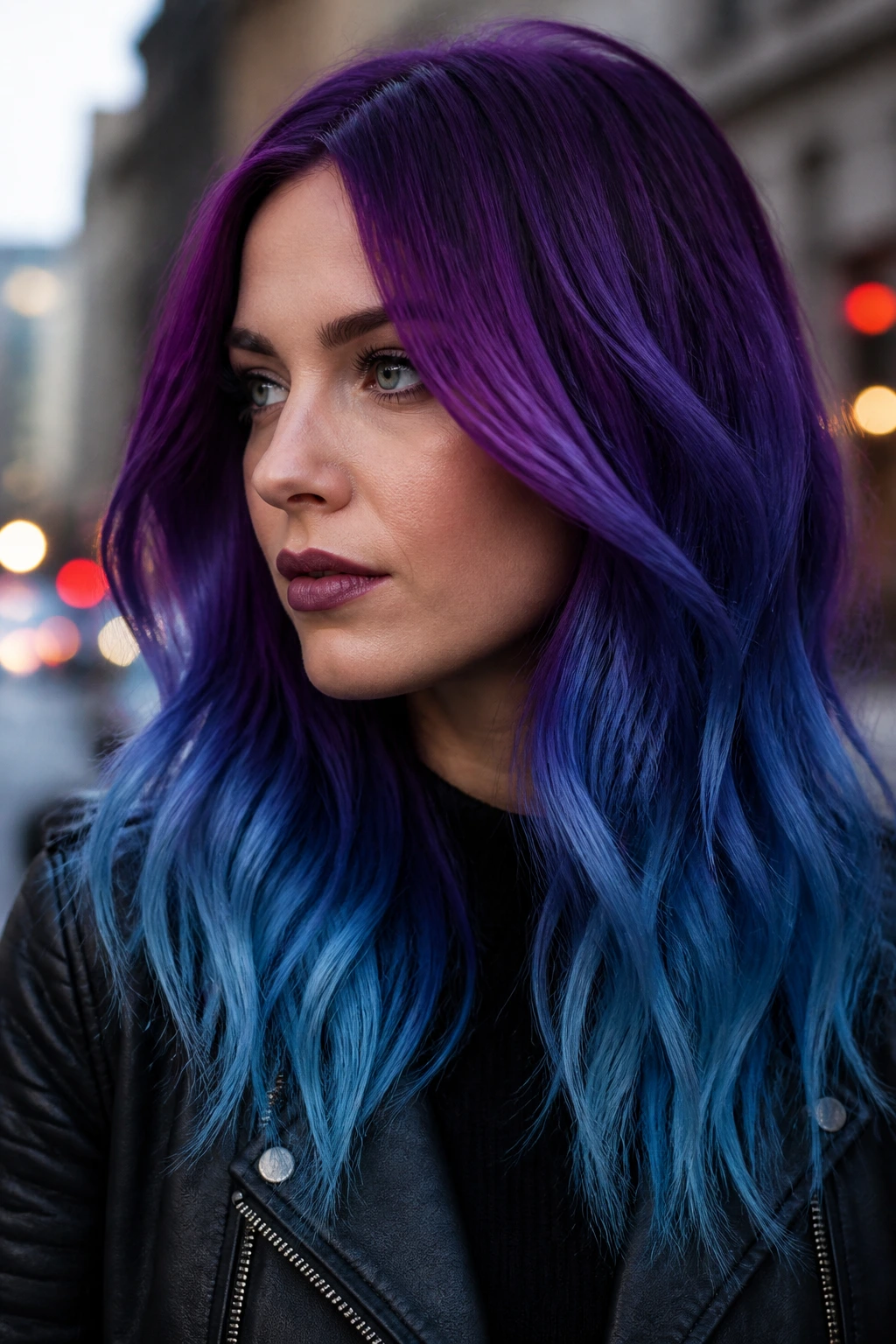
Here’s a color that knows how to make an entrance without shouting from the roots.
Royal purple near the top gives the hair a rich, jewel-box feel, then the blue ends cool everything down and keep the finish sharp. On cool skin, that shift from purple to blue frames the face in a way that feels deliberate. The top carries depth. The ends carry brightness.
How to Get the Most From It
The ends need a clean, pale base or the blue can turn slate too quickly. That means pre-lightening the bottom sections enough to hold the tone evenly. If the ends are patchy, the whole color loses its edge.
This look is especially good on layered hair, where the different lengths let the blue sit in moving pieces. On one-length hair, the transition can feel heavier. Still fine, just less airy.
If you like wearing your hair up, the purple-to-blue shift gives you something extra. A bun or ponytail will show both tones instead of hiding them.
16. Peekaboo Cerulean Layers
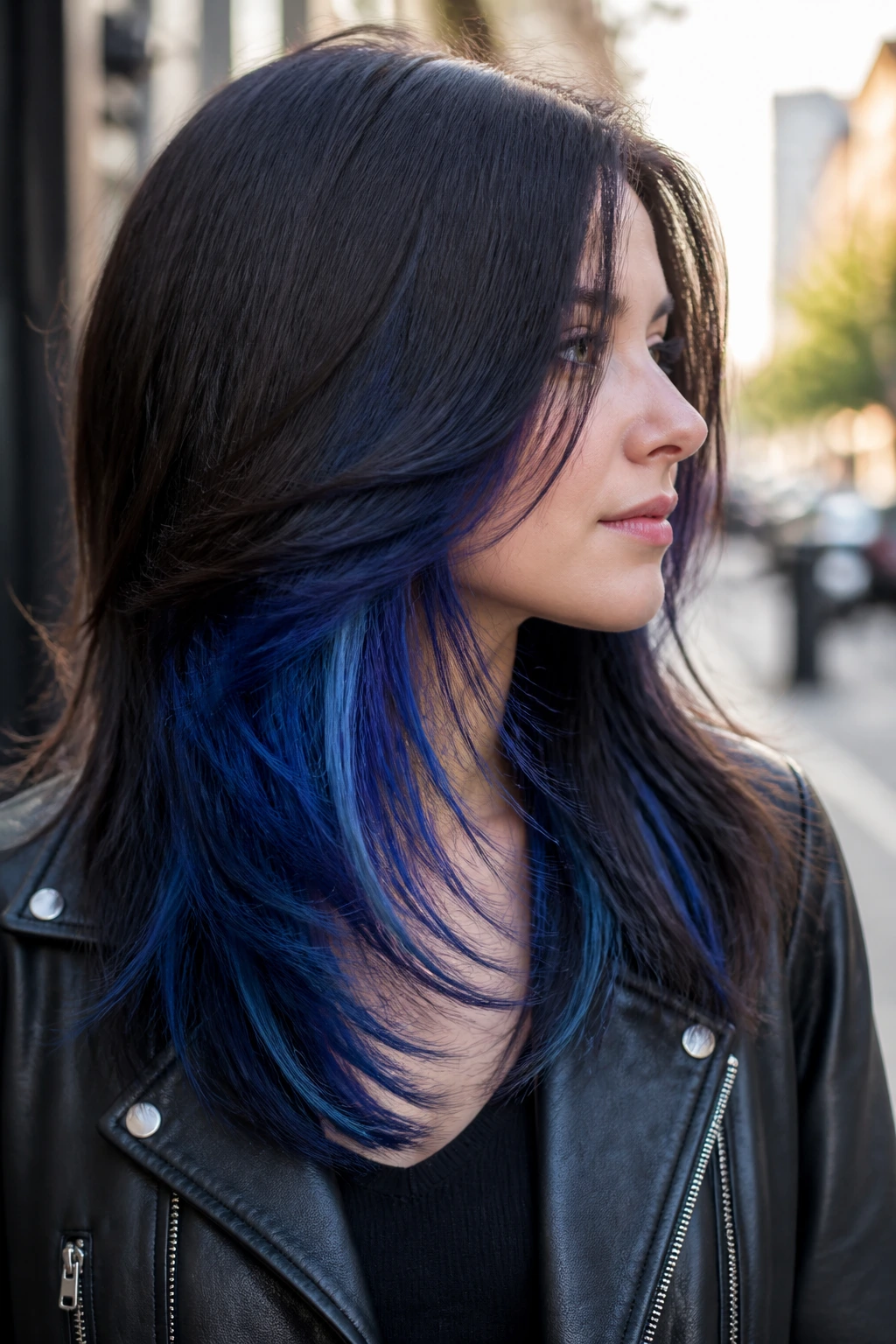
There’s something fun about a color that only shows itself when the hair shifts. Peekaboo cerulean layers do that better than most shades.
The cerulean pieces sit underneath the surface layer, often around the nape or through the lower half of the head, so they flash blue when the hair moves or when you tuck it behind your ear. On cool skin, cerulean has enough brightness to wake up the face without overpowering it.
Where It Works Best
- Medium and long layered cuts
- Hair that gets worn half up a lot
- People who want color at work but still need control
- Curls and waves, where the underlayer peeks through more often
This is a smart option if you do not want to spend all day maintaining visible roots. The hidden placement buys you time. It also lets you keep your natural hair on top, which reduces how much bleach you need overall.
17. Smoky Lavender with Navy Lowlights
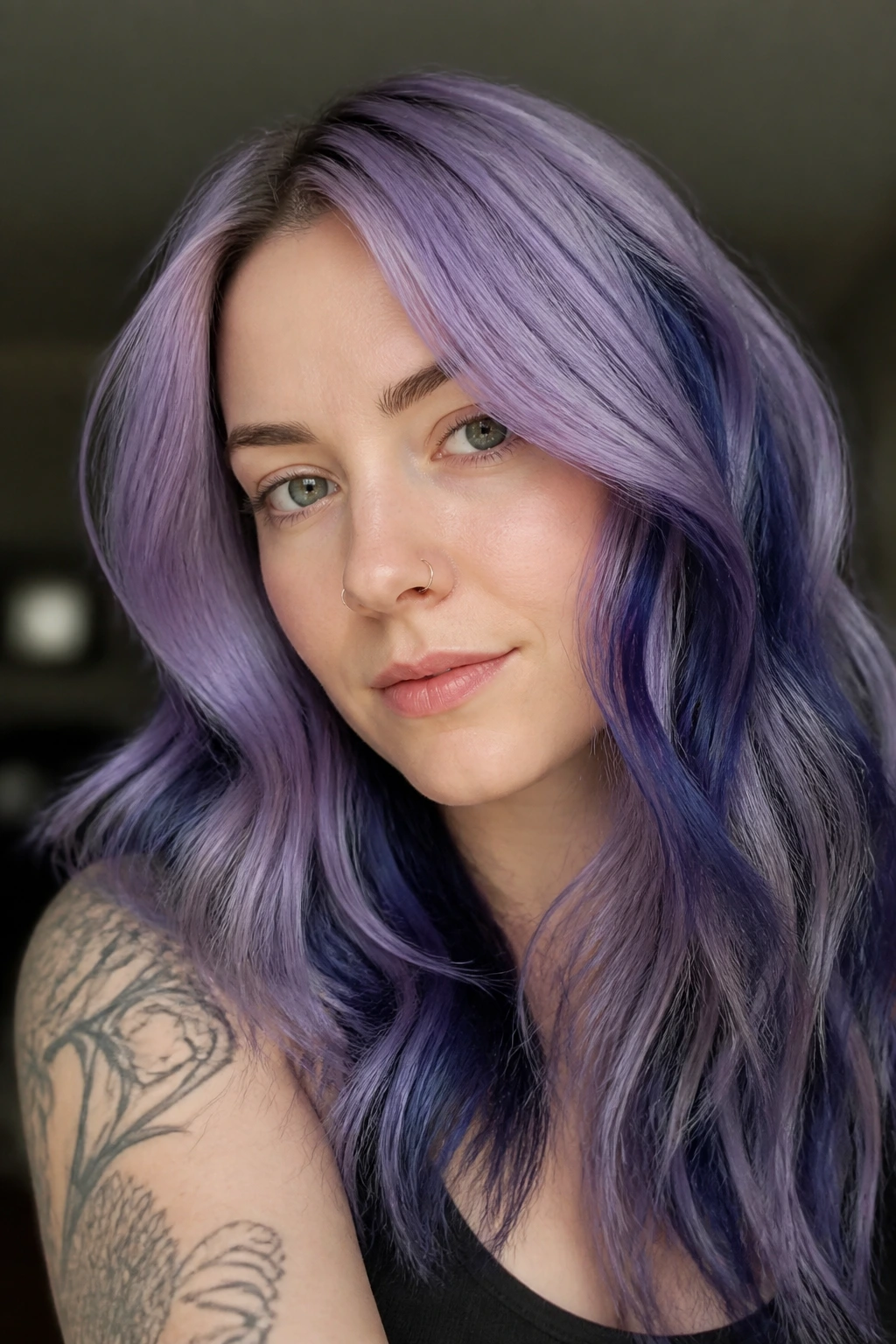
A lot of people reach for highlights first. Lowlights are often the better move.
Smoky lavender with navy lowlights gives pale hair depth by threading deeper blue pieces underneath the lighter violet surface. The result feels more expensive, if I can say it that way, because the color has a floor. It does not float. It lands somewhere.
On cool skin, the mix is especially kind because the lavender keeps the face soft while the navy stops everything from looking thin or chalky. That balance matters on fine hair, where single-tone pastel can vanish too quickly.
Unlike all-over pastel, this style grows out with a little more grace. The lowlights hide some fade, and the lavender stays brighter longer because it is supported by the darker strands around it.
If you like hair that looks layered even when it is freshly brushed, this one deserves a hard look.
18. Prism-Like Violet-Blue Ribbons
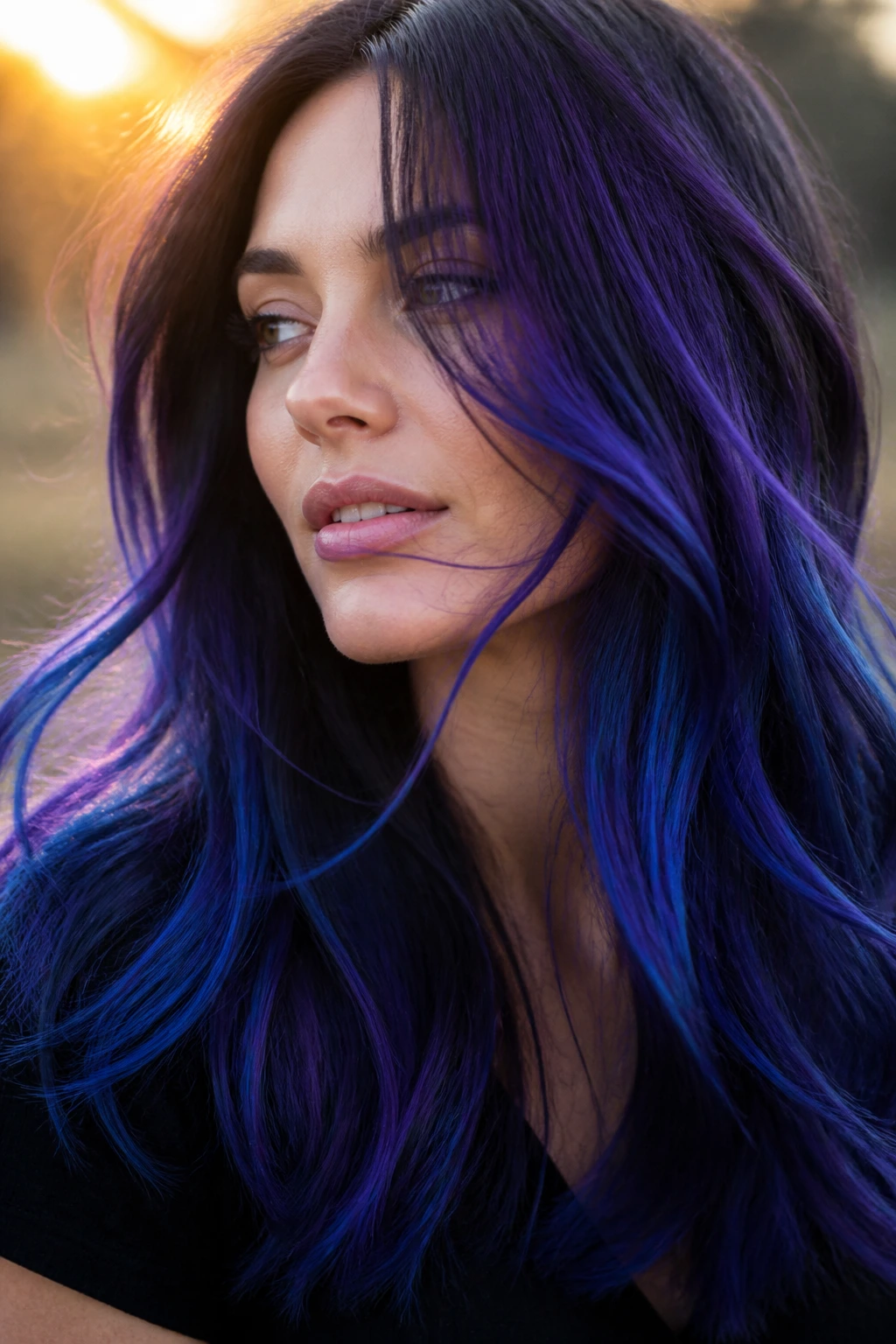
Chunkier ribbons change the whole mood of vivid color. Thin highlights whisper. Ribbons speak up.
Prism-like violet-blue ribbons are painted in wider sections through the mids and ends so the shades read separately instead of blending into one smooth wash. On cool skin, that kind of contrast can be flattering because the color still stays inside the blue-violet family, but it has more movement and shape than a uniform dye job.
What to Ask For
Tell your colorist you want visible ribbon placement, not soft balayage. That usually means cleaner sections, more contrast between the stripes, and a little more saturation in each panel.
- Best on medium to thick hair
- Strong on curls, because the ribbons break apart as the hair bends
- Good for anyone who likes visual contrast
- Needs regular glossing so the ribbons do not blur together
I like this option when someone wants the hair to show off the cut. Layers and ribbons go together naturally. One without the other can feel unfinished.
19. Cool Mermaid Swirl
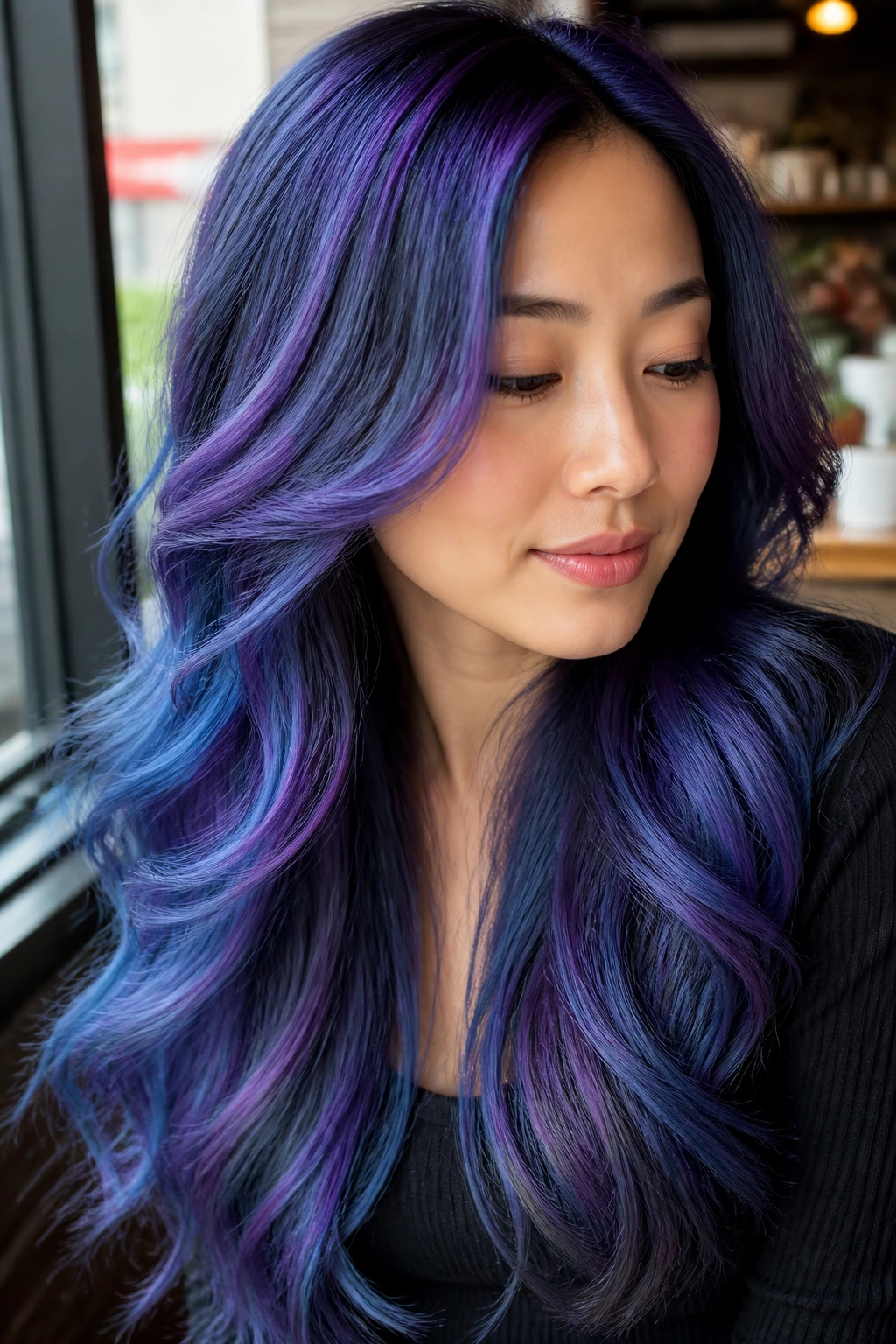
Do you want the fantasy color, but not the tropical version of it? Then keep the palette cold.
A cool mermaid swirl mixes violet, blue, and a touch of deep indigo instead of leaning teal or green. That keeps the whole effect inside the cool family, which is what cool skin tends to want. The result is still playful, but it feels more like moonlight than beach water.
The swirl placement matters. I prefer it on long layered hair where the color can twist from one shade to the next. On straight lengths, the transitions can look too obvious. On waves or soft curls, the shades fold into one another and look much better.
One practical note: do not overdo the green side of mermaid hair if your goal is to flatter cool undertones. A little blue-green can work. Too much, and the face starts to look tired.
20. Blueberry Smoke Glaze
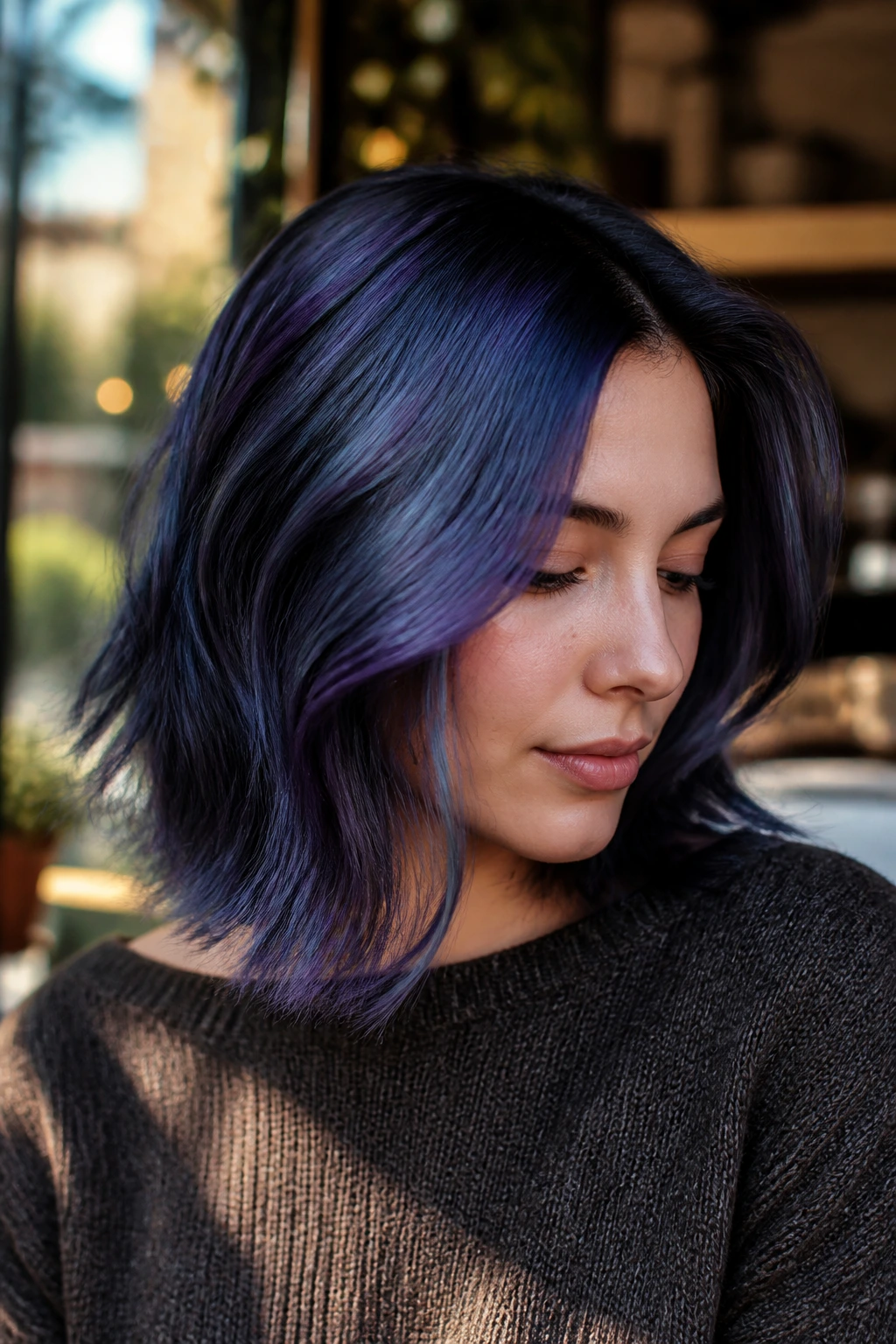
This is the shade for someone who wants the hair to look like navy, violet, and slate were blended in a foggy glass jar.
Blueberry smoke glaze is darker than periwinkle, lighter than blue-black, and softer than straight indigo. It sits right in the useful middle. On cool skin, that middle ground can be the sweetest spot because it flatters without stealing all the attention. The face still leads. The hair supports it.
I’d use this on anyone who wants one vivid color that can survive office lighting, restaurant lighting, and daylight without looking like three different heads of hair. The glaze softens harsh ends, and the blueberry note keeps the finish from going flat. If your hair already has a pale cool base, a gloss like this can stretch the life of the tone without another full dye session.
For upkeep, think small and steady. A cool-toned conditioner once a week, a gloss refresh when the sheen drops, and a gentle cleanser on the off days. That is usually enough to keep the smoke from turning dull.
