



Violet hair color and cool skin tones are a happy match, but only when the shade leans the right way. A blue-based lilac can make pink undertones look cleaner, while a muddy violet can flatten the face in a way nobody wants. The difference is tiny on a color chart and obvious in a mirror.
The trick is undertone, not intensity.
Cool skin usually loves violets with blue, silver, smoky plum, or berry depth. The warmer magenta versions can work too, but they need a little care around the base so they do not drag the complexion toward redness. That is why one lavender can look airy and expensive, while another reads chalky or tired.
If silver jewelry tends to look better than gold, you’re already in the right lane. The most flattering violet hair color ideas for cool skin tones usually share one thing: they have a crisp edge, not a rusty one. Some are icy and delicate. Some are deep and inky. A few sit right in the middle, where they feel wearable without going quiet.
1. Icy Lilac for Cool Skin Tones
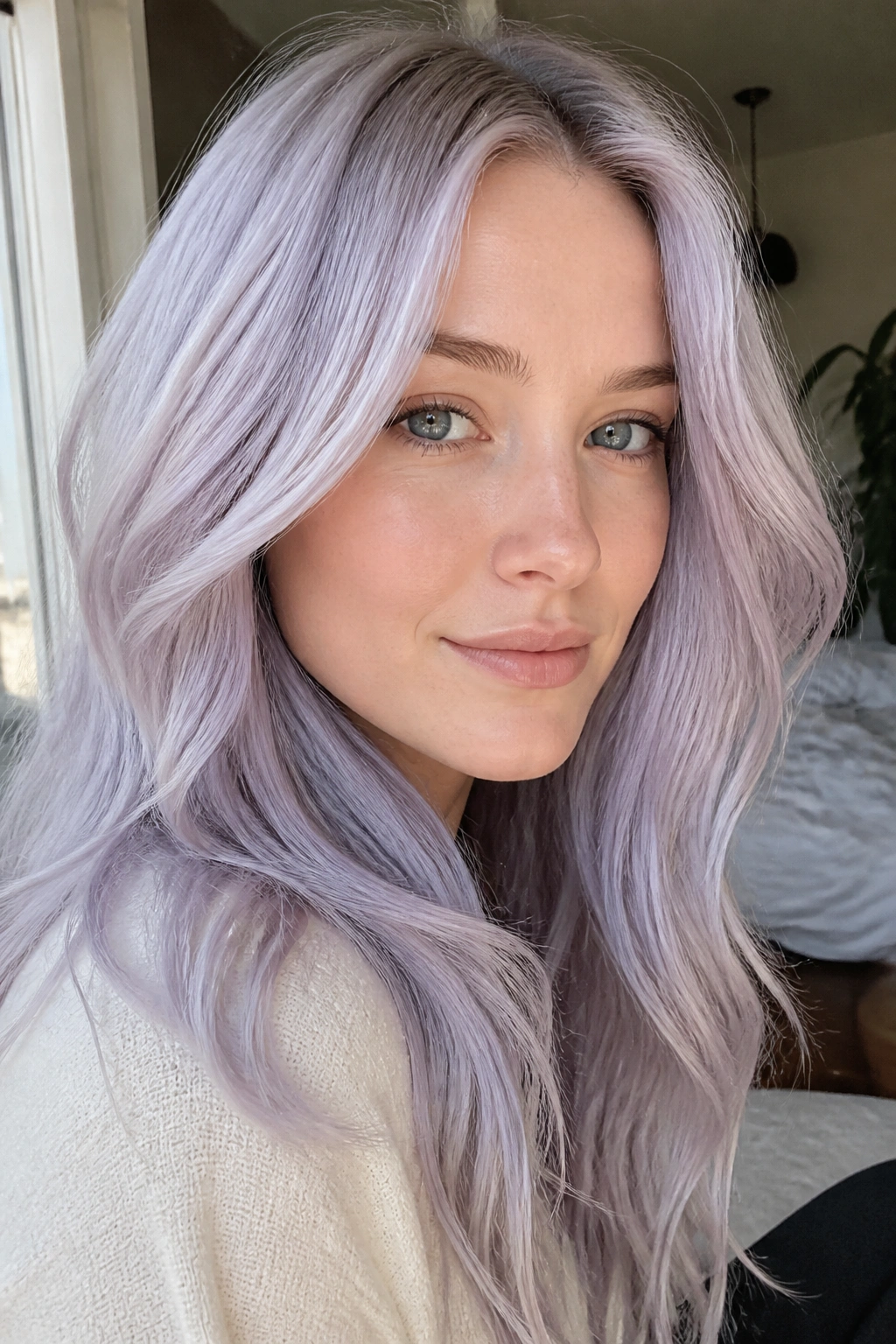
Icy lilac is the cleanest violet on the menu. It has that pale, washed-sugar look that makes porcelain and rosy complexions feel brighter instead of redder, which is why it works so well on cool skin.
Why It Flatters Cool Undertones
The blue in lilac keeps the shade from drifting into peach or orange territory. That matters more than people think. On a cool face, a warm purple can look a little off, while a pale blue-violet tends to sit neatly against the skin and let your features do the talking.
It’s also one of the best choices if your hair is already very light. A level 9 or 10 blonde takes lilac evenly; darker hair usually needs more lift, and that’s where things can turn patchy fast.
- Ask for a pale violet toner with silver, not pink, in the mix.
- Keep the root shadow soft, about ½ inch, so the color looks airy instead of helmet-like.
- Use a color-depositing mask once a week if the lilac fades too fast.
- Loose waves show the tone better than pin-straight hair.
Best tip: if your ends are porous, test the toner on one hidden section first. Porous hair grabs lilac fast.
2. Smoky Lavender
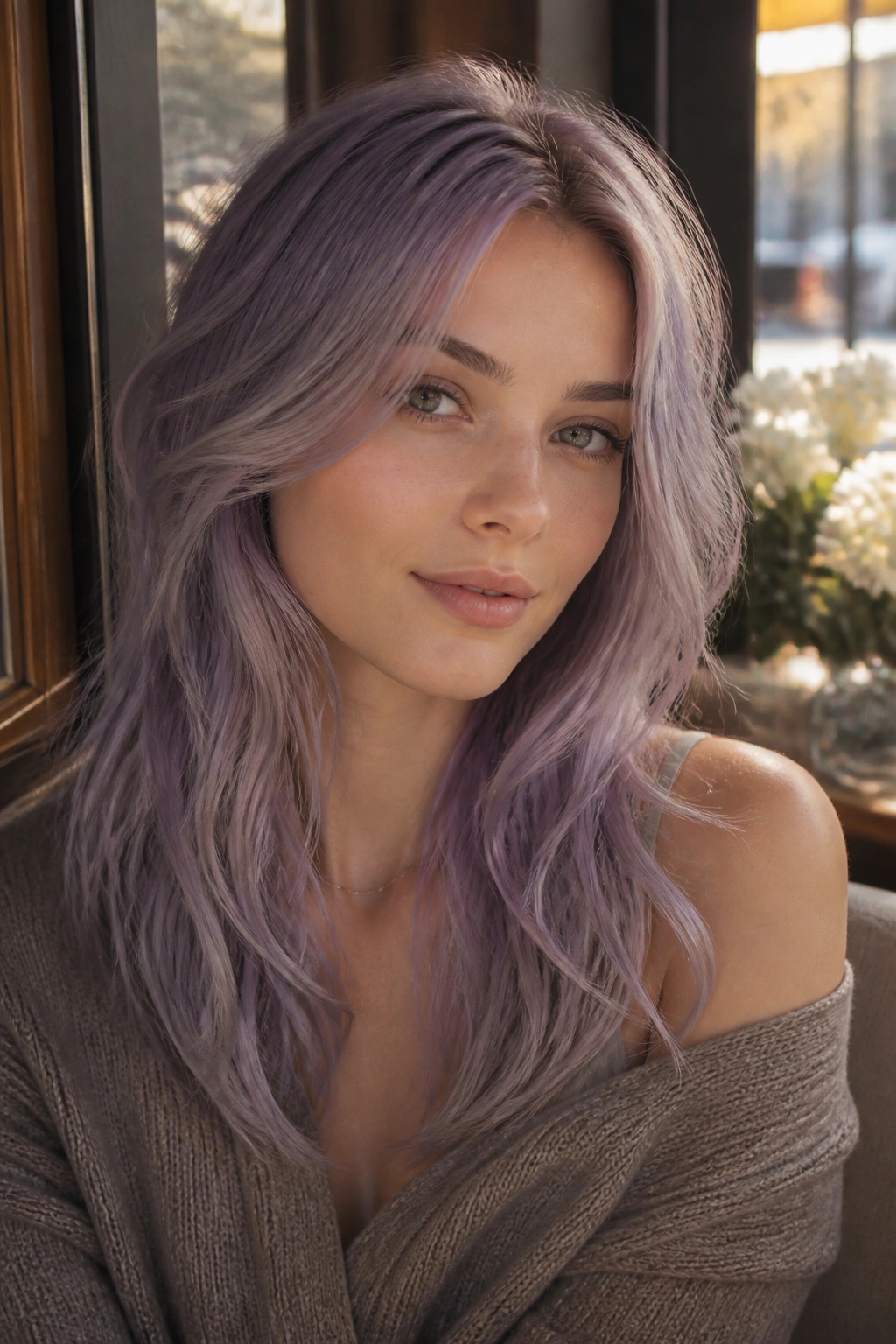
Smoky lavender is the shade I reach for when someone wants violet hair color but doesn’t want the color to shout from the next room. It’s softer, dustier, and much easier to wear with cool skin than a bright, candy purple.
What makes it work is the ash. A little gray in the formula takes the sweetness out of lavender and gives it that cool, matte finish that feels more modern than fairy-tale. On fair skin with pink undertones, that calmness is a gift. The face looks less flushed, the hair looks richer, and the whole thing feels deliberate instead of loud.
Ask for a beige-violet gloss over a pale blonde base if you want this shade to stay soft. If your hair is darker, a smoky lavender balayage can be smarter than all-over color, because you’ll get the mood without needing every strand to be lifted.
It’s the kind of shade that gets better when the fade starts. The washed version often looks almost better than the fresh one.
3. Violet Smoke Layers
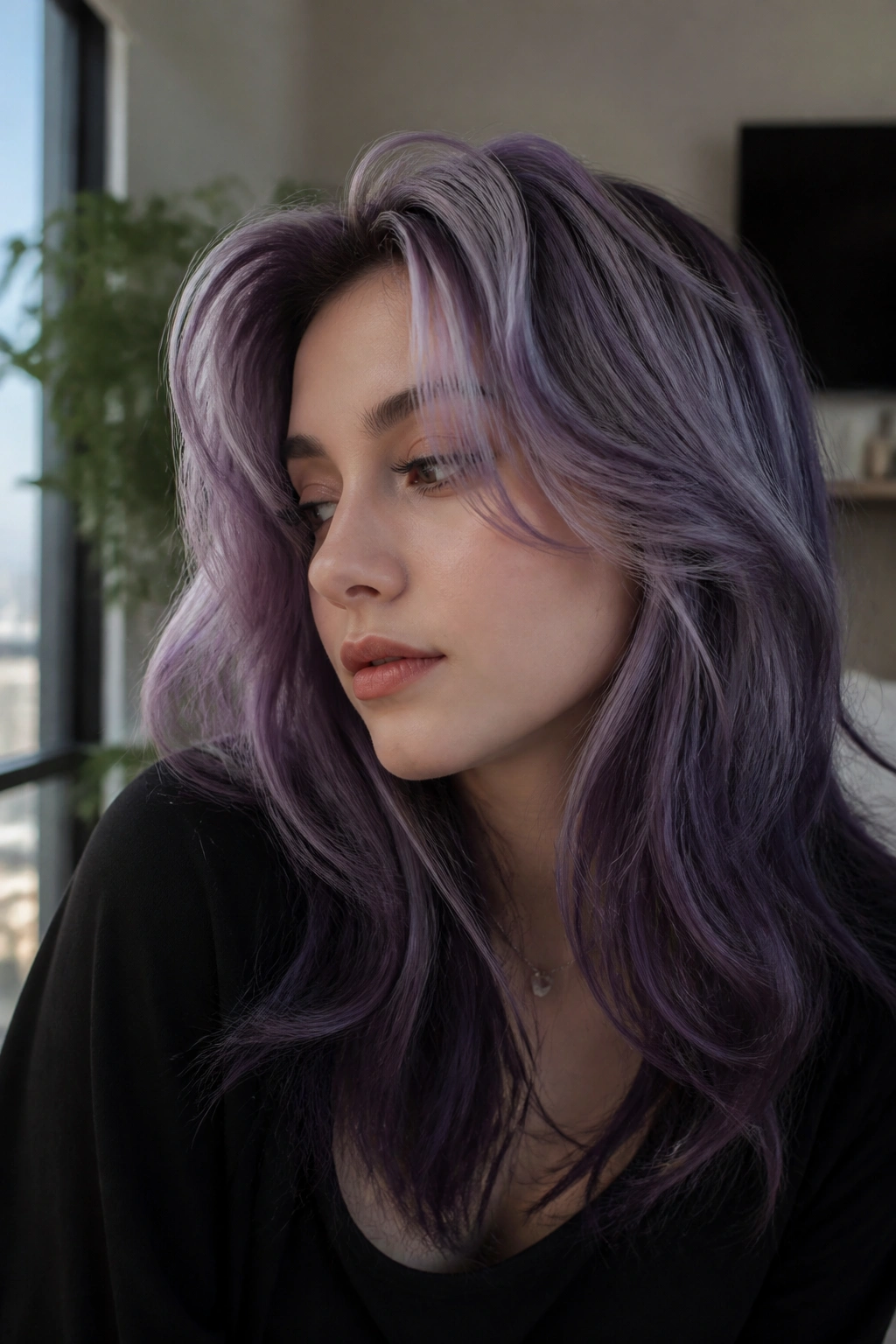
Want violet that looks polished instead of costume-like? Violet smoke layers do that job better than almost any other shade.
How to Ask for It
Tell your colorist you want a smoky violet ribbon effect with a soft root shadow and lighter pieces around the crown. The goal is movement, not a flat block of color. Those little shifts in tone make cool skin look clearer because the violet isn’t sitting in one heavy mass next to the face.
This works especially well on layered cuts, lobs, and collarbone-length hair. The shorter pieces catch the lighter violet notes, while the longer layers keep the darker smoke underneath. That contrast is doing a lot of heavy lifting.
- Best base: level 7 to 9, depending on how light you want the finish.
- Best finish: soft bend, not tight curls.
- Best upkeep: gloss refresh every 4 to 6 weeks.
- Best for: anyone who wants violet without full commitment to neon.
If you like hair that looks different in daylight than it does in a restaurant mirror, this one has a nice little surprise in it.
4. Blackberry Violet
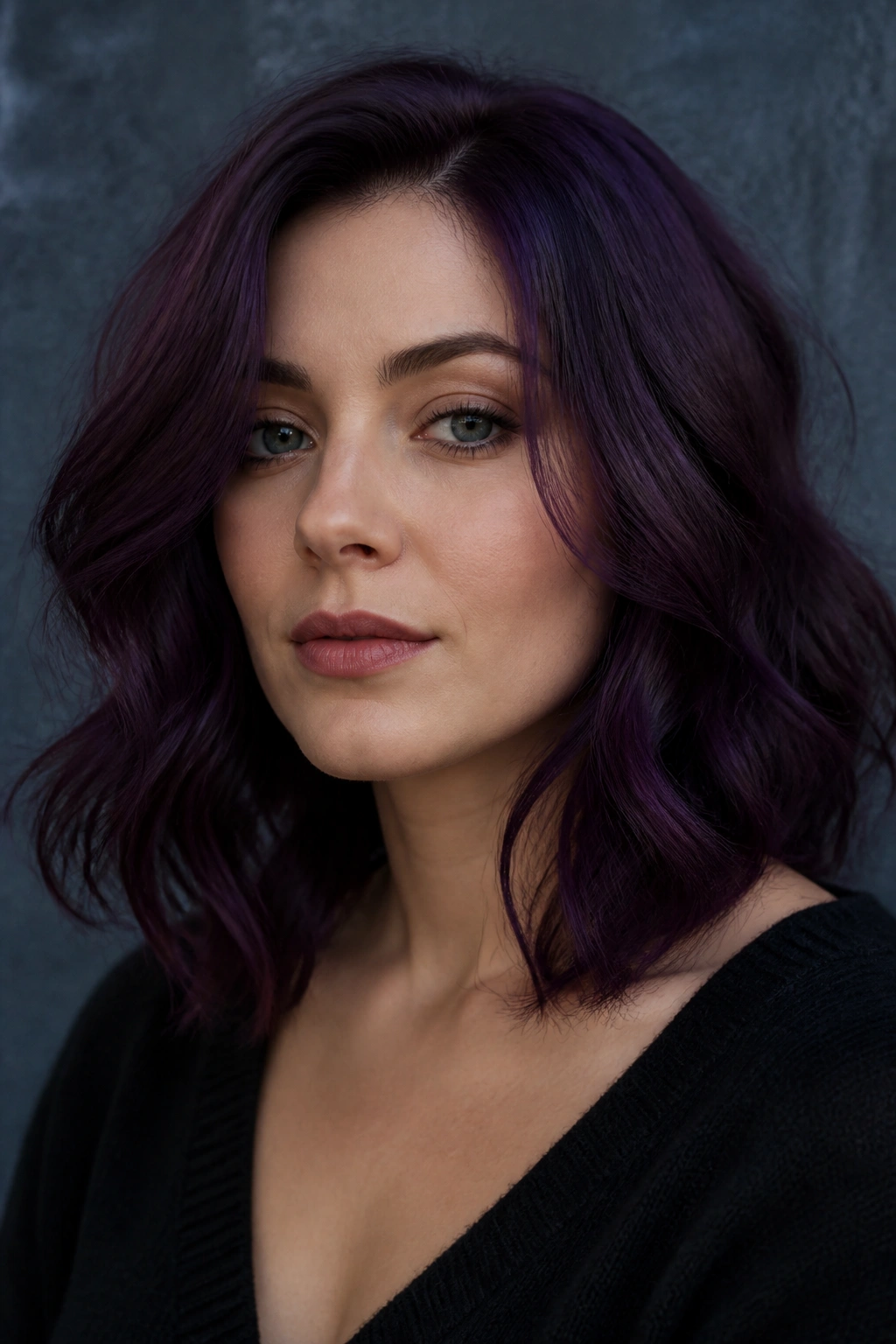
Blackberry violet is what happens when you want purple to feel rich, not sugary. It has a deeper berry note that sits beautifully against cool skin, especially if your complexion has pink or blue undertones.
Think of the color you’d see in a dark berry jam at the bottom of a spoon. Dark, glossy, slightly stained-looking. That depth gives the skin a cleaner edge, and it can make pale eyes look sharper too. It also hides regrowth better than pastel violet, which is a small mercy if you don’t want to live in the salon chair.
This shade looks especially good on shoulder-length cuts and waves. Straight hair can make it feel almost glassy; waves make the blackberry tones move. If you wear cool makeup — mauve blush, berry lipstick, soft silver shadow — the whole look comes together fast.
One warning: if your hair is damaged, blackberry violet can still look good, but it will expose rough ends. A gloss or bond-building treatment helps keep the finish shiny instead of flat.
5. Plum Balayage
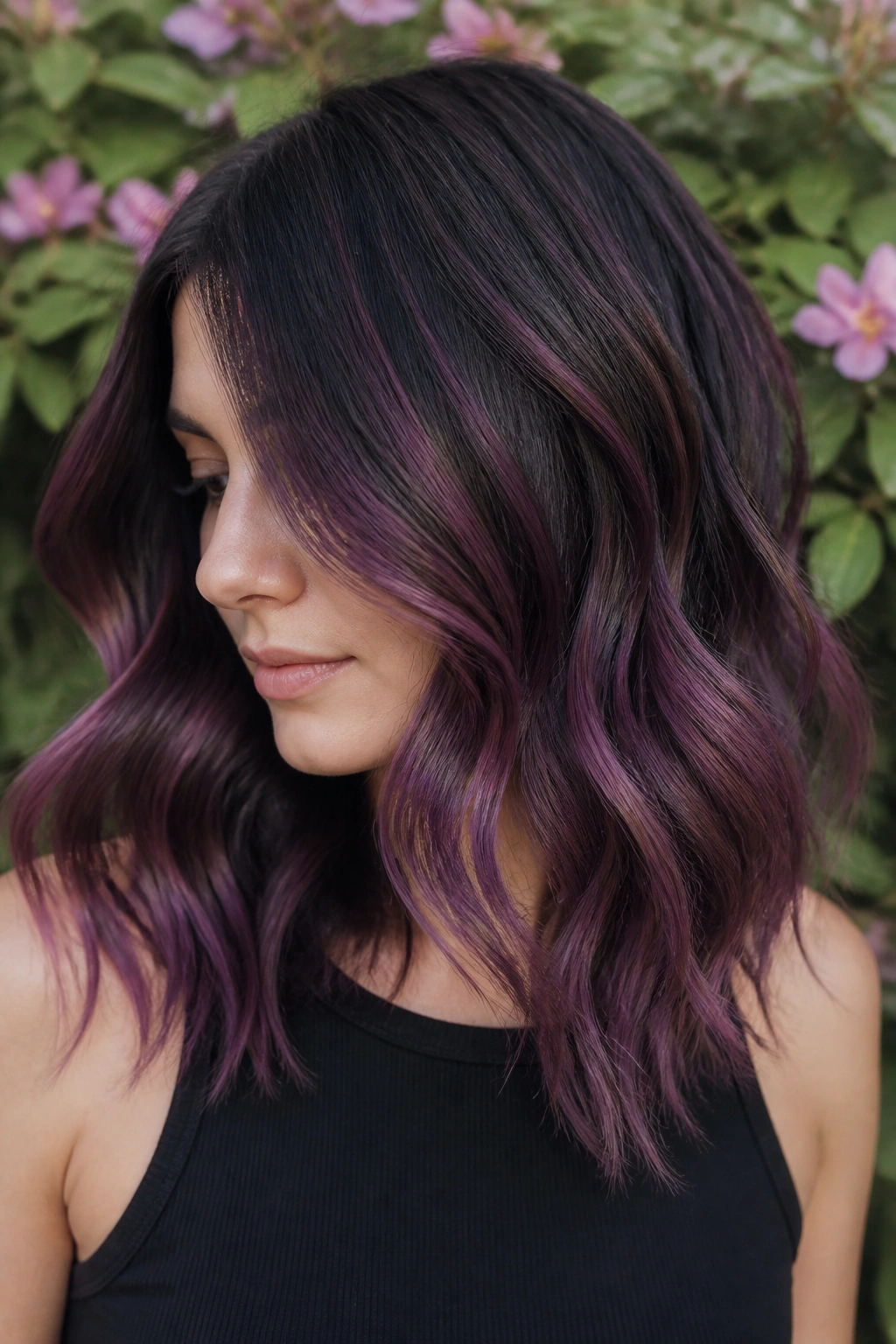
Plum balayage is the easy answer when you want violet hair color but don’t want every strand to be the same shade. The hand-painted placement gives you darker depth at the roots and those plum ribbons through the mid-lengths and ends, which looks far more natural than a full-on all-over dye.
It’s also kinder to your schedule. Because the plum sits in bands instead of covering the whole head, the grow-out is softer. That matters if your natural color is medium brown or dark blonde and you want the violet to feel like an accent instead of a full identity.
The best version uses a cool plum, not a red plum. You want the color to stay blue-leaning so it flatters cool skin instead of pulling warm. On wavy hair, it’s lovely. The bends of the wave catch the plum at different points, and that little movement keeps the hair from looking heavy.
A blunt cut can make plum balayage feel sharper. Longer layers make it softer. Both work.
6. Periwinkle Violet
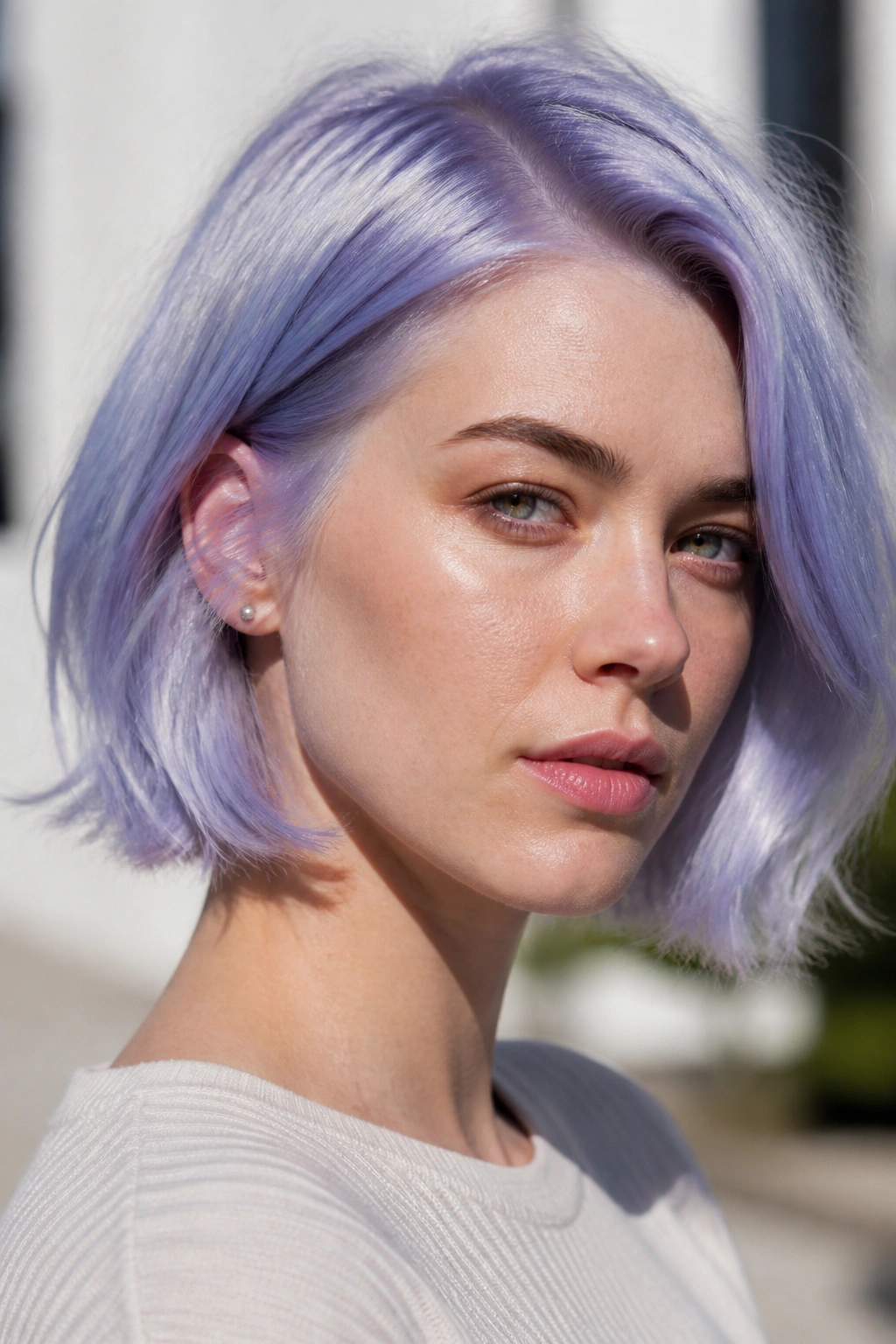
Periwinkle violet is the shade for people who like their color a little dreamy and a little strange. It sits between lavender and pale blue, which is exactly why cool skin tends to love it — the blue note keeps the shade crisp.
Unlike standard lavender, periwinkle has a coolness that feels almost icy in bright light. That can be gorgeous on very fair skin, especially when the face has pink or porcelain undertones. It also looks striking with blue or gray eyes, because the hair and eyes start echoing one another without matching too closely.
The catch is the base. Periwinkle needs a pale blonde canvas, usually around a level 10, or it turns cloudy. If your hair is darker, a few periwinkle face-framing pieces can give you the mood without forcing a full lift.
I like this shade on shorter cuts. A shag, a bob, or a soft pixie makes periwinkle feel intentional. On long hair, it can turn a little fairy-costume if the tone is too sweet. Keep it blue enough and it stays sharp.
7. Mulberry Gloss for Cool Skin Tones
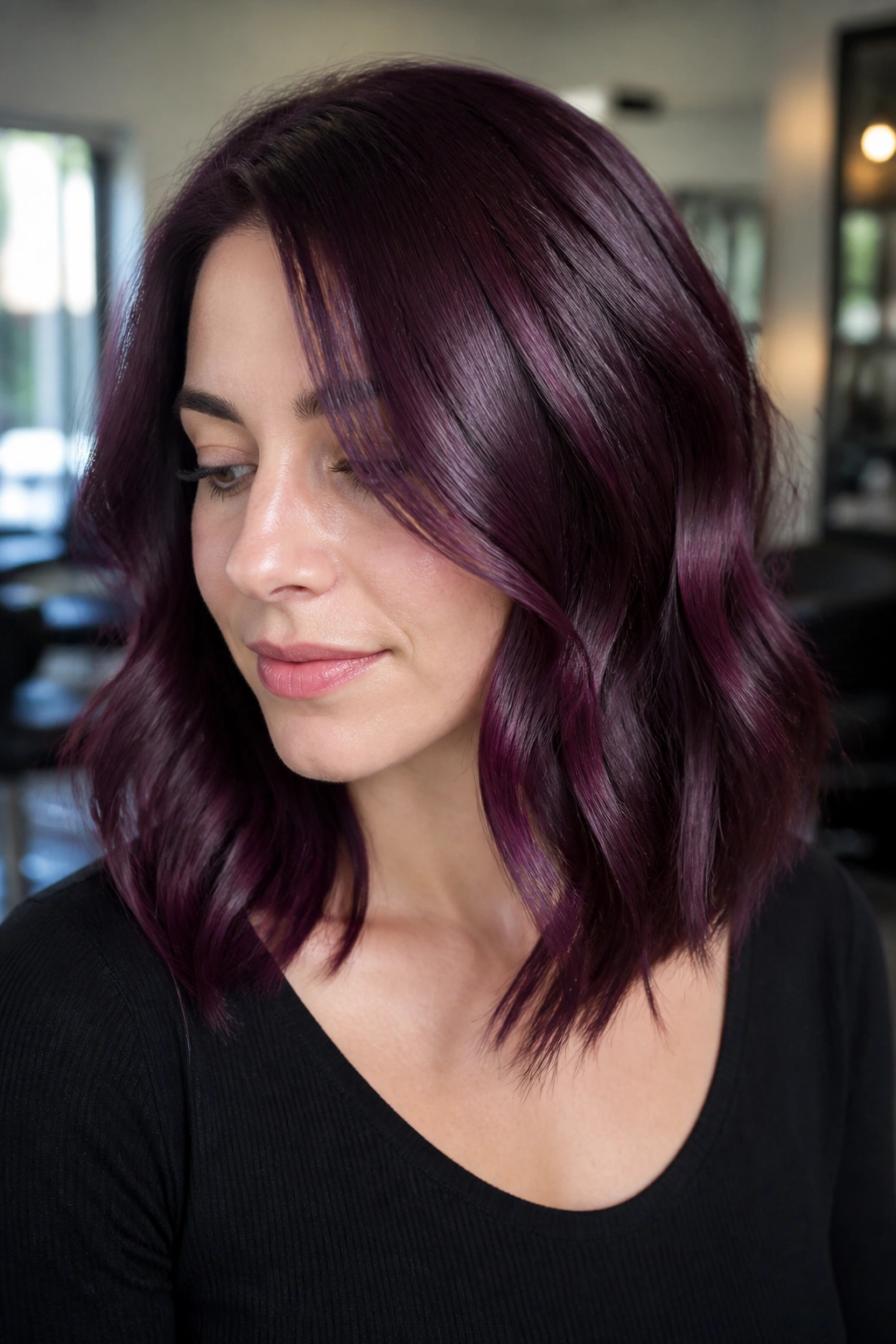
Mulberry gloss is one of those shades that looks richer than it sounds. It sits between berry and violet, with enough depth to flatter cool skin but enough softness to stay wearable.
Why a Gloss Works Here
A gloss gives mulberry a slick, reflective finish that makes the shade look expensive without needing a dramatic color change underneath. On cool skin, that reflective quality matters. It keeps the hair from looking flat against pink undertones and gives the face a little more brightness around the edges.
This is a smart choice if you already have medium brown, dark blonde, or cool brunette hair and don’t want full pre-lightening. The gloss can sit on top of your natural depth, which means less damage and less maintenance.
How to Wear It
- Best on shoulder-length cuts and long layers.
- Ask for a demi-permanent mulberry glaze rather than a permanent dye.
- Refresh every 4 to 8 weeks, depending on how often you wash.
- Pair it with cool neutral makeup: taupe, mauve, soft berry.
My take: if you want violet but hate obvious regrowth, this is one of the smartest places to start.
8. Silver-Violet Melt
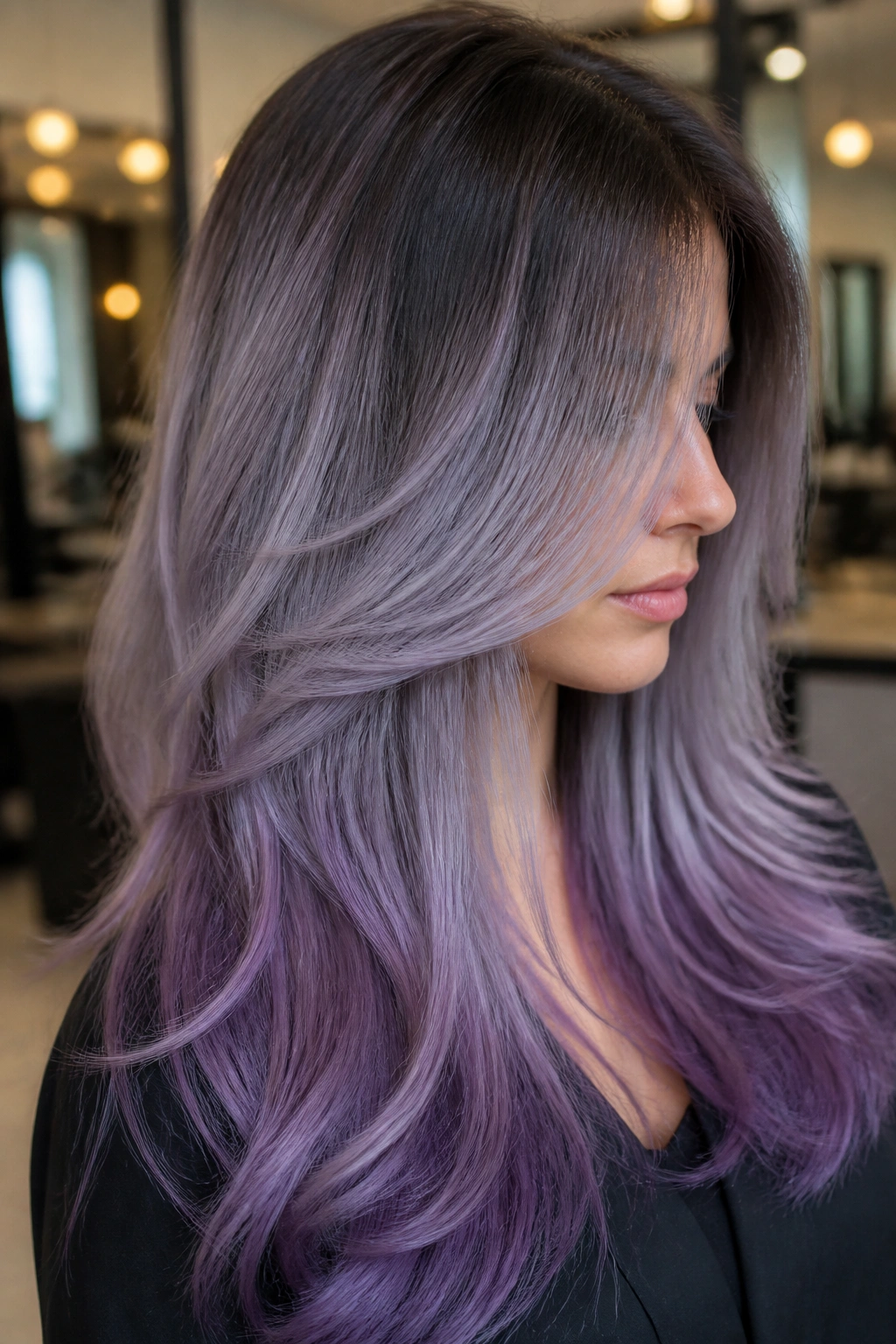
A silver-violet melt gives you a cool, expensive-looking gradient without a hard line anywhere. The roots stay smoky, the middle goes lavender-silver, and the ends catch a brighter violet. Done well, it looks like the color moved through the hair instead of sitting on top of it.
This shade is strongest on long layers, curls, or waves. Straight hair can still wear it, but the blend has to be clean or the melt looks like three separate dyes. The best version uses a pale silver-violet at the top and a slightly deeper violet at the ends so the eye has somewhere to travel.
It’s also forgiving if you like to stretch salon visits. The root area stays muted, so the grow-out is softer than a pure pastel. You still need toning, though. Silver fades quickly, and once the silver goes dull, the whole melt loses its crispness.
A bond builder helps here, not because the color is fragile in theory, but because the lift needed for silver-violet can be rough on the hair. The blend looks much better on smooth, healthy ends.
9. Orchid Violet
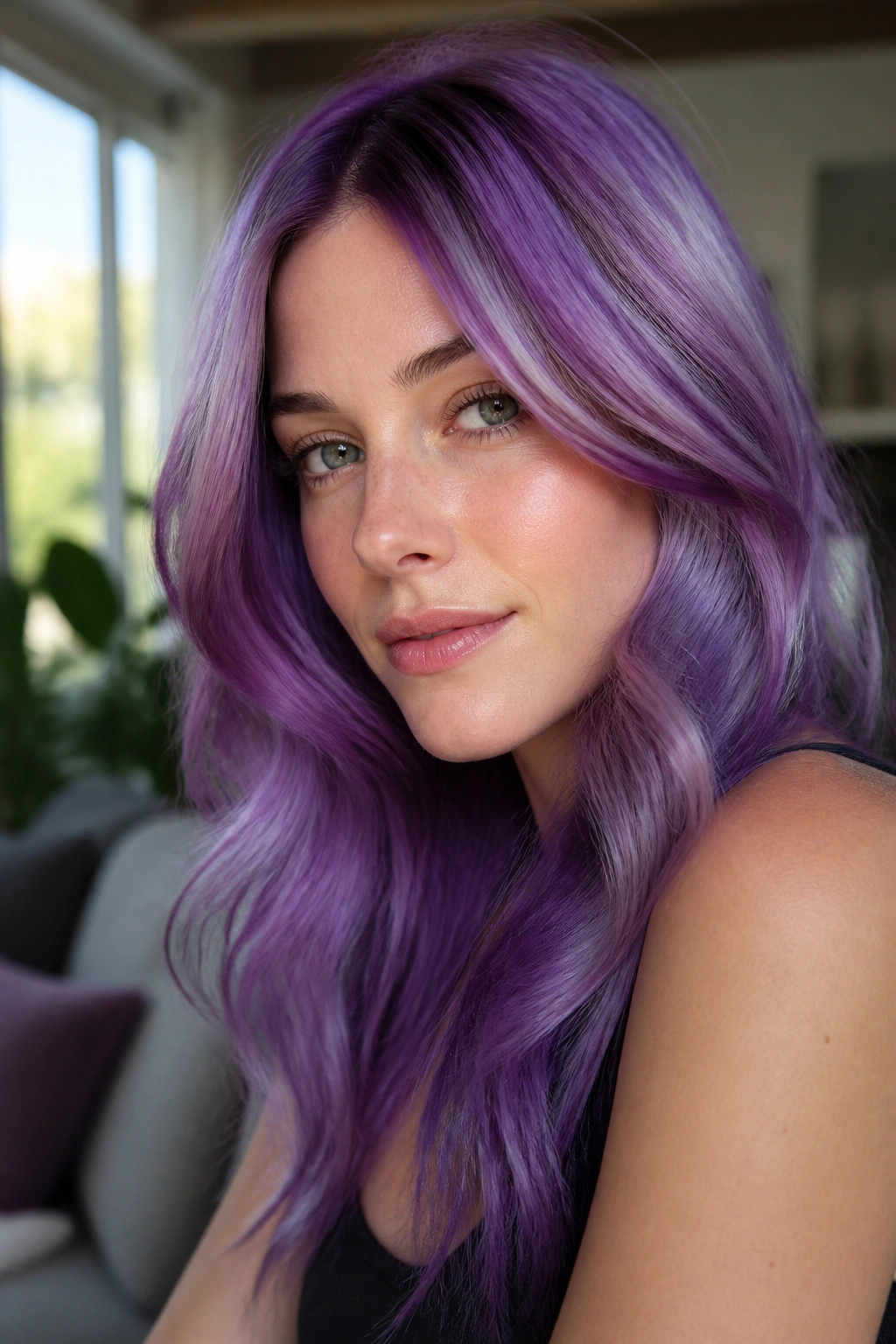
Orchid violet is the louder cousin in this group. It has that bright floral richness that feels vivid right away, and it works especially well on cool skin that can handle contrast.
The reason it flatters is simple: the shade is saturated enough to frame the face, but it stays in the cool family. That means it doesn’t fight rosy cheeks or blue undertones. Instead, it makes them look intentional. On medium to deep cool skin, orchid violet can look lush and clean. On very fair skin, it needs a little more caution, because the brightness can take over if the makeup and brows are too soft.
I like orchid violet best on glossy, healthy hair. The shine sells the color. If the hair is dry, the bright purple can start looking chalky, and that’s not a cute problem to fix later.
Keep the clothes simple here. Black, gray, icy blue, and silver all work. Orchid violet already carries enough personality. It doesn’t need help from your outfit.
10. Midnight Purple
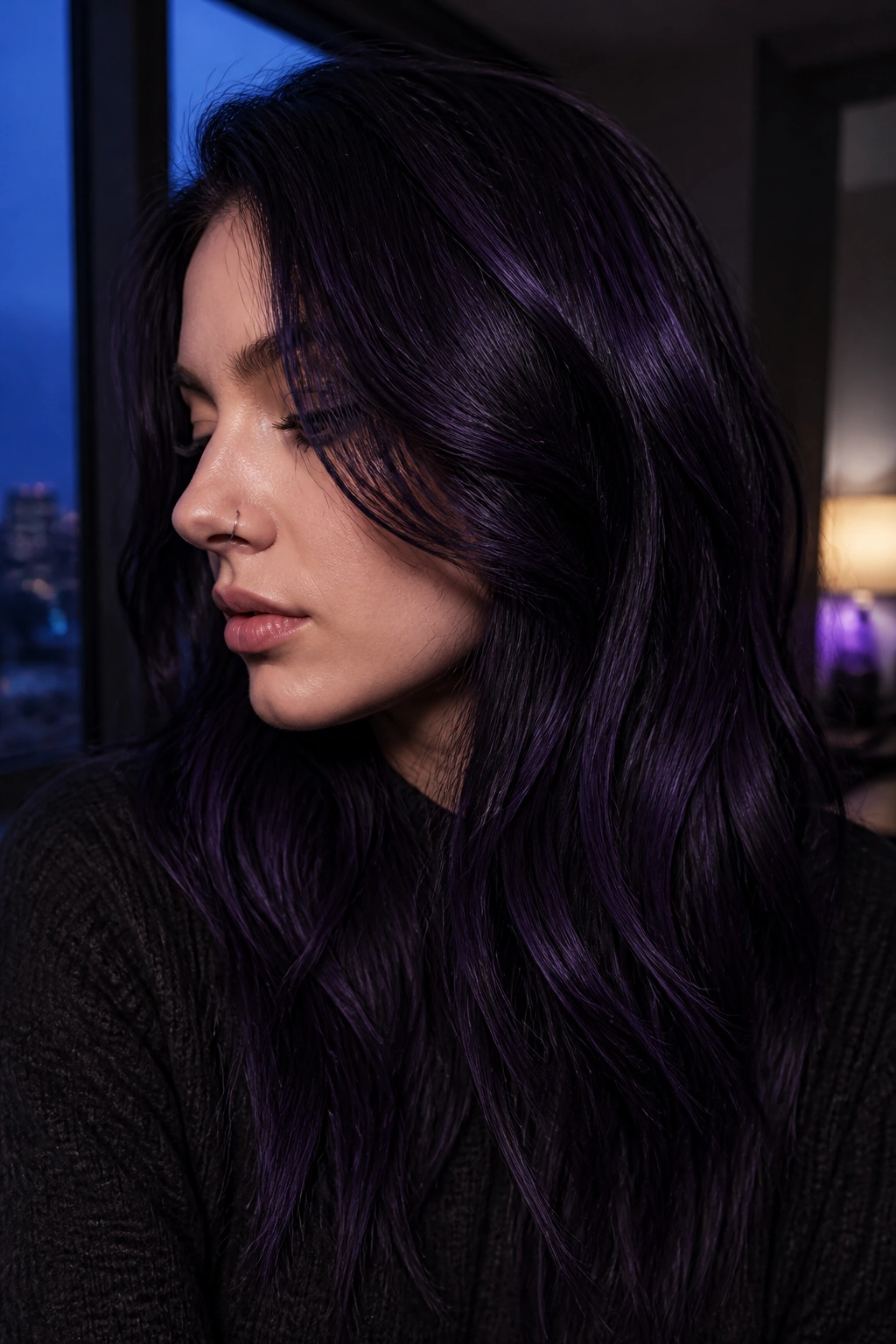
Midnight purple proves that dark hair can still count as vivid. Indoors, it reads almost black. Outside, you get that purple sheen that only shows when the light hits from the side.
That subtle shift is why it flatters cool skin so well. The darkness gives the face structure, while the violet reflection keeps the hair from feeling flat or muddy. If your natural hair is already dark brown or black, this is one of the easiest violet directions to wear because you may not need full bleach. A purple-black glaze or a blue-violet deposit can do a lot on a deep base.
What to Ask For
Tell your colorist you want a near-black violet with cool sheen, not a red-toned burgundy. That one detail changes everything. Red-black can look warm very quickly, while midnight purple stays crisp.
This shade is a strong choice for straight hair, sleek bobs, and long layers with a glassy finish. It’s quiet, but not shy.
11. Raspberry Violet
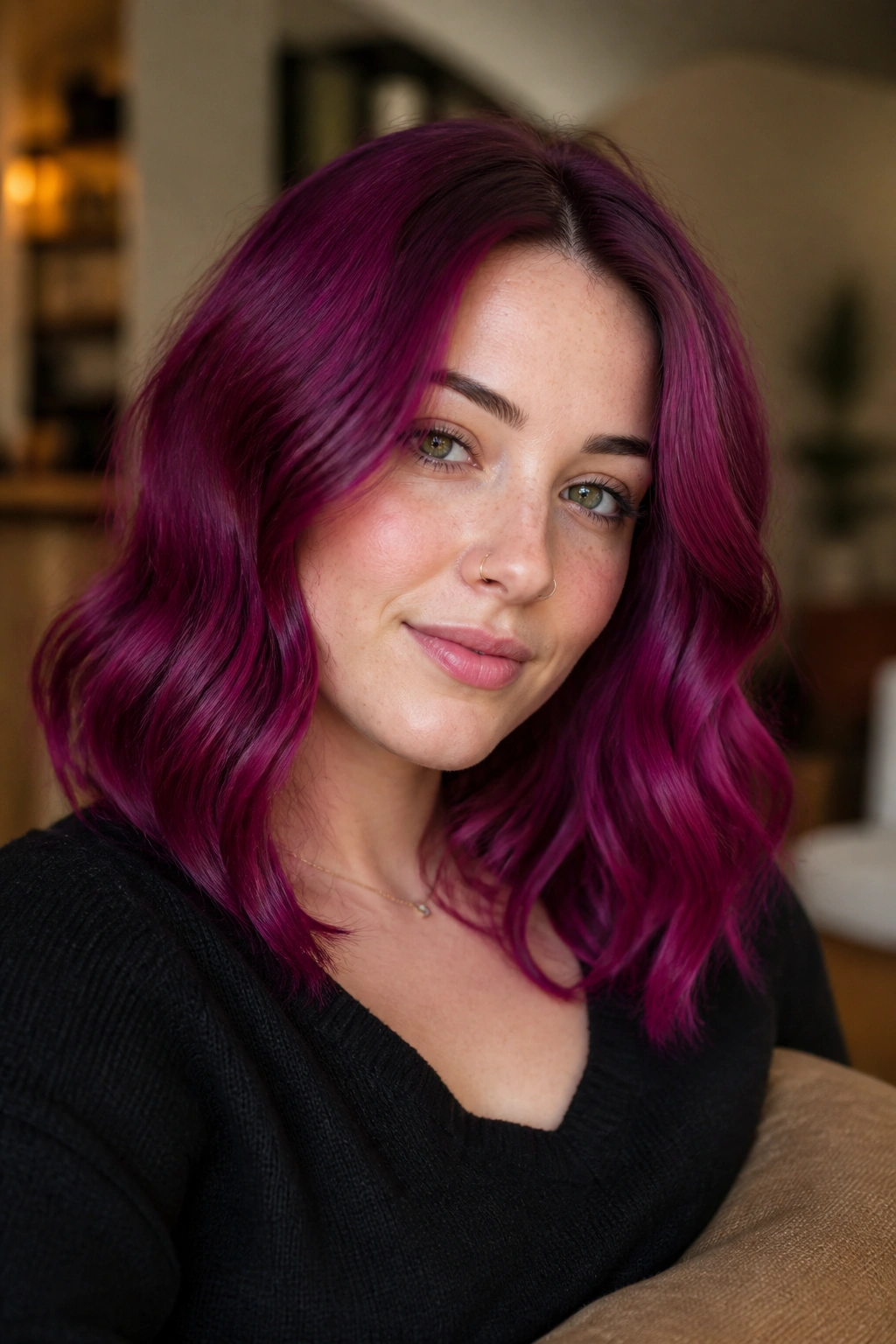
Raspberry violet sits right on the edge between berry and purple, and that edge is where it gets interesting. The red is there, but it should feel cool — more crushed fruit than cherry candy.
On cool skin, the right raspberry violet adds life without turning the complexion orange. That’s the key. You want the red note to be blue-leaning, so the shade feels rich rather than warm. If your skin has a lot of pink already, a softer raspberry violet is usually better than a bright one. Too much saturation can make the face look flushed in the wrong way.
This color looks especially good in dim light. It has depth, and that depth keeps it from disappearing. If you wear mauve lipstick or a berry stain, the hair and makeup will talk to each other in a nice, easy way.
A shoulder-length cut with loose bends is probably the sweetest spot for raspberry violet. It keeps the color playful. Too much volume can make it feel heavier than it needs to be.
12. Dusty Mauve Violet
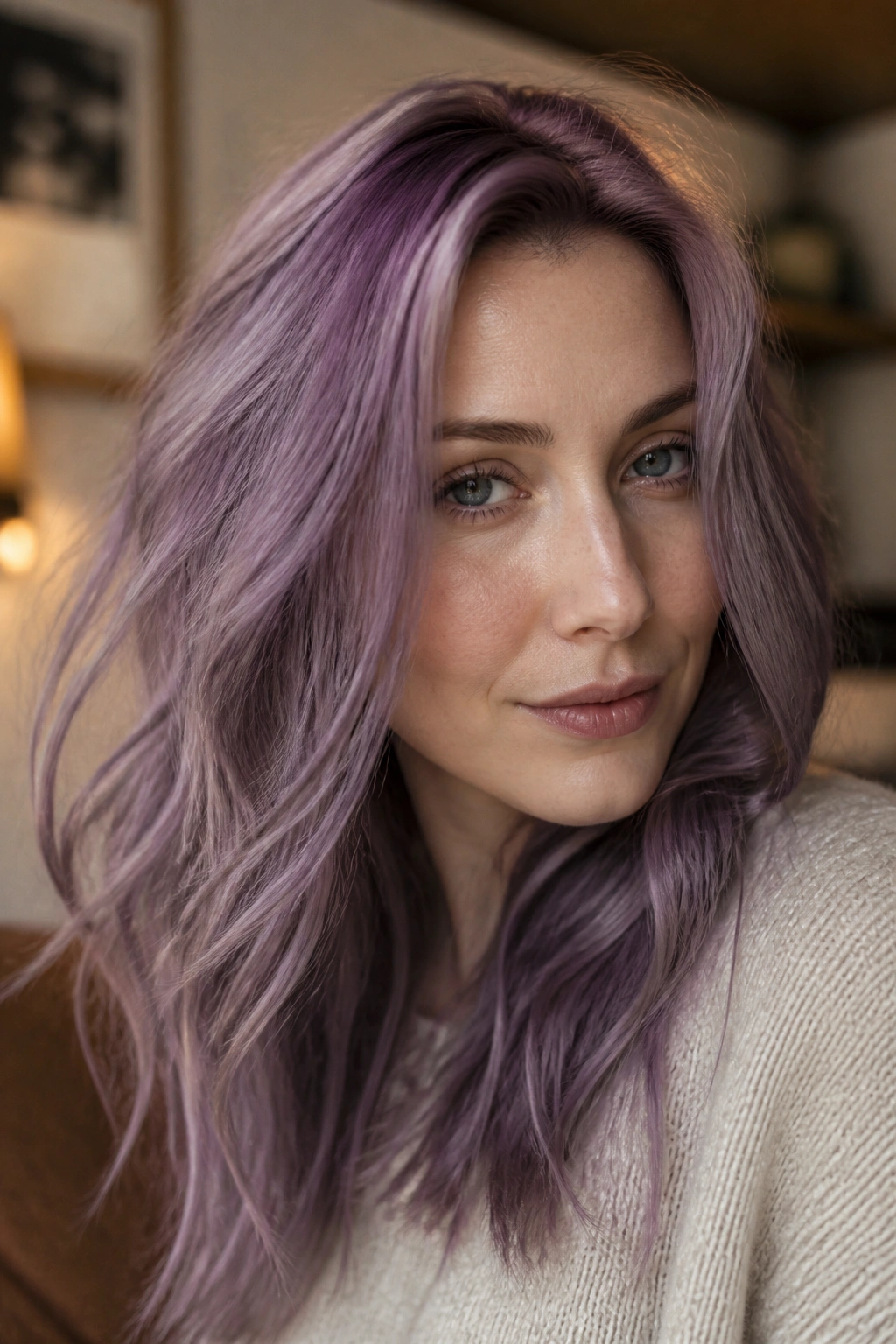
Dusty mauve violet is the shade for people who like muted color more than bright color. It has a powdery finish, a little like a faded purple rose, and it works beautifully on cool skin because it doesn’t fight with the face.
What I like about this shade is that it feels grown-up without being dull. The mauve softens the violet, while the cool base keeps it from looking warm or dusty in the bad way. On fine hair, it can create the illusion of more dimension because the tone change is subtle and close to the natural light reflection of the hair.
This is a smart pick if you wear matte makeup or softer clothes. Cream sweaters, charcoal coats, and silver accessories all sit nicely with dusty mauve violet. It also looks better on hair that has some movement — a layered cut, a curtain bang, or a soft shag.
If you want a vivid color that doesn’t scream for attention, this is one of the best quiet options in the whole list.
13. Neon Violet Peekaboo
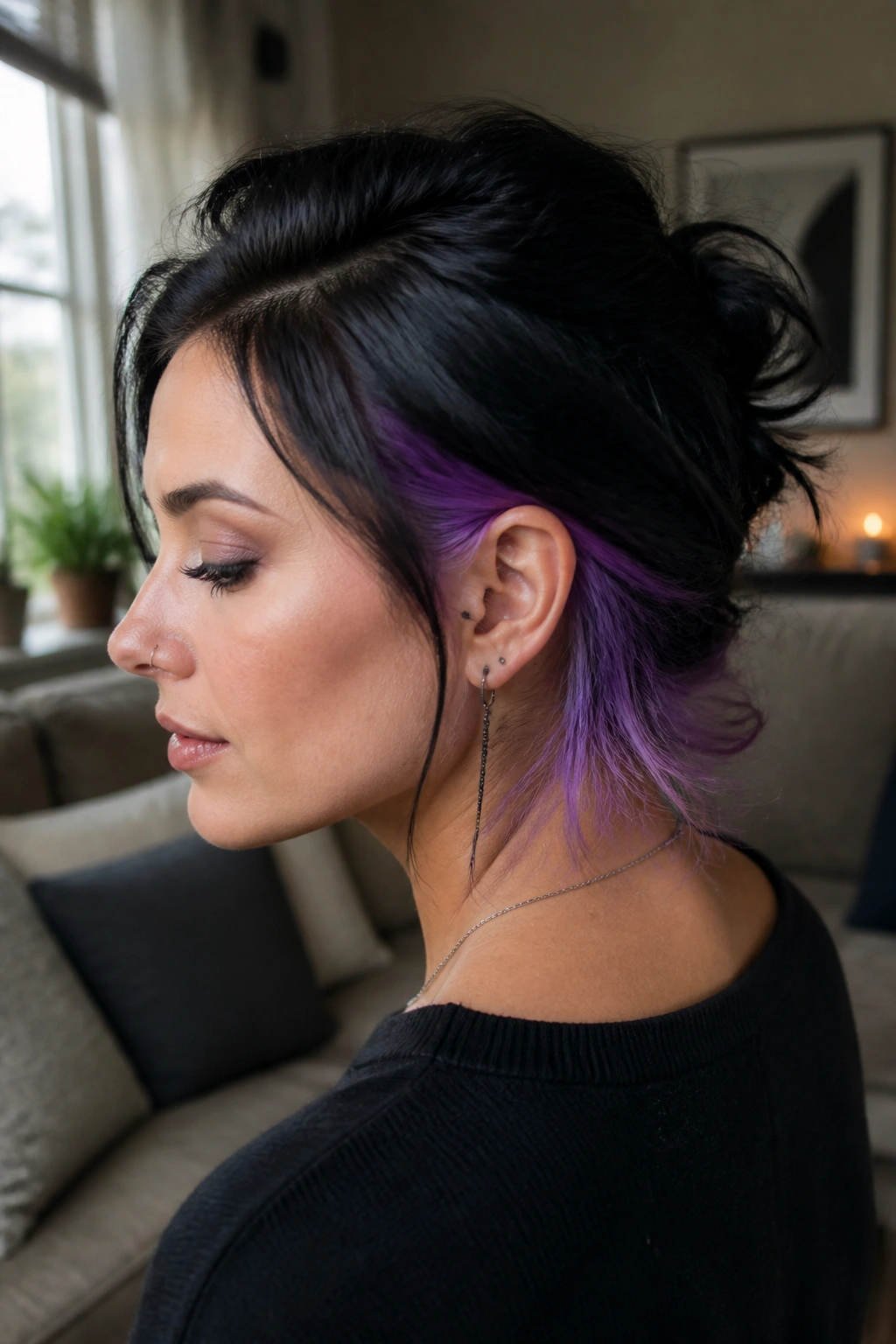
Neon violet peekaboo color is for the person who wants drama but doesn’t want drama everywhere. The bright panels hide under the top layer, then flash out when you tuck your hair behind an ear, wear it half-up, or move in wind.
That hidden placement makes it a clever match for cool skin. The top layer can stay dark or neutral, which keeps the face balanced, while the neon violet underneath brings the fun. If your job or life needs a calmer look most of the time, this is one of the easiest ways to keep both sides of yourself happy.
- Best placement: nape, under-layer, or just behind the temples
- Best haircuts: lobs, layered shags, long bobs
- Best styling move: half-up clips or a deep side part
- Best maintenance: color-safe shampoo and cool water rinses
You do need some pre-lightening for neon violet to pop. On dark hair, the color will look deeper and more muted. Sometimes that’s fine. Sometimes it’s the whole point.
14. Violet Money Piece for Cool Skin Tones
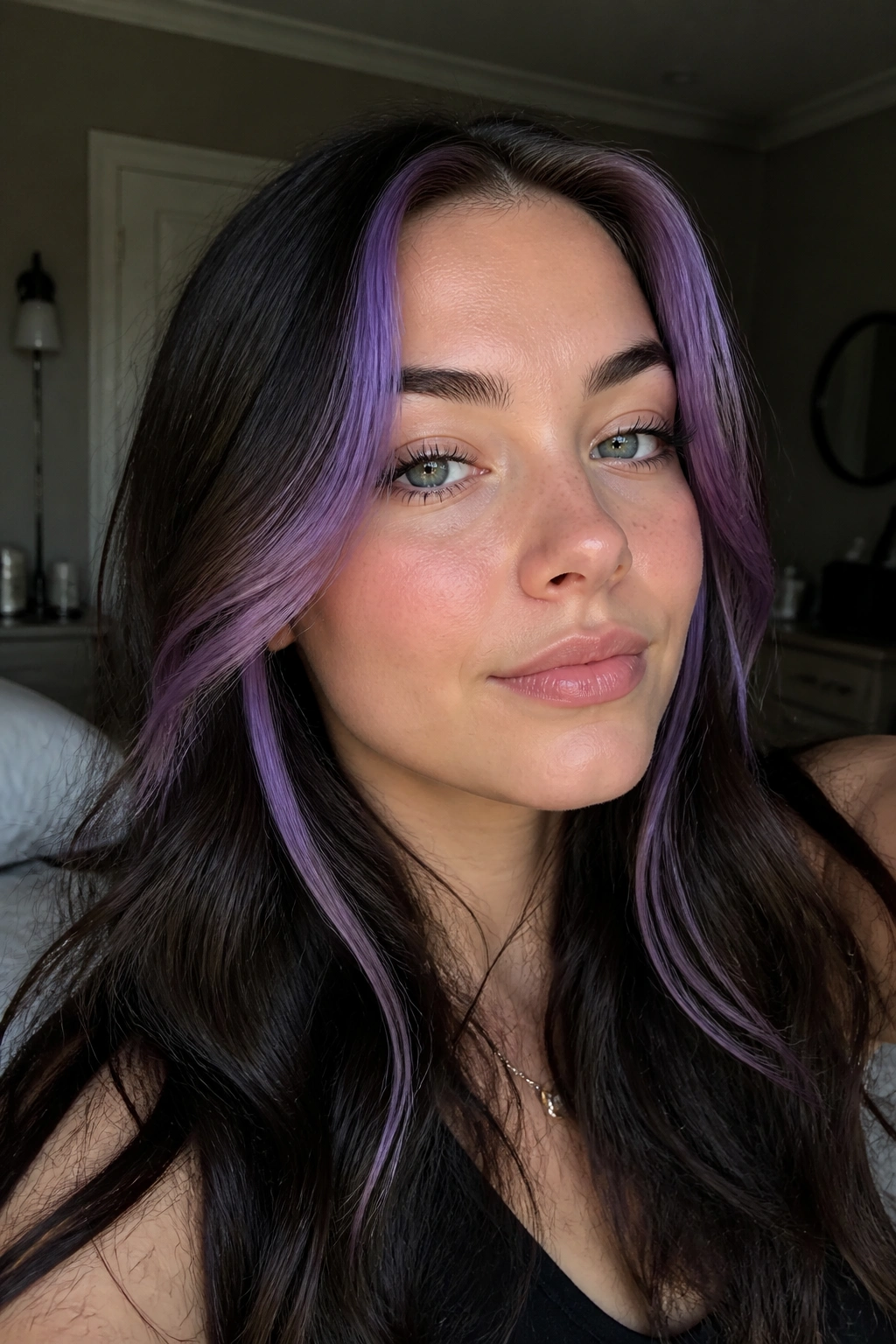
A violet money piece is the fastest way to test the color without coloring your whole head. Those face-framing streaks sit right where the light hits your skin, which is why they can make cool undertones look brighter and sharper.
Compared with full violet hair, the money piece is lighter on maintenance and easier to wear. Your base can stay brunette, black, or deep blonde, while the front pieces carry the color. That contrast is what gives the face more shape. It’s a smart trick for people who want a pop of violet hair color but don’t want to deal with every root grow-out.
The best version uses a cool violet, not a red-heavy purple. You want the streaks to feel crisp next to the face. If the rest of your hair is darker, even two slim pieces can do the job. Too many, and you lose the point.
I also like this on cool skin because it frames the cheekbones without needing heavy makeup. A little mascara and a cool blush is often enough.
15. Aubergine Bob
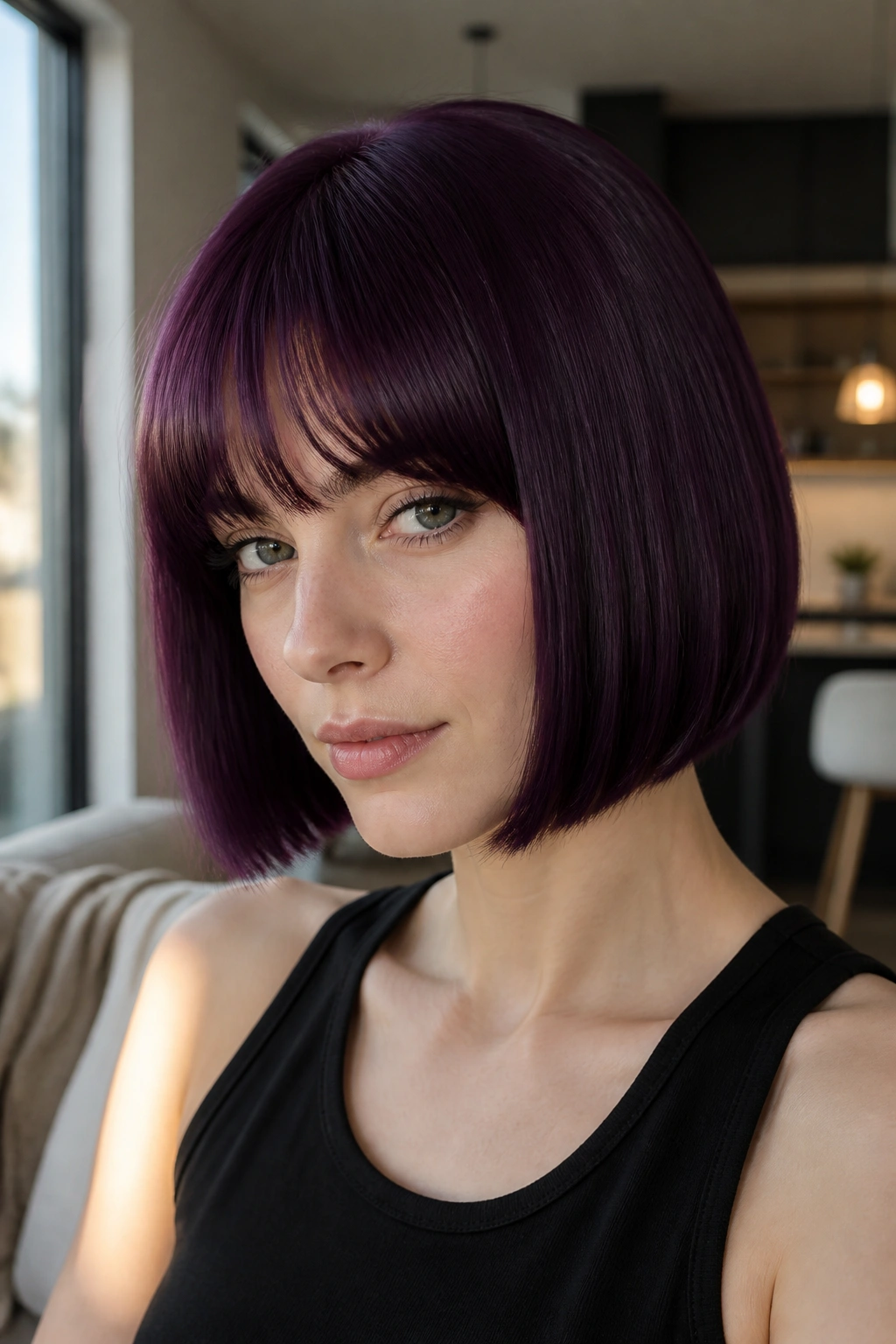
Aubergine on a bob is a sharp little combo. The color has the deep eggplant richness, and the bob gives it shape. Together, they feel clean and modern without being fussy.
This shade is especially good for cool skin with medium contrast. It’s dark enough to feel polished, but it still has that purple pull that keeps it from sliding into plain brown. On a blunt cut, aubergine looks almost tailored. On a French bob, it feels a bit more relaxed and artsy. Either way, the line of the haircut helps the color look intentional.
Shine matters here. Aubergine can go flat if the hair is dry, so a lightweight serum or a glossing spray helps a lot. You don’t need much. Just enough to make the ends reflect light and keep the color from swallowing the cut.
If you’re bored with black hair but not ready for bright purple, aubergine is a very good middle step. It has personality. It also behaves.
16. Grape-to-Black Ombré
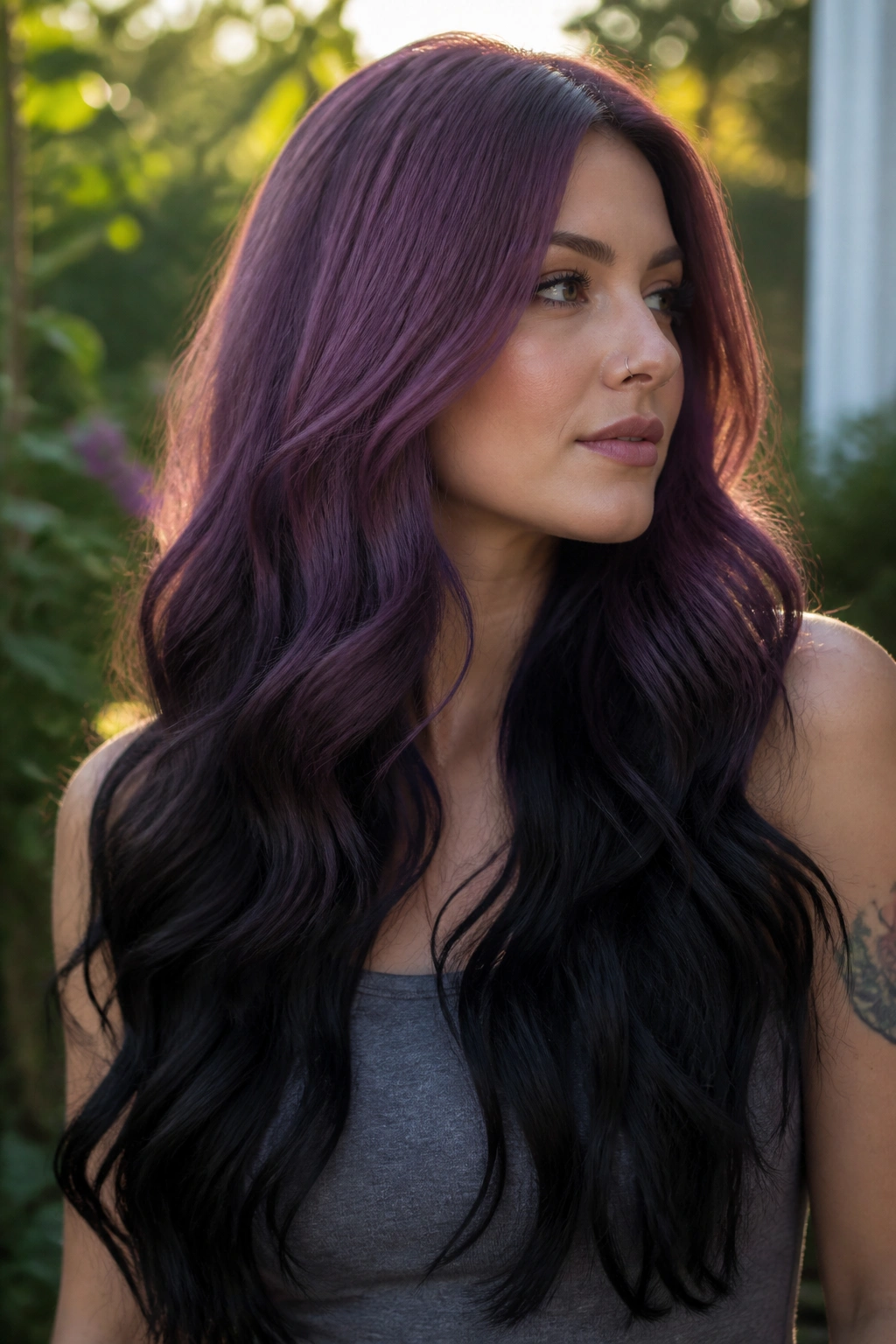
Grape-to-black ombré is a strong choice when you want violet to start bright and fade into something darker and more wearable. The top is a cool grape tone, and the ends slip into black or near-black, which gives the whole thing a moody edge.
How the Gradient Works
The top section usually needs the most lightening, especially if you want the grape color to stay clear instead of muddy. The ends can stay deeper, which saves some of the hair’s strength and gives the ombré a natural anchor point. The transition should be soft, not striped. If you can see a hard line, the blend needs more work.
This style is good on long hair because you have room for the color shift to breathe. Waves help too. They break up the line between grape and black so the finish looks smoother.
- Best for: long layers, thick hair, anyone who likes darker roots
- Best maintenance: tone the lighter top section every 4 to 6 weeks
- Best styling product: a light shine cream, not a heavy oil
This one feels dramatic without being needy. I like that.
17. Blue-Violet Black
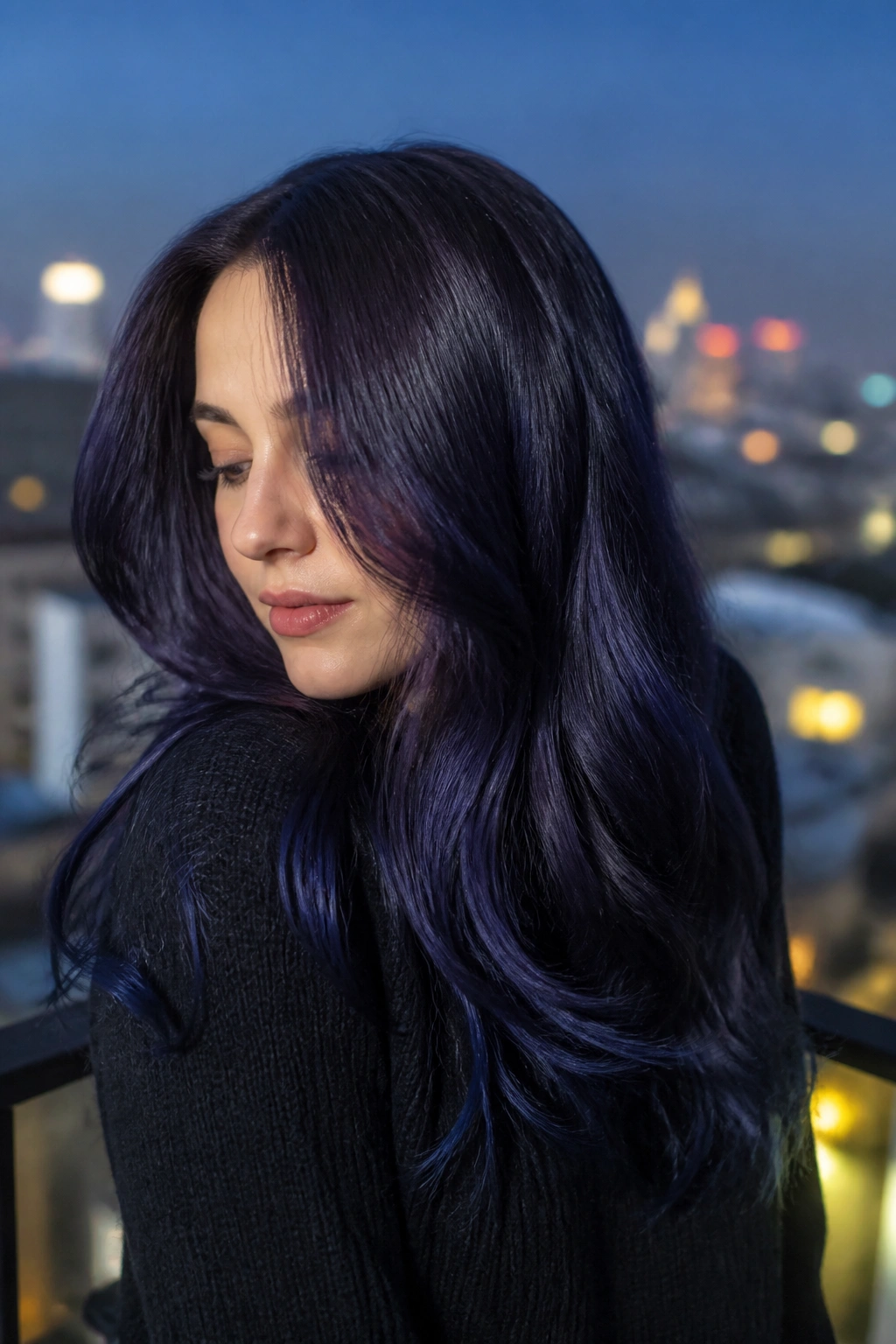
Blue-violet black is for people who want dark hair that still flashes purple in sunlight. Indoors it can look like a sleek black or charcoal. Outside, the blue-violet edge shows up and gives the hair a cool shimmer.
That blue cast is why it suits cool skin so well. It keeps the color from reading warm or brown. If your skin has pink or neutral-cool undertones, the shade can make the complexion look cleaner and the eyes look a little brighter. It’s also a good option if you want vivid color but need it to stay low-key in formal settings.
You can often achieve this with a deposit-only formula on dark hair, which means less lift and less damage. On lighter hair, it may read more blue than black, so the base matters. A mid-depth brunette usually gets the best balance.
This is one of those shades that looks expensive when it’s shiny. Matte blue-violet black is a different story. Skip that.
18. Frosted Grape Ends
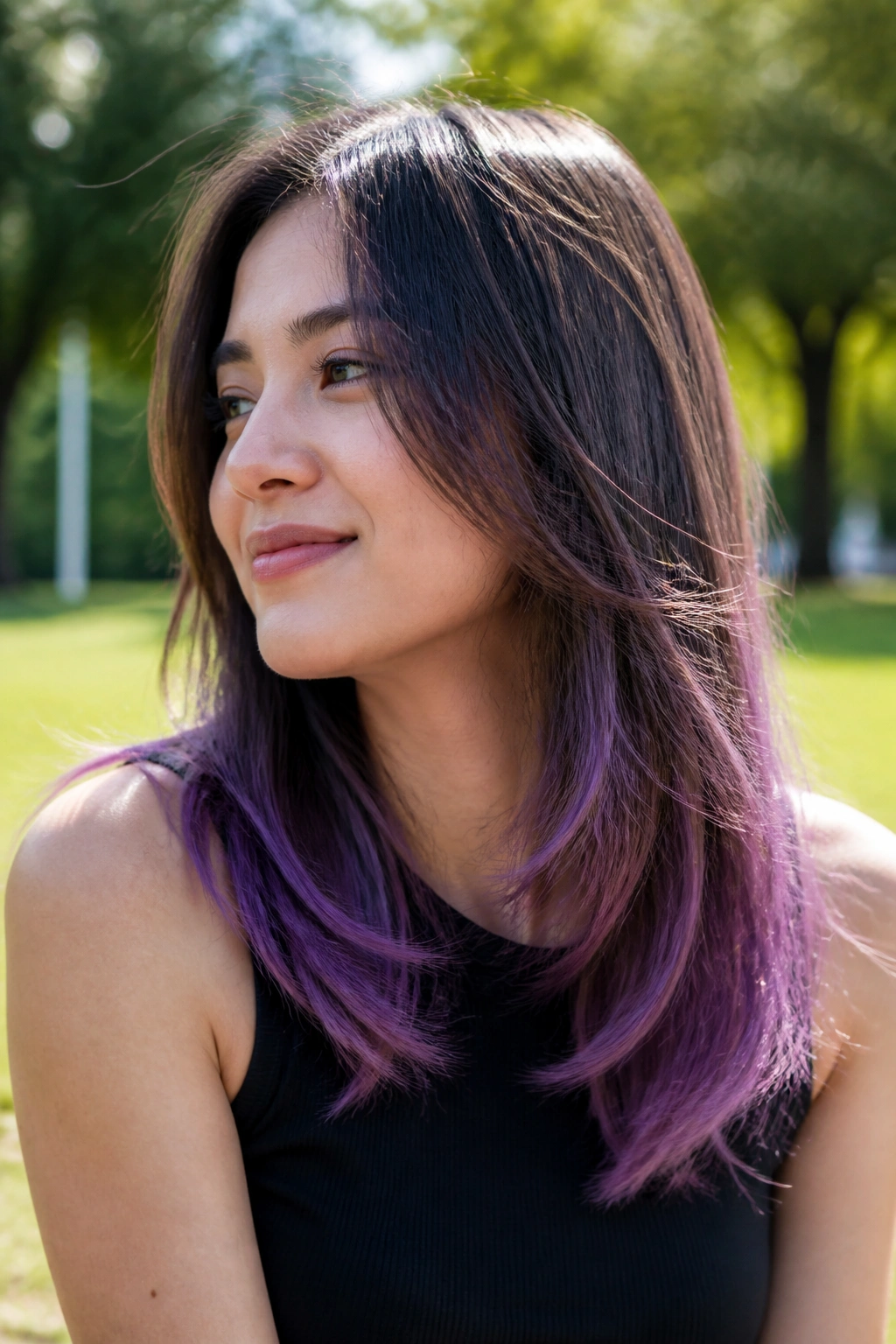
Frosted grape ends are a nice answer when you want violet but don’t want your whole head to carry the color. The top stays natural or softly toned, and the last few inches get that cool grape finish with a frosted edge.
How to Keep the Ends from Frying
The biggest mistake here is over-lightening the ends until they feel like straw. Don’t do that. A soft grape tone looks far better on healthy ends than on hair that snaps when you brush it. If your ends are already dry, trim first, color second. That order matters.
This look works especially well on layered hair, because the shorter pieces can stay natural while the longest pieces hold the frost. The result feels playful but controlled.
- Best base color: dark blonde, light brown, or pre-lightened ends
- Best tool: a wide-tooth comb for even color placement
- Best care: bond-building treatment once a week
- Best finish: soft curls or bends to show the gradient
If you want a lighter violet idea without committing to a whole pastel head, this is a smart compromise.
19. Charcoal Violet
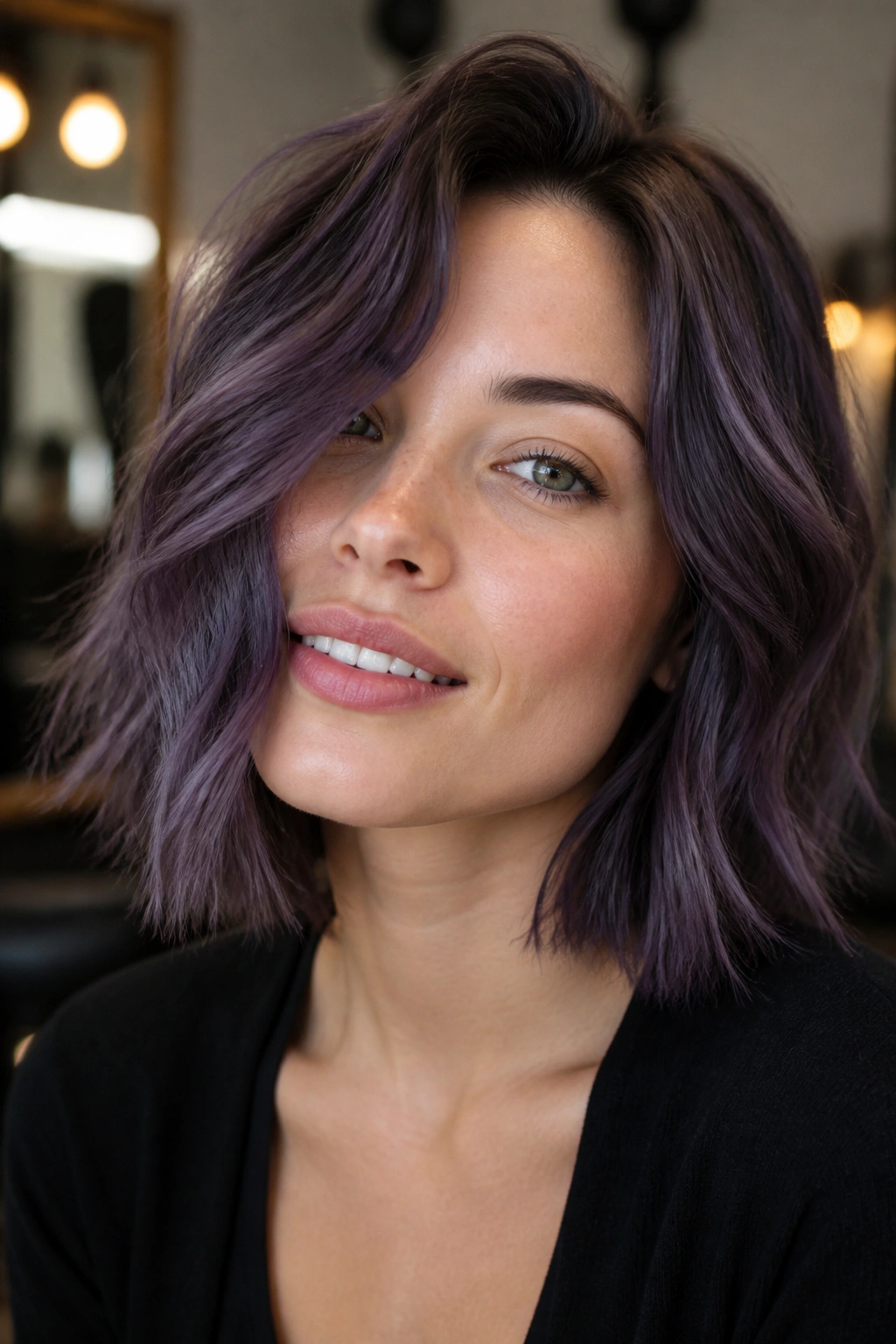
Charcoal violet is quieter than smoky lavender and less obvious than midnight purple. That middle ground is what makes it useful. The shade has a gray-violet cast that looks cool, sleek, and a little bit mysterious without tipping into flat brown.
It’s one of my favorite options for short cuts and textured lobs. The smoke in the color shows better when the hair moves, and the charcoal side keeps the finish grounded. On cool skin, it can be especially flattering because it doesn’t compete with your undertones. It just sits there and makes them look more even.
This shade is a good fit if you want violet without the upkeep of a light pastel. You can keep it on darker hair, or use a gray-violet gloss to mute an existing brighter purple. That makes it easier to live with between appointments.
If your style leans minimalist — black tees, silver hoops, clean lines — charcoal violet feels like a natural extension of that. No fuss. No sugar.
20. Soft Amethyst Root Shadow
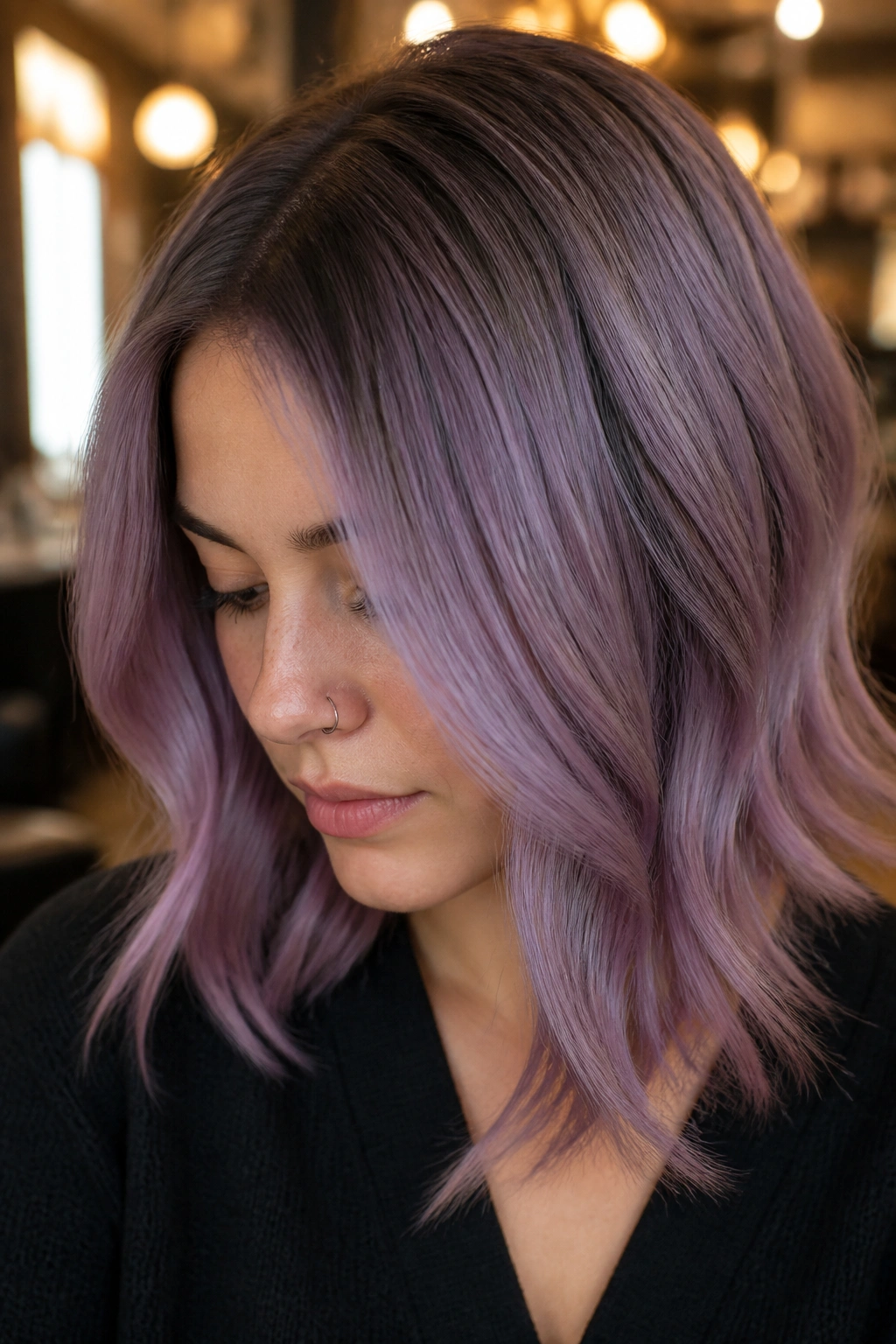
Soft amethyst with a root shadow is the easiest version to keep looking good for longer. The top stays a shade or two deeper, then the amethyst lightens through the mid-lengths and ends. That soft root makes the whole thing easier to wear if you have a busy week or just do not want visible regrowth staring back at you.
It’s also one of the most flattering violet hair color ideas for cool skin because the root shadow gives your face a little frame without darkening it too much. The amethyst itself stays bright enough to read as color, but not so pale that it turns chalky. On cool undertones, that balance matters.
I like this on medium-length hair and long layers. The movement helps the root fade into the amethyst. On a one-length cut, the shadow can look a little more obvious, which may be fine if you want the contrast. If you want the gentlest possible grow-out, keep the root difference subtle.
A good violet shade does not need to be loud to work. On cool skin, the best one is often the shade that makes your face look clearer before anyone notices the color itself.
