



Blue hair can flatter a round face in a way people often miss at first glance. The trick is not the shade alone. It’s where the blue sits, how dark the roots stay, and whether the brightest pieces land beside your cheeks or fall farther down the length of your hair. Put a bright electric band at cheek level and your face reads wider. Pull the color lower, soften the front, or keep the root deeper, and the whole shape starts looking longer and cleaner.
That’s why the best blue hair color ideas for round faces are usually the ones that work with vertical lines, not against them. Collarbone-length cuts, side parts that shift the eye, curtain bangs that split in the middle, face-framing pieces that start below the cheekbone — those details matter more than people think. Blue is a big family, too. It can be inky and quiet, smoky and soft, icy and bright, or somewhere in the middle with teal or violet in the mix.
Round faces don’t need to be “fixed.” They just need a little shape control. That can mean darker depth near the temples, lighter ends that pull the eye downward, or a cut that keeps the volume off the sides of the face. Blue is one of the best colors for that because it gives you so much range without looking flat. A good blue job has movement. A bad one looks like a helmet.
Start with the shades that do the shaping for you. Navy, denim, midnight, and soft cobalt are where the smartest choices usually begin.
1. Deep Navy Blue Lob for Round Faces
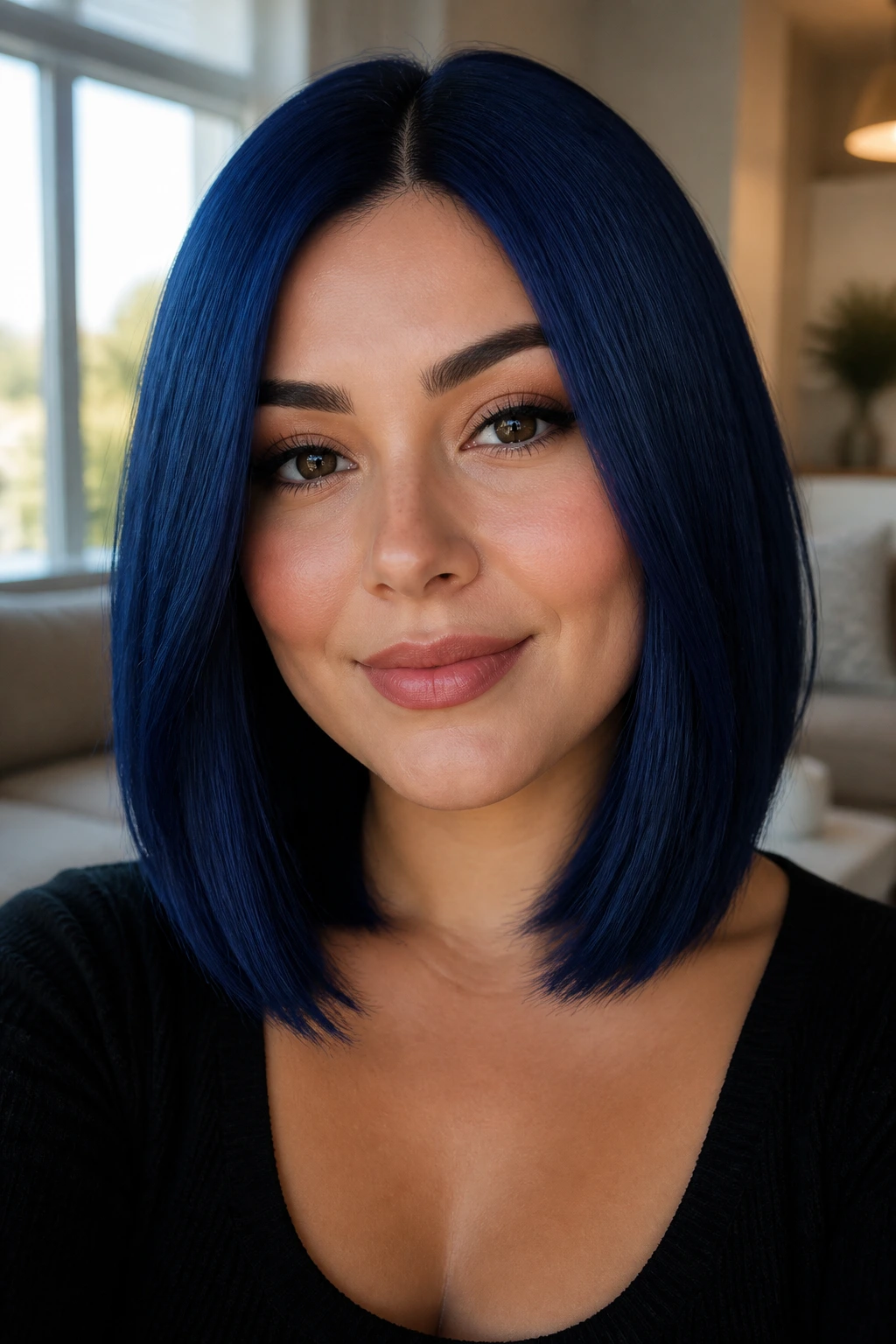
Deep navy is the shade I reach for when someone wants blue but does not want the color to shout from across the room. It’s dark enough to slim the outline of the face, and on a lob that hits at the collarbone, it makes the whole shape read longer. That length matters. A lob that ends at the chin can sometimes widen a round face. One that sits lower gives the eyes somewhere to go.
Why It Works
Navy blue acts almost like a shadow, especially around the cheeks and jaw. That shadow effect is doing real work here. Pair it with a center part, or even a part shifted just 1/2 inch off center, and the face gets a cleaner vertical line without looking severe.
- Best cut: a blunt or slightly beveled lob at collarbone length
- Best finish: sleek blowout or soft bend at the ends
- Best upkeep: gloss every 4 to 6 weeks as the navy softens into denim
- Best texture: straight to lightly wavy hair
Pro tip: keep the front pieces just a touch longer than the back. Tiny change. Big payoff.
2. Electric Blue Money Pieces Around the Cheekbones
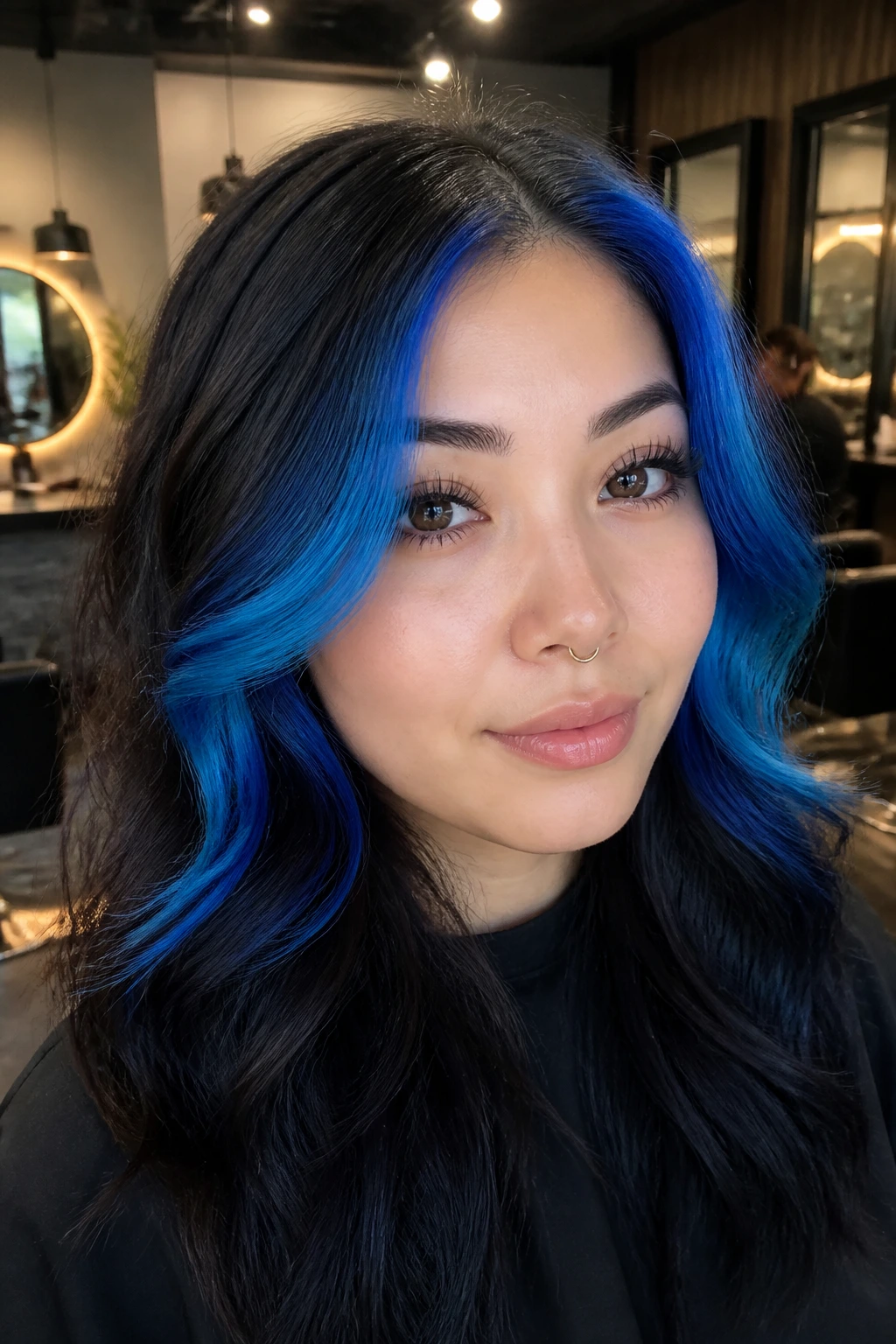
This is the loudest choice in the group, and I mean that in a good way. Electric blue money pieces can look sharp on a round face when they’re narrow, deliberate, and placed with restraint. You want them to skim the face, not wrap around it. Keep the brightest part just outside the cheekbone line and let the rest of the hair stay darker.
A dark brunette, black, or deep blue base gives those front panels a stronger frame. The contrast pulls the eye up and down instead of side to side. That’s the whole game with round faces. Direction matters. Shape matters more.
The placement also keeps the color looking expensive instead of stripey. Broad chunks can make the face look fuller. Fine, clean panels do the opposite. If your hair is wavy or curly, ask for the money pieces to start lower, around the mouth or chin area, so they don’t puff out too much around the cheeks. Sharp. Clean. Intentional.
3. Midnight Blue Curtain Bangs for Round Faces
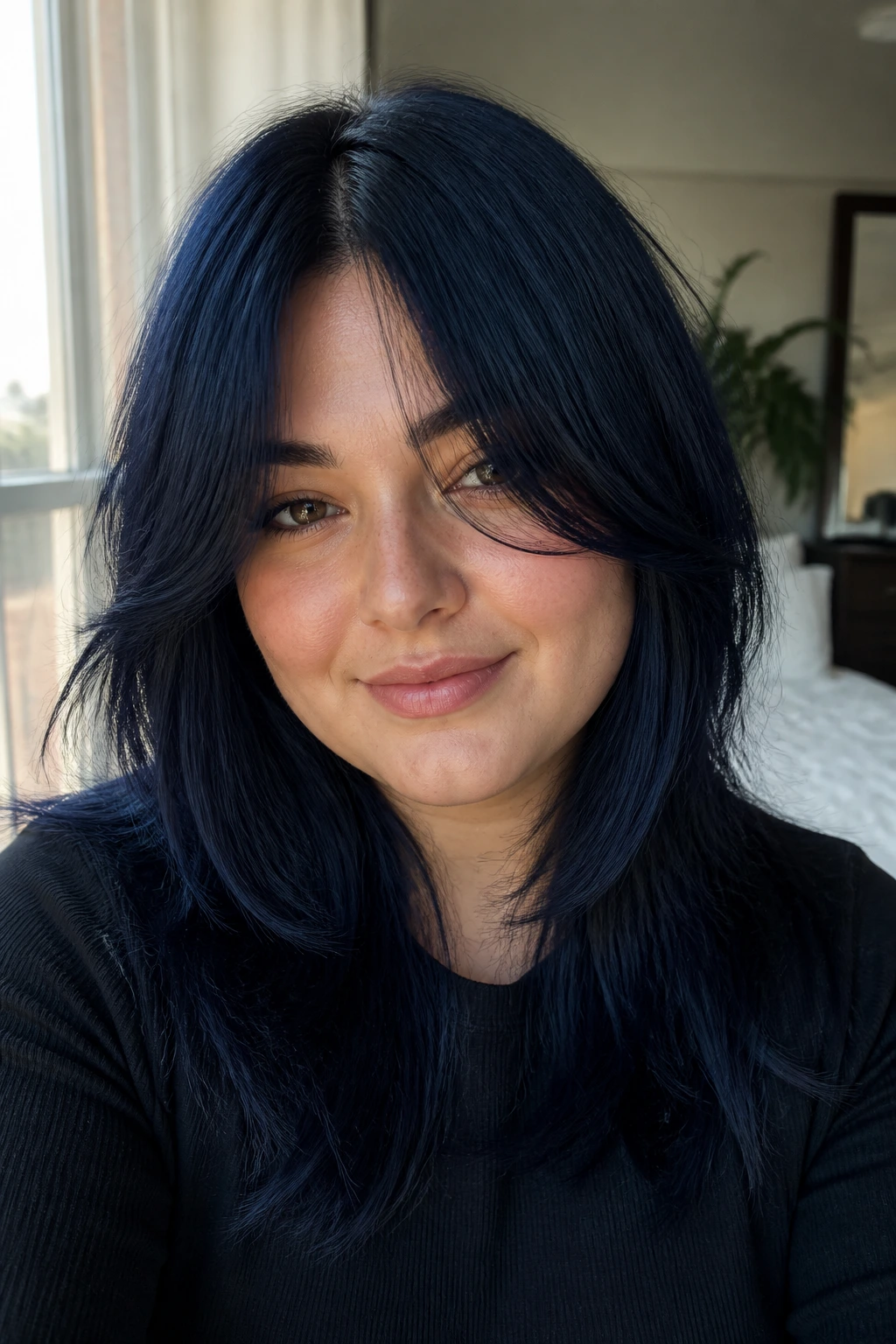
Can bangs work on a round face? Absolutely — if they split, bend, and fall with a bit of air in them. Midnight blue with curtain bangs is one of those styles that does a lot without looking like it’s trying hard. The dark blue deepens the shape, while the bang opening creates a narrow line down the middle of the forehead. That opens the face instead of boxing it in.
How to Wear It
Curtain bangs should hit around the cheekbone to lip area, not stop high on the forehead. That length gives you movement and stops the front from looking too short. A center part works well here, but a soft off-center part can be even better if your face is very even in width and length.
The color itself helps, too. Midnight blue has enough black in it to feel sleek, but enough blue to show dimension in daylight. It’s the kind of shade that looks almost shadowy indoors and richer outside. That change in tone keeps the bangs from feeling flat.
If you blow-dry the bangs, use a round brush and roll them away from the face. Little bend. Not a hard curl.
4. Blue-Black Gradient on a Layered Shag
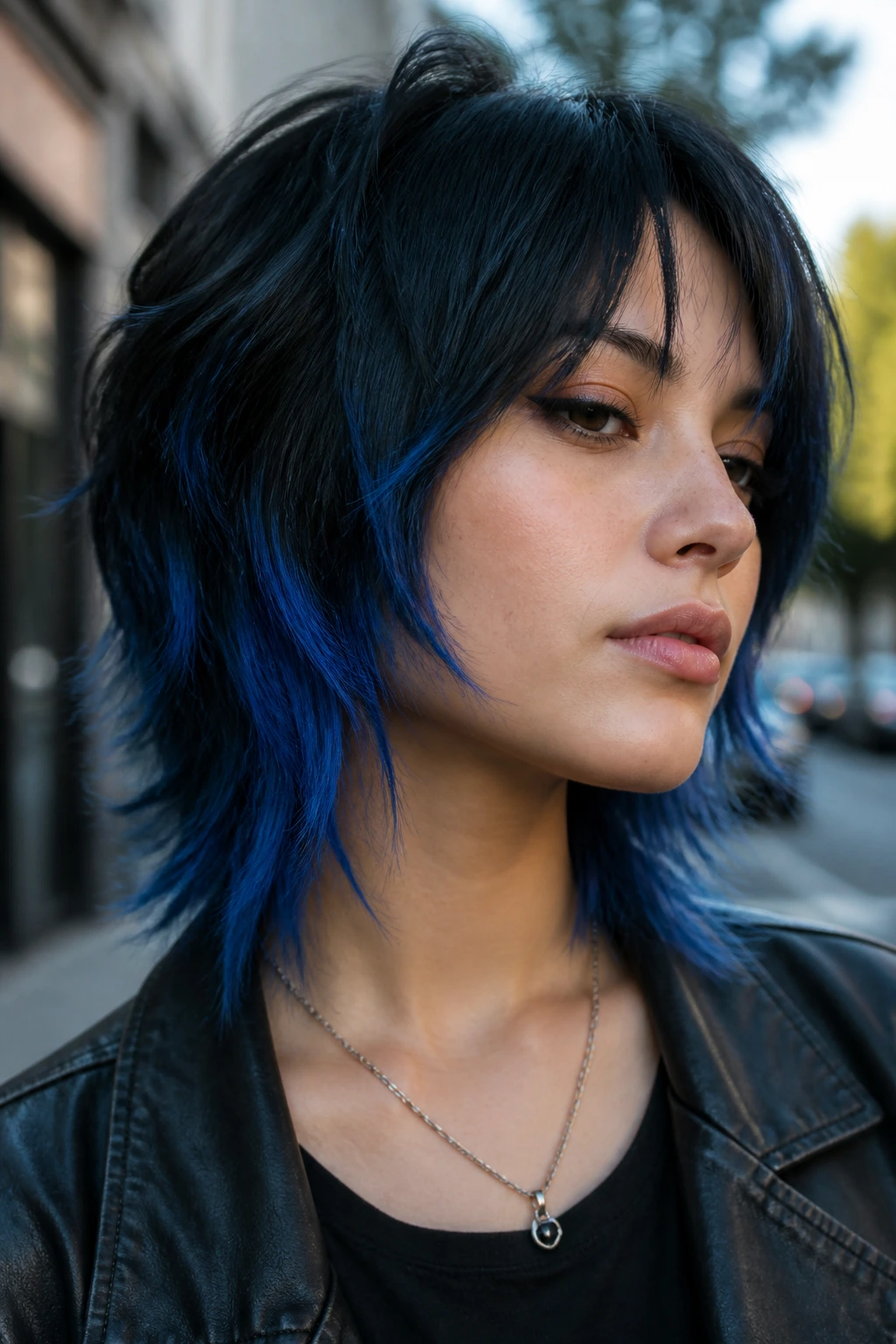
A shag can be a gift for a round face if the layers are handled with some care. The shape should move, not puff. Blue-black at the roots and upper lengths gives the cut a tighter outline, while the lighter blue ends break up the weight and keep the style from looking heavy. It’s a smart combo for anyone who likes a bit of edge.
Picture this: a chin-to-collarbone shag with choppy layers, a little texture through the crown, and blue-black melting into muted sapphire at the ends. It feels lived-in, not fussy. The vertical movement from the layers helps the face read longer, and the darker root zone keeps the widest point from sitting right at the cheeks.
- Best cut detail: shag layers should start below the cheekbone
- Best styling: scrunch-dry or rough blow-dry with a diffuser
- Best color finish: root shadow into blue-black, then softened blue tips
- Best for: medium to thick hair that can hold texture
The one thing to watch is over-layering at the sides. Too much width there can make the whole effect wobble.
5. Smoky Denim Blue on a Blunt Bob
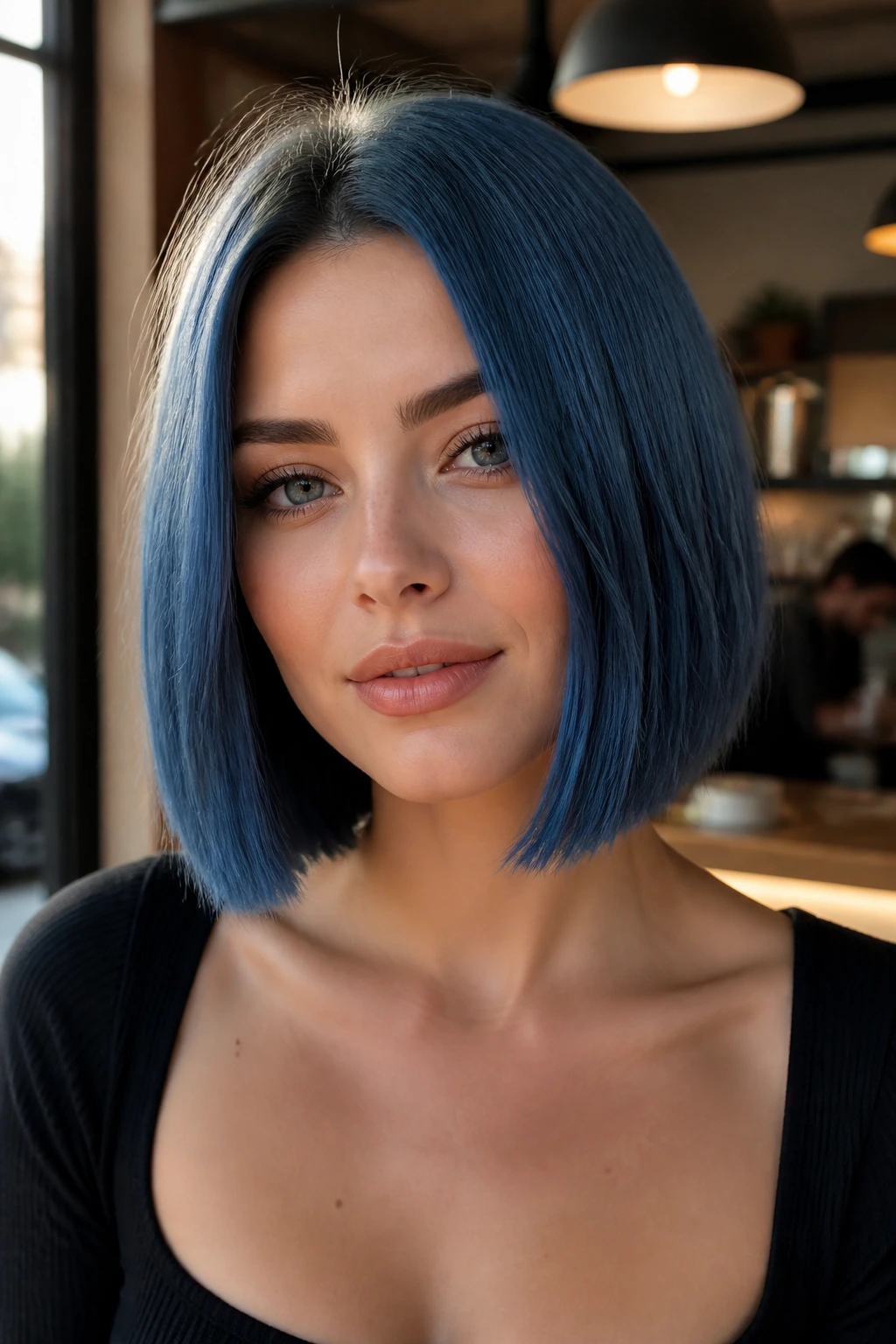
Smoky denim blue is quieter than cobalt and cooler than teal, which is why I like it on a blunt bob. The shade has a worn-in, soft look — like faded jeans rather than neon dye — and that calmness helps a round face. A bob with a clean edge can be tricky if it stops at the jaw. Keep it just below, and the line becomes much more flattering.
The key is the balance between shape and softness. A blunt perimeter gives the hair structure. Denim blue gives it texture through color, not through frizz or choppy ends. That is a good trade. A side part can help if you want a little asymmetry, but a center part works too when the bob is long enough.
Gloss matters here. Denim blue can look dull if the hair is dry, and dry blue often reads muddy. A light shine spray or a glass-hair serum on the mid-lengths keeps the color looking crisp. Not greasy. Just smooth enough that the blue stays clean.
6. Sapphire Balayage on Long Waves
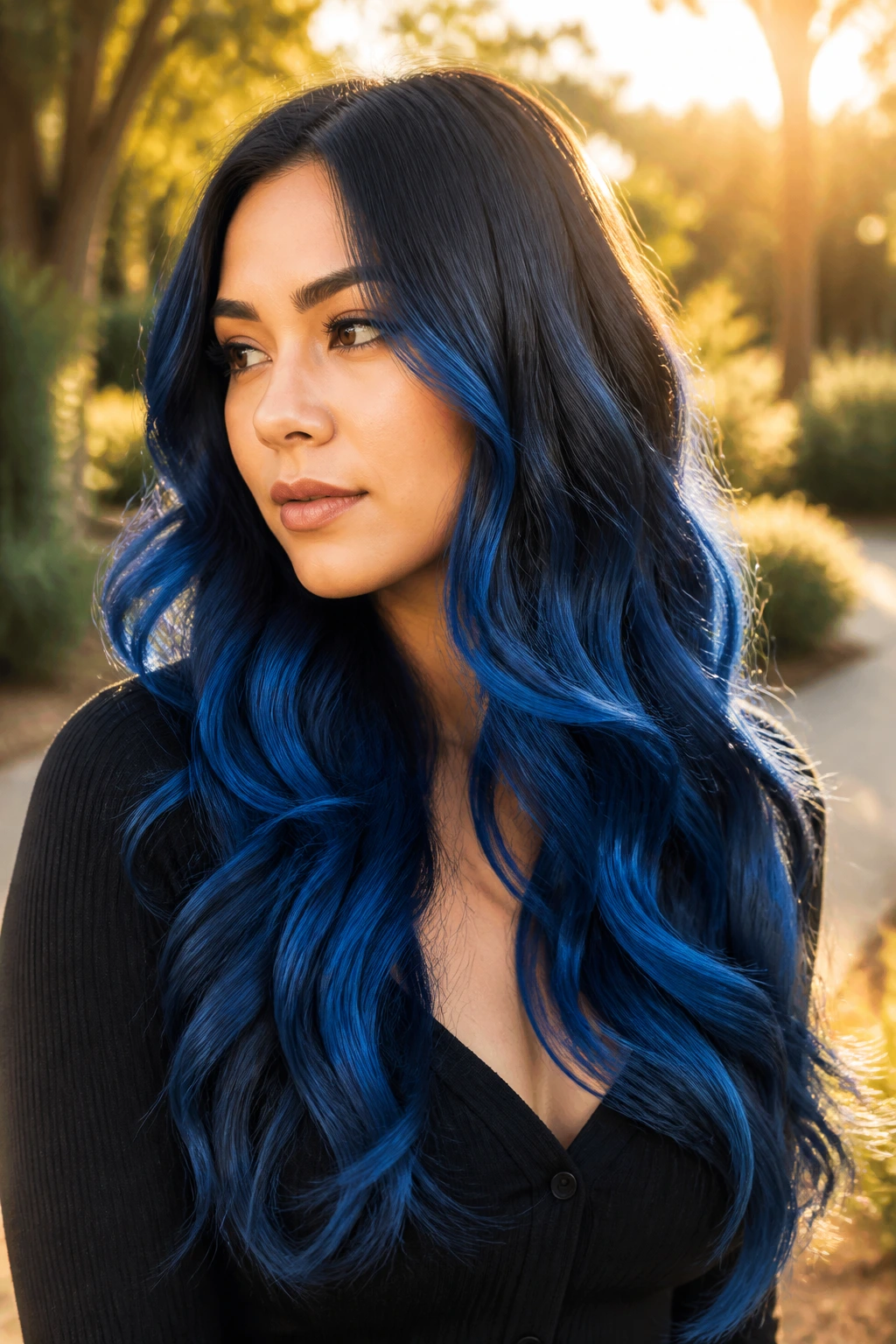
Compared with all-over bright blue, sapphire balayage gives you a lot more movement. The darker base stays near the scalp, and the sapphire ribbons travel through the waves in long, vertical lines. That shape is flattering on a round face because it draws the eye down the length of the hair instead of letting it sit at the sides.
This one works best on hair that already has some bend. Loose waves, big curls brushed out, or a round-brush blowout all help the sapphire pieces spread in a way that looks soft. The face-framing pieces should begin below the cheekbone. Higher than that, and the brightness can widen the face. Lower than that, and the whole look stays long.
It also grows out well. That matters more than people admit. Balayage gives you weeks of wear without a hard line at the root, and sapphire is forgiving because it can fade into a pretty blue-gray instead of a strange brassy mess. A small gloss between full color services keeps it rich.
7. Cobalt Ombré That Starts Below the Chin
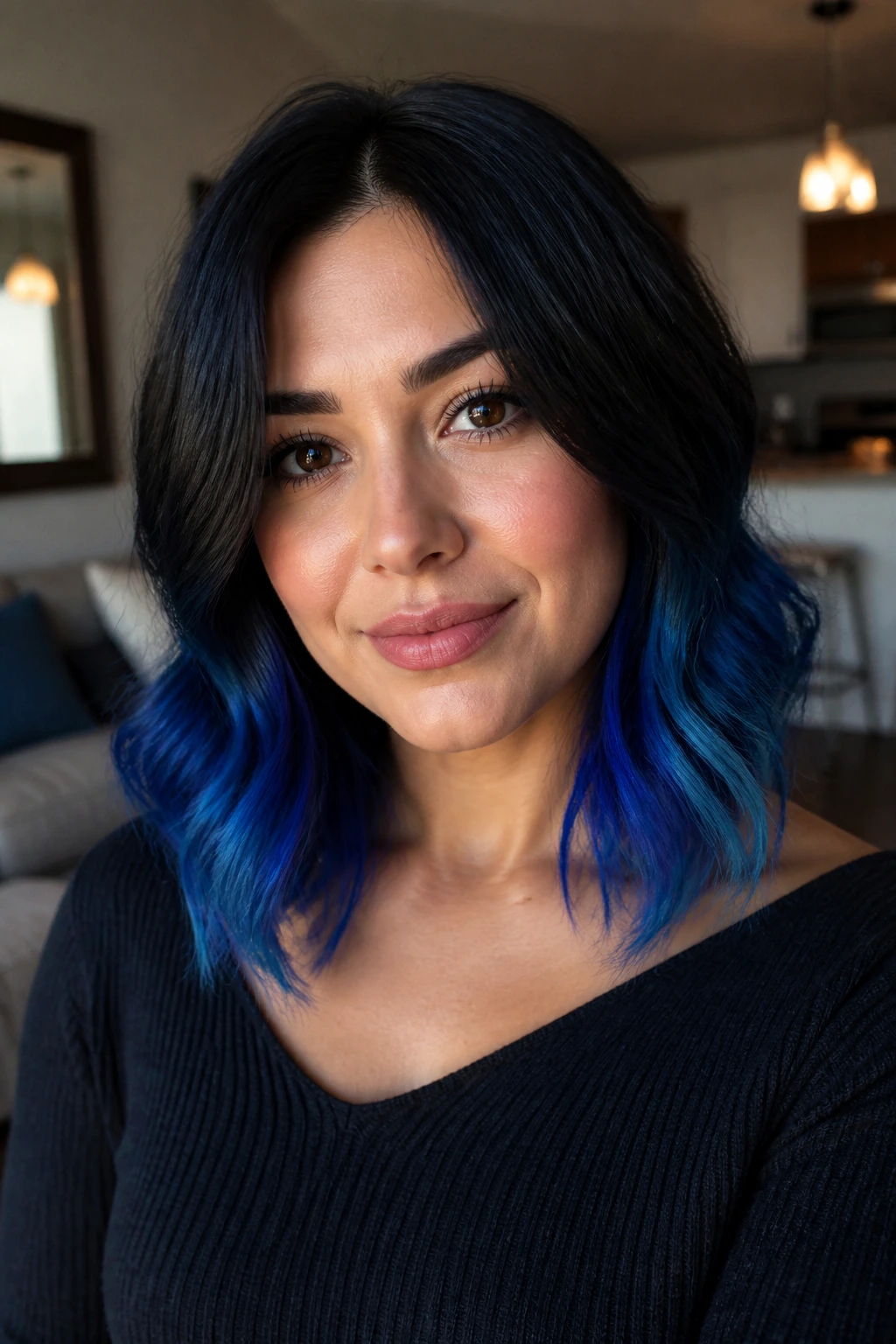
Cobalt ombré is a sharp choice, but the placement decides whether it flatters or fights the face. The top should stay deep — black, dark brown, or blue-black — and the cobalt should begin below the chin, not right at the cheeks. That delay in brightness is what keeps the style lengthening instead of widening.
Why the Placement Matters
If the color change starts too high, your eye goes straight to the widest part of the face. Bad trade. If it starts lower, the color reads as a vertical drop, and the shape feels cleaner. That works especially well on shoulder-length or longer hair, where there’s room for the gradient to breathe.
Quick Details That Help
- Keep the first cobalt panel at least 2 inches below the jawline
- Use soft blending, not a hard stripe
- Wear it with loose waves or a tucked-behind-the-ear finish
- Choose a deep cobalt rather than a neon blue if you want the face to look slimmer
Best tip: a slight side part makes the ombré feel less symmetrical, which helps a round face more than people expect.
8. Teal-Blue Shadow Roots With Soft Layers
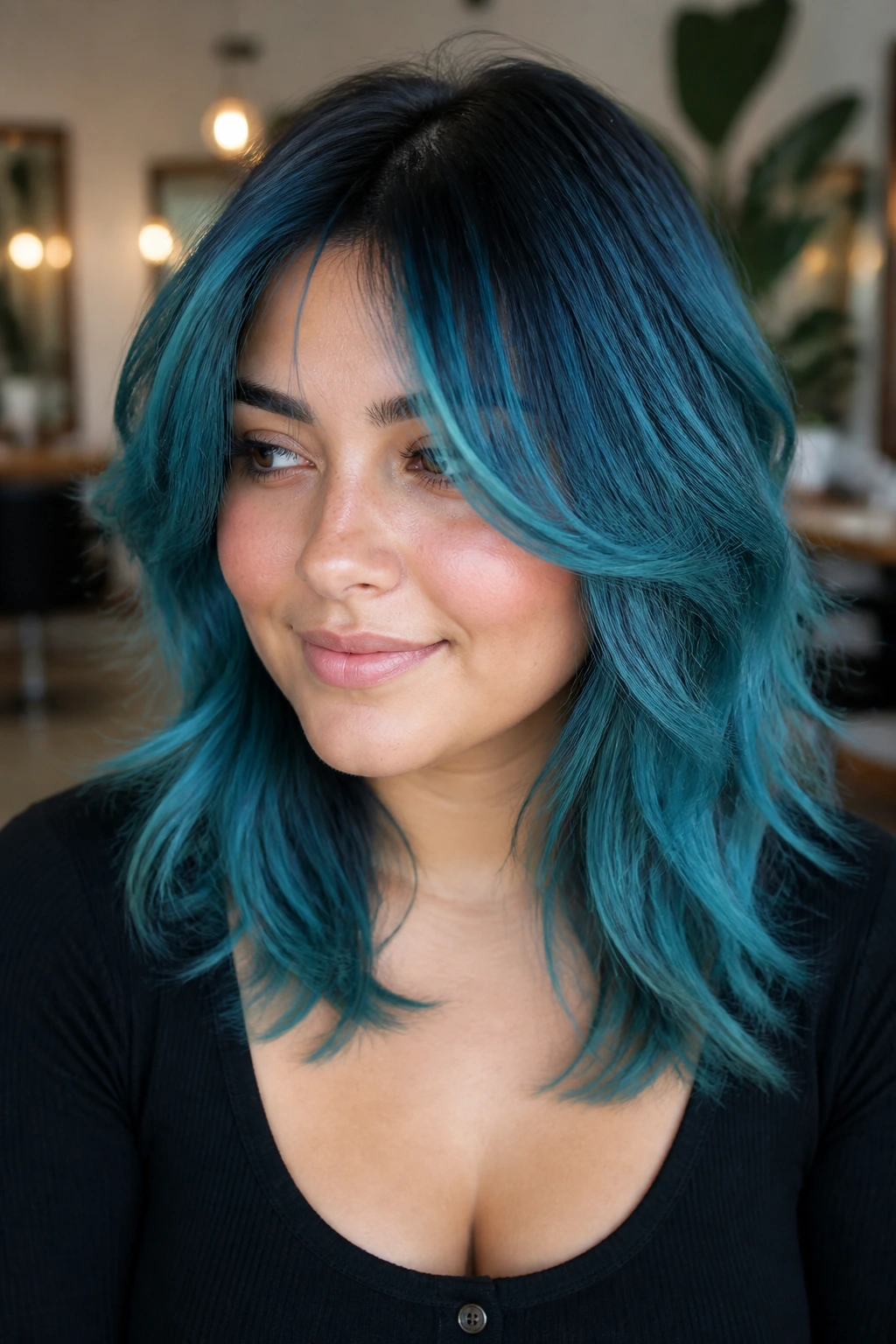
Shadow roots are a gift if you don’t want to be at the salon every few weeks. On a round face, they also pull the eye upward and make the top section look tighter. Add teal-blue through the mid-lengths and ends, and you get color that has depth without sitting all over the face like a block.
The soft layers matter. Heavy one-length hair can make teal look dense near the sides. Layers break that up and let the color move. Keep the brightest teal away from the cheek line and let it appear lower, around the mouth to collarbone area. That small shift makes the style feel taller.
This is a good pick for thick hair, especially if it tends to puff. The dark root softens that width. It’s also one of the easier blues to live with because the shadow root buys you time as the color grows. Less obvious regrowth. Less panic at the mirror.
9. Icy Blue Peekaboo Panels Under a Dark Top Layer
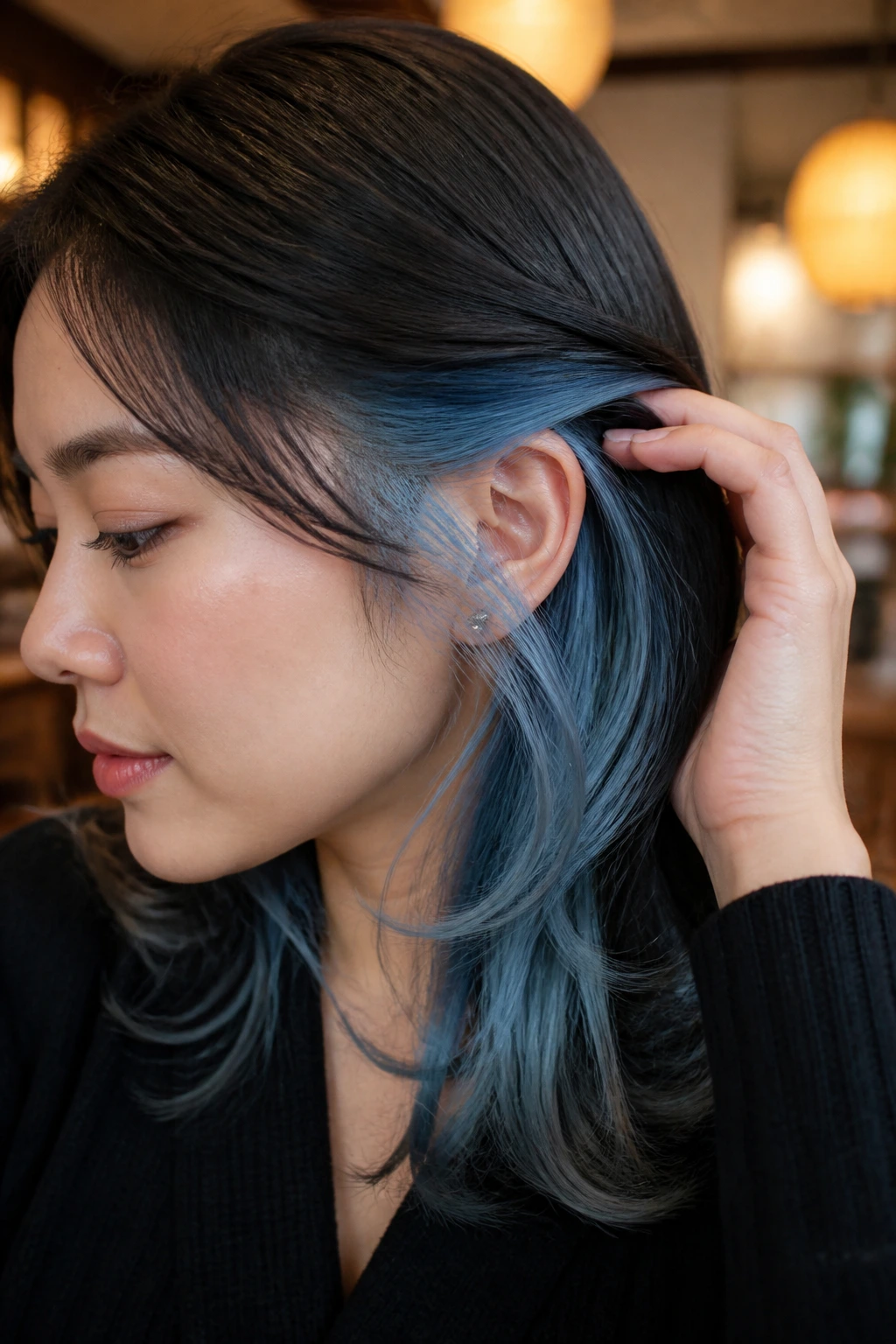
Want blue without making it the first thing people see? Peekaboo panels solve that neatly. The icy blue sits underneath a darker top layer, so it flashes when you move, tuck your hair behind your ear, or wear it half up. For a round face, that hidden placement is smart because the brightness stays away from the widest part of the cheeks.
How to Wear It
Keep the visible top layer a rich brunette, black, or navy. Then place the icy blue underlayer from just below the ear to the nape. That gives the color enough room to show without wrapping around the face. If you wear your hair curled, the blue peeks out in streaks. If you wear it straight, it stays more subtle.
The icy tone can look almost silver-blue, which gives a clean, sharp edge. Nice contrast. It pairs well with a blunt cut, a lob, or even a long layered shape. The trick is keeping the underlayer intentional — not random strips, not a vague blue haze.
Best for: people who want vivid color at work, in formal settings, or just on days when they want the option to keep it quiet.
10. Blue Velvet Pixie With Height at the Crown
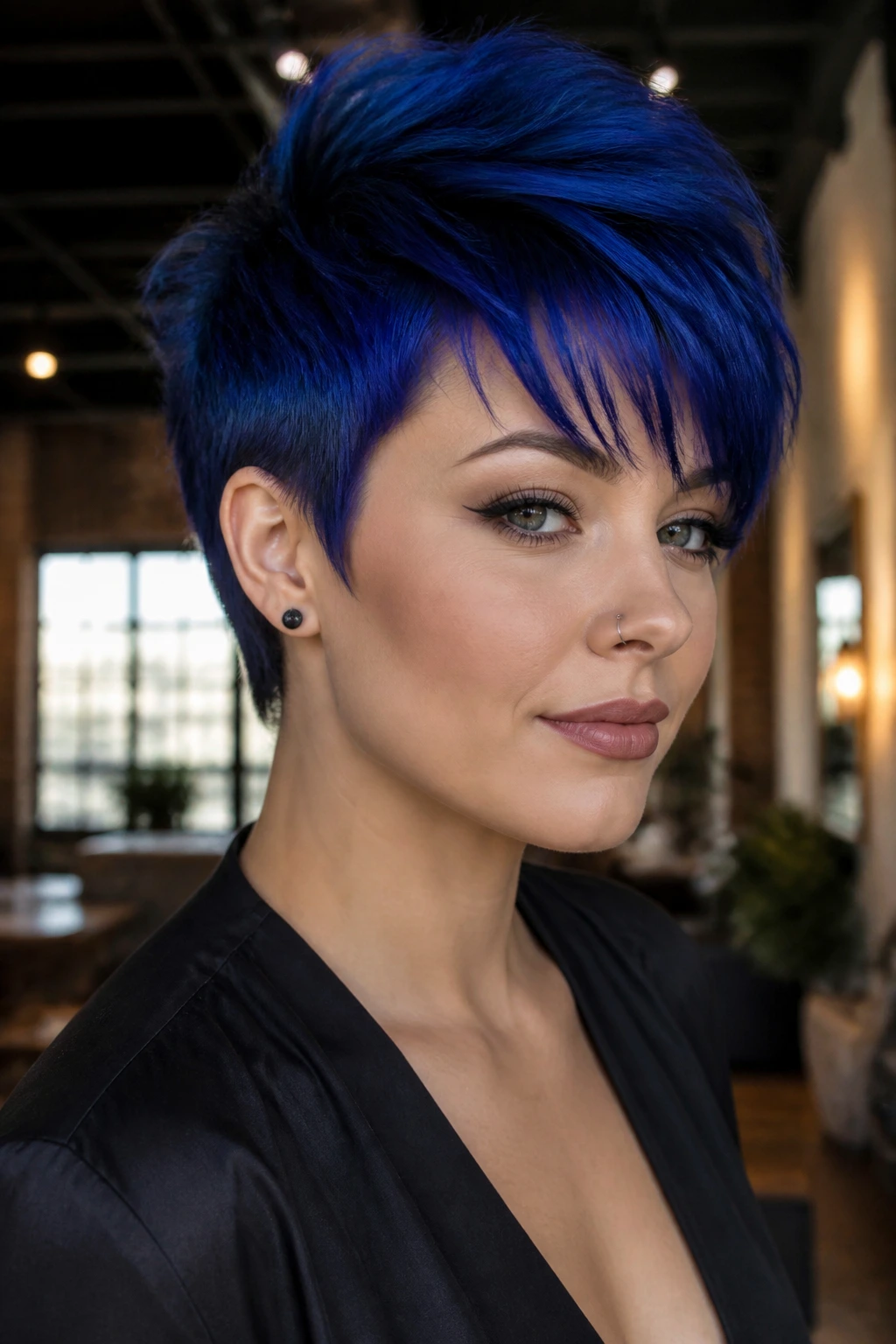
Short hair can flatter a round face beautifully, but only if it has height somewhere. A blue velvet pixie does that job well. The top stays a little longer, the sides are tapered close, and the color adds a rich, inky finish that keeps the cut from looking too airy. Without that crown height, a pixie can make the face look broad. With it, the whole profile sharpens up.
A side-swept top or a textured lift at the crown is the detail that changes everything. Leave the sides tight around the ears and keep the fringe angled, not blunt. That diagonal movement matters. It breaks the circle effect. The blue itself can be deep royal or blue-black with a soft velvet shine, which reads polished without looking stiff.
- Best shape: longer top, tight sides, angled fringe
- Best styling: paste or light pomade at the crown
- Best shade: royal blue softened with black at the root
- Best maintenance: trim every 3 to 4 weeks to keep the outline crisp
The cut does the shaping. The color makes it memorable.
11. Royal Blue Curls With a Root Melt
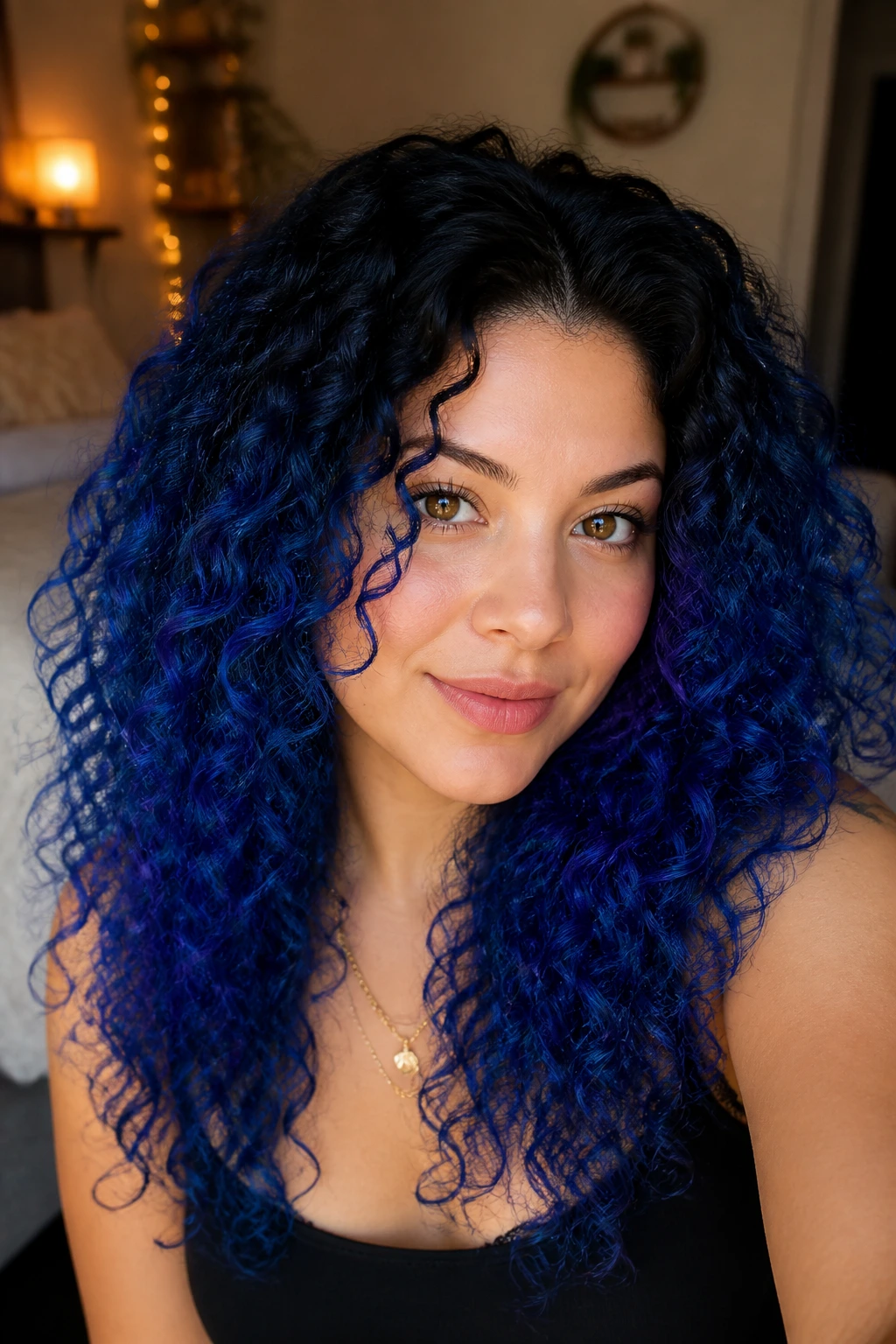
Curls change the whole conversation because the volume is already built in. On a round face, that means you want the color to guide the eye, not just sit there in a big halo. A root melt from dark brown or black into royal blue gives the curls a strong base and keeps the widest part of the style from floating right at cheek level.
Royal blue works especially well because it has enough depth to show inside the curl pattern. Bright flat blue can get lost in dense curls. Royal stays visible. When the curls move, the color shifts with them. That movement helps a round face because it creates vertical lines inside the curl mass.
If you wear your hair curly, shape matters more than almost anything. Ask for layers that remove bulk from the sides but keep enough length to let the curls hang downward. A diffuser is your friend here. So is a curl cream that keeps the finish soft, not crunchy. Blue curls should look plush, not stiff. No helmet hair, please.
12. Asymmetrical Blue Bob With One Long Front Corner
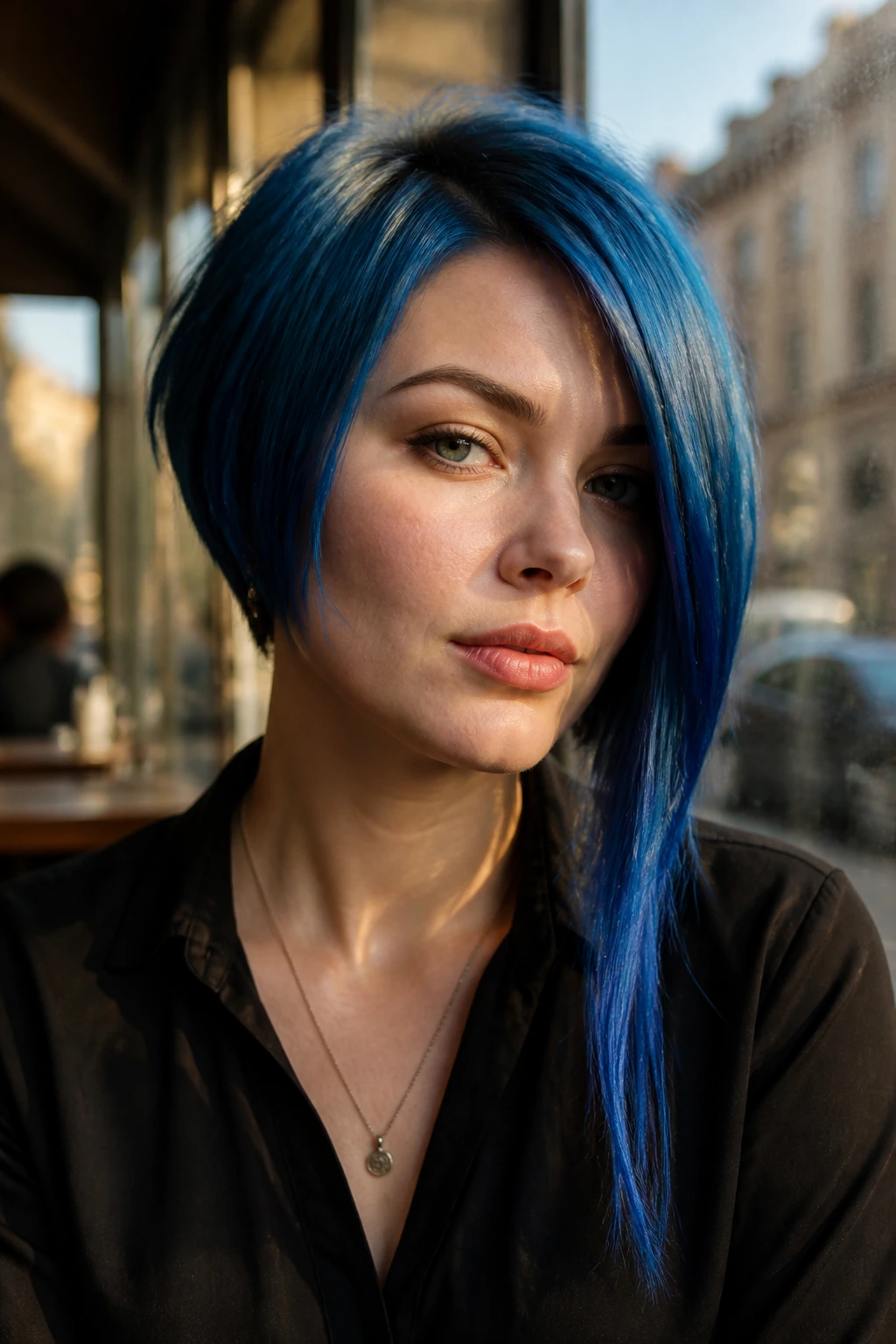
A symmetrical bob can be pretty, but on a round face it sometimes feels too even. An asymmetrical blue bob fixes that by giving the eye a place to travel. One side drops a little longer — often just to the collarbone corner — while the other side stays nearer the jaw. That uneven line cuts the roundness down fast.
Unlike a blunt bob that sits evenly all the way around, this shape brings motion before the color even enters the picture. Add a deep blue or cobalt overlay and the asymmetry gets sharper. The brighter side can sit lower, which helps the face feel longer. The shorter side keeps things modern without closing in the cheeks.
This is a good cut if you like something polished but not precious. It works on straight hair, but it can be even better with a soft bend. Keep the part slightly off center so the longer side has room to fall. If the line is too perfect, the shape starts looking rigid. A little imperfection helps here. Really.
13. Blue Mermaid Layers With Long Face-Framing Ends
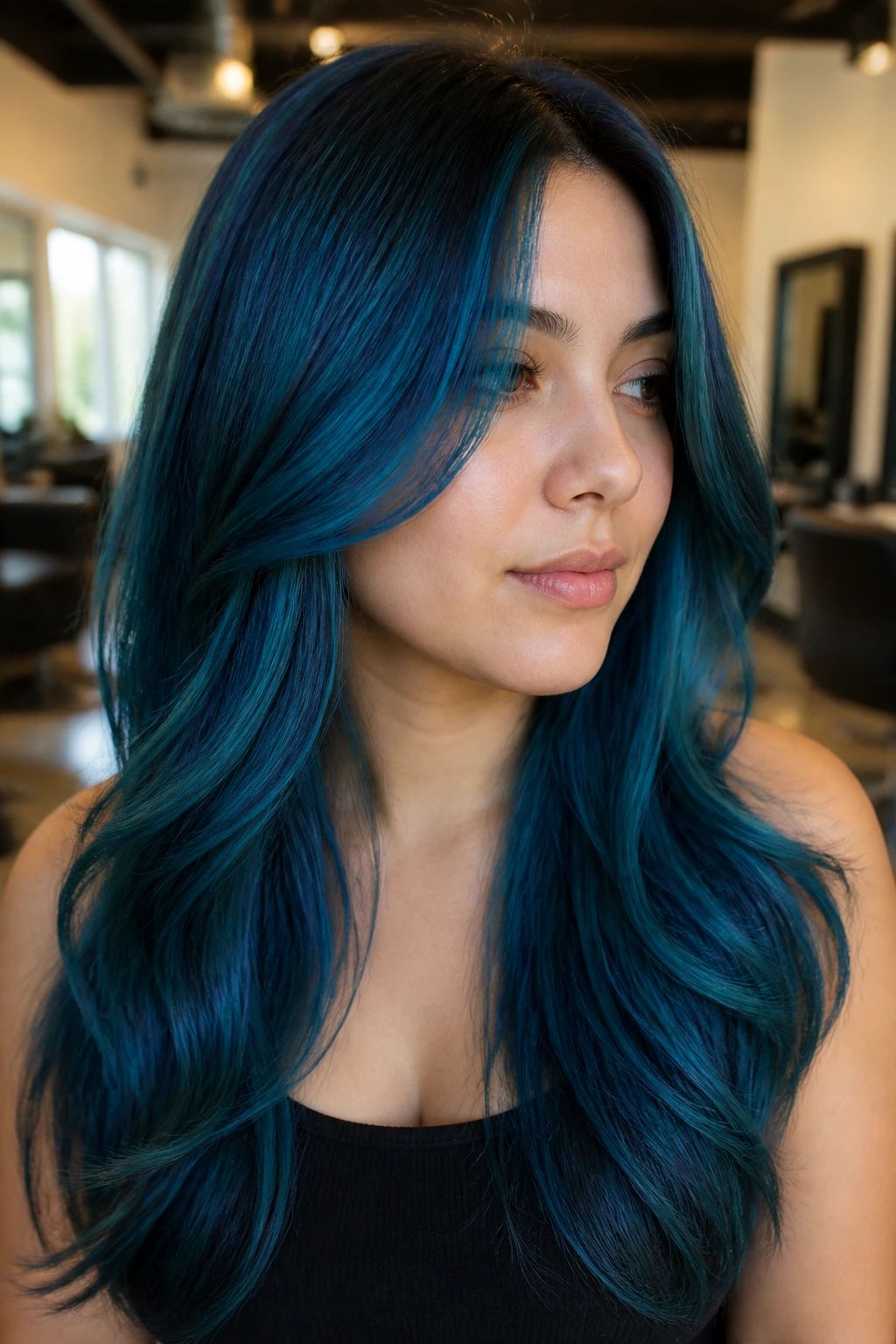
Long blue hair can backfire on a round face if the length is all one note. Mermaid layers solve that by keeping the front pieces and the ends moving separately. The shortest face-framing layers should start below the cheekbone, and the longest pieces can fall well past the shoulders. That staggered length pulls the eye downward in a clean line.
What Makes It Different
The blue doesn’t have to be one flat shade. A mix of dark aqua, sapphire, and softened midnight blue gives the layers more life. The long shape gives the color room to shift as it moves, which keeps the face from feeling boxed in. I like this especially on thick hair because the layers prevent the whole style from sitting like a blanket.
How to Get the Most From It
- Ask for long layers, not choppy ones
- Keep the shortest front pieces below the cheekbone
- Use a center part or a very soft side part
- Add loose bends through the ends, not tight curls
One caution: if the front pieces are too short, the style loses its lengthening effect fast.
14. Denim Blue Shag With Wispy Fringe
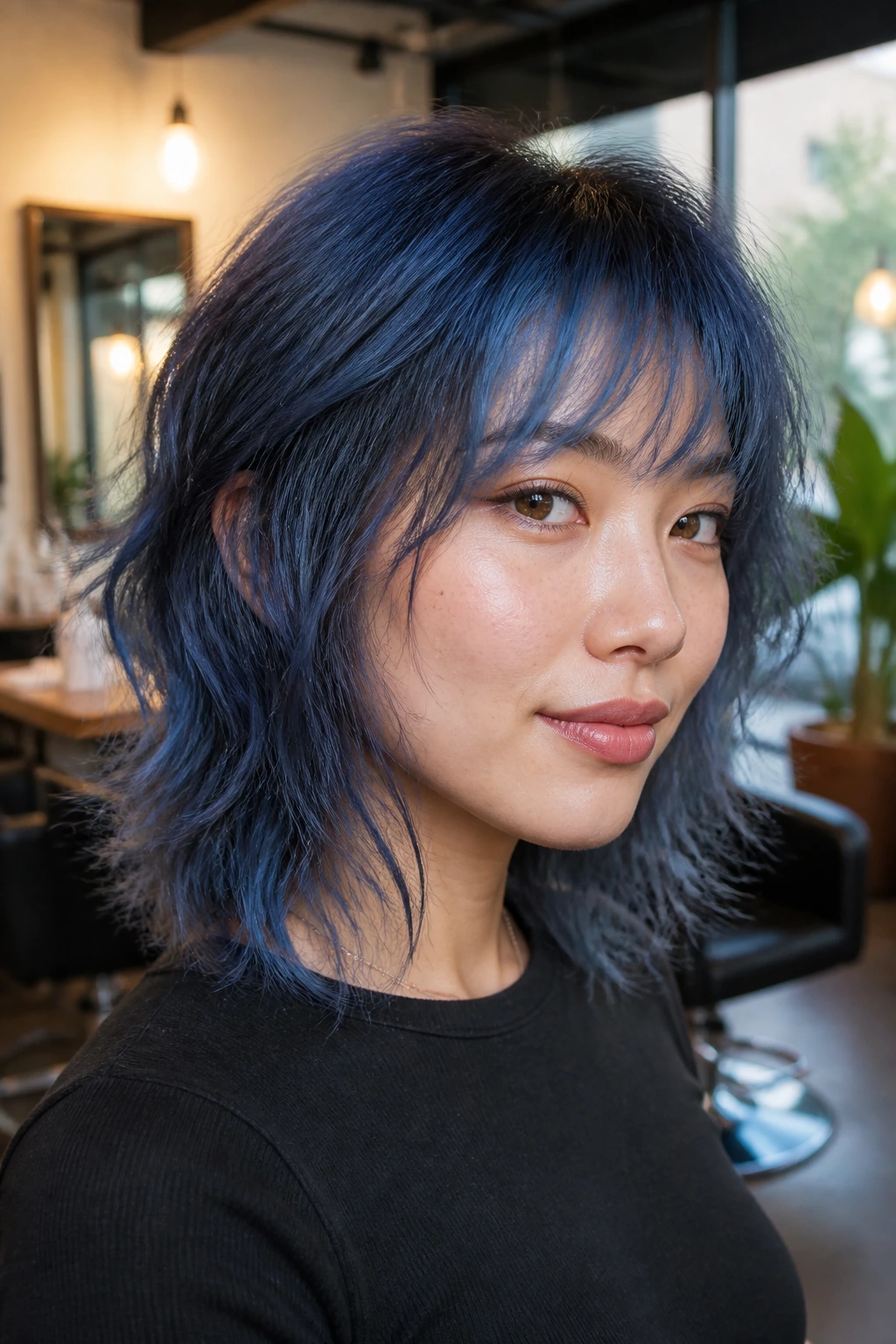
Denim blue and a shag might sound casual, and they are, but that looseness is exactly why the combo works for a round face. The shag breaks up width through the sides, and the wispy fringe keeps the forehead from feeling crowded. Denim softens the edges of the cut so it doesn’t look too rough.
The fringe should be airy. Not blunt, not heavy, not cut straight across in a thick line. A feathered fringe with some gap between pieces keeps the face open. That small detail matters more than the color, honestly. Blue can only do so much if the haircut is fighting the face shape.
This is one of the easier blue looks to wear if you like messy texture. The layers can be rough-dried with a bit of cream, and the denim tone actually looks better when it’s not too perfect. The whole point is movement. A round face reads slimmer when the hair isn’t sitting in one big curve beside it.
15. Indigo Melt on a Butterfly Cut
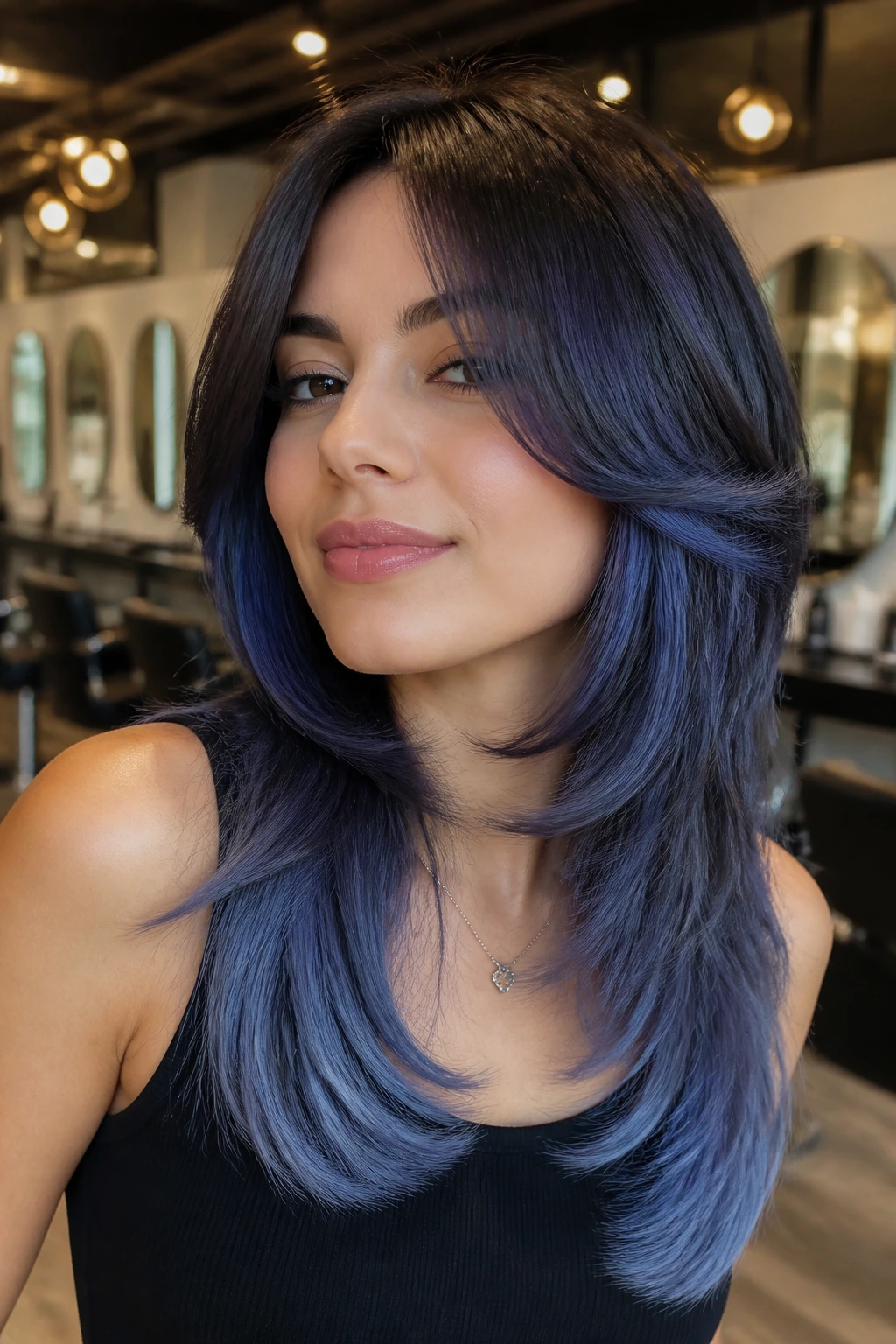
Why does the butterfly cut keep showing up with vivid color? Because the shape already does half the work. The short front layers sit around the cheekbone and collarbone, while the long back length stays intact. On a round face, that gives you lift near the face and length down the spine of the hair. Indigo melt fits that structure like it was made for it.
The darker root and mid-length zone keeps the top grounded. Then the indigo deepens toward the ends, which adds weight at the bottom rather than the sides. That’s the flattering part. Your eye follows the hair downward, and the face reads longer. It’s a smarter move than putting all the brightness around the cheeks.
How to Wear It
Blow it out with a round brush or use large rollers for the face-framing pieces. You want bend, not puff. Keep the shortest layer at or below the cheekbone, and let the longest pieces fall past the shoulders. That contrast is what makes the cut shine.
16. Aqua Ends on a Collarbone Cut
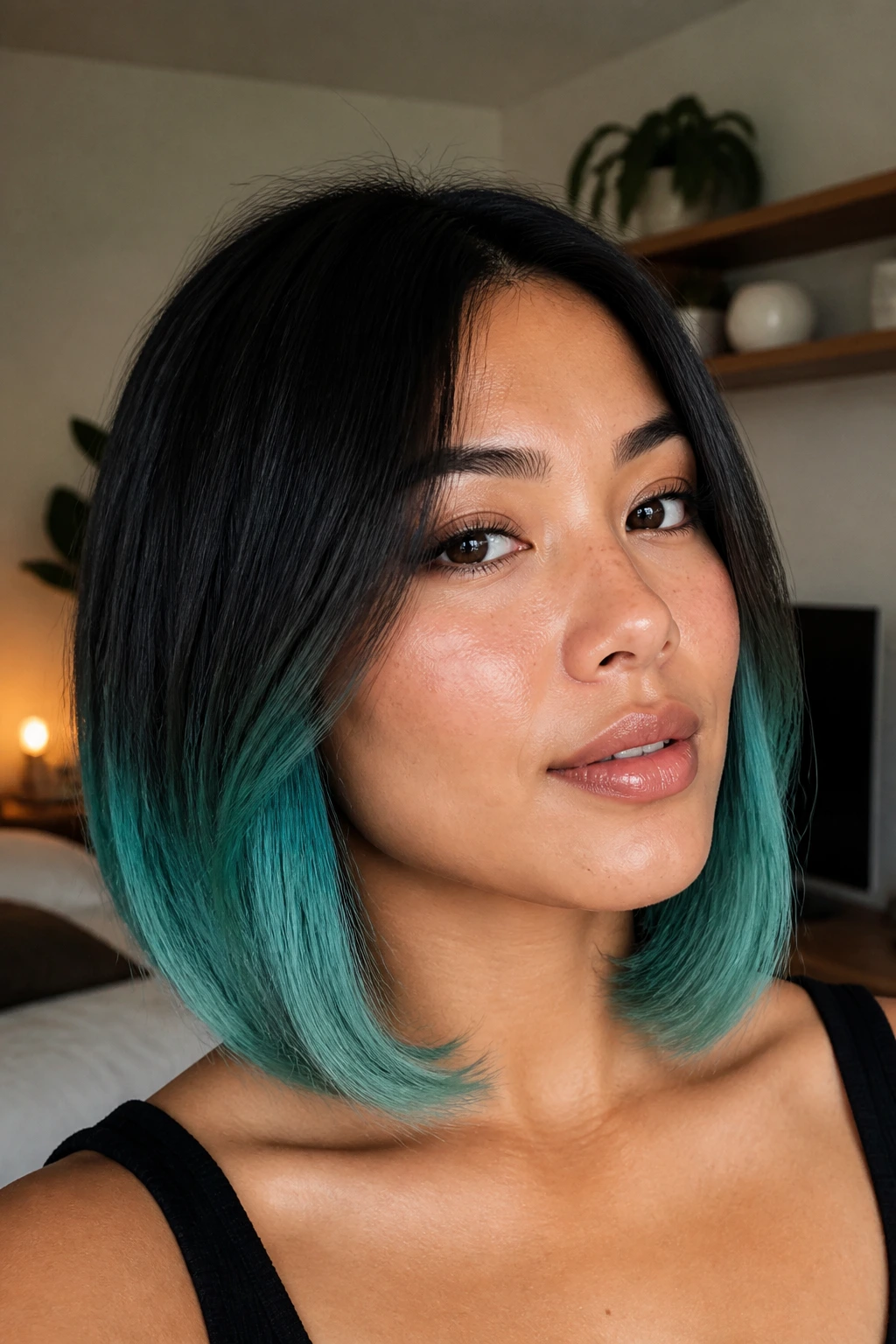
Aqua ends are a good entry point if you want blue but don’t want to commit to a full head of color. On a collarbone cut, the aqua sits at the lower half of the hair, which keeps the brightest part away from the widest part of the face. That’s the main reason it works so well on round faces.
The cut should be clean and slightly layered so the ends don’t flare outward. A soft inward bend helps. If the hair flips out at the jaw, the whole effect gets wider than it needs to be. Keep the top darker or neutral, then let the aqua begin around the mouth or lower lip area and continue to the ends. That drop in brightness makes the face look longer.
Quick Notes
- Use a semi-permanent aqua if you want easier fade-out
- Keep the transition line soft, not sharp
- Wear the cut just below the collarbone
- Add a side part if your face is very symmetrical
This one has a lighter, playful feel, but it still respects the shape.
17. Blue-Violet Dimension With Soft Side Layers
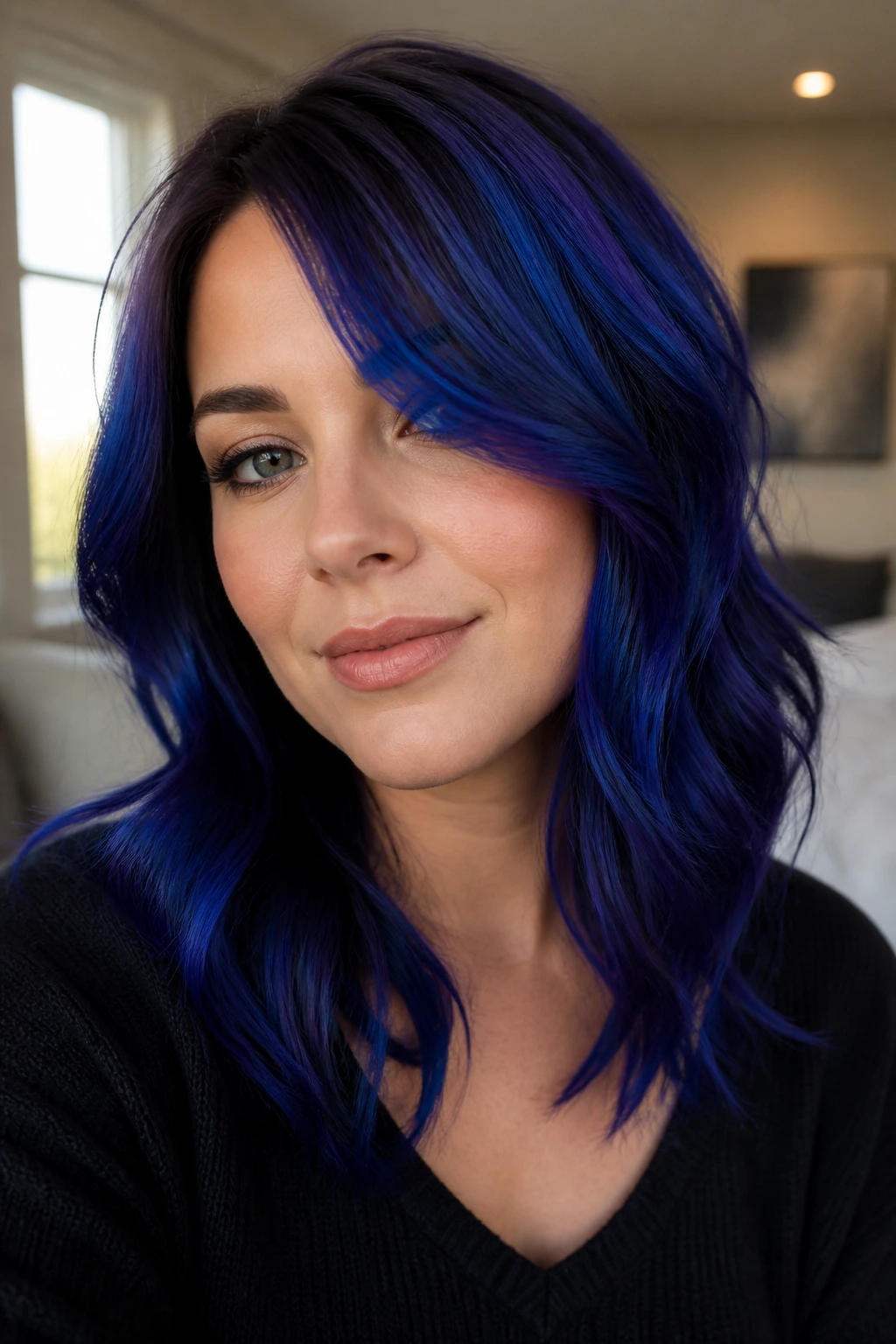
Blue-violet sits in a nice middle place. It reads blue first, but the purple note keeps it from looking flat. On a round face, that extra depth is useful because it gives the hair dimension without adding width. Soft side layers help the color travel downward and away from the cheeks.
A side part works especially well here. Not a dramatic deep side part — just enough to make the front asymmetrical. That asymmetry breaks the circular feel of the face without making the style fussy. The side layers should begin lower than the cheekbone and taper toward the collarbone. Easy enough to say. Harder to get wrong if you show your stylist exactly where you want the shortest piece to fall.
This shade also has a nice shine when the hair is healthy. That matters because blue-violet can turn dull faster than pure navy. Use color-safe shampoo, rinse cool, and skip the heavy clarifying stuff unless the hair starts feeling coated. Bright color is better when the surface is smooth.
18. Glossy Midnight Blue on Long Sleek Lengths
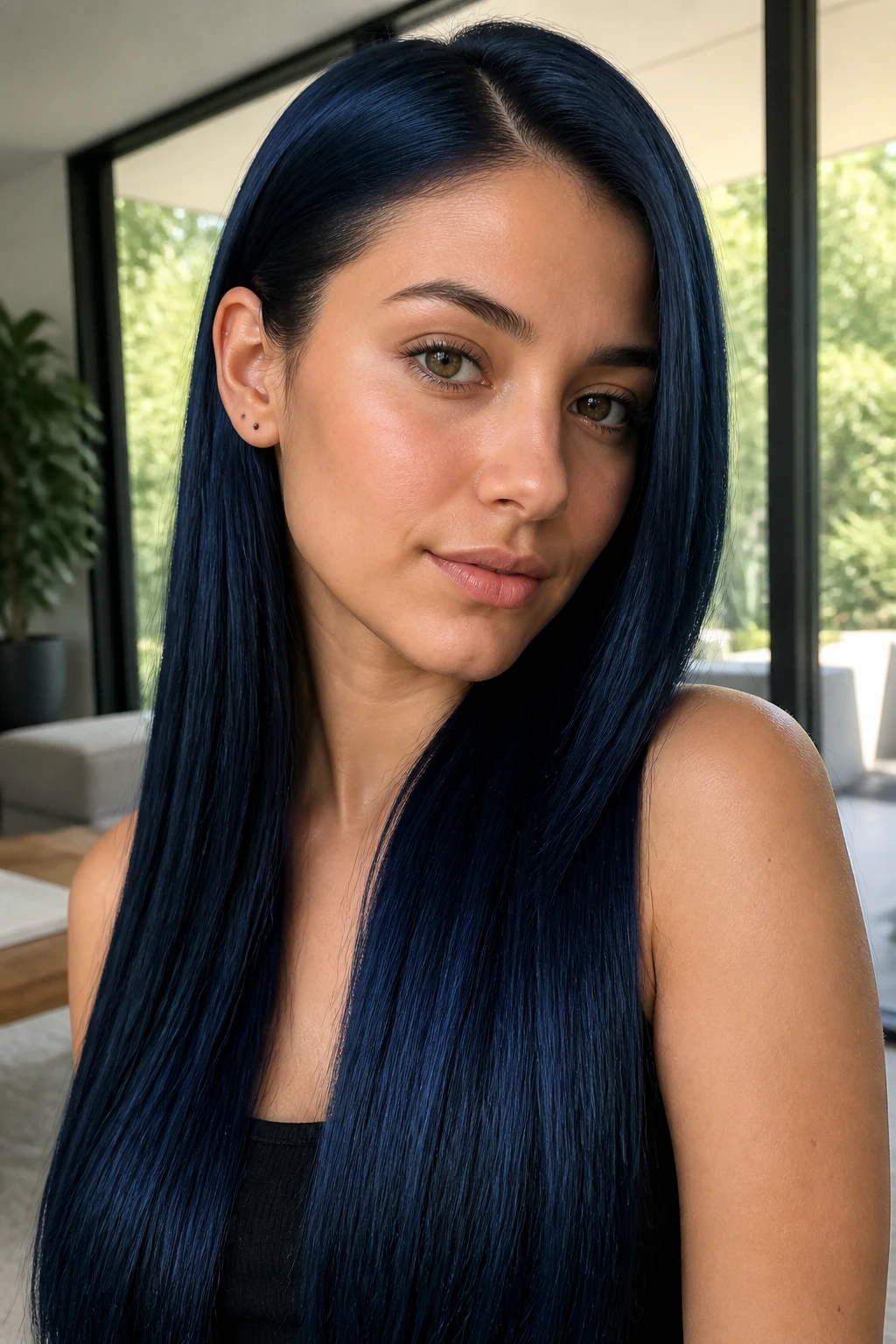
Midnight blue on long sleek hair is the quietest look on this list, and I mean quiet in the best way. It doesn’t demand attention with brightness. It pulls people in with shine, depth, and the way the color changes when the hair moves. On a round face, long sleek lengths work because they create one uninterrupted vertical line from cheek to hem.
A slight off-center part keeps the style from feeling too symmetrical. Straight lengths can sometimes echo the curve of the face if they sit too close at the sides, so keep the front pieces a touch lower and a touch looser. If you tuck one side behind the ear, even better. That opens one cheek and gives the face a leaner read.
This is the look for someone who wants blue that feels polished instead of loud. Use a heat protectant before blow-drying, then finish with a light serum on the ends only. The color should look like wet ink in good light. Smooth. Deep. Controlled. That’s the whole point, and honestly, it’s a strong place to end because this is blue at its most flattering when the shape is doing the heavy lifting.
