



Pink violet hair color ideas can look almost unfairly good on cool skin tones when the pink leans blue, the violet stays crisp, and the shade never drifts into peach.
That sounds picky, because it is. Cool undertones tend to wake up next to lilac, orchid, mauve, berry, and plum; they can look a little flat beside coral pinks or warm magentas. The difference is small on a color chart and obvious on your face.
The other piece people miss is depth. A pale lilac glaze and a mulberry bob are both pink-violet, but they live in completely different worlds—one needs a pale blonde base and regular toning, while the other can sit on brunette hair and still read rich. If your natural hair is dark, that matters more than the mood board.
I’ve always liked this family of shades because it gives you room to choose your own level of drama. Soft, smoky, glossy, neon, hidden, or sliced through a cut—there’s a version that works with your hair length, your maintenance tolerance, and the amount of attention you actually want. Start soft if you’re unsure. Go deeper if you want the color to carry the whole look.
1. Cotton Candy Lilac Melt for Cool Skin Tones
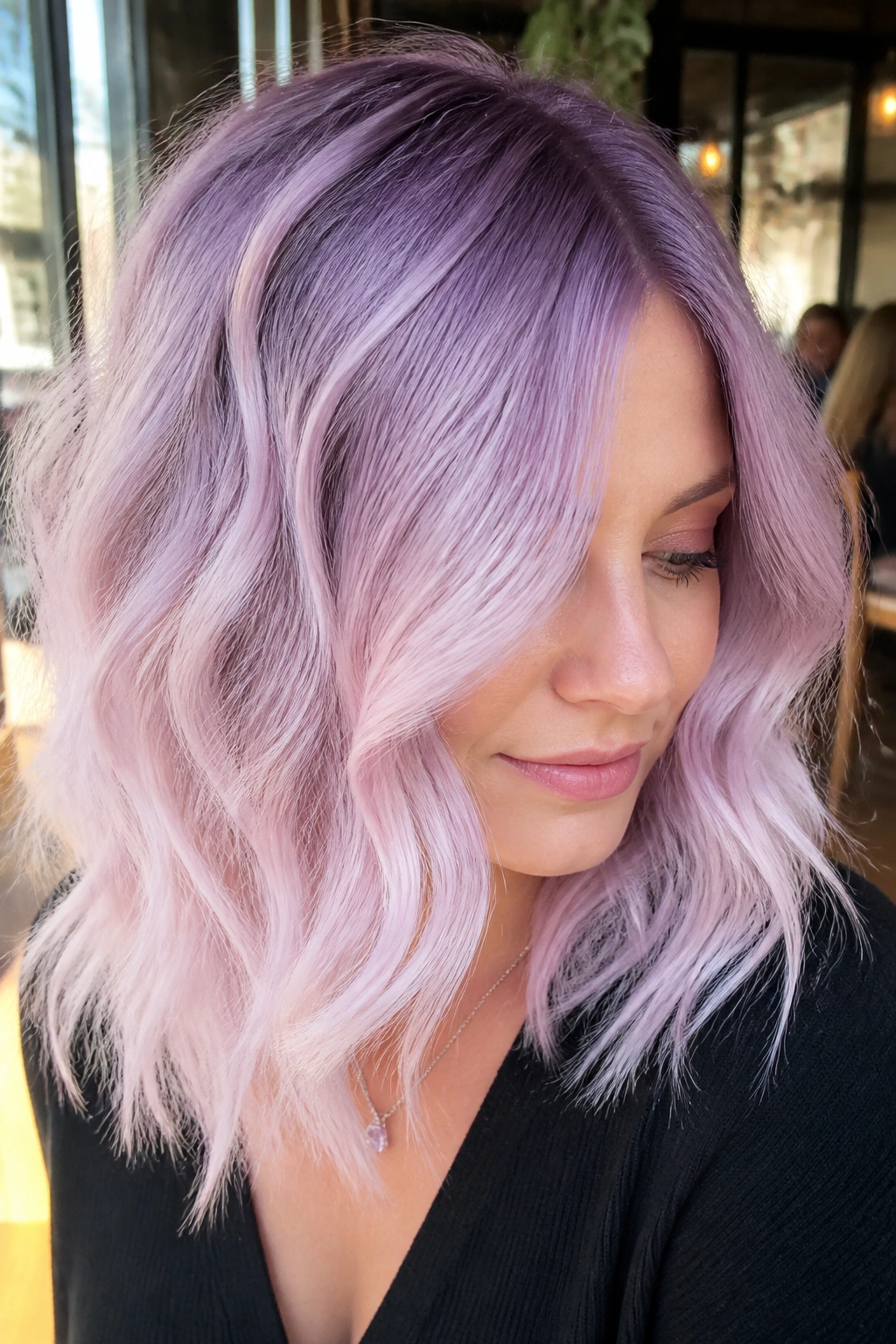
Cotton candy lilac is the shade I’d hand to someone who wants pink-violet hair without going loud. It sits in that sweet spot where the pink is airy, the violet keeps it from looking sugary, and the whole thing feels light against fair or medium cool skin.
Why It Flatters Cool Undertones
The trick is the blue-based lavender cast. That cooler base keeps the color from fighting pink or red in the skin. On cool skin tones, it looks clean instead of chalky, which is a small but important difference.
Ask for a soft root shadow, then a melt into pale lilac through the mids and ends. If the roots are just one or two levels deeper, the color has shape. Without that shadow, the whole look can flatten out fast.
- Best on level 9–10 blonde hair
- Works well on straight, wavy, or loose curled hair
- Needs refreshing with a pastel glaze every few washes
- Looks especially good with a blunt cut or long layers
Tip: keep the ends a touch brighter than the roots. That tiny shift makes the whole color feel more expensive, even when the shade itself is delicate.
2. Dusty Rose Bob
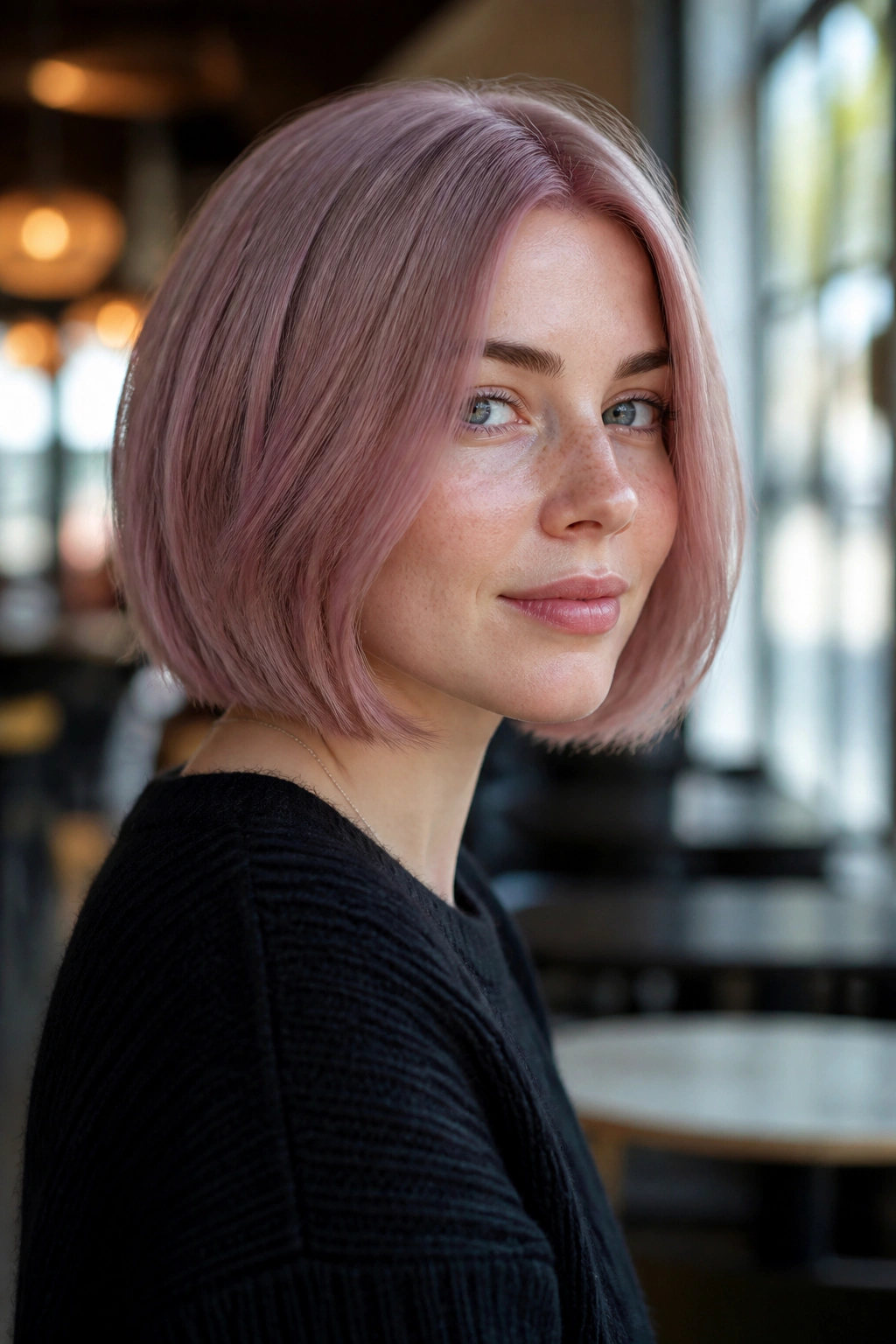
A dusty rose bob is one of those colors that looks calm from far away and much richer up close. It has enough pink to read feminine, enough violet to stay cool, and enough gray in the mix to keep it from tipping into candy territory.
The cut matters here. A bob gives the shade a clean edge, which makes the rose tone look intentional instead of soft-focus. On cool skin, that muted finish is flattering because it echoes the cooler notes in the complexion instead of sitting on top of them.
This is also a smart choice if you want pink-violet hair that doesn’t scream “fashion color” the second you walk in. It feels polished. Quiet, but not dull. A little bit moody, which I like.
Keep the finish glossy. Dusty rose loses its charm if the hair looks dry or frizzy, so a lightweight serum and a color-safe shampoo are doing real work here, not just nice-to-have work.
3. Smoky Orchid Balayage
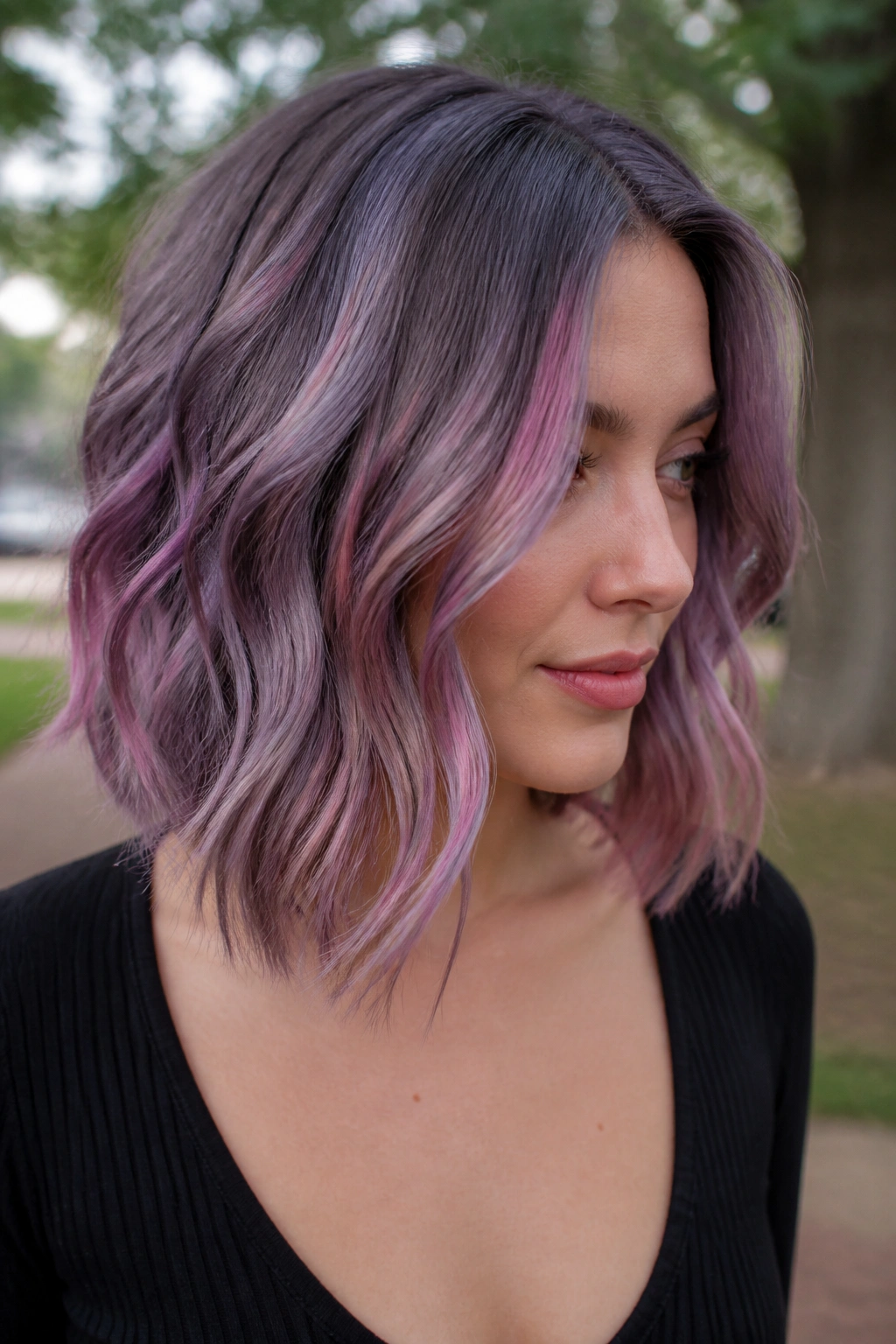
Why does smoky orchid work so well on cool skin tones? Because it’s pink-violet with the brightness dial turned down just enough. The smoky part matters. Without it, orchid can look too sweet. With it, the shade turns soft, modern, and a little bit dreamy.
The balayage placement keeps the look from feeling heavy. Thin ribbons around the face, wider pieces under the crown, and softer saturation through the mids give you movement when the hair swings. On layered hair, that motion is half the appeal.
How to Wear It
If you’re asking for this in a salon, be specific about the finish. You want orchid ribbons with a muted gray-violet veil, not bright magenta stripes. That difference is huge. One reads elegant; the other reads loud.
Best hair lengths are shoulder-length and longer, especially if you wear waves. The bends in the hair catch the lighter orchid pieces and make the whole color look dimensional.
4. Plum Shadow Root with Magenta Ends
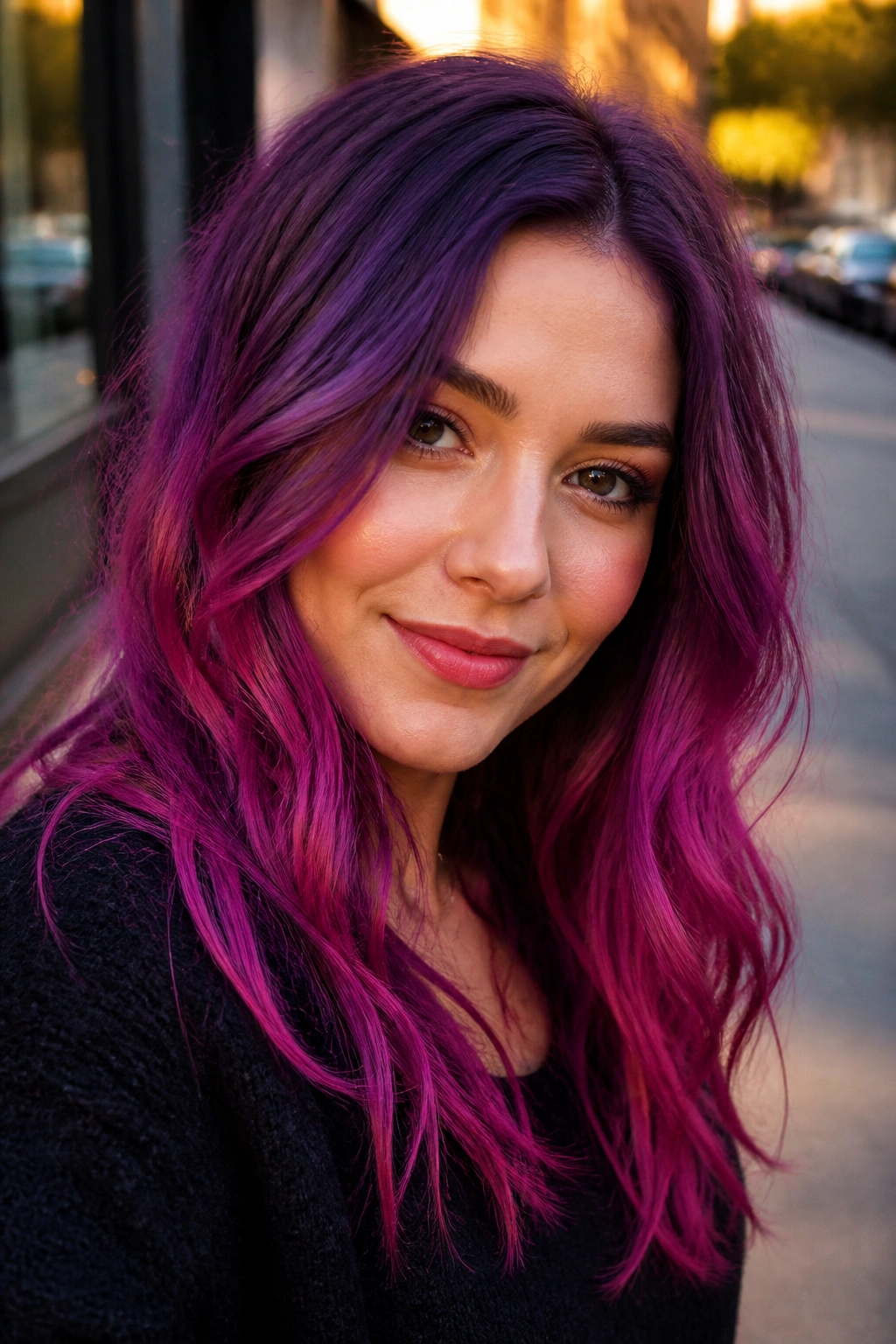
A plum shadow root with magenta ends is for the person who wants color that feels deliberate even as it grows out. The dark root gives you a built-in frame, while the brighter ends keep the style from sinking into one flat block of purple.
Picture someone who’s tired of chasing root touch-ups every few weeks. This is the practical answer. The shadow root softens regrowth, and the magenta ends keep the look alive, especially when you curl the hair or tuck one side behind the ear.
- Ask for a root area that sits 2–3 inches deeper
- Keep the mid-lengths in a plum family, not red plum
- Brighten the ends into a cooler magenta-violet
- Refresh the ends first if the color starts to fade unevenly
The cool-skin bonus is simple: the darker root keeps the face from being washed out, while the magenta finish adds enough contrast to wake everything up. It’s a strong look, but not a fussy one.
5. Icy Lavender Glaze
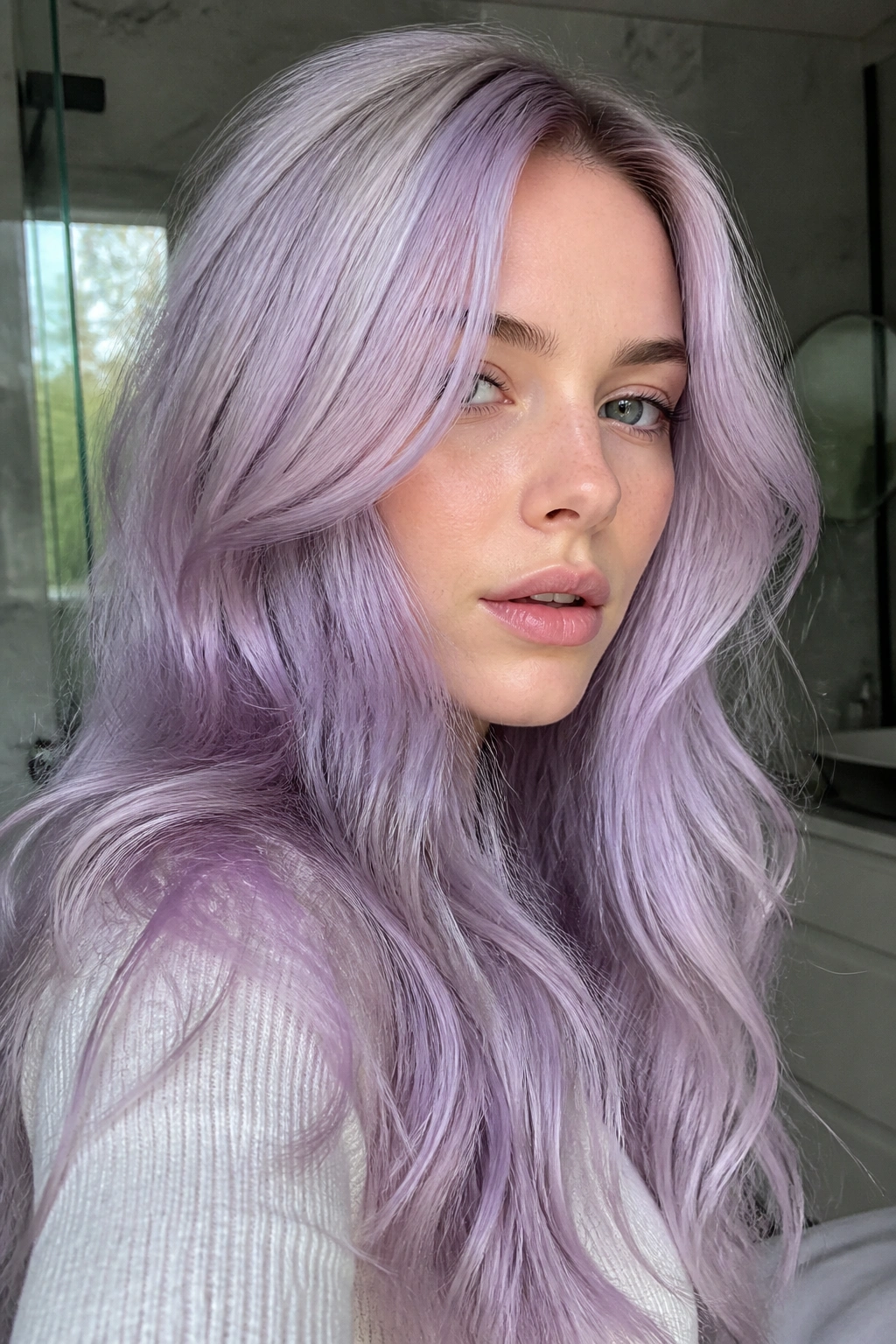
Icy lavender glaze is the shade for people who love shine almost as much as color. It’s translucent, which means the hair still shows through, and that’s what gives it that glassy, expensive-looking finish.
On cool skin, the color can be almost startling in the best way. A pale lavender wash makes the skin look cleaner and the whites of the eyes look brighter. That effect is subtle in dim light and much more obvious in daylight, where the cool pastel reflects back a soft glow.
You do need a very light base for this. Think level 10 blonde or close to it. If the hair is yellow underneath, the lavender turns muddy. No way around that. The base has to be pale and clean before the glaze goes on.
This one is best for sleek blowouts, long waves, or short hair with shine. If the hair is fried or porous, the glaze disappears too fast, and the whole point is that airy, icy finish.
6. Berry Sorbet Chrome
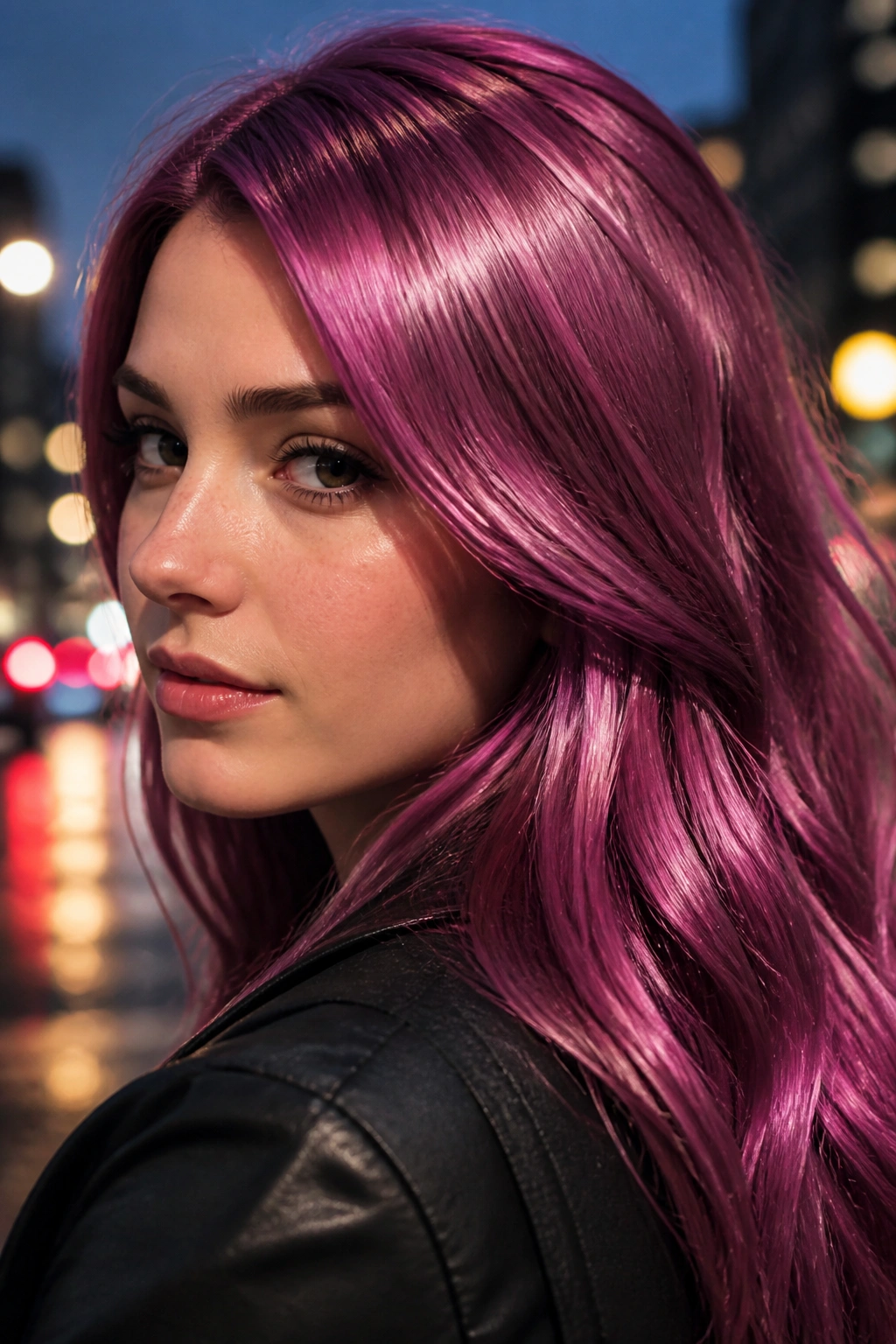
Berry sorbet chrome is what happens when pink-violet stops being shy. It’s brighter than dusty rose, richer than pastel lilac, and glossier than a matte berry shade. The chrome finish gives it a smooth surface that catches light without looking metallic in a costume-y way.
Unlike softer pastels, this color has enough saturation to hold its own on medium to deep cool skin tones. That makes it a strong choice if very pale shades leave you looking washed out. The berry base keeps the color grounded, while the violet edge keeps it cool.
The best hair for this is hair with shine. Straight styles show the gloss fast, but soft curls work too because the color shifts as the hair moves. A flat iron can make the finish look mirror-like, though I’d still use heat protection every single time.
If you want something that reads bold without tipping into neon, this is the one I’d steer you toward first.
7. Pastel Mauve Pixie
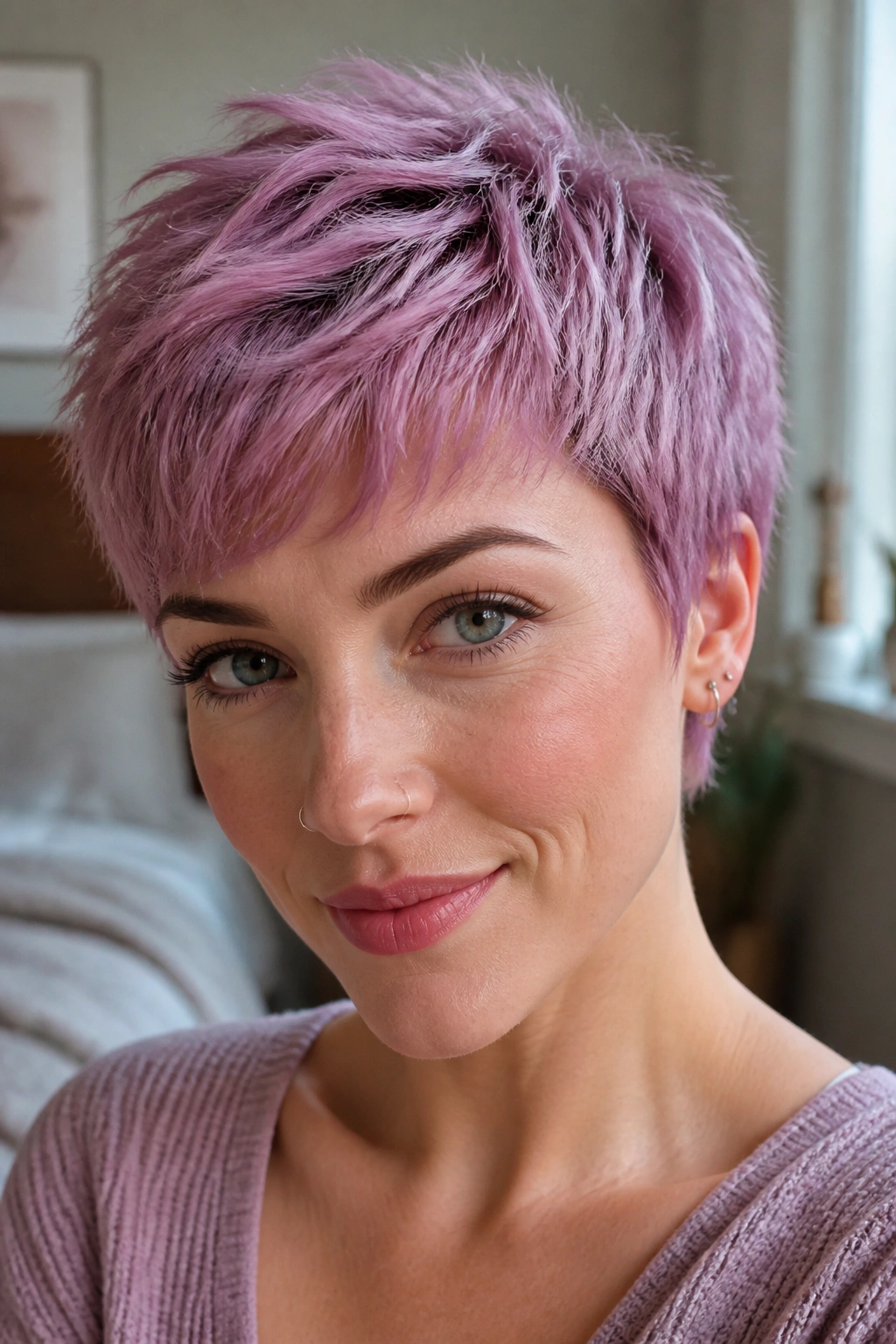
Short hair changes everything, and a pastel mauve pixie proves it. The color lands fast on a pixie cut because there’s less hair for the shade to hide in, so even a soft mauve reads clearly.
What Makes It Different
The cut itself does some of the work. Choppy layers and short nape pieces give the mauve color movement, which keeps it from looking like a single flat helmet of pastel. That matters a lot with cooler skin, because the texture breaks up the shade and keeps it airy.
A pixie also makes maintenance easier in one way and harder in another. You need less product, less styling time, and less total dye. But the color sits right near the face, so faded ends show quickly. A mauve toner or color-depositing mask becomes part of the routine.
This is one of my favorite options for someone who wants a cool pink-violet look without committing to long hair. It feels youthful, but not childish. There’s a difference.
8. Amethyst Ribbon Highlights
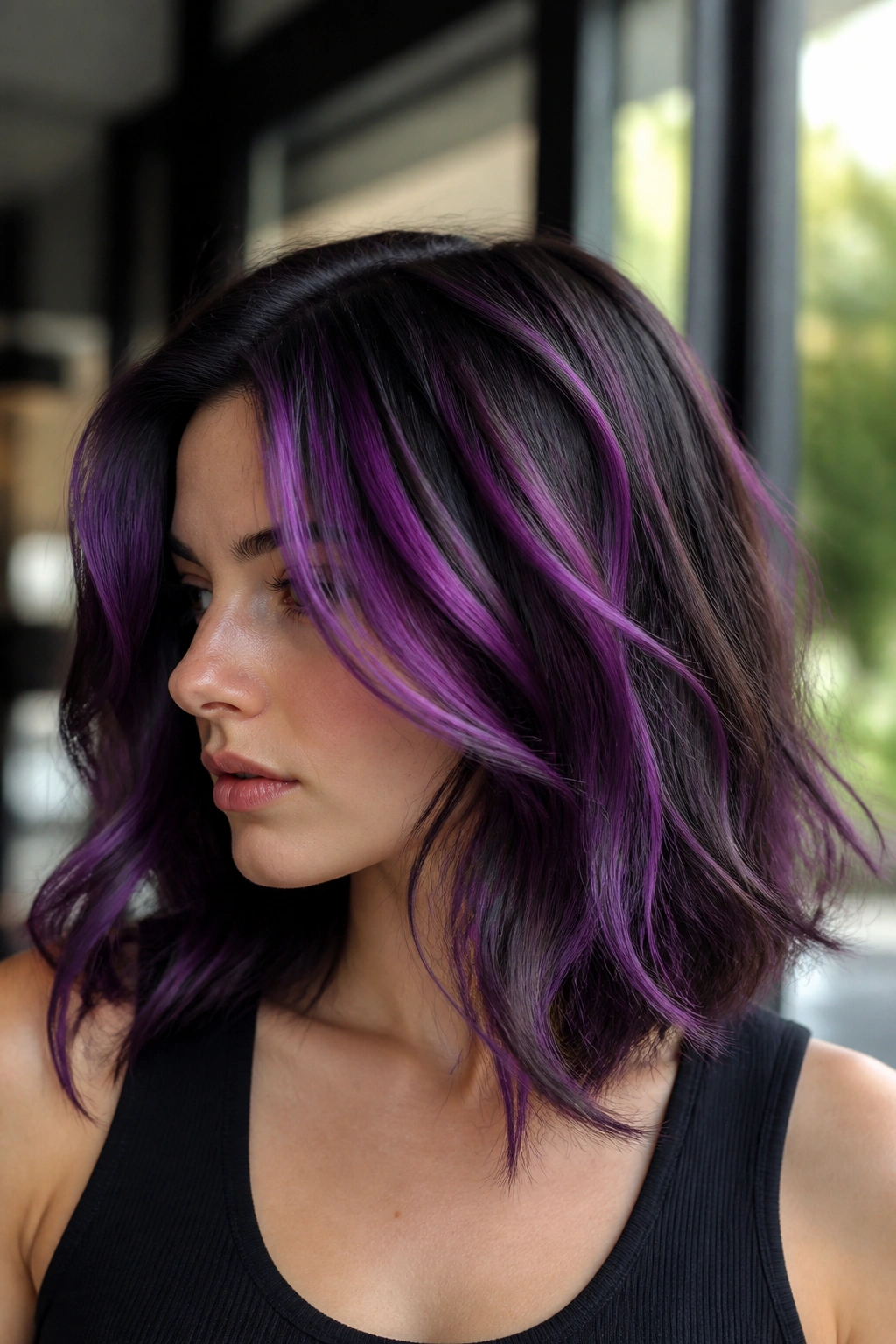
Amethyst ribbon highlights are a strong choice when you want dimension instead of a full color blanket. The ribbons can be thick enough to notice, but thin enough to move through the hair instead of sitting on top of it like stripes.
The shade itself matters. Amethyst has enough violet depth to flatter cool skin, and the pink edge stops it from becoming a flat purple. On layered hair, those two tones can weave through the cut in a way that looks almost natural in motion.
How to Get the Most From It
Ask for ribbons around the temples, through the crown, and in the lower layers where they peek through when the hair swings. That placement keeps the face bright without overloading the top section.
- Best for medium to long hair
- Looks clean on waves and loose curls
- Needs a gloss refresh when the violet turns flat
- Works especially well on cool brunettes who want movement without full lightening
A blunt, heavy placement would kill the effect. Keep the ribbons airy, and let the haircut do some of the visual work.
9. Rose Quartz Gloss on Blonde
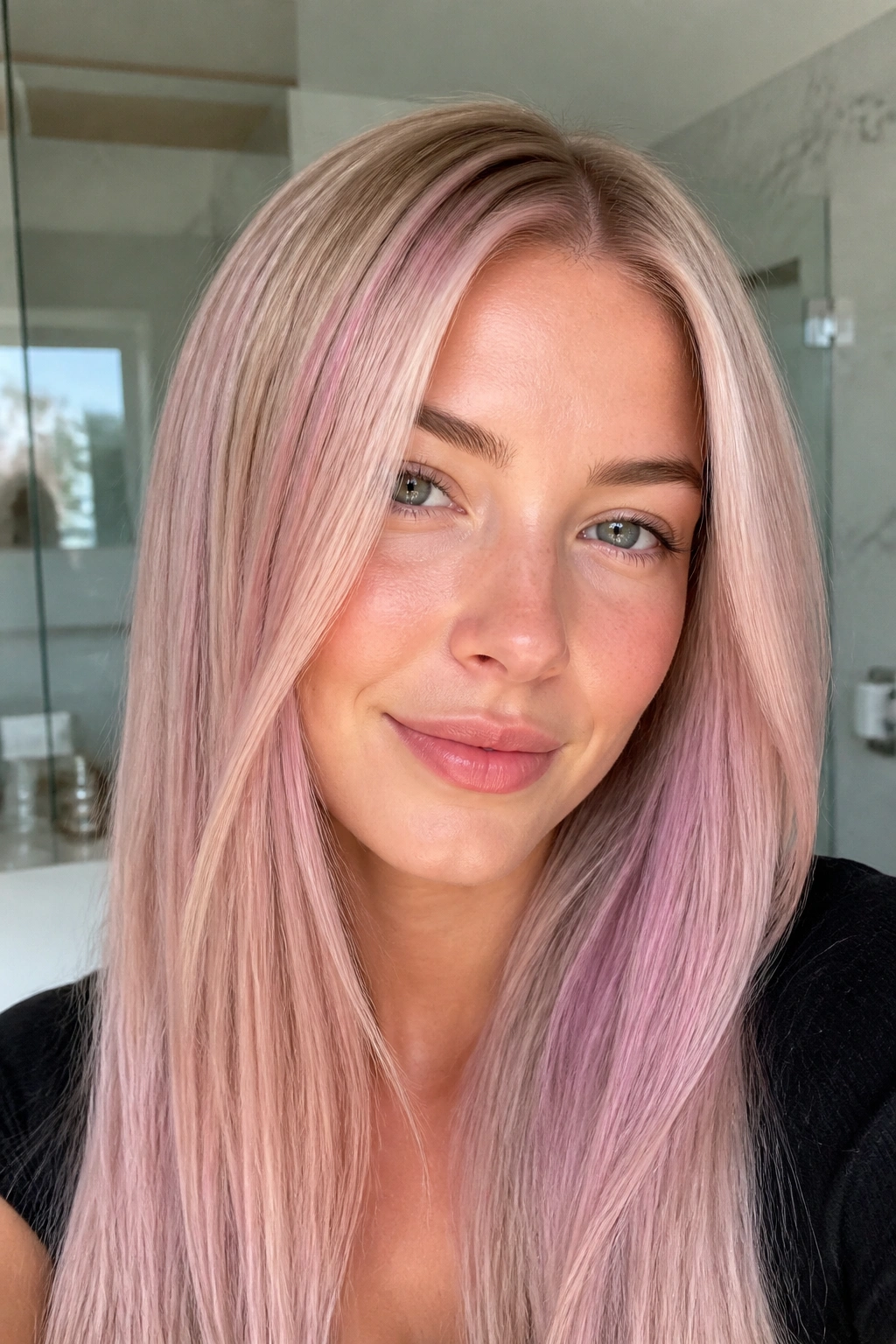
Rose quartz gloss is the easiest way to test pink-violet hair if you already have blonde hair and do not want a dramatic commitment. It sits on top of the existing shade, pushes the blonde toward a cool pink, and fades gradually instead of leaving a hard line.
That softness is the whole point. On cool skin tones, a rose quartz gloss can take a plain blonde and make it look calmer, cleaner, and more finished. The pink-violet note is there, but it doesn’t shout.
How to Keep It Soft
The gloss works best on hair that is lifted to a pale blonde first. If the base is too yellow, the result shifts warmer than you want. A good colorist will neutralize the warmth before laying down the gloss, and that step matters more than people think.
- Use cool water when rinsing
- Swap in a sulfate-free shampoo
- Refresh the tone with a gloss every few weeks
- Avoid heavy oils before coloring; they can block even deposit
This is the shade for someone who likes change but hates maintenance drama. It grows out the way a good gloss should—quietly.
10. Violet Peekaboo Panels
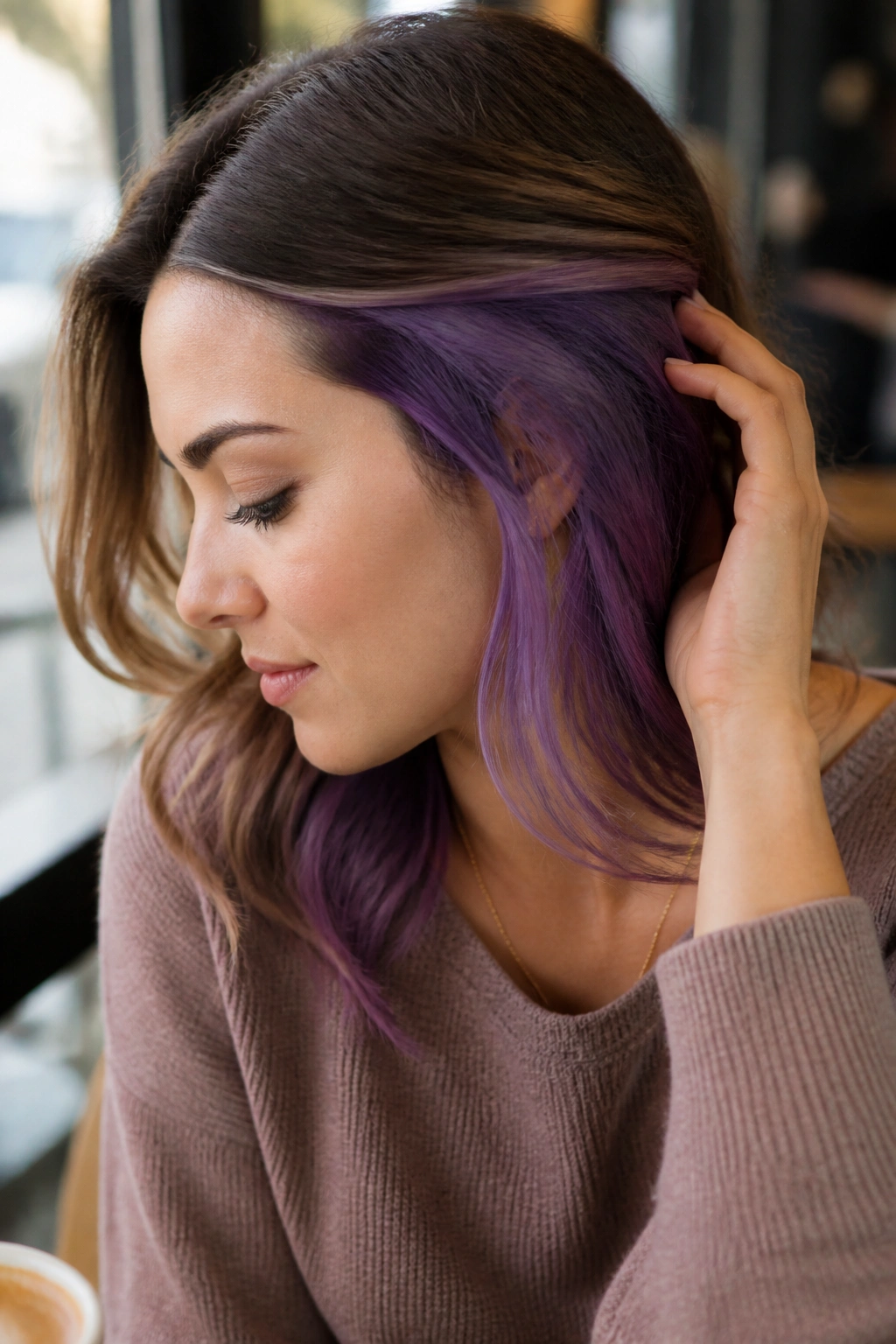
Violet peekaboo panels are for the person who wants color with a little mischief in it. The shade hides under the top layer, so you catch it when the hair moves, when it’s tucked behind the ear, or when it’s tied into a half-up style.
That hidden placement keeps the color from overpowering cool skin. You get the violet-pink impact without having the whole head compete with your face. It’s smart, especially if you’re testing the waters before doing something brighter.
This look works best when the panels sit in places that actually show up. The nape, the lower sides, and the underlayers around the back of the head all make sense. Random placement is where this style falls apart.
It’s also one of the easiest ways to make a simple cut feel more interesting. A straight blowout can look plain; a peekaboo panel gives it a little pulse.
11. Raspberry Ombré
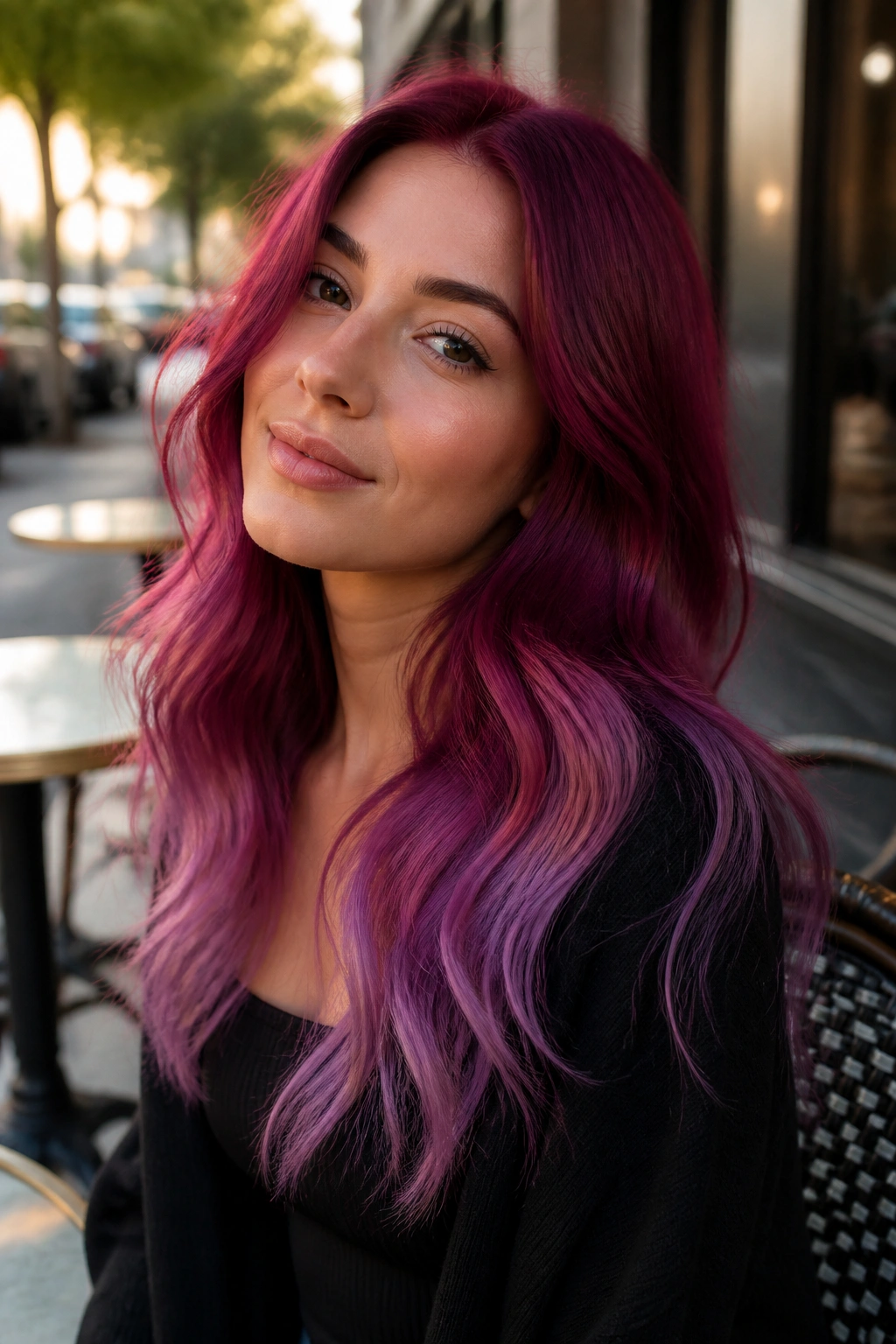
Raspberry ombré is richer than the soft pink looks people usually picture, and that’s what makes it such a strong cool-toned option. The color starts with deeper raspberry and fades toward a cooler pink-violet at the ends, so the hair looks like it’s changing color rather than sitting in one place.
On cool skin, the deeper top section gives the face contrast. The lighter ends keep the style from feeling heavy. The balance is what works here, especially on long hair where the fade has room to show itself.
What to Watch For
The line between ombré and patchy color is thin. You want a smooth shift, not a chunky transition. Curling the hair helps, because the bends soften any visual line and show the gradient in layers instead of all at once.
A raspberry ombré is also kinder than a full pastel if your hair is not already pale blonde. The darker top color can sit closer to your natural shade, which means less bleaching and less breakage. That alone makes it easier to live with.
12. Mulberry on Brunette Hair for Cool Undertones
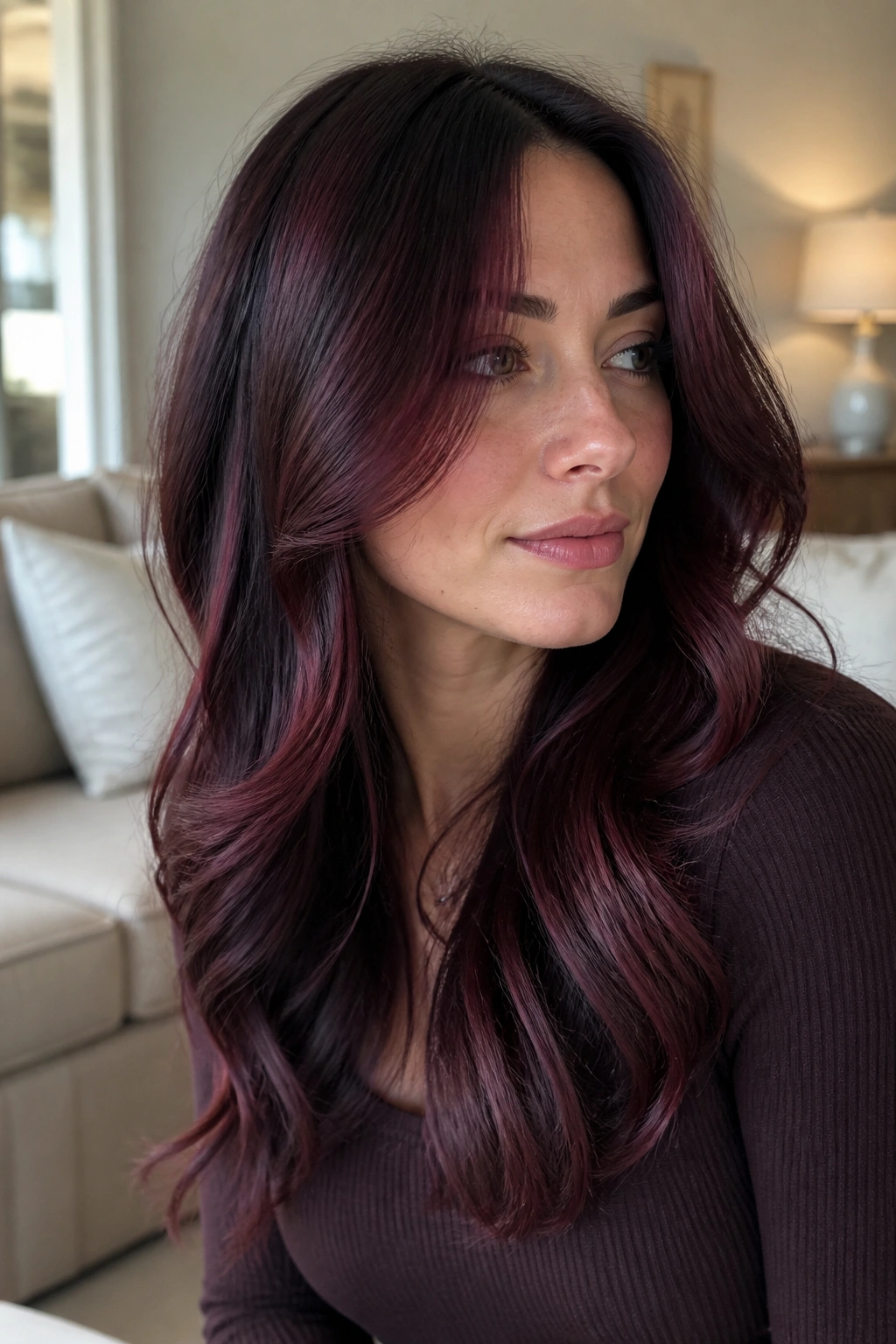
Mulberry on brunette hair is one of the easiest pink-violet ideas on this whole list. Why? Because the shade already has enough depth to show up on a darker base, so you don’t have to strip the hair to a pale blonde first.
That makes the result richer, not weaker. The berry tone sits inside the brown instead of fighting it, and on cool undertones it reads polished instead of muddy. Warm skin can sometimes make mulberry look heavy. Cool skin usually wears it better because the shade echoes the cooler notes already in the face.
Why It Works So Well
Ask for a mulberry gloss or demi-permanent color if you want shine and less upkeep. If you want more pop, go a little brighter through the mids and keep the roots closer to the natural brown. That gives the style depth without making it look overprocessed.
- Best on level 4–6 brunette hair
- Needs less lightening than pastel shades
- Looks strong in straight styles and soft waves
- Fades into a smoky berry rather than a strange orange cast
It is one of the most wearable options here, and honestly, one of the smartest.
13. Neon Magenta Tips
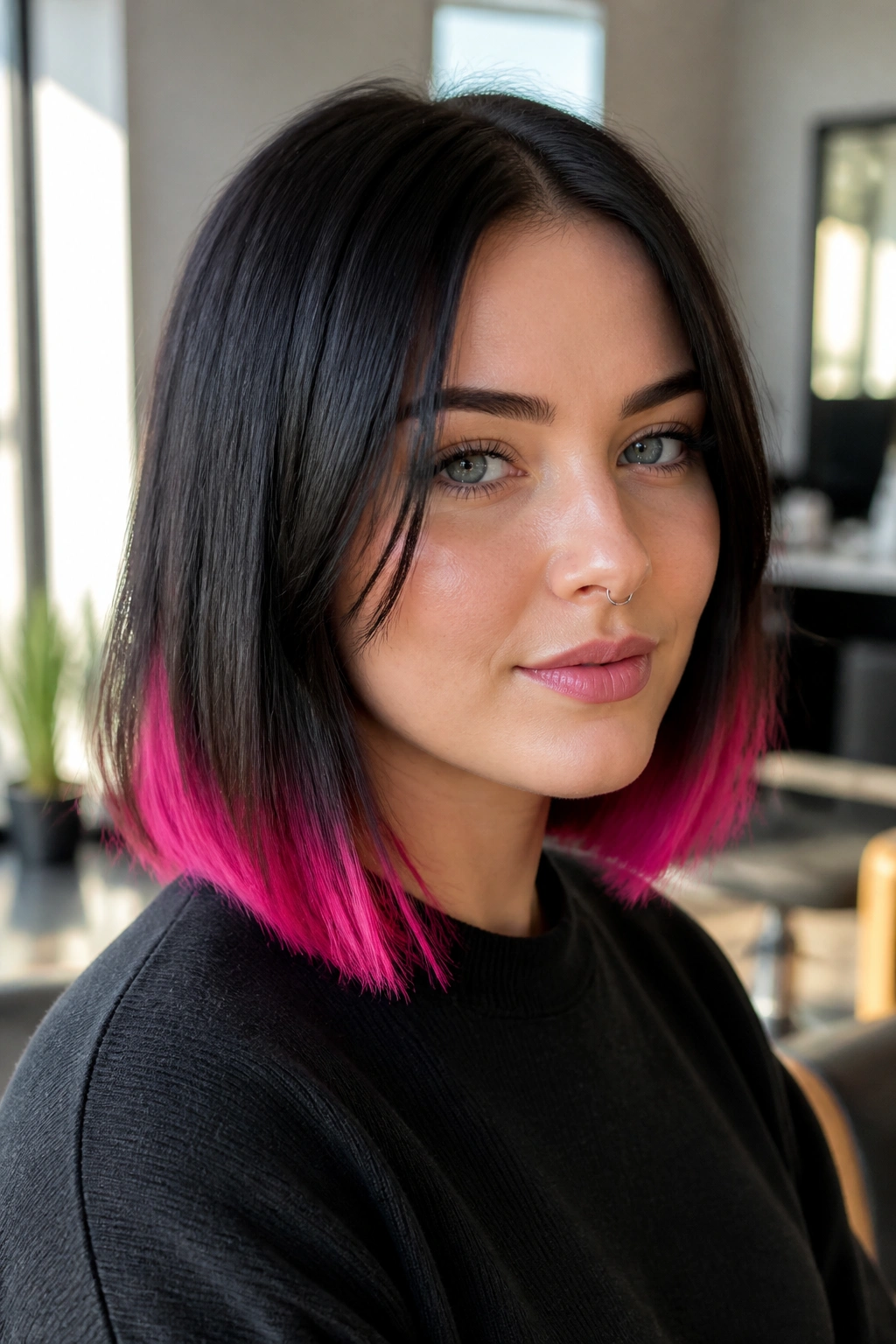
Neon magenta tips are not subtle, and that is the appeal. The brightness lives at the ends, which keeps the root area easy to maintain while letting the color hit hard where it shows most.
A blunt cut makes this look sharp. Layered hair makes it playful. Either way, the tips need to be clean and even or the style starts to look accidental. That’s especially true on cool skin tones, where strong pink-violet contrast can look amazing when it’s placed well and messy when it isn’t.
The practical move is to lighten only the bottom inch or two. Leave the rest darker, then deposit the magenta-violet over the pre-lightened ends. You get punch without having to bleach the whole head.
Heat is the enemy here. Flat irons, curling wands, and high-heat blowouts pull the brightness out faster than people expect. If you want neon tips to stay crisp, use heat protection every time and refresh the pigment with a direct dye mask when the ends start to look dull.
14. Soft Lilac Face Frame
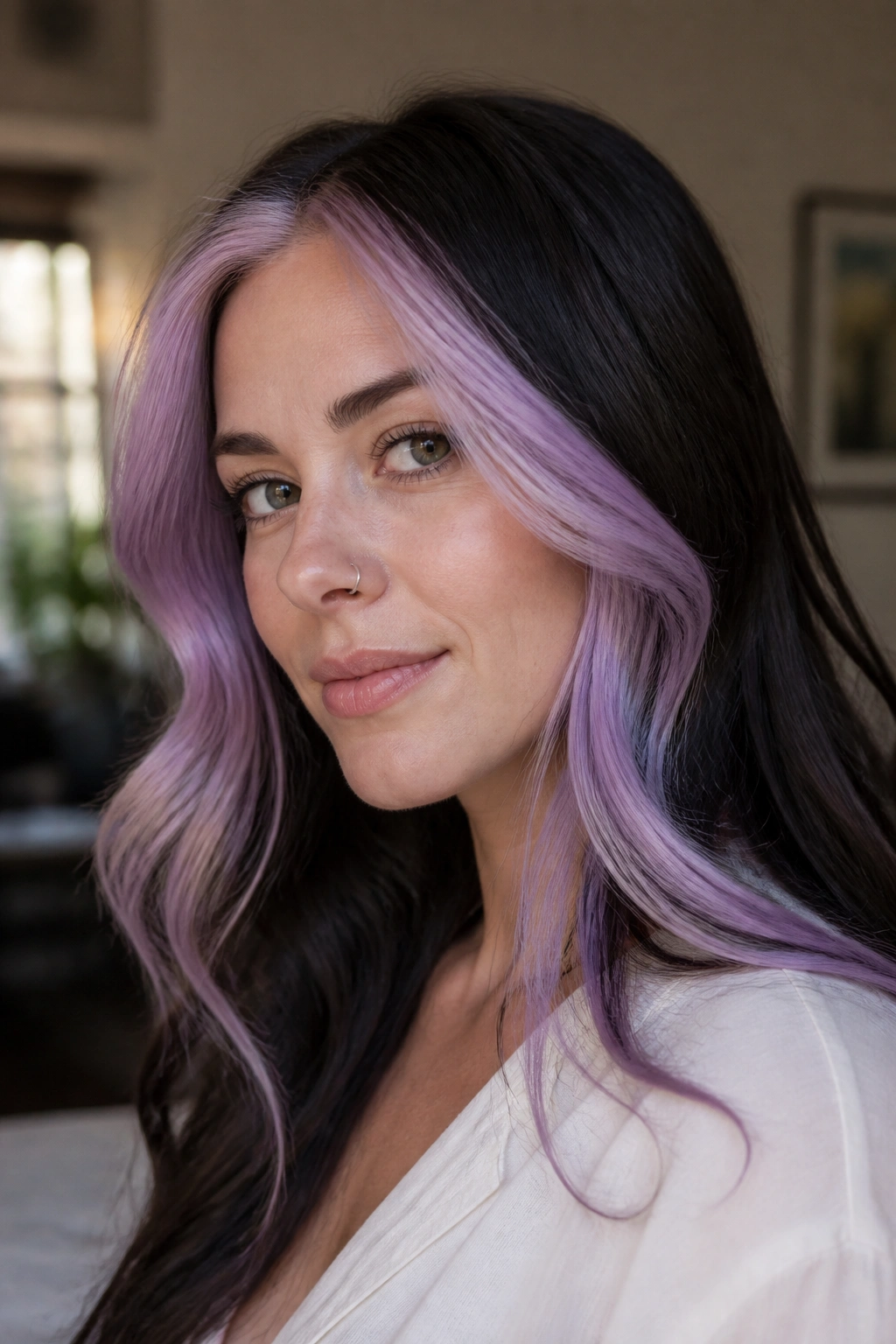
A soft lilac face frame works because the eye goes straight to the front pieces. Those strands sit beside the cheeks, jaw, and forehead, which means the color can change the whole feel of the face without covering much hair.
For cool skin tones, that matters. A lilac frame brightens the complexion without turning the look sugary. It’s also forgiving, which is why I keep recommending it to people who want to try pink-violet hair without a full commitment.
How to Use It
Keep the face frame a shade lighter than the rest of the hair if you want it to stand out. If the rest of the hair is brunette, the front pieces can sit in a soft lilac-mauve range. If the base is blonde, go a little icier so the front pieces actually read as a feature.
- Best around curtain bangs
- Works well with long layers and lob cuts
- Easy to refresh without recoloring the whole head
- Good first step before a bigger color change
A face frame gives you a lot of payoff for a small section of hair. That’s hard to beat.
15. Orchid Underlights
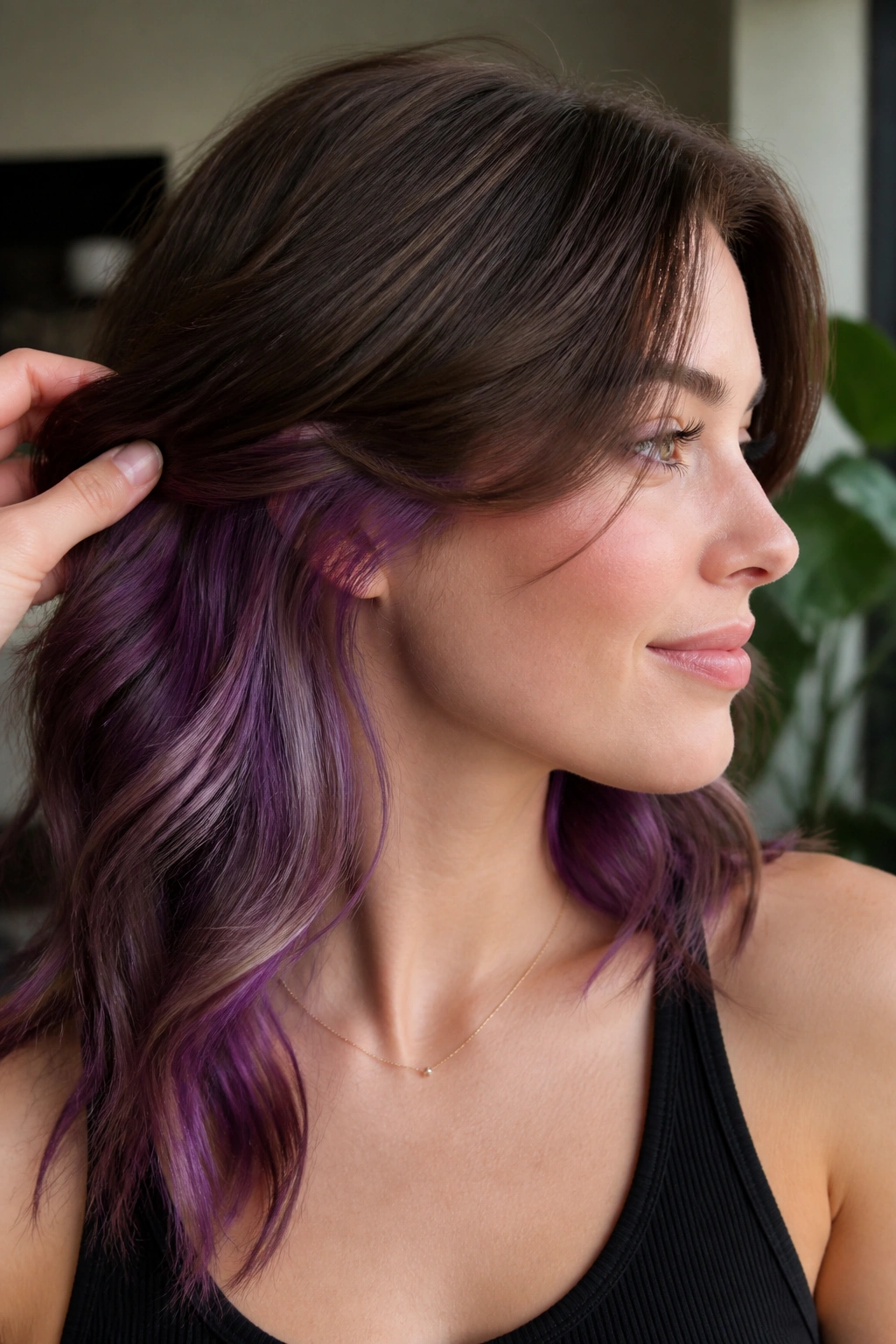
Orchid underlights are a sneaky-good choice if you want color that moves with you. The visible surface can stay natural, smoky, or softly toned, while the orchid lives underneath and flashes through when the hair is lifted or pinned back.
This is one of the most wearable pink-violet ideas for someone who likes hidden detail. Cool skin tones benefit from the orchid because the bright section is close enough to the face to matter, but not so much that it becomes the only thing people see.
The placement also works well with braids, half-up styles, and ponytails. You get a hit of color when the hair is gathered, then a softer look when it’s down. That makes the shade more flexible than a full-head pastel.
If your hair is long and heavy, underlights can also stop the style from looking flat. The hidden color gives the ends a bit of lift, which is useful when the top layer is dark.
16. Blackberry Curl Tint
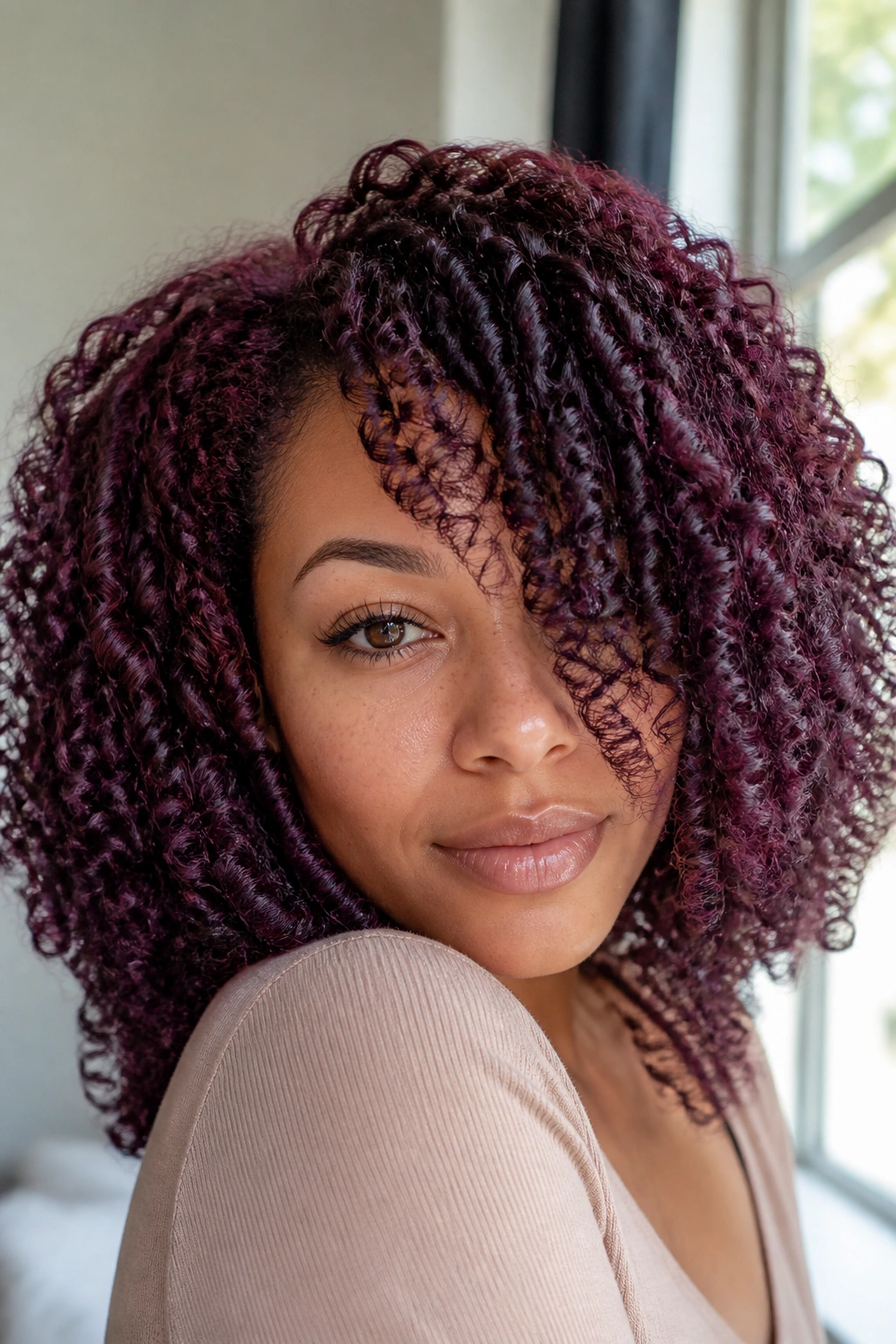
Blackberry curl tint is a beautiful option for coils, curls, and strong wave patterns because the color catches the curve of the hair instead of just sitting on the surface. The berry-violet shade can look almost plush on textured hair.
That plushness matters. Curl patterns already create shadows and highlights, so a dark pink-violet tint gives the shape more depth. Cool skin tones usually like the result because the berry base stays rich while the violet edge keeps the whole thing cool.
What to Watch For
Textured hair can grab pigment fast, especially if it’s porous. That means the color may go darker than expected if the strands are thirsty. A moisture-rich prep helps a lot, and so does a gentler processing time.
- Use a hydrating mask before coloring
- Apply pigment evenly from mid-lengths to ends
- Diffuse on low heat to protect the shade
- Refresh with a deposit-only conditioner when the color softens
This is not the place for harsh shampoo or rough drying. Treat the curls like they matter, because they do.
17. Pink-Violet Block Color
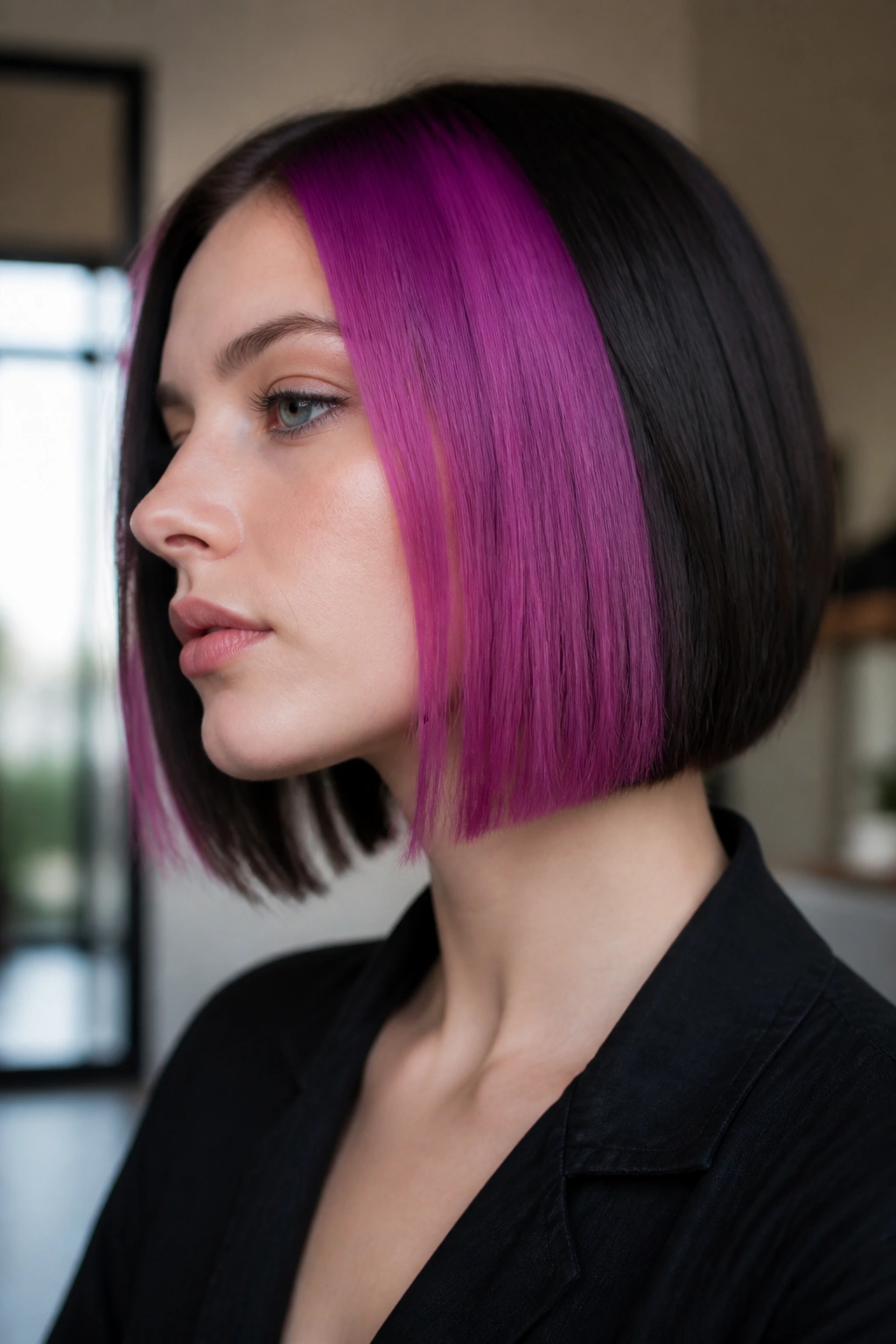
Pink-violet block color is the blunt-force option on this list, and I mean that in a good way. Instead of soft blending, you get a clean section of color that reads graphic and deliberate.
That kind of shape looks especially good on blunt bobs, sharp lobs, or haircuts with an undercut. The cut gives the color a frame, and the frame is what keeps the shade from feeling scattered. On cool skin, the visual clarity is a plus. The face gets the benefit of the color without needing every strand to participate.
You can place the block at the crown, along one side, or in a hidden panel that shows only when the hair moves. If the section is large enough to matter, it becomes part of the haircut rather than an add-on.
This is a solid choice if you like fashion color but do not want a blur of everything. One strong block is often more memorable than five half-notes fighting each other.
18. Satin Plum Lob
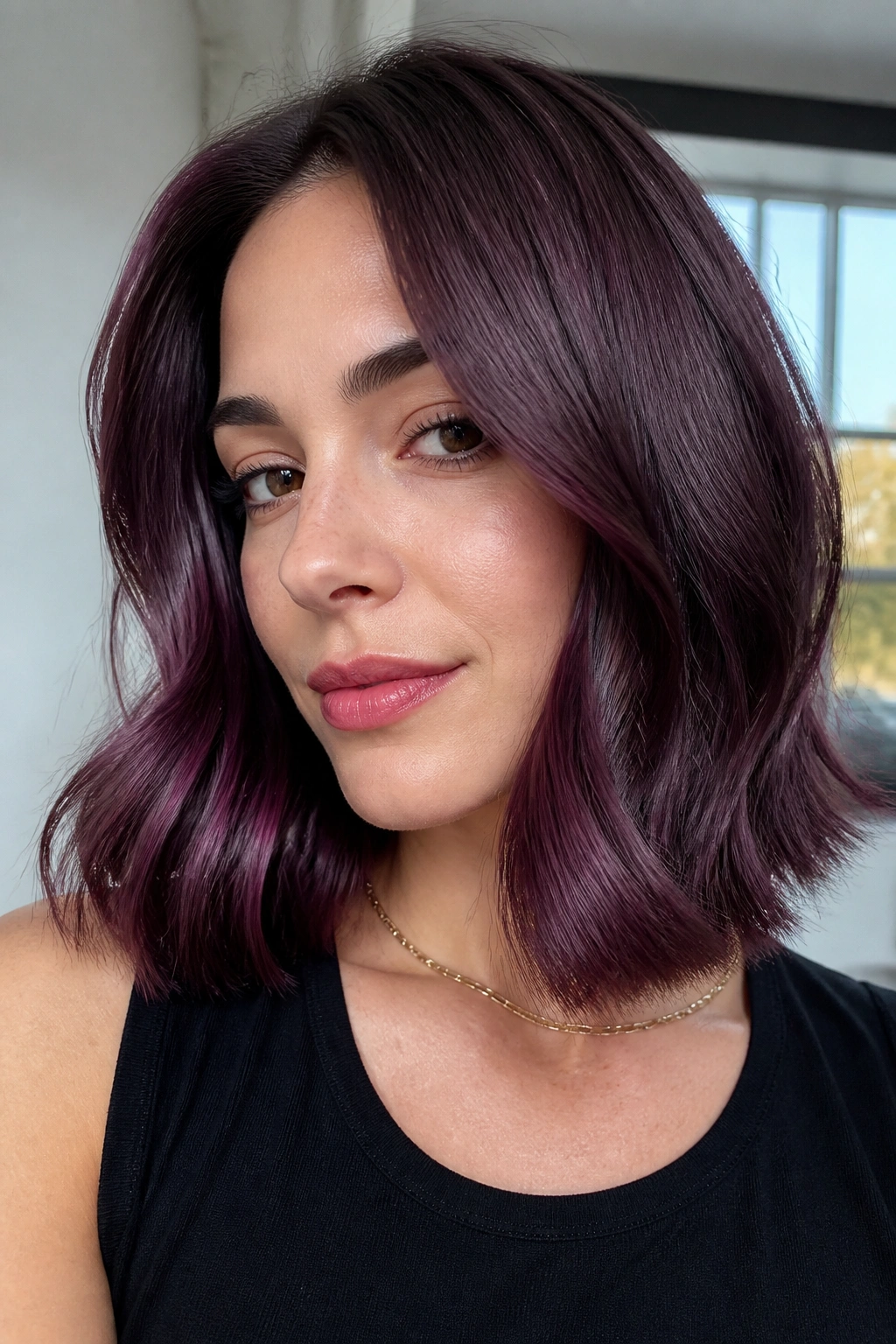
A satin plum lob is the quiet overachiever of pink-violet hair. It’s not trying to be pastel. It’s not trying to be neon. It just sits there looking rich, smooth, and a little bit expensive.
Unlike brighter shades, satin plum works because of finish as much as pigment. The sheen keeps the color from reading flat, and the lob length gives the shade enough surface to show movement without dragging it down. On cool skin, the plum tone tends to sharpen facial features in a flattering way.
I like this option for anyone who wants color that can live in a professional setting without feeling boring. It’s still expressive. It just doesn’t need to prove it every five seconds.
A soft bend with a round brush or a wide iron makes the shade look its best. Straight, pin-straight styling can be a little harsh unless the gloss is perfect. Satin plum wants movement. Just enough.
19. Holographic Pink-Lilac Panels
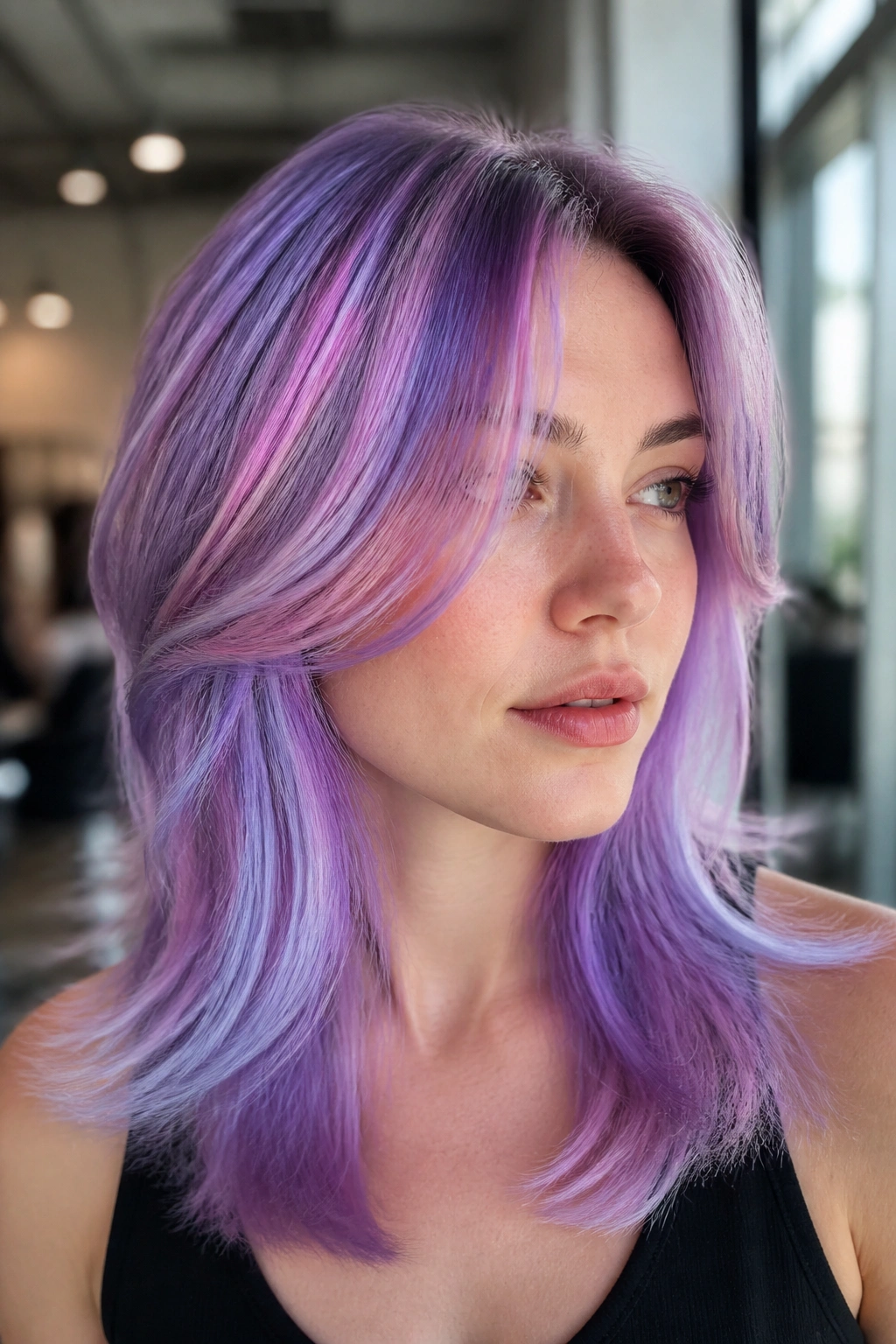
Holographic pink-lilac panels are what happens when you stop thinking about one shade and start thinking about how shades talk to each other. Pink, lilac, and a little periwinkle can live side by side and shift depending on the light, the angle, and the style.
The result is not flat. That is the entire point.
This look needs a skilled hand because placement matters more than saturation. The colorist has to decide where each tone starts and stops so the hair doesn’t collapse into a muddy blur. On cool skin tones, the multi-shade approach can look especially good because the colors echo the coolness in the complexion instead of sitting warm against it.
The best cuts for this are layered ones with movement. Waves, coils, and even a rough blow-dry all help show the different panels. I would not do this on a heavy, one-length cut unless the goal was to make the whole thing look more graphic than airy.
It’s a little extra. That’s why it works.
20. Frosted Orchid Shag
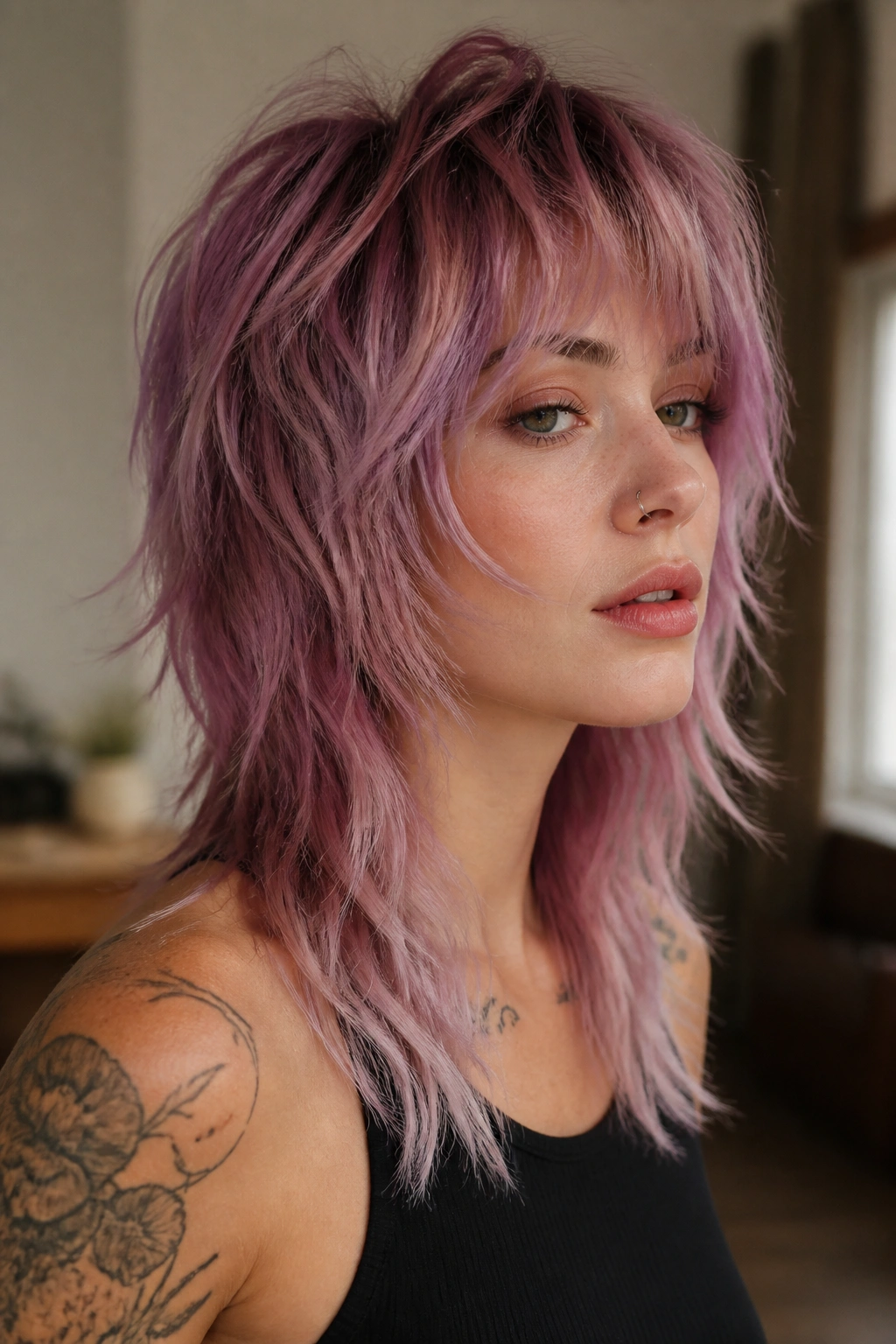
A frosted orchid shag makes sense the second you picture it. The shag gives you texture, the frost gives you lightness, and the orchid keeps the whole thing in the pink-violet family instead of wandering off into plain lavender.
The Shape Does Half the Work
Choppy layers make the color look lived-in, which is a good thing here. The ends can take on a slightly lighter frost, while the mids stay a touch deeper. That unevenness is not a problem; it is the point.
Cool skin tones tend to like this because the frosted finish keeps the shade from getting too sweet. A shag can look messy if the color is flat. With orchid tones, it looks intentionally rough in a way that feels modern without trying too hard.
- Best on wavy or naturally tousled hair
- Use texture spray rather than heavy cream
- Ask for lightness concentrated on the outer layers
- Keep the roots slightly smoky for depth
This is one of those styles that looks better when it moves. Sitting still is not its best angle.
21. Berry Sorbet Curls
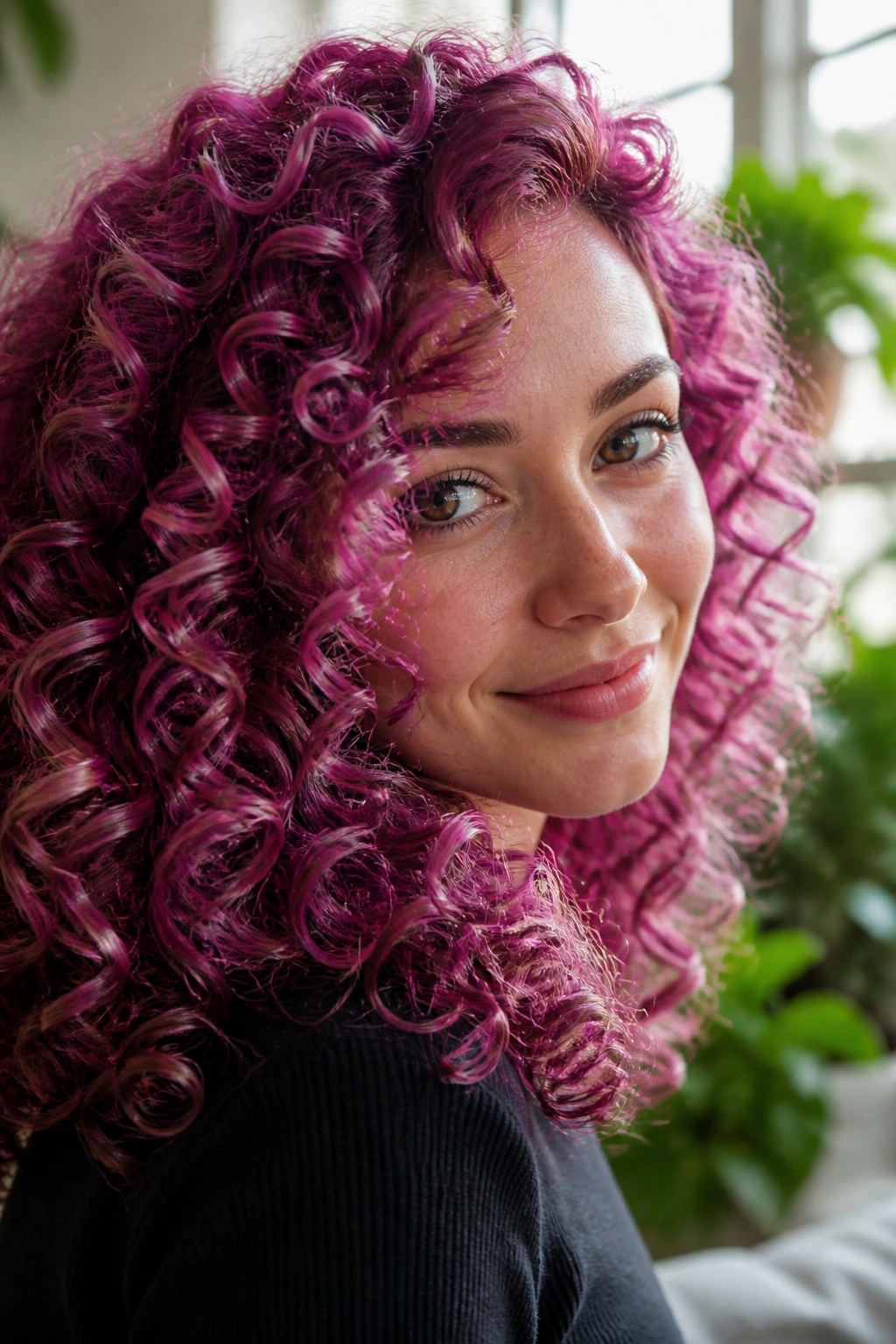
Berry sorbet curls are bright enough to make the curl pattern visible and soft enough to keep the hair from looking harsh. The berry tone brings depth, and the sorbet finish keeps it playful rather than dense.
On cool skin, this shade works because the berry base has enough blue in it to stay flattering. The curl shape then does the rest. Every bend in the hair catches a slightly different note of pink-violet, which makes the whole style feel alive.
How to Keep Curls Soft
Porous curls can drink up color and lose moisture fast, so prep matters. A hydrating mask, a gentle cleanser, and a leave-in that doesn’t leave residue all help the shade look smoother for longer.
- Color the hair in sections so every coil gets even saturation
- Avoid high heat during the first few washes
- Refresh faded ends with a pigmented curl cream or color conditioner
- Sleep on a satin pillowcase to keep the finish from roughing up
Berry sorbet curls are one of the prettiest options here because they balance softness and structure. Not easy to mess up if you respect the curl.
22. Cool Rose Gradient
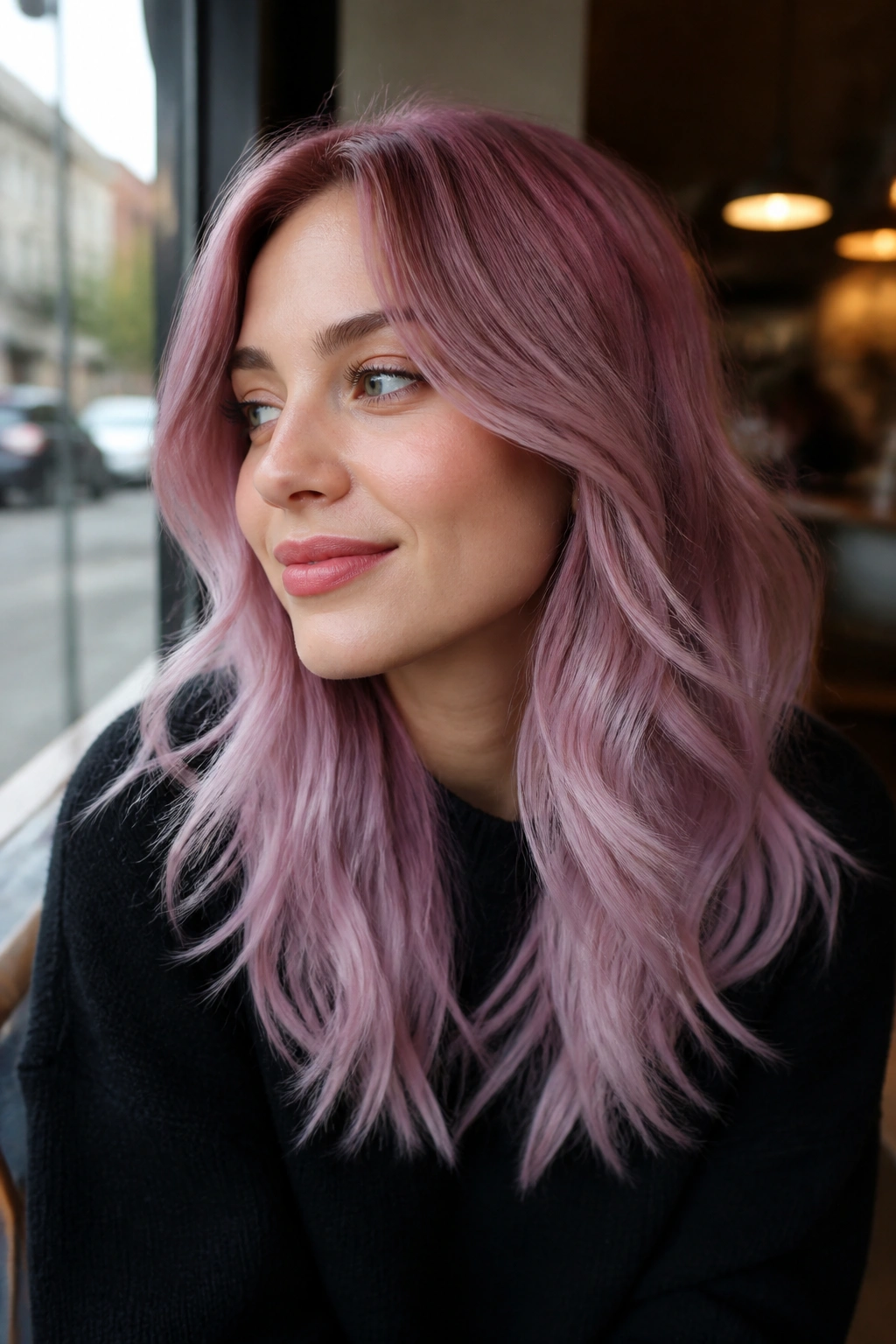
A cool rose gradient is what I’d recommend to someone who wants romance, not candy. The roots can sit in a dusky rose or mauve-rose zone, then the color softens into a paler rose-lilac toward the ends.
That gradient matters because it keeps the style from looking like a single block of pink. On cool skin, the shift in tone can make the complexion look brighter and a little more even. The cool base keeps the hair from pulling peachy, which is where a lot of rose shades go wrong.
Compared with rose gold, this version skips the warm copper lean. That’s the whole advantage. It feels gentler, cleaner, and easier to wear with silver jewelry, cool makeup, and darker clothing.
The gradient works on medium-length hair as well as long layers. A little wave helps, but the color itself does most of the talking. If the blend is clean, the shape looks finished even before you style it.
23. Blue-Violet Fused Balayage
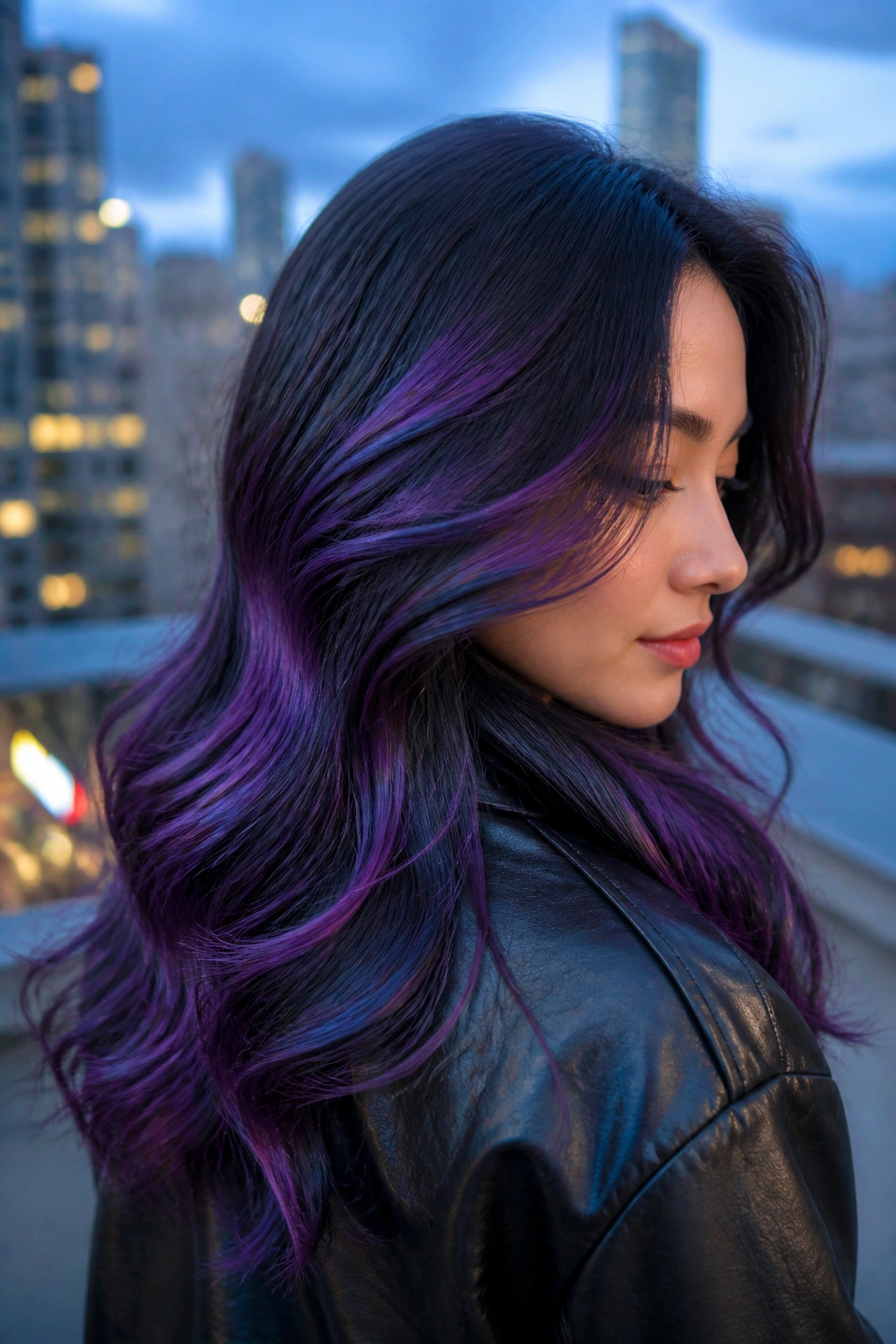
Blue-violet fused balayage is the darkest and coolest direction on this list, and it has a serious amount of depth. It works because the blue-violet notes keep the hair in a cool family without losing the pink-violet identity entirely.
That fusion can look almost denim-like in certain light. On cool skin, the effect is sharp in a good way. It gives contrast without the orange cast that can creep into warmer purples. If your natural hair is dark, this is one of the few fashion-color looks that can still feel dimensional instead of flat.
The best way to wear it is with soft waves or bends, because the motion lets the blue and violet pieces reveal themselves. If the hair is pin-straight all the time, some of the nuance disappears. That is not the color’s fault. It just likes movement.
Ask for alternating blue-violet and pink-violet ribbons rather than one uniform purple. The mix is what makes it interesting.
24. Mauve Smoke on Silver Hair for Cool Skin Tones
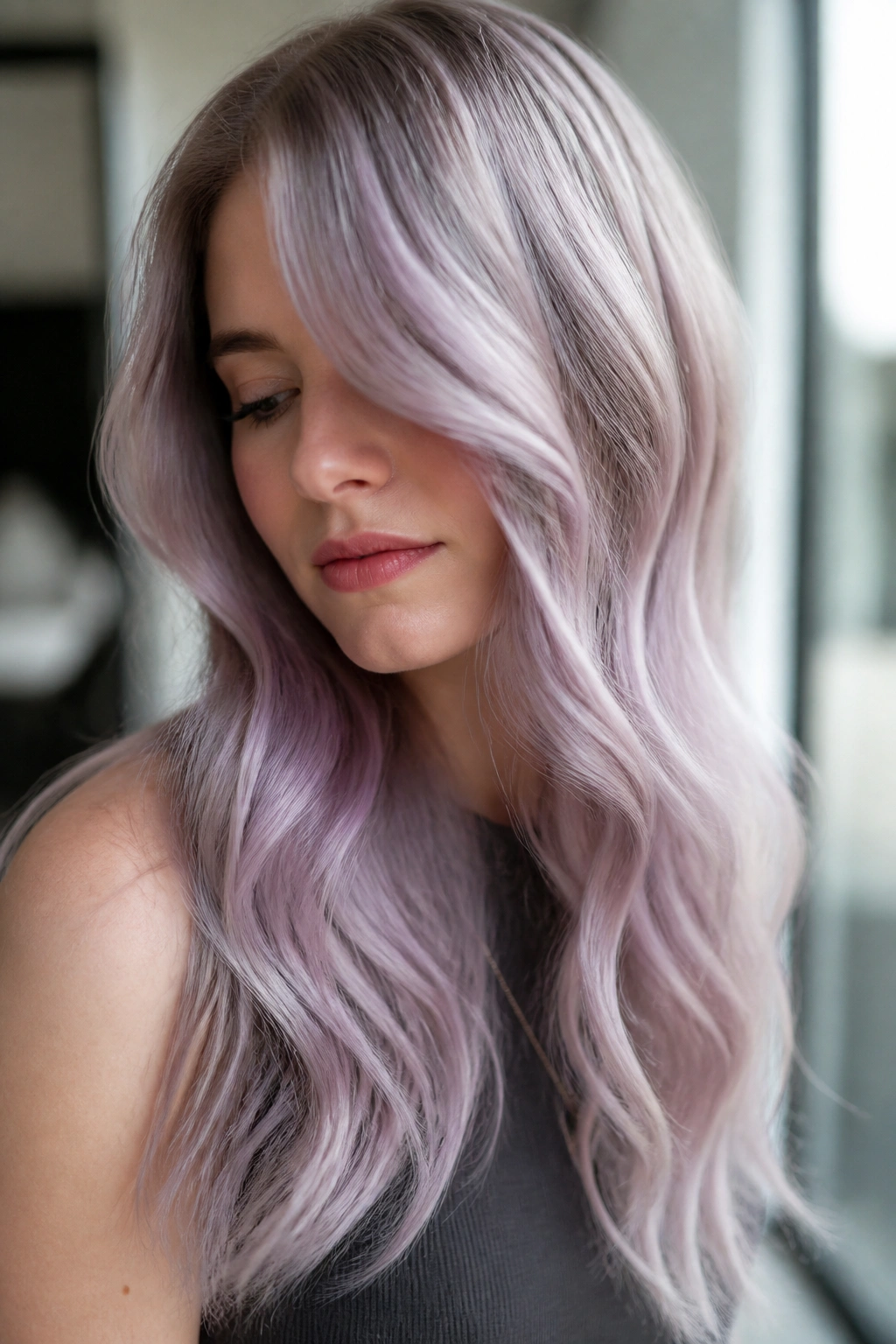
Can pink-violet work on silver hair? Yes, and mauve smoke is the cleanest way to do it. It doesn’t fight the silver base. It settles into it.
That’s why this shade is so good on cool skin tones. The cool silver background already carries gray and blue notes, so a mauve smoke glaze feels natural instead of forced. You get color, but you do not lose the clarity that silver hair gives the face.
What to Ask For
This is a sheer glaze, not a heavy opaque dye. You want the silver to show through. If the color goes too dense, the hair can start looking flat or muddy, especially near the roots.
- Ask for a translucent mauve glaze
- Keep the finish cool and soft, not pink-red
- Refresh with toner instead of repainting every time
- Use shine spray sparingly so the silver doesn’t get greasy-looking
It is a smart option for natural silver, silver-blonde, or highlighted hair. The shade feels calm, and that calmness is what makes it elegant.
25. Soft Rose-Lilac Fade
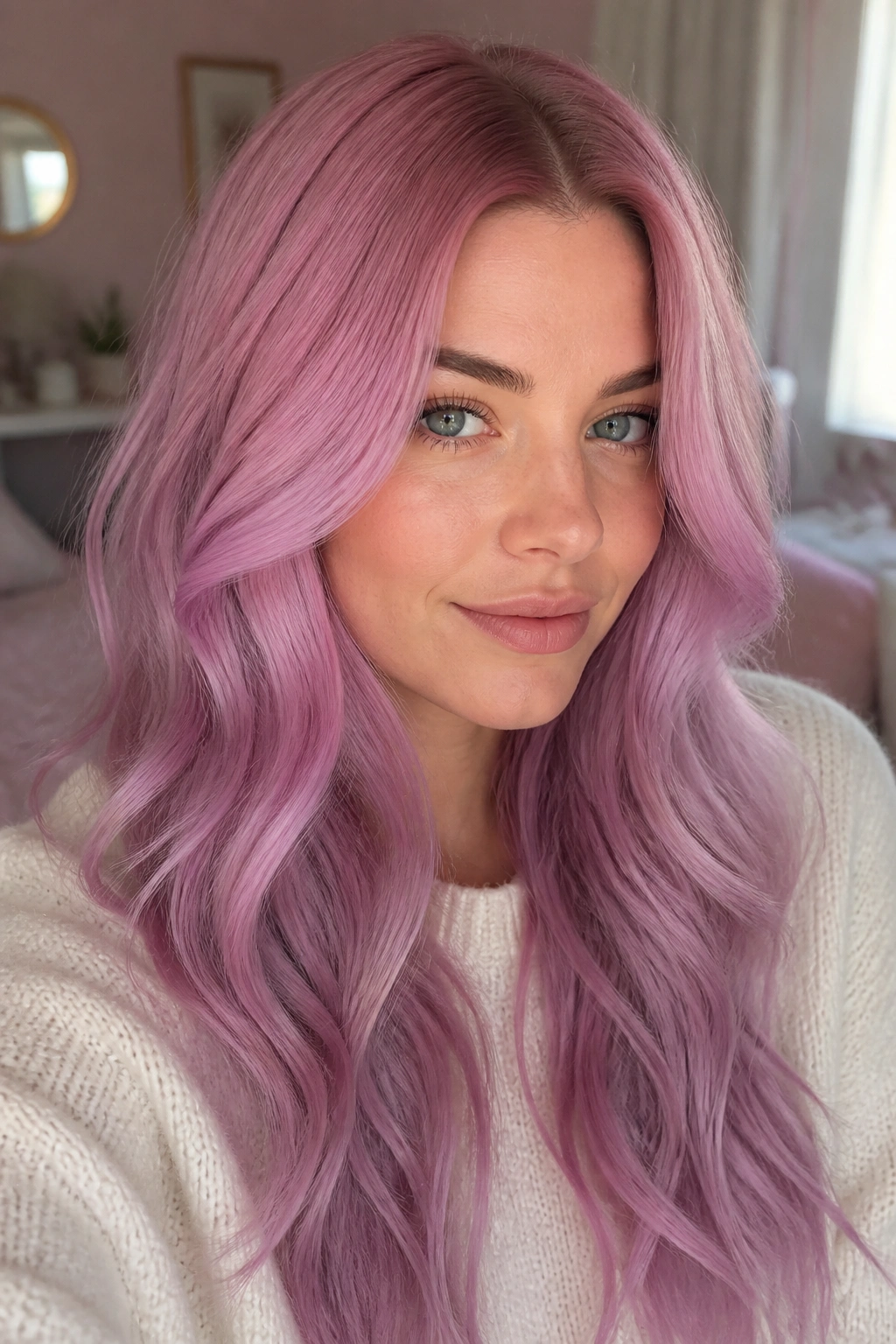
A soft rose-lilac fade is the easiest “I want pink-violet hair, but I don’t want to fight with it every week” choice on this list. The color starts with a gentle rose near the roots, then eases into lilac as it moves down the hair. Nothing about it feels harsh.
That softness is exactly why it flatters cool skin tones. The rose gives warmth in the prettiest possible way, while the lilac keeps the whole look anchored in the cool family. It’s pretty without being fussy. That matters more than people admit.
This is also the shade I’d point to if you’re stuck between pastel and deeper berry. It gives you both moods in one look. You get the lightness of lilac, the softness of rose, and a grow-out that doesn’t punish you for skipping one appointment.
If you’re choosing only one idea from all twenty-five, this is the safe bet. Not boring. Safe. There’s a difference, and this color knows it.
