



Finding the perfect shade of purple when you have cool skin tones is a delicate dance between balancing your complexion’s natural pink or blue undertones and avoiding colors that look muddy or washed out. Because cool skin thrives on colors with a blue, violet, or cool-pink base, you are in a prime position to pull off the entire spectrum of pastels that would otherwise look jarring on warmer complexions.
The biggest challenge isn’t necessarily the color itself, but the canvas you start with. To get a true, clean pastel purple, your hair needs to be lifted to a level 10—think the inside of a banana peel. If you leave any warmth in your hair, you are essentially mixing yellow with purple, which inevitably creates a murky, dusty brown or, even worse, a muted green.
Once that stage is set, the options open up entirely. You aren’t just looking for “purple.” You are looking for the specific gray-violet, the icy-blue lavender, or the powdery orchid that makes your skin look bright and clear rather than sallow.
1. Icy Lavender
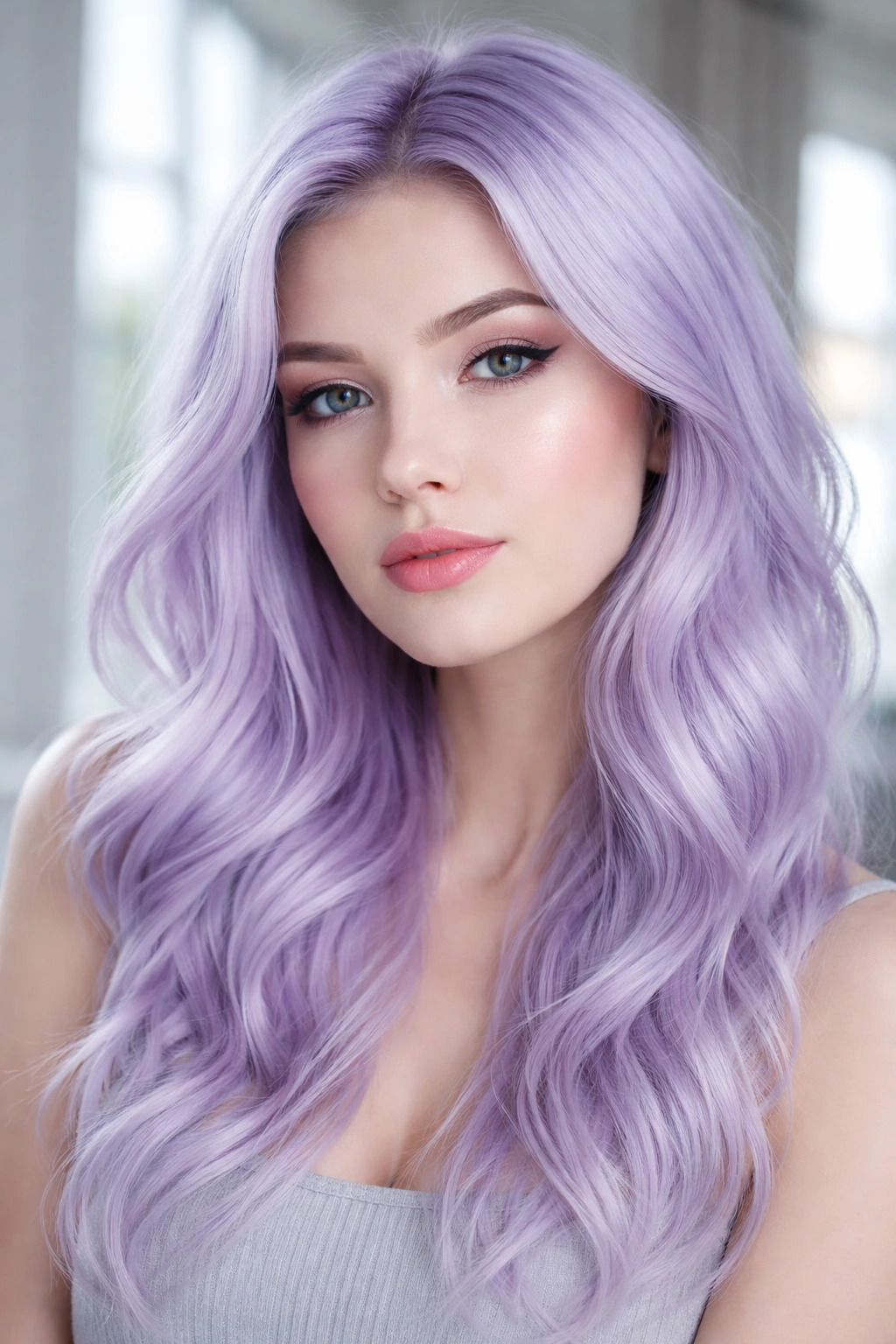
This shade leans heavily into the blue spectrum, which makes it a natural match for the cool undertones in your skin. Think of this as the coldest purple you can achieve before crossing the line into periwinkle.
Why It Works for Cool Tones
The high concentration of blue pigment ensures that the color does not clash with pink or rosy undertones in your face. It keeps the overall look crisp, clean, and intentional.
The Maintenance Factor
Because this is so light, it will fade the fastest. Use a purple toning shampoo every other wash to keep the “icy” effect alive. Avoid anything with sulfates, as they will strip that delicate tint out in two washes.
Pro tip: If you find the color looking too “silver,” let your hair mask sit for an extra five minutes to deepen the violet deposit.
2. Dusty Lilac
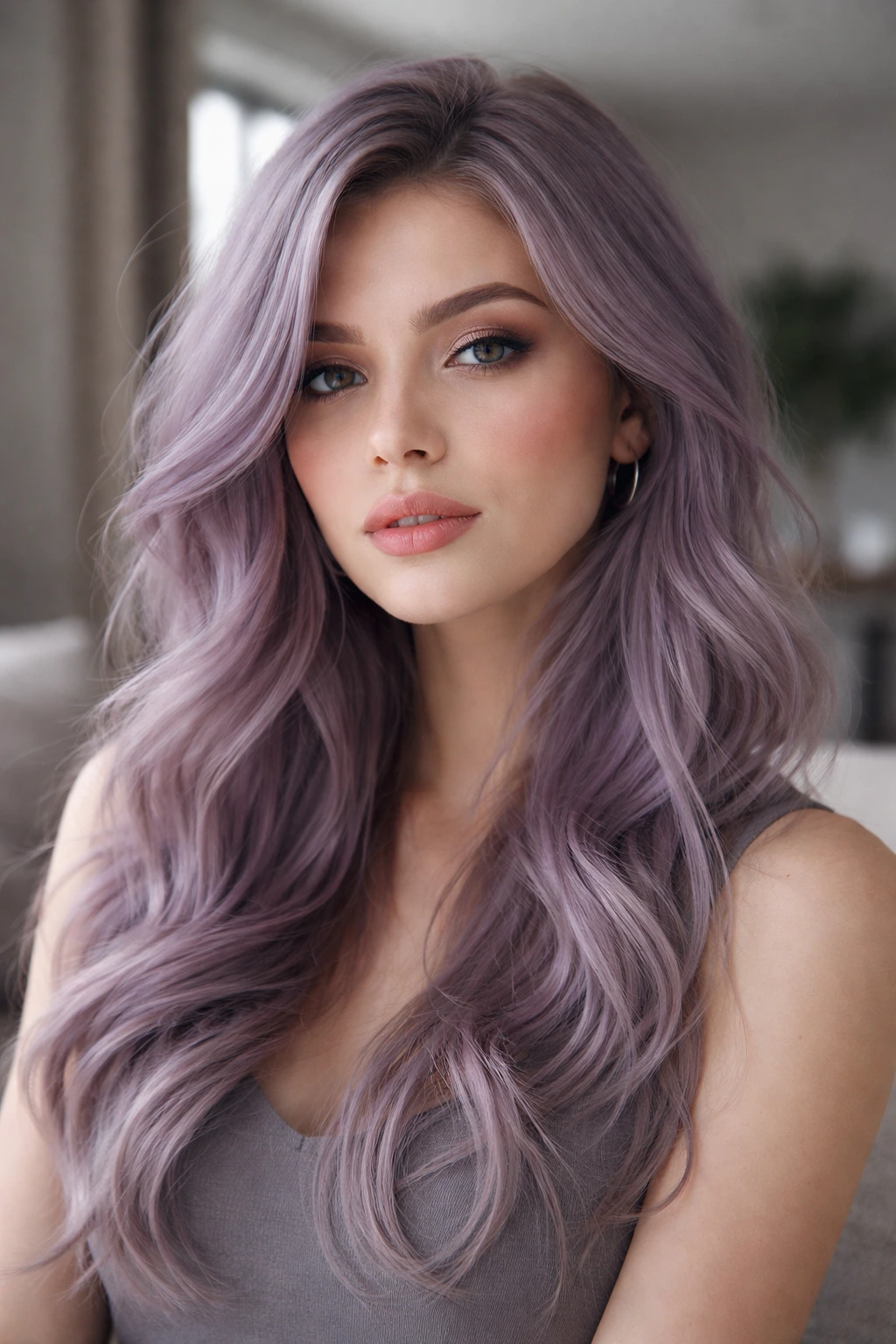
Dusty lilac feels sophisticated and muted, almost like a vintage floral. Unlike bright, neon purples, this color has a grey undertone that softens the intensity.
It is a fantastic choice if you want a pastel that feels “grown-up” rather than cartoonish. The secret to getting that “dusty” finish is mixing a tiny drop of charcoal grey dye into your purple formula. This desaturates the color just enough to make it look moody and elegant.
3. Smoked Violet
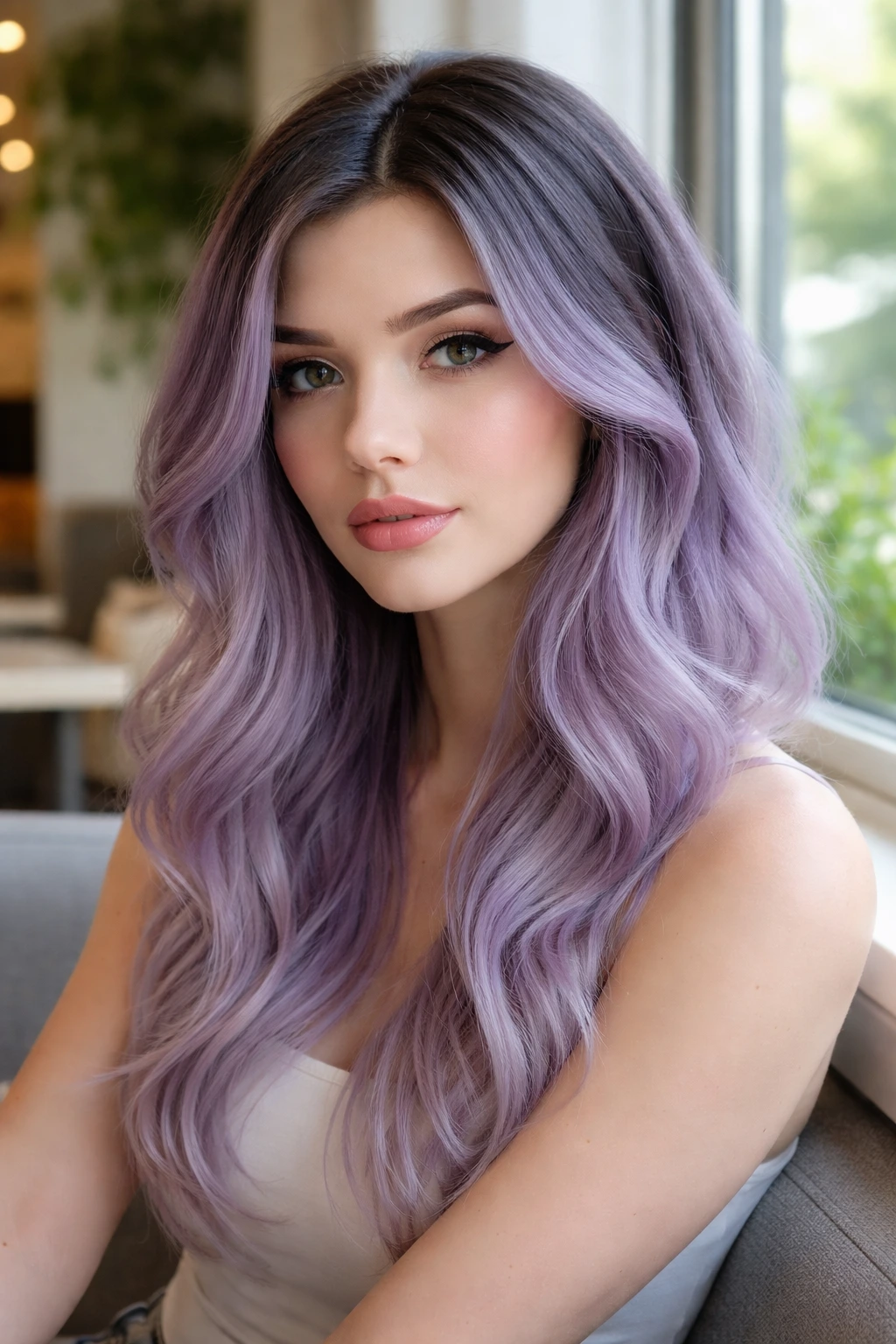
Smoked violet is essentially the dark, mysterious cousin of traditional lilac. It keeps the pastel lightness but leans into a deeper, richer violet base.
What to Ask For
Ask for a “violet with a graphite base” or a “smoky shadow root.” The depth at the roots helps frame the face, while the ends maintain that airy, pastel quality that makes the look feel ethereal.
Who It Suits Best
This is perfect for anyone who wants a lower-maintenance pastel. Since the roots have that “smoked” depth, you won’t have a stark, bright neon line growing out against your natural hair.
4. Periwinkle Blue-Purple
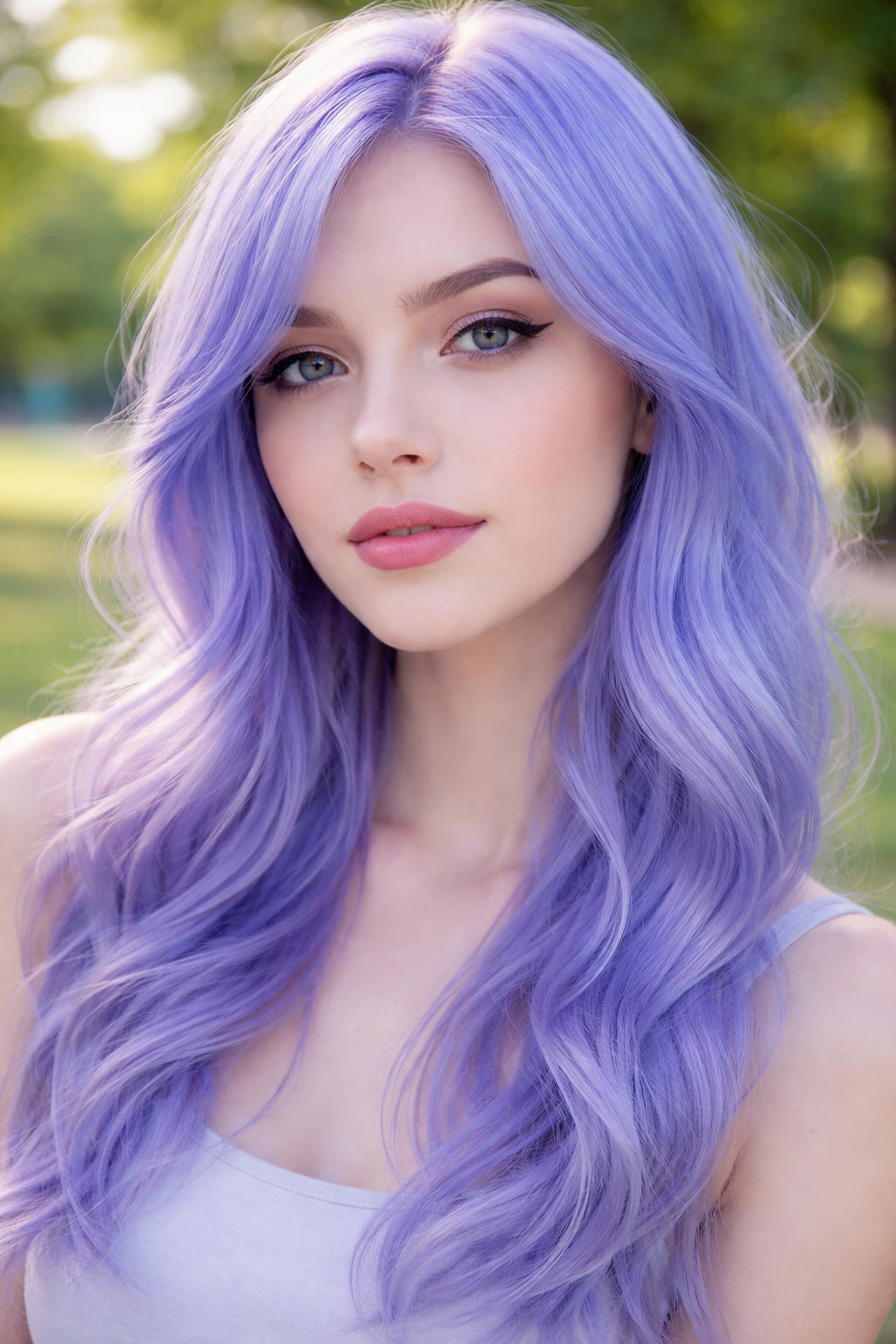
Periwinkle sits right on the edge of the blue and purple fence. For cool skin tones, this is a winning combination because it leans into the blue-violet family, which is the most flattering range for blue or pink-toned skin.
If you have very fair, porcelain skin, periwinkle makes your features pop. It creates a striking contrast that feels like an intentional style choice rather than a faded dye job.
5. Silver-Purple Ombré
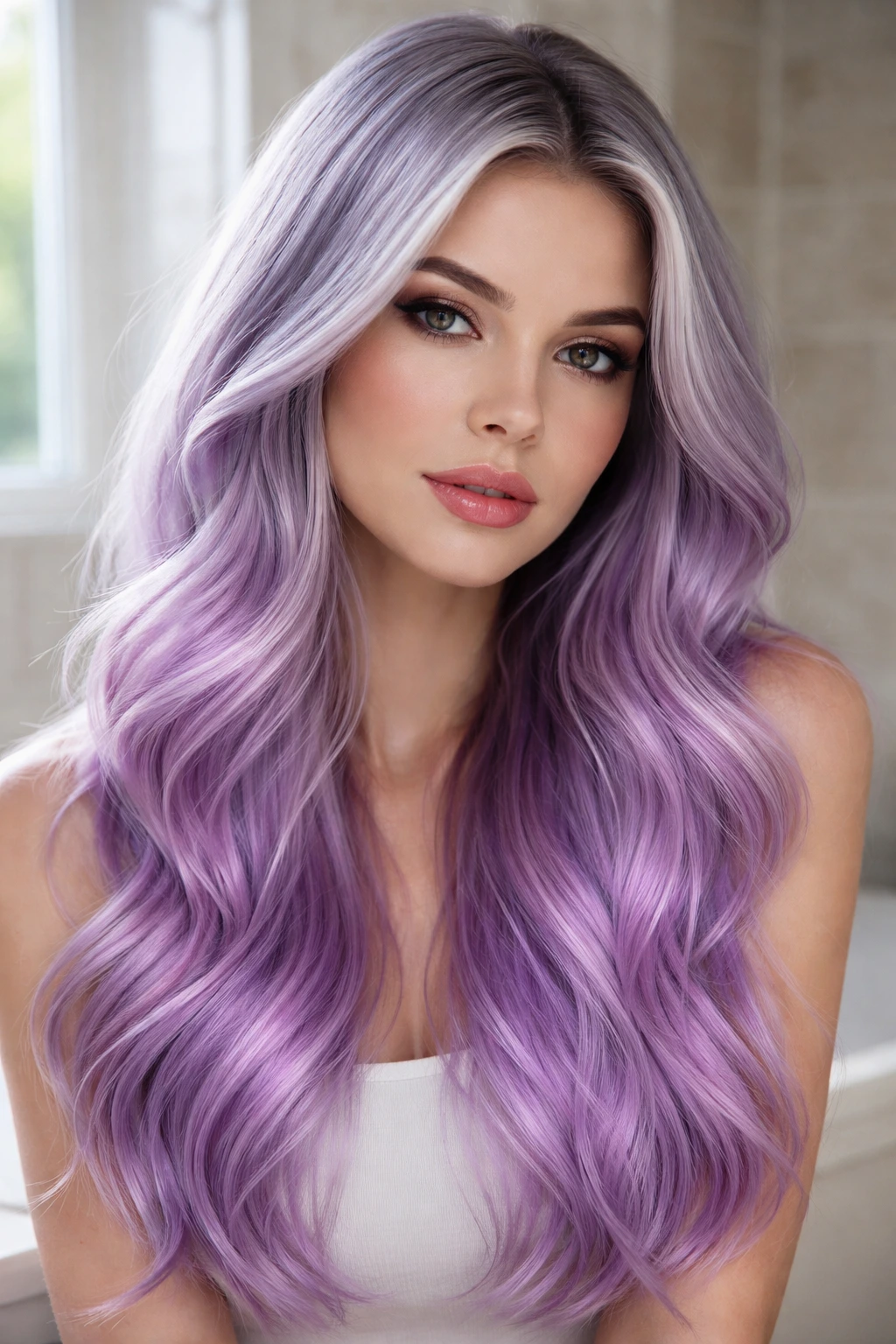
This style transitions from a deep, muted silver root into a vibrant, pastel purple tip. The cool, metallic silver at the top perfectly bridges the gap between your natural hair and the fashion color at the bottom.
The transition needs to be seamless. You want a “melted” look, not a hard line where the silver stops and the purple starts. Using a clear gloss over the transition zone can help marry the two colors and give the hair a high-shine, healthy appearance that is often missing from heavily bleached hair.
6. Muted Orchid
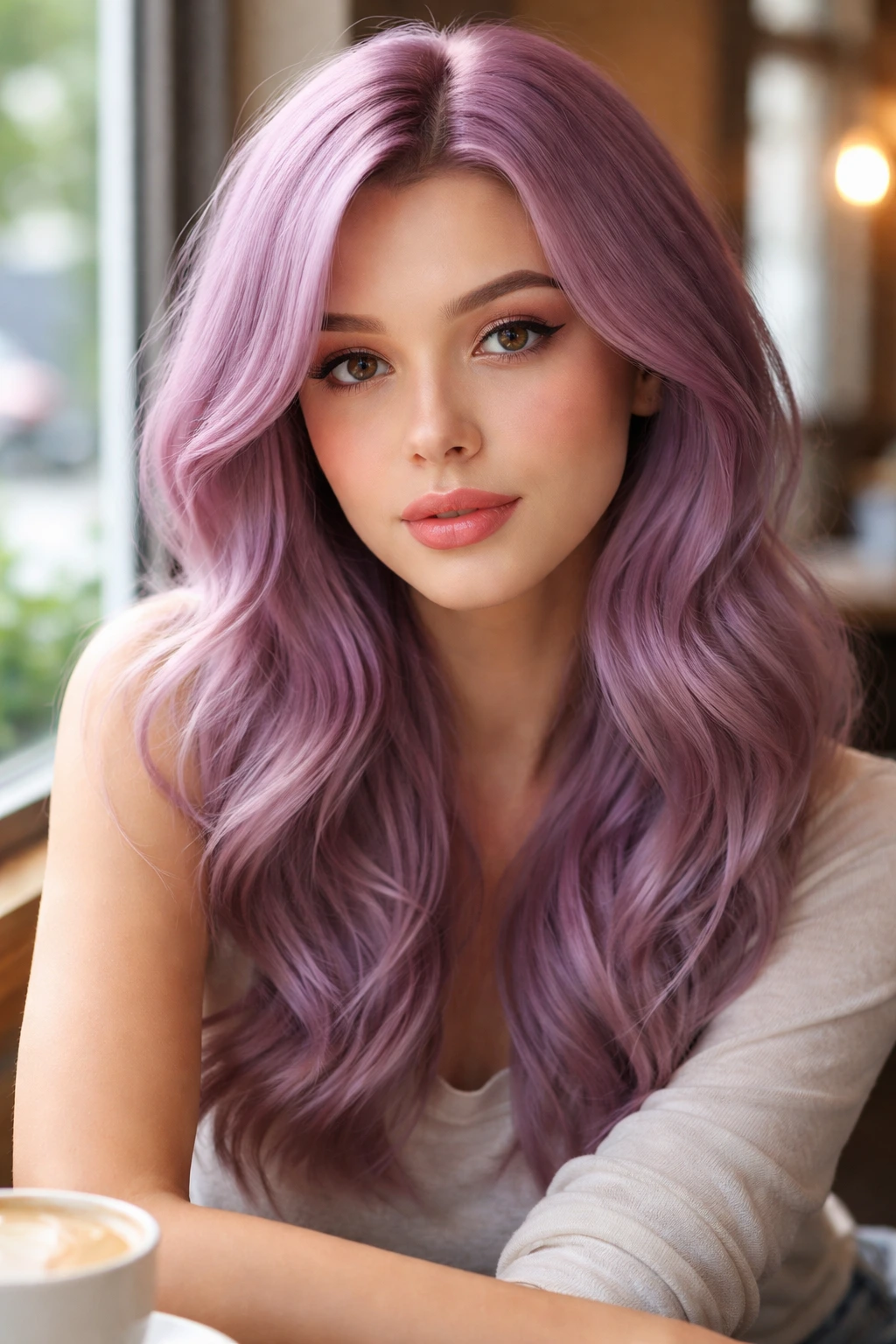
Orchid is a purple that leans slightly toward the pink side, but when it is “muted,” it loses that bubblegum edge. It is closer to the color of a dried lavender sprig.
This shade is particularly good at brightening up a tired complexion. Because it has enough pigment to stand out, it doesn’t make you look washed out the way extremely pale, almost-white hair might. It provides just enough color to give your cheeks a healthy glow.
7. Deep Plum Roots to Pastel Ends
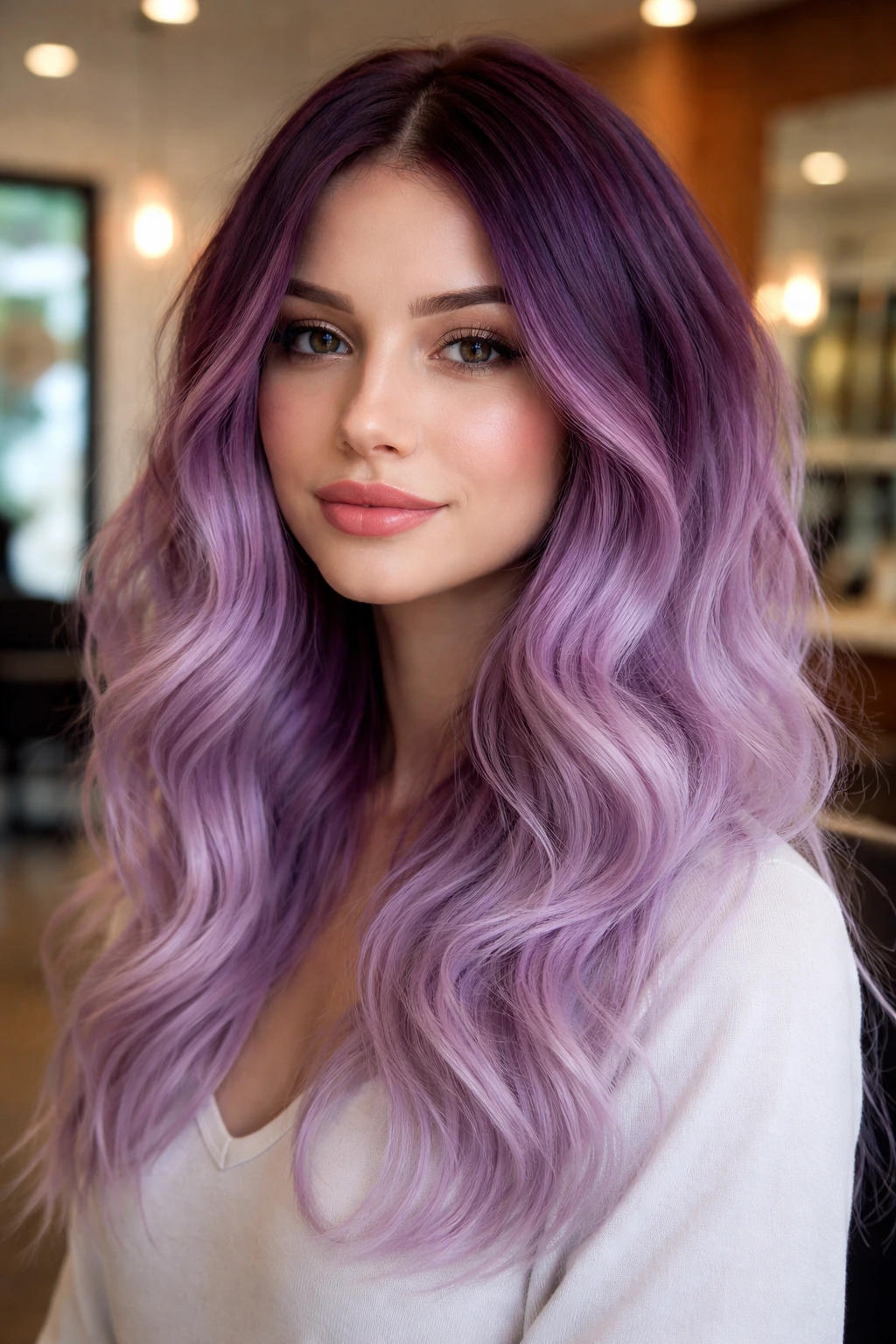
This creates a sense of drama without committing to an all-over light pastel. By keeping the roots a deeper, richer plum, you allow your natural hair growth to blend in better, which extends the time between salon visits.
The contrast between the deep root and the light, airy tips creates volume and visual interest. It is a fantastic technique for people with fine hair who want their locks to look fuller. The darker root gives the illusion of thicker hair density.
8. Holographic Purple Streaks
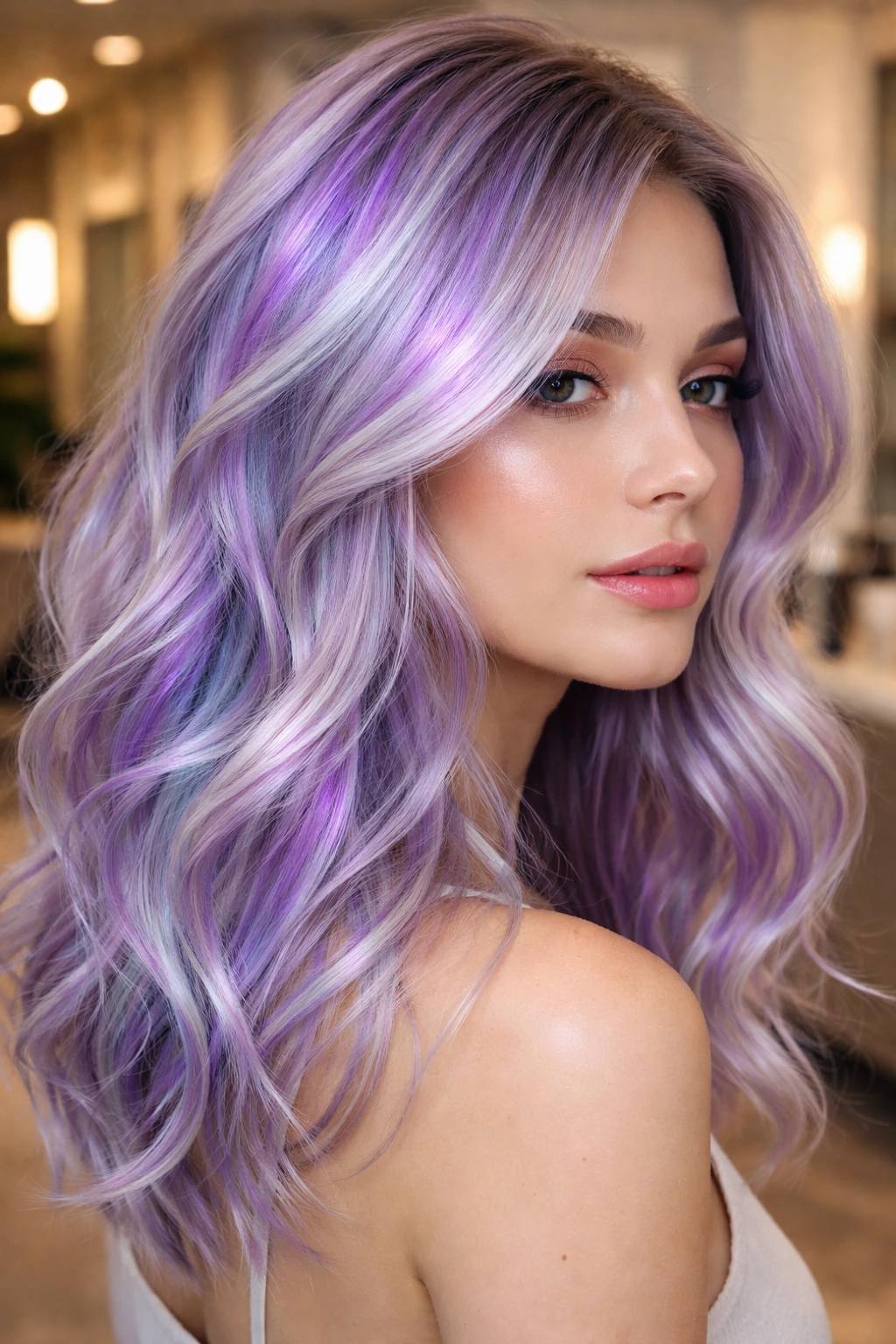
Instead of an all-over color, imagine your hair as a base of light, cool silver with streaks of various pastel purples running through it. This creates a “holographic” effect that looks different every time the light hits it.
How to Get the Look
You need a stylist who is comfortable with “color placement.” This isn’t just a standard highlight; it is about placing different shades of violet, lilac, and grey-purple in specific slices throughout the hair.
The Effect
When you move, the colors shift. It gives the hair dimension and avoids the “flat” look that can sometimes plague uniform pastel dye jobs.
9. Frosted Grape
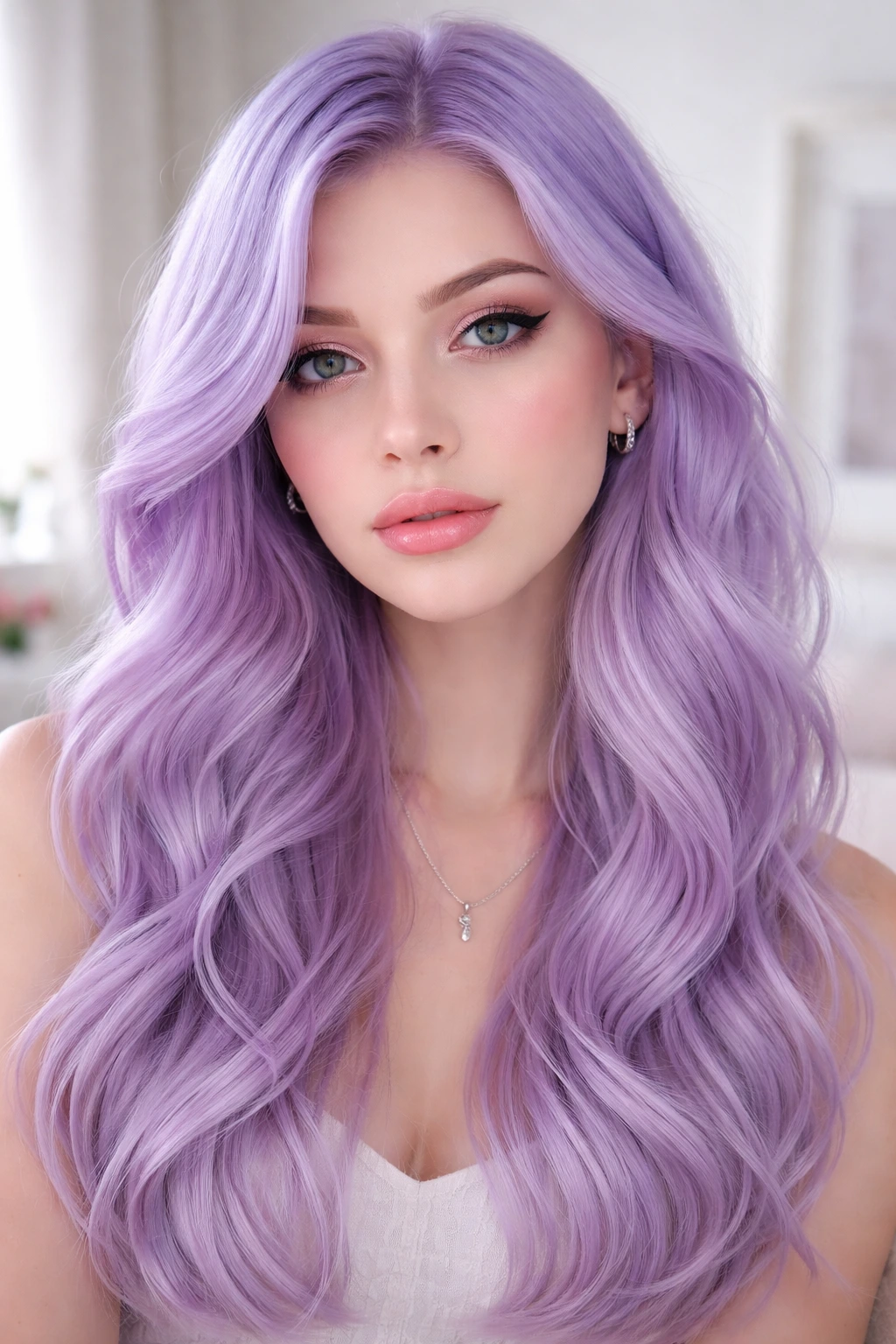
Think of this as a very light, almost candied purple. It has a high-shine, glossy finish that makes it look “frosted.” It is a fun, playful color that looks fantastic with silver jewelry.
If you have a cool skin tone, the silver jewelry you likely already wear will complement this shade perfectly. It’s a harmonious look that pulls your hair, your accessories, and your complexion together into one cohesive vibe.
10. Mauve-Tinted Lavender
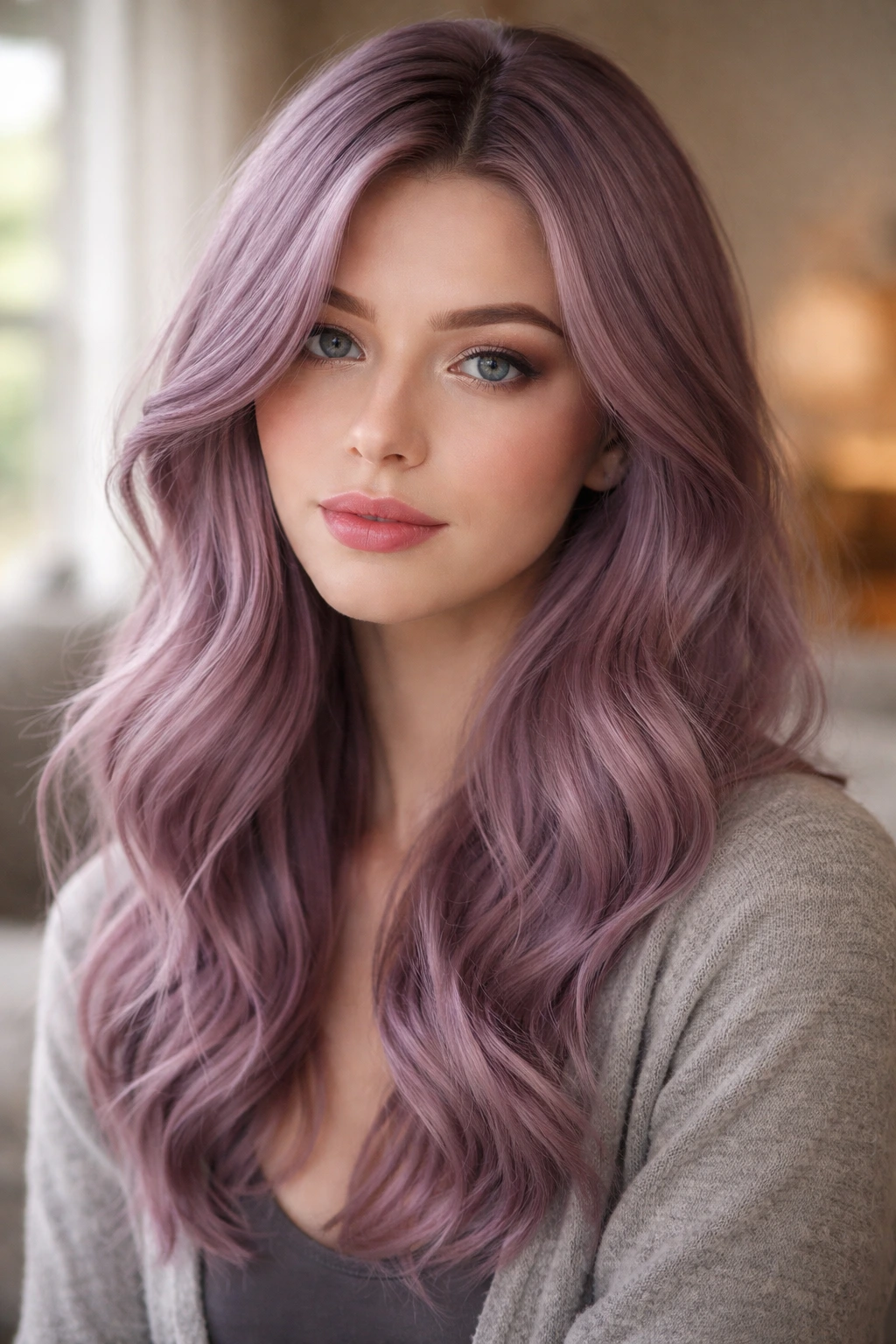
Mauve is typically considered a warm, brownish-pink, but when you pull it toward a cool, lavender base, you get something incredibly chic. This shade is a muted purple that leans toward a dusty, antique rose-violet.
It works exceptionally well if you have dark, cool-toned eyes, as the slight pink-violet undertone in the hair makes eye color pop significantly. It is a subtle way to wear purple without going for a neon, artificial look.
11. Peek-a-Boo Pastel Purple
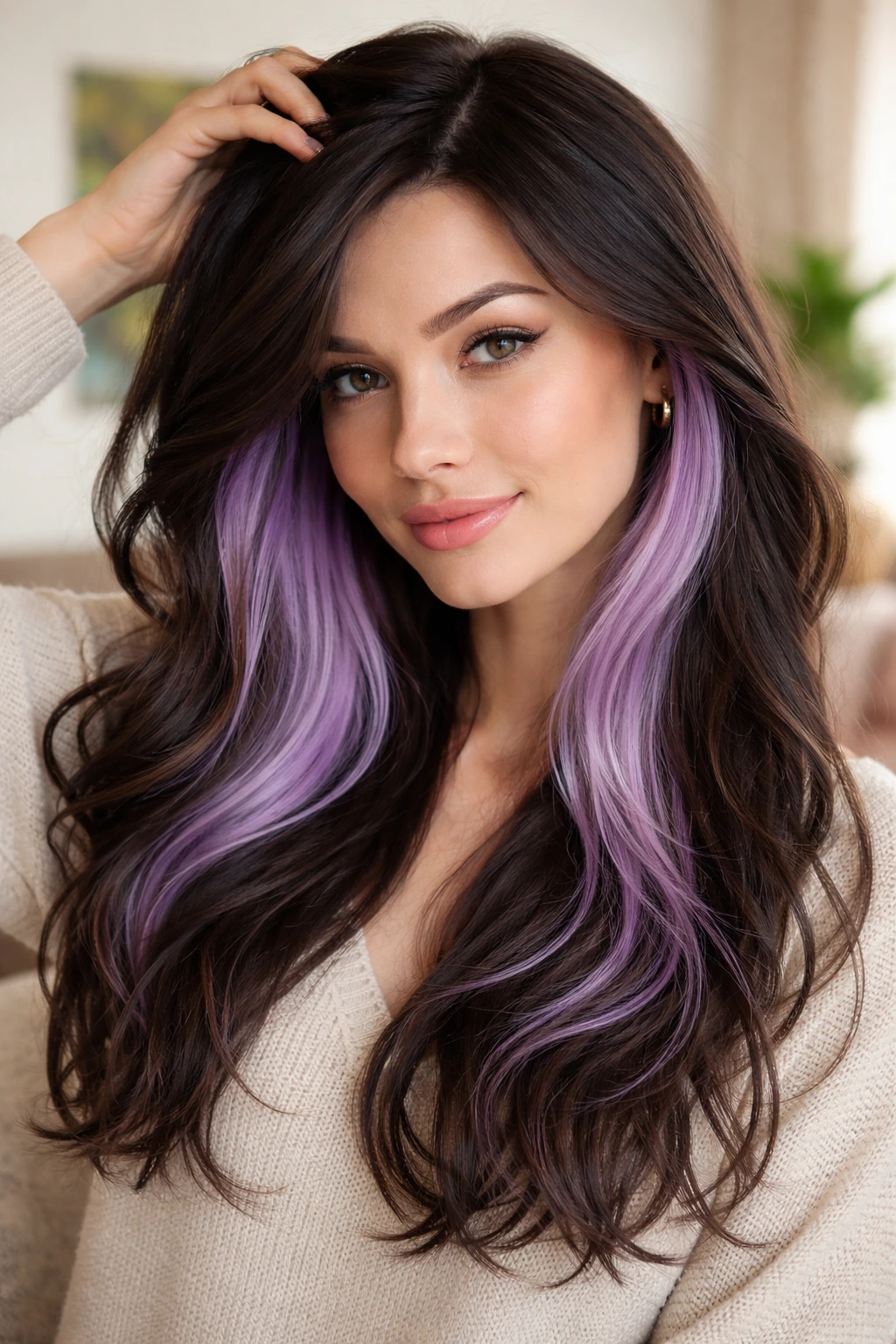
If you are hesitant to commit to a full head of pastel, put the color underneath the top layer of your hair. When your hair is down, you get little flashes of violet, but when you pull it up into a ponytail, the color is fully on display.
This is the ultimate low-risk way to test the waters. You can keep your natural hair color on top, which protects your roots and keeps the overall aesthetic more “natural,” while still getting your pastel fix.
12. Soft Violet Balayage
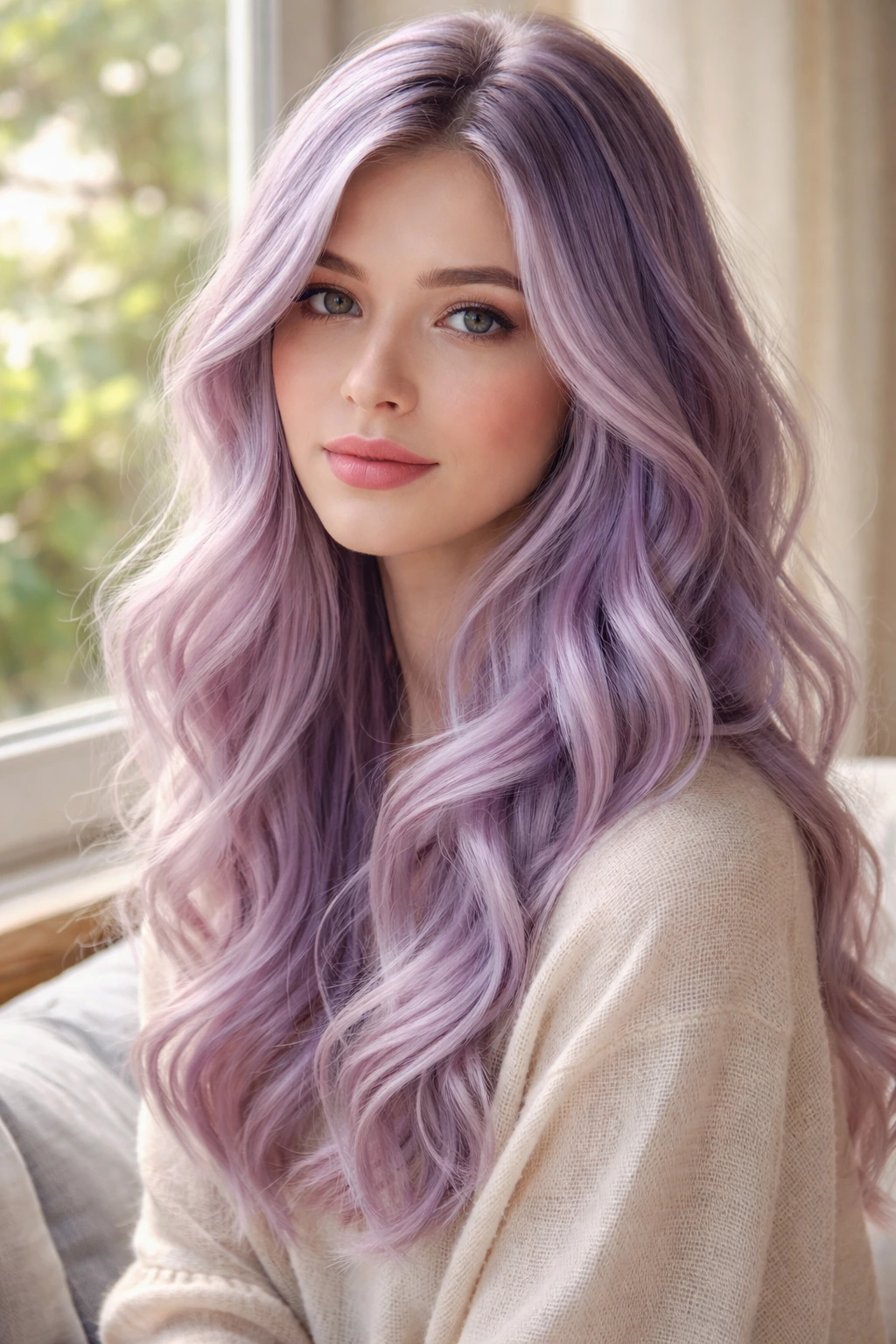
Balayage isn’t just for natural browns and blondes. Painting soft, pastel violet onto a pre-lightened base creates a beautiful, sun-kissed effect that feels organic.
The key here is a soft, hand-painted application. You don’t want harsh lines. You want the color to start thinner toward the roots and get more concentrated toward the ends. This mimics the way hair naturally lightens in the sun, making the artificial color feel much more realistic.
13. Ashy Purple Highlights
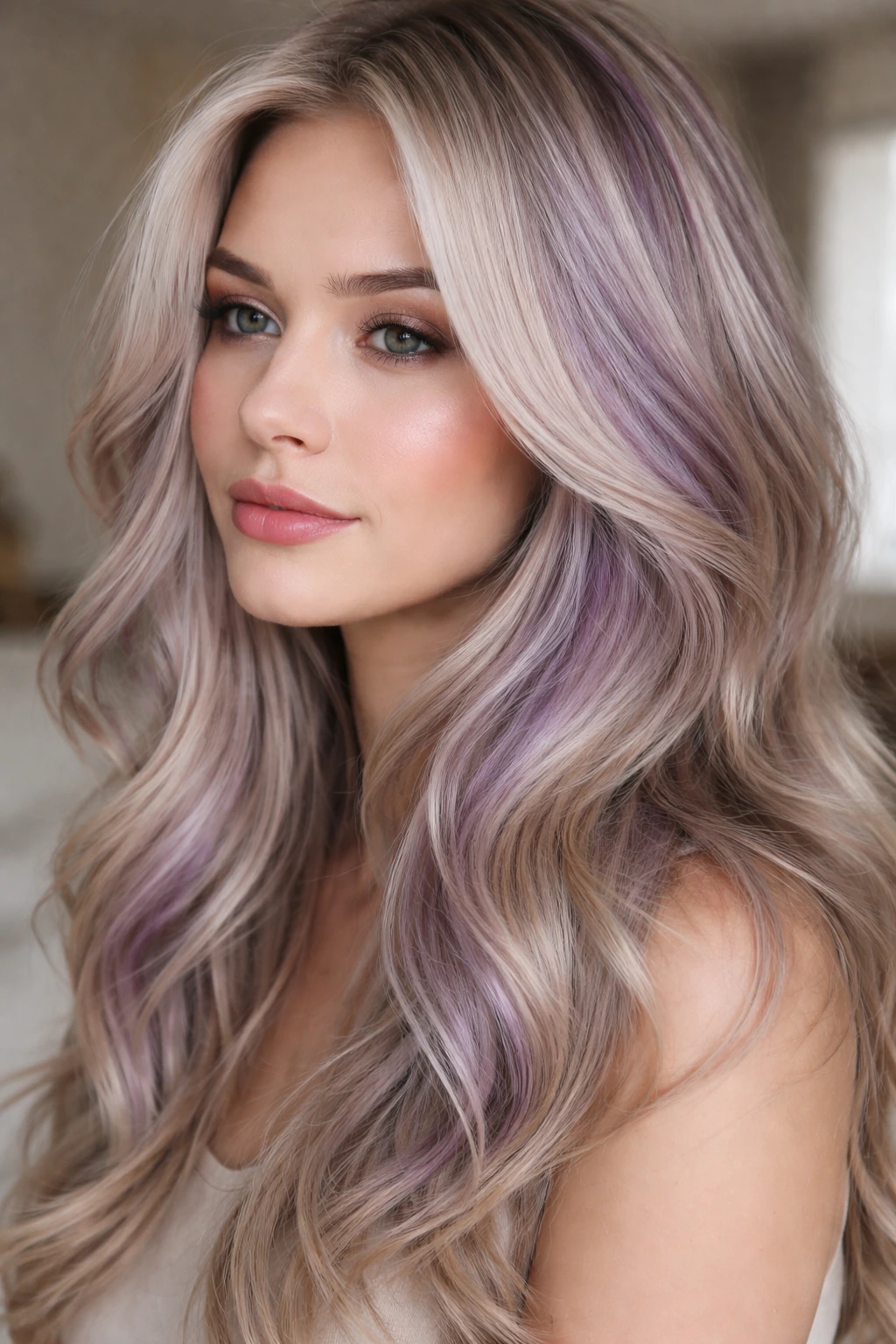
If your base is a cool, icy blonde, adding ashy purple highlights creates an incredibly sophisticated look. It isn’t “purple hair”—it’s “blonde hair with purple depth.”
Why This Matters
It prevents the hair from looking too bright or aggressive. It is a subtle approach that emphasizes the cool tones already present in your blonde, rather than covering them up with a bold, flat color.
14. Pastel Purple Money Piece
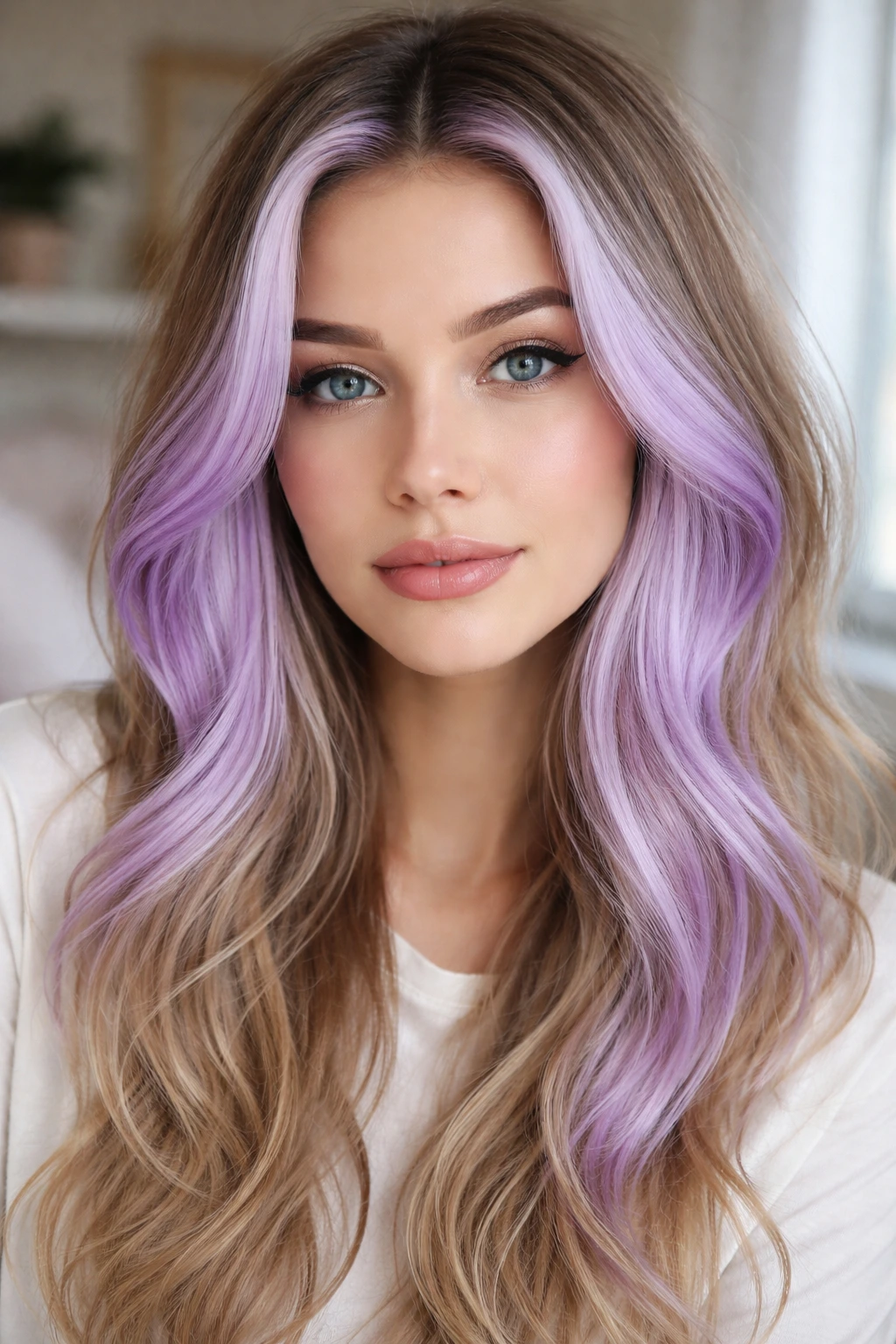
The “money piece”—the two bright streaks framing your face—is a great place for pastel purple. It puts the color right against your skin, which is the most important area to test.
If you find that having purple right at your face makes your skin look bright and healthy, you know you can pull off an all-over color. If it makes you look pale, you might want to stick to an ashy or more muted version of the color.
15. Blurred Amethyst Melt
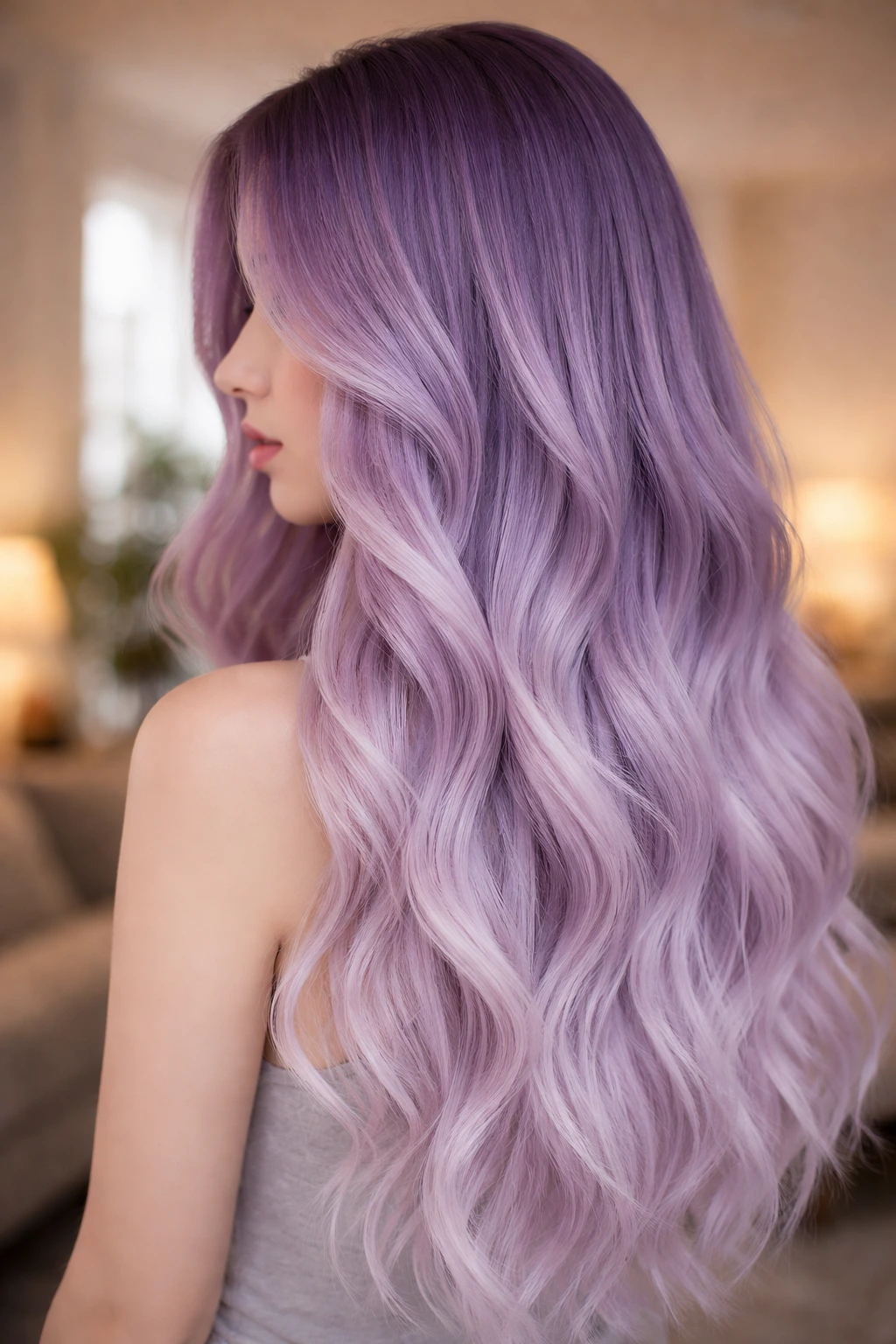
A “melt” is a technique where colors blend so perfectly that you cannot tell where one ends and the next begins. Start with a darker, dusty violet at the root and melt it into a pale, near-white lavender at the ends.
The transition should be long and slow. This creates a very expensive-looking gradient that catches the light in different ways as you turn your head. It is visually stunning and works with almost any hair length.
16. Violet-Grey Blend
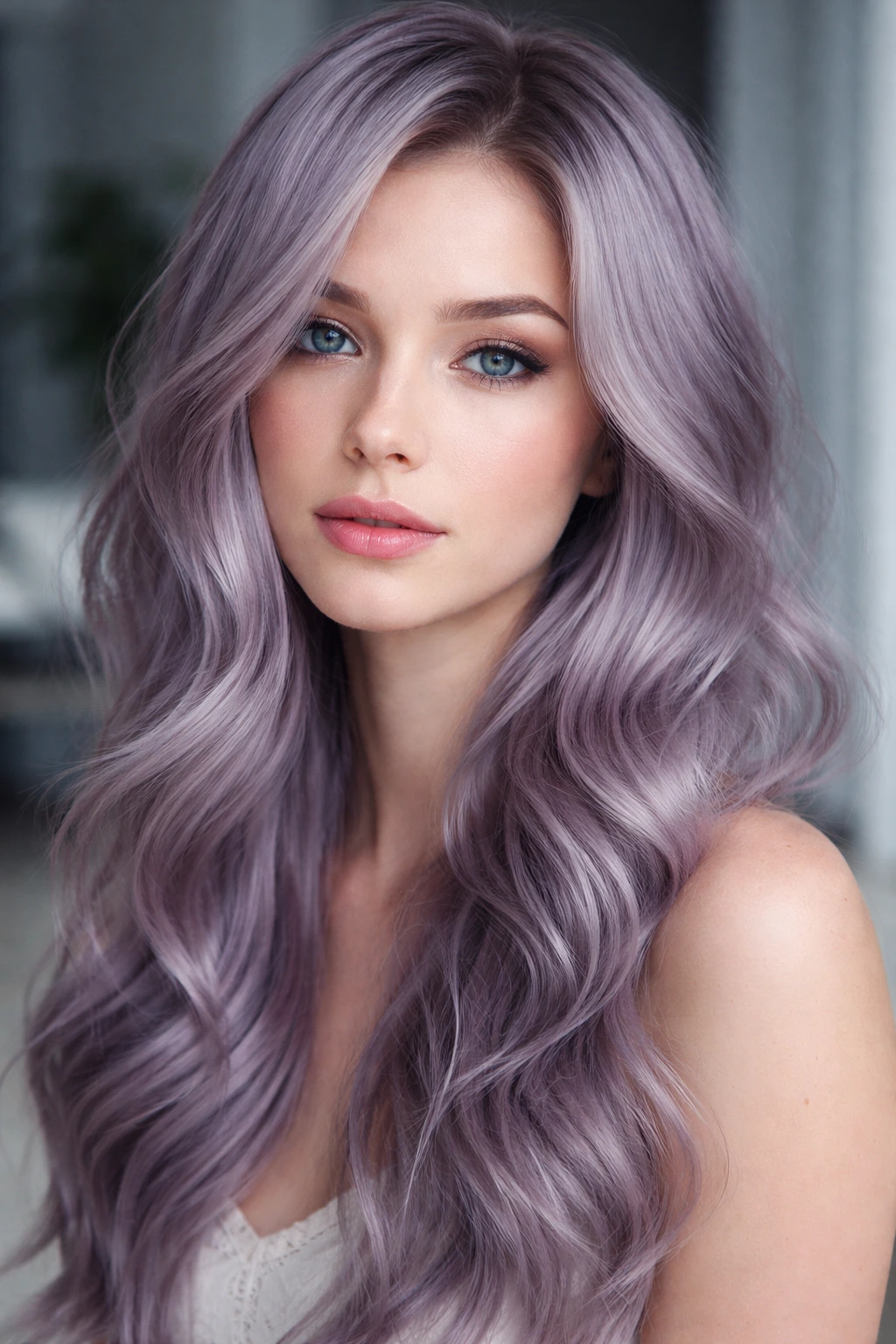
Sometimes, purple can feel too “primary.” Mixing it with a significant amount of grey or silver pushes the color into the “ash” territory, which is almost always flattering for cool skin tones.
This shade is essentially a neutral. Because it’s so desaturated, it acts as a soft, cool neutral that coordinates with just about any outfit. It’s the perfect choice if you want a hair color that doesn’t dictate your entire wardrobe.
17. Pastel Purple with Teal Undertones
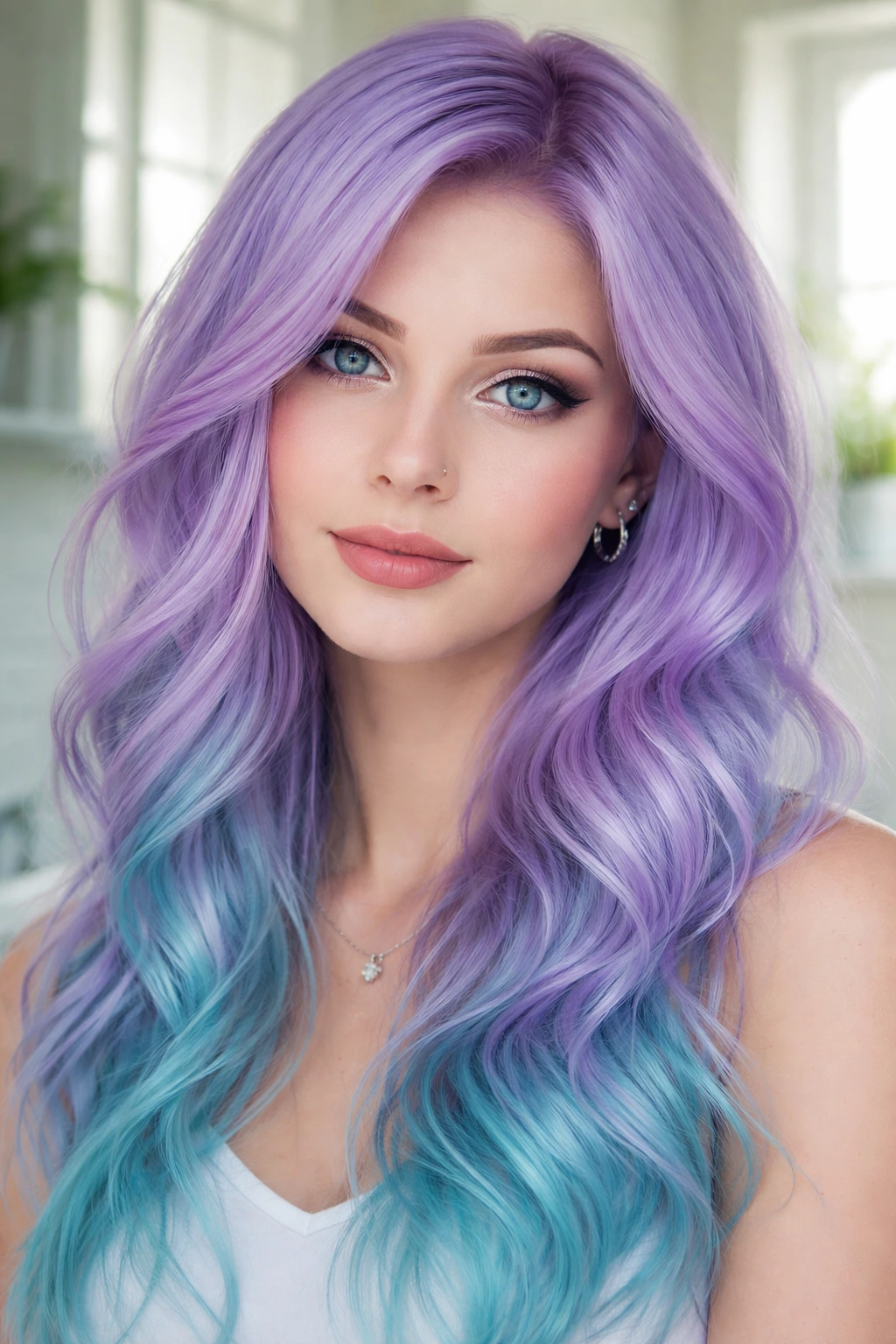
Teal is a cool-toned color, so mixing it with pastel purple creates a unique, aquatic vibe that stays firmly within the “cool” color palette. This isn’t about having two distinct colors, but rather a purple that contains hints of teal.
When you wash this color, the purple tends to fade faster than the teal, so you get an evolving color experience. It starts as a violet-purple and eventually transitions into a sea-glass mint.
18. Pale Lavender Pixie
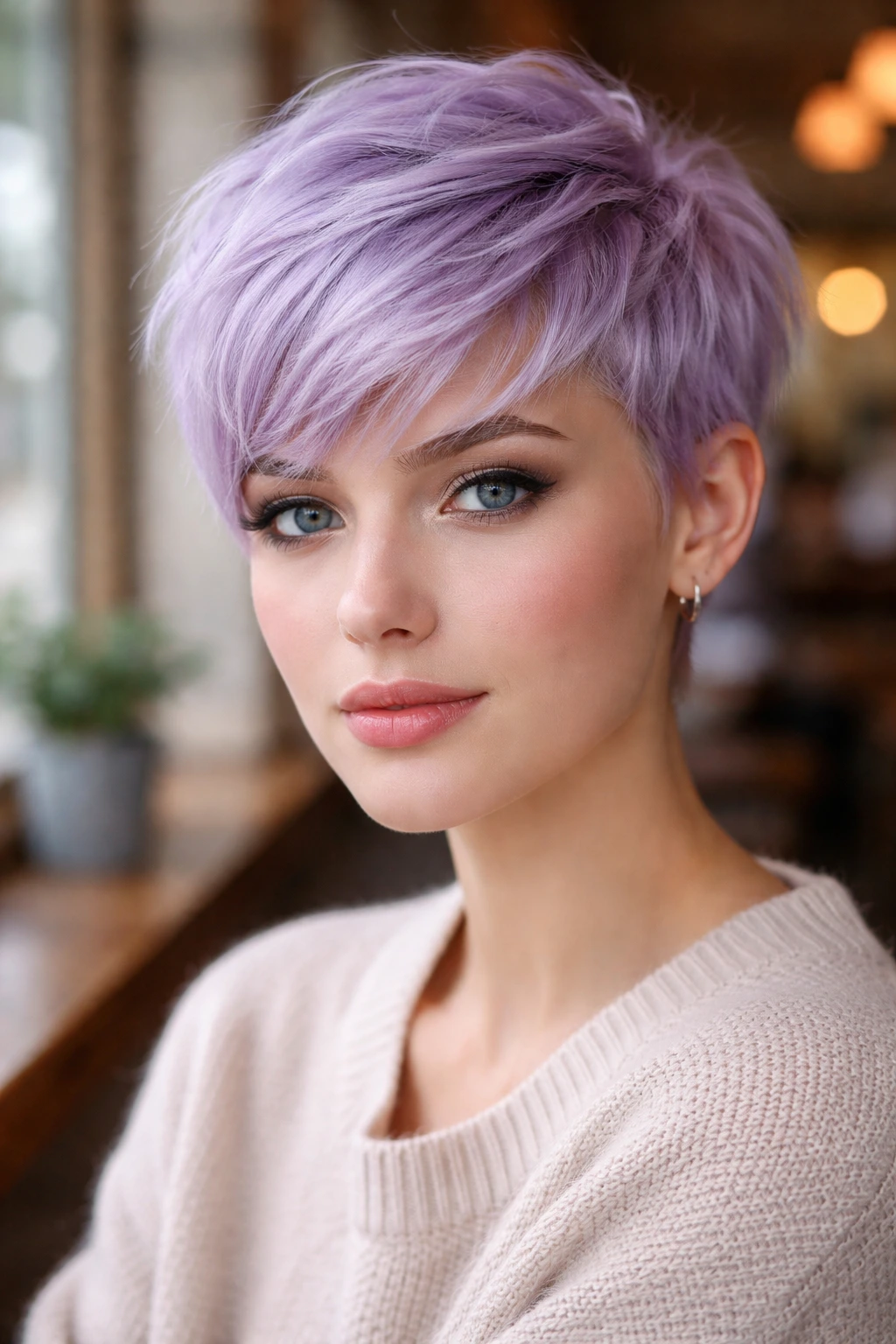
Short hair, like a pixie cut, can handle bolder colors than long hair because there is less of it to overwhelm the face. A pale, almost white-lavender on a short, textured cut looks edgy and intentional.
Because short hair is trimmed frequently, you don’t have to worry about the ends getting dry or damaged from the bleaching process. You can keep the hair very healthy and shiny, which is essential for making such a light pastel color look good.
19. Two-Tone Purple and Silver
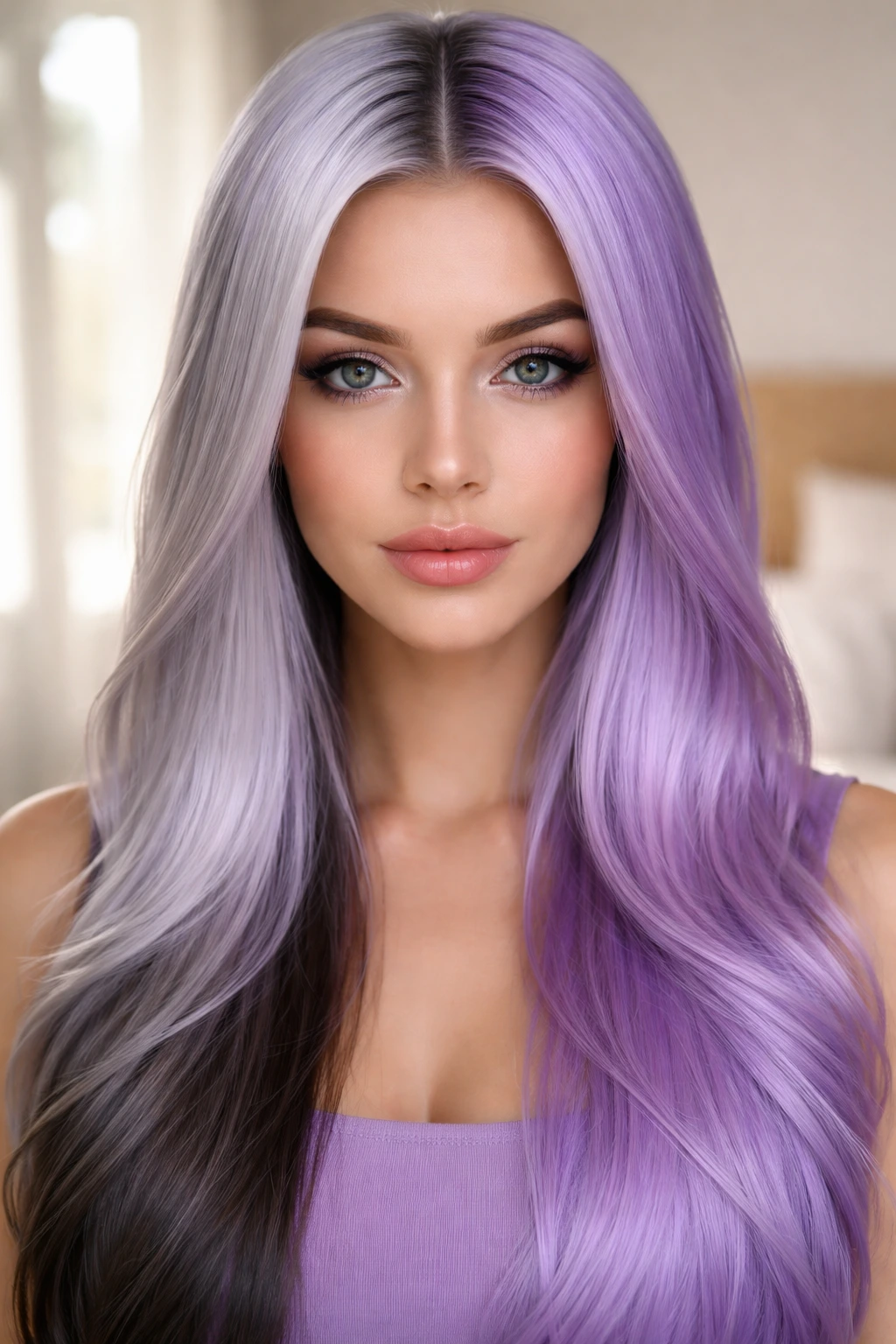
Keep one side of your hair a cool, metallic silver and the other side a pastel violet. This “split-dye” look is bold, but when you use cool-toned shades, it remains within a cohesive palette.
Make sure the center part is crisp. If you have an asymmetrical cut, this style looks particularly sharp. It is definitely for the person who isn’t afraid to stand out, but the cool tones ensure it doesn’t look cheap or messy.
20. Soft Lilac Bob
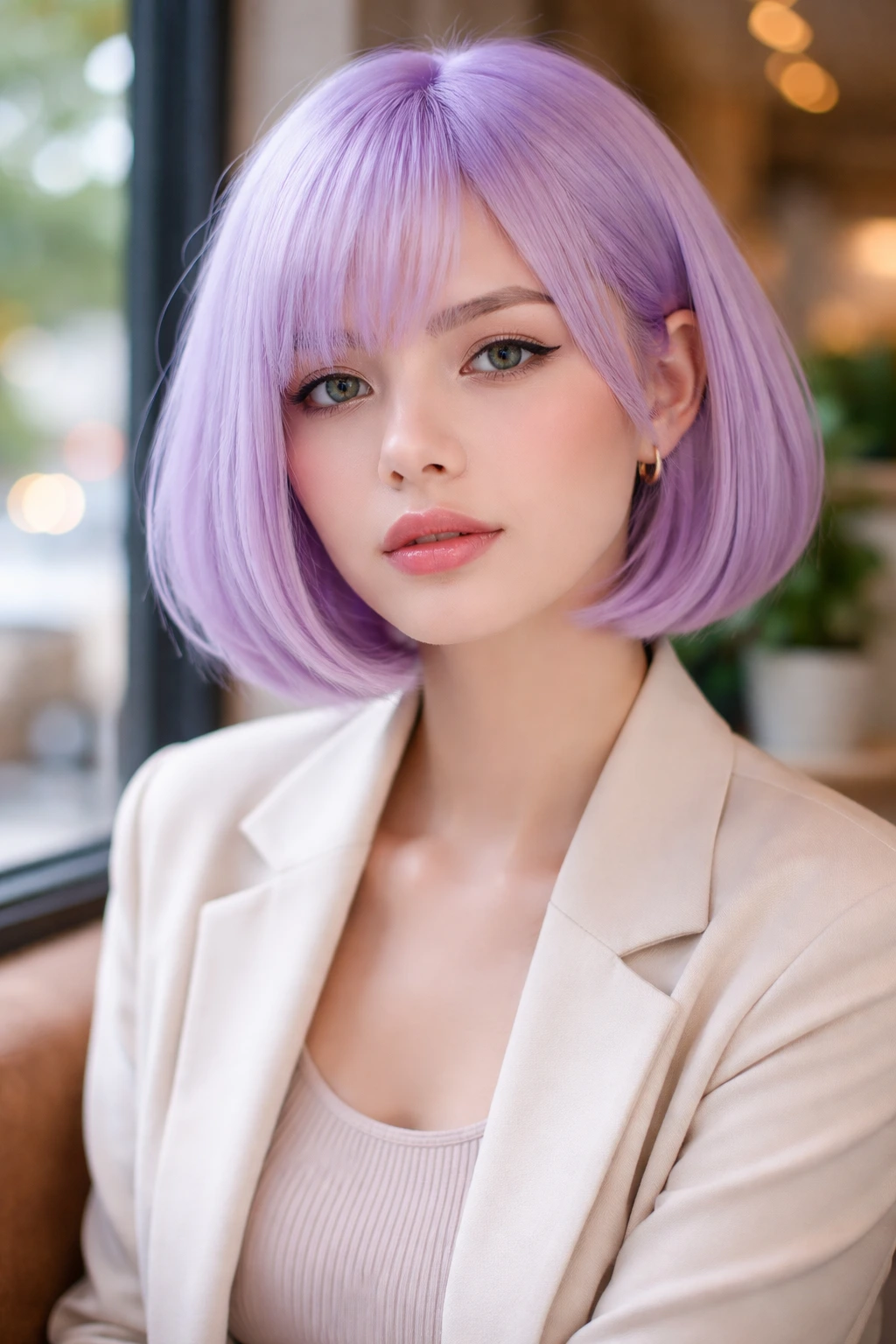
A blunt bob paired with a soft, uniform lilac color is a classic look. The bluntness of the cut gives the pastel color some weight and structure, preventing it from looking too flimsy or “fairy-like.”
This is a great look if you have finer hair. The solid, pastel color creates a uniform look that can make hair appear thicker, especially when cut at a sharp, blunt angle at the jawline.
21. Metallic Purple Finish
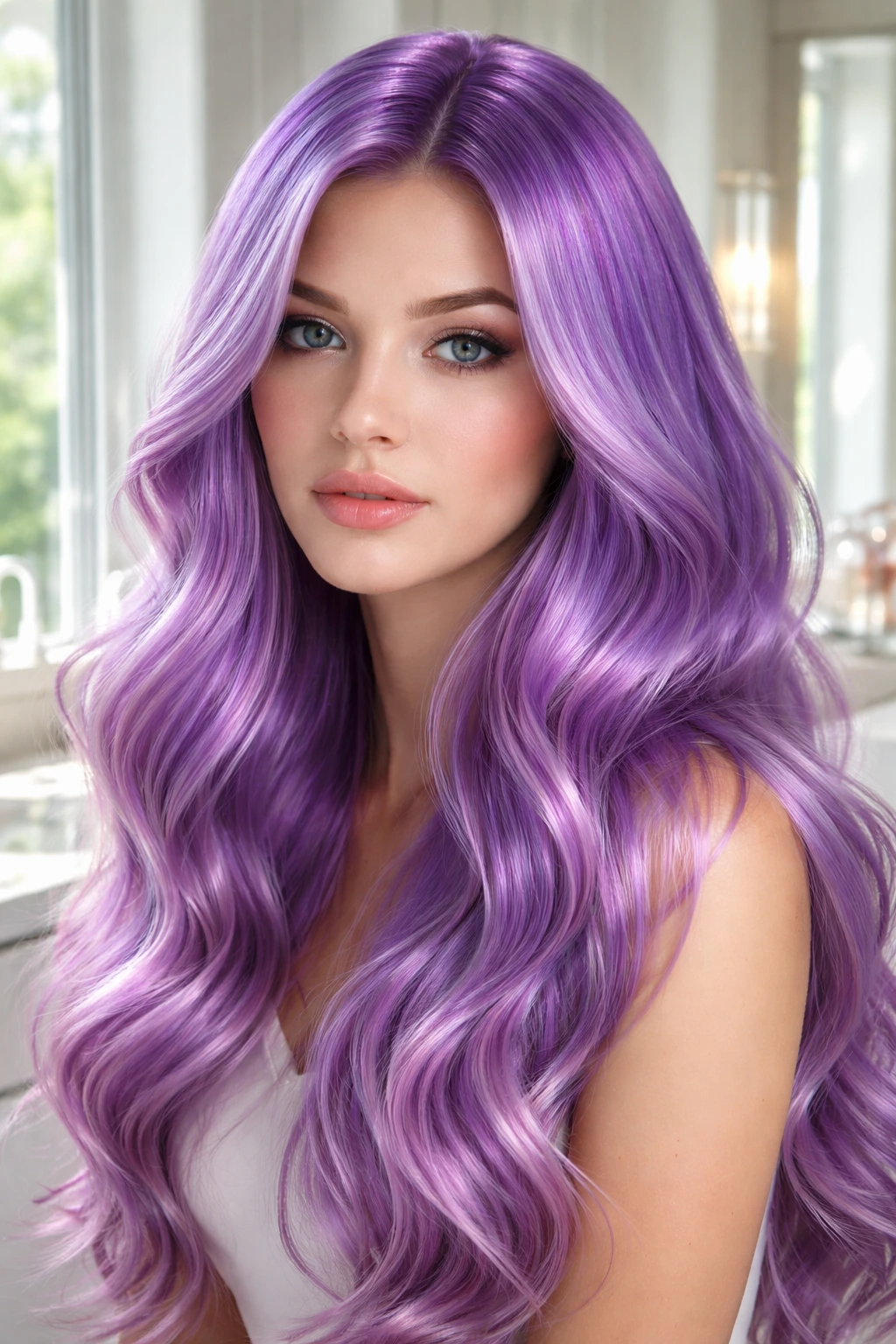
Some dyes have a metallic or “pearlescent” finish. This reflects light differently than a flat matte color. It gives the hair a glossy, shimmering appearance, almost like a piece of polished amethyst.
Maintenance Note
Metallic finishes often contain a bit more pigment to achieve that shimmer. Be aware that this can sometimes stain the hair more than a standard pastel dye, so you might need a color-stripping shampoo if you decide to change your look later.
22. Whipped Cream Violet
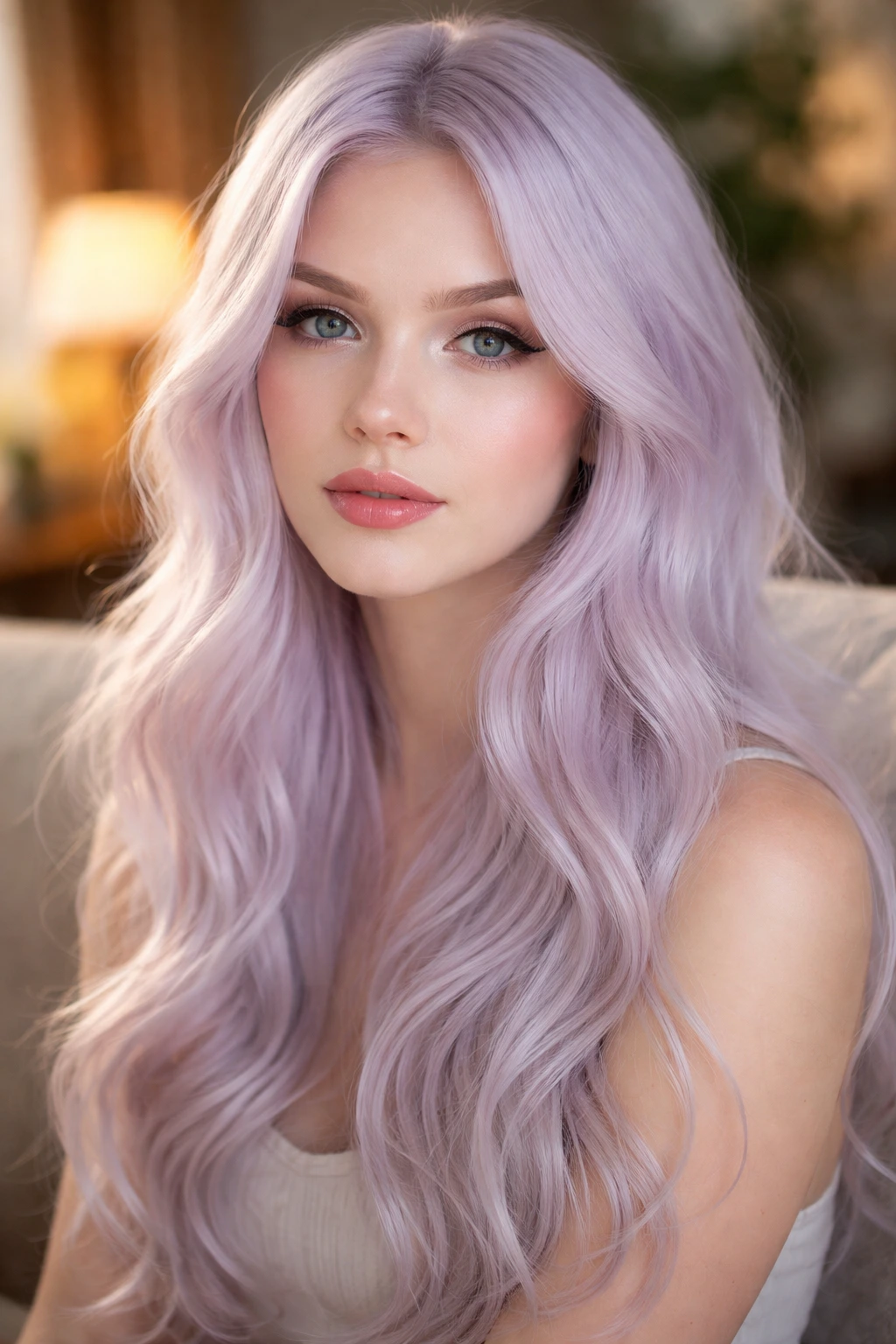
Imagine the color of a blackberry blended into a massive amount of whipped cream. It is a very, very light, airy violet that is just barely visible.
This is the most “subtle” of all the pastel options. It is perfect if you work in a conservative environment but still want to experiment with fashion colors. In low light, it looks almost blonde. In direct sunlight, the violet glow really comes through.
23. Lavender-Grey Shadow Root
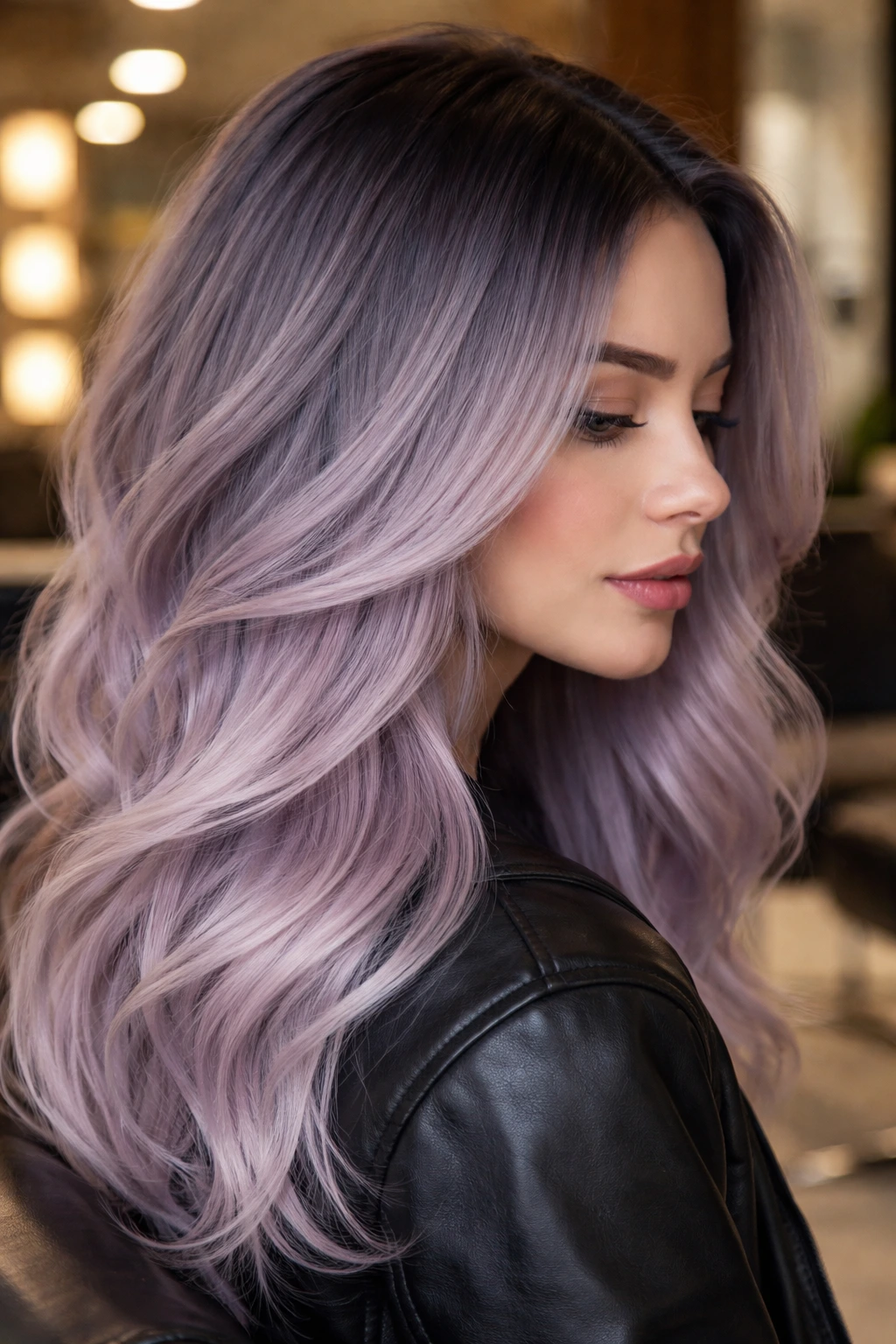
Shadow roots are the savior of bleached hair. By keeping your natural root color—or a slightly darker ash-purple—and fading it into a lighter lavender, you remove the “growth line” problem.
It allows you to go months between touch-ups. When you visit the salon, you only have to lift the new growth, which keeps the ends of your hair from being processed repeatedly. It is the healthiest way to maintain long-term pastel hair.
24. Watercolor Pastel Purple
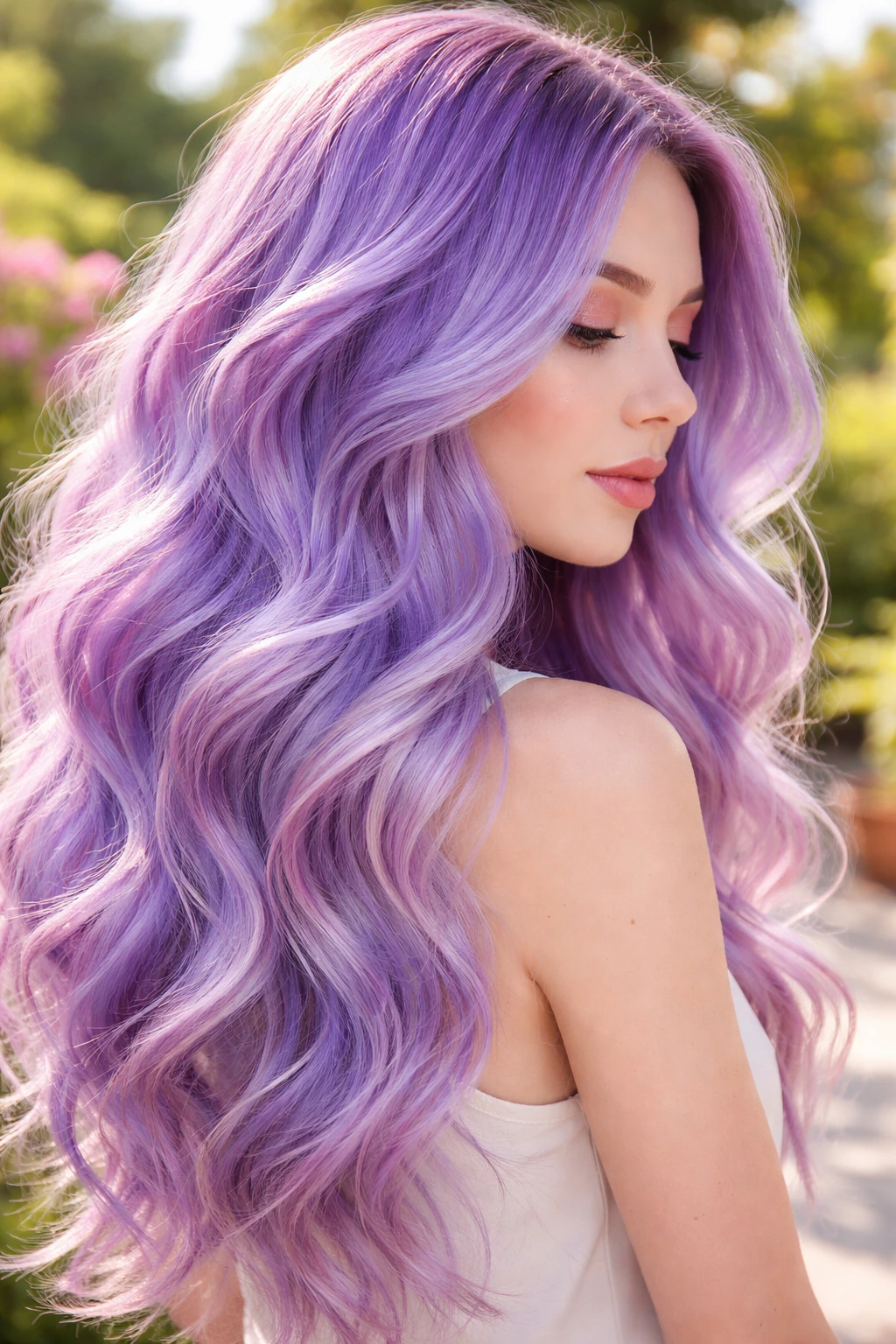
This technique involves using multiple shades of purple—from deep violet to almost-clear lavender—and applying them in a “watercolor” wash. No two sections of hair are the exact same shade.
It looks incredibly artistic and effortless. Because the colors are so close in tone, they blend together into a soft, dreamy cloud of purple that looks like a painting. It works best on long, wavy hair where the different shades can swirl together.
25. High-Shine Violet Gloss
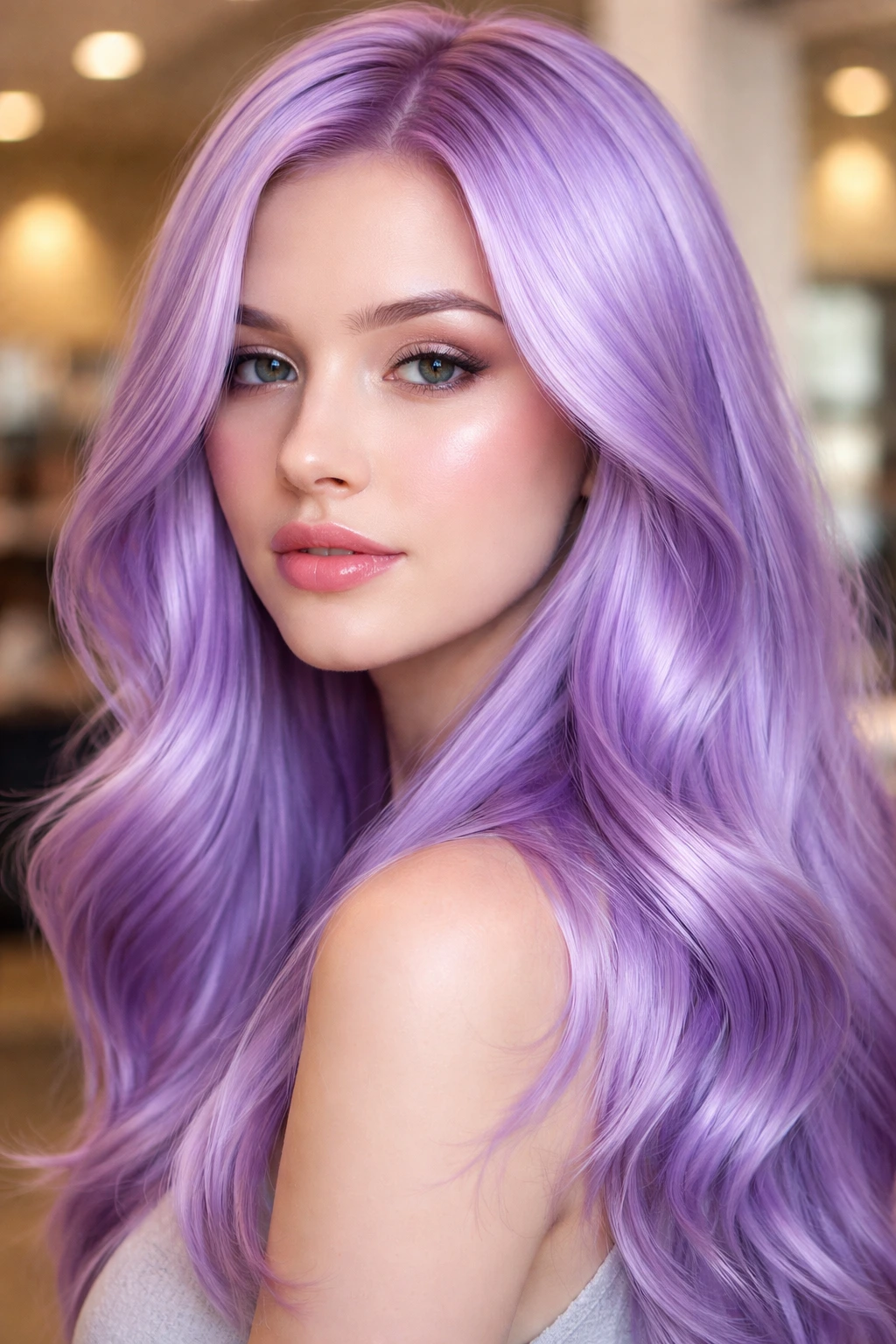
If you have already dyed your hair a pastel purple and it is looking a bit dull, a high-shine violet gloss can revitalize it instantly. This isn’t a permanent color; it’s a semi-permanent treatment that deposits a tiny amount of pigment while sealing the hair cuticle.
Use this every four weeks to keep the color vibrant and the hair looking glossy and healthy. It adds a “top coat” that makes the pastel look fresh and expensive, rather than faded and dry.
Preparing Your Base for Pastel Tones
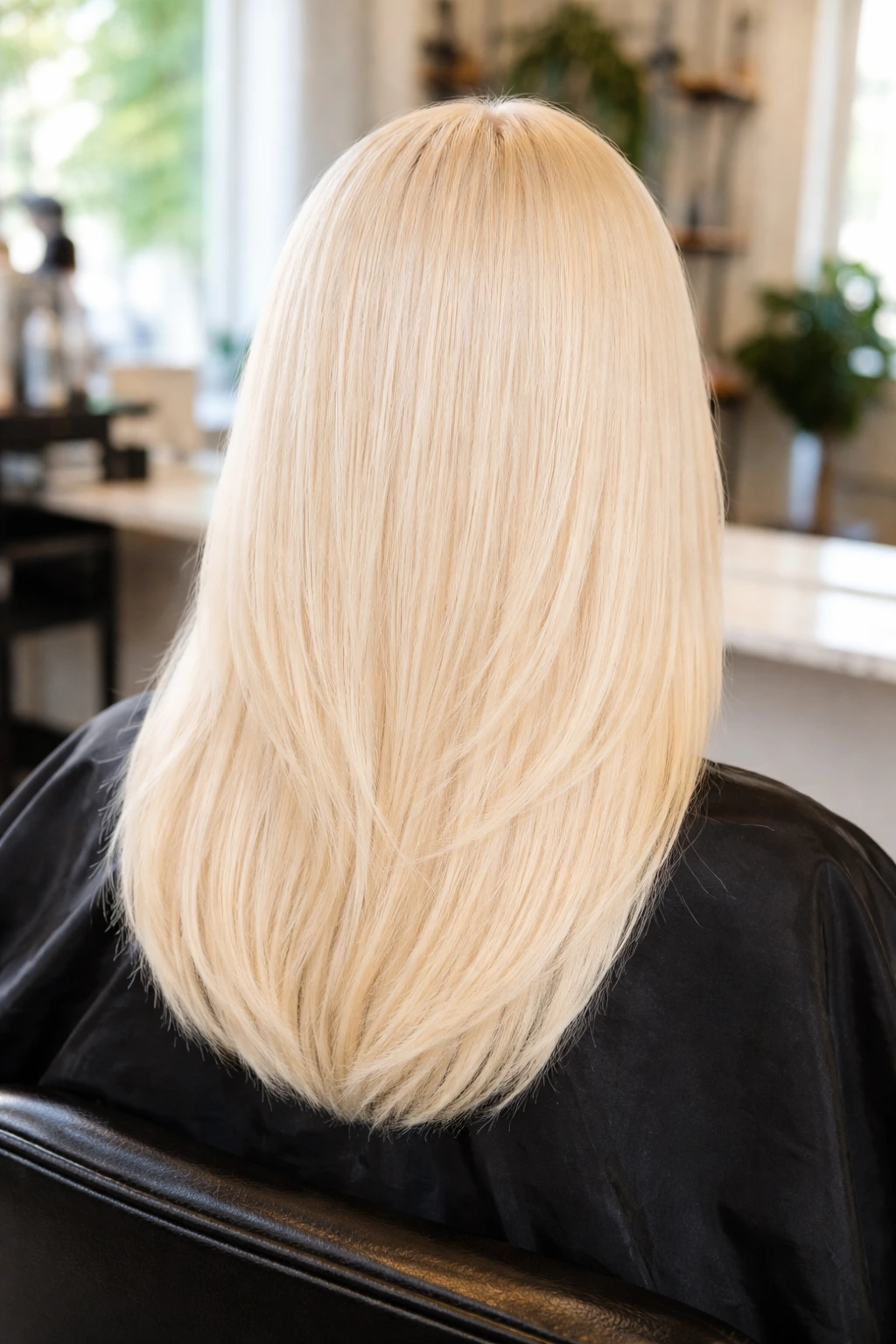
You simply cannot achieve these looks without a perfectly prepared canvas. If your hair is currently dark, you need to be prepared for the reality of the lightening process. You are looking for a “level 10,” which is the lightest blonde possible, without the hair turning into mush.
The Bleaching Process
First, you must work with a professional or be extremely careful with DIY bleaching. Using a 20-volume developer is safer than a 30 or 40, even if it takes longer. Slow and steady is the only way to reach a level 10 without destroying the integrity of your hair.
Toning Is Not Optional
Once the hair is lightened, it will inevitably have yellow undertones. You must use a toner—typically a violet-based one—to neutralize that yellow. If you skip the toner and put your purple dye directly onto yellow hair, you will get green. It is a law of color theory that you cannot escape.
Assessing Hair Health
If your hair feels gummy, stretches like a rubber band, or breaks when you pull it, stop immediately. Your hair is not in a condition to handle the lightening required for pastels. Spend a few months using protein treatments and deep conditioners before trying to reach that level 10 lift.
Caring for Pastel Purple Hair
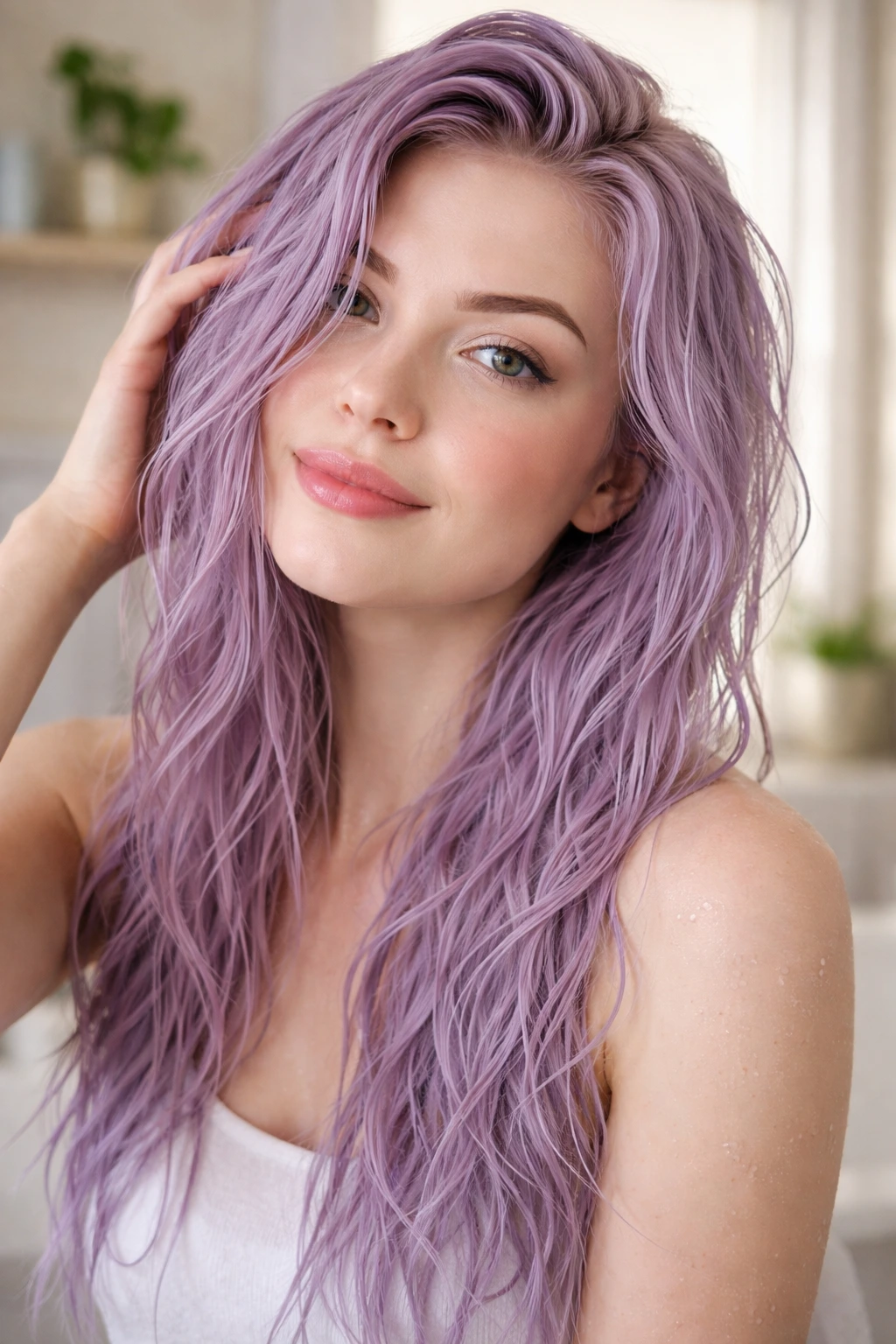
Pastel colors are notoriously difficult to keep. Because the molecules are so small and the hair is so porous from the bleaching, the color tends to fall out as quickly as it goes in.
The Washing Routine
You should aim to wash your hair no more than twice a week. Every time water touches your hair, color comes out. Use cool water—never hot—to prevent the cuticle from opening and releasing the pigment.
Purple-Infused Conditioner
Instead of relying on a purple shampoo, which can sometimes be too drying, buy a high-quality white conditioner and mix a small amount of your semi-permanent purple dye into it. Use this every time you wash. This deposits a tiny amount of color back into your hair, effectively “refreshing” your dye job with every shower.
Avoid Heat
Heat tools are the enemy of pastel hair. The high temperature can instantly strip the color from your strands. If you must use a curling iron or flat iron, keep the temperature below 300°F and use a high-quality heat protectant spray. Even better, embrace air-drying and texture-enhancing sprays to get a lived-in, effortless look that doesn’t require heat.
The Bottom Line
Pastel purple is one of the most rewarding fashion colors for cool skin tones, provided you approach it with the right preparation and maintenance mindset. It isn’t just about picking a shade out of a bottle; it’s about managing the canvas, understanding the undertones, and committing to the upkeep.
When you get it right, the result is a soft, ethereal look that makes your skin appear clearer and your overall style more intentional. Start with a test streak or a money piece if you are nervous. Once you see how the cool violet tones interact with your complexion, you will likely find that this color family becomes your new favorite signature.
