



Lilac hair color ideas for cool skin tones work best when the shade leans icy, smoky, or blue-based. A lilac that looks sweet on a swatch can turn strangely warm against pink or rosy skin if it drifts too far toward peach. The versions that really flatter tend to have a silver cast, a little violet, and almost no yellow in the mix.
That is the part a lot of people miss. Lilac is not one look. It can be soft and airy, moody and smoky, metallic, sheer, or almost white with a whisper of purple. On cool undertones, the right version can make the face look fresher and the eyes look clearer; the wrong one can read chalky, muddy, or weirdly beige. Tiny difference. Huge payoff.
The other thing that matters is the base underneath. Pre-lightened blonde, gray hair, ash brown, and heavily porous ends all take lilac in different ways. Some strands grab the pigment fast, some fade quickly, and some need a toner first so the final result stays crisp instead of turning dull. That’s why a good lilac color story is really a set of smart placement choices, not just a shade name on a tube.
1. Icy Lilac All-Over on Platinum Blonde
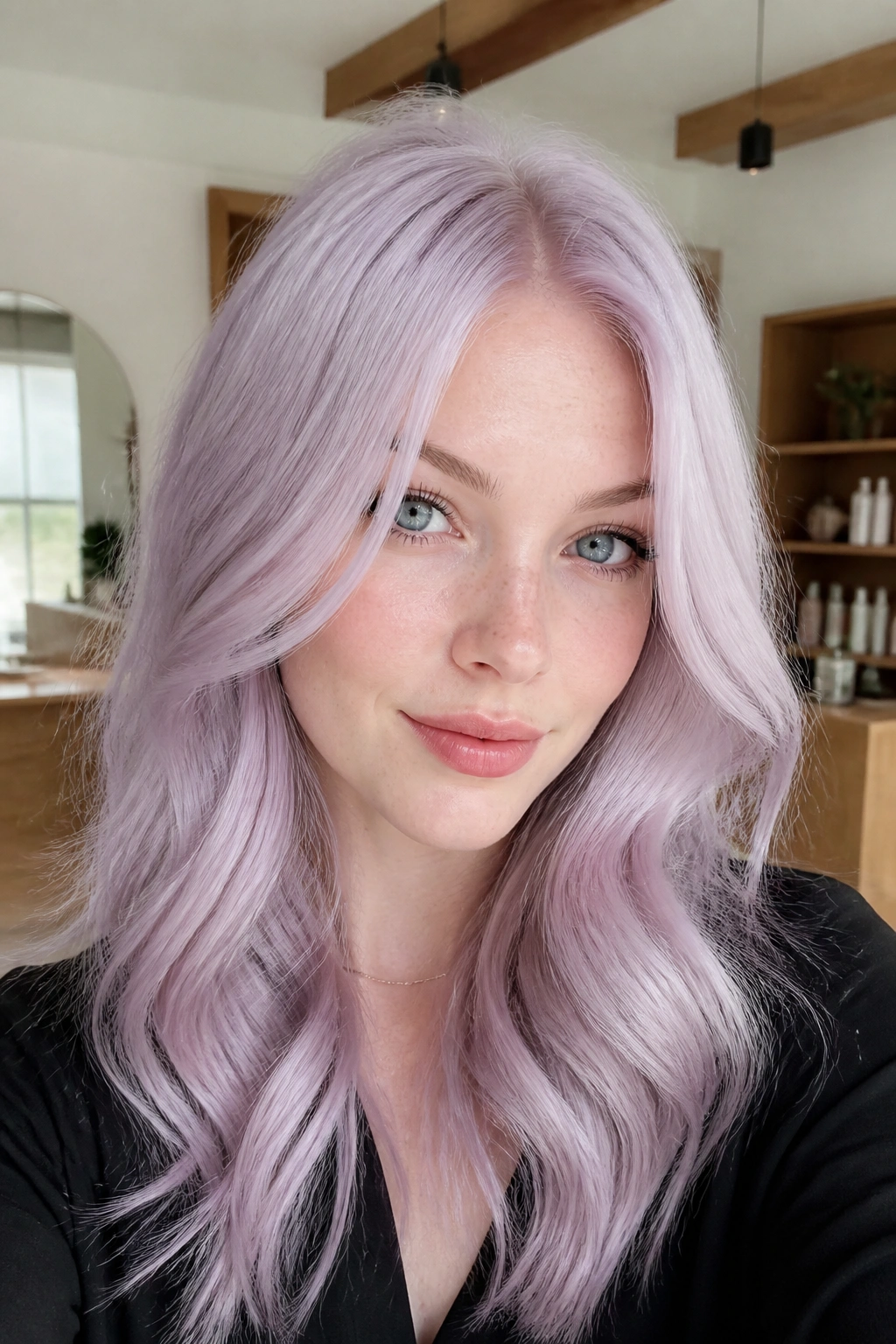
Icy lilac is the cleanest match for cool skin because it keeps everything crisp from root to tip. When the base is lifted to a pale platinum, the lilac can sit on top like a soft wash of watercolor instead of fighting against brass.
What Makes It Work
The best version of this look has a level 10 blonde base and a diluted violet deposit that stays pale, not grape-heavy. That cool little silver note matters. It keeps the color from looking sugary, which is exactly what you want if your skin already has pink, blue, or porcelain undertones.
This is also one of the easiest lilac looks to read from across the room. It looks deliberate. It looks polished. And when the roots are kept clean and pale, the whole thing has that crisp, frosted finish that cooler complexions usually wear so well.
- Ask for pre-lightening to pale yellow, not orange.
- Keep the lilac formula sheer if you want that airy pastel effect.
- Use a violet mask once a week, not every wash, or the tone can go flat.
- Plan on gloss refreshes every 4 to 6 weeks if you want the shade to stay bright.
Pro tip: If your ends are more porous than your roots, let the colorist apply the lilac in the last few minutes only. Porous hair grabs pigment fast, and too much time in the chair can push this look from icy to dull.
2. Smoky Lilac Balayage on Mushroom Brown
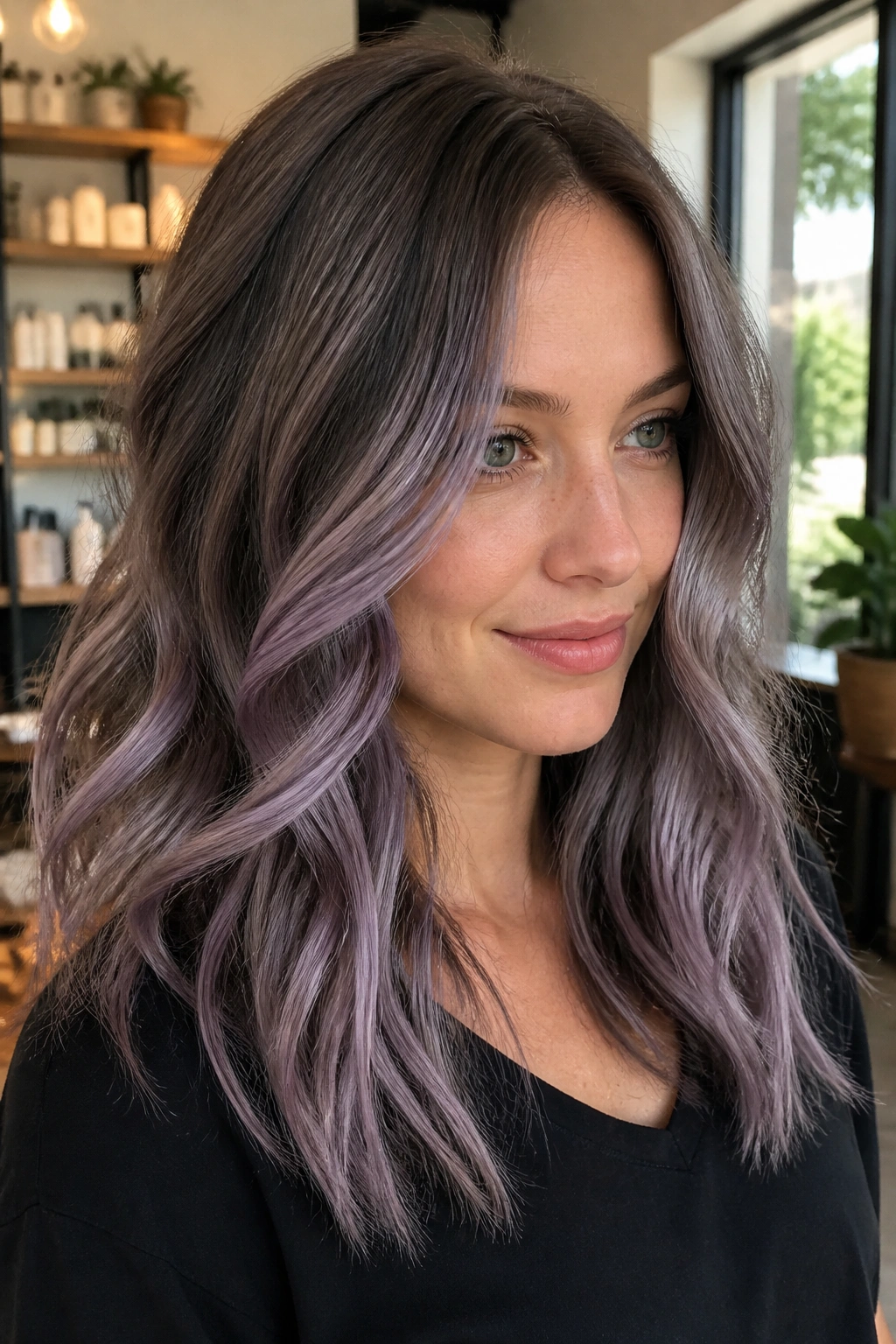
Why does smoky lilac work so well on mushroom brown? Because the brown keeps the color from shouting. Instead of a full pastel head, you get hand-painted lilac ribbons that move through the hair like mist.
That mushroom-brown base is the key. It already has that cool, ash-heavy feel, so the lilac does not need to fight warm tones underneath. It sits there more quietly, which is why this version often feels more expensive than the brighter pastel looks.
It is also a smart pick if you want lilac hair color ideas for cool skin tones but do not want to live at the salon every few weeks. The root area can stay softer, and the balayage grows out with less of that obvious line you get from a solid fashion color.
The nicest part? It works on waves, curls, and straight hair. Waves show the ribbons. Curls make them look even more layered. Straight hair gives you that smooth, smoky stripe effect that feels a little more modern and a little less sweet.
3. Lilac Money Piece Framing the Face
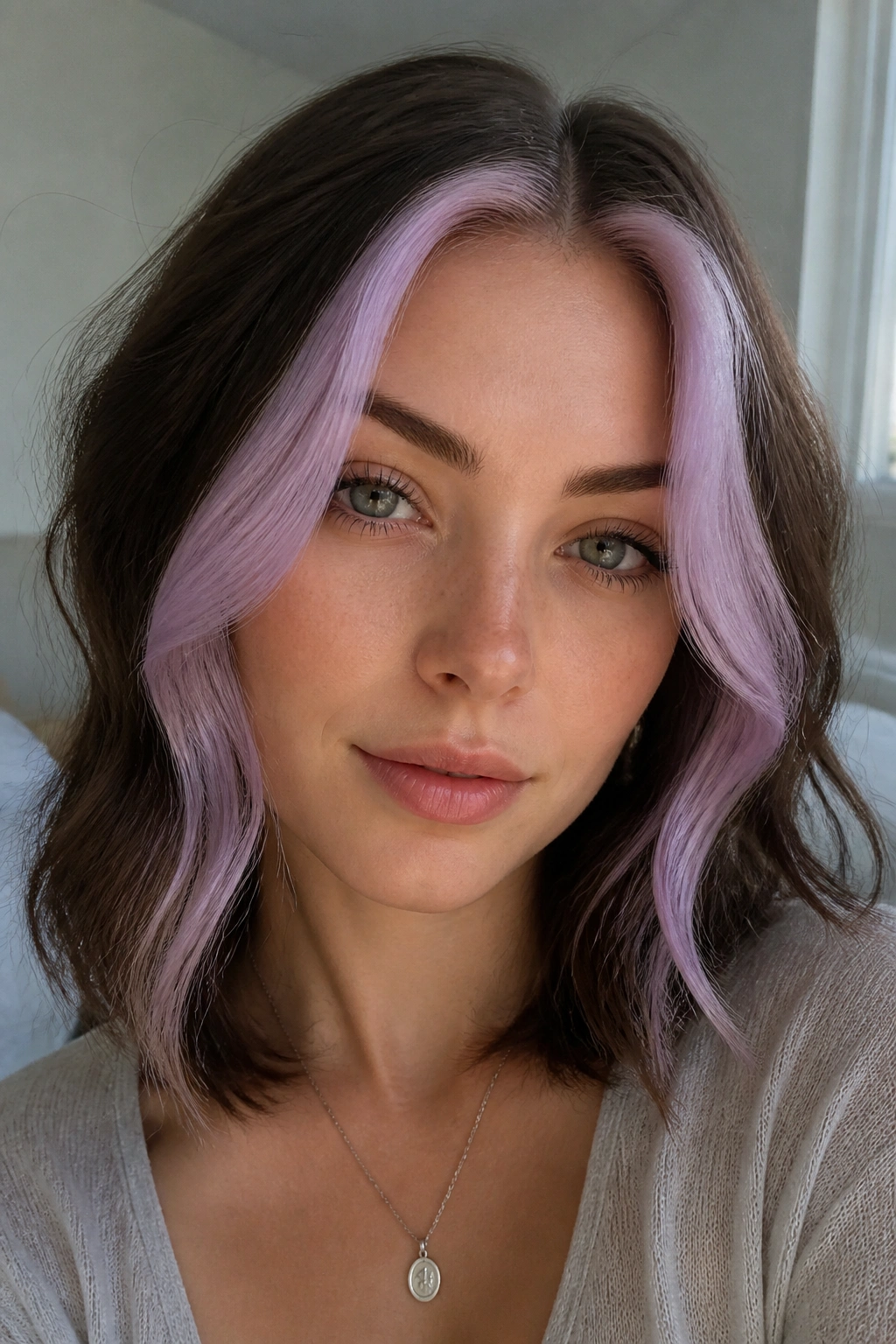
Picture a center part with a single lilac stripe at each side of the face. That is the money-piece version, and it is a sneaky good choice for cool skin tones because the color sits right where light naturally hits.
How to Wear It
Ask for a 1 to 2 inch face frame that starts around the temples and softens into the front layers. If your skin leans pink or fair, keep the lilac lighter and more pastel. If your coloring is deeper but still cool, a blue-violet lilac can look sharper and more flattering.
This one is especially nice if you want color without committing to a full-head change. The rest of the hair can stay blond, brunette, or even dark, while the front pieces do the talking. It also photographs well in a boring, everyday sense — it makes a ponytail look like you meant to style it.
- Best on bobs, long layers, and curtain bangs.
- Keeps the face bright without a heavy full-color job.
- Easy to refresh with a quick gloss around the front hairline.
- Works with glasses, because the color frames the face instead of crowding it.
Small caution: If the front pieces are too chunky, the look can start to feel dated fast. Keep the width soft and let the lilac breathe.
4. Periwinkle-Lilac Melt on a Cool Blonde Bob
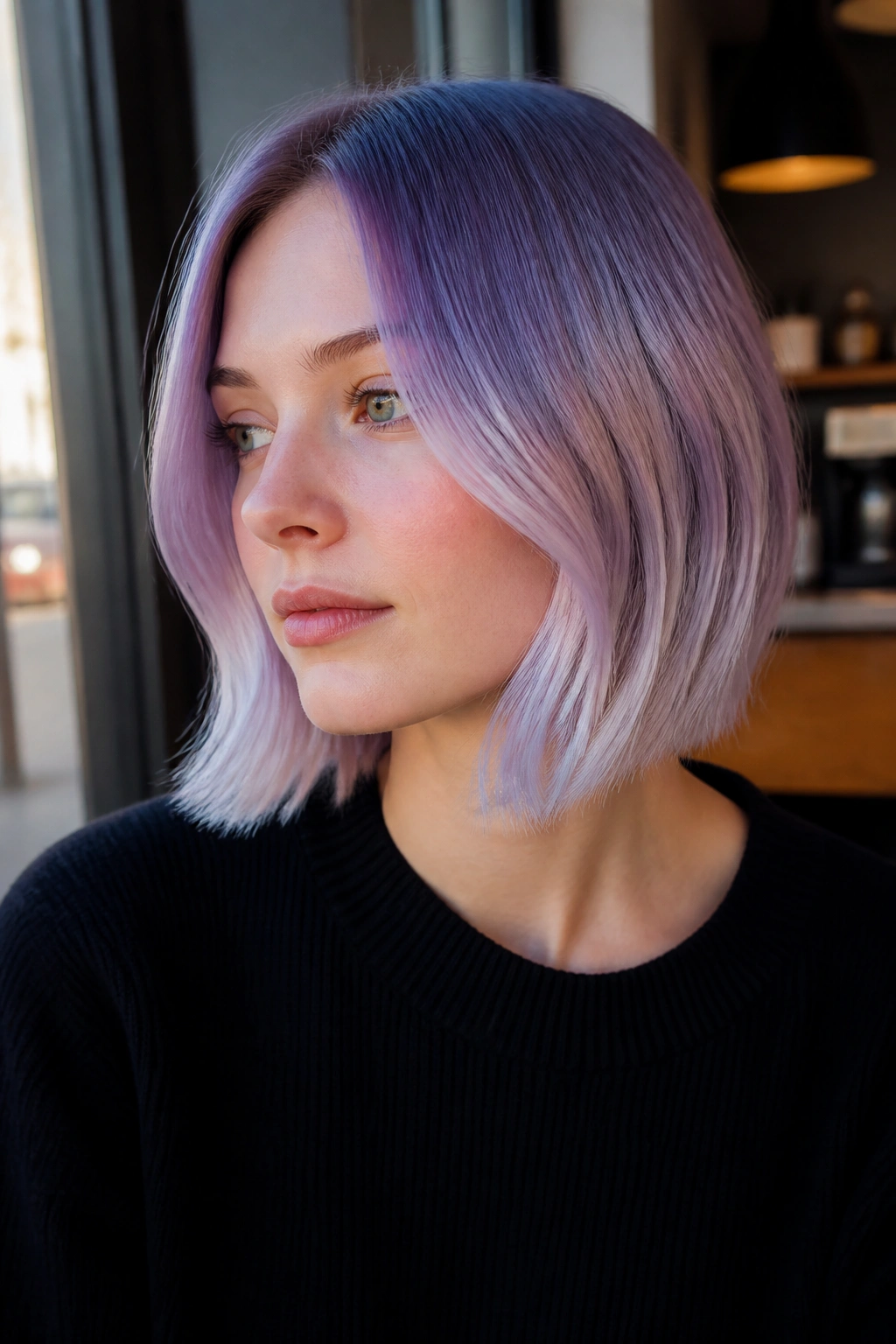
Not every bob needs a blunt pastel wash. A periwinkle-lilac melt gives the cut movement, and that matters more than people think. Without a soft transition, a bob can look blocky, which is the last thing you want with a fragile shade like lilac.
Periwinkle sits in a nice place between blue and purple, so it flatters cool undertones without veering sugary. On a bob, the color can start a touch deeper near the roots and melt into a lighter lilac at the ends, which makes the shape look fuller.
The smoothness matters here. A bob with this color looks best when the finish is sleek enough to show the gradient but not so stiff that it loses all texture. A flat iron bend at the ends, or even a controlled blowout, keeps the shade from reading like a helmet.
This is one of my favorite options for someone who wants a fashion color that still feels grown-up. Not boring. Just controlled. There is a difference.
5. Dusty Lilac Ombré on Long Layers
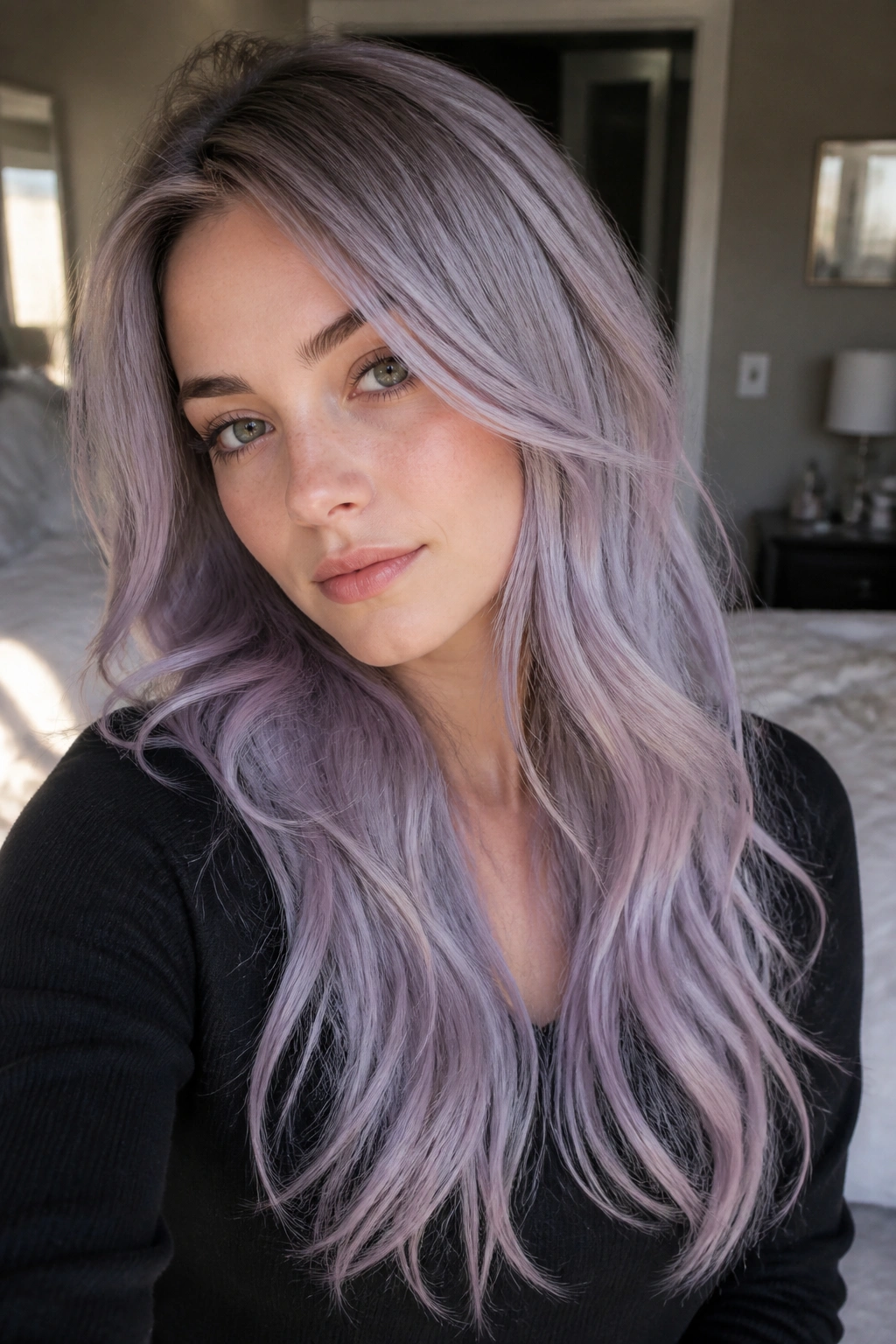
Dusty lilac looks soft, almost powdery, when it fades from ash to lavender. On long layers, that gradient gets room to stretch out, and the whole thing feels a little dreamy without tipping into costume territory.
Why the Fade Matters More Than the Shade
The ombré approach works because the color has somewhere to go. A darker root, then a smoky mid-length, then pale lilac ends — that progression flatters cool skin by keeping the overall look on the blue side of the wheel. It also hides regrowth better than a solid pastel, which is a relief if you do not want to touch up every few weeks.
Long layers make the fade visible in motion. Straight hair shows the line of the gradient. Waves break it up into soft bands. Either way, the lilac never feels flat.
- Best on hair with at least shoulder-length layers.
- Ask for the ends to stay smoky, not yellow-blonde, before the final lilac deposit.
- Use a low-heat routine if the ends are already light and fragile.
- A cool-toned gloss can keep the midsection from turning washed out.
One honest note: Ombré lilac can look underwhelming on blunt cuts. The shape needs movement or the fade loses its point.
6. Silver-Lilac Gloss on a Short Crop
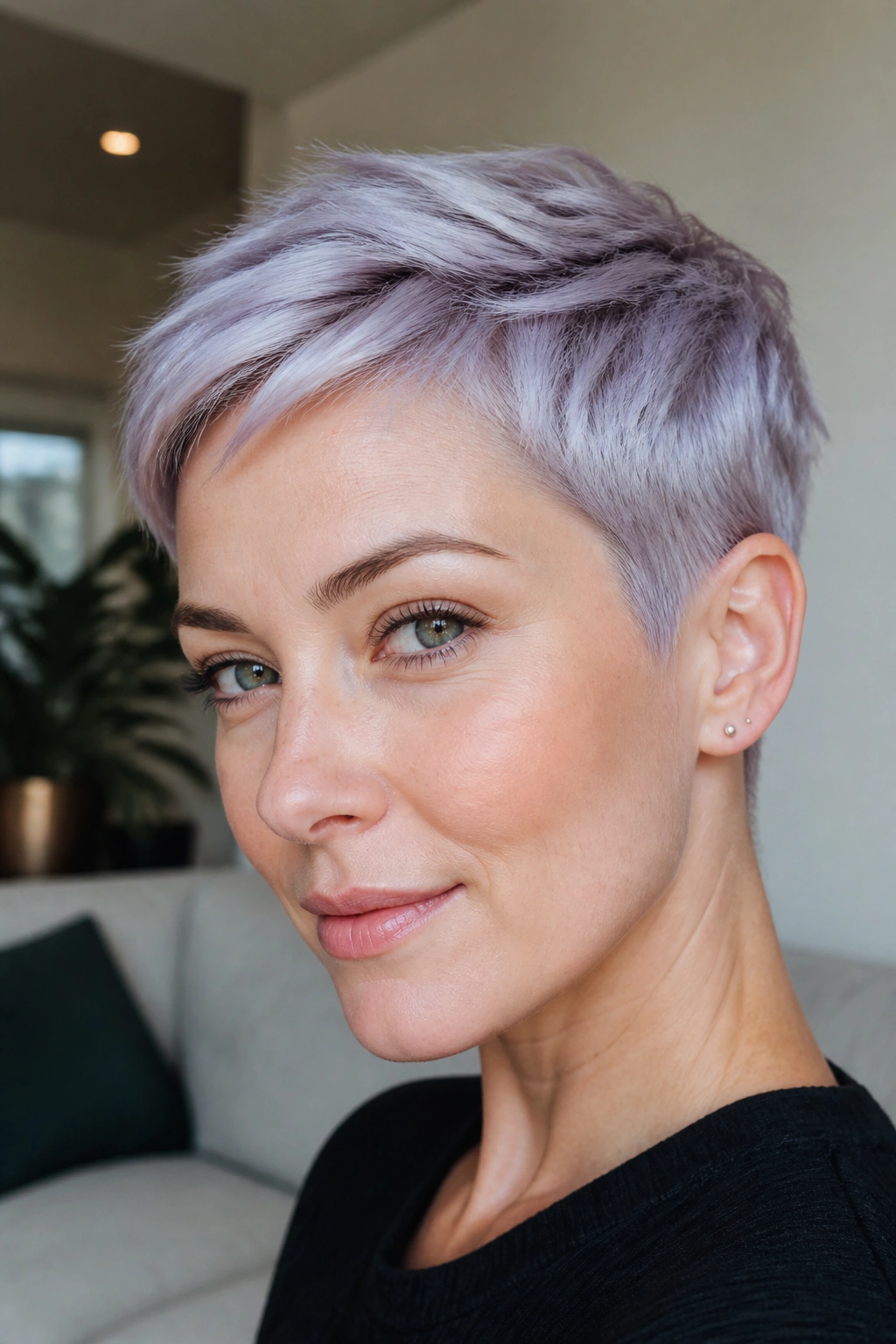
Silver-lilac on a short crop is all about finish. The cut does half the work; the gloss does the rest. When the hair is short, there is nowhere to hide sloppy tone, so the shade has to be neat, cool, and precise.
The Finish Matters More Than the Pigment
This is the look for someone who likes a sharp outline — a pixie, a close crop, or a short textured cut that shows off the shape of the head. A silver-lilac glaze on that kind of cut can look almost metallic, which is a very good thing for cool skin. The color picks up the silver in the complexion instead of fighting it.
The upkeep is not nothing. Short hair grows fast, and a cool gloss tends to fade before the haircut itself gets messy. Still, if you enjoy a clean shape and do not mind a salon refresh, this is a gorgeous use of lilac.
- Choose a lavender-silver gloss, not an opaque purple dye.
- Keep the roots soft so the crop does not look painted on.
- Ask for texture around the crown if you want the color to catch light in pieces.
- Refresh the tone every 4 to 6 weeks for the sharpest finish.
It is a small look with a strong opinion. That is why it works.
7. Peekaboo Lilac Panels Under Dark Blonde
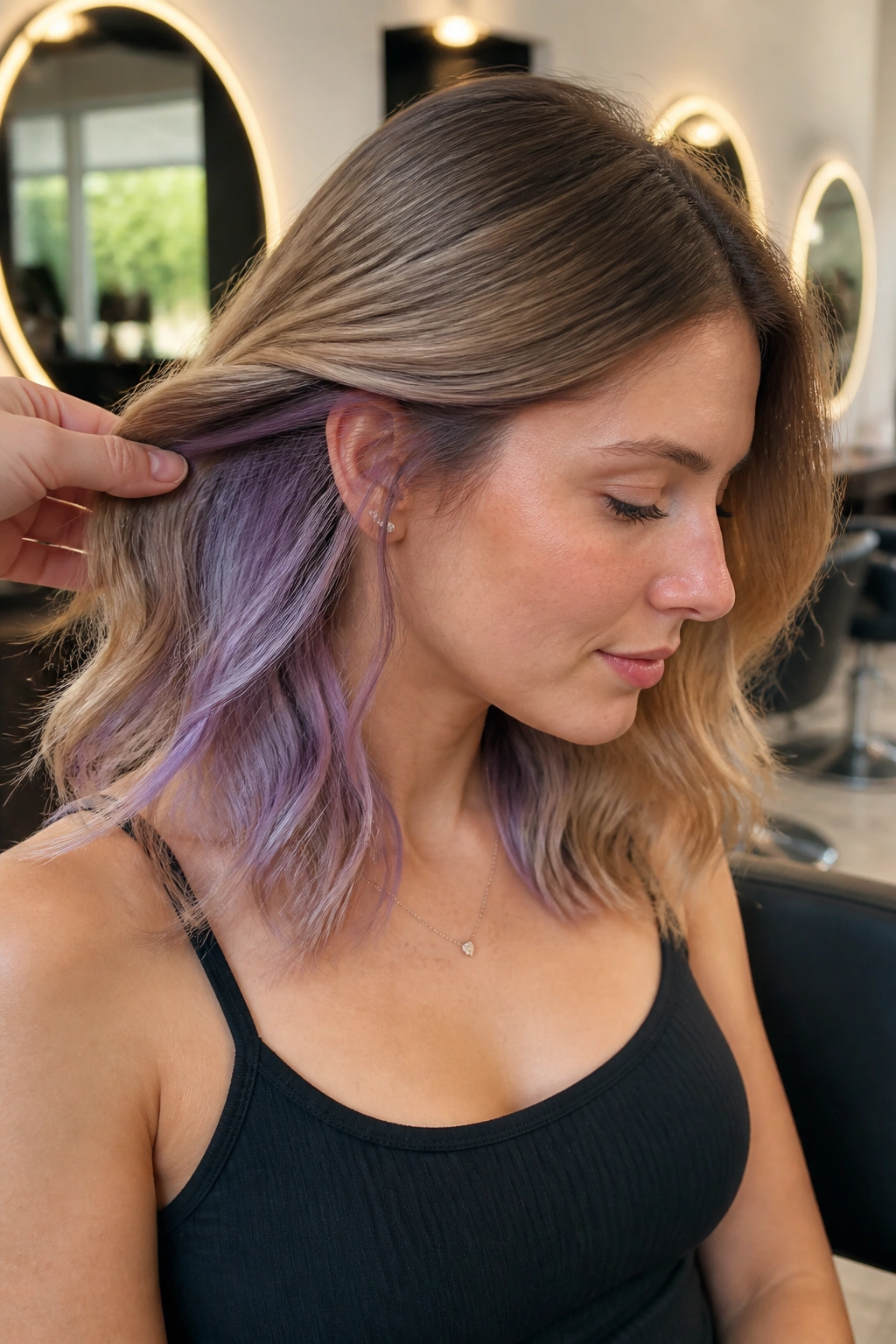
A client who wants lilac without wearing it full-time usually ends up here. Peekaboo panels sit under the top layer, so the color only flashes when the hair moves, tucks behind the ear, or goes up in a clip.
That hidden placement is a nice fit for cool skin because the lilac can still glow near the face without dominating the whole head. Dark blonde or ash brown on top keeps the overall look grounded, while the underlayers add that soft purple surprise.
This style is also kinder to people who work in conservative settings or just want a less obvious change. You can keep it low-key on the outside and a little bit playful underneath. There’s a reason people keep returning to hidden color. It gives you a second look without forcing a full reset.
If you wear your hair half-up often, the lilac shows more. If you wear it down, it stays subtle. That flexibility is the whole appeal.
8. Blue-Violet Lilac on a Pixie Cut
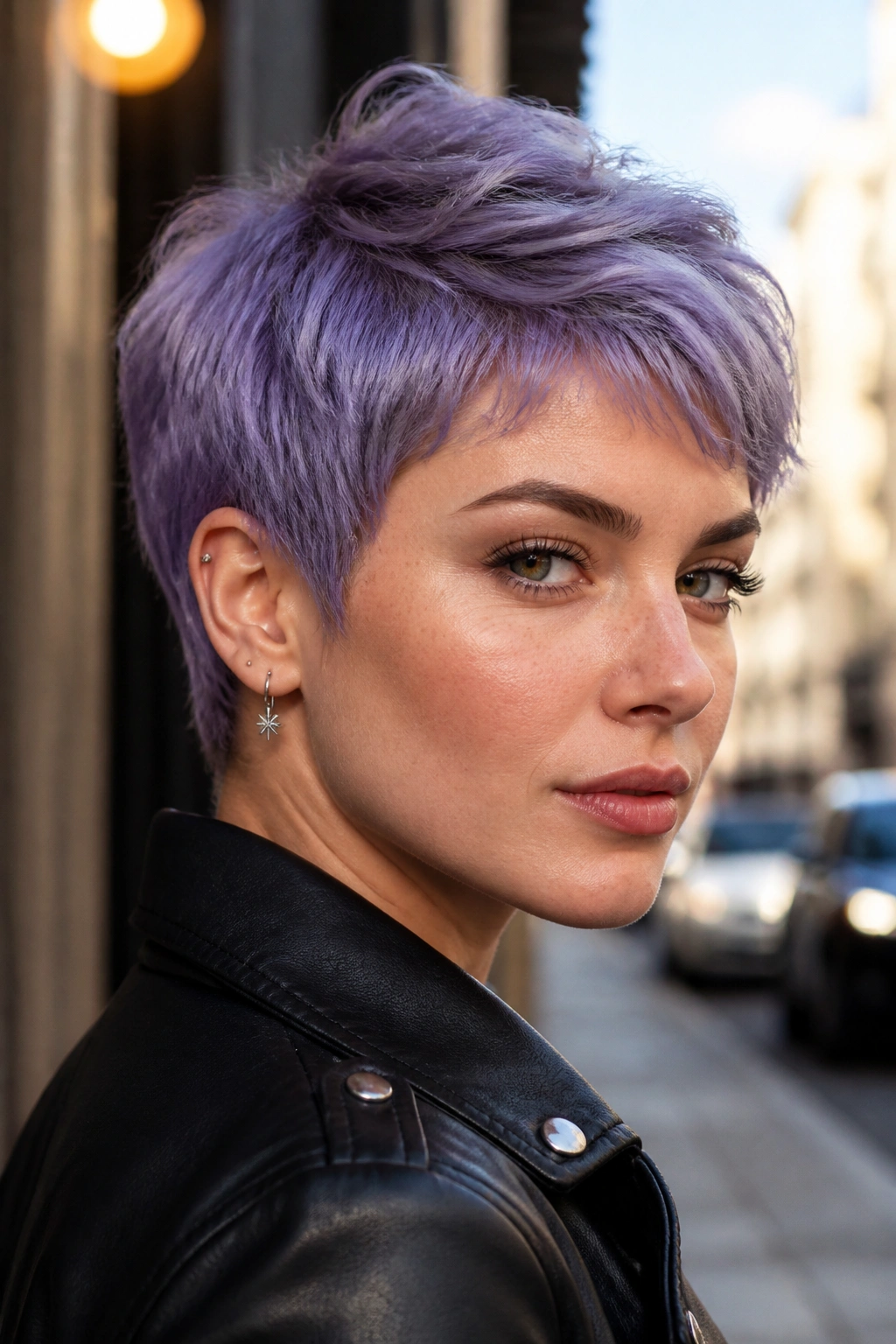
Why does blue-violet lilac hit so hard on a pixie cut? Because the cut is already compact and confident. A softer pastel might disappear into the shape, while a blue-violet version gives the crop some edge.
This shade works especially well on cool undertones that can handle a bit more depth. It is not candy-colored. It is a little sharper, a little moodier, and frankly more interesting than the usual pale pastel. On a pixie, those deeper tones look intentional, not heavy.
How to Keep It From Looking Flat
The trick is keeping some dimension in the cut. Tiny changes in length around the crown, temple, and nape give the color places to move. If the pixie is one flat length all over, even a good lilac can look stuck in place.
- Ask for blue-violet pigment with a soft ash base.
- Keep the fringe lighter if you want the eyes to stand out.
- Use texture paste sparingly so the color still shows through.
- Avoid warm styling oils that can make the finish look too yellow under bright light.
This is not a timid look. That is the point.
9. Muted Lilac With Charcoal Lowlights
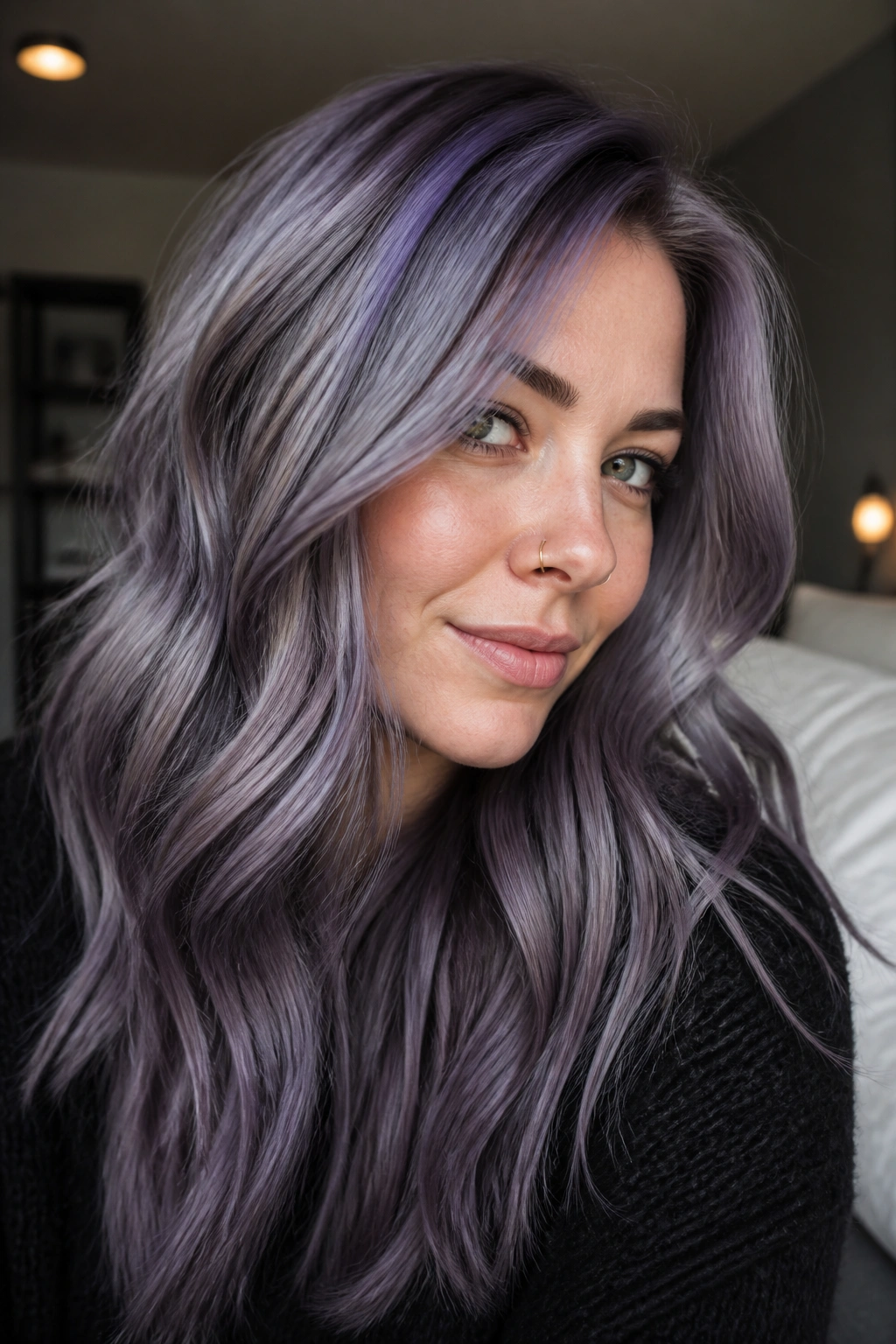
Unlike a full pastel wash, this version leans smoky. The charcoal lowlights give the lilac somewhere dark to land, and that contrast makes the purple look richer without turning vivid in a loud way.
Muted lilac with charcoal lowlights is especially good if your cool skin tone needs depth rather than brightness. Some people look better when the hair has a little shadow in it. A pale all-over lilac can wash them out, while this version brings the face back into focus.
It is also a clever option for thick hair. The lowlights break up a dense sheet of color, which keeps the style from looking heavy. On curls, it creates depth. On straight hair, it creates a smoky ribbon effect that looks polished instead of flat.
Who it suits best: people who like cool shades but do not want a candy finish.
What to ask for: a lilac glaze plus ash-charcoal lowlights placed under the top layer, not across the whole surface.
What to watch: if the lowlights are too warm, the whole look loses its cool edge fast.
10. Sheer Lilac Tint Over Ash Blonde
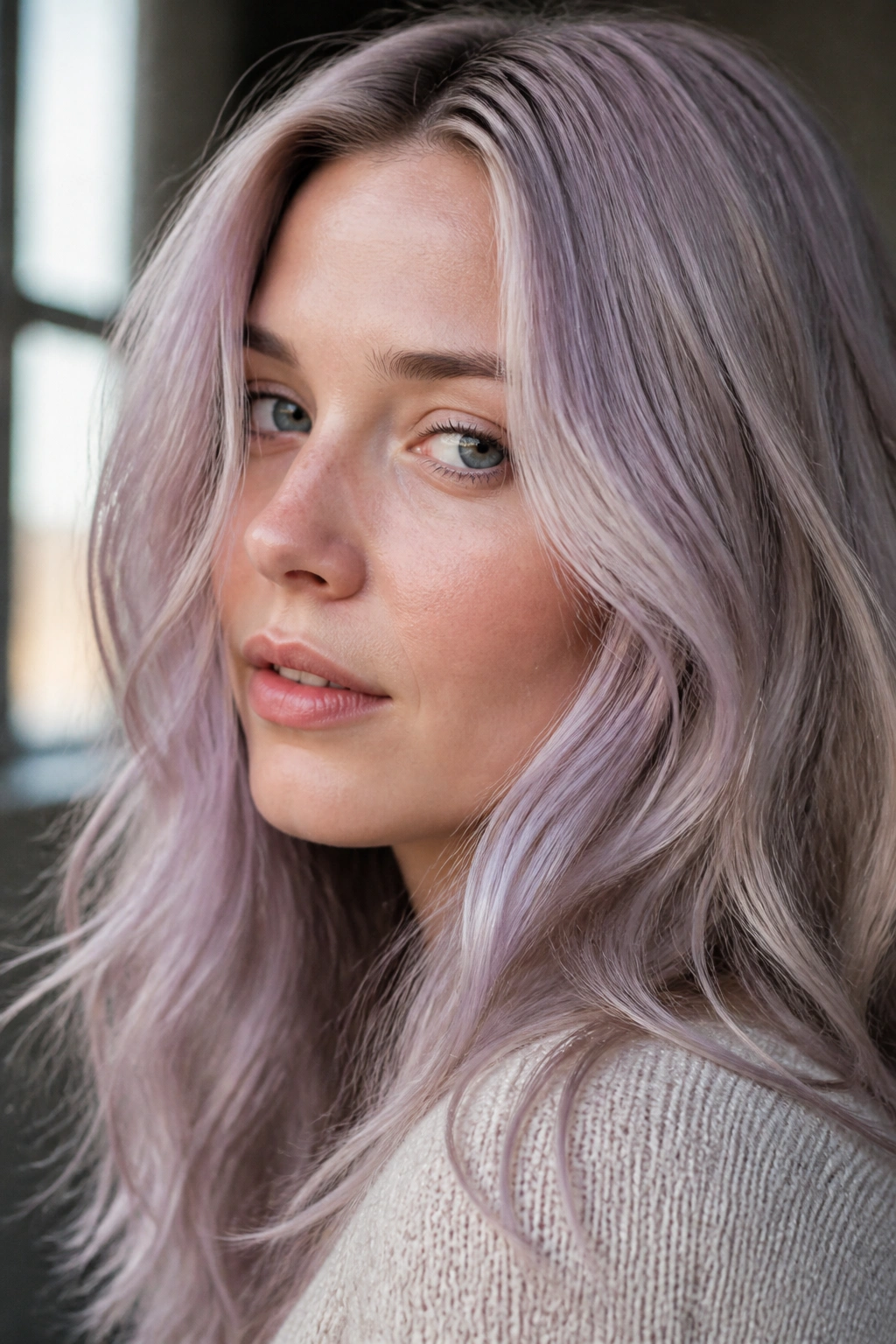
Sheer lilac is the quiet one in the bunch. It is almost a whisper of color, the sort of thing someone notices only when the light hits at the right angle.
How Little Color Can Still Count
On an ash blonde base, a sheer lilac tint can be enough to change the whole mood of the hair. It cools down any leftover warmth and gives the blonde a lavender veil instead of a yellow cast. For cool skin tones, that is often all you need. Too much pigment can overpower a fair face fast.
This works well for people who want to test the waters before going full pastel. It also suits anyone who likes low-drama color. You still need a good blonde base, though. Sheer lilac does not hide brass; it only softens it.
- Best on level 9 to 10 ash blonde.
- Ask for a diluted direct dye or a pastel glaze.
- Keep styling heat moderate so the tint does not wash out unevenly.
- Refresh the tone sooner than you think if your hair fades fast.
A sheer lilac tint can look almost effortless. Almost. The prep still matters.
11. Deep Orchid-Lilac Root Shadow
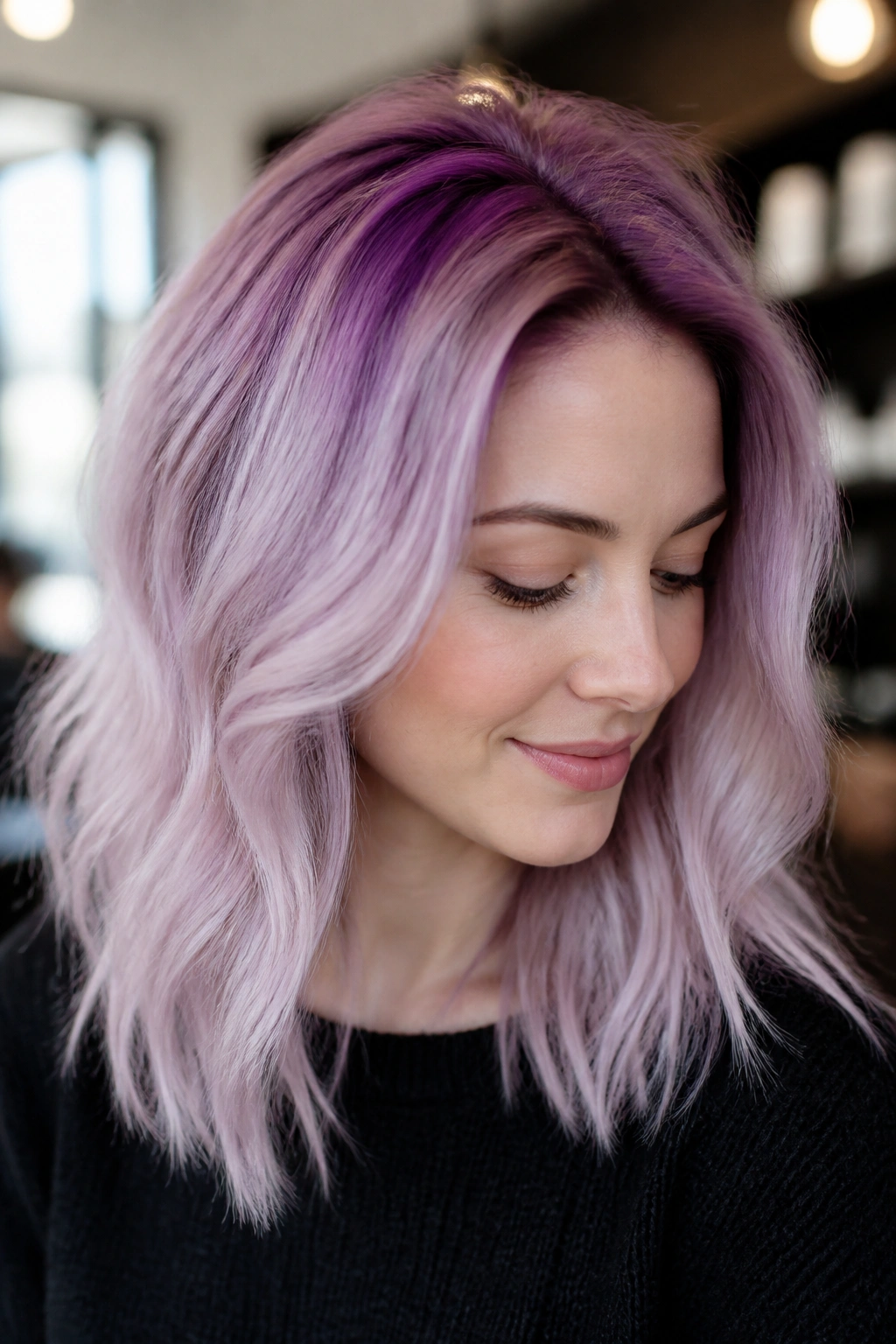
Can lilac stay wearable on darker roots? Yes, if you use a root shadow. A deep orchid-lilac root gives the style a base, then the lighter lilac can bloom through the mid-lengths and ends.
That deeper root tone is especially flattering for cool skin tones that need contrast near the face. It stops the color from floating too high and makes the whole thing feel anchored. The look is softer than a hard regrowth line and less delicate than a full pastel cap.
This is a nice choice if you like purple but do not want the hair to look washed out after three shampoos. The root shadow buys you time. It also makes the lilac easier to grow out, which matters more than people admit.
Best parts of this look
- The root stays low-maintenance.
- The mid-lengths can hold a brighter lilac.
- The ends can be lighter without looking empty.
- It works on straight hair, waves, and loose curls.
If you want a lilac that keeps a bit of attitude, this is one of the strongest options.
12. Lilac Face Frame on Glossy Waves
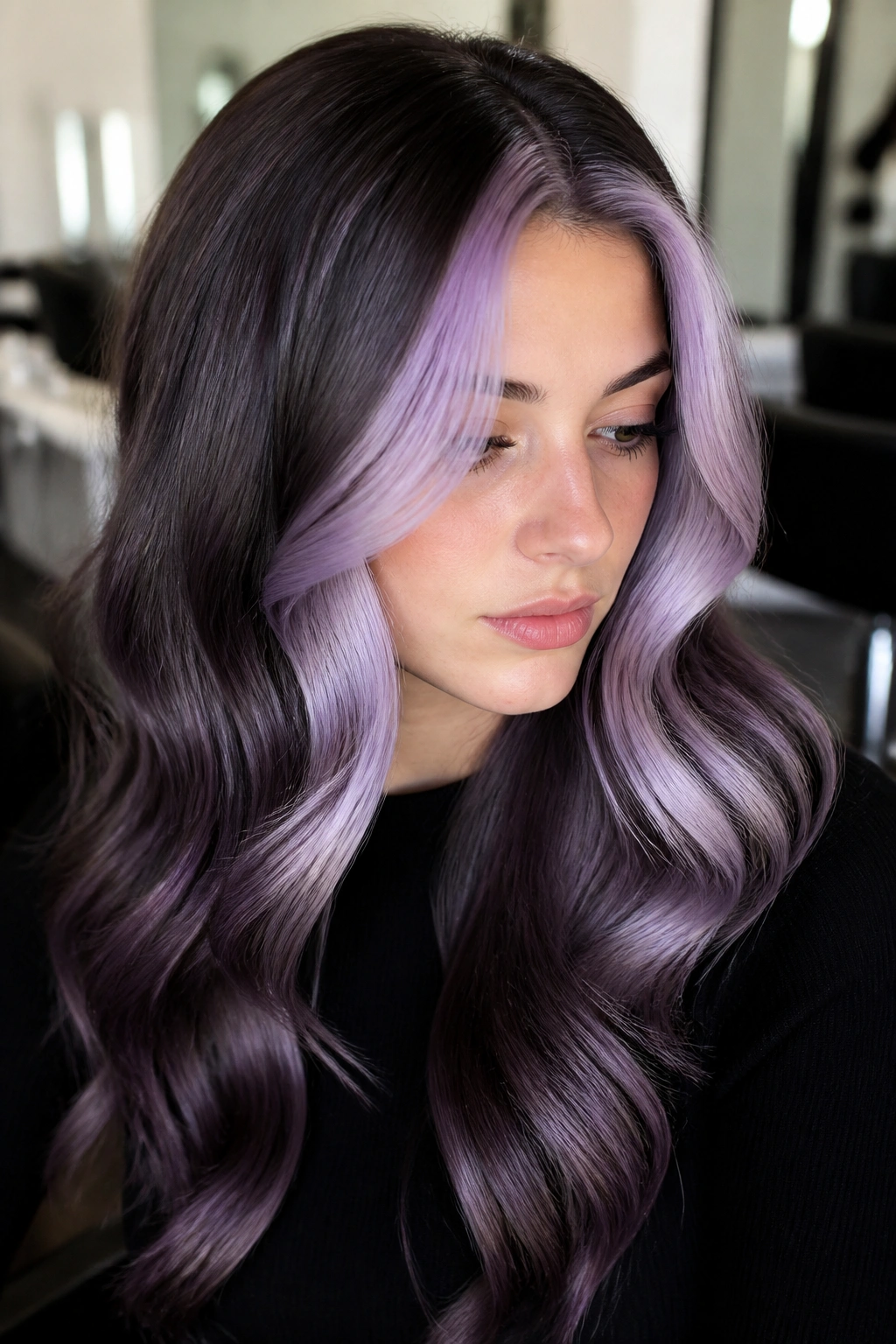
A face frame on glossy waves is the kind of lilac that sneaks up on people. The color is concentrated at the front, where the eye lands first, and the waves keep it from looking like a stripe.
The shape helps a lot. Loose waves create bends that catch the lilac at different depths, so the shade never looks one-note. On cool skin, that matters because the movement keeps the front pieces bright without making the whole head icy.
This version also works across a wide range of lengths. Long layers, collarbone cuts, even longer bobs can carry it. The front pieces can be lighter lilac, while the rest of the hair stays ash blonde or muted brunette.
A 1-inch curling iron, wrapped away from the face, gives the color that soft swing people usually want from this style. Finish with a light serum, not a heavy oil. Heavy products can flatten the front and make the lilac lose some of its lift.
13. Steel Lavender on a Lob
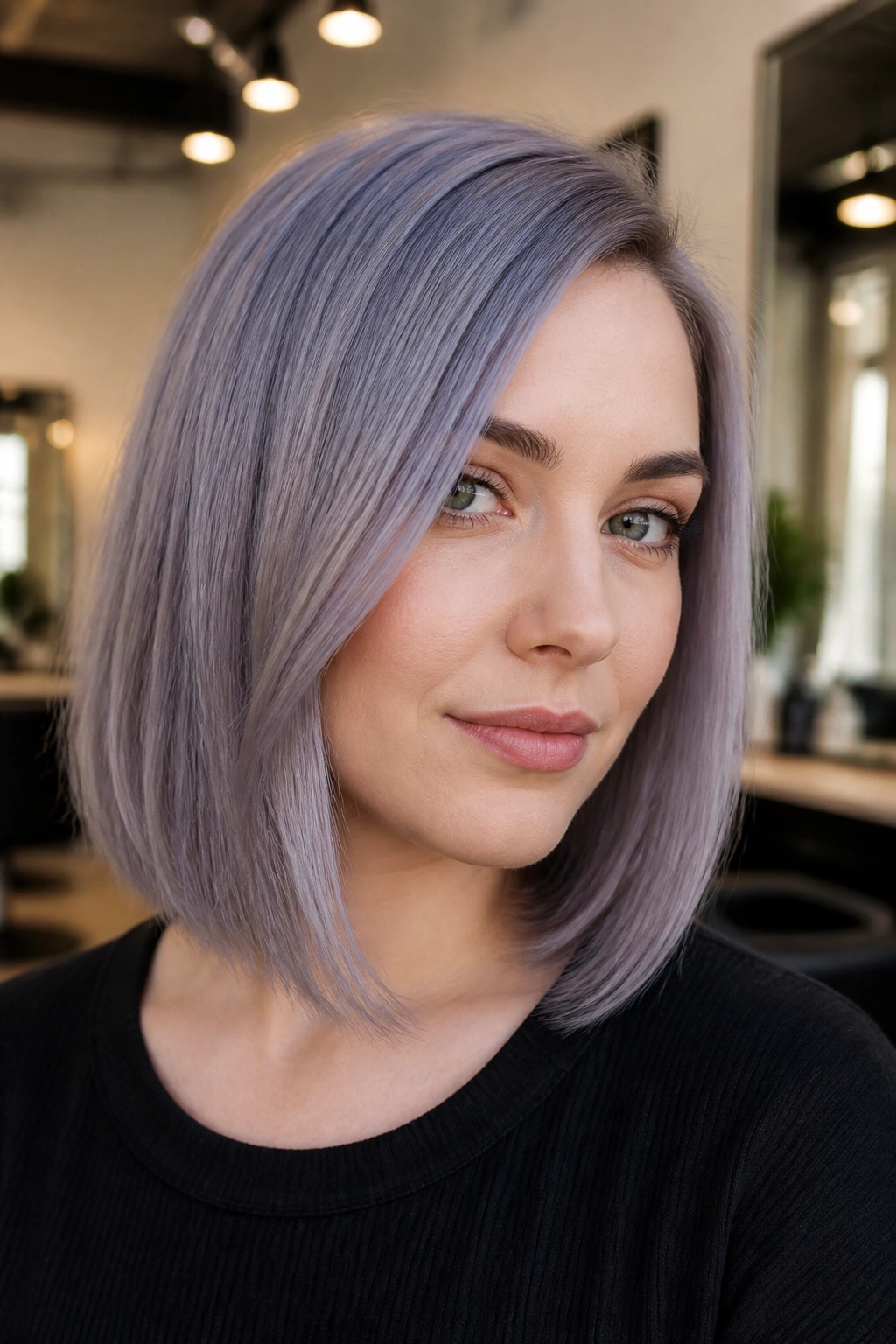
Steel lavender is what happens when lilac gets a backbone. It has more gray, more silver, and less sweetness, which is exactly why it flatters cool skin so well.
A lob is the right cut for it because the shape is long enough to show tone shifts but short enough to keep the color feeling sharp. The ends can be beveled in a little, or kept straight if you want a more modern finish. Either way, the steel tone makes the hair look deliberate.
This is one of those shades that looks better when the hair is smooth. Not stick-straight, necessarily. Just polished enough that the metallic edge comes through. A rough, fluffy finish can blur the color and make it look dusty in the wrong way.
A good salon note: ask for a lavender glaze with a gray-violet base, not a pink-purple mix.
That single detail changes everything.
14. Frosted Lilac Tips
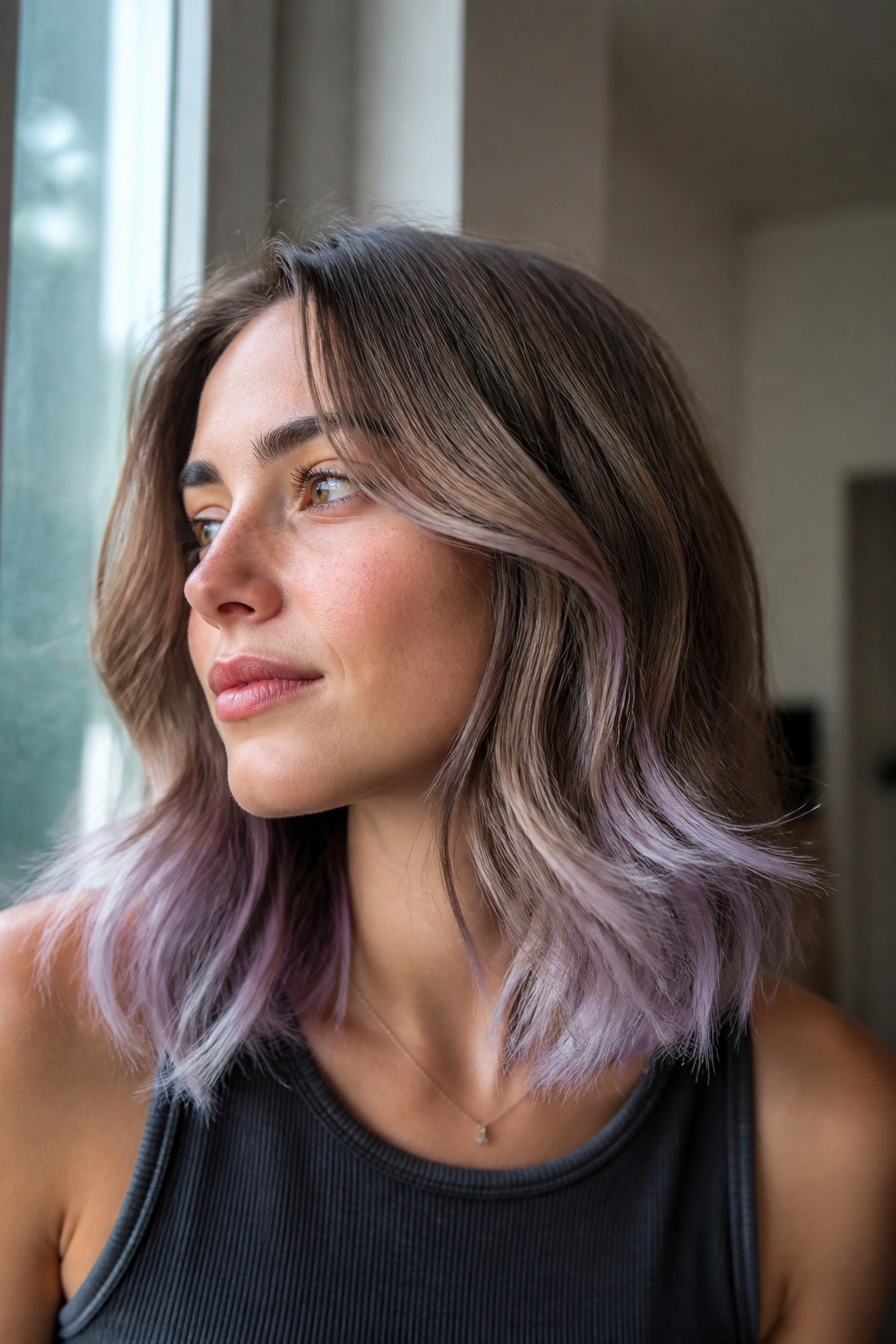
The ends look dipped in frost. That is the whole appeal here. Frosted lilac tips give you a cool hit of color without asking the entire head to commit.
This works well on layered hair because the ends are already doing different things. Some pieces swing forward, some sit under, some kick out at the shoulders. When the lilac sits just on the tips, each layer gets a tiny flash of color instead of one heavy block.
It is also a nice entry point if your hair is dark blonde or light brown and you are not ready for a full pre-lighten. The colorist can lift just the lower few inches, tone them cool, and then deposit the lilac there. The effect is softer than a dip-dye from a decade ago, which is a good thing.
A detail I like here: on curly hair, frosted tips make the pattern pop. The ends catch the shade first, then the rest of the curl follows. It gives the style movement without making it busy.
15. Smoky Violet-Lilac Curls
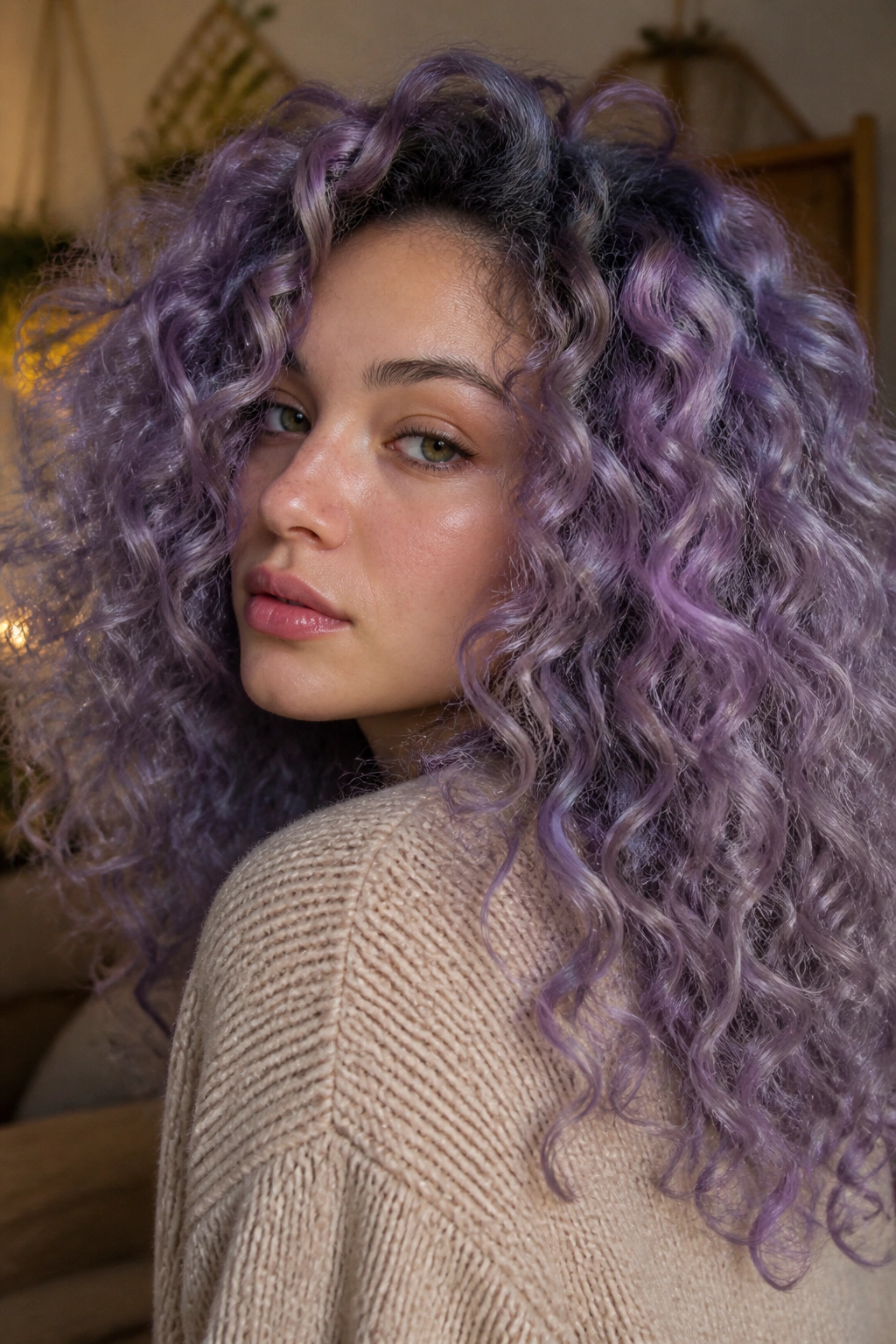
Smoky violet-lilac curls are richer than pastel lilac and a lot more forgiving. The curl pattern breaks up the color, so the eye sees ribbons of violet, lavender, and gray instead of one flat sheet.
Why Curls Make It Feel Deeper
Cool skin tones often look strong next to this shade because the curls keep the purple from drifting too soft. A pastel on curly hair can sometimes disappear in the texture. Smoky violet has enough depth to stay visible.
The other win is how the shade changes as the hair moves. One section can look darker, another lighter, and the variation makes the curl pattern feel alive. That is not a subtle effect. It is the whole reason people choose textured styles with vivid color.
- Use a curl cream that does not leave a yellow cast.
- Diffuse on low heat if you want to preserve the violet tone.
- Ask for color placement that follows the curl pattern, not just the part line.
- Keep the ends healthy; dry curls eat cool pigment fast.
This look has more shape than sweetness. I think that is why it feels so good on cool undertones.
16. Lilac and Silver Ribbon Highlights
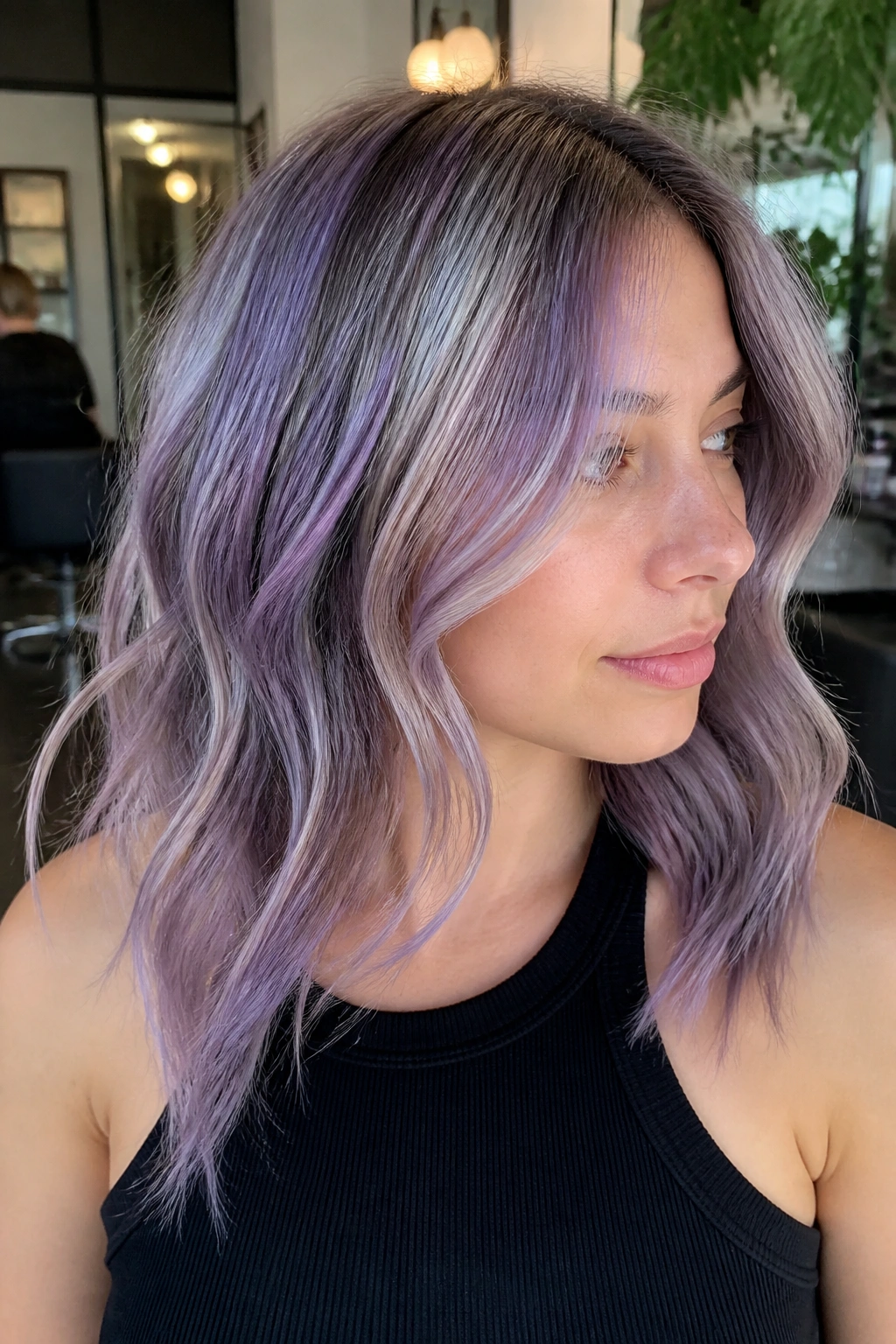
A full-head pastel can be a lot. Thin ribbons are calmer, cleaner, and easier to live with. Lilac and silver highlights threaded through a cool base give you dimension without swallowing the cut.
This is especially good for fine hair, where too much saturated color can make the strands look coated. Ribbon highlights leave air between the pieces. That little gap is everything. It keeps the hair looking light and soft, while the silver and lilac play off each other in a way that flatters cool skin beautifully.
The placement should be deliberate. Don’t scatter the ribbons randomly. Put them where the hair naturally bends — around the face, over the crown, and through the outer layers. That gives the highlights a chance to show without turning stripey.
A small but useful point: silver and lilac together age better than lilac alone. The silver helps carry the fade. When the purple softens, the style still looks cool instead of washed out.
17. Ultra-Pale Lilac Blunt Bob
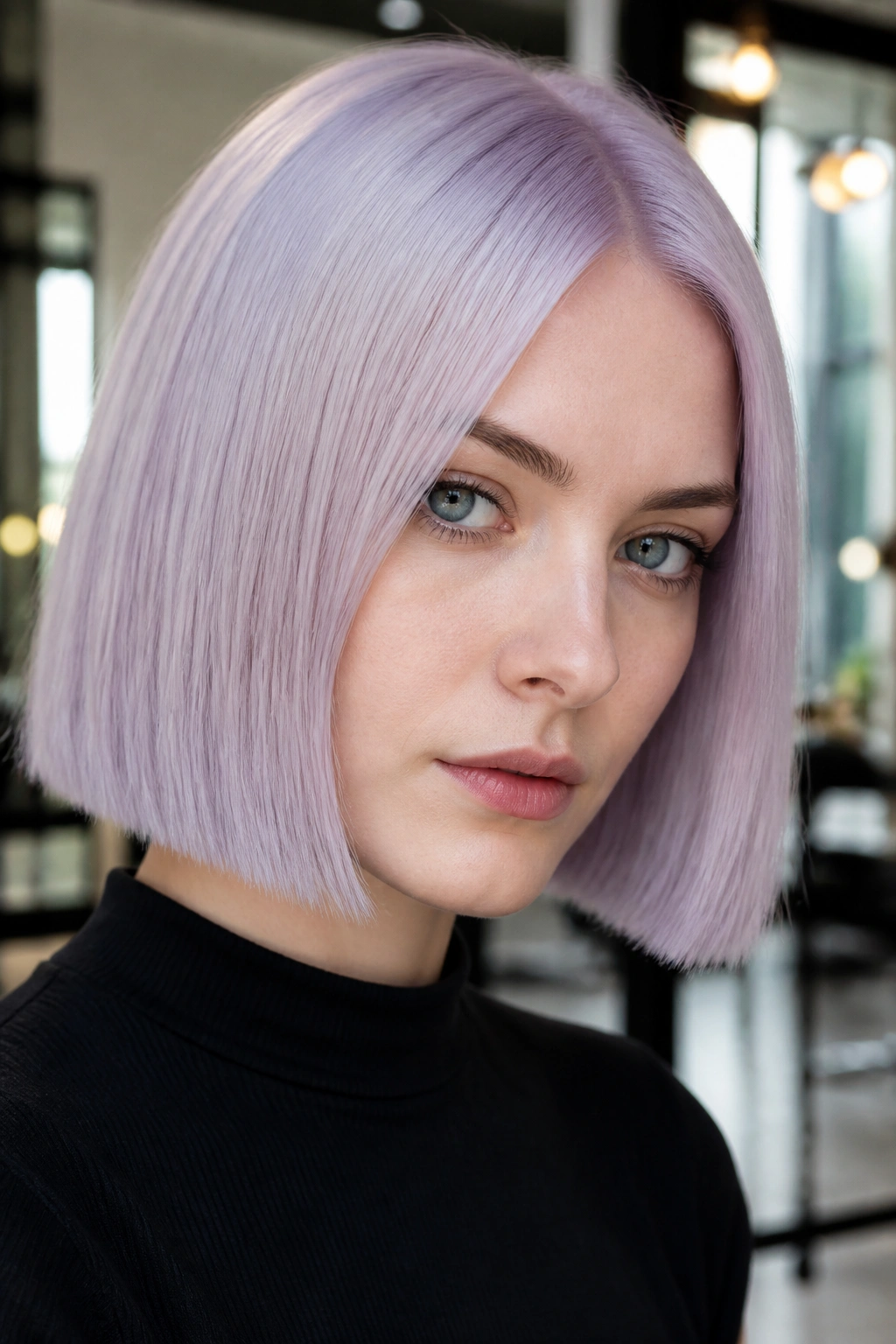
Why does a blunt bob make pastel lilac look so sharp? Because the shape does the framing for you. A clean line at the ends turns a soft color into something much more defined.
Ultra-pale lilac on a blunt bob works best when the cut is precise. Uneven ends make the pastel seem fuzzy. Straight, tidy edges make it look intentional and expensive, if we are being honest about the effect.
This is a good option for cool skin tones that can handle a high-contrast, high-clarity look. Fair skin often looks especially fresh next to the pale lavender finish, while deeper cool complexions can wear it as a soft spotlight effect.
A blunt bob does not give you much room to hide damage, so the hair has to be in decent shape before the color goes on. Split ends and rough porous spots show up fast under pastel. That is not a flaw of the shade. It is just the reality of light color on a hard line.
18. Amethyst Lilac Dip-Dye
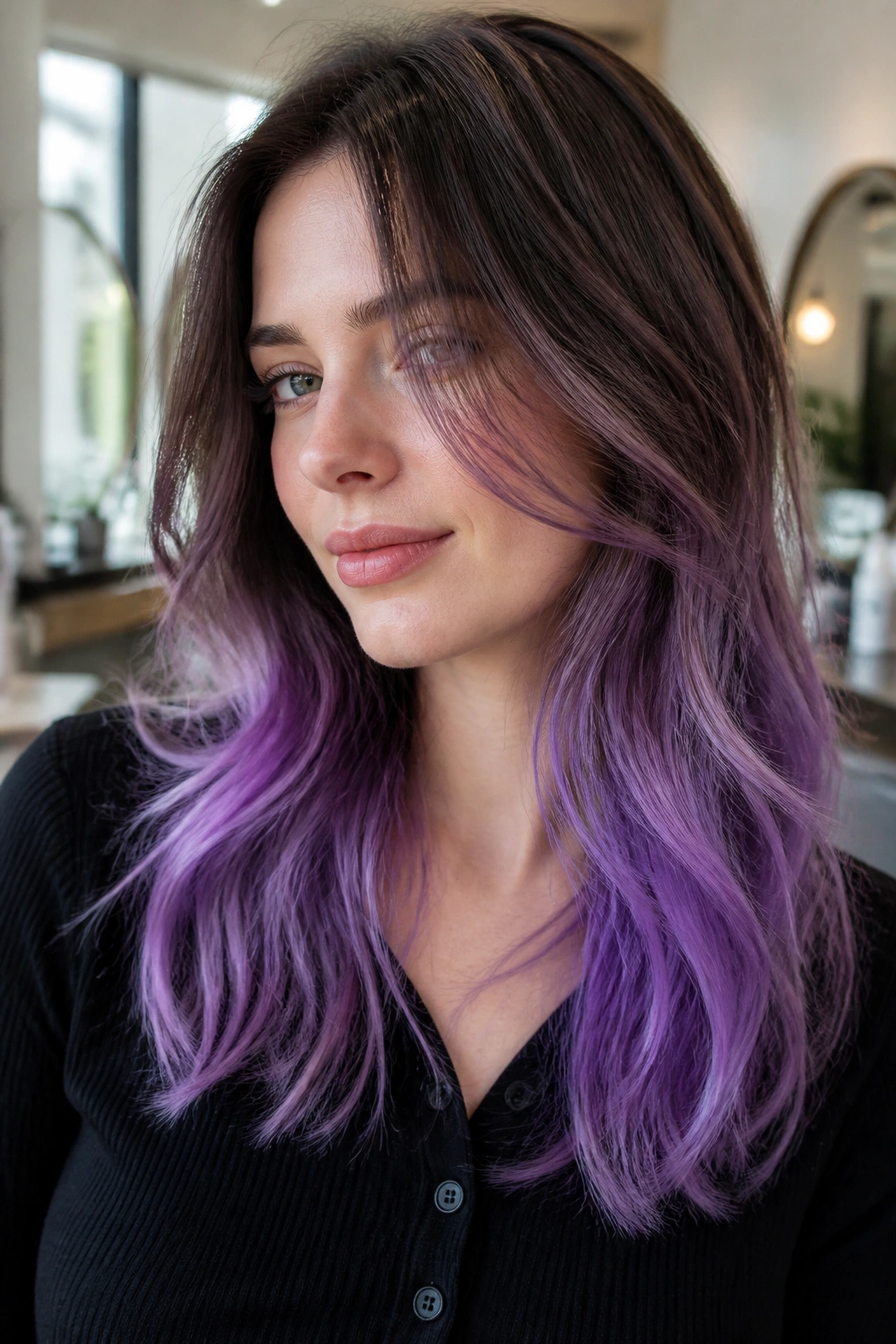
This is the boldest look in the lineup, and it still reads cool. An amethyst lilac dip-dye starts deeper at the ends, often around the last 3 to 5 inches, and lets the color climb upward in a softer fade.
The contrast is what makes it work. Cool skin tones often benefit from a deeper violet near the bottom because it gives the face a lighter frame by comparison. The eye goes to the rich purple ends first, then the rest of the hair feels even cleaner.
It is a strong choice for layered cuts, where the dip-dye can hit different lengths and create movement. On straight hair, it looks graphic. On waves, it feels softer. Either way, it keeps the lilac family from going too sweet.
Good to know: this is one of the easiest lilac ideas to grow out. The darker ends fade into a soft purple stain before they disappear.
If you want drama without a full purple head, this is the one.
19. Cool-Toned Lilac on Natural Gray Hair
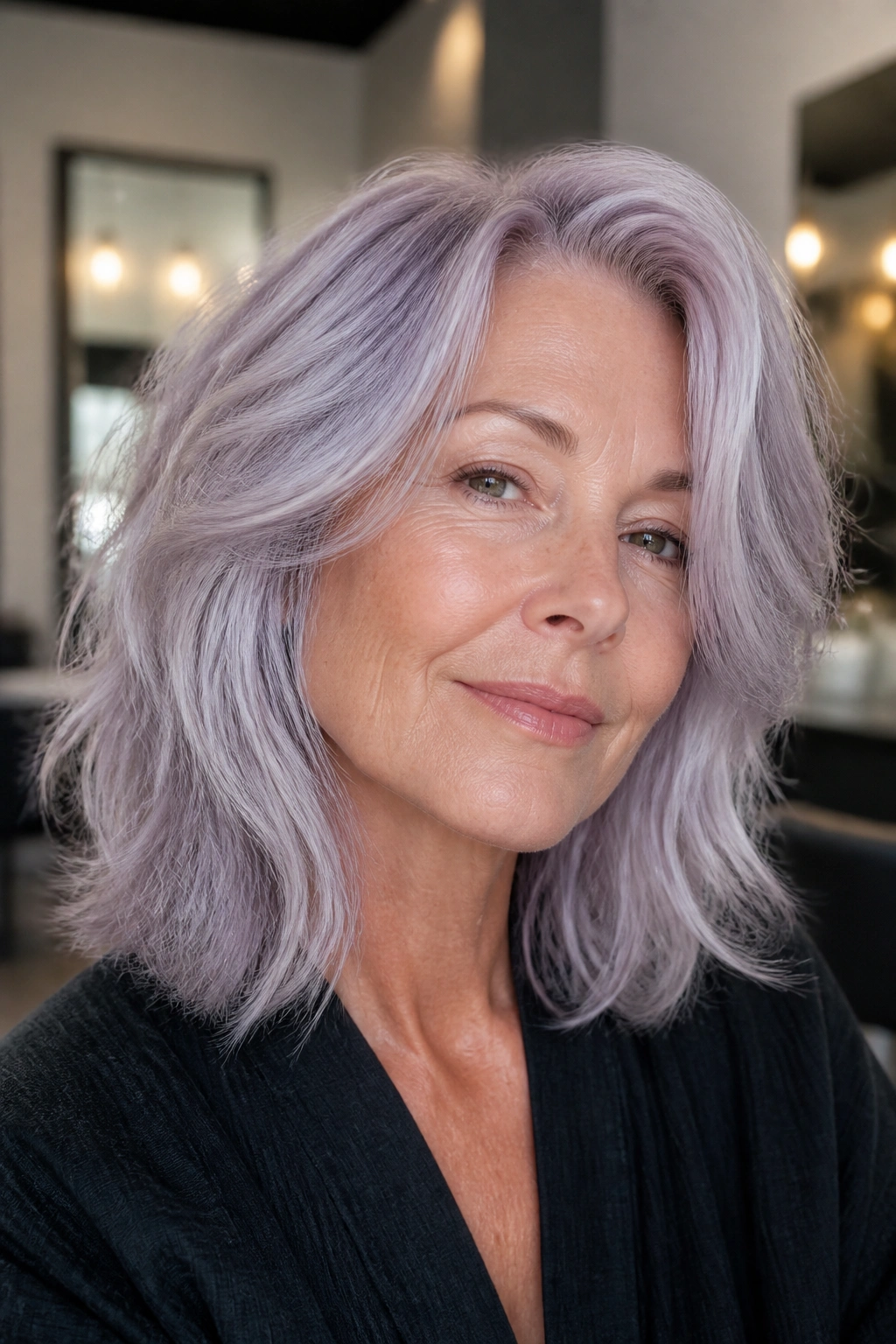
Gray hair already has the silver base lilac wants. That is why this look can be so good on cool skin tones, especially when the gray is left visible instead of covered up.
What to Ask For
Ask for a cool lilac toner or glaze that respects the silver in the hair instead of masking it. The goal is not opaque coverage. It is a soft tint that makes the gray look intentional and a little luminous. On cooler complexions, that silver-lilac blend can be striking in a very calm way.
It also reduces the need for heavy pre-lightening, which is a nice break for the hair. Gray strands can be stubborn in some areas and porous in others, so a gentle deposit often looks better than a full-color overhaul.
- Keep the formula blue-violet, not pink-violet.
- Use purple shampoo lightly; too much can dull the shine.
- Add a gloss when the color starts to look flat.
- Let the natural silver show through at the roots if you want dimension.
This is not about hiding gray. It is about making it look good on purpose. Big difference.
20. Soft Lilac Shadow Root With Silver Ends
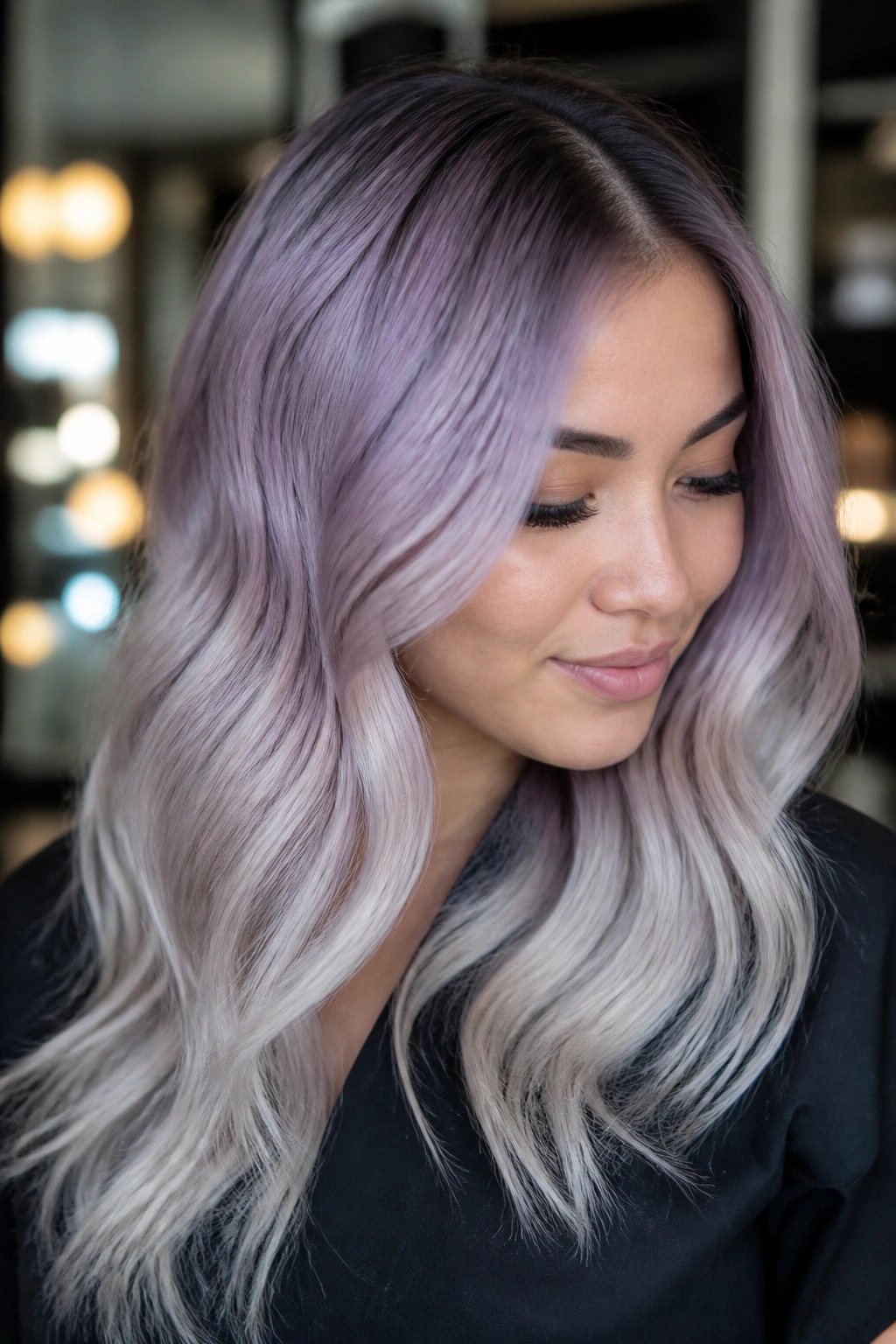
If you want the most forgiving version of lilac, start with a shadow root and let the ends go silver. That combination gives you depth at the scalp, softness through the mid-lengths, and a cool little flash at the bottom where the hair usually needs the most drama.
This is a smart shape for cool skin tones because it keeps the color family consistent. No warm root. No peachy fade. Just a controlled move from smoky lilac into silver-toned ends. It grows out better than a full pastel, and it usually looks better on day ten than day one, which is rare and welcome.
A few things make it work:
- Ask for a root shadow one to two shades deeper than the lilac midsection.
- Keep the ends pale enough to hold a silver-lilac gloss.
- Use cool styling products, not gold-toned shine sprays.
- Trim the ends often if they start to look dry; silver shades show damage fast.
That is the real rule with lilac. Stay on the cool side, keep the finish clean, and the color keeps its shape longer. Drift warm and it starts to collapse. Stay icy, and even the softest lilac can look sharp.
