



Pastel blue hair can look icy and expensive on cool skin tones, or it can turn chalky if the undertone is off by a hair. That’s the part people miss. The blue itself matters, sure, but the gray, violet, or green cast inside the blue changes everything once it sits next to your face.
For cool skin tones, the sweet spot usually lives in the blue family that leans clean and crisp rather than muddy or tropical. Blue-violet pastels tend to flatter pink or rosy undertones. Smokier blue shades can be kinder to cool olive skin, which gets overlooked far too often. And if your hair has been lifted to a pale blonde base, the difference between a pretty pastel and a washed-out one can come down to a tiny shift in tone.
I like pastel blue when it feels deliberate, not sugary. Short cuts make it sharper. Waves make it softer. A shadow root can calm it down. A bright, even lift can make it sing. The shades below are built around that idea: blue that looks like it belongs on cool skin, not blue that fights it.
1. Icy Denim Blue
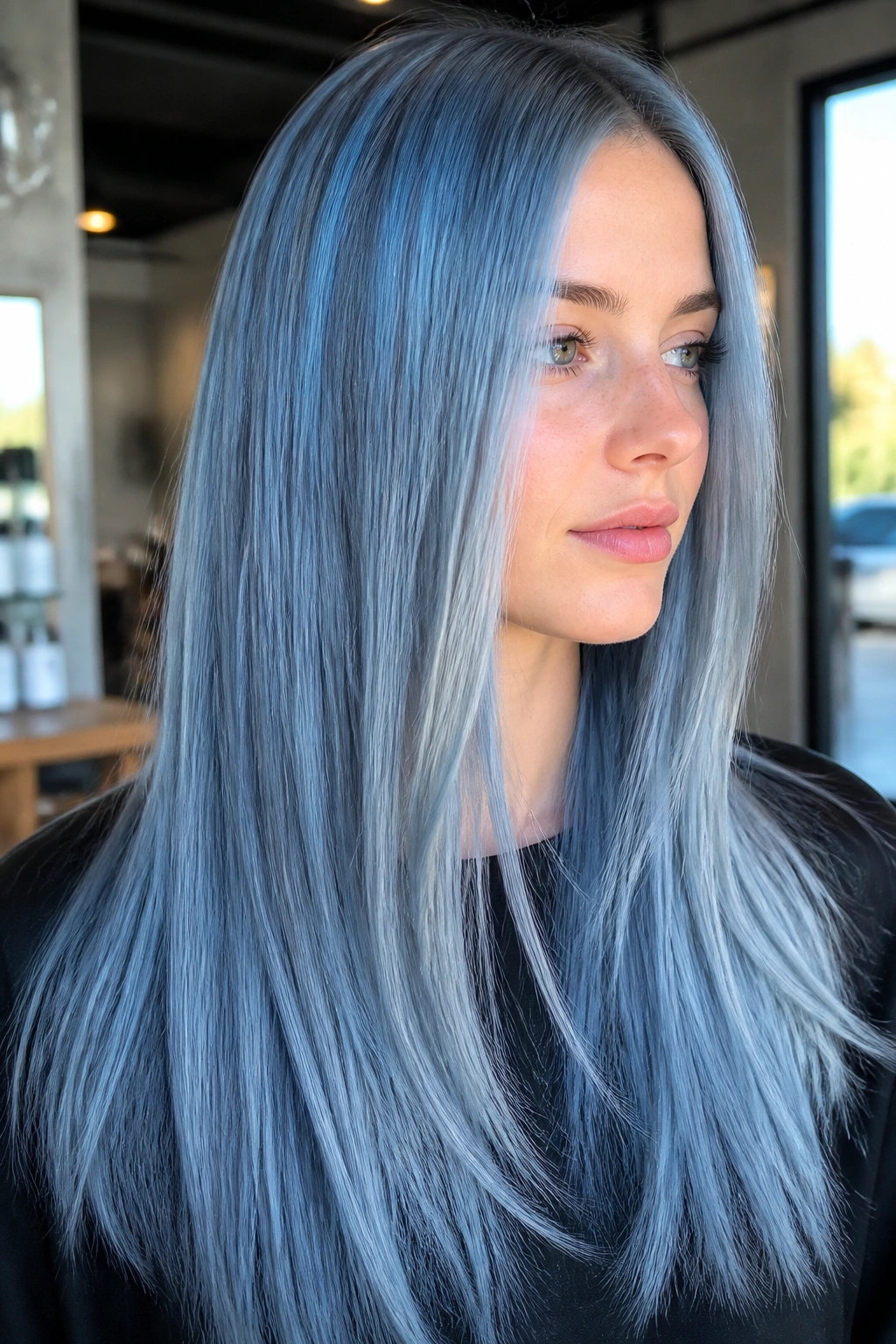
Icy denim blue is the shade I reach for when someone wants pastel blue hair color ideas for cool skin tones but doesn’t want the result to look like candy. The gray in it matters. A lot. It keeps the color from tipping into baby-blue sweetness, and that quiet smoke is exactly what makes it flattering on pink, porcelain, and blue-red complexions.
This shade works best on hair that has been lifted to a pale blonde base first, usually around a level 9 or 10. If the yellow is still hanging around, denim blue can go murky fast. Once the base is clean, though, the color sits on top like soft washed fabric—muted, cool, and easy to wear with silver jewelry, black knits, or a plain white tee.
Why It Works on Cool Skin Tones
The denim note cuts down on glare. That sounds odd, but it matters. Pure pastel blue can look flat against fair cool skin, while a denim version gives the face a little more definition around the jaw and cheekbones.
- Best on straight hair, loose waves, or a blunt lob.
- Ask for a blue-violet gloss if the blonde base looks too warm.
- A shadow root in soft charcoal makes regrowth less obvious.
- Avoid yellow shampoo overload; it can dull the shade into green-gray.
Best tip: keep the finish glossy, not matte. Denim blue gets prettier when it has a soft sheen.
2. Baby Blue Bob
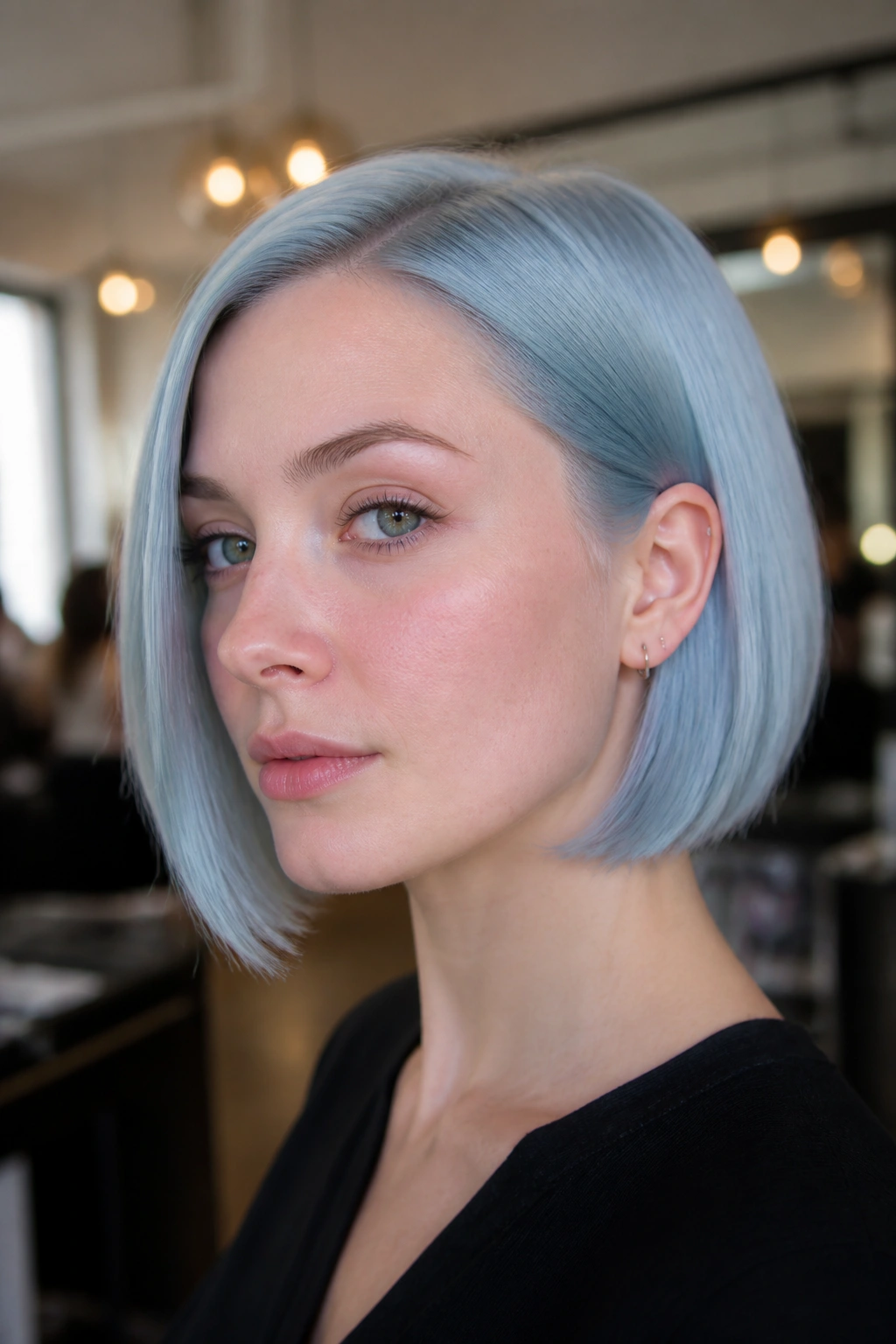
Want a blue that looks neat the second you tuck it behind one ear? A baby blue bob does that job well. The cut gives the color structure, and the color gives the cut a little personality. On cool skin tones, especially fair ones with pink undertones, the soft blue keeps the face from looking too stark.
The trick is restraint. A bob already reads clean and sharp, so the blue should stay light and even rather than streaky. If the ends are patchy or the base underneath is too yellow, the whole look can turn noisy. A smooth, pale canvas makes the shade read like mist over glass.
I like this look on chin-length cuts and blunt cuts with slightly beveled ends. It has a polished feel without asking for much styling. Air-dry it with a touch of leave-in, or bend the ends under with a round brush if you want a more finished shape. Either way, the blue stays visible.
One thing, though: baby blue fades quickly. It’s a sweet shade, but it’s not a lazy one.
3. Powder Blue Pixie
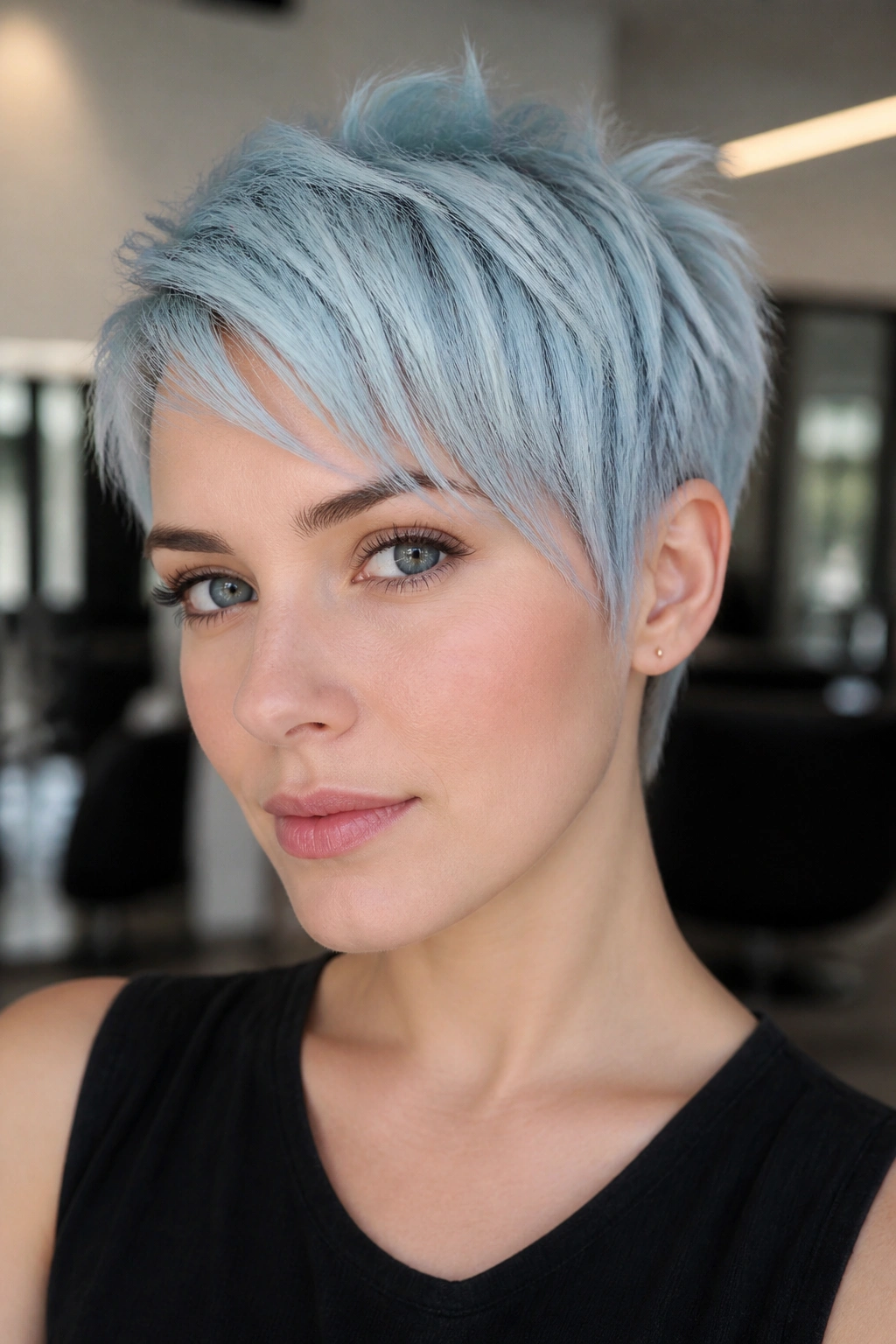
Powder blue pixie cuts are ruthless in the best way. There’s nowhere for the color to hide, which is exactly why the result looks so crisp. On cool skin tones, the tiny, airy brightness of the shade can sharpen the eyes and make pale complexions look cleaner rather than washed out.
What Makes It Different
A pixie changes the mood of pastel blue. Long hair can make the color dreamy. Short hair makes it graphic. That distinction matters if you wear silver, black, or cool gray makeup, because the whole look starts to feel intentional instead of fragile.
The shortest layers usually take the color the fastest, so I’d keep the blue slightly deeper at the roots and lighter through the crown. That keeps the cut from disappearing under bright light. If your hair is fine, powder blue also gives the illusion of more texture, especially when you work in a pea-sized amount of matte paste.
- Great for cropped sides and choppy tops.
- Best with a pale, even blonde base.
- Needs small trims to keep the outline neat.
- Works well with a cool lilac liner or silver hoops.
Small warning: very dry hair can make powder blue look dusty in a bad way. Hydration matters.
4. Glacier Blue Balayage
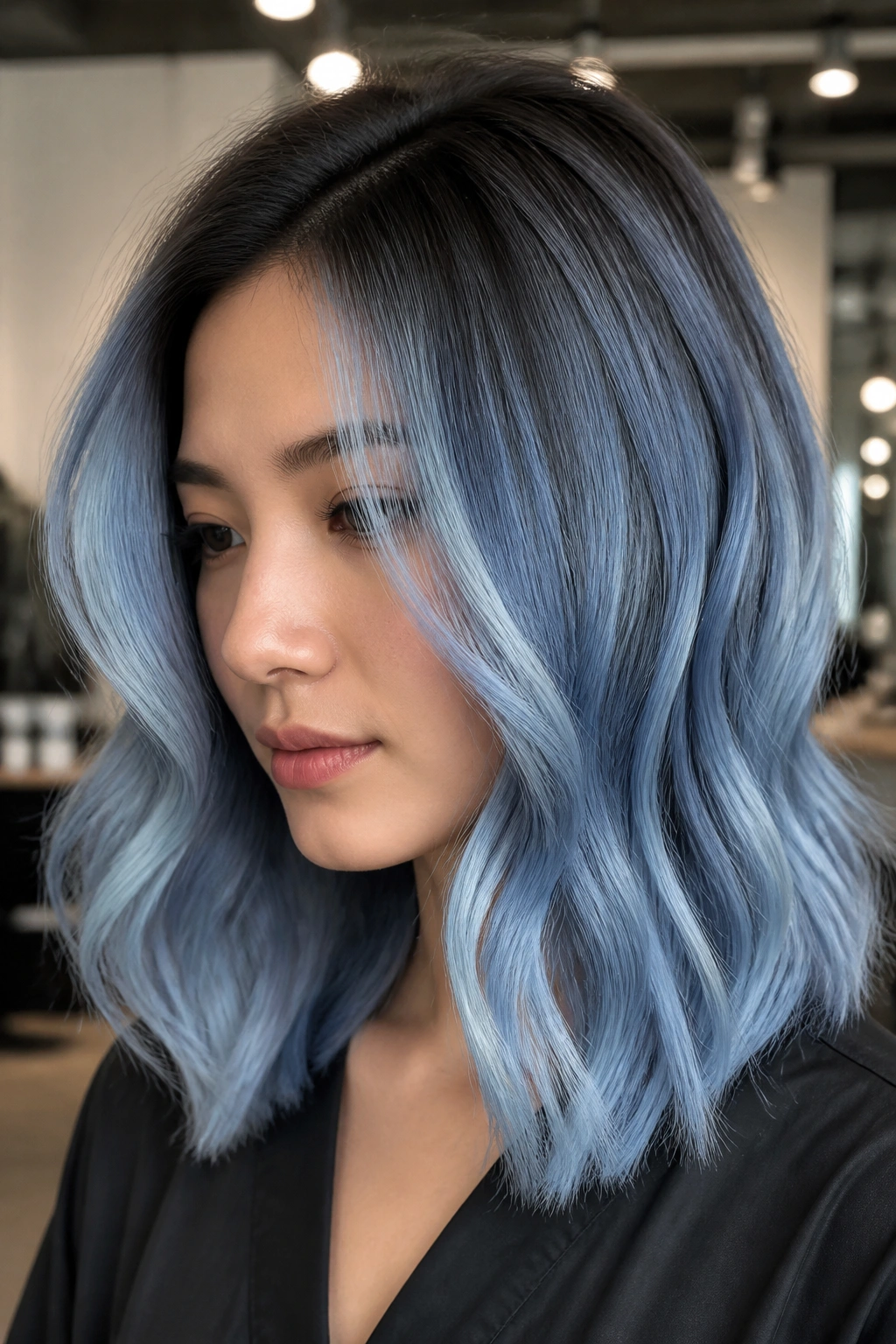
A glacier blue balayage is for the person who wants blue without wearing blue from root to tip. The hand-painted placement gives the color room to breathe. On cool skin tones, that softer spread keeps the face bright while the lower lengths carry most of the icy tone.
This look is especially good if your natural root color is already cool brown or dark blonde. The balayage can melt out of the base instead of sitting on top of it like a hard stripe. That softer transition is kinder to cool skin, because the eye reads the whole shape as polished and dimensional, not costume-y.
The best glacier blue balayage uses pale blue through the mid-lengths and slightly deeper silver-blue toward the ends. That creates a frosted gradient that looks clean even as it fades. If every section is the same pastel, it can flatten out too fast. A little depth saves the look.
Placement That Matters
Face-framing pieces should start a little lower than the cheekbone if you want the color to feel softer. Higher placement can be stark.
- Put the brightest blue on the top layer ends.
- Keep the root melt smoky, not warm.
- Ask for soft ribbons, not chunky panels.
- A gloss refresh every 4 to 6 weeks keeps the glacier effect crisp.
5. Blue Milk Tea
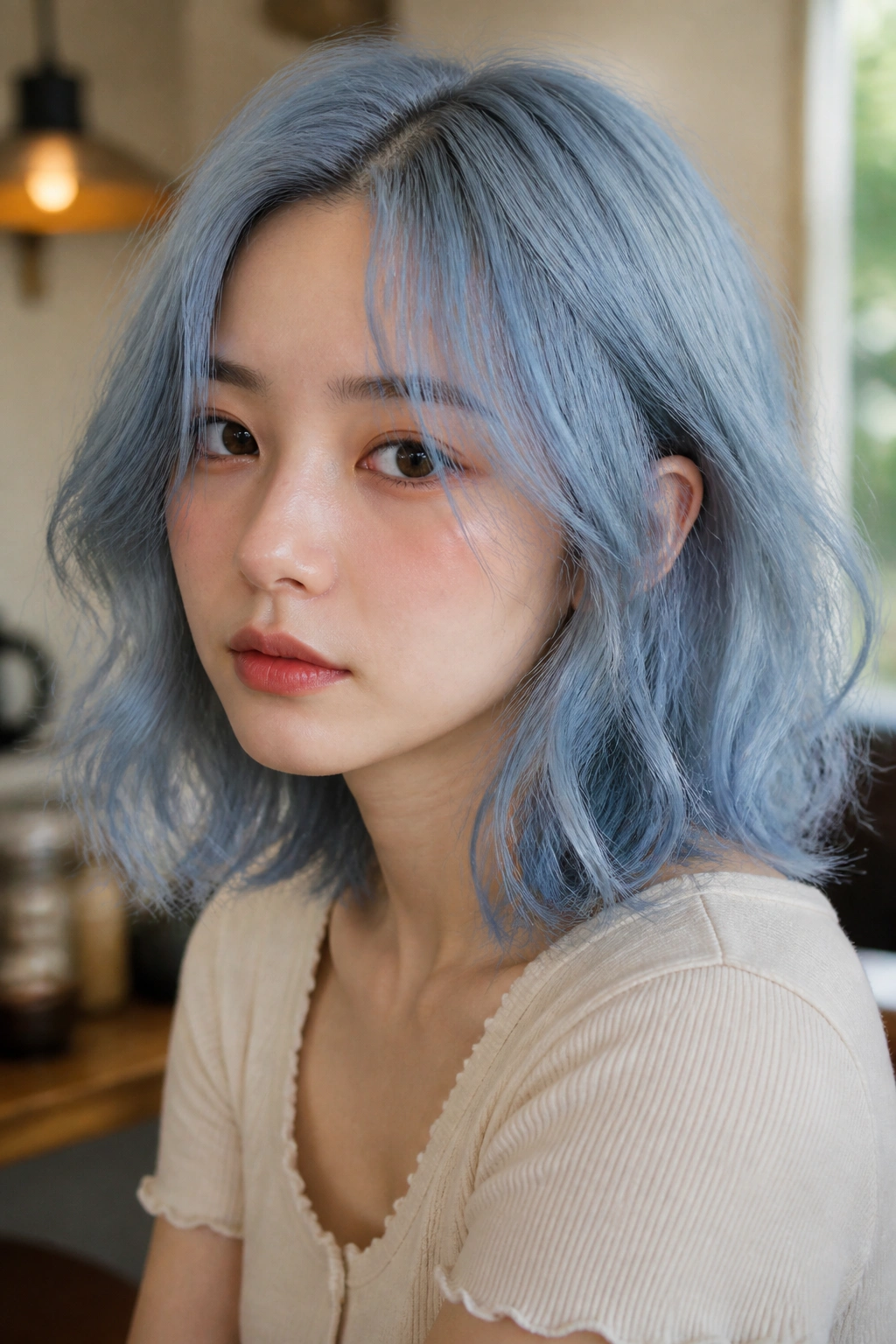
Blue milk tea is the quiet one in the group. It looks like someone stirred a few drops of sky blue into a creamy beige glaze, and that softness can be gorgeous on cool skin tones that don’t want a harsh icy finish. If your complexion is cool but a little muted, this shade feels especially easy.
I like it because it doesn’t scream for attention. It sits somewhere between pastel and neutral, which makes it feel wearable in a way that pure blue sometimes doesn’t. The beige softness tempers the color, while the blue keeps it from drifting warm. That combination is sneaky-good on cool skin with a bit of redness, because the shade smooths the whole frame around the face.
It works best on medium-length hair, soft waves, or a lob with loose movement. Too much texture can break the color apart. Too little, and it can look flat. Milk tea blue likes shape, not chaos.
My honest opinion: this is one of the best choices if you want blue hair that won’t fight every outfit in your closet.
6. Cloudy Blue Ombré
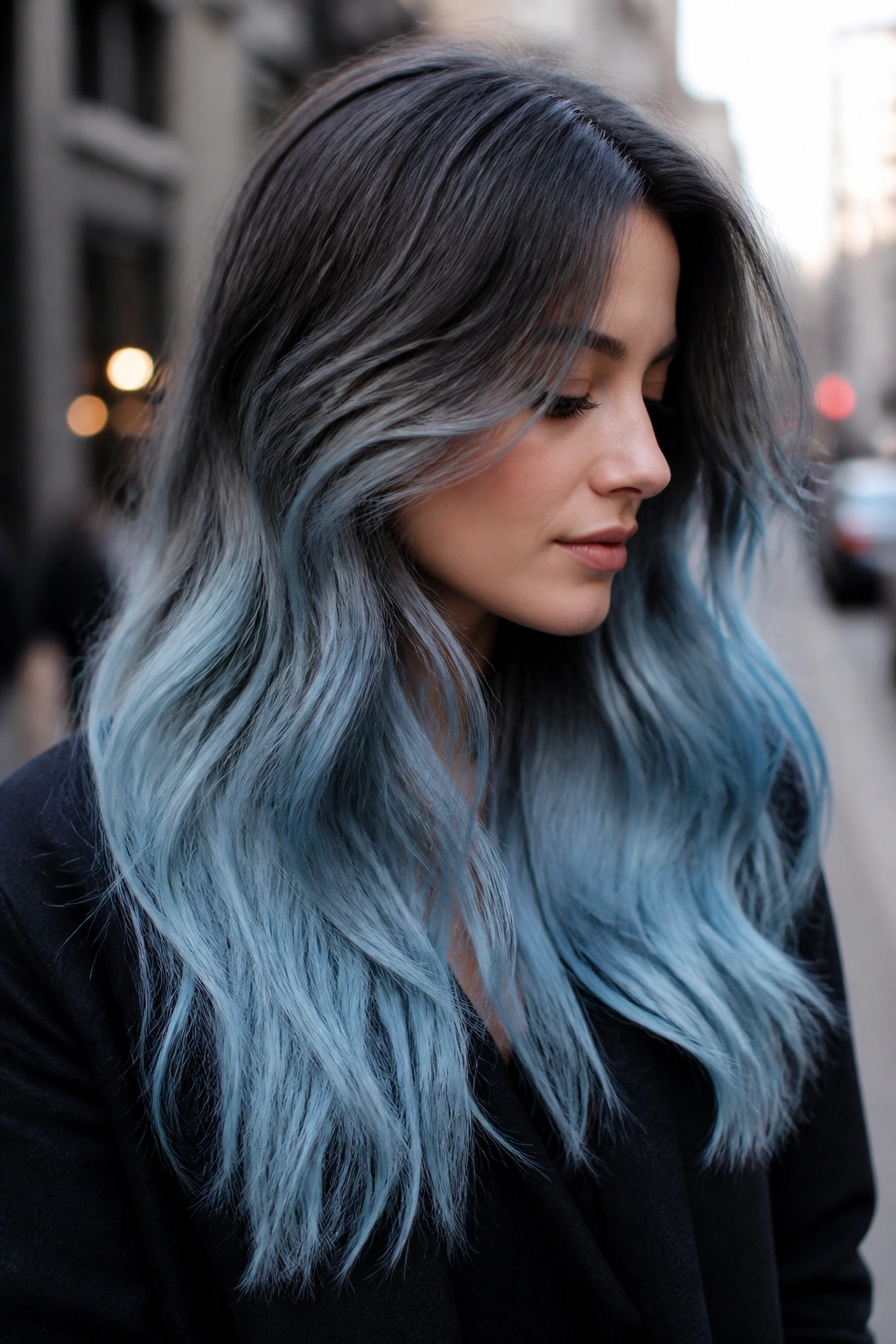
Cloudy blue ombré is what happens when you want the mood of pastel blue without putting the same amount of color at the roots. Darker tops fading into cloudy blue ends create a softer line, which is useful if you have cool skin and do not want the hair to compete with your face.
The cloudy part matters more than people think. A perfectly clear blue ombré can feel a little sharp, almost shiny in a way that looks artificial. Add a gray veil, and the whole thing gets more wearable. On cool skin, that softness helps the color feel like part of your features instead of something pasted on top.
This shade suits layered cuts, long bobs, and hair that already moves a bit on its own. The fade gives the eye a place to travel, which is nice if your face is narrow or your features are delicate. It can also be easier to live with than an all-over pastel, since the root area grows out more naturally.
No drama. Just a good fade.
7. Steel-Blue Money Piece
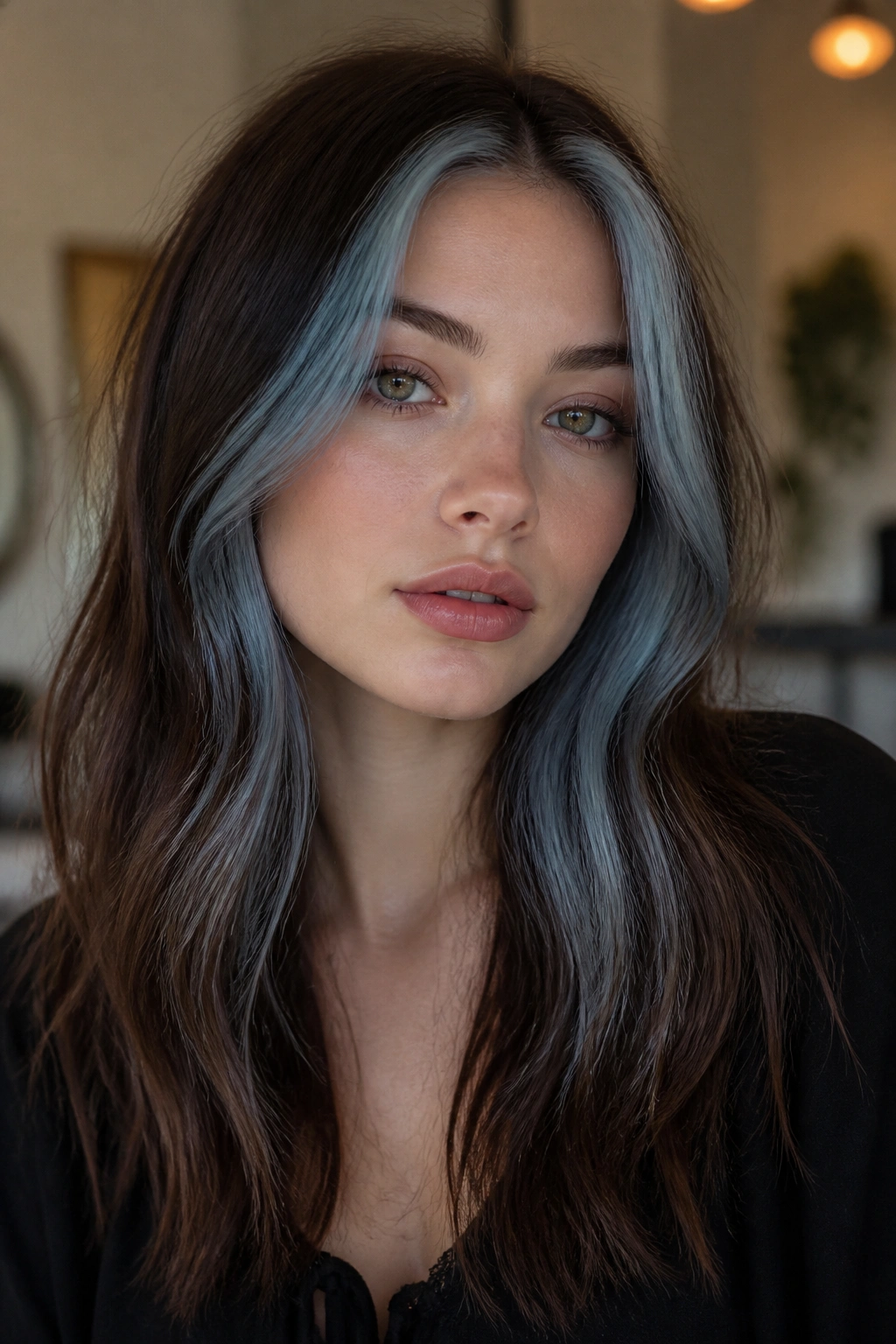
A steel-blue money piece is a sharp little trick when you want color near the face without going full pastel head-to-toe. Two front sections, painted in a cool steel blue, can change the whole expression of a haircut. On cool skin tones, especially those with blue or pink undertones, the front panels can make the eyes look brighter and the brows look cleaner.
Compared with an all-over pastel, this is lower-commitment and much easier to refresh. The rest of the hair can stay blonde, brunette, or softly shadowed, which gives the blue room to stand out. I like this version on shoulder-length hair or long layers because the pieces can fall forward and frame the face.
The steel note keeps it from looking sugary. That’s the part I’d defend. Pure baby blue at the front can look juvenile on some people, but steel blue feels a little more grown-up and a lot more believable next to cool skin.
If you wear glasses, this one is especially good. The frames, the front color, and the skin all work together instead of arguing.
8. Frosted Blue Mushroom Brown
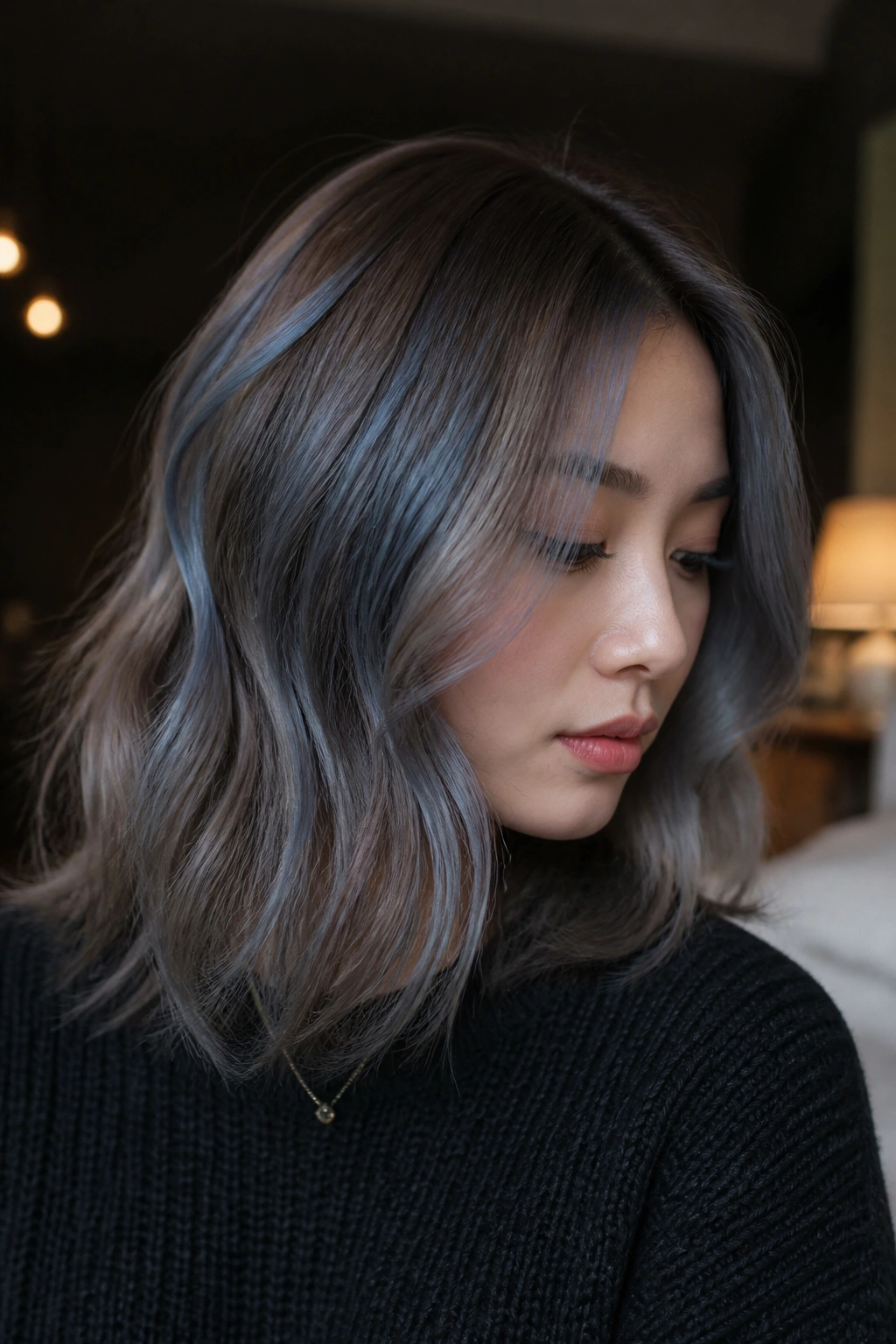
Frosted blue mushroom brown is for the person who likes low contrast with a little surprise. The base stays brown and cool, while a frosted blue glaze or overlay gives the whole head a chilly cast. On cool skin tones, this look makes sense because it echoes the natural ash in the complexion instead of trying to blast past it.
This shade is especially smart if you’re starting from dark hair and don’t want to spend forever lifting to a pale blonde. The mushroom brown base does most of the heavy lifting visually, while the blue lives on top as a mist rather than a block of color. That means softer grow-out and less of the brutal maintenance you get with lighter pastels.
Who It Suits Best
- Cool brunettes who want something different.
- People with olive-cool skin that gets overwhelmed by high-contrast blondes.
- Anyone who likes a muted finish instead of a bright one.
- Hair that already has some ash in it.
The blue reads strongest in sunlight and most subtle indoors. That’s a nice little contrast.
9. Blueberry Sorbet Curls
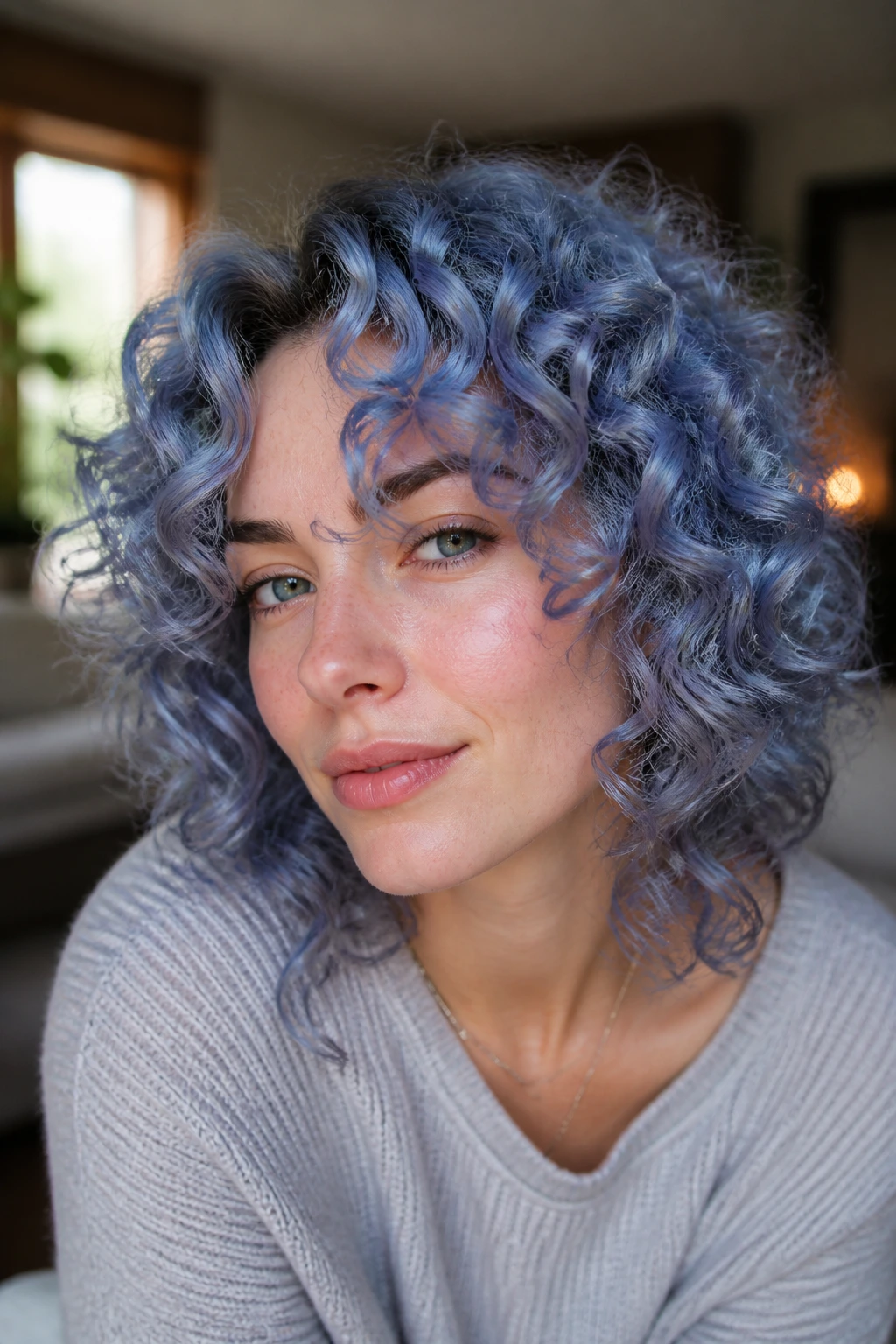
Blueberry sorbet curls have one job: make texture look expensive. The blue is a touch richer than baby blue, with a hint of berry-gray that keeps it from going flat on cool skin tones. On curls, that extra depth matters because the color catches on bends, ridges, and spirals instead of sitting in one clean sheet.
I’m partial to this shade on medium and tight curls because the shape gives the pastel movement all on its own. You don’t need a lot of styling. A diffuser, a curl cream, and a gentle scrunch are usually enough. The color does the rest. If the hair is too dry, though, the finish can look rough, and no pastel survives that for long.
What to Watch For
- Keep lightened curls well-conditioned.
- Use a wide-tooth comb, not a brush.
- Pick a sorbet blue with gray in it, not neon.
- Refresh the ends more often than the crown.
The end result feels playful, but not childish. That’s the sweet spot.
10. Periwinkle Blue Melt
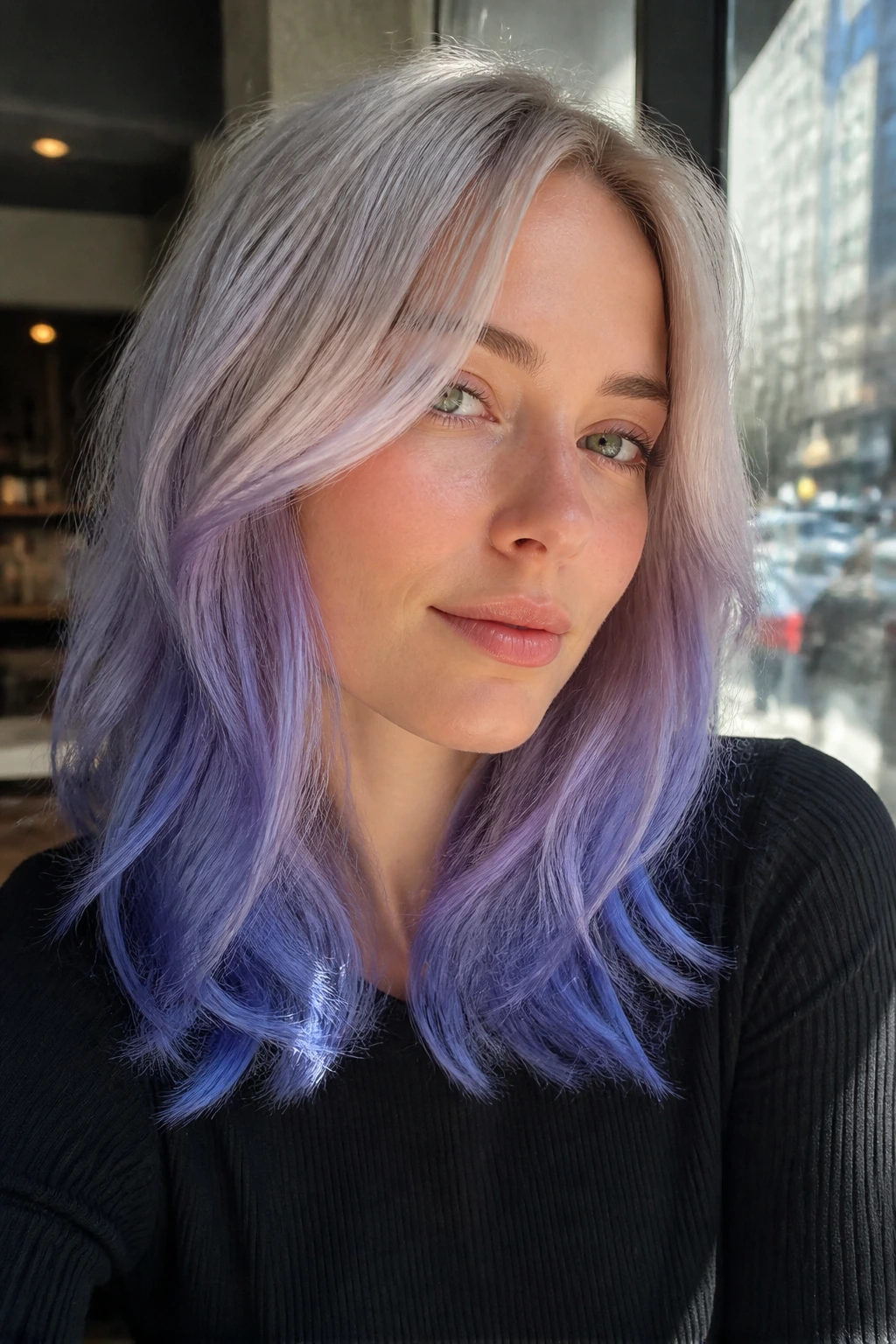
Periwinkle blue melts are a smart answer if you’re torn between blue and lavender. Periwinkle sits between the two, and cool skin tones often wear it beautifully because the violet edge keeps the shade from going flat. On pinker complexions, it can look soft and fresh rather than icy.
The melt part is where the skill shows. A good periwinkle melt doesn’t stop and start in obvious bands. It moves from pale blonde or silver blonde into a cloudier lavender-blue, then settles into a clearer periwinkle through the ends. That gradual shift makes the color feel smooth even when it starts to fade.
This shade is especially nice on layered mid-length hair. Shorter cuts can make it feel too busy, while very long hair can swallow the subtle color change. A collarbone cut gives it room to breathe. It also plays well with soft makeup—cool pink blush, muted mauve lipstick, that sort of thing.
How to Wear It
Keep the styling smooth or lightly waved. Periwinkle gets lost in messy texture faster than most pastel blues.
11. Electric-Soft Aqua Blue
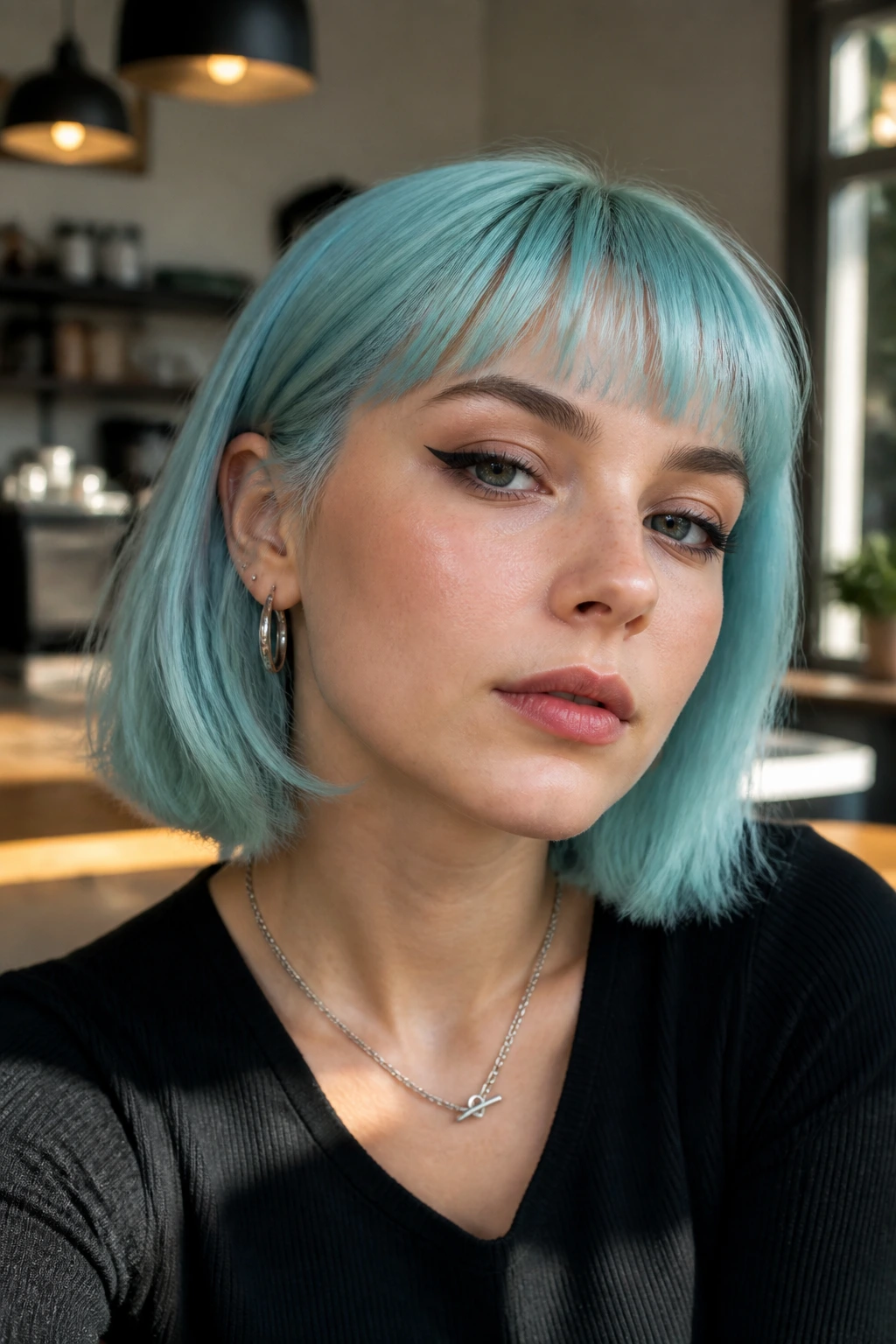
Aqua can go wrong fast on the wrong skin tone. On warm skin, it often pulls too green. On cool skin tones, though, it turns crisp and lively, especially when the pigment is softened just enough to stay pastel. That’s why I like electric-soft aqua as a safer, cooler version of a brighter blue.
This look is for someone who wants a little more personality than baby blue without crossing into full mermaid territory. The color has a clean energy to it, which looks especially good with silver jewelry, sharp eyeliner, and dark brows. If your complexion has blue undertones, aqua can make your skin look clearer, almost brighter at the edges.
The one thing I’d watch is saturation. Too much green and the shade starts to fight cool skin. Too much white and it goes chalky. The best version lands right between those two, like sea glass held up to the light.
My preference: use aqua on a sleek cut. It looks strongest when the shape is tidy.
12. Blue Pearl Blonde
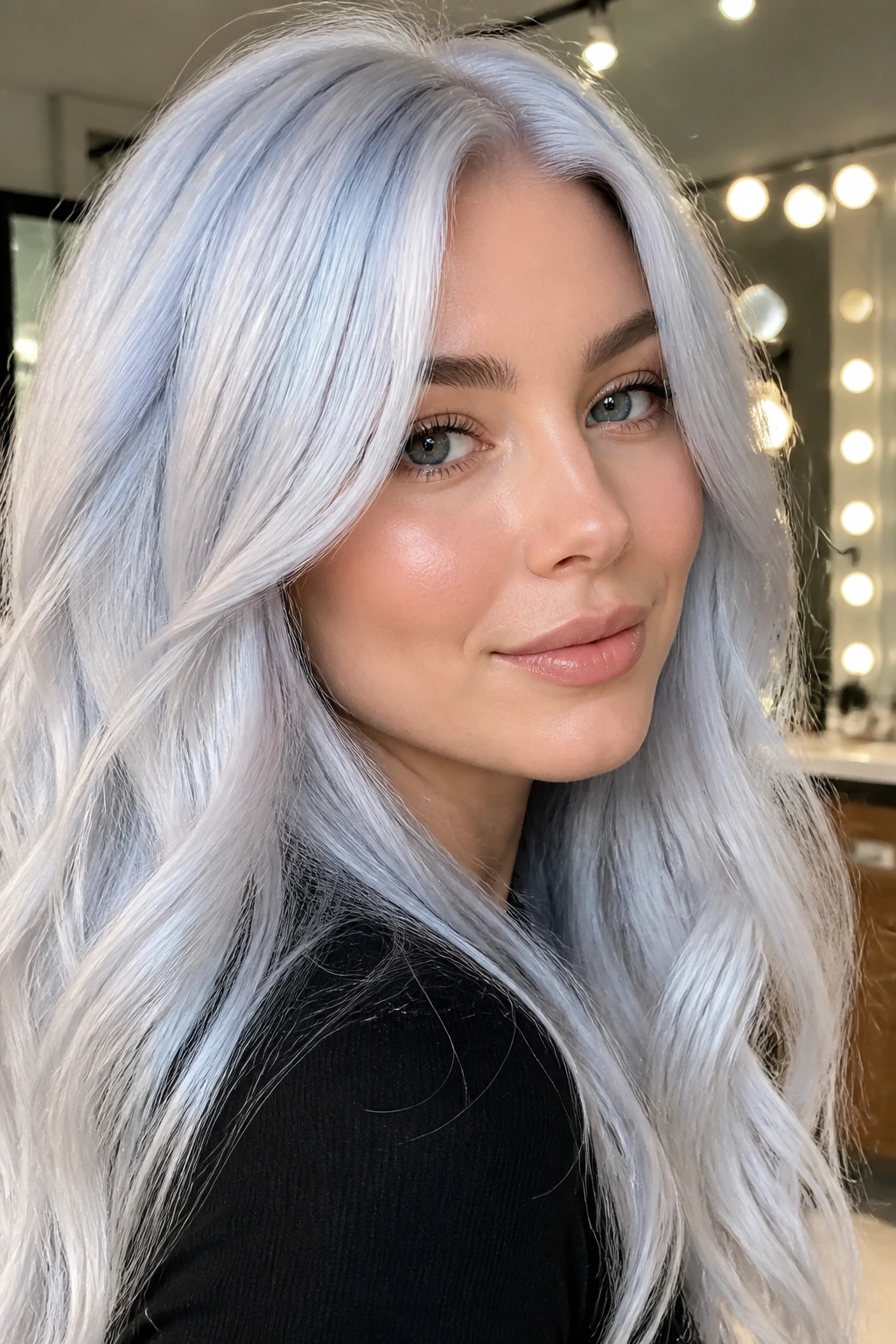
Think platinum with a blue mist over it. That’s blue pearl blonde. The shade is barely there at first glance, but the cool blue reflection shows up in sunlight and under indoor lighting, which makes it a good option for very fair cool skin tones that look best in lighter colors.
This is the most subtle choice on the list, and that’s the point. If your skin is already pale and cool, a heavy pastel can sometimes make your features disappear. Blue pearl blonde adds just enough tint to stop the blonde from feeling yellow or flat, but not so much that it turns theatrical.
It also ages nicely between salon visits because the fade is gentle. The blue softens into silver and pearl, which still looks intentional. That matters. Some pastels fade into a strange peachy haze. This one usually just gets lighter.
A gloss with a cool pearl finish is the key here. Keep the hair reflective, not dry. The second the shine goes, the pearl effect stops reading as pearl.
13. Dusty Arctic Blue
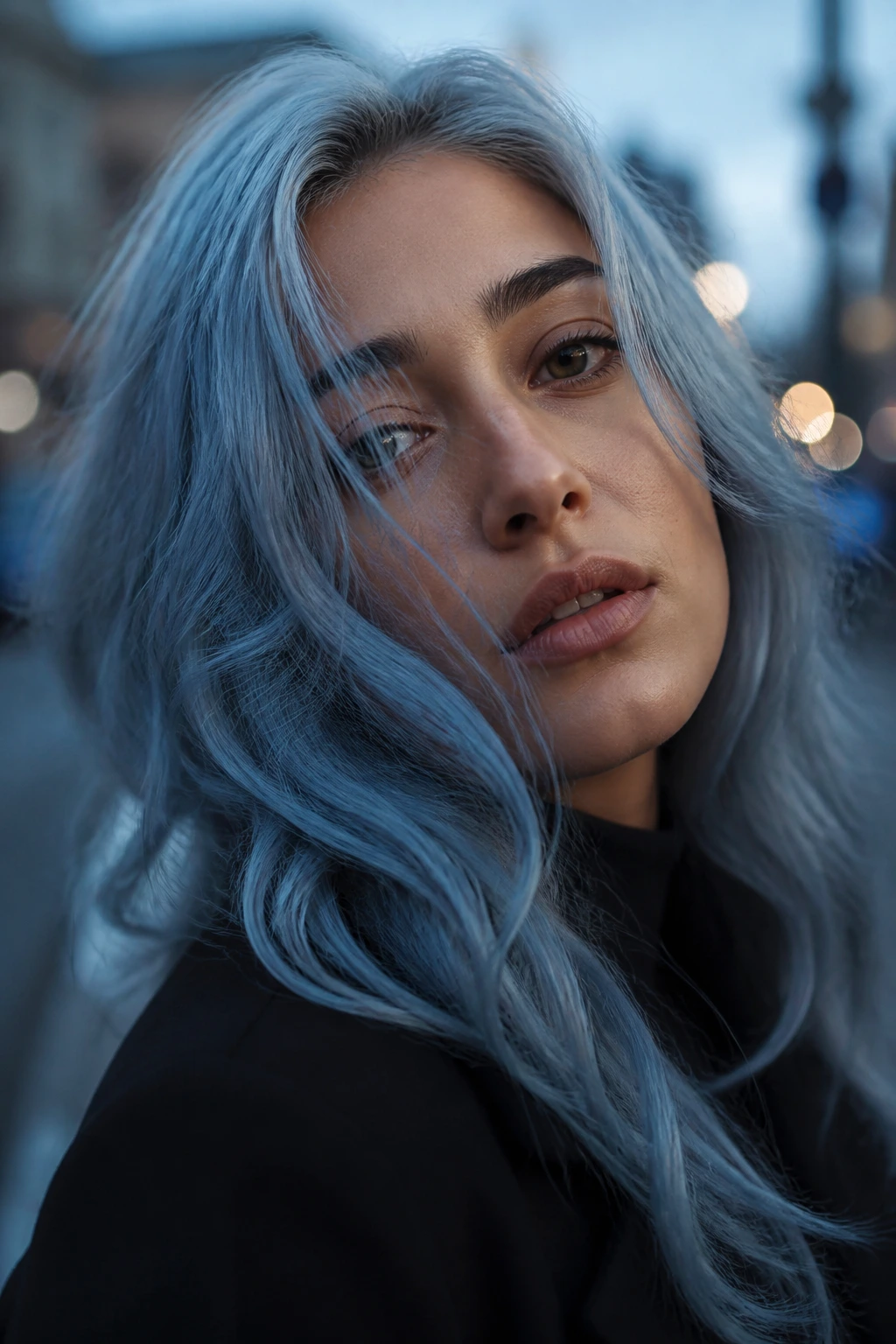
Dusty arctic blue is the shade I suggest when someone says, “I want blue, but I don’t want people to think I tried too hard.” The dustier finish keeps the color grown-up. On cool skin tones, especially cool olive or muted beige complexions, that gray-blue softness is often more flattering than a bright powder.
Why It Looks So Good
The arctic note gives you coldness; the dusty note keeps it believable. Without the dust, the color can feel too sweet. Without the arctic edge, it can drift toward slate or even green-gray. The best version lands in the middle and has a light smoky veil over the top.
Dusty arctic blue tends to work well on textured lobs, shaggy layers, and hair with a little natural wave. That movement breaks the color in a good way. It makes the blue feel lived-in instead of pasted on. If your face has strong cool undertones, this shade can be a nice companion because it doesn’t shout over your features.
- Best if you like muted makeup and silver accessories.
- Ask for blue with gray, not white-heavy pastel.
- Keep the base pale but not banana-yellow.
- A cool-toned color mask can stretch the life of the shade.
14. Blue Smoke Underlayer
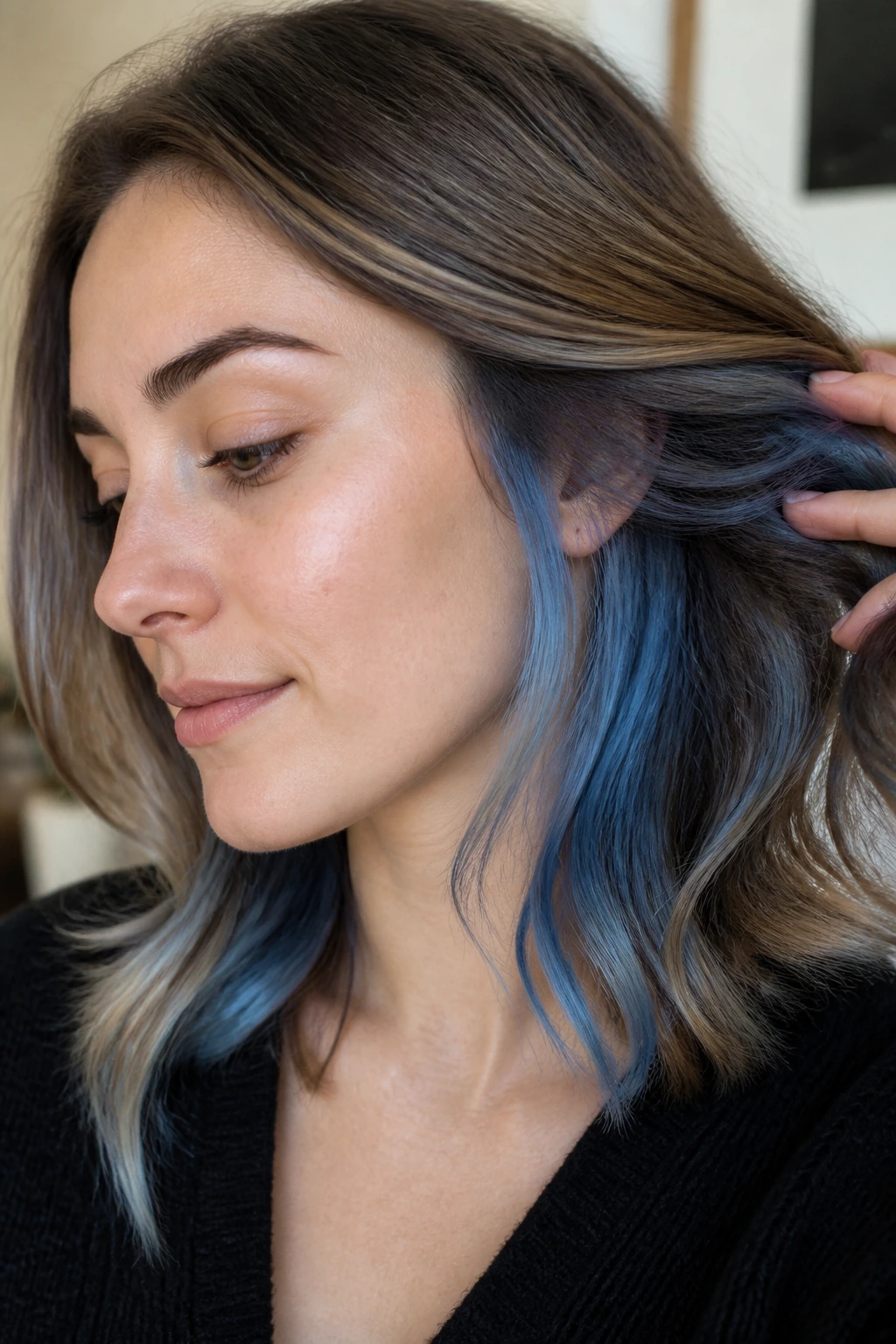
Blue smoke underlayer color is for people who like a little secret in their hair. The top stays neutral, blonde, or softly shadowed, and the blue hides underneath until you move, tuck your hair back, or catch a breeze. On cool skin tones, that hidden pop can feel edgy without being loud.
I’ve always liked underlayers because they give you two moods in one cut. From the front, the hair can look almost conservative. From the side or back, the smoke-blue panels appear like a flash. If your office, school, or family situation makes bright color tricky, this is one of the smartest ways to wear pastel blue without making it your whole life.
The coolest part is how the blue looks against the skin when it peeks through near the jaw or collarbone. That small hit of color can sharpen a cool complexion more than a full head of light blue sometimes does. Less can be more here. Annoying, but true.
For best results, keep the top layers soft and the hidden panels a little deeper than baby blue. Too pale and they disappear. Too dark and they lose the smoke.
15. Mermaid Frost Waves
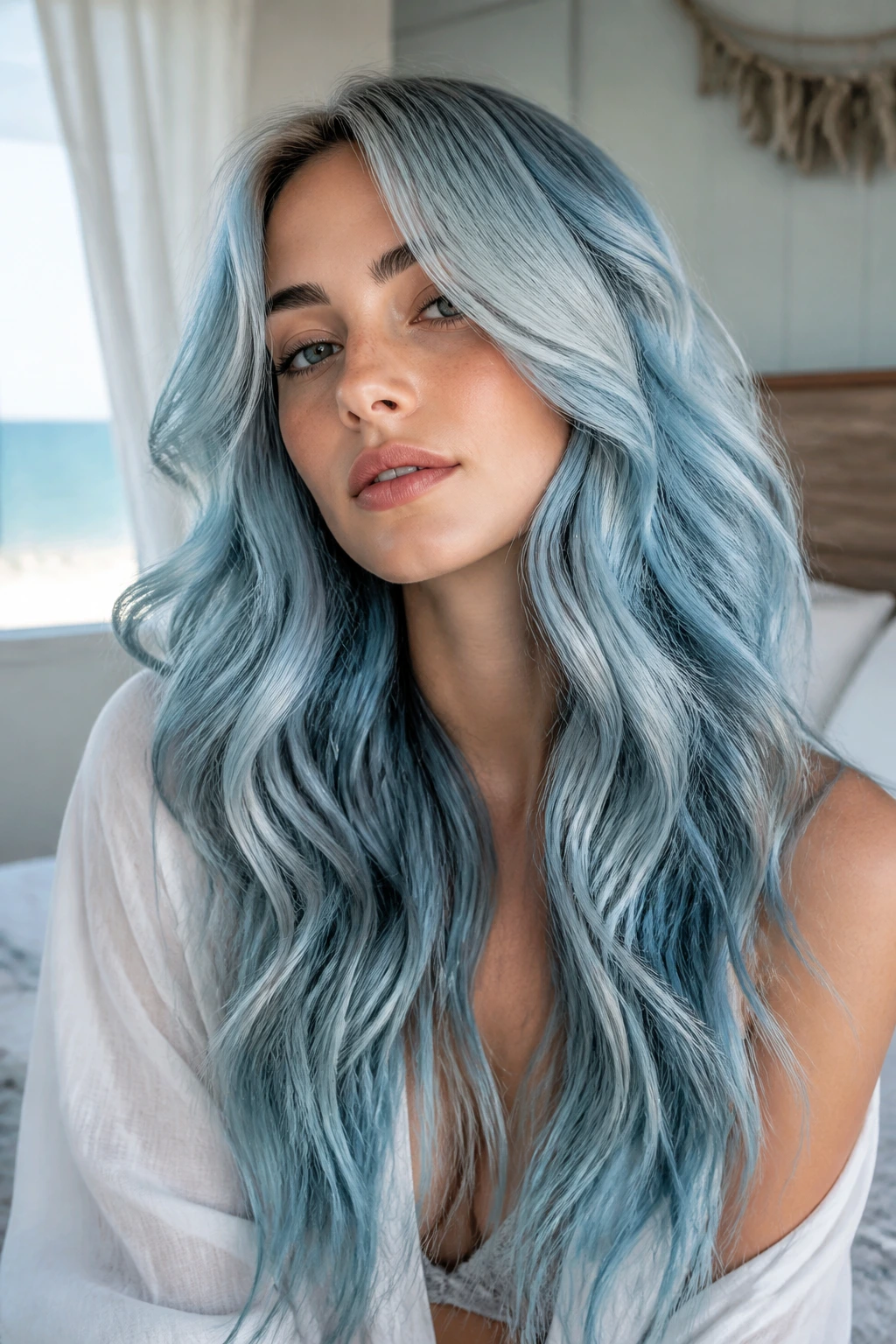
Mermaid frost waves sit on the slightly more playful end of pastel blue, but the frost keeps them from becoming costume hair. The color has that pale ocean feel—blue, silver, and a whisper of gray—and on cool skin tones it can look luminous if the base is light enough.
Why the Wave Pattern Matters
Waves give this shade its whole personality. On straight hair, the color can read flat unless it’s expertly blended. On loose waves, the different blues and silvers catch one another, and the style gets depth without needing a complicated formula. That’s why this one shows up so often on long layered cuts.
The style is best with a large-barrel iron or a heatless wave pattern that leaves a soft bend, not a crimped finish. Crisp curls can make the shade feel too busy. Gentle movement suits it better. It’s also one of those colors that looks more expensive when the roots stay cool and slightly deeper, almost like sea spray around the scalp.
If you’re choosing this for cool skin, keep the silver tone in the mix. Pure blue can feel a little young. Frost changes that fast.
16. Sky-to-Slate Root Shadow
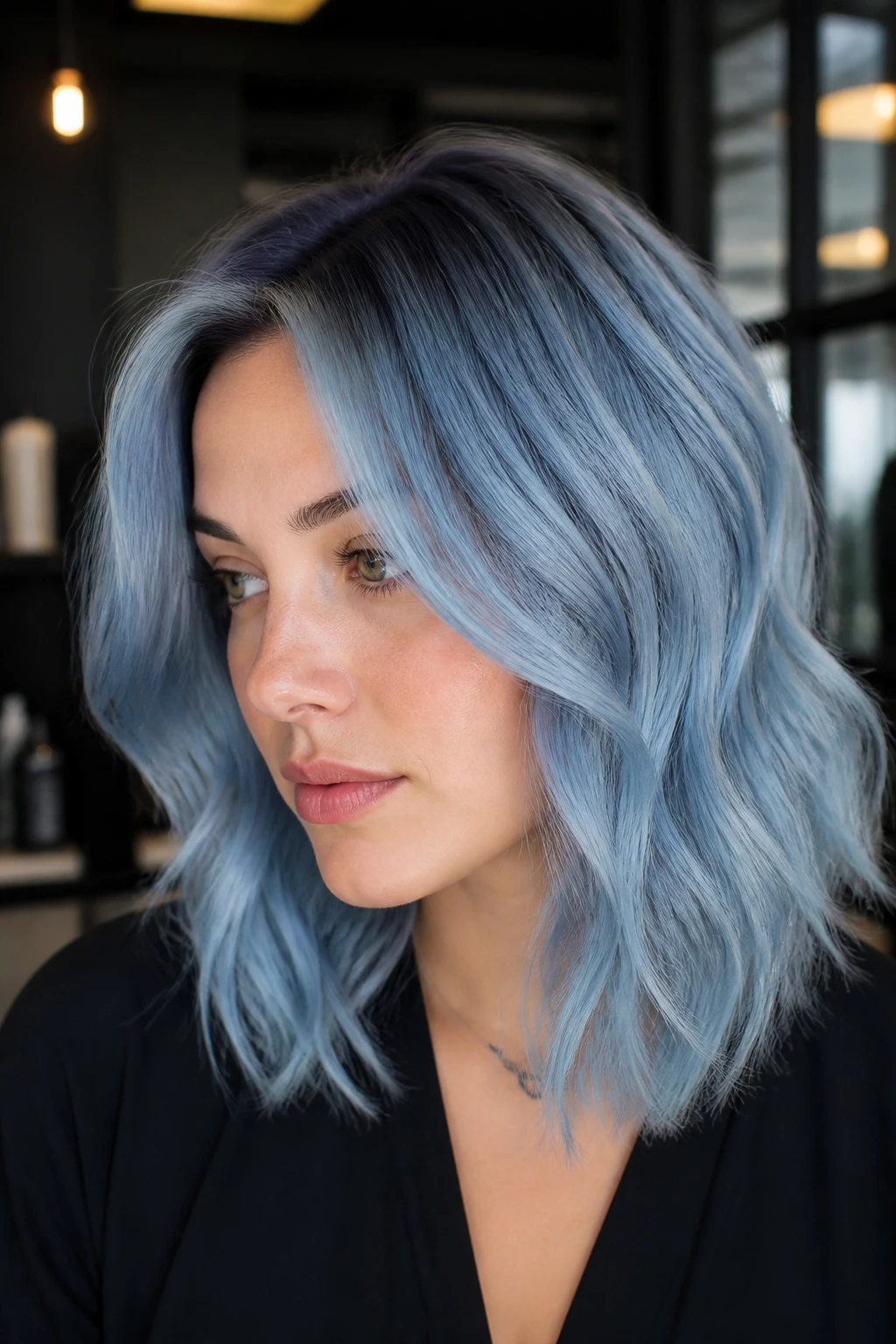
Sky-to-slate root shadow is a calmer version of full pastel blue, and I think that’s why it works so well. The roots stay soft and slate-toned, then the color opens into a lighter sky blue through the lengths. On cool skin tones, the darker root keeps the look from washing out the face, especially if your eyebrows and lashes are naturally deep.
This is a strong choice if you hate harsh grow-out. The root shadow gives the color a built-in exit strategy. Even when the blue fades, the shade still has shape because the root area carries the contrast. That means fewer panic appointments and less pressure to maintain a perfect pastel every two weeks.
It also works for people who like their hair to look a little moody. Not dark, not bright—just cool and controlled. The slate root keeps the whole thing grounded, while the sky ends make the movement feel lighter. That contrast flatters cool skin because it doesn’t rely on warmth to create depth.
If you wear a lot of black, charcoal, navy, or silver, this one slots in easily.
17. Lavender-Blue Hybrid
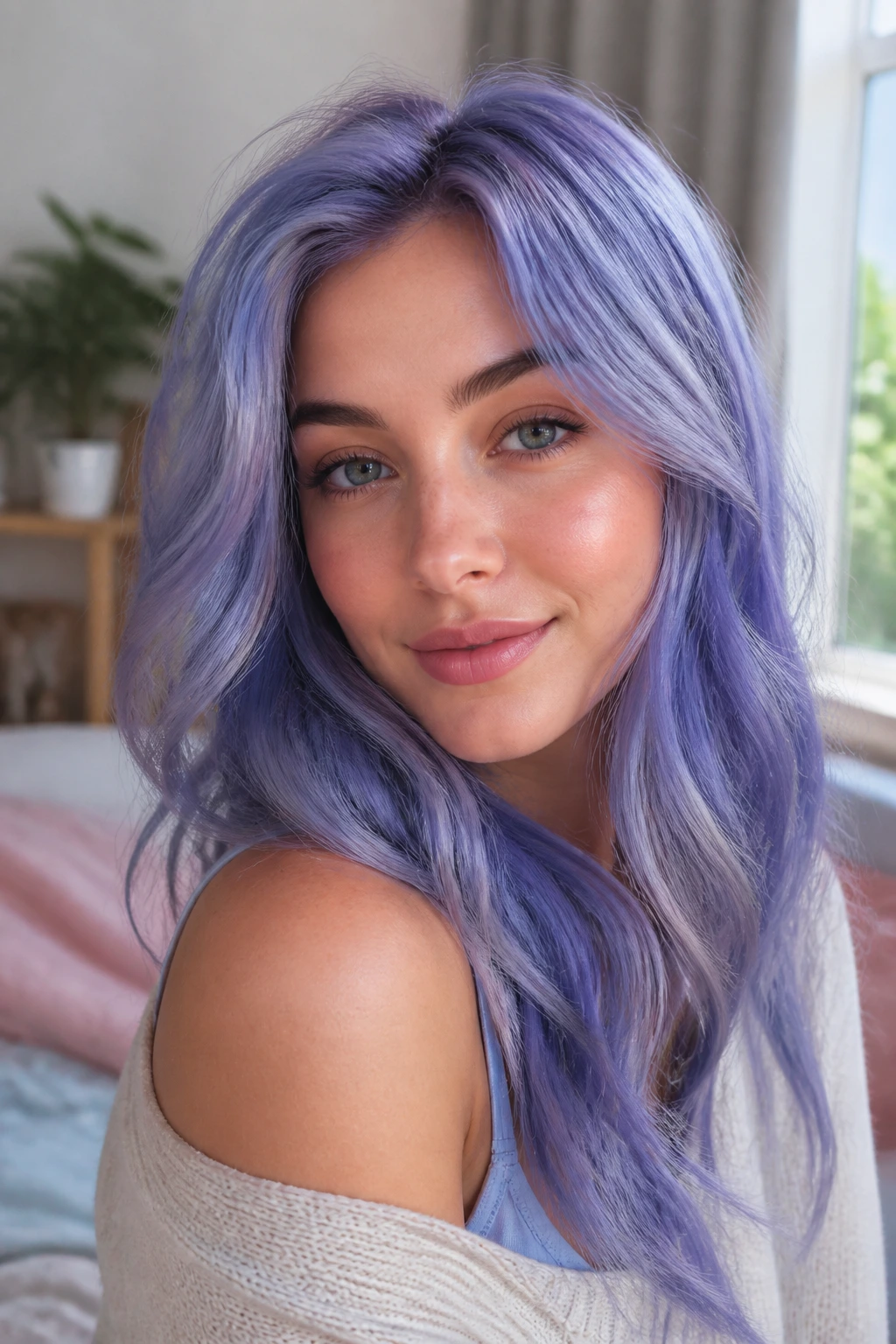
Which blue flatters cool skin tones that lean extra pink? A lavender-blue hybrid often does. The lilac edge softens redness, while the blue keeps the shade from feeling too sweet. It’s a smart middle ground if full pastel blue feels a little harsh on your complexion.
I like this shade for people who want a softer look around the face. On very fair skin, a pure blue can sometimes sharpen everything too much. Add a little lavender, and the result feels gentler. The trick is keeping the mix cool. If the lavender goes too warm or too dusty, the whole thing can drift mauve in a way that loses the blue identity.
This color looks lovely on loose curls, blown-out layers, and shoulder-length cuts with movement. It can also pair well with cool-toned lipstick, especially a muted rose or berry. The hair ends up feeling coordinated without looking matchy.
Best Asked For At The Salon
- More blue than purple if your skin is rosy.
- More lavender than blue if your face is very pale.
- A cool toner, not a beige one.
- A glossy finish so the hybrid tones stay readable.
18. Sea Glass Blue Lob
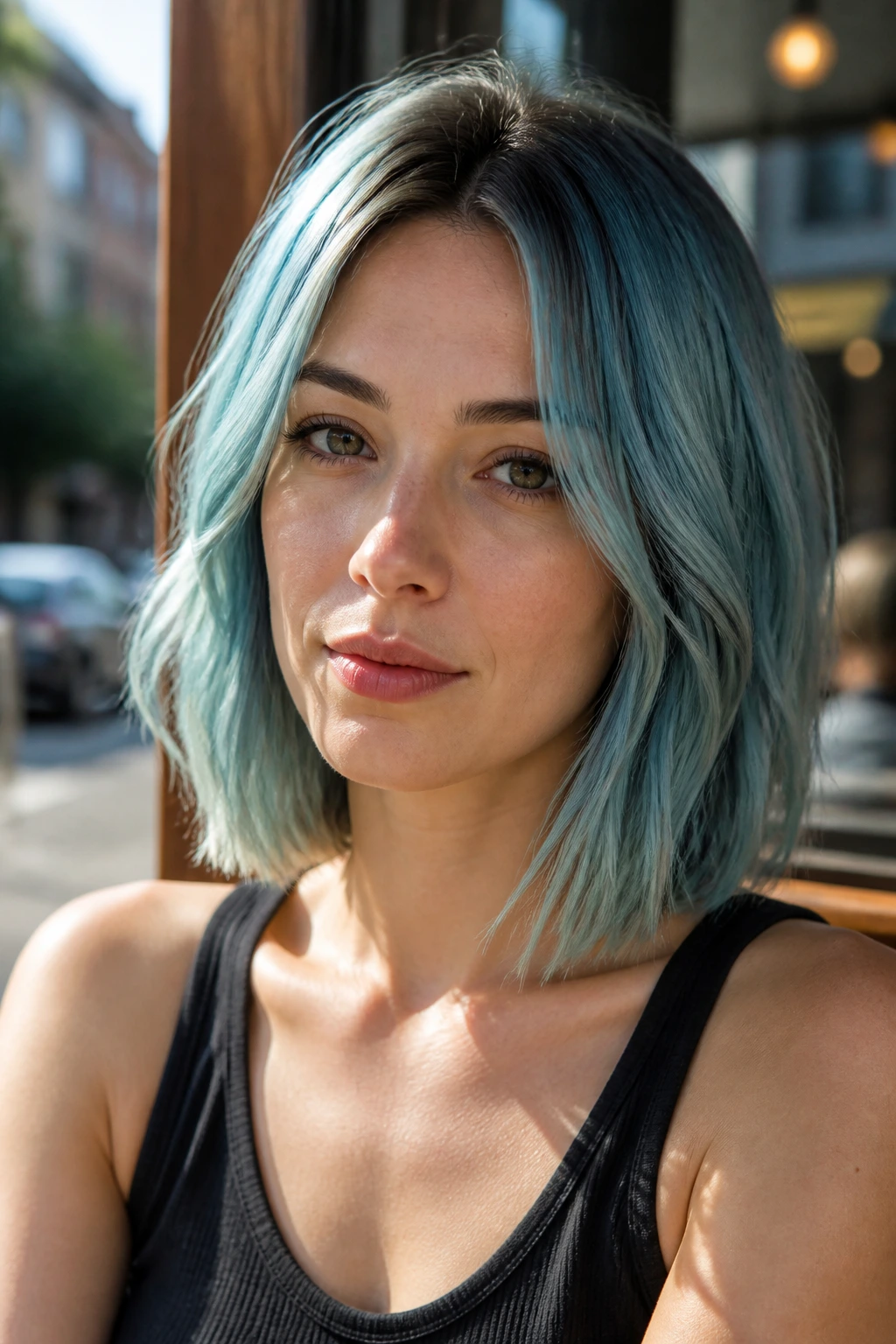
A sea glass blue lob is one of the easiest blue looks to live with. The lob gives the color a solid shape, and the sea-glass tone keeps it soft enough for everyday wear. On cool skin tones, that glassy blue-green-gray mix can look crisp and calm at the same time.
This is especially good for fine hair, because a lob can make the strands look fuller while the pastel color adds a little visual texture. I also like it on people who want a blue shade that doesn’t look exactly blue from every angle. Sea glass changes with light. Indoors it can lean smoky; outside it can look brighter and more oceanic.
The length matters here. Too short and the color can feel abrupt. Too long and the sea-glass nuance gets lost in the volume. The collarbone zone is the sweet spot. A bit of movement, a bit of shine, and enough length for the color to shift as you turn your head.
One clean trick: a few bent pieces around the face make this shade look more expensive than a perfectly uniform blowout.
19. Blue Frosted Curtain Bangs
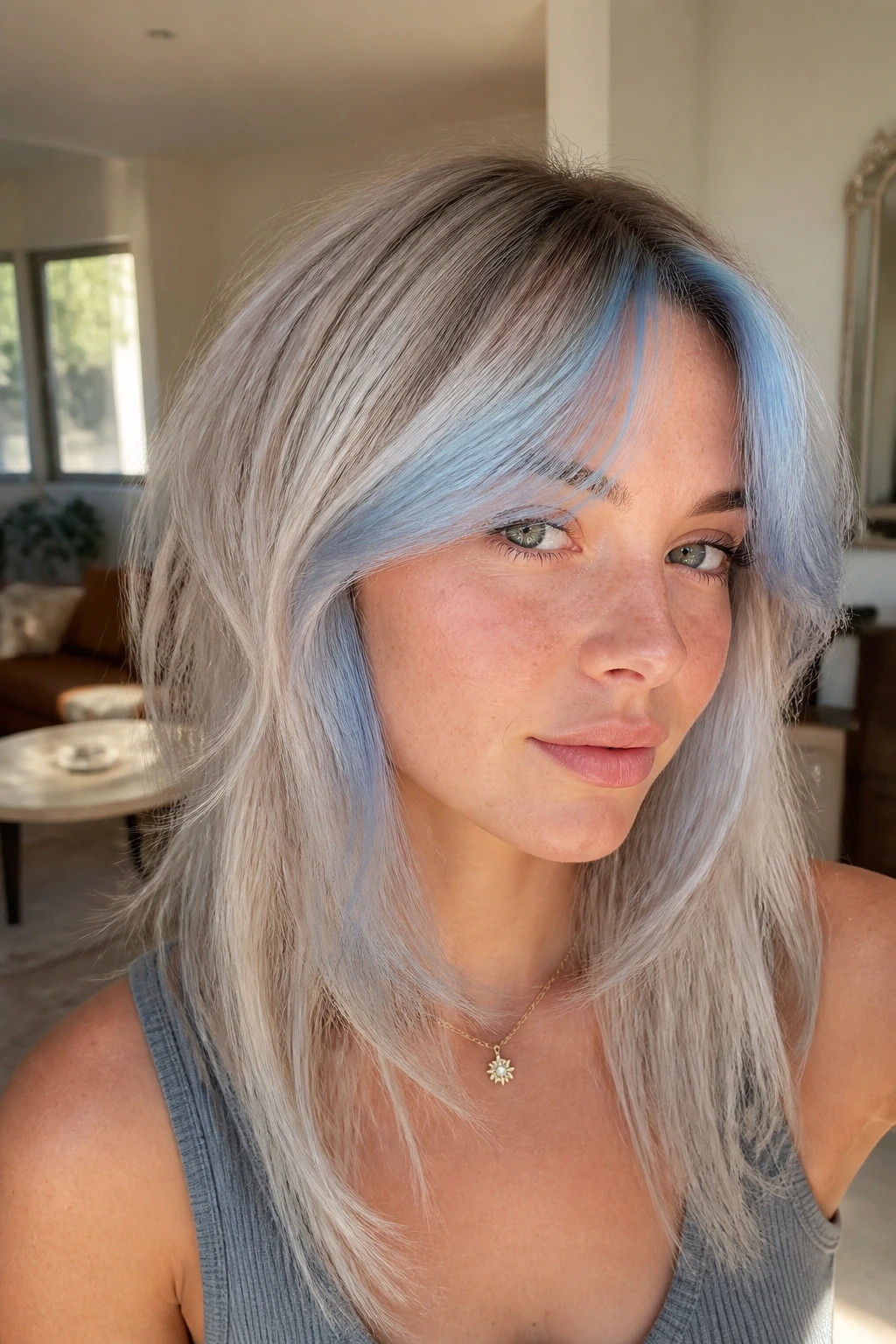
If you want blue close to the face without coloring your whole head, blue frosted curtain bangs are a smart move. The bang area sits right where skin and hair meet, so even a small amount of cool blue can change the whole effect of a cut. On cool skin tones, that frosting can brighten the forehead and frame the eyes in a nice, subtle way.
This works best when the rest of the hair stays pale blonde, silver, or softly rooted. The bangs carry the color, while the lengths stay quieter. That split keeps the look from becoming too busy. It also means you can grow the bangs out or trim them back without redoing the whole color story.
Curtain bangs have another advantage: they move. The blue shows when the strands part, then hides again when they fall together. That little shift makes the color feel alive. It’s a small thing, but small things count in hair color.
If you’re nervous about pastel blue, this is one of the least risky ways to test it.
20. Chilled Sapphire Pastel Ends
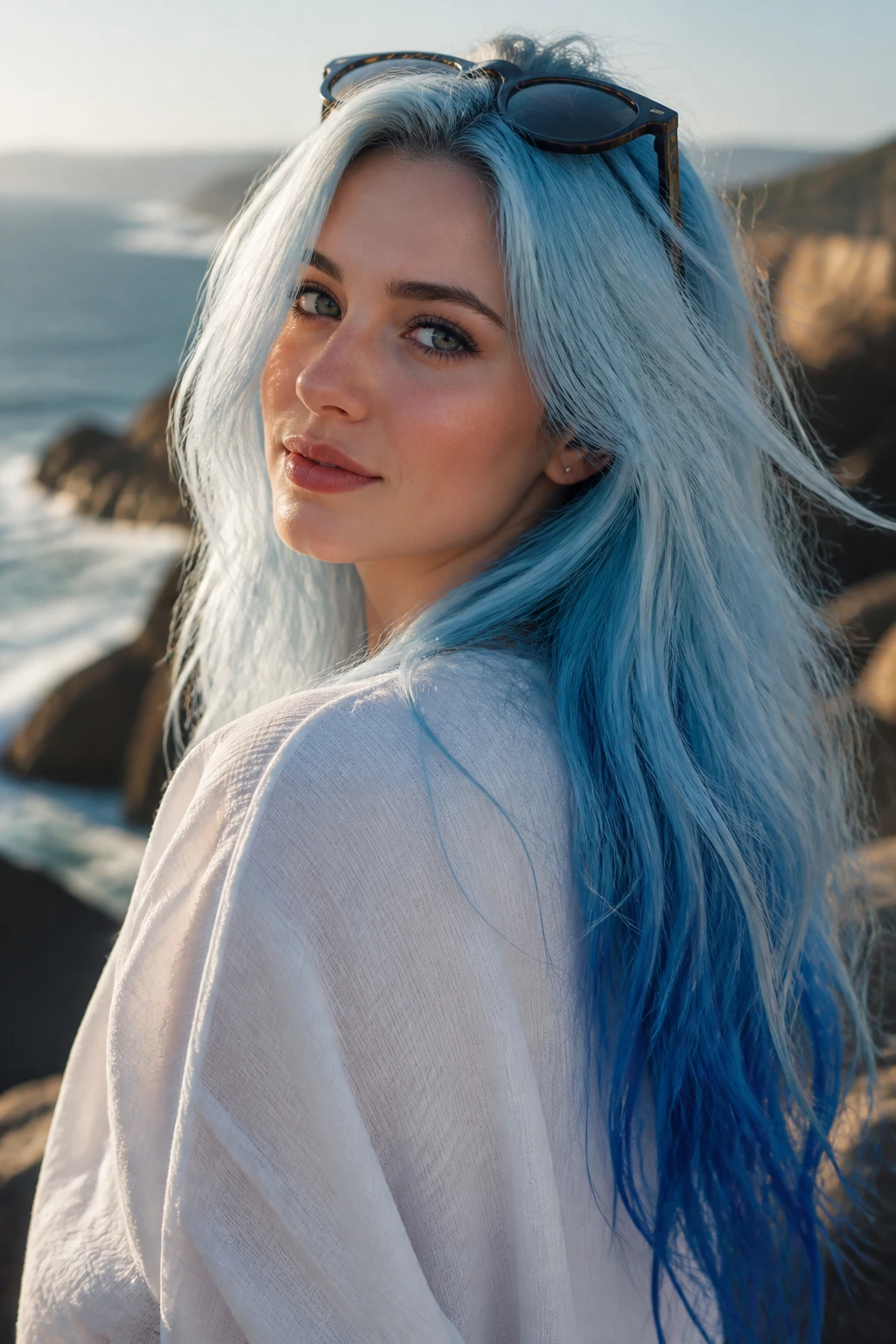
Chilled sapphire pastel ends are for the person who wants a little depth at the bottom so the whole head doesn’t fade into air. The ends stay more saturated than the rest, which gives pastel blue a spine. On cool skin tones, that deeper blue can make the complexion look clearer because it creates a clean frame under the face.
I like this choice on long hair, especially if the mids are already pale and you need the ends to do something useful. Pure pastel fades fast. Deeper pastel ends hold their shape longer, and they still read blue when the color starts to soften. That makes them practical without looking cautious.
The look also photographs in a more honest way than ultra-light blue. You can see the shade in normal indoor light, not only under bright sun. That’s a big deal if you actually want to enjoy the color instead of waiting for the right lighting.
This is the one I’d pick if you want pastel blue hair color ideas for cool skin tones with a little more presence. Soft, yes. Fragile, no.
A final thought: the prettiest pastel blue is rarely the brightest one. It’s the one with enough gray, violet, or shadow to sit comfortably against your skin and still look blue after a few washes. Pick the version that matches your haircut, your base color, and your patience level. The rest is just maintenance, and maintenance is where most pastel dreams either hold together or fall apart.
