



Blue-green hair is one of the few vivid color families that can make cool skin look sharper instead of washed out. When the shade leans icy, smoky, or jewel-toned, it echoes the blue and pink notes already sitting in the complexion, which is why the right version can make skin look cleaner and eyes look brighter without much effort. That is the whole game here.
These blue green hair color ideas for cool skin tones work best when you stop thinking about “blue-green” as one color and start treating it like a whole spectrum. A soft sea-glass wash lands very differently from a dark peacock teal. So does a mint money piece, a navy-root melt, or a frosted aquamarine bob.
The details matter more than people expect. Hair level, porosity, and how much warmth sits in the base all change the final result. A shade that looks clean on a level 10 blonde can turn muddy on a level 7 brunette unless the formula is adjusted, and a teal that looks crisp in daylight can read almost black indoors if it is packed with too much pigment.
Cool skin tones usually do best with blue-leaning greens, smoky finishes, and silver-toned shine. Warm, yellow-heavy teal can fight the face a little. The sweet spot is that slightly frosted zone where the color still has life, but never tips into neon brassiness. That’s where the best ideas live.
1. Smoky Teal Bob for Cool Skin Tones
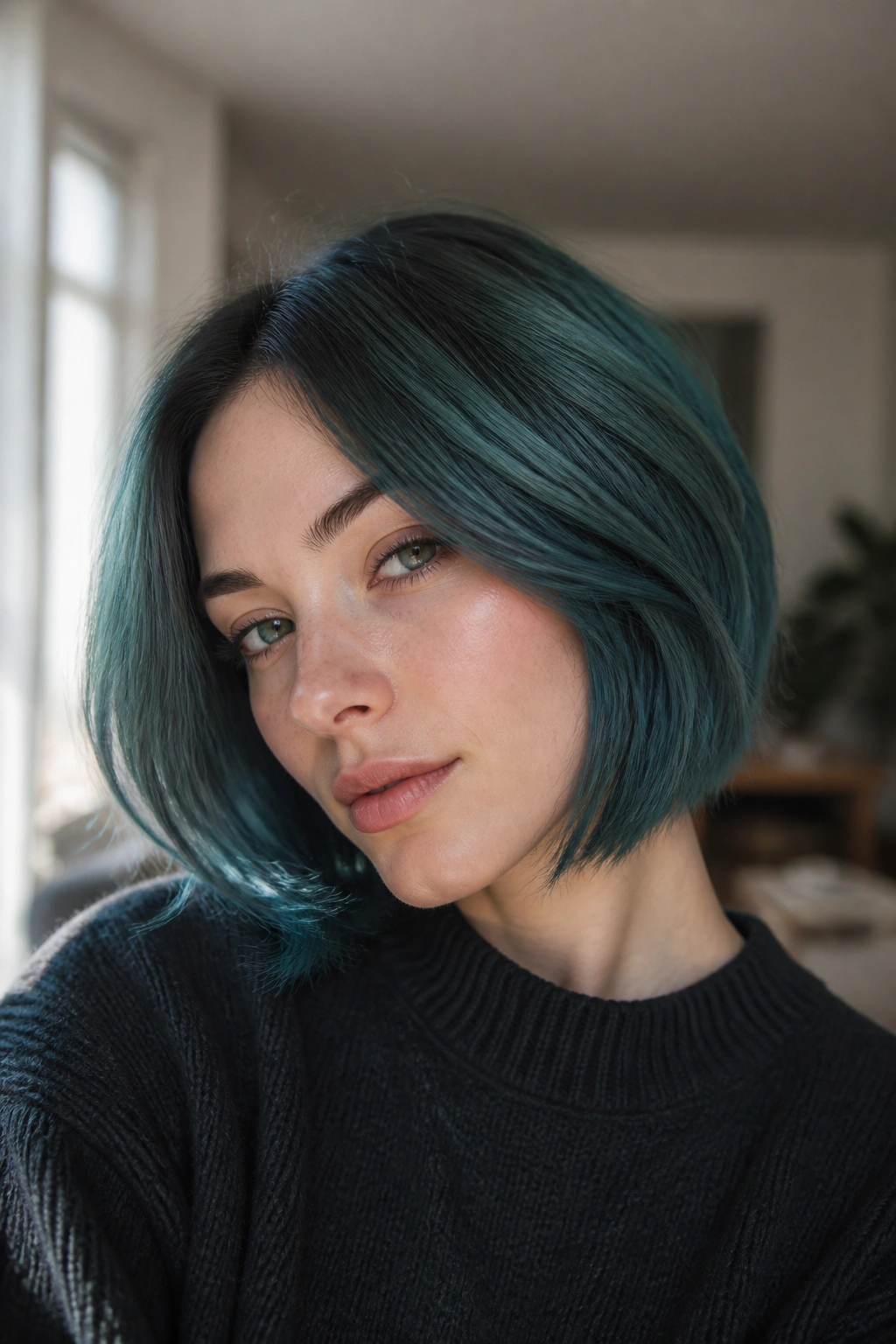
Smoky teal is the shade I reach for when someone wants blue-green hair that feels polished instead of loud. On a bob, the cut keeps the color compact, so even a saturated teal reads neat and modern rather than chaotic.
Why It Flatters Cool Undertones
The smoke matters. A gray or slate base softens the green enough to keep it from going neon, and that muted edge plays nicely with pink, rose, and porcelain skin. On shorter hair, you also get more color density, which makes the shade look richer from root to ends.
A chin-length bob is a good match here because the shape frames the face and keeps the color close to the jawline. That makes the cool tone feel intentional, not like it’s floating around the head. If your hair is fine, the cut can also help the color look thicker.
- Best on level 8 to 10 pre-lightened hair
- Ask for smoky teal, not bright jade
- A demi-permanent gloss gives a softer fade
- Works especially well with side parts and blunt edges
Pro tip: Ask your colorist to keep the roots a half-shade deeper than the mids. That tiny shadow keeps the bob from looking flat.
2. Arctic Aqua Money Piece
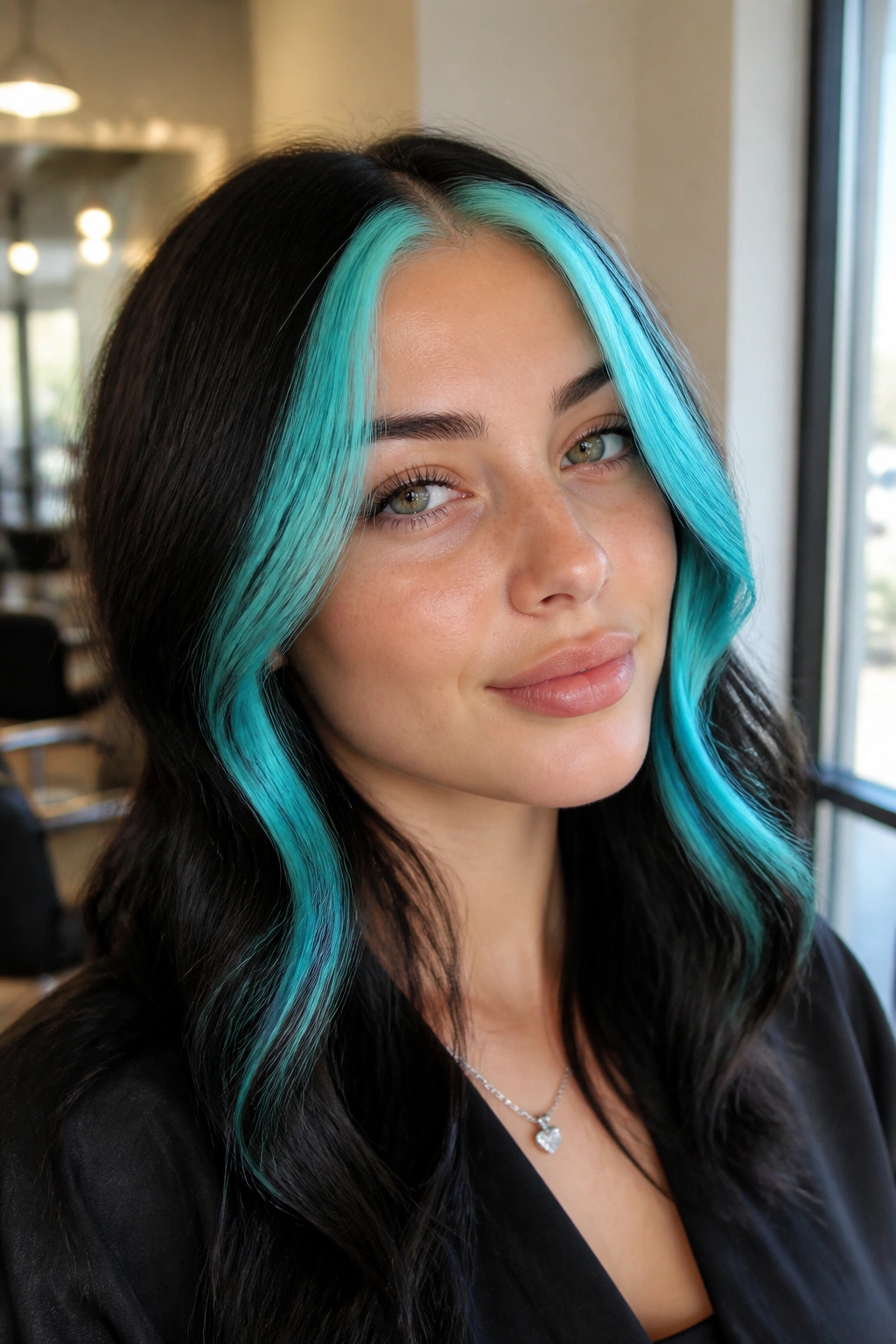
A thin aqua money piece can do more for your face than a full head of teal. That strip of color near the cheekbones acts like a cool-toned frame, and on cool skin it can make the whole face look cleaner and more awake.
Can it be subtle and vivid at the same time? Yes. That is the nice part. If the aqua sits just around the front hairline and stays a touch lighter than the rest of the hair, you get a bright hit without committing every strand to bleach and pigment.
This one works best when the front sections are crisp and placed with care. A chunky money piece looks edgy, but a softer two-ribbon placement can be easier to wear if you live in straight hair one day and waves the next. The color should be clear, not chalky, and the root area can stay darker for contrast.
Try asking for aqua placed only around the face, about 1 to 1.5 inches wide on each side. That gives enough brightness to matter without turning the whole look into a full fantasy set. It is a small move, and that is why it works.
3. Peacock Green Gloss on Espresso Brown
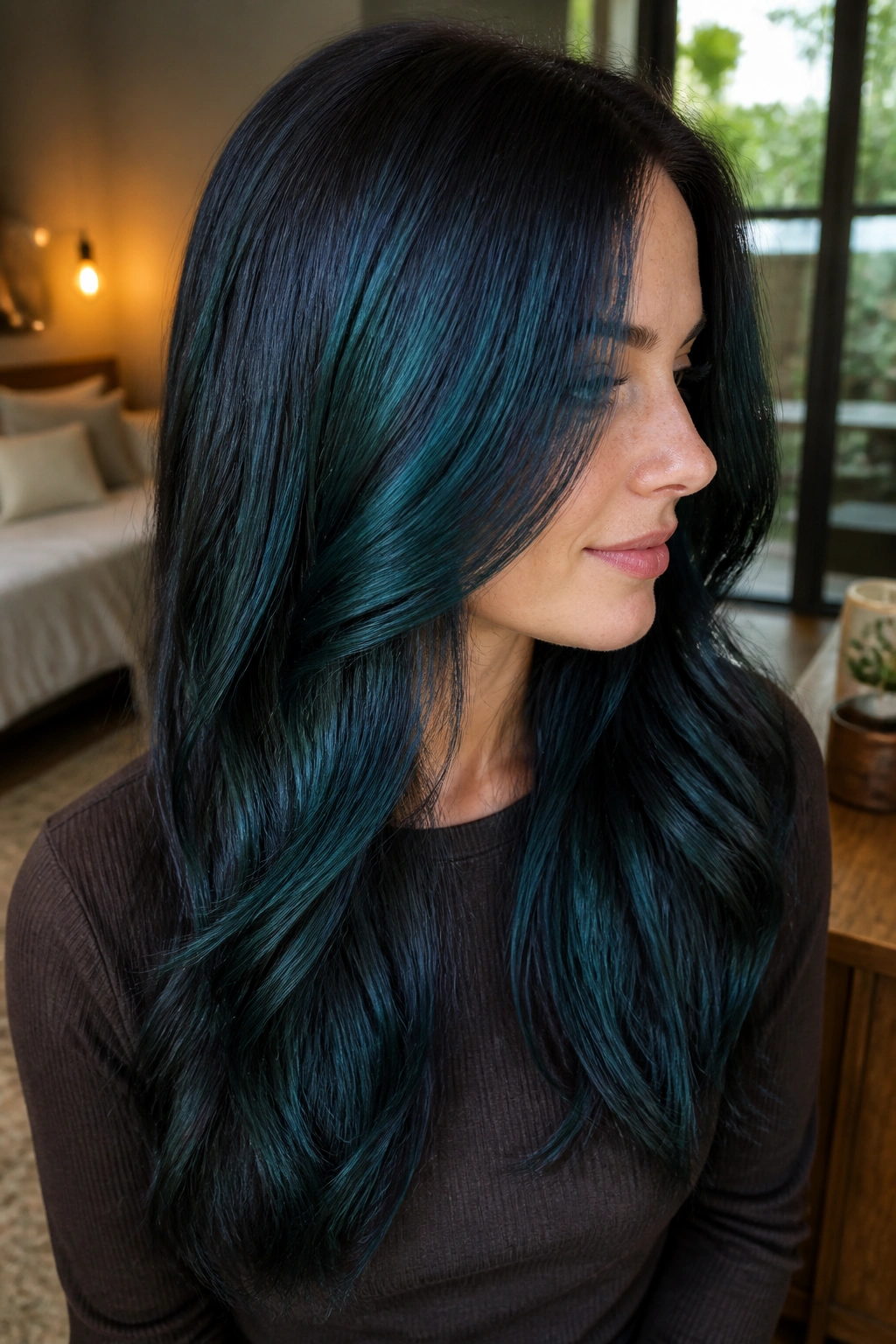
Can you keep dark hair and still wear blue-green? Absolutely, and peacock green gloss is the cleanest way to do it. On espresso brown or black-brown hair, this look catches light with a deep blue-green shimmer instead of screaming for attention.
The trick is pigment depth. You want a glaze that leans teal-blue, not grass-green, because cool skin tends to look better when the shade stays in the blue family. Under indoor light, it may read almost black. Outdoors, the green-blue reflection wakes up.
How to Ask for It
Tell your colorist you want a sheer peacock gloss over dark brunette hair. That phrase matters because you are asking for reflection, not heavy lift. A gloss can stain the cuticle just enough to shift the tone without forcing your hair through a full bleach service.
This is a smart choice if you want something rich and low-drama. It grows out softly, and when it fades, it usually drifts into a smoky cool brown instead of an odd warm cast. That is a nice place to land.
4. Sea-Glass Balayage
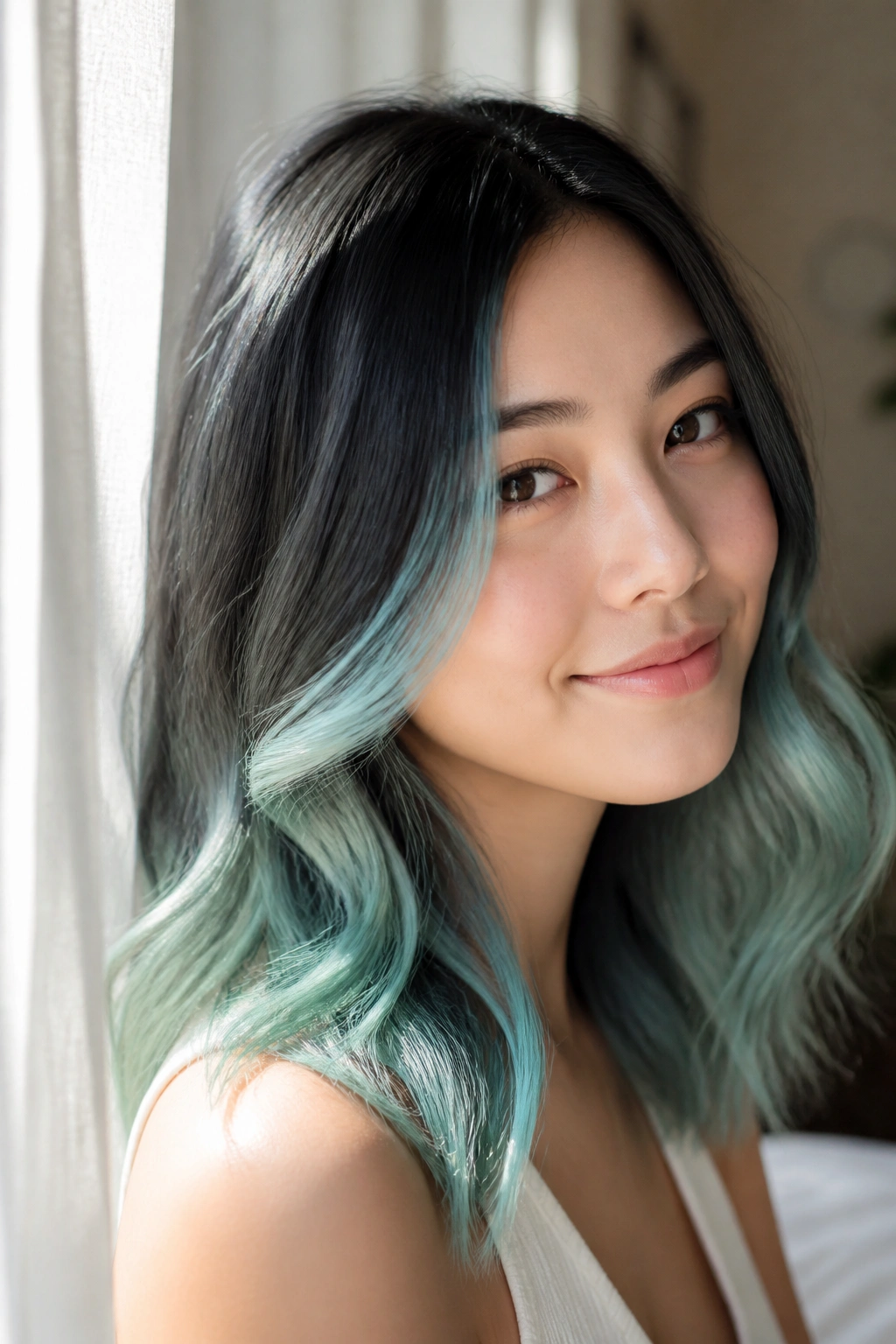
A good sea-glass balayage looks like the color has been washed by water for a few weeks. Soft, translucent, slightly milky. On cool skin, that softness can be a relief if you do not want the hard hit of a full saturated teal.
I’ve always liked this version for people who want blue-green hair but do not want the color to announce itself before they even walk into a room. The balayage placement keeps it airy, and the blended hand-painted streaks let the blue-green sit in the mid-lengths and ends without a blunt line.
That matters because the visual softness keeps the face from getting swallowed by pigment. The lighter pieces around the perimeter can be a little more aqua, while the inner layers can lean smoky green. The result looks layered even when the hair is down.
- Use softly feathered lightener placement
- Keep the finish milky, not opaque
- Ask for blue at the base of the green
- Best on wavy or layered haircuts
Small warning: If the formula is too yellow, sea-glass turns muddy fast. The base has to stay cool.
5. Deep Jade with Navy Roots
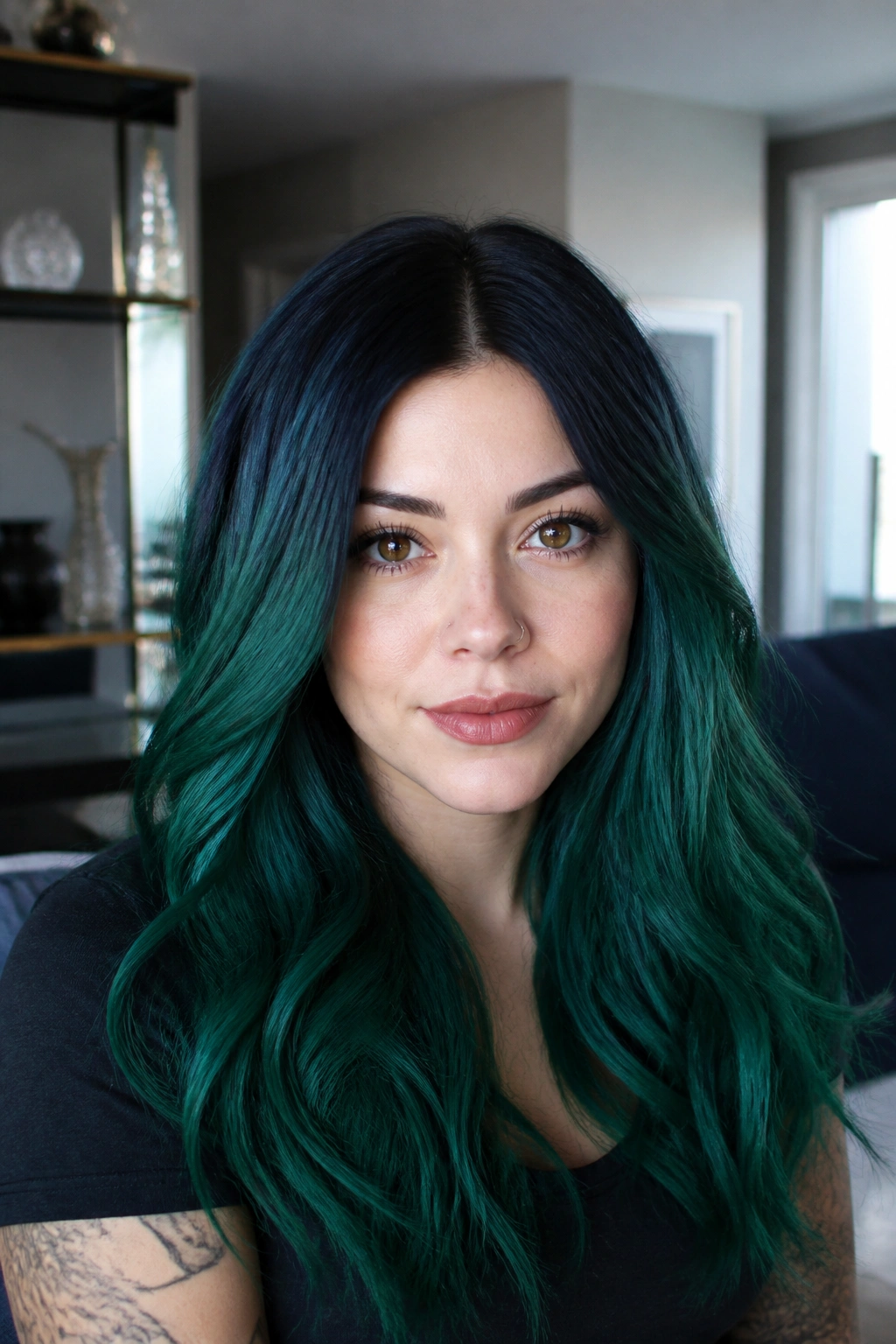
Deep jade is the shade that gets overlooked because it sounds earthy, but on cool skin it can be gorgeous. The key is that the green has enough blue in it to feel sleek, and the navy root shadow keeps the whole look anchored.
This is a heavier, richer color than seafoam or aqua. That is the point. If you want hair that reads expensive in a quiet way, deep jade does it without needing shine spray to carry the whole look. The pigment itself does most of the work.
The navy root makes a big difference. It keeps the growth line softer and gives the jade somewhere dark to land, which makes the middle lengths look brighter by comparison. On longer hair, the color moves from nearly-black at the top into a green-blue glow at the ends. That’s a nice shift.
I’d choose this if you wear silver jewelry, dark denim, or crisp white tops a lot. The contrast is strong, but not harsh. And yes, it still feels cool on the skin.
6. Turquoise Curls
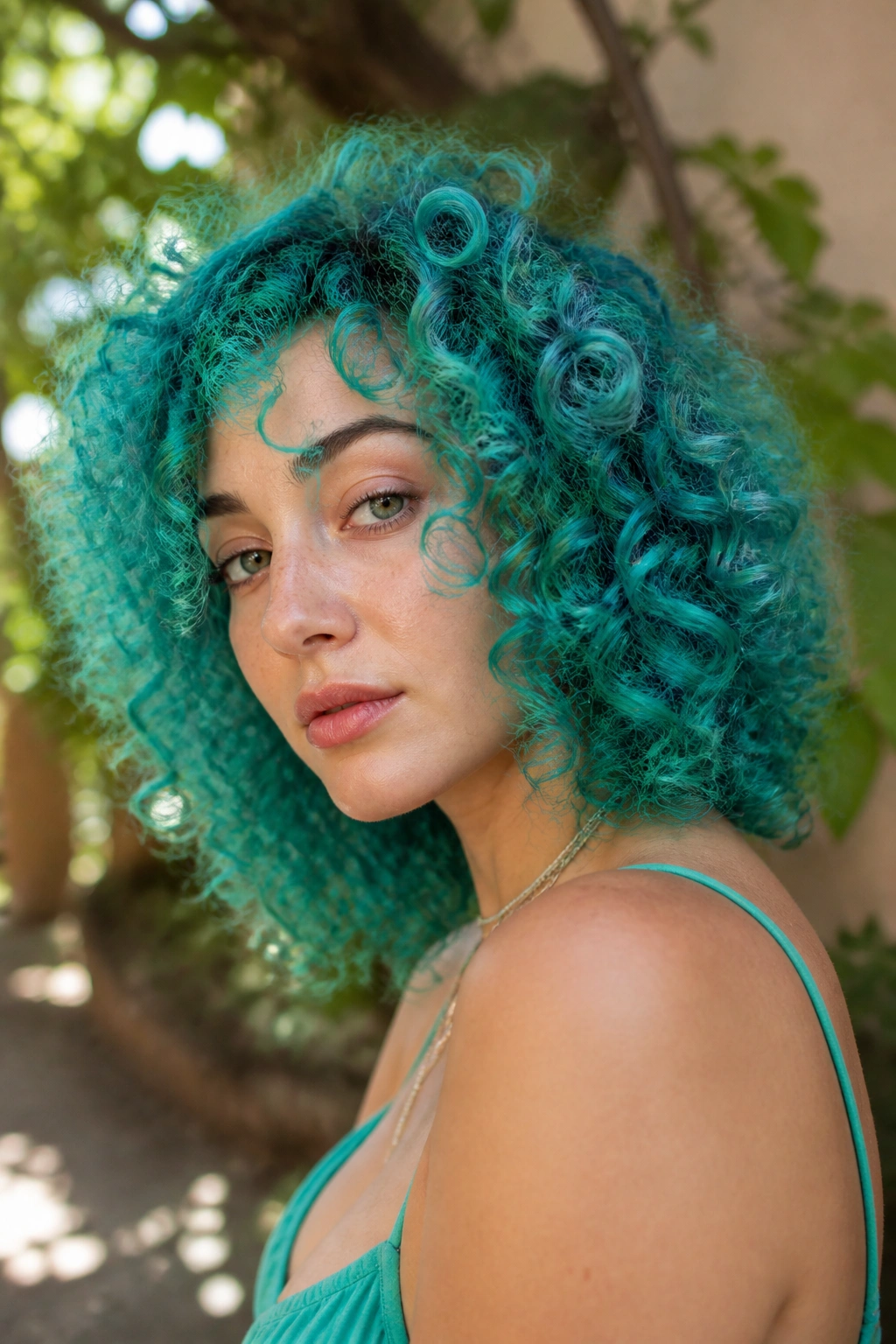
Turquoise curls have one huge advantage: the shape does half the styling for you. On curly hair, that blue-green pigment catches on every bend and coil, so the color looks alive even when you do not do much more than diffuse and go.
Unlike straight hair, curls do not show the color as one flat sheet. They break it up. That is useful with turquoise, because the shade can be intense in a way that seems almost too much on a blunt, straight cut. Curls make it feel playful instead of loud.
If your skin is cool, the blue side of turquoise keeps the face from looking yellow. The green shows up as movement, not as a heavy block. That balance is hard to get with other vivid shades, and curls make it easier.
- Best on defined ringlets or tight waves
- Choose a blue-leaning turquoise, not a yellow teal
- A curl cream with no heavy oils helps the shade show
- Trim the ends often so the color looks fresh
If your curls are dry, do the bleach work carefully. Porous curls hold color fast, but they also lose moisture fast.
7. Mint-Teal Underlayer
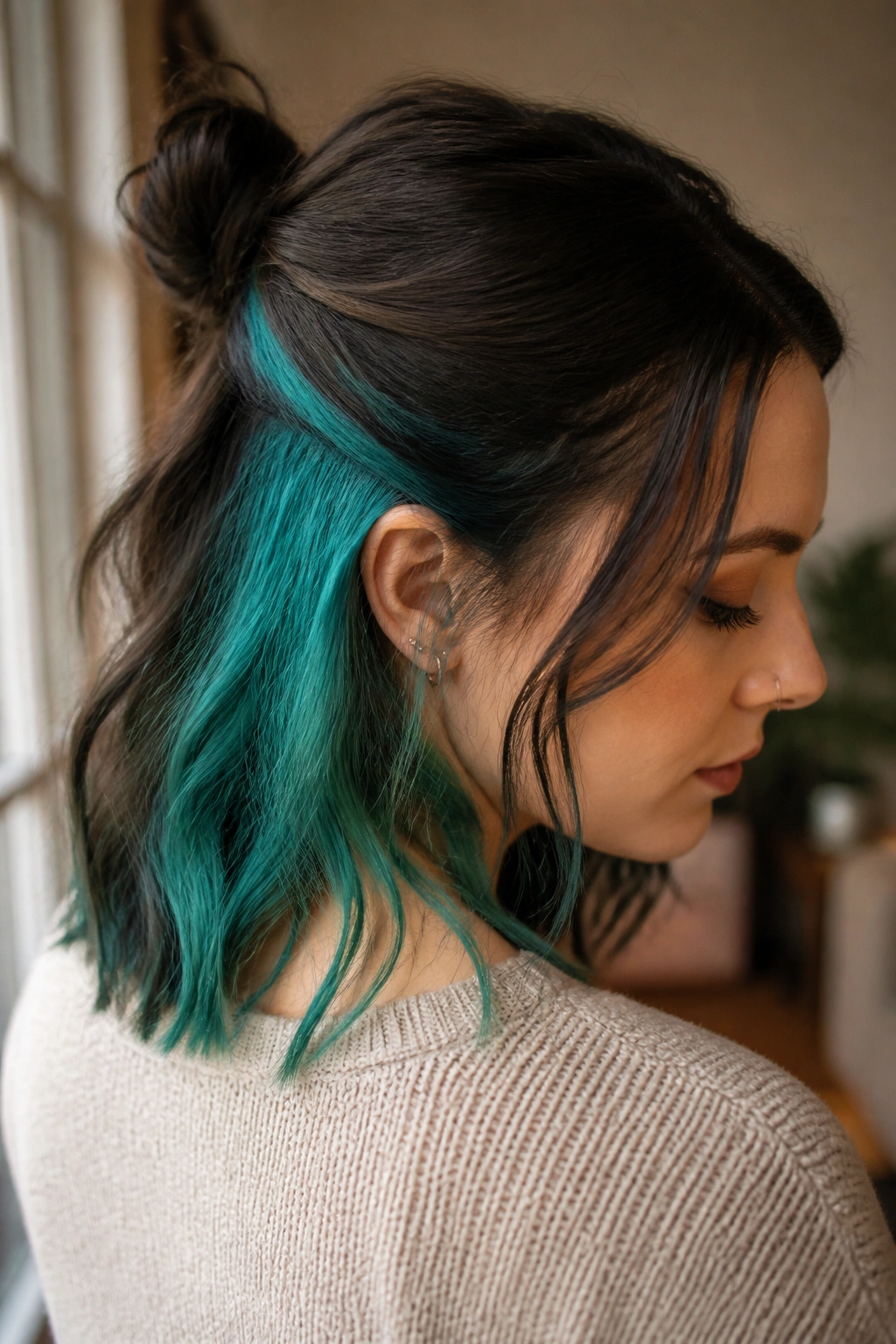
A mint-teal underlayer is the sneaky option. You keep your natural shade or brunette shell on top, and the blue-green lives underneath, where it flashes out when you move, tuck your hair behind your ears, or wear it half up.
Why It Works
This is the kind of look that feels a little private. The color is there, but it does not run the whole show. For cool skin tones, the minty blue edge is fresher than a warm green, and because it hides under the top layer, the overall effect stays soft.
The underlayer also gives you more control over maintenance. You can let the top grow out naturally while refreshing the bright panels every few weeks. That makes it easier to live with if your job or daily routine is not built around bright hair.
I like this look with shoulder-length cuts, especially when the outer layer is a cool brown, ash blonde, or black. The contrast is where the fun sits. Keep the mint inside the hair rather than on the canopy, and the color shows up like a secret.
Best move: Wear it with a half-up clip or a loose twist. That exposes the color without making it the only thing anyone sees.
8. Steel Blue-Green Ombré
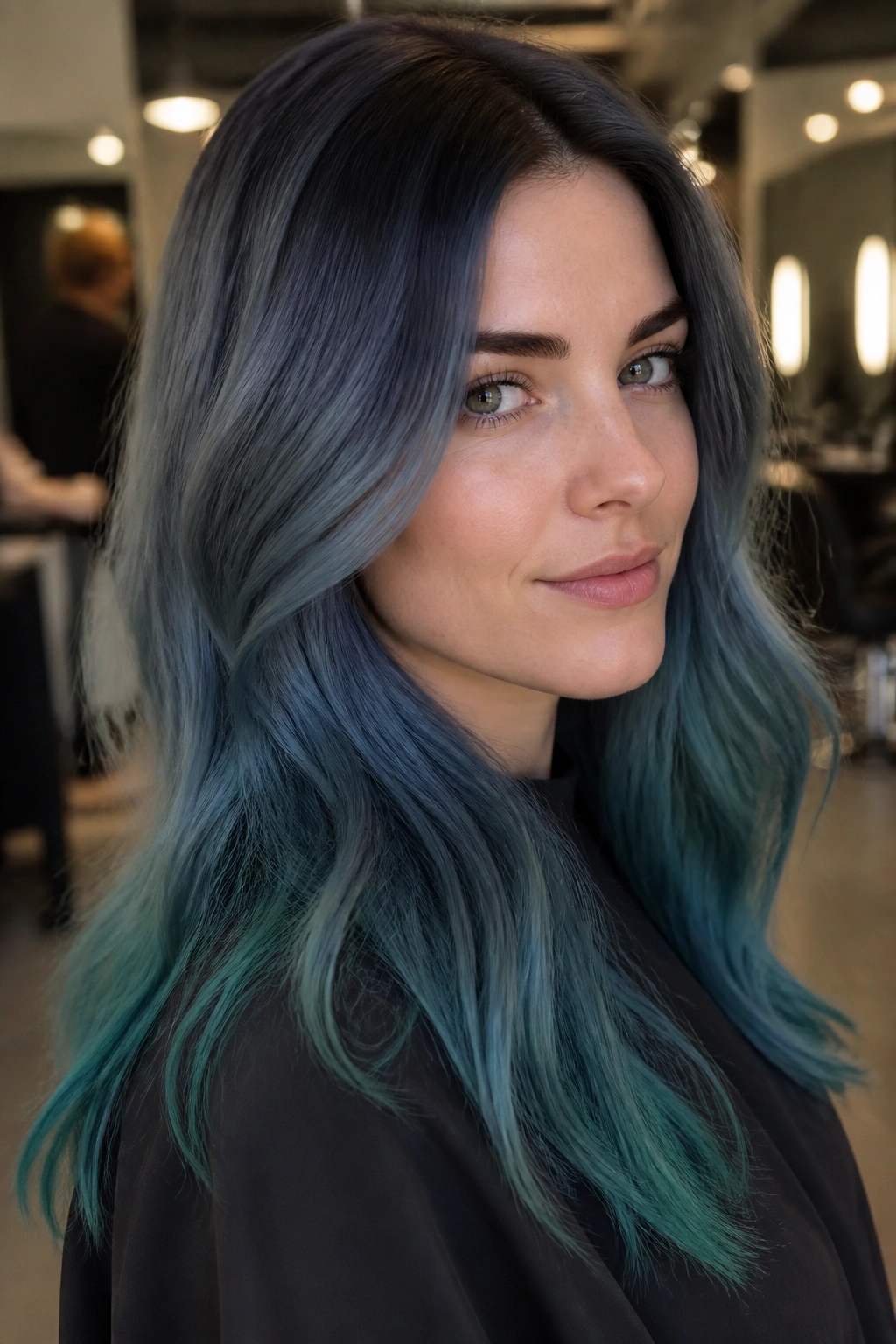
Want a blue-green shade that feels icy instead of mermaid-bright? Steel blue-green ombré is the answer. It starts dark, goes smoky in the middle, and turns into a cool teal or aqua at the ends, which gives long hair a clean vertical line.
The steel part matters more than people think. It cools the whole look down and keeps the transition from feeling too tropical. On cool skin, that restrained finish often looks better than a saturated green that never quite settles.
Ombré also buys you some breathing room at the roots. If you are not interested in full-head bleach every few weeks, this is one of the easier vivid options to live with. The darker top section softens grow-out and keeps the style from screaming “fresh appointment” every day.
How to Ask for It
Tell your colorist you want a dark smoky root, a steel-blue midsection, and a softer teal end. That progression gives the hair movement. If they want to use foils or a hand-painted blend, fine. The real goal is a smooth shift, not three hard blocks of color.
9. Mermaid Teal Waves
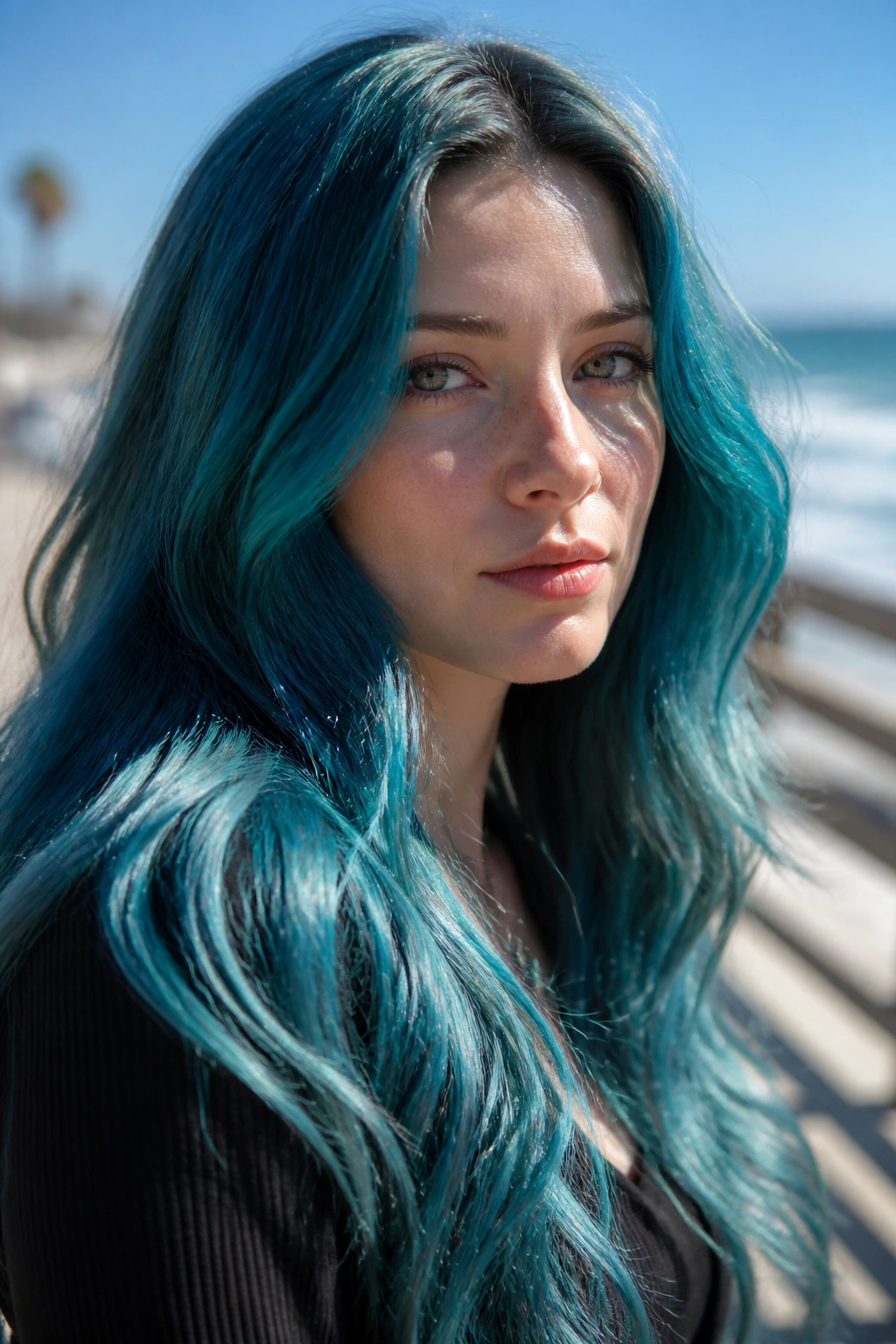
Mermaid teal waves are bold, yes, but the cut makes the difference between “wearable” and “too much.” Long layers let the teal bend and ripple, so the color does not sit like a helmet. It moves.
A saturated teal on waves is a good match for cool skin because the blue base keeps the tone crisp. Add a little silver gloss and the whole thing feels colder, which is exactly the direction you want if your complexion runs pink, rosy, or fair with blue undertones.
The best version is not one flat teal. It has tiny shifts. Slightly darker near the roots, brighter through the mids, then a gleamier finish on the ends. That keeps the hair from looking one-note under harsh light.
If you want a little drama, this is the place to spend it. Mermaid teal looks strong in sunlight, but it also has enough depth to sit nicely under indoor light. It is one of those shades that looks different every hour, which is probably why people keep coming back to it.
10. Lagoon Green Pixie
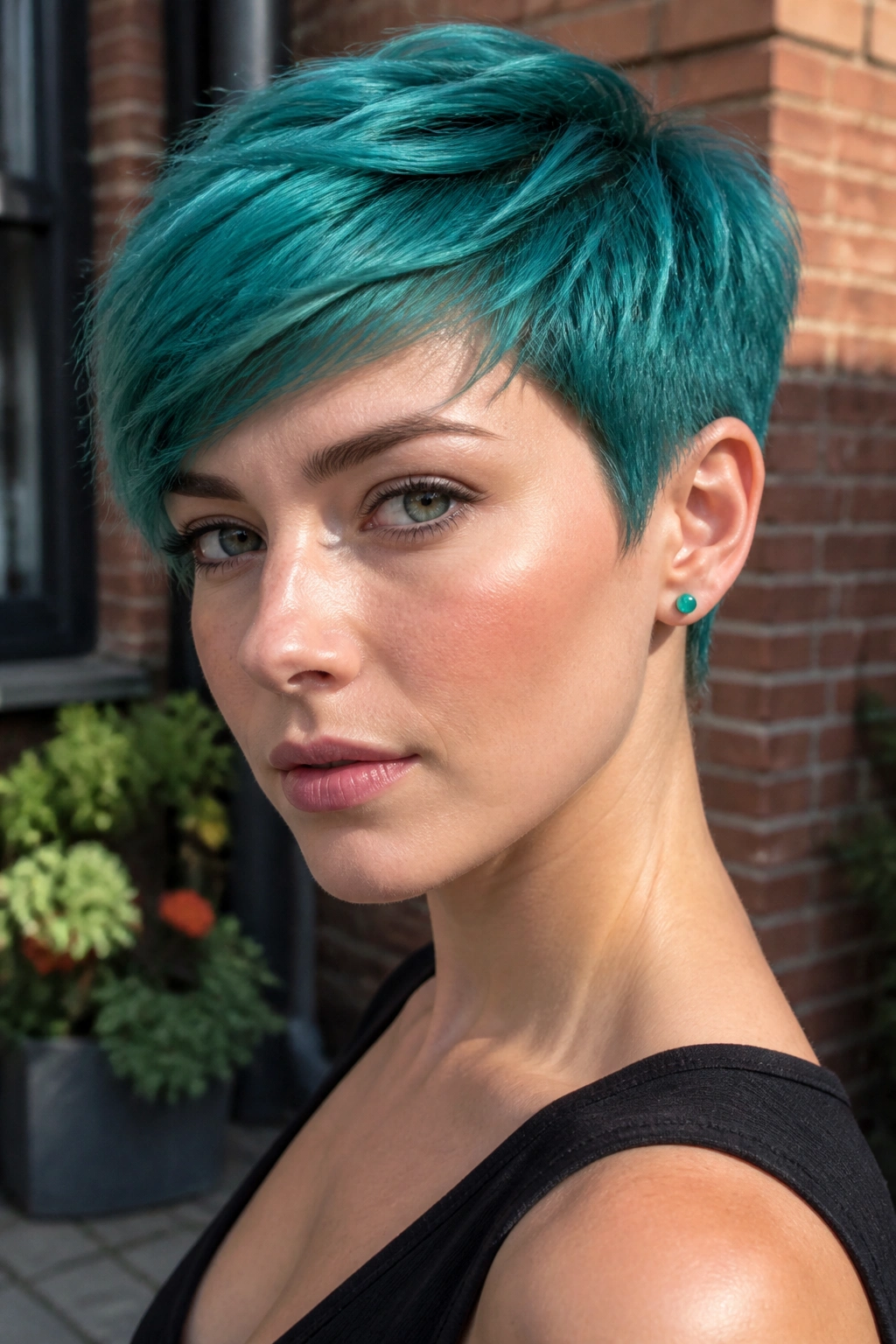
A pixie cut changes the whole personality of blue-green hair. With short hair, lagoon green can look crisp, sharp, and a little expensive in a rock-and-roll way, especially when the edges are textured and not too neat.
The shorter the cut, the more the color reads as shape. That matters here. A long layered cut can hide a softer green-blue, but a pixie puts the pigment right in the foreground. On cool skin, lagoon green can make the cheekbones stand out without any extra makeup.
Keep the finish glossy. A dull lagoon shade can lean swampy fast, and nobody wants that. A light reflective glaze or color conditioner helps the green sit on top of the hair rather than sinking into it. On short cuts, that shine makes the style look more deliberate.
This one is for people who like a little edge and do not mind regular trims. The grow-out line shows faster on short hair, but the payoff is strong. Clean, fast, and hard to ignore. Some looks need the space of long hair. This one does not.
11. Frosted Aquamarine Lob for Cool Skin Tones
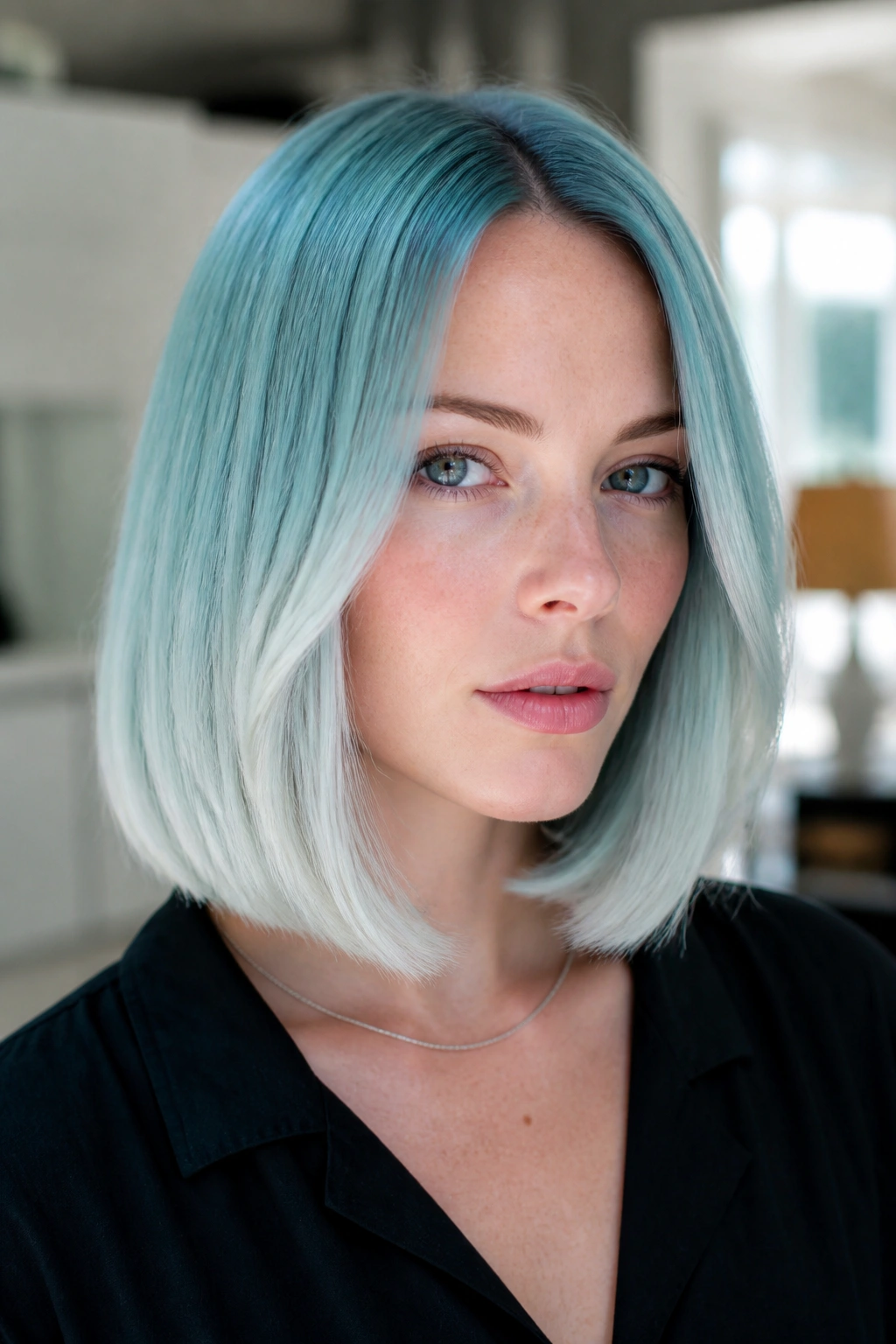
Frosted aquamarine sits in that bright, icy zone that can make cool skin look extra clean. It is bluer than seafoam, lighter than teal, and a little more polished than straight turquoise. On a lob, the shape keeps it sharp.
What Makes It Different
Unlike warmer green-based aquas, frosted aquamarine has a silvery edge. That tiny shift changes everything for pink or porcelain complexions, because it avoids the yellow cast that can make the face look tired. A lob gives you enough length for movement, but not so much that the color gets lost.
This shade works best when the finish is soft and pearly. If it is too opaque, it can go flat. If it is too clear, it can look thin. The sweet spot is a cool veil with enough pigment to show from root to tip.
- Best on level 9 to 10 blonde hair
- Ask for a silver-aqua glaze
- Keep the ends slightly lighter than the mids
- Works well with blunt lobs and soft waves
If your skin is very fair and cool, this is one of the easiest vivid colors to wear without feeling overdone.
12. Blue-Green Split Dye
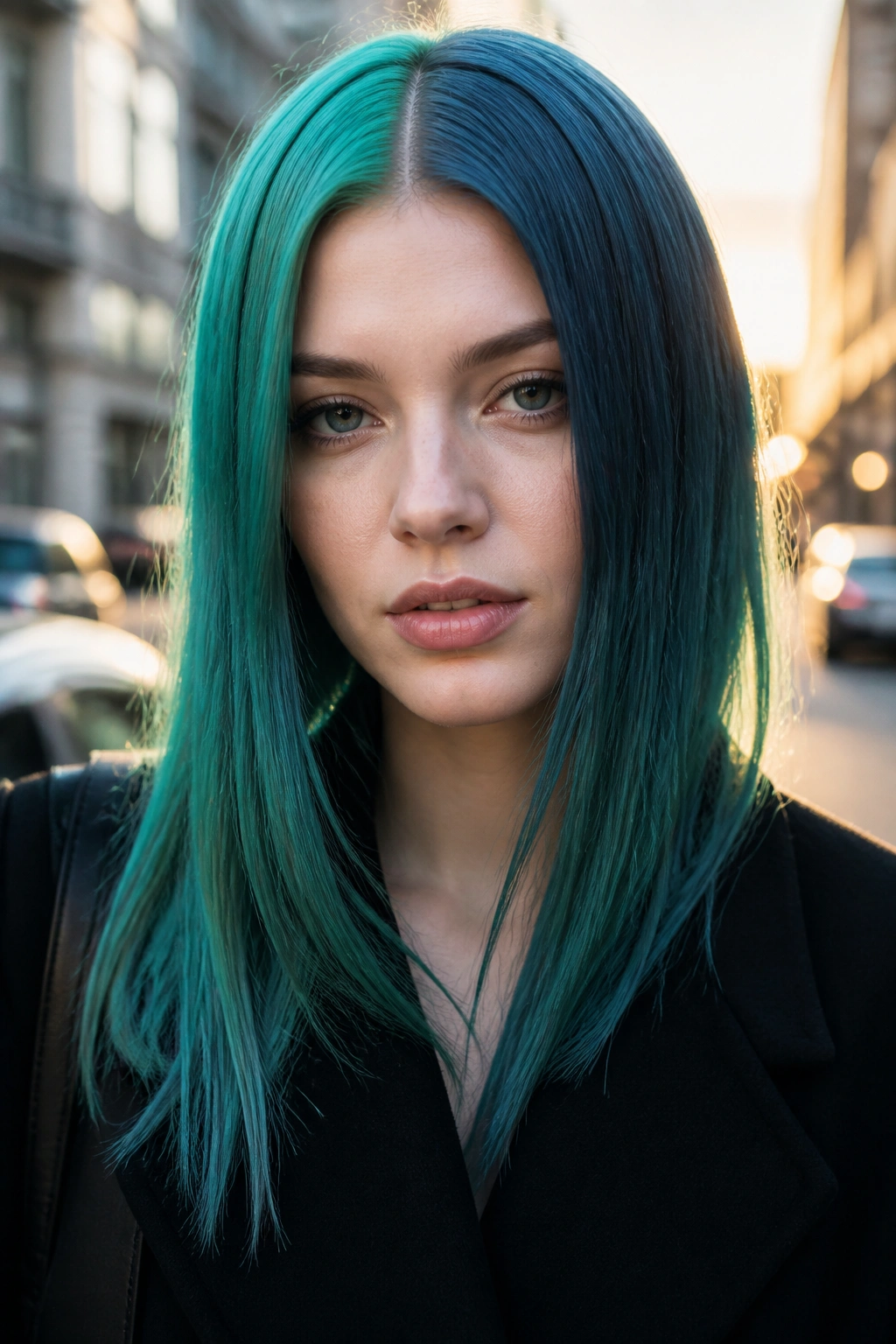
A blue-green split dye is not subtle. That is why it works. The clean division gives the color a graphic edge, and cool skin often benefits from that kind of sharp contrast because the face stays separate from the hair instead of blending into it.
Why It Looks So Intentional
The split can run down the middle, or it can be off-center if you want something a little less obvious. One side can lean teal, the other more blue-green, or you can keep both sides in the same family and let the parting do the work. Either way, the look is about shape as much as pigment.
I like this on straight or slightly waved hair because the line between the two colors stays readable. On curlier textures, the split can blur, which may be the point if you want something less rigid. Still, the graphic version is the real star.
- Ask for two shades in the same blue-green family
- Keep both sides equally cool
- A clean center part makes the contrast stronger
- Best with sleek styling or a flat iron finish
Bold color can be fun, but it needs discipline. This is one of those looks.
13. Emerald-Teal Ribbon Highlights
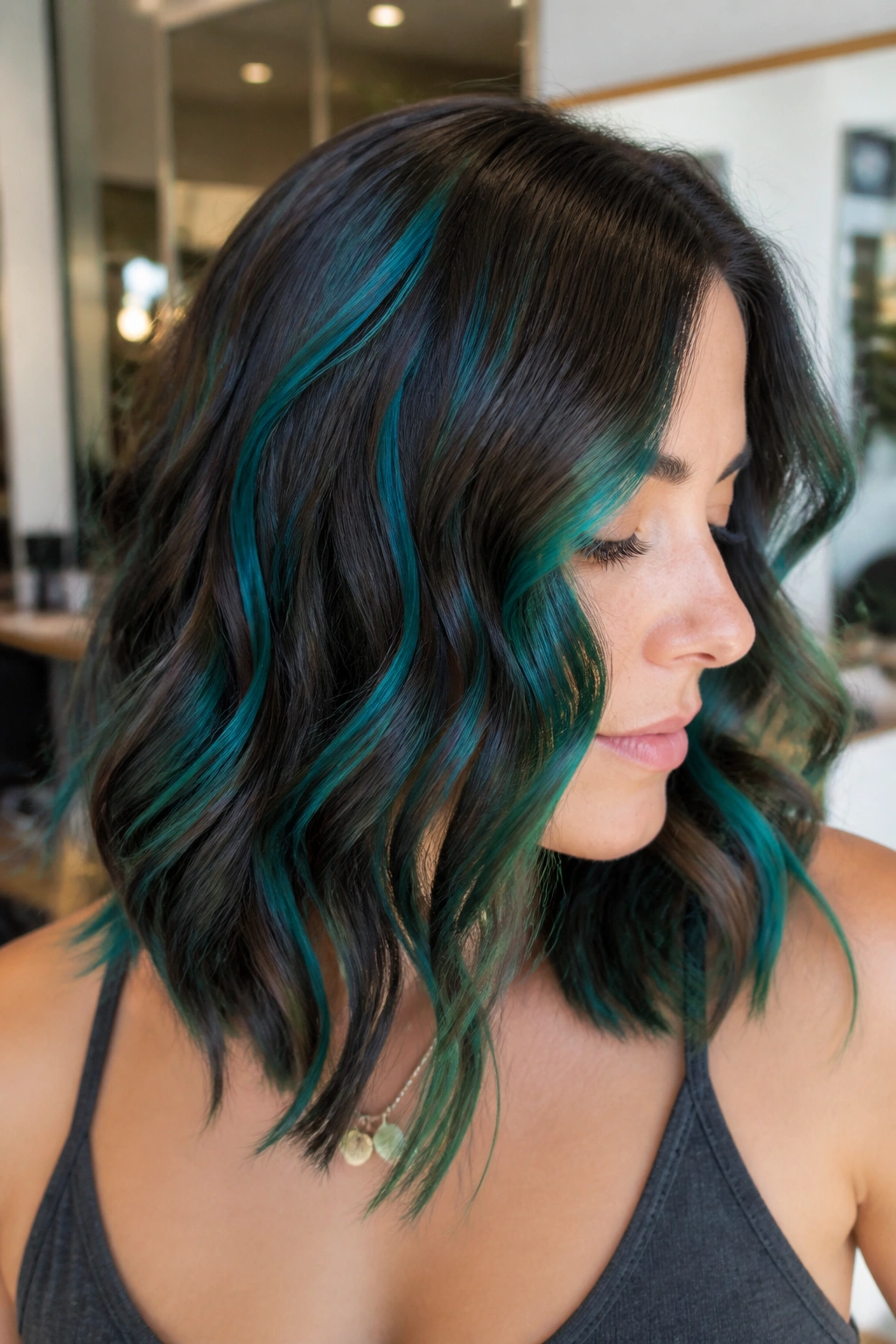
Ribbon highlights are the easy way to bring blue-green into hair that is already doing a lot. Instead of painting the whole head, you weave thin, visible stripes through the surface, and the result is movement without full commitment.
The ribbon shape matters. Thin ribbons look soft and blended. Thicker ones read more fashion-forward and are easier to spot when the hair moves. On cool skin, emerald-teal works especially well when the green stays blue-heavy and the shine is cool, not golden.
How to Get the Most From It
Ask for foilyage or fine weave highlights if you want clean, bright ribbons. If you want a more relaxed finish, hand-painted pieces can work, but they should still sit close enough together to create a clear color story. Too much space between strands and the look stops reading as intentional.
This is one of the best choices for brunettes who are not ready for a full fantasy head. The natural base stays visible, so the color feels expensive and controlled. It also grows out in a friendlier way, which matters if you hate obvious root lines.
14. Midnight Teal Black Hair
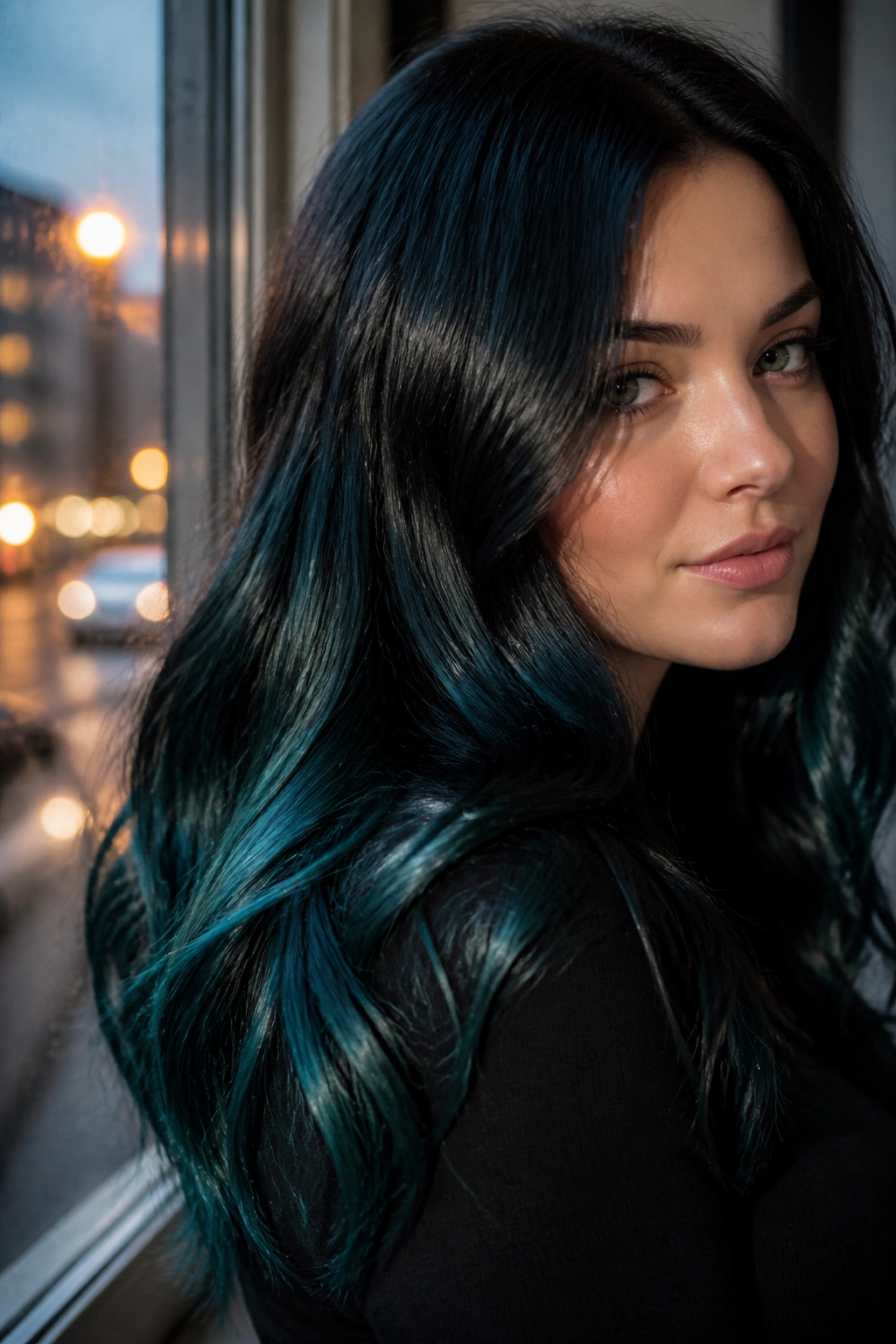
Midnight teal black hair is for people who like a wink of color, not a shout. At first glance it can look like glossy black hair. Move under a window or a streetlight, and the teal reflection shows up at the mid-lengths and ends.
Can something this dark still flatter cool skin? Yes, and often very well. The black base keeps the look elegant, while the teal sheen adds enough cool light to keep the face from going flat. It is a quiet color, but it has depth.
How to Ask for It
Tell your stylist you want black hair with a teal sheen, not a green overlay. That difference matters. If the green is too strong, the result can get muddy. If the blue side stays active, the hair reflects in a cleaner way and feels more expensive in person.
This is one of the easiest options to wear if you want vivid color without a dramatic maintenance schedule. The trick is gloss and shine, not constant pigment refreshes. And that makes it practical, which I happen to like.
15. Pastel Seafoam Bob
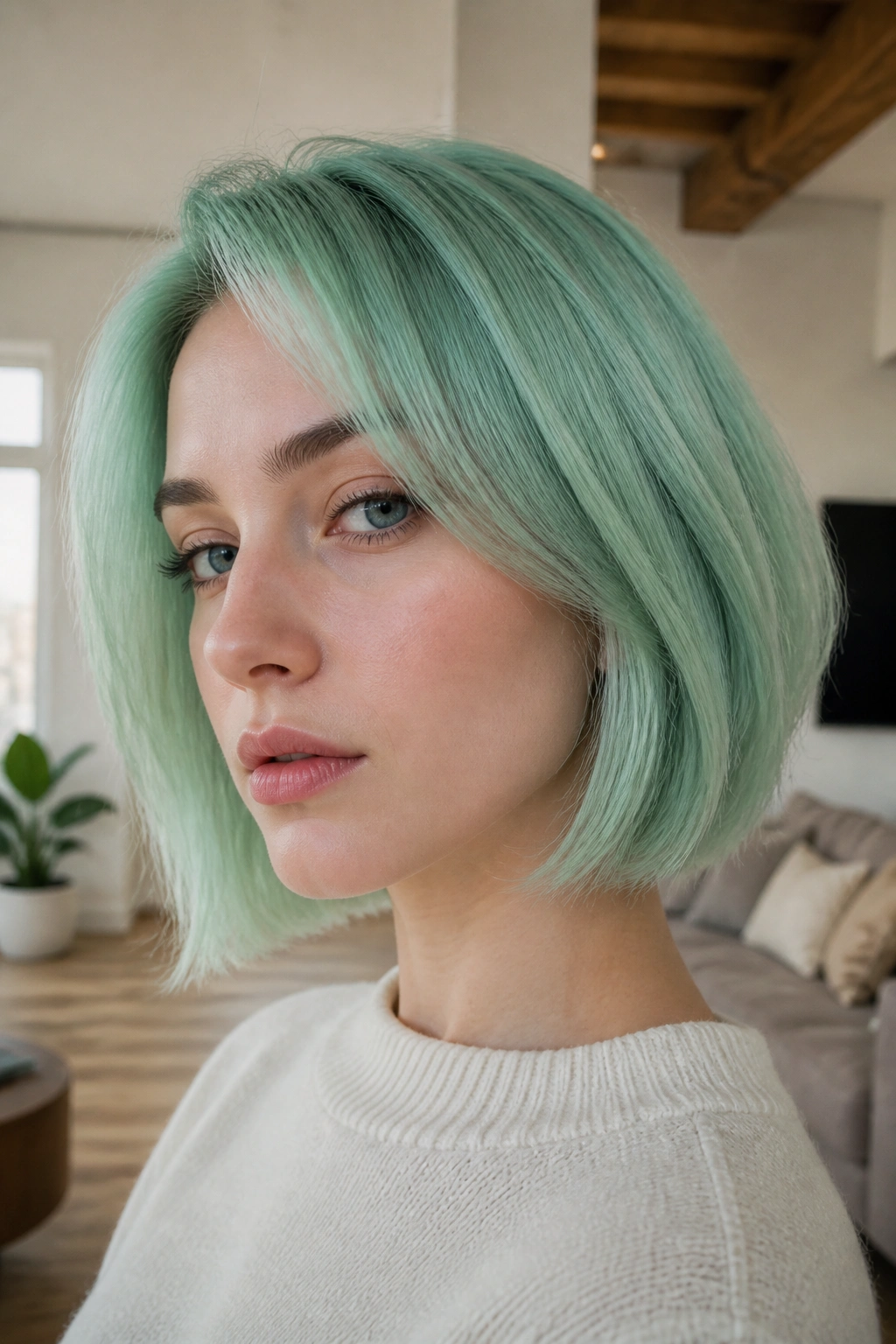
Pastel seafoam is light, airy, and a little tricky. On cool skin, it can look soft and fresh, but only if the blonde base underneath is pale enough to keep the color from turning dull. A bob keeps the shade compact, which helps it feel neat.
The biggest mistake here is trying to put seafoam over hair that still carries yellow. That usually turns the shade murky. If the base is clean and cool, though, the pastel effect can be lovely, almost like frosted glass. It pairs well with pale makeup, brushed-up brows, and silver accessories.
This color is not low maintenance. That is the honest part. Pastels fade fast, and seafoam often loses its green-blue edge after a few washes unless you use a pigment mask. Still, if you like soft color and do not mind upkeep, it has a delicate look that works beautifully on cool complexions.
I’d especially consider it if your hair is fine and you want the color to feel light instead of heavy. The short cut helps the shade sit on top rather than dragging down the face.
16. Cobalt-Teal Peekaboo
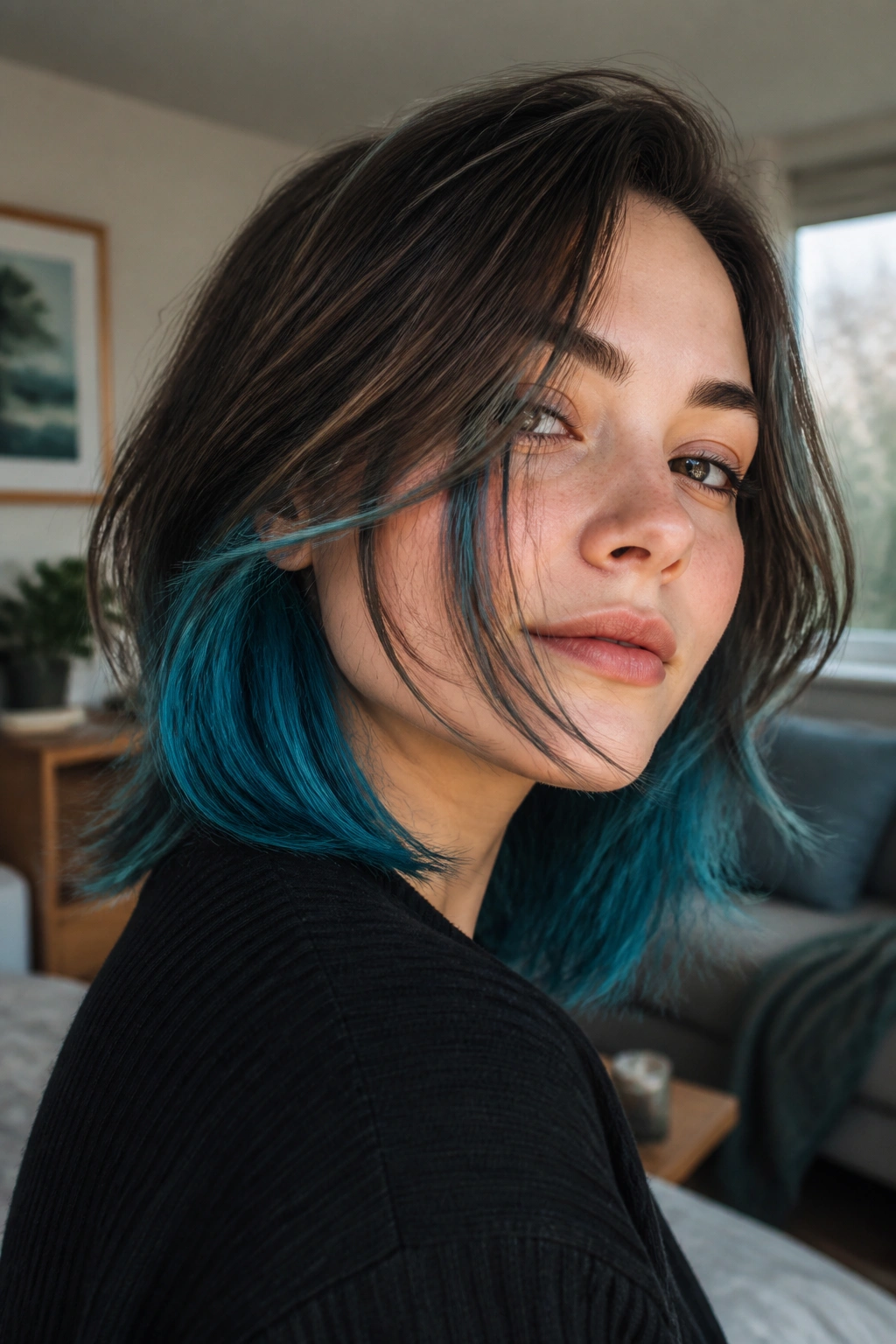
Peekaboo color is the most forgiving way to wear vivid blue-green if you need some control over visibility. The color lives under the top layers, usually around the nape, temples, or interior panels, and it flashes out only when the hair moves.
That makes cobalt-teal peekaboo a smart match for cool skin. The cobalt keeps the tone crisp, and the teal keeps it from looking flat or one-note. You get the hit of bright color without turning every angle into a statement.
A peekaboo placement also gives you more room to play with contrast. You can keep the top layer ash brown, icy blonde, or black, then hide the blue-green beneath. The reveal can be subtle with a low ponytail or much stronger with a twist and clip.
No fuss, really. That is the appeal. If you want vivid hair but also want the option to hide it on rough workdays, this is one of the most useful choices in the whole group.
17. Glacier Blue-Green Melt
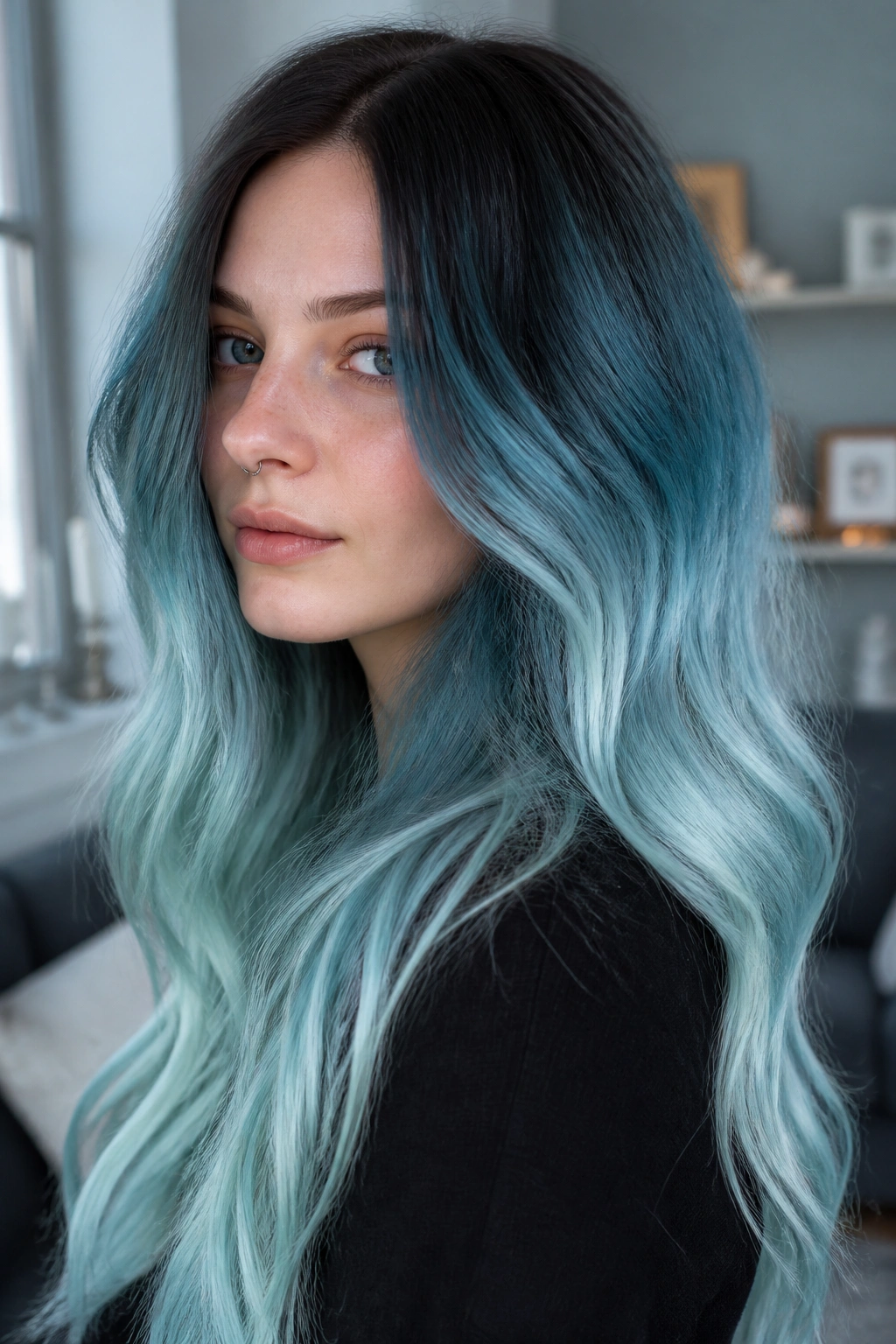
Glacier blue-green melt is all about a cold, smooth transition. The root stays darker, usually in ash brown or smoky slate, and the color melts through blue and green tones until it lands in a frosty aqua end. The whole thing looks frozen in motion.
This kind of melt suits cool skin because every step stays in the same temperature family. Nothing gets warm or brassy enough to throw the face off. On long hair, the gradient can make the length feel even longer, since the eye keeps sliding from dark root to icy tip.
A good melt should feel soft, not striped. If the sections are too obvious, the color looks chunkier than intended. The goal is a continuous shift, where each tone nudges into the next one without an obvious stop. That takes a careful hand, but the result is worth it.
I like this on wavy hair, where the bends help show off the different tones. Straight hair can work too, though it tends to show the gradient more clearly. That is not a flaw. It just changes the mood.
18. Moss-to-Turquoise Color Block
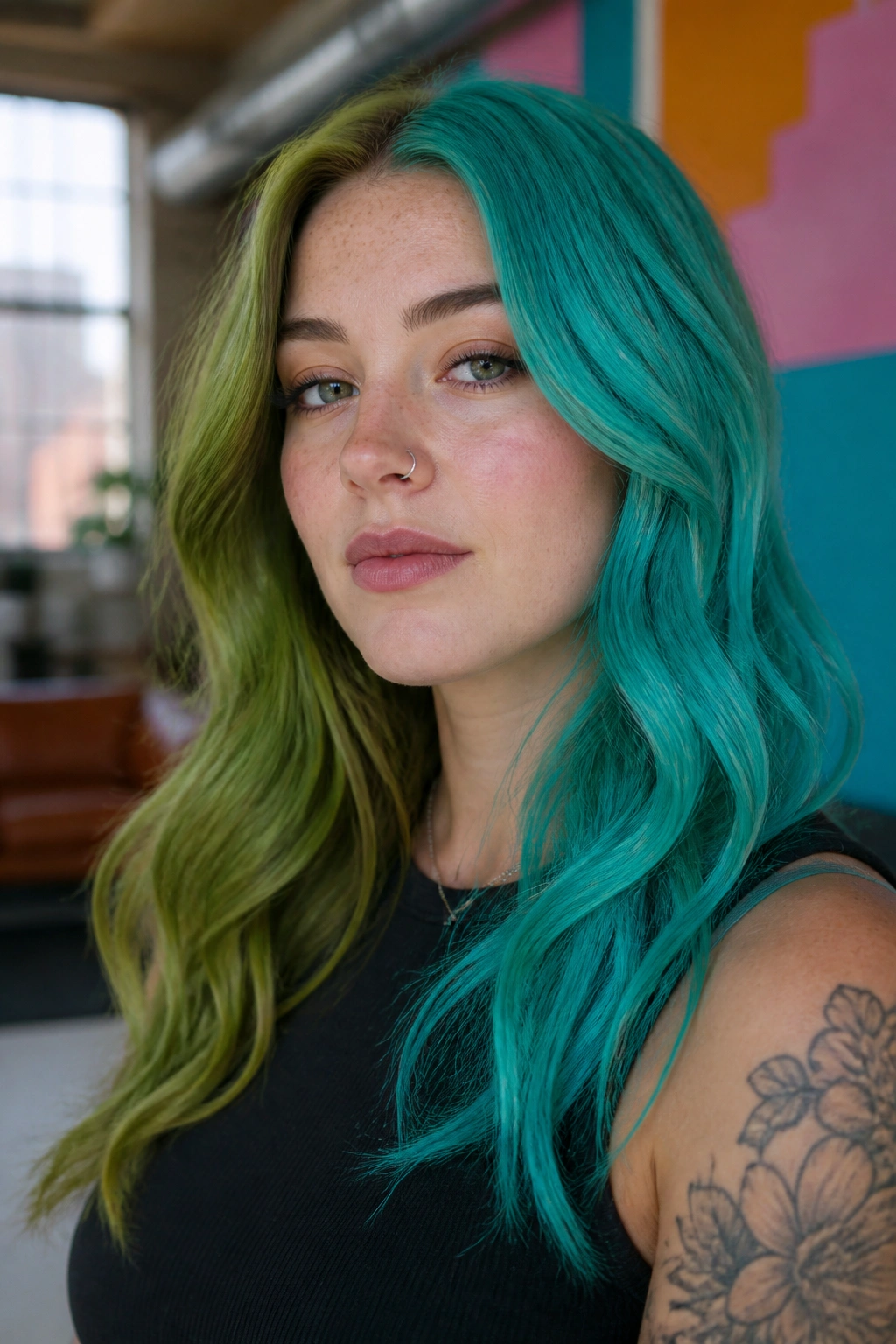
A moss-to-turquoise color block sounds earthy, but the right version can be surprisingly sharp on cool skin. The trick is to keep the moss on the blue side of green and let the turquoise act as the brighter anchor. If the moss goes too yellow, the whole look gets muddy.
This style is strongest when the blocks are obvious. Think panels, not blur. You might have a darker mossy section underneath and a brighter turquoise section on the top layer or around the face. The contrast gives the hair a defined shape, almost like color-blocked fabric.
Why the Blue Matters
Blue keeps the green from going swampy. That is the whole reason this works for cool tones. The more blue the formula holds, the more the skin looks clean next to it. A little silver gloss can help, too, especially if the turquoise wants to turn too bright.
This is a good choice if you like art-school energy and are not afraid of contrast. It is less soft than a melt, but that is the point. Some shades whisper. This one draws a line.
19. Sapphire-Teal Face Frame
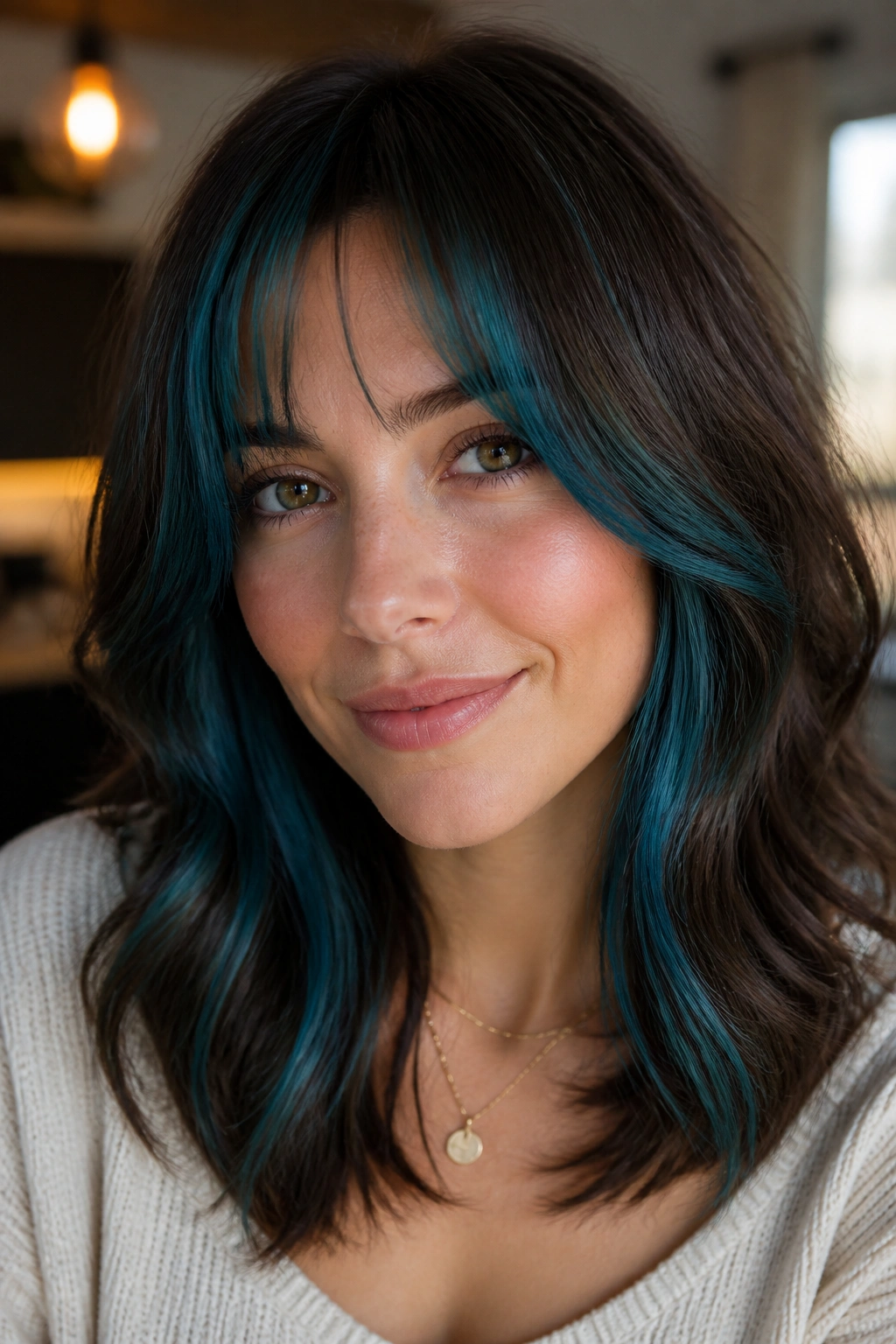
A sapphire-teal face frame is the fastest way to try vivid blue-green without reworking the whole head. You keep most of the hair neutral, then add a brighter frame around the face that pulls light straight to the cheekbones and eyes.
That placement matters more than the exact shade. On cool skin, a sapphire-teal frame gives you that glassy, icy look right where people notice first. If the rest of the hair is brunette, black, or ash blonde, the contrast can look crisp instead of harsh.
Unlike a full-color service, this one is easy to adjust. Want more depth? Keep the frame a little darker. Want more flash? Brighten the front pieces by a level or two. The haircut makes a difference here too; curtain bangs and long layers can break up the color and keep it from feeling blocky.
If you are unsure about going full blue-green, start here. It is the most practical door into the shade family, and it still gives you the payoff.
20. Soft Teal Haze with Shadow Root
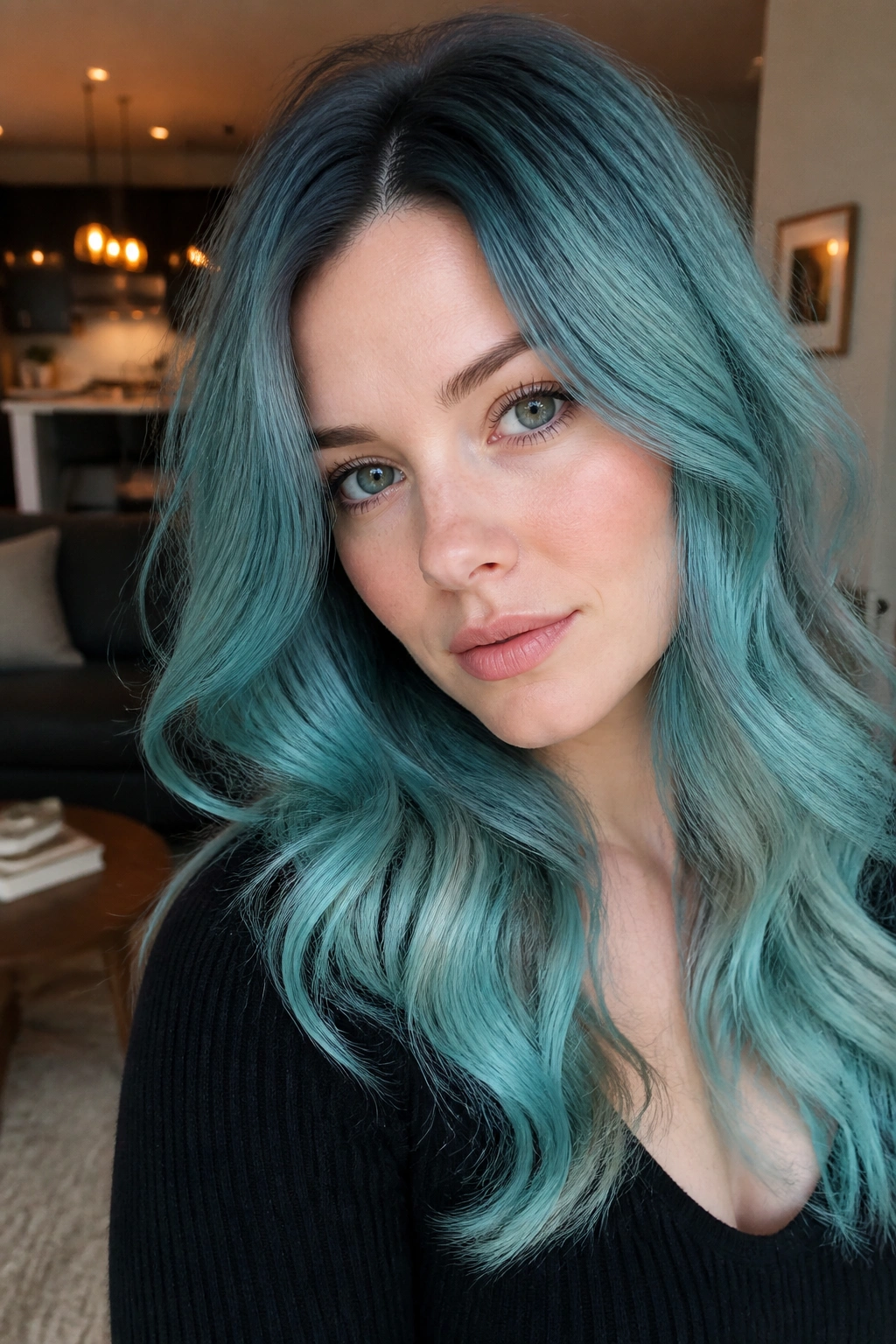
Soft teal haze is for the person who wants blue-green hair to feel airy, not loud. The shadow root keeps the top grounded, while the teal gets misted through the mids and ends in a thin, translucent layer. The result is lighter than a solid dye job and easier on the eye.
Does that make it boring? Not even close. It is one of the nicest options for cool skin because the color never looks heavy against the face. The teal stays present, but it behaves more like a sheen than a block, which gives the whole style a softer rhythm.
A good shadow root also makes the grow-out line less annoying. The darker top section buys time, and the haze beneath can fade gracefully into silver-blue if you keep the shampoo gentle and the water cool. That is a practical advantage, and I am always in favor of those.
If you want the most wearable version of blue-green, this is where I would start. If you want the loudest, it is not this one. Either way, the cool-tone family has room for both moods, and that is the fun part.
