



Violet hair color can look crisp and expensive on cool skin tones, or it can go flat in a hurry if the shade leans too red. That’s the whole game. The right violet picks up the pink, blue, and rosy notes in cool undertones and makes them look cleaner; the wrong ones can make skin seem a little tired, or worse, oddly yellow.
The sweet spot is usually a violet with blue, silver, or smoky undertones. Think lavender that feels icy, plum that stays deep instead of winey, or amethyst with a cool gloss on top. If your skin tends to work better with silver jewelry than gold, or if bright white looks sharper on you than cream, you’re already in the right neighborhood.
Hair level matters too. A pale lavender on a level 9 or 10 blonde base reads soft and airy. Put that same formula over a level 6 brunette and it stops being pastel and starts looking like smoky plum. Neither is wrong. They just do different things, and that’s where a lot of people get tripped up.
Some of the best violet shades for cool undertones are quiet. Others are loud in a good way. The trick is knowing which kind of violet you want sitting next to your face, because once the color is on, it changes the whole feel of a haircut, a makeup look, even the way a black sweater looks against your skin.
1. Icy Lavender
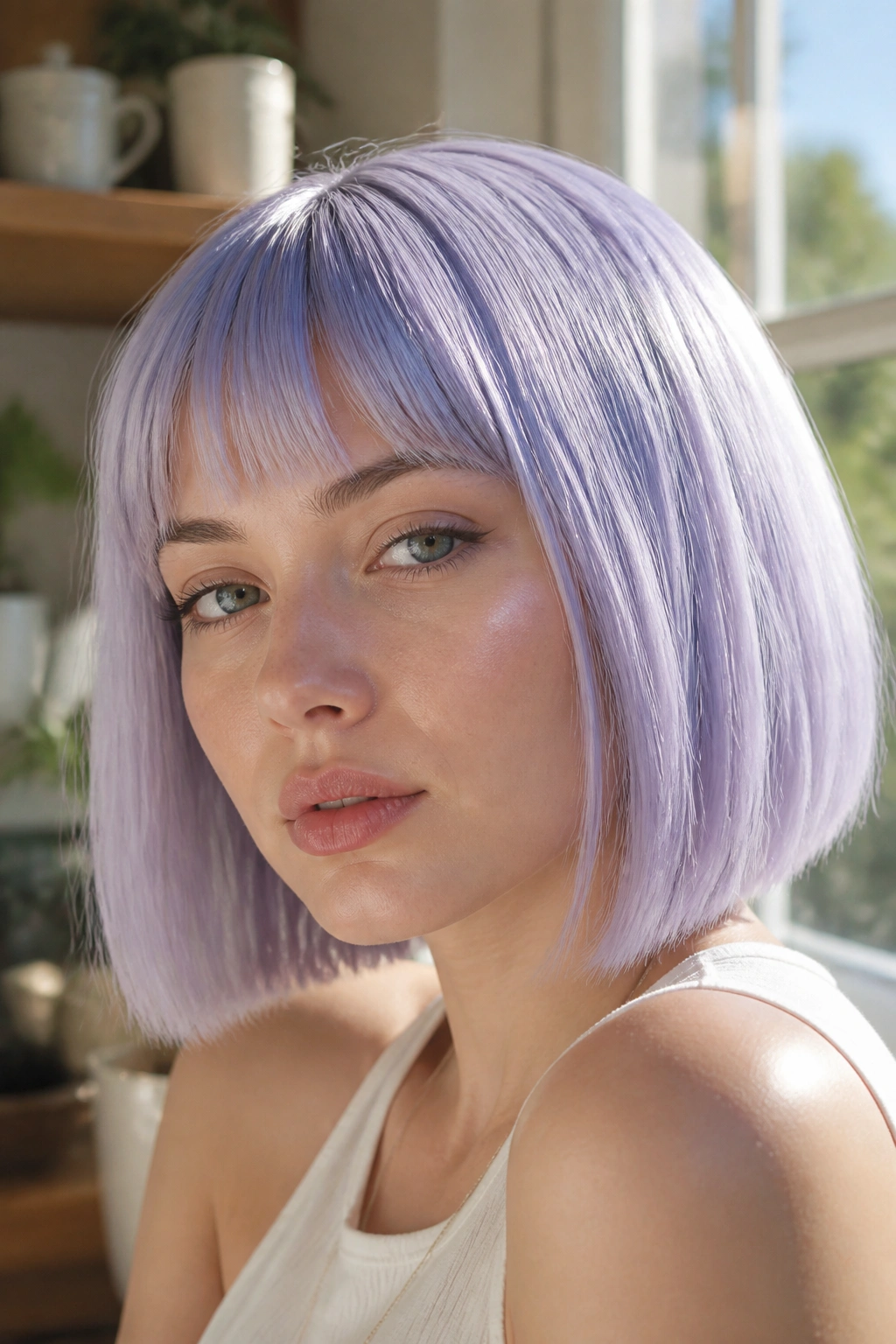
Icy lavender is the shade I reach for when someone wants violet hair color ideas for cool skin tones but doesn’t want to look like they raided a candy aisle. It’s soft, pale, and a little frosted at the edges, which keeps it from turning sugary or warm. On a cool complexion, that clean finish can make the face look sharper and the eyes a touch brighter.
Why it works for cool undertones
The blue base is doing a lot of the heavy lifting here. Lavender that leans icy sits close to silver, so it doesn’t fight rosy cheeks or pink undertones the way peachy pastels often do. It also looks especially good on hair that has been lifted to a pale yellow, because the violet pigment cancels that warmth before it ever shows through.
A blunt bob, airy layers, or a soft shag all suit this shade. The color itself is delicate, so the haircut can do some of the drama without making the overall look feel loud.
- Best base: level 9 to 10 blonde
- Best finish: glossed, not matte
- Fades toward: pale silver-lilac
- Pairs well with: cool-toned makeup and bright white tees
Pro tip: Ask for a violet toner with a blue edge, not a pink one. That tiny difference saves you from a pastel that starts drifting warm after the first few washes.
2. Smoky Lilac
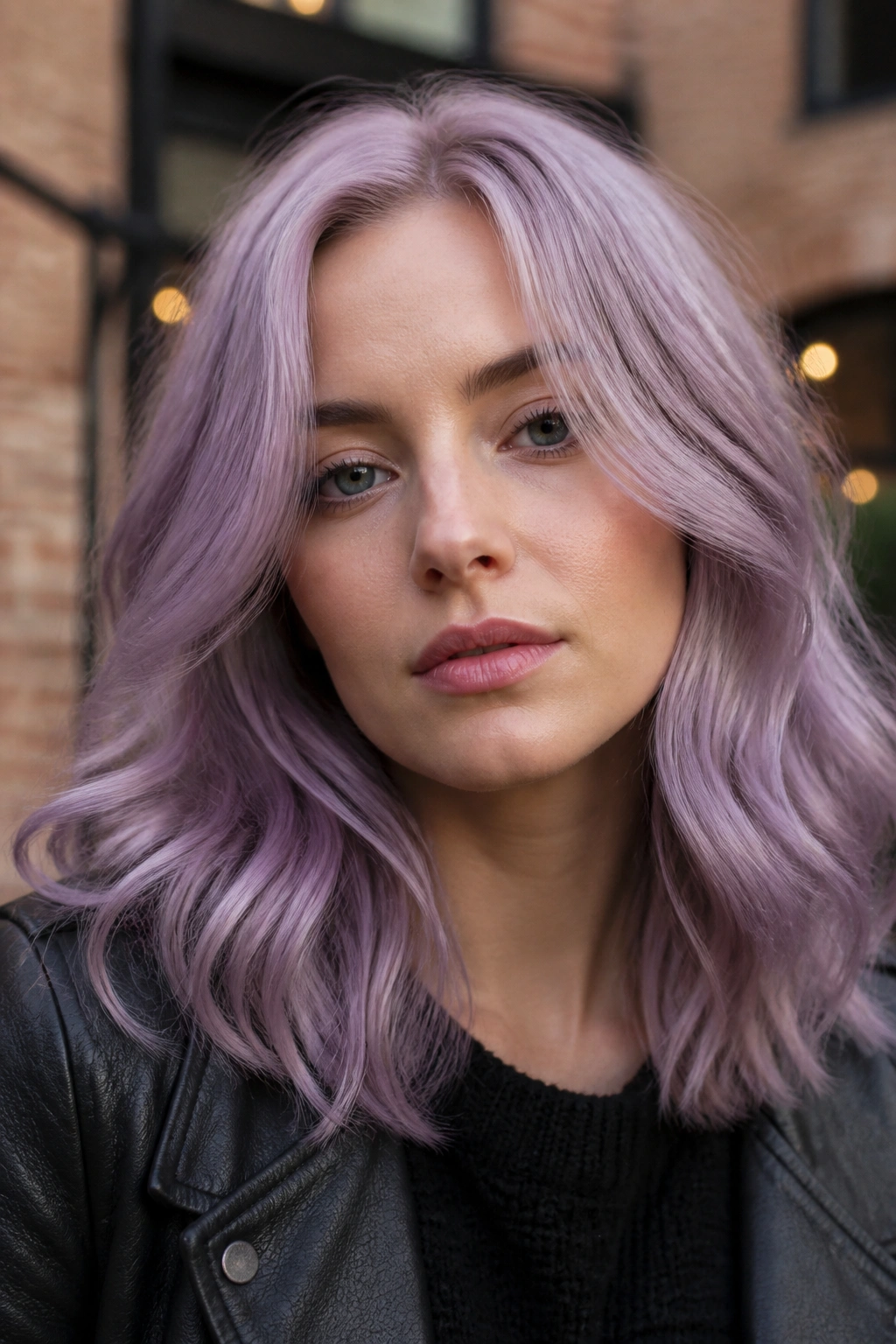
Smoky lilac is one of those shades that looks calm but still has personality. It’s less sweet than pastel lavender and less dark than plum, which makes it a nice middle lane for cool skin tones that can handle color but don’t want full saturation. There’s a gray veil over the purple, and that’s what keeps it wearable.
This is the shade for people who want purple without the cartoon effect. The smoke in the formula tones down any red in the violet pigment, so the hair sits neatly against cool skin instead of shouting at it. On pale or pink-leaning complexions, that matters more than people think.
It also ages well as color goes. When smoky lilac softens, it usually drifts into silvered mauve rather than brassy peach. That makes grow-out feel less awkward, which is nice because nobody needs a root line that looks like a separate life choice.
If your wardrobe runs heavy on black, gray, denim, and crisp blue shirts, smoky lilac fits right in. It’s quiet in a good way. Not dull. Just controlled.
3. Blue-Violet Melt
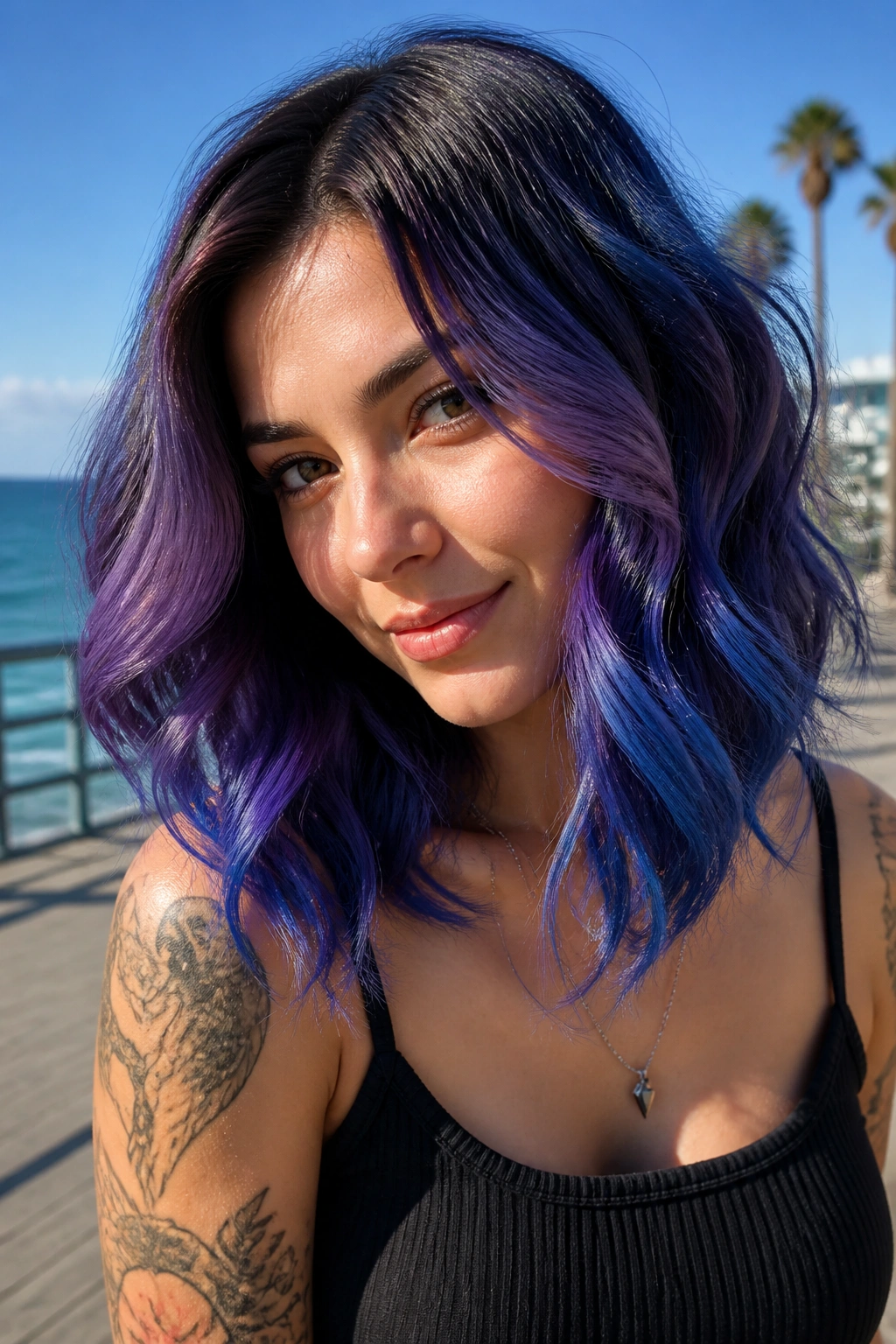
Picture this: dark roots near the scalp, then a cool violet middle, and ends that slip toward indigo when the light hits them. That’s the magic of a blue-violet melt. It gives movement to the hair without forcing a hard line between shades, which is why it works so well on shoulder-length cuts and long waves.
What makes it different
A melt is softer than a stripe and richer than a single-process all-over color. The blue in the violet keeps the shade from reading warm, while the blend from root to end makes the color feel expensive even when the actual formula is simple. On cool skin tones, the result is clean and dramatic without looking harsh.
This is also a good choice if you do not want every inch of your hair to be the same shade. Slight shifts in hue are the whole point. The darker root area keeps maintenance sane, and the brighter mids and ends give the hair that glossy depth people notice from across a room.
- Works best on: wavy or layered hair
- Needs: a root shadow or smudged transition
- Looks strongest in: daylight and flash photos
- Maintenance: refresh the midlengths before the ends go dull
Tip: Keep the violet slightly cooler at the front hairline than at the back. It frames the face better and avoids that purple-band effect some melts get when the colorist goes too even.
4. Deep Amethyst
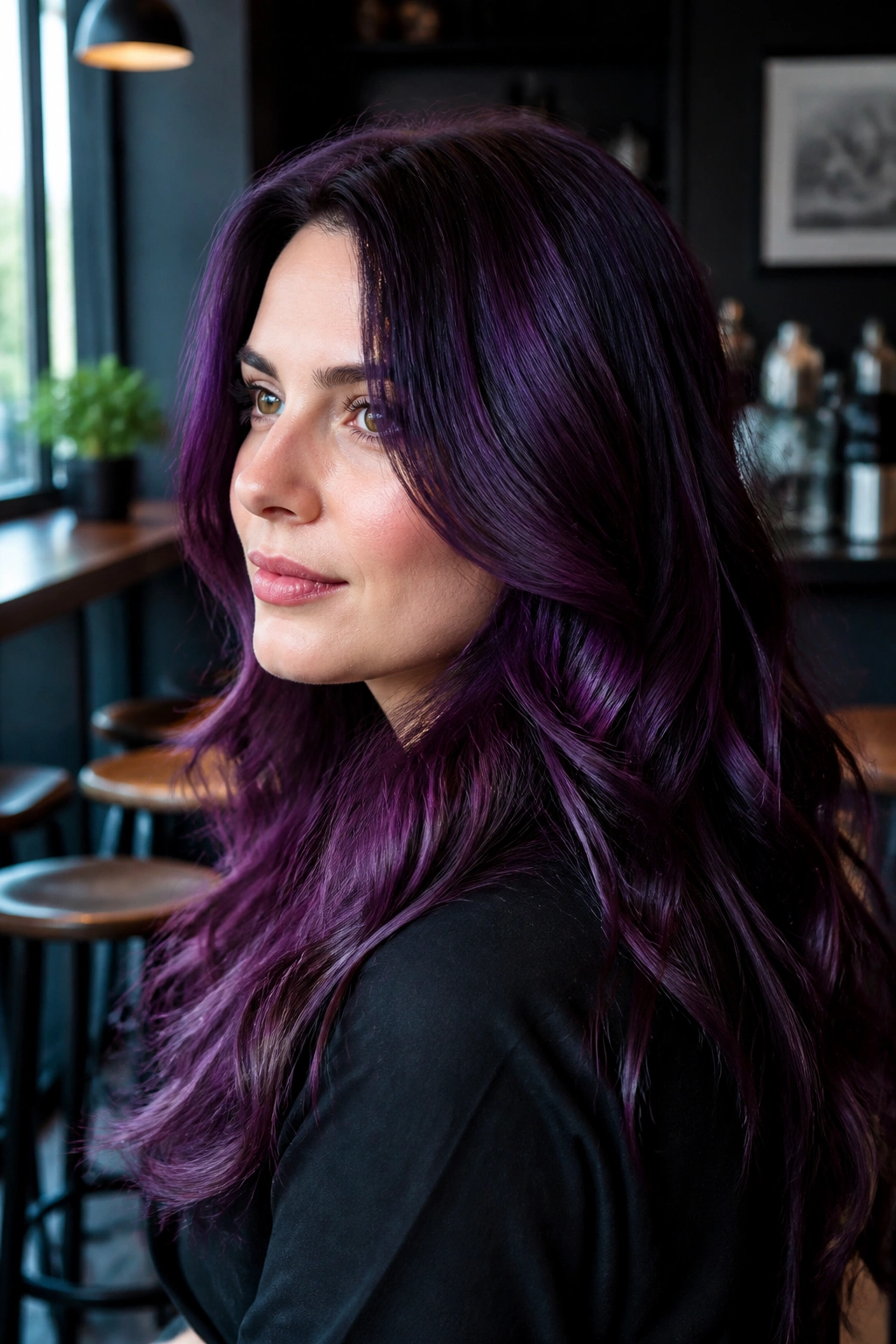
Deep amethyst is the shade for someone who wants violet, but not pastel violet, and definitely not anything sugary. It’s rich, jewel-toned, and a little moody in the best way. On cool skin, the depth of it can make the face look more sculpted, especially if you wear a lot of black, charcoal, navy, or silver hoops.
The nice part about amethyst is that it works even when the hair is not bone-blonde. On a brunette base, it reads like a saturated violet sheen; on lighter hair, it becomes more obvious and a little brighter. Either way, the blue side of the pigment keeps it from tipping into red wine territory.
I like this shade on straight hair because the shine shows every shift in tone. But curls can wear it just as well, especially if the cut has enough shape to show off the darker lowlights and lighter purple ribbons.
There’s also a practical upside. Deep amethyst tends to fade into a softer plum instead of going orange or copper, so the grow-out looks more intentional than messy.
5. Silver Violet for Cool Skin Tones
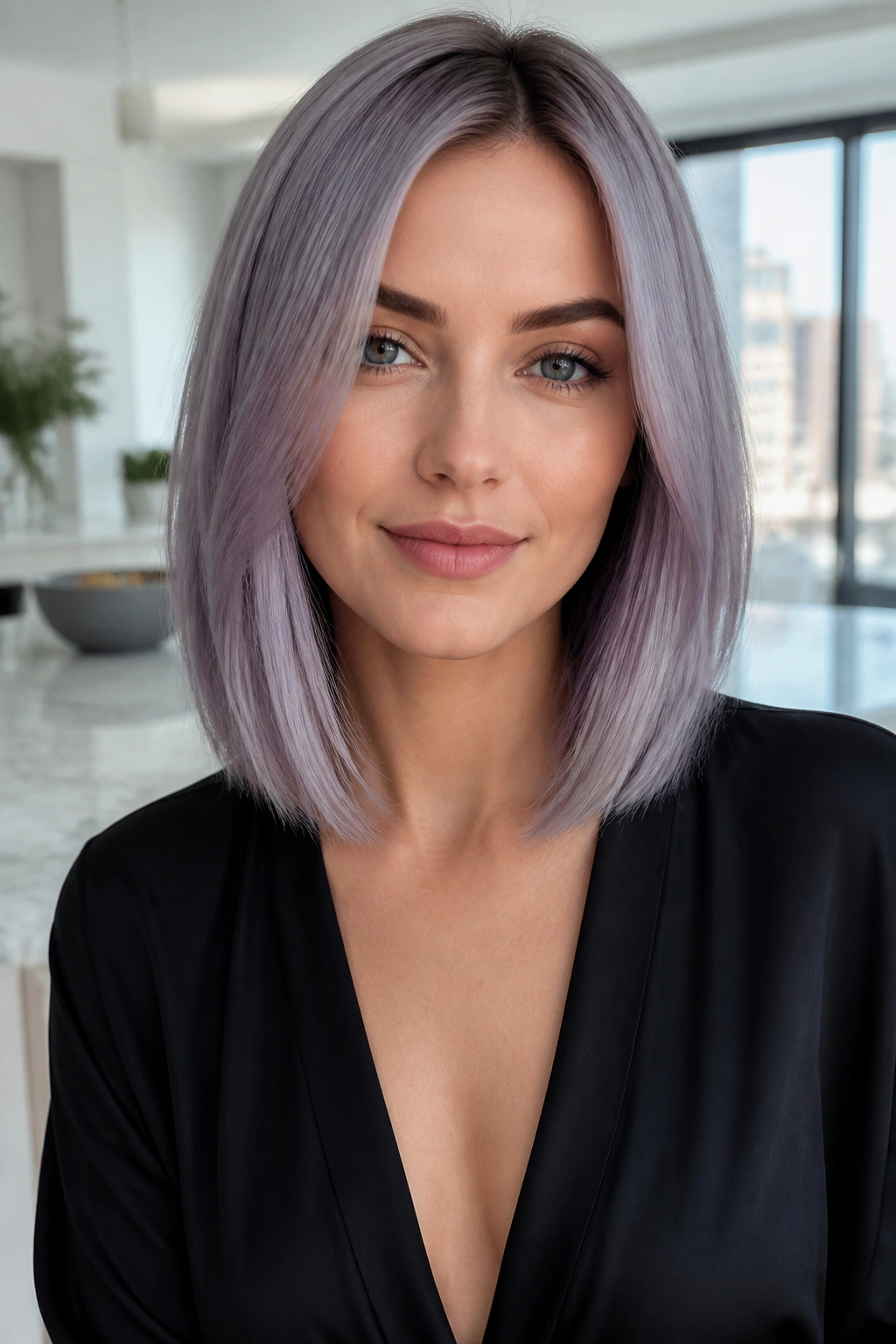
Can a purple shade look both futuristic and wearable? Yes, if it’s silver violet. This is the color I’d call the cleanest violet option for cool skin tones because it sits right between lavender and metallic gray, which gives it a cool, polished edge without making it harsh.
How to wear it
Silver violet likes sleek styling. A sharp lob, a glassy blowout, or a tucked-behind-the-ear bob helps the reflective finish show up. If the hair has too much frizz or too many warm highlights peeking through, the shade can lose that crisp look fast.
The color itself usually needs a pale, even base. Uneven lightening can make it patchy, and silver shades are unforgiving about that. You want the canvas smooth enough that the violet reads like a tint, not like a rescue job.
A few practical notes:
- Best on: level 10 blonde or very light prelightened hair
- Avoid: chunky yellow pieces under the top layer
- Style with: flat irons, soft bends, or polished curls
- Good makeup match: cool pink blush and a berry lip
Why it looks so clean
The silver mutes any stray warmth in the violet. That matters on cool skin because the whole point is harmony, not contrast for its own sake. This shade gives you that cool, liquid finish that turns heads without needing neon intensity.
6. Plum Noir
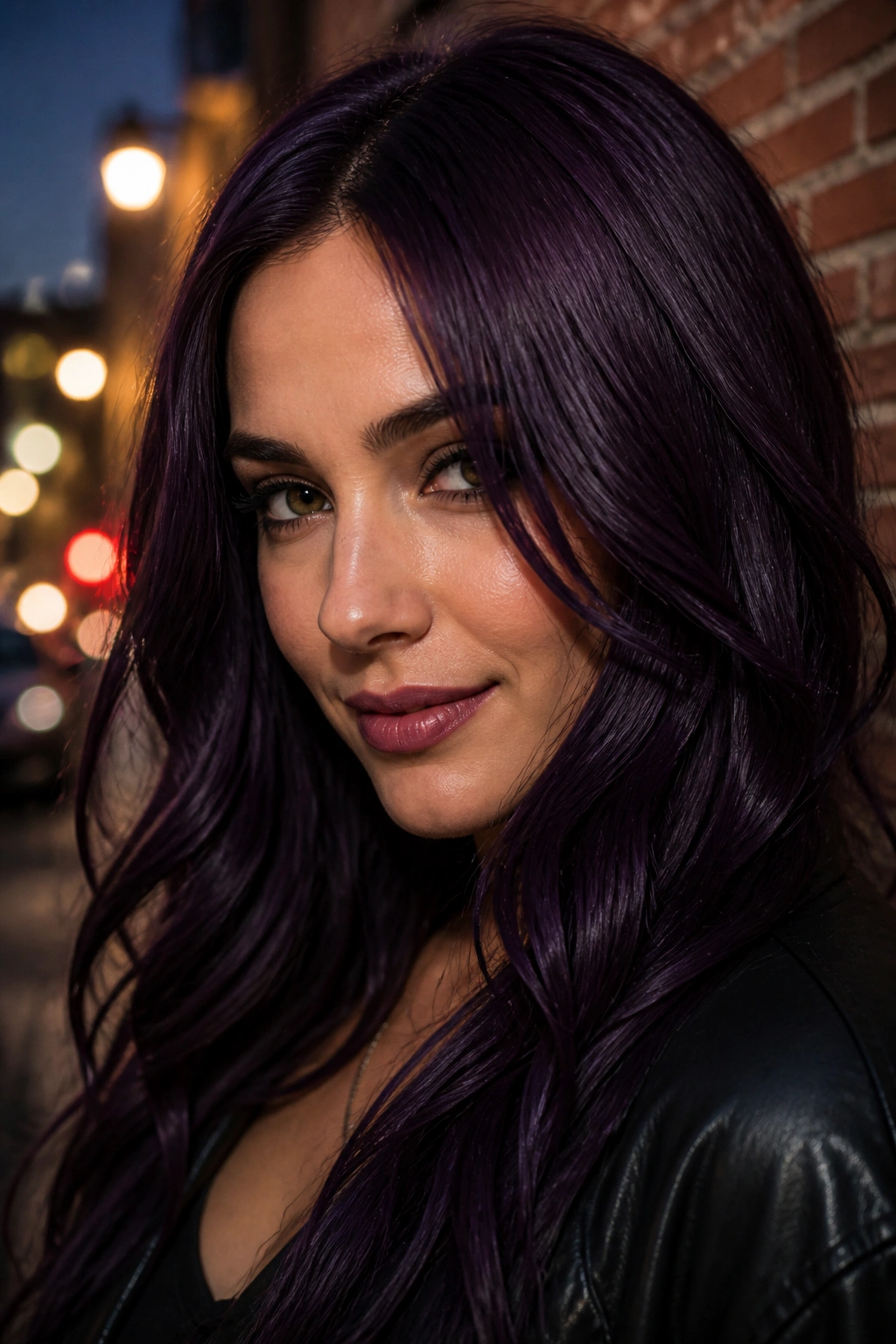
Plum noir is the grown-up answer to violet hair color ideas for cool skin tones. It is darker than plum, softer than black, and richer than burgundy. Unlike red-violet shades that can pull warm very fast, plum noir keeps its cool edge and settles into the hair like ink with a purple cast.
That’s why I like it on people who work in conservative settings or just do not want color that announces itself from the parking lot. Indoors, it can look almost black. Outside, the violet tone wakes up in sunlight and gives the hair a deep, wine-dark sheen.
The comparison worth making is burgundy versus plum noir. Burgundy depends more on red, which can clash with cool skin if the red gets too obvious. Plum noir has enough blue in it to stay sleek next to pinker undertones. That small shift changes the whole mood.
If you want a shade that looks expensive on straight hair, good on curls, and easy to grow out on medium-to-dark bases, this is one of the strongest picks in the bunch.
7. Orchid Balayage
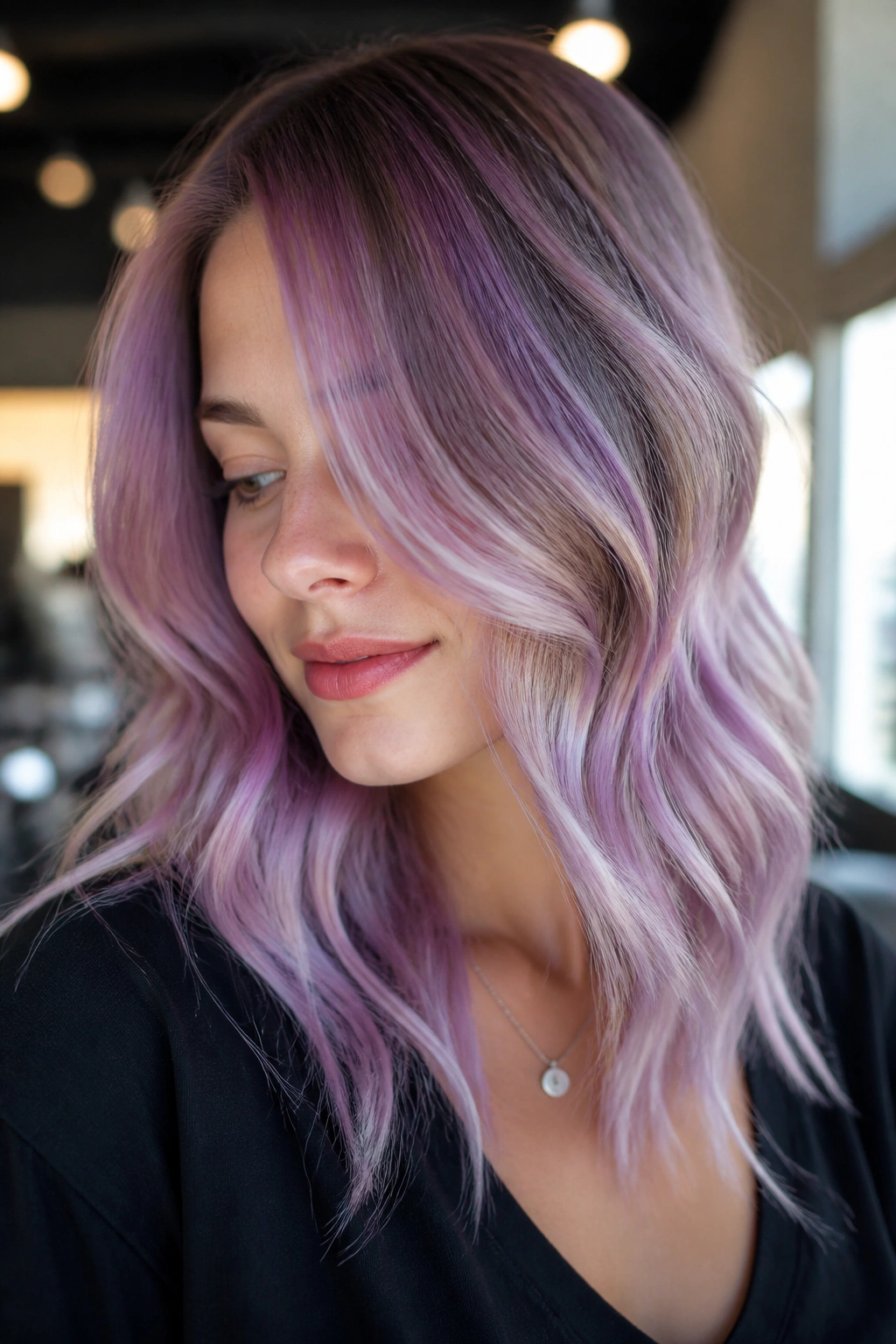
Orchid balayage gives you the softness of pastel violet without committing every inch of your hair to the same color. The painterly placement is what makes it interesting. Violet pieces sit through the midlengths and ends, then blur into a lighter base instead of stopping abruptly.
Where it lands best
This shade works nicely on cool skin tones because orchid has enough blue to stay fresh, but enough brightness to keep the hair from feeling heavy. On a layered cut, the color moves. On curls, it catches differently at each bend, which keeps the whole look from going flat.
I’d use this on someone with a medium blonde or light brown base who wants violet without full head upkeep. Balayage also buys you a little grace as it grows out. The roots stay natural, the violet fades softly, and the whole thing looks lived-in instead of neglected.
Placement details worth asking for
- Keep the brightest orchid near the face
- Leave some natural depth at the crown
- Blend the violet through the ends, not just the top layer
- Ask for a soft root melt if your base is much darker
Small but important: If the highlight pieces are too thin, the color can disappear in waves. Slightly chunkier hand-painted sections usually read better.
8. Periwinkle Violet
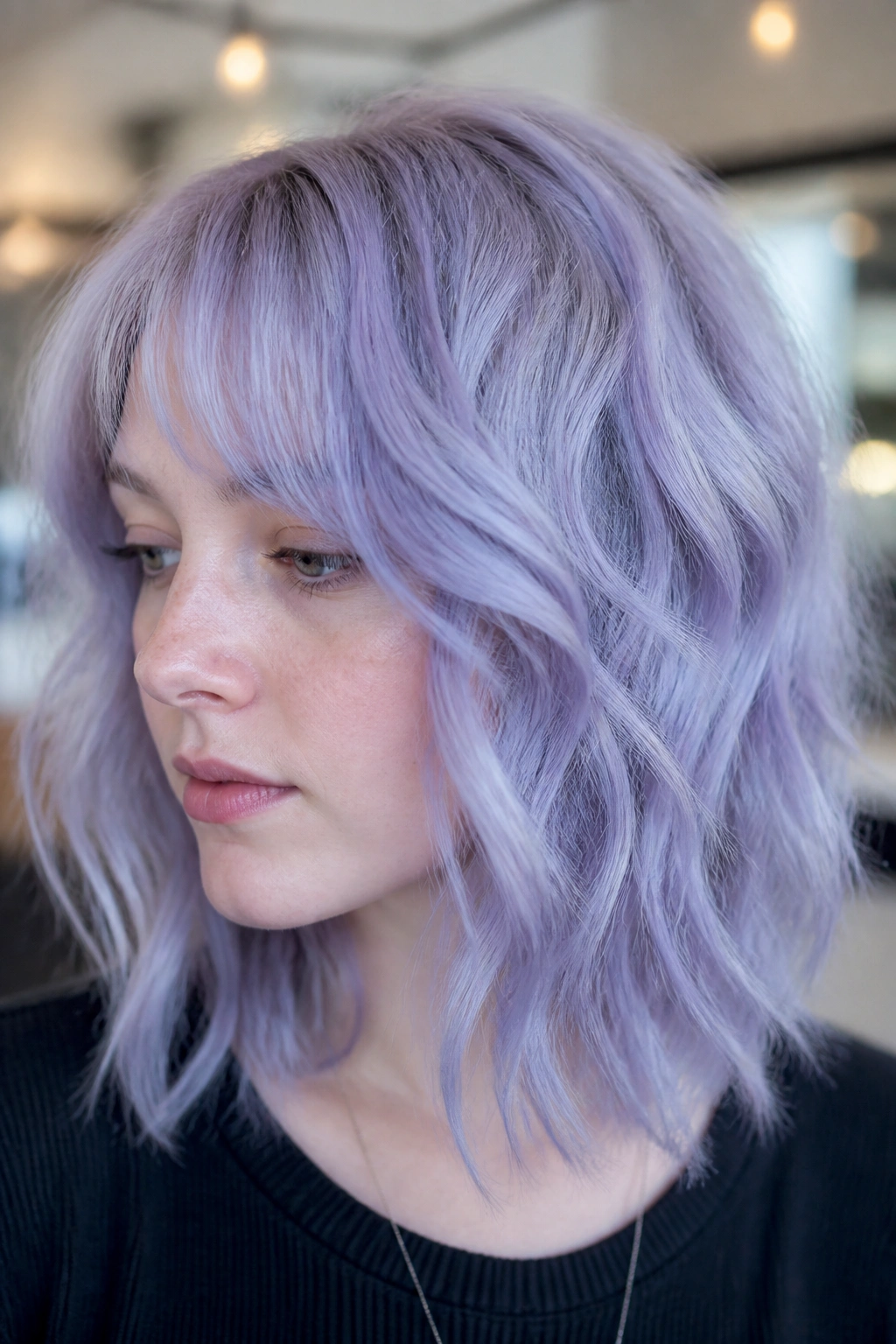
Periwinkle violet is airy, bluish, and a little whimsical without going full fantasy color. It sits closer to the blue end of the purple family, which makes it a strong match for cool skin tones that can handle pale shades but need them to stay chilly, not pink.
You’ll usually see this shade on very light blonde hair, because the color needs a pale base to show its real personality. On darker hair, it turns muddy fast. On the right canvas, though, it has this soft, cloudy glow that looks especially good with textured waves and short cuts with movement.
The mechanism is simple enough: more blue in the formula means less risk of warmth. That matters because periwinkle can turn lavender-gray if the base is yellow. Start clean and it stays crisp.
I like periwinkle on airy, undone styling more than on pin-straight hair. A little bend in the ends gives it shape. Without that, the shade can look flatter than it should.
9. Midnight Violet Black
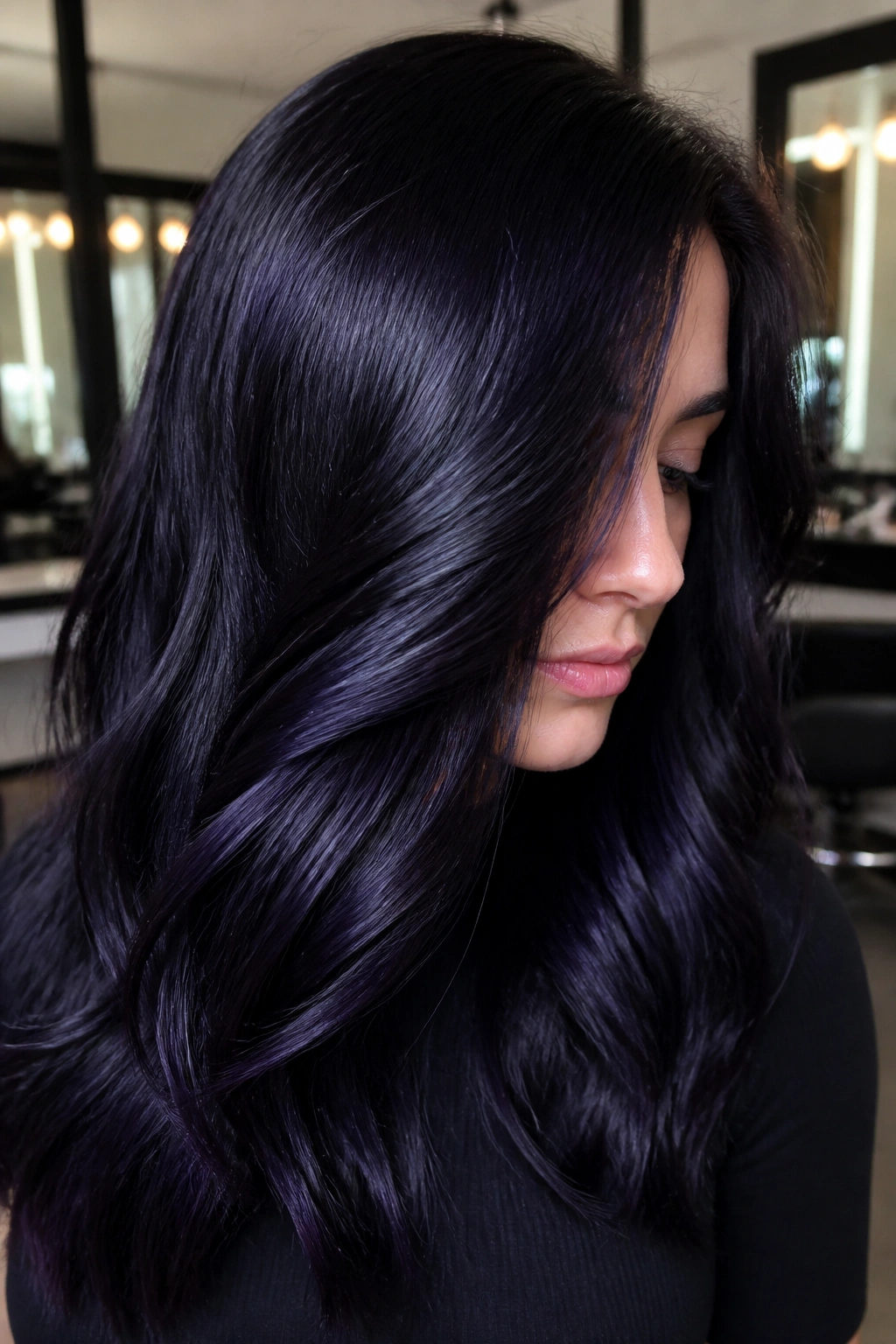
Midnight violet black is for the person who wants depth first and color second. Indoors, it reads like glossy black hair. Outdoors, or under bright light, the violet comes through like a shadow with a blue-purple edge. That hidden quality is exactly why it suits cool skin so well.
The shade flatters cool undertones because it doesn’t rely on red to create richness. Instead, it uses depth and shine. That keeps the color from warming up around the face, which can happen with mahogany or burgundy blacks. If your skin tends to look best in charcoal, white, and cobalt, this is in your lane.
This shade is also practical if you want violet without bleaching the whole head. On a natural dark base, you can often build it with a demi-permanent or gloss that leaves the hair looking deeper and cooler, not flat. The result is subtle, but not boring. There’s a difference.
A blunt cut makes the color feel sharper. Long curls make it look softer. Both work. The sheen is the main event.
10. Mauve Quartz
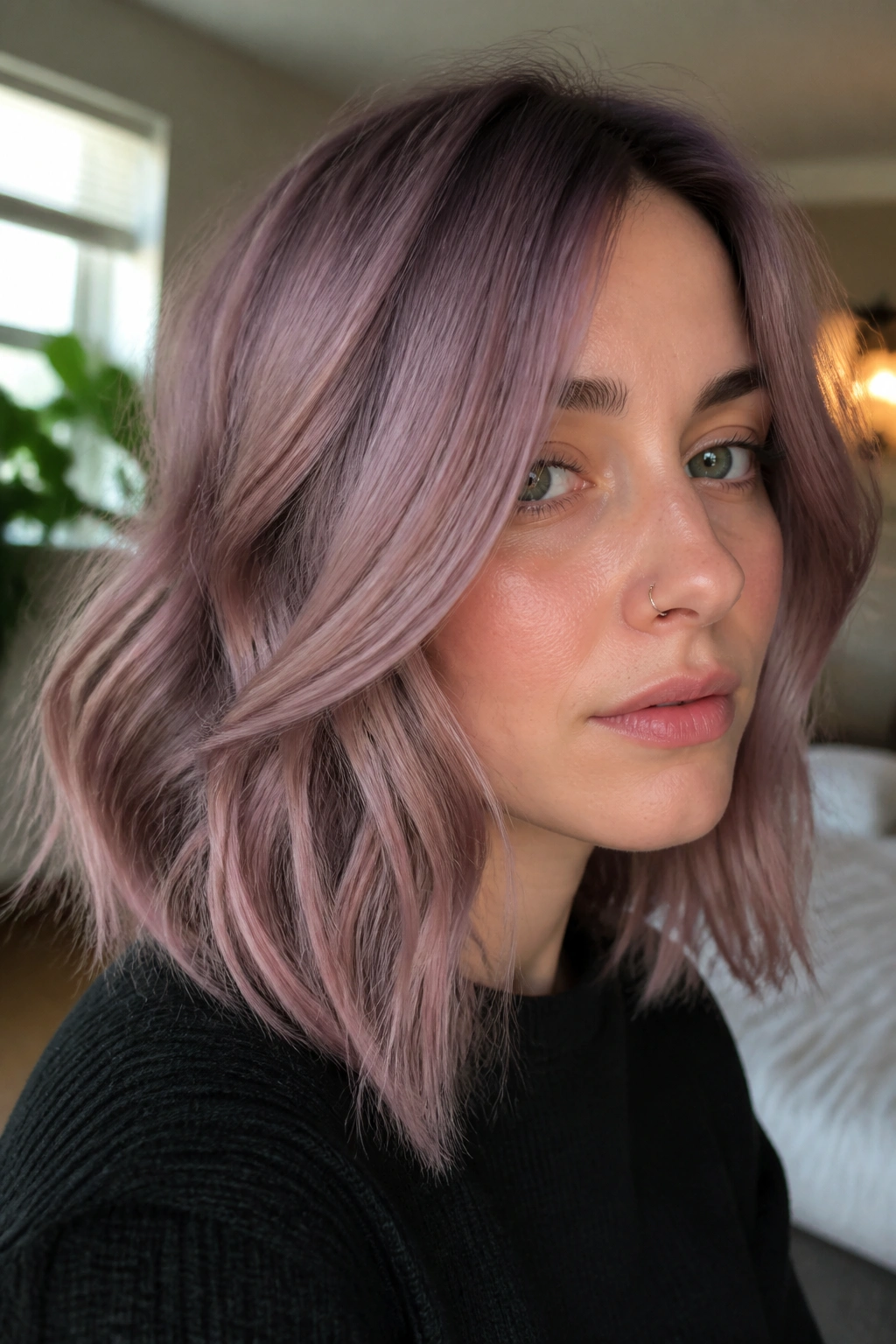
Why does mauve quartz work so well on cool skin tones? Because it softens violet with a dusty pink-gray cast instead of a warm pink cast. That little shift keeps the color from drifting into blush territory, which is where a lot of mauves go wrong.
The color in plain terms
Think of mauve quartz as a muted violet with a powdery finish. It is not loud, and that is the point. On cool complexions, the shade can bring out the natural flush in the cheeks without making the skin look red or overdone. The trick is keeping the violet side noticeable enough that the overall look still reads purple.
It’s a smart choice for shoulder-length cuts, layered shags, and curtain bangs because the color changes a little as the hair moves. A stiff, one-length cut can make it look too plain.
How to wear it
- Pair it with a soft root shadow if your hair is blonde
- Ask for a cooler toner, not a rosy glaze
- Style with loose bends to show the shade change
- Refresh the gloss before the mauve starts looking beige
A lot of people skip dusty purple shades because they think they’ll disappear. They don’t, not if the violet is strong enough under the gray.
11. Grape Sorbet
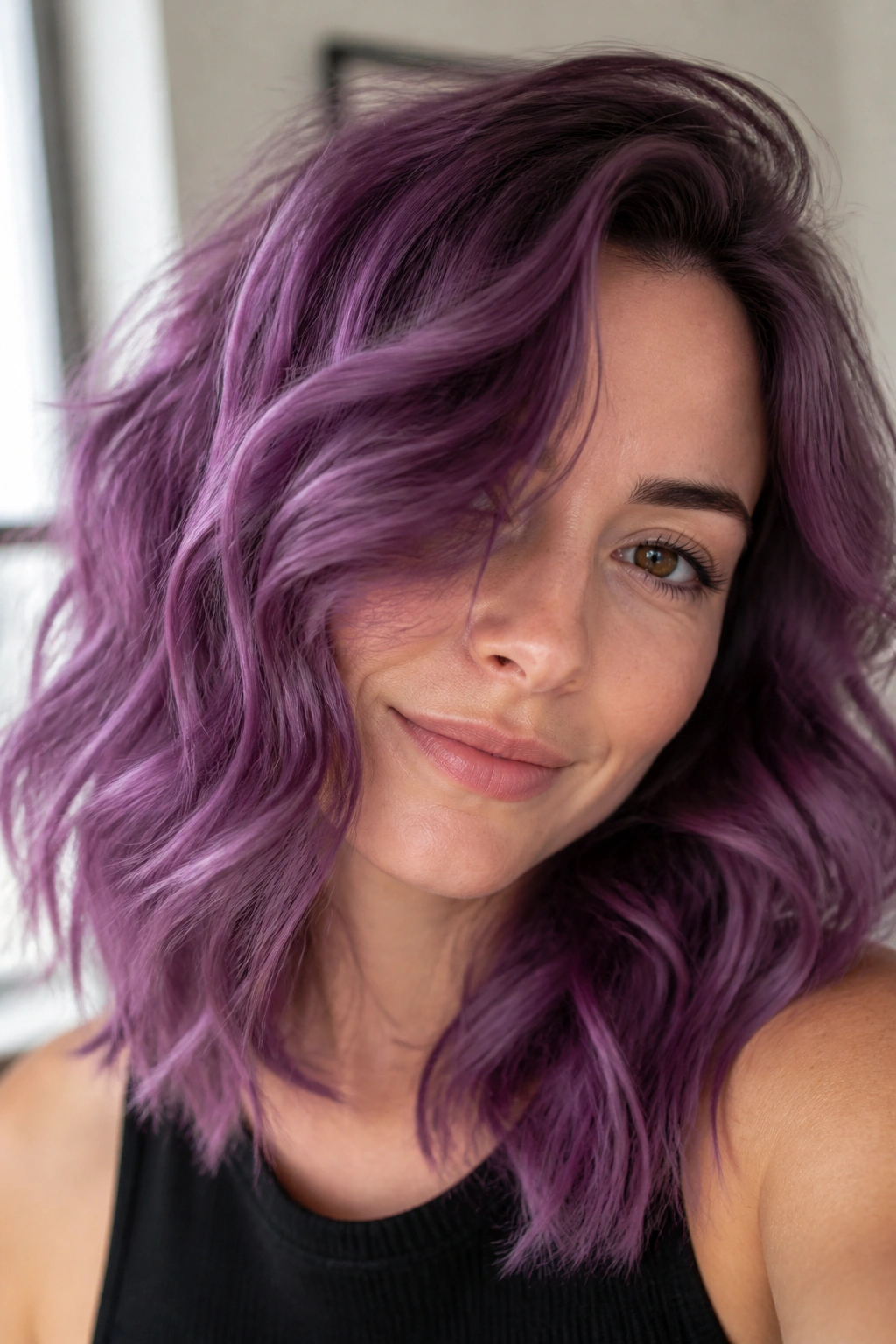
Grape sorbet is brighter than plum and softer than electric purple, which gives it a sweet spot all its own. It has enough saturation to be fun, but the cool base keeps it from looking warm or orange at the edges. On cool skin tones, that matters because bright purple can get messy fast if the red undertone takes over.
Unlike neon purple, grape sorbet has a little restraint. The shade still pops, especially on prelightened hair, but it doesn’t feel like a costume color. It works nicely for someone with a playful style who still wants the color to look clean with a black coat, a gray sweatshirt, or a white tank.
I’d recommend this shade on medium-length hair with some texture. Waves show off the color shifts better than poker-straight hair, and the color can feel almost translucent at the ends when the light hits right. It’s a good choice if you want purple that reads modern without leaning hard into pastel.
If you like bold color but hate the way hot pink sits on cool skin, start here.
12. Eggplant Gloss
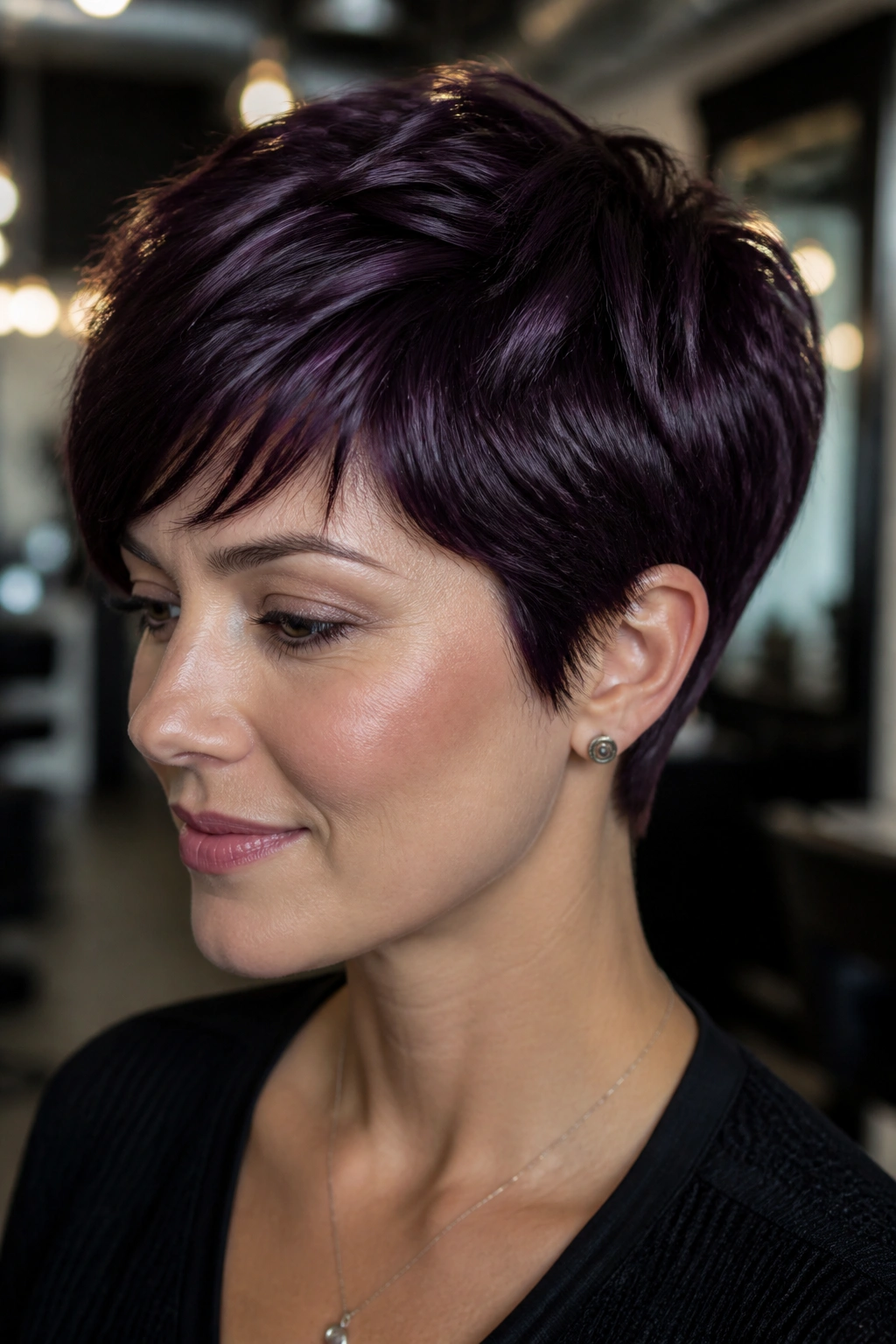
Eggplant gloss is one of the most underrated violet hair color ideas for cool skin tones because it gives you depth, shine, and a cool undertone all at once. The shade sits close to aubergine, but with more violet than red, which keeps it from turning too wine-dark.
Why gloss makes the difference
A gloss is not just a shine treatment. In this case, it deposits enough pigment to refresh faded purple hair or tint darker hair with a violet cast. That makes eggplant gloss useful for brunettes who want color without a full bleach job. It also helps cool down brass if the hair has picked up too much warmth.
A glossy finish matters here because eggplant can look flat if the surface is dry. The shine helps the violet edges show, especially on layered hair or soft curls.
Good ways to wear it
- On dark brown hair for a subtle violet sheen
- On prelightened ends for more visible depth
- On sleek blowouts where the shine can do its job
- On short pixies, where the color looks sharp and dense
Warning: If the base is too orange, eggplant can turn muddy. A quick tone-up before the gloss is usually worth it.
13. Frosted Violet Money Piece
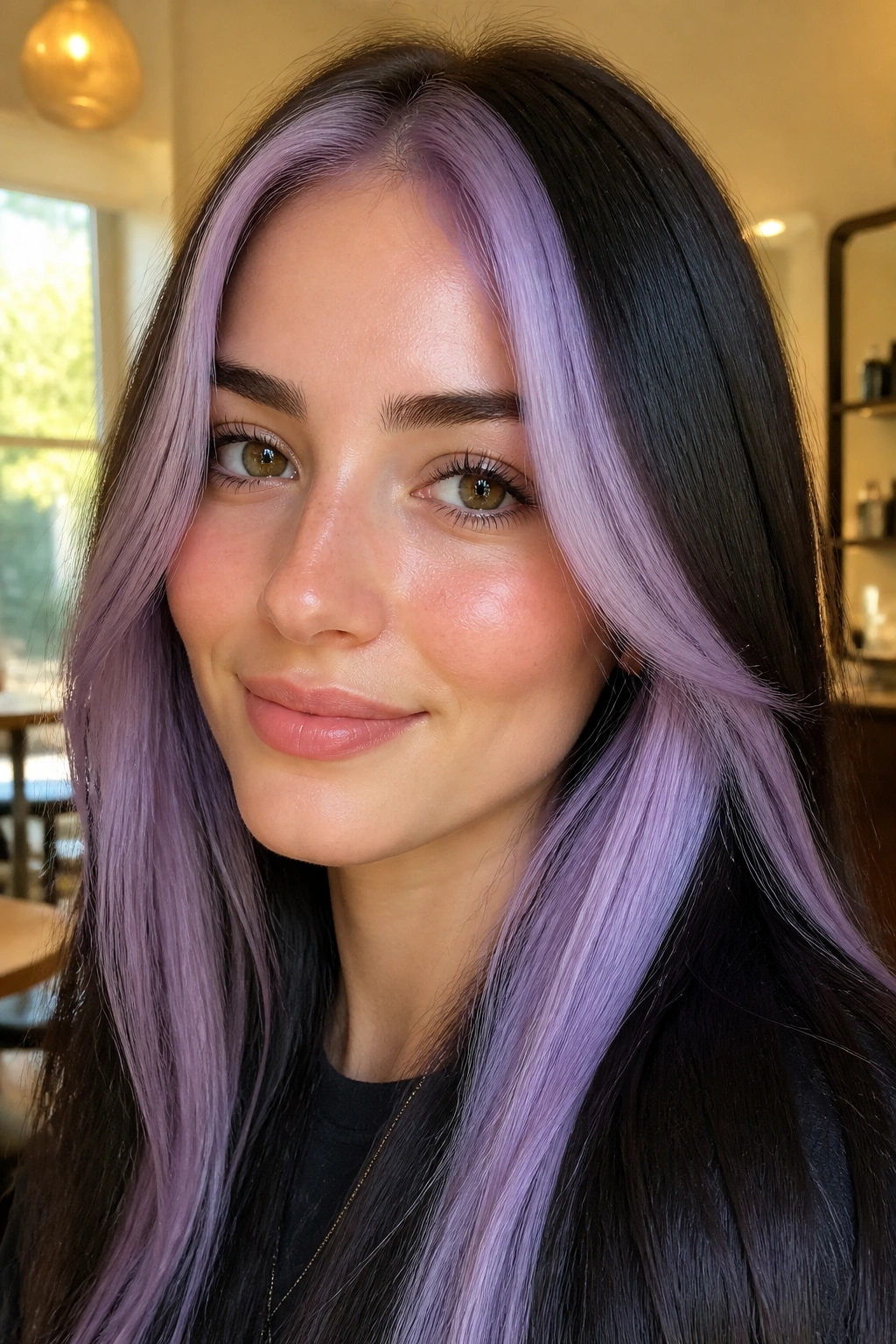
A frosted violet money piece is blunt, fun, and easier to wear than people expect. The whole point is to keep most of the hair natural or dark and place the brightest violet right around the face. That front section catches light first, so the color reads immediately even if the rest of the hair stays quiet.
This works well for cool skin tones because the violet lives where it can frame the face instead of sitting far away in the ends. If the shade has a frosty lavender or silver-violet cast, it tends to sharpen the features a bit and make the eyes stand out. No mystery there. Bright color near the face changes the whole mood.
I like this look on layered cuts, lobs, and shaggy haircuts with bangs. The money piece can be as narrow as one inch or as wide as two, depending on how much impact you want. Wider sections feel bold. Narrower ones feel deliberate.
It’s also a smart entry point if you’re nervous about all-over color. You get the hit of violet without committing the whole head to maintenance.
14. Denim Violet
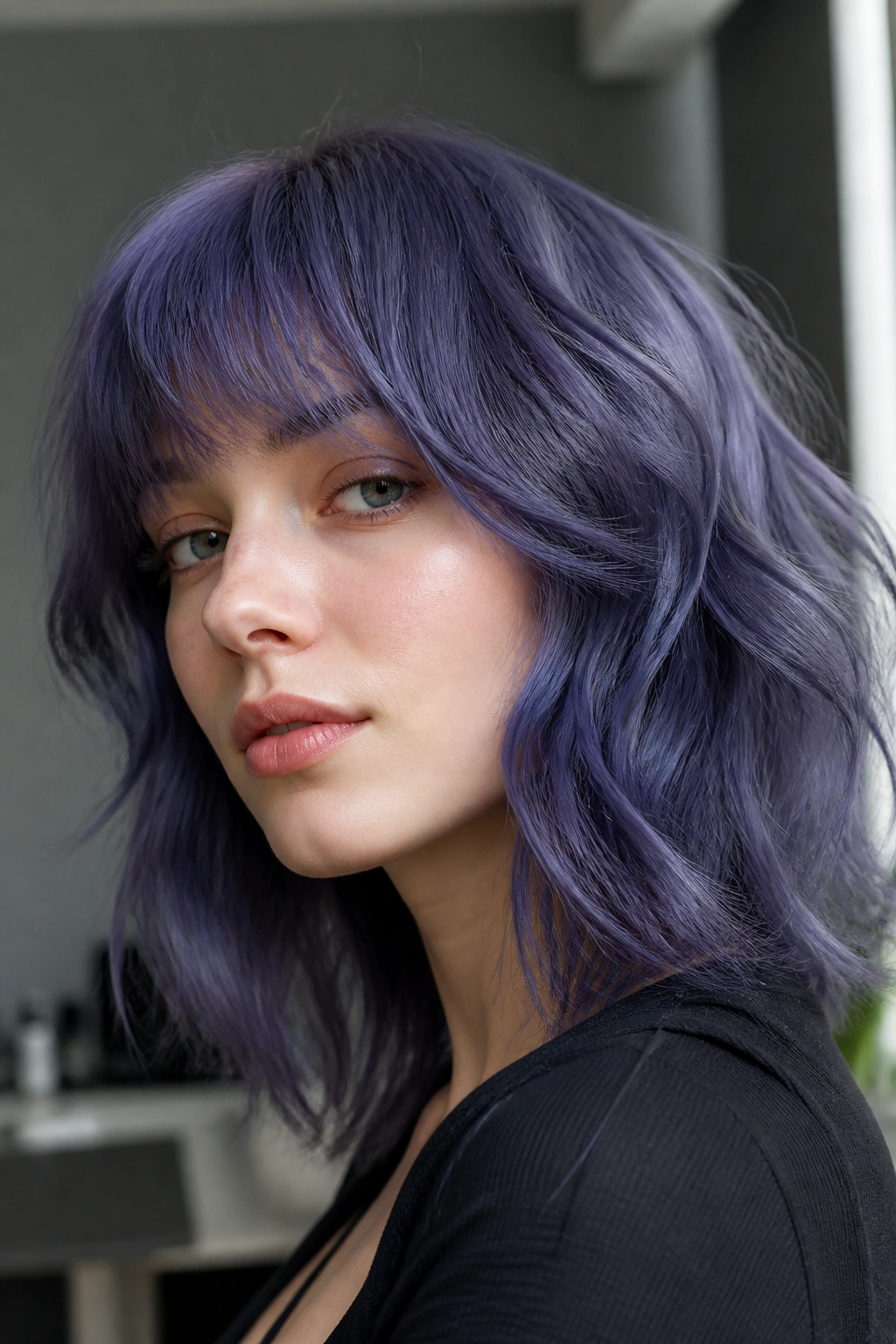
Denim violet is muted, cool, and a little unexpected. It lives between blue and purple, but the dusty finish keeps it from looking childish or too bright. If icy lavender feels too soft and plum noir feels too dark, denim violet lands in the middle.
What gives it that worn-in look
The shade works because it borrows the dry, faded feel of denim wash but keeps the purple note visible. On cool skin tones, that makes it flattering without feeling overly polished. It has edge, but not shine-heavy edge. More lived-in than glossy. More streetwear than ballroom.
Denim violet is a nice choice if you wear a lot of gray hoodies, black leather, white sneakers, or silver accessories. The color does not fight those things. It sits beside them and feels intentional.
A few practical details help the shade hold up:
- Start from a pale blonde or cool brown base
- Use cool water for washing when you can
- Skip heavy oils on the midlengths, which can mute the tone
- Expect the color to soften into smoky blue-purple over time
I love this one on textured bobs and choppy lobs. The movement keeps the muted color from looking heavy.
15. Opal Purple
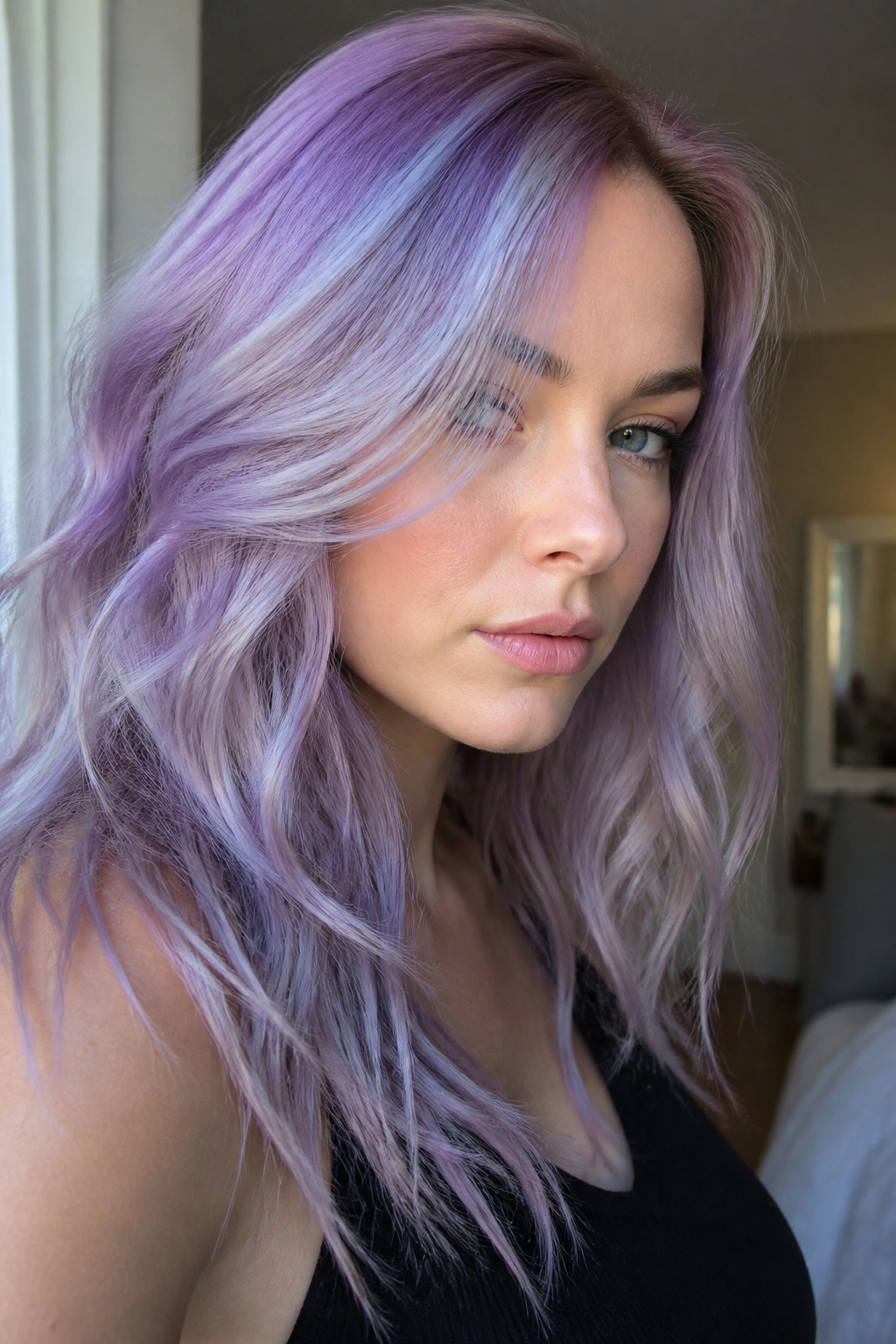
Opal purple is the shade for people who like color that shifts a little as they move. It’s not one flat violet. It’s a mix of lavender, pearl, and pale purple that can lean cooler or brighter depending on the light. That changing finish works especially well for cool skin tones because the shade never settles into warmth.
The appeal is subtle until it isn’t. In soft daylight, opal purple can look misty and pale. Under brighter light, the lilac and silver notes come forward and the color reads more clearly. That makes it a nice option if you want something pretty but not sugary.
It needs a careful base, though. Patchy lightening will show through. So will yellow. If the hair is not lifted evenly, opal purple can lose the whole point of the effect.
This shade suits long layers, loose waves, and airy bangs. The movement helps each tone show up in a different way. On flat, straight hair, the effect can feel too controlled. A little texture loosens it up.
16. Raspberry-Blue Violet
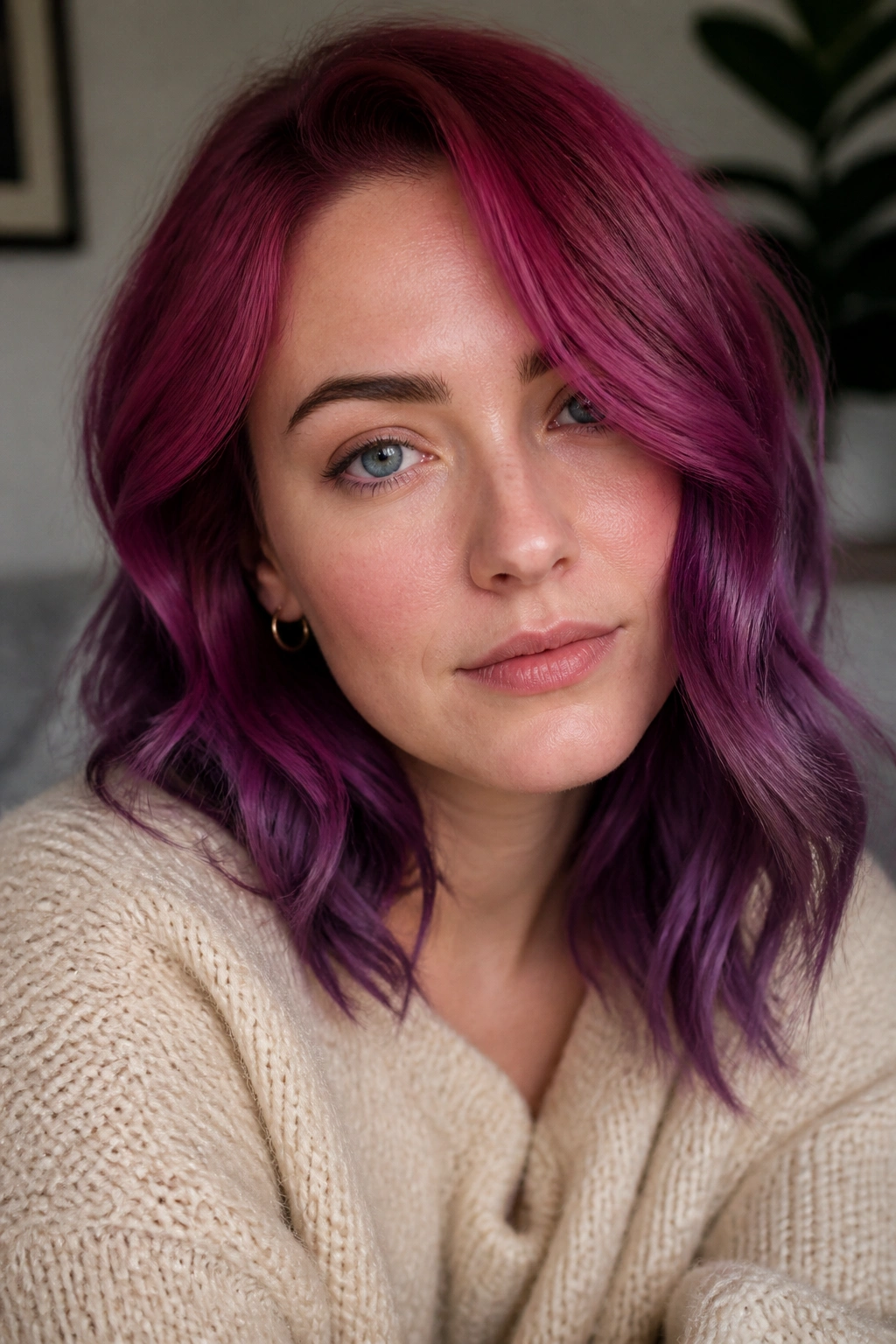
Can a shade have red in it and still work on cool skin tones? Yes — if the blue is strong enough to keep the red from taking over. Raspberry-blue violet does exactly that. It gives you a berry note up front, then cools it down with violet and a little blue shadow underneath.
What makes it wearable
This is a nice bridge shade for someone who likes richer purple but doesn’t want plum that feels too dark. The raspberry piece gives brightness, while the blue-violet base keeps the color from turning orange or coppery as it fades. On cooler complexions, that balance keeps the face from clashing with the hair.
It looks good on medium-to-deep cool skin, especially if you wear berry lipstick, charcoal knits, or jewel-toned tops. The shade has enough energy to stand on its own without needing extra styling drama.
How to wear it
- Use on a lifted base around level 8 or 9
- Ask for a blue-violet toner to keep the raspberry in check
- Style with soft curls if you want the berry tone to show more
- Wear it with warm browns if you want a little contrast in your clothes
The shade can read differently under indoor light versus daylight, and that’s part of the fun. It never sits still for long.
17. Smoke Plum Ombre
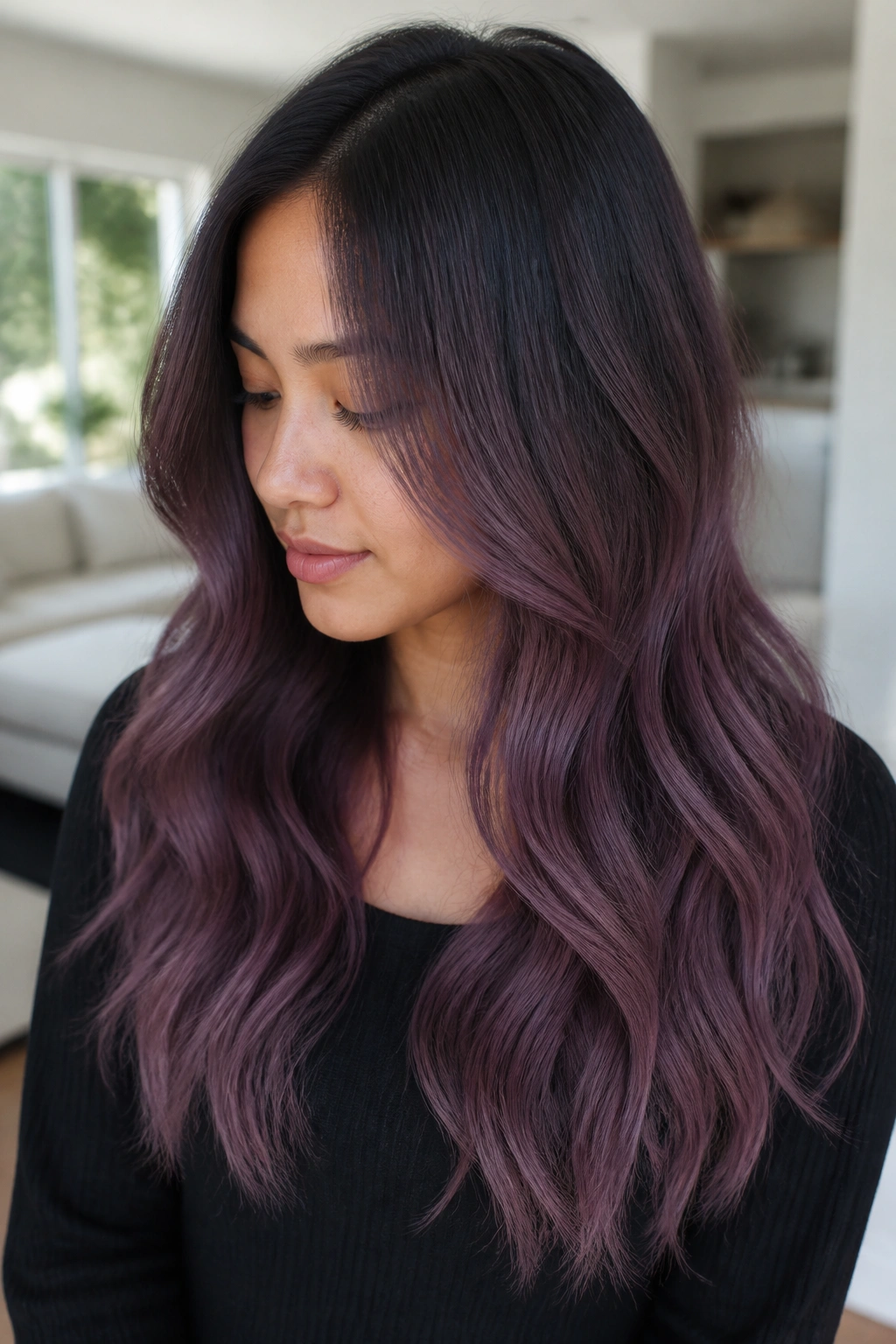
Smoke plum ombre is for someone who wants dimension more than brightness. The roots stay deeper, then the shade eases into smoky plum through the midlengths and ends. Unlike a hard dip-dye, this version fades gradually, which makes it easier on grow-out and gentler on the eye.
That softness flatters cool skin tones because the cool root-to-end shift never turns brassy. The plum stays anchored by a gray or blue haze, so the whole effect feels grounded. On long hair, the ombre gives shape. On layered hair, it makes the cut look fuller than it is.
This is one of the better options if you want violet but don’t want to live in the salon. The root shadow buys time. The smoky finish hides soft fading. And because the ends are darker than a pastel shade, they usually stay looking intentional longer.
It’s strongest on longer lengths where the fade has room to breathe. Short hair can wear it, but the transition gets compressed and loses some of the effect.
18. Electric Violet Underlights
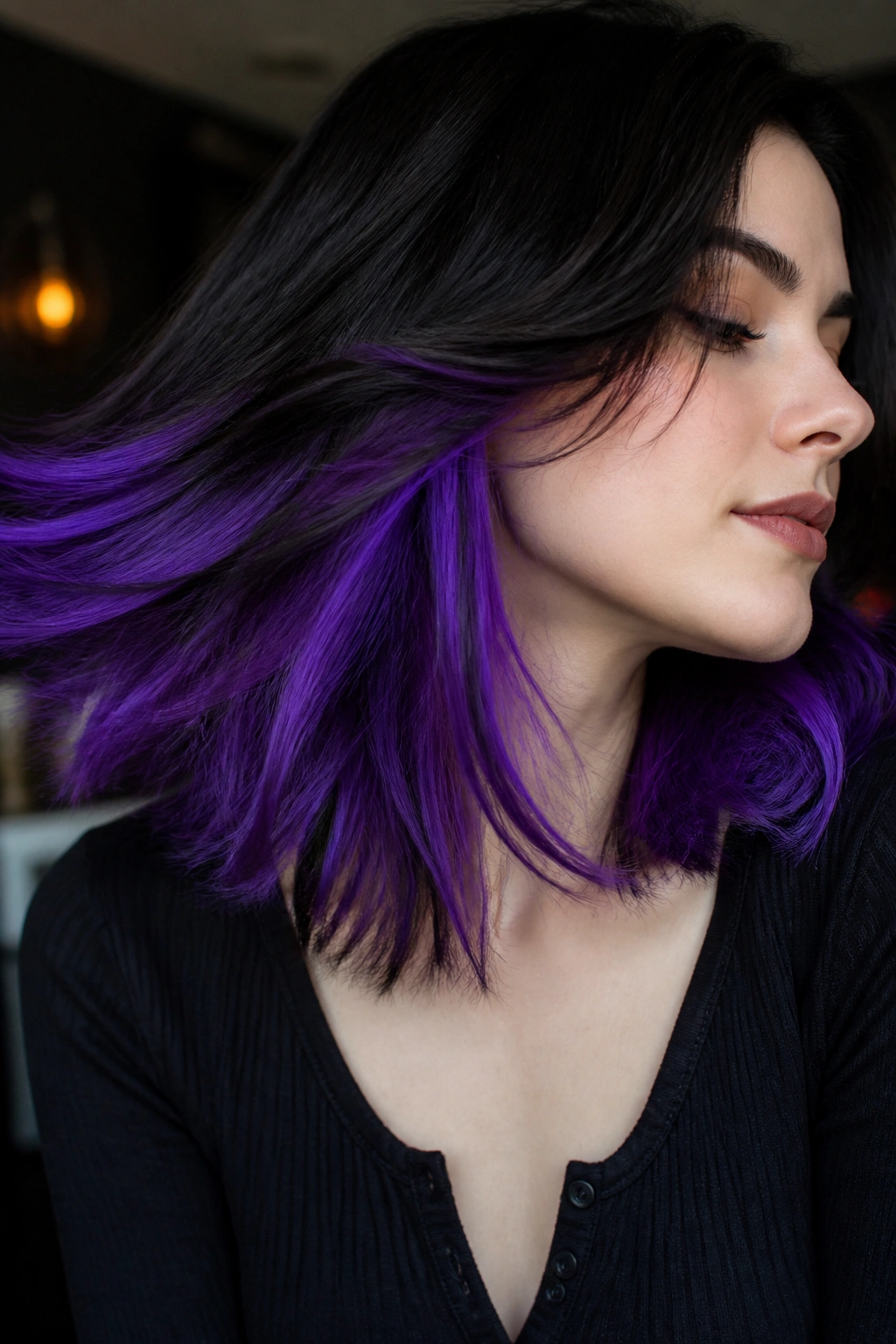
Electric violet underlights are the boldest pick here, and also one of the smartest if you want contrast without full commitment. The top layer of hair can stay dark, brown, or black, while the hidden underlayer flashes violet when you move, flip your hair, or tuck it behind your ears. It’s a great trick, honestly.
Why cool skin tones can carry it: the violet sits under the darker surface, so the bright pigment does not overwhelm the face all day. Instead, it shows up in pieces. That makes the color feel edgy without forcing every outfit to fight with it. If you wear cool-toned makeup, silver jewelry, or a lot of black clothing, the whole look makes sense fast.
I’d put this on shoulder-length cuts, layered lobs, and longer hair that gets worn half-up a lot. The reveal matters. So does the placement. A few slices underneath the crown can be enough; you do not need to color the whole underside unless you want a bigger hit of purple.
Best move: ask for a vivid violet that leans blue, not magenta. The blue edge keeps the underlights from looking warm when they peek through darker hair.
If you want violet that feels modern, a little secretive, and easy to hide when needed, this is the shade I’d start with.
