



Pink hair is one of those colors that can either flatter a cool complexion or fight it a little too hard, and the difference usually comes down to the pigment hiding underneath. Blue-leaning pinks, mauves, berries, and lilac-pink blends tend to sit nicely against cool skin tones. Peachy, coral, and orange-leaning pinks can look off fast.
That’s why swatches are so sneaky. A shade that looks soft and rosy in the salon chair can turn salmon once it meets your skin, your lighting, and the actual base color under the dye. If your undertones lean cool, the best pink hair color ideas usually have a little violet, a little blue-red, or a smoky gray cast that keeps the color crisp instead of sweet.
And pink is not one shade. It can be airy and translucent, loud and electric, dark and wine-stained, or barely-there like a blush on pale skin. On a level 9 or 10 blonde base, pink often reads clear and delicate. On a deeper base, the same family shifts into raspberry, berry, mauve, or smoked plum, which is a very different mood.
1. Icy Rose Blonde
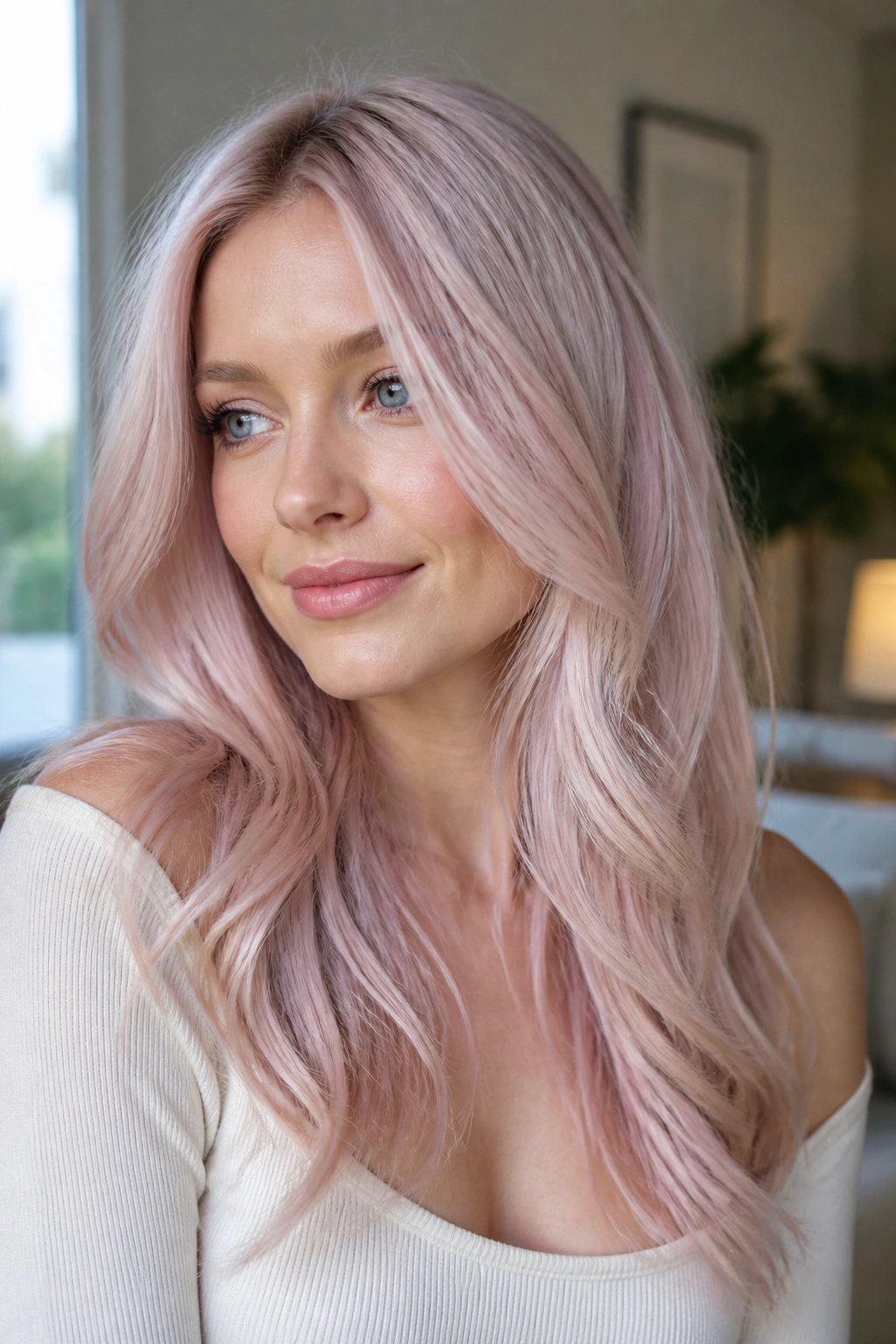
Icy rose blonde is the pink for people who want something light, polished, and just a little frosted. The color sits in that narrow space between blonde and pink, with a pearl finish that keeps it from looking sugary. On cool skin, that soft blue-violet edge is the whole point.
Why It Flatters Cool Undertones
Cool undertones usually play well with colors that echo them instead of fighting them. Icy rose blonde does that neatly. It keeps the skin from looking flat because the pink is diluted, not loud, and the pale blonde base gives the face room to breathe.
The trick is balance. Too much yellow in the hair and the pink starts to slide toward peach. Too much gray and it goes dusty in a way that can feel tired. The sweet spot is a clear blonde base toned to a soft pearl, then tinted with a translucent rose glaze.
- Best base: level 9 to 10 blonde
- Best add-ons: pearl toner, violet toner, or a sheer rose gloss
- Works well with: silver hoops, cool-toned lipstick, soft gray sweaters
- Watch for: yellow lift left behind after bleaching
Pro tip: ask for translucent rose, not opaque bubblegum. The more air in the color, the more expensive it tends to look on cool skin.
2. Dusty Mauve Pink
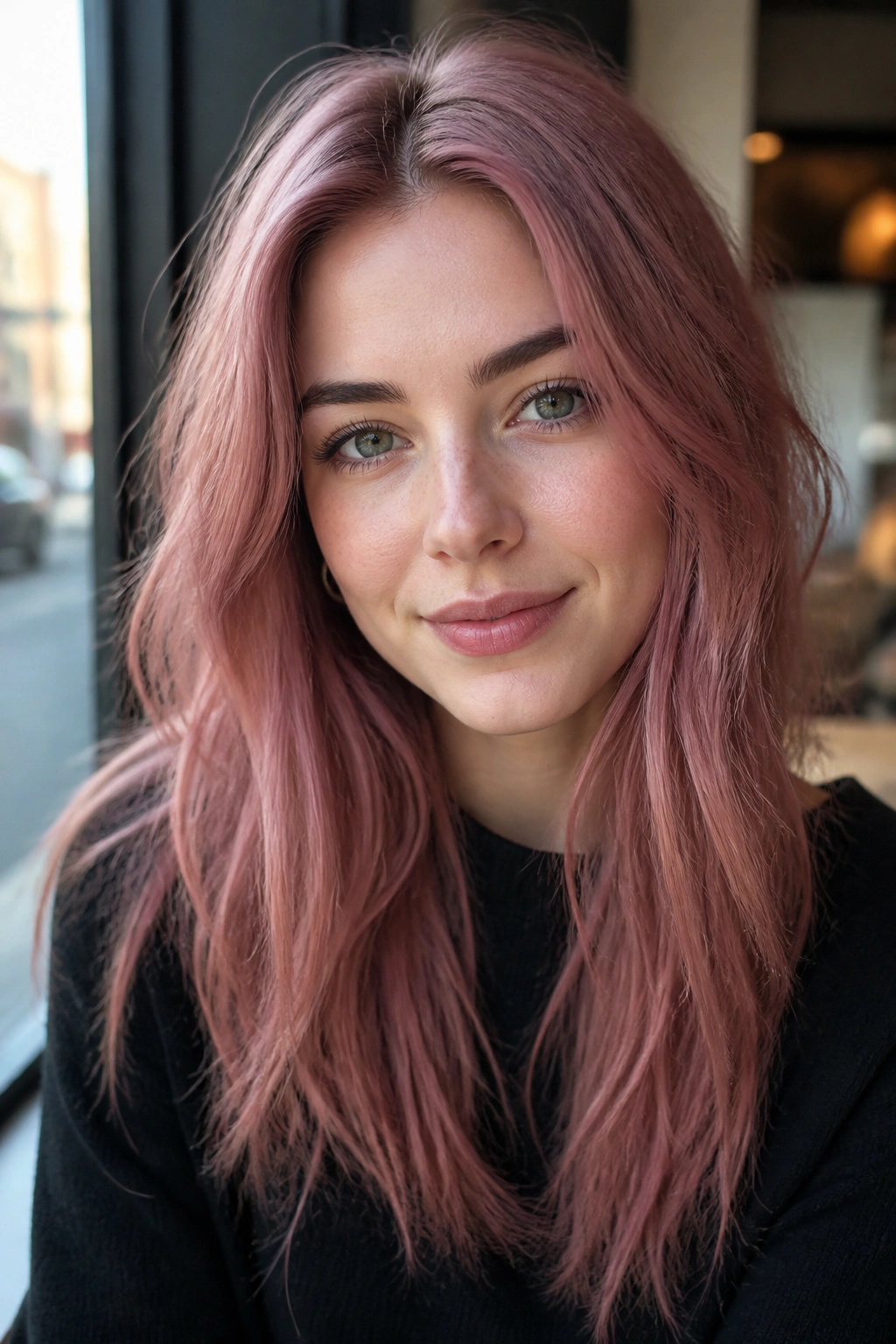
Dusty mauve pink is the shade that says you like pink, but you do not need your hair to shout about it. The gray and violet in the mix calm everything down, and that makes the color especially easy on cool skin tones. It feels softer than magenta, less sweet than blush, and a lot more wearable in daylight.
The real charm is how it sits near the natural flush in the face. Cool skin often has a pink or red cast already, and dusty mauve works with that instead of against it. If your complexion sometimes looks washed out next to bright warm shades, this one usually behaves better.
One reason I like it is the grow-out. A mauve root shadow over a lighter pink length can blur the line between new growth and color, which saves you from that harsh stripe that some vivid shades leave behind. It also looks better when the ends fade, because the fade stays in the same color family.
Nope, it is not boring. It is controlled.
3. Cotton Candy Pink
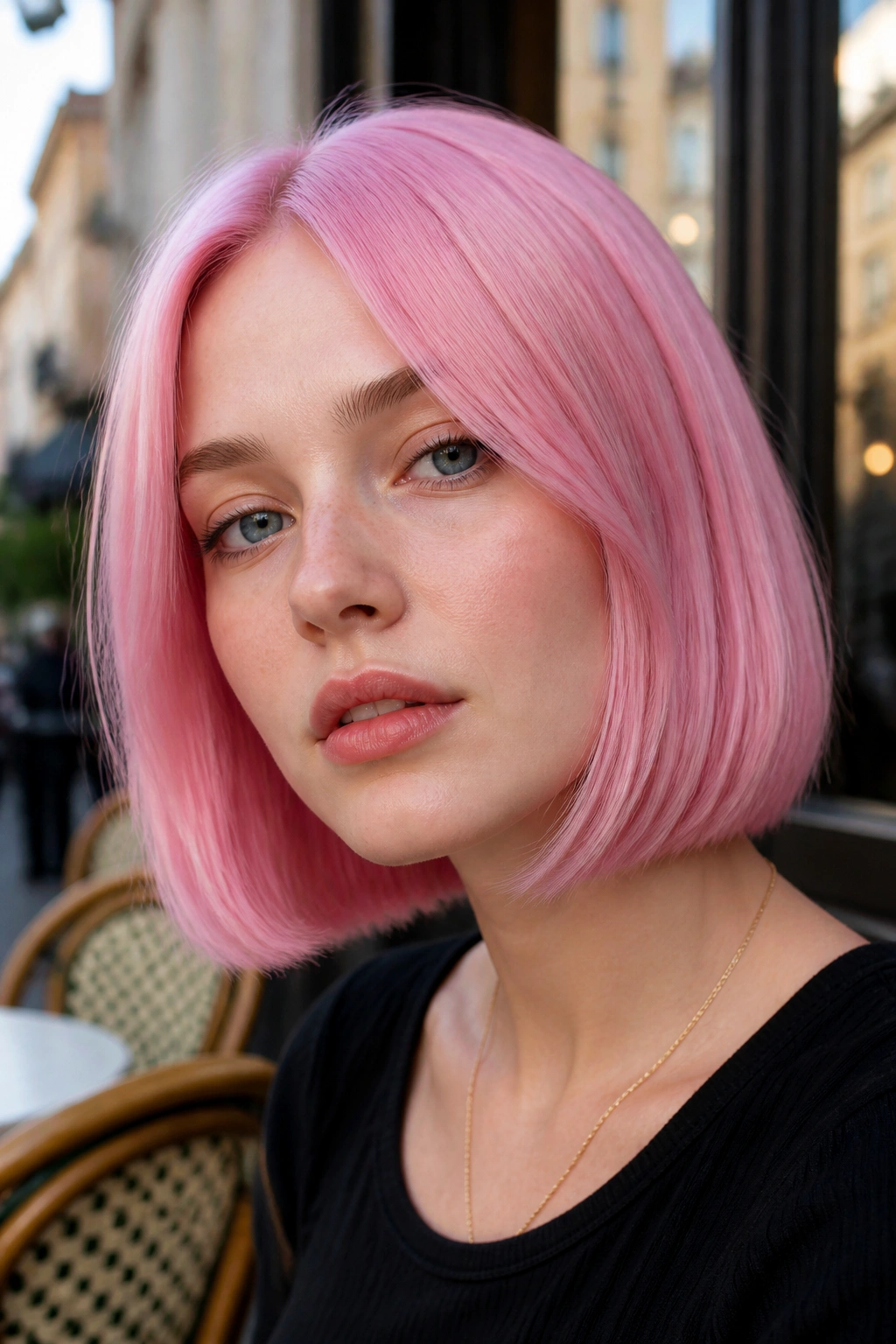
A blunt bob in cotton candy pink can look almost graphic. Long waves make it feel softer, but the personality is the same either way: bright, light, and a little playful. For cool skin, the best version is the one that leans blue rather than peach, because a warmer candy pink can start to look too sugary against a fair or rosy complexion.
What Makes It Work
Cotton candy pink needs a clean, pale base. If the hair is still yellow after lifting, the result shifts toward strawberry milk instead of that airy pink you had in mind. A level 10 blonde gives the dye room to stay clear.
This shade also shows texture in an interesting way. Loose curls make it feel fluffy, while straight hair makes it look sharper and a little more modern. If your cut already has movement, the color will follow the shape instead of fighting it.
- Best on: platinum blondes, short bobs, long layers with movement
- Avoid if: you want low-maintenance color
- Pairs with: cool pink blush, black eyeliner, white tees, silver jewelry
- Fades into: lighter pastel pink, then very pale blush
Strong opinion: if you choose cotton candy pink, let the color be the outfit. Too many warm accessories around it can muddy the whole look.
4. Soft Blush Pink
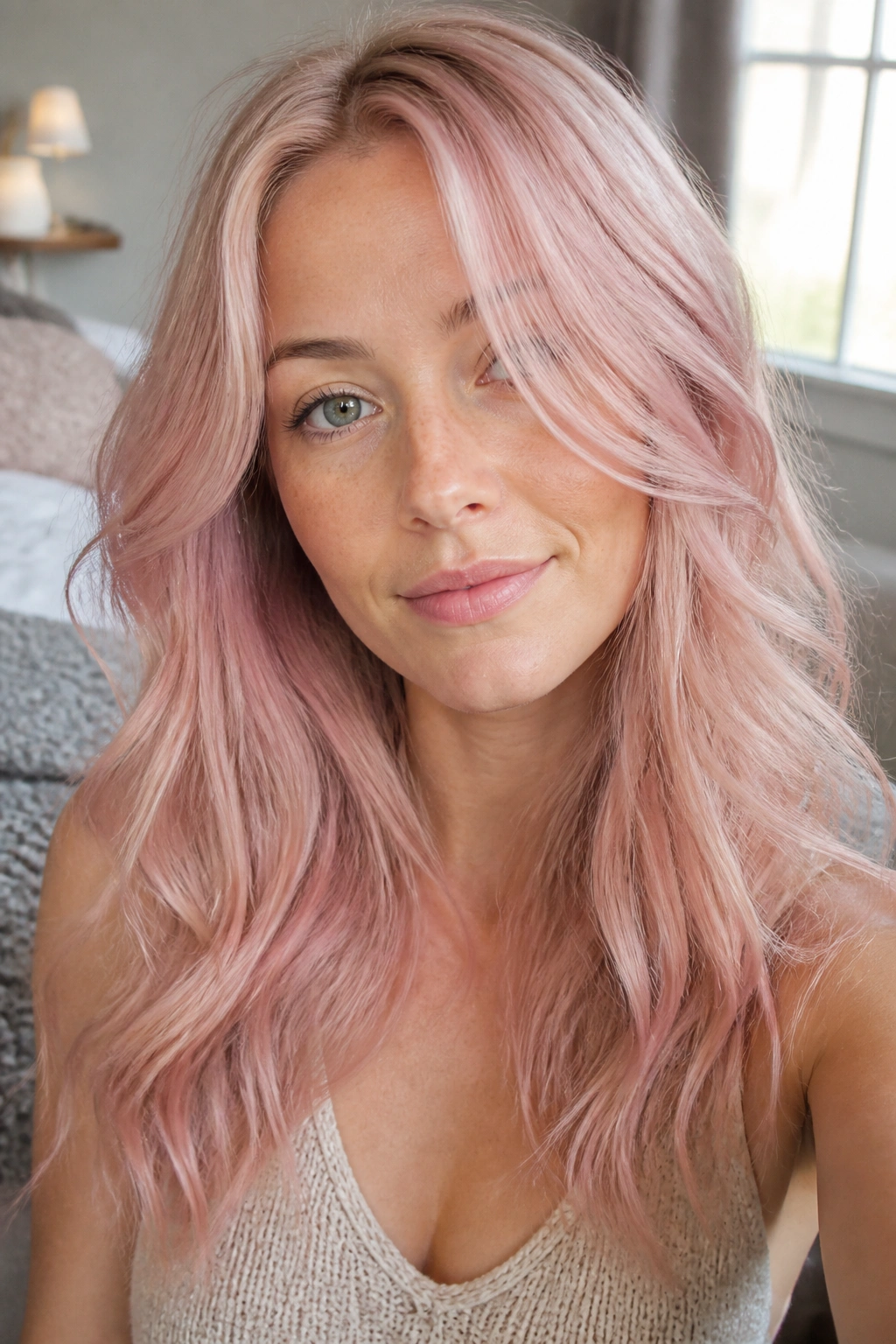
Soft blush pink is the pink I recommend when someone wants color that whispers instead of sings. It feels airy, clean, and a little romantic without tipping into doll-like territory. On cool skin, that matters, because a soft blush can make the face look fresh instead of overly sweet.
It works best when the pigment is barely opaque. You want enough pink to be visible in daylight, but not so much that the hair looks painted on. A sheer blush glaze over blonde hair can give the strands a satin look, especially when the cut has soft layers or a little bend at the ends.
One thing people miss is that blush pink can actually look more refined than brighter shades. The quietness is the point. If your skin already has a pink flush, the hair should stay light enough that it frames the face rather than competing with it.
It is also one of the easier pinks to wear with everyday clothes. Gray knits, black turtlenecks, white button-downs, even denim — all of them sit fine next to it. You do not need a whole new wardrobe. That makes a difference.
5. Raspberry Sorbet Pink
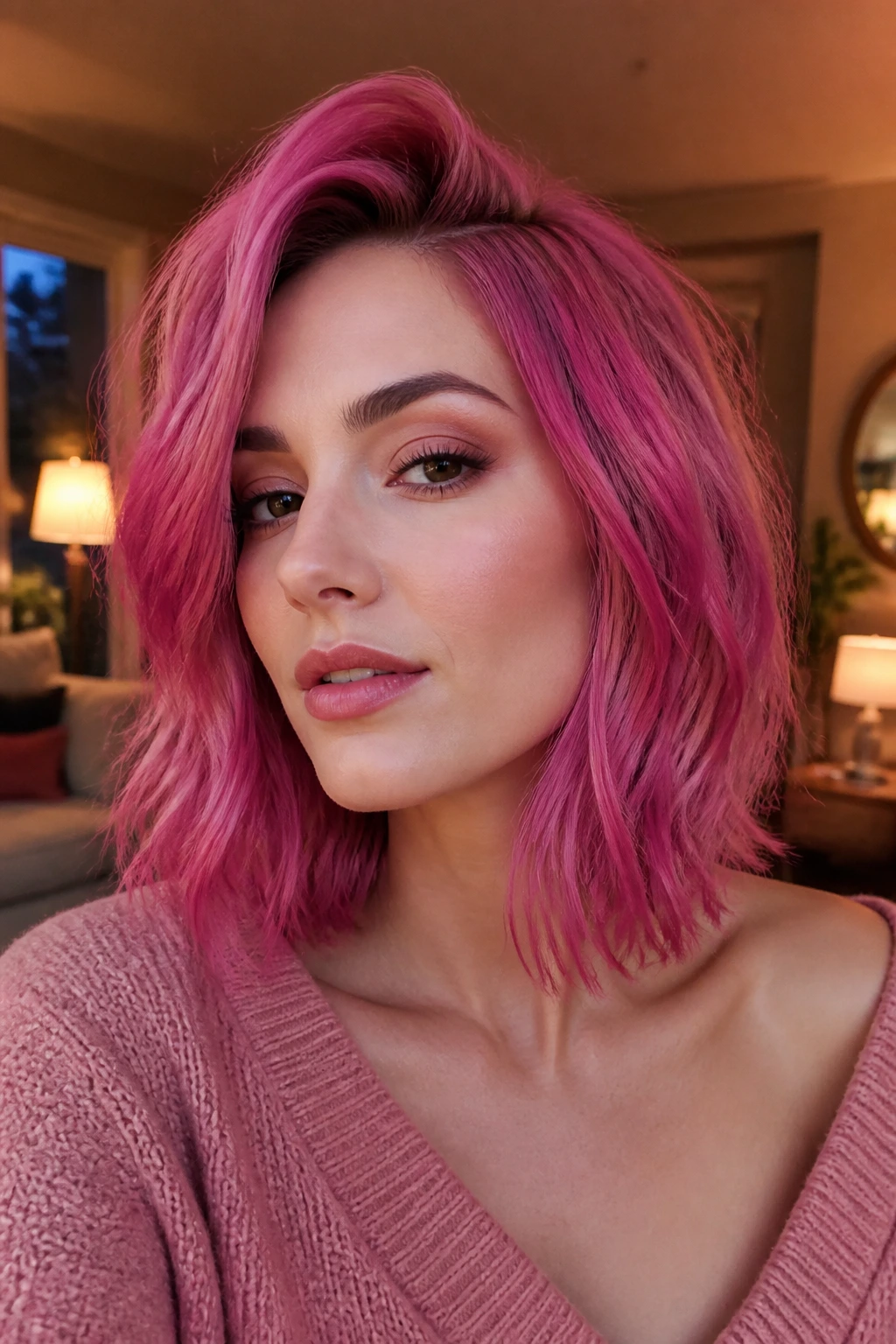
Want pink that still reads rich in dim light? Raspberry sorbet is that color. It pulls from blue-red and berry tones, so it lands cooler than a classic hot pink and deeper than a pastel. On cool skin, that depth gives the complexion some contrast without making it look harsh.
The best part is that it does not disappear the way airy pinks sometimes do. Under soft indoor light, it looks plush. In brighter light, it reads cleaner and more vivid. That makes it a smart choice if you want something with range.
How to Wear It
- All over: gives the strongest color payoff and works well on long layers
- Money piece: brightens the face without committing the whole head
- Peekaboo panels: good if you need a more hidden version of pink
- Ends only: makes a brunette-to-pink blend feel softer
If your hair is porous, this shade can grab darker than expected. Diluting the formula a little keeps it juicy instead of flat. And if you wear berry lipstick, this is the hair color that makes the whole face look intentional.
6. Cool Magenta
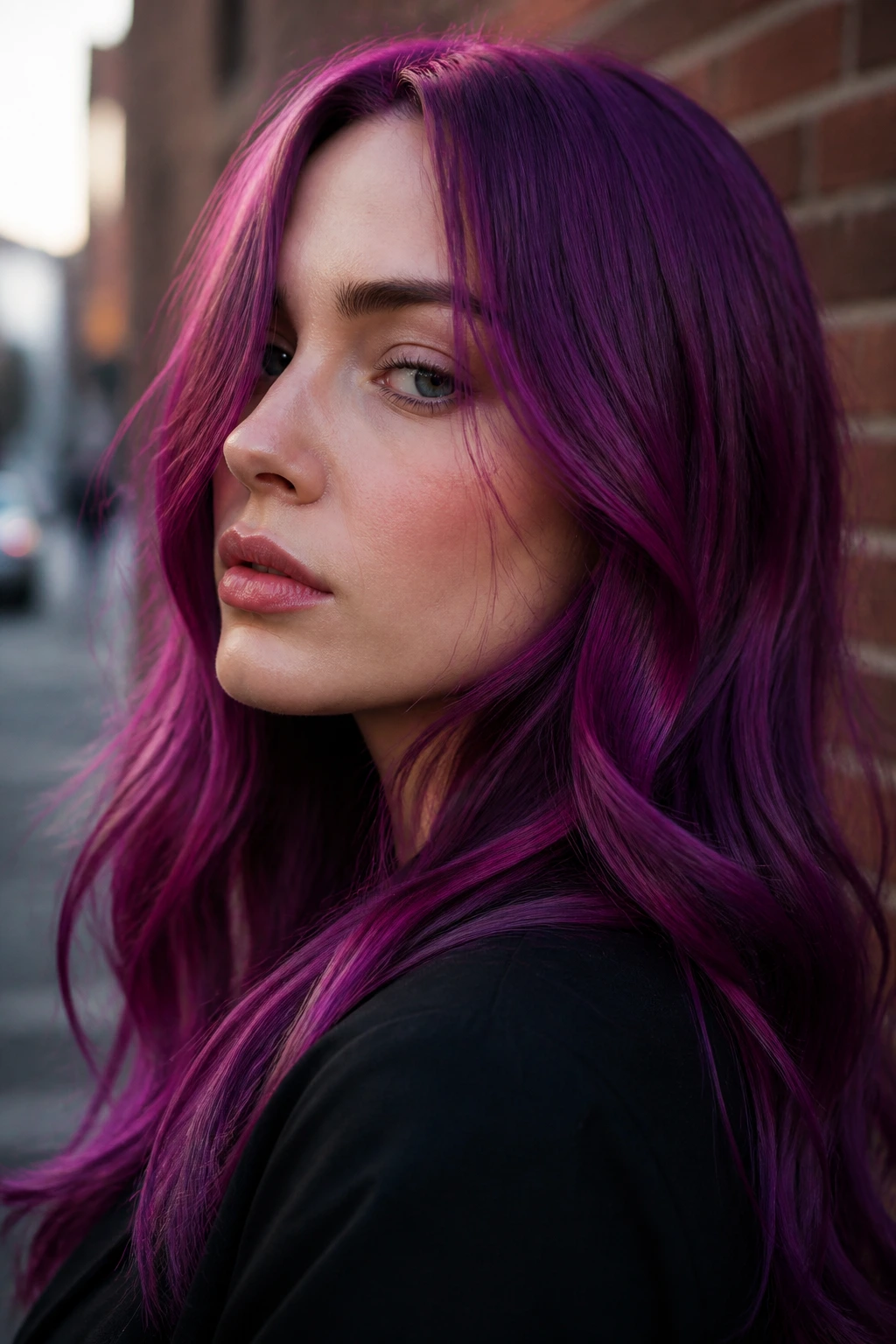
Cool magenta is not shy, and that is the whole appeal. Compared with warmer pinks, this version has more purple and less orange, which makes it much friendlier to cool skin tones. The face tends to look sharper next to it, especially if you have dark brows or strong eye makeup.
The color shines on medium to long hair because the depth gives it room to move. On curls, it can look almost velvet-like. On straight hair, it reads sleeker and more editorial. Short cuts can work too, but the shape needs to be clean or the color takes over the whole look.
This is a shade for people who do not want “cute.” They want color with a backbone. Cool magenta is bolder than dusty mauve and less neon than electric pink, which puts it in a nice middle zone if you want impact without comic-book brightness.
A note worth making: the finish matters. A glossy magenta looks richer. A dry one can look flat fast. If your hair tends to frizz, this is the shade that benefits from smoothing cream and a decent blow-dry.
7. Pastel Baby Pink
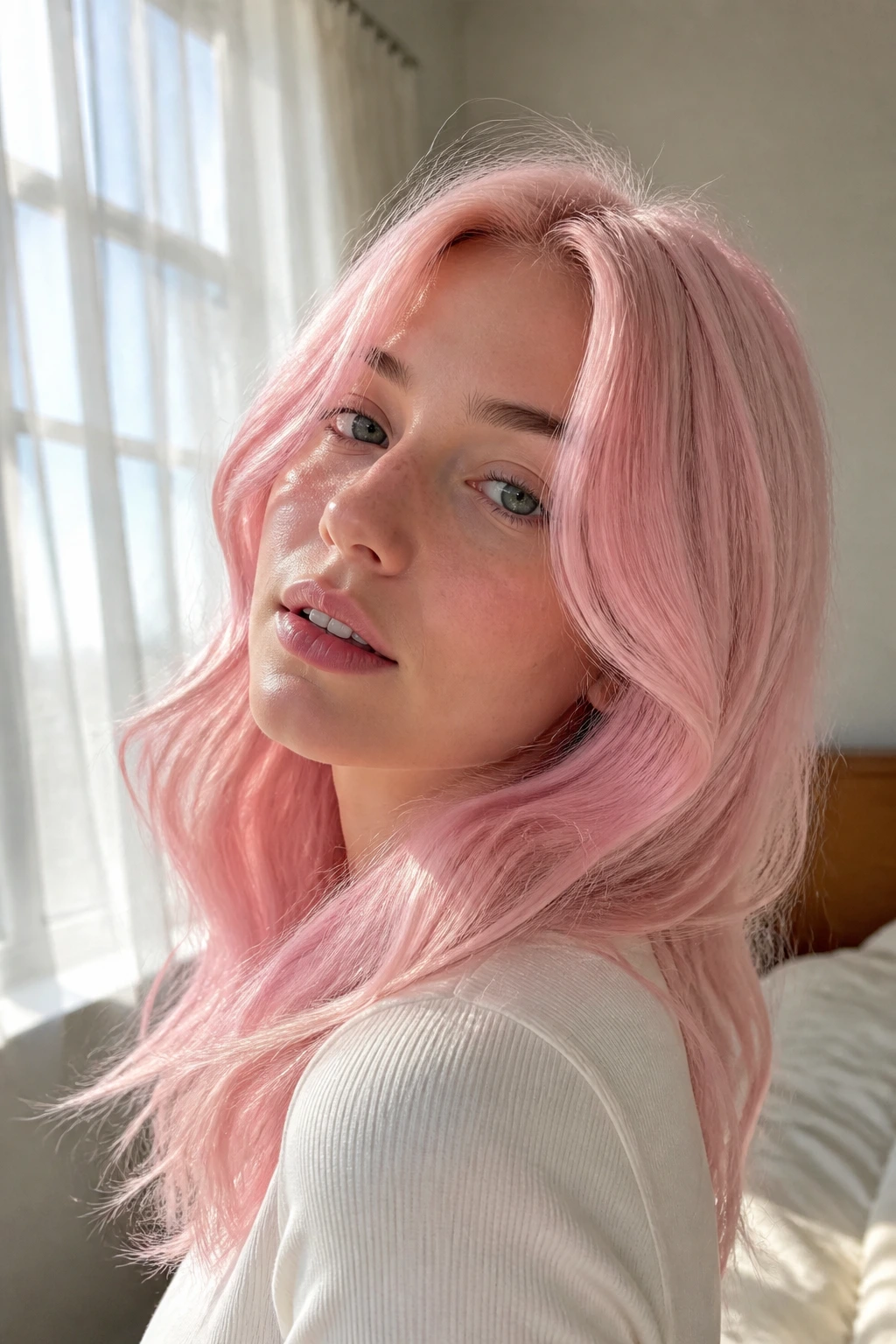
Pastel baby pink is the hardest pink to get right, and that is exactly why it stays interesting. The color only looks soft and luminous when the base is pale enough and the yellow tones underneath have been pushed out. On cool skin, the result can look almost weightless.
What Makes It Work
The shade needs a clean lift to level 10. Anything less, and the pink starts reading beige or peach. That is the part people underestimate. A pastel pink can look effortless in the end, but the prep is not casual.
Cool skin usually likes baby pink best when the face has enough contrast to hold it. Strong brows, defined lashes, or a cool-toned lip can keep the whole look from washing out. If you are very fair, the shade can look delicate in a good way. If you are medium-toned, a slightly rosier version usually gives better balance.
- Best for: very light blondes, fine hair, soft layered cuts
- Needs: careful toner work and regular color refreshes
- Avoid: heavy warm bronzer next to it
- Looks best with: cool pink cheeks, pearl earrings, soft sweaters in gray or black
Pastel pink is fragile. That is part of the charm.
8. Berry Pink
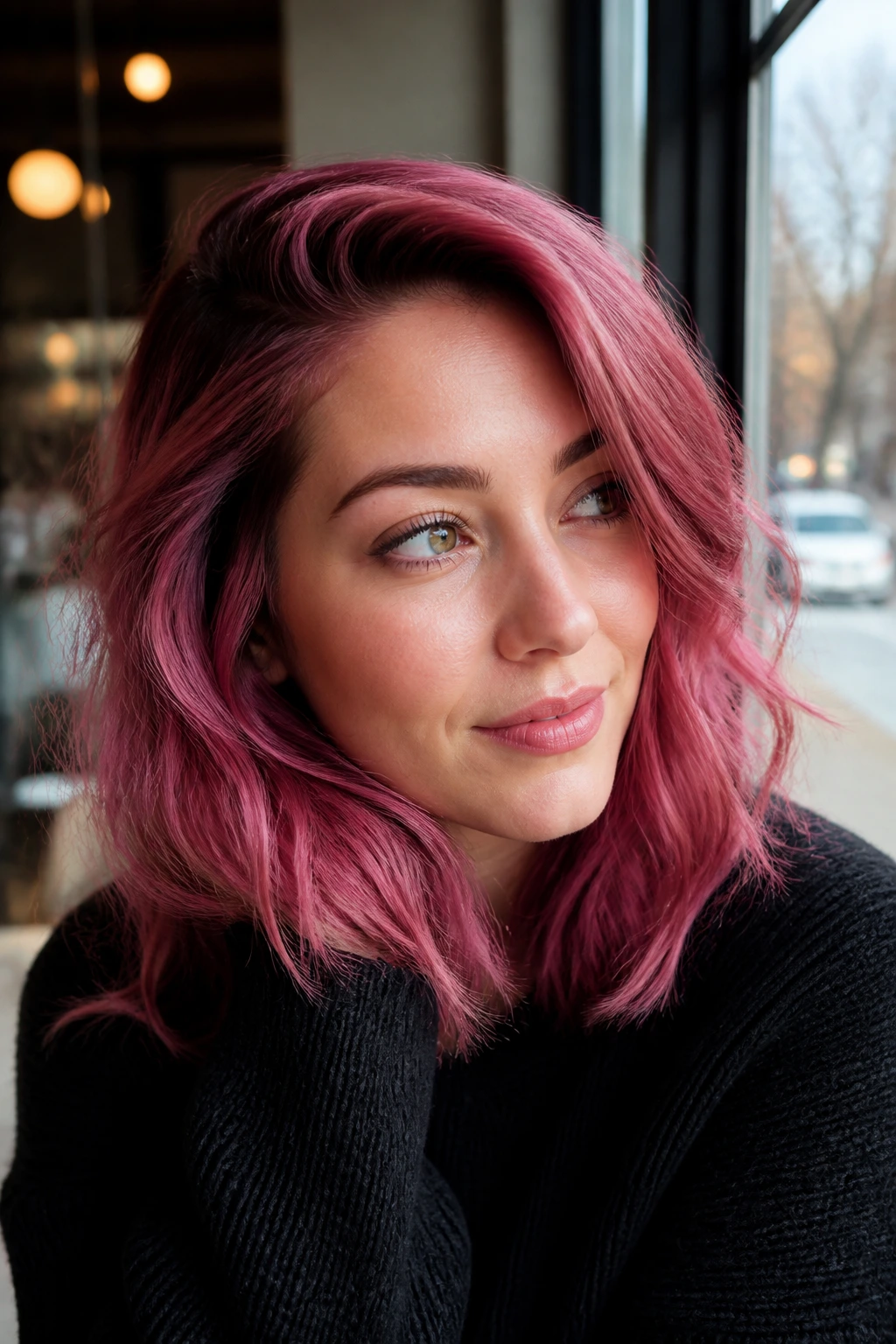
Berry pink is one of my favorite options because it has enough depth to feel grown-up without losing the fun of pink hair. It looks like crushed berries, red lipstick, and a little plum mixed in. Cool skin takes to it well because the shade is already leaning toward the blue-red side.
Picture this on a shoulder-length cut with loose texture. The color catches in the movement and never looks flat. A bright berry root melt can also keep the grow-out softer, which is useful if you do not want to sit in the salon every few weeks. That alone makes it worth a look.
- Best base: light blonde, medium blonde, or pre-lightened brunette
- Best cut: lob, shag, or long layers
- Maintenance trick: use a color-depositing mask every second or third wash
- Style note: black, charcoal, and deep denim make it look sharper
Berry pink works because it sits between hair color and makeup color. It feels like a shade you could wear on your lips, but bigger. That crossover is part of why it flatters cool undertones so well.
9. Orchid Pink
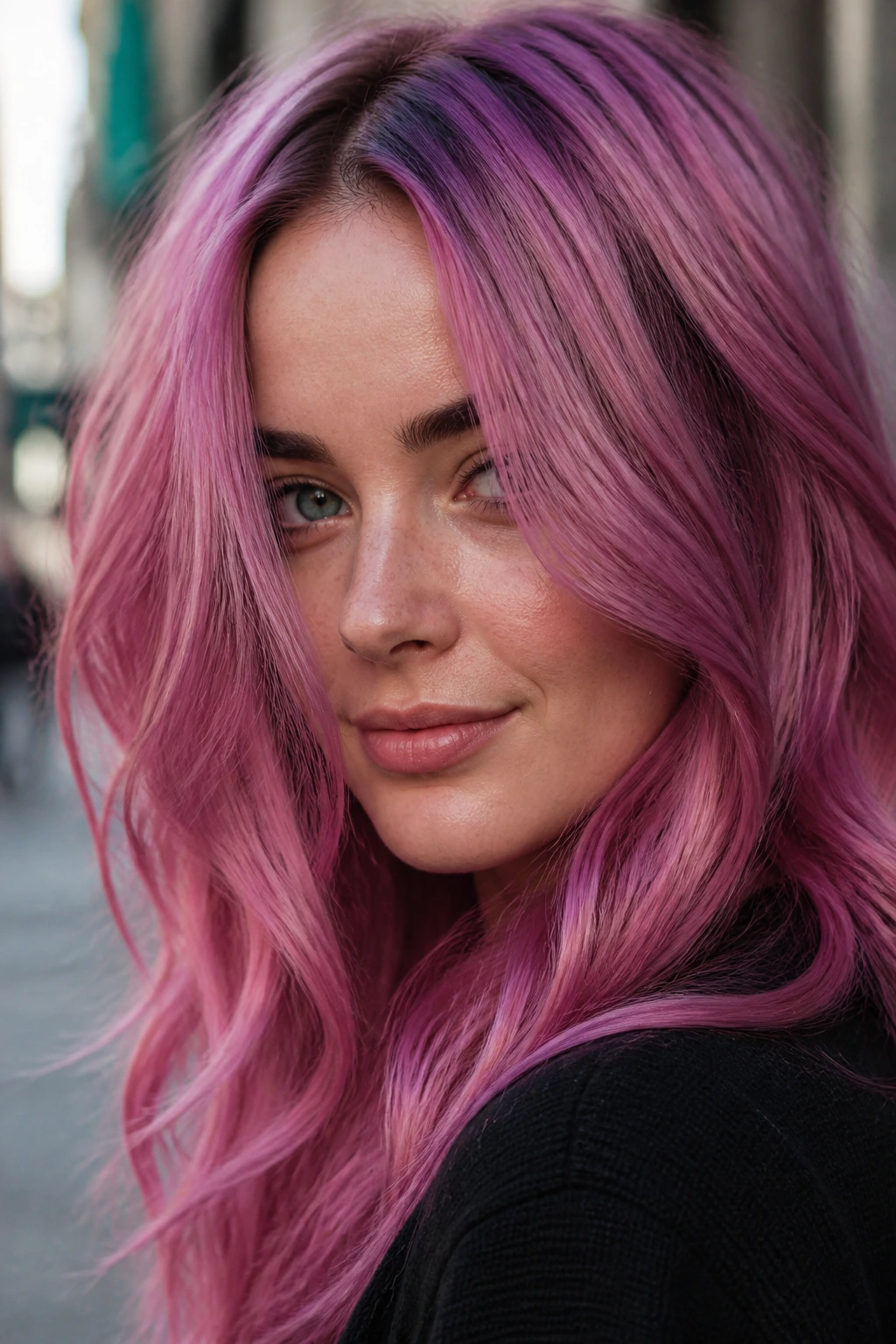
Orchid pink asks a simple question: why settle for plain pink when you can have a little violet in the mix? That purple edge is exactly what makes the shade flattering for cool skin. It keeps the tone crisp and helps the face look less red or blotchy.
The color also has a nice depth for a fashion shade. It is bright enough to be seen, but not so flat that it looks like marker ink. On cool skin with pink undertones, orchid pink can make the complexion look clearer, almost as if the hair and skin are speaking the same language.
How to Keep It from Turning Muddy
Use a violet-based mask rather than anything peach or copper. Those warmer products can pull the color off course in a hurry. A sulfate-free shampoo helps, but the more useful move is washing less often and rinsing with cool water when you can stand it.
Orchid pink works especially well on sleek cuts, because the shine shows off the purple-pink blend. If you wear glasses, this shade can look particularly good around the face. The color has enough structure to sit next to strong frames without disappearing.
10. Metallic Pink
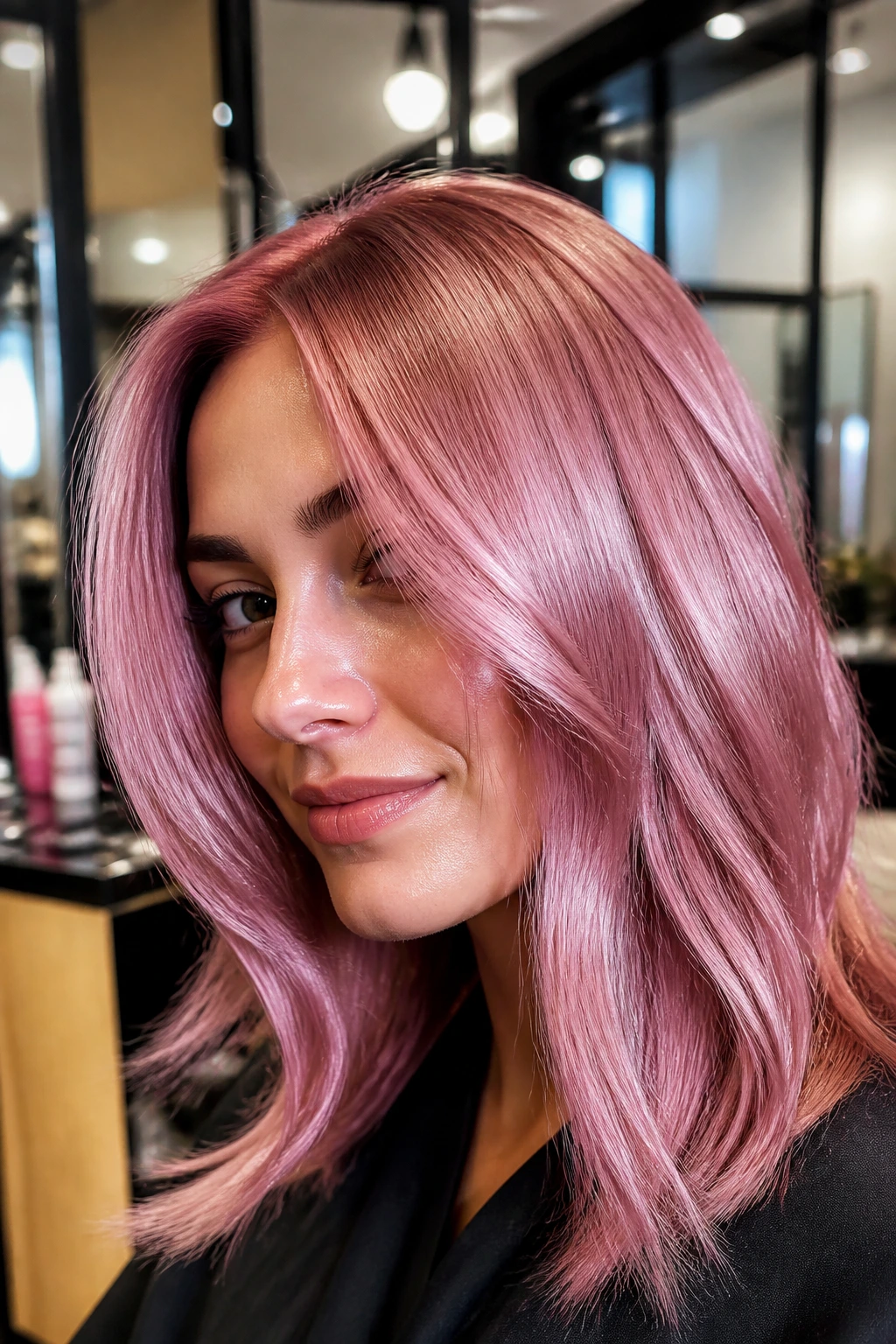
Metallic pink is all about shine. Not glitter. Shine. The color looks like satin ribbon or polished foil when it lands on a smooth, pale base, and that reflective quality can be stunning on cool skin because it keeps the pink from feeling flat.
The catch is that metallic shades reveal everything. Dry ends, rough cuticle, and uneven lift all show up faster here than they do in a matte pink. If your hair is damaged, this is not the first pink I would pick. The surface has to be smooth enough to catch light evenly.
That said, the finish is worth chasing if you like a more styled look. A glossy blowout makes metallic pink look sleek and clean. Soft waves work too, but they should be deliberate, not frizzy. If the ends puff out, the shine gets broken up and the whole effect weakens.
A mid-length cut is a good match because the color has enough surface area to show off the sheen without getting lost. It is a little high-maintenance. So is a silk shirt. That is the vibe.
11. Neon Pink
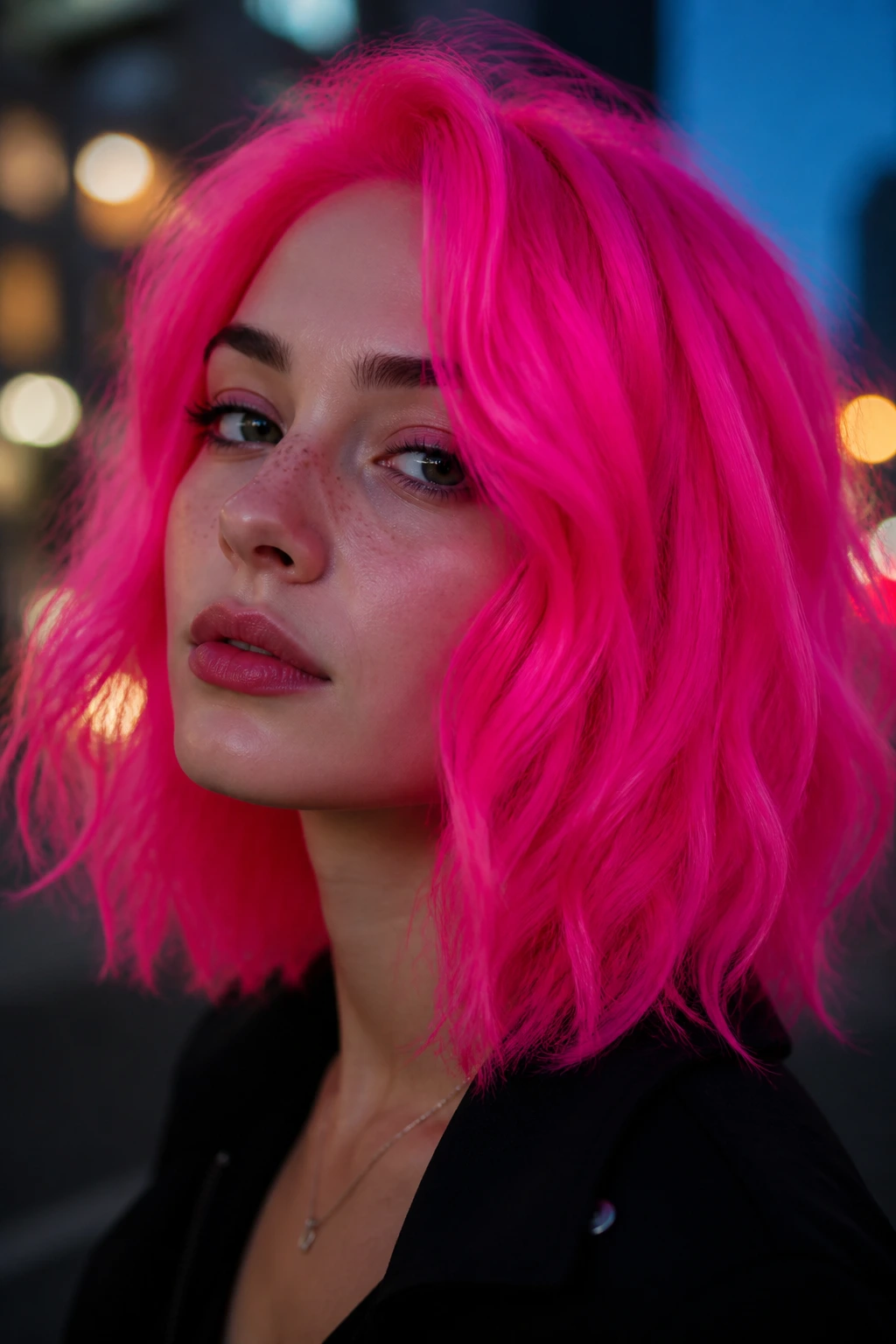
Neon pink is the loudest one in the room, and for some people that is the entire appeal. The good news for cool skin is that blue-based neon often looks cleaner than warm neon. It reads electric instead of orange, which keeps the face from looking muddy.
Compared with berry or mauve, neon pink sits lighter and brighter. Compared with magenta, it feels less dense and more playful. That means it works best when you want an obvious color statement, not a subtle shift. Short cuts, underlayers, and face-framing pieces are all smart places to put it.
If you go this bright, keep the rest of the look simple. Clean brows, a cool-toned cheek color, and not too much warm bronzer will help the hair do its job. Too much warmth around the face can make the neon feel disconnected.
Neon pink is not a quiet choice. Good. It should not be. But if your wardrobe leans black, gray, white, or denim, the color usually feels sharper and easier to live with than people expect.
12. Rose Quartz Pink
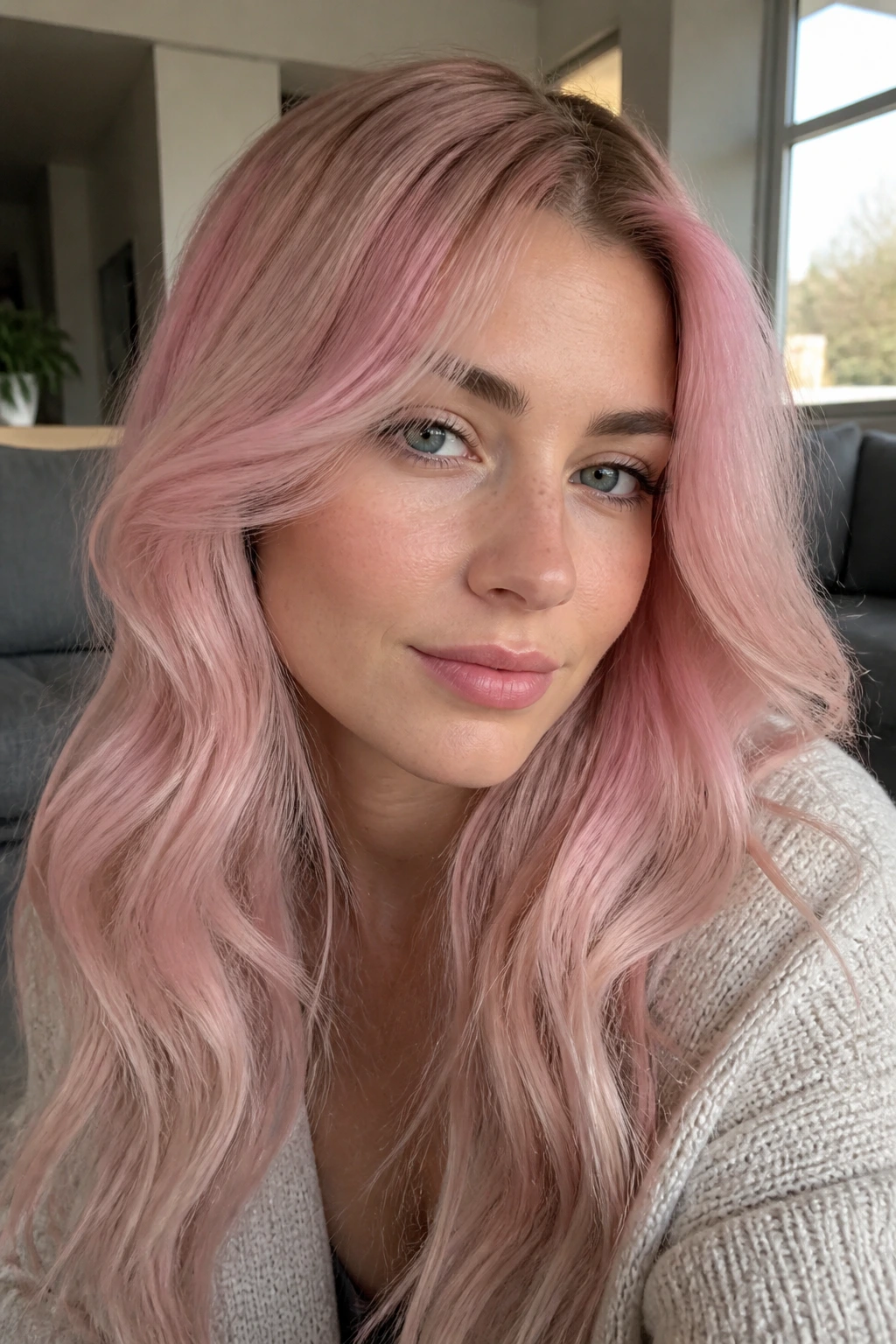
Rose quartz pink has a soft stone-like quality that suits cool skin beautifully when the tone stays clean. It is lighter than berry, less sweet than cotton candy, and more muted than neon. That middle ground is where a lot of people end up staying once they get tired of louder pinks.
The best version looks almost translucent over blonde hair. You can still see the light moving through it, which is why it works so well on fine to medium hair. Thicker hair can wear it too, but the shape of the cut has to do more work to keep the color from getting heavy.
- Best for: shoulder-length cuts, airy waves, soft layers
- Maintenance: a gloss refresh every few weeks keeps the tone from going dull
- Wardrobe match: gray, black, ivory, and cool blue denim
- Makeup match: rose blush, cool nude lips, soft taupe eyes
Rose quartz is a good choice if you want pink that feels polished rather than playful. It has a quieter elegance, if you want to call it that — though really it is just a very well-behaved shade. And that is sometimes the smartest thing a hair color can be.
13. Smoked Pink
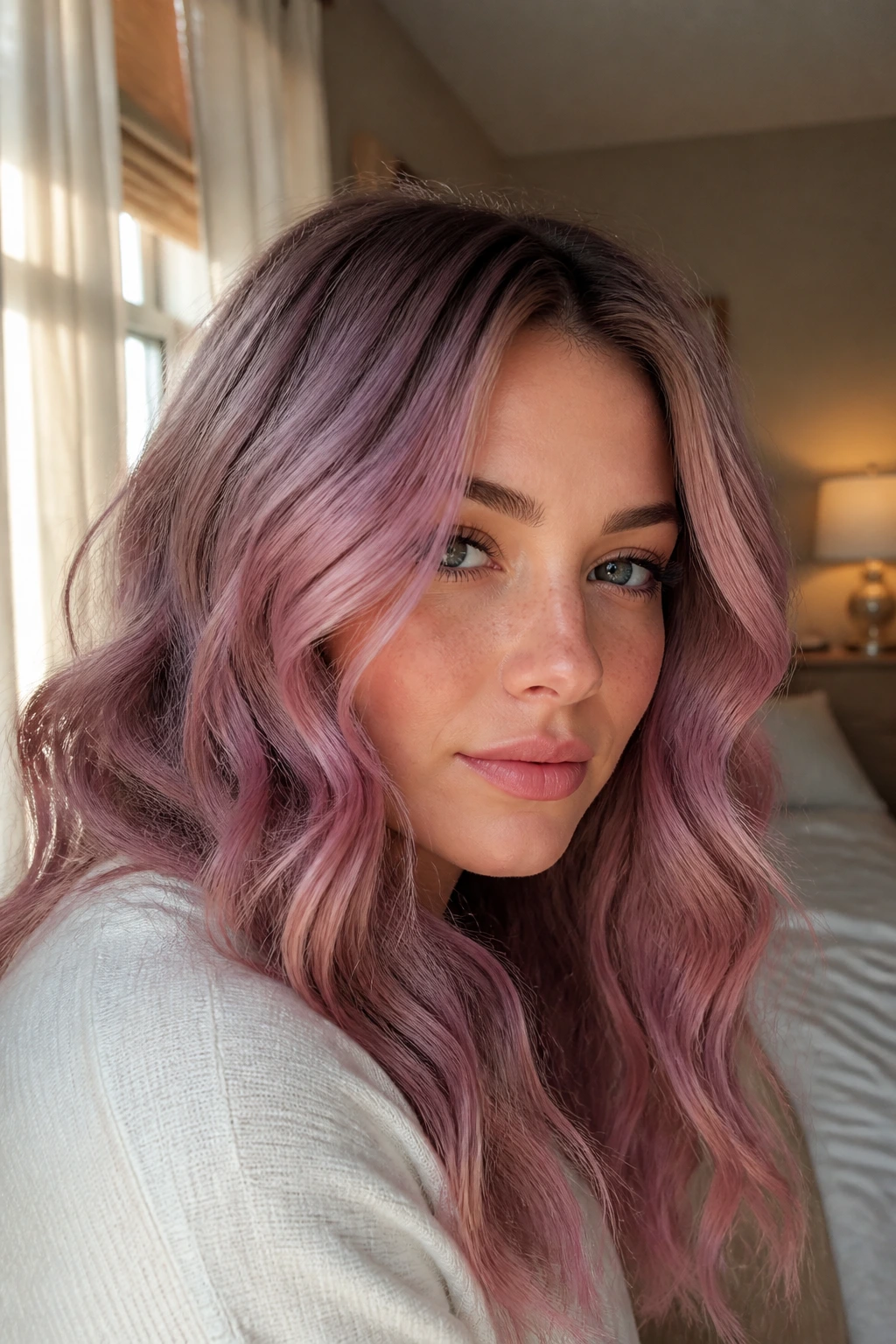
Smoked pink is what happens when pink grows up and adds a little ash to the mix. The result is deeper, softer, and easier to wear than a bright fashion shade. On cool skin, that smoky base is helpful because it echoes the undertones in the face instead of fighting them.
The color is especially good if you want pink but refuse to babysit it every week. A smoked finish hides fade better than pastel pink, and the darker base gives root grow-out a much softer edge. That makes it practical in a way neon never is.
It also works well with hair that has movement. Waves break the color up and keep it from looking like one solid block. Straight styles can work too, though they read moodier and a little more graphic. Either way, the shade feels more expensive than loud pink because it has some restraint.
One sentence because it matters: smoked pink is the easiest way to wear pink hair without turning it into a costume.
14. Cherry Blossom Pink
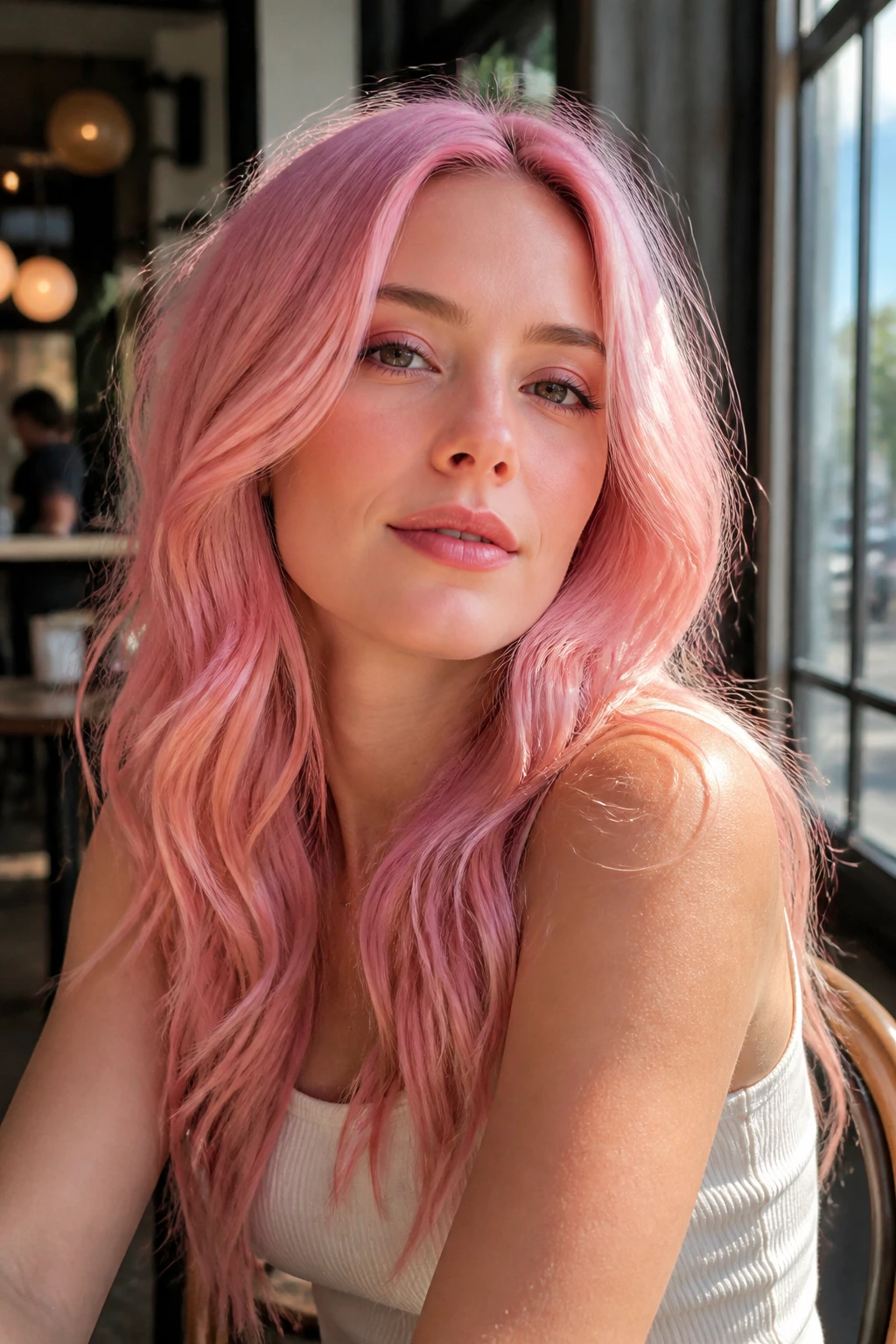
Cherry blossom pink sits in a sweet spot between blush and brighter rose. It feels airy, light, and a little fresh, but it still has enough color to show up against cool skin. If your complexion leans fair or rosy, this shade can look especially clean.
The trick is keeping the pink clear, not peachy. A warm cherry-blossom interpretation can drift into coral fast, and that is where cool skin starts to lose the match. Ask for a soft pink with a neutral or blue base, then let the stylist adjust the saturation after the strand test.
This is one of those shades that looks nicest when the hair has movement. Layers, loose bends, and face-framing pieces all help the color feel lighter. It also pairs nicely with simple makeup, which is handy if you do not want the hair and face competing for attention.
Cherry blossom pink is gentle, but not timid. There is a difference.
15. Fuchsia Pink
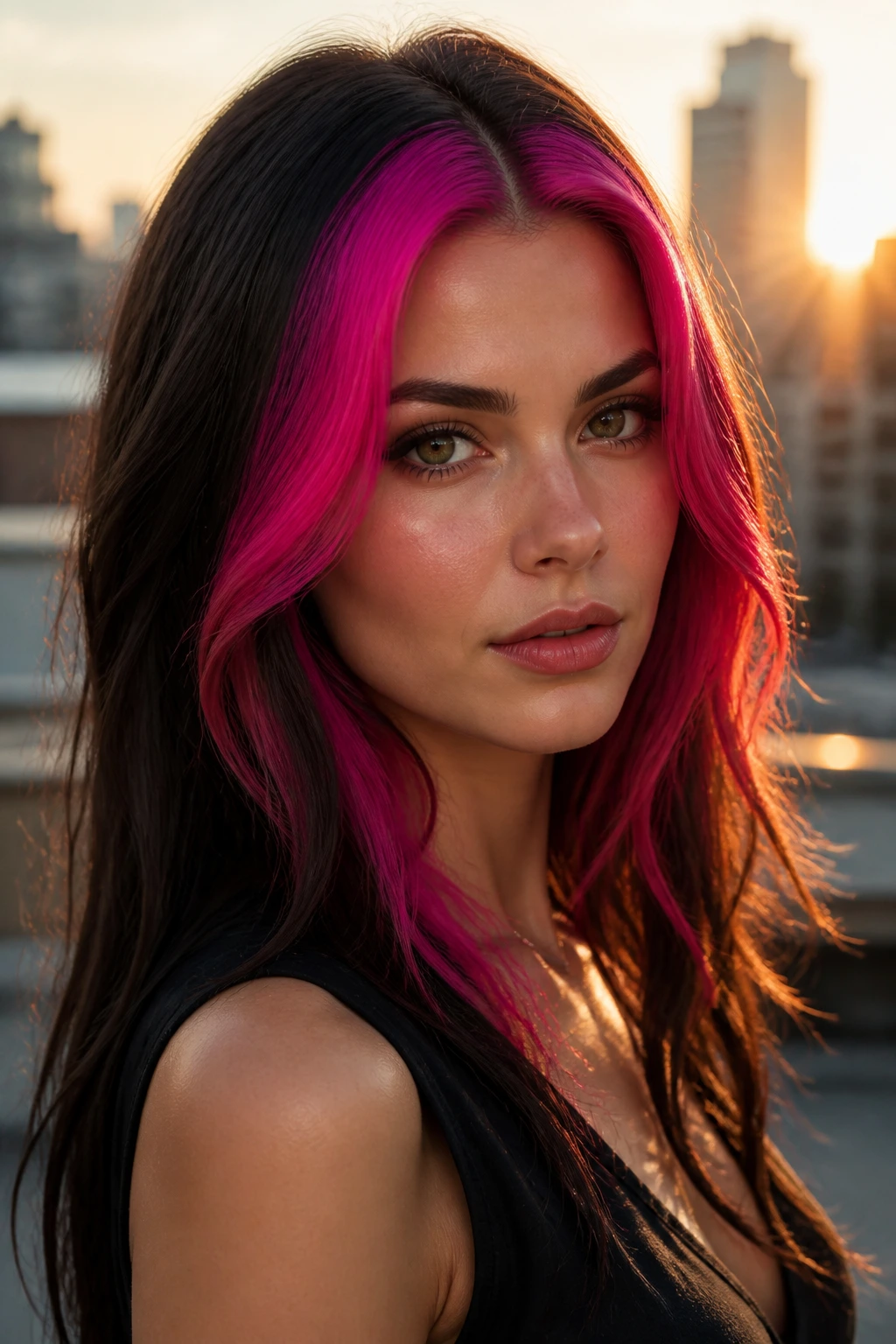
When do you choose fuchsia instead of a softer pink? When you want the color to have teeth. A blue-red fuchsia flatters cool skin because it is crisp rather than peachy, and that sharper edge keeps the complexion from going dull. Warm fuchsia, on the other hand, can get a little too orange for some people.
How to Wear It Without Looking Harsh
The face frame matters here. A fuchsia money piece around the hairline can brighten the skin without coating every strand in color. If you go all over, strong brows and a little definition around the eyes help balance the intensity.
- Best cuts: lob, blunt bob, long layers with shine
- Best styling: sleek blowout, defined waves, smooth ponytail
- Best makeup: cool pink blush, berry lip, soft taupe shadow
- Best wardrobe colors: black, white, charcoal, deep plum
Fuchsia is not trying to disappear into the background. It wants contrast. If that sounds fun instead of exhausting, you are probably the right person for it.
16. Lavender-Pink
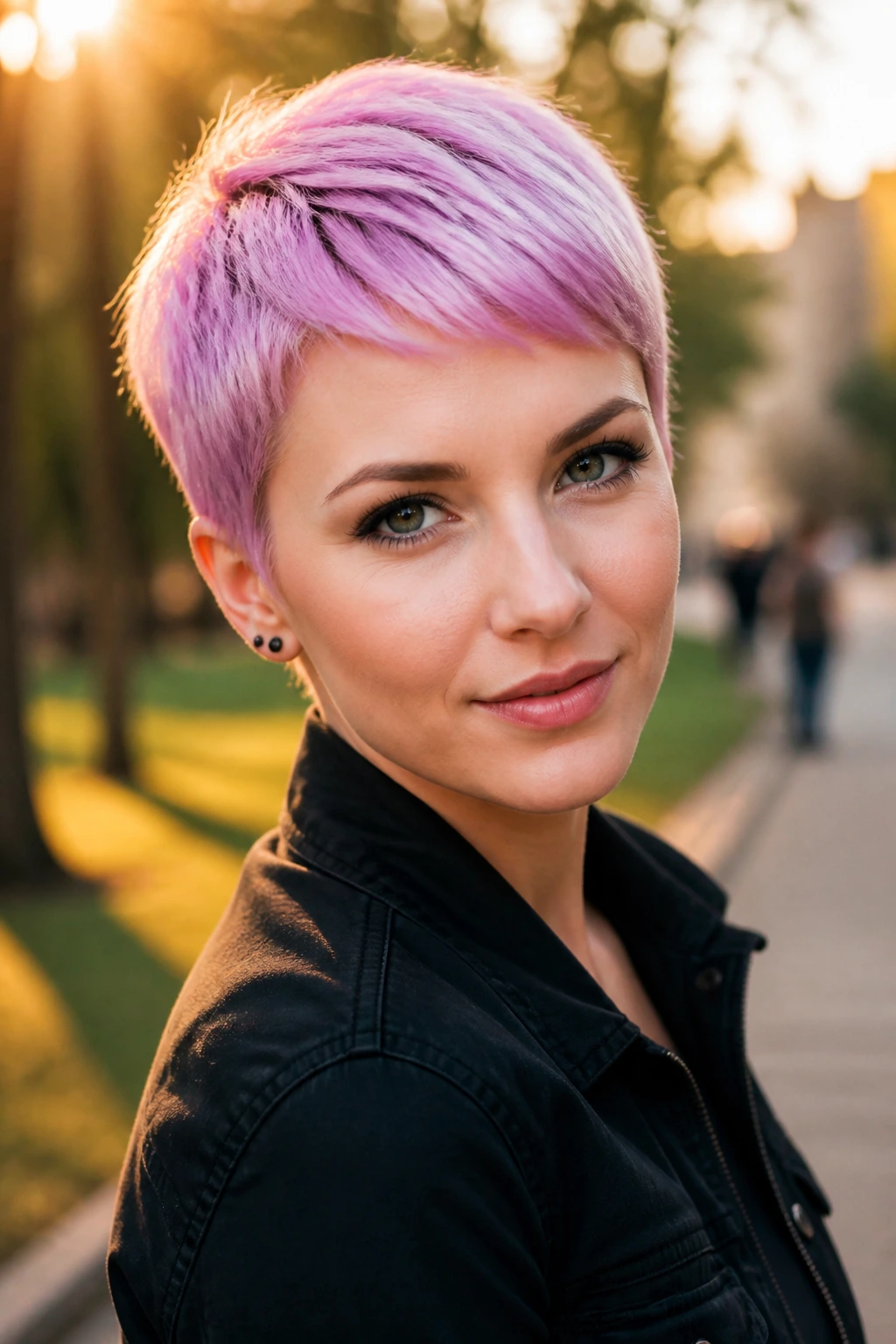
Lavender-pink is what happens when pink borrows from lilac and gets smarter about cool skin tones. The purple base helps neutralize any extra warmth in the complexion, which can be a gift if your skin goes red easily or looks flushed under bright light.
Compared with orchid, lavender-pink reads softer and a little more dreamy. Compared with mauve, it feels lighter and cooler. That makes it a strong choice for people who want something delicate but not babyish. The color has shape. It does not vanish.
It also flatters short hair in a way some brighter pinks do not. A cropped cut with lavender-pink can look clean and modern, while longer waves can make the shade feel more floating and soft. Either way, the purple undertone keeps it anchored.
If you are stuck between pink and lilac, this is usually the safer choice. It gives you both without pushing into candy territory.
17. Pink Balayage
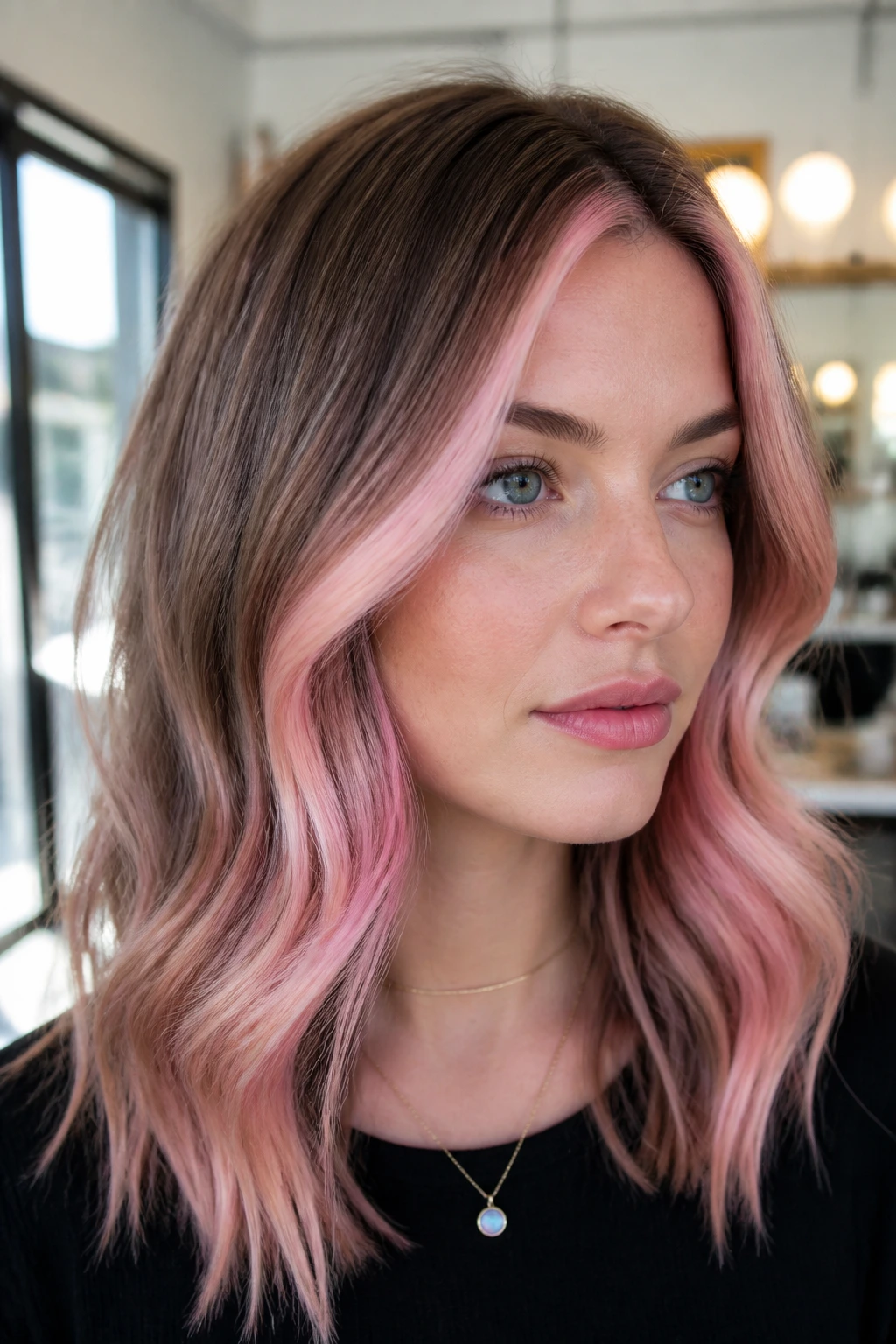
Pink balayage is the answer when you want pink hair color ideas for cool skin tones without committing to a full-head color block. The painted pieces let you control where the pink shows up, which is useful if you want the shade near the face but not all through the lengths. It also grows out far more gently than an all-over vivid.
A brunette with cool undertones can use pink balayage to test the water before going stronger. A blonde can use it to add dimension without losing the light base. And because the ribbons are hand-painted, the color can be placed where it flatters your face shape most — around the cheekbone area, through the ends, or only on the top layer.
- Best placement: face frame, mid-length ribbons, ends, hidden panels
- Best base colors: cool brown, ash blonde, beige blonde
- Best maintenance move: gloss the pink sections between full color services
- Best effect: soft contrast, easy grow-out, less root stress
Balayage is not a shade. It is a strategy. That is why it works so well here.
18. Plum-Pink Melt
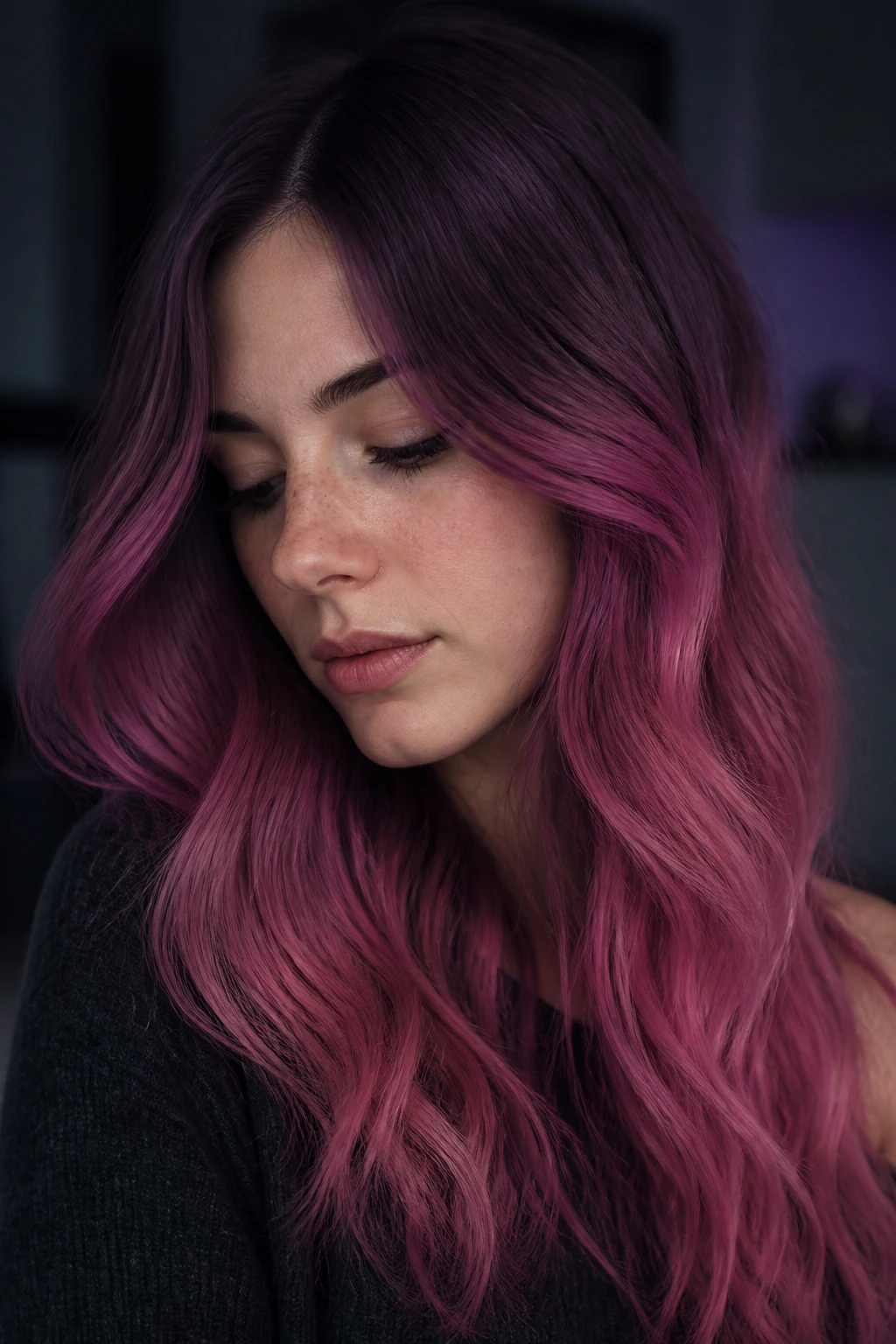
Plum-pink melt is the shade I reach for when someone wants pink but also wants depth, shadow, and a little mood. The roots stay darker and smokier, then the pink blooms through the mids and ends. On cool skin, that plum base keeps the whole look clean and balanced.
This color is especially good if you like richer makeup or darker clothes. It pairs naturally with burgundy, black, charcoal, and cool mauve lipstick. The hair does not need to do all the work by itself; the shade already has enough presence. If your complexion is very fair, the contrast can look striking. If your skin is medium or deeper, the plum tones give the pink more room to stand out.
A melt also solves a practical problem. Pure pastels fade fast and demand attention. A plum-pink blend hides the fade inside the color story, which means you get a softer grow-out and less of that awkward middle stage where the hair looks tired instead of lived-in.
If you can’t decide between light pink and deep berry, go a shade dustier than your first instinct. That version usually wears better, and it tends to be kinder to cool skin too.
