



Cool skin and green hair make sense together.
If you’re hunting for green hair color ideas for cool skin tones, the cleanest picks usually lean blue, gray, or silver instead of yellow. That little shift changes everything. Emerald reads richer, mint looks icy, forest green feels grounded, and a smoky sage can sit close to brown or black hair without shouting.
The mistake I see most is choosing a green that drifts too warm. Yellow-heavy lime can make rosy skin look redder and dull the hair at the same time. A blue-based green does the opposite. It calms the face, sharpens the eyes, and gives the color a cleaner edge under daylight, office lighting, and phone flashes.
Base level matters too. Pale mint and seafoam usually need a light canvas, often a level 9 or 10, while deeper shades can live on darker hair with a shadow root or a gloss. Once you know how depth, undertone, and placement work together, the range gets much wider than people expect.
1. Blue-Black Emerald
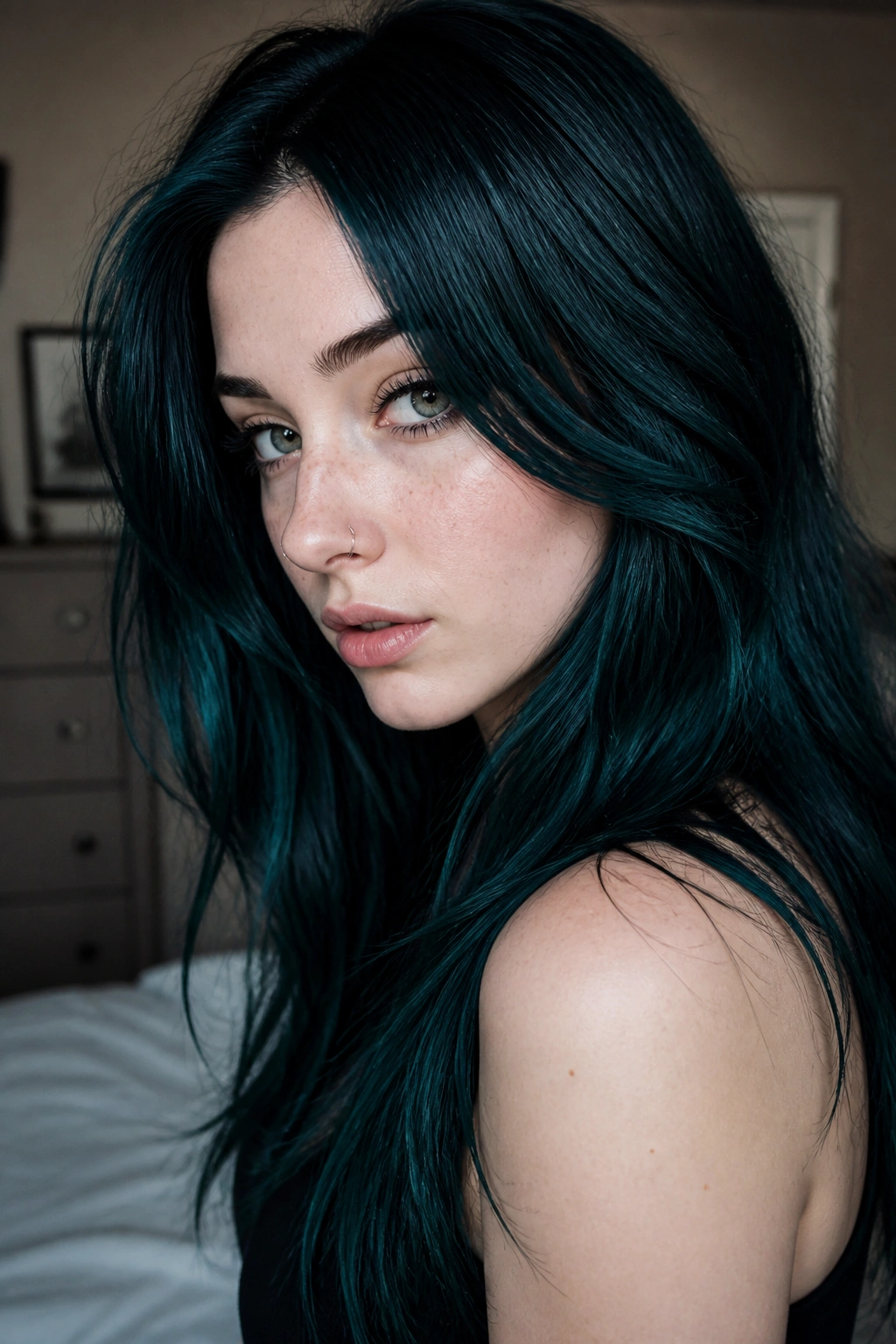
Blue-black emerald is the shade I reach for when someone wants green hair that still looks sleek. It has enough blue in it to stay cool, enough depth to avoid looking neon, and enough shine to hold up next to pale skin with pink or blue undertones. The result is sharp, not sugary.
Why It Flatters Cool Skin
The blue base softens redness in the face, which is why this shade reads so clean on cool skin tones. It also plays well with silver jewelry, black eyeliner, and crisp clothing lines. The whole look feels pulled together without becoming stiff.
- Best base: Dark blonde to brunette hair that can lift to a deep level 7 or 8.
- Best finish: Glossy, almost lacquered, because flat emerald can turn muddy.
- Best haircut: Blunt bobs, long layers, or a shoulder-length cut with movement.
Ask for emerald with a navy or blue-green bend, not a yellow-green one. That tiny note at the salon changes the whole mood of the color.
2. Mint Smoke
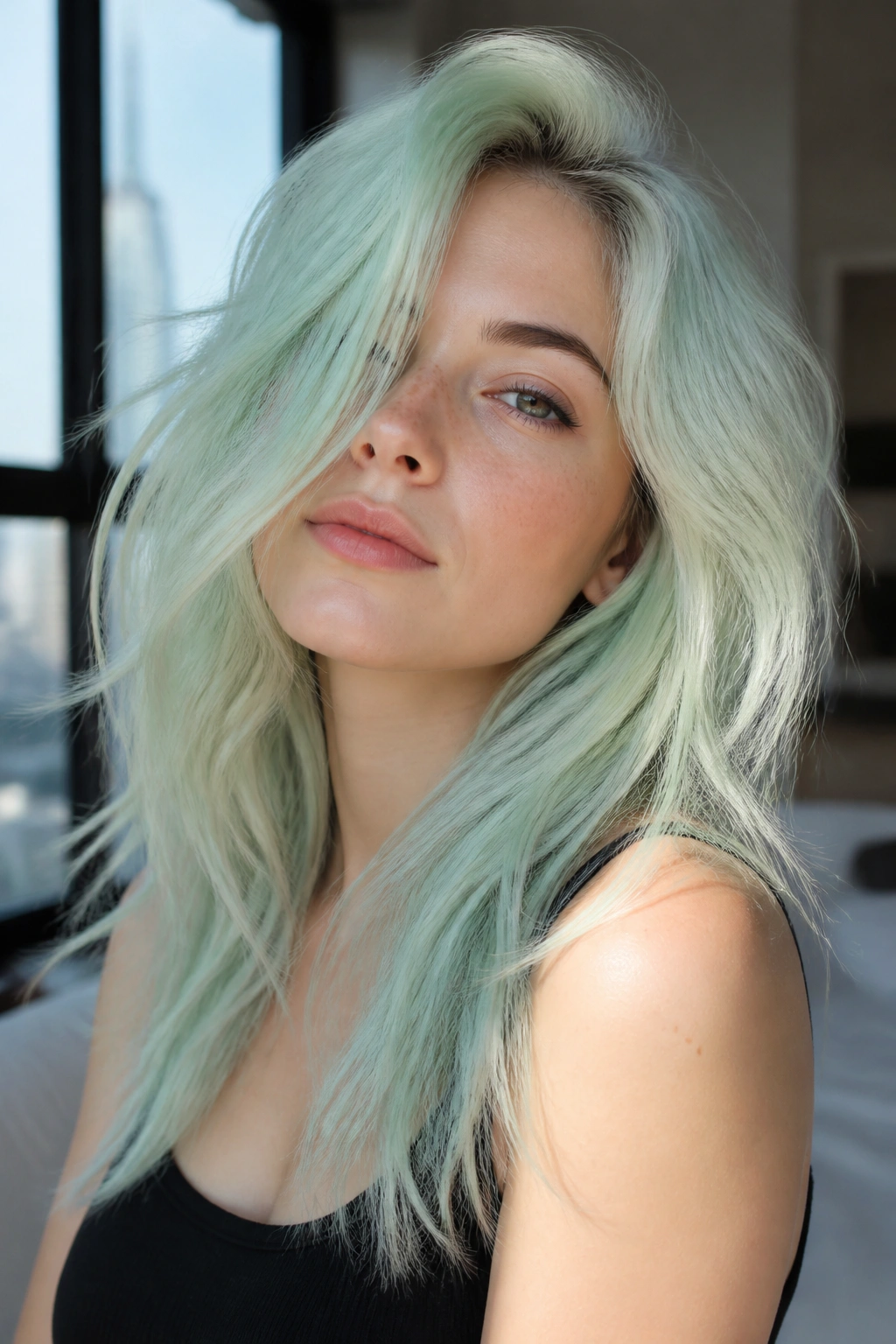
Mint smoke is the shade people choose when they want green hair without the shock factor. It sits between pastel mint and silver, which gives cool skin a soft, chilly glow instead of a harsh contrast. The color feels airy. Not sweet. Airy.
The key is dilution. A good mint smoke usually comes from a pastel green mixed with a clear or pale silver base, then toned so the finish stays cool instead of candy-bright. On very fair skin, that pale green can echo the undertone in a nice way. On medium cool skin, it reads more like a deliberate fashion color and less like a costume choice.
I like it most on hair that has been lifted cleanly to a pale blonde. Any brass left in the canvas will push the mint toward swampy territory fast, and that is not the same thing at all. If you want something delicate but still unusual, this one does the job without much drama.
3. Seafoam Money Piece
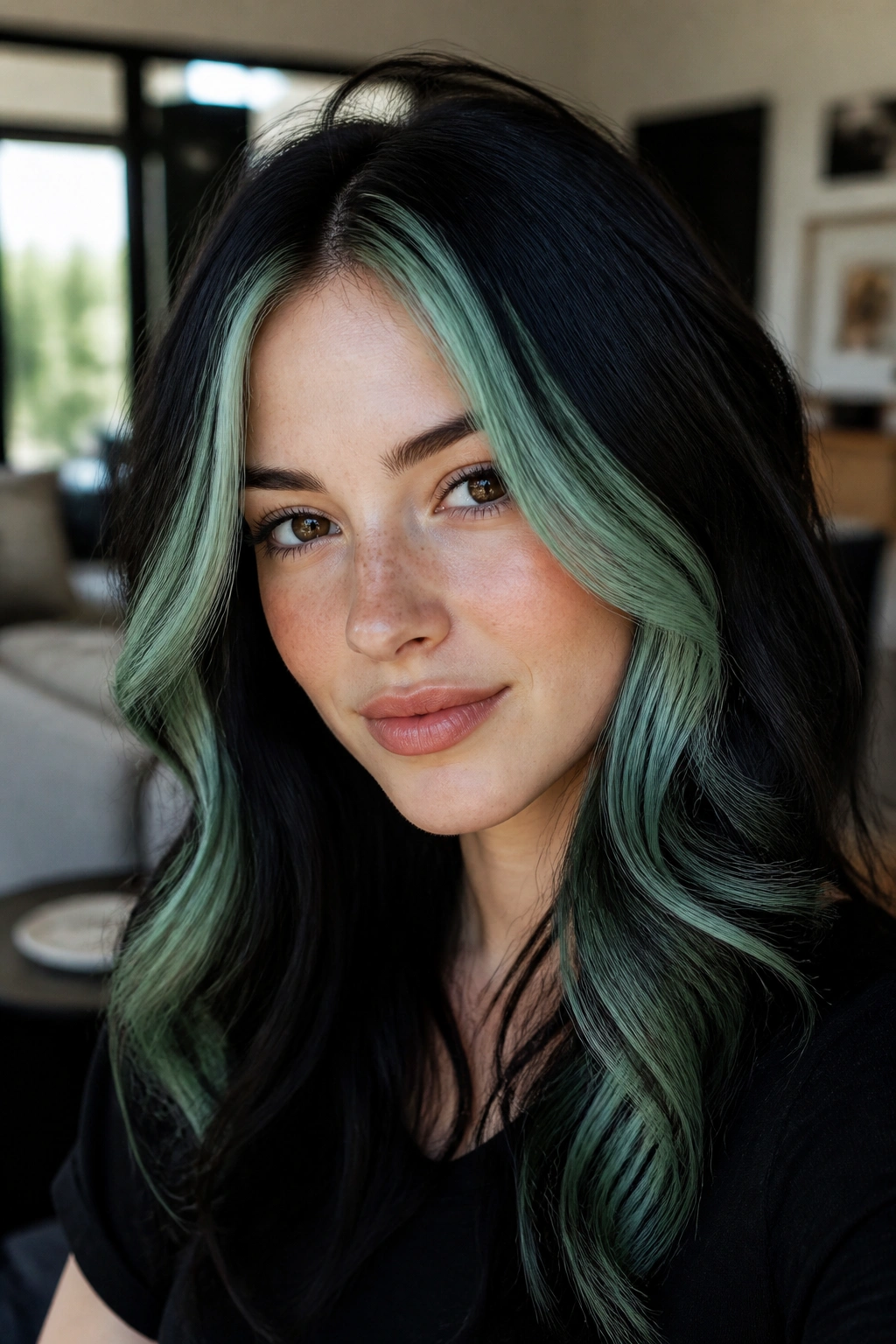
Why does a seafoam money piece look so clean on cool skin? Because the shade sits right near silver on the color wheel, and that makes the face frame feel crisp rather than loud. A thin panel of seafoam near the front can brighten the eyes, sharpen cheekbones, and give dark hair a lighter edge without taking over the whole head.
How to Place It
The placement matters more than people think. Keep the front pieces about 1/2 to 1 inch wide, starting around the temple or cheekbone. Too thick, and the look stops feeling strategic. Too thin, and you lose the payoff.
A seafoam money piece works especially well on black, charcoal brown, or deep blue-black hair. The contrast gives you that clean high-low effect that cool skin handles so well. If you wear your hair half-up a lot, this placement is even better, because the color shows from the front and the back.
My advice: keep the rest of the hair darker and cooler. That makes the seafoam look intentional instead of floating in space.
4. Deep Forest Gloss
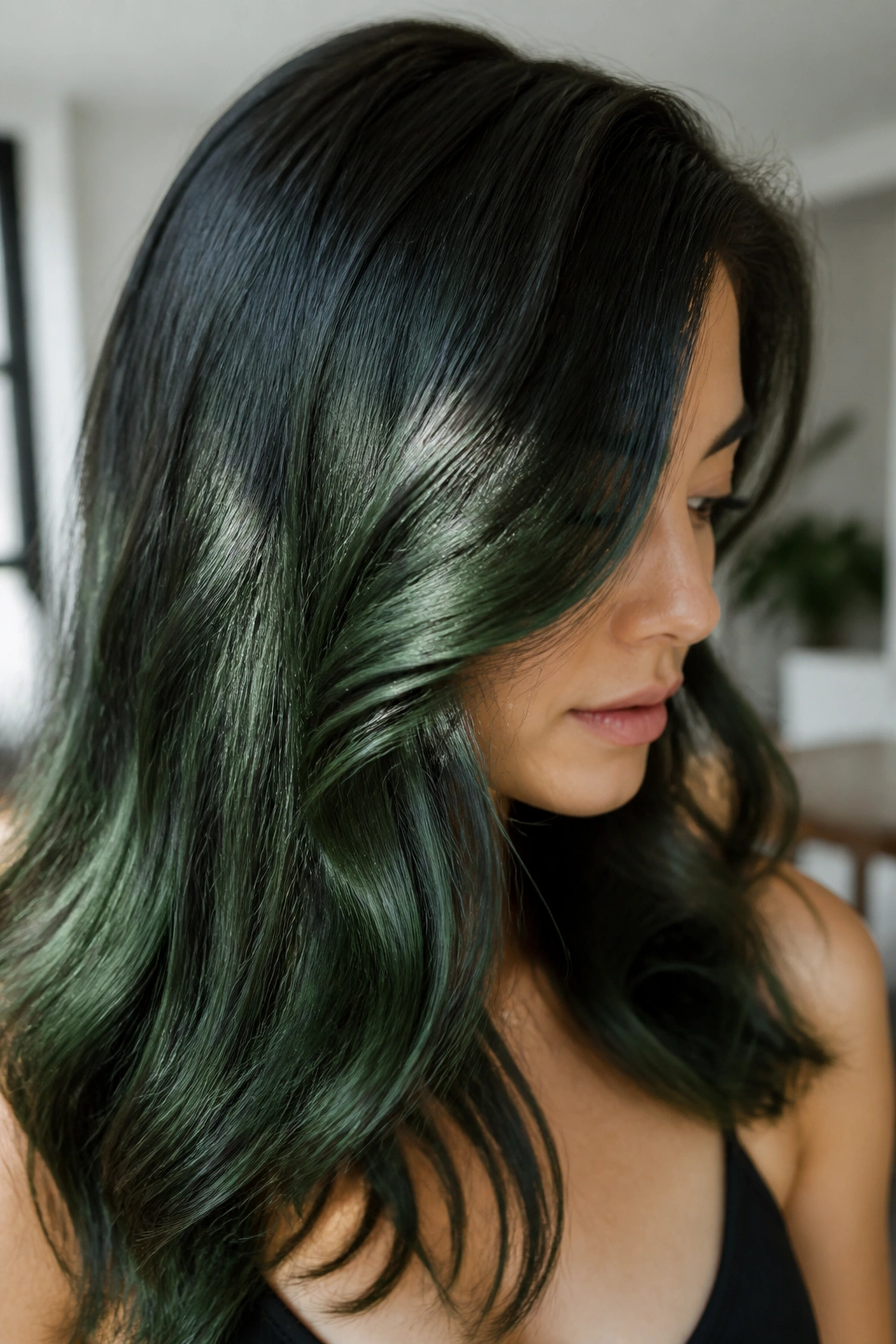
If your hair is already dark, deep forest gloss can feel almost invisible until daylight hits it. That is the charm. It gives you green without screaming green, and on cool skin it reads as moody rather than muddy. The finish matters here. Gloss is the whole point.
This shade works especially well if you like a polished look and do not want to keep touching up every few weeks. On dark brunette hair, a forest gloss can behave more like a tint than a full color change, which makes it easier to wear to work or anywhere that leans conservative. It also pairs well with straight styles, because the shine shows the green shift better on smooth surfaces.
A lot of people chase bright shades when they would be happier with this. Under fluorescent light it can look almost black; outside, the green wakes up. That kind of movement is useful if you like color with a little restraint.
5. Jade Ombré
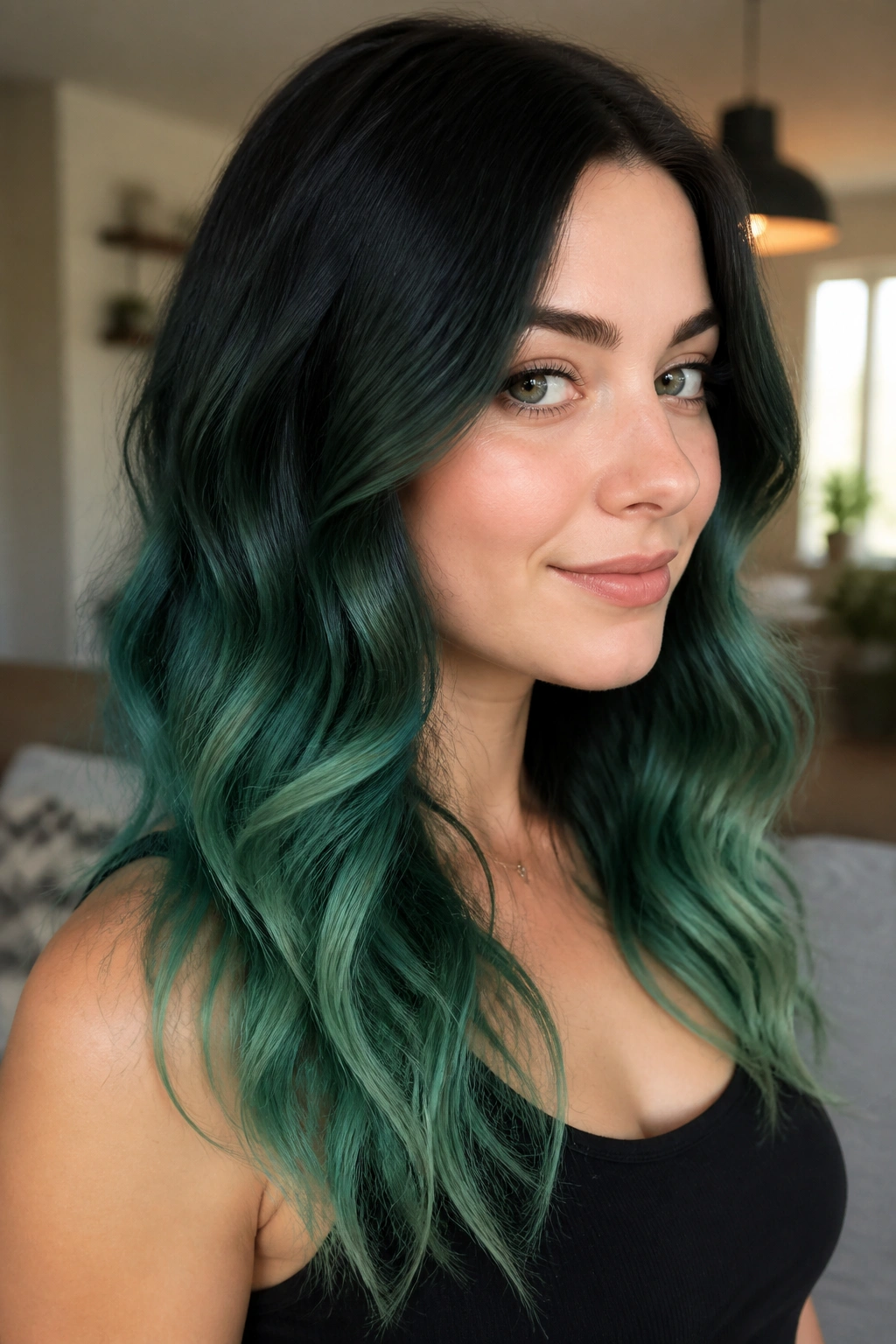
Jade ombré is a better choice than standard green ombré if your skin runs cool. The jade family has enough blue in it to stay jewel-toned, which keeps the ends from looking muddy or yellow. It also gives the hair more depth than a flat single-process color, especially on long layers.
The gradient matters here. Let the roots stay darker and cooler, then let the green open up slowly through the mid-lengths and ends. The best versions do not jump from brown to neon. They slide. That soft transition helps the whole look feel expensive, if I can use that word without getting too fussy about it.
This one is especially good if you wear your hair down more than up. Waves show the shift from dark root to jade ends in a way that straight hair sometimes hides. If you want drama that still feels wearable, jade ombré has a lot going for it.
6. Pine-Green Pixie
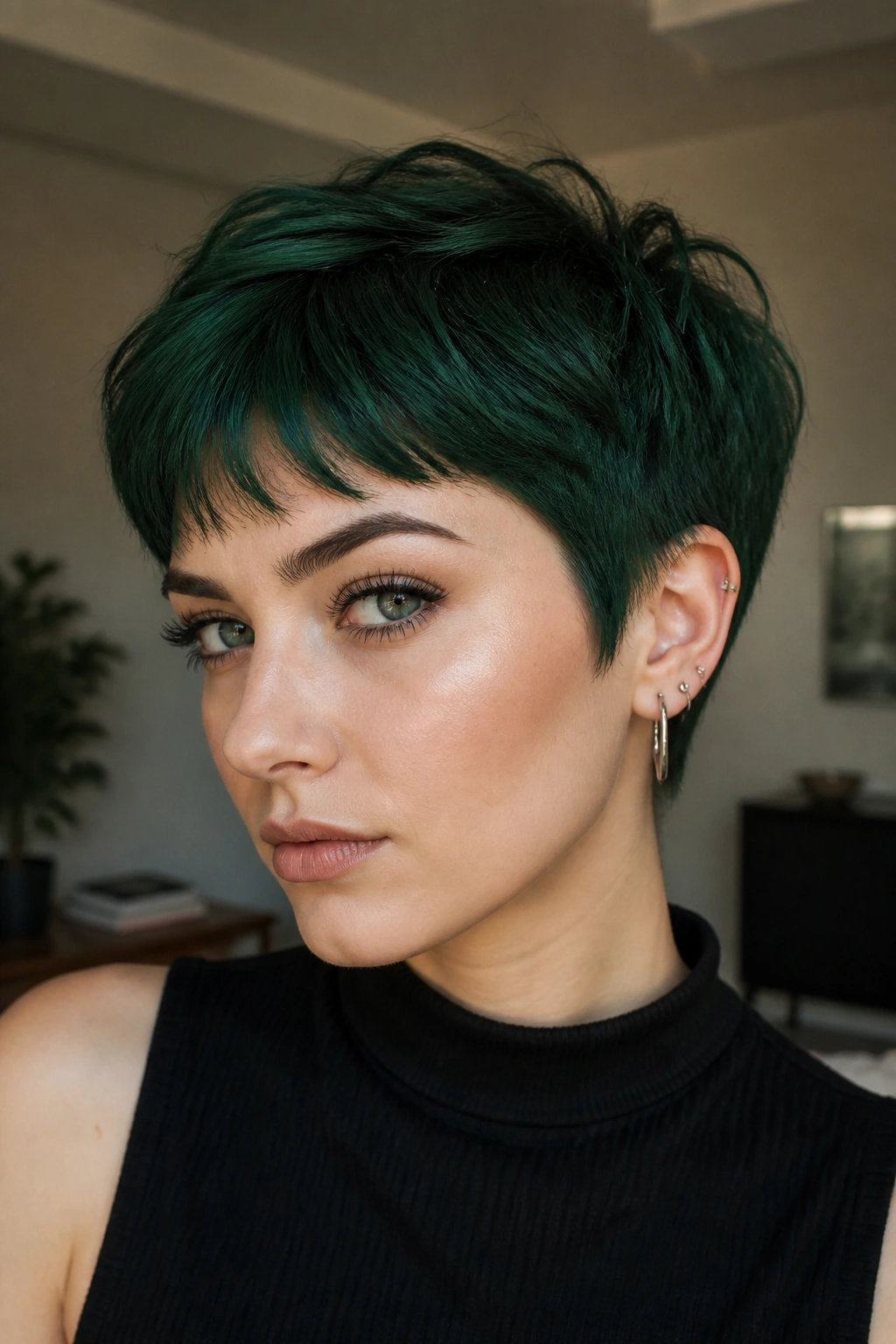
A pixie cut makes pine green look sharper than waist-length hair ever will. Short hair leaves less room for the color to get lost, which means every inch of saturation matters. On cool skin, pine green brings out a strong, graphic edge that reads chic rather than playful.
What Makes It Sharp
The texture of the cut changes the color. A choppy pixie catches light on the ends, while a smoother crop makes the green feel denser and darker. Either way, the short length keeps the shade from turning into a long wash of one note.
- Good for: Fine hair that needs visual density.
- Maintenance: Easy enough to refresh every 4 to 6 weeks.
- Styling note: A matte paste gives the color more bite, while a light shine cream makes it look softer.
This is one of those shades that looks strongest when the cut is clean. If the edges are grown out and the shape is fuzzy, the green loses a bit of its edge. Sharp cut, sharp color. Simple.
7. Smoky Sage Melt
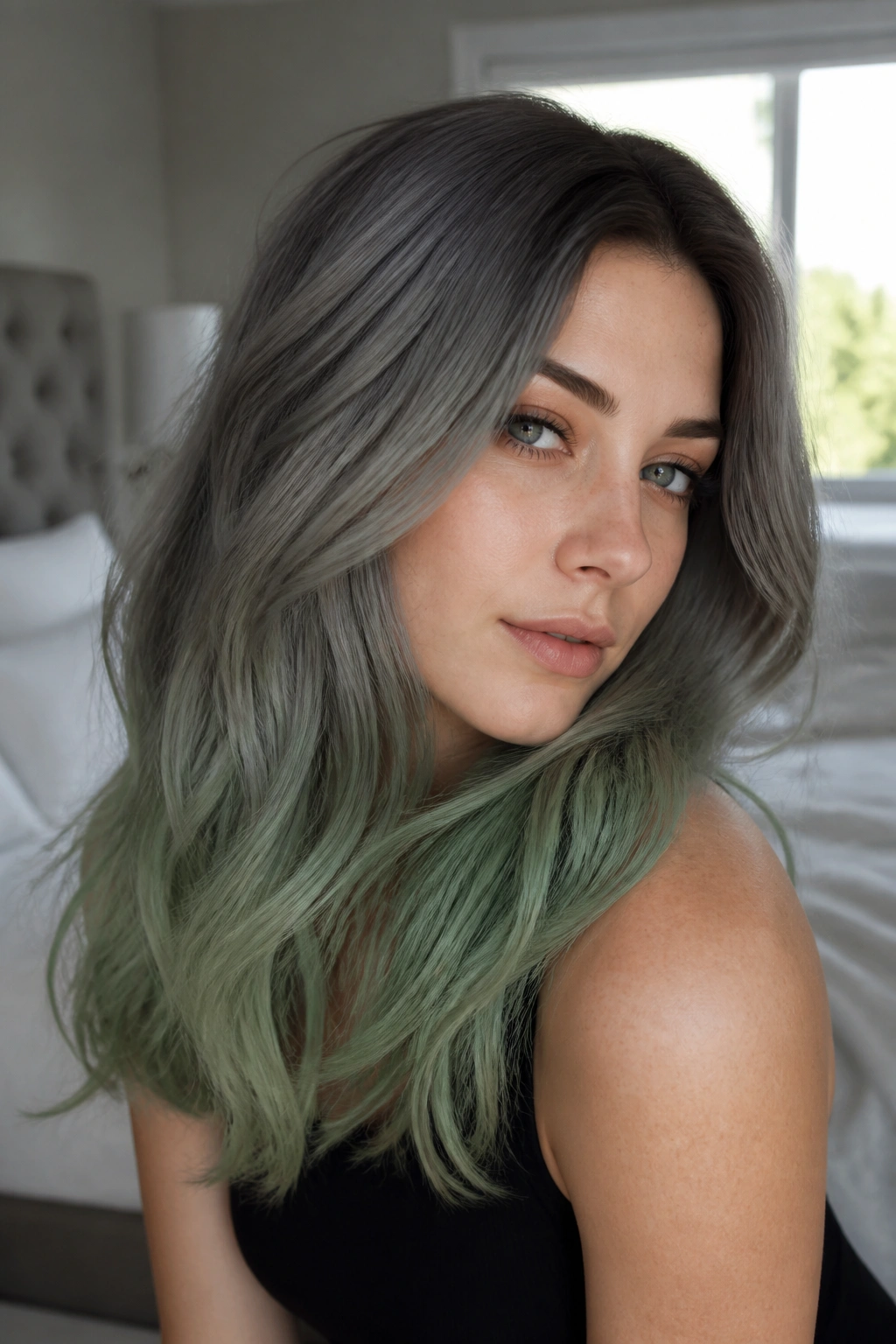
Can green hair look soft instead of loud? Smoky sage proves it can. This is the version that leans gray first and green second, which makes it a smart choice for cool skin tones that need a little color without a hard contrast.
The melt effect is the part I like. Darker roots fade into a smoky, muted green through the middle, then soften again toward lighter sage ends. The color change feels gradual, almost like fabric that has been washed a few times and lost some of its shine in a good way. That muted finish keeps the whole look from fighting with cool undertones.
How to Ask for It
Ask for a gray-green glaze, not a warm olive. That phrase matters. You want the green diluted enough to keep the edges soft, especially if your skin is pale or rosy. If the salon adds too much yellow, the shade loses its calm.
This is a strong pick for people trying green for the first time. It looks intentional but not theatrical.
8. Emerald Peekaboo Panels
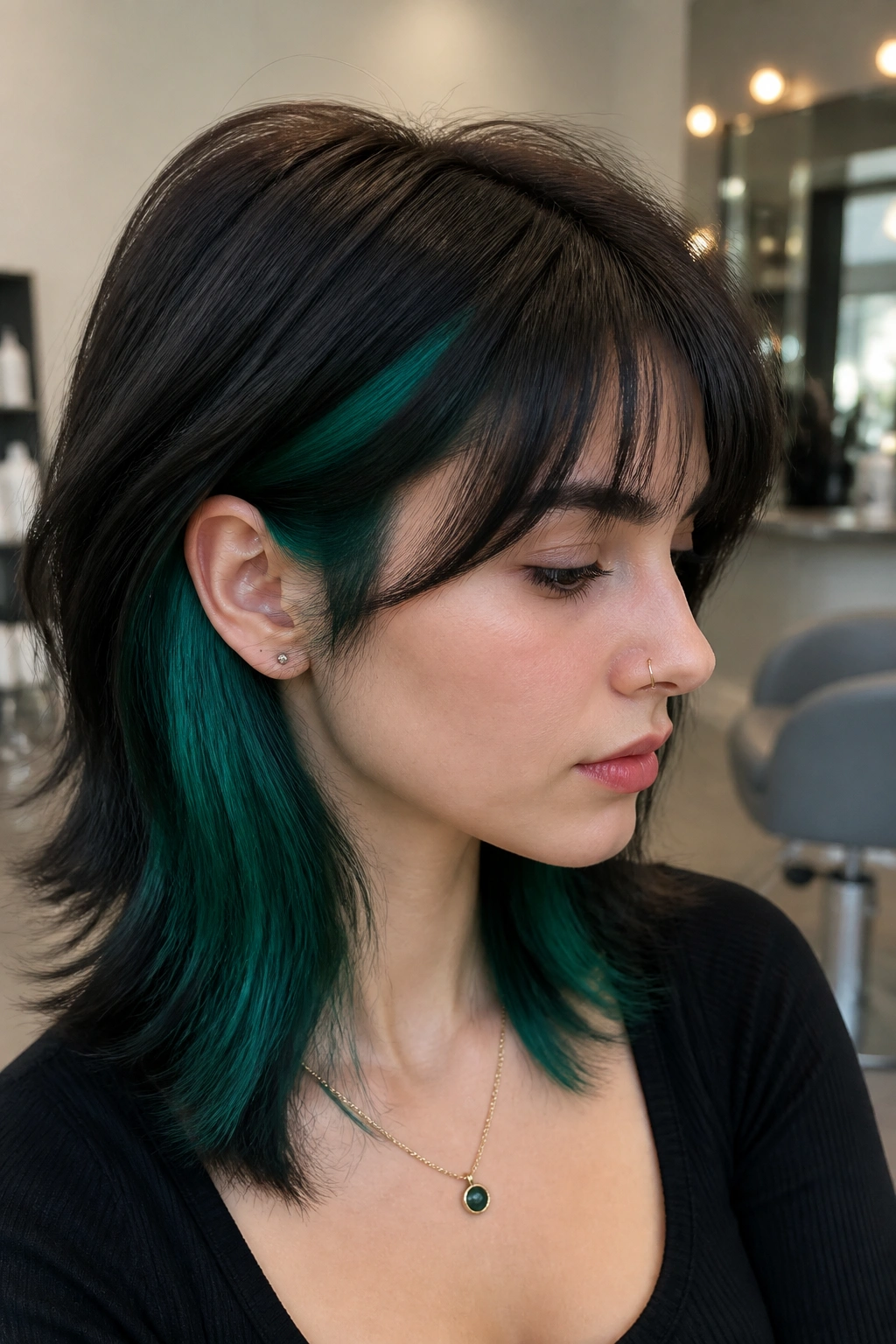
A client who wants green but needs to keep things low-key? Peekaboo panels solve that problem fast. Emerald hidden under the top layer gives you a flash of color when the hair moves, and cool skin tends to like the crisp contrast that comes with a jewel-tone surprise.
The placement is the trick. Panels under the crown, behind the ears, or across the lower half of the head give you different levels of visibility. If you wear your hair down most days, the green stays tucked away until you turn your head or tie it up. If you like half-up styles, the color shows off a little more.
- Best for: Jobs with dress codes or anyone who wants color in stages.
- Best cut: Layers or a lob, so the panels move.
- Best vibe: Secret, sharp, and easy to hide when needed.
This is a good option if you want to test how green hair feels before committing to a full head of it.
9. Teal-Leaf Split Dye
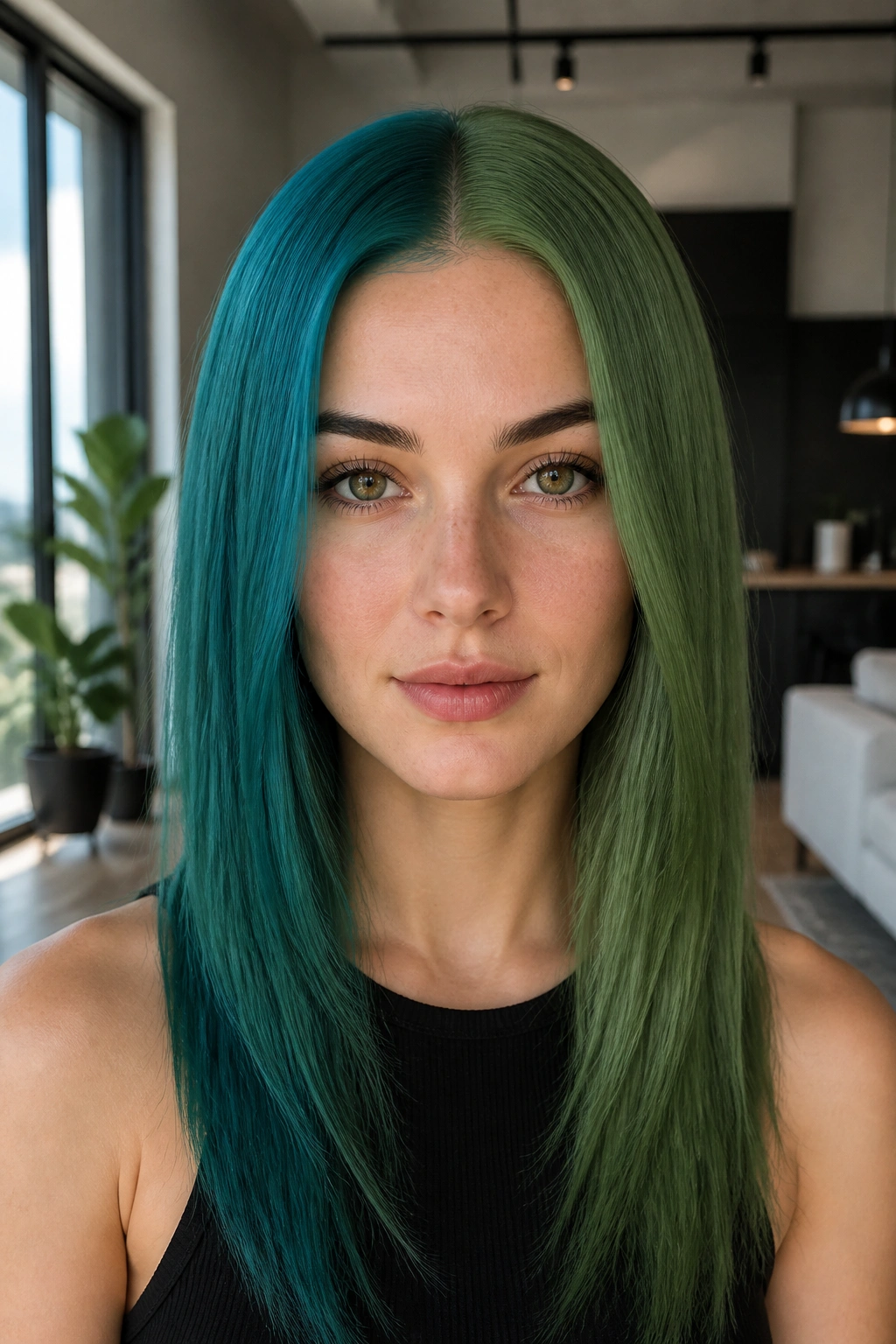
Teal-leaf split dye sits right on the line between blue hair and green hair, which is why it flatters cool undertones so well. The teal side brings in the blue; the green side keeps it from drifting too far into navy. On cool skin, that balance feels lively without looking loud in a messy way.
The split part gives you contrast that a single shade cannot. One side can read darker and more saturated, while the other sits lighter and greener. The effect is bold, yes, but not random. It works best when the colorist keeps both halves in the same cool family, so they feel related rather than like two different wigs.
I like this look on sleek blowouts and on blunt cuts. Straight styling makes the split line clean. Waves make it softer and more blended. Either way, the teal keeps the green from looking flat.
10. Mossy Curls with Shadow Roots
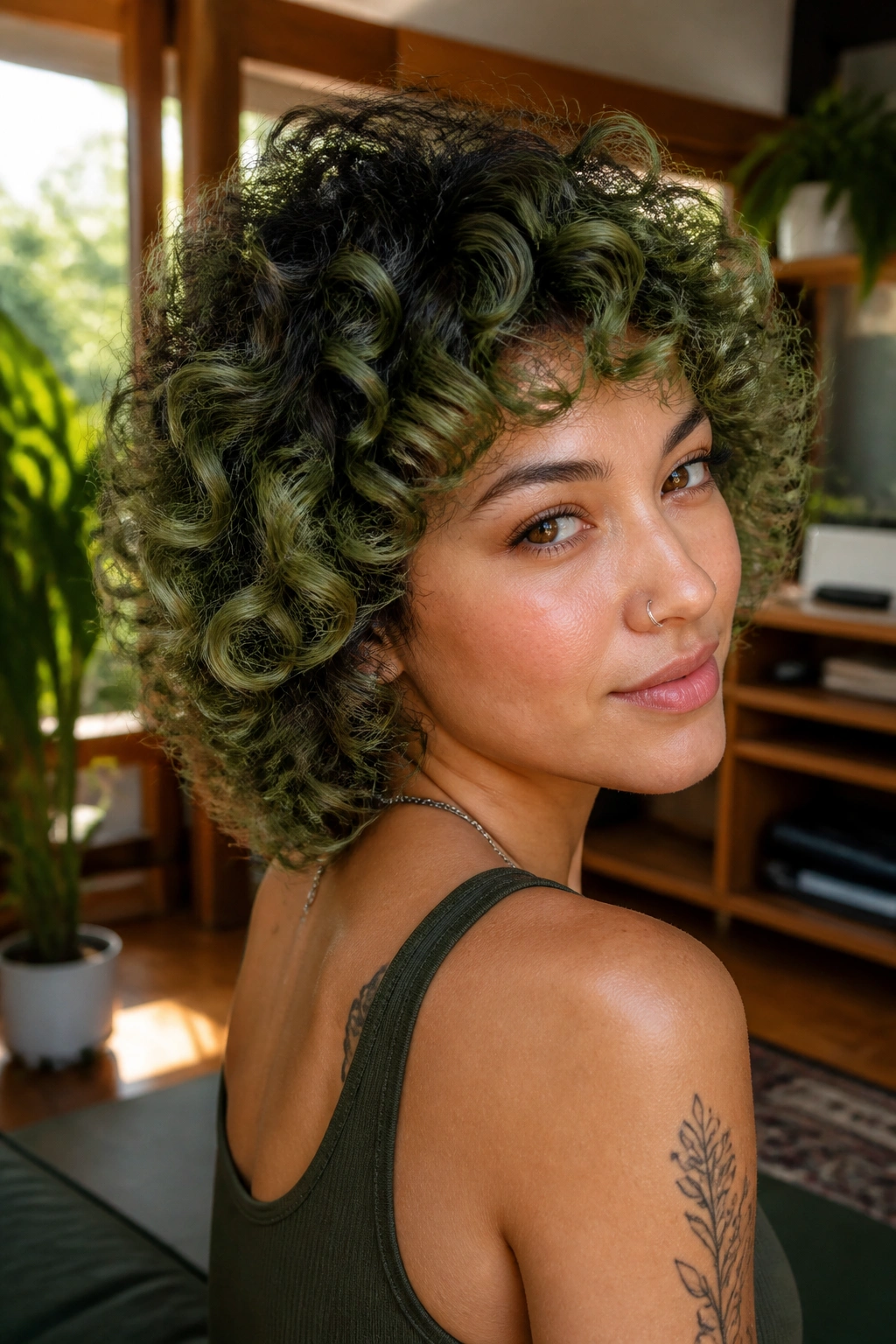
Curly hair changes the whole conversation. Mossy curls with shadow roots use the curl pattern to break up the color, which keeps the green from reading as one solid block. On cool skin, that dimension is a gift, because the darker root and muted green ends give the face some contrast without making the color scream.
Shadow roots matter because they stop the grow-out line from looking harsh. A root that stays two or three shades darker than the green lengths makes the whole style feel more natural, even when the color itself is vivid. The curls then catch light in small pieces, so the green shows in bits instead of all at once.
This is one of the better choices if you like texture. Straight hair can make moss green feel a little flatter than intended, while curls give it movement and shadow. That movement is what keeps the shade interesting over time.
11. Metallic Green Chrome
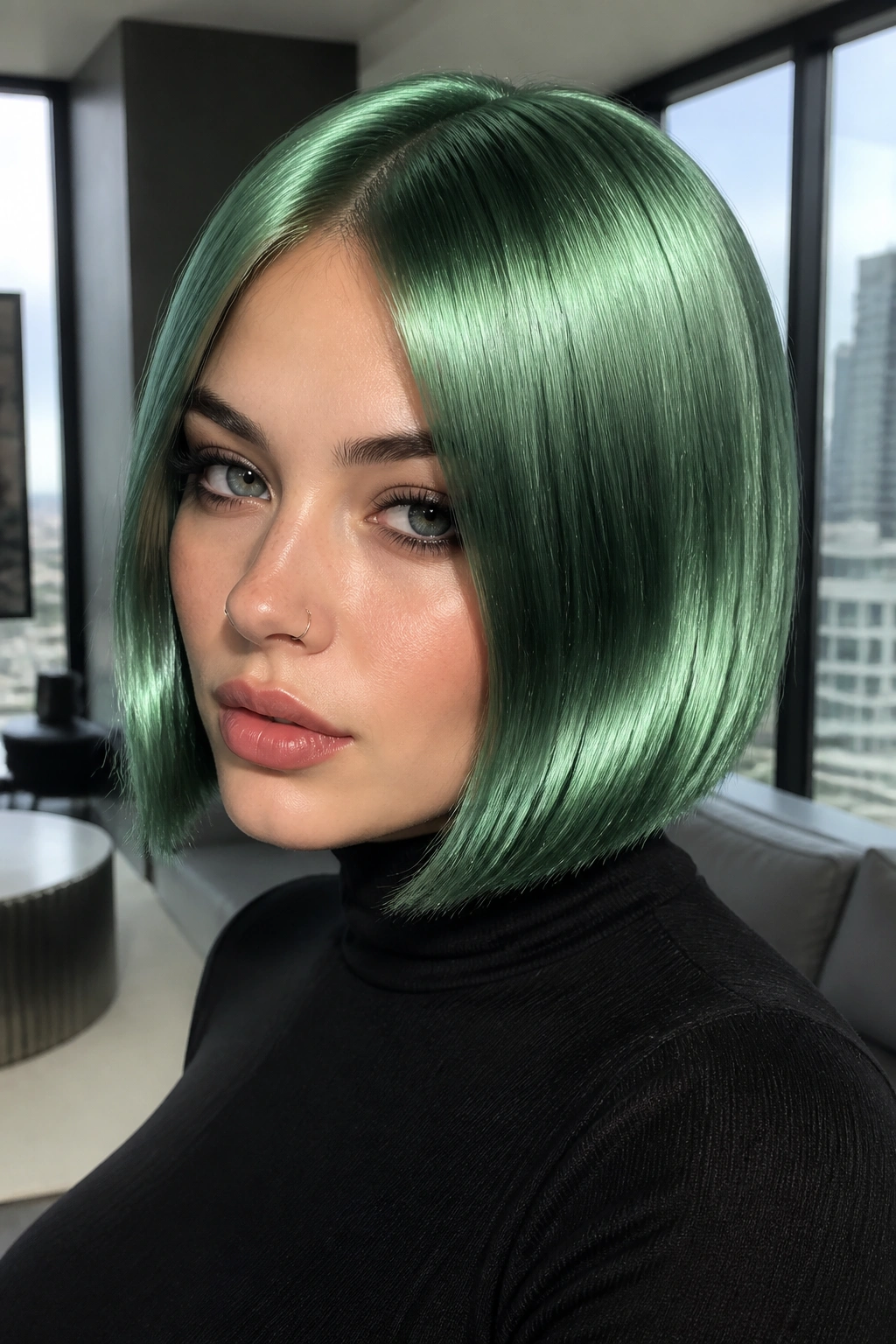
Metallic green chrome only works when the hair is smooth enough to behave. If the cut is rough or the ends are fried, the reflective finish disappears and the shade turns patchy. On cool skin, though, the right chrome green can look almost futuristic in a good way, because the shine echoes the clean, cool tone in the face.
What Makes It Worth Trying
The color needs a bright, even base and a glossy finish on top. That usually means lifted hair, careful toning, and a smoothing routine that keeps flyaways down. A little surface frizz can break the reflection fast.
Metallic green also looks best on shapes with a clean outline: a bob, a lob, or a blunt cut. The more defined the haircut, the more the shine reads as intentional. Long layers can work too, but they need a little more styling time.
If you want green that feels polished rather than punk, this is the one. It is high-maintenance. No way around that.
12. Chartreuse Streaks over Charcoal
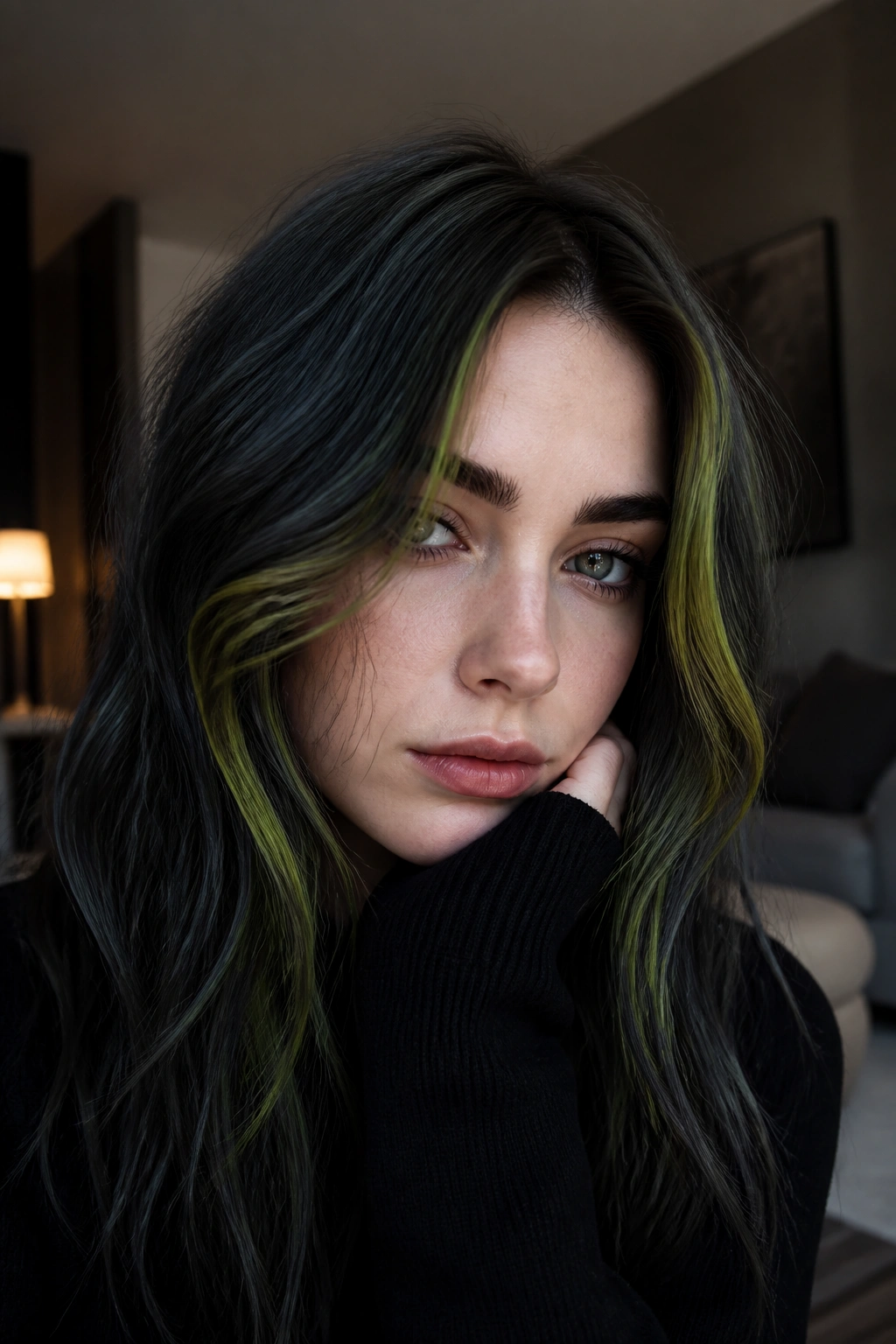
Can chartreuse work on cool skin? Yes, but only when you throw a gray base under it. Otherwise it can tip too yellow and start fighting the undertone of the face. With charcoal beneath it, though, the streaks look sharper and more graphic.
What Stops It From Going Harsh
The contrast is doing a lot of heavy lifting here. Thin chartreuse ribbons over a charcoal base keep the brightness controlled, so the green reads as an accent instead of a flood of neon. That makes the color easier to wear for people who want edge without a full commitment.
- Keep the streaks narrow, about 1/4 to 1/2 inch wide.
- Place them near the face or through the top layer for the most payoff.
- Ask for a chartreuse that leans cool or smoky, not sunflower yellow.
This shade is not for someone who wants soft or subtle. It is for someone who likes clean lines, black clothing, and a little attitude. If that sounds like your lane, it can look excellent.
13. Kelp Green Bob
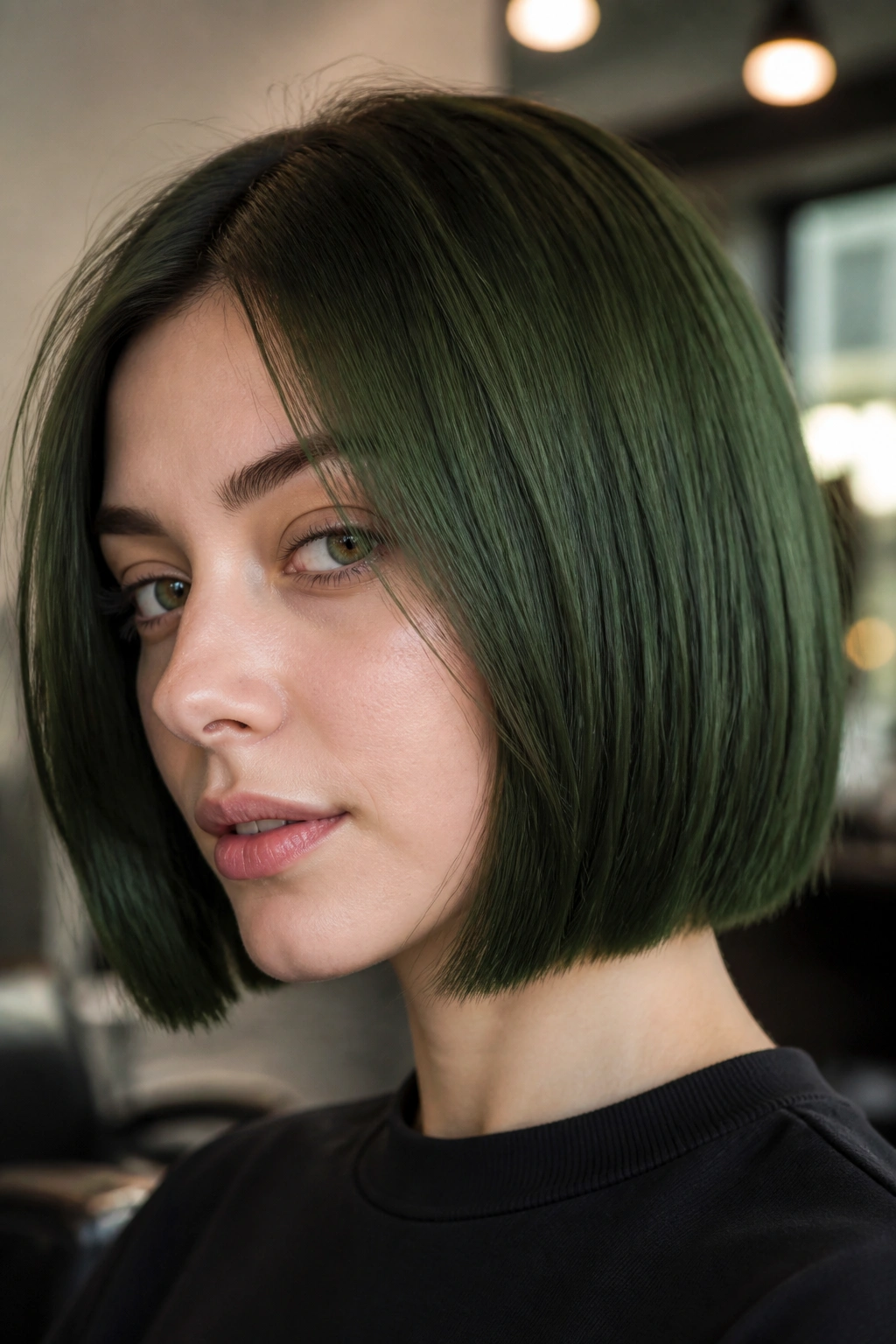
Take a blunt bob and drop a kelp green glaze over it, and the whole haircut starts to look more tailored. Kelp green sits darker than mint and less jewel-like than emerald, which gives it that submerged, underwater feel that cool skin can carry without looking washed out.
The bob shape helps because it shows the color in one tidy frame. A chin-length or jaw-length cut keeps the green front and center, and a smooth finish makes the tone read richer. If you add too much texture, the shade can lose some of its quiet depth.
This is the kind of green I recommend to people who want hair color that looks expensive without being flashy. It is not the brightest shade in the room. That is the point. On cool skin, the muted depth keeps the face in focus while the hair does its job in the background.
14. Bottle Green Full Coverage
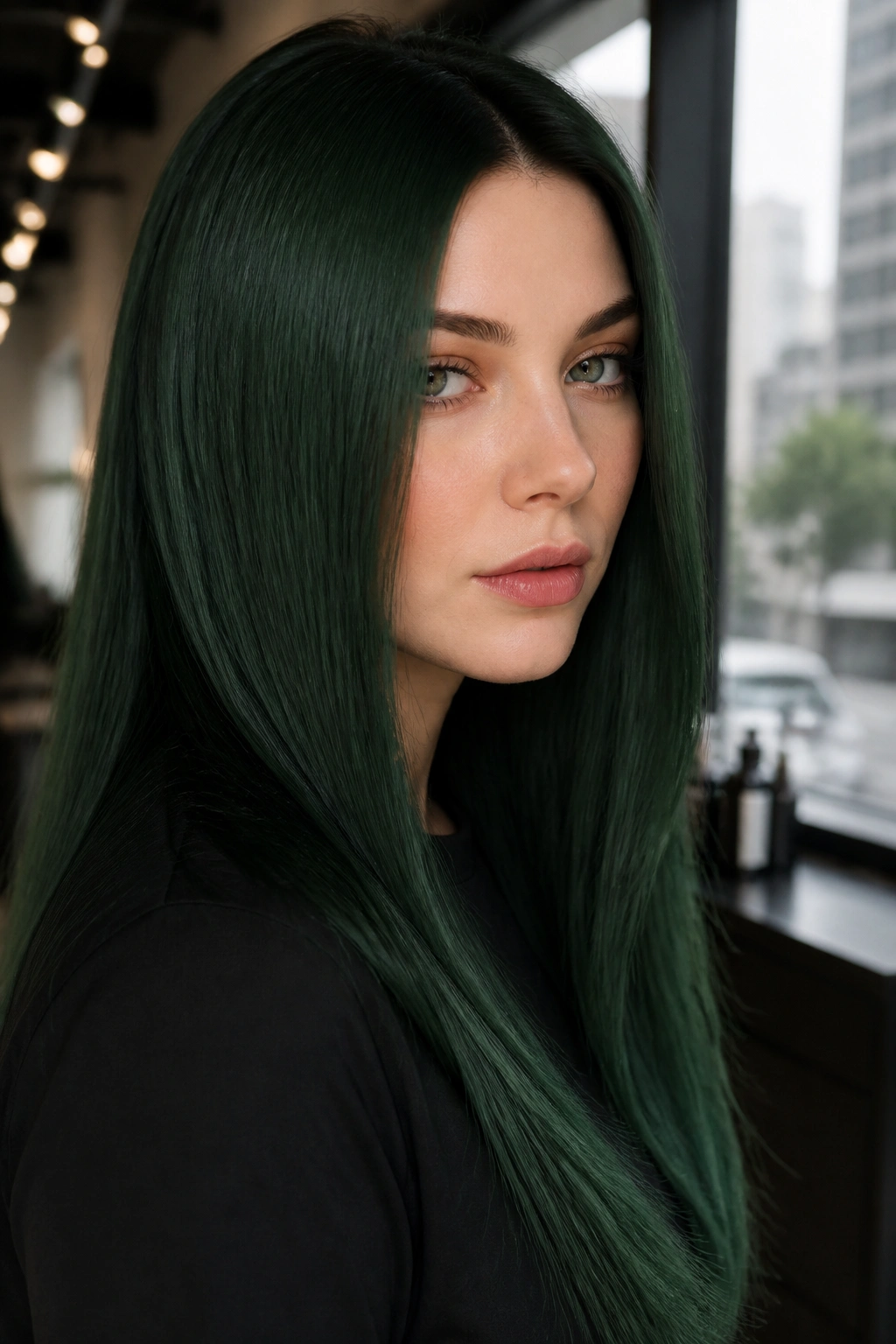
Bottle green full coverage is for people who want their color to read as one strong statement from root to tip. It is darker than jade, heavier than mint, and more saturated than sage. On cool skin, that depth works because it gives the face a strong frame instead of a soft wash.
This shade is a good call if you like dark clothes, glossy lips, and high-contrast makeup. It also works well if you do not want every inch of the hair to look bright. Full coverage bottle green can sit closer to a black-green in low light, which makes grow-out less obvious than pastel shades.
The downside? You need a clean application. Patchy bottle green is obvious. When it is even, though, the finish has a velvety look that feels deliberate and mature, not childish. That is a useful distinction, and people miss it all the time.
15. Green-Blue Mermaid Ends
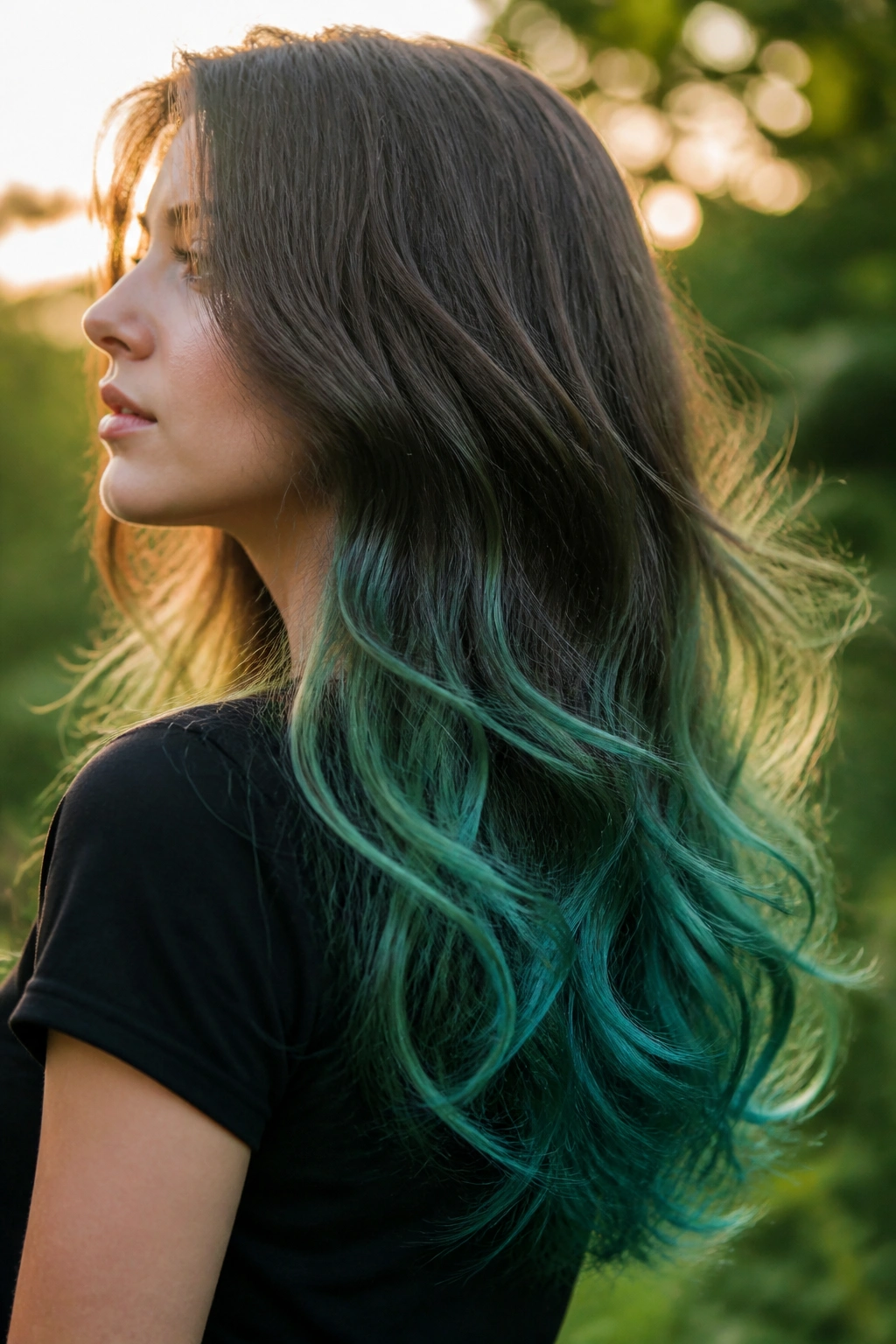
Unlike full-head mermaid color, green-blue ends let you keep the top softer. That makes the look easier to wear if you work with cool skin and do not want the scalp area competing with your face. The green and blue tones on the ends do most of the talking.
Long hair is the best canvas here, especially if you have layers. The movement of the ends matters because the color needs space to show both shades as the hair swings. If the ends are blunt and heavy, the transition can feel abrupt. If they are feathered a bit, the color looks more fluid.
I like this version for anyone who wears braids, waves, or loose ponytails. The blue-green ends peek through and shift depending on the light. It is a little theatrical, but not in a costume way. More like the hair knows how to behave in a room.
16. Dusty Olive with Cool Gray
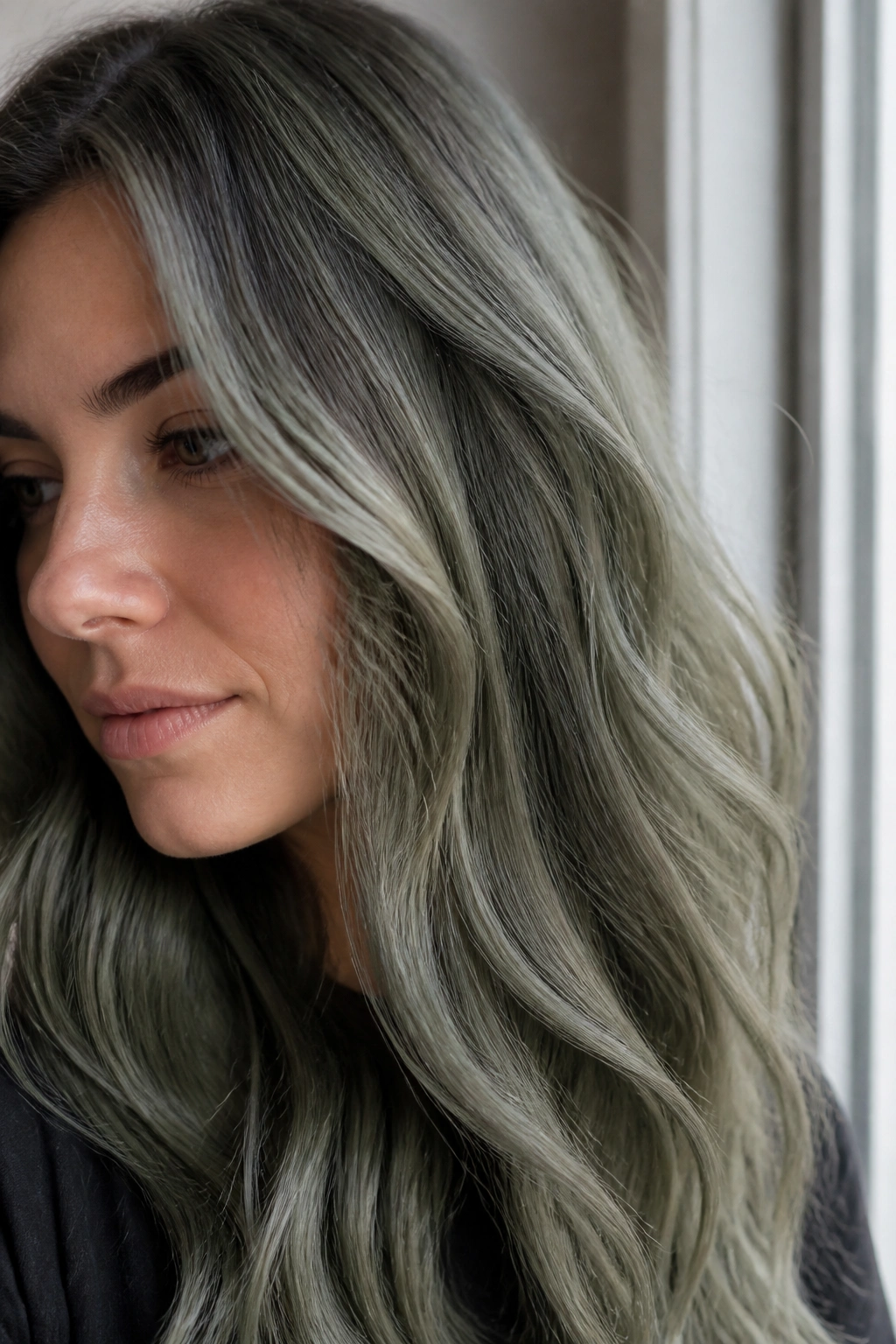
Dusty olive is the shade people call green when they do not want green to shout. On its own, olive can lean warm and muddy, which is not ideal for cool skin. Add a cool gray base, though, and it turns into something softer, deeper, and much easier to wear.
Why It Works on Cool Skin
The gray tones calm the yellow in the olive, so the hair stops fighting the face. That matters if your skin has a pink cast or if gold tones usually look a little off on you. The result is muted, not flat.
- Best for: People who want green in a subtle register.
- Best base: Medium blonde to light brown hair that can take a dusty toner.
- Best styling: Loose waves or a textured blowout, because the shade needs movement.
This is one of the smartest green choices for someone who likes earthy color but still wants it to read cool. It does not try to be mint, and it does not try to be emerald. It stays in its lane, which is why it works.
17. Acid Green Underlayer
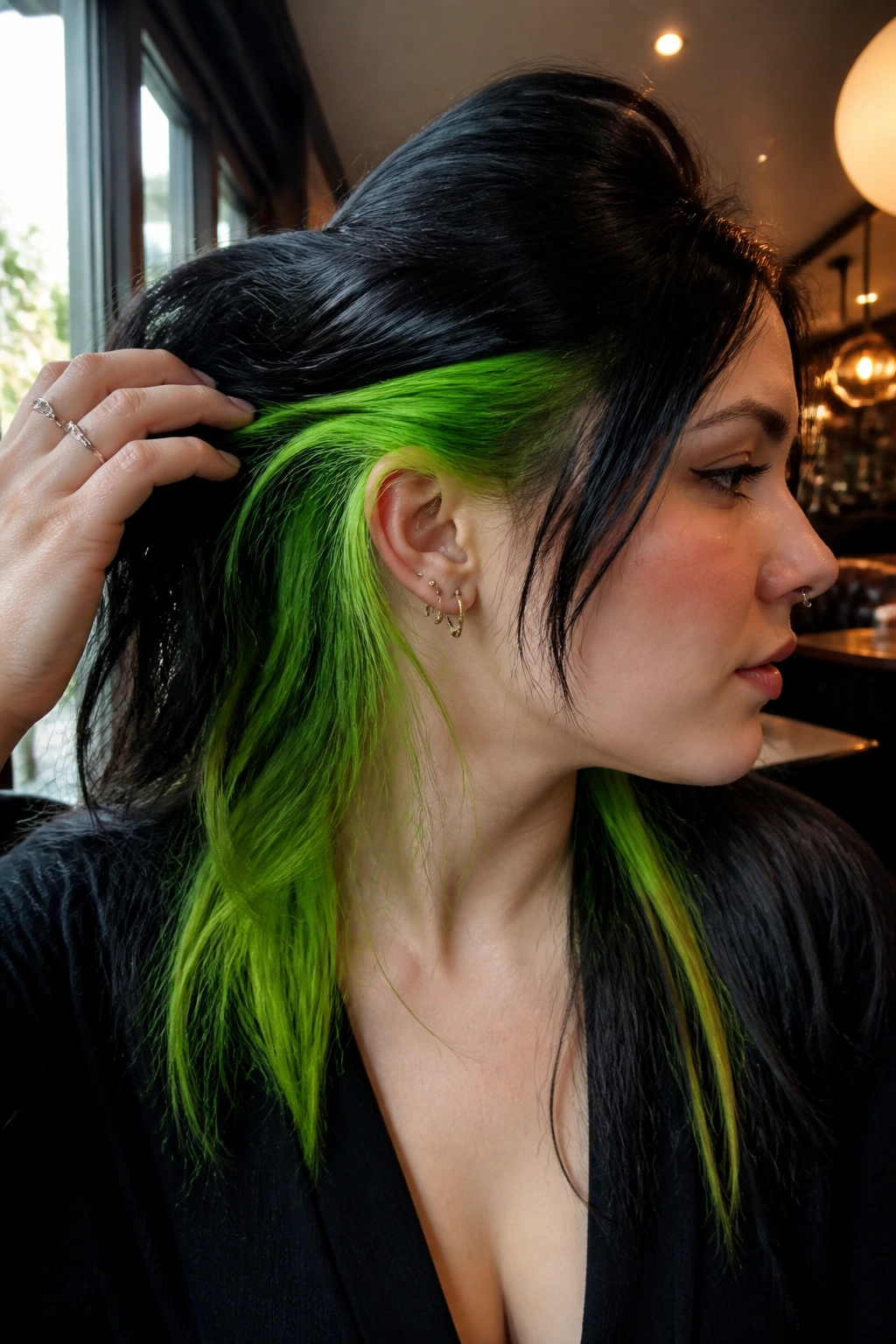
What if you want something loud but not every day? Acid green underlayer solves that neatly. Keep the top layer dark—blue-black, charcoal, or ash brown—and hide the bright green underneath. Cool skin gets the contrast, but only when you decide to show it.
The placement changes the mood. Flip the hair, pin it half up, or tie it into a messy knot, and the green flashes through the darker top. Wear it down, and it stays mostly hidden. That flexibility is what makes the look usable instead of exhausting.
This one is for someone who wants the shock value but not the full-time responsibility. The base can stay dark enough to make root maintenance simple, while the underlayer gets all the fun. And honestly, that is a smarter way to wear acid green than painting the whole head with it.
18. Glacier Mint on Platinum
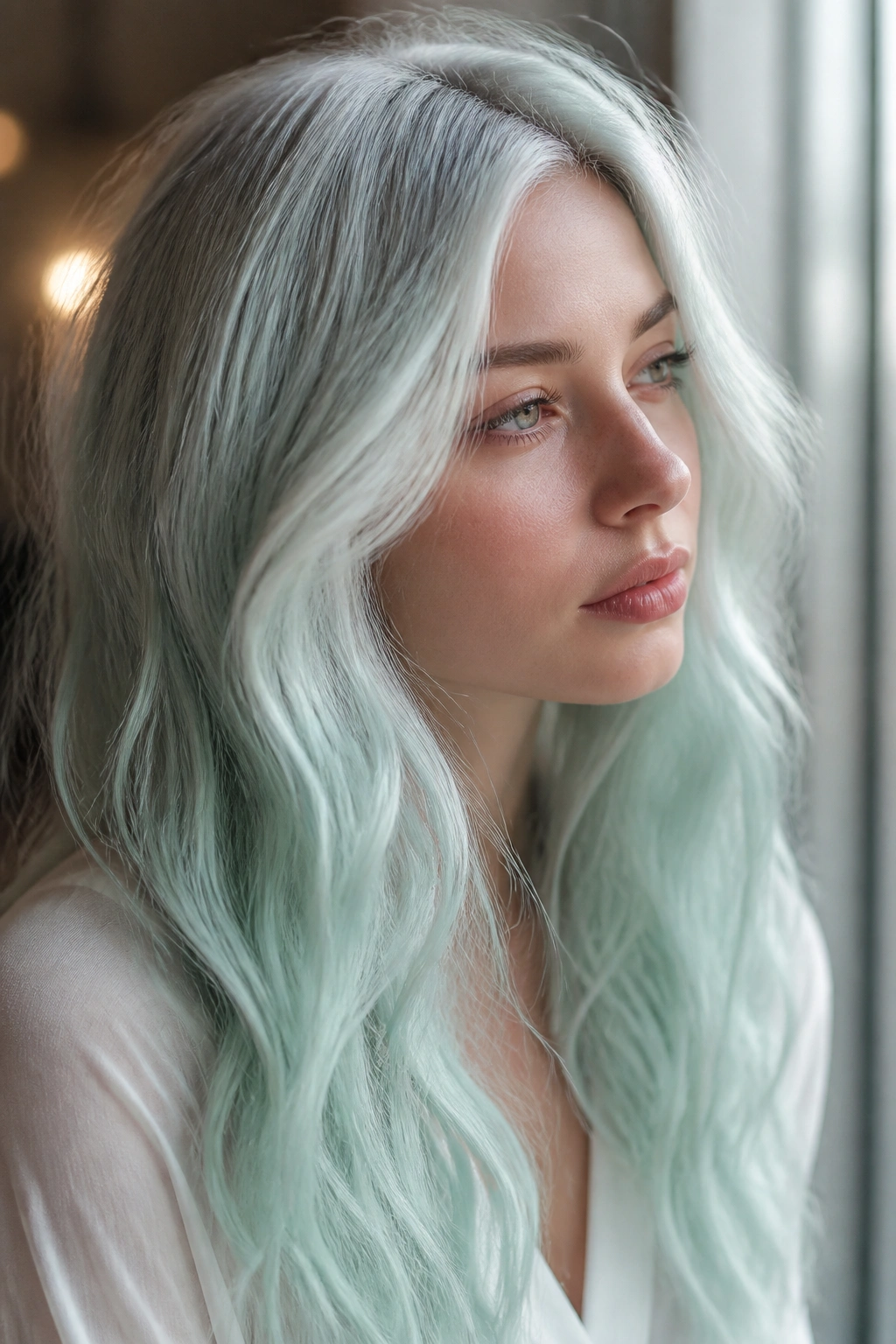
If your hair is already platinum, glacier mint is one of the cleanest ways to keep it interesting. The shade has that frosted, icy feel that cool skin handles well, especially if your undertones already lean pink or blue. It looks sharp in daylight and almost pearl-like indoors.
The canvas has to be clean. Any leftover gold will mess with the mint and push it toward pale chartreuse, which is a different look entirely. A cool toner before the mint goes on helps keep the finish crisp. After that, less is more. Heavy purple shampoo can mute the green faster than people expect.
What to Watch For
- Keep the base lifted evenly to a pale blonde.
- Use a cool deposit, not a warm pastel mix.
- Refresh with a soft color conditioner instead of over-toning.
This shade is fragile, but the payoff is worth it if you like light, frosty color. It is one of the most flattering pale greens for cool skin because it stays in the icy family from root to tip.
19. Juniper Layering
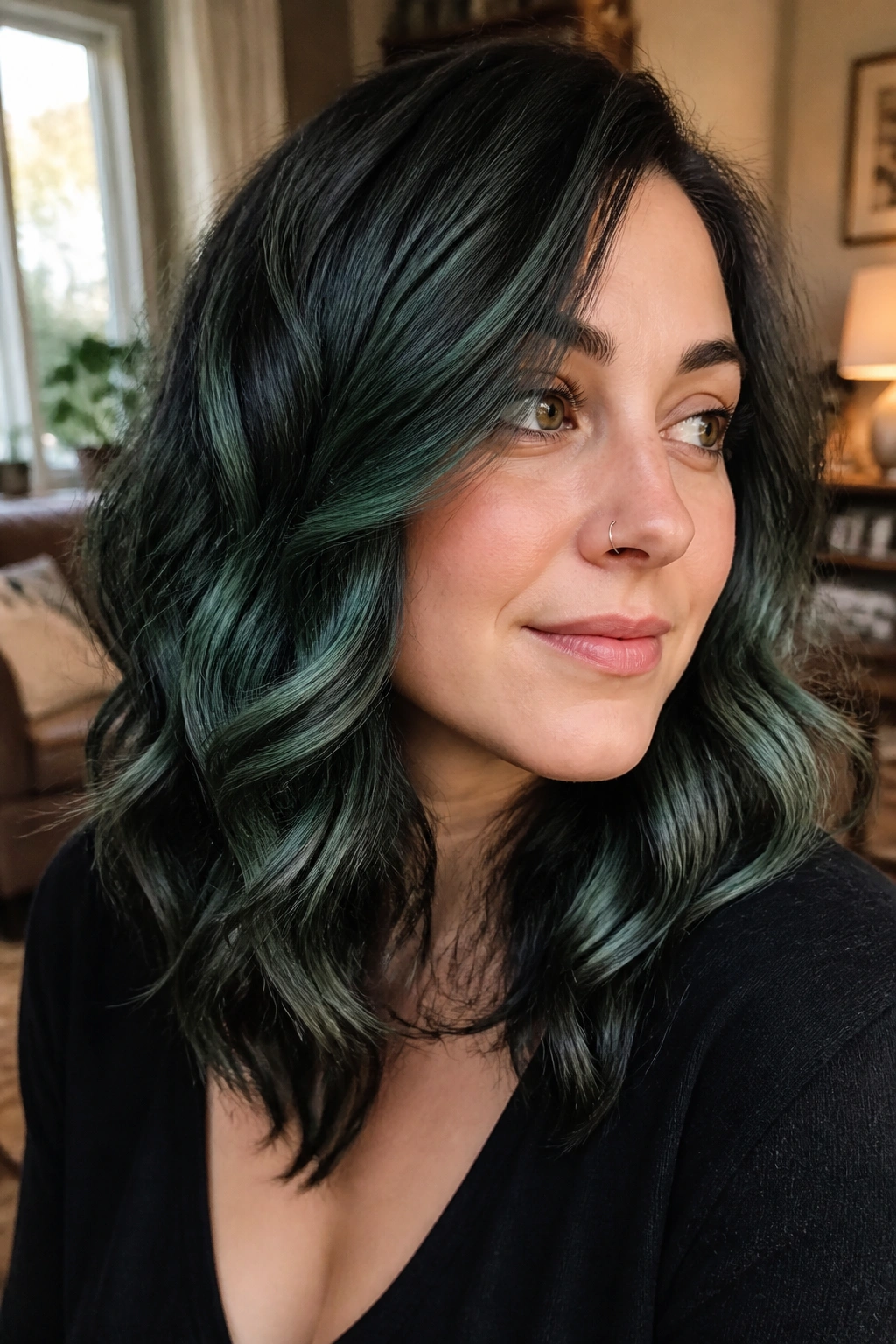
Juniper layering is what happens when you stop treating green as one flat color. Dark green, teal, black-green, and a little smoky depth all sit together in the same head of hair. On cool skin, that mixture gives a rich, forested look that feels dimensional instead of painted on.
The layering works especially well in cuts with movement. Long shags, layered lobs, and textured waves all give the different green notes places to show up. One section catches teal, another catches pine, and another drops into near-black. That variety keeps the eye moving.
I prefer this option when someone says they want green but does not want to look like they picked a single tube of dye and called it done. It feels more built, more textured. And because the tones stay cool, the face still looks clean next to it.
20. Velvet Green Lob
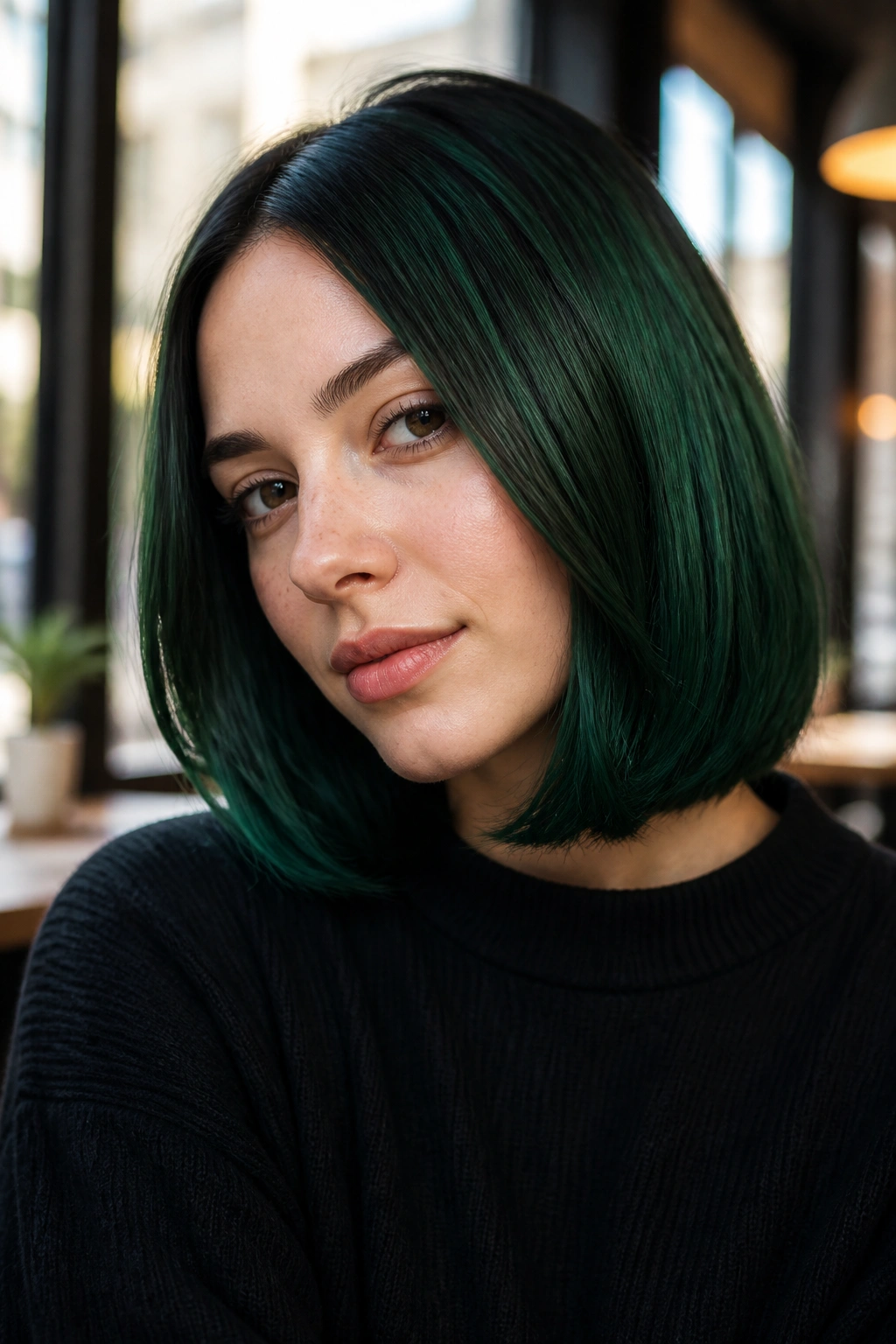
Between a bob and long hair, the lob gives green room to move. A velvet green lob sits in that middle length and uses the shape to keep the color polished. On cool skin, the darker green reads rich without going heavy, which is a nice place to be.
This cut is easier to wear than a very short crop and less demanding than long, color-heavy layers. The lob length lets the shade shift in daylight, but it also keeps the ends healthy-looking if you are coloring often. That matters more than people admit, because dry ends can make any green look tired fast.
If you want a green that feels grown-up but still interesting, this is a smart lane. Wear it sleek for a sharper effect, or add bend through the mid-lengths if you want the velvet tone to catch more movement. Either way, the shape does a lot of the work.
21. Dark Jade with Silver Threads
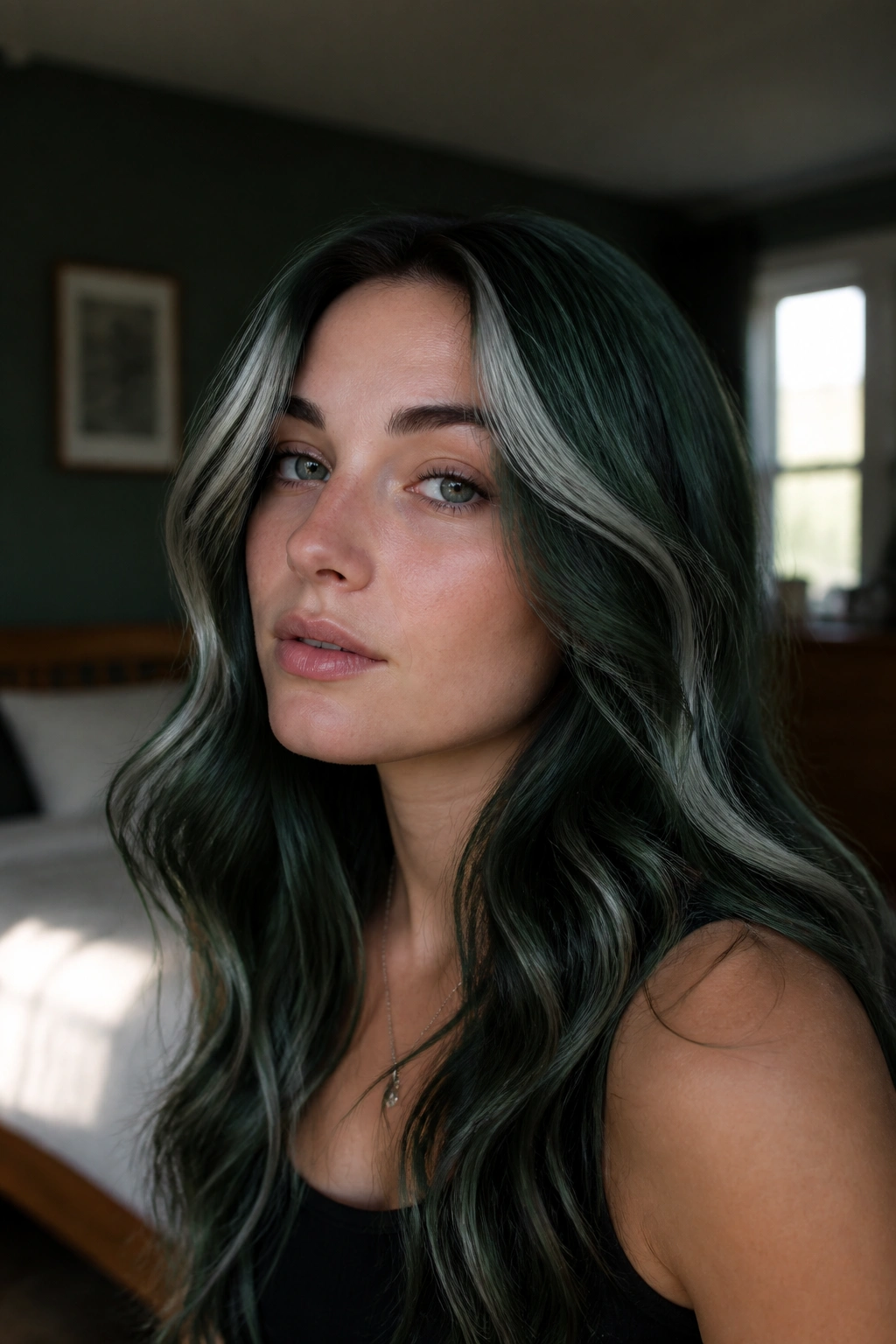
Dark jade and silver threads are made for anyone who wants green with a little bite. The jade gives you depth, and the silver keeps it cool enough for pink or blue-leaning skin. The combination looks strongest when the silver is placed in thin ribbons rather than chunky streaks.
Why the Silver Matters
Silver interrupts the density of the green. Without it, dark jade can sink a little too far into brown territory on some bases. With it, the color stays crisp and reflective.
- Place the silver near the face or around the crown.
- Keep the jade deeper on the back and lower layers.
- Use a gloss finish so the silver does not look chalky.
This is one of my favorites for cool skin because it has contrast without chaos. The jade gives mood; the silver keeps it sharp. That is a better combination than piling on brightness just because you can.
22. Blackened Pine Gloss
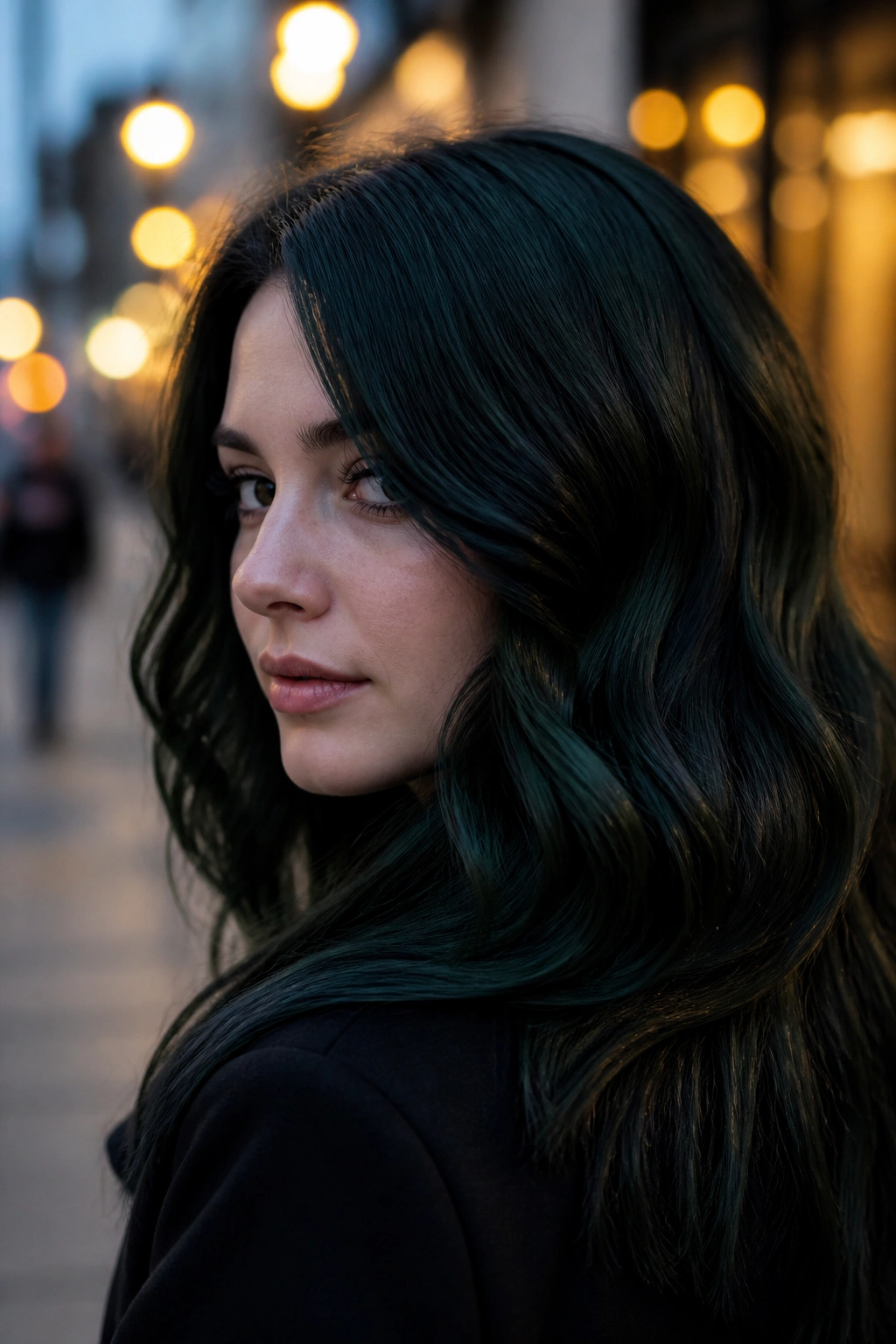
Blackened pine gloss is the one I’d keep in the pocket if you want green that whispers until the sun hits it. It sits so close to black that it can pass as dark hair indoors, then show a green shift in daylight or under a flash. On cool skin, that hidden color reads elegant in a grounded way.
The shade works because it keeps the green blue-leaning and deep. There is no yellow cast to fight with, no bright lime to steal the focus. It is a good choice if you want green hair but you also want your clothes, makeup, and jewelry to do some of the talking. The hair becomes part of the frame instead of the entire picture.
If you want the safest entry point into green hair color ideas for cool skin tones, this is one of the cleanest places to start. It is moody, low-maintenance compared with pale greens, and flattering on a wide range of cool undertones. And if you do decide to go brighter later, this shade gives you a strong base to build from.
