



Cool skin tones and lilac hair get along better than most people expect. The catch is tone: a lilac that leans blue, silver, or smoky will usually flatter pink, rosy, and neutral-cool complexions far more than a warm, peachy pastel ever could.
That’s the part people miss. Lilac is not one color. It can read powdery and soft, dark and moody, metallic, icy, dusty, or almost periwinkle depending on how much violet and blue sit underneath it. Shift the balance even a little, and the whole mood changes.
A good lilac hair color does more than look pretty in a photo. It can sharpen a cool complexion, make the eyes look brighter, and take a blunt haircut from flat to expensive-looking in one appointment. But the shade has to be chosen with some care — especially if your hair is dark, porous, or already a little compromised from lightening.
These 18 lilac hair color ideas cover the full range, from whisper-light lavender to deeper orchid and smoky violet. Some are low-commitment if you love a temporary gloss. Some need a lighter blonde canvas. A few are sneaky little tricks for people who want color without living inside a maintenance schedule.
1. Soft Lavender Melt for Cool Skin Tones
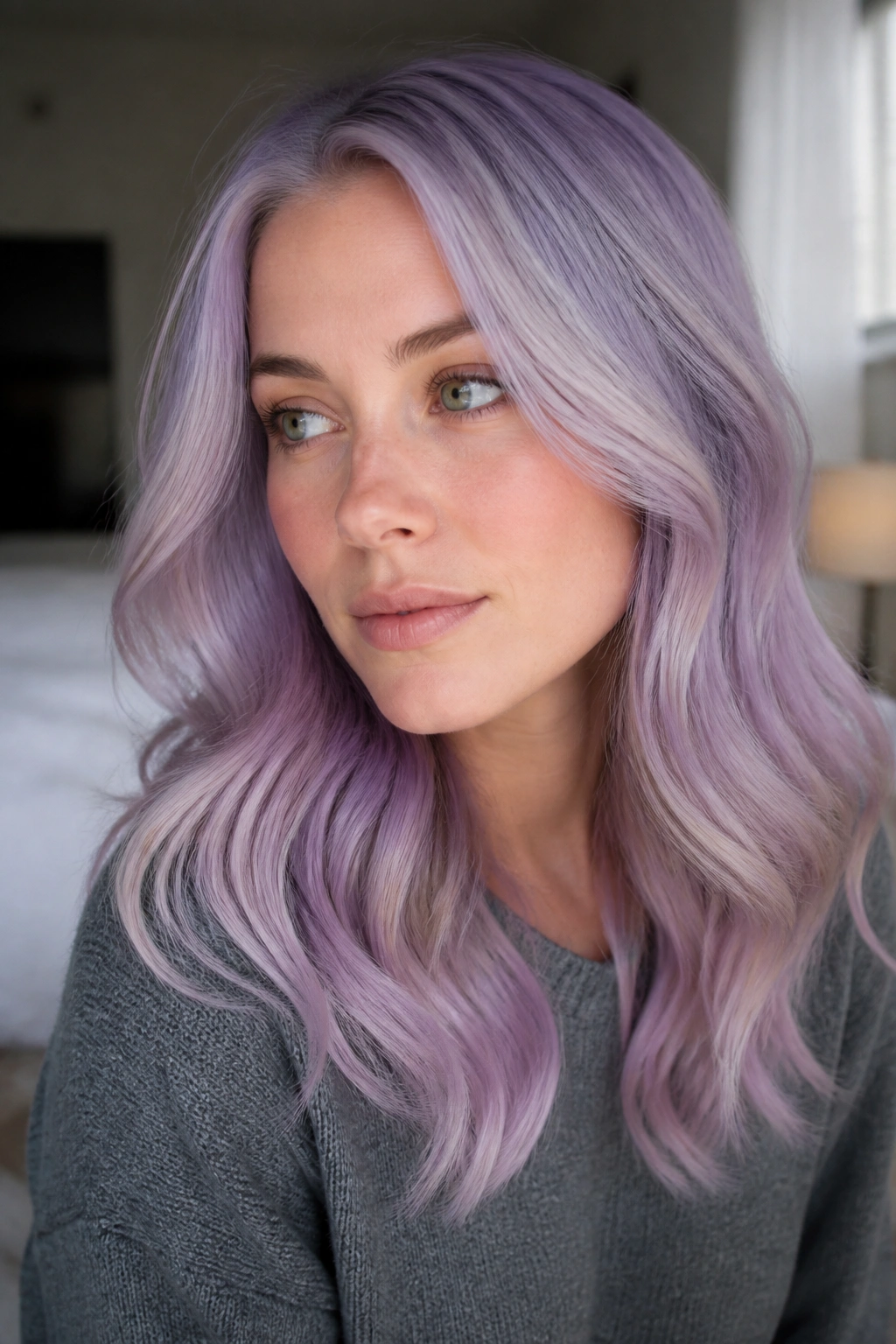
Soft lavender is where a lot of people should start, and I mean that in the nicest possible way. It’s gentle, it’s flattering, and it doesn’t shout across the room before you’re ready for it to speak.
Why this one works
The magic is in the fade. A lavender melt usually starts with a pale root shadow or a cool blonde base, then drifts into a sheer lilac midlength and ends with a whisper of pastel at the tips. That gradient keeps the color from looking blocky, which matters a lot on fair skin with pink or blue undertones.
It also photographs in a calmer way than a saturated purple. On cool skin, that can be a relief. The face stays the focus, not the hairline.
What to ask for
- Base level: usually a level 9 or 10 blonde
- Tone: violet-heavy lilac with a silver cast
- Finish: soft blur from root to tip, not a hard line
- Styling note: loose waves make the color shift visible
A lavender melt is especially kind to straight hair that needs dimension, because the color creates movement where the haircut may not. And if you want something that fades gracefully, this is one of the easier lilac looks to live with.
My blunt advice: ask for a violet-based gloss, not a pink-lavender one.
2. Smoky Lilac Balayage
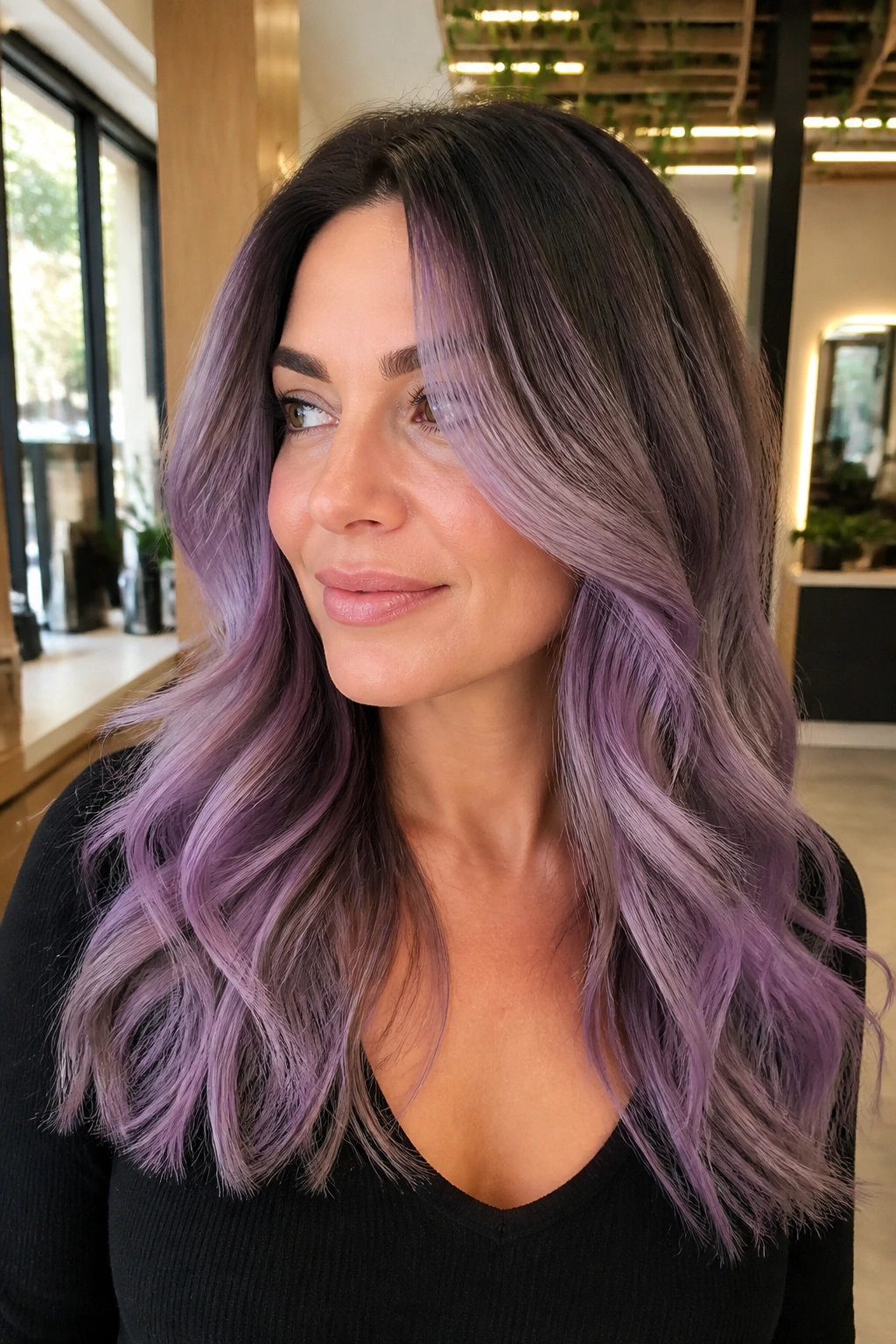
Smoky lilac is for the person who likes color but does not want candy. It has a little shadow in it, which is exactly why it works so well on cool skin.
Balayage keeps the look soft around the face and heavier through the midlengths and ends. That matters because smoky lilac can look chic when it’s painted in airy ribbons, but thick stripes tend to make it feel dated fast. The best versions sit somewhere between ash blonde and faded plum.
This is also one of the easiest lilac ideas to wear with natural root regrowth. A darker base gives the lilac something to sit against, and the contrast makes the cooler tones look richer instead of washed out. If your hair is medium brown or dark blonde, this color can be built without bleaching every inch to oblivion.
Styling notes
- Blow it out smooth for a sleek, editorial feel.
- Rough-dry it for a cloudier, more diffused finish.
- Ask for soft, hand-painted placement around the face and under the top layer.
Smoky lilac has a nice side effect: it looks expensive even when it’s slightly faded. That’s not a small thing.
3. Silver-Lilac Lob
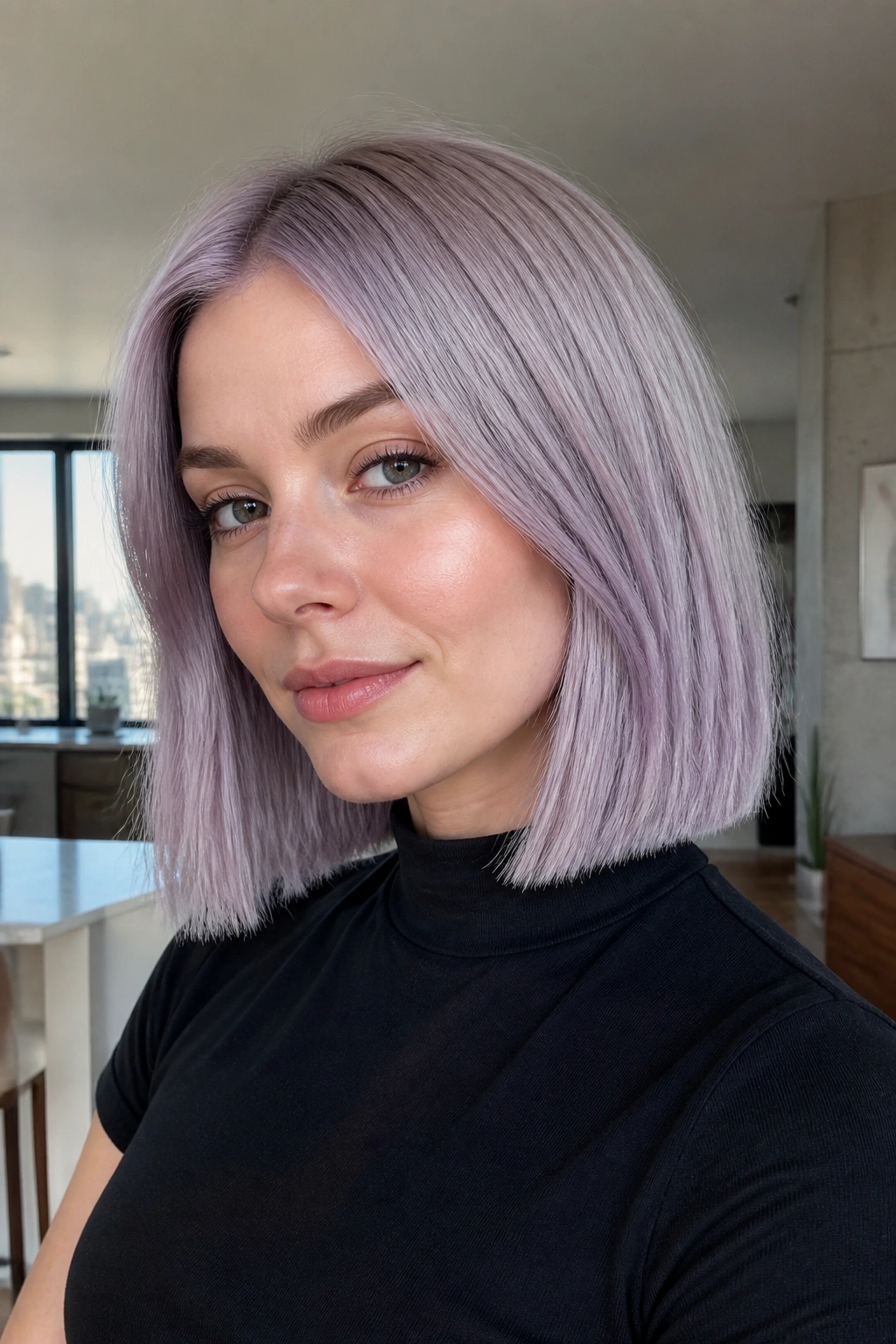
A silver-lilac lob is the kind of haircut-color pairing that makes sense the moment you see it. The clean line of a lob gives the shade structure, and the silver in the formula keeps cool skin from looking drained.
The cut matters here. A blunt or barely textured lob lets the color read polished and deliberate. If the ends are too shattered or too wispy, the silver-lilac can lose its shape and start looking thin. The sweet spot is collarbone length with a slight bend at the ends.
This shade is especially good if you wear a lot of black, charcoal, navy, or white. Those clothes echo the coolness in the hair instead of fighting it.
Quick direction for your colorist
- Start from a pale blonde canvas.
- Choose a silver-violet toner rather than a warm pastel mix.
- Keep the root area slightly deeper so the cut has depth.
- Add a gloss every 4 to 6 weeks if you want the metallic edge to stay crisp.
One small thing people forget: silver-lilac is less forgiving in harsh sunlight. If the tone goes too yellow, the whole look slips. Fast.
4. Icy Lilac Pixie
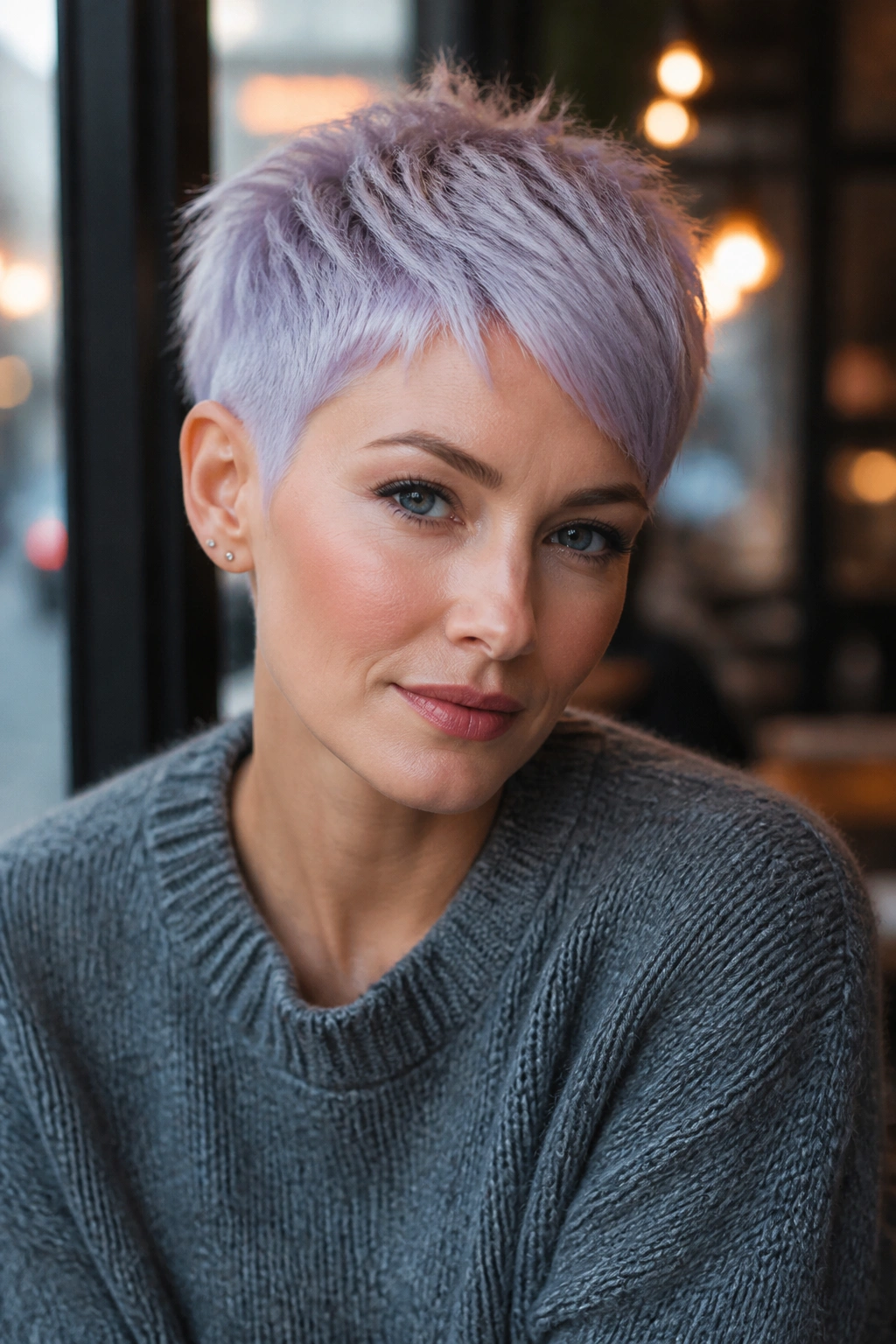
Short hair can take lilac harder than long hair does, and that is half the fun. An icy lilac pixie lands with a little edge because the cut gives the color nowhere to hide.
On cool skin, this look can be razor-sharp in the best way. The trick is to keep the lilac pale and blue-leaning, almost like frozen candy with the sweetness stripped out. If the color gets too pink, the pixie can start reading juvenile instead of sharp.
The finish matters too. A pixie with texture at the crown and clean sides gives the lilac places to break up. That means the shade won’t flatten under overhead light. I prefer this on straight or slightly wavy hair, where the movement is small but noticeable.
What to ask for
- Tone: icy violet, not mauve
- Placement: full coverage or a frosted top with darker sides
- Maintenance: trims every 4 to 6 weeks keep the shape honest
- Styling product: a light paste or matte cream, not a heavy oil
This is not a shy haircut. Good. It should not be.
5. Orchid Ends on a Dark Base
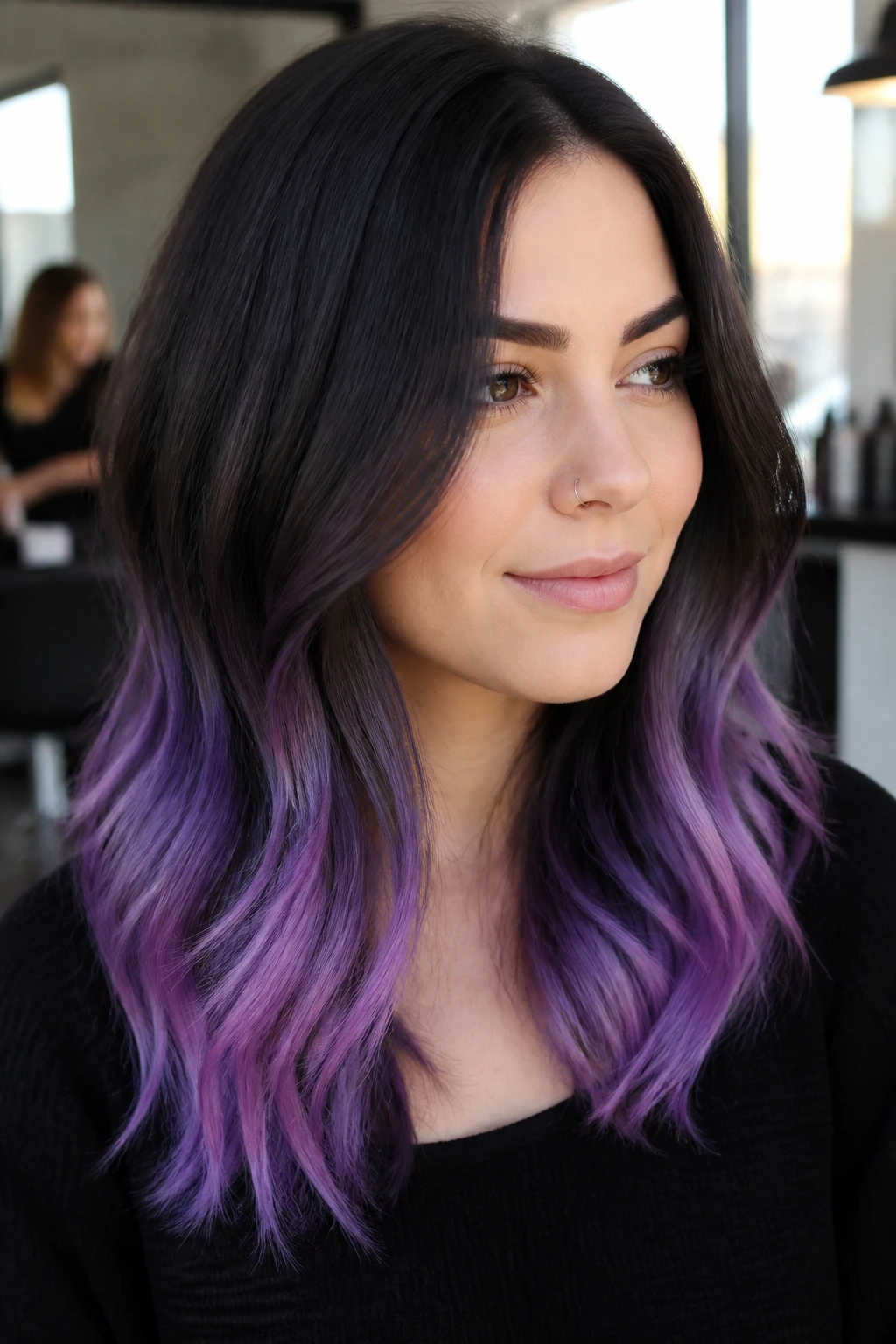
Orchid ends are for people who want lilac without bleaching the life out of the whole head. The dark base gives you contrast, and the orchid at the bottom gives the color a real point of view.
This works especially well on cool skin because the darker root area frames the face and keeps the lighter lilac from washing out the complexion. If your natural hair is deep brown or near-black, this kind of dip at the ends can look more deliberate than a full pastel job. It also grows out with less drama.
The color itself should lean violet rather than pink. Think orchid petals in shade, not bubblegum with purple mixed in. On curled hair, the ends catch light in a way that makes the hue look deeper than it really is.
A few practical details help:
- Keep the orchid concentrated on the last 3 to 5 inches.
- Add a soft blur between dark base and color.
- Style with bends, not super-tight curls.
- Refresh with a color-depositing mask when the ends start turning dusty.
I like this one because it has attitude without asking for constant attention. That’s rare.
6. Face-Framing Lilac Money Pieces
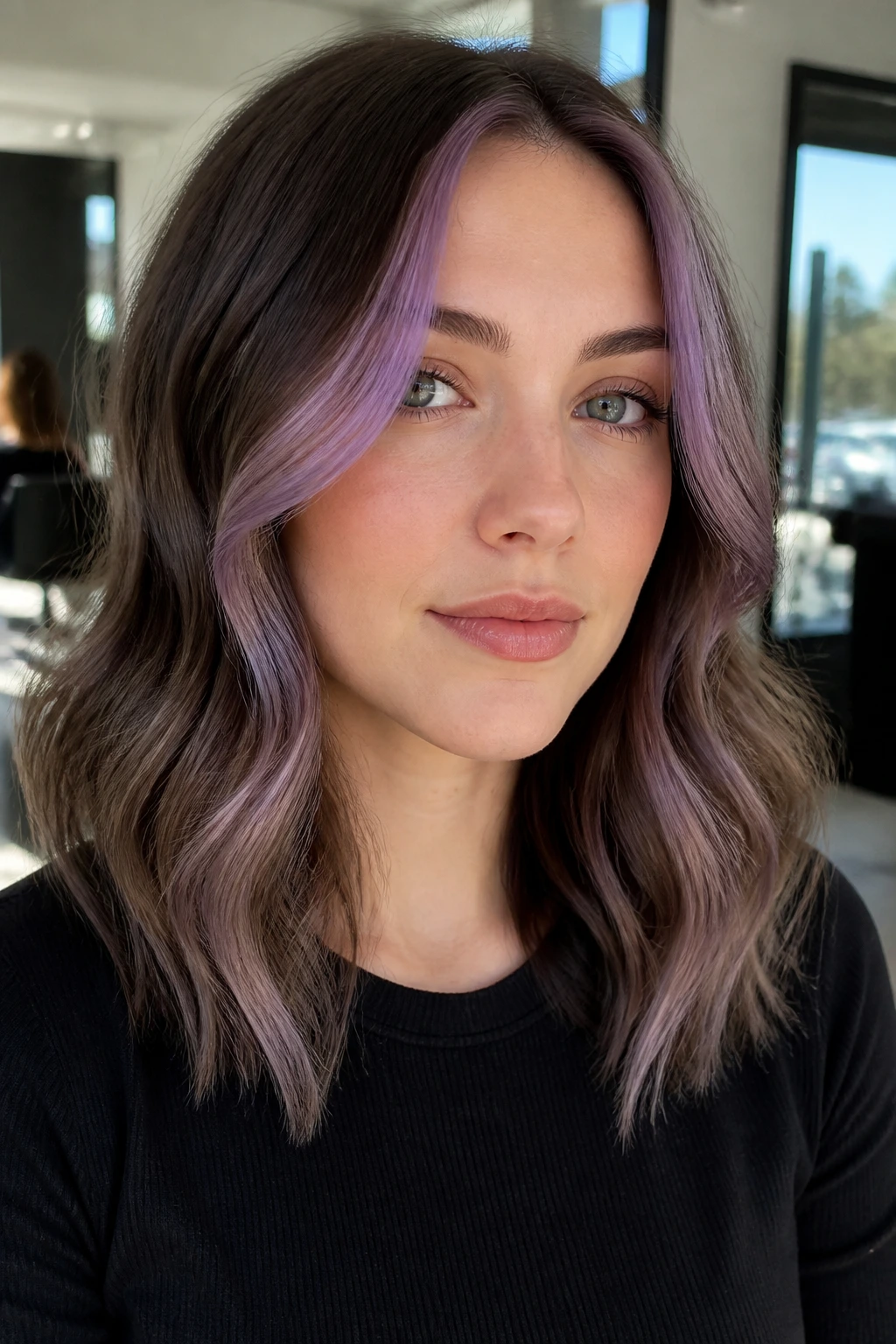
If you want a color change that shows immediately, this is the move. Face-framing lilac money pieces sit right where the eye goes first, which means they can do a lot of work for cool skin tones with very little hair color committed to the cause.
The best version is not neon. It’s a cool lilac ribbon that starts just at the front hairline and softens as it drops into the rest of the hair. On pale or rosy skin, that front placement brightens the face. On deeper cool complexions, it can sharpen the contrast beautifully.
I’ve always thought this look is underrated because people assume it has to be loud. It doesn’t. A dusty lilac face frame with a darker brunette or ash blonde base can look tailored and clean, especially when the rest of the hair stays quiet.
Why it works
- It draws attention upward.
- It flatters cheekbones and eyes.
- It lets you test lilac before going all in.
If you straighten the hair, the pieces read crisp. If you curl them away from the face, they melt into the rest of the color and feel softer. Nice little trick.
7. Blue-Toned Lilac Bob for Cool Skin Tones
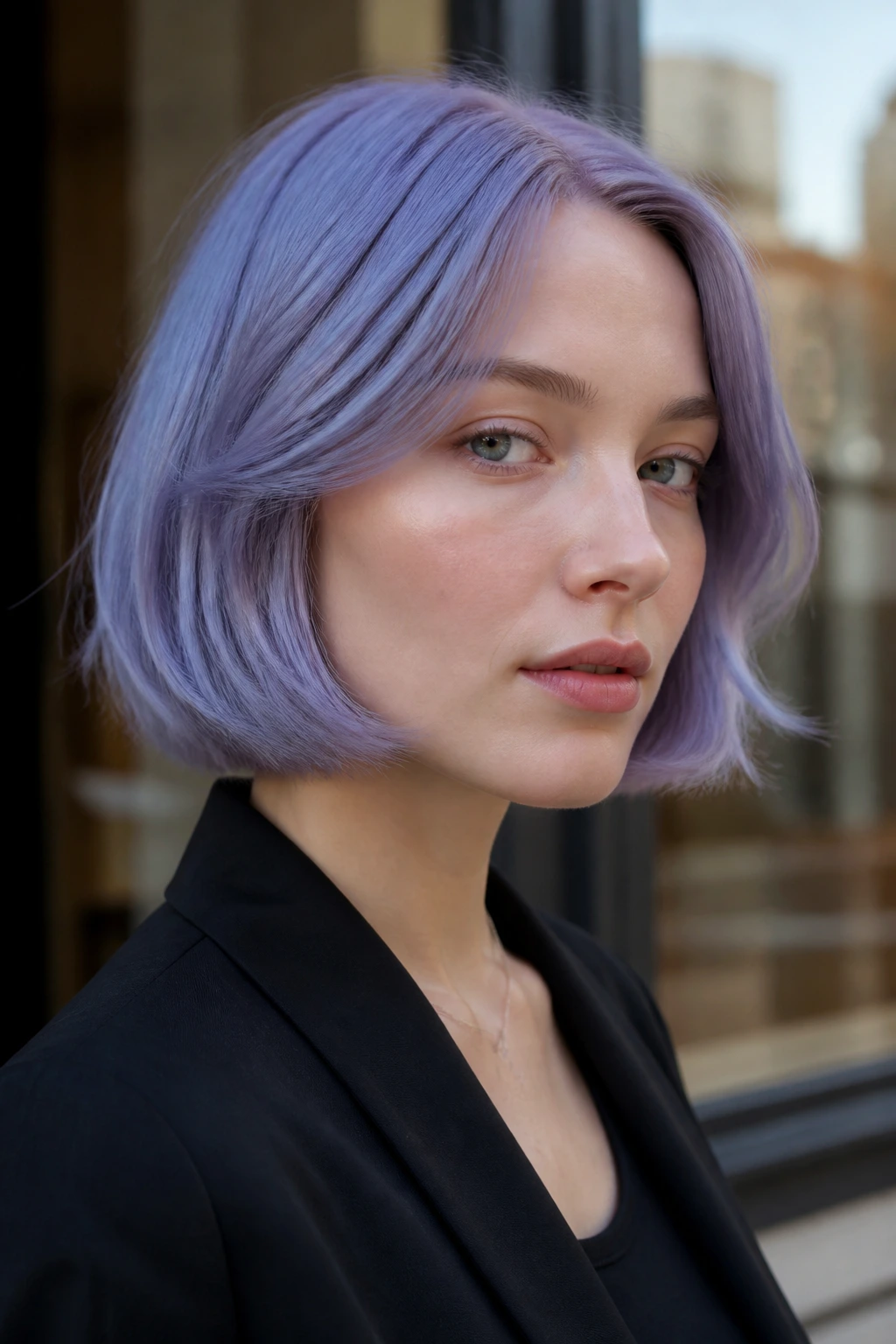
Blue-toned lilac is one of the easiest versions to wear if your skin runs cool. The blue keeps the lilac from drifting sweet, and that makes the whole look feel sharper and more modern.
A bob gives the color a frame. Without that shape, this shade can get floaty. With it, the hair looks like a deliberate block of color with movement inside it. Chin-length and jaw-length versions both work, though I have a soft spot for a slightly longer bob that tucks behind the ears.
How to get the most from it
- Ask for a violet-blue mix rather than a pink-violet formula.
- Keep the ends blunt or only lightly textured.
- Use a shine spray sparingly so the color doesn’t look greasy.
- Pair it with a side part if you want the tone to feel a little cooler and more severe.
The bob is also useful if you hate fussing with styling tools. Lilac on short-to-medium hair can look finished after a quick blow-dry and a flat iron pass on the ends. No song and dance.
8. Lilac Ombré on Chocolate Hair
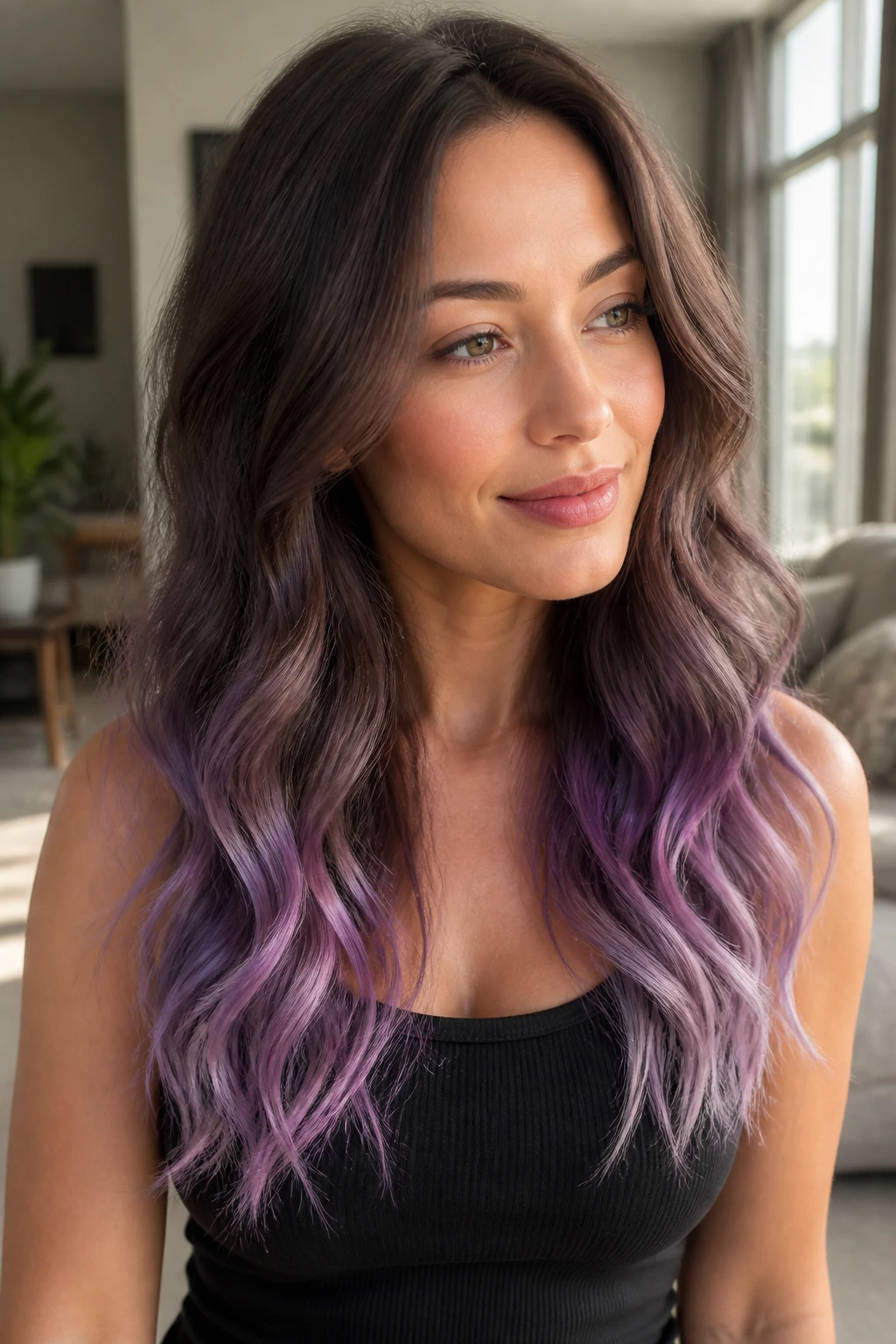
Lilac ombré on chocolate brown hair is a nice compromise for people who want color with some depth. The dark top half makes the lilac look brighter by contrast, and the long fade keeps the effect softer than a solid pastel block.
Cool skin tones benefit from this because the chocolate base acts like a frame, while the lilac ends keep things interesting near the face and shoulders. If the transition is painted well, the color looks dimensional even when it’s straight. On waves, it gets even better.
This is one of those looks where the transition matters more than the exact lilac shade. A harsh break between brown and purple can look costume-y. A gradual shift from cocoa roots to smoky lavender ends feels much more wearable.
Good things to request
- A mid-shaft melt instead of a hard ombré line
- Ends lightened enough to hold lilac properly
- A cooler brown base, not a chestnut one
- Soft waves or a big curling iron finish to show the fade
If you like the idea of lilac but want to keep most of your natural color, this is probably the most practical place to start.
9. Charcoal Roots with Lilac Midlengths
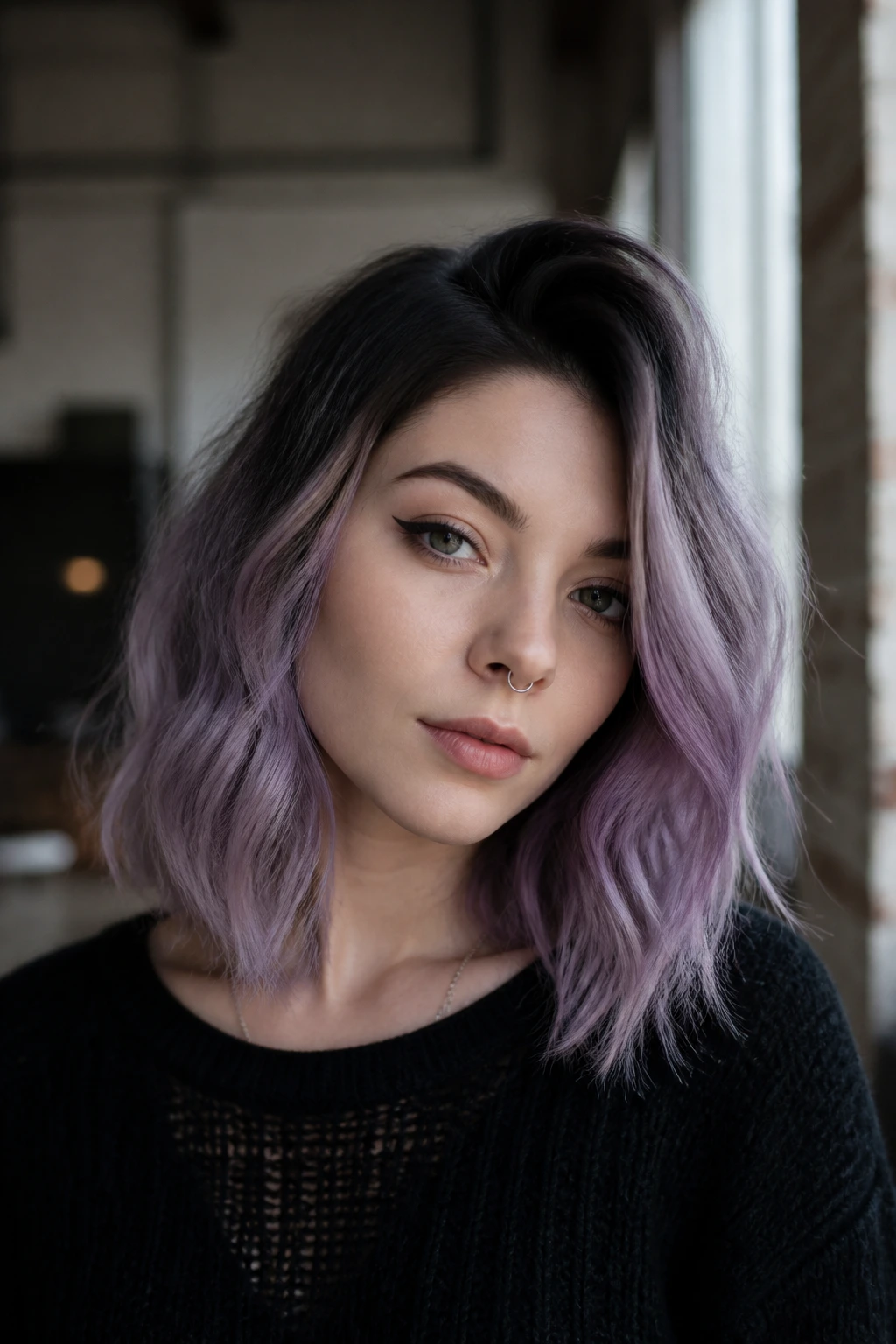
Charcoal roots make lilac feel grounded. That sounds almost too simple, but it matters. A deep shadow at the root keeps the lighter violet from floating off the head, which can happen with pale shades on very cool skin.
This version is especially good on medium-length hair with some texture. The charcoal root zone adds contrast, then the lilac comes in through the midlengths and ends like smoke lifting off a surface. It’s moody in a good way, and it works because the root depth echoes the darker lines in eyebrows and eyeliner.
I’d skip this if you want a soft, airy result. It’s more graphic than that. But if you like edge and a little darkness, it has real presence.
A few things make it look cleaner:
- Keep the root shadow narrow, around 1 to 2 inches.
- Ask for a cool charcoal, not a warm brown-black.
- Blend the midlengths with a violet gloss so the transition doesn’t look stripey.
This is one of those colors that looks even better on a second day, after the blow-dry has settled down. Slightly messy hair helps it.
10. Frosted Lilac Curls
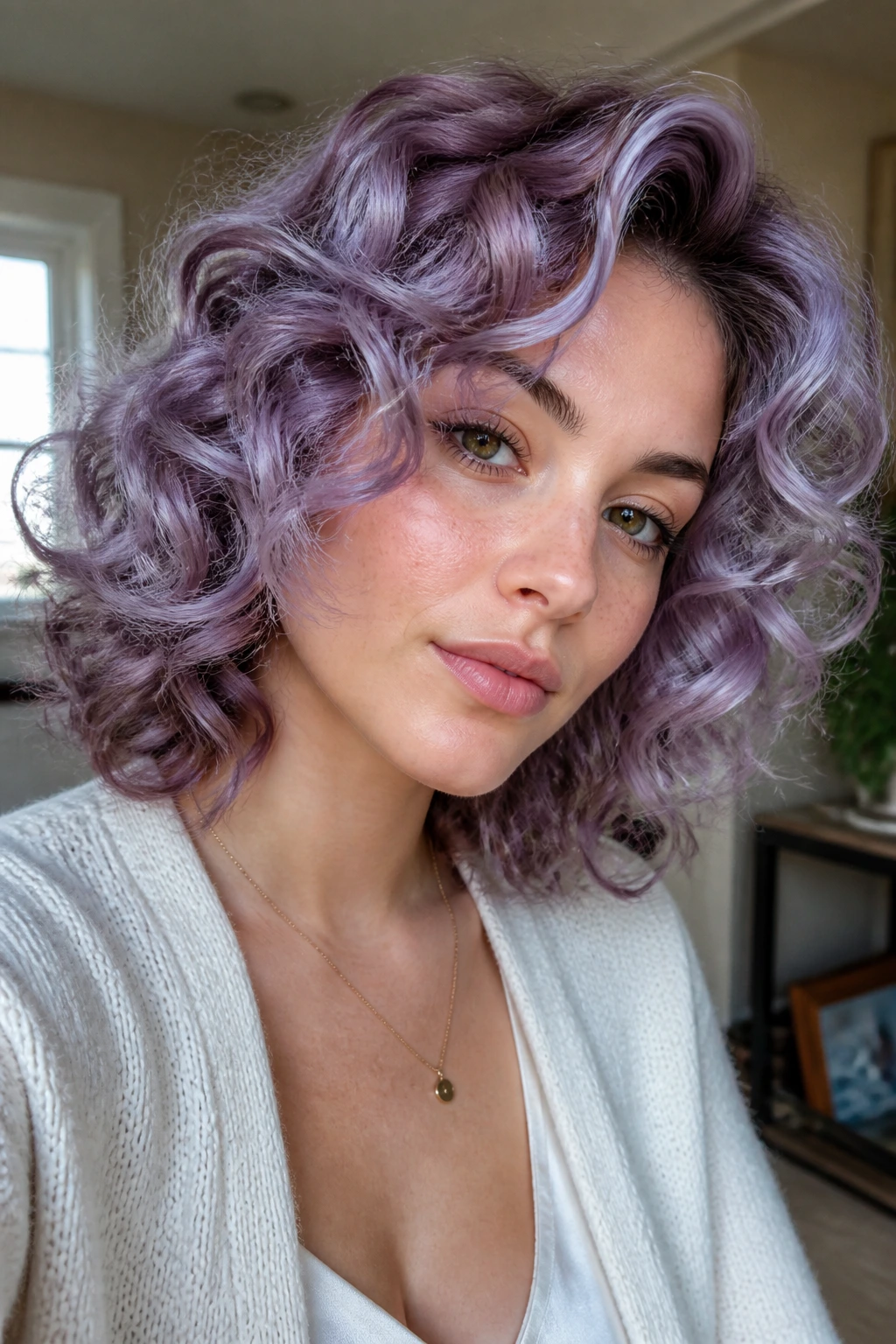
Curls and lilac have a nice relationship when the tone is cool enough. The curl pattern breaks up the color, and the frosted finish keeps the style from reading too sugary.
This look is more forgiving than it sounds. You do not need ringlets everywhere. A loose curl, a wave, or a natural texture with a little product can show off the frosted pieces without turning the whole head into a pageant curl situation. Thank goodness.
What makes it work is the color placement. The lighter lilac should live on the raised parts of the curl, where light hits first, while the darker violet or silver root pieces sit underneath. That gives the style depth and keeps it from looking flat from the front.
Styling notes
- Use a 1 to 1.25 inch curling iron for soft bends.
- Leave the ends a little straighter if you want the color to look more modern.
- Scrunch in a light curl cream; skip heavy butters.
- Flip your part occasionally so the frosted pieces do not always land in the same place.
Frosted lilac curls can be romantic, sure, but they can also lean cool and sharp. That balance is the point.
11. Peekaboo Lilac Panels
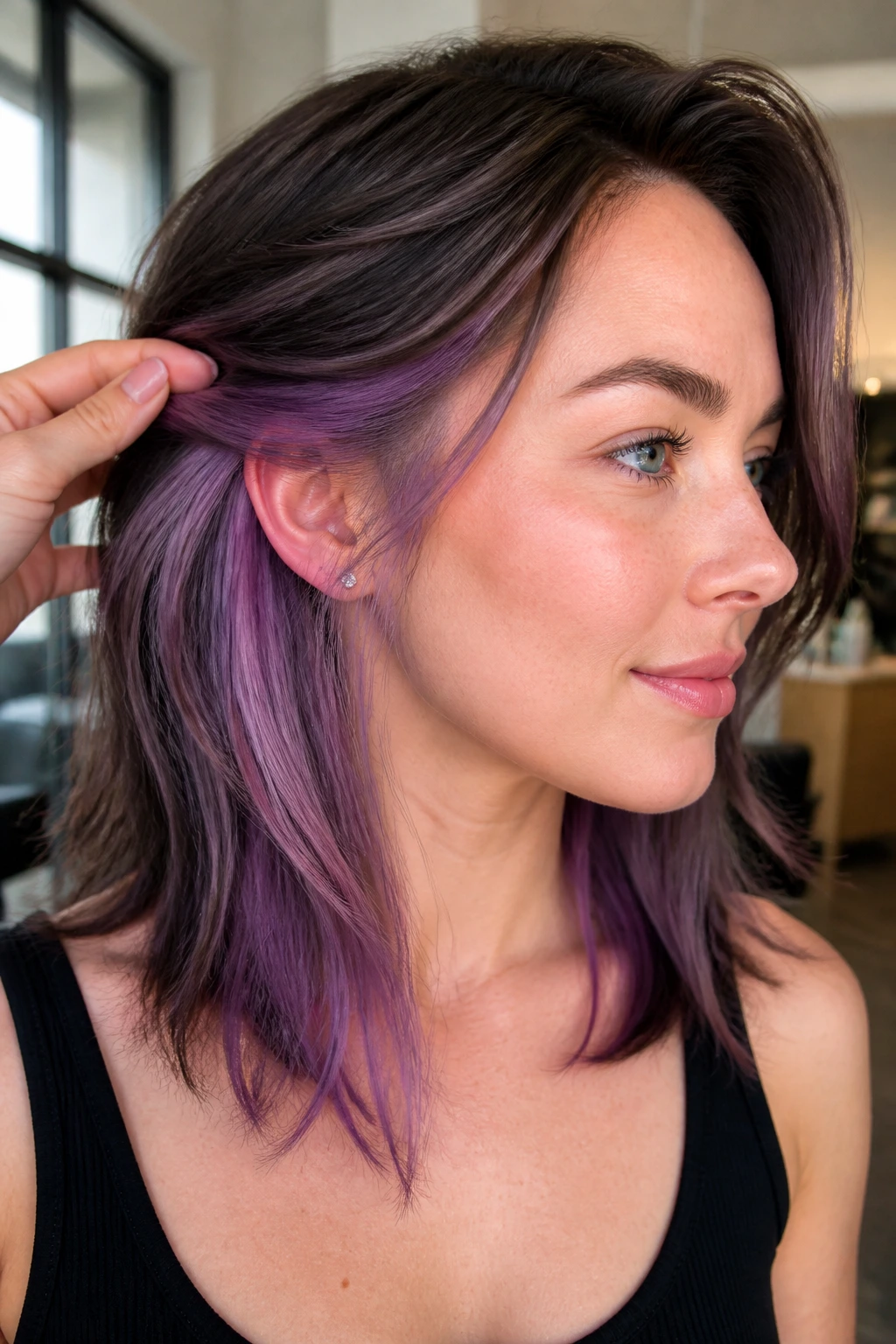
Peekaboo color is the choice for someone who wants the fun of lilac without putting it all over the top layer. The panels hide under the hair until it moves, then they flash in a way that feels a bit more personal.
On cool skin tones, this is a smart move because the lilac is still close to the face, but not enough to dominate every angle. The visible surface can stay blonde, brunette, or black, while the hidden panels do the talking. It’s a nice way to keep a job-friendly look without giving up a color habit.
I like this especially on shoulder-length cuts or layered lobs. There’s enough movement for the color to show when you tuck the hair behind your ear or pull it into a half-up style.
How to wear it
- Place the panels underneath the crown section.
- Choose a lilac that leans smoky or violet.
- Style half-up, braided, or clipped back to reveal the color on purpose.
- Refresh only the panels if you want to stretch the appointment interval.
Peekaboo lilac is practical in a way that full-head fashion color often isn’t. That counts for something.
12. Platinum Hair with Sheer Lilac Wash
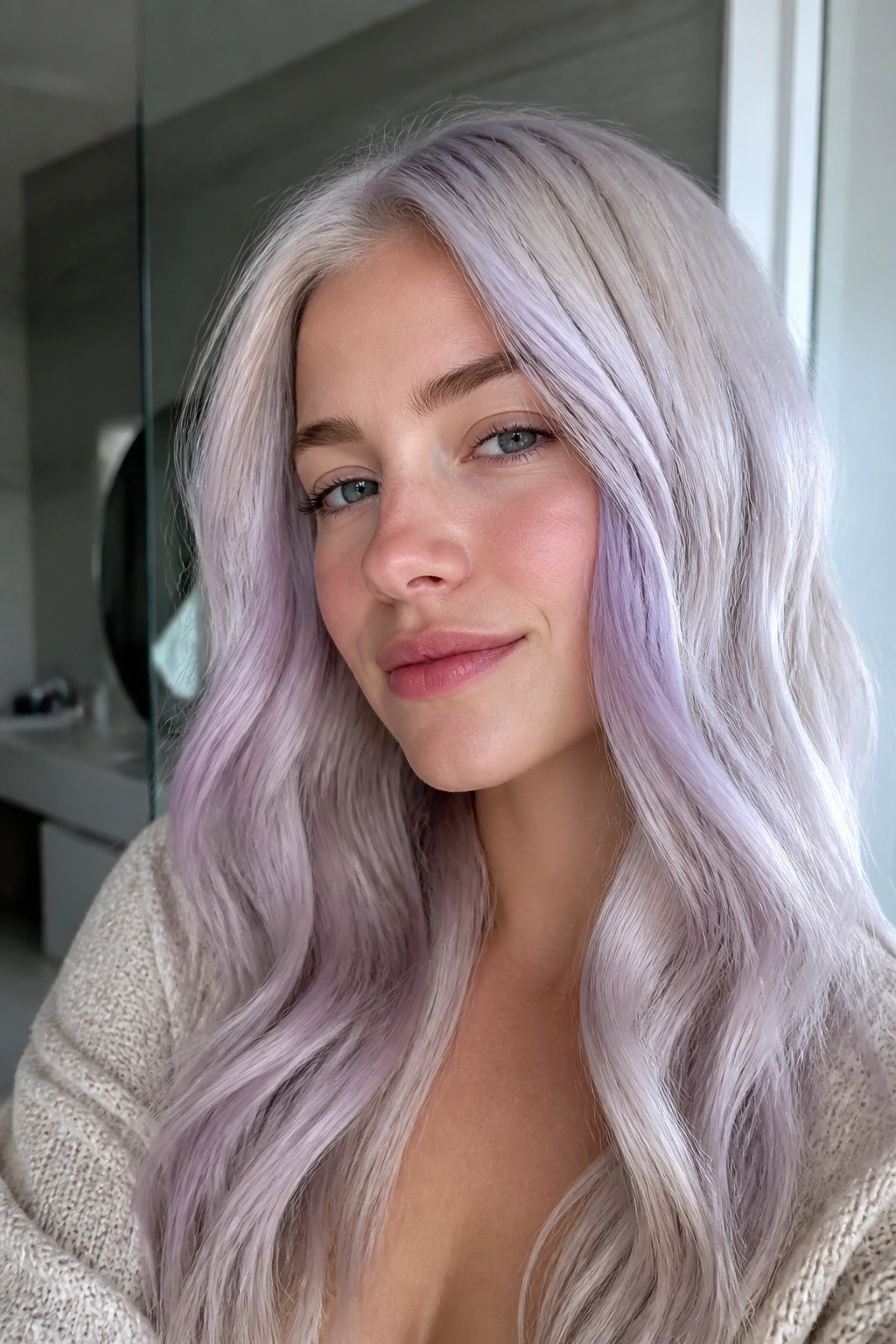
Platinum plus a sheer lilac wash is one of the cleanest looks in the bunch. It keeps the brightness of platinum but takes away the stark, icy edge that can make some faces look a little washed out.
This is especially flattering on cool skin because the lilac softens the white-blonde base without warming it up. The result feels airy, delicate, and a little expensive if the tone is done well. It’s also one of the best choices if you already live in platinum and want a change without a dramatic overhaul.
The key is restraint. The lilac should sit like a veil, not a block of color. If the toner goes too strong, the hair can turn chalky or lavender-gray in a way that looks unintended. A good colorist will usually rinse this kind of gloss early and check it under natural light.
Things to keep in mind
- Start with a clean level 10 blonde.
- Ask for a translucent violet gloss.
- Use purple shampoo carefully; too much can mute the lilac.
- Add shine with a lightweight serum on the mids and ends only.
This is one of those shades that looks simple from far away and very particular up close. That’s why it works.
13. Deep Amethyst Dip-Dye
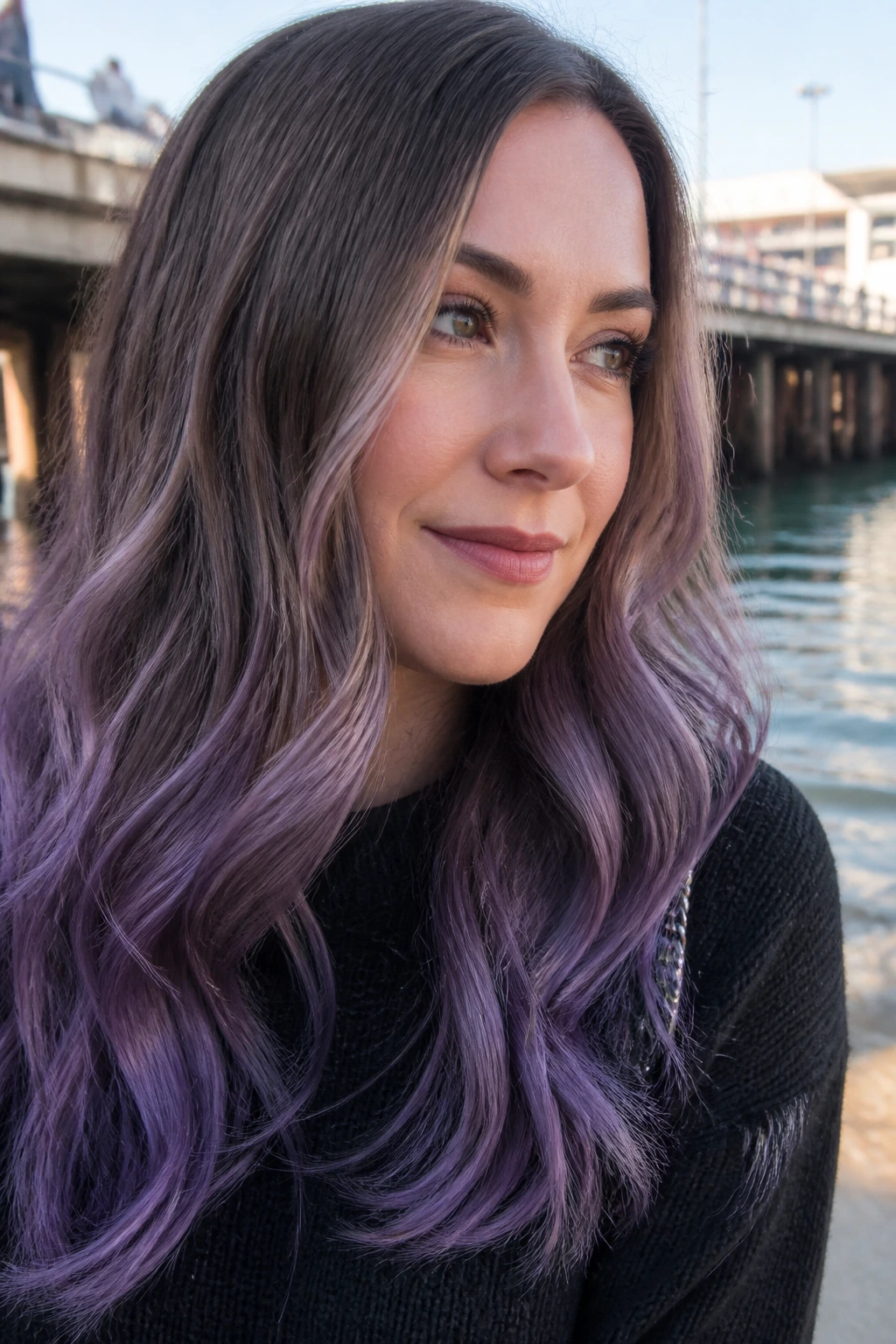
Deep amethyst is the dramatic cousin in the family. It reads richer than pastel lilac, and on cool skin it can look downright elegant when the depth is right.
A dip-dye placement keeps the color mostly at the ends, which is useful if your hair is long and you want movement more than full coverage. The darker violet at the bottom gives a bit of gravity to the whole look. Without that deeper note, long lilac hair can drift too sweet. With it, the style has a spine.
This shade is a solid choice for cooler complexions because it mirrors the natural coolness in the skin instead of fighting it. If you wear dark lipstick or a sharp winged liner, the combination can be striking without feeling costume-like.
A few ideas that help:
- Keep the top two-thirds of the hair neutral or ashy.
- Let the amethyst concentrate from the last 4 to 6 inches down.
- Style in waves to show the color gradient.
- Ask for a toner that leans plum-violet, not red-violet.
It’s bold, yes. But it’s not random. There’s a difference.
14. Periwinkle-Lilac Highlights
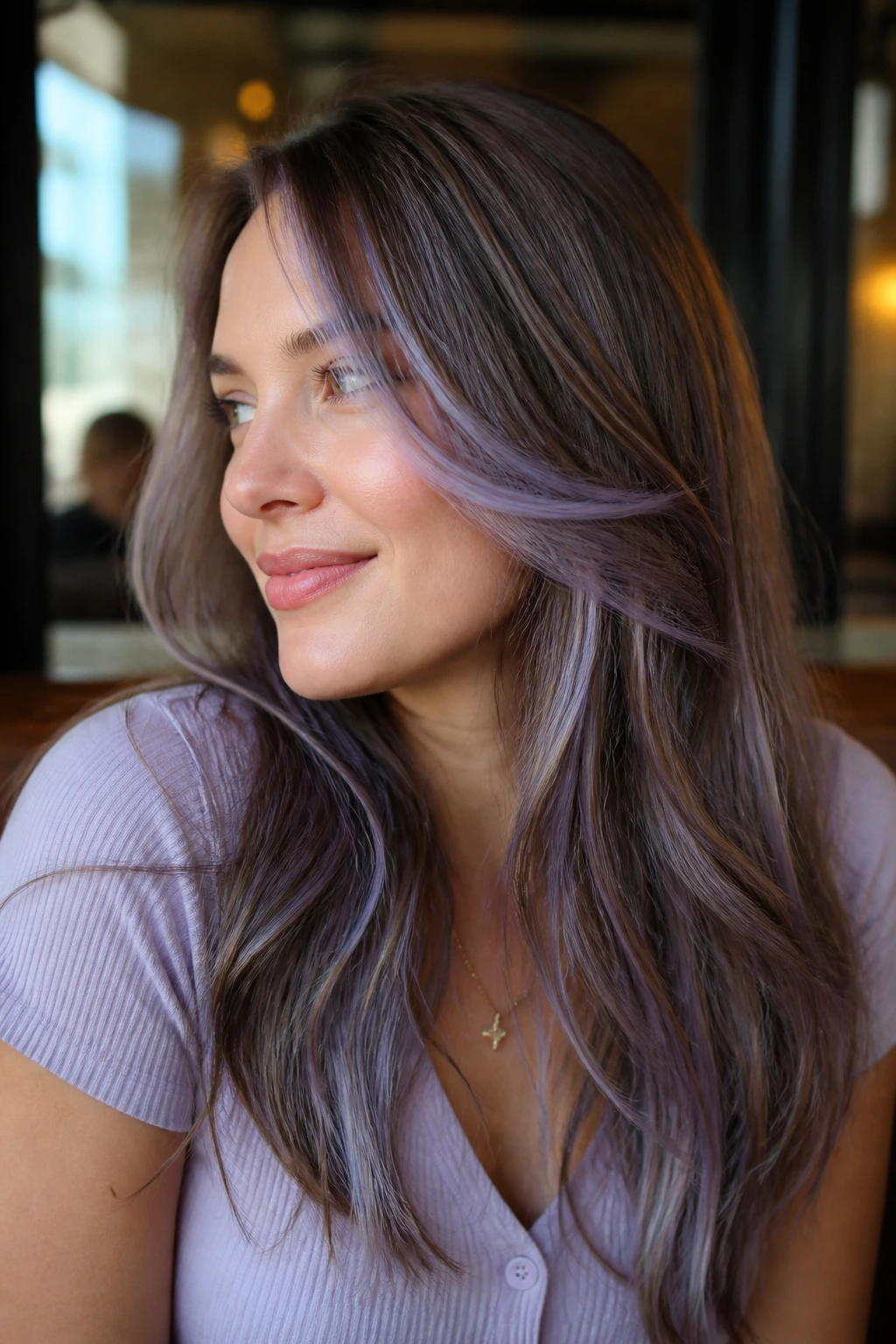
Periwinkle and lilac sit close enough to feel related, but the blue in periwinkle gives the hair a different bite. That little blue cast is part of why this idea flatters cool skin so easily.
Highlights work well here because the color appears in small, bright pieces rather than one uniform sheet. That gives the hair a more natural shimmer, even though the shade itself is clearly fantasy. It’s a nice balance for people who like color but don’t want to look coated in it.
This is especially pretty on layered cuts, where the highlights can fall at different lengths and catch light in sections. If the base is ash blonde or light brown, the periwinkle-lilac pieces show up cleanly. On darker hair, they need more lift, but the payoff can be worth it.
Use it well
- Keep the highlight slices thin and strategic.
- Avoid too much warm yellow in the base.
- Pair with soft waves or a blowout for dimension.
- Touch up the coolest pieces first when they fade.
Periwinkle-lilac is one of the few color ideas that can feel playful and restrained at the same time. That’s a useful combination.
15. Dusty Lilac with Silver Ribbons
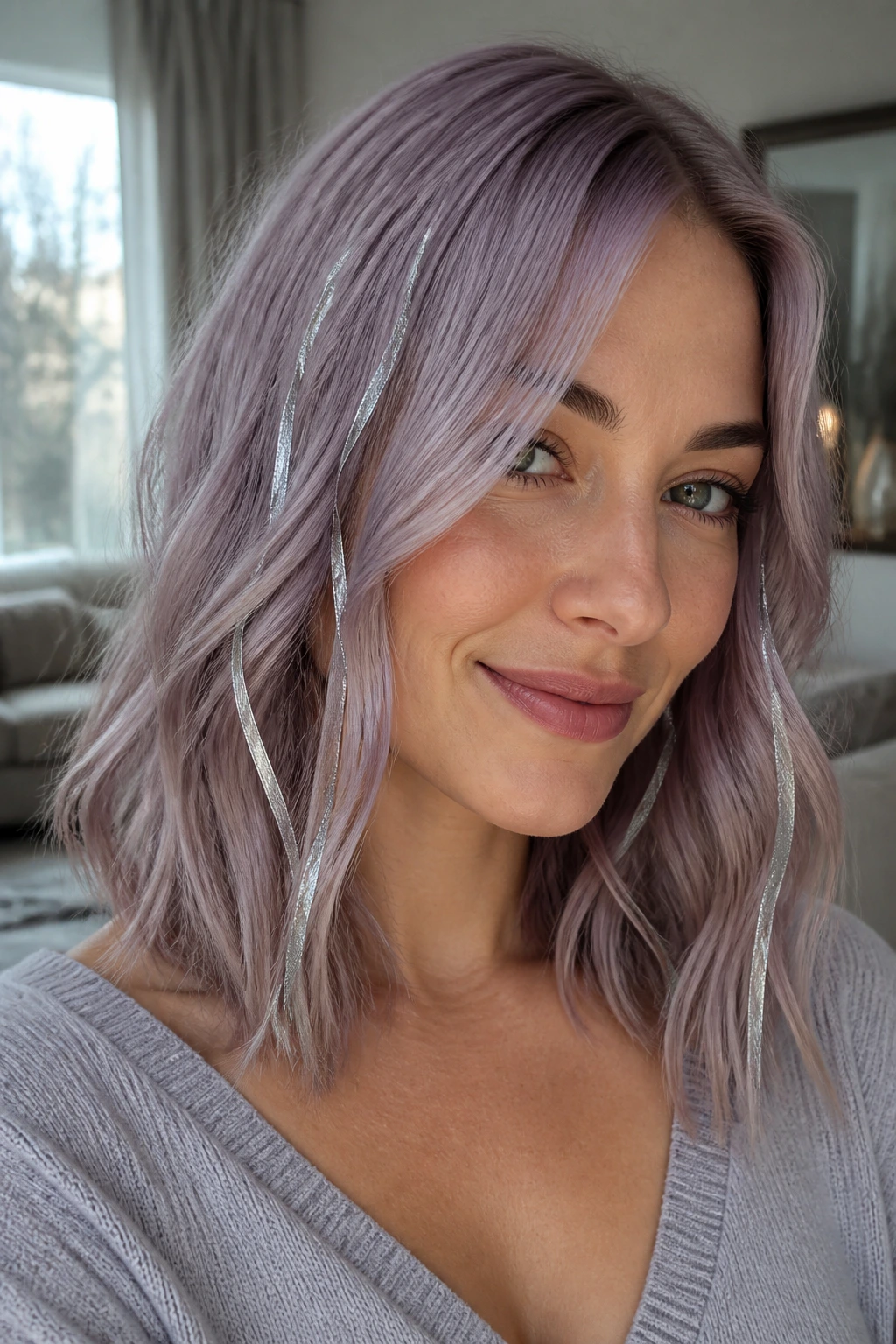
Dusty lilac is what happens when lilac grows up a little. It loses the sugary edge and picks up a gray-silver softness that sits beautifully against cool skin.
Silver ribbons make the color even better because they break up the density and keep the whole look from becoming one flat purple sheet. I love this on shoulder-length hair with layers around the face. The silver pieces move through the lilac like streaks of frost, which sounds poetic and also happens to be accurate.
The reason this shade works so well is that dusty lilac is more wearable than pastel in daylight. It doesn’t shout. It lingers. That makes it easier to style with denim, black coats, crisp shirts, and all the other clothes people actually wear.
Practical notes
- Ask for a smoky pastel base with silver fine-lights.
- Keep the lilac saturation low at the crown.
- Use a wide-tooth comb after washing to avoid roughing up the ribbons.
- Refresh with a cool-toned glaze when the silver starts to dull.
If you like color that looks calm rather than loud, this is a strong candidate.
16. Metallic Lilac Gloss
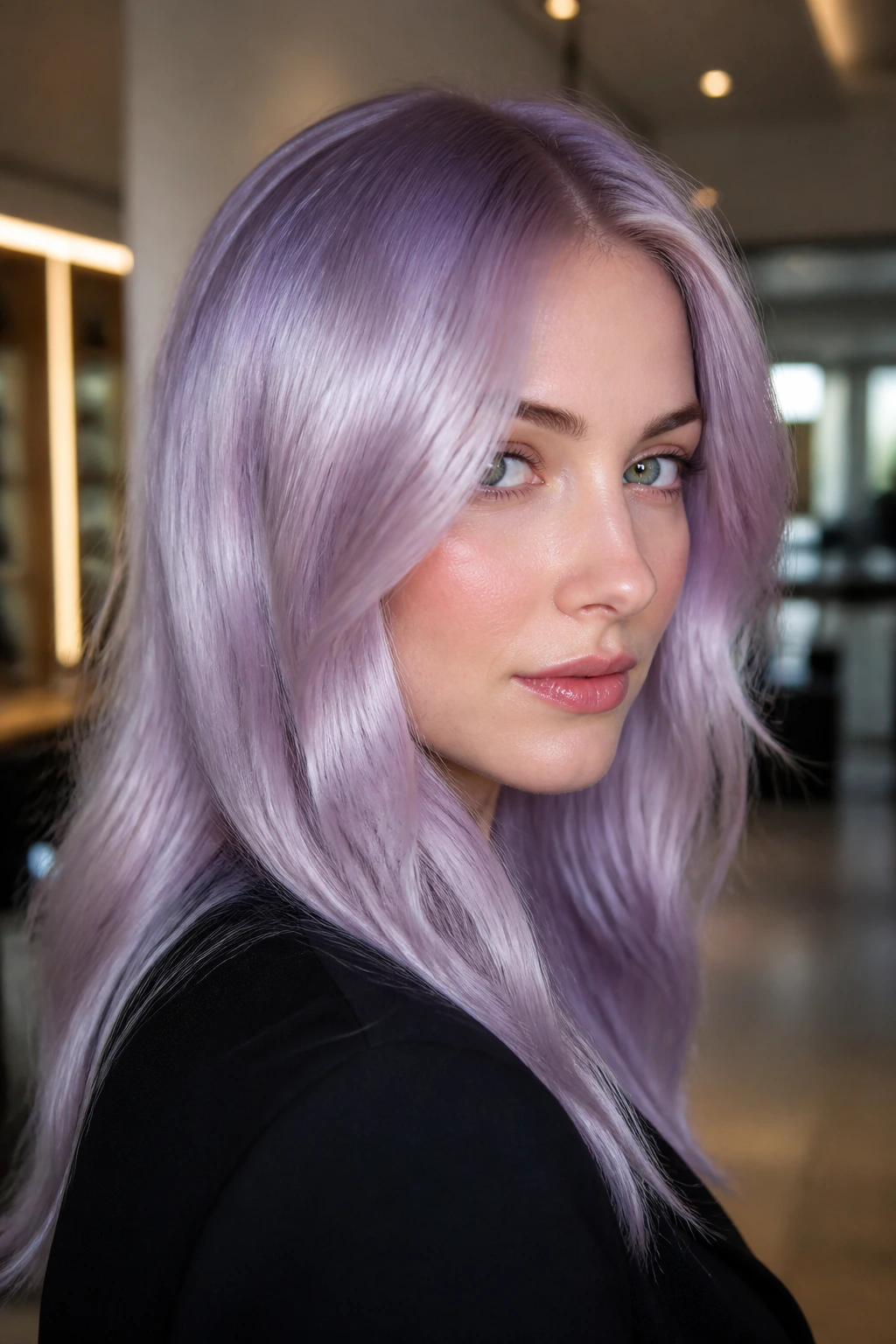
Metallic lilac gloss is for the person who wants shine to do part of the work. Instead of a matte pastel finish, you get a reflective surface with violet and silver moving through it.
On cool skin, metallic finishes can be excellent because they echo the crispness in the complexion. The hair looks polished without needing a heavy shape or a loud saturation level. I’ve seen this look save haircuts that were a little too plain; one gloss and suddenly the whole thing has purpose.
This is also a smarter choice if your hair is fine. Heavy color can sometimes make fine hair look flatter, but a metallic gloss creates the illusion of light moving through it. That can make the strands look fuller than they are.
A good metallic lilac usually needs:
- A pale blonde base
- A violet-silver toner
- Very even porosity, or at least careful pre-toning
- Low-heat styling so the gloss lasts longer
It fades softly, which I like. Not every color needs to go out with a bang.
17. Layered Lilac Shag
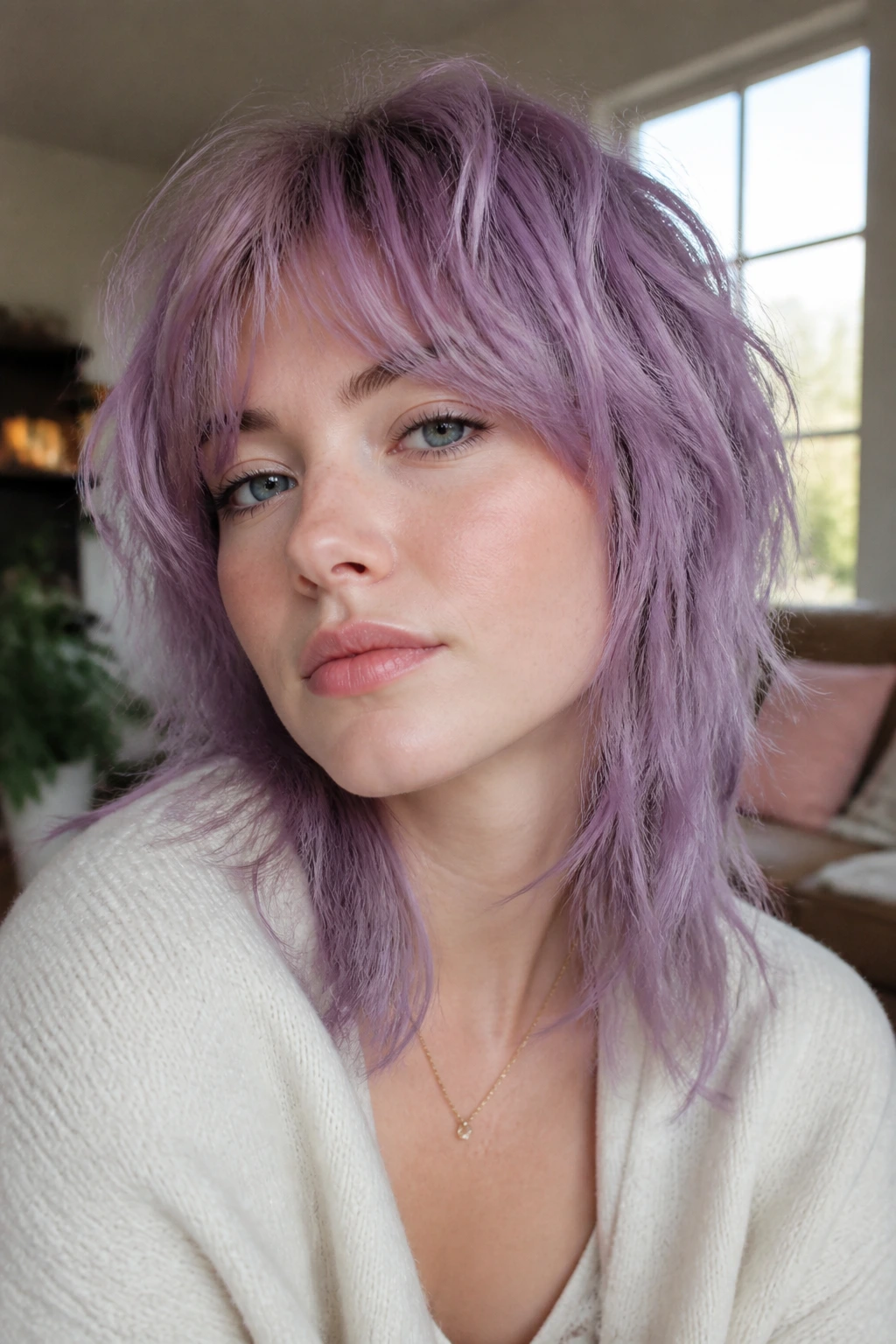
A shag cut gives lilac some attitude. The layers, curtain bangs, and broken ends create movement that keeps the color from looking too neat, which is often exactly what fashion color needs.
Cool skin tones do well with this because the lilac can sit among the layers instead of forming one blunt block near the face. The result feels lived-in, but in a deliberate way. A lilac shag can look punky, soft, or a little grunge depending on how you style it.
What matters most is contrast. If the layers are too uniform, the color loses that messy texture that makes a shag appealing. If the lilac is too pastel, the whole thing can go foggy. I prefer a mid-tone violet-lilac with some smoke in it so the cut has shape.
How to style it
- Air-dry with a light mousse for rough texture.
- Use a diffuser if your hair has wave or curl.
- Add a little wax only to the ends.
- Keep the bangs lighter than the underneath sections if you want the face to stay bright.
This is one of the more personality-driven choices on the list. It has opinions. Good hair should, sometimes.
18. Platinum Lilac Veil for Cool Skin Tones
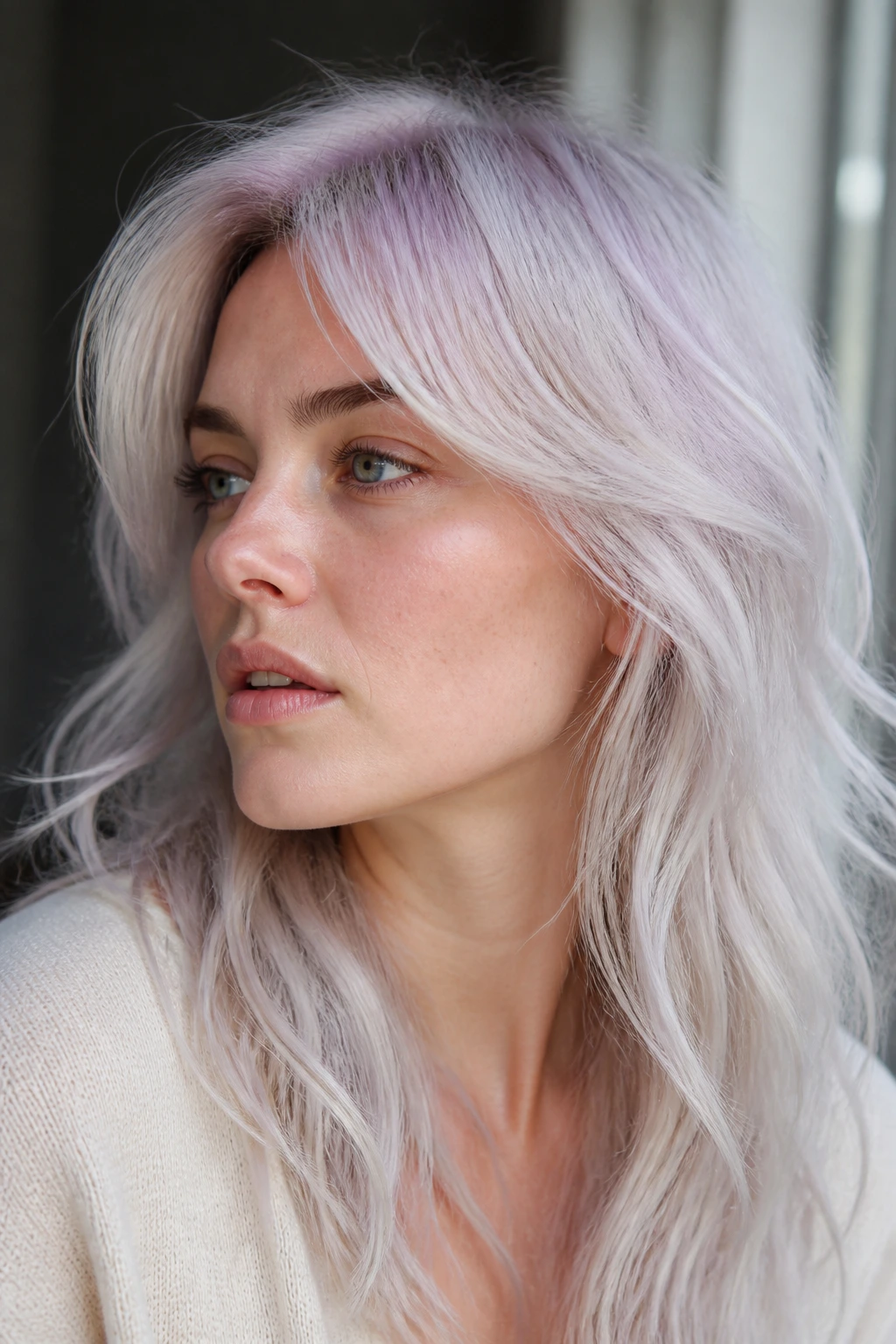
A platinum lilac veil is about restraint and contrast at the same time. You start with very light blonde hair, then add a barely there lilac glaze so the platinum turns cool, soft, and almost pearly.
This is a smart option if you want a change that still feels refined. On cool skin, the veil prevents platinum from looking stark or icy in a harsh way. It takes the edge off without muddying the blonde. The result is delicate, but not weak.
The beauty of this look is how little it takes to shift the whole mood. A tiny amount of violet can make platinum feel more dimensional. A touch too much, and you lose the veil effect entirely, so tone control matters here. Light hair with this finish also tends to grow out in a softer pattern, which is helpful if you hate obvious regrowth lines.
Ask for this
- A clear platinum base with minimal yellow
- A sheer lilac toner, not a dense dye
- Soft styling with a middle part or loose bend
- A gloss refresh every few weeks to keep the veil translucent
If you want lilac that feels airy rather than playful, this is the one I’d point you toward first.
Final Thoughts
Lilac works on cool skin tones because the shade already lives in the same neighborhood as blue, pink, and silver undertones. The main decision is not whether lilac suits you. It’s which version of lilac suits your hair, your haircut, and how much upkeep you’re willing to take on.
If you want the safest starting point, go for a smoky balayage, a soft lavender melt, or a sheer platinum veil. If you want drama, the orchid ends, charcoal roots, or deep amethyst options carry more weight and hold their own against sharper features.
The color that looks best on the hanger is not always the color that works best on your head. A good lilac formula respects the cut underneath it, and that is usually where the magic happens.
