



Emerald green hair color can look razor-sharp on cool skin tones, but only when the green leans blue instead of yellow. If silver jewelry feels easier on you than gold, you already have a useful clue about where your undertone sits.
The wrong emerald goes swampy fast. Too much olive, too much yellow, too much warmth — and suddenly the whole shade starts fighting your complexion instead of sharpening it. The right version lands closer to jewel-toned teal, blue-black jade, or a dark pine green, which is why a good color formula is about reflect and depth, not just the word “green.”
I’ve watched plenty of people chase a vivid green and end up with something that reads muddy in daylight. That usually happens when the lift is uneven, the toner is too warm, or the green pigment is built on a yellow base that never had a chance. No one needs that headache.
The smartest emeralds for cool undertones give you contrast at the root, a clean mid-length, and enough shine that the shade looks deliberate instead of costume-like. Start with the darkest jewel tones, then move brighter if you want more edge.
1. Blue-Black Emerald

Blue-black emerald is the easiest win for cool skin tones. It keeps the hair dark enough to feel wearable, but the green still flashes when the light moves across it. On pale cool skin, that contrast looks crisp; on deeper cool skin, it reads rich instead of harsh.
Ask for a formula that has a blue base and only a touch of yellow-green. If your starting hair is level 3 or 4, you can often stay dark and still get enough green to show. That matters, because a deep emerald usually keeps the hair in better shape than a full bleach-and-tone session.
No brass. No swamp.
This version looks especially good on long layers, blunt lobs, and soft curls because the darker base gives the green somewhere to sit. When it fades, it usually drifts into teal rather than turning flat. That softer fade is half the reason I like it so much.
2. Emerald Balayage Through Espresso Hair
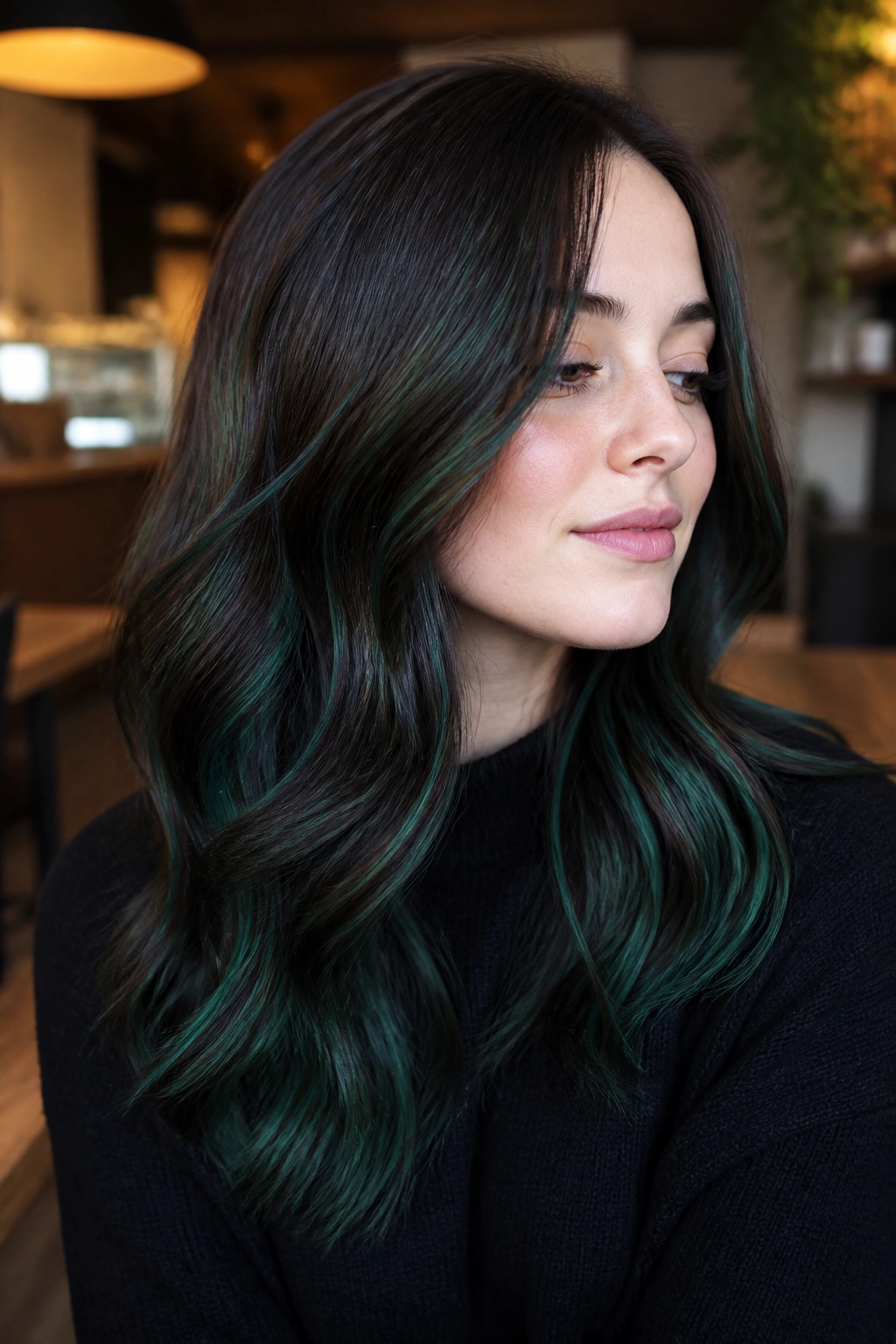
Picture espresso-brown hair with thin emerald ribbons running through the mids and ends. That’s balayage, and it’s one of the safest ways to test green without giving up your natural base.
Balayage works because the color is painted in hand-picked sections instead of saturating the whole head. On cool skin, that soft placement matters. The green stays close to the ends and mid-lengths, so your face doesn’t get boxed in by too much color at the hairline.
- Ask for ribbons about 1/4 to 1/2 inch wide so the green doesn’t turn into a solid block.
- Keep the roots deep and cool, not orange-brown.
- Style with loose bends to show the painted pieces.
- A gloss every 4 to 6 weeks keeps the green from going dull.
The trick is restraint. If the ribbons are too thick, the whole thing starts to read streaky instead of lived-in.
3. Face-Framing Emerald Money Piece
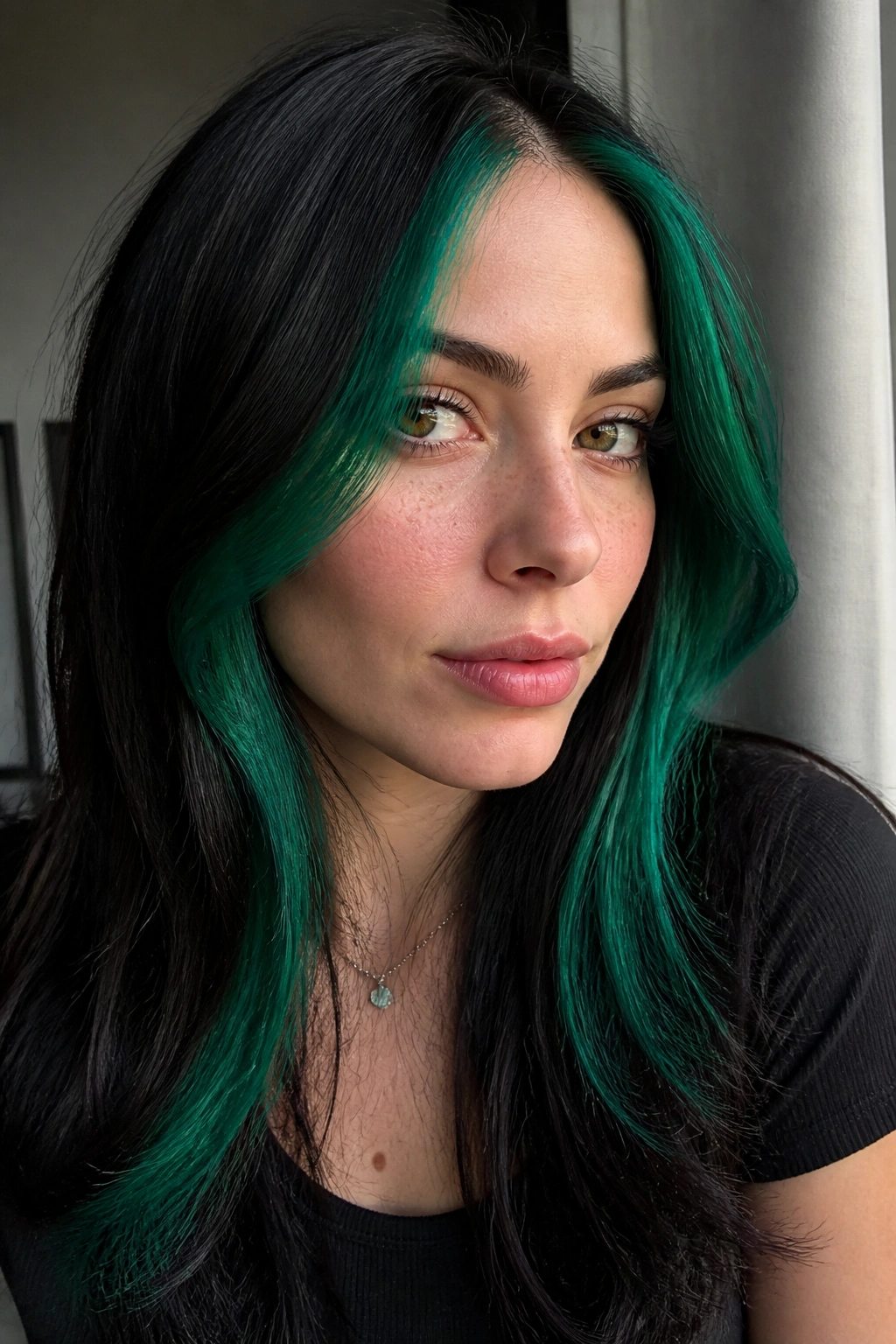
Why does a money piece change the whole face so fast? Because it puts the brightest part of the color right where your eyes land first, and emerald does that job with a lot more attitude than blonde ever could.
A cool-toned emerald strip near the temples can sharpen cheekbones and make the eyes look brighter, especially if the rest of the hair stays dark. On cool skin tones, that strip does not need to be neon to have impact. A clean, saturated green with a blue cast is enough.
How to Wear It
Keep the front sections about 1 inch wide if you want something bold but not messy. Anything wider starts to feel like a panel instead of a frame. If your hair is already medium or dark brown, the money piece can sit beside the natural shade and still look strong.
I like this most with a middle part or soft curtain fringe. It gives the emerald a clear shape. And if you want the color to feel a little less intense, feather the bottom edge with a brush instead of drawing a hard line.
4. Emerald and Silver Ribbon Highlights
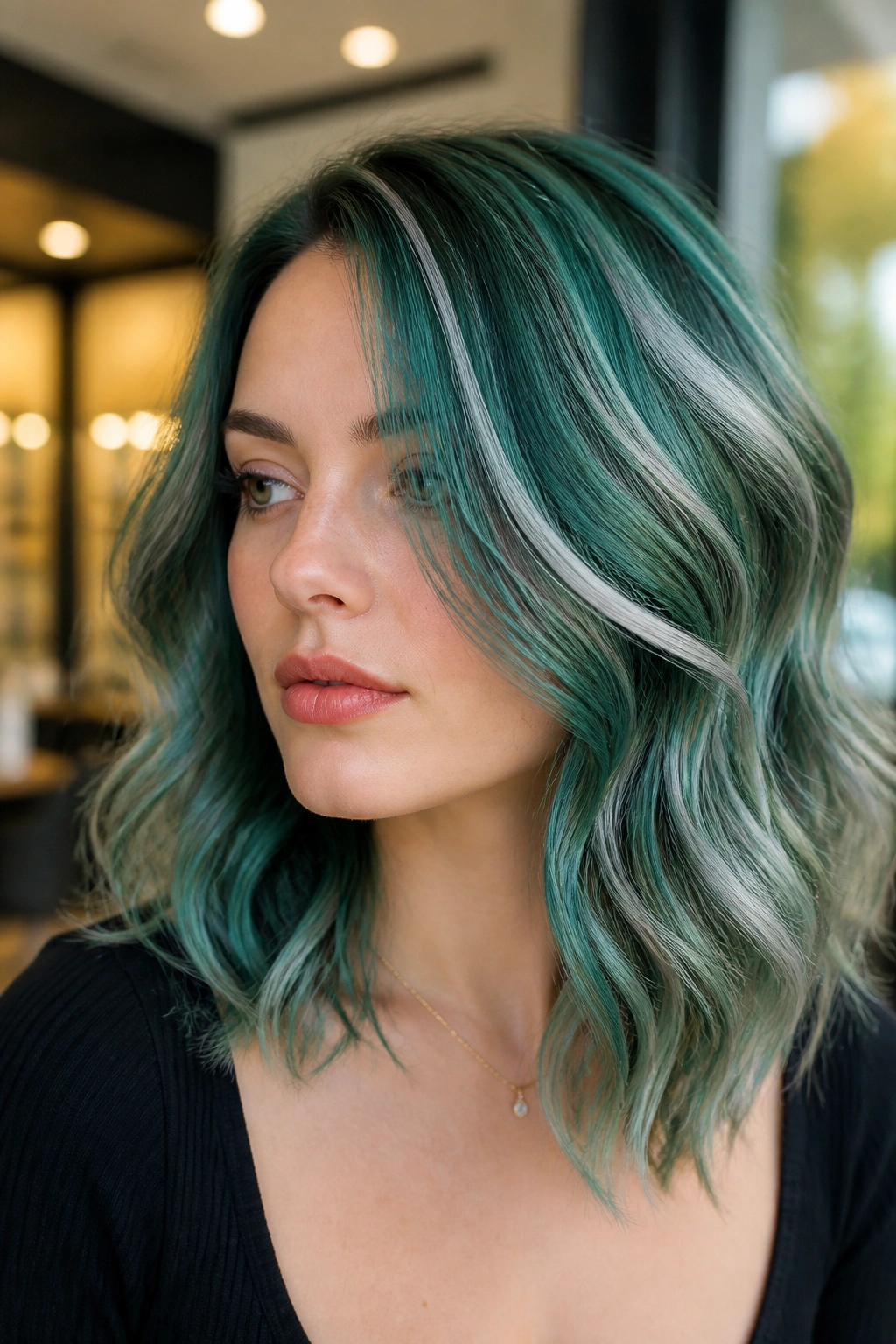
Emerald with silver ribbons is cooler than plain jewel green, and that’s exactly why it suits cool skin so well. The silver breaks up the density of the green and keeps the look from feeling heavy.
A lot of people reach for platinum highlights when they want brightness, but silver is the more interesting move here. It keeps the palette icy, and icy works beautifully with pink or blue undertones in the skin. The effect is less beachy and more polished.
This idea makes sense on medium-length hair where you can actually see the ribbon placement. Put the silver closer to the surface and tuck a few emerald ribbons underneath, and the color starts to move without looking busy. It’s a smart choice if you like dimension but don’t want three different shades fighting each other.
Warm toner ruins the point.
5. Velvet Emerald on a Shoulder-Length Bob
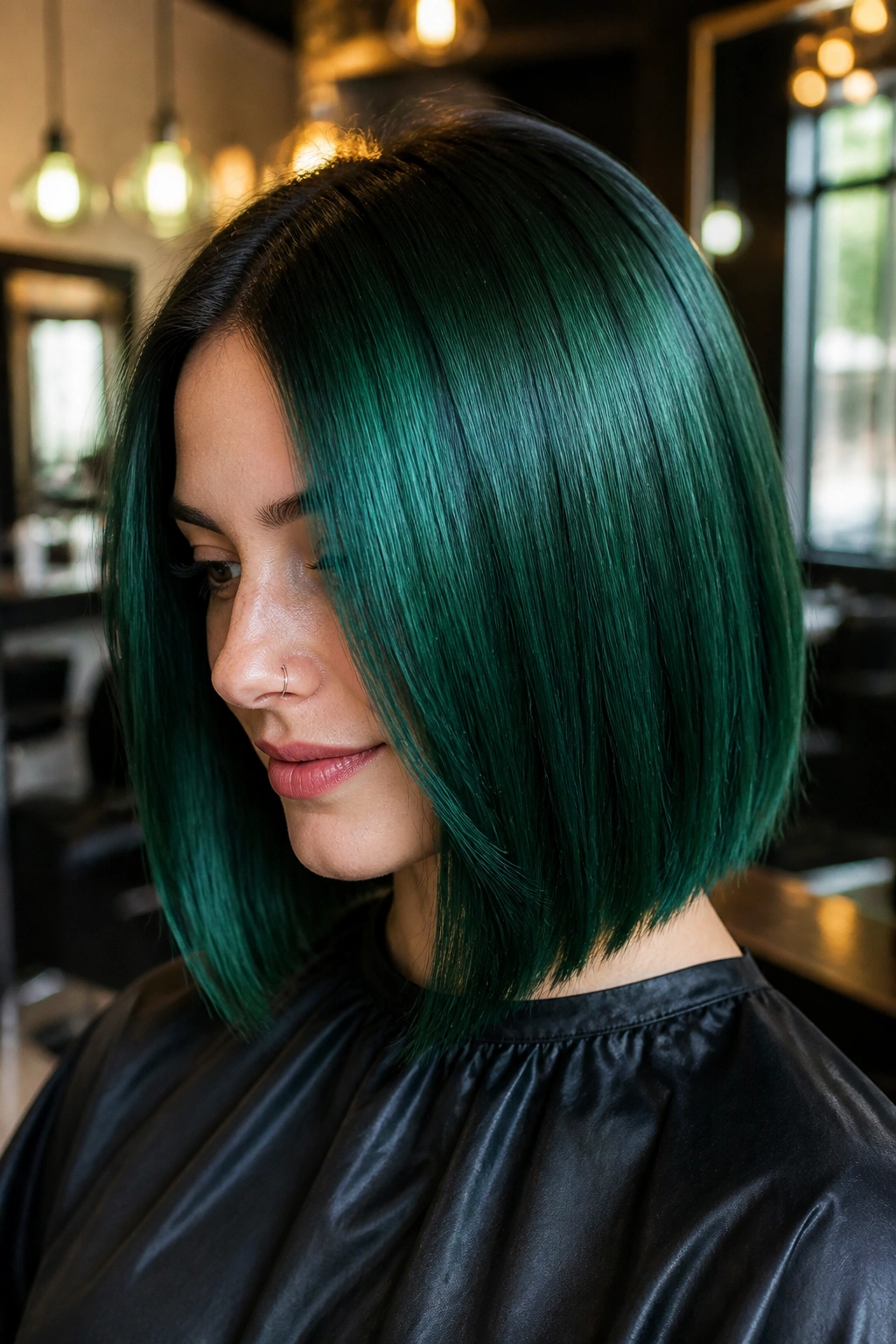
A shoulder-length bob gives emerald a clean surface to sit on, which is part of why the cut feels so sleek. The color looks denser when the shape is blunt, almost like enamel on a nail.
On cool skin tones, a bob keeps the whole look close to the face without overwhelming it. That matters more than people think. If the cut is tidy and the ends are blunt, the green reads intentional; if the bob is too choppy, the color can start to look scattered.
I especially like this on hair that already has some natural shine. Emerald loves smoothness. If the hair is coarse, a little serum and a flat brush during blow-drying make a bigger difference than a louder color ever will.
One blunt line. One rich shade. Done.
6. Smoky Emerald with an Ash Root Melt
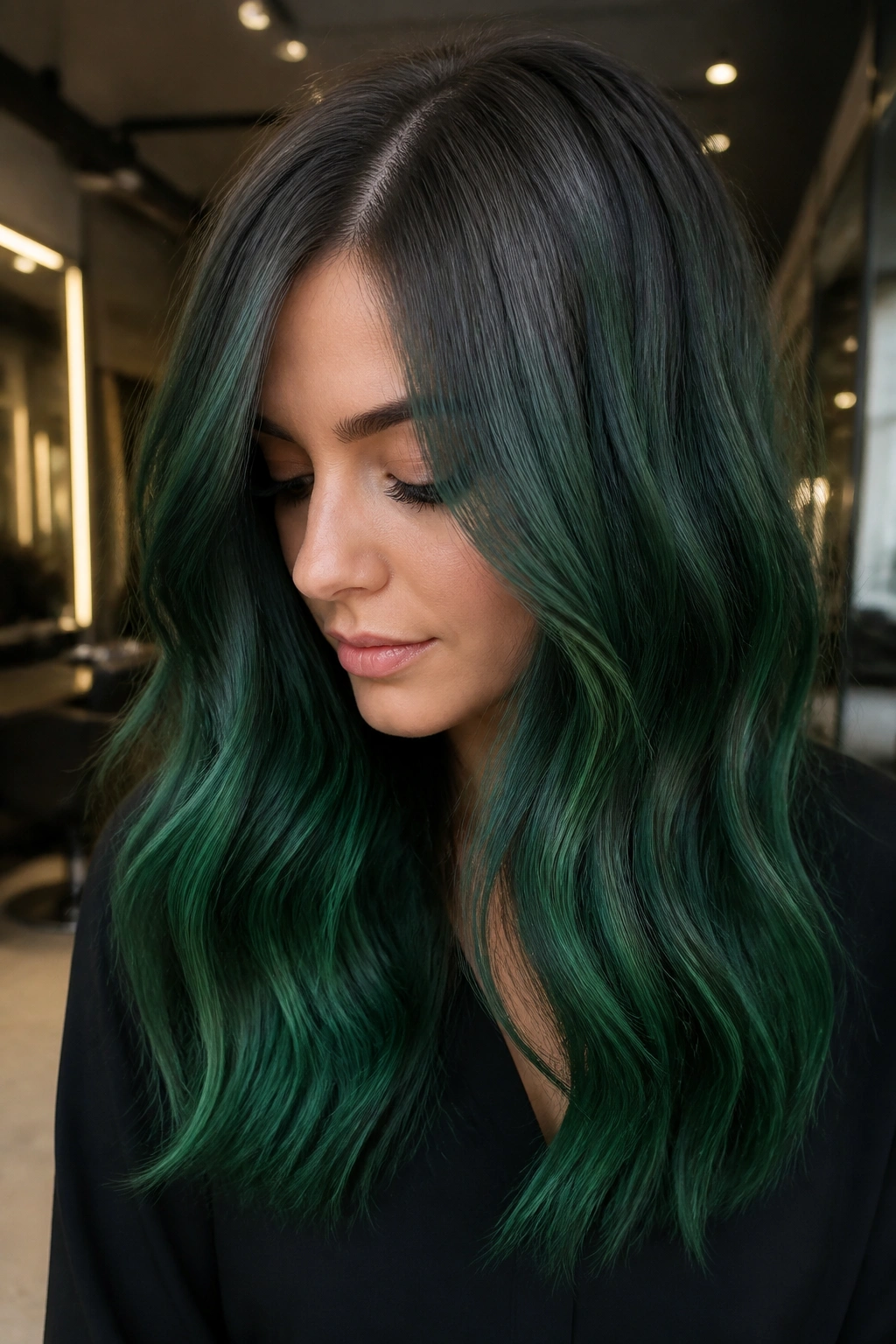
Smoky emerald with an ash root melt is the shade I point people toward when they want something wearable for longer than a weekend. It has the drama of green, but the root keeps the grow-out soft.
Why the Root Melt Matters
A root melt lets the top section stay a cool ash brown or deep taupe while the emerald starts a few inches below. That means less visible regrowth and a smoother shift from your natural base into the color. For cool skin tones, the ash at the top keeps the whole look grounded.
- Ask for roots around level 5 or 6 with a cool ash tone.
- Blend the emerald through the mids instead of dropping a hard line.
- Keep the ends a touch darker if you want the color to feel smoky.
- Refresh the green with a gloss, not another full color pass, whenever possible.
The best versions of this shade look like smoke trapped in glass. If the green gets too bright, the root melt loses its job.
7. Peekaboo Emerald Underlayers
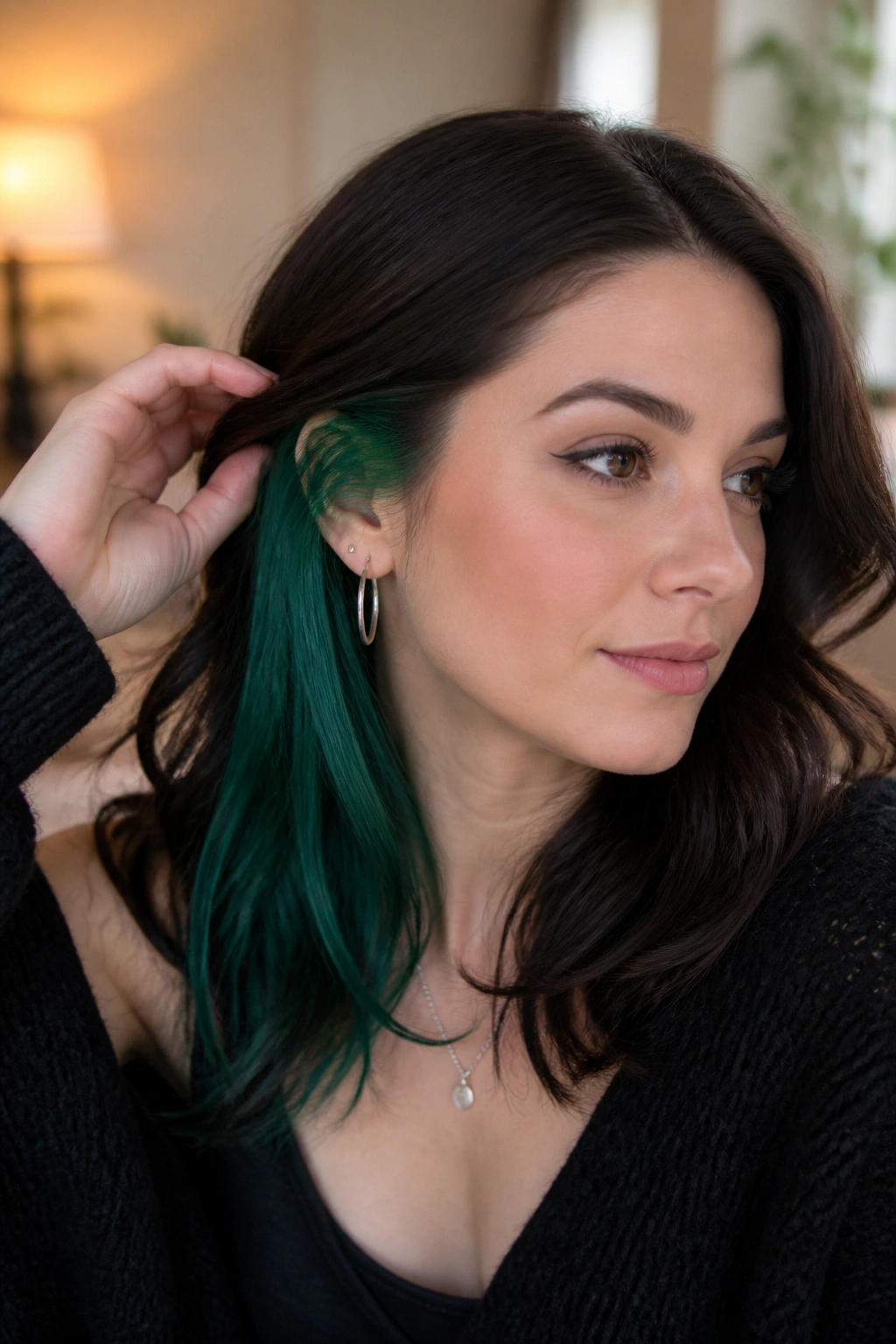
Peekaboo emerald is the easiest way to wear green if you need the top layer to stay quiet. The color sits underneath the surface hair, so it shows when you tuck your hair behind your ear, flip it up, or wear it in a knot.
That hidden placement makes it a great pick for cool skin tones because the green appears as an accent instead of a full wash of color. You get the hit of jewel tone without turning your whole head into the focal point. It feels a little sly. I like that.
The other advantage is flexibility. Straight hair shows the color in thin slices, while waves expose more of it. If you want something that shifts between subtle and bold depending on how you wear it, this is the one.
The reveal is half the fun.
8. Emerald Ombré on Long Waves
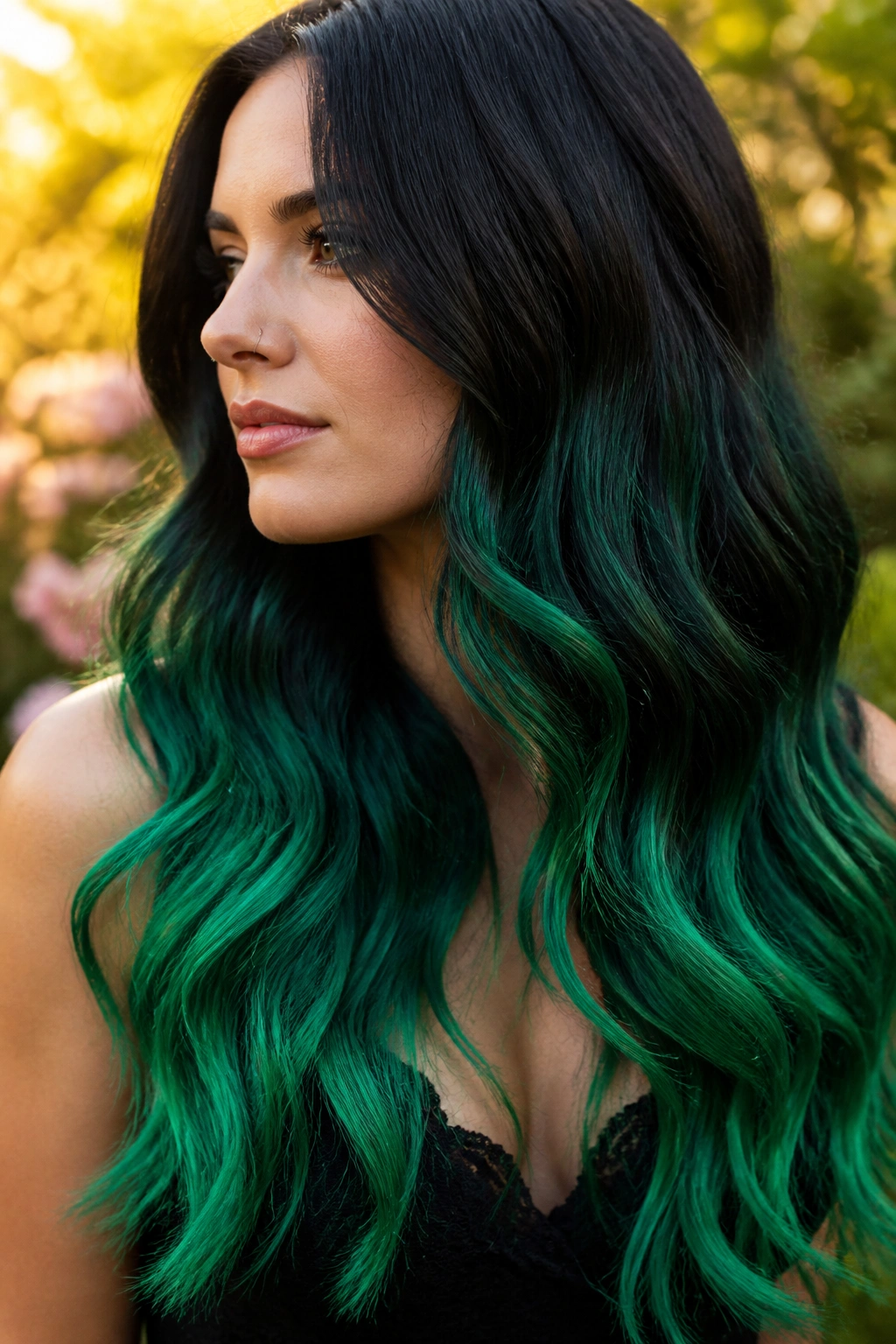
Long waves give emerald ombré a slow fade that feels richer than a hard color block. The darker top half keeps the look grounded, and the lighter ends carry the jewel tone where it can move.
Imagine the color starting near black at the crown, then softening into deep green through the mids before finishing in brighter emerald at the tips. That transition looks cleanest when the waves are loose and broad, not tight and springy. Tight curls can hide the fade.
- Start the ombré around 2 to 3 inches below the crown.
- Keep the transition soft with hand-painted sections, not a sharp line.
- If the ends are porous, tone them first so they do not grab too much green.
- A 1.25-inch curling iron gives enough bend to show the fade without making it choppy.
Loose movement is the whole point. Without it, the ombré can look like three separate colors instead of one long gradient.
9. Teal-Shift Emerald for Very Fair Skin
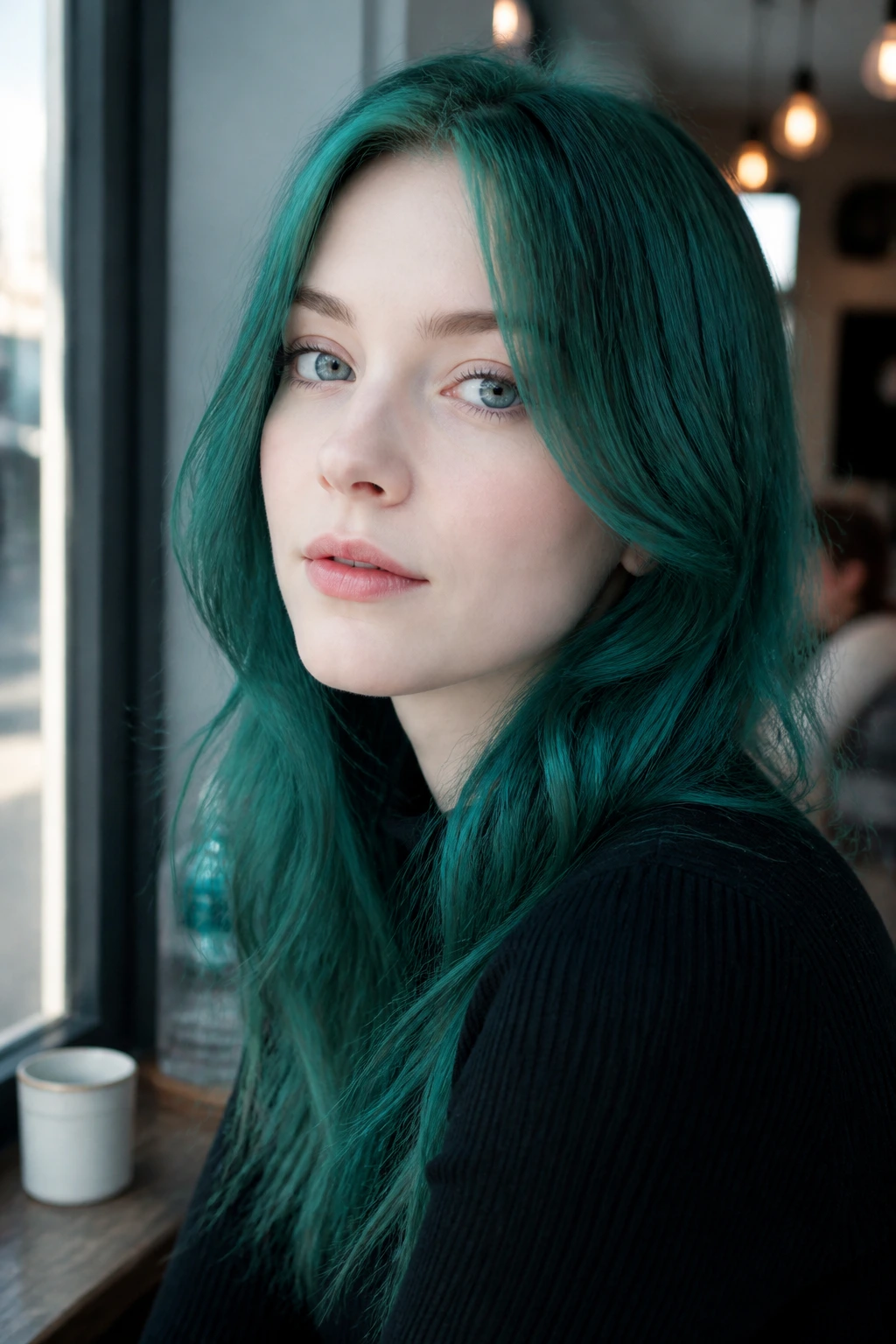
Why does teal-shift emerald flatter very fair skin so well? Because the blue in the teal keeps the green from turning harsh against pale, cool complexions. You get color, but you don’t get that bruised-looking contrast that some bright greens can create.
This shade sits a little closer to the blue side of the spectrum than a pure emerald. That small shift makes a big difference on porcelain skin, especially if your complexion has pink or rose undertones. The look lands softer around the face and still feels modern.
What to Ask for at the Chair
Say you want an emerald that leans teal, not olive. That wording matters. Ask for a formula with a blue-green base and a medium level of saturation, because a super-bright green can look louder than you want on fair skin.
If you like a cooler finish, a silver-blue gloss over the top can keep the tone crisp. Just don’t push it too far into gray, or the green disappears. The sweet spot is a shade that looks icy in the bottle and clean on the head.
10. High-Contrast Emerald Streaks on a Pixie Cut
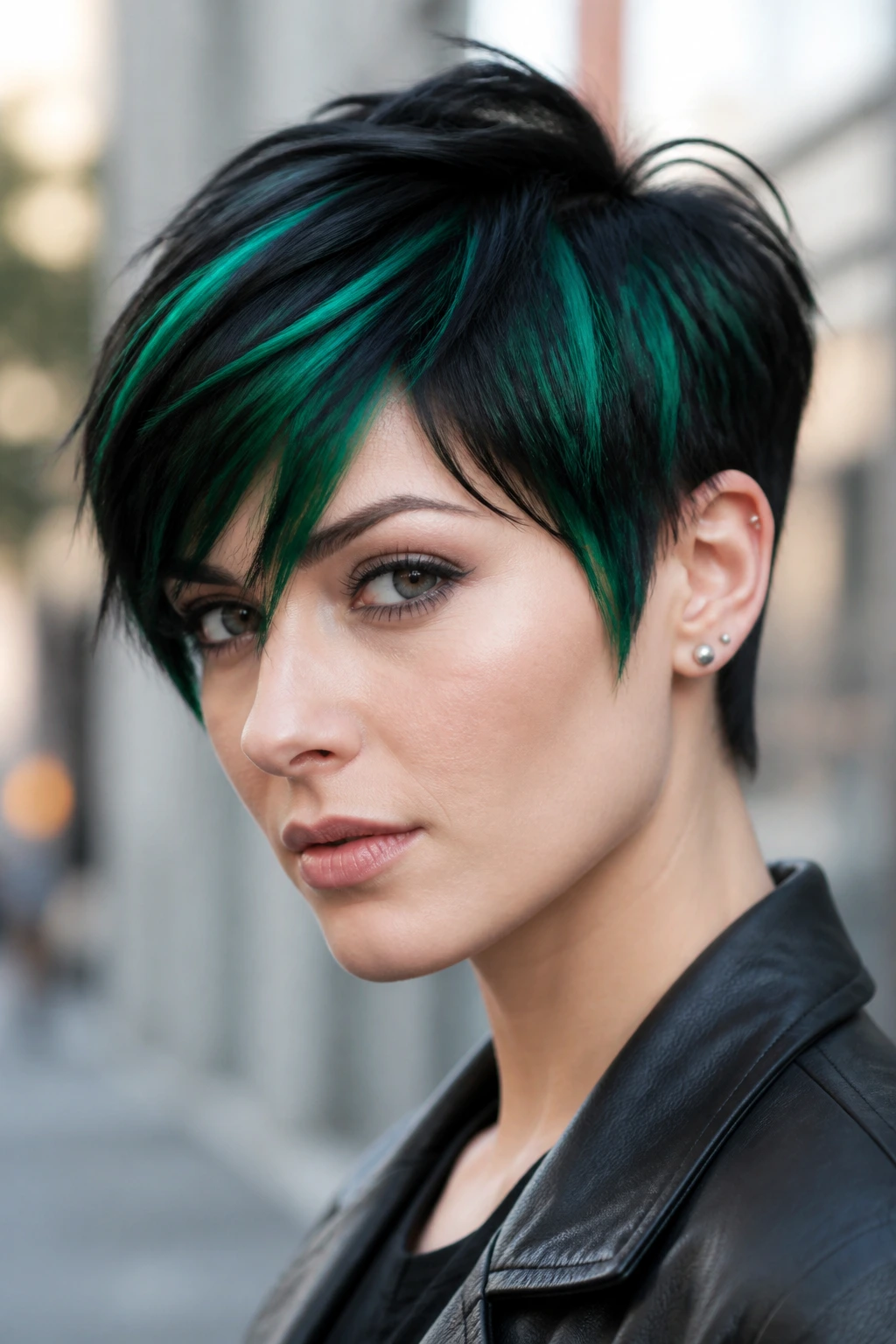
High-contrast emerald streaks on a pixie cut are the opposite of shy. Tiny cut, loud color. That’s the whole appeal.
A pixie gives the green sharp edges to bounce against, so even a few streaks can carry a lot of visual weight. On cool skin tones, the short cut keeps the color near the face without letting it feel heavy. It’s a strong look, but it’s not complicated.
This works especially well if the hair is textured or piecey. You can separate the streaks with a dab of styling paste and let the darker base show between them. That little bit of contrast stops the color from blending into one flat patch.
If you want low effort, skip this one. If you like a cut that looks deliberate from every angle, it has a lot going for it.
11. Satin Emerald on Natural Curls
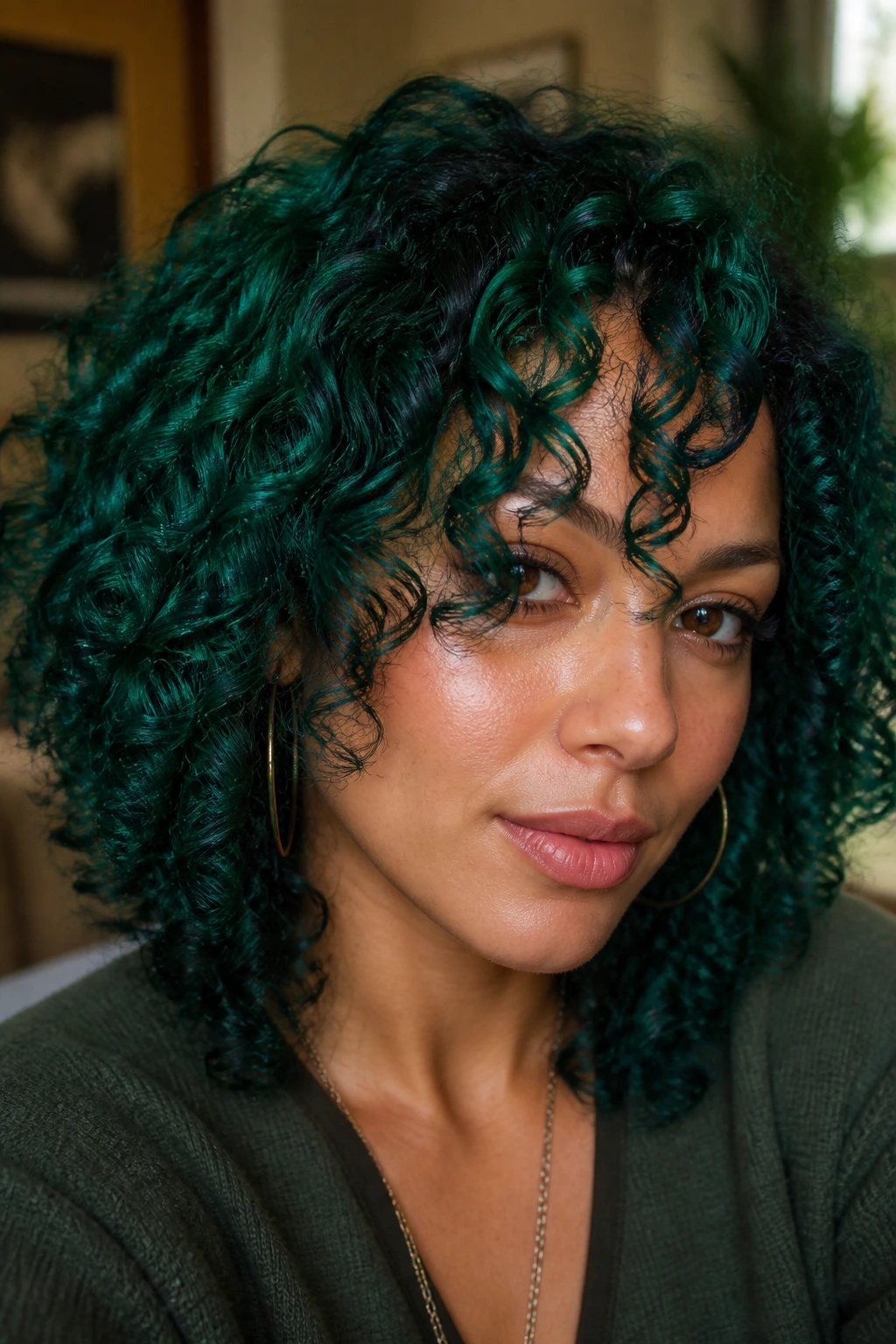
Natural curls change the whole personality of emerald green. The color breaks over the bends in the hair, so you get dark pockets, bright ridges, and a kind of depth that straight hair can’t fake.
That is why satin emerald works so well on cool skin tones with curl patterns of any size. The sheen of the dye sits against the texture instead of trying to flatten it. The result feels rich and layered, not loud for the sake of being loud.
Dry curls can swallow shine, though, so hydration matters. A leave-in cream, a gel with some hold, and a diffuser on low heat keep the curl shape intact and let the green stay visible. If the curls get frizzy, the shade blurs.
One small detail: tighter curls often need a slightly more saturated emerald than loose waves do. The color fades into the texture faster than people expect.
12. Emerald Halo Highlights Around the Hairline
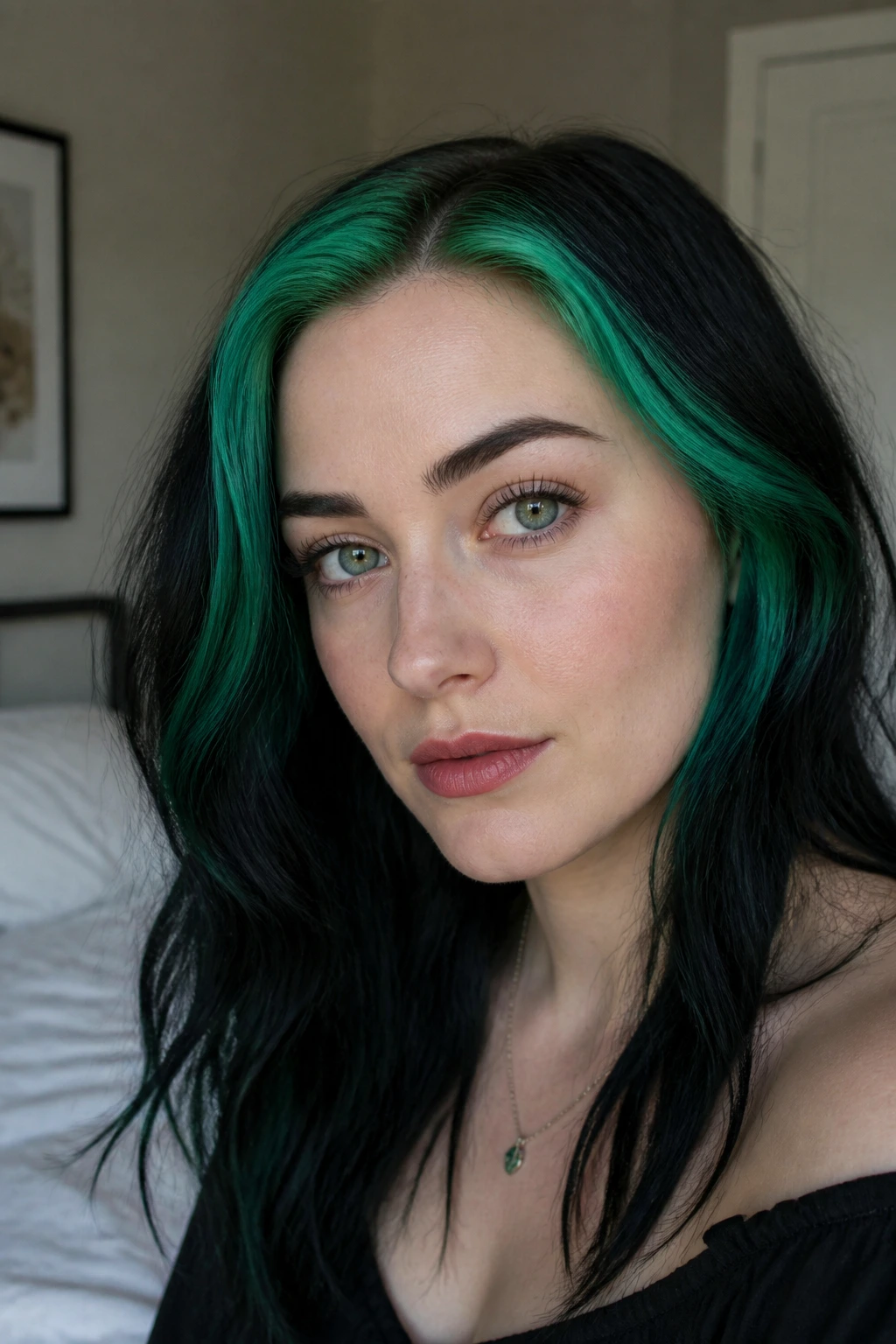
Emerald halo highlights around the hairline wake up a face fast. The color sits in a narrow ring near the temples, part, and upper cheek area, so the green becomes the first thing people notice.
Why the Halo Effect Works
This placement gives you brightness exactly where cool skin tones tend to look best. It also means the rest of the hair can stay darker, which keeps the look from becoming too loud. A halo is a smart move if you want the color to show up in a ponytail or bun.
- Keep the highlighted pieces narrow, around 1/8 to 1/4 inch wide.
- Place the brightest green near the part and temple.
- Let the back stay deeper for contrast.
- Ask for a gloss on the face-framing pieces so they don’t look dry.
I like halo highlights because they feel intentional without swallowing the whole head. They also grow out in a way that looks more forgiving than a full root-to-tip dye job.
13. Midnight Emerald with Black Roots
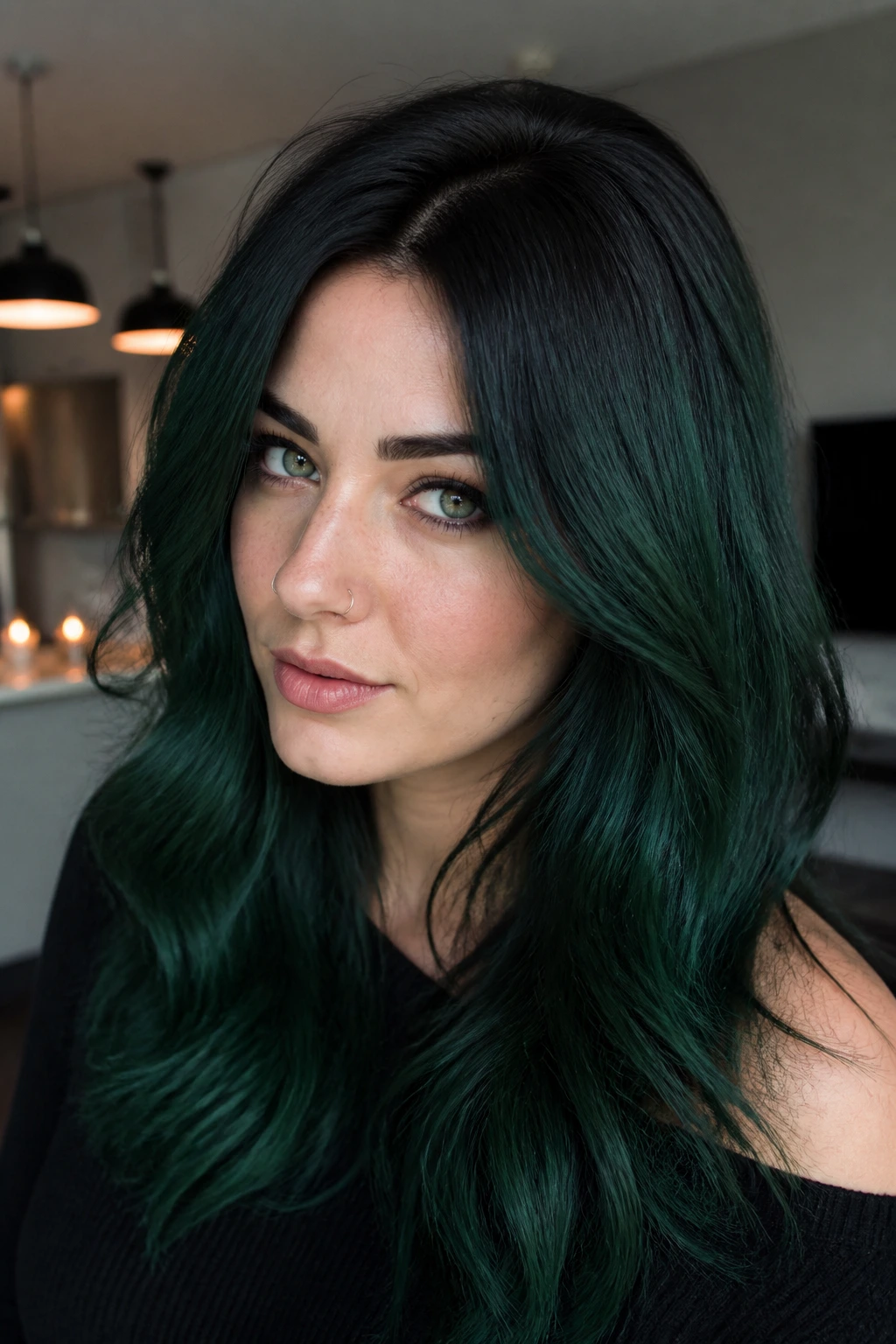
Midnight emerald with black roots is the calmest dramatic color on this list. The black at the top gives you a built-in shadow, and the emerald below it looks deeper because of that contrast.
This version flatters cool skin tones because the palette stays firmly on the cool side. Black, blue, deep green — all of it sits together without clashing. If your natural hair is already dark, you may only need to color the mids and ends, which saves time and keeps the finish cleaner.
It also hides regrowth well. That alone is enough reason to like it. The root stays purposeful instead of obvious, and the green can grow out for a bit without looking messy.
If you want a shade that feels bold but still neat at the scalp, this is a strong place to start.
14. Frosted Emerald Ends on a Lob
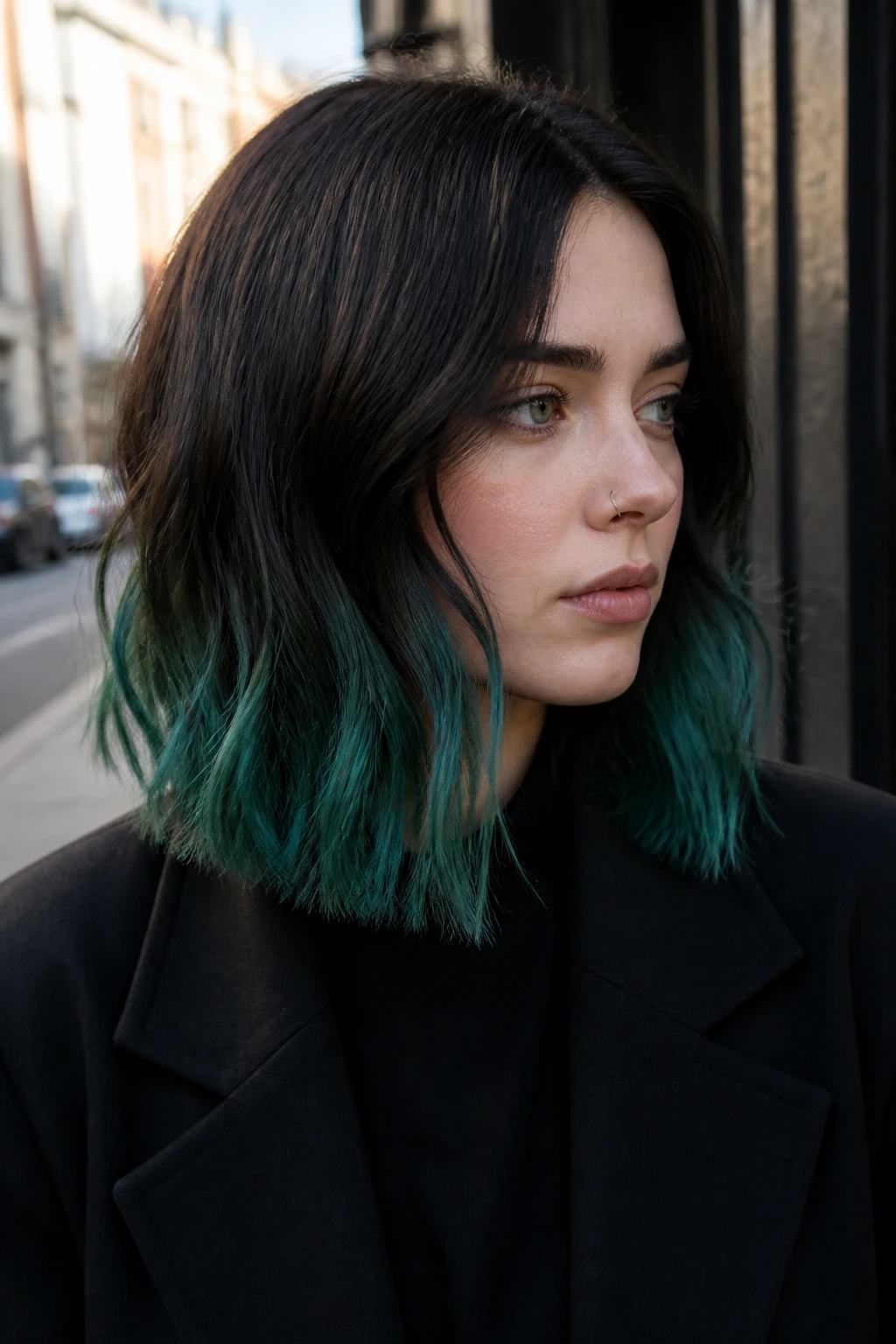
Frosted emerald ends on a lob feel like a dip into color rather than a full plunge. The top section stays natural or nearly natural, while the lower few inches get the green treatment.
That placement flatters cool skin because the color stays away from the face and shows mostly when the hair swings. A lob gives you just enough length for the effect to read, but not so much that the ends disappear into the rest of the cut.
- Trim dry ends before coloring; split ends grab pigment unevenly.
- Start the green about 2 to 3 inches above the hemline for a softer fade.
- Style with a bend, not pin-straight ironed hair.
- Use a mask on the ends only, since that’s where the color and dryness live.
This is a nice entry point if you want to see how emerald behaves before committing to more color. It is also easier to trim off later, which is not a bad thing.
15. Emerald Curtain Bangs and Face Frame
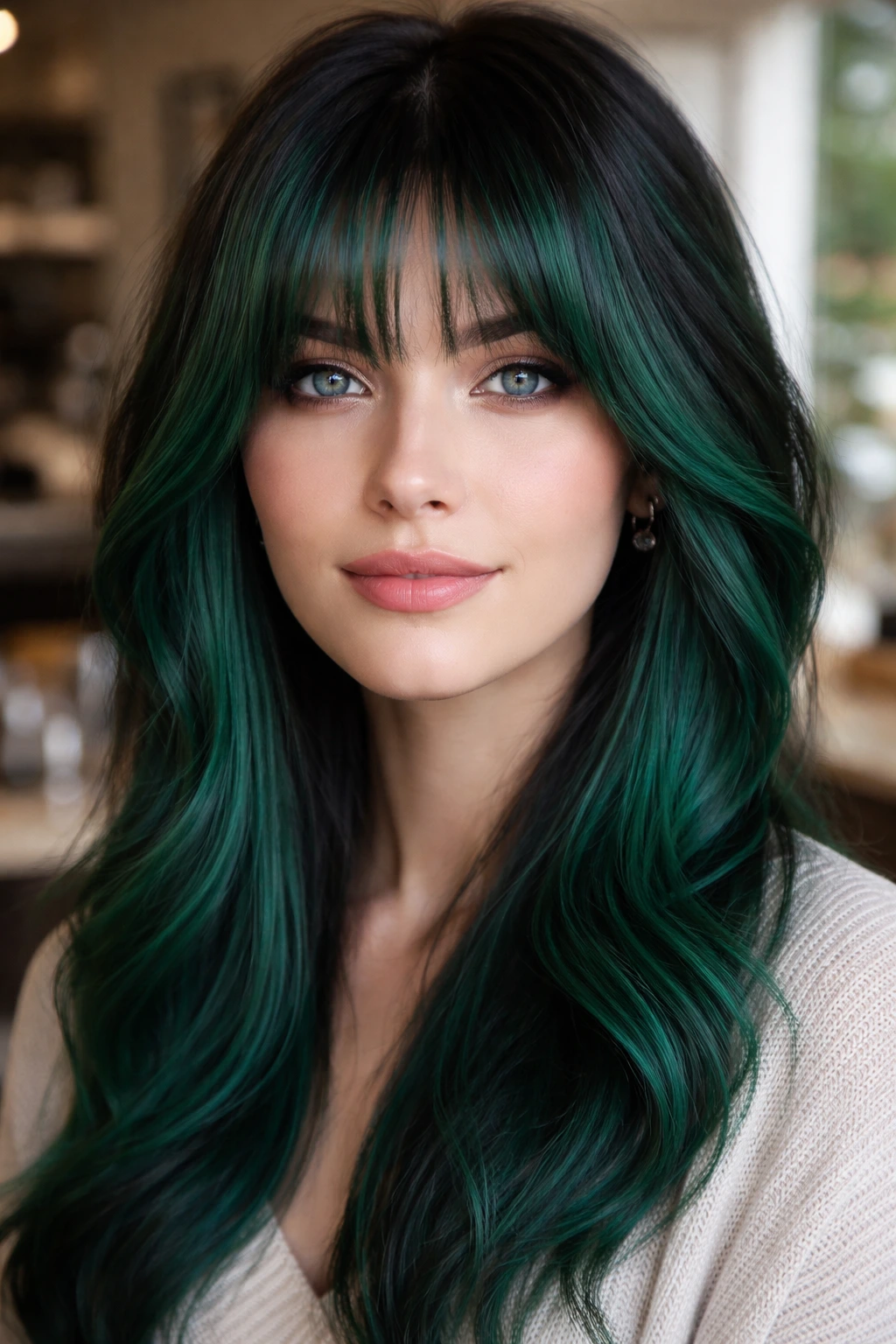
Do curtain bangs make emerald harder to wear? Not really. They just need a smaller brush and a steadier hand, because the front pieces sit so close to the skin.
The trick is to keep the bangs slightly deeper in tone than the rest of the face frame. That way the color still shows, but it does not sit flat against the forehead like a green stamp. On cool skin tones, a blue-leaning emerald under the fringe looks sharp and clean.
Where the Color Should Sit
Ask for the brightest tone just below the brow line and a softer blend at the top of the bangs. That gives movement when the fringe parts in the middle. If the color is too saturated at the root, it can make the whole area feel heavy.
Curtain bangs also fade faster because they get washed and styled more often. A color-depositing conditioner once a week can help, but only on the colored sections. Nobody wants the front to turn dull while the rest still looks fresh.
16. Chrome Emerald with Silver Finish
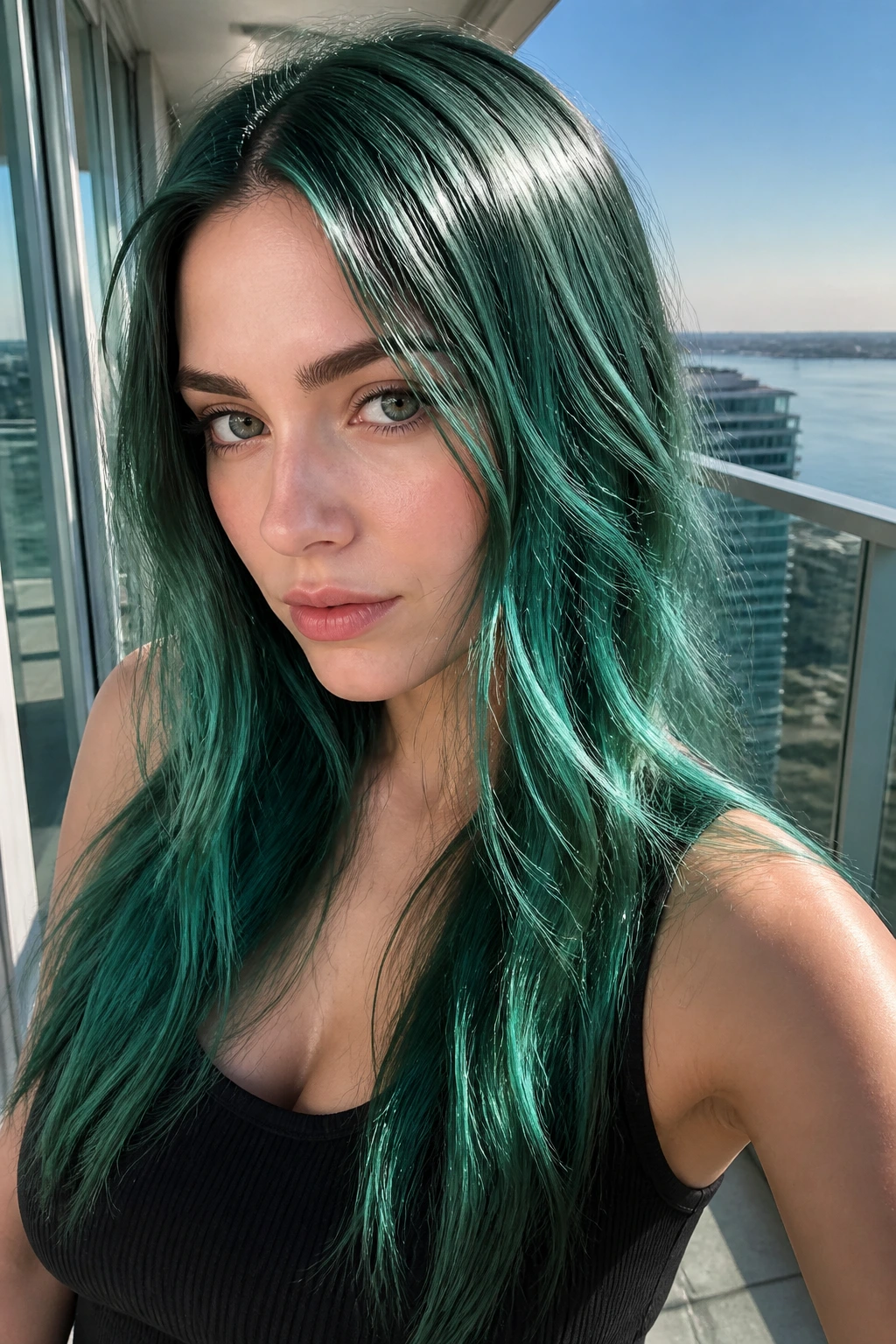
Chrome emerald has a harder edge than classic jewel green. It looks more reflective, more metallic, and a little colder — which is exactly why it suits very cool skin so well.
Unlike a deep forest shade, chrome emerald sits on a pre-lightened base and usually needs a higher level of lift, around level 9 or 10. The silver finish keeps the green from looking flat, but you have to be careful not to push the toner so far that the hair turns gray and the emerald disappears.
This is the version I’d choose for sharp bobs, graphic cuts, or straight hair with a glassy finish. It does not want beach waves or soft fluff. It wants precision.
If you like color that looks almost metallic in bright light, this is the one to ask about. If you want softness, skip it.
17. Underlight Emerald on a Layered Shag
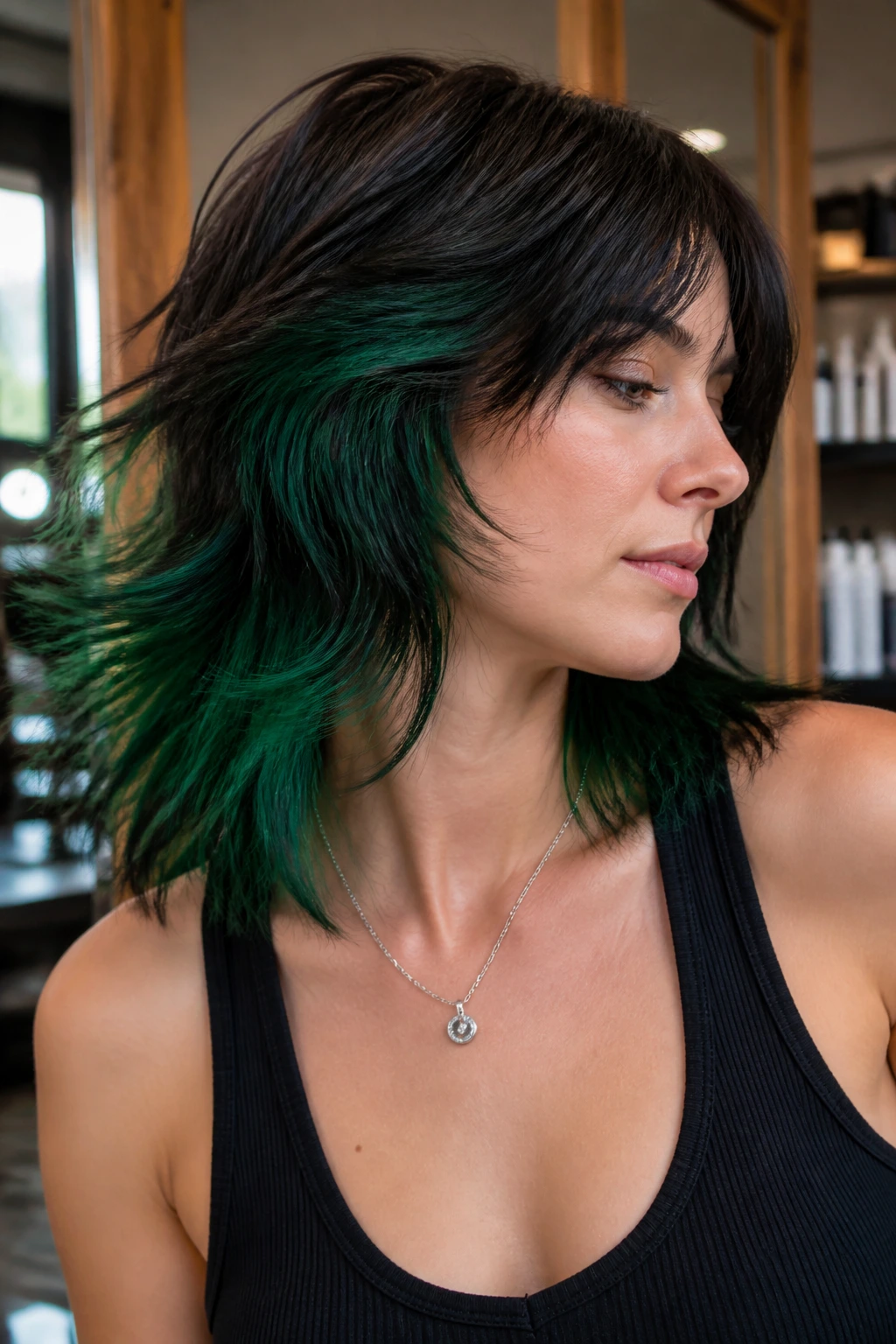
A layered shag is made for underlight color because the cut keeps shifting as you move. Emerald tucked beneath those layers peeks through when the hair flips, which gives the color a little surprise without making it loud all the time.
Cool skin tones benefit from that hidden placement because the green doesn’t need to carry the whole face. It shows in flashes, which feels easier than a full-on saturated top layer. The shag does most of the work for you.
I like this look with a rough-dry finish and a bit of texture spray. You want the layers to separate enough for the green to show, but not so much that the cut looks crunchy. That line is thin, and yes, it matters.
The underlight idea also ages well between salon visits. As the roots grow, the hidden panels stay hidden. Handy.
18. Deep Forest Emerald with Soft Waves
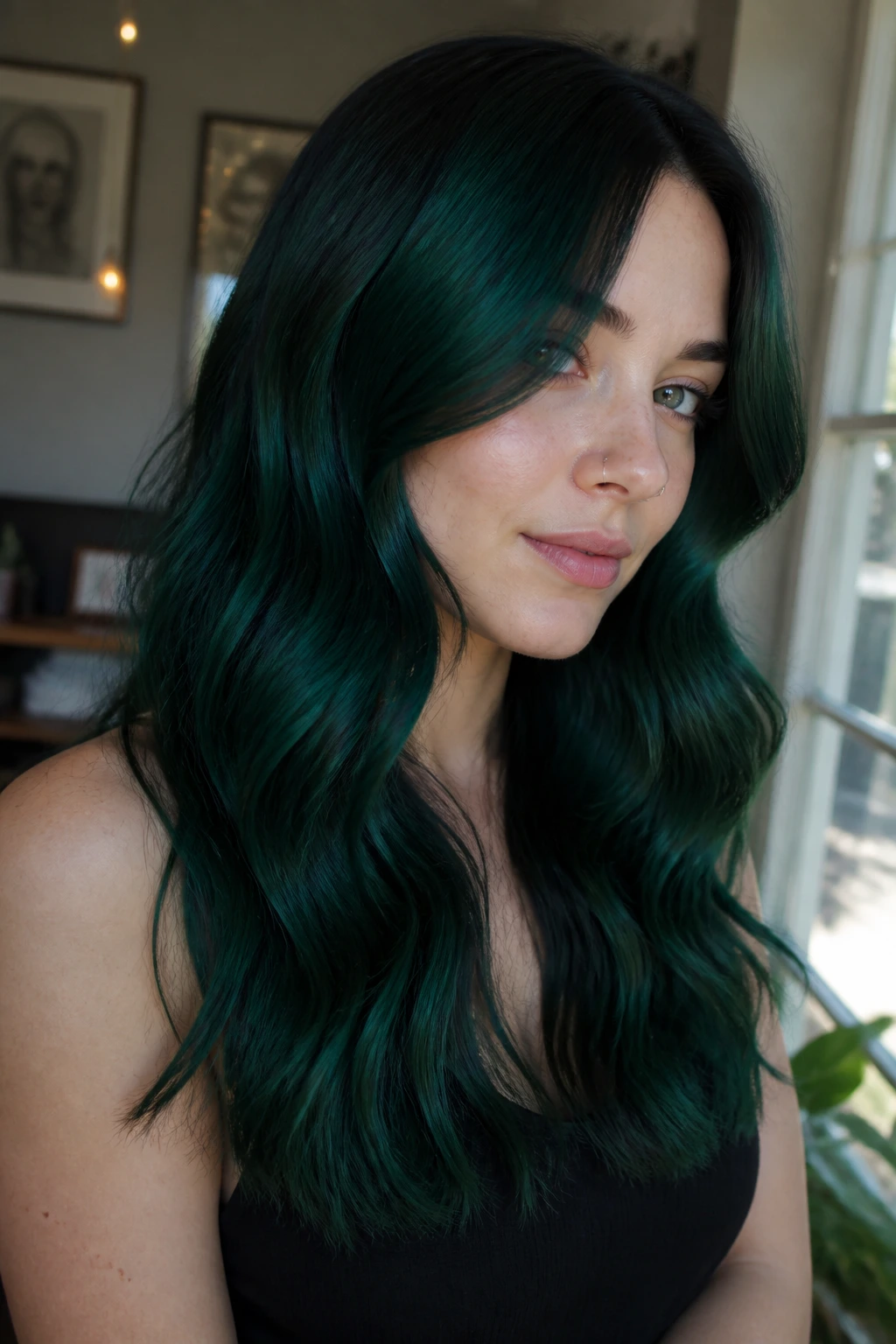
Deep forest emerald with soft waves is the quieter cousin of brighter jewel green. It stays rich, dark, and blue-leaning, which is why it sits so cleanly on cool skin tones.
Who Should Ask for This Shade
- People with medium to dark cool skin often wear this beautifully.
- Brunettes who want green without losing depth tend to love it.
- It works well if you want more green than teal, but not a neon result.
- A base around level 5 to 7 gives the color enough structure.
The wave pattern matters here. Soft bends keep the forest shade from looking heavy, especially near the ends. If the hair is too straight, the color can look almost flat. A loose iron bend or a round-brush blowout keeps it alive.
This is one of those shades that looks calm in photos and richer in person.
19. Split-Dye Emerald and Blue-Black
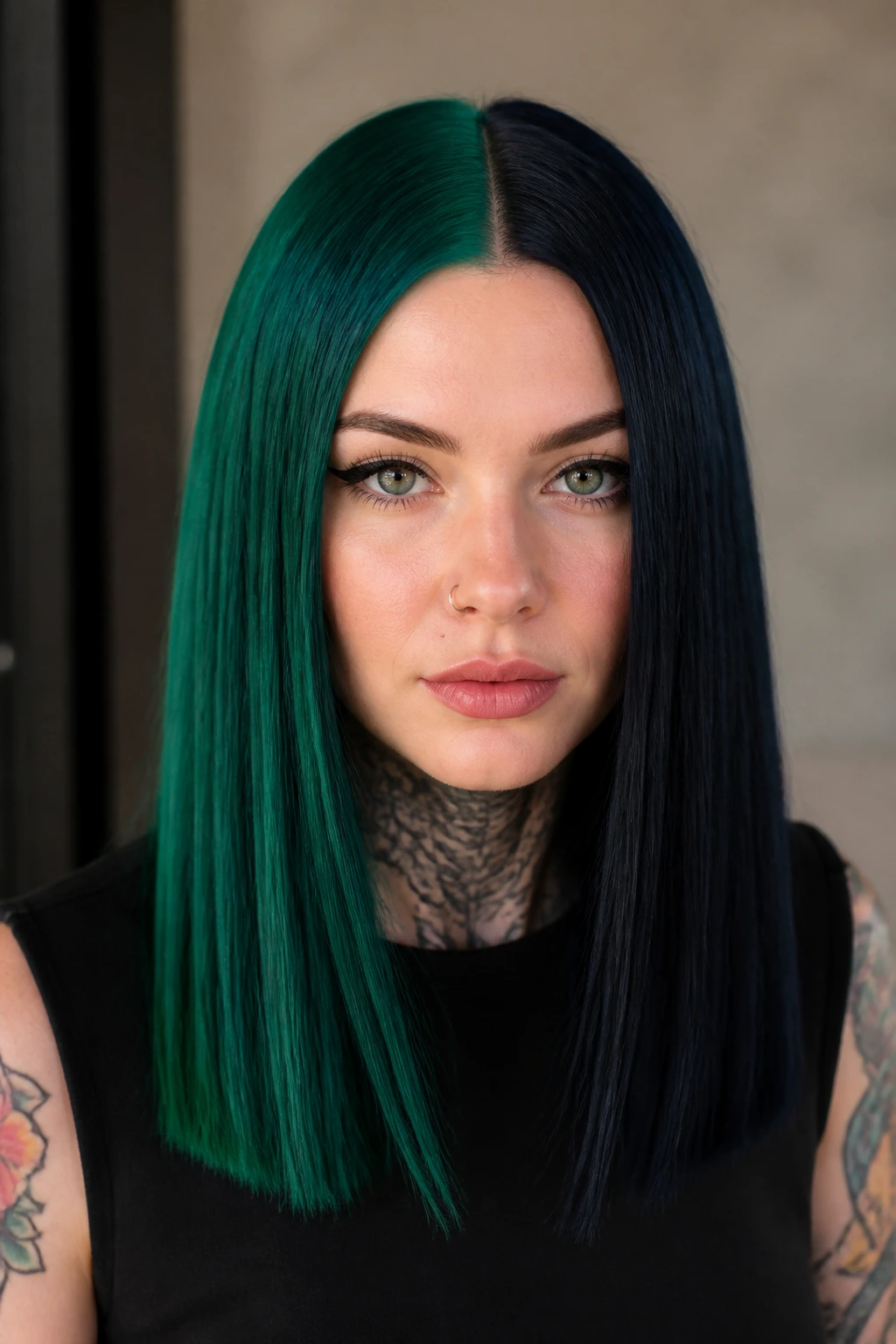
Split-dye emerald and blue-black is not subtle, and that is exactly the appeal. One side holds the green, the other side stays in a dark blue-black lane, and the contrast gives the whole head a sharper shape.
For cool skin tones, the pairing works because both shades sit in the cool family. Nothing clashes. Nothing drifts warm. If anything, the blue-black side makes the emerald look even more vivid by comparison.
This is strongest on blunt cuts, long straight lengths, or structured lobs where the split line stays visible. Symmetry matters here. If the line is crooked, the whole style starts to feel accidental instead of graphic.
I would not call this low-maintenance, but it is memorable. And some people want exactly that.
20. Full-Head Jewel Emerald for Maximum Drama
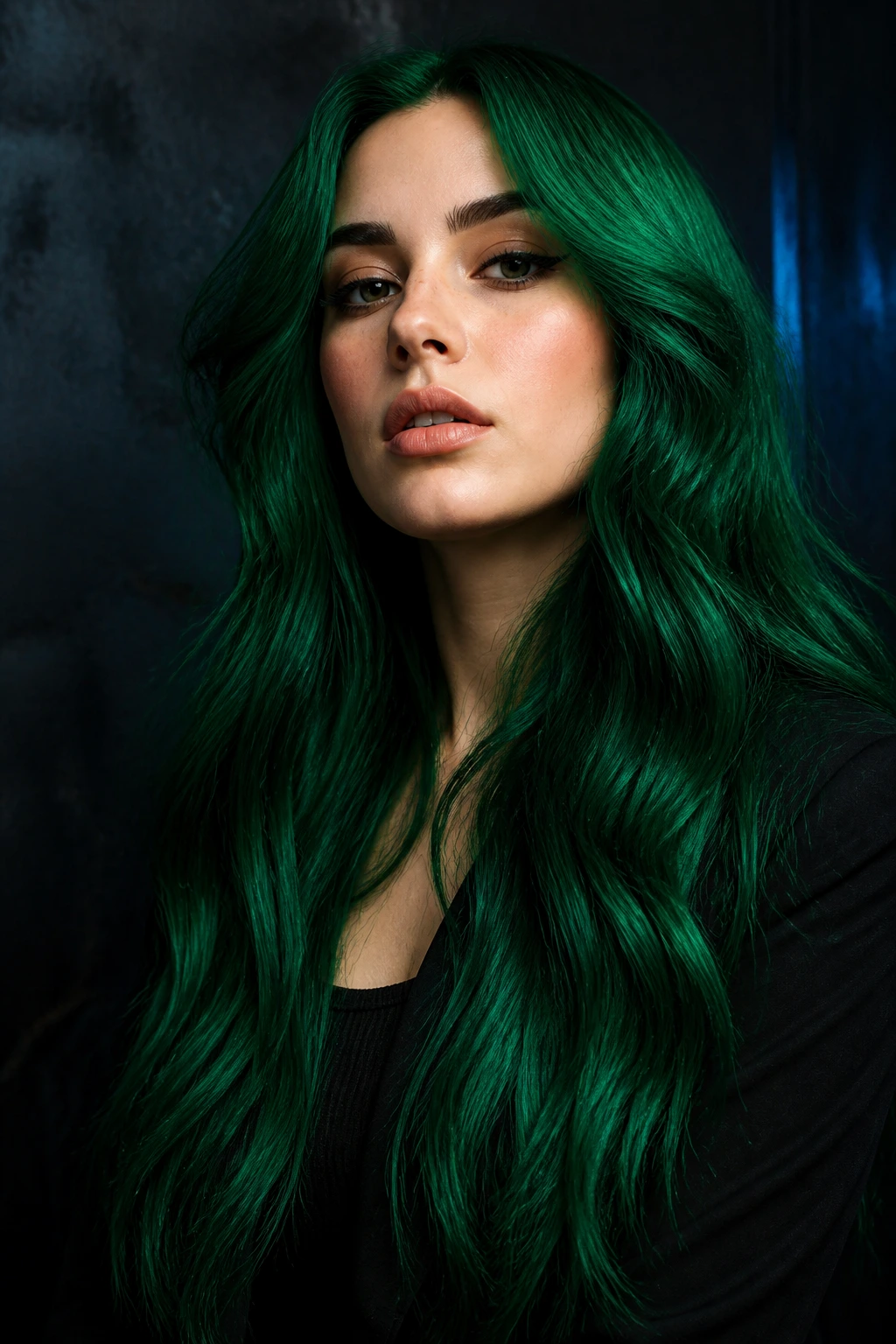
Full-head jewel emerald is the version for people who want the color to carry the whole look. No hiding it. No waiting for a hidden panel to show. The green stays visible from root to tip, and on cool skin tones the result can look fierce in a clean, polished way.
This shade usually needs a cool, blue-based formula and enough lift to let the pigment read true. On lighter hair, that might mean a level 8 or 9 base. On dark hair, a shadow root can help keep the scalp area softer while the emerald stays saturated through the lengths.
- Ask for a blue-based emerald, not a yellow-heavy one.
- Use a sulfate-free shampoo and wash with lukewarm water.
- Deep condition once a week to keep the ends from going dry.
- Plan on refreshes every 4 to 6 weeks if you want the color to stay vivid.
If you want the strongest payoff, this is where I’d start. It is the most direct emerald on the list, and on cool skin it can look almost electric without slipping into neon.
