



Grey hair color ideas for cool skin tones work best when the shade leans icy, smoky, or blue-violet. Once warmth creeps in, the whole look can go a little dull, and that usually has nothing to do with the cut or the makeup. It’s the tone.
I’ve seen the same silver formula look crisp on one person and oddly yellow on another. The difference is usually undertone, not confidence, not age, and not whether the stylist used a “good” dye. Cool skin tends to play nicest with pearl, steel, slate, graphite, moonlit white, and anything that keeps brass on a tight leash.
That’s why gray hair can look so sharp on cool complexions. It is not about going flat or washed out. It’s about picking the right kind of gray — one with enough blue, violet, or soft ash in it to keep the face looking fresh instead of tired.
A smart gray color also gives you room to choose your level of upkeep. You can go bright and reflective, or darker and smoky, or let the roots stay a touch deeper so the grow-out doesn’t shout at you every three weeks. The best version is the one that flatters your skin and still feels like something you can live with on a Tuesday morning.
1. Icy Silver Bob for Cool Skin Tones
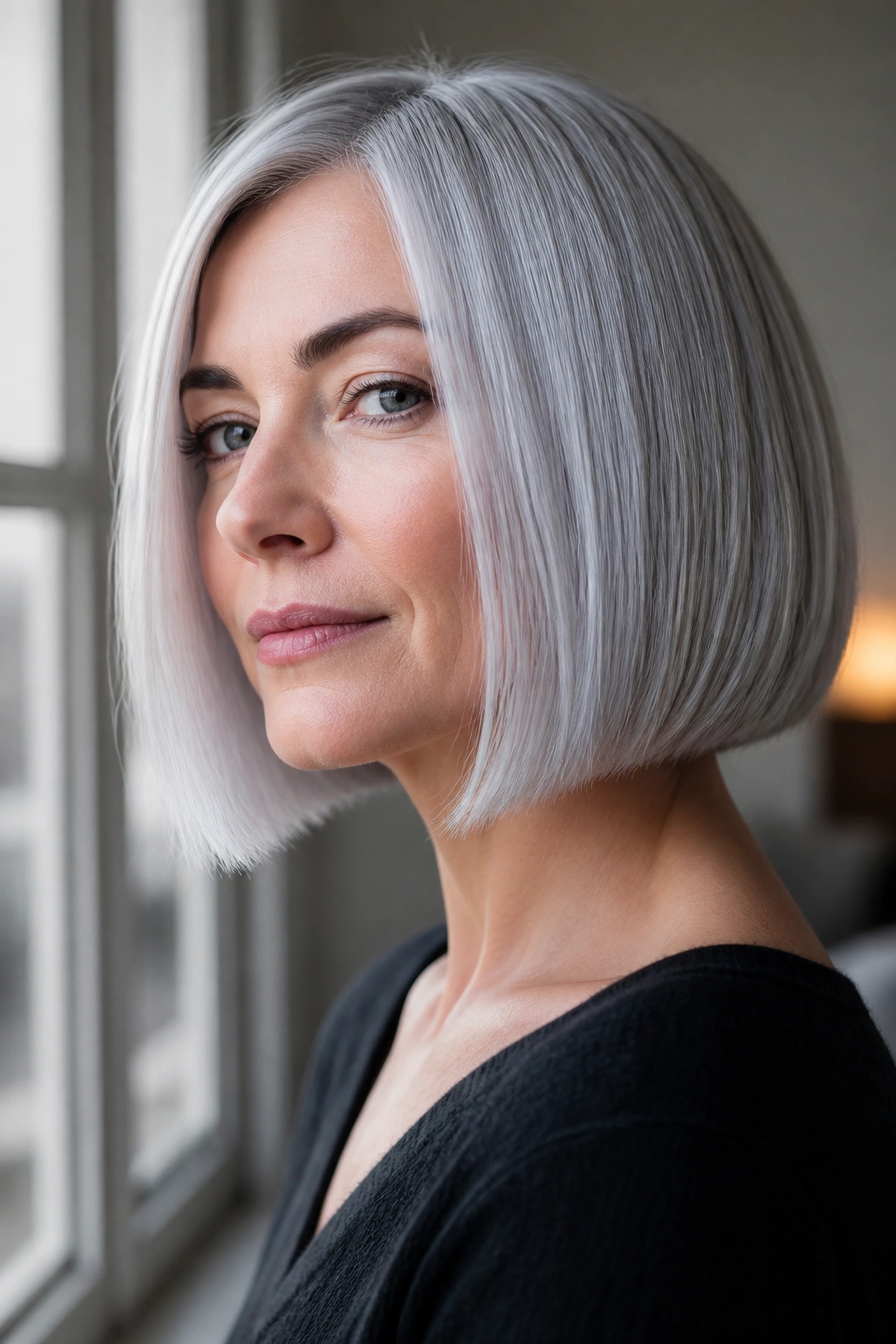
An icy silver bob is one of those shades that looks clean the second it hits the light. The blunt shape gives the color a crisp edge, and that matters more than people think. Cool skin tones love it because the finish stays on the blue-white side instead of drifting into beige.
Why it flatters cool skin
A bob cuts down on visual clutter. You get a strong line at the jaw or just below it, then the silver does the rest. On pink or blue undertones, that kind of contrast makes the face look brighter without needing a warm highlight anywhere near it.
If your natural hair pulls gold, ask for a level 9 to 10 lift before the toner goes on. That part is non-negotiable. Silver only looks polished when the canvas underneath is pale enough.
- Ask for a violet-silver toner, not a beige blonde glaze.
- Keep the root shadow soft, about one shade deeper than the mids.
- Trim every 6 to 8 weeks so the line stays sharp.
- Use a purple shampoo once a week if brass shows up fast.
Pro tip: If the silver starts to look yellow in indoor light, the problem is usually toner fade, not the haircut.
2. Smoky Charcoal Root Melt
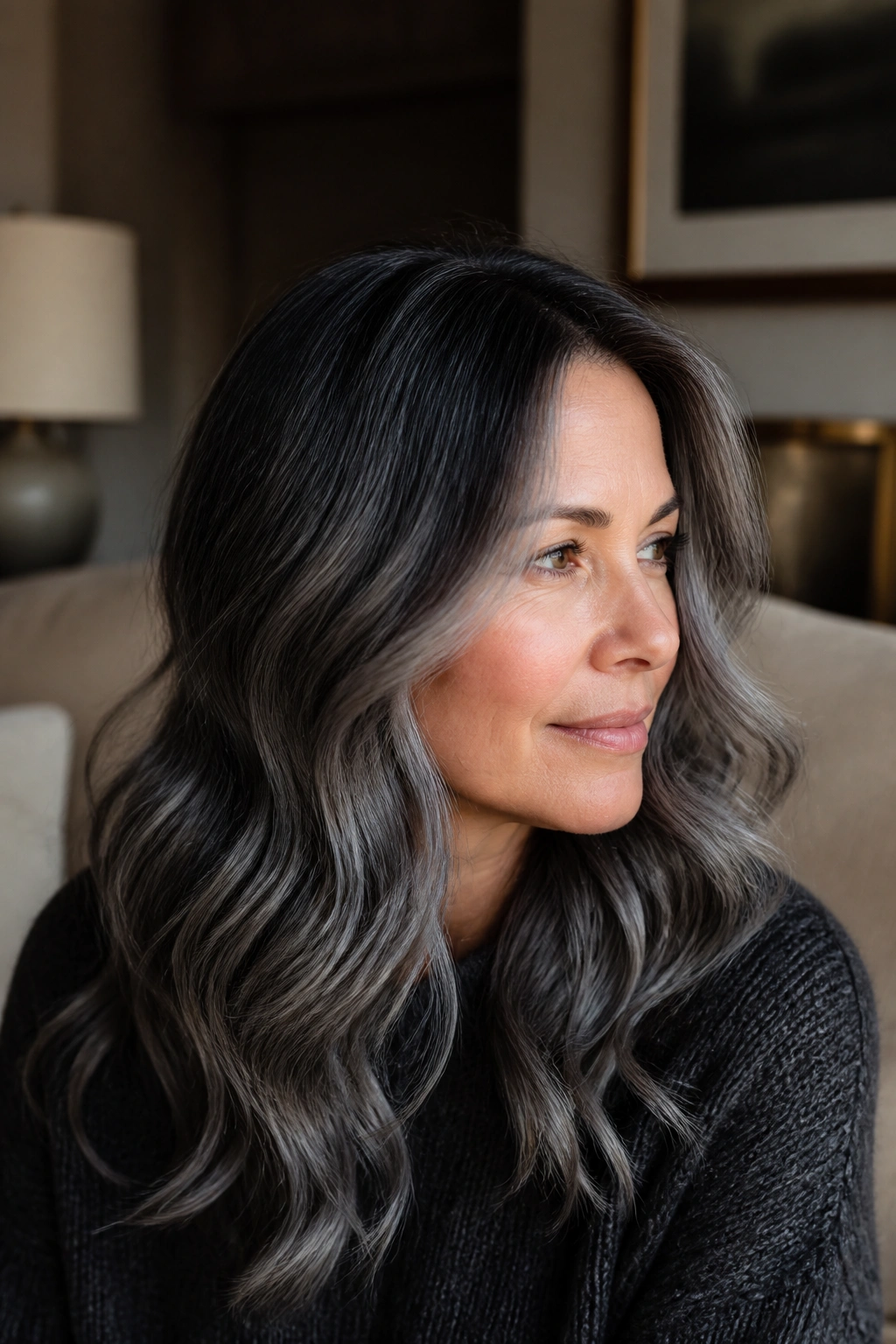
A smoky charcoal root melt is easier to live with than full silver, and honestly, that’s why so many people end up loving it. The roots stay deep and cool, then the color softens into smoke and graphite through the mids. It feels moody in a good way.
The real win here is grow-out. Dark roots are not a mistake in this look — they’re the point. Cool skin tones get a nice frame around the face, and the darker base keeps the gray from going flat.
This one works especially well if your hair is wavy or curly. The texture breaks up the darker root and gives the smoky lengths more movement. Straight hair can wear it too, but you’ll want a few subtle bends with a round brush or flat iron so the gradient doesn’t look like one solid block.
If you hate constant salon visits, this is a smarter pick than icy platinum. It buys you time.
3. Pearl Gray Waves
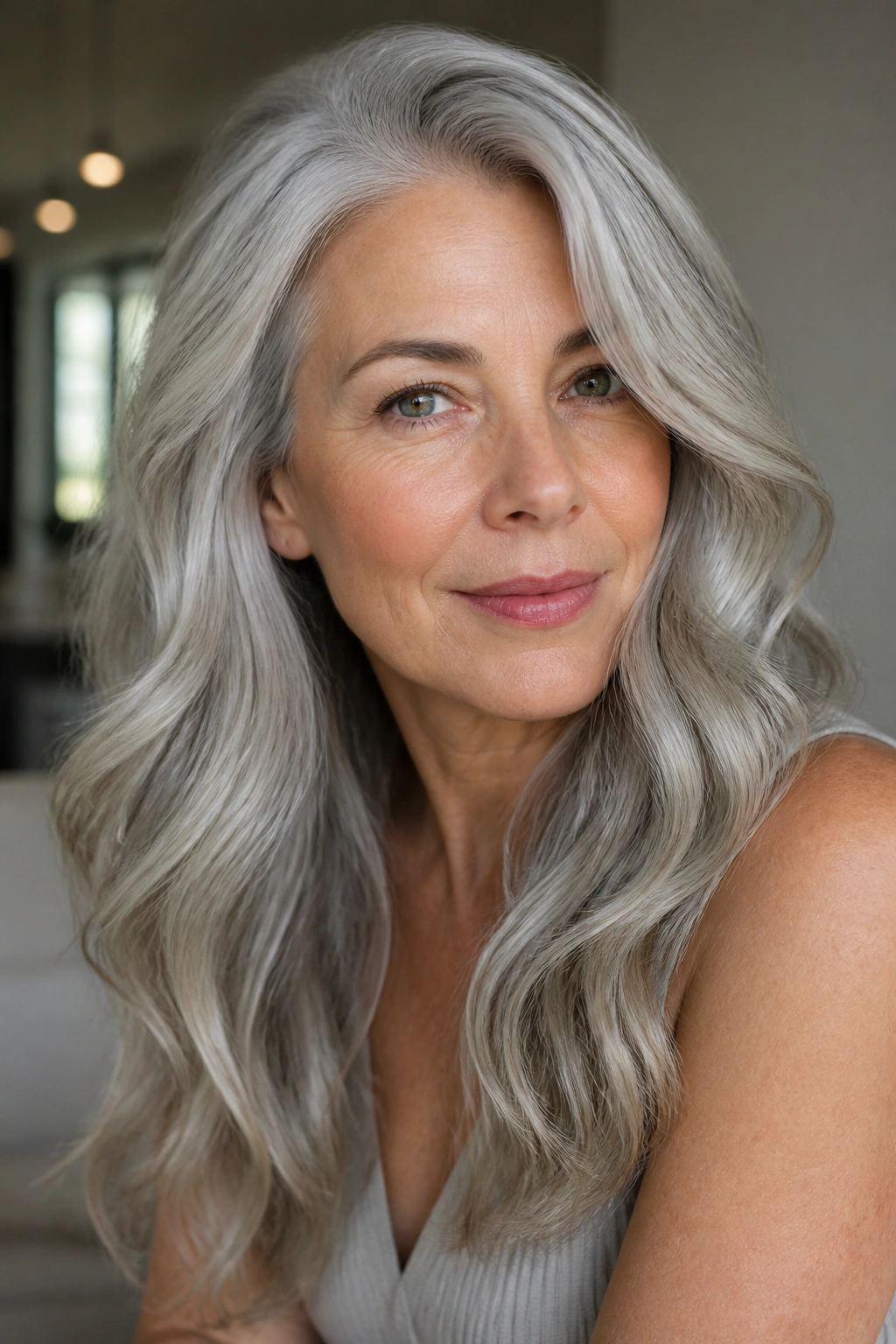
Why does pearl gray look so soft on cool skin? Because it has that faint, shell-like sheen that sits between silver and white. It is lighter than slate, gentler than chrome, and much less harsh than a hard white.
The shade works best when the waves are loose. Tight curls can make pearl gray look busy, while soft bends let the tone move from bright to smoky as the hair shifts. A side part helps too. It puts the lighter pieces where your face needs them most.
How to wear it
The easiest styling trick is a large-barrel iron, about 1.25 to 1.5 inches, wrapped loosely and brushed out once the hair cools. That gives the color room to shimmer instead of sitting stiff. Air-drying with a little cream can work, but only if your hair already has some bend.
Pearl gray is a nice middle ground if you want silver without looking frosty. It has enough brightness for pale cool skin, but not so much that it overpowers a soft face. Think polished, not icy.
4. Steel Silver Lob
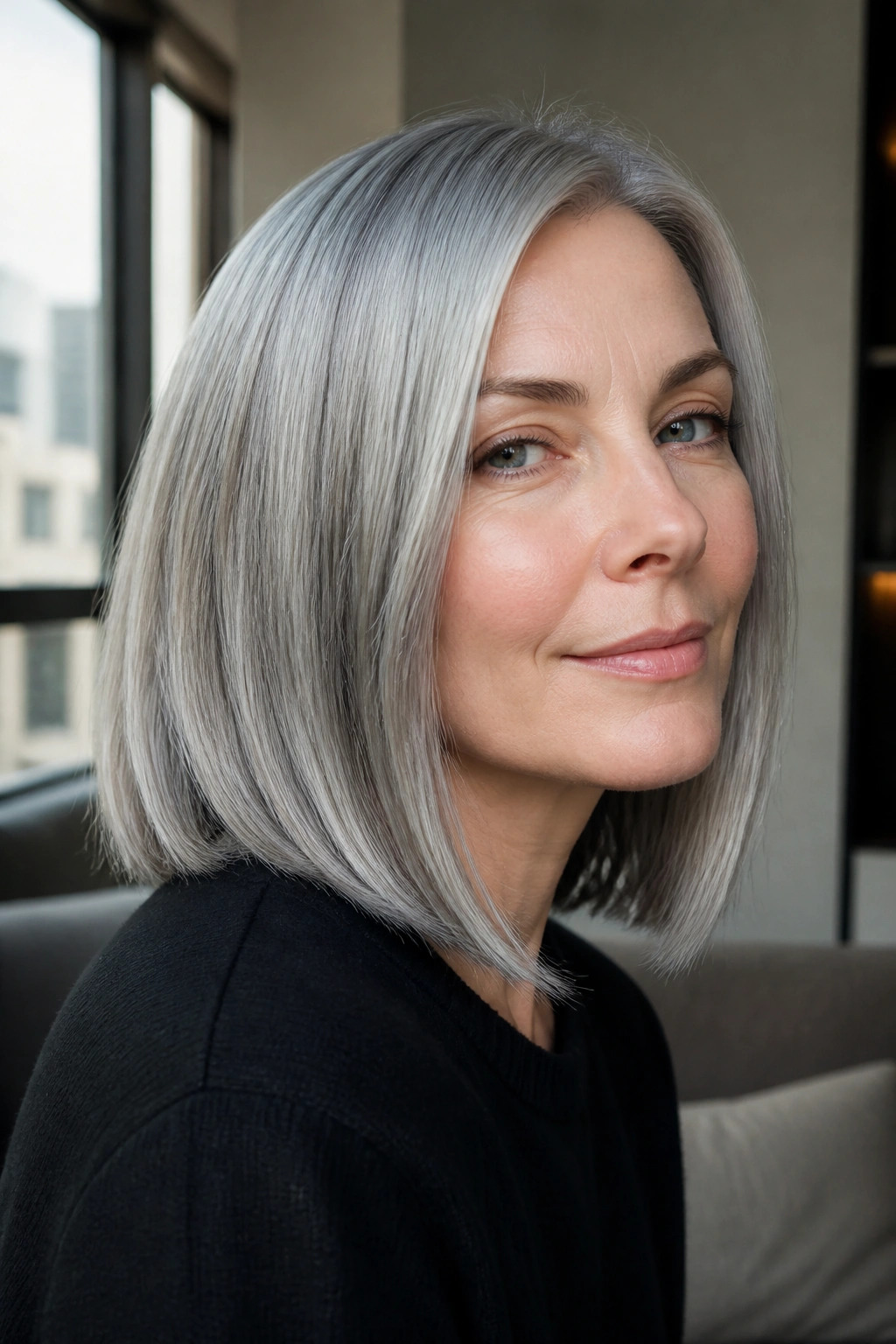
Picture a shoulder-grazing lob with a steel finish. It feels tailored. Not fussy. The color has a slightly metallic edge, which gives cool skin a clean frame without pushing into stark white.
This is a smart choice if you want gray hair that still feels city-sharp and not too “done.” Steel silver has more depth than pearl and less darkness than charcoal, so it works when you want both brightness and shape. On blunt ends, the color looks even cleaner.
Salon details to ask for
- A neutral-cool base with silver toner through the mids and ends.
- A soft root blur so the top doesn’t look striped.
- A gloss finish with blue-violet pigment if your hair lifts yellow.
- A collarbone length cut that shows off the color line.
Steel silver is also one of the easier shades to style on busy mornings. A quick blow-dry with a paddle brush is enough. The color itself does the heavy lifting.
5. Frosted Platinum with Gray Toner
Frosted platinum with gray toner is for the person who wants light hair that still feels cool instead of warm. The platinum gives you the brightness; the gray toner takes away the gold and adds that frosted edge that cool skin tends to love.
This shade can look almost white in good light, then turn smoky at the edges. That’s why it reads expensive without needing much decoration. It also tends to flatter very fair skin with pink undertones, because it keeps the face in the same pale, cool family.
The catch is maintenance. Platinum hair asks for patience. You need careful lifting, a strong bond builder, and a toner schedule that does not get ignored for two months. If the hair is over-processed, the color loses that frosted look and starts to feel dry and chalky. That part matters.
Use a sulfate-free shampoo, limit hot tools, and let the toner do its job. This is one of those shades that looks effortless only after a lot of work behind the chair.
6. Slate Gray Balayage
Slate gray balayage is the more relaxed cousin of full-head silver. Instead of coating everything evenly, the color is painted in ribbons, with darker depth left underneath. On cool skin tones, that creates movement without bringing in warmth.
The best thing about balayage here is the softness at the grow-out line. You do not get a hard stripe. You get a gradual fade that looks expensive even when you have lived in it for a few months. That is the whole appeal.
It also makes sense if your natural base is medium brown or dark blonde and you do not want to lift every strand to the same level. The darker pieces help the gray feel grounded. Without them, some silver shades can look chalky or a little too bright near the face.
If you ask for this at the salon, say you want cool slate ribbons, not smoky beige. That one word changes a lot.
7. Blue-Gray Gloss
Blue-gray gloss has a sharper edge than pearl and a cooler pulse than steel. It’s the kind of shade that makes cool undertones look deliberate, not accidental. The blue is subtle, but it pulls the gray out of the dusty zone.
Why the blue matters
Gray hair that leans too neutral can go flat on cool skin. A little blue shifts the whole read. It gives the tone more life and keeps the hair from disappearing against pale skin.
This works especially well on shorter cuts, sleek ponytails, and straight styles where the shine can show. If you have a lot of natural wave, the blue-gray still works, but you may want it applied a touch darker so it doesn’t vanish in the texture.
- Ask for a blue-violet gloss, not a pastel silver.
- Keep heat styling under 365°F if your hair is porous.
- Refresh every 4 to 6 weeks if you want the blue cast to stay visible.
- Pair it with a cool root shadow to stop the ends from looking thin.
Tip: If your hair has stubborn yellow undertones, book the gloss after the lightening, not days later.
8. Ash Brown to Gray Melt
An ash brown to gray melt is the choice for people who want gray hair without making the whole look feel dramatic. The top stays brownish and cool, then the color fades into ash-gray midlengths and ends. It looks soft, modern, and easy to wear.
This is probably the most forgiving gray idea on the list. The darker base covers regrowth better, and the ash finish keeps the warmth out of sight. Cool skin tones like it because the brown is muted, not red, and the gray still shows through enough to feel intentional.
The blend should not look stripy. It should look like the color is moving downward in one smooth shift. A good colorist will leave some smoky lowlights in place so the ends do not wash out.
If you want gray but feel nervous about going full silver, start here. It’s the least shouty option, and that is not a bad thing.
9. Lavender Silver Sheen
Want gray hair with a little mood? Lavender silver is the one that gives you that soft, misty finish without crossing into playful pastel territory. The lavender stays quiet. The silver stays bright. Together, they make cool skin look almost lit from within.
How to keep it soft
The biggest mistake with lavender gray is making it too purple. When the violet pigment gets heavy, the hair can start looking like fashion color instead of wearable gray. Ask for a pale lavender toner, then have your stylist dilute it enough that the result reads as silver first.
This shade is lovely on pale cool complexions and looks especially good when the makeup stays cool too — berry lip, rose blush, nothing too peachy. It also works well on layered cuts, because the color shifts a little as the hair moves.
A lot of people think lavender gray will feel too trendy. It doesn’t have to. Kept pale and smoky, it looks quiet and elegant in a way that pure silver sometimes misses.
10. Gunmetal Pixie Cut
A gunmetal pixie cut has bite. The color sits dark enough to keep the shape defined, but it still carries a metallic sheen that flatters cool skin tones. On a short cut, that shine is the whole point.
This one is especially good if you like low styling effort. Pixies show off the head shape, so the color needs to do some work. Gunmetal does. It gives dimension around the temples and crown without asking for curls, waves, or a lot of product.
What to ask for
- A dark silver or graphite toner with a blue base.
- Softer pieces near the fringe so the face doesn’t look too severe.
- A matte paste or light cream, not a greasy pomade.
- A trim every 4 to 5 weeks to keep the line tidy.
One short note: this shade looks much better with texture than with helmet hair. A little mess is good here.
11. Dove Gray Layers
Dove gray is softer than steel and lighter than charcoal. It has that feathered, powdery look that feels especially nice on layered hair, because the movement keeps the shade from reading one-note. On cool skin, it gives a calm, even look.
The reason it works so well is simple. Dove gray doesn’t fight the face. It sits beside it. If your features are delicate, or if you hate strong contrast, this shade is easy to live with. It still looks polished, just not severe.
Layers help the color breathe. Long layers, a shag, or even a softly razored cut can stop the gray from feeling heavy at the ends. That matters more than people expect. Gray can look thick and flat if the cut is too blunt.
This is one of those shades that looks better in motion than in a still photo. The ends should swing a little. Otherwise, it loses its charm.
12. Pewter Money Piece
A pewter money piece is a clean way to wear gray without signing up for a full-head shift. The brightest or coolest strands sit right around the face, while the rest of the hair stays darker or more muted. Cool skin tones get a quick hit of light where it matters most.
This is a good compromise if you want the gray trend but do not want to bleach every inch. It also works well on brunettes, because the contrast between a deep base and a pewter front section can look intentional instead of harsh.
Best placement
- Keep the money piece around 1 inch wide on each side.
- Start it just behind the hairline so it blends, not stripes.
- Use a cool pewter toner rather than bright silver.
- Pair it with soft waves if you want the highlight to look expensive.
Pewter around the face can change the whole haircut. It wakes up the eyes. It makes cool skin look cleaner. And it lets you test the gray waters without a full commitment.
13. Moonstone White Ombré
Moonstone white ombré starts darker at the roots and glows lighter toward the ends, with a white-silver finish that has a faint pearly cast. It feels airy and polished at the same time. Cool skin tones tend to love the brightness near the face and the softer depth at the crown.
Why it reads so clean
The dark-to-light shift gives the color structure. Without that, white gray can sometimes feel too flat or too stark. Moonstone ombré keeps the eye moving, which is what makes it flattering.
It works well on longer hair because the gradient has room to show. On short hair, the change can get compressed and lose some of its softness. If you like waves, even better. The lightest ends catch movement without looking stripy.
Ask for a pale silver glaze at the bottom and a neutral-cool root blur at the top. Not beige. Not warm ash. Cool skin needs the cleanest version of the fade.
14. Silver Smoke Curtain Bangs
Curtain bangs and silver smoke are a sneaky good pair. The bangs bring the color close to the eyes, and the smoky gray keeps the fringe from feeling too harsh. On cool skin, that combination gives a soft frame without much effort.
The shade itself sits between silver and graphite, which means it still has shine, but it does not scream for attention. The bangs do some of the work by breaking up the forehead area and pulling the eye inward. That can be especially nice if you wear glasses or have a longer face.
What to watch for
Curtain bangs need regular trimming, usually every 4 to 6 weeks, because gray shows shape fast. If the fringe gets too long, it can swallow the face. If it gets too short, the smoke effect looks blunt.
Use a round brush, then let the bangs cool before touching them. That little pause matters. Gray fringe can kink in weird ways if you handle it while it’s still warm.
15. Graphite and Ice Ribbon Highlights
Would a ribboned gray look be easier than all-over color? Most of the time, yes. Graphite and ice highlights give you contrast without making every strand fight for attention. Cool skin tones get the best of both worlds: dark depth and bright silver pop.
Where to place the ribbons
The smartest placement is around the crown, temples, and a few face-framing sections that sit just below the cheekbone. You want the lighter strands to break up the dark base, not sit in random stripes. The graphite pieces should live underneath and near the part line so the color feels anchored.
This idea is great on medium to dark hair. You keep more of your natural depth, which makes the gray easier to wear and less high-maintenance. It also grows out more softly than a full silver transformation.
- Keep the brightest pieces no wider than half an inch.
- Use a cooler toner on the light sections only.
- Add a gloss every 6 weeks if the ice pieces start to dull.
It’s a nice option when you want gray to look woven in, not painted on.
16. Opal Gray Blend
Opal gray is for people who want a little shimmer without going full metallic. The shade shifts between silver, pale blue, and soft violet depending on the light. On cool skin, that shifting quality keeps the hair from looking flat.
The trick is restraint. If the violet gets too strong, it stops reading as gray. If the silver is too pale, it can lose the opal effect altogether. You want both tones present, but neither one shouting.
A blend like this usually looks best on hair with some movement — loose waves, a soft blowout, even a gently textured lob. The color needs angles to show itself. Straight, blunt hair can make it feel too uniform.
This is one of those shades that rewards a good colorist. The best version looks soft from a few feet away, then starts showing color when the light hits at the right angle. Subtle. Not boring.
17. White Blonde with Silver Shadow Root
White blonde with a silver shadow root is a strong choice if you love brightness but do not want a harsh grow-out line. The roots stay a touch deeper and cooler, while the mids and ends sit in that pale white-blonde zone with a silver wash.
Cool skin tones usually handle this well because the shadow root keeps the face from getting washed out. That tiny bit of depth near the scalp gives the whole look shape. Without it, very light blonde can start to feel thin around the edges.
This shade needs careful toning. White hair shows everything — brass, damage, uneven lift, all of it. The silver shadow root helps hide some of that pressure by giving the top section a cooler, more grounded read.
If you like very light hair, this is one of the prettiest ways to keep the color from looking flat. It’s bright, but not empty.
18. Cool Mushroom Gray Lob
Mushroom gray can go warm fast, which is why the cool version matters. On a lob, the shade should feel earthy only in the sense that it has depth — not beige, not golden, not muddy. Think ash mushroom with a silver edge.
This is a good pick if you want something softer than steel and less stark than white. It works especially well on medium cool skin because the tone has enough shadow to keep the face from looking overexposed. The lob length helps too. It gives the color a tidy shape.
What makes it different
- The base is cool ash brown, not warm brunette.
- The gray lives in the mids, where it can show movement.
- The ends stay a touch lighter so the cut does not look heavy.
- A small amount of root shadow keeps regrowth quiet.
If you have been avoiding gray because you worry it will look too icy, this is a smarter bridge shade.
19. Chrome Balayage on Dark Hair
Chrome balayage on dark hair has a sharper shine than most gray looks. The contrast is the point. Dark base, bright chrome ribbons, cool skin — it all comes together fast. There is nothing soft about it, and that’s why it works.
Why it works on dark hair
The darker base gives chrome somewhere to land. On a lighter canvas, the same shade can disappear. On deep brown or black hair, the silver pieces look deliberate and expensive, especially when they’re placed around the face and on the top layer.
This is a good move if you want a statement without bleaching every strand. Balayage lets the stylist paint in brightness where it will show most, then leave some depth underneath so the whole head doesn’t turn chalky.
- Ask for cool silver ribbons, not champagne or beige.
- Keep the face-framing pieces slightly wider than the rest.
- Use a shine spray sparingly so the gray doesn’t get greasy-looking.
- Style with soft bends to keep the chrome from reading harsh.
It is bold, but not chaotic. That’s the sweet spot.
20. Soft White Silver Finish
Soft white silver is the quietest version of this whole family, and maybe the easiest one to wear if you want the lightest cool-gray look without all the drama. The finish is pale, airy, and clean. It sits somewhere between white blonde and delicate silver, which means cool skin gets brightness without looking overexposed.
The shade works best when the lightening is even and the toner is kept fresh. Uneven lift shows up fast in white silver. So does brass. That is why the maintenance side matters more here than in almost any other gray look. Purple shampoo helps, but it does not replace a proper gloss.
A soft white silver finish looks especially good when the cut is simple. Straight lines, soft layers, a sleek lob, a crisp bob — those shapes let the color speak without noise. Add too many waves or too much texture, and the pale finish can lose its clean edge.
If you want a gray that feels polished, bright, and a little luminous, this is the one to pin first. It has the least fuss, the most light, and the strongest payoff when the tone is exact. That exactness is everything.
