



White hair color ideas for round faces work best when the shade does a little quiet shaping work for you. A true white can look sharp and expensive, but it can also make a face feel wider if every bright piece sits right at cheek level and the haircut has no angle at all.
The trick is not really the white itself. It’s the placement. A cool white with a soft root shadow, a pearly white that starts lower, or a frosty tone broken up by layers can pull the eye up and down instead of side to side. That’s what flatters a round face: movement, depth, and a little bit of edge.
And yes, getting to white is a process. Hair usually has to be lifted to a very pale yellow before the toner can push it into white, silver-white, or pearl territory. If the hair is overprocessed, the result can look thirsty and dull fast, so the smartest versions are the ones that leave the hair some shape and some dimension.
The good ones do not just sit there looking pale. They contour. They lengthen the face, soften the cheeks, and make the whole shape feel more deliberate.
1. Snow-White Pixie with a Soft Root Shadow
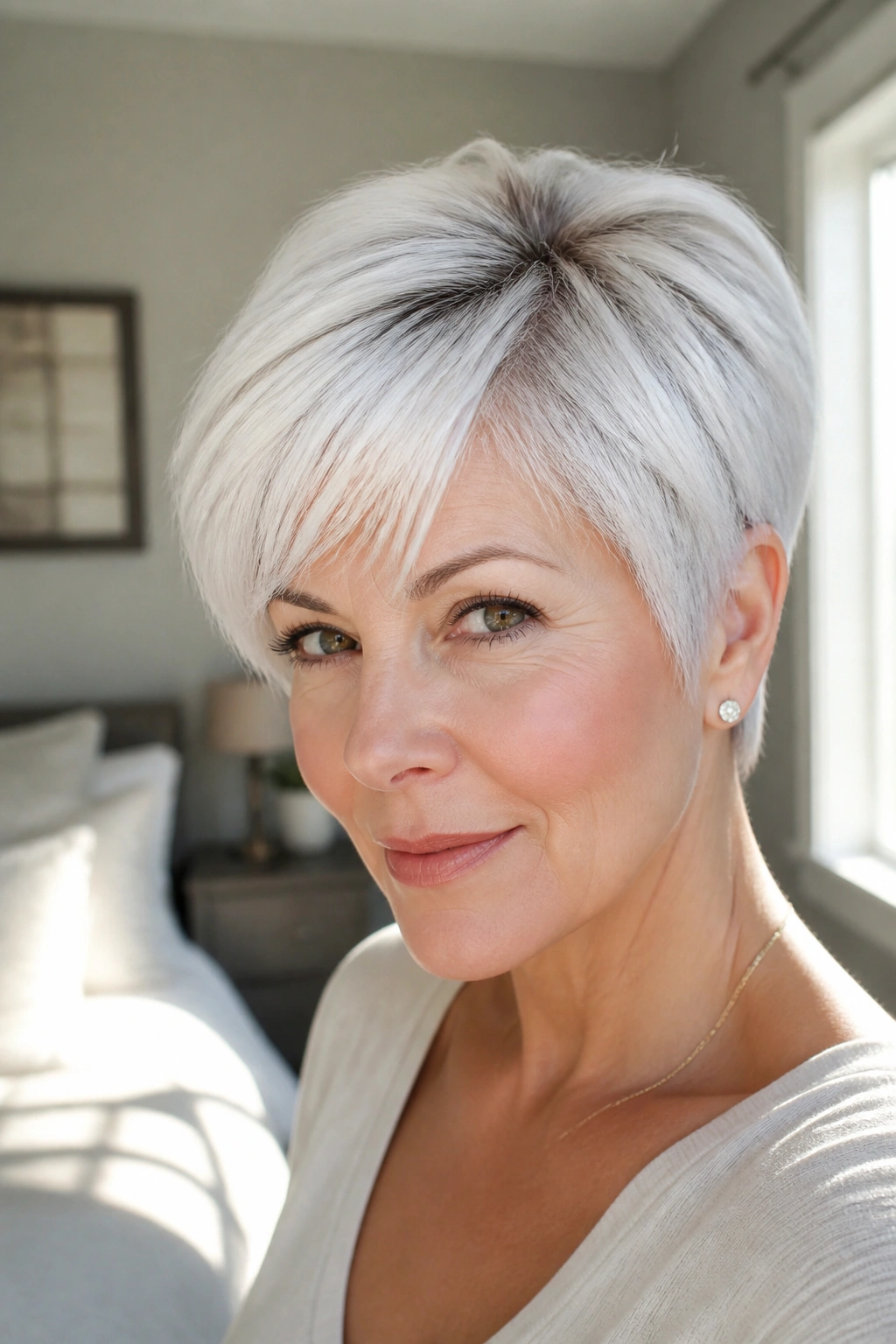
A pixie can be a little dangerous on a round face if it’s too even, too fluffy, or too sweet. Give it a soft root shadow, though, and the whole thing changes. The darker base underneath the snow-white top adds depth at the crown, which makes the face read a bit longer.
What Makes It Work
The top needs lift, not bulk. Ask for about 1.5 to 2 inches of length on top with the sides kept close, then let the fringe sweep slightly to one side instead of sitting straight across.
- Root shadow: keep the first half-inch to one inch at the root a shade deeper.
- Top texture: ask for piecey, separated texture, not a round puff.
- Fringe length: long enough to flick across the forehead, short enough to stay airy.
Best for: someone who wants white hair but does not want a big maintenance cut. The root shadow gives you a little breathing room between appointments.
2. Icy White Bob with a Deep Side Part
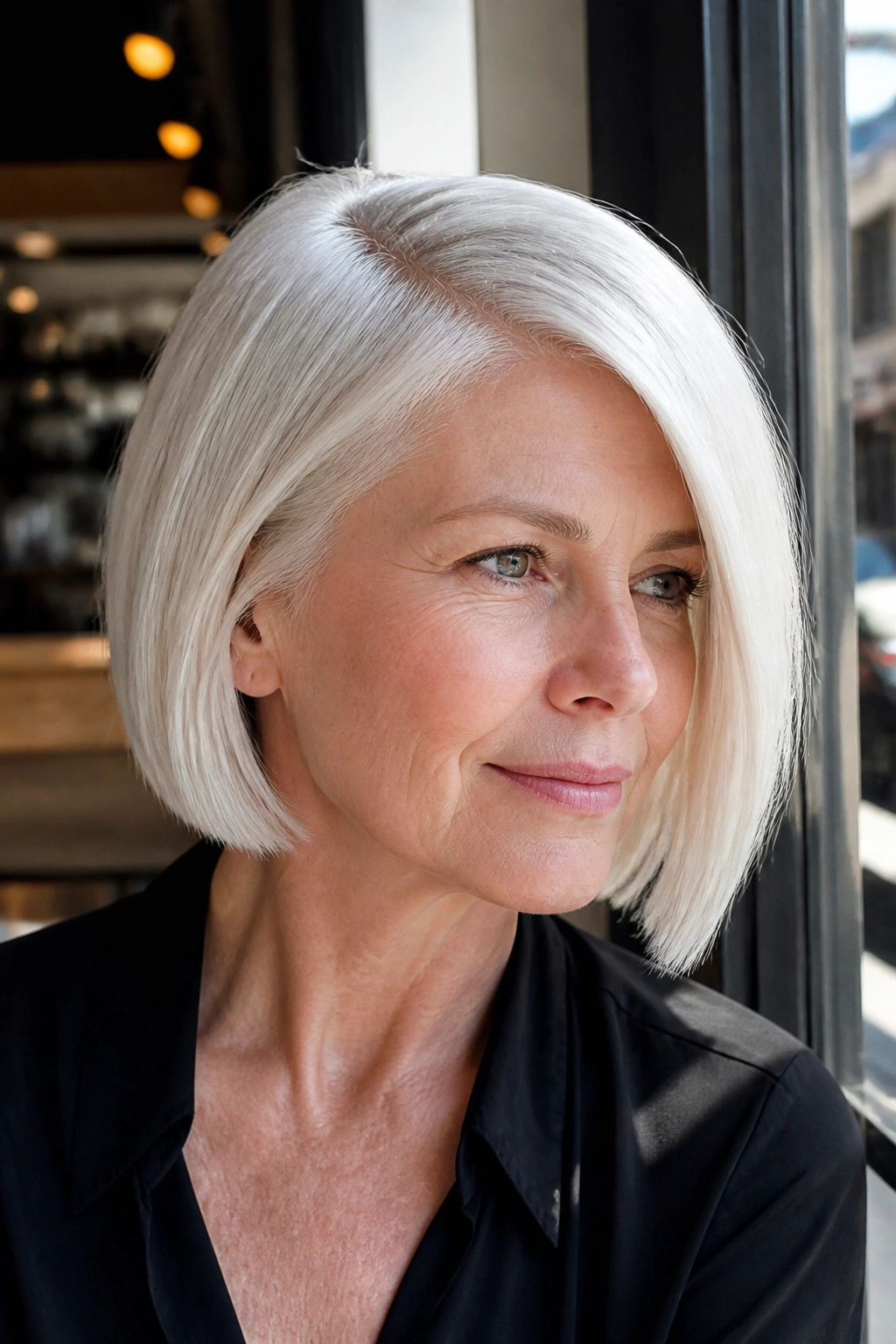
A deep side part does more for a round face than a stack of extra layers ever will. It cuts across the face at an angle, which changes the shape right away, and icy white makes that line feel crisp instead of soft and sleepy.
Keep the bob just below the jaw, or it can sit right on the widest part of the face and make the roundness louder. That little drop in length matters more than people think. So does the part. A side part creates asymmetry, and asymmetry is your friend here.
I like this look when the ends are blunt enough to feel clean but not so blunt that they turn boxy. A slight bevel under the chin works well. Very flat, very round bobs are the ones that get tricky.
3. Pearly White Lob with Curtain Bangs
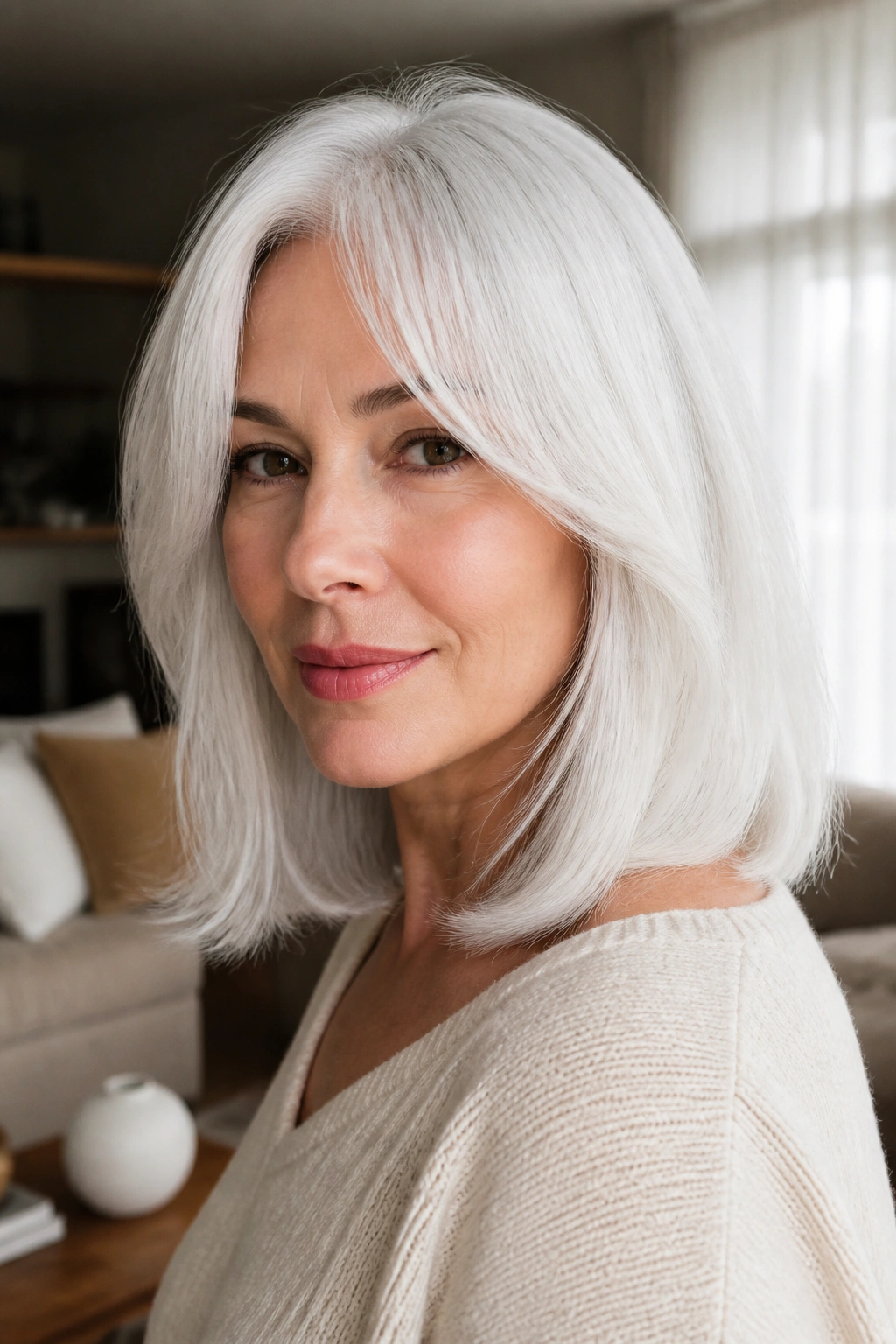
Why does a pearly white lob feel so easy on a round face? Because it splits the forehead, skims the cheeks, and keeps the whole look soft without turning mushy. Curtain bangs are one of those rare choices that can bring shape without shouting about it.
A lob that lands between the collarbone and the top of the chest gives the face room to stretch downward. Then the white-pearl tone softens the edges, so the hair still looks bright but not severe.
How to Ask for It
Ask for bangs that start around the brow and blend into cheekbone length. That’s the sweet spot.
- Part: center or slightly off-center
- Bang shape: curtain, not heavy
- Length: collarbone grazing or a touch longer
- Tone: pearl white with a soft beige or silver veil
The result feels polished, but not stiff. That matters.
4. Silver-White Shag with Feathered Ends
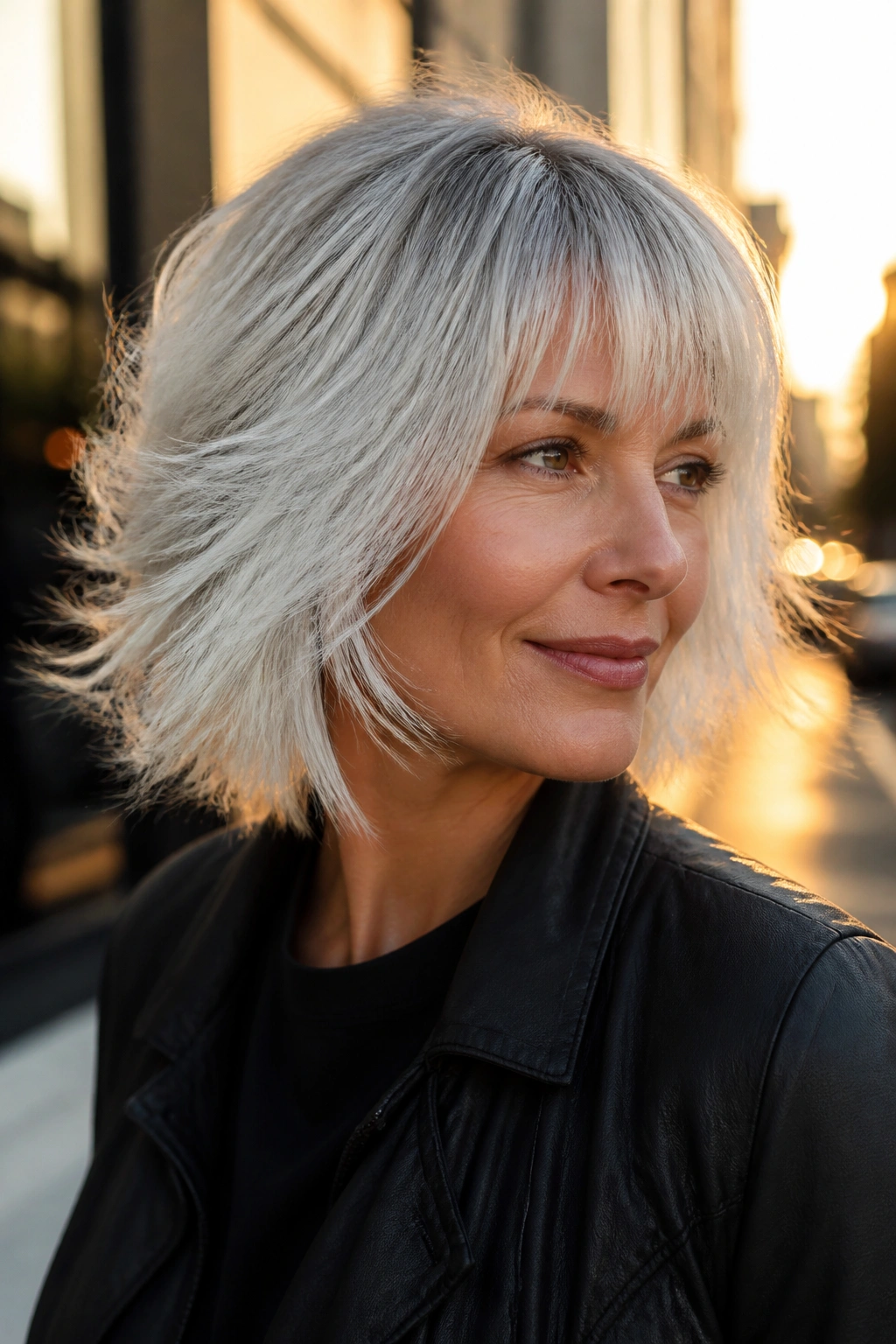
Picture a shag that moves when you turn your head. That’s the appeal here. The feathered ends stop the white from turning into one wide, heavy block, and the layers keep the sides from ballooning out over the cheeks.
The Shape That Flatters
The real magic is in the taper. A round face needs visible up-and-down movement, and a shag gives you that without asking for perfect styling every morning. The silver-white tone reads a little softer than a hard icy white, which helps the cut feel less severe.
- Best length: chin to shoulder
- Layering: choppy, not stacked
- Finish: tousled with a light cream or paste
- Color note: keep a smoky root so the crown doesn’t look too wide
This is a good one if you like a little edge. It doesn’t feel precious, and that’s part of the charm.
5. Soft White Balayage on a Mushroom-Brown Base
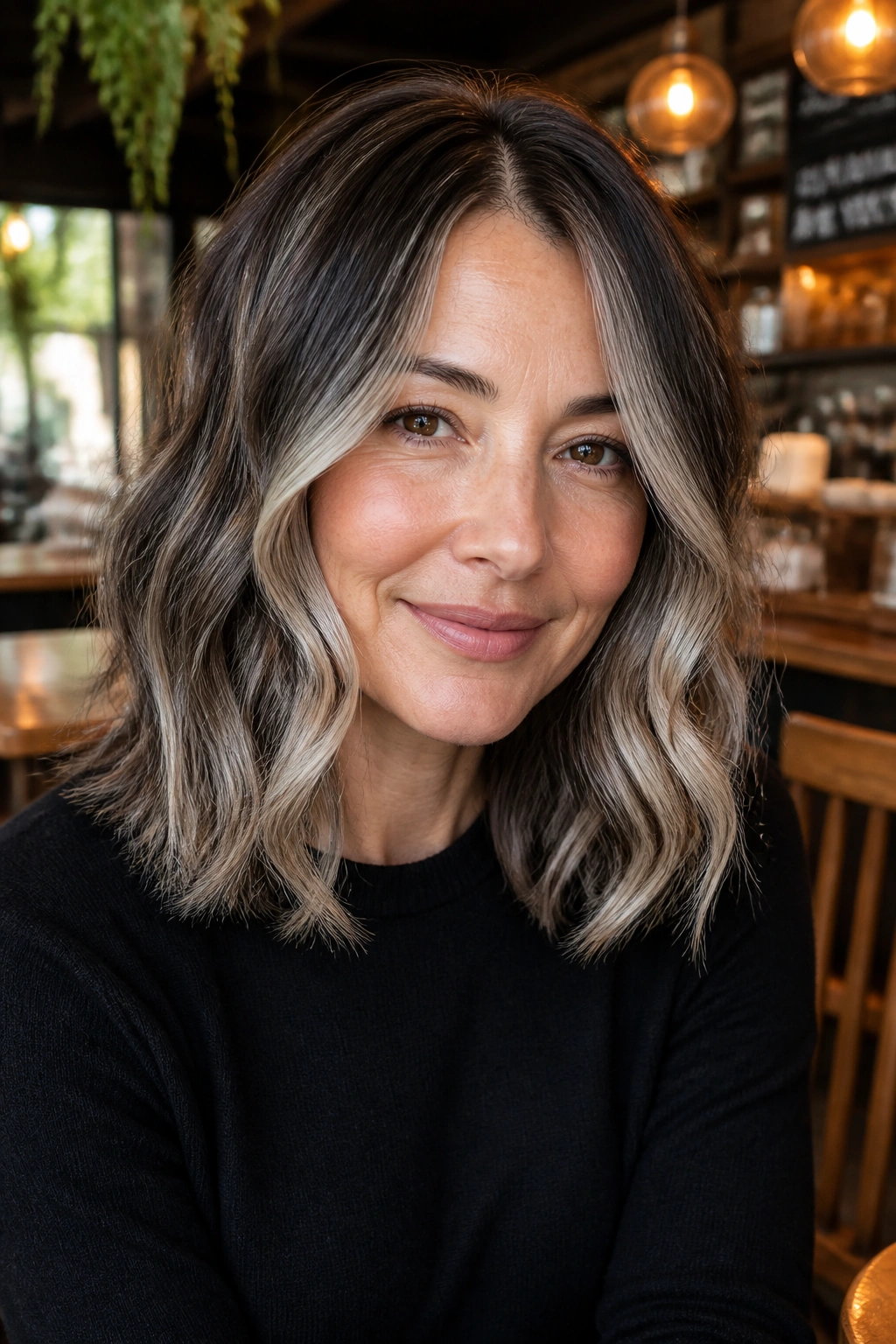
Unlike an all-over white, a soft white balayage keeps the depth you need near the roots. That darker base narrows the top of the face visually, while the white pieces brighten the lengths and ends where they can do the most flattering work.
Why It Feels Different
This look is gentler than full white and easier to live with. The mushroom-brown base gives you a cool, muted backdrop, and the white ribbons sit on top like light hitting brushed metal. On a round face, that contrast helps create vertical movement instead of a bright ring around the widest part.
It’s also a smart choice if you’re nervous about going fully white. You still get the gray-white fantasy effect, but the grow-out is less brutal, and the color has more shape.
Best for: medium to long hair, especially if you wear soft waves or a loose bend through the ends.
6. Pure Arctic White with Sleek Length
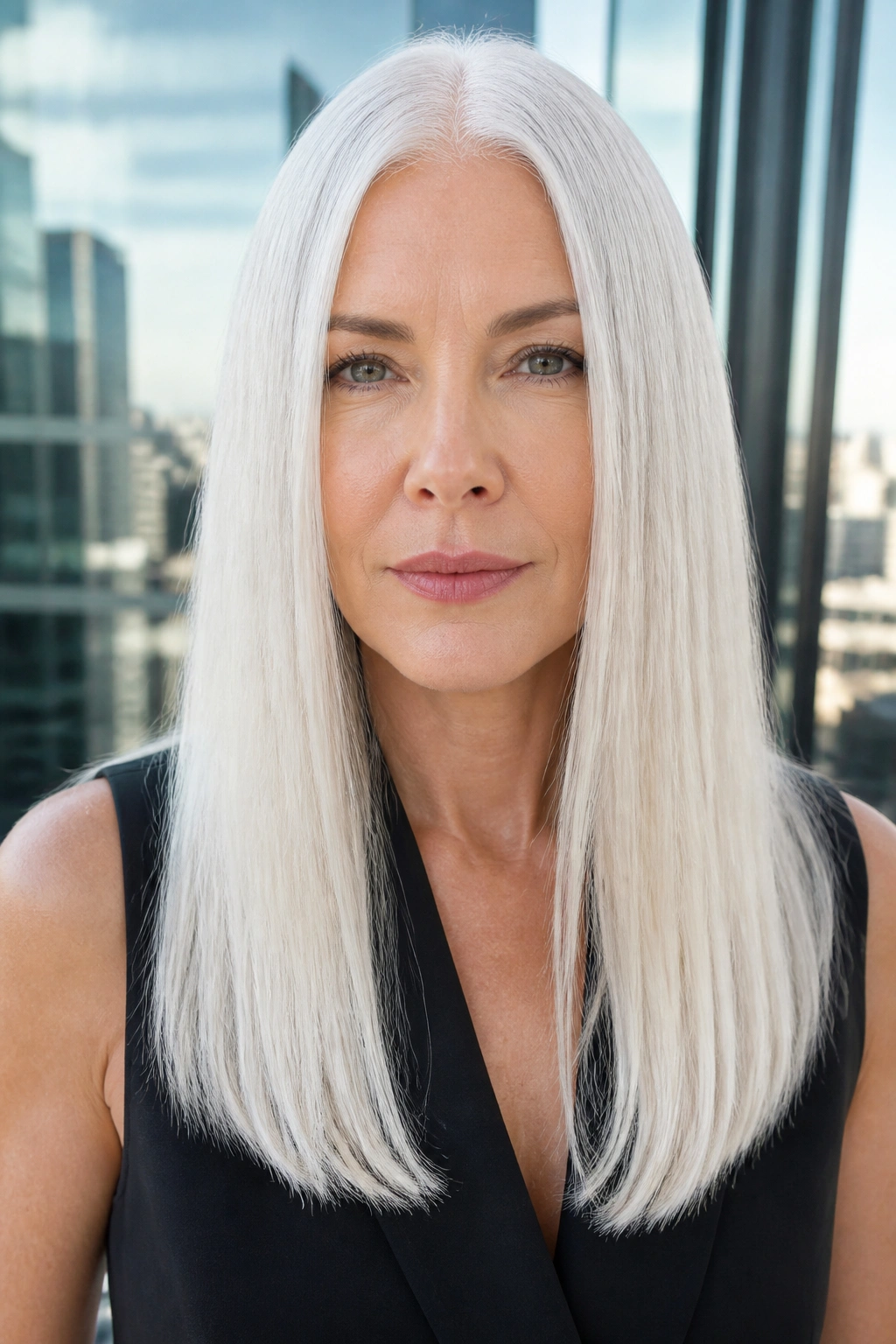
Pure arctic white is a bold color, and on long hair it can feel almost architectural. The longer the length, the more the eye travels downward, which is exactly what a round face needs when the color itself is this bright.
No shortcuts here. The hair has to be lifted evenly, toned cleanly, and kept glossy, or the white starts to look flat and tired. On long hair, that lack of shine shows fast.
A center part can work if the hair is very long and straight, but a slightly off-center part is often kinder. It breaks up the symmetry and keeps the face from reading too full through the middle. A blunt hemline at the chest is cleaner than wispy ends that fray out at the sides.
The effect is sleek, icy, and a little dramatic. If you like a strong look, this one delivers.
7. White Money Piece Around the Cheeks
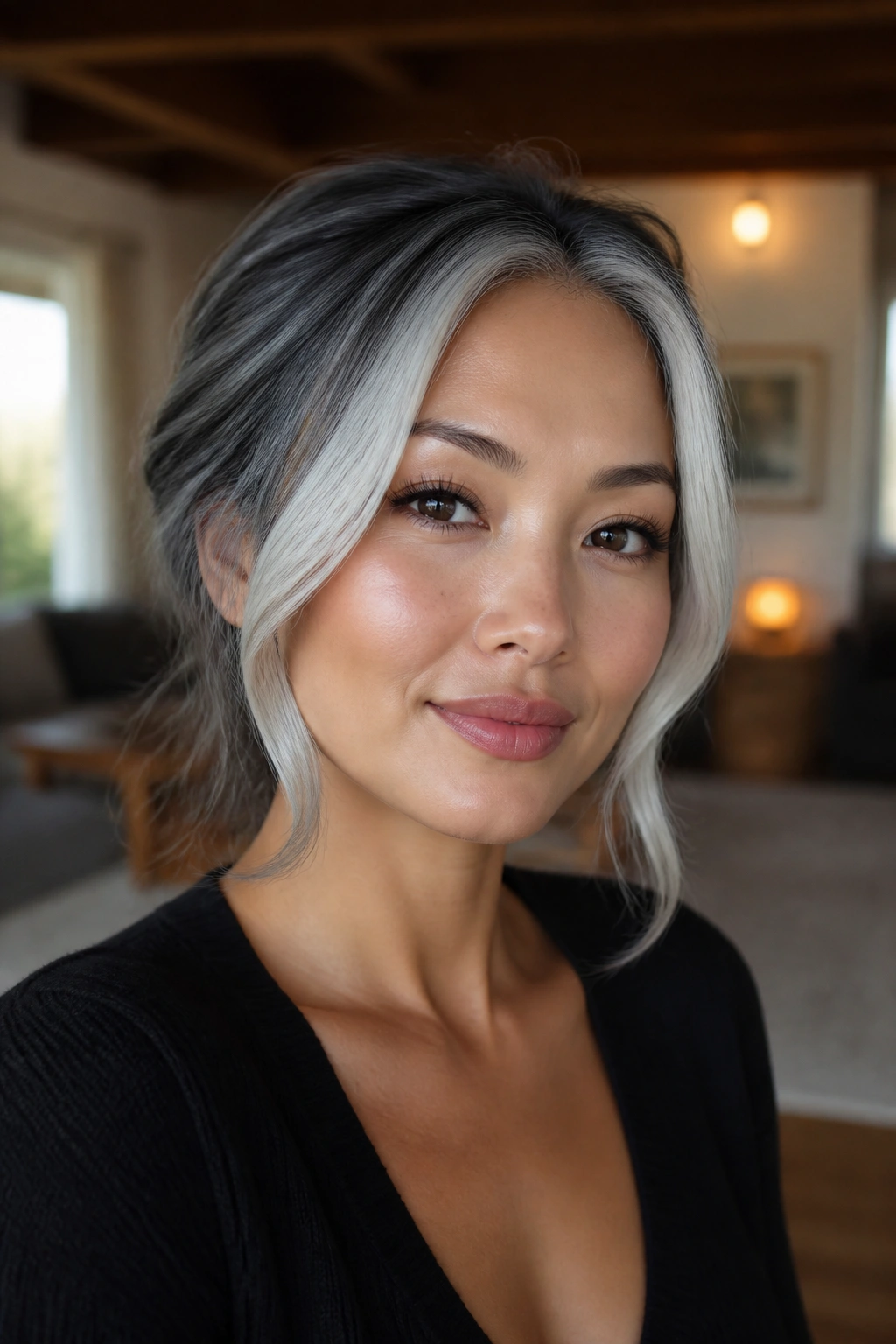
Can a white money piece slim a round face? Yes, if it’s placed well. The mistake is making the brightest streaks too wide at the temples, which just pulls attention to the face’s widest point. Keep the brightness closer to the cheekbone and let it drop toward the jaw.
What to Ask Your Colorist For
Ask for face-framing sections that are one to two shades brighter than the rest of the hair, then taper them so they don’t stop abruptly.
- Placement: start around the outer brow and curve below the cheekbone
- Width: narrow near the temples, a touch fuller near the jaw
- Contrast: soft white against a deeper base
- Styling: tuck the rest of the hair back or wear it in loose waves
This works especially well on medium-length cuts. It gives the face a frame without boxing it in.
8. Frosted White Curls with a Gloss Finish
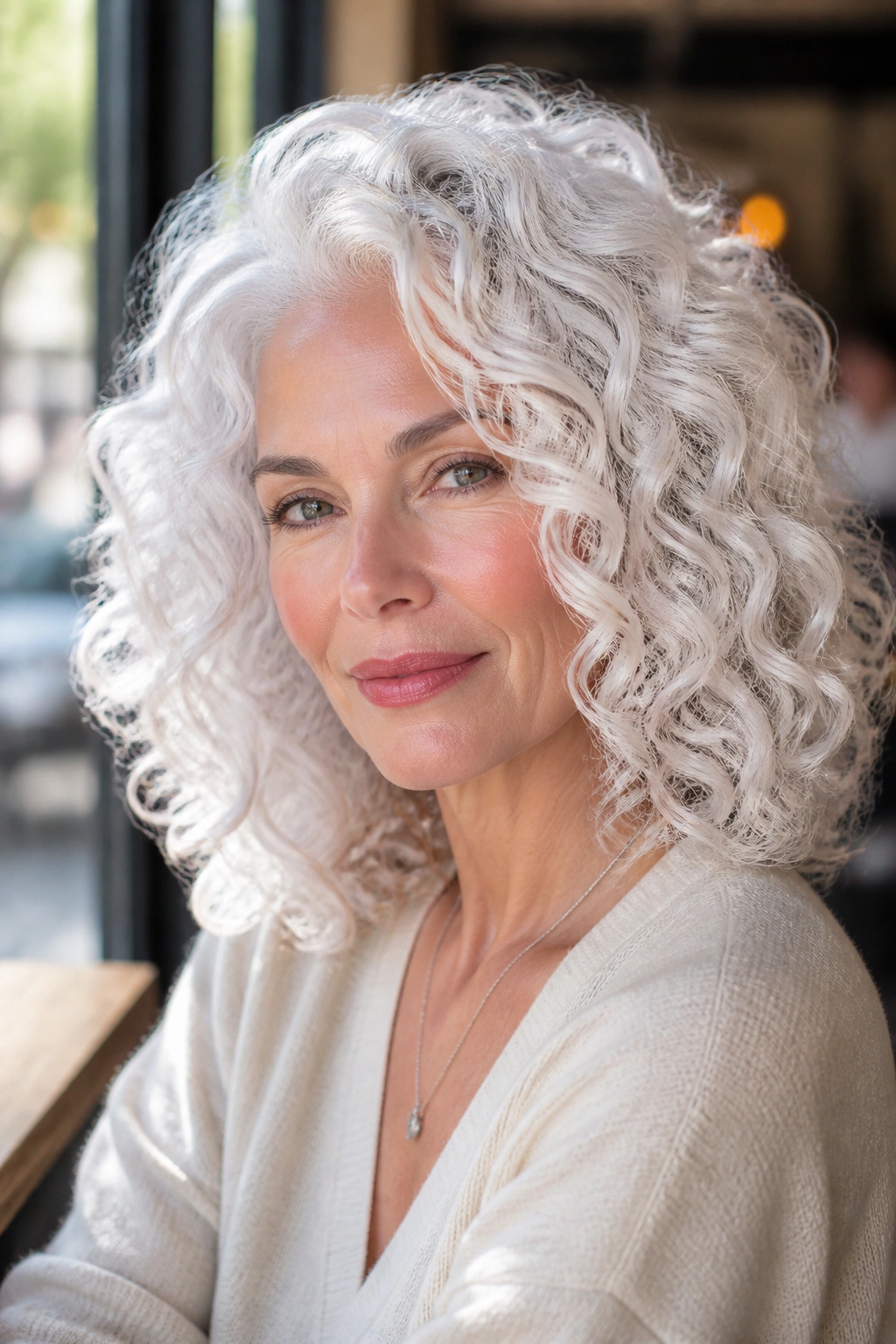
White curls can look cloudlike in the best way when you stop fighting the shape. The goal is definition, not puff. A gloss finish keeps the white bright and smooth, while curl-friendly layers stop the sides from fanning out too wide.
The curl pattern matters. Loose spirals or S-waves keep the style vertical, which flatters a round face far more than a rounded halo of volume at the cheeks. If the curls sit high, the head can start to look wider. If they fall in soft ribbons, they pull the eye down.
A lightweight cream, a diffuser on low heat, and a shine gloss every so often can keep the color looking clean. White hair shows dryness fast. Fast.
9. Smoky White Melt with Darker Roots
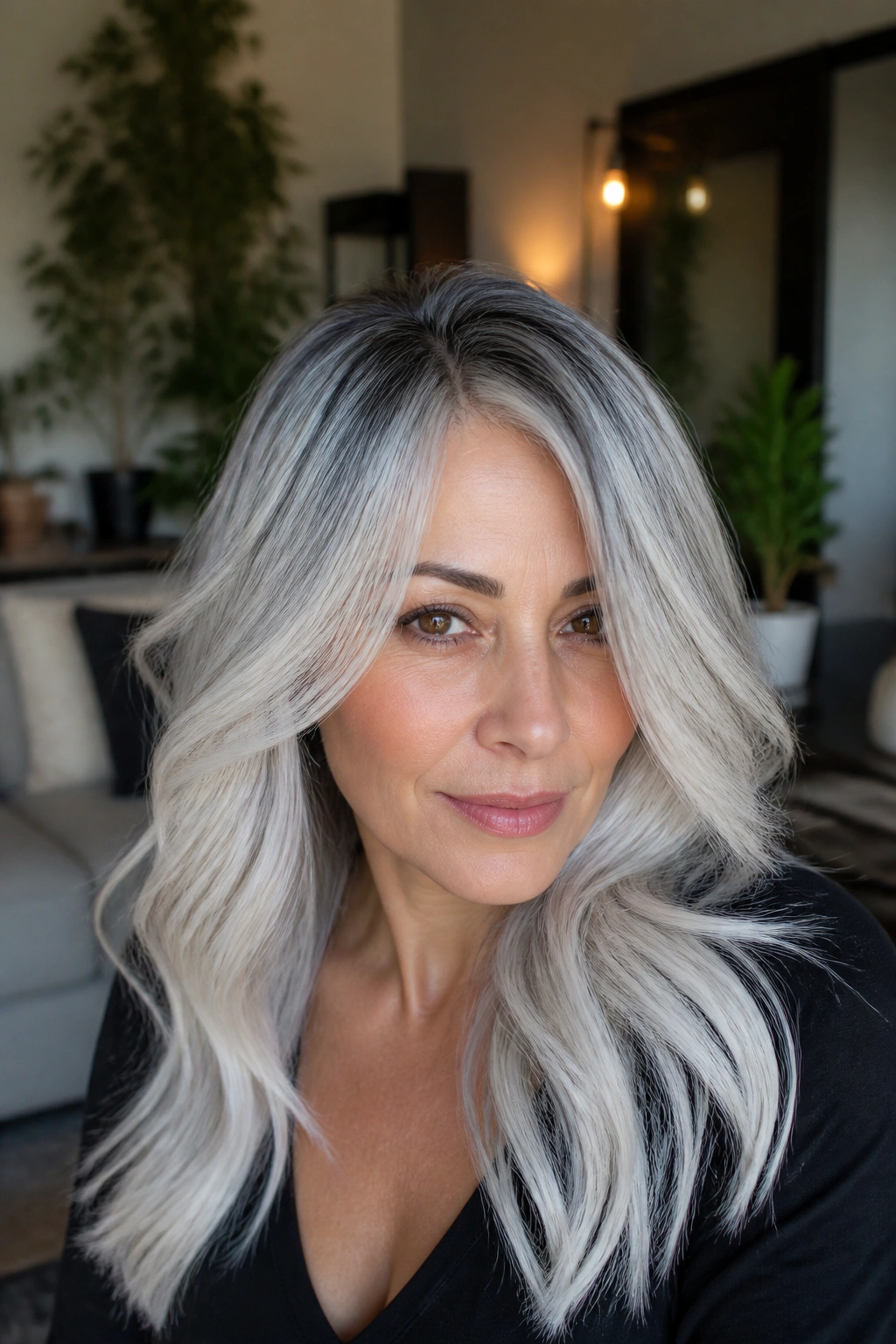
A smoky white melt is one of my favorite options for anyone who wants white hair without the hard edge of pure snow. The darker root zone gives the face more structure, and the fade into white makes the overall shape look longer.
It’s also forgiving. A little root grow-out only adds to the look, which is rare in white hair and worth enjoying. The transition from gray, to silver, to white feels softer than a single flat tone, and that softness can be a real gift on a round face.
This is the version to choose if your hair tends to feel fragile after lightening. The depth at the root helps the color breathe, and you can keep the ends white without bleaching the whole head into oblivion.
10. Opal White Waves with Face-Framing Layers
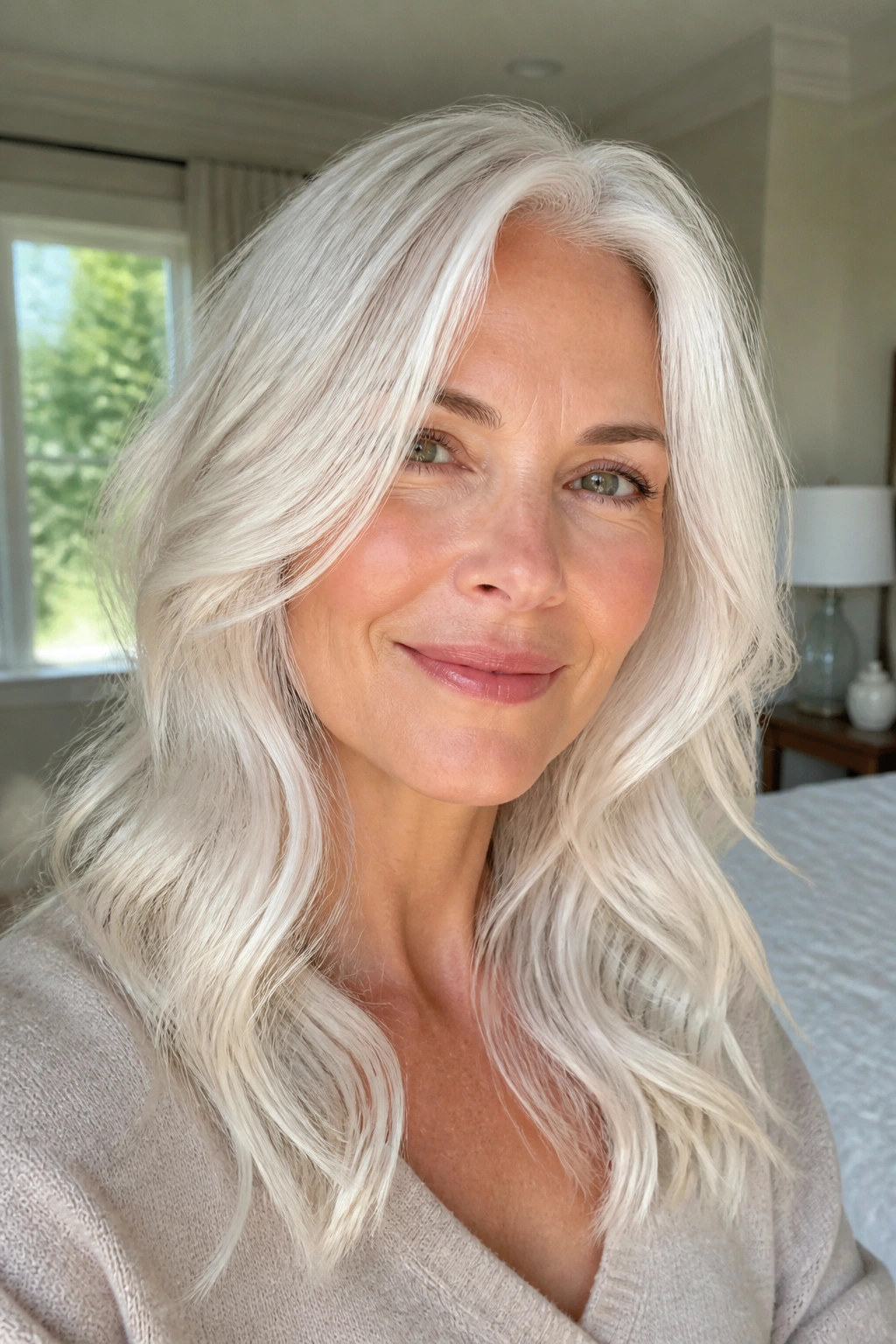
Opal white is not the coldest white, and that’s why it works. There’s a faint pearly shimmer to it, a little softness at the edges, and that makes the face-framing layers feel less harsh.
Why It Flatters
The waves should be loose, not tight. Tight waves spread width sideways, and a round face already has plenty of that. Loose, brushed-out bends create vertical movement, especially when the shortest front pieces start around the cheekbone and sweep past the chin.
This look feels especially good in hair that has some natural body. The tone changes slightly in different light, which keeps the white from looking one-note. Under warm light it softens. In daylight it looks cooler and cleaner.
A little shine serum on the ends helps. Not much. Just enough to keep the hair from looking dusty.
11. White Blonde with a Rounded Bob
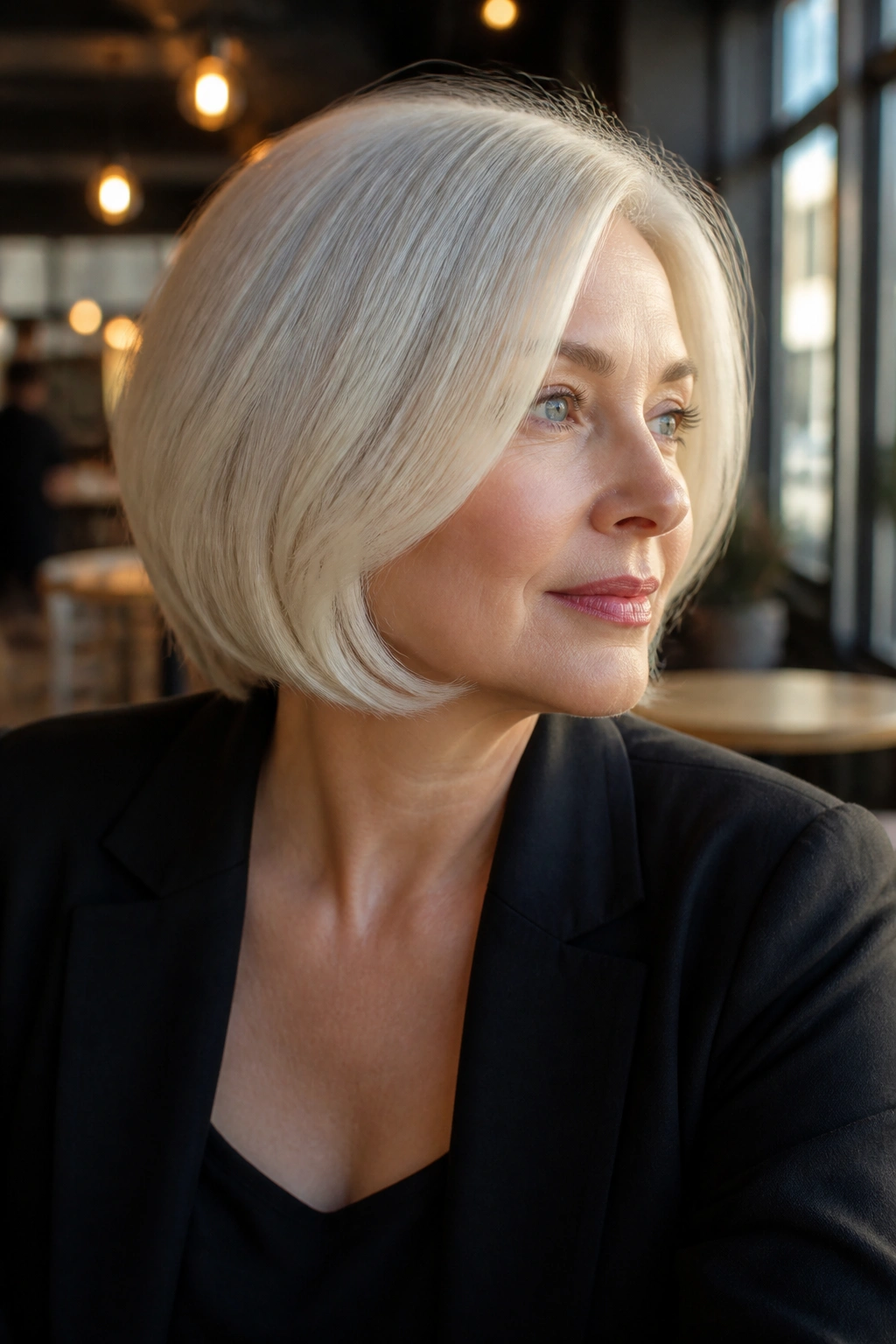
A rounded bob is only a bad idea when it ends exactly where the face is widest. Move it a little lower, and it becomes much easier to wear. White blonde makes the shape feel lighter, while the slight curve under the chin keeps the outline neat.
This is the cut for someone who likes clean edges but doesn’t want anything severe. The bob should graze just below the jaw or sit a bit longer in front. That tiny front length buys you a lot of face-slimming effect.
The color can be a soft white-blonde rather than a stark paper white. That choice keeps the look from feeling too hard against the skin, especially if you wear minimal makeup or like a more natural finish.
12. Pearl White with Wispy Fringe
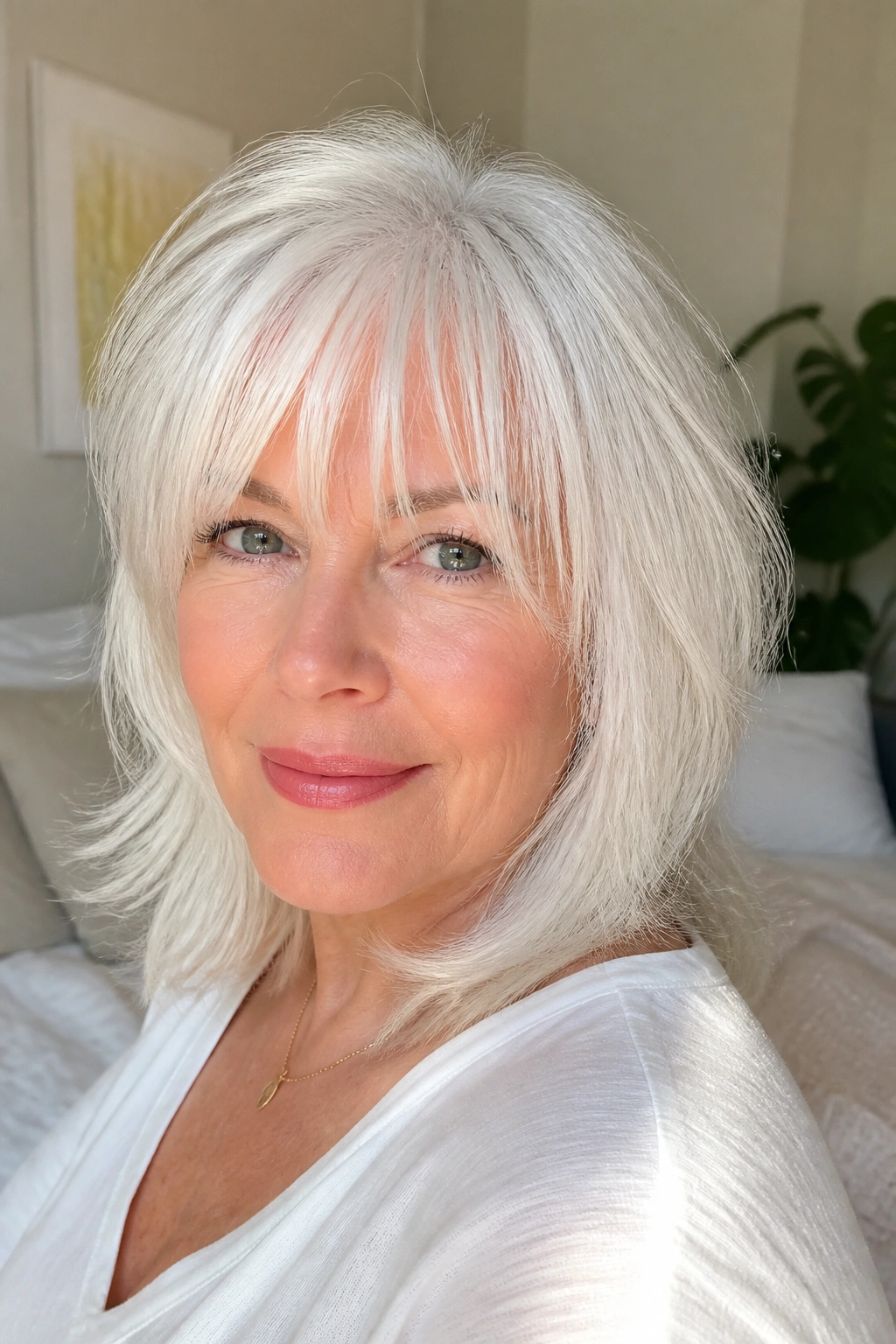
A thick bang can chop a round face in half. A wispy fringe does almost the opposite. It breaks up the forehead just enough to create shape, while the pearl-white tone keeps the whole style light.
The key is air. The fringe should have gaps, movement, and a little transparency at the ends. Heavy, blunt bangs tend to make the face look shorter. Wispy bangs let the eye travel upward without losing softness.
Pearl white is a nice fit here because it has a gentle shine rather than a hard mirror finish. The color and fringe work together, and neither one needs to do all the heavy lifting. That’s part of why this combo feels so wearable.
13. White Ombré from Dark Roots to Soft Ends
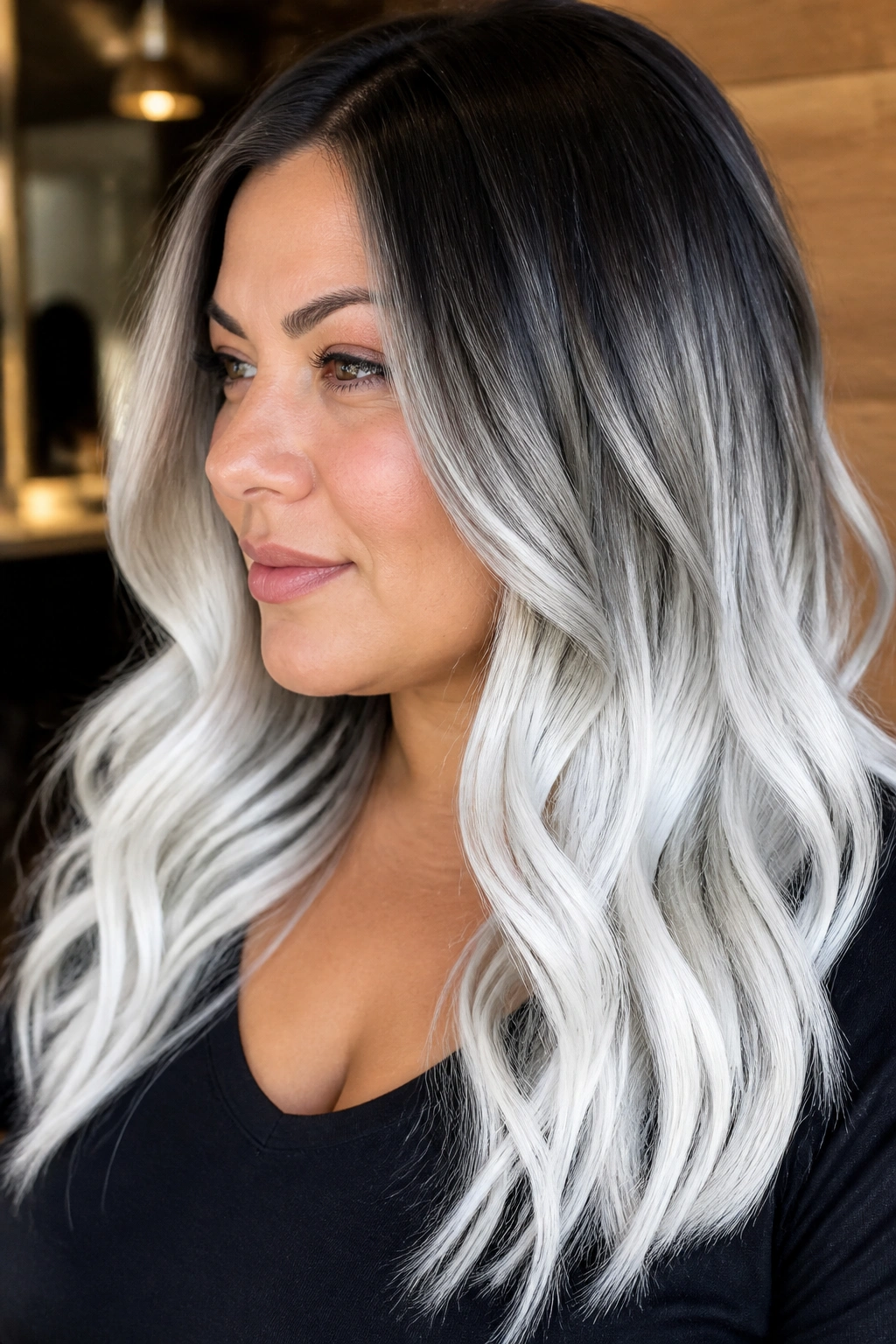
White ombré gives you the face-lengthening trick of a darker top and the bright payoff of white at the ends. That vertical fade is useful on a round face because it keeps the eye moving downward, where the shape looks slimmer.
It’s also a calmer way to wear white hair. You don’t have to commit to an all-over pale canvas, and the grow-out looks intentional instead of awkward. The base can stay brunette, ash brown, or dark blonde, depending on how much contrast you want.
I’d choose this for long hair or layered mid-length cuts. The ends do the visual work, and the root depth gives the whole style a little backbone.
14. Matte White Crop with Piecey Texture
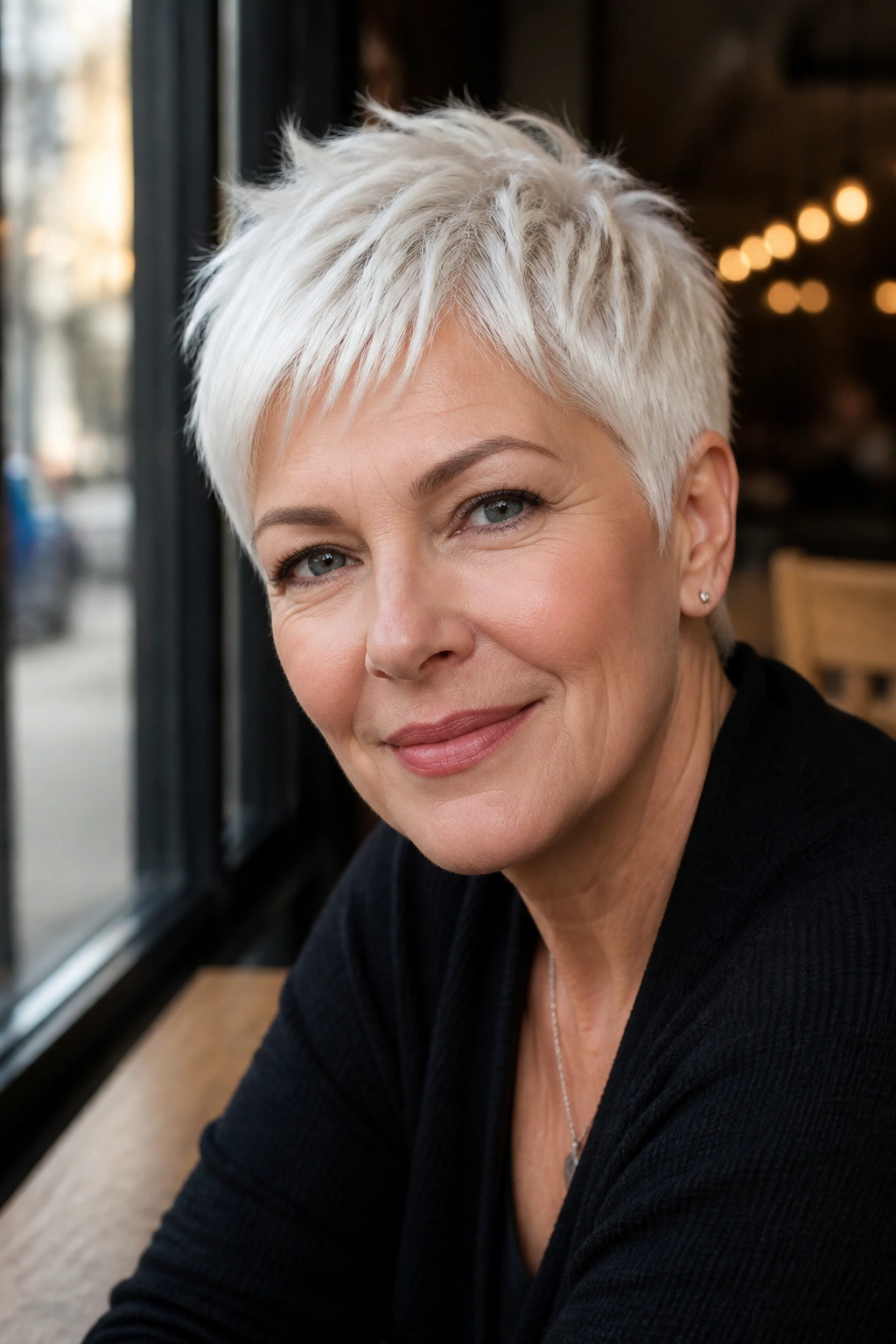
Gloss isn’t the only road. A matte white crop can look modern and sharp, especially when the texture is broken up in small pieces instead of blown smooth.
Why the Texture Matters
On a round face, piecey texture creates tiny vertical cuts in the shape. That keeps the hair from turning into one clean circle around the head. A little roughness is a good thing here.
- Best styling product: light paste or dry cream
- Direction: lift the top slightly forward and up
- Sides: keep them close so the shape stays narrow
- Tone: matte white, not ultra-icy white
This kind of crop works well if you like low drama in the morning. Finger-style it, shake it loose, and go. The cut does most of the talking.
15. Cloud White with a Tucked-Behind-Ear Lob
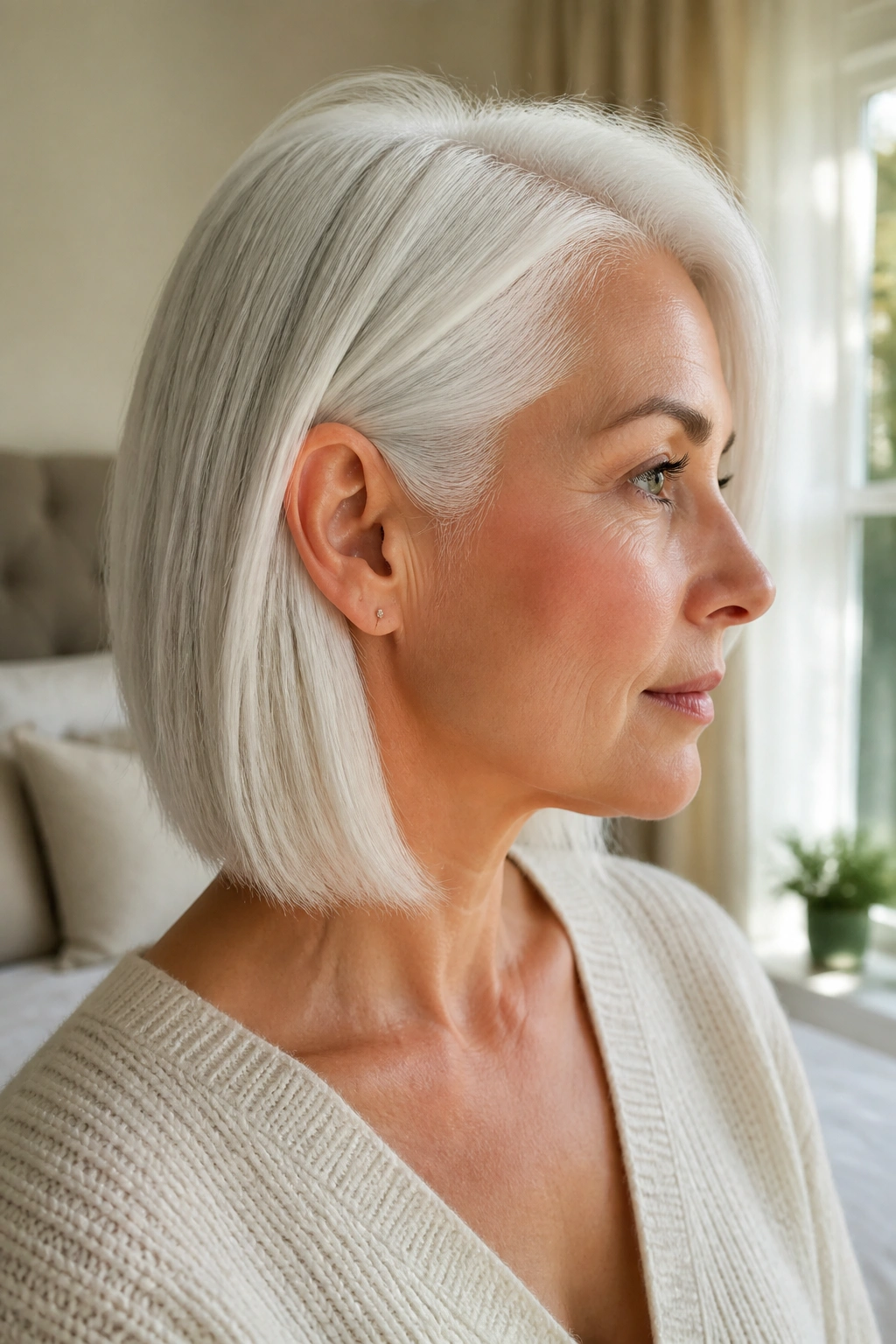
Can a tucked-behind-ear lob change a round face? It can, and fast. Showing one ear opens a vertical line on one side of the face, which breaks up the width and gives the eye a place to rest.
Cloud white is softer than icy white, so the style feels gentle instead of severe. The lob should sit below the chin, and the tucked side should stay sleek while the other side has a bit more movement. That imbalance is the point.
This is a good everyday option. You can wear it polished for work, then loosen it at the ends for a more relaxed look. It doesn’t need much to feel finished.
16. Champagne-White Blend for a Softer Finish
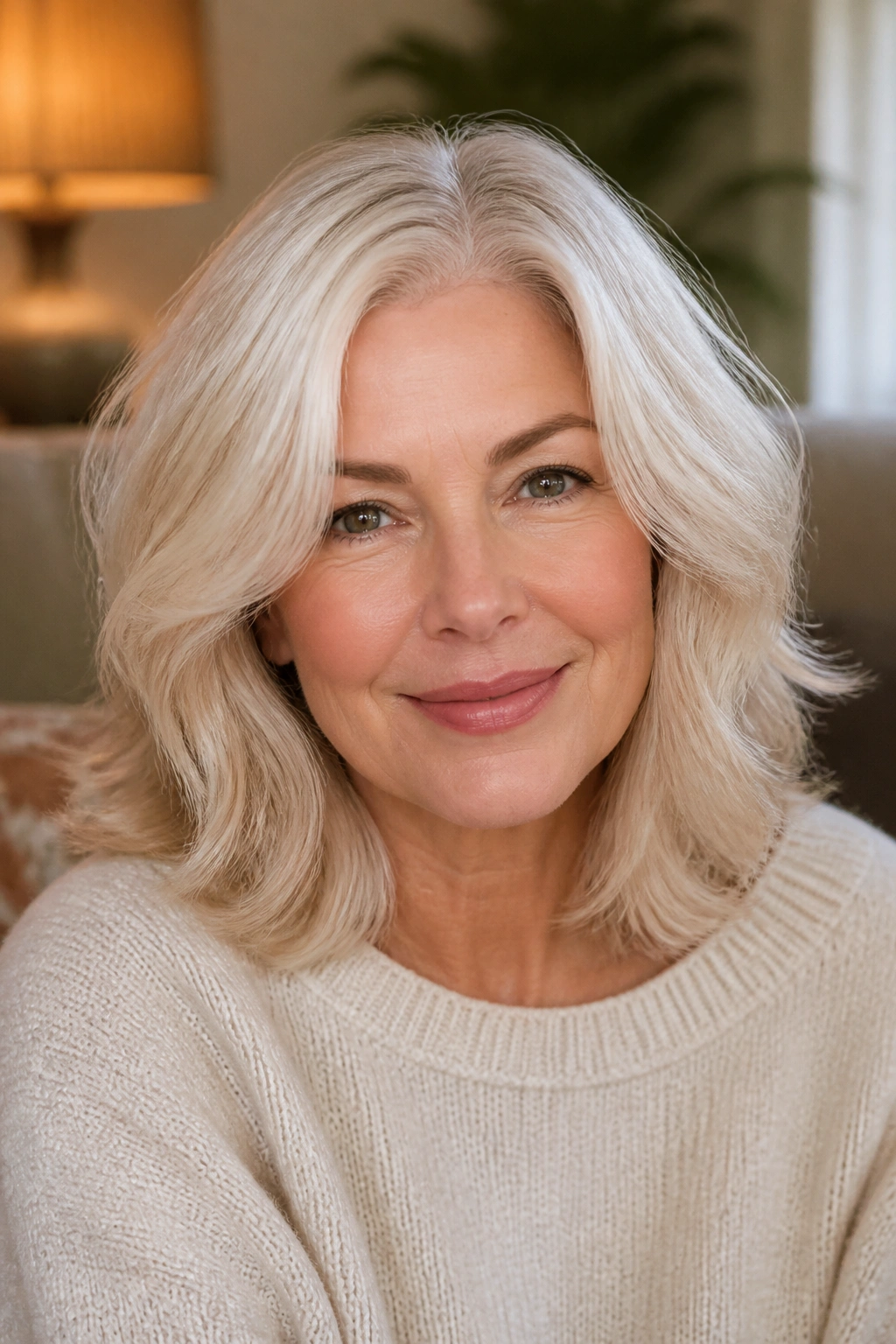
If stark white makes your skin look flat, champagne-white can be the better answer. It keeps the pale effect, but adds a soft warm note that prevents the face from disappearing into the hair.
That matters on round faces because heavy contrast can sometimes make the cheeks stand out more than you want. A champagne cast smooths the transition around the face and makes the whole look feel more balanced. The tone is still light, still bright, just less cold.
It’s also a flattering choice if you wear gold jewelry or warm makeup. The hair stops fighting the rest of your look, which sounds small, but it makes a difference. A lot of difference.
17. White Halo Highlights on a Rounded Cut
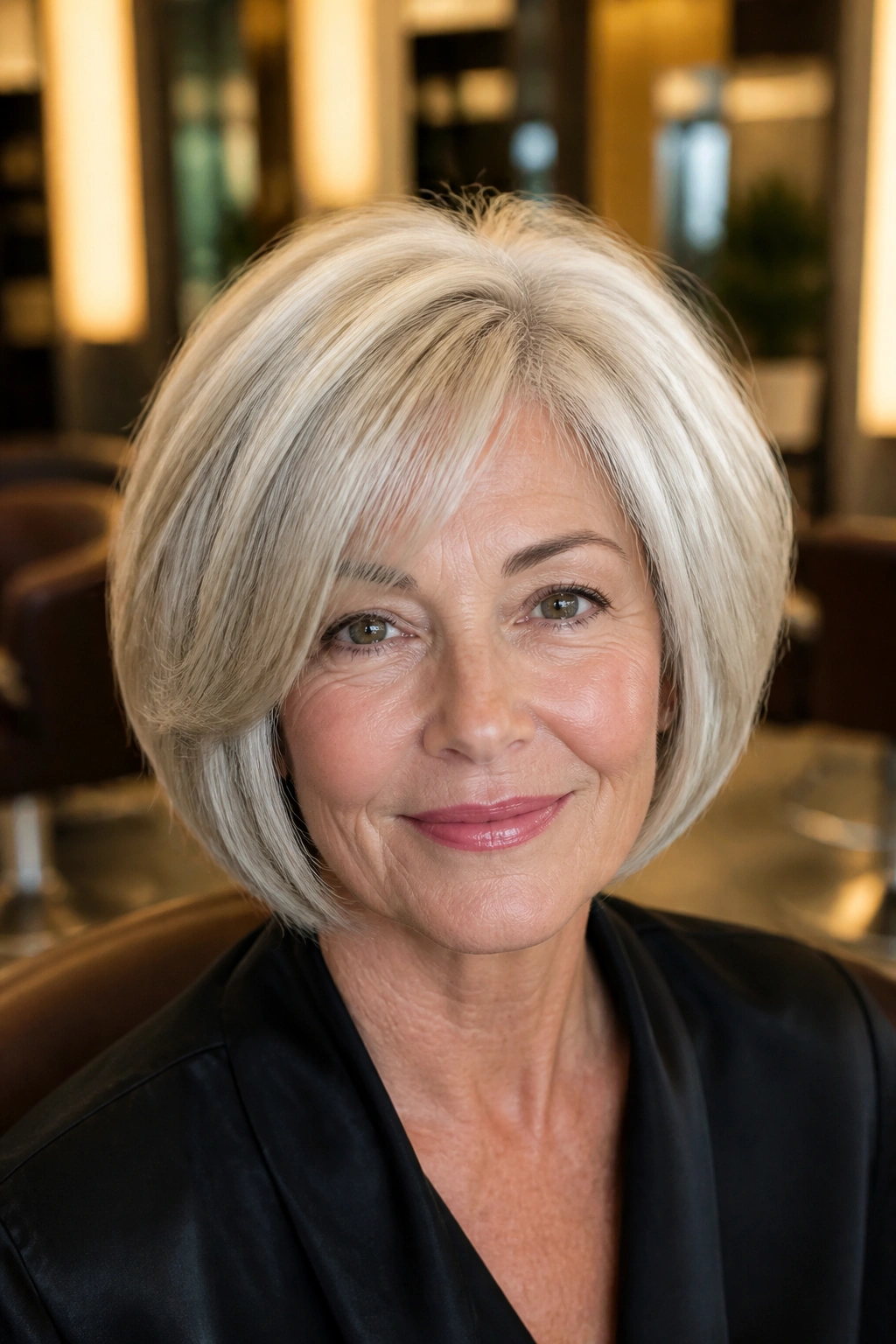
Instead of bleaching the whole head, halo highlights place the brightest pieces around the outer veil and upper sides. That keeps the inner layers deeper, which gives a round face more shape and a little built-in contour.
Where to Place the Brightest Pieces
This is one of those styles that depends on placement more than the exact tone. The white should sit where light would naturally hit it: above the cheekbone, along the crown, and through the top layers.
- Avoid: bright streaks directly across the widest part of the cheeks
- Focus on: crown lift and outer layers
- Best base: medium brown, dark blonde, or cool light brown
- Finish: loose waves or a soft bend
The look is softer than full white, but still feels striking. And it grows out in a friendlier way, which is never a bad thing.
18. Frost-Glass White with Airy Layers
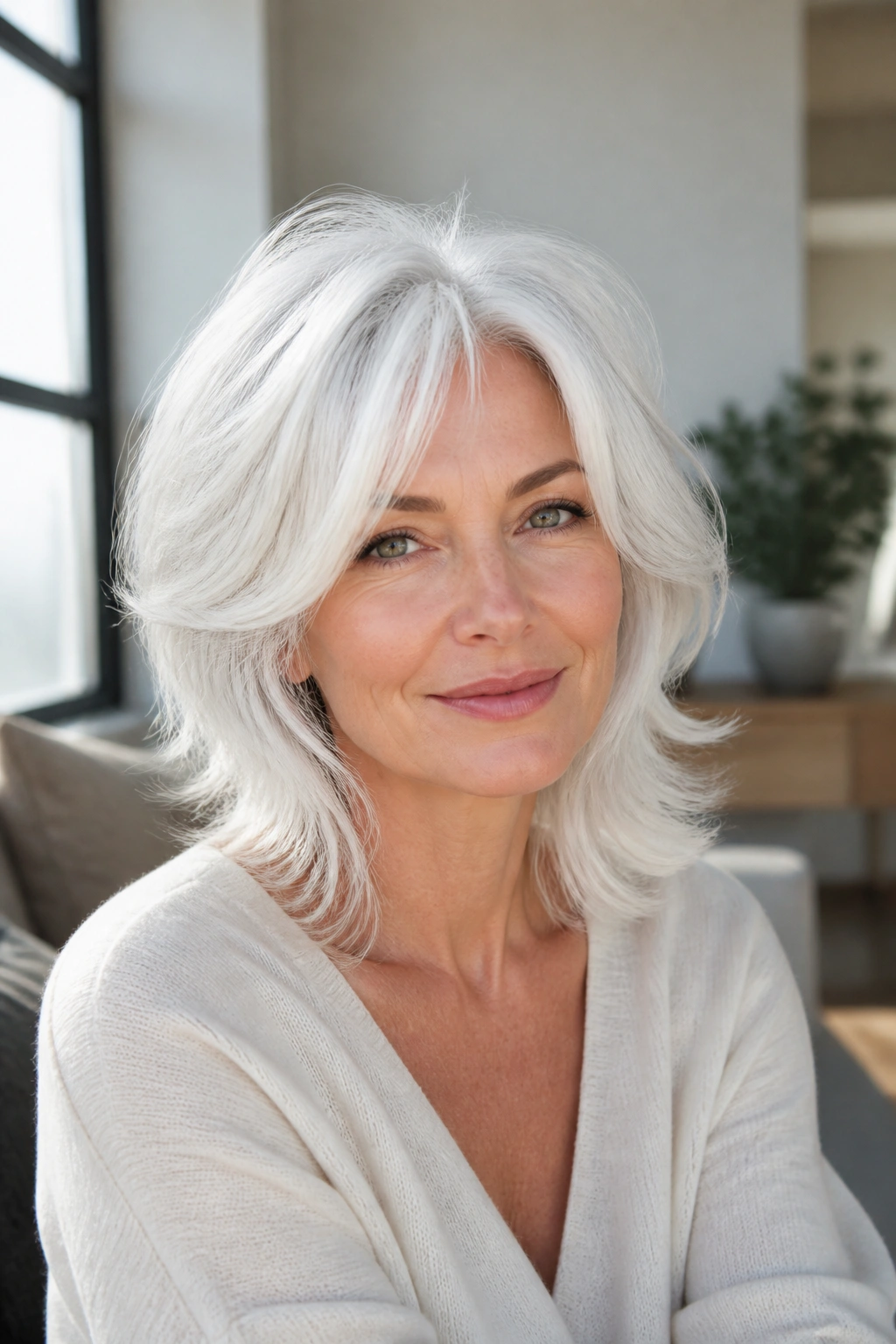
Frost-glass white has a crisp, almost cold finish. It looks sharp when the cut is airy, because the layers stop the style from going flat and wide. On a round face, that air between the layers matters more than people realize.
The color itself is clean and bright, so the haircut has to do some of the shaping. Long, airy layers starting below the chin keep the face from feeling boxed in. Short layers at cheek level are the ones I’d be careful with. They can widen the face if they’re too dense.
This is a style that likes shine, but not oiliness. Use a light gloss spray, keep the ends trimmed, and let the layers fall in separate panels. That separation keeps the white looking expensive instead of chalky.
19. Satin White Blunt Bob with Micro-Texture
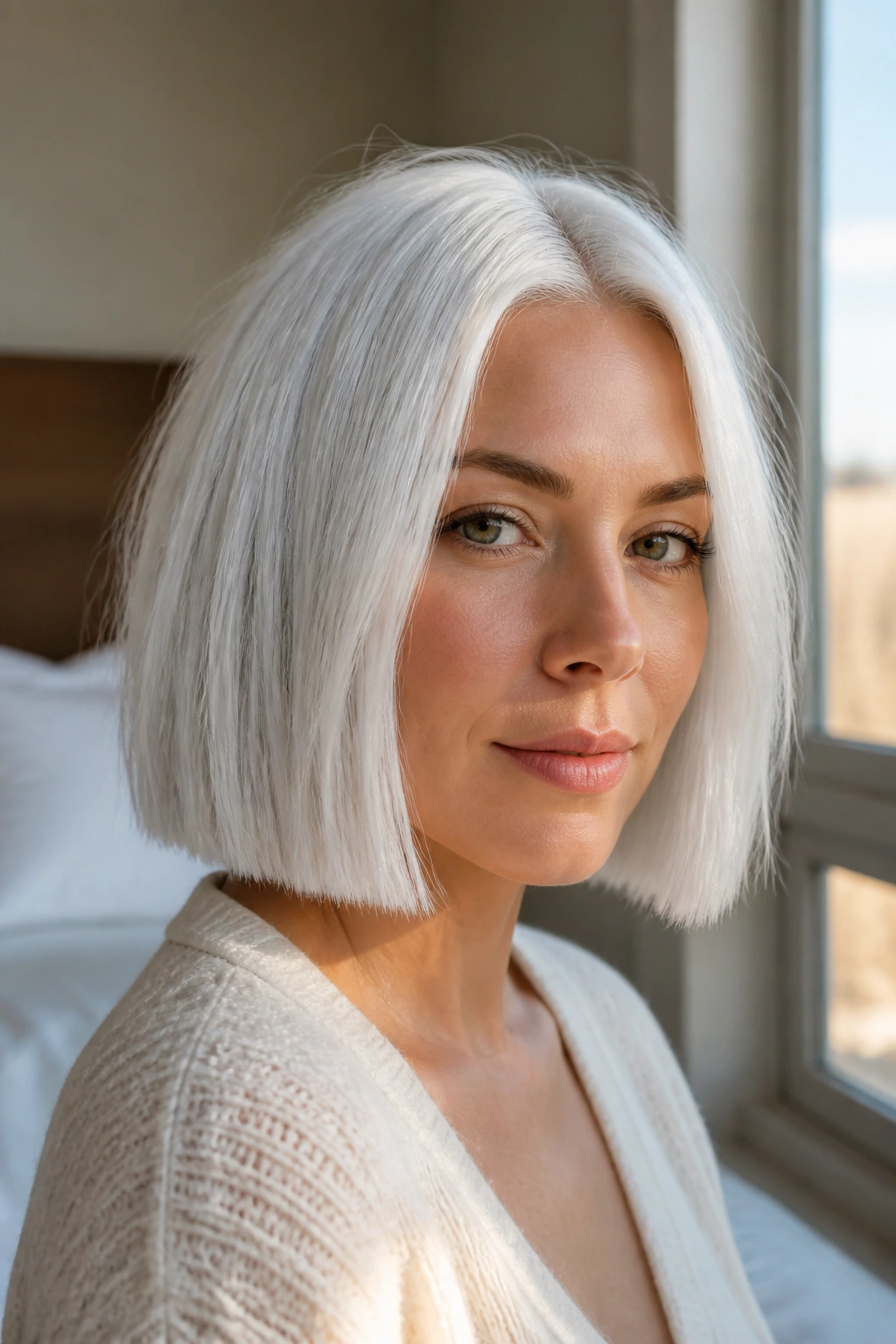
A blunt bob can look too square or too round on a fuller face if it’s cut with no movement at all. Add micro-texture, though, and the shape softens without losing its clean line.
Satin white is a nice middle ground between icy and creamy. It has enough brightness to feel deliberate, but not so much shine that it turns hard. On a bob, that finish can look polished in a very quiet way.
The important bit is the hemline. Keep it a touch below the chin, or even slightly longer in front. A bob that ends right at the jawline can widen the face more than you want. Lowering it by even an inch changes the read.
20. Ice White Wolf Cut with a Soft Fringe
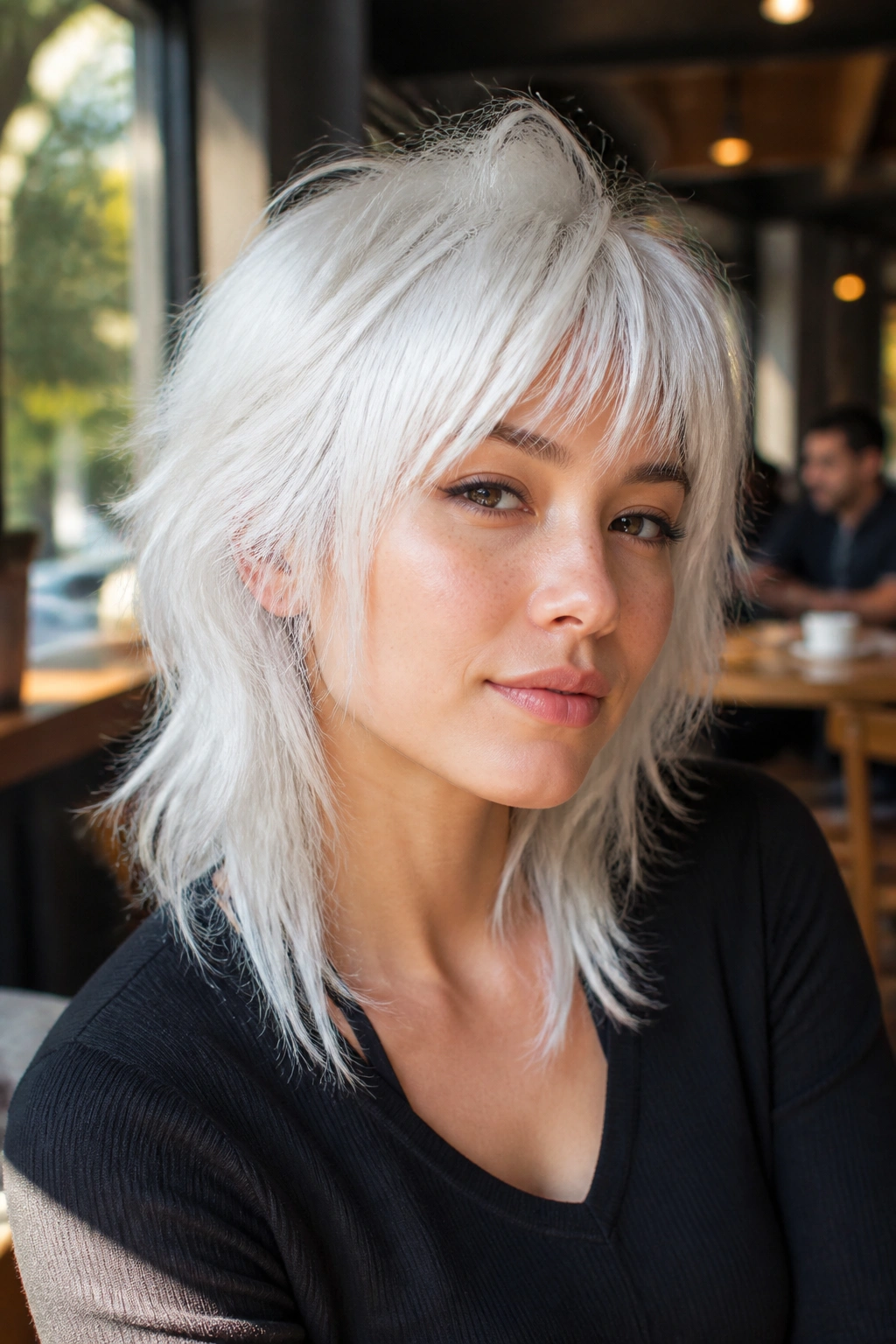
A wolf cut earns its keep on a round face because the crown stays tall and the sides stay broken up. That combination creates the kind of vertical movement a round face loves, even when the hair is short or medium length.
The soft fringe matters. A heavy fringe can crush the top of the face and make the whole look feel dense. A soft fringe leaves room for the forehead, which keeps the white from turning into one big bright block.
What to Watch For
This cut can get shaggy fast if the layers are overdone. Ask for controlled mess, not chaos.
- Crown: lifted, not puffed
- Sides: tapered and airy
- Fringe: wispy and movable
- Tone: ice white with a little shadow at the root
It’s a strong choice if you like hair with attitude.
21. White-Gray Melt with Dimensional Lows
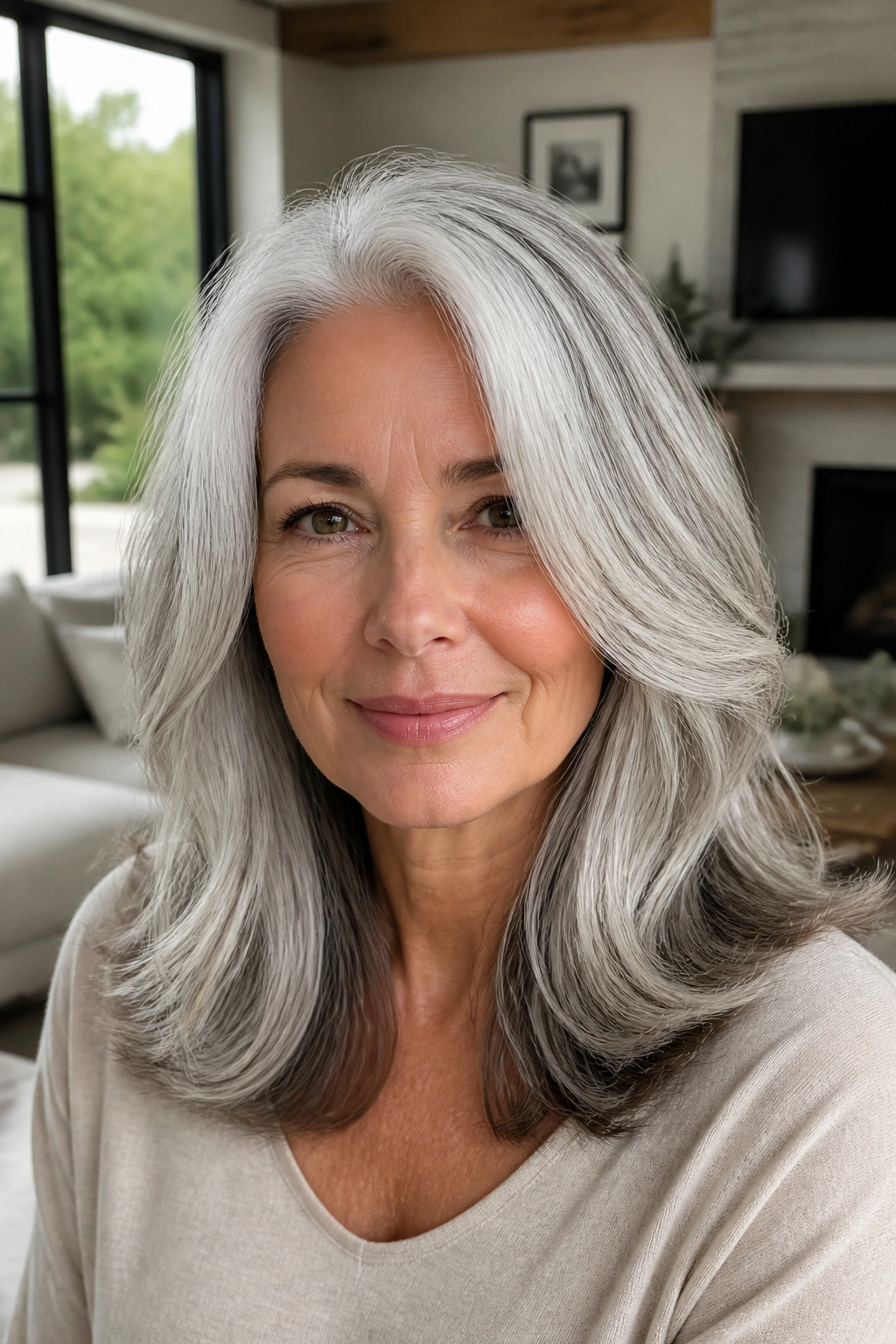
Why do dimensional lows help white hair on a round face? Because flat white can erase the shape of the head, while darker lowlights carve it back in. The gray melt adds softness, and the lowlights keep the eye from wandering only to the widest points.
This is a smart move if you want your white to grow out more gracefully. The melt from gray to white feels less harsh than a straight bleach-and-tone finish, and the added depth makes the color look more layered in daylight.
I like this best on medium-length hair with a bend through the ends. Straight can work too, but some texture helps the different tones show up. Without it, the color can read too solid.
22. Snow-Mist White with Long Curtain Layers
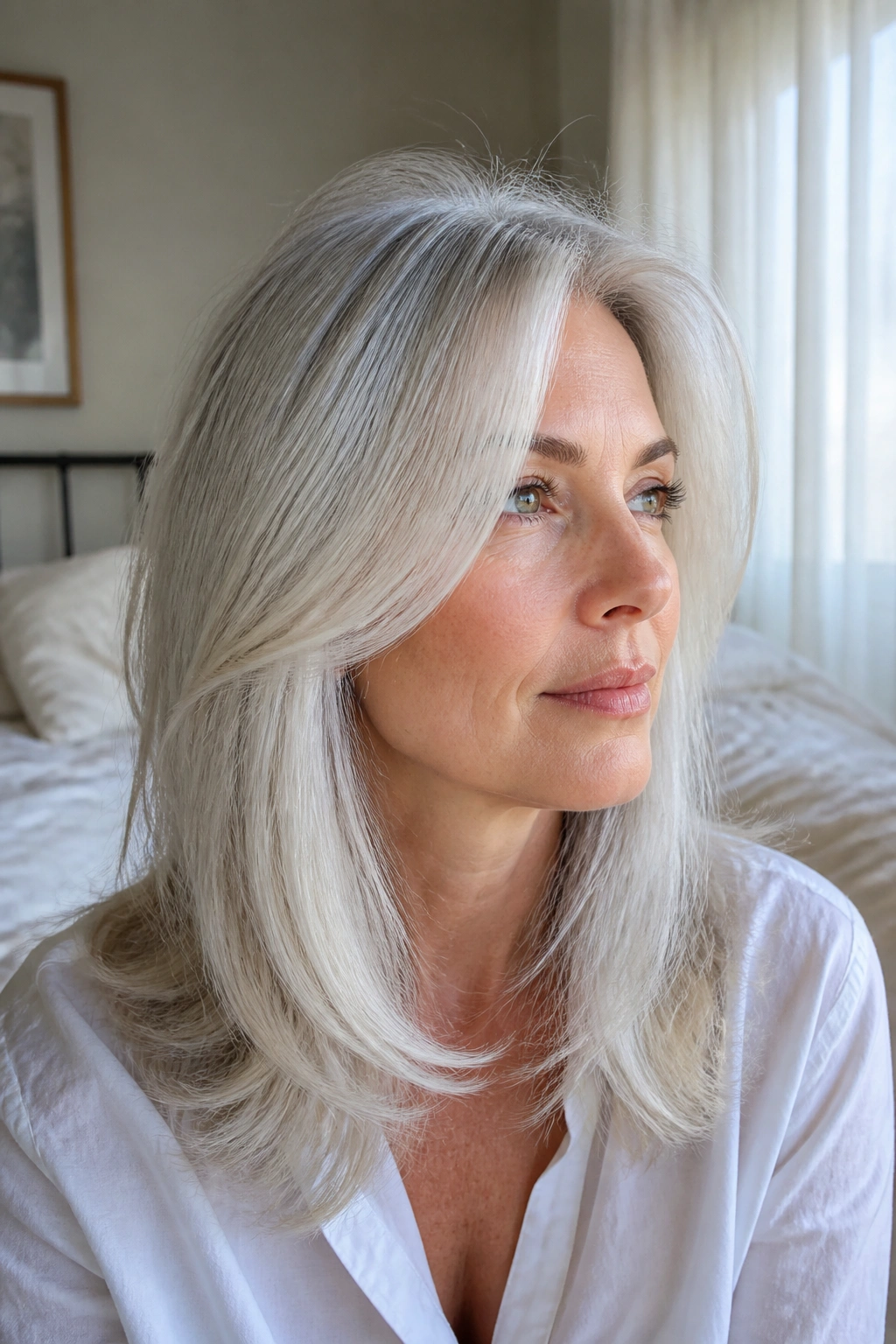
Snow-mist white sits between crisp white and soft silver, and that middle ground is part of why it flatters a round face so easily. The long curtain layers pull the eye down the sides of the face, which keeps the shape from feeling too broad.
The best version starts with a subtle root shadow, then opens into brighter mids and ends. Nothing too harsh. The layers should hit around the cheekbone, then drift below the chin so the face has room to lengthen. That gentle sweep does a lot of the contouring for you.
This is the one I keep coming back to for people who want white hair that feels elegant without feeling severe. It’s bright, but not brittle. Soft, but not boring. And if you want a white shade that flatters a round face without fighting your features every morning, this is probably the first place I’d start.
