



Silver ash hair color ideas for cool skin tones work best when the shade leans smoky, pearly, or steel-gray instead of flat white or warm beige. If your skin carries pink, blue, or neutral-cool undertones, those cooler reflections can make the face look clearer and less ruddy.
The line between flattering and washed out is thin. Too much white can drain very fair skin, while too much depth can make the color read muddy. The sweet spot is usually a lifted base around level 9 or 10, then a toner that pushes blue, violet, or true ash rather than gold.
I like silver shades that keep a little shape. Pearl silver, graphite, pewter, mushroom ash—those tones look richer to the eye because they keep depth at the root and a clean finish through the ends. Brass is the enemy here. It sneaks in fast.
Some of the best versions are soft and wearable. Some go sharper and icy. A few sit in that smoky middle ground that salons keep returning to because it flatters cool complexions so well.
1. Pearl Silver Ash for Cool Skin Tones
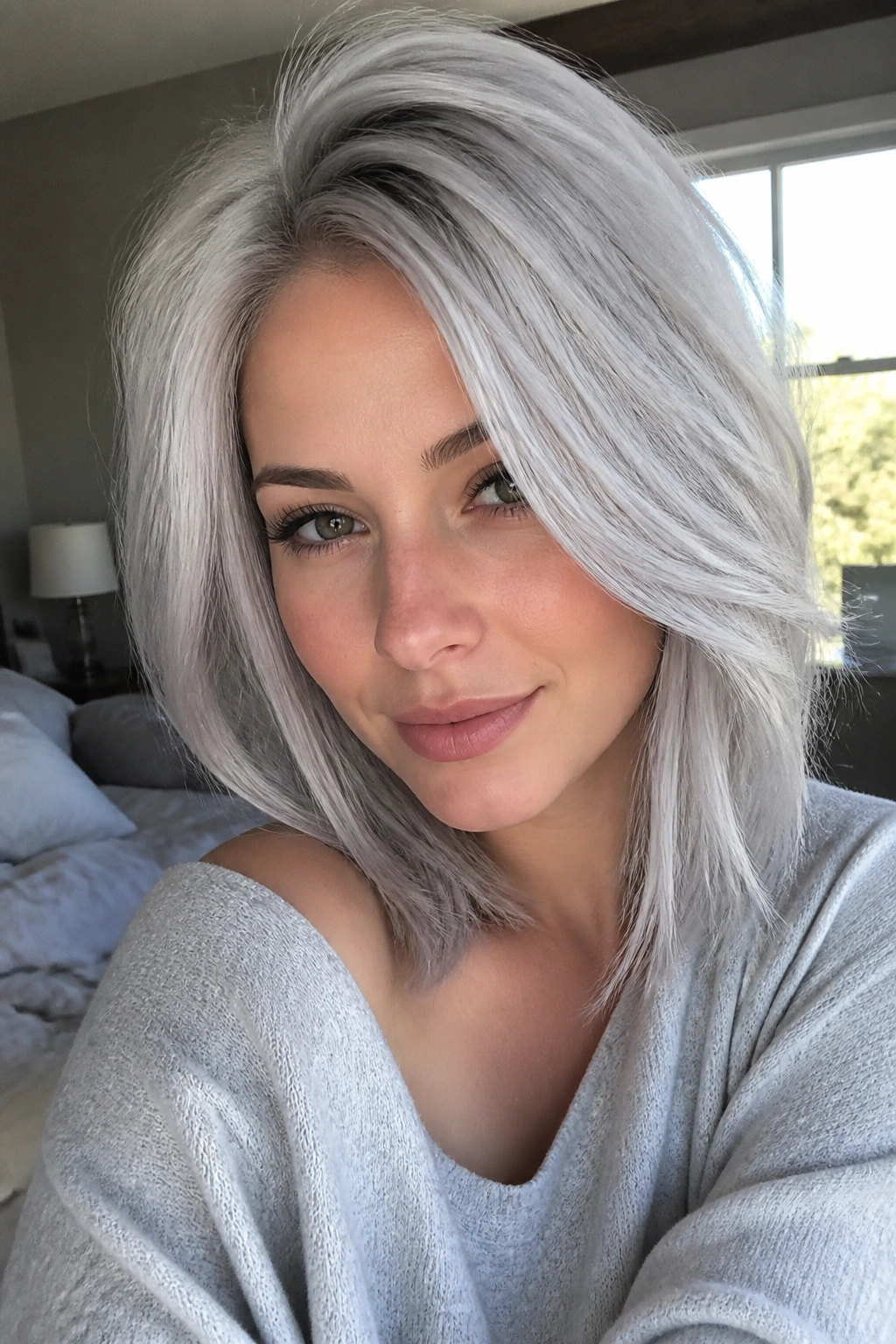
Pearl silver ash is the first shade I’d point to when someone wants silver without a hard metallic edge. It has a soft glow that sits well against cool skin, especially if your face leans pink or your undertone runs more blue than beige.
Why It Reads Soft
Pearl tones scatter light instead of throwing it back in one flat sheet. That means the hair still looks bright, but the color doesn’t fight with pale skin or fine facial features.
A good pearl silver usually starts with hair lifted to level 9 or 10, then finished with a blue-violet toner and a clear gloss. Skip anything beige or golden. Those tones muddy the result fast.
- Best on blonde or light brown hair that can lift evenly
- Looks especially good on bobs, lobs, and layered cuts
- Ask for a toner with blue and violet rather than beige
- Refresh with a gloss every 4 to 6 weeks if your hair fades fast
My favorite part: it grows out quietly, which is rare for such a light shade.
2. Steel Gray Lob with Blunt Ends
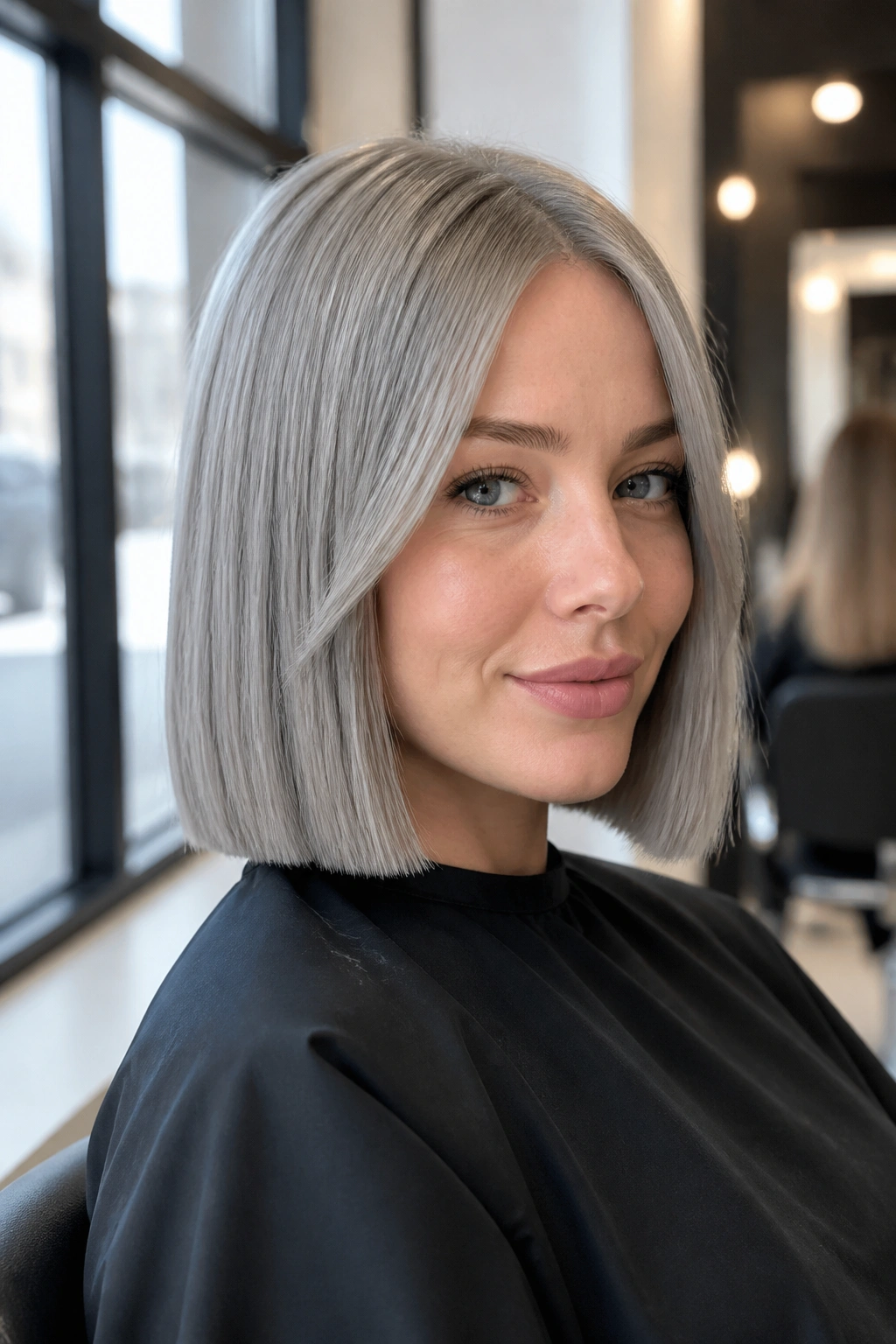
Steel gray is the cleanest choice if you like hair with a little attitude. On cool skin, it reads crisp instead of harsh, especially when the cut is a blunt lob or a one-length midi.
The reason it works is simple: the deeper gray gives your features a frame. A blunt line at the ends keeps the color from disappearing into wisps, which can happen on very fine hair. I like this look on people who wear black, charcoal, navy, or white most days, because the hair and clothes don’t compete.
A violet shampoo once a week is usually enough to keep steel gray from drifting warm. Go too hard with toning products, though, and the shade can turn dusty in a bad way. That flat, chalky look is what you want to avoid.
This one is for someone who likes structure. Sharp line. Clean finish. No fuss.
3. Icy Silver Balayage for Cool Skin Tones
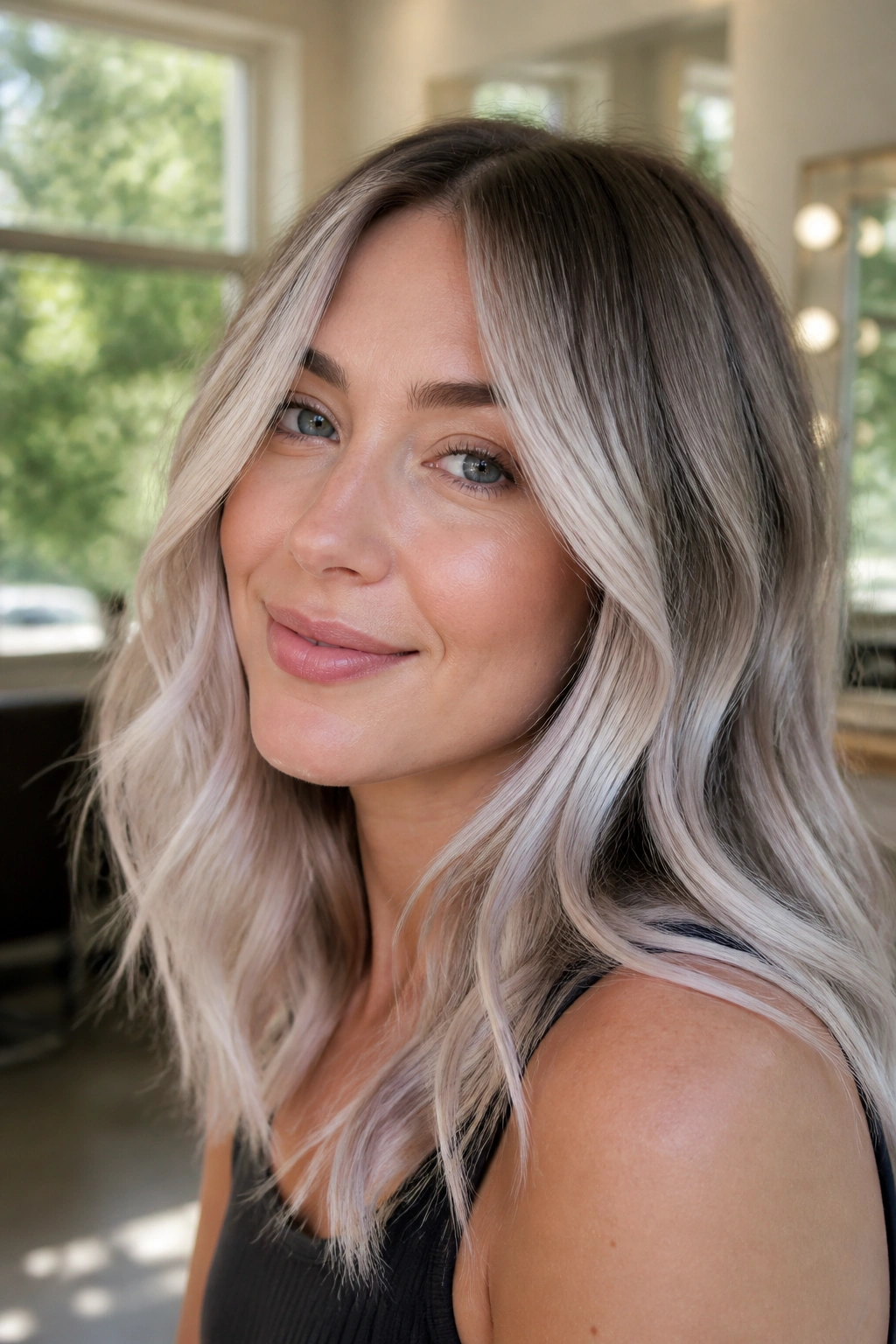
Picture dark blonde hair with silver ribbons running through the top layers and front pieces. That’s icy silver balayage, and it is one of the easiest ways to test silver ash without committing to a full bleach-out.
It works because the contrast stays soft. The darker base keeps the color grounded, while the silver pieces brighten the face in a way that feels cool, not frosty. On cool skin, those lighter panels can make the eyes stand out without needing a full platinum transformation.
What to Ask For
- A dark blonde or light brown base
- Silver pieces lifted to level 9
- Face-framing highlights that sit one shade brighter than the back
- A soft root shadow so the grow-out doesn’t look striped
That last part matters. A hard line at the root can make silver balayage look dated fast. A feathered blend feels much better.
If you want silver but you still like movement in the hair, this is a smart place to start.
4. Charcoal Root Melt into Silver Midlengths
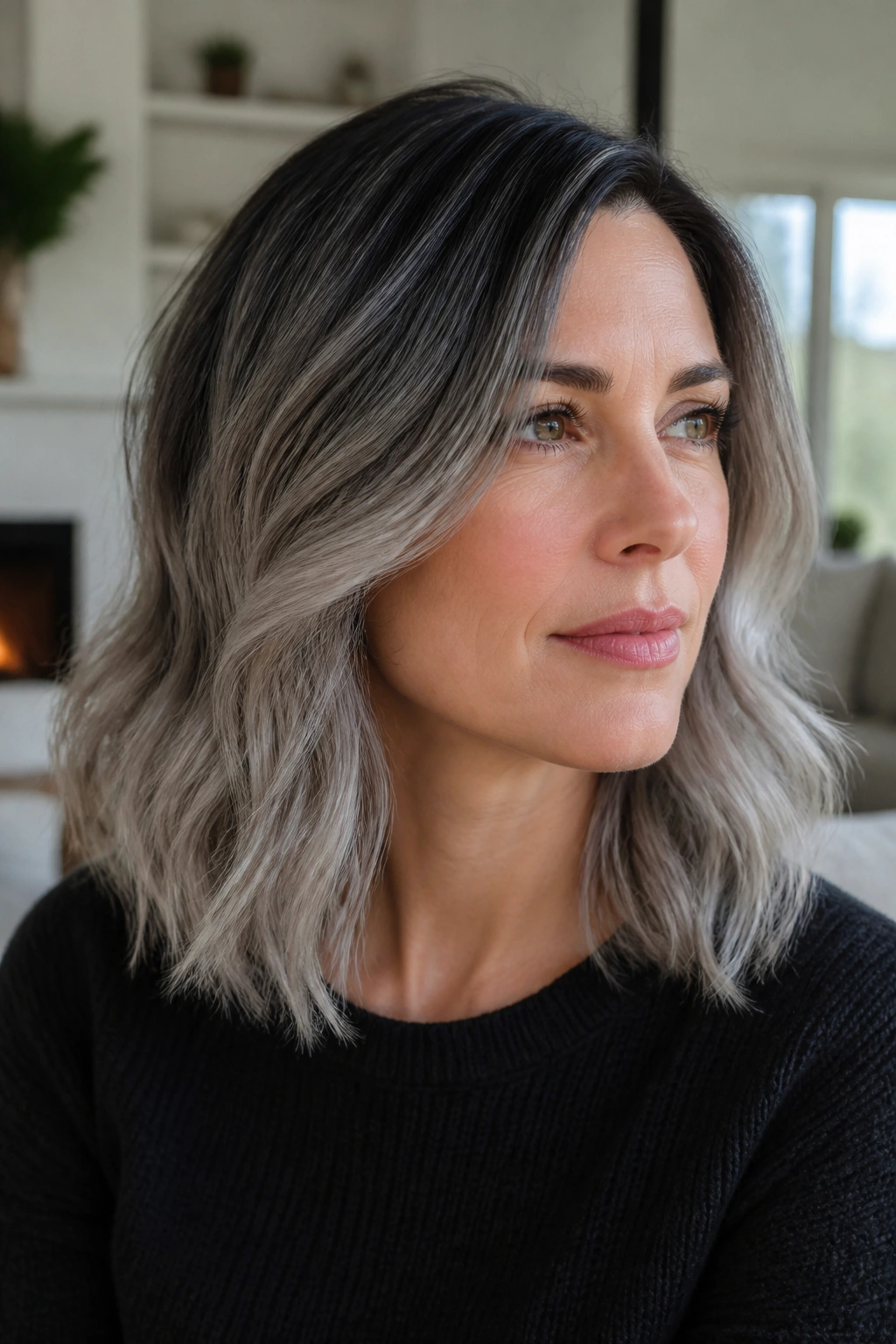
A root melt buys you time. That alone makes it worth considering if you love silver but do not want to sit in a chair every few weeks.
Charcoal at the root gives the color depth, then the shade softens into pewter and silver through the mids and ends. On cool skin, that darker root helps the face stay defined. The whole look feels cooler and more expensive-looking than a bright, all-over silver block.
This version is especially good if your natural base is already medium brown or dark blonde. The transition is easier, and the grow-out looks intentional instead of obvious. If your hair is very fine, the shadow root also makes the hair appear denser.
I’d keep the melt smoky, not black. Too much contrast can pull the color out of the ash family and turn it stark. The best versions look like smoke on top of frost. That’s the lane.
5. Moonlit Lavender Silver
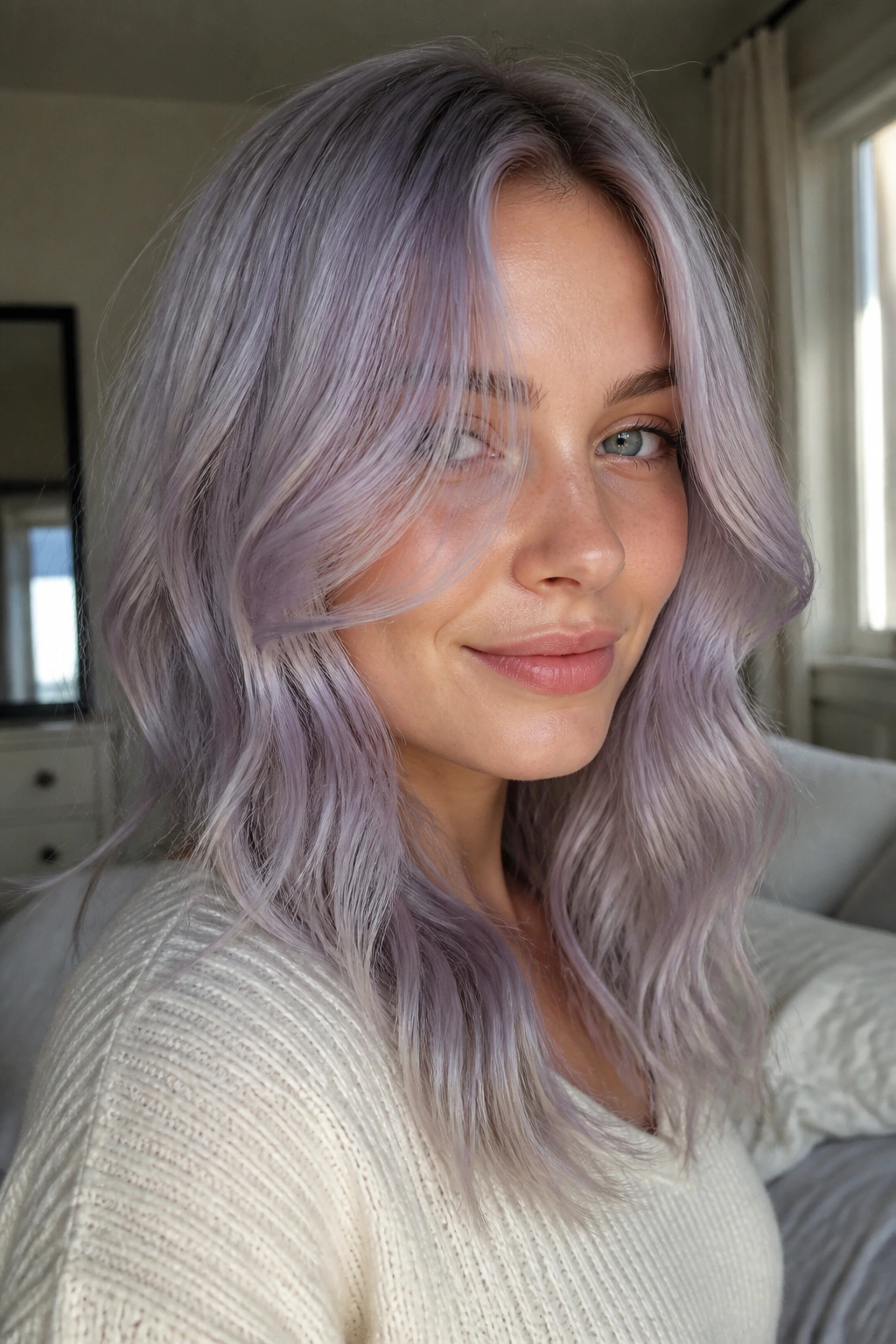
Can silver carry a whisper of lavender and still feel grown-up? Absolutely, as long as the violet stays muted and gray-based.
Moonlit lavender silver works well on cool skin because it echoes the natural pink in the face instead of fighting it. The result is softer than icy silver and less obvious than pastel purple. Under daylight, it reads as silver. Indoors, the lilac note comes forward in a quiet way.
How to Keep It Cool, Not Candy-Colored
Use a violet-based toner with only a faint violet cast. A full pastel lavender can go sweet fast, which changes the whole mood of the hair.
- Best on pale blonde or pre-lightened hair
- Keep the roots smoky so the color doesn’t look flat
- Wavy textures show the violet-silver shift best
- Avoid magenta-heavy glosses; they warm the result too much
This shade is for someone who wants a little personality but still likes cool tones first. It’s one of those colors that looks gentle from a distance and more interesting up close.
6. Mushroom Silver Brown with a Smoky Finish
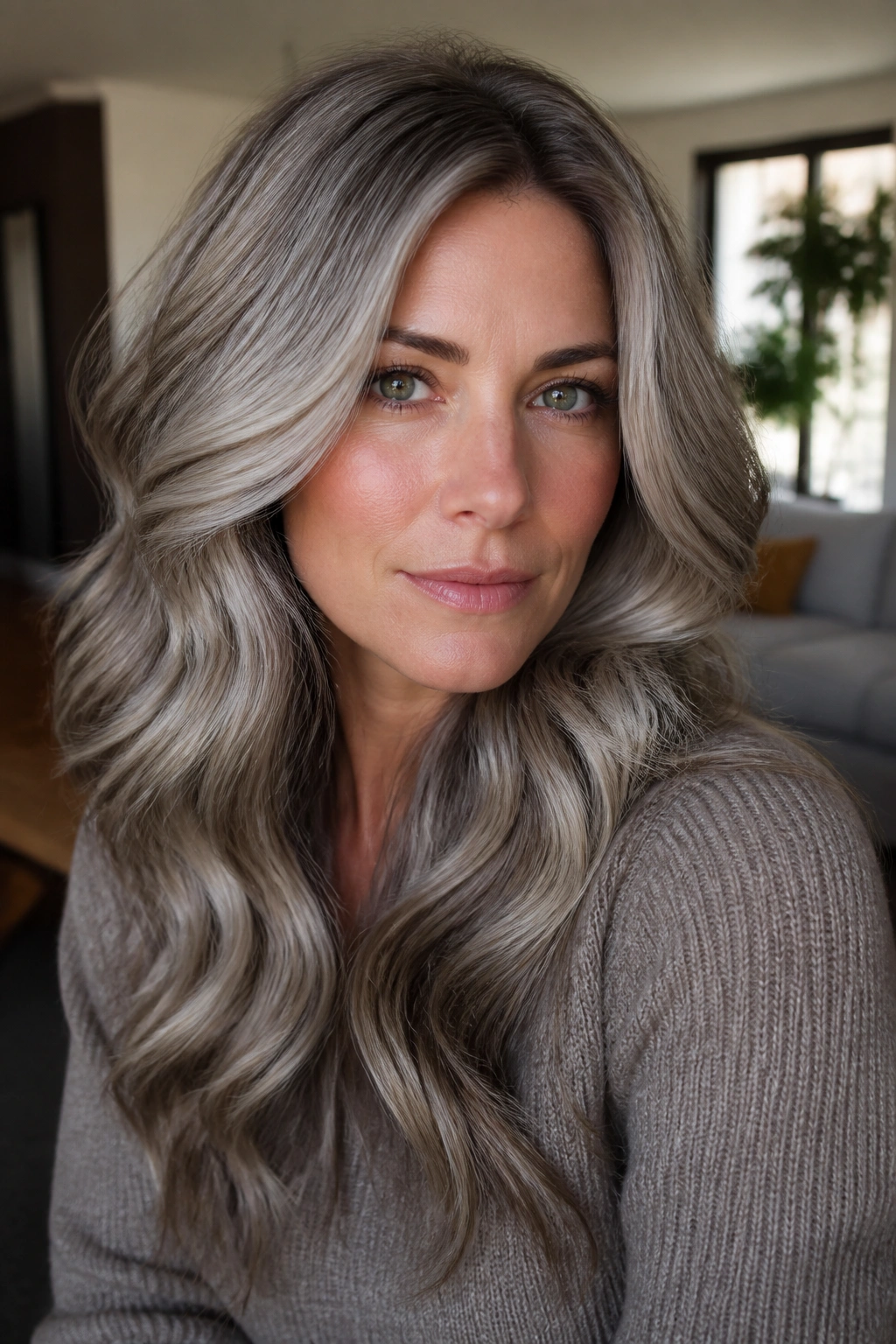
Mushroom silver brown is the quiet one in the group, and I mean that as a compliment. It sits between taupe, smoke, and soft silver, so it works when you want cool hair color without going full icy.
This is one of the easiest silver-adjacent shades for medium brunettes or dark blondes. The base stays a little deeper, which makes the color easier to wear if your skin is very fair or if a high-contrast platinum would feel too loud. On cool skin, the taupe-gray mix softens the face instead of washing it out.
I also like it because it doesn’t fight with brows. If your eyebrows are ash brown or soft charcoal, mushroom silver tends to look natural rather than costume-like. That matters more than people think. Hair color and brows need to live in the same neighborhood.
If you want a silver look that feels understated in a good way, this is the one to remember. Not flashy. Just smart.
7. Platinum Ash Pixie Cut with Choppy Texture
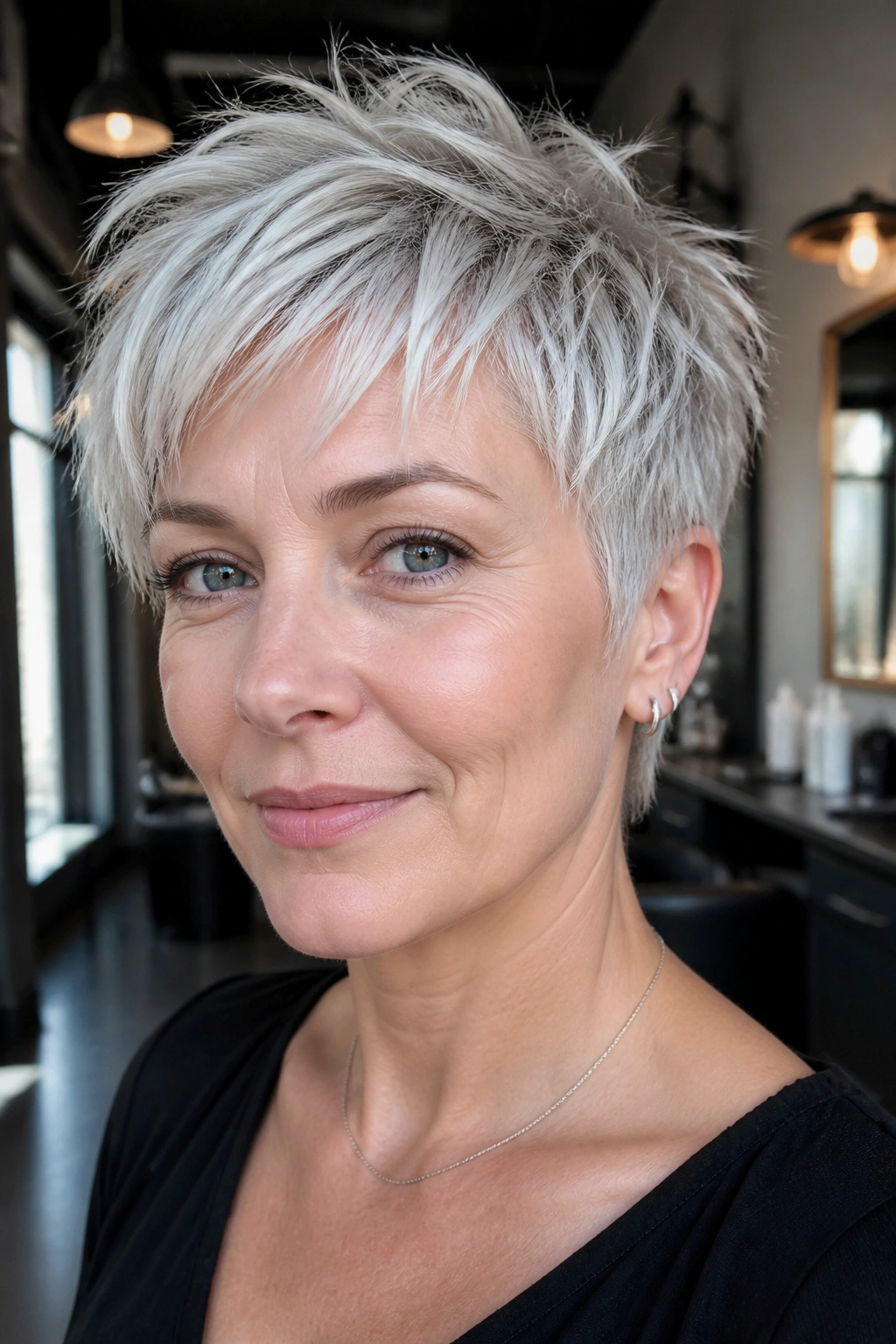
Platinum ash on a pixie cut is sharp. There is nowhere to hide, which is exactly why it works.
A short cut puts all the attention on the tone, so the ash has to be clean. On cool skin, that crispness can look fantastic, especially if your features are strong and your styling stays a little piecey instead of too polished. The cut gives the color shape. The color gives the cut edge.
Why the Cut Matters
A pixie with some choppy texture keeps the lightest pieces moving, so the platinum doesn’t look flat. It also helps the shade stay modern rather than severe.
- Best when hair is lifted to level 10
- Ask for an ash toner with no beige warmth
- Use a light paste or matte cream to define pieces
- Keep the root shadow thin, not heavy
This is not the softest look on the list. It is one of the cleanest. If you like sharp lines, cool skin, and a hair color that feels deliberate, the pixie earns its place.
8. Pewter Silver Money Piece Around the Face
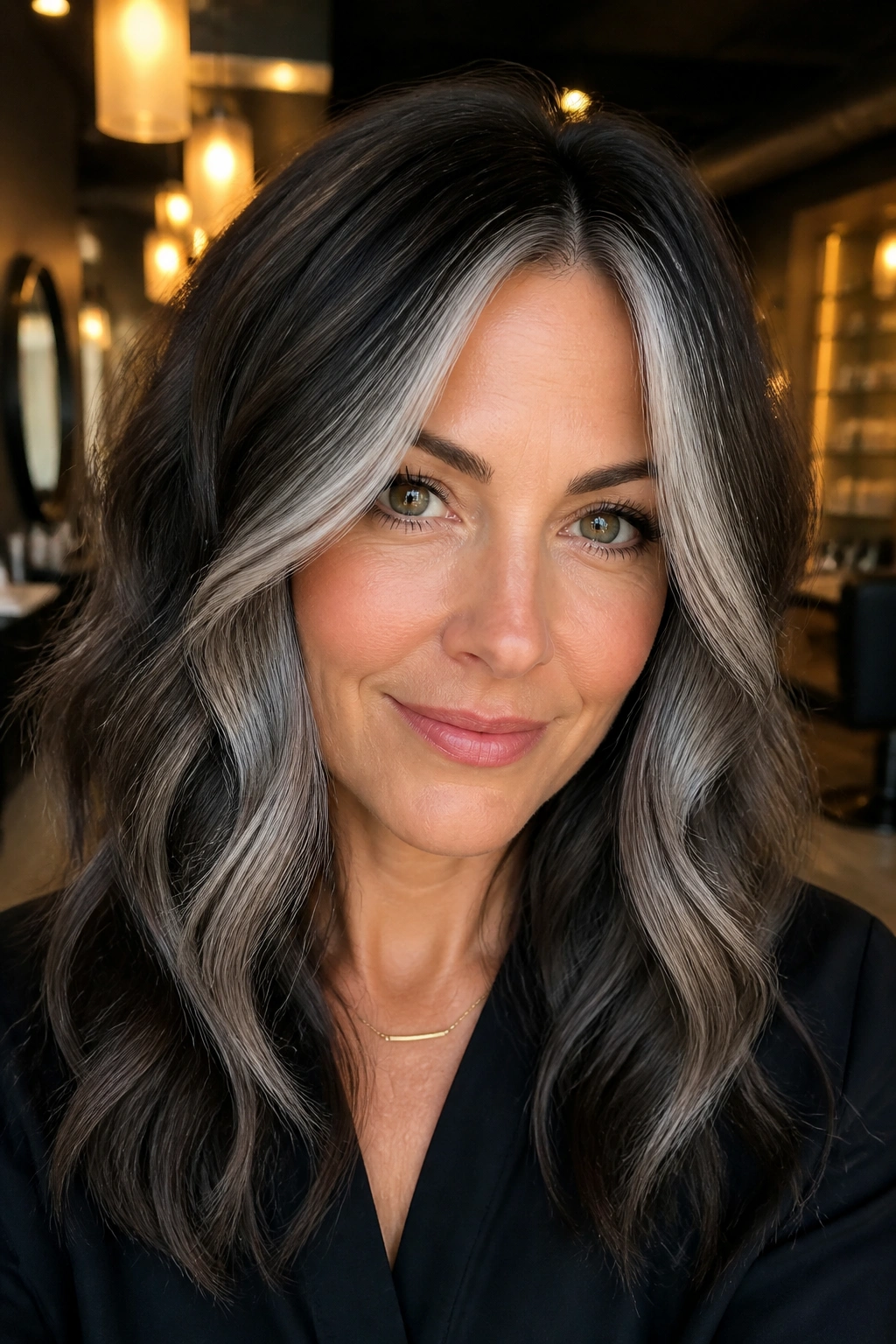
A brunette with deep lengths and two pewter silver money pieces around the face is a very good look, especially when the skin leans cool. It gives brightness right where you want it, without asking the whole head to go light.
The money piece works because the eye lands there first. Around the temples, cheekbones, and part line, pewter adds lift and makes cool skin look clearer. The rest of the hair stays darker, so the contrast feels controlled instead of all-out.
That’s also why it is one of the easier silver ideas to maintain. If your roots grow fast or your hair resists lightening, you can still keep the look fresh with just a few bright panels. Less time in the salon. Less regret in the mirror.
- Best placed one to two inches around the front hairline
- Keep the ends of the money piece a touch lighter than the root
- Works well with straight hair, waves, or loose bends
- A smoky gloss every few weeks keeps the pewter tone honest
Sometimes the smallest placement does the most work.
9. Graphite Ombre on Long Layers
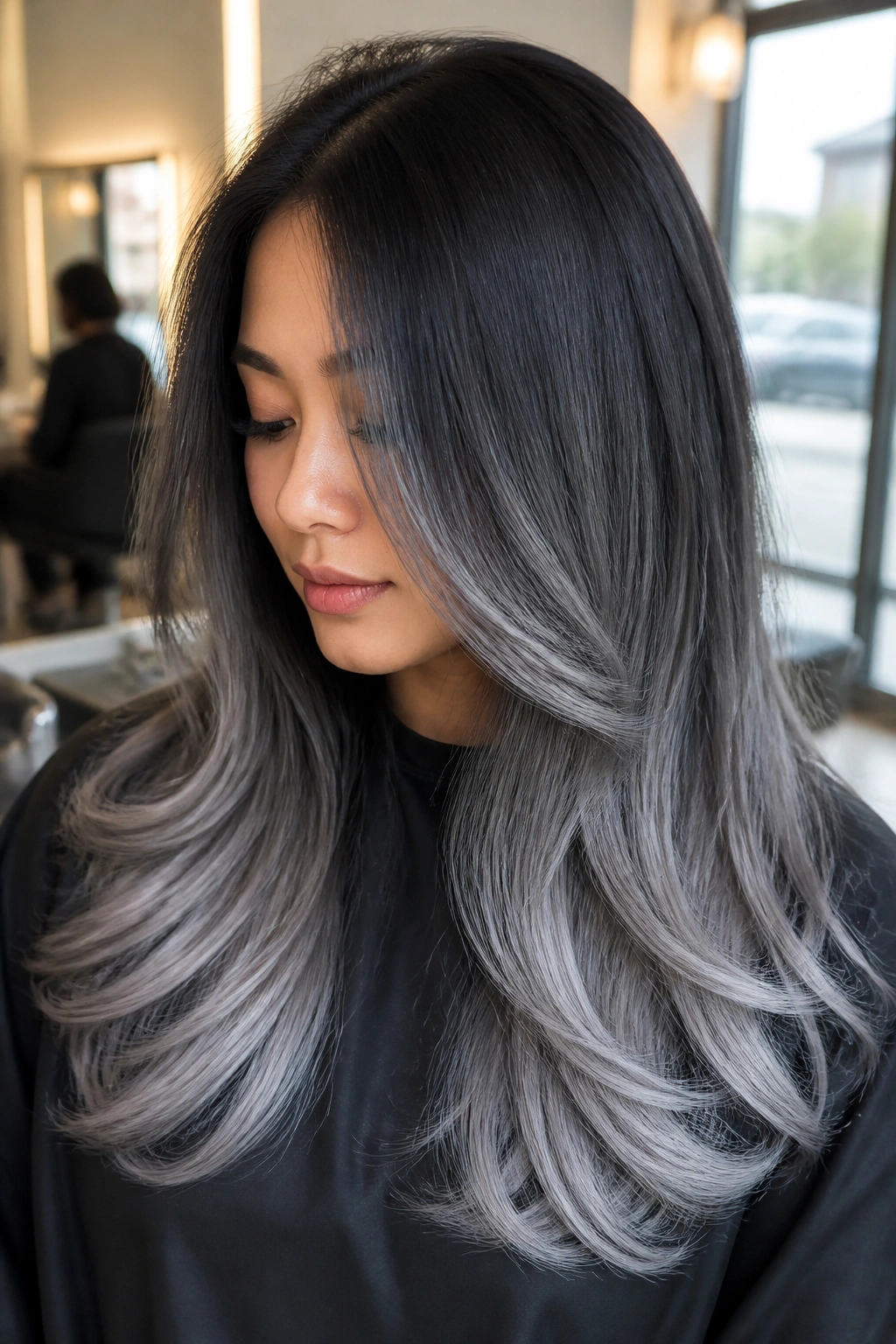
Why does graphite ombre look so good on long layers? Because the length gives the fade room to breathe.
A short cut can make ombre feel abrupt. Long hair lets the shade shift gradually from deep graphite at the top to smoky silver at the bottom, and that transition is what makes the style feel expensive in the best sense. Cool skin likes that kind of depth. It keeps the face from getting overwhelmed by lightness near the root.
Where the Fade Should Start
The fade usually looks best somewhere between the chin and the collarbone on medium-length hair, or lower on hair that falls past the shoulders. If the gradient starts too high, the color can turn patchy. Too low, and you lose the point of the ombre.
I’d recommend this for anyone who wants silver but also wants movement. Curls, waves, and long layers show the gradient better than pin-straight hair. There’s a softness to it that pure platinum can miss.
Graphite ombre is a good middle road. Dark enough to feel grounded. Light enough to count as silver.
10. Frosted Silver Bob with Face-Framing Ribbons
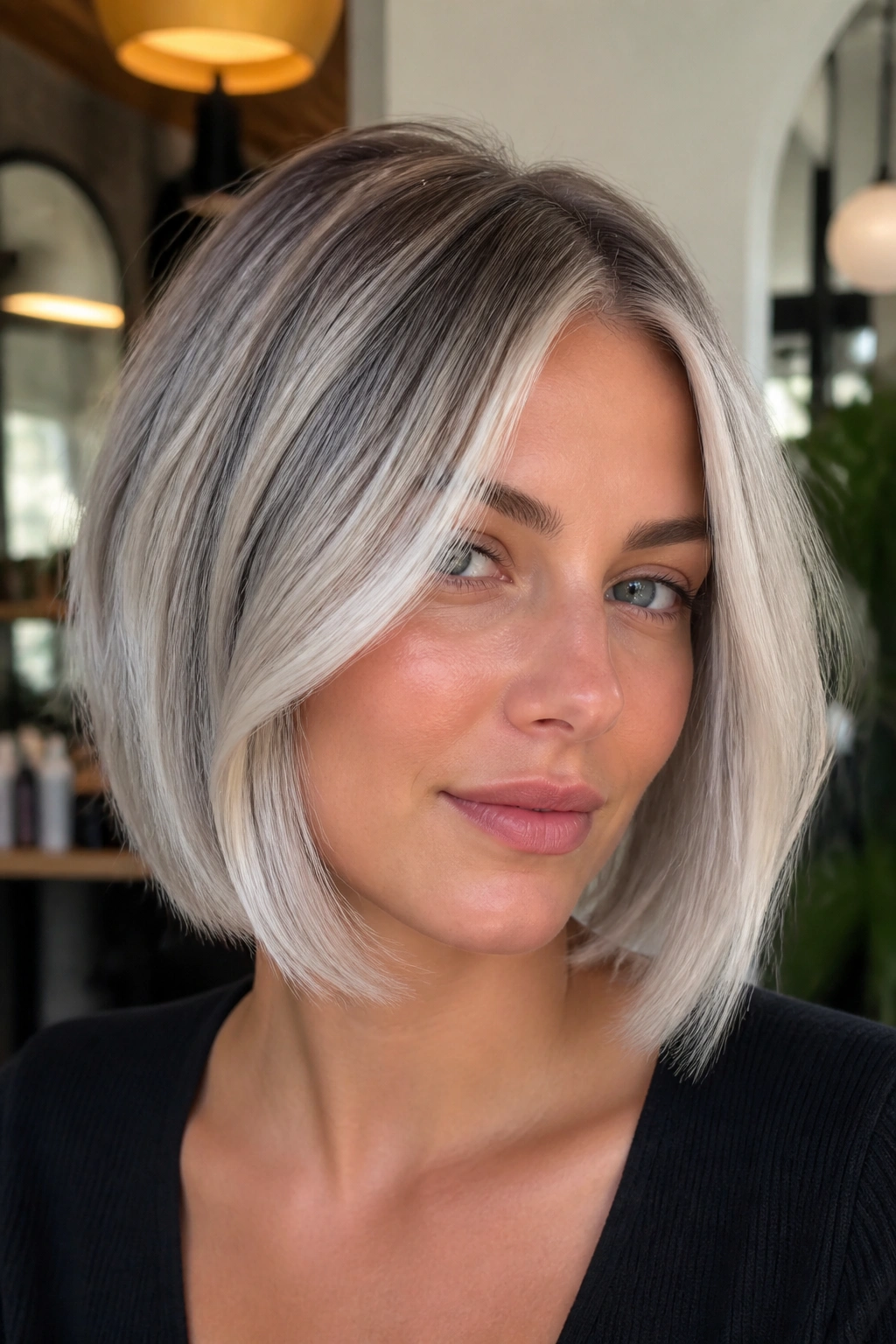
Unlike one-tone silver, a frosted bob uses light and dark ash pieces to keep the cut from going flat. That matters a lot on a bob, where every line is visible.
The ribbons around the face do the heavy lifting. They brighten the cheekbones, catch the eye, and give cool skin a little lift without asking for full-lightened ends all over the head. The back can stay a shade deeper, which keeps the bob from becoming a blur of pale gray.
This is one of my favorite looks for straight or softly wavy hair. The bob already has shape; the frosted ribbons just make that shape easier to see. If your face is round or heart-shaped, the brighter front sections can also soften the outline in a useful way.
Ask for a thin money piece near the part and a few lighter ribbons through the top layers. That’s enough. You do not need heavy highlight work here. A little goes a long way.
11. Smoky Lilac Silver on Wavy Hair
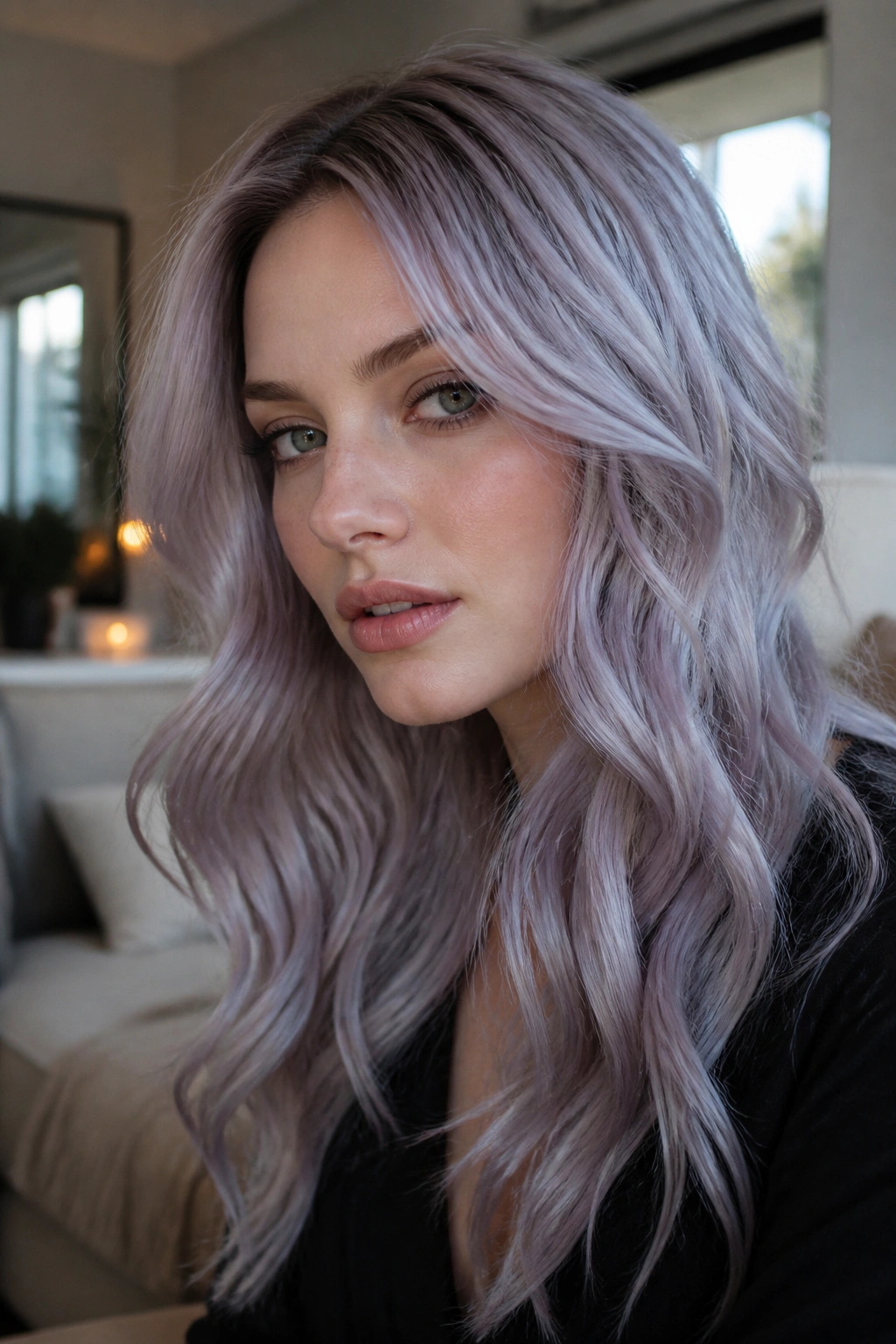
Smoky lilac silver is what happens when you want a little color story without losing the cool feel of silver ash. On wavy hair, it looks especially soft because the bend of the hair shifts the lilac and gray tones as it moves.
The best versions stay muted. Think gray-lavender, not candy purple. That slight smoke in the tone is what keeps it flattering on cool skin. If the violet gets too bright, the whole look starts to lean playful in a way that changes the balance.
A demi-permanent gloss can be a good choice here if you like the idea but do not want a hard commitment. It fades more gently than a strong permanent tone, and the silver base stays useful even after the lilac softens.
I’d pair this with loose waves and a middle part or a slightly off-center part. The movement makes the color look layered instead of flat. That’s the trick.
12. Ash Silver Shag with Airy Fringe
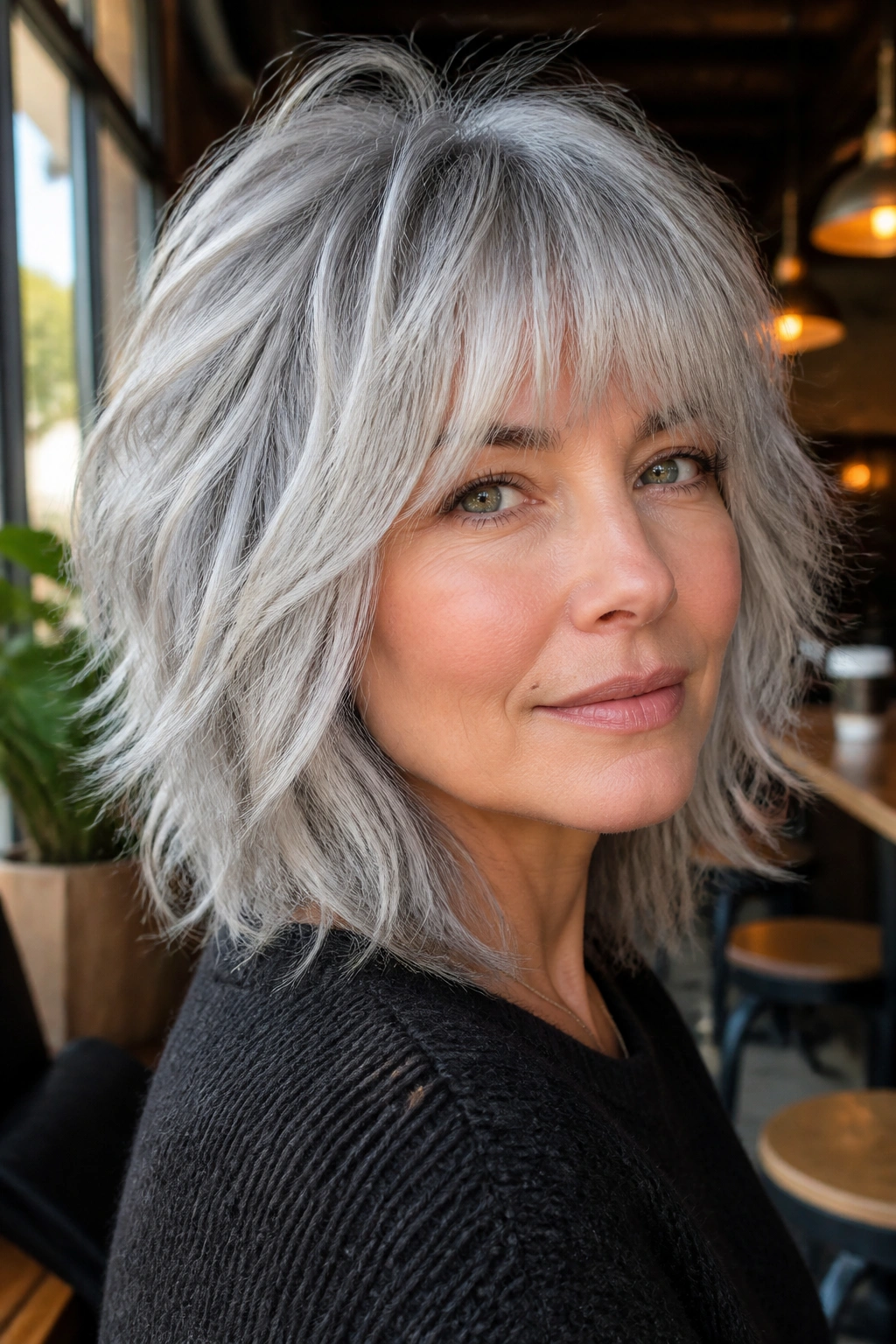
Ash silver on a shag is one of those pairings that makes sense the second you see it. The layered ends stop the color from looking heavy, and the fringe softens the face without needing extra warmth.
Why the Shag Makes Silver Feel Lighter
The cut does a lot of the visual work. Because the layers break up the hair, the ash tones read softer and more lived-in. On cool skin, that matters. You get the freshness of silver without the hard, uniform finish that can feel too severe.
- Ask for razor-soft layers or light texturizing at the ends
- Keep the fringe slightly longer at the temples
- A smoky root shadow helps the color grow out better
- Texture spray beats heavy cream here; the cut needs lift
The shag is also practical. Silver can make every split end obvious, and the shag hides a little of that by design. It is not lazy styling. It’s smart styling.
Quick tip: keep the ends a shade lighter than the crown. That small shift keeps the whole look from going heavy near the bottom.
13. Arctic White-Silver Crop for High Contrast
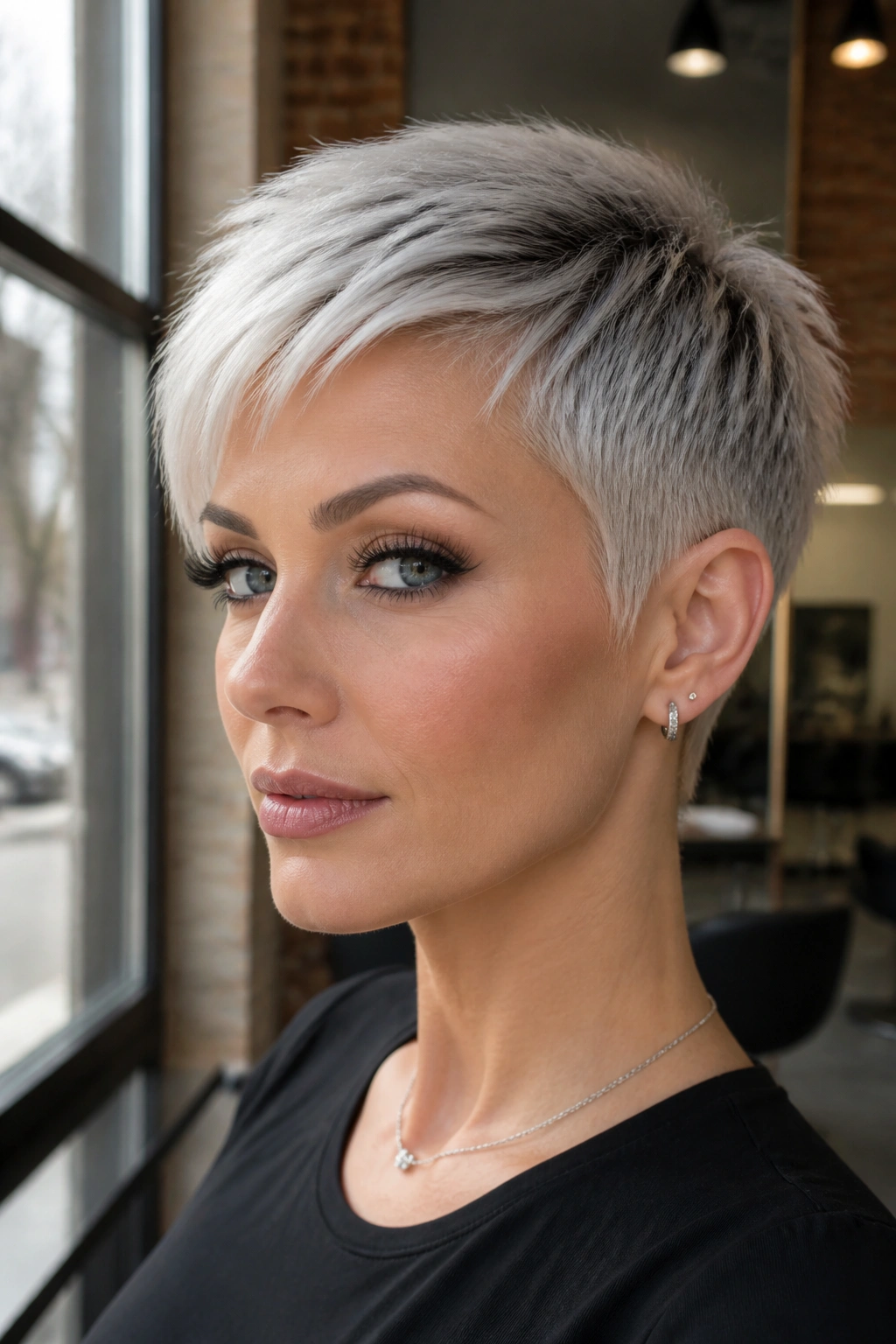
Arctic white-silver is the boldest shade here, and it flatters cool skin best when the white has a smoky base, not a yellow one. That tiny bit of ash underneath keeps the color from looking brittle.
This is a strong look on short crops, where the close cut makes the color feel clean instead of overwhelming. Cool skin can carry it well, especially if your features already have contrast—think dark lashes, clear eyes, or naturally stronger brows. If your coloring is softer, a thin shadow root helps keep the face from disappearing into the hair.
I’d be careful with this shade if your hair is porous. White-silver picks up staining fast, and the tone can go purple or dingy if you overdo the violet shampoo. Once a week is usually enough. Sometimes even less.
It is a dramatic choice, yes. It also has one of the clearest payoffs when it works. Nothing fuzzy about it. The effect is crisp.
14. Silver Foil Highlights on Brunette Hair
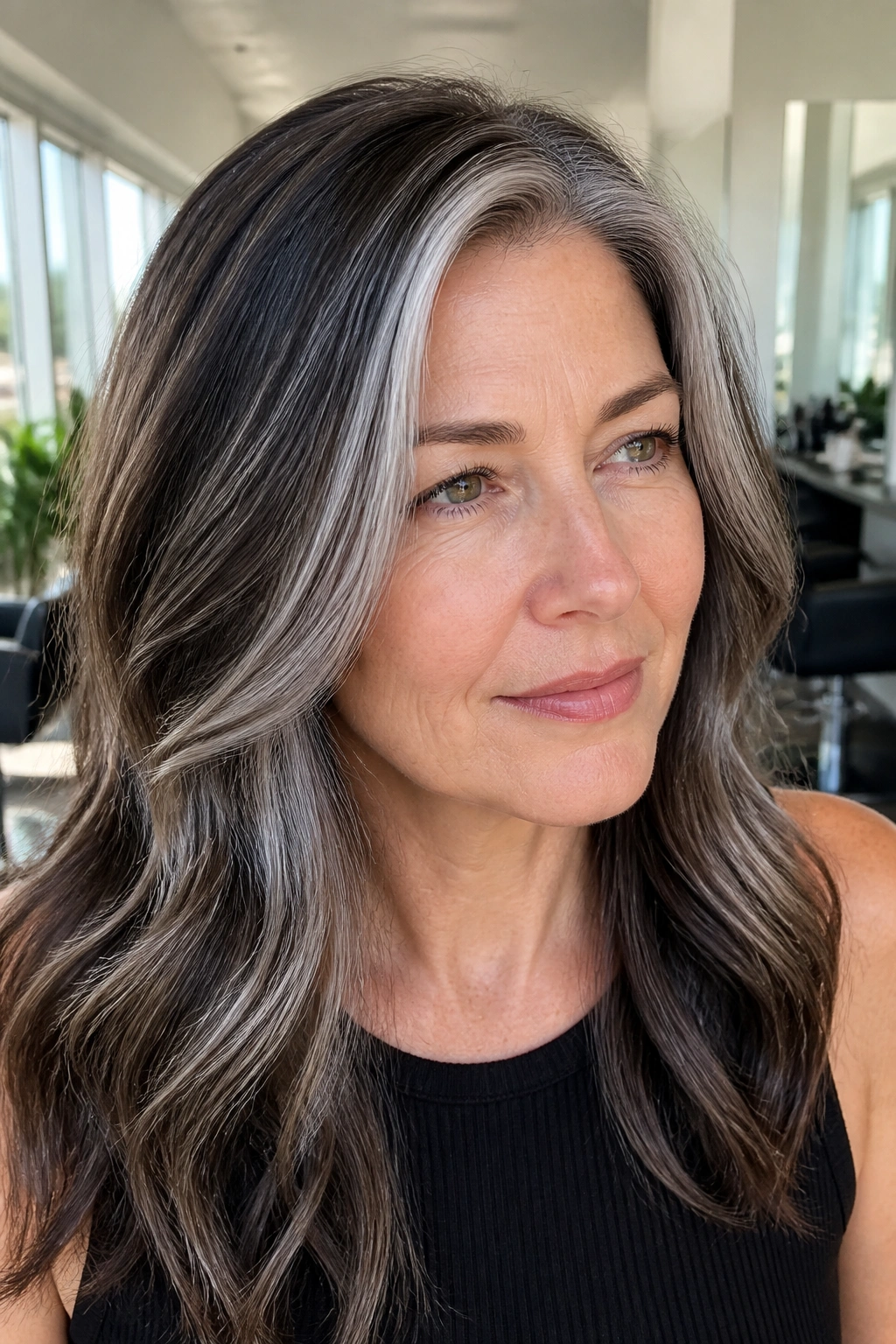
Silver foil highlights are the tidy way to get silver without turning the whole head into a single block of color. That makes them a strong choice for cool skin, especially if your natural brunette base is something you want to keep.
The contrast gives the hair dimension right away. You can place the silver around the part line, temples, and the top layers so the face gets brightness while the rest of the hair stays grounded. It feels more wearable than an all-over change and usually grows out better too.
Where the Foils Do the Most Work
- Part line and crown for brightness on top
- Temples and hairline for facial lift
- A few mid-length pieces to connect the color
- Leave some brunette visible underneath for depth
This is a good first step if you are curious about silver ash but not ready for a full commitment. It also works well on straight hair because the foils show clearly, though waves give the highlights a softer finish.
The result should look placed, not random. Clean sections. Controlled silver. Enough brunette left underneath to keep the whole thing honest.
15. Dusty Silver with Slate Lowlights
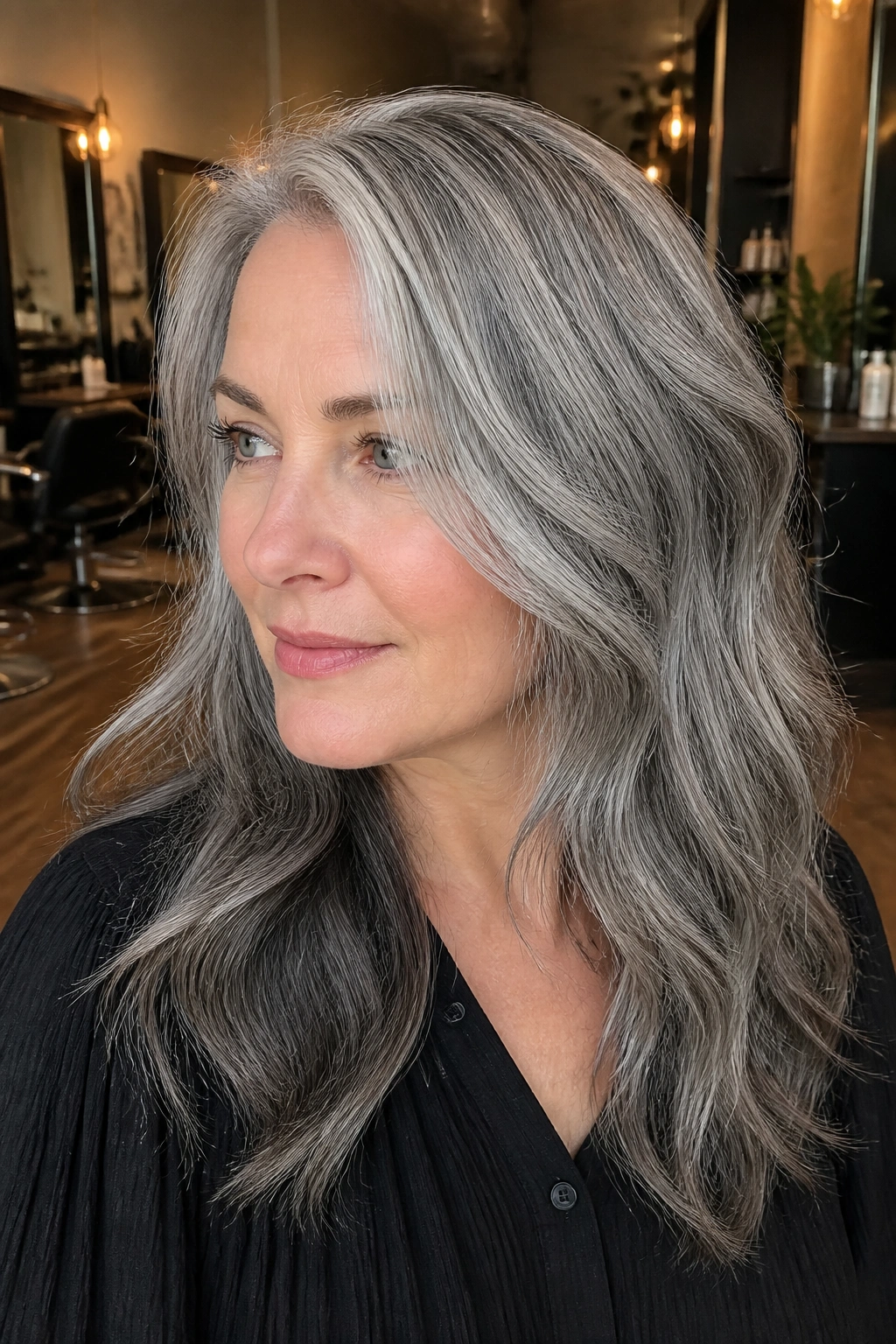
Can silver still have depth? Yes, and dusty silver with slate lowlights is the proof.
The lowlights matter because they stop the silver from flattening out. On fine hair, that’s a big deal. A solid pale silver can make the ends disappear, while a few slate strands bring the shape back. On cool skin, the darker pieces also help the face keep definition.
Where the Lowlights Matter Most
The crown, underneath layers, and the interior of the haircut are the places that benefit most. You do not want dark pieces sitting only on top; that can look striped. A good colorist weaves the slate in so it lives under the silver rather than sitting on it.
This shade suits people who like a little contrast but do not want a harsh black-and-white effect. It is softer than graphite, moodier than pearl, and easier to wear than a pure icy white. I keep coming back to it for people whose hair feels too flat once it gets very light.
Dusty silver with slate lowlights has one useful trait: it stays interesting even when the tone softens a little between salon visits.
16. Silvery Beige Ash for Neutral-Cool Skin
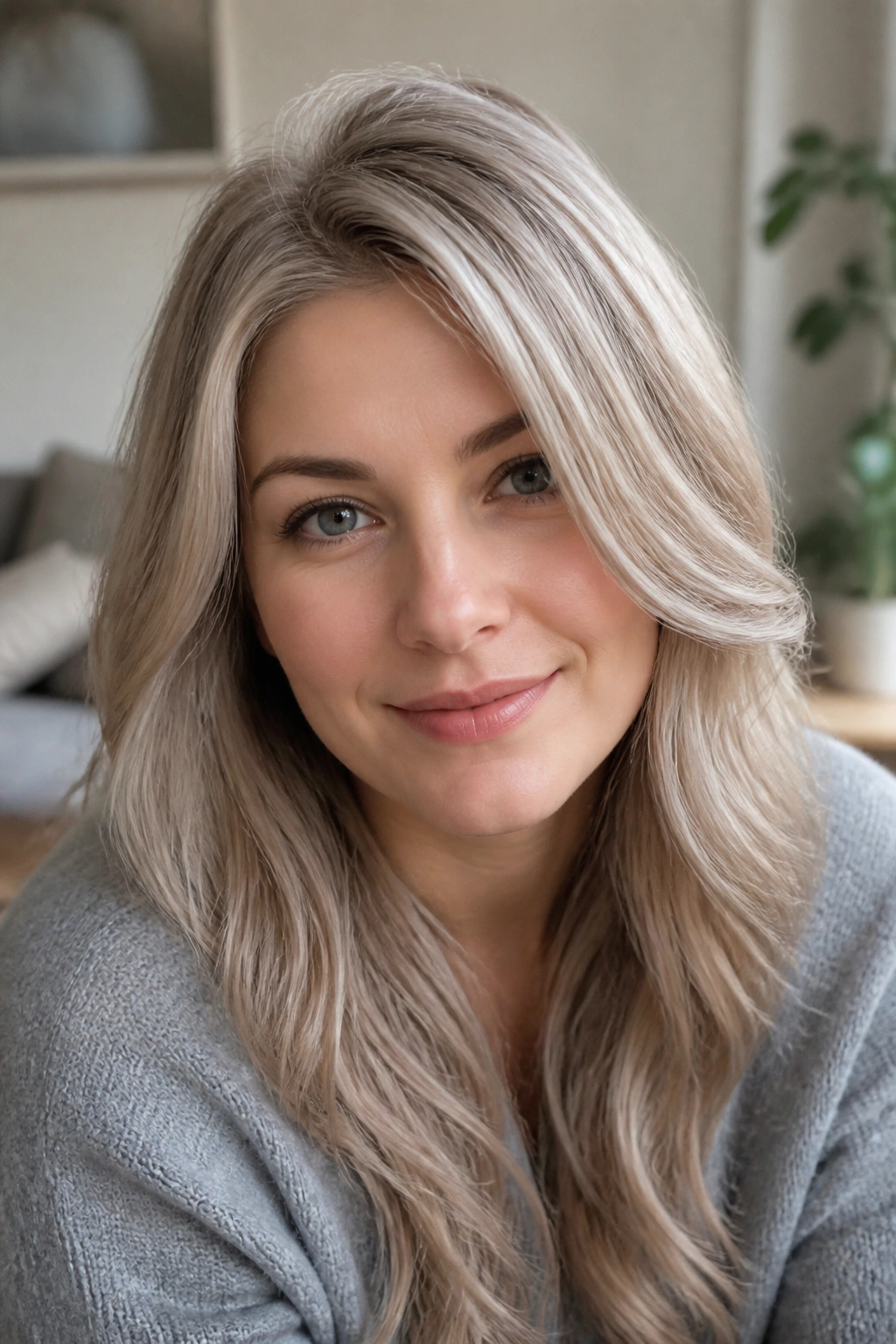
Not every cool skin tone needs full-on frost. Silvery beige ash is for the people who want a softer read, especially if their undertone sits near neutral-cool rather than icy pink.
This shade keeps the ash in the color but tones down the stark contrast. The result looks gentler around the face, which can be useful if your features are delicate or if a stark platinum tends to feel too severe. It still belongs in the silver family. It just has more breathing room.
Compared with icy silver, silvery beige ash is easier on natural brunettes and medium blondes because it does not demand such a hard lightening job. The tone can be built with a gloss or a lighter demi-permanent finish, then maintained with a sulfate-free cleanser and a cool-toning mask now and then.
If you like silver in theory but not as a loud statement, this is a smart compromise. Soft. Smoky. Still cool.
17. Glacier Silver with a Shadow Root
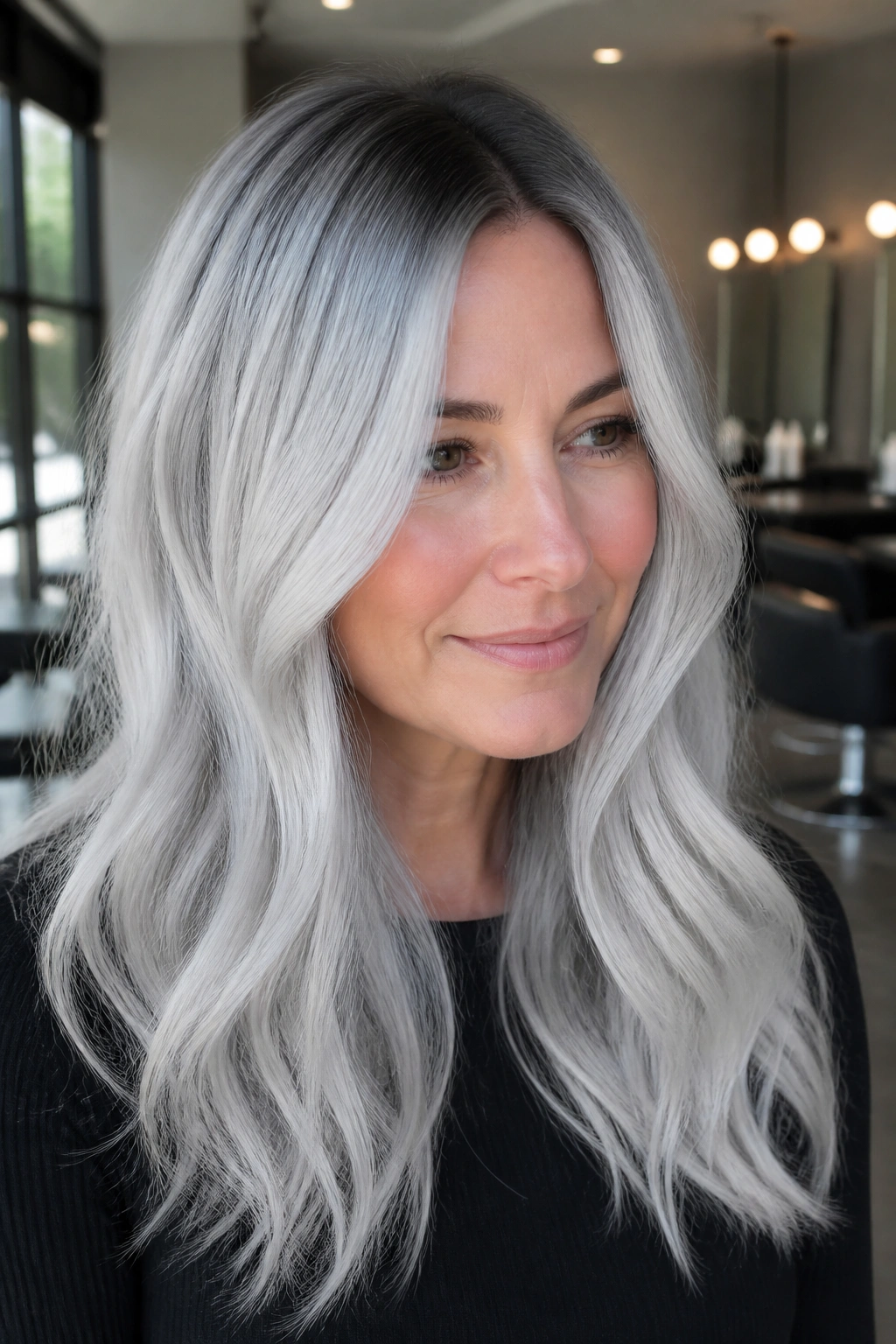
Glacier silver is the version I suggest when someone wants brightness but does not want the color to look pasted on. The shadow root gives the hair a place to start, and the pale silver through the mids and ends gives you the icy finish.
What Makes Glacier Different
The root stays one to two levels deeper than the rest of the hair. That tiny difference keeps the look dimensional and makes the grow-out kinder. The ends stay bright, but they should still feel translucent, not white in a chalky way.
- Ask for a smoky root shadow
- Keep the mids a clean silver ash
- Make the ends the lightest point, not the whole head
- Use a cool gloss instead of heavy pigment every time
This shade flatters cool skin because it creates contrast without turning harsh. The shadow root keeps the face framed, while the bright ends pull attention downward in a soft arc.
If you like the look of ice but want something a little easier to live with, glacier silver does a lot of work for you. It is tidy, polished, and not nearly as fragile as it looks.
18. Soft Smoke Silver with Curtain Bangs
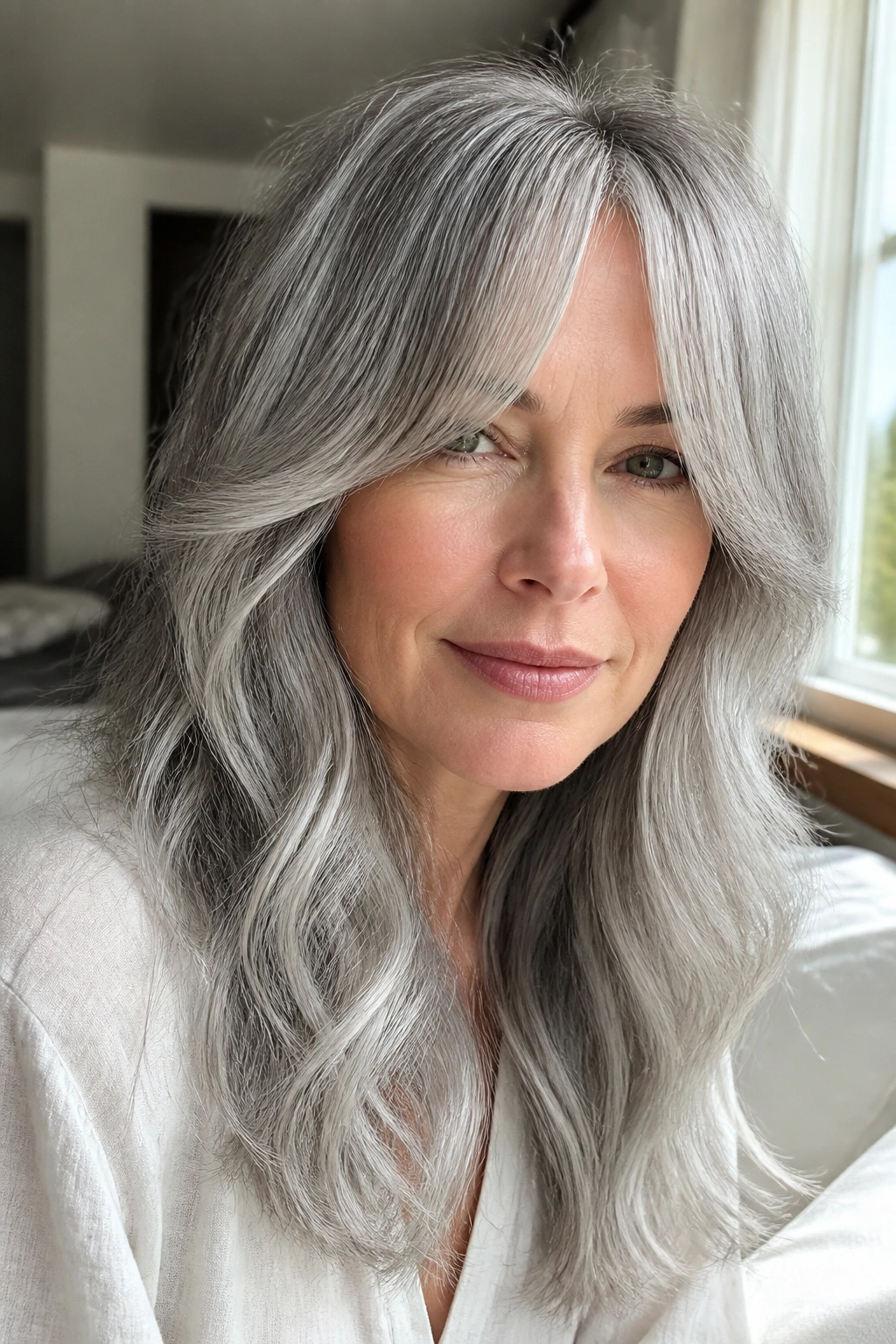
Soft smoke silver with curtain bangs feels easier than the high-contrast versions, and that ease is the point. The bangs frame the face, while the smoky silver keeps the tone cool without turning it severe.
This is a good shape for people who want silver ash to look lived-in instead of sharp. Curtain bangs break up the forehead area, which helps if full silver tends to make your features look too exposed. On cool skin, the smoky finish keeps the color flattering even when the light shifts from bright daylight to indoor shade.
I like this look on shoulder-length hair or longer, especially with a little wave through the ends. The color does not have to be perfect every day, and that is one reason it works. The bangs soften the front, the smoke at the root keeps the grow-out honest, and the overall effect stays calm.
When silver ash is a little smoky at the root and a little softer around the face, it stops looking like a stunt and starts looking like a choice.
