



Ash gray hair can look sharp on cool skin tones, or it can drain the face in a heartbeat. The difference usually comes down to tone control. Blue, violet, and smoky beige pigments soften unwanted yellow or orange, while a quiet root shadow keeps the shade from floating on the head like a helmet.
If your skin leans pink, rosy, porcelain, or blue, the cleaner ash shades usually sit better than warm blondes or gold-heavy brunettes. That doesn’t mean every gray needs to be icy or severe. Some of the best versions are softer than people expect, with pearl, mushroom, graphite, or lilac notes tucked into the finish so the color still has movement.
The tricky part is picking the right kind of gray for your base color and your tolerance for upkeep. A full platinum ash can look polished on one person and chalky on another. A smoky brunette melt can look expensive with almost no drama, while a silver money piece can give the face a lift without bleaching every inch of hair.
The ideas that follow lean soft, smoky, icy, graphite, and pearl, with a few darker options thrown in for people who want contrast. Start with the one that matches your natural depth, then decide how bright you want the front pieces to be.
1. Soft Ash Gray Bob
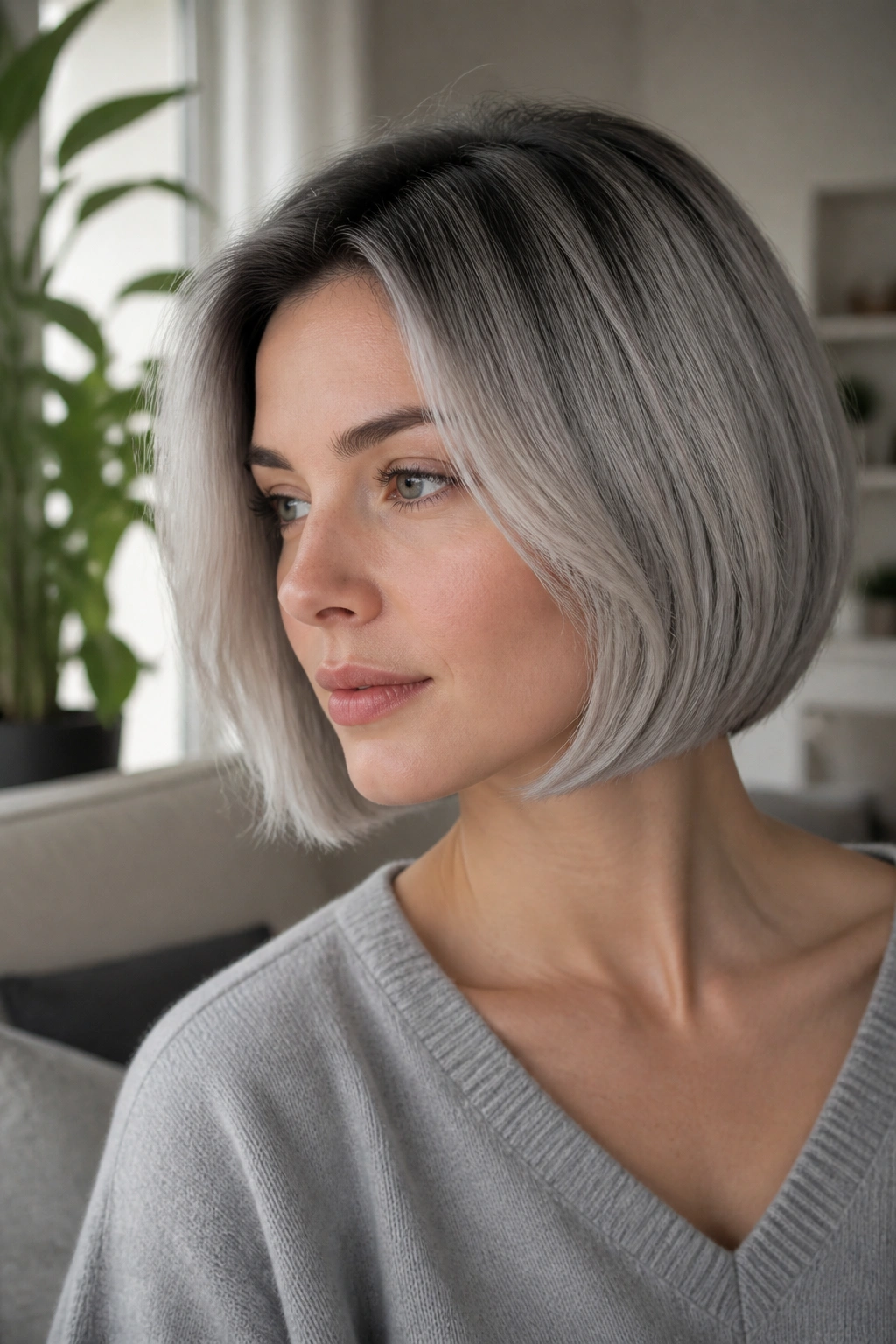
A chin-length soft ash gray bob is one of those cuts that does a lot of the work for you. The shape keeps the color neat, and the color keeps the cut from feeling too severe. On cool skin, that silver-gray finish looks clean instead of muddy.
Why It Flatters Cool Skin
The bob sits right near the jaw and cheekbone, which matters more than people think. That placement gives the face a little frame without flooding it with light, and the short length stops the gray from dragging the features down. If your skin leans pink or porcelain, this is a safe place to start.
A soft root shadow helps here. Keep the root one level deeper than the mids, then let the ash tone appear strongest from the ears down. The result feels modern, not flat.
Quick Notes
- Best on fine to medium hair that bends easily.
- Ask for a silver glaze, not a chalky block of color.
- A round brush or loose bend at the ends keeps it from looking boxy.
- A level 7 or 8 root shadow usually works better than a harsh dark line.
My favorite part: the cut grows out in a way that still looks deliberate, even when the roots start showing.
2. Smoky Mushroom Gray Balayage
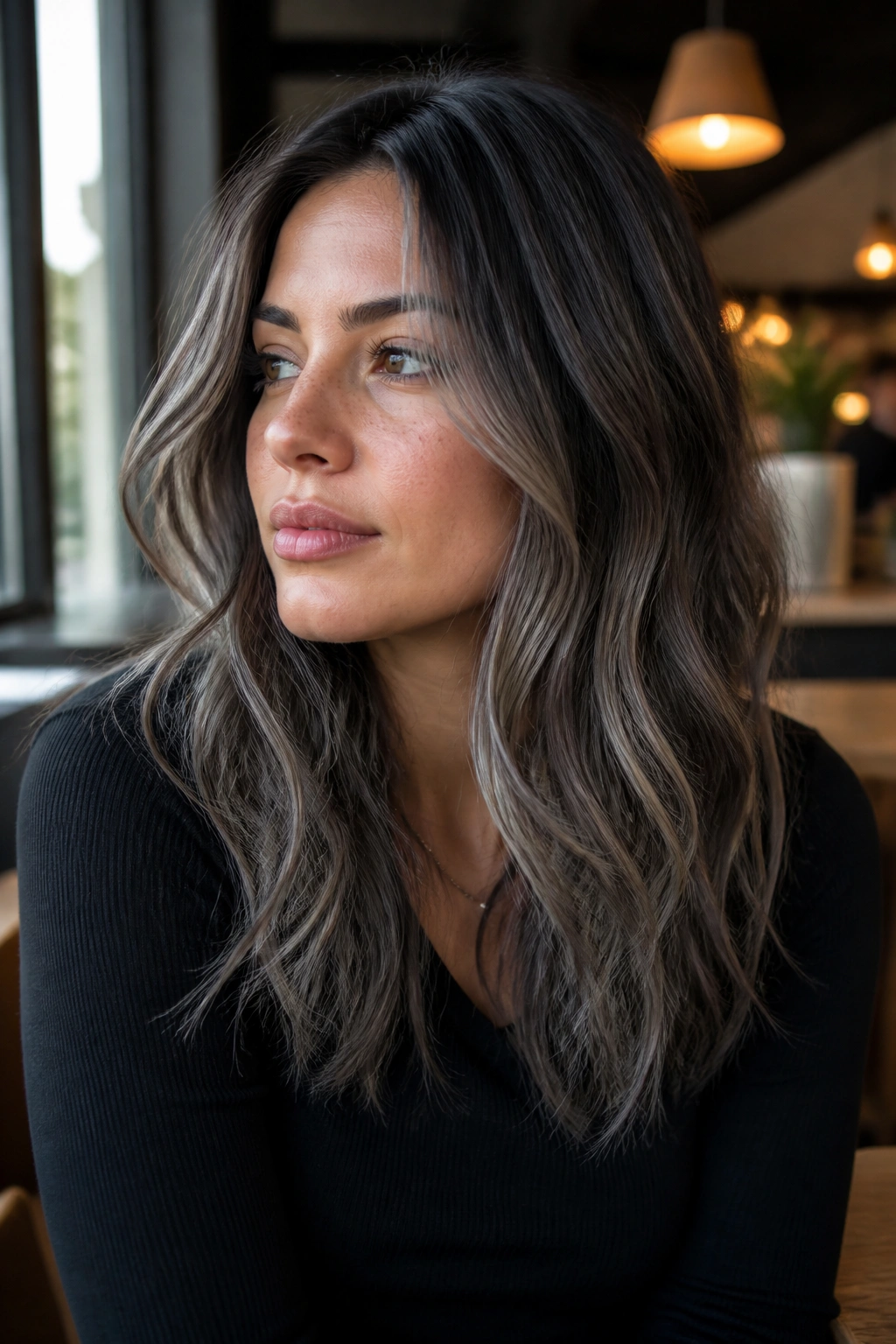
This is the easiest ash-gray entry point for brunettes. Mushroom gray lives between beige and smoke, which means it gives you gray softness without asking for a full icy commitment. On cool skin, the muted finish reads calm and expensive rather than loud.
The balayage placement matters. Keep the lightest pieces around the face and the surface layers, then let the lower sections stay deeper and shadowy. That contrast gives you movement without chunky stripes, and it keeps the whole look from turning too pale.
I like this shade on medium brunettes who want gray without staring at a root line every three weeks. The grow-out is forgiving, which is a blessing if you hate sitting in a chair all the time. It also works well with soft waves, because the bend in the hair breaks up the ash and keeps it from looking one-note.
If you want this idea to look its best, ask for mushroom beige ribbons instead of cool blond highlights. Small shift. Big difference.
3. Icy Charcoal Roots, Silver Ends
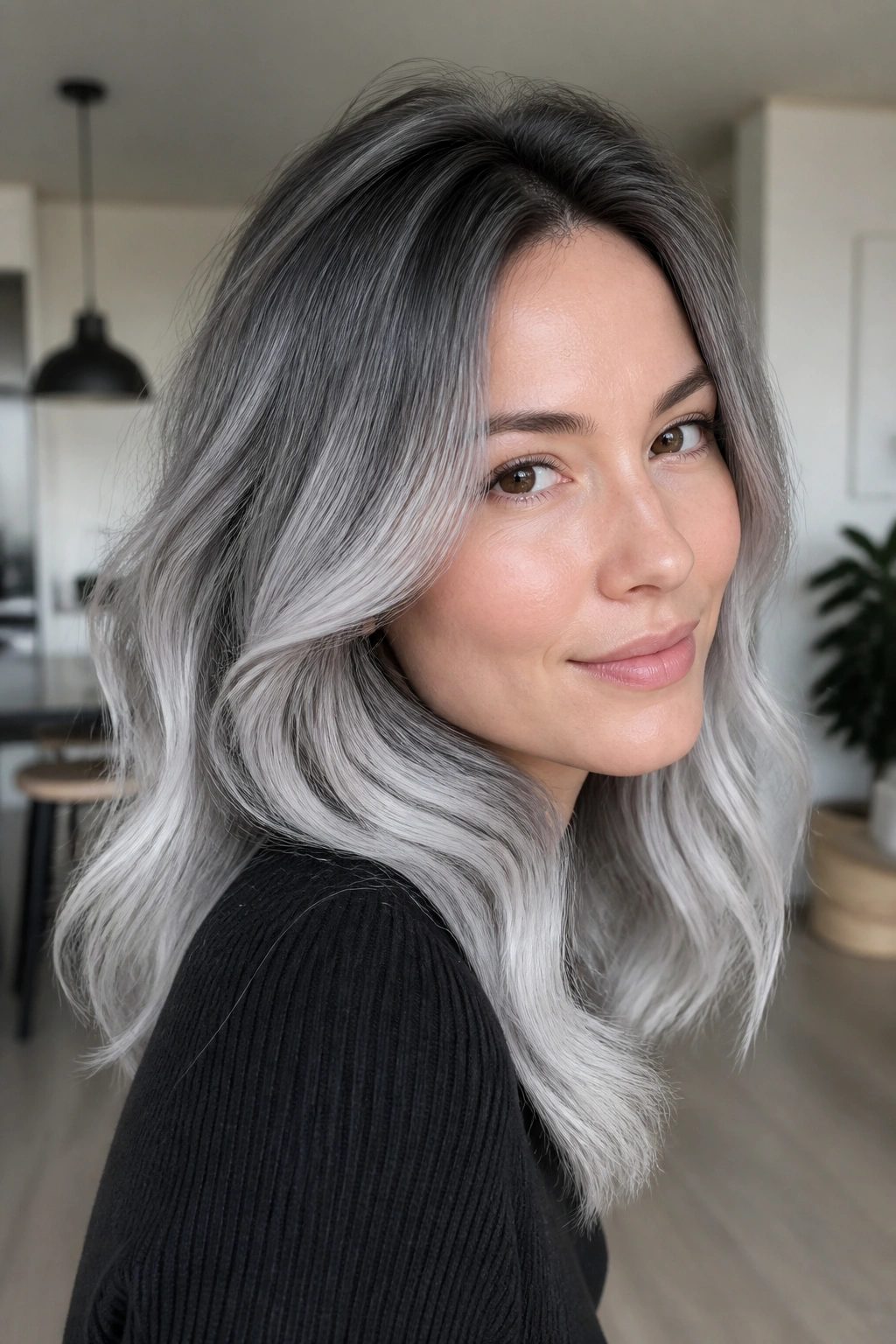
Want gray that still has depth at the crown? Icy charcoal roots with silver ends solve that problem without forcing a hard ombré line. The darker top gives the face some structure, then the silver through the lengths adds that cold, polished finish cool skin usually likes.
How to Ask for It
- Request a root smudge one to two levels deeper than the mids.
- Lift the middle section to a soft level 8.
- Let the ends reach level 9 or 10 before the silver toner goes on.
- Keep the transition blurred; you do not want a stripe.
This works especially well on wavy hair, because the bend hides the shift between charcoal and silver. Straight hair can wear it too, but the line between the sections has to be feathered carefully. If the fade is too sharp, the whole thing starts looking split in half.
The nicest part is the balance. Dark roots keep the cool gray from washing out your skin, while the silver ends bring enough brightness to catch the eye. That’s a clean trick. Still one of the best.
4. Platinum Ash Gloss
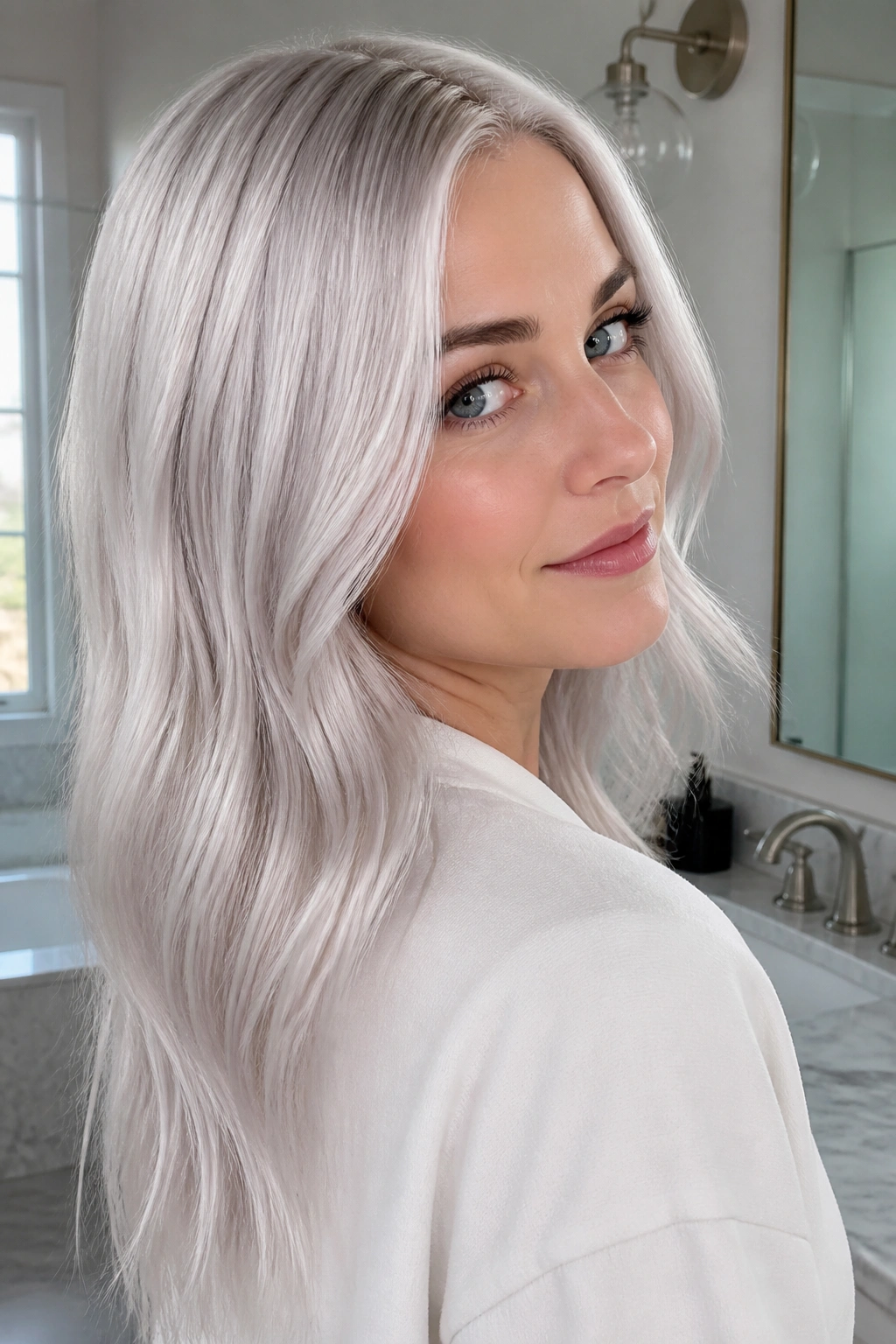
Picture freshly blow-dried blonde hair with a cold, glassy finish. That’s the feeling platinum ash gloss gives when it’s done well. It isn’t yellow-blond, and it isn’t silver in a costume way. It sits in that crisp middle zone that makes cool skin look clearer.
The base has to be very light for this to work. A gloss alone will not make dark hair turn platinum ash; you need pale blonde first, then a violet-blue toner to quiet the warmth. If the hair pulls yellow, the result goes soft and dull instead of icy.
What to Watch For
- Best on very light blonde or pre-lightened hair.
- Use purple shampoo once a week, not every wash.
- Ask for a gloss with blue-violet reflect.
- Avoid heavy oils before styling; they can make the finish look greasy instead of sleek.
This one looks best when the hair is smooth, not over-styled. A clean blowout or straight finish shows the tint in a better way than tight curls do.
5. Graphite Melt on Long Hair
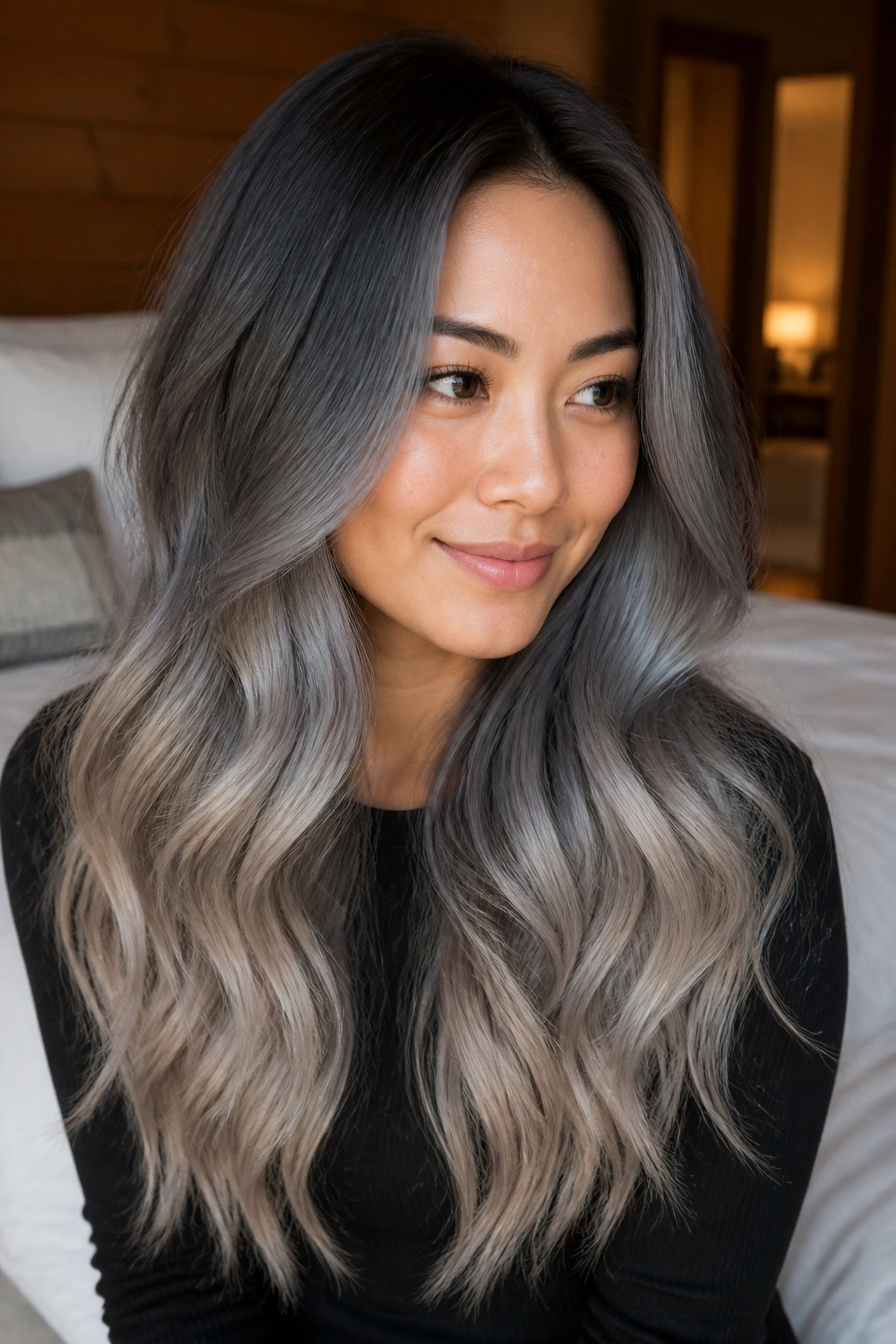
Graphite melt is drama, but the controlled kind. Deep roots melt into charcoal mids, then the ends go slightly lighter and smokier, almost like rubbed pencil lead. On long hair, that gradient has room to breathe, which is half the reason it works so well.
Length matters here. On a bob, graphite can feel blunt fast. On long layers, it looks layered by design. The movement in the hair keeps the gray from reading like one flat sheet of color, and cool skin benefits from that darker frame around the face.
I like this shade most on people with dense hair or natural depth at the base. It gives weight where you need it and lightness where you want it, which is why it feels more wearable than a full silver every day. A slight bend from the mid-lengths down helps the ends catch the eye without screaming for attention.
The downside is obvious: regrowth shows up more clearly than it does with a blended brunette. But some people want that. It looks intentional, and sometimes intentional is the whole point.
6. Ash Gray Money Piece
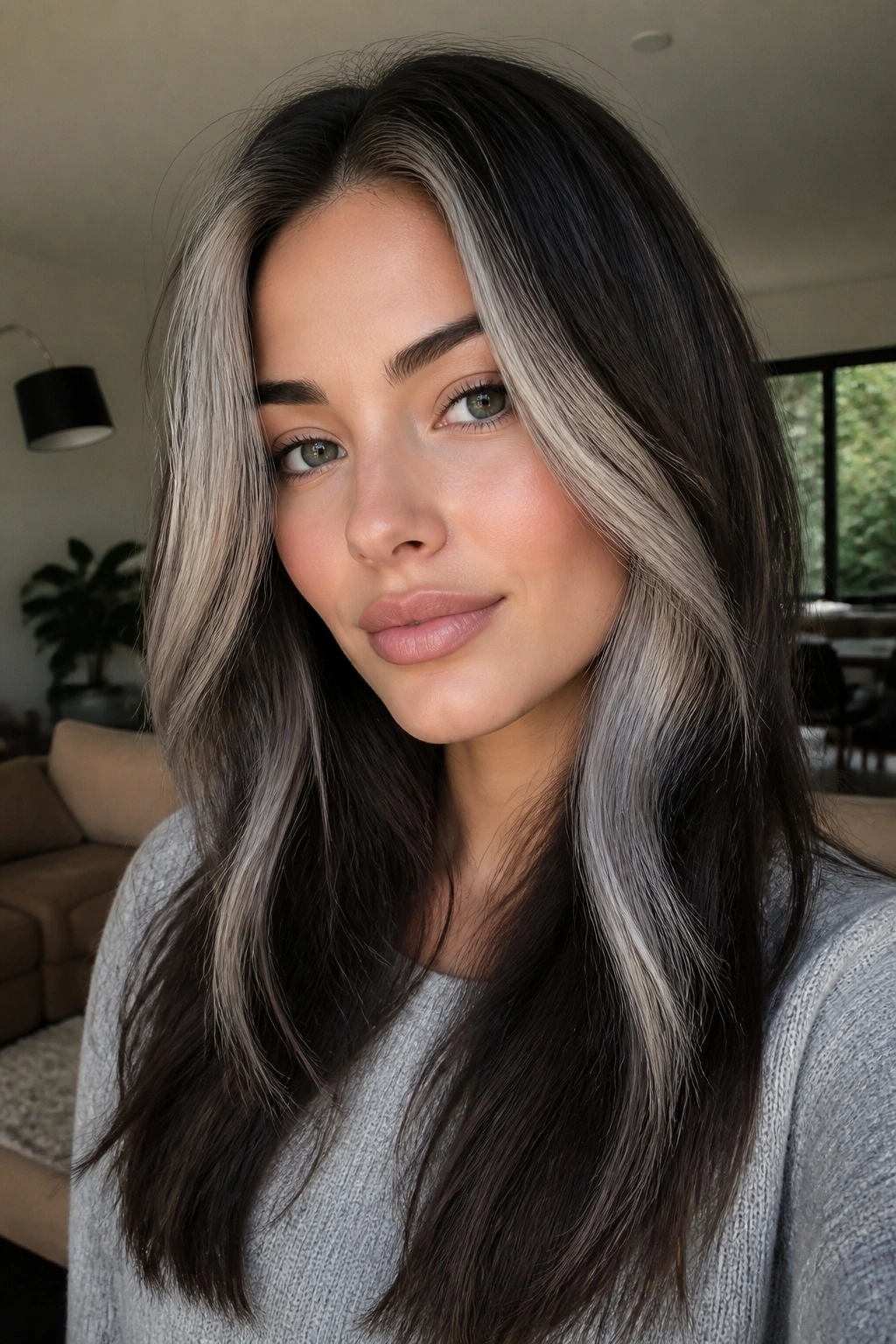
Unlike an all-over silver, an ash gray money piece gives you brightness only where it matters most. The front panels do the lifting around the face, while the rest of the hair can stay deeper, richer, and much easier to live with. For cool skin, that little pop near the cheekbones can be enough.
This is a smart option if you like brunette depth but want a cooler edge. Ask for the face-framing pieces to be lifted to a pale ash blonde, then toned toward silver or smoke. The back can stay at a level 5 or 6 with a cool gloss, which keeps the style grounded.
It’s also a good pick if you get bored fast. You can cut bangs later, wear the front pieces tucked back, or let them grow into a softer face frame without rebuilding the whole color. That kind of flexibility is underrated.
If you want the least commitment with the most payoff, this is the one I’d point to first. It gives you the ash-gray mood without turning your whole head into a project.
7. Pearl Gray with Dimensional Lowlights
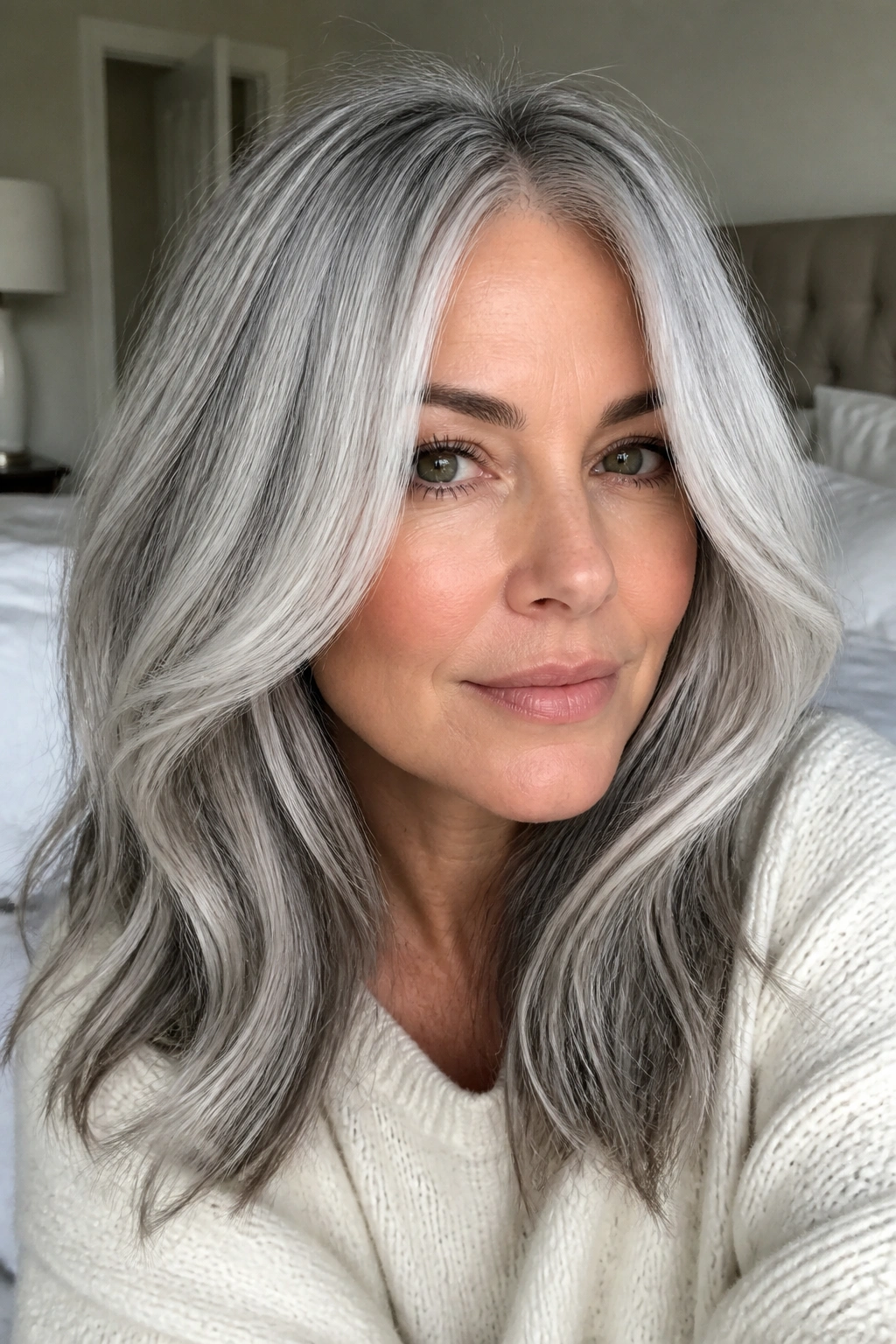
Pearl gray can look dreamy, but only if it has enough depth to keep it from going flat. That’s where the lowlights come in. A few smoky ribbons through the interior layers give the pearl finish some shape, and cool skin gets a softer reflection instead of a blunt silver sheet.
Why It Works
Pearl gray sits lighter and creamier than graphite or gunmetal, so it can look a little washed out if the hair is all one tone. Dimensional lowlights fix that by adding shadow under the top layer. The result is smoother around the face and less icy through the ends.
Good Candidates
- Fine hair that needs movement.
- Medium-length cuts with layers.
- Cool complexions that look best in softer silver, not stark white.
- Hair that already lifts to a pale blonde base.
Try this: blow-dry with a round brush and curve the ends under slightly. The pearl tone looks richer when the cut has shape, not when it hangs limp.
8. Steel Gray Pixie Cut
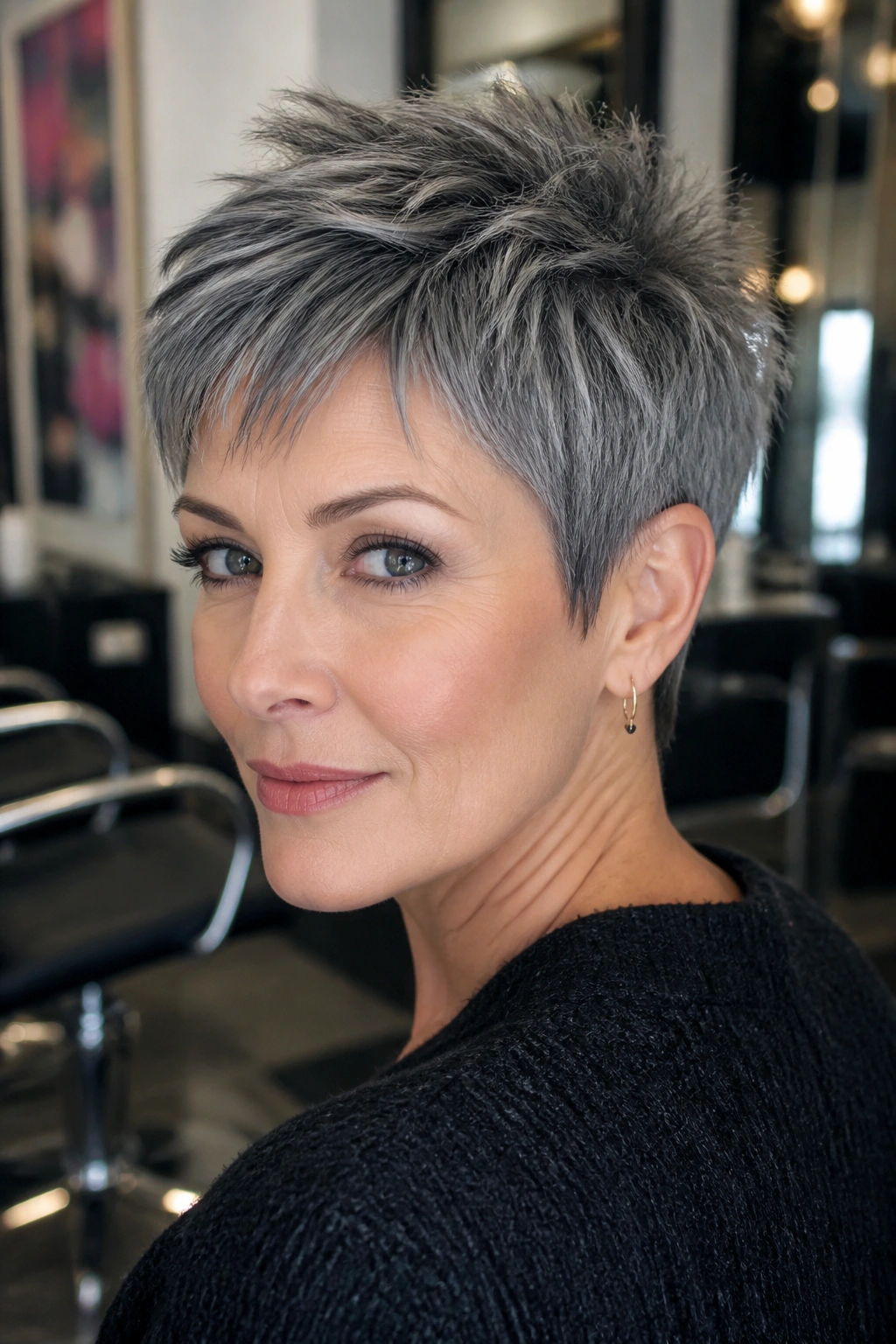
Short hair is where steel gray gets brave. The pixie cut strips away the extra length, so the color becomes the star instead of a background note. That matters with cool skin, because the gray sits close to the face and gives the whole look a crisp outline.
This shade works best when the top stays a little piecey and the sides are kept neat. A heavy, helmet-like pixie can make steel gray feel hard. A softer, feathered top keeps it lively. I’d ask for a cool metallic toner and a few longer bits around the crown so the style can move.
The maintenance is real, though. Short cuts need trims every four to six weeks if you want the shape to stay sharp. That’s not a flaw; it’s just the deal. The upside is that the color looks cleaner for longer because the haircut itself does some of the polishing.
A dab of matte paste is usually enough. Too much shine product and you lose the metal effect.
9. Smoky Lilac-Gray Blend
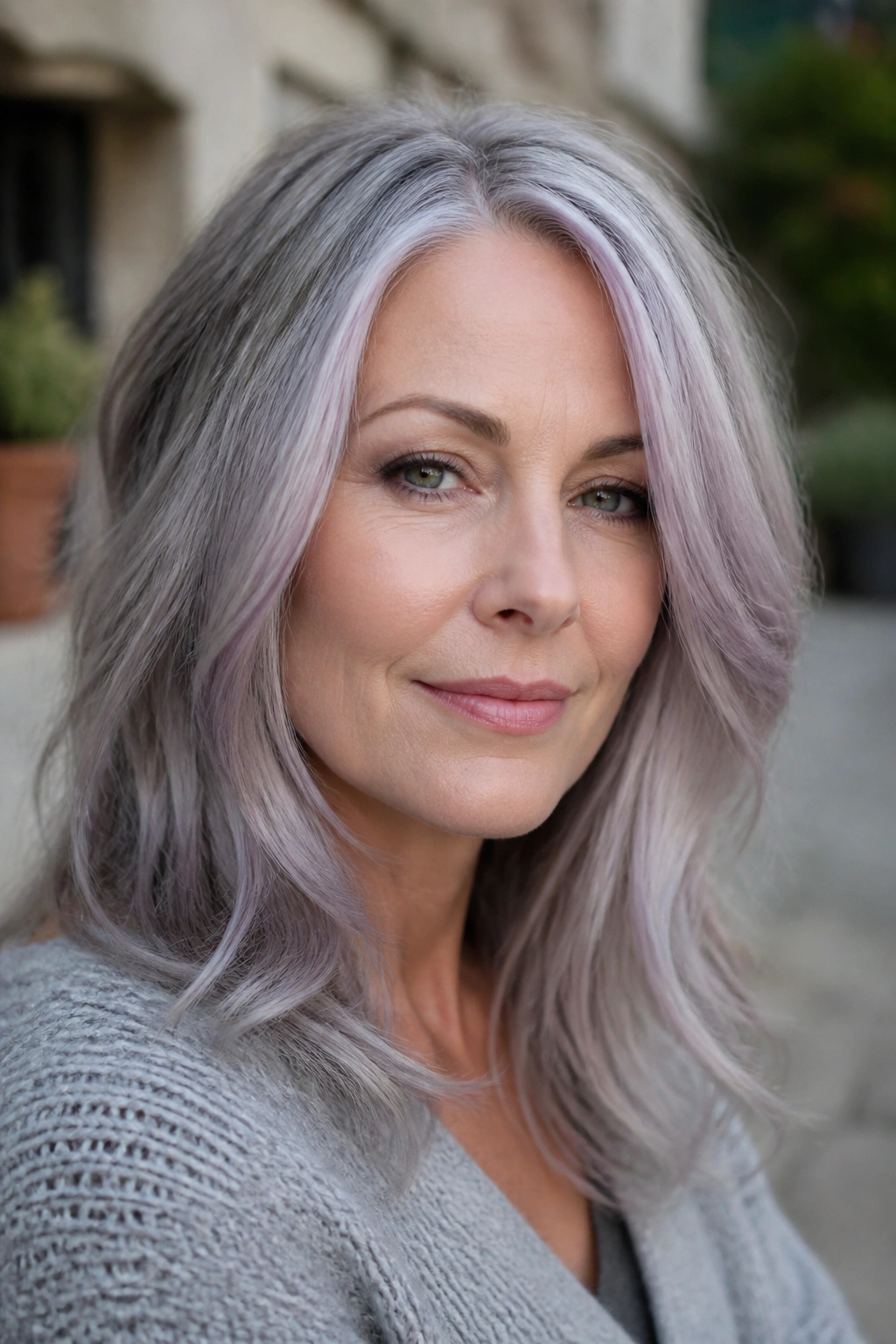
Need ash gray that does not feel severe around the face? Smoky lilac-gray is a smart detour. The lilac note softens the edge of the gray, and on cool skin that faint violet cast can make the complexion look calmer instead of washed out.
Where the Lilac Lives
The trick is restraint. You do not want purple hair. You want a gray base with a whisper of lavender, almost like the color got dipped in cool dusk light. A toner in the violet family usually does the job on a pale blonde base, and a colorist can keep the lilac strongest around the top layers or the face frame.
This is one of my favorite choices for people who want something less expected than plain silver. It still reads cool, but it has a little personality. Blue eyes, gray eyes, and rosy skin tend to wear it well.
How to Wear It
- Keep makeup cool-toned or neutral.
- Ask for a smoky violet gloss, not a bright pastel.
- Use a heat protectant before styling; pale tones fade fast under high heat.
10. Salt-and-Pepper Blend
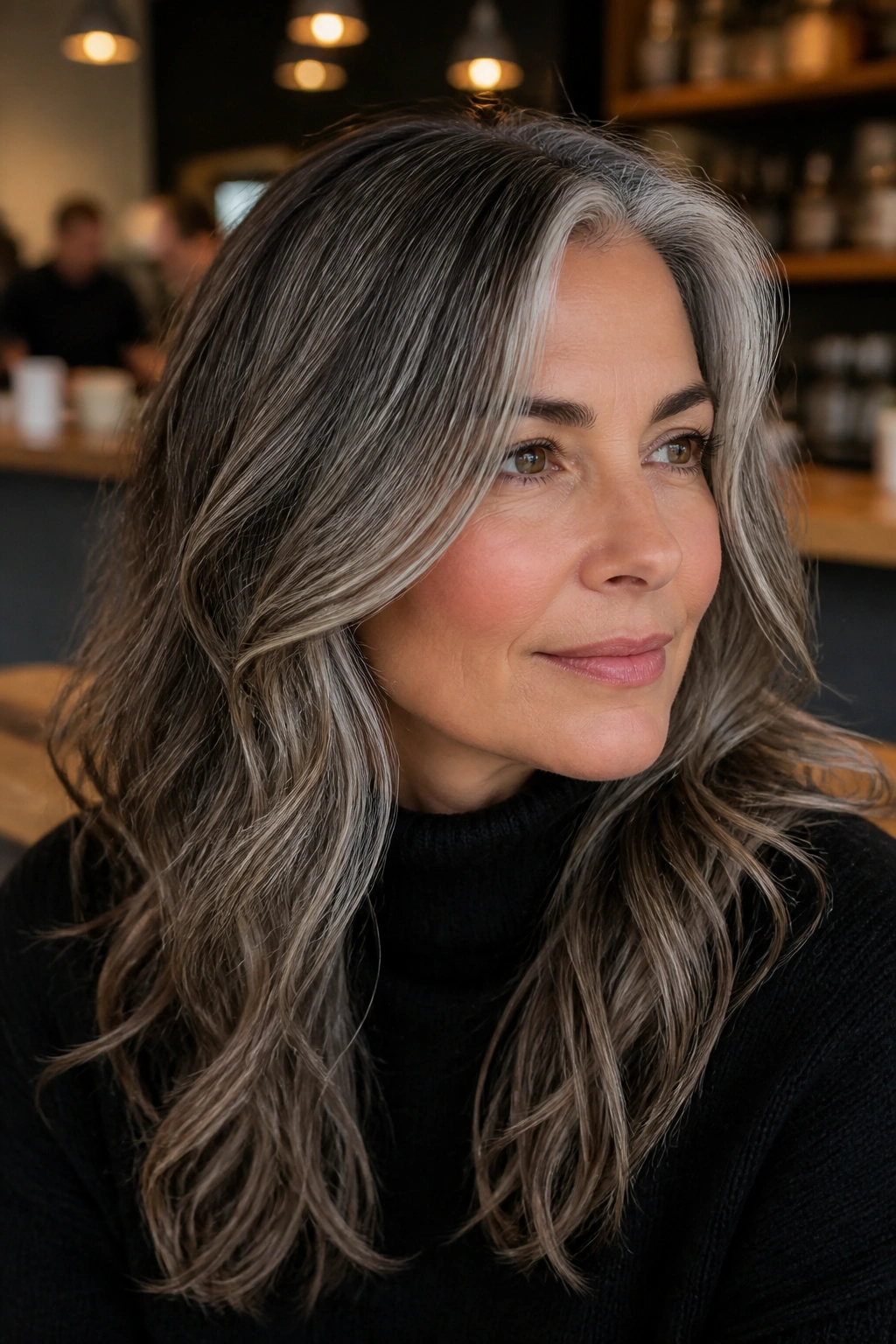
If silver is already threading through your hair, don’t fight it. A salt-and-pepper blend turns the mix into a style choice instead of a phase you’re trying to hide. On cool skin, the natural contrast often looks fresher than a full dye job.
The best versions keep the darker strands soft at the root and let the silver pieces sit in streaks rather than blocks. A gloss can soften the transition so the gray feels polished, not rough. If the base is very dark, a few cool lowlights help the silver sit more naturally.
- Best for people growing out natural gray.
- Works well with layered cuts and shoulder-length hair.
- A cool glaze keeps the silver from turning yellow.
- Loose waves help blend the dark and light pieces together.
What I like here is the honesty of it. It doesn’t pretend to be something else. It just looks deliberate, and that’s often more stylish than a perfectly dyed head.
11. Frosted Ash Ombré Waves
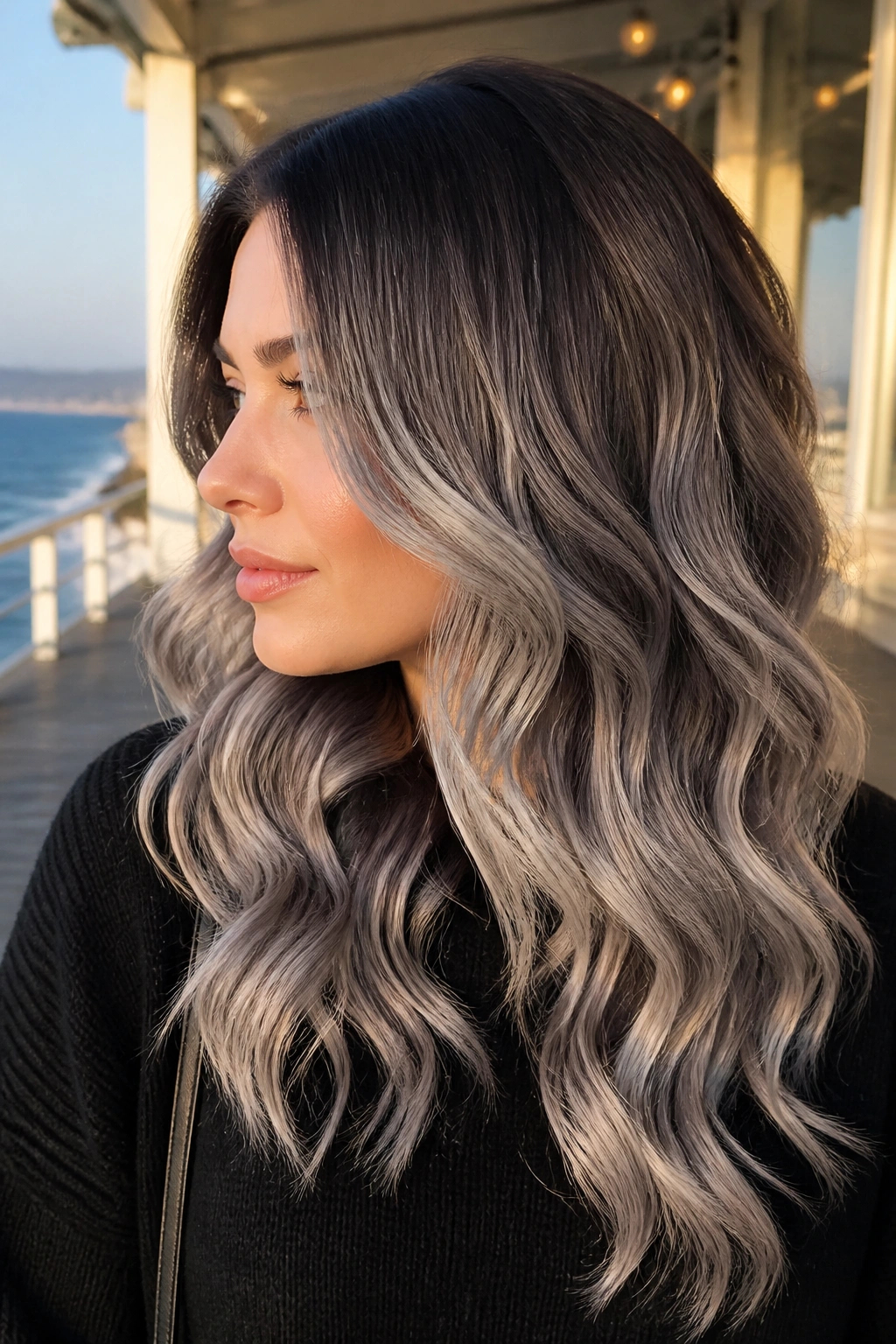
Frosted ash ombré is one of those colors that looks best when the hair moves. The darker root gives you a base, the mids soften into smoke, and the ends go frosty enough to feel light without turning white. On cool skin, that gradual shift keeps the face from getting flattened by too much brightness.
Waves matter because they break up the long gradient. A large barrel iron or loose bend makes the transition from dark to pale feel natural, almost like the color happened outdoors over time. On straight hair, the same ombré can read a little blocky if the line between shades is too clean.
There’s also a practical upside. Ombré grows out better than a full all-over silver, which means fewer frantic salon visits. The root stays part of the look. That’s a relief if you like gray tones but don’t want to babysit them.
This shade has a nice balance of soft and sharp. Not too icy. Not too brown. It sits right in the middle, which is often where cool skin looks happiest.
12. Blue-Gray Smoky Brunette
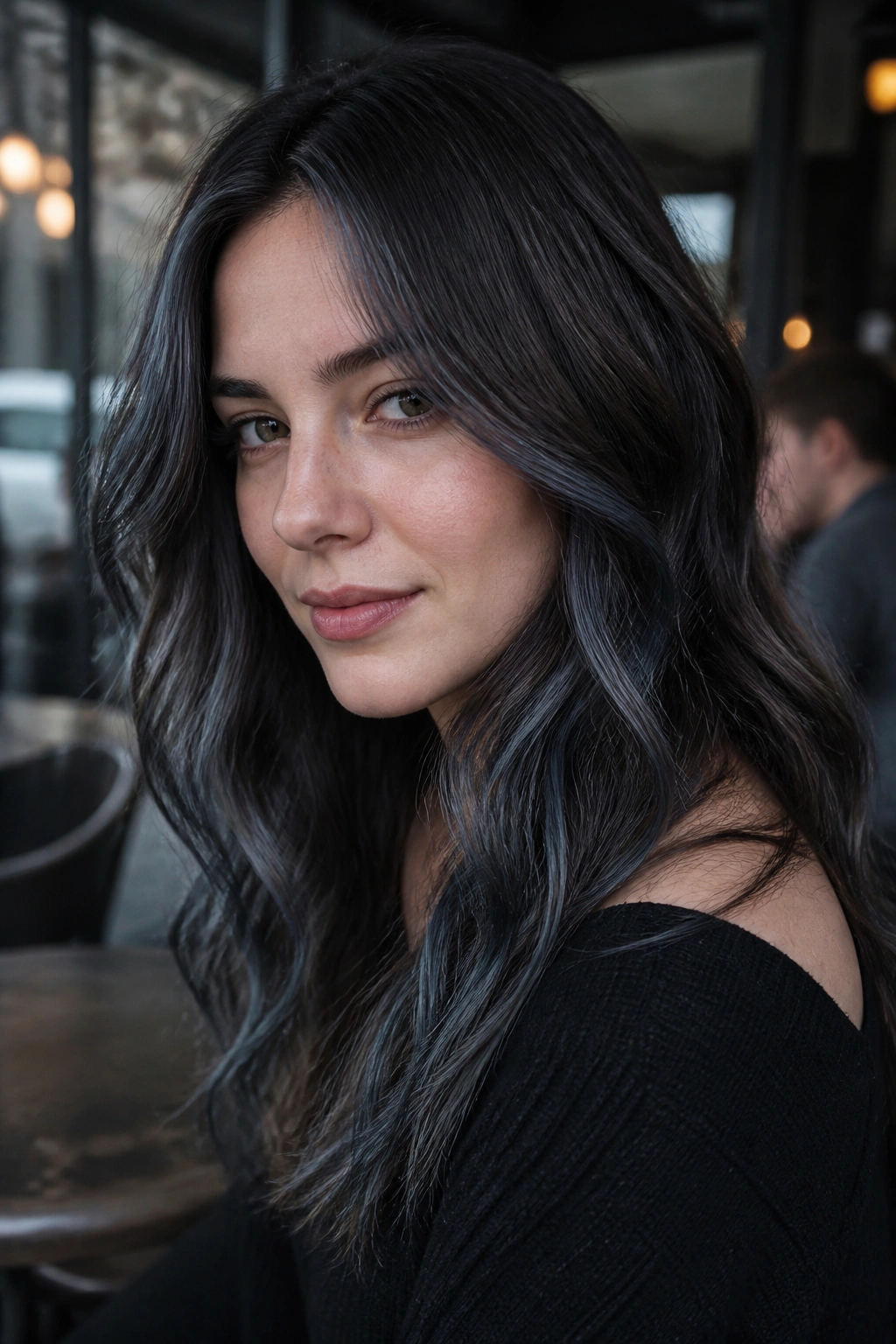
Blue-gray smoky brunette is moodier than mushroom gray, and that small shift changes everything. Instead of beige softness, you get a cooler, deeper cast that plays well with cool skin and darker eyes. It feels less sweet and more polished.
The reason it works is simple. Brown hair already carries warmth, so adding a blue-gray overlay cuts that warmth down without erasing the depth. A colorist can keep the base around a level 5 or 6, then glaze the surface with a blue-violet toner so the finish stays smoky instead of flat.
This is the shade I’d point to if you want gray but hate the idea of lightening your hair to the ceiling. It’s still clearly ash-toned, but it keeps the brunette identity intact. That makes grow-out easier too, because the new growth blends into the darker base instead of shouting at you.
Best for people who want cool, dark, and a little moody. That’s the lane.
13. Ash Gray Curtain Bangs with a Silver Veil
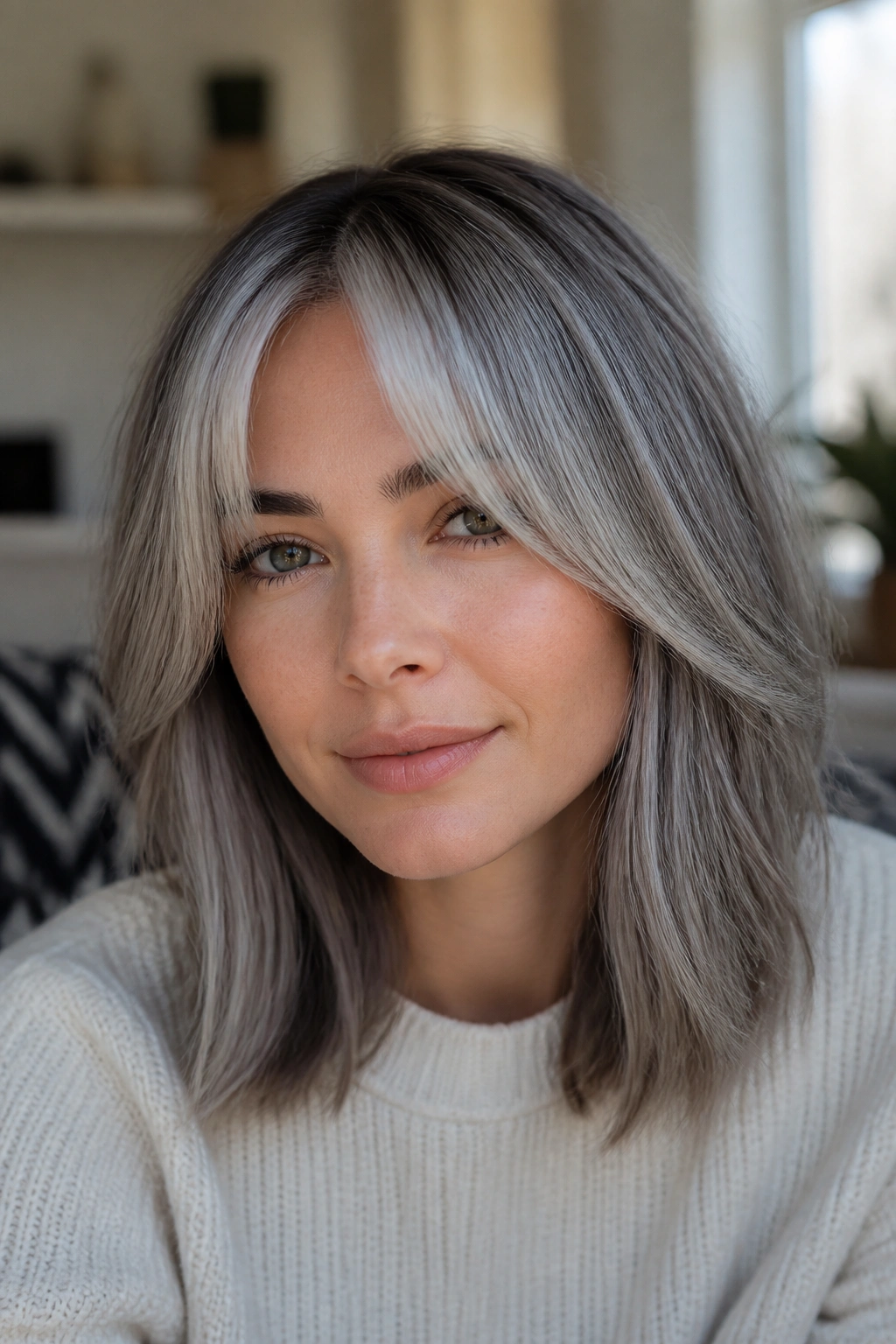
Curtain bangs can make ash gray look softer before the rest of the cut even matters. The front pieces sit closest to the face, so a silver veil there gives cool skin a clean frame without flooding the whole head with brightness.
Why the Bangs Matter
A blunt bang can feel heavy with gray. Curtain bangs split the difference and let light pass through. That tiny opening in the middle keeps the color from feeling dense, and it gives the hair a little swing when you walk.
The silver should be lighter through the fringe than through the lengths. That contrast makes the bang area look airy, which is where a lot of ash shades win or lose. If the front is too dark, the color disappears. If it’s too pale, the rest of the style can feel detached. Middle ground is the sweet spot.
Quick Notes
- Best on shoulder-length cuts and lobs.
- Ask for a cool silver ribbon through the bang area.
- Keep the fringe a touch lighter than the back.
- Round-brush styling helps the color sit softly around the eyes.
A good trick: if your face needs a little more brightness, let the bang pieces start a half inch farther back than you think. It looks less harsh.
14. Gunmetal Gloss on Straight Hair
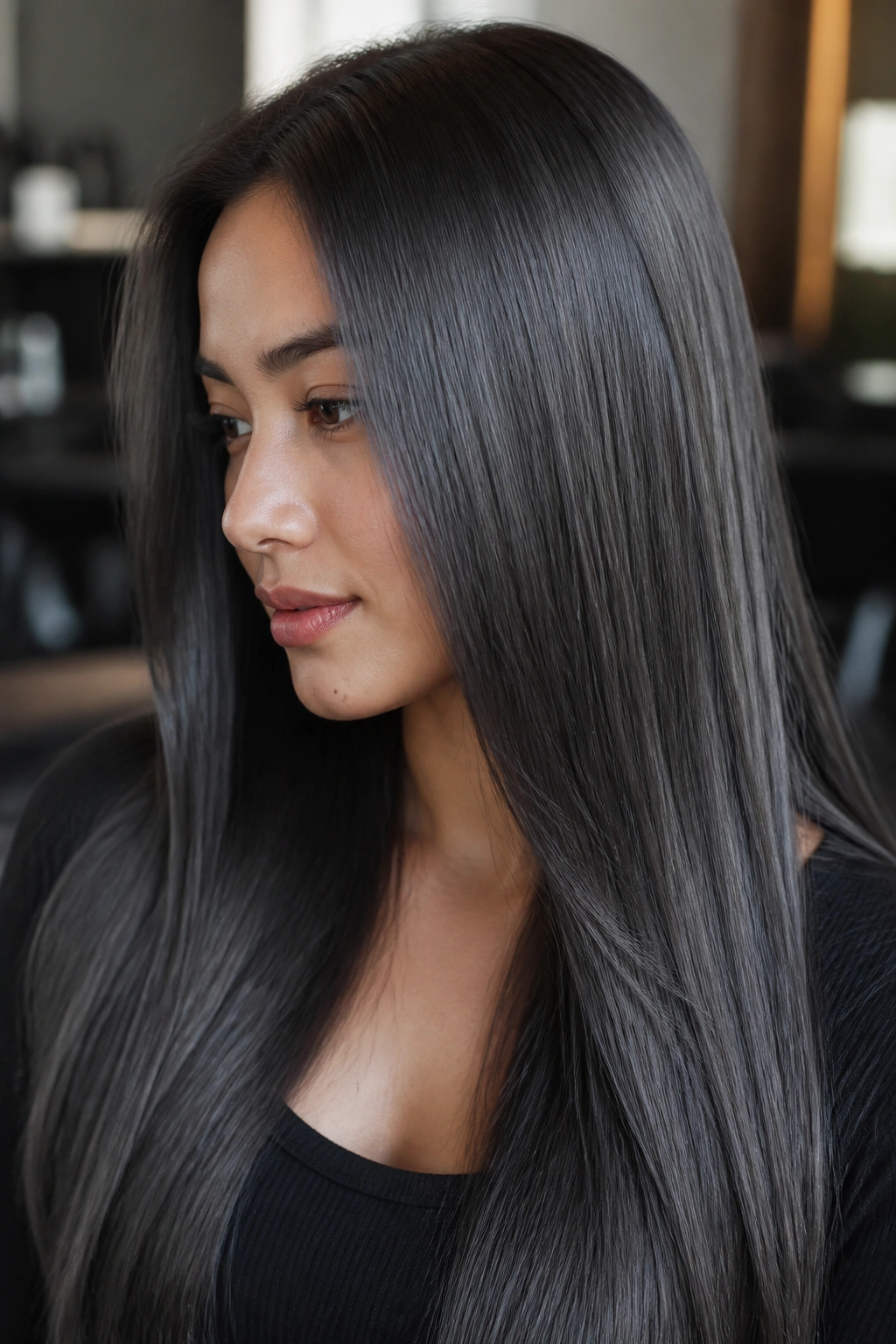
Gunmetal gloss looks made for straight hair. The smoother the surface, the more that metallic gray finish shows up, and cool skin benefits from the dark, reflective depth. It feels sleek without tipping into plain black.
The key is shine control. Straight hair already reflects light well, so you do not need a pile of serum or oil to sell the look. A light gloss, a smooth blow-dry, and a flat iron pass at a safe temperature are usually enough. Too much product and the gray starts looking greasy instead of metallic.
I also like this shade on medium to deep bases because it keeps some shadow in the color. That shadow is what gives the gunmetal finish its edge. Without it, the hair can look washed-out silver, which is a different effect entirely.
This is a strong choice if you wear structured clothes, sharp makeup, or simple makeup with a bold lip. The hair does not need to fight for attention. It already has it.
15. Feathered Ash Shag
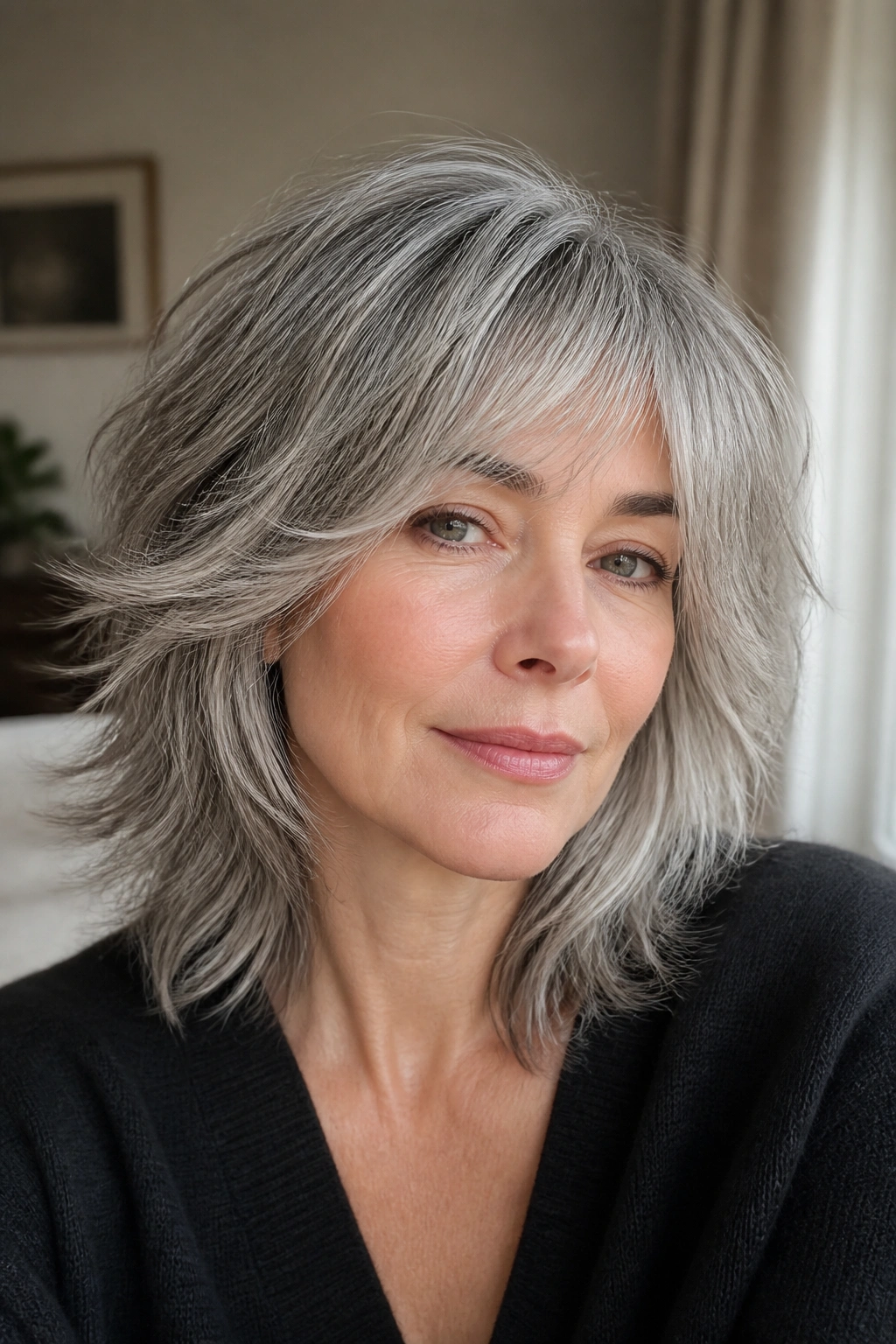
Why does a shag make gray feel less severe? Because the layers break the color into pieces. Ash gray on a feathered shag never sits still for long, and that movement keeps cool skin from looking overpowered by one flat tone.
The cut matters almost as much as the shade. Shorter layers around the cheekbone and collarbone stop the gray from reading heavy, while the feathered ends give it a softer edge. If the hair is thick, the shag also helps remove bulk, which lets the silver and smoke show up in different places.
Styling the Layers
- Rough-dry the roots for lift.
- Use a light mousse, not a stiff gel.
- Scrunch or twist the ends while drying.
- Keep the finish airy, not polished to death.
This one suits people who like a lived-in shape more than a tidy, sleek finish. The cool tone feels easier when the cut has some mess to it. A shag gives you that in a way a straight one-length cut never will.
16. Metallic Dove Gray Curls
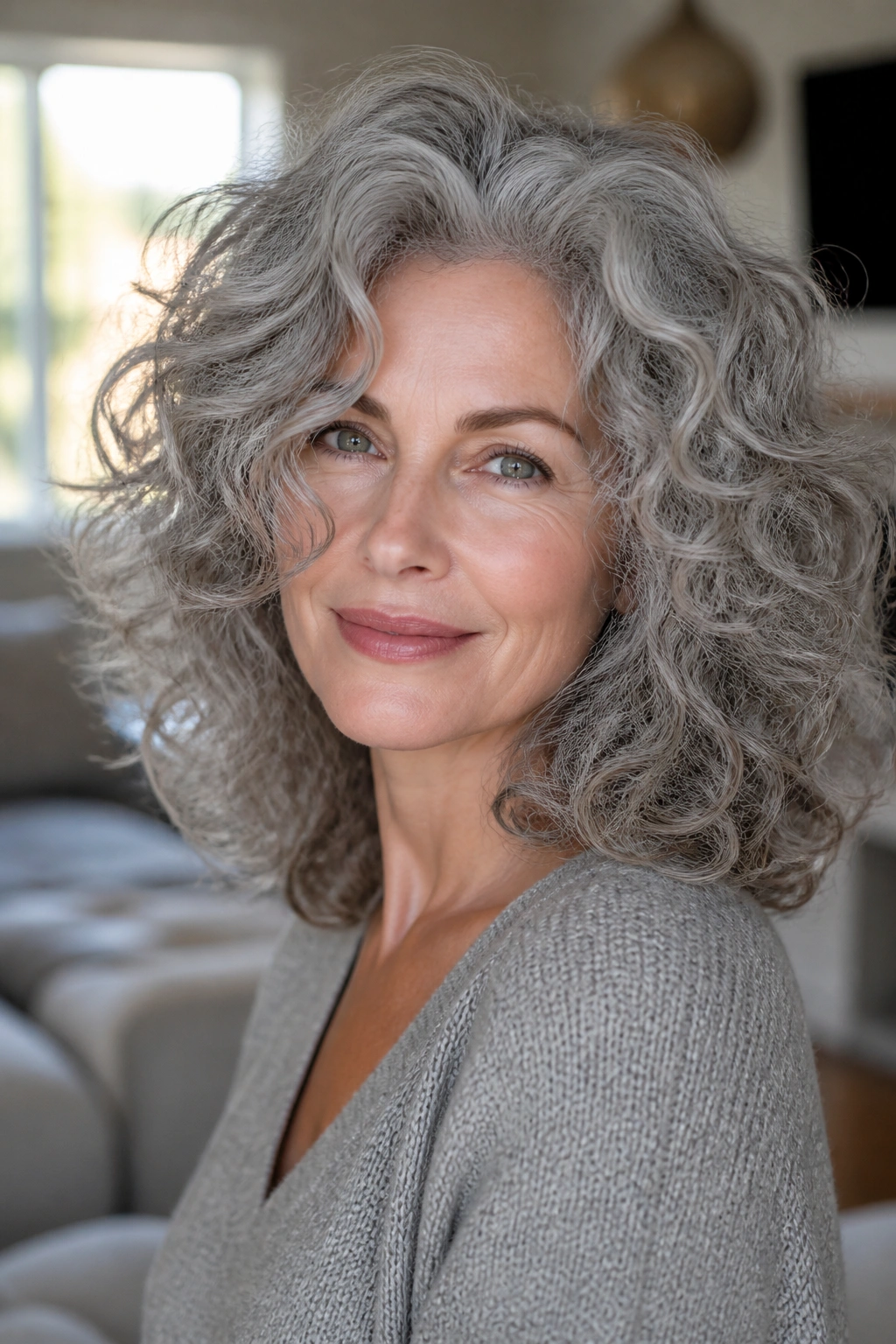
Curls can carry gray beautifully when the tone stays soft enough. Metallic dove gray sits between silver and smoke, which helps ringlets keep their shape instead of looking harsh. On cool skin, that soft metal finish often looks gentle and bright at the same time.
The biggest thing with curls is moisture. Lightened curls need more hydration than straight hair because the cuticle is already working harder. If the hair feels straw-like, the gray will look dusty. A leave-in conditioner and a weekly mask are not fancy extras here. They’re part of the color plan.
Key Details
- Best on loose to medium curls that hold shape.
- Ask for a cool glaze with enough depth to keep the curl pattern visible.
- Diffuse on low heat so the tone doesn’t frizz out.
- Trim the ends regularly; light colors show split ends fast.
The nice part is that the texture does half the styling for you. Dove gray in curls feels softer than the same tone on pin-straight hair, and that softness is usually what cool skin wants.
17. Peekaboo Ash Underlayer
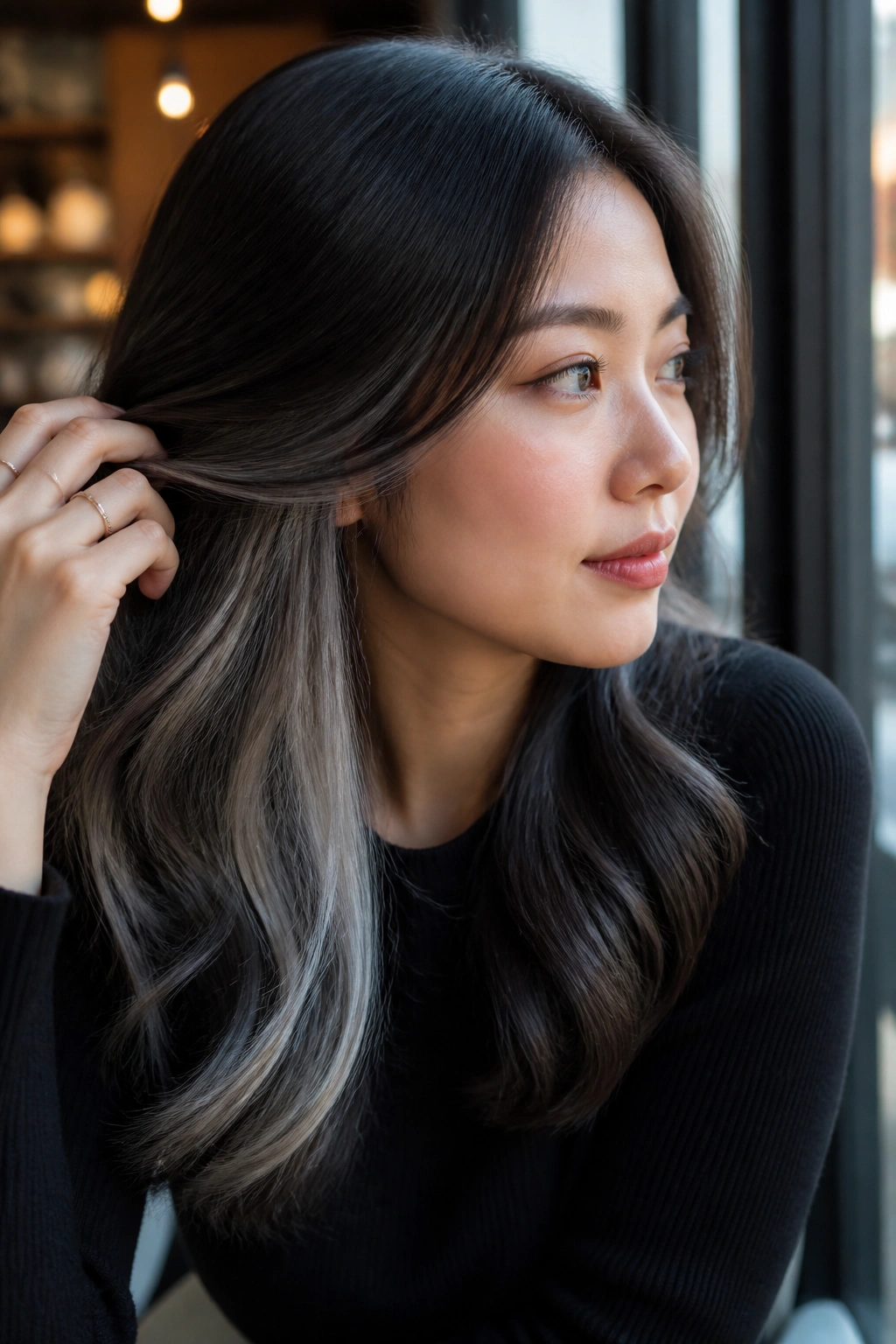
A peekaboo ash underlayer is for the person who wants gray to appear in motion, not in every mirror. The top layer stays deeper, often brunette or smoky brunette, while the hidden layer underneath turns silver, ash, or graphite. When the hair swings or gets tucked behind the ear, the gray flashes through.
This is a smart choice if you work somewhere conservative or if you’re not sure how much silver you want on display. It gives you the ash-gray feeling without making the whole head read light. On cool skin, the hidden brightness near the face can still wake everything up when you wear the hair up or half-up.
I also like how forgiving it is. If you get tired of the contrast, you can simply wear the top layer down and let the gray hide more. Not every color has to shout. Some of the best ones whisper until the hair moves.
The only catch is that the payoff depends on styling. If your hair always stays tucked the same way, you won’t see much of the surprise.
18. Mirror-Sheen Silver Lob
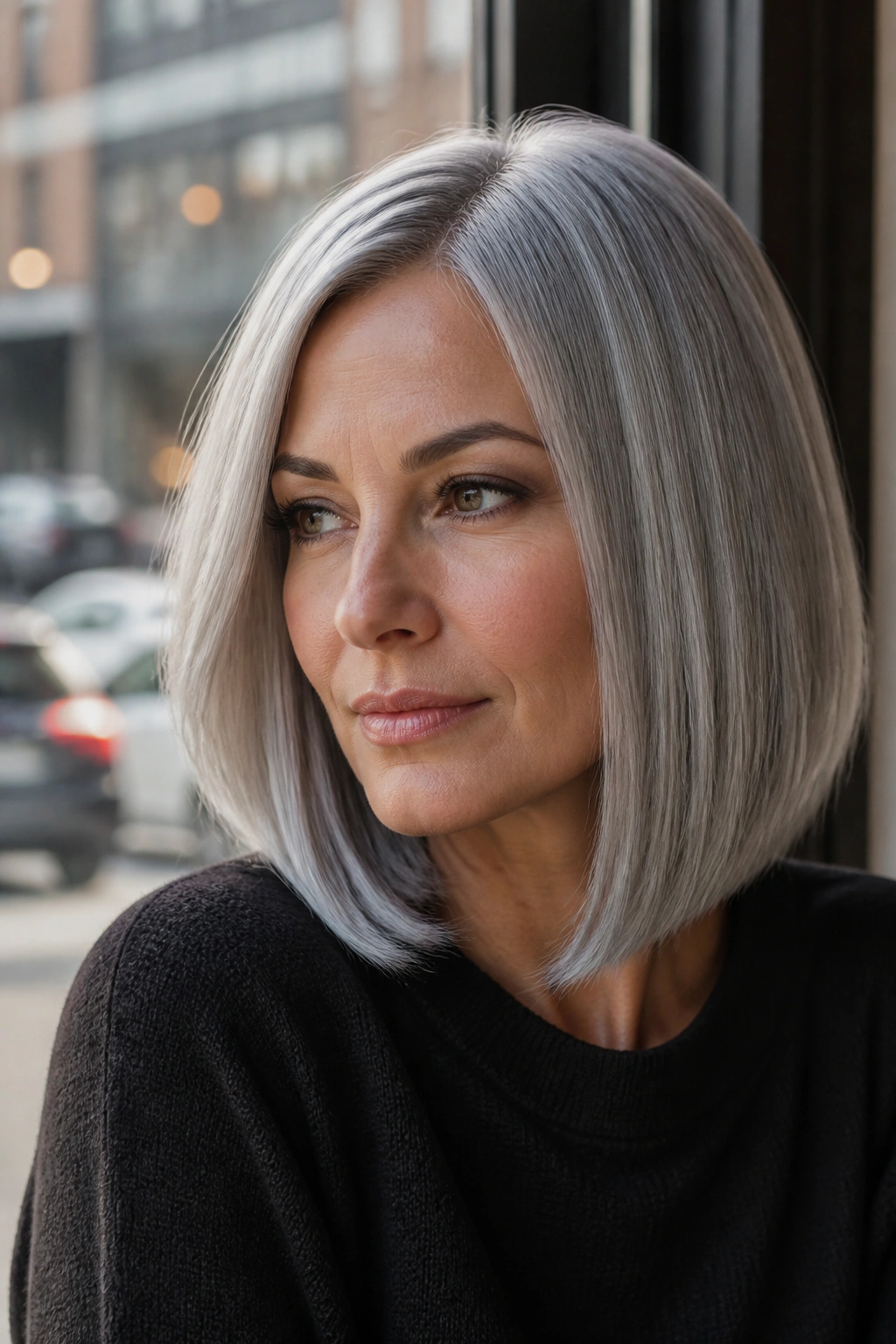
A mirror-sheen silver lob gives you more swing than a bob and less fuss than long hair. That middle length is useful because the color has room to move, but the ends don’t drag the whole look down. Cool skin usually likes that kind of clean, polished balance.
The lob works best when the silver is bright but not white. A pale ash toner over light blonde gives the ends a reflective finish without making the whole style look washed out. If your hair is ultra-fine, keep some depth at the root so the cut doesn’t disappear into your face.
This is also one of the easier gray looks to style day to day. A quick blow-dry with a smoothing brush can make it look sharp, while loose bends make it feel softer. Either way, the length stays manageable.
If you want a version of silver that feels grown-up but not stiff, this is a strong choice. It has enough structure to look intentional and enough movement to stay interesting.
19. Ash Gray Frosted Ends on Deep Mocha
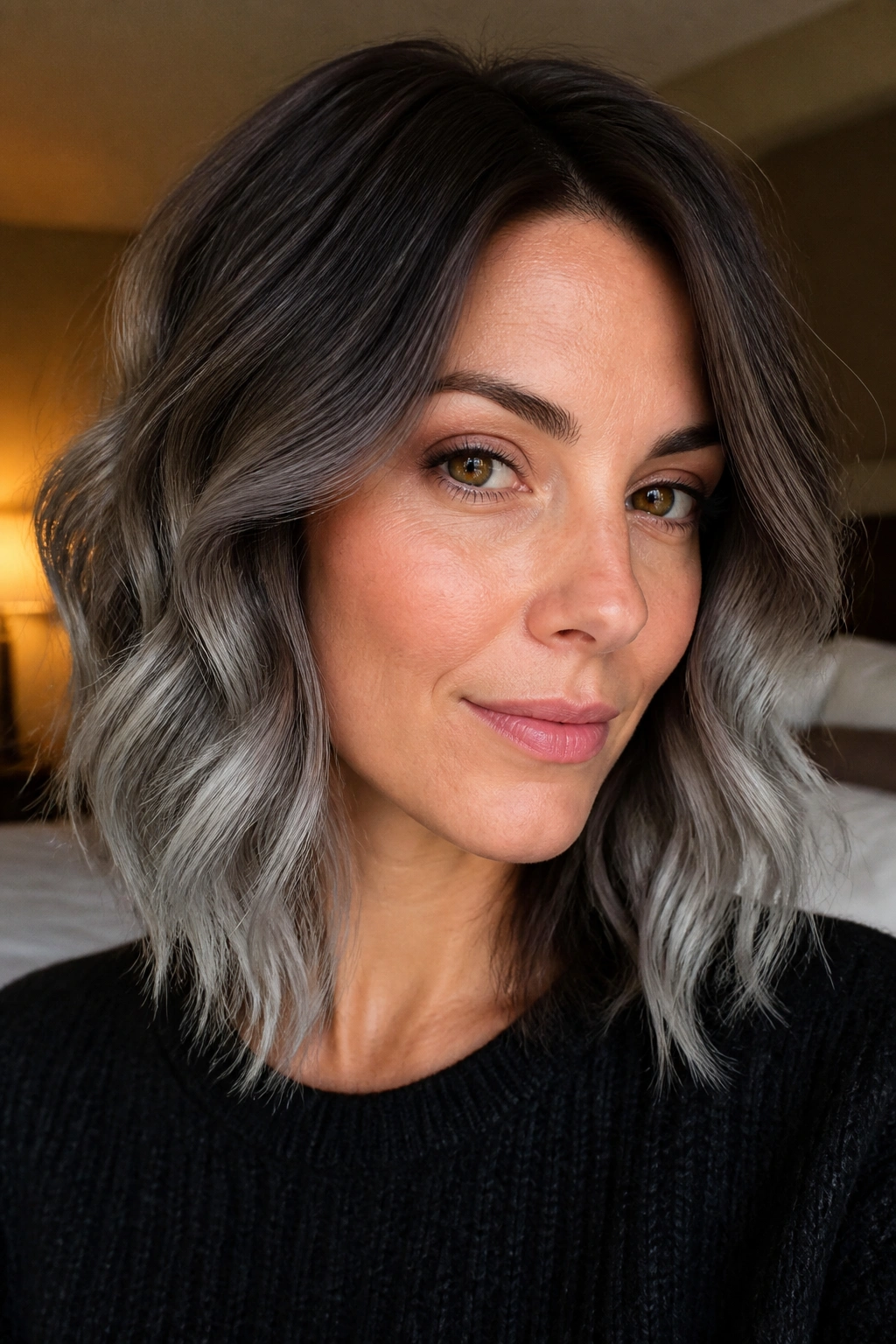
Frosted ends on deep mocha roots are a clever way to wear ash gray without bleaching your whole head. The dark base keeps the color grounded, while the pale ends give you that cool, frosted finish near the shoulders. On cool skin, the contrast can look clean and deliberate.
Why It Works
The deep mocha root acts like a frame. It makes the lighter ends feel brighter than they are, which means you don’t always need the palest possible silver to get impact. That matters if your hair lifts unevenly or if you want to keep some depth for shape.
Good Candidates
- Medium to deep brunettes who want a gray accent.
- Hair with some natural wave or bend.
- People who want less maintenance than full silver.
- Cool complexions that can handle contrast near the face.
One small warning: keep the frosted ends a little smoky, not yellow-white. Pure white can go greenish or flat on some brunettes, and nobody needs that surprise.
This is one of the more wearable ideas on the list, especially if you like dark hair but want the gray trend without losing your base completely.
20. Slate Gray Smoke Melt
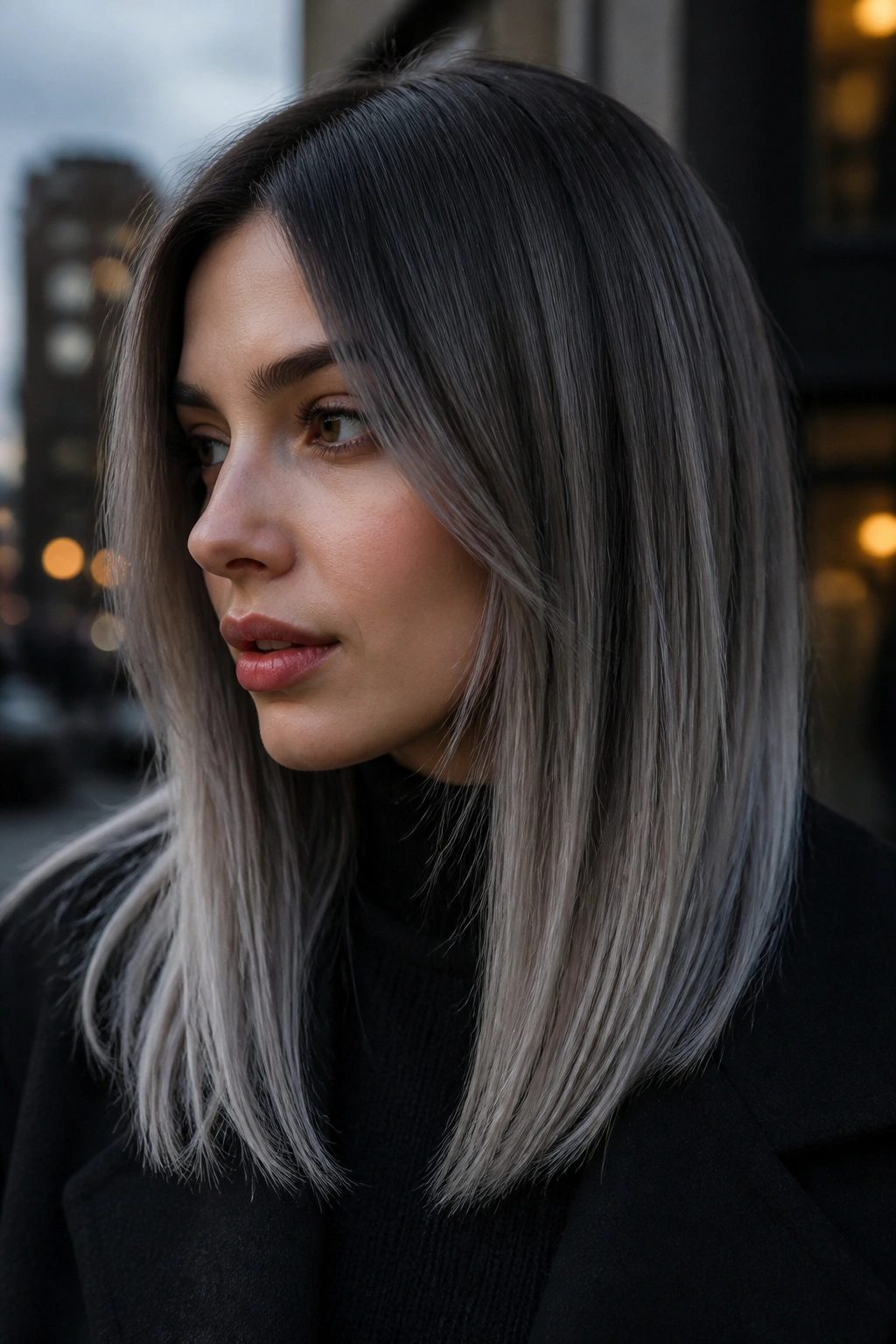
Slate gray smoke melt is the shade I’d point to when someone wants one color that still looks good after it grows out. It sits between charcoal and silver, with enough depth to keep cool skin from getting washed out and enough lightness to feel modern. The best versions look like they were blended with patience, not slapped on in one pass.
This is a strong choice if you want gray but don’t want to live in the brightest end of the color spectrum. Slate gives you that moody, urban feel without the hard edge of gunmetal. It also works on more textures than people expect. Straight hair shows off the smooth fade, waves break it up, and curls make the different tones pop in little flashes.
I’d keep the root a touch deeper and let the smoke live through the mids and ends. That gives the face some shape and keeps the gray from going flat under indoor light. A gloss every few weeks helps, but the cut does a lot of the work if the layers are placed well.
If I had to choose one ash-gray family that covers the most ground for cool skin, this would be near the top. Quiet, yes. Boring, no.
