



White hair looks expensive when the tone is right—and flat, chalky, or yellow when it isn’t. For cool skin tones, that difference is even sharper. The cleanest whites echo the blue, pink, or rosy cast in the skin, while creamy or buttery whites can make the face look dull by comparison.
That’s why white hair color ideas for cool skin tones need more thought than “go lighter.” White is built from lift, toner, gloss, and sometimes a shadow root or a soft glaze. If the hair isn’t lifted to a pale enough stage, the white turns dingy. If the toner sits too long, it can go gray or overcool. If the hair is porous, it can drink up pigment fast and lose that crisp finish by the second wash.
The good news is that white hair is not one look. It can be sharp, pearly, smoky, metallic, frosted, or almost opalescent. It can sit on a pixie, a bob, long waves, or a shaggy cut, and the shape changes how the color reads just as much as the toner does.
Cool skin loves contrast, but not always the same kind of contrast. Some faces need a hard white; others need a softer silver-white or a root melt to keep the look balanced. That’s where the fun starts.
1. Arctic White on a Short Crop for Cool Skin Tones
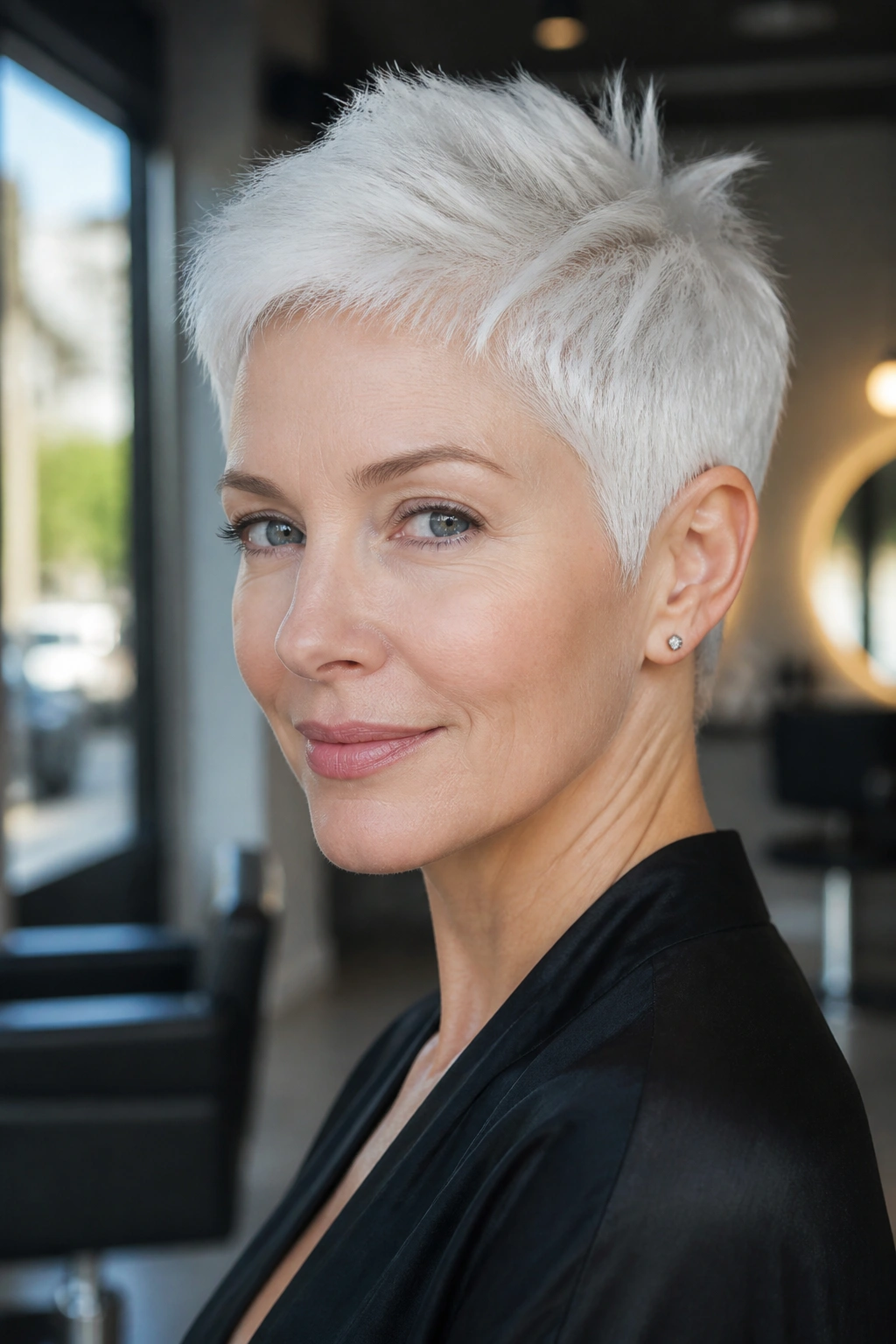
If you want the cleanest, starkest white, this is the one. Arctic white on a short crop has a sharp, almost snow-bright finish that looks fantastic when the cut is neat and the edges are crisp.
Why It Flatters Cool Undertones
Cool skin usually has pink, blue, or neutral-pink undertones, and arctic white echoes that chill in the face. It does not fight the skin the way a warm cream or beige white can. Instead, it gives the whole look a clear, bright frame.
A short crop helps because there is less hair to process and less room for uneven tone. A pixie, buzzed nape, or close bob also keeps the white from feeling heavy. Long, blunt lengths can make this shade look icy in a good way, but they can also make regrowth and dryness more obvious.
What To Ask For
- Lift to level 10 or the palest yellow your hair can safely reach.
- Ask for a violet-silver toner rather than a beige or gold toner.
- Keep the finish glossy, not flat. White hair without shine can look dusty.
- Plan on touch-ups every 3 to 5 weeks if you want the edges to stay crisp.
One blunt tip: pair this shade with defined brows. Without that contrast, the hair can wear the face instead of framing it.
2. Pearl White With a Violet Gloss
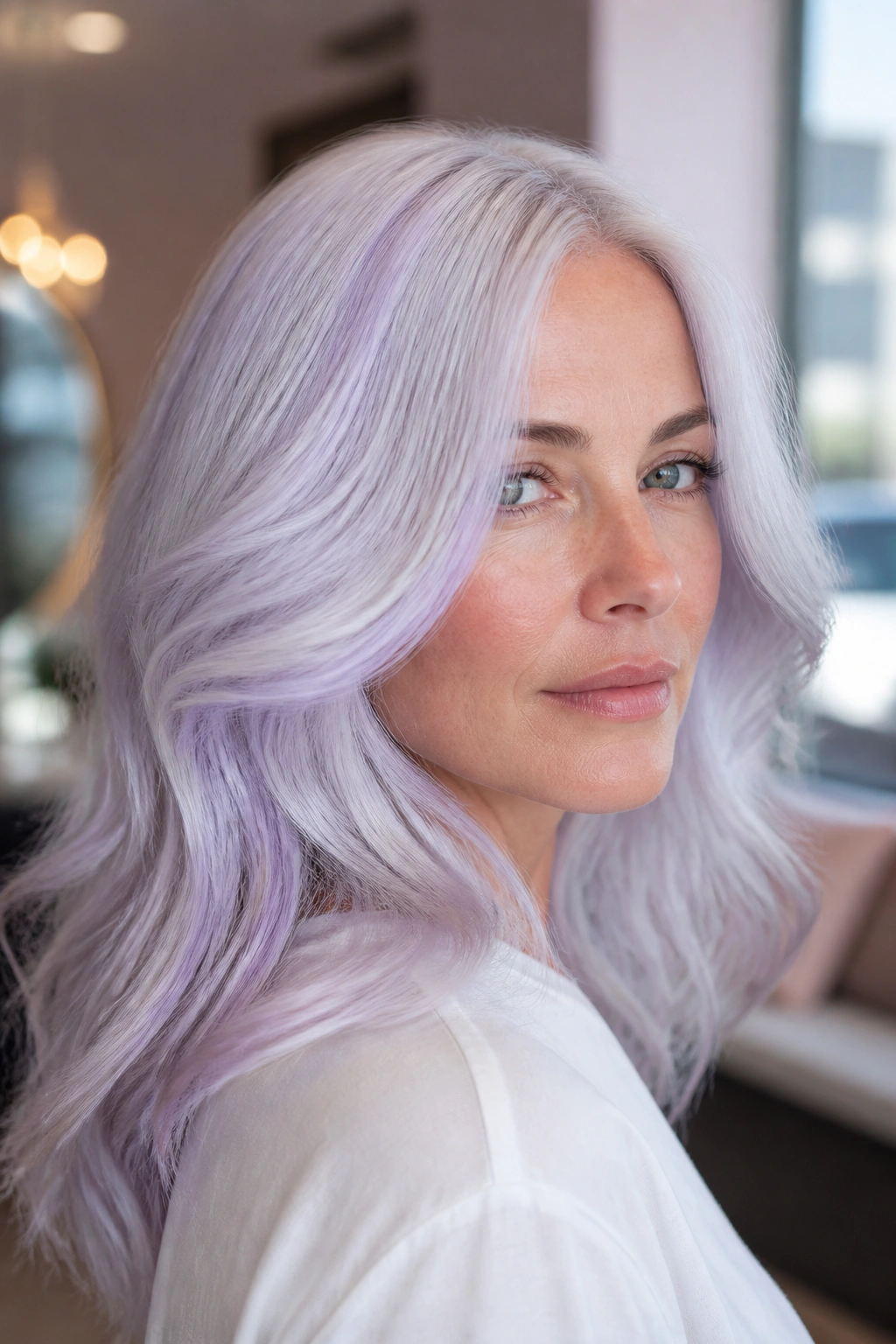
Pearl white is the softer cousin of arctic white, and I reach for it when someone wants brightness without the hard edge. A pearl white gloss gives the hair a shell-like glow that still reads white, just less severe.
The violet piece matters. A sheer violet gloss cancels the last trace of yellow and leaves behind a cool, luminous veil. On cool skin, that faint tint keeps the face looking fresh rather than washed out. It is especially good if your skin leans rosy and your features are softer around the eyes or mouth.
This shade works well on bobs, collarbone-length cuts, and smooth blowouts. It can feel a little too neat on extremely layered hair, where the texture steals the shine. Ask for a translucent gloss, not an opaque toner, because you want the white to feel like it has depth when the light hits it.
Pearl white is one of those shades that looks expensive without screaming for attention. Quiet, but not shy.
3. Silver-White Balayage That Softens the Grow-Out
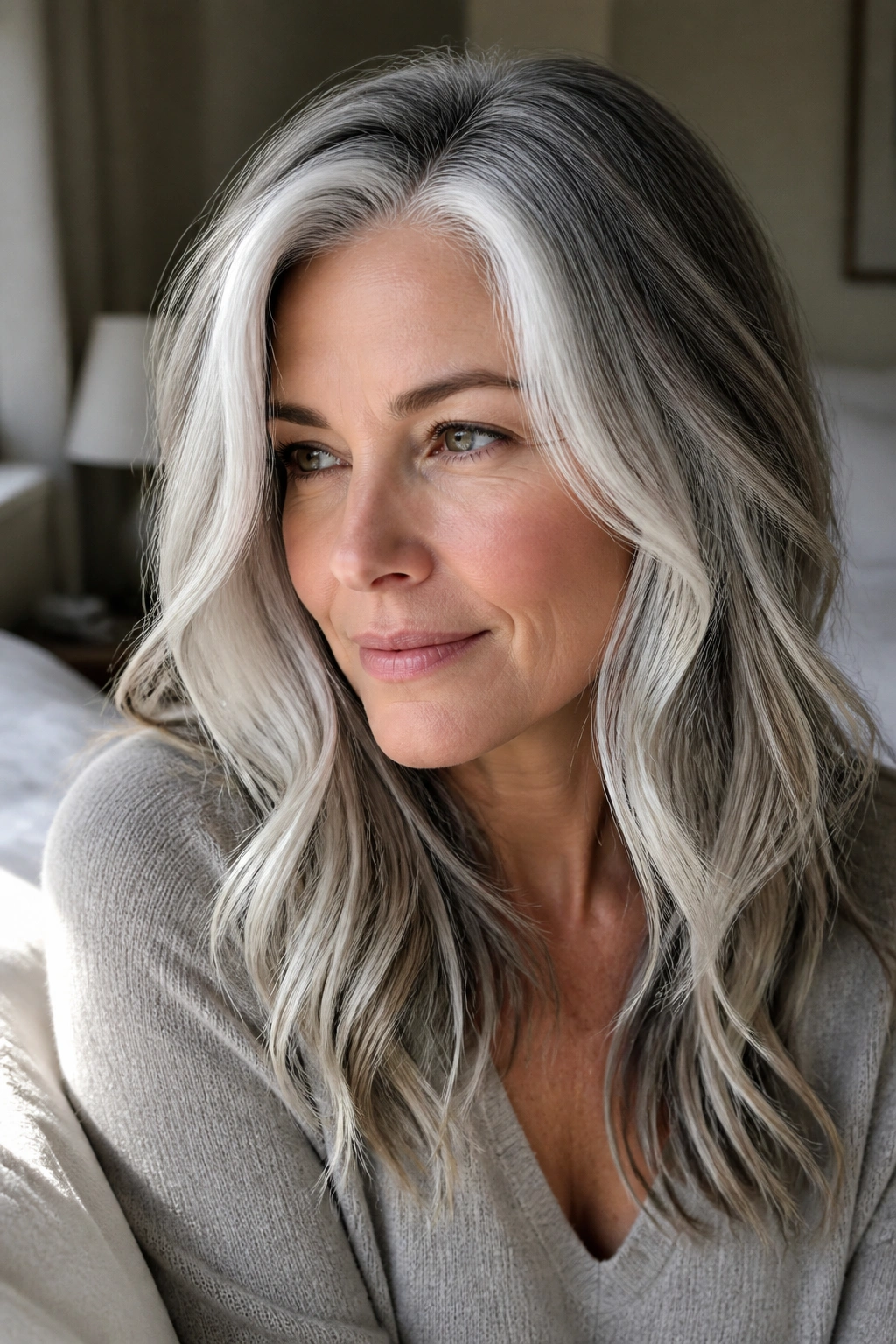
Want white hair without a hard line at the root? Silver-white balayage is the move. The hand-painted placement lets the brightest pieces sit through the mids and ends while the base stays softer and more natural.
How To Wear It
- Ask for the lightest pieces around the face and crown.
- Keep the root about one to two levels darker than the lengths.
- Wear it wavy if you can; the movement helps the silver and white pieces blend.
- Use a toning shampoo only when the ends start to look yellow, not every wash.
Balayage works especially well for cool skin because the silver pieces act like little flashes of light without making the whole head look stark. If your face has delicate features, this version gives you the brightness you want and a little softness where you need it.
It also grows out better than an all-over white. That matters. A lot. White roots can look obvious fast, and balayage buys you breathing room between appointments.
4. Opal White on Long Waves
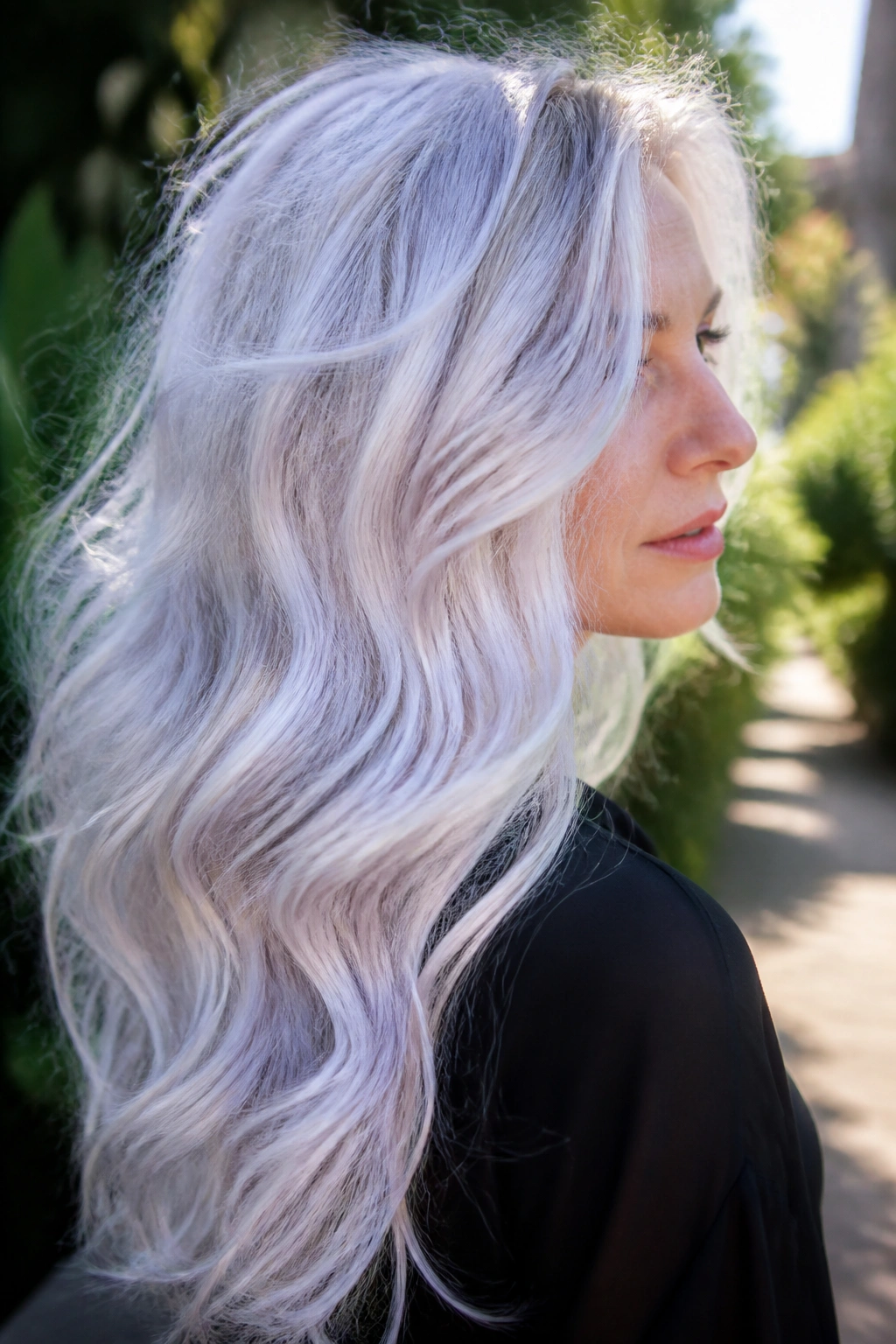
On long waves, opal white does something a flat platinum can’t. It shifts. A little silver here, a whisper of pearl there, maybe a faint violet cast when the light hits from the side. The result still reads white, but it has movement in it.
That movement matters on cool skin tones. Opal white picks up the coolness in the face and reflects it back without looking harsh. If your skin is very pale and you like a soft, luminous finish rather than a severe one, this is a smart place to land.
The trick is to keep the glaze translucent. You do not want a solid pastel veil that hides the white underneath. You want a pale, shifting surface that sits on top of a clean base. Long waves help because the bends of the hair break up the tone and show those tiny shifts.
What Makes It Different
- Best on medium to thick hair with some natural bend.
- Ask for a pearl-silver glaze over a pale white base.
- Keep the waves soft, not crunchy or over-set.
- Avoid warm face-framing highlights; they kill the effect fast.
The color feels richest when it moves.
5. Snow White Pixie With Feathered Edges

A pixie can handle the most brutal shade on the page, and snow white with feathered edges is proof. The cut gives the color shape, and the color makes the cut look sharper than it really is.
This one works beautifully on cool skin because it creates clean contrast right at the face. A white pixie pulls focus to the eyes, cheekbones, and brows. That can be fantastic if you like strong lines and a little edge. It can also expose uneven tone if the lift is sloppy, so the bleach work has to be clean and even.
The feathered edges stop the style from turning boxy. I like a little softness around the fringe and temples so the white does not feel helmet-like. It is not low-maintenance. The grow-out shows fast, and the cut needs regular trimming to keep the silhouette tight.
If you want white hair that looks deliberate rather than accidental, this is one of the strongest choices. It does not whisper. It lands.
6. Smoky White With Graphite Lowlights
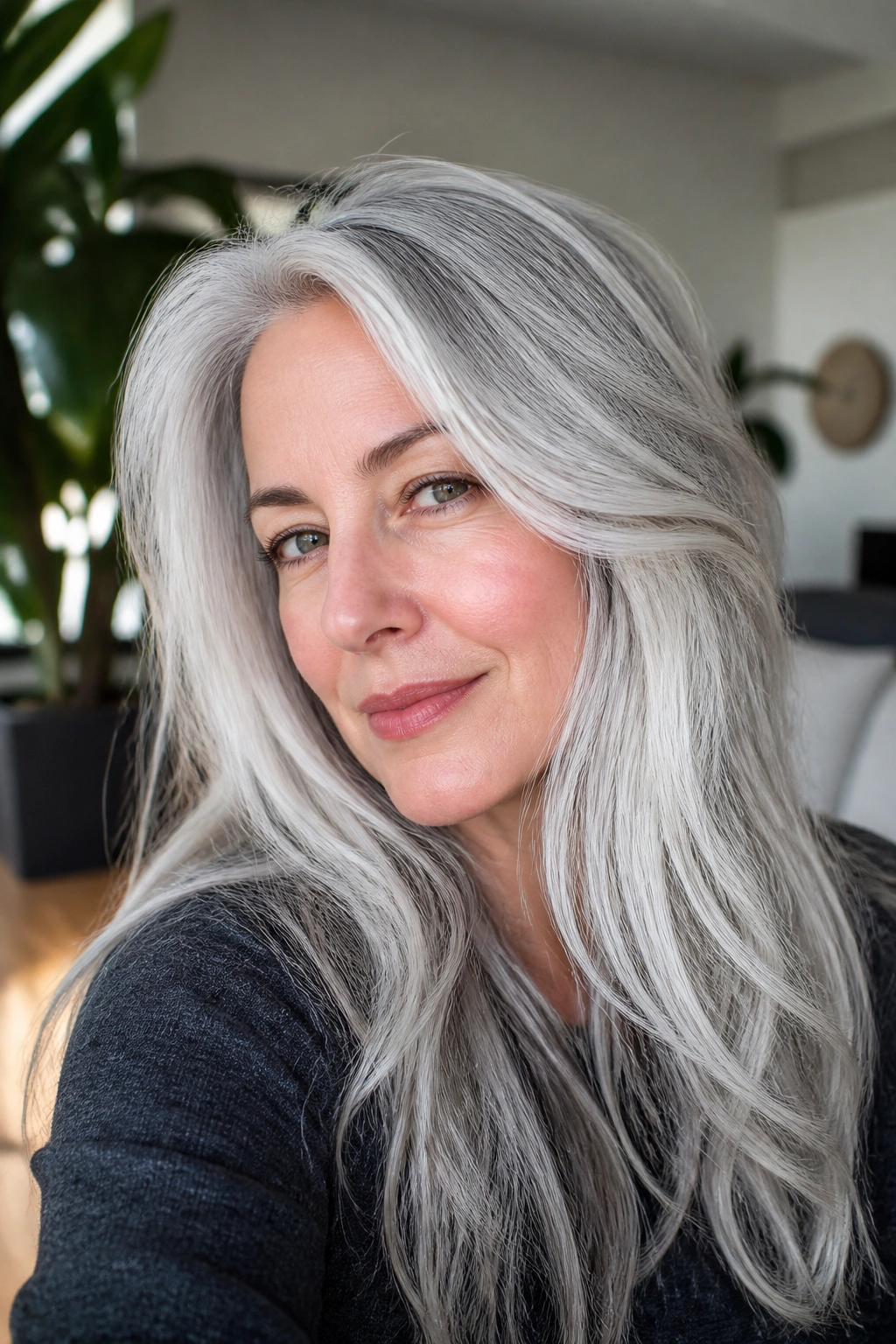
Smoky white is for the person who wants white hair but hates how flat pure white can look on a face. The graphite lowlights give the white something to lean against, which makes the whole look deeper and a little cooler.
Unlike pure white, smoky white does not ask every strand to do the same job. The darker silver-gray pieces create shadow under the bright sections, and that keeps the color from looking chalky. On cool skin, that gray edge tends to feel natural rather than muddy. If your eyes are dark, smoky, or blue-gray, the effect can be especially good.
This is also one of the easier ways to soften very bright white if you feel it is wearing you. Ask for lowlights placed beneath the top layer and around the nape so the depth shows when you move, not in chunky streaks across the crown. That keeps the finish elegant without making it stiff.
Best For
- Medium to deep cool skin tones
- Hair that has already been lifted to a pale base
- People who want white with a little more body and shadow
- Cuts that move, like a soft bob or layered lob
7. White Money Pieces Around the Face
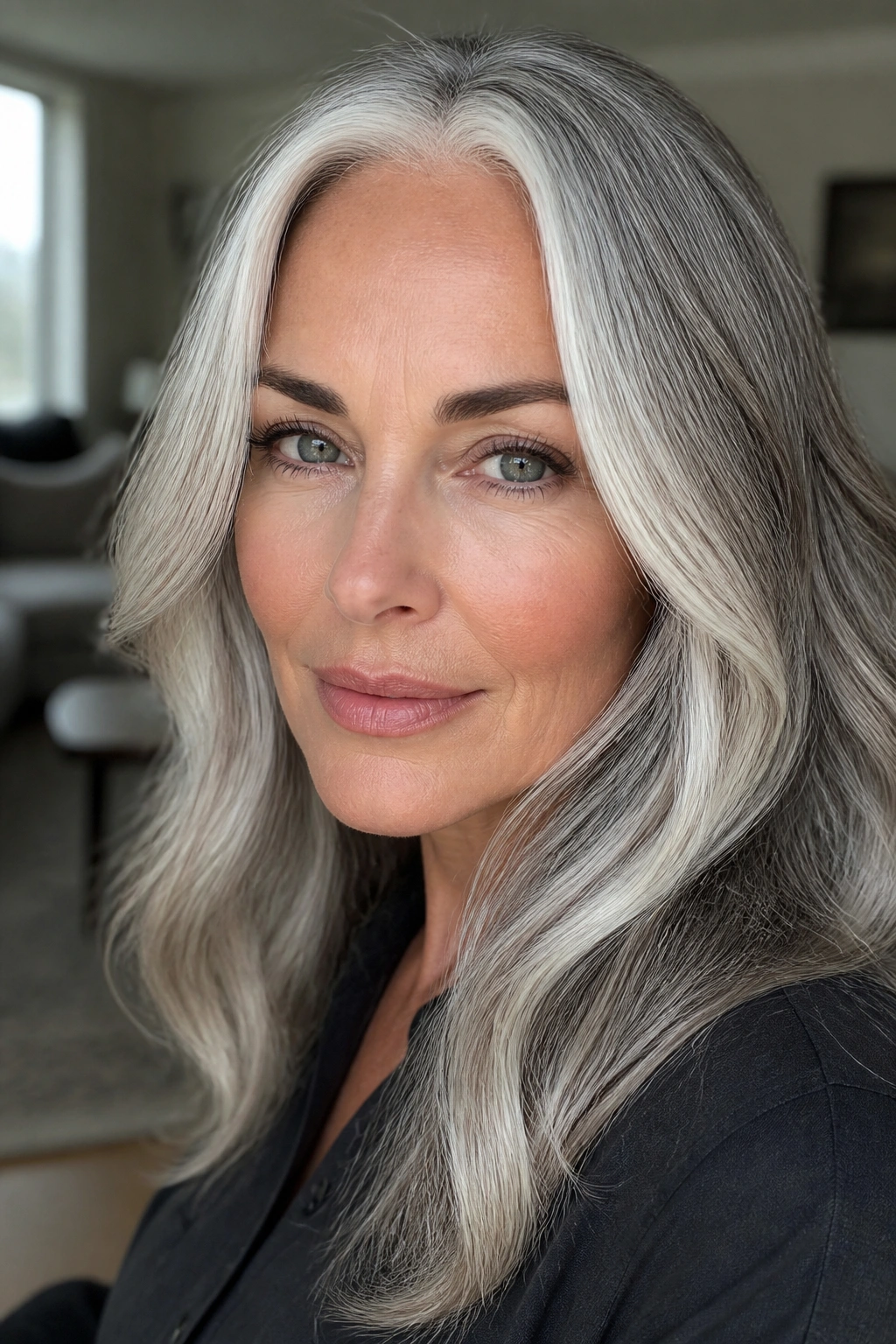
Sometimes the fastest way to make white hair work is to stop bleaching the whole head. White money pieces give you brightness where it matters most: the hairline, temples, and part.
The reason this works is simple. The brightest strands sit next to the face and bring light into the center of the look, while the rest of the hair stays softer. That can be a gift for cool skin tones, especially if all-over white tends to drain you. The face frame does the heavy lifting and the rest of the color can stay quieter.
Small Details That Matter
- Keep the money piece thin, not chunky.
- Ask for a placement that reaches from the part line down to the cheekbone.
- Blend the bright streak into a neutral or silver base so it does not look stripey.
- Refresh with a gloss before you reach for another bleach session.
This is one of my favorite low-risk ways to wear white. It gives the drama people want from white hair, but it does not commit every inch of hair to that level of maintenance. Smart. And a little sneaky.
8. Frosted Lob With a Shadow Root for Cool Undertones
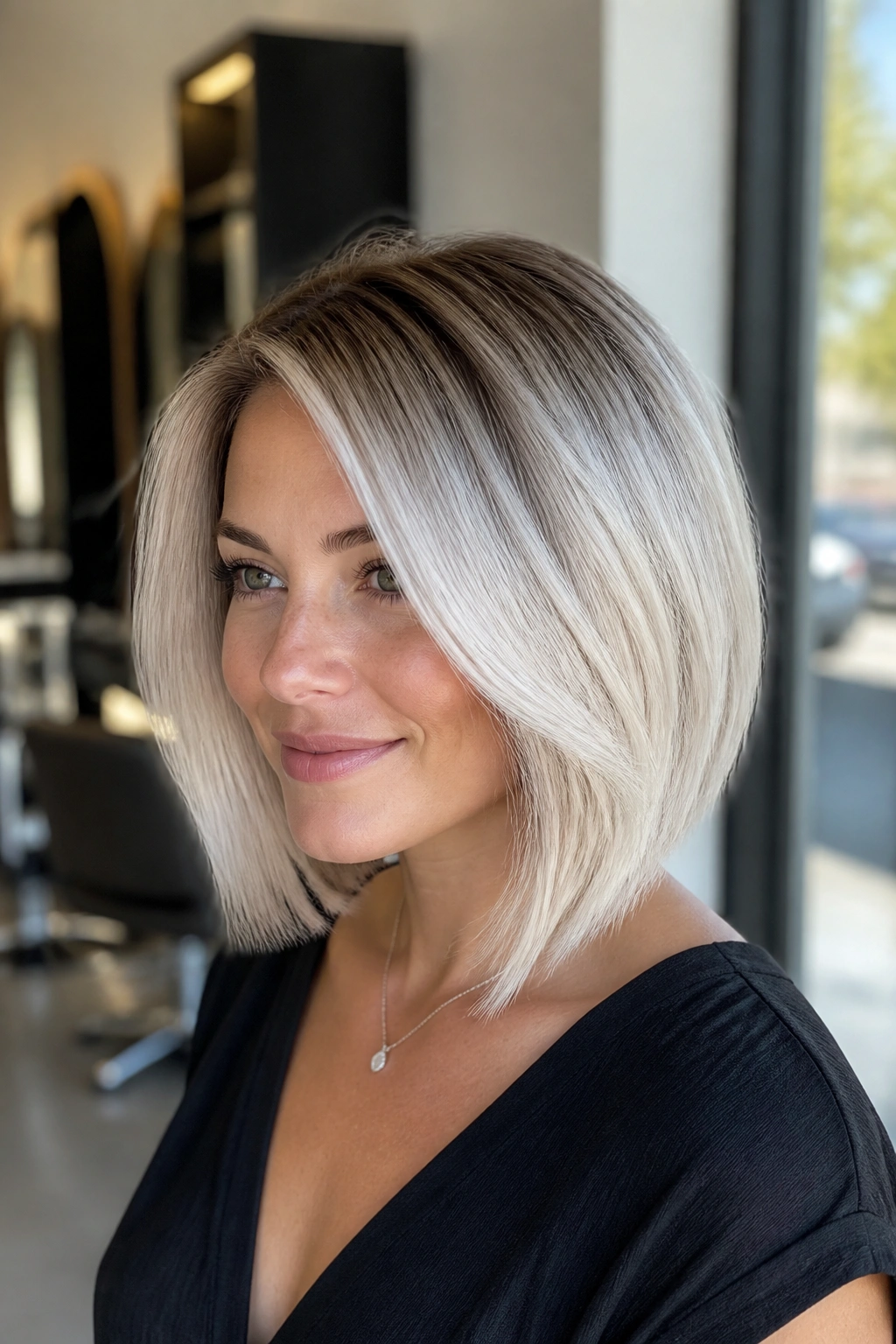
A shadow root is the smartest way to keep white hair from looking pasted on. On a frosted lob, it also gives the cut more shape, because the root melt frames the brighter lengths instead of fighting them.
The darker root is not there to hide anything. It is there to make the white look intentional. For cool undertones, that contrast can be gorgeous, especially if your natural base is ash brown, dark blonde, or soft brunette. The white lengths look brighter because the root gives them something to jump off.
Why the Shadow Root Helps
- It softens regrowth, which is a big deal if your hair grows fast.
- It makes the scalp less obvious on fine hair.
- It keeps the ends from looking overprocessed and flimsy.
- It works well with a middle part or a deep side part.
A lob gives you enough length for movement without drowning the color. If the white sat on very long hair, the grow-out would show faster and the ends could look dry sooner. Here, the cut and color help each other. That’s the whole trick.
9. Icy White Bob With Blunt Ends
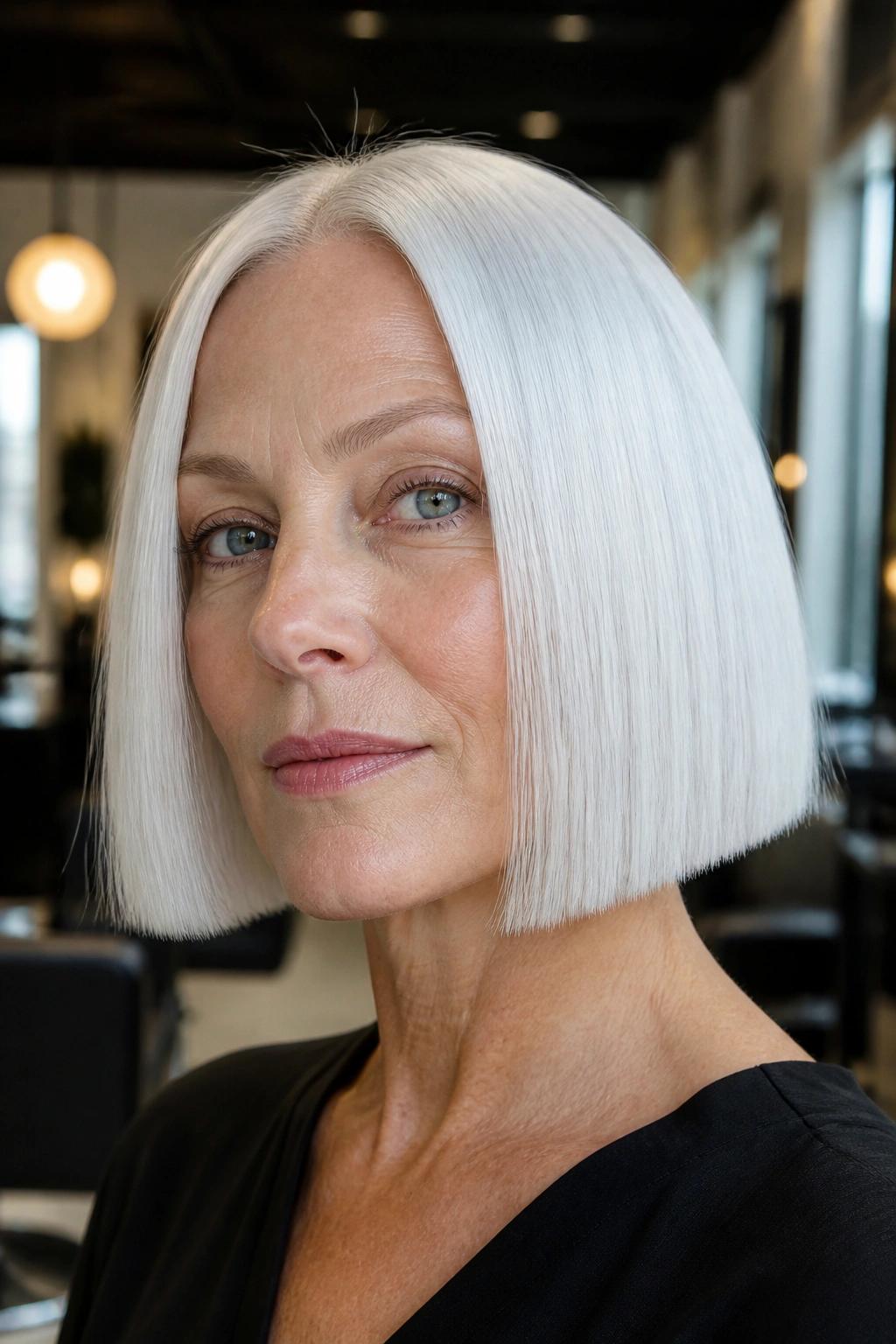
Blunt ends make white look deliberate. That is the whole story here. A blunt bob in icy white has a graphic quality that lets the color feel sharp instead of wispy.
On cool skin tones, that crisp line can be excellent because it gives the face a clean frame. The look is especially good if your features are balanced and you like structure around the jaw. A soft, layered cut can blur white hair into the background, while blunt ends keep it front and center.
It does ask for maintenance. Split ends show up fast on white hair, and a blunt line loses its power if the ends get fuzzy. A trim every 6 to 8 weeks keeps the shape clean. Heat styling helps too, but only if you protect the hair first; frizz makes white read dull.
If you want a white shade that feels polished without being precious, this is a strong choice. Simple cut. Clean tone. No fuss.
10. Blue-White Gloss on Long Layers
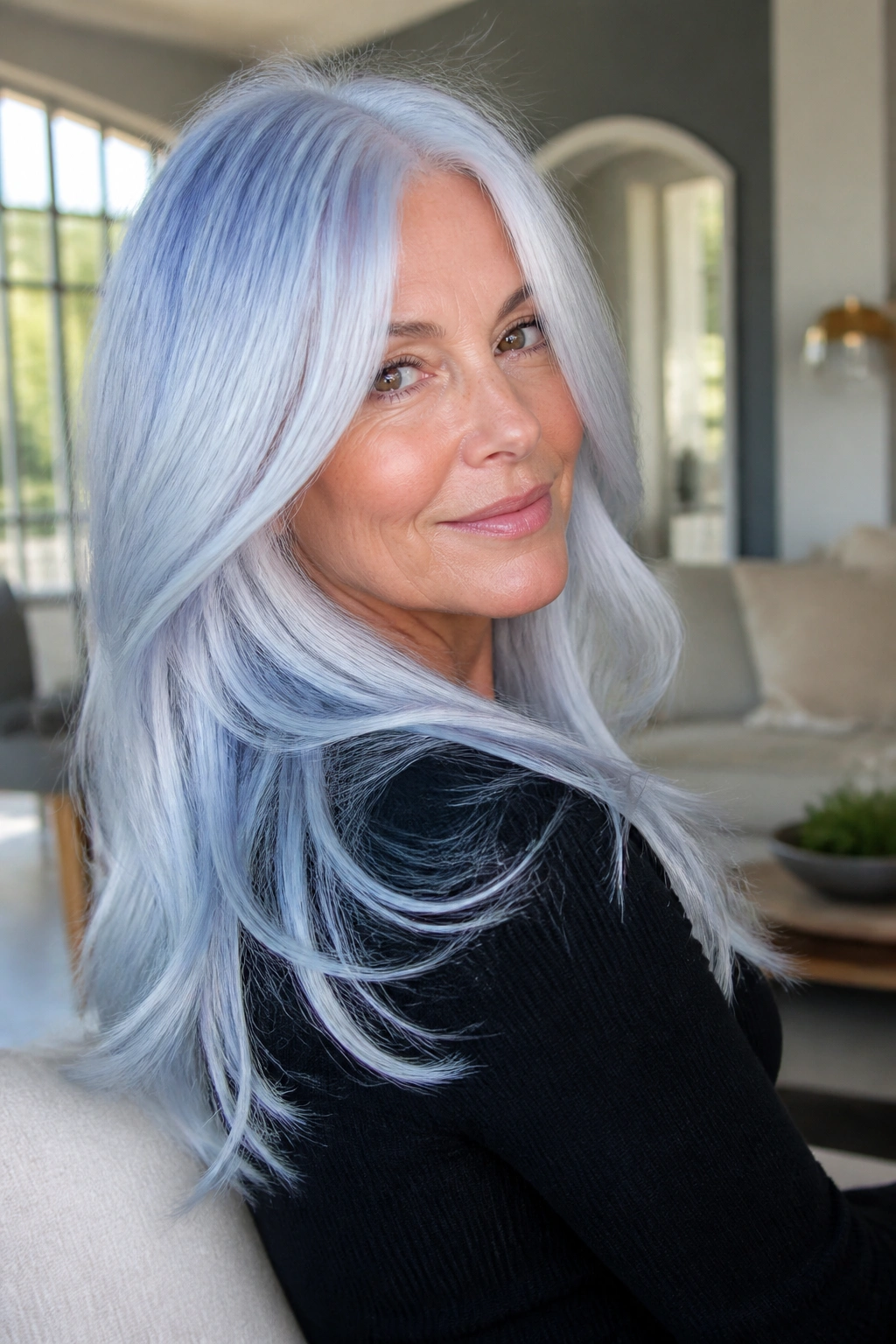
What if your hair is already pale but still reads yellow in certain light? A blue-white gloss is the fix. It is not blue hair. It is a cool veil over a white or pale blonde base that cuts warmth and pushes the tone toward ice.
Long layers give this idea room to breathe. The different lengths catch light at different points, so the blue-white finish never looks flat. If your hair is porous, though, you need a lighter hand. Porous ends soak up pigment fast, and a heavy toner can tip straight into gray.
How To Use It
- Ask for a blue-violet gloss rather than a permanent blue dye.
- Leave home toning masks on for 3 to 5 minutes, then rinse.
- Use cool water when you wash, since hot water strips toner faster.
- Focus the strongest toning on the yellowest pieces, usually the mids and ends.
This shade suits cool skin because it keeps the whole look crisp without becoming harsh. It feels clean in daylight and almost silvery indoors. That is the sweet spot for a lot of people.
11. White Ombré From Ash Roots
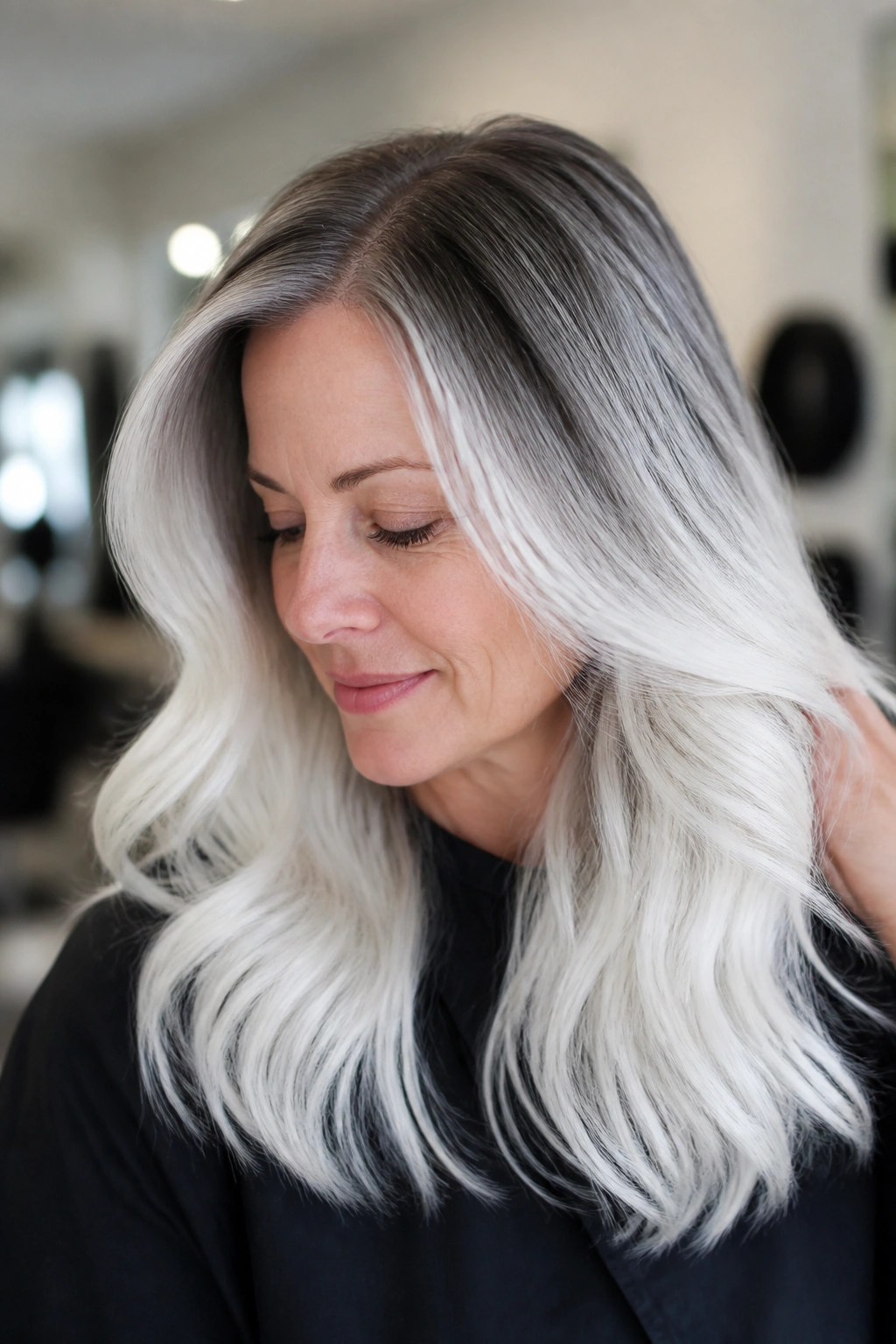
Ombré can look dated when it is too warm or too broad. White ombré from ash roots avoids that problem by keeping the fade narrow, cool, and deliberate.
The dark ash root gives you depth. The lengths fade into white, which keeps the eye moving down the hair instead of stopping at a hard boundary. On cool skin, the ash base matters because it belongs to the same color family as the skin. The whole look feels connected.
This works especially well on medium to thick hair, where the fade has room to show. On finer hair, a wide ombré can look stringy if the color drop is too large, so keep the transition tight and clean. A shoulder-length cut or longer usually gives the best shape.
Keep the fade narrow if your hair is shorter than your collarbone. Wide ombré on short hair can look patchy fast.
The best part is the grow-out. It stays interesting for longer than a full white, and that is not a small thing.
12. White Ringlets With a Translucent Toner
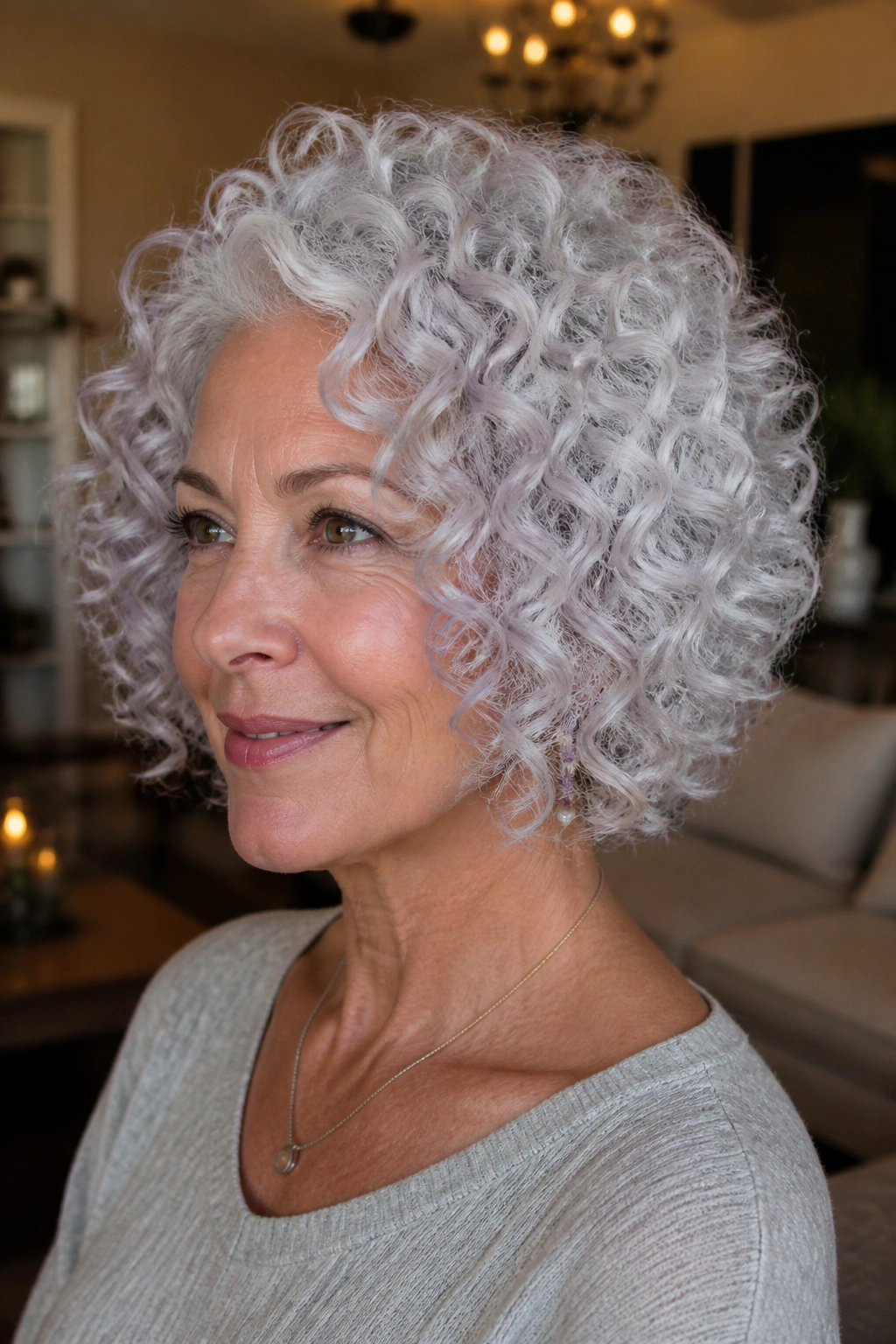
Curly hair changes white hair in a way straight hair never does. White ringlets pick up shadow and light on their own, so the color has to stay soft enough to let the curl pattern show.
A translucent toner is the key. Heavy pigment can make curls look flat or even gray, and nobody wants that unless gray is the goal. A sheer violet or silver glaze keeps the warmth out while leaving the rings visible. The curls should still look like curls, not like one solid helmet of color.
How To Keep Curls From Reading Gray
- Lift the hair to a pale yellow, not a gummy white.
- Use a sheer glaze, not a heavy opaque toner.
- Diffuse on low heat so the curl shape stays springy.
- Skip strong purple shampoo on porous ends; it can overcool fast.
This is a nice choice for cool skin because the softness of the curl balances the brightness of the white. It feels airy instead of severe. And if your curls already have good bounce, the color will seem to glow from inside the shape.
13. White Shag With Shattered Layers
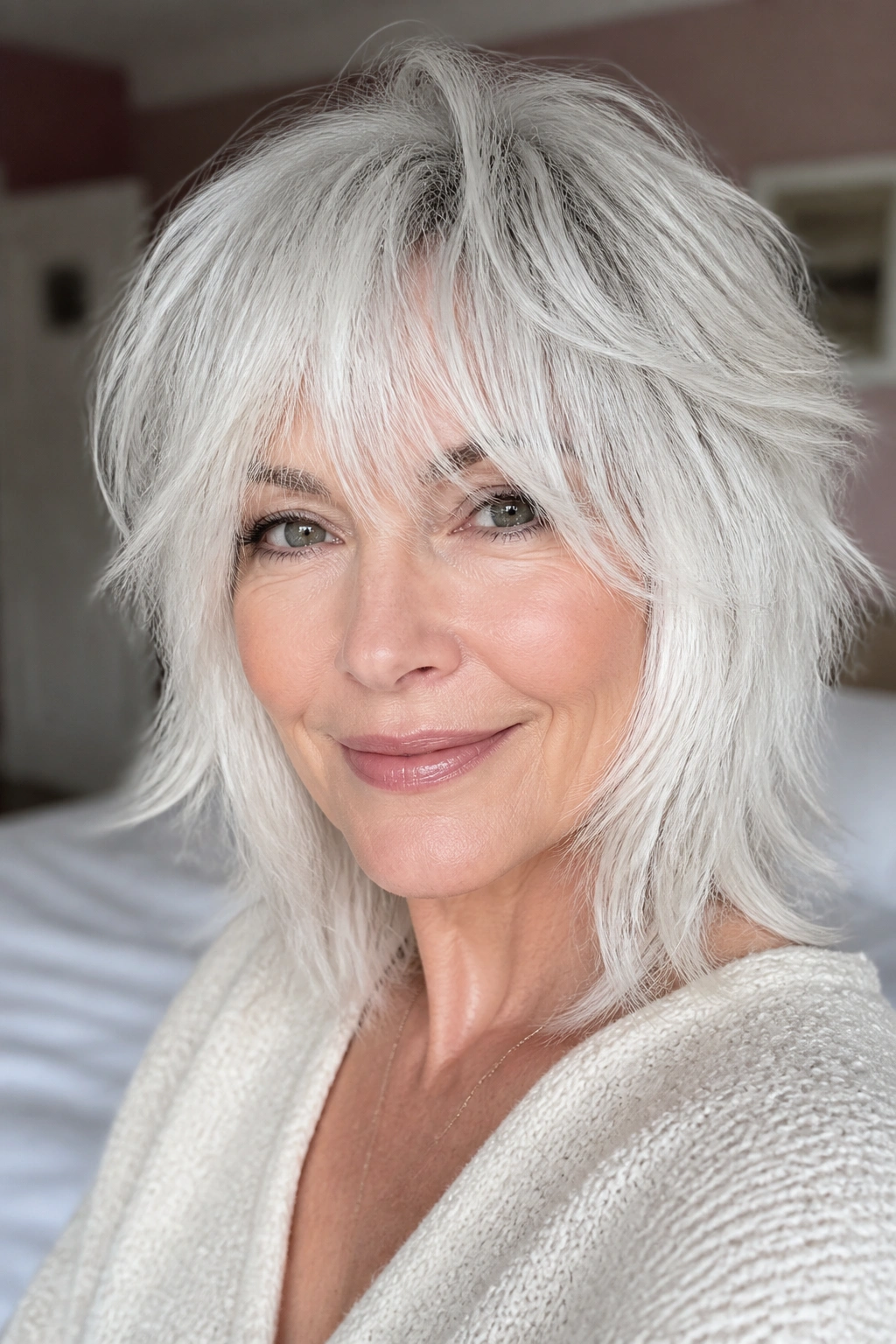
A shag saves white hair from looking too neat. That’s the whole appeal. Shattered layers break up the color, give it movement, and keep it from sitting like one solid block.
With cool skin tones, a shagged white cut can look modern in a way a smooth long style sometimes does not. The texture pulls the eye around the face, and the white shifts as the layers fall differently. Add curtain bangs or a wispy fringe and the cut gets even better, because the face frame keeps the brightness from feeling too hard.
The color itself does not need to be dramatic beyond the white base. In fact, the texture does some of the work. That is nice if you want a bold color idea without constant salon tricks. A bit of root shadow, a clean white mid-length, and a choppy cut can do more than a complicated formula.
Key Details
- Ask for razored or heavily texturized layers.
- Keep the white bright at the ends and a touch softer near the crown.
- Use a light cream on the ends, not a heavy oil.
- Let the cut look slightly undone; that is part of the charm.
14. Metallic White With a Glassy Finish
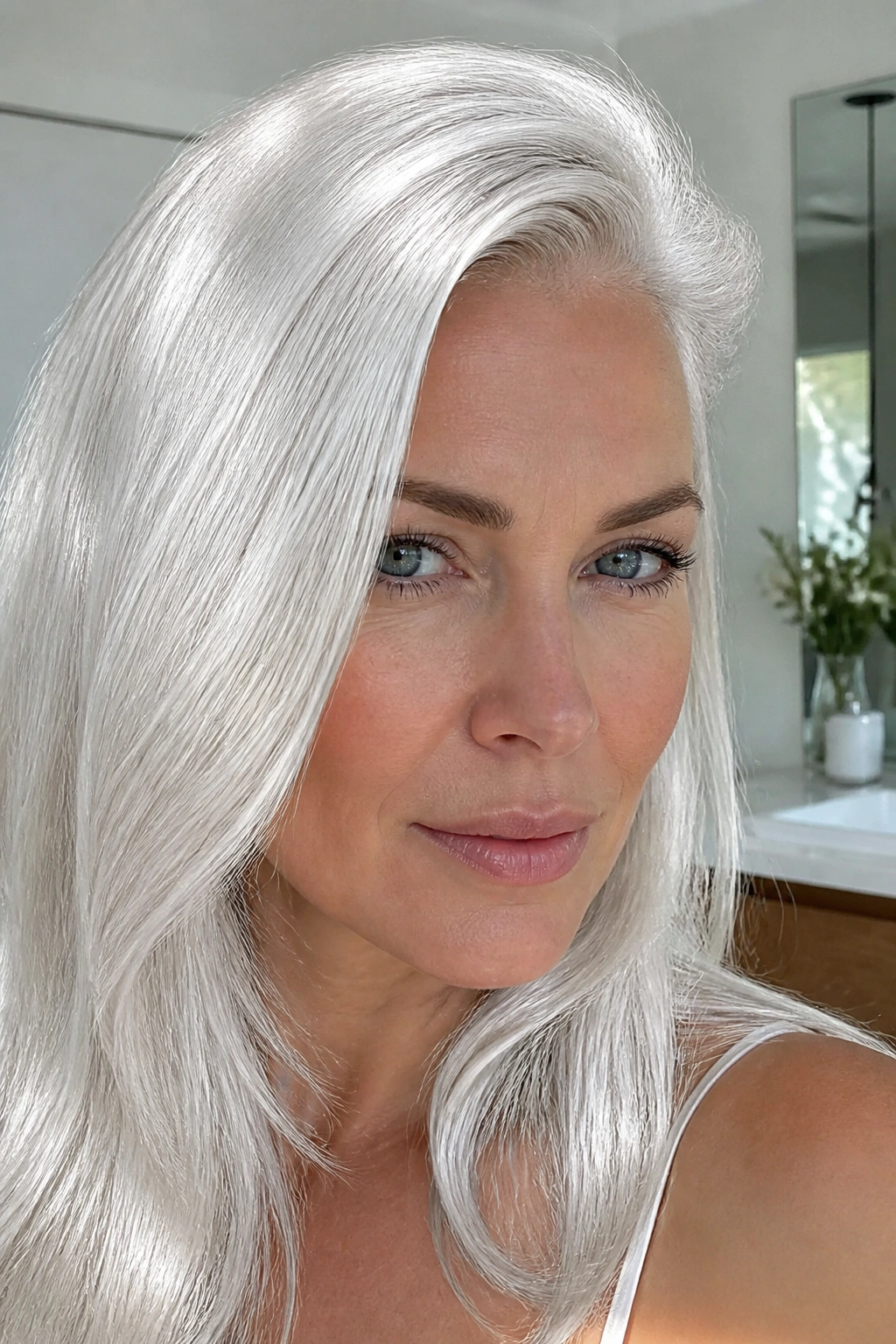
Metallic white is cooler and sharper than pearl white. It has a reflective, almost chrome-like surface when the hair is healthy, smooth, and toned just right.
The finish matters more here than the shade itself. A glassy surface makes the white look deliberate and expensive, while rough cuticles make the same color look dry. If your hair is porous, you need prep work before you even think about the gloss. Bond treatments, gentle lifting, and a careful blow-dry matter here. A lot.
This shade suits cool skin because it throws back the same crisp energy the skin already has. It is especially good if your wardrobe leans black, charcoal, navy, or clean white. The contrast can be striking without feeling loud.
One sentence truth: if your ends feel crunchy, this color will show it. Keep the hair soft, sealed, and trimmed. Metallic white has no patience for split ends.
For styling, a middle part and smooth finish usually beat beach waves here. The whole point is that polished reflection.
15. White and Silver Ribbon Lights
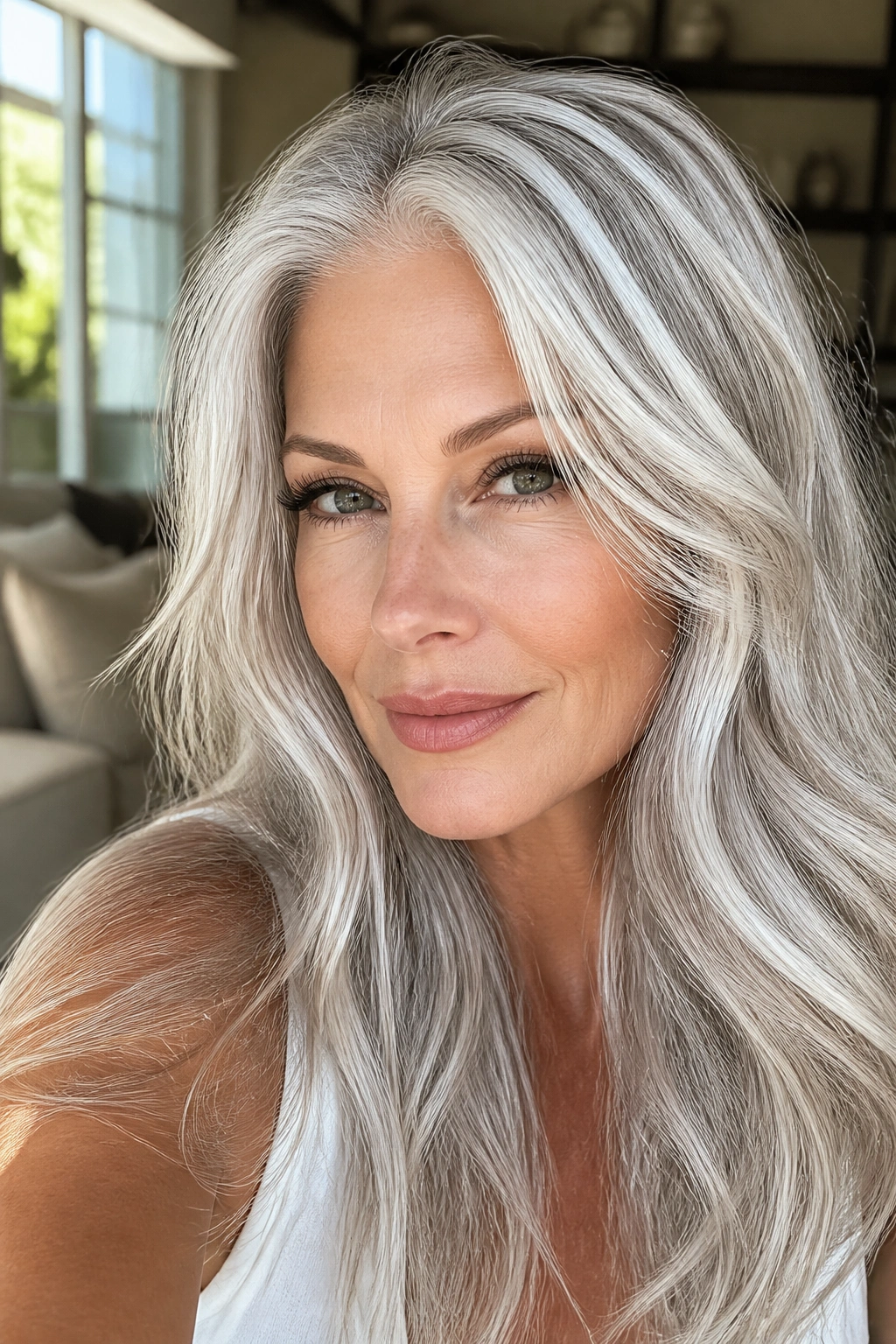
Flat white can look a little too solid on some heads. White and silver ribbon lights fix that by threading narrow ribbons of different cool tones through the hair instead of flooding everything the same way.
The ribbons can be placed vertically or slightly diagonally, depending on the cut. On layered hair, they create movement. On straight hair, they add a touch of depth that stops the look from turning chalky. For cool skin, the silver pieces matter because they echo the undertone without adding warmth.
Where To Place Them
- Keep each ribbon about 1/2 to 1 inch wide.
- Put the brightest ribbons near the face and crown.
- Leave a few cooler silver pieces underneath so the top layer does not look too flat.
- Let the base stay a shade darker than the lightest strands.
This is a strong option if you like dimension more than all-over brightness. It also photographs well under natural light, which is not always true of white hair. The mixed ribbons keep it interesting from every angle.
16. Chalk White With a Soft Violet Tint
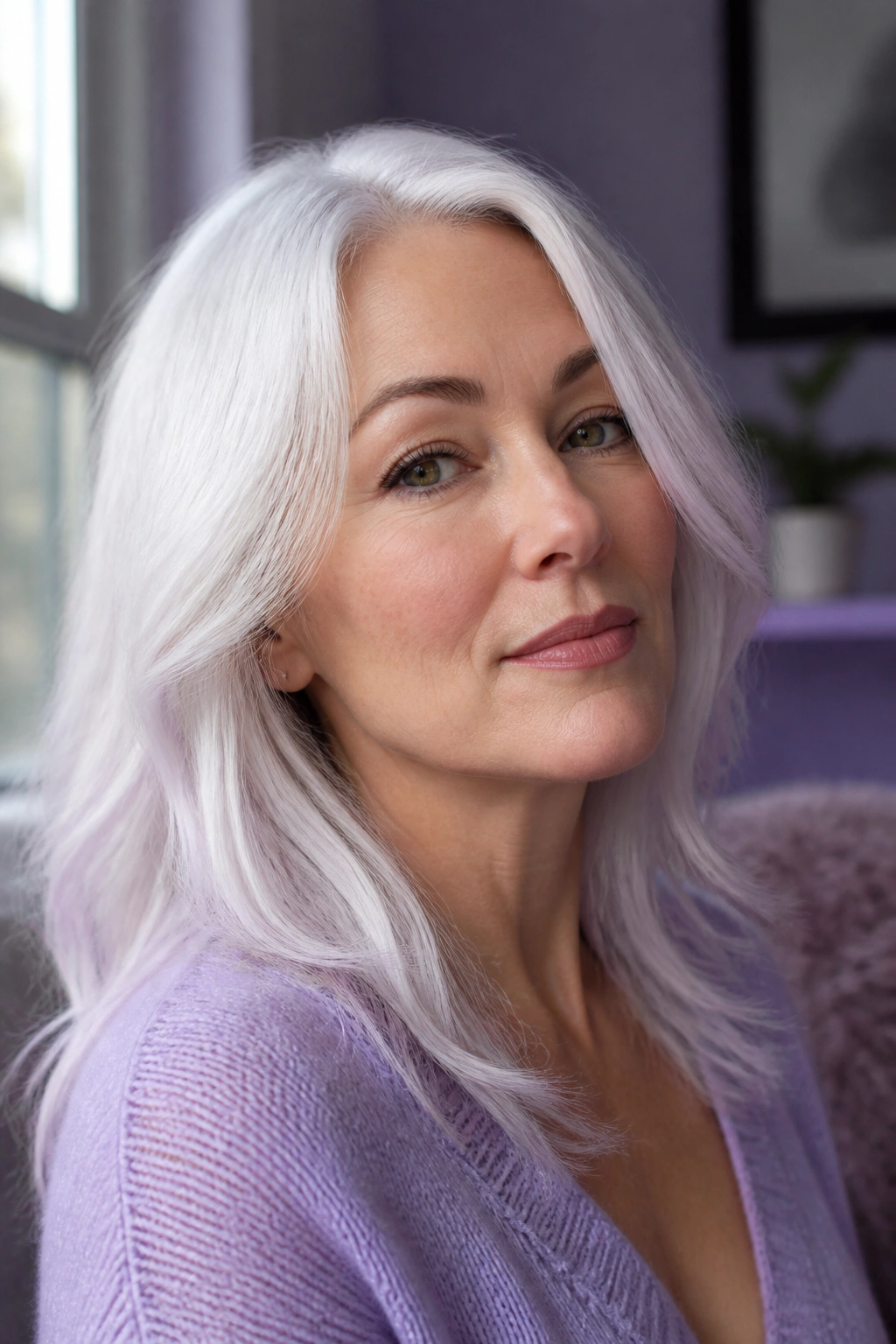
Chalk white is the starkest version here, and it is not shy. The finish is pale, matte-leaning, and almost powdery, with just enough violet in the tone to keep yellow from creeping in.
This shade loves very cool skin. Porcelain tones, pink undertones, and high-contrast features tend to wear it well. If your eyes are dark and your brows are strong, the effect can be dramatic without needing much else. Minimal makeup can work, but only if the skin has some color and the brows are defined. Otherwise the look can slide into flat territory fast.
Dry ends will betray you. That is the warning I would put in bold on the mirror. Chalk white is unforgiving if the hair is rough, because the matte finish shows every little flaw. Keep the surface smooth with a light serum and do not overdo purple shampoo.
This is a good choice when you want white hair to look almost graphic. Clean part. Clean line. Clean tone. Nothing sloppy about it.
17. White Underlights on Darker Hair
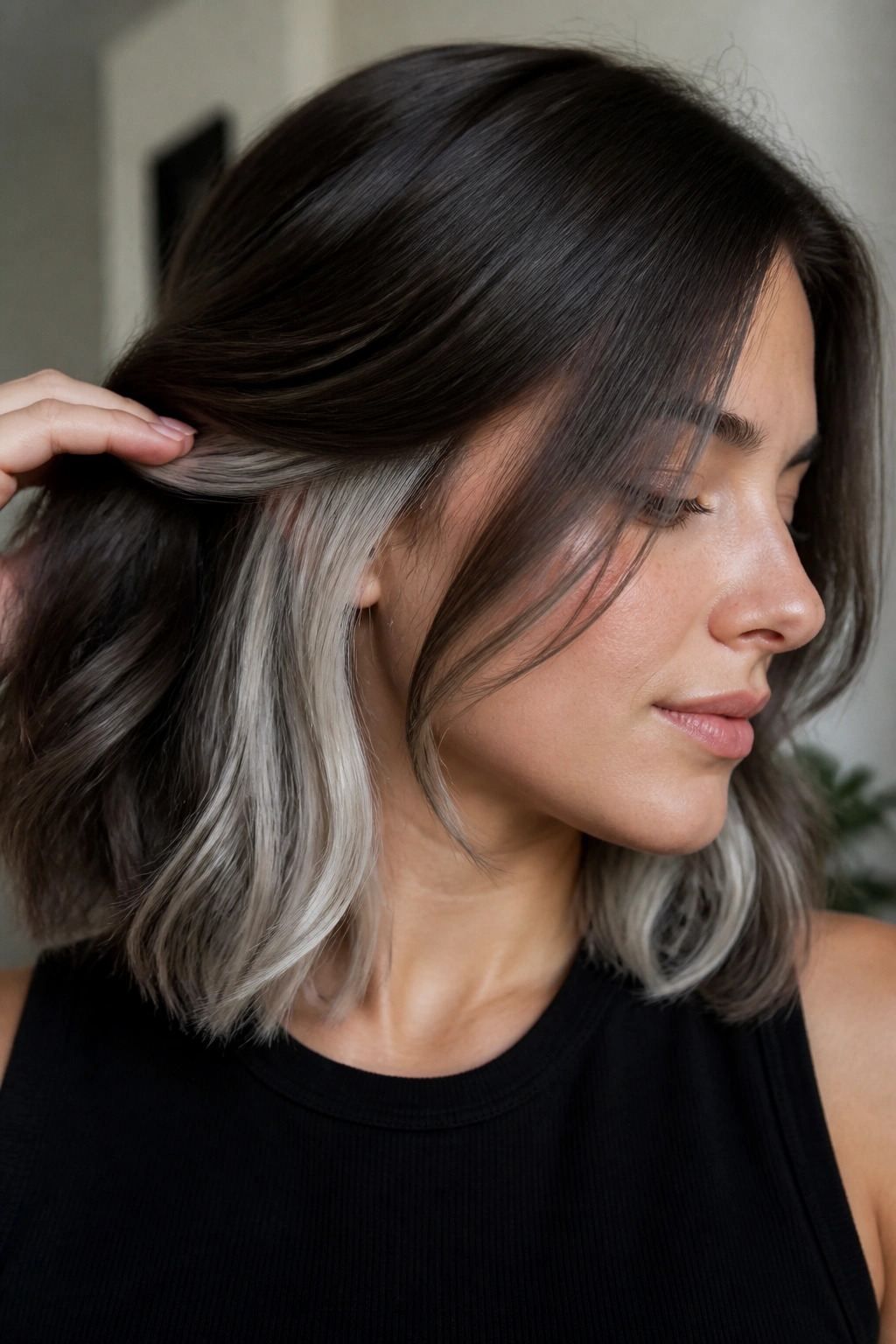
Underlights are the secret if you want white without broadcasting it from every angle. The bright panels sit beneath the top layer, so the white appears when the hair moves, flips, or goes into a bun.
That hidden placement can be brilliant for cool skin tones, especially if your natural base is darker and already runs ash. The contrast feels deliberate instead of obvious. You get flashes of white near the neck, around the nape, or beneath the crown, and the effect is much softer than all-over platinum.
Why People Reach For It
- The grow-out is easier to hide.
- The top layer protects the bright pieces from sun and wear.
- It gives straight hair and layered cuts a little surprise.
- It lets you keep a darker base while still wearing white.
Ask for the underlights to sit about 1 to 1.5 inches below the surface. Any shallower and they show too much. Any deeper and the effect gets lost. Keep the top layer toned ash, not warm, so the hidden white feels connected to the rest of the hair.
This is a smart choice if you want something a little secretive. I like that.
18. Pure White With a Smoky Root Melt for Cool Skin Tones
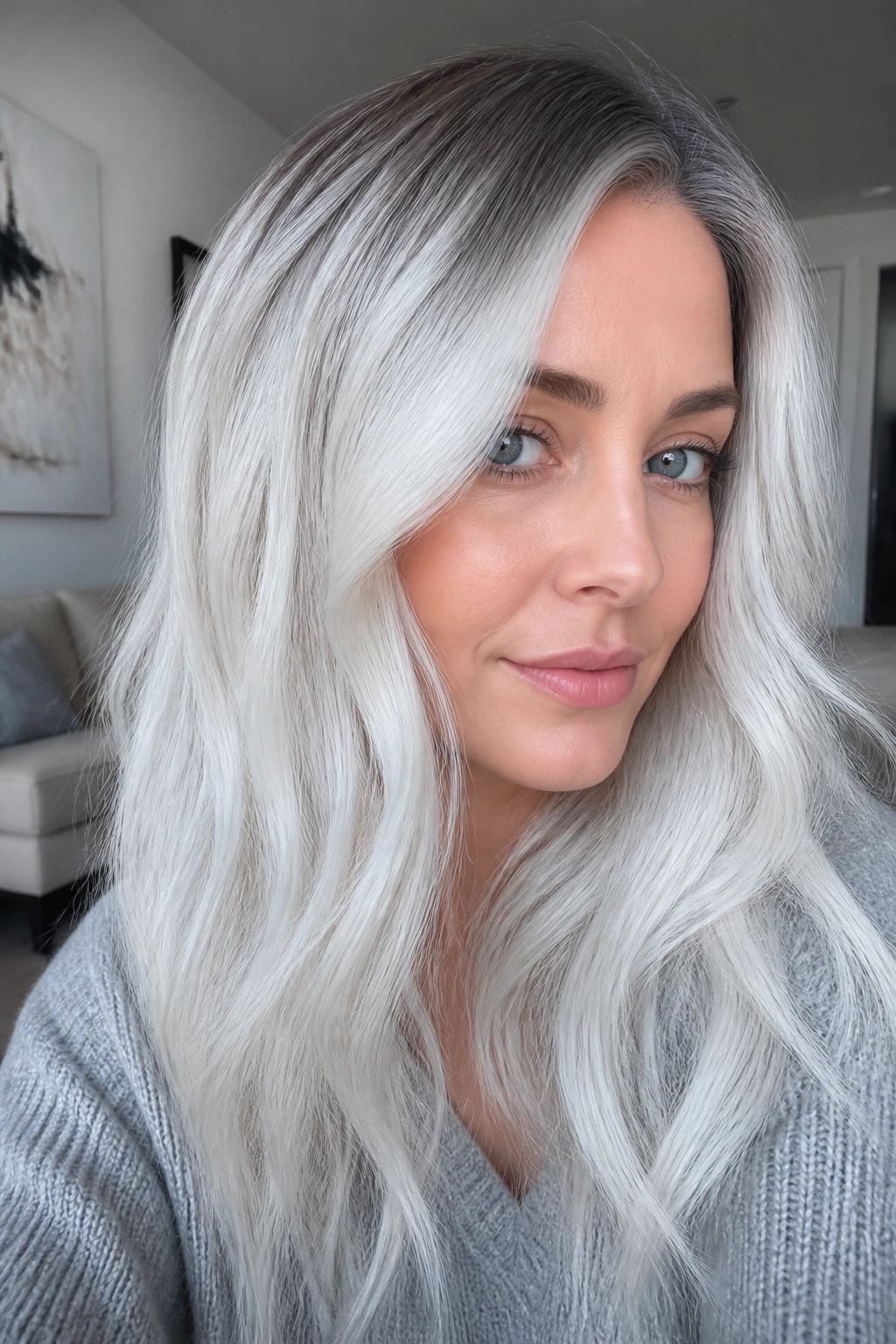
If you want the full white effect but hate a hard line at the scalp, this is the one that makes the most sense. A smoky root melt into pure white lengths keeps the brightness where you want it and softens the grow-out where you do not.
The root melt should be cool and muted, not brown and muddy. Think slate, ash, or a deep smoky blonde. That gives the white ends something to sit against, and the result feels cleaner on cool skin. The contrast is still there, but it is not shouting at you from the mirror every morning.
This version works especially well on medium to long hair, where the gradient has room to breathe. It also suits people who are moving out of full platinum and want a softer transition without giving up the white finish. The lengths can stay sharp and bright while the root buys you time between salon visits.
If you are torn between two ideas, choose this one when you want drama and sanity in the same head of hair. White hair does not have to be high-maintenance to look intentional. It just needs the right balance between brightness, depth, and that cool, clean tone that flatters your skin instead of fighting it.
