



Silver white hair can look icy and elegant on cool skin tones, or it can go flat fast if the undertone slips warm. That’s the whole fight.
Pink, rosy, blue-leaning, and cool olive complexions usually get along with silver, pearl, and white-blonde shades because those colors echo the coolness already in the skin. The catch is that white hair shows everything — a yellow patch near the temple, a slightly muddy toner, a porous end that soaks up pigment like a sponge. So the prettiest version is rarely the palest one. It’s the one that looks clean, even, and deliberate from root to tip.
A good silver white shade usually needs three things: a clean lift to level 10, a toner with violet or blue-violet pigment, and some kind of dimension at the root or around the face so the whole thing doesn’t read like printer paper. That last part matters more than people think. A whisper of shadow, pearl, smoke, or steel can make the color look richer on cool skin tones, not less bright.
The shades below all live in that icy lane, but each one changes the mood in a different way. Some are soft. Some are sharp. A few are a little ruthless, which is exactly why they work.
1. Icy Silver White
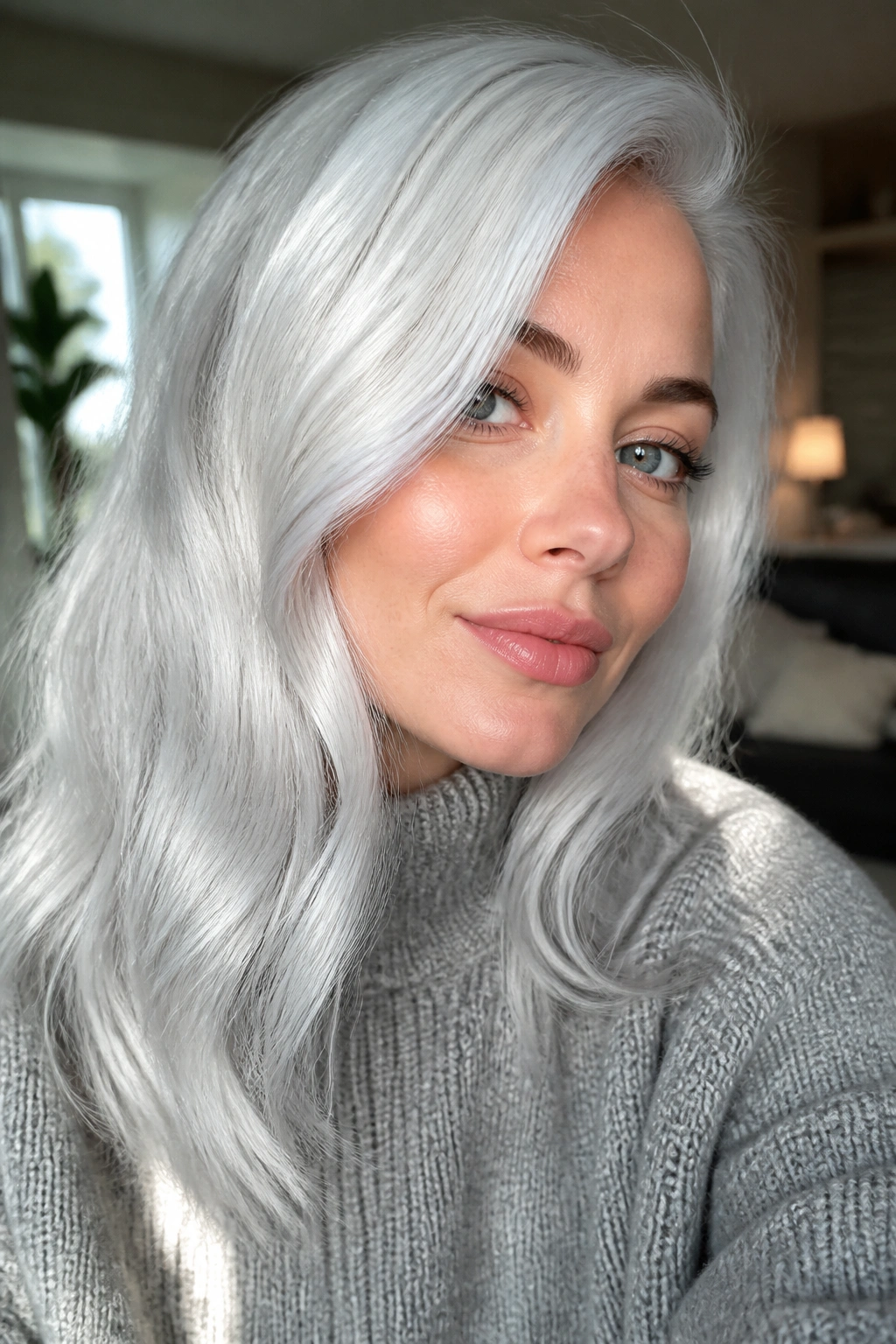
Icy silver white is the shade people picture when they imagine silver white hair color, and on cool skin tones it can look crisp in a way warm blondes never will. It sits at the whitest edge of the spectrum, but it still needs a faint silver cast or it will drift into dull chalk.
Why It Works
The cleanest version of this color starts with a true level 10 lift. If the hair still holds yellow, the shade stops being icy and starts looking buttery, which is not the same thing at all. A blue-violet toner keeps the finish sharp, and a gloss with a tiny bit of smoke makes the white feel polished instead of harsh.
- Best on hair that lifts evenly from root to ends.
- Looks strongest on blunt bobs, sleek lobs, and straightened lengths.
- Needs a sulfate-free cleanser so the toner does not wash out fast.
- A violet shampoo once a week is enough for most people; overdoing it can leave a dull lavender cast.
Tip: keep the brows ash, taupe, or soft charcoal so the face does not lose its frame.
2. Pearl White with Smoky Roots
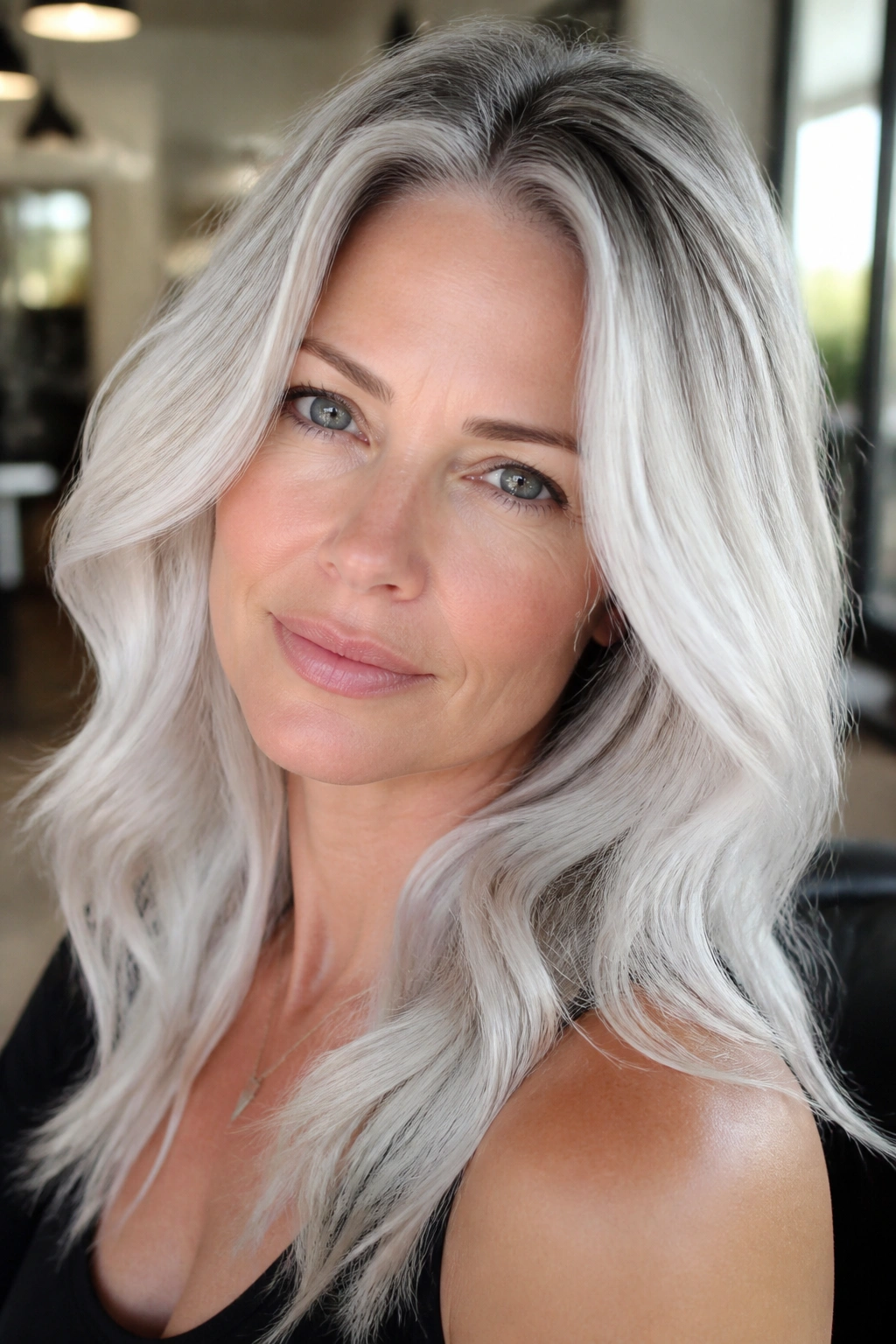
Pearl white with smoky roots is the shade I reach for when someone wants silver white hair but hates a hard regrowth line. The pearl finish softens the face, while the smoky root shadow gives the color a little breathing room as it grows out.
Root shadow is not a cop-out here. It is the reason the shade looks expensive instead of over-processed. A root that sits one to two levels deeper than the mids makes cool skin look brighter, especially if the complexion has a bit of redness or very fine texture that catches light quickly.
This version also behaves well on hair that is slightly porous at the ends. The pearl toner keeps the light pieces luminous, and the smoke at the root prevents the whole look from turning flat. If you wear soft makeup, this shade leans graceful. If you wear a sharp liner or dark lip, it turns more dramatic than you’d expect.
A little gloss every four to six weeks keeps the white side of the color from going muddy. That small maintenance step makes a big difference.
3. Platinum Silver Balayage
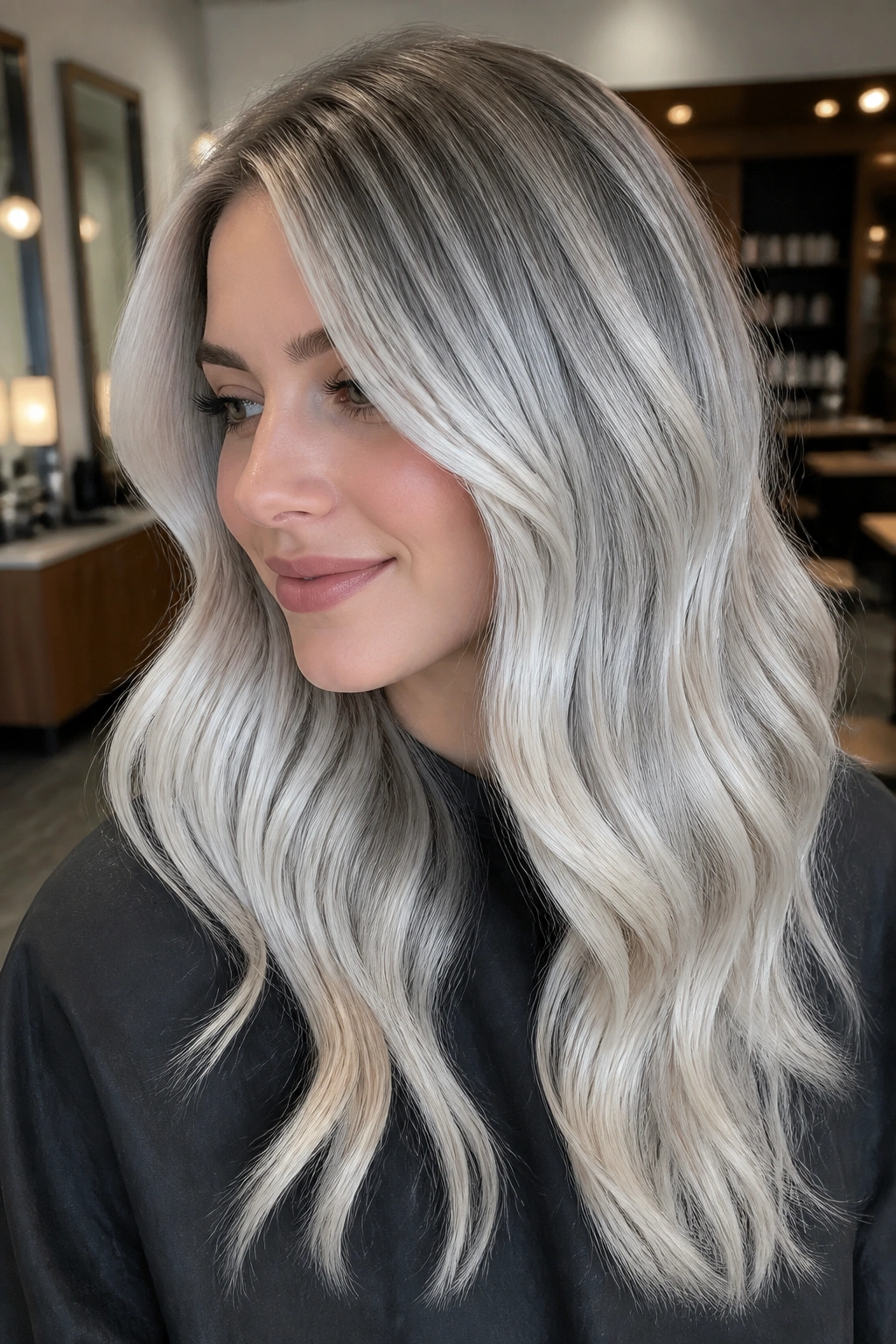
Why does platinum silver balayage work so well on cool skin tones? Because it gives you brightness without locking every strand into the same intensity. The ribbons of platinum and silver move through the hair, which keeps the color from looking pasted on.
How to Wear It
This is the shade that behaves beautifully on longer layers, especially if your hair has a bit of bend. The balayage placement lets the color sit brighter around the face and softer through the back, so the result feels dimensional instead of blocky. On cool skin, that mix of light and shadow usually looks more flattering than one flat silver sheet.
The smartest way to ask for it is simple: brighter face-framing pieces, softer silver through the mids, and a cooler root that does not blend all the way to white. A very pale toner on every section can erase the dimension you paid for.
- Ask for painted ribbons rather than full saturation.
- Leave a few neutral pieces under the top layer.
- Style with loose waves or a round-brush blowout.
- Refresh the toner before the silver turns beige.
If you like hair that moves and catches light in different spots, this is a strong pick.
4. Blue-Gray Silver Melt
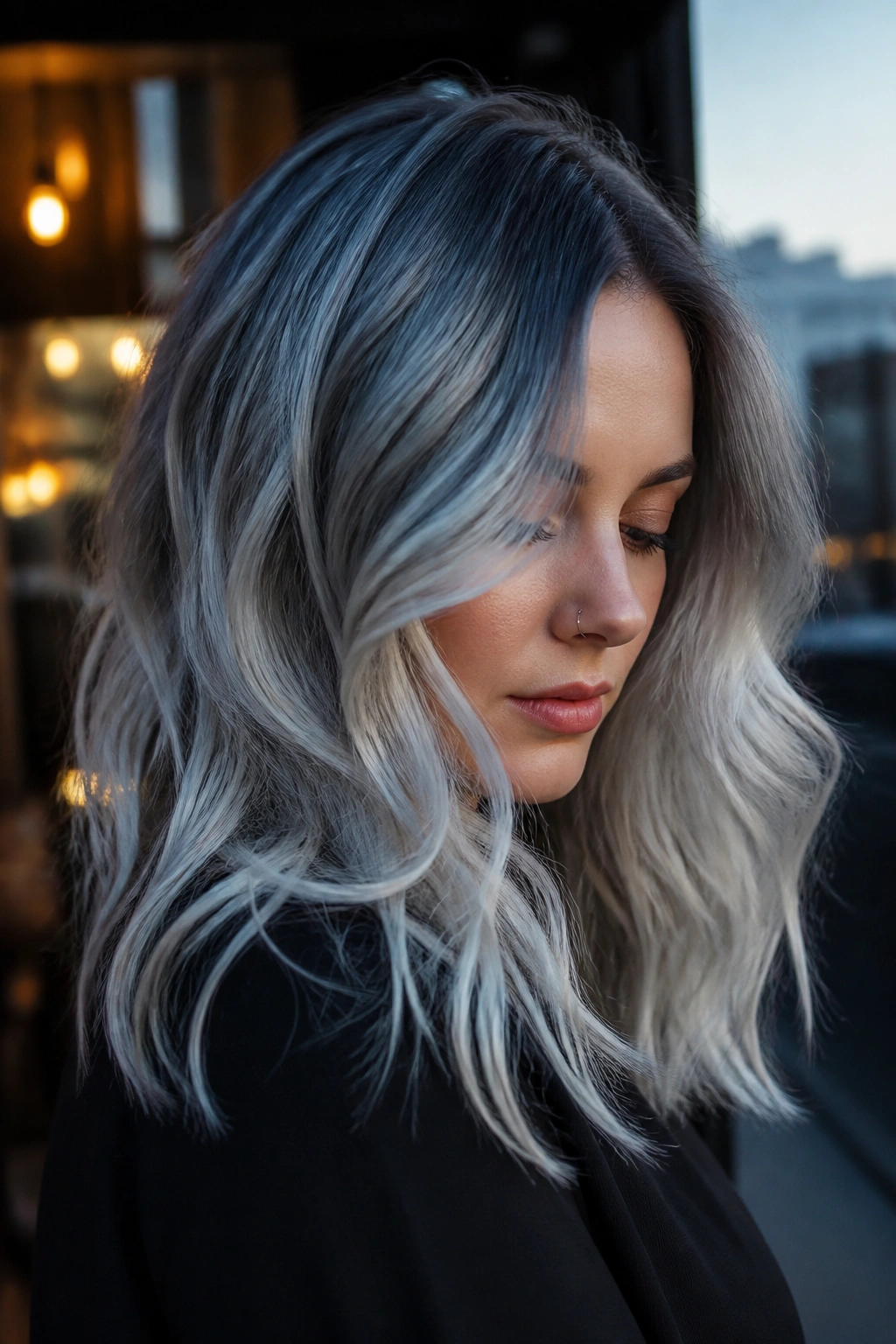
You can spot a blue-gray silver melt from across a room. It has that storm-cloud look — cool, sleek, and a little moody — and it flatters cool skin because the shade pulls the face in the same direction instead of fighting it.
This color depends on a smooth transition. The roots usually stay softly shadowed, then the blue-gray tone deepens through the mids before it turns brighter silver at the ends. If the melt is rushed, the whole thing can look muddy. If it’s done well, the result feels deliberate and expensive without trying too hard.
The best part is how good it looks on textured waves. A flat iron finish makes the blue-gray side more obvious, but a soft bend with a 1-inch iron gives the color more life. Dark brows help too. So do silver earrings, if you wear them.
A gloss with blue-violet pigment keeps the tone from drifting green. That is the one thing I would not skip.
5. Arctic White Pixie Cut
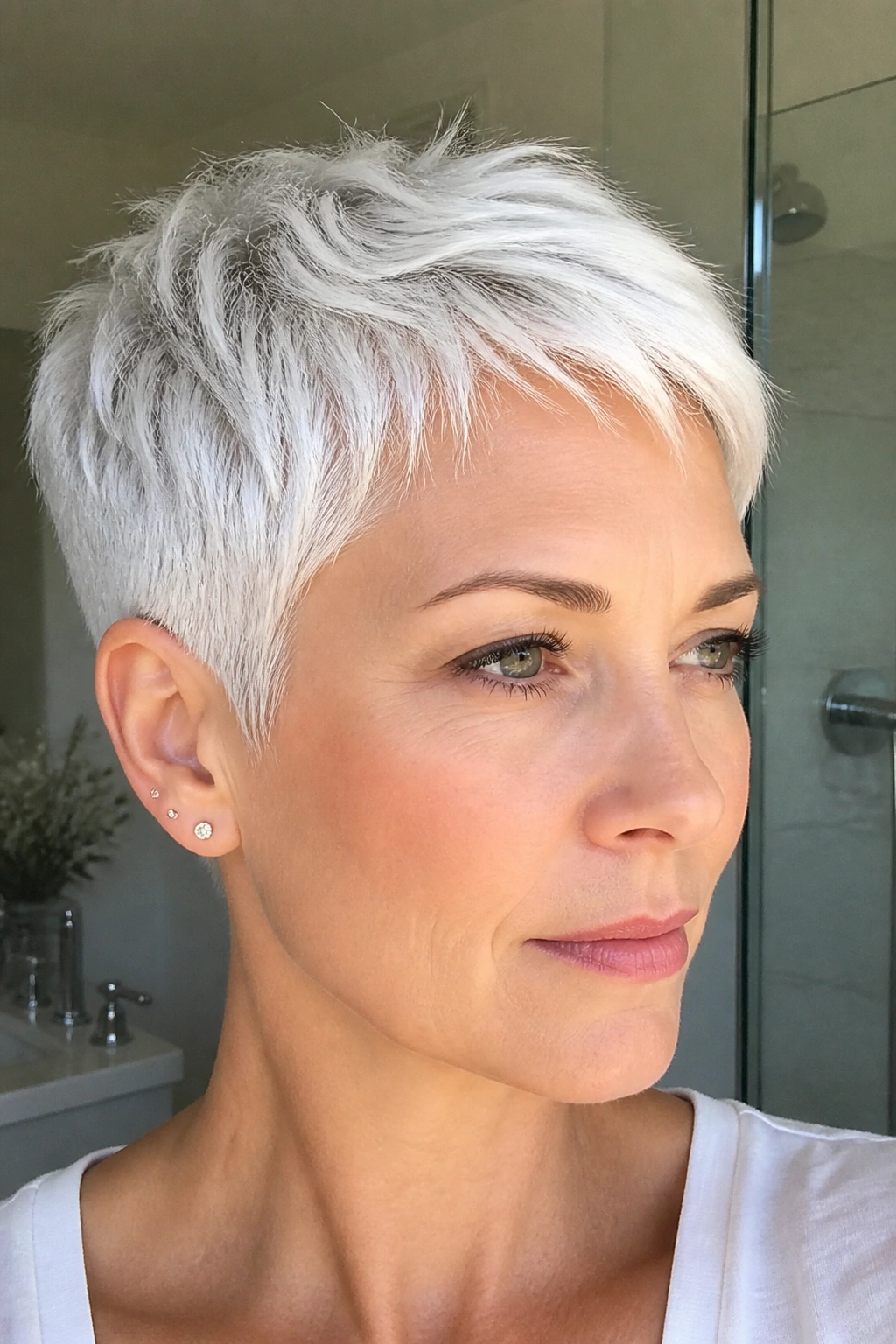
Arctic white on a pixie cut is blunt, clean, and a little fearless. Short hair strips away the extra noise, so the color has to carry the whole look — and white does that better than almost anything else when the lift is even.
A pixie also solves a problem that long white hair runs into fast: fragile ends. There are fewer old, porous pieces to fight with, which means the shade can stay fresher between salon visits. The silhouette matters here too. A close crop around the ears and nape makes the white look sharper, while a slightly longer top gives you room to push it forward or sweep it back.
Short hair is unforgiving. It also looks fantastic when it is done well.
Ask for soft texturing on top rather than choppy layers all over. Too much razor work can make white hair look fuzzy at the ends, and that takes away the crisp finish that makes the shade work. A matte paste at the crown gives the cut shape without killing the shine.
6. Mirror Silver Shag
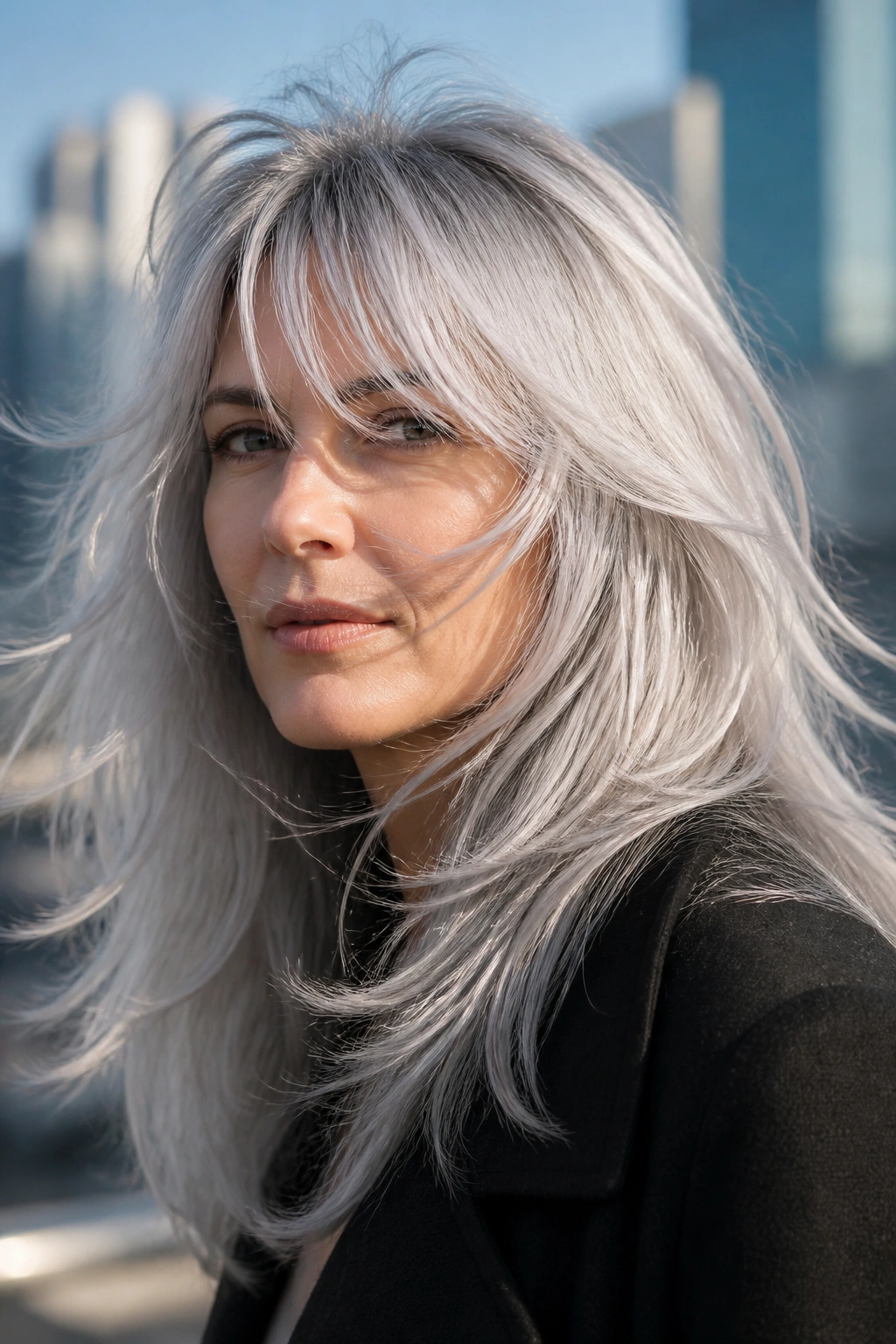
Mirror silver shag is the opposite of a stiff white cut. It has movement, pieces, and a little attitude, which makes it ideal if your hair already has wave or a bend that refuses to sit still. On cool skin tones, the metallic finish keeps the shag from looking dusty.
The cut does a lot of the work. Layers around the cheekbones and jaw help the silver bounce around instead of sitting in one block. That matters because silver can go heavy fast on long hair. A shag breaks the color up into small planes, and the eye reads that as texture.
What I like here is the contrast between the softness of the cut and the harder tone of the color. If you want a look that is cool, but not severe, this is the lane. A sea-salt spray or light texture cream is enough most days; the point is to keep the movement airy, not crunchy.
7. Moonstone White with Lavender Veil
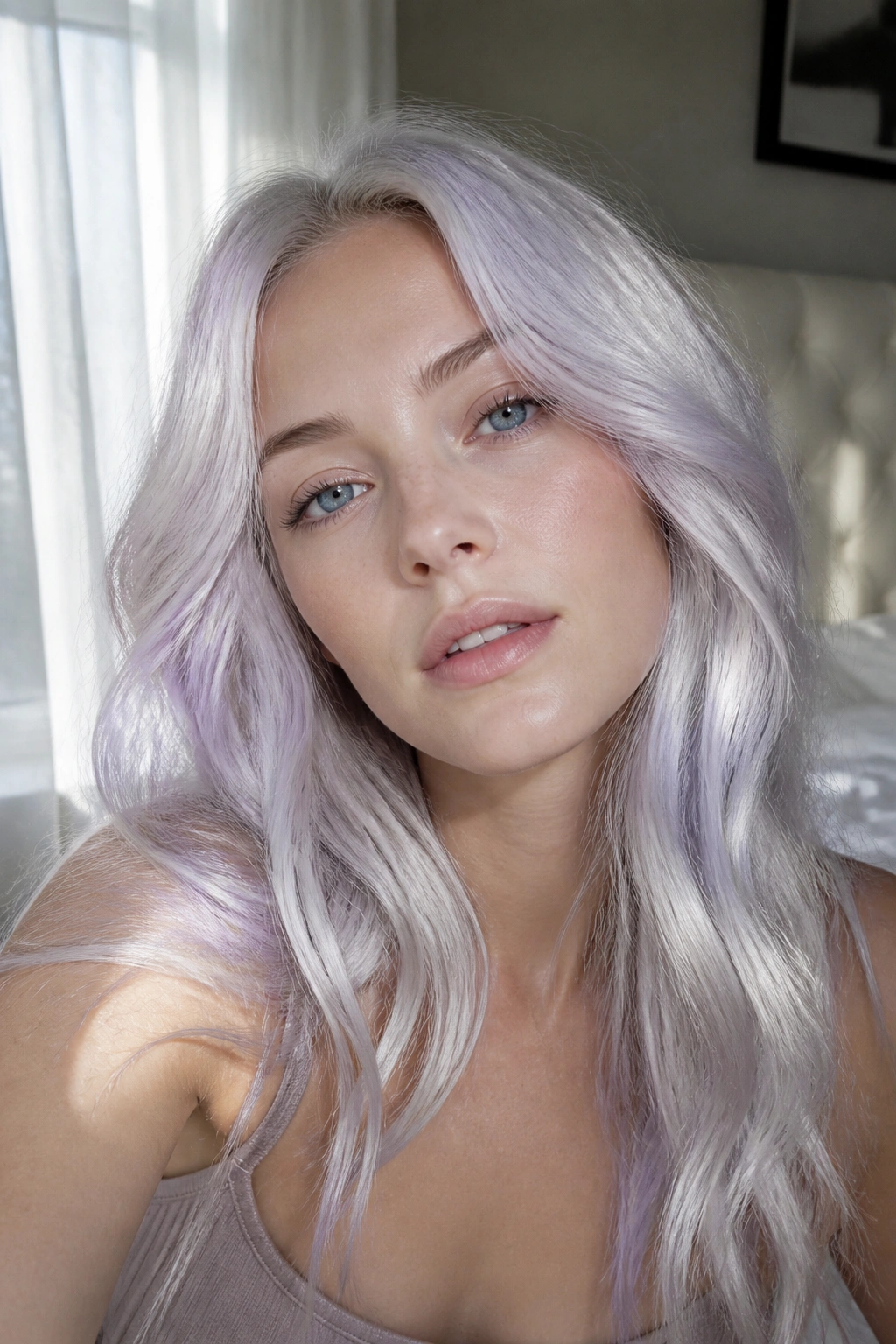
Moonstone white with a lavender veil is what happens when white hair gets a little softness without losing its cool edge. The lavender is barely there — more like a faint shimmer than a true pastel — but it changes how the white sits on the skin.
Why the Veil Matters
Cool skin tones with a pink or porcelain cast often love this shade because the lavender keeps the white from reading stark. It is also a nice choice if your eyes are gray, blue, or green, since the tint makes those tones stand out without shouting about it. The effect is subtle in indoor light and a bit more obvious in daylight, which is part of the charm.
- Ask for a sheer lavender toner, not a solid pastel dye.
- Keep the base lifted to level 10 before the violet tone goes on.
- Use a cool rose lip instead of peach; the shade will feel more balanced.
- Skip heavy yellow-based bronzer, or the contrast can look strange.
Pro tip: if the lavender starts to fade, do not rush to re-tone. A faint veil often looks better than a saturated one.
8. Steel Silver Lob
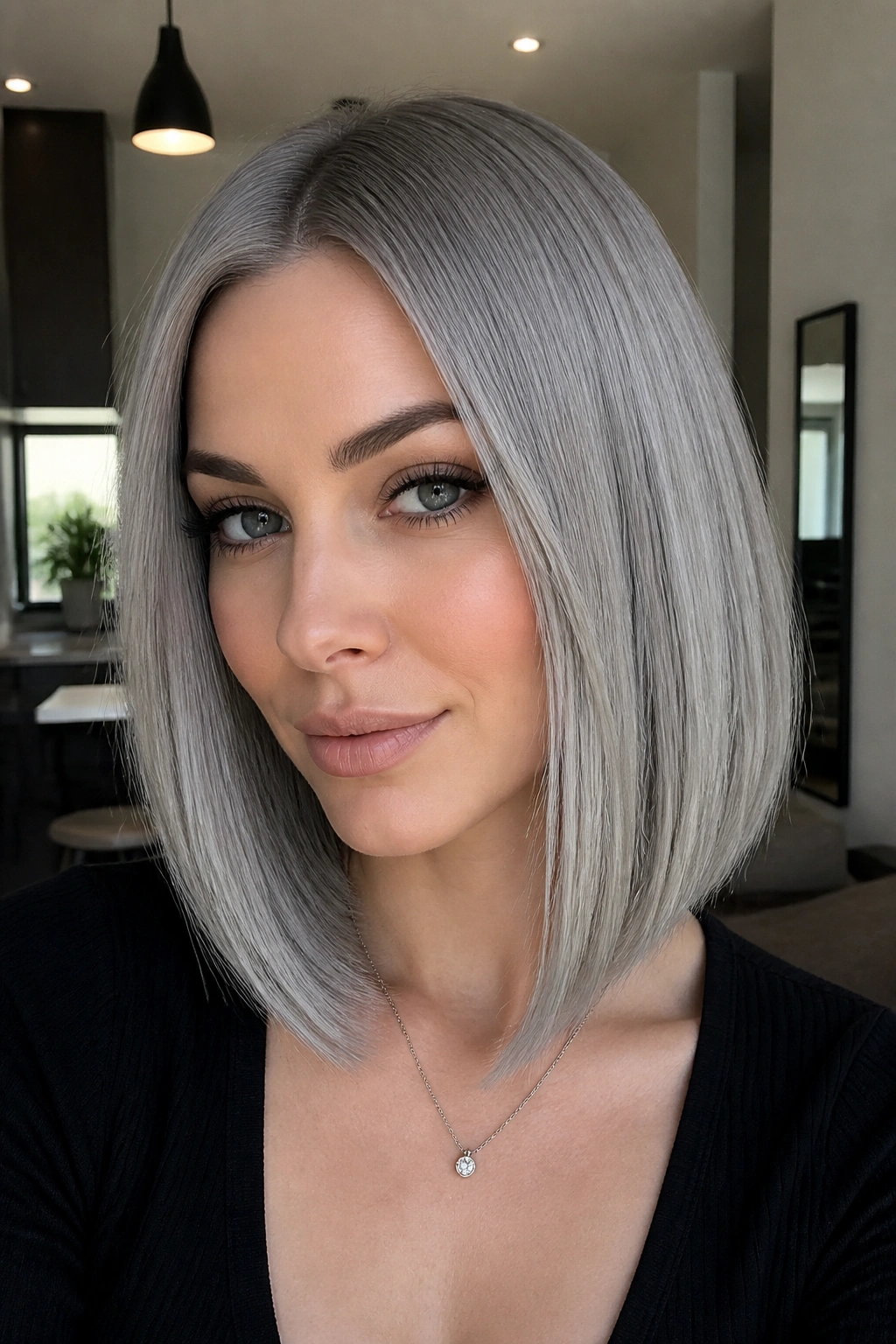
Steel silver is what you choose when pure white feels too fragile for your life. It is deeper, cooler, and more metallic, with a little gray sitting under the shine so the color looks grounded rather than airy. On cool skin tones, that steel note gives the face some structure.
The lob shape is part of the appeal. A blunt collarbone cut makes the silver look sharper, and it is easier to keep polished than a waist-length sheet of white hair. You can wear it straight for a mirror finish, or tuck one side behind the ear and let the color do the talking.
This shade also suits deeper cool skin better than some people expect. The slightly darker silver keeps the complexion from getting washed out, especially if your features are strong or your brows are naturally dark. A round-brush blowout brings out the metallic side. A flat iron finish turns it sleek and modern.
If you want silver white hair without the constant worry of every root and every dry end, this is the smart pick.
9. Frosted Silver Money Piece
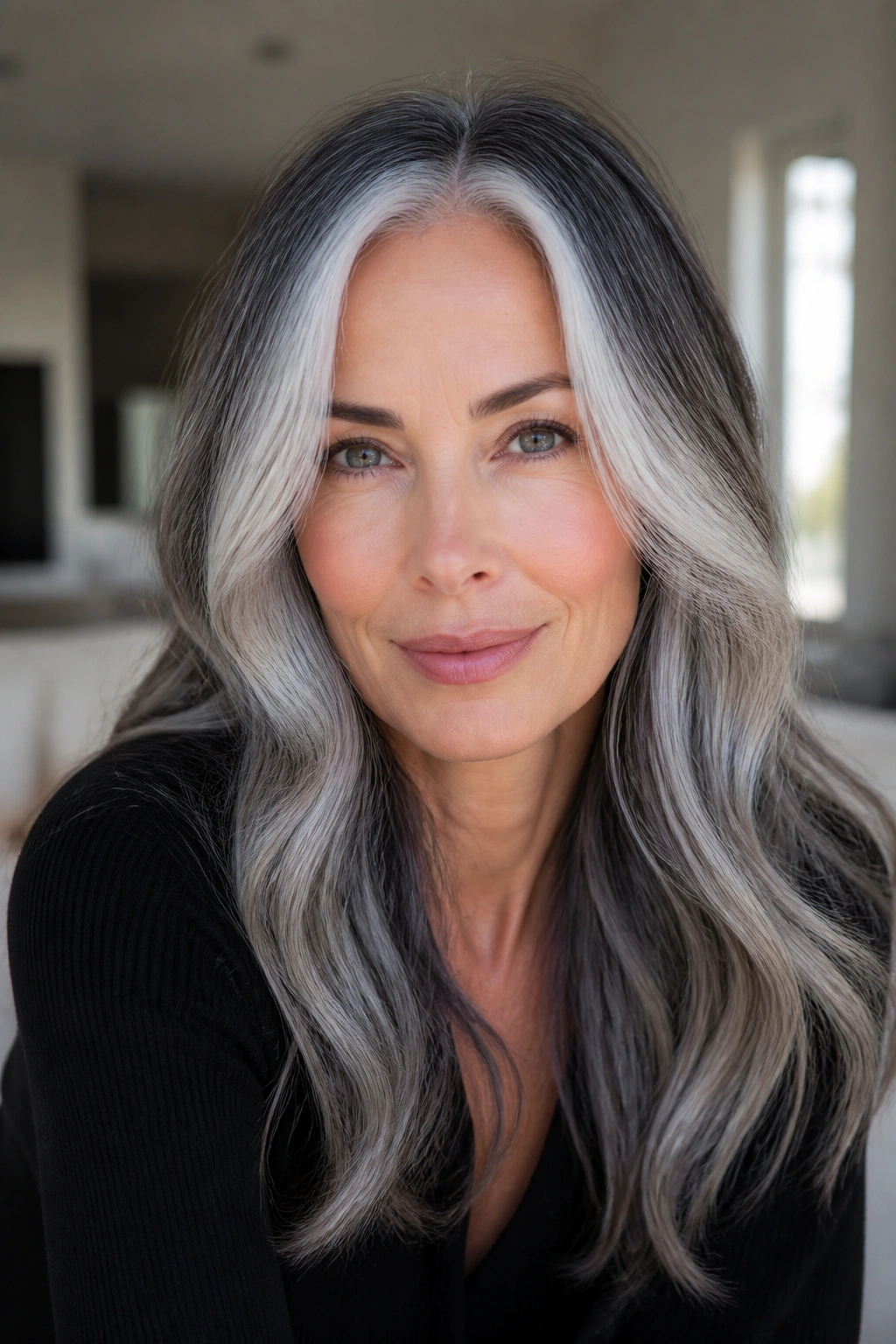
Why spend the bleach budget on the whole head when the front pieces do the heavy lifting? A frosted silver money piece gives you the bright, icy effect right where the eye lands first, and the rest of the hair can stay a shade or two deeper.
How to Keep It Balanced
The key is placement. Ask for the front sections from the temple to the cheekbone, usually no wider than about an inch and a half on each side, so the brightness frames the face instead of swallowing it. The money piece should still blend into the rest of the hair through a soft silver or smoky blonde, not a sudden line.
This idea works especially well if your natural hair is medium brown or dark blonde and you want a cooler look without turning the entire head into maintenance. It also keeps the ends healthier because you are not pushing every strand to the lightest possible state.
- Use a root smudge if the contrast feels too hard.
- Keep the back softer so the front pieces stay the focus.
- Straight styles show the placement most clearly.
- Wavy hair makes the silver peek in and out, which can be prettier than a flat finish.
10. Snow White with Dark Root Stretch
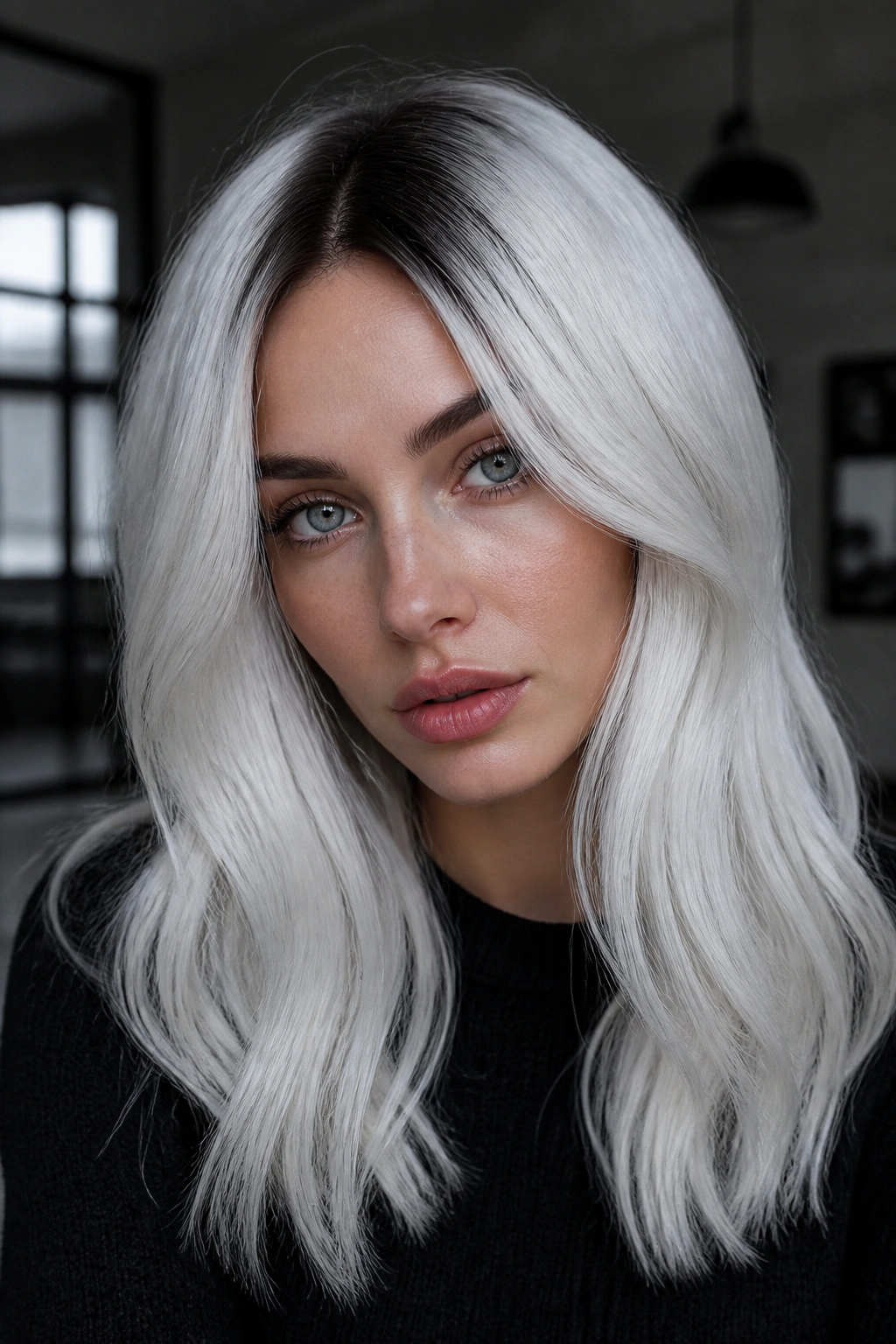
Snow white with a dark root stretch is for people who like a little drama with their polish. The white starts bright through the mids and ends, but the root stays stretched into a cool brunette or ash shadow, which creates a strong frame around the face.
I have always liked this better on thick hair than on fine hair. The deeper root gives the style weight, and the white lengths stop the look from feeling too pale. On cool skin tones, that contrast can be excellent — especially if your eyebrows are naturally dark and you like stronger makeup.
What to Watch For
A root stretch is only flattering when the blend is soft. If the line between root and white looks stripey, the whole effect turns harsh. The fade should melt over about two to three inches, with no obvious shelf. That takes a careful hand and a stylist who knows how to blur without making the root look dirty.
- Best with cool brunette, ash brown, or smoky graphite at the root.
- Needs regular glossing so the white stays white.
- Works well with bold lips and liner.
- Looks strongest on straight or softly waved hair.
A polished stretch looks intentional. A muddy one does not.
11. Opal White Bob
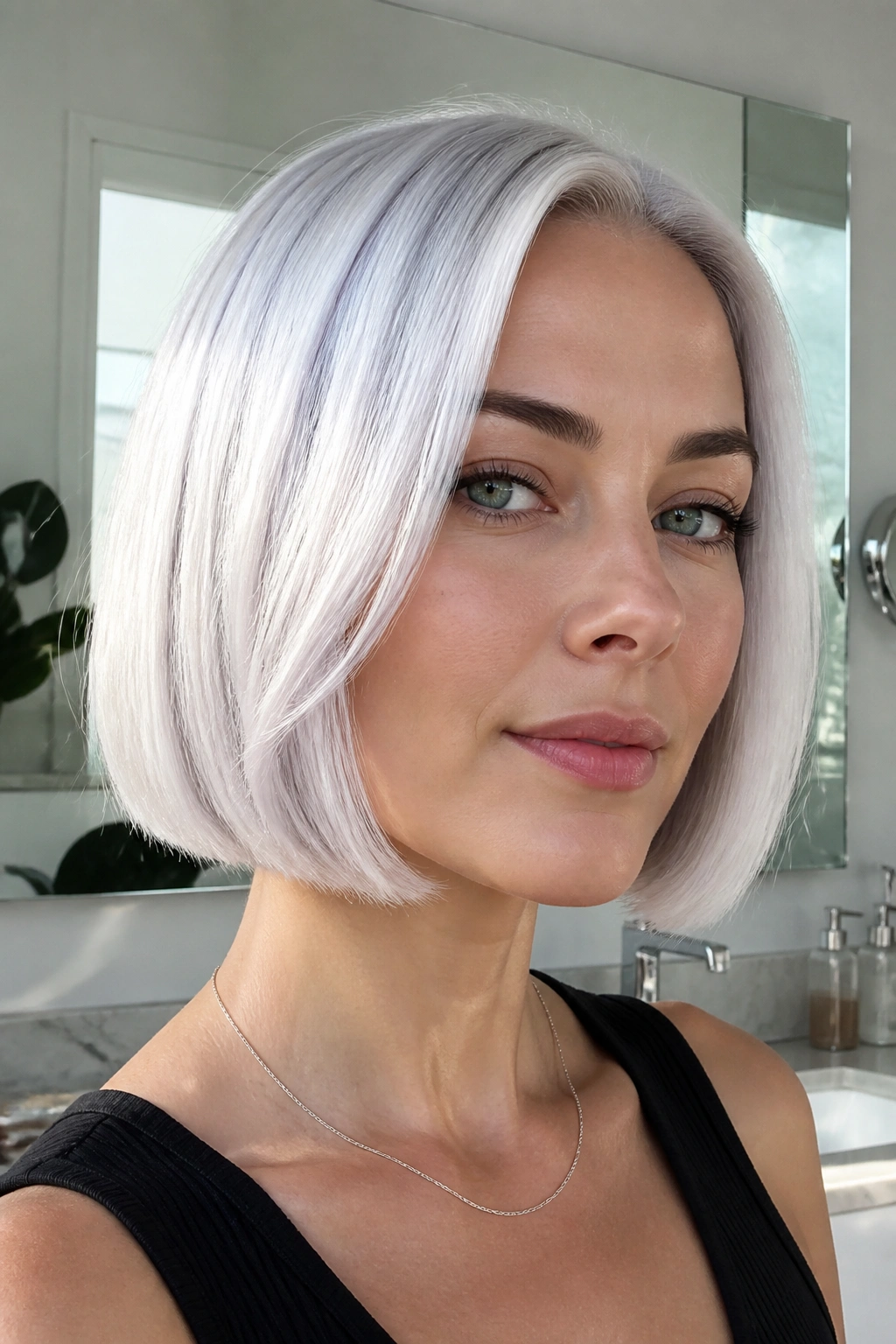
Opal white is softer than icy white, but it still reads cool. The finish has a pearly shift to it — a little white, a little silver, sometimes a whisper of violet or blue when the light hits it just right. On a bob, that sheen turns the whole cut into a small, sharp object.
A blunt bob is the right partner here because the clean line lets the color do its quiet work. Too many layers can break the shine apart and make the opal effect harder to see. I like this shade on cool skin tones with fair or light-medium depth because it keeps the face bright without pushing it into high contrast.
A rough cut ruins the shine.
The real trick is the ends. They need to be trimmed cleanly and kept conditioned enough to reflect light, not puff it away. A lightweight serum on the mid-lengths, not the roots, helps the bob stay sleek without looking greasy. If you tuck one side behind your ear, the opal tone looks even more deliberate.
12. Charcoal-Silver Reverse Ombre
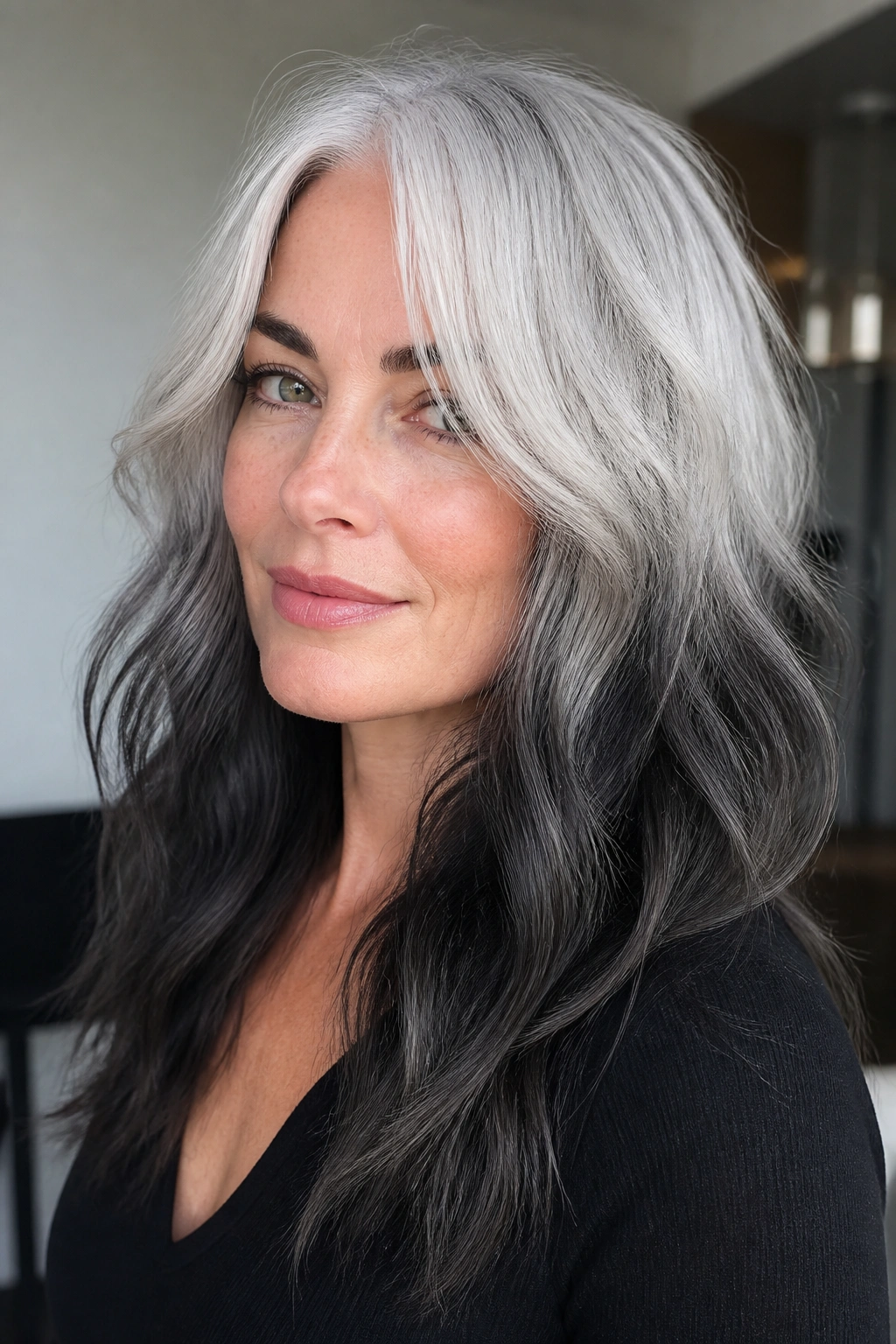
Charcoal-silver reverse ombre is a little unexpected, and that is exactly why it works. Instead of fading from dark roots to light ends, the silver sits higher up and the charcoal drops through the lower half, so the eye reads the look as graphic and tailored.
Compared with standard ombre, this version feels more architectural. The cooler dark ends anchor the brightness, which can be useful if your hair is long and you do not want the ends to disappear into a pale cloud. On cool skin tones, the contrast can be striking without drifting into warmth or softness.
This is not the shade for someone who wants an airy, angelic feel. It is for someone who likes clean lines, strong clothes, and a little edge in the mirror. Straight styling brings out the fade most clearly, but soft bends can make the transition look more fluid.
My one rule: keep the charcoal truly ash. Any brown warmth in the lowlight will fight the silver and weaken the whole effect.
13. Powder White with Blue Gloss
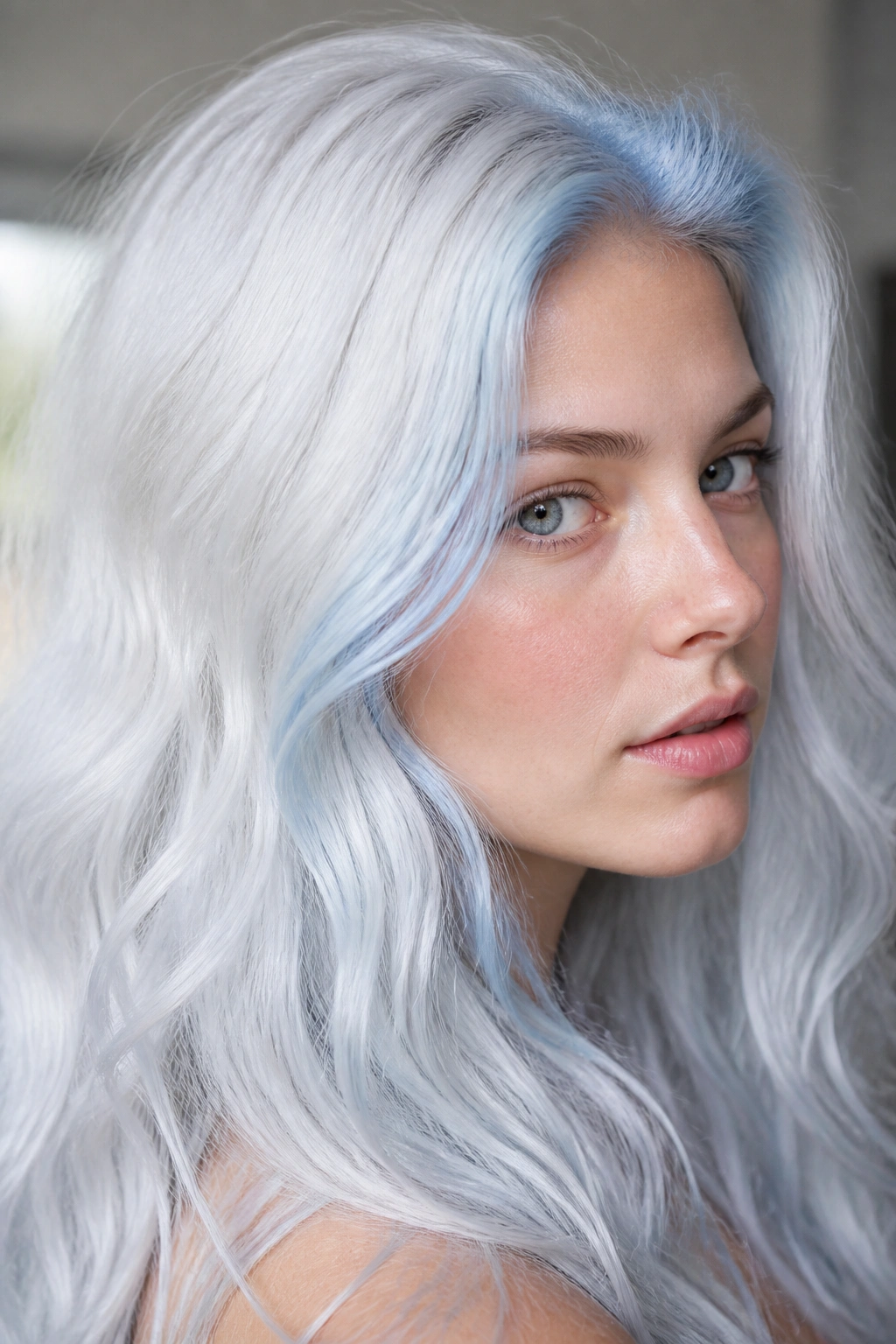
Powder white with a blue gloss is the airy cousin of icy silver. It looks almost weightless, but the faint blue cast keeps it from reading flat on cool skin. If you like a cleaner, softer white rather than a metallic one, this shade sits in a sweet spot.
What the Blue Does
Blue gloss is not there to make the hair look blue. It is there to cool down any leftover yellow and give the white a colder edge. That matters most around the hairline, where oxidation tends to show first. A translucent blue-violet gloss can keep the tone crisp without making the hair feel heavy.
- Ask for a sheer gloss, not an opaque color deposit.
- Works well on straight hair and sleek ponytails.
- Needs heat protection every time you style with a flat iron.
- Pair with cool pink blush and a pale lip if you want the face to stay soft.
Tip: if the ends are porous, the gloss may grab faster there. A quick porosity equalizer or a conditioning pre-treatment can save you from patchy tone.
14. Glacier Silver Waves
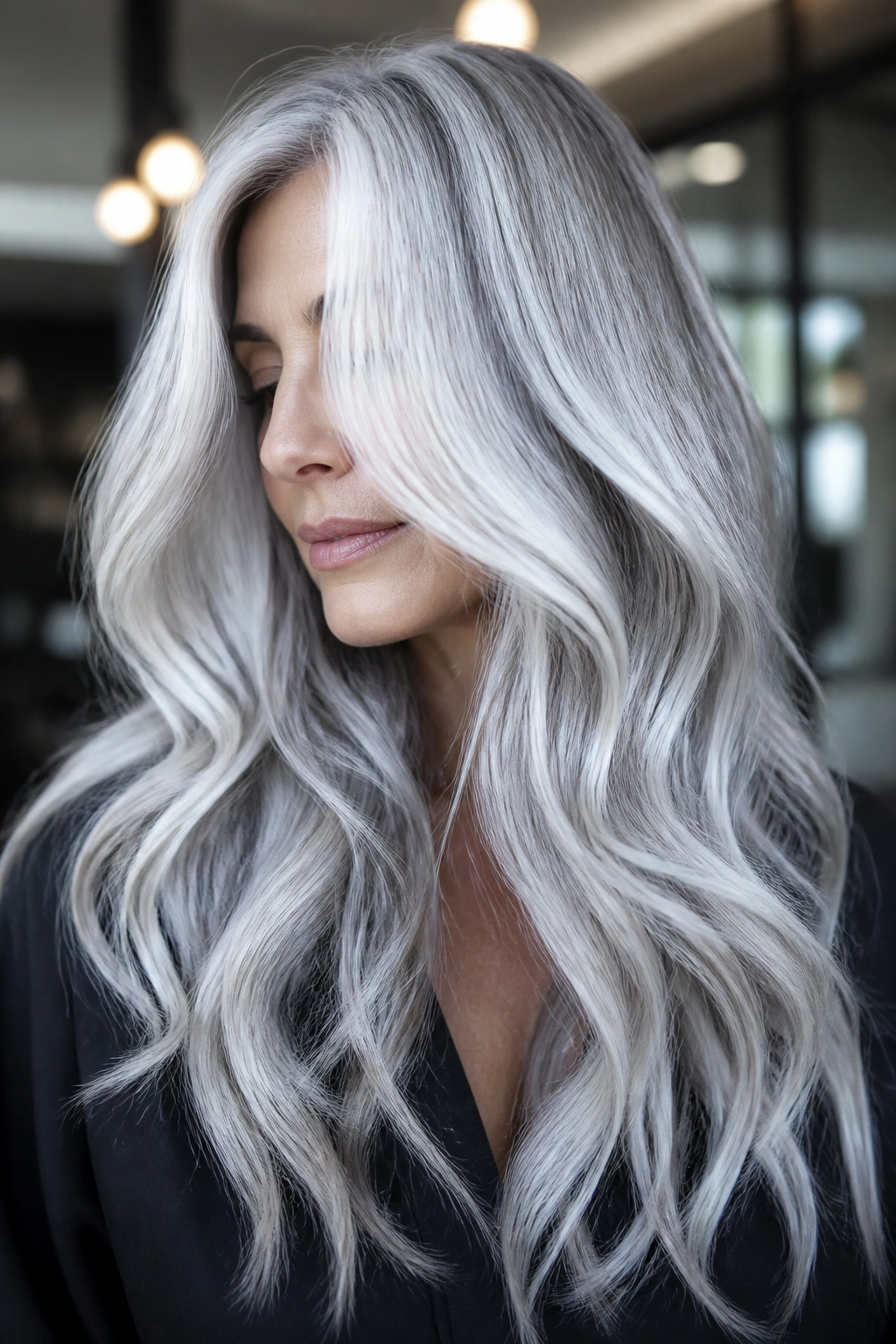
Glacier silver waves look expensive because the color never sits still. The mix of silver ribbons, pale white strands, and cooler lowlights gives the hair the feeling of moving water under ice, especially when the hair is cut in long layers.
This shade flatters cool skin tones because it avoids a flat sheet of brightness across the whole head. The waves break up the light, and the lowlights keep the overall effect from getting too pale. If your complexion leans rosy, this is one of the easier silver-white ideas to wear because the movement softens the contrast.
The styling part matters. Loose bends — not tight curls — show the color best. A 1.25-inch iron or a large brush blowout is usually enough. Too much curl makes the silver look busy, and the whole point is to keep it fluid.
I also like this on people who wear simple clothes. A black sweater, a gray coat, a clean white shirt — all of that lets the hair do the work without trying to match the room.
15. Smoky Silver Curtain Bangs
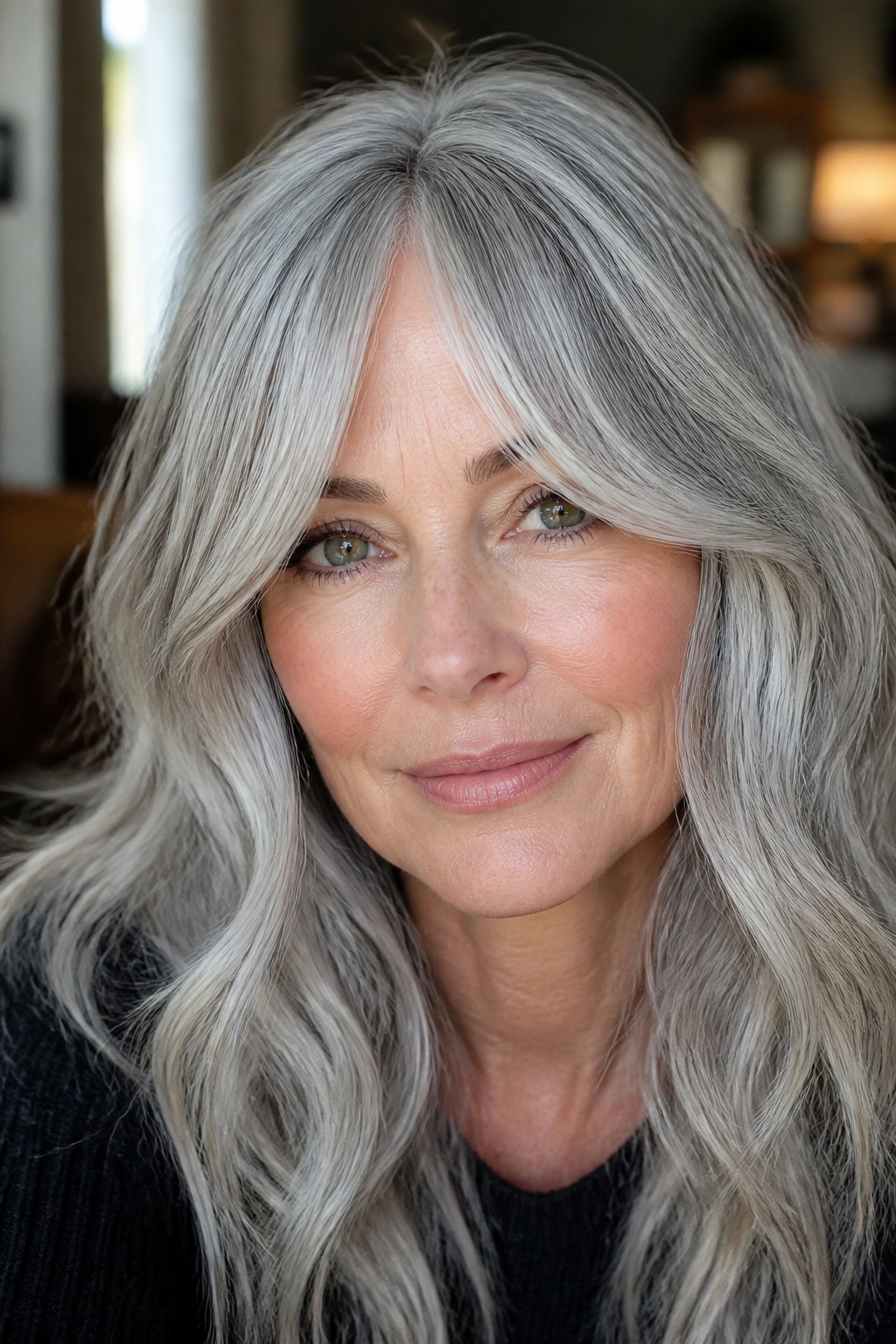
Can silver white hair feel softer around the face? Absolutely. Smoky silver curtain bangs are the proof. The fringe brings the cool tone right to the eyes and cheekbones, but the smoky depth keeps the bangs from looking like a bright strip cut across the face.
How to Style the Fringe
Curtain bangs need shape, not bulk. Blow them forward with a round brush, then flick them away from the face so they split cleanly in the middle or just off-center. If you have a cowlick, let the stylist work with it instead of fighting it; curtain bangs that sit naturally always look better than bangs that need a daily battle.
This shade is a smart match for cool skin because the smoke near the roots adds definition, and the lighter silver through the bang ends keeps the face bright. It also gives you a way to try a bold color without committing the entire head to the same level of brightness.
- Keep the bangs a touch darker than the ends if your skin is very fair.
- Use dry shampoo at the root so they do not collapse.
- Trim them every 4 to 6 weeks to keep the shape open.
- A tiny dab of styling cream is enough; too much product makes silver bangs cling together.
16. White Silver Buzz Cut
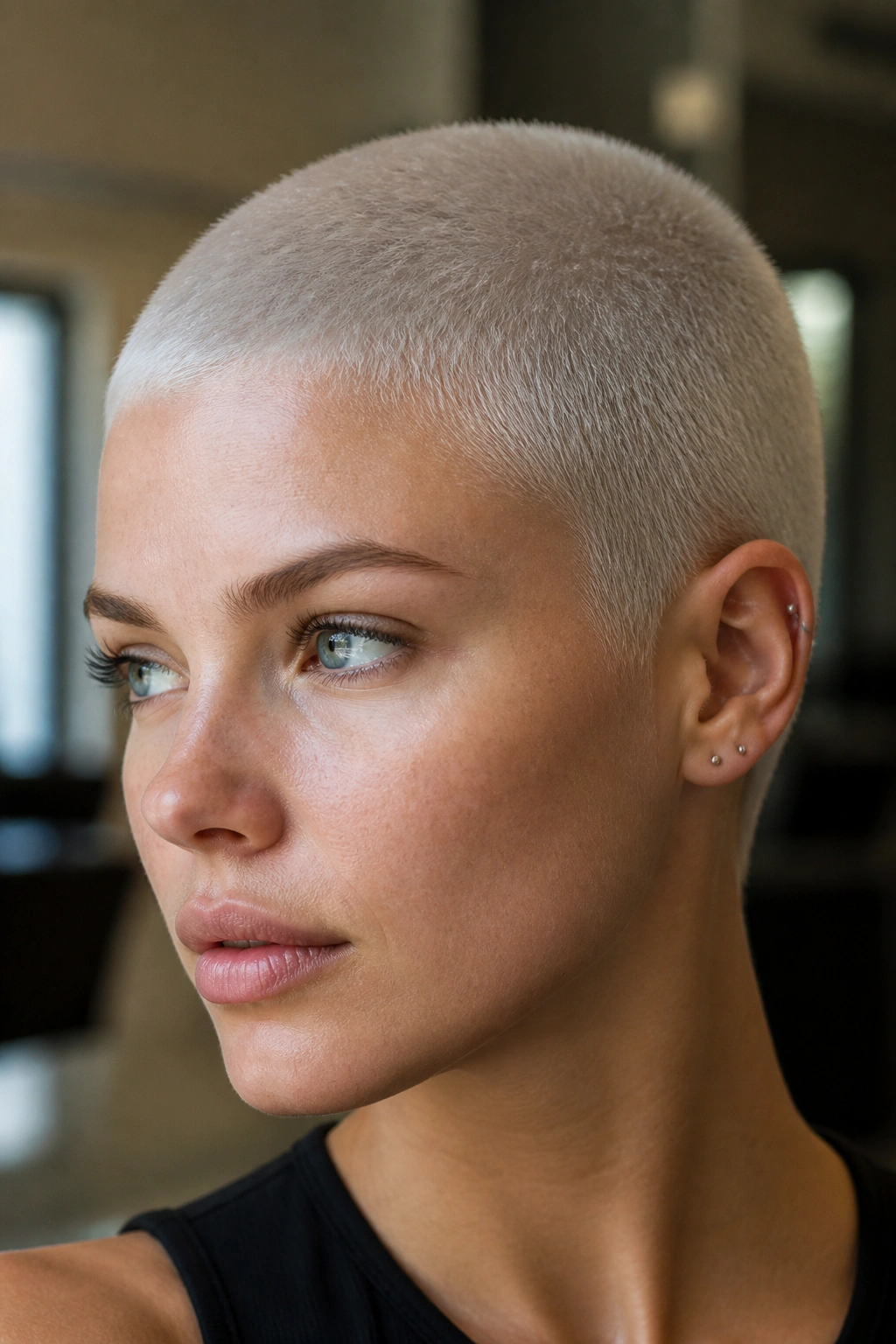
A white silver buzz cut is the sharpest move in the whole lineup. There is nowhere for the color to hide, which means the finish has to be clean from the first millimeter to the last. On cool skin tones, that high-contrast look can be stunning.
This style puts the scalp in play, so skin condition matters. If the scalp is dry or flaky, the white reads messier than it should. A simple scalp scrub and a light moisturizer between retouches can make a bigger difference than people expect. The buzz also puts the brows front and center, so shape and color matter there too.
Short hair is honest.
That is part of the appeal. There is no curl pattern to confuse the tone, no uneven layer to catch light in the wrong place. You get a strong silhouette and a color that looks almost metallic when the cut is fresh. Retouches tend to come fast because any shadow at the roots shows quickly, but the upkeep is straightforward.
- Ask for an even lift to the scalp line.
- Keep the tone cool, not yellow-ivory.
- Moisturize the scalp lightly, not heavily.
- Plan on trims and touch-ups more often than you would with longer cuts.
17. Soft Pearl Face-Framer
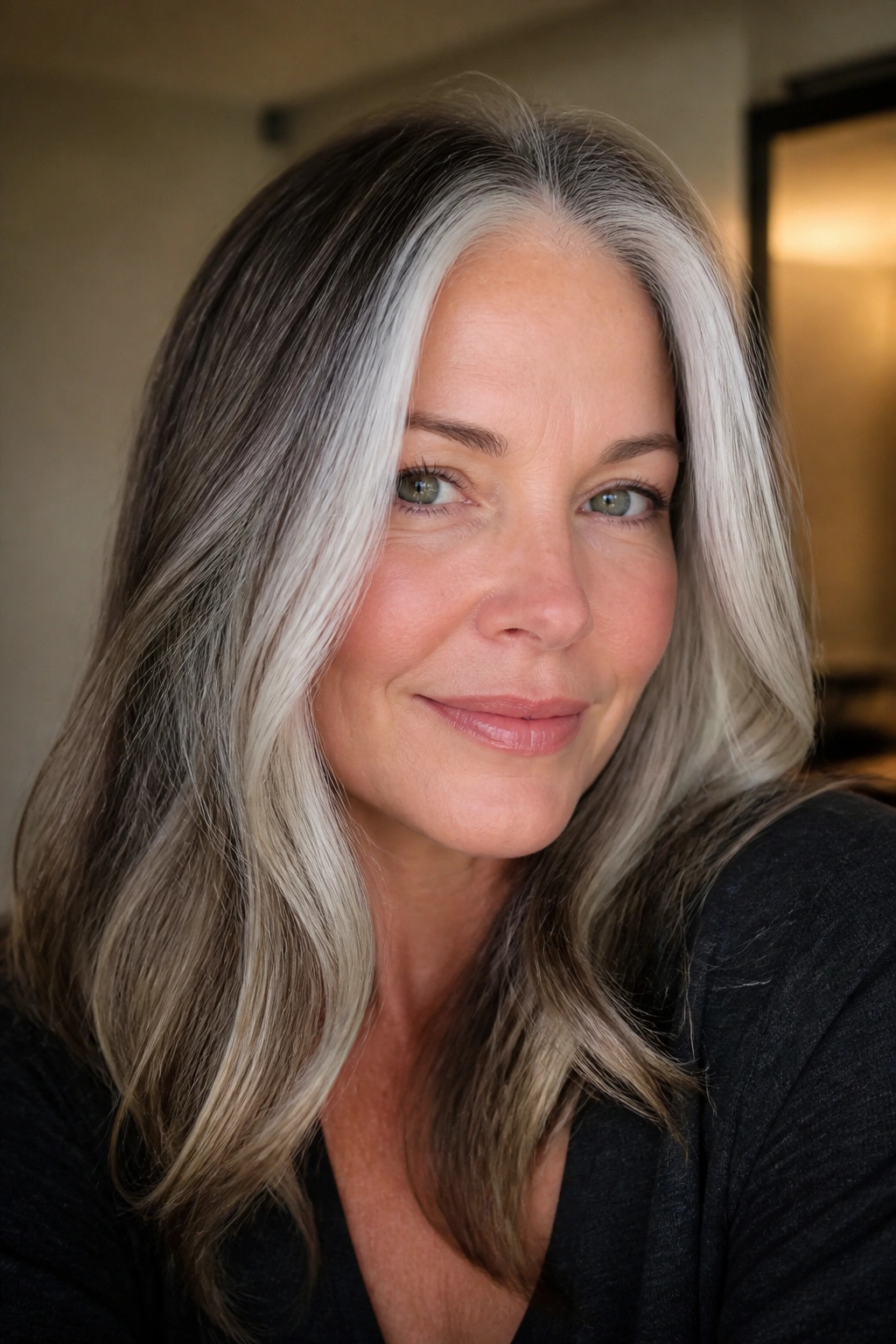
Soft pearl face-framing highlights are the quietest idea here, and that is why so many cool-toned faces can wear them. Instead of changing the entire head, you brighten only the pieces that sit beside the eyes, temples, and cheekbones. The rest of the hair can stay deeper, which makes the pearl pieces stand out without shouting.
This is a good place to start if full silver white feels too severe. The pearl tone adds light, but it still keeps enough softness that the grow-out does not look harsh. On cool skin, that gentle brightness can make the face look clearer and the eyes look brighter, especially if the base color is ash brown or smoky blonde.
I like this choice on layered hair, where the face-framing pieces can move when you turn your head. It gives you a little silver-white effect without the full maintenance schedule of a global lightening service. The style also plays well with glasses, which can make the front pieces look even more deliberate.
A light gloss every few appointments keeps the pearl from turning dull. That is usually enough.
18. Holographic Silver White
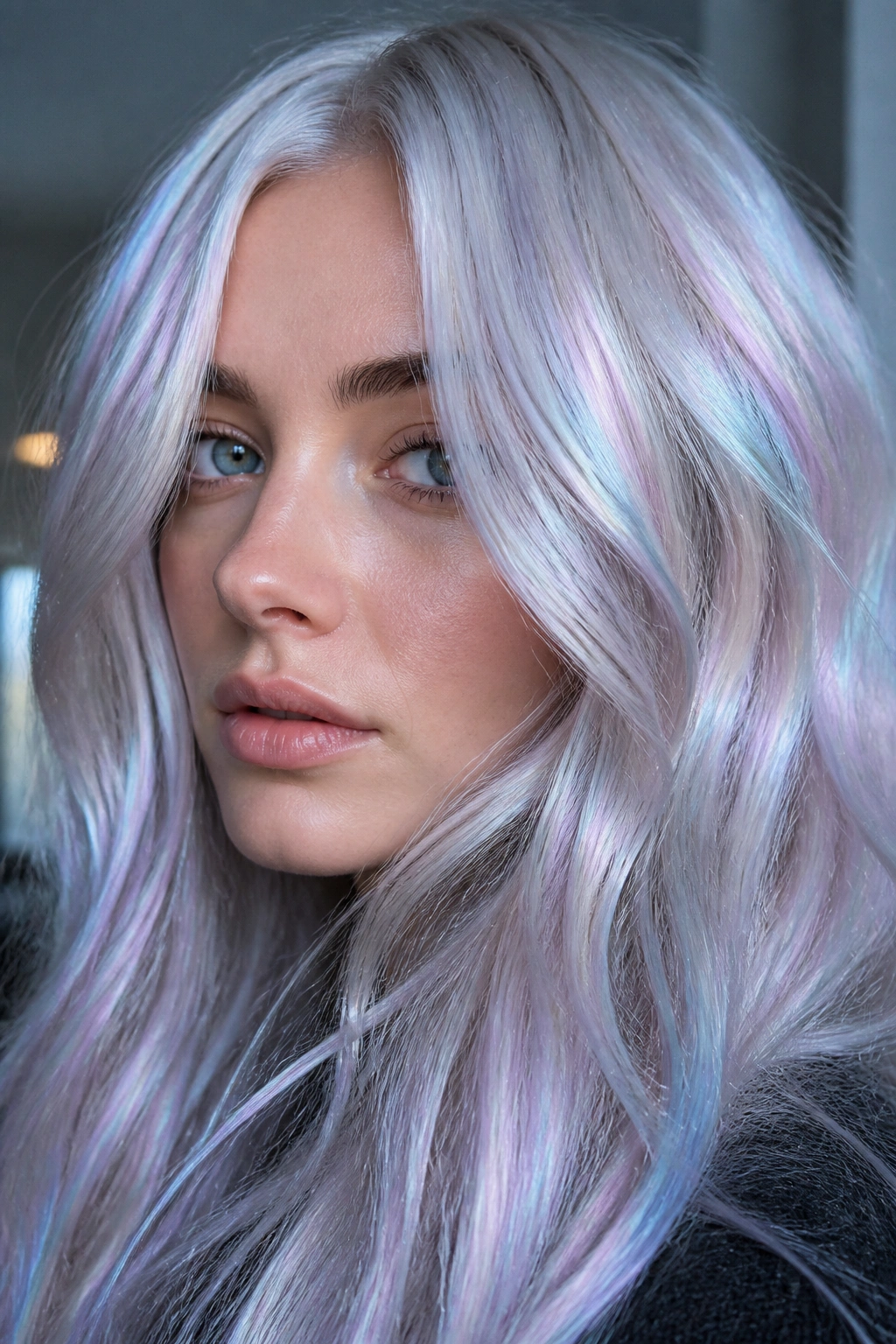
Holographic silver white is the most layered version of the whole group. It is still cool and pale, but the finish shifts between silver, pearl, faint lilac, and sometimes a touch of blue depending on the light. The result is more reflective than flat white, which gives cool skin tones a brighter frame.
This shade works best on hair that has been lifted evenly to level 10 and then toned with a careful hand. If the lift is patchy, the holographic effect turns messy fast. If the canvas is clean, though, the color has a kind of shimmer that makes straight styles look glassy and waves look almost liquid.
The trick is restraint. Too much pigment and the whole thing becomes pastel. Too little and it goes plain white. A translucent gloss, a cool toner, and very good conditioning are the whole story here. I would not do this on fried ends; the finish depends on shine, and dry hair kills that immediately.
If you want the most dimensional silver white hair color in the room, this is probably the one. It is not the easiest shade to wear, and that is part of its appeal.
