



Gray hair can look razor-sharp on cool skin tones, or it can make the face go a little tired if the shade leans yellow, beige, or muddy. That’s the part people miss when they pick a silver from a photo and hope it lands the same way on their own head.
The best gray hair color ideas for cool skin tones stay in the icy lane: silver, smoke, graphite, steel, pearl, and blue-gray. Those shades play nicely with pink, rosy, blue, and violet undertones in the skin, which is why they tend to look crisp instead of chalky.
Cool undertones need a clean tone, not a warm one. A gray that looks soft and expensive on one person can look flat on someone else if the hair isn’t lifted enough or the tone slips too beige. That’s normal, and it’s why the exact finish matters as much as the shade name.
The 20 ideas below move from airy and pale to dark and moody, with notes on who each one flatters, how much upkeep it usually needs, and what to ask for when you sit in the chair. A good colorist hears the difference between gray and smoky silver right away. So will your skin.
1. Icy Silver with a Blue Cast
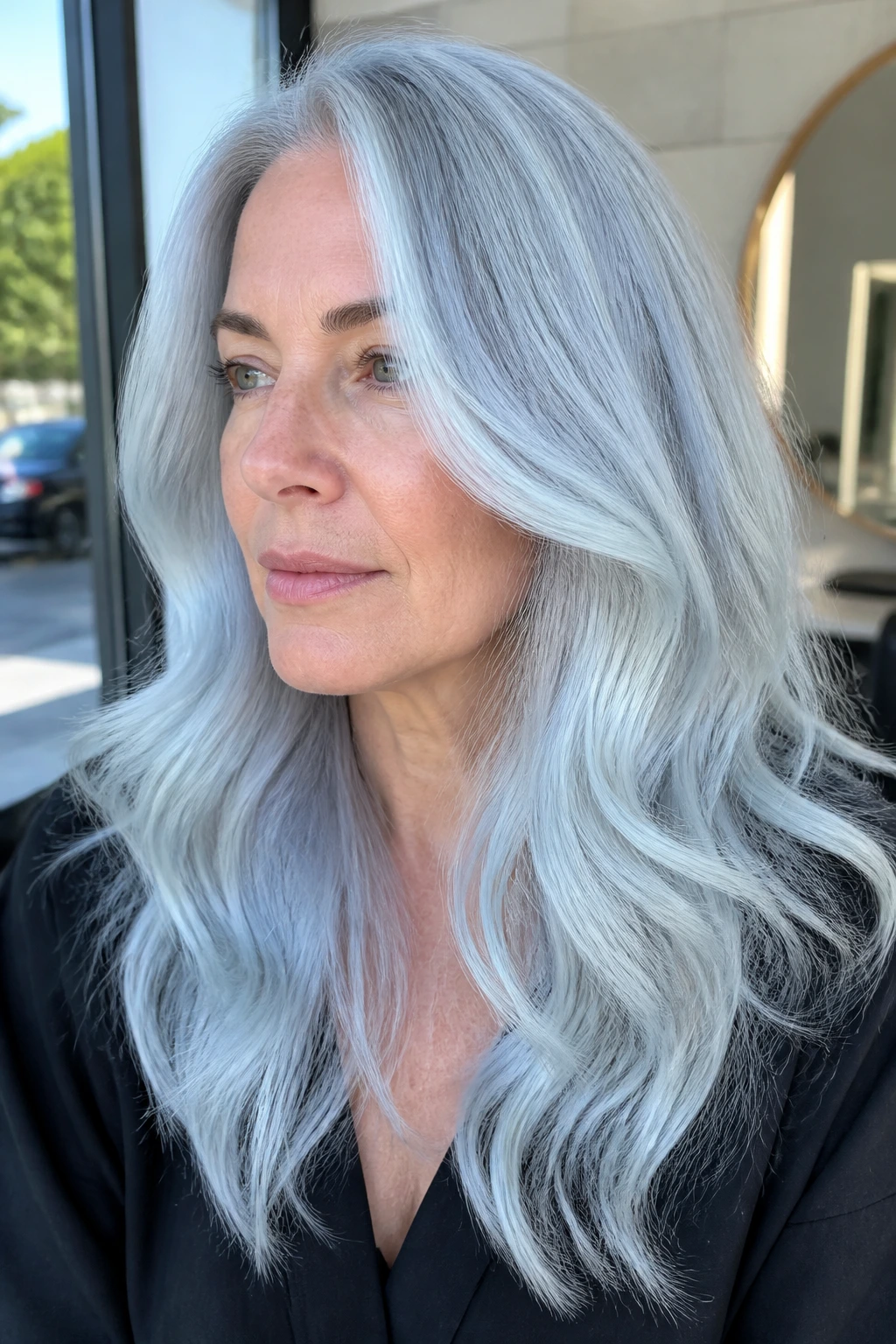
If your skin reads cool in daylight and your brows have that soft ash tone, icy silver can make your whole face look cleaner. Not brighter in a fake way. Cleaner.
The trick is the blue cast. Without it, silver can slide into beige and lose that crisp edge that cool skin likes so much. With it, the hair looks like polished metal after rain.
What to Ask For
- A lift to level 9 or 10 before toning.
- A violet-blue toner instead of a warm silver gloss.
- A soft root shadow if you want less maintenance around the hairline.
- Purple shampoo once a week, not every wash, so the tone stays shiny instead of dull.
Best for: fair to medium cool skin, especially if your eyes are gray, blue, or blue-green.
Watch out for: too much toner. That can push the shade into flat purple-gray, which is a different mood entirely.
This one looks best when the hair moves. Sleek bobs, loose waves, even a blunt cut all work, but the finish needs shine. Dry silver reads dusty fast. Keep it glossy, or it loses the whole point.
2. Pearl Gray Bob
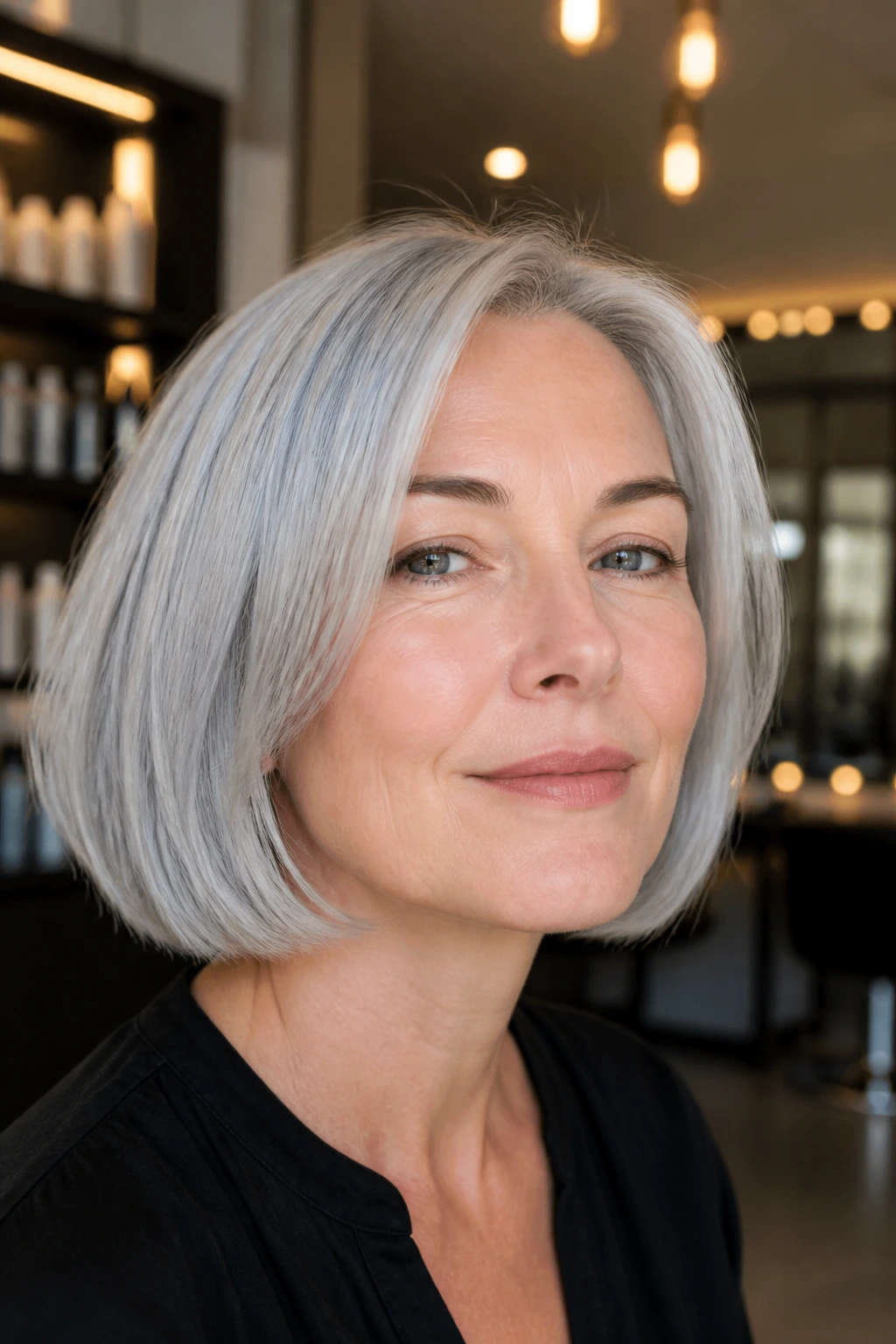
Pearl gray is the shade I reach for when someone wants gray without looking stern. It has a soft, milky reflection that sits between silver and white, and that softness matters on cool skin that already has a little pink in it.
On a bob, it feels deliberate. The cut gives the color structure, and the color keeps the cut from looking too severe. That combination is why this one keeps showing up in good salons.
A chin-length or jaw-skimming bob makes pearl gray look tidy instead of fuzzy. If the hair is longer and finer, the shade can get lost at the ends, so a blunt line helps. I also like it with a slight side part because it breaks up the symmetry and keeps the color from looking like a helmet.
This is a good pick if you want elegance without hard contrast. It’s also kinder than a full icy white, because the pearl finish forgives small changes in tone as it fades. A gloss every 4 to 6 weeks usually keeps it looking fresh.
3. Steel Gray Balayage for Cool Skin Tones
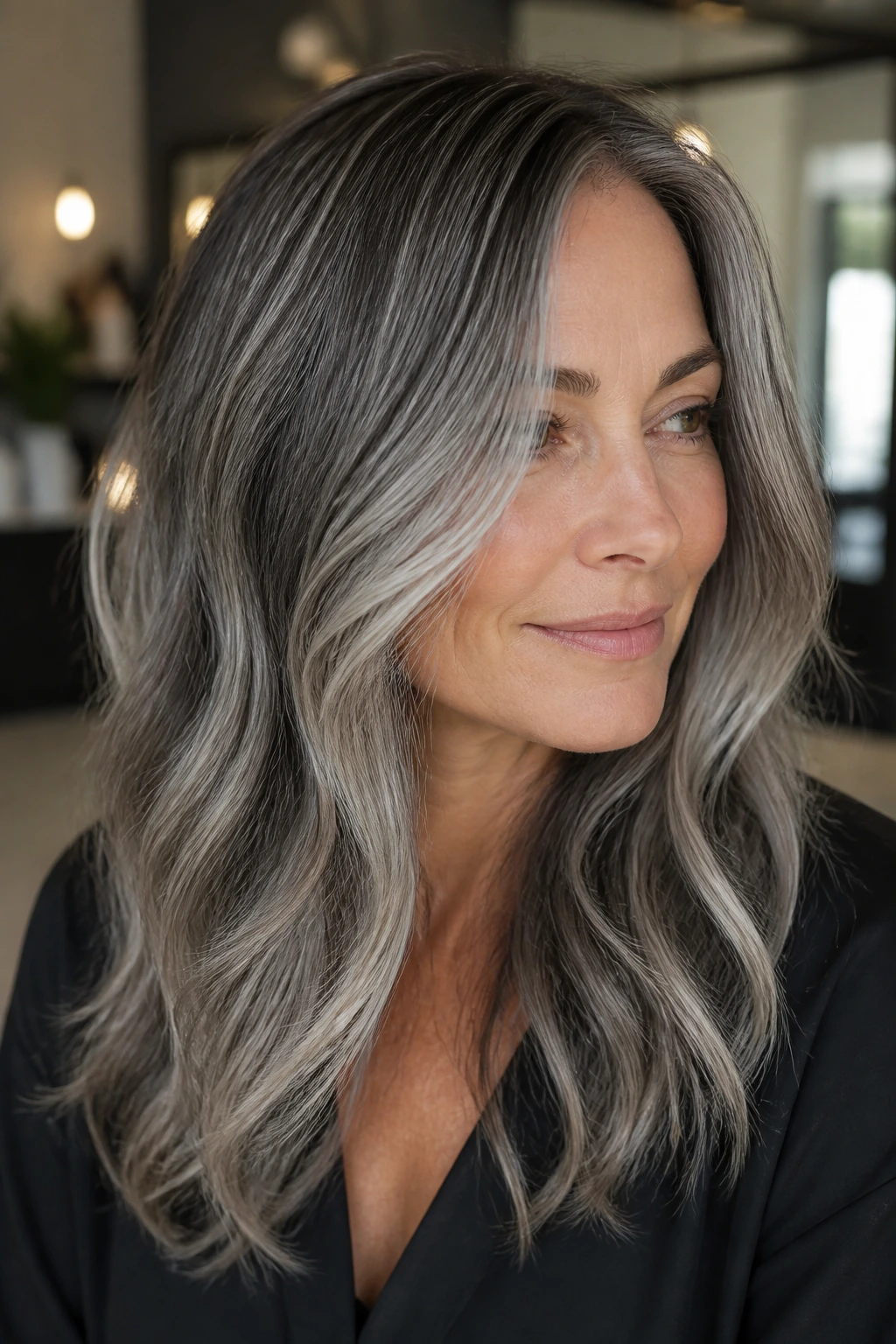
Why does steel gray work so well on cool undertones? Because it is not one flat gray. The best versions have thin ribbons of silver over a smoky base, so the hair keeps depth instead of turning into one solid sheet.
That depth matters on cool skin. Flat color can drag the face down, while steel gray balayage keeps the eye moving from dark to light and back again. The result feels sharper, but not harsh.
How to Wear It
Ask for fine balayage pieces through the mids and ends, with a cooler toner on top. The most flattering version usually keeps the roots a shade deeper than the ends, which means the grow-out is softer and the color looks more natural in daylight.
- Works well on lobs, long layers, and soft shags.
- Pairs nicely with cool makeup tones like rose blush and berry lips.
- Looks best when the waves are loose, not stiff.
- Needs toning every 5 to 7 weeks if you want the steel finish to stay clean.
This is a smart choice if you want dimension without going fully icy from root to tip. It has some attitude. A little edge. Enough to feel modern without shouting.
4. Graphite Root Melt
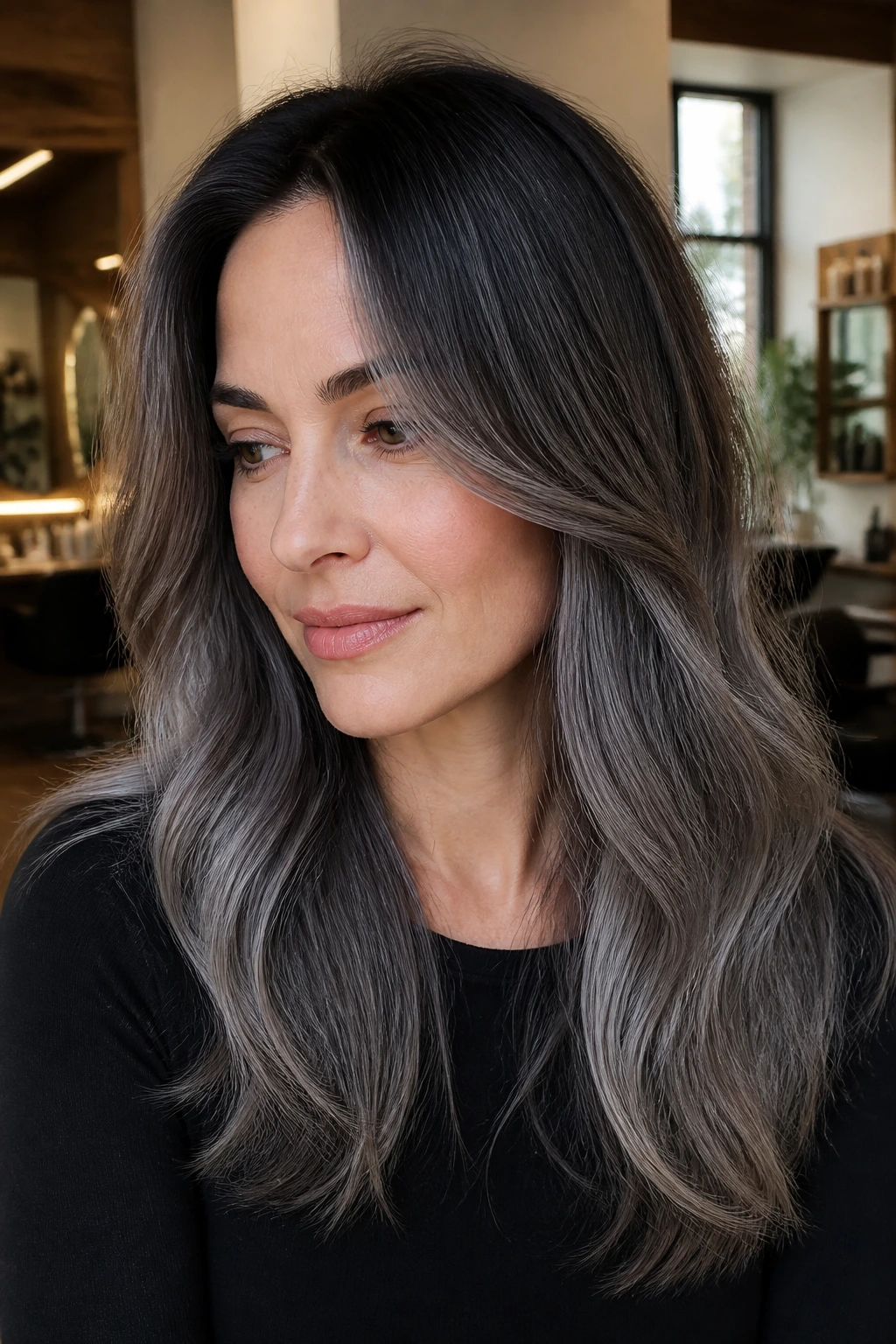
Unlike jet black, graphite has a softer edge at the hairline. That is the whole appeal. On cool skin, the deep charcoal base gives you contrast, while the smoky melt keeps it from looking severe or costume-like.
A good graphite root melt usually starts deep at the roots and fades into a smoky gray-brown or dark silver through the mids. The transition should be slow enough that you cannot point to one hard line and say, “There it is.” That’s the mistake people make when they try to rush the melt.
This shade is especially good if your natural hair is dark and you do not want a lot of visible regrowth. The root area can blend into your base color while the lighter lengths carry the gray payoff. That means less panic at the mirror six weeks later.
If your skin is very pale and cool, graphite can look dramatic in a flattering way. If your features are softer, it can be too much unless the ends stay lighter. I’d keep the finish matte-shiny, not glossy-black shiny. That difference is small on paper and obvious in real life.
5. Smoky Silver Ombré
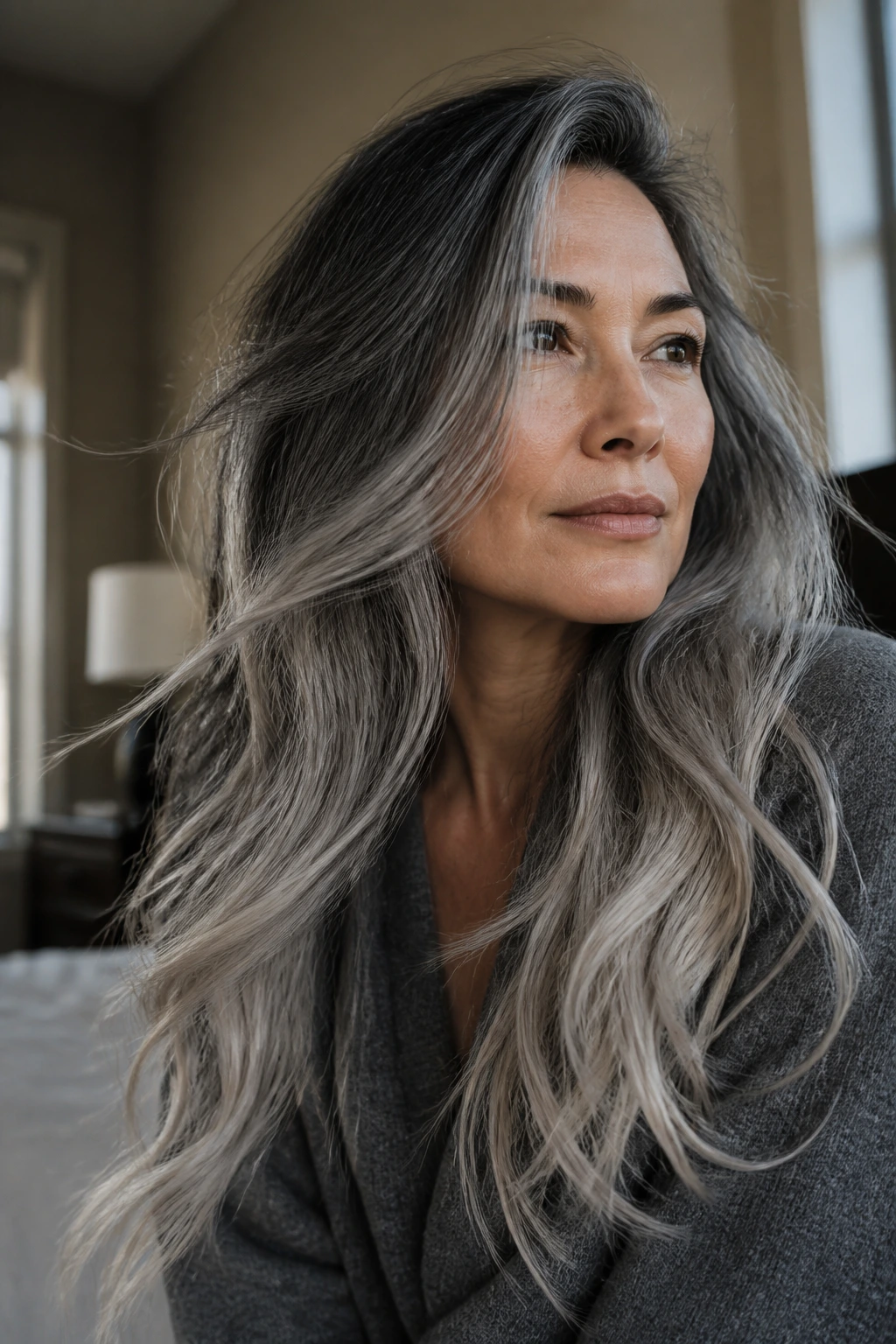
This is the one for people who like their hair to look windblown even when it is not. Smoky silver ombré starts deeper at the top and drifts into lighter, mistier silver toward the ends, which gives cool skin a soft frame instead of a heavy one.
The ombré shape matters as much as the color. A blunt color block can feel dated fast, but a gradual fade looks easy. Not lazy. Easy in a good way.
What makes this shade work on cool undertones is the smoke. A pure silver end can sometimes look too bright against very pale skin, but the smoky middle tone bridges the gap. It keeps the hair from jumping straight from dark to white.
This is a strong option for long layers or a soft U-shape cut. The movement in the haircut lets the gradient show without needing curl or styling tricks. And if your ends are a little porous from past color, the smoky finish hides that better than a pale platinum would.
The downside is that the lighter ends fade first. They always do. A nourishing mask and a cool-toned gloss go a long way here.
6. Titanium White Pixie
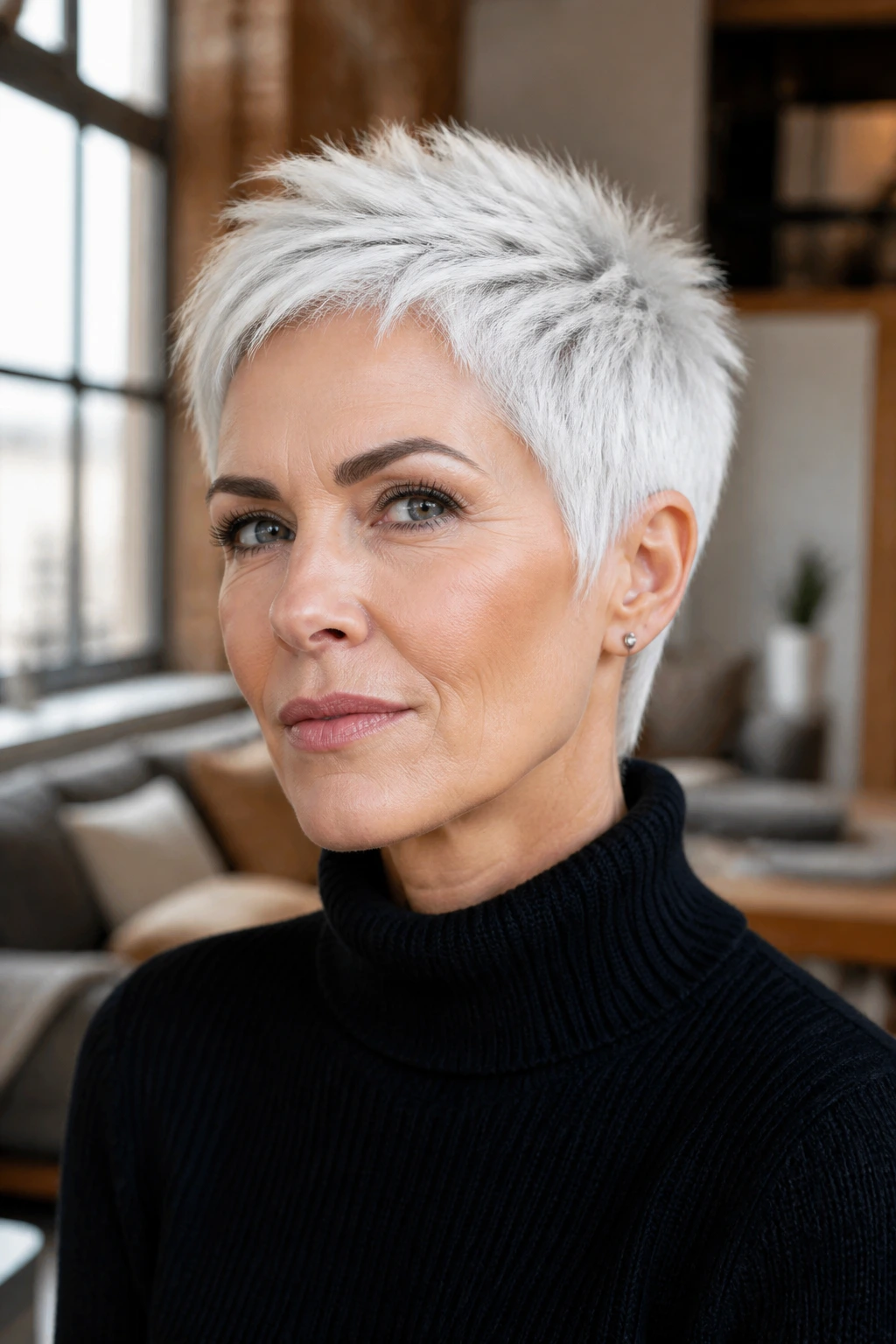
On a short cut, white-silver can look sharp instead of costume-y. That’s why titanium white works so well on a pixie. The crop keeps the color from spreading across too much surface, and the eye reads the finish as clean and intentional.
This shade sits at the very pale end of the gray spectrum, so the canvas has to be lifted properly. If the hair is still yellow underneath, titanium white will fight it every single time. You end up with a flat, tired-looking blonde-gray instead of a crisp white-silver.
- Best on pixies, cropped shags, and short textured cuts.
- Usually needs a lift to level 10.
- Works best with a cool toner, not a beige one.
- Purple shampoo can be drying, so use it sparingly.
- Trims every 4 to 5 weeks keep the shape from sagging.
This shade loves strong features. Blue eyes, dark brows, defined cheekbones—those things help. Still, the cut does a lot of the work here. Short hair gives white a place to land.
7. Blue-Gray Gloss
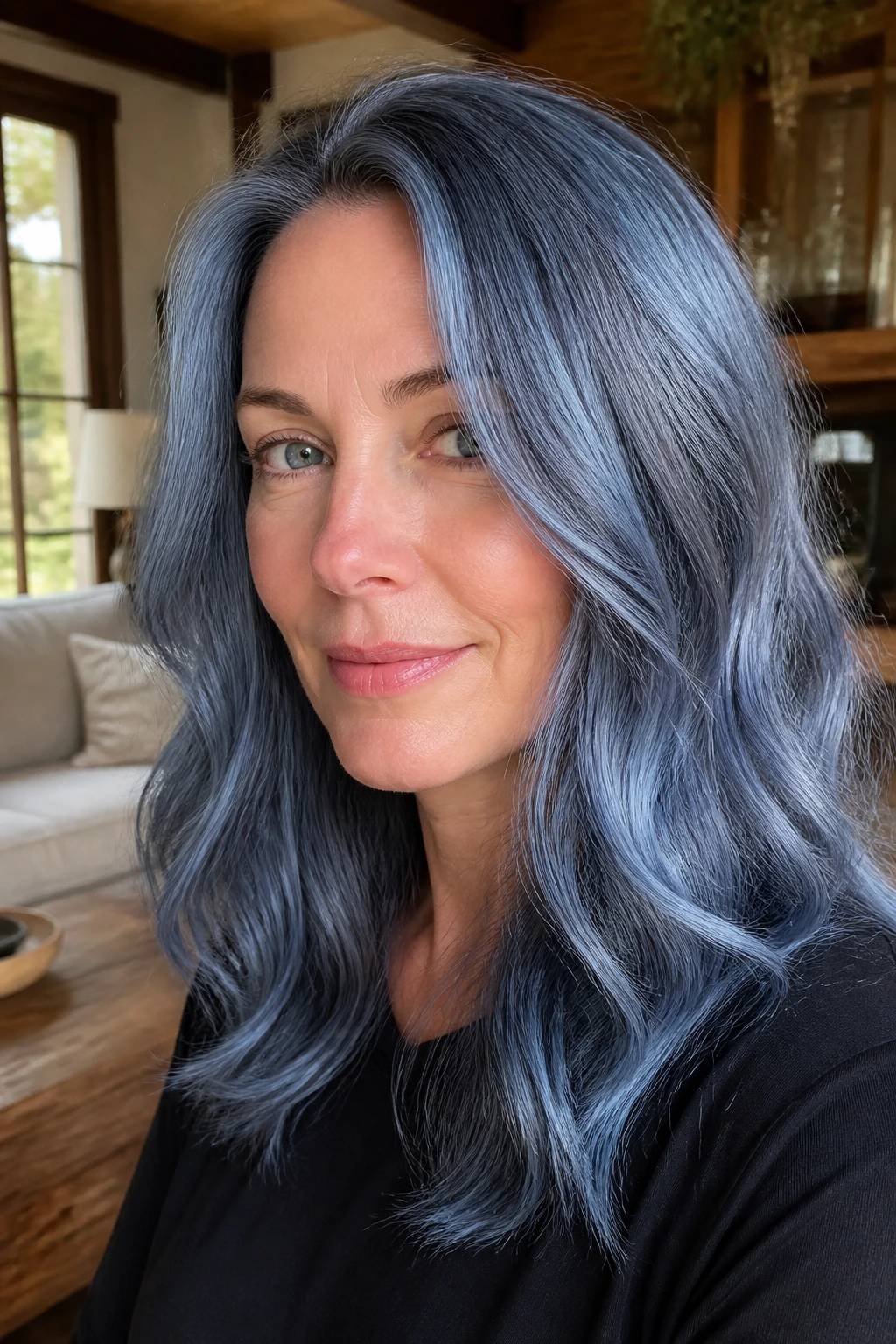
Blue-gray is the most underrated choice for cool skin because it cuts the yellow that makes pale complexions look sallow. That tiny blue shift does more than people expect. It makes the gray feel alive.
The finish should be translucent, not opaque. Think of a sheer gloss over a silver base rather than a painted block of color. When the light hits it, the blue note shows up for a second and then disappears again, which is exactly what keeps it from reading cartoonish.
This is a good pick if you want gray hair color ideas for cool skin tones that still feel subtle. On medium-length hair, it looks especially good when the ends have movement. Straight hair can wear it too, but you’ll want shine products because matte blue-gray can drift toward flatness.
Ask for a cool glaze rather than a heavy toner if your hair is already light. If the base is dark, you’ll need more lift first, or the blue will sit on top like a tint instead of sinking into the strand. That’s the part people underestimate.
8. Charcoal and Silver Ribbons
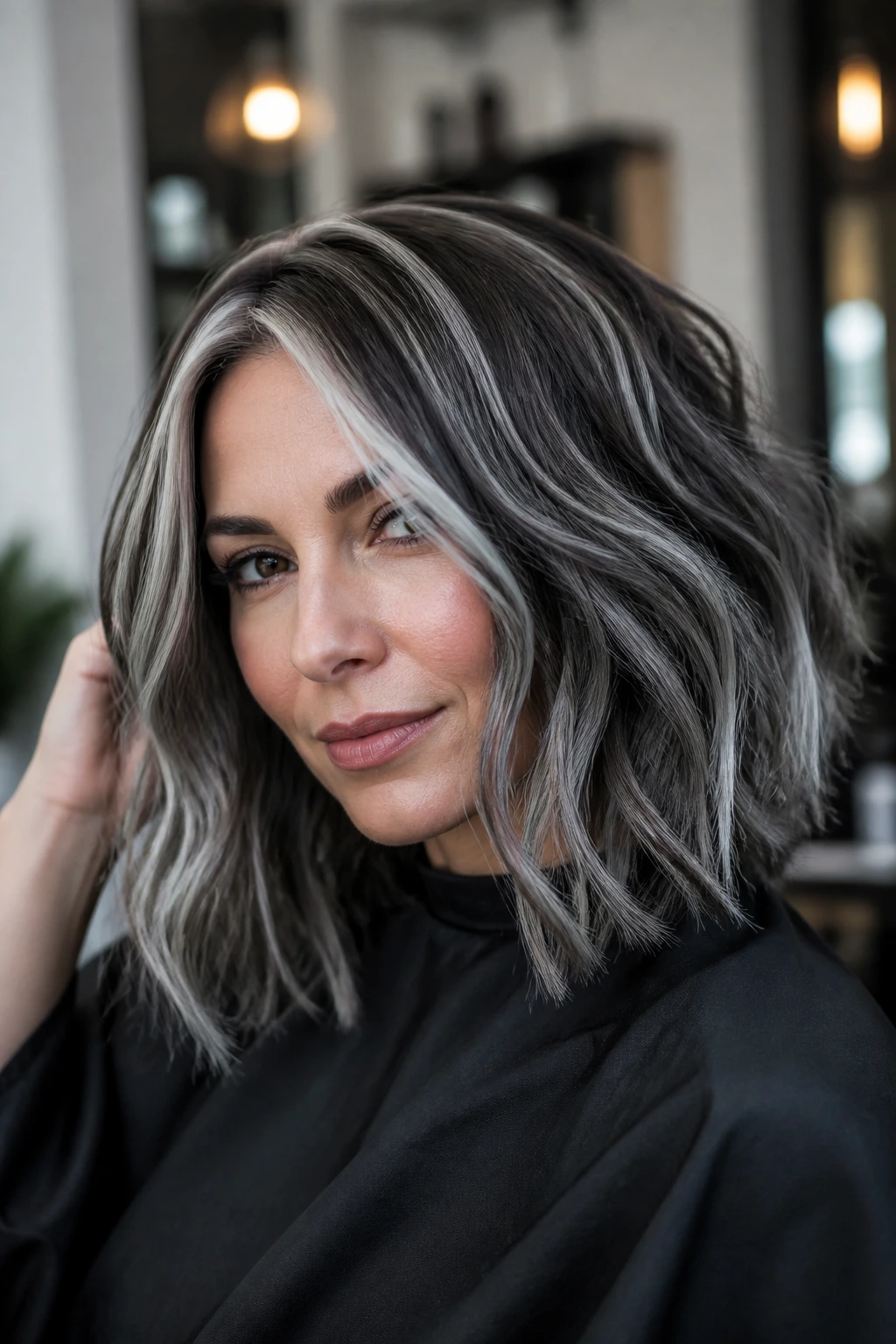
This is not a stripey highlight job. The ribbons should sit like smoke through dark fabric—thin, uneven, and soft around the edges.
Charcoal and silver ribbons work because they keep contrast where you want it and depth where you need it. Cool skin tones usually look best when the hair has both. Too much lightness can wash the face out, while too much dark can look heavy. This sits in the middle, which is why it works.
What to Ask For
Ask for micro-foils or babylight ribbons in silver over a charcoal base. The pieces around the face can be a touch brighter, but the overall effect should still feel dark and dimensional.
- Good for brunettes who want gray without full bleach everywhere.
- Looks strongest on layered cuts and textured lobs.
- Fine placement keeps the color from reading chunky.
- A cool ash toner on the ribbons keeps them from turning beige.
I like this shade for people who wear darker clothes and want the hair to match that mood. It has a bit of drama, but not the kind that makes every outfit feel styled within an inch of its life.
9. Dove Gray with Face-Framing Money Pieces
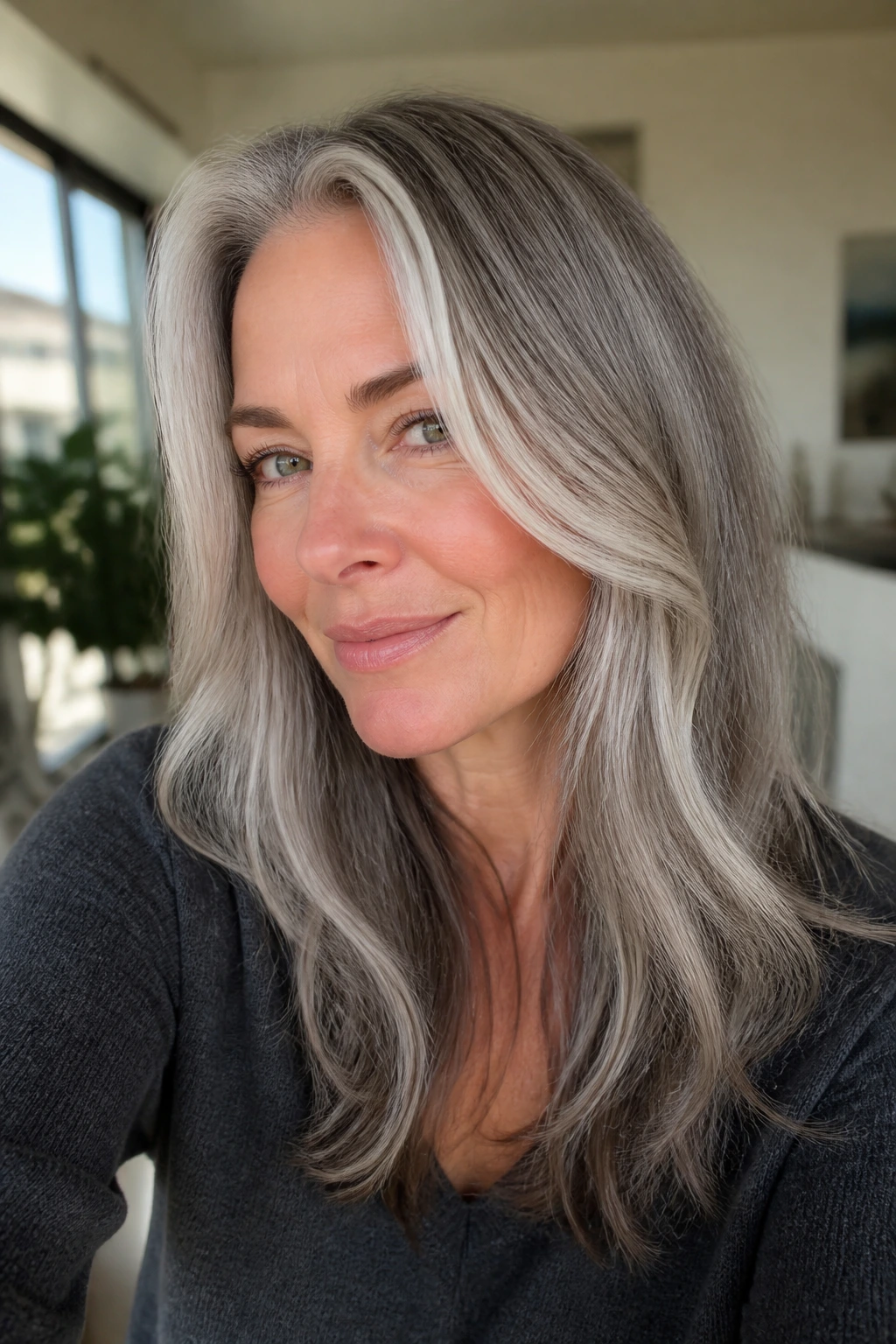
Dove gray is the softer cousin in this group. Unlike all-over silver, it keeps the ends quiet and lets the face-framing pieces do the talking. That makes it a strong choice if you want a gray look without committing every inch of your hair to high-contrast tone.
The money pieces are the key. A few lighter ribbons around the face can brighten cool skin without pushing the rest of the head too pale. The effect is gentle, but not boring. That balance is harder to pull off than people think.
This shade suits medium cool skin especially well, because the softer gray can sit against the face without making it look icy or washed out. It also works on shoulder-length cuts, where the lighter front pieces can curve around the cheekbones and collarbone.
If your natural hair is already light brown or dark blonde, this can be a smart transition shade into silver territory. The grow-out stays easier than with a full bleach-and-tone job, and the color still reads cool in daylight. That matters.
10. Lavender-Silver Shimmer
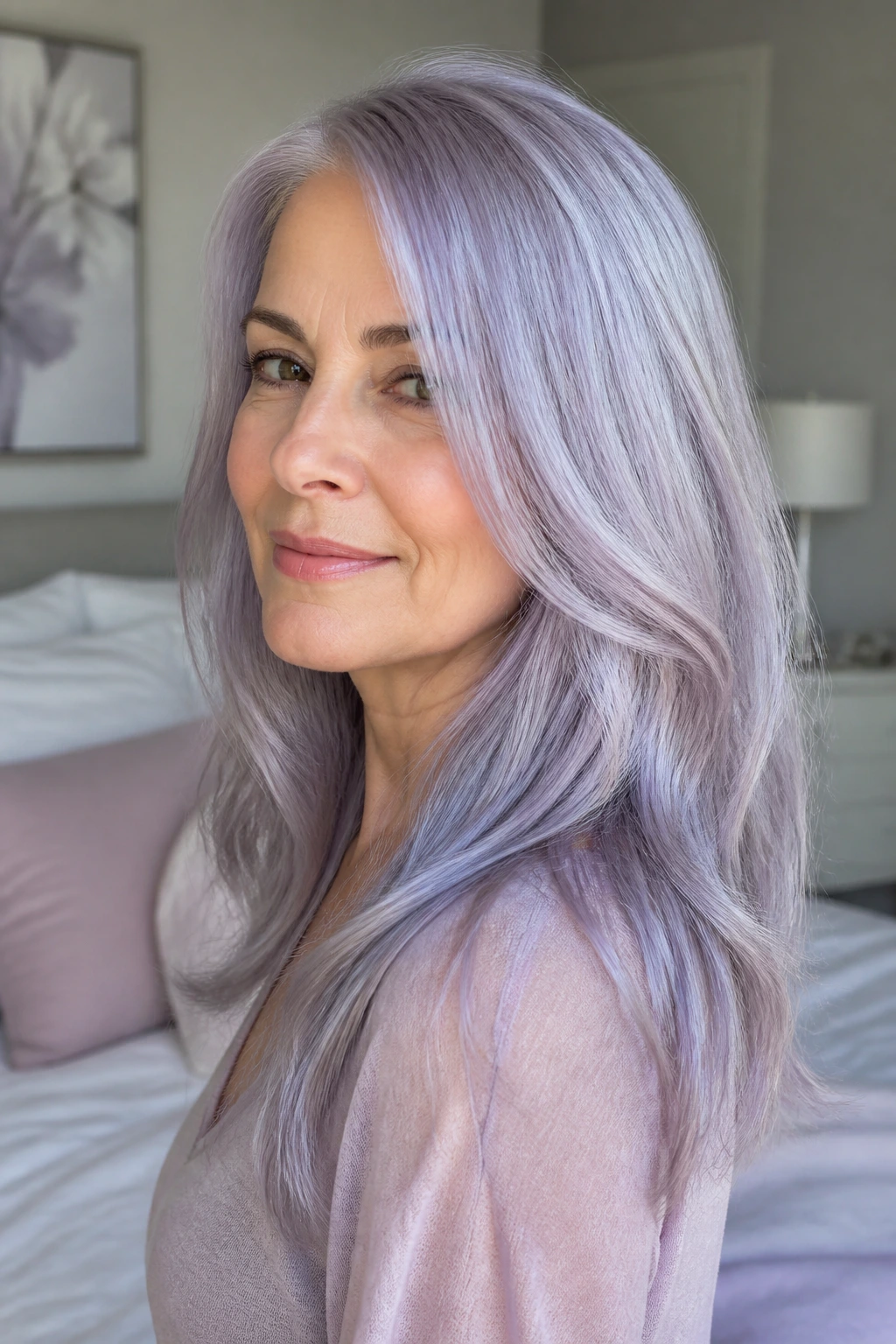
Lavender-silver is not purple hair in disguise. It is much quieter than that. The violet note is just enough to keep the gray from feeling flat, which is why it sits so well on cool undertones.
This shade is especially nice if your skin leans pink or porcelain. The faint lilac cast plays off that coolness instead of fighting it. On straight hair, the effect looks sleek and glassy. On curls or waves, it catches different angles and gives the color more life.
I prefer this finish when the hair is already very light, because the shimmer works best as a glaze. A heavy lilac deposit can read too candy-colored, and that’s not the goal here. You want silver first, lavender second.
A gloss every 3 to 4 weeks usually keeps the tone from fading into dull gray. Use a gentle sulfate-free cleanser, too. Harsh shampoo strips the soft violet note fast, and once that happens, the color can lose its spark.
11. Slate Gray Lob
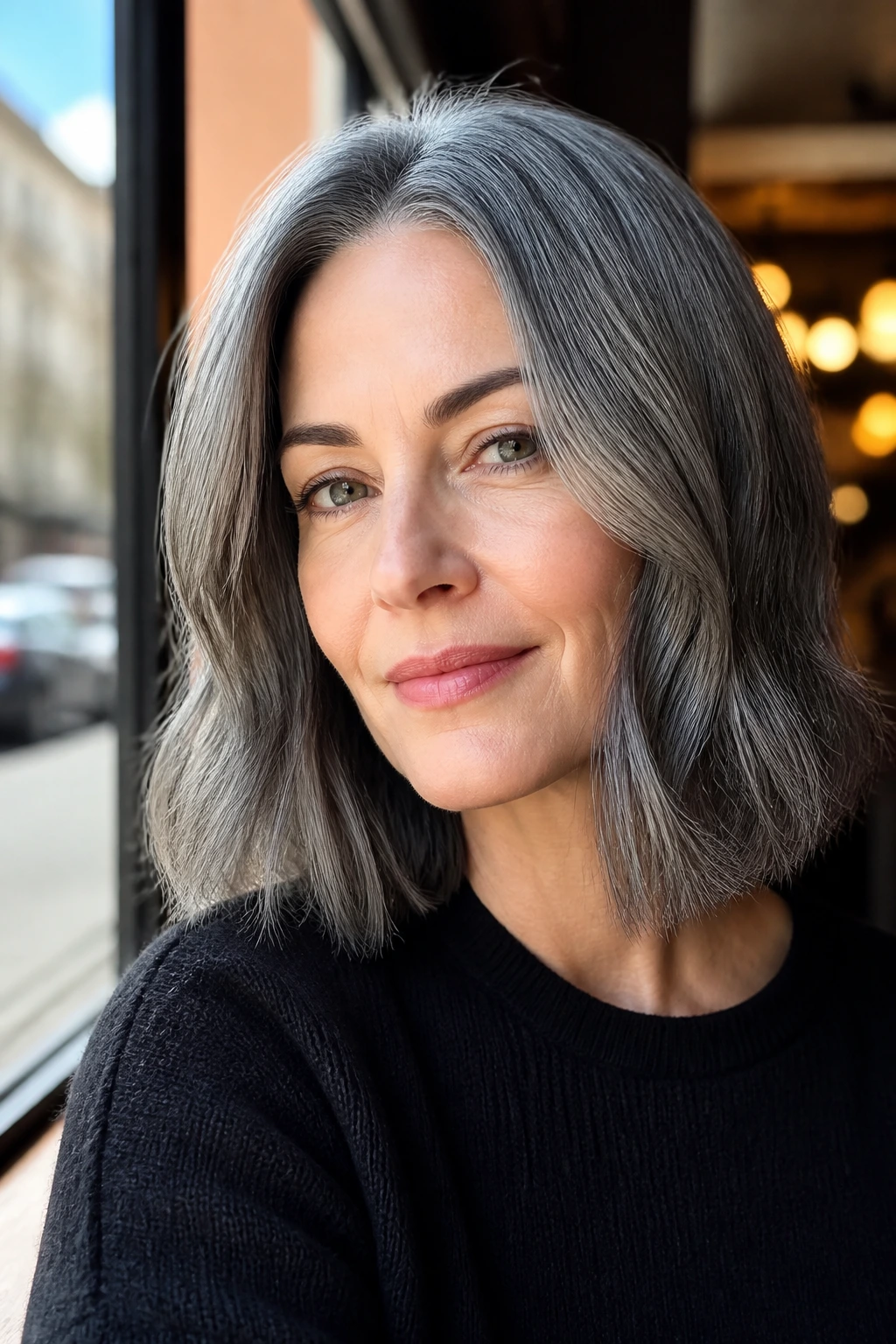
A slate gray lob is the shade for someone who wants gray to feel tailored, not delicate. The color has more weight than pearl or silver, but it is still cool enough to flatter skin with blue or pink undertones.
The lob cut is half the magic. That bluntish length keeps the shade from disappearing into the hair’s natural movement, and a few internal layers stop it from looking boxy. If the hair is too long, slate can feel heavy. If it’s too short, the richness of the tone gets lost.
This is a smart choice for fine hair because gray can expose thin ends faster than people expect. A lob gives the hair enough shape to look full, and the slate tone adds visual depth. That combination is useful, not just pretty.
Why It Works
- The gray sits between silver and charcoal, so it works on more cool skin tones.
- The darker value gives the face contrast without making the hair look black.
- A slight wave keeps the finish from feeling rigid.
- It grows out more gracefully than a pale icy blonde-gray.
If you like a sharper wardrobe—black coats, white shirts, clean lines—this is probably your shade.
12. Chrome Silver Highlights
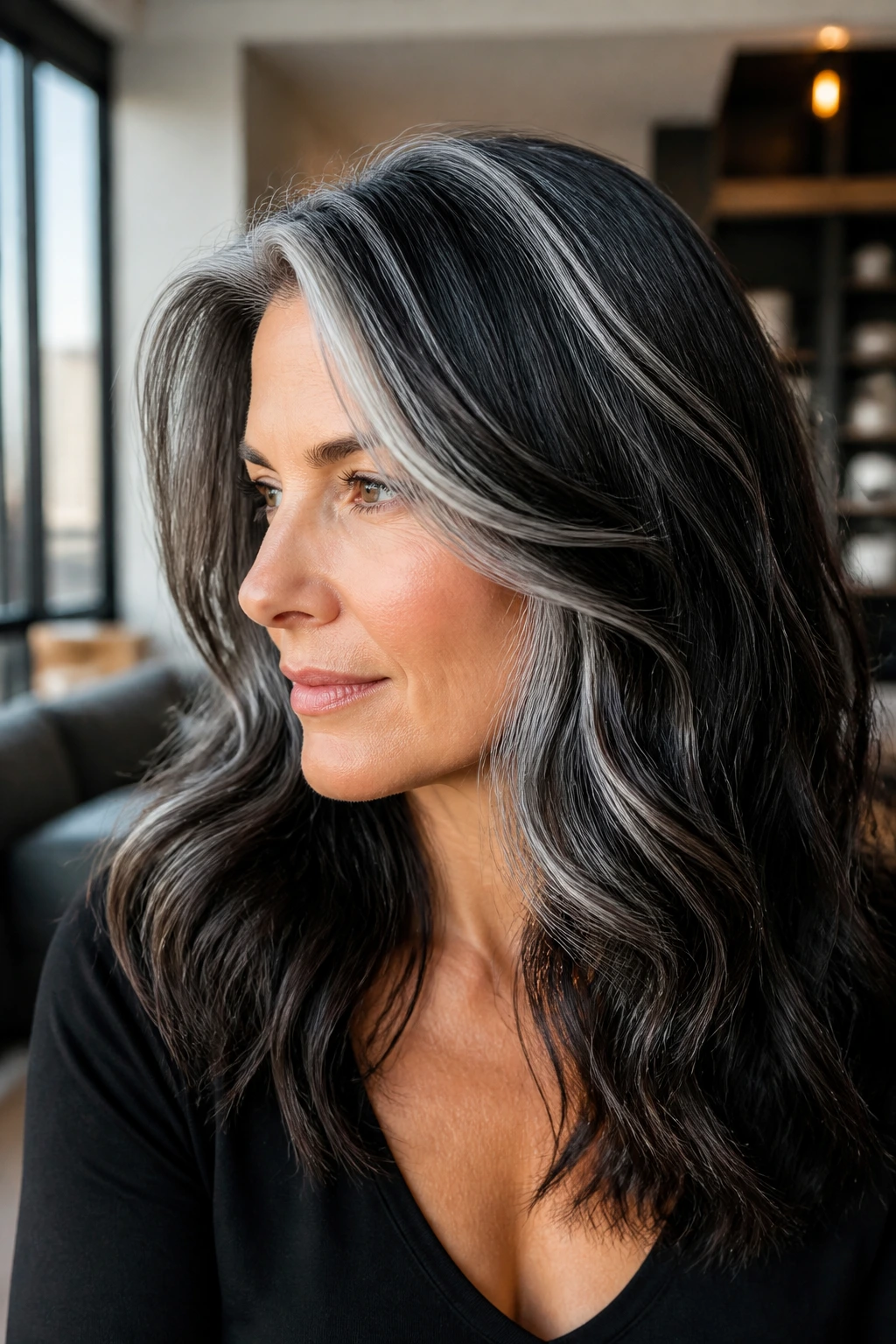
Chrome highlights are for people who want movement, not a solid block of color. The finish is metallic, reflective, and a little cooler than standard silver, which is why it can look so good against cool skin.
The placement matters more than the amount. You do not need a whole head full of light pieces. A few carefully placed chrome highlights around the crown, temple, and top layers can shift the whole look. Too many, and the hair loses the polished metal effect and starts looking busy.
This works best on a darker base, especially deep ash brown or soft black. The contrast lets the chrome sit on top like a flash of light. On very light hair, it can disappear unless the toner is strong enough.
I like chrome for someone who wants gray hair color ideas for cool skin tones but doesn’t want to look fully silver from every angle. It has that slippery, mirror-like feel without forcing the whole head into one note. And when the hair moves, the pieces catch the eye in a way a flat color never does.
13. Frosted White with Silver Lowlights
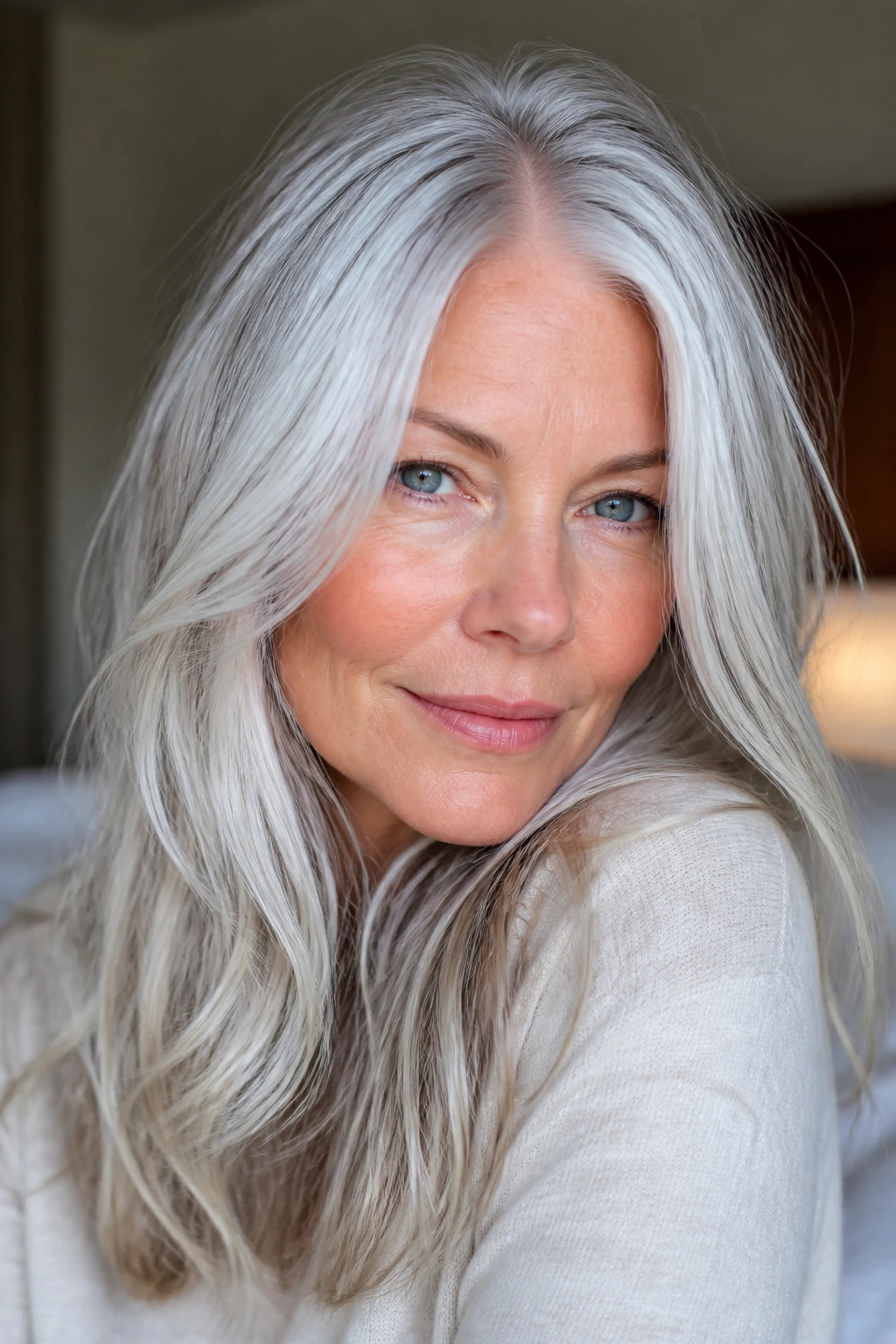
Why do the lowlights matter? Because pure white can go flat fast, especially on cool skin that already has a fair or pale cast. The silver lowlights break up the brightness and give the color something to sit against.
That little bit of shadow makes the white look richer. Without it, the hair can read like one hard sheet of light, and that is not flattering for most people. A few silver lowlights change the whole thing.
What to Ask For
Ask for an icy white base with fine silver lowlights through the mids and underneath layers. A soft root smudge helps too, especially if you want the grow-out to stay manageable.
- Good on very pale cool skin and light eyes.
- Needs strong hydration because white shows dryness fast.
- Looks best on blunt cuts, bobs, and short layers.
- A violet conditioner once a week keeps the white from warming up.
The best version of this shade has contrast you can see only when the hair moves. In still photos it looks nearly white. In motion, the silver depth shows up, and that is what gives it shape.
14. Pewter Gray Waves
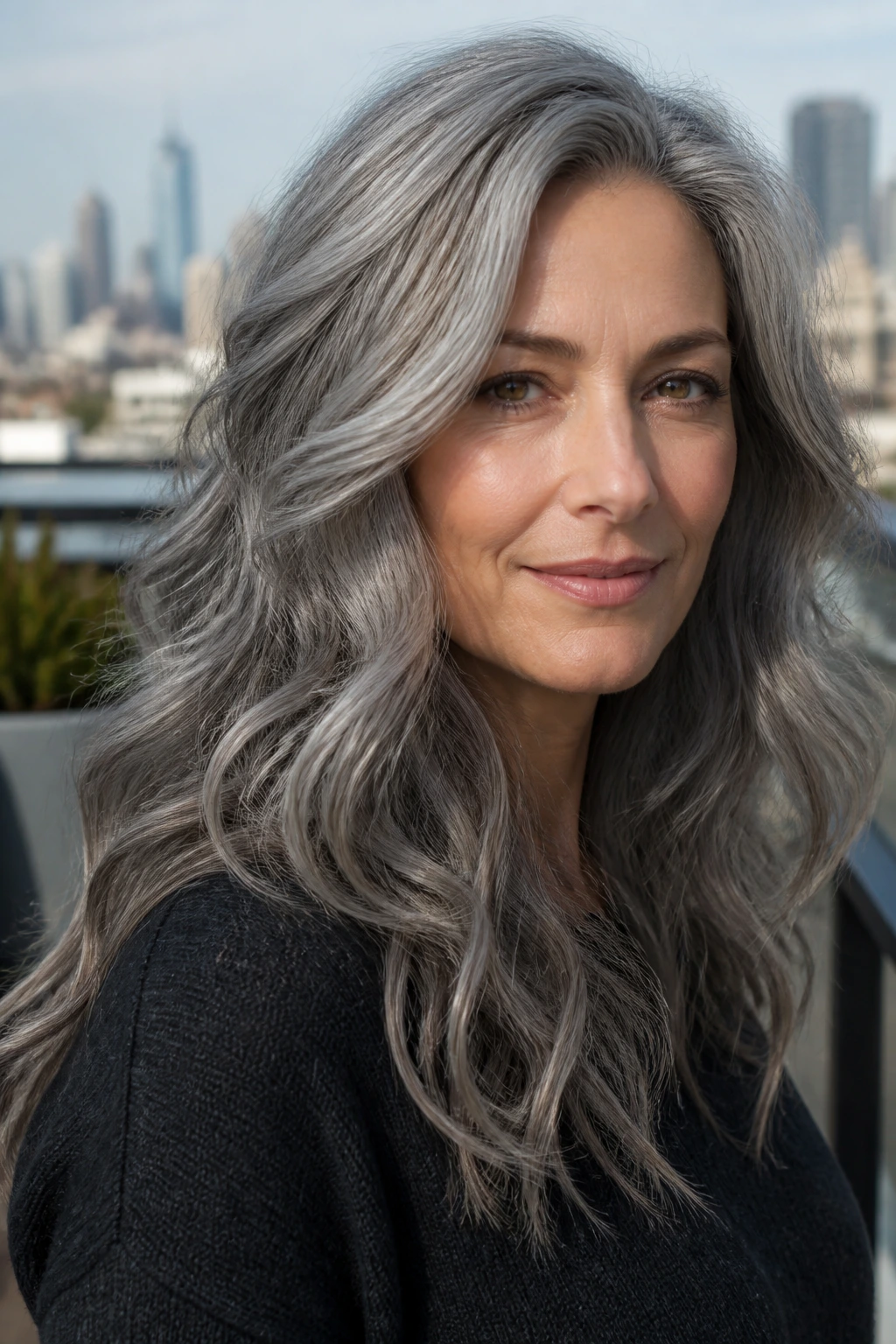
Pewter is less bright than platinum, and that is the point. It has a soft metallic quality that works especially well on cool skin that can handle depth but doesn’t need a blinding silver finish.
Waves help because pewter likes a little texture. The bend in the hair breaks the light differently, so the color looks richer instead of flat. On straight hair, pewter can look sleek and moody. On loose waves, it turns more dimensional.
This is a shade I reach for when someone wants gray but does not want the look to skew too white or too dark. It sits in a useful middle ground. A lot of people skip that middle ground, which is a shame, because it’s where the easiest wearability lives.
If your hair is naturally medium brown or dark blonde, pewter can be a smoother transition than full silver. It also hides minor staining from hard water or styling products better than a pale white would. That practical bit matters more than people admit.
15. Arctic Silver with Shadow Roots
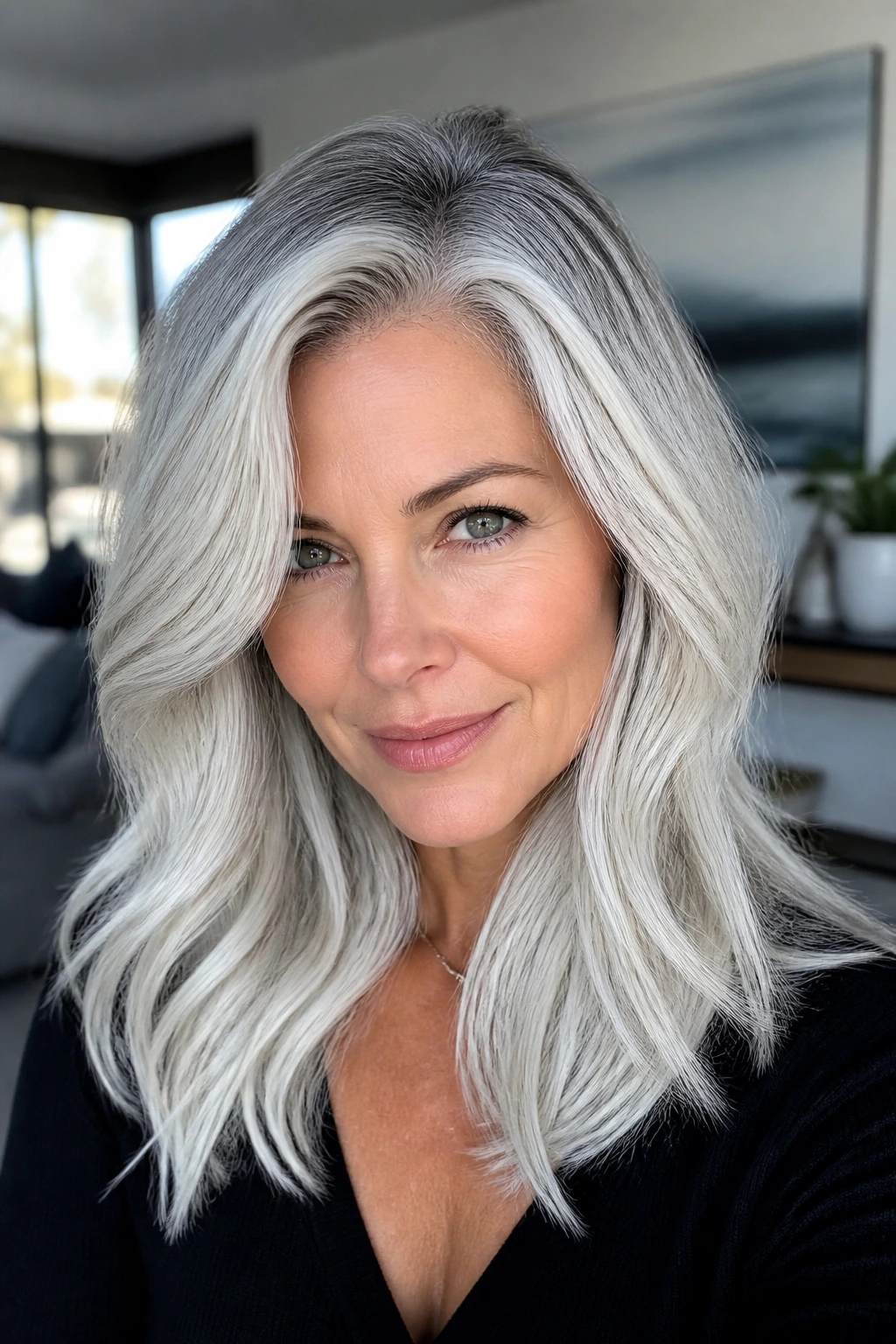
Arctic silver gives you the crispness of pale gray, while the shadow roots keep it from feeling precious. That combination is why this shade works so well for cool skin tones that want brightness without constant upkeep.
The root area should stay cool, though. A warm shadow root defeats the whole look and can make the silver look like it belongs to a different head. Ask for ash, not chestnut. That part matters.
This is one of the better gray hair color ideas for cool skin tones if you want a dramatic finish but hate sitting in the salon every few weeks. The root shadow buys time, and the silver mids and ends keep the hair looking light and clean.
A lot of people assume arctic shades only work on very short hair. Not true. They can look gorgeous on long layers, especially when the roots stay soft and the ends stay bright. You just need to keep the tone icy enough that the contrast doesn’t drift into yellow at the lighter sections.
16. Smoke-Black Gradient
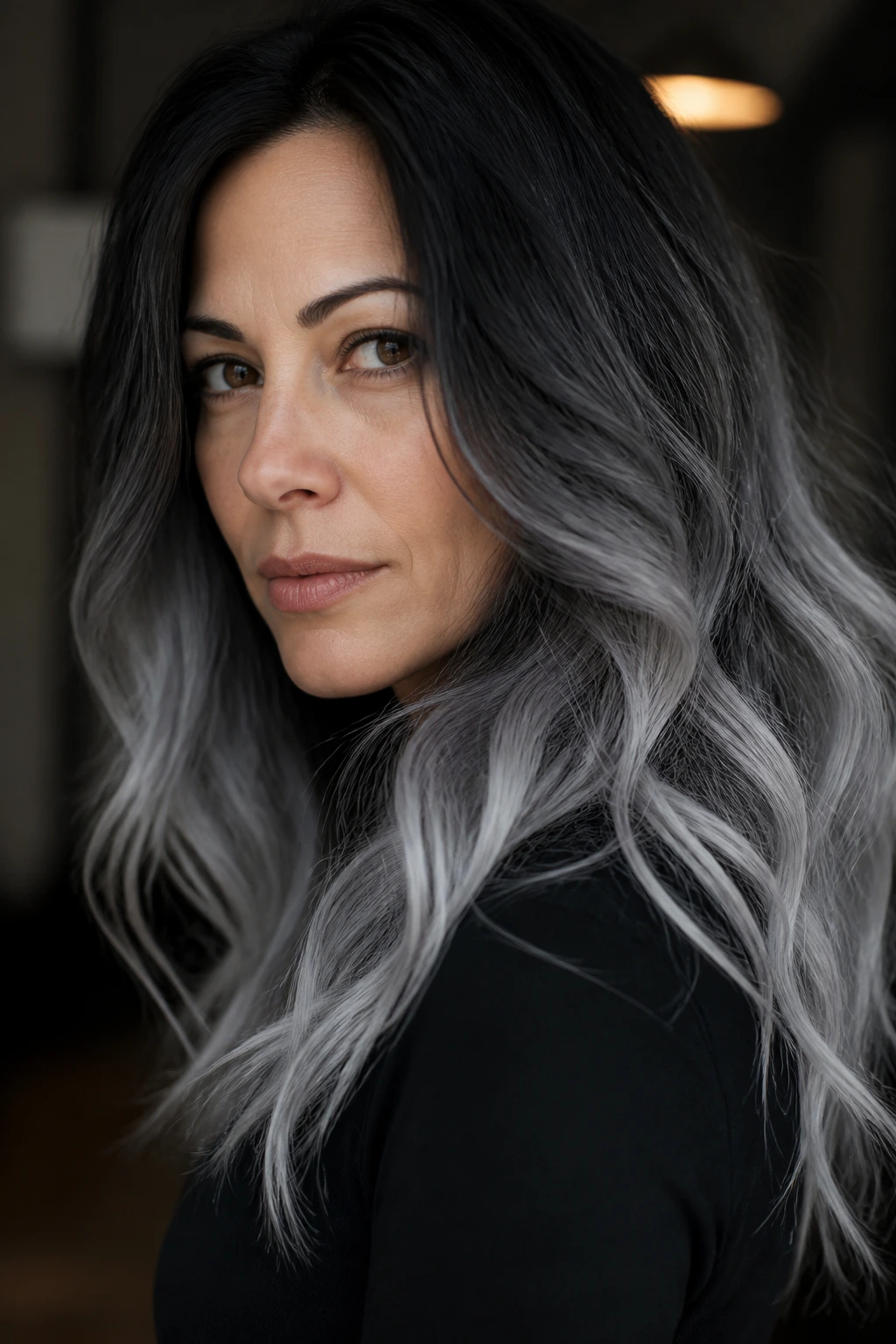
Some people want gray, but they do not want to give up the mood that comes with darker hair. Smoke-black gradient is for them. It starts deep and dark, then slides into smoky gray and silver at the ends, which gives cool skin a clean frame without turning the whole head pale.
The gradient feels expensive in the plainest sense of the word: it looks like time and color went into it. More than that, it has range. In dim light, it reads almost black. In daylight, the gray opens up.
- Best for strong brows and medium to high facial contrast.
- Works well on long hair and layered cuts.
- Keeps the face from looking overexposed the way all-over silver sometimes can.
- Needs shine, or the dark base can swallow the lighter ends.
This shade is the one to choose if you love gray but still want some edge. It doesn’t flirt with softness much. It leans moody. That’s the appeal.
17. Denim Gray
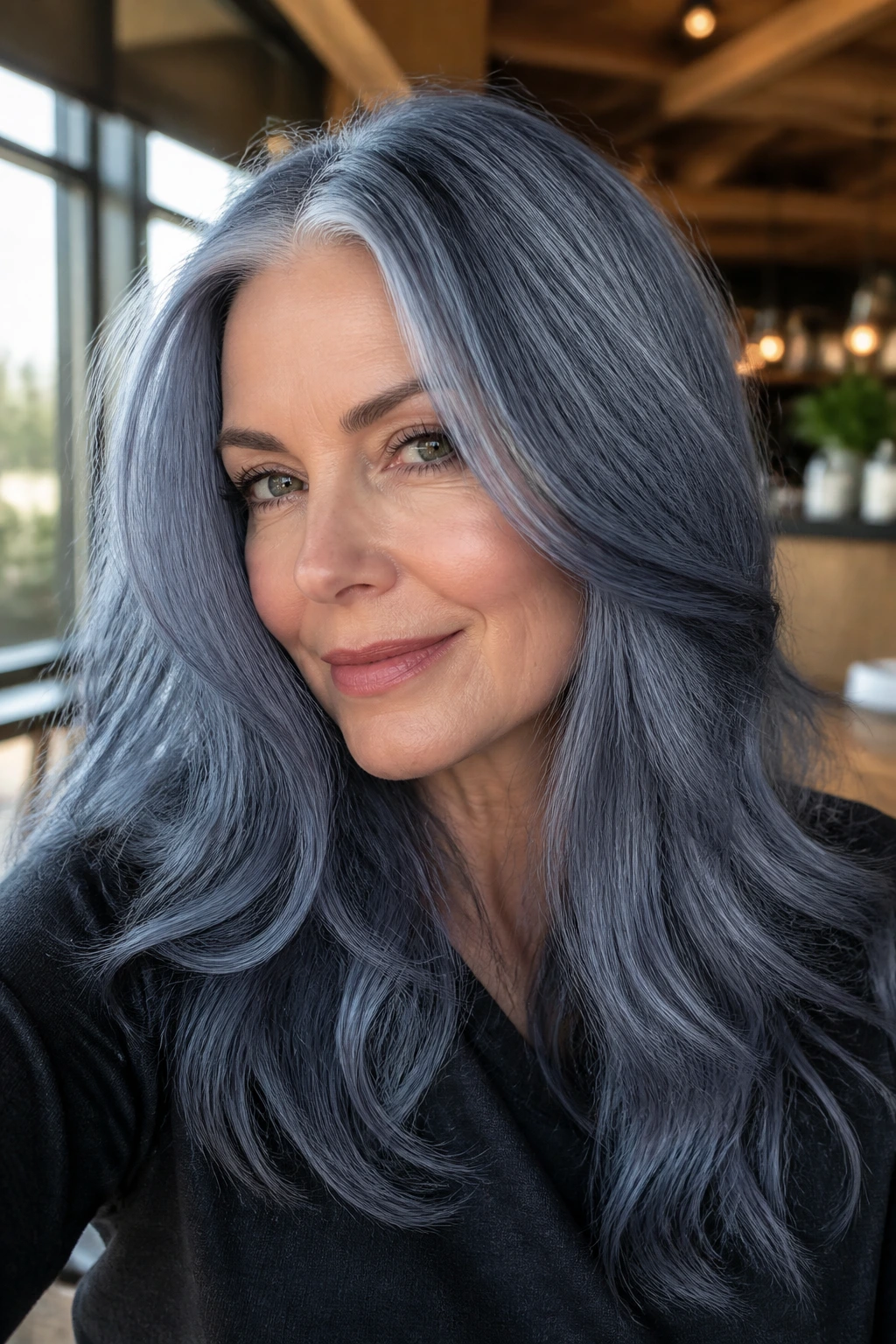
Denim gray is the easiest way to make silver feel less formal. It has that washed blue cast that reminds you of faded jeans, which is why it works so well on cool skin with medium contrast.
The blue note keeps the gray from drifting beige, and the casual finish makes it wearable. A lot of silver shades can feel a bit too polished on the wrong cut, but denim gray works on shaggy layers, collarbone cuts, and textured bobs without trying too hard.
This is a smart option if you want a gray that feels modern but not severe. It is also more forgiving than a bright white because the blue haze softens the grow-out and hides tiny shifts in tone. That can save you some frustration.
If your natural hair is light brown to dark blonde, a denim gloss over a cool base can be enough. On darker hair, you’ll need more lift first. Either way, ask for the result to stay blue-gray rather than silver-white. The difference is small in a swatch and obvious on the head.
18. Moonstone Silver Glaze
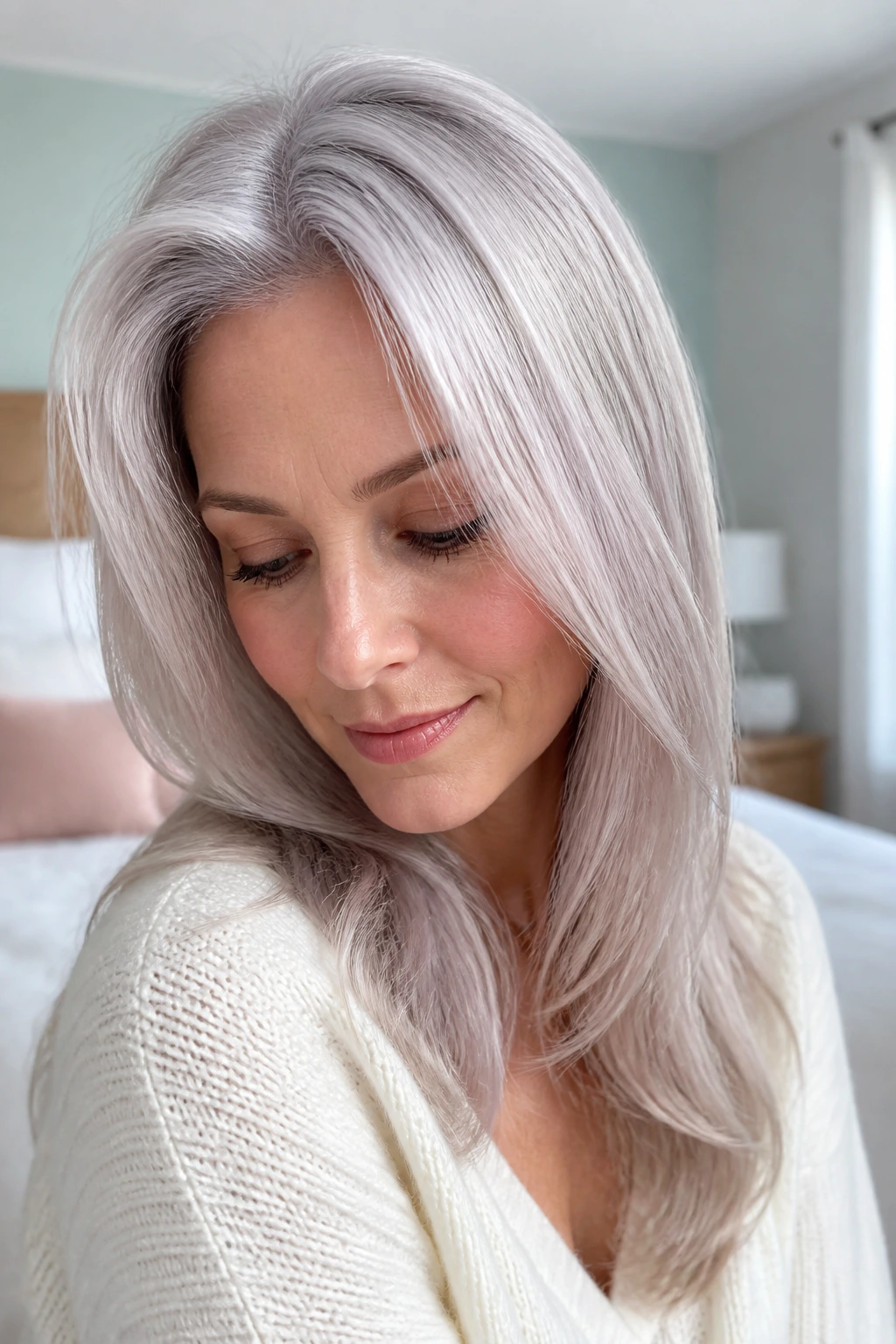
What makes moonstone different is the softness. It isn’t stark silver and it isn’t lavender. It sits between those moods, with a faint opalescent feel that looks gentle on cool skin, especially when the complexion is fair or rosy.
This is the shade for someone who likes a little glow without sharp contrast. It reflects light in a quiet way, almost like the color is moving when the head turns. That makes it a nice fit for waves, curls, or even a smooth blowout.
How to Wear It
Ask for a sheer silver glaze with a touch of violet and pearl. The goal is not a heavy deposit of color. It’s a veil.
- Best on lightened hair that already carries a clean pale blonde base.
- Works well with medium-length cuts and soft layers.
- Needs a refresh every 4 to 6 weeks to keep the opalescent look.
- Use cool water when you rinse, because hot water strips the glaze faster.
Moonstone is subtle enough for someone who wants to ease into gray without committing to a dramatic metal finish. It’s quiet, but not boring.
19. Platinum-Gray Underlights
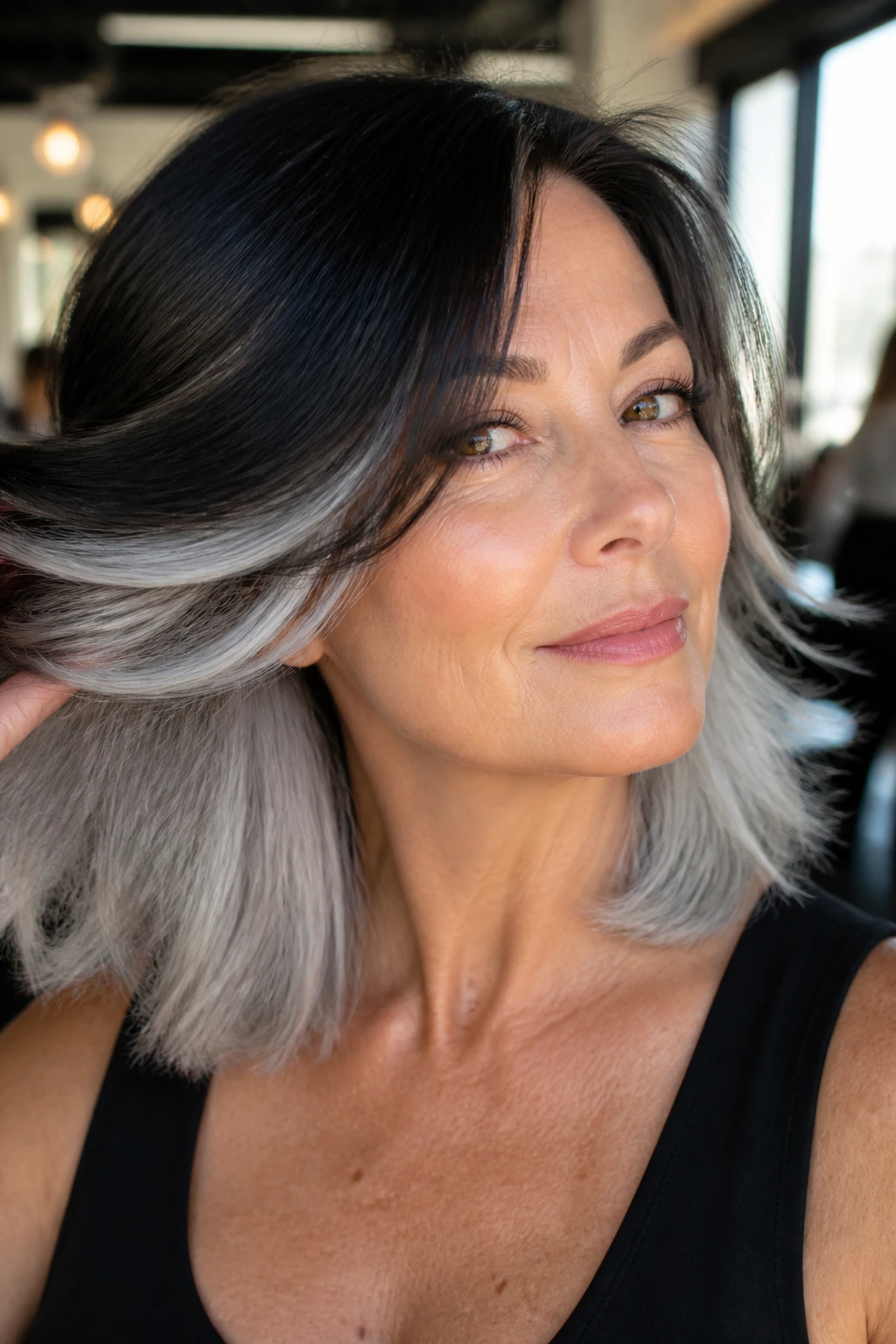
Platinum-gray underlights are for people who want drama when the hair moves, but not necessarily when it’s sitting still. The top layer can stay darker or softer, while the underneath pieces carry the pale gray payoff.
That hidden placement is clever. It gives you brightness without forcing the entire head into constant maintenance. Flip the hair, put it in a half-up style, or tuck one side behind the ear, and the color shows itself. Leave it down, and it stays a little more private.
This works especially well on blunt cuts, shags, and long bobs. The contrast feels deliberate, not random. And because the platinum-gray sits underneath, it can be less punishing if your skin is cool but sensitive to too much brightness near the face.
If you like the idea of silver but do not want it right at the hairline every single day, this is a smart compromise. Not a weak one. A smart one. There’s a difference.
20. Soft Silver Streaks on a Cropped Cut
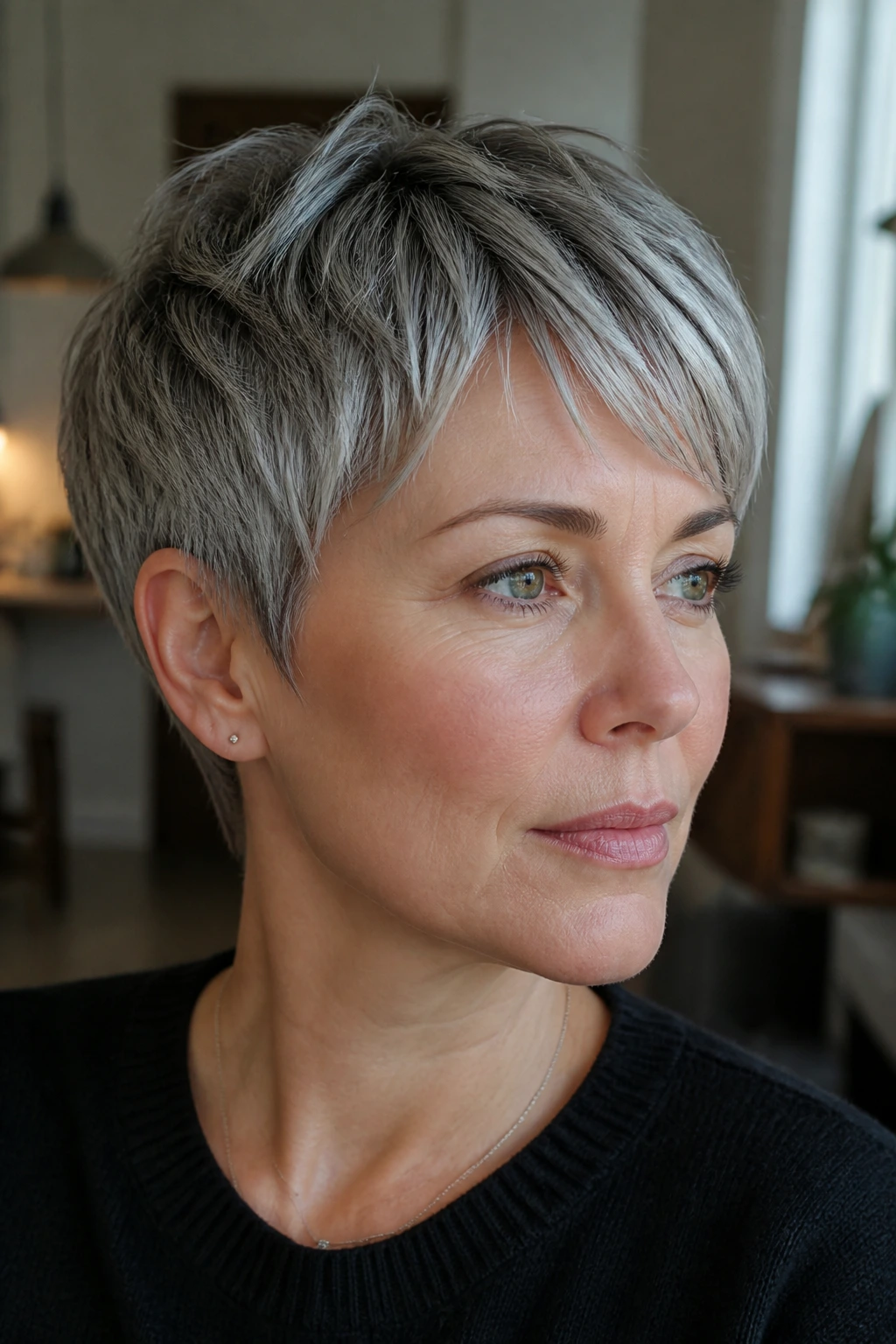
There is a reason short cuts and silver streaks get along. The cropped shape keeps the streaks visible without making the color feel overworked, and cool skin tones benefit from that clean, open finish.
Soft silver streaks can live inside a pixie, a short shag, or a textured crop. The key is keeping the pieces thin enough that they look natural in motion. A few streaks near the fringe and top can make the whole cut feel lighter without needing a full silver transformation.
What Makes It Work
- Thin streaks keep the look from turning chunky.
- A cool ash base gives the silver a place to sit.
- Short cuts make upkeep easier because the color has less length to fade through.
- Texture paste or a light cream helps define the pieces after styling.
This is a good choice if you want the gray effect without giving up the structure of a short haircut. It is also one of the easiest ways to try silver if you are nervous about a full-head commitment.
The best part is how little it needs to look finished. A good crop, a clean silver line, and a touch of texture. That’s enough.
Final Thoughts
Gray hair on cool skin tones works best when the shade stays clean. Icy, smoky, metallic, and blue-based tones tend to flatter because they echo the undertones already in the face instead of fighting them.
The smartest choice is not always the palest one. Sometimes graphite gives you more punch, sometimes pearl gray gives you more softness, and sometimes a blue-gray gloss is the one that finally makes your skin look calm instead of pink.
Take a daylight selfie before you commit. Bathroom mirrors lie, warm bulbs lie, and salon mirrors can lie too if the lighting is kind. Natural light tells you whether the gray is crisp, muddy, or too warm—and that’s the version that matters.
