



Silver-grey hair can look razor sharp on cool skin tones. It can also look tired in a hurry if the toner leans too beige, too yellow, or too flat.
That’s the whole game with this color family: blue-violet, ash, pearl, steel, smoke, and graphite all sit nicely against skin with pink, rosy, porcelain, or blue undertones. Push too warm and the hair starts fighting the face. Keep it cool and the whole look feels cleaner.
That part matters.
Porosity matters too. Hair that’s been lightened a few times grabs silver fast, sometimes faster than people expect, which is why a shade that looked soft in the chair can come home looking almost frosty after the first wash. A good color formula, a smart cut, and the right amount of root depth keep the color from turning flat or chalky.
The best silver-grey looks aren’t one-note. They have shape, movement, and enough depth at the root to stop the face from disappearing into the hair. Start there, and the rest gets a lot easier.
1. Icy Silver Grey Bob for Cool Skin Tones
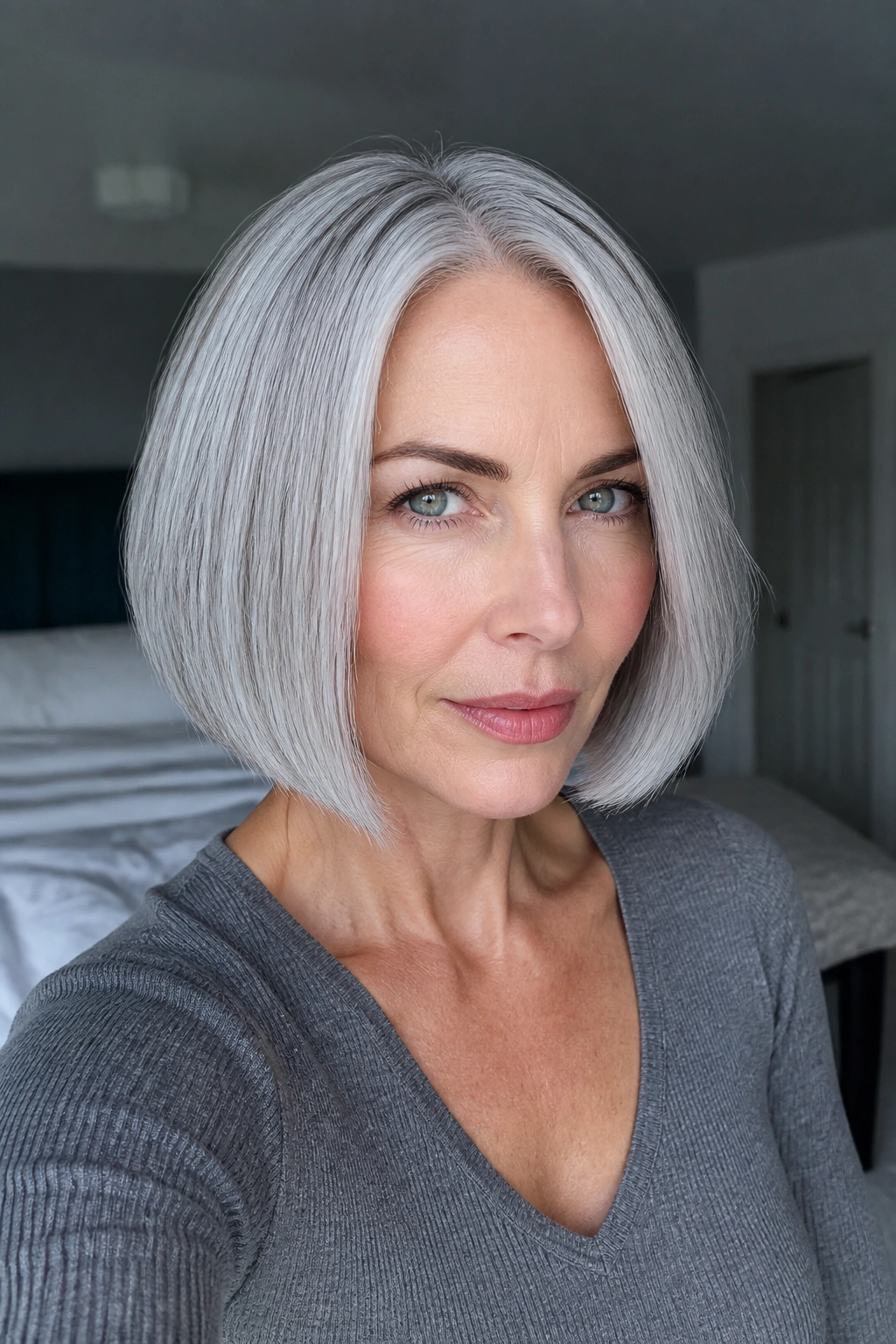
A chin-length bob is one of the cleanest ways to wear silver-grey on cool skin. The cut gives the color a sharp edge, and that edge matters when the tone is pale, icy, or nearly white. Without a strong shape, the shade can drift into “washed out” territory fast.
Why It Flatters Cool Undertones
The bob keeps the hair close to the face, which lets the silver read as intentional instead of accidental. On cool skin, that usually means the complexion looks calmer and the hair looks brighter.
Ask for soft internal beveling at the ends so the bob doesn’t sit like a block. A slight bend under the jawline gives the color movement without breaking the clean line.
- Best on straight or lightly wavy hair.
- Needs a toner refresh every 4 to 6 weeks.
- A level 9 or 10 icy glaze keeps the finish crisp.
- A tiny root shadow helps the grow-out look softer.
Pro tip: keep the roots half a shade deeper than the mids. It stops the whole look from flattening out.
2. Pearl Silver Pixie
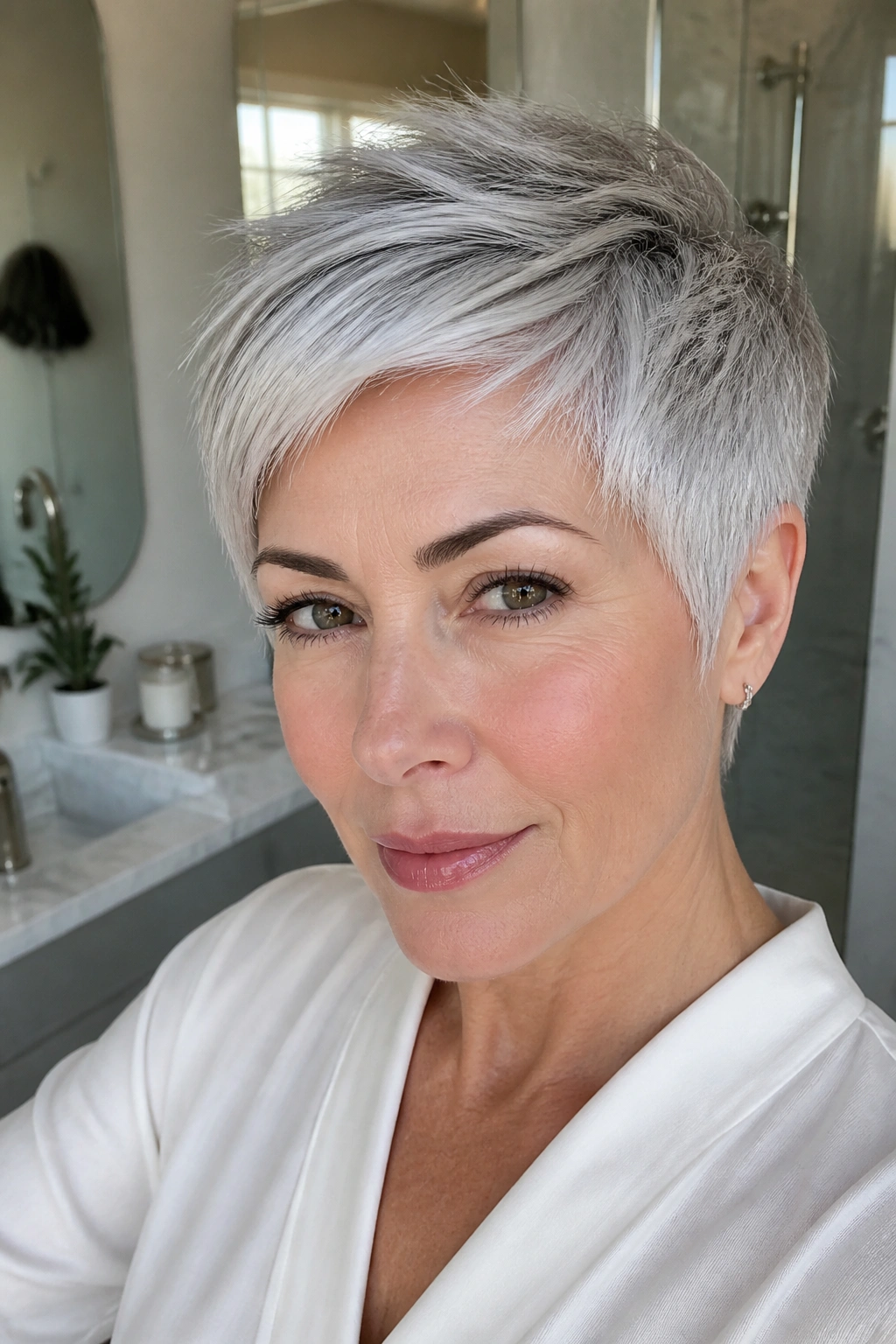
A pearl silver pixie is lighter and softer than a stark platinum crop, and that softness is why it suits cool skin so well. The pearl finish has a faint sheen that keeps the short cut from looking harsh.
The cut does a lot of the work here. On a pixie, the eye lands on the forehead, cheekbones, and jawline first, so the color has to play nicely with all three. Pearl silver is a good fit when you want brightness without the icy severity that some short cuts can pick up.
Fine hair gets a nice lift from this shade, especially if the top is left a little longer and piecey. Coarser hair can wear it too, but the shape needs more texture through the crown or the whole thing can feel helmet-like.
Keep styling simple. A pea-sized amount of light paste or cream is enough. Too much product dulls the pearl finish fast, and that kind of defeats the point.
3. Steel Grey Balayage on a Long Layered Cut
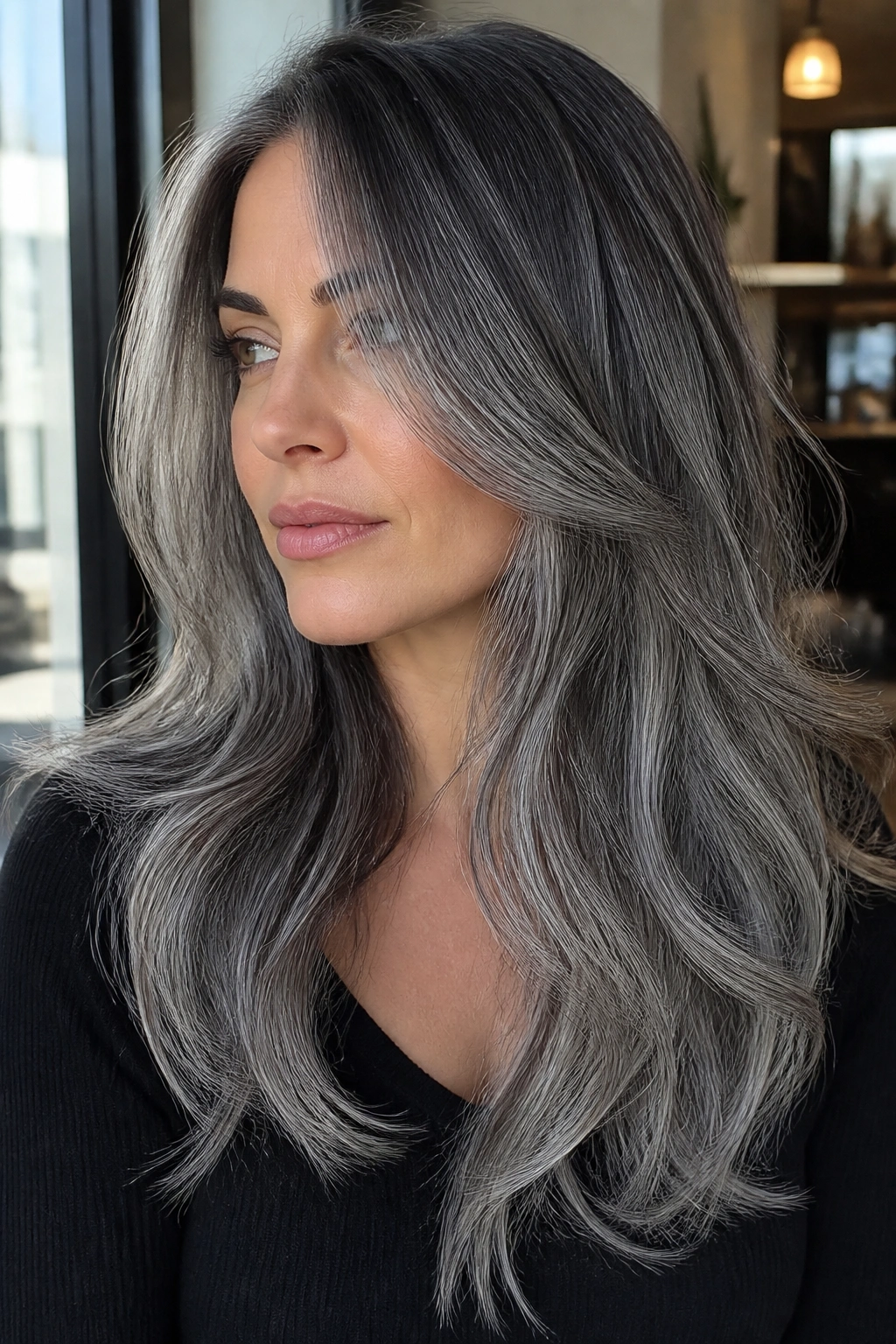
Why does steel grey balayage look so right on cool undertones? Because it gives you the silver family without forcing every strand to be equally pale. That little bit of depth makes the color feel expensive instead of icy in a blunt way.
On long layers, the steel ribbons sit across the hair like brushed metal. The darker base keeps the face framed, while the lighter pieces move through the lengths and ends. It’s a good choice if you want contrast and don’t want your entire head lifted to near-white.
How to Wear It
Ask for hand-painted pieces through the midlengths and ends, with more saturation near the surface and less underneath. That keeps the dimension visible when the hair moves.
- Works well on medium to thick hair.
- Looks best when the layers are visible, not all one length.
- A blue-violet shampoo once a week is usually enough.
- A gloss every 6 to 8 weeks keeps the steel tone clean.
The trick is not to bleach every inch the same way. A little shadow gives the silver somewhere to live.
4. Smoky Silver Lob with Shadow Root
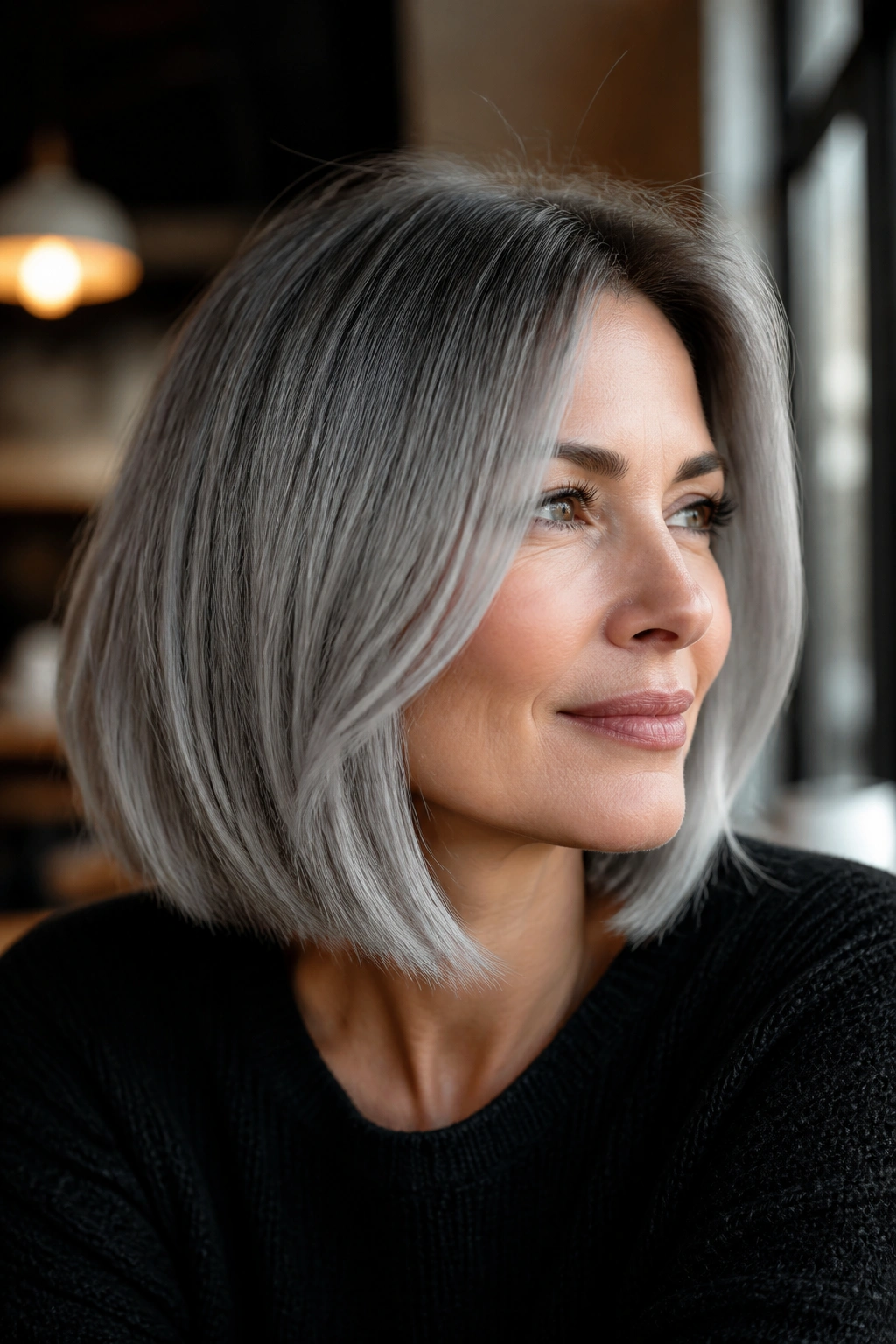
If you want silver-grey without living at the salon, a smoky lob with a shadow root is a smart place to land. The root melt softens regrowth and gives the whole style a lived-in feel that still looks polished.
The smoke tone keeps the silver from turning sugary. It has a cooler, duskier cast, which is useful on skin that already leans cool and a little flushed. A blunt lob can make that tone feel modern; a slightly textured lob makes it feel relaxed.
This one tends to work best when the root is left 1 to 2 levels deeper than the rest. Not black. Not harsh. Just enough depth to frame the face and keep the silver from floating too high off the scalp.
It also helps if the ends are cut clean. Scraggly ends make smoky silver look tired. Crisp ends make it look deliberate.
5. Chrome Silver Waves
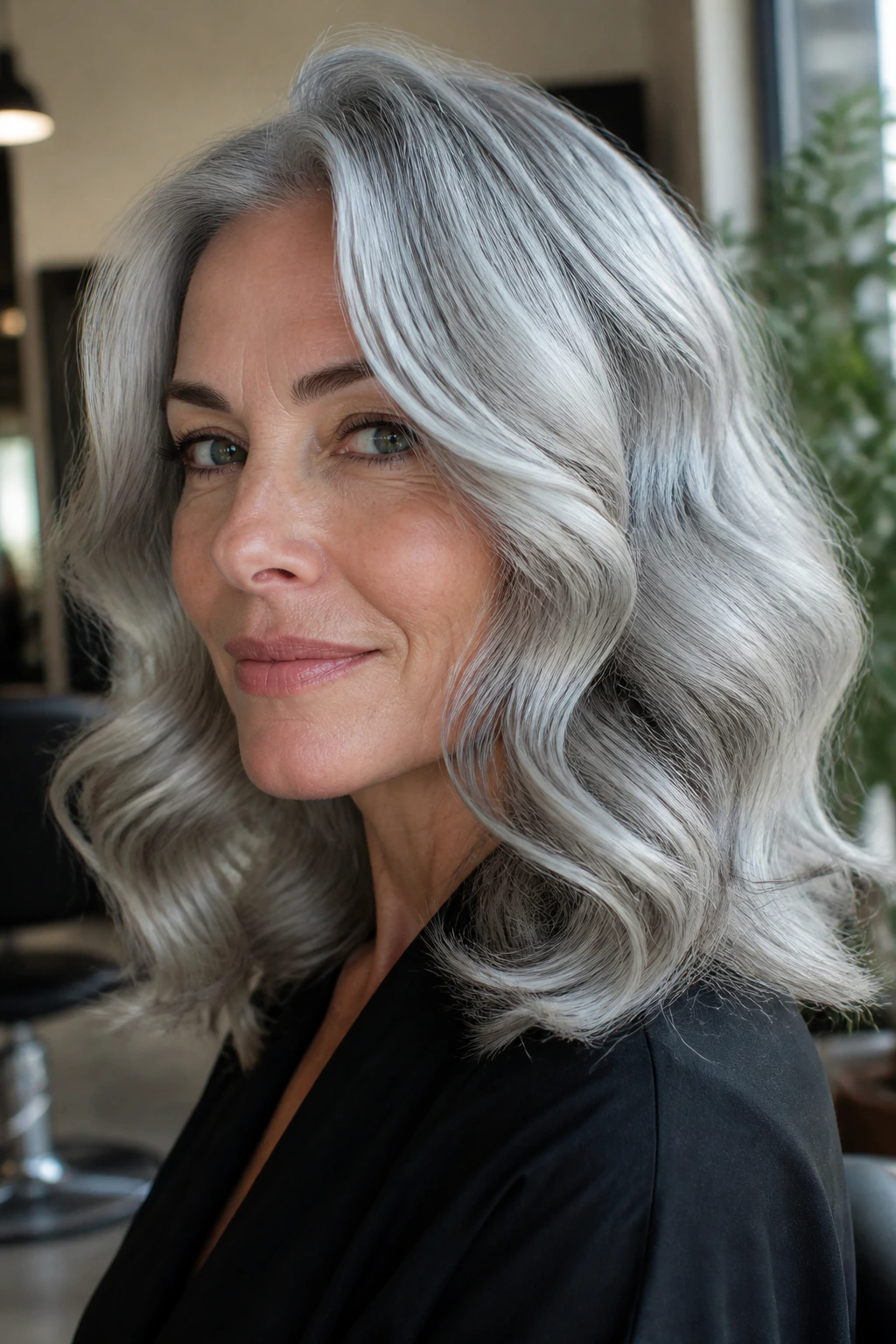
Chrome silver on wavy hair has a different energy from flat, straight silver. The bends in the hair catch the light in separate slices, so the color reads as metallic rather than chalky. That’s one reason this shade looks so strong on cool skin tones.
The finish is brightest when the waves are loose and even. Tight curls can make chrome feel busier than intended, while pin-straight hair can make it feel severe. A 1-inch iron or a large wand gives the best middle ground: soft bends, not ringlets.
The color itself should be kept very clean. Chrome needs a toner that cuts yellow fast, and the hair usually needs a gloss more often than a softer ash shade. If the base lifts unevenly, the chrome effect falls apart.
Use a heat protectant every time. That’s not optional. Silver hair shows heat damage faster than darker shades, and once the ends look rough, the whole metallic effect loses its snap.
6. Glacier Silver Grey Money Piece
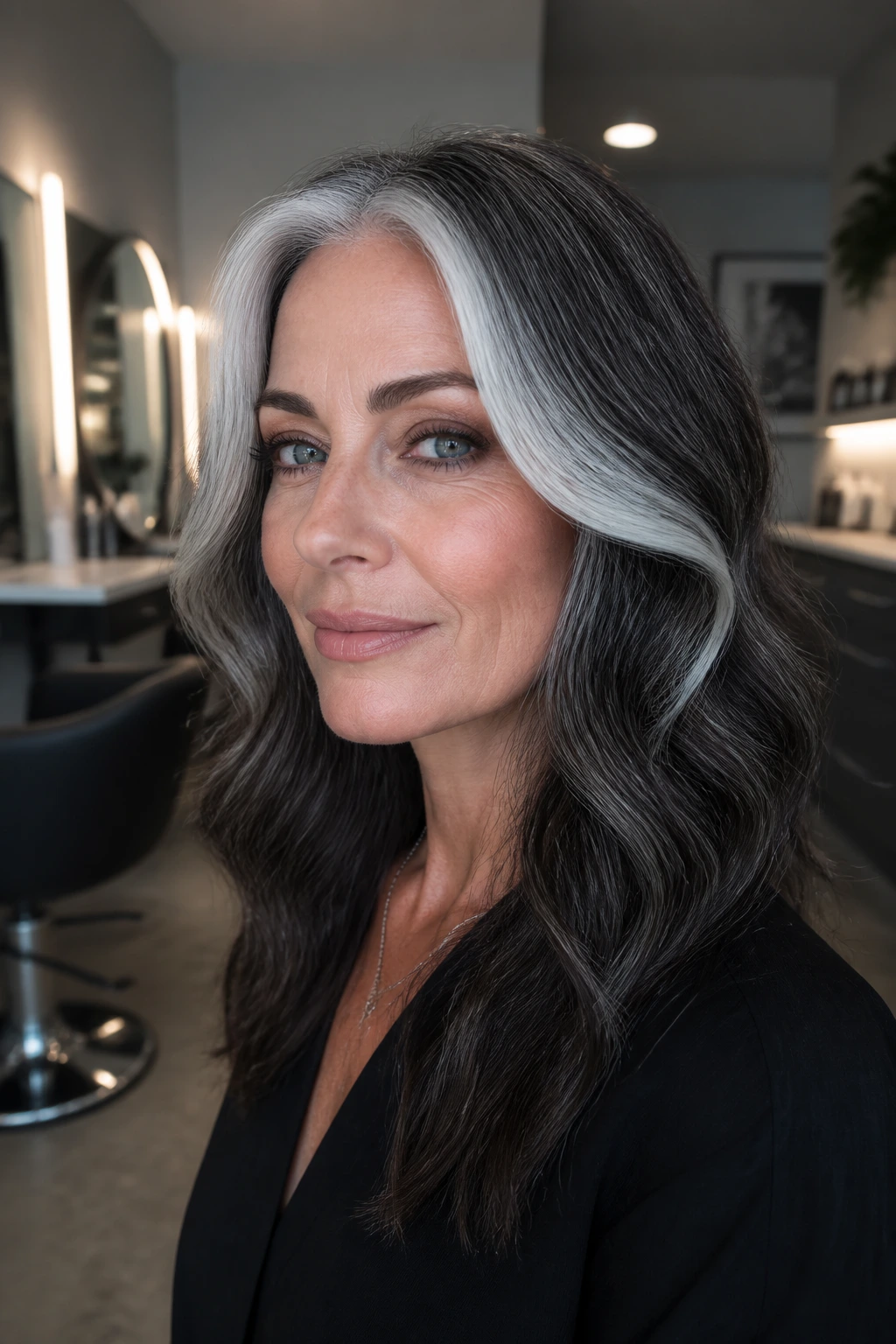
A glacier silver money piece is for the person who wants brightness without signing up for a full head of bleach. Unlike all-over silver, this version keeps the base deeper and uses a pale face-framing section to pull the eye forward.
The effect is strong on cool skin because the front pieces sit close to the cheekbones and temples. That pale strip can make the face look more awake, especially when the rest of the hair stays smoky, graphite, or natural dark blonde.
It’s also a good move if you’re not ready to chase silver roots every few weeks. The face frame can be toned separately, which gives you more control over the upkeep. If your hair lifts unevenly, this is usually easier to manage than a full platinum canvas.
Best of all, it grows out with less drama. The contrast stays visible even when the roots come back in, which is useful if you don’t enjoy constant salon maintenance.
7. Lavender-Silver Gloss for Cool Skin Tones
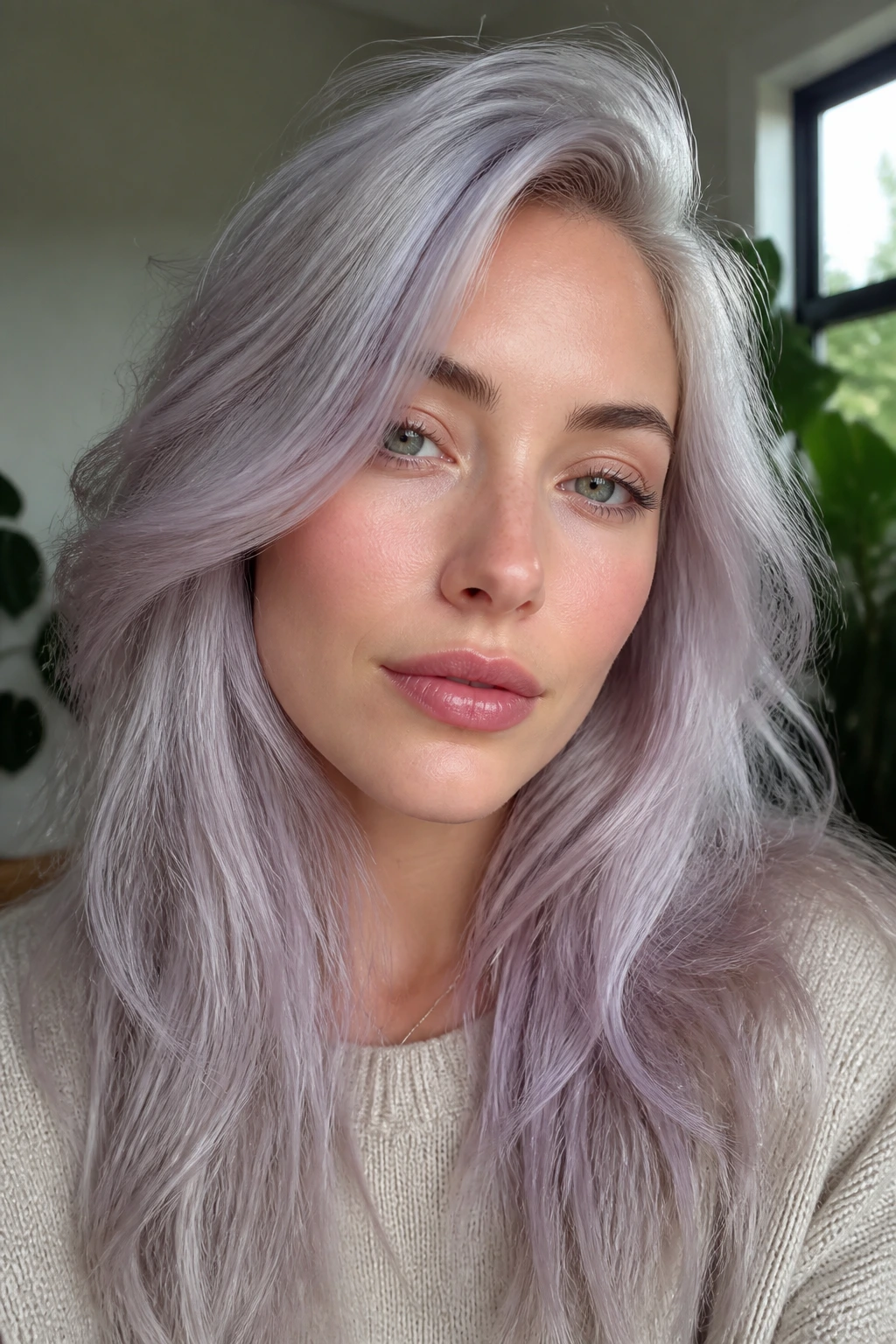
A lavender-silver gloss is a nice choice when plain silver feels a little too cold. The lavender adds a faint cool pastel note, and on cool skin that can look soft instead of sugary. The trick is keeping the purple muted, not cartoonish.
What Makes It Different
This shade works especially well on pre-lightened hair that has a slightly porous surface. The gloss settles into that texture and leaves a veil-like finish, which makes the color look airy around the face.
- Best on hair that’s already pale blonde.
- Needs gentle washing so the lavender doesn’t fade too fast.
- Looks especially good on soft waves and loose curls.
- Can be refreshed with a demi-permanent gloss every 2 to 3 weeks.
A little goes a long way. If you overdo purple shampoo here, the lavender can turn dull and dusty instead of soft and clean.
8. Graphite and Silver Ribbon Highlights
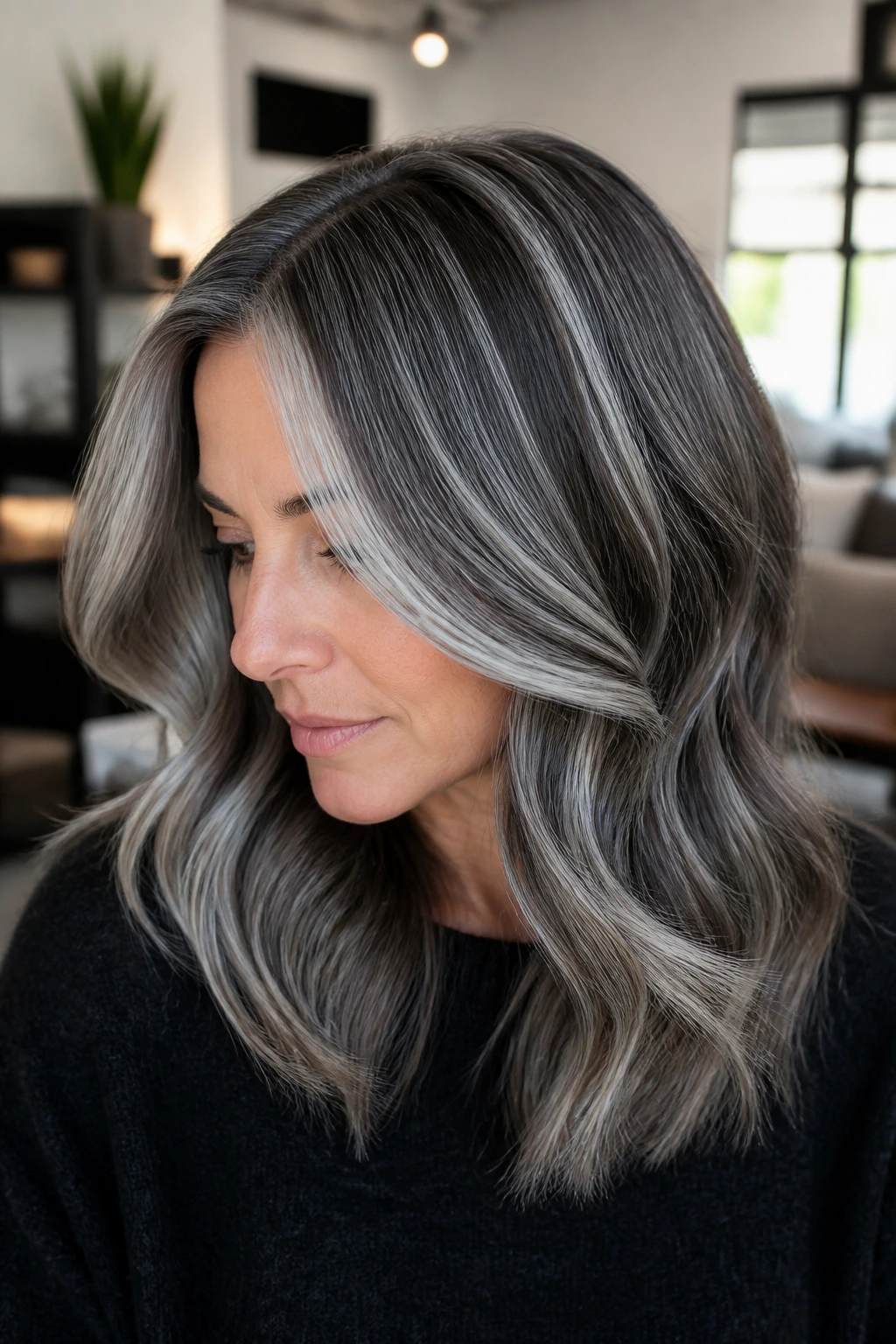
A flat head of silver can look sharp, but it can also go a little lifeless if there’s no depth left in the hair. Graphite and silver ribbon highlights fix that problem fast. The dark graphite base gives the silver something to contrast against, and the thin ribbons stop the color from reading like one solid sheet.
This is a good fit for cool skin because the darker tones echo the natural coolness in the complexion instead of fighting it. The result looks calmer and more dimensional, especially on medium-length cuts with layers around the face.
Unlike all-over silver, this approach doesn’t need every strand lifted to the same point. That keeps the hair in better shape, which matters if it’s already been lightened before. It also gives you more control over where the brightness lands.
Ask for delicate ribbons near the part line, around the temples, and through the top layer. Those spots give the most payoff with the least damage.
9. White-Silver Blunt Cut
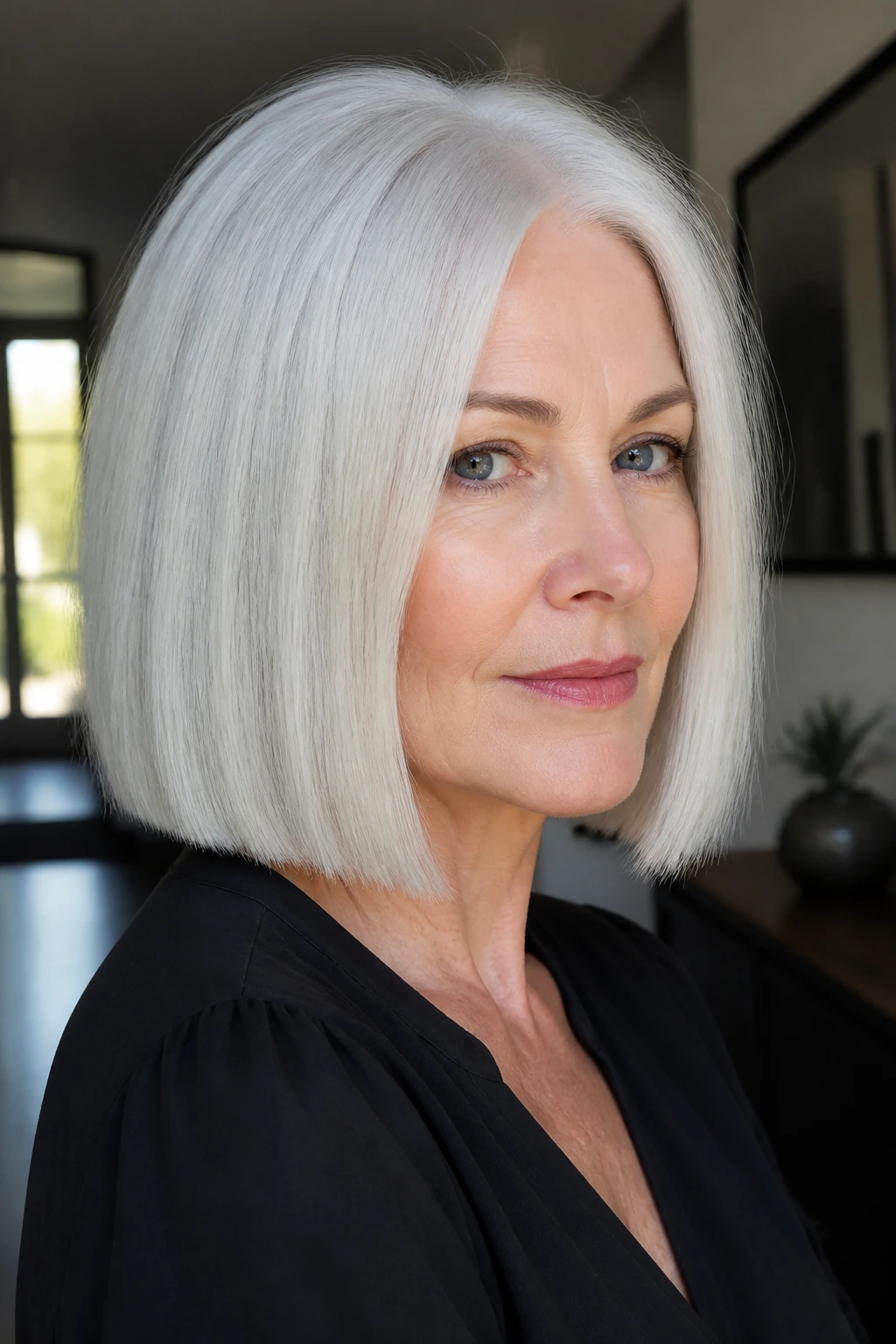
Can white-silver hair look too severe? Yes, if the cut is soft and floppy. A blunt cut changes that completely. The hard edge gives the shade structure, and on cool skin that structure helps the hair look clean instead of flat.
White-silver is one of the palest versions in this whole family. It sits right on the edge of platinum, but with enough grey in the mix to keep it from feeling too sunny or yellow. The blunt line underneath keeps the shape honest.
How to Wear It
A straight blowout or a very slight bend at the ends tends to work best. Too much wave can blur the line and make the color feel messy.
- Best on medium-density hair.
- Needs regular dusting to keep the ends crisp.
- A shine serum on the mids and ends helps the white read smoother.
- Works best when the roots have a soft ash blur, not a hard grow-out line.
The cut does a lot of the heavy lifting here. If the shape is off, the color has nowhere to go.
10. Moonlit Silver Ombré
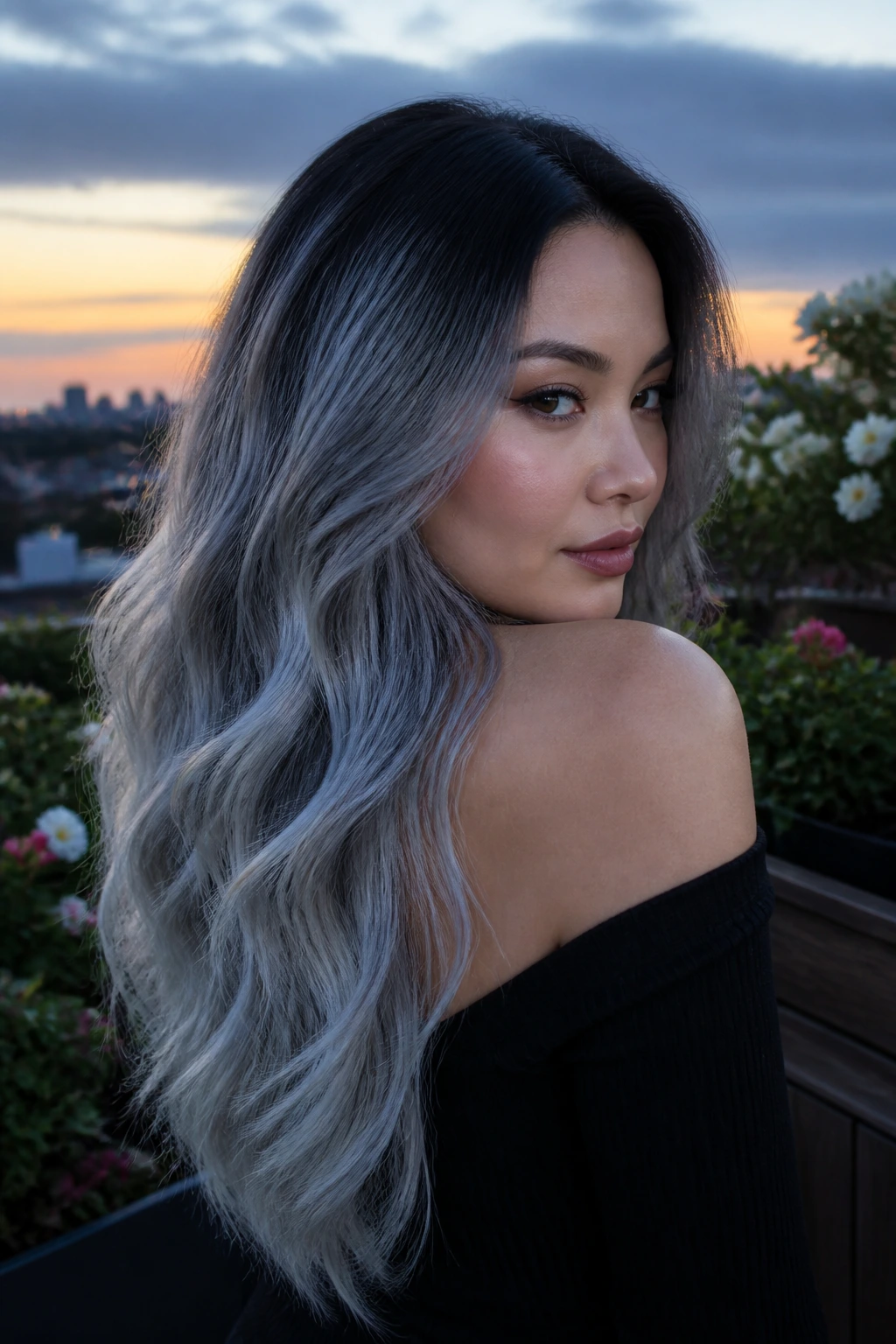
Moonlit silver ombré is the shade I’d hand to someone who likes dimension but hates high-maintenance roots. The darker top melts into lighter silver through the lengths, so the grow-out looks intentional instead of neglected.
It’s especially flattering on cool skin because the darker root zone keeps the face grounded. Then the lighter silver drops through the lower half of the hair and brings in that moonlit finish people usually want from this color family.
The ombré pattern is forgiving on long hair, which is useful if you don’t want to touch up every few weeks. It also gives curls and waves more visible shape because the light and dark areas separate naturally as the hair moves.
The only catch is placement. If the transition line sits too high, the look can feel choppy. If it sits too low, the hair can look heavy. The sweet spot is usually somewhere around the midlengths, where the melt still feels smooth.
11. Ash Grey Shag with Soft Fringe
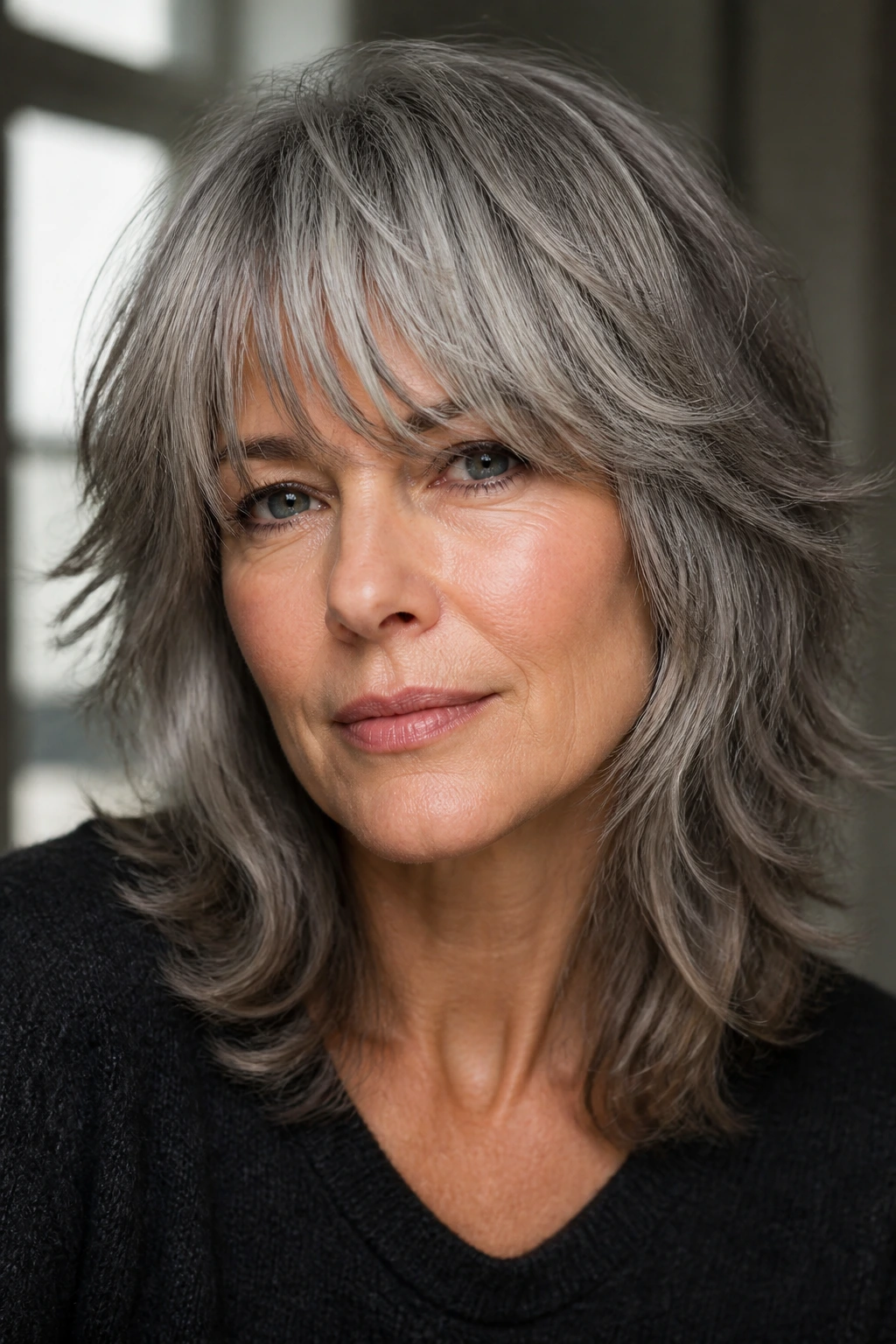
A shag cut and ash grey hair get along better than most people expect. The layers break up the color in a useful way, so the grey doesn’t have to carry the whole look alone. That makes the style easier to wear if you want silver but don’t want it to scream from across the room.
The soft fringe matters. On cool skin, a fringe can frame the eyes and keep the face from looking too exposed under a pale tone. It also helps the haircut feel lived-in, which suits ash grey better than a sleek, high-gloss finish.
This is one of the easiest silver-grey styles to air-dry. A little leave-in cream and a diffuser or rough dry is often enough. The shag does not need perfect styling to look good, and that’s part of the appeal.
It’s also a sneaky good choice if your hair is slightly damaged. The movement hides a lot, which is kinder than a blunt cut that exposes every rough end.
12. Metallic Pewter Curls
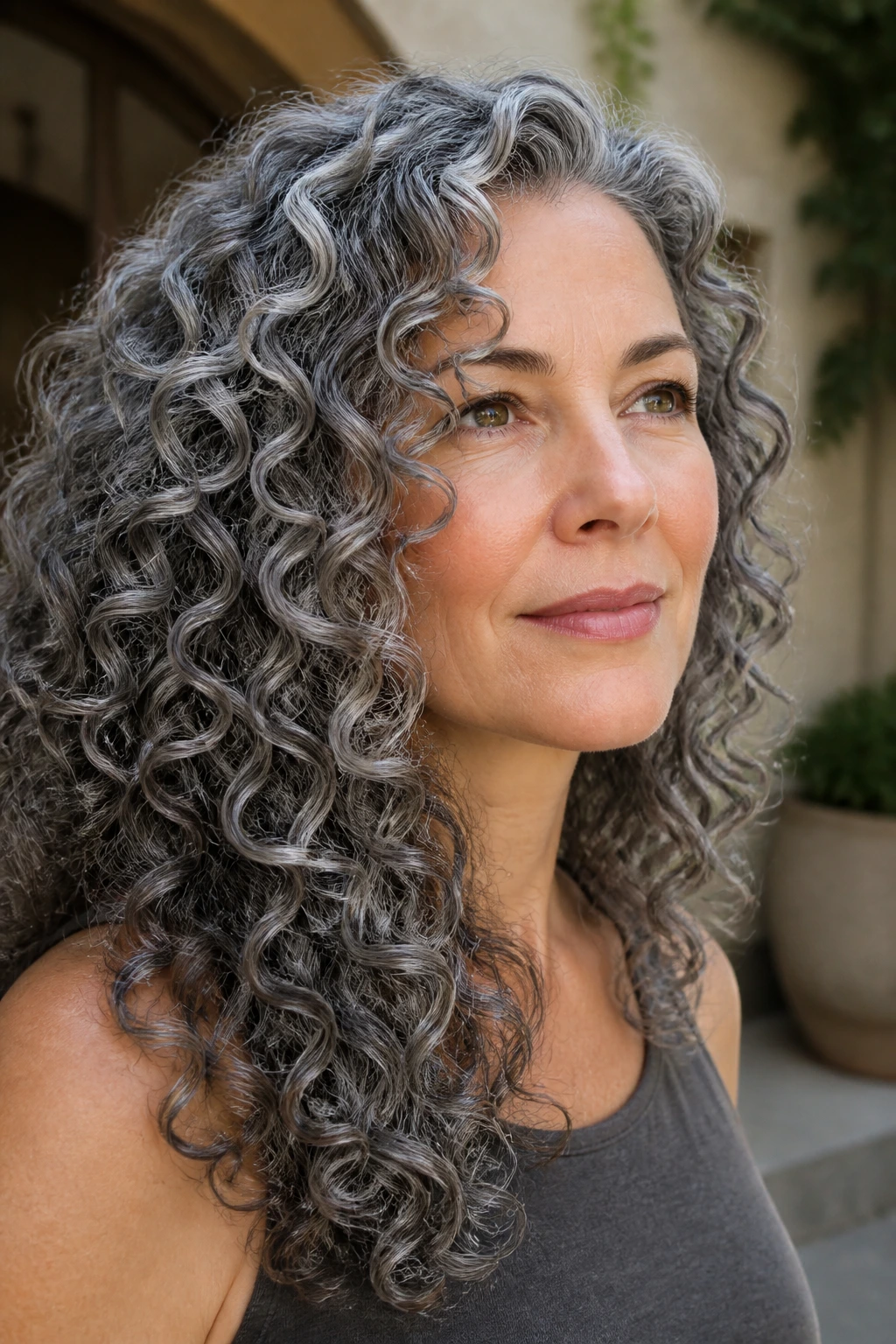
Pewter curls sit in that nice middle zone between silver and charcoal. The color has enough depth to hold its own in dense curls, but it still reads cool and metallic against fair or rosy skin.
Unlike icy silver on straight hair, pewter on curls feels richer. The curl pattern naturally creates pockets of shadow, and pewter uses those pockets instead of fighting them. That means the color shows up with more life and less brightness overload.
This shade is a strong pick for people who want silver-grey hair color ideas without losing curl definition. When curls are over-lightened all the way to white, the pattern can look dry and frizzy. Pewter gives you room to keep a little depth.
Best results usually come from leaving some low-level darkness near the roots and toning the mids and ends into a muted metallic grey. A curl cream with a light hold helps the shape stay defined without making the finish dull.
13. Frosted Silver Pixie with Dark Lowlights for Cool Skin Tones
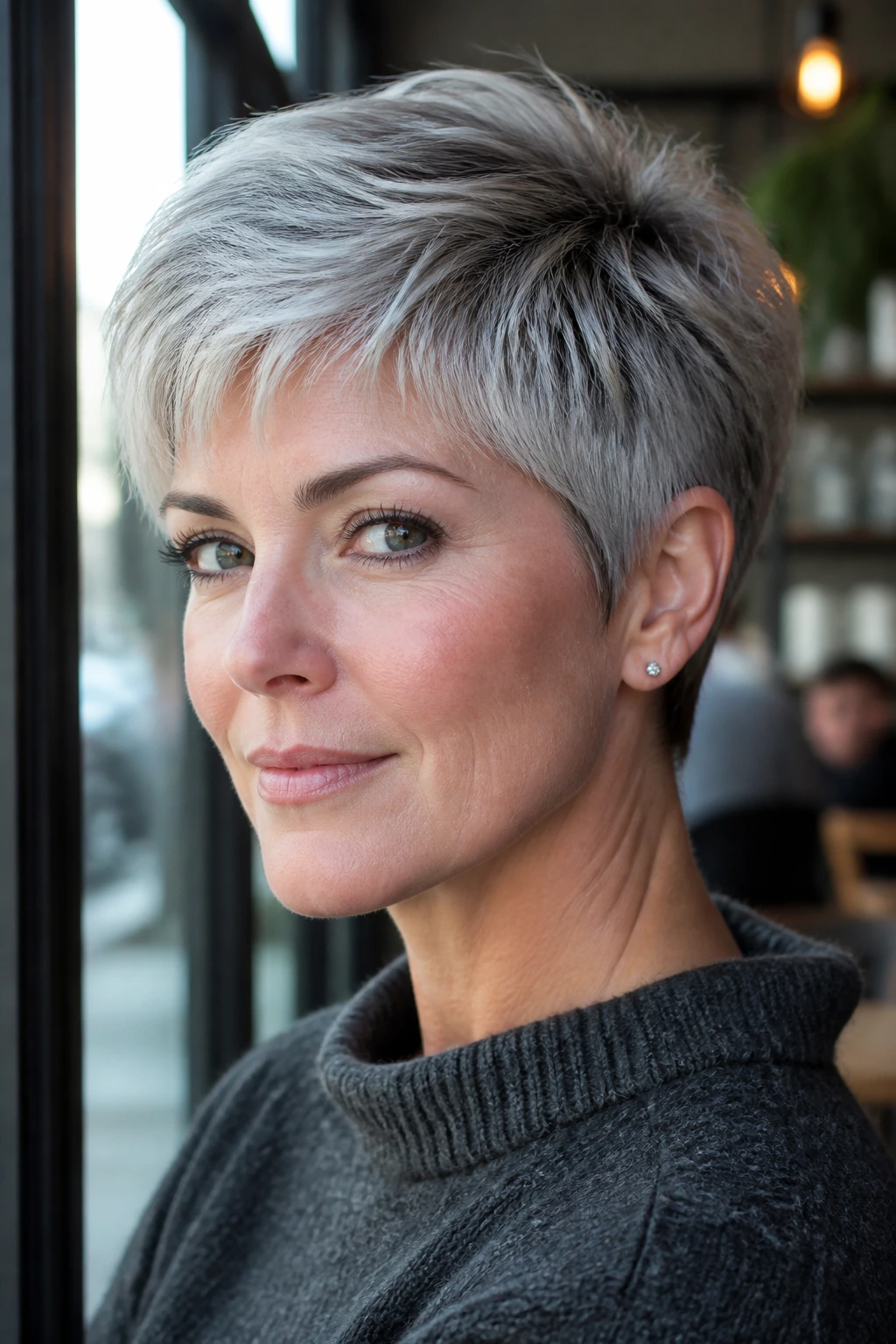
A frosted pixie can look too airy on cool skin if there’s no contrast. Dark lowlights fix that. They keep the crop from washing out and give the frosted pieces a place to sit.
Why the Contrast Works
The lighter surface pieces brighten the face, while the darker bits through the crown and nape add shape. On short hair, that contrast is everything. Without it, the cut can look like a soft blur.
- Best for fine to medium hair.
- Ask for piecey fringe around the hairline.
- Keep the frosted areas at the top and front.
- Use a matte paste only where needed, not all over.
A short style like this needs precision. If the lowlights are too heavy, the whole thing reads brown. If they’re too light, the pixie loses the structure that makes it flattering.
14. Opal Grey Balayage
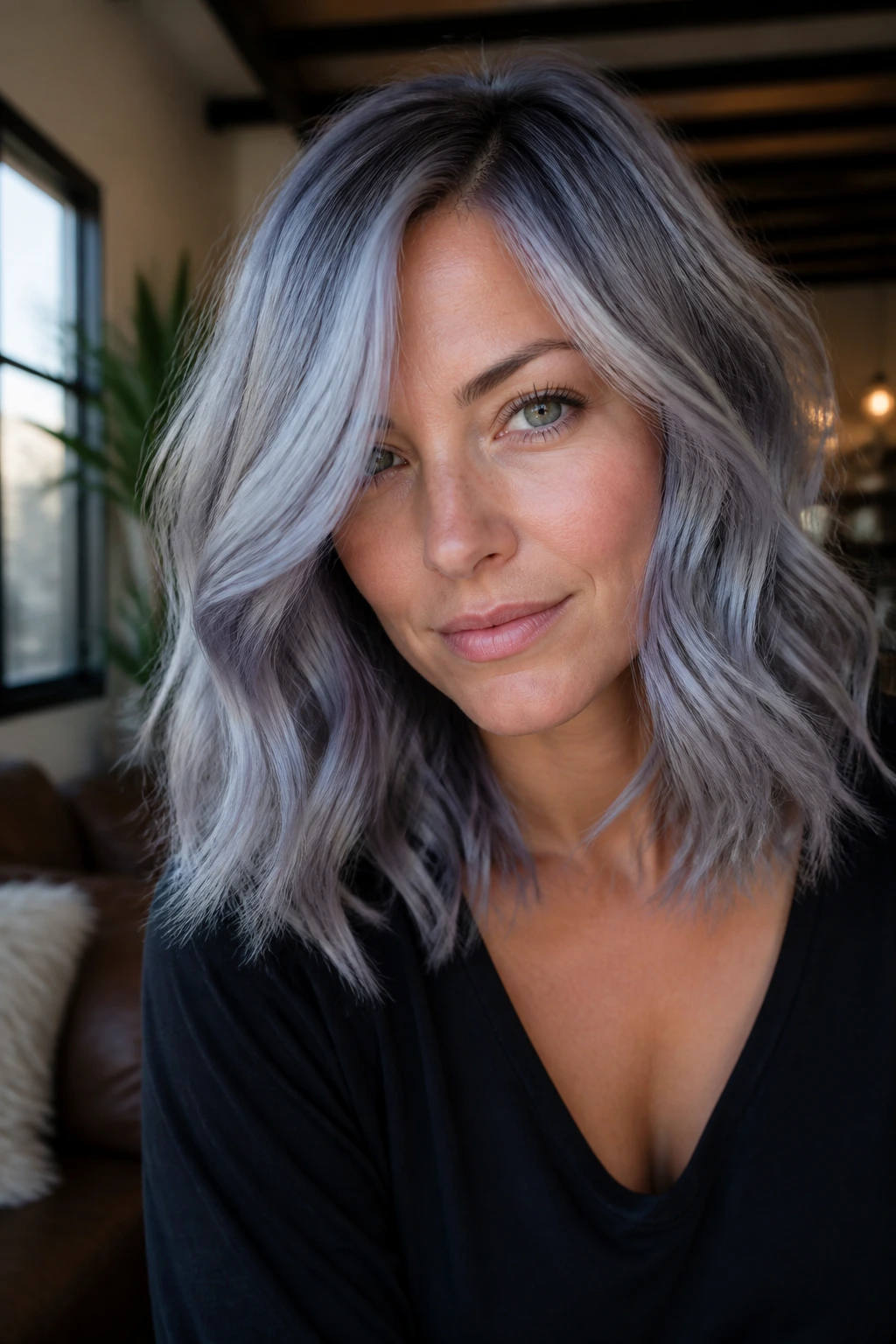
Opal grey is what you get when silver picks up little hints of blue and lavender without turning fully pastel. It has a softer, shifting look than a flat ash tone, and that makes it a nice fit for cool skin that can handle a little color play.
The balayage method is what gives opal grey its depth. Hand-painted placement lets the tone sit in ribbons instead of stripes, so the shade looks more natural as the hair moves. That’s useful on medium and long cuts, where you want the ends to feel lighter but not empty.
This one is good for someone who likes a little drama but still needs the hair to look wearable at work, at dinner, or in plain daylight. The opal shift is visible without being loud.
A clear gloss layered over the color helps keep the finish soft. If the hair has too much yellow left in it, the opal effect disappears, so the base has to be lifted cleanly before the toner goes on.
15. Charcoal-to-Silver Melt
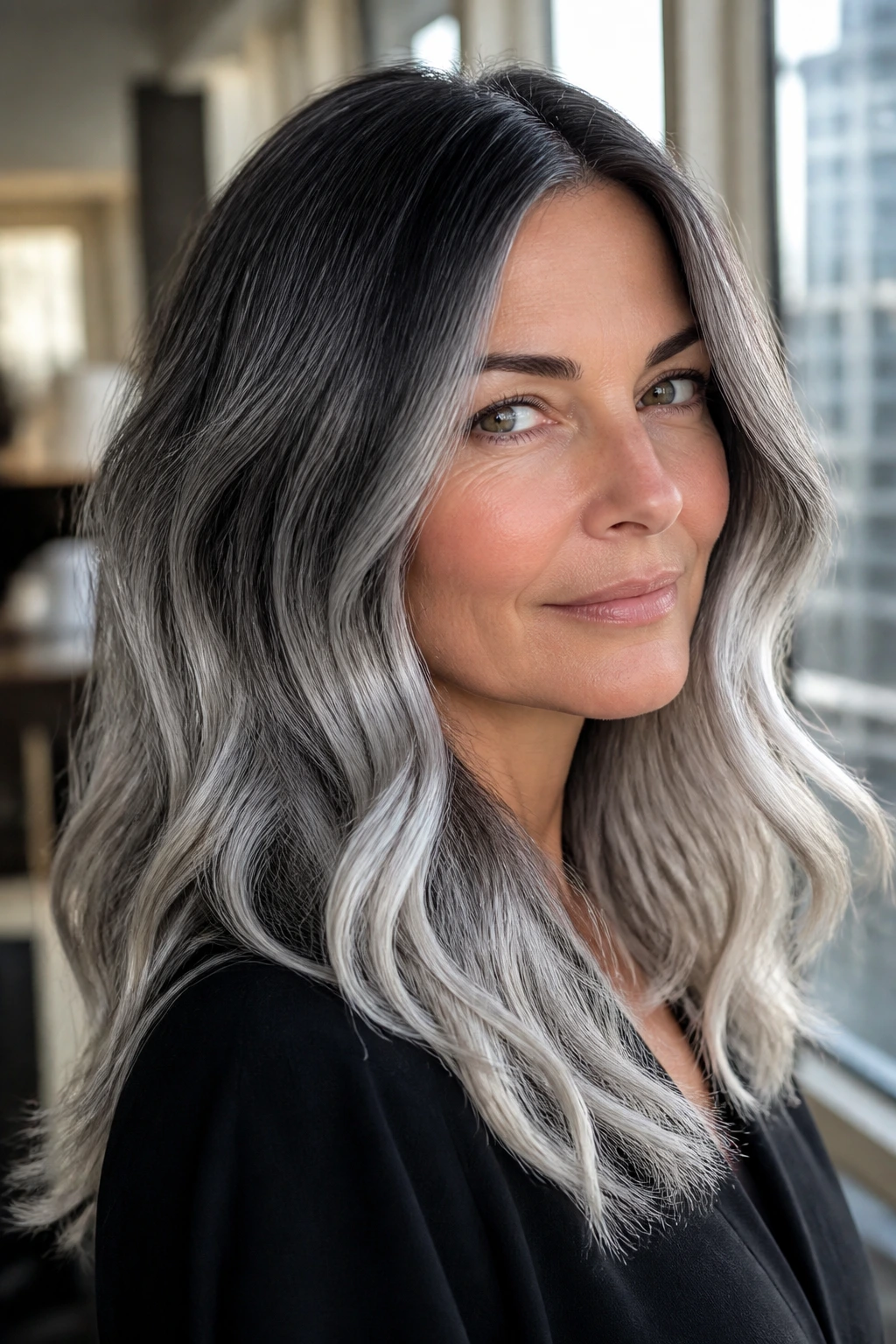
Why do some silver styles look expensive while others look patchy? Usually it’s the transition. A charcoal-to-silver melt keeps the shift gradual, so the eye moves from dark to light without getting stuck on a hard line.
How to Ask for It
Tell the colorist you want the darkest section near the roots and the lightest section at the ends, with a soft blend through the middle 2 to 4 inches. That middle zone matters more than people think. If it’s rushed, the whole color looks striped.
The charcoal base is flattering on cool skin because it creates a quiet frame around the face. The silver ends bring the brightness. Together, they create contrast without the harshness of a high-bleach all-over look.
This is a good option for layered cuts, especially when the ends are cut blunt enough to show off the fade. The color looks most convincing when the transition feels deliberate, not painted in obvious bands.
16. Arctic Silver Layers
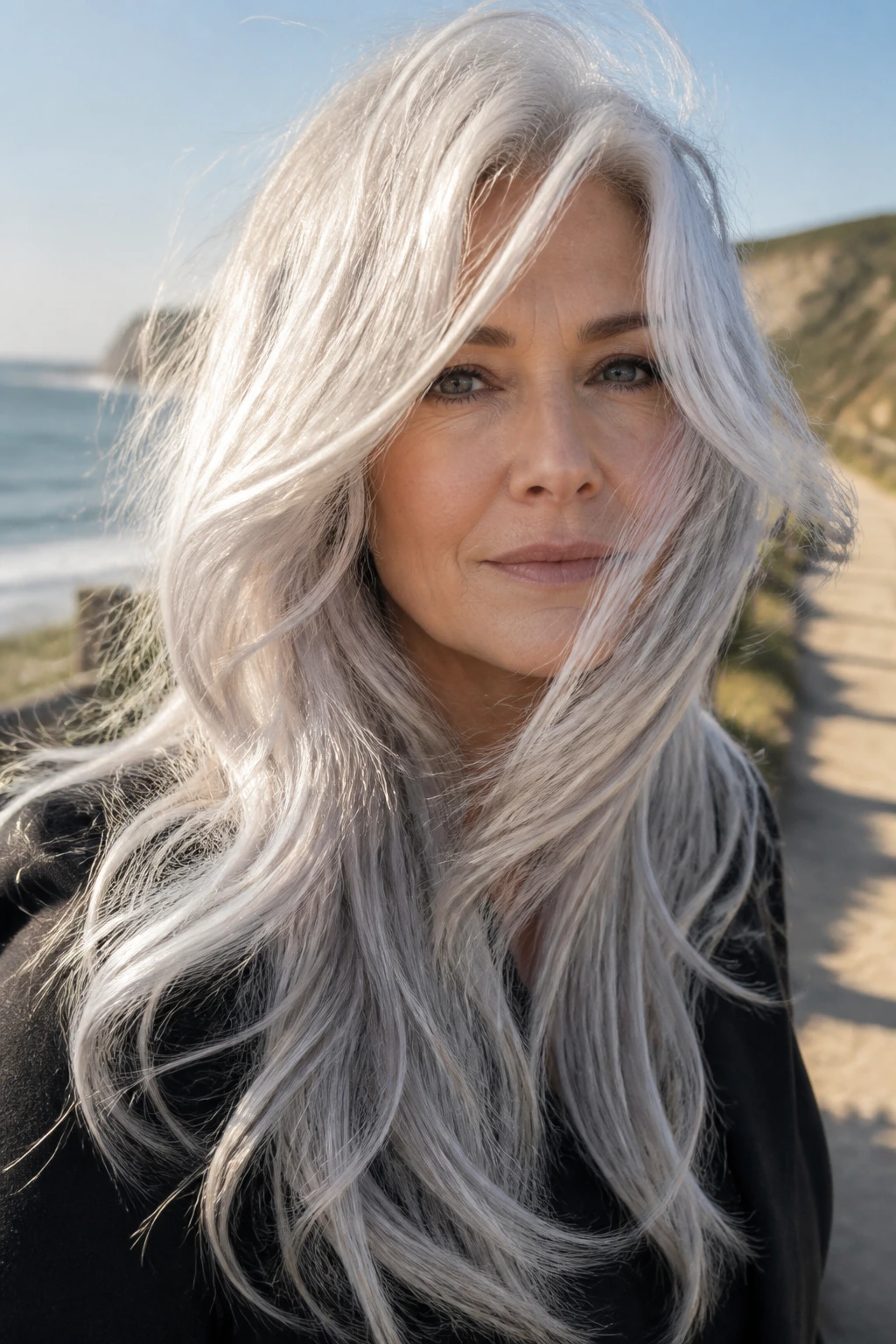
Long layers give arctic silver something to do. Without them, the color can sit like one big pale sheet, which sounds nice until you see it in motion and realize it has no shape. Layers fix that.
The arctic tone itself is colder than pearl and brighter than pewter. It sits near the pale end of the spectrum, so it works best on cool skin that can hold a very light shade without getting washed out. The layers keep the brightness from swallowing the face.
A side benefit: thick hair finally has somewhere to go. The layers remove bulk, and that makes the silver move more easily. On heavy hair, this shade can feel almost airy after the cut is shaped properly.
Ask for invisible layers if you want the movement without obvious choppiness. If the layers are too short, the ends can frizz and break up the arctic finish. Clean slicing through the lengths usually looks better than aggressive texturizing.
17. Mirror Silver Crop
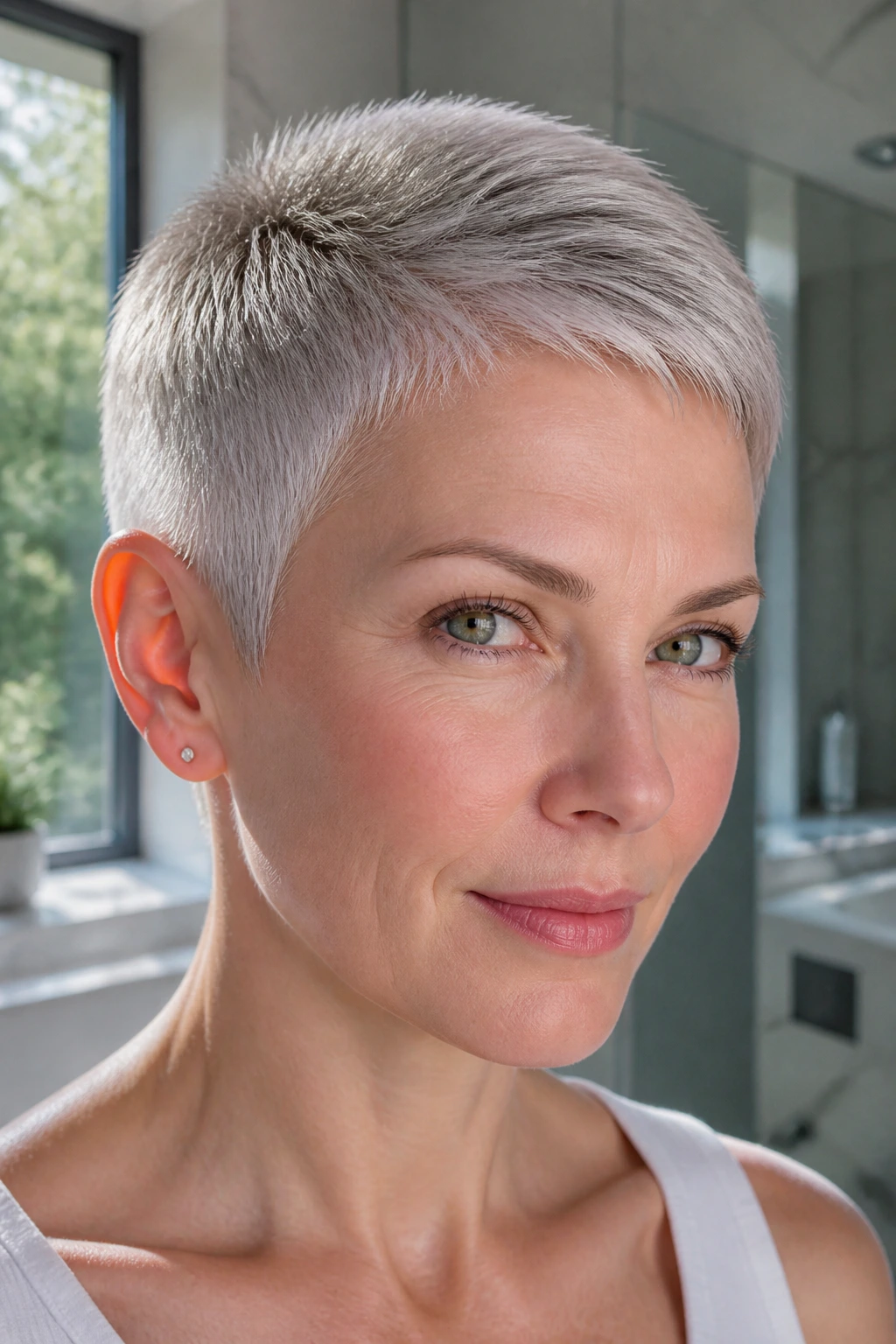
A mirror silver crop is polished, but not in a precious way. It’s short, clean, and shiny enough that every line in the cut shows up. That’s the charm. The hair almost looks like brushed metal when the finish is smooth.
On cool skin, the shade works because it reflects the coolness already in the complexion instead of adding warmth. The crop keeps the look compact, which stops the pale color from spreading too far across the face.
The cut has to be sharp. A mirror finish on a messy crop just looks unfinished. You want edges that are tidy around the ears and nape, with enough texture on top to keep the shape from becoming helmet-like.
A lightweight shine spray or gloss cream helps, but don’t overload the hair. Too much product takes the mirror effect away and makes the crop look greasy instead of sleek.
18. Blue-Silver Gloss Bob
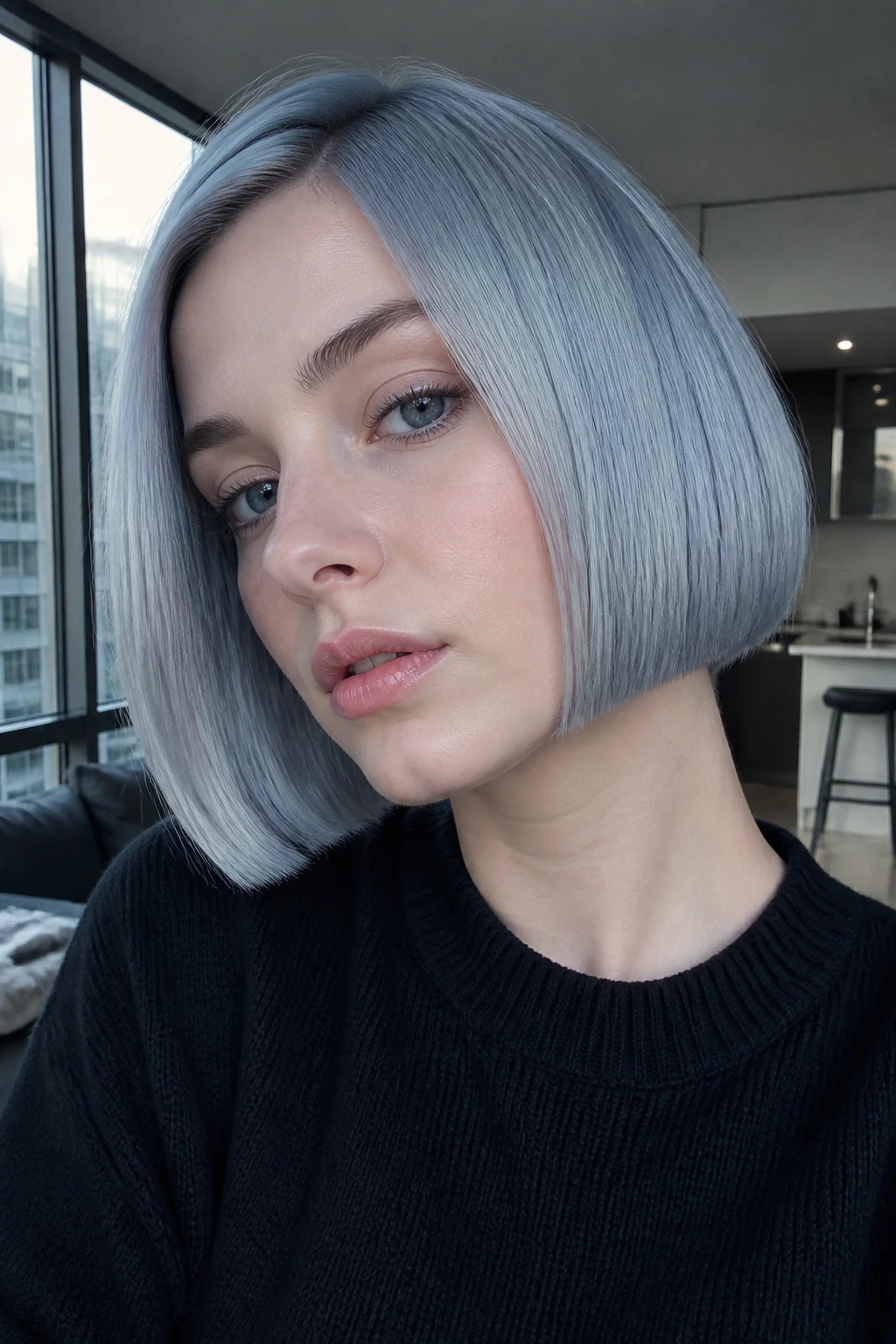
Blue-silver is colder than lavender-silver and a touch sharper than pearl. That makes it a strong match for cool skin tones that need crispness more than softness. The blue note also helps cancel leftover yellow in pre-lightened hair.
Unlike lavender silver, this version feels more graphic. It’s a nice fit if you like a bob that looks tidy and a little futuristic, without going full white. The shade sits beautifully on smooth bobs where the line of the cut can carry the color.
A gloss like this is usually best when it’s applied over an already pale base. If the hair is too dark underneath, the blue can vanish. If the yellow is too strong, it can skew green. Clean lift makes all the difference.
Keep the styling sleek. A blunt blow-dry or a soft tuck behind one ear lets the blue-silver tone show without clutter. That’s the move.
19. Soft Smoke Grey Waves
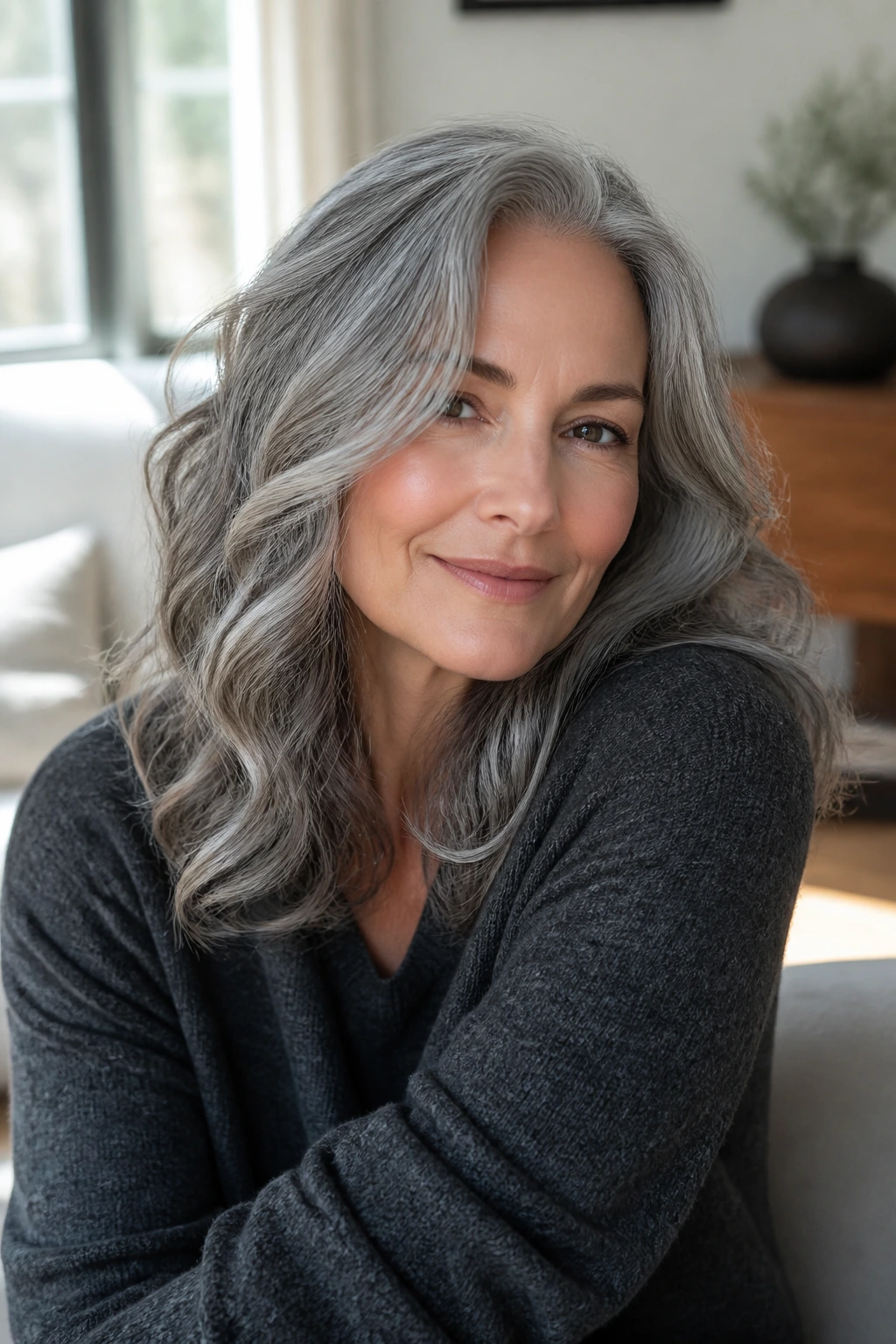
Soft smoke grey is the version I’d point to for someone who wants silver but doesn’t want to look overdone. The tone is muted, the waves give it movement, and the whole thing feels calmer than a bright chrome finish.
A loose wave pattern is important here. It breaks up the smoke tone in a way that feels natural, almost like shadows moving through the hair. On cool skin, that softer grey can be a relief if icy platinum feels too stark.
What to Watch For
Because smoke grey is muted, it can go dull if the shampoo is too harsh. A gentle cleanser and a weekly gloss keep it from looking flat.
- Best on medium-length hair.
- Works well with a subtle root shadow.
- Needs a soft wave to show the dimension.
- Looks best when the ends are trimmed regularly.
The style also hides grow-out better than a pure white shade. That’s a real advantage if you want the color to hold up past the first few washes.
20. Platinum Silver Face-Framing Layers for Cool Skin Tones
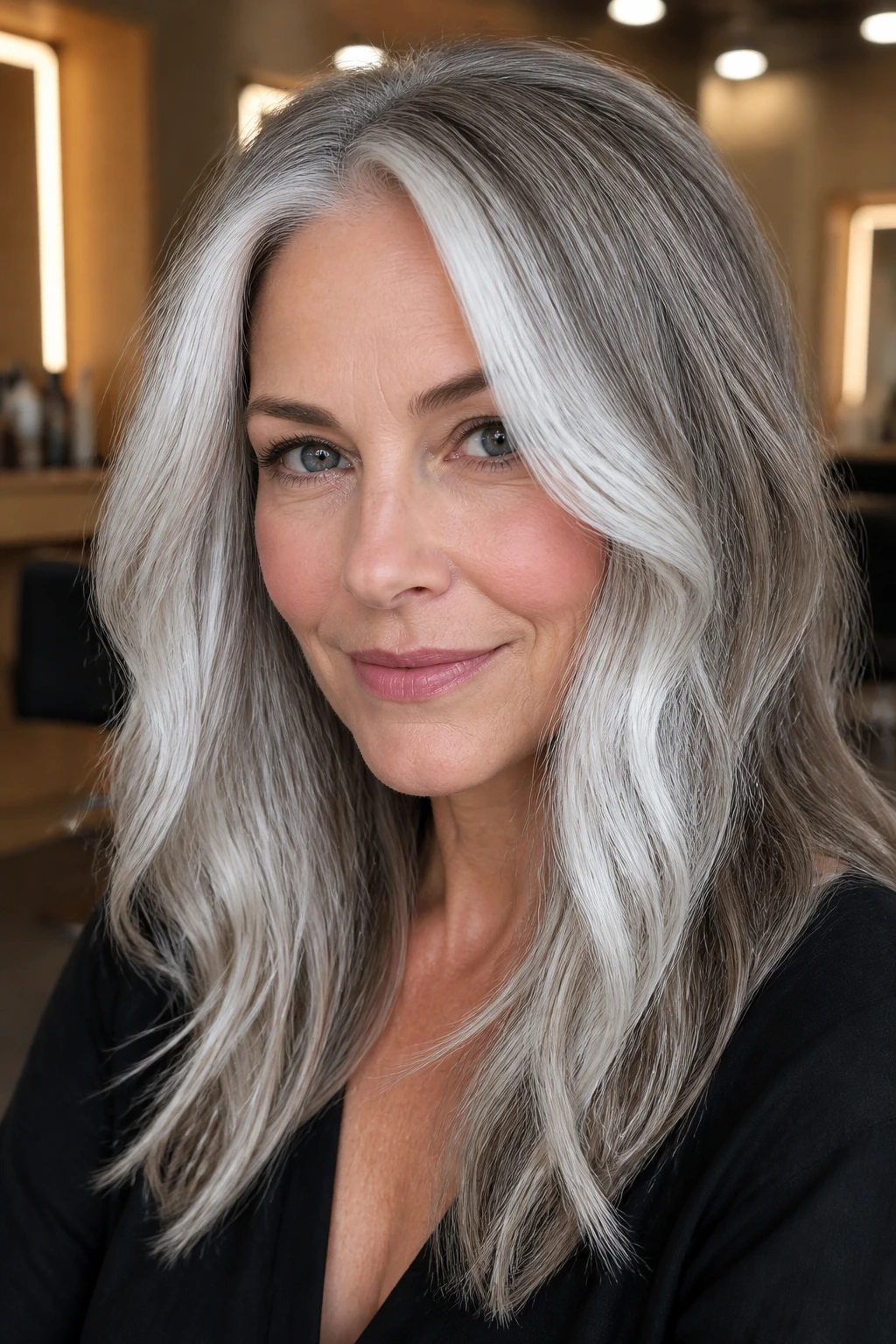
Face-framing layers are one of the easiest ways to wear platinum silver without bleaching every inch of hair. The lighter pieces sit around the front, which pulls brightness toward the eyes and cheekbones. On cool skin, that placement can be enough to change the whole mood of the haircut.
The rest of the hair can stay a little deeper, usually in ash blonde, soft grey, or a muted brunette. That contrast is what keeps the platinum from taking over. A full head of pale silver can be gorgeous, but it asks for more upkeep than a lot of people want.
This style makes sense if you like the look of silver but need a more forgiving grow-out. The face frame stays fresh even when the roots appear, and the layers help the lighter pieces blend instead of sitting like stripes.
Ask for the brightest pieces to start around the brow and cheekbone area. That keeps the color where it has the most payoff, and it avoids wasting lift on the back sections that nobody really sees.
Final Thoughts
Silver-grey hair looks best when the tone and the cut agree with each other. A great shade on the wrong haircut can still fall flat. A smart cut with the right cool-toned glaze usually carries the whole look.
If you’re choosing between shades, think less about how pale they are and more about how much depth they leave near the root. A little shadow usually makes silver easier to wear and keeps cool skin from disappearing into the color.
Bring a daylight photo to the salon and point out the undertone you want: icy, smoky, pearl, steel, or blue-silver. That one detail gives the colorist a real target, and it beats asking for “silver” with no explanation attached.
