



Gray hair color ideas for women over 50 do not have to mean one flat silver cap and a prayer. Gray can read icy, smoky, pearl, pewter, or soft salt-and-pepper, and the cut changes the whole mood. A chin-length bob makes silver look crisp; a shag makes it feel softer; a glossy lob can sit right in the middle and look expensive without trying too hard.
The biggest mistake I see is treating gray as if it were one shade. It isn’t. Natural gray can lean warm, cool, white, smoky, or even a little translucent, and the right color choice should work with that instead of fighting it. A good toner, a clean haircut, and the right placement around the face do more than heavy coverage ever could.
There’s also a practical side that gets skipped too often. Mature hair usually wants shine, a gentler grow-out line, and a plan for dryness at the ends. If the color looks pretty in the bowl but leaves the hair looking dull or chalky, it is the wrong choice, no matter how trendy it sounds.
The best place to start is by deciding whether you want your gray to lead, blend, or disappear into the background. Once that part is clear, the options get much easier.
1. Silver Ice Bob
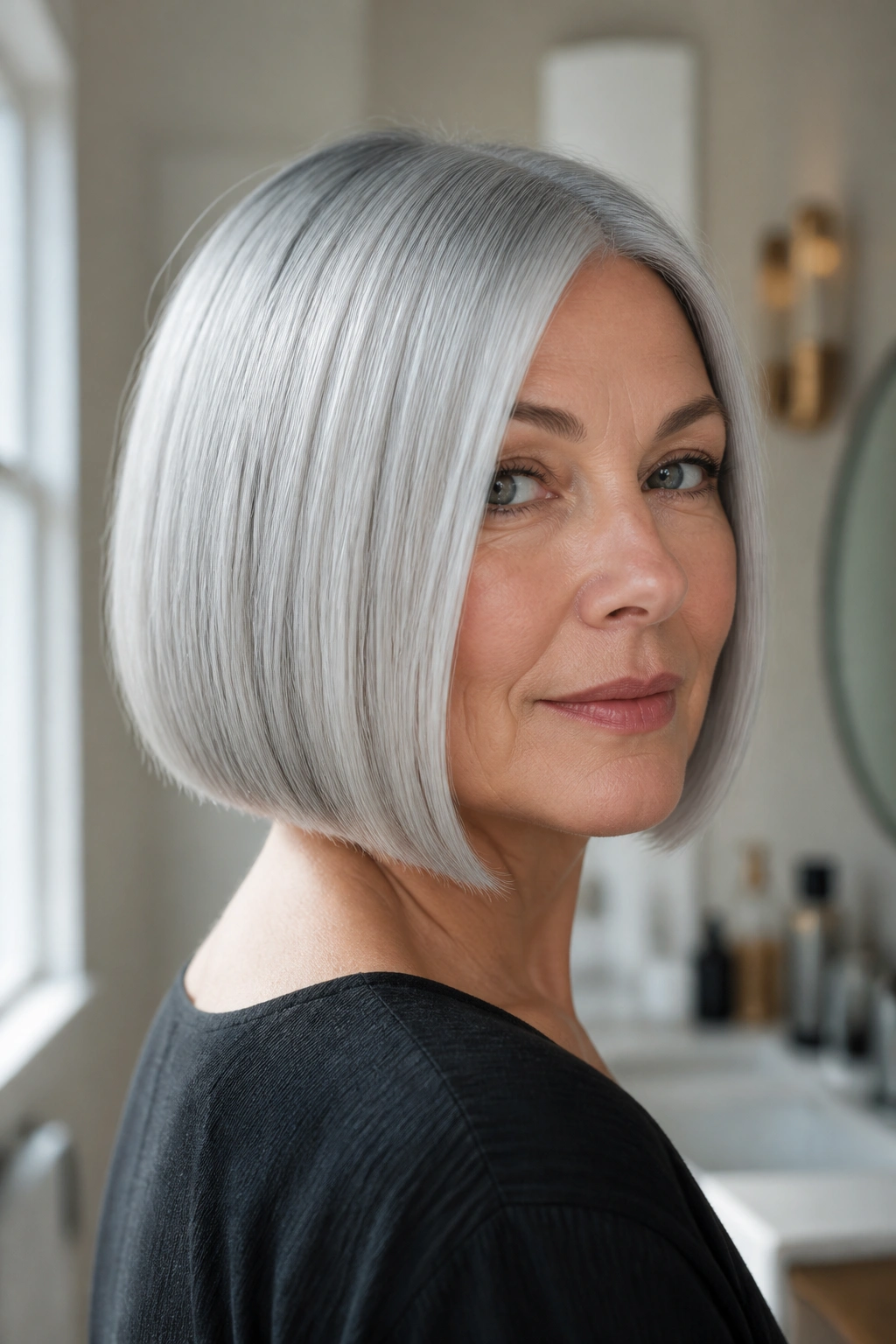
A silver ice bob looks sharp when the cut is clean and the tone stays cool. The sweet spot is usually chin length or just grazing the jaw, with blunt ends that keep the shape from looking flimsy.
This shade works because it gives gray hair a deliberate finish. Ask for a cool silver gloss at a level 9 or 10, and avoid anything too matte; matte silver can go flat fast, especially around the face where shine matters most.
Keep the maintenance simple. A trim every 6 to 8 weeks holds the edge, and a lightweight serum on damp hair helps the color reflect light instead of swallowing it.
2. Salt-and-Pepper Balayage
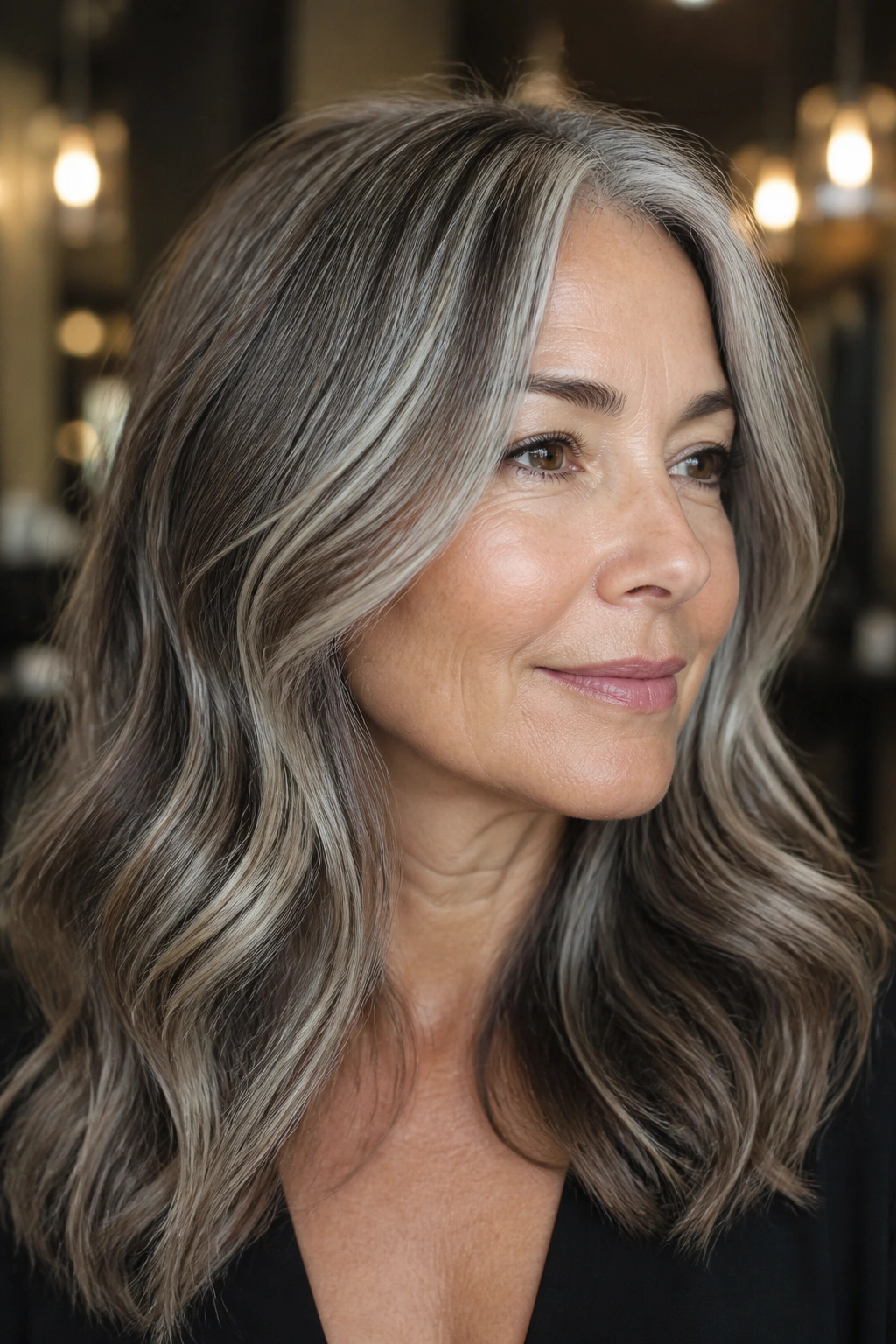
Can you keep your natural gray and still make it look planned? Salt-and-pepper balayage does exactly that by blending cool ribbons through the mids and ends while leaving the root line soft.
Why It Suits Over-50 Hair
Gray that comes in unevenly can look patchy when it is boxed into one solid color. Balayage breaks that up. A colorist can paint fine ribbons of silver, taupe, and smoky brown through the top layer so the hair moves in a softer way.
What to Ask For
- Face-framing pieces that sit 1 to 2 levels lighter than your base
- Soft lowlights under the crown to keep depth
- A gloss refresh every 6 to 8 weeks
- A gentle grow-out line so roots do not look harsh
Pro tip: Leave a little gray around the temples. That small contrast makes the whole look feel lived in, not forced.
3. Mushroom Brown with Gray Ribbons
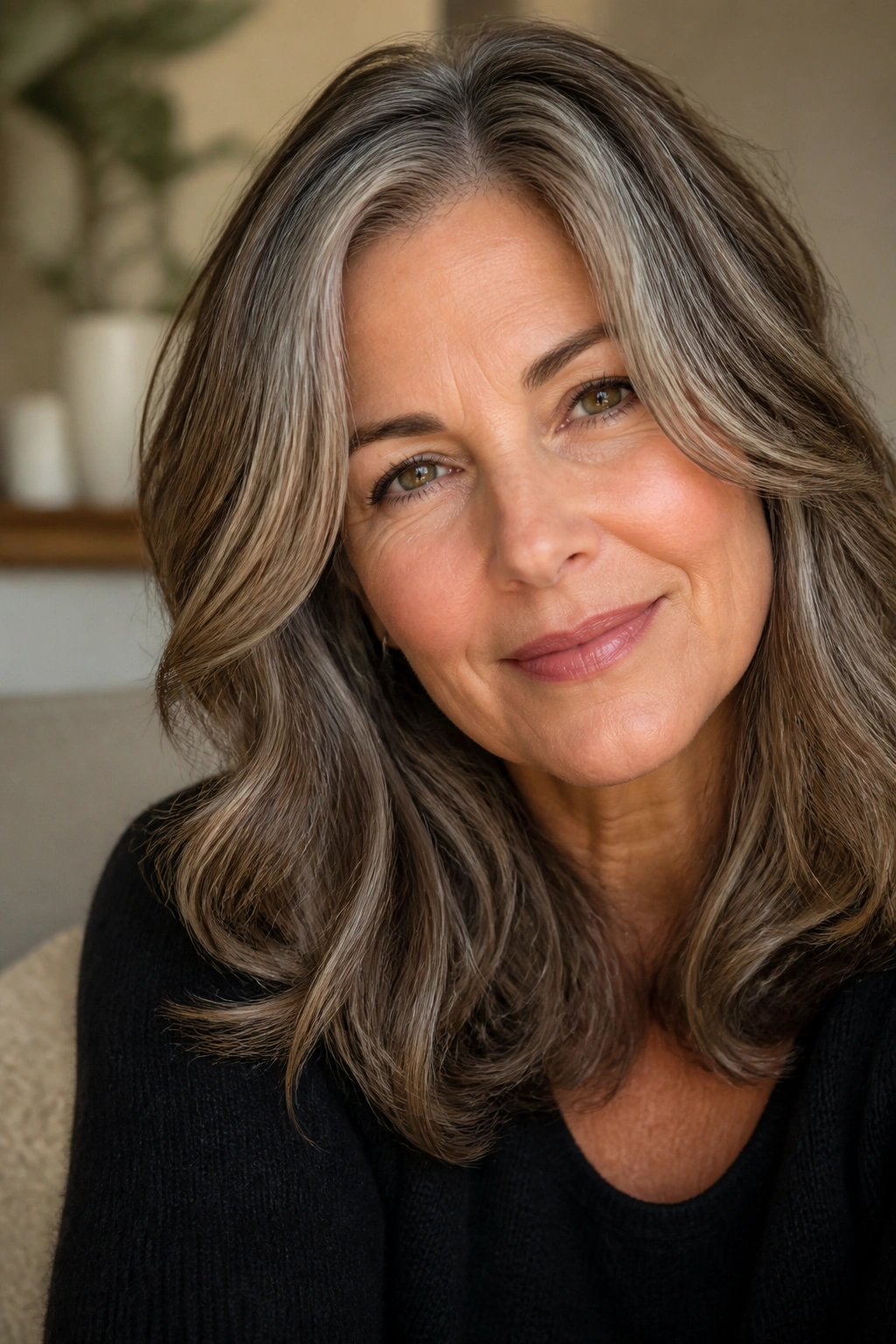
Picture thick hair that has gone gray in wide streaks and started to look a little blocky. Mushroom brown with gray ribbons fixes that by slipping cool taupe between the darker strands and the silver.
What Makes It Work
The mushroom tone sits between brown and gray, which gives the eye somewhere to rest. That middle shade is useful when the hair has coarse texture, because it softens the hard edges that mature strands sometimes develop.
The Ask for Your Colorist
- A muted brown base that is one level lighter than your natural dark shade
- Gray ribbons that are thin near the part and slightly wider underneath
- A demi-permanent glaze so the finish stays soft
- Refresh every 6 weeks if you wash often
Too much ash can make the face look tired, so keep the brown side warm enough to hold life.
4. Pearl Blonde Glaze
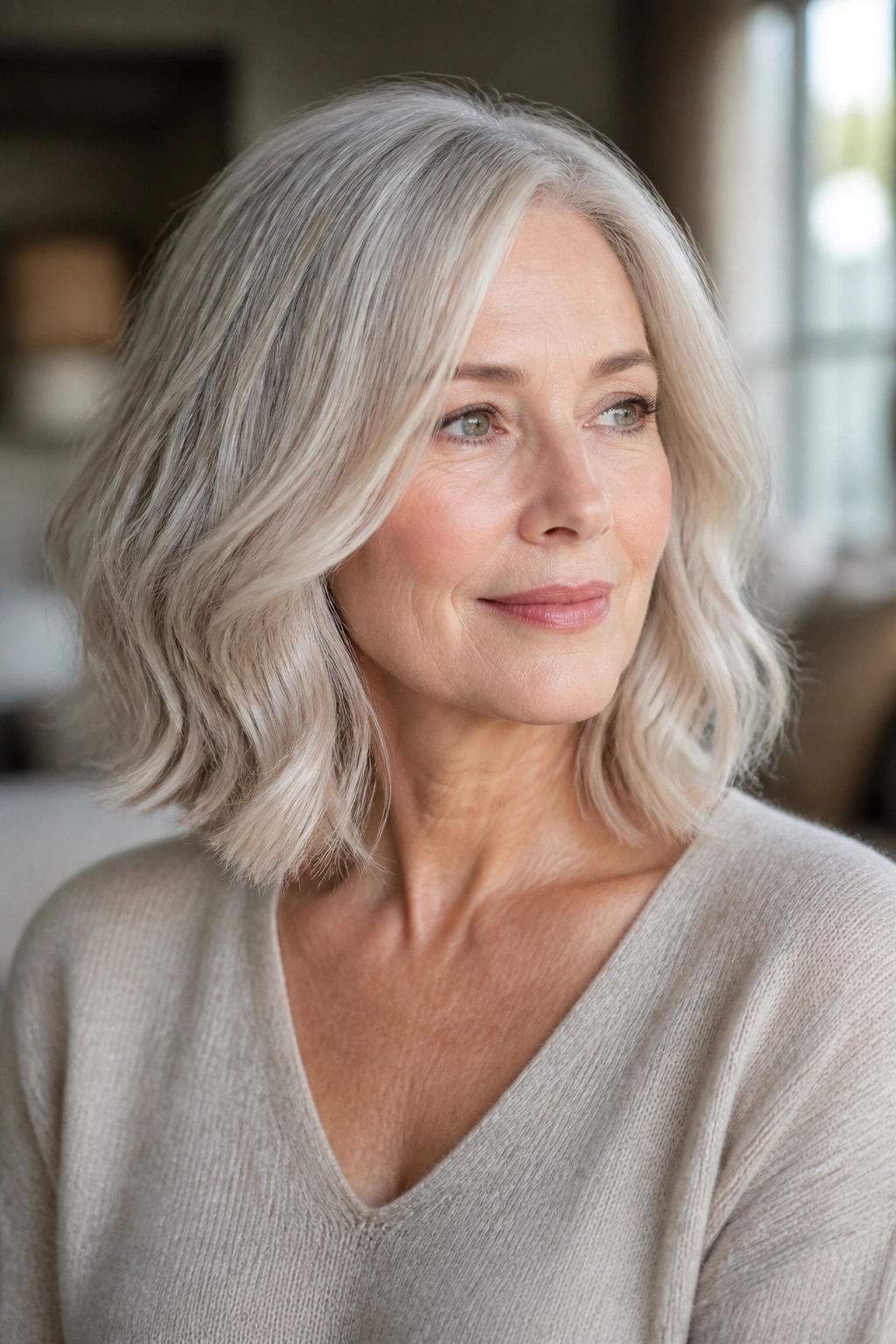
Pearl blonde is not the same thing as icy blonde. Pearl has a creamier edge, and that little bit of warmth keeps pale gray from turning stark or papery.
It works especially well when the natural gray is already light and the goal is to smooth out yellow tones. A pearl glaze over white and silver strands can make the whole head look more even, and it helps when the ends are dry but you still want a light finish.
I like this one on shoulder-length cuts with a soft bend. Use violet shampoo sparingly, maybe once a week, because too much can push the hair into a flat lilac cast nobody asked for.
5. Smoky Charcoal Pixie
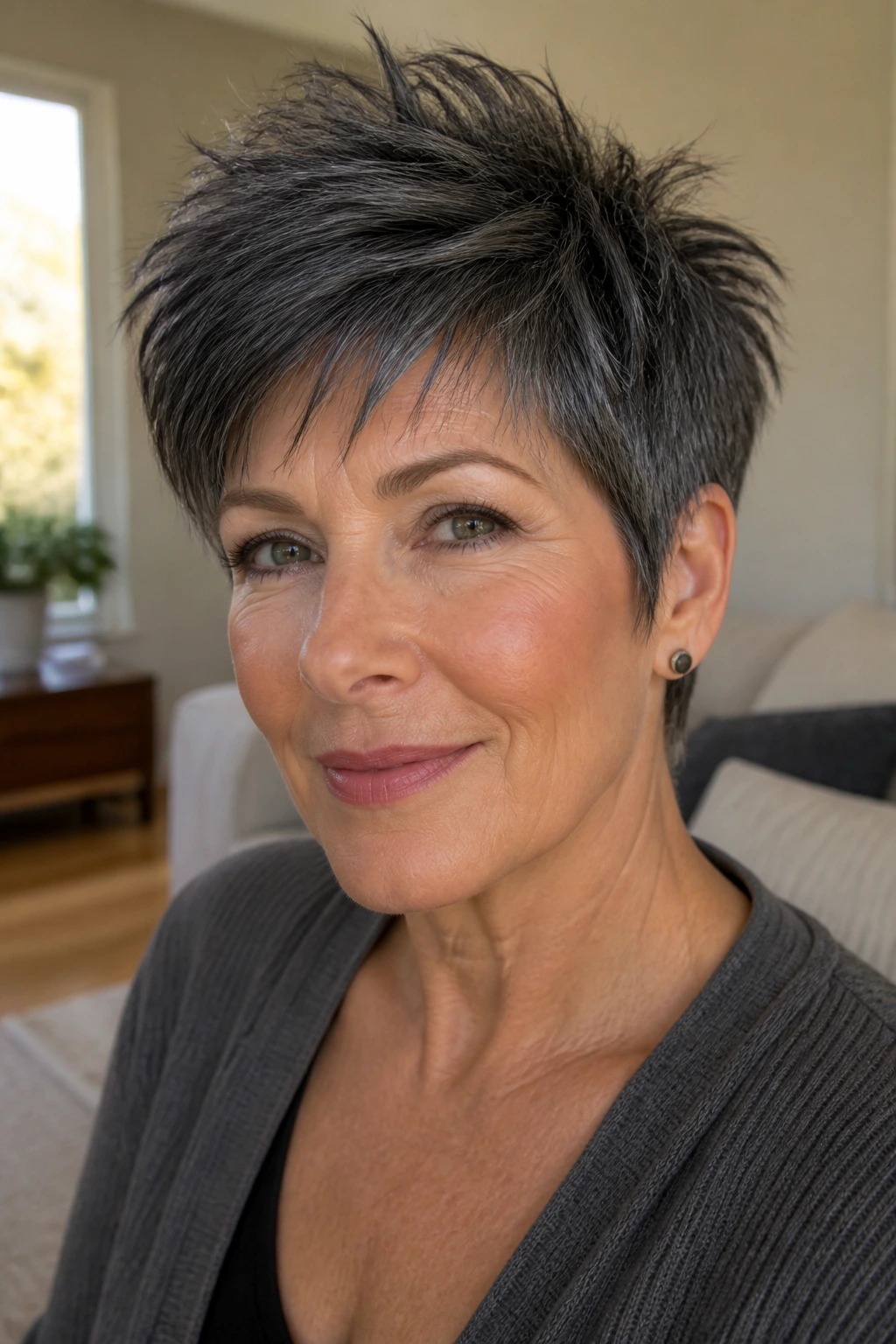
A smoky charcoal pixie is for the woman who wants shape first and color second. The short length keeps the hair light, and the darker charcoal notes make the silver on top look intentional instead of random.
Unlike a soft gray bob, this cut puts the focus on the face and the crown. That makes it a smart option if your hair has thinned a bit and you want the top to look fuller. Ask for point-cutting through the ends and a piecey fringe if your forehead wants a little break.
It is also a low-fuss color choice. A pixie shows regrowth sooner, but the grow-out is less annoying because the shape itself does some of the work.
6. Champagne Silver Layers
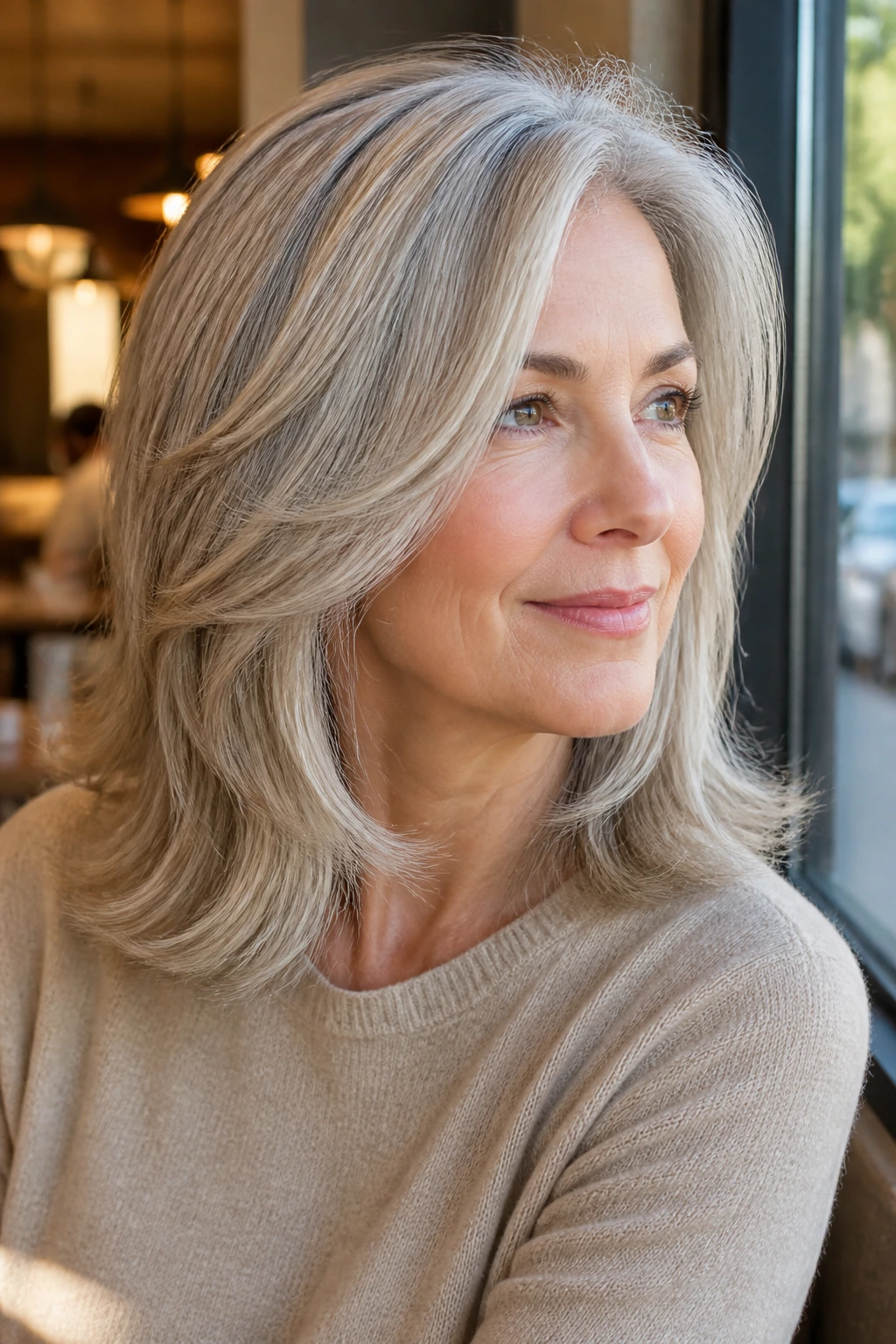
Champagne silver layers keep the color bright without tipping into cold territory. If cool silver has ever made your skin look drained, this is the calmer route.
The trick is in the mix. Ask for soft beige-gold lowlights threaded through silver and white pieces, especially around the mid-lengths. That combination keeps the lightness, but it stops the whole head from looking icy in a harsh way.
This shade tends to suit shoulder-length layers best. The movement helps the champagne tones catch in different spots, and a round brush at the ends is often enough to make the color look polished.
7. Lavender Gray Shag
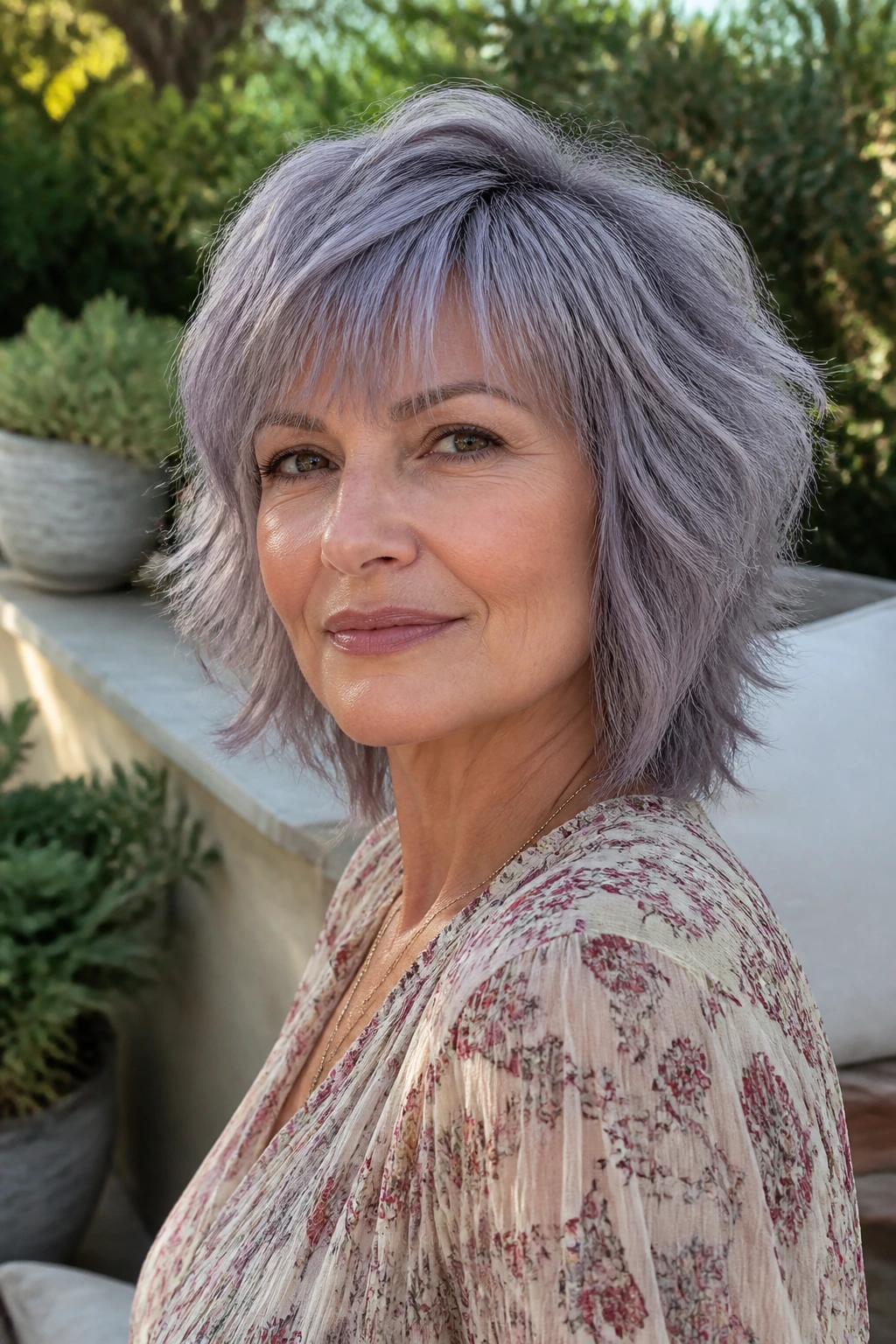
Can gray hair wear a hint of purple and still look grown-up? Yes, if the lavender stays muted and smoky instead of candy-bright.
How to Keep It Subtle
A lavender gray shag works best with a temporary gloss or a soft-toned demi color. The point is not to turn the hair purple; the point is to give the gray a cooler cast that looks fresh in daylight and soft indoors.
Why the Shag Cut Helps
- Choppy layers keep the color from reading flat
- A feathered fringe breaks up the face line
- Texture spray brings out the tonal mix
- The grow-out stays softer than with a blunt cut
This is a good choice if you like a little personality in your color without going loud.
8. Ash Brown with Money Pieces
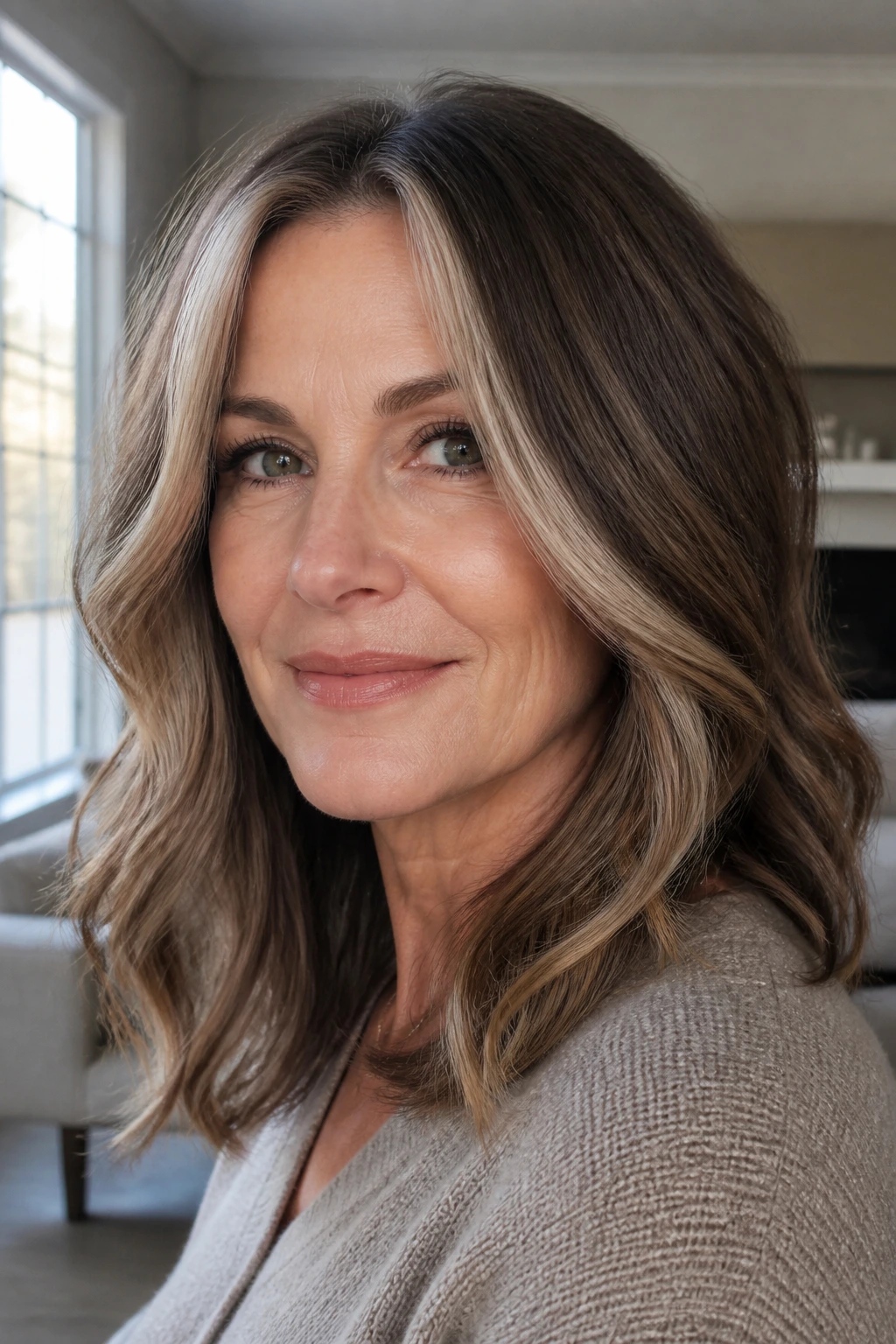
A face frame can do more than a full highlight job. Ash brown with money pieces is one of the easiest ways to brighten the face while leaving most of the natural gray story intact.
The money pieces should sit around 1 to 2 levels lighter than the base, not stripey or chunky. That small lift pulls the eye upward and gives the skin a cleaner look, which matters when the rest of the hair has gone more silver at the temples or crown.
This is a calm choice for women who want to ease into gray blending instead of jumping straight to full silver. The root line stays softer, the upkeep stays lower, and the whole effect feels modern without shouting for attention.
9. Frosted Platinum Crop
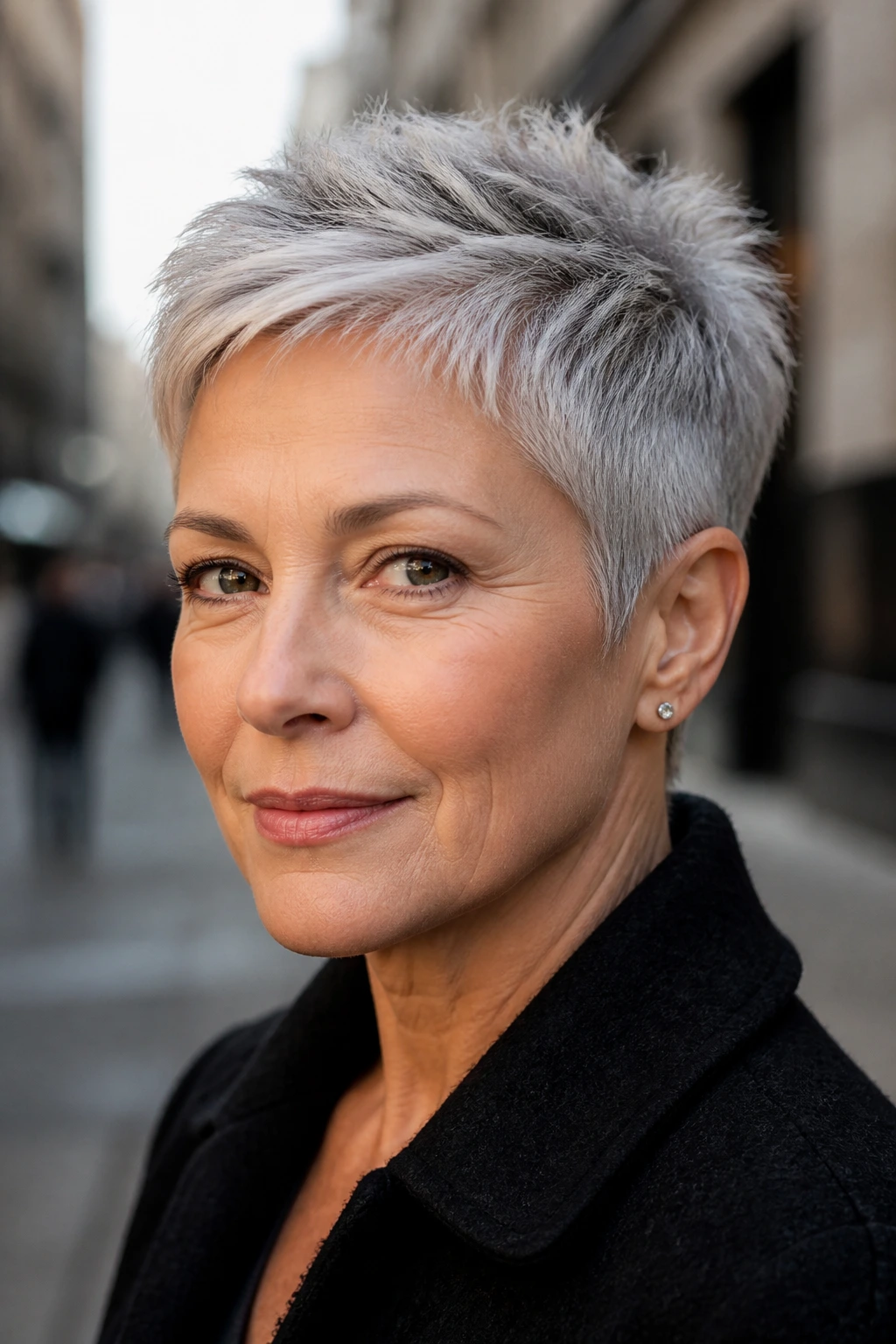
A frosted platinum crop is clean, bright, and unapologetic. It works best on hair that still has enough strength to hold shape, because the short length makes every line visible.
The color itself should live between white and pale silver, with just enough depth at the root to keep the face from disappearing into one flat note. That shadow root matters. Without it, platinum can look washed out, especially on mature skin that needs some contrast.
Keep the cut trimmed every 4 to 6 weeks and use a deep conditioner once a week. Short light hair shows dryness fast, and there’s no hiding it under layers.
10. Graphite Gloss Lob
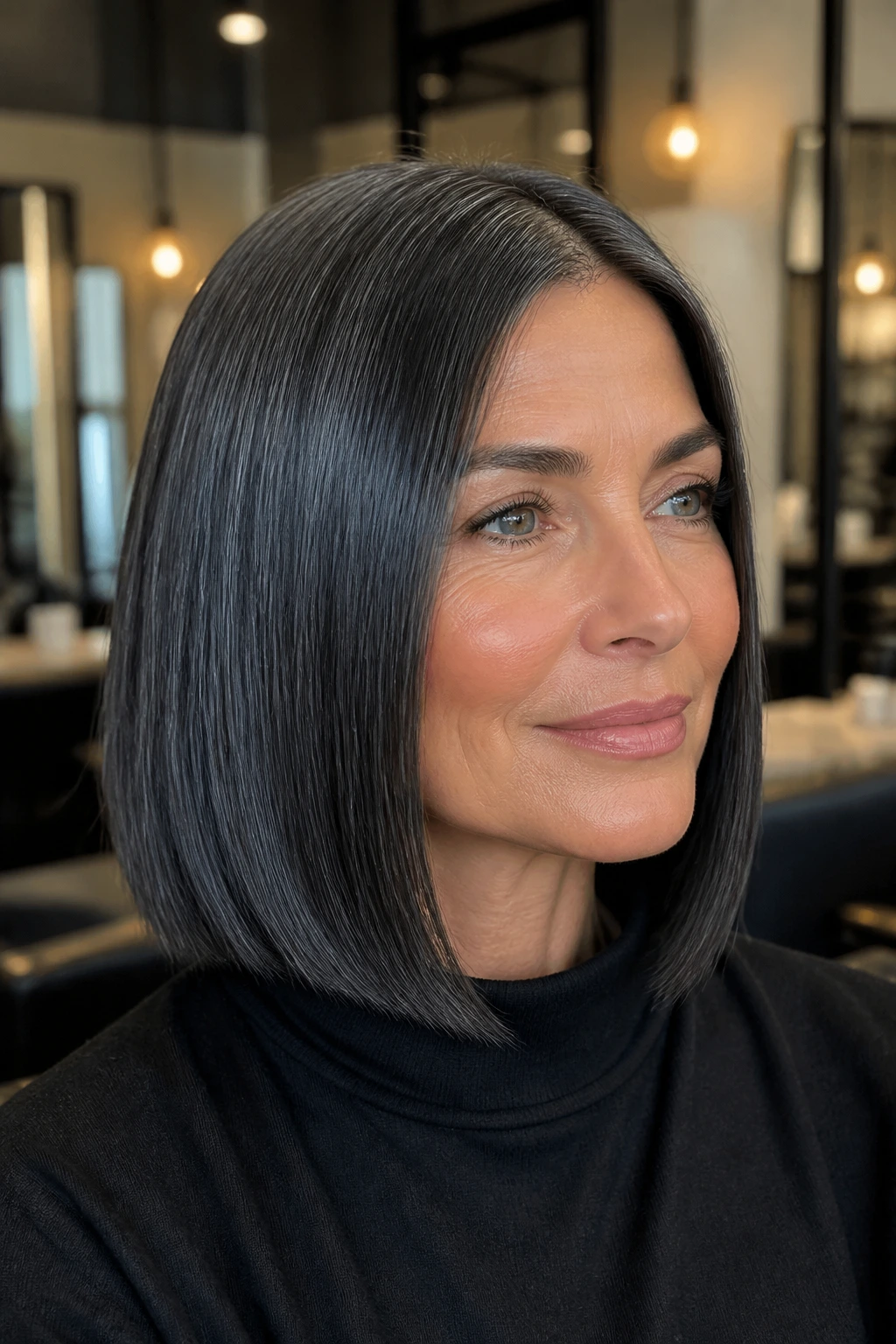
Three things make a graphite gloss lob work: a blunt shape, a cool dark glaze, and shine. That’s it. No fuss, no extra drama.
- A collarbone-length lob gives the color room to move
- Graphite gloss on a level 5 or 6 base keeps the gray from looking muddy
- A heat protectant is non-negotiable if you smooth the ends
- A refresh every 6 weeks keeps the dark tone sleek
This style suits women who want their gray to sit inside a darker, polished frame. It is especially useful when the hair has salt-and-pepper streaks but the overall look needs more depth.
11. Dove Gray Blunt Cut
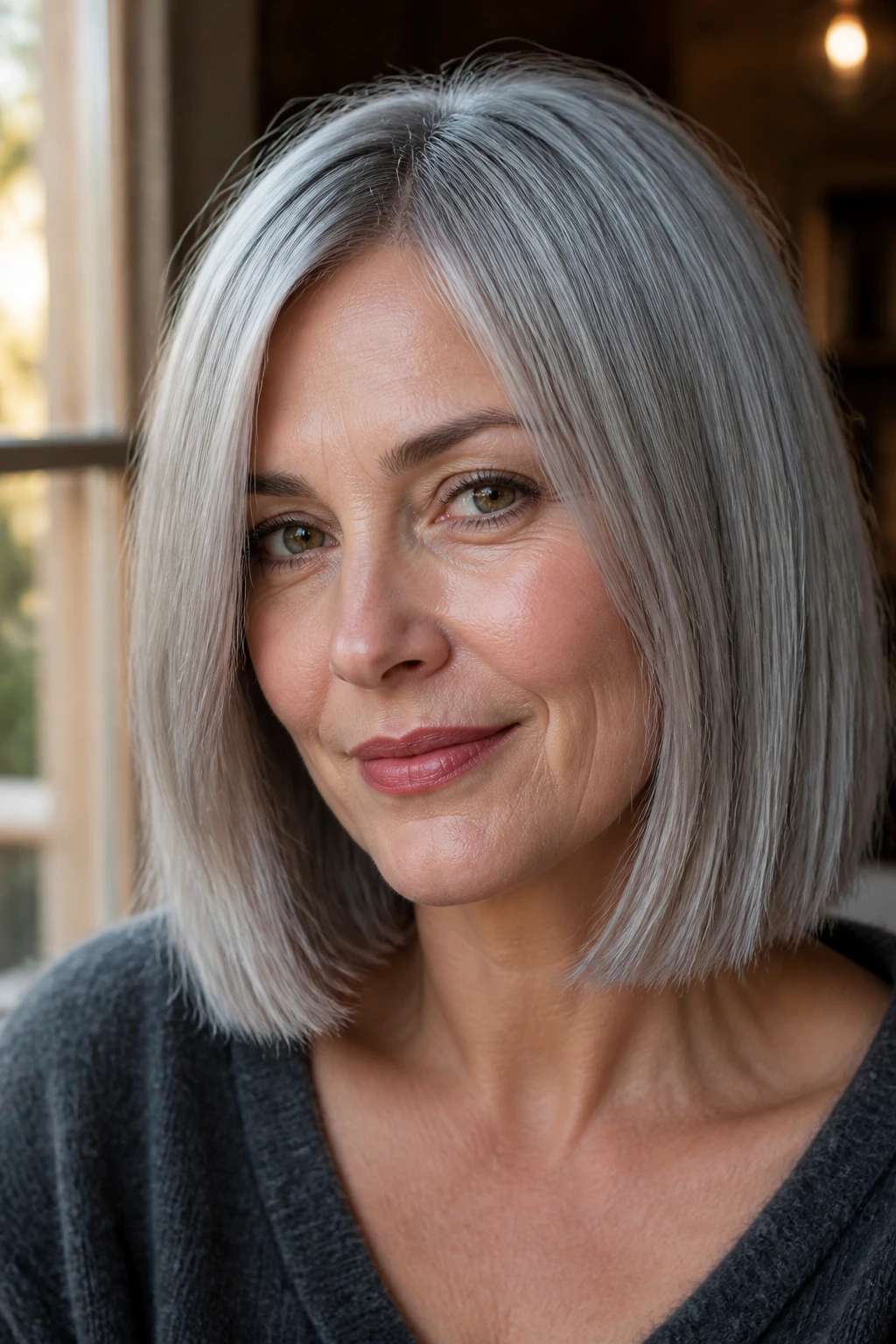
Unlike platinum, dove gray sits in the middle and feels calmer on the face. That makes it a very good pick when you want gray to look soft, not severe.
A blunt cut helps because the line stays tidy. If the hair is cut at the collarbone or just above it, the gray tone reads as smooth and even, which is useful for thick hair that can get puffy at the ends.
I like this shade for women with a little natural wave, too. The wave keeps the blunt edge from feeling stiff, and the cool gray tone makes the texture look deliberate instead of frizzy.
12. Rose Smoke Waves
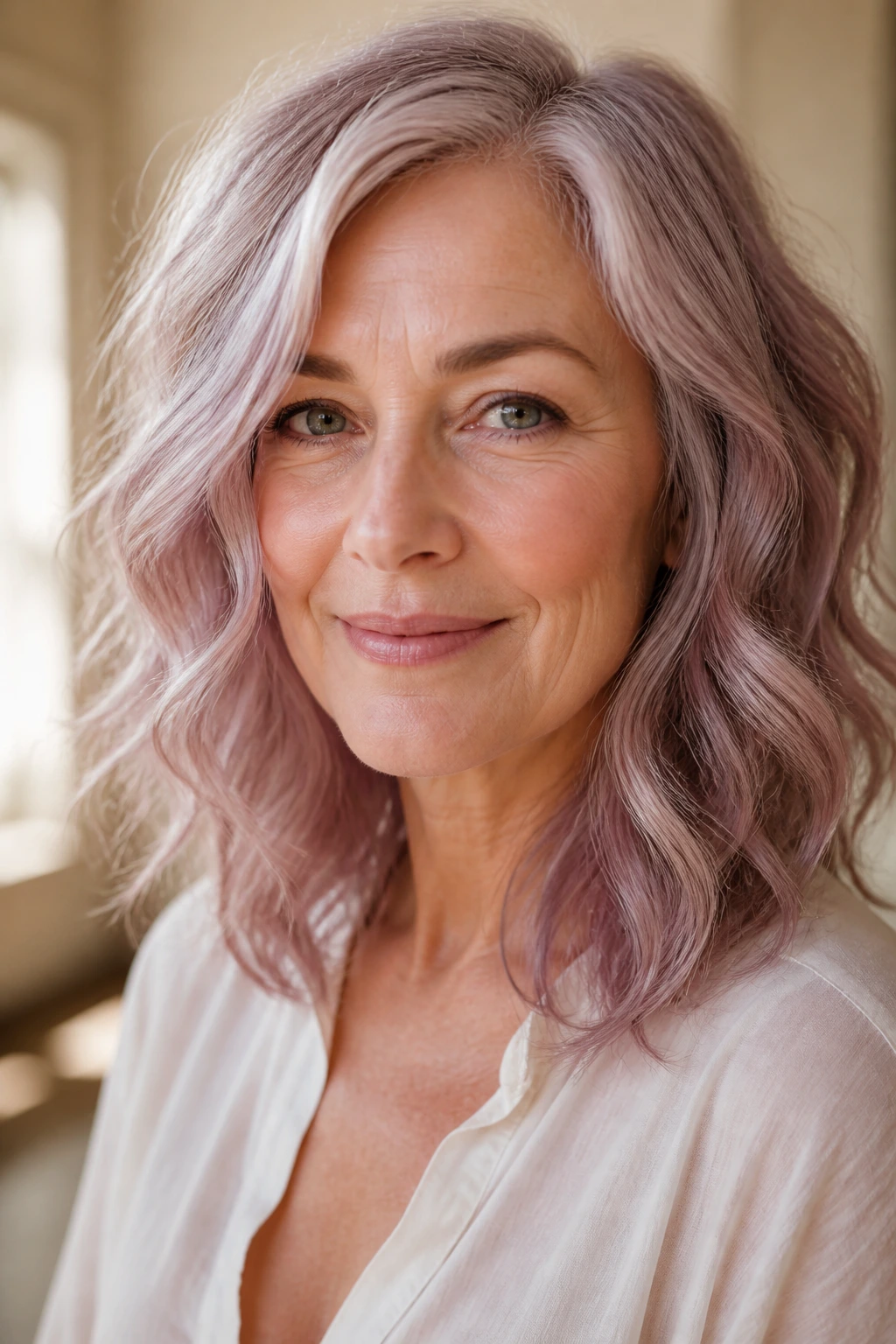
Rose smoke is one of those shades that looks soft from a distance and a little dusky up close. It is not pink-pink. It is a muted blush glaze drifting through gray and silver.
That makes it a nice choice if cool tones always feel too hard on your face. A rose-beige gloss adds warmth without sliding into copper, and the waves help the color shift as the hair moves.
Keep the saturation low. If the pink is too strong, the style stops looking elegant and starts looking costume-like. A demi-permanent formula gives more control than a harsh permanent color.
13. Mink Brown with Silver Ends
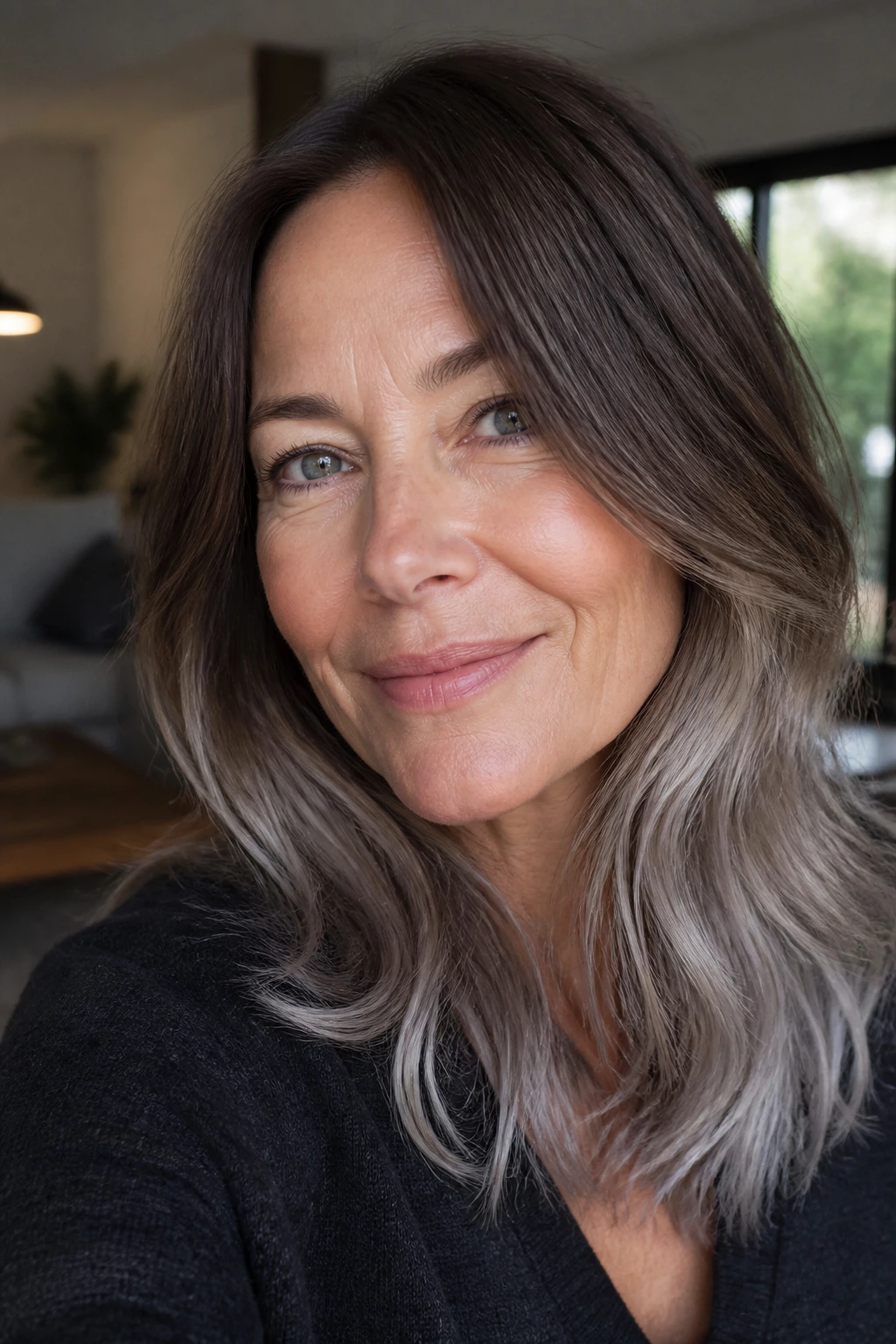
If you are not ready to go fully gray, mink brown with silver ends gives you an easy bridge. The roots stay soft and natural-looking, while the ends fade into a cooler finish that feels lighter as a whole.
How to Keep the Fade Clean
Start the transition below the cheekbone so the grow-out line does not sit right at the face. A root shadow about 2 inches deep usually gives enough darkness to keep the style grounded, while the mids and ends can drift lighter.
Best For Women Who Want
- Less root maintenance
- A softer move from dye to gray
- Some depth around the crown
- A color that still looks rich in low light
The contrast is gentle, not harsh, and that is the appeal.
14. Steel Blue Gray
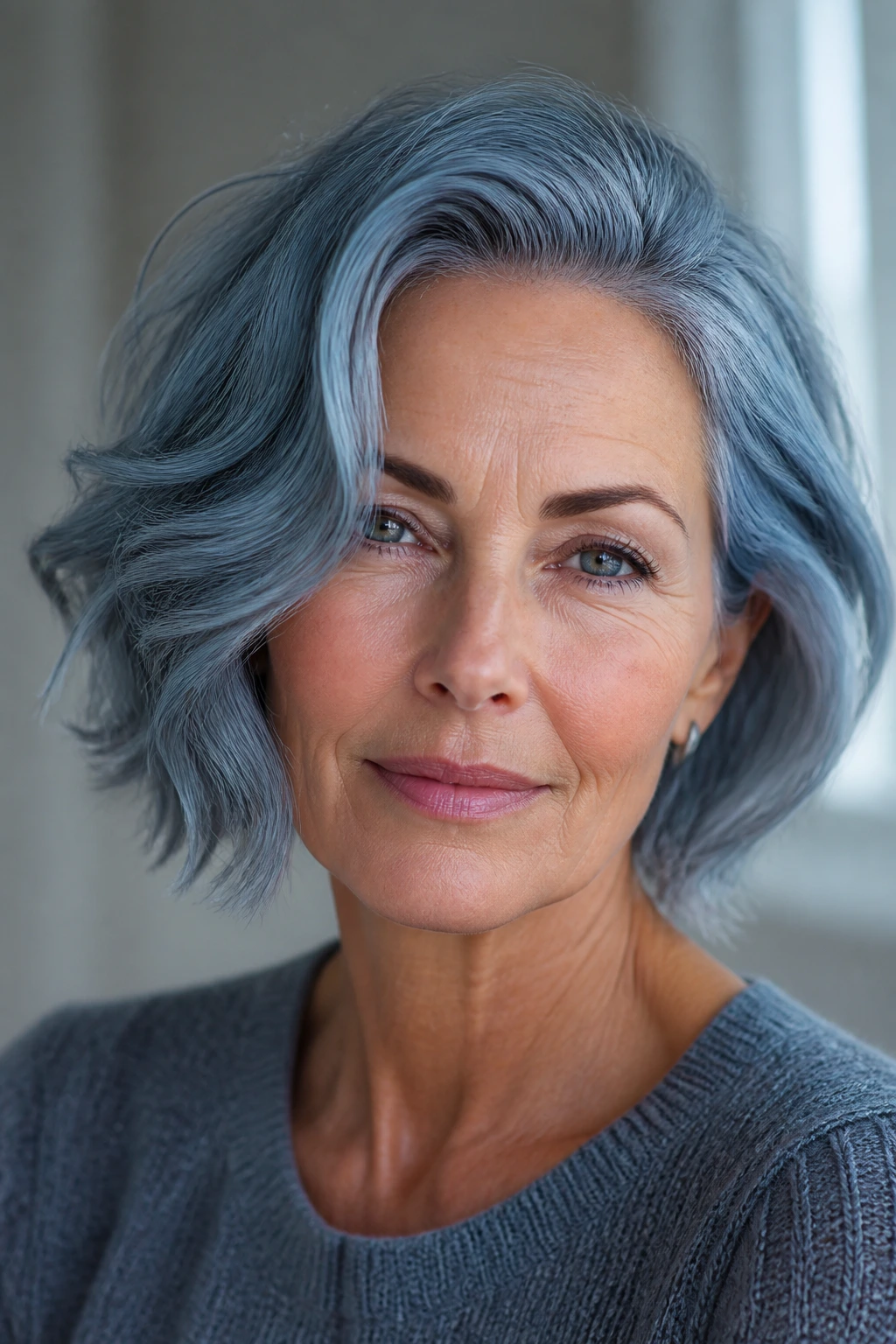
Steel blue gray sounds bold, but the tone can be surprisingly quiet when the saturation stays low. It is the sort of color that looks cool without turning cartoonish.
This shade works best on cool skin or on women who already wear a lot of silver jewelry and crisp neutrals. A blue-violet gloss keeps brass away, but it should be light enough that the hair still reads gray first and blue second.
Be careful with over-toning. Too much blue can make the hair look flat or dusty, and nobody wants that. A short salon gloss every 6 to 8 weeks usually does the job.
15. Dimensional Silver Highlights
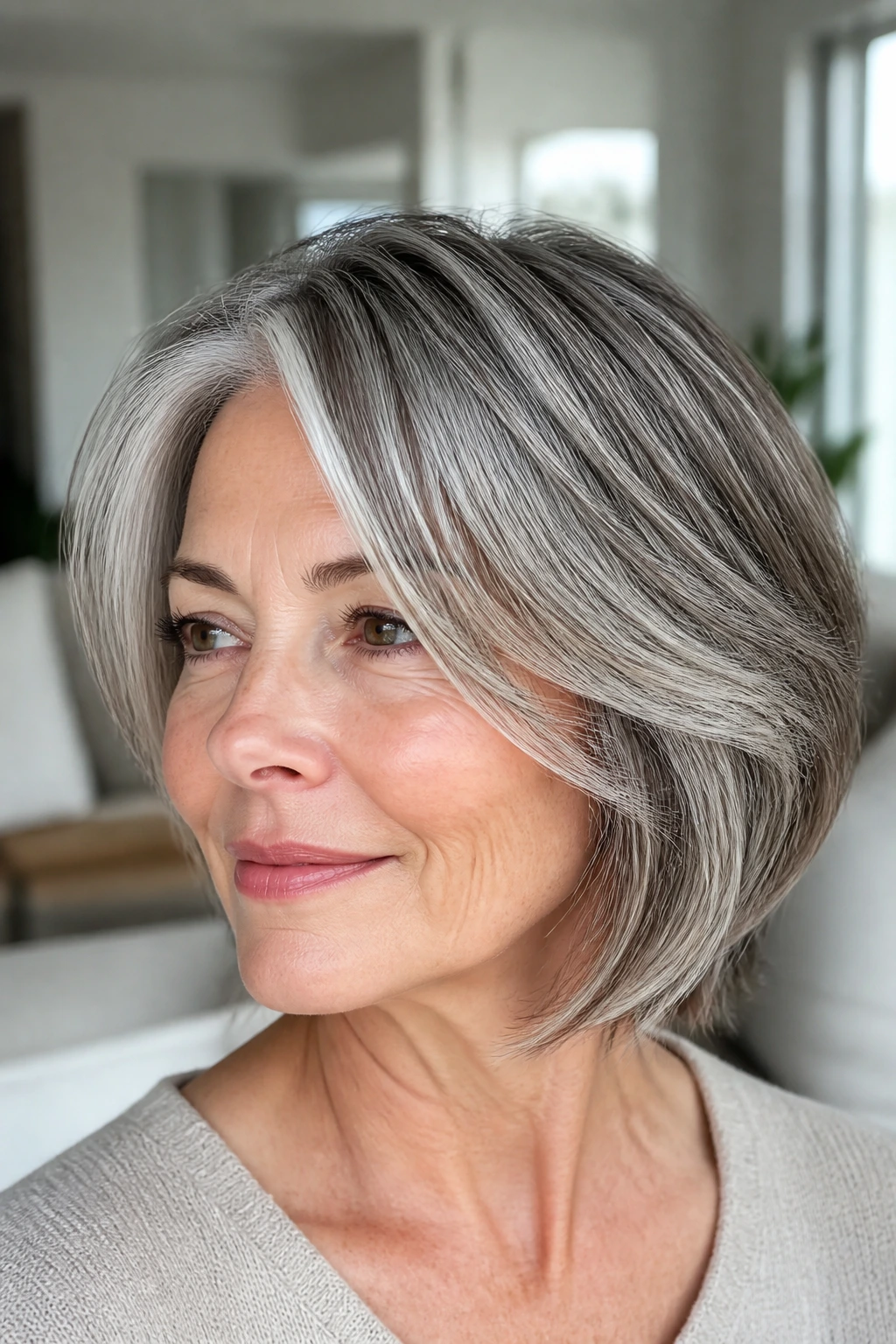
Why do highlights still matter once gray starts coming in? Because fine silver highlights keep the haircut from looking like one solid sheet.
The Right Width Matters
Babylights work better than chunky stripes here. Ask for very thin sections, about 1/8 inch wide, concentrated around the part line, the temples, and the top layer. That placement makes the gray look scattered in a good way, which is a lot more flattering than a hard block of color.
Where They Help Most
- Around the face, where brightness matters
- At the crown, where hair can look thin
- Through longer layers, where motion shows off tone
- Near the ends, where old color often looks dull
This is a smart choice if you want your gray to feel intentional but still mixed with movement.
16. Smoky Mocha with a Gray Veil
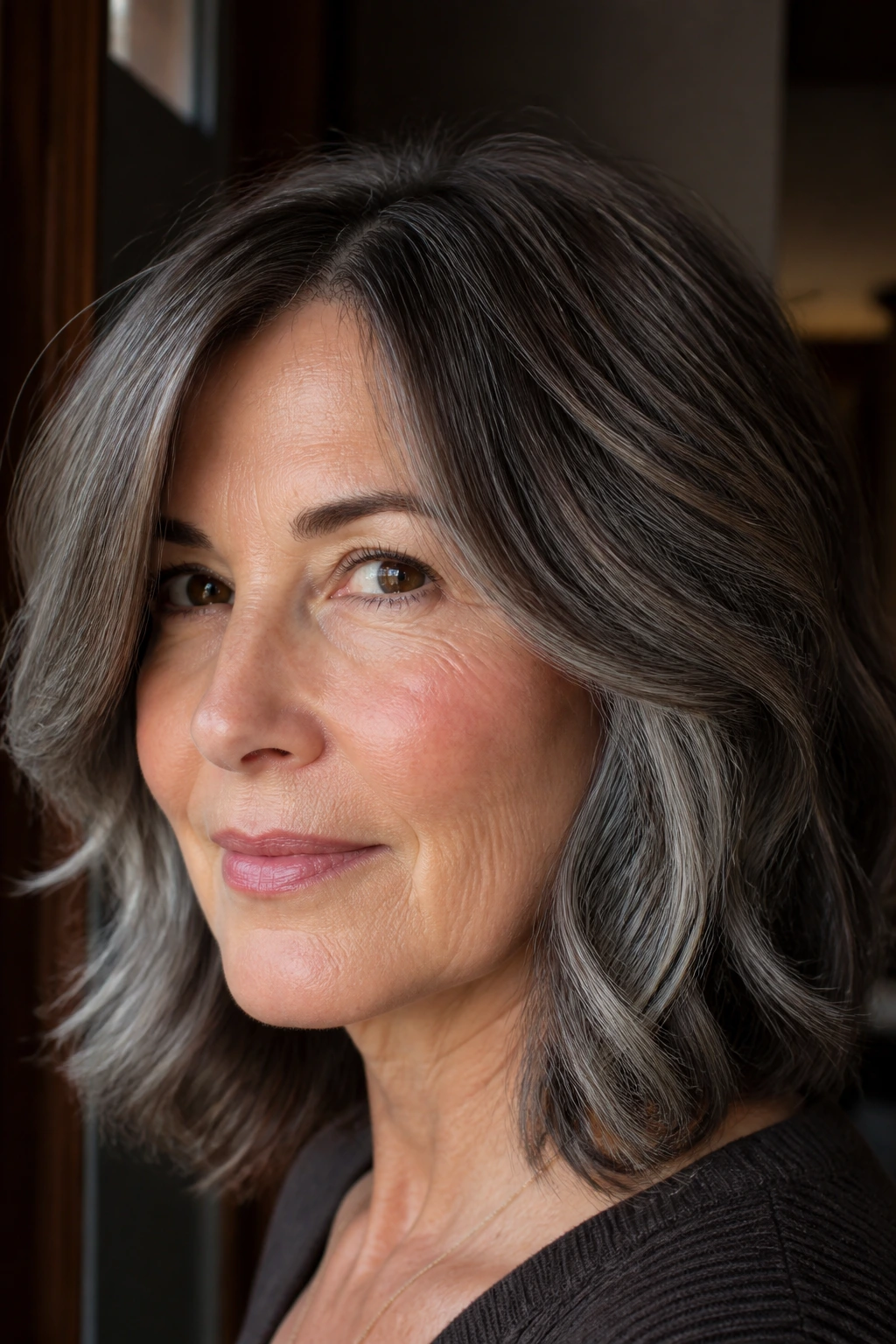
Smoky mocha with a gray veil is one of the easiest ways to keep depth while easing into silver. The brown side gives the hair body, and the gray veil softens the edges so the color does not read heavy.
It is a good option for medium to dark bases that are growing out naturally. Instead of covering the gray, the colorist lays a translucent smoky gloss across the mids and ends, which lets some silver show through while still keeping the overall look warm enough for the face.
The finish should look soft, not painted on. Ask for a demi-permanent mocha glaze and keep the roots one shade darker than the mids. That gives the color some shape when the light hits it.
17. Pewter Shag
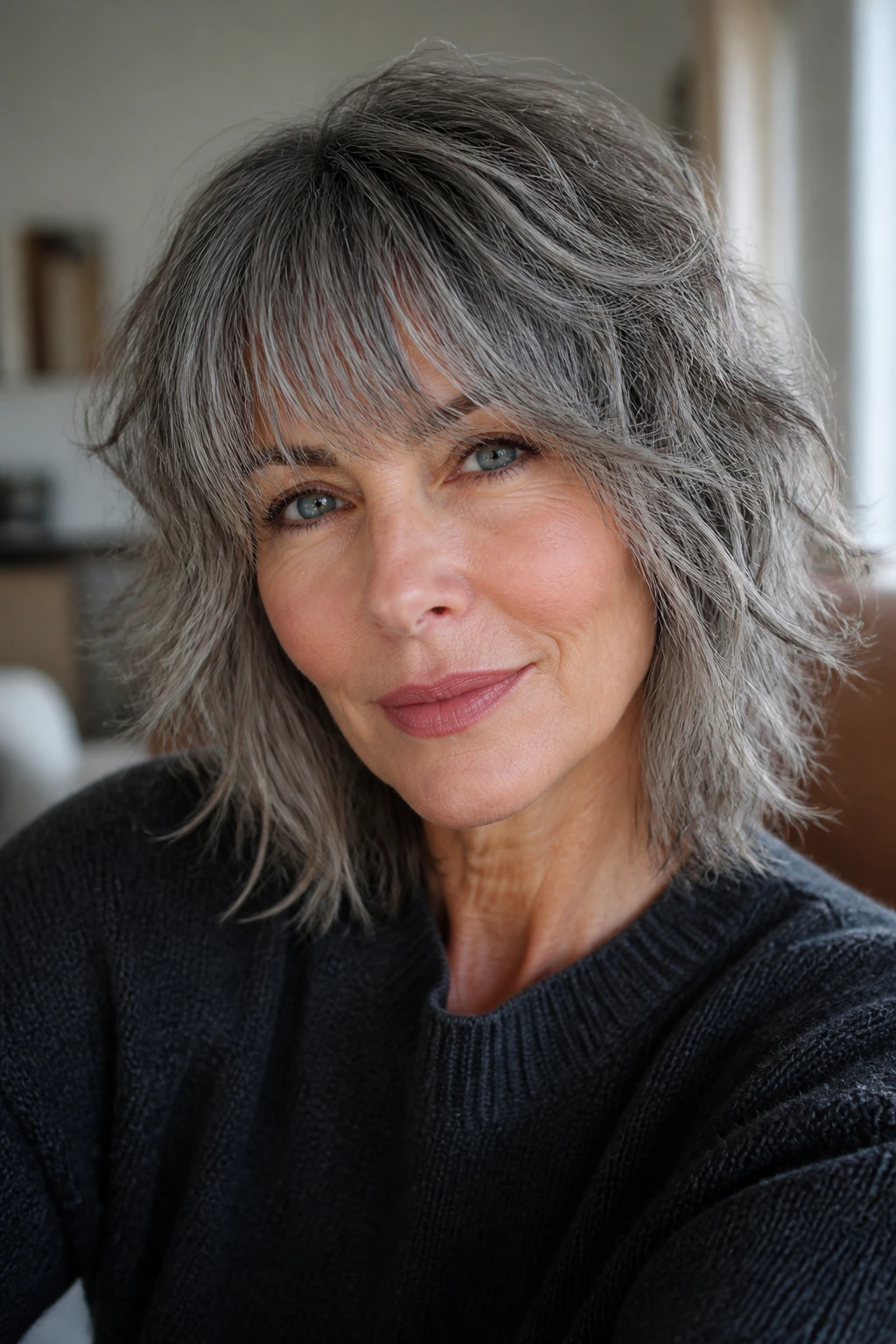
A pewter shag is the cut I reach for when texture matters more than polish. It is messy in a good way, with layers that move and a fringe that breaks up the forehead without looking severe.
- Choppy ends keep the pewter tone from flattening out
- Curtain bangs soften a strong jaw or a broad forehead
- A dry texture spray gives the layers grip
- A trim every 6 weeks keeps the shape from collapsing
This color suits women whose gray hair has become wiry or dry, because the layered cut makes the surface look lighter. Pewter, by the way, is one of those shades that feels richer when the hair has a little movement in it.
18. Vanilla Ash Bob
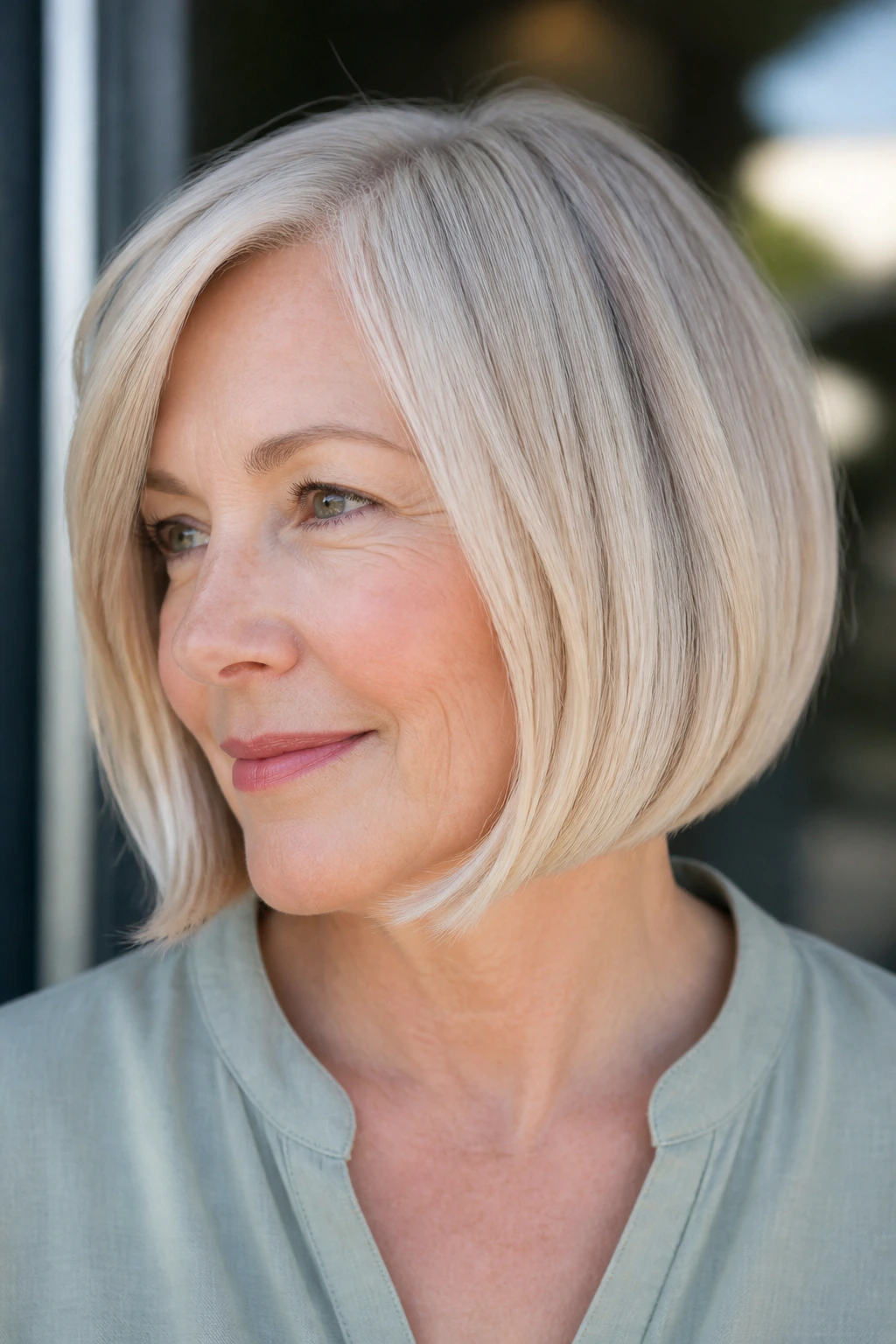
Vanilla ash is creamier than platinum and less icy than white blonde, which is why I think it sits so well on mature skin. The tone gives you lightness, but it does not go stark.
Unlike platinum, vanilla ash stays kinder to warmer undertones. That matters more than people think. If your skin leans peach, golden, or neutral, a creamy ash bob can brighten the face without washing it out.
Keep the bob clean at the edges and slightly beveled at the ends. A blunt line with just a small bend under the chin gives the color shape, and a beige-toned toner helps avoid the yellow cast that can sneak in as the hair fades.
19. Black-and-Silver Contrast
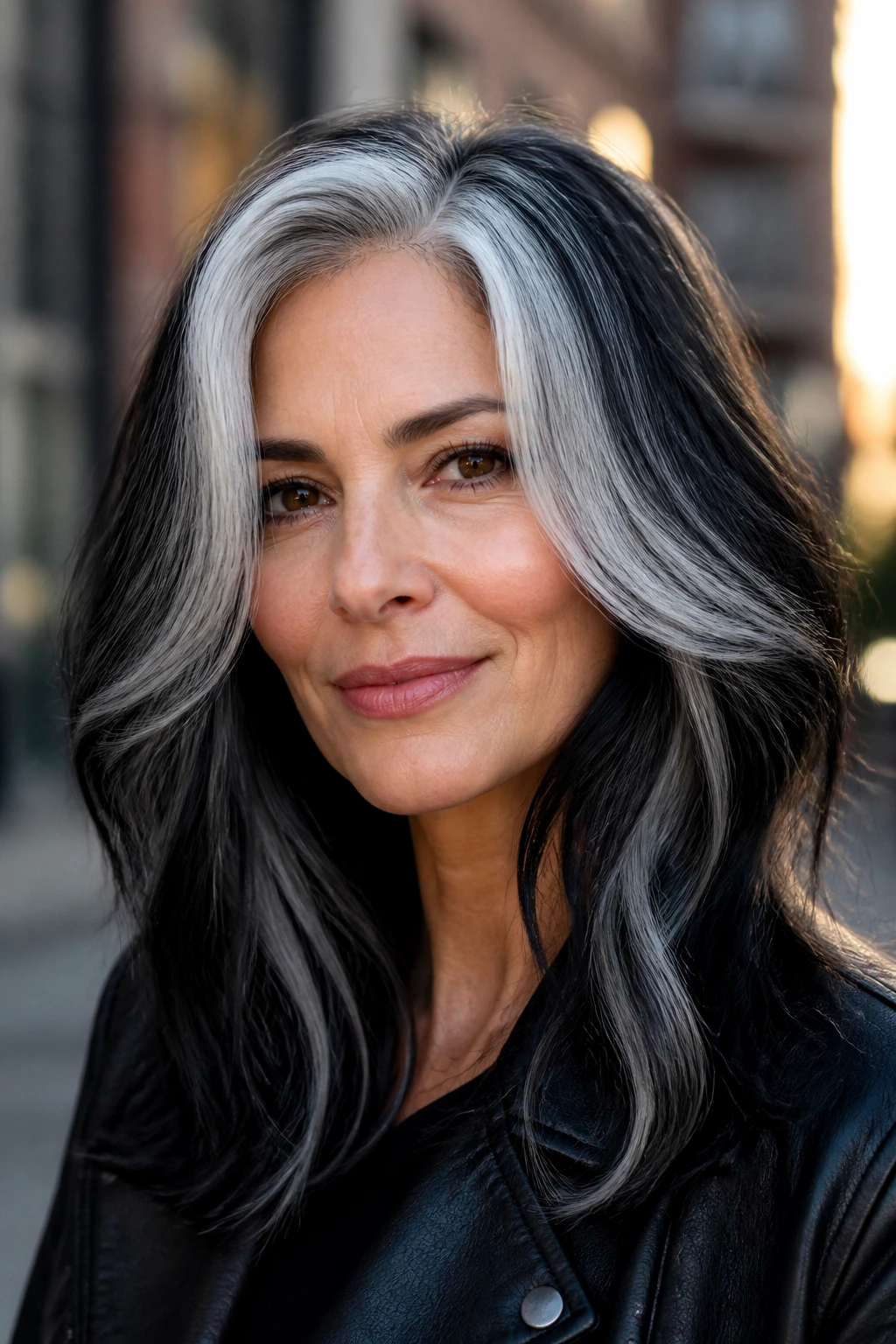
Black-and-silver contrast is not shy. It puts the two tones in the same room and lets them talk to each other.
The look can be dramatic on straight hair, but it also works on curls because the silver catches on the bends and the dark base keeps the whole thing grounded. Ask for silver panels instead of random streaks if you want the placement to look clean.
Maintenance is the trade-off. Dark bases can show grow-out at the part line, and silver pieces can lose their brightness if the toner fades. Still, if you like a sharp, graphic look, this one has real presence.
20. Champagne Beige Gray
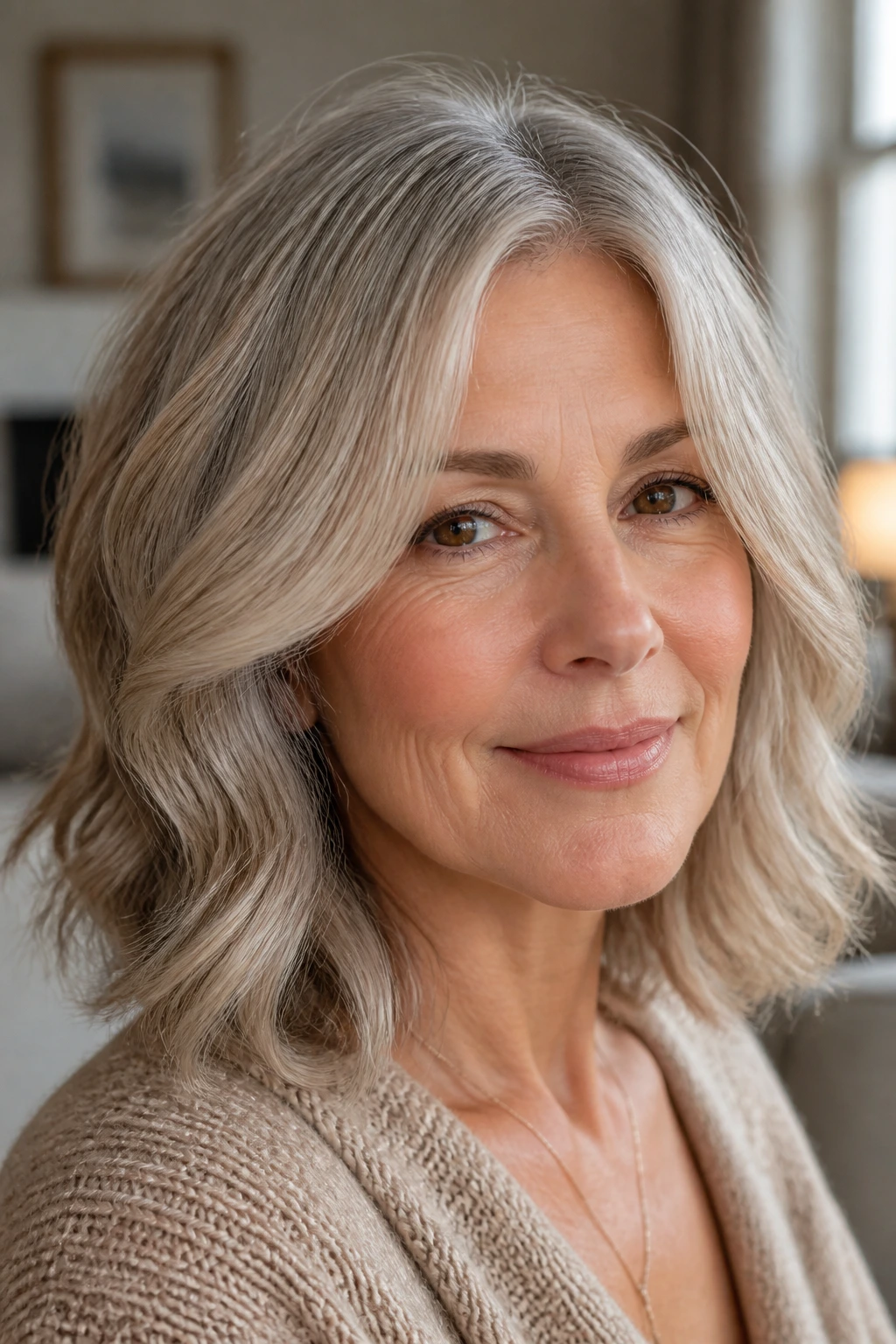
Can gray look warm without turning yellow? Yes, if champagne and beige do the softening.
A champagne beige gray formula keeps the silver side bright while adding enough warmth around it to make the skin look healthier. This is a good answer for neutral and warm undertones, especially when the natural gray has a little brass or the dyed ends still have old warmth in them.
Ask for a soft beige glaze rather than a heavy gold toner. Gold can drift too warm fast. Beige stays steadier, and that steadiness is what gives the color its calm, wearable feel.
21. Silver Fox Curls
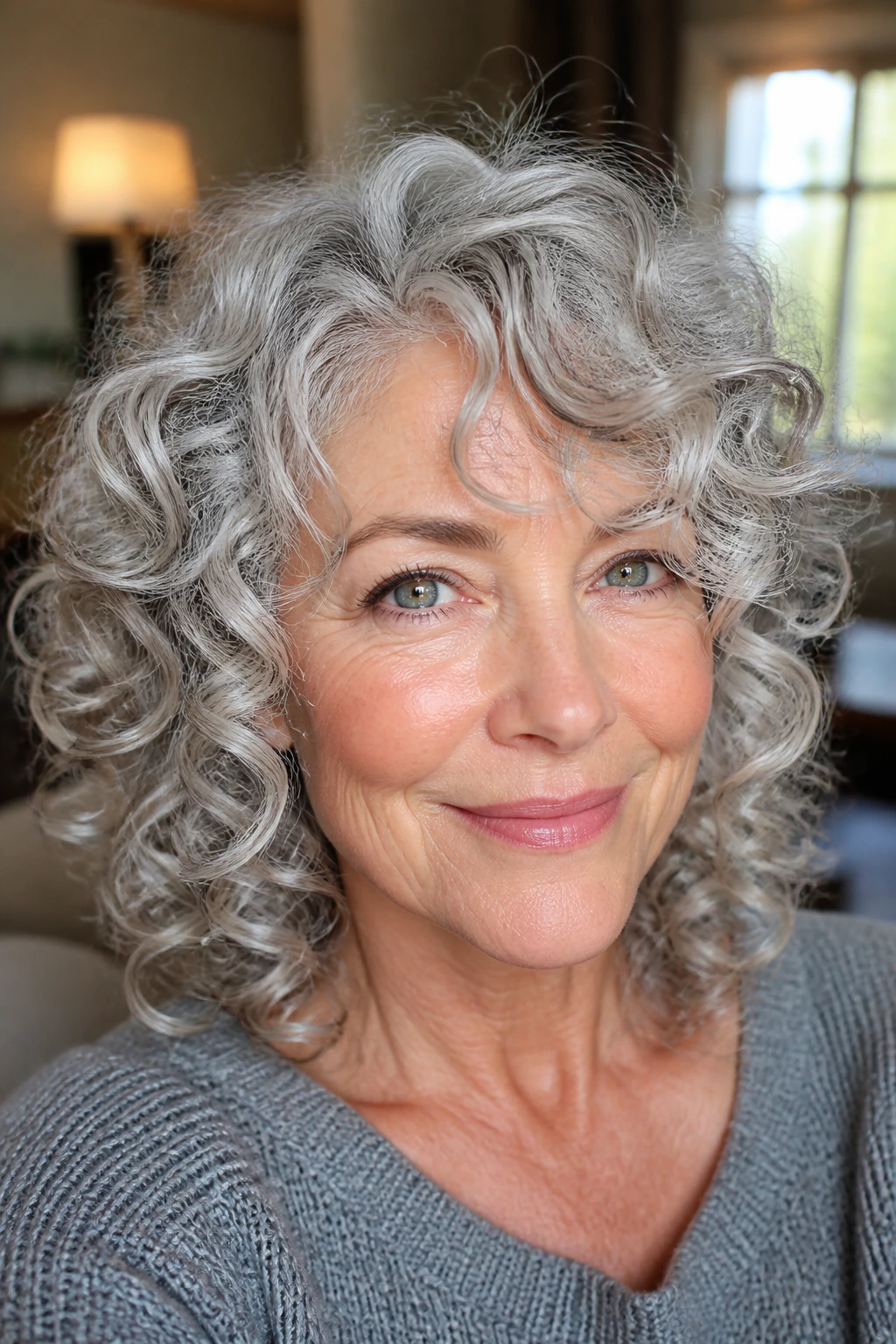
A curl pattern changes everything. Silver fox curls look softer and fuller because the texture breaks up the color in little bends and shadows.
That is the reason this style feels so good on women over 50. If the hair has natural wave or curl, silver can look more plush than flat, and the shape around the face can stay light without losing body. A curl cream and a diffuser are usually enough; the color does not need much extra help.
Keep the layers long enough to preserve bounce. Too much thinning can make curly silver hair frizz out, and then the tone loses its clean look.
22. Dim Root Melt
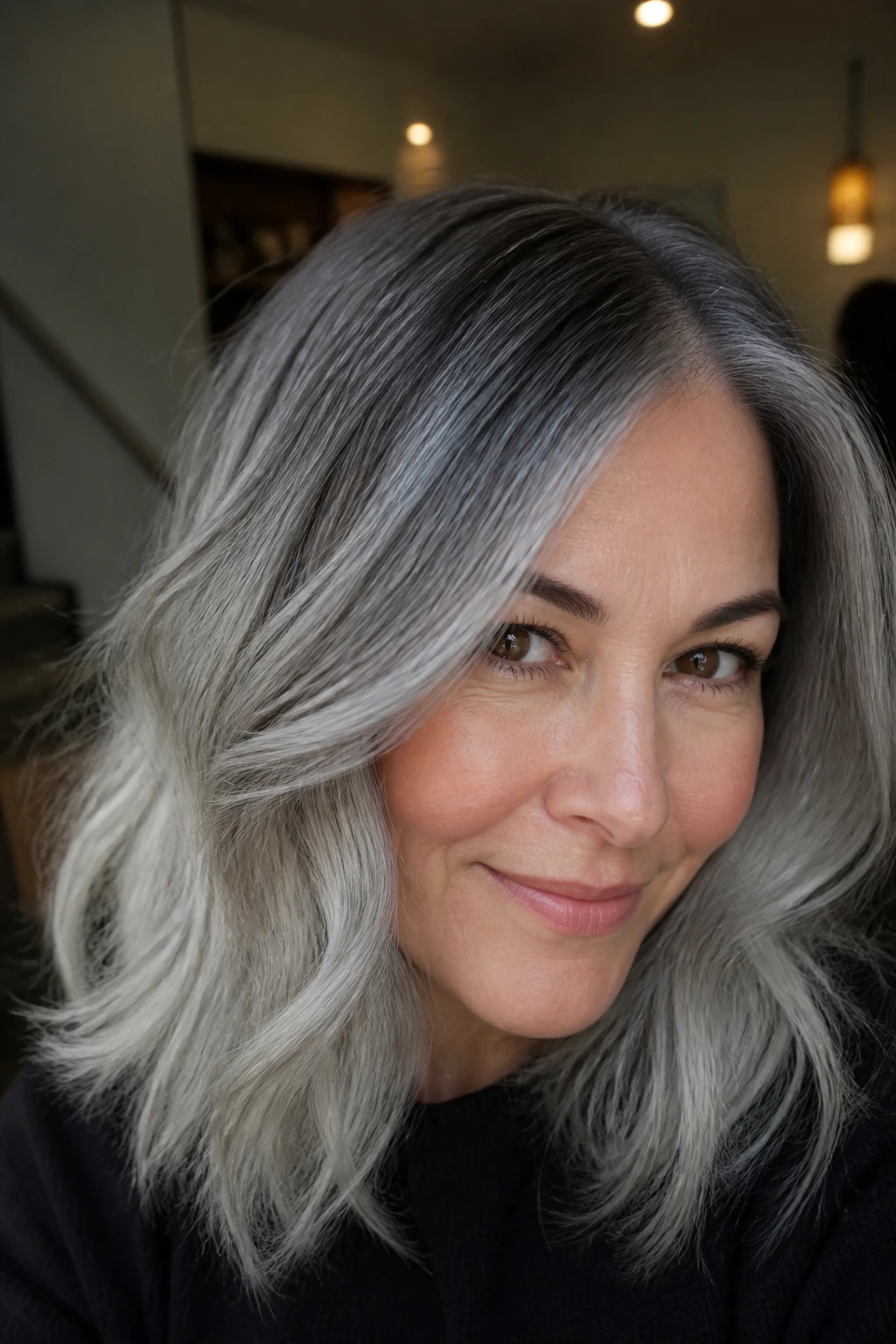
A dim root melt is the cleanest escape from a harsh regrowth line. The darker color at the roots fades gradually into smoke and silver through the mids and ends, so the eye never hits one hard stop.
Where the Fade Should Start
A good melt usually begins about 1 to 2 inches from the scalp, then gets lighter as it moves down the shaft. That distance matters. If the fade starts too high, the roots can look muddy; too low, and the grow-out line comes back fast.
Why It Helps Mature Hair
- It cuts down on frequent touch-ups
- It makes natural gray look softer during grow-out
- It adds depth at the crown
- It keeps the ends from looking thin
This is one of my favorite low-maintenance ideas because it buys you time without making the hair look neglected.
23. Frosted Copper and Gray
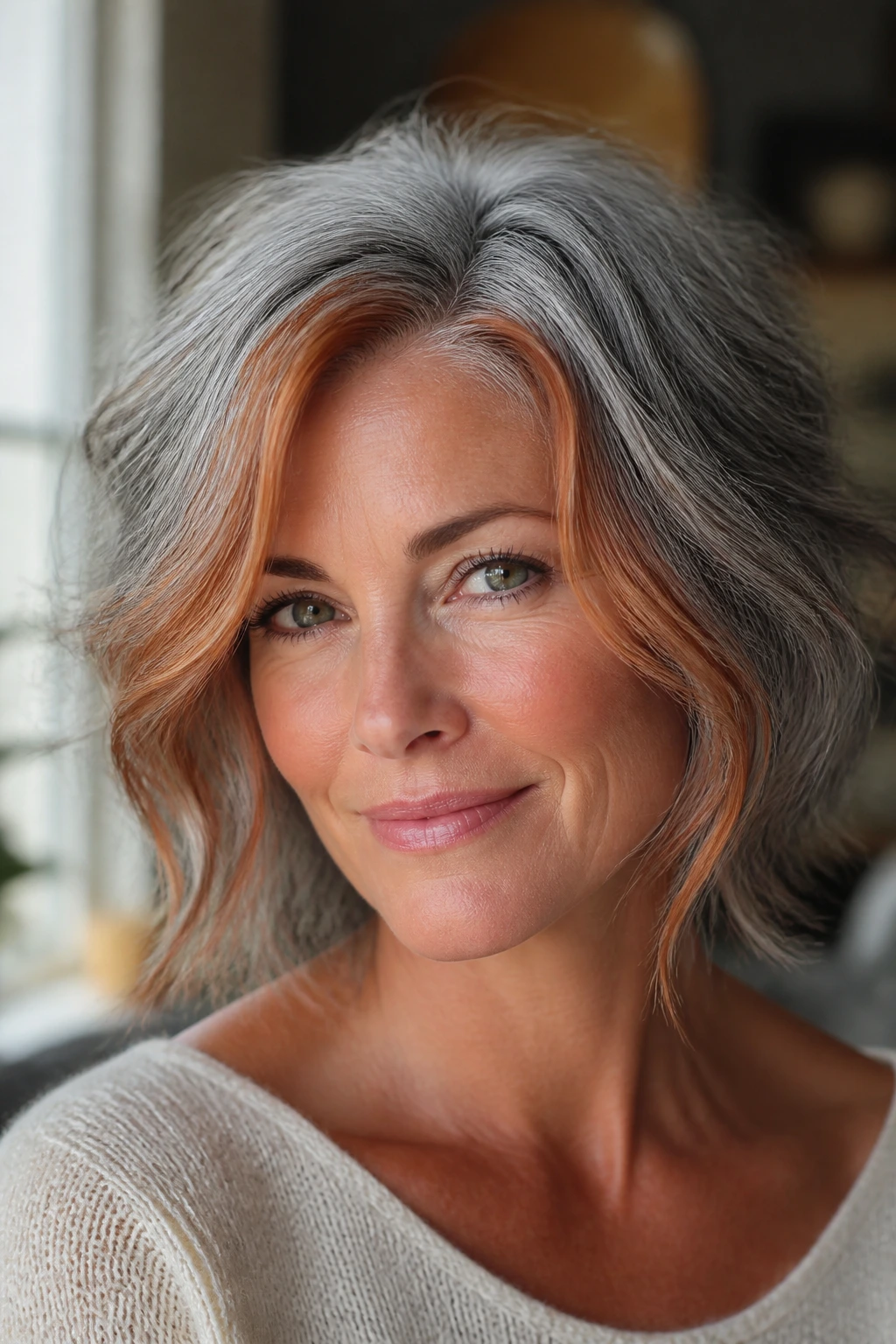
Frosted copper and gray sounds odd until you see it on warm skin. Then it makes sense fast.
The copper sits around the face and through selected layers, while the gray stays in the rest of the hair. That little bit of warmth can stop silver from looking icy, and it gives the skin a healthier cast than flat ash sometimes does. The trick is to keep the copper frosted, not fiery.
This is a strong choice if you still like some color and do not want to lean fully into cool tones. Copper fades faster than gray, though, so expect a refresh every 6 to 8 weeks if you want the balance to hold.
24. Cloud White Layers
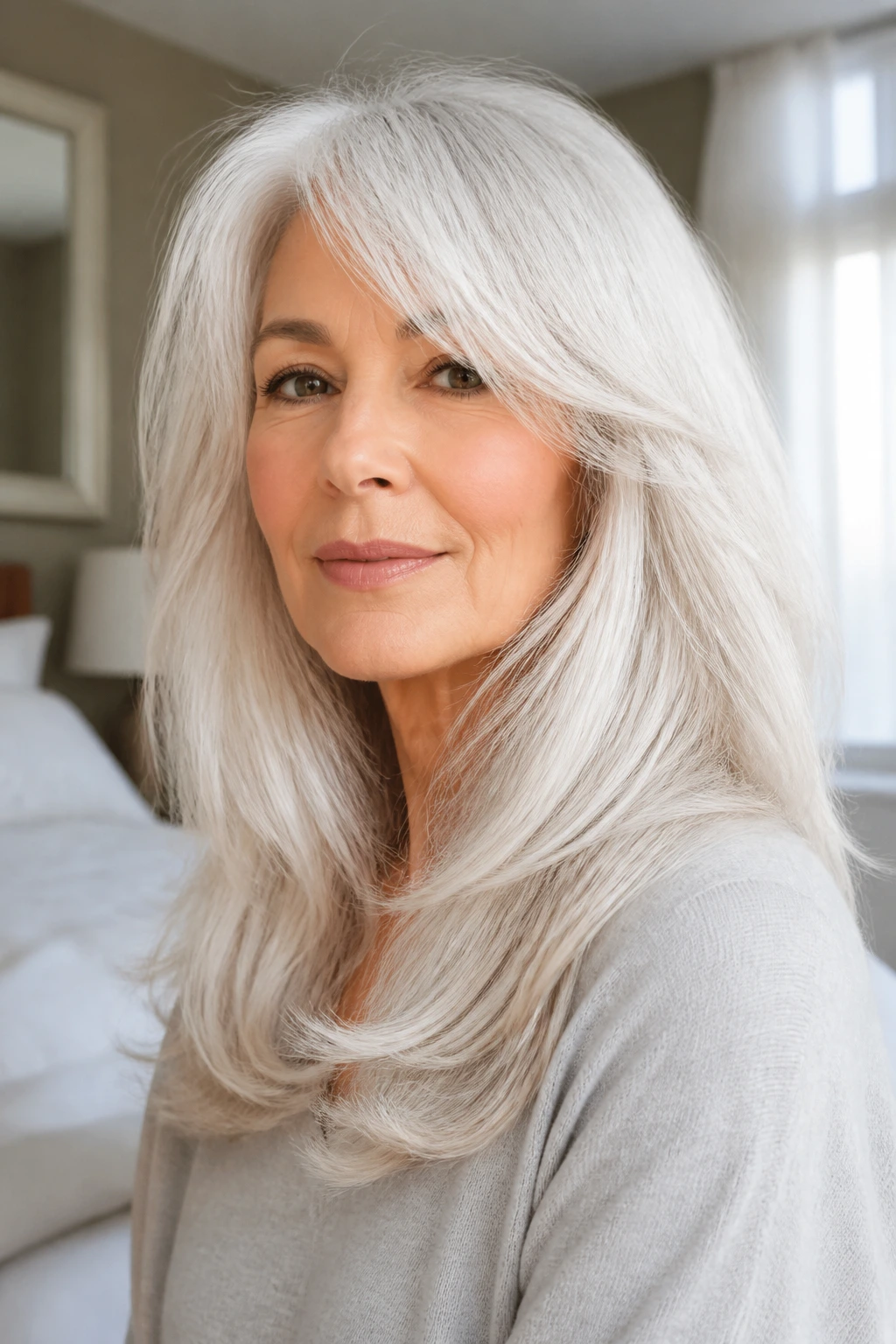
Cloud white layers are airy rather than heavy. The color feels soft, and the layers keep the white from sitting in one blunt block.
The cut matters more here than people expect. Long feathered layers, especially through thick hair, prevent the white from looking puffy or helmet-like. A slight bend at the ends helps the hair move, which keeps the tone from feeling flat under indoor light.
Purple shampoo can help, but do not overdo it. Once a week is enough for most hair. Too much violet pigment can turn cloud white into a dull lilac haze, and that is a fast way to ruin the clean finish.
25. Slate Gray Peekaboo Pieces
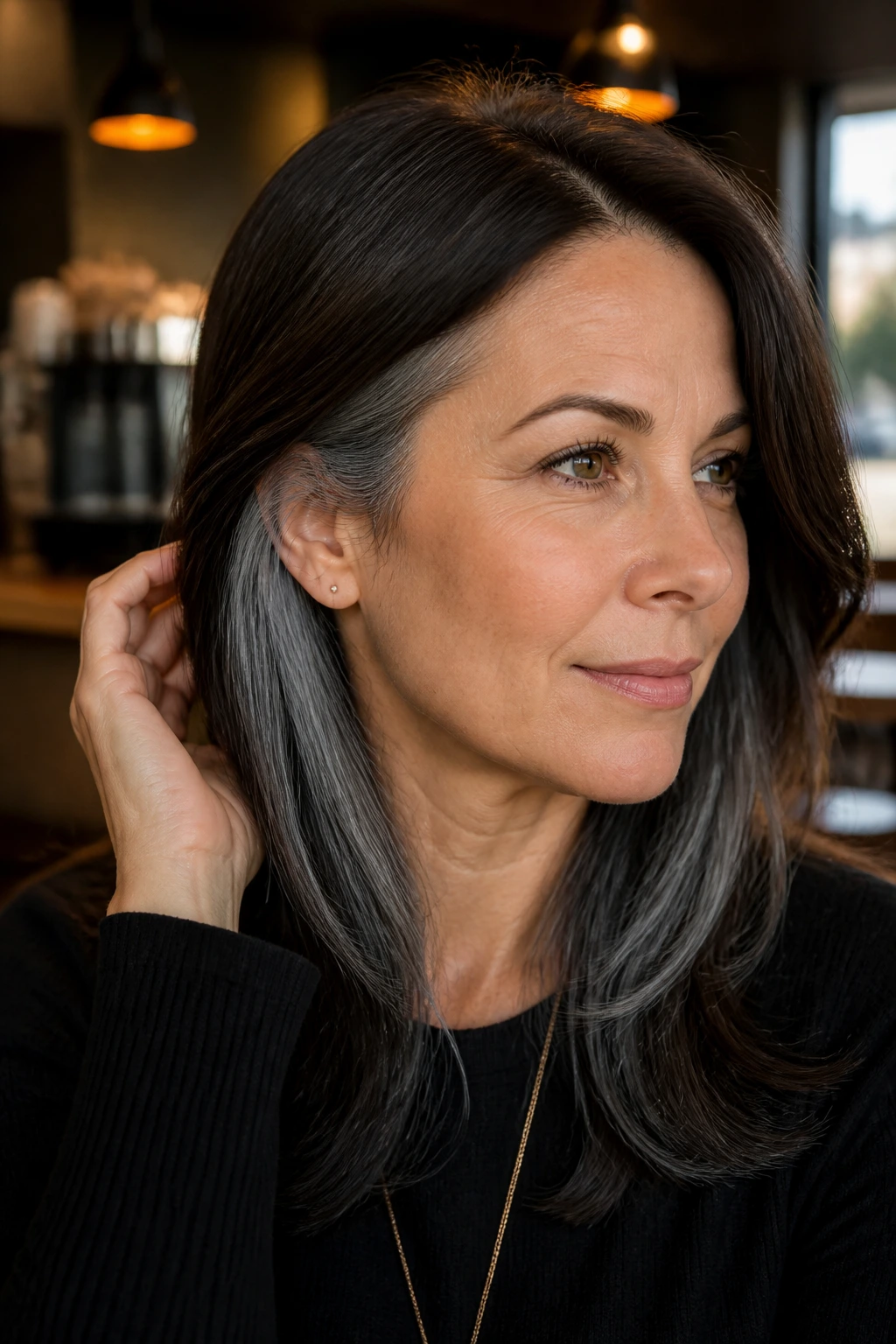
Peekaboo pieces are for the woman who wants a little drama without changing the whole head. Slate gray panels hide under the top layer and show up when the hair moves or gets pinned back.
- The color stays subtle when the hair is down
- It becomes more obvious in a ponytail or bun
- The top layer keeps most of the natural shade intact
- You can refresh the hidden pieces without touching the whole head
This is a fun option if you live in a neat haircut during the week but like a little edge when you loosen it. The slate tone should stay cool and smoky, not blue-heavy.
26. Ashy Brunette with a Gray Crown
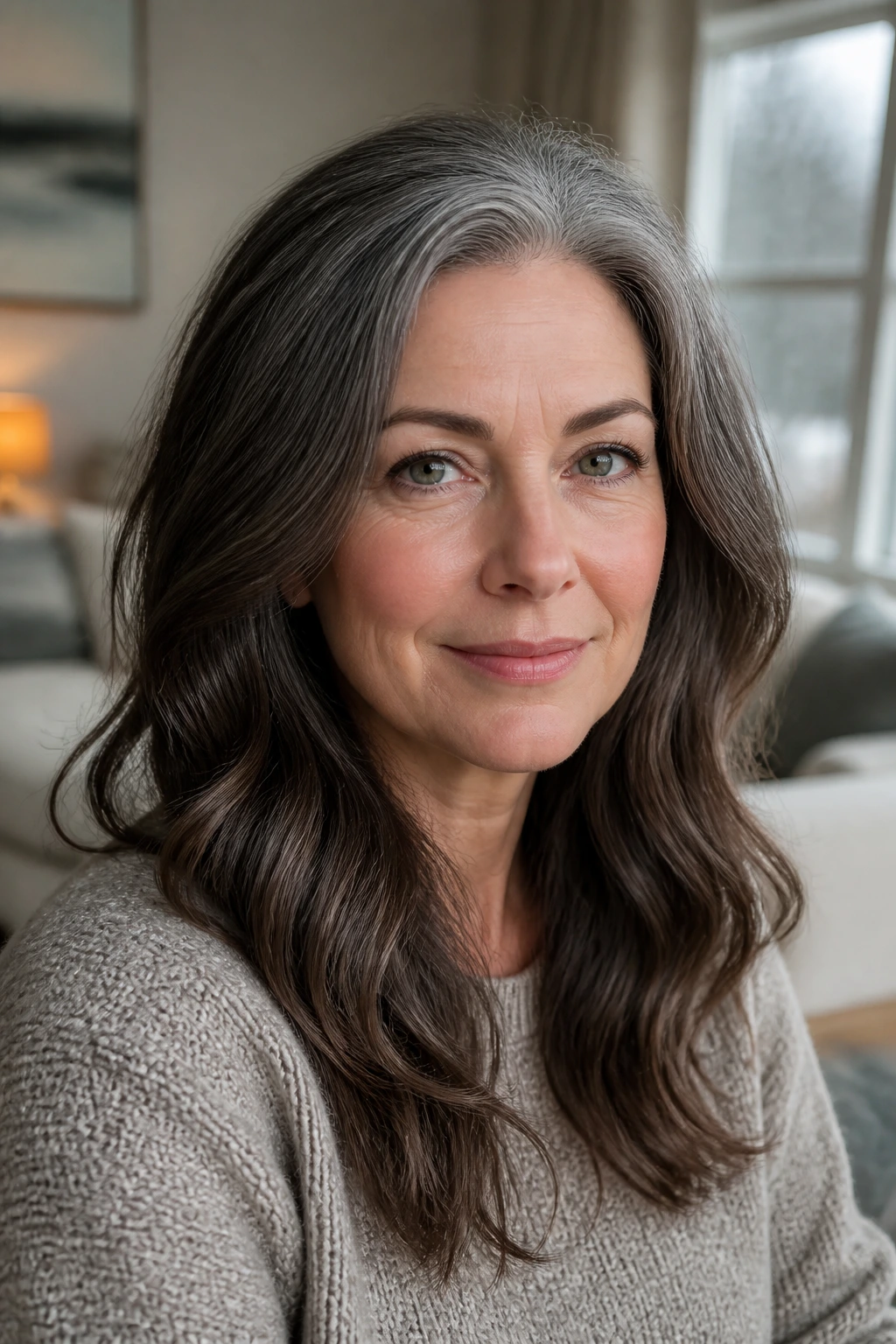
What if the goal is to stop coloring the whole head? Ashy brunette with a gray crown is the answer I would point to first.
The crown gets to show its natural silver, while the rest of the hair stays a deep ash brown that gives the style structure. That contrast is useful when the top is very white but the lengths are still holding old color or warmth. The trick is to keep the brunette cool enough that it does not fight the gray above it.
A soft gloss around the face can tie the pieces together. Think of it as a bridge, not a mask.
27. Platinum Silver Lob
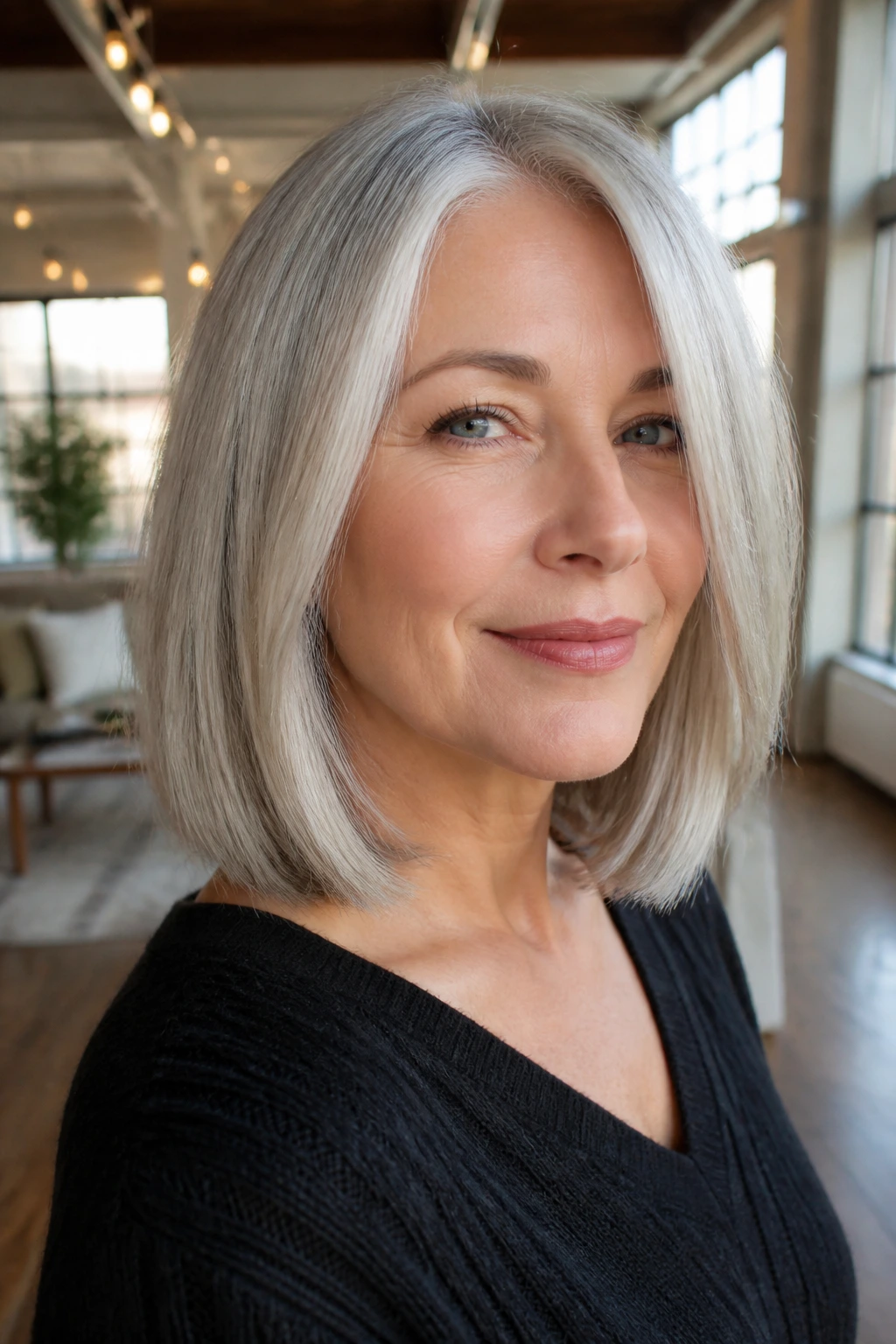
A platinum silver lob can look sharper than a shorter cut if the line is clean. The length hits around the collarbone, which keeps the color from feeling severe.
This style needs shine. A one-length or slightly beveled lob holds the platinum-silver tone in a way that lets the hair swing a little when you move. Straight hair and soft waves both work, though very curly textures may need more shaping to keep the color from reading bulky.
Maintenance is not light. Plan on toner touch-ups every 4 to 6 weeks and use a serum that smooths the ends without making them greasy. Platinum shows everything.
28. Soft Smoky Ombré
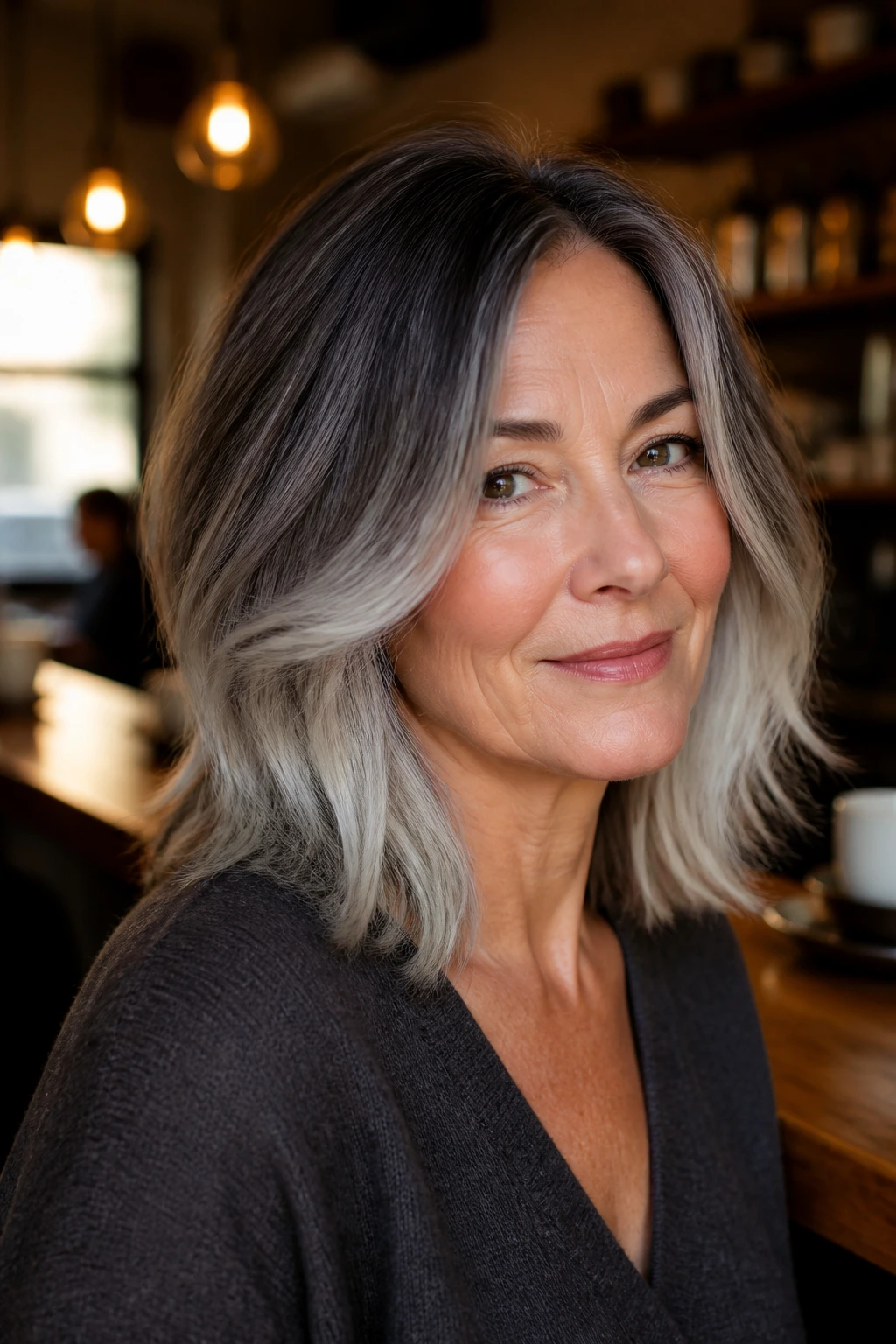
A soft smoky ombré is the gentlest bridge between dyed brunette and natural gray. The root stays deeper, the mids turn smoky, and the ends drift into silver.
That gradient is useful when you are growing out old color but do not want a hard line across the head. The shift should feel gradual enough that the eye follows it without stopping. If the ombré is too obvious, the gray can look pasted on, and the whole point gets lost.
I like this choice for women who want the grow-out to feel calmer, not faster. It gives you room to let the gray win in stages, which is often easier on both the hair and the mood.
Final Thoughts
The strongest gray colors for mature hair usually do one of three things well: they sharpen the cut, soften the grow-out, or warm the face just enough to keep the skin from looking washed out. That is the real test, not whether the shade sounds fancy in a salon chair.
A blunt bob, a dimensional shag, and a good gloss can change the whole mood more than a dramatic color formula. And if your hair is dry, coarse, or fine in a tricky way, the finish matters as much as the tone.
Bring a photo that shows both the color and the cut, then ask how often it will need toner, gloss, or trim work. That answer tells you a lot.
