



Silver purple hair color ideas for cool skin tones work best when the purple has a blue cast and the silver stays clean, not yellow. That sounds obvious until you sit in a color chair and realize how fast a lavender formula can turn pink, flat, or muddy on the wrong base.
Cool skin usually reads pink, rosy, blue, or neutral-cool. That’s why icy lilac, smoky violet, pearl gray, and muted amethyst tend to sit on the skin instead of fighting it. The trick is choosing the right depth for your haircut, your starting level, and how much maintenance you’re willing to live with.
A pale silver-violet bob, a hidden purple panel, or a soft graphite melt can all look completely different on the same person. One shade gives you sharp edges. Another softens a face that already has a lot of contrast. And a few of them do that lovely thing where they look quiet indoors, then turn electric in daylight.
1. Icy Lavender Silver Bob
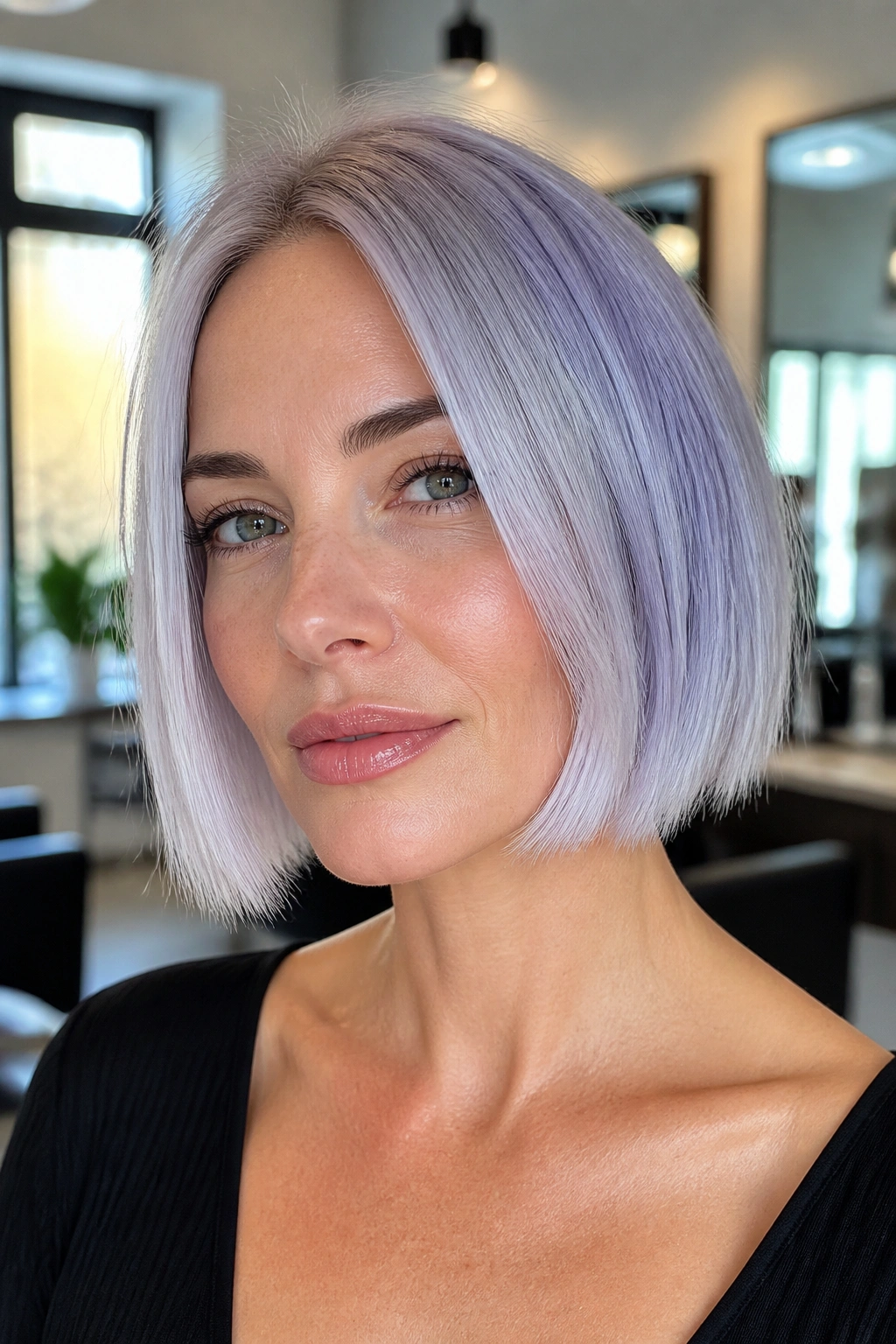
A bob like this does a lot of work with very little length. The clean line at the jaw or just below it gives the silver-purple tone a crisp frame, which is exactly why it flatters cool skin so well.
Ask for a pale level 9 or 10 blonde base, then a violet-silver glaze that stays translucent rather than opaque. If the formula gets too purple, the look can tip playful in a way that is harder to wear. Keep the ends a touch brighter than the roots, and the whole cut reads fresher.
What to ask for
- A chin-length or slightly longer bob with blunt or softly beveled ends
- A silver toner with a blue-violet base, not a red-violet one
- A soft root shadow if your natural color is darker than level 7
Pro tip: This cut looks sharp when the surface is smooth. A flat brush blow-dry or a quick pass with a 1-inch iron keeps the silver tones from getting messy.
2. Smoky Amethyst Melt
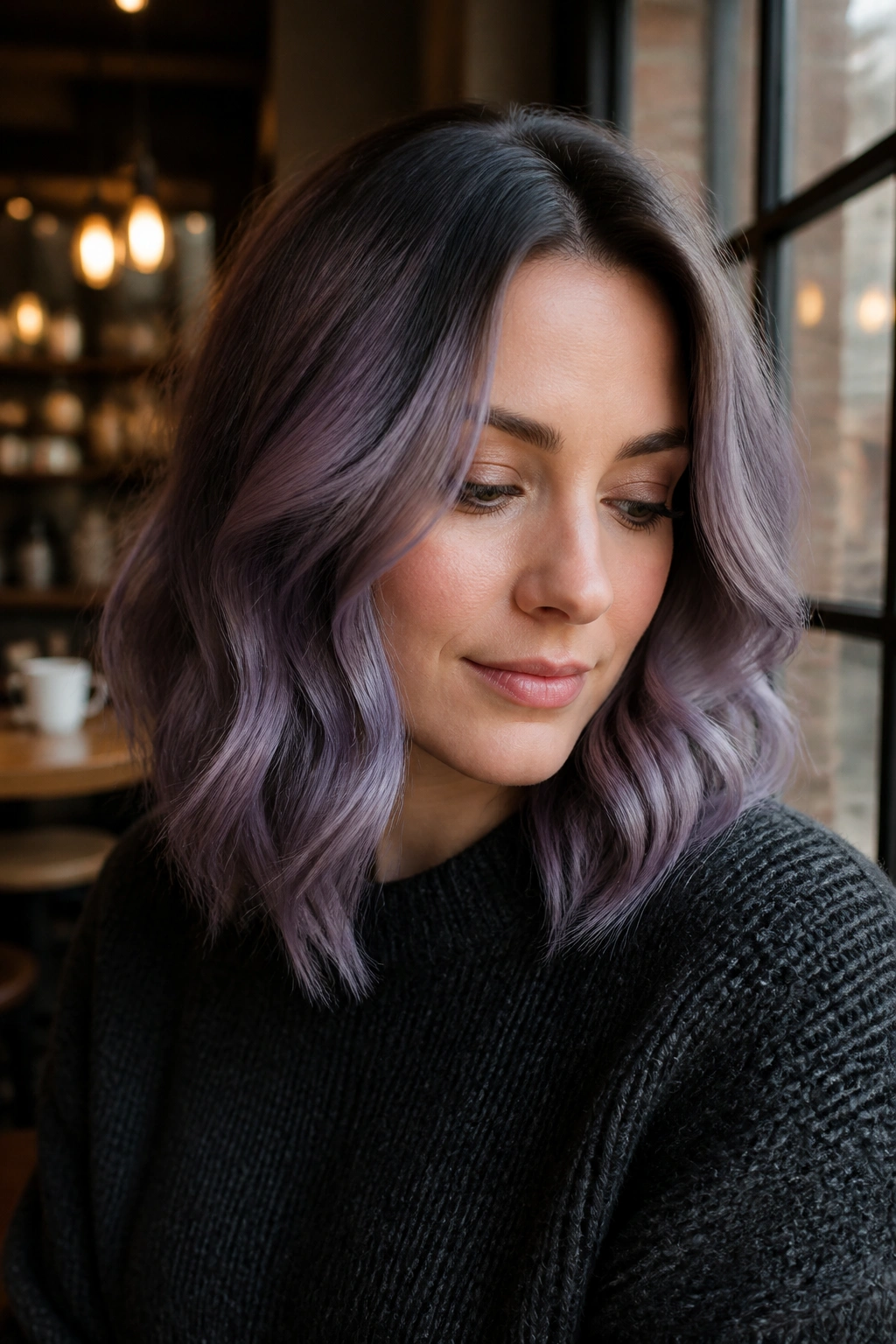
Smoky amethyst is the easiest way to keep silver from feeling sterile. The color starts with a cool root shadow, then slides into a muted purple that has enough gray in it to stay grown-up instead of candy-bright.
This is one of my favorite looks for medium-cool and deep-cool skin because it brings color close to the face without making the skin look red. The smoke in the formula does the heavy lifting. You get dimension, and you get a little drama, but the finish still feels calm.
If your hair is already light, the process can be mostly about toner and gloss. If it’s darker, your colorist will need to lift it first. No way around that.
Best on: layered lobs, long waves, and shoulder-length cuts that move.
3. Platinum Lilac Balayage
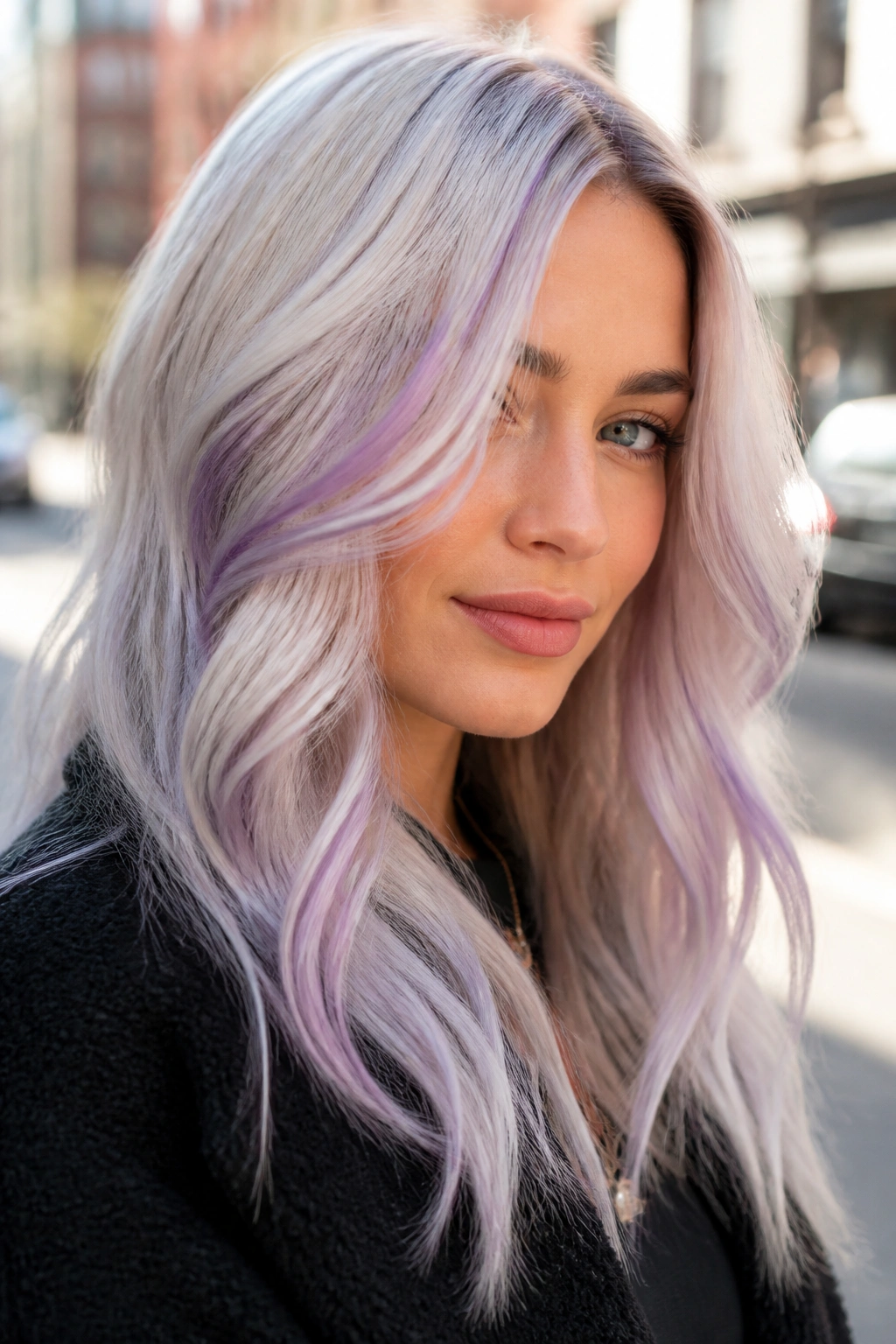
Does lilac read too sweet on your skin? Not if you anchor it with a platinum base.
Balayage gives you that airy, hand-painted look where the silver sits like a veil instead of a helmet. The platinum keeps the lilac crisp, and the cool skin-tone match is easy to see because the whole color story stays pale and icy. It’s a smart choice if you want brightness around the face without a block of solid color.
Best base level
- Start around level 9 or 10 if you want a soft lilac result
- Ask for cool toner maintenance every 4 to 6 weeks
- Leave a few pieces brighter at the crown so the hair doesn’t collapse into one flat shade
The part people miss: balayage needs movement. Wavy styling shows the painted ribbons better than pin-straight hair ever will.
4. Silver Orchid Money Piece
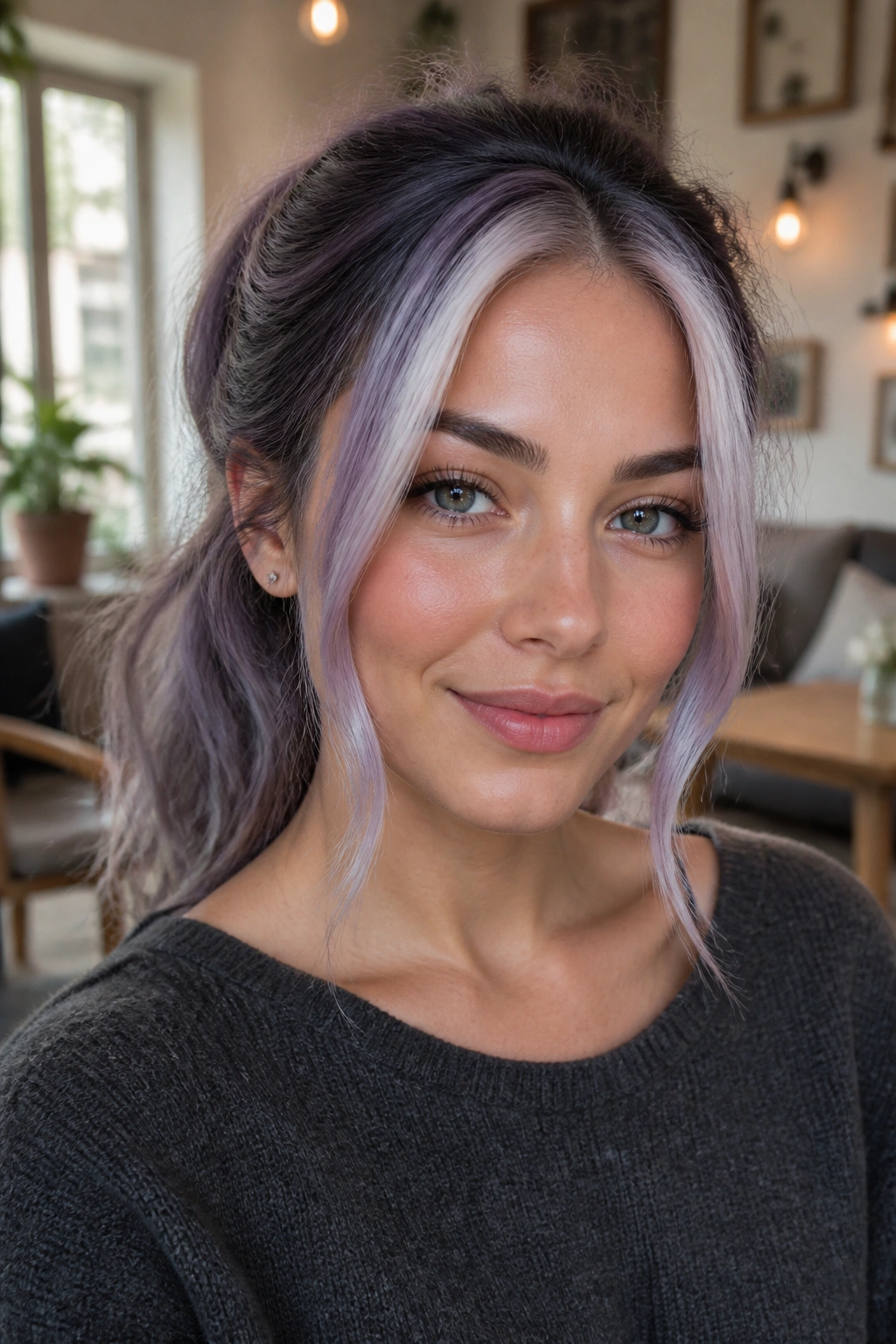
A money piece can save an entire color service. Two bright front sections in silver orchid turn an otherwise quiet cut into something people notice immediately, and cool skin tends to love that light-catching frame around the eyes.
This works especially well if you wear your hair in ponytails, clips, or low buns. The front pieces stay visible even when the rest of the hair is tied back, which makes the color feel useful instead of precious. I also like it for anyone testing purple for the first time. You get impact without committing every strand.
Keep the money piece slightly lighter than the rest of the head. If the front is too dark, the face loses that lifted look.
Best on: long layers, curtain bangs, and center parts.
5. Frosted Grape Glaze
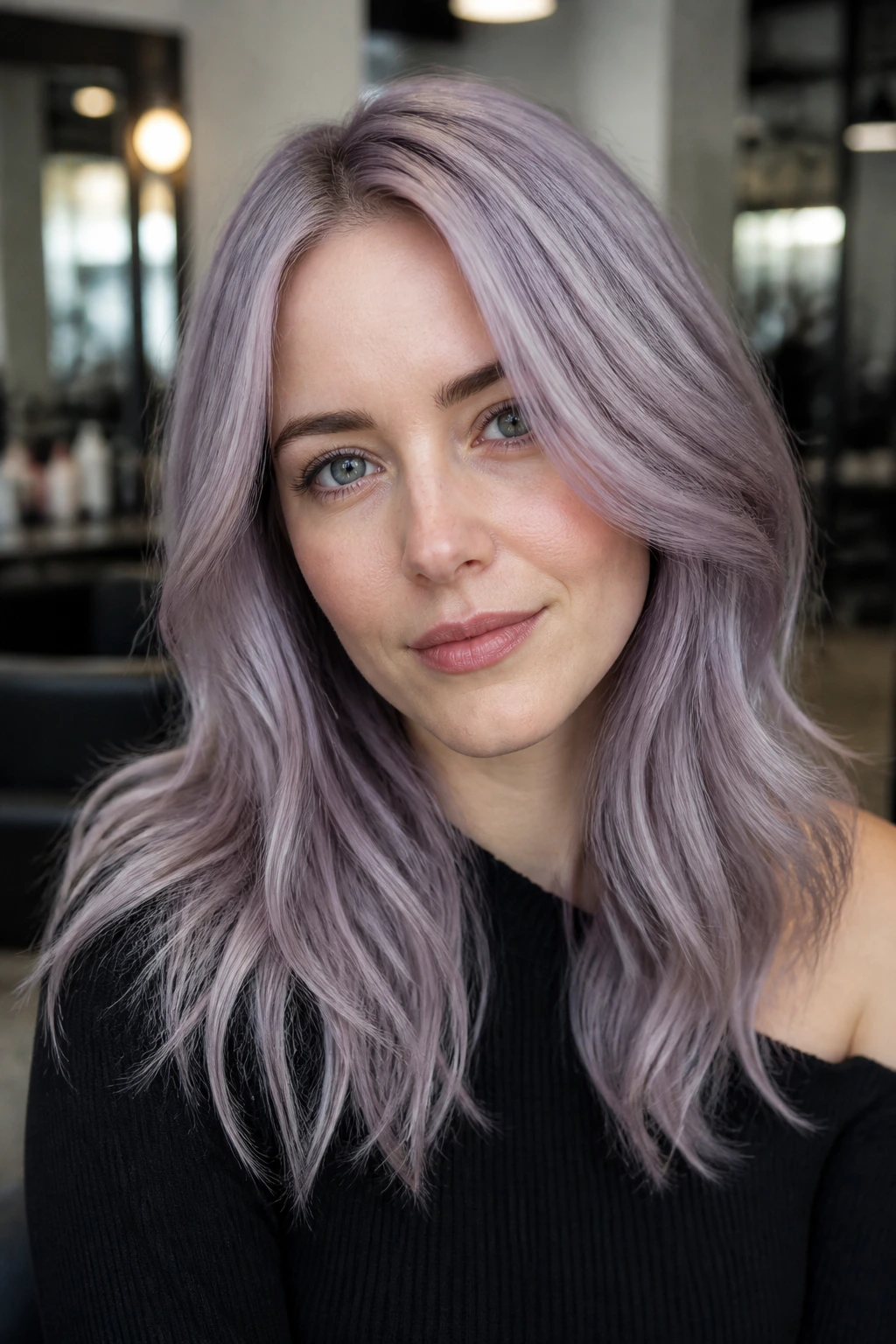
I keep coming back to this shade because it’s easy to wear without being boring. Frosted grape has more body than lavender, but it still sits in the cool family thanks to the silver glaze over the top.
A glaze like this works best on hair that has already been lifted to a pale blonde. On darker bases, the grape can get lost or turn bruised-looking, which is not the effect anyone wants. On light hair, though, it gives you a glossy finish that changes a little in different light. Indoors it can read smoky. Outside, it goes more violet.
That shift is part of the charm. It keeps the color from looking one-note.
If your hair is porous, keep the aftercare gentle. Purple formulas fade faster on stressed hair, and that fade can turn soft or muddy if the cuticle is rough.
6. Pearl Gray With Violet Veil
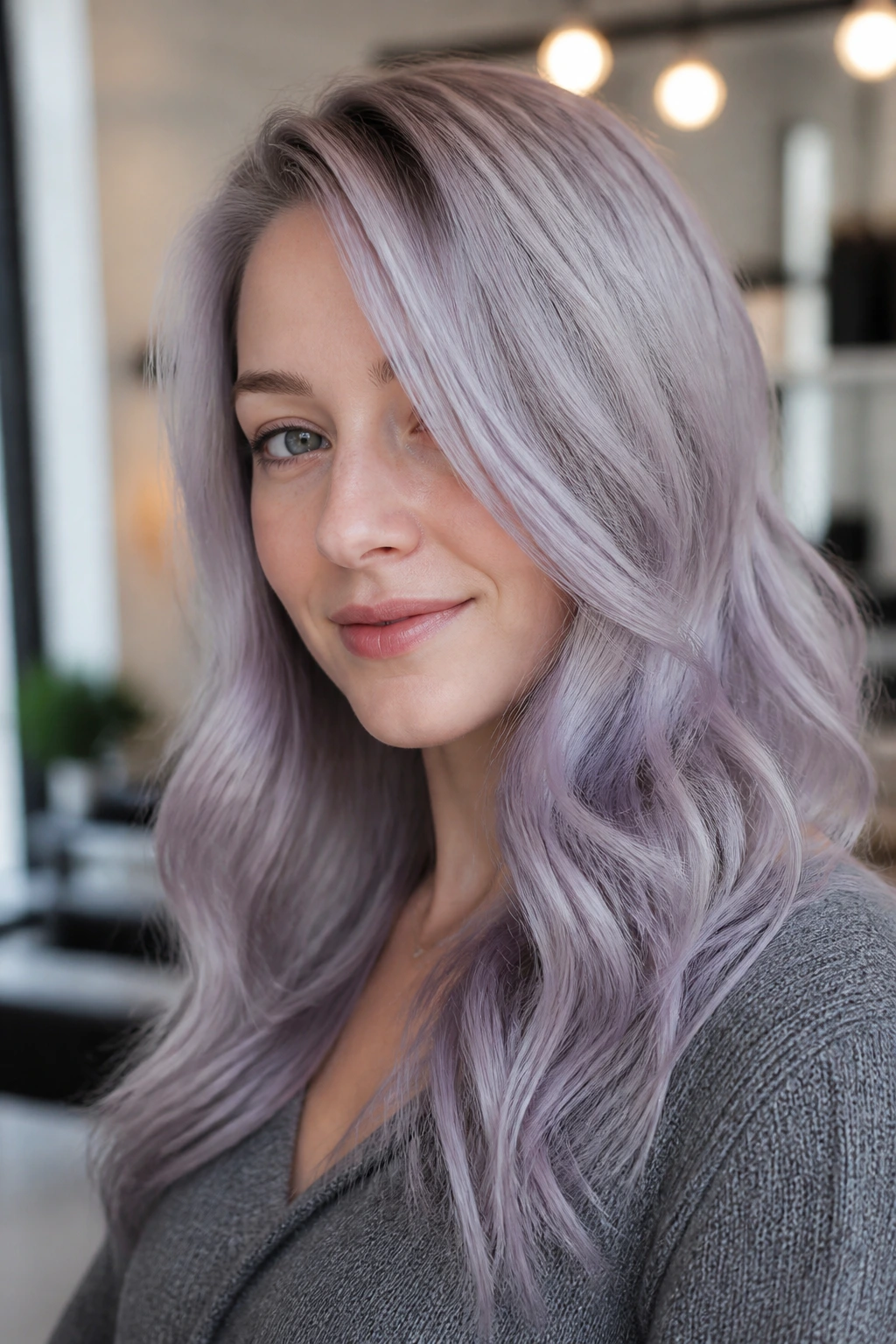
Pearl gray with a violet veil looks delicate in the chair and stronger once it hits daylight. The gray keeps the look grounded, while the violet stops it from becoming flat or harsh.
This is one of the better options for very fair cool skin, especially when the complexion already has a pale, porcelain feel. Too much contrast can make those faces disappear. Pearl gray stays close to the skin, so the color feels like it belongs there rather than sitting on top of it.
Why it feels softer than plain silver
The violet is doing tiny, quiet work. It adds warmth in the color sense, not the temperature sense, so you get depth without losing the cool edge.
- Best on level 9 to 10 hair
- Needs a blue-based silver shampoo once a week
- Looks best with soft waves or a tucked-behind-the-ear finish
A neat finish helps this shade. Frizz can make the gray read dusty.
7. Metallic Mauve Ribbons
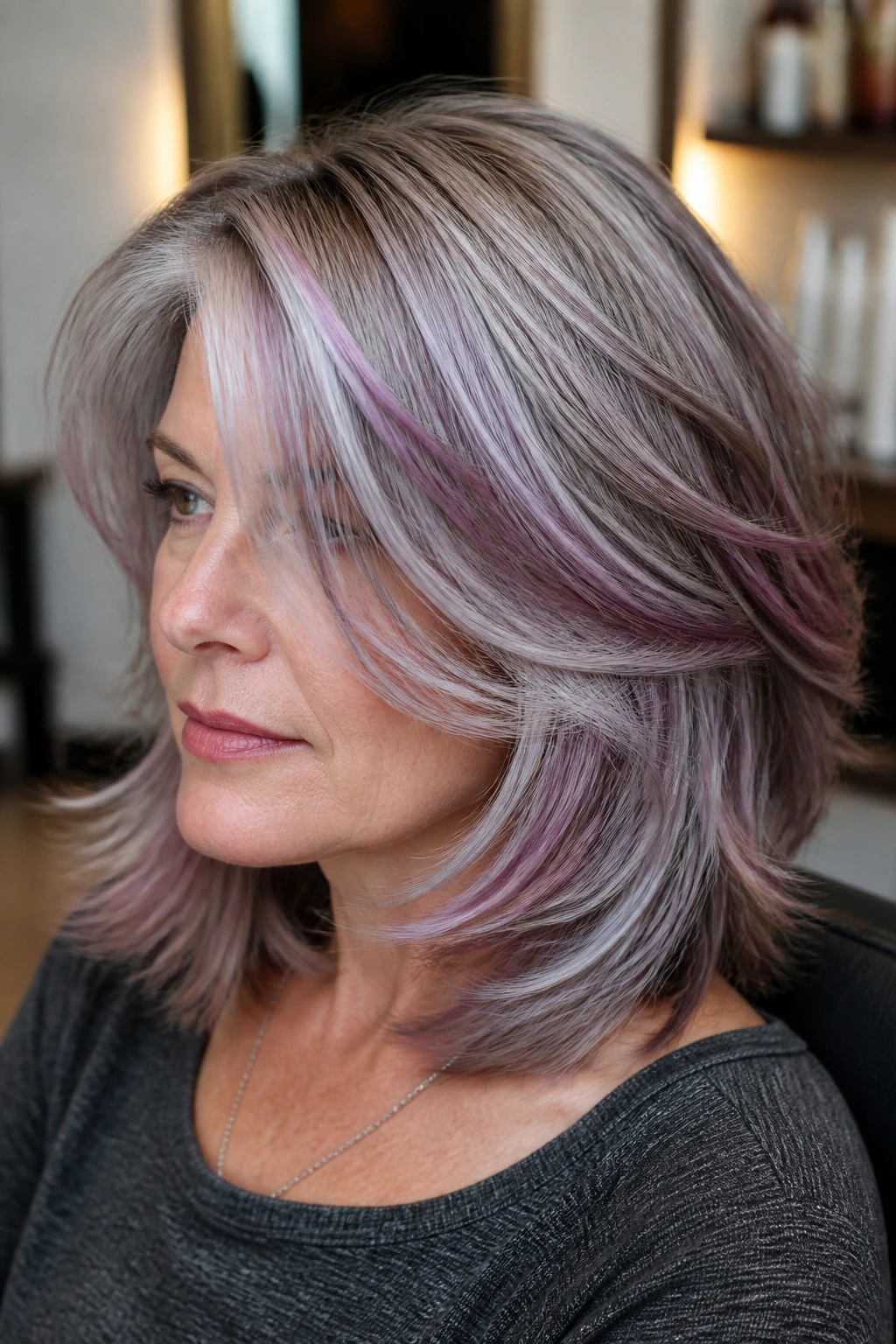
Compared with a solid all-over color, metallic mauve ribbons keep the whole head moving. The mauve gives you purple, but the silver reflection makes it feel cleaner and less sugary.
This is a smart choice if your hair has layers, because ribbons show off the cut. Place the lighter pieces near the crown and around the face, then let the mauve sit through the mids and ends. That mix gives the eye something to follow. On cool skin, the silvery sheen keeps the mauve from leaning warm.
A lot of people ask for this as if it were a single flat shade. It isn’t. The placement matters almost as much as the color formula.
What to ask for: thin ribbons, a cool mauve toner, and a few brighter panels around the top third of the head.
8. Pastel Purple Underlights
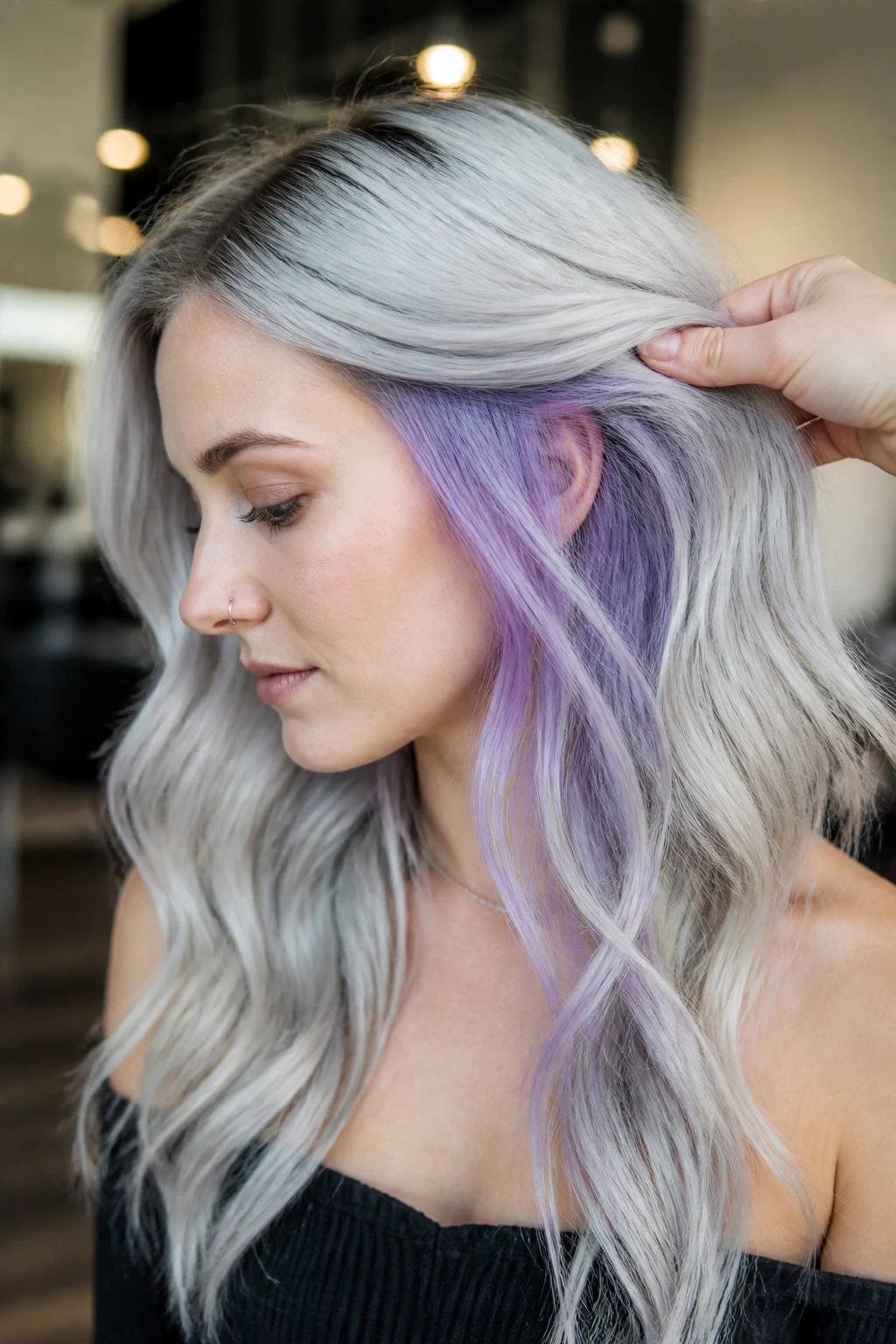
Underlights are the shy cousin of highlights. The color hides under the top layer, so you get a peek of purple only when hair moves, flips, or gets tied up.
That makes this idea especially good if you want silver-purple without living in full purple all day. The outer layer can stay icy silver or pearl blonde, which keeps the face bright. The hidden purple underneath adds personality without changing your whole look.
It’s also useful for cool skin tones because the visible silver remains the main event. The purple is a surprise, not the whole story.
If you wear your hair half-up, the contrast gets even better. The top stays clean, and the underlayer shows through like a little secret.
Works best on: lobs, long shags, and layered straight hair.
9. Silver Plum Shadow Root
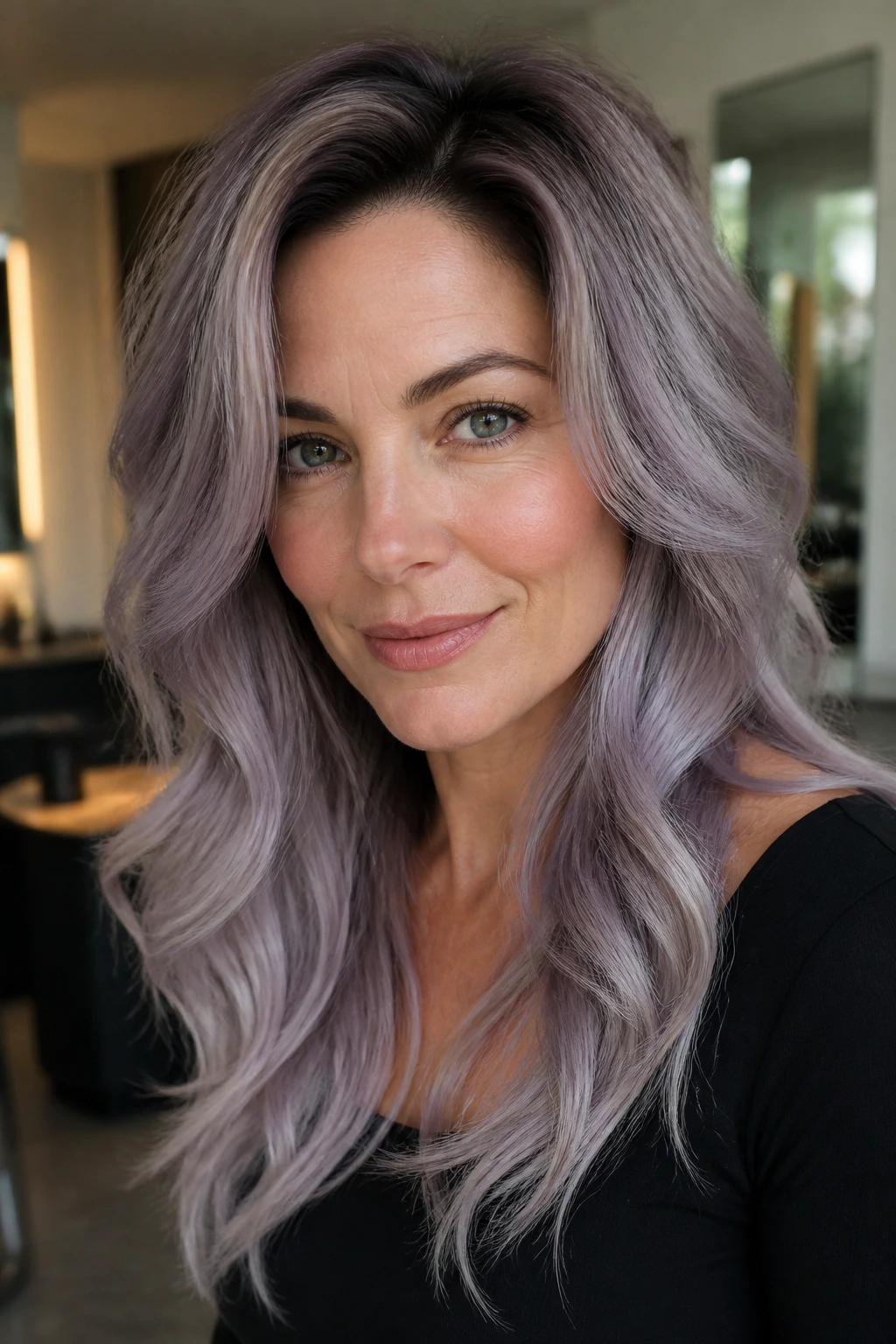
A shadow root is doing the hard part here. It softens grow-out, gives the color some depth, and keeps silver-plum from looking too pale on cool skin.
This version starts with a deeper root, then moves into a silvered plum through the mids and ends. The plum should be muted, not wine-red. That’s the difference between a cool result and a shade that suddenly looks warm in sunlight. If your natural hair is dark ash brown, this is one of the easier ways to wear purple without fighting your root line every three weeks.
I like it for people who want a bit of edge but don’t want constant maintenance. The grow-out is forgiving.
Maintenance note: plan for a gloss refresh every 6 to 8 weeks, not a full recolor each time.
10. Lilac Pixie Cut
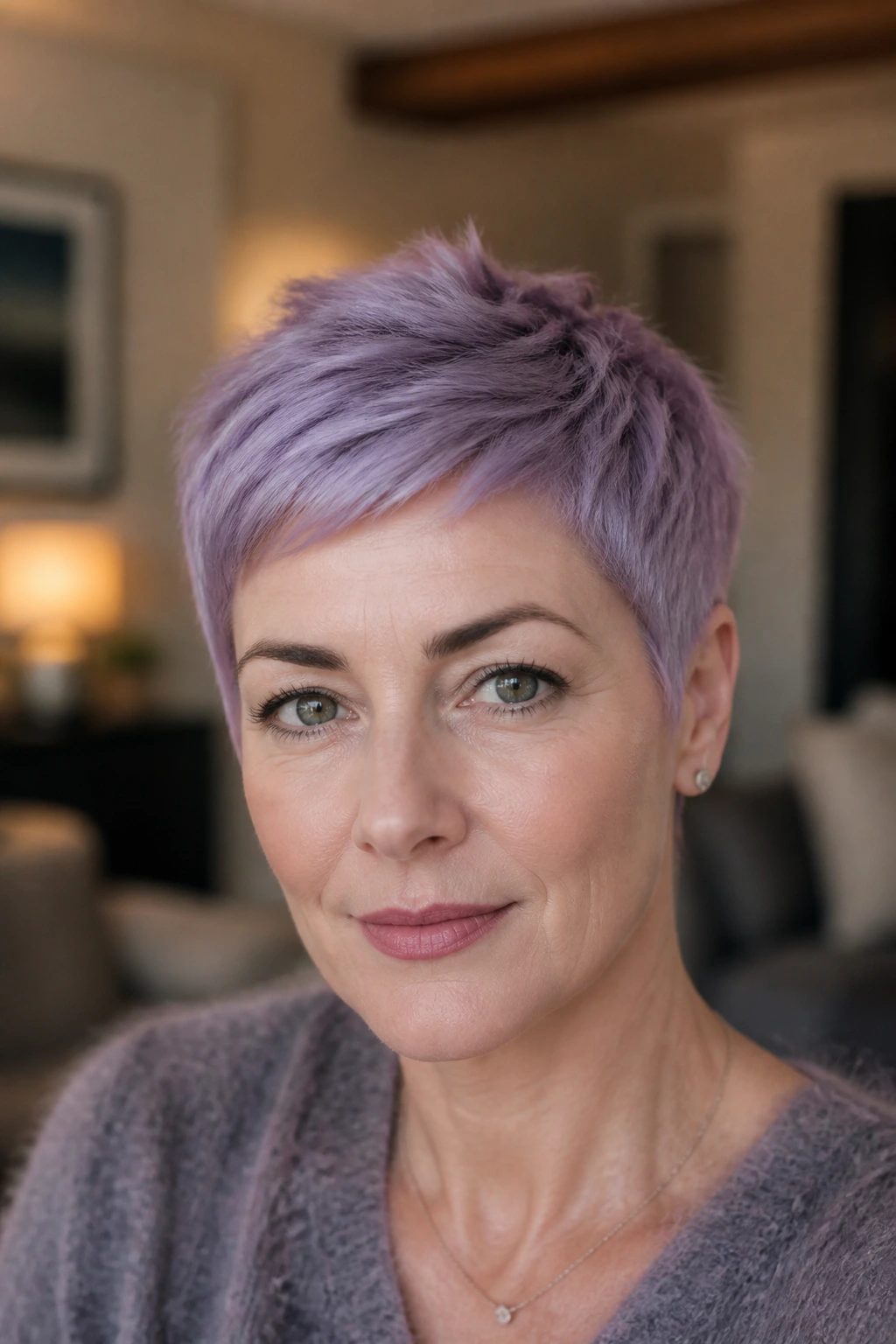
Short hair can handle more purple than people expect. A pixie gives the color nowhere to hide, so even a soft lilac toner becomes part of the haircut itself.
This is a strong choice for cool skin because the face is exposed. The pale, cool color makes the eyes pop, and the short length keeps the shade from feeling heavy. If you have strong brows or a sharp jawline, the contrast is especially nice. You get a clean frame instead of a lot of visual noise.
Styling note
- Use a matte paste or light styling cream
- Push the top forward for a softer look, or piece it out for something sharper
- Keep the sides cooler and slightly lighter than the crown so the cut doesn’t collapse into one block
One extra thing: pixies fade fast near the hairline. That’s normal. The color gets handled by your hands, hats, and styling products more than the rest of the head.
11. Steel Lavender Lob
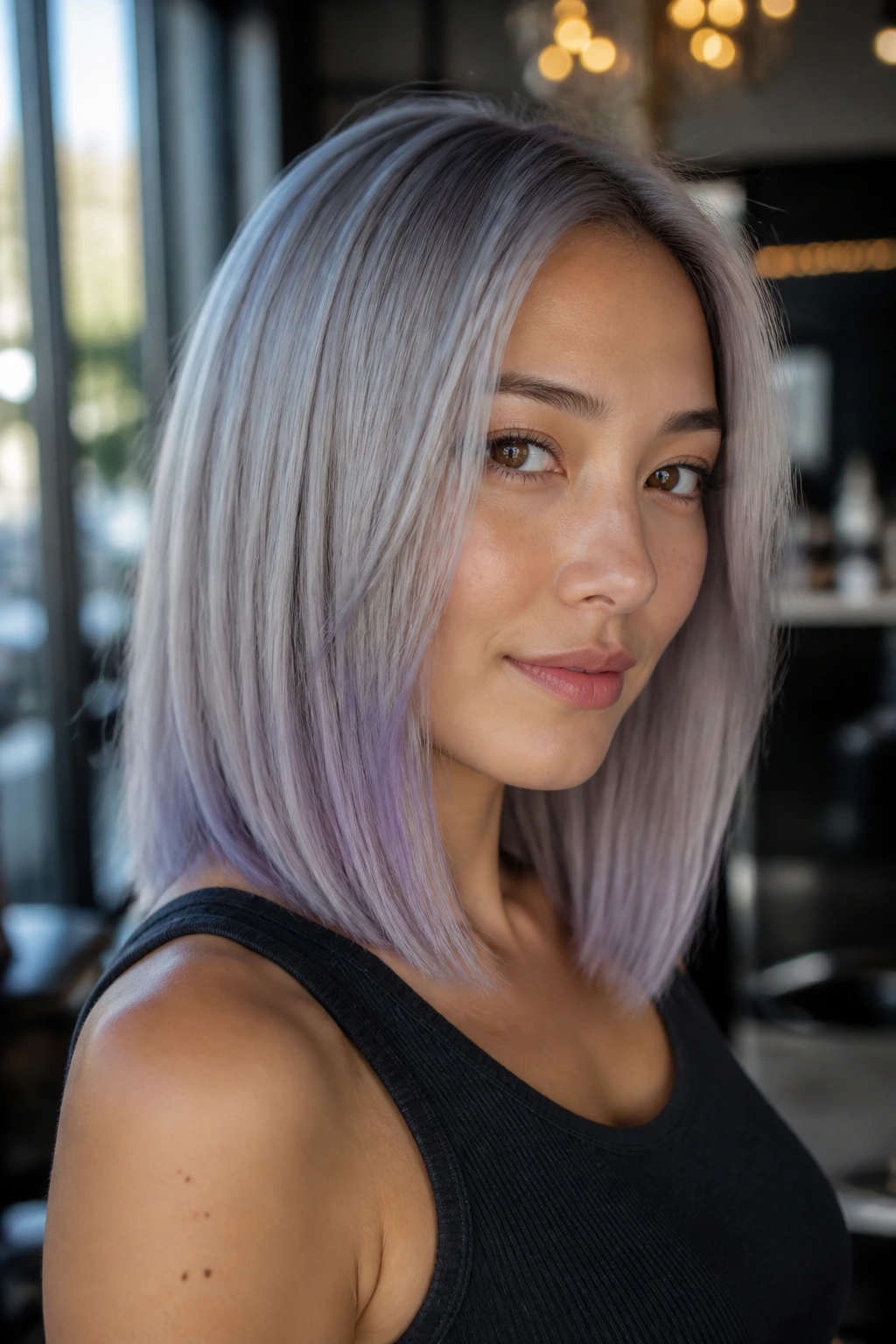
Steel lavender is the haircut-and-color combo that keeps silver from getting fussy. The lob length gives enough room for tone changes, but not so much length that the color starts to feel swirly or overdone.
A steel base leans gray-blue, which is a nice match for cool skin because it avoids the pink cast that some lavenders pick up. Add a lavender mist over the top and the shade gains life. It looks especially good with a blunt line at the ends, since that edge makes the metallic part of the color more obvious.
This is a good everyday version for people who want something polished without being precious. Air-dried waves work. Straight styles work too.
Best for: medium density hair and anyone who likes a clean outline around the face.
12. White-to-Violet Ombré
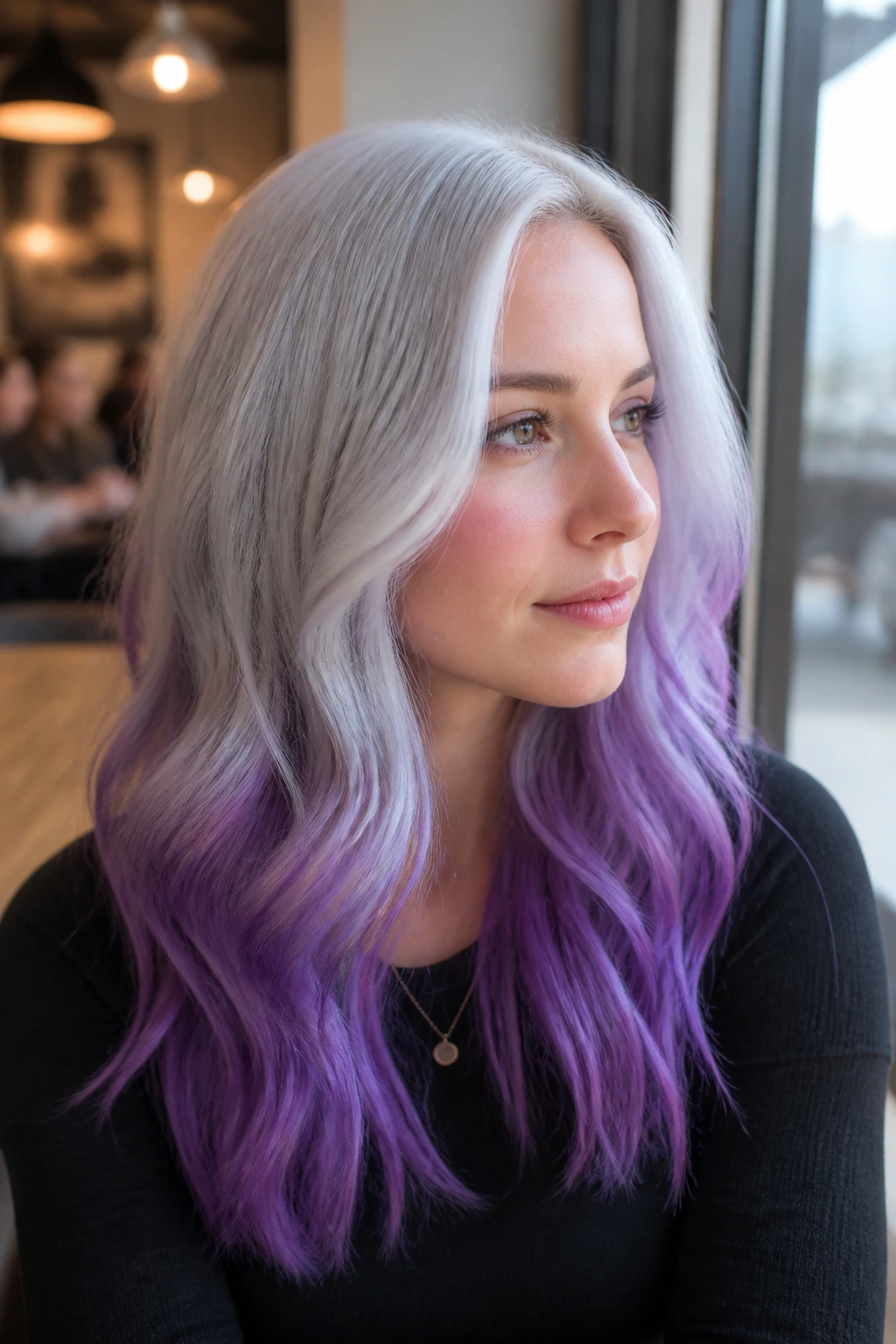
White at the crown, violet at the ends. Simple idea. Big effect.
Ombré works well when you want the upper hair to stay pale and bright while the lower section carries the color weight. On cool skin, the white near the face keeps everything open, and the violet at the bottom adds contrast without crowding the complexion. The gradient can be soft or dramatic depending on how much of the middle you leave silver.
Why this version holds up
The transition area matters more than people think. A clean silver bridge between white and violet keeps the fade from looking stripey.
- Best on shoulder-blade length hair or longer
- Needs extra conditioner on the ends, since purple-pigmented ends can feel dry
- Looks stronger when curled away from the face
If your ends are damaged, trim first. Ombré shows every rough bit.
13. Smoky Purple Balayage on Silver Blonde
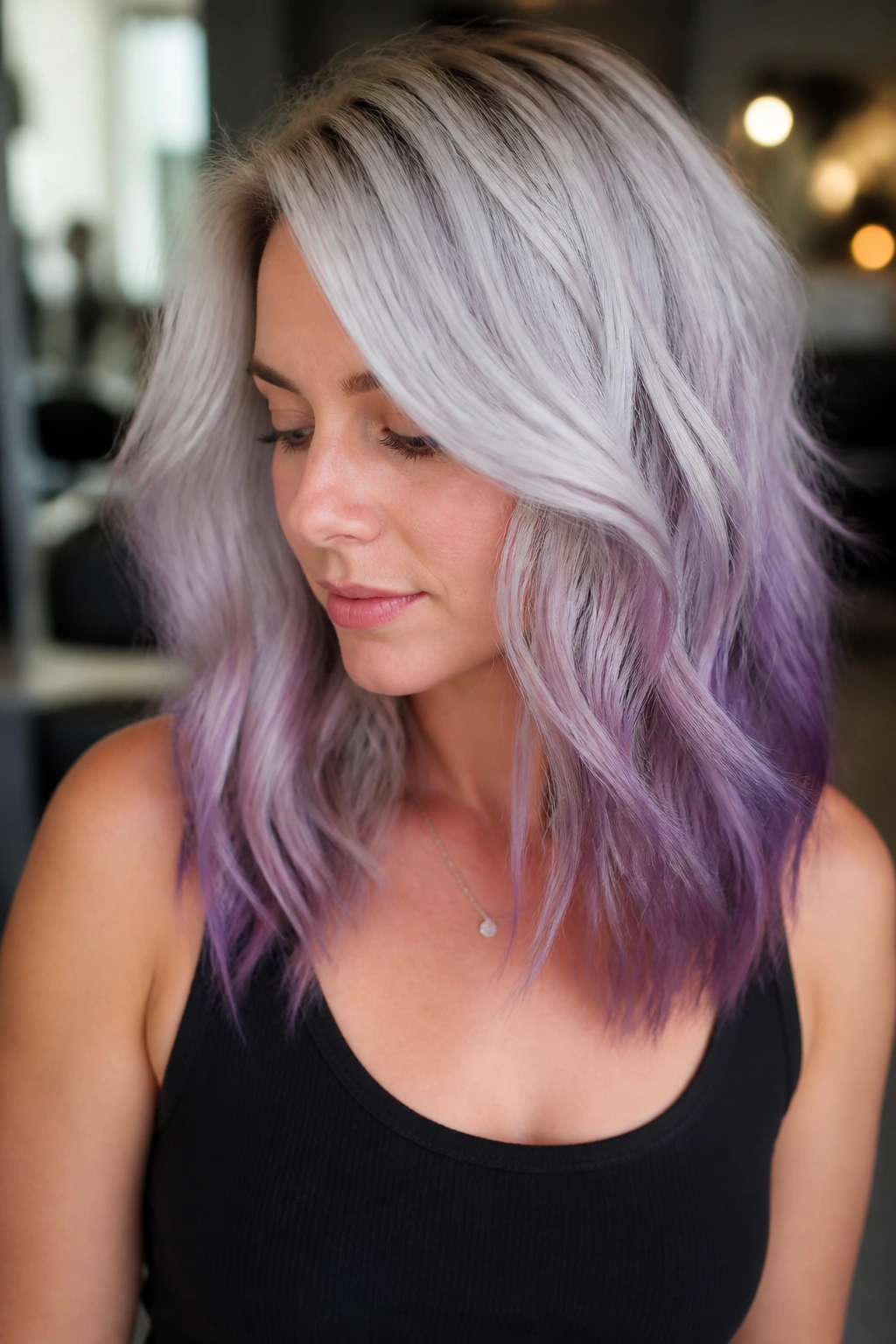
This is the version I recommend to anyone who wants depth first and brightness second. The silver blonde base keeps the whole look light, while the smoky purple balayage sneaks in dimension through the mid-lengths and ends.
Because the color is painted, not blocky, it works well on layered hair. The purple appears where the light hits, then disappears in flatter spots. That keeps cool skin from getting overwhelmed. You still get the mood, but the silver stays in charge.
What to ask for
- Cool silver blonde through the top and face frame
- Smoky purple painted in thicker ribbons through the lower half
- A root zone left slightly deeper for softness
It’s one of those looks that gets better when hair is loose and moving. Tight curls can hide the paint. Soft bends show it off.
14. Holographic Silver-Purple Gloss
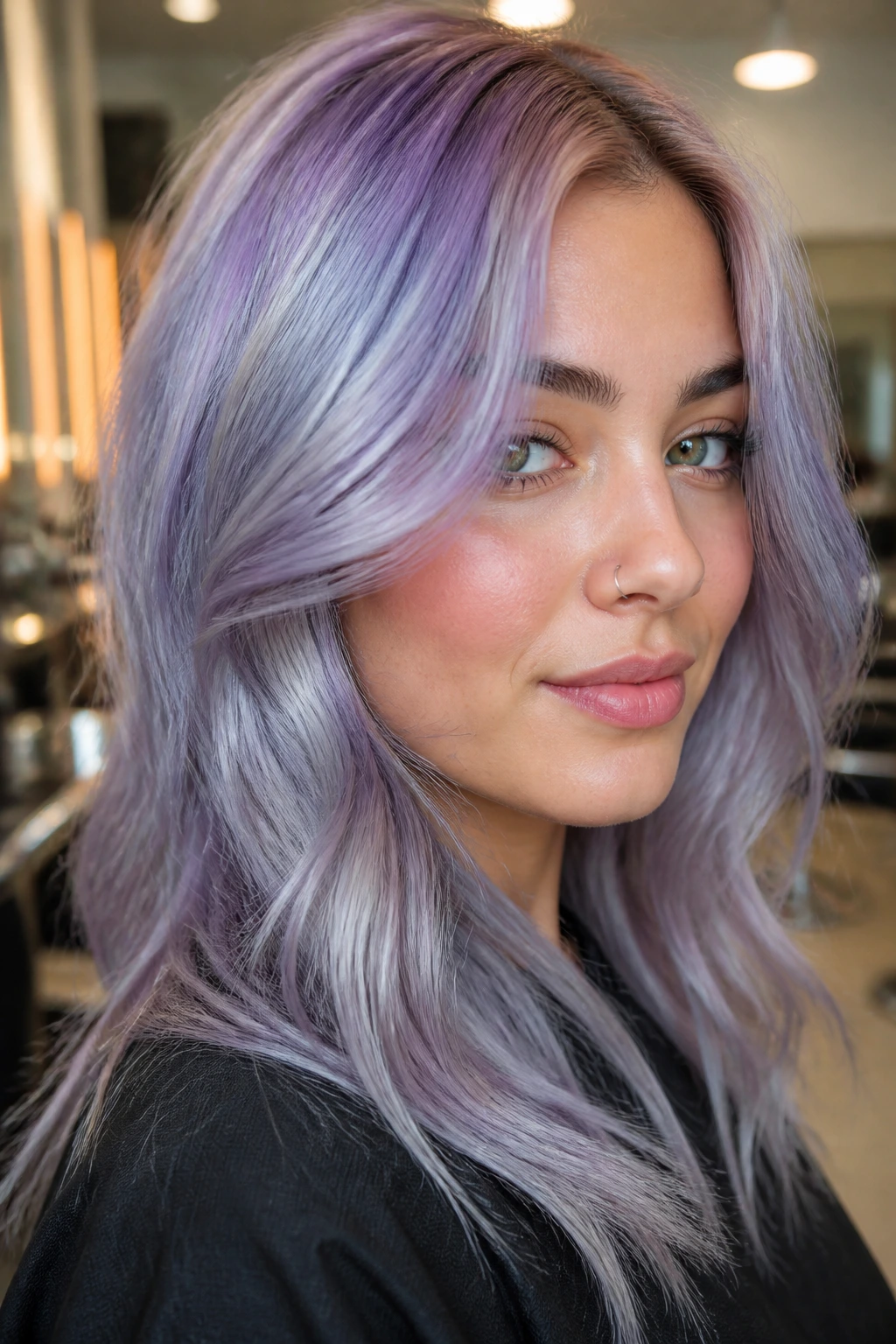
A gloss can change the whole mood of silver hair in 10 minutes. Holographic silver-purple is less about obvious color and more about sheen, like the hair keeps shifting between pewter, lilac, and pale orchid as you turn your head.
That makes it a good low-commitment option for cool skin. You keep the face bright, the color stays light, and the effect reads modern without getting loud. I like this one between bigger salon visits, especially if your blonde has gone a little flat and needs a quick wake-up.
The key is not to overload the purple pigment. You want reflection first, color second.
Best on: pale blonde, silver blonde, and any cut with smooth layers.
15. Mushroom Silver With Violet Sheen
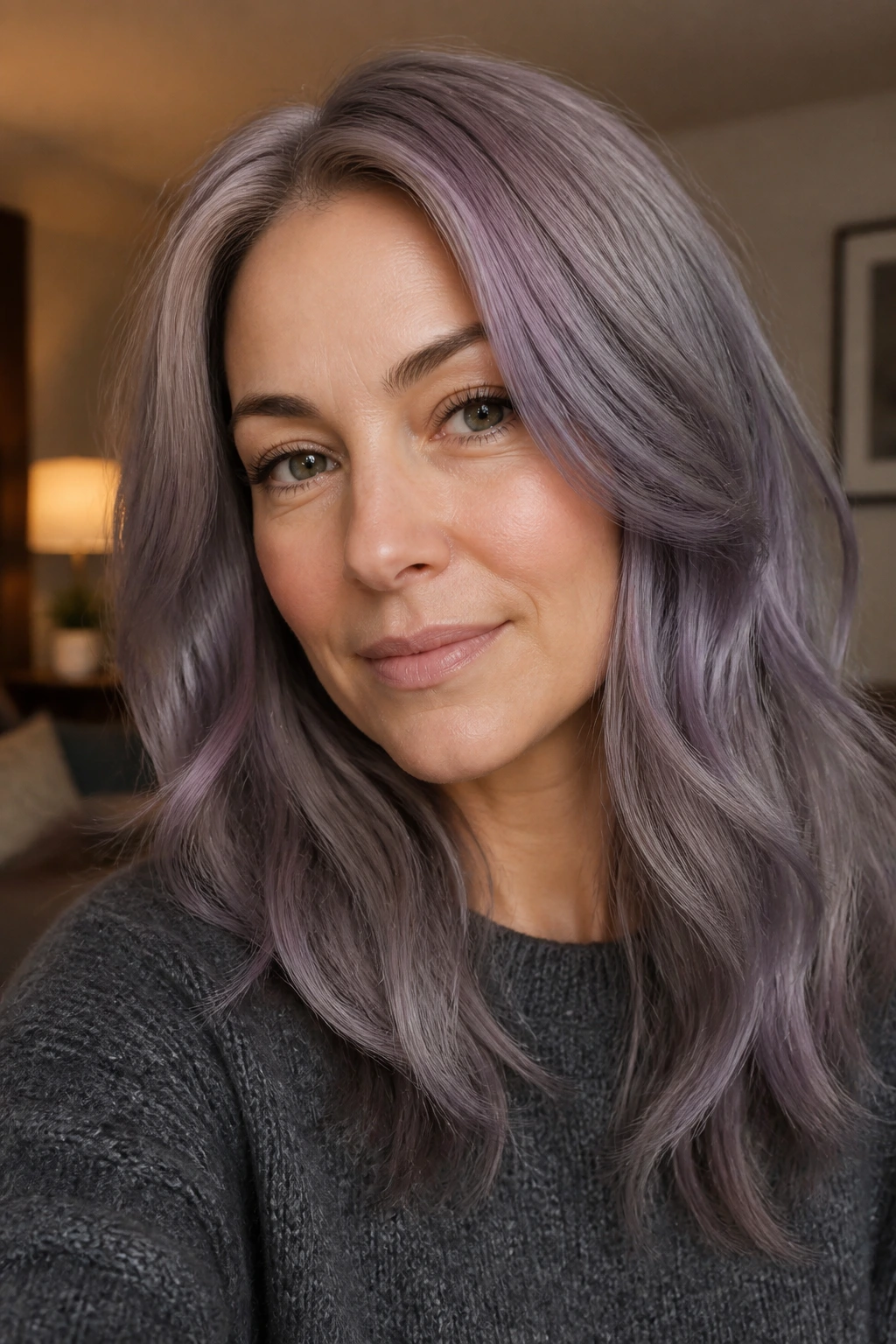
Mushroom silver sounds earthy, and that’s exactly why it works. The base has a gray-beige cast, which keeps the hair from looking too icy, while the violet sheen adds just enough color to keep things interesting.
This shade is a strong pick for neutral-cool skin or for anyone who finds straight platinum a little harsh. It softens the face without going warm. The finish is quiet, but not dull. There’s enough smoke in it to keep the color grounded, and enough violet to stop it from feeling flat.
It also suits thicker hair well because the depth gives the shape more weight.
If you want this look to stay clean, ask your colorist to avoid gold in both the lift and the toner. Gold ruins the mood fast.
16. Cool Champagne Lilac Highlights
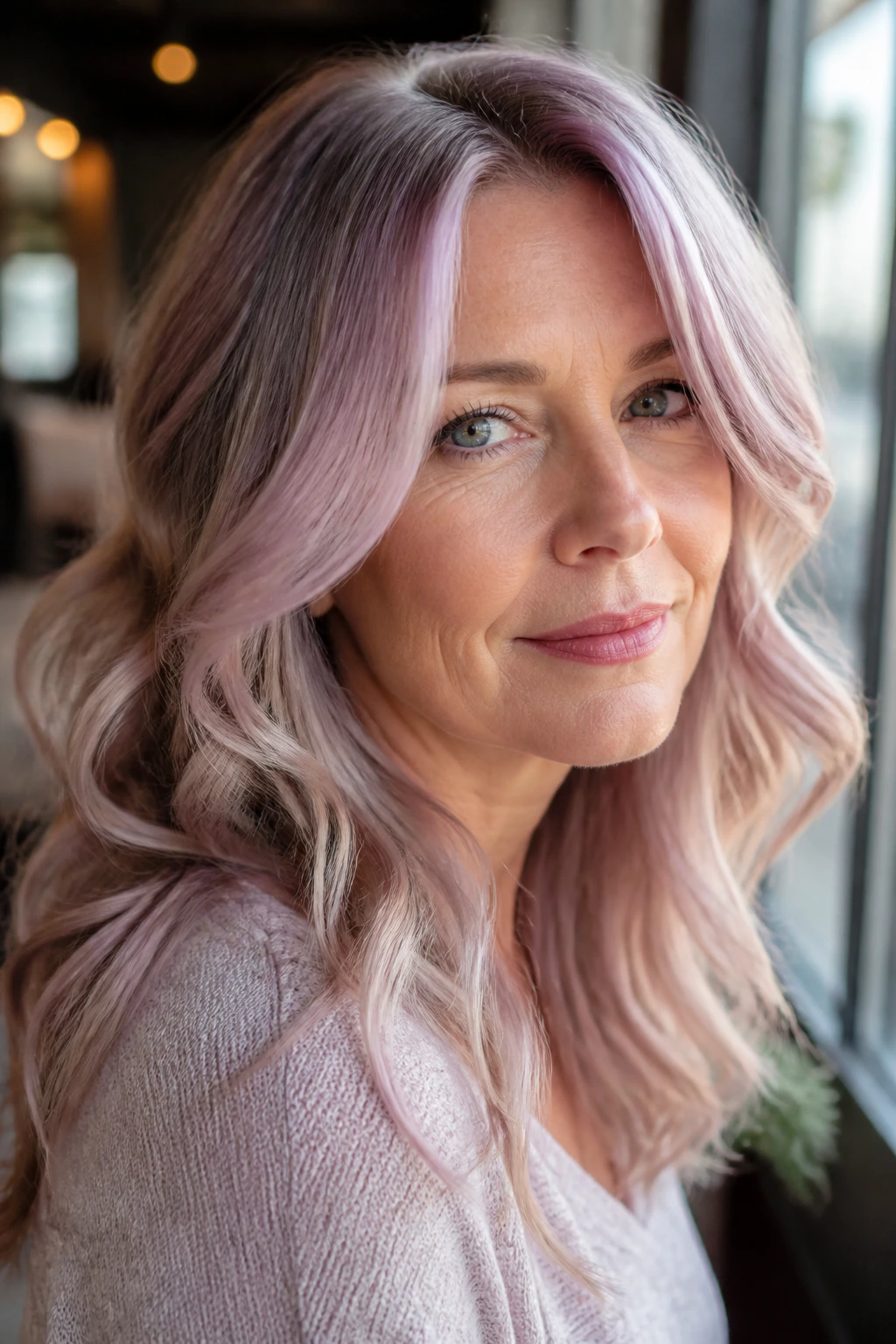
Cool champagne is a tricky phrase. If the champagne leans gold, skip it. If it sits in the beige-gray family, though, it can make a very good base for lilac highlights.
This version is for people who want softness more than contrast. The champagne keeps the hair from feeling stark, and the lilac adds the cool note that makes the skin look calmer. On fair and medium-cool skin, that combo can be flattering in a very quiet way. It doesn’t shout. It just makes the complexion look less tired.
Avoid these
- Yellow-heavy toner
- Warm beige glosses
- Chunky highlights that break the softness of the shade
The prettiest version is subtle. A few fine lilac threads can do more than a whole head of bright purple.
17. Dusty Iris Waves
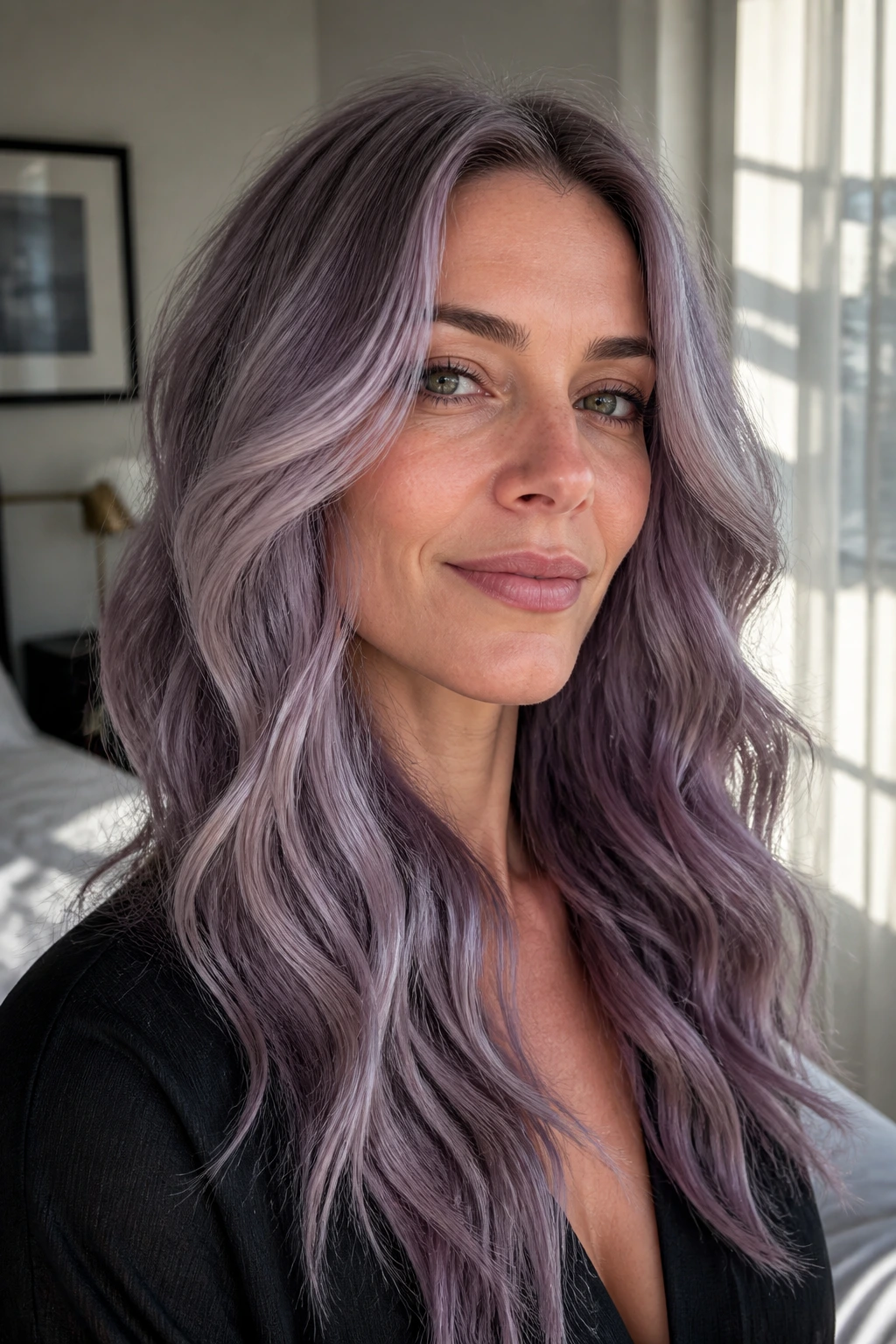
Why does dusty iris work so well on cool skin? Because it sits between lilac and smoke. That middle ground gives the color depth without making it dark.
The waves matter here. Soft bends let the dusty purple show in pieces, so the hair keeps moving instead of looking painted on. If the hair is pin-straight, the shade can look flatter. With waves, the purple catches in some spots and backs off in others. That keeps the whole thing airy.
This is a good shade if you want purple that feels grown-up. Not severe. Not sugary.
A 1.25-inch iron or a large round brush gives you just enough bend. Leave the ends loose. Tight curls can make the iris tone look darker than it is.
18. Opal Silver With Violet Tip-Dip
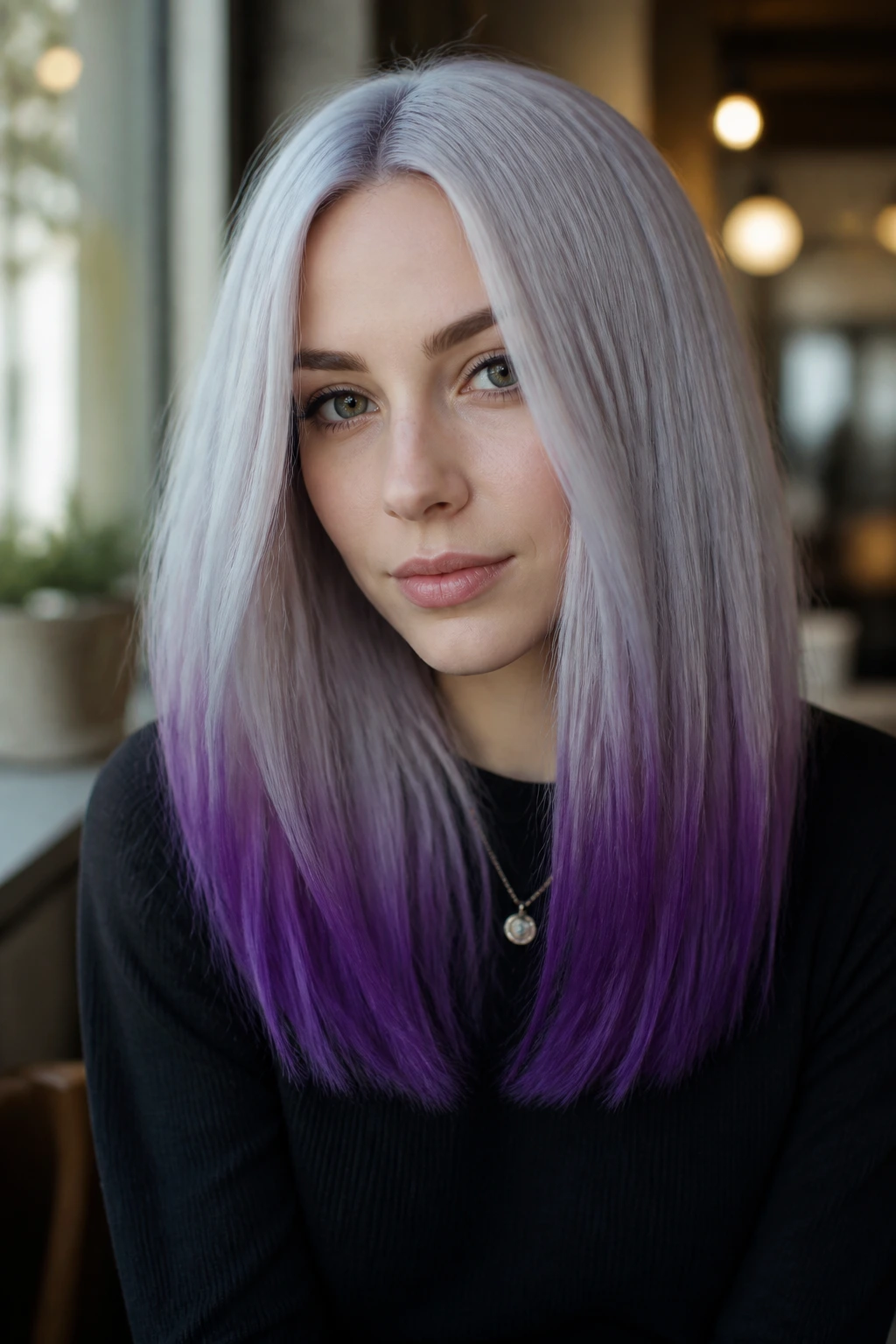
I’ve seen this on long blunt cuts, and it makes the ends do all the talking. The top stays opal silver, and the violet lives at the bottom in a dipped finish that feels deliberate instead of random.
Tip-dip coloring is useful if you want to test purple without changing the root area. Cool skin still gets the bright, pale silver near the face, which is the part most people notice first. Then the violet ends bring in contrast where the eye lands last. That makes the look feel balanced.
It’s also easy to grow out. When the violet fades, the silver top still carries the style.
Best on: one-length hair, long layers, and cuts that move well when curled under or away from the face.
19. Charcoal Base With Silver-Purple Panels
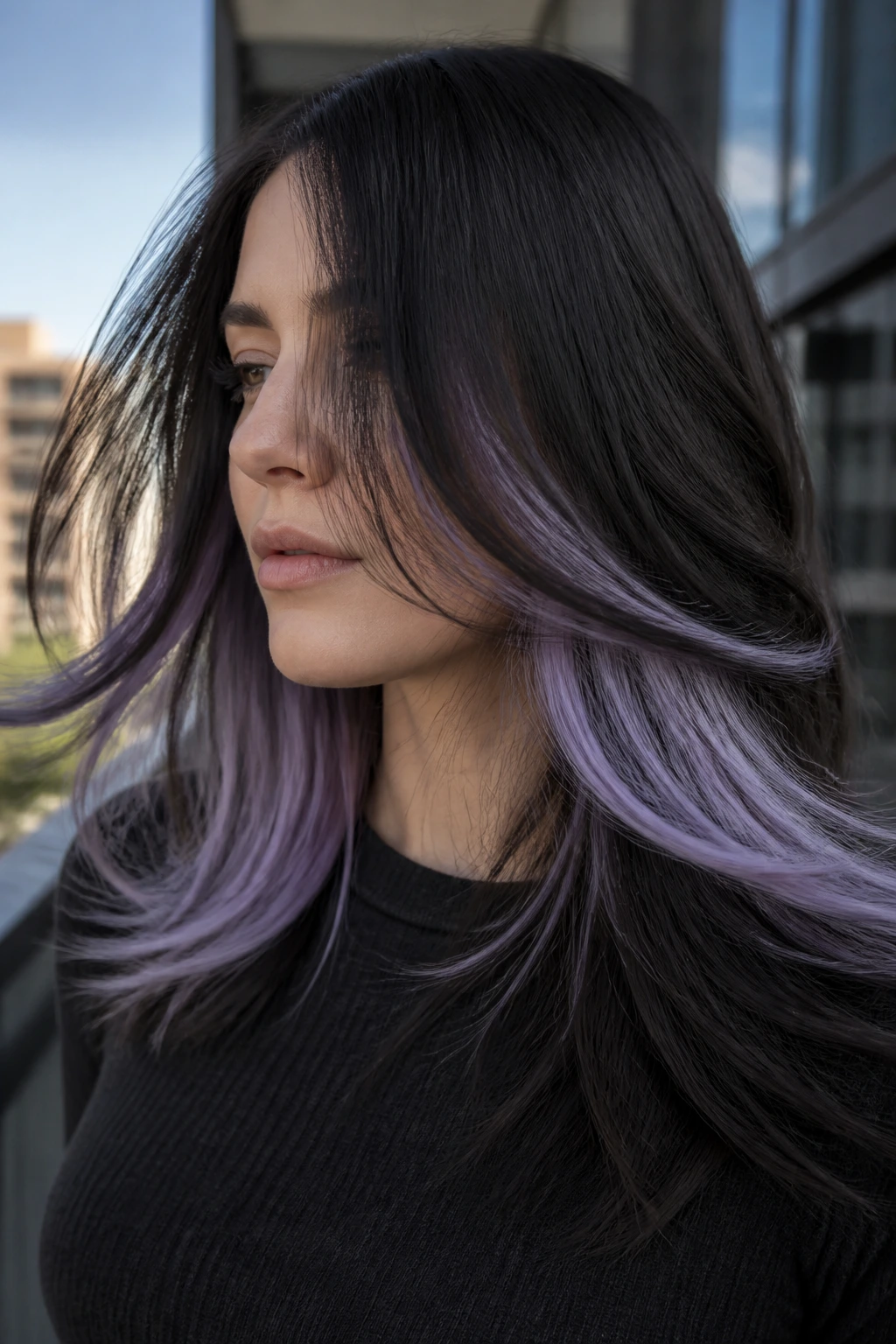
A dark base makes silver-purple pop harder than pastel hair ever will. That’s the whole appeal here.
Instead of covering everything, place silver-purple panels under the top layer or at the sides where they flash through movement. The charcoal base keeps the look grounded, and the cool purple-silver pieces give the style a sharp edge. On cool skin, that high contrast can be a very good thing. The face doesn’t disappear. It gets framed.
Where to place the panels
- At the temples for a face-brightening effect
- Under the top layer for movement
- Near the ends if you want a more subtle reveal
This is not a soft look. It’s a statement look. But it still has control, which is why it works for people who don’t want a full vivid color block.
20. Iced Lilac Fringe
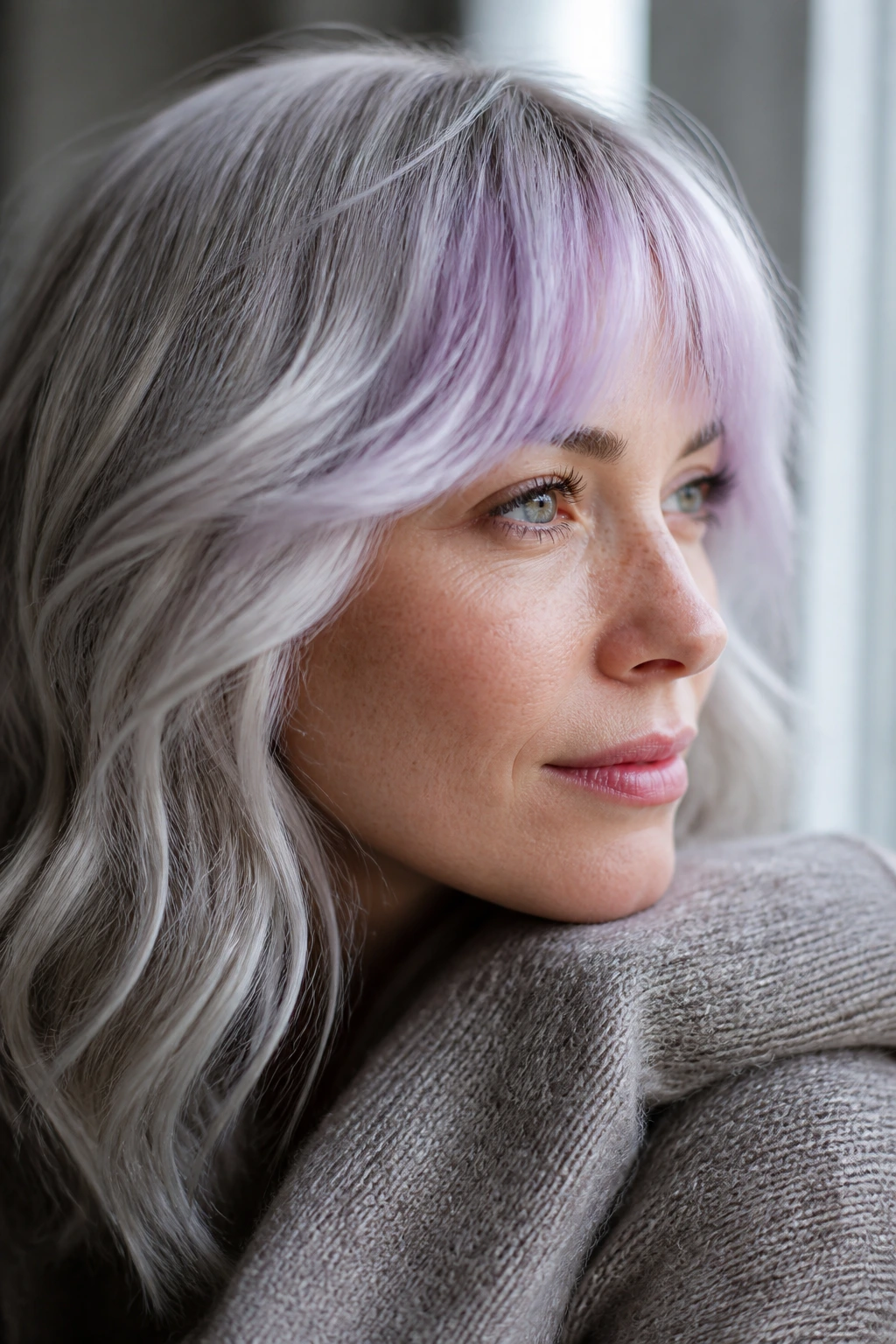
A fringe is the first place to try purple if you’re nervous. It sits close to the face, shows the color fast, and doesn’t require a full head of commitment.
Iced lilac on bangs or a small fringe area can make cool skin look brighter without changing the whole hair story. Keep the rest of the hair silver, ash blonde, or soft gray, and the fringe becomes the focal point. I like this on curtain bangs, split bangs, and short textured fringe alike.
The trick is to keep the lilac pale. If the front gets too saturated, the color can overpower the face in a way that feels heavy.
Maintenance note: fringe color fades faster because of heat styling and forehead contact. Plan on refreshing the front more often than the rest.
21. Smoky Orchid Curls
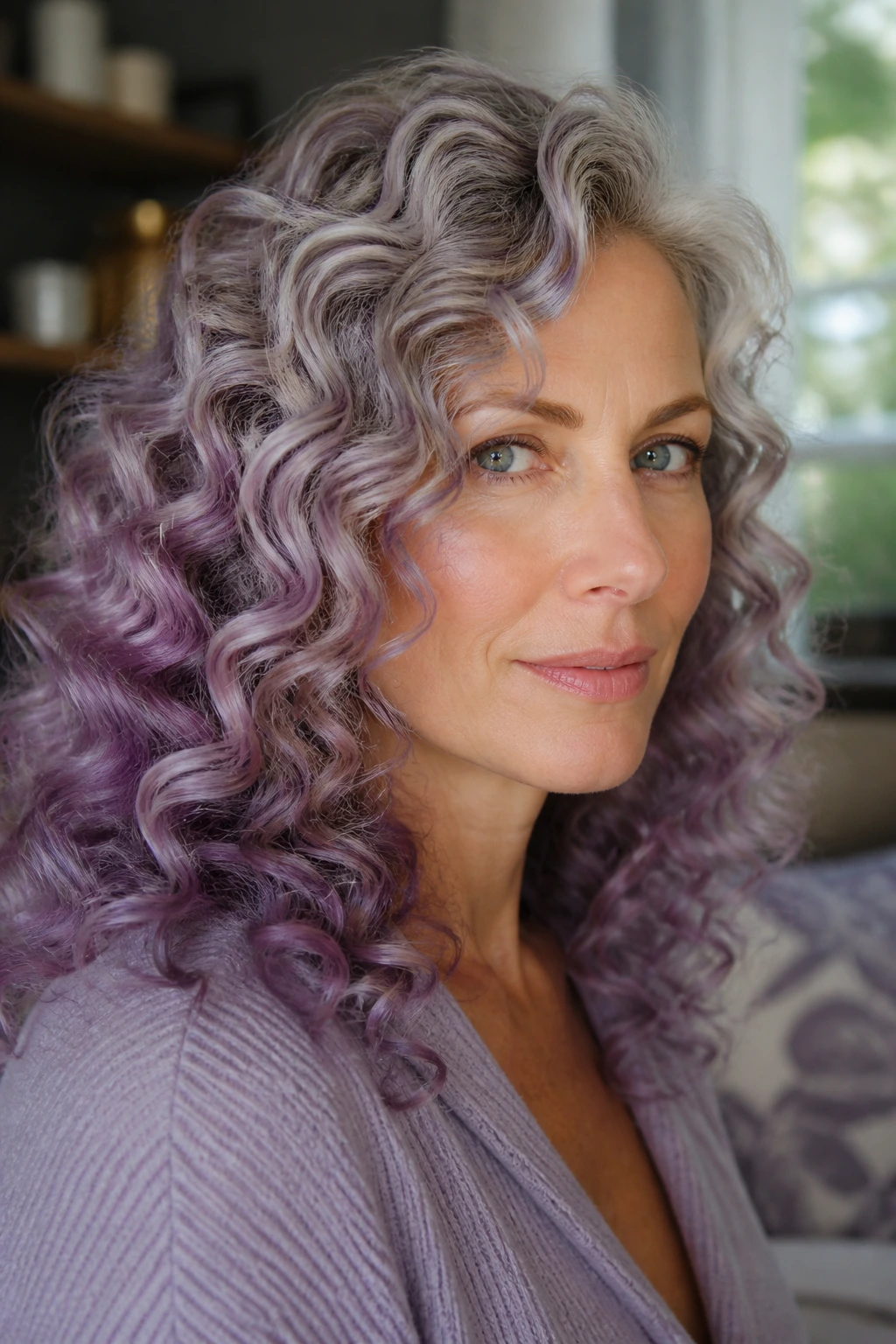
Smoky orchid curls need dimension, not flat pigment. Curls already create depth with their shape, so the color should work with that movement instead of fighting it.
The best version uses silver through the brightest curl ridges and smoky orchid in the valleys between them. That placement keeps the pattern visible and prevents the color from turning into one solid purple mass. On cool skin, the silver highlights keep the face open, while the orchid gives enough tone to make the hair feel alive.
How to style it
- Diffuse on low heat to protect the tone
- Use curl cream with a light hand, because heavy cream can mute the silver
- Scrunch only when the hair is about 80% dry
It’s a richer look than plain lavender, and that’s the point. The curls do the showing off for you.
22. Silver Violet Face-Framing Layers
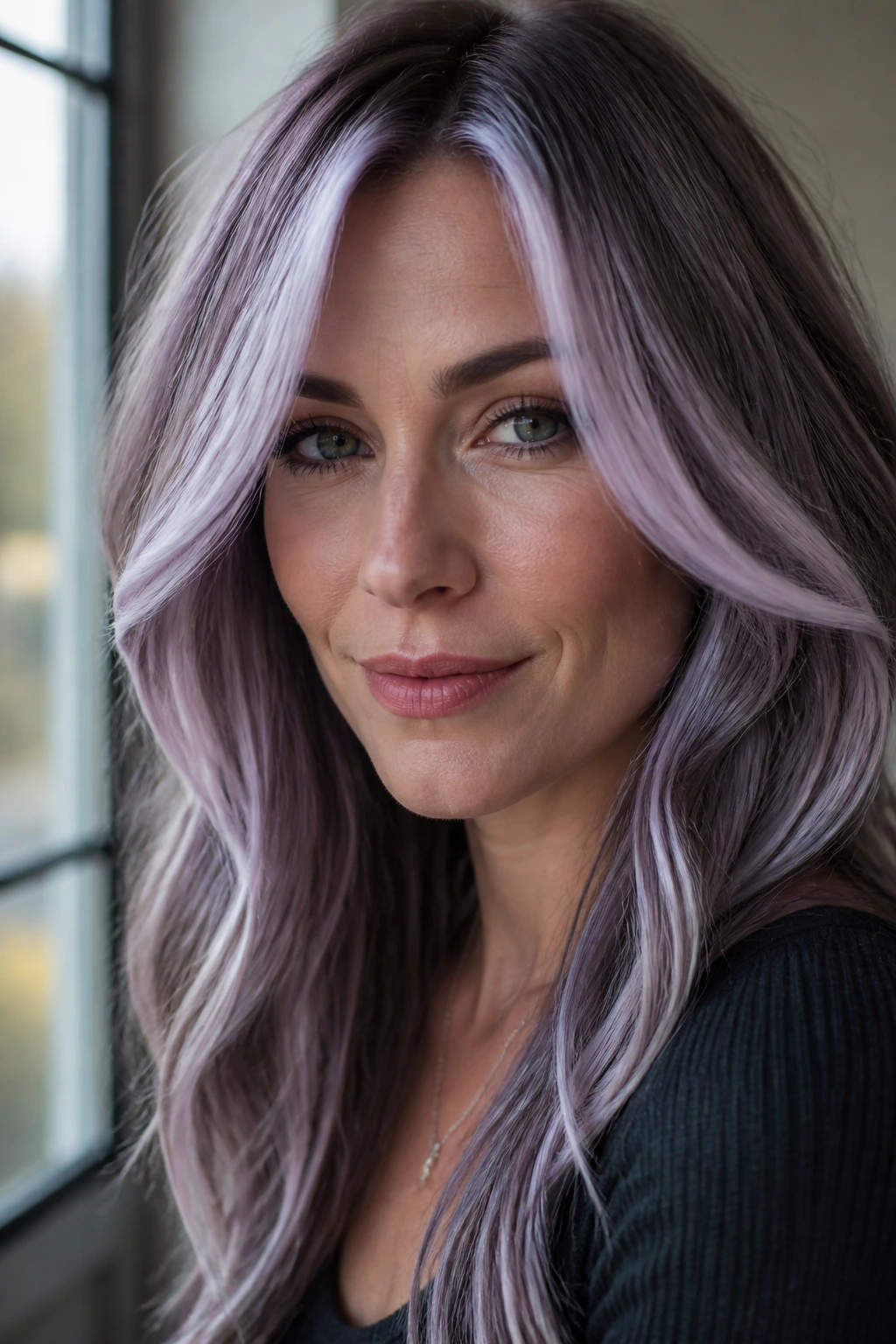
Face-framing layers can change where the eye lands. Put the brightest silver-violet pieces around the cheekbones and jaw, and the whole face gets a softer outline.
This is one of the easiest silver-purple ideas to wear if you want your features to look lifted without a heavy color commitment. The rest of the hair can stay quieter. The front pieces do the talking. That works especially well for cool skin because the brightest tones sit right next to the complexion and give it a clean, calm glow.
Ask your colorist for
- A 1-inch bright ribbon on each side of the face
- Slightly deeper silver in the back
- A violet toner that stays cool, not pink
It’s a good choice for straight hair, loose waves, or layered blowouts. The layers need to be visible, or the color loses its point.
23. Frosted Mulberry Bob
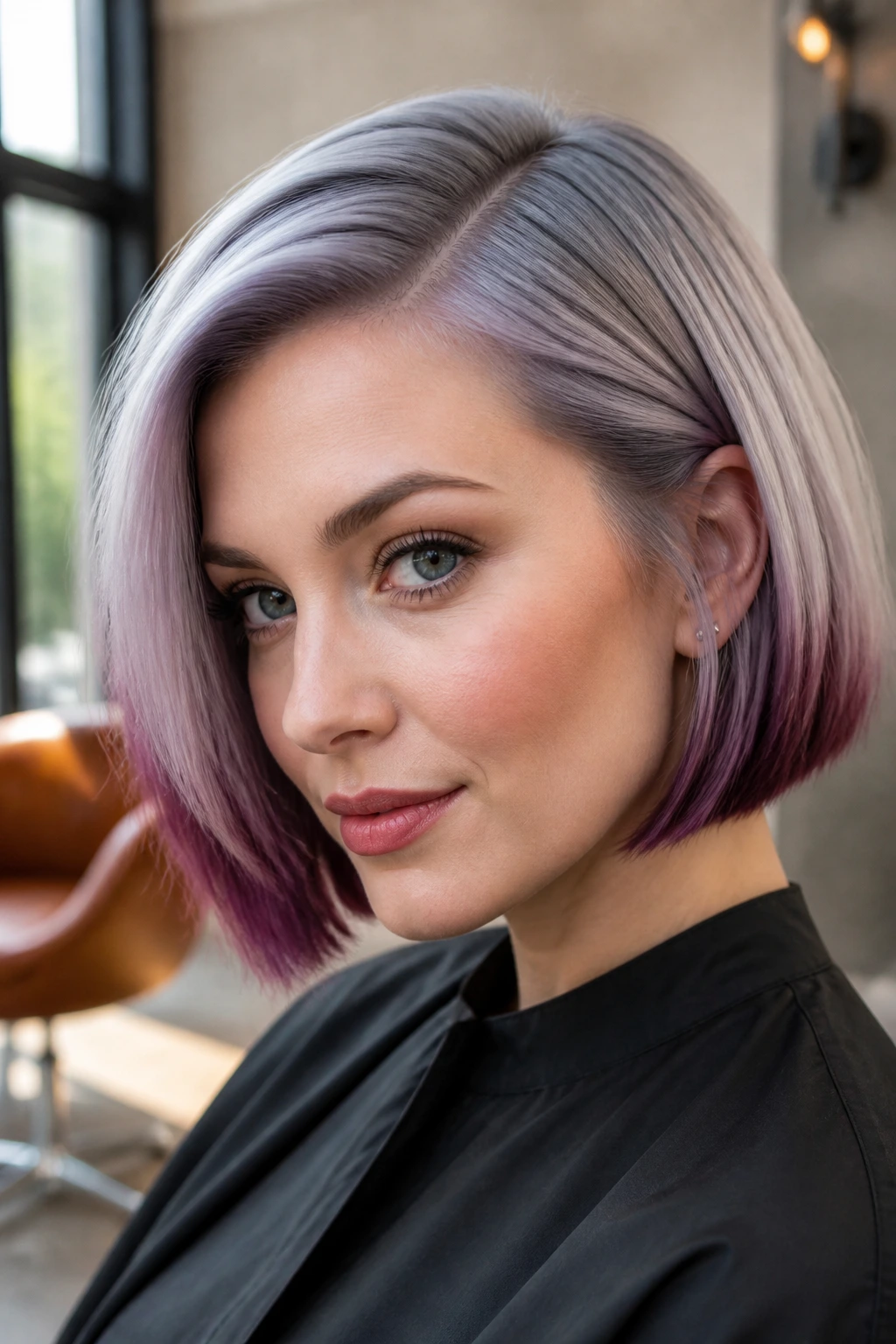
A bob with frosted mulberry ends feels more graphic than soft. The mulberry gives you a deeper purple note, while the frosted silver over the top keeps it cool enough for pink-leaning or blue-leaning skin.
I like this when someone wants a shade with more personality than lavender but less intensity than plum. The bob shape helps a lot. Shorter hair makes the color read cleaner and keeps the darker mulberry from taking over. If you wear a side part, even better. The asymmetry makes the shade feel intentional.
This one is strongest on straight or softly beveled cuts. Too much layering can break the clean line.
A flat iron or a round brush finish makes the frosted top layer show more clearly.
24. Moonstone Silver With Amethyst Ends
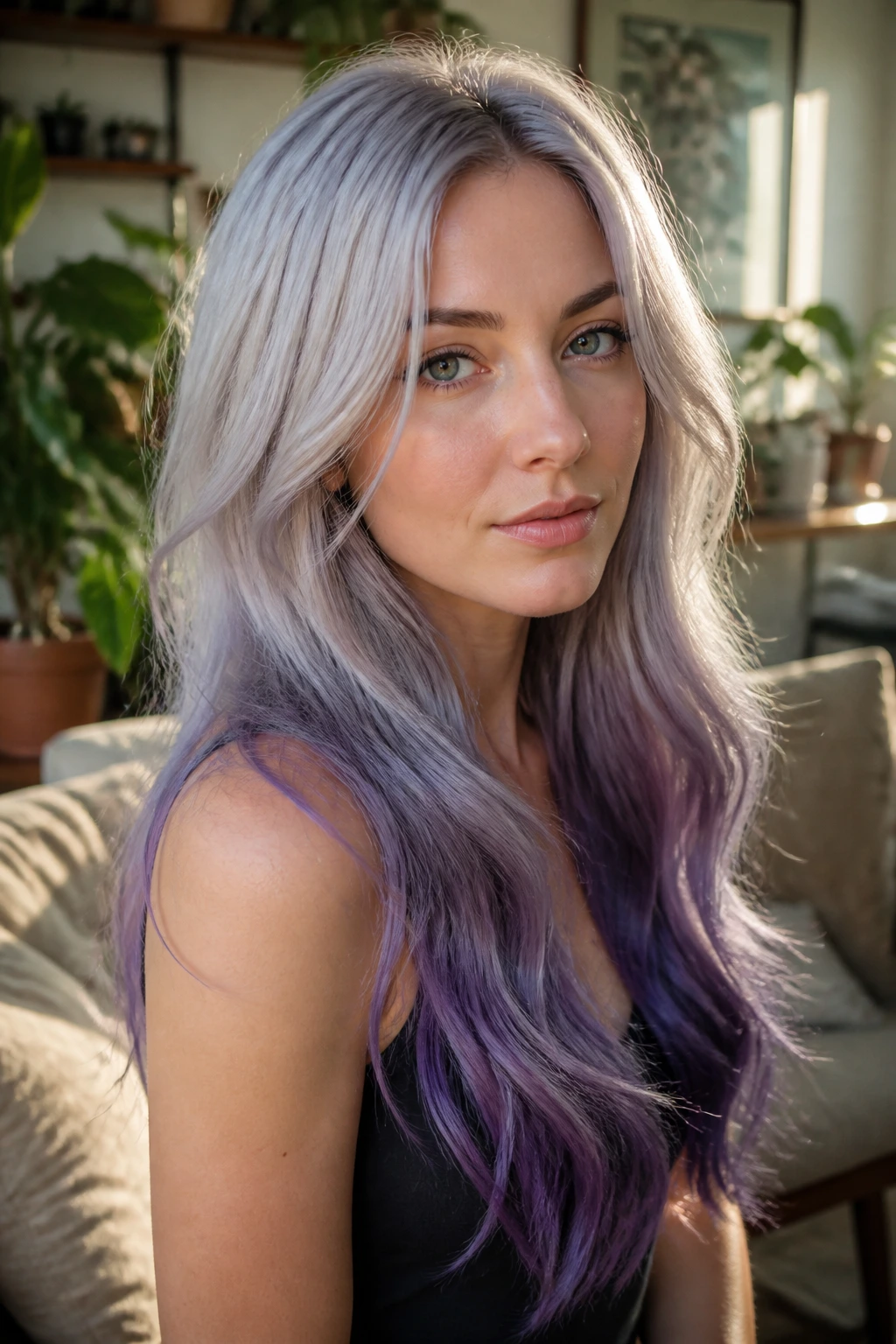
What happens when you keep the top nearly colorless and let the purple live at the ends? You get moonstone silver with amethyst ends, and it looks much more expensive in person than it sounds on paper.
The top half stays pale and milky, which is great for cool skin because it keeps the face bright. The amethyst ends add weight and movement without darkening the whole style. This is a good route if you want something a little dreamy but still wearable every day.
Best on longer hair
Longer lengths let the transition breathe. On short hair, the shift can look abrupt. On long hair, it melts.
- Ask for a soft silver through the first half
- Keep the amethyst muted, not bright purple
- Use a gloss to keep the boundary soft
If your ends are dry, trim first. Purple pigment loves damaged ends, and not in a good way.
25. High-Contrast Violet Peekaboo
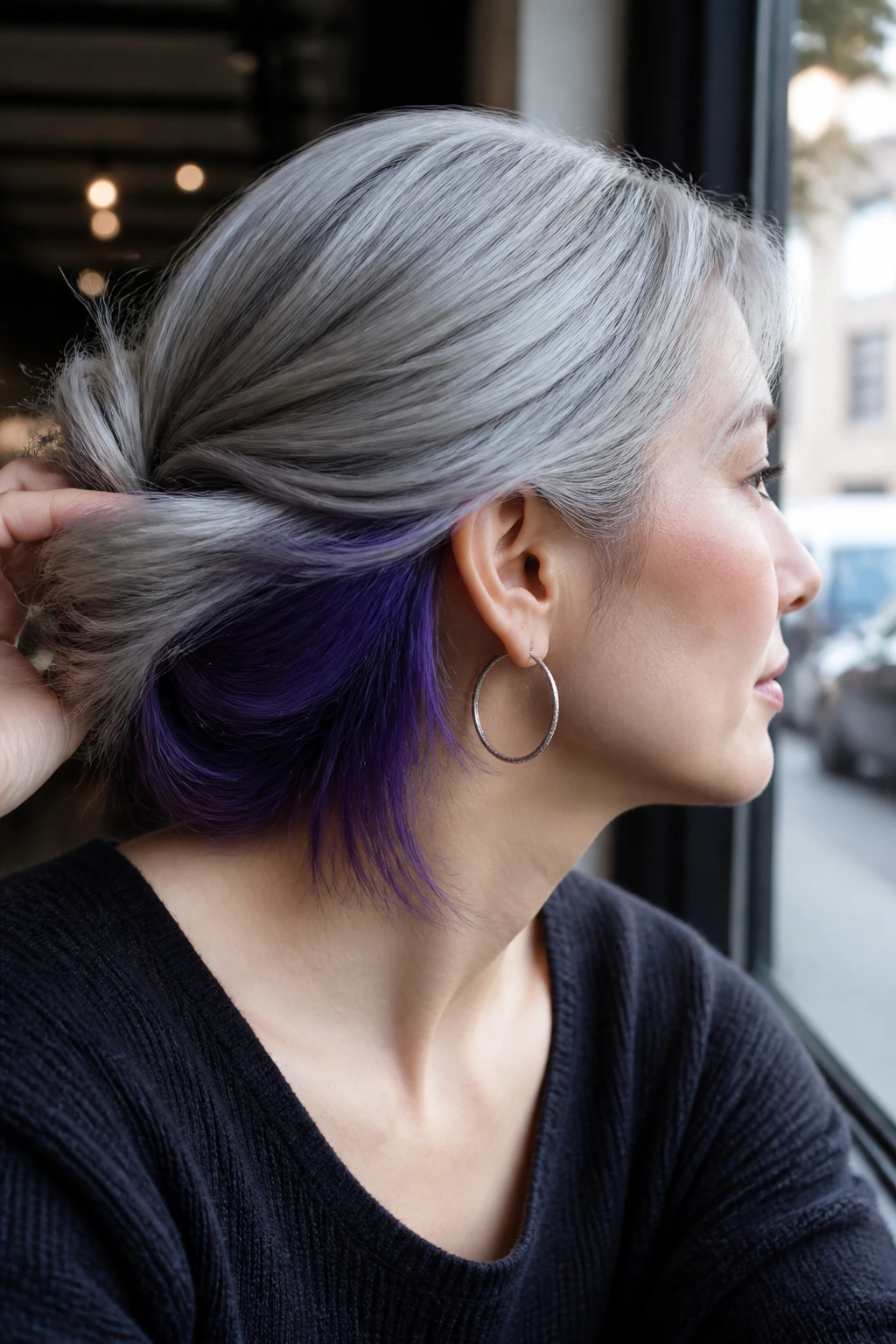
Peekaboo color is for people who want a little mischief. The top stays silver and calm, then violet flashes through from underneath when hair moves or gets tucked back.
This is one of the most flexible silver-purple ideas for cool skin because the visible top section does most of the flattering work. You get the bright, clean silver near the face, and the violet stays hidden until you want it seen. If you wear office clothes by day and play with your hair after work, this is a fun split personality.
Placement matters. Put the violet at the nape, under the crown, or along the inner layers of a bob or lob. You want flashes, not a block.
It’s a good compromise between vivid color and practicality. Honestly, that’s a nice place to live.
26. Silver Ash With Periwinkle Glaze
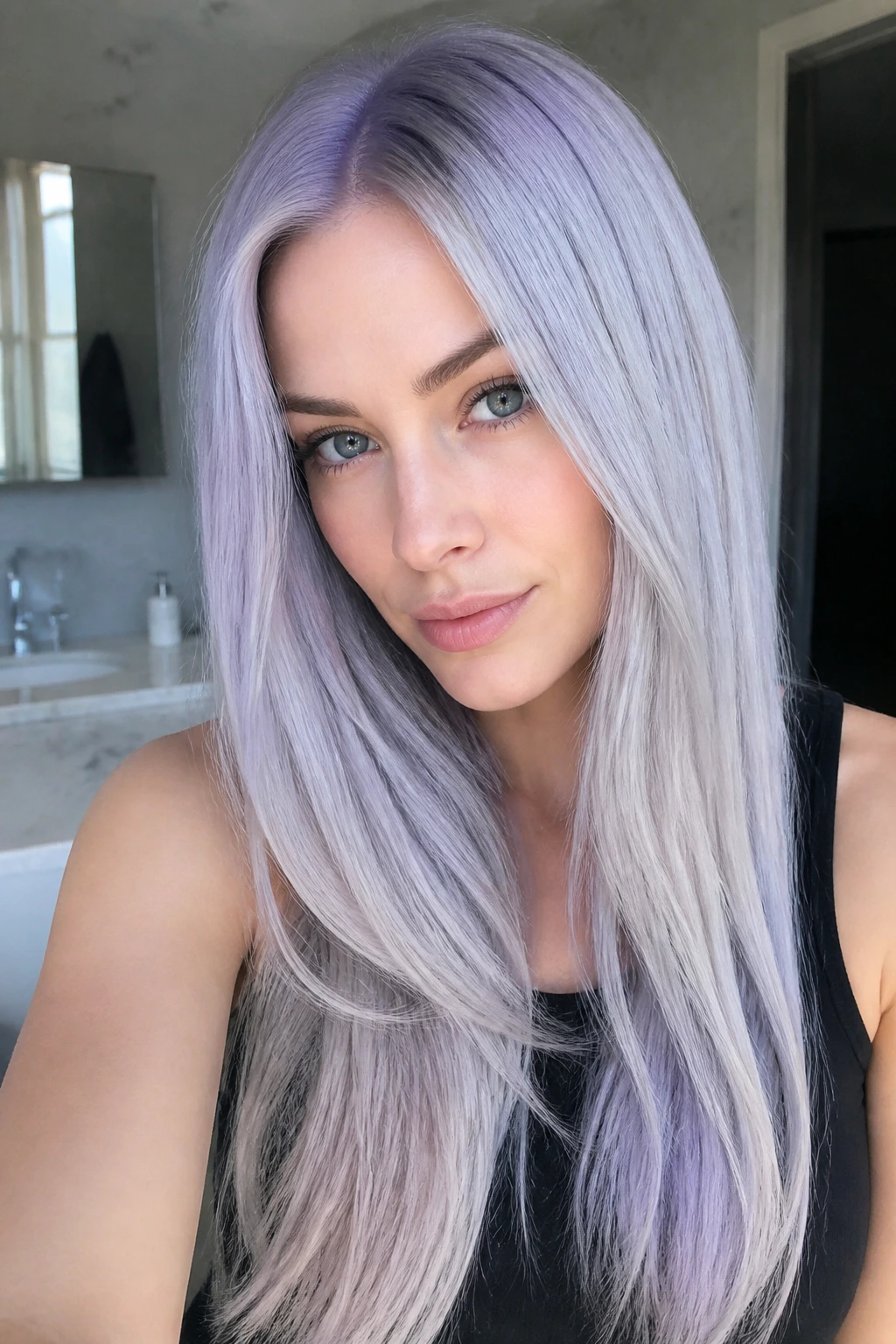
Periwinkle is the sneaky shade here. It’s cool, pale, and blue-leaning, which makes it a smart choice for skin that goes red if the hair gets too warm.
Silver ash gives you the base. The periwinkle glaze adds a faint lavender-blue cast that makes the whole head feel clean and airy. Compared with a stronger purple, this version is softer on the eyes and easier to wear for someone who likes understated color. It’s especially nice if your wardrobe leans black, gray, navy, or white.
Why this shade works
The blue in periwinkle cancels some of the yellow that can sneak into blonde. That helps the silver stay crisp longer.
- Best on cool blonde or very light brown bases
- Needs violet shampoo, but not too often
- Looks especially good with straight styles and smooth blowouts
If your skin is very fair, this shade can be prettier than a brighter purple because it doesn’t overwhelm the face.
27. Frosted Lilac Mermaid Waves
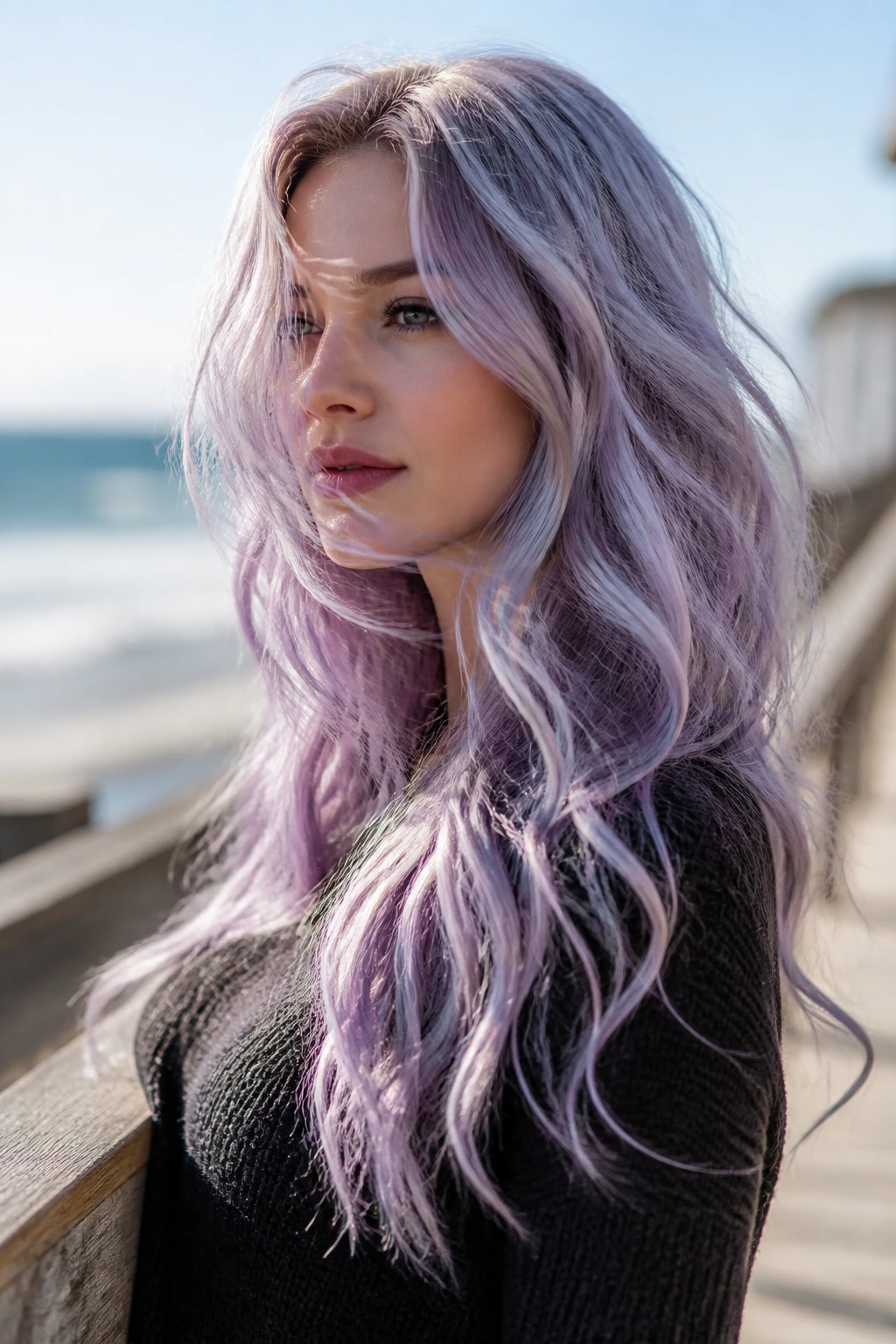
Long waves can hold onto lilac better than pin-straight hair. The movement breaks up the color, so the silver and purple stay soft instead of looking painted on.
This version works when you want airy, romantic color with a cool finish. The lilac should sit frosted, not candy-bright. Ask for pale silver ribbons through the top and a muted lavender wash through the lengths. On cool skin, that combination keeps the face looking fresh while the waves do the decorative work.
A 1.25-inch iron usually gives the right bend. You do not want tight curls here. Loose wave pattern, a little separation with fingers, and done.
The look is prettier when it’s a little imperfect. Too polished and it loses the mermaid feel.
28. Soft Silver Purple Melt for Low-Maintenance Grow-Out
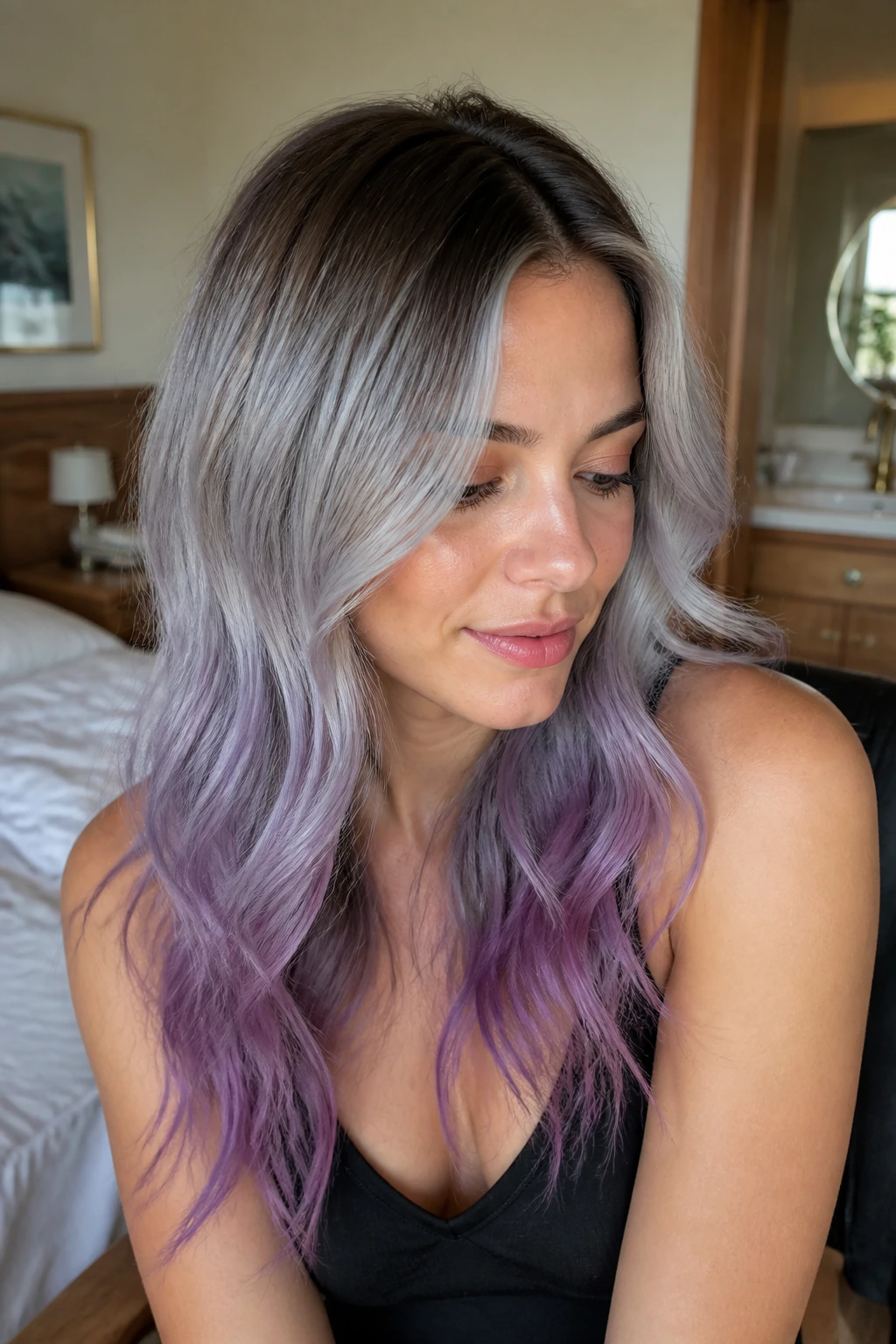
If you want the easiest grow-out, start with a melt that keeps the root soft. This is the calmest way to wear silver purple, and honestly, it’s the one I’d hand to anyone who likes the idea of color but not the upkeep.
The roots stay a shade or two deeper, the mids drift into silver, and the ends carry a muted purple that fades in a gentle way. That gradual shift matters. It means you can go longer between salon visits without the line of regrowth screaming for attention. Cool skin still gets the icy brightness near the face, but the whole look feels relaxed instead of high-maintenance.
This works especially well on shoulder-length and longer hair, where the melt has room to show. It also holds up nicely on wavy hair because the movement softens the transition even more. If your life is busy, if you hate obvious roots, or if you just want silver-purple without babysitting it, this is the shade I’d pick first.
The best part? It doesn’t need to shout to look good.
