



Purple grey hair color ideas for cool skin tones work best when the violet reads smoky and the grey stays icy. If the shade leans too warm, it can look flat fast. If it leans too neon, it starts fighting the face instead of framing it.
That balance matters more than people think. Cool skin usually plays well with blue-based pigments, ash, silver, and muted plum, while gold and copper can make the whole look feel off. The prettiest versions of purple-grey hair usually have a little depth at the root, a cool mid-tone through the length, and a soft sheen at the end rather than a single flat wash of color.
There’s also a practical side to this. Hair that has been lifted to pale blonde, silver, or white will grab violet fast, which is lovely if you want a smoky tint and annoying if you wanted something subtle. Porosity changes everything. So does the toner formula. A good purple-grey result usually comes from a careful gloss, not a heavy hand with permanent dye.
The nicest part is how adaptable this color family is. You can wear it soft and cloudy, sharp and graphic, hidden under darker layers, or blown out into something almost pearl-like. The first look is a favorite of mine because it feels expensive without looking fussy.
1. Smoky Lavender Melt
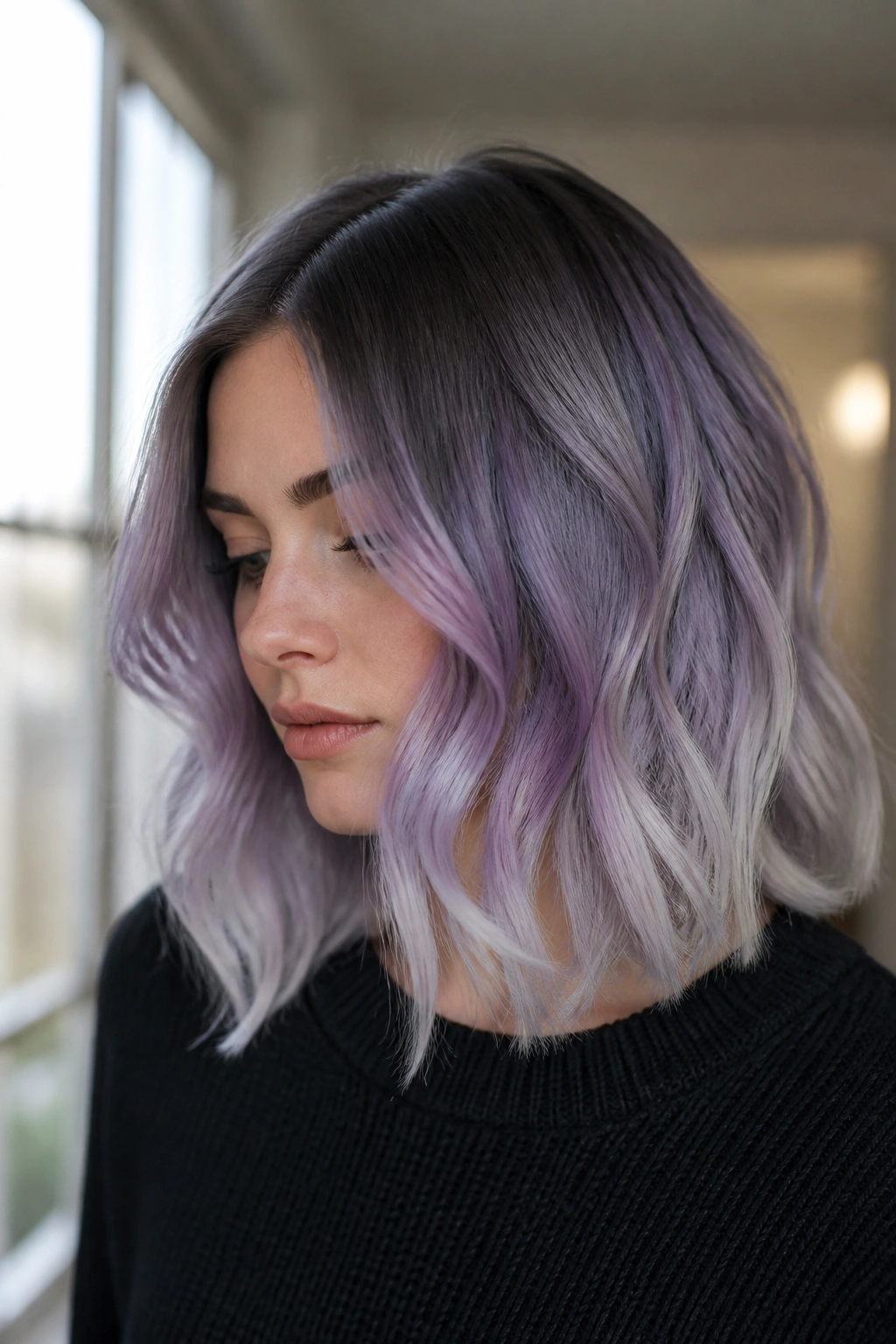
This is the shade I’d hand to someone who wants purple-grey hair without the “look at me” effect. The color shifts from a deeper ash root into a misty lavender through the mid-lengths, then softens into silver at the ends. It feels airy, not sugary. That matters on cool skin, because the face stays the focal point instead of competing with a loud pastel.
Why It Flatters Cool Skin
Smoky lavender sits in that sweet spot between violet and grey, which means it cools down redness and plays nicely with blue or pink undertones. It also looks especially good on layered cuts, where every bend in the hair catches a slightly different tone.
- Ask for a shadow root at level 5 or 6 if your natural base is darker.
- Keep the lavender muted, not bubblegum.
- A gloss finish gives the silver ends that soft, milky look.
- Best on shoulder-length hair or longer, where the fade has room to breathe.
My favorite detail: leave a little depth near the root. A perfect all-over pastel can look chalky fast.
2. Silver Plum Pixie
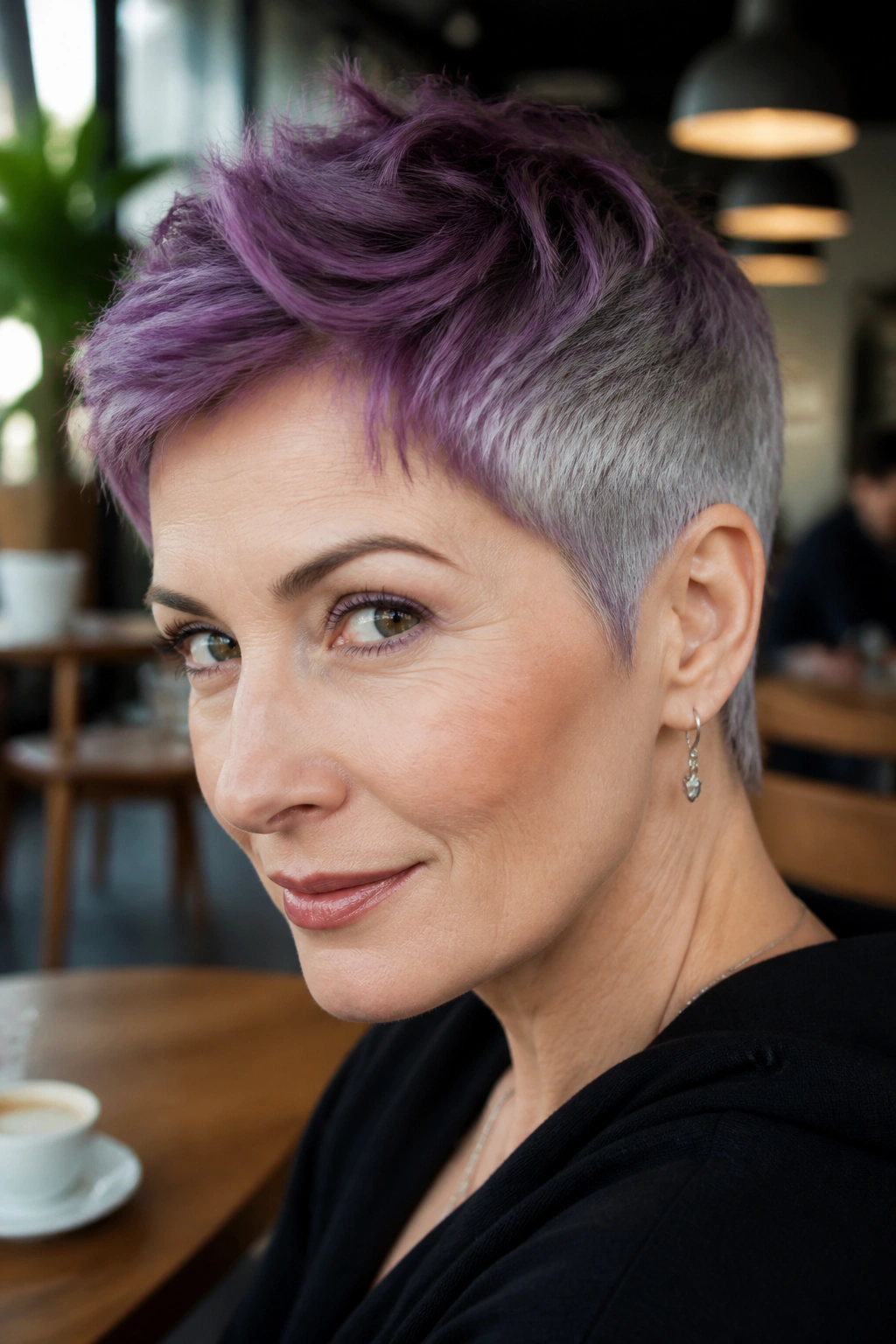
Short hair changes everything. A pixie cut makes purple-grey read sharper, cleaner, and a little more editorial, which is why silver plum works so well here. The plum sits in the top layers, while the sides and nape stay silver-grey. It’s a strong look, but not a busy one.
The cut does half the work. On cool skin, that contrast can be gorgeous because the plum adds enough warmth to keep the color from feeling icy to the point of drain-you-out pale. Keep the purple deep, though. If it starts drifting into red-violet, it loses that cool edge.
A little matte paste at the crown helps separate the layers and show the color variation. And yes, short hair is easier to maintain in one sense, but it also exposes tone changes faster. If the plum fades patchy, you’ll notice it right away.
3. Amethyst Balayage on Dark Roots
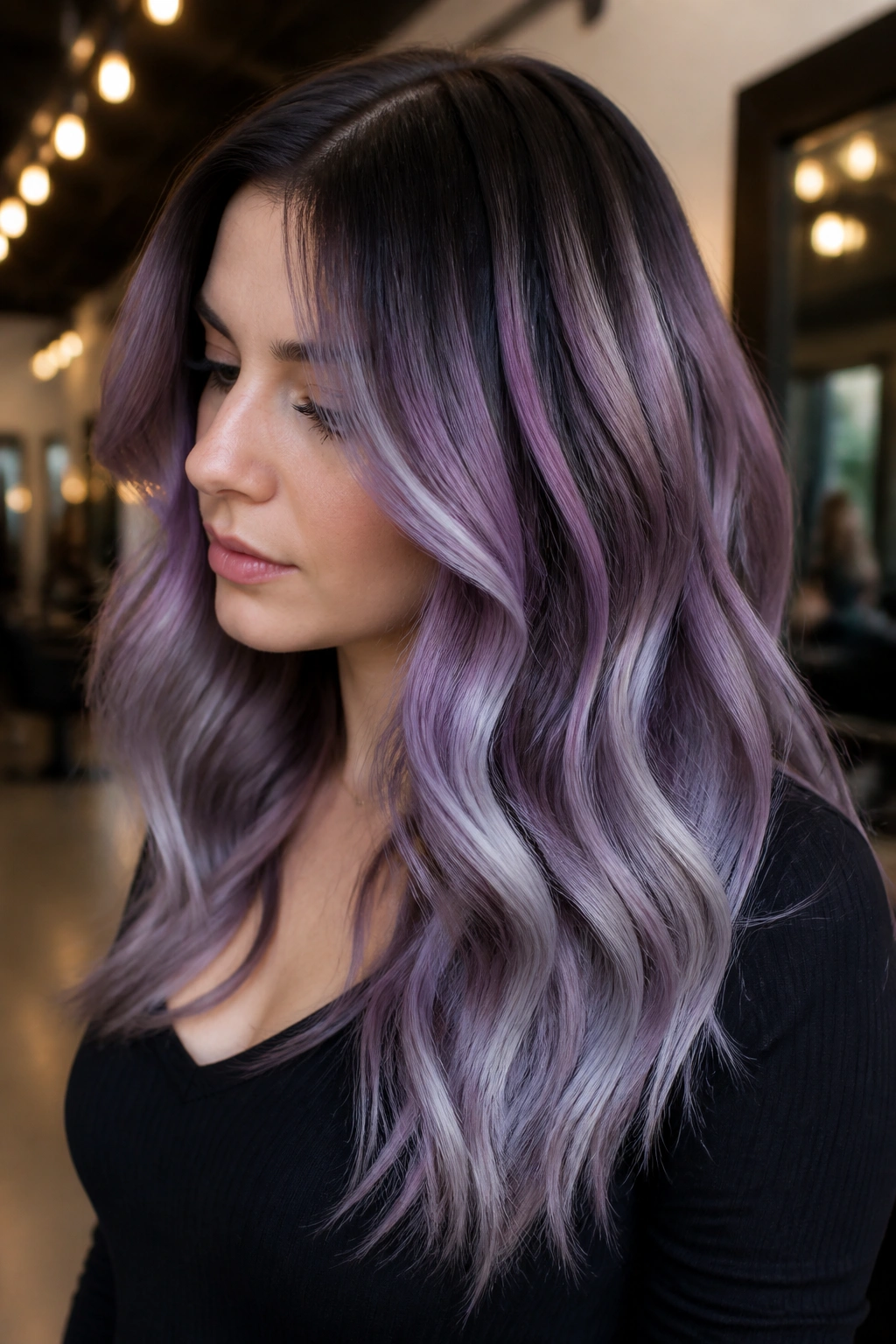
Why does this work so well? Because the darkness at the root gives the amethyst somewhere to live. Without that anchor, purple-grey can look washed out on cool skin. With it, the whole look gains shape.
Balayage is the right move if you want visible ribbons of color instead of a helmet of dye. Hand-painted amethyst pieces through the mid-lengths let the grey come forward in the light while the purple stays tucked into the shade. It looks expensive in a very quiet way.
How to Ask for It
Tell your colorist you want dark, soft roots with violet-grey ribbons painted through the surface and a cooler, silvery finish on the ends.
- Keep the lightened pieces around level 8 or 9.
- Ask for soft blending, not stripes.
- Best on wavy hair, since bends show the color shifts better.
- A blue-violet toner helps hold the coolness longer.
This is one of those shades that gets better when it’s slightly imperfect. A few deeper strands keep it from going too flat.
4. Lilac Money Piece
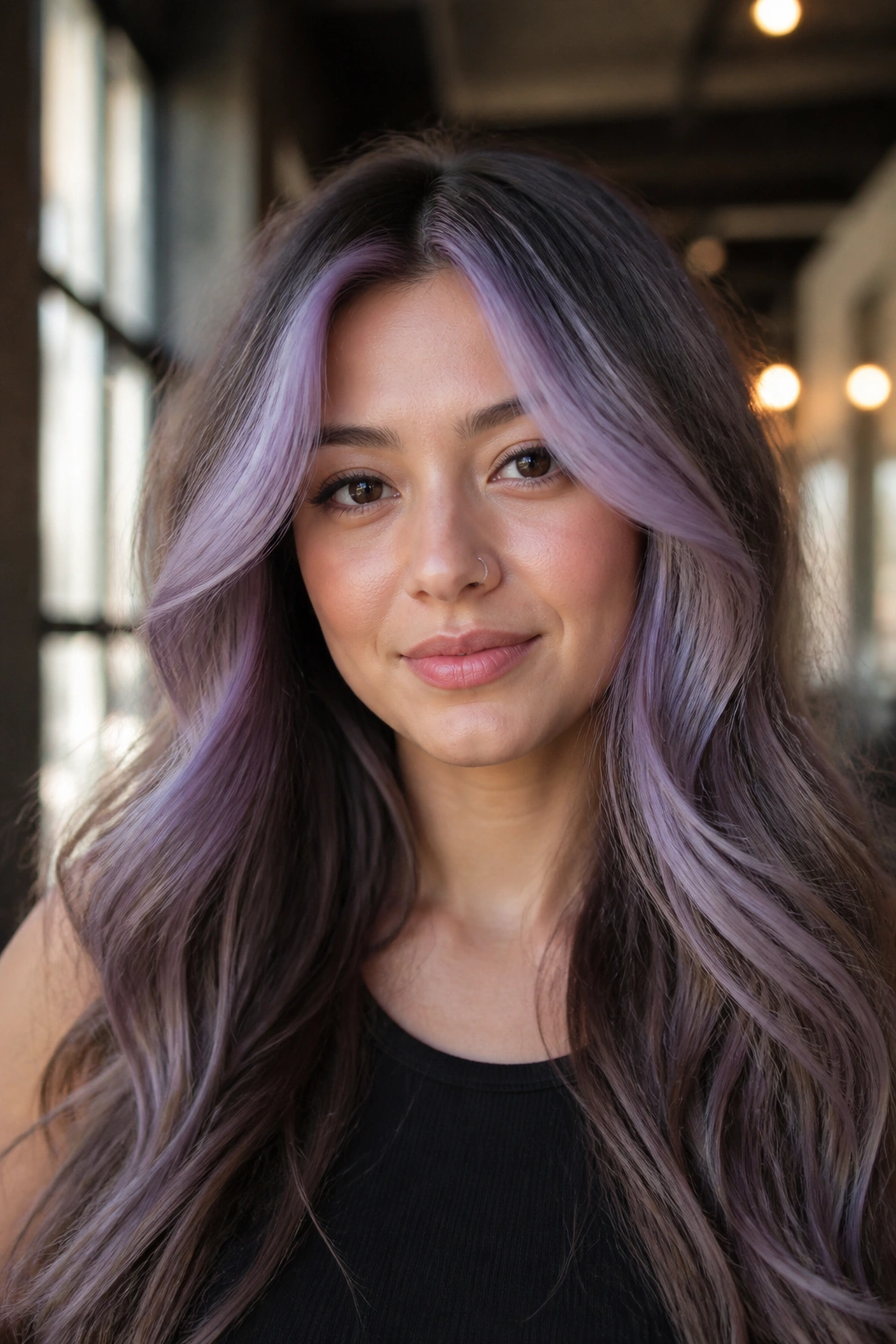
A lilac money piece is the easiest way to test purple-grey without committing your whole head. You keep most of the hair in ash brown, silver, or grey, then place a soft lilac-grey frame around the face. It’s instant contrast. It’s also flattering in a very direct way, because the brighter front pieces pull light toward the eyes and cheekbones.
The trick is placement. If the pieces are too chunky, they can look dated. Too thin, and the effect disappears the moment you tuck your hair behind your ear. I like a money piece that starts around the temples and feathers down to the jawline.
A center part makes it more graphic. A soft side part makes it gentler. Either way, cool skin tends to like the violet-grey front pieces because they keep the face looking clear instead of ruddy. One note: if your natural hair is dark, the front money piece should still have a little shadow at the root so it doesn’t look like a hard stripe.
5. Mushroom Grey with Violet Veil
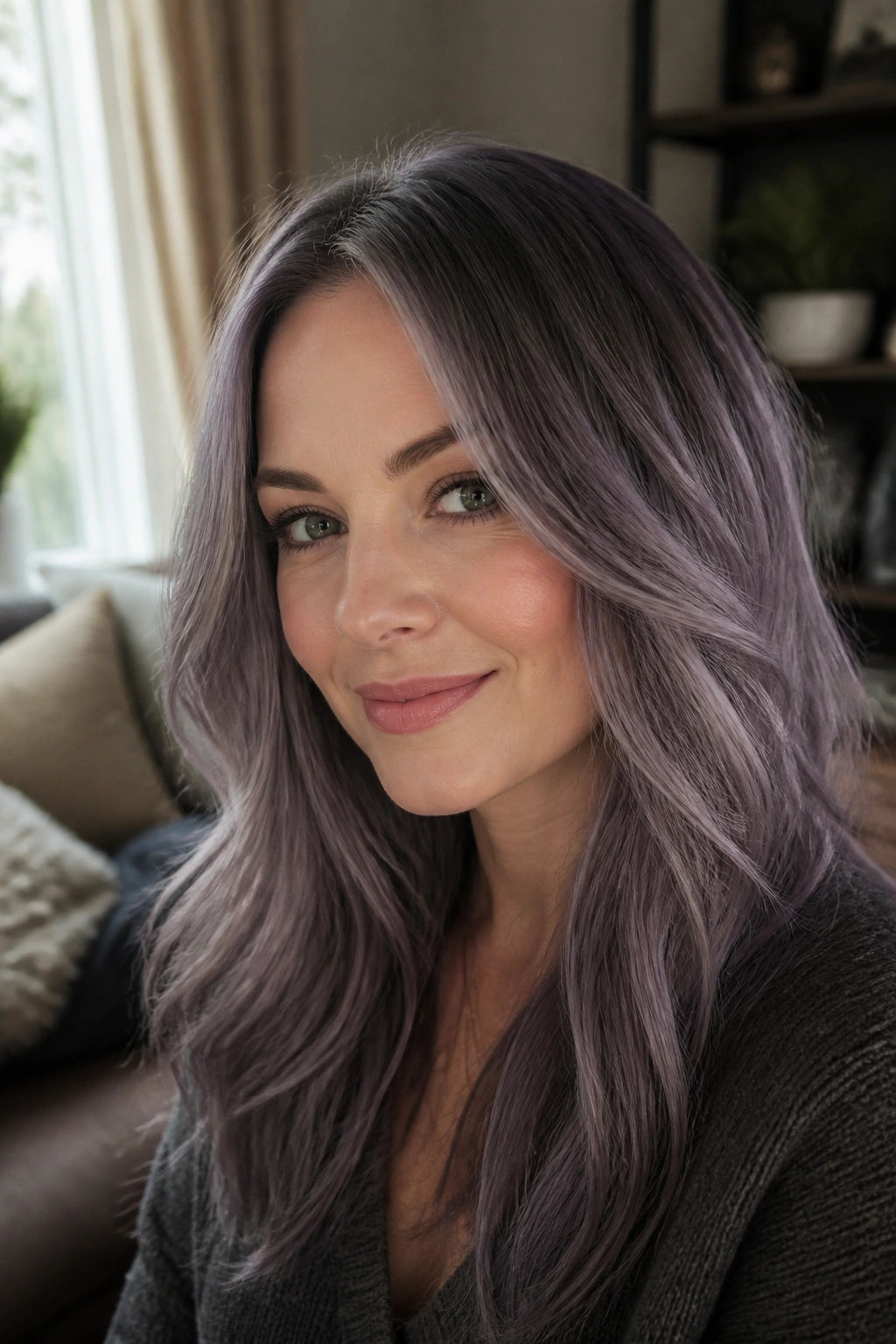
Mushroom grey is one of those shades that sounds plain until you see it done well. Then it looks quietly expensive. Add a violet veil over the top, and the whole thing gets a soft haze that works beautifully on cool skin with either fair or deep coloring.
What I like here is the restraint. The color doesn’t announce itself in one loud note. Instead, it moves between taupe-grey, slate, and a faint purple cast that shows up most in indirect light. That makes it wearable for people who want something moody without drifting into fantasy hair.
It’s also one of the best options if your hair tends to turn brassy. The violet suppresses that warmth before it becomes the main event. Ask for a demi-permanent glaze if you want to keep the finish soft. Permanent color can make mushroom tones look dense, and dense is not the same thing as dimensional.
6. Icy Mauve Bob
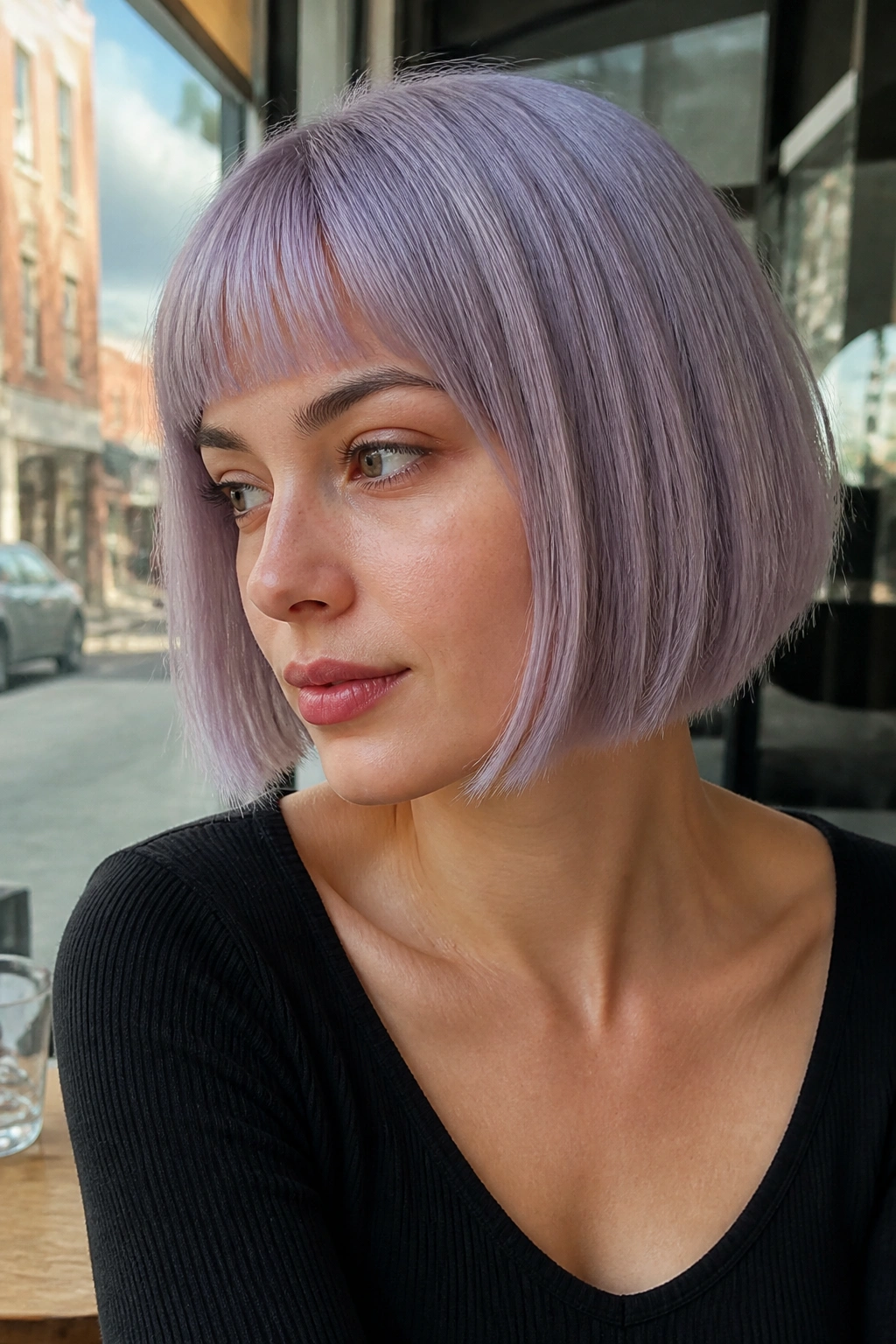
An icy mauve bob is proof that cool-toned color doesn’t have to look severe. The bob shape keeps it neat, while the mauve-grey tone softens the edges. Compared with a beige blonde bob, this version has more attitude and less warmth. That suits cool skin, especially if your wardrobe already leans black, navy, charcoal, or silver.
What Makes It Different
Mauve sits between pink and violet, but in this version the pink is pulled back and the ash is turned up. You get a dusted effect, almost like a blush-colored fog settled over silver hair.
- Best on blunt bobs or softly beveled cuts.
- Works well at chin length or just below the jaw.
- Ask for a cool gloss every few weeks if your hair fades fast.
- Flat irons show the tone clearly; loose bends make it softer.
This is not the shade for someone who wants zero upkeep. It fades politely, then a little dull, and then it needs a refresh. Still worth it.
7. Smoky Orchid Waves
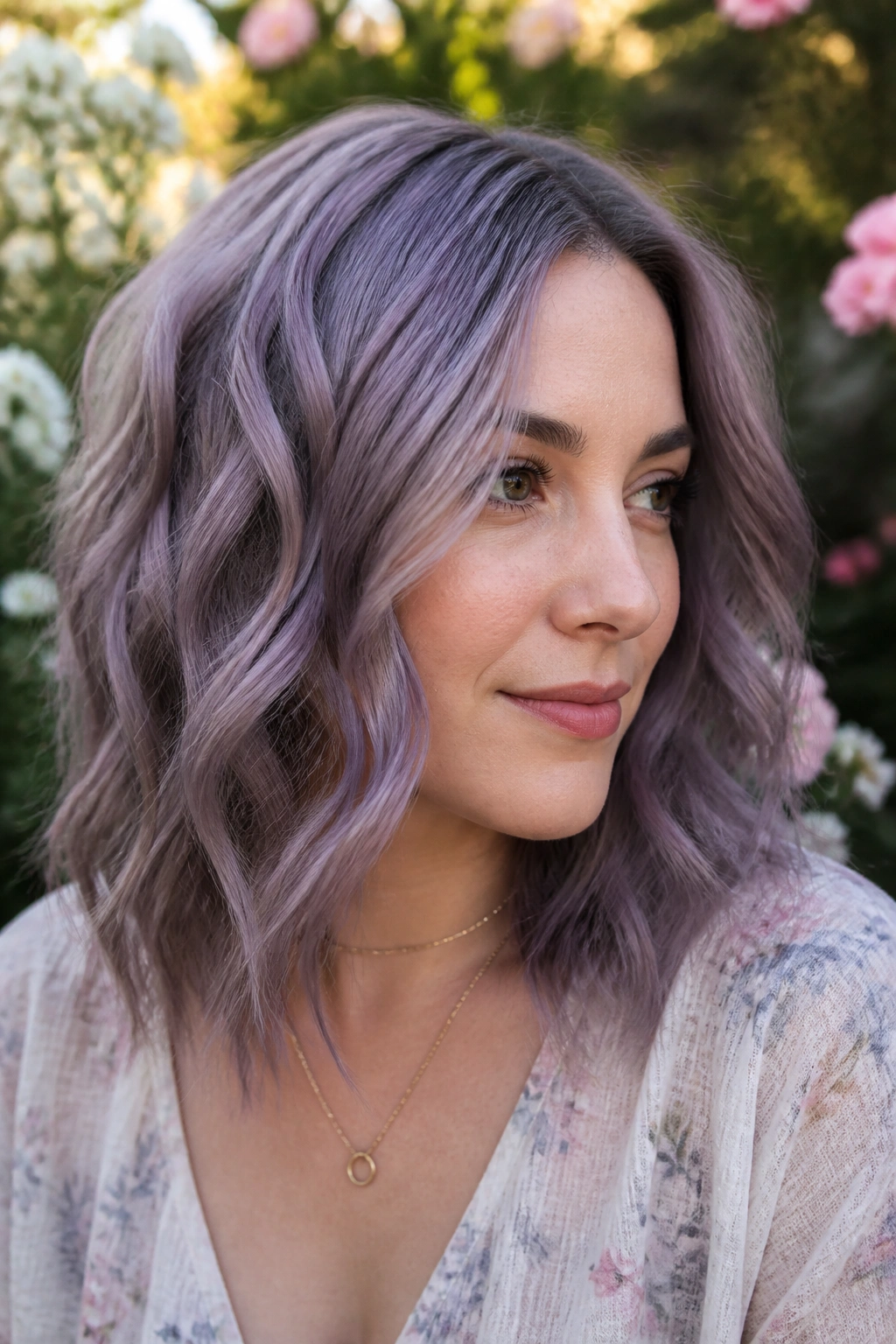
Smoky orchid is for people who want more color than lavender but less punch than violet. On cool skin, it gives that flattering lifted effect around the face without turning the whole head into a pastel experiment. Waves help, because the color changes tone as the hair moves.
The orchid note should stay muted. Think soft petals, not candy. Then grey slides through the shadow areas and keeps the finish grounded. I like this shade on medium-length hair with loose bends from a 1.25-inch iron or a big curling wand. Tight curls can work too, but the tone shift reads faster on larger movement.
A good orchid gloss often needs a cleaner base than people expect. Yellow warmth underneath can muddy the whole thing in a hurry. If your hair is porous, ask for a strand test first. Porous hair grabs violet and mauve unevenly, and no one enjoys a patchy front section.
8. Graphite-Lilac Shadow Root
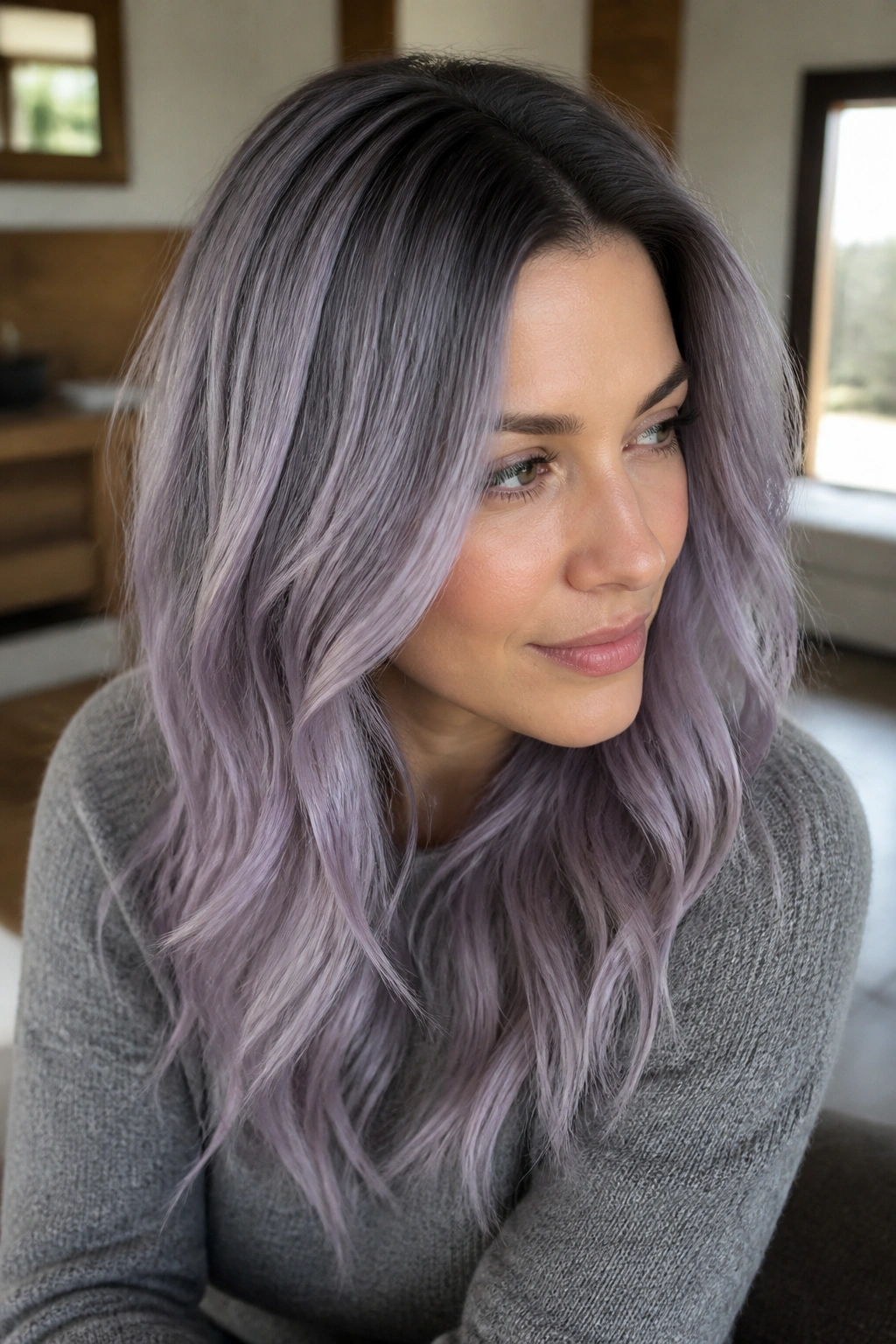
Graphite-lilac is a smart choice if you want the color to look strong at the root and softer through the ends. The graphite base gives the head shape, while the lilac-grey mids keep it light enough for cool skin. It’s one of the most forgiving ways to wear purple-grey, honestly.
A shadow root of 2 to 3 inches helps this style last longer between salon visits. That deeper root also means your grow-out looks intentional instead of messy. The lilac can be painted in soft ribbons or glazed over pre-lightened lengths, depending on how bright you want it.
This works especially well if you wear hair up a lot. A bun, claw clip, or half-up twist shows the contrast between the dark root and the cool violet ends without needing perfect styling. That part matters. A lot of hair color ideas only look good in photos. This one still looks good when you’re late and the front pieces are doing their own thing.
9. Pearl Grey with Purple Underlights
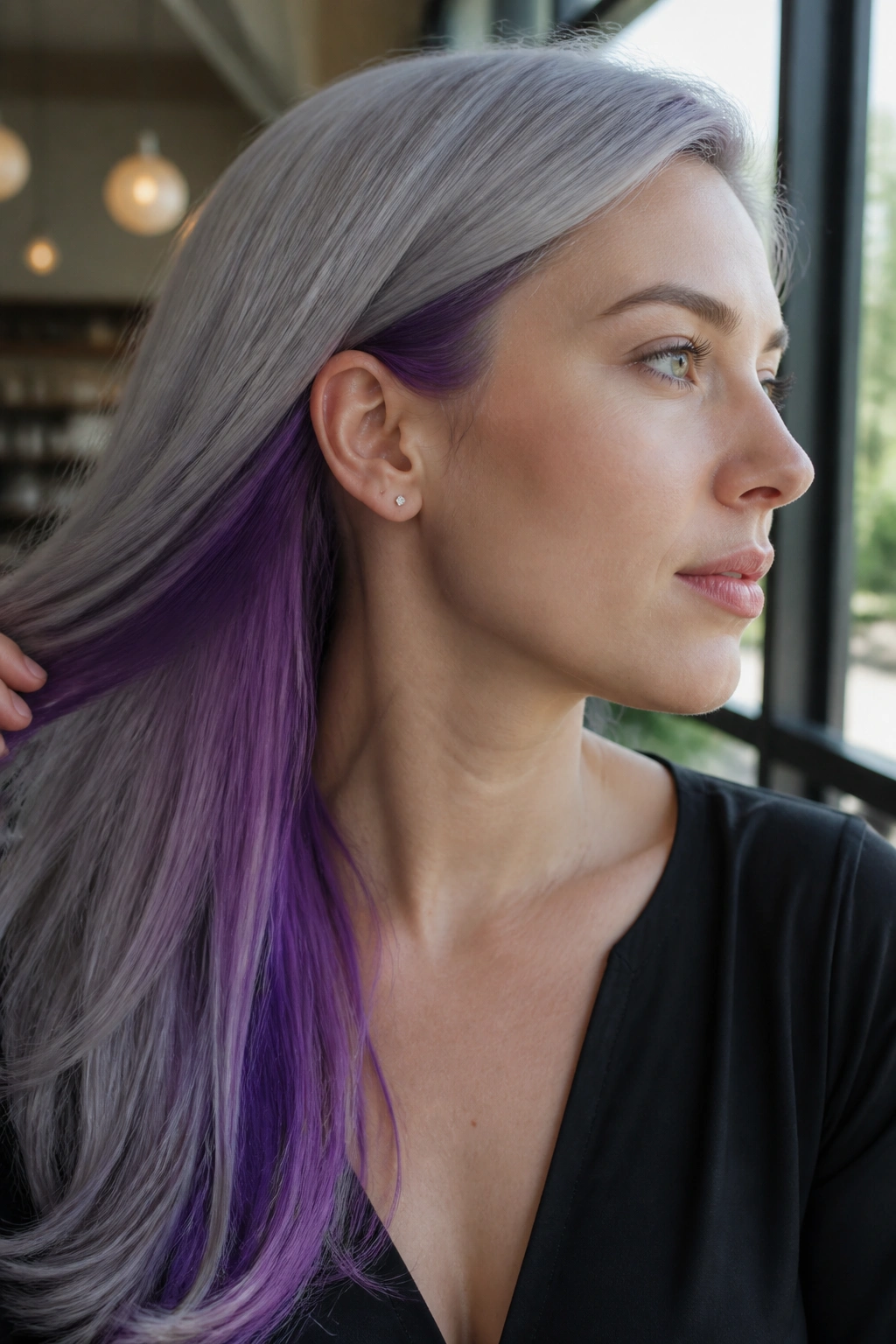
Purple underlights are for the person who wants color that shows up in motion, not all the time. Most of the hair stays pearl grey on top, which keeps the style clean and cool. Then the purple sits underneath, peeking through when the hair swings, bends, or gets tucked behind the ear.
That hidden placement is a gift for cool skin. You get enough violet near the face and neckline to warm the complexion in a flattering way, but not so much that the style takes over your whole look. It’s also easier to grow out than a full head of vivid color, which is never a bad thing.
How to Wear It
If your hair is layered, place the underlights through the lower third and nape. Straight hair gives the cleanest reveal. Wavy hair gives the prettiest one.
The pearl grey on top should stay glossy, not flat. A clear or silver-toned glaze keeps it from dulling out, and dull pearl grey is a missed opportunity.
10. Dusty Violet Lob
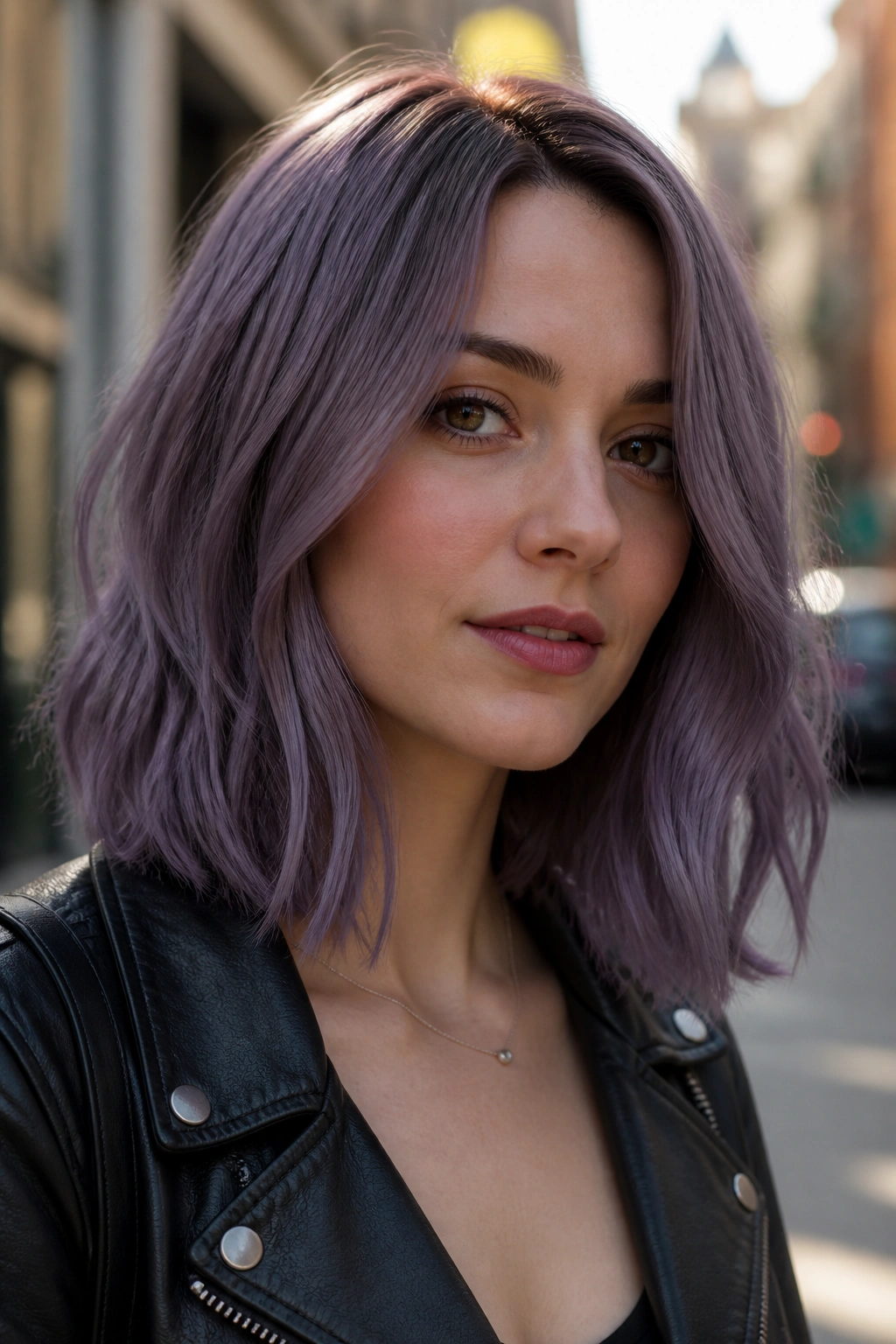
A dusty violet lob is one of those cuts that looks better the longer you stare at it. The color is muted, a little smoky, and far less obvious than a bright purple. On cool skin, that restraint is the whole point. It lets the complexion stay fresh while the hair adds depth.
The lob length helps too. Hair that hits just above or below the collarbone shows the color shift nicely without requiring a huge styling routine. A slight bend at the ends keeps the dusty tones from feeling too heavy.
This shade shines when the violet is diluted with ash. You want the hair to look like it has been dusted in color, not dipped in it. If you already have naturally grey strands, even better. The violet can sit over the silver and create a soft plum cast that looks especially good in natural light.
11. Steel Grey to Grape Ombré
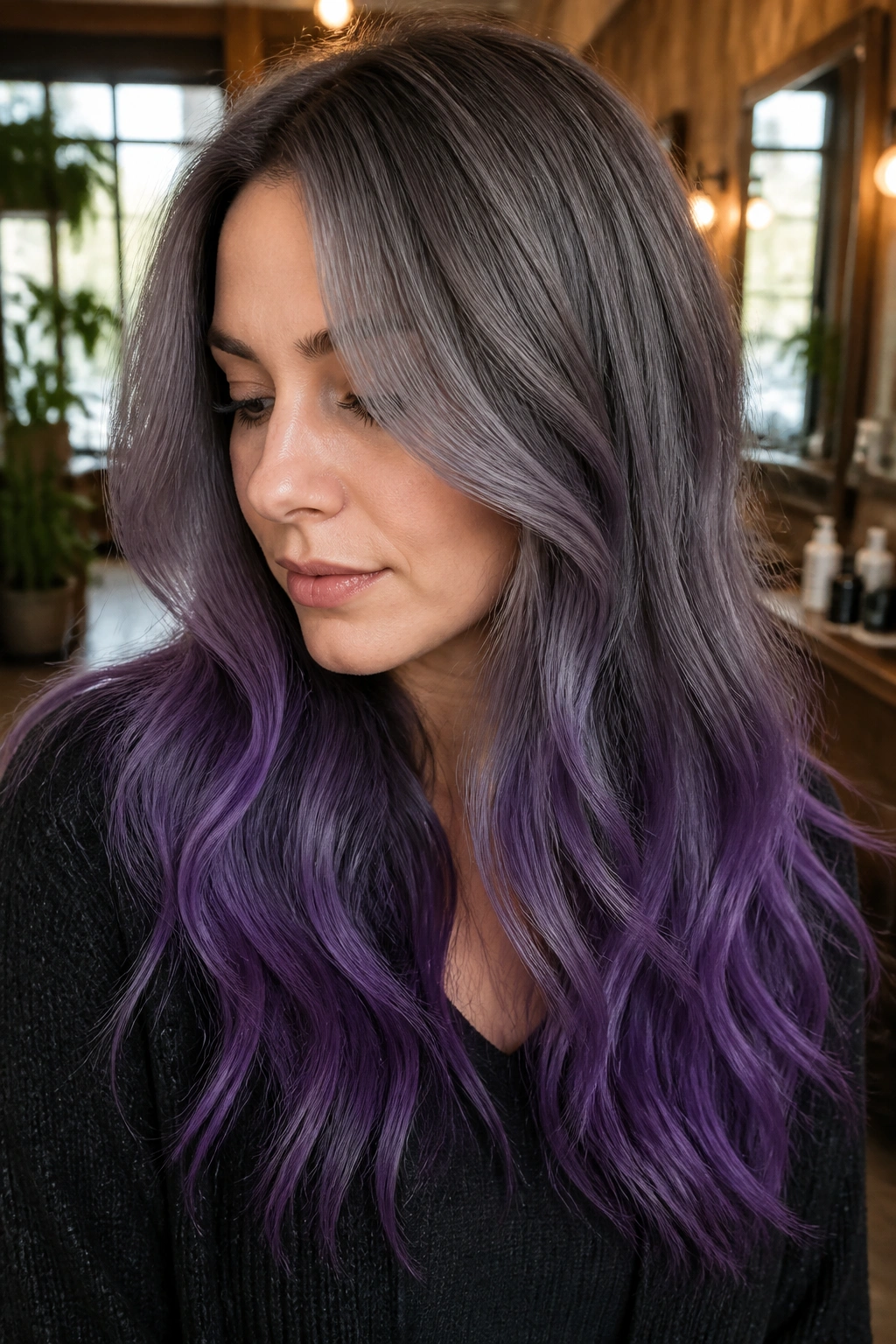
Steel grey to grape ombré has a bit more drama, and I mean that in a good way. The cool steel root or mid-shaft gives the style a clean base, then the grape ends bring the violet note forward. It’s a stronger contrast than the softer looks above, but cool skin can handle it because both shades stay in the same temperature family.
Longer hair is the best canvas here. You need room for the fade to happen. On a blunt cut, the transition can feel abrupt; on layered lengths, it melts better. Ask your colorist to blur the line between grey and grape so the shift looks smoked in rather than painted on.
This is a good choice if you want color that still feels polished. It photographs with more punch, but it doesn’t need to be loud in person. The root-to-end fade also makes grow-out kinder, which is one less thing to fuss over.
12. Heather Gray Curly Shag
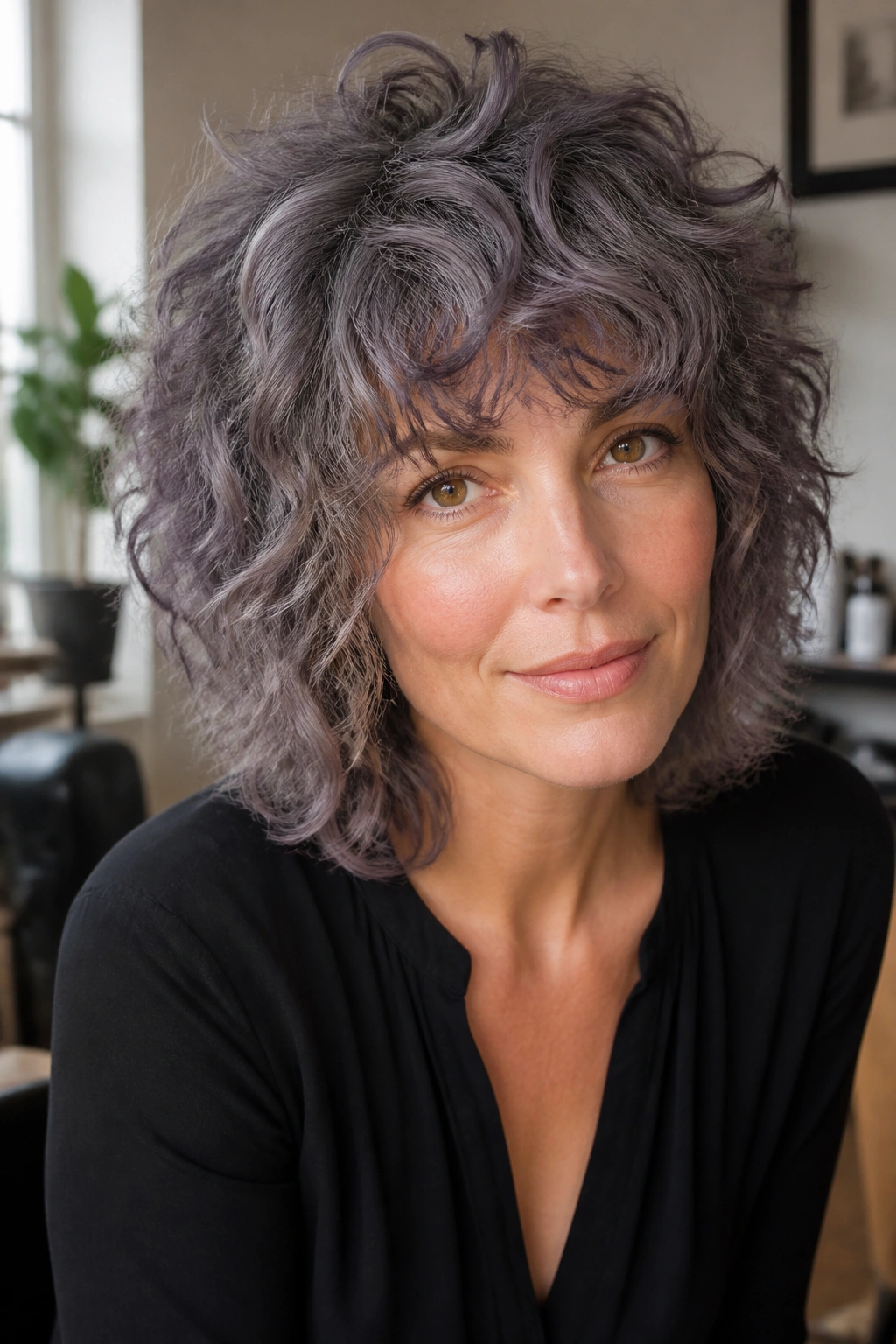
Curly hair loves dimension, and that’s why heather gray works so well here. The purple-grey doesn’t sit on the surface; it moves through the curl pattern. On cool skin, the soft lavender-grey mix gives the face a lifted, almost luminous look without flattening the texture.
The shag cut matters. Layers keep curls from stacking into a heavy triangle, and that means the color can show at different depths. A curl cream and diffuser will do more for this style than a flat iron ever could. Straightening it every day can make the color look less alive, which defeats the point.
Here’s the part people miss: curl porosity is often uneven. Ends may need less pigment than the upper layers because they’re older and grab color faster. If you’re going for this look, ask for a test curl near the back. It saves disappointment later.
13. Midnight Plum Gloss on Silver Base
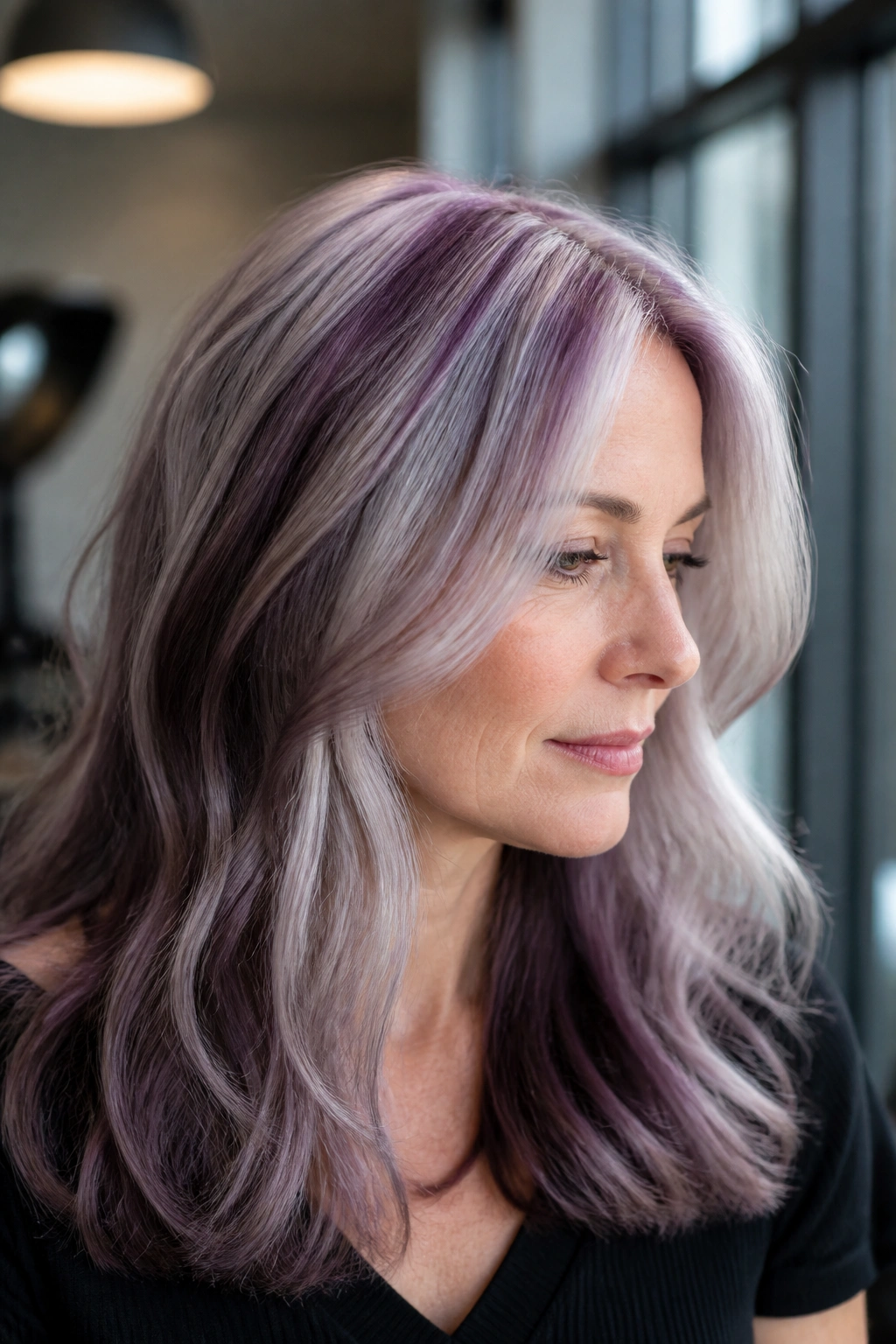
A midnight plum gloss on silver hair is one of the fastest ways to change the mood of a look without hiding the silver underneath. The base stays bright and cool, but the plum adds depth that feels richer than plain grey. On cool skin, that little burst of darkness near the surface can make the eyes stand out more.
This is not a heavy color service. It’s a gloss, which means it should feel like a veil. The silver should still shine through when the light hits it, especially at the crown and around the face. If the plum is too opaque, the whole thing can go flat.
I like this option for people who are already growing out natural grey or white and don’t want to cover it completely. The gloss can be refreshed more often than permanent dye, and it fades in a softer way. That softness is part of the charm.
14. Lavender Smoke Pixie Crop
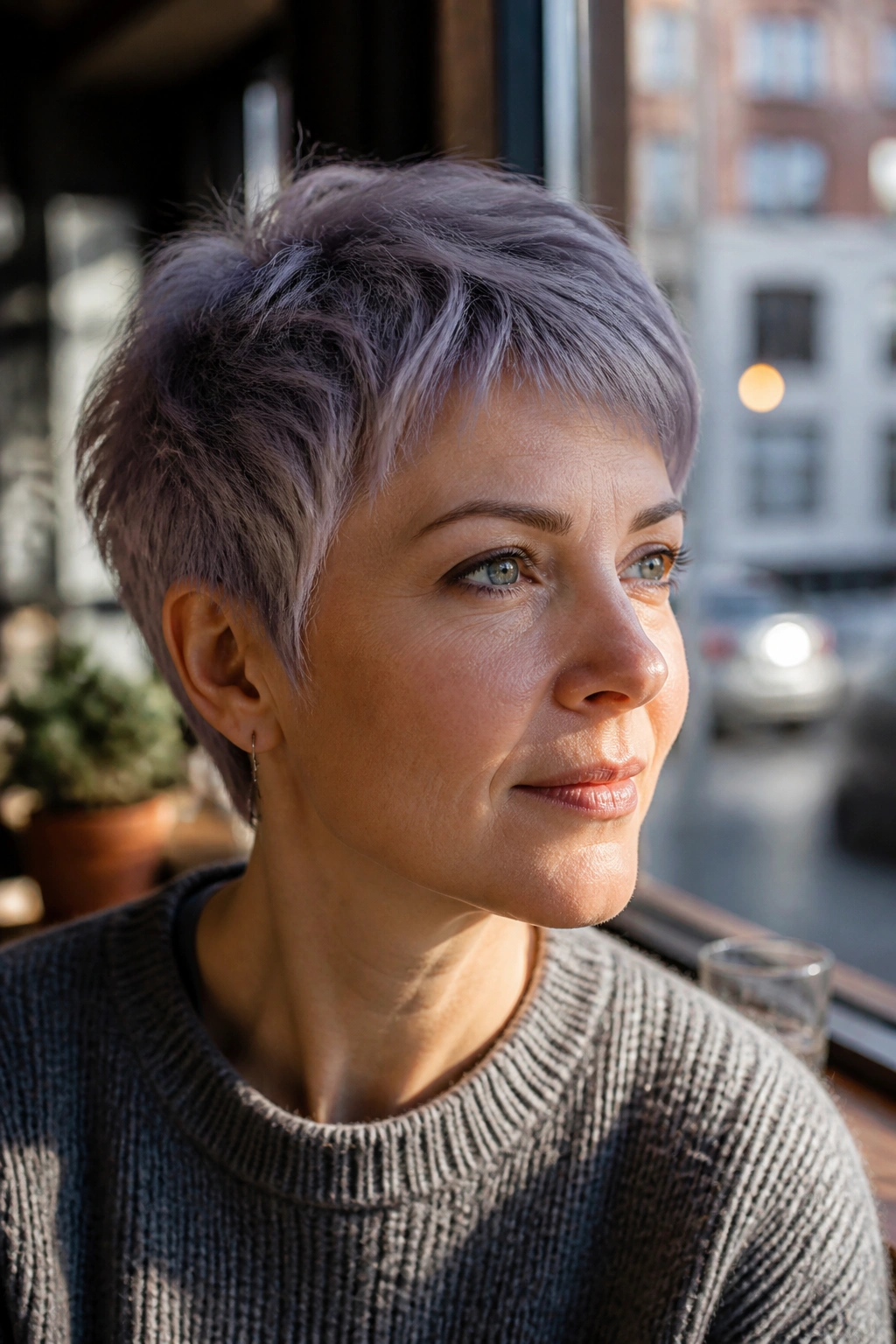
A pixie crop gives lavender smoke a sharper outline than longer cuts can. The shape keeps the shade from getting too floaty, which is useful if you want purple-grey that looks deliberate and a little cool-girl without feeling overdone. On cool skin, the airy lavender note softens the edges around the eyes and temples.
The best thing about this cut is the styling range. You can brush it forward for a soft fringe, spike it a little for texture, or smooth it down with a touch of shine cream for a cleaner line. Each version shows the color differently.
What to Watch For
- Keep the lavender muted so it doesn’t overpower the face.
- Avoid heavy oils; they can make the smoke-grey part look greasy.
- Trim every 4 to 6 weeks if you want the silhouette to stay crisp.
- A cool root shadow helps the pastel pieces sit better.
This is a good pick if you like minimal fuss but still want personality.
15. Soft Mauve Ribbon Highlights
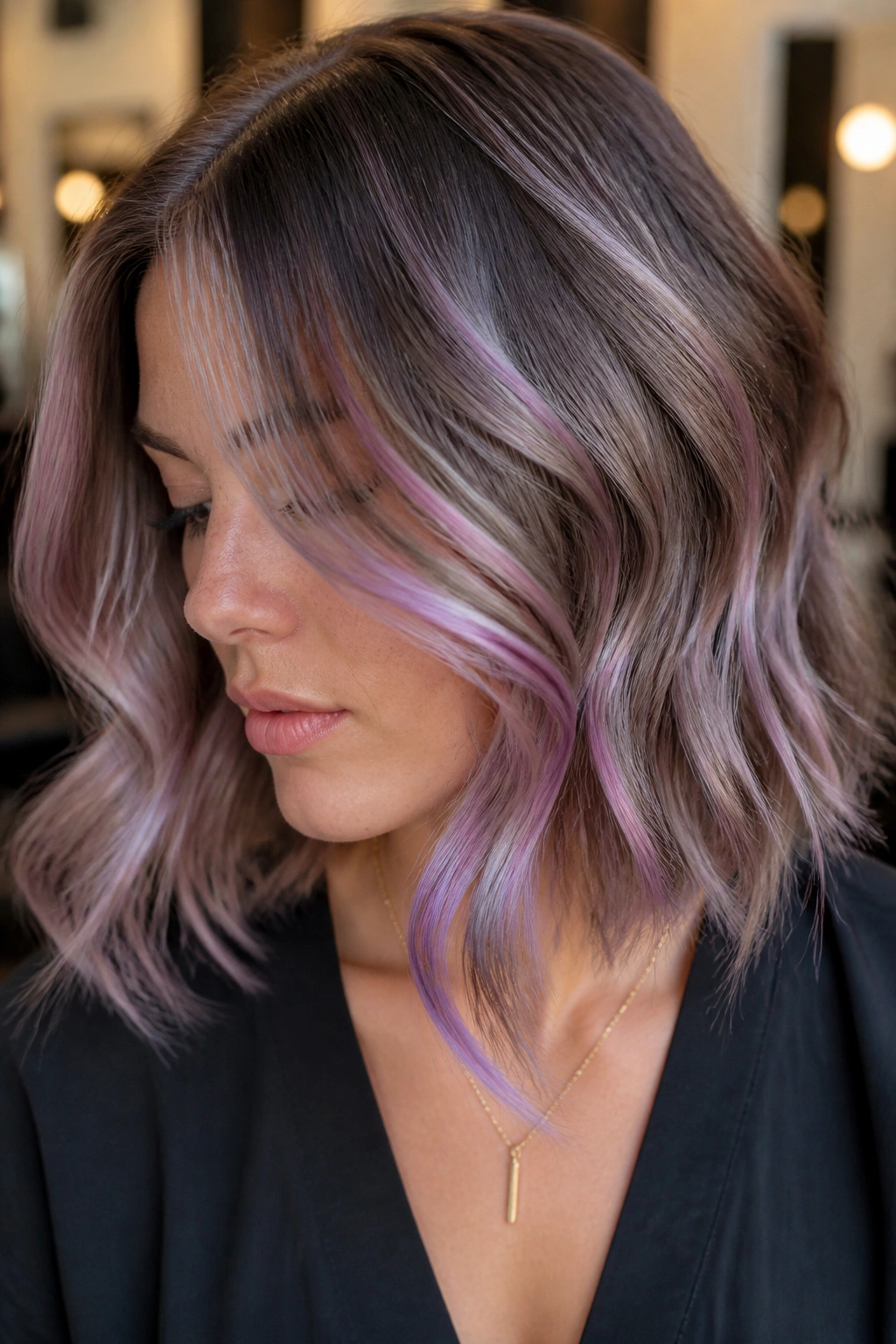
Ribbon highlights are for someone who wants movement more than saturation. Instead of coloring the whole head, you thread soft mauve-grey pieces through an ash or silver base in thin, visible slices. The result is subtle until the hair moves, and then the tones wake up.
That’s the key difference here: this look is about placement, not coverage. It suits cool skin because the mauve stays near the face and surface, where it can warm the complexion just a little without turning pink. If you’ve ever liked a shade in the bowl and hated it on your head, this is a safer route.
Ask for highlights that are no wider than a pencil in the front and a little chunkier underneath for depth. That mix prevents the color from reading stripey. It also gives you a nicer grow-out, which matters more than people admit.
16. Charcoal Violet Peekaboo
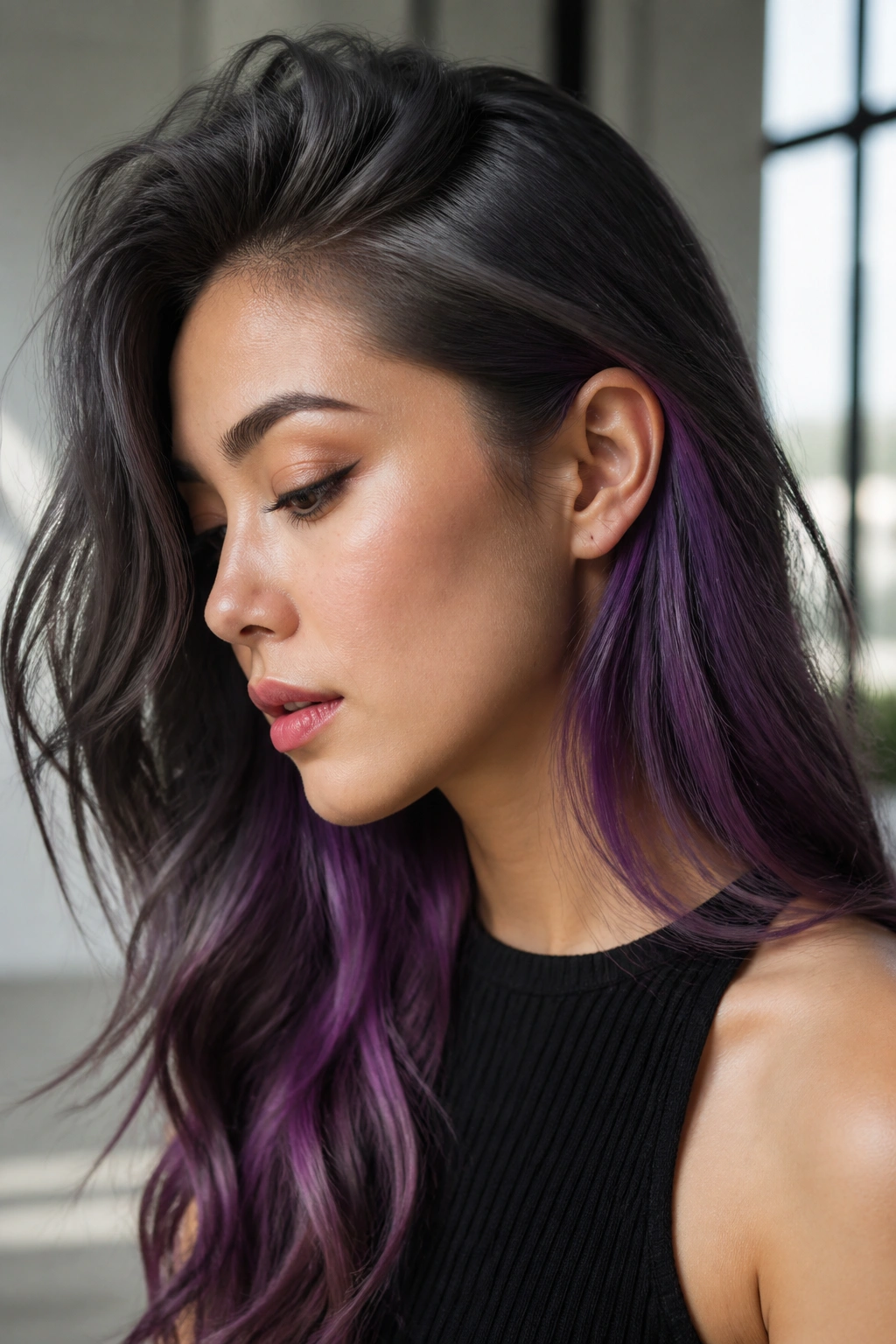
Peekaboo color is where purple-grey gets sneaky in the best way. The top layer stays charcoal or deep grey, while violet sits underneath and flashes when the hair shifts. It’s polished enough for conservative settings and playful enough to keep things interesting. Hard combo to beat.
The hidden placement also works well if you’re nervous about going full purple. You can live with charcoal most of the time and still have a visible violet hit when you wear your hair half-up, braid it, or twist it into a knot. That little reveal is half the fun.
Best for: people with straight to wavy hair, anyone who likes hair tucked behind one ear, and anyone who wants color without constant attention.
The finish needs to stay cool, though. If the charcoal drifts brown, the peekaboo violet loses its edge. That’s the difference between chic and muddy.
17. Frosted Purple Grey Balayage
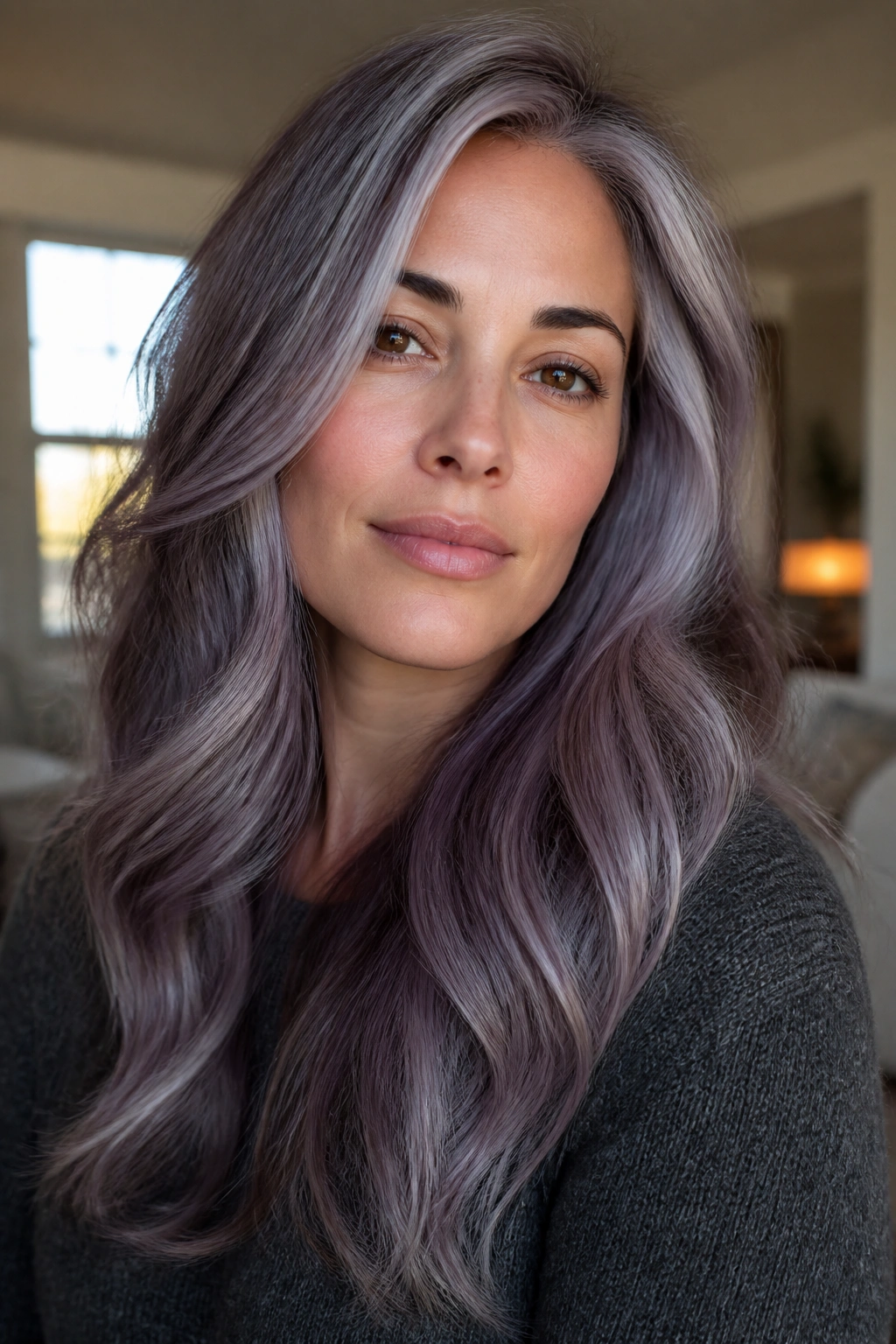
Frosted balayage works because it lightens the hair in soft strokes rather than a solid block. The purple-grey is painted through the surface, which keeps the look airy and dimensional. On cool skin, frosted pieces can brighten the face in a way that feels clean, not sugary.
This version is especially flattering on longer layers. The bends in the hair catch the frosted silver first, then the purple-grey shows up in the shadows. That contrast is what makes the style look alive. If you wear your hair curled, ask for the lighter pieces around the outer layer and near the front. If you wear it straight, keep more brightness around the crown.
Balayage also grows out more softly than foil-heavy color. That means fewer harsh lines later. If you’re tired of obvious root regrowth, this is a kinder option.
18. Blue-Violet Steel Bob
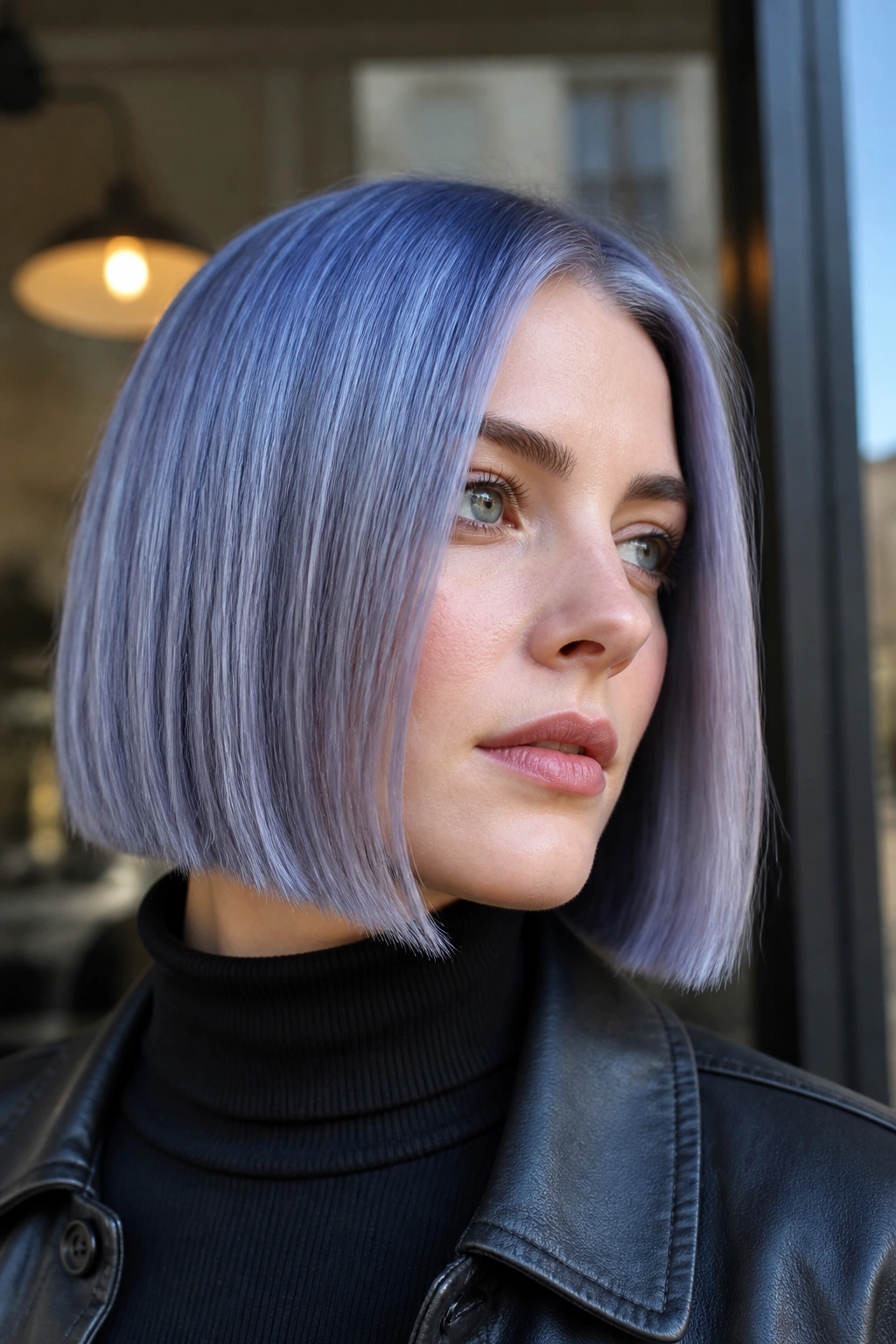
Blue-violet steel is the sharper cousin of dusty lilac. It looks crisp, cool, and a little urban, especially on a blunt bob. The blue note keeps the grey from turning flat, while the violet adds enough warmth to keep cool skin from looking washed out. Not warm warmth. Just enough life.
A blunt cut is the right shape because it gives the color a clean edge. Soft layers can work, but they loosen the effect. If you want the bob to feel sleek, keep the ends tidy and the surface glossy. A smoothing cream and a round brush will show the steel note better than beach waves will.
This shade is a favorite if you like wearing silver jewelry, black tops, and sharp eyeliner. It has that same clean finish. If that sounds boring, it isn’t. It just means the hair does the talking without shouting.
19. Iris Grey Face-Framing Layers
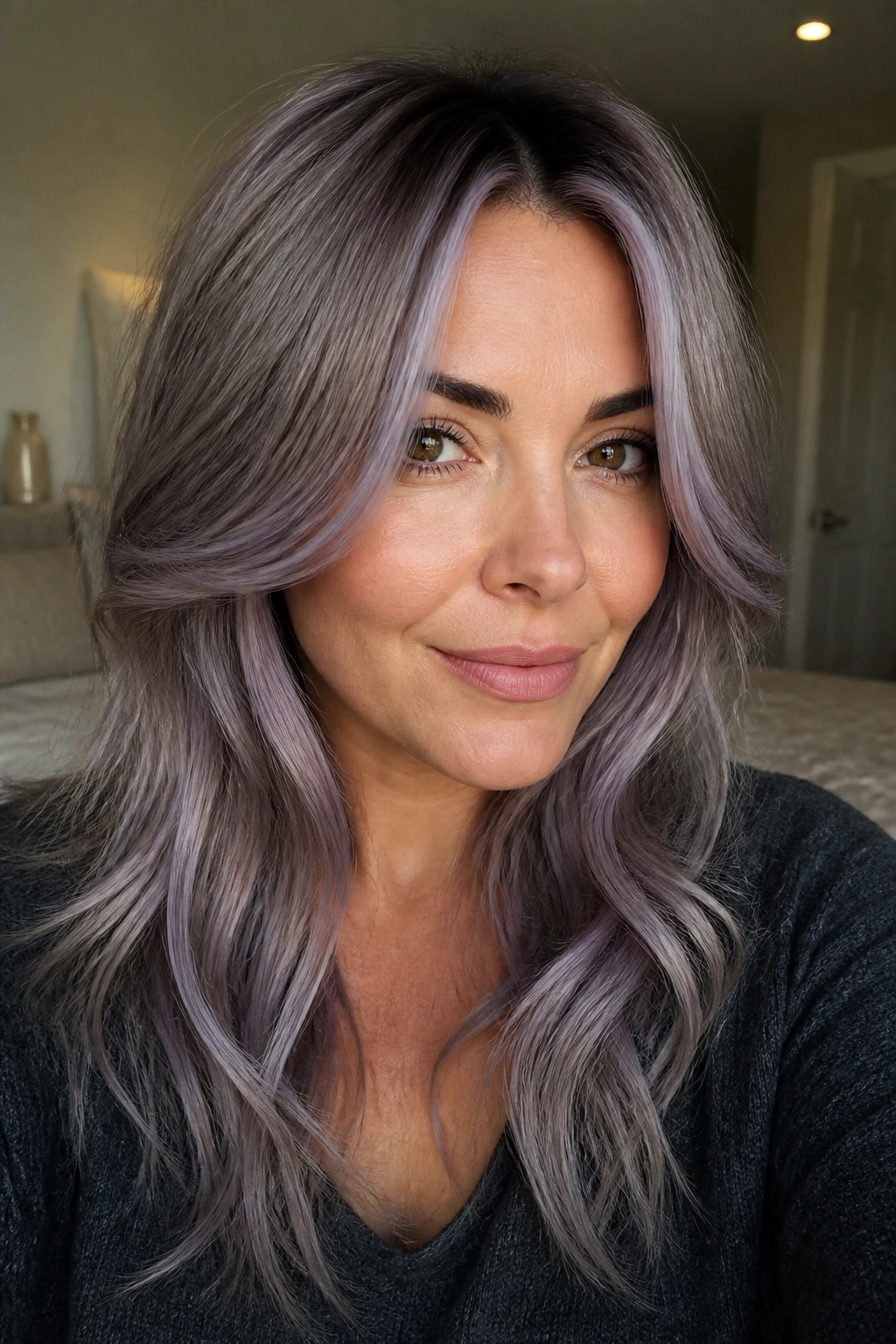
Face-framing layers are one of the smartest places to put purple-grey because that’s where the eye lands first. Iris grey has a little more color than standard silver, but it still stays cool and wearable. The violet cast shows up around the cheeks and temples, which is where cool skin often benefits from a bit of softness.
The placement should begin near the cheekbone or slightly above it, then taper through the front layers. Too high and it can look harsh. Too low and you miss the point. The trick is to let the color skim the face without boxing it in.
Placement Matters
If your hair is thick, keep the inner layers darker so the front pieces do the highlighting work. If your hair is fine, use thinner sections so the color doesn’t feel heavy.
Iris grey can look especially good with a middle part, since both sides frame the face evenly. But a side part gives you a little asymmetry, which can be prettier if your features are softer.
20. Soft Amethyst Crop on Natural Grey
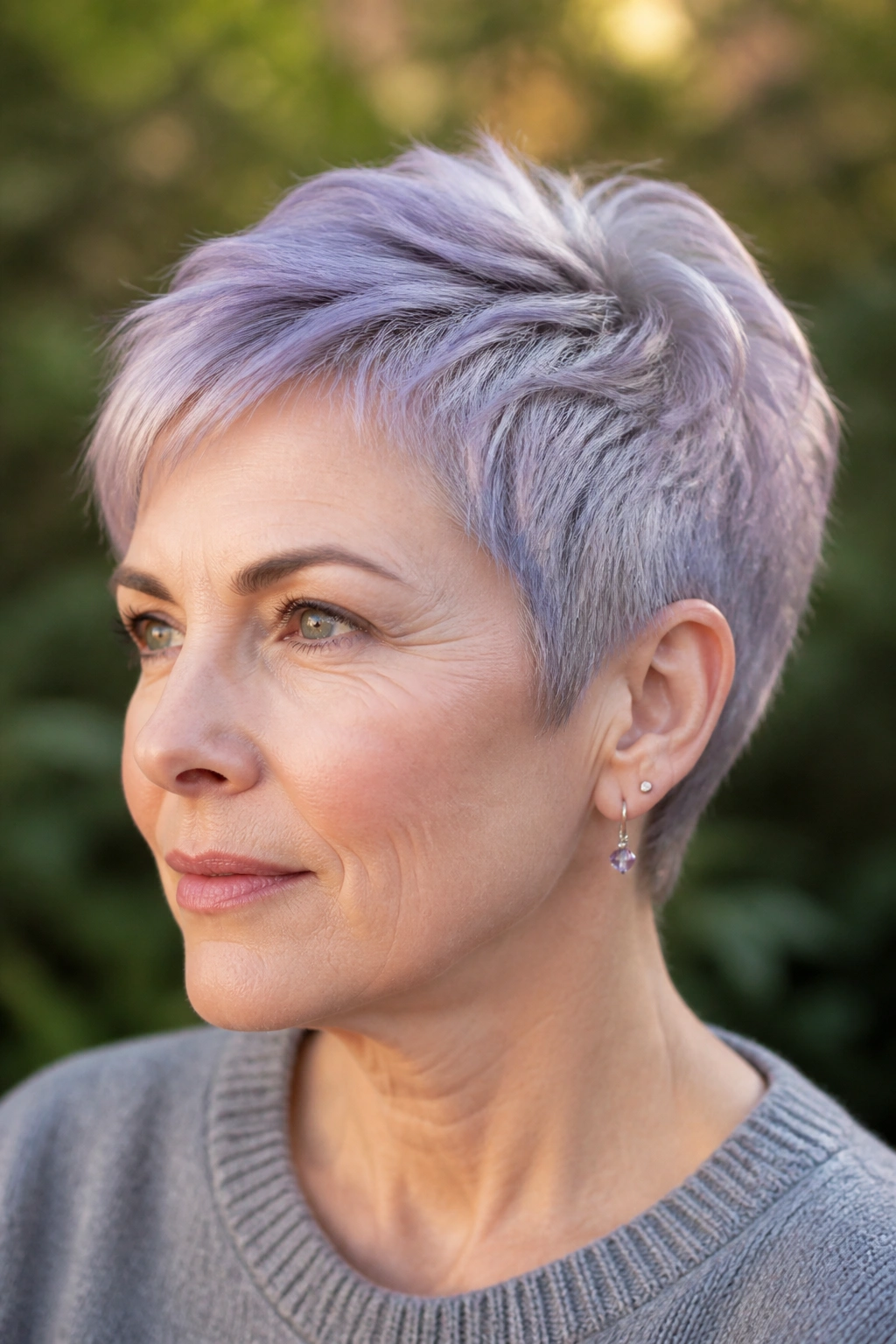
Natural grey hair gives purple a head start. The silver and white strands take amethyst glaze beautifully, which means you can get a soft violet cast without heavy lifting or a full bleach job. On cool skin, this is one of the easiest ways to wear color and still keep the hair looking like itself.
A crop keeps the effect tidy. Short grey hair can go from elegant to helmet-like if the color is too dense, so the softness of amethyst matters. You want the shade to sit on the surface like a wash, not bury the silver underneath it.
This is also a good fix for anyone who wants to blend natural grey instead of covering it. The amethyst makes the transition feel intentional. It’s especially nice around the hairline, where white strands tend to catch more light and can take on a pretty lilac flash with very little effort.
21. Lilac-Gray Curls with Silver Ends
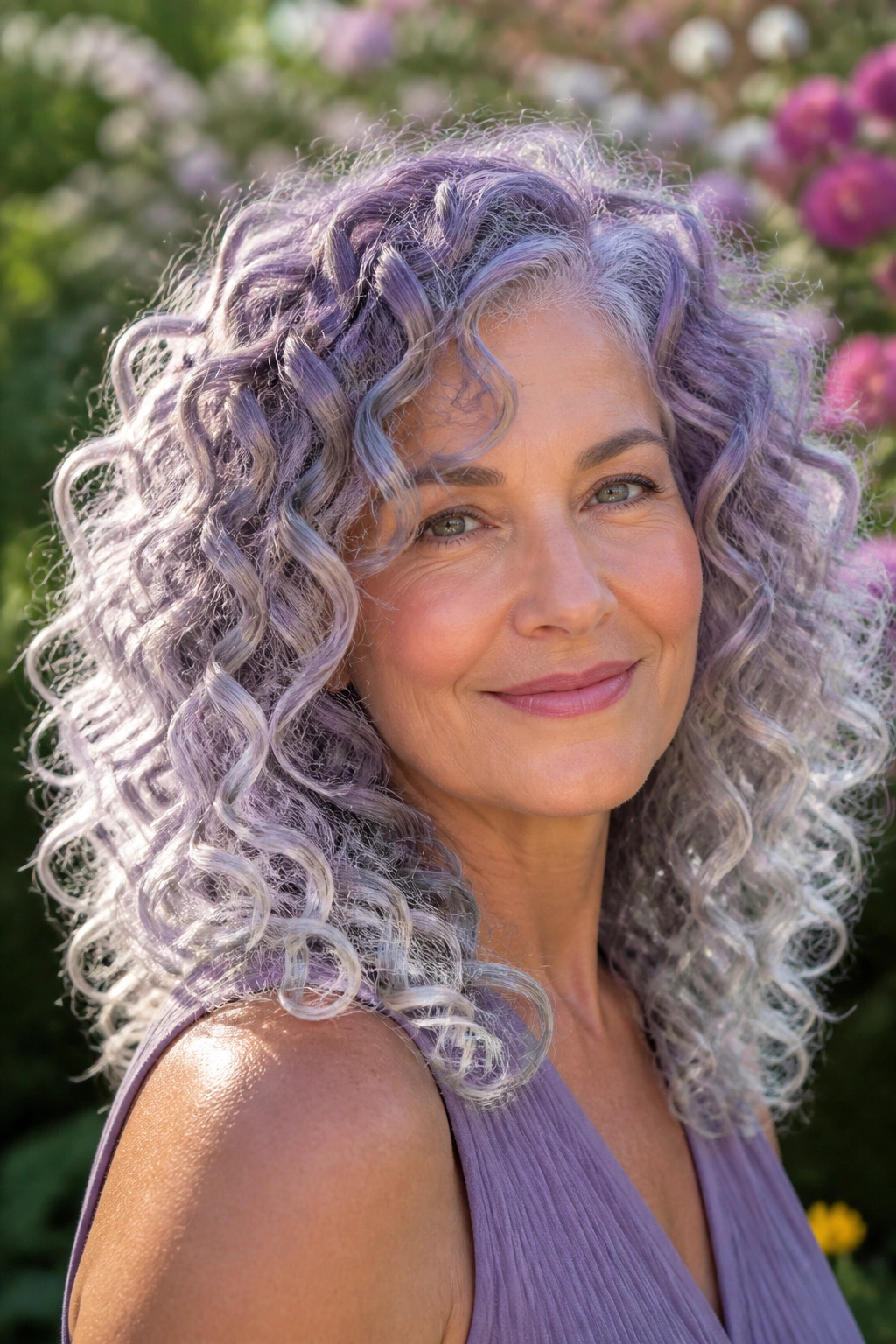
Curly hair gives lilac-grey more movement than straight hair ever could. The ends catch the silver first, while the inner curl pattern keeps the lilac tucked into the shape. On cool skin, that combo is especially good because the color changes as the curls bounce. It never sits still long enough to feel flat.
I’d keep the root area slightly deeper and let the silver build toward the ends. That creates a natural lift effect on the face and keeps the crown from getting too washed out. If your curls are tight, ask for a more diffused gradient. If they’re loose, you can push the contrast a little more.
Moisture matters here. Dry curls can make pastel-grey tones look dusty in a bad way. A leave-in and a light gel cast before drying will help the color look cleaner and the curl pattern hold its shape.
22. Smoky Violet Money-Dimensional Color
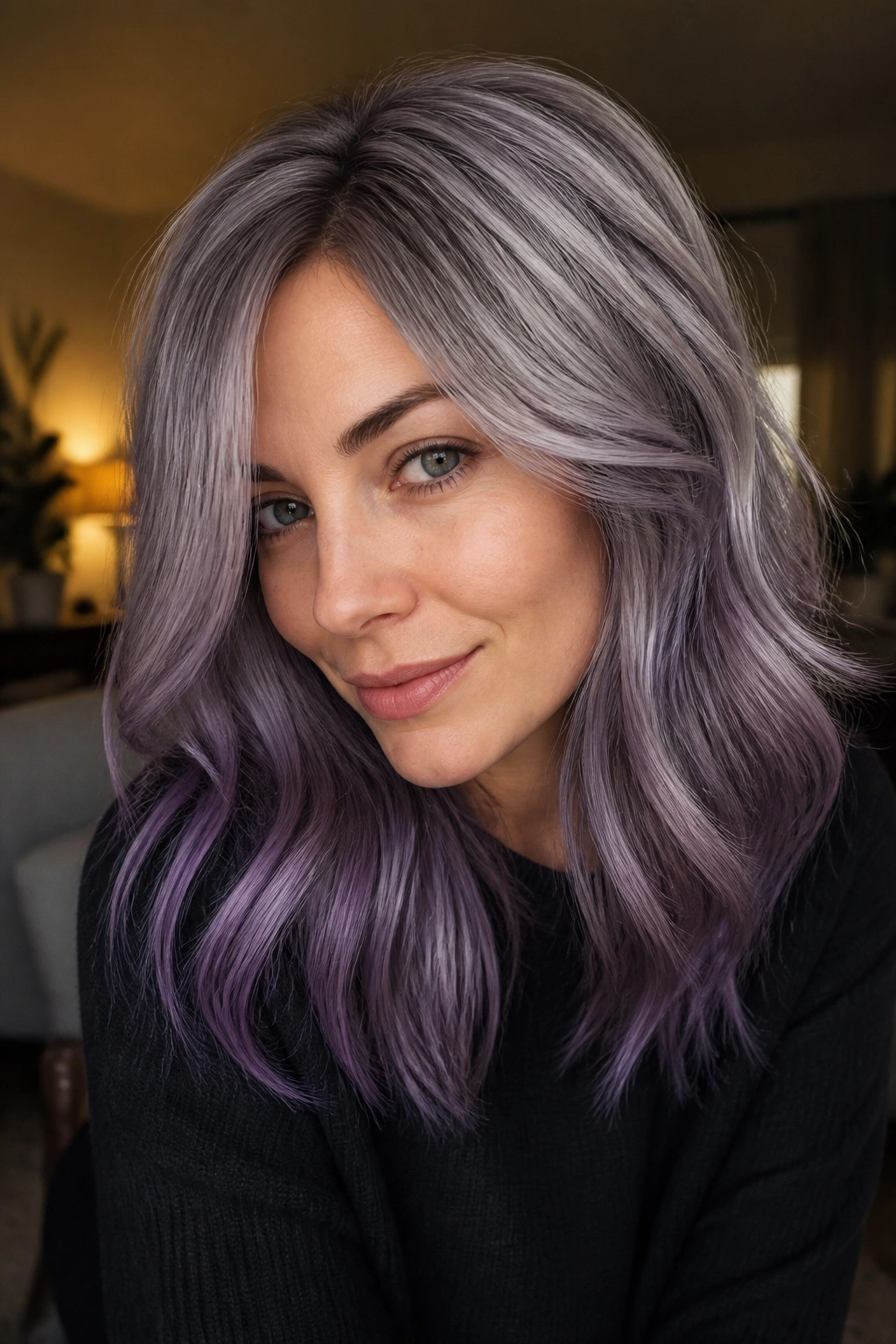
This is the version for someone who wants a hair color that changes personality depending on the light. Smoky violet, slate grey, lilac haze, and a few deeper lowlights all sit together here, so the finish feels layered instead of obvious. On cool skin, that depth keeps the complexion from looking pale or drained.
Money-dimensional color works best when the colorist thinks in zones. The face-framing pieces can stay lighter and cooler, the crown can hold more graphite depth, and the ends can drift a touch more violet. That mix gives you movement even on a simple blowout. Straight hair shows the contrast. Waves show all of it.
A style like this needs a good gloss schedule, not constant full recoloring. That’s the part people forget. The shape of the color matters as much as the shade itself.
If you’re bringing inspiration photos to a salon, bring two kinds: one for the tone and one for the placement. That small bit of prep saves a lot of confusion later. And with purple-grey, confusion is how you end up with a look that’s warmer than you wanted.
