



Achieving the perfect grey ash hair color is less about picking a box off the shelf and more about understanding the complex relationship between your skin’s undertones and the underlying pigment of your hair. When you have cool skin—marked by pink, blue, or red undertones—you are uniquely positioned to pull off ash tones that would make a warm-toned person look sickly or washed out. The wrong choice here creates a muddy, artificial look. The right choice, however, highlights the clarity of your eyes and the coolness of your complexion.
Many people stumble because they try to force a cool grey onto hair that still has significant orange or gold undertones. You cannot paint silver over brassy hair and expect a masterpiece. It simply turns into a swampy, light-brown mess. You have to lift the hair to a pale, clean level first. Once that canvas is prepped, you have an entire spectrum of grey to experiment with, from deep, moody charcoals to ethereal, almost-white silvers.
This isn’t a low-maintenance look. Anyone telling you otherwise is selling you a fantasy. True ash grey requires consistent upkeep, specialized toning, and a refusal to use harsh, stripping shampoos. But if you are willing to do the work, the result is a sophisticated, high-fashion aesthetic that feels both timeless and sharp. Let’s look at the specific shades that actually flatter cool skin, rather than clashing with it.
1. Classic Platinum Ash
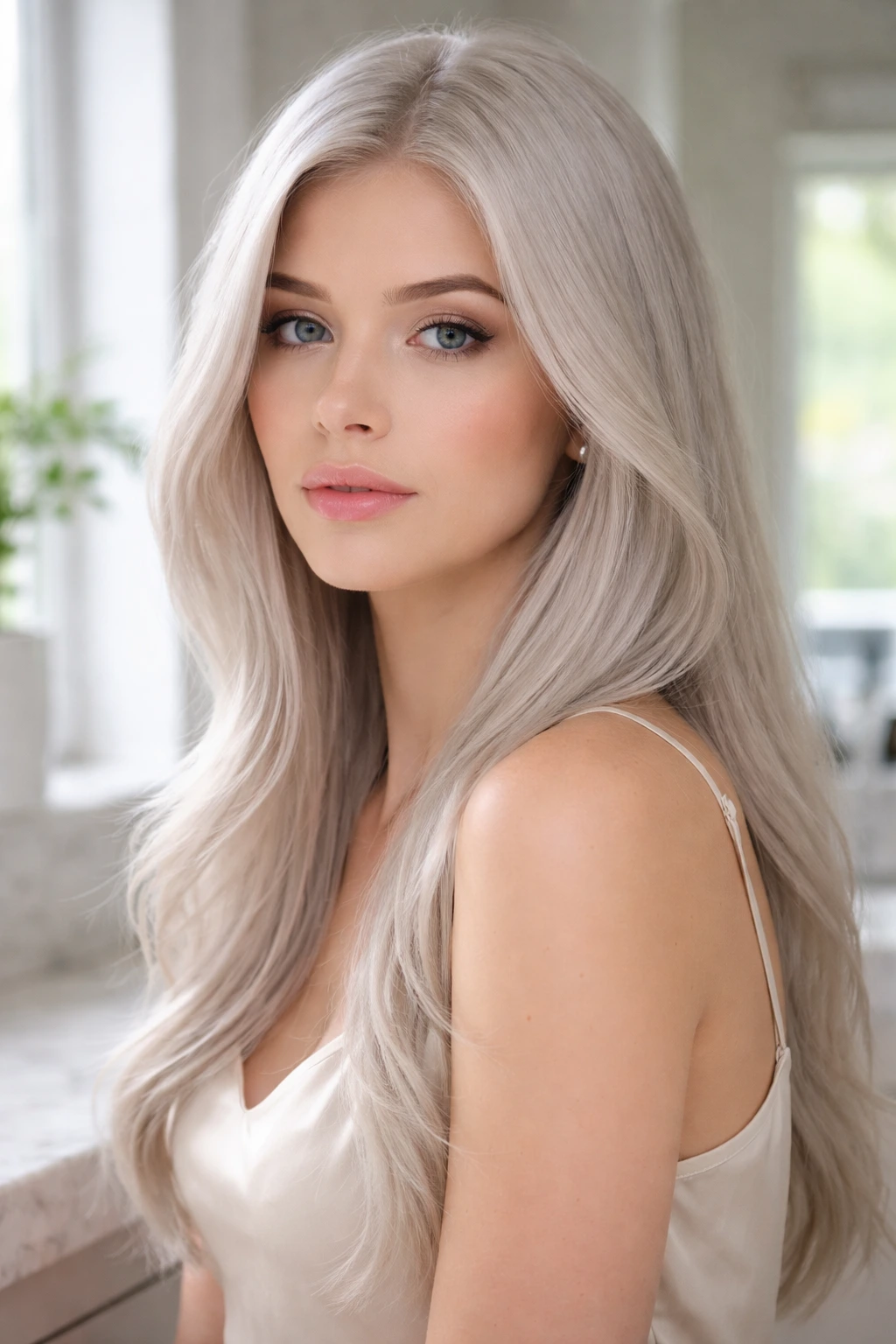
This is the gold standard for cool-toned individuals, provided you can handle the process of getting there. It requires lifting your hair to a level 10—think the inside of a banana peel, not the outside. Anything less, and the yellow tones will eat the grey, leaving you with a dingy blonde.
Why It Works
Because your skin lacks the warmth that usually fights with platinum, this shade acts as an extension of your complexion. It creates a seamless, icy look that is incredibly bright. It doesn’t fight your skin; it illuminates it.
The Maintenance Reality
You will need a purple shampoo. Not occasionally, but consistently. Because platinum ash is so light, it is a sponge for environmental pollutants, smoke, and hard water. If your hair turns yellow, you haven’t “failed”—you’ve just reached the point where the toner has washed out.
Pro tip: Keep a white-based, heavy-duty toning mask in your shower rotation. Use it every third wash to reset the tone without drying out the hair shaft.
2. Smokey Charcoal Balayage
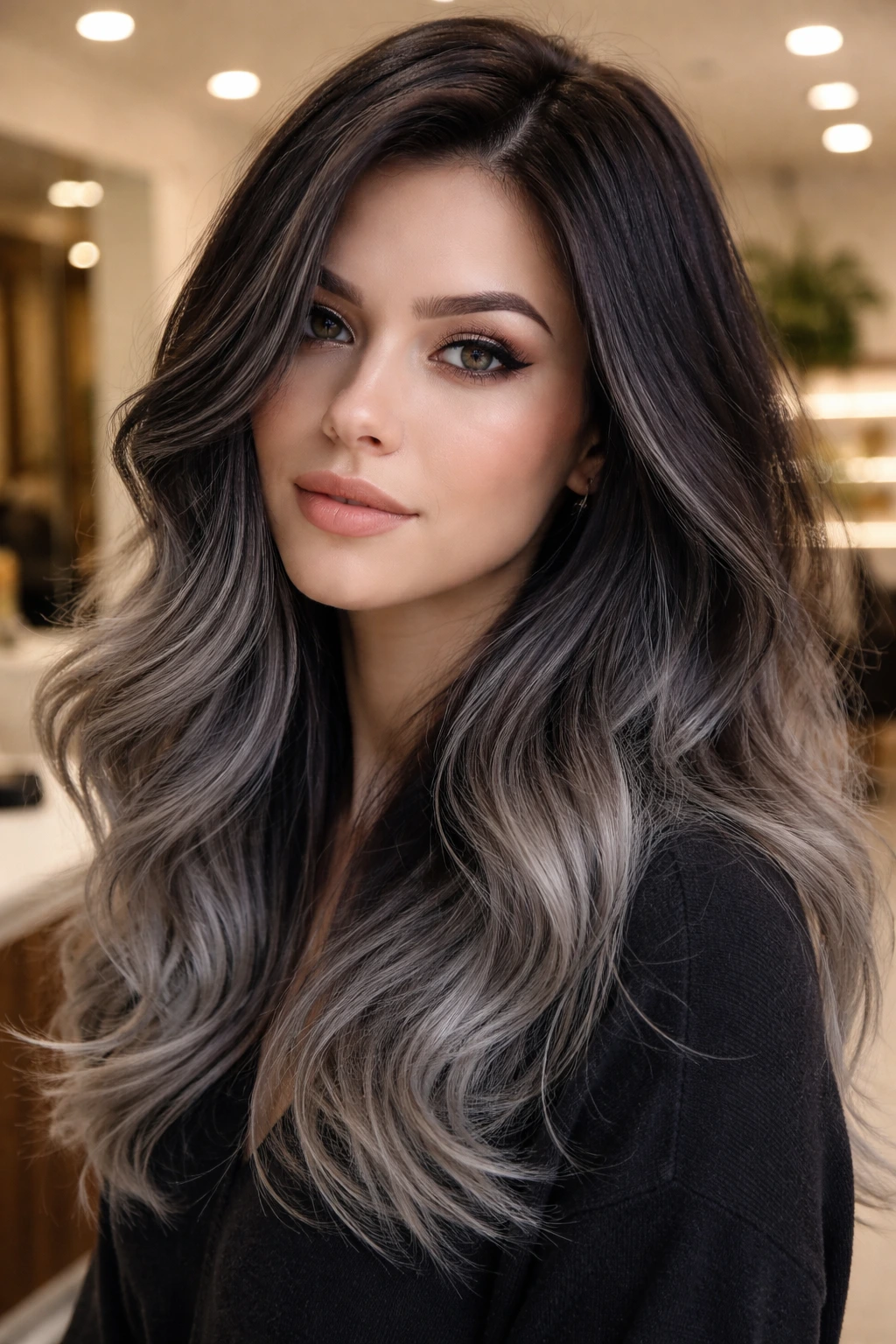
If you aren’t ready to bleach your entire head from roots to ends, a charcoal balayage offers a sophisticated compromise. You keep your natural roots—assuming they are a medium-to-dark brown or black—and transition into a deep, intense grey.
The Contrast Factor
Charcoal is forgiving. Unlike platinum, which exposes every single flaw, charcoal is dense. It’s a pigmented grey. The transition from your natural root to the charcoal ends should be soft, diffused, and almost blurred.
Application Technique
Ask your colorist for a “smudged” root. They should paint the charcoal in vertical strokes, leaving enough of your natural hair color near the roots to prevent a harsh line of demarcation. This makes the grow-out phase much less painful than standard coloring.
Maintenance note: Charcoal tends to fade faster than lighter greys because the molecule size is larger and often sits closer to the cuticle. Wash with cold water to keep the cuticle sealed.
3. Icy Silver Highlights
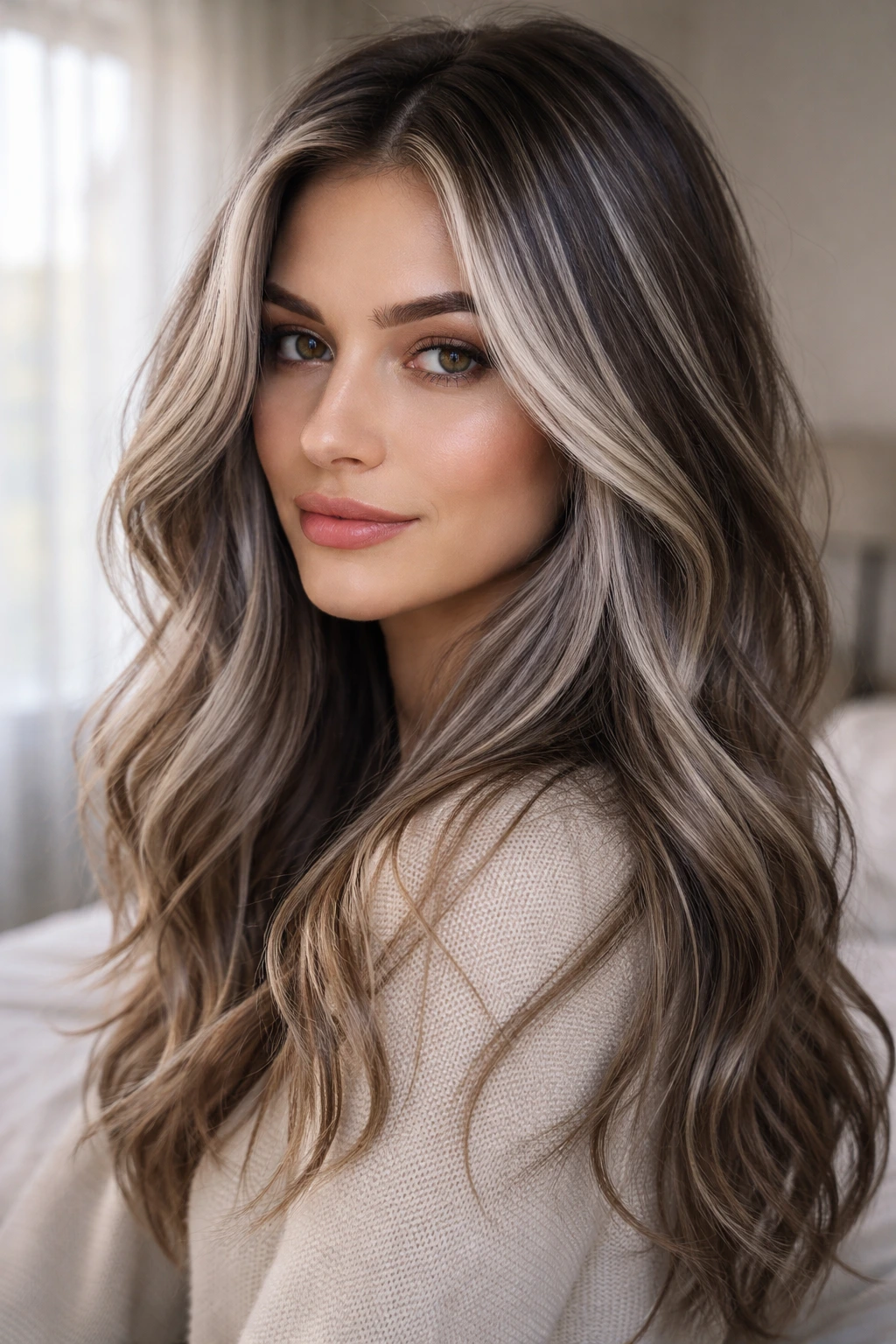
Sometimes, you don’t need an all-over color change. Icy silver highlights can be woven into a darker ash-brown base to create dimension. This is ideal if you want to test the waters of the grey trend without fully committing to the bleaching intensity of an all-over grey.
How to Style It
These highlights should be thin and frequent—think “babylights” rather than chunky 90s-era streaks. The goal is to make the hair look like it has been kissed by frost. The contrast between your natural cool-toned hair and the silver highlights provides a metallic shimmer that catches the light beautifully.
Who Should Choose This
If your hair is currently virgin and you are nervous about breakage, this is your best starting point. You are only lightening specific strands, which preserves the overall integrity of your hair.
4. Metallic Slate Ombré
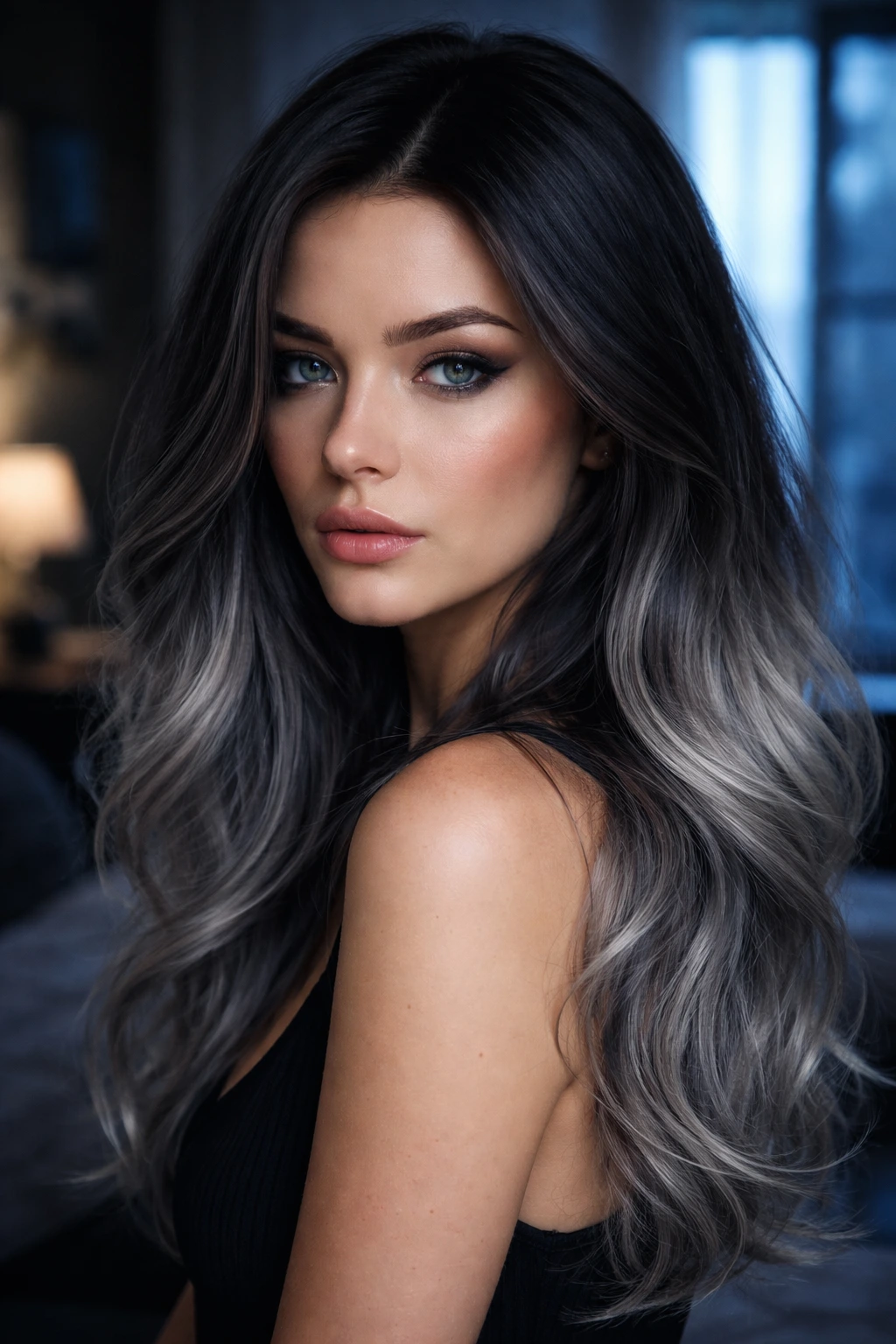
Slate is a specific shade of grey that leans slightly blue. On cool skin, this blue undertone is an absolute superpower. It emphasizes the pinks and blues in your skin, making the whole look appear intentional and cohesive.
The Transition
The ombré should be gradual. Start with a deep, almost black-grey at the roots, and let it fade into a soft, stormy slate by the mid-lengths. The key is the transition zone. If the line is too sharp, it looks dated.
Why Slate Matters
Slate grey is more opaque than silver. It covers underlying brassiness slightly better than lighter shades, though you still need a clean base. It offers a “tougher” look—less angelic, more urban.
5. Frosty Lilac-Grey
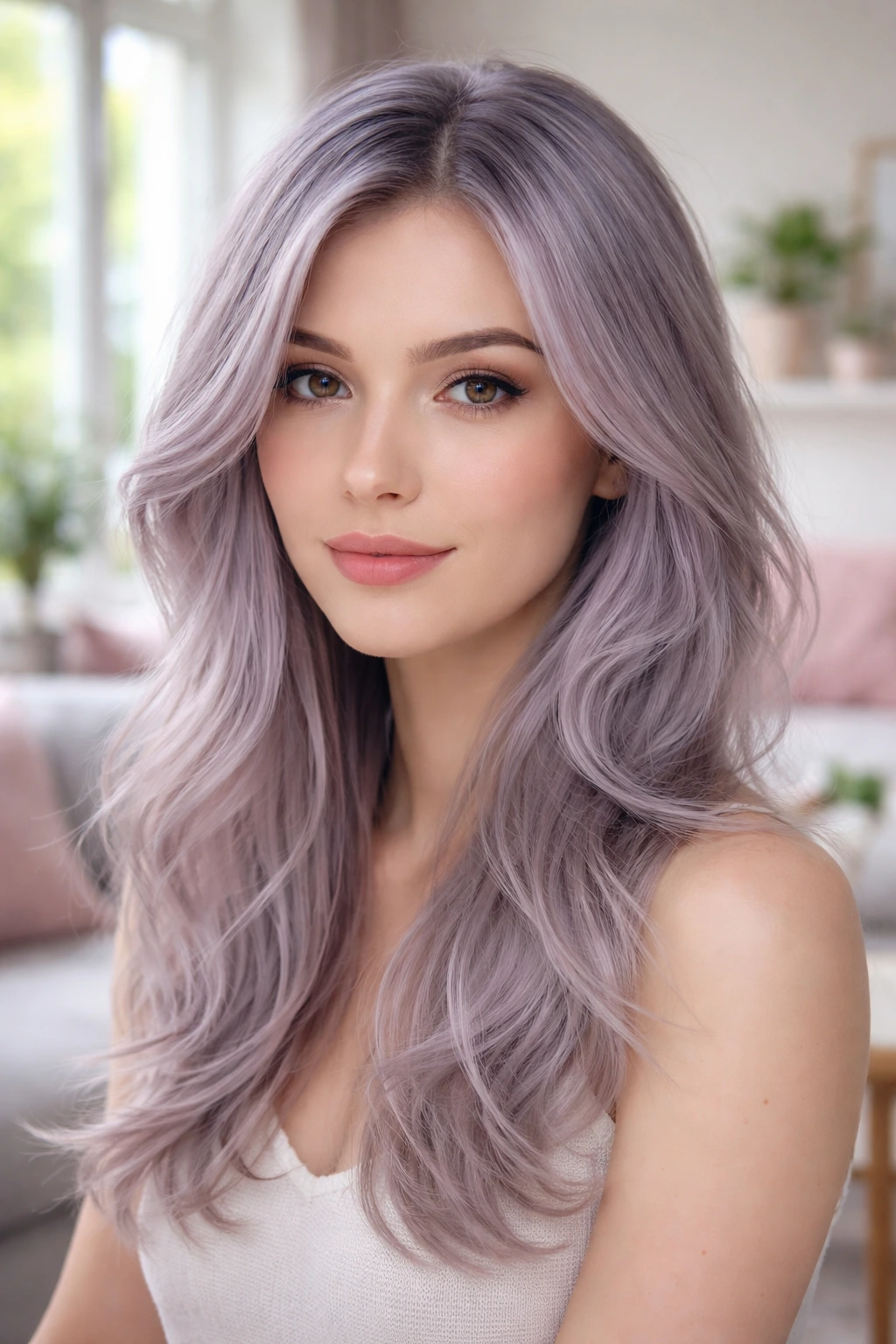
This is for the person who wants grey, but doesn’t want to look like a statue. A touch of violet pigment mixed into your ash-grey formula acts as a dual-purpose agent. It tones the hair to a perfect neutral grey while adding a soft, ethereal vibe that is undeniably flattering on cool skin.
The Color Theory
Violet is the direct opposite of yellow on the color wheel. By using a lilac-grey, you are effectively neutralizing yellow tones while simultaneously depositing the color you want. It’s efficient and beautiful.
Fading Gracefully
The beauty of this shade is how it fades. As the lilac tones wash out, you are left with a cleaner, more neutral ash grey. It feels like getting two colors for the price of one.
6. Gunmetal Grey Roots
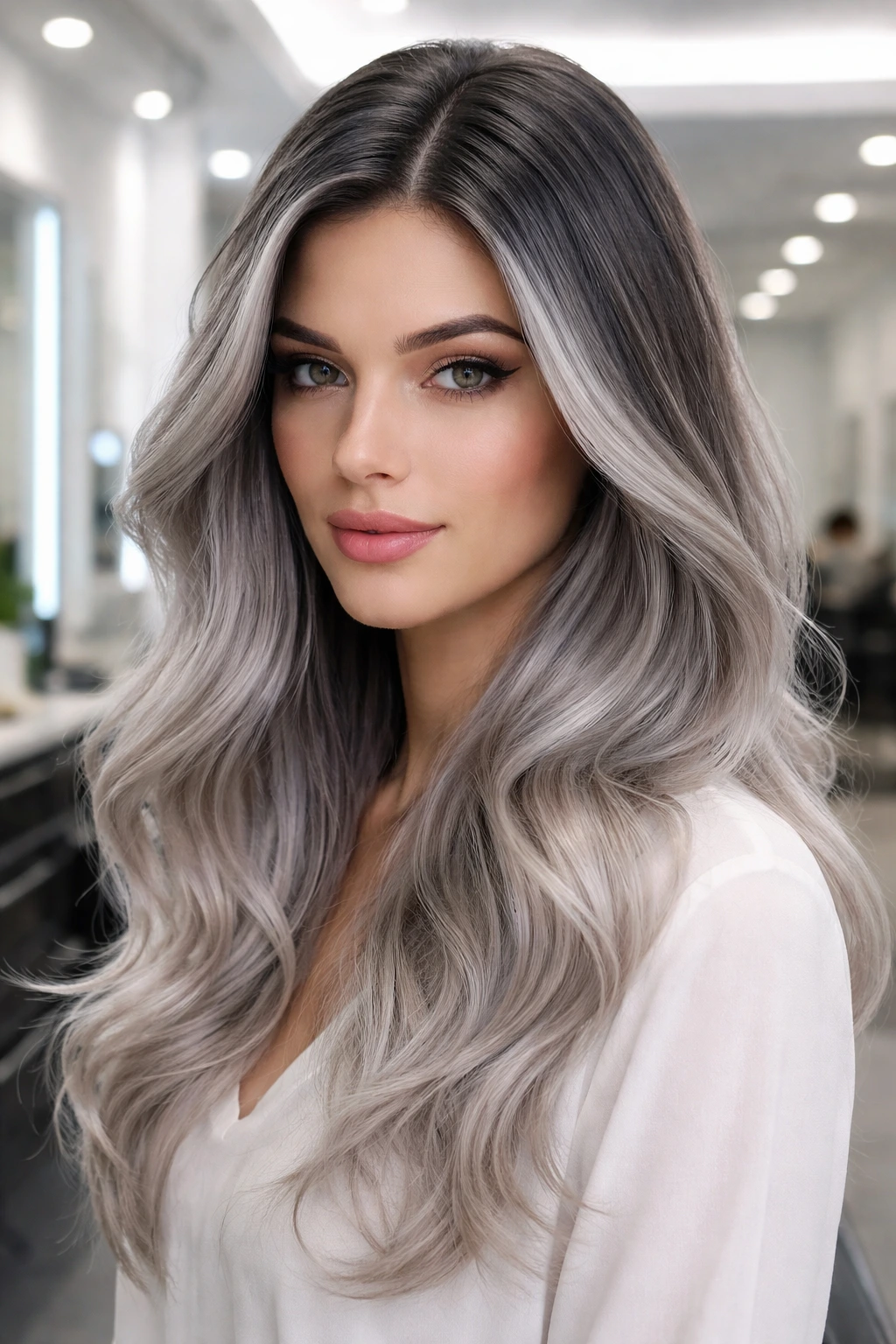
We usually talk about roots being something to hide, but gunmetal roots are a purposeful design choice. This involves dyeing the top two to three inches of your hair a deep, intense steel grey, while the rest of the hair is a lighter, softer silver.
Styling for Edge
This look is sharp. It’s architectural. It pairs well with shorter haircuts, like a blunt bob or a textured pixie, where the root color is a prominent feature of the hairstyle rather than just a growth issue.
The Commitment Level
You will be in the salon every 4 to 6 weeks. There is no getting around it. If your natural hair is anything other than light-ash blonde, the regrowth will be glaringly obvious against the gunmetal.
7. Soft Steel Melt
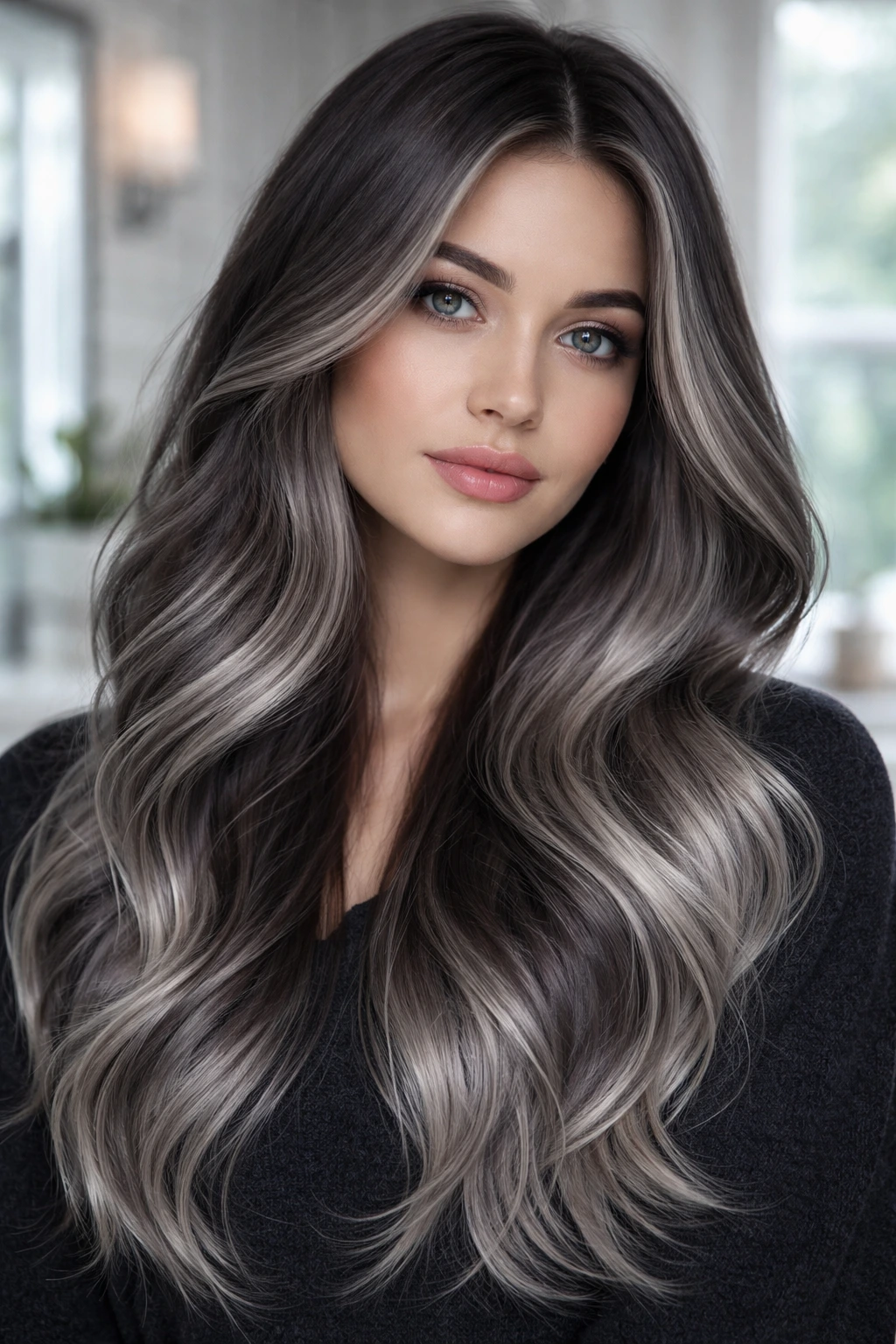
A color melt is the technique of blending three or more shades together so seamlessly that you cannot tell where one ends and the next begins. For a soft steel melt, you blend a deep charcoal, a medium steel, and a light silver.
Texture and Depth
This is arguably the most dimensional way to wear grey. It mimics the natural variation of silvering hair, which is why it often looks more “real” and less “costume” than a block color.
The Right Hair Type
This technique looks best on hair with movement—waves, layers, or a shaggy cut. If you have stick-straight, fine hair, the melt can sometimes look a bit flat, so adding texture sprays or styling with a wand is recommended.
8. Cool-Toned Stormy Blue-Grey
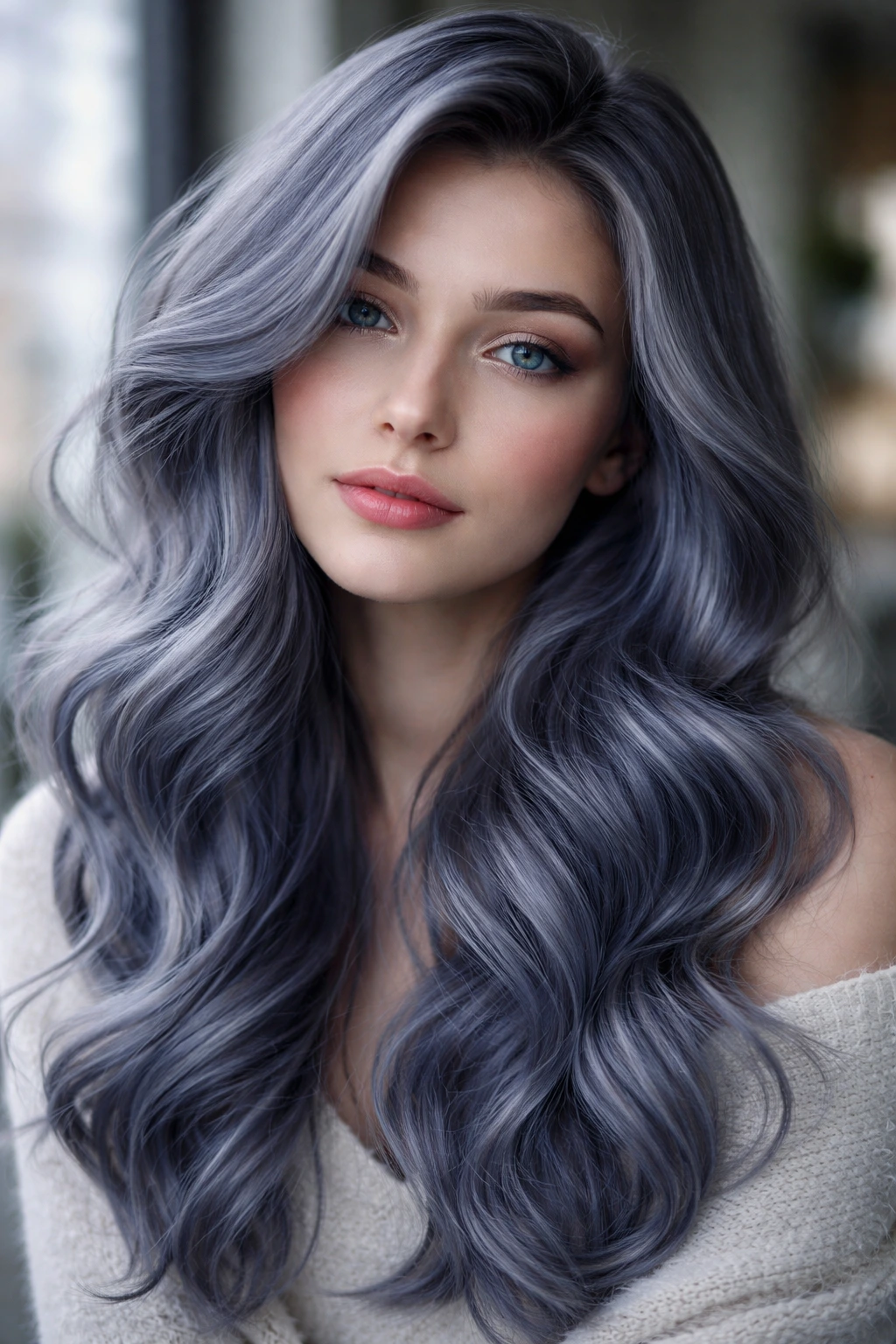
Stormy blue-grey is not a standard grey. It has a significant saturation of blue-violet, giving it a depth that feels like the sky right before a heavy rain. This shade is particularly striking on people with very pale, porcelain skin.
Achieving the Tone
This usually requires a direct dye or a semi-permanent gloss over a light-blonde base. Because it’s so saturated, you don’t need to lift the hair to a white-blonde. A pale yellow blonde—level 9—is usually sufficient because the blue pigment will cover the remaining warmth.
Managing the Blue
Blue pigment is notorious for grabbing onto damaged hair. If your ends are porous, they will absorb more blue than the rest of your hair, leading to “blue ends.” Use a protein filler before coloring to equalize the porosity.
9. Frosted Ash Blonde
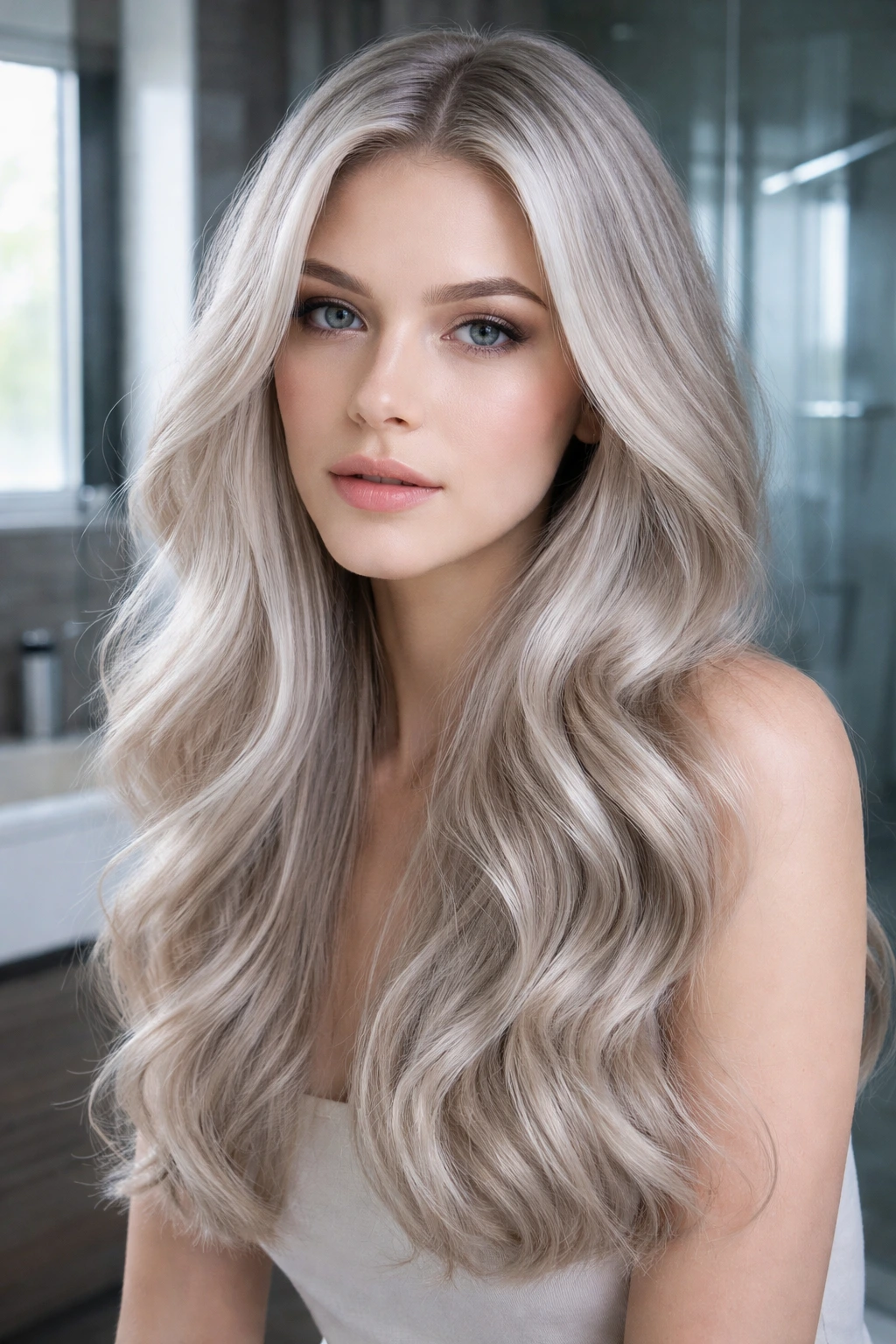
Think of this as the gateway to grey. It isn’t a full grey, but rather an ash blonde so heavily toned with cool pigment that it reads as silver in certain lights. It is a fantastic option for someone who isn’t ready to go fully gray.
The Aesthetic
This is “expensive” hair. It’s polished, clean, and understated. It works brilliantly with cool skin tones because it removes all traces of gold and honey, which can make some cool-toned people look tired.
Maintenance Strategy
This requires a high-quality silver conditioner. You don’t need a heavy mask every time, but a silver-depositing conditioner used once a week will keep that frosty finish from turning back into a dull blonde.
10. Moonlit Silver Streaks
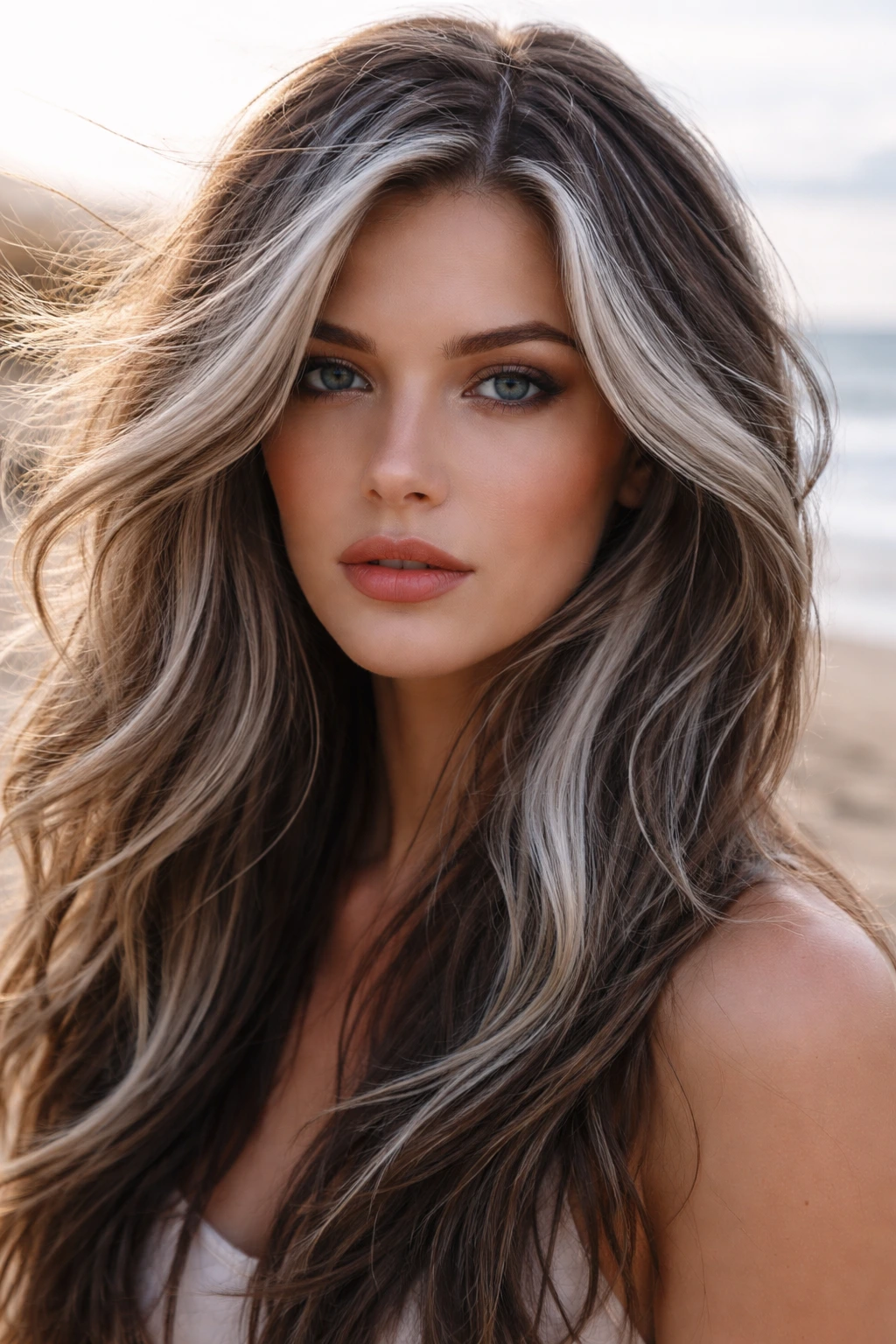
Rather than highlights, think of this as “chunky” lowlights and highlights blended to create a multi-tonal silver effect. It’s a technique that mimics the natural salt-and-pepper transition, but elevated to a high-fashion level.
Placement
The streaks should be placed strategically around the face. Framing your face with lighter, brighter silver pieces draws attention to the eyes and cheekbones, which is exactly where you want the focus to be.
Why It’s Unique
It provides a sense of movement. When your hair is windblown, the different shades of silver shift and change, creating a dynamic visual effect that a single-process dye simply cannot achieve.
11. Concrete Jungle Pixie Cut
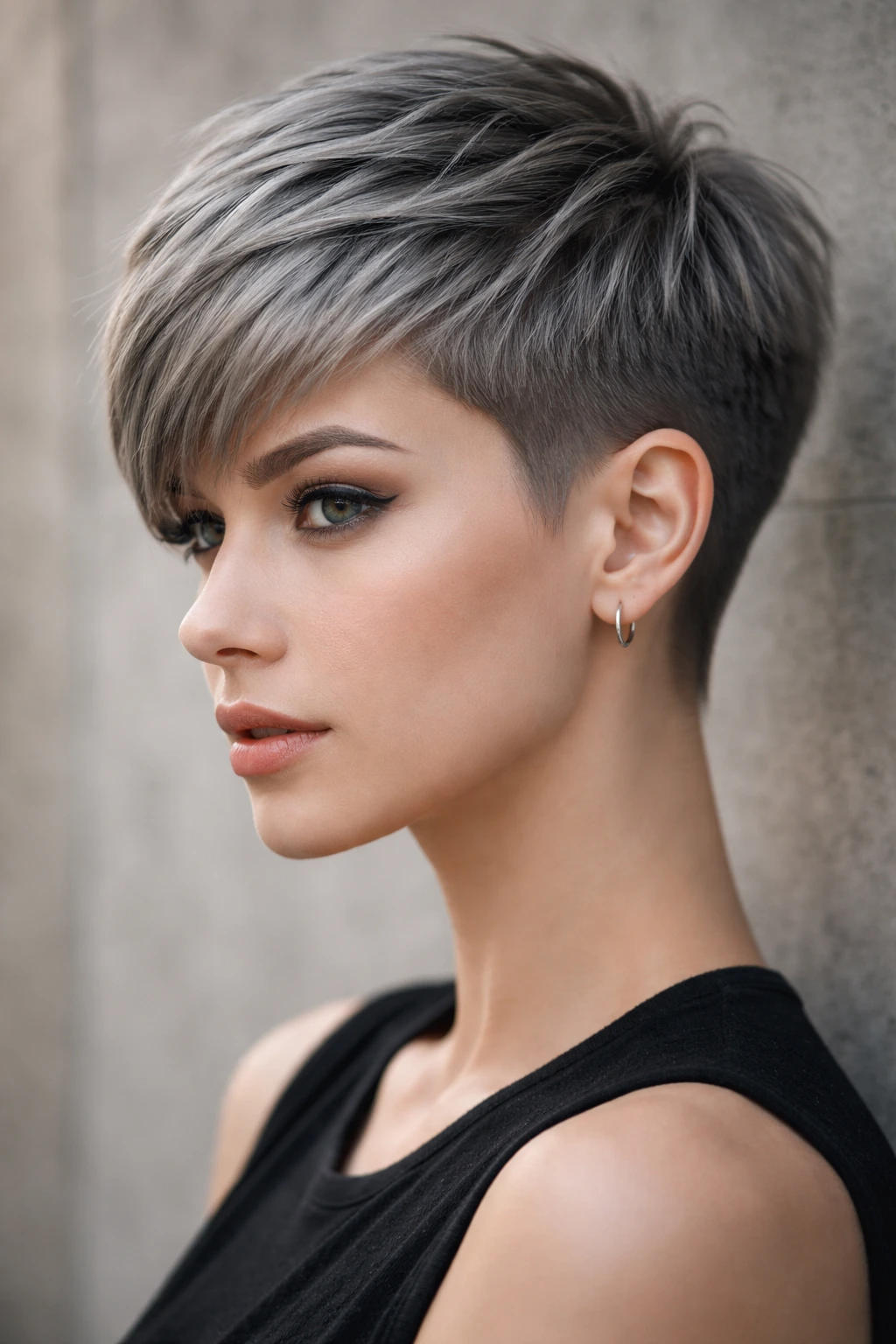
Grey hair looks incredible on short styles. A pixie cut with a “concrete” grey color—a flat, matte, medium-grey—is incredibly chic. It’s not about shine; it’s about the intensity of the color.
The Cut
To make this work, the cut must be precise. A sloppy haircut with a bold color like this will just look messy. You need sharp edges, clean lines, and intentional texture.
Styling Product
Avoid heavy, oil-based pomades. They will darken the grey and make it look greasy. Use a matte clay or a dry texture spray. You want the hair to look like stone, not like it’s been dipped in oil.
12. Deep Anthracite Lowlights
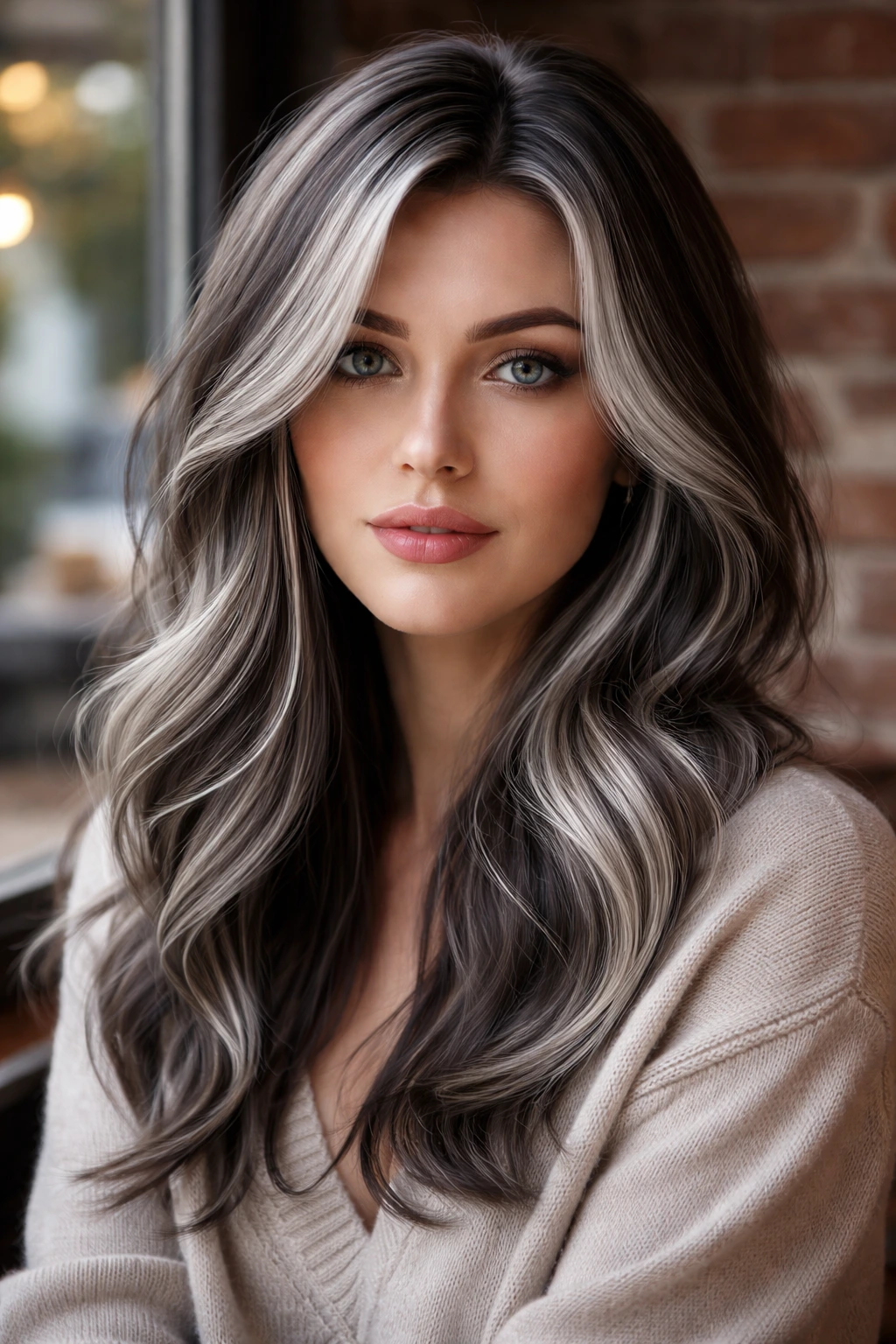
If you are already grey or light ash-blonde and feel like you have lost your definition, anthracite lowlights are the answer. Anthracite is a nearly black, deep-grey shade.
The Purpose
Adding these lowlights creates contrast. Without contrast, a head of all-over light grey can make you look ghostly or washed out. Anthracite anchors the color, giving your face a frame and your hair a sense of volume.
How to Request It
Ask your stylist for “depth.” Tell them you want to break up the all-over grey with some darker dimension. If they understand color theory, they will know exactly what this means.
13. Smoky Lavender-Ash Blend
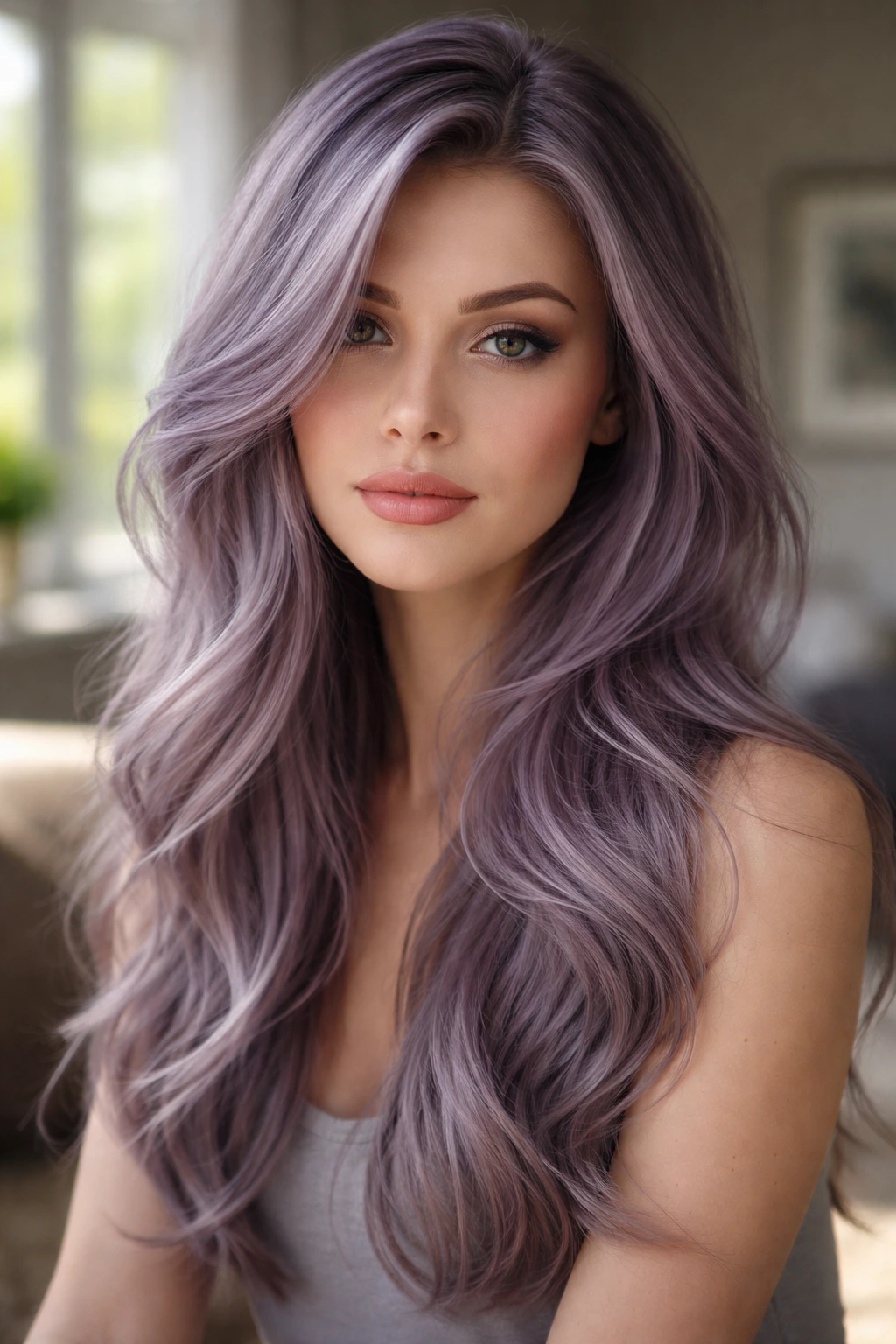
We mentioned lilac-grey earlier, but a smoky lavender-ash is a deeper, moodier version. It’s less “pastel” and more “bruised sky.” It feels intentional and a bit mysterious.
Complexion Harmony
This works exceptionally well with cool skin because the lavender is a pure cool-toned violet. It lacks the warmth of a pink-lavender, making it safe for even the most sensitive cool complexions.
Wearing the Look
This color is a statement. It pairs well with black, navy, and jewel-toned clothing. Avoid wearing beige, mustard, or camel tones, as they will fight with the purple-grey pigment and look jarring.
14. Glossy Pearl-Grey Tones
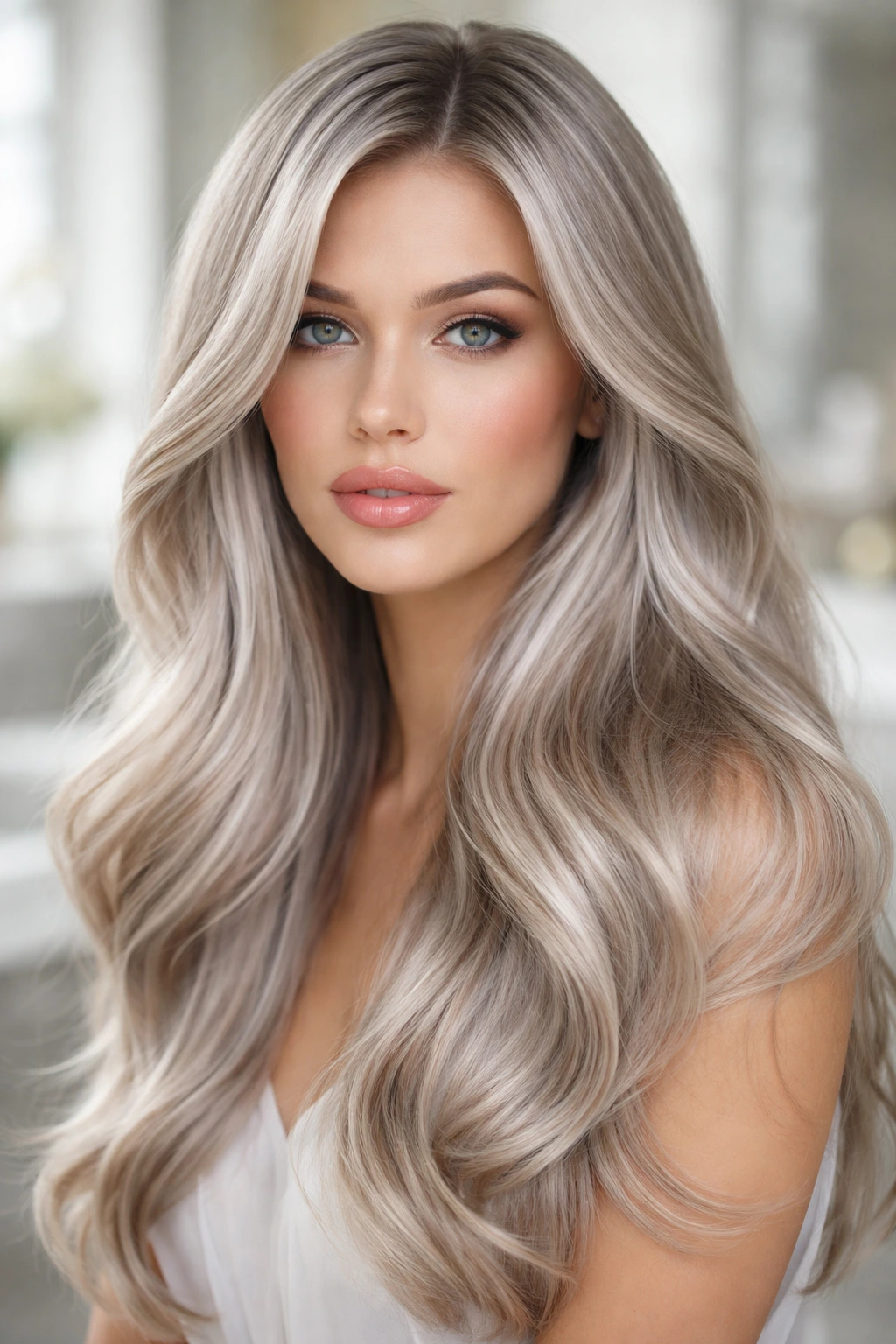
Pearl-grey is distinct because of its finish. It’s not matte like the concrete shades; it’s reflective. It has a slight iridescence, almost like the inside of an oyster shell.
The Shine Factor
This requires a healthy hair foundation. You cannot get a pearlescent finish on damaged, dry, or split-ended hair. You need to focus on hydration treatments, hair glazes, and bonding treatments during the bleaching process.
Maintaining the Pearl
Regular clear gloss treatments at the salon will keep this finish alive. It protects the color from fading and ensures that the “pearl” reflection remains visible.
15. Winter Sky Tinted Grey
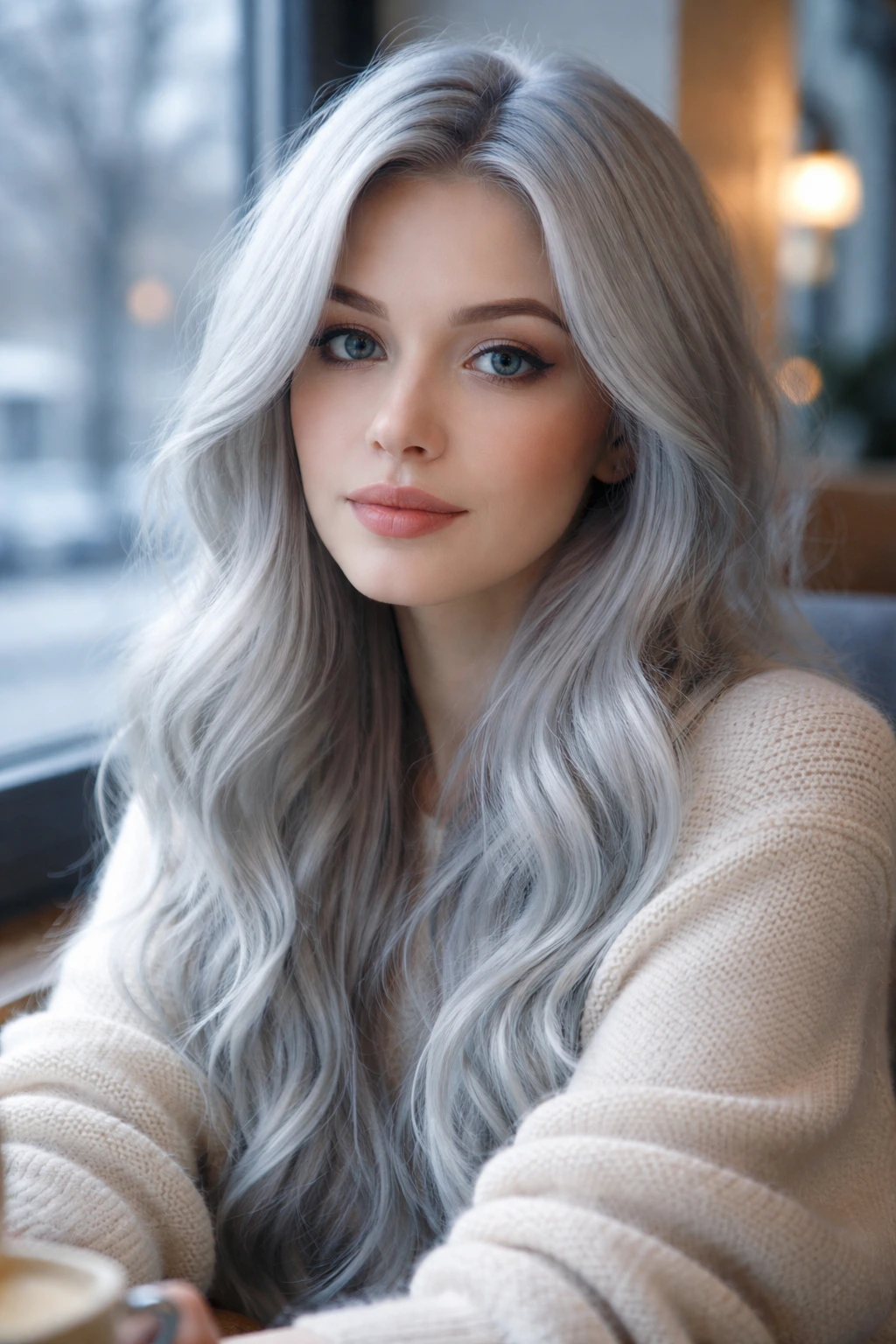
This is a very specific shade that sits somewhere between light blue and grey. It’s very soft, almost ethereal. It captures the color of a winter sky right after a snowfall.
The Application
This is achieved by applying a very sheer, blue-tinted gloss over platinum hair. It should be subtle. If you can see strong blue streaks, the dye was too strong. It should be a “tint,” not a “stain.”
Skin Tone Match
If you have pink undertones in your skin, this is one of the most flattering colors you can choose. The blue-grey pushes the pink in your skin to look more like a healthy flush than a sunburn.
16. Shattered Glass Grey (High Contrast)
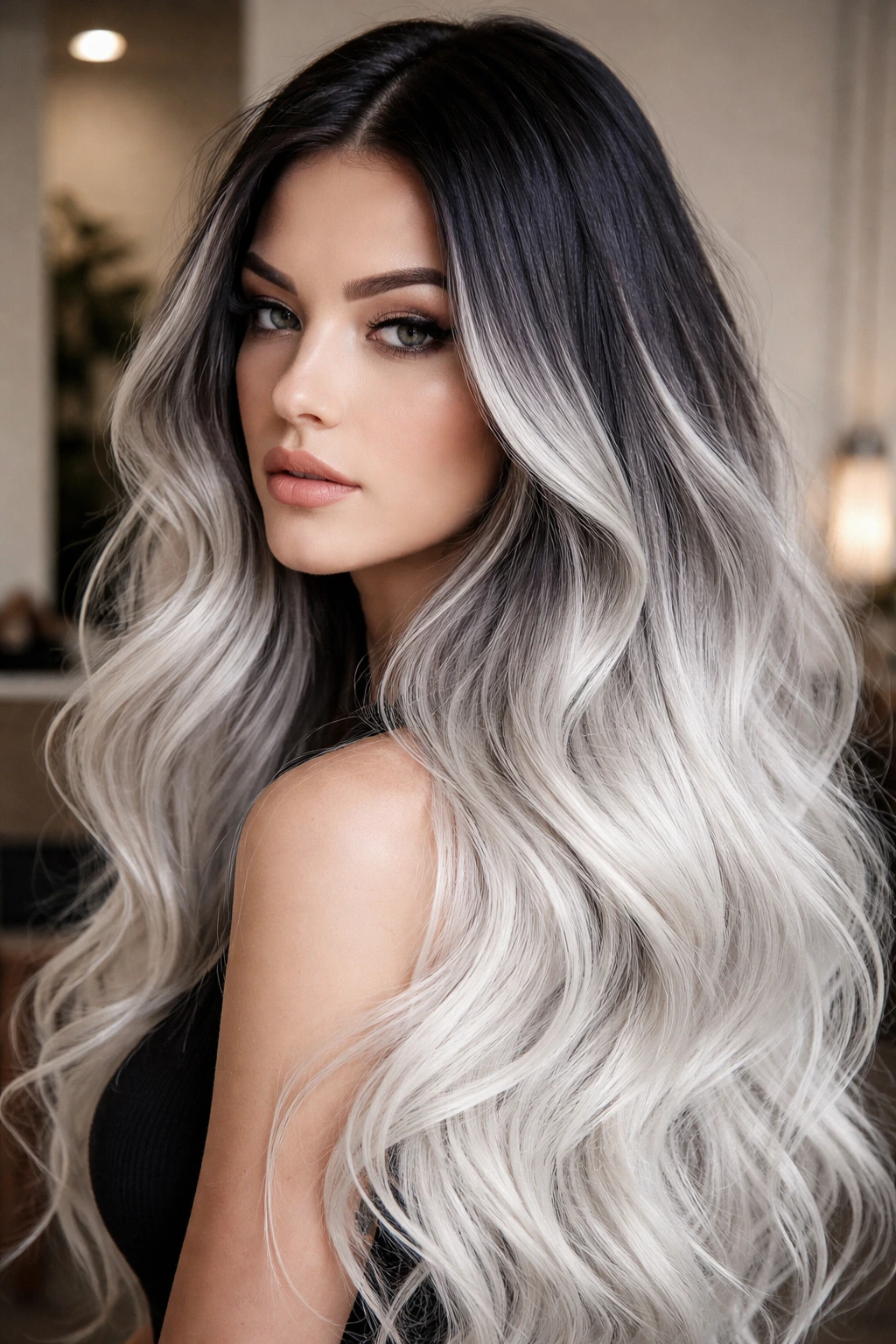
This look uses a very dark, black-grey root melt that transitions into a brilliant, almost white-silver end. The contrast is the point. It looks like broken glass or a high-contrast photograph.
The Technique
This requires a very skilled hand. The transition must be blurred enough that it doesn’t look like two separate colors glued together, but stark enough that the root and the ends look purposefully different.
Handling Damage
Because the ends have to be bleached so light, they are prone to damage. You must use a bond builder—like Olaplex or K18—every single time you lighten the hair. Without it, the “shattered” look will just look like “fried” hair.
17. Muted Ash-Brown Base with Grey
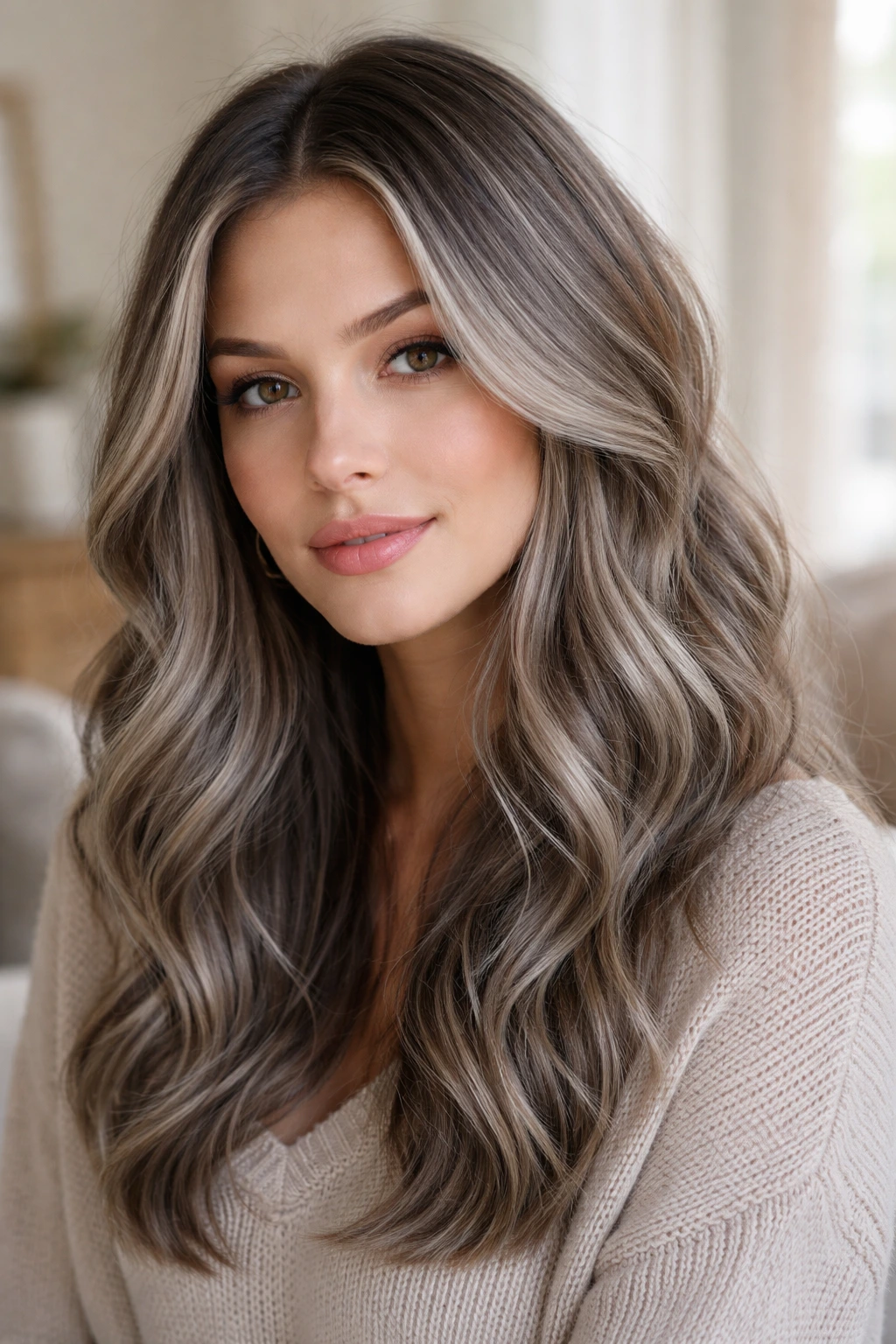
If you have naturally dark hair and want to incorporate grey without the massive commitment of an all-over platinum process, try a muted ash-brown base with heavy grey highlights.
The “Grey Blending” Method
This is a popular method for those starting to go grey naturally. Instead of fighting the greys, you color the rest of the hair to match the grey. The ash-brown keeps the base cool, and the silver pieces blend in with your natural regrowth.
Why This is Smart
It is the lowest-maintenance version of the grey trend. As your roots grow in, they simply look like more highlights. You don’t get the dreaded “skunk stripe” of dark roots against silver hair.
18. Titanium Grey Bob
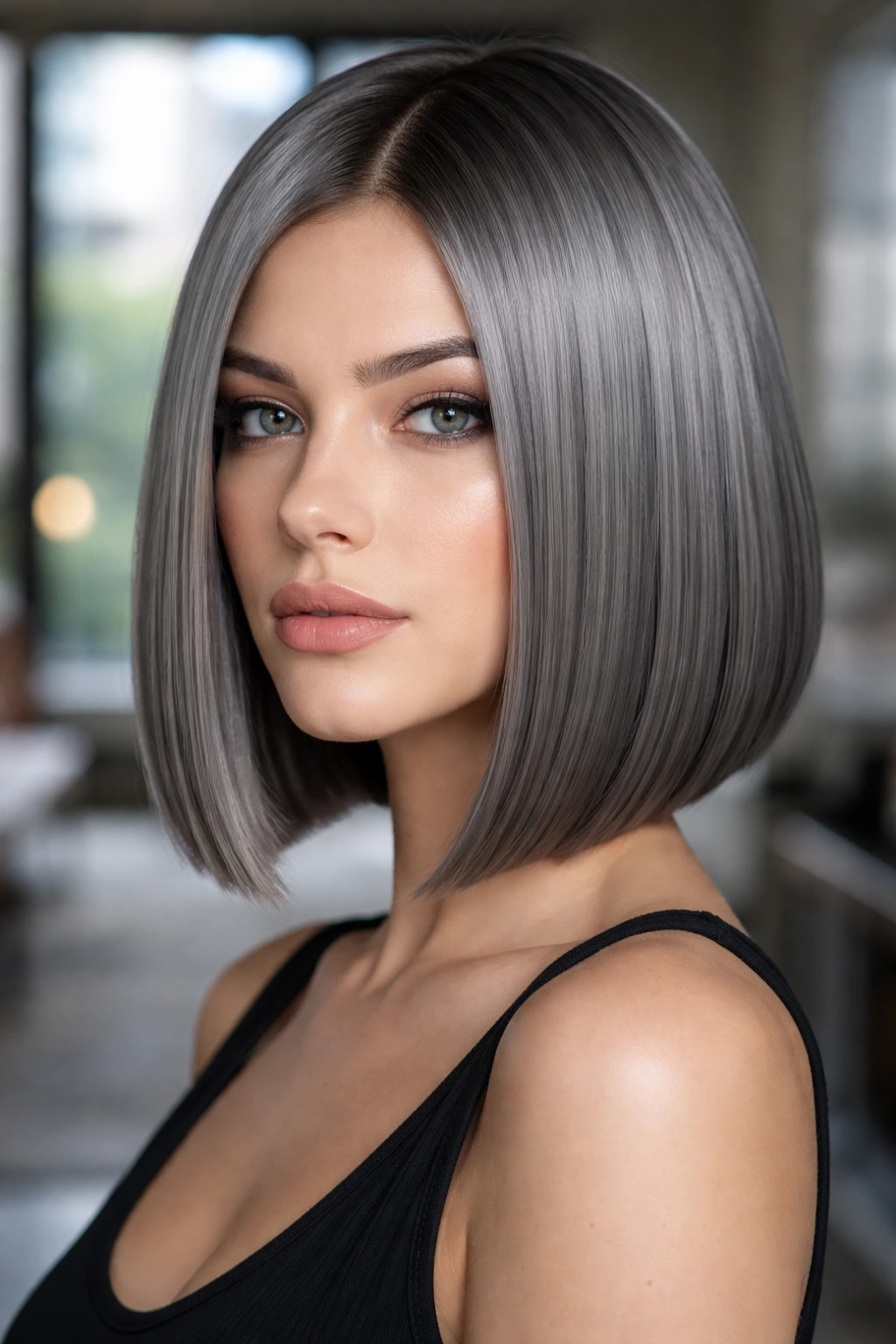
Titanium is a very specific, high-shine, cold grey. It doesn’t lean blue or purple; it is a true, neutral metallic grey. On a blunt bob, it looks incredibly modern and sharp.
The Precision Cut
A blunt bob needs to be cut perfectly straight. Any unevenness in the hair length will be magnified by the metallic color. Titanium grey highlights the shape of the cut, so if the cut is messy, the color will look messy.
Styling Tip
Use a flat iron to smooth the hair. Titanium grey shines best when the cuticle is laid completely flat. Even a slight wave can disrupt the metallic reflection, so keep it poker-straight for the full effect.
19. Ghostly White-Grey
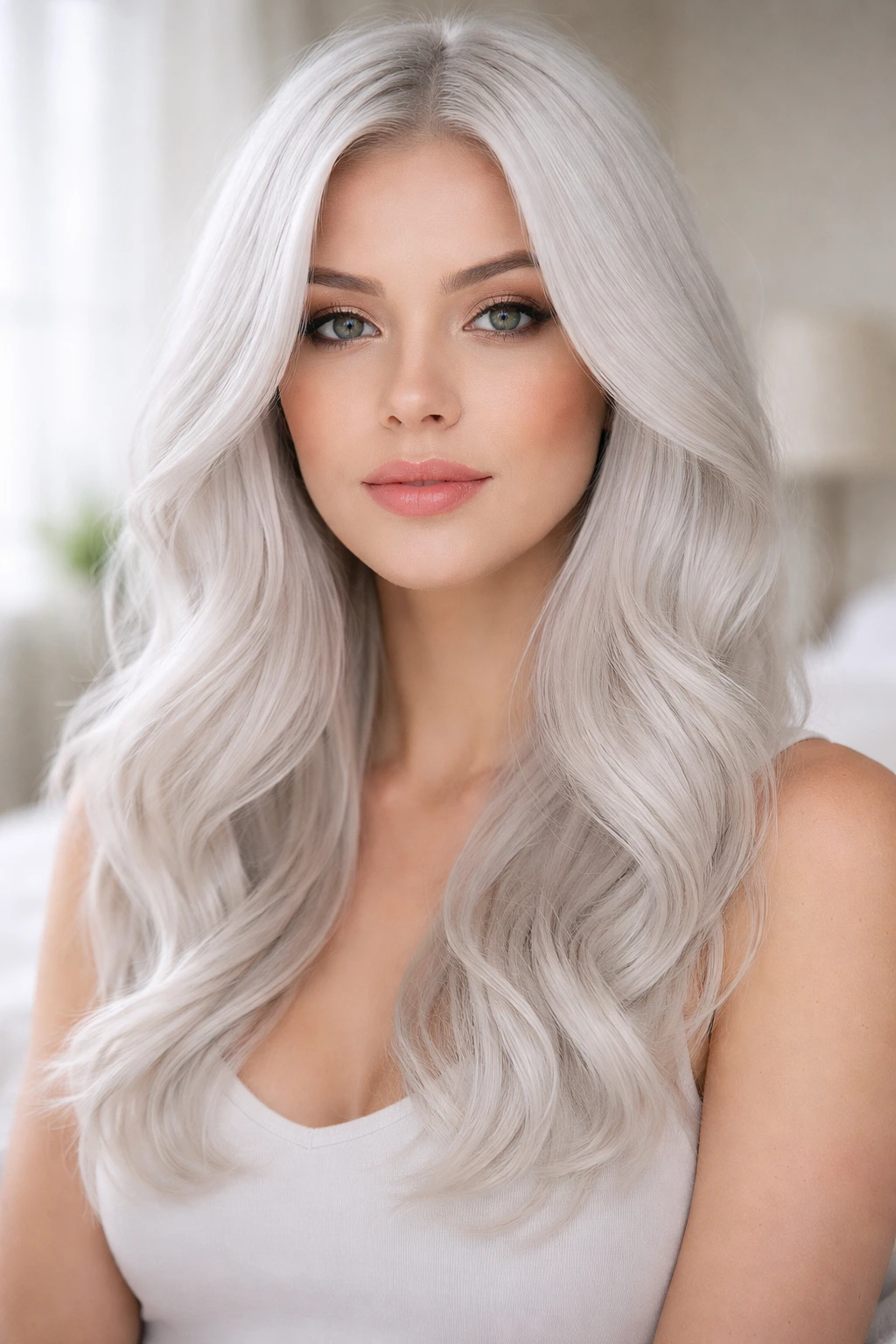
This is the lightest grey you can achieve. It’s basically white with the tiniest hint of grey pigment to keep it from looking like “bleach-blonde.” It is haunting, striking, and very high-maintenance.
The Reality Check
If your hair is naturally dark, achieving this color usually takes multiple sessions. Don’t try to get here in one day. Your hair will fall out. Break the bleaching process into two or three appointments, spaced 4-6 weeks apart, to keep the hair on your head.
Aftercare
This is the hardest color to keep. It will absorb every pigment it touches. Avoid colored shampoos, colored conditioners, or cheap styling products. Use clear, pure products only.
20. Graphite Roots to Silver Ends
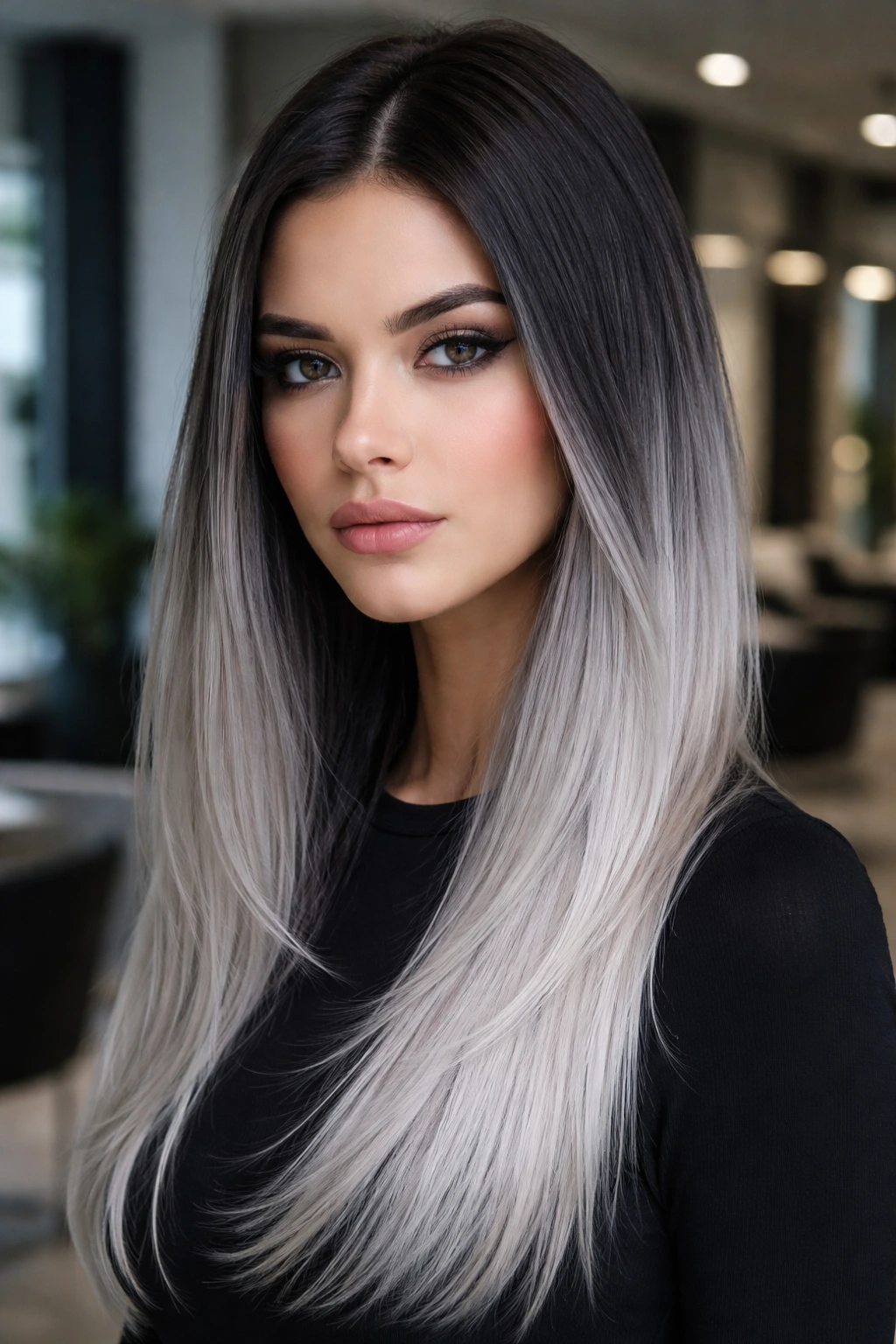
Graphite is a dark, heavy grey that feels almost masculine or industrial. Pairing it with bright silver ends is a classic, bold color choice.
The Visual Weight
The heavy roots give you volume and a “grounded” look, while the bright silver ends draw the eye to the tips of your hair. This is particularly flattering if you have a lot of hair, as the dark roots prevent the silver from overwhelming your features.
Who Should Wear This
This is a great look if you have a stronger facial structure. The high contrast draws a lot of attention to the face, so it’s not for the wallflower. It demands to be seen.
21. Subtle Slate Baby Lights
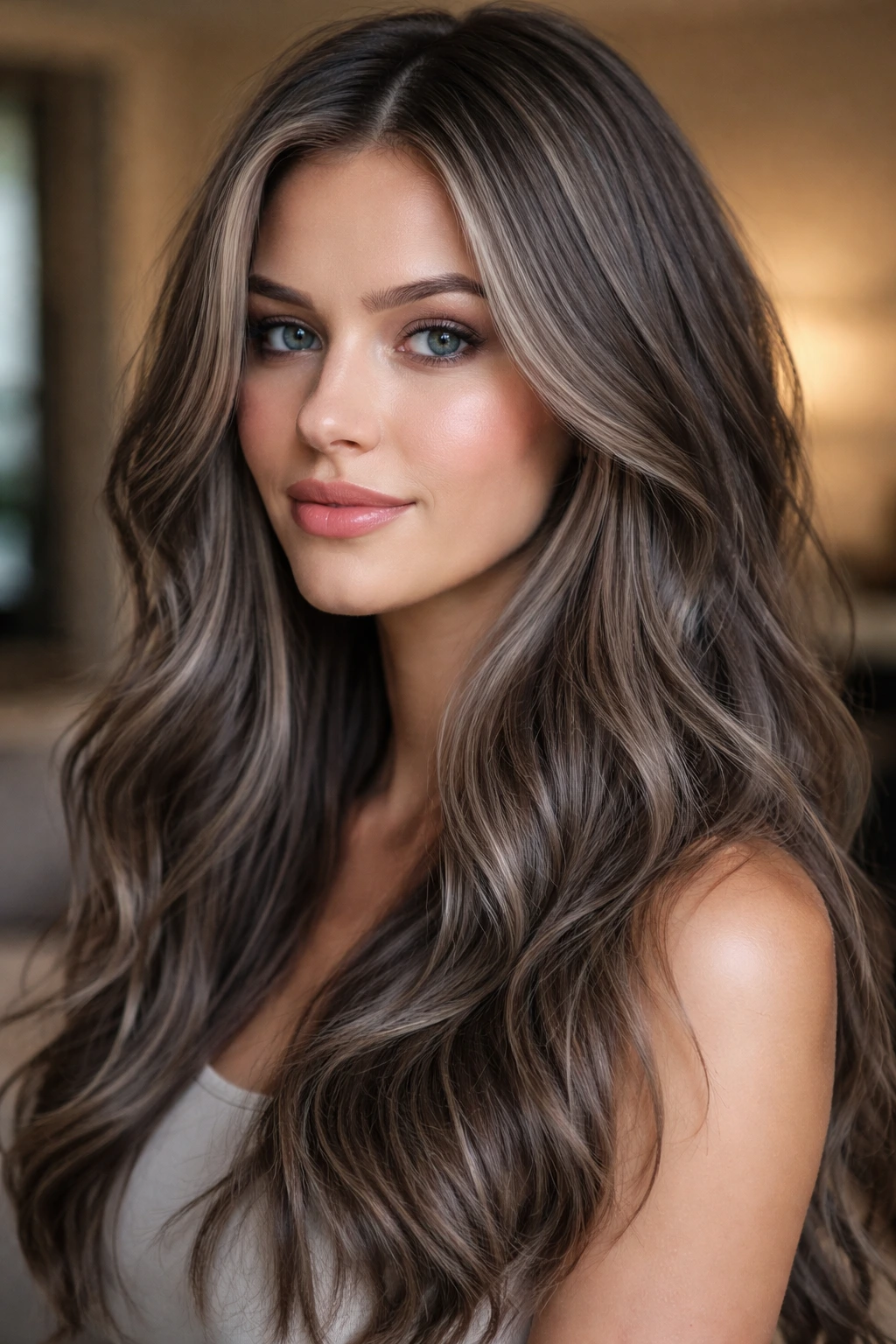
If you are worried about the commitment of grey, baby lights are the solution. These are micro-fine highlights placed throughout the hair.
The Technique
The stylist weaves tiny sections of hair into a foil and lightens them, then tones them with a slate-grey gloss. Because the sections are so small, the grey blends into your natural hair color seamlessly.
Versatility
This technique works on almost any hair texture. It adds brightness without the harshness of a full-head bleach. It’s the easiest way to “try on” the grey trend for a few weeks to see if you like it.
22. Cool Ash Tinsel Effect
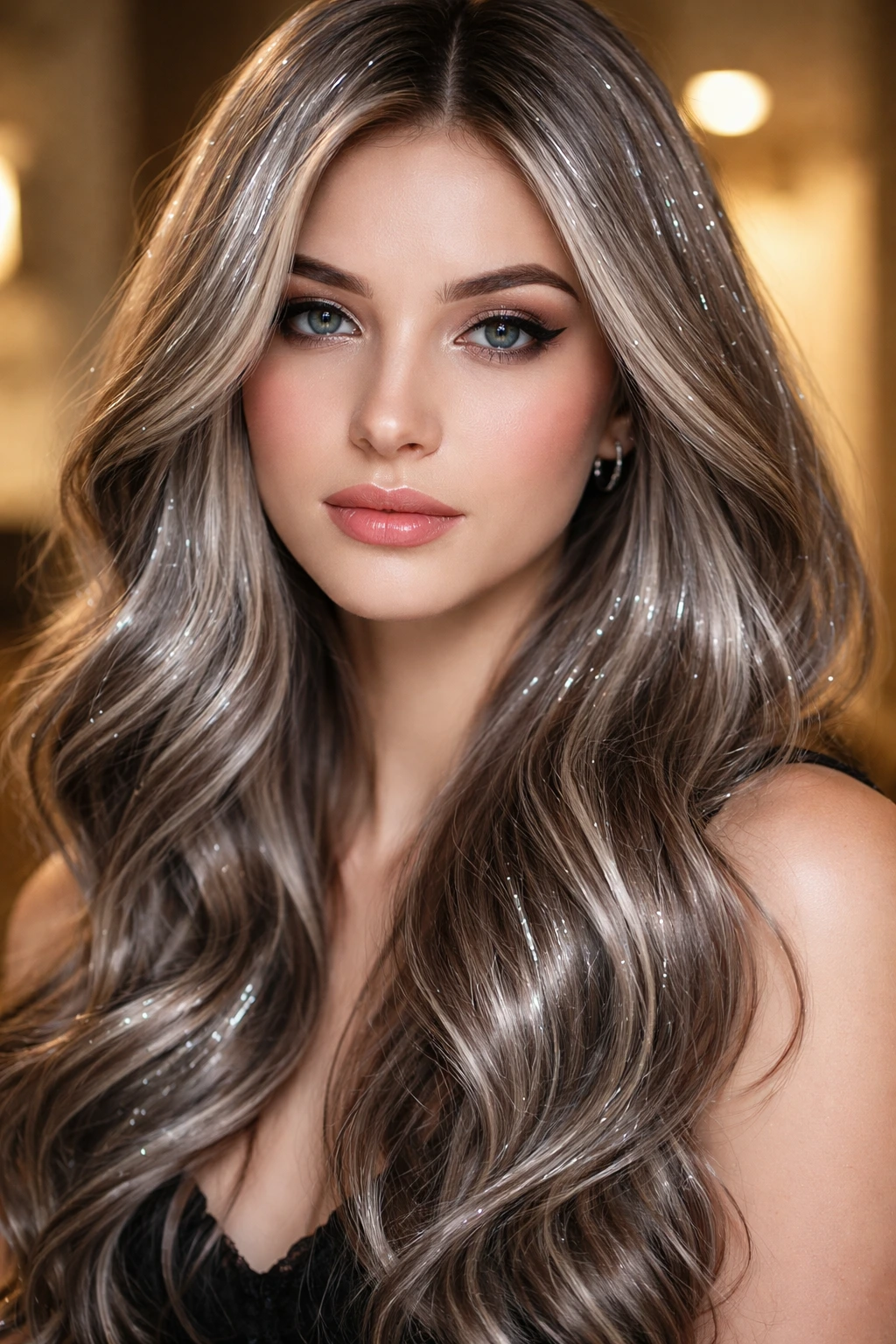
This is a specialized technique where “tinsel” or “sparkle” strands are woven into the hair, or a very glossy, silver-toned toner is used to mimic the look of tinsel.
The Goal
The goal here is pure shine. It’s not about the color grey itself, but about the reflectivity. It looks like a metallic accessory.
Occasion-Specific
This is often a “fun” color rather than a “lifestyle” color. It’s perfect for the holiday season or events where you want your hair to be the main accessory.
How to Maintain Your Ash Grey Shade
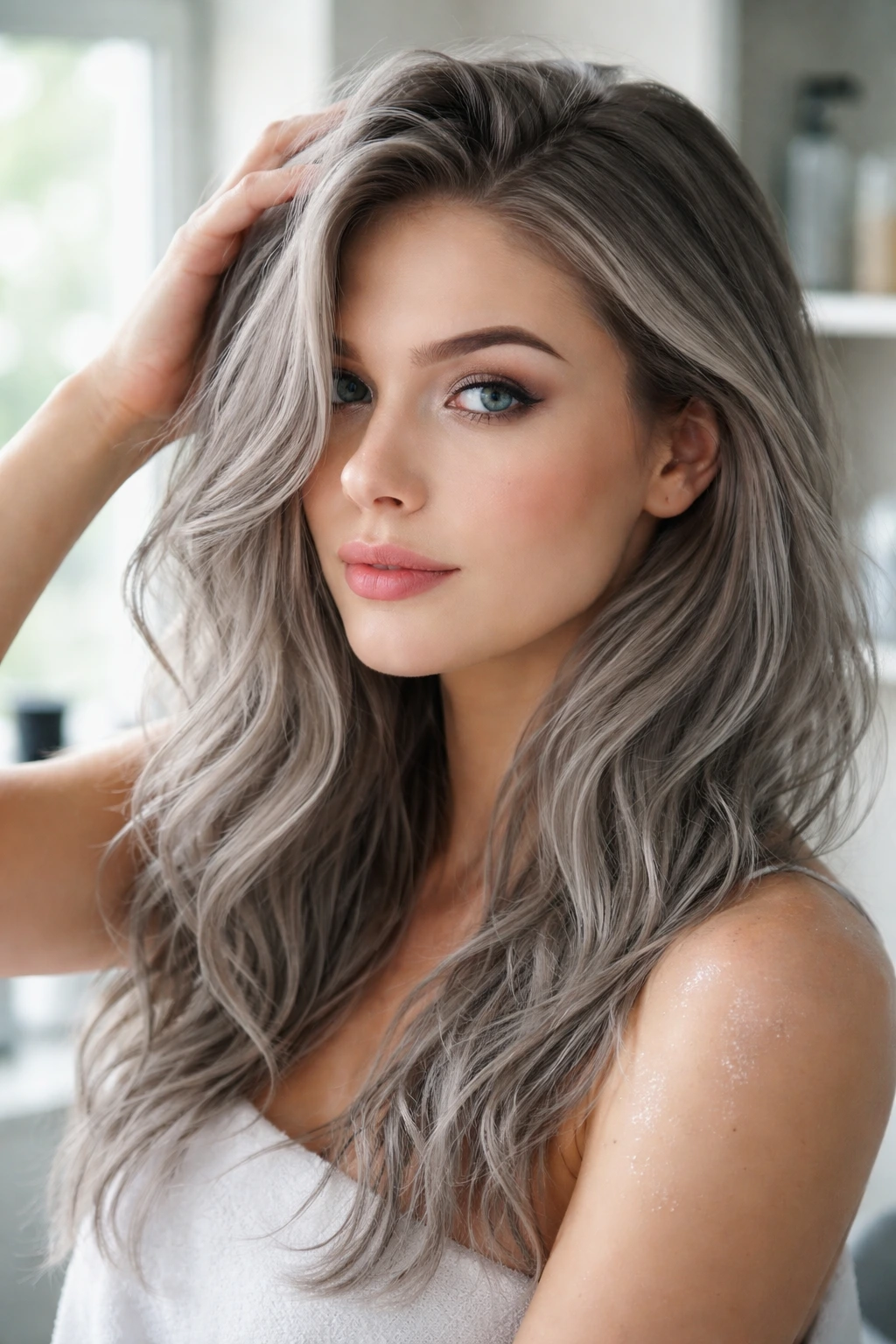
Maintaining grey hair is an exercise in damage control. Because you have had to bleach the hair to such a high level to deposit the grey pigment, the hair is structurally compromised. It is more porous, meaning it drinks up water and dye equally fast, and it is more susceptible to heat damage.
You must accept that your wash routine will change. You cannot wash every day. Every time you wash, you are stripping the toner. Aim for two, maybe three times a week. Use dry shampoo between washes—specifically a formula that doesn’t leave a white, powdery cast, as that will dull your grey.
Temperature matters. Wash with cool water. It isn’t pleasant in the winter, but it is necessary. Hot water opens the hair cuticle, causing the color molecules to escape down the drain. Cold water keeps the cuticle flat and the color locked inside.
Choosing the Right Toner for Your Hair Depth
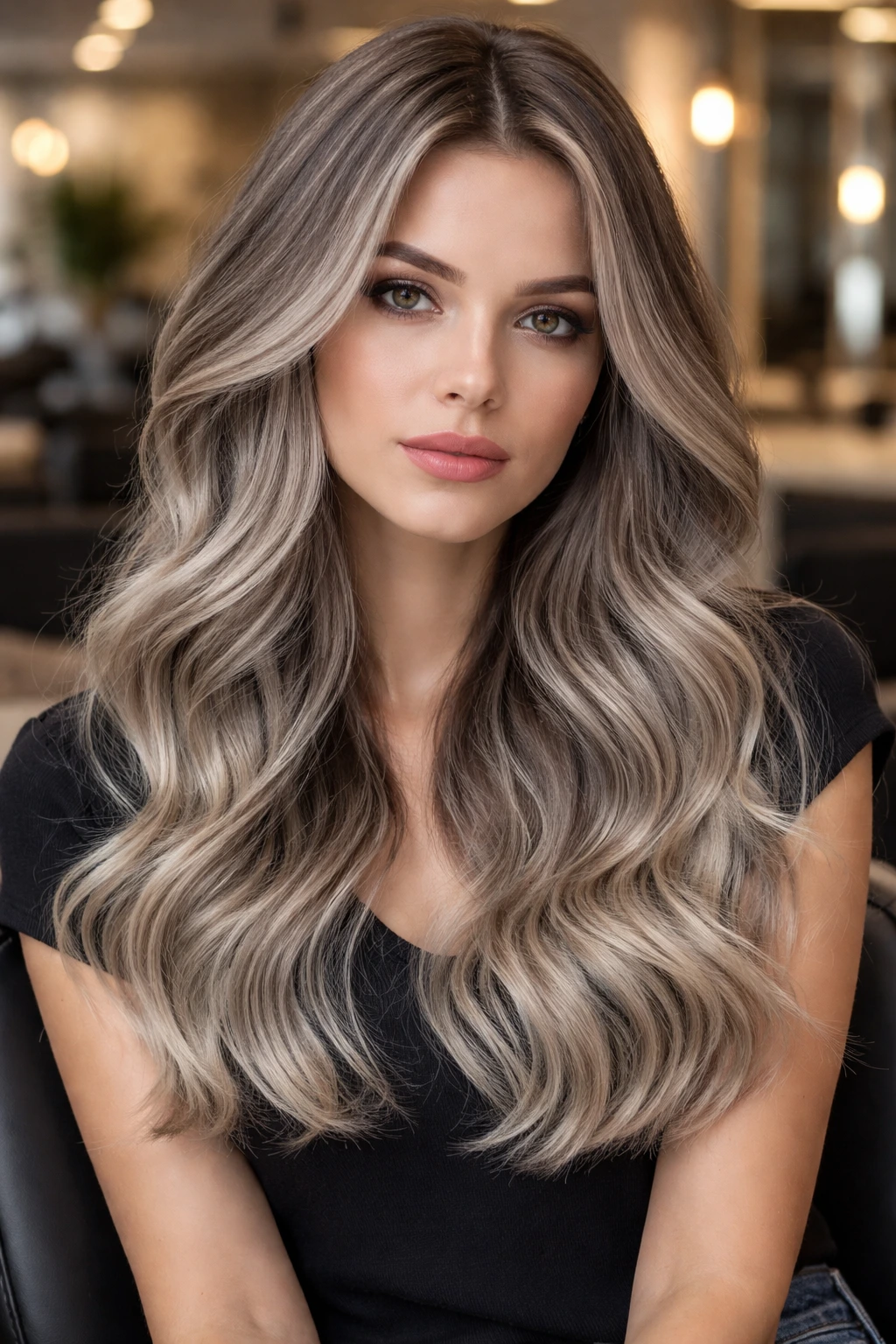
Toning is where most people go wrong. They buy a box toner labeled “ash” and apply it to hair that is still yellow. What happens? Green hair. Because ash (blue/green base) + yellow (your hair) = green.
You must match the level of your hair to the level of your toner. If your hair is a level 8 (light blonde), you cannot use a level 10 (platinum) toner. It won’t have enough pigment to neutralize the warmth. You need a toner that corresponds to the remaining warmth in your hair.
If your hair is pale yellow, you need a violet-based toner. If your hair is orange-yellow, you need a blue-based toner. If your hair is orange, you need a green-based toner. Never guess this step. If you aren’t a professional, use a professional color wheel or, preferably, go to a salon for the toning phase.
Dealing with the Yellowing Process
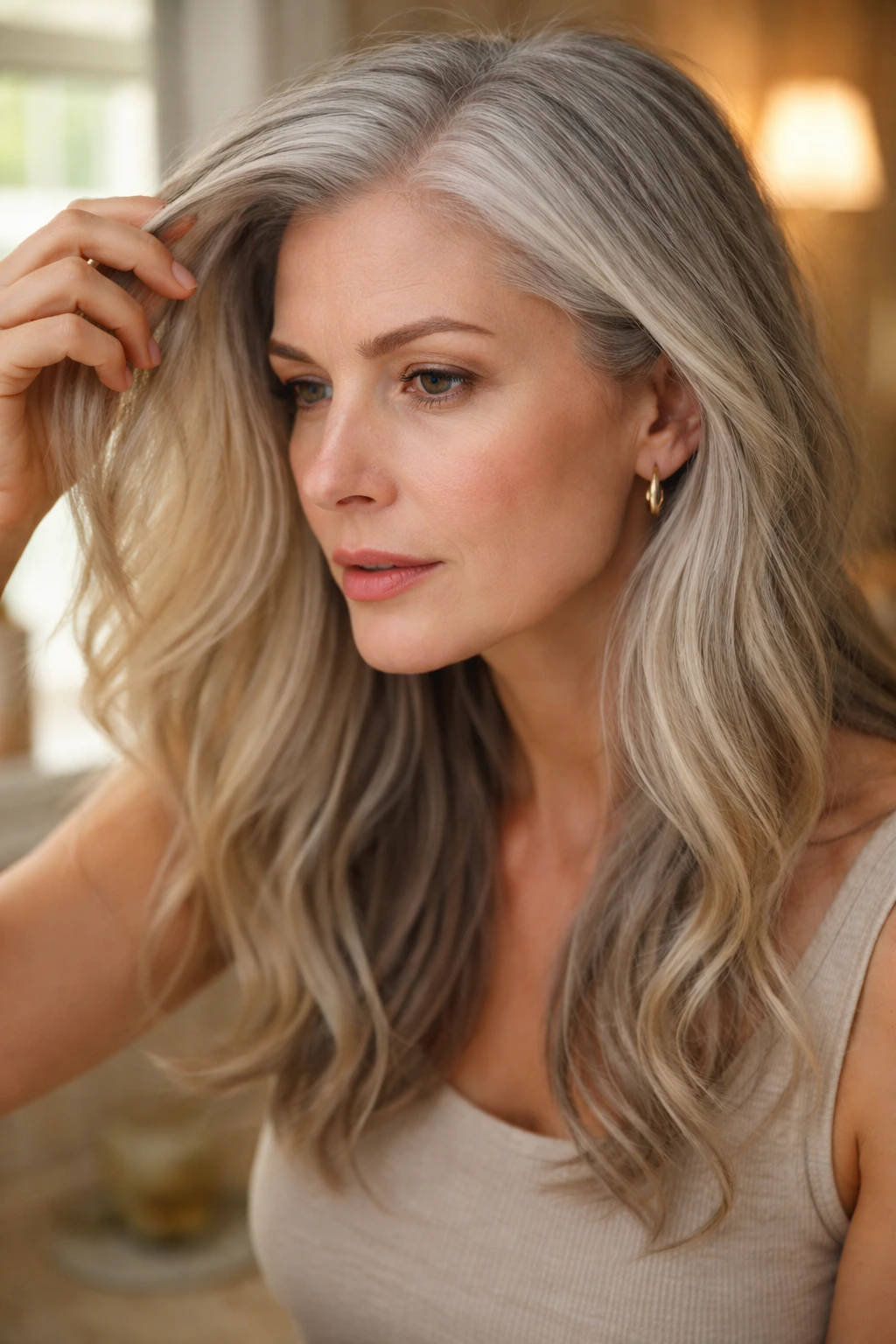
Yellowing is the enemy of the grey-haired person. It happens due to oxidation, sun exposure, hard water minerals, and styling heat. It is inevitable.
To fight it, you need a robust arsenal of “purple” products. Note the difference between a purple shampoo and a purple mask. Shampoo is for cleansing and light toning; a mask is for deep deposit. If your hair is leaning slightly yellow, use the shampoo. If it’s looking decidedly brassy, use the mask, but only for the time indicated on the bottle. Leaving a heavy purple mask on for too long can turn your hair lilac or grey-blue, which, while fun, might not be the look you were going for.
Also, consider a shower filter. Hard water contains minerals like calcium and magnesium that build up on the hair shaft. These minerals oxidize, turning silver hair yellow or dull. A simple filter that attaches to your shower head can prevent this buildup entirely.
Protecting Hair Health During the Bleaching Process
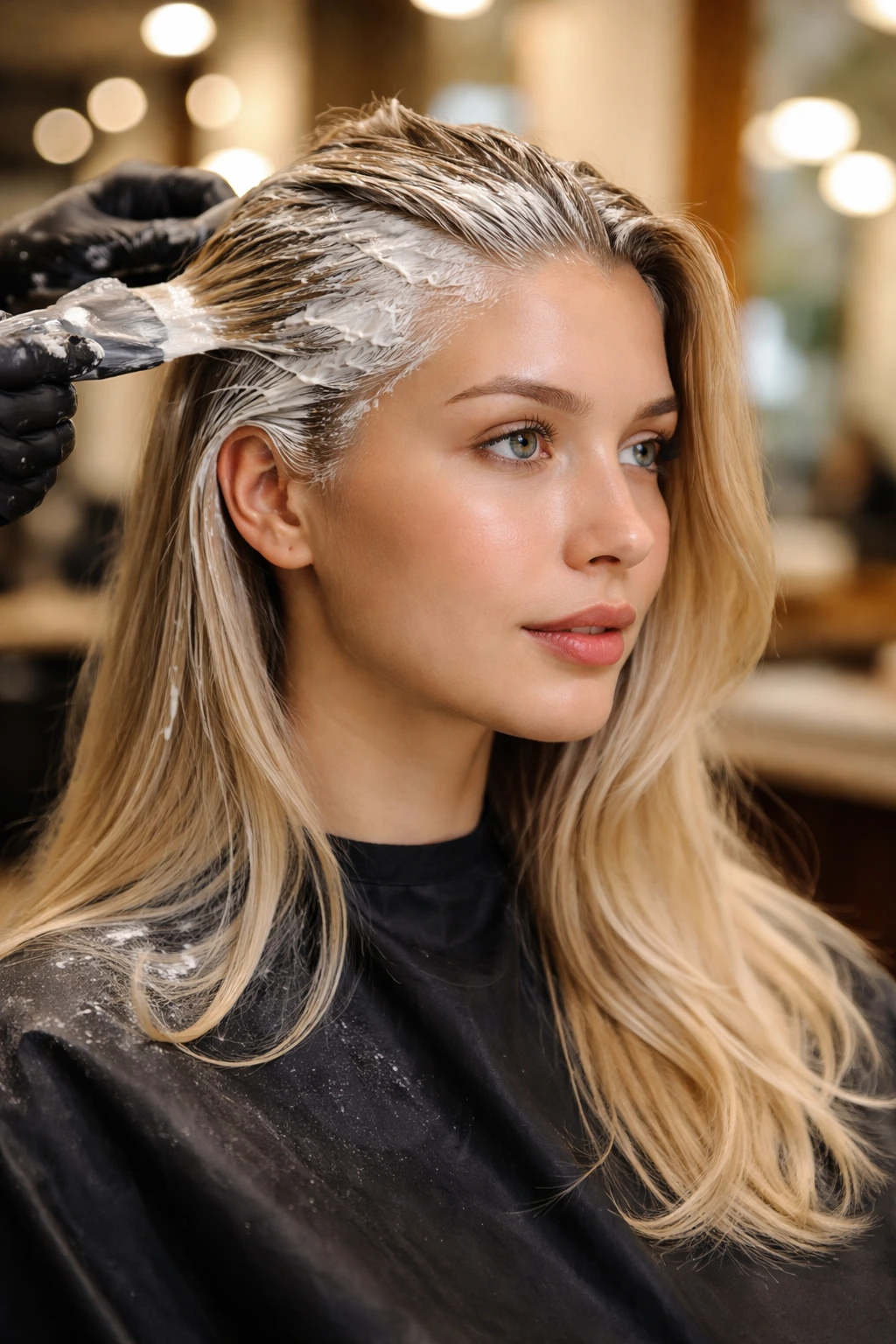
If you want to achieve these grey tones, you are almost certainly going to bleach your hair. Bleach is a chemical process that permanently alters the structure of your hair by breaking down the melanin. It is inherently damaging.
The trick is not to stop the damage—that is impossible—but to manage it. Never bleach on dirty hair. People say “oils protect the scalp,” but professional colorists prefer hair that is free of styling product buildup. Clean hair ensures an even lift.
Always use a bond-builder. Products that contain maleic acid or bis-aminopropyl diglycol dimaleate work by reconnecting the sulfur bonds that bleach breaks. This is the difference between hair that feels like silk and hair that feels like straw. If you are doing this at home, buy a standalone bond builder and mix it into your bleach. If you are at a salon, ask them to include it in the service. It will cost extra, but it is the cheapest insurance policy for your hair.
Final Thoughts
Going ash grey is a transformation that changes how you dress, how you wear your makeup, and even how you carry yourself. It is a bold, cool-toned statement that commands attention. Because cool skin tones are naturally prone to looking washed out, grey ash can either be the perfect, elegant framing for your face or a color that drains you of all life. The difference lies entirely in the tone.
Avoid the urge to jump into the deepest, darkest charcoal if you aren’t ready for the maintenance. Start with highlights or a gloss if you are nervous. If you are ready for the full commitment, prioritize the health of your hair above all else. Grey hair that is brittle and broken loses its luster immediately; grey hair that is hydrated and healthy is nothing short of striking. Choose your shade based on what makes you feel the most confident, not just what looks good on a screen, and remember that toners are your best friend in the pursuit of the perfect, icy ash.
