



Round faces need a little trickery from gray hair color. Not much. Just enough to stop the eye from reading the face as a wide circle and start reading it as a longer shape with lift, movement, and some cheekbone drama.
That is why the best grey hair color ideas for round faces rarely look like one flat silver sheet. They use darker roots, brighter ends, narrow face-framing pieces, or a part that slips off-center. Sometimes the cut does half the work. Sometimes the color does it all.
I’ve always liked gray hair when it has contrast. A smoky root with pearl ends looks sharper than a single-tone silver cap. A soft mushroom gray with lowlights can feel calmer than icy platinum, and on a round face that calmness matters because it keeps the sides from looking too heavy.
The shades below are the ones I keep coming back to when the goal is simple: make gray hair feel intentional, and make a round face look a little longer without turning the whole thing into a gimmick.
1. Smoky Root Melt With Silver Ends
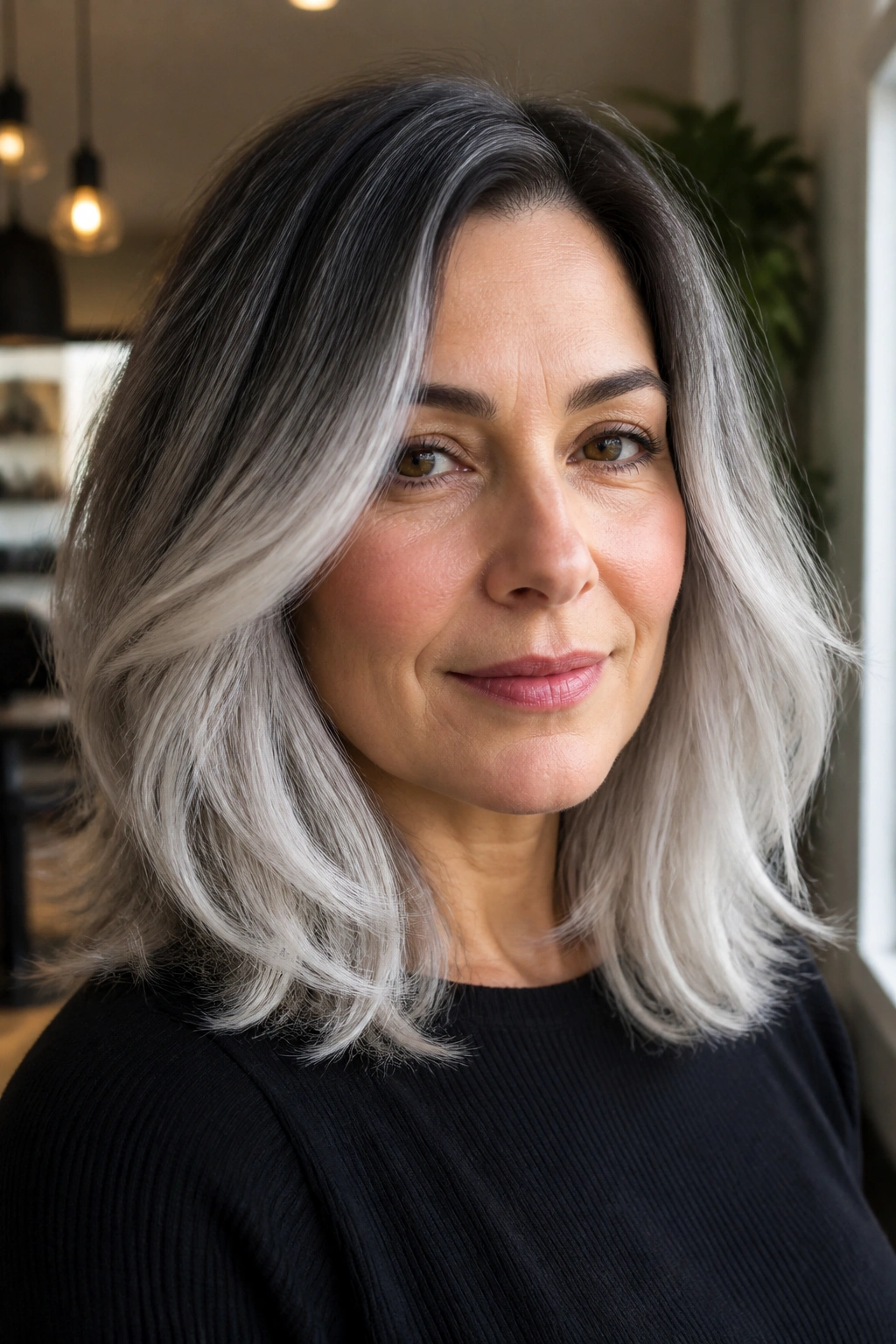
A smoky root melt is one of the easiest ways to give a round face some vertical line. The dark root keeps the top of the head visually narrow, while the silver ends pull the eye downward. That’s the whole trick, and it works because the bright part sits away from the cheeks.
Why it works on a round face
The root shadow should be soft, not stripey. I like a melt that stays within about 1 to 2 levels of the base color, then fades into a cool silver through the mid-lengths. That keeps the transition clean and stops the color from looking like a harsh cap.
This look is especially good on shoulder-length cuts and long layers. If the ends are a little piecey and not blunt, the face reads slimmer. A center part can work here too, but I usually prefer a slight off-center part so the hair doesn’t split the face into two equal halves.
- Ask for a shadow root that melts 1 to 2 inches down
- Keep the silver brighter from the cheekbone to the ends
- Use a cool toner, not a flat purple rinse
- Add soft layers around the collarbone, not the jaw
Best tip: keep the brightest silver below the chin. That one placement choice does more than a lot of people expect.
2. Ashy Silver Ribbons Through a Chestnut Base
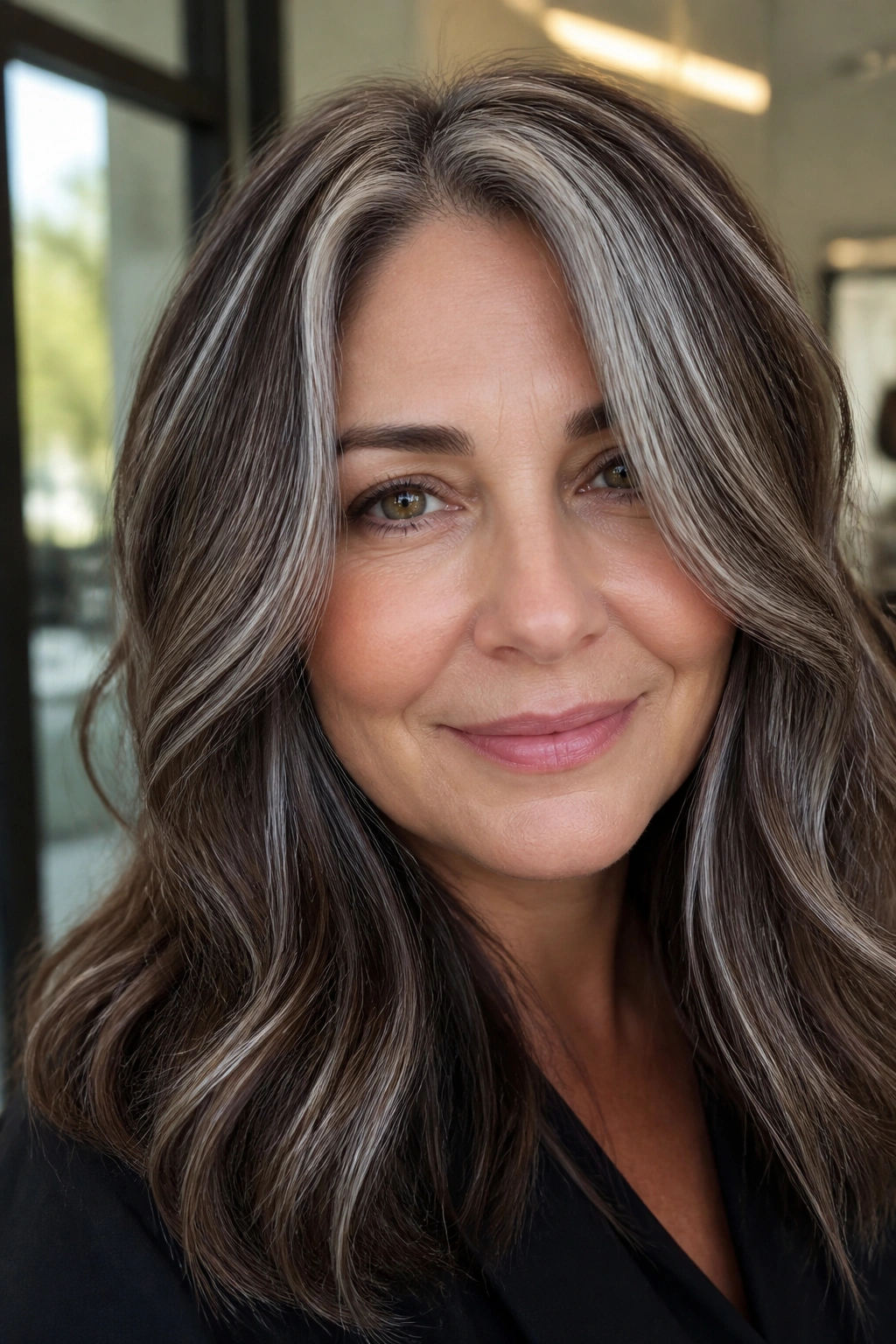
This is the shade I recommend when someone wants gray but doesn’t want to look washed out. The chestnut underneath gives the hair depth, and the ash-silver ribbons travel through it in narrow lines, which is exactly what a round face likes.
I’m fond of this one because it doesn’t flood the whole head with lightness. Instead, it creates a slim, vertical pattern. Think of it like pinstripes on a jacket. The eye moves up and down, not across. That matters.
The best placement is around the crown, the lengths, and a few face-framing pieces that start below the cheekbones. Don’t pack the front with thick silver panels. That can widen the face fast. Thin ribbons are cleaner, more modern, and much easier to wear if your hair has some natural wave.
What to ask for
- Ash-silver babylights over a chestnut base
- Extra brightness around the crown and outer lengths
- Soft depth kept at the temples
- A gloss that leans cool, not blue
This is one of those colors that looks expensive because it behaves. It moves. It doesn’t shout.
3. Platinum Money Piece With Dim Root Shadow
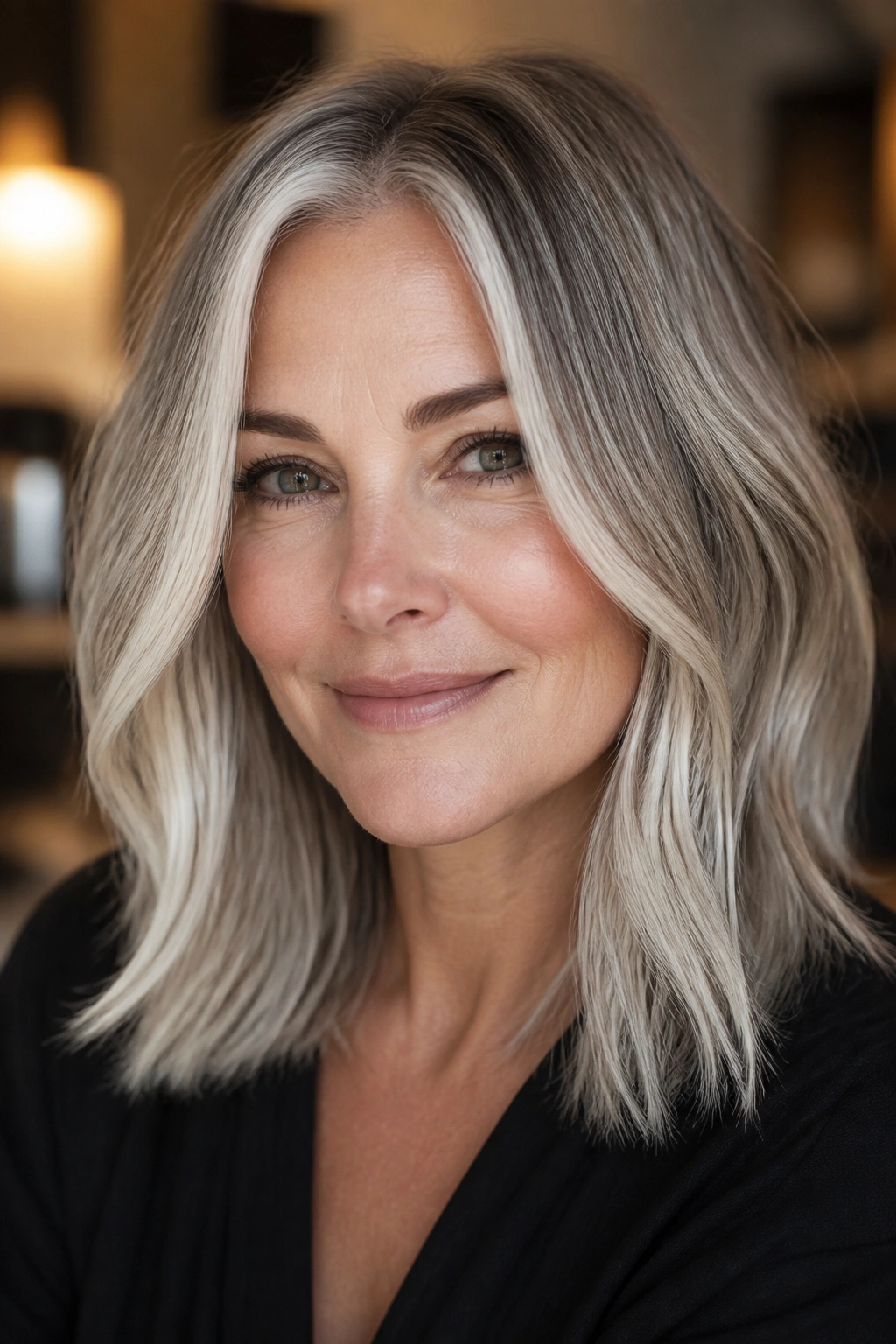
Can a bright front piece work on a round face? Yes, if the rest of the head stays quieter.
The money piece is the bright strip around the face, and on a round face it needs restraint. Keep it narrow, and start the lightness a little lower than you think—around the cheekbone, then let it fall straight past the jaw. The root shadow behind it matters just as much. Without that darker base, the bright panel can spread the face sideways.
How to use it
A platinum money piece works best with a lob, long bob, or layered cut that has movement at the ends. If the rest of the hair stays smoked out, the front strip becomes a frame rather than a halo. That frame can sharpen the cheek area and make the face look a touch longer.
- Keep the money piece no wider than 1 to 1.5 inches
- Blend it into a cool beige-silver, not stark white
- Pair it with a deep side part if you want even more length
- Avoid a blunt chin-length bob with this color unless you want extra width
The cleanest version of this look feels sleek, not loud. That’s the whole point.
4. Pearl Gray Balayage on a Shoulder-Length Lob
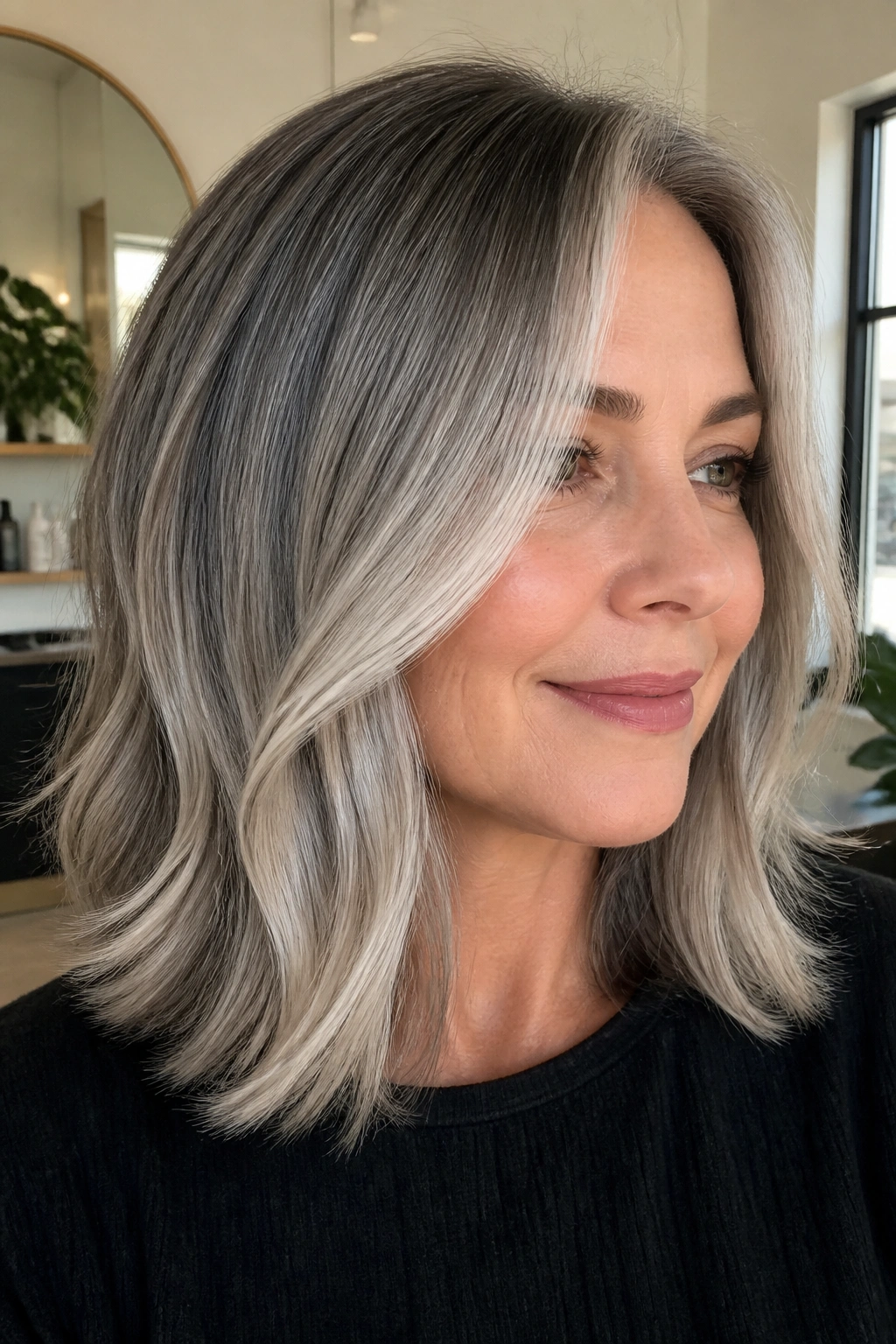
Would I put pearl gray on every round face? No. But on a lob with a little bend at the ends, it’s a very good move.
Pearl gray has a soft shine that sits between silver and pale beige. It does not have the sharp edge of ice gray, which makes it easier on softer face shapes. The balayage placement is what makes it work here: lighter pieces sweep diagonally, not horizontally, so the color guides the eye downward and out toward the ends instead of across the widest part of the face.
The shoulder-length lob gives this shade room to breathe. A blunt cut can still work, but I prefer ends that curl under just a bit. That tiny inward turn keeps the silhouette clean. If the hair is straight and glassy, the color will read more polished. If it has a loose wave, the pearl tone looks a little softer and more lived-in.
Why I like it
Pearl gray is one of the few silver shades that does not need to be loud to feel special. It sits quietly, which is often better on round faces anyway.
5. Salt-and-Pepper Blend With a Deep Side Part
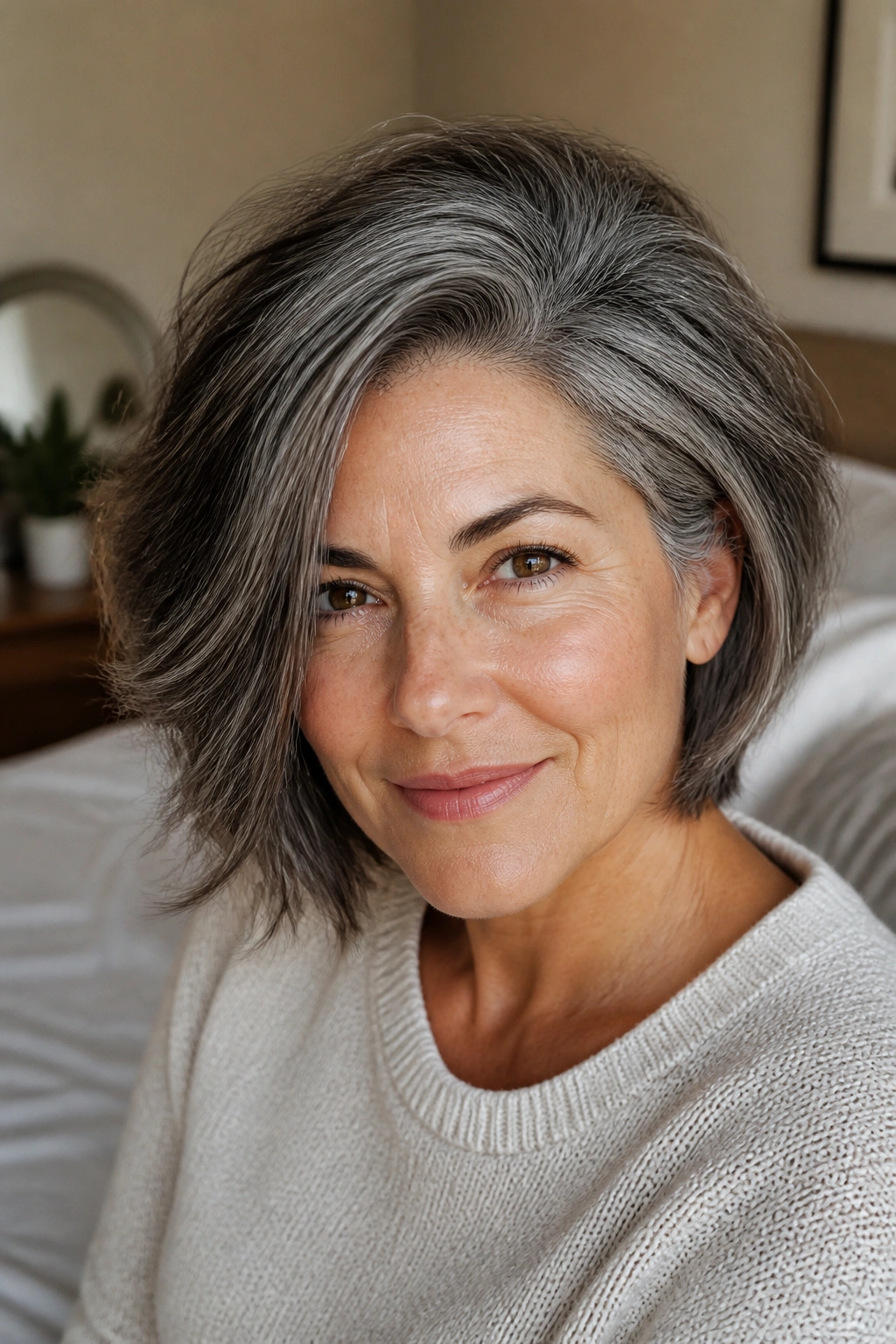
Some people fight their natural gray. Others lean into it and make the blend look deliberate. The salt-and-pepper route belongs to the second group.
A deep side part is the important part here. It throws more hair over one side of the head, which breaks up the round shape and gives the face a longer line through the top. The color itself should stay mixed, not striped. You want dark and gray strands to sit together instead of forming separate blocks.
This look is especially good if your hair is thick or coarse. Those textures hold the contrast better, and a mixed gray pattern can look fuller instead of flat. I also like it on chin-length bobs and long shags because both cuts already have movement.
One thing to skip: a perfectly centered part with this color. It can look too symmetrical, and symmetry is not always kind to a round face.
Best for: people who want low maintenance, natural texture, and a color that ages with some attitude.
6. Silver Fox Pixie With Tapered Sides
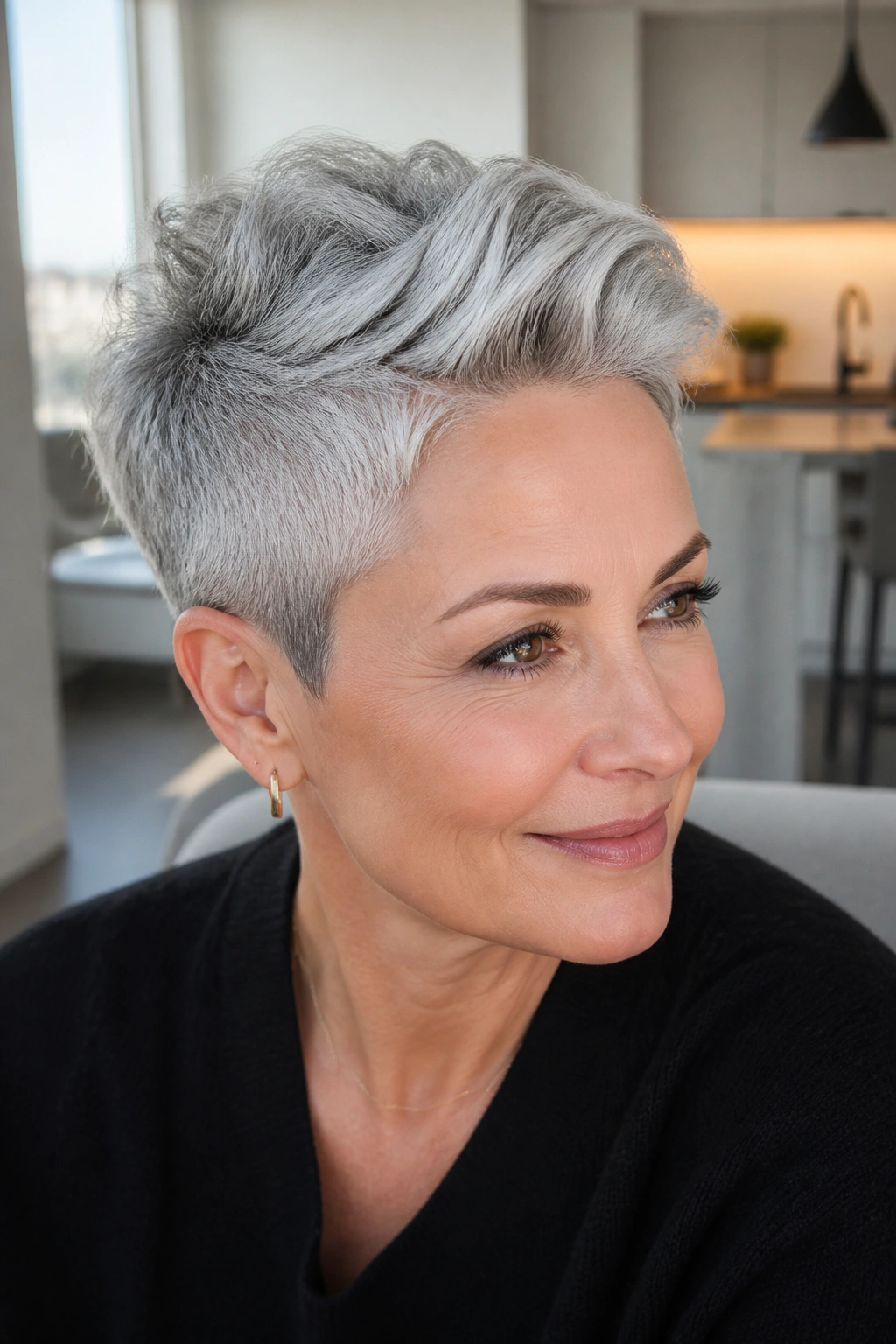
A pixie can be a gift for a round face if the top has height and the sides stay neat. That’s where the silver fox look comes in.
The color should be brighter on top and slightly deeper near the temples and nape. That small shift adds lift where you want it. Tapered sides keep the shape close to the head, which helps the face read longer. If the cut puffs out at the cheeks, the whole effect is gone.
What makes it different
Unlike a fluffy pixie that spreads outward, this one stays tucked in at the sides and textured on top. That makes the crown look taller. The silver tone also reflects a lot of light, which draws attention upward instead of outward.
- Keep the sides clipped or tightly tapered
- Leave 1.5 to 2.5 inches of texture on top
- Ask for a silver toner with a smoky base
- Style with a matte paste, not a heavy cream
This is a sharp cut. It asks for confidence, but it pays you back with strong lines and almost no fuss.
7. Mushroom Gray With Mocha Lowlights
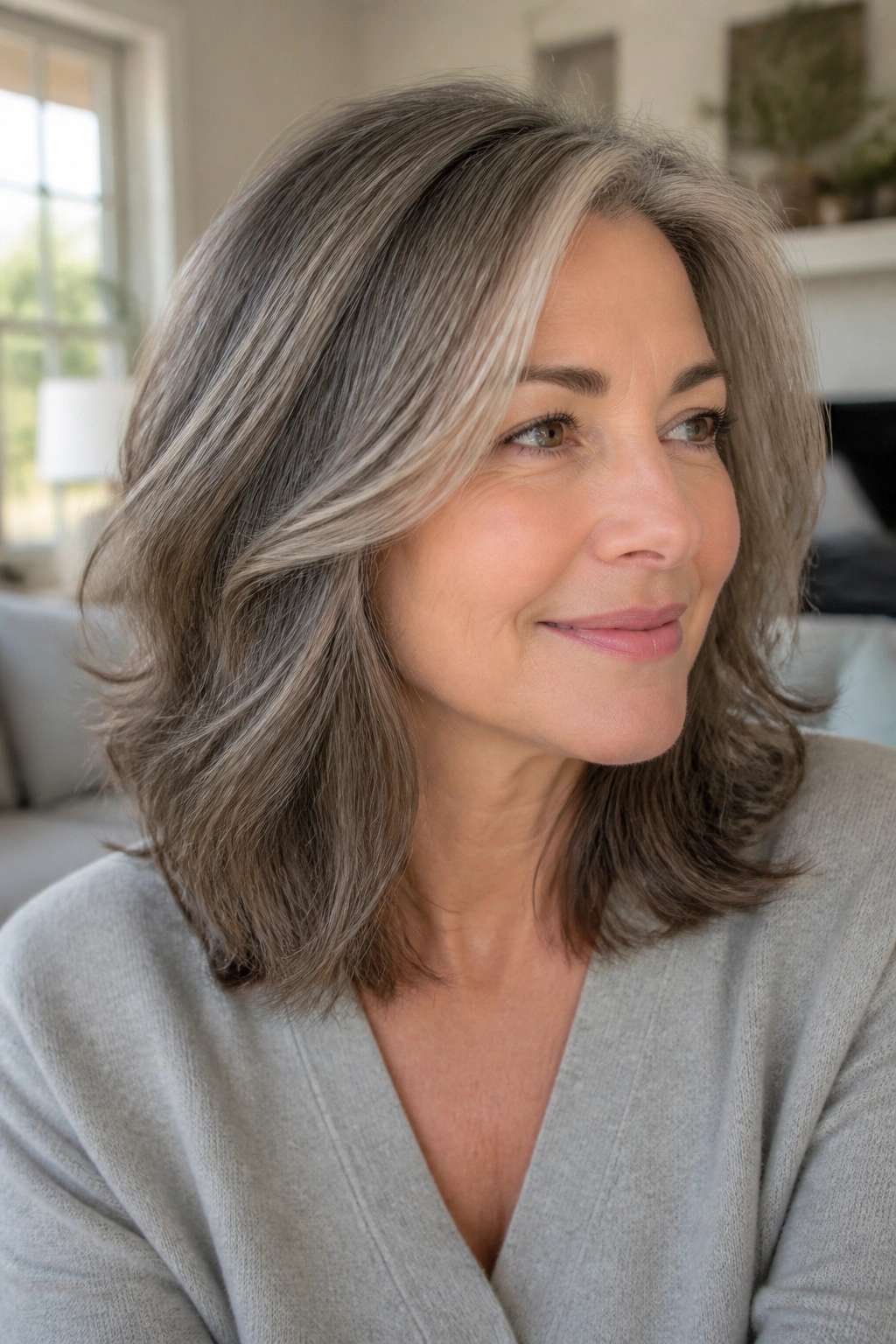
Mushroom gray is the shade I reach for when icy silver feels too hard. It has a soft, earthy base with a cool cast, and the mocha lowlights keep it from going flat. On a round face, that subtle depth matters because it adds shape without screaming for attention.
I like this color on medium-length hair with movement around the ends. The lowlights should sit underneath and through the interior, not streaked across the front. That keeps the face-framing pieces lighter and lets the outer edge of the hair fall in a cleaner line.
What to watch for
If the gray gets too pale, the style can start to blur into one big light shape. That’s not what you want. The mocha pieces should stay visible enough to create contrast, especially near the back and underlayers.
This is a good option if you want gray hair that still feels grounded. It looks expensive in a quiet way. Not flashy. Just balanced.
8. Ice-Gray Ombré on Long Layers
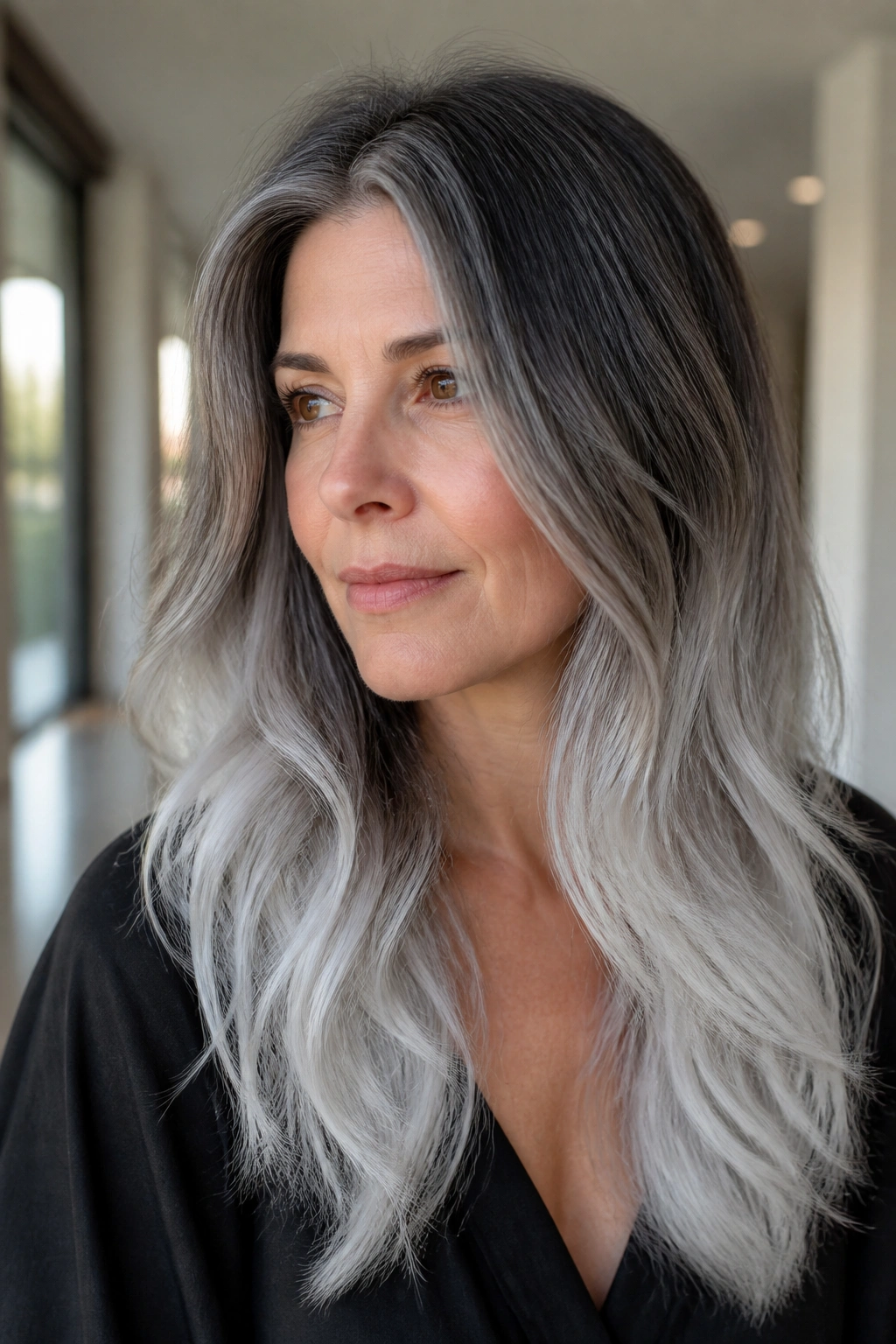
Long hair and round faces can be a tricky pair if the color sits too wide at the cheeks. Ice-gray ombré avoids that problem by keeping the base darker and pushing the brightness down through the lengths.
Picture this. Darker roots. Medium smoky mids. Then the icy end point drops well below the jaw. That drop is doing real work. It stretches the eye downward, and the long layers prevent the ends from turning into one thick curtain.
The best version has pieces that start to lighten around the collarbone rather than right at the cheek. That keeps the face open. If the hair is wavy, even better—the movement breaks up the width. Straight hair can still work, but the cut needs some internal layering so the ombré doesn’t look heavy.
Quick rule
Keep the ice concentrated at the bottom third of the hair. That’s where the elongating effect lives.
9. Soft Graphite Bob With Curved Ends
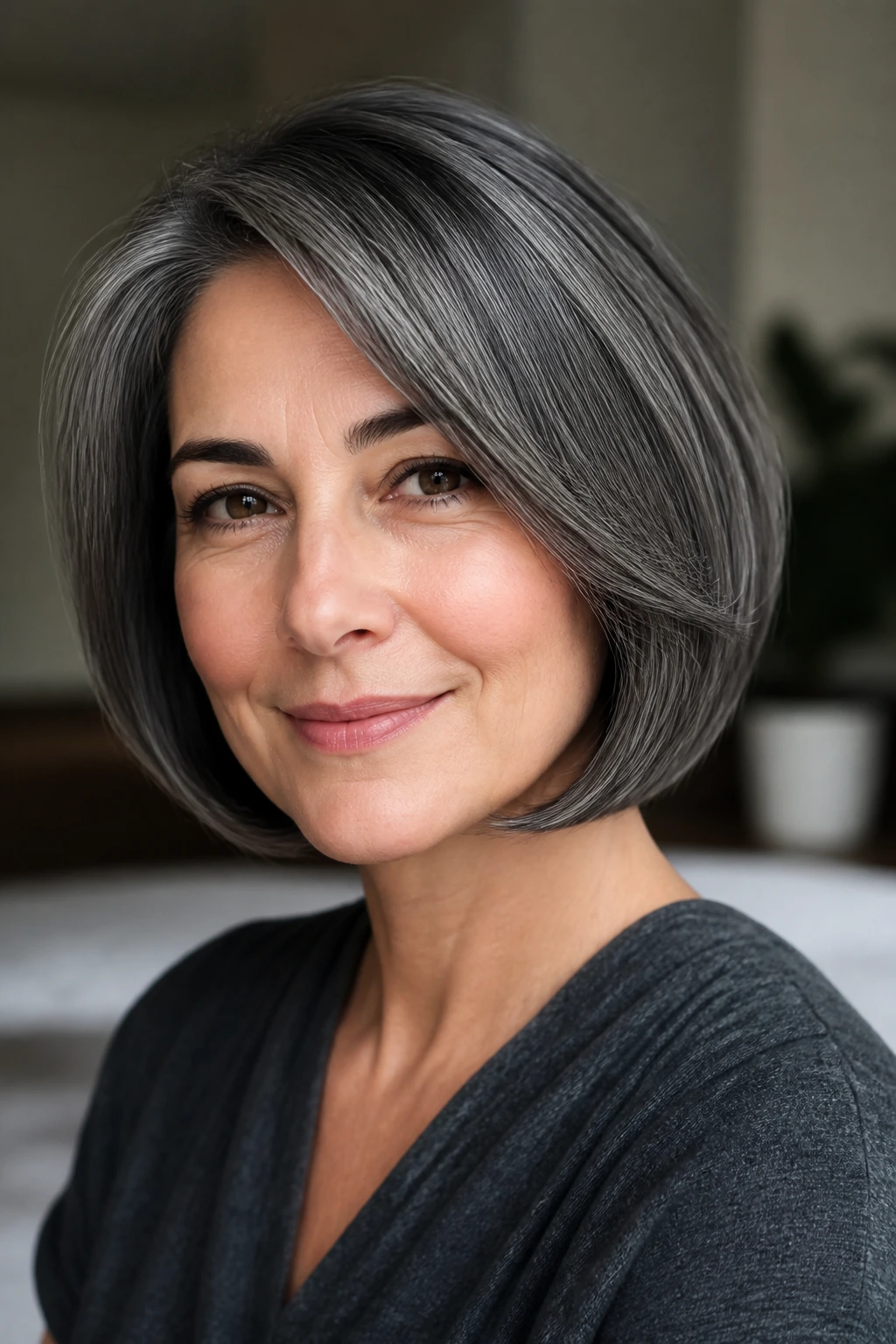
A bob does not have to fight a round face. It just has to know where to end.
Graphite gray gives a bob some edge without making it harsh. The key is the curve. Let the ends tuck slightly under the chin or skim just below it. That soft bend creates a line that narrows the face, while a blunt, boxy bob can widen it. I prefer this shade when someone wants a polished look that still has depth.
The color itself should have a smoky finish rather than a shiny metallic one. That keeps the bob from feeling too hard around the jaw. A few micro-lights near the top can add movement, but they should stay subtle. The shape is doing most of the talking here, and I’d keep the color clean enough to support it.
One more thing: this bob looks better with a side part or a soft off-center part. A center part can work, but the side part usually wins on round faces because it adds asymmetry. And asymmetry is your friend here.
10. White-Silver Halo Highlights
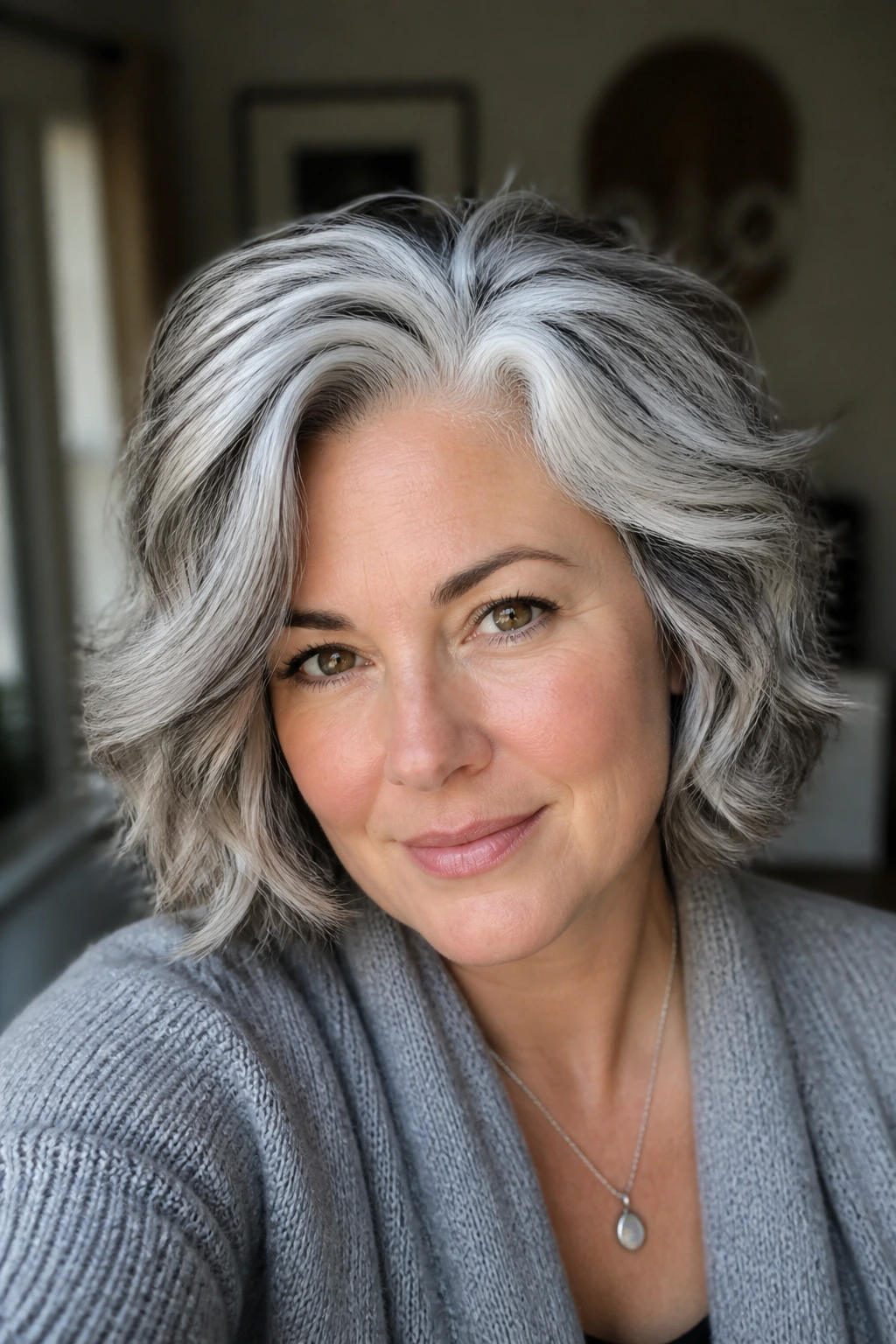
Halo highlights sound flashy. Done badly, they are. Done well, they lift the eye and make a round face look longer through the crown.
The idea is simple: place the brightest white-silver pieces around the top and upper outer layers, then keep the sides softer near the cheeks. You are building a halo effect that draws attention upward. Not around the face. Upward. That difference matters.
The science behind it
Brightness near the crown creates height. Height visually lengthens. If the brightest silver sits too close to the cheekbones, the face can look wider because the light spreads across the broadest part. So the placement has to be careful.
- Focus bright pieces on the crown and top layers
- Keep the temples a shade or two deeper
- Use a gloss that stays icy, not purple
- Pair with layers or a shag for movement
This is one of my favorite choices for hair that needs more lift on top. It feels airy, and it avoids the helmet effect that can happen with all-over light gray.
11. Steel Gray With Curtain Bangs
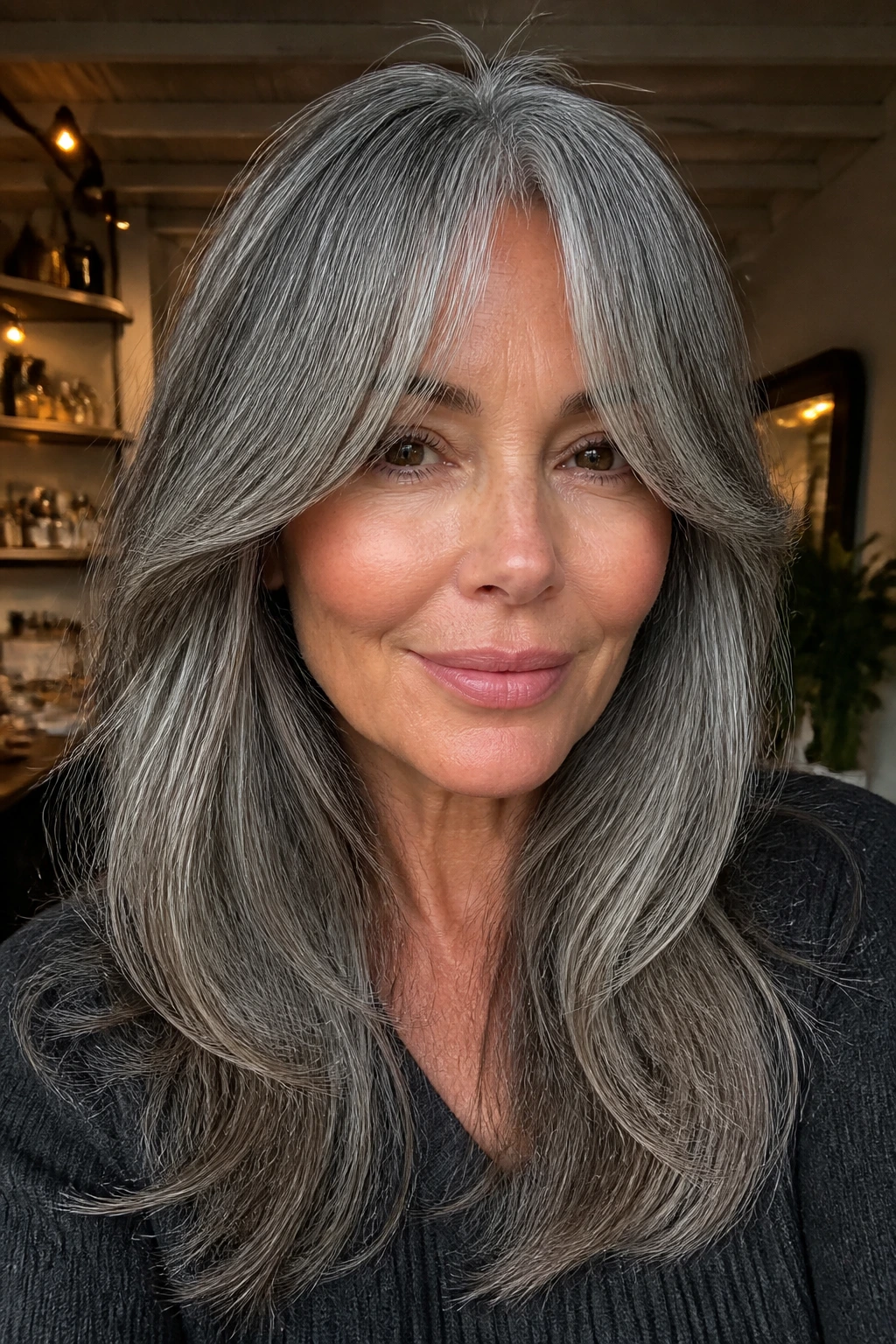
Curtain bangs are a smart move for round faces because they split the face vertically and soften the width around the cheeks. Add steel gray, and the whole style gets a cool, tailored edge.
The bang shape matters. You want them long enough to brush the cheekbone, not cut straight across the forehead. That split opens the center of the face and gives you a more oval read. The steel color adds density and shine, which keeps the fringe from looking wispy or weak.
I like this on medium-length hair with loose bends. The bangs should blend into the sides, and the sides should stay long enough to graze the jaw. That way the eye follows a soft diagonal line rather than a boxy frame.
How to wear it
Use a round brush only at the bang area if you need shape. Keep the rest of the hair a little undone. Too much polish can make the cut look stiff, and stiffness is not kind to round faces.
12. Charcoal Base With Frosted Tips
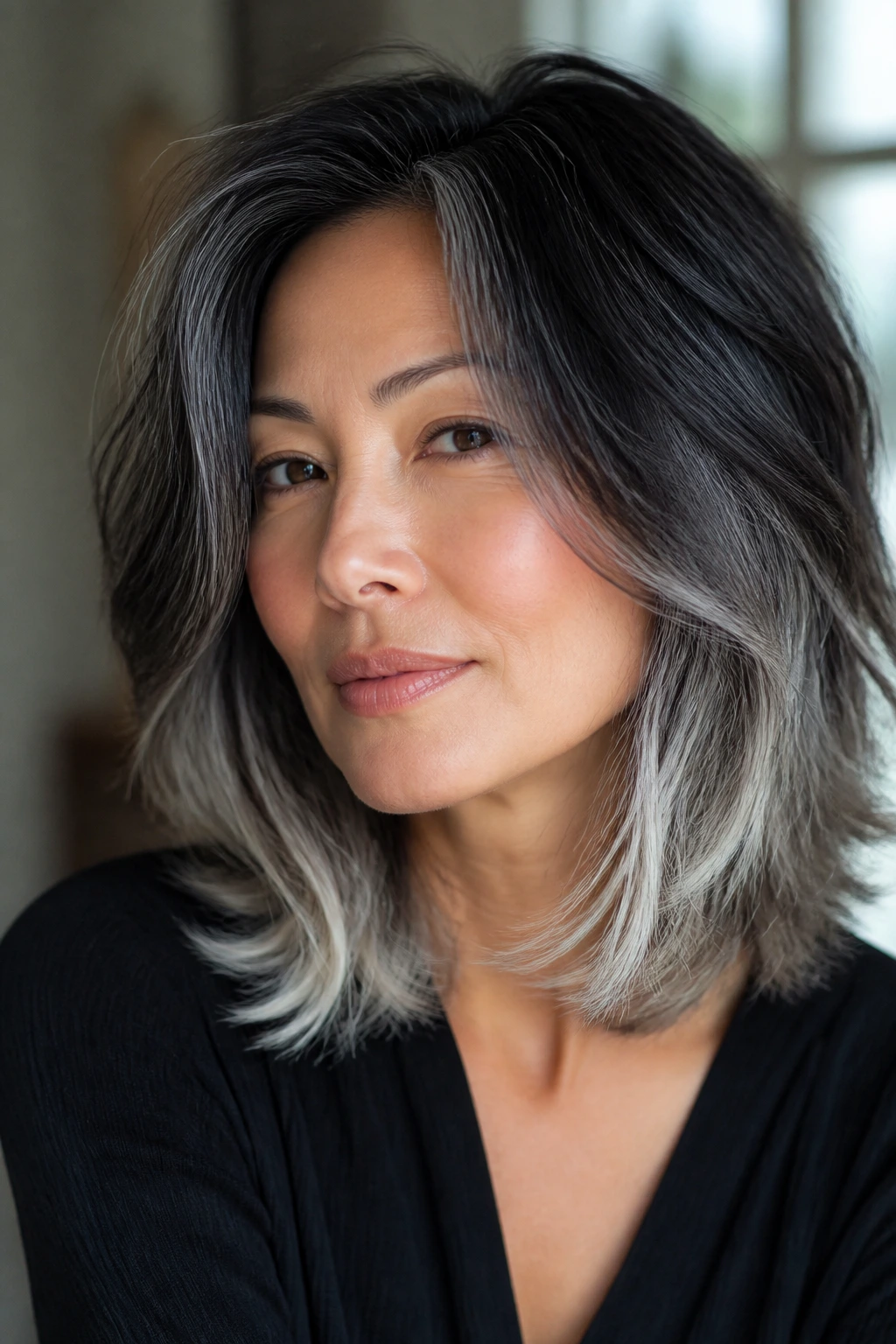
This one is for someone who wants contrast without committing to a full silver head. The charcoal base keeps the roots dark and slim, and the frosted tips add just enough lightness to move the eye downward.
Unlike an all-over gray, this version keeps most of the brightness at the ends. That helps a round face because the lower half of the hair becomes the visual focus. It also works well on layered cuts where the ends have texture. Frosted tips on straight, one-length hair can look a bit heavy, so I’d rather see some shaping.
The contrast should be soft, not stripy. Think frosted, not dipped in paint. The lighter pieces can live on the outer edges, the bottom layers, and a few face-framing strands that start below the cheek. The effect is easy to wear and easy to grow out.
If you want a gray look that still feels a little edgy, this is a good lane.
13. Smoky Lavender-Gray Blend
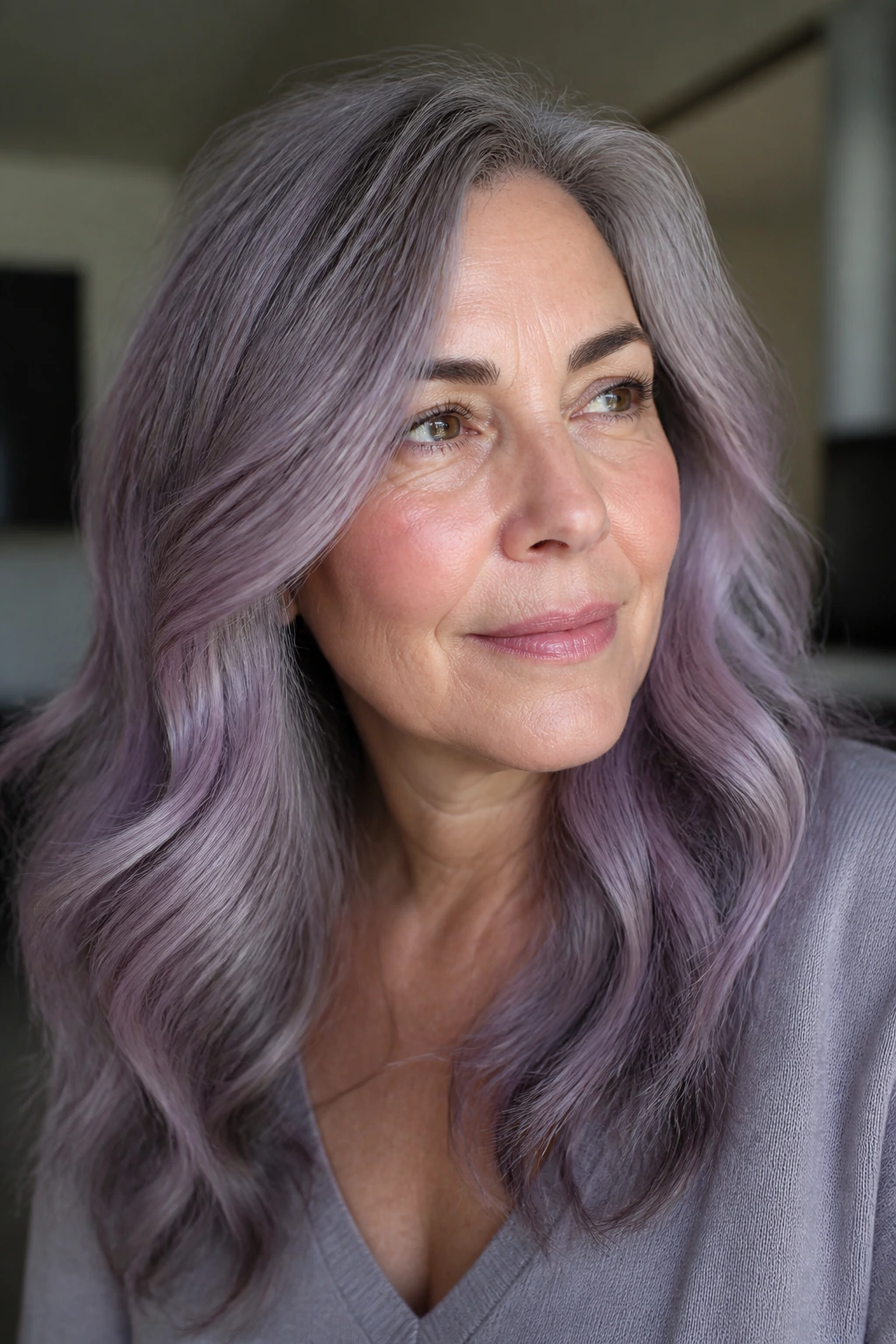
Gray does not have to stay strictly neutral. A smoky lavender cast can soften the look and add a little color without losing the silver family.
This shade works well on round faces because the lavender breaks up the flatness that sometimes happens with one-tone gray. It gives the hair a misty finish, and misty color tends to feel lighter around the face. I’d especially recommend it on wavy hair, where the bends catch the tint in different places.
What makes it different
The lavender should be barely there. Too much purple and the look can turn playful in a way that fights a strong face shape. Keep it muted, almost ashy, and pair it with a cool gloss.
- Ask for a gray-violet toner, not a bright purple
- Keep the root area smoky
- Use soft waves or a loose blowout
- Refresh the gloss often so the tone stays clean
This is a good choice if plain silver feels a little cold for you. It has mood, but it still acts like a gray color, not a fantasy shade.
14. Beige-Gray Mushroom Blend With Soft Layers
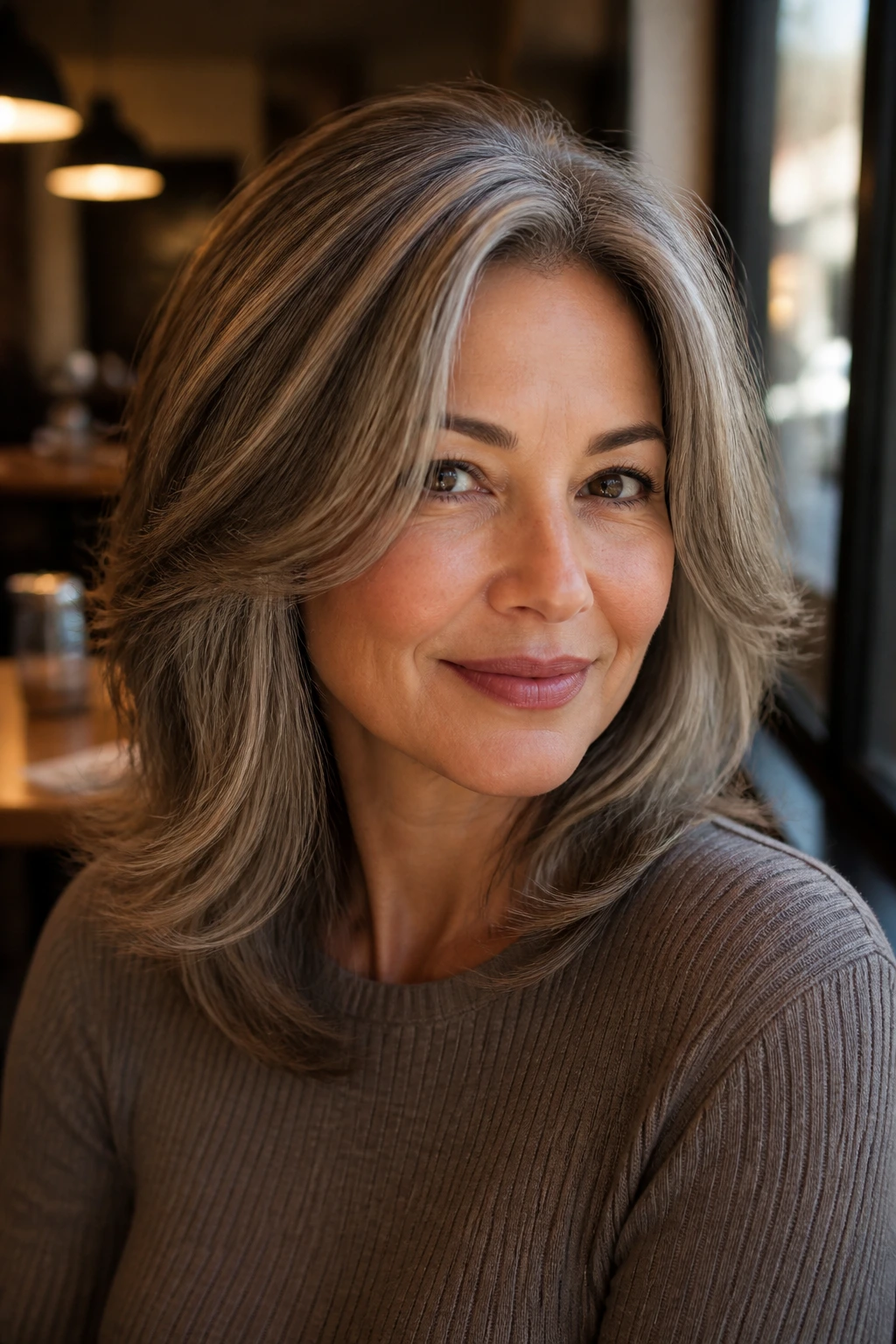
People often assume gray has to lean icy. It doesn’t. Beige-gray, especially in a mushroom blend, can be one of the most flattering options for round faces because it sits in that middle space between warm and cool.
The reason I like it is simple: it doesn’t throw too much contrast at the cheeks. Instead, it builds a soft contour through the hair itself. Soft layers help that effect. They let the color shift gently from darker underlayers to lighter outer pieces, which prevents the shape from feeling heavy.
This shade works well if your skin tone gets a little washed out by hard silver. The beige note keeps the color from feeling stark. But it should still stay cool enough to read as gray. If it drifts too warm, you lose the point.
I’d pair this with a collarbone cut or longer layers. Shorter cuts can still work, but the blend looks richest when it has room to move.
15. Gunmetal Balayage on Curly Hair
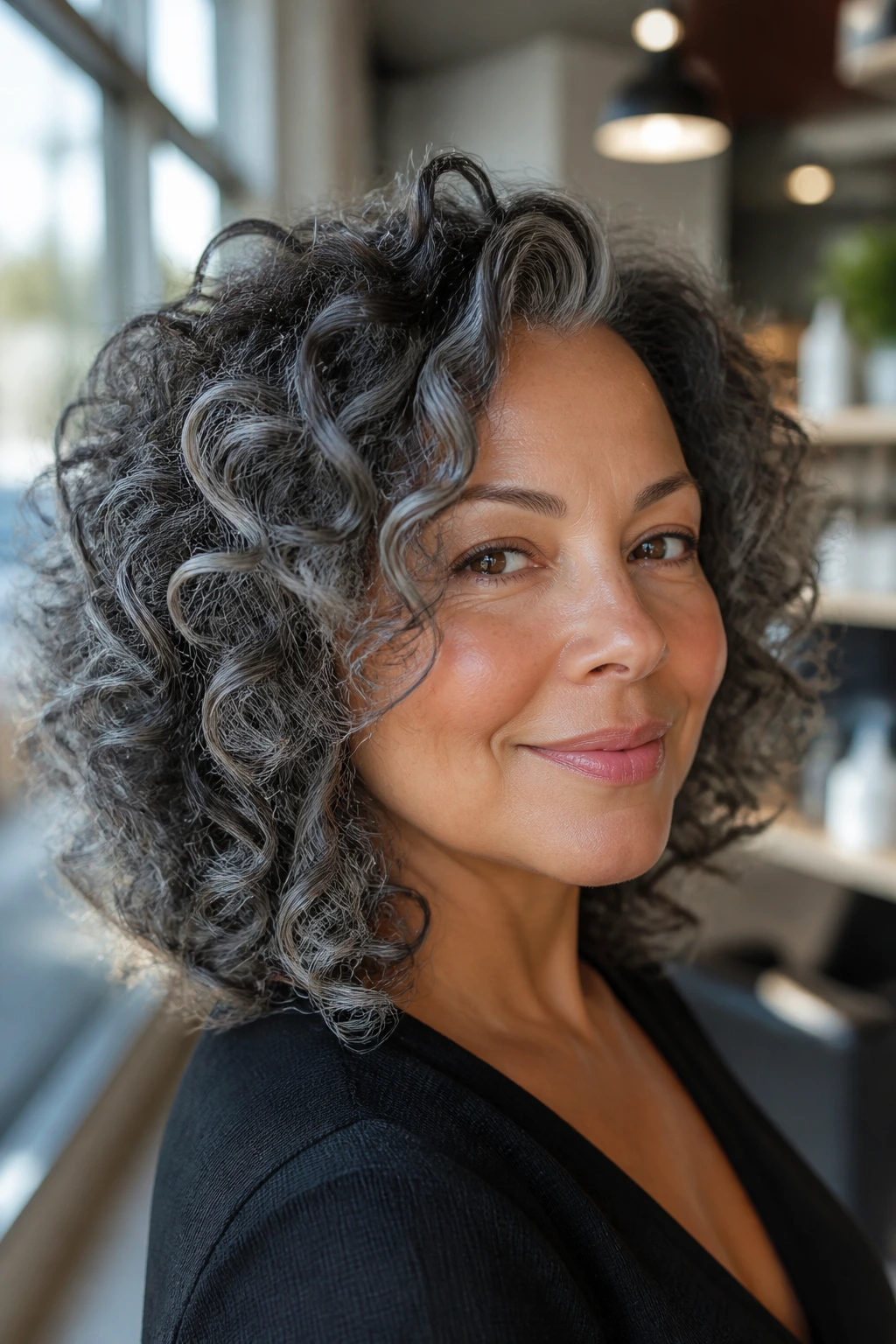
Curly hair and round faces can be a dream combination when the color placement is smart. Gunmetal balayage does a lot of that work for you.
The darker steel base gives the curls shape, and the lighter balayage is painted on the outer curves and upper layers where the light naturally hits. That keeps the curls from blooming too wide at the cheeks. Good placement matters more on curls than on straight hair because every curl reflects color in a slightly different way.
Why this flatters round faces
Curly hair already has volume, so the color should narrow the silhouette where it can. Concentrate brightness higher on the head and lower at the ends, not straight across the middle. That keeps the side width in check.
- Paint lighter pieces on the top half of the curl pattern
- Leave some deeper gunmetal near the roots and underlayers
- Ask for a curl-by-curl placement, not broad streaks
- Finish with a gloss that keeps the metallic look soft
This shade has bite. It feels modern without trying too hard, which is usually where the best gray hair lives anyway.
16. Silver Ombré With Shadow Roots and Waves
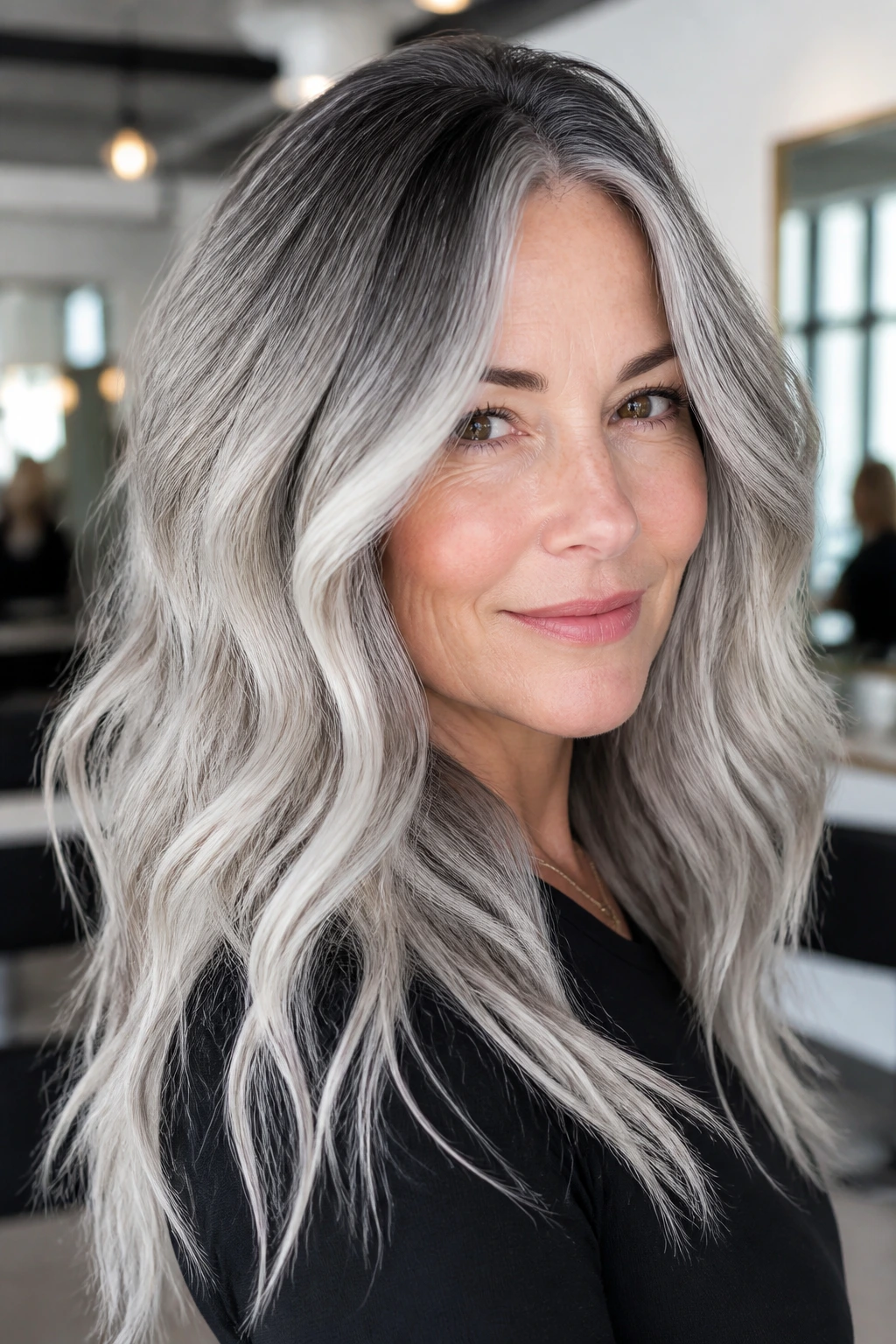
Silver ombré is a safer bet than a full-head platinum if you’re worried about roundness. The shadow root creates lift at the top, while the waves keep the bottom half from becoming one solid block of light.
The shape of the wave matters. Loose, broken waves work better than tight curls because they stretch the eye down the length of the hair. If the silver starts too high, the face can look wider. So I’d keep the transition subtle at the top and more obvious toward the last third of the hair.
This look pairs well with long layers, but I’ve seen it work on mid-length cuts too. The main thing is spacing. You want the silver to appear in ribbons, not in one hard line. A good colorist will feather the ombré by hand so it grows out without a rough stripe.
If you want something bright but still wearable, this is a strong option. Clean. Long. Easy to read.
17. Dove Gray With Feathered Fringe
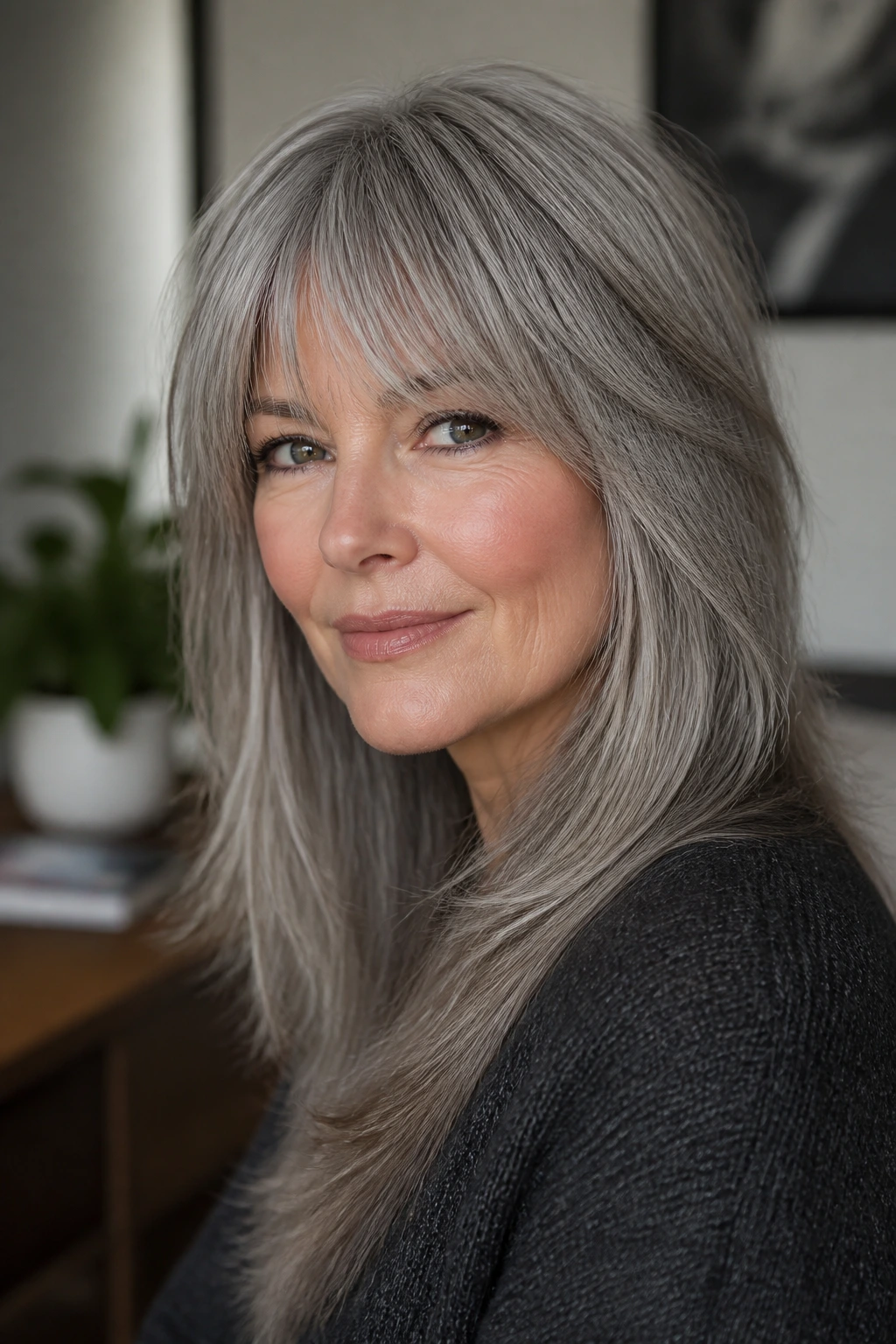
A feathered fringe gives a round face a much softer outline than a blunt bang. Add dove gray, and you get a light, airy finish that frames the forehead without compressing the face.
The fringe should be broken into soft pieces, not cut as one solid band. That little bit of separation lets some skin show through, which keeps the style from feeling heavy. Dove gray helps because it sits in a pale middle ground—lighter than charcoal, less icy than white.
I like this look on layered shoulder-length cuts. The fringe can blend into face-framing pieces that sweep toward the jaw, and that shape does a nice job of pulling the eye downward. It’s gentle, but it’s not boring. There’s enough texture to keep it interesting.
A lot of people ask whether fringe makes a round face look shorter. A blunt one can. A feathered one usually does the opposite, especially when the sides are long and the color stays soft.
18. Snowy White Blend With Dark Underneath Panels
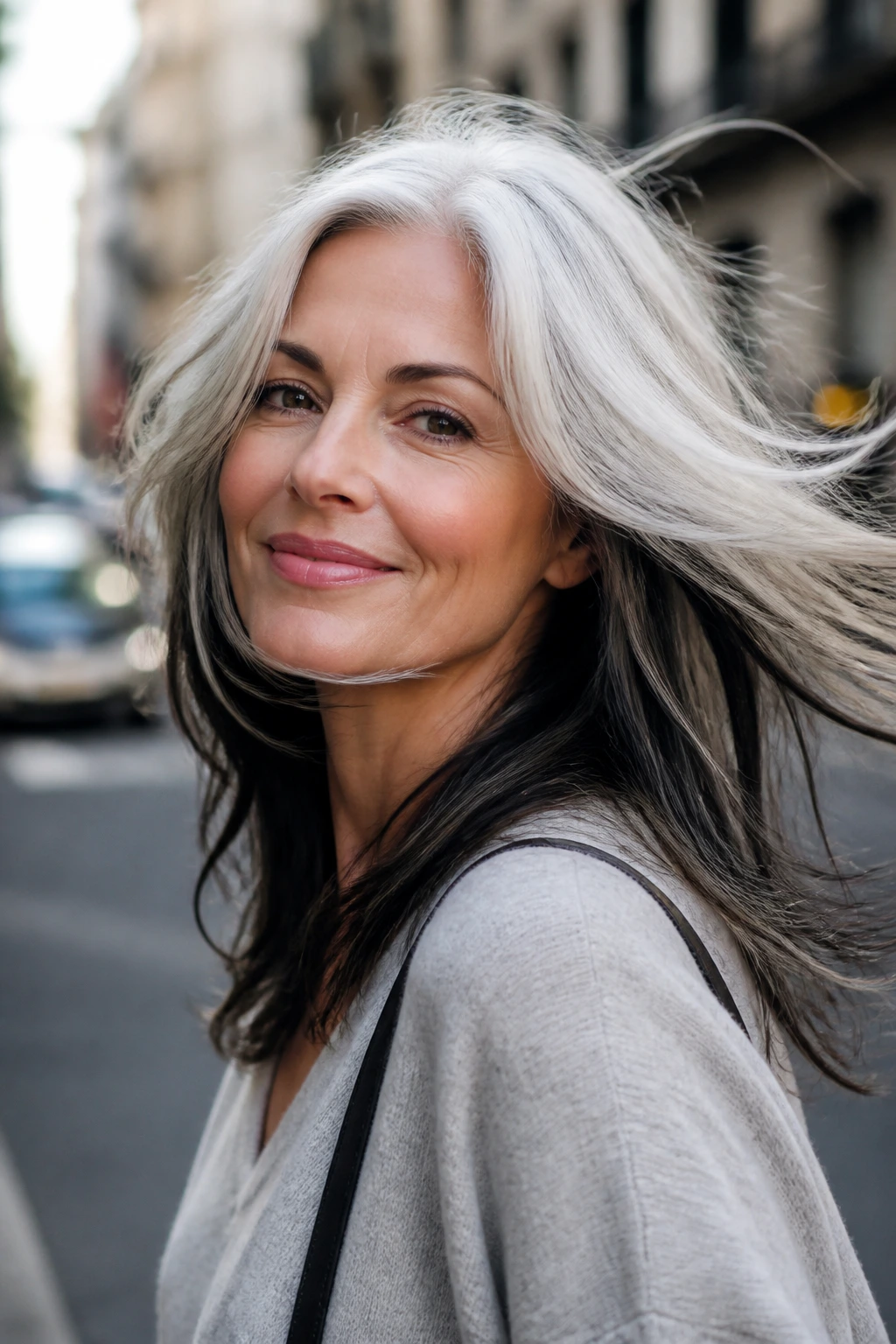
This is a color for someone who likes contrast and doesn’t mind a little drama. The snowy white sits on the top layers, while the darker underneath panels hide in the base. When the hair moves, the dark peeks through and breaks up the width.
That hidden contrast is the whole reason this works on a round face. From the front, the eye sees a bright, lifted surface. From the side, the darker underlayer keeps the shape from expanding outward. It’s a clever trick, and honestly, it looks sharper than a solid white block.
How to wear it
This shade needs movement. Wavy layers, a shag, or a soft layered bob all work better than a heavy one-length cut. If the hair is too blunt, the underneath contrast can get lost and the style starts to feel bulky.
- Keep the snowiest white on the top and outer layers
- Leave the interior 2 shades deeper
- Add texture around the ends
- Use a cool gloss so the white stays clean
It’s bold, yes. But it still has structure, and that structure matters on round faces.
19. Metallic Graphite Glaze on Natural Gray
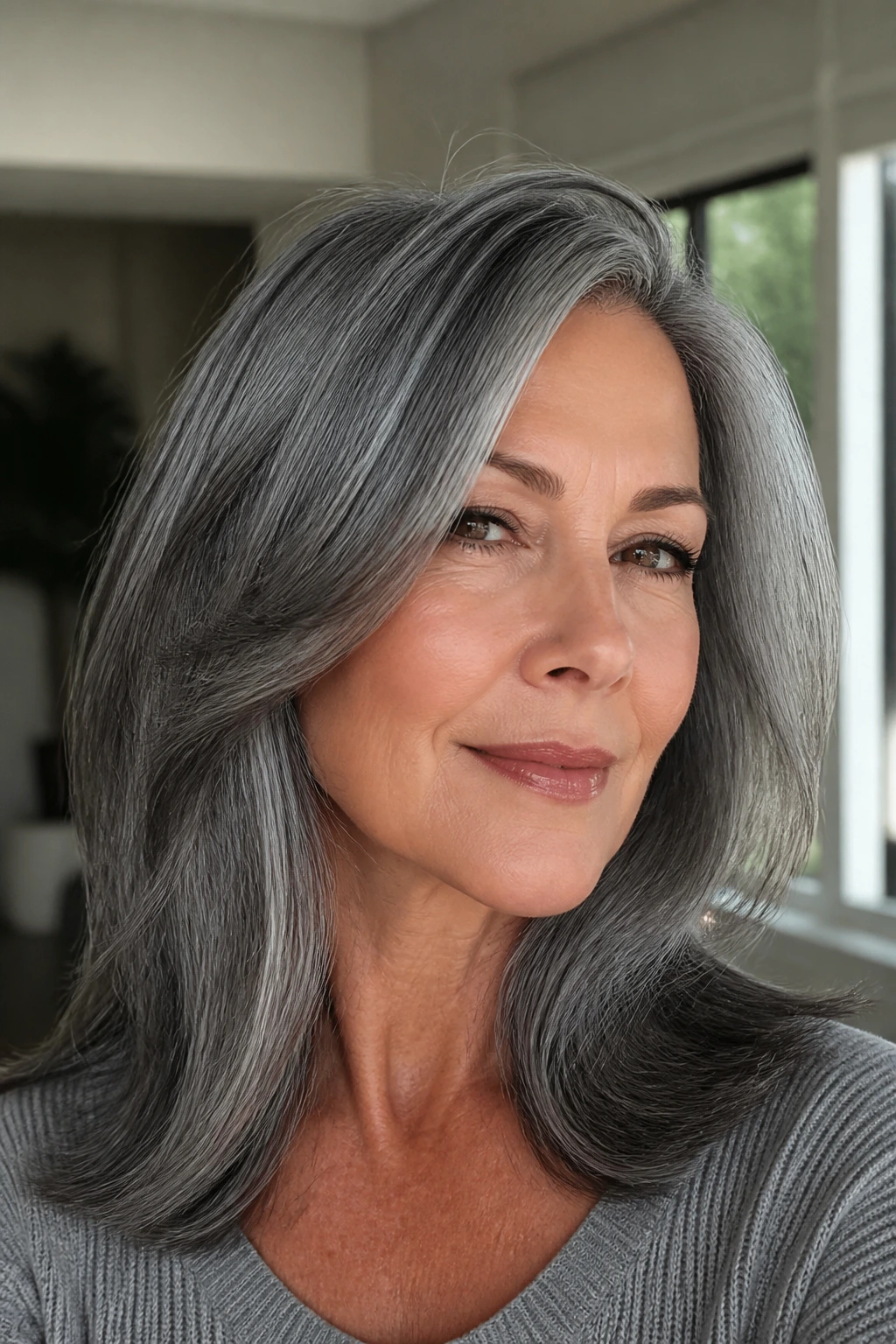
If your hair is already going gray, this may be the smartest move on the whole list. A metallic graphite glaze enhances what’s there instead of fighting it.
The best part is the shine. Gray hair can get dull when it grows in unevenly, and a graphite glaze smooths the tone so the whole head looks intentional. On a round face, that polish helps because the eye reads the hair as one continuous line rather than a patchwork of strands.
What to ask for
A gloss service, not permanent color. That keeps the hair looking reflective without piling on extra pigment. Ask for graphite, steel, or smoky silver tones depending on how much warmth you want to knock out.
- Best on natural gray, white, or salt-and-pepper hair
- Keeps maintenance lighter than full color
- Works well with short cuts and blunt bobs
- Needs refreshing every few weeks to keep the sheen
This is the shade I suggest when someone says, “I want my gray to look expensive, but I do not want a full makeover.” Fair enough. This does that job.
20. Opal Silver With Multi-Tone Ribbons
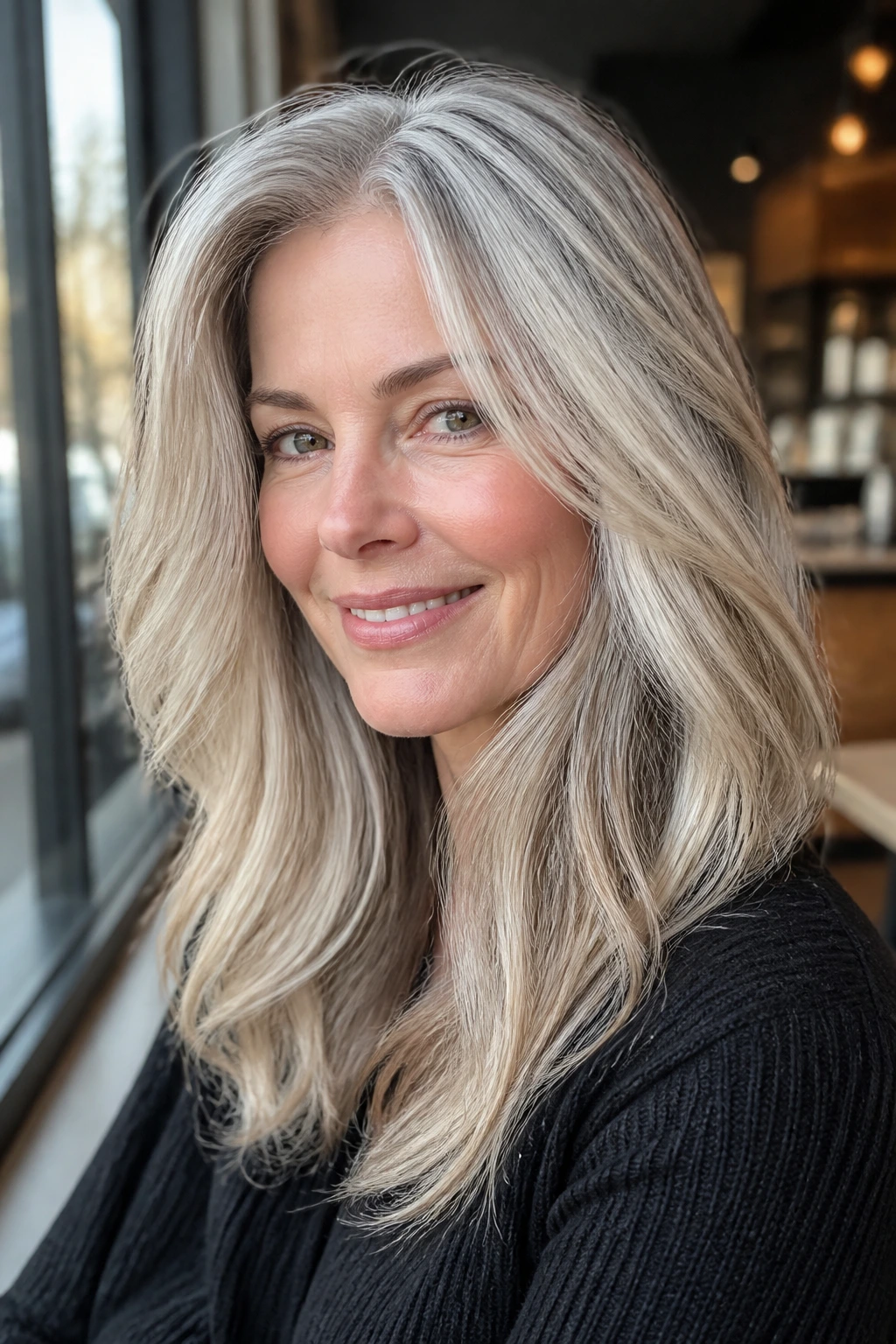
Opal silver is what happens when you stop treating gray like one note. It mixes pearl, ash, icy beige, and a little soft metallic sheen so the hair shifts in the light instead of sitting flat.
For a round face, that shifting is useful. Multi-tone ribbons break up the width of the face and give the eye several places to land. I like this color on layered cuts, long bobs, and loose waves because each bend in the hair shows a different part of the tone. The result feels layered even before the haircut moves.
The important part is restraint. Opal silver should not become a rainbow. Keep the tones close enough together that the blend reads as gray from a distance and complex up close. If it gets too busy, the color starts to compete with the face instead of framing it.
This is the option I’d pick for someone who wants the most dimension. It’s not the quietest gray on the list, but it may be the most interesting one.
Final Thoughts
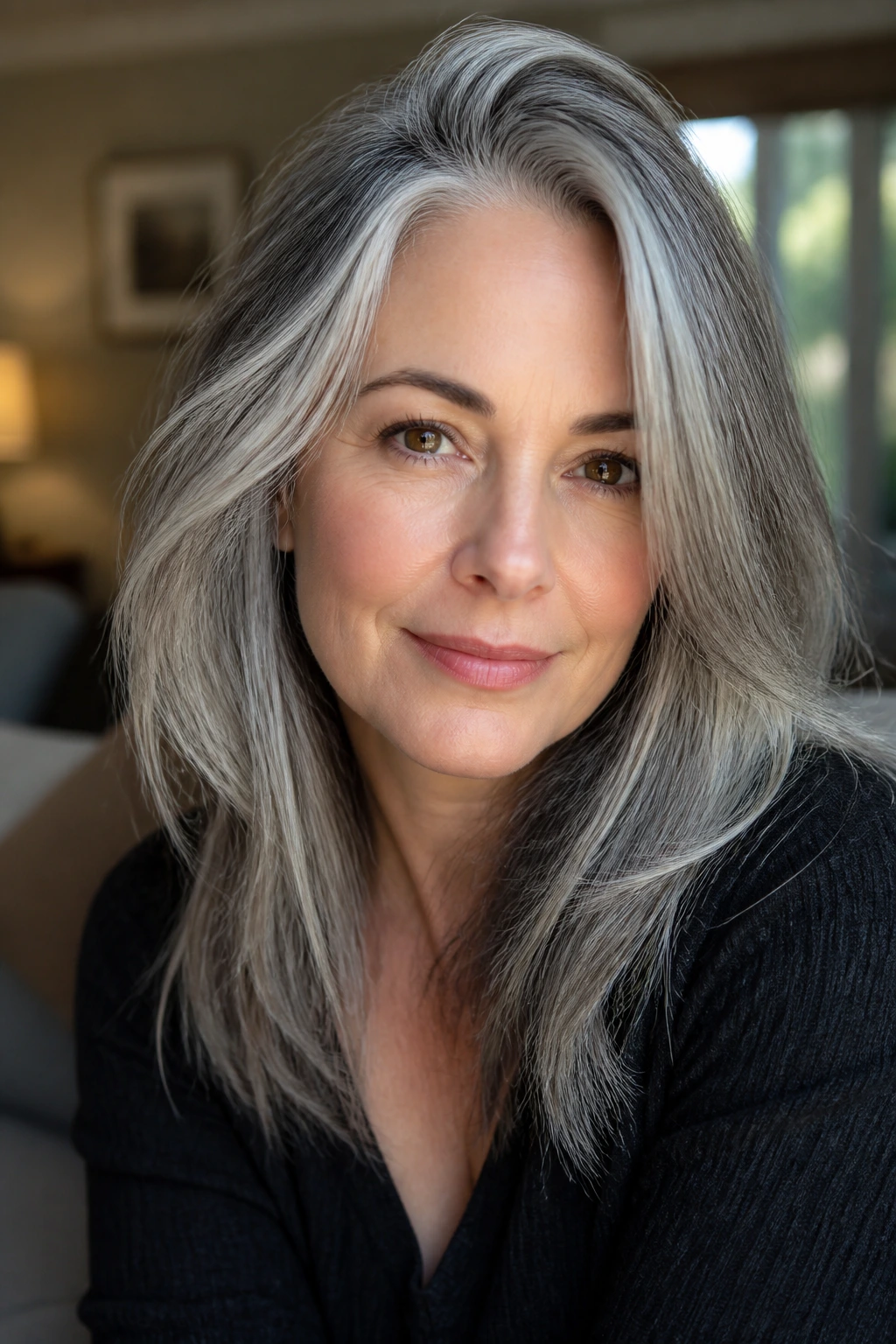
Round faces usually look best in gray hair when the color works vertically. Darker roots, brighter ends, off-center parts, and narrow face-framing pieces all help the same way: they stretch the shape instead of widening it.
If you’re torn between two shades, choose the one with the cleaner root shadow and the brighter finish farther from the cheeks. That single detail tends to matter more than the name of the color itself.
And if your natural gray is already coming in, don’t rush to cover it all. A good glaze, a few cool ribbons, or a smarter cut can do more for your face shape than a full-color overhaul ever will.
