



Gray hair color ideas for cool skin tones work best when the shade has a blue, violet, or smoky base, not a beige one. Warm gray can make pink or porcelain skin look a little tired around the jaw and mouth, while the right cool gray does the opposite: it makes the face look cleaner and gives the eyes something crisp to sit against.
Gray is never just gray. An icy silver, a graphite shade with a blue cast, and a pearl-white gloss all behave differently in daylight, under bathroom bulbs, and next to your brows. That matters more than people think, because the same shade that looks sharp in a salon chair can turn flat the minute it meets the wrong light.
If your skin leans rosy, blue-tinged, or pale olive with cool undertones, the safest gray hair color ideas usually live somewhere in the ash, silver, steel, or white family. A touch of depth at the root helps too. Flat, one-note gray can look like drywall. Nobody wants that.
Depth helps.
1. Icy Silver All-Over Color
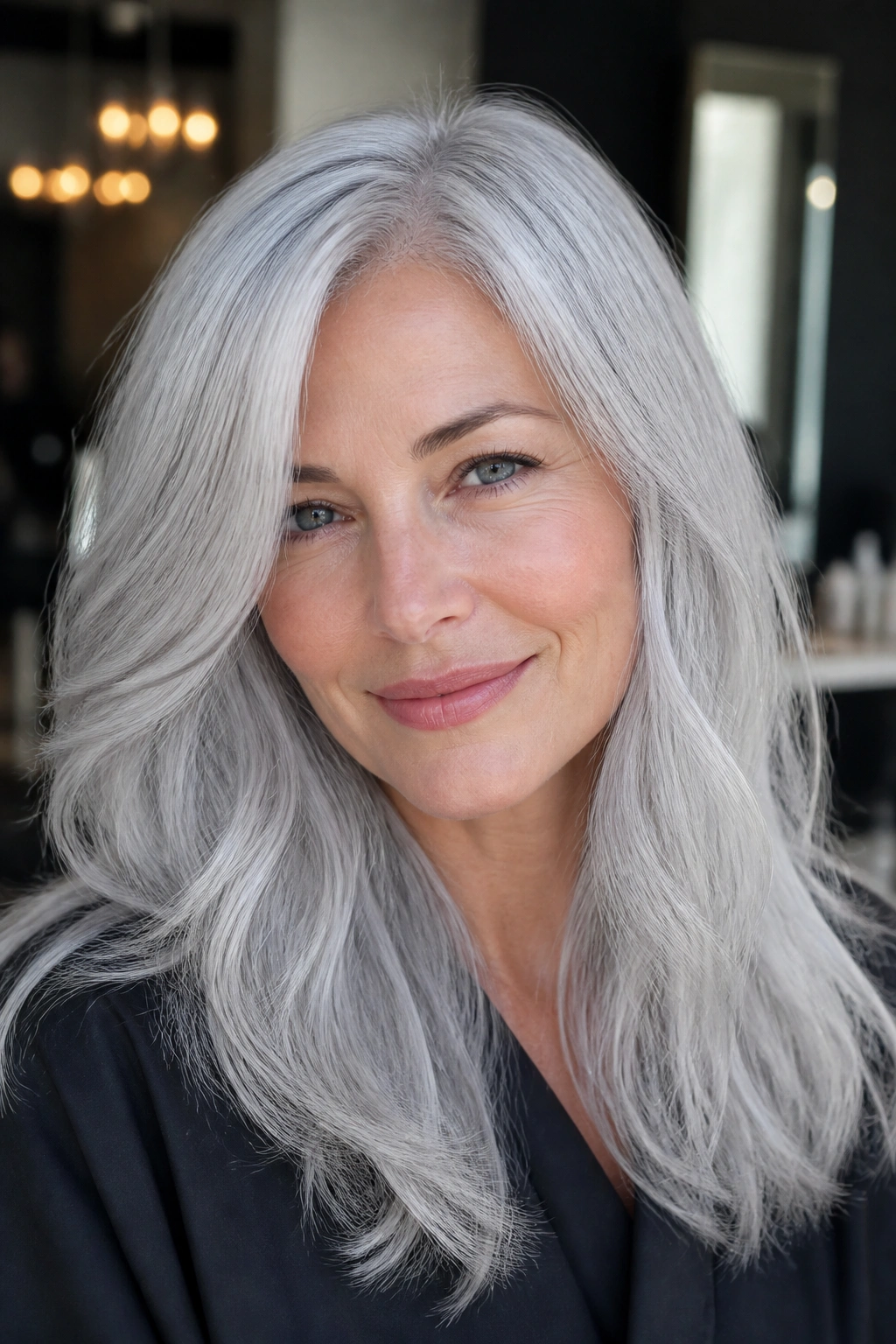
An all-over icy silver is the boldest place to start if you want gray hair that feels clean and bright on cool skin. The shade should look like fresh metal, not yellowed platinum, which means the hair usually needs to be lifted to a pale level 9 or 10 before toner goes on. If the base is uneven, the silver will show it.
Why It Flatters Cool Undertones
Icy silver mirrors the blue and pink notes already in cool complexions, so the face looks more awake instead of drained. It also reads sleek around the hairline, which is one reason this shade looks so good on straight or softly waved hair.
- Ask for a violet-heavy toner, not a beige one.
- Plan on a refresh every 4 to 6 weeks.
- Purple shampoo helps, but too much of it can make the color look dusty.
- Keep heat styling light; high heat strips the finish fast.
Tip: Leave your brows a shade deeper than the hair. It keeps the face from disappearing into the silver.
2. Pearl Gray Bob
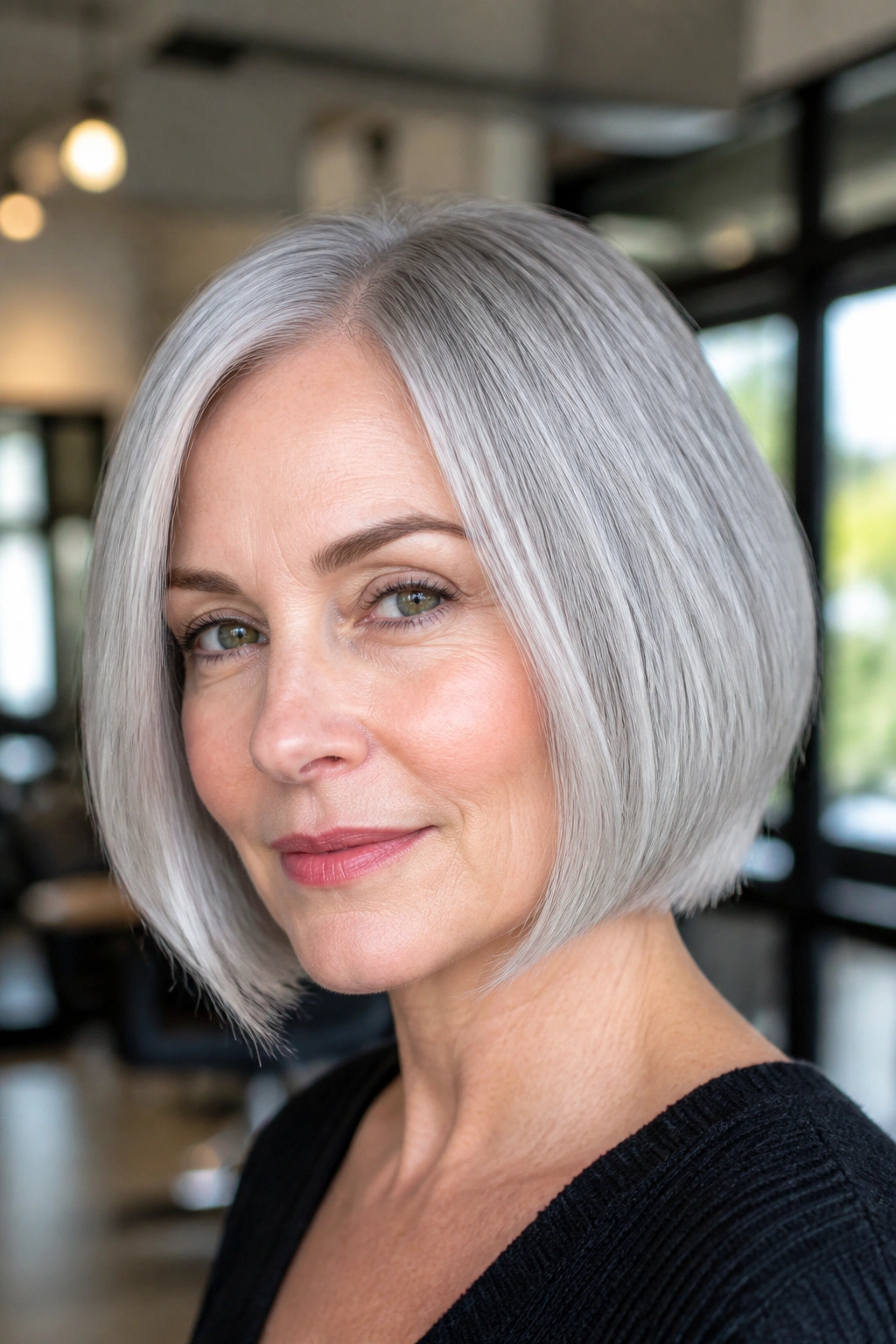
Pearl gray is softer than icy silver, and that softness is exactly why it works on cool skin that wants a little less contrast. The color has a faint milky sheen instead of a hard metallic edge, so it feels polished without looking severe. On a bob, the shape gives the shade some structure.
A chin-length or jaw-length cut makes pearl gray look expensive in a quiet way. The ends catch light, the top stays neat, and the whole thing moves without needing a lot of styling. A clear gloss every few weeks helps the pearl tone stay luminous instead of chalky.
This is a good choice if your hair is fine or medium because pearl gray can make the cut look fuller than it is. It is also friendly to anyone who wants gray hair color ideas for cool skin tones but does not want a harsh, high-contrast finish. The color does the work. The bob just makes it easier to wear.
3. Blue-Gray Melt
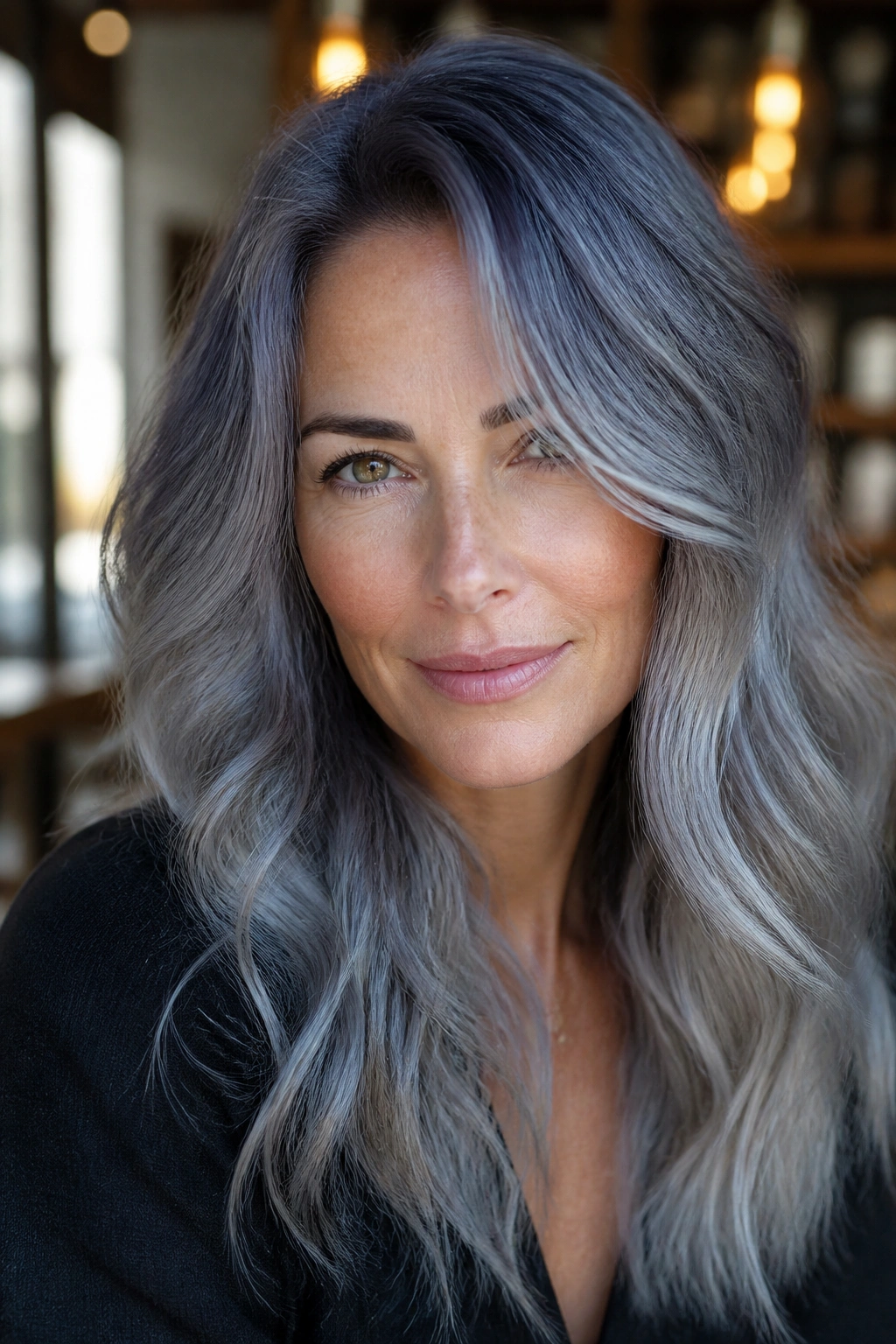
Want gray that feels a little sharper than silver but not as stark as charcoal? Blue-gray is the sweet spot. The color has a smoky base with a cool blue veil over it, so it flatters pink skin without making the face look washed out. It’s one of those shades that looks expensive even when the haircut is simple.
How to Wear It
Blue-gray works best when the color moves from a deeper root into softer ends. That melt keeps the shade from looking blocky, and it gives the hair a bit of dimension when it moves. If the hair is porous, the blue can take fast, so a strand test is worth the extra time.
- Ask for blue-violet toner, not a true denim tone.
- Keep the root shadow soft, about 1 to 2 levels deeper than the mids.
- Wavy hair shows the gradient especially well.
- Cool rose makeup tends to sit better than peach.
A good blue-gray melt has attitude without looking loud. That’s the charm.
4. Smoky Charcoal Roots
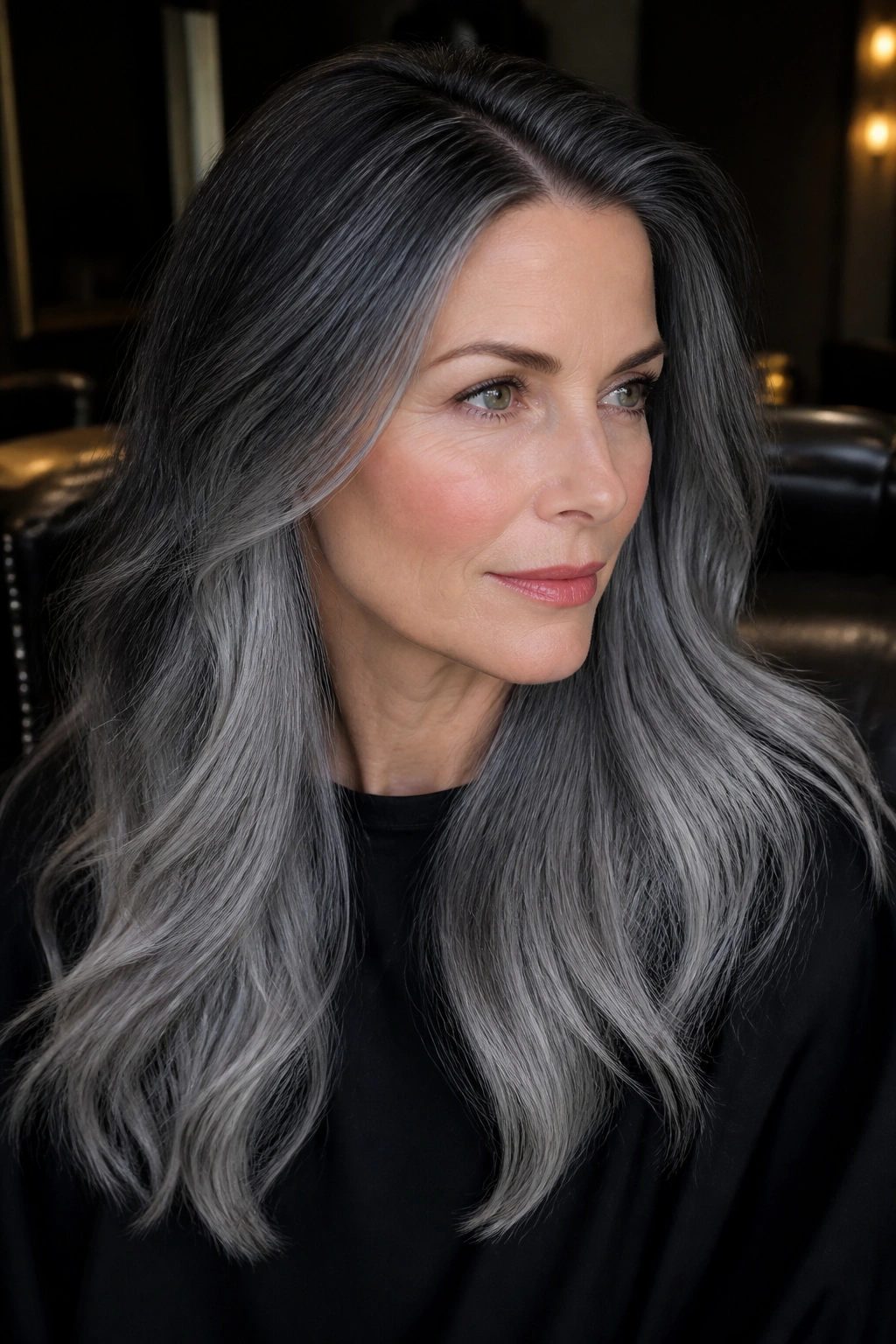
Smoky charcoal roots are a smart choice if you hate obvious regrowth and want the color to hold its shape between salon visits. The root stays deep and cool, then fades into gray through the mids and ends. The whole effect is less “fresh dye job” and more “this just belongs on the head.”
A lot of people think charcoal gray is too dark for cool skin. It isn’t, as long as the finish stays smoky instead of brown. That blue-black edge keeps the shade cool and prevents the face from looking muddy. On layered hair, the darker root makes the lighter ends pop even more.
- Best for medium to dark natural bases.
- Works well on wavy or layered cuts.
- Ask for a root melt instead of a hard line.
- Use a sulfate-free cleanser so the charcoal stays rich.
This is one of the easiest gray looks to live with if you want depth and less maintenance.
5. Silver Balayage on Dark Brunette Hair
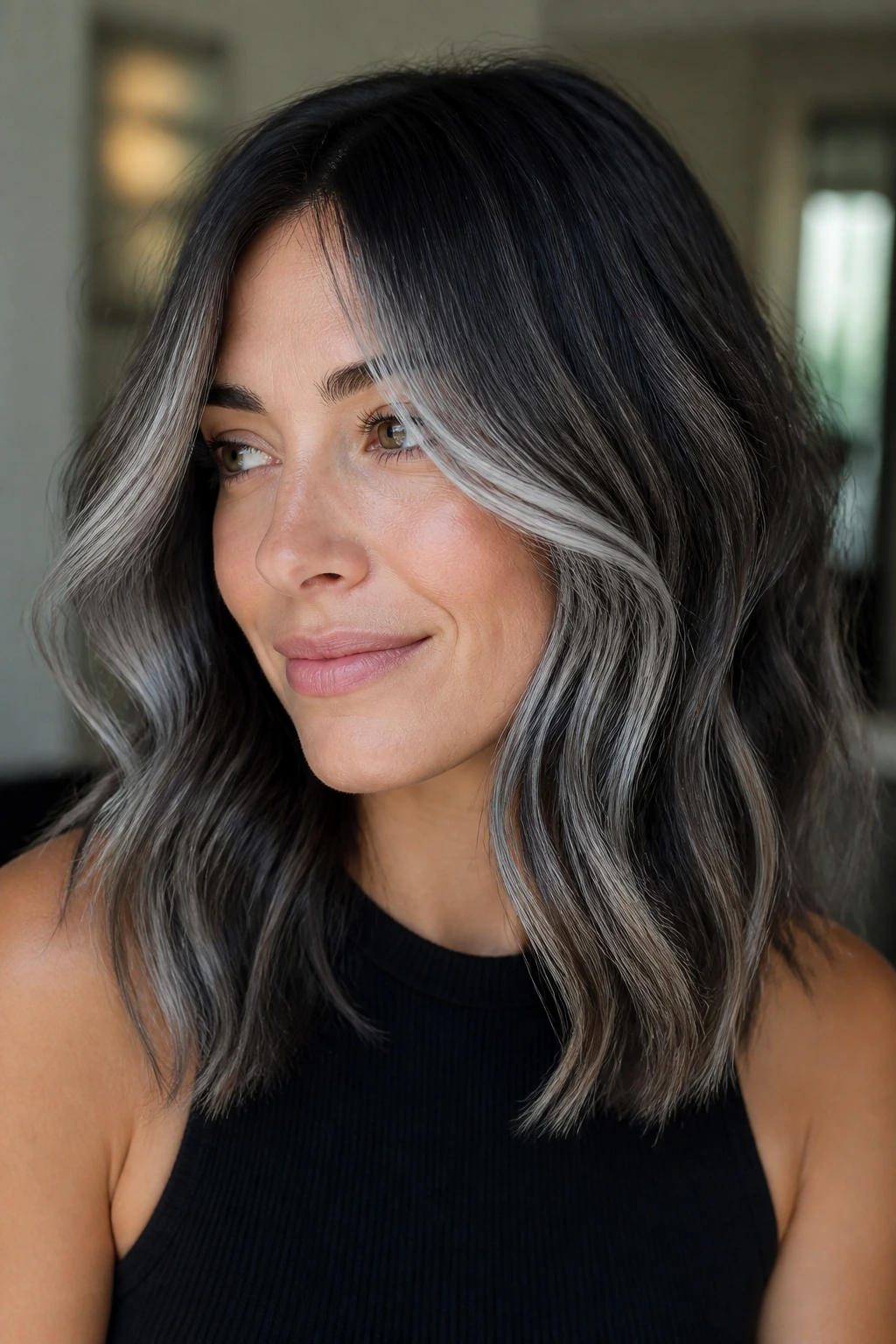
Silver balayage on dark brunette hair gives you contrast without forcing the entire head into a pale gray. The hand-painted silver ribbons sit on top of a deeper cool base, which means the brightness shows up where it matters most: around the face, through the top layer, and at the bend of the wave. It’s a good move if you want to keep some brunette identity.
The trick is placement. The silver pieces should follow the haircut, not fight it. Long layers, curtain bangs, and loose waves make the contrast look natural. On straight hair, the stripes need to be finer and more blended or they can read a little stripey in harsh light.
Ask for a silver toner rather than a beige blond gloss. Beige can go flat on cool skin, while silver balayage keeps the whole look crisp. It’s one of the smarter gray hair color ideas for cool skin tones if you’re not ready to go full gray.
6. Graphite Face-Framing Lights
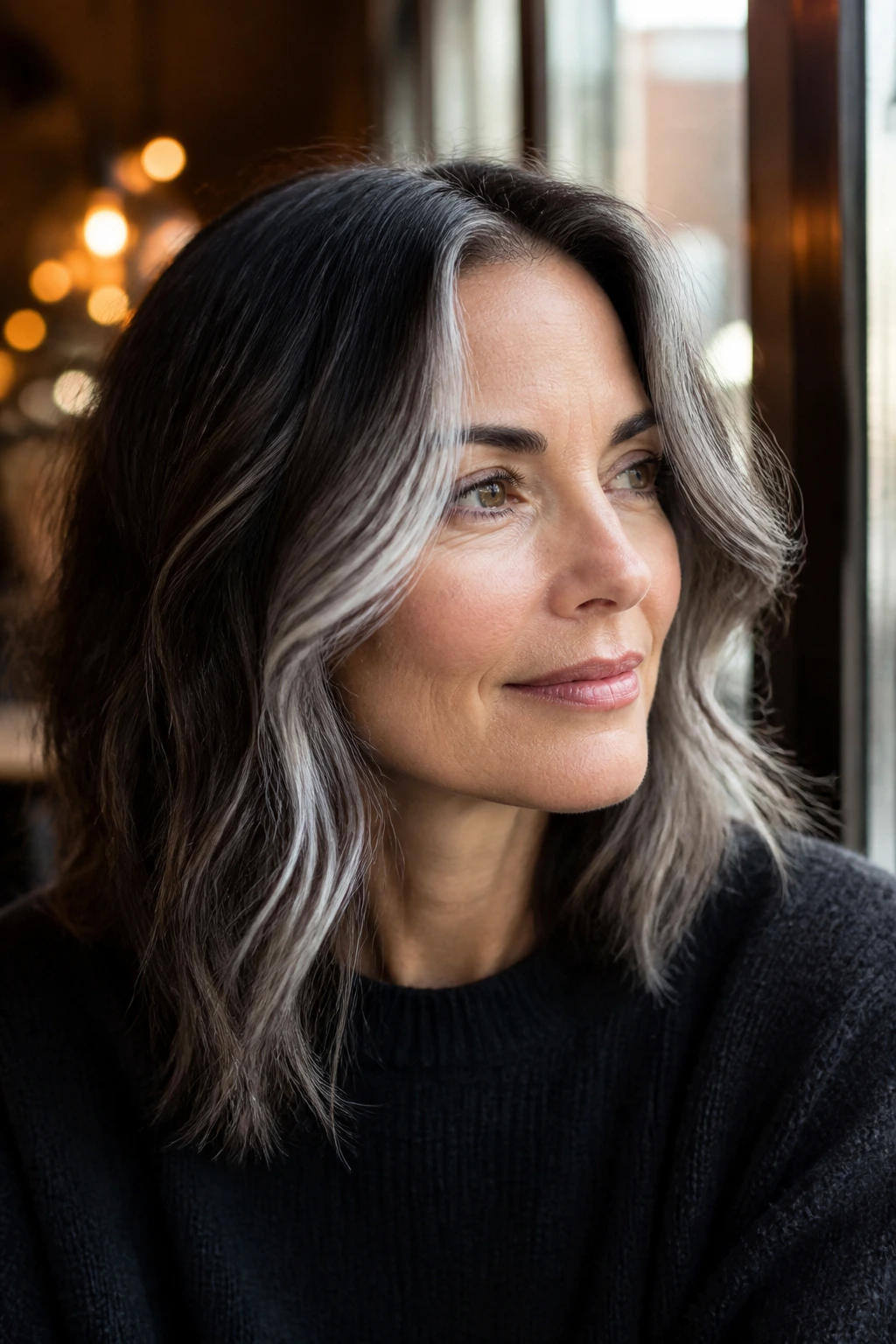
Graphite face-framing lights are the move when you want drama without giving up depth. Instead of lightening the whole head, you keep the base dark and cool, then brighten the pieces nearest the face in a graphite-silver tone. The effect is subtle from the back and striking from the front.
Unlike full silver, this style doesn’t demand that every inch of hair be lifted to pale blond. That makes it friendlier to darker hair and less punishing on ends. It also lets the cool undertones in your skin show up cleanly because the brightness sits where the eye goes first.
If you wear glasses, this color is especially good. The lighter pieces sit around the frames and give the face a little lift without screaming for attention. A shoulder-length cut or a long bob keeps the graphite pieces from disappearing into the rest of the hair.
7. Mushroom Gray Brunette
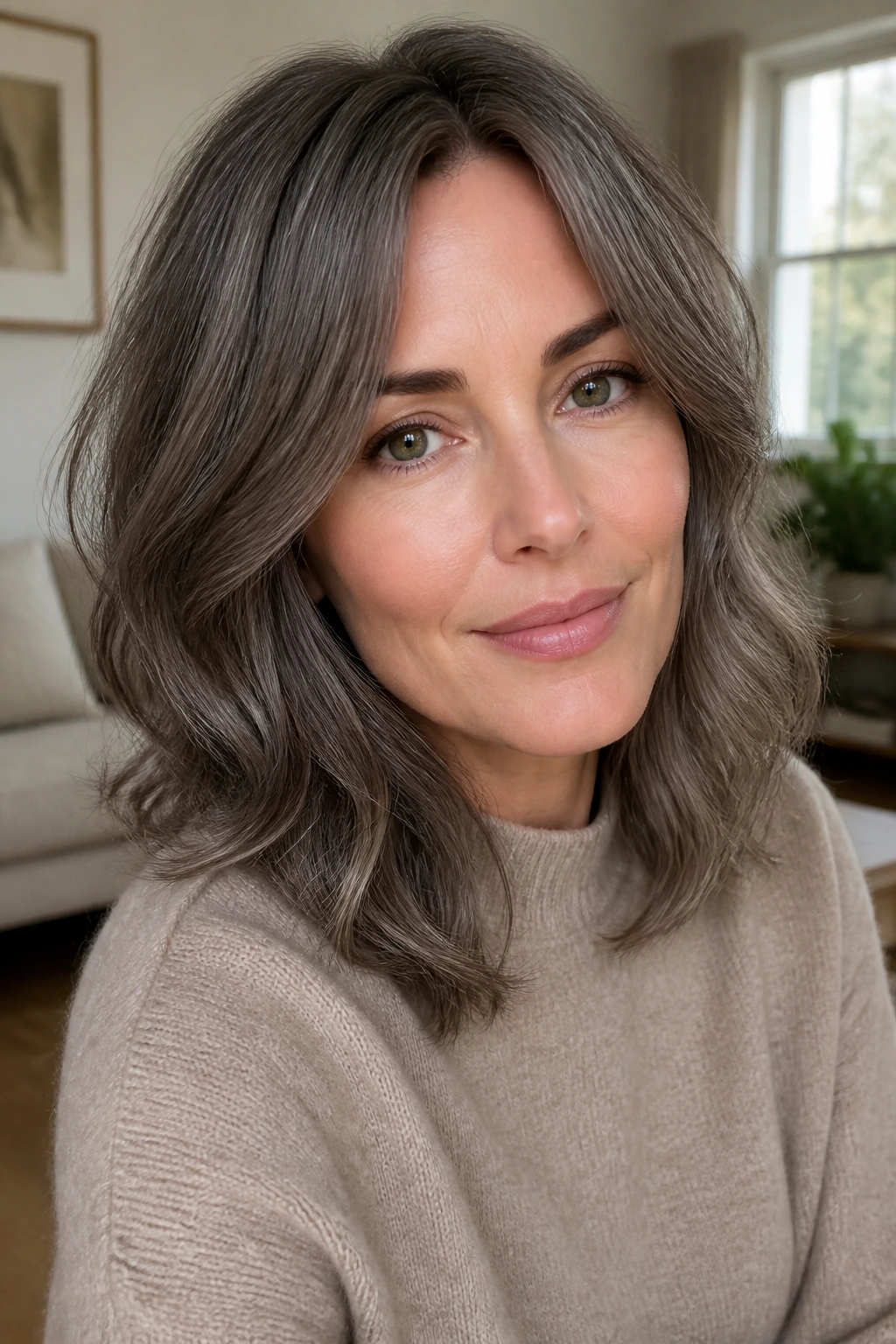
Mushroom gray brunettes can be a little tricky, because the name sounds warmer than the result should be. Done right, though, it lands in an ashy brown-gray zone that suits cool skin far better than golden brown ever could. The finish is soft, muted, and low-key in a way that feels modern without trying too hard.
The key is to keep the tone cool all the way through. No copper. No gold. No caramel. The color should sit between brown and gray like stone in wet weather, with enough depth to keep the hair from reading flat. On medium-length cuts, especially with soft layers, it has a lovely lived-in look.
This shade is a good fit if you want something more subtle than silver but not as dark as charcoal. It also behaves well as the hair grows, which is a nice bonus. Not every gray idea needs to be loud to work.
8. Frosted White Pixie
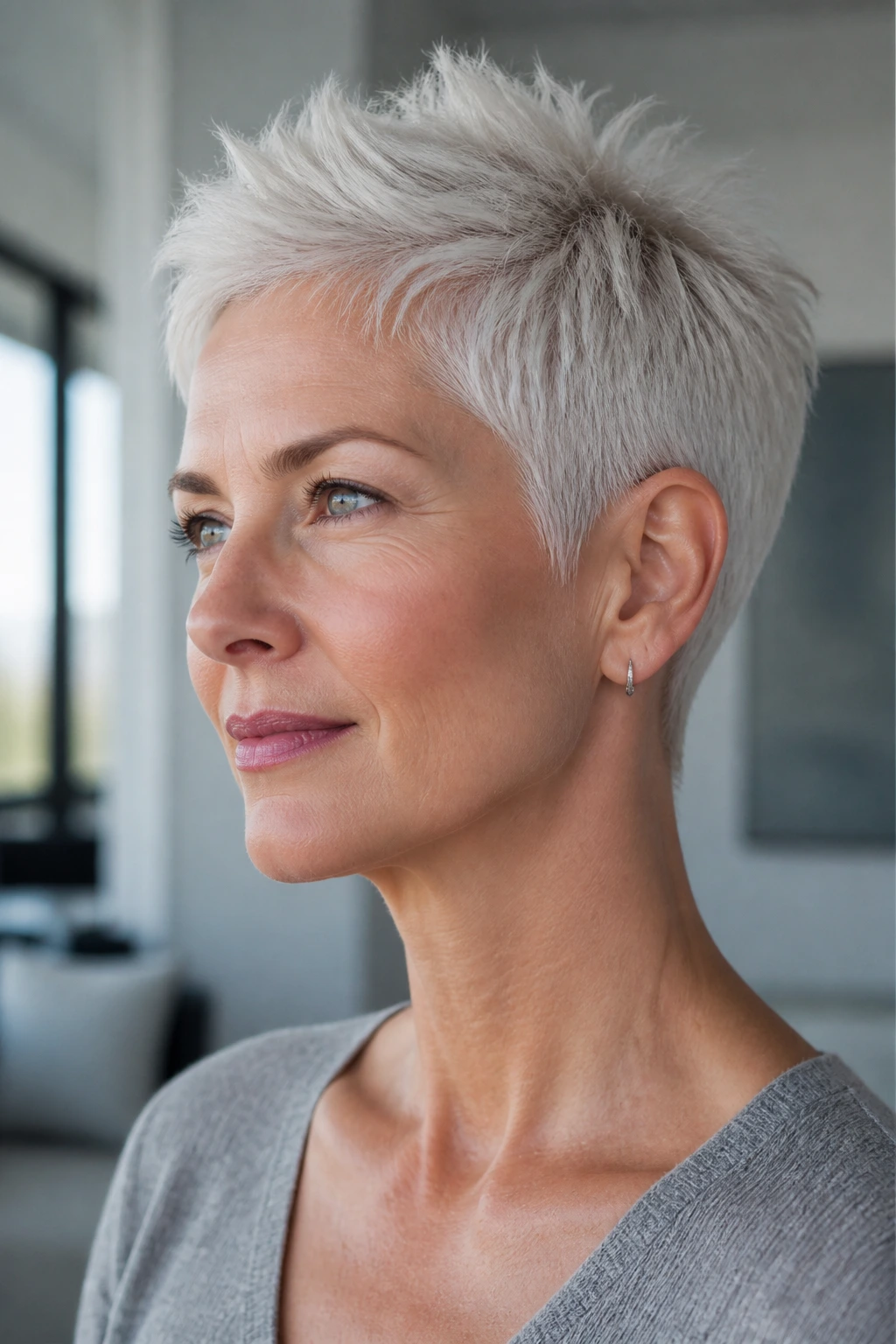
A frosted white pixie is sharp, clean, and a little fearless. The cut gives the white hair shape, and the white gives the cut a kind of icy edge that can be stunning on cool skin. Short hair like this doesn’t have to fight for movement; the color itself does the talking.
What Makes It Work
White hair can look severe when it’s long and one-note. On a pixie, the cropped length keeps it airy. A tiny bit of shadow at the sides or nape stops the look from turning flat, while the brighter top layers keep the whole thing crisp.
- Plan on a trim every 4 to 6 weeks.
- Ask for white, not pale yellow blond.
- Use a soft paste or cream, not heavy wax.
- Protect it from yellowing with cool-toned conditioner.
This is not a “wash and go forever” color. It’s a precise one. That’s part of the appeal.
9. Steel Gray Lob
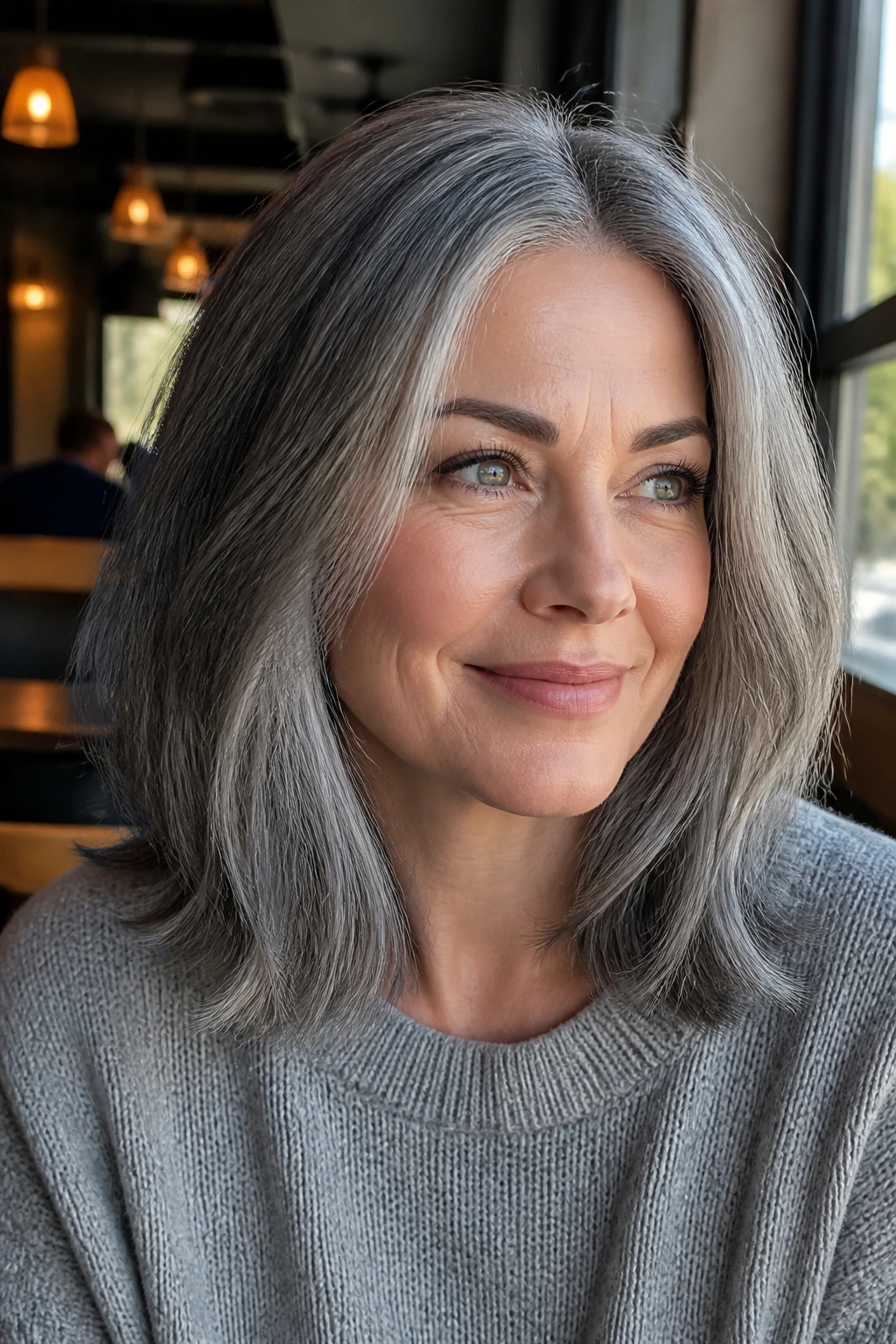
Steel gray sits between silver and charcoal, which makes it one of the most wearable gray shades for cool undertones. It has enough brightness to light up the face, but enough depth to keep the color from floating away from the haircut. On a lob, that balance matters.
The reason a lob works so well here is simple: the length gives steel gray room to shift. When the hair bends at the shoulders or turns slightly under at the ends, you get little flashes of metallic tone. Straight hair gives it a sleeker read, while loose waves make it feel softer and more dimensional.
Steel gray also suits people who like a polished finish. A shine spray or a lightweight serum helps, but skip anything that leaves a warm film. That can dull the cool edge fast. If you like your color to feel neat and controlled, this is a strong pick.
10. Smoky Lilac Gray
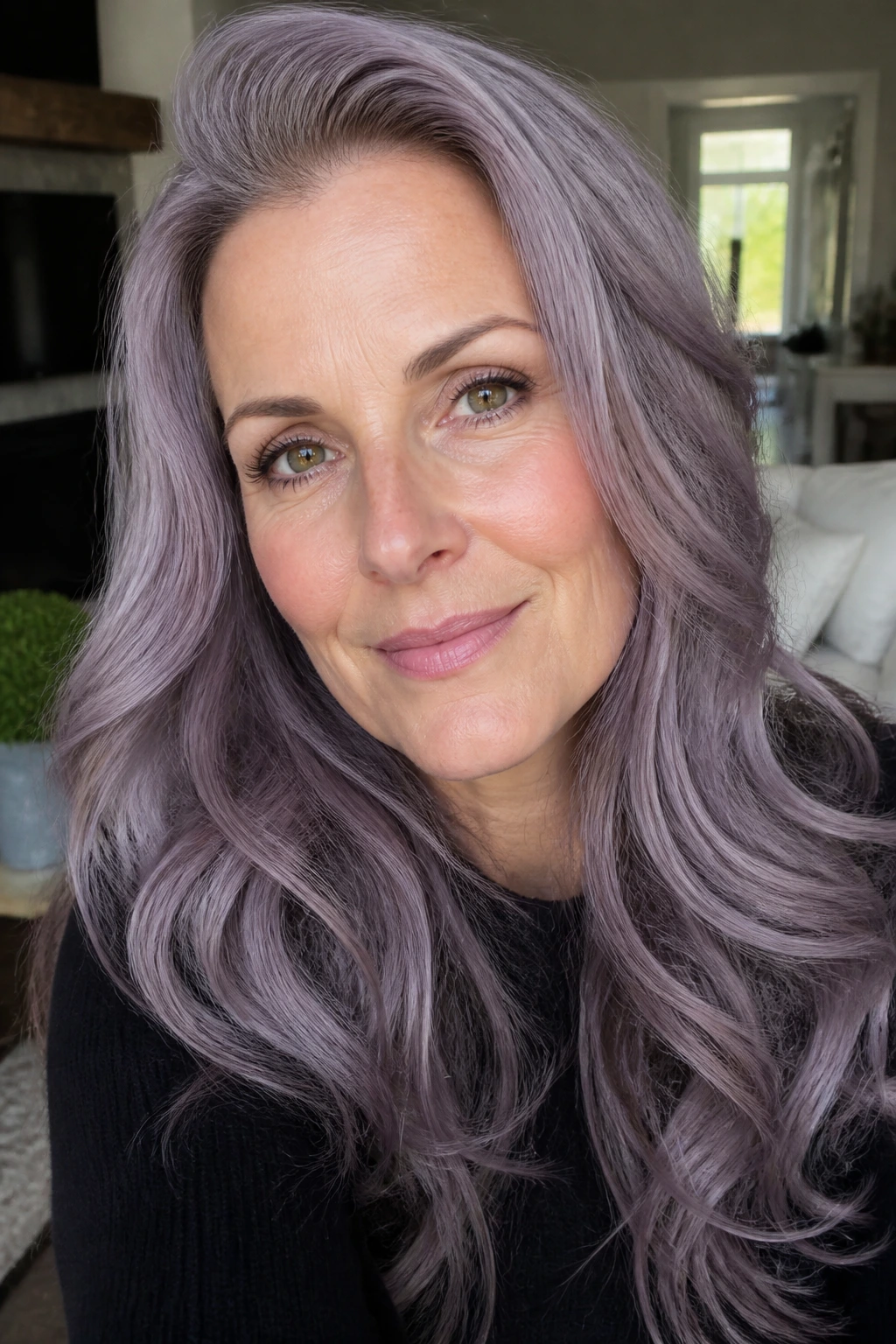
Need gray with a little personality? Smoky lilac gray brings in a whisper of violet that cool skin tends to love. It’s not full fantasy color and it’s not pastel in the loud sense. It’s more like gray with a bruise-colored shimmer, and that sounds odd until you see how good it can look.
How to Keep It Clean
Lilac tones fade faster than standard gray, so they need a bit more care. Cool water helps. Heavy clarifying shampoos do not. A tinted conditioner with a violet cast can stretch the color between salon visits, and that matters if you want the lilac to stay visible instead of drifting into plain silver.
This shade works especially well on lighter bases and on people whose skin has a pink or rosy cast. The violet keeps the complexion from looking tired. It also plays nicely with soft makeup—mauve, berry, taupe, that kind of thing. If you like a little softness in your gray, this one has it.
11. Gunmetal Layers
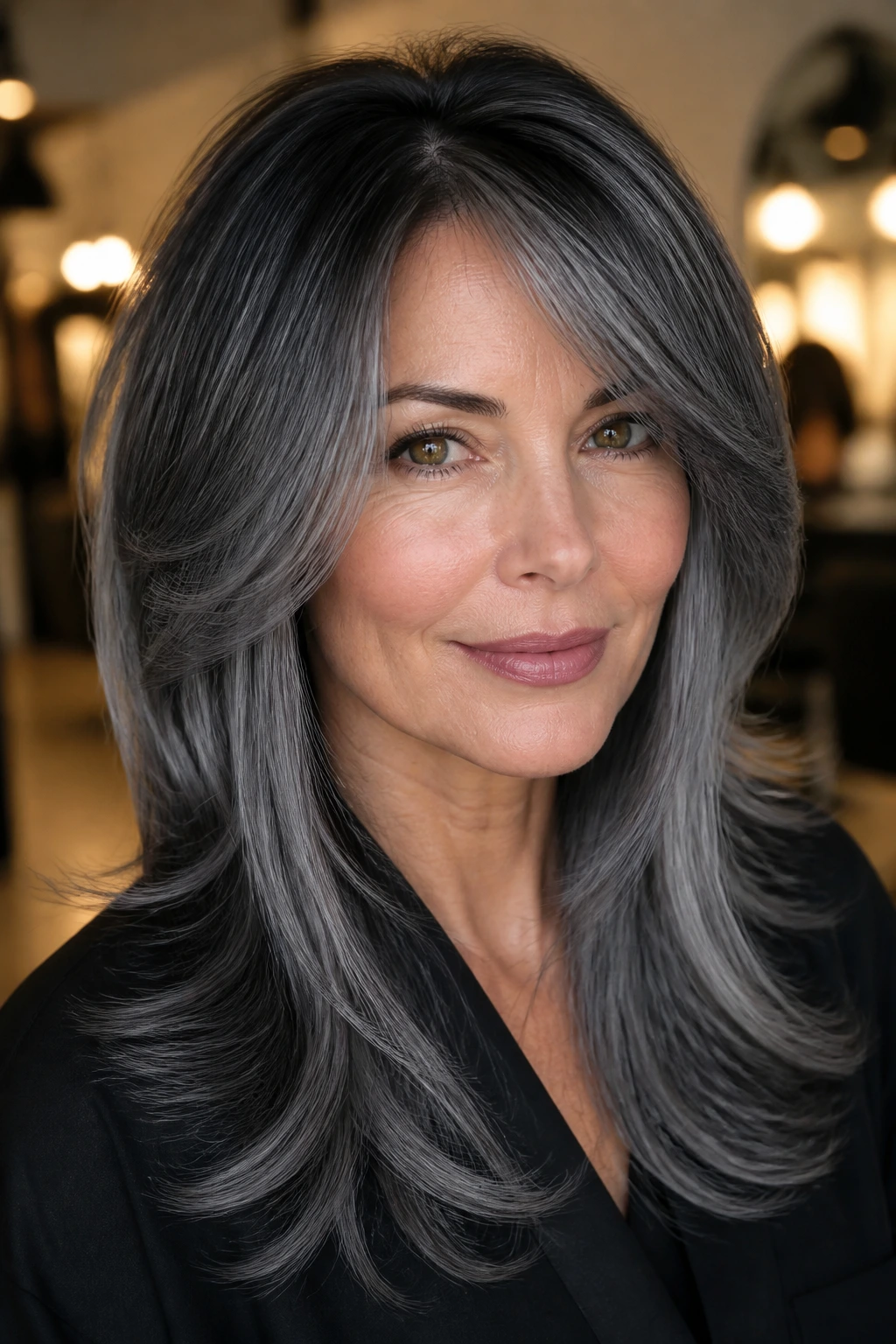
Gunmetal is the shade that makes layered hair look carved rather than fluffy. It’s darker than pewter, cooler than brown, and more reflective than charcoal. On thick hair, that matters because the color helps each layer separate just enough to show movement.
A blunt cut can make gunmetal feel heavy. Add layers, and suddenly the whole thing breathes. The darker depth near the crown gives the hair some weight, while the metallic sheen on the outer layers keeps it from looking dull. On cool skin, the shade reads strong without turning warm or muddy.
This is a solid choice if you want gray with some edge but don’t want to go pale. It also hides frizz better than lighter silver shades, which is useful if your hair has a coarse texture. Not every gray color needs to be airy. Some should feel grounded.
12. Platinum-Silver Blend
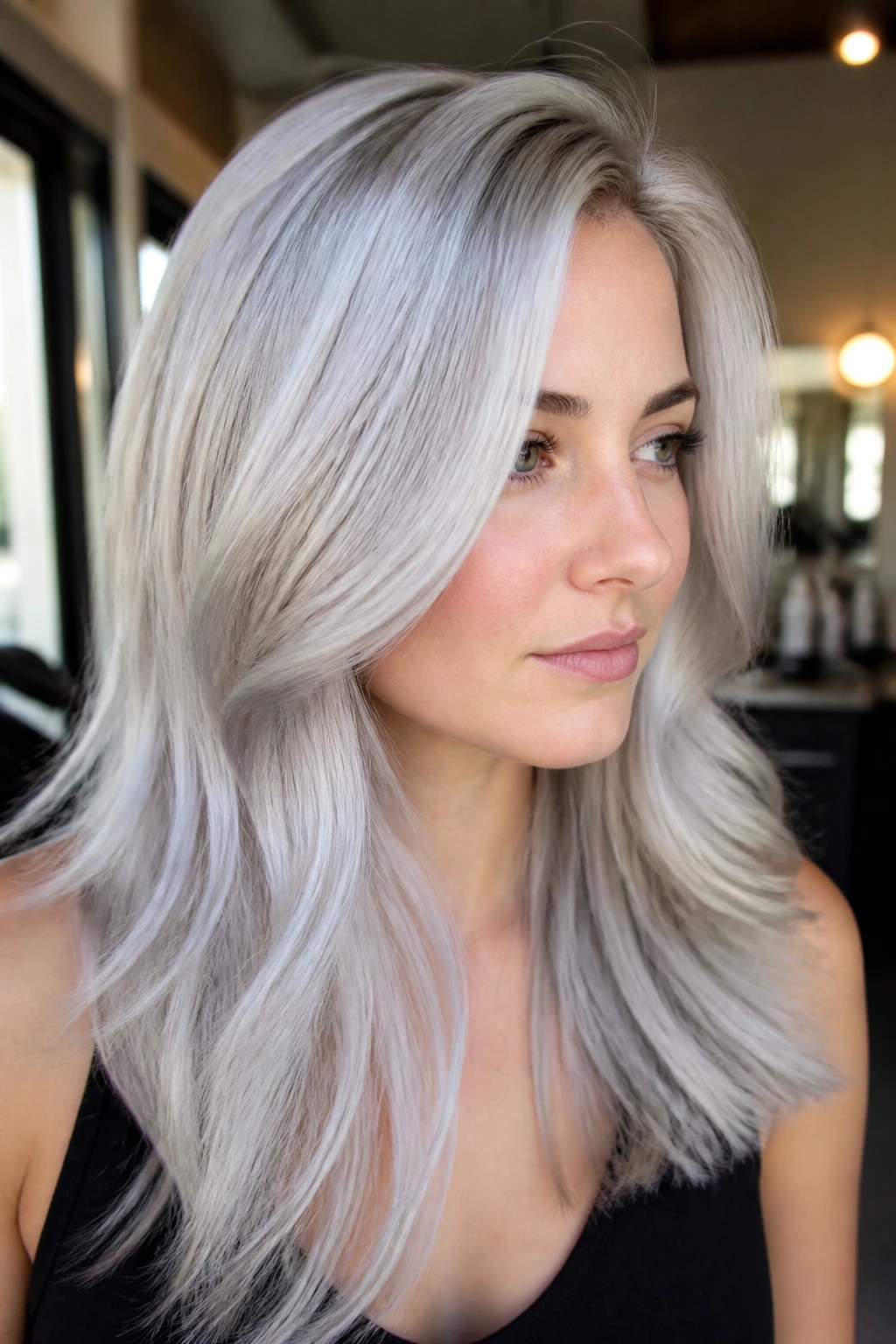
Platinum-silver blend is one of the brightest gray hair color ideas for cool skin tones, and it works because it mixes the crispness of platinum with the colder shine of silver. The result is lighter than steel gray and less icy than white. It’s a high-lift look, so the prep has to be clean.
For the best result:
- Lift the hair to a very pale blonde first, usually level 10.
- Tone with a silver-violet gloss, not a beige one.
- Keep a soft root shadow so the color doesn’t look pasted on.
- Refresh the tone every 4 to 6 weeks.
A subtle root shadow is the difference between sleek and severe. It gives the eye a place to land and helps the platinum-silver blend grow out in a more forgiving way. This shade looks especially good when the front pieces are a touch brighter than the back.
If your brows are naturally dark, this can look striking in a good way. Just keep the finish cool.
13. Slate Gray Ombre
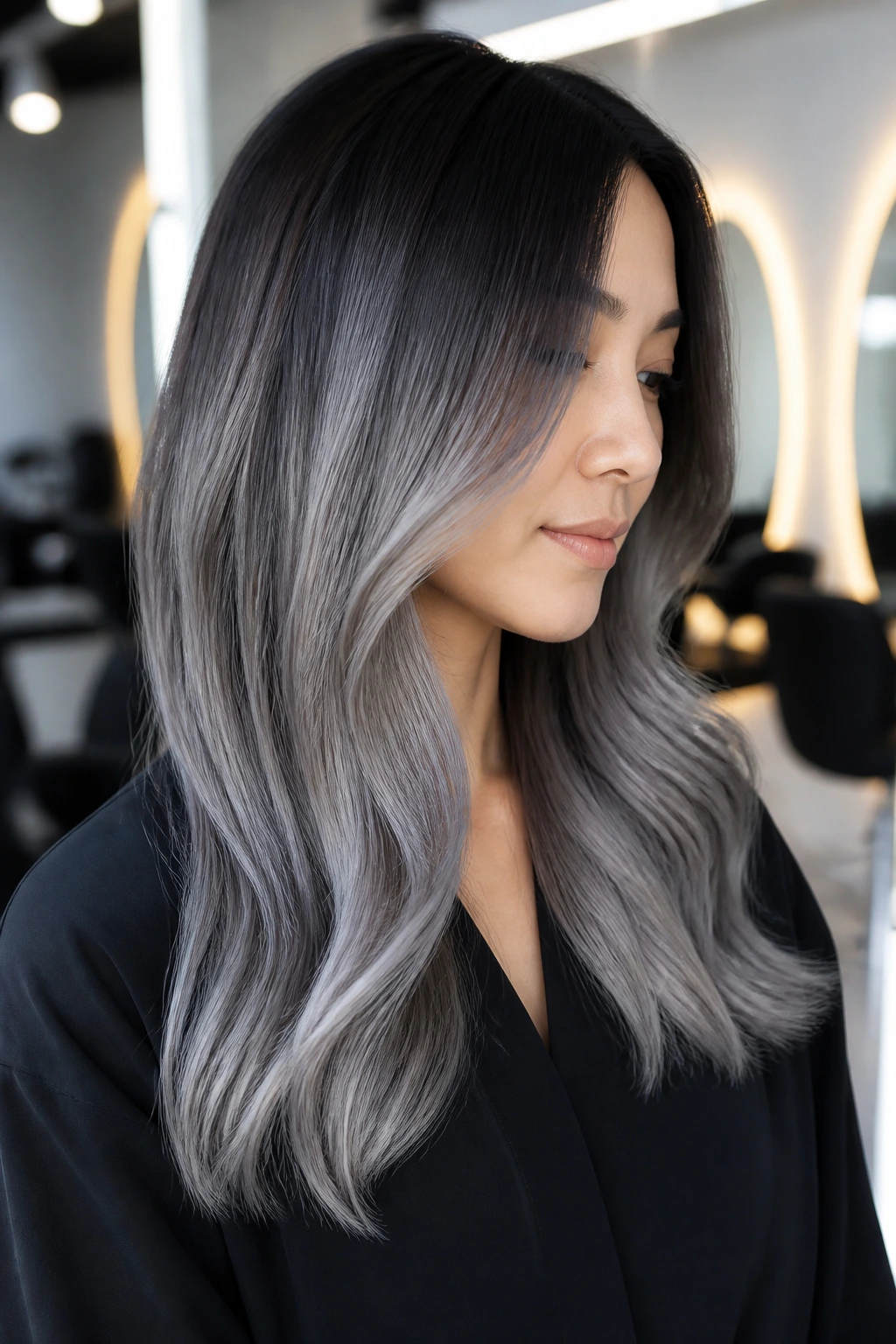
Slate gray ombre is for people who want depth first and brightness second. The color starts darker near the roots and softens into a cool slate tone through the mids and ends. It feels more relaxed than all-over silver and usually needs less upkeep, which makes it easier to live with on longer hair.
On straight hair, the ombre line should be blurred so it doesn’t look like a dip-dye stripe. On waves or curls, the gradient can be a little more visible because the bends in the hair break up the color. Either way, slate gray keeps the whole look firmly in cool territory.
This is a nice choice if you wear your hair up a lot. A ponytail still shows the fade, and the ends keep that smoky gray edge even when the roots are pulled back. If you want a gray shade that feels calm instead of dramatic, slate has a lot going for it.
14. Ash Brown With Silver Ribbons
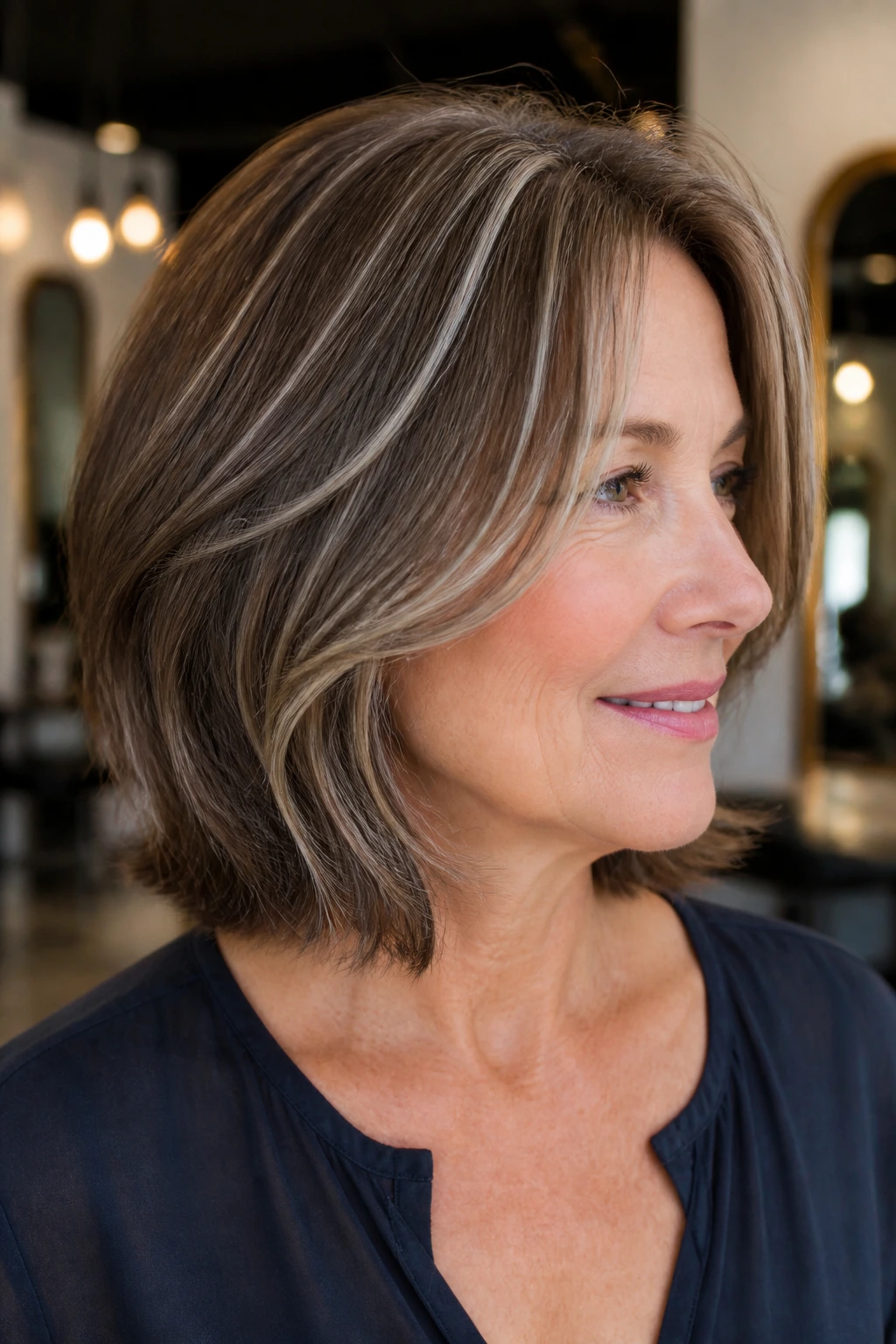
Ash brown with silver ribbons is what I’d call a good compromise for anyone who wants gray without going all in. The base stays a cool brown, while thin silver ribbons run through the top and around the face. The color reads dimensional in daylight and much softer indoors.
Unlike a full gray job, this approach keeps the natural base in play. That matters on cool skin because the ash brown prevents the face from looking washed out, while the silver pieces add enough brightness to keep the look from sinking into the background. The contrast is subtle, not sleepy.
Ask for ribbons that are narrow enough to blend into the haircut—about pencil width, not chunky blocks. Too much silver and the color can start to feel stripey. Too little and you lose the point. The balance is where this one works.
15. Metallic Pewter
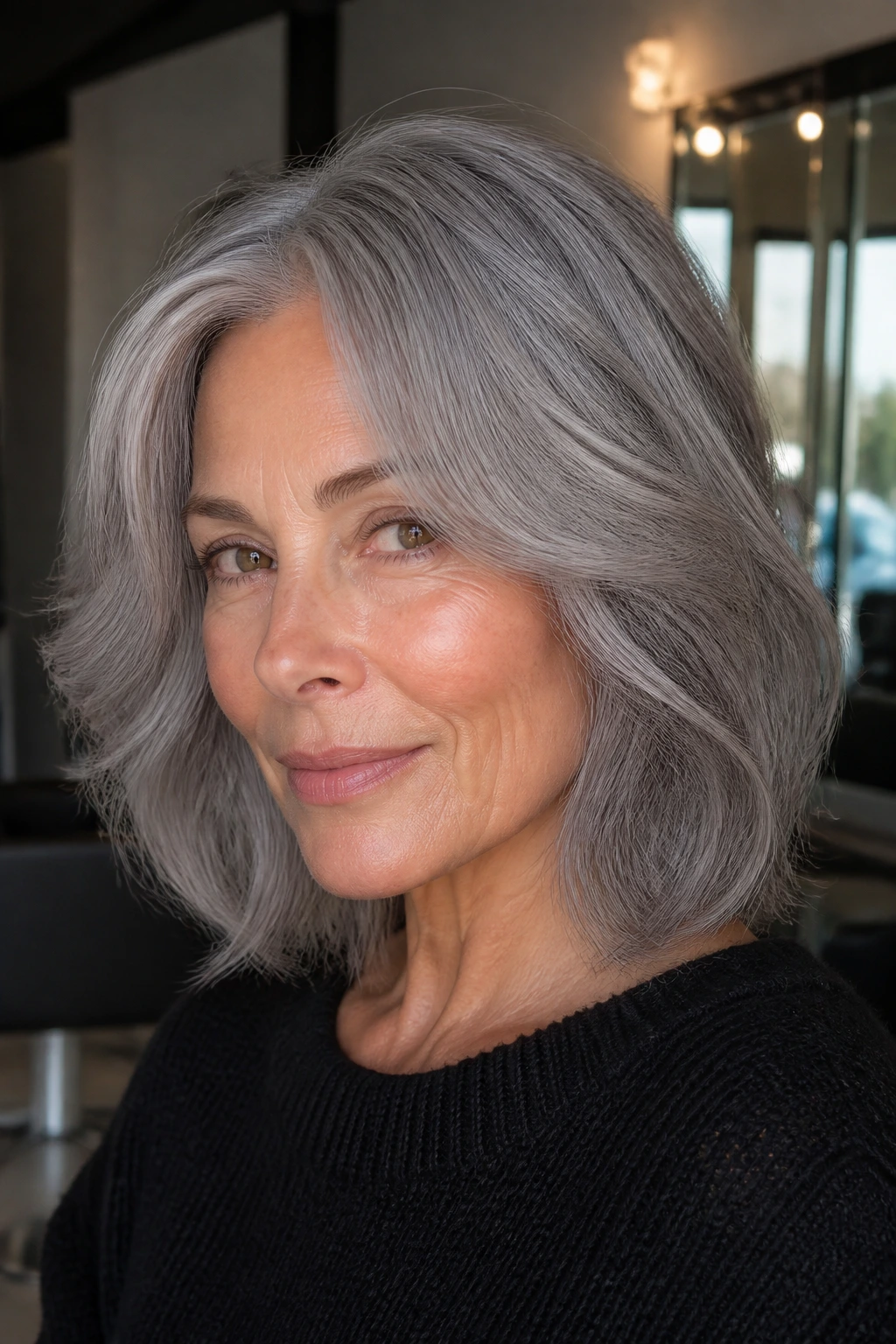
Metallic pewter has a muted shine that sits between silver and graphite, and that middle ground is exactly why it works so well on cool skin. It’s cool without being icy, dark without being heavy. The finish feels controlled, almost brushed metal, which is a nice change from louder gray shades.
Pewter is a good fit for shoulder-length waves, sleek bobs, and straight hair with a healthy cuticle. If the hair is rough or highly porous, the color can look flat fast, so a gloss treatment helps keep the sheen alive. That little bit of shine makes all the difference.
I like pewter for people who want gray hair color ideas that feel grown-up without looking severe. It suits cool olive skin especially well because it doesn’t push warmth into the face. If you want gray with a calmer voice, this is a strong option.
16. Arctic White Shadow Root
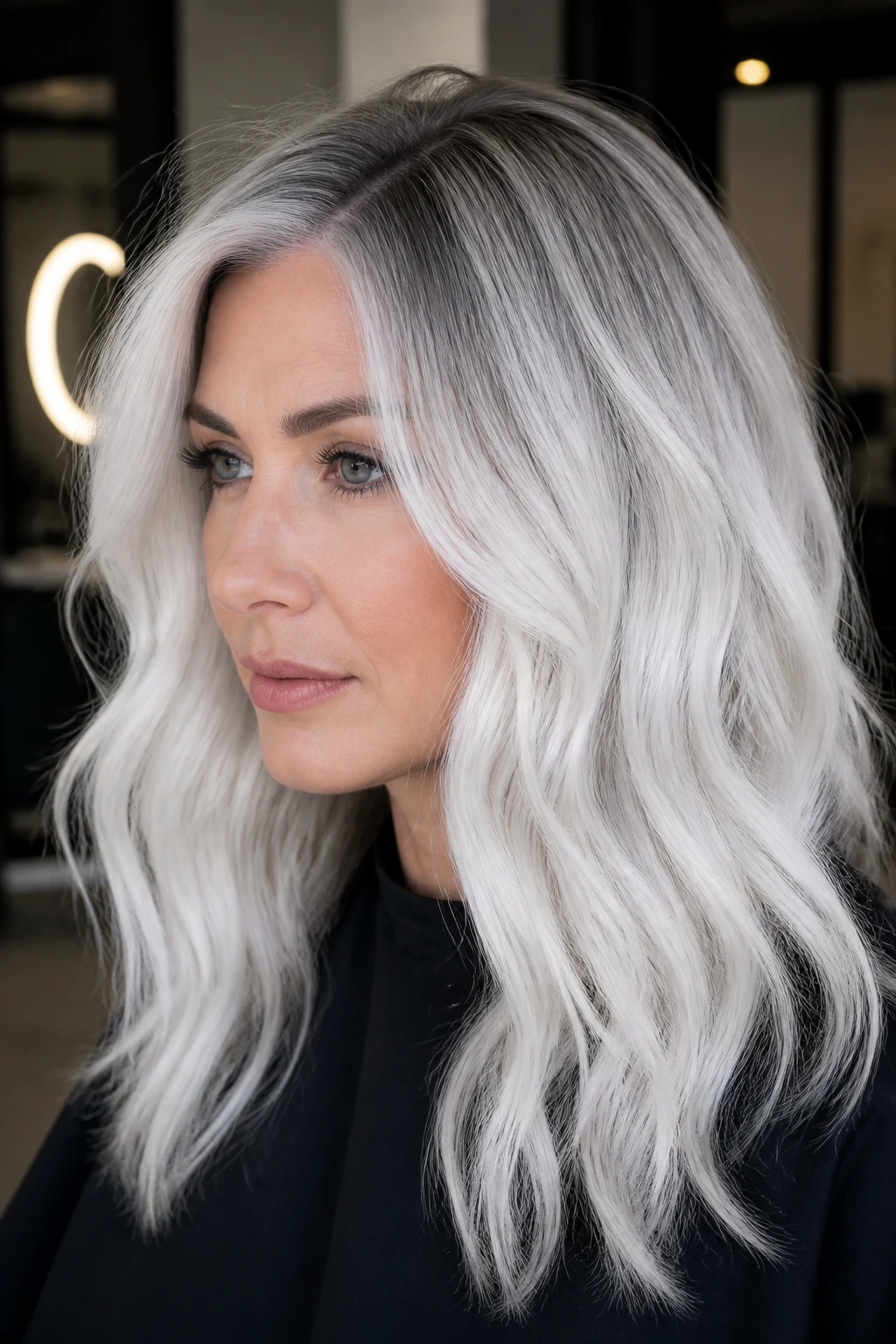
Arctic white with a shadow root is the high-contrast choice in the group. The lengths go bright—almost white—while the root stays soft, smoky, and cool. That shadow keeps the face from disappearing into the white and gives the color some shape at the scalp.
Why It Feels Less Harsh Than Plain White
Pure white hair can look stark if it starts right at the root. A cool shadow root solves that problem by grounding the color. It also makes the grow-out less abrupt, which is a mercy if you do not want constant root touch-ups.
- Best for very cool or porcelain skin.
- Needs frequent root maintenance, often every 3 to 5 weeks.
- A purple mask helps keep the lengths clear.
- Works especially well with sharp cuts and clean lines.
This shade has presence. That’s the whole point. It’s not subtle, and it shouldn’t be.
17. Silver Smoke Balayage
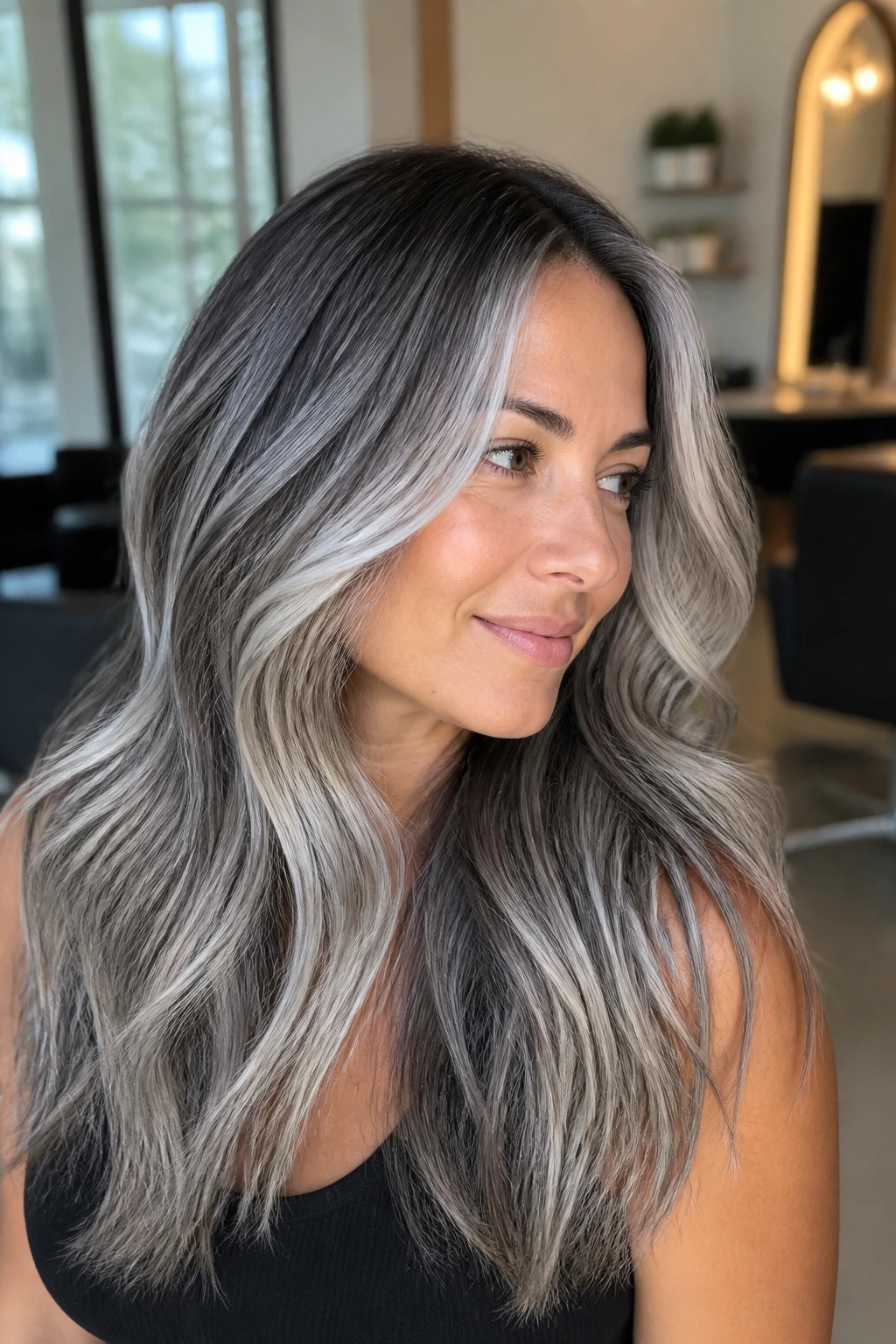
Silver smoke balayage is what happens when you want movement more than uniform color. The silver is painted in soft ribbons over a smoky base, so the finish looks airy instead of blocky. On longer hair, the effect is especially pretty because the pieces shift as the hair moves.
This is a useful option if you don’t want a full-head commitment. The darker base gives you time between salon visits, and the silver pieces can be placed to flatter the face shape, part line, and natural wave pattern. On cool skin, the silver smoke reads polished rather than harsh.
It also works well if you like your hair a little undone. The color doesn’t need perfect styling to make sense. A loose wave, a bend from a round brush, even a half-up style will show the smoky ribbons without much effort.
18. Titanium Gray
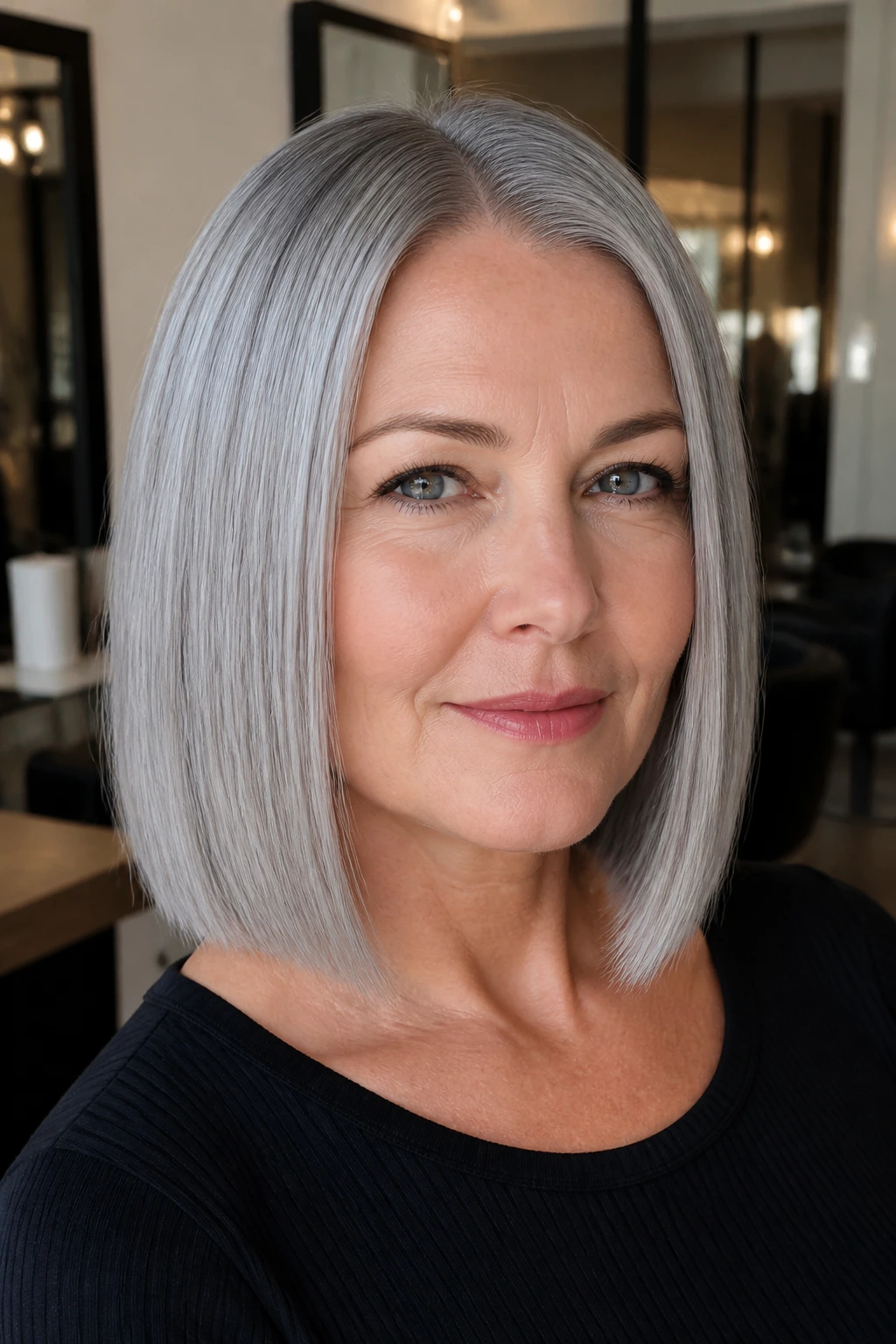
Titanium gray has a harder, cleaner edge than pearl and less brightness than white. Think of it as the sleek, industrial cousin in the gray family. It suits cool skin because the tone stays neutral-cool instead of drifting warm, and it gives the hair a reflective finish that feels neat.
This shade looks especially good on straight hair, blunt bobs, and cuts with a strong outline. Titanium has very little wiggle room; if the cut is sloppy, the color exposes it. If the shape is crisp, the shade looks expensive and controlled. That’s the tradeoff.
A light shine spray helps, but keep it thin. Too much product can mute the metal-like surface. If you’re drawn to cool grays that feel precise instead of soft, titanium is a smart place to land.
19. Pearl White Highlights on a Gray Base
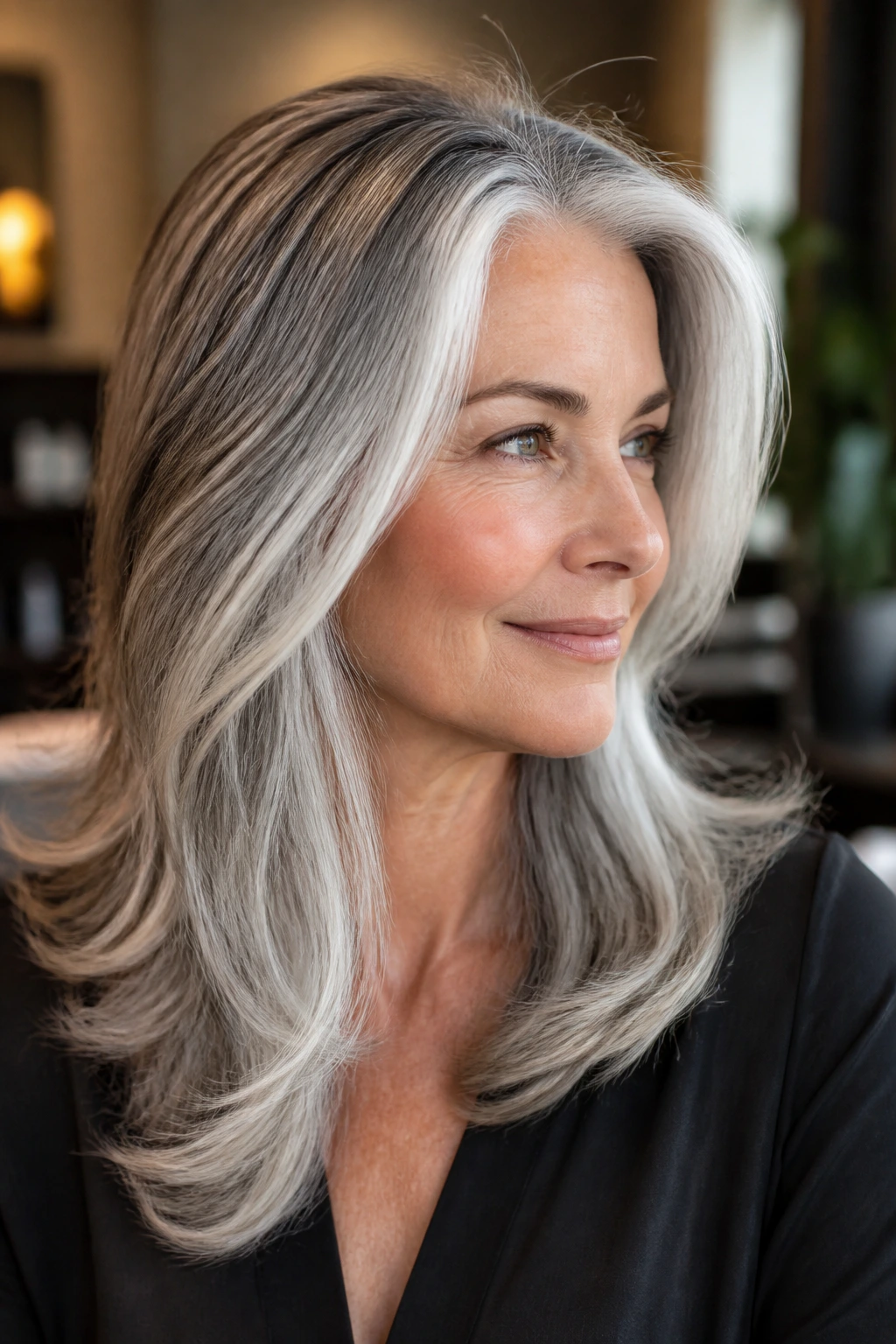
What if you already have gray and just want more brightness? Pearl white highlights on a gray base are a good answer. The base keeps the look grounded, while the pearl-white strands lift the front and crown so the hair doesn’t blend into one flat tone. It’s a nice way to refine natural gray instead of covering it.
How to Place Them
The smartest placement is near the part line, temples, and top layers where light hits first. You do not need every strand highlighted. A few well-placed pearl pieces do more than a dense pattern ever will, especially on cool skin where too much pale color can flatten the face.
This is also a good transitional look if you are moving away from dye and into natural silver. The highlights make the overall gray feel intentional. They also grow out softer than a full bleach job, which is a relief for anyone who does not want a hard line every few weeks.
20. Blue Steel Short Crop
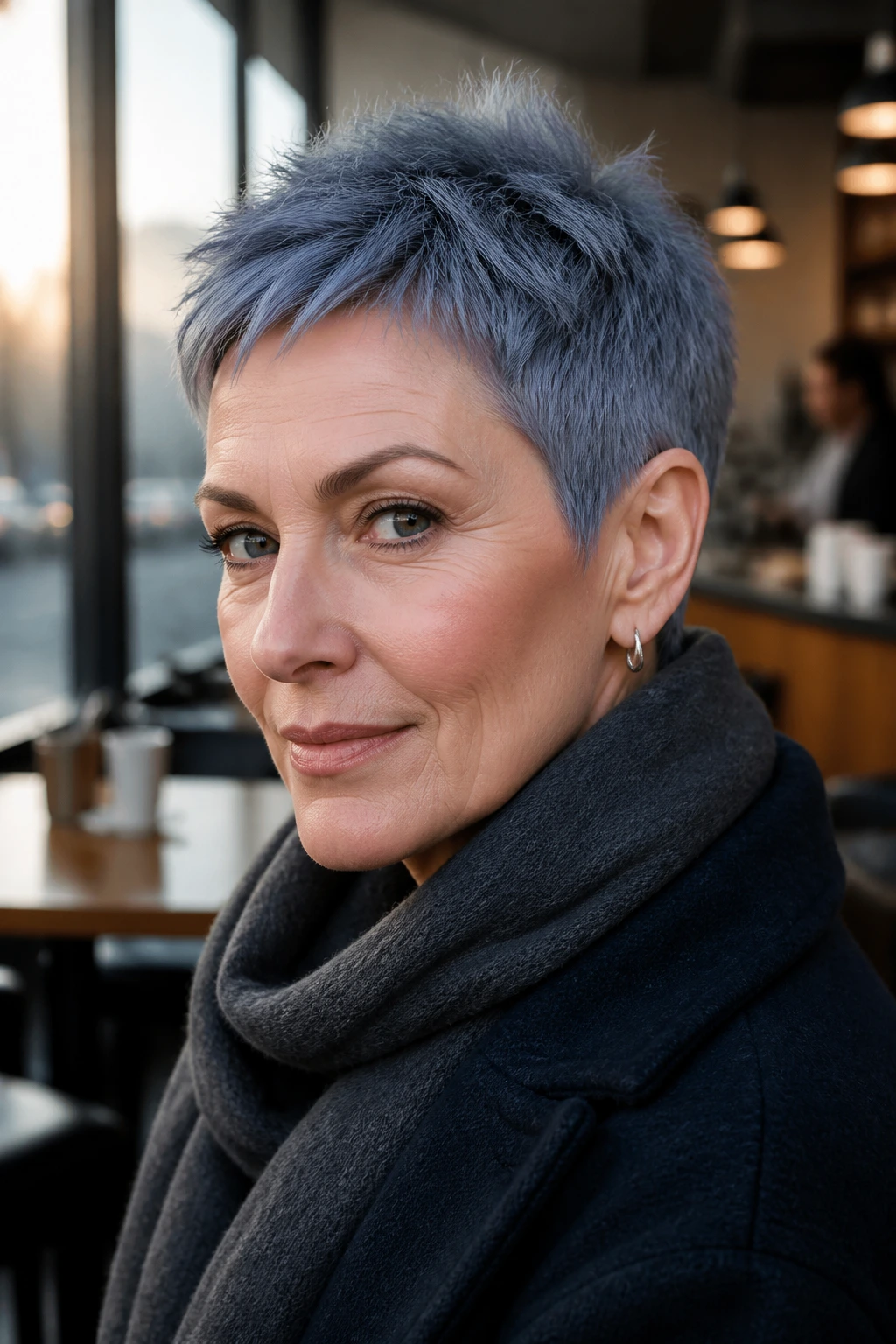
A blue steel crop is short, sharp, and a little bit cool in the best sense. The blue cast keeps the gray from reading flat, while the short length makes the color look tidy rather than overworked. On cool skin, that extra blue note can make the complexion look cleaner and more awake.
This shade works best when the cut has a bit of texture on top. A close crop with a soft fringe or a choppy finish gives the blue steel room to move. If the cut is too stiff, the color can feel severe. If it has some lift, the result is modern without being flashy.
Not every gray needs to be soft. Some should have a little bite. This is one of them.
21. Smoky Silver Money Piece
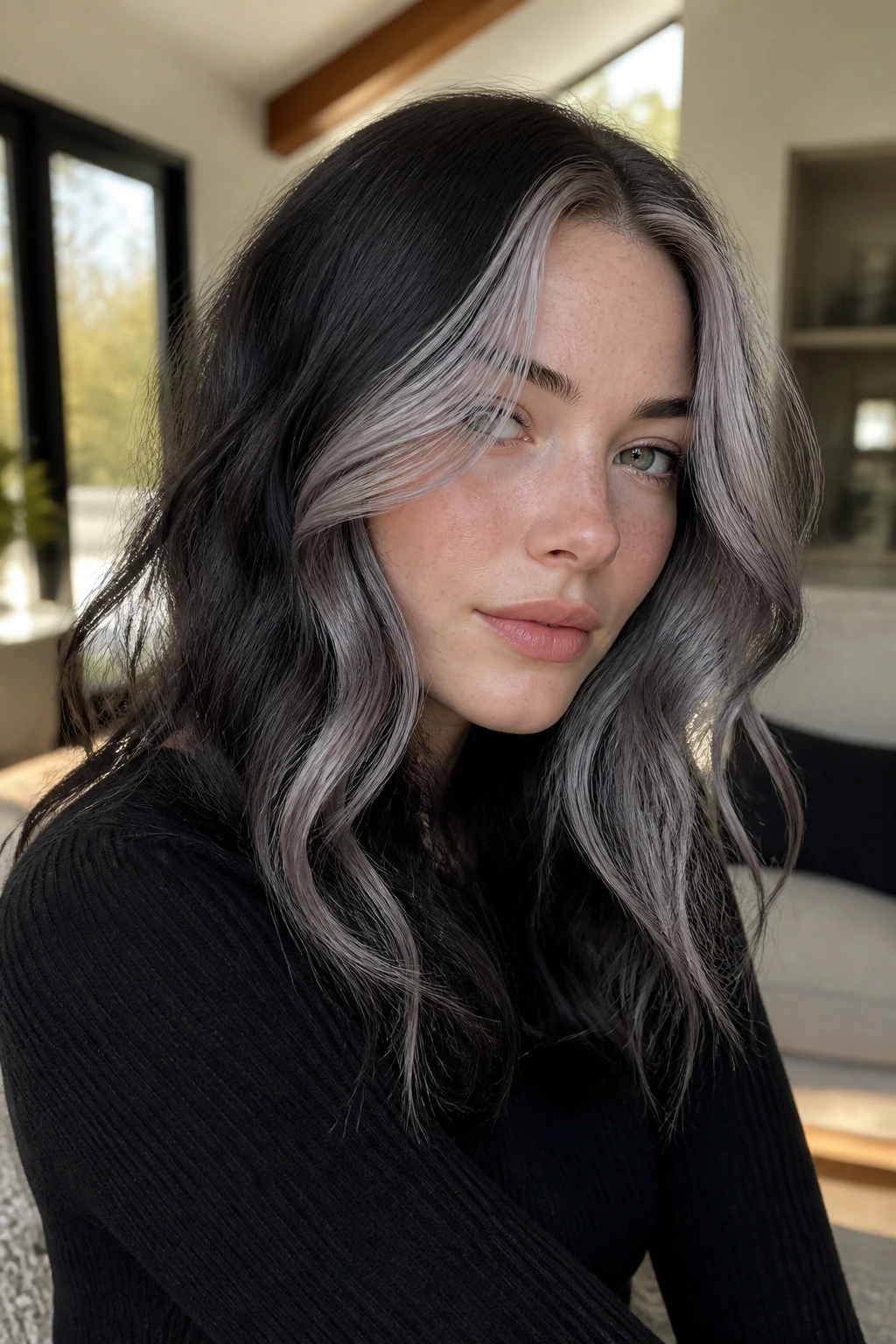
A smoky silver money piece gives you a bright face-framing hit without committing to a full head of silver. The front strands are lifted and toned cooler than the rest, so the eye goes straight to the face. It’s a smart way to test gray on cool skin before going all the way.
The trick is keeping the pieces smoky, not stark white. Pure white can feel disconnected from the rest of the hair, while a smoky silver front melts better into the base. The result works especially well with ponytails, half-up styles, and soft waves because the front pieces stay visible.
If you want a low-commitment change, start here. It’s easier to grow out than full gray, and it still gives you that sharp cool-toned effect around the face. Sometimes one strong strip of silver is enough.
22. Charcoal and Silver Peekaboo
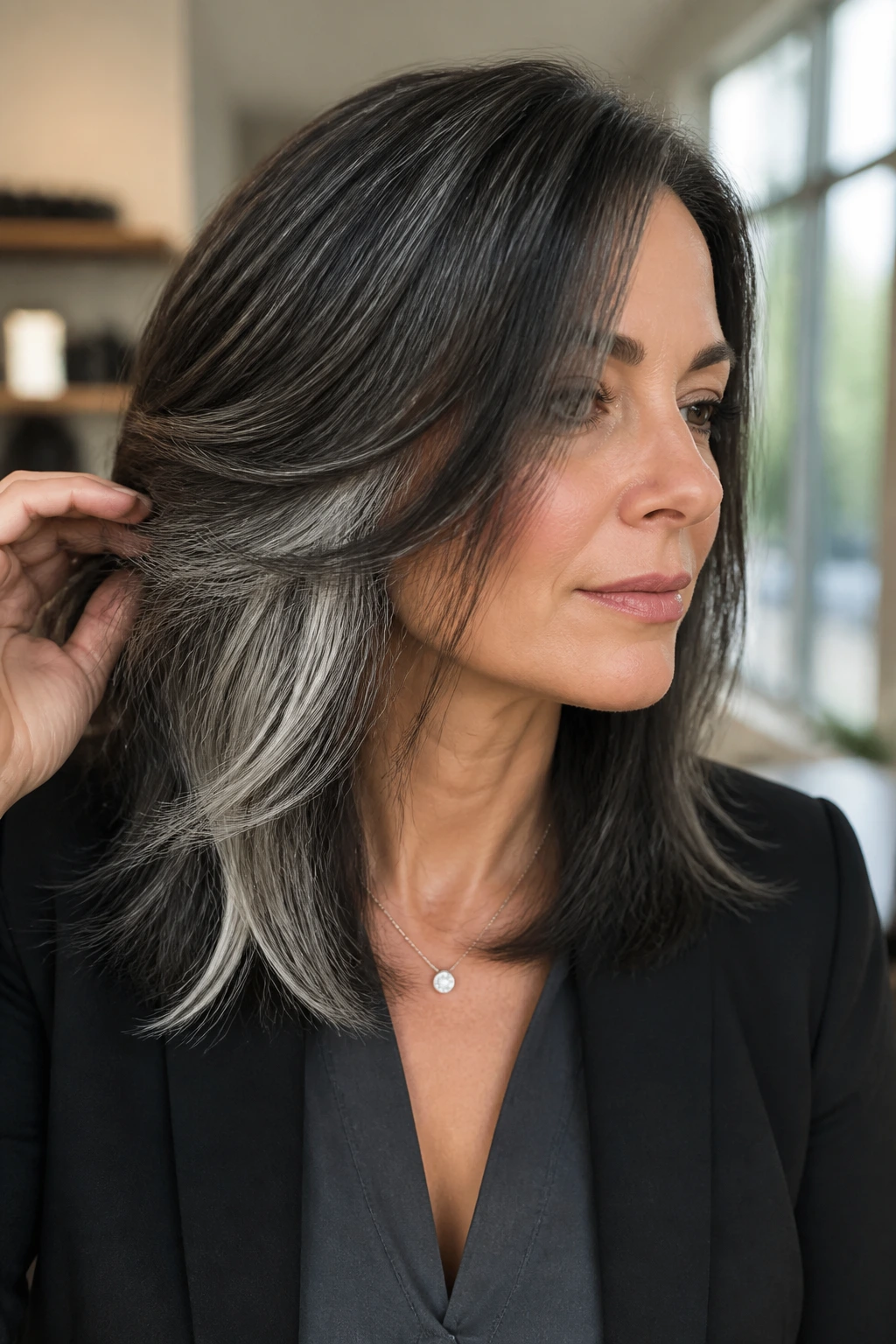
Peekaboo color is underrated. Charcoal and silver panels hidden underneath darker top layers give you a flash of gray that only shows when the hair moves, parts, or gets tucked behind the ear. It’s playful, but not silly. And on cool skin, the contrast looks especially clean.
This works best on layered cuts or medium-length hair with some swing. The darker top layer keeps the overall look subdued, while the silver underneath adds surprise. If you wear your hair straight most of the time, the effect is more subtle. If you curl or wave it, the hidden color shows up more often.
It’s also a good option for someone whose job calls for a more conservative look. You get gray without broadcasting it every second of the day. That kind of flexibility matters more than people admit.
23. Soft Salt-and-Pepper Blend
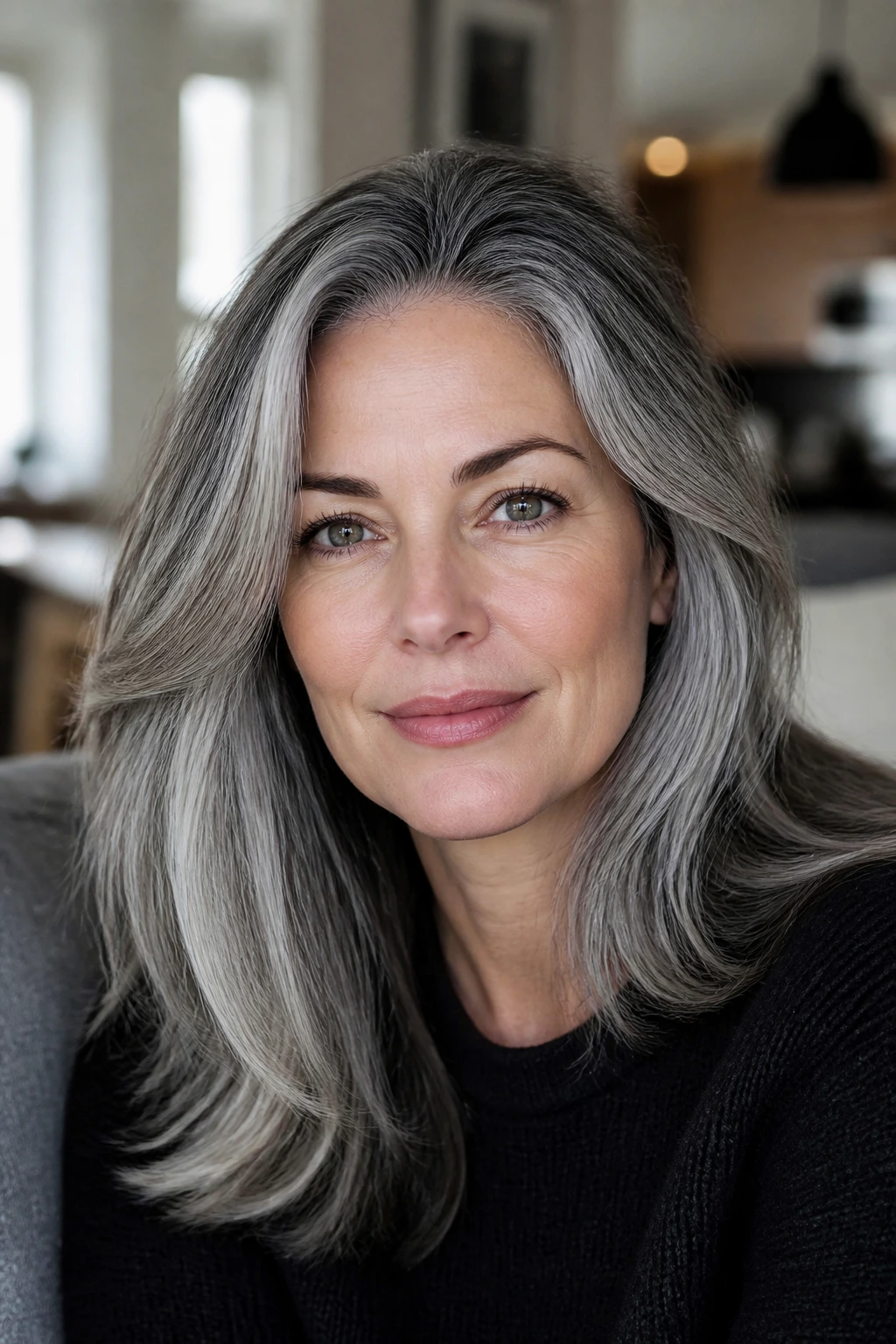
Soft salt-and-pepper hair can be one of the most flattering gray hair color ideas for cool skin tones, especially if the natural mix is already starting to show through. The blend of dark strands and silver ones gives the hair depth without forcing a dramatic change. It looks honest, and honestly, that’s part of the appeal.
The important part is softness. You want the blend to feel deliberate, not muddy. A cool toner can keep the gray side clean, while the darker pieces anchor the color near the scalp and around the face. On layered cuts, the mix moves nicely and avoids the helmet effect that a blocky gray can create.
If you already have some natural silver, this may be the easiest path. Instead of fighting the growth pattern, you shape it. That’s often the smartest move.
24. Frost Gray With a Gloss Finish
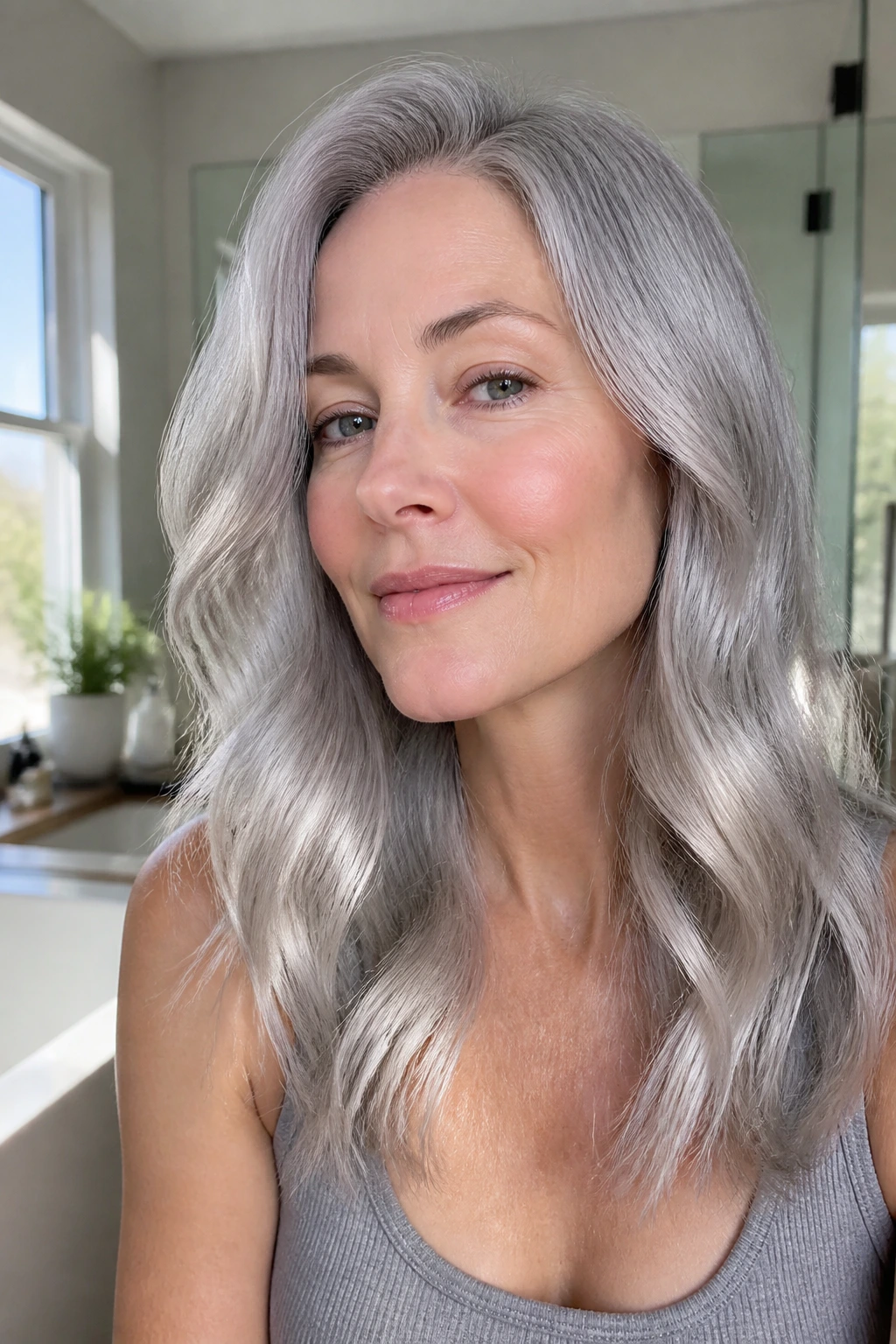
Frost gray can go chalky if you leave it matte. A clear gloss or a very pale cool glaze keeps the finish smooth, reflective, and much more flattering on cool skin. The color itself sits in the pale gray family, but the gloss is what stops it from looking dry.
The Finish Matters
This shade is less about the exact gray and more about how the light hits it. A shiny frost gray looks icy and refined. A dull frost gray looks tired. That’s a big difference, and it shows up fast, especially on porous hair.
- Use a lightweight gloss every 4 to 6 weeks.
- Avoid heavy oils that can make the tone look yellow.
- Heat protectant should be clear, not tinted warm.
- A fresh trim helps the ends reflect light instead of looking frayed.
If your hair has been lightened a lot, this shade can bring back a cleaner look without changing the base all over again. The gloss is doing half the work here.
25. Deep Graphite to Icy Ends
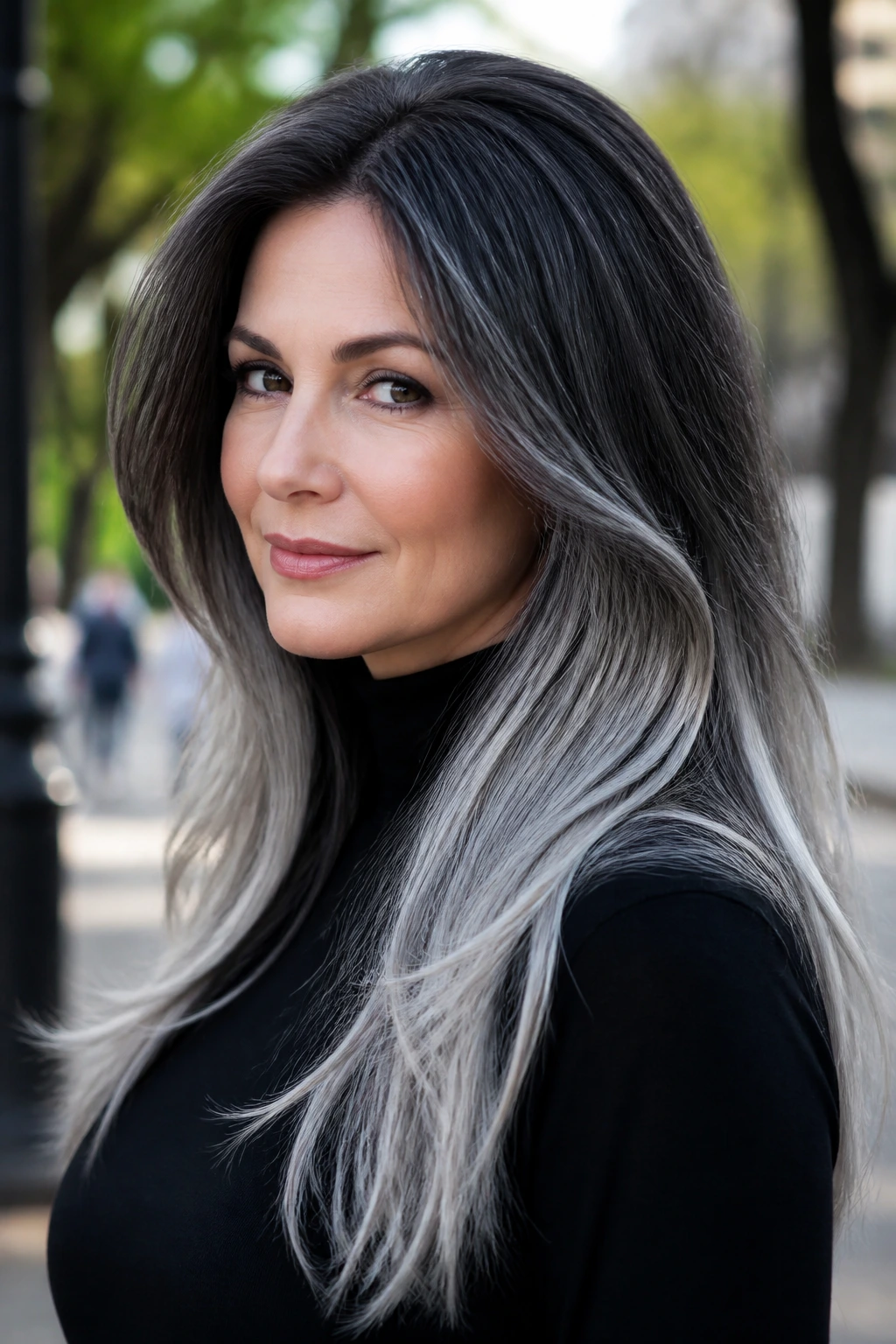
Deep graphite melting into icy ends is the dramatic finish of the list, and it suits cool skin because it keeps the face framed in depth while the lengths carry the brightness. The top stays dark and smoky, the bottom turns silver and pale, and the whole thing moves like a gradient instead of a hard contrast.
This is a strong choice for long hair or a layered lob. The transition has room to show, which matters. On very short hair, the shift can disappear; on longer hair, it reads as intentional and polished. The darker root also makes the icy ends feel more grounded, so the look doesn’t drift into costume territory.
If you want gray hair color ideas for cool skin tones that feel striking but still wearable, this is one of the best places to stop. It has depth, shine, and just enough edge to stay interesting.
Final Thoughts
The strongest gray shades for cool skin tones all do the same basic job: they keep the color clean. Icy silver, blue-gray, pewter, graphite, and pearl white each take a different route, but none of them leans golden or muddy.
If you’re stuck between two shades, I’d pick the one with either a little more depth at the root or a little more shine through the ends. That small choice often matters more than the name on the salon chart. Bring photos, sure, but also point to the undertone you want—blue, violet, ash, or steel.
Gray can look soft, sharp, airy, or downright striking. Cool skin usually wears those moods better than people expect. It just needs the shade to stay on the cool side of the wheel.
