



Purple grey hair is one of those color families that can look expensive without trying too hard. On cool skin tones, it often does the opposite of what warm golds and coppery pastels do: it sharpens the face, softens redness, and gives the whole look a cleaner edge.
The trick is in the base. Blue-violet pigments, smoked-out lilacs, graphite greys, and pearl finishes tend to sit nicely beside pink, rosy, or blue undertones in the skin. Warm purple shades can work too, but they need to stay deep and muted or they can start fighting the complexion. That clash is the part people notice first.
Bleach level matters as well. Pastel lavender on dark hair usually needs a pale yellow lift first, while deeper plum-grey blends can live on a darker base and still read clearly. A good color job isn’t just about the shade name. It’s about how much light the hair holds, where the depth sits, and how the tone changes when you step into daylight.
So the sweet spot is usually somewhere between silver smoke and violet ash. And that range gives you a lot to play with.
1. Smoky Lavender Silver
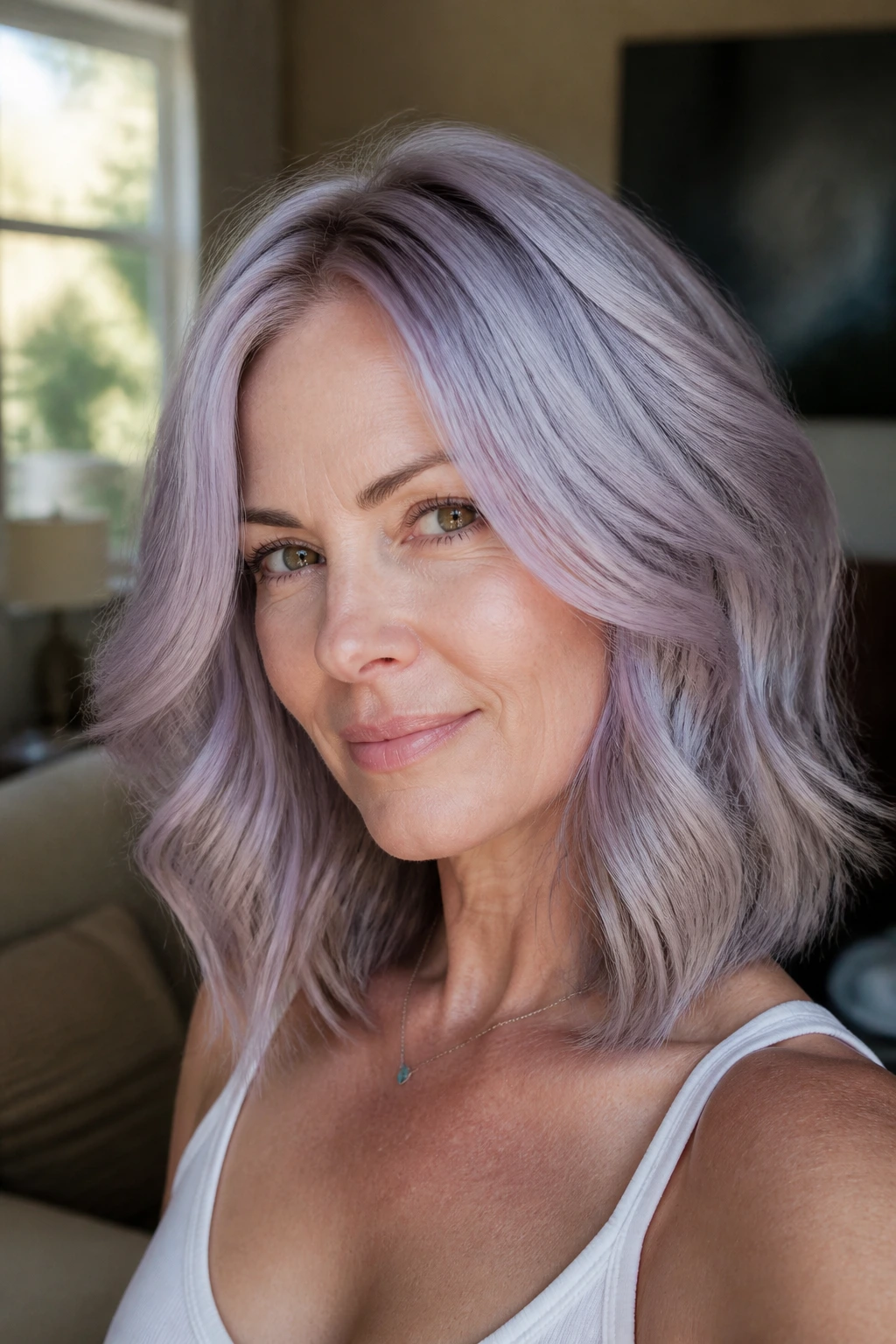
Smoky lavender silver is the shade I reach for when someone wants purple-grey hair that still feels clean and wearable. It has enough violet to keep the color from looking flat, but the silver base keeps it cool and crisp. On cool skin tones, that little bit of metal-like brightness can make the face look brighter without turning the hair icy.
Why it works
The color sits best on hair that has been lifted to a pale blonde, then toned with a blue-violet and silver glaze. That matters. If the purple leans too red, the whole look can start drifting warm, and cool skin loses the advantage.
Ask for a soft root shadow if you want a gentler grow-out. It keeps the top from looking chalky and gives the silver something to rest against. The result is polished, but not stiff. And that’s the appeal.
2. Graphite Lilac Balayage
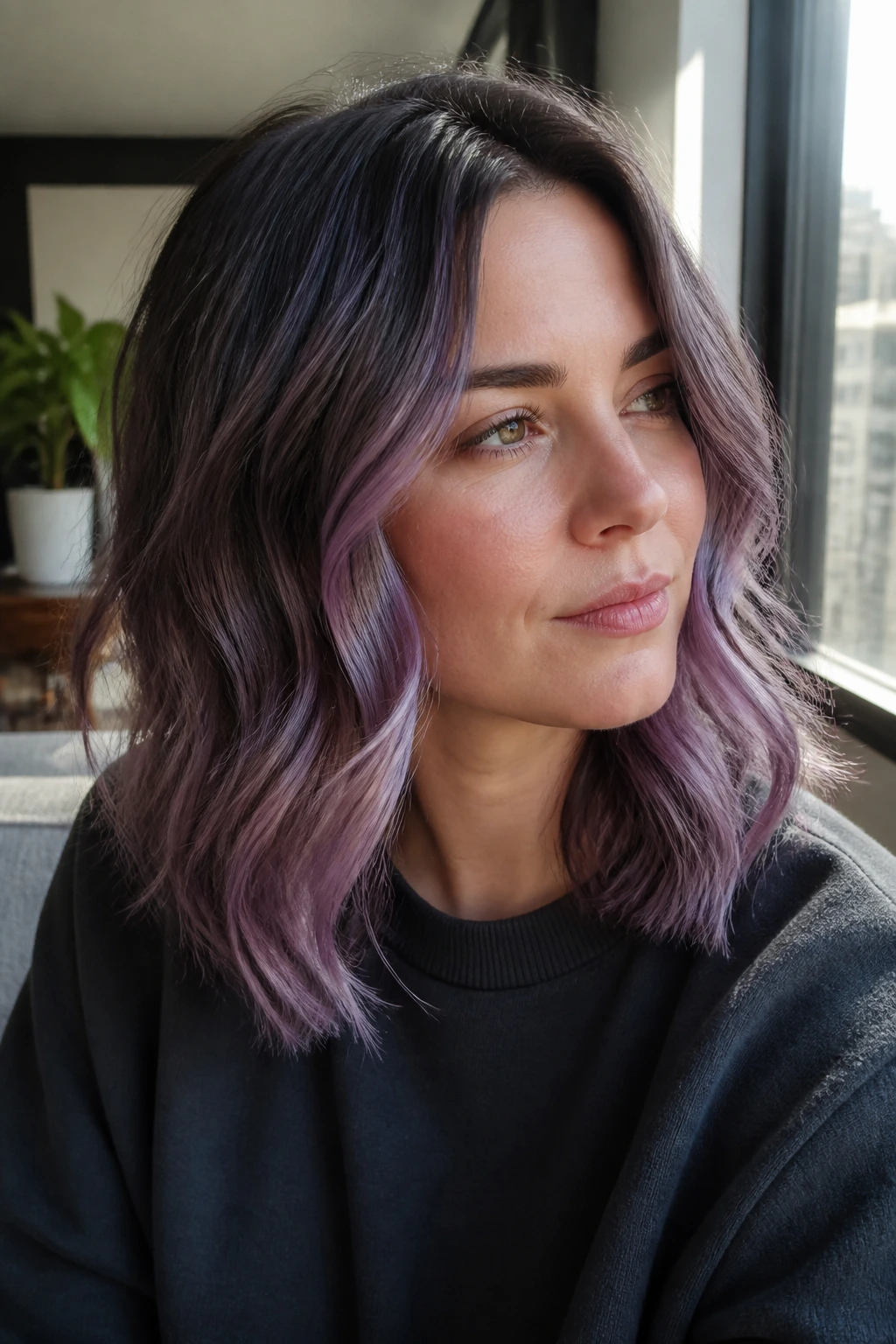
Graphite lilac balayage is for anyone who likes contrast. The roots stay a deep smoky grey, then lilac ribbons get hand-painted through the mid-lengths and ends. It looks especially good on cool-toned skin because the dark base makes the skin look even clearer beside it.
What makes it different
Unlike an all-over pastel, this style keeps some depth near the scalp, so you don’t need to baby it quite as much. The lilac pieces can be thin and scattered, or wider if you want a more visible streak effect. Both work.
How to wear it
- Best on shoulder-length or longer cuts
- Strong on wavy hair, because the ribbons move
- Easier to maintain than full pastel coverage
- A good choice if your natural color is medium brown or darker
A colorist will usually paint the lightest pieces around the face and leave the lower layers a touch darker. That gives the hair shape. It also stops the lilac from reading flat in indoor light.
3. Frosted Violet Bob
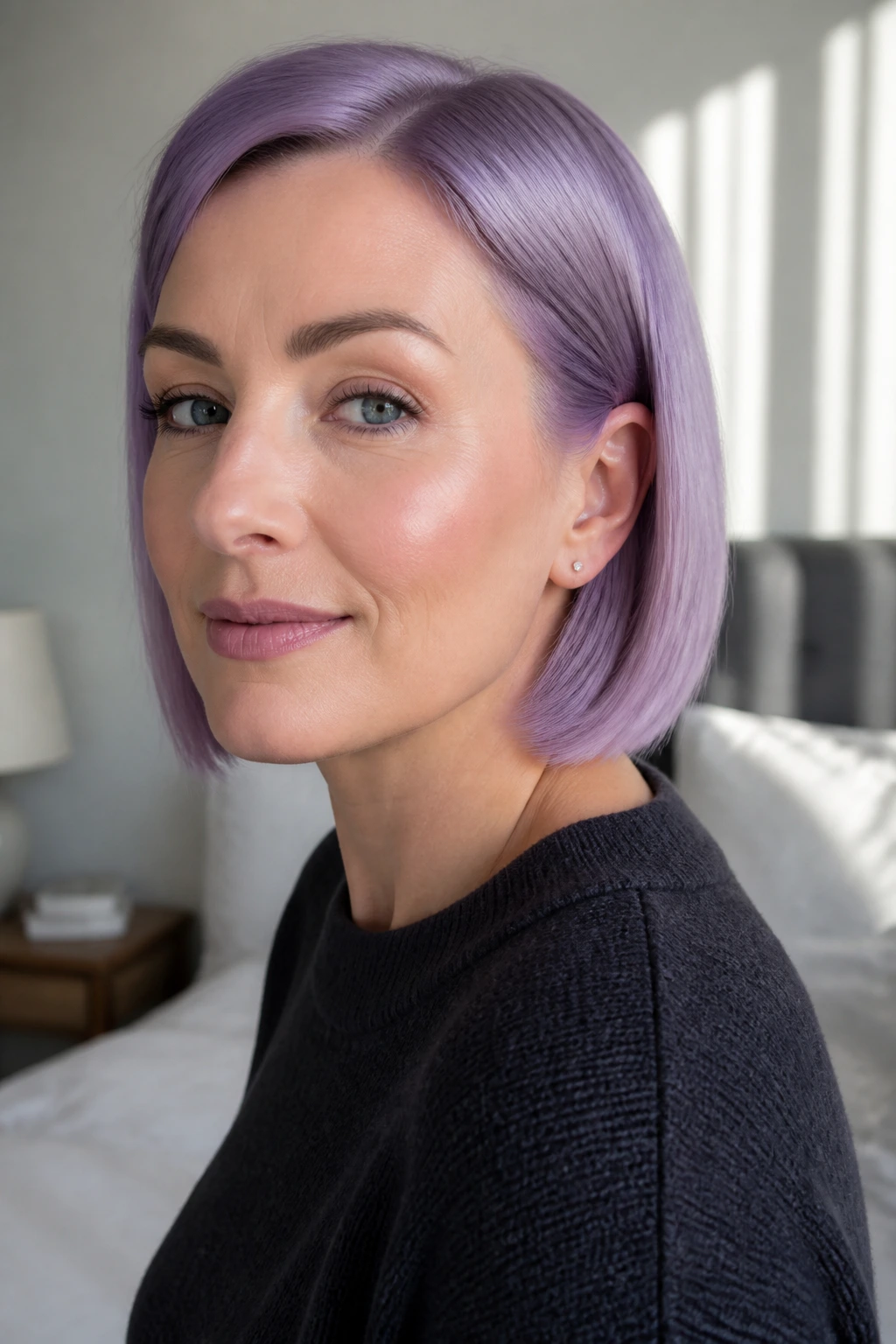
A frosted violet bob has a neat, edited feel that suits cool skin beautifully. The length does some of the work here. A blunt bob catches the violet sheen at the ends and makes the whole color read sharper, almost like polished fabric.
A small but useful detail
This look needs precision at the cut line. Choppy ends can scatter the shimmer and make the color look less deliberate. A clean bob gives the violet-grey finish a stronger edge, especially if the hair is fine.
If you want the color to feel softer, ask for a translucent violet toner instead of a dense pigment. That keeps the grey visible under the lavender. It’s a small shift, but it changes the whole mood.
A straight blow-dry shows the color best. So does a tucked-behind-the-ear style. Messy can work, sure, but a crisp bob is where this one really earns its keep.
4. Plum Ash Ombré
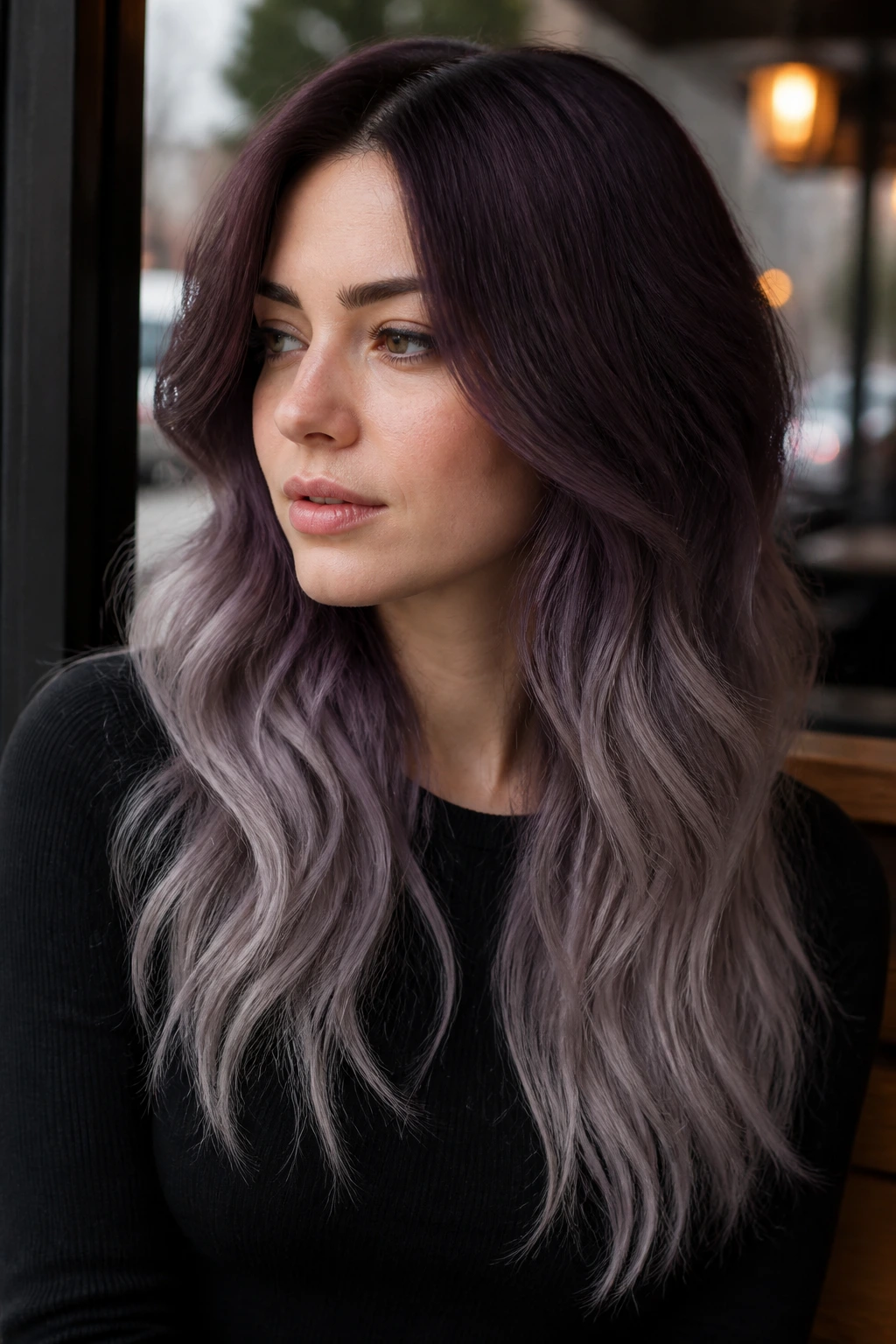
Plum ash ombré starts deeper at the roots and fades into a muted grey-violet through the lengths. It’s a smart choice if you want purple-grey hair but don’t want the top half of your head to look fully lightened. The darker root area gives the eyes somewhere to land.
The reason it flatters cool skin is simple: the ash in the mid-lengths cancels warmth, while the plum adds depth that won’t turn brassy fast. Warm plums can get loud. This one stays moody.
Best if you want:
- A softer grow-out
- Less upkeep at the scalp
- A shade that looks good in low light and daylight
- A color that works with medium-length waves
This is one of those styles that looks more expensive when the transition is blurred rather than obvious. Keep the fade gradual. If the color drops too suddenly, it starts reading like a dip dye. That’s a different look entirely.
5. Mushroom Grey with Orchid Gloss
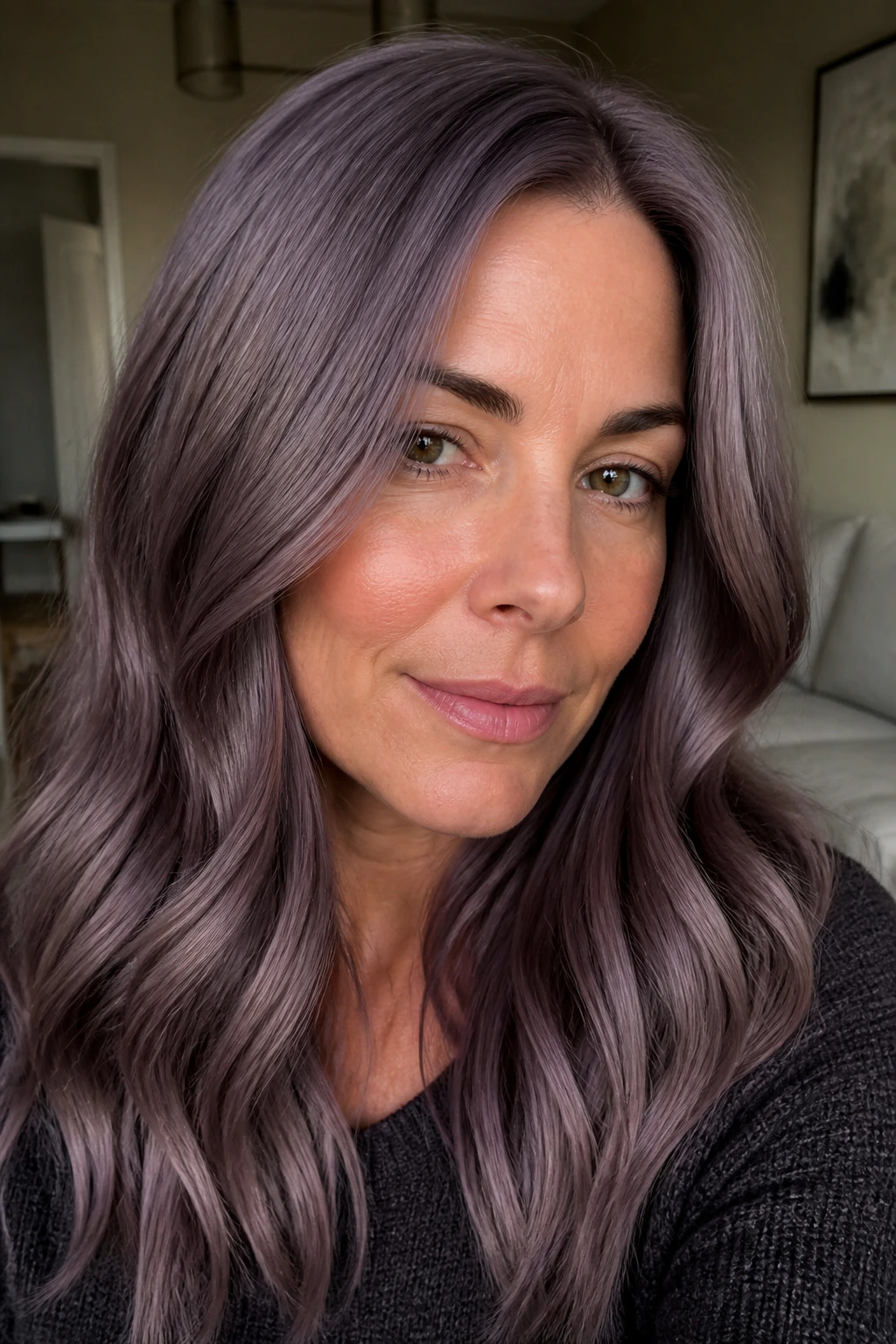
Mushroom grey with orchid gloss is a quiet shade, and I mean that in a good way. The mushroom base is earthy but cool, then the orchid gloss adds a faint purple cast that shows up when the hair moves. On cool skin tones, it doesn’t fight the face. It sits beside it.
What makes it different
The orchid tone is usually translucent, not opaque. So instead of screaming purple, it creates a veil over the grey. That makes it easy to wear if you like soft color but hate anything too obvious.
Where it shines
- Shoulder-length layers
- Fine hair that needs a little dimension
- Natural blondes going darker
- Short cuts that need texture
This shade is strongest when the ends stay slightly lighter than the top. That tiny shift keeps the mushroom from looking muddy. And if you wear glasses, the combination is particularly nice. The frame line and the cool gloss tend to play well together.
6. Icy Amethyst Highlights
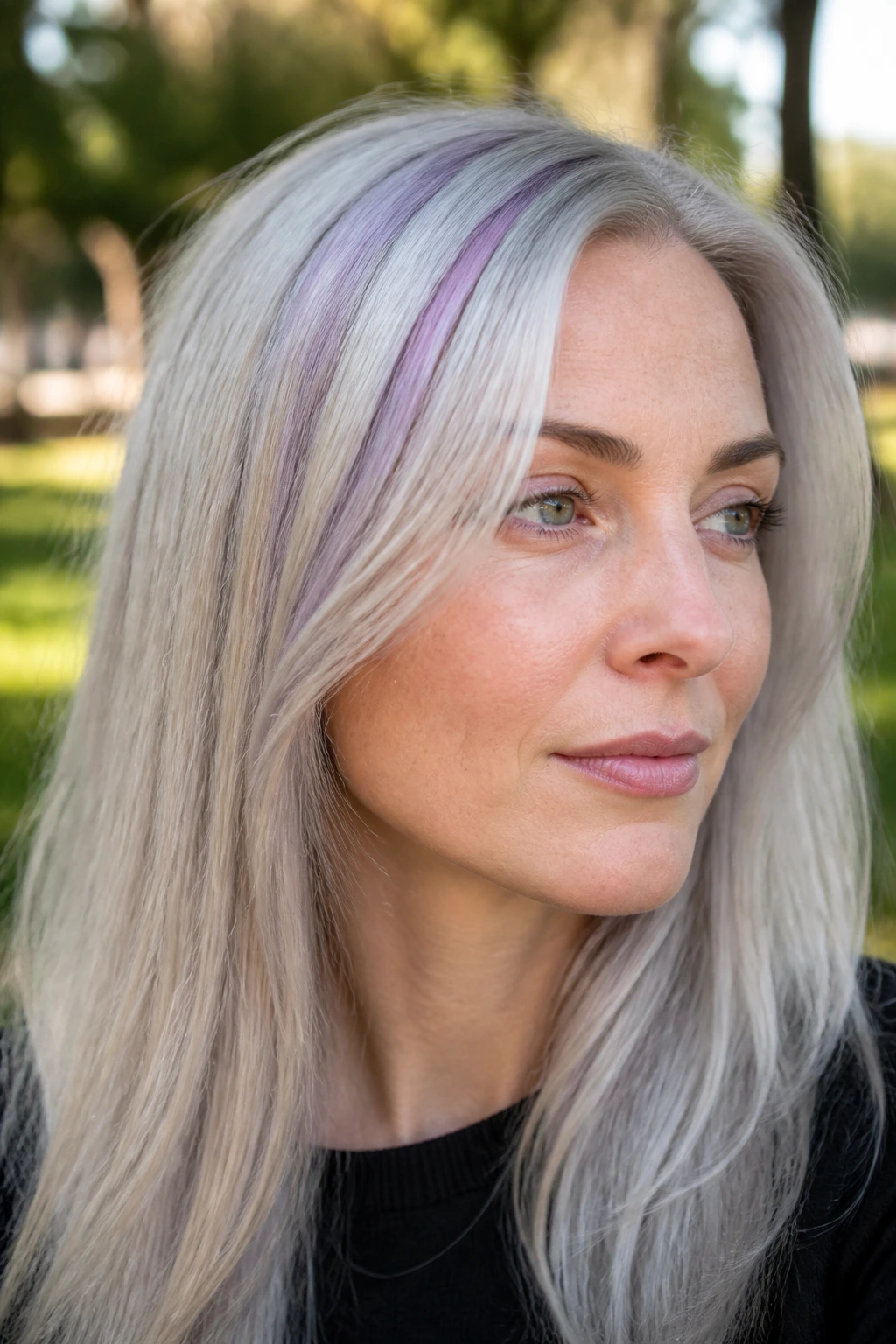
Icy amethyst highlights give you purple-grey hair without committing to a full-head change. The base stays pale silver or platinum, then thin amethyst pieces get dropped in around the crown, temples, and ends. The result is sharp, airy, and a little bit futuristic.
A lot of people go wrong here by using chunky streaks. Don’t. Thin slices look cleaner and keep the color from tipping into costume territory. The best versions are built with many narrow placements rather than a few heavy ones.
Quick placement notes
- Put the brightest pieces near the face
- Keep the nape more muted
- Use a toner with a blue-violet base
- Leave some silver between the purple pieces
This style flatters cool skin because the bright silver gives the complexion lift, while the amethyst adds enough contrast to keep the hair from disappearing. It’s a very good choice for straight hair, where every line shows.
7. Steel Grey with Purple Money Piece
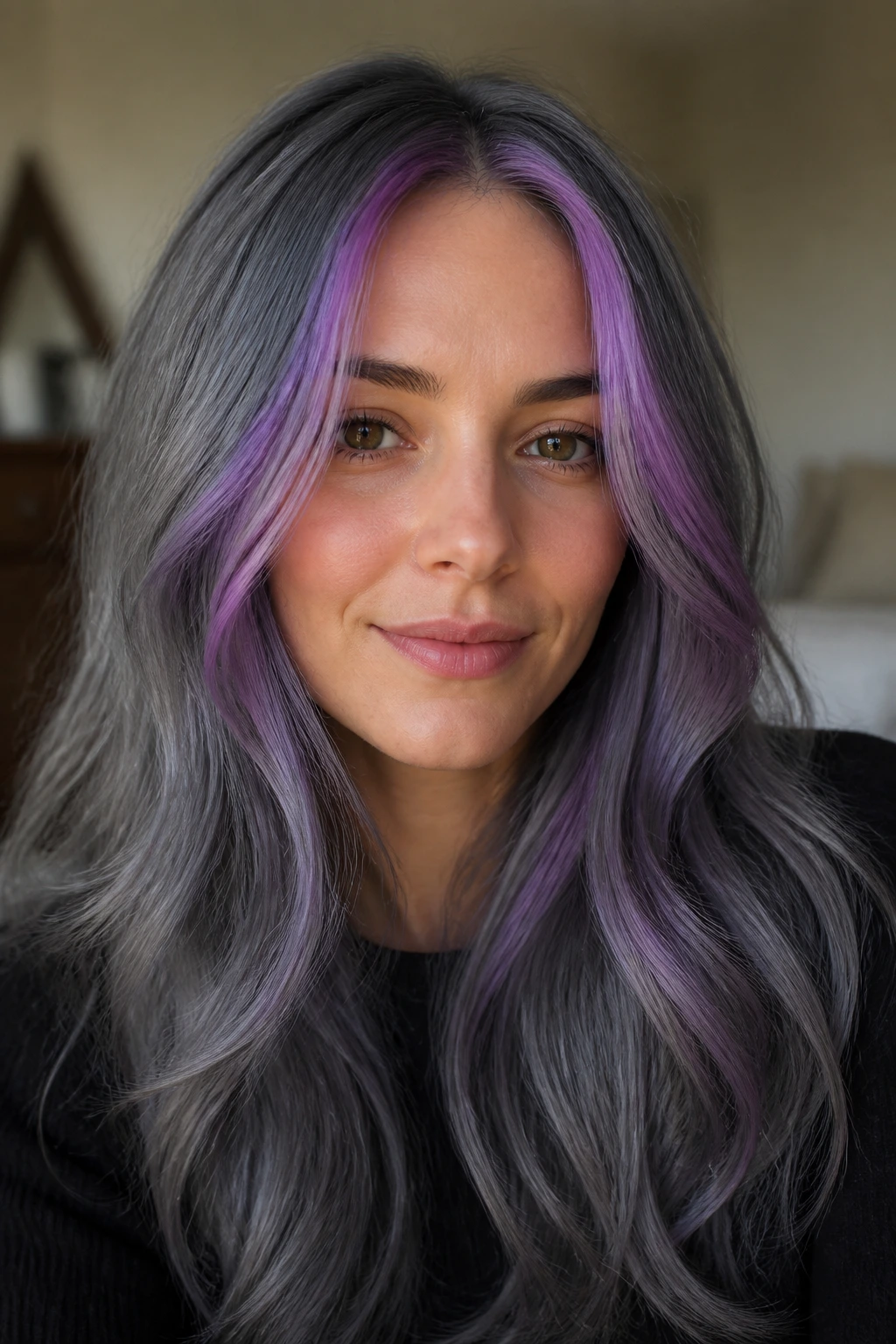
A purple money piece can change the whole mood of steel grey hair. The rest of the hair stays cool and metallic, then two front panels pick up a violet or lilac edge. That little strip of color frames the face and pulls attention to the eyes.
This is the kind of look that works when you want the color to feel intentional but not overdone. The money piece does the talking. The rest of the hair can stay understated.
Why it flatters cool undertones
Steel grey near the face keeps redness down, and the violet front panels echo the cooler parts of the complexion. If your skin leans pink, this combination is especially good. It looks polished in a way that full pastel hair sometimes doesn’t.
Try this on a lob, a shag, or long layers. It loses a little force on very tight curls unless the placement is wide enough to show. So if your hair bends a lot, ask for thicker face-framing sections.
8. Smoky Mauve Root Melt
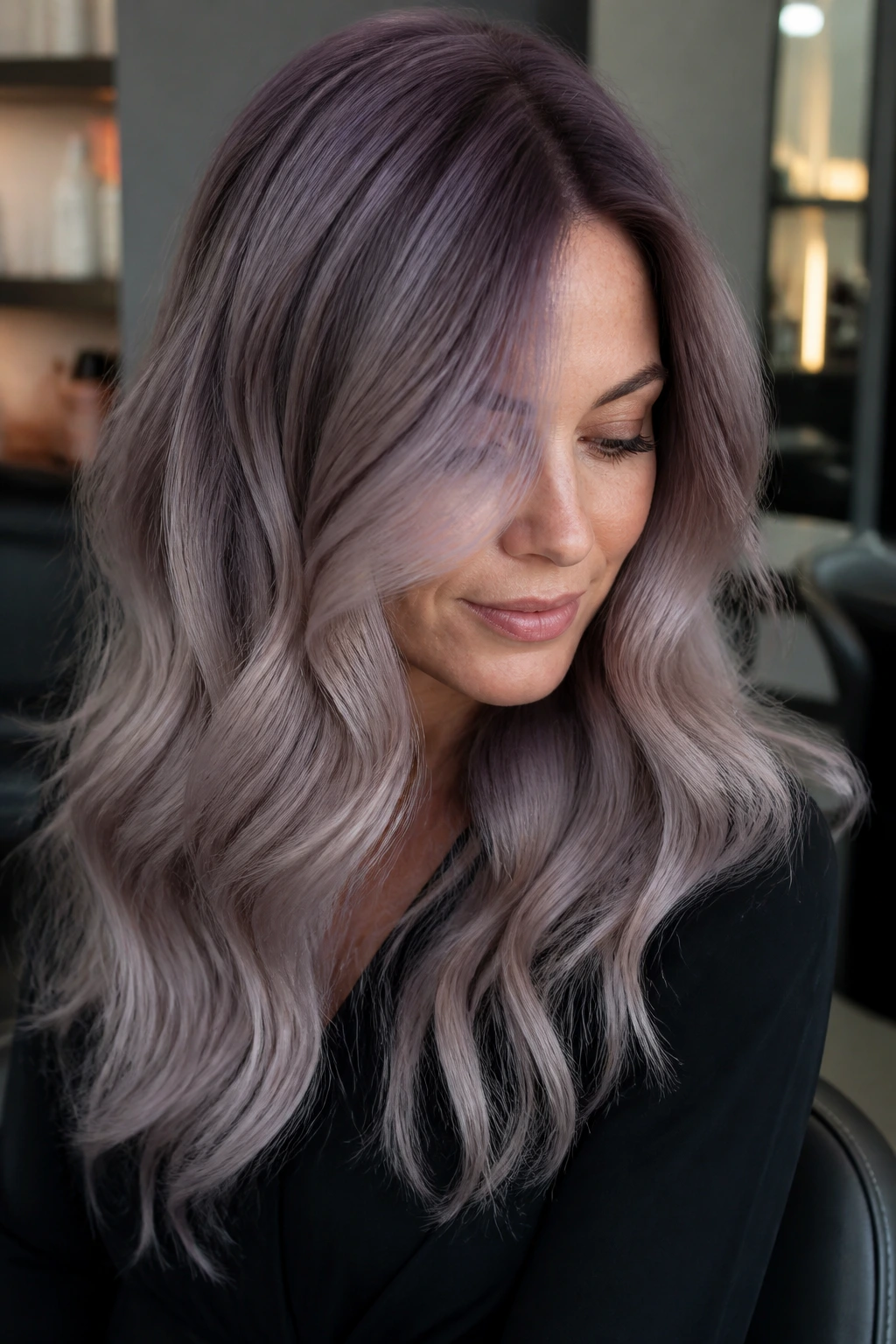
Smoky mauve root melt has a soft, grown-in feel that works because the color changes slowly. The roots stay deeper and muted, then the mauve-grey shade melts downward into lighter ends. It’s one of the easiest ways to wear purple-grey hair without making the whole head look flat.
There’s a nice little trick here: keep the root shadow cool and slightly smoky, not brown. Brown roots can look warm next to cool skin. A smoky root holds the whole look together better.
The finish should feel like satin, not chalk. That’s the goal. If the toner is too dry or too pale, the mauve can lose its roundness and start reading dusty in a bad way.
This shade is especially kind to medium-density hair. The darker root gives it weight, while the lighter mids and ends stop it from looking heavy. Clean and soft. A good combo.
9. Pearl Grey with Violet Veil
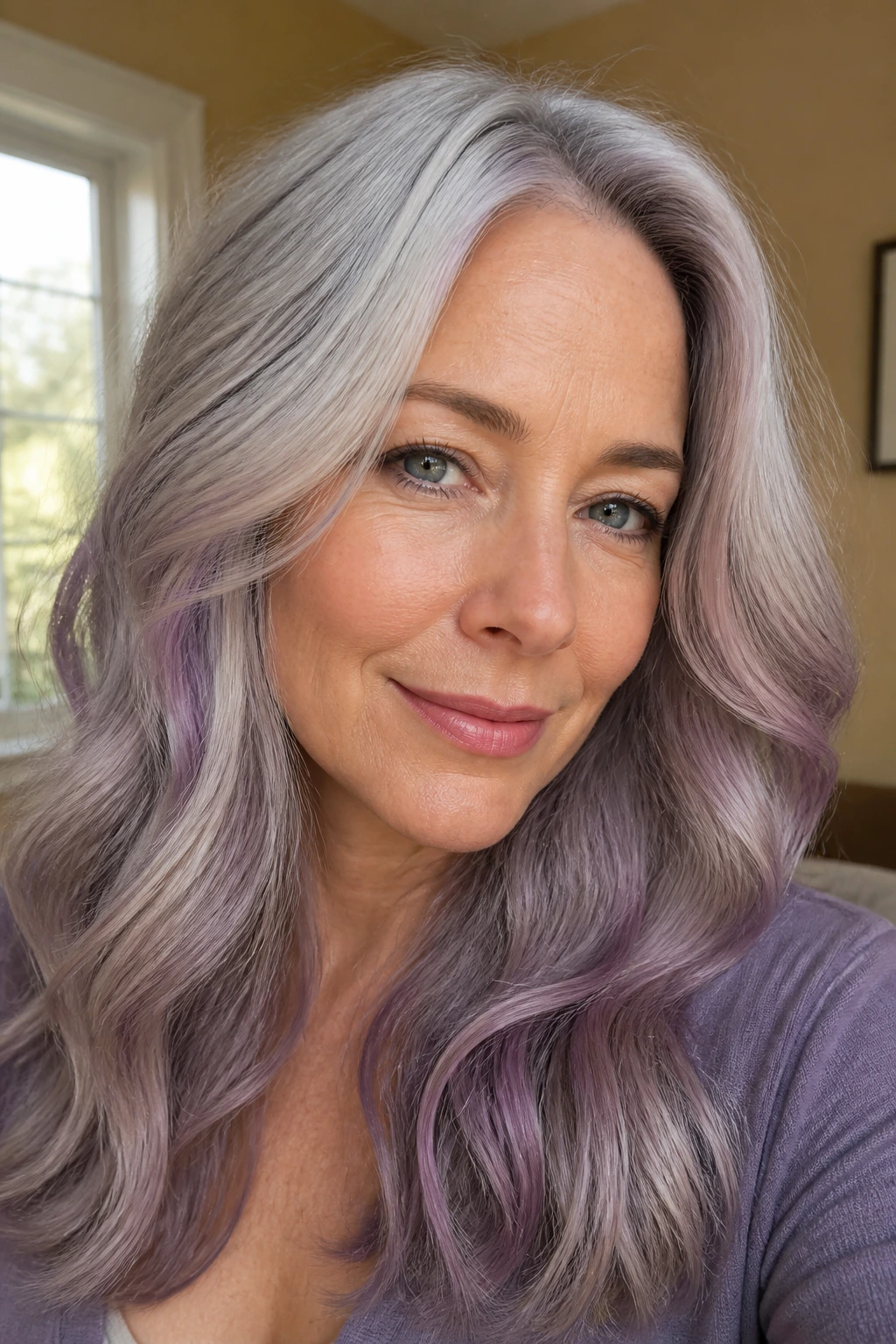
Pearl grey with a violet veil is subtle, and that’s the charm. Pearl grey alone can look almost white, which is lovely but sometimes a little cold on its own. The faint violet layer warms it just enough — not warm in the golden sense, but warm in the sense that it has life.
Why it works
Cool skin tones often look best when the hair has a touch of reflection instead of a dead matte finish. Pearl reflects light in a soft way, while the violet veil keeps the shade from drifting flat or too icy.
Best for
- Fine hair that benefits from shine
- Longer cuts with movement
- Anyone who wants a light color without full lilac saturation
- Soft waves or loose curls
This shade looks particularly good when the ends are polished and smooth. A rough finish can make pearl grey appear dull. Use a gloss between salon visits if the shine starts to fade. That one step can change the whole impression.
10. Deep Plum Underlayer
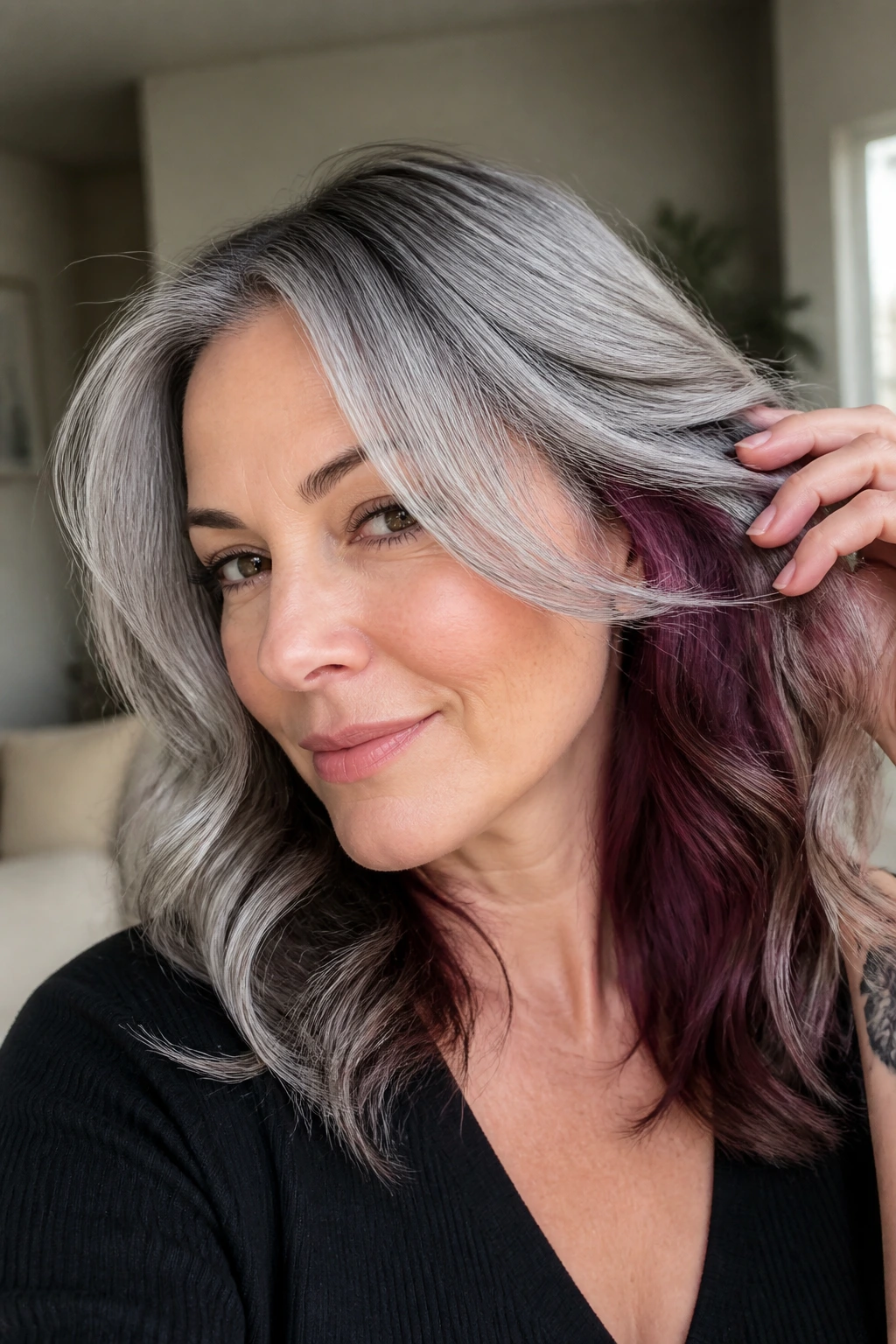
Deep plum underlayer color is for someone who wants a little hidden drama. The top layer stays silver grey or smoky ash, while the underside carries the plum. It shows when the hair lifts, bends, or gets tucked behind the ear. Quiet at first glance. Bolder once it moves.
I like this idea on long bobs and shoulder-length cuts because the underlayer has room to peek through. On very short hair, it disappears too fast.
The plum should be deep enough to read as a shadow, not a bright berry. That’s what keeps it compatible with cool skin. A red-heavy plum can make the face look flushed, while a blue-based plum tends to sharpen the complexion.
If you wear your hair half-up often, this is a clever choice. The underlayer becomes part of the style instead of a secret. Little payoff, lots of effect.
11. Silver Lilac Pixie
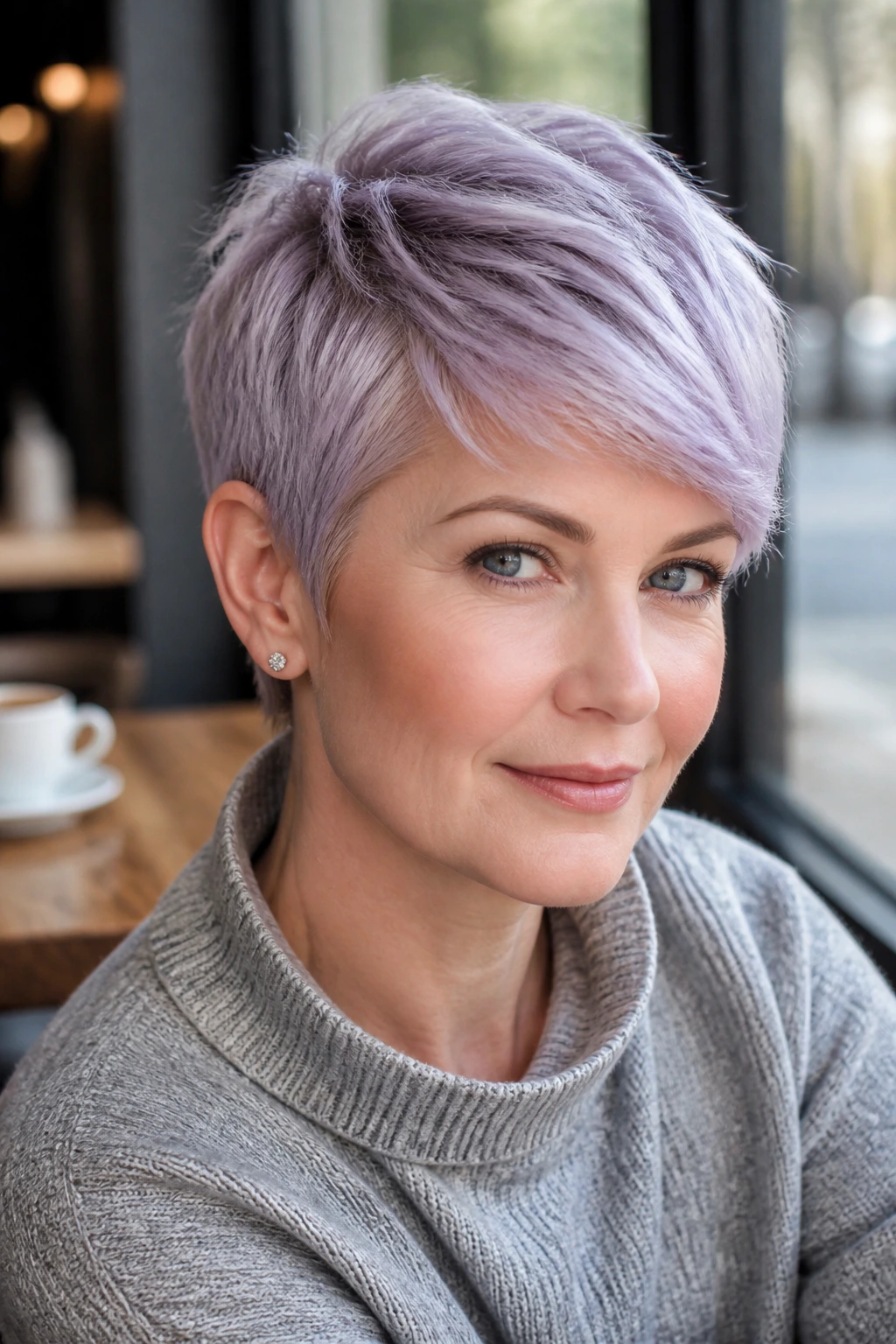
A silver lilac pixie is a neat little power move. Short cuts show color fast, and this one gives you both the brightness of silver and the softness of lilac in the same glance. Cool skin tones tend to love it because the short length keeps the color close to the face, where the undertones matter most.
What to ask for
Keep the root tone cool, then layer a translucent lilac glaze over the top. If the purple is too dense on a pixie, it can make the cut look busy. Softness is better here.
Why short hair helps
- Less hair means less fading to manage
- The silhouette stays crisp
- Color changes show quickly
- The style feels clean around the ears and neckline
This is a shade for people who like detail. Every line of the haircut matters. If the cut is blunt and tidy, the color looks sharper. If the cut is too fuzzy, the silver-lilac blend loses some of its edge.
12. Charcoal and Lilac Ribbons
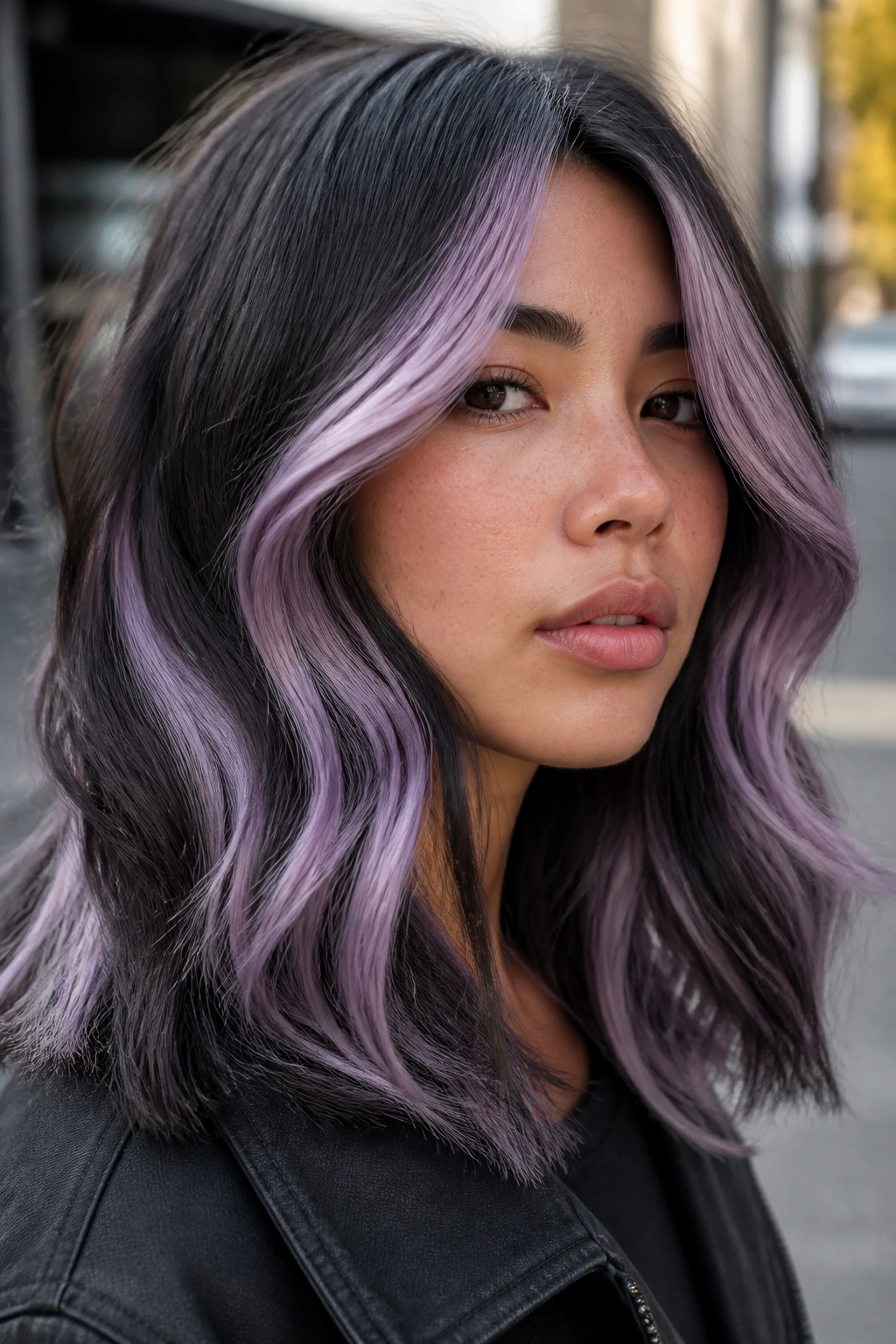
Charcoal and lilac ribbons give you contrast without making the whole head bright. The charcoal base stays cool and dark, then lilac ribbons are painted in wider bands through the mid-lengths and ends. It reads modern, but not loud.
Placement notes
- Keep ribbons wider near the face
- Break them up with a few thinner pieces underneath
- Leave some charcoal visible at the crown
- Use waves or bends to show the pattern
The appeal here is the movement. On straight hair, the ribbons can look graphic. On textured hair, they melt a little and feel softer. Both versions work.
Cool skin tones benefit from the charcoal base because it creates a clean frame. The lilac keeps it from getting too severe. That balance is what makes this shade feel wearable, even though it has strong contrast.
13. Smoky Grape Gloss
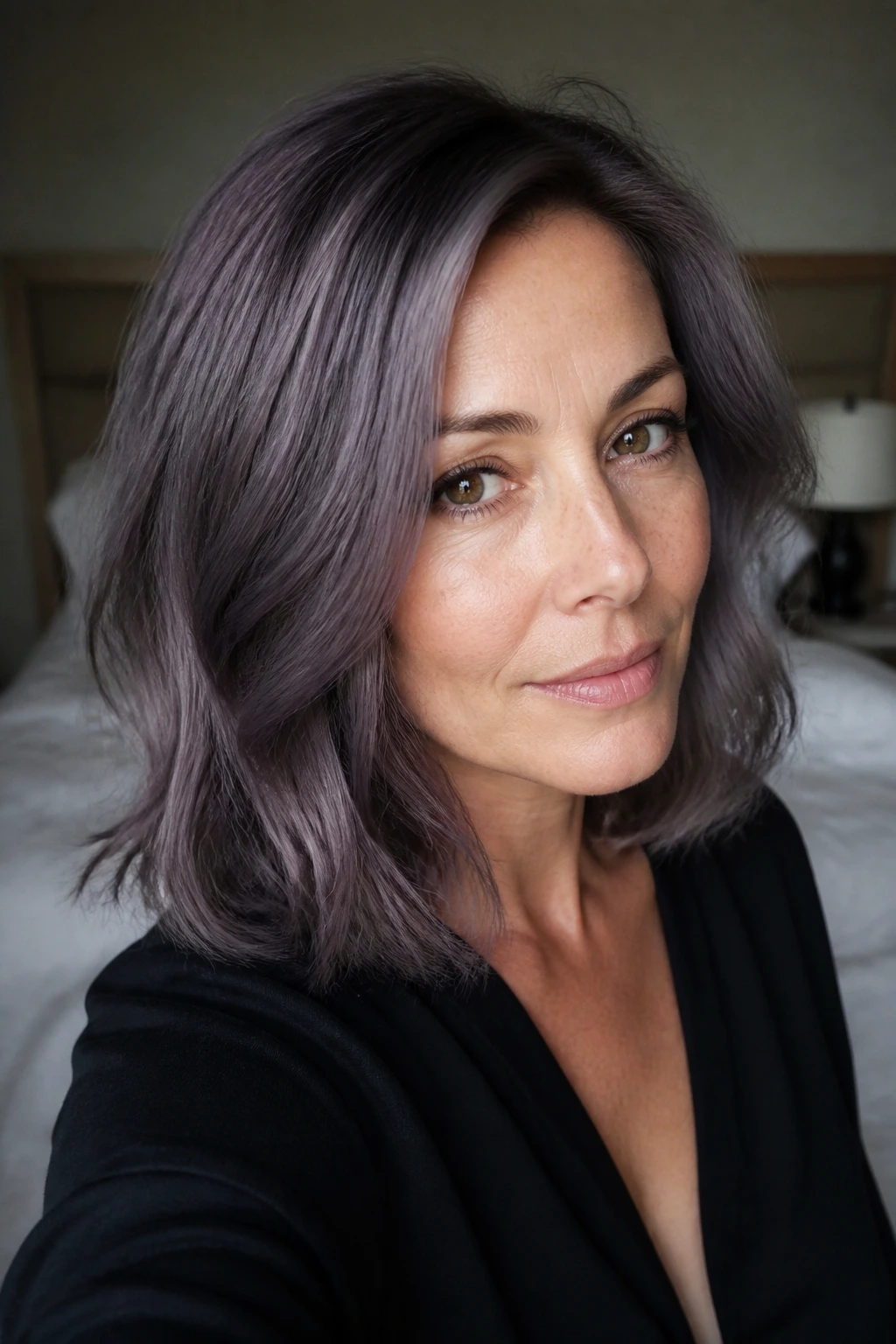
Smoky grape gloss is one of the easiest purple-grey ideas to wear because it doesn’t need to be loud. It’s a glaze, not a full commitment. The base can be medium blonde, light brown, or already greyed out, then the grape tone adds a cool purple cast that looks deeper in shade and lighter in daylight.
This is a smart pick if you want purple-grey hair without the maintenance of a full pastel refresh every few weeks. Glosses fade out more softly, which means they often wear better between appointments.
The grape note should stay muted. Think crushed violet skin, not candy purple. That keeps the color compatible with cool skin and avoids the red bias that can make some plums turn sticky-looking.
If your hair is porous, go easy on the timing. Gloss grabs fast on thirsty ends. A minute too long can push the ends darker than the roots, and that changes the whole feel.
14. Dusty Lavender Ombré
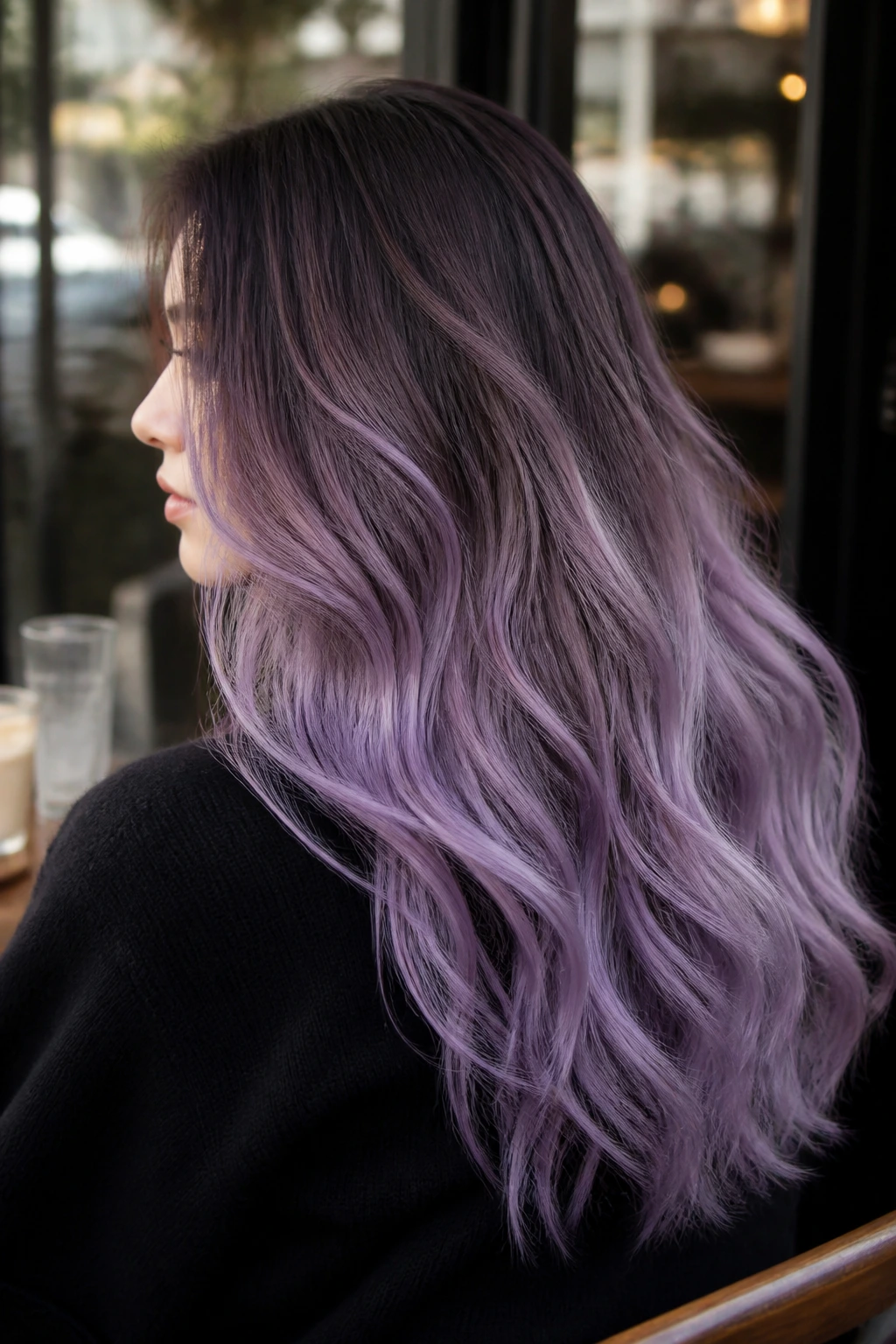
Dusty lavender ombré works because the fade is gentle. The top stays a little deeper, then the lavender gets mistier and lighter through the ends. It’s romantic in a low-key way. Not soft in a sweet sense — soft in the way fog softens a streetlamp.
Why it suits cool skin
Dusty lavender has enough grey in it to avoid warmth. That matters. Pure lavender can sometimes drift pink, and pink-lavender next to cool skin can look overly sweet. The dustier version sits flatter against the undertone and looks calmer.
Best on
- Long waves
- Layered cuts
- Hair with a pale blonde base
- Anyone who likes a gradual fade rather than a sharp line
The ombré should be blurry, not stripey. That blurred edge is what gives the hair movement when it falls over the shoulders. If the transition line is hard, the color starts to look like two separate jobs instead of one idea.
15. Moonstone Grey with Plum Tips
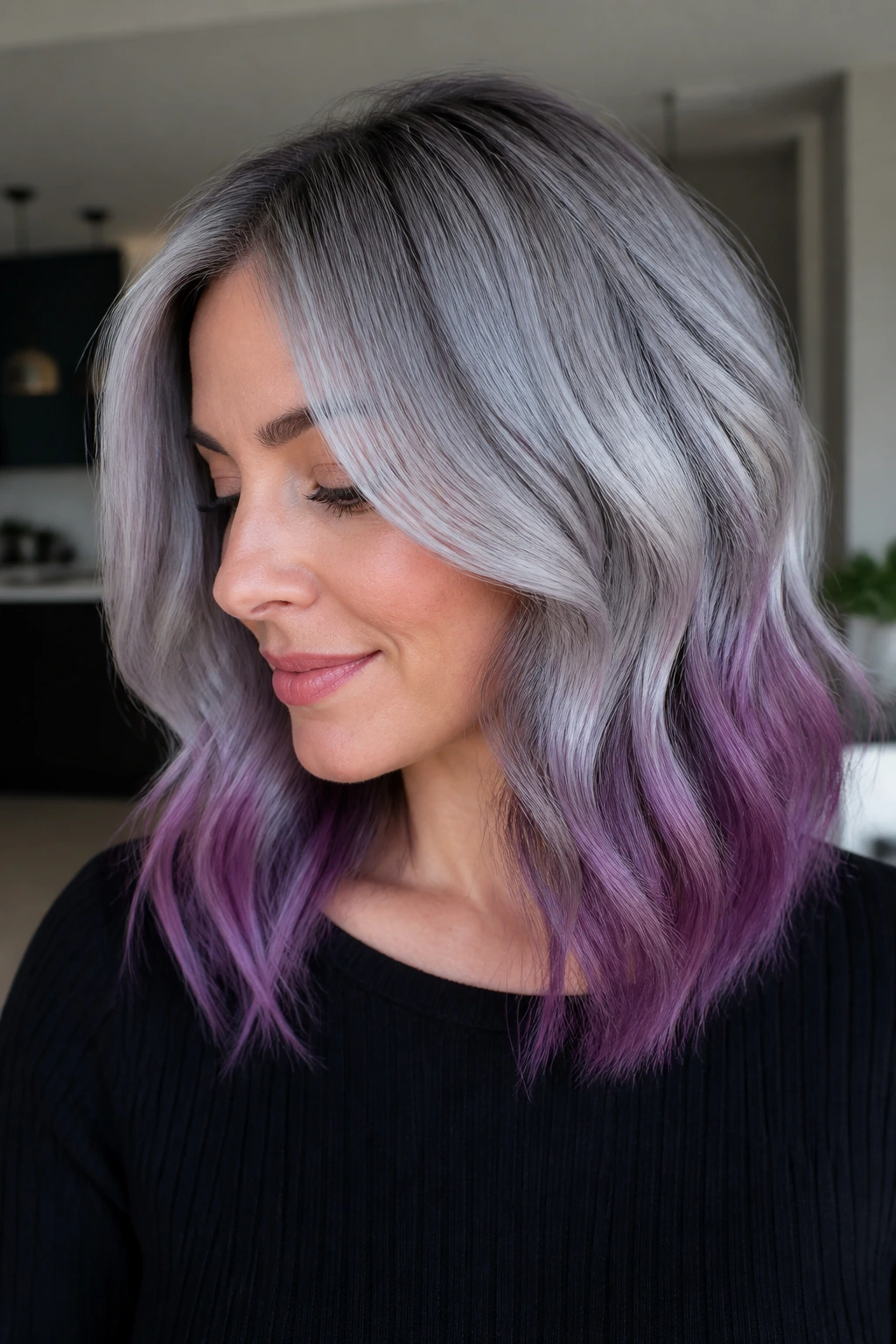
Moonstone grey with plum tips is a nice answer if you want purple-grey hair but don’t want to color everything. The moonstone base is pale, luminous grey, and the plum sits only at the tips. It’s a restrained way to bring purple into the look, and it works well on cool skin because the face stays framed in silver.
A shoulder-length lob makes this feel deliberate. On longer hair, the tips can disappear unless they’re kept dark enough. On shorter hair, the plum ends show fast and can look playful.
How to ask for it
Ask for a cool grey base with localized plum saturation only at the ends. That wording matters more than people think. You want the colorist to keep the top soft and let the tips carry the weight.
This is a good choice if you like your color to feel edited. The hair moves, and then the plum shows. A small surprise. Nothing more, nothing less.
16. Pewter Purple Balayage
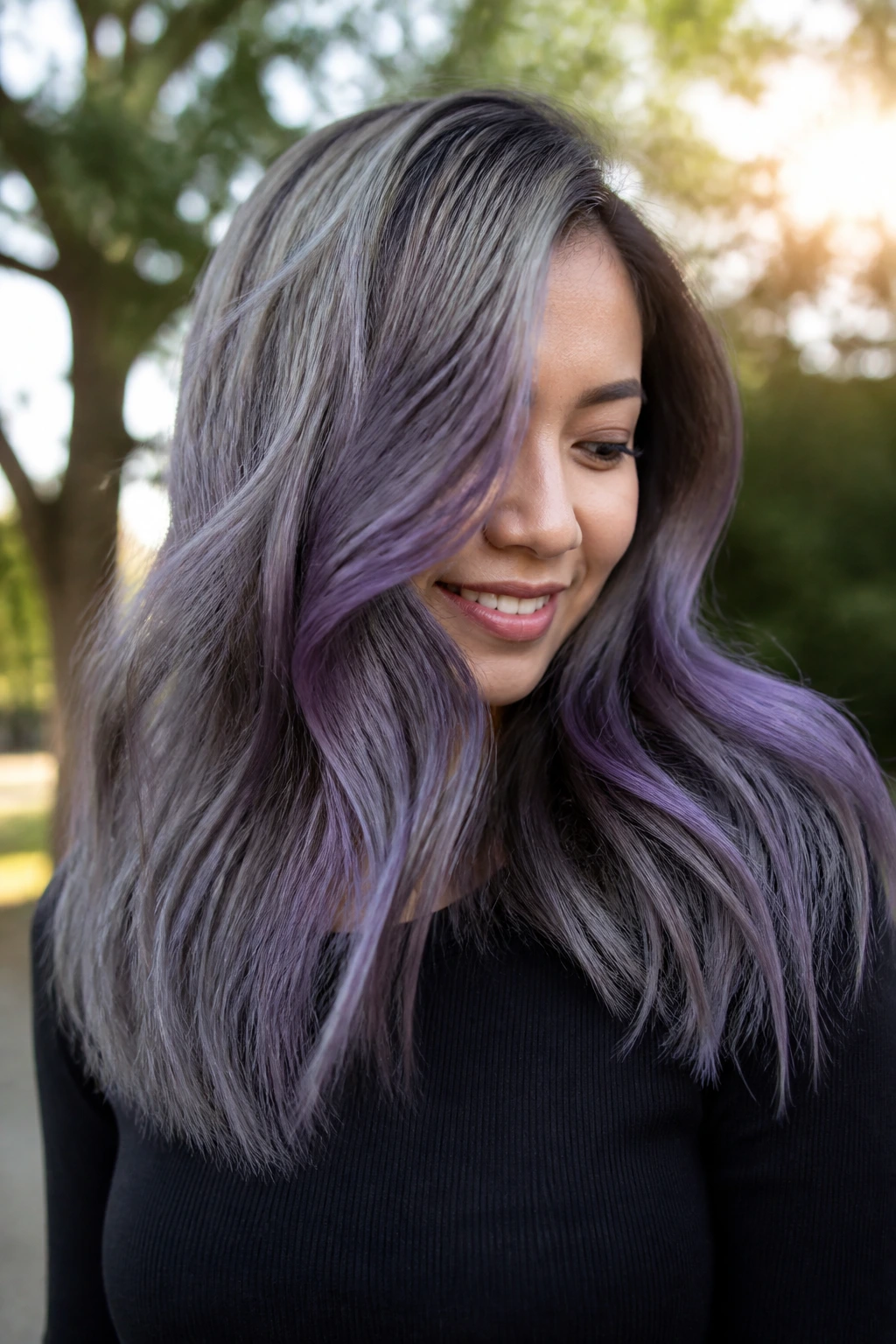
Pewter purple balayage has a metallic feel that sits right in the middle between silver and violet. Pewter keeps the tone grounded, while the purple wash gives it life. On cool skin tones, this one works because it doesn’t pull yellow or peach anywhere in the mix.
It looks especially good on layered cuts. The ends catch the lighter pewter, and the purple pieces show through when the hair swings. The color has room to breathe.
If you like a little edge, keep the roots slightly darker. That gives the balayage a stronger shape and makes the pewter look more dimensional. It also keeps the look from reading washed out in bright light, which can happen with too much light grey.
This shade is one of my favorites for straight-to-wavy hair. It holds line and shine without looking overly polished.
17. Cool Mauve Bob with Shadow Root
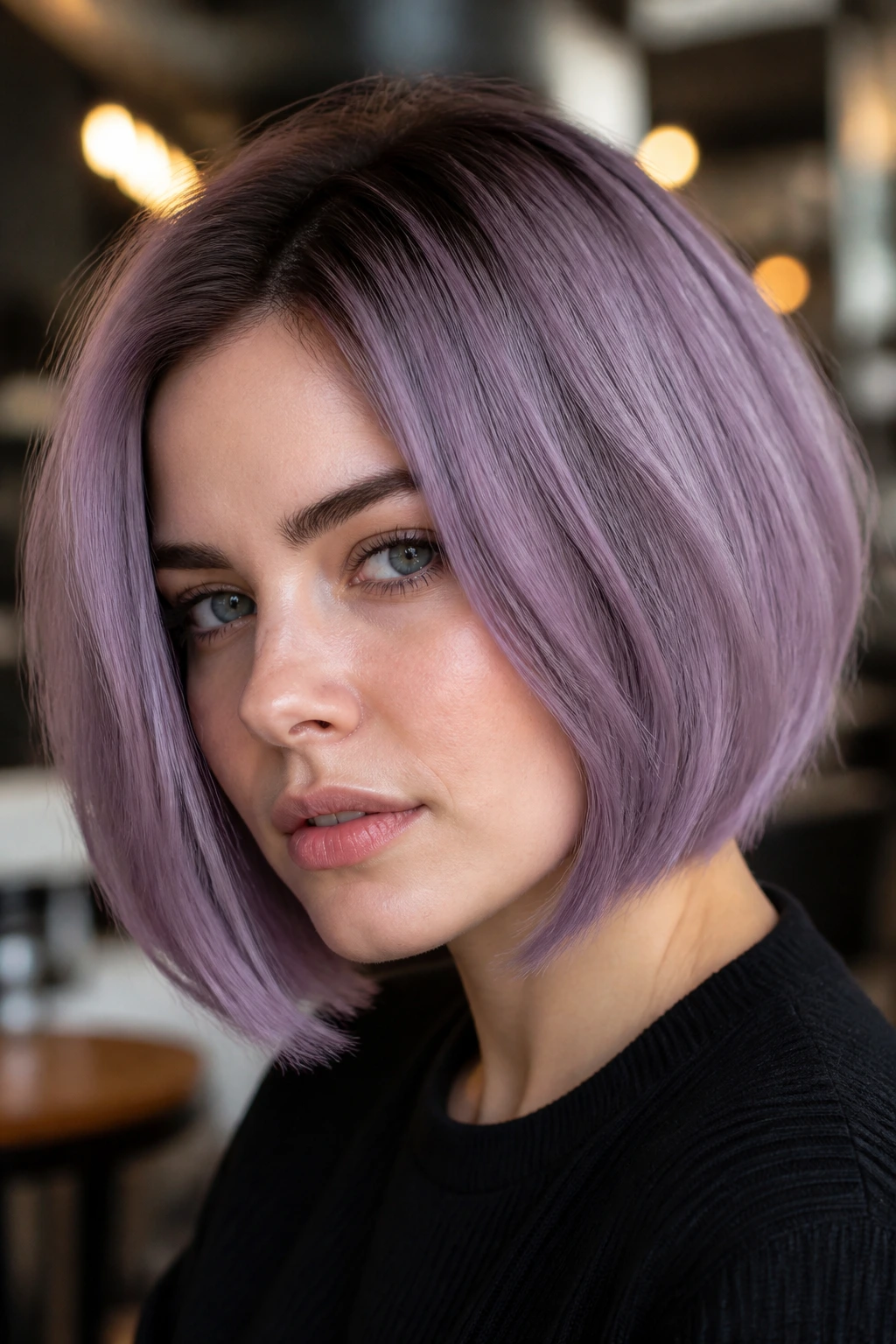
A cool mauve bob with a shadow root is one of the most practical purple-grey ideas on this list. The root area stays deeper, usually a cool brown-grey or charcoal, and the mauve lightens toward the ends. The bob shape keeps the color compact, so the whole look feels neat.
What makes it different
The shadow root is the reason this wears so well. It stops the mauve from looking like a helmet of pastel, and it helps the grow-out blend with your natural hair. That can save you a salon visit or two, which most people won’t complain about.
Best if you want
- Easier maintenance
- A sharp cut with softer color
- A shade that works in office lighting
- Something that still looks good when the toner fades a bit
Cool mauve is a better fit than pink mauve for cool skin. The blue-grey base keeps the complexion calm, while the mauve gives just enough color to keep things from feeling flat.
18. Lavender Smoke Curls
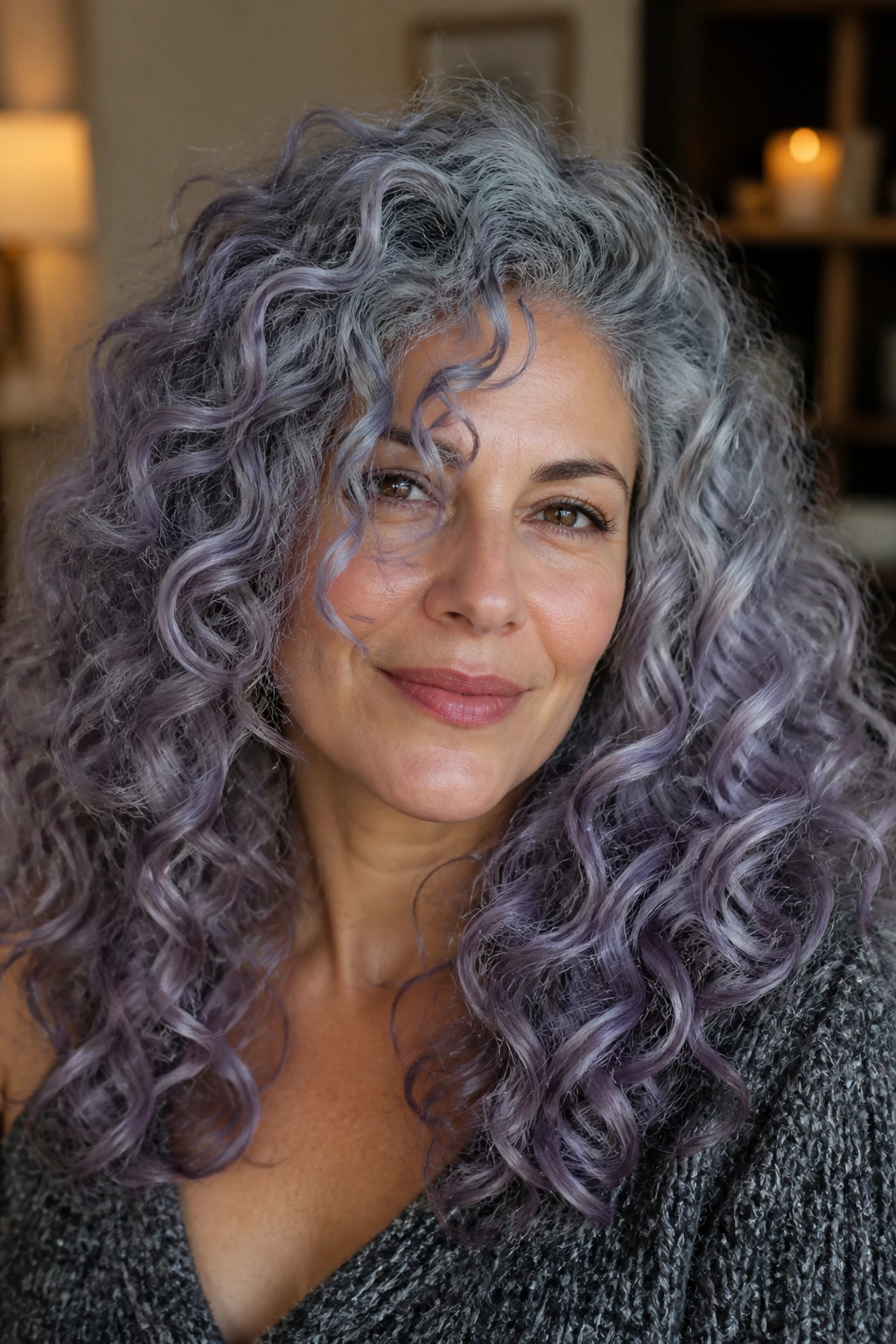
Lavender smoke curls are made for texture. The lavender pieces sit like soft haze between the curls, and the grey base keeps the shape from getting too bright. On cool skin, that smoky finish looks clean and fresh, especially when the hair has volume.
Curly hair carries color differently from straight hair. The bends catch the light in little pockets, so the purple-grey needs to be placed with that movement in mind. A single flat panel won’t do much. Ribboned sections work better.
You can ask for lighter pieces around the crown and face, then softer lavender through the lower layers. That stops the top from getting too dark and gives the curls a lift.
This shade doesn’t need to shout. It just needs to move. And curls do the rest.
19. Frosted Plum Bob
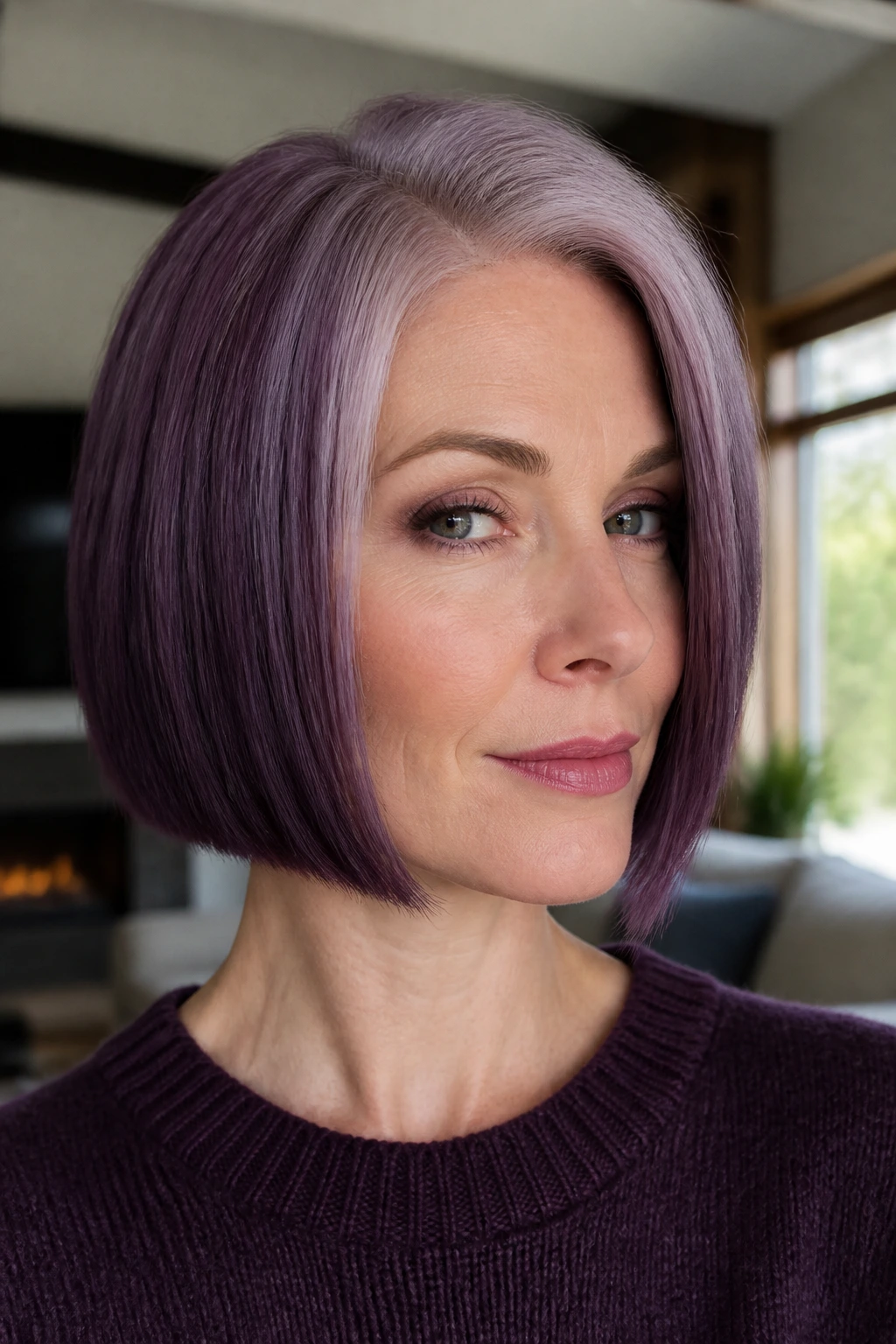
A frosted plum bob feels clean, structured, and a little moody. The plum keeps the shade from becoming too icy, while the frosted finish leaves a pale dusting on top. It’s a good choice if you like defined shapes and don’t want the color to disappear under a strong haircut.
Keep it crisp
The cut matters here. A bob with blunt ends or very light layering shows the frosted finish better than a heavily textured shape. Too many soft layers and the plum can get swallowed up.
Where it works best
- Narrow faces that benefit from a strong line
- Fine to medium hair
- Cool undertones that can handle a deeper violet
- People who like a polished silhouette
The plum should stay blue-based. That keeps the hair from feeling warm or berry-heavy. If you want the frosted look to stay visible, a shine spray can help, but keep it light. Heavy products make the grey part muddy fast.
20. Orchid Grey Shag
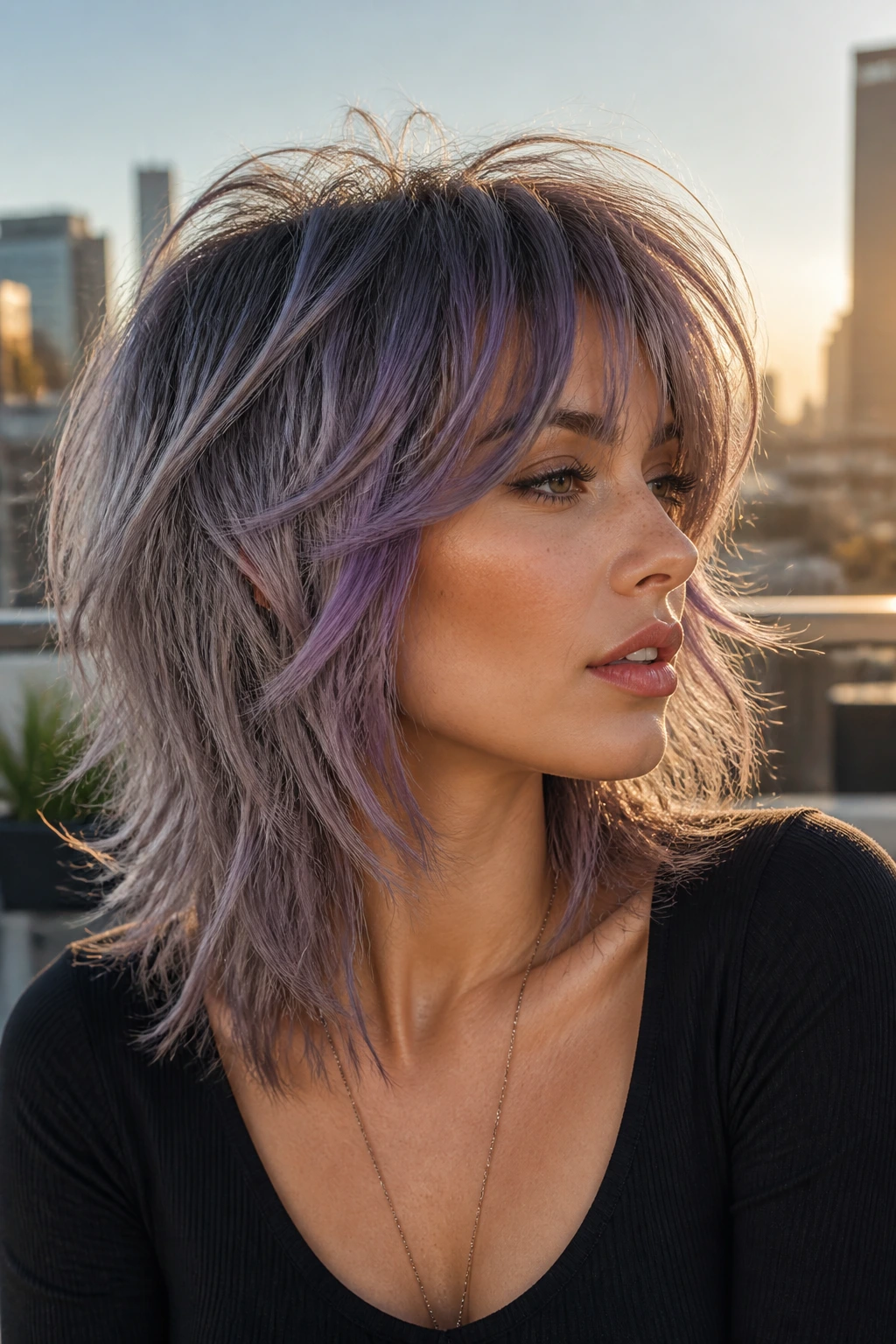
An orchid grey shag has a bit of edge and a lot of movement. The shag cut breaks up the color, which is useful when you’re wearing a shade that mixes grey and purple. The orchid tone shows on the feathered pieces, while the grey anchors the whole shape.
This look is much better when the haircut is strong. A weak shag just looks unfinished. A good one gives the color a place to land.
Why it flatters cool skin
The orchid reads cool, but not cold. That matters with a shag, because the haircut already has a bit of attitude. The grey keeps the color grounded, and the orchid adds softness near the face.
If you wear bangs, this shade gets even better. The front pieces pick up the lighter tones, and the eyes get framed by that soft violet cast. It’s a good way to make the haircut feel deliberate instead of merely shaggy.
21. Midnight Violet Grey
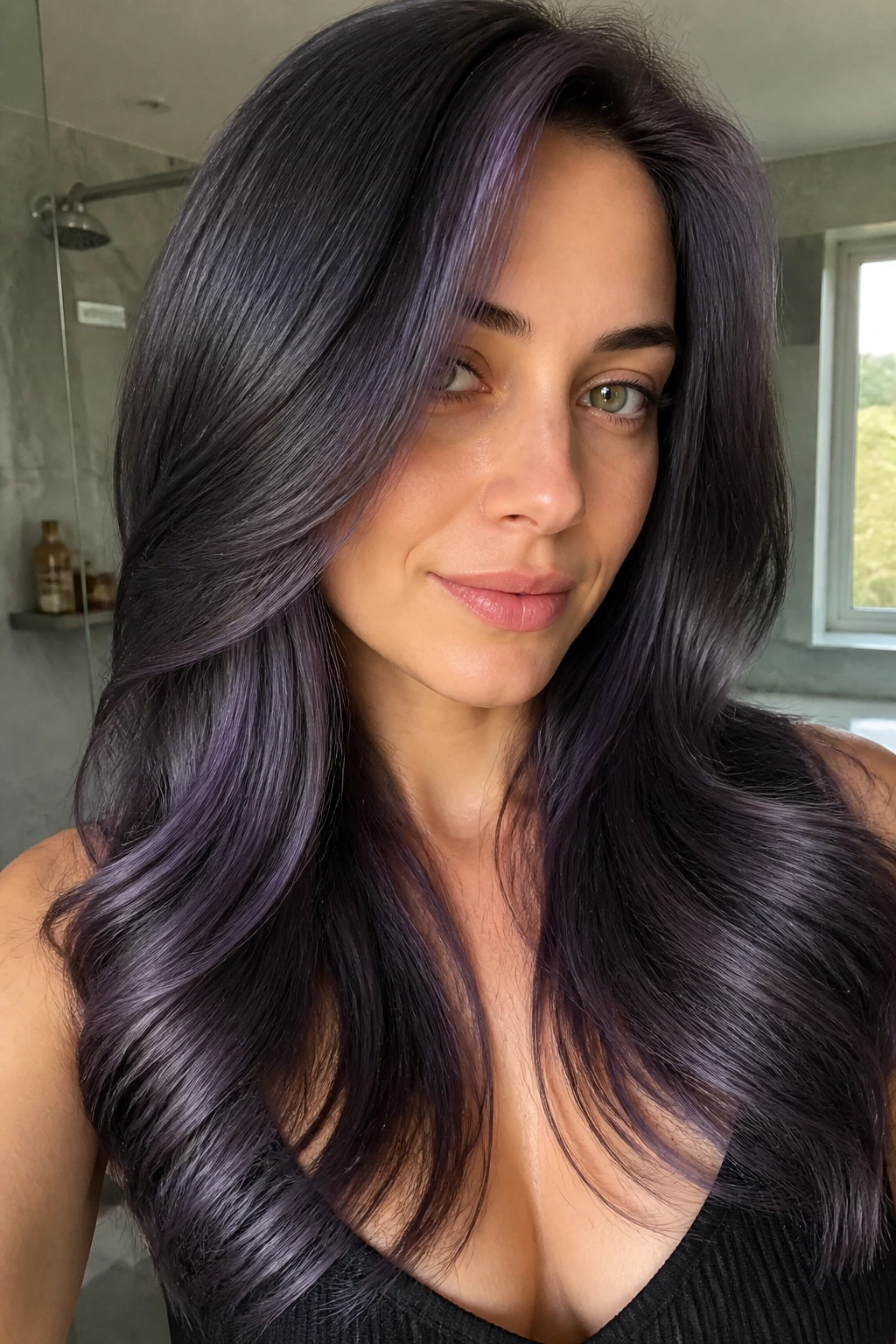
Midnight violet grey is for people who want purple-grey hair with depth. The base stays dark, then violet-grey tones catch the surface instead of lifting the whole look into pastel. This is one of the easier shades to live with because it doesn’t ask for a pale blonde starting point.
Cool skin tones often look great with deeper color near the face, and this one delivers that without turning warm. The violet prevents the grey from getting flat, while the grey keeps the purple from reading too red or too bright.
It works especially well on glossy blowouts and smooth waves. The shine helps the violet show. Without shine, the color can look almost black in low light, which may be fine if you like subtlety. If you want more visible purple, ask for a brighter tone on the top layer only.
22. Silver Smoke with Purple Ends
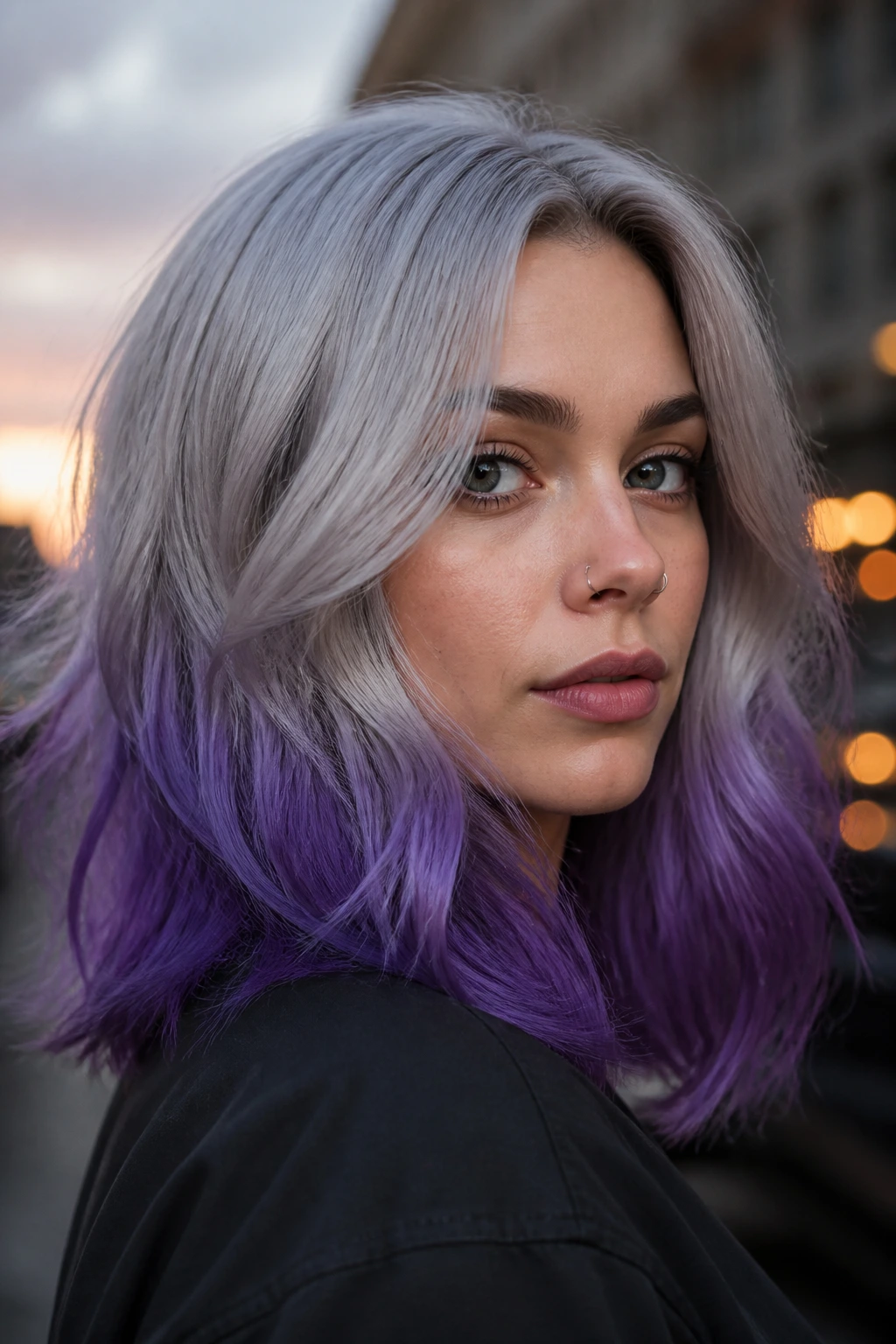
Silver smoke with purple ends gives you a clear contrast between the top and the bottom. The upper section stays muted and icy, while the ends carry the violet. It’s a cleaner version of dip dye, and it looks less harsh when the transition is blurred.
This is a good pick for cool skin because the face is surrounded by silver first. That keeps the complexion bright. The purple at the ends adds personality without crowding the face.
A blunt cut or a long layered cut both work, but the ends need enough weight to hold the color. If the tips are too wispy, the purple can vanish. Keep the lower section saturated enough to show up when the hair swings.
There’s a small styling bonus here too. A slight bend at the ends makes the color look richer. Straight and pin-sleek is fine, but movement helps.
23. Cool-Toned Lilac Lob
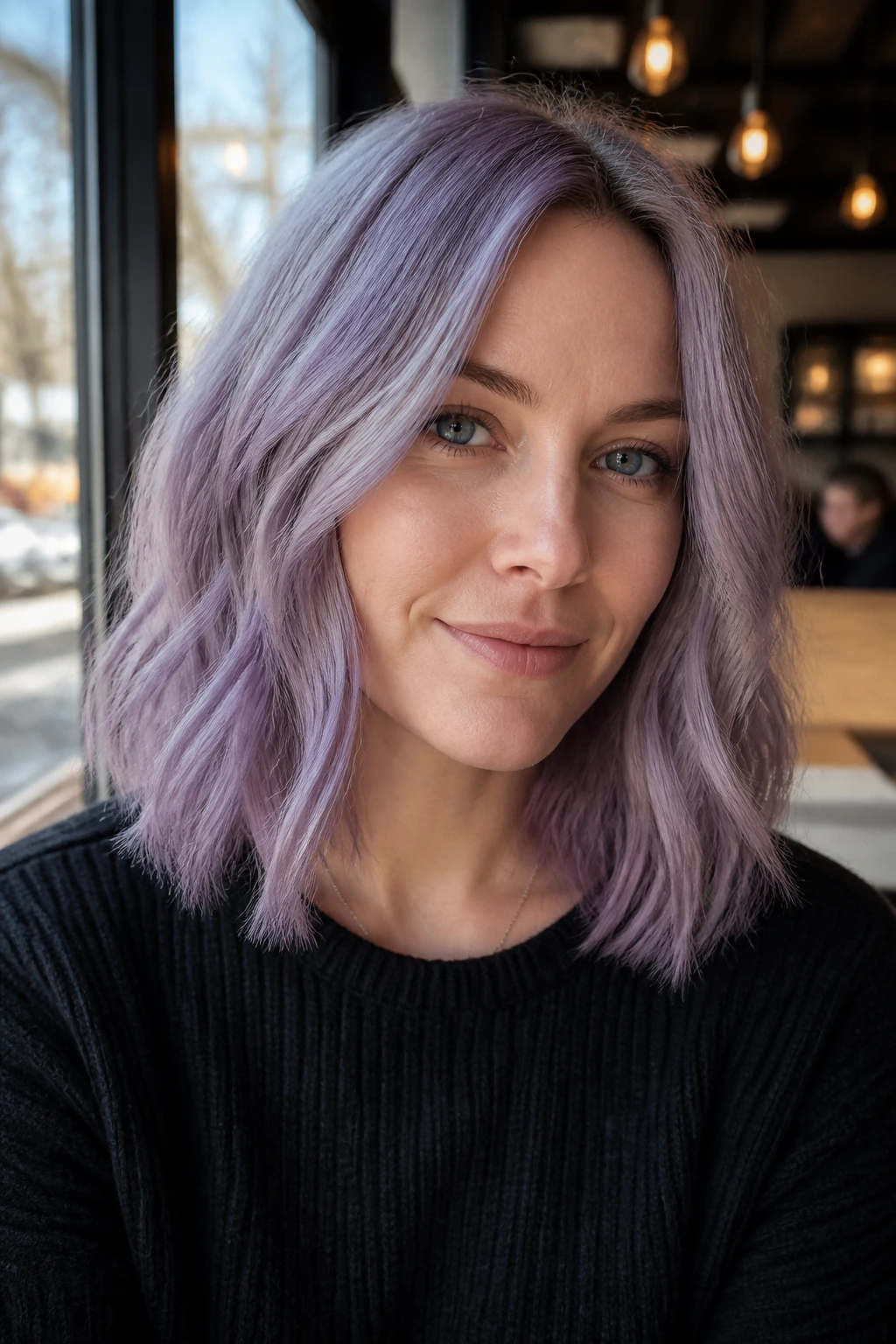
A cool-toned lilac lob is one of the easiest purple grey hair color ideas to wear because the length is forgiving and the tone stays soft. The lob sits at the collarbone or just above it, which gives the lilac room to move while still keeping the shape neat.
What to ask for
Ask for a lilac with a grey base, not a pink lavender. That keeps the shade in cool territory. A soft shadow root can help, but it’s not mandatory if your natural color is already close.
Why it works so well
- The length flatters most face shapes
- The color looks full without needing extra volume
- It’s easier to refresh than long pastel hair
- It grows out without a harsh line if the root stays cool
This shade is good for people who want color they can wear every day. Not boring. Just easy to live with. And if your skin tends toward pink or blue, the cool lilac will usually sit right beside it instead of competing with it.
24. Smoky Iridescent Grey
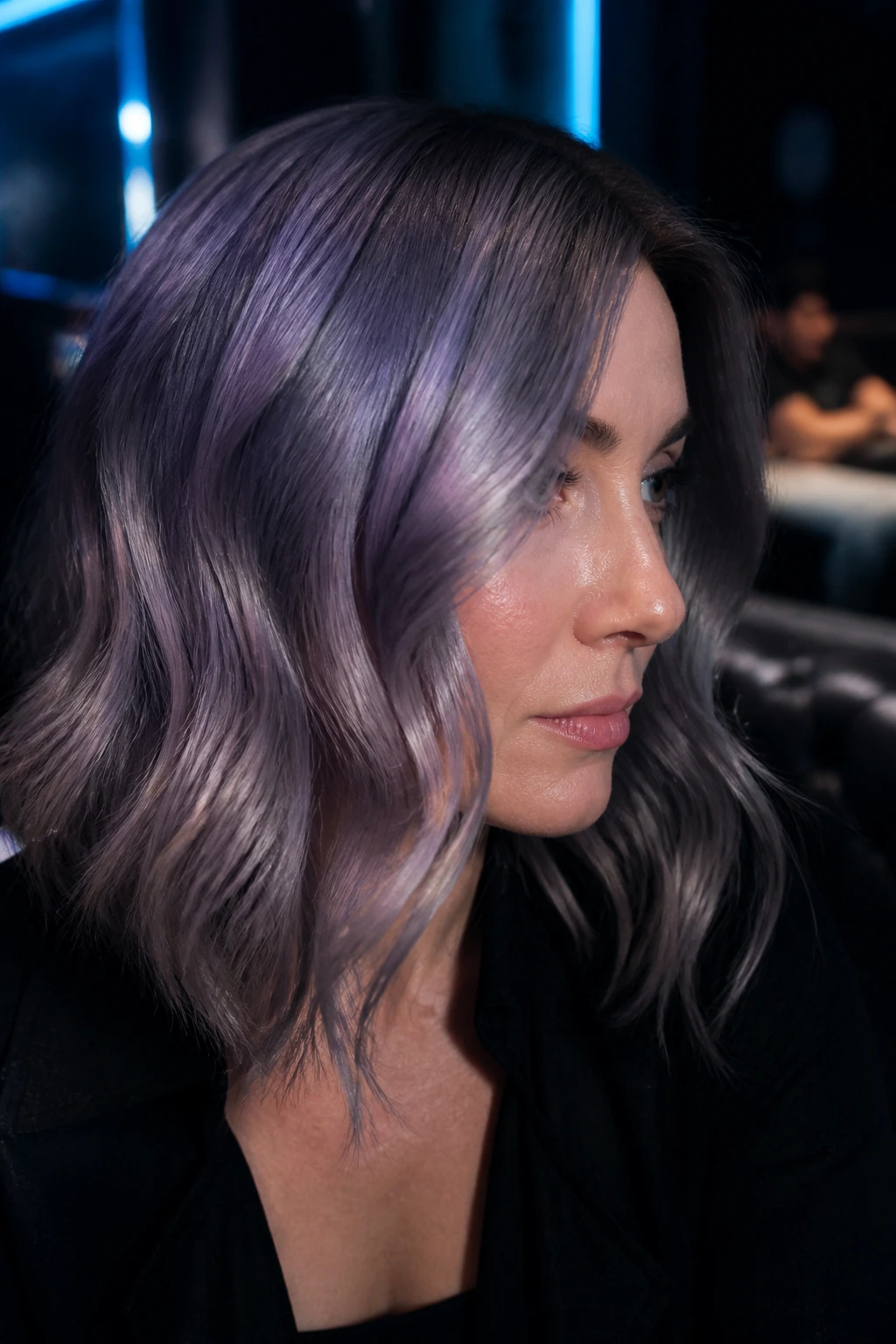
Smoky iridescent grey has the kind of finish that changes with the light. In one room it looks like soft charcoal silver. In another, a violet sheen shows up under the surface. That shift is the whole point.
The science behind it
Iridescent hair color uses layered tone rather than one flat pigment. On cool skin, that layered effect can be flattering because it keeps the hair from looking one-note. Grey gives the base, violet gives the shimmer, and a touch of blue can keep the whole thing clean.
Best for
- Long hair with smooth movement
- Wavy styles that can catch the sheen
- People who want a cool color that still feels dimensional
- Medium to high-contrast makeup looks
The shade does best when the gloss is refreshed before the hair starts to look dull. Once the shine goes, the iridescence disappears fast. A clear or tinted gloss can bring it back without reworking the whole head.
25. Soft Violet Graphite Blend
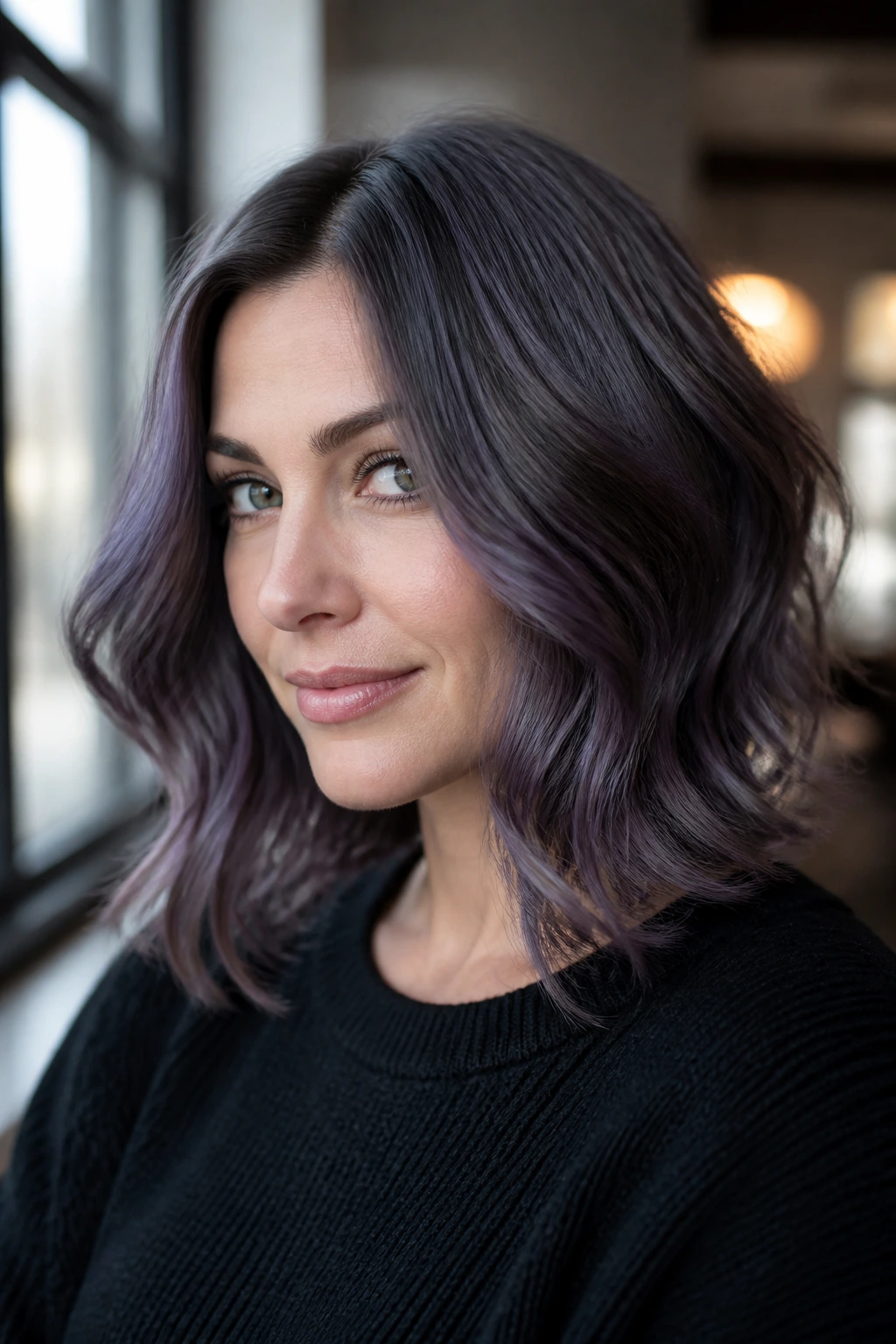
Soft violet graphite blend is the shade I’d point to if someone asked for one polished purple-grey look that feels balanced from root to end. The graphite keeps it grounded, the violet keeps it from turning flat, and the softness of the blend makes it easier to wear on cool skin.
It’s a good answer when you want something a little darker than lavender and a little less severe than silver. The color sits in that useful middle ground where it still feels special but doesn’t demand a full blonde base. That matters if you want a style with some longevity.
Bring photos that show both indoor and daylight shots. The same shade can read darker or lighter depending on the room, and this blend changes more than people expect. A colorist can fine-tune the graphite depth and violet reflect so the finish works with your skin instead of fighting it.
Final Thoughts
Purple grey hair works best when the tone feels cool all the way through. Not just in the obvious purple pieces, but in the root depth, the toner, and the finish. That’s what keeps the color flattering on skin that leans pink, blue, or rosy.
If you want the safest starting point, go with smoky lavender silver, cool mauve, or graphite lilac. If you want something bolder, the money-piece look, the underlayer, or the midnight violet route gives you more punch without losing the cool-tone advantage.
Bring a photo, yes. But also bring a sense of how much upkeep you’ll actually tolerate. That part matters more than the trendiest shade name on the page.
