



Silver-purple hair and cool skin tones belong in the same conversation. The ash side of silver and the blue-violet side of purple both sit in the same chilly color family, which is why these shades tend to look crisp instead of muddy on skin with pink, blue, or rosy undertones.
That said, not every purple plays nice. A warm plum can drag the whole face down, and a yellow-leaning silver can turn beige in a hurry. The sweet spot is a shade that feels frosty, smoky, or lilac-leaning — the kind of color that looks like it was made to live beside gray, silver, and white hair.
Hair color is never only about the dye. Base level, porosity, cut, and placement all change the result. A soft violet glaze on a blunt bob gives a different mood than a silver-amethyst balayage on long waves, and if the hair isn’t lifted cleanly enough, the whole thing gets dull fast.
These 20 ideas move from whisper-soft to high-contrast, with enough range to suit a first-time color client and someone who wants a colder, sharper finish. Some are wearable. Some are a little dramatic. All of them lean into the same basic truth: cool skin usually looks better when the hair stays icy, not warm.
1. Icy Lavender Melt for Cool Skin Tones
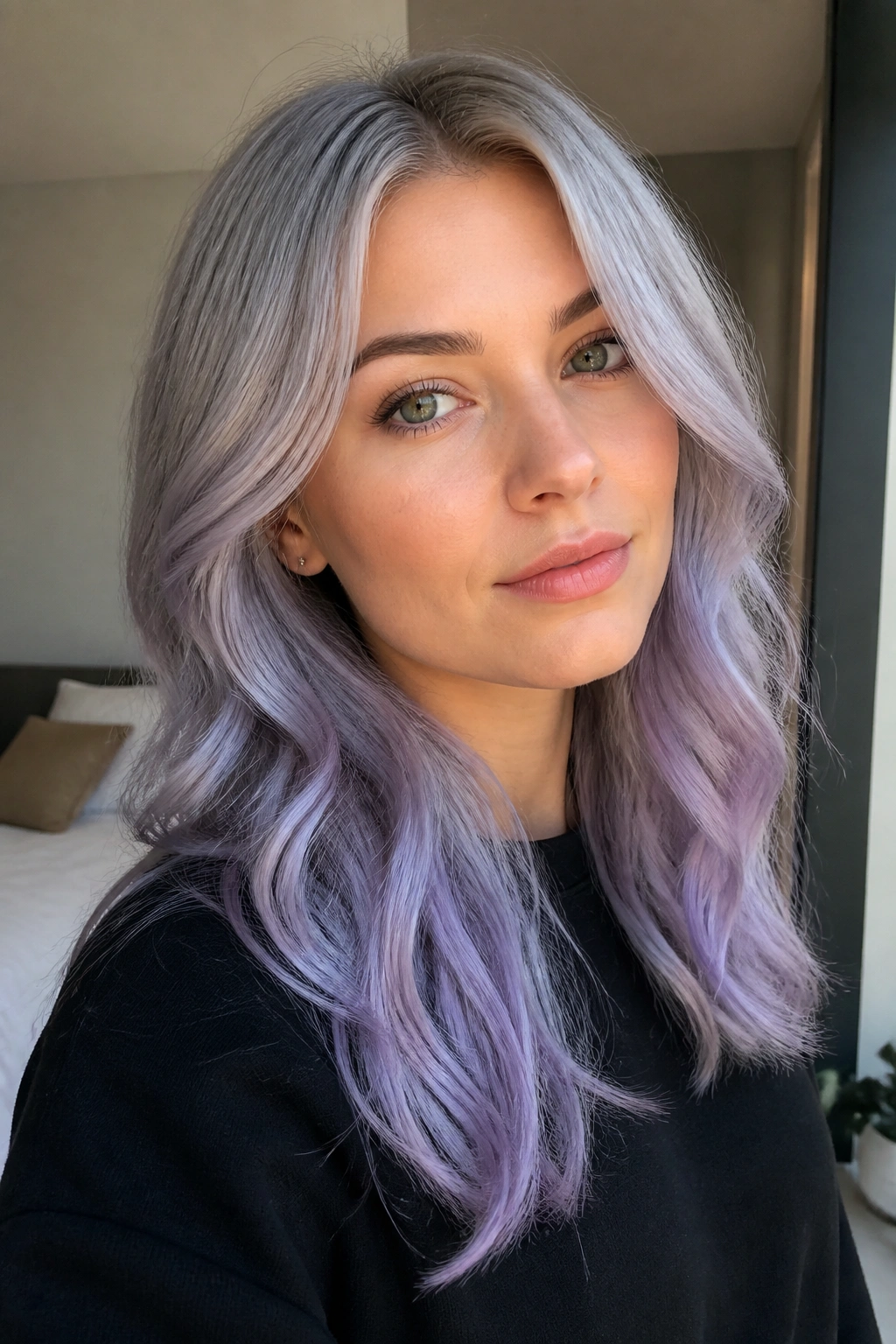
This is the safest place to start if you want silver-purple hair color ideas for cool skin tones without going full fantasy shade. The look begins with a bright silver root or mid-tone, then slides into a sheer lavender at the ends, so the whole head reads soft, glossy, and cold in the best way.
Why It Works on Cool Undertones
The silver keeps the color clean. The lavender keeps it from looking flat. Together, they give you that pale, misty finish that flatters pink-blue skin without pulling attention to redness around the cheeks or nose.
- Best on hair lifted to level 9 or 10.
- Looks strongest on long layers or soft waves.
- Ask for a translucent lavender gloss, not an opaque purple dye.
- Refresh with a violet toning mask every 2 to 3 washes if your hair fades fast.
Pro tip: keep the lavender slightly deeper at the ends than at the mid-lengths. That tiny shift gives the color movement instead of making it look like one flat pastel sheet.
A melt like this also hides grow-out better than people expect. The silver transition softens the line at the roots, which is useful if you do not want to live in the salon chair.
2. Silver Amethyst Balayage
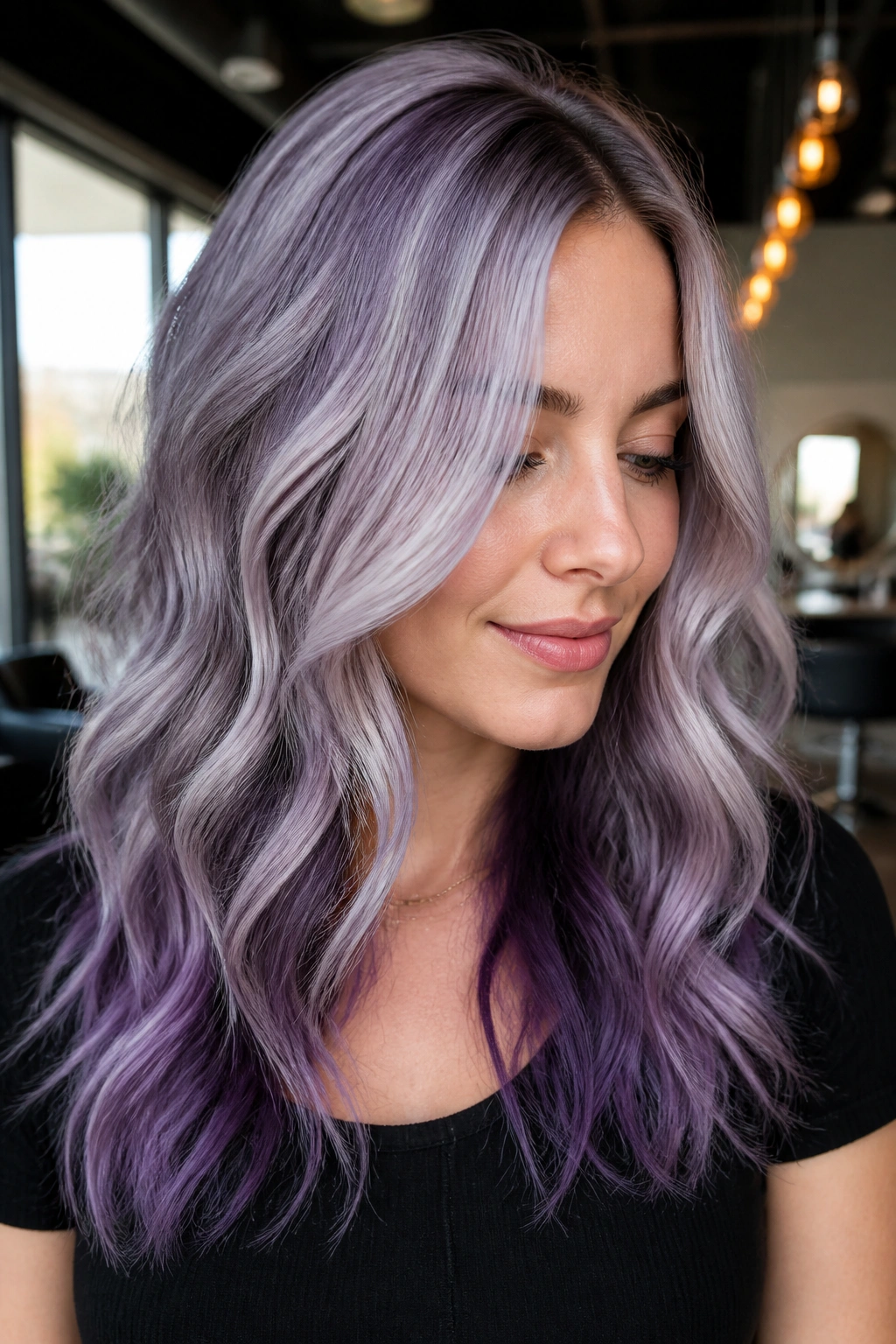
Silver amethyst balayage has more backbone than a pastel look, and that’s exactly why it works. The silver is painted in ribbons around the face and crown, while the amethyst sits lower in the hair as a smoky violet depth.
It’s a strong choice for cool skin because it gives contrast without adding warmth. The result can look polished on medium skin with blue undertones or almost glassy on fair skin with a pink cast. Either way, the color keeps its edge.
Ask for hand-painted pieces rather than chunky streaks. You want soft transitions, not tiger stripes. A good colorist will leave some darker lowlights underneath so the amethyst has somewhere to live, and the silver doesn’t read chalky.
This one is also good for people with long bobs or collarbone-length cuts. The movement matters. Without a little bend in the hair, the balayage can lose its shape and look more gray than purple.
3. Pearl Lilac Bob
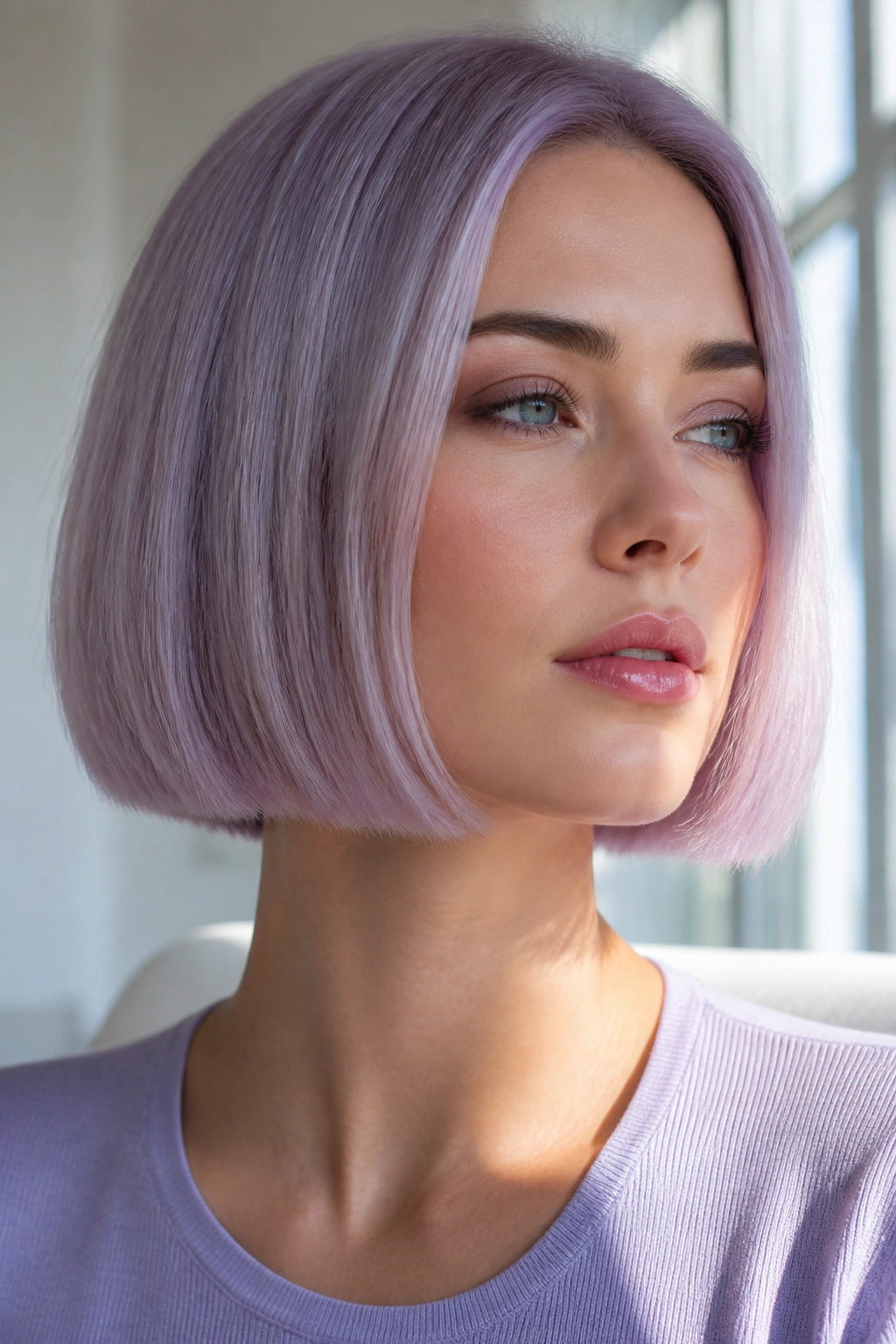
Can a bob carry silver purple without looking fussy? Absolutely, if the tone stays pearly and the cut stays clean.
A pearl lilac bob is one of those shades that looks expensive because it’s restrained. The lilac is there, but only just. Under daylight, it reads like a wash of cool violet over silver; indoors, it softens into a pale orchid haze. That makes it a smart match for cool skin, especially if your undertones run pink or blue rather than golden.
How to Style It
Keep the shape blunt or slightly beveled at the ends. A bob with too much layering can make the color feel broken up in a bad way.
A flat iron pass with a soft bend at the front works better than beach waves here. The whole point is shine. If the hair looks smooth enough to reflect light, the pearl tone looks richer.
For upkeep, a clear gloss or pale violet conditioner once every couple of weeks helps a lot. This shade can fade to dull silver fast if you wash it with harsh shampoo.
4. Smoky Orchid Root Shadow
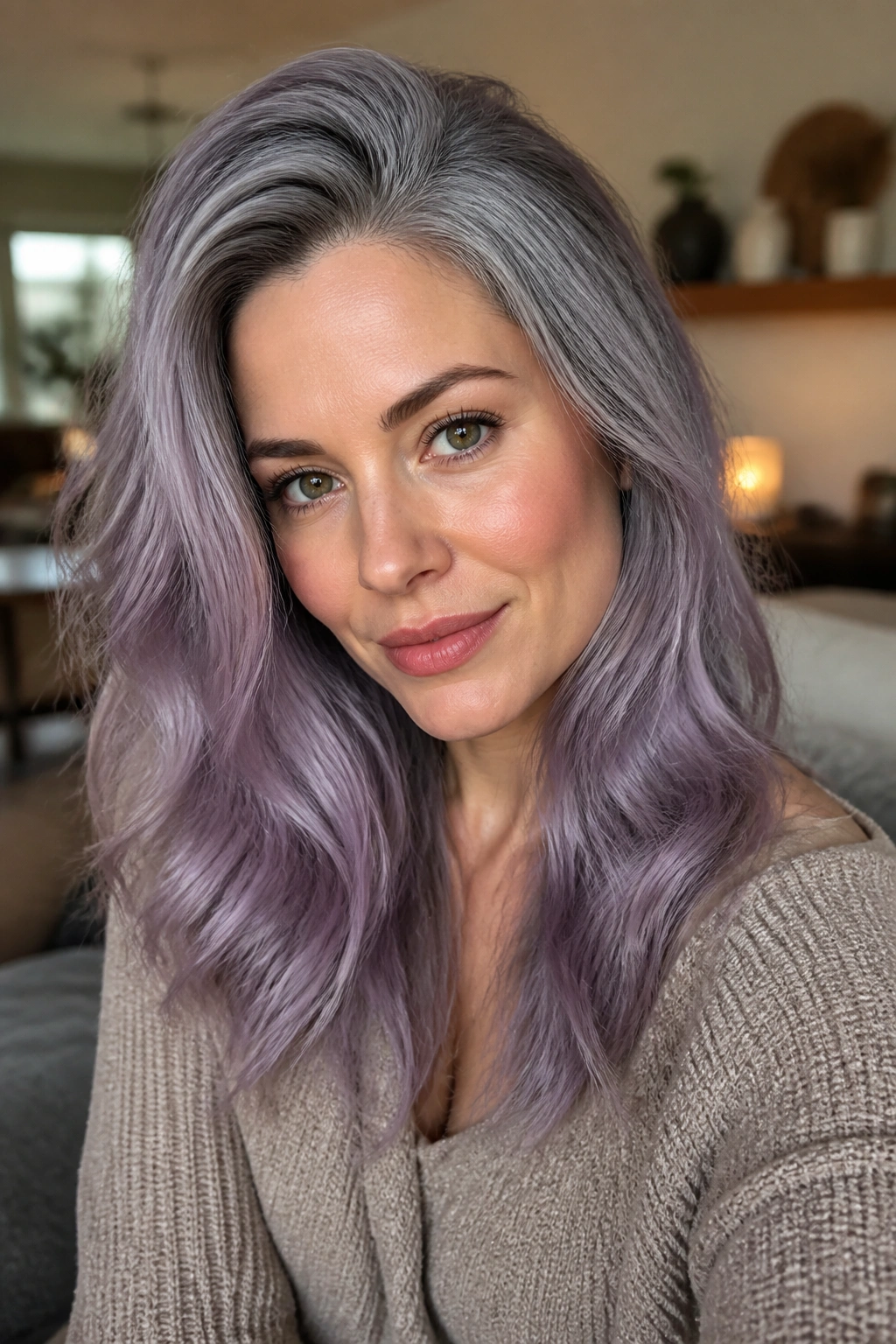
This is the look I recommend to anyone who likes the idea of purple but hates obvious regrowth. A smoky orchid root shadow starts with a deeper silver-gray base near the scalp, then opens into a muted orchid through the lengths.
The trick is the shadow at the root. It keeps the grow-out line soft and gives the orchid somewhere to disappear into, which makes the whole style look intentional for longer. On cool skin, that smoky base is a gift — it calms the face instead of adding a warm halo.
What Makes It Different
- The root area stays deeper and cooler than the mids.
- The orchid tone should feel dusty, not sugary.
- Works well on wavy hair, where the shadow can hide between bends.
- Needs a purple-silver gloss every 4 to 6 weeks to stay crisp.
I like this one on shoulder-length cuts because the gradient has room to breathe. On very short hair, the shadow can look compressed. On very long hair, it can get muddy if the toner is too heavy.
5. Platinum Violet Money Piece for Cool Skin Tones
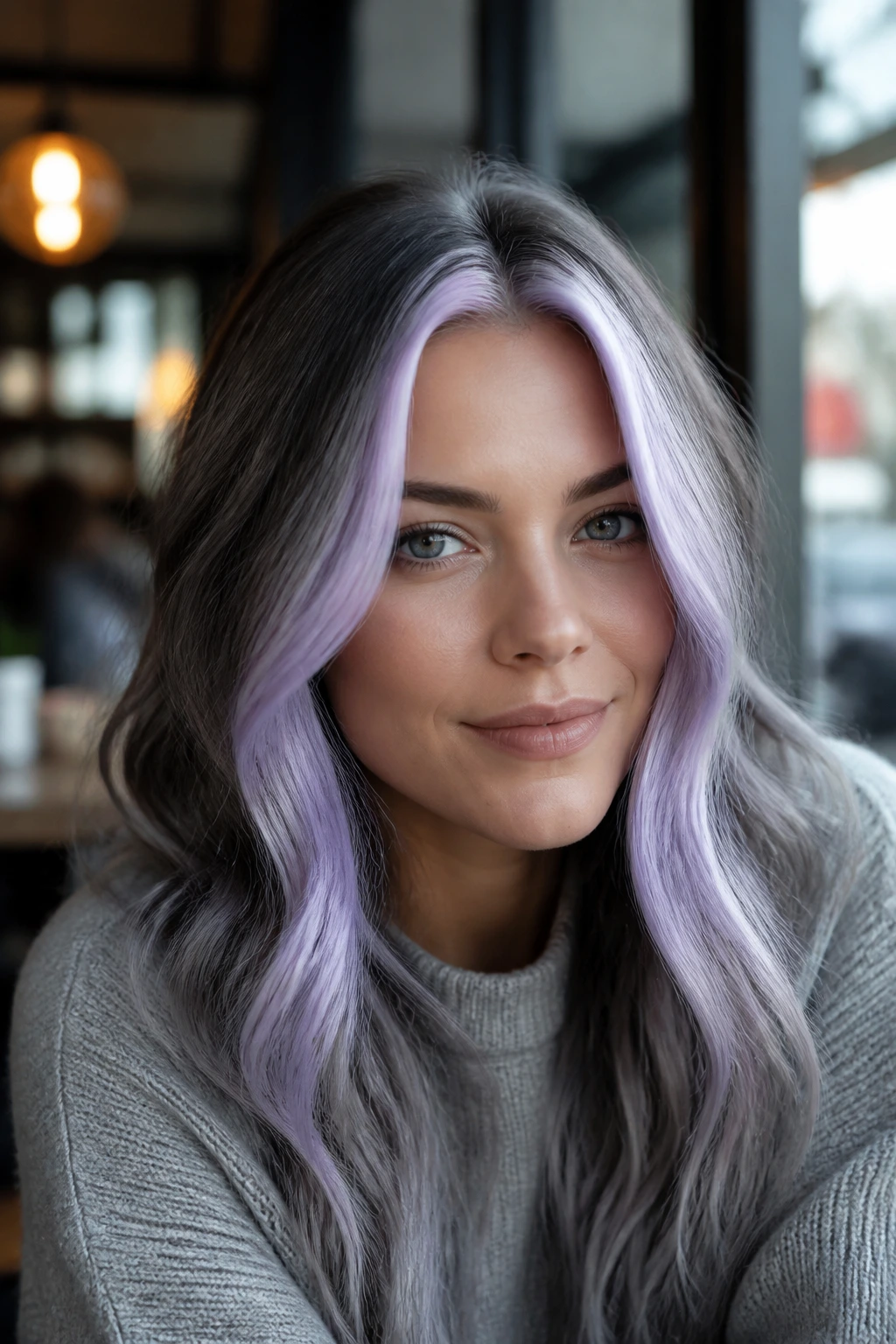
A platinum violet money piece is the fastest way to make silver-purple hair feel fresh without committing to a full head of color. Two face-framing streaks, lifted to a pale platinum base and washed with cool violet, can change the whole mood around your face.
This is especially good if you have cool skin and you wear your hair parted in the center. The bright placement draws the eye upward, and the violet tone adds enough color to keep the platinum from looking stark. It also works well with glasses, because the light pieces show through the frame instead of disappearing behind it.
Keep the money piece wide enough — usually around 1.5 to 2 inches on each side — so it doesn’t look accidental. If the section is too thin, the violet gets lost. If it’s too thick, the look becomes much louder than most people want.
The rest of the hair can stay neutral silver, beige-silver, or even a soft smoky brown. That contrast is what makes the money piece pop.
6. Dusty Mauve Pixie Cut
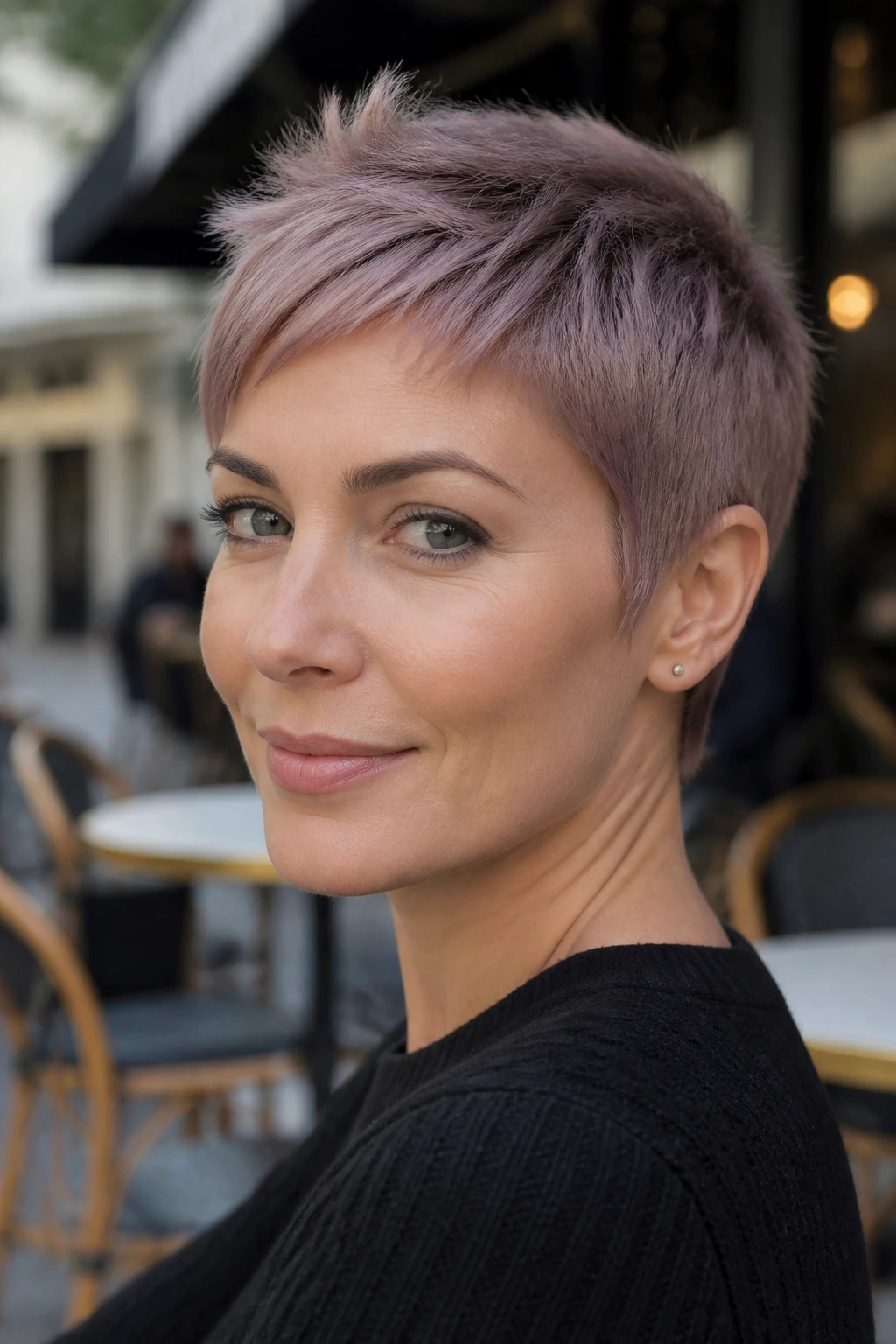
Dusty mauve on a pixie cut is one of those shades that looks better up close than in a quick photo. The mauve is muted enough to stay cool, but it still gives the short cut a little life, especially on hair that has already been lifted pale silver underneath.
Unlike bright violet, dusty mauve doesn’t shout. It sits quietly on the surface of the cut and lets texture do the work. That makes it a strong option for cool skin tones that need color near the face but not something vivid.
If you wear your pixie with side-swept fringe, this gets even better. The longer top pieces catch more light, while the sides can stay a touch darker. That contrast keeps the shape from going flat.
This is a good shade for people who want edge without a lot of upkeep. A short cut already grows fast; a soft mauve overlay hides fade better than a hard purple, and it looks intentional even when it starts to wash out.
7. Steel Lavender Waves
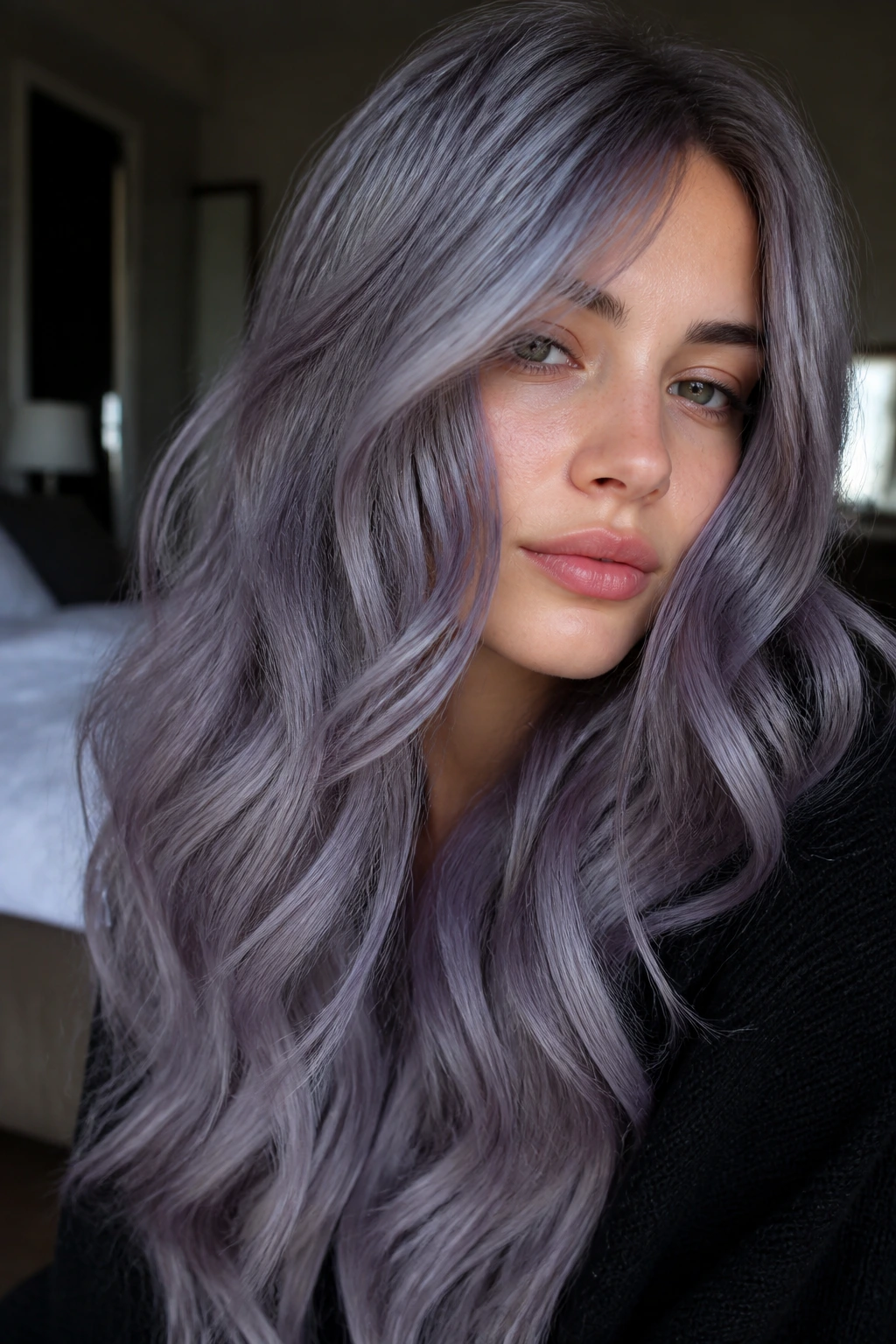
Steel lavender waves have a slightly harder edge than lilac, and that’s the charm. The steel tone adds gray depth, while the lavender keeps the hair from sliding into plain silver.
Where the Steel Comes From
The steel effect comes from a cooler toner over a pale blonde base, usually with a little smoky violet mixed in. Done well, it looks like moonlit metal with a lavender cast. Done badly, it can look flat and lifeless, so the toner needs enough pigment to show up but not so much that it turns dark.
This look is especially good on long waves because the bends in the hair reveal both shades at once. Straight hair can wear it too, but the color really wakes up once it moves.
- Best on medium to long hair with some natural wave.
- Ask for a metallic silver glaze with a soft violet veil.
- Works best when the ends stay a touch lighter than the roots.
- Use a heat protectant every time you style it, or the metallic shine fades fast.
A little grit makes this look better. Too much softness and it starts to read pastel; too much depth and it loses the silver.
8. White Silver with Violet Tips
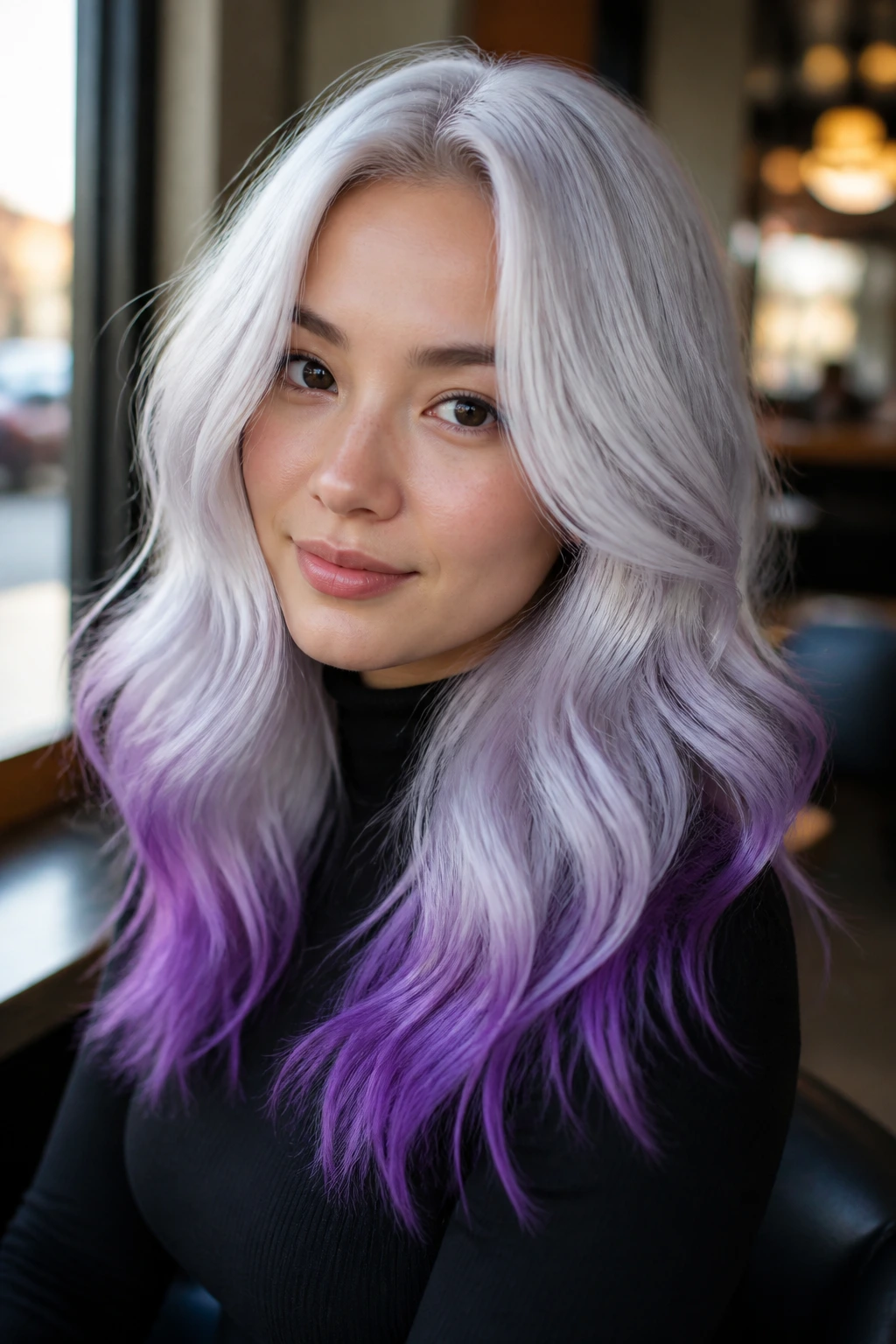
White silver with violet tips is for someone who wants a high-contrast finish but does not want the whole head drenched in purple. The top stays icy white-silver, then the lower lengths shift into cool violet at the tips.
That split works because it mirrors the natural movement of the hair. The brighter upper section frames the face, and the violet at the ends gives the style a clear finish. On cool skin, the white silver sharpens the complexion, while the violet adds just enough color to keep the look from feeling sterile.
This one is strongest on straight or softly curved hair, where the line between white and violet stays visible. Tight curls can blur the color transition too much unless the placement is adjusted carefully.
If you like wearing hair tucked behind one ear or pulled into a half-up style, this is a fun choice. The violet tips show up even when the rest of the hair is controlled, which is half the appeal.
9. Moonlit Plum Lob
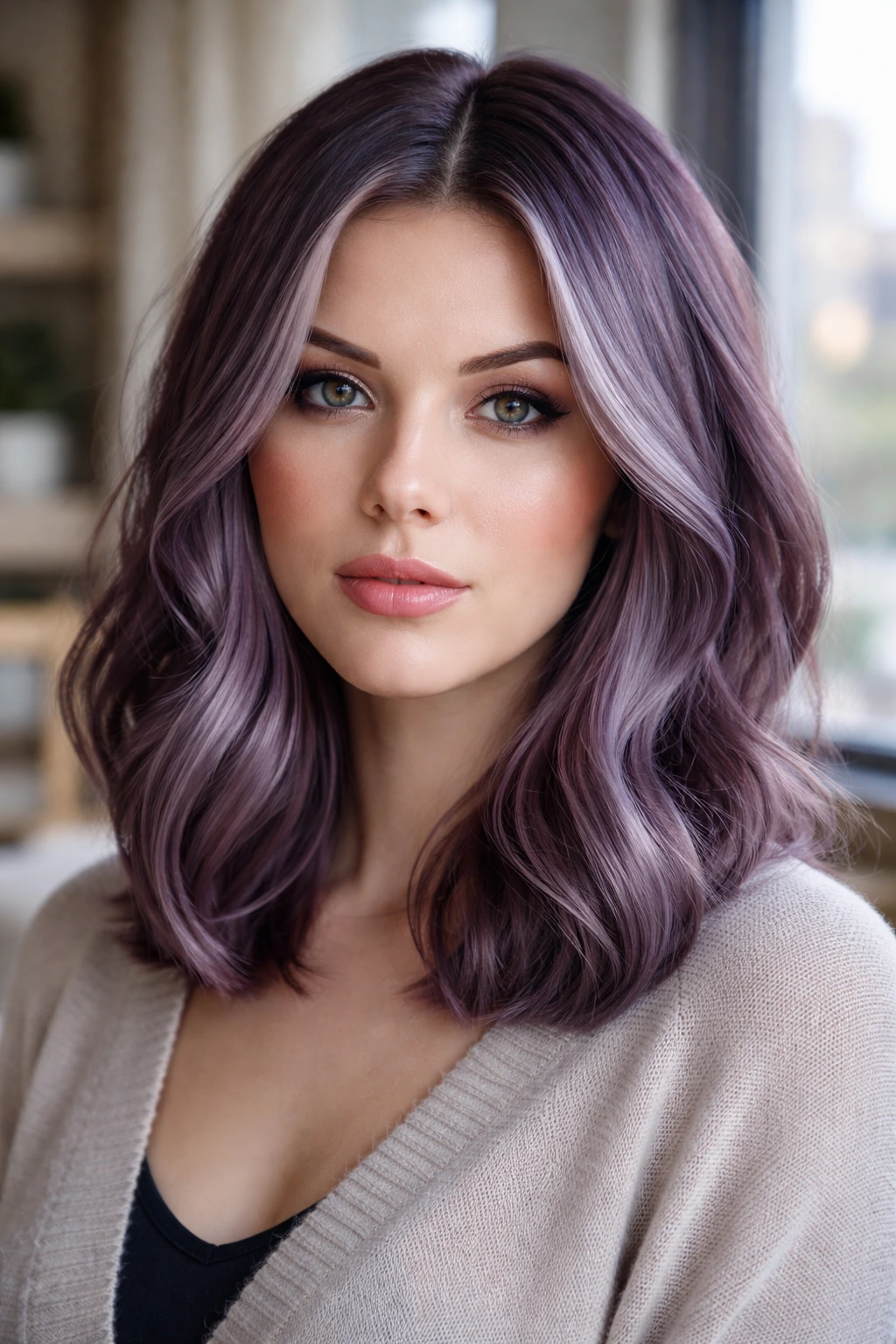
What if you want purple, but not loud purple? Moonlit plum is the answer.
On a lob, the shade sits between silver and aubergine, which gives the hair a low-lit, velvety look. It’s a cooler version of plum, with enough gray in the formula to keep it from turning warm or wine-toned. That matters for cool skin, because a warm plum can turn muddy against pink undertones.
How to Wear It
Keep the root a bit deeper than the mid-lengths. That keeps the plum from looking dusty at the scalp and gives the whole lob a little depth.
A center part makes it sleek. A slight side part makes it a touch softer. Either way, the shape works best when the hair ends at the collarbone or just below it, because the color needs a little swing to show its gradients.
This is also one of the better options for office-friendly color. It’s not invisible, but it doesn’t feel loud either. The purple shows up most in good light, which makes it feel like a secret you only catch when the hair moves.
10. Frosted Grape Balayage
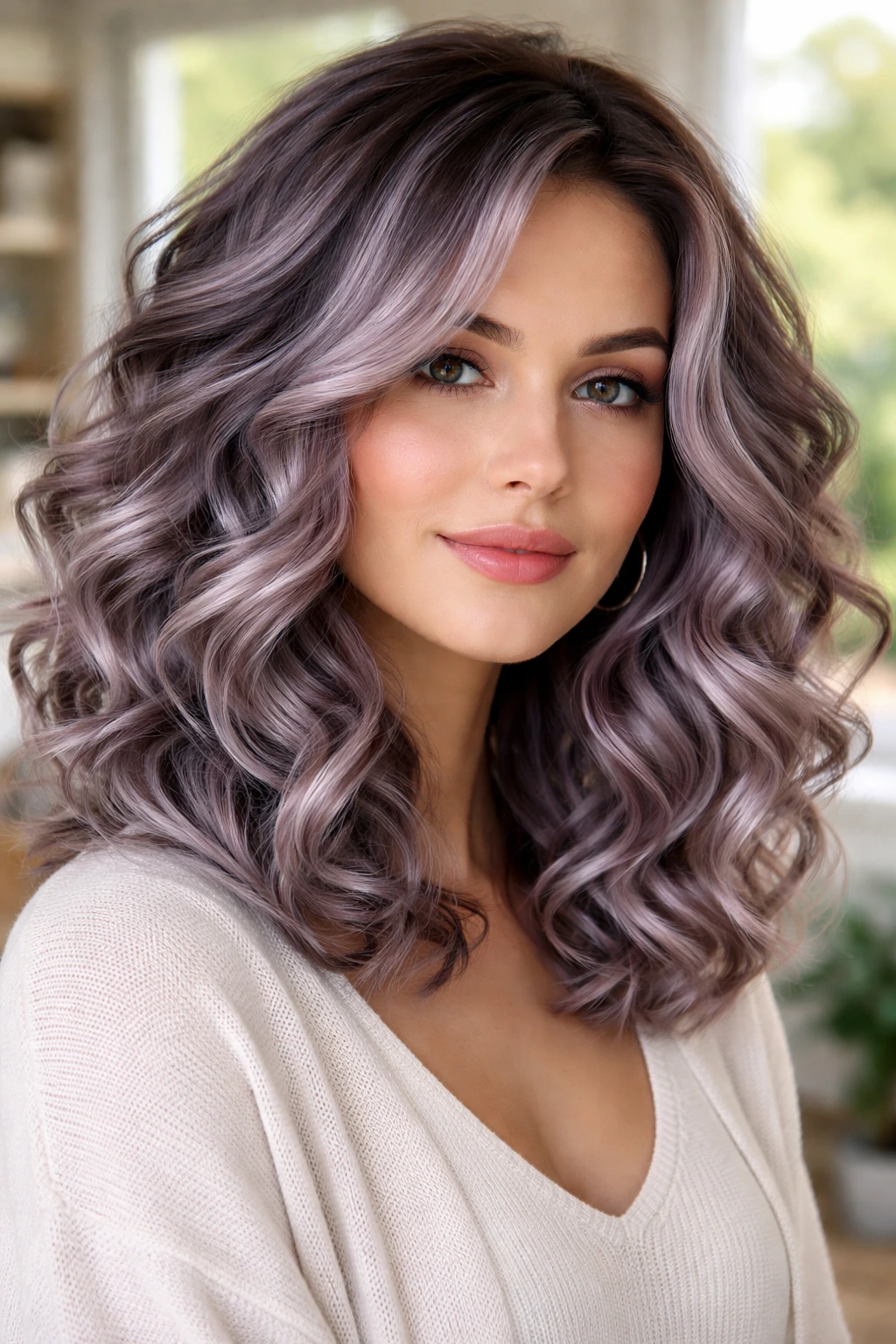
Curly hair loves ribbons, and frosted grape balayage makes that very obvious. Instead of coating the whole head in one flat purple, the color is painted in soft streaks of grape and silver that sit between the curls.
That ribboning gives the curl pattern shape. Each bend catches the silver a little differently, while the grape tone hides in the shadows and makes the texture look fuller. On cool skin, the frosted finish keeps the curls bright rather than heavy.
This is a good choice if you want the color to feel dimensional from every angle. The curls do half the work for you. They break up the dye, which means the balayage often looks more expensive than a full solid color — and yes, that’s one of those cases where less pigment is more interesting.
A few practical things help:
- Keep the lightened pieces slightly wider around the face.
- Ask for cool violet lowlights under the top layer.
- Use a leave-in cream with slip so the curl pattern stays defined.
- Avoid over-toning; curly hair can grab pigment fast and go dark.
11. Opal Lilac Face Frame
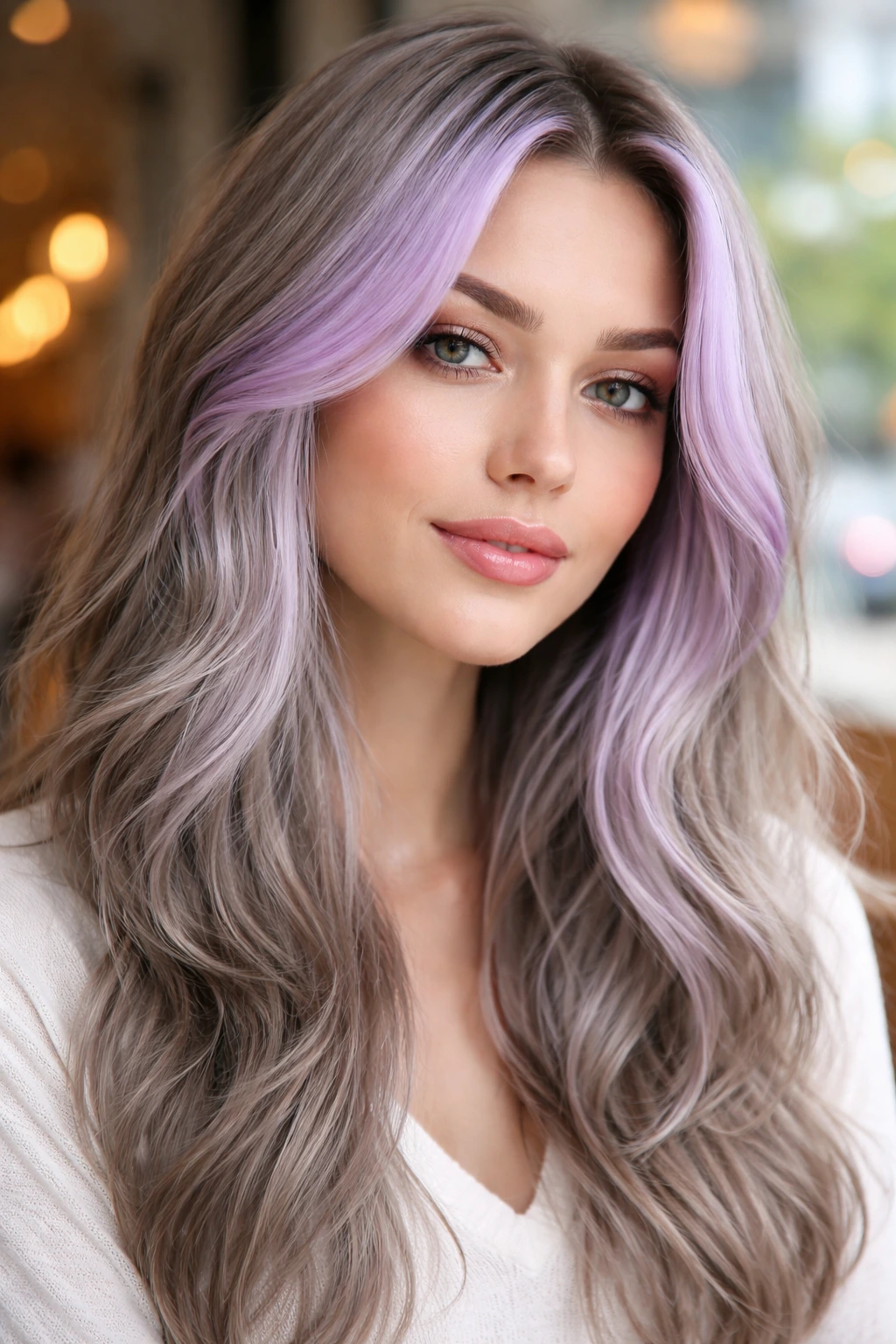
Opal lilac is for the person who wants a whisper, not a statement. The face frame is where this shade lives best — just a few pale lilac pieces around the front, with the rest of the hair staying silver, white, or soft gray.
The reason it works on cool skin is simple: the face frame acts like a cool reflector. It brightens the eyes and the upper cheeks without pulling the skin toward warmth. If your undertones are pink or blue, the effect can look almost airbrushed, but in a natural way.
There’s also something nice about the way opal lilac sits between colors. It isn’t lavender, exactly. It isn’t silver, either. It has that pale pearly softness that reads different depending on the light, which keeps the front of the hair from feeling static.
I like this one for people who wear their hair up a lot. A bun or claw clip leaves the front pieces visible, so the color still gets attention when the rest of the hair is out of the way. That’s efficient. And efficient color is underrated.
12. Charcoal Orchid Shag
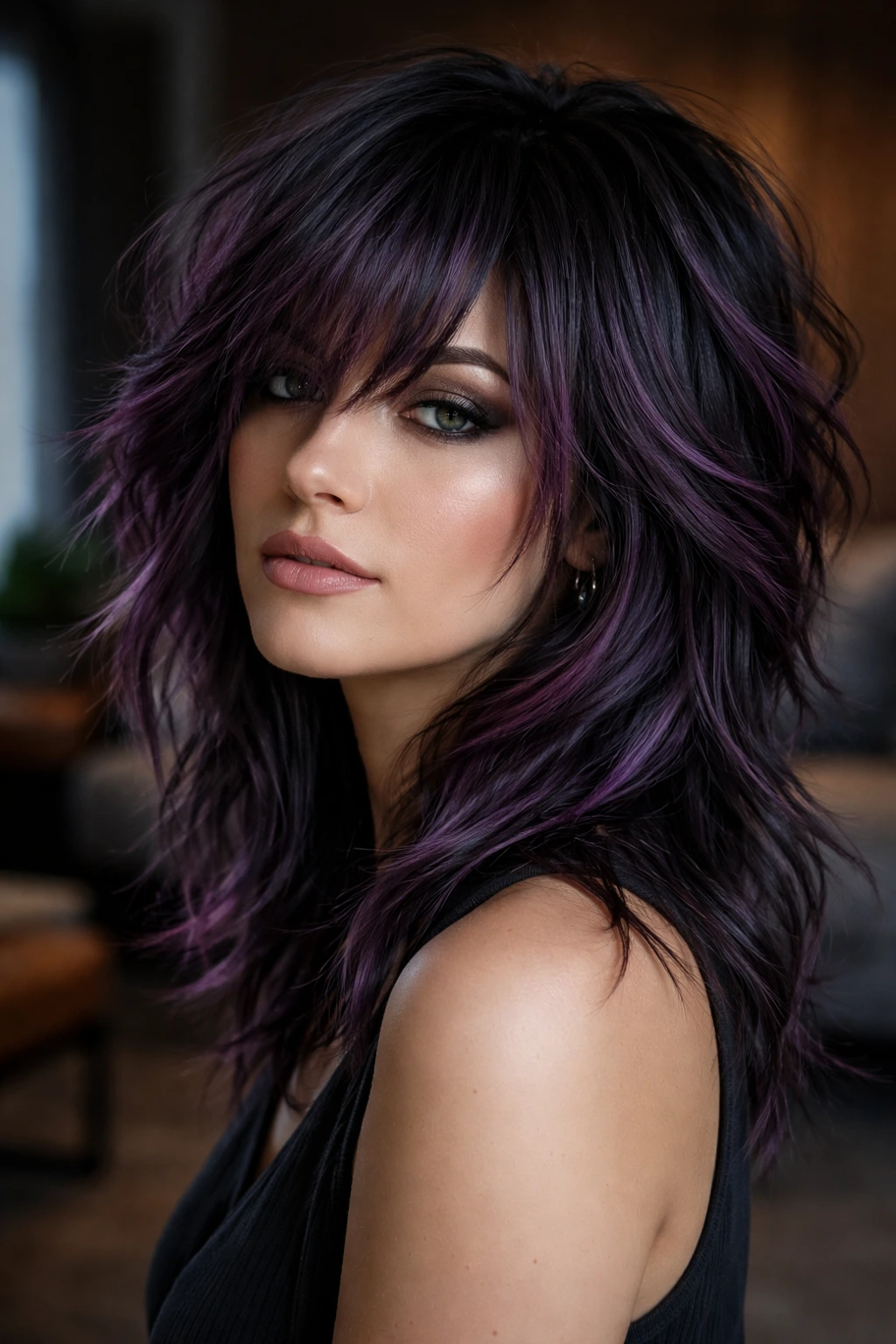
Charcoal orchid is the moody cousin of pearl lilac. It gives you a darker, grittier purple that still stays on the cool side, which is why it works so well with a shag cut and cool-toned skin.
The shag matters here because the cut already has movement and separation. The charcoal base slides into orchid pieces through the layers, so the hair looks lived-in instead of painted on. A bright pastel would fight the cut. This one fits it.
What to Watch For
The danger is warmth. If the plum side of the formula gets too red, the whole shade loses its bite. Keep it gray, keep it smoky, and keep the ends piecey.
This is a good option for people with thicker hair or a little natural wave. The layers help the color show up in chunks, which keeps the whole style from turning into one dark block. If the hair is pin-straight and heavily polished, the charm drops a bit.
For styling, a matte cream or light texture paste works better than glossy serum. You want separation, not shine overload.
13. Silver Iris Ombré for Cool Skin Tones
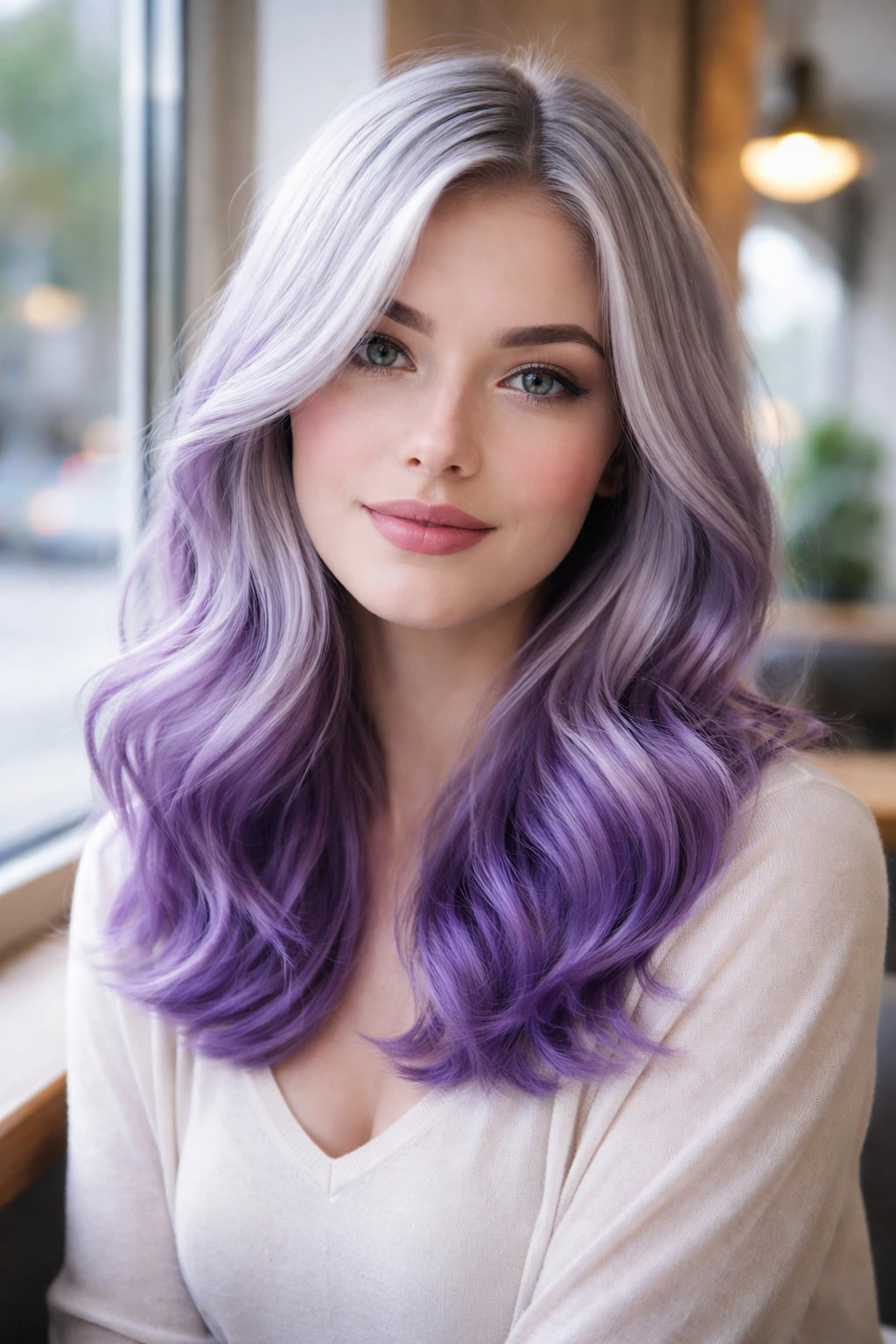
Silver iris ombré gives you a clean fade from silver near the crown into iris purple through the ends. It’s a little more dramatic than a melt, but the transition still feels smooth enough to wear every day.
The cool skin advantage comes from the silver at the top. That bright zone near the face acts like a soft filter, while the iris ends add color without dragging warmth across the complexion. If your skin has a blue or rosy undertone, this combination tends to look crisp instead of harsh.
Why the Ombré Reads So Clean
The gradient keeps the eye moving downward. That makes the hair feel longer and lighter, even when the actual cut isn’t extreme.
- Best on shoulder-length hair or longer.
- Ask for a smoke-gray root zone rather than a dark brown one.
- Keep the iris ends cool and blue-leaning, not magenta.
- Works especially well on thick hair, where the color shift has more surface area.
This one can be bold, but it still feels controlled. The silver softens the purple, and the purple keeps the silver from disappearing into plain white.
14. Arctic Violet Pixie Crop
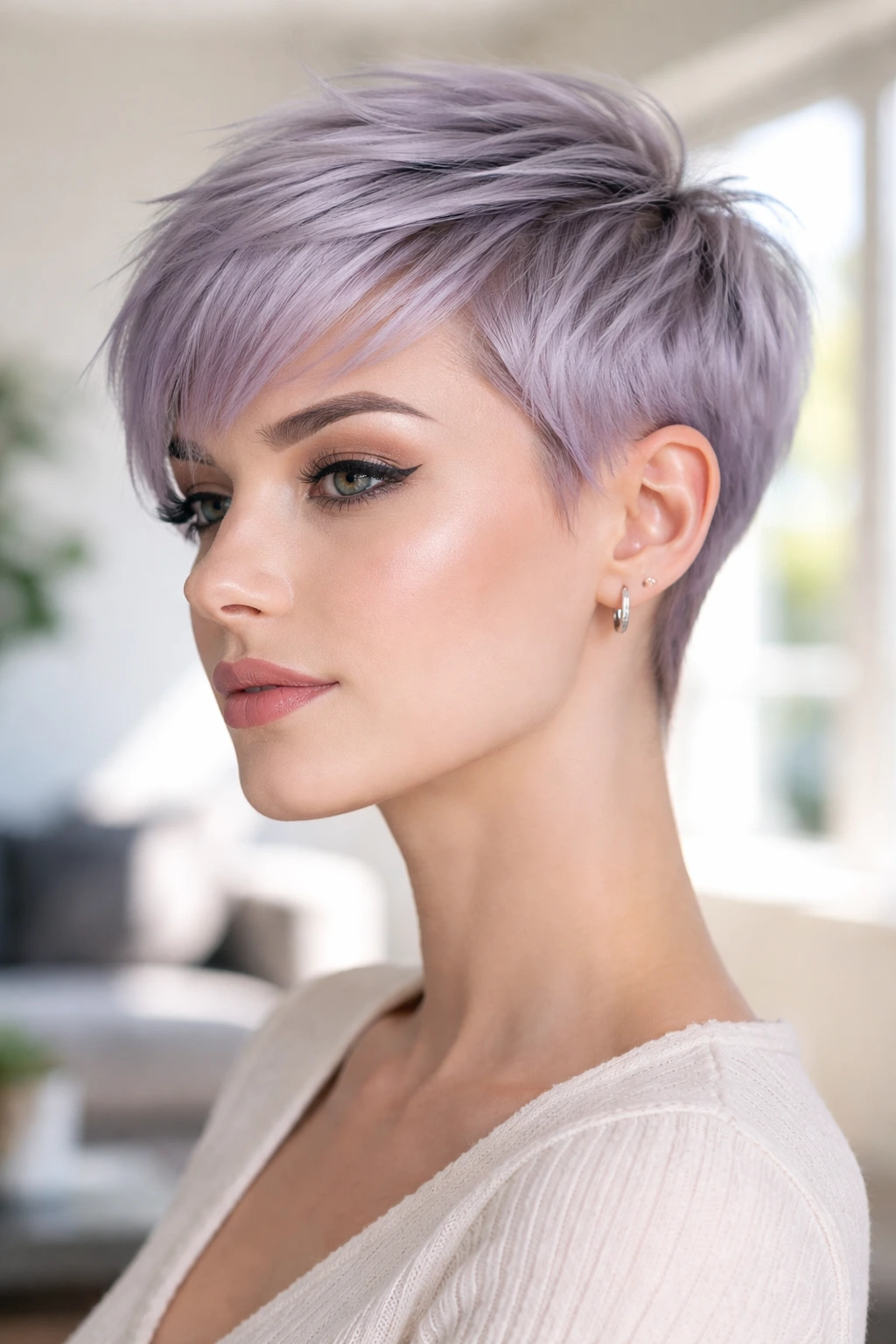
An arctic violet pixie crop is not shy, and that’s the point. The shorter the cut, the more graphic the color looks, so a pale violet-silver finish can hit hard without needing a huge amount of hair.
Cool skin tones usually love this because the color sits right on the edge of white and purple. There’s enough pigment to show shape, but not so much that the look becomes warm or sugary. On a pixie, that means the hair can look sharp, light, and deliberate all at once.
The cut itself matters. Keep the top slightly longer and the sides tight, then let the violet-silver live mostly where the light hits. If the whole head is packed with the same tone, the crop can lose its edge. A tiny shift in depth at the crown helps.
This is a good one if you want low styling time. A short crop with a glossy cool finish looks done even when you only spend five minutes on it. That’s not glamorous advice, but it is practical.
15. Soft Lavender Curtain Fringe
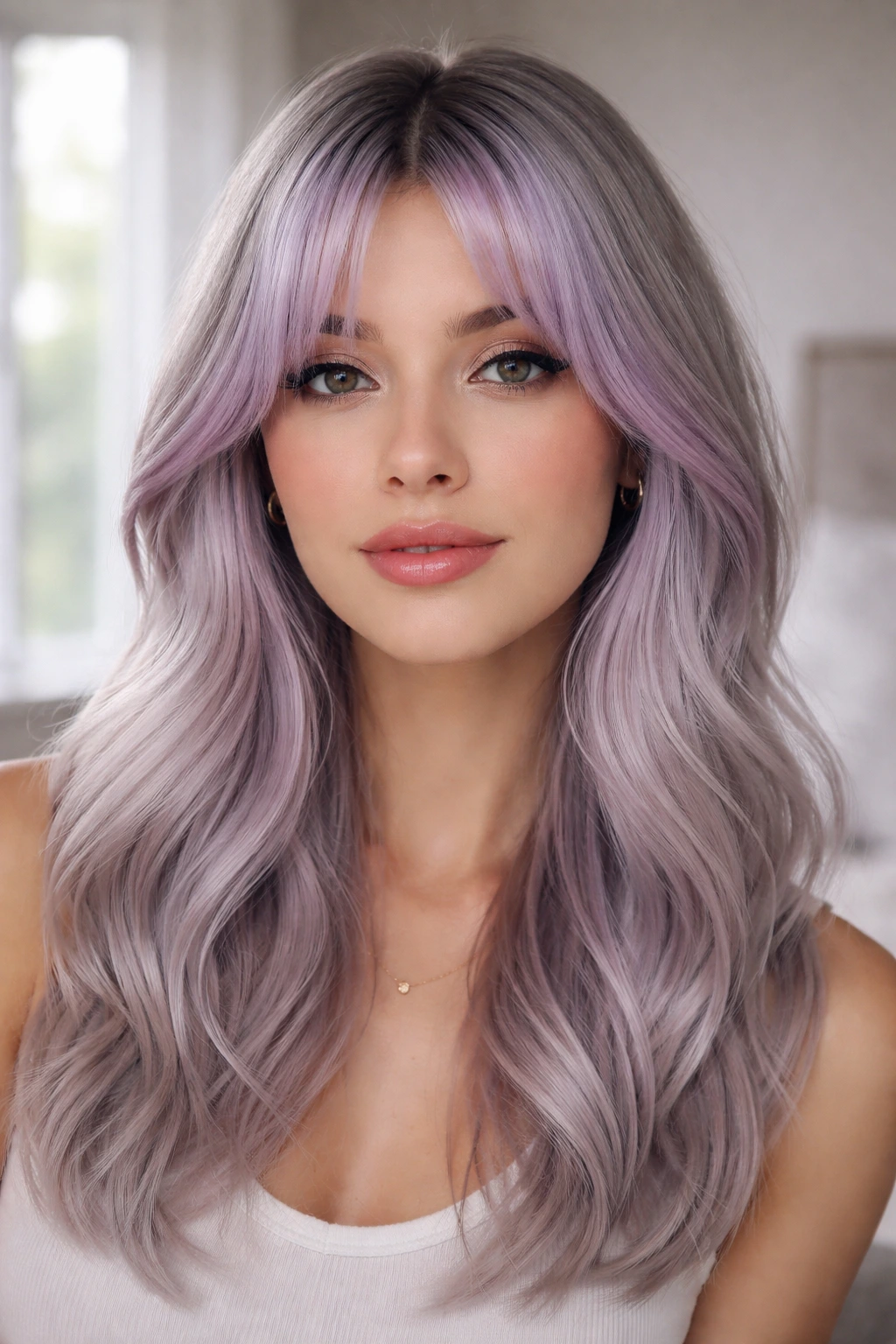
A curtain fringe is one of the easiest places to test silver-purple color, because the face-framing pieces do most of the work. When those front sections are washed with soft lavender, the color brightens cool skin without requiring an all-over change.
The rest of the hair can stay silver, ash blonde, or even a muted brunette. The fringe does the talking. This is helpful if you like color but do not want to commit to a full pastel head that needs constant toning. It also works nicely with glasses, because the lilac pieces sit right where the eye lands.
How to Wear It
Ask for the fringe pieces to be lighter than the rest of the hair by at least one level. That gives the lavender enough visibility.
The cut should be soft, not chopped blunt. Curtain bangs want movement, and movement helps the color look airy rather than heavy.
If you wear your hair in a ponytail or loose knot a lot, this style still shows. The fringe keeps the face framed, and the lavender stays visible even when the rest of the length is pulled back.
I’m a fan of this look for people who want an easy entry point into silver purple hair color ideas for cool skin tones. It feels gentle, but it does not look timid.
16. Pewter Plum Melt
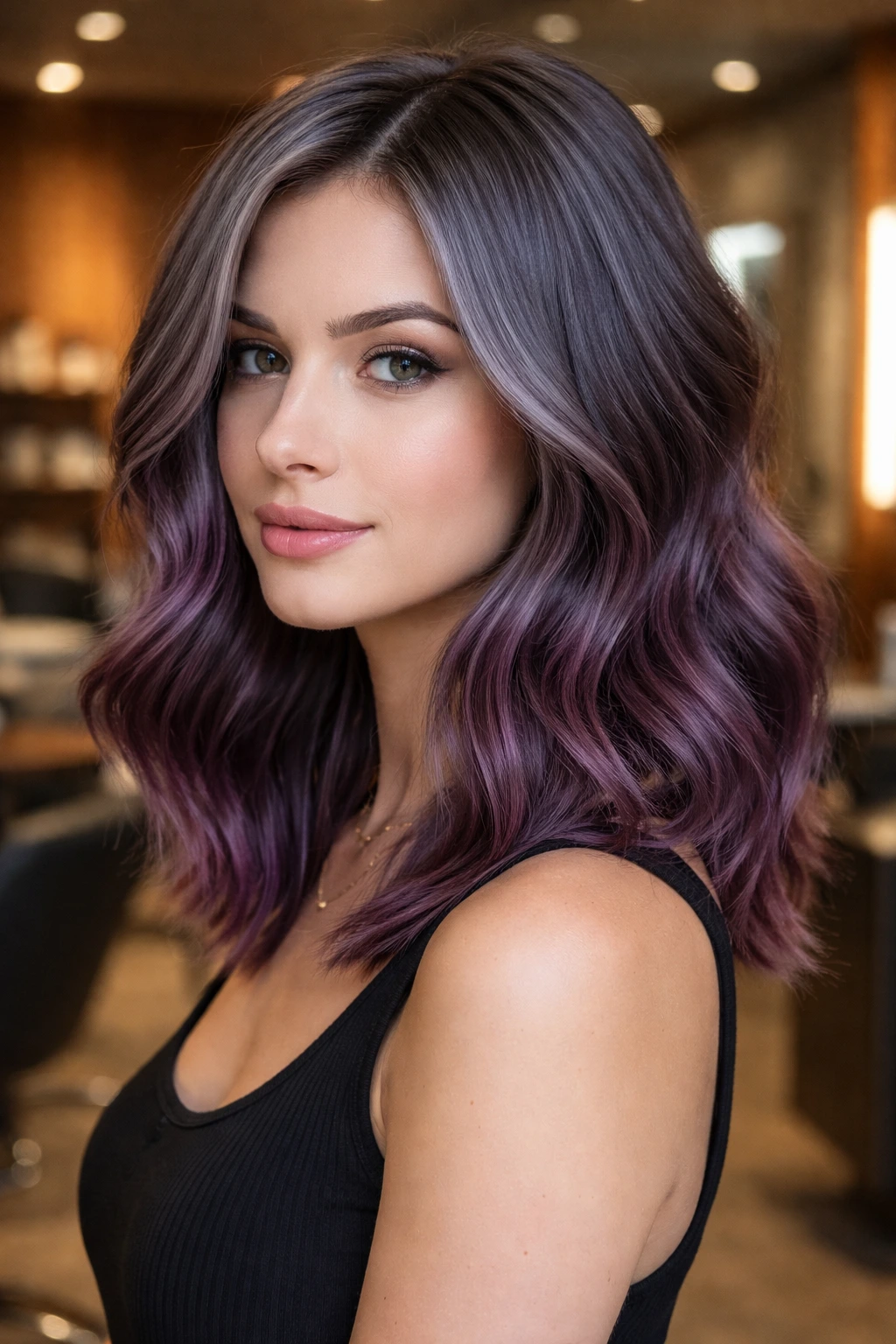
Pewter plum is the sort of shade that looks best when the colorist isn’t trying too hard to make it bright. The root and mid-lengths sit in a pewter-gray zone, then the plum deepens toward the ends in a soft melt.
This works well on cool skin because pewter has that cold metal quality that keeps the face from reading yellow. The plum adds depth without turning red, which is the mistake that ruins a lot of purple shades on cooler undertones.
What Makes It Wearable
This is a strong option if your natural hair is medium brown or dark blonde and you do not want every inch lifted to the same pale level. The darker root area can stay quieter, while the lighter ends carry the plum.
The melt looks best on hair that reaches the shoulders or below, where the transition has enough length to breathe. Shorter cuts can make the fade feel abrupt.
A few color notes matter here:
- Keep the plum blue-based.
- Leave a little smoky gray in the root formula.
- Add lowlights if your hair is very thick.
- Use a cool gloss between salon visits so the pewter does not turn dull.
17. Frosted Orchid Curls
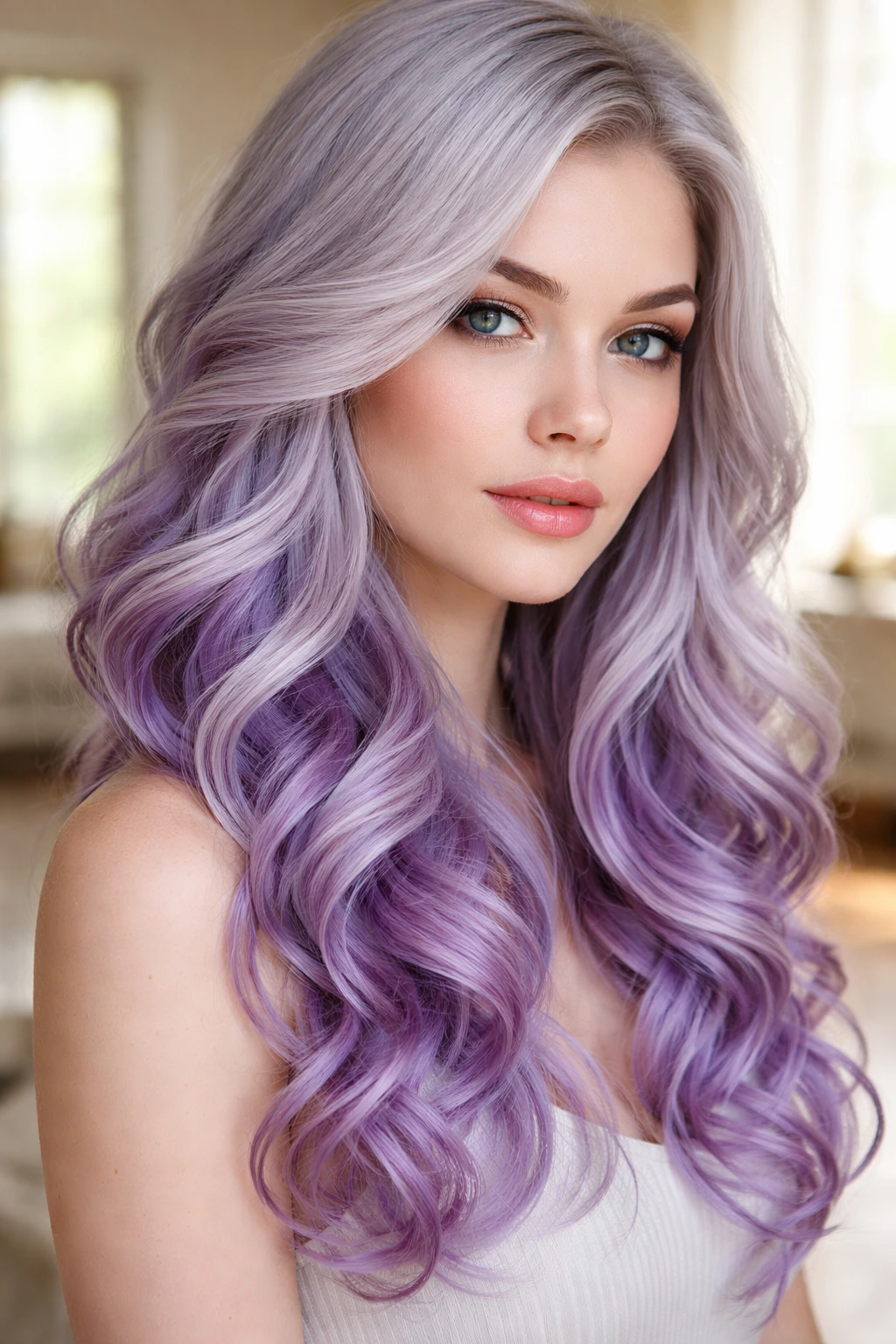
Curls and frosted orchid get along because the color can hide in the pattern. On a curl, the orchid tone tends to sit under the silver rather than on top of it, which gives the hair depth and keeps it from looking like one solid dye job.
That matters for cool skin. The frosted finish brightens the face, while the orchid keeps the curls from looking washed out. You get shine, shape, and a little bit of softness around the edges.
This shade also behaves differently depending on curl size. Loose curls show the silver ribbons more clearly. Tighter curls create a richer mix, where the orchid peeks out from underneath as the hair moves. Neither is better. They just give a different mood.
Do not overload curly hair with heavy pigment here. If the orchid is too dark, the silver loses its point. And if the silver is too white, the curls can look dry even when they aren’t. A balanced gloss is the sweet spot.
A sulfate-free cleanser helps here, and so does a rich leave-in. Curly hair tends to lose tone at the same time it loses moisture. Annoying, yes. Real, also yes.
18. White Lilac Blunt Bob
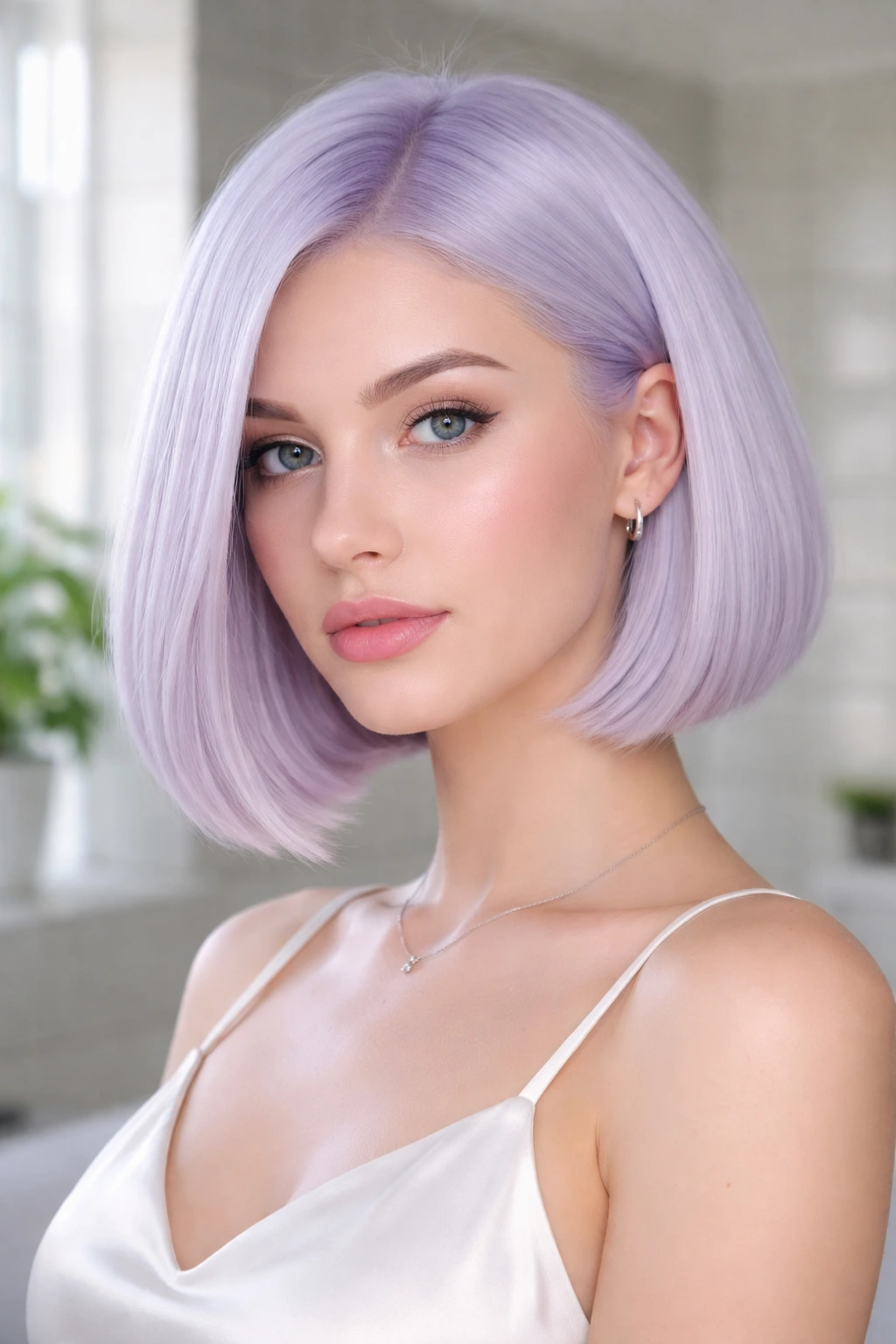
A blunt bob gives silver purple a sharper edge than a layered cut ever will. White lilac makes that edge even cleaner, because the base stays pale and the lilac comes through like a cool wash over porcelain.
If you have cool skin, this kind of look can be almost startling in a good way. The bright white near the face reflects light back into the complexion, while the lilac keeps the color from reading sterile. It is crisp. It is tidy. It knows exactly what it is doing.
Comparison Angle
Unlike a soft melt or balayage, this bob doesn’t hide much. The line of the cut is part of the color story, so the edges need to be smooth and deliberate.
That makes it a smart choice for people with straight hair or a naturally sleek texture. If your hair puffs up easily, the bob can lose its sharpness unless you style it often.
I’d recommend this look to anyone who likes clean shapes and wants the color to feel graphic. It’s less romantic than lavender waves, but that’s the charm. The blunt line gives the shade a little confidence.
19. Metallic Mauve Undercut for Cool Skin Tones
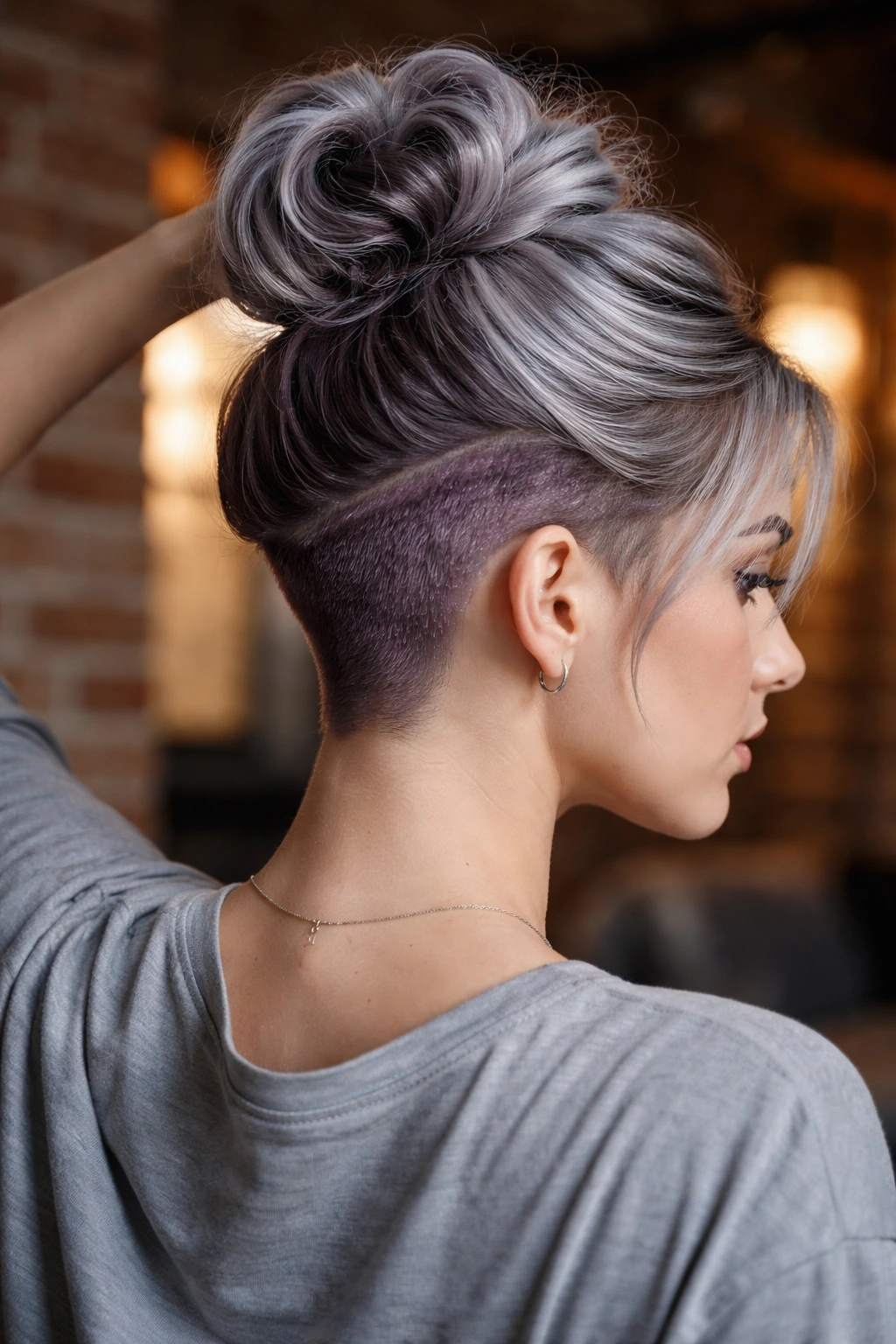
A metallic mauve undercut is the move for someone who wants color with a hidden side. The visible hair can stay silver, charcoal, or soft ash, while the undercut area carries a mauve-metal finish that shows when the hair is tucked, swept, or pinned up.
That hidden placement keeps the look wearable. You get the fun of color without wearing it all over your head every day. On cool skin, the mauve has enough gray in it to stay friendly to the complexion, and the metallic finish keeps it from going flat.
What Makes It Different
- The color shows in motion, not all the time.
- It works well if you wear half-up styles or slicked-back looks.
- The undercut can be refreshed faster than a full head of color.
- A shimmering mauve glaze reads cooler than a dusty pink formula.
This is a good one for people with an edge in their wardrobe. Leather jacket, sharp liner, clean black tee — the whole thing makes sense. But if your style is softer, the undercut can still work. It just becomes a little secret instead of a statement.
20. Smoke-and-Silver Purple Veil
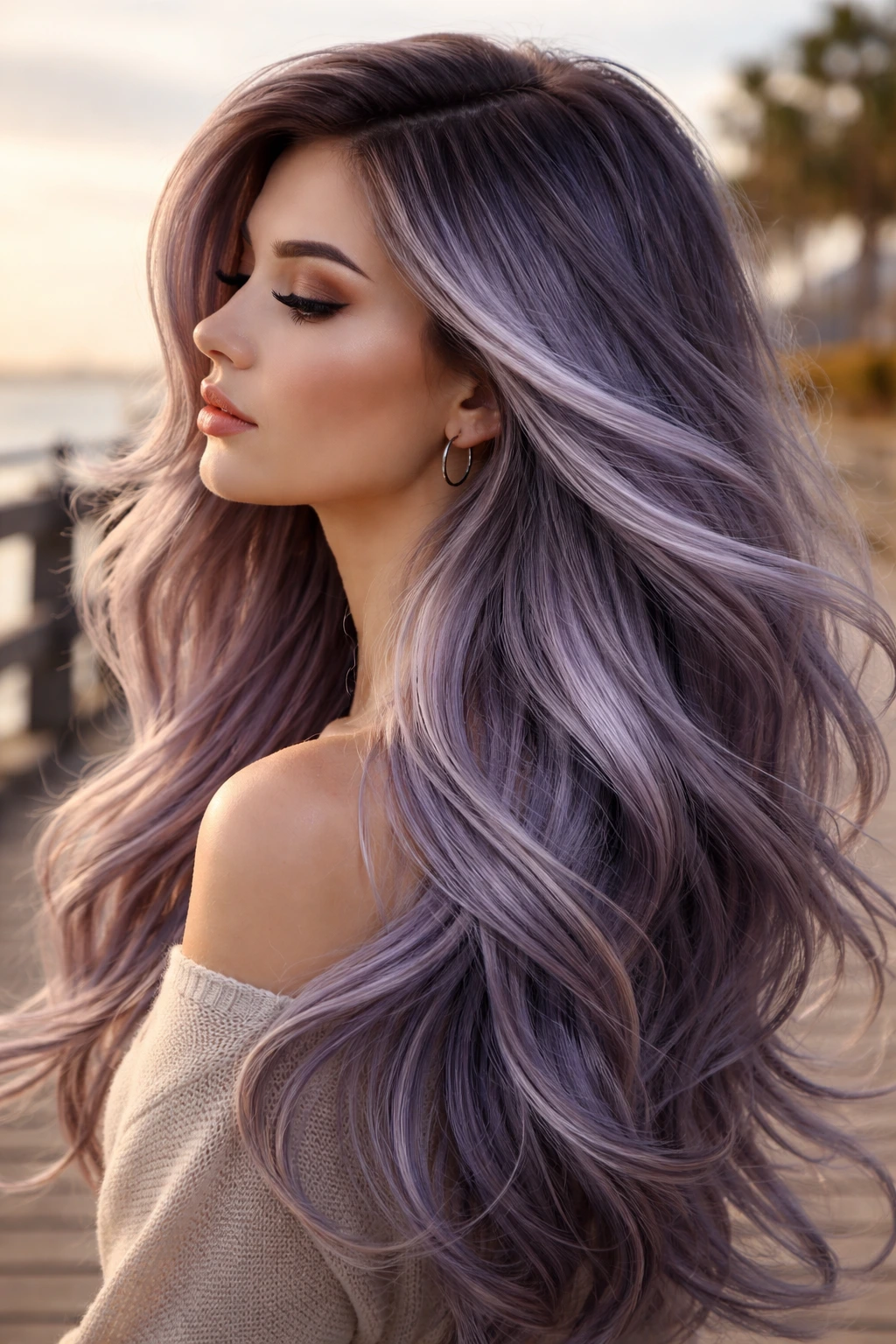
Smoke-and-silver purple is the look that sits between a tint and a full color job. The smoke gives the base a gray-violet haze, the silver keeps the edges clean, and the purple hangs in the middle like a soft veil instead of a loud block of pigment.
This is one of the best silver purple hair color ideas for cool skin tones if you want the whole head to feel connected. It can look almost misty on long layers, especially when the hair moves and the silver catches first, then the purple shows a beat later.
The trick is restraint. Too much violet and the veil turns heavy. Too much silver and the purple disappears. Keep both tones sheer, and let the cut do some of the work. Waves help a lot here. So does shine — not oily shine, just enough gloss to make the smoke look smooth.
If you want a color that changes a little from room to room and still feels wearable, this is the one I’d point to first. It has range. It also has a nice side effect: grow-out looks softer than you’d expect, which is useful when you are tired of babysitting your hair every few weeks.
