



Curly hair does not need one flat color, and the best hair color ideas for curly hair prove it fast. Curls already build their own shadows, highlights, and movement, so the right shade should work with that shape instead of fighting it.
Flat color can be brutal. A solid block of one tone can make curls look smaller, drier, or strangely stiff, while a well-placed ribbon of color can make the whole head look fuller in seconds.
That’s why placement matters as much as pigment. A curl holds light on the outside curve and drops it into the inside bend, which means the same shade can look soft, bright, or muddy depending on where it lands. If you’ve ever looked at a color photo and thought, why does this look so much better on curls than on straight hair?, that’s the trick.
The shades below lean into that movement. Some are warm and easygoing, some are moody and deep, and a few are unapologetically playful. All of them can work on curls if the colorist respects the shape first and the color second.
1. Honey Blonde Balayage
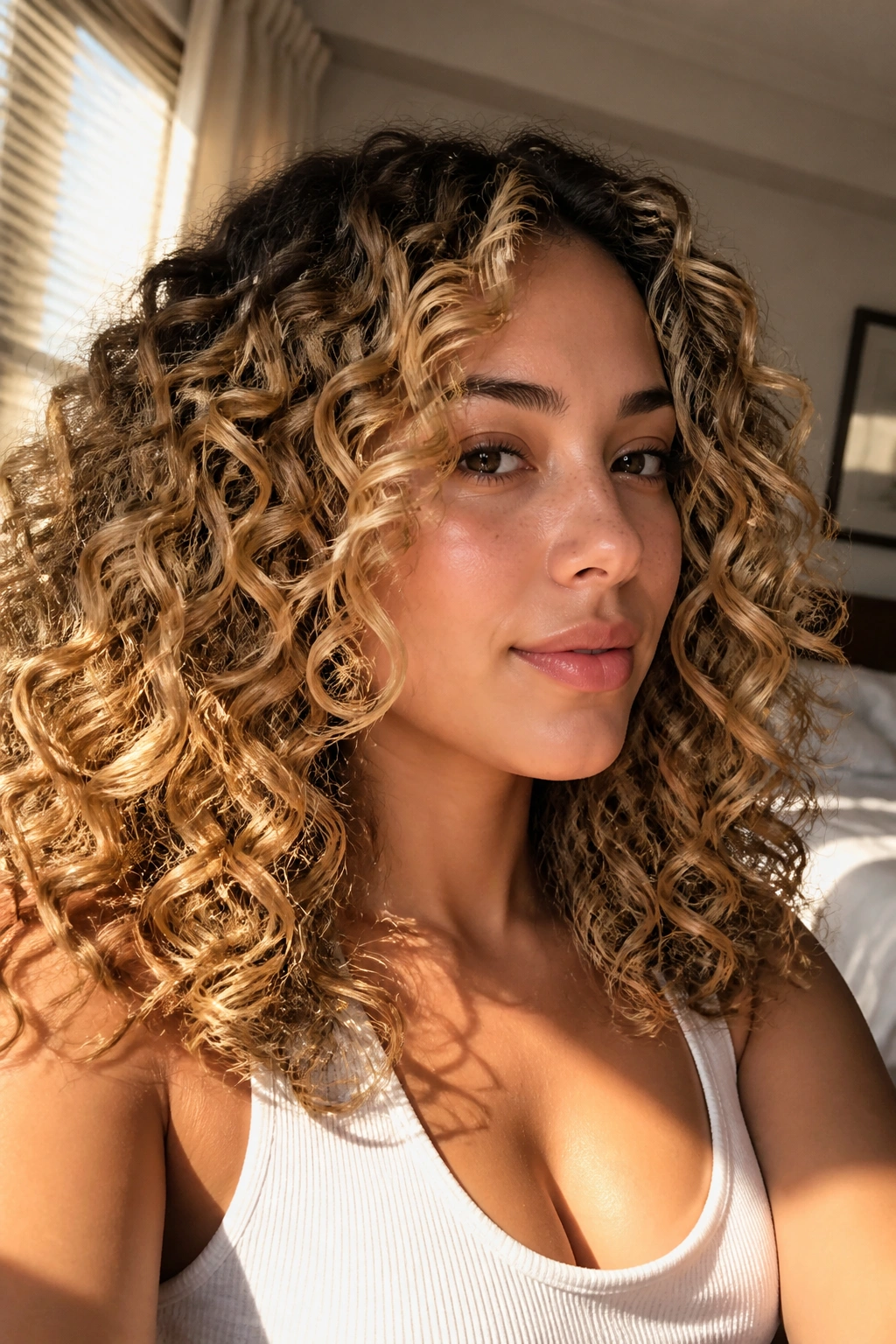
Honey blonde is one of those shades that makes curls look richer without shouting for attention. It sits between gold and beige, which is exactly why it behaves so well on spirals, coils, and loose waves.
The best version is soft and hand-painted, not stripy. Ask for balayage pieces two to four shades lighter than your base, with the brightest bits on the outer layer and around the face. That keeps the color from disappearing when the curls spring up.
Honey blonde is especially good if your hair naturally pulls warm. It blends into medium brown, dark blonde, and light brunette bases without that hard line you get from chunky highlights. And yes, it still needs toner once the warmth starts to look orange.
One thing I love here: it grows out gracefully. You can wear it for a long stretch without the root line turning ugly, which matters when curls already demand enough attention on wash day.
2. Espresso Brown with Caramel Ribbons
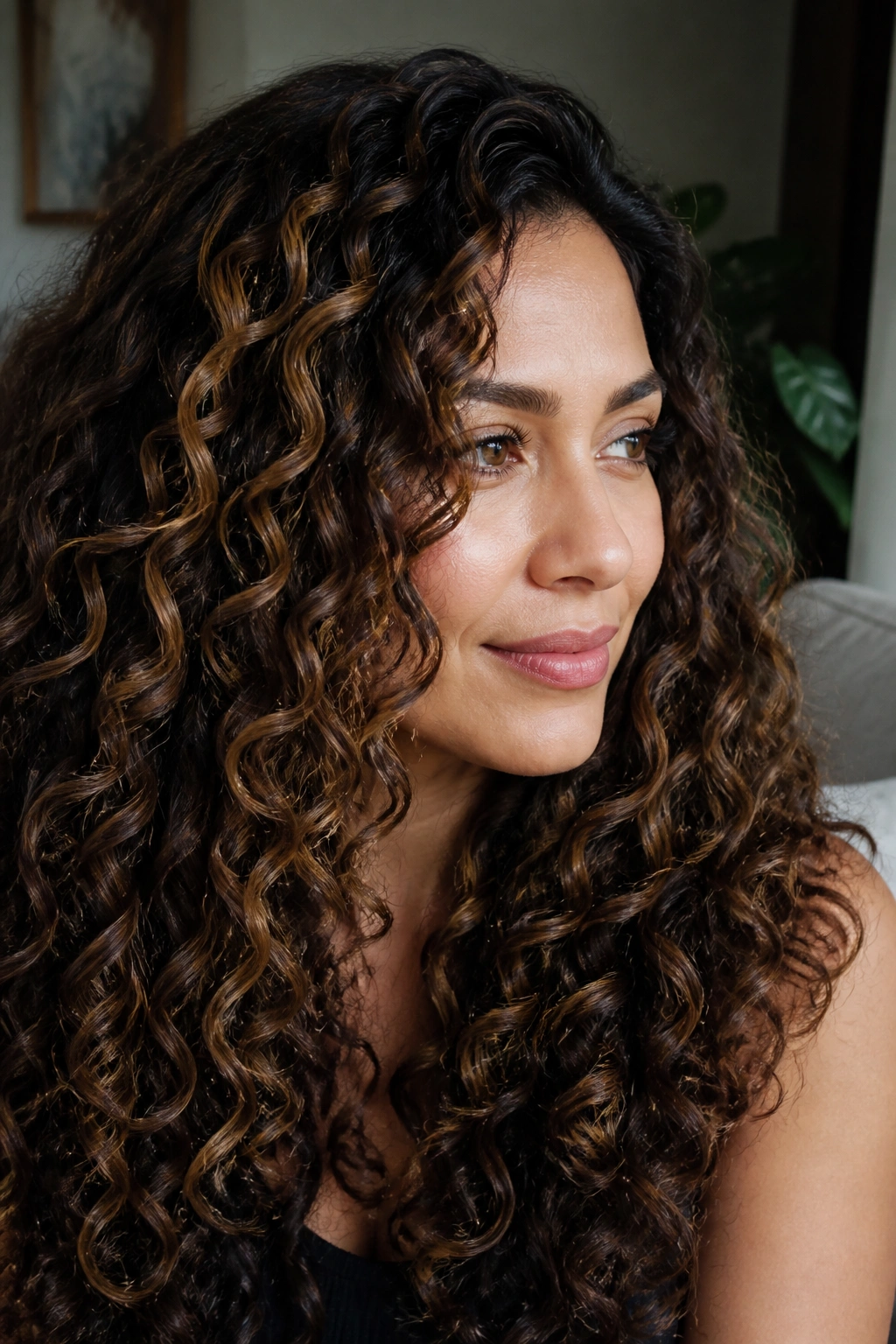
Does dark hair have to stay dark to look dimensional? Not even close. Espresso brown with caramel ribbons gives curls that rich, glossy base and then sneaks in warmth where the hair actually moves.
Why It Works
The contrast stays soft, so the curls keep their shape instead of turning into a patchwork of light and dark blocks. Caramel is warm enough to pop against espresso, but not so pale that it looks loud or streaky.
On curls, that matters. Tight texture and dense curl patterns can swallow weak highlights whole, while loose curls can make overly bright streaks look disconnected. Caramel ribbons bridge that gap.
How to Ask For It
- Ask for fine ribbons instead of chunky slices, especially through the crown.
- Keep the lightest pieces around the face and on the top layer where the light hits first.
- Request a root shadow so the grow-out stays soft.
- Tell the colorist you want caramel, not copper, if you’re trying to avoid a red shift.
A toner or gloss every few weeks keeps the caramel from turning too orange. Small detail. Big difference.
3. Cinnamon Copper
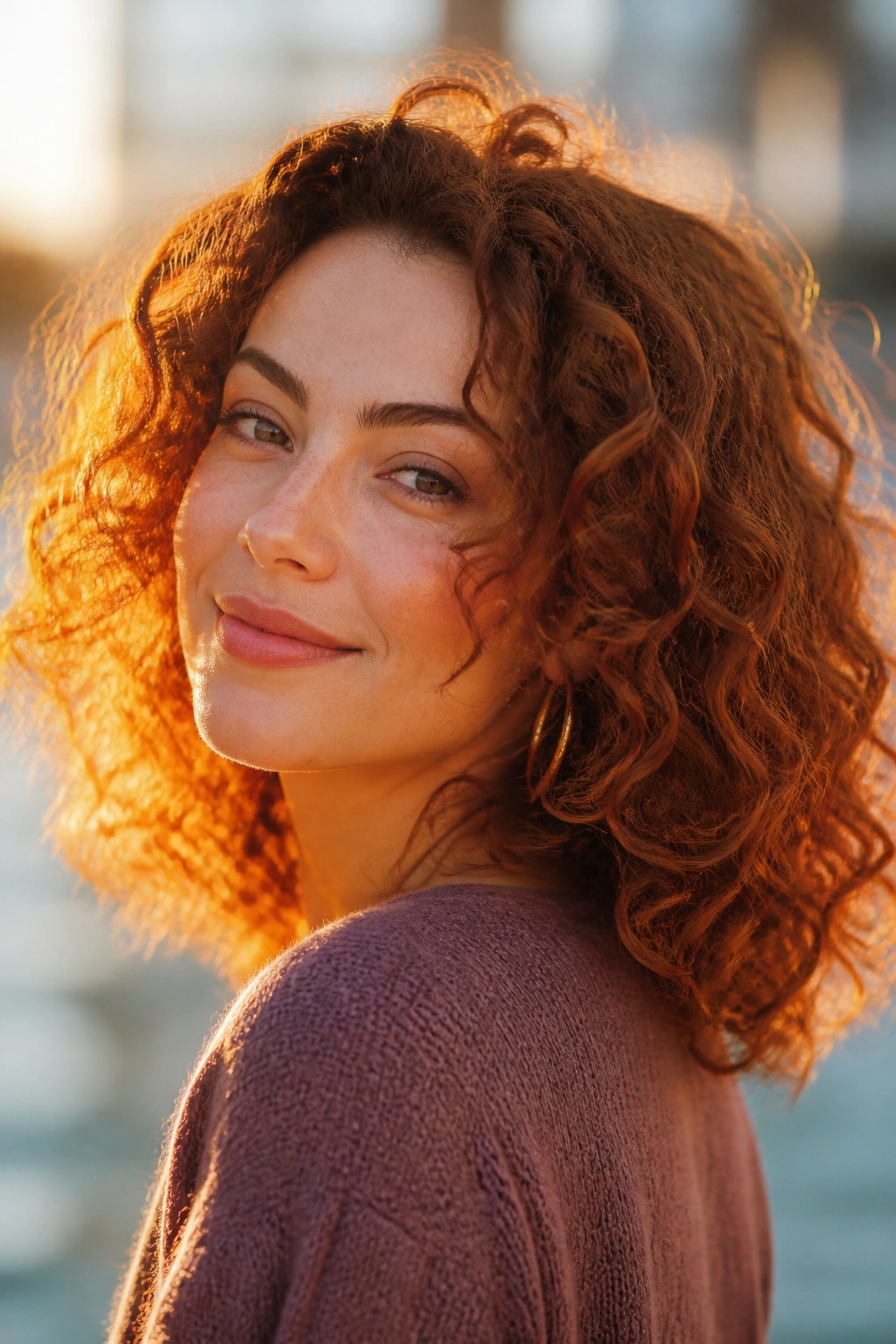
Cinnamon copper is the color that makes curls look warm even on a gray day. It has that baked-spice feel—red, gold, and brown all working together—so the hair looks alive instead of flat.
Picture a shoulder-length cut with springy curls and a cinnamon tone catching on every bend. That’s the effect. Not neon. Not pumpkin. Just enough red to wake up the pattern.
Good Fit Notes
- Best on medium brown or light brown bases.
- Works nicely on thick curls that need more visual depth.
- Looks strong with layered cuts, because the color lands differently on each tier.
This shade does need maintenance. Red pigments fade fast, and curls are often washed with more moisture-rich products that can speed that up. A color-depositing conditioner in copper or auburn can stretch the time between salon visits.
I’d keep this one away from over-bleached ends unless you’re fine with a more faded, peachy finish. On healthy curls, though, it looks like the hair has its own warmth built in.
4. Mushroom Brown
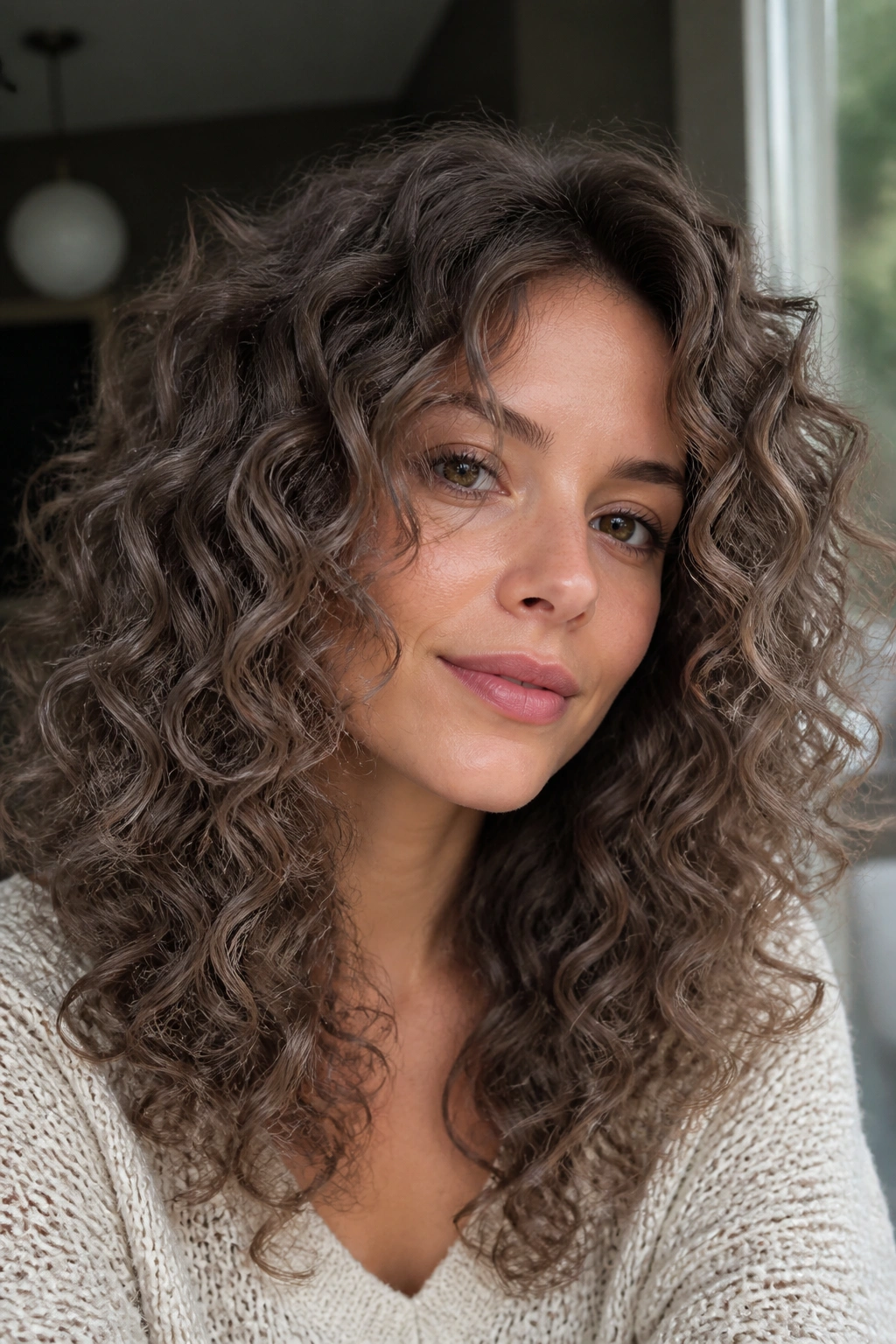
Mushroom brown is cooler than chocolate and softer than ash, which is why it works so well when you want dimension without obvious highlights. It has that earthy, beige-gray tone that makes curls look expensive in the plainest sense of the word—polished, but not fussy.
The color is sneaky. In dim light it can read as deep brunette, then the neutral tones show up when daylight hits the curls from the side. That shift is what keeps it interesting.
A lot of people miss the toner step here and end up with a muddy brown-green cast. That’s the risk. Mushroom brown needs a careful balance of ash and beige so it stays clean, especially on porous hair.
If your curls already lean cool, this shade can be a home run. If your hair pulls very warm, the colorist may need to mute the brass first, then layer the brown back in with a gloss. Slightly boring to explain. Worth it in the mirror.
5. Cherry Cola Curls
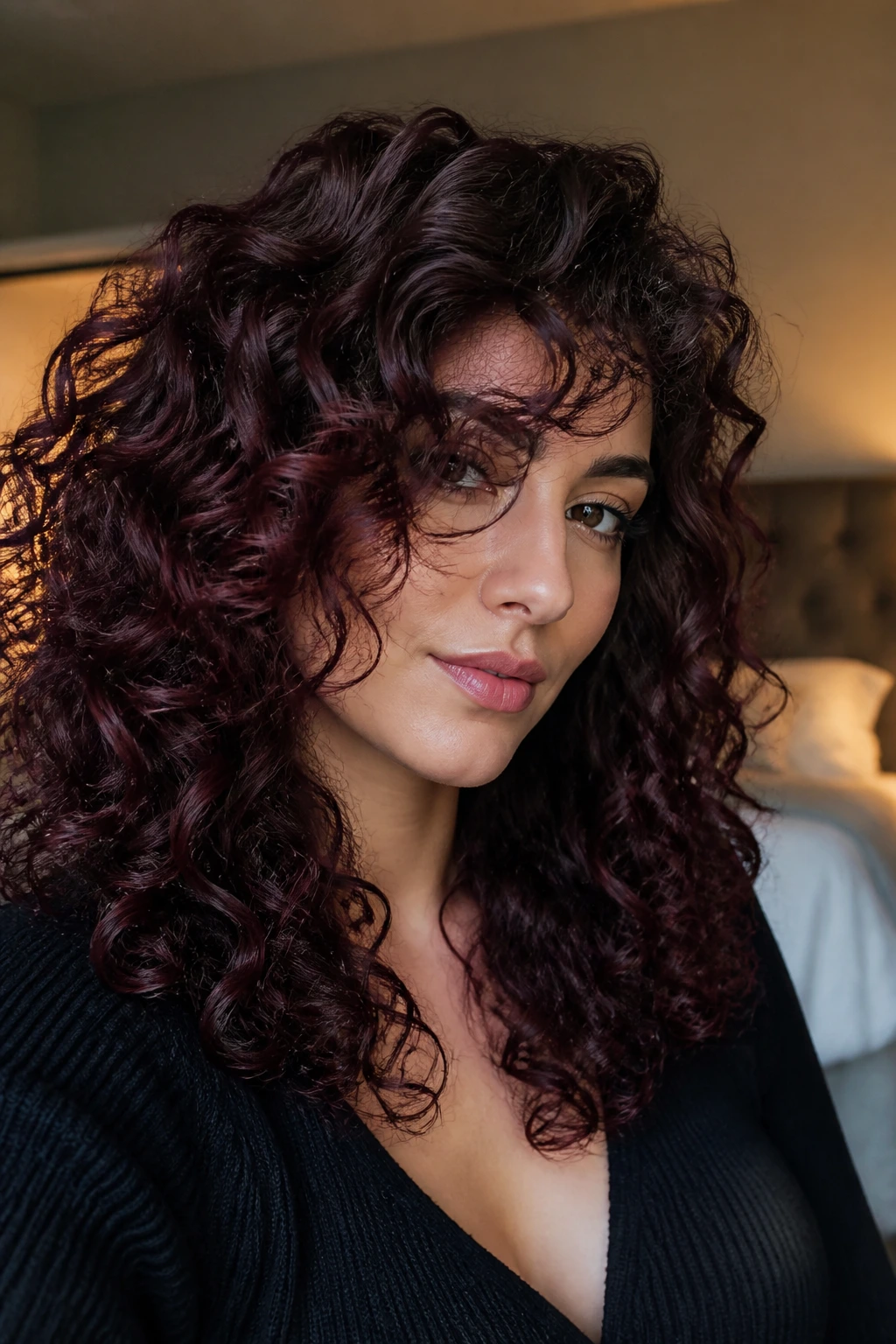
Cherry cola curls give you dark depth with a red-violet finish that shows up when the hair moves. It’s one of the easiest ways to add drama without bleaching a single strand.
What Makes It Different
The base stays in brunette territory, so the color feels wearable. Then the cherry tone sits on top like a stain, not a neon overlay, which is why it can look rich instead of loud.
That’s a smart move for curls. Red-violet shades catch on the raised parts of the curl clump and disappear into the shadows elsewhere, which gives the hair a plush look. It also flatters layered cuts because the shorter pieces reflect the tint more quickly.
Placement Notes
- Keep the roots deeper and let the cherry build through the mids and ends.
- Use a demi-permanent gloss if you want shine without a hard commitment.
- Ask for a cooler cherry if your skin runs pink; warmer cherry cola works better on golden tones.
- Wash with cool water when you can, because hot water strips red faster than most people expect.
This color is a little higher maintenance, sure. But it looks gorgeous on curls that like a moody edge.
6. Jet Black Gloss
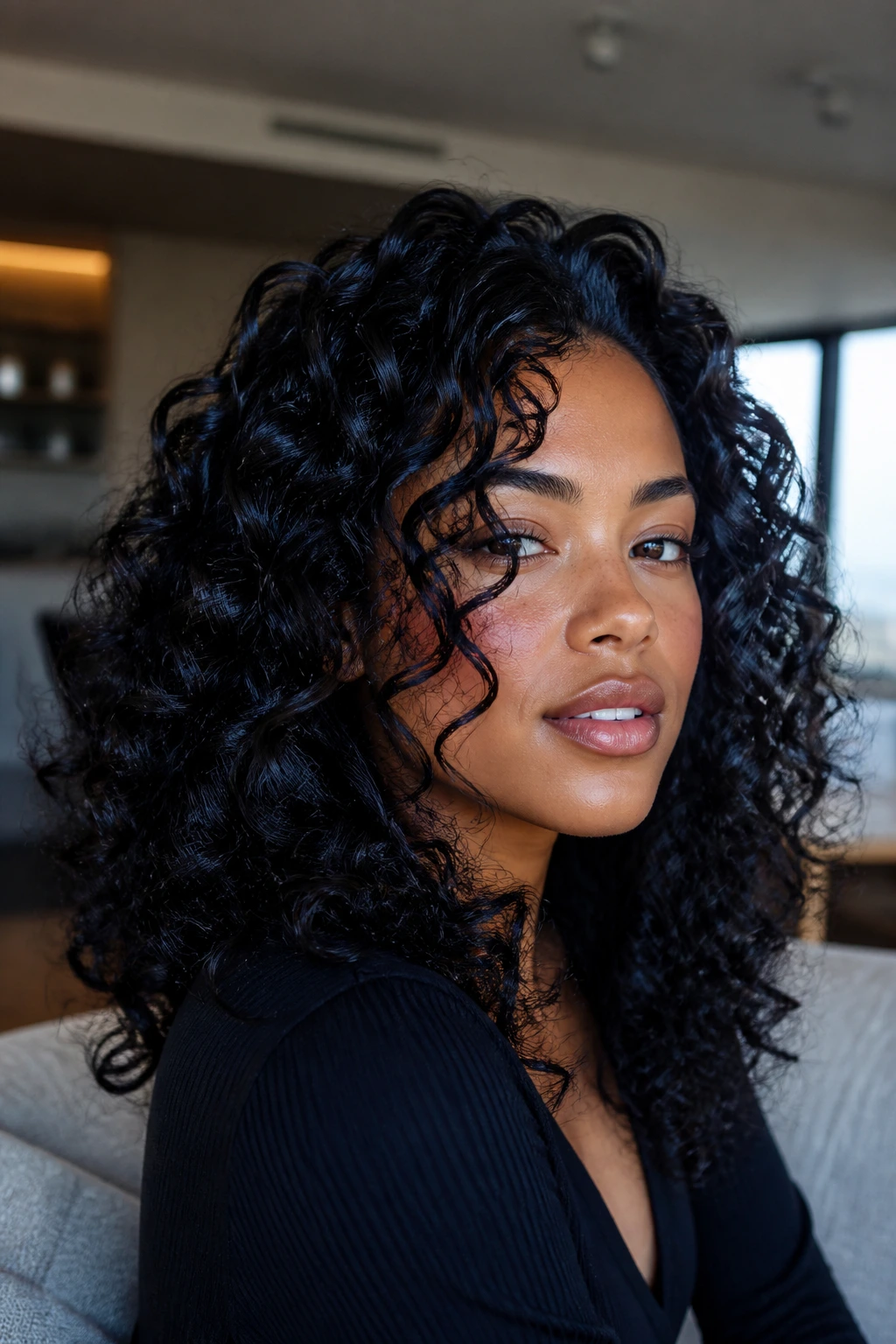
Jet black on curls is bold, but only when it looks glossy. A flat black can swallow texture; a reflective black can make the curl pattern look almost sculpted.
I prefer a blue-black or soft jet black gloss over a harsh inky block, because the subtle cool reflect stops the color from reading like shoe polish. The difference is small. The payoff is not.
On curly hair, the shine shows up in the bends, not across one even surface. That means the finish matters more than people think. If the strands look dry, black can turn severe fast. If the hair has slip and light, it looks rich.
This is a strong choice for people who want low visual clutter. No ribbons. No contrast. Just depth. It also pairs well with very defined curl patterns, because the shine gives the spirals extra shape.
The catch is that black is hard to remove later. If you’re the type who changes your mind often, a gloss or semi-permanent formula is safer than permanent dye.
7. Rose Gold Ends
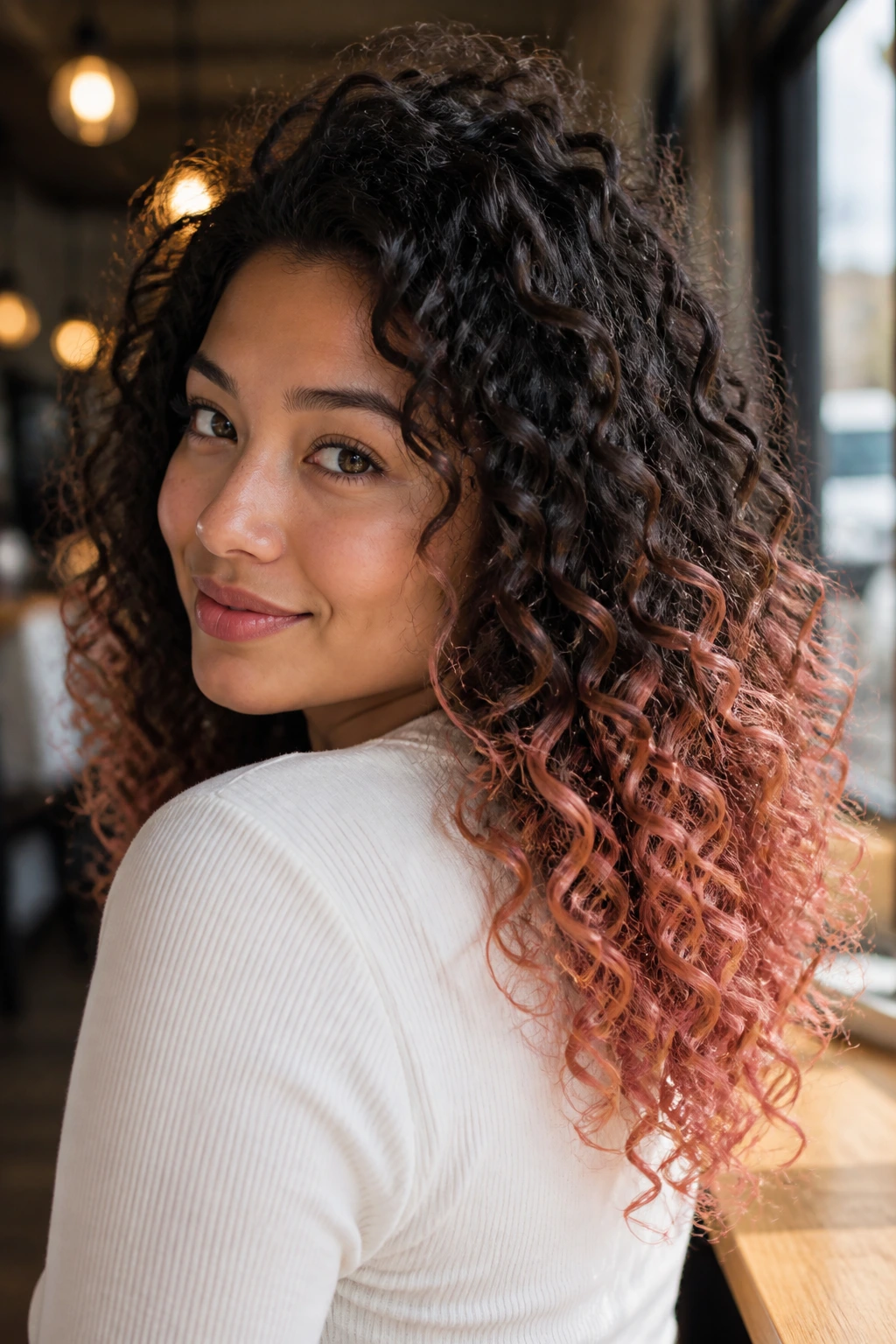
Rose gold ends are for the person who wants a soft hit of color without painting the whole head. On curls, the tone sits somewhere between blush, peach, and warm gold, which makes the shape look playful instead of sugary.
The trick is keeping the roots darker. You want the rose gold mostly on the lower half of the length, where the curls swing and separate. That keeps the color from looking like a costume.
A good rose gold finish usually starts with lightened hair around level 8 or 9, then gets toned into a muted pink-gold. Too much pink and it goes candy. Too much gold and the rose disappears. The middle is the point.
This shade wears well on layered cuts, especially if the ends already have some natural bend. It’s not the best choice if your curls are badly damaged, because the paler ends show dryness fast. Healthy ends, though, make the whole thing look airy.
8. Beige Bronde
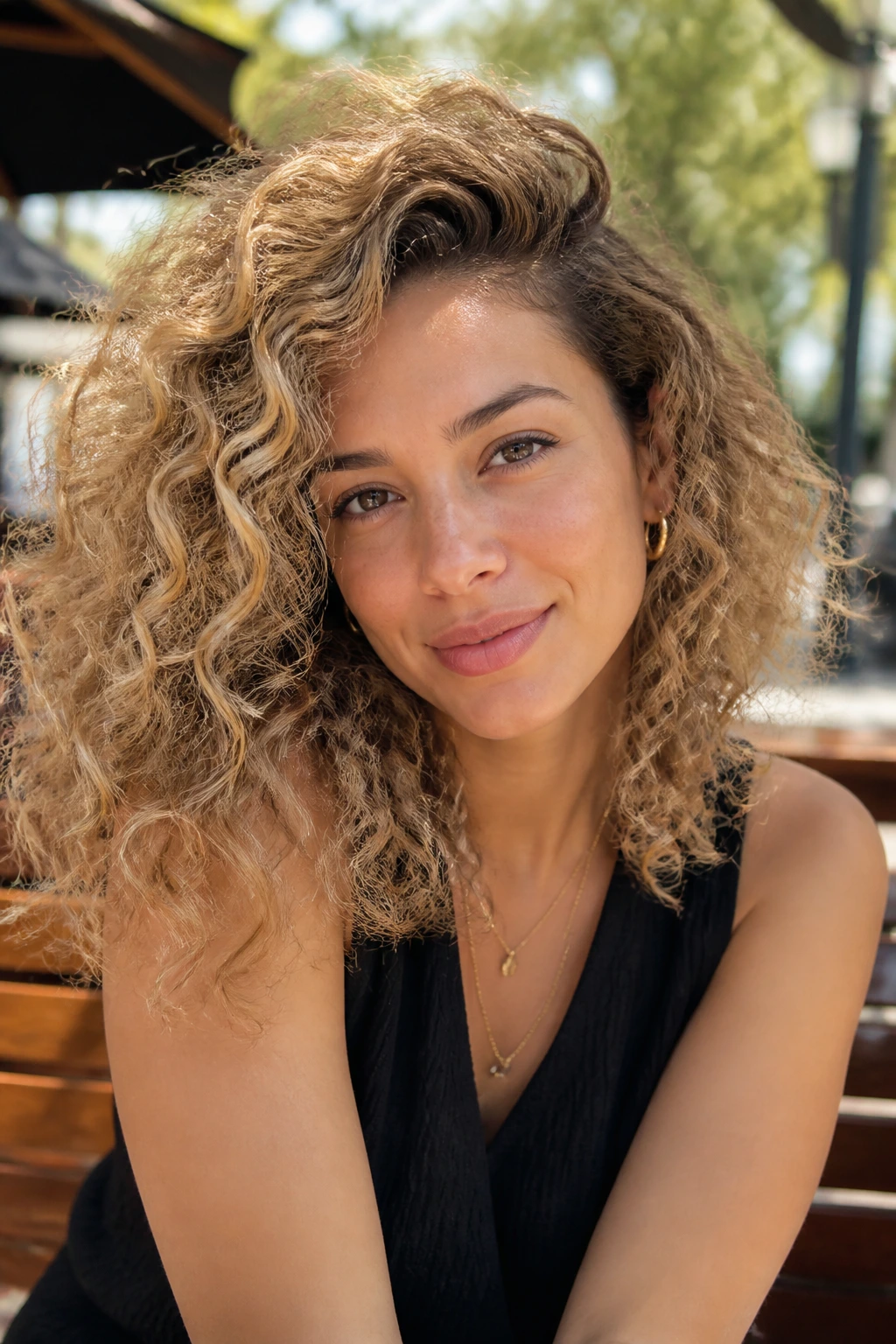
Bronde done right is a soft bridge between brown and blonde, and beige is the part that keeps it from going brassy. It’s a smart pick when you want movement without a big color jump.
Why It Flatters Curls
Because the contrast stays low, the pattern of the curl does more of the work. The eye reads texture first, color second, which is exactly what you want on dense waves or spirals.
Beige bronde also avoids the awkward stripe effect that can happen when blonde highlights are too bright against a darker base. The pieces melt together, so the hair looks sun-touched rather than processed.
What to Request
- Ask for soft beige highlights rather than pale blonde.
- Keep the lightest pieces on the top layer and around the face.
- Add a root shadow one shade deeper than the base for easier grow-out.
- Use a neutral or beige toner, not a strong ash toner, if your hair tends to go dull.
This is a quietly good color. It does not scream, and that’s the point.
9. Auburn Ombré
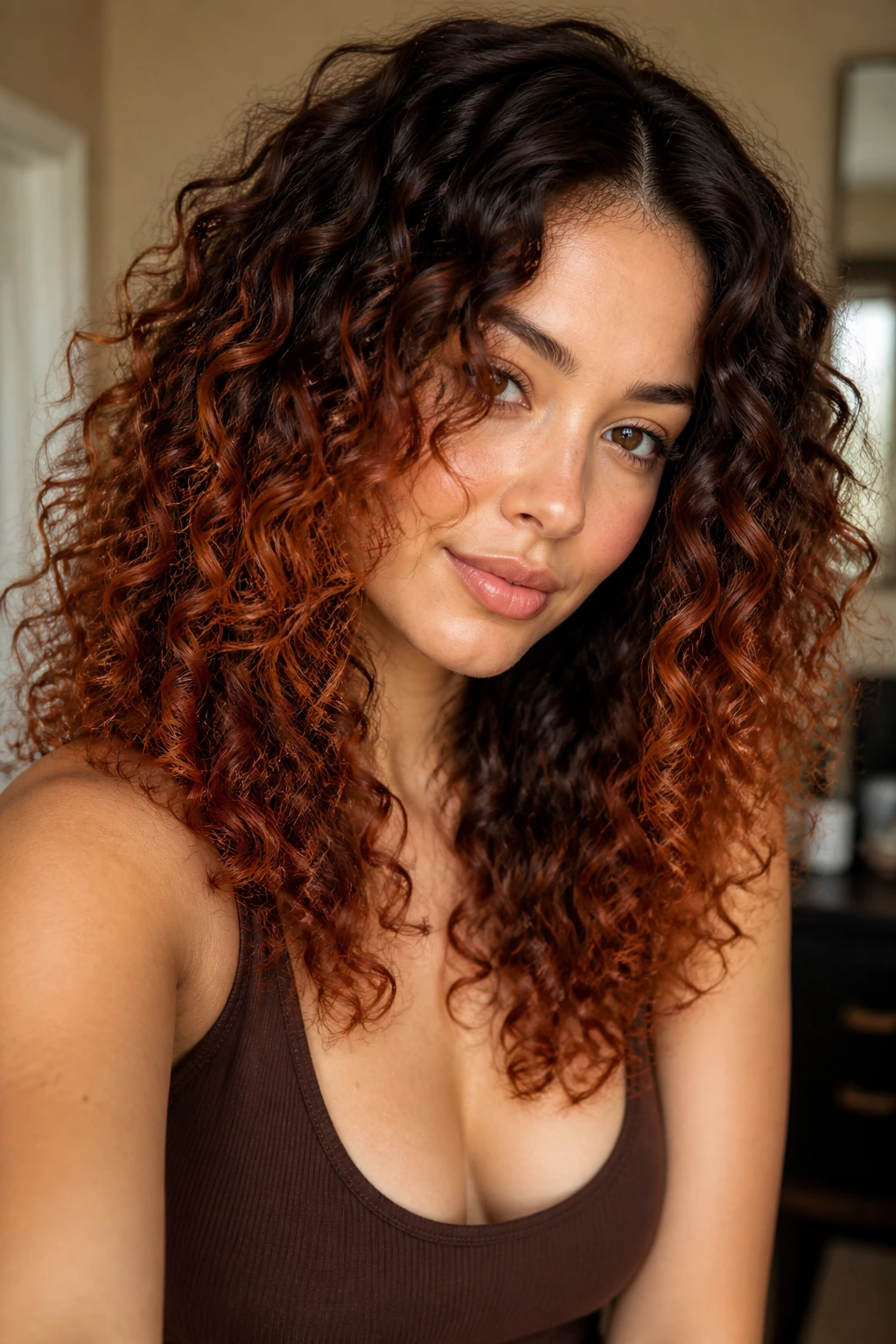
Auburn ombré is one of those colors that looks richer on curls than on straight hair because the gradient has room to breathe. Darker roots, warmer mids, brighter ends—easy idea, strong result.
The best version starts with a brunette base and slowly warms into auburn through the mid-lengths. You do not want a hard line at ear level. That kills the flow. Instead, let the transition happen over several inches so the curl pattern keeps the color moving.
Useful Details
- Keep the root area 2 to 3 levels deeper than the ends.
- Use auburn with a red-brown base rather than pure copper.
- Let the brightest warmth live on the lower third of the hair.
- Add a gloss if the ombré starts looking flat after a few washes.
This shade is good for people who want warmth but not full red. It also works well on curly lobs and long layered cuts, because the ombré follows the swing of the shape instead of sitting on top of it.
10. Platinum Face Framing
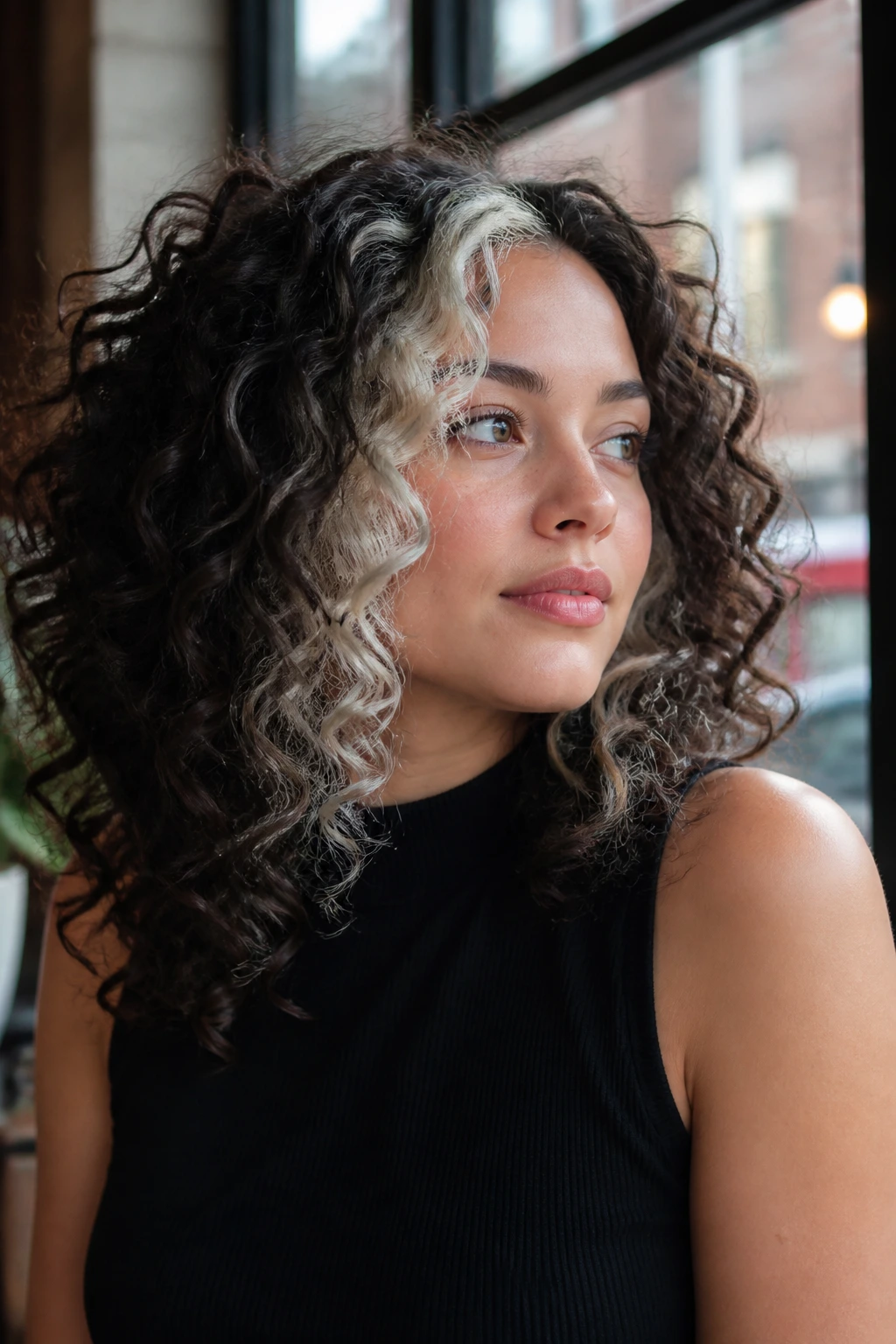
Platinum face-framing pieces on curls are dramatic, yes, but the drama works best when the rest of the hair stays darker. One bright piece near the face can wake up the whole cut; a full head of platinum can turn curly hair into a maintenance job nobody asked for.
The placement matters more than the color itself. Keep the brightest pieces about 1/2 to 1 inch wide, and let them start a little lower than the root so the grow-out looks softer. On curls, that little offset keeps the line from looking harsh when the hair springs up.
A pale blonde frame can make cheekbones look sharper and bring attention to the eyes. It also gives shape to a rounded curl pattern, which is why it’s popular on layered cuts and shags.
The honest downside: platinum is rough. It asks a lot from the hair, and curly ends are often already the driest part. If your curl pattern is fragile, ask for a softer icy blonde instead of a true white blonde.
11. Chocolate Cherry Lowlights
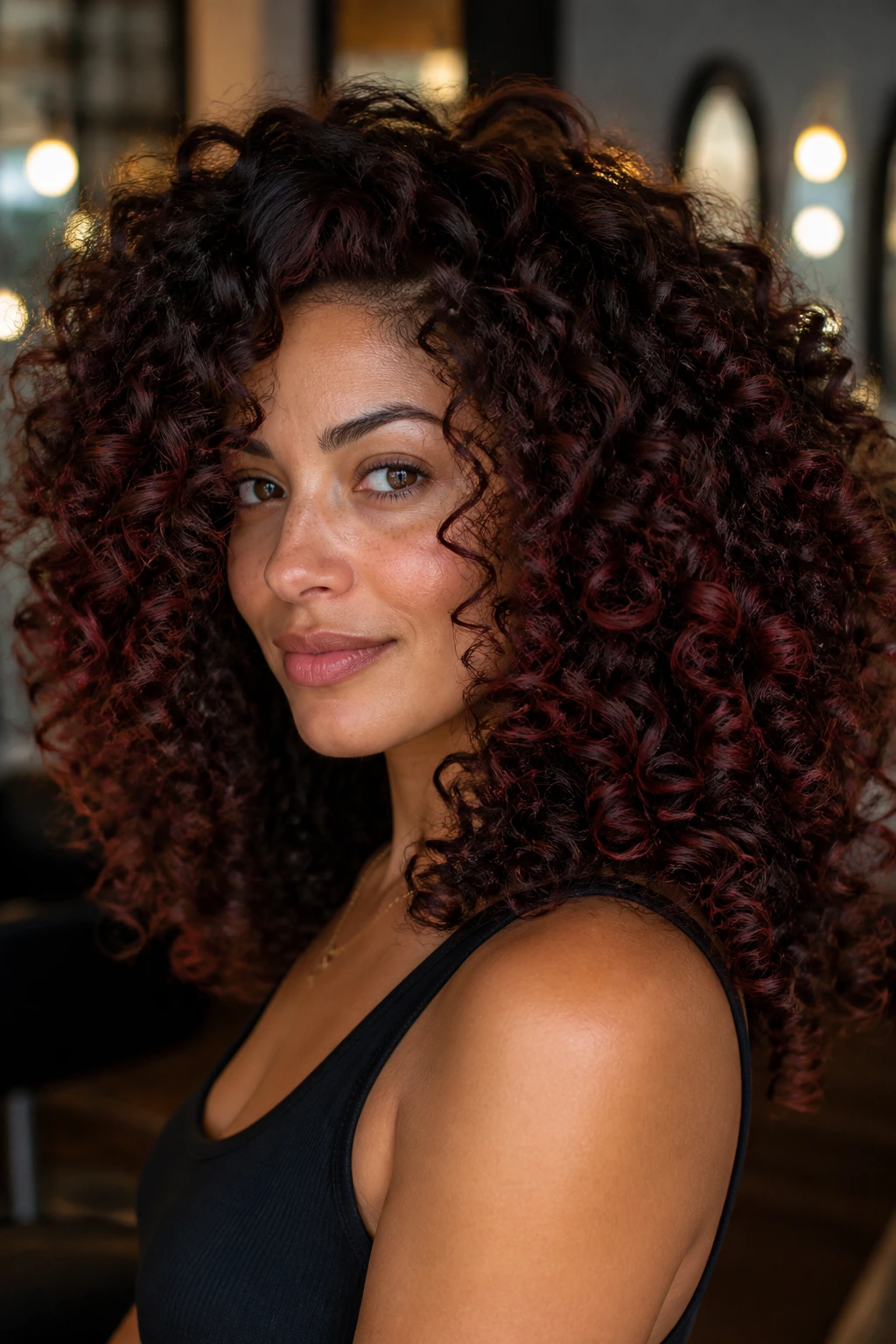
Chocolate cherry lowlights are the subtle cousin of cherry cola color. Instead of changing the whole head, you drop deep red-brown pieces into a chocolate base and let the curls build the rest.
What to Watch For
Lowlights should be placed under the canopy and between bigger curl groups, not painted everywhere. That way the hair keeps depth where it needs it and shine where the light can catch it.
This shade is lovely on medium to dark curls because it adds shadow without making the hair look heavy. It’s also a smart fix if your curls have started to feel one-note after a few months of highlight wear.
Quick Placement Guide
- Ask for lowlights one to two levels darker than your base.
- Keep them softer near the crown so the top doesn’t go muddy.
- Use a red-brown, not a purple-brown, if you want warmth.
- Refresh with a gloss when the cherry tones fade first.
A lot of people overlook lowlights, which is a shame. On curls, they can do more for definition than highlights ever will.
12. Sun-Kissed Caramel
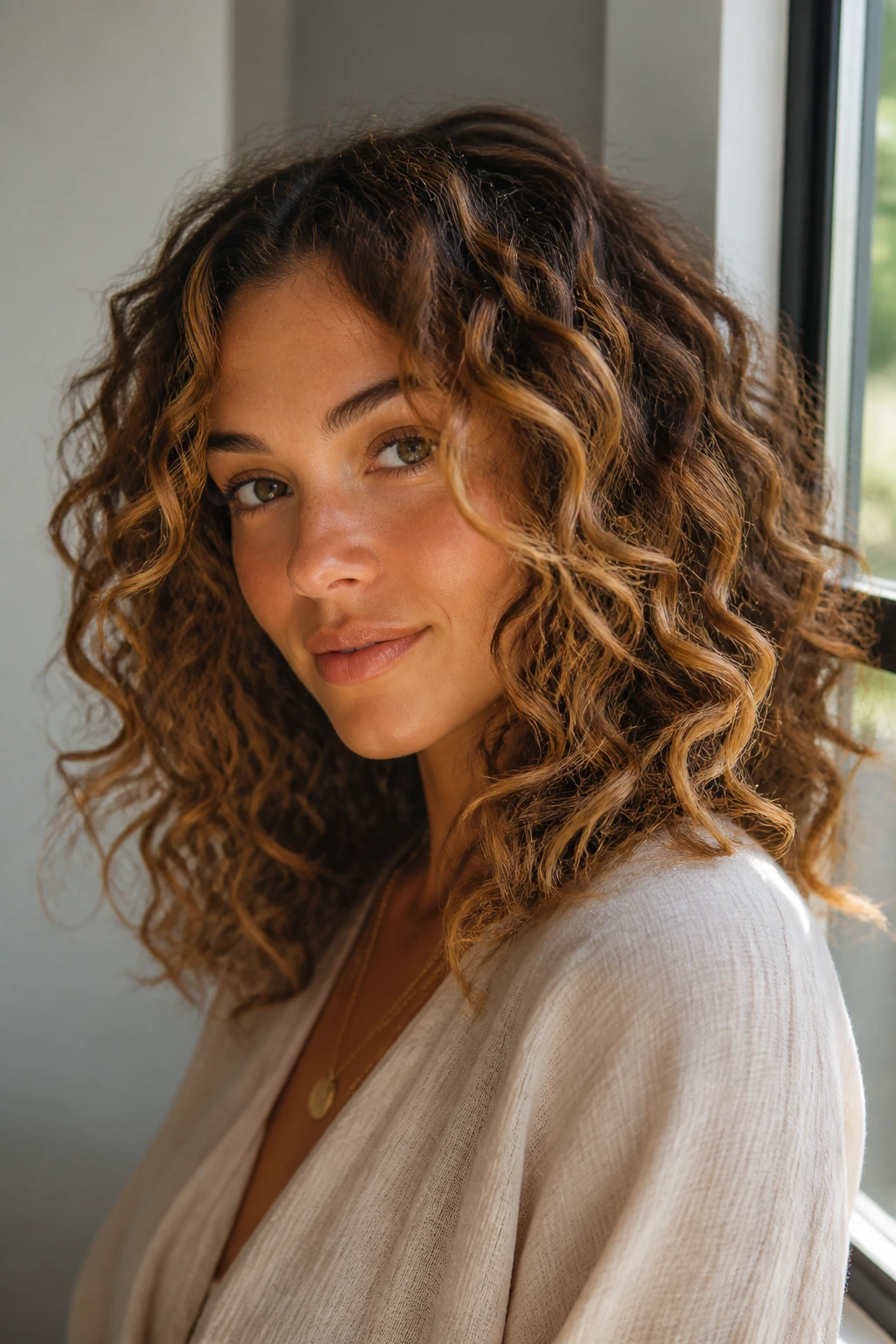
Caramel can go one of two ways: soft and believable, or stripey and loud. The sun-kissed version is the one I’d pick for curly hair, because it uses thin, warm highlights to mimic light touching the curls naturally.
Unlike brighter blonde placements, caramel sits close enough to brunette to avoid a harsh jump. That makes it a good choice if you want dimension but not a full color change. It also works nicely on medium-density curls, where too much lightness can make the pattern look frizzy.
Ask for babylights around the face and crown with a few softer pieces through the mids. The goal is a glow, not a map. If the light pieces are too wide, the curls can separate them too much and the effect gets busy.
I like this one on shoulder-length cuts and long layers. It makes the curl pattern look sunnier, which sounds small until you see how much life it adds.
13. Smoky Lilac
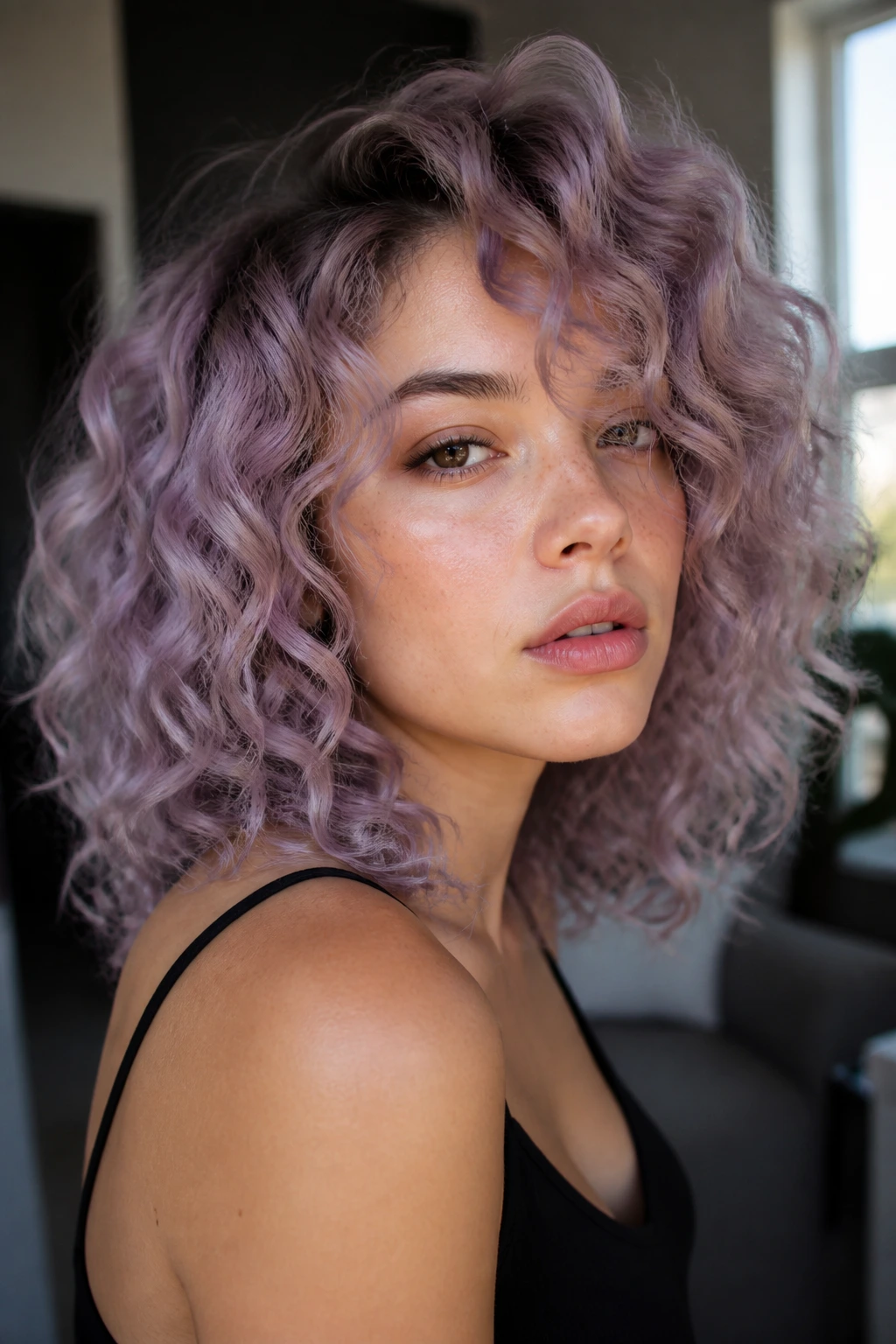
Smoky lilac is not candy-colored. That’s the whole appeal. It takes lavender, mutes it with gray, and leaves you with a soft violet haze that looks especially good when curls catch the light in different directions.
Why It Works
Pastel shades can look harsh if they’re too clean. Smoky lilac has a dustier finish, so it blends better with texture and doesn’t fight the natural bends in the hair.
It also suits curls that already have some lightness through the ends. On a prelightened base, the color can sit on top like a wash rather than a block, which is much prettier on textured hair.
How to Wear It
- Best on level 9 or lighter hair.
- Keep the roots deeper for contrast.
- Pair it with loose layers so the lavender shifts as the curls move.
- Use sulfate-free shampoo if you want the violet tone to last.
This is a fun color, but it’s not the easiest one to maintain. If you love a little edge and do not mind fading into a silver-lilac tone, though, it can be gorgeous.
14. Sandy Blonde Money Pieces
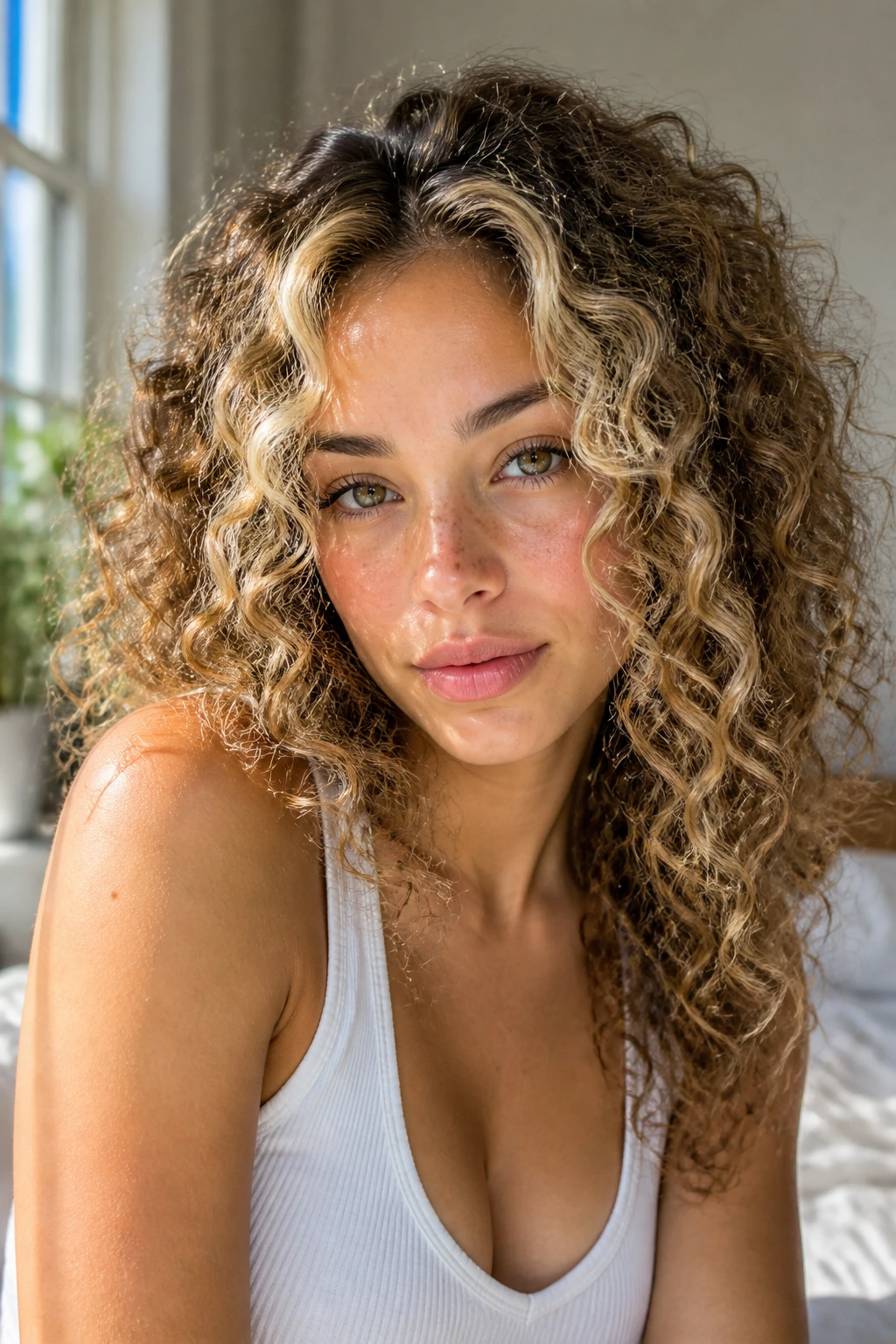
Money pieces on curly hair need more room than they do on straight hair. The spirals shrink the visible width, so a section that looks bold on paper can disappear once it dries.
What Makes Them Different
Sandy blonde is softer than icy blonde and less yellow than classic gold. That makes it a good middle ground for bright face-framing pieces, especially when the rest of the hair stays brunette or dark blonde.
The placement is the key. Keep the lightest sections at the front hairline and a little behind it, so the curls have room to fall forward without hiding the color. A too-thin slice can vanish into the pattern.
Ask For This
- Request 1 to 1.5 inch front sections if your curls are dense.
- Keep the tone beige-sandy rather than pure white.
- Ask for a softer root blend so the money piece doesn’t look pasted on.
- Add a gloss every few weeks if the blonde starts to look flat.
This is one of the easiest ways to brighten curls without bleaching the whole head. Small area. Big payoff.
15. Mahogany Red
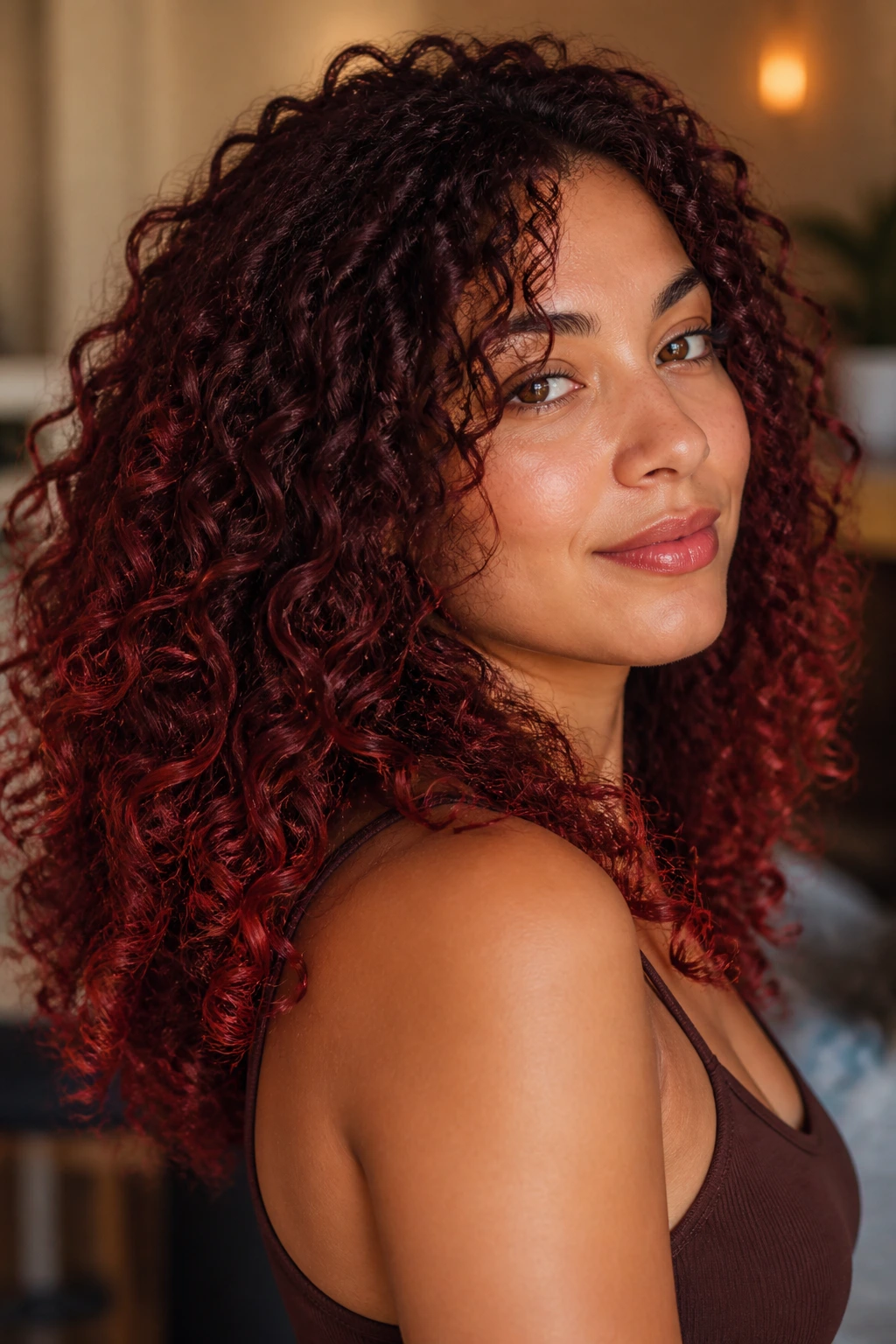
Mahogany red lives in that deep, rich red-brown lane that feels elegant without being sleepy. It’s darker than cherry, warmer than plum, and very forgiving on textured hair.
A curly haircut with mahogany color has depth built in. The darker base lets the red show up in the bends and around the outer coils, which means the color changes as the light moves instead of sitting there all one note.
Useful Placement Notes
- Keep the formula more red-brown than orange-red.
- Let the ends go slightly brighter if you want the color to feel lighter.
- Use a demi-permanent glaze if you want softer fade-out.
- Refresh every 4 to 6 weeks if you love the red tone.
Mahogany is a smart option for people who like bold color but not bright copper. It also hides the small dry spots that curls tend to pick up at the ends. That matters more than it sounds like it should.
16. Copper Penny All Over
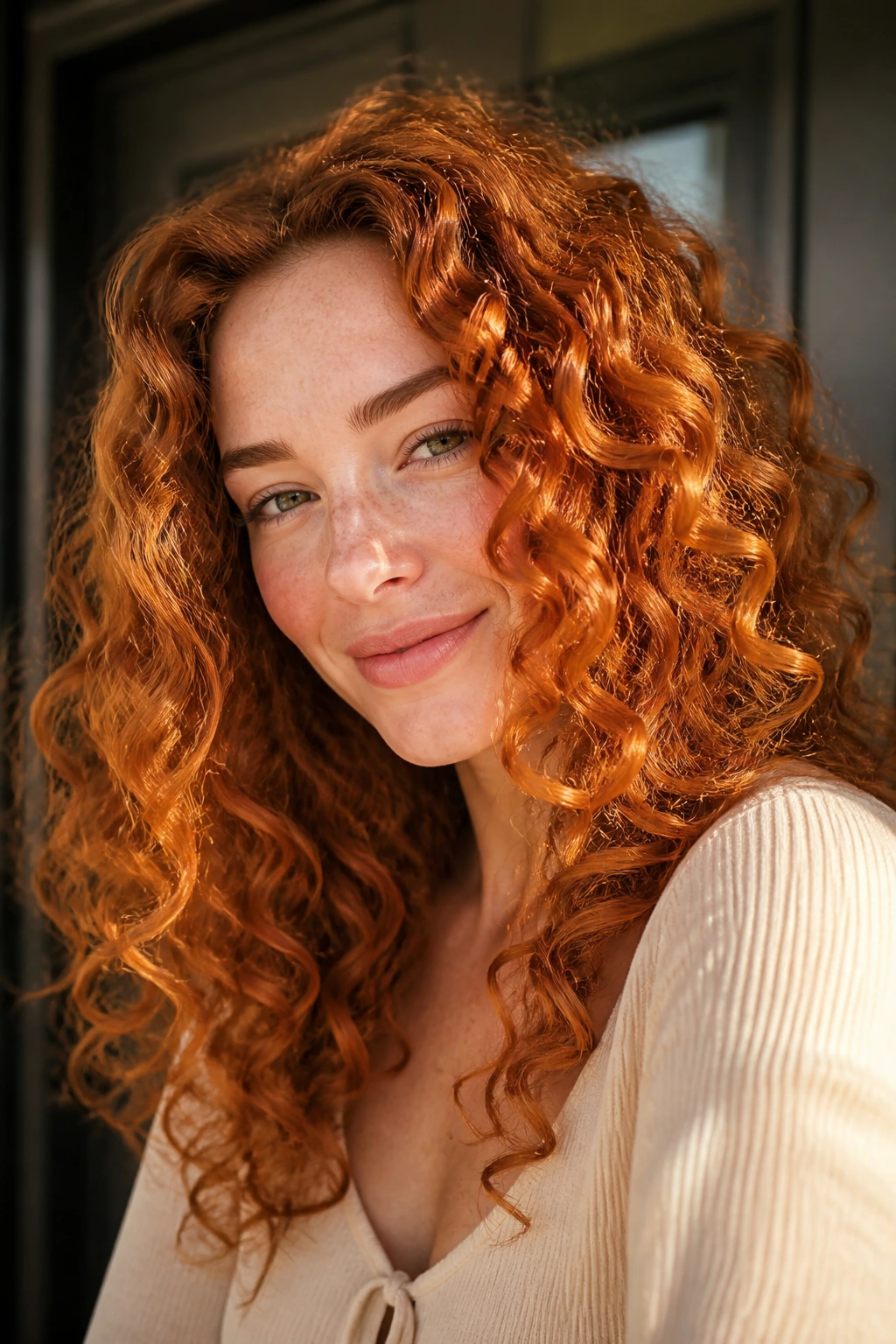
Copper penny is the kind of shade that makes curly hair look louder in the best way. It has enough orange-gold to stand out, but it still reads as rich if the base tone is controlled.
This color works best when the hair is lifted to a level 7 or 8 first, then toned into copper rather than slammed with a bright box dye. Box copper often goes too red or too flat. A salon copper, or a carefully mixed gloss at home, keeps the shine alive.
The interesting part is how curly texture changes the finish. Copper lands differently on every bend, so the same head can look brighter near the crown and deeper underneath. That makes the shade feel alive instead of painted.
If your curls are thick, copper penny can be a favorite. It adds energy without needing a lot of extra highlight work. If your hair is fine, though, go a touch softer or the color can overtake the pattern.
17. Midnight Blue Tips
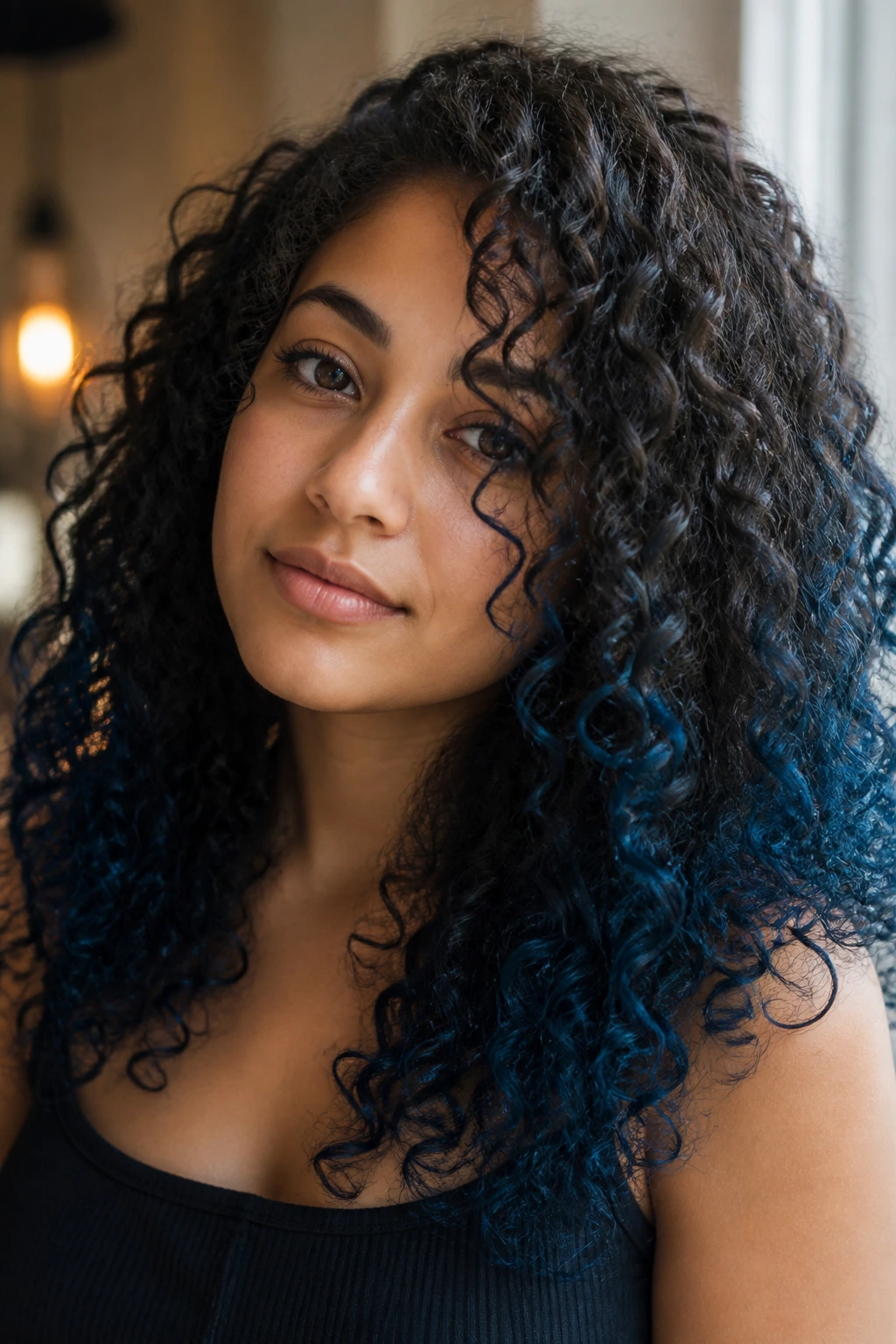
Midnight blue tips are perfect if you want something edgy without committing to a full fantasy color. The dark blue sits close enough to black that it can hide at first, then flash color when the curls separate.
Best Placement
The ends should do the work here. Keep the top and root area natural or close to it, and let the blue gather on the lower third of the hair. On curls, that gives the tips movement every time the hair bounces.
For a stronger blue result, the ends need to be lifted to a pale yellow first. If you want a deeper navy feel, you can keep a darker base underneath and skip the brightest pre-lightening. Different mood. Same idea.
Good To Know
- Blue fades cooler than red, but it can still go green if the base is yellow.
- Curly ends usually need extra moisture before and after coloring.
- A color mask in blue or navy helps keep the tone in between salon visits.
- Shorter curly cuts can wear this nicely, too; the tips are easier to see.
It’s a fun shade, but it has attitude. Which is the point.
18. Ash Brown Balayage
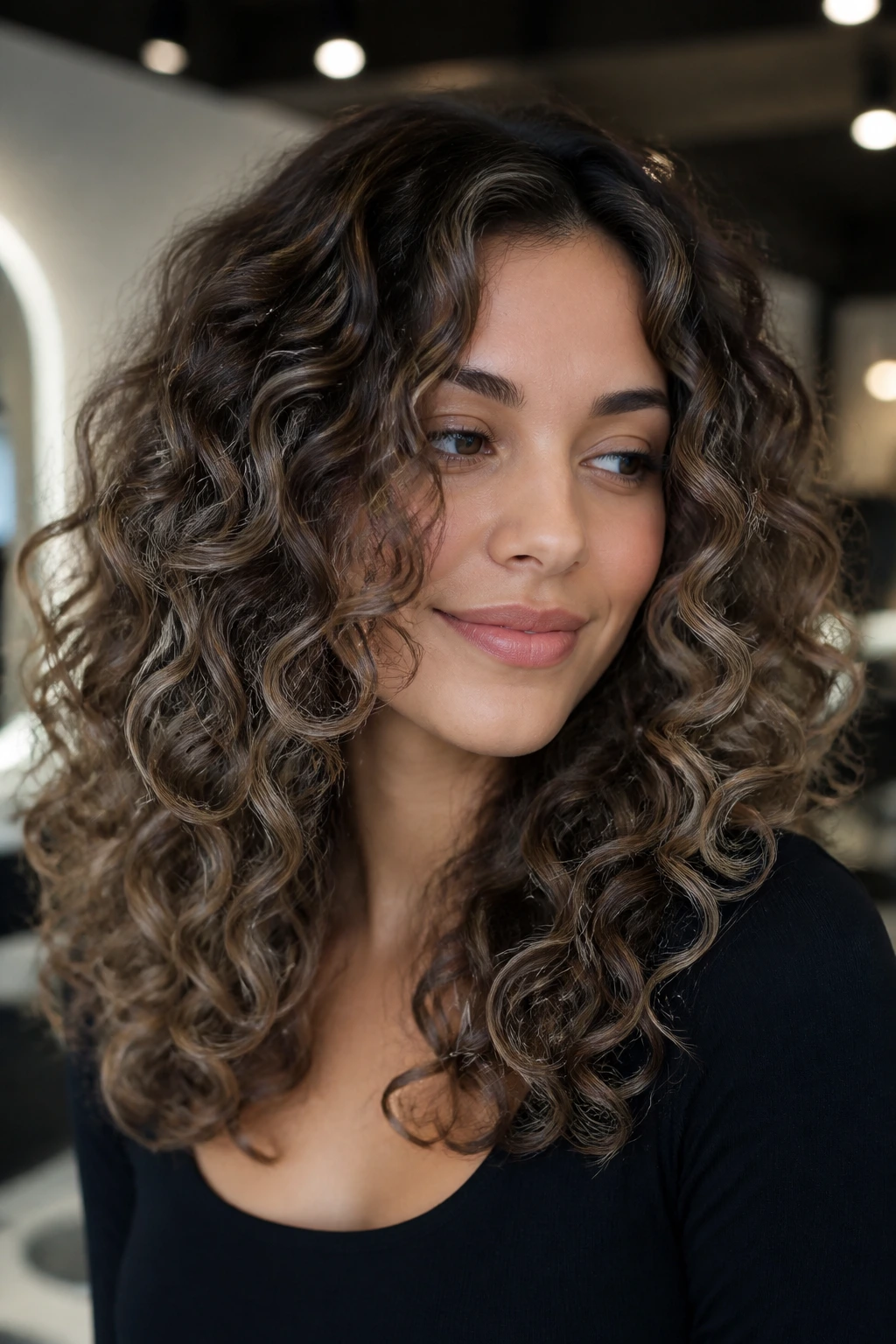
Ash brown balayage can be a breath of cool air on curls that tend to pull warm. It softens brass, adds shadow, and keeps the color from looking too sweet.
Compared with caramel balayage, ash brown is quieter. The pieces are still lighter than the base, but the tone stays muted and slightly smoky. That makes it better for people who want a clean brunette look with dimension rather than warmth.
On curly hair, ash brown works best when the lighter pieces are not too pale. Go too light and the cool tone can look streaky. Stay in the brown family, and the curl pattern does the rest.
I’d call this one a good fit for looser spirals, waves, and layered cuts. It keeps the hair looking grounded. If your skin has a cool or neutral lean, it can be especially flattering, but the real test is how the color sits next to your base.
19. Apricot Peach Tint
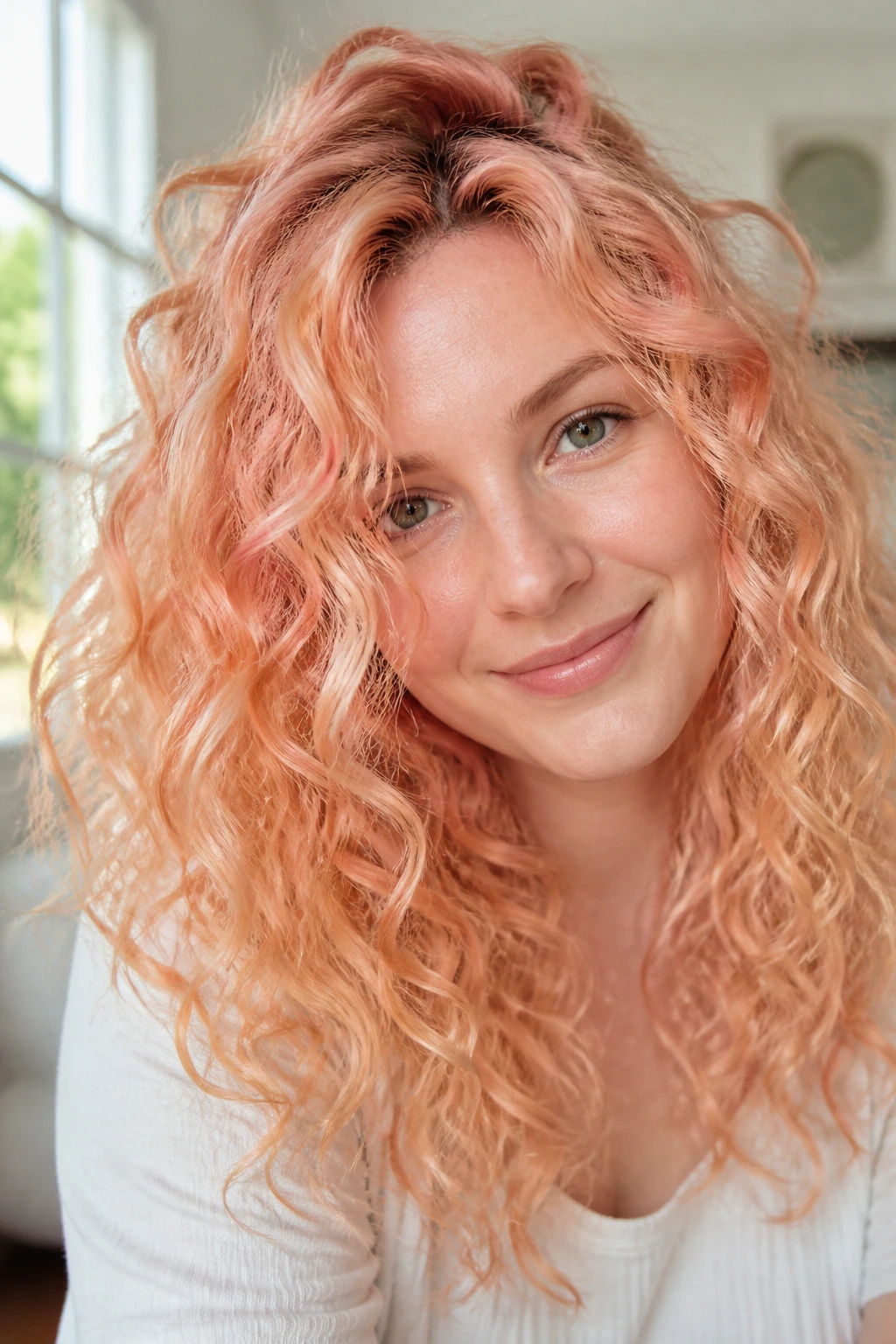
Apricot peach tint is soft, cheerful, and a little unexpected on curls. It has the warmth of peach and the freshness of apricot, so it feels lighter than copper but more alive than plain blonde.
The best part is that it does not need to cover everything. A translucent tint over prelightened curls can leave the hair looking like it has a warm glow from within. That’s much nicer than an opaque orange layer.
What to Expect
- Works best on pale blonde or very light pre-lightened hair.
- Fades into soft gold if you keep washing it.
- Looks strongest on loose ringlets and bouncy layers.
- Needs gentle shampoo and cool rinse water to stay fresh.
This is a playful shade, no question. It’s also one of the easiest fashion colors to wear if you want something that feels light rather than loud. If peach usually scares you, apricot is the better doorway.
20. Toasted Hazelnut
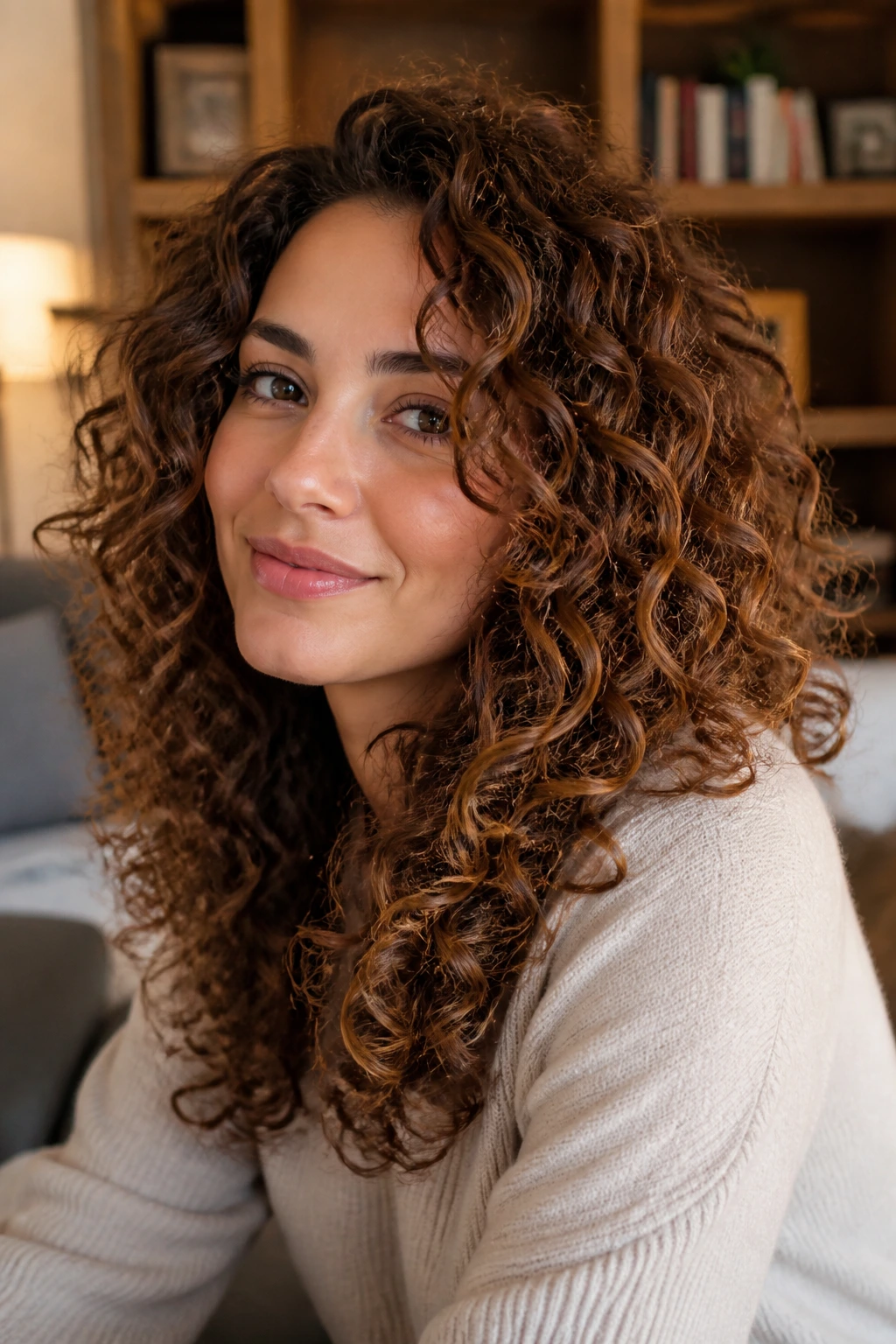
Toasted hazelnut is the color you choose when you want your curls to look expensive without making a scene. It’s a warm brunette with soft golden-brown highlights, and the whole thing sits in the middle ground nicely.
Why It’s So Easy to Wear
The shade avoids both extremes. It does not go too red, and it does not go too blonde. That makes it one of the safest curly hair color ideas for someone trying color for the first time.
Because the contrast is mild, the curl pattern stays front and center. You notice the movement before you notice the dye, which is exactly how a good dimensional brown should behave.
Best Way To Wear It
Ask for one to two levels of lightness through the mids and ends, then keep the root area close to the natural base. If the highlights jump too far, the hazelnut effect gets lost and the hair starts to read as streaked.
This is the sort of color that grows out well and rarely looks awkward. Not flashy. Just right.
21. Burgundy Wine Curls
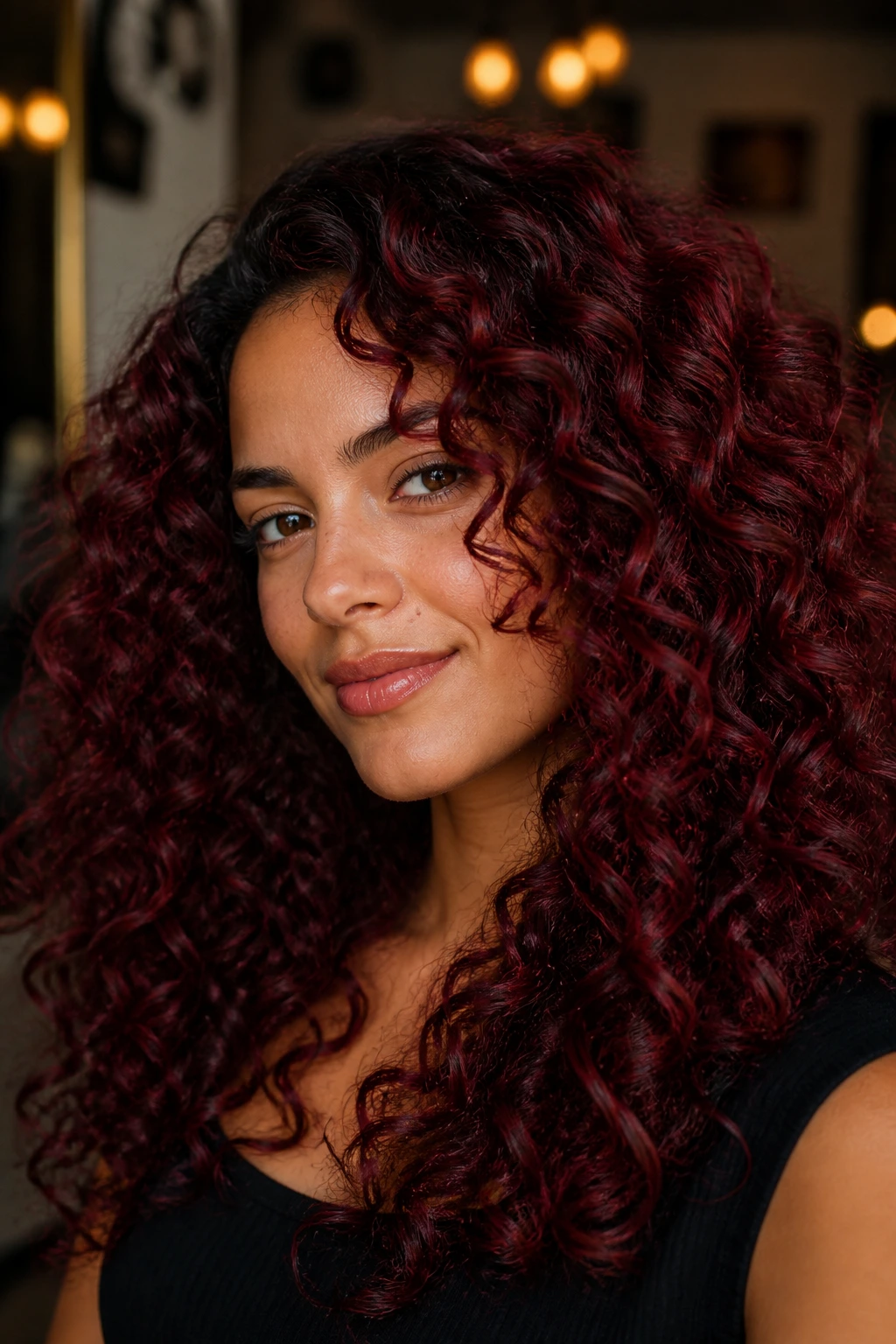
Burgundy wine is deep, dramatic, and a little moody in a good way. On curls, the red-violet tone shows up most clearly where the hair bends, which gives the whole style a plush finish.
Placement and Maintenance
- Keep the color darker at the roots and richer through the ends.
- Ask for burgundy with a brown base if you want a wearable result.
- Use color-safe shampoo, because red-violet pigments fade faster than brunette shades.
- Avoid long soaks in chlorinated water if you want the tone to stay clean.
This color works especially well on tighter curls and coily textures, where the light catches each curve in tiny flashes. It can also make a layered cut feel much fuller. The darker depth underneath creates shadow, and the wine tone breaks that shadow up in a flattering way.
If you like your hair color to have a little drama, burgundy wine delivers that without needing neon brightness. It’s strong. Not loud.
22. Golden Bronze
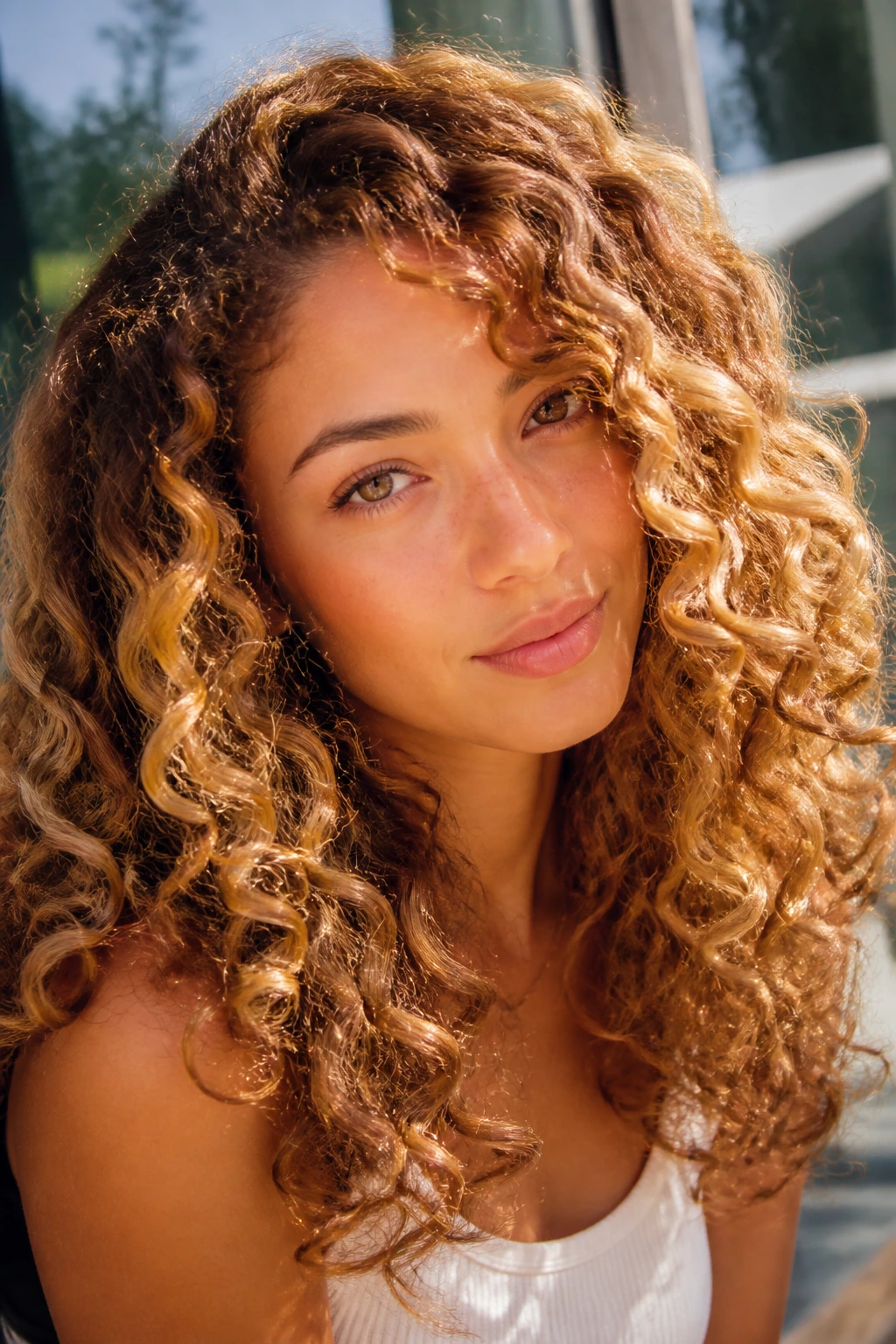
Golden bronze is warm in the easiest possible way. It has brown at the base, gold in the middle, and a hint of metallic glow when the light hits the curls from above.
I like this shade on medium brown curls because it makes the hair look sunlit without going all the way blonde. The bronze keeps the color grounded, while the gold adds movement and shine.
The best version is usually a blend rather than one flat formula. You want bronze through the mids, slightly brighter gold around the face, and enough darkness at the root to stop the whole thing from looking washed out. That root depth matters more than most people think.
This is also a forgiving color if your curls are dense. The warmth gives the pattern shape. If your hair is fine, keep the lighter bits sparing so the style still feels full.
23. Lavender Smoke
Lavender smoke is softer and cooler than smoky lilac, and that little shift changes the whole mood. It looks almost gray at first, then the lavender shows up when the curls move.
Why It Feels Different
The color is more muted, which helps it sit well on textured hair. Strong pastel tones can fight with curls; smoky tones tend to settle into them.
It’s also a smart choice if you want color that reads as deliberate but not sugary. On a pale blonde base, lavender smoke can look like mist on the surface of the hair. On deeper pre-lightened sections, it turns more silvery-purple.
How To Wear It Well
- Start with a light base, usually level 9 or lighter.
- Keep the roots a little deeper for contrast.
- Pair it with a soft haircut so the color isn’t competing with blunt ends.
- Rinse with cooler water and use a gentle cleanser.
This shade does fade, and that’s part of the charm. It shifts into silver and pale lilac instead of disappearing overnight, which gives you a few different looks from one color.
24. Espresso Root Melt
An espresso root melt is for people who want color with almost no maintenance drama. The roots stay deep espresso, then the shade melts into softer brown or caramel mids without a hard line.
Compared with classic highlights, this looks calmer. There’s less contrast near the scalp, which is nice on curls because the root area can puff up and make harsh lines even more obvious. A melt keeps the top clean and the movement below it interesting.
The transition should stretch over a few inches—often 1.5 to 3 inches, depending on length—so the eye doesn’t catch the shift too fast. That gradual fade is what makes the color feel polished.
This is a good fit for long curly layers, especially if you like wearing your hair in its natural shape most days. It also works when your schedule is busy, because the grow-out stays soft for a long stretch. Low effort. Good payoff.
25. Tangerine Copper
Tangerine copper is brighter and punchier than classic copper, and that’s why it can look so good on curls. The color has a citrus edge that wakes up the texture immediately.
What Makes It Stand Out
The orange is cleaner here. Less brown. Less rust. That makes the curls look lively and a little wild, in a good way.
It works best when the hair has enough lift to hold the color evenly. On a dark base, tangerine copper can look muddy unless the lightening is even. On pre-lightened curls, though, it can look like molten citrus moving through each bend.
Best Use Cases
- Great for springy spirals and layered cuts.
- Better as a demi-permanent or semi-permanent shade if you like change.
- Needs regular glossing to keep the orange fresh.
- Looks strongest on healthy ends that can reflect light.
This is not the color for someone who wants subtle. It is the color for someone who wants people to notice the hair first. Fair enough.
26. Charcoal Black with Violet Sheen
Charcoal black with violet sheen is what happens when black hair color gets a little dimension and stops pretending to be flat. The violet undertone shows up in light, especially on curls with a strong bend.
Why It’s Worth Considering
A true matte black can feel heavy on textured hair. Charcoal softens that by shifting the base closer to smoky gray-black, while the violet tint gives the surface just enough movement.
That hidden color matters most on loose curls and ringlets, where the hair turns enough to catch the light. The sheen does not need to be obvious. In fact, it works better when it feels like a secret.
Keep In Mind
- Ask for blue-violet or violet-black, not pure purple.
- A clear gloss on top can help seal the shine.
- This shade looks best when the hair is healthy and reflective.
- If you love changing color often, skip permanent black formulas.
It’s moody, sleek, and a little mysterious. No extra fuss needed.
27. Creamy Vanilla Blonde
Creamy vanilla blonde is brighter than beige but softer than icy platinum, which makes it a smart blonde choice for curls that need light without looking brittle.
The key is restraint. You want creamy, not chalky. A little warmth keeps the blonde wearable and helps the curls hold visual softness instead of turning into a hard pale block. If the ends are already fragile, keep the lightest pieces away from the very tips and focus more on the mids and face frame.
Good Fit Details
- Best on hair that can lift evenly to a pale blonde base.
- Works well with layered curls, because the light pieces catch each tier.
- Needs moisture masks and gentle detangling.
- A gloss with a beige or neutral tone keeps it from going too yellow.
This is a blonde for people who like brightness but still want the hair to feel touchable. It can be beautiful. It can also get thirsty fast, so the aftercare matters.
28. Soft Mint Peekaboo
Soft mint peekaboo color is tucked-away fun. The green-blue tint lives underneath the top layer, so the curls flash color only when they move or get pinned up.
The placement is what makes it work. On curly hair, hidden panels are easier to wear than a full-head fashion color because the texture already creates a built-in screen. You see little bits at a time, which keeps the shade feeling fresh instead of busy.
If you want the mint to show clearly, the underlayers need to be lightened first. If you prefer a whisper of color, a translucent mint glaze over pale blonde is enough. Either way, keep the top sections darker so the contrast does the work.
This is a good choice for layered curly cuts, shag cuts, and anyone who wants a color that shows up differently depending on how the hair falls. It has range. That’s the fun part.
29. Cocoa and Cinnamon Dimension
Cocoa and cinnamon dimension is a brunette color story with just enough warmth to keep it interesting. Cocoa gives you depth; cinnamon gives you soft red-brown light where the curls bend.
Why It Looks Good on Texture
Curly hair loves low-contrast color when the placement is smart. The cocoa base keeps the overall look rich, and the cinnamon pieces stop it from going flat or heavy.
This shade can be subtle or obvious depending on how much warmth you add. A tiny shift toward cinnamon creates a cozy, lit-from-within look. Push it warmer and the whole style reads more energetic.
How To Ask For It
- Ask for warm brunettes instead of orange highlights.
- Keep the cinnamon pieces thin and placed through the top layer.
- Use a glaze to keep the finish shiny, not dusty.
- Refresh the warmth every 6 to 8 weeks if you want the red-brown notes to stay visible.
It’s a good everyday color for curls that need dimension but not drama. Quiet, warm, and easy to wear.
30. Clear Gloss with Inky Lowlights
Sometimes the best curly hair color idea is not a big color change at all. Clear gloss with inky lowlights keeps the natural base in charge, then adds deep shadow pieces where the curls need a little more shape.
This is the shade for someone who likes their own color but wants it to look cleaner and shinier. The clear gloss smooths the surface, while the inky lowlights drop depth into the underside and around the interior curl groups. That tiny contrast can make a big difference.
I’d use this on dark blondes, brunettes, and even black curls that look a little one-note. The lowlights should sit one shade deeper than the base, not five shades darker. Too much contrast can make curls look busy instead of polished.
If you want a color refresh without going lighter, this is one of the smartest options on the list. It respects the curl pattern instead of trying to cover it.
Final Thoughts
Curly hair gets better color when the shade follows the shape. That’s the real thread running through every option here: soft placement, smart contrast, and enough depth to keep the curl pattern visible.
If you’re choosing between two colors, pick the one that gives the hair more movement rather than more brightness. Curls already do the hard part. The color just needs to show up in the right places.
Bring reference photos that show the shade in daylight and indoors, because curls can lie under a single lamp. That tiny bit of prep saves a lot of disappointment, and it makes the salon chair feel a lot less like guesswork.
