



Salt and pepper hair can look flat fast when the tone misses the mark. On cool skin tones, though, it can turn sharp, polished, and a little bit expensive-looking when the gray leans silver, graphite, pewter, or ash instead of beige or gold.
That’s the part a lot of people miss. Cool undertones and cool hair color tones are cousins. When they line up, the whole face looks cleaner; when they fight, the gray can go dull or muddy and the skin can take on a faint yellow cast that nobody asked for.
The good versions of salt and pepper hair color for cool skin tones usually do one of three things: they brighten the face with icy pieces, deepen the base with smoky shadow, or blur the gray so it looks intentional rather than patchy. A good colorist will talk in levels and undertones, not just “gray,” because those tiny choices decide whether the look feels crisp or washed out.
And the nice thing? You do not need loud color to make this work. A few careful ribbons, a cleaner root melt, or the right silver gloss can change the whole read of the hair. Some of these looks are soft enough to wear at the office; others have a little more edge. All of them make sense on cool skin.
1. Smoky Silver Melt
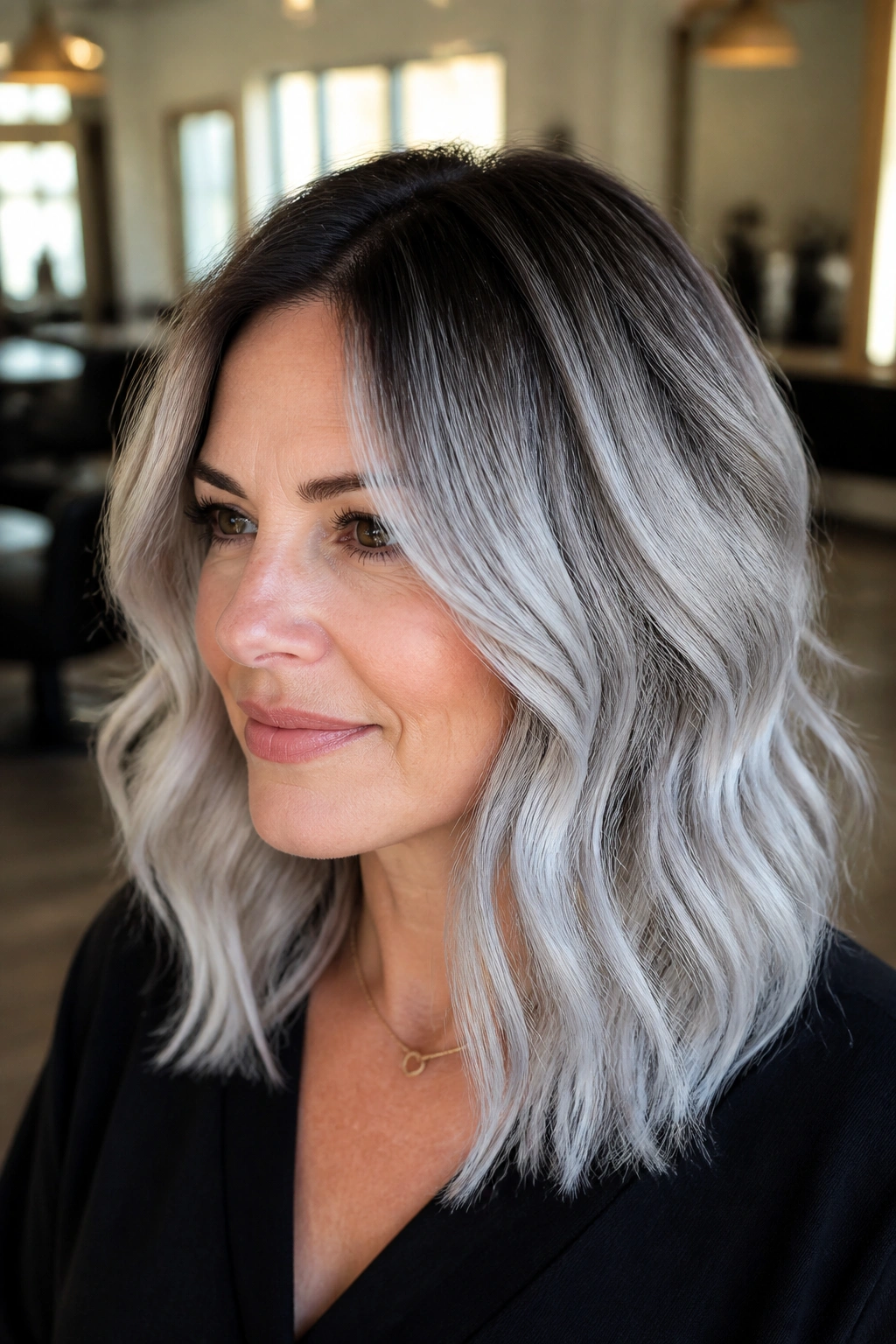
This is the classic move when you want salt and pepper hair color for cool skin tones without a hard line anywhere. The roots stay a touch deeper, the mids soften into smoky gray, and the ends lean bright silver. It feels blended, not striped.
What makes it flattering is the shift in temperature. The darker root gives the eye a place to land, while the silver through the lengths keeps the face from looking heavy. Ask for a shadow root one to two levels deeper than the ends, then let the gray soften as it moves downward.
It works especially well on shoulder-length cuts and soft layers. Straight hair shows the melt cleanly. Wavy hair makes it look even better, because the bends catch the different tones instead of showing one flat slab of color.
2. Graphite Roots with Pearl Ends
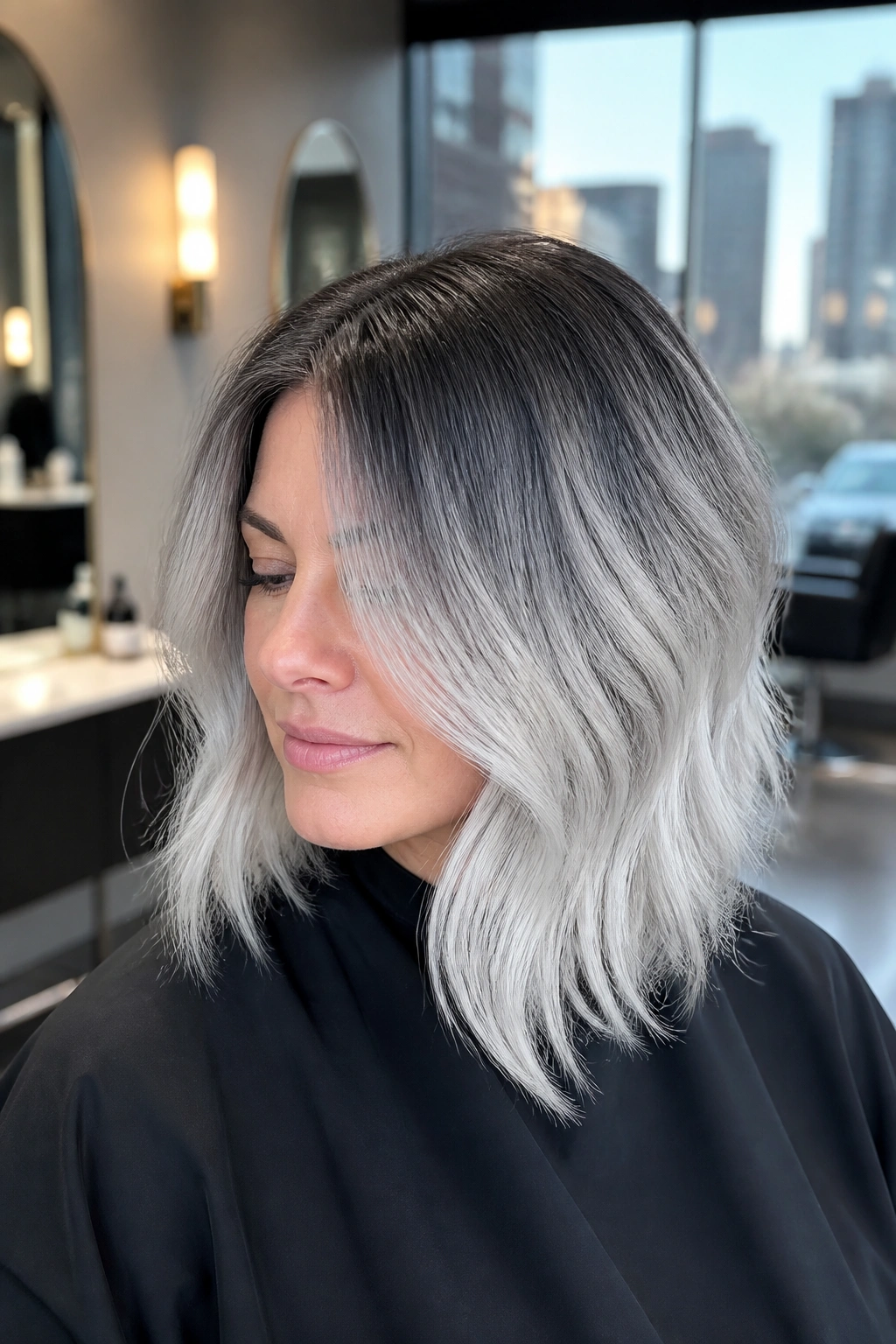
Do you want something a little sharper? Graphite roots with pearl ends are a cleaner, cooler version of salt and pepper. The top reads deep charcoal, almost inky in low light, while the lengths shift toward a pale pearl silver that never turns beige.
Why the contrast works
Cool skin tones usually love that blue-gray contrast. It keeps the face bright without pushing the hair into stark white territory, which can look a bit harsh on some complexions. Pearl ends are softer than pure platinum, and that softness matters.
A formula like this also buys you some breathing room between appointments. The darker top grows out with less drama, and the pearl ends can be refreshed with toner instead of a full recolor. That is a relief if you do not want to live in a salon chair.
- Best on blunt bobs, long lobs, and sleek blowouts
- Ask for a blue-based toner on the lightest pieces
- Keep a purple shampoo nearby, but use it sparingly
- Finish with a light shine cream, not a heavy oil
3. Cool Taupe Salt-and-Pepper Blend
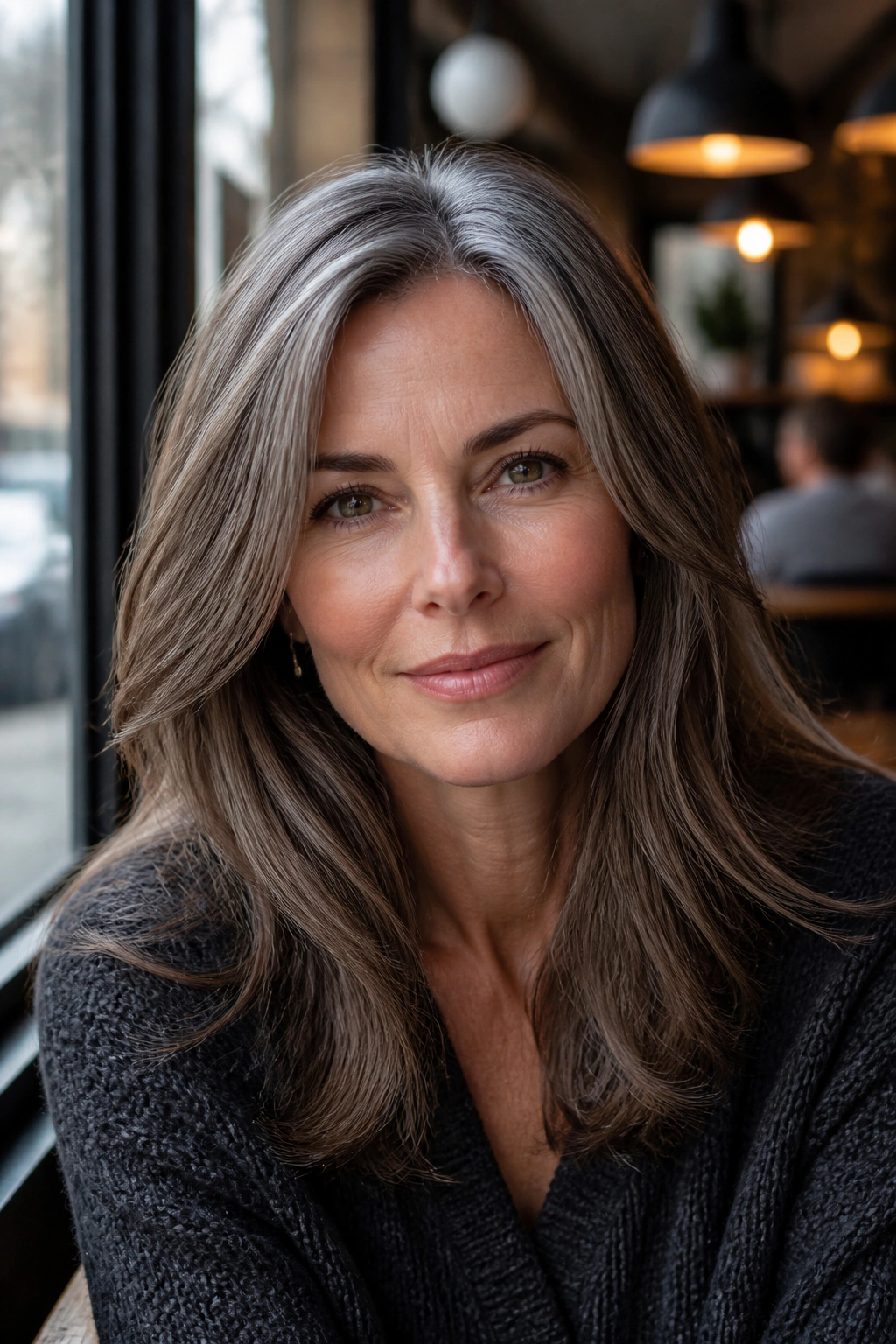
Taupe can be tricky, and that’s exactly why it works here. A cool taupe salt-and-pepper blend softens the contrast between gray and brunette, which is useful if you want something quieter than bright silver but less flat than plain brown.
This shade sits in that ash-brown zone where the hair still looks dimensional. For cool skin tones, that muted undertone helps the face stay balanced. Warm caramel or honey pieces would fight the look. Ashy taupe, on the other hand, feels like it belongs.
It’s a smart choice for people with fine hair, too. Fine strands can look stringy when the contrast is too bold. Taupe keeps the movement visible without turning every ribbon into a separate stripe. Soft. Easy. Very wearable.
4. Frosted Face-Framing Money Pieces
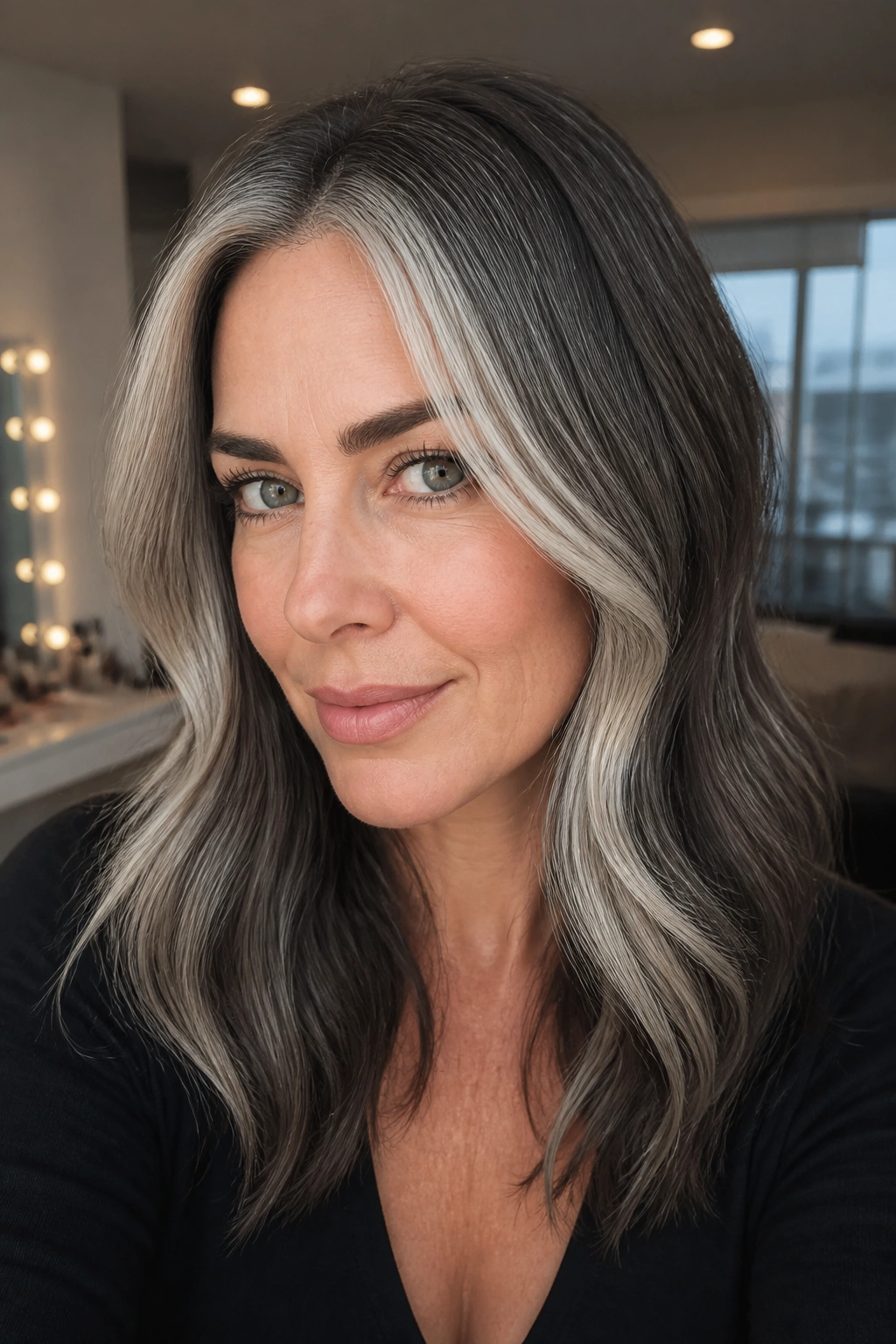
A few frosted pieces around the face can do more than a whole head of heavy highlight work. If your salt and pepper hair already has a strong natural pattern, lighter face-framing pieces can brighten cool skin tones without stealing the show.
Where to place the lightest pieces
The smartest placement usually starts at the temples and the front hairline. That area sits right next to the skin, so even a small shift toward silver or ice blonde changes the whole mood. Keep the rest of the hair more muted and let those front pieces do the lifting.
This idea is especially good if your hair is mostly dark with only some scattered gray. Instead of trying to force the whole head into one tone, you let the natural silver show where it wants to show and then paint brightness where the face needs it.
A little goes a long way. Two thin panels on each side can be enough.
5. Charcoal Lowlights on a Silver Base
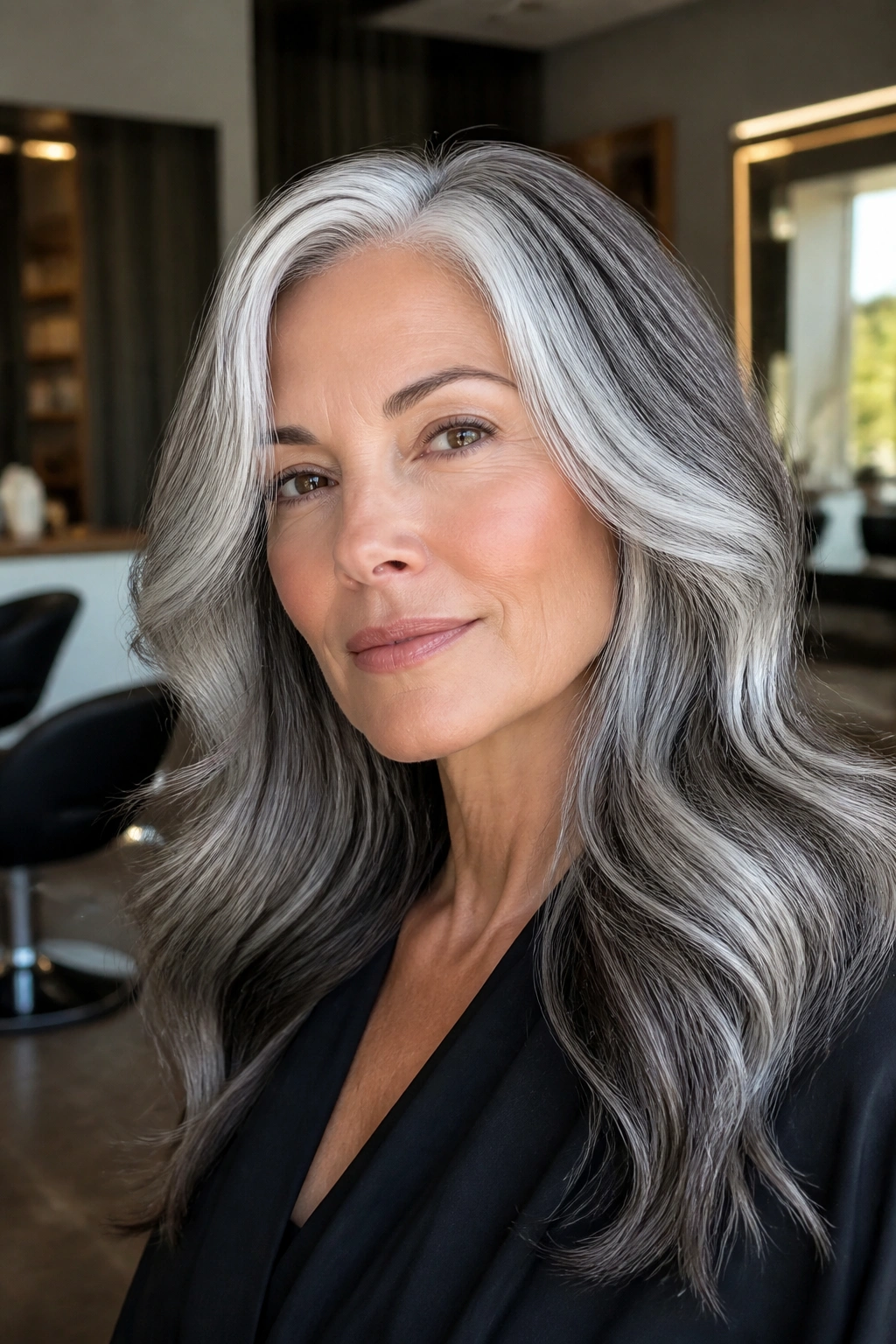
Here’s the move for people who are already mostly gray but think the color looks too pale. Adding charcoal lowlights gives the silver something to hold onto. The result is richer, not darker in a heavy way.
Cool skin tones usually handle this beautifully because charcoal stays in the same temperature family. It does not muddy the complexion the way soft golden brown can. Instead, it sharpens the contrast around the eyes and makes the silver look more deliberate.
The trick is keeping the lowlights thin enough to blend. If they’re too chunky, the hair starts to look striped and dated. Ask for fine weaving through the crown and underneath the top layer, then keep the silver bright on top. That layered effect is what gives the color movement.
6. Steel Gray Bob
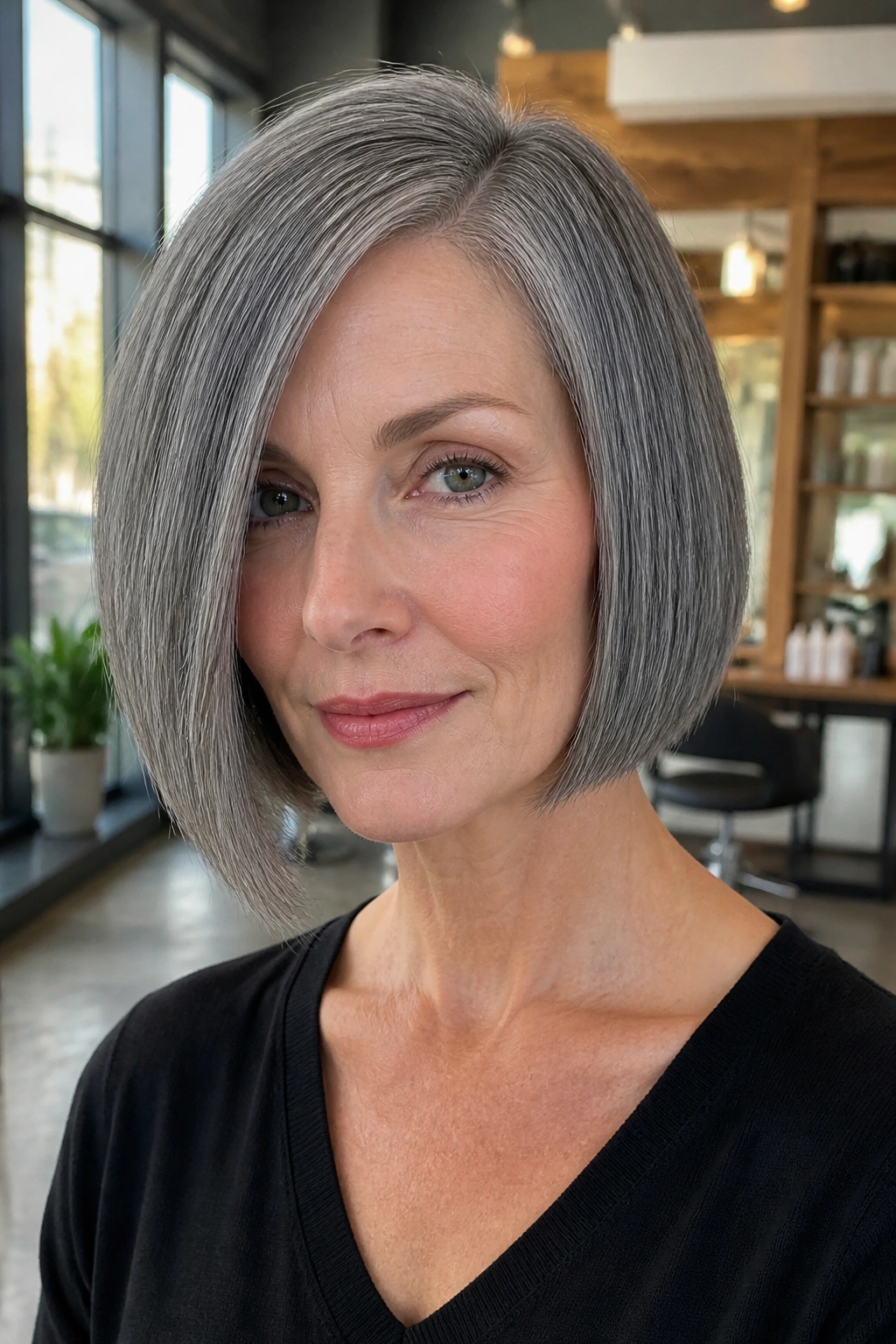
A steel gray bob has a direct, no-nonsense kind of appeal. The color sits between silver and slate, which makes it feel cleaner than muddy gray and less icy than platinum. On cool skin tones, that middle ground is often the sweet spot.
The cut matters just as much as the color here. A one-length bob or a slightly stacked bob makes the steel shade look crisp at the edges. If the cut gets too shaggy, the clean metallic effect starts to disappear.
Best pairings for the cut
- Chin-length or collarbone-length bobs
- Side parts that open up the face
- Flat iron finishes for a sleeker read
- Light root shadow if your natural base is dark
One thing people underestimate: steel gray looks better when it shines, not when it’s overloaded with product. A light gloss or a very small amount of smoothing cream is enough.
7. Mushroom Brown with Silver Ribbons
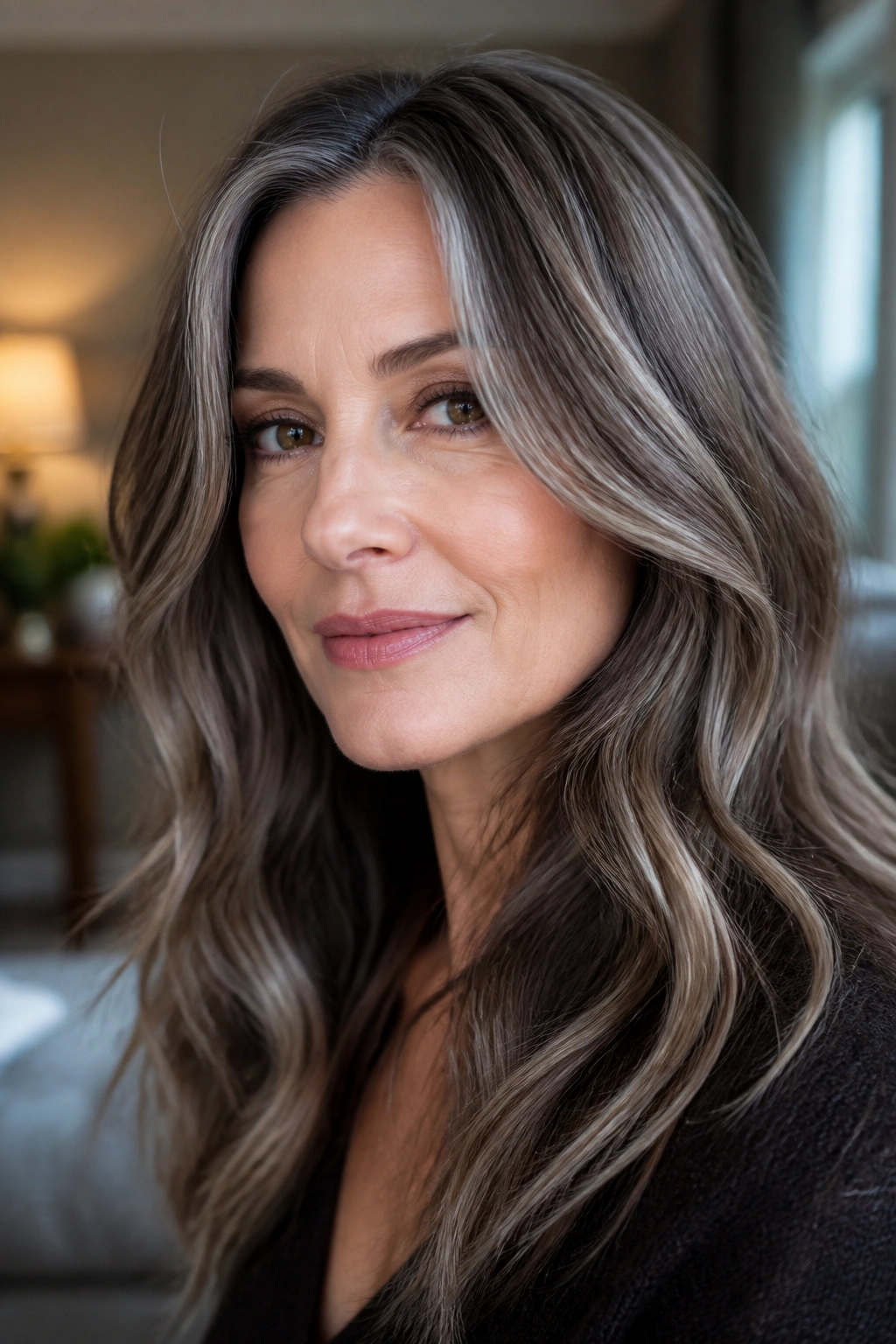
Mushroom brown is one of those shades that sounds plain until you see it next to cool skin. Then it makes sense. The ash-brown base keeps the hair grounded, and the silver ribbons bring the salt side of the equation forward.
This is a nice choice if you do not want a full-on gray look. It reads softer, especially on medium-length hair and loose waves. The ribbons are thin and irregular, which keeps the whole thing from looking too processed. That irregularity is the charm.
Ask your colorist for muted ash-brown depth with narrow silver highlights, not gold and not beige. The difference is bigger than it sounds. A warm mushroom formula can drift brassy fast; the cool version stays cleaner and more flattering on fair to medium cool complexions.
8. Ice Blonde Accents Through Peppery Strands
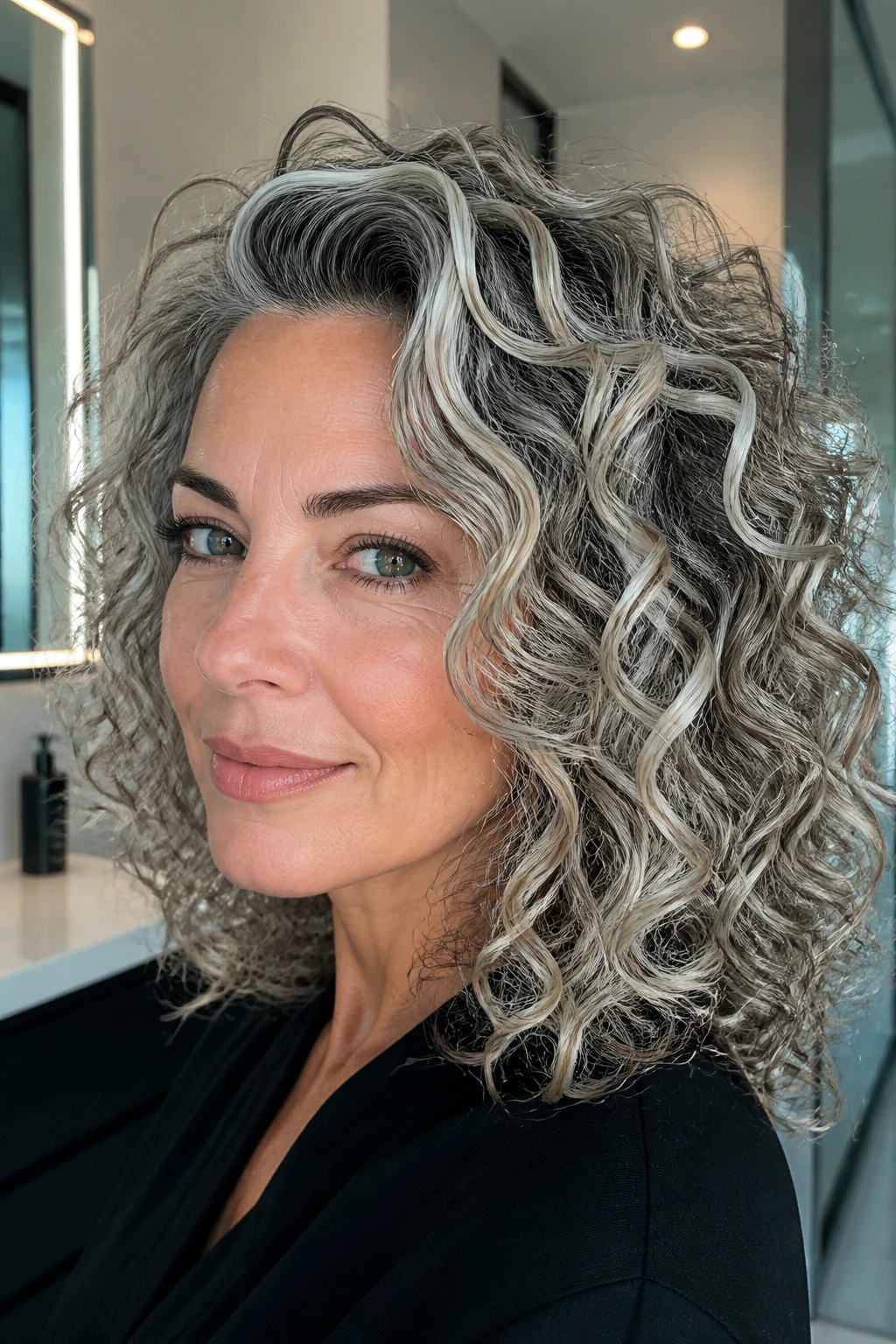
A peppery base with icy blonde accents gives you salt and pepper hair without making the silver feel dull. The lighter pieces should look crisp, almost frosted, but not yellow. That matters. Yellow is the enemy here.
This approach works well if your hair already has darker lowlights or natural brunette left in the mix. The icy accents sit on top like shards of light, which is especially nice around curls, bends, and layered ends. The contrast can feel fresh without turning the whole head into blonde.
Use it when you want movement. Use it when you want a little drama.
It is not subtle, and that’s the point.
A toner with a cool violet or blue cast helps keep the accents icy instead of creamy. Skip anything that promises warmth.
9. Satin Silver Balayage
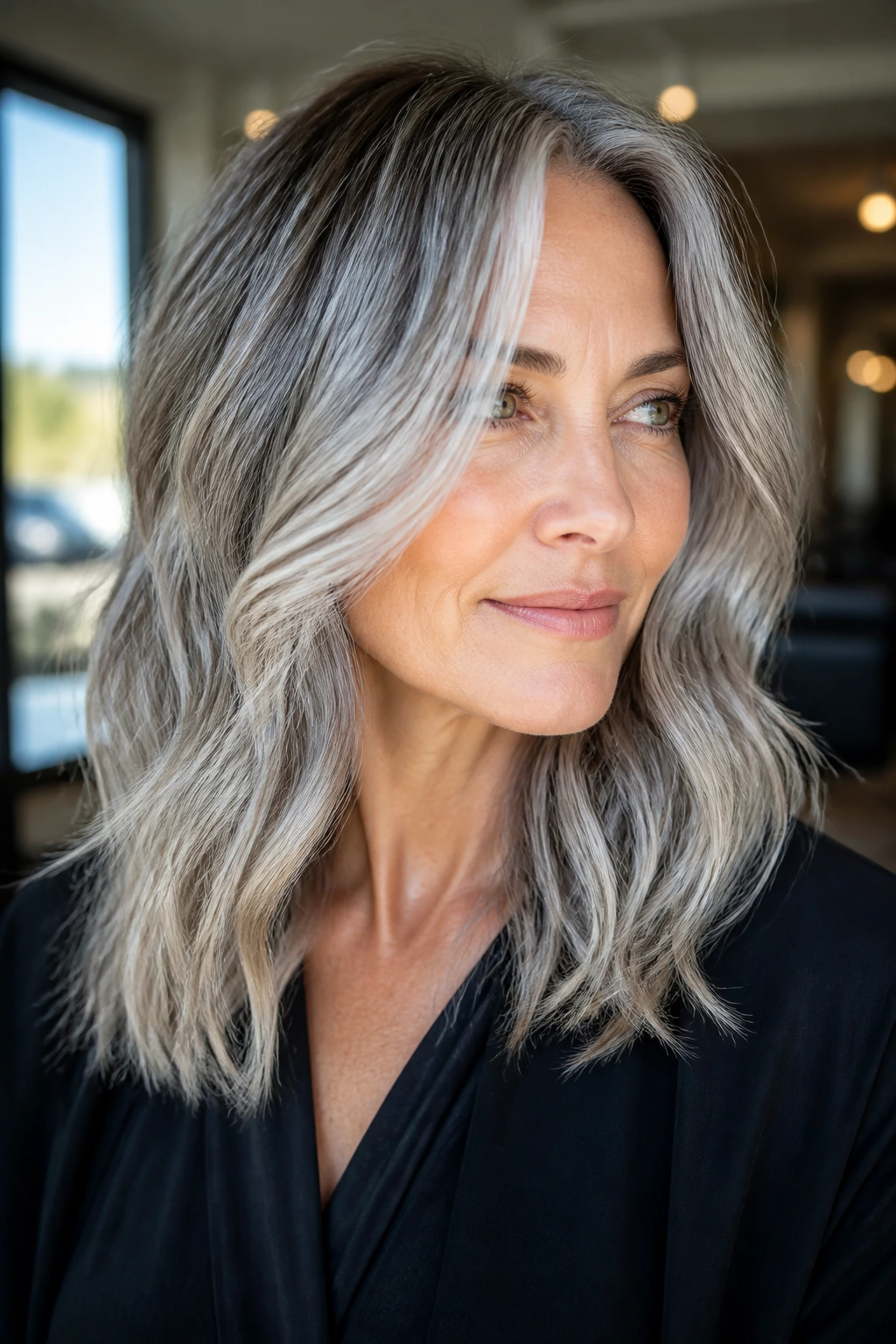
Balayage can look chunky if the placement is too obvious, but a satin silver version feels much smoother. The hand-painted pieces blend into the base instead of sitting on top of it, so the whole look reads soft and expensive rather than stripy.
That softness is why it works so well on cool skin tones. You get brightness without a harsh line, and the silver lives in ribbons that move with the hair. On waves, the finish can look almost fabric-like, which is probably why “satin” fits the shade so well.
How to keep it soft
- Ask for fine, feathered painting rather than chunky panels
- Keep the top slightly deeper for contrast
- Use a sulfate-free cleanser to slow fading
- Gloss every 6 to 8 weeks if the silver starts to look flat
If your hair tends to frizz, this is one of the better choices because the blended placement hides texture better than a hard highlight pattern.
10. Pewter Pixie Cut
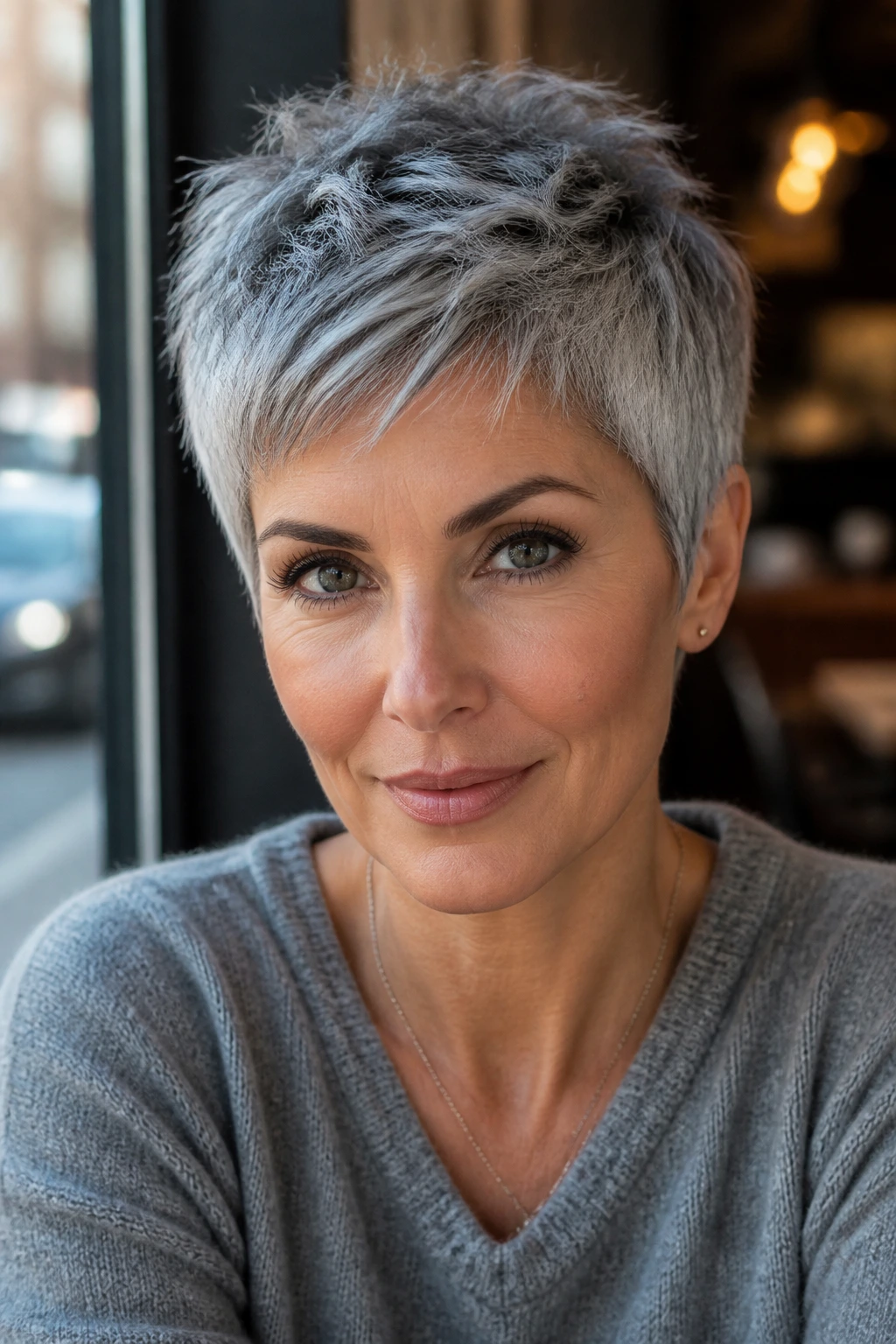
A pixie cut changes the whole conversation. There is nowhere for bad color placement to hide, so pewter works beautifully here because it looks deliberate from every angle. Short hair makes the metallic gray feel sharp instead of soft.
Pewter sits between silver and charcoal. It has enough depth to avoid looking washed out, but it stays cool enough for fair, rosy, or blue-based complexions. That matters a lot on cropped cuts, where the hair sits close to the face.
The styling is simple. A light paste, a bit of lift at the crown, and clean edges. Done.
If you want a little movement, leave the top a touch lighter than the sides. It keeps the cut from looking helmet-like, which is the last thing a pixie needs.
11. Ash Brown with Silver Temples
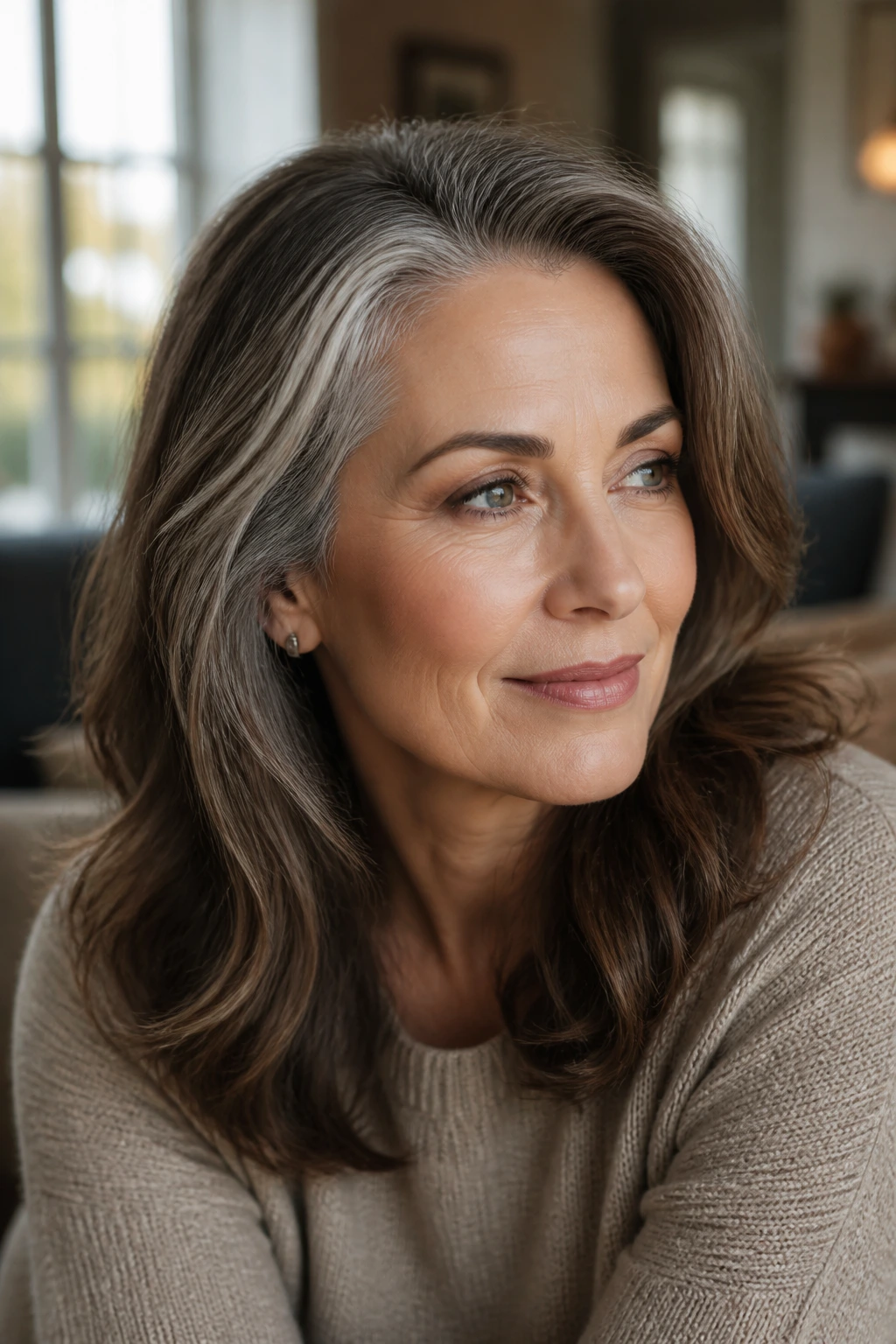
Ever notice how a little gray at the temples can look intentional when the rest of the hair is shaped right? That’s the idea here. Ash brown through the main body keeps the hair grounded, while the silver at the temples adds a natural, cool frame around the face.
This is a quietly smart look for cool skin tones. The ash base avoids any rusty warmth, and the silver near the face gives a bright edge without requiring full-head lightening. If your natural gray has started to show around the hairline, this style lets it participate instead of covering it.
It also grows out nicely. Temple silver blends into natural regrowth more easily than heavy highlight lines, so you can stretch appointments a little. Not forever. Just enough to matter.
12. Silver Fox Curls with a Gloss Finish
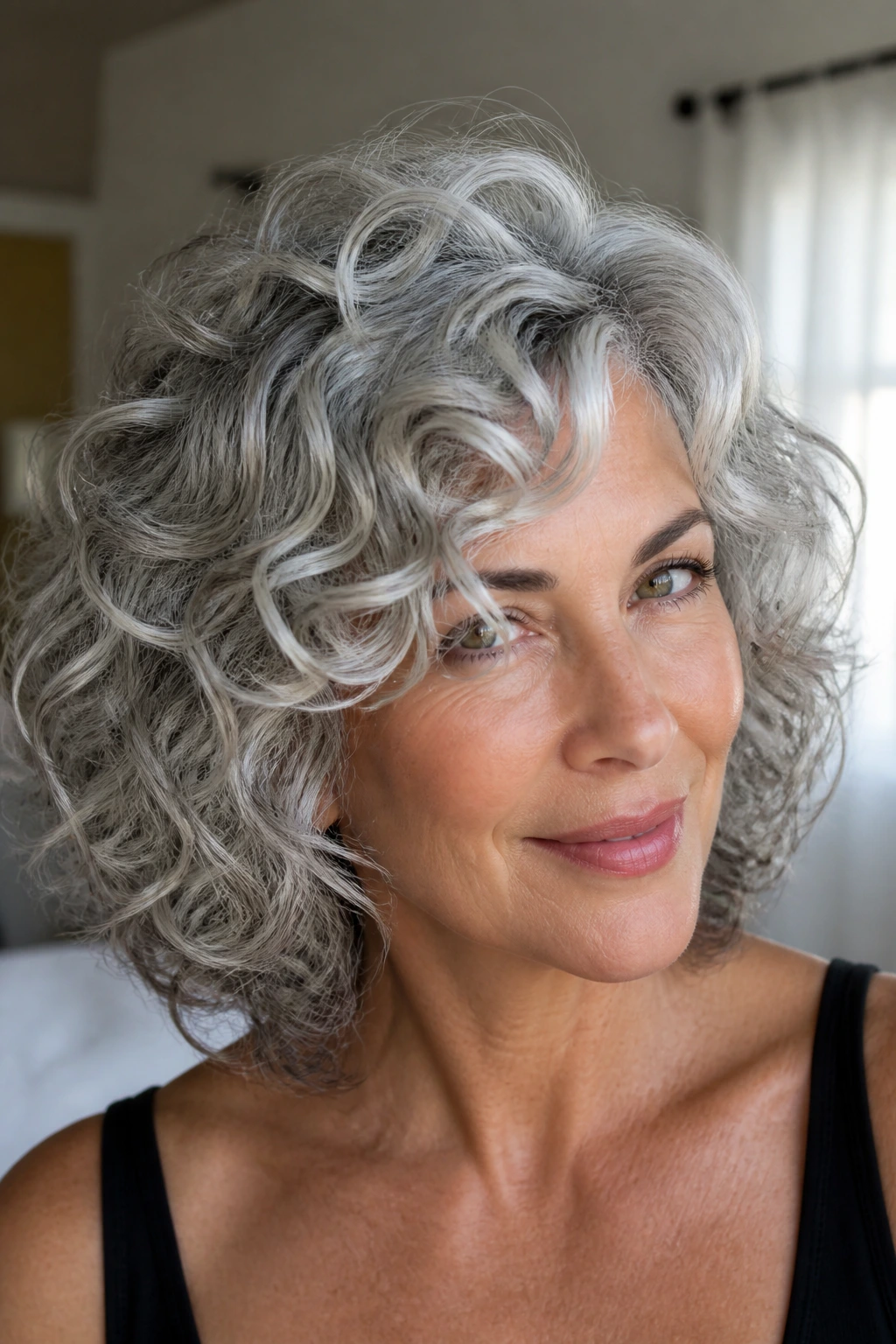
Curly hair loves dimension, and silver fox tones show that off better than a flat color ever could. The curls catch the light, the silver keeps the shape visible, and a gloss finish stops everything from looking dry or dusty.
What curls need
Curly hair usually absorbs more product and loses shine faster, so a clear or lightly tinted gloss can make the silver read richer. That does not mean glossy in an oily way. It means the curl surface reflects light instead of swallowing it.
Cool skin tones get a nice lift from this because the silver sits right next to the face in a clean, cool way. Darker lowlights underneath can make the curl pattern pop even more. The contrast is worth the extra thought.
- Ask for lowlights under the crown
- Keep the lightest silver on the outer curl layer
- Use a diffuser on low heat
- Refresh with a cool-toned mask when the color looks tired
The right gloss is the difference between silver curls and dull silver curls. Small detail, big payoff.
13. Midnight Root Shadow
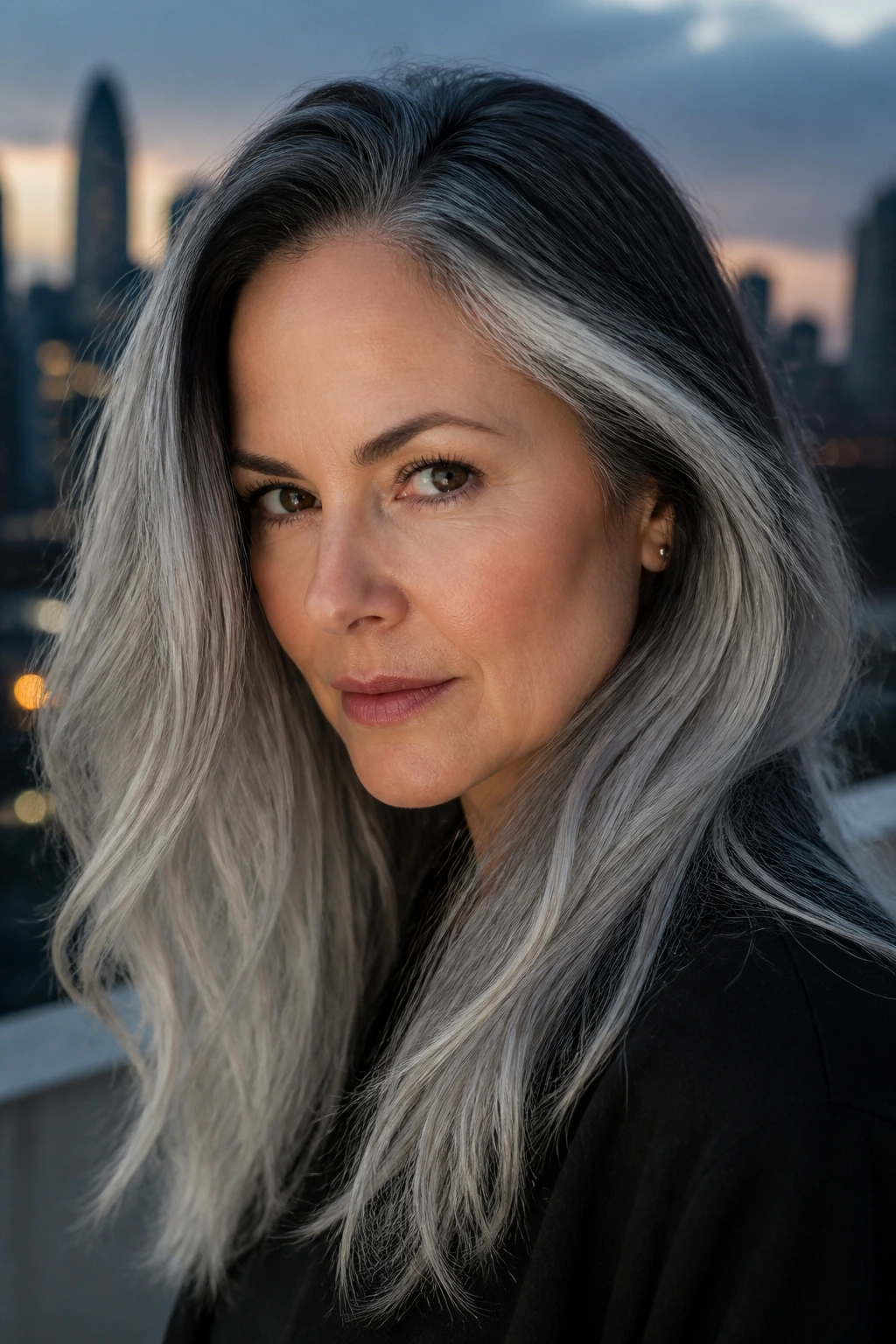
A midnight root shadow is for anyone who likes their salt and pepper look with a little edge. The roots stay almost black, or close enough to feel it, and then the silver-gray through the lengths softens the contrast before it gets too hard.
That darker root is useful on cool skin tones because it anchors the face. Pale silver alone can sometimes wash out fair complexions, especially if the skin has a pink cast. Midnight depth gives the color a frame.
This look is easier to wear than it sounds. The shadowed roots hide regrowth, and the lengths can carry silver, graphite, or smoky beige-gray depending on how cool you want to go. A blue-based glaze keeps the whole thing from drifting warm.
It’s a good choice if you like bold hair but hate high maintenance.
14. Platinum Streaks Underneath the Top Layer

Here’s a neat trick: keep the top layer darker and let the platinum live underneath. When the hair moves, the light pieces flash through. When it sits still, the look stays controlled. That’s a very nice balance.
On cool skin tones, platinum underlayers can brighten the face without overexposing it. You get the lift of light hair near the neckline and through the ends, but the darker top layer keeps the overall effect grounded. It’s a little more interesting than full-head silver.
This works especially well if you wear your hair up often. A ponytail or clipped-back style reveals the hidden brightness, and that can be fun without being loud. The placement also keeps maintenance easier because the underlayer does not show every root as fast.
A few foiled panels beneath the crown are enough. No need to turn the whole head into ice.
15. Gunmetal Lob
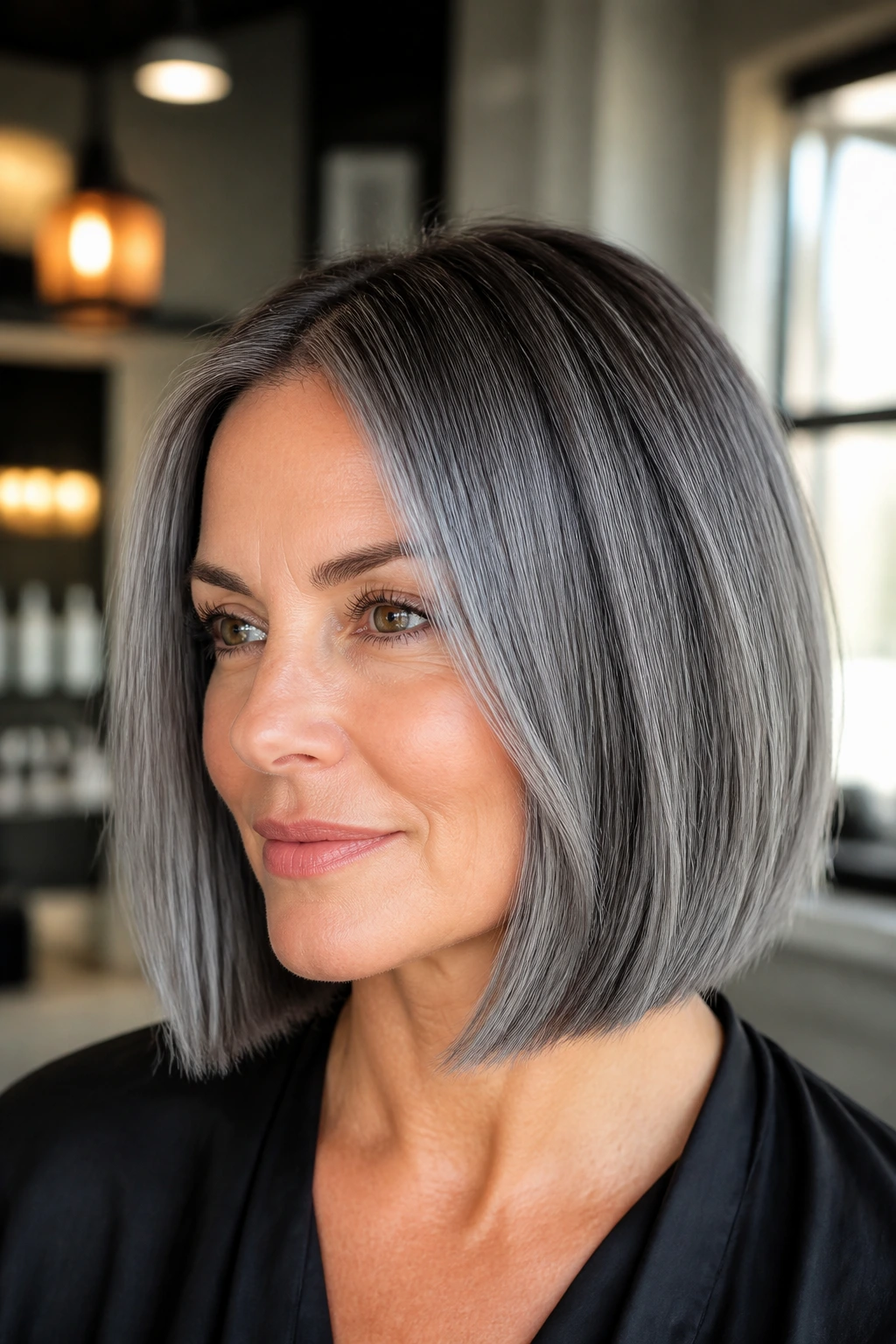
Gunmetal is the color people reach for when they want gray with backbone. It has more depth than silver, more shine than brown, and a cool metal finish that looks especially strong on a lob. Long enough to swing, short enough to feel tidy.
A blunt lob makes the shade look richer. Soft layers work too, but they change the way the metal finish reads. The cleaner the cut, the more the gunmetal color feels deliberate. That can be a lifesaver for anyone with fine to medium hair.
One detail I like here: a slightly darker root melt keeps the color from going flat at the scalp. Without it, gunmetal can look a little like one solid helmet of gray. And nobody wants that.
A shine spray at the ends helps. A matte product will dull it out fast.
16. Salt-and-Pepper Shag with Violet Toner
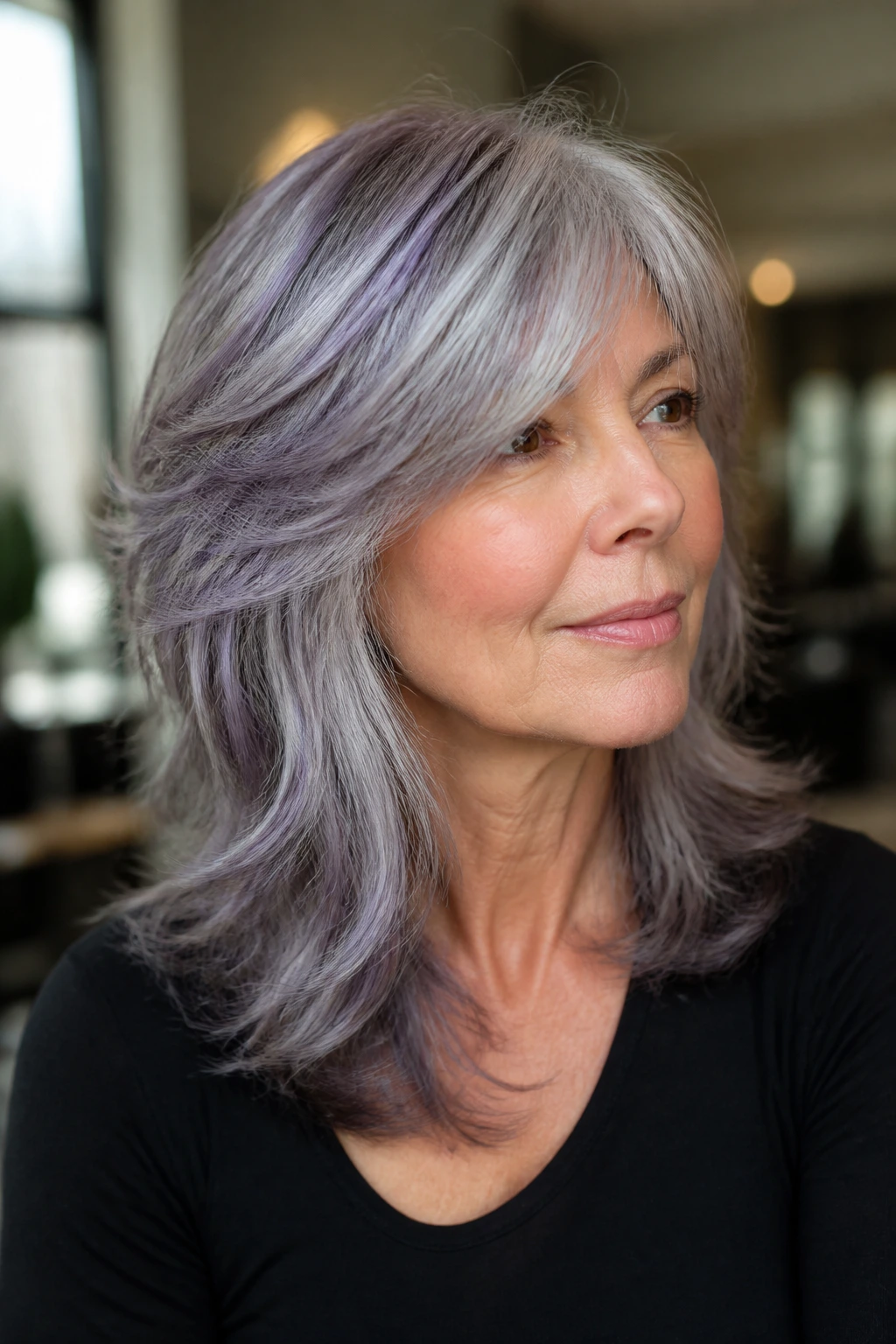
A shag cut already has personality. Add salt and pepper color, then tighten the tone with a violet toner, and the whole thing shifts into something sharper. The layers move, the ends flick out, and the gray stays clean.
The toner is doing more work than people realize. Gray hair can pick up yellow from hard water, sun, or styling heat, and cool skin tones usually look better when that warmth is pulled back. Violet shampoo helps a little. A salon toner helps more.
What to watch for
- Don’t overtone and turn the hair lavender
- Keep the layers feathered, not choppy
- Use heat protectant before diffusing or blow-drying
- Trim the ends regularly so the texture looks intentional
This is a good cut if you like hair that feels lived-in. It does not need to be polished to work.
17. Icy Pearl Blend
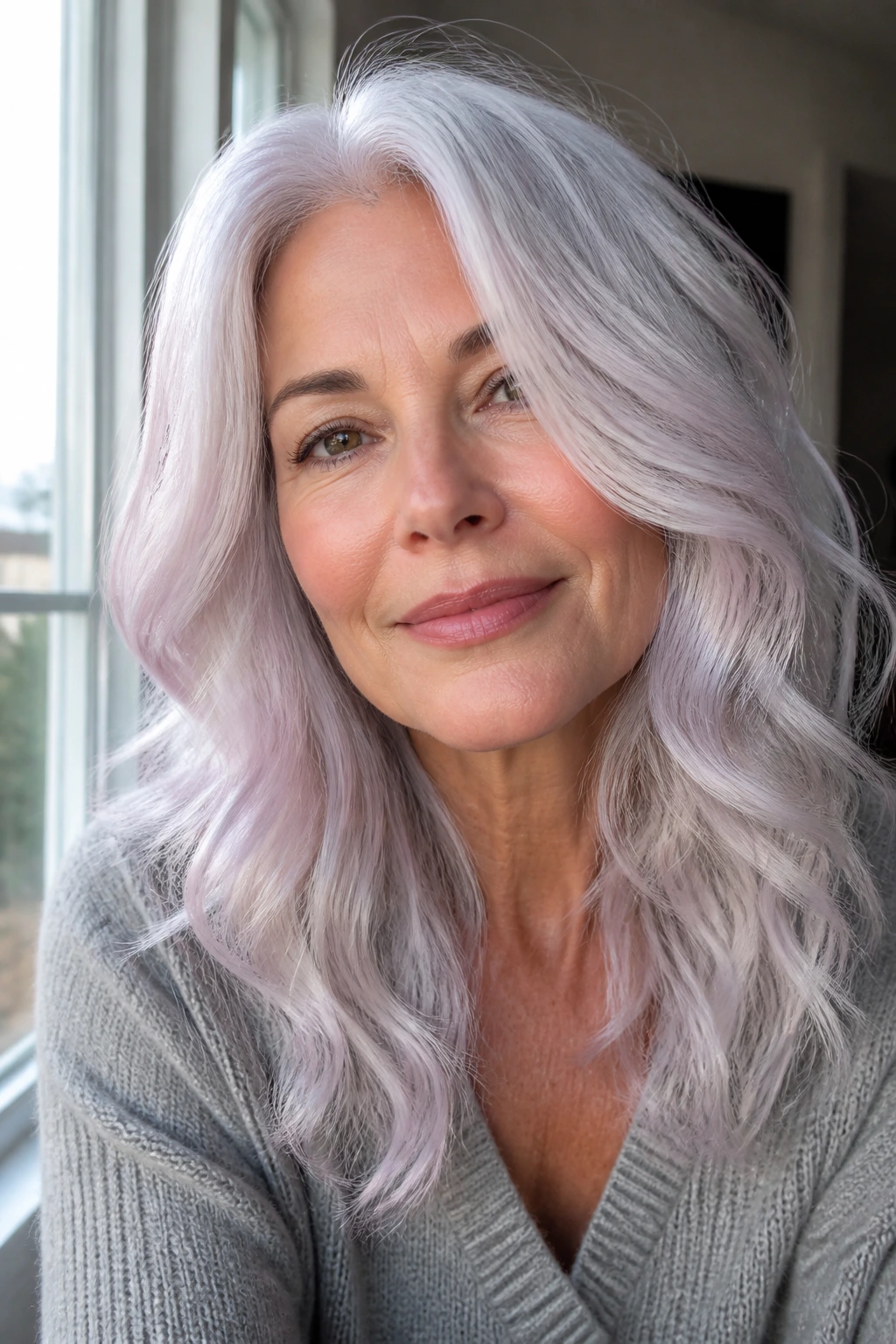
A pearl blend sits somewhere between silver and soft white, which makes it easier to wear than a flat platinum blanket. The “salt” side is bright and cool, while the “pepper” side stays muted enough to keep the dimension alive.
This idea suits cool skin tones because pearl has that soft blue-pink cast that flatters fair complexions and doesn’t fight rosy undertones. It’s a gentler bright shade. Not bland. Just softer around the edges.
Ask for ultra-fine highlights with a cool gloss afterward. The goal is not streaky brightness. The goal is a blended pearl finish that moves with the haircut. On waves, it looks elegant. On straight hair, it looks crisp.
If your natural gray is already coming in, this may be the easiest way to make it feel like a planned color story instead of a transition you’re waiting out.
18. Soft Slate Waves
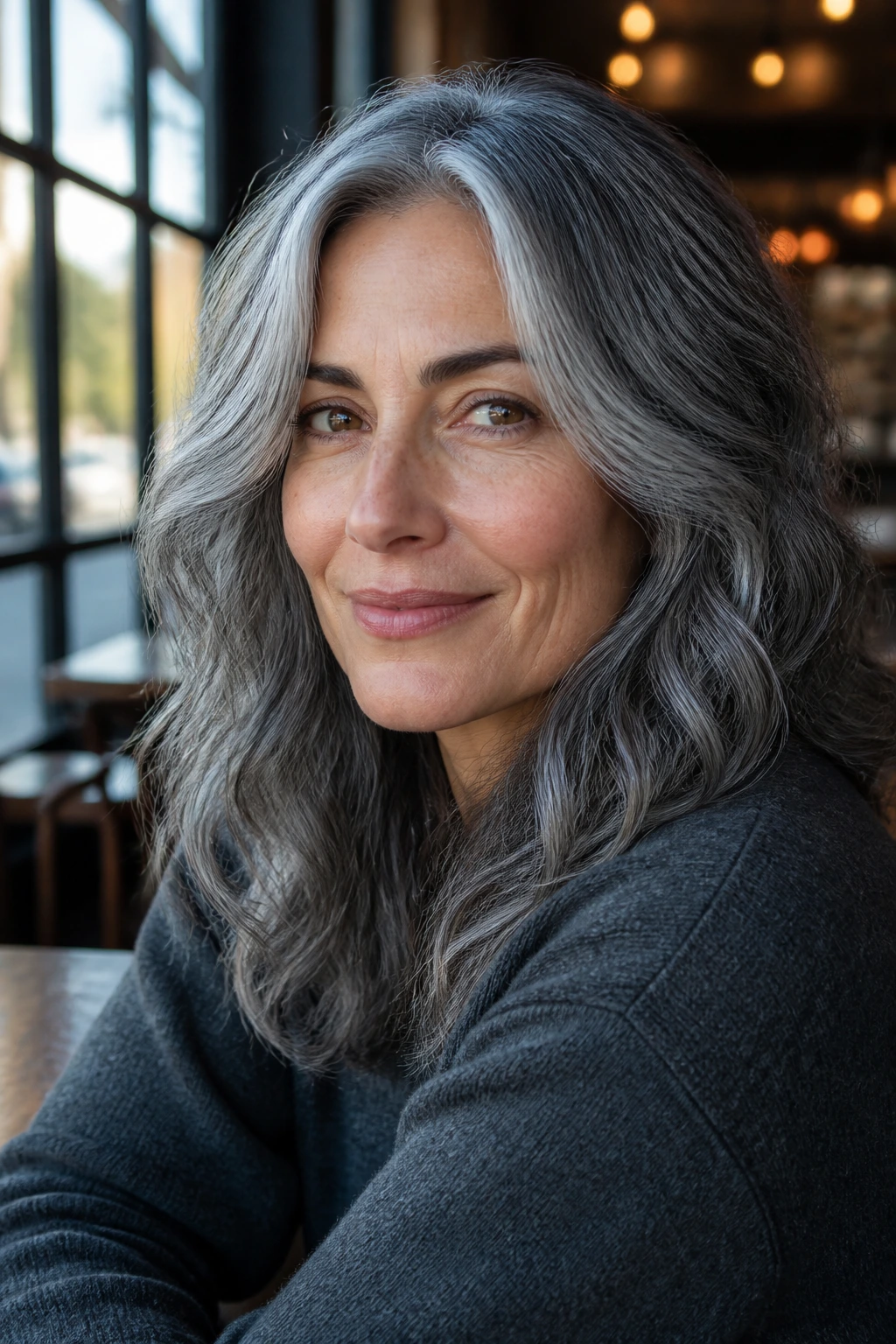
Slate is one of those shades that looks simple until light hits it. Then the cooler gray-blue notes show up and the color gets depth. On loose waves, that effect is even better because the bends catch the darker and lighter pieces in separate places.
This is a strong option for cool skin tones that lean porcelain, pink, or blue-based. Slate does not pull warmth into the face. It stays steady. That steadiness is underrated. A lot of gray blends go wrong because they try to be too soft and end up looking vague.
Waves are part of the appeal. The cut can be shoulder length or longer, but the movement matters more than the length. Without texture, slate can feel flat. With texture, it feels polished and a little moody.
A light mist of texture spray is enough. Don’t bury it under heavy cream.
19. Silver Balayage on Coily Hair
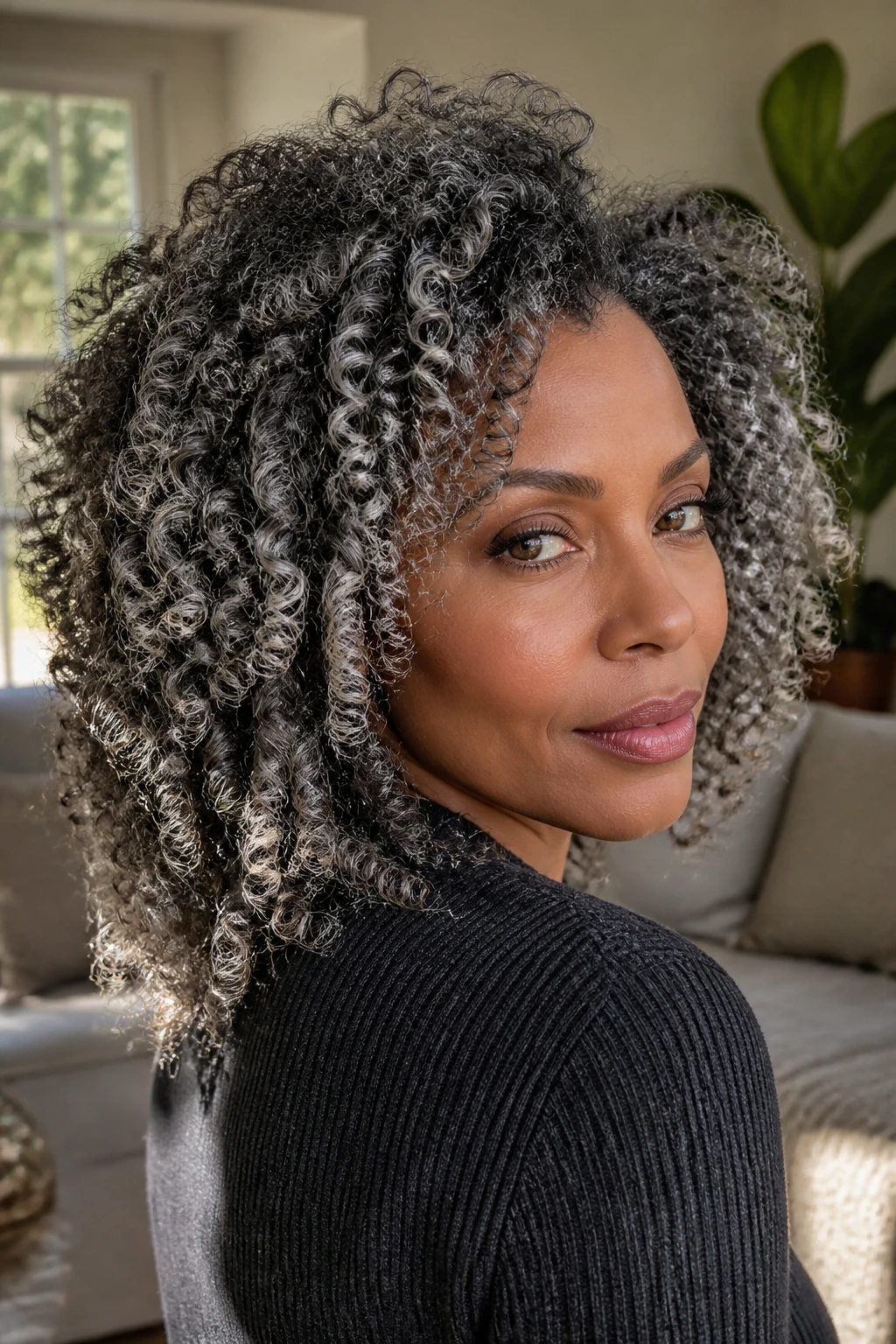
Coily hair can handle silver in a way that straight hair sometimes cannot: the shape itself becomes part of the color story. A silver balayage placed through coils gives you brightness where the curls expand and depth where they contract.
Cool skin tones get a nice lift from the contrast. Silver pieces around the perimeter and crown can brighten the face, while darker sections inside the coil pattern keep the look from turning washed out. That balance is the whole game.
The placement matters
- Concentrate silver on the outer coil layer
- Keep the interior darker for dimension
- Use bond-building care if lightening is involved
- Moisture is nonnegotiable, or the silver can look dry fast
This is not a low-care option if your hair is heavily lightened. But when the placement is thoughtful, it can look fantastic. The curl pattern does half the visual work for you.
20. Ashy Brunette with Silver Ends
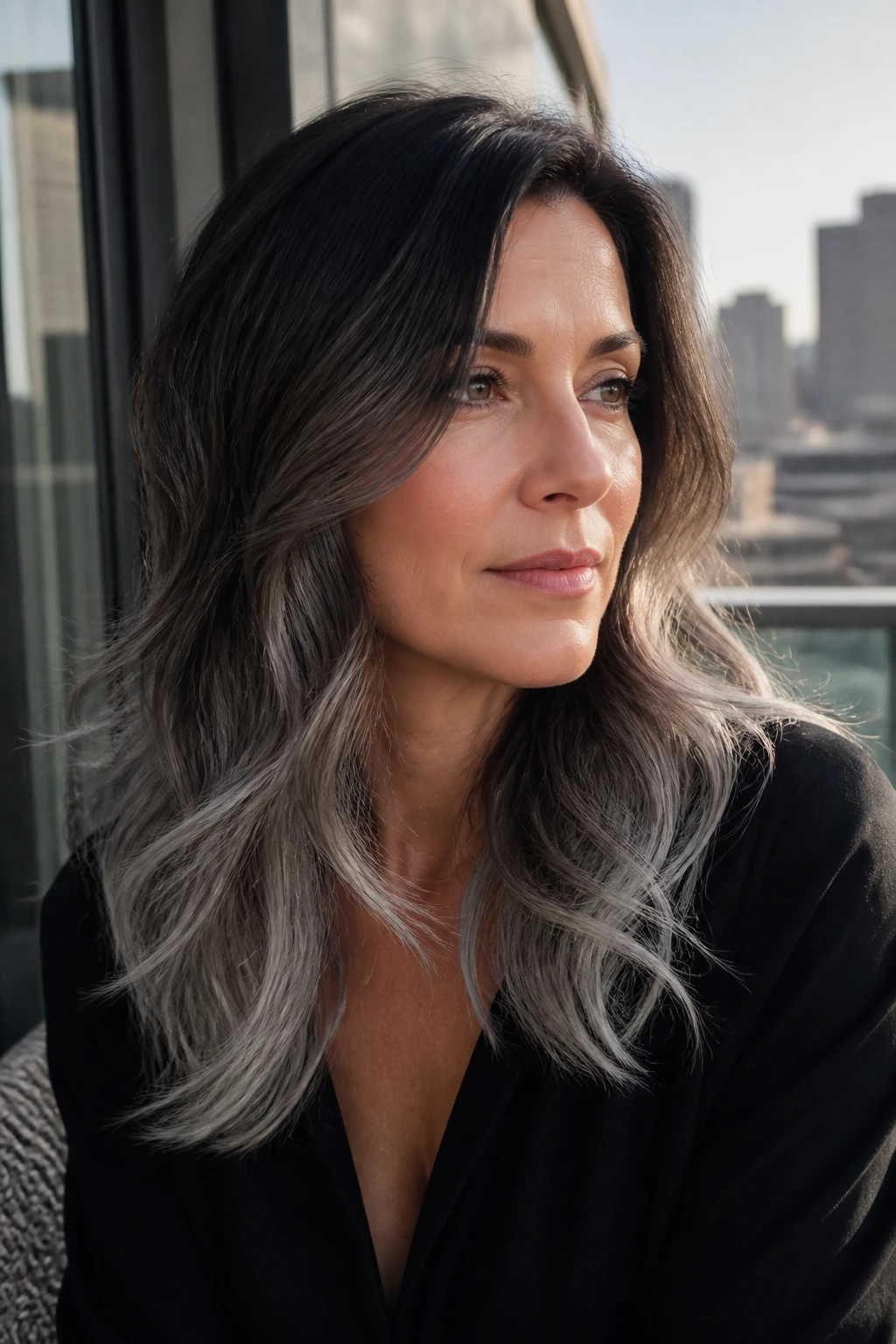
This one is for people who want to keep most of the hair brunette and let the silver appear only at the ends. The ash base keeps the top cool and grounded, while the silver tips give the color a modern finish.
It’s especially nice on layered cuts because the ends move more. A blunt cut can make silver tips feel a little heavy, but soft layers let the light pieces flick out and catch the eye. The hair looks lived-in, not overworked.
For cool skin tones, ash brunette is safer than chestnut or chocolate because it avoids that reddish warmth that can make the face look flushed. The silver ends then act like punctuation. Small, clean, useful.
If you want an easier grow-out, this is a smart route. The roots blend into the ash, and the silver ends can be refreshed with a toner or trimmed off gradually.
21. Frosted Fringe
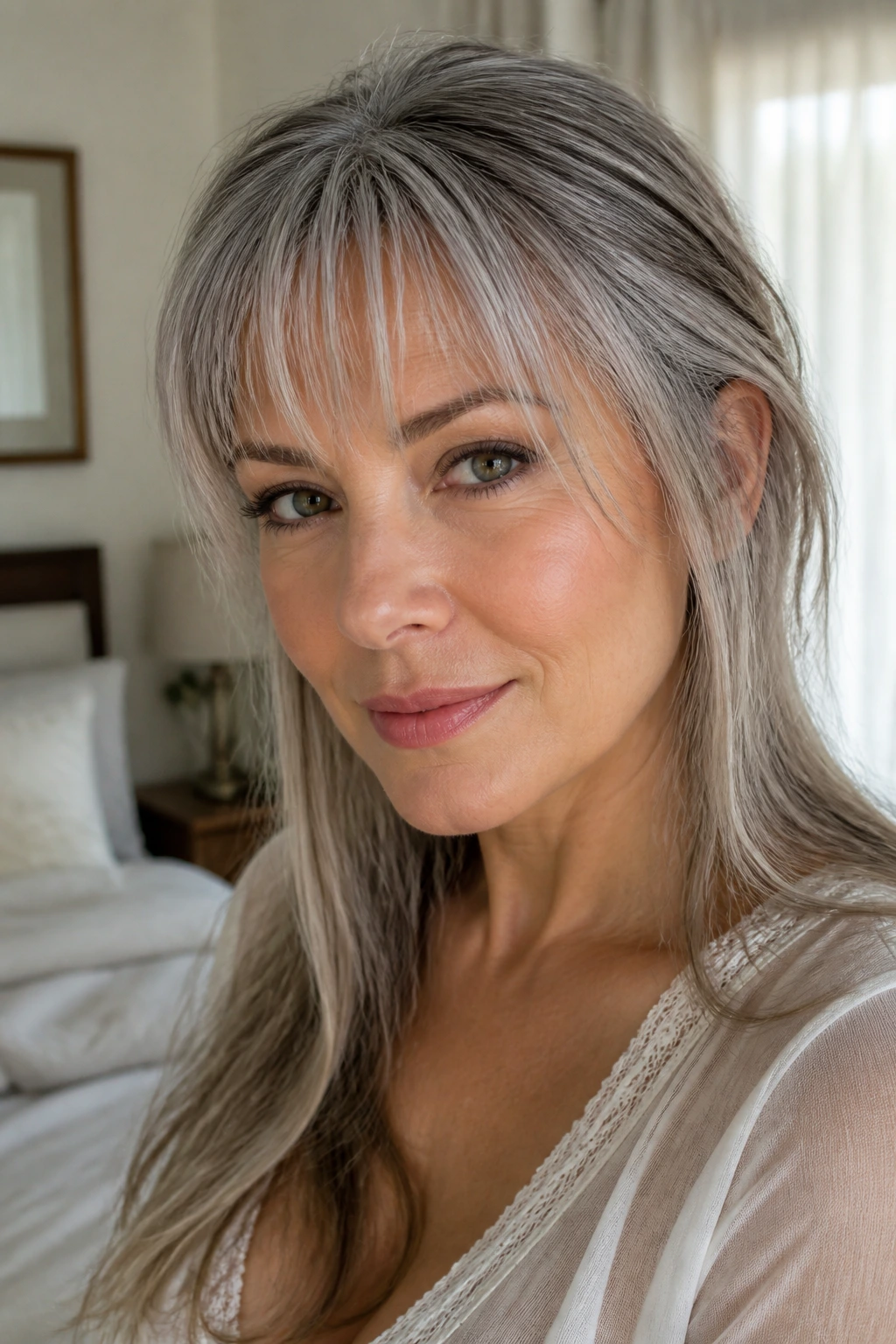
A frosted fringe is one of those tiny changes that makes a huge visual difference. The bangs sit right on the face, so even a narrow band of cool silver can brighten the eyes and soften the forehead area.
It works best when the fringe is airy rather than dense. Heavy bangs can swallow the lightness and make the silver look blocked off. Feathered bangs, curtain bangs, or a wispy straight fringe are easier to live with. They move. They breathe.
This idea pairs nicely with darker peppered lengths underneath. You get contrast without turning the whole haircut into a highlight project. For cool skin tones, that face-framing brightness is often enough.
And yes, it does take regular trimming. Bangs always do.
22. Metallic Mushroom Crop
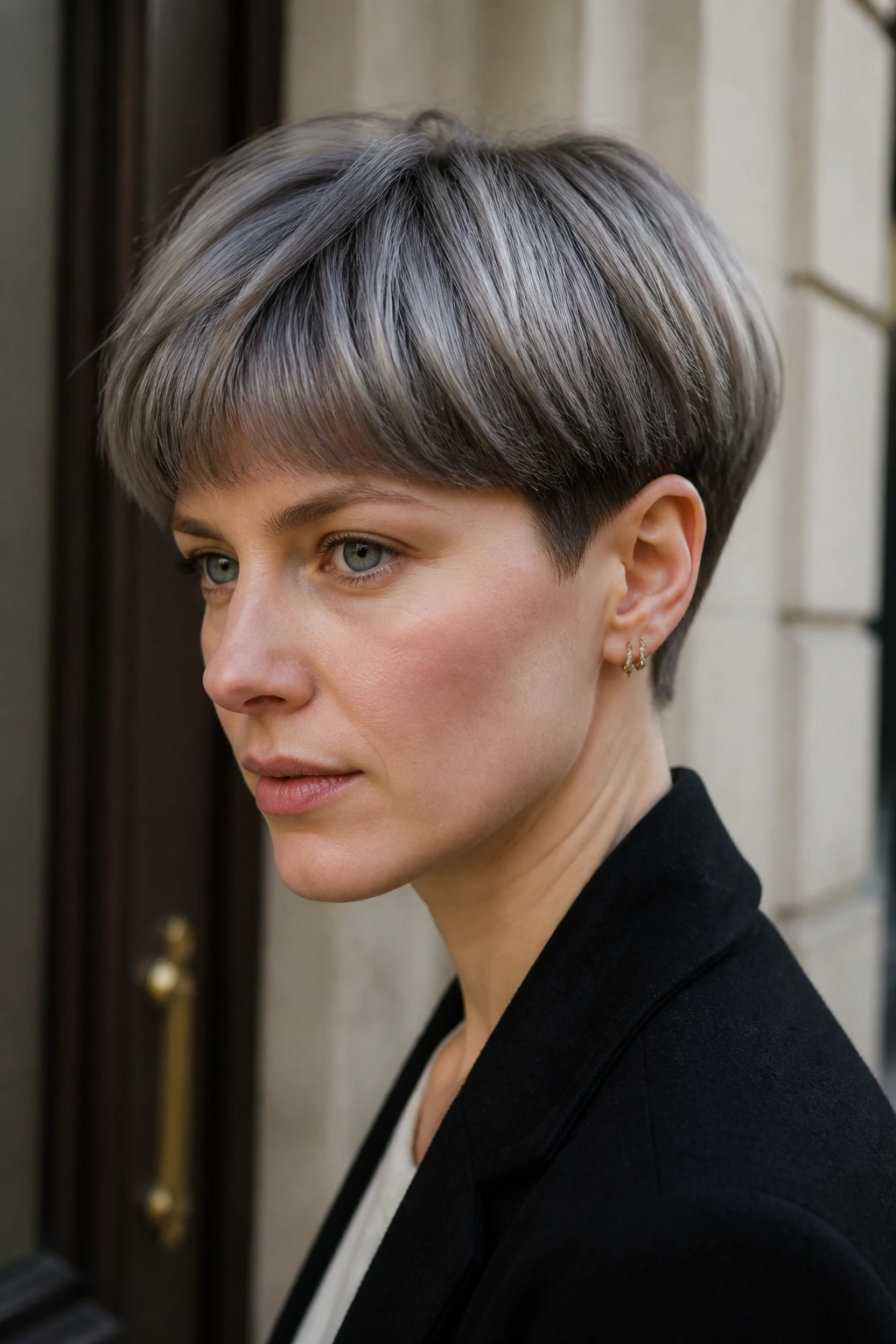
A mushroom crop sounds a little odd, but the result is good. Think ash-brown depth with a metallic silver sheen layered over the top. It’s short, cool, and tidy without feeling severe.
The mushroom base keeps the color from floating away into pure gray. The metallic finish brings it back to the salt-and-pepper family. On cool skin tones, that means the hair supports the face instead of stealing from it.
This style works well on dense hair because the crop removes bulk and lets the color show. If the hair is too long or too heavy, the mushroom tone can get lost. Shorter lengths keep it visible.
A side part or slightly textured top can stop the look from feeling too rigid. That little bit of movement helps a lot.
23. Pewter Curtain Layers
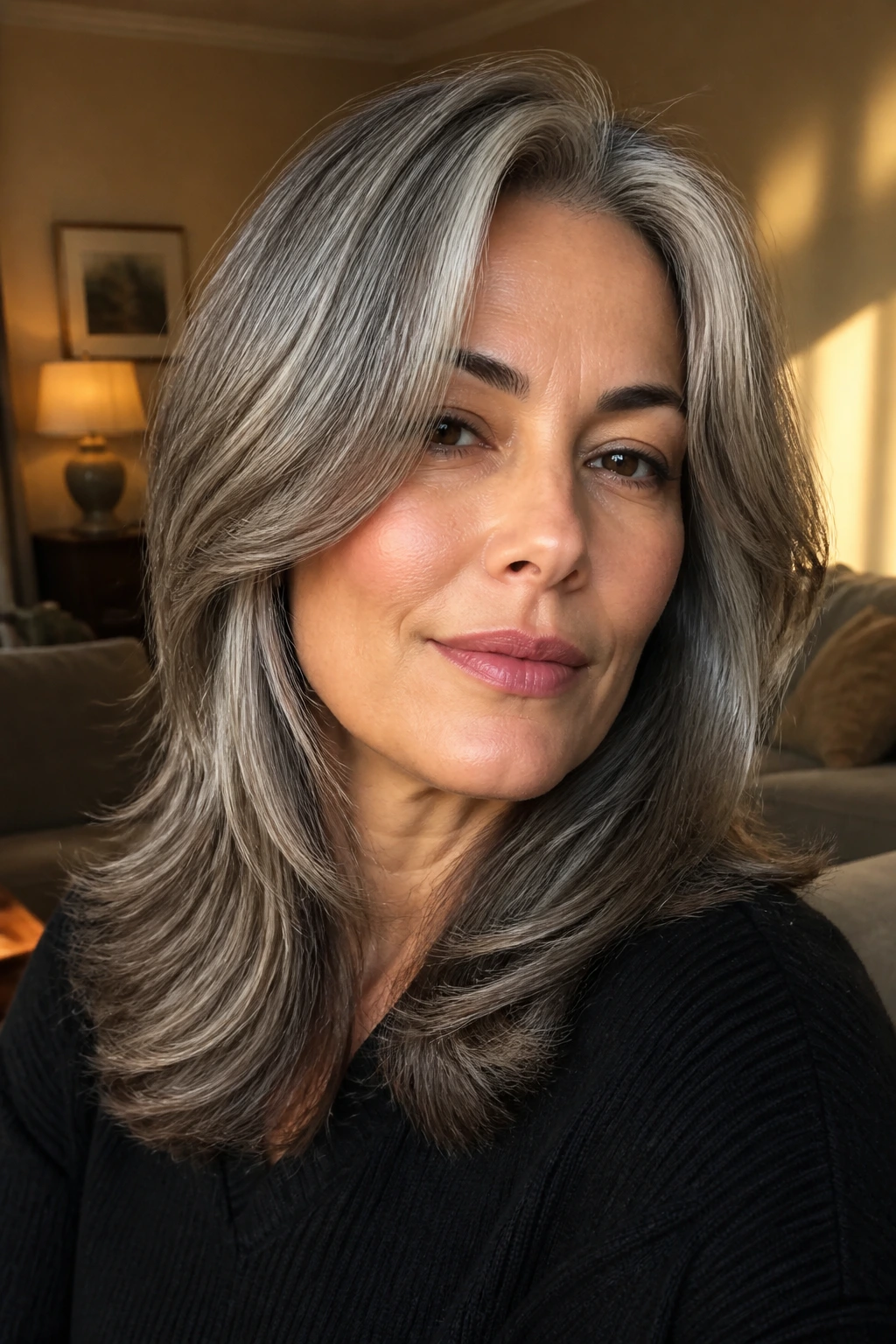
Curtain layers are a nice place to put pewter because the pieces naturally frame the cheeks and jaw. That matters on cool skin tones, where a muted metallic gray near the face can create a clean line without hard contrast.
The color itself should sit between silver and smoky brown. Too light, and it loses depth. Too dark, and you miss the pewter effect. What you want is that brushed-metal look that seems to change in different light.
This is one of the more forgiving ideas on the list. The layered cut hides grow-out, and the pewter shade blends well whether your natural hair is starting to gray or already heavily peppered. It feels chosen, which is half the point.
A round brush and a little bend through the ends are enough to show off the layers.
24. Pearl Gray Crop
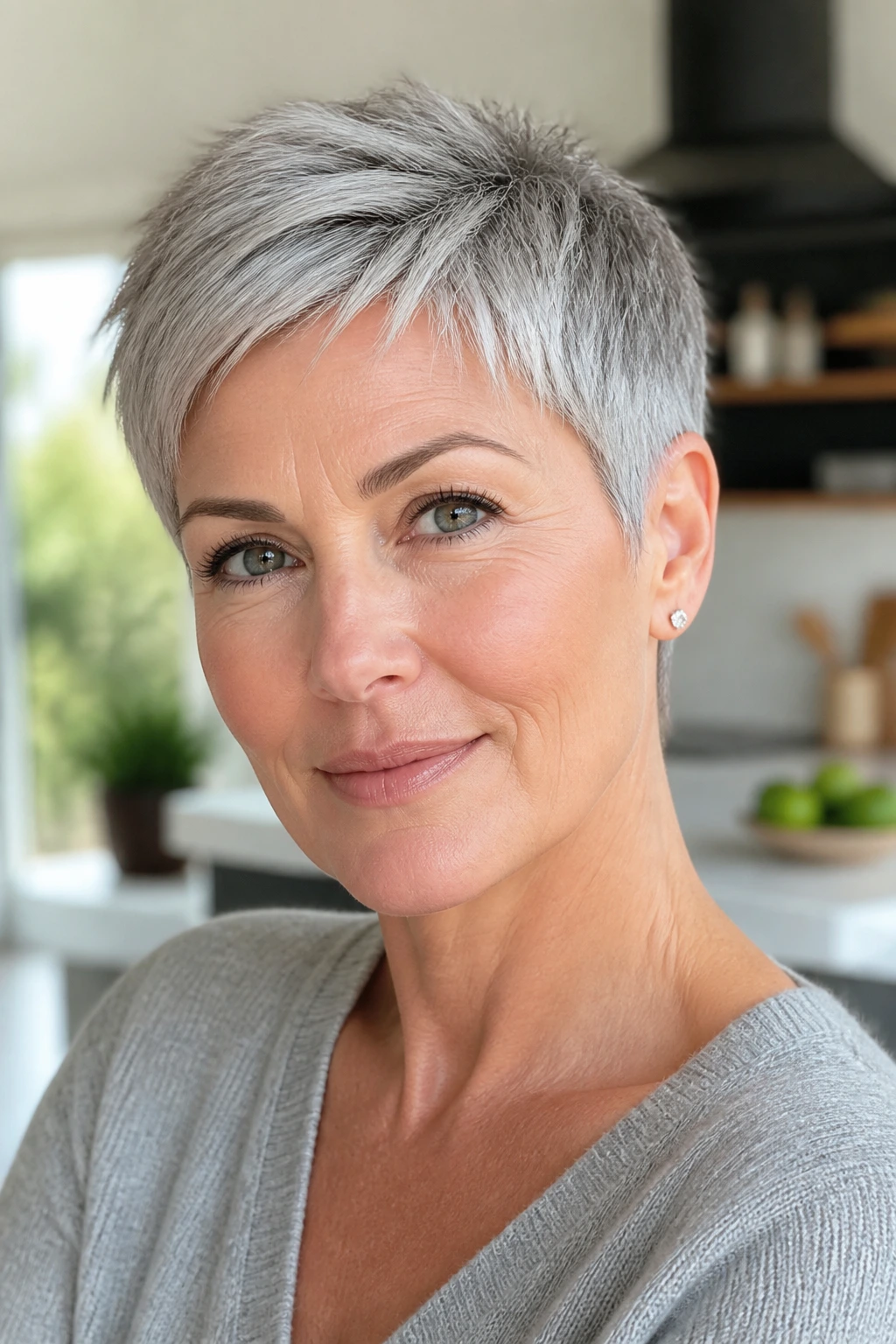
Short hair in pearl gray has a clean, sharp read that works beautifully on cool skin. The crop keeps the finish tidy, and the pearl tone keeps it from drifting into flat, dull gray. There’s a tiny glow to it, but nothing warm.
The best thing about this shade is how little styling it needs. A crop can look polished with minimal effort if the cut is solid and the tone stays cool. That makes it good for people who want their hair to look intentional without spending twenty minutes shaping it every morning.
One note: pearl gray can fade fast if the hair is porous. A gloss or tinted mask helps keep the tone crisp. Don’t wait until the hair looks yellowed; by then you’re already playing catch-up.
This is a quiet shade, but it has presence.
25. Dimensional Silver on Thick Hair
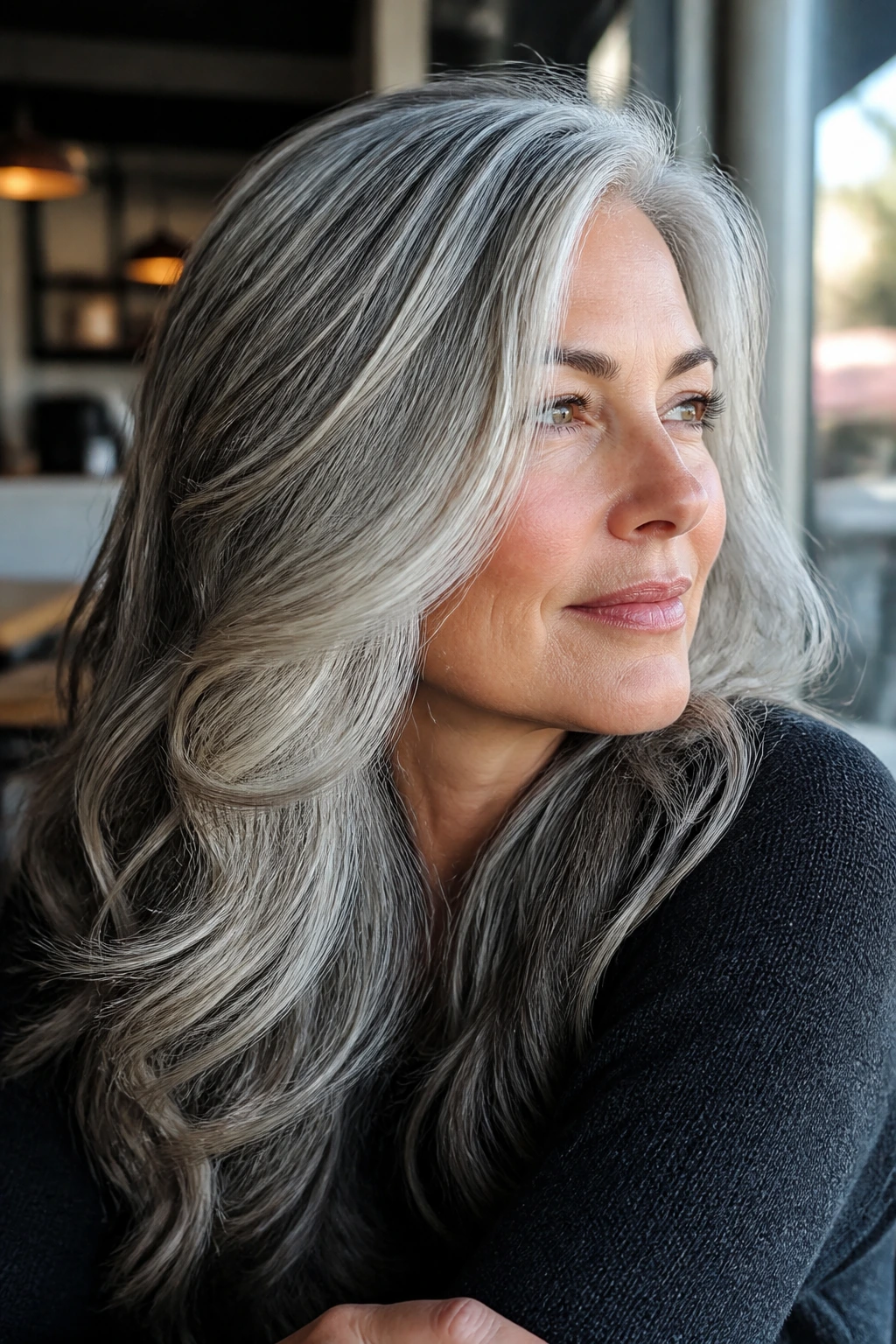
Thick hair can swallow color unless the placement is handled with care. Dimensional silver fixes that by mixing lighter silver panels with deeper peppered lowlights, so the hair still has shape and body.
Cool skin tones benefit because the contrast keeps the face from being overwhelmed by one dense color block. Thick hair often looks best when the silver is not spread evenly everywhere. A little variation makes the pattern feel richer and stops the ends from looking heavy.
What thick hair needs
- Strategic lowlights underneath for depth
- Silver ribbons around the surface layers
- A layered cut to keep the shape light
- A smoothing product that does not flatten the volume
Without dimension, thick gray hair can look broad and opaque. With it, the same hair looks expensive and balanced.
26. Smoky Ombré
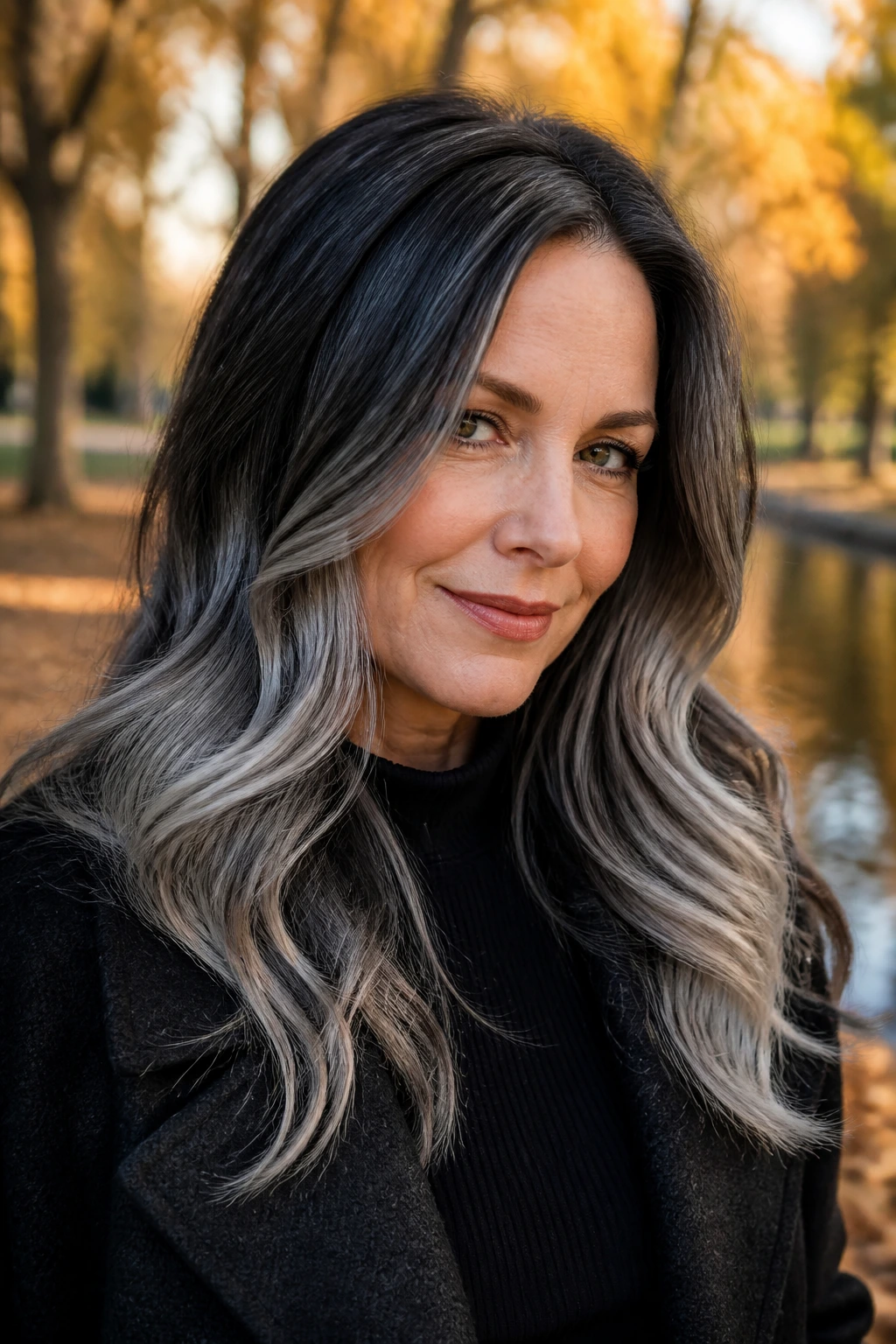
Smoky ombré is a softer cousin of the bold silver melt. The transition starts darker at the roots, moves through smoky gray in the mids, and lands in a lighter silver finish near the bottom. Nothing feels abrupt.
Why does this work so well on cool skin tones? Because the whole color story stays in a cool family, even as it shifts in brightness. That means the face keeps its clarity. No brassy edges. No warm banding. Just a smooth move from dark to light.
It’s a nice option if you like longer hair. The length gives the ombré room to breathe, and the gradient becomes the point instead of the cut. On straight hair, it looks sleek; on waves, it looks softer and more textured.
A mid-shaft gloss can help keep the transition looking clean between salon visits.
27. Blue-Steel Sheen
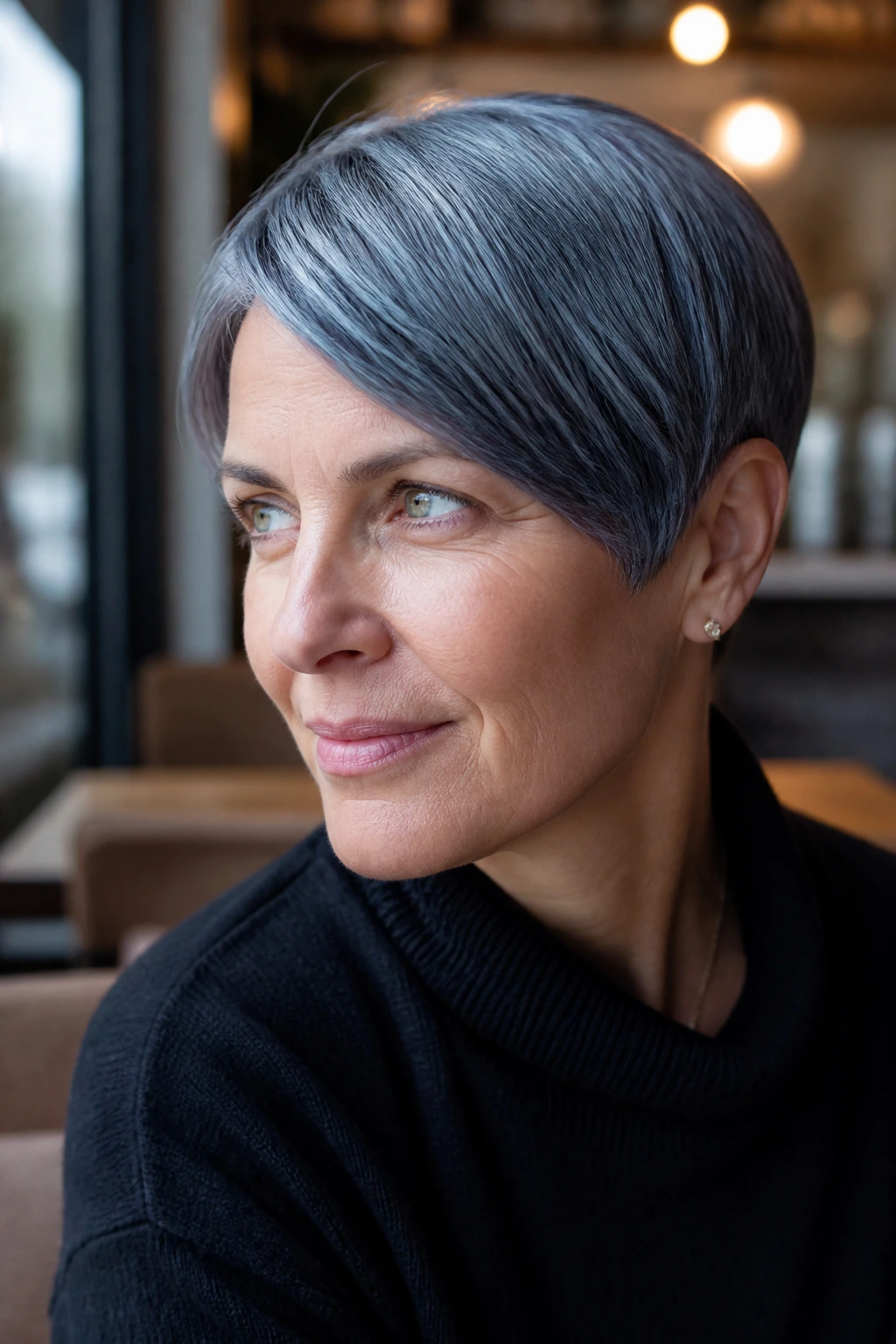
Blue-steel hair sounds dramatic, but the effect can be subtle when it’s done right. The base sits in that cool gray zone, then a blue-based gloss gives it a faint metallic cast that catches light without turning the hair visibly blue.
Cool skin tones often love this because the undertone mirrors the skin rather than fighting it. The result feels crisp, especially on short cuts, lobs, or straight styles where the sheen can be seen clearly. It’s not a loud color. It’s a smart one.
I like this option when someone wants their gray to look modern without going full silver. The blue-steel finish keeps the peppered pieces from reading flat, and it can make older gray look cleaner in a single appointment.
Use heat sparingly. Too much heat will steal the sheen fast.
28. Reverse Salt and Pepper
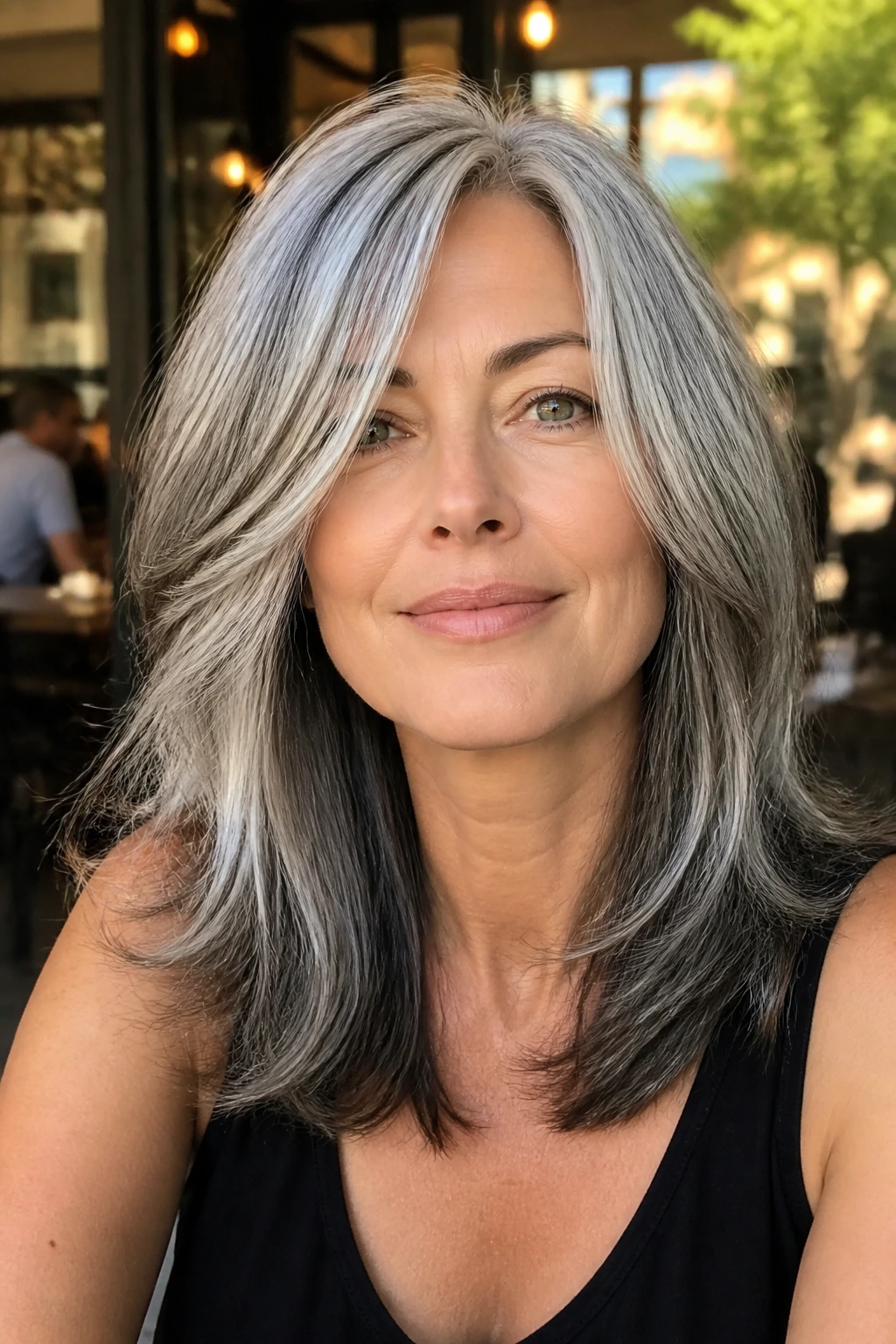
Reverse salt and pepper flips the usual formula. Instead of dark hair with gray coming through, the silver becomes the star and the darker pieces sit underneath or at the root line. It’s a strong look, and on cool skin tones it can look striking rather than harsh.
The reason it works is simple: the lighter silver near the surface lifts the face, while the darker hidden pieces keep the whole style from feeling washed out. You get brightness first, depth second. That order matters.
This is a good one for people who have a lot of natural gray and want to stop fighting it. It can also work on layered cuts where the lower sections peek through when the hair moves. There’s a little surprise built into it. That’s what keeps it interesting.
If you want the most wearable version, keep the silver cool and the dark pieces soft, not black-black. A harsh contrast can be too stark. Clean, smoky, and balanced is the better path here.
